Bid To Create UK’s First Regional Hydrogen Network
The title of this post is the same as this article on the BBC.
This is the sub-heading
Four energy companies are working together to bid for government funding to develop the UK’s first regional hydrogen transport and storage network.
This two paragraphs add more details to the article.
National Gas, Centrica, Equinor and SSE Thermal aim to secure about £500m of funding to develop the network, which will connect sites across the Humber region.
“This is a competitive process that will determine where the UK’s first integrated hydrogen network is built,” a spokesperson for the four companies said.
Note.
- There are already several hydrogen projects in the area including Aldbrough Hydrogen Storage, H2H Saltend, and Ferrybridge and Keadby Next Generation Power Stations.
- The local MPs seem in favour.
- In Could Doncaster Sheffield Airport Become A Hydrogen Airport?, I laid out my reasons, why Doncaster Sheffield Airport could become a hydrogen airport.
I can see this hydrogen cluster having a big future.
CO2 to SAF: A One-Step Solution
The title of this post is the same as that of this article on the Chemical Engineer.
This is the sub-heading,
Oxford spinout OXCCU has launched a demonstration plant at London Oxford Airport to trial its one-step process of turning CO2 into sustainable aviation fuel (SAF). Aniqah Majid visited the plant to investigate the benefits of its “novel” catalyst
One word in this sub-heading caught my eye.
When I was a young engineer in the Computer Techniques section in the Engineering Department at ICI Plastics Division, I did a small mathematical modelling project for this chemical engineer, using the section’s PACE 231-R analogue computer.

He was impressed and gave the 23-year-old self some advice. “You should apply that beast to catalysts.”
I have never had the chance to do any mathematically modelling of catalysts either at ICI Plastics or since, but I have invested small amounts of my own money in companies working with advanced catalysts.
So when OXCCU was picked up by one of my Google Alerts, I investigated.
I like what I found.
The three raw ingredients are.
- Green Hydrogen
- Carbon dioxide perhaps captured from a large gas-fired powerstation like those in the cluster at Keadby.
- OXCCU’s ‘novel’ catalyst, which appears to be an iron-based catalyst containing manganese, potassium, and organic fuel compounds.
I also suspect, that the process needs a fair bit of energy. These processes always seem to, in my experience.
This paragraph outlines how sustainable aviation fuel or (SAF) is created directly.
This catalyst reduces CO2 and H2 into CO and H2 via a reverse water gas shift (RWGS) process, and then subsequently turns it into jet fuel and water via Fischer-Tropsch (FT).
The Wikipedia entry for Fischer-Tropsch process has this first paragraph.
The Fischer–Tropsch process (FT) is a collection of chemical reactions that converts a mixture of carbon monoxide and hydrogen, known as syngas, into liquid hydrocarbons. These reactions occur in the presence of metal catalysts, typically at temperatures of 150–300 °C (302–572 °F) and pressures of one to several tens of atmospheres. The Fischer–Tropsch process is an important reaction in both coal liquefaction and gas to liquids technology for producing liquid hydrocarbons.
Note.
- I wouldn’t be surprised that to obtain the carbon monoxide and hydrogen or syngas for the Fischer-Tropsch process, excess hydrogen is used, so the OXCCU process may need a lot of affordable hydrogen, some of which will be converted to water in the RWGS process.
- The high temperatures and pressures for the Fischer-Tropsch process will need a lot of energy, as I predicted earlier.
But I don’t see why it won’t work with the right catalyst.
The Wikipedia entry for the Fischer-Tropsch process also says this.
Fischer–Tropsch process is discussed as a step of producing carbon-neutral liquid hydrocarbon fuels from CO2 and hydrogen.
Three references are given, but none seem to relate to OXCCU.
OXCCU have a web site, with this title.
Jet Fuel From Waste Carbon
And this mission statement underneath.
OXCCU’s mission is to develop the world’s lowest cost, lowest emission pathways to make SAF from waste carbon, enabling people to continue to fly and use hydrocarbon products but with a reduced climate impact.
It looks like they intend to boldly go.
Conclusion
My 23-year-old self may have been given some good advice.
Reform Declares War On County’s Net-Zero Projects
The title of this post, is the same as that of this article on the BBC.
This is the sub-heading.
Reform UK leaders in Lincolnshire say they have “declared war” on green energy projects.
These three paragraphs outline their policies.
Boston and Skegness MP Richard Tice, Greater Lincolnshire’s mayor Dame Andrea Jenkyns and Councillor Sean Matthews, who leads the county council, launched a campaign at a press conference held in Boston earlier.
They said they opposed wind and solar farms and battery storage facilities, with Tice adding: “It is an absolute outrage what the madness of net stupid zero is doing to our county, as well as to our country.”
The government said green energy was vital in delivering energy security, while Labour MP Melanie Onn argued Reform’s stance posed a risk to thousands of jobs.
It should be noted that Lincolnshire has a lot of projects, that will be concerned with renewable energy.
Lincolnshire is one of the UK counties, with the highest level of wind power.
- There are over 7 GW of wind farms, that already do or will land their electricity in the county including 5.5 GW from the world’s largest offshore wind farm; Hornsea.
- There is approaching 300 MW of onshore wind in the county, which includes England’s largest onshore wind farm at Keadby, which is 68 MW.
I asked Google how much solar there was in the county and I got this AI Overview.
Lincolnshire has a significant amount of solar power capacity, with several large solar farms and numerous smaller installations. The county is a major location for solar energy development, with some projects aiming to power tens or even hundreds of thousands of homes.
In the real world of wind and solar energy, all of this renewable energy will need backup and the county has it in hundreds of megawatts.
- Keadby One is a 732 MW gas-fired power station owned by SSE Thermal.
- Keadby Two is a 849 MW gas-fired power station owned by SSE Thermal.
- Keadby Three will be a 910 gas-fired power station, fitted with carbon capture, that is being developed by SSE Thermal.
- Keadby Next Generation Power Station is a 1800 MW hydrogen-powered power station, that is being developed by Equinor and SSE Thermal. I wrote about it in Consultation On Plans For Keadby Hydrogen Power Station To Begin and it will generate 900 MW of zero-carbon electricity.
Now that it what I call backup.
Conclusion
Lincolnshire generates a lot of renewable energy and Reform UK want to throw it all away.
As I showed in US Gov’t Withdraws All Offshore Wind Energy Areas, Trump’s policies against renewable energy and wind in particular are not good for investment and employment.
We don’t want Trump’s policies in the UK.
And especially in Lincolnshire, where all this energy can attract jobs.
Backing Up The Wind With The Keadby Power Stations
I went to Cleethorpes from Doncaster by train yesterday. You pass the Keadby site, where there are two large gas–fired power stations of 734 MW and 710 MW. A third one ; Keadby 3 of 910 MW complete with carbon capture and storage should join them by 2027.
So that will be nearly 2.5 GW of reliable electricity.
I find it interesting that one of our first gas-fired power stations with carbon capture will be in Lincolnshire, which is famous for growing plants of all shapes, types and sizes. So will we be seeing lots of greenhouses on the flat lands I saw yesterday, growing plants in an atmosphere they like, so that we can generate our carbon dioxide and eat it.
The next power station at Keadby is called the Keadby Next Generation power station, which is intended to be complete by 2030. It is a bit of a puzzle in that it will run on up to 1800 MW of hydrogen and only produce up to 910 MW of electricity.
Note.
- The hydrogen will come from SSE’s hydrogen store at Aldbrough and Centrica’s store at Rough.
- Surely, the amount of hydrogen and electricity should balance.
When I worked in ICI’s hydrogen plant in the 1960s, ICI had no use for the hydrogen, so they sent it to their power station, blended it with coal gas and used it to make steam for other processes.
Could Keadby Next Generation power station be providing zero-carbon steam for the chemical and other processes on Humberside?
Adding the 910 MW of electricity to Keadby’s gas-fired total of 2.5 GW gives 3.4 GW of electricity from Keadby to back up the wind farms.
3.4 GW at Keadby is what I call backup!
It also should be noted, that one of the reasons for building the Mersey Tidal Barrage is to provide backup for all the wind farms in Liverpool Bay.
Conclusion
I believe that SSE could be supplying zero-carbon steam in addition to electricity from the Keadby Hydrogen power station.
From Doncaster To Cleethorpes
These pictures were taken on my journey between Doncaster and Cleethorpes.































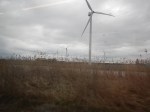

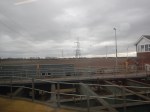






















































The area is best summed up as flat and decorated with these features.
- A few hedges.
- Some trees and some woodland.
- dozens of wind turbines.
- Lots of pylons carrying electricity.
- Scunthorpe steelworks
- A few stations and railway sidings.
- A couple of waterways.
- Estates of new housing as you approach Grimsby.
When I returned there was more of the same on the other side of the tracks.














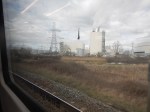
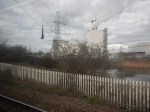





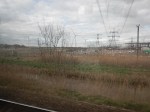
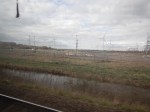













With the addition of all the power stations at Keadby and a couple of wind farms.
These are my thoughts on how this landscape will look at some time after 2030.
More Onshore Wind Farms
There will be a lot more wind farms lining the Doncaster and Cleethorpes railway.
The government has said it might pay for turbines and transmission lines to spoil views.
I feel they will have to, to meet their net-zero targets.
There Will Be Massive Hydrogen Storage On The Other Side Of The Humber
SSE are developing Albrough and Centrica are developing Rough into two of the largest hydrogen stores in the world.
The wind farms of the North Sea will provide them with hydrogen.
More Housing
If the government has its wish there will be a lot more new housing.
And as the newer houses show in my pictures, many of them will have solar panels.
More Power Stations At Keadby
Consider.
- The main purpose of the power stations at Keadby will be to provide backup to the wind and solar power in the area and far out to sea.
- The power stations will use hydrogen stored at Albrough and Rough.
- Some of the gas-fired power stations at Keadby will be fitted with carbon capture.
- One hydrogen-fired power station is already being planned.
The power stations at Keadby will probably be capable of supplying several GW of zero-carbon energy.
There Will Be Energy-Hungry Industries Along The South Bank Of The Humber
Just as in the Victorian era, coal attracted steel-making, chemicals and refining to the area, a South Humberside with large amounts of energy will attract heavy industry again.
Already, Siemens have built a train factory at Goole.
There Will Also Be Large Greenhouses In Lincolnshire
Greenhouses are a wonderful green way of absorbing waste heat and carbon dioxide.
Where Have I Seen This Blend Of Offshore Energy, Hydrogen, Heavy Industry And Agriculture Before?
After I visited Eemshaven in the Northern Netherlands, I wrote The Dutch Plan For Hydrogen.
We are not doing something similar, but something much bigger, based on the hydrogen stores at Aldbrough and Brough, the massive offshore wind farms and Lincolnshire’s traditional heavy industry and agriculture.
The Railway Between Doncaster and Cleethorpes Will Be Developed
Just as the Dutch have developed the railways between Groningen and Eemshaven.
Energy In – Hydrogen And Carbon Dioxide Out
This article was inspired by this article in the Sunday Times, which is entitled ‘It’s A Slog’: Life Inside Britain’s Last Coal Power Station.
The article is about Ratcliffe-on-Soar power station, which is next to East Midlands Parkway station.
This is the first paragraph of the station’s Wikipedia entry.
Ratcliffe-on-Soar Power Station is a coal-fired power station owned and operated by Uniper at Ratcliffe-on-Soar in Nottinghamshire, England. Commissioned in 1968 by the Central Electricity Generating Board, the station has a capacity of 2,000 MW. It is the last remaining operational coal-fired power station in the UK, and is scheduled to close in September 2024.
I took these pictures of the power station in 2019.
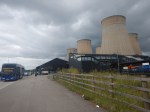
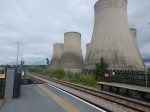



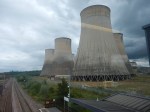


Ratcliffe-on-Soar is the last of a number of large coal-fired power stations, that were built in the area, mainly along the River Trent.
- Rugeley – 600 MW – 1961
- Drakelow – 1630 MW – 1964
- Willington – 800 MW – 1962
- Castle Donington – 600 MW – 1958
- Ratcliffe-on-Soar – 2000 MW – 1968
- High Marnham – 1000 MW – 1959
- Cottam – 2000 MW – 1968
- West Burton – 2000 MW – 1968
Note.
- The date is the commissioning date.
- That is 10,630 MW of electricity.
- There are also a few large gas-fired power stations along the river, that are still operating.
- Both coal and gas-fired stations use the water from the River Trent for cooling.
At the mouth of the river, there is the Keadby cluster of gas-fired power stations.
- Keadby 1 – 734 MW – 1996
- Keadby 2 – 849 MW – 2023
- Keadby 3 – 910 MW – 2027
- Keadby Hydrogen – 900 MW – 2030
Note.
- The date is the commissioning date.
- That is 3,393 MW of electricity.
- Keadby 2 is the most efficient CCGT in the world.
- Keadby 3 will be fitted with carbon capture.
- Keadby 2 has been designed to be retrofitted with carbon capture.
- Keadby Hydrogen will be fuelled by zero-carbon hydrogen.
As the years progress, I can see the Keadby cluster of power stations becoming a large zero-carbon power station to back-up wind farms in the North Sea.
- Hydrogen power stations will emit no carbon dioxide.
- Carbon dioxide from all gas-fired stations will be captured.
- Some carbon dioxide will be sold on, to companies who can use it, in industries like construction, agriculture and chemical manufacture.
- The remaining carbon dioxide will be stored in depleted gas fields.
As technology improves, more carbon dioxide will be used rather than stored.
Other Power Sources In The Humberside Area
In the next few sub-sections, I will list the other major power sources in the Humberside area.
Drax Power Station
Drax power station is a shadow of its former self, when it was one of the power stations fed by the newly discovered Selby coalfield.
These days it is a 2,595 MW biomass-fired power station.
Eastern Green Link 2
Eastern Green Link 2 will be a 2 GW interconnector between Peterhead in Scotland and Drax.
It is shown in this map.

Note.
- Most of the route is underwater.
- It is funded by National Grid.
- Contracts have been signed, as I talk about in Contracts Signed For Eastern Green Link 2 Cable And Converter Stations.
- It is scheduled to be completed by 2029.
This interconnector will bring up to 2 GW of Scottish wind-generated electricity to Drax and Humberside.
Drax has the substations and other electrical gubbins to distribute the electricity efficiently to where it is needed.
2 GW could also reduce the amount of biomass used at Drax.
In the long term, if the concept of the four Eastern Green Links is successful, I could see another Eastern Green Link to Drax to replace imported biomass at Drax.
I also, don’t see why a smaller Drax can’t be run on locally-sourced biomass.
Solar Farms And Batteries Along The River Trent
As the coal-fired power stations along the River Trent are demolished, solar farm developers have moved in to develop large solar farms.
Salt End Power Station And Chemical Works
These two paragraphs from the Wikipedia entry for Salt End describes the hamlet and its power station and chemical works.
Salt End or Saltend is a hamlet in the East Riding of Yorkshire, England, in an area known as Holderness. It is situated on the north bank of the Humber Estuary just outside the Hull eastern boundary on the A1033 road. It forms part of the civil parish of Preston.
Salt End is dominated by a chemical park owned by PX group, and a gas-fired power station owned by Triton Power. Chemicals produced at Salt End include acetic acid, acetic anhydride, ammonia, bio-butanol, bio-ethanol, ethyl acetate (ETAC) and ethylene-vinyl alcohol copolymer (EVOH) with animal feed also being produced on site.
I wonder, if running the complex on hydrogen would give cost and marketing advantages.
Aldbrough Hydrogen Storage Facility
This page on the SSE Thermal web site is entitled Plans For World-Leading Hydrogen Storage Facility At Aldbrough.
This is the most significant paragraph of the page, that is definitely a must-read.
With an initial expected capacity of at least 320GWh, Aldbrough Hydrogen Storage would be significantly larger than any hydrogen storage facility in operation in the world today. The Aldbrough site is ideally located to store the low-carbon hydrogen set to be produced and used in the Humber region.
This is a hydrogen storage facility for a much wider area than Humberside.
Rough Gas Storage Facility
This is the first paragraph of the Wikipedia entry for the Rough Gas Storage Facility.
Rough is a natural gas storage facility under the North Sea off the east coast of England. It is capable of storing 100 billion cubic feet of gas, nearly double the storage capacities in operation in Great Britain in 2021.
In Wood To Optimise Hydrogen Storage For Centrica’s Rough Field, I describe Centrica’s plans to convert the Rough gas storage into a massive hydrogen storage.
The Location Of Aldbrough Gas Storage, Rough Gas Storage, Salt End And Easington Gas Terminal
This Google Map shows between Salt End and the coast.
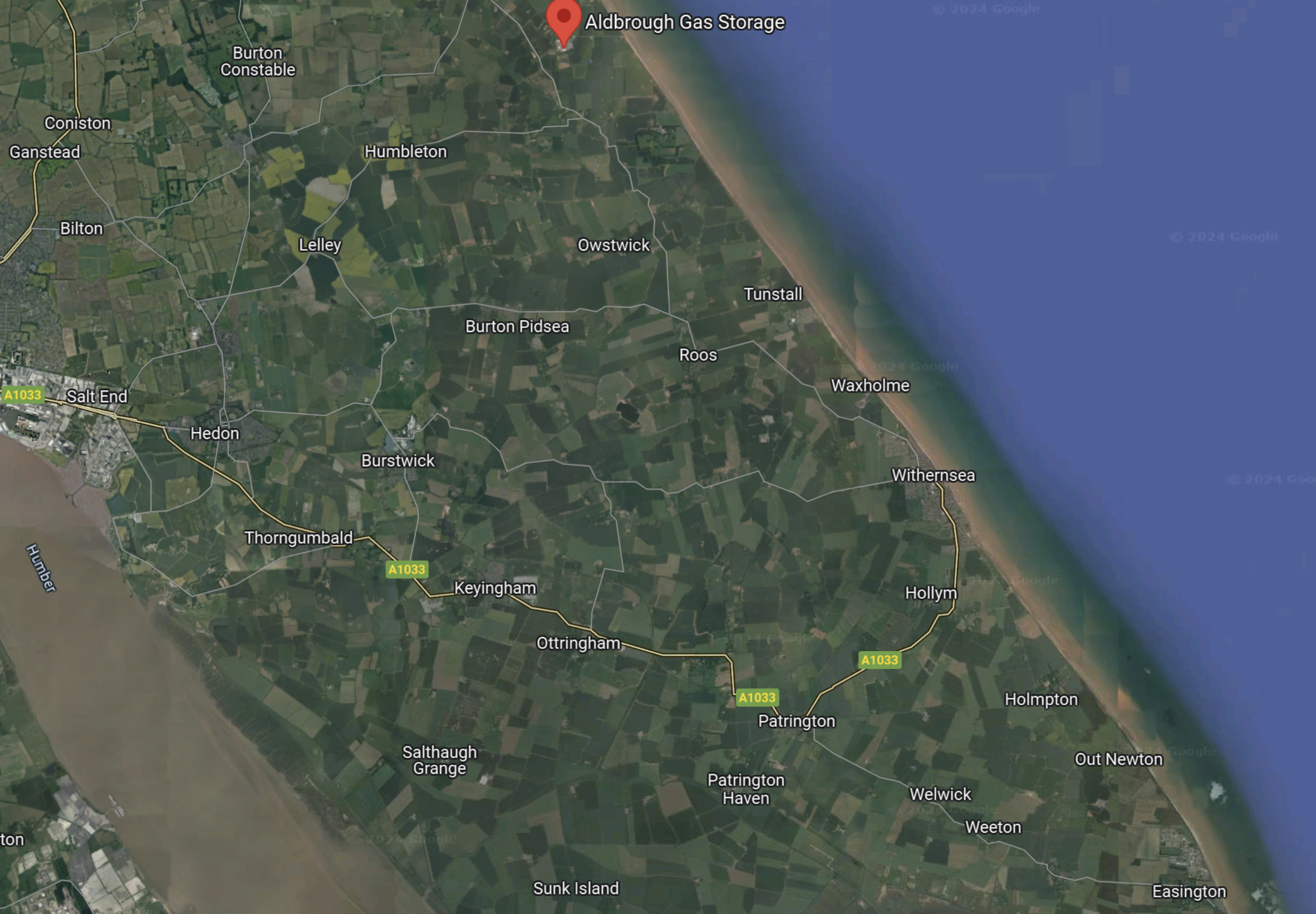
Note.
- The river crossing the South-West corner of the map is the Humber.
- Salt End with its power station and chemical works is on the North Bank of the Humber, where the river leaves the map.
- Aldbrough Gas Storage is marked by the red arrow at the top of the map.
- Easington Gas Terminal is in the South-East corner of the map.
- According to Wikipedia, gas flows into and out of the Rough Gas Storage are managed from Easington.
Looking at the map, I feel that the following should be possible.
- The two gas storage sites could be run together.
- Salt End power station and the related chemical works could run on hydrogen.
- Salt End will always have a reliable source of hydrogen.
- This hydrogen could be green if required.
All the chemical works at Salt End, could be run on a zero-carbon basis. Would this mean premium product prices? Just like organic does?
Enter The Germans
The Germans have a huge decarbonisation problem, with all their coal-fired power stations and other industry.
Three massive projects will convert much of the country and industry to hydrogen.
- H2ercules, which is a project of OGE and RWE, will create a hydrogen network to bring hydrogen, to where it is needed.
- In Uniper To Make Wilhelmshaven German Hub For Green Hydrogen; Green Ammonia Import Terminal, I describe how Uniper are going to build a hydrogen import terminal at Wilhelmshaven.
- AquaVentus is an RWE project that will use 10.3 GW of offshore wind power in German territorial waters to create a million tonnes per year of green hydrogen.
These would appear to be three of Europe’s largest hydrogen projects, that few have ever heard of.
AquaVentus And The UK
This video shows the structure of AquaVentus.
I clipped this map from the video.

Note.
- The thick white line running North-West/South-East is the spine of AquaVentus, that delivers hydrogen to Germany.
- There is a link to Denmark.
- There appears to be an undeveloped link to Norway.
- There appears to be an undeveloped link to Peterhead in Scotland.
- There appears to be a link to just North of the Humber in England.
- Just North of the Humber are the two massive gas storage sites of Aldbrough owned by SSE and Brough owned by Centrica.
- There appear to be small ships sailing up and down the East Coast of the UK. Are these small coastal tankers, that are distributing the hydrogen to where it is needed?
In the last century, the oil industry, built a substantial oil and gas network in the North Sea.
It appears now the Germans are leading the building of a substantial hydrogen network in the North Sea.
These are my thoughts about development of the AquaVentus network.
Hydrogen Production And AquaVentus
This RWE graphic shows the layout of the wind farms feeding AquaVentus.
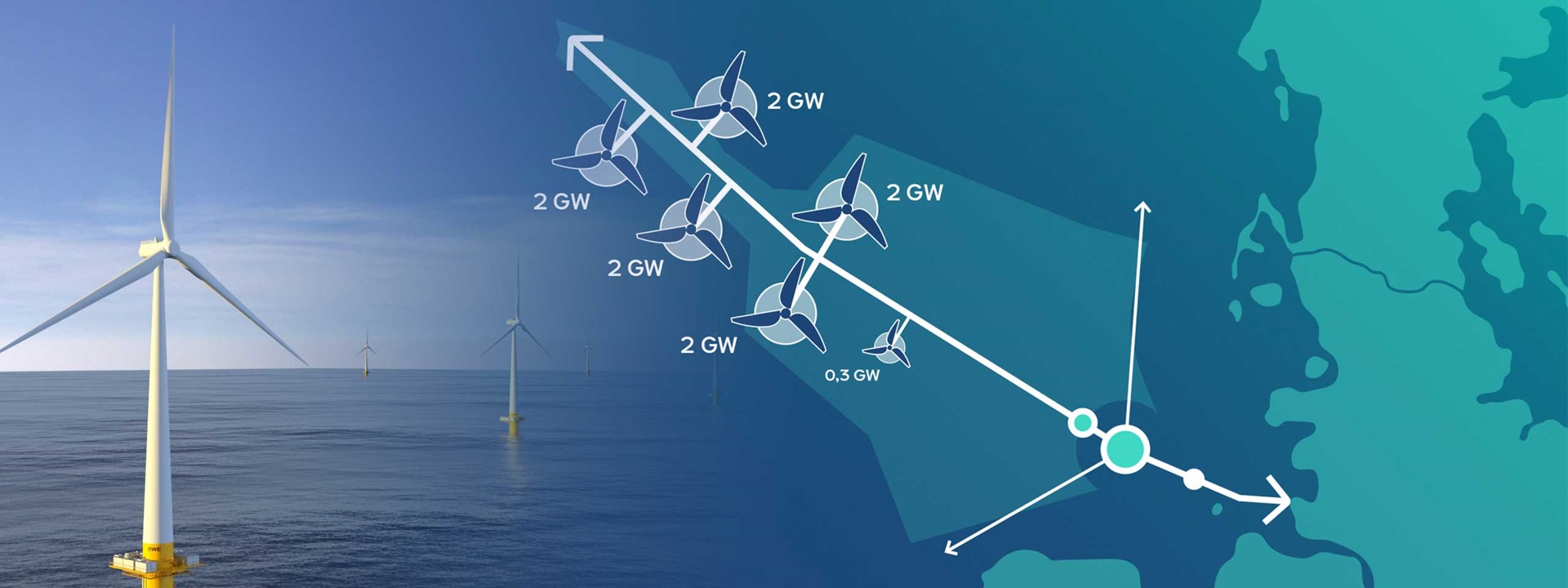
Note.
- There is a total of 10.3 GW.
- Is one of the 2 GW web sites on the UK-side of AquaVentus, the 3 GW Dogger Bank South wind farm, which is being developed by RWE?
- Is the 0.3 GW wind farm, RWE’s Norfolk wind farm cluster, which is also being developed by RWE?
Connecting wind farms using hydrogen pipelines to Europe, must surely mitigate the pylon opposition problem from Nimbys in the East of England.
As the AquaVentus spine pipeline could eventually connect to Peterhead, there will be other opportunities to add more hydrogen to AquaVentus.
Hydrogen Storage And AquaVentus
For AquaVentus to work efficiently and supply a large continuous flow of hydrogen to all users, there would need to be storage built into the system.
As AquaVentus is around 200 kilometres in length and natural gas pipelines can be up to 150 centimetres in diameter, don’t underestimate how much hydrogen can be stored in the pipeline system itself.
This page on the Uniper web site is entitled Green Wilhelmshaven: To New Horizons.
This is a sentence on the page.
Access to local hydrogen underground storage at the Etzel salt cavern site.
An Internet search gives the information, that Etzel gas storage could be developed to hold 1 TWh of hydrogen.
That would be enough hydrogen to supply 10 GW for a hundred hours.
Note that the UK branch of AquaVentus reaches the UK, just to the South of the massive hydrogen storage facilities at Aldbrough and Rough.
It would appear that both Germany and the UK are connected to AquaVentus through substantial storage.
I am certain, that all country connections to AquaVentus will have substantial storage at the country’s hydrogen terminal.
AquaDuctus
This would appear to be the first part of the AquaVentus network and has its own web site.
The web site is entitled Nucleus Of A Offshore Hydrogen Backbone.
These are the first two paragraphs.
The project partners are focusing on a scalable, demand-driven infrastructure: By 2030, AquaDuctus will connect the first large hydrogen wind farm site, SEN-1, with a generation capacity of approximately one gigawatt. SEN-1 is located in the German EEZ in the northwest of Helgoland. The pipeline will transport at a length of approx. 200 km green hydrogen produced from offshore wind to the German mainland and from there to European consumers via the onshore hydrogen infrastructure.
In the next project stage, AquaDuctus will be extended to the remote areas of the German exclusive economic zone towards the tip of the so-called duck’s bill. By that, additional future hydrogen wind farm sites will be connected. Along its way AquaDuctus will provide interconnection points with the opportunity for linking of adjacent national offshore hydrogen infrastructures originating from Denmark, Norway, the Netherlands, Belgium and United Kingdom which opens the door for Europe-wide offshore hydrogen transport by pipeline.
There is also an interactive map, that gives more details.
This paragraph explains, why the Germans have chosen to bring the energy ashore using hydrogen, rather than traditional cables.
Recent studies show that offshore hydrogen production and transport via pipelines is faster, cheaper, and more environmentally friendly than onshore electrolysis with a corresponding connection of offshore wind turbines via power cables. The German federal government has also recognized this advantage and has clearly expressed its intention to promote offshore hydrogen production in the North Sea.
I suspect, that some UK offshore wind farms will use the same techniques.
Hydrogen Production For The UK
Electrolysers will probably be built along the East Coast between Peterhead and Humberside and these will feed hydrogen into the network.
- Some electrolysers will be offshore and others onshore.
- Turning off windfarms will become a thing of the past, as all surplus electricity will be used to make hydrogen for the UK or export to Europe.
- Until needed the hydrogen will be stored in Albrough and Rough.
Backup for wind farms, will be provided using hydrogen-fired power stations like Keadby Hydrogen power station.
Financial Implications
I reported on Rishi Sunak’s Manifesto Speech, which he made on June 11th. This is an extract
This document on the Policy Mogul web site is entitled Rishi Sunak – Conservative Party Manifesto Speech – Jun 11.
These are three paragraphs from the speech.
We don’t just need military and border security. As Putin’s invasion of Ukraine has shown, we need energy security too. It is only by having reliable, home-grown sources of energy that we can deny dictators the ability to send our bills soaring. So, in our approach to energy policy we will put security and your family finances ahead of unaffordable eco zealotry.
Unlike Labour we don’t believe that we will achieve that energy security via a state-controlled energy company that doesn’t in fact produce any energy. That will only increase costs, and as Penny said on Friday there’s only one thing that GB in Starmer and Miliband’s GB Energy stands for, and that’s giant bills.
Our clear plan is to achieve energy security through new gas-powered stations, trebling our offshore wind capacity and by having new fleets of small modular reactors. These will make the UK a net exporter of electricity, giving us greater energy independence and security from the aggressive actions of dictators . Now let me just reiterate that, with our plan, we will produce enough electricity to both meet our domestic needs and export to our neighbours. Look at that. A clear, Conservative plan not only generating security, but also prosperity for our country.
I can’t remember any reports about an energy security policy, which he outlined in the last paragraph of my extract from his speech.
He also said we would have sufficient electricity to export to our neighbours. As I said earlier some of this energy will be in the form of hydrogen, which has been created by offshore electrolysers.
If we are exporting electricity and hydrogen to Europe, this is likely to have three effects.
- An improvement in Europe’s energy security.
- H2ercules will improve and decarbonise German industry, using UK hydrogen.
- The finances of UK plc will improve.
It looks like there would be winners all round.
Rishi Sunak had the cards and he played them very badly.
It is now up to Keir Starmer, Great British Energy and Jürgen Maier to play those cards to link the energy systems of the UK and Germany to ensure security and prosperity for Europe.
UK ESO Unveils GBP 58 Billion Grid Investment Plan To Reach 86 GW of Offshore Wind By 2035
The title of this post, is the same as that of this article on offshoreWIND.biz.
This is the sub-heading.
Great Britain’s electricity system operator (ESO) has proposed a GBP 58 billion (approximately EUR 68 billion) investment in the electricity grid. The proposal outlines a vision for incorporating an additional 21 GW of offshore wind into the grid by 2035, which would bring the country’s total offshore wind capacity to a potential 86 GW.
These three paragraphs add more details to what the investment in the grid means for offshore wind.
The ESO released on 19 March the first Beyond 2030 report. The plan sets up the necessary infrastructure to transfer power to and from future industries, as electricity demand is expected to rise by 64 per cent by 2035, according to the ESO.
The grid operator said that the plan connects a further 21 GW of offshore wind in development off the coast of Scotland to the grid in an efficient and coordinated way which would bring the country’s total offshore wind capacity to a potential 86 GW.
The proposals could assist the UK government in meeting the sixth Carbon Budget and allow for the connection of Crown Estate Scotland’s ScotWind leasing round.
These are my thoughts.
How Much Offshore Wind Is In The Pipeline?
This Wikipedia entry is a List Of Offshore Wind Farms In The United Kingdom.
It gives these figures for wind farms in various operational an development states.
- Operational – 14,703 MW
- Under Construction – 5,202 MW
- Pre-Construction – 6,522 MW
- Contracts for Difference – Round 3 – 12 MW
- Contracts for Difference – Round 4 – 1,428 MW
- Early Planning – England – 18,423 MW
- Early Planning – Wales – 700 MW
- Early Planning – Scotland – 30,326 MW
Note.
- These add up to a total of 77,316 MW.
- If all the wind farms in the Wikipedia entry are commissioned, the UK will be short of the 86,000 MW total by 8,664 MW.
- Some wind farms like Ossian could be increased in size by a few GW, as I reported in Ossian Floating Wind Farm Could Have Capacity Of 3.6 GW.
It looks like only another 7,164 MW of offshore wind needs to be proposed to meet the required total.
This article on offshoreWIND.biz is entitled The Crown Estate Opens 4.5 GW Celtic Sea Floating Wind Seabed Leasing Round, will add another 4,500 MW to the total, which will raise the total to 81,816 MW.
The article also finishes with this paragraph.
Round 5 is expected to be the first phase of development in the Celtic Sea. In November 2023, the UK Government confirmed its intention to unlock space for up to a further 12 GW of capacity in the Celtic Sea.
A further 12 GW of capacity will take the total to 93,816 MW.
In Three Shetland ScotWind Projects Announced, I talked about three extra Scotwind wind farms, that were to be developed to the East of Shetland.
These will add 2.8 GW, bringing the total to 96,616 MW.
I don’t think the UK has a problem with installing 86 GW of offshore wind by 2035, so we must create the electricity network to support it.
The Electricity Network In 2024
I clipped this map from this article in The Telegraph, which is entitled Britain’s Energy System Will Not Hit Net Zero Until 2035, National Grid Tells Labour.
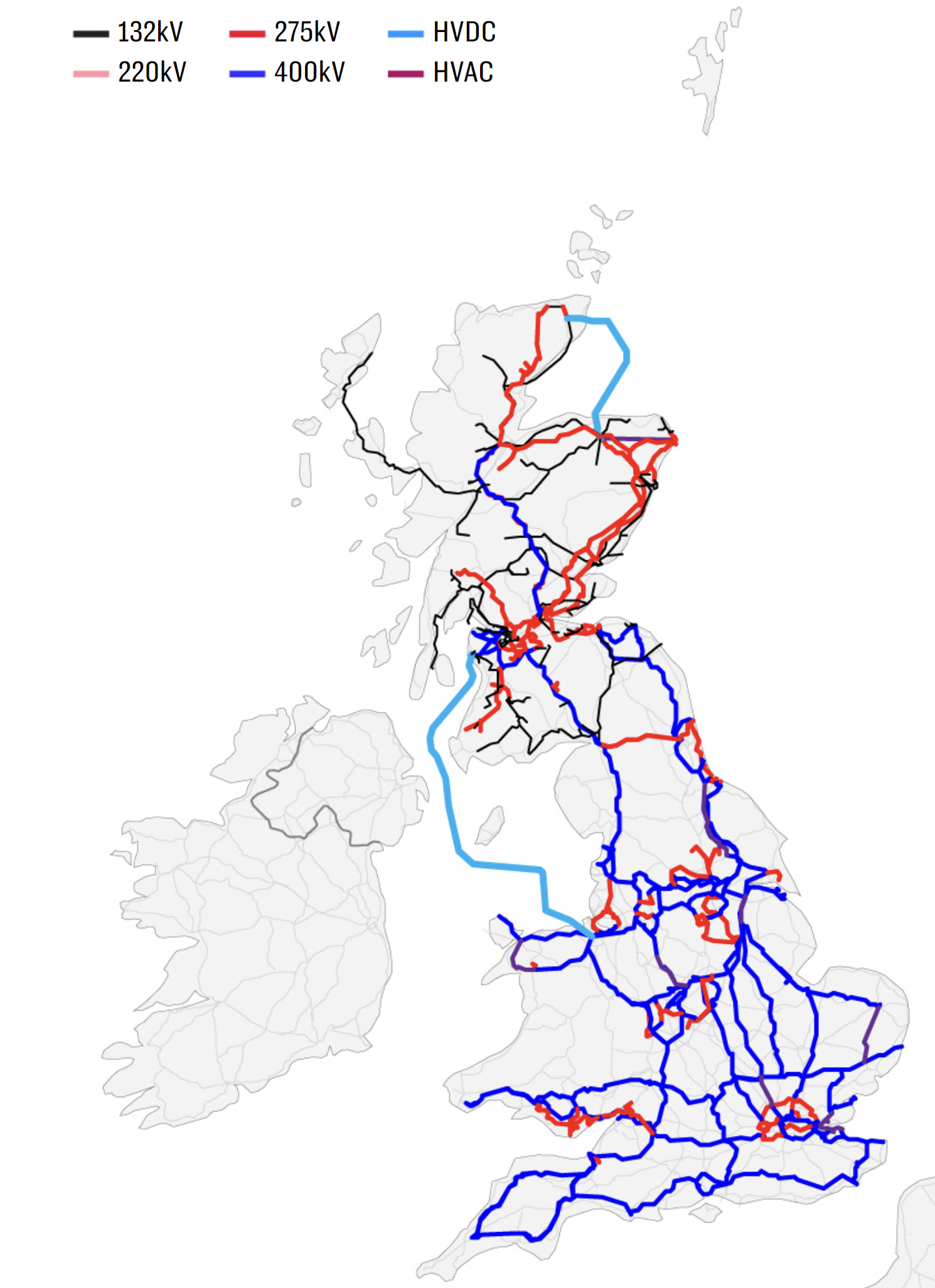
The dark blue lines are the 400 kV transmission lines.
- The one furthest East in East Anglia serves the Sizewell site, which hosts the Sizewell B nuclear power station and will be the home of Sizewell C nuclear power station, unless the Green or LibDem Parties are a member of a coalition government.
- Kent and Sussex seem to be encircled by 400 kV lines, with small spurs to the interconnectors to Europe.
- Two 400 kV lines appear to serve the South-West peninsular, with one going along the South Coast and the other further North. I suspect these two motorways for electricity explain, why the Morocco-UK Power Project terminates in Devon.
- London seems to have its own M25 for electricity.
- There also appears to be an East-West link to the North of London linking Sizewell in the East and Pembroke in the West. Both ends have large power stations.
- There also appear to be two 400 kV lines from Keadby by the Humber Estuary to North Wales with the pumped storage hydro power station at Dinorwig.
- Two more 400 kV lines link Yorkshire to the South of Scotland.
- A lonely Northern cable connects Edinburgh and the North of Scotland.
The red lines, like the one encircling central London are the 275 kV transmission lines.
- Think of these as the A roads of the electricity network.
- They encircle London often deep underground or under canal towpaths.
- They reinforce the electricity network in South Wales.
- Liverpool appears to have its own local network.
- They also seem to provide most of the capacity North of and between Edinburgh and Glasgow.
Newer cables are starting to appear on this map.
There are two light blue cables and these are HVDC cables that run underwater.
- The 1.2 GW Caithness – Moray Link does what it says in the name and it connects the far North of Scotland direct towards Aberdeen.
- The much larger 2.25 GW Western HVDC Link connects Hunterston near Glasgow to Flintshire Bridge near Liverpool. Note how it passes to the West of the Isle of Man.
Not shown on the map are the smaller 500 MW Moyle Interconnector and the recently-opened 600 MW Shetland HVDC Connection.
The Electricity Network In 2050
This second map shows how the network will look in 2050.

Note.
- The colours are the same, as the previous map.
- Although, I do think there are some errors in which have been used.
- There are a lot more cables.
There are several more light blue cables and these are HVDC cables that run underwater.
- Shetland is now linked to the North of Scotland by the Shetland HVDC Connection.
- There appears to be a cluster of HVDC interconnectors at Caithness HVDC switching station, near Wick, including a new one to Orkney, to go with the others to Moray and Shetland.
- The 2 GW Scotland England Green Link 1 will run from Torness in Southeast Scotland to Hawthorn Pit substation in Northeast England.
- The 2 GW Eastern Green Link 2 will run from Sandford Bay, at Peterhead in Scotland, to the Drax Power Station in Yorkshire, England.
- There also appear to be two or possibly three other offshore cables linking the East Coast of Scotland with the East Coast of England.
- If the Eastern cables are all 2 GW, that means there is a trunk route for at least 8 GW between Scotland’s wind farms in the North-East and Eastern England, which has the high capacity wind farms of Dogger Bank, Hornsea and around the Lincolnshire and East Angliam coasts.
- Turning to the Western side of Scotland, there appears to be a HVDC connection between the Scottish mainland and the Outer Hebrides.
- South-West of Glasgow, the Western HVDC Link appears to have been duplicated, with a second branch connecting Anglesey and North-West Wales to Scotland.
- The Moyle Interconnector must be in there somewhere.
- Finally, in the South a link is shown between Sizewell and Kent. It’s shown as 400 kV link but surely it would be a HVDC underwater cable.
There are also seven stubs reaching out into the sea, which are probably the power cables to the wind farms.
- The red one leading from South Wales could connect the wind farms of the Celtic Sea.
- The blue link North of Northern Ireland could link the MachairWind wind farm to the grid.
- The other two red links on the West Coast of Scotland could link to other ScotWind wind farms.
- The red link to the North of East Anglia could link RWE’s Norfolk wind farms to the grid.
- The other stubs in the East could either connect wind farms to the grid or be multi-purpose interconnectors linking to Germany and the Netherlands.
It looks to me, that National Grid ESO will be taking tight control of the grid and the connected wind farms, as an integrated entity.
As a Graduate Control Engineer, I can’t disagree with that philosophy.
Hydrogen Production
In How Germany Is Dominating Hydrogen Market, I talked about how Germany’s plans to use a lot of hydrogen, will create a large world-wide demand, that the UK because of geography and large amounts of renewable energy is in an ideal place to fulfil.
I can see several large electrolysers being built around the UK coastline and I would expect that National Grid ESO have made provision to ensure that the electrolysers have enough electricity.
Would I Do Anything Different?
Consider.
- If it is built the Morocco-UK Power Project will terminates in Devon.
- There could be more wind farms in the Celtic Sea.
- It is likely, that the wind farms in the Celtic Sea will connect to both Pembroke and Devon.
- Kent has interconnectors to the Continent.
Would a Southern HVDC link along the South Coast between Devon and Kent be a good idea?
Conclusion
Looking at the proposed list of wind farms, a total in excess of 96 GW could be possible, which is ten GW more than needed.
The network not only serves the UK in a comprehensive manner, but also tees up electricity for export to Europe.
SSE Thermal Secures 10-year Contracts For Two New Low-Carbon Power Stations In Ireland
The title of this post, is the same as that of this press release from SSE.
These first two paragraphs outline the two projects.
SSE Thermal, as part of SSE plc, has provisionally secured 10-year capacity agreements for its two proposed new-build power stations in Ireland which would run on sustainable biofuel.
The proposed low-carbon units at Tarbert in Co. Kerry and Platin in Co. Meath received the contracts in the T-4 Capacity Auction to commence in the 2026/27 delivery year.
Note.
- Both plants would help to protect security of supply and provide flexible backup to Ireland’s growing renewables sector.
- This Wikipedia entry is entitled Renewable Entry In Ireland and states that by the end of 2021, Ireland had 4.4 GW of onshore wind, with the intention of adding 5 GW of offshore wind, by 2030.
- The proposed units will initially run on Hydrotreated Vegetable Oil (or HVO), which is produced by processing waste oils to create a fossil-free alternative to diesel in accordance with EU sustainability standards.
- It looks like the two new-build HVO-powered station will back up the renewables.
- It is intended that the two new power stations will be in operation in 2026.
The two new power stations will be convertible to hydrogen in the future.
As at Keadby in Lincolnshire, which I wrote about in SSE Thermal Charts Path To Green Hydrogen Future With First-Of-A-Kind Project. it looks like SSE have developed a comprehensive plan to keep the electricity at full power, even when the wind isn’t blowing.
Conclusion
SSE Thermal are showing that in addition to gas, nuclear and pumped storage hydroelectric, renewables can also be backed up by biomass.
RWE Underlines Commitment To Floating Offshore Wind In The Celtic Sea Through New ‘Vision’ Document
The title of this post, is the same as that of this press release from RWE.
These are the three bullet points.
- Offshore floating wind in the Celtic Sea could unlock 3,000 jobs and £682 million in supply chain opportunities by 2030
- RWE is targeting the development at least 1GW of floating wind in the region
- Using experience from demonstrator projects and partnerships with local supply chain to strengthen ambitions
These opening three paragraphs outline more of RWE’s vision.
RWE, the world’s second largest offshore wind player and largest generator of clean power in Wales, has unveiled its vision for the future of floating offshore wind in the Celtic Sea region and the opportunities it presents from new large-scale, commercial projects. Entitled “RWE’s Vision for the Celtic Sea”, the document was unveiled during day one of the Marine Energy Wales conference, in Swansea, where RWE is the Platinum Sponsor.
RWE sees floating wind technology as the next frontier in the development of the offshore wind sector, and which could potentially unlock a multi-billion pound opportunity for the broader Celtic Sea region and the UK.
Studies anticipate the first GW of floating wind to be developed in the Celtic Sea could potentially deliver around 3,000 jobs and £682 million in supply chain opportunities for Wales and the south west of England. Against this backdrop, it’s anticipated the technology could unlock a resurgence in Welsh industry, helping to decarbonise industry and transport, spur on academic innovation, and spearhead the growth of a new, highly skilled workforce.
Reading further down, there are these statements.
- RWE will be bidding in the upcoming Celtic Sea auction with the aim of securing at least 1 gigawatt (GW) of installed capacity, to be developed throughout the 2020’s.
- The Celtic Sea region is pivotal to RWE’s ‘Growing Green’ strategy in the UK, where we expect to invest £15 billion in clean energy infrastructure by 2030.
- A cooperation agreement with Tata SteelUK to understand and explore the production of steel components that could be used in high-tech floating wind foundations and structures for projects in the Celtic Sea.
- The company has also signed agreements with ABP Port Talbot, the Port of Milford Haven and Marine Power Systems of Swansea, to explore opportunities for building the supply chain for floating wind.
- RWE is the largest power producer and renewable energy generator in Wales with more than 3GW of energy across 11 sites.
- If successful in the leasing round, RWE’s Celtic Sea projects will also play a key role in the development of RWE’s Pembroke Net Zero Centre, as well as decarbonizing wider industrial processes and transportation across South Wales.
It looks like RWE are very serious about the Celtic Sea and Pembrokeshire.
Pembroke Net Zero Centre
The Pembroke Net Zero Centre looks to be a powerful beast.
It will be located at the 2200 MW Pembroke power station, which is the largest gas-fired power station in Europe.
These are the first two paragraphs on its web page.
RWE is a world leader in renewables, a market leader in the development of offshore wind and a key driver of the global energy transition. In turn, Pembroke is looking to continue its transformation as part of a decarbonisation hub under the title of the PNZC, linking-up with new innovative technologies needed for a low carbon future, including hydrogen production, Carbon Capture and Storage and floating offshore wind.
The PNZC will bring together all areas of the company’s decarbonisation expertise, including innovation, offshore wind, power engineering, trading and the development/operation of highly technical plants.
The page also talks of burning hydrogen in the power station and an initial 100-300 MW ‘pathfinder’ electrolyser on the Pembroke site.
Conclusion
In some ways, RWE are following a similar philosophy in the area, to that being pursued by SSE at Keadby on Humberside.
As The Crown Estate is talking of 4 GW in the Celtic Sea, it looks like RWE are positioning Pembroke to be the backup, when the wind doesn’t blow.
 The Anonymous Widower