Why Are Abellio Starting Norwich-in-Ninety With Class 755 Trains?
At the May timetable change Abellio Greater Anglia will be running four trains per day between London and Norwich in ninety minutes.
I have read that this is possible with the current Class 90 locomotive /Mark 3 coach train sets and that is a fall-back position.
I was also told by a former employee of Greater Anglia, that one night, he was a passenger between Norwich station and Illford depot in an empty Class 321 train, that achieved an incredible time.
So why take the risk with untried Class 755 trains on the first day of the new timetable?
- Abellio must be very sure that the trains will perform, as they say in the brochure.
- They also know all the publicity that running new trains will bring.
But could Abellio just want to check the public’s reaction to these trains with effectively a locomotive in the middle, before they decide on the 125 mph bi-mode trains for the Midland Main Line?
I don’t believe that building a 125 mph version of Class 755 train would be beyond the bounds of possibility.
The Weight Of A Class 755 Train
I haven’t been able to do my energy calculation for a Class 755 train, as I can’t find the weight of a Class 755 train on the Internet.
However, I can estimate the weight of a four-car Class 755/4 train from the Stadler data sheet for the train.
This gives the following.
- Mean Acceleration Electric (0-40 mph) – 1.1 metres/second squared
- Maximum traction – 200 kN
- 202 seats and 27 tip-up seats
I think it is reasonable to assume that the acceleration rate is for a train with a typical load of passengers.
Using Omni’s Acceleration Calculator, this gives a time of 16.256 seconds to accelerate from 0-40 mph.
Then putting this time into Omni’s Newton’s Second Law Calculator, gives a train mass of 181.8 tonnes.
As passengers can weigh around twenty tonnes, if they weigh 90 Kg each, with baggage, bikes and buggies, I would estimate that an empty Class 755/4 train weighs around 160-170 tonnes.
By comparison.
- An empty four-car electric Class 350 train weighs 175.5 tonnes
- An empty three-car diesel Class 170 train weights 135.3 tonnes.
I don’t think a figure of 160-170 tonnes is out of line, with a figure of 180 tonnes for a typical loaded train.
Remember too, that these trains are Stadler FLIRTs, where FLIRT is Fast Light Intercity and Regional Train.
Applying Omni’s Kinetic Energy Calculator, gives these figures for the kinetic energy of a train.
- 90 mph – 40 kWh
- 100 mph – 50 kWh
- 125 mph – 78 kWh
As some electric FLIRTs can nun at 125 mph, I believe that a bi-mode FLIRT, based on the Class 755 train could be designed with these characteristics.
- 125 mph on electric power
- 125 mph on diesel power
Acceleration on diesel to 125 mph would probably be the biggest problem and it is likely that more power than for a Class 755 train will be needed.
Do Abellio Greater Anglia’s initial Norwich-in-Ninety trains give a clue in that they will be two four-car Class 755 trains working as an eight-car train?
- It will be eight passenger cars and two power cars at the 25% and 75% positions in the formation.
- Stadler have built the similar Stadler GTW with two power cars in a single train.
So I suspect that Stadler know the dynamics of these trains very well.
I wouldn’t be surprised if someone told me, that Stadler had offered a bi-mode Stadler FLIRT with two power cars, for the Midland Main Line.
- The power car concept has been sold to operators with diesel, electric and battery power options.
- Stadler are proposing to use battery power in the Class 93 locomotive to boost performance.
- Many would believe, as I do, that hydrogen power could be added to a Stadler power car.
So are these runs at 100 mph with two four-car Class 755 trains, a final trial of the technology to prove that similar higher-powered trains could run at 125 mph on the Midland Main Line, before Abellio sign a contract?
Hydrogen Trains To Be Trialled On The Midland Main Line
This article on Railway Gazette is entitled Bimode And Hydrogen Trains As Abellio Wins Next East Midlands Franchise.
Abellio will be taking over the franchise in August this year and although bi-mode trains were certain to be introduced in a couple of years, the trialling of hydrogen-powered trains is a surprise to me and possibly others.
This is all that is said in the article.
Abellio will also trial hydrogen fuel cell trains on the Midland Main Line.
It also says, that the new fleet will not be announced until the orders are finalised.
In this post, I’m assuming that the hydrogen trial will be performed using the main line trains.
Trains for the Midland Main Line will need to have the following properties
- 125 mph on electric power
- 125 mph on diesel power
- Ability to go at up to 140 mph, when idigital n-cab signalling is installed and the track is improved.
- UK gauge
- Ability to run on hydrogen at a future date.
I think there could be three types of train.
- A traditional bi-mode multiple unit, with underfloor engines like the Hitachi Class 800 series, is obviously a possibility.
- An electrical multiple unit, where one driving car is replaced by a bi-mode locomotive with appropriate power.
- Stadler or another manufacturer might opt for a train with a power pack in the middle.
The second option would effectively be a modern InterCity 225.
- South of Kettering, electricity would be used.
- North of Kettering, diesel would be used
- Hydrogen power could replace diesel power at some future date.
- Design could probably make the two cabs and their driving desks identical.
- The locomotive would be interchangeable with a driver car.
Bi-modes would work most services, with electric versions working to Corby at 125 mph.
Which manufacturer has a design for a 125 mph, hydrogen-powered train?
Alstom
Alstom have no 125 mph UK multiple unit and their Class 321 Hydogen train, is certainly not a 125 mph train and probably will still be under development.
Bombardier
In Mathematics Of A Bi-Mode Aventra With Batteries, I compared diesel and hydrogen-power on bi-mode Aventras and felt that hydrogen could be feasible.
In that post, I wrote a section called Diesel Or Hydrogen Power?, where I said this.
Could the better ambience be, because the train doesn’t use noisy and polluting diesel power, but clean hydrogen?
It’s a possibility, especially as Bombardier are Canadian, as are Ballard, who produce hydrogen fuel-cells with output between 100-200 kW.
Ballard’s fuel cells power some of London’s hydrogen buses.
The New Routemaster hybrid bus is powered by a 138 kW Cummins ISBe diesel engine and uses a 75 kWh lithium-ion battery, with the bus being driven by an electric motor.
If you sit in the back of one of these buses, you can sometimes hear the engine stop and start.
In the following calculations, I’m going to assume that the bi-mode |Aventra with batteries has a power source, that can provide up to 200 kW, in a fully-controlled manner
Ballard can do this power output with hydrogen and I’m sure that to do it with a diesel engine and alternator is not the most difficult problem in the world.
So are Bombardier designing the Bi-Mode Aventra With Batteries, so that at a later date it can be changed from diesel to hydrogen power?
All an Aventra needs to run is electricity and the train, the onboard staff and passengers don’t care whether it comes from overhead wires, third-rail, batteries, diesel or hydrogen.
Bombardier also have the technology for my proposed locomotive-based solution, where one driver-car of an Aventra is replaced by what is effectively a locomotive.
If Bombardier have a problem, it is that they have no small diesel train to replace Abellio’s small diesel trains. Could the longer services use the bi-mode Aventras and the shorter ones Aventras with battery power?
CAF
CAF probably have the technology, but there would be a lot of development work to do.
Hitachi
Hitachi have the bi-mode trains in the Class 802 trains, but haven’t as yet disclosed a hydrogen train.
Siemens
They’ve made a few noises, but I can’t see them producing a bi-mode train for 2022.
Stadler
In a few weeks time, I will be having a ride in a Stadler-built Class 755 train, run by Abellio Greater Anglia.
The Class 755 train is a bi-mode 100 mph train, from Stadler’s Flirt family.
Could it be stretched to a 125 mph train?
- Stadler have built 125 mph electric Flirts.
- It is my view, that Stadler have the knowledge to make 125 mph trains work.
- Flirts are available in any reasonable length.
- I’ve read that bi-mode and electric Flirts are very similar for drivers and operators.
These could work the Midland Main Line.
If the mainline version is possible, then Abellio could replace all their smaller diesel trains with appropriate Class 755 trains, just as they will be doing in East Anglia.
Stadler with the launch of the Class 93 locomotive, certainly have the technology for a locomotive-based solution.
East Midlands Railway would be an all-Stadler Flirt fleet.
As to hydrogen, Stadler are supplying hydrogen-powered trains for the Zillertalbahn, as I wrote in Zillertalbahn Orders Stadler Hydrogen-Powered Trains.
Talgo
Talgo could be the joker in the pack. They have the technology to build 125 mph bi-mode trains and are building a factory in Scotland.
My Selection
I think it comes down to a straight choice between Bombardier and Stadler.
It should also be noted, that Abellio has bought large fleets from both manufacturers for their franchises in the UK.
Zero-Carbon Pilots At Six Stations
This promise is stated in the franchise.
Once the electrification reaches Market Harborough in a couple of years, with new bi-mode trains, running on electricity, the following stations will not see any passenger trains, running their diesel engines.
- St. Pancras
- Luton Airport Parkway
- Luton
- Bedford
- Wellingborough
- Kettering
- Corby
- Market Harborough
These are not pilots, as they have been planned to happen, since the go-ahead for the wires to Market Harborough.
Other main line stations include.
- Beeston
- Chesterfield
- Derby
- East Midlands Parkway
- Leicester
- Long Eaaton
- Loughborough
- Nottingham
- Sheffield
Could these stations be ones, where East Midlands Railway will not be emitting any CO2?
For a bi-mode train to be compliant, it must be able to pass through the station using battery power alone.
- As the train decelerates, it charges the onboard batteries, using regernerative braking.
- Battery power is used whilst the train is in the station.
- Battery power is used to take the train out of the station.
Diesel power would only be used well outside of stations.
How would the trains for the secondary routes be emission-friendly?
- For the long Norwich to Derby and Nottingham to Liverpool routes, these would surely be run by shorter versions of the main line trains.
- For Stadler, if secondary routes were to be run using Class 755 trains, the battery option would be added, so that there was no need to run the diesel engines in stations.
- For Bombardier, they may offer battery Aventras or shortened bi-modes for the secondary routes, which could also be emission-free in stations.
- There is also the joker of Porterbrook’s battery-enhaced Class 350 train or BatteryFLEX.
I think that with the right rolling-stock, East Midlands Railway, could be able to avoid running diesel engines in all the stations, where they call.
Why Are Abellio Running A Hydrogen Trial?
This is a question that some might will ask, so I’m adding a few reasons.
A Train Manufacturer Wants To Test A Planned Hydrogen Train
I think that it could be likely, that a train manufacturer wants to trial a hydrogen-powered variant of a high-speed train.
Consider.
- The Midland Main Line is about 160 miles long.
- A lot of the route is quadruple-track.
- It is a 125 mph railway for a proportion of the route.
- It has only a few stops.
- It is reasonably straight with gentle curves.
- Part of the route is electrified.
- It is connected to London at one end.
In my view the Midland Main Line is an ideal test track for bi-mode high speed trains.
A Train Manufacturer Wants To Sell A Fleet Of High Speed Trains
If a train manufacturer said to Abellio, that the fleet of diesel bi-mode trains they are buying could be updated to zero-carbon hydrogen bi-modes in a few years, this could clinch the sale.
Helping with a trial, as Abellio did at Manningtree with Bombardier’s battery Class 379 train in 2015, is probably mutually-beneficial.
The Midland Main Line Will Never Be Fully Electrified
I believe that the Midland Main Line will never be fully-electrified.
- The line North of Derby runs through the Derwent Valley Mills World Heritage Site. Would UNESCO allow electrification?
- I have been told by drivers, that immediately South of Leicester station, there is a section, that would be very difficult to electrify.
- Some secondary routes like Corby to Leicester via Oakham might be left without electrification.
But on the other hand some sections will almost certainly be electrified.
- Around Toton, where High Speed Two crosses the Midland Main Line and the two routes will share East Midlands Hub station.
- Between Clay Cross North Junction and Sheffield, where the route will be shared with the Sheffield Spur of High Speed Two.
- The Erewash Valley Line, if High Speed Two trains use that route to Sheffield.
The Midland Main Line will continue to need bi-mode trains and in 2040, when the Government has said, that diesel will not be used on UK railways,
It is my view, that to run after 2040, there are only two current methods of zero-carbon propulsion; on the sections without overhead electrification battery or hydrogen power.
So we should run trials for both!
Abellio Know About Hydrogen
Abellio is Dutch and after my trip to the Netherlands last week, I wrote The Dutch Plan For Hydrogen, which describes how the Dutch are developing a green hydrogen economy, where the hydrogen is produced by electricity generated from wind power.
So by helping with the trial of hydrogen bi-mode trains on the Midland Main Line, are Abellio increasing their knowledge of the strengths and weaknesses of hydrogen-powered trains.
In Thoughts On Eurostar To North Netherlands And North West Germany, I proposed running bi-mode trains on the partially-electrified route between Amsterdam and Hamburg via Groningen and Bremen, which would be timed to connect to Eurostar’s services between London and Amsterdam. These could use diesel, hydrogen or battery power on the sections without electrification.
If hydrogen or battery power were to be used on the European bi-mode train, It would be possible to go between Sheffield and Hamburg on a zero-carbon basis, if all electric power to the route were to be provided from renewable sources.
Abellio Sees The PR Value In Running Zero-Carbon Trains
In My First Ride In An Alstom Coradia iLint, I talked about running hydrogen-powered trains on a hundred mile lines at 60 mph over the flat German countrside
The Midland Main Line is a real high speed railway, where trains go at up to 125 mph between two major cities, that are one-hundred-and-sixty miles apart.
Powered by hydrogen, this could be one of the world’s great railway journeys.
If hydrogen-power is successful, Abellio’s bottom line would benefit.
Conclusion
This franchise will be a big improvement in terms of carbon emissions.
As I said the choice of trains probably lies between Bombardier and Stadler.
But be prepared for a surprise.
Thoughts On Kentish Town Station
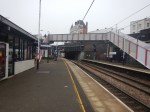
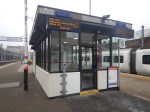
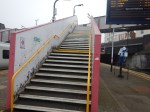
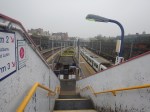
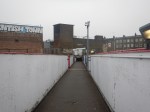
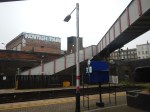
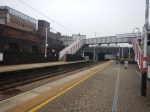
Kentish Town station is not step-free, as these pictures show.

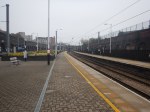
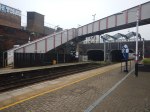
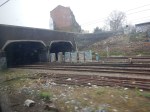
This Google Map shows the layout of the station.
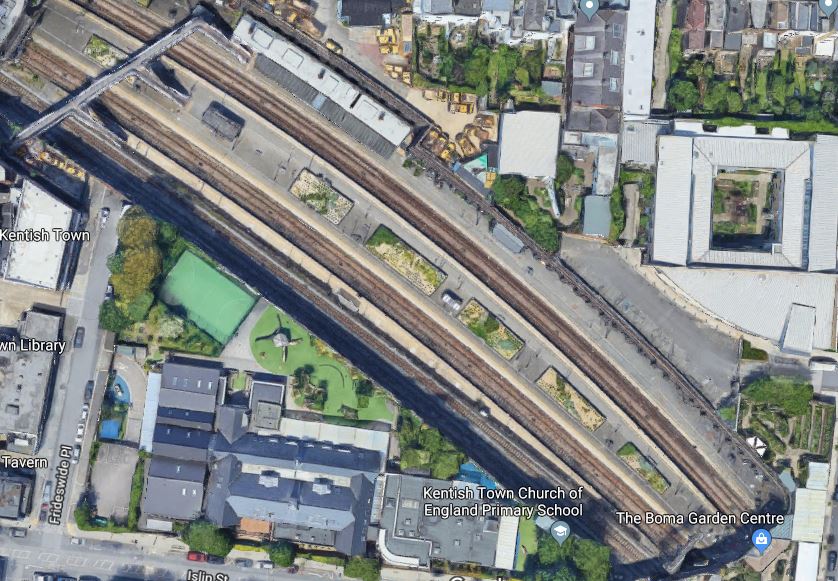
Note the four platforms and two extra tracks on the Southern side.
But I do believe it is a station with potential.
An All-Electric Railway
In perhaps 2022 or a couple of years later, when the new bi-mode trains are delivered, between Kentish Town and St. Pancras stations will be an all-electric railway.
The Station Is In A Cutting
The station is in a cutting and given the price of land in the area and the demand for housing, I wouldn’t be surprised to see the whole station roofed over at some time in the future.
This couldn’t be done until the railway was all-electric.
Step-Free Access To National Rail Platforms
If the station was covered by development, I’m sure it would be possible to provide step-free access between the surface and the National Rail platforms.
Step-Free Access To Underground Platforms
This map from carto.metro.free.fr shows the lines at Kentish Town station.
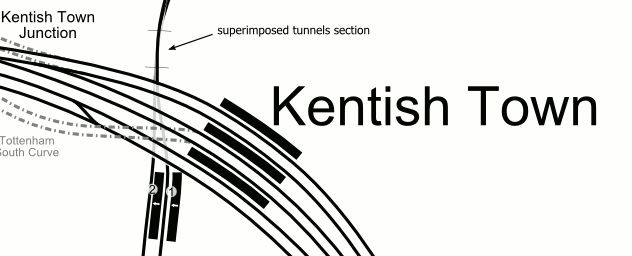
Note how the Northern Line is at almost right angles to the Midland Main Line.
Providing step-free access might be easier from the area to the North of the current Undegrround station, which could be within any new development.
Some of the new techniques used on Crossrail might make a connection possible.
Kentish Town And West Hampstead Thameslink Stations
The next station to the North of Kentish Town is West Hampstead Thameslink.
Both stations have six tracks, but only four platforms.
It would probably be very advantageous if there were six tracks on the Midland Main Line along this very busy railway.
But this is impossible as the tunnels that lie between the two stations only have a total of four tracks.
I suspect that Network Rail’s engineers sometimes muse about what might have been, if the Victorians had built the extra tracks.
- Thameslink services could have their own separate tracks.
- Express services could be roaring through at 200 kph.
- The West London Orbital Railway could terminate at Kentish Town station.
But short of rebuilding the Midland Main Line between the two station and digging a lot of extra tunnels, these are impossible ideas.
Is This Stadler’s Plan For A Multi-Mode Future?
We have not seen any of Stadler’s bi-mode Flirts in service yet although Greater Anglia’a Class 755 trains have been rumoured to be speeding between London and Norwich in ninety minutes from this May!
Today, I rode on one of Stadler’s diesel GTWs between Groningen and Eemshaven in the Netherlands, which I wrote about in The Train Station At The Northern End Of The Netherlands.
GTWs are a diesel electric train with a power-pack car in the middle of the three car train. The diesel electric Flirts are a later train with a similar layout to the GTW.
So are the diesel GTWs and Flirts just a bi-mode without a pantograph? Or more likely the bi-mode is a diesel electric train with the addition of a pantograph and extra electrical gubbins.
Looking at the visualisations on Wikipedia of the bi-mode Class 755 train and the all-electric Class 745 train, it appears that the next-to-end car has the pantograph.
Are these cars with the pantograph identical on both the bi-mode and the all-electric versions? It would certainly be sensible from a engine erring point of view.
So could it be that all that is needed to convert a diesel electric Flirt into a bi-mode Flirt is to add the pantograph car and swap the power pack car for a bi-mode one? The old power pack car could then be converted into another bi-mode power pack car to convert another train.
But the power pack cars are not as simple as they look. They have four slots for diesel engines. Three-car and four-car Class 755 trains have two and four engines respectively.
I believe that one or more of the slots can be filled with a battery to create Flirts like the tri-mode ones proposed for South Wales.
So could we see some of the Greater Anglia Flirts converted in this way? Surely, Colchester Town to Sudbury could be a service that could benefit from battery power West of Marks Tey?
Today, I had a chat with a GTW driver, who said that the train he’d been driving was diesel-electric and that he had heard that batteries or hydrogen power could be used on the eoute.
The lines around Groningen seem to employ quite a few GTWs and distances are not overly long. So could some be converted to 1500 VDC electric/diesel/battery tri-modes? There is electrification at Groningen station and some of the bay platforms used by GTWs already have wires.
If the conversion is successful, then Stadler could be on a Swiss roll, as there are a lot of GTWs and Flirts out there, many of which are diesel-electric, like the one I rode today.
Would a train operator prefer to upgrade a diesel electric train that works well or buy a new bi-mode from another train manufacturer?
Could also an electric Flirt be converted into a bi-mode, by splitting the train and sticking a power pack car in the middle. Engineering common sense says that the passenger cars must be very similar to those of diesel Flirts to simplify manufacture of the trains.
We already know, that four-car Flirts are only three-car trains with an extra passenger car. Stadler could mix-and-match passenger, pantograph and power pack cars to give operators what they need.
Intelligent computer software would choose which power option to be used and the driver would just monitor, that the train was behaving as needed.
Looking at my route yesterday between Groningen and Eemshaven, it is a route of just under forty kilometres or twenty-five miles. Adrian Shooter is talking of ranges of sixty miles with battery versions of Class 230 trains. So I don’t find it impossible to create a tri-mode GTW or Flirt for this lonely route at the very North of the Netherlands.
Conclusion
Stadler seem to have created a very imitative modular train concept.
As some Flirts can travel at 125 mph, could they be serious bidders to provide the new trains for the Midland Main Line?
Welcome For Extension Of Midland Electrification
The title of this post is the same as that of this article on Rail News.
This is the first paragraph.
Electrification of the Midland Main Line is set to be extended from Kettering North Junction to Market Harborough station.
The project was announced in the House of Commons and has already been called great news by the local MP.
In MML Wires Could Reach Market Harborough, I laid out my thoughts after an article in the June 2018 Edition of Modern Railways, with the same title.
This was my major conclusion.
I think that electrification between Glendon Junction and Market Harborough station will happen.
I actually feel that with the announcement of innovative new rolling stock and electrification methods in the last few months, that electrification of this section could now be easier and that electrification to Leicester might even happen.
The Electrification Between Lea Bridge And Meridian Water Stations Is Almost Complete
I took these pictures from a train going North from Lea Bridge station to the new Meridian Water station.
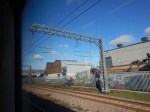

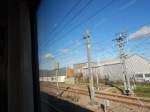
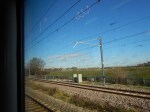
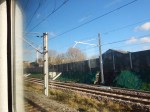
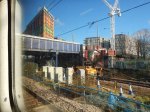
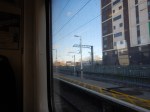
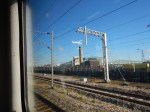
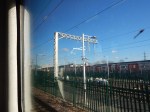
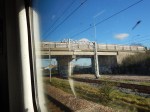

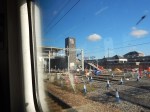
It appears that most of the electrification is almost complete, except for perhaps a hundred metres at the Southern end.
Conclusion
This electrification seems to have gone reasonably well so far.
On the other hand, the electrification of the Gospel Oak to Barking Line was troublesome with various components being wrongly made and the discovery of an unknown sewer.
But the electrification of the new single track was effectively working on a new track, where what was underneath the track was very well known.
I’m drawn to the conclusion, that if we want to electrify a railway, the quality of the knowledge of the tracks to be electrified has a strong influence on the outcome of the project.
If there are thought to be too many unknowns and it is felt necessary to relay the track, then so be it!
We may have the paradox that to electrify a 125 mph fast line like the Midland Main Line, which has had top class care and constant speed upgrades, may be easier and more affordable, than to electrify a slower commuter line like Manchester to Preston, which has probably not had as much attention, due to the slower speeds.
I know it’s totally different, but decorating a new house is easier than doing the same to an old one!
Electrification of a railway track seems to have a similar relationship.
Could A 125 Mph Electric Train With Batteries Handle The Midland Main Line?
In Bombardier’s 125 Mph Electric Train With Batteries, I investigated a pure electric train based on Bombardier’s proposed 125 mph bi-mode Aventra with batteries.
It would have the following characteristics.
- Electric power on both 25 KVAC overhead and 750 VDC third-rail.
- Appropriately-sized batteries.
- 125 mph running, where possible on electrification and/or battery power.
- Regenerative braking using the batteries.
- Low energy interiors and systems.
It would be a train with efficiency levels higher than any train seen before.
It would also be zero-carbon at the point of delivery.
An Example 125 mph Train
I will use the same size and specification of train, that I used in Bombardier’s 125 Mph Electric Train With Batteries.
- The train is five cars, with say four motored cars.
- The empty train weighs close to 180 tonnes.
- There are 430 passengers, with an average weight of 90 Kg each, with baggage, bikes and buggies.
- This gives a total train weight of 218.7 tonnes.
- The train is travelling at 200 kph or 125 mph.
Travelling at 200 kph, the train has an energy of 94.9 kWh.
I will also assume.
- The train uses 15 kWh per mile to maintain the required line speed and power the train’s systems.
- Regenerative braking is eighty percent efficient.
I will now do a few calculations.
Kettering To Leicester
Suppose one of the proposed trains was running between St. Pancras and Leicester.
- I’m assuming there are no stops.
- In a year or two, it should be able to run as far as Kettering using the new and improved 25 KVAC overhead electrification.
- The train would leave the electrification at Kettering with a full charge in the batteries.
- The train would also pass Kettering as close to the line speed as possible.
- Hopefully, the twenty-nine miles without electrification between Kettering and Leicester will have been updated to have the highest possible line speed, with many sections capable of supporting 125 mph running.
I can do a rough-and-ready calculation, as to how much energy has been expended between Kettering and Leicester.
- Twenty-nine miles at 15 kWh per mile is 435 kWh.
- The train has a kinetic energy of 94.9 kWh at 125 mph and twenty percent will be lost in stopping at Leicester, which is 19 kWh.
This means that a battery of at least 454 kWh will be needed to propel the train to Leicester.
Kettering To Sheffield
If the train went all the way without stopping between Kettering and Sheffield, the energy used would be much higher.
One hundred-and-one miles at 15 kWh is 1515 kWh.
So given that the train will be slowing and accelerating, we’re probably talking of a battery capacity of around 2000 kWh.
In our five-car example train, this is 400 kWh per car.
Kettering To Sheffield With Stops
The previous calculation shows what can be achieved, but we need a practical train service.
When I last went to Sheffield, the train stopped at Leicester, Loughborough, East Midlands Parkway, Long Eaton, Derby and Chesterfield.
I have built an Excel spreadsheet, that models this route and it shows that if the train has a battery capacity of 2,000 kWh, the train will get to Sheffield with 371 kWh left in the battery.
- Increase the efficiency of the regenerative braking and the energy left is 425 kWh.
- Reduce the train’s energy consumption to 12 kWh per mile and the energy left is 674 kWh.
- Do both and the energy left is 728 kWh.
The message is clear; train manufacturers and their suppliers should use all efforts to improve the efficiencies of trains and all of their components.
- Aerodynamics
- \Weight savings
- Bogie dynamics
- Traction motors
- Battery capacity and energy density
- Low energy lighting and air-conditioning
No idea however wacky should be discarded.
Network Rail also has a part to play.
- The track should have as a high a line speed as is practical.
- Signalling and timetabling should be designed to minimise interactions with other services.
Adding all these together, I believe that in a few years, we could see a train, that will consume 10 kWh per mile and have a regenerative braking efficiency of ninety-five percent.
If this can be achieved then the train will have 960 kWh in the batteries when it arrives in Sheffield.
Sheffield To Kettering
There is no helpful stretch of electrification at the Sheffield end of the route, so I will assume that there is a method of charging the batteries at Sheffield.
Unsurprisingly, as the train is running the same total distance and making the same number of stops, if the train starts with a full battery at Sheffield, it arrives at Kettering with the same amount of energy in the battery, as on the Northbound-run to Sheffield.
An Interim Conclusion
I am led to the interim conclusion, that given the continued upward curve of technology and engineering, that it will be possible to run 125 mph electric trains with an appropriately-sized battery.
How Much Battery Capacity Can Be Installed In A Train?
In Issue 864 of Rail Magazine, there is an article entitled Scotland High Among Vivarail’s Targets for Class 230 D-Trains, where this is said.
Vivarail’s two-car battery units contains four 100 kWh lithium-ion battery rafts, each weighing 1.2 tonnes.
Consider.
- Vivarail’s cars are 18.37 metres long.
- Car length in a typical Aventra, like a Class 720 train, is 24 metres.
- Aventras have been designed for batteries and supercapacitors, whereas the D78 trains, used as a base for the Class 230 train,were not.
- Batteries and supercapacitors are getting better all the time.
- Batteries and supercapacitors can probably be built to fit in unusually-shaped spaces.
I wouldn’t be surprised to see Aventras being able to take double the capacity of a Class 230 train under each car.
I wouldn’t rule out 2,000 kWh energy storage capacity on a five-car train, that was designed for batteries.
The actual size installed would depend on operator, weight, performance and cost.
My Excel spreadsheet shows that for reliable operation between Kettering and Sheffield, a battery of at least 1200 kWh is needed, with a very efficient train.
Charging Trains En-Route
I covered en-route charging fully in Charging Battery/Electric Trains En-Route.
I came to this conclusion.
I believe it is possible to design a charging system using proven third-rail technology and batteries or supercapacitors to transfer at least 200 kWh into a train’s batteries at each stop.
This means that a substantial top up can be given to the train’s batteries at stations equipped with a fast charging system.
An Astonishing Set Of Results
I use astonishing lightly, but I am very surprised.
I assumed the following.
- The train uses 15 kWh per mile to maintain the required line speed and power the train’s systems.
- Regenerative braking is eighty percent efficient.
- The train is fitted with 600 kWh of energy storage.
- At each of the six stations up to 200 kWh of energy can be transferred to the train.
Going North the train arrives in Sheffield with 171 kWh in the energy storage.
Going South the train arrives at Kettering with 61 kWh in the energy storage.
Probably a bit tight for safety, but surprising nevertheless.
I then tried with the following.
- The train uses 12 kWh per mile to maintain the required line speed and power the train’s systems.
- Regenerative braking is ninety percent efficient.
- The train is fitted with 500 kWh of energy storage.
- At each of the six stations up to 200 kWh of energy can be transferred to the train.
Going North the train arrives in Sheffield with 258 kWh in the energy storage.
Going South the train arrives at Kettering with 114 kWh in the energy storage.
It would appear that increasing the efficiency of the train gives a lot of the improvement.
Finally, I put everything, at what I feel are the most efficient settings.
- The train uses 10 kWh per mile to maintain the required line speed and power the train’s systems.
- Regenerative braking is ninety-five percent efficient.
- The train is fitted with 500 kWh of energy storage.
- At each of the six stations up to 200 kWh of energy can be transferred to the train.
Going North the train arrives in Sheffield with 325 kWh in the energy storage.
Going South the train arrives at Kettering with 210 kWh in the energy storage.
These sets of figures prove to me, that it is possible to design a 125 mph battery/electric hybrid train and a set of charging stations, that will make St. Pancras to Sheffield by electric train, a viable possibility without any more electrification.
Should The Train Be Fitted With A Means Of Charging The Batteries?
Why not?
Wires do go down and rest assured, a couple of battery/electric hybrids would get stuck!
So a small diesel or hydrogen generator to allow a train to limp a few miles might not be a bad idea.
Electrification Between Sheffield And Clay Cross On The Midland Main Line
In The UK’s New High Speed Line Being Built By Stealth, there is a sub-section with the same title as this sub-section.
This is the first part of that sub-section.
This article on Rail Technology Magazine is entitled Grayling Asks HS2 To Prepare For Electrification Of 25km Midland Main Line Route.
If this electrification happens on the Midland Main Line between Sheffield and Clay Cross, it will be another project in turning the line into a high speed route with a 200 kph operating speed, between London and Sheffield.
Currently, the electrified section of the line South of Bedford is being upgraded and the electrification and quadruple tracks are being extended to Glendon Junction, where the branch to Corby leaves the main line.
The proposed electrification will probably involve the following.
- Upgrading the line to a higher speed of perhaps 225 kph, with provision to increase the speed of the line further.
- Rebuilding of Chesterfield station in readiness for High Speed Two.
- Full electrification between Sheffield and Clay Cross.
Clay Cross is significant, as it is where the Midland Main Line splits into two Southbound routes.
- The main route through the Derwent Valley Mills World Heritage Site and Derby station.
- The secondary route of the Erewash Valley Line to the East Midlands Hub station.
Note.
- Some of the tunnel portals in the Derwent Valley are Listed.
- Trying to electrify the line through the World Heritage Site will be a legal and engineering nightmare.
- Network Rail has spent or is spending £250million on upgrading the Erewash Valley Line.
- High Speed Two will reach The East Midlands Hub station in 2032.
When High Speed Two, is extended North from the East Midlands Hub station, it will take a route roughly following the M1. A spur will link High Speed Two to the Erewash Valley line in the Clay Cross area, to enable services to Chesterfield and Sheffield.
But until High Speed Two is built North of the East Midlands Hub station, the Erewash Valley Line looks from my helicopter to be capable of supporting 200 kph services.
If this electrification is performed, it will transform the prospects for battery/electric hybrid trains between London and Sheffield.
- Trains will have to run fifteen miles less on battery power.
- Trains will arrive in both St. Pancras and Sheffield with batteries that are at least three-quarters full.
- Returning the trains will fill them up on the electrification at the end of the line.
- There will probably not be a need for charging systems at St. Pancras, Chesterfield and Sheffield.
I also think, that as the train could arrive in Sheffield with a full battery, there is the possibility of extending services past Sheffield to Barnsley, Huddersfield and cLeeds, if the operator felt it was a worthwhile service.
Nottingham
Nottingham is just eight miles from East Midlands Parkway station, which is less distance than Derby.
So if the battery/electric hybrid trains can reach Derby from Kettering on Battery power, with some help from charging at Leicester and Loughborough, the trains can reach Nottingham, where charging would be installed.
Conclusion
From my calculations, I’m sure that an efficient battery/electric hybrid train can handle all current services on the Midland Main Line, with third-rail charging at intermediate stations.
I do think though, that if Sheffield to Clay Cross Junction is electrified in preparation for High Speed Two, that it makes the design easier and the economics a lot better.
It would also give Sheffield a genuine sub-two hour service to London, which would only get better.
Five Mark 4 Coaches, A Driving Van Trailer And A Stadler UKLight Locomotive
In writing Would Electrically-Driven Trains Benefit From Batteries To Handle Regenerative Braking?, I started to analyse the mathematics and possibilities of a train with the following formation.
- Five Mark 4 Coaches, from an InterCity 225.
- A Driving Van Trailer (DVT)
- A variant of a Stadler UKlight locomotive, like a Class 68 or Class 88 locomotive.
The sub-section got too large and important so I decided to write it as a separate post.
I like the Class 68 locomotive, as it looks professional and seems to do all asked of it.
So what would be the kinetic energy of a formation of five Mark 4 coaches, between a DVT and a Class 68 Locomotive?
- The five Mark 4 coaches would weigh 209 tonnes.
- The Class 68 locomotive weighs 85 tonnes.
- The DVT weighs 42.7 tonnes
- I will assume that a five cars will seat around 300 passengers.
- The passengers weigh 27 tonnes, if you assume each weighs 90 Kg, with baggage, bikes and buggies.
- The train weight is 363.7 tonnes.
At 100 mph, which is the maximum speed of the Class 68 locomotive, the Omni Kinetic Energy Calculator gives the kinetic energy of the train as 100 kWh.
I doubt there’s the space to squeeze a 100 kWh of battery into a Class 68 locomotive to handle the regenerative braking of the locomotive, but I do believe that a locomotive can be built with the following specification.
- Enough diesel power to pull perhaps five or six Mark 4 coaches and a DVT at 125 mph.
- Ability to use both 25 KVAC and 750 VDC electrification.
- Battery to handle regenerative braking.
- As the Class 88 electro-diesel locomotive, which is around the same weight as a Class 68 locomotive, I suspect the proposed locomotive would be a bit heavier at perhaps 95 tonnes.
This train would have a kinetic energy of 160 kWh at 125 mph.
Consider.
- If the locomotive could have a 200 kWh battery, it could harvest all the regenerative braking energy.
- Accelerating the train to cruising speed uses most energy.
- Running at a constant high speed, would conserve the kinetic energy in the train.
- Stadler, who manufacture the Class 68 and 88 locomotives are going to supply a diesel/electric/battery version of the Class 755 train, for the South Wales Metro. In What Is The Battery Size On A Tri-Mode Stadler Flirt?, I estimated the battery size is about 120 kWh.
- The Class 68 and 88 locomotives are members of Stadler’s Eurolight family, which are designed for a 125 mph capability with passenger trains.
- I don’t believe the UK is the only country looking for an efficient locomotive to haul short rakes of coaches at 125 mph, on partially-electrified lines.
It should also be noted, that to pull heavy freight trains, the Class 88 locomotive has a 700 kW Caterpillar C27 diesel that weighs over six tonnes, whereas 200 kWh of battery, would weigh about two tonnes. I believe that a smaller diesel engine might allow space for a large enough battery and still be able to sustain the 125 mph cruise.
Stadler have the technology and I wonder, if they can produce a locomotive to fill the market niche!
In HS2 To Kick Off Sheffield Wiring, I reported on the news that the Northern section of the Midland Main Line between Clay Cross North Junction and Sheffield will be electrified.
This would greatly improve the performance of diesel/electric/battery hybrid trains between London and Sheffield.
- Between London and Kettering, the trains would be electrically-powered.
- Between Kettering and Clay Cross, they would use a mixture of diesel and battery operation.
- Between Clay Cross and Sheffield, the trains would be electrically-powered.
Note.
- Going North, trains would pass Kettering with a full battery.
- Going South, trains would pass Clay Cross with a full battery.
- Regenerative braking at stops between Kettering and Clay Cross would help recharge the batteries.
- The diesel engine would be sized to keep the train cruising at 125 mph on the gentle Midland Main Line and back up the acceleration needed after stops.
It would be a faster and very electrically-efficient journey, with a large reduction in the use of diesel power.
The locomotive would also have other uses in the UK.
- TransPennine services, where they could surely replace the Class 68 locomotives, that will haul Mark 5A coaches between Liverpool and Scarborough and Manchester Airport and Middlesborough.
- Between London and Holyhead
- Waterloo to Exeter via Basingstoke and Salisbury.
- Marylebone to Birmingham via the Chiltern Main Line, if the two ends were to be electrified.
- Services on the East West Rail Link.
- Between Norwich and Liverpool
- CrossCountry services.
Note.
- Services could use a rake of Mark 4 coaches and a DVT or a rake of new Mark 5A coaches.
- If more electrification is installed, the trains would not need to be changed, but would just become more efficient.
- The competition would be Bombardier’s proposed 125 mph bi-mode Aventra with batteries, that I wrote about in Bombardier Bi-Mode Aventra To Feature Battery Power.
And that is just the UK!
Conclusion
Using the Mark 4 coaches or new Mark 5A coaches with a new 125 mph diesel/electric/battery hybrid Stadler UKLight locomotive could create an efficient tri-mode train for the UK rail network.
The concept would have lots of worldwide applications in countries that like the UK, are only partially electrified.
HS2 To Kick Off Sheffield Wiring
The title of this post is the same as that of a small article in the August 2018 Edition of Modern Railways.
This is the first paragraph.
HS2 Ltd is to begin preparatory works for electrification of the Midland Main Line between Clay Cross North Junction and Sheffield
This will mean that the current Midland Main Line will be electrified at both ends, which will surely make it easier to design new trains for the line.
Should Some Thameslink Routes Be Transferred To Transport for London?
Some commentators and politicians advocate the transfer of some Thameslink services to Transport for London (TfL).
Thameslink has been designed as a single solution to multiple needs, with too much input from politicians worried about losing elections.
Split Fleets And Franchises
If you look at Greater Anglia, Great Western Railway and South Western Railway, who have a similar mix of services as do Thameslink, they have opted for split fleets with short-medium and long distance trains,designed for their tasks.
In the North of England, the short-medium routes are run by Northern and the long distance routes by TransPennine.
Transport for Wales has now split their fleet into three; South Wales Metro, North Wales Metro and long distance.
The Consequences Of Thameslink’s Single Fleet
Services with different needs are using one fleet of Class 700 trains.
Effectively, Thameslink are using a train more suitable for services between St. Albans and Wimbledon stations, on long distance services between Bedford, Cambridge and Peterborough, and destinations along the South Coast.
Going between Brighton and Cambridge stations on an ironing-board seat is not a pleasant experience, as I noted in Observations On Thameslink Between Brighton And Cambridge.
I believe that Thameslink could be split into two; short-medium and long distance routes.
Short-Medium Thameslink Routes
Currently of the twenty-four services planned in the Provisional Timetable, just four are short medium services that run all day.
If we apply the London Overground principle of four tph stopping at all stations, then the Sutton Loop services, are already working to a version of this principle.
Could other services work to the Overground principle?
East Coast Main Line
On the East Coast Main Line, a terminal to the North of Welwyn Garden City station is probably impossible, due to the limited capacity of the Digswell Viaduct.
Welwyn Garden City also has a flyover, so that four tph services to London can reverse in a single platform.
Welwyn Garden City with small modifications should be able to handle four tph on both Moorgate and Thameslink services.
Hertford Loop Line
The Hertford Loop Line services have or could have excellent cross-platform interchanges with Thameslink services at Finsbury Park and Alexandra Palace stations, although they could be improved.


The weak interchange is coming South at Alexandra Palace, which means using a bridge, but it is easy to use Finsbury Park instead.
The Hertford Loop Line also gives access to three terminal stations; Gordon Hill, Hertford North and Stevenage, which could handle four tph.
So could we see Thameslink services using the route?
It would probably need some new six-car trains, which could be shortened from Thameslink’s dreadful Class 700 trains.
Finsbury Park Station
These pictures were taken at Finsbury Park station.
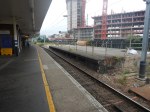


Could a bay platform for Thameslink services by added here?
I suspect that one could, but would it be worthwhile?
Midland Main Line
On the Midland Main Line, in addition to St.Albans City, currently, short-medium distance services terminate at Kentish Town and Luton.
It is a pity, that the Midland Main Line doesn’t have a handy branch!
A Balanced Northern Service
I think for balance that both Northern branches will take an equal number of short-medium distance trains. Perhaps, four tph to two destinations on each branch.
I might choose.
- St. Albans City on the Midland Main Line.
- Luton on the Midland Main Line.
- Welwyn Garden City on the East Coast Main Line.
- Stevenage on the East Coast Main Line via the Hertford Loop.
All services would be four tph.
Southern Destinations
In the South, there are several stations, that could handle four tph.
Traffic will determine which, but I like the claims of Dartford, East Croydon, Orpington and Sutton on the Wimbledon Loop.
Transfer To London Overground
These short-medium distance routes should be transferred to the London Overground.
It should be noted how if the Moorgate services are also transferred to the London Overground, as I outlined in Should The Moorgate Lines Be Transferred To Transport for London?, then the following frequencies would apply.
- 8 tph – Alexandra Palace to Welwyn Garden City
- 12 tph – Alexandra Palace to Gordon Hill
- 8 tph – Gordon Hill to Hertford North
- 4 tph – Hertford North to Stevenage.
There would be 20 tph between Finsbury Park and Alexandra Palace.
With ETCS, I don’t think that last frequency would be unrealistic, as there are two separate lines in each direction between the two stations.
Long Thameslink Routes
Class 700 Trains
These are currently, a disaster for passengers, as travelling between say Brighton and Cambridge in the dreadful Class 700 trains, is possibly the worst train journey in the UK in new train. In some ways Pacers are better!
This article in the Express is entitled ‘One Is Not Amused’ The Queen Is Not Happy With Changes To Trains, Claims Rail Boss.
If the Royal Posterior finds them hard in First Class, the seats must be dreadful there too!
But it’s not just the passengers who don’t like them.
I came back to London recently with a group of East Midlands Trains drivers. Their professional view of the Class 700 trains, is that they are not fast enough with an operating speed of 100 mph, as against the 125 mph of the trains run by East Midlands Trains.
It should be noted that on the East and West Coast Main Lines, the semi-fast medium-distance services are generally run by 110 mph trains.
So I feel very strongly, that the Class 700 trains are not only bad from the customers point-of-view, but totally unsuitable to run services on the Midland and East Coast Main Lines, where all other trains can cruise happily at 125 mph.
They must be assigned to more suitable duties!
The Routes
Get some new trains on these routes designed by people with sense and style and the routes would be transformed.
I also think, that the destinations served South of the Thames should be simplified. Thameslink is trying to serve too main destinations in the South, compared to the North, where long distance routes only serve Bedford, Cambridge, Peterborough and the intermediate stations.
Perhaps, there should be more services linking from all along the South Coast to an improved rail station at Gatwick Airport.
An Airport Route
I have travelled to and from Gatwick Airport several times, since Thameslink reopened through London Bridge a few months ago.
Outside of the Peak, these trains may be busy between London Bridge and Gatwick stations, but in the Central Core, passengers are fairly thin on the uncomfortable seats.
Luton Airport have been campaigning for more services and I suspect Gatwick would like more too.
So why not run a four tph service between the two airports, using well-designed airport trains?
An Increased Frequency Through The Core
Thameslink is currently planning twenty-four tph through the core tunnel, but there are statements that thirty tph could be handled.
The destinations to handle the extra trains exist in the South, especially, if routes out of London Bridge are replaced by Thameslink services, but accommodating more services on the East Coast and Midland Main Lines could be tricky.
Conclusion
I believe it is possible to split Thameslink into two sections.
Long distance services with new trains would stay with National Rail, but short-medium services would go to the London Overground and probably be run by six and eight-car versions of the existing trains.
 The Anonymous Widower