Neptune Energy, Ørsted And Goal7 Explore Powering Integrated Energy Hubs With Offshore Wind
The title of this post, is the same as that of this press release from Neptune Energy.
These four paragraphs outline the agreement.
Neptune Energy today announced it has signed a Memorandum of Understanding with Ørsted and Goal7 to explore powering new integrated energy hubs in the UK North Sea with offshore wind-generated electricity.
Integrated energy hubs have the potential to combine multiple energy systems, including existing oil and gas production assets, carbon storage and hydrogen production facilities. They could extend the life of producing fields and support the economic case for electrification with renewable energy, to keep carbon emissions low.
The agreement will see the companies examine the potential to supply renewable electricity from Ørsted’s Hornsea offshore windfarm projects to power future Neptune-operated hubs in the UK North Sea.
Goal7 will provide project management support and technical input.
Note.
- Neptune Energy has three oil and gas fields in the UK North Sea; Cygnus (operational), Isabella (exploration) and Seagull (development)
- Gas from Cygnus comes ashore at the Bacton Gas Terminal.
- Ørsted owns the Hornsea wind farm, which when fully developed will have a capacity of around 6.5 GW.
- Cygnus and Hornsea could be not much further than 50 km apart.
- Seagull and Isabella are further to the North and East of Aberdeen.
- Ørsted has an interest in the Broadshore wind farm, which was numbered 8 in the ScotWind Leasing round.
These are my thoughts.
The Cygnus Gas Field And The Hornsea Wind Farm
This could be like one of those stories where boy meets the girl next door and they hit it off from the first day.
This page on the Neptune web site says this about the Cygnus gas field.
The biggest natural gas discovery in the southern North Sea in over 30 years is now the largest single producing gas field in the UK, typically exporting over 250 million standard cubic feet of gas daily. Cygnus contributes six per cent of UK gas demand, supplying energy to the equivalent of 1.5 million UK homes. It has a field life of over 20 years.
Two drilling centres target ten wells. Cygnus Alpha consists of three bridge-linked platforms: a wellhead drilling centre, a processing/utilities unit and living quarters/central control room. Cygnus Bravo, an unmanned satellite platform, is approximately seven kilometres northwest of Cygnus Alpha.
In 2022, we plan to drill two new production wells at Cygnus, with the first of these expected to come onstream in 4Q. The second well is due to be drilled in the fourth quarter and is expected onstream in the first quarter of 2023, with both wells helping to maintain production from the field and offset natural decline.
Gas is exported via a 55 km pipeline. Cygnus connects via the Esmond Transmission System (ETS) pipeline to the gas-treatment terminal at Bacton, Norfolk. Neptune Energy has a 25% minority interest in ETS.
Note.
- Cygnus with a twenty year life could be one of the ways that we bridge the gap until we have the two Cs (Hinckley Point and Sizewell) and a few tens of offshore wind gigawatts online.
- The two extra wells at Cygnus will help bridge the gap.
- The gas field has a pipeline to Bacton.
So what can the gas field and the wind farm, do for each other?
Hornsea Can Supply The Power Needs Of Cygnus
Typically, ten percent of the gas extracted from the wells connected to a gas platform, will be converted into electricity using one or more gas-turbine engines; which will then be used to power the platform.
So, if electricity from the Hornsea wind farm, is used to power the platform, there are two benefits.
- More gas will be sent through the pipeline to Bacton.
- Less carbon dioxide will be emitted in recovering the gas.
Effectively, electricity has been turned into gas.
Electricity Can Be Stored On The Sea-Bed
The Hornsea One wind farm has an area in the order of 150 square miles and it is only one wind farm of four, that make up the Hornsea wind farm.
I would argue that there is plenty of space between the turbines and the wells of the Cygnus gas field to install some form of zero-carbon underwater battery to store electricity.
But does this technology exist?
Not yet! But in UK Cleantech Consortium Awarded Funding For Energy Storage Technology Integrated With Floating Wind, I described a technique called Marine Pumped Hydro, which is being developed by the STORE Consortium.
- Energy is stored as pressurised water in 3D-printed hollow concrete spheres fitted with a hydraulic turbine and pump.
- The spheres sit on the sea-bed.
- This page on the STORE Consortium web site, describes the technology in detail.
- The technology is has all been used before, but not together.
I think it is excellent technology and the UK government has backed it with £150,000 of taxpayers’ money.
I also believe that Marine Pumped Hydro or something like it, could be the solution to the intermittency of wind farms.
Excess Electricity Can Be Converted Into Hydrogen
Any spare electricity from the wind farm can drive an electrolyser to convert it into hydrogen.
The electrolyser could be mounted on one of the Cygnus platforms, or it could even float.
The hydrogen produced would be blended with the gas and sent to Bacton.
Carbon Dioxide Can Be Stored In The Depleted Cygnus Gas Field
As the gas field empties of natural gas, the gas pipes to the Cygnus gas field can be reversed and used to bring carbon dioxide to the gas field to be stored.
The Cygnus gas field has gone full circle from providing gas to storing the same amount of carbon that the gas has produced in its use.
These are two paragraphs from the press release.
Neptune Energy’s Director of New Energy, Pierre Girard, said: “The development of integrated energy hubs is an important part of Neptune’s strategy to store more carbon than is emitted from our operations and the use of our sold products by 2030.
“Neptune has submitted three applications under the recent Carbon Dioxide Appraisal and Storage Licensing Round, and securing the licences would enable us to develop future proposals for integrated energy hubs in the UK North Sea.
I can envisage a large gas-fired power-station with carbon capture being built in Norfolk, which will do the following.
- Take a supply of natural gas from the Cygnus gas field via the Bacton gas terminal.
- Convert the hydrogen in the gas into electricity.
- Convert the carbon in the gas into carbon dioxide.
- Store the carbon dioxide in the Cygnus gas field via Bacton.
- I also suspect, that if a Norfolk farmer, manufacturer or entrepreneur has a use for thousands of tonnes of carbon dioxide, they would be welcomed with open arms.
Would the ultra-greens of this world, accept this power station as zero-carbon?
The Isabella And Seagull Gas Fields And The Broadshore Wind Farm
Could a similar set of projects be applied to the Isabella and Seagull gas fields, using the Broadshore wind farm?
I don’t see why not and they could work with the Peterhead power stations.
Centrica Re-Opens Rough Storage Facility
The title of this post, is the same as that of this press release from Centrica.
It has this sub-heading.
Rough Operational For Winter And Increases UK’s Storage Capacity By 50%.
On the face of it, this sounds like good news and these two paragraphs give more details.
Centrica has announced the reopening of the Rough gas storage facility, having completed significant engineering upgrades over the summer and commissioning over early autumn.
The initial investment programme means the company has made its first injection of gas into the site in over 5 years and is in a position to store up to 30 billion cubic feet (bcf) of gas for UK homes and businesses over winter 2022/23, boosting the UK’s energy resilience.
Note.
- The Rough gas storage facility has been able to hold up to 100 billion cubic feet of gas in the past.
- Rough is a complex field with two platforms and thirty wells transferring gas to and from the facility.
- Additionally, there is an onshore gas-processing terminal at the Easington Gas Terminal, where it connects to the UK gas network.
It appears to be a comprehensive gas storage facility, that should get us through the 2022/3 winter.
These two paragraphs from the press release, which are the thoughts of the Centrica Chief Executive are significant.
Centrica Group Chief Executive, Chris O’Shea, said “I’m delighted that we have managed to return Rough to storage operations for this winter following a substantial investment in engineering modifications. Our long-term aim remains to turn the Rough field into the world’s biggest methane and hydrogen storage facility, bolstering the UK’s energy security, delivering a net zero electricity system by 2035, decarbonising the UK’s industrial clusters, such as the Humber region by 2040, and helping the UK economy by returning to being a net exporter of energy.
“In the short term we think Rough can help our energy system by storing natural gas when there is a surplus and producing this gas when the country needs it during cold snaps and peak demand. Rough is not a silver bullet for energy security, but it is a key part of a range of steps which can be taken to help the UK this winter.”
Note.
- Effectively, in the short term, Rough is a store for gas to help us through the winter.
- In the long-term, Rough will be turned into the world’s largest gas storage facility.
- It will be able to store both methane (natural gas) and hydrogen.
Having worked with project managers on complex oil and gas platforms and chemical plants, I wouldn’t be surprised to find, that when the design of this facility is released, it will be something special.
Centrica certainly seem to have upgraded Rough to be able to play a significant short term role this winter and they also seem to have developed a plan to give it a significant long-term role in the storage of hydrogen.
Aldbrough Gas Storage
A few miles up the coast is SSE’s and Equinor’s Aldbrough Gas Storage, which is being developed in salt caverns to hold natural gas and hydrogen.
Blending Of Hydrogen And Natural Gas
I believe that we’ll see a lot of blending of hydrogen and natural gas.
- Up to 20 % of hydrogen can be blended, without the need to change appliances, boilers and processes.
- This cuts carbon dioxide emissions.
I wrote about this in a post called HyDeploy.
It might be convenient to store hydrogen in Aldbrough and natural gas in Rough, so that customers could have the blend of gas they needed.
With two large gas stores for hydrogen under development, the HumberZero cluster is on its way.
Are The Tories Bluffing About Fracking?
I’ve just listened to a Treasury Minister (Chris Philp (?)) on the BBC and he didn’t mention fracking.
But he did mention more oil and gas in the North Sea, where there is a project agreed between the British and Scottish governments called INTOG, which aims to innovatively cut carbon emissions in the North Sea and possibly extract smaller amounts of gas and oil from existing wells.
As you know, I think fracking is irrelevant. It will take a few years to deliver substantial amounts of gas and we can extract more from the North Sea and by repurposing existing wells.
We might even find one or two existing wells, that could be converted to much-needed gas storage.
I also believe that the cash flow in taxes and leases from offshore wind will be astronomic and it can be used to finance borrowing. We did the same with Artemis to finance the company against future sales. But we were only borrowing millions. We used to parcel up all our leases from companies like Shell, NASA and BP and effectively sell them to Lloyds Bank at a discount.
I’m sure that a clever banker could find a mechanism, that converts future income from offshore wind into a magic money tree for today. Is that what Kwasi Kwarteng has done, in order to cut taxes?
The one problem with offshore wind with the public, is that putting in the cables arouses the NIMBYs. It should also be born in mind, that a lot of the grid connections, go through Tory seats, where NIMBYs are very much against more cables.
So I do wonder, if Moggy has announced the start of fracking to give the NIMBYs a target, so they allow the efficiency of offshore oil and gas to be improved and offshore wind farms to be built without hindrance.
Perhaps Moggy should concentrate on the most important thing that our offshore wind industry needs. This is an innovative pricing mechanism for energy storage, that does the following.
- Allows investors to get a similar return on energy storage to that that they get for offshore wind farms, onshore solar farms and interconnectors.
- Encourages the building of more energy storage.
- Assists in the development of novel energy storage ideas.
As one estimate says we need 600 GWh of energy storage in the UK, sorting this pricing mechanism, can’t come soon enough.
The previous government was talking about this, as I wrote in Ministerial Roundtable Seeks To Unlock Investment In UK Energy Storage.
So continue the conversation, Moggy!
Thoughts On The Mini-Budget
This article on the BBC is entitled At A Glance: What’s In The Mini-Budget?.
If nothing else KK has whipped up a storm, with the most tax-cutting budget in decades.
But!
According to my calculations in Will We Run Out Of Power This Winter?, the planned offshore wind that will be installed between 2022 and 2027 will be at least 19 GW. About 3 GW of this offshore wind is already producing electricity.
To this must be added 3.26 GW for Hinckley Point C, 2 GW for solar and 0.9 GW for onshore wind in Scotland, which will be developed by 2027.
So we have 25.2 GW for starters.
Following on from this is the 27.1 GW from ScotWind, about 4 GW from the Celtic Sea, 3 GW from Morecambe Bay and 10 GW from Aker’s Northern Horizons. All of these are firm projects and some are already being planned in detail.
These wind and solar farms are the collateral for KK’s borrowing.
The corporate tax changes will hopefully attract world class energy and manufacturing companies to set up UK-domiciled subsidiaries to develop more offshore wind farms and manufacture the turbines and the electrical gubbins close to where they will be installed.
As more wind farms are built, many GW of electricity and tonnes of hydrogen will be exported to Europe.
Note that 1 GW for a day costs around £ 960,000 and for a year costs £350.4 million.
A big benefit of all this electricity, will be that we won’t need to frack.
Technologies like green hydrogen, that will be created by electrolysis will reduce our need for gas.
We might develop a gas field like Jackdaw, to give us gas for a backup with a few gas-fired power stations, for when the wind doesn’t blow, but gas will only have a minor roll.
The force of the maths is with KK!
Have We Missed The Boat On Fracking?
I have just re-read my post from October 2019, which was entitled Fracking Hell…Is It The End?, where these were my conclusions.
- Fracking for hydrocarbons is a technique that could be past its sell-by date.
- The use of natural gas will decline.
- INEOS could see hydrogen as a way of reducing their carbon footprint.
- The heating on all new buildings should be zero carbon, which could include using hydrogen from a zero-carbon source.
- There are reasons to think, that electricity from wind-farms creating hydrogen by electrolysis could replace some of our natural gas usage.
So will the Government’s lifting on the ban on fracking make any difference?
The announcement is detailed in this article on the BBC, which is entitled Fracking Ban Lifted, Government Announces.
These are my thoughts.
Fracking Is Not A Quick Fix
My personal view is that to achieve any significant amounts of gas from fracking will take some years, so it is not something that will be available in the short term.
Opposition To Fracking Won’t Help
There are very few inhabitants of the UK, who are enthusiastic about fracking.
Opposition to fracking will make it less likely to be the feasible short term fix we need in the UK.
Suppose There Was An Earthquake Near To A Fracking Site
Fracking also has the problem, that if there were to be a small earthquake near to a site, even if it was very likely to have not been caused by fracking, it would result in massive public uproar, which would shut down all fracking in the UK.
This to me is a big risk!
Would The Jackdaw Oil And Gas Field Be A Medium Term Solution?
- In Shell’s Jackdaw Gas Field Given Go-Ahead By Regulators, I wrote about Shell’s Jackdaw field, which has been given the go-ahead.
- It could be able to provide 6 % of North Sea gas production.
- It should be fully operational by 2025.
I believe that with other gas field developments and imports, Jackdaw could keep us supplied with enough gas until the end of the decade.
Future Renewable Electricity Production
In Will We Run Out Of Power This Winter?, I summarised the likely yearly additions to our offshore wind power capacity in the next few years.
- 2022 – 3200 MW
- 2023 – 1500 MW
- 3024 – 2400 MW
- 2025 – 6576 MW
- 2026 – 1705 MW
- 2027 – 7061 GW
Note.
- Ignoring 2022 as it’s going, this totals to 19.2 GW.
- Hopefully, by the end of 2027, Hinckley Point C will add another 3.26 GW
- According to Wikipedia, there are currently 32 active gas fired combined cycle power plants operating in the United Kingdom, which have a total generating capacity of 28.0 GW.
I think it is not unreasonable to assume that some of the electricity will enable some of our gas-fired power stations to be stood down and/or mothballed.
Gas consumption would be reduced and some power stations would be held in reserve for when the wind was on strike!
Using Hydrogen To Eke Out Our Gas
Consider.
- In Lime Kiln Fuelled By Hydrogen Shown To Be Viable, I wrote about how hydrogen can be used instead of or with natural gas to fuel a lime kiln.
- There are other processes, where hydrogen can be used instead of or with natural gas.
- Using more hydrogen will reduce the amount of carbon dioxide emitted.
Perhaps we should strategically build a few huge hydrogen electrolysers, so that some large industrial users can cut back on their natural gas.
Will Energy Storage Help?
Energy storage’s main use is to mop up all the surplus electricity when demand is low at a low price and sell it back, when demand is high.
If we waste less energy, we will use less gas.
Will District Heating Schemes Help?
Consider.
- In Eden Project: Geothermal Heat Project ‘Promising’, I wrote about the Eden Project’s plan to extract heat from a borehole.
- In ‘World-First’ As Bunhill 2 Launches Using Tube Heat To Warm 1,350 Homes, I wrote about a district heating scheme in Islington, that uses heat from the London Underground.
- In Exciting Renewable Energy Project for Spennymoor, I wrote about a district heating scheme, that uses heat from abandoned coal mines.
More schemes like this should be developed, where there is a readily-available source of heat or electricity
Conclusion
As we add more renewables to our energy generation, it appears to me, that our gas usage will decline.
If we were to go fracking, we should have done it a lot earlier, so we can bridge the short term gap.
It Looks Like The Gas Leak Has Killed The Tree Outside My House
A couple of months ago, I had a gas leak outside my house.
These pictures show the tree outside my house.




It looks like the gas in the soil has given the tree a good kicking.
Incidentally, when I was a child, all the trees in the road outside our house in Cockfosters were killed by gas leaks.
Can We Move The Equilibrium Point Of The Energy Market?
Equilibrium In Systems
As a Control Engineer, I believe that most systems eventually end up in a state of equilibrium.
How many football batches have you watched between two evenly-matched teams that have ended, where the statistics are even and the match has ended in a nil-nil draw or a win by one goal.
Now suppose one manager makes an inspired substitution, one important player gets injured or one player gets sent off.
One team will have an advantage, the statistics will no longer be even and one team will probably win.
The equilibrium point will have been shifted.
Zopa’s Stable Peer-to-Peer Lending System
I used Zopa’s peer-to-peer lending system for several years and found it a very stable system, that over the years paid a steady return of between four and five percent before tax.
I even developed a method to maximise my savings income, which I wrote about in The Concept Of Hybrid Banking.
It was a sad day for me, when Zopa closed its ground-breaking peer-to-peer lending system.
As a Control Engineer, I believe that Zopa’s strength was a well-written computerised algorithm, that matched lenders and borrowers and spread the risk.
- There was no bias in the system, introduced by personal prejudices.
- The algorithm was agnostic and judged all borrowers on their profiles and credit ratings alone.
- Money was allocated under fair rules for borrowers.
- I never borrowed from Zopa, but from my experience of owning half of a finance company, their terms were the most customer-friendly I’ve ever seen.
Someone will go back to the basics of peer-to-peer lending and it can’t be soon enough for both savers and borrowers.
Zopa In Troubled Times
Over the years that I invested in Zopa, my returns stayed very much the same, as the algorithm seemed to be able to maintain sufficient difference between lenders’ returns and borrowers’ rates. I also suspect the dynamics of savvy lenders and borrowers helped to stabilise both the system and the difference between rates.
It even worked through the Banking Crisis of 2008 and other mini-hiccups along the way.
My Conclusion About Zopa
As someone, who knows computing well, I would rate Zopa, one of the best computer systems, I’ve ever seen.
But it showed how a large transactional system can work well.
One of the keys to its success and smooth operation was that the computer was totally in control and it took all transaction decisions without direct human intervention.
The Energy Market
The energy market is a network of energy providers and users.
It is controlled by complicated rules and it has settled into an equilibrium, which involves.
- Importation of energy, which I suspect is not at a low price
- Some high priced energy generators, based on gas, which has a high-price, due to Putin’s war.
- Waste of wind energy due to lack of energy storage.
- The intermittency of renewable sources.
- A lack of gas storage, means that we probably get the wrong end of fluctuations in the gas price.
This results in a high price to consumers.
Can We Move The Equilibrium Point Of The Energy Market?
And we also need to move it quickly to a more favourable place, which benefits everybody!
As a Control Engineer, I believe that there are five ways to move the equilibrium point.
- Stop Putin’s war.
- Increase gas storage.
- Generate more low-cost electricity.
- Increase electricity storage.
- Improve the control algorithm.
I will now look at each in more detail.
Stopping Putin’s War
Giving in to Putin’s ambitions, would be an easy way to solve our energy crisis. But at what cost?
My parents generation, watched as Nazi Germany took over Austria and Czechoslovakia, whilst the world did nothing.
- We mustn’t repeat that mistake.
- We must not flinch in our support of the Ukraine.
- We must be ready to support Moldova, Finland and the Baltic States if Putin expands his ambitions.
I do wonder, if Boris will turn up with Churchillian-style anti-Putin rhetoric all over Eastern Europe.
Increasing Gas Storage
The major gas storage facility is Rough, which is handily close to the Easington gas terminal.
The facility needs maintenance and this paragraph from the Wikipedia entry gives the current status.
In May 2022, the Secretary of State for Business, Energy and Industrial Strategy, Kwasi Kwarteng, began talks with the site’s owners with a view to reopening the site to help ease the ongoing cost-of-living crisis in the United Kingdom. In June 2022, owners Centrica submitted an application to the North Sea Transition Authority (NSTA), the licencing authority for the UK Government, to reopen the facility. Approval was granted in July. Subsequently, Centrica indicated that they are working hard to restore storage operations at Rough which would depend on securing subsidies from the British government. Centrica was aiming to have some capacity available for the winter of 2022/23 against an overall plan to increase storage capacity gradually over time.
Note.
- Rough can store around 2832 million cubic metres of gas.
- This article on Energy Live News is entitled Reopening Of Rough Storage Gets The All-Clear.
Less well-known is SSE and Equinor’s Aldborough Gas Storage.
These three paragraphs from SSE web site, describe the gas storage.
The Aldbrough Gas Storage facility, in East Yorkshire, officially opened in June 2011. The last of the nine caverns entered commercial operation in November 2012.
The facility, which is a joint venture between SSE Thermal (66%) and Equinor, has the capacity to store around 330 million cubic metres (mcm) of gas.
SSE Thermal and Equinor have consent to increase the storage capacity at the Aldbrough site (Aldbrough Phase 2) and during the last couple of years have been working to involve the local community where appropriate to refine aspects of this project, which has not been progressed to date due to market conditions.
Future plans for the facility, may include converting it to one of the world’s largest hydrogen stores.
In the grand scheme of things, Rough and Aldborough, when you consider that the UK uses 211 million cubic metres of gas every day, will only keep us going for a few days.
But it should be noted, that the Easington gas terminal is connected to the Norwegian gas fields, by the Langeled pipeline.
So Yorkshire and Humberside will be alright.
Generating More Low-Cost Electricity
The only low-cost electricity of any size to come on stream will be wind-power.
This article on Renewables Now is entitled UK Hits 25.5 GW Of Wind Power Capacity.
These wind farms seem to be coming on stream soon or have been commissioned recently.
- Dogger Bank A – 1200 MW – Commissioning 2023 expected
- Dogger Bank B – 1200 MW – Commissioning 2024/25 expected
- Dogger Bank C – 1200 MW – Commissioning 2024/25 expected
- Hornsea Two – 1386 MW – Commissioned 2022
- Moray East – 950 MW – Commissioning 2022 expected
- Neart Na Gaoithe – 450 MW – Commissioning 2024 expected
- Seagreen – 1075 MW – Commissioning 2023 expected
- Triton Knoll – 857 MW – Commissioning 2022 expected
That is expected to be over 5 GW of offshore wind by the end of 2023.
In case there is some double counting, I’ll only say that wind power capacity could be near to 30 GW by December 2023, with perhaps another 3 GW by December 2024.
Other large wind farms in the future include.
- Berwick Bank – 4100 MW – Commissioning 2028 expected
- East Anglia Two – 900 MW – Commissioning 2026 expected
- East Anglia Three – 1400 MW – Commissioning 2027 expected
- Inch Cape Phase 1 – 1080 MW – Commissioning 2027 expected
- Hornsea Three – 2800 MW – Commissioning 2027 expected
- Moray West – 294 MW – Commissioning 2027 expected
- Morgan and Mona – 3000 MW – Commissioning for 2028 expected
- Morven – 2900 MW – Commissioning for 2028 expected
- Norfolk Boreas – 1400 MW – Commissioning 2027 expected
- Norfolk Vanguard – 1400 MW – Construction start planned for 2023
- Sofia – 1400 MW – Commissioning 2026 expected
That is over 14 GW of wind power.
I should also take note of solar and onshore wind power detailed in this document from the Department of Business, Industry and Industrial Strategy that lists all the Contracts for Difference Allocation Round 4 results for the supply of zero-carbon electricity.
It gives these figures and dates.
- Solar – 251 MW – Commissioning 2023/24 expected
- Solar – 1958 MW – Commissioning 2024/25 expected
- Onshore Wind – 888 MW – Commissioning 2024/25 expected
I can now build a yearly table of renewables likely to be commissioned in each year.
- 2022 – 3193 MW
- 2023 – 2275 MW
- 2024 – 701 MW
- 2025 – 5246 MW
- 2026 – 2300 MW
- 2027 – 6974 MW
- 2028 – 11400 MW
Note.
- Where a double date has been given, I’m taking the latter date.
- I have assumed that Norfolk Vanguard will be commissioned in 2028.
- I have ignored Hinckley Point C, which should add 3.26 GW in mid-2027.
- I have only taken into account one of the Scotwind wind farms in Scotland, some of which could be commissioned by 2028.
- I have assumed that BP’s Mona, Morgan and Morven will all be commissioned by 2028.
This is a total of 32 GW or an average of nearly 5 GW per year.
Increasing Electricity Storage
Big schemes like the 1.5 GW/ 30 GWh Coire Glas and 600 MW Cruachan 2 will help, but with 32 GW of renewable energy to be installed before 2028 and energy prices rocketing, we need substantial energy storage in the next couple of years.
One feasible plan that has been put forward is that of Highview Power’s CEO; Rupert Pearce,, that I wrote about in Highview Power’s Plan To Add Energy Storage To The UK Power Network.
The plan is to build twenty of Highview Power’s CRYOBatteries around the country.
- Each CRYOBattery will be able to store 30 GWh.
- Each CRYOBattery will be one of the largest batteries in the world.
- They will have three times the storage of the pumped storage hydroelectric power station at Dinorwig.
- They will be able to supply 2.5 GW for twelve hours, which is more output than Sizewell B nuclear power station.
Note.
- The first 30 GWh CRYOBattery is planned to be operational by late 2024.
- 600 GWh distributed around the country would probably be sufficient.
I believe that as these batteries are made from standard proven components, they could be built fairly quickly.
Paying For The Energy Storage
This press release from Highview Power is entitled New Analysis Reveals Extent Of UK Renewable Energy Waste, which makes these three bullet points.
- Enough renewable energy to power 500,000 homes a day wasted since the energy crisis began.
- 8 out of 10 Britons want more investment in boosting Britain’s energy resilience.
- UK spent £390 million turning off wind farms and using gas since September 2021.
Note.
- As the press release was published in July 2022, was the £390 million for ten months.
- Will this level of spend continue, as we’re not creating any electricity storage or building any factories that will start in a year or so, that will need large amounts of electricity?
- The Germans are at least building the NeuConnect interconnector between the Isle of Grain and Wilhelmshaven.
- As we’re adding up to 5 GW per year to our renewable energy systems, this problem will surely get worse and we’ll spend more money switching off wind turbines.
We have the money to build a very large amount of energy storage.
Improving The Control Algorithm
A better control algorithm would always help and politicians should only be allowed to set objectives.
Conclusion
There is a chance we’ll have an oversupply of electricity, but this will have effects in the UK.
- Gas-fired power-stations will be retired from front-line service to produce electricity.
- Some will question the need for nuclear power.
- Gas may even be used selectively to provide carbon dioxide for agricultural, scientific and industrial processes.
- Industries that need a lot of electricity may build factories in the UK.
- We will have a large supply of green hydrogen.
But it should bring the price of electricity down.
Putin Burns $10m Of Gas A Day In Energy War With The West
The title of this post, is the same as that of this article in The Times.
This is the first paragraph.
Russia is burning off an estimated $10 million of natural gas a day from a single plant, leading to accusations that President Putin is deploying his country’s vast energy reserves as a weapon against Europe.
It just showed the sort of idiot we’re dealing with!
- He doesn’t care about the planet.
- He’s effectively burning his country’s cash reserves.
- He’s spurring Western engineers on, to on the one hand find ways to beat him and on the other to find ways to make our gas go further, so we don’t need to buy his bloodstained gas.
- If he thinks, that he might provoke a war with Finland, I suspect the Finns are too bright for that.
They’ll be waiting and if the Russian Army should invade, they’ll get the kicking of a lifetime, just like Stalin’s thugs did in the Winter War of 1939-1940.
I
First Ever Gravity Green Energy Storage System Set For North Yorkshire Town
The title of this post, is the same as that of this article on the Yorkshire Post.
These paragraphs give an outline of the project.
Plans to create the UK’s first below ground gravity energy storage system have been unveiled in North Yorkshire.
Scottish energy storage firm Gravitricity is to apply to Ryedale District Council with its plan for a facility at East Knapton in Ryedale on the site of the former Knapton gas generator.
If completed, it could store up to four megawatt hours (4MWhs) of electricity – sufficient to power more than 9,000 homes for an hour.
It looks like the system will have an output of 4 MW.
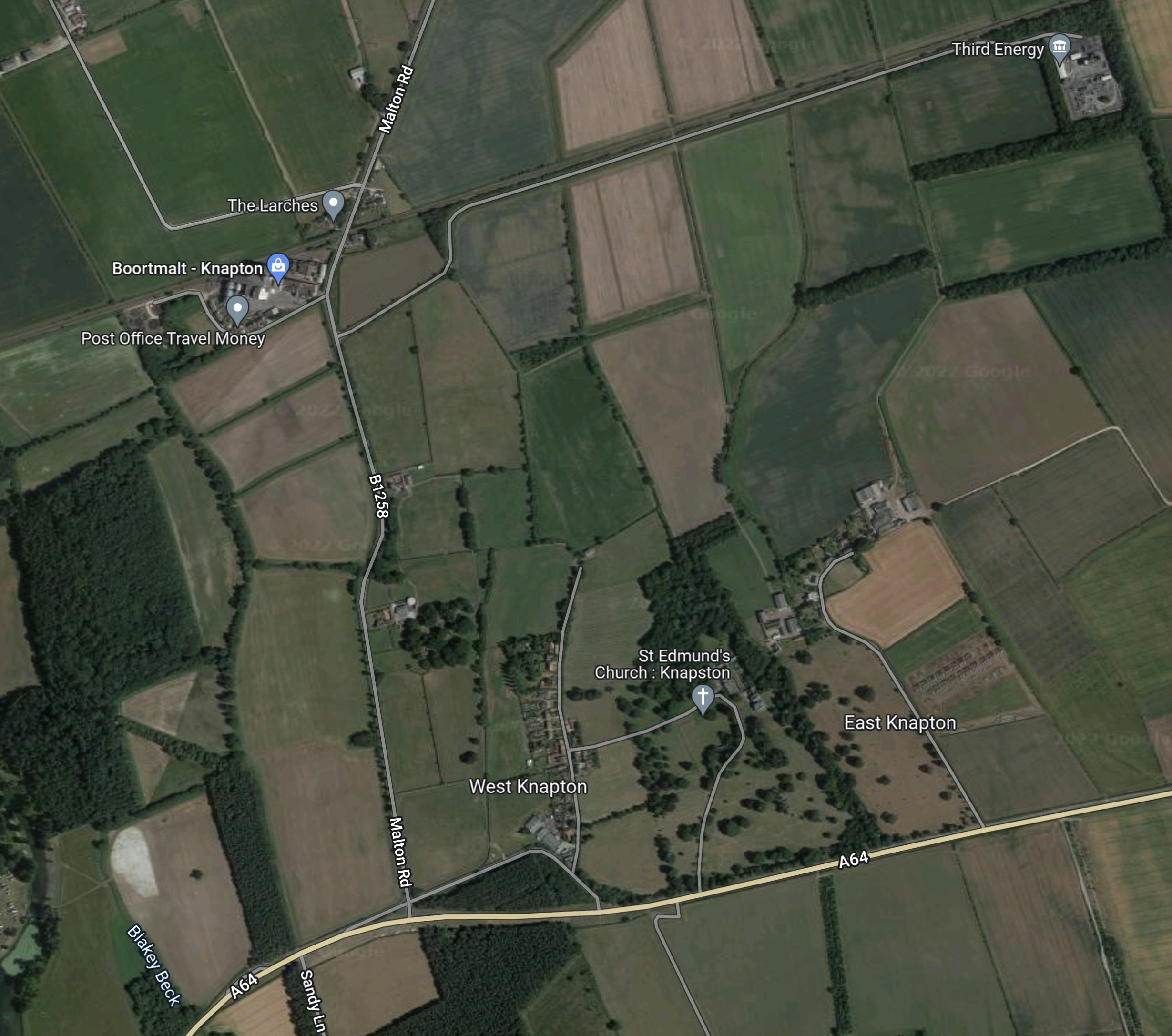
This Google Map shows the two villages of West and East Knapton.
Note.
- The A64 road between Malton and Scarborough going across the map.
- Scarborough and the coast is about fifteen miles to the East.
- The Third Energy site in the North-East corner of the map.
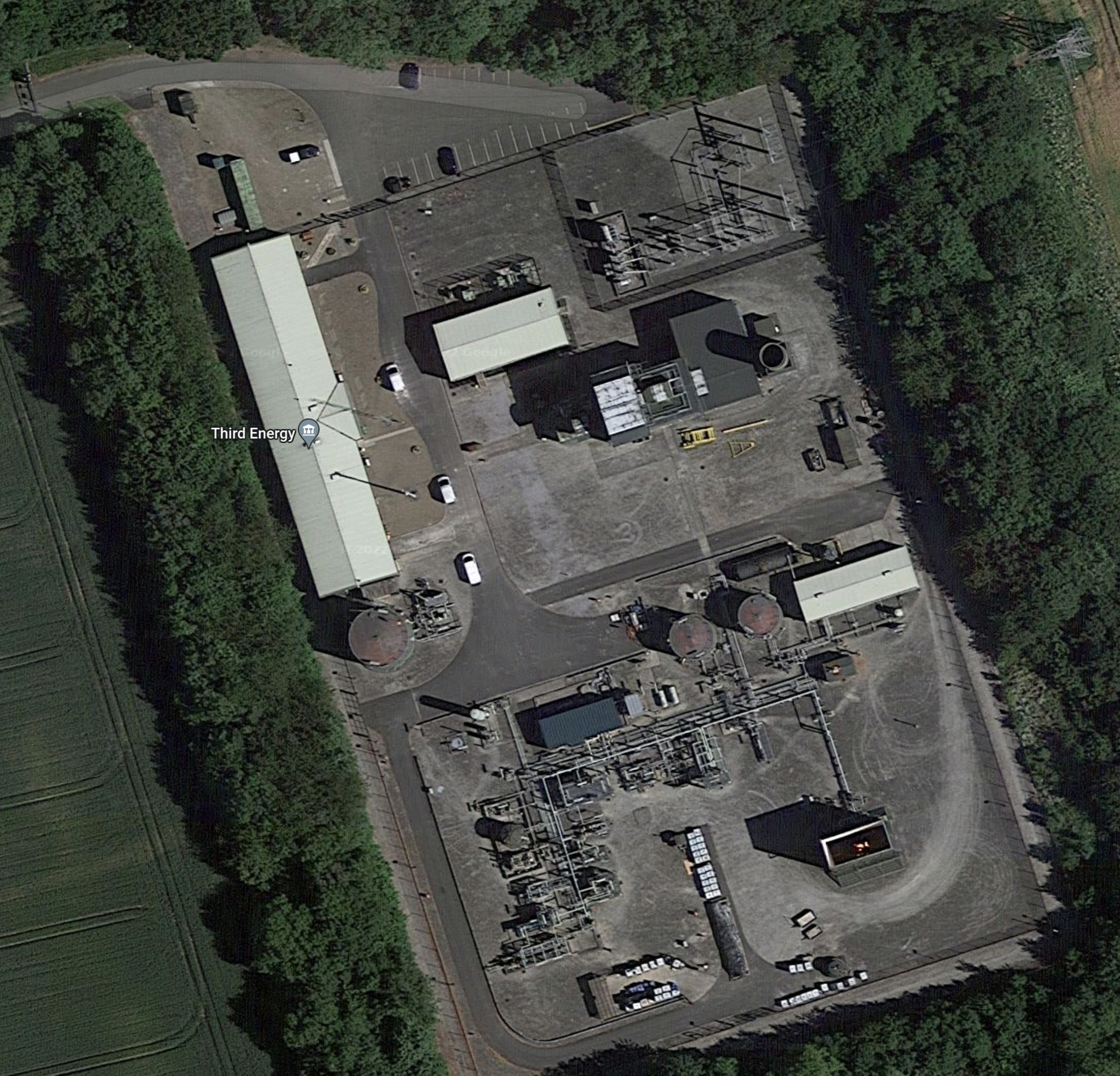
This second Google Map shows the Third Energy site in more detail.
Note.
- The substation and a power line in the North-East corner of the map.
- The 42 MW Knapton Generating Station used to be on this site and it was powered by local gas wells.
Third Energy have now called the site Knapton Energy Park and it now has a web page, which has this mission statement.
Third Energy is developing the former Knapton Generating Station into the Knapton Energy Park. The energy park will house multiple sources of power generation and energy storage. The aim of the project is to pay a part in the development and generation of renewable energy systems in North Yorkshire, and contribute to making the UK Net Zero by 2050.
This paragraph talks about weights.
One of our technology partners has also received government funding to conduct feasibility studies for a pilot project at Knapton which would utilise suspended weights to store energy as an alternative to the traditional battery storage technologies. This project will be developed through 2022 onwards.
It looks like Gravitricity has planted an acorn in Yorkshire.
The Third Energy web site is worth an explore. This is the mission statement on the home page.
At Third Energy our aim is to be at the forefront of North Yorkshire’s transition from fossil fuels to sustainable energy. Our team are proactively playing a part in innovative energy solutions and energy development; transforming our facilities into a multi-purpose energy park and research centre.
I particularly like this page, which is entitled Plug & Abandon.
This is the outline of their P % A philosophy on the page.
As wells near the end of their life cycle they must be decommissioned and the land returned to its original state. Unfortunately, the current P&A practices of the oil and gas industry are cost prohibitive, resulting in delays to abandonment (as companies attempt to avoid the high cost), and poor abandonment practices that may be harmful to the environment.
Fortunately, there are solutions to this problem. Our ambition is to use new and innovative technologies to P&A the wells in a more effective and sustainable manner, and first to extend the period our wells may service the community by re-purposing them for geothermal energy.
Can they really convert abandoned gas wells into geothermal energy sources?
Have We Enough LNG Carriers To Distribute The Natural Gas We Need?
I recently, asked this question of myself, as liquefied natural gas (LNG), now seems to be being moved all over the world.
Note, that the we in the title of this post, is a global we!
I stated by reading the Wikipedia entry for LNG Carrier.
This paragraph outlines the history of LNG carriers.
The first LNG carrier Methane Pioneer (5,034 DWT), classed by Bureau Veritas, left the Calcasieu River on the Louisiana Gulf coast on 25 January 1959. Carrying the world’s first ocean cargo of LNG, it sailed to the UK where the cargo was delivered. Subsequent expansion of that trade has brought on a large expansion of the fleet to today where giant LNG ships carrying up to 266,000 m3 (9,400,000 cu ft) are sailing worldwide.
The Methane Pioneer carried only 27,000 m3 of LNG.
Things have come a long way since the Methane Pioneer.
This is said in the Wikipedia entry for LNG Carrier.
According to SIGTTO data, in 2019 there were 154 LNG carriers on order, and 584 operating LNG carriers.
I don’t think capacity is a problem.
The Wikipedia entry also talks in detail about Cargo Handling and a Typical Cargo Cycle.
It is a very worthwhile read.

