New Station Openings In Early 2026
This post is for two reasons.
I needed an answer to my query.
I wanted to explore the competence of Google AI.
When I typed the title of this post into Google AI, I received this answer.
Several new railway stations in the UK are scheduled to open or begin passenger services in early 2026, primarily in the West Midlands, Northumberland, Devon, and Cambridgeshire.
- Darlaston (between Walsall and Wolverhampton)
- Willenhall (between Walsall and Wolverhampton)
- Kings Heath (Camp Hill line, Birmingham)
- Moseley Village (Camp Hill line, Birmingham)
- Pineapple Road (Camp Hill line, Birmingham)
- Bedlington
- Northumberland Park (interchange with Tyne and Wear Metro)
- Cambridge South (Cambridgeshire) – Expected to open in June 2026, connecting the biomedical campus to London, Birmingham, Stansted, and Gatwick airports.
- Okehampton Interchange (Devon) – This new park and ride station, part of the Devon Metro plan, is planned to open in spring 2026.
- Magna (Rotherham) – A new tram-train and park & ride stop is due to open in early 2026.
- Darlington Station redevelopment (County Durham) – Major redevelopment works are “on target” for completion in spring 2026.
It looks to me, that Google AI made a good fist of my question.
New Rail Station For Mid Devon
The title of this post, is the same as that of this article on Exeter Today.
These are the first two paragraphs.
Devon is set to benefit from a major transport funding boost as the Government today confirmed plans for a new railway station in Cullompton and approved a long-awaited upgrade to the A382 between Drumbridges and Newton Abbot.
The announcement, part of a £92 billion national transport investment programme, includes over £47 million to reinstate passenger services between Portishead and Bristol — and, crucially for Devon, two brand-new stations along the Exeter to Taunton line, one of which will be in Cullompton.
It does appear, that according to its Wikipedia entry, Collumpton station has been a bit on-and-off.
In the October 2021 budget, development funding of £5m was allocated for the reopening of Wellington and Cullompton stations. However, in 2024 the Minister of State for Rail, Peter Hendy, stated that the proposed reopening of Cullompton station would no longer be funded by the UK government. Following the government’s spending review in June 2025, funding was confirmed for the station.
But now it appears to be definitely on.
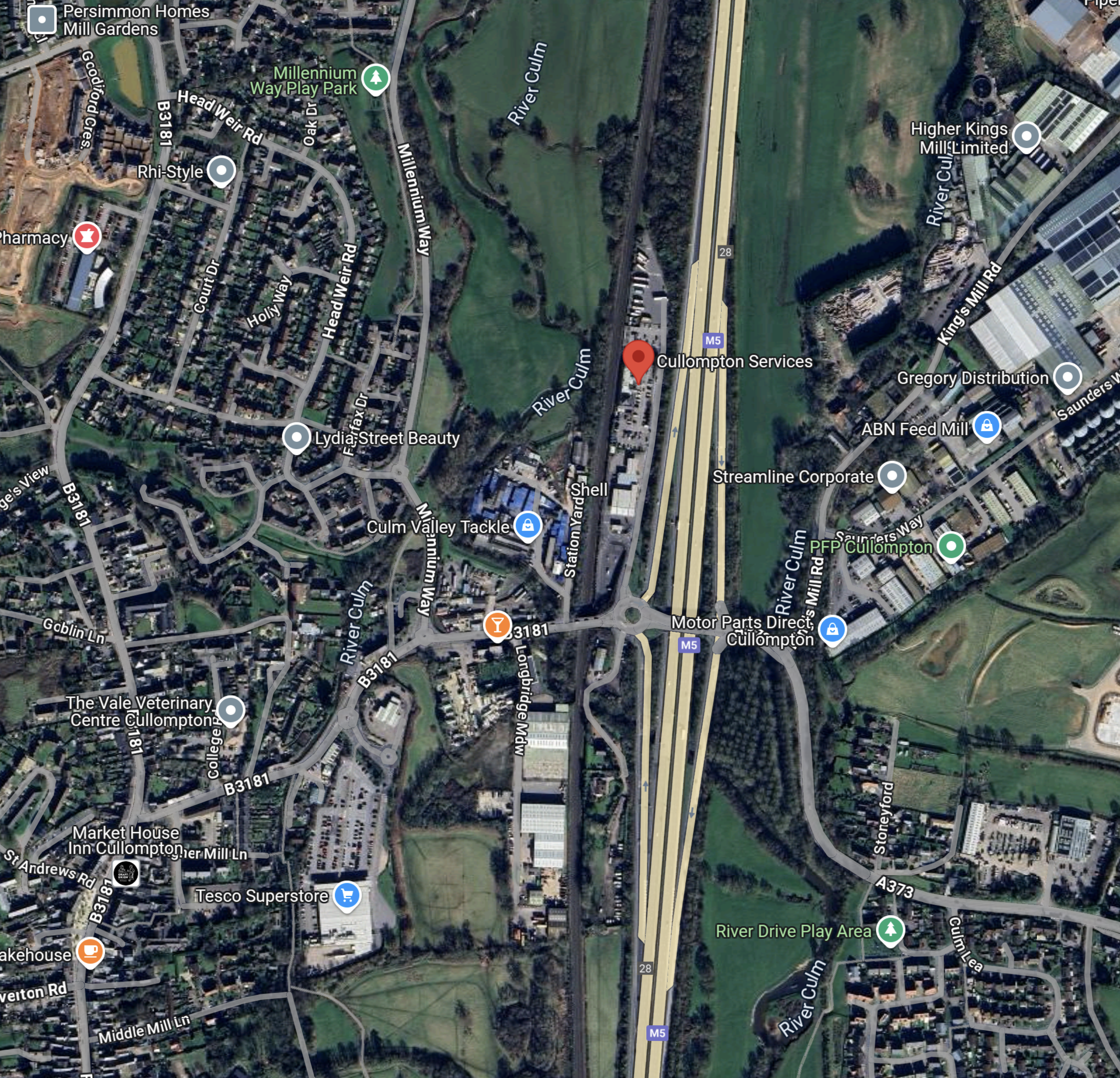
This Google Map shows, the railway and the M5 passing Collumpton.
Note.
- The M5 runs North-South across the map, with Junction 28 about half-way.
- North-west of the junction are Collumpton Motorway Services.
- The Bristol-Exeter Line runs North-South to the West of the services.
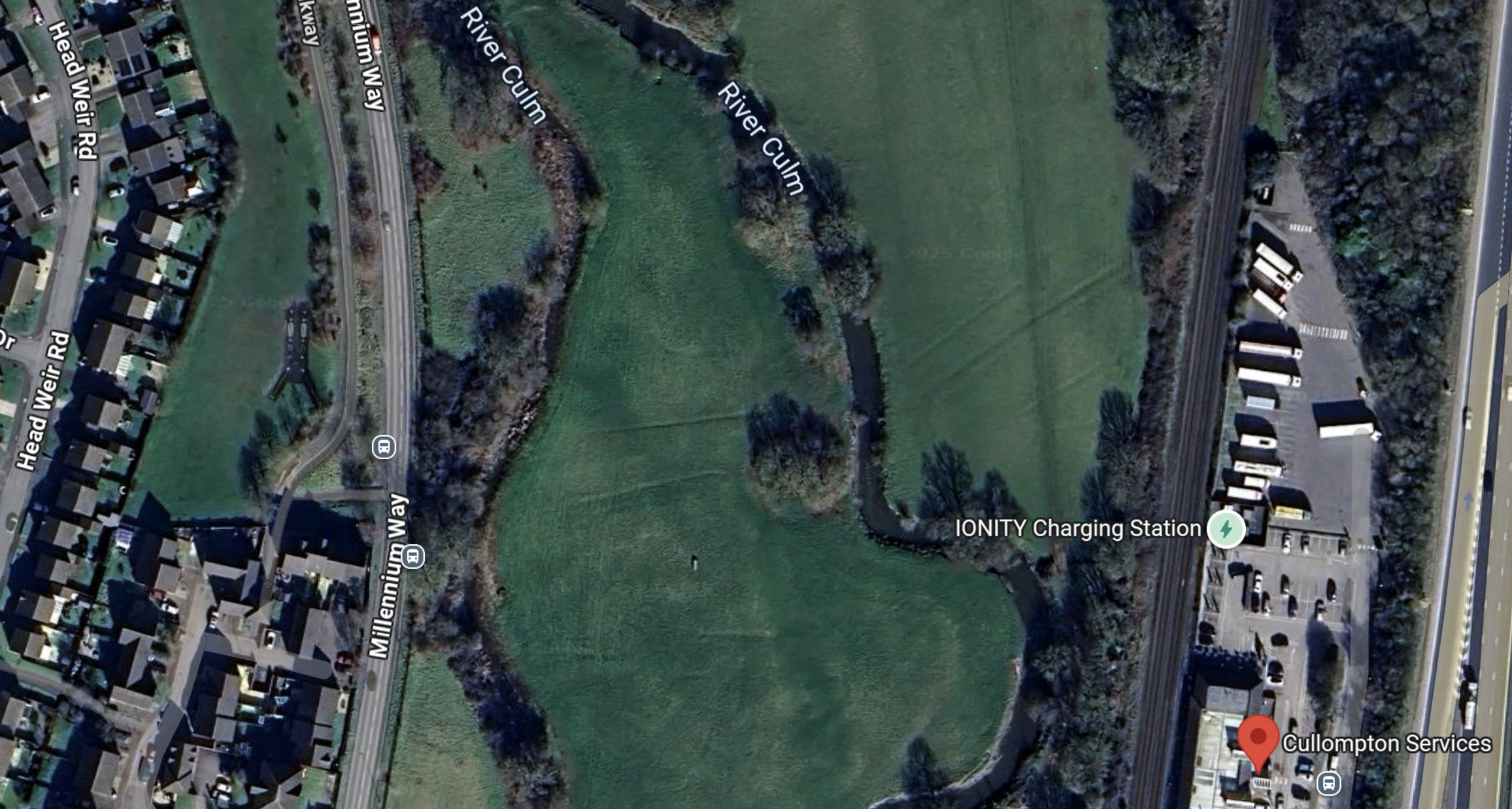
This second Google Map shows the Northern end of the services.
Note.
- Parking at the services appears rather limited.
- Trucks seem to be parked at the Northern end of the services.
- I feel there would be space to put a platform on either side of the rail lines.
- I doubt a bridge with lifts would be a problem.
- The station could share the facilities of the services.
- Could some of the fields to the West of the railway be used to create parking?
- The station could be built to accept nine-car Class 802 trains.
Collumpton station could be built to have a high capacity and direct access to the town and the M5.
I have some thoughts.
Could Collumpton Station Function As A Parkway Station?
I believe it certainly could for Exeter, Bristol and even London.
In Darlington Station – 26th June 2025, I showed how Network Rail are creating a 650-place car park at the station, which could be a major draw for travellers.
Could a large car park be provided here to attract travellers?
South West Rail Resilience Programme
This is the first paragraph of this article on Modern Railways.
The Government has paused the third phase of Midland main line electrification to Sheffield and Nottingham, plus the final phase of the South West Rail Resilience Programme (SWRRP), which involves strengthening cliffs at Holcombe.
If the final phase of the South West Rail Resilience Programme is paused, what happens if God decides to block the line through Teignmouth.
I have thought for some time, that one of the purposes of Okehampton Interchange station is to provide an alternative route to the South-West.
If the sea should destroy the coastal railway, as it did a few years ago, then passengers for the South-West could be ferried to and from Okehampton Interchange station by high-speed hydrogen-powered coaches along the A30, to catch trains to Exeter and London.
So, I would build a hydrogen filling station at Collumpton services, so that if the sea destroys the coastal railway again, the alternative of hydrogen coaches is ready.
If Okehampton Interchange station can also be used as an alternative, two alternatives might just ensure that the alternative routes never need to be used.
Sutton Station To Gatwick Airport By Hydrogen-Powered Bus
In Central London and Gatwick Airport For Free On A Freedom Pass, I indicated it was possible to go to Gatwick Airport for nothing, if you had a Freedom Pass, which is also a free bus pass for England.
This morning I took public transport to Gatwick Airport by this route.
- I took a 43 bus to London Bridge station.
- This bus terminates in the bus station in front of the train station, so it was a simple step-free entry into the part of the station, where Southern Trains terminate.
- I took a Southern Train to Sutton station.
- I then took a Metrobus 420 bus from Sutton station to Gatwick Airport.
These pictures show the journey.










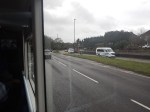



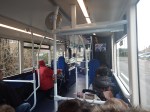









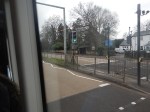



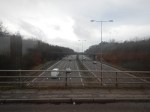








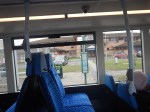







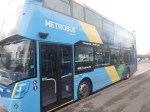
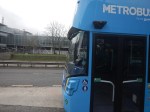
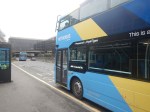

Note.
- The bus stop is directly outside the entrance to Sutton station.
- Sutton station is step-free.
- The information on the Metrobus’s buses at Sutton station is poor.
- The bus had a 74 number plate, so was registered after September 1st, 2024.
- The bus said it was a hydrogen bus.
- The seats were comfortable with leather facings.
- The route was mainly through rural Surrey.
- There were sections of dual-carriageway road with continuous 40 mph running.
- There were a number of steep hills.
- Previously, I have been told by a Bradford Councillor, that the City of Bradford is going for hydrogen-powered buses , as the city has lots of steep hills.
- The unusual Reigate and Redhill War Memorial on the A25.
- The route goes past Hadworth, Reigate and Redhill stations.
- Just before Gatwick Airport, the bus called at East Surrey Hospital.
I have some thoughts.
Does This Hydrogen Bus Have Almost The Quality Passengers Would Expect From A Coach?
Consider.
- I was very impressed with the quality of the bus and its fittings.
- But its biggest assets were the ride and mouse-quiet noise and being vibration-free.
- It was certainly up there, with the best British buses on UK roads.
- Strangely, I never rode in any of London’s Green Line coaches of the 1950s and 1960s.
But as Wrightbus are selling hydrogen-powered single-decker buses to the Germans, the quality must be of a certain standard.
The Performance Of The Bus
I would sum up the bus as follows.
- The bus didn’t hang around and it was well-driven.
- On much of the dual-carriageway, the bus appeared to be at the maximum speed limit of 40 mph
- Ride and seats were comfortable.
- There was virtually no vibration.
- At times, you almost felt you were in a top-of-the-range coach.
- The running gear is from German company ZF, which certainly doesn’t hinder the ride.
- The journey from Sutton to Gatwick Airport is twenty miles and took about ninety minutes.
I would feel that if Wrightbus design their CoachH2 chassis to the same standard of this bus, they’ll have a difficulty to meet sales demand.
Wrightbus Hydrogen Buses For My Local Bus Route 141
Consider.
- The 141 bus route is my local bus, which gets me to Moorgate, Bank, London Bridge and Manor House.
- The length of the full route is twenty miles and it takes about an hour to go from London Bridge station to Palmers Green.
- The route is currently run by older Wrightbus hybrid diesel-electric buses.
- I suspect that modern hydrogen buses could last almost all day on one fill of hydrogen, with perhaps a top-up at lunchtime.
They would have no difficulty handling the route and would greatly increase the customers current rock-bottom satisfaction.
Hydrogen Buses In Leafy Suburbs
- Where I live, is not particularly leafy or a suburb.
- But I seems to remember, when I moved here, that some of my neighbours complained about the noise of the 76 bus route.
- So Transport for London put on some quieter buses.
I would expect, that Metrobus might use the mouse quieter hydrogen buses in post areas, to avoid annoyance.
Hydrogen Buses As Route Extenders
Effectively, the Metrobus route 420 is acting as a route extender for Southern and Thameslink services coming South from London.
As it is a quality bus, that gets a move on, I suspect that some travellers, who previously took a train to Sutton, Tadworth, Reigate, Redhill or other stations and were then picked up, may take a hydrogen bus to a more convenient bus stop.
Because of the long range of a hydrogen bus or coach, zero-carbon performance, should be achieved without any range anxiety for passengers, driver or bus company.
Onward From Oakhampton Parkway Station
Consider.
- In 2014, storms destroyed the railway at Dawlish in Devon.
- As there was no alternative route, the storms cut everything west of Dawlish off from the rest of the UK.
- It is now likely, that a Park-and-Ride station will be built close to Okehanpton, which commuters would use for travel to Exeter.
- The main road to the South-West ; the A 30 will pass nearby.
It would appear, that Okehampton Interchange station could be used, if Nepture decided to show his power again.
Hopefully, the emergency plan will scare Nepture away.
Lumo To The Scottish Borders
Consider.
- Lumo have applied to extend some of their Edinburgh services to Glasgow.
- Talking to a friend in the Scottish Borders, they said, that travelers drive to Newcastle or Morpeth to catch Lumo for London.
- Four or five Lumo services every day stop in each direction at Morpeth station.
- So would it be sensible to run a bus or coach through the Scottish Borders to connect with the Lumo services?
This Google Map shows Morpeth in relation to the Border towns.
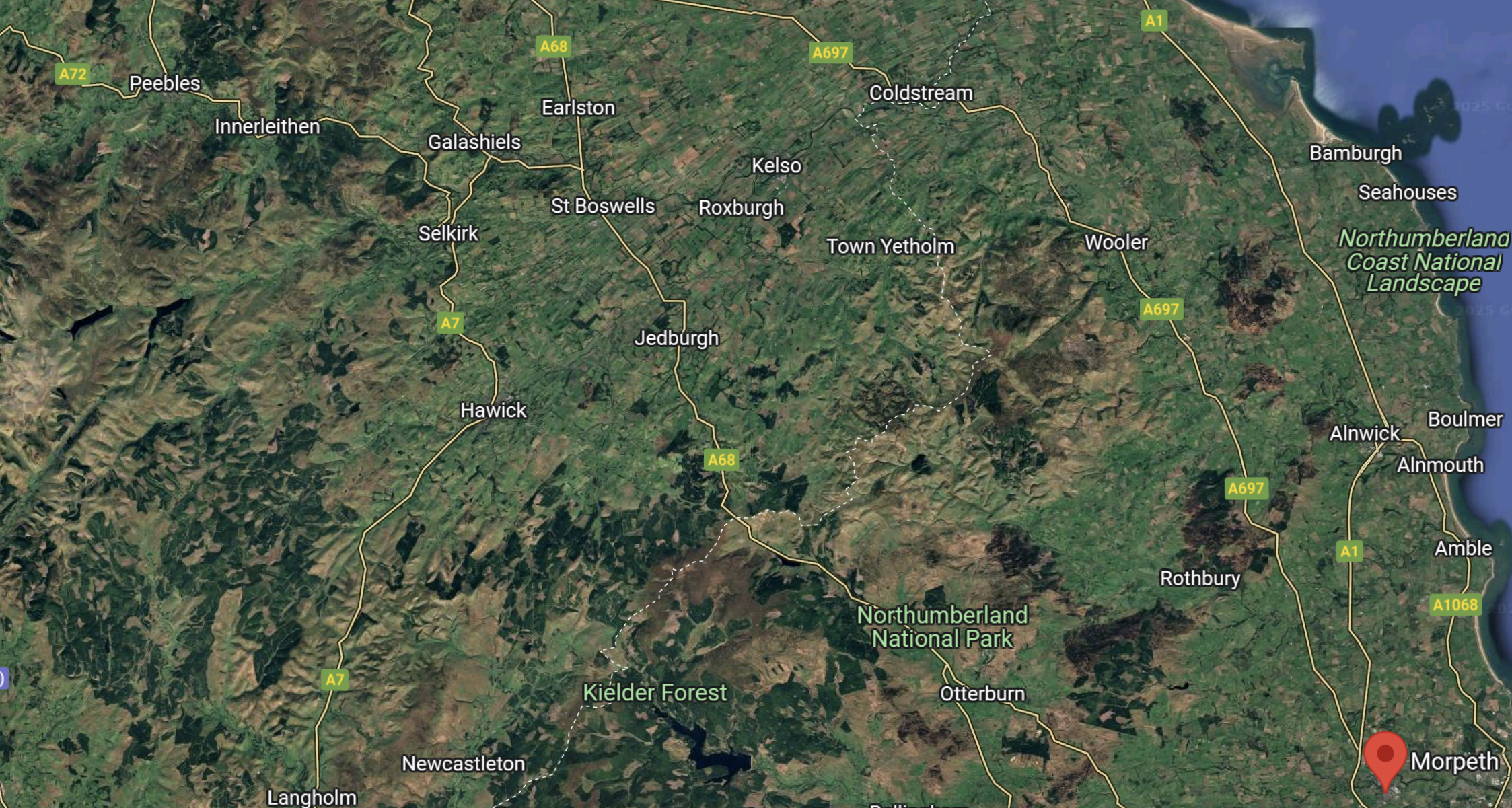
Note.
- Morpeth is marked by the red arrow in the South-East corner of the map.
- Galashiels, Galashiels, Hawick, Jedburgh, Peebles, Saint Boswells and Selkirk can be picked out on the map.
- The coach service would probably terminate at Galashiels, as it has a large bus terminal and and a railway station.
- Click the map to show it to a larger scale.
Morpeth to Galashiels is 69 miles and it should take about an hour and a half.
Hydrogen Buses As Rail Replacement Buses
Consider.
- I have had Rail Replacement Coaches as opposed to buses a few times in the UK.
- Once on the East Coast Main Line but usually on the Great Eastern Main Line to Ipswich or Norwich.
- They are generally more suited to their task. as they are faster and more luxurious.
- Many of our major rail lines run alongside trunk roads or motorways or fast dual carriageways.
So because hydrogen buses and coaches a have superior performance, than their diesel cousins, will hydrogen be the better fuel for a Rail Replacement Bus.
Metrobus’s Hydrogen Buses
This press release on the Metrobus web site is entitled Hydrogen Buses.
This is the sub-heading.
Our commitment to Zero Emissions
As part of our commitment to reducing emissions, twenty new hydrogen fuelled buses will operate on Fastway routes 10 & 20. These new buses demonstrate an ongoing commitment to reducing our local emissions. They deliver against science-based targets set by Metrobus and its parent company, The Go-Ahead Group, of becoming a net zero business by 2045 and decarbonising our bus fleet by 2035.
Conclusion
This bus is the best I’ve ridden in.
Central London and Gatwick Airport For Free On A Freedom Pass
I have always found it odd, that I can get to Heathrow Airport for free on my Freedom Pass, but for Gatwick Airport, I must buy a ticket.
Not that I’m bothered about the price of the ticket, but for some it might mean that they can’t get to their preferred holiday destination, as planes only fly from Heathrow.
The different treatment of the two airports must also annoy some airport and airline owners and bosses.
But recently, a free route for London’s Freedom Pass holders has opened.
This article on Inside Croydon is entitled Metrobus Rolls Out Zero-Emission Hydrogen Fleet Into Sutton.
These are the first two paragraphs.
Metrobus has been rolling out a fleet of hydrogen-powered buses, and last week its first double deckers, operating the 420 route from Sutton town centre to Gatwick Airport and Crawley, were brought into service.
Metrobus is planning on having more than 40 hydrogen-powered buses, in a partnership with West Sussex, Surrey and Kent county councils and Gatwick, in a £24million investment by the partners including a £10 million grant from the Department for Transport.
Note.
- The range of a Wrightbus Hydroliner is 280 miles on a full tank of hydrogen.
- It looks like as Crawley to Sutton station is a 42.2 miles round trip, so that means six round trips are possible on a tank of hydrogen.
- The Hydroliners may have the speed to use the M23 between Sutton and Crawley.
According to the article, refueling would be at Crawley.
A Zero-Carbon Extension To The Freedom Pass Zone
The free route for Freedom Pass holders to Gatwick Airport will be.
- Southern or Thameslink Train to Sutton.
- 420 bus to Gatwick Airport.
The article says this about the routes that are being planned.
The 420 route runs from Sutton town centre, through Belmont and Banstead, to Tadworth and then on to Reigate and Redhill, serving East Surrey Hospital before going on to the airport and Crawley. Metrobus is planning to use other hydrogen-powered buses on routes that will serve Caterham, Dorking, Tunbridge Wells, Haywards Heath and Brighton.
It appears that the hydrogen buses will add a large zero-carbon area to the Freedom Pass zone.
The only new infrastructure, would be the refueling equipment at Crawley.
I can also see the buses becoming an unusual tourist attraction for the area.
An Extension To An Electric Railway Or Tramway
They may also set a precedent for how a transport network can be extended in a zero-carbon manner from a tram or rail terminal served by an electric railway or tramway.
Battery electric buses could be used, but their range means that on anything but the shortest routes, they would constantly need recharging.
Okehampton Interchange Station
The first paragraph of the Wikipedia entry for Okehampton Interchange station describes it like this.
Okehampton Interchange (formerly known as Okehampton Parkway) is a proposed railway station in Okehampton on the Dartmoor Line. The station would be part of the Devon Metro and has been described as a priority station. The station is to be sited off Exeter Road, by the Business Park and close to the junction with the A30, in the Stockley Hamlet area of Okehampton. It would also serve 900 new homes to be built nearby.
But I believe that Okehampton Interchange station also has another purpose.
If the sea should destroy the coastal railway, as it did a few years ago, then passengers for the South-West could be ferried to and from Okehampton Interchange station by high-speed hydrogen-powered coaches along the A30, to catch trains to Exeter and London.
So, I would build a hydrogen filling station at Okehampton Interchange station, so that if the sea destroys the coastal railway again, the alternative is ready.
Normally, the hydrogen filling station would refuel local hydrogen buses, trucks, cars and other vehicles and those passing on the A30 to and from Cornwall.
Okehampton Interchange station would be the ultimate extension to an electric railway. Even if the Dartmoor Railway was worked by electro-diesel trains.
Taunton To Exeter St. Davids – 4th July 2023
I took these pictures as I travelled from Taunton station to Exeter St.Davids station.
































































This Google Map shows a section of the M5 North of Collumpton.
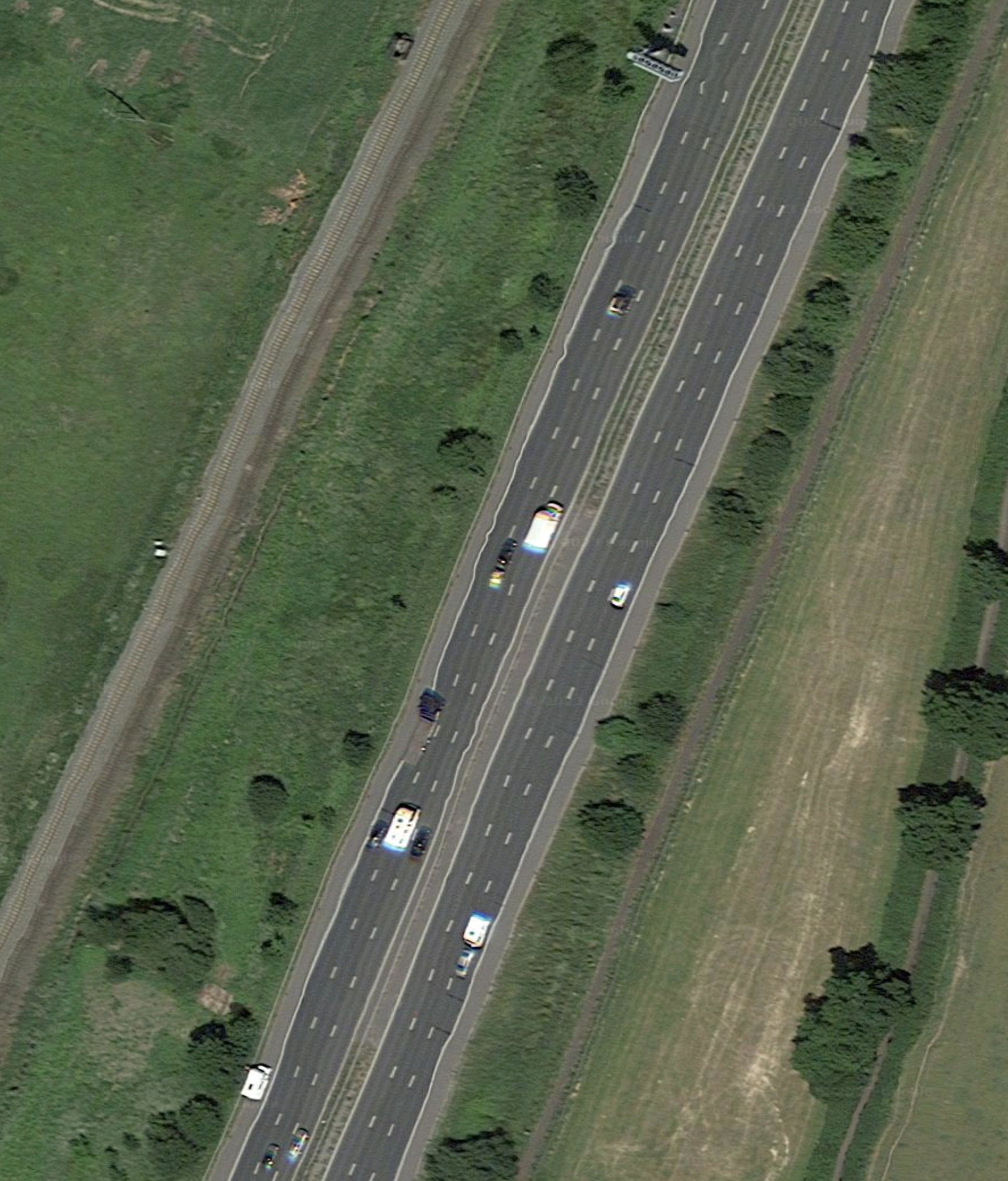
Note.
- The proximity of the M5 motorway to the railway, in some pictures and the map.
- There is space to plant large numbers of trees between the motorway and the railway.
- There are high voltage overhead electrical cables running along the same corridor.
- Collumpton services are also placed between the motorway and the railway.
I believe that with good landscaping, it would be possible to improve the motorway and railway corridor, between Taunton and South of Collumpton.
This OpenRailwayMap shows the track between Wellington and Collumpton, between Taunton and Exeter.
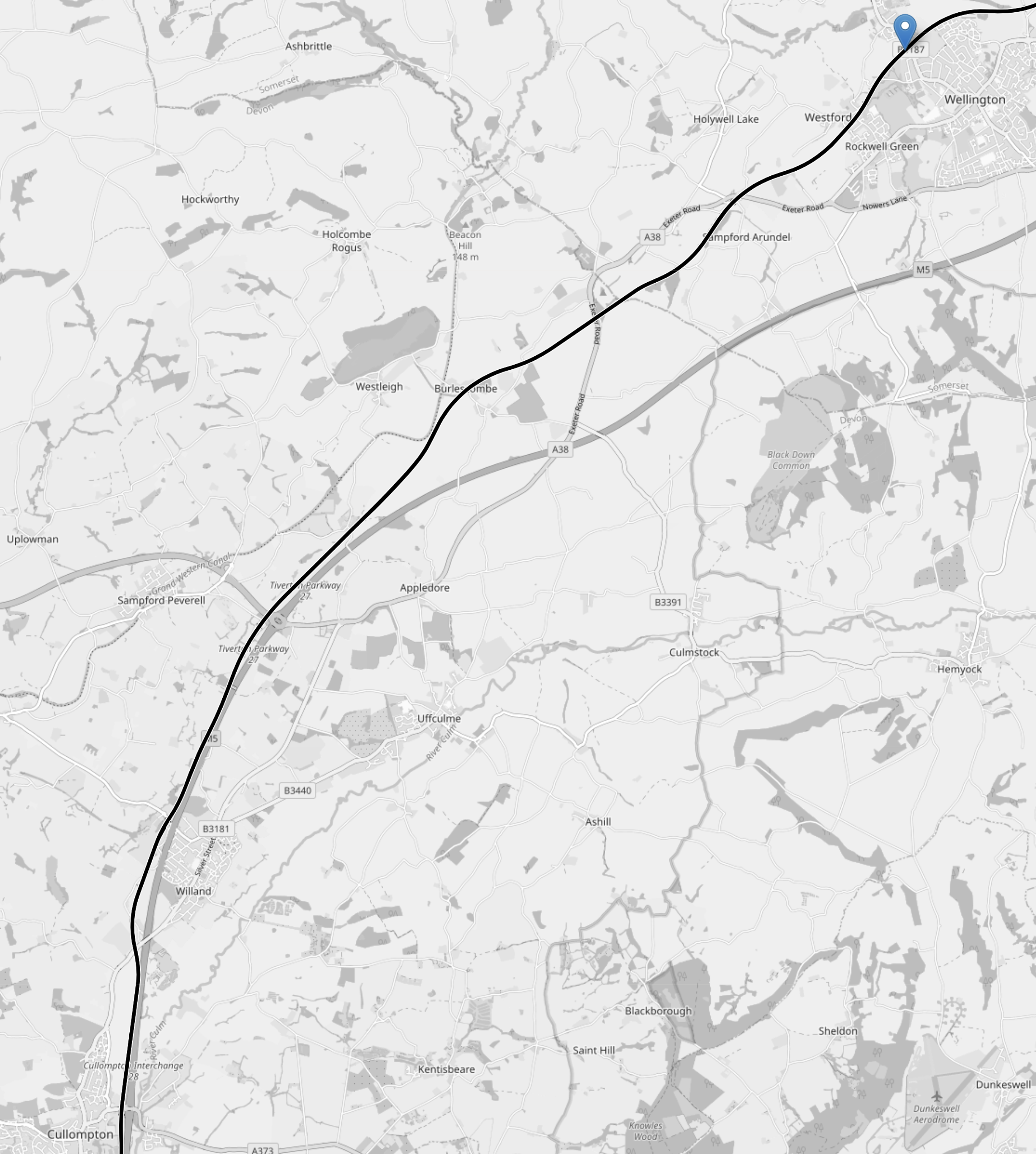
Note.
- The black line is the railway between Taunton and Exeter.
- The blue arrow in the North-East corner of the map indicates the position of the proposed Wellington station.
- Collumpton is in the South-West corner of the map and has also been put forward for a new Collumpton station.
- I talked about the reopening of these two stations in Reopening Of Wellington and Cullompton Stations.
- The M5 to the North of Collumpton runs closely alongside the railway.
- According to Real Time Trains, it takes just under ten minutes to go the thirteen miles between Wellington and Cullompton.
I believe that by using partial electrification, good engineering and innovative landscaping, that sufficient electrification can be erected between Taunton and South of Collumpton, that would ensure the following.
- Trains would leave Taunton going East with enough charge to travel the 89.6 miles to Newbury.
- Trains would leave Taunton going North with enough charge to travel the 51.7 miles to Patchway via Western-super-Mare and Bristol Temple Meads.
- Trains would leave Cullompton going South with enough charge to travel the 32.9 miles to Okehampton.
- Trains would leave Cullompton going South with enough charge to travel the 36.6 miles to Paignton.
- Trains would leave Cullompton going South with enough charge to travel the 60.4 miles to Plymouth.
Note.
- I’ve added Okehampton, as I feel that if Dawlish had another encounter with Poseidon, Okehampton with its proposed Parkway station on the A30 could be the terminus for coaches to and from Cornwall.
- Charging could be needed at Okehampton and Paignton.
- Charging at Okehampton and Paignton, wouldn’t be needed, if the battery-electric trains had enough range to do the return trip.
Electrification of Plymouth and Penzance stations, as I outlined in Thoughts About Electrification Through Devon And Cornwall, would enable battery-electric trains to bridge the gap of 79.5 miles, between these two stations.
Conclusion
It looks like some miles of sympathetic electrification and landscaping between Taunton and South of Cullompton, is the key to running battery-electric train to Devon and Cornwall.
Thoughts About Electrification Through Devon And Cornwall
Distances
I’ll start by looking at a few distances.
- Penzance and Taunton – 162.3 miles
- Penzance and Exeter St. David’s – 131.5 miles
- Penzance and Plymouth – 79.5 miles
- Taunton and Exeter St. David’s – 30.7 miles
- Plymouth and Exeter St. David’s – 52 miles
- Taunton and Newbury – 89.6 miles
- Plymouth and Taunton – 82.8 miles
- Taunton and Paignton – 59 miles
- Taunton and Patchway – 51.7 miles
Note.
- Patchway and Newbury are already electrified to Cardiff Central and London Paddington respectively.
- Bombardier’s engineer told me eight years ago, that the battery-electric Class 379 had a range of sixty miles.
- Stadler’s FLIRT Akku has a Guinness world record of 139 miles on one battery charge. See this page on the Stadler web site.
- Even Stadler’s Class 777 trains for Merseyrail have a range of 84 miles on battery power. See New Merseyrail Train Runs 135km On Battery.
The rail distances in Devon and Cornwall are getting closer to being within the capability of trains fitted with batteries.
Station Stop Times
These are typical times that trains stop in the more important stations between Taunton and Penzance.
- Taunton – < 2 mins
- Tiverton Parkway – < 2 mins
- Exeter St. Davids – 2 mins
- Newton Abbot – < 2 mins
- Totnes – < 2 mins
- Plymouth – 11 minutes
- Devonport – < 2 mins
- Saltash – < 2 mins
- Menheniot – < 2 mins
- Liskeard – < 3 mins
- Bodmin Parkway – 2 mins
- Lostwithiel – 2 mins
- Par – 2 mins
- St. Austell – 2 mins.
- Truro – 2 mins
- Redruth – 2 mins
- Camborne – 2 mins
Note.
- The timings were for today.
- The Cardiff and Penzance services were being run by five-car Class 802 trains.
- Most station stops are around two minutes or less, but Plymouth on this train was eleven minutes.
I find it interesting that the Plymouth stop takes so much longer.
Train Stops At Plymouth
I looked at about twenty trains stopping at Plymouth, that included these services.
- London Paddington and Penzance
- Penzance and London Paddington
- Cardiff Central and Penzance
- Penzance and Cardiff Central
Note.
- I found an average time of eight minutes.
- Eleven minutes was a common stop.
- Eight minutes could be enough time for the rail equivalent of a Formula One splash and dash.
- CrossCountry services were going through the station in three minutes.
I am led to believe that the timetable used by the GWR trains would allow a quick battery charge at Plymouth station.
This OpenRailwayMap shows the platforms at Plymouth station.
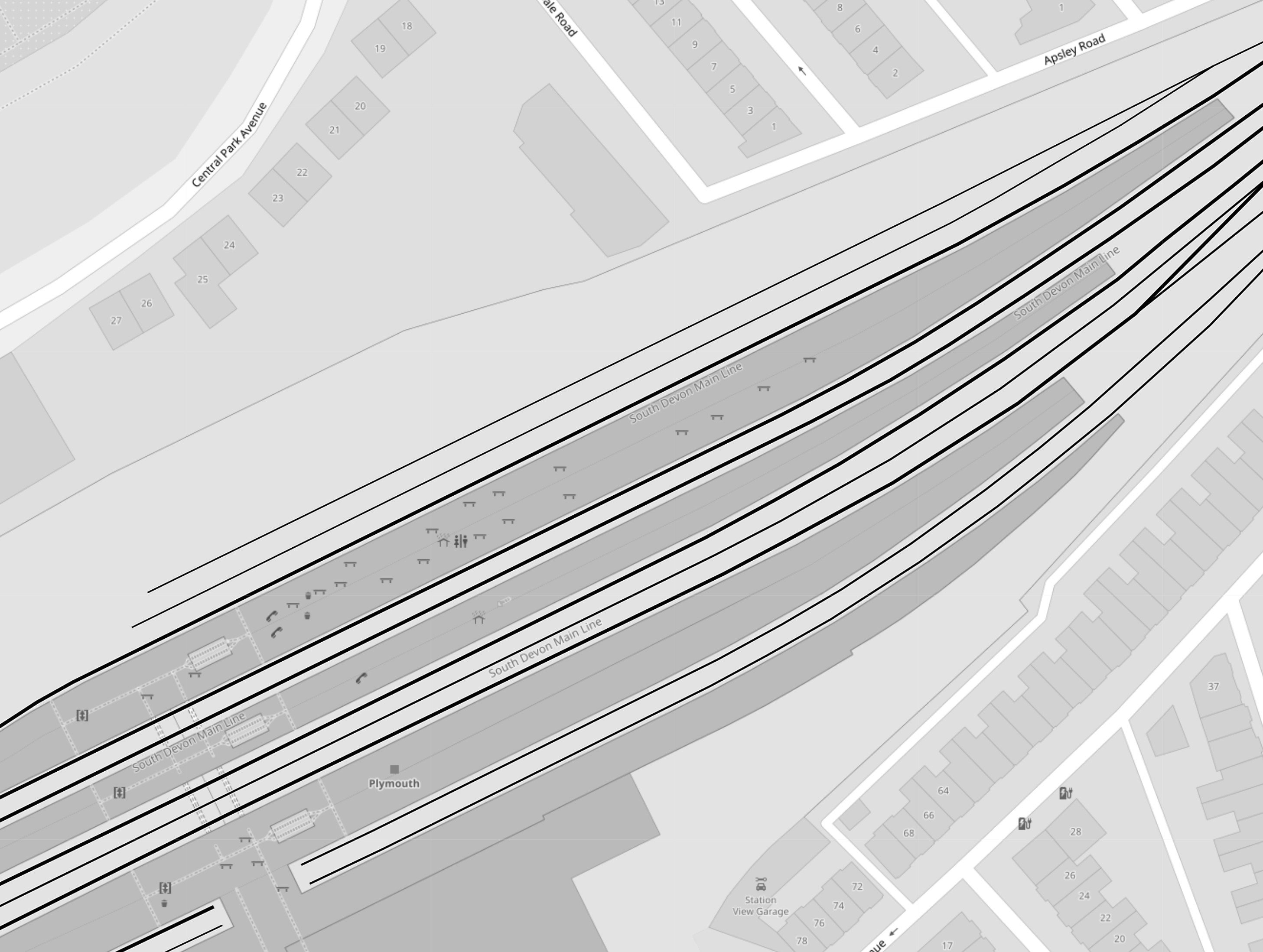
Note.
- London is to the East and Penzance is to the West.
- Platform numbers increase from South to North.
- The two East-facing bay platforms are Platforms 1 and 2.
- The West-facing bay platform in the South-West corner is Platform 3.
- Platform 4 shares the island with the bay platforms 1, 2 and 3.
- Most trains going to Penzance use Platform 4.
- Platforms 5 and 6 share the centre island platform.
- Platforms 7 and 8 share the Northernmost island platform.
- Most trains going towards London use Platform 7.
- Wikipedia indicates that the track layout is comprehensive and allows a lot of operational flexibility.
Although the station was completed around forty years ago, it could have been designed for handling modern battery-electric trains.
- There are three bay platforms numbered 1 to 3, to charge local services and send them on their way.
- Trains can arrive and depart in the five through platforms, numbered 4 to 8, from either direction.
- Two days ago, a nine-car London Paddington to Plymouth train terminated in Platform 7. After waiting an hour it returned to London. An hour would be enough time to fully-charge a train.
- As many platforms as needed could be electrified.
I am fairly sure, that most battery-electric trains could be timetabled to leave Plymouth station with full batteries.
Turnround At Penzance
I have found these turnrounds.
- 802113 arrived from Paddington at 1142 and left for London at 1215
- 802022 arrived from Paddington at 1307 and left for London at 1415
- 802103 arrived from Paddington at 1500 and left for London at 1615
This OpenRailwayMap shows the platforms at Penzance station.
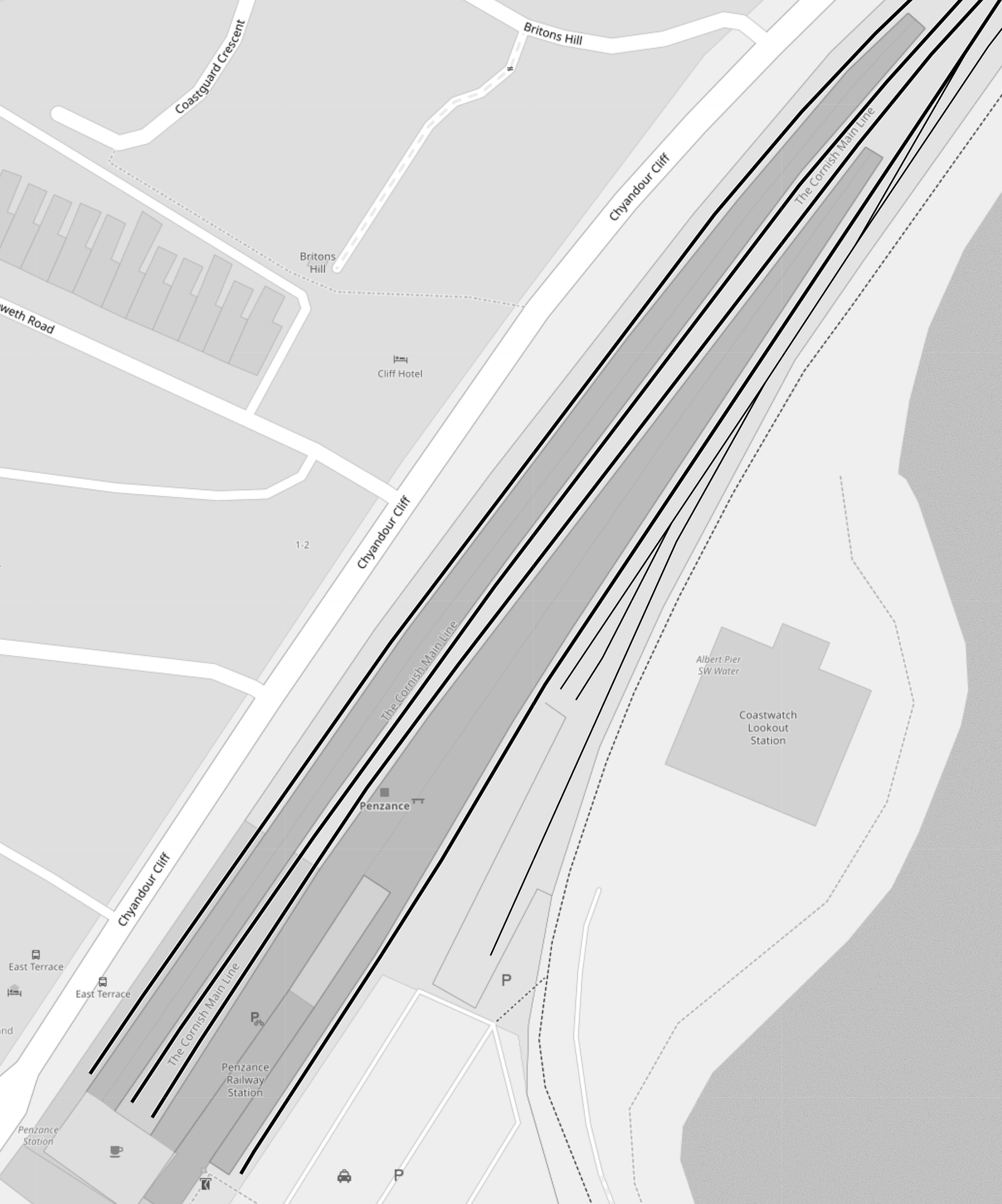
Note.
- The three example trains used Platform 1.
- Platform 1 is the long platform on the landward side of the station.
- Platforms are numbered 1 to 4 from left to right.
- An appropriate number of platforms would be electrified to charge trains terminating at Penzance.
Trains would appear to have plenty enough time to recharge, so they would start their return journey with full batteries.
Engineering Ambition
Several times in my life, I’ve got fired up about engineering or software projects and I like to think, I’ve produced the best and fastest solution.
For this reason, I believe that Hyperdrive Innovation, who are now part of Turntide Technologies, and Hitachi will set themselves three objectives with the design of the the battery packs for the Class 802 train.
- The battery-electric Class 802 will outperform the Stadler FLIRT Akku in terms of speed and distance.
- The battery packs will be plug-compatible with the diesel engines, so there will only be minor software modification to the trains.
- The train will be able to be handle all Great Western Railway’s routes without using diesel.
- I wouldn’t be surprised that on many routes the train will cruise at over 110 mph on batteries.
I also suspect they want the Akku’s Guinness world record, which will mean the range will be in excess of 139 miles.
Battery Range Needed For Routes
These are routes that need to be covered by battery-electric Class 802 trains or similar.
- Avanti West Coast – Crewe and Chester – 22.2 miles
- Avanti West Coast – Crewe and Holyhead – 105.5 miles
- Avanti West Coast – Crewe and Llandudno Junction – 65.5 miles
- Avanti West Coast – Crewe and Wrexham – 34.4 miles
- Avanti West Coast – Shrewsbury and Wolverhampton – 29.7 miles
- Great Western Railway – Penzance and Plymouth – 79.5 miles
- Great Western Railway – Plymouth and Taunton – 82.8 miles
- Great Western Railway – Taunton and Patchway – 51.7 miles
- Great Western Railway – Newbury and Taunton – 89.6 miles
- Great Western Railway – Taunton and Paignton – 59.0 miles
- Great Western Railway – Weston-super-Mare and Chippenham – 43.5 miles
- Great Western Railway – Oxford and Great Malvern – 65.6 miles
- Great Western Railway – Oxford and Hereford – 86.3 miles
- Great Western Railway – Oxford and Worcester Foregate Street – 57.6 miles
- Great Western Railway – Oxford and Worcester Shrub Hill – 57.2 miles
- Great Western Railway – Cheltenham Spa and Swindon – 43.2 miles
- Great Western Railway – Cardiff Central and Carmarthen – 77.4 miles
- Great Western Railway – Cardiff Central and Pembroke Dock – 118.9 miles
- Great Western Railway – Cardiff Central and Swansea – 45.7 miles
- Hull Trains – Beverley and Temple Hirst Junction – 44.3 miles
- Hull Trains – Hull and Temple Hirst Junction – 36.1 miles
- LNER – Hull and Temple Hirst Junction – 36.1 miles
- LNER – Middlesbrough and Longlands Junction – 22.2 miles
- LNER – Sunderland and Longlands Junction – 48.5 miles
- LNER – Lincoln Central and Newark Northgate – 16.6 miles
- LNER – Leeds and Bradford – 13 miles
- LNER – Leeds and Harrogate – 18 miles
- LNER – Leeds and Huddersfield – 17 miles
- LNER – Stirling and Inverness – 146 miles
- LNER – Edinburgh Haymarket and Aberdeen – 130 miles
- LNER – Peterborough and Doncaster via Great Northern and Great Eastern Joint Line – 93.7 miles
- South Western Railway – Basingstoke and Exeter St. David’s – 124.5 miles
- TransPennine – Hull and Micklefield – 42 miles
- TransPennine – Longlands Junction and Saltburn – 34.7 miles
- TransPennine – York and Scarborough – 42 miles
- TransPennine – Doncaster and Cleethorpes – 52.1 miles
- TransPennine – Stockport and Doncaster – 55.4 miles
- TransPennine – Stockport and Cleethorpes – 107.5 miles
Note.
- Stirling and Inverness and Edinburgh Haymarket and Aberdeen could be shortened by up to thirty miles, by planned electrification in Scotland.
- I have assumed that the TransPennine Upgrade has been completed.
- It looks like a battery-electric Class 802 train could use the Great Northern and Great Eastern Joint Line diversion via Lincoln.
- I am slightly surprised, that the longest stretch of line without electrification and with a passenger service is Basingstoke and Exeter St. David’s.
Charging will be needed at some places to charge the battery-electric trains. Stations fitted with chargers could include Aberdeen, Carmarthen, Cleethorpes, Exeter St. David’s, Hereford, Holyhead, Hull, Inverness, Paignton, Penzance, Pembroke Dock, Plymouth, Swansea, Taunton, Weston-super-Mare, Worcester.
Most chargers would be a length of electrification in the platform, where the battery-electric trains terminated or passed through.
More On LNER’s Ten New Bi-Modes
I wrote about these trains in LNER Seeks 10 More Bi-Modes.
This was my conclusion.
There is a lot of scope to develop LNER’s services.
I think it is likely that the order will go to Hitachi.
But as I indicated, I do believe that there is scope for a manufacturer to design a zero-carbon train, that was able to serve Aberdeen and Inverness.
-
- I suspect a fleet of ten trains would be sufficient.
- Trains would use the 25 KVAC overhead electrification, where it exists and hydrogen or battery power North of the wires.
The trains would also be capable of being upgraded to higher speeds, should the East Coast Main Line be turned into a High Speed Line.
I also think, that whatever trains are bought, there will be a large upgrading of the existing Hitachi fleet, which will add batteries to a lot of trains.
In the July 2023 Edition of Modern Railways, there is an article, which is entitled LNER Embraces Pioneering Spirit, which takes the form of an interview with LNER’s Managing Director; David Horne.
In a section, which is entitled ‘225’ Replacement, this is said.
Meanwhile, Mr Horne is looking to what might replace the InterCity 225 fleet, now smartly repainted in a scheme which pays homage to the original ‘Swallow’ livery. While there were fears this fleet may be withdrawn as an economy measure, the ‘225s’ are now on lease until at least next summer.
But Mr Horne says obsolescence issues are a real challenge and LNER will struggle to maintain the fleet beyond 2025, and from the May 2023 timetable change the number of daily diagrams was reduced from five to four to conserve the fleet’s mileage. Much of the heavy maintenance work had previously been carried out at Wabtec’s Doncaster site, but this facility is no longer available, and while a recent reliability improvement programme is bearing fruit, the challenges remain. The crunch point comes with the transition to ETCS at the southern end of the ECML as part of the East Coast Digital Programme – Mr Horne says LNER does not want to fit cab signalling on the ‘225s’.
The solution to this issue is to procure additional trains to run alongside the 65 Azumas, and LNER went out to tender in October 2020 for a fleet of 10 trains with self-power capability.
While a preferred bidder has been identified, the business case to proceed with the procurement is awaiting approval, but Mr Horne is still hopeful this project can be progressed.
The current plan envisages the new trains broadly replacing the ‘225s’ on Leeds and York diagrams, but a major benefit with the new fleet would be during engineering work – at present LNER has to withdraw services to places such as Harrogate and Hull to concentrate its bi-mode Azumas on services using non-electrified diversionary routes, and having more stock with self-power capability would ease the issue.
Currently, LNER has these Azumas and InterCity 225s in its fleet.
- Five-car bi-mode Class 800 trains – 10
- Nine-car bi-mode Class 800 trains – 13
- Five-car electric Class 801 trains – 12
- Nine-car electric Class 801 trains – 30
- Nine-car electric ImterCity 225 trains – 8
Note.
- There are 23 bi-mode trains and 50 electric trains.
- There are 167 bi-mode carriages and 302 electric carriages.
- Currently 31.5 % of the trains are bi-mode.
- With ten new bi-mode trains and no InterCity 225 trains, 44 % of the fleet will be bi-mode.
Is this increase in the percentage of the fleet, that are bi-mode acceptable?
I wonder, if there is a more affordable and flexible way to increase the fleet size.
In the Wikipedia entry for the Class 800 train, there is a section, which is entitled Traction And Generator Units, where this is said.
The Class 800 and Class 802 bi-mode are equipped with three GU per five-car set and five GU per nine-car set; a five-car set has a GU situated under vehicles 2/3/4 and a nine-car set has a GU situated under vehicles 2/3/5/7/8. In comparison, the electric-orientated Class 801 features a single GU for a five to nine-car set, which provides emergency power for limited traction and auxiliaries if the power supply from the overhead line fails. By adding or removing GUs, a Class 800 can be converted into a Class 801 and vice versa.
Let’s look at LNER’s needs, which are actually two separate sub-needs.
- There is a need for ten new trains to replace the InterCity 225 trains.
- There is a need to increase the size of the bi-mode fleet to be able to use the Great Northern and Great Eastern Joint Line and other non-electrified routes to by-pass engineering works.
Note.
- I suspect that as Mr Horne explained, there are only five or possibly four InterCity 225s diagrammed on a particular day, then perhaps ten five-car bi-mode Class 800 trains, might be able to cover for the retirement of the InterCity 225s.
- These trains would work as pairs to Leeds and York to replace the InterCity 225 capacity.
- If required they could split and join at Leeds and York to serve other destinations.
- The diversion route of the Great Eastern Joint Line has an unelectrified distance of 93.7 miles and the route is electrified at both ends.
- Would a battery-electric Class 800 train handle this distance? I suspect if Stadler can do it, then Hitachi and Turntide Technology will be able to do it too!
LNER will have replaced the InterCity 225s and acquired ten new five-car blockade runners.
As an order for ten new five-car battery-electric trains, is not to be sneezed at, I suspect Hitachi will make sure that their new battery-electric variants have enough range.
So this would mean that the range of a five cat battery-electric Class 800 train, should be in excess of 93.7 miles.
It should be noted that the five-car Class 800 and Class 802 trains have specific advantages when it comes to converting them to battery-electric trains.
- They are modern trains, that are still in production, every bit of information about the train is known down to the last nut, bolt and plastic clip.
- Like most modern trains, hey have a sophisticated computer system controlling the train.
- They have spaces for three, four or maybe even five diesel engines under the floor, which could be used for a battery-pack in every car designed to hold a diesel engine.
- The train has an electric bus between nose and tail.
- As is shown, when the trains change between diesel and electric, the pantograph can go up and down with all the alacrity of a whore’s drawers.
- The trains can be converted between bi-mode and electric, by adding or removing diesel packs. I doubt this feature will be removed, as batteries replace diesels.
With my Electrical and Control Engineer’s hard hat on, I doubt there is anything to stop a Class 800 or Class 802 train being fitted with three or more batteries to create a 125 mph train, with a range approaching two hundred miles on battery power.
The initial name of these Hitachi trains was the Hitachi Super Express. Is this train the Hitachi Super Battery Express?
But it would appear, that for their initial needs, LNER, just need a range to handle the near hundred miles of the Great Northern and Great Eastern Joint Line.
Inverness and Aberdeen will come later.
Hull Trains
This page on the Lumo web site is entitled Greener Travel Between Edinburgh And London.
These are the first three paragraphs.
A new, 100% electric rail service is to start running between London and Edinburgh with fares for as little as £14.90 in a bid to encourage greener and more affordable travel between the capitals.
Called Lumo, it will provide low-carbon, affordable long-distance travel for over 1 million passengers per year. Over 74,500 passengers currently fly between Edinburgh and London each month3.
And with single tickets between the capitals starting from just £14.90, Lumo will be a comfortable, convenient alternative to flying that is affordable for all. Some 60% of all single fares will be available at a cost of £30 or less.
I’m sure Hull Trains, who are owned by First Group like Lumo would like to position themselves in the 100 % electric low-carbon box too!
Currently, Hull Trains’s five-car Class 802 trains, run 88.6 and 72.2 miles using diesel on round-trips to Beverley and Hull respectively from London.
If batteries were fitted to their trains to give a battery range of around a hundred miles, Hull Trains could call themselves 100 % electric.
No new infrastructure would be required, but a short length of overhead electrification in a convenient platform at Hull station would ensure the train left for London and Beverley with a full battery.

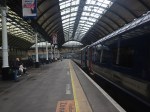




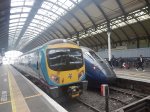
The pictures show Hull Trains’s Class 802 train in Platform 7 at Hull station.
Penzance And Taunton
This to me is the key section as if you can run a battery-electric train between these two stations it allows so many of the services to be run using zero-carbon traction.
These are distances from Taunton.
- Exeter St. David’s – 30.7 miles
- Newbury – 89.6 miles
- Okehampton – 55.3 miles
- Paignton – 59.0 miles
- Patchway – 51.7 miles
- Plymouth – 82.8 miles
Note.
- I’ve added Okehampton, as I feel that if Dawlish had another encounter with Poseidon, Okehampton with its proposed Parkway station on the A30 could be the terminus for coaches to and from Cornwall.
- All would be possible with a battery-electric train, with a hundred-mile range, leaving Taunton with a full battery.
- Charging could be needed at Okehampton and Paignton.
What is needed is some form of charging in the Taunton area.
This OpenRailwayMap shows Taunton station.

Note.
- The station has four through platforms.
- All Great Western Railway services to and from Devon and Cornwall stop in the station.
- I feel it would be possible to electrify the station, so that all stopping trains could charge the batteries.
But the problem would be, that as typically trains only stop for a couple of minutes at Taunton, there may not be enough time to take enough charge on board.
This OpenRailwayMap shows the track between Wellington and Collumpton, between Taunton and Exeter.
Note.
- The black line is the railway between Taunton and Exeter.
- The blue arrow in the North-East corner of the map indicates the position of the proposed Wellington station.
- Collumpton is in the South-West corner of the map and has also been put forward for a new Collumpton station.
- I talked about the reopening of these two stations in Reopening Of Wellington and Cullompton Stations.
- The M5 to the North of Collumpton runs closely alongside the railway.
- According to Real Time Trains, it takes just under ten minutes to go the thirteen miles between Wellington and Collumpton.
This Google Map shows a section of the M5 North of Collumpton.
And this Google Map shows Tiverton Parkway station.
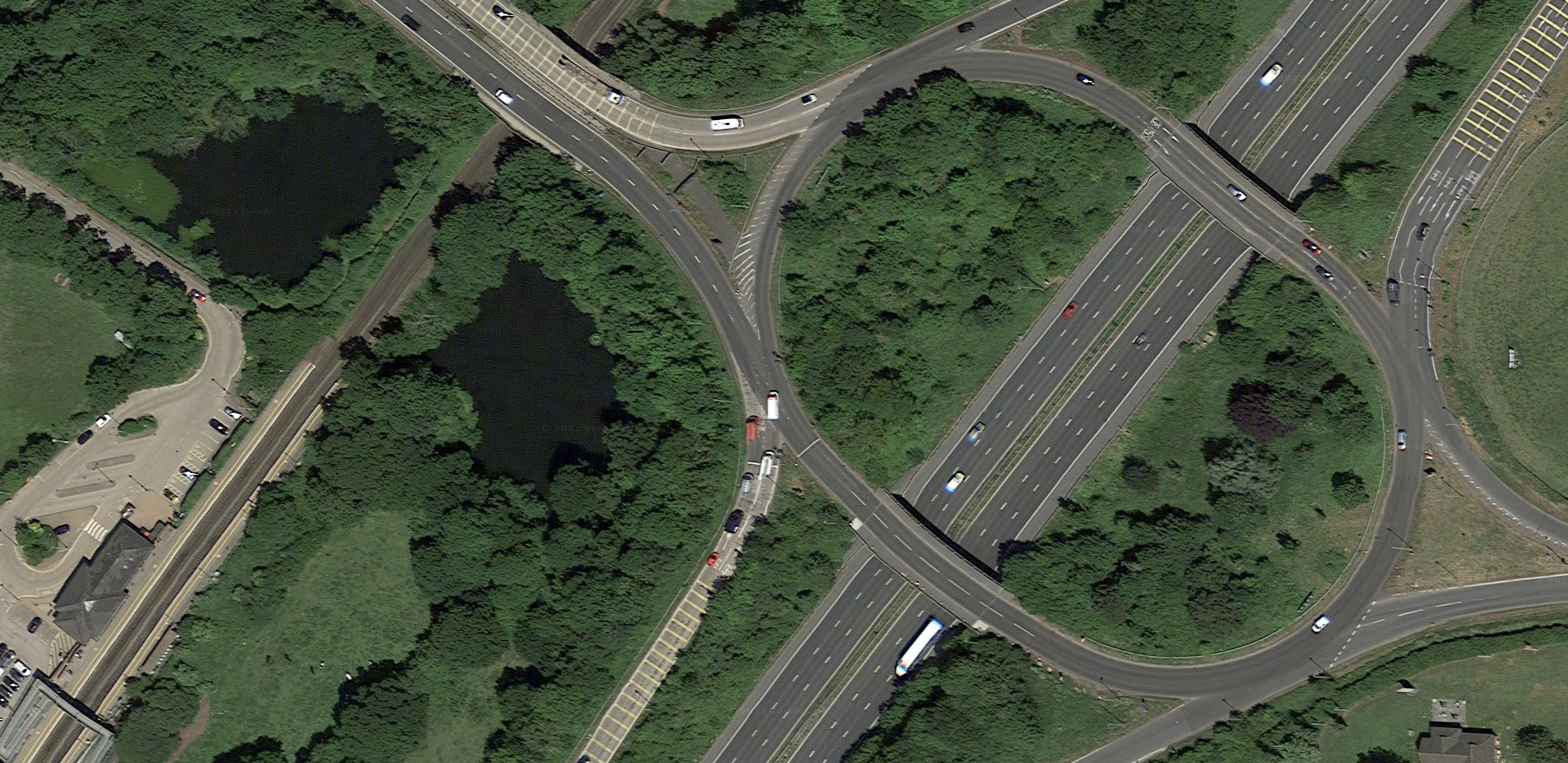
Note how the railway runs alongside the M5 to the West.
I feel that if the two new stations of Wellington and Collumpton are built between Taunton and Exeter St. David’s, then why not partially electrify the route, so that all trains would leave or pass through Taunton and Collumpton stations with full batteries.
- Going West the trains would reach Exeter St. David’s, Okehampton or Plymouth.
- Going East trains would reach Newbury for Reading and Paddington, and Patchway for Cardiff.
I believe that a battery-electric solution is possible, that would enable the decarbonisation of the Great Western Main Line all the way to Penzance.
A Waste Of Valuable Resources Between Paddington And Heathrow
Much of my working life was spent in writing project management software.
I like to think, I was an expert at writing software to juggle resources.
I wrote my first piece of software in that field in ICI, to get my boss out of trouble, after he’d promised the department a program to allocate the department’s office space more efficiently.
Unfortunately, the student, who’d written the software, without leaving anything that worked or any decent instructions.
So I told my boss;Colin, that I’d have a go.
In my previous position at ICI in Runcorn, I’d worked out an algorithm to decode mass spectrometer traces, which started with a rough idea of what was there, which was entered by an operator and then used permutations and combinations to fit the output.
I used the algorithm in every resource scheduler, I ever wrote and it worked a treat.
So when I see a waste of resources, I get angry, as I know those who devised the system could have done a lot better.
Look at these pictures, I took of a Heathrow Express, that I took today.

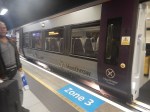
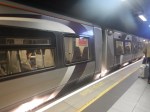

It is barely ten percent full.
It has become a waste of resources; train, valuable paths in the Heathrow tunnel, and platform space at Paddington.
These are a few thoughts.
Capacity To And From Heathrow
Consider.
- Heathrow Express uses twelve-car Class 387 trains, with a capacity of 672 seats, that run at a frequency of four trains per hour (tph), which is 2,688 seats per hour.
- The Elizabeth Line uses nine-car Class 345 trains, with a capacity of 454 seats, that run at a frequency of six tph, which is 2,724 seats per hour.
- The Class 345 trains can also carry another 1046 standing passengers on each journey, which adds up to a maximum of 6276 standees per hour.
- The Piccadilly Line uses 73 Stock trains, with a capacity of 684 seats, that run at a frequency of twelve tph, which is 8,208 seats per hour.
This gives a capacity of 19,896 passengers, staff and visitors per hour, or which 13,620 get seats.
Expressed as percentages, the four modes of transport are as follows.
- Heathrow Express – 13.5 %
- Elizabeth Line – Sitting – 13.7 %
- Elizabeth Line – Standees – 33.8 %
- Piccadilly Line – 41.2 %
In Effects Of The ULEZ In West London, I said this about journeys to and from the airport.
Heathrow Airport is one of the world’s busiest airports and 76,000 people work at the airport, with many more employed nearby.
The airport handled 61.6 million passengers in 2022, which is a few short of 170,000 per day.
If you consider that those that work at the airport do two trips per day and passengers generally do one, that means there are 322,000 trips per day to or from the airport.
But as it now so easy to get to the Airport using the Elizabeth Line will more people use the new line to meet and greet and say goodbye to loved ones or business associates. Since the Elizabeth Line opened, I’ve met a couple of friends at Heathrow, who were passing through.
I wonder, if that daily journey total of 322,000 could be nearer to 350,000 or even 400,000.
If the ULEZ charge makes some passengers and staff switch from their car to using a bus or train, this probably means that public transport to and from the airport, will need to be boosted by a substantial amount.
322,000 trips per day is 13,416 per hour assuming a 24 hour day.
Consider.
- The ULEZ will drive employees and passengers to trains to Heathrow.
- A lot of would-be travellers to Heathrow have had a tough couple of years.
- Because of the Elizabeth Line more meeters and greeters will go to the airport.
- The Elizabeth Line is making it easy to get to Heathrow for a large proportion of those living in the South-East.
- There have been numerous car parking scandals at Heathrow and other airports.
- Are there enough charging points for electric cars in Heathrow’s parking?
- Parking at Heathrow is expensive.
- Taxis to the airport are very expensive.
- Passengers with large cases can use the Elizabeth Line.
- Good reports of the Elizabeth Line will push people to use it.
- The Elizabeth Line serves the City, Canary Wharf and the West End.
- The Elizabeth Line has a step-free connection with Thameslink.
- Passengers seem to travel with very large cases.
- Passengers seem to be deserting Heathrow Express, as I wrote in Elizabeth Line Takes Fliers Away From Heathrow Express.
Note.
- The train, I took back from Heathrow this morning was full with all seats taken and quite a few standees.
- And it was a Sunday morning!
- We won’t know the effect of the ULEZ until August, but I believe it will be significant.
Obviously, I’m only using rough figures, but they lead me to believe that in a few months, the Elizabeth Line will be at full capacity to and from Heathrow.
Heathrow Express’s Train Paths Should Be Re-Allocated To The Elizabeth Line
This would increase hourly passenger capacity from 19,896 to 23,208 or by seventeen percent.
Great Western Railway would get two extra platforms at Heathrow and the Class 387 trains could be reallocated.
Where Would Great Western Railway Run Trains From Two Extra Platforms?
Consider.
- Various government levelling up funding has been allocated to Wales and the West.
- I talk about the Mid-Cornwall Metro in Landmark Levelling Up Fund To Spark Transformational Change Across The UK.
- The Mid-Cornwall Metro could include direct trains between London and Newquay.
- There are also plans for a new station at Okehampton Parkway.
- Given all the wind farm development in the Celtic Sea, I can see more trains between London and Pembrokeshire.
- Cardiff and Bristol would probably welcome extra services.
I don’t think Great Western Railway will have problems finding destinations to serve from two extra platforms.
What Will Happen To The Class 387 Trains?
Currently, twelve Class 387 trains are used for Heathrow Express.
In The Future Of The Class 387 And Class 379 Trains, I said this.
The Battery-Electric Class 379 Train
I rode this prototype train in 2015.

An Outwardly Normal Class 379 Train
I think it is reasonable to assume, that as battery technology has improved in the seven years since I rode this train, that converting Class 379 trains to battery-electric operation would not be a challenging project.
Creating A Battery-Electric Class 387 Train
If the Class 387 train is as internally similar to the Class 379 train as it outwardly looks, I couldn’t believe that converting them to battery-electric operation would be that difficult.
I could see a lot of the Class 379 and Class 387 trains converted to 110 mph battery-electric trains.
Would Heathrow Express Completely Disappear?
If the Elizabeth Line trains are going between Heathrow Airport and Central London, at a frequency of 10 tph or one train every six minutes, I feel there may be scope for marketing and operational reasons to create a sub-fleet of the Class 345 trains.
The trains would be identical to the Elizabeth Line’s current fleet, except for livery, seating and some internal passenger features.
- Perhaps, they could be called the Heathrow Train boldly on the outside, so even the dimmest passenger didn’t get on a Reading train instead of a Heathrow one.
- All trains would have wi-fi and 4G connectivity. These features have been promised for the Class 345 trains.
- Some coaches would be fitted with luggage spaces for the outsize cases people carry.
I could envisage the Heathrow Trains terminating at a wide number of places in addition to Abbey Wood and Shenfield. Possibilities must include Beaulieu Park, Ebbsfleet, Gravesend, Northfleet and Southend Victoria
Success For The Dartmoor Line
This article on Railnews is entitled Railway Braces For Weekend Changes.
The article flags up that rail timetables will change to the summer timetable and uses the Dartmoor Line where services will go hourly, as an example.
The article says this about the changes to the Dartmoor Line and the success of the restored service to Okehampton station.
One of the many changes includes the doubling of service frequencies on the recently-reopened Dartmoor Line between Exeter and Okehampton, where scheduled passenger trains were restored last November. From Sunday trains will be running every hour, and rail minister Wendy Morton visited Okehampton yesterday to celebrate the improvements.
The reopening is part of the government’s promise to ‘Restore your railways’, and the Okehampton line is the first practical example of this in action. The line was upgraded for £10 million less than the £40.5 million budgeted, and Network Rail said the route has proved ‘hugely popular’, because passenger numbers have been more than double than predicted, reaching an average of over 2,500 a week during the first 20 weeks. The number of passengers at nearby Crediton, where the Dartmoor Line joins services on the Tarka Line from Barnstaple, is also 39 per cent higher than it was before the pandemic.
I have some thoughts.
Reopening Of The Line
Network Rail can build projects on time and on budget, if they get the project management right.
Passenger Numbers Between Exeter And Okehampton
If 2,500 passengers per week can use the line in the winter, when there is only one train per two hours (tp2h), how many passengers will use the train, when there is an hourly service?
2,500 passengers per week, throughout the year would be 125,000 passengers per year and as surely the summer will be busier, I don’t think it will be an unreasonable figure.
Okehampton station car park appears to have around 300 spaces, so at 2,500 passengers per week, there might be a not too distant day, when it fills up.
Passenger Numbers At Crediton
I am not surprised that traffic at Crediton is up by 39 percent.
Consider.
- Pre-pandemic, Crediton station had one train per hour (tph) to and from Exeter.
- Post-pandemic, Crediton has three trains per two hours to and from Exeter.
It looks like the train frequency has been increased by 50 % and the number of passengers has increased by 39 %.
That surely is not surprising and passenger numbers might increase further when one tph are running between Exeter and both Barnstaple and Okehampton, if there are more possible passengers to attract.
Car parking at Crediton station may also be a problem, as there appears to be less than a hundred spaces.
Okehampton Parkway Station
Okehampton Parkway Station is likely to be built to the East of Okehampton. Wikipedia says this about the station.
Okehampton Parkway is a proposed railway station in Okehampton on the Dartmoor Line. The station would be part of the Devon Metro and has been described as a priority station. The station is to be sited at the A30 junction at Stockley Hamlet and would be sited at the Business Park at Okehampton as well as serving a further 900 homes close to the site.
Wikipedia, also says that Devon County Council has bought the site.
This must be one of the best sites to build a parkway station in the UK.
- It’s on the dual-carriageway A 30, between London and Cornwall.
- The good people of Devon seem to like to use trains given the passenger numbers at Okehampton and Crediton stations.
- Housing is being built nearby.
This Google Map shows Devon and Cornwall to the West of Okehampton and Barnstaple.
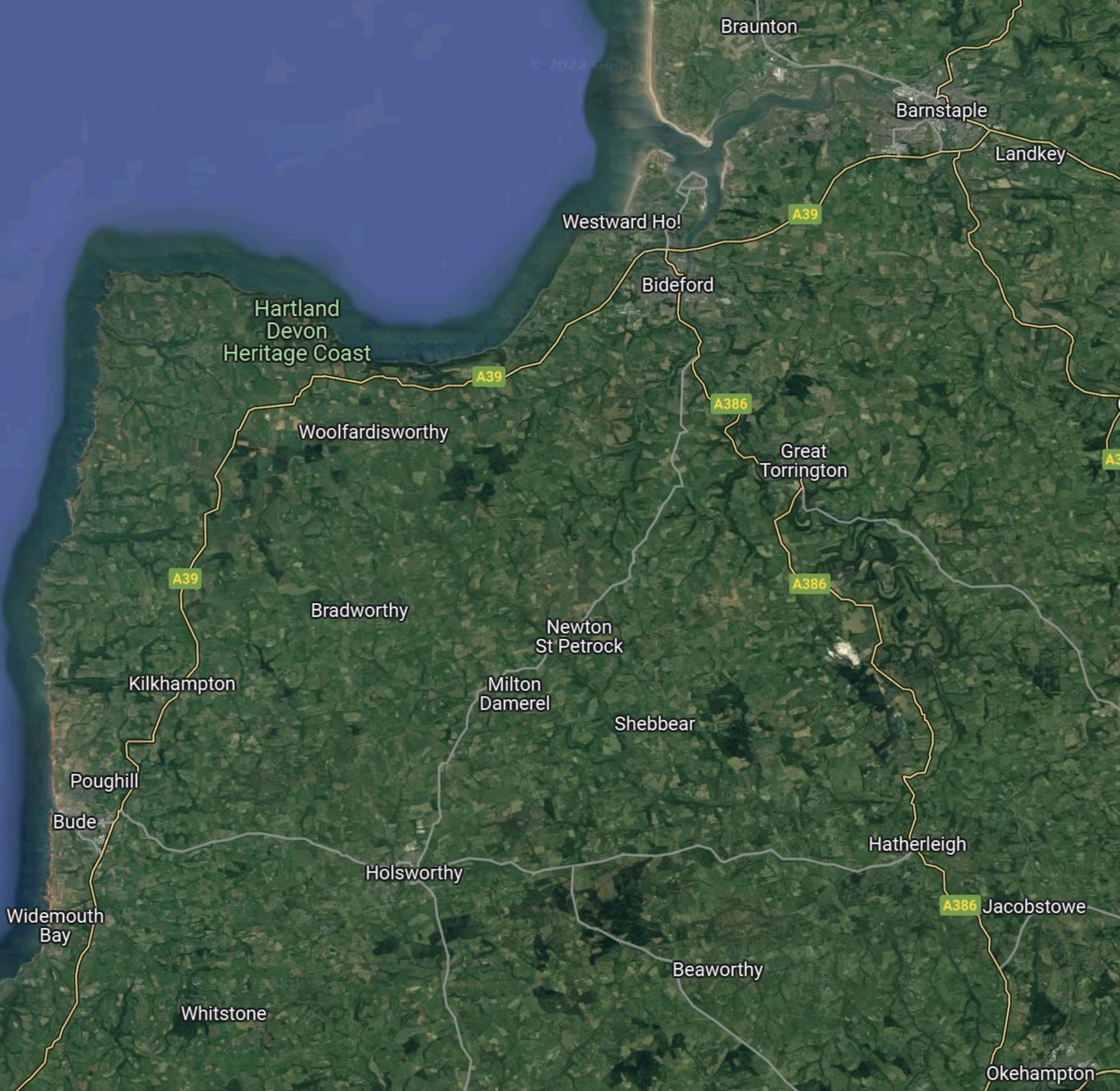
Note.
- Okehampton with two stations is in the South-East corner of the map.
- Barnstaple, which has a station, is in the North-East corner of the map.
- There are well-visited holiday resorts all along the cost including Ilfracombe, Westward Ho! and Bude.
It strikes me that if Devon put together a network of zero-carbon buses, it would be well-used and they could sell the area for zero-carbon holidays.
Rolling Stock
Currently, the Okehampton and Barnstaple services are operated by Class 150 trains.
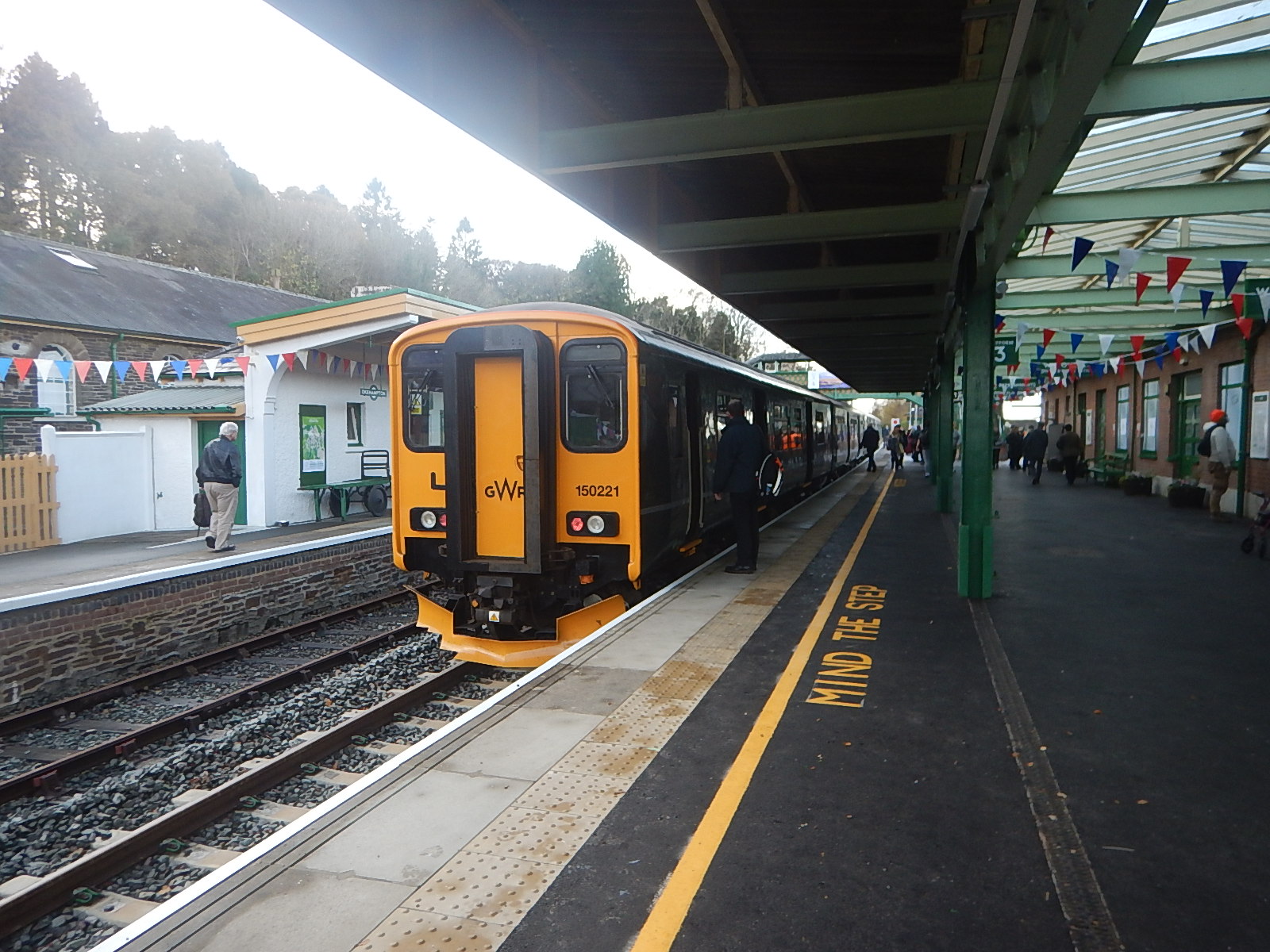
These are definitely not good enough, due to their age and diesel power.
The distances of the two services are as follows.
- Exeter and Barnstable – 39.5 miles
- Exeter and Okehampton – 25.5 miles
I feel that these routes could be handled by a battery-electric train like the Hitachi Regional Battery Train, which is shown in this Hitachi infographic.

Note.
- For these routes, the trains would probably be based on four-car Class 385 trains, with a top speed of 90 mph.
- Charging would be in Exeter.
- Charging may not be needed at Barnstaple and Okehampton as the routes are downhill.
If battery-electric trains can’t handle the routes, I’m sure hydrogen-powered trains could.
Is The Okehampton Effect Starting?
This article on the Tavistock Times Gazette is entitled Hop Aboard The 118 For Town And Village Connection To Rail.
These are the first three paragraphs.
County council chiefs have confirmed they have launched a new bus service to link residents in Tavistock to Okehampton’s restored railway line.
From Saturday, Service 118 will link Tavistock to Okehampton, via Mary Tavy and Lydford, to provide an integrated connection to the rail services between Okehampton and Exeter during the day. The service is part of a bigger project to improve public transport in Devon.
The move comes as Devon County Council pushes ahead with plans to get trains rolling again in Tavistock — but in the opposite direction.
Note.
- Tavistock has almost twice the population of Okehampton.
- Okehampton and Tavistock are about sixteen miles apart.
- Buses will take about forty minutes.
- The railway from Tavistock could eventually go to Plymouth via the existing Bere Alston station and the Tamar Valley Line.
This bus route will complete a circular route between Exeter and Plymouth around Dartmoor.
Devon does seem to be getting itself ready for the next phase of rail development in the county.
But does Devon as the birthplace of those great mariners, Chichester, Drake, Gilbert, Grenville and Raleigh, follow in their footsteps and plan things well and get it done?
My maternal grandmother was born in Dalston of two Devonian parents.
Just before the Second World War my mother asked her if she was prepared for the inevitable war.
My grandmother’s reply was as follows.
I got caught out in the First War, so I’ve got a hundredweight of sugar and a hundredweight of jam in the cellar.
Was that her Devonian genes shining through?
Devon is certainly planning for the future at Okehampton.
- There are plans for an Okehampton Parkway station, where the railway crosses the A30, which I wrote about in Work Begins On Okehampton Parkway Station.
- There is this new bus route.
- Will there be more housing in Okehampton?
- There will be developments linked to tourism.
I believe the Okehampton Effect is starting.
Reinstating The Line Between Tavistock And Bere Alston And Providing New Services To And From Plymouth
On October 27th this Beeching Reversal Project was given £50,000 to build a case for reinstating.
This project finally seems to be getting going.
The complete reinstatement between Exeter and Plymouth seems to be developing into a three-phase project.
- Phase 1 – Exeter and Okehampton – This is now complete and trains are test running, with services due to start on the 20th November.
- Phase 2 – Tavistock And Bere Alston – This section is being planned and if approved could be the next section to be opened.
- Phase 3 – Tavistock and Okehampton – This would complete the reinstatement of the route between Exeter and Plymouth.
These are my thoughts.
The Completion Of Phase 1
Trains are now test running to between Exeter and Okehampton.
The full service starts on the 20th November.
- On that day, there will be eight trains per day (tpd) in both directions.
- Trains will leave Exeter at 06:32, 08:41, 10:36, 12:37, 14:38, 16:36, 18:48 and 21:00.
- Trains will leave Okehampton at 07:39, 09:45, 11:39, 13:39, 15:39, 17:46, 19:51 and 22:34.
- Trains are times to take around forty minutes for each trip.
- The service is pathed as a Class 150/153/155/156 DMU
- The service is planned for a maximum speed of 75 mph.
Note.
- This is approximately one train per two hours (tp2h).
- It looks like the service could be worked by a single train shuttling all day.
The Wikipedia entry for Okehampton station says this.
The service will increase to hourly towards the end of 2022.
It has been a very smooth restoration of service.
Okehampton Parkway Station
Okehampton Parkway station is to be built to the East of Okehampton at Stockley Hamlet.
- It will be close to a junction with the A30 dual-carriageway, which links London and Penzance.
- The A30 connects to the Cornish Main Line in Cornwall at Bodmin, Redruth and Penzance.
It looks like it could be a very useful Park-and-Ride station for Exeter and Okehampton.
Could The Okehampton Stations Be Used To By-Pass Dawlish?
In 2014, the sea breached the sea wall and the railway at Dawlish, on the Great Western Main Line between Exeter and Plymouth. Trains couldn’t run past Exeter.
I very much feel that with global warming and seemingly increasingly bad weather that we can’t say that a breach won’t happen again.
Could it be possible to use the one of the Okehampton stations, as a terminal for a Rail Replacement service that connected to Plymouth and Cornwall?
The Gap Between Okehampton And Bere Alston
This Google Map shows the gap between Okehampton and Bere Alston stations.
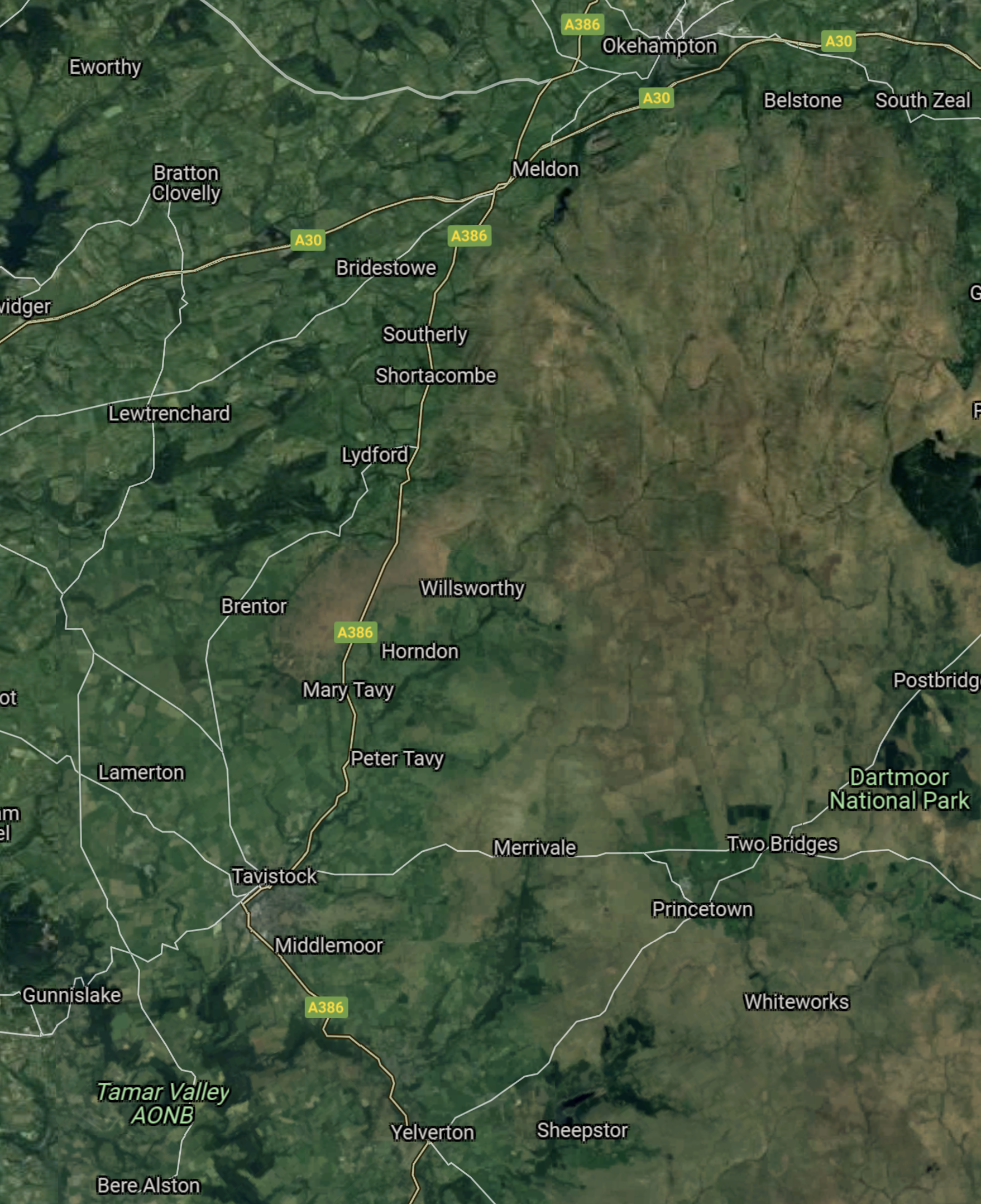
Note.
- Okehampton is at the top of the map between the three green rectangles which mark the main roads.
- Bere Alston is in the South-West corner of the map.
- Tavistock is North of Bere Alston.
- The three places are connected by the A 386 road.
Is there a bus between Okehampton and Bere Alston, that serves Tavistock and the major villages?
Phase 2 – Tavistock And Bere Alston
This Google Map shows between Tavistock and Beer Alston station.

Note.
- Tavistock is in the North-East corner of the map.
- Bere Alston is in the South-West corner of the map.
- I estimate that about six miles of new track will have to be laid.
This Google Map shows Bere Alston station, which is to the North-West of the village.
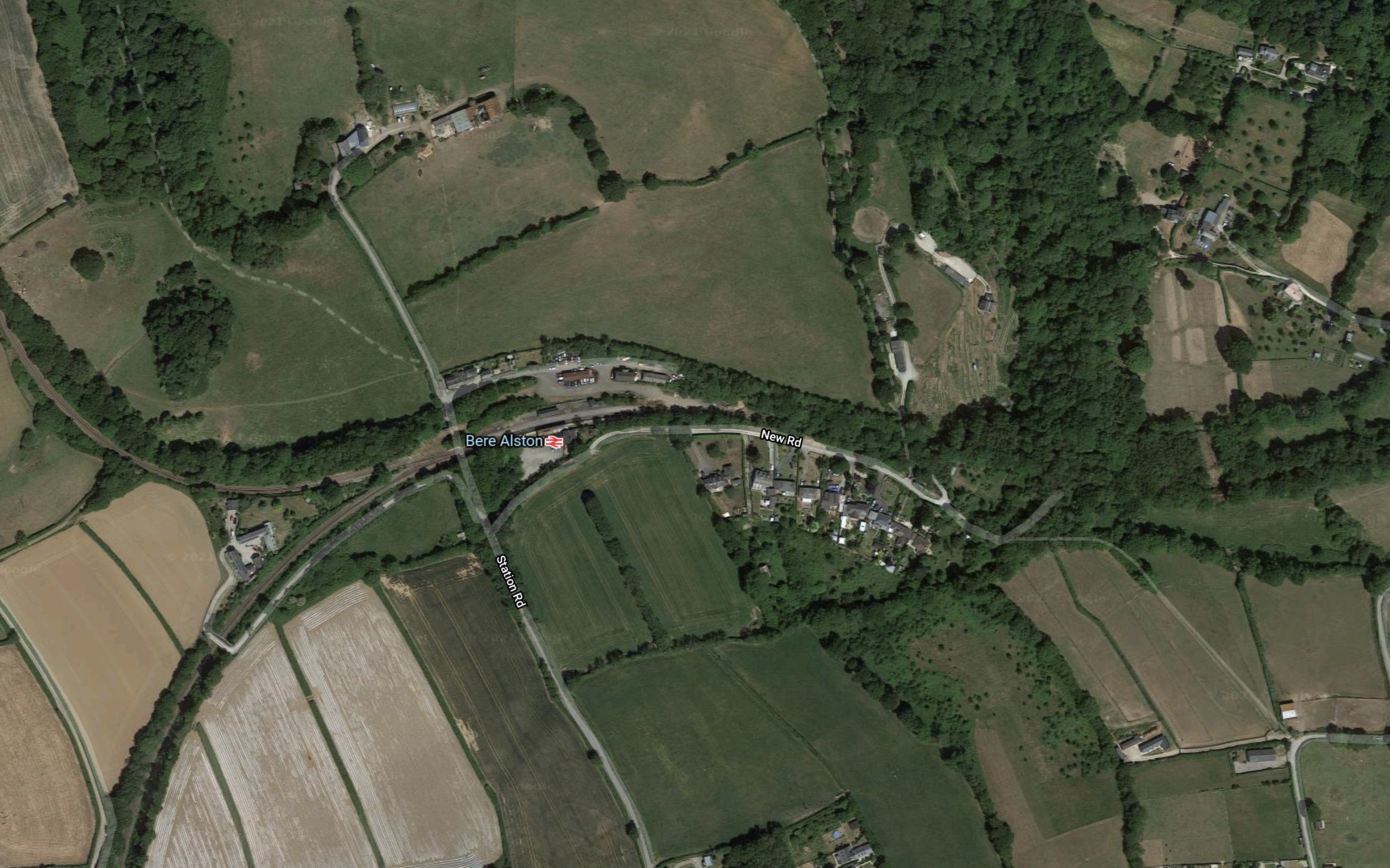
Note.
- Bere Alston station is on the Tamar Valley Line.
- The Tamar Valley Line is all single-track.
- Trains to and from Gunnislake station use the Northbound track at the junction to the West of the station.
- Trains to and from Plymouth use the Southbound track at the junction to the West of the station.
- Trains between Gunnislake and Plymouth reverse at Bere Alston station.
It would appear that the route to Tavistock continued to the East.
This Google Map clearly shows the route of the disused railway as it runs North-East from Bere Alston station.

Note.
Bere Alston station is the South-West corner of the map.
The dark green line of the railway runs to the North-East corner of the map.
As all the railways in the area seem to have been single-track, I would suspect that any rebuilt railway on this route will be single track.
I have followed the dark green line through to Tavistock which is shown in this Google Map.

As the Department of Transport are prepared to finance a study for reinstatement of the route, I would suspect that there is a feasible route between Bere Alston and Tavistock.
- There would appear to be no bridges or viaducts between Bere Alston and the outskirts of Tavistock.
- Before closure, there no stations between Bere Alston and Tavistock North stations.
- Bere Alston station would need to be rebuilt.
The Wikipedia entry for Tavistock North station, says this about the condition of the line.
The station building has been restored and converted into three self-catering cottages. The stationmaster’s house is being restored as a private dwelling, while the goods yard, now known as Kilworthy Park, houses the offices of West Devon Borough Council. The track bed for about one mile (1.6 km) south of Tavistock North station is open to the public as a footpath and nature reserve, and it is possible to walk across the viaducts that overlook the town.
The rest of the track bed south of Tavistock is almost intact to Bere Alston, where it joins the present-day Tamar Valley Line. There has been discussion regarding the re-opening of a rail link for a number of years. Engineering assessment has shown that the track bed, and structures such as bridges and tunnels, are in sound condition.
I can foresee some problems, in what might not be one of the most challenging of projects.
- Claiming back the railway from the walkers and cyclists.
- The ownership of the stationmaster’s house.
Unlike Scotland, England didn’t make sure that rail routes could be converted back to railways if needed.
My project management knowledge leads me to agree with what appears to be a decision to do this part of the route next.
Phase 3 – Okehampton And Tavistock
The title of this project as given in the Railway Gazette article is as follows.
Reinstating The Line Between Tavistock And Bere Alston And Providing New Services To And From Plymouth
If you read this literally, it doesn’t mention anything about connecting to Okehampton and Exeter.
- Looking at maps and reading up on the line, it does appear that the route may be more challenging.
- The route also contains the Meldon Viaduct, which is a scheduled monument.
Until a viable plan is developed, it might be better and more affordable to run zero-carbon buses between Tavistock and Okehampton.
 The Anonymous Widower