Travelling Between Heathrow Airport And Staines Station
Staines Station and Heathrow Airport are not far apart, as this OpenRailwayMap shows.
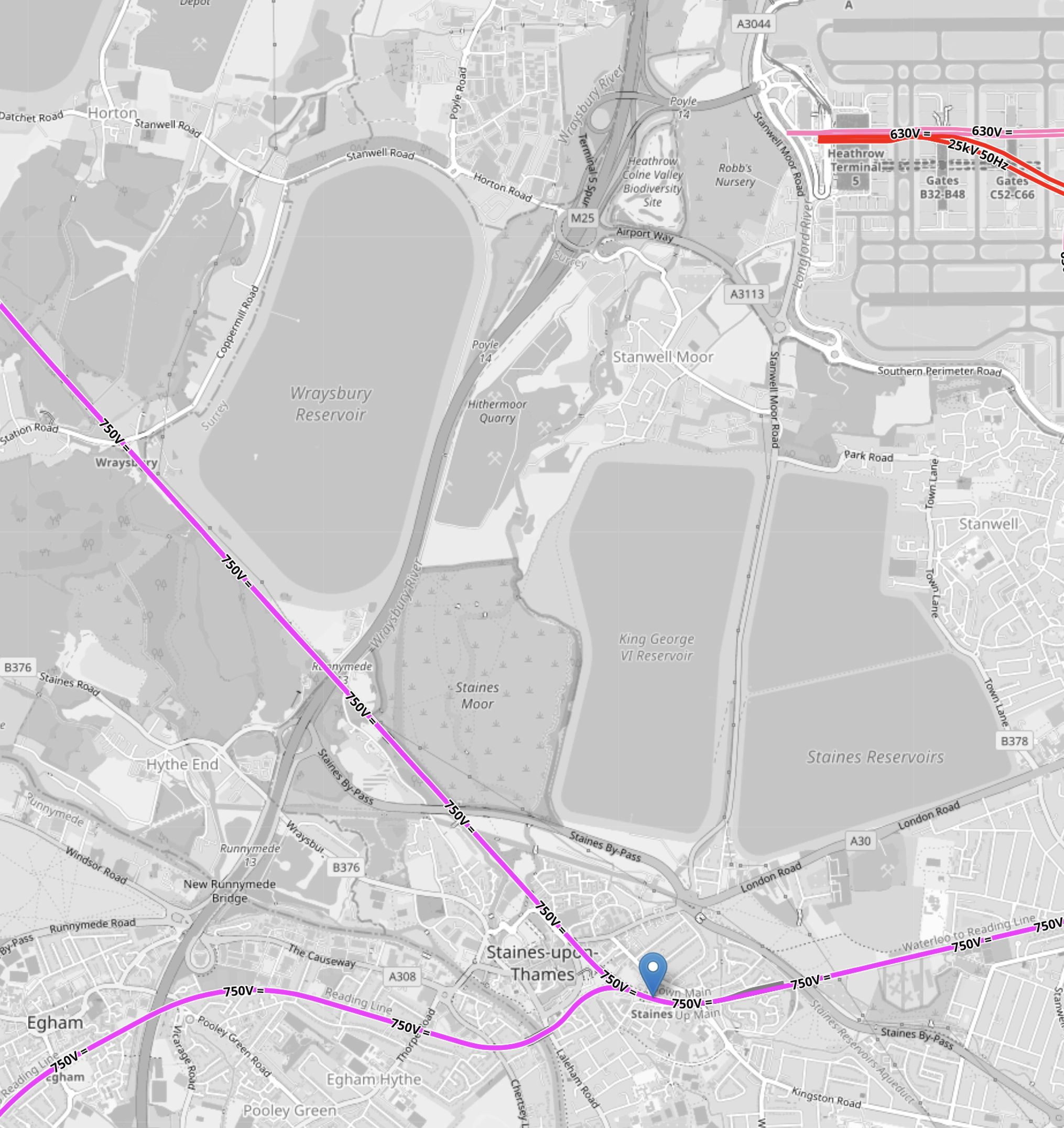
Note.
- The mauve lines in the bottom half of the map are South West Trains services out of Waterloo.
- Waterloo via Feltham, Twickenham and Richmond to name but three stations , is to the East.
- Reading is to the South-West
- Windsor is to the North-West.
- The blue arrow indicates Staines station.
- Heathrow Terminal 5 is in the North-East corner of the map.
- The pink tracks are the Piccadilly Lines
- The red tracks are for the Elizabeth Line and Heathrow Express.
- This OpenRailwayMap shows Terminal 5 to a larger scale.

Note.
- The pink tracks are the Piccadilly Line.
- The red tracks are for the Elizabeth Line and Heathrow Express.
- In front of the red tracks is what looks like a circular walkway or emergency exit, with a rectangular block to its West.
- The rectangular block is the lift tower to get from the railway station to the Departures and Arrivals floors of Terminal 5.
I asked Google AI if it would it be possible in the future to extend the Elizabeth Line to the West out of the Western end of Terminal 5 and received this reply.
Extending the Elizabeth line west from Terminal 5 is technically possible and has been proposed, notably as part of a potential westward rail link to Staines or to support airport expansion, but it is not currently funded. Terminal 5 was designed with future expansion in mind, potentially allowing a connection to Staines to create a “southern rail link” for better connections.
Perhaps there are two tunnels under the lift shafts?
How many trains per hour (tph) terminate in those two platforms?
- 4 tph – Heathrow Express
- 2 tph – Elizabeth Line to Shenfield.
Note.
- Only six trains in two platforms is easily managed.
- Because, Heathrow Express services appear to use both platforms, when I visited yesterday, the system seems to confuse passengers.
- The services surely need to be evened up, so that there are four tph of each service, with each service having a dedicated platform.
- But terminating eight trains in two platforms could be troublesome.
- Platforms are numbered 1 to 6 from the South.
- Platforms 1 and 2 have not been built yet.
Although four tph for Heathrow Express in one platform, should be easy with digital signalling, as you see it every day in London, it may be difficult on two platforms, at the same time.
In Is More Capacity Between Heathrow Airport And Central London, Needed On The Elizabeth Line?, I said this.
Currently, the Elizabeth line provides up to 12 trains per hour (including Elizabeth line and Heathrow Express) on the relief lines, making it nearly at capacity.
Note.
- When I use the Elizabeth Line, I deliberately avoid trains going to and from Heathrow, unless I’m going that way, as they are too crowded with passengers and their oversized cases.
- High Speed Two, the West London Orbital Railway and the North London Line will bring passengers for Heathrow Airport to Old Oak Common station.
- Surely, as Heathrow Airport gets bigger and increases its passenger numbers. the Elizabeth Line will need to be increased in capacity.
I believe Elizabeth Line capacity needs to be increased soon.
The only feasible plan I’ve seen is Heathrow Southern Railways plan, which included.
- Construction of a bay platform 0 at Staines alongside the Staines to Windsor line.
- A step-free bridge across the tracks.
- Construction of a single-track railway with 25 KVAC overhead electrification and a passing looop, between the new platform 0 at Staines and Platform 3 at Heathrow Terminal 5 station.
- Run four trains per hour in both directions between Heathrow Terminal 5 and Staines stations.
- This plan would would add two trains per hour through the Central Tunnel.
Various Journeys Would Be As Follows
This OpenRailwayMap shows Staines junction and the positions of the three platforms.
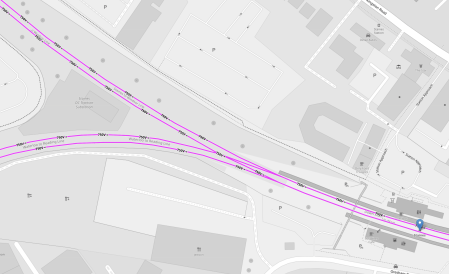
Note.
- The Windsor Line goes North-West.
- The Reading Line goes West.
- The Waterloo Line Goes East.
- Platform 1 is on the North side of the tracks.
- Platform 2 is on the South side of the tracks.
- The bay platform, which I’ve numbered 0, will be on the North side of the tracks towards Windsor.
- I suspect the step-free bridge will be over the tracks and replace the current rickety structure.
- The bridge would be a short walk from all three platforms.
Interchanges would be as follows.
- Windsor to Heathrow – Walk between Platforms 1 and 0.
- Reading to Heathrow – Walk between Platforms 1 and 0.
- Heathrow to Windsor – Cross the bridge between Platforms 0 and 2.
- Heathrow to Reading – Cross the bridge between Platforms 0 and 2.
- Waterloo to Heathrow – Cross the bridge between Platforms 2 and 0.
- Heathrow to Waterloo – Walk between Platforms 0 and 1.
Note.
- All trains to or from Heathrow use Platform 0.
- All trains to Waterloo use Platform 1.
- All trains going away from Waterloo use Platform 2.
- Reading and Heathrow gain a step-free route at 2 tph.
- All interchanges at Staines station would be step-free.
- A train like London Crosslink, which used to go between Feltham and Woking, would use Platform 1 going towards Feltham and Platform 2 going towards Woking.
Staines station would gain step-free access to all Heathrow terminals, all Elizabeth Line and High Speed Two stations.
Could Anglia Railways’ London Crosslink Be Recreated As Part Of The London Overground?
I like the idea of the London Crosslink service, that ran for a few years between East Anglia and Hampshire via the North London Line and Staines.
My arguments for its restoration are described in Could Anglia Railways’ London Crosslink Be Recreated As Part Of The London Overground?
At various times in my life, it would have been very useful.
Today, as I live about fifteen minutes from Highbury and Islington station, I could use London Crosslink for the following reasons.
- Visiting friends and family in Hampshire.
- Going to Heathrow Airport, especially Terminal 5.
- Visiting friends in East Anglia.
- Going to football at Ipswich.
- Exploring new parts of England.
- I would wait at home and time my departure to catch a booked train at a fully step-free station.
Conclusions
Extending the Elizabeth Line to Staines gives these advantages.
- Staff at Heathrow, who live in the Staines area get easy access to the airport.
- Buses and coaches between Heathrow and the local area may be reviewed.
- Less cars will be used to get to and from the airport.
- Reading and Heathrow gain a step-free route at 2 tph.
- A lot of stations would gain a step-free route to all terminals at Heathrow, and all Elizabeth Line and High Speed Two stations.
There may well be other advantages.
Delays To Opening Makes Station A ‘Laughing Stock’
The title of this post, is the same as that of this article on the BBC.
This is the sub-heading.
Residents of Winslow are frustrated a new railway station completed over a year ago has still not opened.
These three introductory paragraphs add detail to the article.
A local councillor said it had been due to open in the Buckinghamshire town in December 2025 but there had been a “comedy of errors”, including a row over who will control the opening and closing of carriage doors.
Diana Blamires, who sits on the town council, said the local community was “obviously furious” and “it makes Winslow station a laughing stock”.
In a statement, Chiltern Railways – responsible for operating services between Oxford and Milton Keynes – said no date for the opening had yet been confirmed.
My feeling is that this project has been badly affected by two many adverse factors.
- A lack of overall leadership at the top of the project.
- Too many changes of Government in the UK.
- Are all these governments committed to the project?
- The uncertainty about the Aylesbury Spur, which I wrote about in East-West Rail: Aylesbury Spur.
- The inability to reach a sensible compromise on route through Bedford, with the large number of Nimbys in the area.
- I used to live near Newmarket and their ideas for the town will arise the anger of the horse-racing industry.
- The theme-park I wrote about in ‘Rollercoasters In My Back Yard’: Welcome To Universal Studios Bedford, hasn’t exactly helped.
- Stories like East West Rail: Could A New Rail Link ‘Tear Apart’ A Village?, don’t help.
The planning for East West Rail hasn’t been good
But another story on the BBC, which is entitled How The Elizabeth Line Has Changed Reading, has to my mind shown up the poor quality of the planning for the East West Rail.
This Is the sub-heading.
Since the Elizabeth Line opened in May 2022 it has become the UK’s busiest rail service with an estimated 750 million passenger journeys.
And this is the first paragraph.
The line provides a direct service from Reading into central London, but after years of planning and delays is the Berkshire town finally feeling the benefits of an additional connection to the capital?
Are Bicester, Bletchley, Milton Keynes, Bedford and other places going to feel a similar effect to Reading, because the railway track layouts say that if Reading gets a boost from the Elizabeth Line, then they will get one from East West Rail!
The Reading/Oxford area is where the East West and Elizabeth Lines make contact and I predict, that if in the future, you want a machine to test the strength of jelly, this will be the place, where you will go to get one invented.
East West Rail Unveils Next Phase For Oxford-Cambridge Growth
The title of this post, is the same as that of this press release from the UK Government.
These three bullet points act as sub-headings.
- more frequent trains on the horizon for millions of passengers between Oxford and Cambridge as multibillion pound East West Rail project confirms next steps
- new rail station set to help serve upcoming Universal theme park in Bedford, as well as improvements planned for several existing stations
- new route delivers on the government’s Plan for Change, unlocking £6.7 billion of regional economic growth and delivering up to 100,000 new homes
These two introductory paragraphs make a few general points about the overall project, housing and jobs.
Millions of people across the Oxford to Cambridge corridor are set to benefit from more frequent trains as the East West Railway Company (EWR Co) has revealed the next steps for the second phase of the project today (19 November 2025).
As one of Britain’s largest transport projects, East West Rail forms a cornerstone of the government’s Plan for Change, unlocking £6.7 billion of regional economic growth by 2050, enabling up to 100,000 new homes and supporting tens of thousands of new jobs along the route.
These sections make some more detailed points.
How Many Permanent Staff Will Be Employed At Universal Studios Bedford?
As many will want to live locally, this will surely encourage many to use the trains on the East-West Rail to travel to work, so this will be an important factor.
I asked Google AI, the question in the title of this section and received this answer.
Universal Studios plans to employ 8,000 permanent staff at its new resort in Bedford. This number is part of an overall total of approximately 28,000 jobs, which includes 20,000 jobs during the construction phase.
My project management knowledge is telling me that the station should be built before the theme park.
How Many Daily Visitors Are Expected At Universal Studios Bedford?
I asked Google AI, the question in the title of this section and received this answer.
The Universal Studios theme park in Bedford is expected to have 55,000 visitors on peak days from its launch, based on its plan to handle 8.5 million annual visitors. The project, planned to open in 2031, is expected to attract 8.5 million annual visitors in its first year, with numbers rising to 12 million within 20 years.
I would expect a large number of visitors and staff will probably be encouraged to come by train, just as they are at some Premier League football stadiums.
Will Universal Studios Bedford Be Marketed As A Low Carbon Theme Park?
I’m asking this question, as it seems, the railway is being upgraded make this easier.
I asked Google AI, the question in the title of this section and received this answer.
Yes, it appears Universal Studios Bedford will be marketed as having a low-carbon focus, as evidenced by its planning applications that highlight sustainability efforts. The project outlines include goals for water conservation, energy reduction and clean energy use, waste minimization, and the use of low-carbon materials, all of which will likely be part of the marketing narrative for the theme park, according to LinkedIn.
How Many Car Parking Spaces Will Be Provided At Universal Studios Bedford?
I asked Google AI, the question in the title of this section and received this answer.
The Universal Studios resort planned for Bedford will include a minimum of 7,106 parking spaces and 100 coach bays. The resort is also expected to have 250 cycle spaces and enough room for over 7,100 cars
That is a lot of car parking spaces. Hopefully, there will be a lot of car charging points.
Increased Train Frequency And Capacity
These two paragraphs from the press release, talk about increased train frequency and capacity.
Following extensive consultation with local communities, the multi-billion-pound project has confirmed it is exploring a series of transformative plans including increasing the proposed frequency of trains from 3 or 4 to up to 5 per hour.
These enhancements could provide up to 70% more seating across the route, easing overcrowding and speeding up boarding, as well as cutting average waiting times, improving service resilience and creating a smoother, more reliable passenger experience.
When you consider that London Overground, Merseytravel, the South Wales Metro, West Midlands Trains and other local lines in the UK consider than four trains per hour to be a minimum service, then five trains per hour is to be welcomed.
Station Improvements And New Stations
These two paragraphs from the press release, talk about station improvements and new stations..
Several other improvements across the route have also been confirmed, including new station entrances at Bletchley, Cambridge and Bedford, as well as four brand-new stations along the Marston Vale Line – the first significant investment since the 1960s.
With the current stations on the Marston Vale Line seeing some of the lowest usage in the country, the new stations will better serve local communities by providing faster, more frequent services, as well as helping to serve the upcoming Universal theme park.
I thought Bletchley, Cambridge and Bedford stations had already been substantially improved in recent years.
A New Station At Stewartby
Are the station improvements to upgrade public transport access to the Universal theme park at Stewartby station?
- An East-West Rail service between Oxford and Stansted Airport via Bletchley, Milton Keynes Central, Stewartby, Bedford and Cambridge would give the Universal theme park all-important airport access.
- Would an upgraded Bletchley station improve interchange between the West Coast Main Line and East-West Rail give better access to the theme park from London, the West Midlands and North-West for visitors?
- Would an upgraded Bedford station improve interchange between the Midland Main Line and East-West Rail give better access to the theme park from London, the East Midlands and North-East for visitors?
- An upgraded Bedford station could also be marketed as a zero-carbon route between the theme park and the Continent via St. Pancras International and Eurostar.
- Would an upgraded Cambridge station give better access to the theme park from the East of England?
In addition four new stations on the Marston Vale Line would improve access for visitors and staff, who live locally.
Will Battery-Electric Trains Be Used On The East-West Rail?
As five major East-West Rail stations; Bedford, Bletchley, Cambridge, Milton Keynes and Reading are substantially served by main line electric trains, and it is likely that more stations will be in future, I believe that East-West Rail must either be electrified or services should be run by battery-electric trains, which would enable zero-carbon rail routes to and from London and all the city’s airports, Birmingham, Liverpool, Manchester and an increasing number of cities in the North and Midlands of England, and Scotland and Wales.
I asked Google AI, the question in the title of this section and received this answer.
Yes, the East West Rail (EWR) project plans to use battery-electric trains as part of a discontinuous electrification strategy. This means trains will run on overhead electric power in sections where they are installed, and on onboard batteries in other sections of the route.
It does appear that discontinuous electrification and battery-electric trains will be used.
Electrification At Bedford Station
This OpenRailwayMap shows The East side of Bedford station.
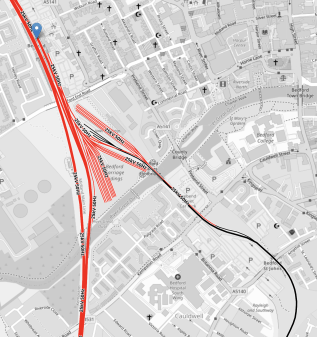
Note.
- The red tracks are electrified and black tracks are not.
- The black track looping into the station from the East is the Marston Vale Line, which will connect the East-West Rail to Bedford station.
- At the Easternmost part of the curve is Bedford St. Johns station, which serves Bedford hospital.
- The Marston Vale Line services normally connect to Platform 1A at Bedford station.
- But it also appears trains can also use Platforms 1 and 2 at Bedford station.
- It also appears that that Platforms 1A, 1 and 2 are all electrified.
This picture confirms electrification in Platforms 1A and 1.
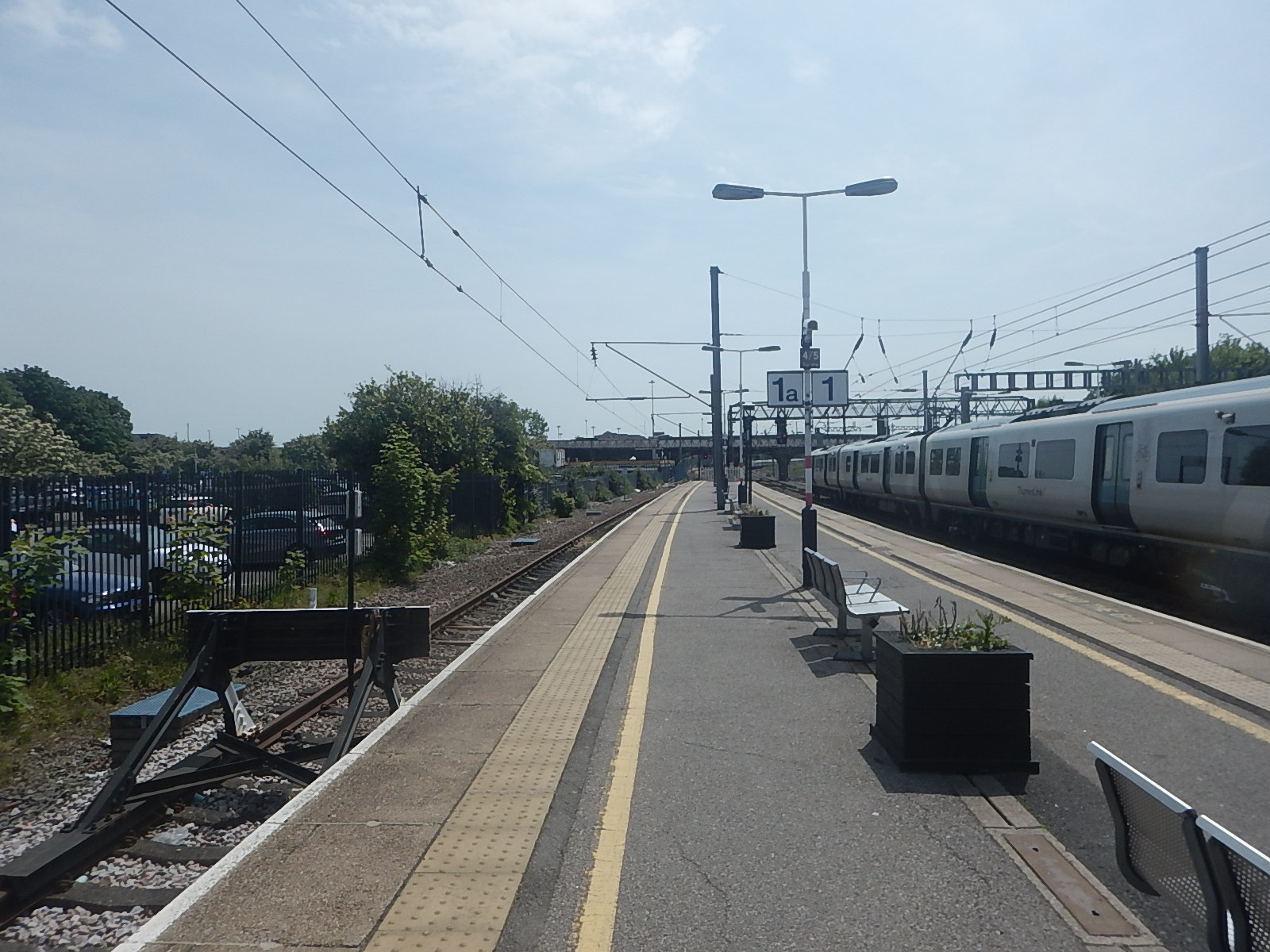
Note.
- Platform 1A is on the left.
- Platform 1 is on the right.
- The Thameslink train on the right is in Platform 2.
- Platforms 1A, 1 and 2 are all clearly electrified.
- Platform 1A is 81 metres long, so could accept a typical four-coach train.
Battery-electric trains with pantographs could certainly by charged in either of these two platforms at Bedford station.
Electrification At Milton Keynes Central Station
It would appear that East-West Rail services will use Platform 2A at Milton Keynes Central station.
This OpenRailwayMap shows Platform 2A at Milton Keynes Central station.
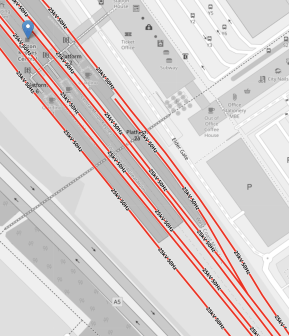
Note.
- The red tracks are electrified and black tracks are not.
- Platform 1 is the through platform on the North-East side of the station.
- Platform 2A is the bay platform tucked underneath Platform 1.
- Platform 2A is clearly electrified.
- Platform 2A is 124 metres long, so could accept a typical five or six-coach train.
These pictures show Platforms 1 and 2A at Milton Keynes Central station.
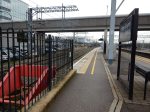
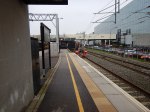


Battery-electric trains with pantographs could certainly by charged in Platform 2A at Milton Keynes Central station.
Electrification At Oxford Station
It would appear that terminating East-West Rail services will use Platform 1 or 2 at Oxford station.
This OpenRailwayMap shows the platforms at Oxford station.
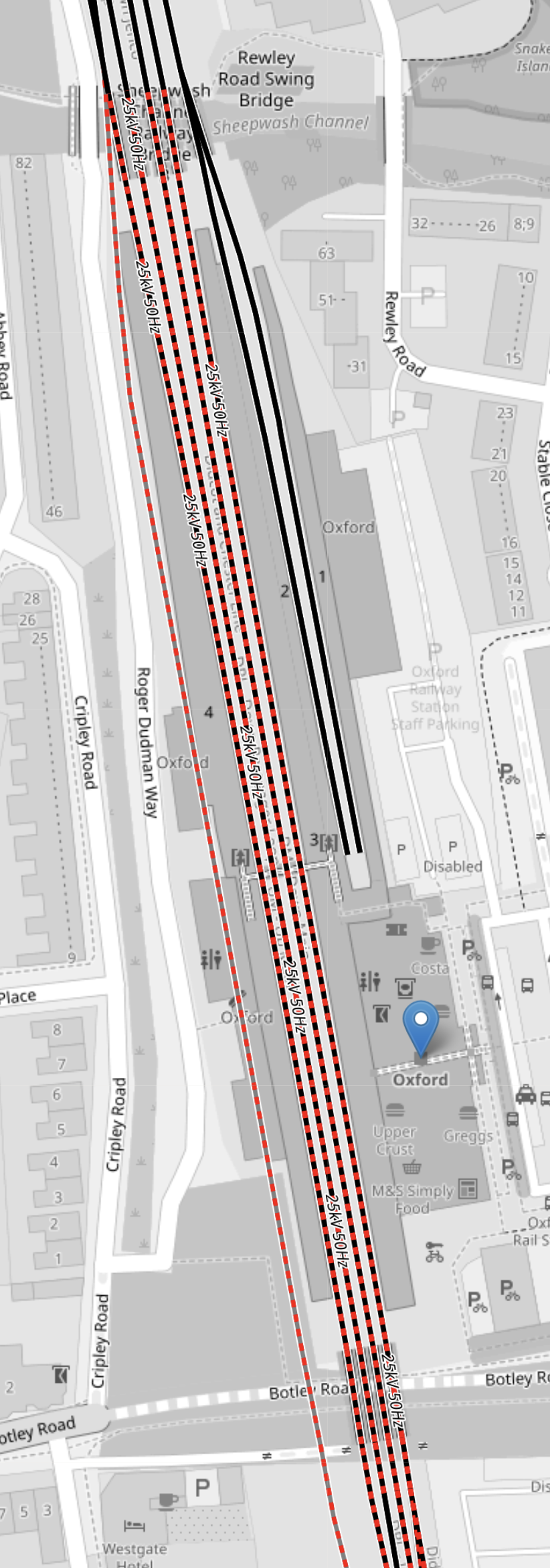
Note.
- The red and black tracks are to be electrified and black tracks are not.
- Platforms 1 and 2 are shown in black and are likely to be used by terminating East-West Rail trains.
- Platforms 1 and 2 would need to be electrified to be able to charge trains.
- Platforms 1 and 2 would also be used by Chiltern’s London services.
- Platform 1 and 2 are respectively 157 and 160 metres long, so could accept a typical five or six-coach train.
- As Oxford and Reading is to be electrified, through East-West Rail trains could use that electrification to travel to and from Reading.
These pictures show Platforms 1 and 2 at Oxford station.
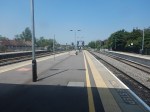
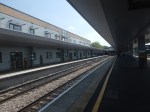
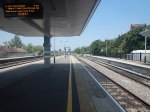
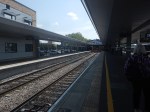
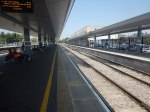


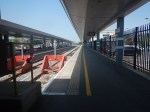
Battery-electric trains with pantographs could certainly by charged in Platform 1 and 2 at Oxford station, if the platforms were electrified.
Electrification At Reading Station
The West-facing platforms at Reading station are all electrified and longer than 120 metres, so could accept a typical four or five-coach train.
What Trains Should Be Used?
Consider.
- There is only one battery-electric train, that has been tested on the UK rail network – The Hitachi Class 802 train or similar.
- There is only one battery-electric train, that has been ordered – The Hitachi Class 802 train or similar.
- The longest distance on battery, between Reading and Bedford, is probably about thirty miles.
The Government could do a lot worse than order some more Class 802 trains, that were tailored for East-West Rail.
The Hitachi Class 802 train has five-cars, which are 26 metres long.
- It has a 125 mph operating speed.
- It has a range of 45 miles on battery power.
- The trains have been proven in service.
- The trains are made in the UK.
- The trains could handle extended routes like Birmingham and Stansted Airport or Cardiff and Cambridge.
A four-car variant of the train with a 100 mph operating speed could be an alternative.
What Will Be The Initial East-West Rail Service?
I asked Google AI, the question in the title of this section and received this answer.
The initial East West Rail service will be between Oxford and Milton Keynes/Bletchley, with passenger services delayed until at least 2026 due to a dispute over train crew roles. Freight services began in June 2025, and temporary diesel services will run until the line is electrified. The full project aims to connect Oxford and Cambridge.
Note.
- Stewartby station for Universal Studios Bedford will not be served by East-West Rail initially.
- But I suspect, that the current Marston Vale Line service will continue, with a change if needed at Bletchley or Bedford to get to Stewartby.
- Earlier I showed that Google AI is predicting 20,000 construction jobs at Universal Studios Bedford, which I am sure will need some form of high-capacity rail transport, if grid-lock is to be avoided in much of Bedfordshire.
Perhaps an initial fleet of four- or five-car Class 802 diesel-electric trains could be ordered and they would run the full route between Oxford and Bedford stations, with a reverse in Platform 2A at Milton Keynes station.
- The trains would run initially on diesel.
- By using stepping-up in Platform 2A at Milton Keynes station, I believe a two trains per hour (tph) service could surely be run.
- Hitachi could probably deliver the trains quickly, as they have not long been out of production.
- Those living locally would get a much improved train service from their local station to and from Bedford, Milton Keynes or Oxford.
- A large portion of the onward connectivity of the East-West Rail would be delivered early to the benefit of locals and visitors.
- If extra services are needed, semi-fast services could be added between Bedford and Reading with stops at Stewartby, Bletchley, Bicester Village, Oxford Parkway and Oxford stations.
When Platforms 1 and 2 at Oxford station are electrified and the trains are converted to battery-electric operation, the route could be converted to zero-carbon operation.
Virtually Nothing Is Said About The Route Of The East-West Rail Between Bedford and Cambridge South Stations Via Tempsford Station
This quote from David Hughes, CEO, East West Railway Company, is the only time, that Tempsford is mentioned in the press release.
“From a new station at Cambridge East to better access in Oxford and clear alignment through Tempsford, East West Rail is shaping the modern, sustainable transport link this region needs to thrive.”
I asked Google AI, if the proposed route of the East-West Rail between Bedford and Cambridge South stations through Tempsford is controversial and I received this reply.
Yes, the proposed route of East West Rail between Bedford and Cambridge is controversial, with opposition from some local residents and political figures who have expressed concerns about the southern alignment through Tempsford and surrounding villages. However, East West Rail Co has selected the route north of the Black Cat roundabout as the preferred alignment, citing reasons like cost-effectiveness and fewer disruptions, while also updating designs to include a southern station entrance to connect with planned growth areas around Tempsford.
Does Government or Artificial Intelligence have precedence?
Cambridge East Station Gets A First Mention
This quote from David Hughes, CEO, East West Railway Company, is the first time, that I’ve seen Cambridge East station mentioned.
“From a new station at Cambridge East to better access in Oxford and clear alignment through Tempsford, East West Rail is shaping the modern, sustainable transport link this region needs to thrive.”
In this document on the East-West Rail Consortium web site, there is extensive talk of an A14 Parkway station.
- The document dates from 2018.
- Google AI can’t find any trace of the A14 Parkway station referred to in the document.
- This article on the BBC, which was written five days ago and is entitled Additional City station Proposed By East West Rail, is the only reference on the Internet, that references Cambridge East station.
- The BBC article also says that other proposals after consultation include a new eastern entrance for Cambridge station, locating Cambourne station closer to the town and a mined tunnel for Bourn Airfield.
- I also have to assume that A14 Parkway has also morphed into Cambridge East station.
- To access all my posts, that relate to A14 Parkway, click this link.
But it does seem that consultation appears to have produced an acceptable compromise.
Between Kempston Hardwick and Tempsford Stations Through Bedford
I’ve now found that OpenRailwayMap has been updated between Bedford and Cambridge.
This first section shows the route between Kempston Hardwick and Tempsford stations through Bedford.
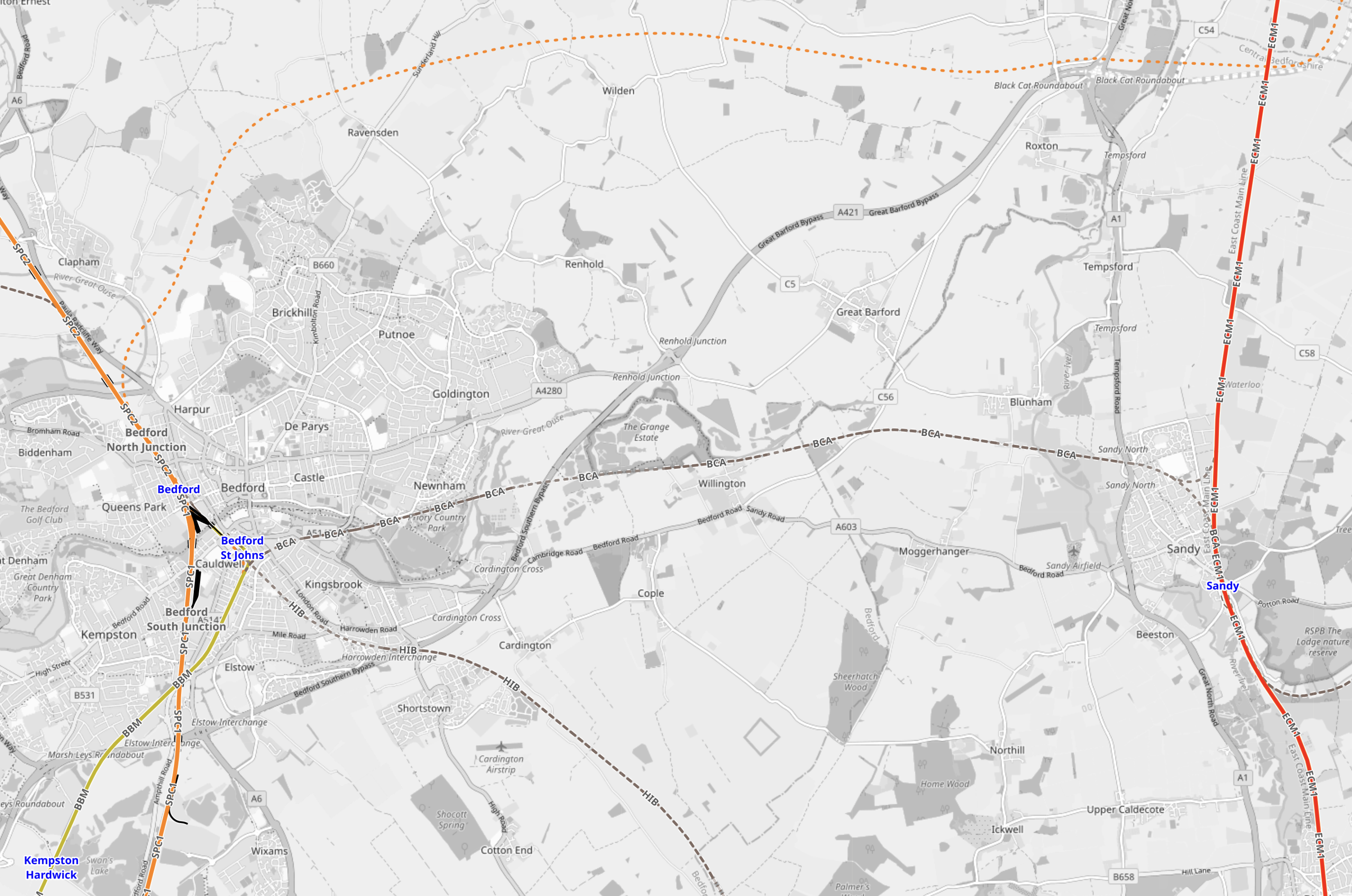
Note.
- Kempston Hardwick station is in the South-West corner of the map.
- The yellow track is the Marston Vale Line, which goes through Bedford St. Johns and Bedford stations.
- The red track on the West side of the map is the Midland Main Line.
- The red track on the East side of the map is the East Coast Main Line.
- The dotted red line across the top of the map will be the route of the East-West Rail.
- Tempsford station will be to the South-West of where the East Coast Main Line and East-West Rail cross in the North-East cornet of the map.
I hope the good people of Bedford are happier now!
Between Tempsford and Cambourne
I’ve now found that OpenRailwayMap has been updated between Bedford and Cambridge.
This second section shows the route between Tempsford and Cambourne stations.
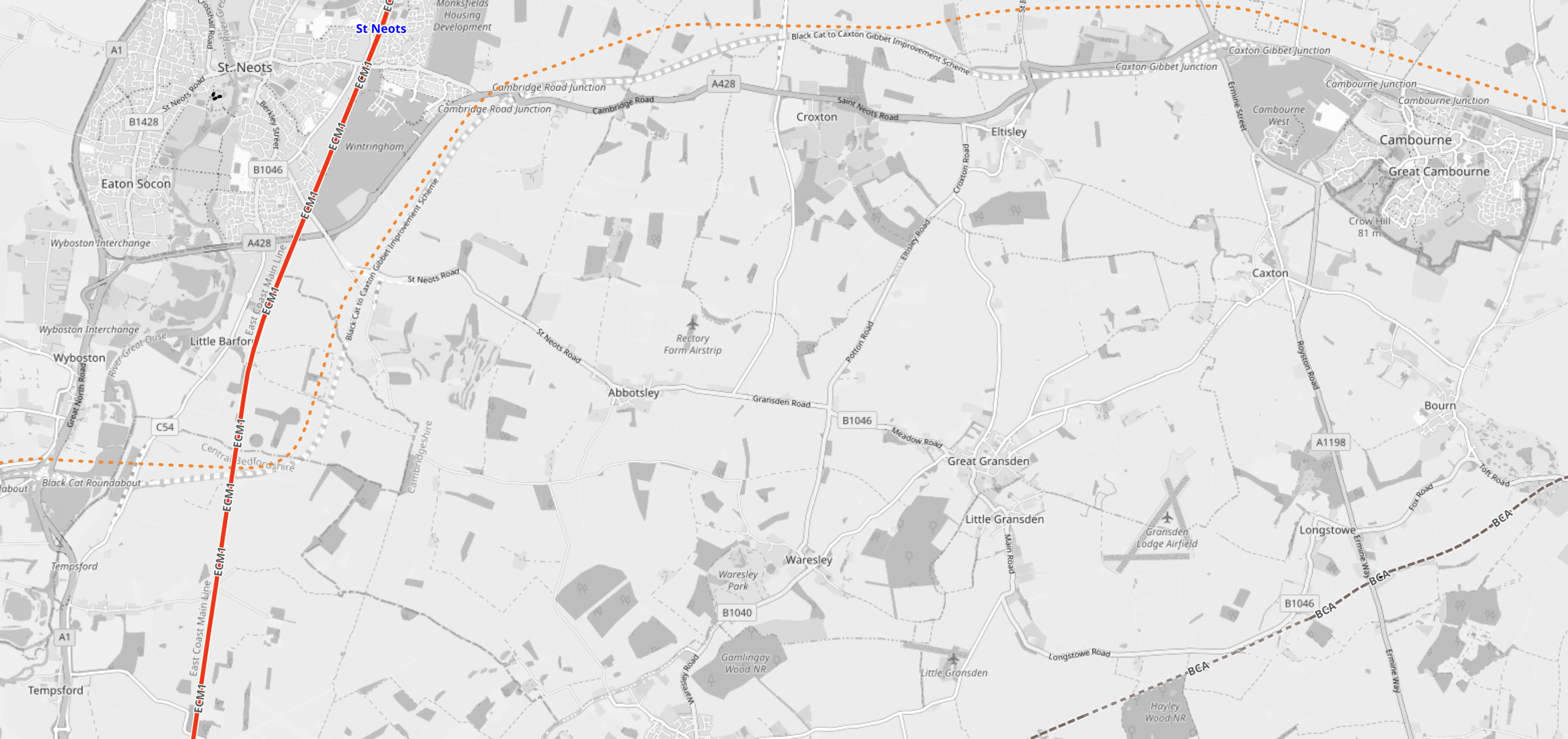
Note.
- The dotted red line across the top of the map will be the route of the East-West Rail.
- Tempsford station is in the South-West corner of the map on the route of the East-West Rail.
- The red track on the West side of the map is the East Coast Main Line.
- Cambourne is the village in the North-East corner of the map.
Battery-Powered Train Breaks Distance Record
The title of this post, is the same as that of this article on the BBC.
This is the sub-heading.
A battery-powered train has broken the world record for the longest railway journey on a single charge.
These three introductory paragraphs add more details.
The Great Western Railway (GWR) train – a specially adapted former District Line train – travelled overnight along a 200-mile (322km) route from Reading and back again, via London Paddington and Oxford.
It reached 140 miles (225km), breaking the record on Brunel’s Maidenhead Bridge at about 04:00 BST.
The previous record of 139 miles (224km) was set by German train company Stadler Deutschland in Berlin on 10 December 2021.
This was an impressive demonstration of the capabilities of battery-electric trains.
Will This Record Be Beaten?
200 miles is impressive, but there was also this paragraph in the article.
At the end of the journey GWR said there was a remaining battery charge of 22% which it estimated would have allowed the train to travel about a further 58 miles (93km).
So it looks like 258 miles should be possible.
Four other companies are also developing battery-electric trains.
- Alstom at Derby
- CAF at Newport
- Hitachi at Newton Aycliffe
- Siemens at Goole
- Stadler in Switzerland.
Note.
- All except Stadler have UK factories.
- Siemens and Stadler have delivered trains in Germany.
- This page on the Hitachi Rail web site is entitled Intercity Battery Trains.
- This page on the Hitachi Rail web site is entitled Hitachi Wins New UK Contract To Build Intercity Battery Trains. The customer is Grand Central Trains.
- Hitachi have been running a prototype for some months, in the UK.
The competition is hotting up and the record will certainly be soundly beaten.
Arriva Group Submits Open Access Rail Application To Connect Newcastle And Brighton, Via London Gatwick
The title of this post, is the same as that of this press release from Arriva Group.
These three bullet points act as sub-headings.
- New services operated by Arriva’s Grand Central would introduce a direct rail connection between the Northeast and Midlands to London Gatwick and the South Coast.
- Making better use of available network capacity, the proposed route would connect underserved communities in the UK and enhance long-distance connectivity without the need to interchange through London.
- The application reflects Arriva’s wider European strategy to connect people and places through sustainable transport solutions, strengthening regional economies and supporting modal shift.
This introductory paragraph provides more details.
Arriva Group has today announced it is submitting an open access application to the Office of Rail and Road (ORR) to introduce a new direct rail service between Newcastle and Brighton, via London Gatwick, providing vital connectivity for underserved communities along the route.
Other points to note include.
- There will be five trains per day in each direction.
- The proposed service would call at Durham, Darlington, Northallerton, York, Doncaster, Sheffield, Derby, Burton-on-Trent, Birmingham New Street, Warwick Parkway, Banbury, Oxford, Reading, Wokingham, Guildford, Redhill, London Gatwick and Haywards Heath.
- The service would be operated by Grand Central.
- The service could be introduced from December 2026.
It will be the be the first direct service between Newcastle and Brighton.
This final paragraph outlines where the service fits in Arriva’s wider philosophy.
The plans are part of Arriva Group’s broader commitment to strengthening regional connectivity and making better use of available rail capacity. By opening up new travel corridors, Arriva is helping to connect more people to jobs, education and leisure opportunities – and to encourage a greater shift from private cars to public transport.
There are certainly plenty of places in Europe, that could use a service like this one between Brighton and Newcastle.
In The Ultimate Open Access Service, I describe a possible open access service between Amsterdam and Hamburg, which is about the same distance as Brighton and Newcastle, which is 372.8 miles by Arriva’s proposed route.
These are some of my thoughts in no particular order.
A High-Class Service Between Oxford And Brighton Could Be An Interesting Development In Its Own Right
Governments, rail operators and passenger groups of all persuasions and flavours have warmly welcomed the planned reopening of the rail route between Oxford and Cambridge.
I suspect an Oxford and Brighton service would be equally welcomed.
Brighton may not be an academic powerhouse yet, but it does have one thing that Oxford and Cambridge lack ; the sea.
Gatwick Airport Will Surely Welcome The Extra Connectivity
Gatwick Airport will expand and extra rail services will do the following for the airport.
- Make it easier to get the planning permission for the second runway.
- Make it easier for passengers and airport and airline staff to get to the airport.
- Surely, the more direct rail connections the airport has, will increase the likelihood, that families and other groups, will choose to fly from Gatwick.
- More train services could cut the amount of car parking per flight needed at the airport.
Gatwick Airport station has recently rebuilt and added extra capacity, so I doubt there will be trouble accommodating another ten trains per day.
Would The Army Welcome The New Service?
Two of the British Army’s main training areas are in North Yorkshire and in Surrey.
Would they find a train service between the two areas useful?
What Trains Will Grand Central Trains Use For The New Service?
In Arriva Group Invests In New Battery Hybrid Train Fleet In Boost To UK Rail Industry, I talked about how Grand Central will be acquiring Hitachi trains for their routes between London and Bradford and Sunderland.
- These will be Hitachi tri-mode trains.
- The trains will have a range of over forty miles on batteries.
- They will probably be serviced in Yorkshire or the North-East.
- The trains will be built by Hitachi at Newton Aycliffe, with batteries from Turntide Technologies in Sunderland.
- The first trains will be delivered in 2028.
As Arriva intend to start services from December 2026, they would probably use diesel trains to start with.
I would expect that Grand Central would go for a unified fleet, which would mean more Hitachi tri-mode trains.
For convenience, they could all be serviced at Doncaster, which all Grand Central services will pass through.
What Sections Will Not Be Electrified Between Brighton and Newcastle?
As far as I can see from OpenRailwayMap, the following sections of the route are not electrified.
- Two sections of the North Downs Line – 29 miles.
- Didcot and Birmingham New Street – 80.9 miles
- Birmingham New Street and Derby – 41.3 miles
- Derby and Sheffield – 36.4 miles
- Sheffield and Doncaster – 18.4 miles
Note.
- Electrification South of Reading will be third rail, so some trains will need to have third-rail shoes.
- The length without electrification is a total of 206 miles.
- As Newcastle and Doncaster, Redhill and Brighton, Reading and Didcot, and Birmingham New Street station are all electrified, the longest sections the trains would run without electrification would be between Didcot and Birmingham New Street and between Birmingham New Street and Doncaster.
- The planned electrification between Derby and Sheffield would make life easier.
It appears that trains capable of handling a hundred miles of unelectrified railway are needed.
Hitachi have shown that a five-car train with one battery will travel 70 km (43.5 miles) on a full battery, so one with three batteries should be able to manage the hundred miles needed in a few years.
Will Any Extra Electrification Be Needed?
I think Birmingham New Street station will be the critical point.
- The next electrification on the route to the South of Birmingham New Street is at Didcot, which is 80.9 miles away.
- The next electrification on the route to the North of Birmingham New Street is at Doncaster, which is 96.1 miles away.
These battery ranges should be possible, but an alternative would be to provide an electrified platform at one or more intermediate stations to be safe.
Stations that could be equipped to the South would include Oxford and Banbury and to the North would include Burton-on-Trent, Derby and Sheffield.
Perhaps electrifying a single platform at these stations, should be the first thing to be done, so that battery-electric trains can run on some useful routes as soon as they are delivered and approved.
Electric Trains, Even Battery-Electric Ones, Will Be Quick Off The Mark
Electric trains have good acceleration and I wonder, if this acceleration will enable stops, that are not feasible with diesel trains to be fitted in with electric trains, without having to take the same time penalty.
This might allow useful stops to be added to the service.
- Chesterfield is not mentioned, but most trains passing through stop.
- As I said, Farnborough North could be a useful stop for the Army.
- There might be a case for selective stopping patterns.
Battery-electric trains stop without any noise or pollution.
Connection To The Ivanhoe Line At Burton-on-Trent
The proposed Ivanhoe Line is intended to link Burton-on-Trent and Leicester.
As it is intended that the Newcastle and Brighton service will call ten times per day at Burton-on-Trent station, this must surely improve the economics of the Ivanhoe Line.
Are there any other new or reopened rail schemes, that will be helped by the proposed Brighton and Newcastle service?
Updated Frequencies At Sheffield
Currently, trains at Sheffield have these daily frequencies to the towns and cities on the proposed Newcastle and Brighton route.
- Newcastle – 18
- Durham – 16
- Darlington – 15
- Northallerton – 0
- York – 19
- Doncaster – 64
- Derby – 58
- Burton-on-Trent – 9
- Birmingham New Street – 21
- Warwick Parkway – 0
- Banbury – 0
- Oxford – 3
- Reading – 4
- Wokingham – 0
- Guildford – 0
- Redhill – 0
- London Gatwick – 0
- Haywards Heath – 0
- Brighton – 0
Note.
- Sheffield gets five trains per day (tpd) direct connections to nine new destinations.
- Other useful destinations will get five more tpd.
- Reading is a useful interchange for Wales and the West.
- Guildford is a useful interchange for Portsmouth, Southampton and West Surrey.
- Reading and Guildford have coach services to Heathrow.
There are also a large number of universities along the route.
Hitachi Can Offer A One-Supplier Battery-Electric Train Solution
It should be noted that Hitachi can offer a complete package including battery-electric trains and all the electrification, transformers and other electrical gubbins needed.
So perhaps for the Chiltern Main Line, which is used for part of the route between Didcot and Birmingham, Hitachi could deliver a one-supplier solution, that would also electrify Chiltern’s services between Marylebone and Birmingham Moor Street.
Remember, Chiltern are another Arriva Group company.
If Hitachi get this right, I can see other lines being electrified in this way.
Could This One-Supplier Battery-Electric Solution Be Exported?
I discussed this in Arriva Group Invests In New Battery Hybrid Train Fleet In Boost To UK Rail Industry, where I suggested that the United States could be a market.
- Arriva Group are ultimately American-owned.
- Hitachi’s battery technology is also American-owned.
In these days of Trump’s tariffs, these could prove useful facts.
As Arriva Group used to be owned by Deutsche Bahn, they may be another interested party, especially as they have a lot of lines, where I believe Hitachi’s solution would work.
Conclusion
A battery-electric railway service of nearly four hundred miles would certainly attract the passengers.
Details At Hayes And Harlington Station
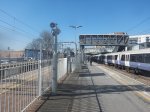
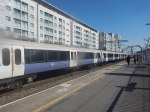
Yesterday, on my way to Reading, I changed trains at Hayes and Harlington station and took a few pictures.
An Ideally-Placed Waiting Room
These pictures show a waiting room on the Westbound platform of the Elizabeth Line.
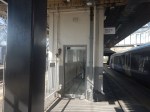
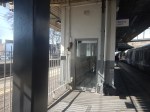






The Elizabeth Line has these Western destinations.
- Heathrow Terminal 4
- Heathrow Terminal 5
- Maidenhead
- Paddington
- Reading.
Note.
- If you are travelling to any of the Heathrow destinations and you are riding on a Maidenhead or Reading train, then Hayes and Harlington station is the last station you can change for the Airport.
- If you are travelling to any of the destinations on the Reading branch and you are riding on a Heathrow train, then Hayes and Harlington station is the last station you can change for the Airport.
- If you are travelling from any of the Heathrow destinations to any of the destinations on the Reading branch, then Hayes and Harlington station is the first station you can change for the Reading branch.
- If you are travelling from any of the Reading branch destinations to any of the Heathrow destinations, then Hayes and Harlington station is the first station you can change for the Heathrow destinations.
- To aid the change of platform in the third and fourth changes, there is a step-free footbridge at Hayes and Harlington station.
The waiting room at Hayes and Harlington station, which is complete with heating could be a welcome refuge whilst changing trains at Hayes and Harlington station.
The golden rule seems to be, that if you’re on the wrong train on the Elizabeth Line, then change for your desired destination at Hayes and Harlington station.
Track Warnings
These pictures show the bilingual track warnings at Hayes and Harlington station.



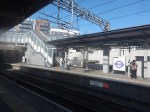
I hope Network Rail are analysing, if the warnings work.
The Main Step-Free Route Across The Tracks
These pictures show the main step-free route at Hayes and Harlington station.
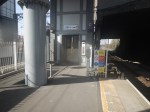
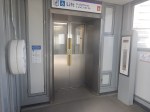
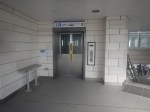
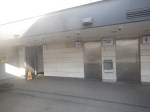
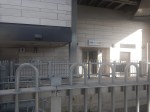

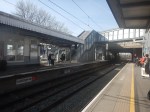

Note.
- The route with lifts, is rather tucked in at the Western end of the station.
- There are toilets under the bridge on the Eastbound platform.
- The steps are rather steep, so if you have any issues, I would use the lifts.
The golden rule is if you are going between the Reading and Heathrow branches with a change of direction from Eastbound to Westbound at Hayes and Harlington station, then make sure, you start your journey in the back of the train.
The Secondary Route Across The Tracks
These pictures show the secondary route at Hayes and Harlington station.




Note.
- I believe this bridge is better placed for some travellers, who need to reverse direction at Hayes and Harlington station.
- It is also convenient for the waiting room.
In Heathrow Rail Link Withdrawn, But MP Vows To Carry On, I asked this question.
Could Hayes And Harlington Station Become A Transport Hub For Heathrow?
I said this.
This Google Map shows Hayes and Harlington station.
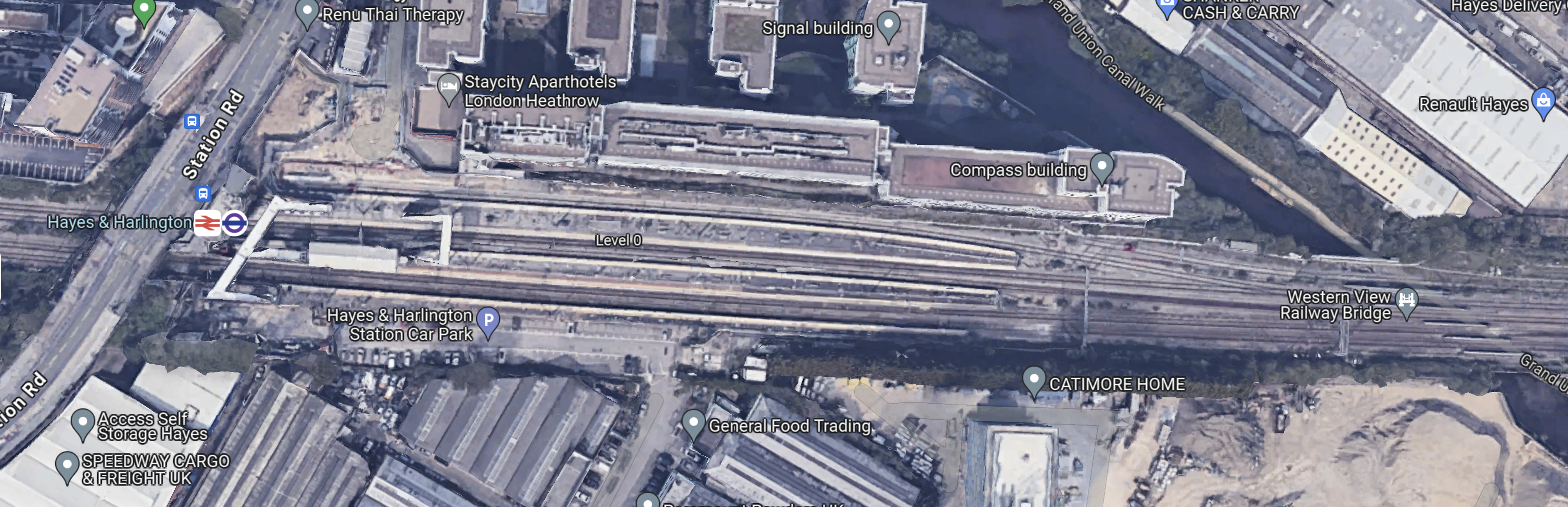
Note.
- It has platforms on all four tracks of the Great Western Main Line.
- There is a London-facing bay platform to terminate Elizabeth Line trains, if needed.
- The land to the North of the station has been developed.
- There is land to the South of the station that could be developed.
Could the space above the tracks, with some of the land to the South of the station be developed into a transport hub for Heathrow?
I took these pictures to answer my question.

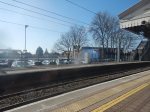
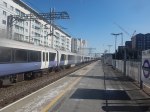



I don’t think there would be enough space to put a combined bus and coach station at Hayes and Harlington station.
Riding Rail Air Between Reading Station And Heathrow Terminal 5
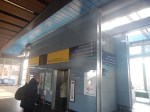
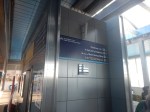
Today, I rode on a Rail Air coach between Reading station And Heathrow Terminal 5.
I took these pictures as I walked through Reading station and from the coach.






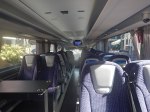




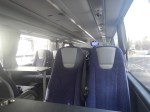
























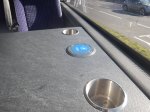

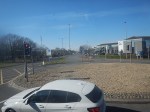


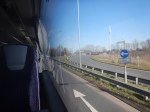






























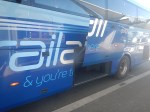


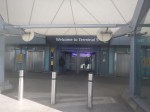

These are my thoughts on various topics.
Catching The Coach At Reading
Consider.
- The route to Rail Air from the trains at Reading station is well signed.
- The entrance to the Rail Air terminal at Reading station is behind the M & S Simply Food store.
- I estimate that the time between arriving at Reading station and the coach leaving was only a few minutes.
- Rail Air coaches run every twenty minutes.
- My coach had about ten passengers.
- My single fare was £17.30 with my Senior Railcard.
It was all a rather painless process.
On The Coach
Consider.
- The coach was more-or-less what you would expect on a quality route.
- The view was good.
- I had a table, with four seats.
- The table had contactless charging and drink holders.
- There was no charging for my phone and camera, which use USB or 13 amp plugs.
- The seat was reasonably comfortable.
- There was a toilet.
- There was typical storage for heavy luggage underneath the seats.
I would have thought if Wrightbus fit USB ports on their buses, that they are needed.
The Route
This Google Map shows Reading and Heathrow
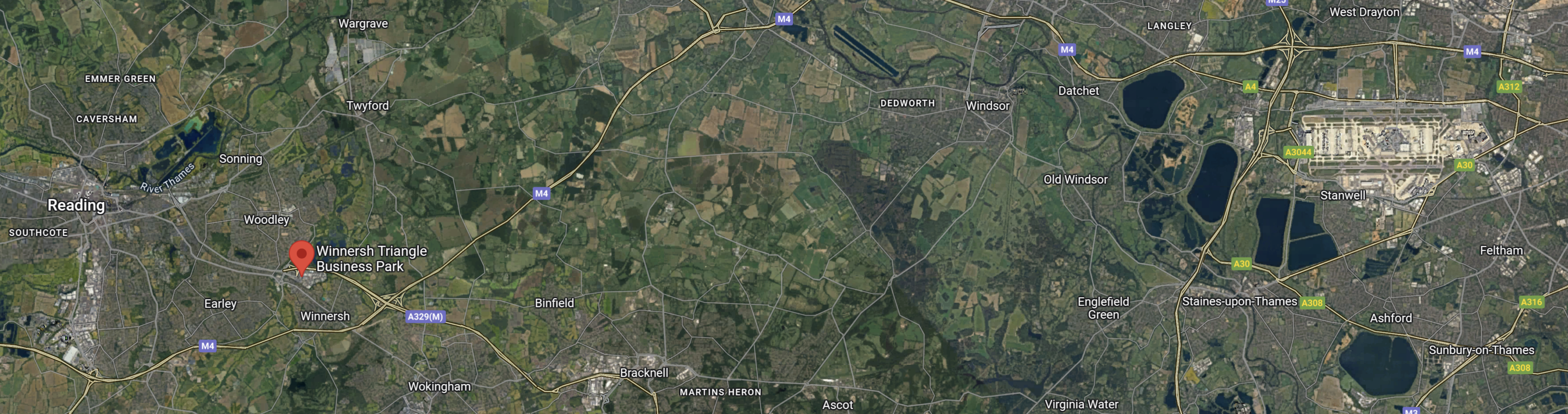
Note.
- Reading is at the Western end of the map.
- Heathrow is at the Eastern end of the map.
- The red arrow indicates Winniersh Triangle station on the Eastern side of Reading.
- The coaches stop at Reading Cemetery and Winnersh Triangle station.
- Most of the route between Winnersh Triangle and Heathrow Airport is on the M4 Motorway or dual-carriageway roads.
- The distance appears to be just under 27 miles and is scheduled to take forty minutes.
- Click the map to show to a larger scale.
It looks to me that it is an ideal route for a coach.
On The Journey
Consider.
- Once clear of Reading and past the stop at Winnersh Triangle, the coach held a good speed all the way to Heathrow, as the motoway was not busy.
- In the UK coaches under twelve metres long, can run at 70 mph and I estimated that this coach was probably at 60 mph.
- The stops were called out like stations on a train.
- Strangely, the roadholding was not as good as that of the Wrightbus hydrogen bus, that I took to Gatwick, a couple of weeks ago.
- The big problem though was the noise of the diesel engine, which was very loud compared to the noise of the fuel cell and electric transmission of the Wrightbus hydrogen bus.
I suspect that transforming the hydrogen bus into a coach, could result in a very high quality coach, with the performance and range of a diesel coach, without the noise, pollution, vibration and carbon emissions.
Heathrow Rail Link Project Could Be ‘Reopened’
The title of this post, is the same as that of this article on the BBC.
This is the sub-heading.
Network Rail has said plans for a rail link between the Great Western mainline and Heathrow Airport could still move forward if funding is found in the future.
These three paragraphs give the current status of the scheme.
The Local Democracy Reporting Service recently reported that the project had been put on hold.
It began in 2012 and involved proposals for a 4 mile (6.5km) rail link to allow train services from Reading and Slough in Berkshire to reach Heathrow using a tunnel.
The £900m scheme would allow people living to the west of Heathrow to travel direct to the airport, instead of having to go into London.
These are some other facts and my thoughts.
The All-Party Parliamentary Group (APPG) For The Western Rail Link To Heathrow
According to the BBC article, this has now been established and this is said.
Labour MP for Slough, Tanmanjeet Singh Dhesi, held a debate in parliament on the western rail link in April and established the All-Party Parliamentary Group (APPG) for the Western Rail Link to Heathrow, to make sure it “remains on the government’s agenda”.
He said the project had been “beset by delays and funding challenges” but still had “wide cross-party and local support”.
Parliamentary backing is surely a good thing.
The Current Scheme
The BBC article shows this map with a rail link connecting the Great Western Main Line to Terminal 5 railway station.
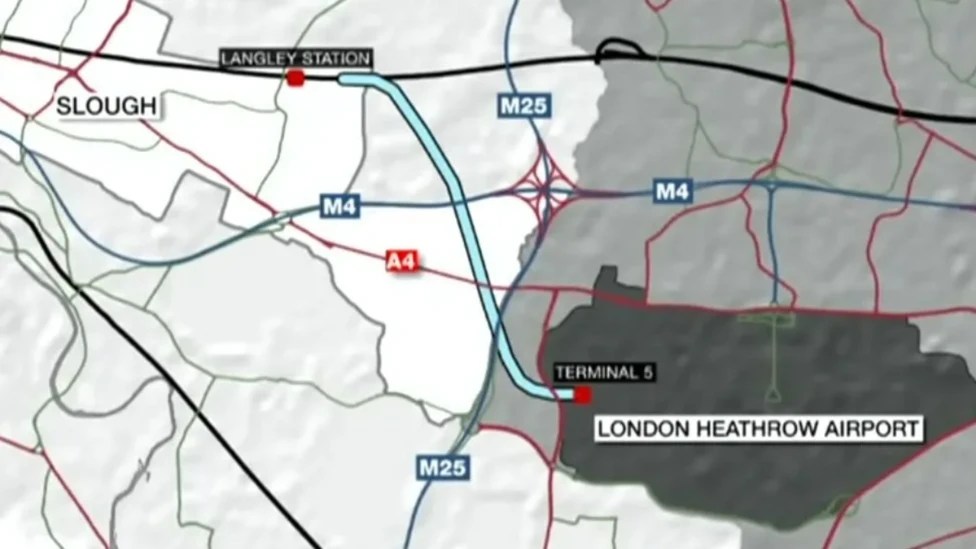
Note.
- The rail link starts from East of Langley station.
- Terminal 5 station can take full-length Elizabeth Line trains.
- Main line trains from Bristol, Cardiff and Wales and the West should be able to access Heathrow.
But I suspect, that there would be extensive changes to Heathrow’s railways to access the other terminals. This would explain the near billion pound cost of the link.
I also suspect that it would take about eight to ten years to build and from what I havc heard, the rail link is urgently needed.
RailAir
RailAir is the current way of travelling between Reading station and Heathrow Airport.
This is the first paragraph of RailAir’s Wikipedia entry.
RailAir describes a number of airport bus and coach services designed to connect the National Rail network to airports in the United Kingdom. Services are currently concentrated on Heathrow Airport, with one other from Luton Airport. RailAir services are operated as public transport services by or on behalf of train operators, where the whole journey is paid for as a through-ticket which combines the railway and bus journey, although journeys can be made using the bus only. As such, many are operated where the train and bus operator are owned by the same company.
Could RailAir be updated to be a more frequent and integrated service?
CoacH2
This page on the Advanced Propulsion Centre UK web site is entitled CoacH2 – Next Generation Hydrogen Fuel-Cell Coach Powertrain Demonstrator.
This is the sub-heading.
Accelerating the development of zero-emission hydrogen fuel-cell electric coaches, with a full on-vehicle technology demonstrator.
These are the first two paragraphs.
Coaches are an integral part of the public transport network, with over 30,000 diesel coaches operating across the UK and Ireland. Due to the specific demands of coach operation (motorway driving, long-range, high passenger and luggage loading capacity) decarbonisation options for this sector are extremely limited with hydrogen fuel-cell technology considered the most viable choice. This project will tackle this difficult to decarbonise sector by developing, testing and validating an innovative hydrogen fuel-cell powertrain suitable for coach applications.
Delivered by a Northern Irish consortium spanning OEM, coach operator and academia, CoacH2 will accelerate the development of zero-emission, fuel-cell electric coaches, with a full on-vehicle technology demonstrator to be manufactured and showcased at Cenex Expo 2024.
As I indicated in British Buses For British Bottoms, Wrightbus build a good well-built, smooth-riding and comfortable bus, so now they can add hydrogen-powered coaches to the product range.
This press release on the Wrightbus web site is entitled Wrightbus Coach Demonstrator Unveiled At Cenex Expo, gives more information on CoacH2.
- The demonstrator has a power of 300 Kw.
- It has a range of 1,000 km. on one refueling.
- An internet search reveals a launch date of 2026 for the hydrogen-powered coach.
I wonder, if RailAir changed their coaches to these new Wrightbus hydrogen-powered coaches, they would transform travel to airports all over the UK.
If the hydrogen-powered coaches are of the same quality of their hydrogen-powered siblings, they will be a quality product with good road-holding, sufficient performance and superb passenger comfort.
RailAir could be the ideal, initial application.
Conclusion
A proper rail link to Heathrow from Reading is needed, but it will take at least ten years to build and cost a billion pounds.
However the RailAir links to Heathrow from Reading and Woking can be improved by using high-performance Wrightbus hydrogen-powered coaches.
From Reading To Gatwick Airport Along The North Downs Line
After writing Connecting Reading And The West To Gatwick Airport And Eurostar, I decided to go and look at the reality of the North Downs Line between Reading and Gatwick Airport stations.
I took my usual route to Reading, which is to go to Moorgate and get the Elizabeth Line direct to Reading using my Freedom Pass, after having breakfast in the Leon on Moorgate.
- I then had to leave the station at Reading, so that I could buy my ticket to Gatwick Airport.
- It would be so much easier, if there ere a couple of ticket machines on the bridge or platform at Reading station, so that passengers, who were changing trains could buy tickets quickly and easily.
In the end, I caught the 11:24 train to Gatwick with only a few minutes to spare.
From Reading To Gatwick Airport Along The North Downs Line
Along the North Downs Line, the train was a well-refreshed Great Western Railway Class 165 train.
These are some of the pictures, that I took on the route.







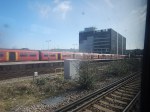
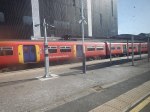




























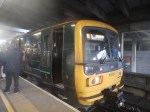
Note.
- The route goes through a lot of typical Surrey heathland.
- I noticed several pubs along the way.
- I suspect that there are some good walks from the stations.
- Reading and Guildford are university cities.
- Sandhurst is home to the Royal Military Academy.
- Farnborough Airport used to be home to the Royal Aircraft Establishment.
- Most of the seats on the train were taken.
I would expect that for a mainly rural route it is fairly busy.
Hitachi’s Intercity Battery Trains
Hitachi have developed an Intercity battery train and it is described on this page on their web site, where this is said about converting the trains to battery-electric operation.
A quick and easy application of battery technology is to install it on existing or future Hitachi intercity trains. Hitachi Rail’s modular design means this can be done without the need to re-engineer or rebuild the train and return them to service as quickly as possible for passengers.
Replacing one diesel engine with just one battery reduces emissions by more than 20% and offers cost savings of 20-30%. Our intercity battery powered trains can cover 70km on non-electrified routes, operating at intercity speeds at the same or increased performance.
That performance is certainly enough for Reading and Ashford via Gatwick, as only 37.7 miles in total, is not electrified.
Does The North Downs Line Mirror The East-West Rail?
Consider.
- The East West Rail will encircle London to the North, between Oxford and Cambridge.
- The North Downs Line encircles London to the South, between Reading and Ashford.
They could be considered two complimentary rail lines.
A Milton Keynes And Ashford International Service
Looking at the track layout on OpenRailwayMap, it would appear that one of Hitachi’s proposed Intercity Battery Trains fitted with dual voltage could pick its way elegantly along the East West Rail and the North Downs Line between Milton Keynes and Ashford International via Oxford, Reading and Gatwick Airport.
An Occasional Sheffield And Ashford International Service
If you could run a service between Milton Keynes and Ashford International, why not extend it to Bedford or even Sheffield in the North?
I believe if you put these Hitachi’s proposed Intercity Battery Trains on a cross-country route, that they will quickly suffer from London Overground Syndrome. This is my definition of the syndrome.
This benign disease, which is probably a modern version of the Victorian railway mania, was first identified in East London in 2011, when it was found that the newly-refurbished East London Line and North London Line were inadequate due to high passenger satisfaction and much increased usage. It has now spread across other parts of the capital, despite various eradication programs.
Put simply, it can probably be summed up as Quality Attracts Passengers.
Serving Heathrow
There have been various plans to get rail access into Heathrow from the West, but none have so far got off the starting blocks.
It is my view, that in the interim period, after my trip last weekend in the superb Wrightbus hydrogen double deck bus from Sutton to Gatwick, that I wrote about in Sutton Station To Gatwick Airport By Hydrogen-Powered Bus, that we should ask Wrightbus, who are designing a hydrogen-powered coach, to design the ultimate coach to connect rail hubs to major airports.
I would then run these coaches every ten minutes between Reading station and Heathrow Airport.
Serving Attractions
I believe that pairing Hitachi’s proposed Intercity Battery Trains with Wrightbus’s hydrogen coach could be a winner for passengers and operators.
As an example, Lumo are hoping to run an open access service between Paddington and Carmarthen, if Heidi the Spoilsport permits. Would it not be sensible, if one of Wrightbus’s hydrogen coaches did the last mile duties to the ferry for Ireland at Fishguard harbour.
Connecting Reading And The West To Gatwick Airport And Eurostar
I have just checked the electrification between Reading and Ashford International using OpenRailwayMap.
- Between Cardiff and Reading the electrification is 25 KVAC overhead.
- Between Reading and Wokingham the electrification is 750 VDC third-rail.
- Between Wokingham and Reigate is not electrified.
- Between Reigate and Gatwick Airport the electrification is 750 VDC third-rail.
- Between Gatwick Airport and Ashford International the electrification is 750 VDC third-rail.
Only 37.7 miles is not electrified.
Hitachi’s Intercity Battery Trains, have a range on battery power of seventy kilometres or forty-five miles, so these trains could go between Reading or any station to the West to any station on the North Downs Line, including Guildford, Redhill, Gatwick Airport, Tonbridge and Ashford International stations.
The trains would need to be dual voltage and I’m fairly sure, that no new infrastructure would be needed.
A Green No-Fly Route Between Europe And Ireland
Consider.
- The Great Western Main Line is electrified to Cardiff.
- There is no electrification to the West of Cardiff.
- Cardiff and Fishguard Hsrbour is 115.6 miles.
- There is a ferry between Fishguard and Rosslare.
I suspect Hitachi could configure one of their Intercity Battery Trains, that could connect Ashford International and Fishguard Harbour stations.
 The Anonymous Widower