A Possible Balmacaan Pumped Storage System
This article on Power Technology is entitled SSE Proposes Loch Ness Hydro Power Plant.
These are the first three paragraphs.
Scottish and Southern Energy (SSE) has begun consultations to develop a 600MW hydro electric power plant on the shores of Loch Ness in Scotland.
SSE proposes to build a pumped storage scheme on the Balmacaan Estate between Invermoriston and Drumnadrochit.
The plan also includes construction of a dam and a new reservoir at Loch nam Breac Dearga, north-east of Invermoriston, according to Inverness-courier.co.uk.
This Google Map shows the location of Loch nam Breac Darga.
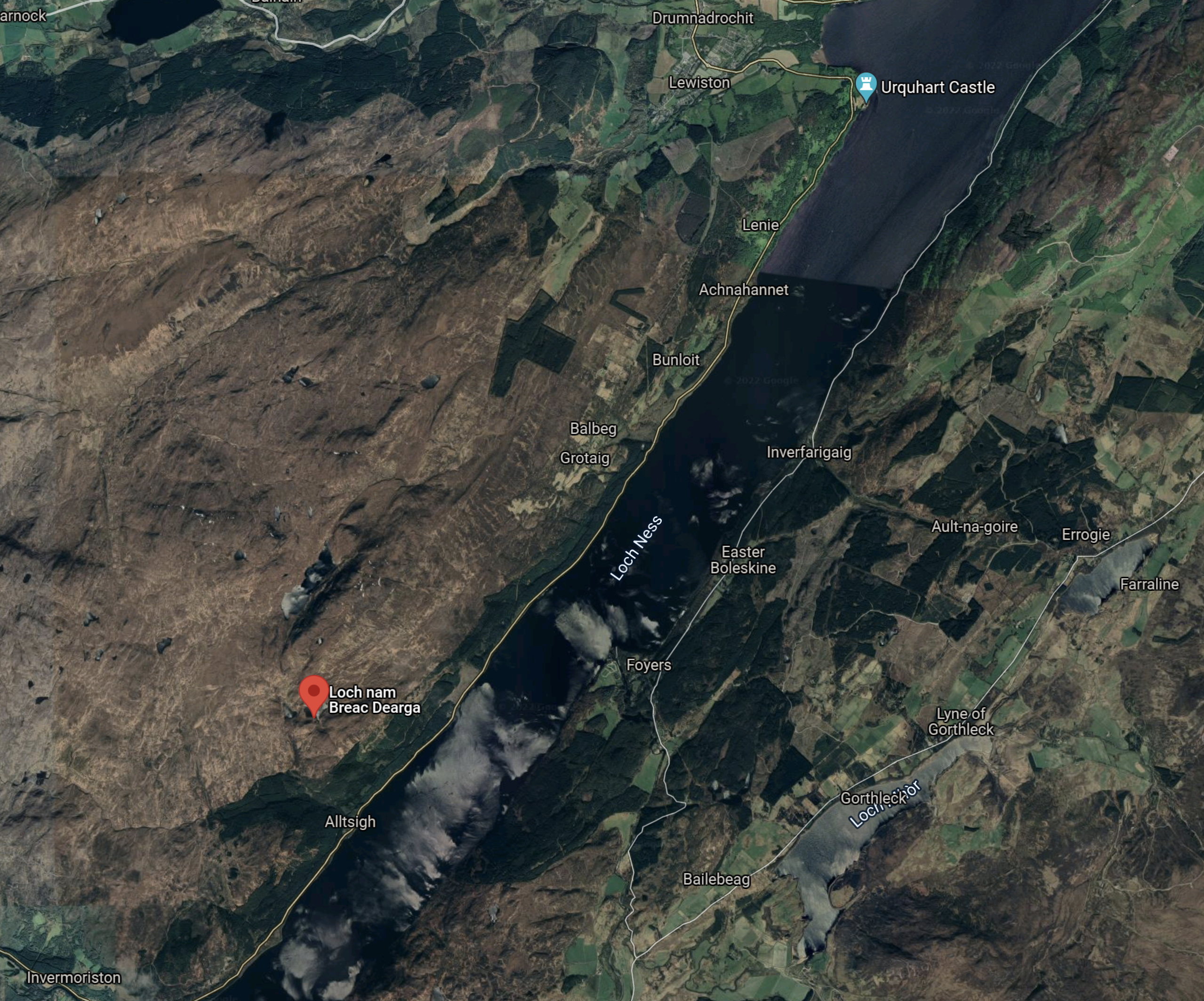
Note.
- Loch Ness runs diagonally across the map.
- Invermoriston is in the South-West corner of the map.
- Loch nam Breac Darga is marked by the red arrow and is 452 metres above sea level.
- Drumnadrochit is at the North of the map, just to the West of Urquhart Castle.
- The Foyers Pumped Hydro scheme, which I wrote about in The Development Of The Foyers Pumped Storage Scheme is on the opposite bank of Loch Ness from Loch nam Breac Darga.
This could be Scotland’s largest hydro-electric plant.
I can’t find a value for the amount of energy that can be stored, but I suspect it could be in the order of 15-20 GWh.
The stories about this project seem to be thin on the ground, so could it be that this project has been placed on the back burner by SSE.
Onshore And Offshore Wind Energy Capacity Predicted To Increase By 230% By 2030
The title of this post, is the same as that of this article on insider.
The report was commissioned by Scottish Renewables to assess the effects on the supply chain in Scotland.
But it does show that Scotland is on the way to be able to supply a lot of its electricity from wind farms, which would be backed up by some of another of pumped storage schemes under development.
A Lower-Cost Pumped Hydro Storage System
Whilst writing some of the posts recently about pumped storage I came across the Loch Sloy Hydro-Electric Scheme.
This is the introductory sentence in Wikipedia.
The Sloy/Awe Hydro-Electric Scheme is a hydro-electric facility situated between Loch Sloy and Inveruglas on the west bank of Loch Lomond in Scotland.
This page on the Greenage web site gives comprehensive details of the power station and is well worth a read.
This Google Map shows the Lochs Sloy and Lomond.
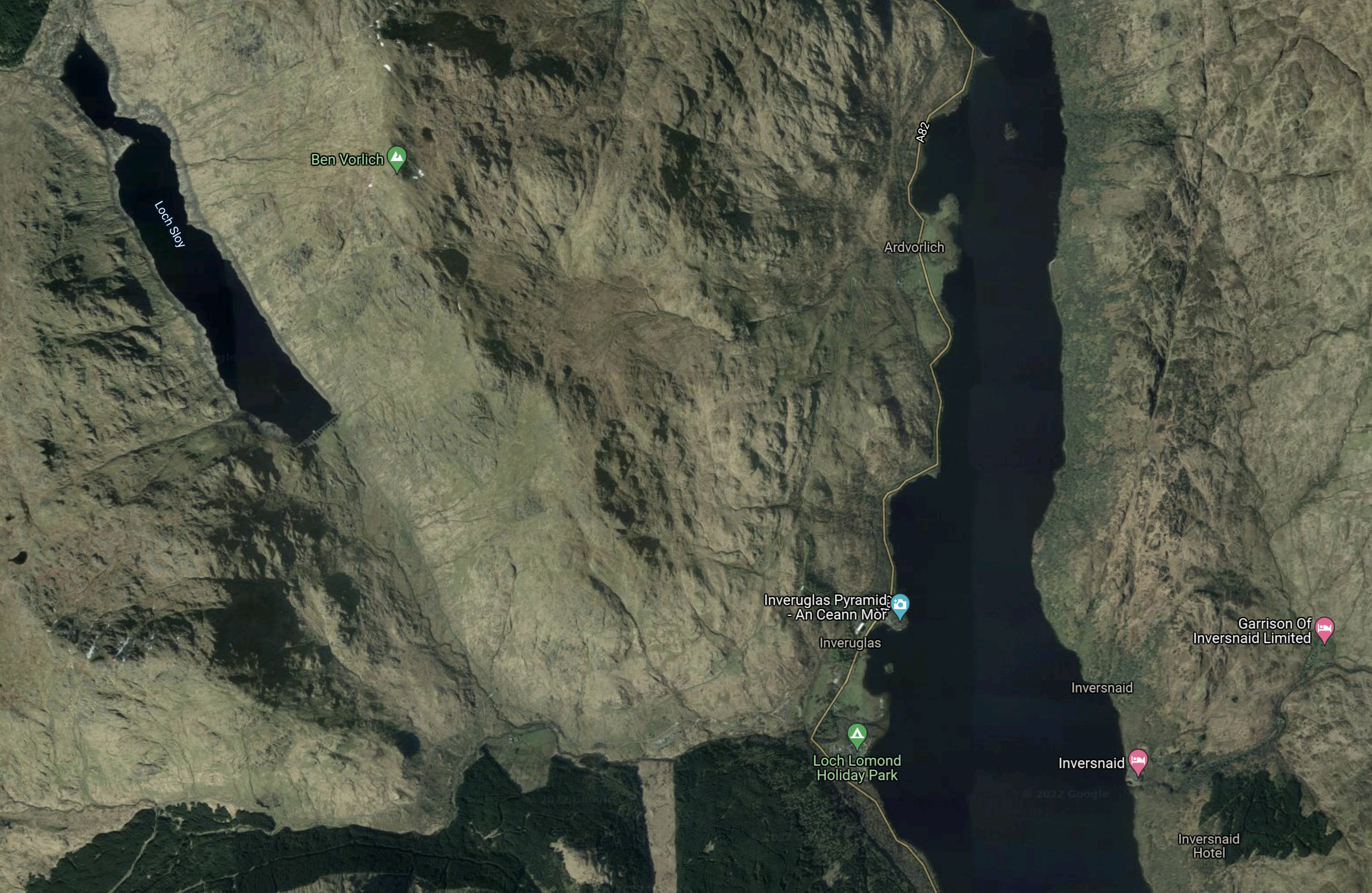
Note.
- Loch Sloy is in the North-West corner of the map.
- The page on Greenage says that Loch Sloy can store 14 GWh of electricity
- Loch Lomond is the body of water towards the Eastern side of the map.
- Inverglas is on the West bank of Loch Lomond to the North of the Loch Lomond Holiday Park, which is indicated by the green arrow with a tent.
This second Google Map shows the power station and Inverglas.
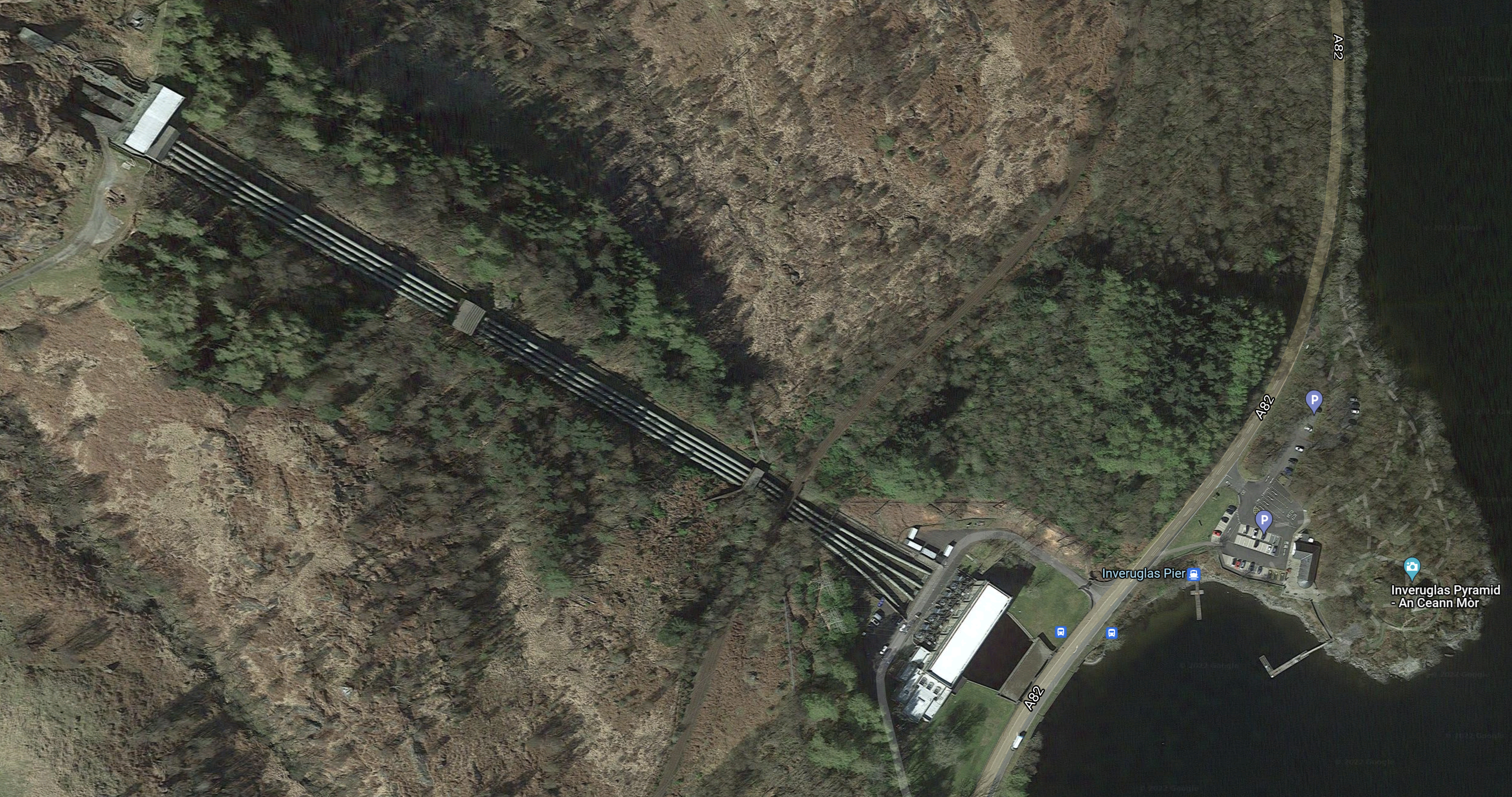
Note.
- It is a classic layout for a hydro-electric power station.
- In the North West corner of the map is the valve house, which is connected to Loch Sloy by a three kilometre tunnel.
- The valve house controls the water flows to the power station by Loch Lomond.
- There are four two-metre pipes running down the hill, one for each of the four turbines.
- According to the page on Greenage, the power station has three 40 MW turbines and one 32 MW turbine, which gives a total output of 152 MW.
- The water discharges into Loch Lomond after doing its work in the power station.
Loch Sloy is the largest conventional hydroelectric power plant in the UK.
Extending The Loch Sloy Hydro-Electric Scheme
This page on Hydro Review, which is dated the 10th of November 2010, is entitled SSE Gets Government Consent For Sloy Pumped-Storage Hydropower Project.
These are the first paragraph.
SSE Generation Ltd., the wholly owned generation business of Scottish and Southern Energy, has received consent from the Scottish Government to develop a 60-MW pumped-storage hydro project at its existing Sloy hydropower station at Loch Lomond, SSE reported.
Note.
- Two 30 MW pumps will be added to the power station to pump water up the hill from Loch Lomond to Loch Sloy.
- According to the page on Greenage, if the two pumps worked together for six hours, they would transfer 432,000 m3 of water. Note that a cubic metre of water weighs a tonne.
- Water would be transferred, when there was a surplus of energy being generated over the demand.
It would appear to be a simple scheme, as it is just adding two pumps to pump the water up the hill.
- As pumps rather than pump/turbines as at Foyers are used, there is no corresponding increase in generating capacity.
- Water also appears to be pumped up to the valve house in the existing pipes.
- Loch Sloy and Loch Lomond would not need major works to enable the scheme..
The page on Greenage gives the cost at just £40 million.
Originally, the project was supposed to have started in 2012, but as there are environmental problems with the fish, the work has not started.
These problems are detailed on the page on Greenage.
Conclusion
For £40 million, 14 GWh of pumped storage can be created at Sloy.
- But it could be bigger than 14 GWh, as this page on the Strathclyde University web site, says 20.4 GWh is possible.
- This would surely, be a project that could be first in the queue, once the environmental problems are solved.
20 GWh of pumped storage would be nice to have reasonably quickly.
New Electricity ‘Superhighways’ Needed To Cope With Surge In Wind Power
The title of this post, is the same as that of this article on the Telegraph.
This is the first two paragraphs.
Energy companies are pushing for the rapid approval of new electricity “superhighways” between Scotland and England amid fears that a lack of capacity will set back the country’s wind power revolution.
Businesses including SSE and Scottish Power are calling on the industry regulator Ofgem to approve a series of major new north-south power cables in a bid to ease congestion on the existing electricity network.
These points are mentioned in the article.
- Current capacity is 6 GW, which even now is not enough.
- Another 17 GW of capacity will be needed by 2033.
- Wind farms in Scotland have been switched off and replaced by gas-fired power stations because of a lack of grid capacity.
- Another 25 GW of wind farms could be built after leases were awarded last month.
Two North-South interconnectors are being planned.
Peterhead And Drax
This is being proposed by SSE and National Grid.
- It will be an undersea cable.
- It will be two cables, each with a capacity of 2 GW.
- Peterhead and Drax power station are four hundred miles apart by road and 279 miles as the seagull flies, as a lot of the route would be over the sea. So an undersea connection would appear to be sensible.
- Peterhead is on the coast, so connecting an undersea interconnector shouldn’t be too challenging or disruptive to the locals.
- Drax power station is a 4 GW power station and the largest in the UK, so it must have good grid connections.
This Google Map shows the location of Drax power station in relation to Hull, Scunthorpe and the rivers in the area.
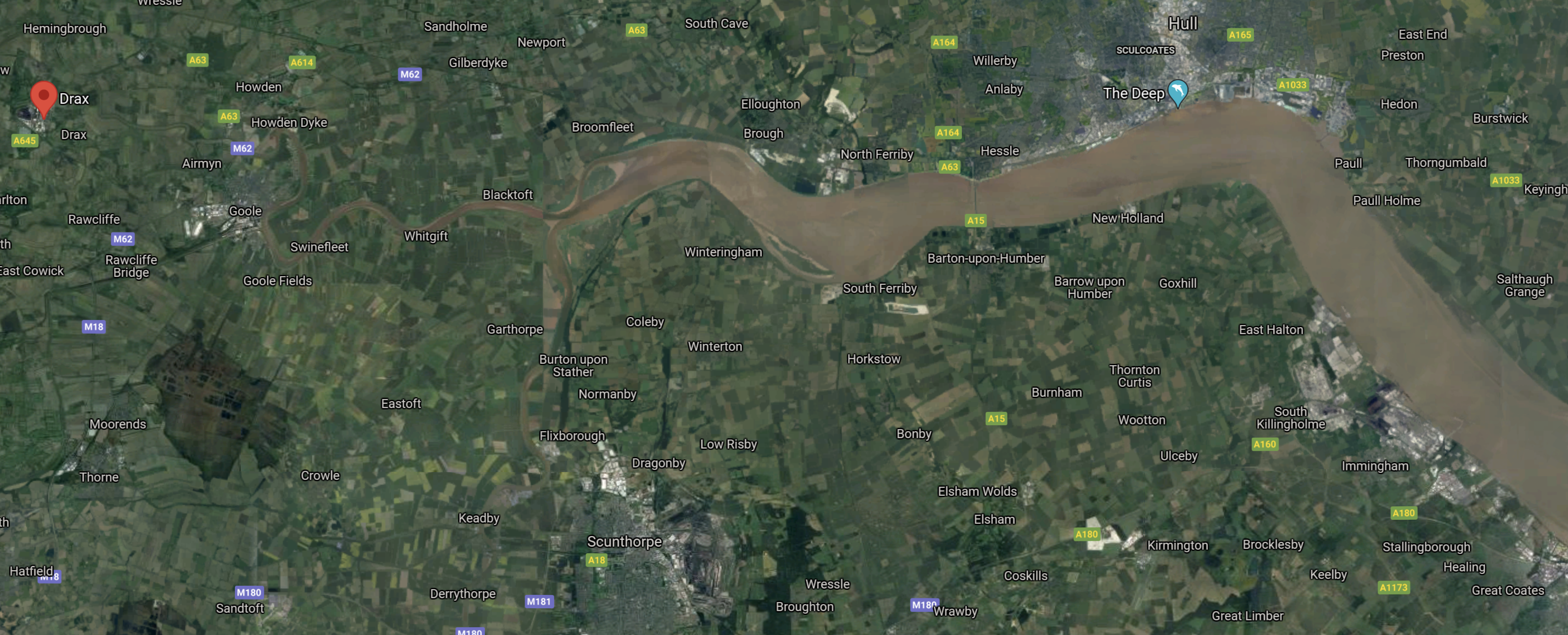
Note.
- Drax is marked by the red arrow in the West of the map.
- The large body of water in the East is the Humber Estuary.
- Hull is on the North Bank of the Humber.
- Scunthorpe, which is famous for its steel industry is South of the Humber in the middle of the map.
- To the West of Scunthorpe the Humber splits into the Trent and the Ouse.
- The Ouse leads all the way to Drax power station.
I suspect an undersea cable could go up the Humber and Ouse to Drax power station.
Is it a coincidence that both Drax power station and the proposed link to Peterhead are both around 4 GW?
Consider.
- Drax is a biomass power station, so it is not a zero carbon power station.
- Drax produces around six percent of the UK’s electricity.
- Most of the biomass comes by ship from North America.
- Protest groups regularly have protests at Drax because of its carbon emissions.
- Drax Group are experimenting with carbon capture.
- Drax is a big site and a large energy storage system could be built there.
- Wind is often criticised by opponents, saying wind is useless when the wind doesn’t blow.
- The Scots would be unlikely to send power to England, if they were short.
This is also said about Drax in Wikipedia.
Despite this intent for baseload operation, it was designed with a reasonable ability for load-following, being able to ramp up or down by 5% of full power per minute within the range of 50–100% of full power.
I take this it means it can be used to top up electricity generation to meet demand. Add in energy storage and it could be a superb load-follower.
So could the similar size of the interconnector and Drax power station be deliberate to guarantee England a 4 GW feed at all states of the wind?
I don’t think it is a coincidence.
Torness And Hawthorn Pit And Torness and South Humberside
These two cables are being proposed by Scottish Power.
- Each will be two GW.
- Torness is the site of the 1.36 GW Torness nuclear power station, which is likely to be decommissioned before 2030.
- Torness will have good grid connections and it is close to the sea.
- Hawthorn Pit is a large closed coal mine to the North of Newcastle, with a large substation close to the site. I suspect it will be an ideal place to feed power into the grid for Newcastle and it is close to the sea.
- Just South of Hawthorn Pit are the 1.32 GW Hartlepool nuclear power station, which will be decommissioned in 2024 and the landfall of the cables to the massive Dogger Bank wind farm.
- As I showed earlier with Drax, the Humber would be an ideal estuary to bring underwater power cables into the surrounding area. So perhaps the cable will go to Scunthorpe for the steelworks.
- As at Drax, there is backup in South Humberside, but here it is from the two Keadby gas-fired power stations.
The article in the Telegraph only gives the briefest of details of Scottish Power’s plans, but I suspect, that given the locations of the ends of the interconnectors, I suspect the cables will be underwater.
Conclusion
It strikes me that all three interconnectors have been well thought thought and they serve a variety of objectives.
- Bring Scottish wind power, South to England.
- Connect wind farms to the two nuclear power station sites at Hartlepool and Torness, that will close at the end of the decade.
- Allow the big 4 GW biomass-fired station at Drax to back up wind farms and step in when needed.
- Cut carbon emissions at Drax.
- Use underwater cables as much as possible to transfer the power, to avoid the disruption of digging in underground cables.
It looks to be a good plan.
Glendoe Hydro Power Station
When I think of hydro-electric power stations in the UK, I generally, think that most of the hydro-electric power stations were built years ago by organisations like the North of Scotland Hydroelectric Board. These power stations were one of the staples of the Meccano Magazine, of which I was a long-term subscriber in the 1950s.
But Glendoe hydro-electric power station is relatively new having been opened in 2009. At only 100 MW, the power-station may not be large in comparison to others around the world, but it does show what can be built in the Highlands of Scotland.
This Google Map shows the layout of the power station.
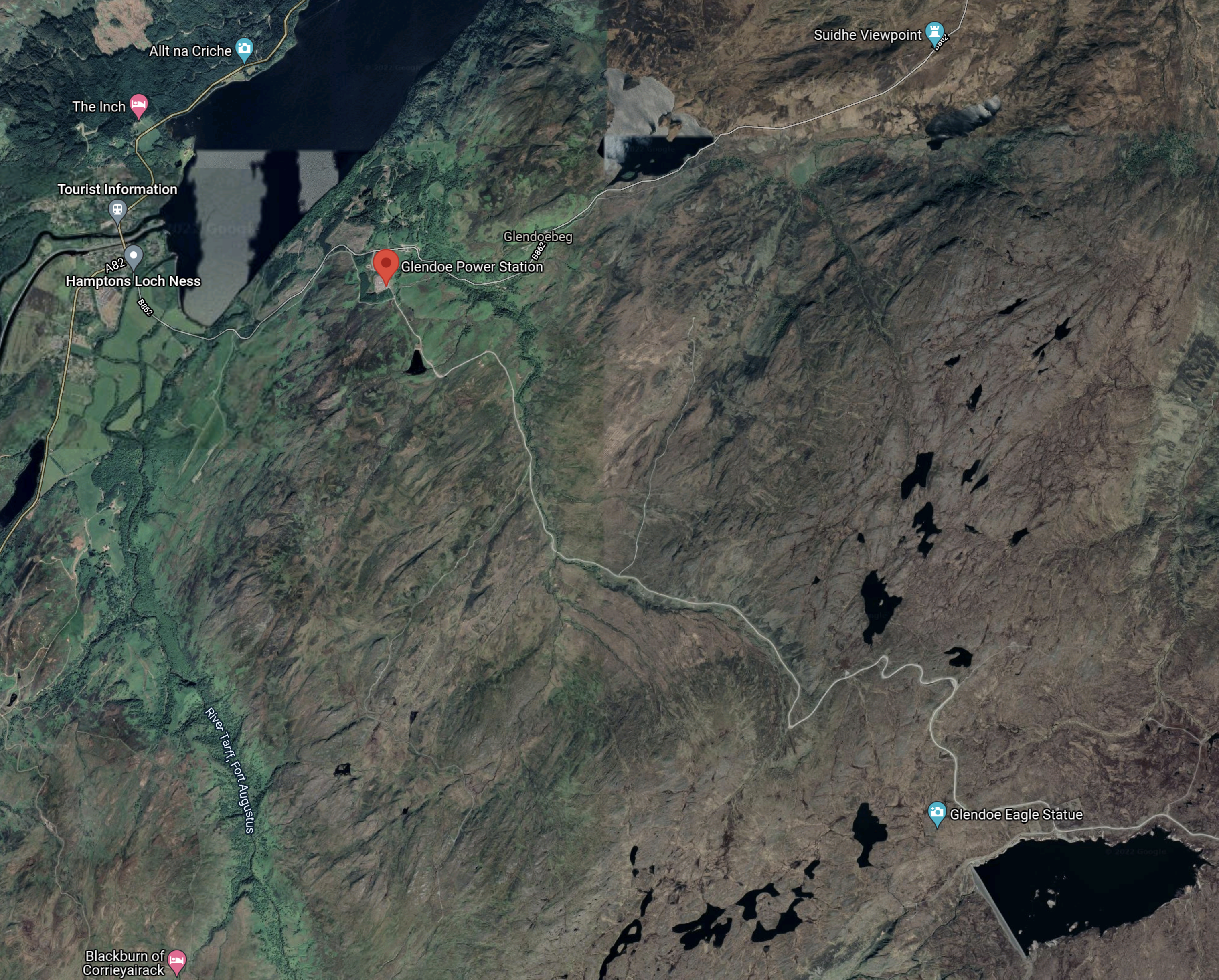
Note.
- The red arrow indicates the location of Glencoe power station, which is underground.
- To the North of the power station, is the Southern end of Loch Ness.
- In the South-Eastern corner of the map there is the lake from which the power station draws its water.
- The dam is at the Western end of the lake.
According to this article on Power Technology, the project cost £160 million.
This extract from a page on the SSE Renewables web site, describes the layout of the tunnels and the operation of the power station.
Engineers began planning the Glendoe project as far back as October 2001. Formal construction work at the site started over four years later, in January 2006. It involved constructing a 960 metre-wide dam on the River Tarff to create a new reservoir some 600 metres above the power station, giving it the greatest head of any hydro electric power station in the UK.
An 8.6 kilometre tunnel connects the reservoir to the power station that is built 250 metres below ground level, about two kilometres from the banks of Loch Ness. Although some of the tunnel was created using traditional drill and blast techniques that would have been familiar to the Tunnel Tigers of the last century, much of its length was bored out using a massive tunnelling machine named Eliza Jane by local schoolchildren.
The SSE page also describes the working and living conditions of those who built the scheme.
Most lived in specially constructed camps high in the hills above Loch Ness, braving brutal weather conditions in winter, and the fearsome Scottish midges in the summer.
The SSE page also gives the main use of the power station.
Today, the main operating feature of Glendoe is its ability to react quickly to changing demand for electricity, being able to reach full output in just 90 seconds.
So when there is an important football or rugby match on the television, it is ideal to supply the surge of electricity, when everybody puts on the kettle at half time.
Could This Power Station Have A Pumped Storage System Added?
Consider.
- There is a large lake six hundred metres above the power station.
- Loch Ness is a large source of water at the bottom of the mountain.
- Every tonne or cubic metre of water pumped into the upper lake would store 1.63 kWh of electricity.
- The world’s and the UK’s tunneling engineers are getting better and more ambitious.
- When this power station was built in the early years of this century, there wasn’t the large amount of wind turbines in Scotland, that there are now.
I suspect, it’s an idea that’s been looked at, but the costs or the distance to pump the water might kill it.
If a second project was the same size as the first, it would cost £210 million based on inflation.
But.
- It wouldn’t need another dam or a substation to connect to the National Grid.
- There would probably be a need for extra excavation at the power station to put in the pumps.
- I suspect it would need an extra tunnel to get the water uphill.
- One tunneling engineer told me, as with sex, digging a second tunnel is easier.
The main benefit, would be that it would be hidden infrastructure.
As to the energy storage capacity, I estimate from maps that the top reservoir at Glendoe is about half the size of Loch Mohr at Foyers power station, but the head is 600 metres as against 197 metres. As Foyers can store 10 GWh, it looks to me, that Glendoe could store around 15 GWh.
Also, as Glendoe power station was designed and built after the successful conversion of Foyers to a pumped storage station, I wouldn’t be surprised to find that Glendoe was designed, so that the station could be converted to pumped storage at a later date.
Conclusion
This scheme will be seriously looked at for extension with a pumped storage facility.
Red John Pumped Storage Hydro Project
When I wrote ILI Group To Develop 1.5GW Pumped Storage Hydro Project, I noticed that they were also developing a scheme called Red John near Inverness.
The title of this post is the same as that of this article on Power Technology.
I have also found a web site for the project, which is part of the ILI Group web site.
- The scheme has an output of 450 MW.
- The storage capacity is 2,800 MWh or 2.8 GWh.
- The scheme has planning consent.
- The project is budgeted to cost £550 million.
- The construction program indicates that the scheme will be completed by the end of 2025.
This paragraph from this article on Water Power and Dam Construction, describes the head and tail ponds.
The Red John project will be located on the eastern shore of the north end of Loch Ness in the Highlands of Scotland. Loch Ness is to be the tail pond for the project, with the head pond to be newly constructed. It will use the natural topography between Loch Duntelchaig, Loch Ashie and Loch na Curra and Lochan an Eoin Ruadha, from where the development gets its Red John name.
This Google Map shows the area.
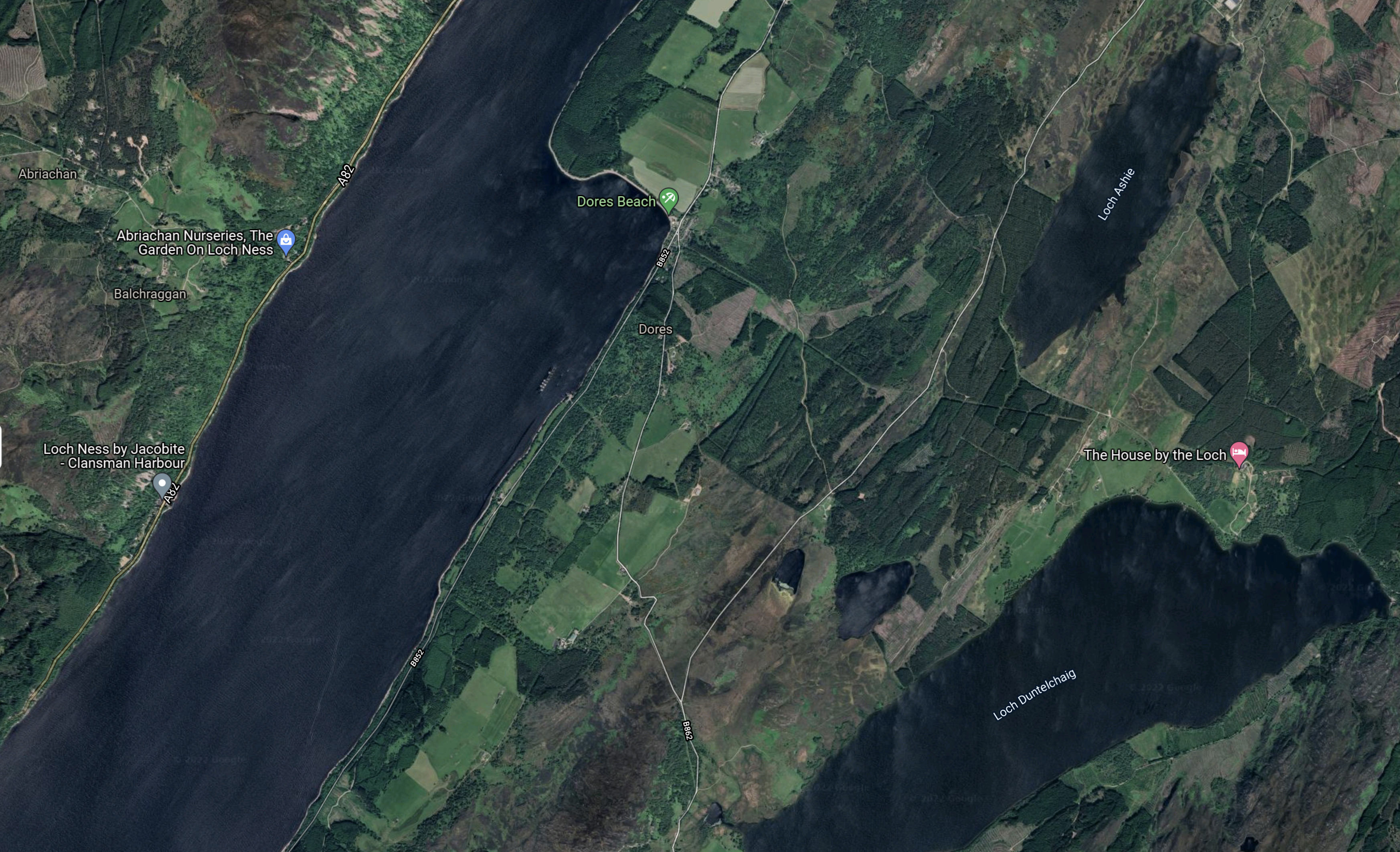
Note.
- Loch Ness is in the West.
- Loch Ashie is in the North.
- Loch Duntelchaig is in the East.
This second Google Map shows the area between Lochs Ness, Duntelchaig and Ashie in more detail.
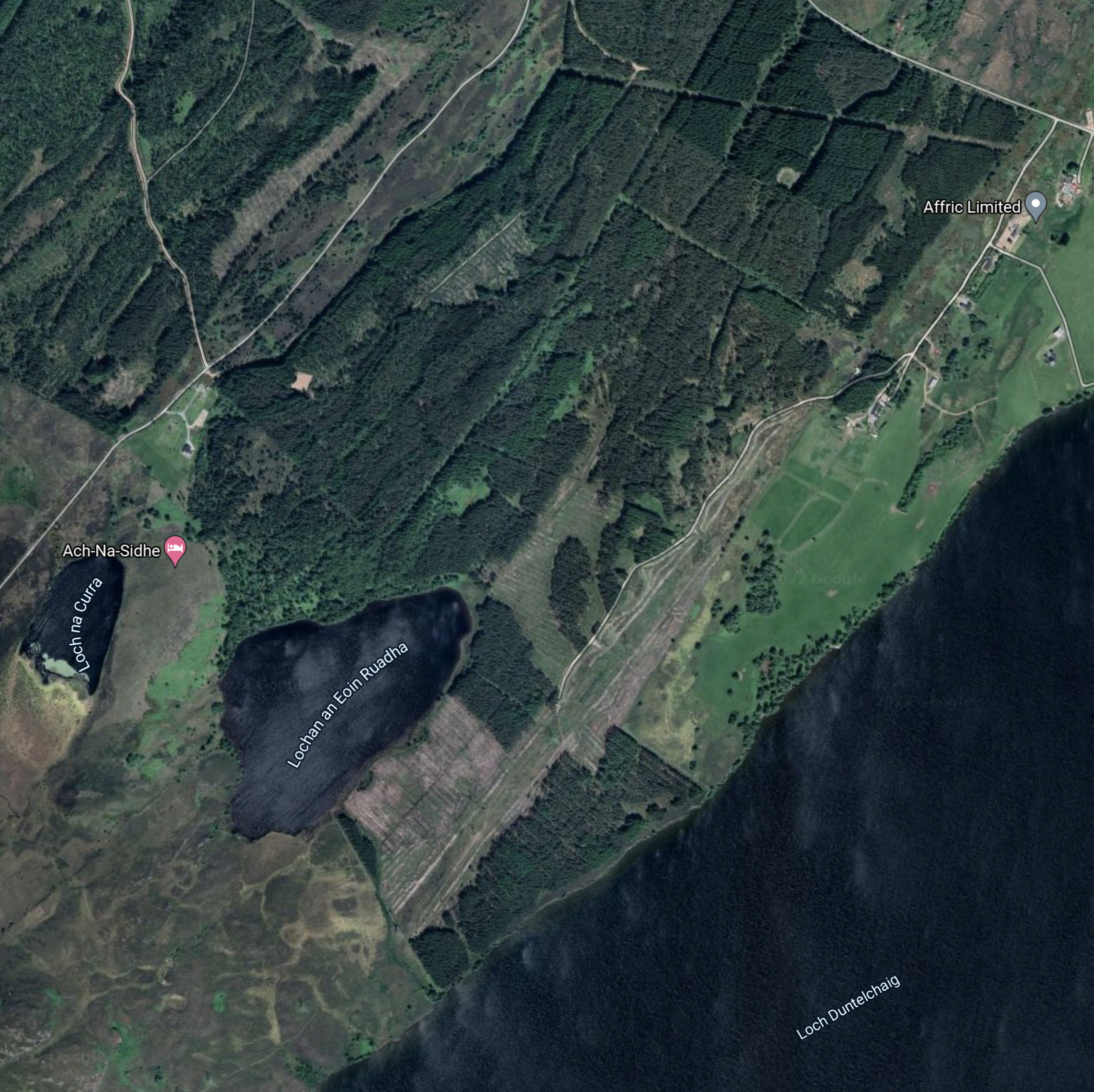
Loch na Curra and Lochan an Eoin Ruadha are now named and can be picked out in the previous map.
It looks like there will be a lot of heavy construction works to create the head pond.
Conclusion
This scheme has the output of a large gas-fired power station for just over six hours.
The finances must add up, as no-one would back a scheme like this if they didn’t get an adequate return on their money.
ILI Group To Develop 1.5GW Pumped Storage Hydro Project
The title of this post, is the same as that of this article on Solar Power Portal.
These are the first two paragraphs.
Clean energy developer ILI Group has begun the initial planning phase for a new pumped storage hydro project in Scotland.
The Balliemeanoch project at Loch Awe, Dalmally in Argyll and Bute will be able to supply 1.5GW of power for up to 30 hours. It is the third and largest of ILI’s pumped storage hydro projects, with the other two being Red John at Loch Ness and Corrievarkie at Loch Ericht.
It is a big scheme at 45 GWh.
The ILI Group has an extensive web site, that is worth a read.
- This page describes pumped storage.
- This long document from the company is part of their submission to the Government.
The company seems to be going in the right direction.
This Google Map shows the Loch Awe area.
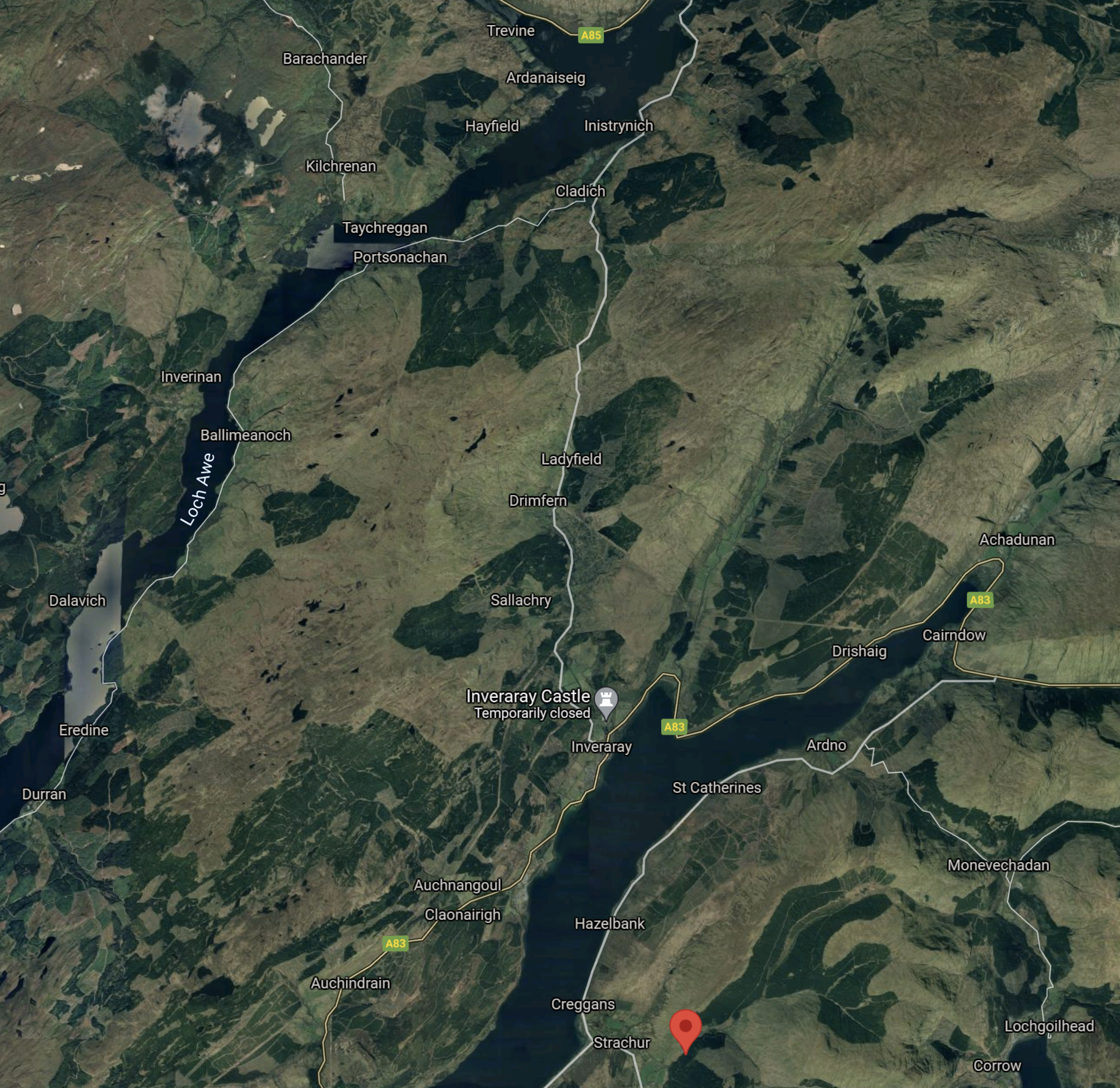
Note.
- Loch Awe is in the North West corner of the map.
- Loch Fyne is the large loch in the South East corner of the map.
- Balliemeanoch is marked by the red arrow.
I am a bit puzzled as to the layout of the scheme.
But I have now noticed a Ballimeanoch close by Loch Awe.
This is a map of its location.
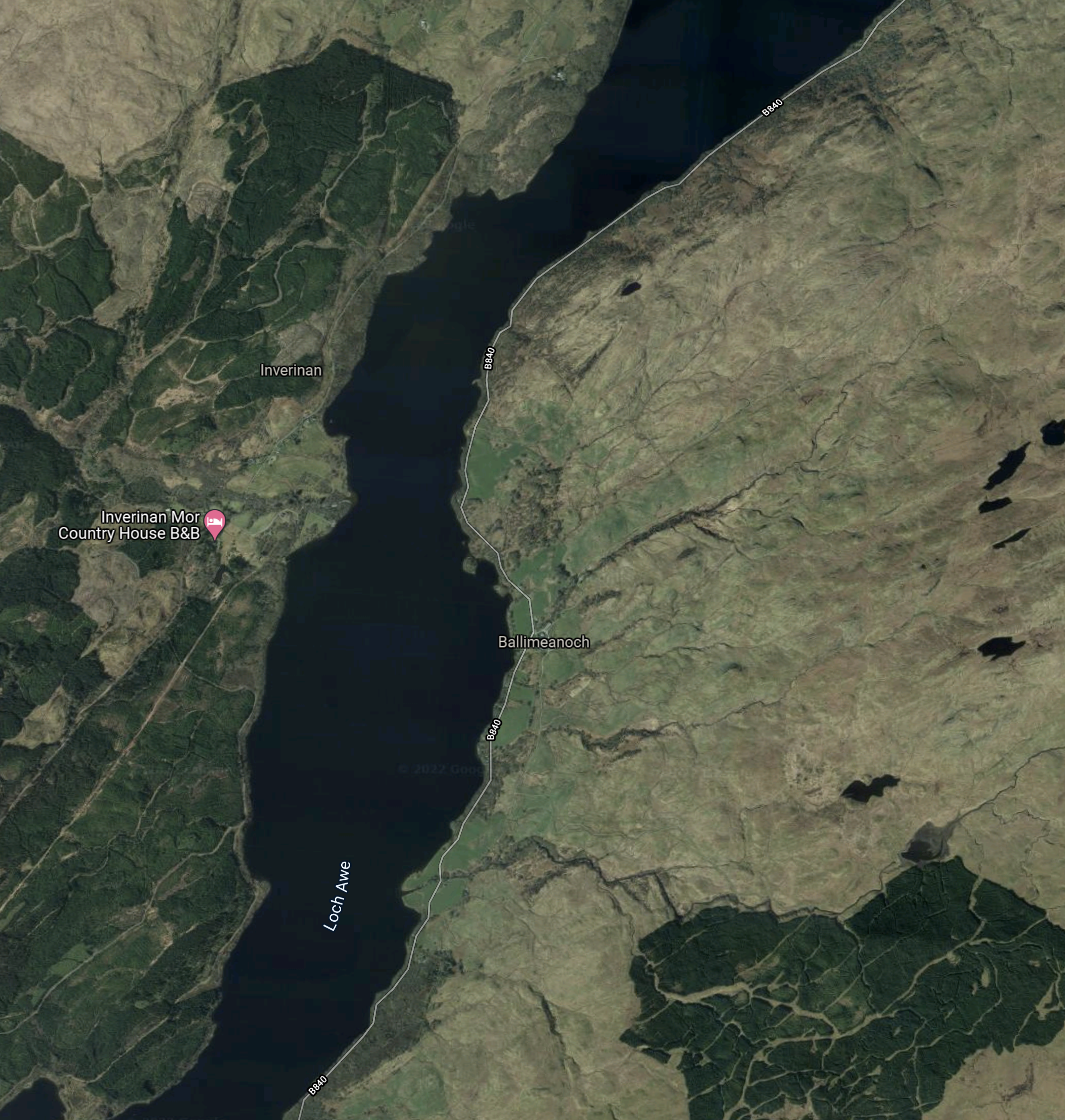
I suspect that is the correct location of the pumped storage scheme.
I shall be interested to see the layout of the full scheme.
SSE Renewables Launches 1.5GW Coire Glas Construction Tender
The title of this post, is the same as that of this article on renews.biz.
These are the first two paragraphs.
Hydro construction companies have been invited to submit tenders for construction of SSE Renewables’ proposed 1500MW pumped hydro storage scheme at Coire Glas, in Scotland.
Coire Glas, on the shores of Loch Lochy near Invergarry, would be the first large-scale pumped hydro storage scheme to be built in the United Kingdom for more than 30 years.
There appears to be global interest and six shortlisted bidders.
- The ANDRITZ HYDRO and Voith Hydro partnership
- The Bechtel, Acciona Construcción and Webuild S.p.A consortium
- The BAM Nuttall, Eiffage Génie Civil and Marti Tunnel consortium
- The Dragados and BeMo Tunnelling UK consortium
- GE Hydro France
- STRABAG UK
Bidders like these probably wouldn’t bother to get involved unless they knew that funding of the project was in place and it was pretty certain that the project will be constructed.
In World’s Largest Wind Farm Attracts Huge Backing From Insurance Giant, I talk about how Aviva are funding the Hornsea wind farm.
I believe, that insurance and pension companies like abrdn, Aviva and L & G could find a way of financing a scheme like Coire Glas.
Conclusion
It looks to me, that it’s almost certain that Scotland will get a 1.5GW/30 GWh pumped-storage system at Coire Glas.
Coire Glas could supply slightly more power than Sizewell B nuclear power station for twenty hours.
Now that’s what I call backup!
Expansion Plan To Take World’s Biggest Battery Storage Project To 3GWh Capacity
The title of this post, is the same as that of this article on Energy Storage News.
These are the first two paragraphs.
Plans to nearly double the output and capacity of the world’s biggest battery energy storage system (BESS) project to date have been announced by its owner, Vistra Energy.
The Texas-headquartered integrated utility and power generation company said it wants to add another 350MW/1,400MWh BESS to the Moss Landing Energy Storage Facility in California’s Monterey Bay.
The project is based at the Moss Landing Power Plant, which was once the largest power plant in the state of California, with a generation capacity of 2560 MW.
There appear to be three phases.
- Phase 1 is 300MW/1,200MWh and went online at the end of 2020
- Phase 2 is 100MW/400MWh and went online in August 2021.
- Phase 3 will be 350MW/1,400MWh.
This gives a maximum power output of 750 MW and prospective total capacity of 3 GWh. At full power, the battery could supply 750 MW for four hours.
For comparison, the two Scottish batteries I talked about in Amp Wins Consent For 800MW Scots Battery Complex, have a combined output of 800 MW and a total capacity of 1600 MWh, which would give a full power run of two hours.
Could the difference be that Scotland has 9.3 GW of installed windpower, whereas the much larger California has only 6 GW?
Both Scotland and California also have some pumped storage power stations.
- Drax Group who own the 7.1 GWh Cruachan power station, plan to increase its generating capacity from 440MW to 1040MW.
- California has two larger stations at Castaic and Helms.
- After writing about the Western HVDC Link in Amp Wins Consent For 800MW Scots Battery Complex, I wonder if when the wind is blowing in Scotland and it isn’t in Wales, that electricity can be exported from Scotland to Wales for storage.
This all shows the complex integrated nature of electricity networks.
Amp Wins Consent For 800MW Scots Battery Complex
The title of this post, is the same as that of this article on renews.biz.
These are the first two paragraphs.
Canadian storage player Amp Energy has revealed that its 800MW battery portfolio in Scotland has secured planning consent.
The portfolio is due to be operational in April 2024 and will comprise two 400MW battery facilities, each providing 800 megawatt-hours of energy storage capacity.
Some other points from the article.
- The two facilities will be located at Hunterston and Kincardine.
- They will be the two largest grid-connected battery storage facilities in Europe.
- The two batteries will be optimised by Amp Energy‘s proprietary software.
This Google Map shows the Hunterston area.
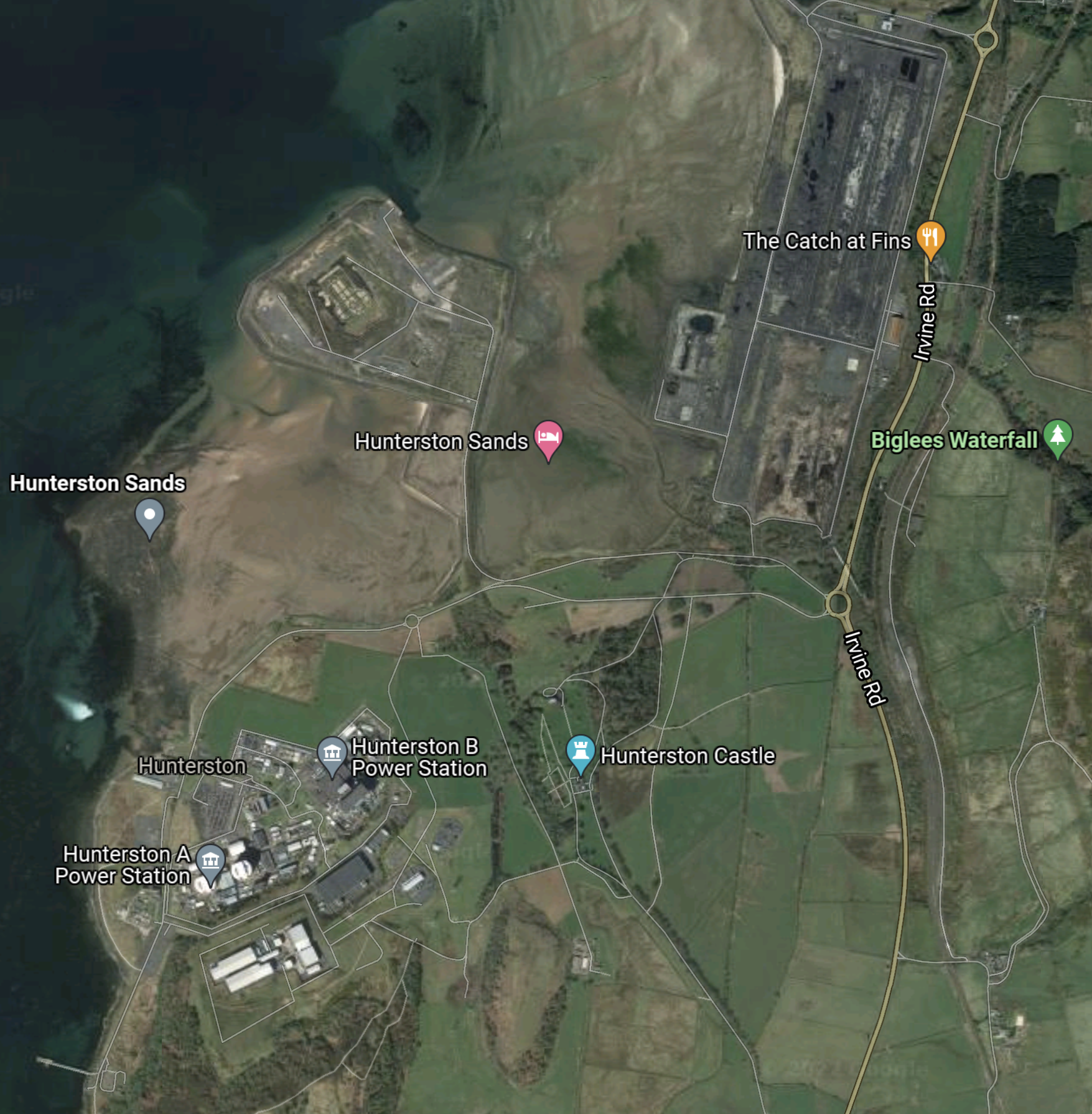
Note.
- The Hunterston A and Hunterston B nuclear power stations, which are both being decommissioned.
- Hunterston B only shut down on the 7th of January, this year.
- There is also a large brownfield site in the North-East corner of the map.
This second Google Map shows the South-East corner of the nuclear power station site.
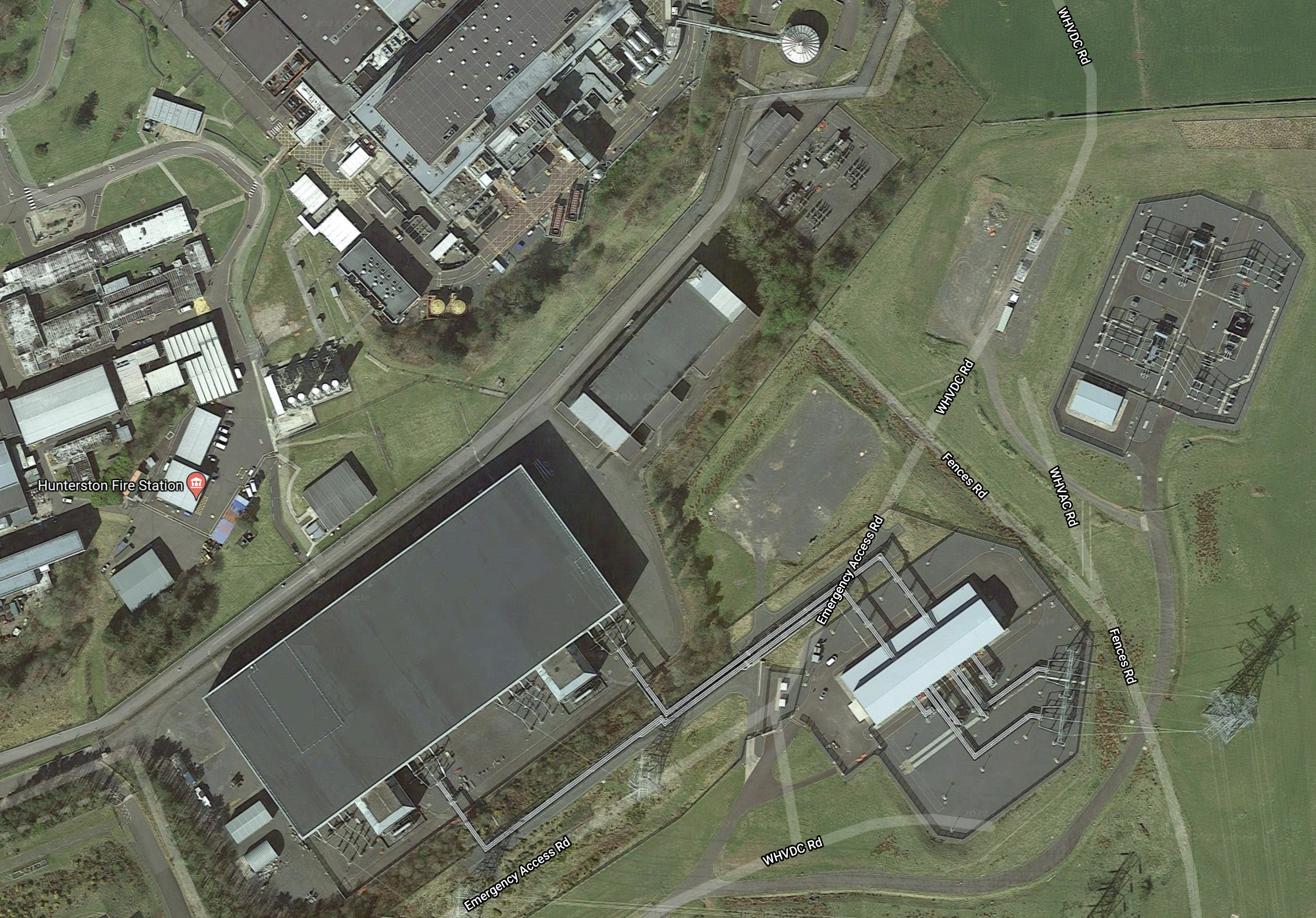
It’s certainly got a good grid connection.
But then it had to support.
- The Hunterston A nuclear power station rated at 360 MW.
- The Hunterston B nuclear power station rated at 1.2 GW.
- The Western HVDC Link, which is an interconnector to Connah’s Quay in North Wales, that is rated at 2.2 GW.
I’m sure that National Grid has a suitable socket for a 400 MW battery.
This Google Map shows the Kincardine area.
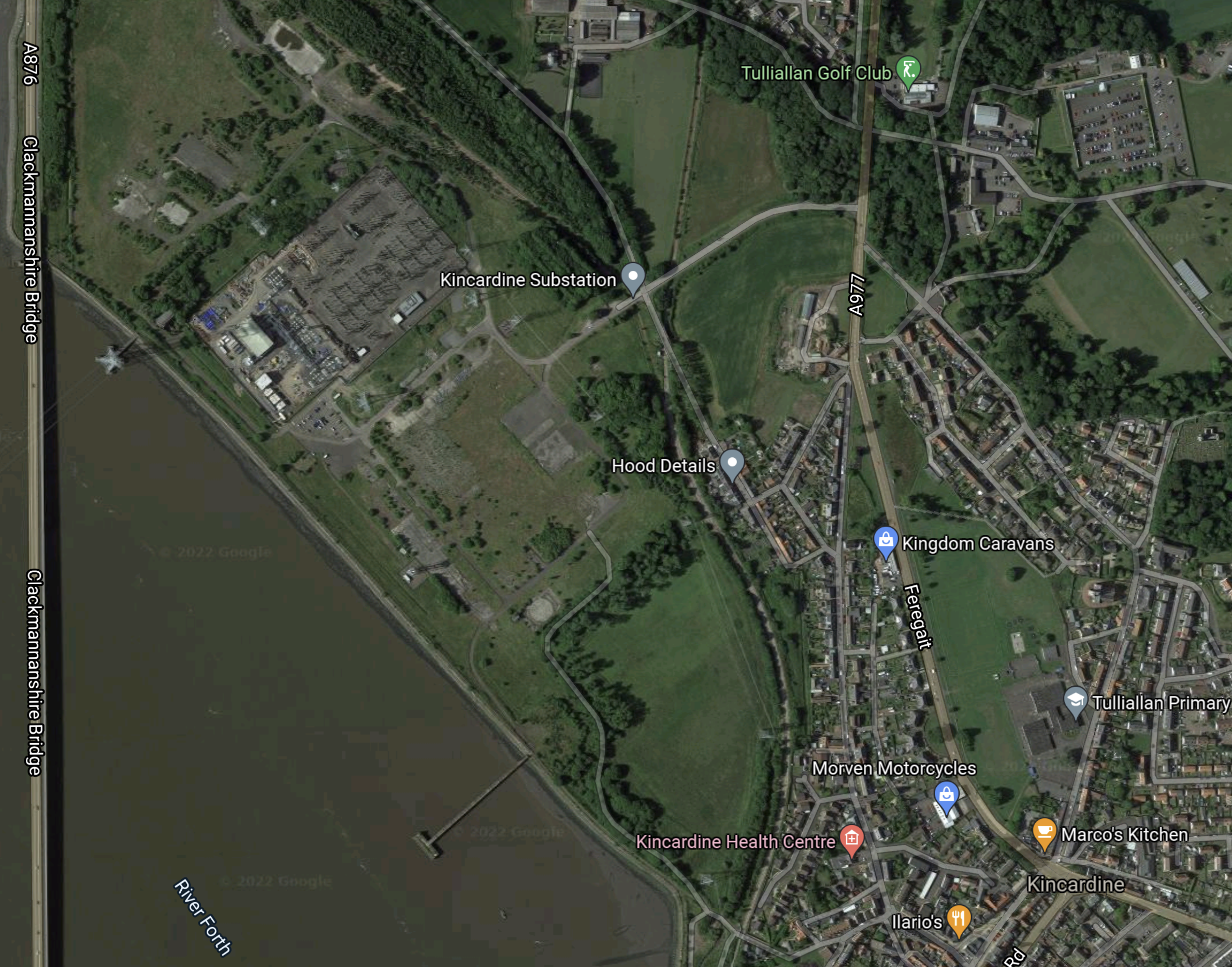
Note.
- The Clackmannanshire Bridge down the Western side of the map.
- The Kincardine Substation to the East of the bridge close to the shore of the River Forth.
- The 760 MW Kincardine power station used to be by the substation, but was demolished by 2001.
As at Hunterston, I’m sure that National Grid could find a suitable socket for a 400 MW battery.
Amp Energy’s Philosophy
As a trained Control Engineer I like it.
- Find a well-connected site, that can handle upwards of 400 MW in and out.
- Put in a 800 MWh battery, that can handle 400 MW in and out.
- Optimise the battery, so that it stores and supplies electricity as appropriate.
- Throw in a bit of artificial intelligence.
Old power station sites would seem an ideal place to site a battery. Especially, as many demolished coal, gas and nuclear stations are around 400-600 MW.
It should be noted that Highview Power are building a 50 MW/400 MWh CRYOBattery on an old coal-fired power station site in Vermont.
The Western HVDC Link
I mentioned earlier that the Northern end of the Western HVDC Link, is at Hunterston.
The Wikipedia entry for the Western HVDC Link, says this about the link.
The Western HVDC Link is a high-voltage direct current (HVDC) undersea electrical link in the United Kingdom, between Hunterston in Western Scotland and Flintshire Bridge (Connah’s Quay) in North Wales, routed to the west of the Isle of Man.[2] It has a transmission capacity of 2,250 MW and became fully operational in 2019.
The link is 262 miles long.
This Google Map shows the Connah’s Quay area in North Wales.
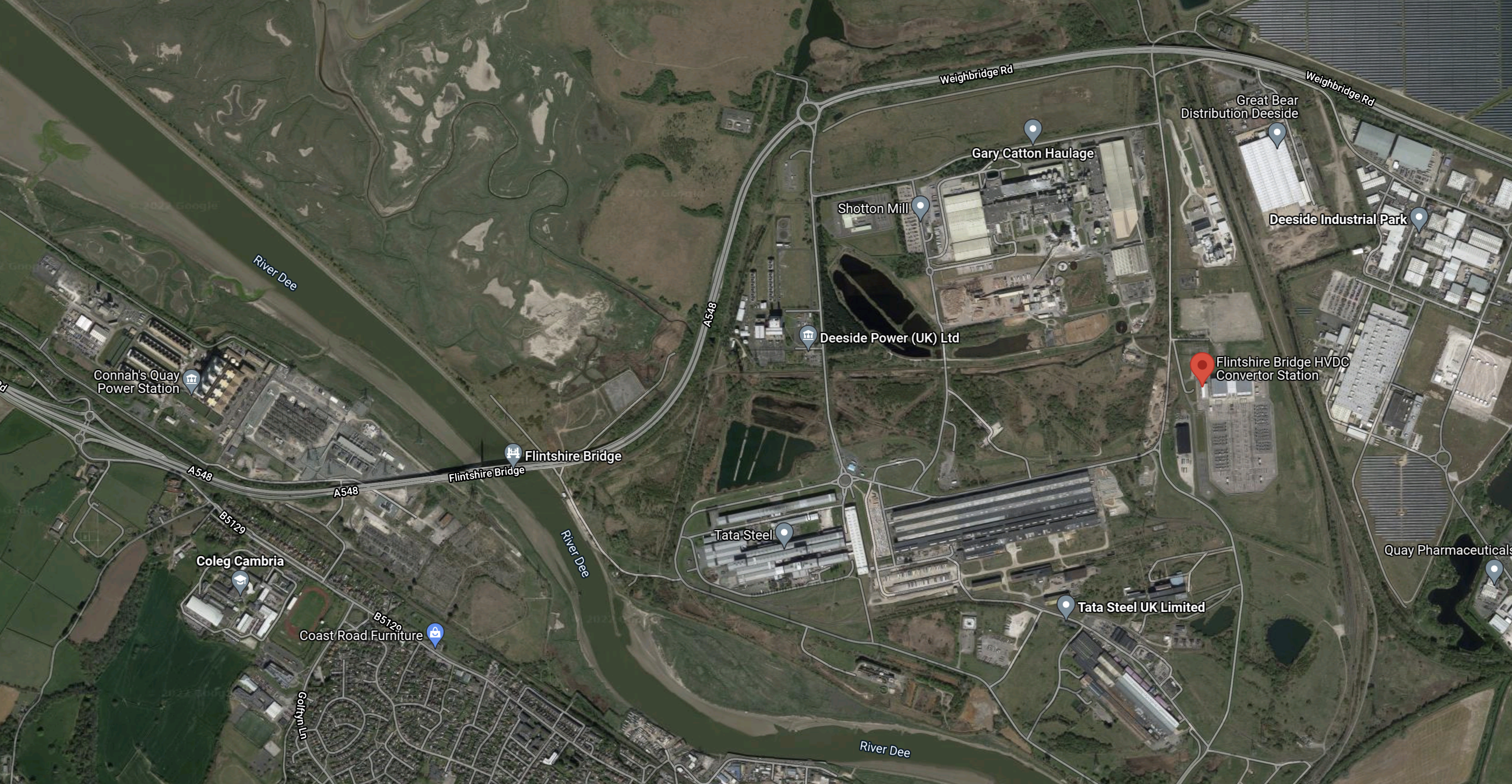
Note.
- The red arrow indicates the Flintshire Bridge HVDC converter station, which is the Southern end of the Western HVDC Link.
- The Borderlands Line between Liverpool and Chester, runs North-South to the East of the convertor station.
- To the East of the railway are two solar farms. The Northern one is Shotwick Solar Park, which at 72 MW is the largest solar farm in the UK.
- To the West of the converter station, just to the East of the A 548 road, is the 498 MW Deeside power station.
- Follow the A548 road to the West and over the River Dee, the road passes South of the 1420 MW Connah’s Quay Power station.
- The two power stations burn gas from Liverpool Bay.
- There are a lot of wind turbines along the North Wales Coast and Liverpool Bay.
The map also shows a lot of high electricity users like Tata Steel.
I can certainly see why the Western HVDC Link was built to connect Scotland and North Wales.
- There is a lot of renewable energy generation at both ends.
- There are heavy electricity users at both ends.
- The Scottish Central Belt is at the North.
- Greater Merseyside is at the South.
The Western HVDC Link is an electricity by-pass, that must have avoided expensive and controversial construction on land.
I wouldn’t be surprised to see another 400 MW/800 MWh battery at the Southern end.
Conclusion
The Canadians seem to have bagged two of the best battery sites in Europe.
- Both sites would appear to be able to handle 400 MW, based on past capabilities.
- There is lots of space and extra and/or bigger batteries can probably be connected.
- Scotland is developing several GW of wind power.
I can see Amp Energy building a series of these 400 MW sites in the UK and around Europe.
This is the big news of the day!
 The Anonymous Widower