Mayors Head To Parliament With Plan For Northern Arc To Deliver Green Growth
The title of this post, is the same as that of this news item from Liverpool City Region.
These four bullet points act as sub-headings.
- Steve Rotheram and Andy Burnham take case for backing Northern Arc to Treasury – as new data shows North can drive green growth and unlock £90bn for UK economy
- Liverpool City Region and Greater Manchester Mayors will meet with ministers and MPs today, and Andy Burnham will give evidence at Business and Trade Select Committee on the UK’s industrial strategy
- Economic analysis shows that investing in transport infrastructure and a pipeline of projects across the North would benefit the whole UK economy, improving living standards and closing the North-South productivity gap
- Mayors will also address Innovation Zero World Congress in London, showing how city-regions can create high quality jobs by pioneering low-carbon innovation
These two paragraphs add a bit more detail.
The right investment would create a growth corridor, stretching from the Mersey to the Pennines and connecting into West and South Yorkshire, underpinned by transport networks that would include a new railway linking Liverpool and Manchester.
The Northern Arc area spans regions with close economic ties to Lancashire, North Wales, Hull and the North East. With international connections through the Port of Liverpool and Manchester Airport, it’s well positioned for global trade.
If I have a problem with the mayors’ thoughts, the plan outlined in the news item is rather Liverpool/Manchester-based with Hull being the only city outside that area getting a mention. Do Blackburn, Blackpool, Bradford, Burnley, Doncaster, Huddersfield, Leeds, Preston, Rotherham, Scunthorpe, Stockport, Wigan and York exist?
For instance you would expert a report from Liverpool and Manchester’s Mayors to call for a new railway between their two cities. And of course they do!
The current TransPennine Lines has two main routes across the Pennines between East and West.
If ever there was a rail route, designed by Topsy, it is the North TransPennine Route.
- There are six separate services, if you ignore Newcastle and Edinburgh Waverley, which is a shuttle to fill a gap in rail services.
- In the West trains terminate at Huddersfield, Liverpool Lime Street, Manchester Airport, Manchester Piccadilly and Manchester Victoria
- In the East trains terminate at Edinburgh Waverley, Hull, Leeds, Newcastle, Redcar Central, Scarborough and York.
- Terminals like Huddersfield, Hull, Liverpool Lime Street, Newcastle and York are some of the best terminal stations in the UK, but others are very second rate.
I suspect, this North TransPennine Route structure brought about the demise of TransPennine Express.
The South TransPennine Route on the other hand, although it was built by several different railway companies, they were all intent on the same thing. An East-West route across the Pennines through Doncaster, Manchester and Sheffield.
- The Western terminal is Liverpool Lime Street, which in my view is the finest grand terminus in the UK, in terms of architecture, onward connections and operation. It is also the oldest still-operating grand terminus mainline station in the world, in that it dates from 1836.
- The Eastern terminal is Cleethorpes, which is an efficient four-platform recently-refurbished station, that is within a hundred metres of some of the best gluten-free fish and chips, I’ve ever tasted on the pier.
- Intermediate stations include Liverpool South Parkway, Warrington Central, Birchwood, Irlam, Urmston, Manchester Oxford Road, Manchester Piccadilly, Stockport, Sheffield, Meadowhall, Doncaster, Scunthorpe, Barnetby, Habrough and Grimsby Town.
- Liverpool South Parkway has a bus connection to Liverpool Airport
- Liverpool Lime Street, Manchester Oxford Road, Manchester Piccadilly, Stockport, Sheffield and Doncaster are stations with comprehensive onward connections.
- The route is electrified between Liverpool Lime Street and Manchester Piccadilly and at Doncaster.Liverpool Lime Street and Cleethorpes is 148.2 miles
- Hazel Grove and Doncaster is without electrification and is 52.3 miles long.
- Cleethorpes and Doncaster is without electrification and is 52.1 miles long.
- I believe that Hitachi, Siemens and Stadler could supply battery-electric trains, that would be able to work the route, with the addition of a short length of overhead wires at Cleethorpes, so that trains could return to Doncaster.
- Trains go straight through all the intermediate stations, so there are no time-wasting reverses.
- Journey time is just over three and a half hours.
I believe that a mouse-quiet battery-electric train would pack in the punters, if only for the novelty.
But.
A battery-electric train would probably knock perhaps thirty minutes off the journey.
The timetable would be an hourly train at all stations.
The service would pass the mother’s birthday test, in that you could easily visit any station from any other and buy your mother lunch before returning on a convenient train.
There are connections to and from London at Liverpool Lime Street, Manchester Piccadilly, Stockport, Sheffield and Doncaster.
It could be a very useful East-West train service.
Plans To Turn Former Station Waiting Room Into Pub
The title of this post, is the same as that of this article on the BBC.
This is the sub-heading.
Plans to turn a Grade II listed railway station’s former waiting room back into a pub have been submitted.
These are the first three paragraphs of the article.
Network Rail wants to refurbish the room at Carlisle’s station, which is now a storage room and kitchen.
The first class waiting room, which was until recently used as a pub, was built by architect William Tite in 1880 as an extension to his original 1847 neo-Tudor station designs.
The plans are part of the £27m Carlisle Gateway project to turn the city’s station into a “national interchange” transport hub, funded by central government, Cumberland Council and Network Rail.
I very much like this idea.
Carlisle could be turned into a national interchange, that was almost unique in the world.
- Rail services across the Borderlands could be improved, to the cities of Glasgow, Lancaster, Leeds, Newcastle and York.
- Rail services could be developed, so visitors could explore the Lake District by rail.
- The Eden Project at Morecambe would be a rail-accessible attraction, that was just an hour away from Carlisle.
- The Borders Railway from Edinburgh could be extended to Carlisle.
- All services would be zero-carbon, with power coming from either batteries or hydrogen.
- Services would be tourism-friendly, with space for bicycles, large panoramic windows and high-class catering.
Current times between London and Carlisle could be reduced to under three-and-a-half hours, with reductions of up to an hour, as High Speed Two is eventually delivered.
An Advance Single From London To York For £32.90 Bought An Hour Before The Train Left
I went to York and Manchester yesterday.
I had been planning to do this trip for a week or so, but as I have lots of other things to do, I didn’t want to decide on a date.
So on Monday, I went to King’s Cross and investigated how much a London to York single ticket would cost.
I was surprised to find, that if I bought it last minute from a ticket machine with a Senior Railcard, that travelling about eleven in the morning I could get a ticket for £55 on the 11:06, which is a service that terminates at York, but is a few minutes slower.
Everything was clear for a trip yesterday and just after ten, I turned up at King’s Cross.
The machine offered me tickets at £81.90 on the 10:30 and 11:00 services, but I was able to get a ticket for £32.90 on the 11:06.
I was also able to ask for and get a forward-facing window seat with a table.
It looks like LNER are trying to sell as many seats as possible and they have developed, an algorithm that does this.
If I look at buying a ticket for today on the 11:06 on the Internet, I’m offered the following prices.
- Advance Single – £32.90
- Super Off-Peak Single – £81.90
- Anytime Single – £94.35
There is even a First Class Advance Single at £45.90.
Conclusion
It pays to do your research.
It looks like a one-way journey by an electric car would take four hours and cost around £20.
London To Edinburgh On Lumo
Yesterday, I took the 10:45 Lumo service from King’s Cross to Edinburgh.
I took some pictures on the way.
I have split them into sepate topics.
Lumo’s Class 803 Train Arrives
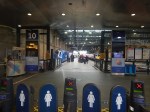

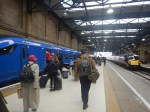
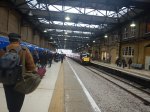
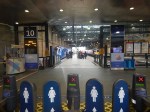
Note.
- The train is in Platform 10 in the old suburban station.
- This has now been reduced to just two platforms.
- In the other platform is a Grand Central service to Bradford Interchange station.
At least it appears, that there could be space to reinstate a third platform, if it should prove necessary.
Seating On Lumo





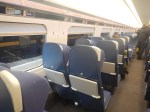

Note.
- I didn’t get a seat with a proper window.
- The seat-back table is generously-sized.
- There is a light over the table.
- The luggage racks were well used.
- There is more than normal leg-room. My neighbour, who was taller than my 1.70 metres, also liked the leg-room.
Both of us, thought the seats were more comfortable than LNER.
I have a spine that curves outwards at the bottom and it often objects to train and car seats. But after four-and-a-half hours on Lumo, it wasn’t protesting.
York to Church Fenton Improvement Scheme
When the York To Church Fenton Improvement Scheme and the closely related Huddersfield To Westtown (Dewsbury) Upgrade are completed, the TransPennine route between Huddersfield and York will be fully-electrified.
These pictures show the electrification is underway.
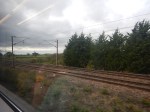
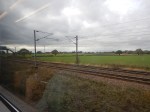



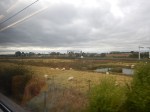

York to Huddersfield will be over forty miles of electrified line, with a remaining gap of just eighteen miles to the electrification being installed between Stalybridge and Manchester Victoria.
Work At Reston Station
Reston station is being built North of Berwick-on-Tweed. I took these pictures as we passed through.

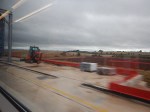
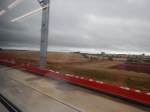

I describe the station in a post called A New Reston Station.
Arrival In Edinburgh
I took these pictures when we arrived in Edinburgh.
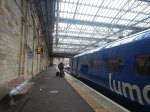

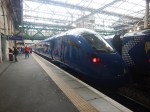
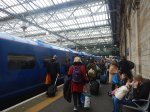
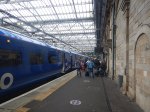

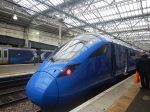
Note Edinburgh is not short of platforms that can take five- and ten-car trains.
These are a few other thoughts about the journey.
Non-Stop Between King’s Cross And Newcastle
It seemed to me, that a lot of passengers left the train at Newcastle.
- Times between King’s Cross And Newcastle are comparable betyween LNER and Lumo.
- Lumo is non-stop until Newcastle.
- Lumo is probably more affordable.
I can see Lumo picking up a lot of business on this leg.
Football At Newcastle
I have come across several Newcastle United season ticket holders in London.
Looking at Lumo’s full timetable, there are these two trains on a Saturday.
- A train leaves King’s Cross at 10:25 and arrives in Newcastle at 13:25.
- A train leaves Newcastle at 19:35 and arrives in King’s Cross at 22:29.
These could be ideal to see the match and get back to London.
Food
The full food service isn’t in operation yet, but we the trolley did come through twice.
Passenger Loading
Most seats were taken, as we left King’s Cross, but due to high number, who left at Newcastle, there were a few gaps as we ran between Newcastle and Edinburgh.
But then this is a shorter leg and perhaps travellers are more likely to drive.
I suspect that Lumo can’t wait to build up their service to the full five trains per day, as it does look like the demand is there.
Morpeth Station
There wasn’t many boarders and leavers at Morpeth station, but as services build up and travellers realise the system is there, will business increase?
Conclusion
I shall take another trip in the New Year, when the full service is implemented.
Northern Cities And COVID-19
If you look at the official Government statistics for the total number of cases of COVID-19, as of May 3rd, the number of cases in the two major cities in the North West as follows.
- Leeds – 1463 out of a city population of 789,194 (0.18%) and a metro population of 2,638,127 (0.05%)
- Liverpool – 1454 out of a city population of 494,814 (0.29%) and a metro population of 2,241,000 (0.06%)
- Manchester – 1154 out of a city population of 547,627 (0.21%) and a metro population of 3,748,274 (0.03%)
- Newcastle – 939 out of a city population of 300,196 (0.31%) and a metro population of 1,650,000 (0.06%)
- Nottingham – 537 out of a city population of 321,500 (0.17%) and a metro population of 1,610,000 (0.03%)
- Sheffield – 2191 out of a city population of 582,506 (0.38%) and a metro population of 1,569,000 (0.14%)
Note.
- All populations come from Wikipedia.
- Why is Liverpool 40% worse than Manchester?
- Why is Sheffield the worst?
I will add a few smaller towns andcities.
- Blackpool – 465 out of an urban population of 139,720 (0.33%)
- Caldervale – 252 out of an urban population of 200,100 (0.13%)
- Hull – 469 out of a city population of 260,645 (0.18%)
- Middlesbrough – 566 out of an urban population of 174,700 (0.32%)
- Stoke-on-Trent – 509 out of a city population of 255,833 (0.20%)
- York – 315 out of a city population of 209,893 (0.15%)
I’d like to see full statistics plotted on a map or a scatter diagram.
The latter is a very powerful way to plot data and often they highlight data points that lie outside the underlying pattern of the data.
York-Beverley Line
Looking for possible privately-funded rail projects, I have come across the York-Beverley Line on Wikipedia.
This is an extract from the Wikipedia entry.
Following the Government’s plans to reinstate lines closed in the 1960s which was announced in November 2017, it has been proposed that the line could reopen as a result.
The line runs between Bootham Junction on the York-Scarborough Line and Beverley Junction on the Hull-Scarborough Line.
This diagram from Wikipedia shows the detailed route.
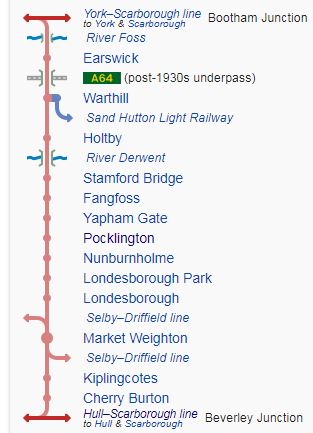
I only know the area as a visitor, but it would appear to be a valuable new connection.
York Station
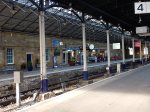
York station is a busy station as both the East Coast Main Line and Cross Country services pass through. It is also quite large with eleven platforms.


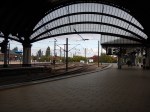
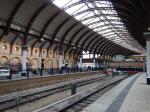
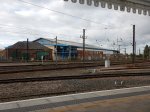
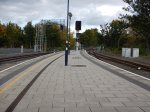
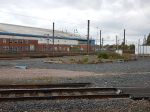
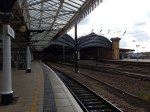
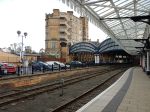
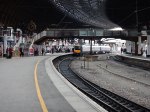
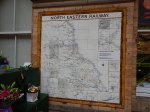
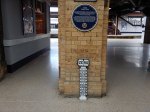
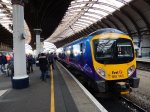

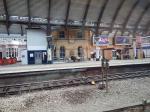
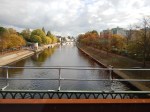

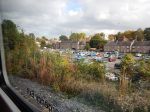
The pictures show how you can look out along the Scarborough Bridge and the bay platform 2, where trains from Scarborough can be turned back.
The last shot is the car park where the three mobile cranes were positioned to lift the bridge into place in Dancing With Cranes And A Bridge With Help From Lego.
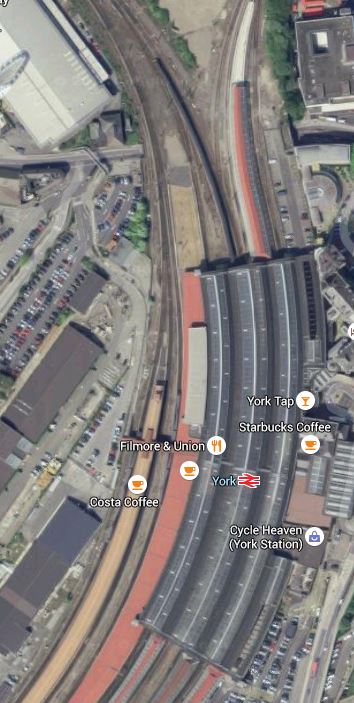
It is worth taking a look at this Google Map of the station.
York Station
Note the island platform poking out from under the roof at the top, with Platform 4 on the left and Bay Platform 2 on the right.
There is another simple Bay Platform 1 at the southern end, which serves the line to Hull.
Both platforms 1 and 2 could be electrified, if it was decided to run IPEMU trains to Hull and Scarborough respectively. I think that East Yorkshire services could be electrified in this manner using the power at York, Doncaster and Leeds, with perhaps some form of top-up at Hull and Scarborough.
Scarborough
I’d never been to Scarborough before so I took the opportunity to visit on my way from York to Hull.
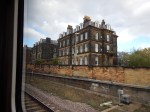
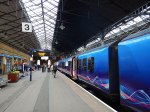

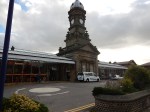
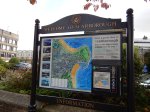
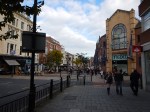
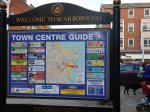
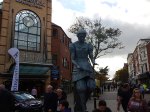
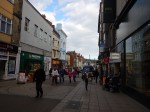
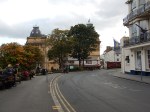


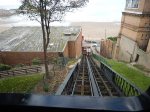
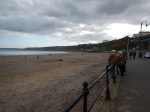
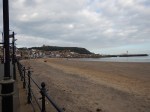
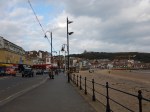
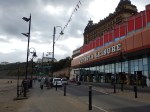
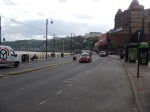
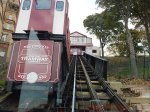
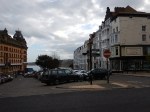


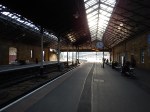
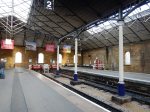
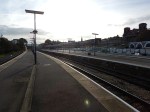

Looking back from a few days away, I think that Scarborough, would be a better place to stay than Hull.
I came to Scarborough station on one a Class 185 train and left in a Class 158 train, so I didn’t have to experience a Pacer. According to Wikipedia the Hull to Scarborough Line is usually worked by the very acceptable Class 158 trains, sometimes coupled to something else for more capacity. This is said.
Services are usually worked by Class 158 DMUs. Summer weekends see services operated by a Class 158 coupled to a Class 153 or extra Class 158 providing a 3/4-car unit for additional capacity. Sundays also see a variety of traction traversing the line to retain crew knowledge; this can include Class 153, Class 150, Class 142 and Class 144.
You do wonder how much traffic this route could generate if it was electrified and run by a new four-car electric train.
It would be very expensive to electrify, as until Hull is electrified, it would be a stand-alone system for about forty miles, that was a long way from any other electrification.
But if some means were to be provided to charge the trains at Scarborough and Hull, I suspect that IPEMUs could provide services between Scarborough and Hull and Scarborough and York with ease, given the easy nature of the lines.
This would also allow the TransPennine services from Scarborough to Manchester and Liverpool to be run by high-speed IPEMUs, which could bridge the electrifdication gap between Leeds and Manchester.
In an ideal world, a service should be provided between Scarborough and Whitby, which if there was an improved service around Scarborough would probably be needed to serve the tourism industry.
That area of East Yorkshire needs to be developed with respect to the leisure and tourism opportunities it offers.
Dancing With Cranes And A Bridge With Help From Lego
I just had to put a link to this article on Rail Engineer, which is entitled Scarborough Bridge – Monte Carlo Or Bust.
It describes how the bridge that takes the York Scarborough railway line over the River Ouse in the medieval heart of York, was replaced over the half-term weekend in February, at a cost of six million pounds. This Google Earth image shows the centre of York.

York
The bridge is the one at the left of the image, with the station below it.
It was choreographed to an amazing degree and used three enormous mobile cranes squeezed into the car park by the bridge on the north bank of the river. Luckily the wind and the weather were kind and the project was completed on time. Perhaps, the most strange aspect of the project is told in this paragraph.
And then we should take our hats off to team member Eamon McAuley who literally built the bridge single-handed…albeit in Lego. It was remarkably detailed – including the track layout and little orange men with chainsaws – and could be deconstructed and rebuilt to follow the lifting sequence. Sitting as a centrepiece in the conference room, it proved more useful than a PowerPoint when explaining the challenges to visitors and stakeholders.
Anybody who said engineering isn’t fun, should hang their head in shame.
 The Anonymous Widower