Merseyrail Grand National Journeys Exceed 105,000
The title of this post, is the same as that of this article on the Liverpool Business News.
This is the first paragraph.
Train operator Merseyrail records more 105,000 passenger journeys made by racegoers during the three-day Grand National festival – and it gave away 4,000 pairs of flip-flops.
These are some points from the rest of the article.
- Many were carried on the new 777 Class trains.
- Merseyrail increased the number of trains during the three days and, at times, was running a seven-and-a-half-minute frequency.
- There was live music and entertainment for passengers at Aintree station.
- £4,200 was raised by charitable collections at the station.
It looks like a lot of people had a good time.
It was probably all good practice for Eurovision.
London Overground: Design Work For West London Orbital Route Begins
The title of this post, is the same as that as this article on the BBC.
This is the sub-heading.
Plans for a new London Overground link in west London are progressing, London’s mayor Sadiq Khan has said.
These paragraphs outline what will happen.
Engineering consultants who worked on the Elizabeth line have been chosen for the West London Orbital service.
“This engineering design will help determine the cost of delivering the scheme, which is currently unfunded,” Transport for London (TfL) said.
It hopes the scheme, which would connect Hounslow with Hendon and West Hampstead, could start next decade.
My feeling, is that they should get on with it.
- There would be no major construction like tunnels.
- Four stations would need to be built.
- I doubt there will be any demolition.
- It wouldn’t need more electrification, as the route is electrified at both ends and battery-electric trains could be used.
- It would create more connections to Old Oak Common for High Speed Two.
But if it does for North West London, what the Overground has done for North and East London, it will be very much worth it.
These are a few thoughts and observations.
The Route
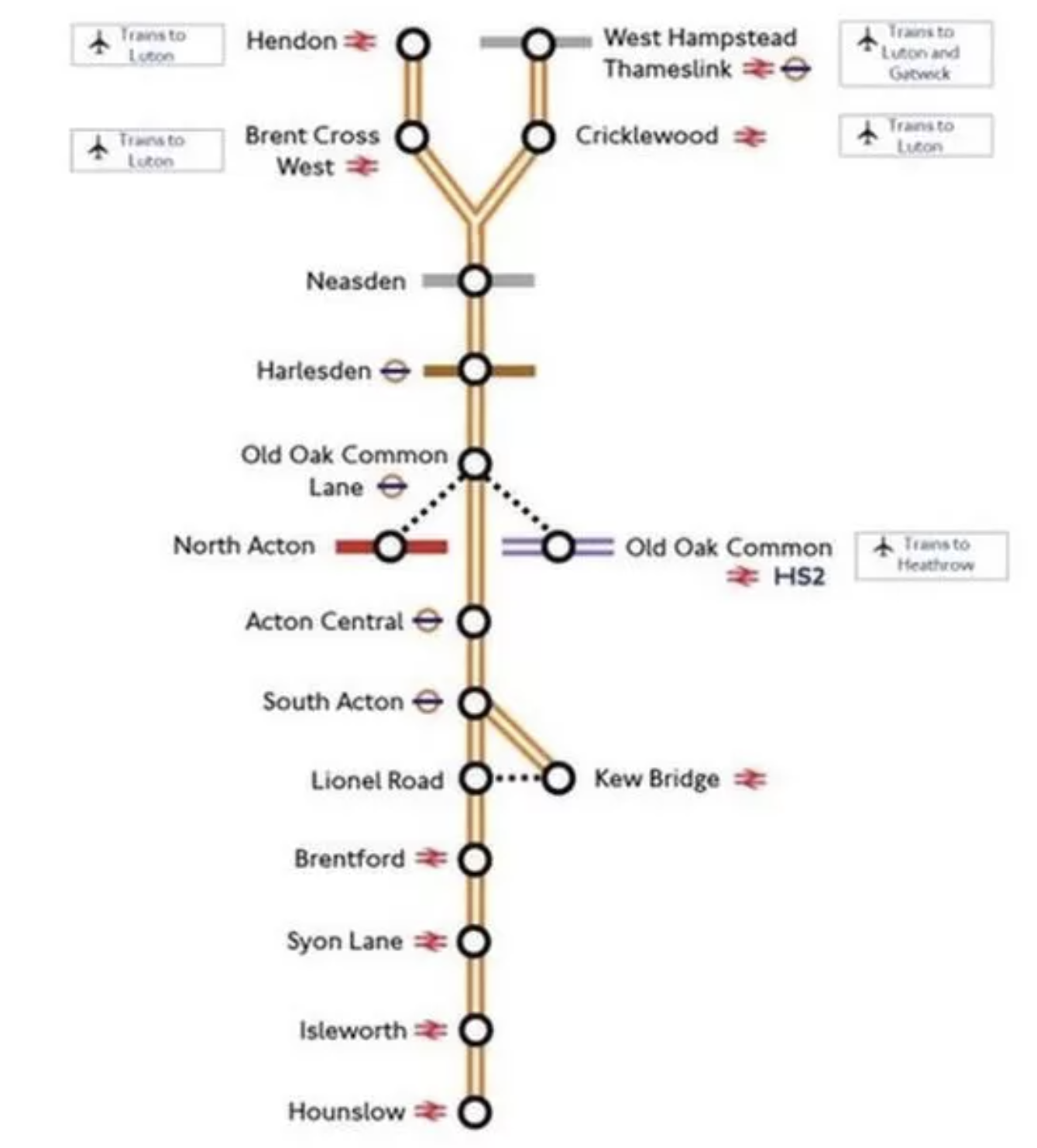
This is a schematic of the route from the BBC article.
Note.
- Services will be between West Hampstead Thameslink and Hounslow stations and between Hendon and Kew Bridge stations.
- If services follow the London Overground frequency, they will be four trains per hour (tph).
- The new stations are Neasden, Harlesden, Old Oak Common Lane and Lionel Road.
- Acton Central, Brentford, South Acton, Syon Lane and West Hampstead Thameslink are step-free and Isleworth is on the way.
- The fully step-free Brent Cross West station will open soon.
- Lionel Road station will serve the new Brentford stadium.
- Old Oak Common Lane will serve High Speed Two, the Elizabeth Line and the North London Line.
They look to be a useful set of stations.
Kew Bridge Station
There’s been a lot of development at Kew Bridge station, since I was last there.


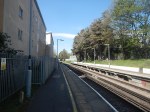

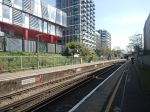
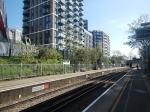


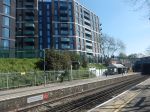






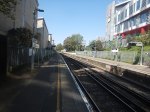
There are lots of flats and Brentford’s new stadium.
I suspect all the stations between Kew Bridge and Hounslow will see similar levels of development.
Electrification Issues On The Dudding Hill Line
The Dudding Hill Line forms the Northern section of the route between the Midland Main Line and the North London Line at Acton Wells Junction.
This map from OpenRailwayMap shows the junction between the Dudding Hill and Midland Main Lines.
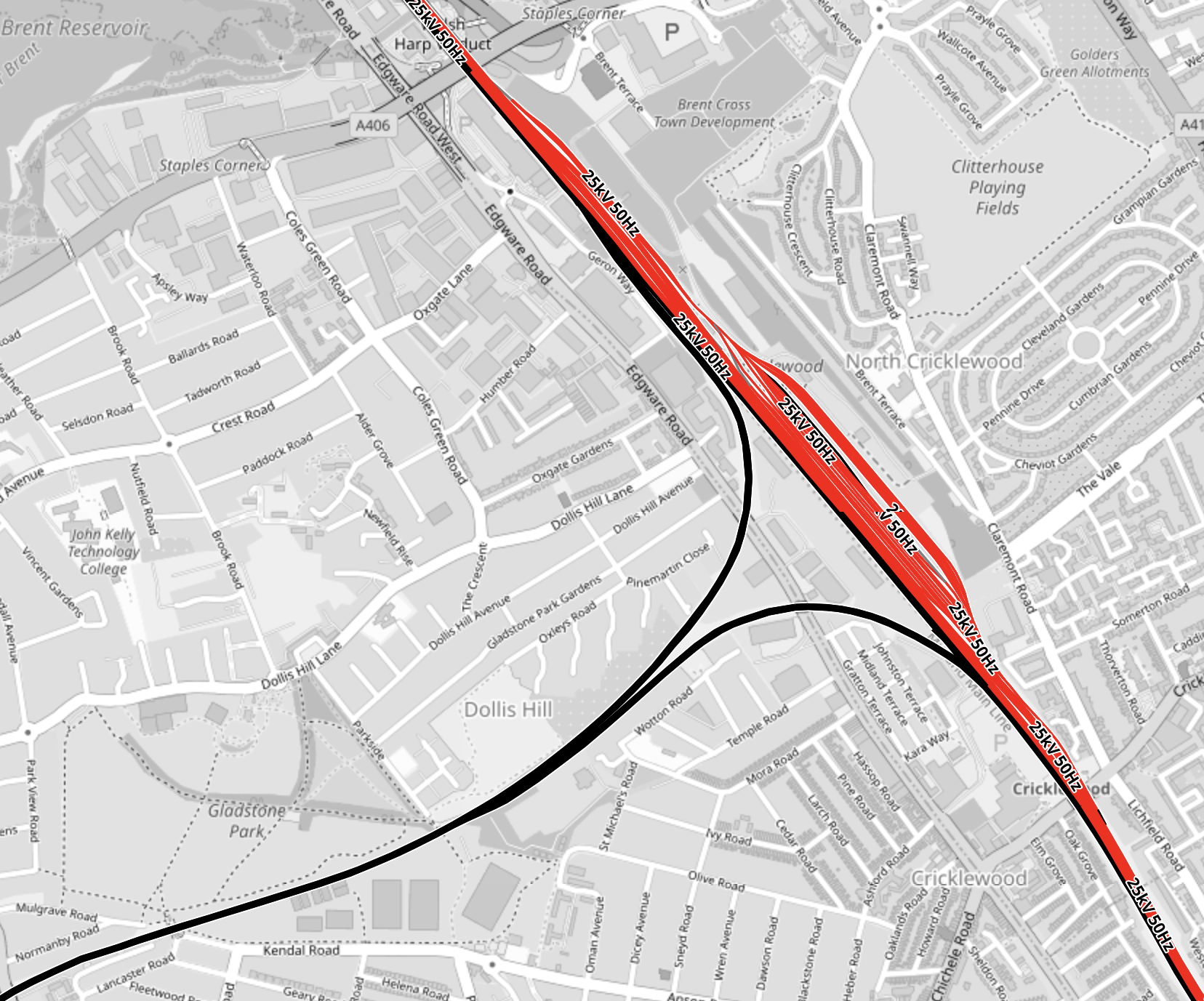
Note.
- The Midland Main Line is shown in red as it is electrified with 25 KVAC overhead wires.
- The Dudding Hill Line is shown in black, as it isn’t electrified.
This second map from OpenRailwayMap shows the junction between the Dudding Hill and North London Lines at Acton Wells junction.
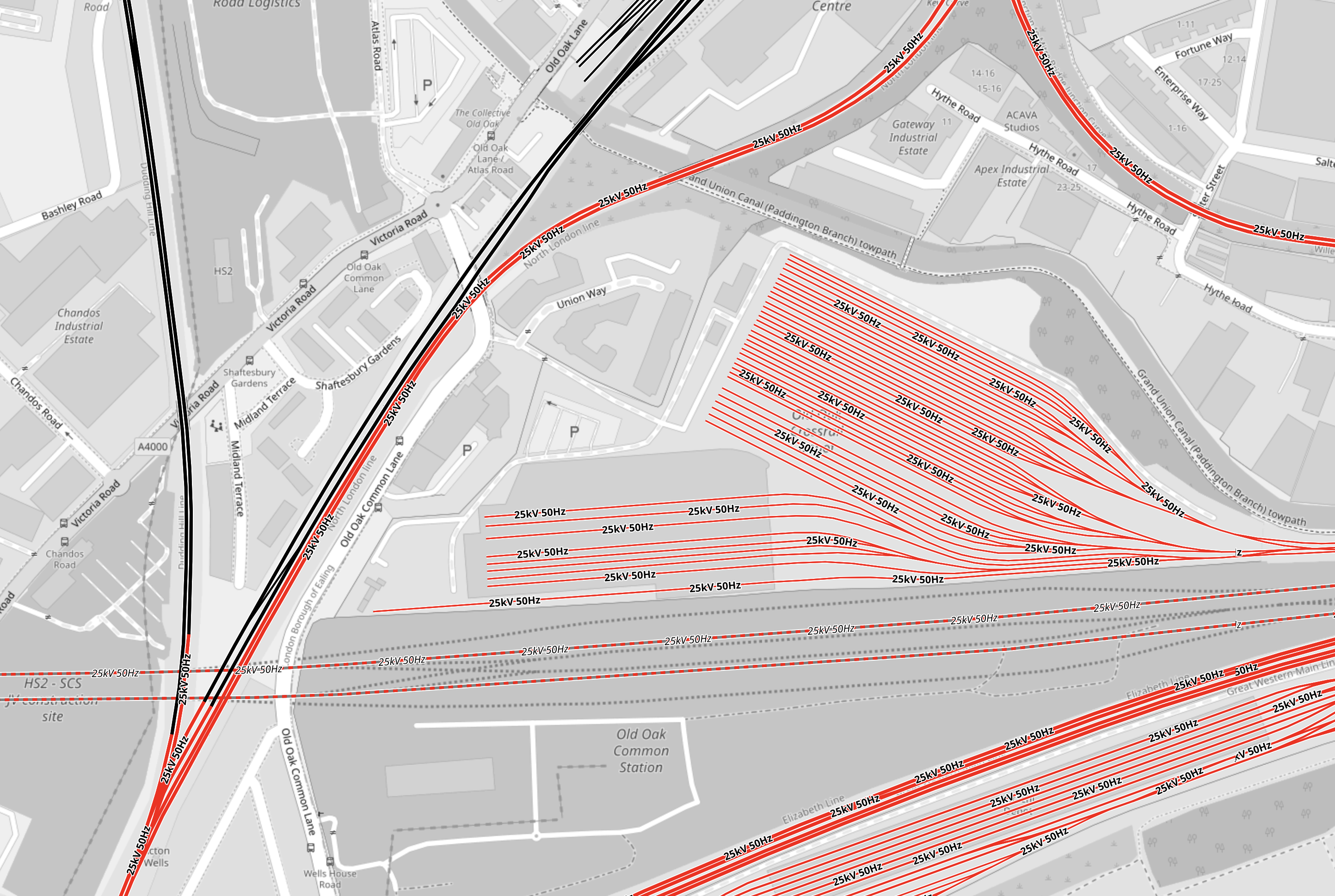
Note.
- As before red tracks are electrified with 25 KVAC overhead wires and black tracks have no electrification.
- The Dudding Hill Line is the black track running North-South at the West of the map.
- Acton Wells junction, where the Dudding Hill and North London Lines join is in the South-West corner of the map.
- The North London Line is shown in red running across the North-West corner of the map.
- The Great Western Main Line is shown in red running across the South-East corner of the map.
- High Speed Two will run East-West across the map and is shown dotted in red.
- The red lines in the middle of the map is the Elizabeth Line depot.
With all the 25 KVAC overhead electrification at both ends of the Dudding Hill Line, it would appear, that if this section is ever electrified, it will be electrified with this form of electrification.
There may be a problem, in that there are three or four bridges over the line.
Electrification Issues At Kew
This map from OpenRailwayMap shows the triangular junction by Kew Bridge station.
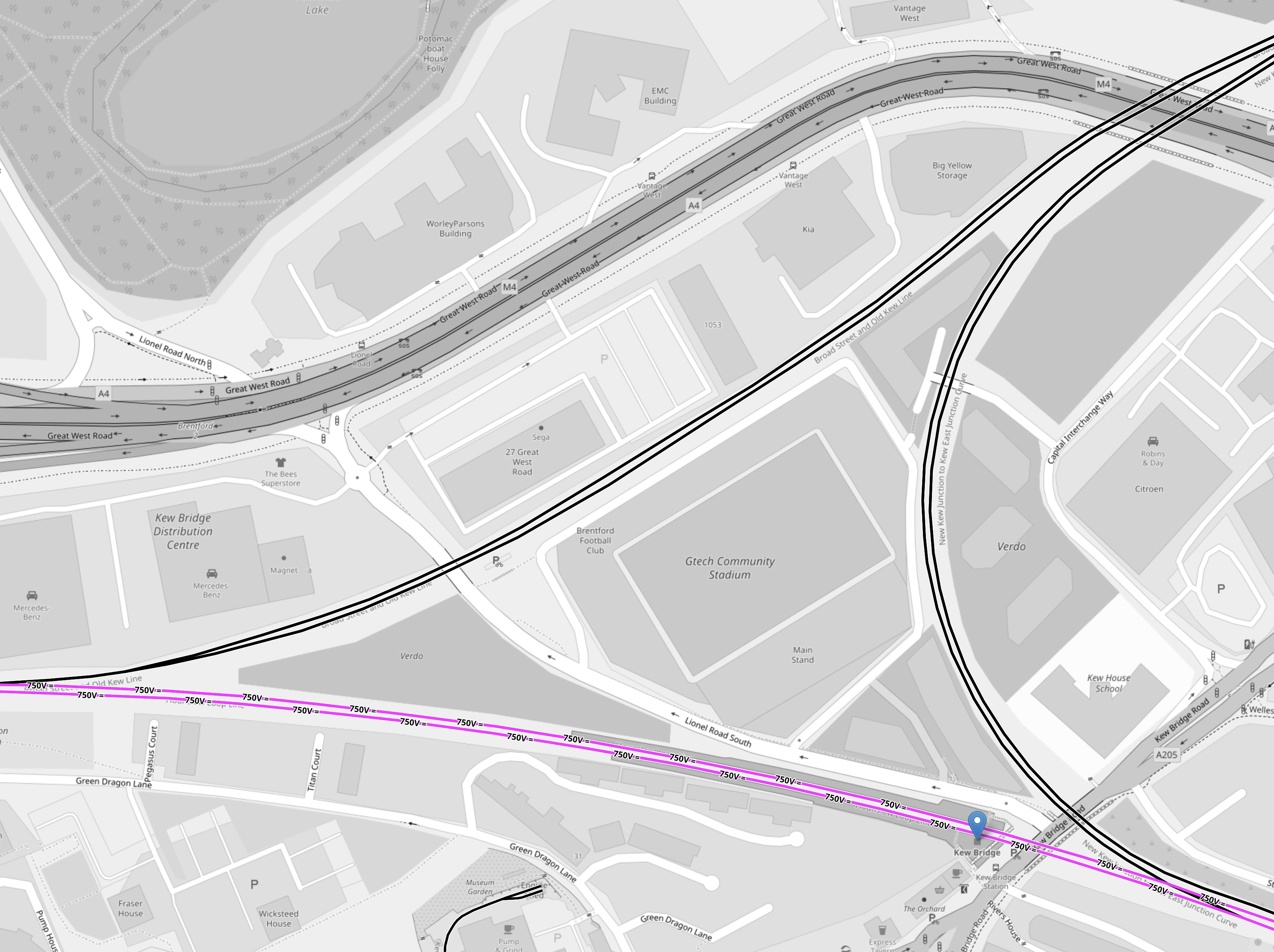
Note.
- As before black tracks have no electrification.
- Mauve tracks are electrified with 750 VDC third-rail electrification.
- Kew Bridge station is indicated by the blue arrow at the Eastern point of the junction.
- Trains to Hounslow will arrive in the North-East corner of the map and go diagonally across the map to leave in the South-West point of the junction.
- Trains to Kew Bridge will arrive in the North-East corner of the map and take the Eastern chord of the junction to a new platform in Kew Bridge station.
Brentford’s new stadium and a lot of housing are in the middle of the junction.
It would seem to be obvious to electrify the triangular junction using 750 VDC third-rail electrification.
But not to the ORR it isn’t, as they won’t allow any new third-rail electrification to be installed on Health and Safety grounds.
Charging Trains At Kew Bridge Station
Consider.
- It looks like trains from Hendon will terminate in a new platform on the chord without electrification to the North of the current Kew Bridge station.
- A short length of 25 KVAC overhead electrification could be used to charge trains.
It may be sensible to build two platforms on the chord, as this could allow more flexible operation of the London Overground during engineering works.
Charging Trains At Hounslow Station
A short length of 25 KVAC overhead electrification could be used to charge trains.
Project Management Issues
I believe this could be one of those projects, where by careful selection of the order of the sub-projects, time and money can be saved and passengers will see benefits earlier.
For example.
- Early delivery of Old Oak Common Lane station would also connect the North London Line to High Speed Two and the Elizabeth Line.
- Early delivery of step-free access at Kew Bridge station would help passengers going to the new Brentford stadium.
There may be other projects, that need an early delivery.
The Feltham And Wokingham Resignalling Programme
The Feltham And Wokingham Resignalling Programme is currently underway and there are pairs of new and old signals everywhere between Kew Bridge and Feltham and also between Feltham and Richmond.



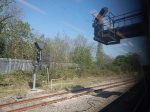

These are digital signals and according to Network Rail, they will increase the capacity, which must surely allow the extra trains between Kew Bridge and Hounslow stations.
This signalling project finishes in mid-2024, so I suspect by then the Southern part of the West London Orbital Railway will not have any problems with interaction with other services.
The Feltham And Wokingham Resignalling Programme could be considered an important enabling sub-project of the West London Orbital Railway, that is being performed early.
Richmond Station
As I came through Richmond station, there was an Overground train in Platform 3 and I noticed that Platforms 3 to 5 were allocated to the Overground.
Has the new signalling given Network Rail and train operators more flexibility and extra capacity at Richmond?
Currently, the London Overground runs four trains per hour (tph) between Stratford and Richmond.
The increased flexibility may allow the following.
- An increase in frequency of trains to Stratford.
- An increase in frequency of District Line trains, if Ealing Broadway station swaps from being a District to a Piccadilly Line terminus, as I wrote about in Extending The Elizabeth Line – Piccadilly Line To Ealing Broadway.
- Could Richmond also act as a terminal of the West London Orbital Railway during construction and engineering works?
Another benefit that could be arranged is to run the current four tph London Overground services into Platform 3.
These pictures show a Waterloo-bound South Western Railway train in Platform 2 and a Stratford-bound London Overground train in Platform 3.
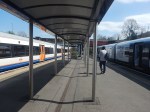
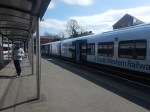
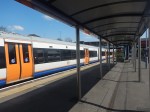

As there are 8 tph between Richmond and Waterloo via Clapham Junction, this could be quite a useful cross-platform interchange for passengers going from say Staines or Windsor to Hampstead.
Trains
Consider.
- The three most likely Northern termini are Brent Cross West, Hendon and West Hampstead Thameslink.
- There could be other terminals on the North London Line or the Gospel Oak and Barking Line.
- All possible Northern terminals have 25 KVAC overhead electrification.
- The two most likely Southern terminals are Hounslow and Kew Bridge.
- There may be other possible Southern terminals like Twickenham or Richmond.
- All possible Southern terminals have 750 VDC third-rail electrification.
- The sections without electrification of the route are less than twelve miles.
- The ORR won’t allow any new third-rail electrification.
It looks like the trains will need to be dual-voltage with a battery capability.
In this article in Global Rail News from 2011, which is entitled Bombardier’s AVENTRA – A new era in train performance, gives some details of the Aventra’s electrical systems. This is said.
AVENTRA can run on both 25kV AC and 750V DC power – the high-efficiency transformers being another area where a heavier component was chosen because, in the long term, it’s cheaper to run. Pairs of cars will run off a common power bus with a converter on one car powering both. The other car can be fitted with power storage devices such as super-capacitors or Lithium-ion batteries if required. The intention is that every car will be powered although trailer cars will be available.
Unlike today’s commuter trains, AVENTRA will also shut down fully at night. It will be ‘woken up’ by remote control before the driver arrives for the first shift
This was published over twelve years ago, so I suspect Bombardier or Alstom have refined the concept.
In an article in the October 2017 Edition of Modern Railways, which is entitled Celling England By The Pound, Ian Walmsley says this in relation to trains running on the Uckfield Branch, which is not very challenging.
A modern EMU needs between 3 and 5 kWh per vehicle mile for this sort of service.
So for a four-car running for twelve miles, the train would need a battery capacity of between 144 and 240 kWh.
These are not large batteries.
I suspect that the best trains for the route, will be dual-voltage Class 710 trains.
- The Class 710/2 variant used on the Gospel Oak and Barking Line is dual-voltage.
- London Overground has 54 Class 710 trains.
- I am certain, that the batteries needed can be fitted to the trains.
- Aventras are still in production in Derby.
A test battery-electric version could probably be created and tested on the short Romford and Upminster Line.
There may be other places in London and the rest of the UK, where a four-car battery-electric Aventra would be the ideal train.
Businesses Back Hydrogen Trials To Accelerate Net Zero Ambitions
The title of this post, is the same as that of this news item on Centrica.
These are the three main findings of a business survey, to ascertain attitudes to hydrogen.
- Three quarters (77%) of businesses back hydrogen as part of their energy improvement strategy with a quarter (27%) intending to trial or implement it in the next two years.
- Almost one in ten (8%) respondents say they have already installed hydrogen-ready combined heat and power (CHP) units.
- A third (33%) of firms say energy costs are motivating them to adopt hydrogen.
This paragraph details who were surveyed.
We surveyed 500 executives in December 2022 and January 2023 across food and beverage manufacturing, healthcare, hospitality and travel, pharmaceutical manufacturing, heavy industry, horticulture and light industry. 24% of respondents were from the UK, 16% Ireland, 20% Netherlands, 20% Italy, 20% Hungary.
It certainly looks to be a well-constructed survey, with a wide range of respondents.
I have some thoughts.
Centrica And Combined Heat And Power
I was initially surprised that eight percent of respondents had already installed hydrogen-ready combined heat and power units.
But according to Centrica Announces Hydrogen Ready Combined Heat And Power Partnership With 2G, Centrica are preparing themselves for selling systems in this area.
Businesses Are Certainly Looking At Hydrogen
A figure of 77 % of businesses are looking at hydrogen and 27 % are investing in hydrogen.
But I don’t think the average man on the Clapham Omnibus would be so enthusiastic.
Costs Are Motivating Firms To Adopt Hydrogen
I would be surprised if costs didn’t have an effect.
But if costs are driving them towards hydrogen, then hydrogen must be more affordable.
Which is one in eye for hydrogen deniers, who always tell me it is more expensive.
Are Centrica Working To Drop Their Costs?
These posts would suggest they are.
- Centrica And Ryze Agree To Develop Hydrogen Pathway
- Centrica Announces Hydrogen Ready Combined Heat And Power Partnership With 2G
- Centrica Partners With Hull-Based HiiRoc For Hydrogen Fuel Switch Trial At Humber Power Plant
- Centrica Plan Green Energy Hub At Former Gas Power Plant
- Centrica Re-Opens Rough Storage Facility
- Lhyfe And Centrica To Develop Offshore Renewable Green Hydrogen In The UK
They are doing deals with start-ups and repurposing old plants and pipelines.
Conclusion
Centrica seem to be leading the charge to hydrogen in the UK.
Denmark Launches World’s First Power-to-X Tender
The title of this post, is the same as that of this article on offshoreWIND.biz.
This is the sub-heading.
The Danish Energy Agency (DEA) has invited bids to build and operate Power-to-X projects with a deadline for applications set to 1 September. Through the tender – the first of this kind in both Denmark and the world – the country has made available DKK 1.25 billion (approximately EUR 167.7 million) in state support for the production of Power-to-X in the form of green hydrogen.
This paragraph outlines the deal.
The tender is being held to procure hydrogen produced by using renewable energy sources and is part of Denmark’s goal to reach between 4 and 6 GW of electrolysis capacity by 2030 and its Power-to-X strategy, released in 2021, according to which the country’s offshore wind resources provide good conditions for the production of green hydrogen, which requires large amounts of green electricity.
These are the conditions.
- Only hydrogen that is produced from renewable energy sources and meets the EU’s documentation requirements for green PtX fuels is eligible for support.
- The winning bidder(s) must have the project(s) built to full capacity and start green hydrogen production within four years of signing the contract with the Danish Energy Agency.
The tender has been approved for state aid by the European Commission.
I can see all the large electrolyser builders getting their bids ready for what will be tough competition.
Overview – Siemens Energy Electrolyser Deal Dwarfs Rest In Q1 2023
The title of this post is the same as that of this article on Renewables Now.
This is the first paragraph.
The global electrolyser market concluded the first quarter of 2023 with a variety of equipment supply deals, partnerships, framework agreements and even some firm contracts. Siemens Energy stood out with the news of its selection to equip a “world-scale” eFuels facility in Texas with a total capacity of 1,800 MW.
The article is a good summary of the electrolyser market.
Devizes Station Would Need To Be Part Of Wider Rail Plan
The title of this post, is the same as that of this article on Railway Gazette.
These two paragraphs outline the current status.
The construction of a Devizes Gateway station at Lydeway is unlikely to represent value for money as a standalone project, but it could be viable as part of a wider rail improvement programme, a study has concluded.
The feasibility study undertaken by Wiltshire Council, Devizes Development Partnership, GWR and Network Rail built on a strategic outline business case submitted to the Department for Transport under the Restoring Your Railway Fund programme in November 2021.
The Department for Transport will now decide what to do next.
I think there are other issues on the route between Reading and Taunton.
The Current Train Service
The only passenger services using the Reading and Taunton route are these three trains, which all have a frequency of one train per two hours (tp2h).
- London Paddington and Exeter St. Davids – Calling at Reading, Newbury, Hungerford, Pewsey, Westbury, Castle Cary, Taunton and Tiverton Parkway
- London Paddington and Plymouth – Calling at Reading, Taunton, Tiverton Parkway and Exeter St Davids
- London Paddington and Penzance – Calling at Reading, Taunton, Tiverton Parkway and Exeter St Davids
Note.
- London Paddington and Exeter St. Davids takes a few minutes over two hours.
- London Paddington and Plymouth takes a few minutes over three hours.
- London Paddington and Penzance takes a few minutes over five hours.
- The Reading and Taunton route is a double-track railway with a 110 mph operating speed.
- London Paddington and Newbury is electrified.
- The last two trains alternate to give Plymouth an hourly service.
- After Exeter St. Davids, trains have a sophisticated stopping pattern to give all stations served a good service.
From several trips along the line, I have the impression, that it’s a route, where drivers can get the best out of the trains.
Electrification
The line would benefit from electrification, in terms of journey times and decarbonisation.
But could this route be run by battery-electric trains?
- It is 89.7 miles between Newbury and Taunton.
- It is 120.4 miles between Newbury and Exeter St. Davids.
- It is 52.1 miles between Exeter St. Davids and Plymouth.
- It is 79.4 miles between Plymouth and Penzance.
- London Paddington and Newbury is electrified.
- Taunton, Exeter St. Davids, Plymouth and Penzance stations could have a charging system of some sort.
This Hitachi infographic shows the specification of the Hitachi Intercity Tri-Mode Battery Train.

Consider.
- Two trains go between Newbury and Taunton without stopping.
- The Exeter St. Davids service stops three times.
- Newbury and Taunton non-stop took 75 minutes at an average speed of 72 mph
- Newbury and Taunton with three stops took 78 minutes.
- All trains currently appear to be nine cars.
I suspect that Hitachi’s Intercity Tri-Mode Battery Train could go between Newbury and Taunton with a great deal of ease.
How many diesel engines and batteries would the train have?
Normally, nine-car Class 800/802 trains have five diesel engines.
So how many will be replaced by batteries?
The infographic says one engine will be replaced, so if that is a five-car train, it looks likely that a nine-car train could have two batteries.
But Hitachi could be playing a long game!
In Stadler FLIRT Akku Battery Train Demonstrates 185km Range, I wrote about how the FLIRT Akku has a range of 115 miles.
If Hitachi can squeeze 125 miles out of a nine-car Class 800 with two or three battery packs, they will outrange the FLIRT Akku and be able to run between London Paddington and Penzance on batteries, with some topping up on the way.
We mustn’t forget the engineers at Hyperdrive Innovation, who are designing and building Hitachi’s battery packs.
They will be ultracompetitive and know the range required to get battery-electric trains to Penzance.
I suspect that when the range of the nine-car battery-electric Class 800/802 is revealed, it will astonish everybody!
Bedwyn Station
Bedwyn station is served by an hourly shuttle train to and from Newbury, run by a diesel train.
The station used to have a direct service from London, but now passengers change at Newbury.
A Station For Marlborough
I investigated this in A Station For Marlborough, where this was my conclusion.
With the next generation of electric train with onboard energy storage or IPEMUs, a Marlborough station on a new Marlborough Branch Line can be used to create a two tph service to and from Paddington to replace the current one tph service from Bedwyn.
So a new Marlborough station would be a win for all those using stations on the Reading to Taunton Line to the East of Pewsey.
I also wonder how many other similar services can be developed by extending a service past a main line terminal to a new or reopened branch line, which is built without electrification and run using trains with onboard energy storage.
In answer to my posed question in the last paragraph, I suspect it is quite a few!
Devizes Gateway Station At Lydeway
I wrote about this proposed Devizes Gateway station in Reinstatement Of Rail Access To Devizes Via A New Station At Lydeway.
After writing Was Baldrick An Essex Man? about the building of an avoiding line at the new Beaulieu Park station North of Chelmsford, I do wonder, if it would be an idea to incorporate one in this proposed station, if there is a need to increase capacity.
This Google Map shows the station site, where the A342 crosses the railway.
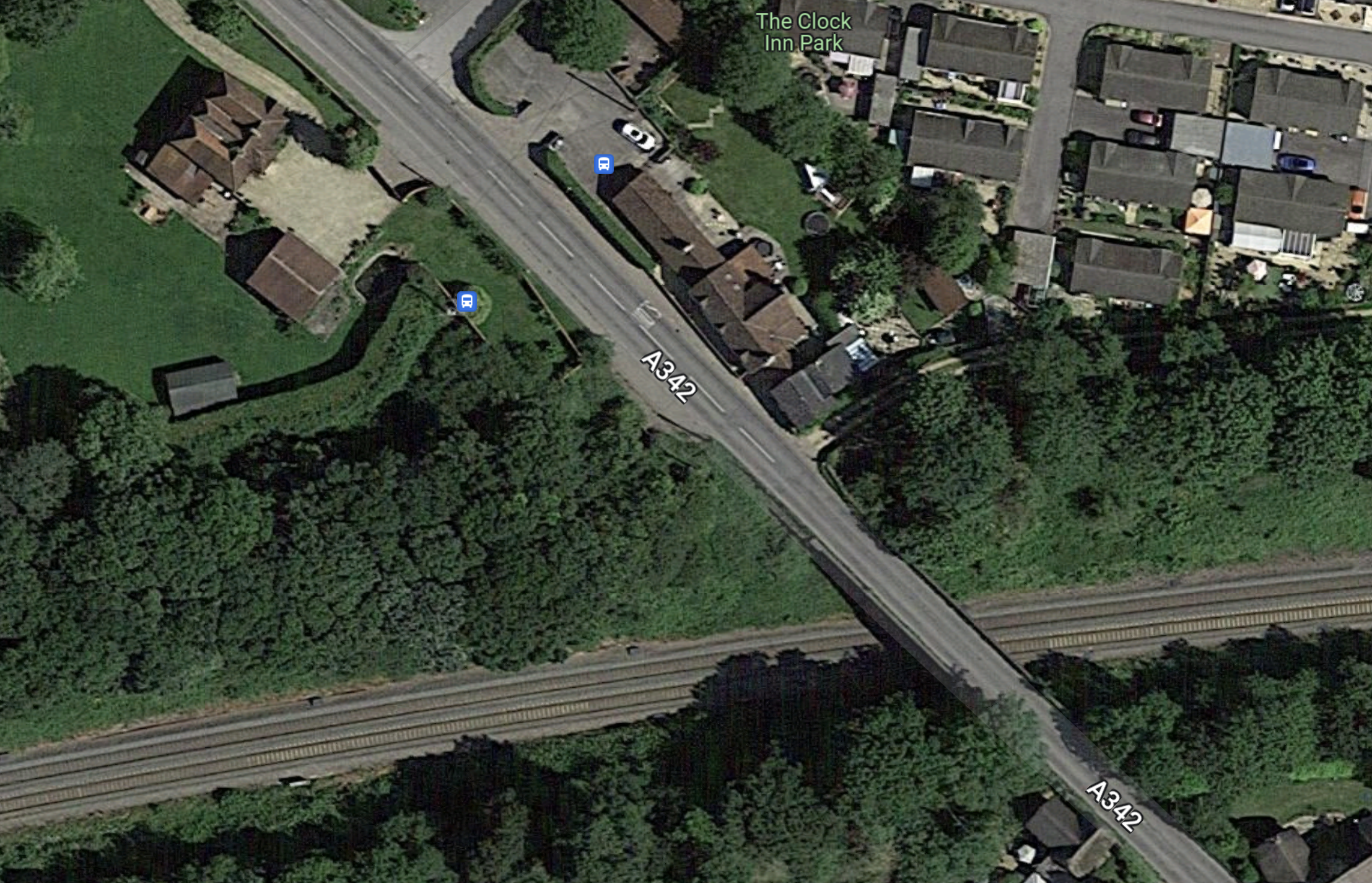
I suspect a third track can be squeezed in.
Westbury Station
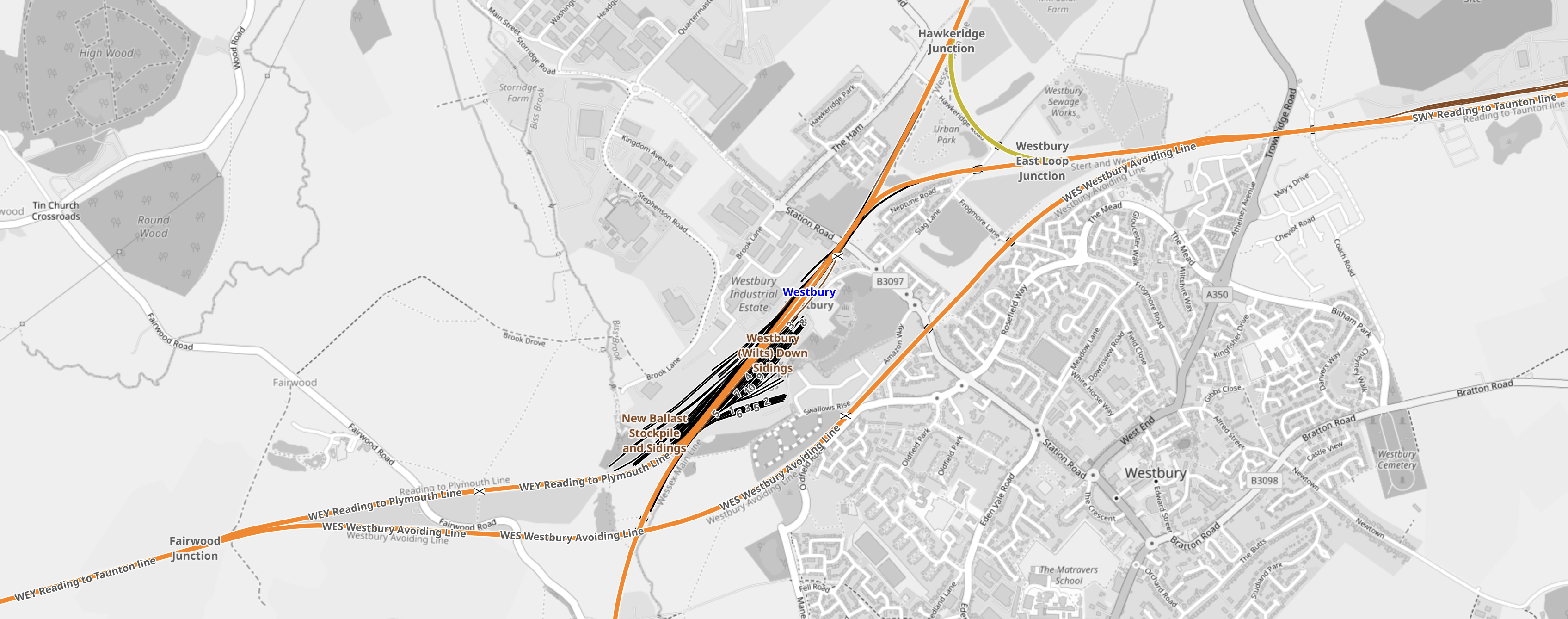
Westbury station is a busy station, where the Reading and Taunton Line crosses the Wessex Main Line.
This map from OpenRailwayMap shows the lines in the station.
Note.
- The blue lettering indicates Westbury station.
- The two major rail routes are shown in orange.
- The Reading and Taunton Line goes East-West across the map.
- Note the avoiding line South of Westbury station.
- Reading is in the East and Taunton is in the West.
- The Wessex Main Line goes North-South across the map.
- Bristol is in the North.
- Salisbury and Southampton is in the South.
In Westbury Station – 30th July 2020, there are some pictures I took of Westbury station.
This section in Wikipedia says this about the Future of Westbury station.
The line to Westbury is not due to be electrified as part of the 21st-century modernisation of the Great Western Main Line. Although local councillors support it, the extension of electrification beyond Newbury to Westbury was assessed as having a benefit–cost ratio of only 0.31.
On the other hand this document on the Network Rail web site, which is entitled the Devizes Gateway Interim
Feasibility Study, suggests that another platform might be added at Westbury station.
Castle Cary Station
Castle Cary station doesn’t seem to have any well-publicised problems, so please tell me if you know of any.
Frome Station
Frome station is described in its Wikipedia entry as an unusual station and one that is Grade II Listed.
I suspect, it could do with some more services.
Somerton Station
I wrote about a new Somerton station in Somerset: Plans For New Railway Station On Levels.
Track Improvements
I suspect if Network Rail were improving the route between Reading and Taunton, they know of some places, where they could do some work.
Service Improvements
Consider.
- There is probably a need for a stopping train between Newbury and Taunton, which calls at all stations.
- It might terminate at the London end, at either London Paddington or Reading.
- It might be a battery-electric train.
- An hourly frequency would be ideal, if the track and signalling could handle it.
- Charging systems would be positioned as needed.
The train would interface with other Great Western services to Bristol, London Paddington, Gloucester, Salisbury, Southampton and Weymouth.
Oy could also interface with the Transwilts services.
Conclusion
This could be developed into a very useful network for Wessex.
SSE To Help Decarbonise 5000 Homes In Major London Retrofit Project
The title of this post, is the same as that of this news item on SSE.
These three paragraphs outline the work.
SSE Energy Solutions has agreed a deal with Berkeley Homes that will help to decarbonise a heat network for up to 5,000 homes in London, thought to be one of the largest retrofits of its kind in the country.
An Air Source Heat Pump (ASHP) system will be installed to supply the homes on an existing district heating network at the Woolwich Arsenal site after several options were considered, including the use of waste heat and ground and river source solutions. An ASHP was chosen as the best low carbon, low tariff option over the length of the supply contract.
The system will be installed in nearby Wellington Park where a new landscape will be created through a unique planting scheme that broadens the biodiversity of the area by responding to the microclimate. The ASHP will connect directly to the existing district heating network pipes, reducing the carbon content of the heat provided by the network.
It strikes me, that no new housing estates or blocks of flats, should be built without a district heating system.
In this example, SSE are able to decarbonise a large number of houses and flats, by just replacing a boiler with an air source heat pump.
Just imagine the hassle if five-thousand individual boilers had to be replaced.
Siemens Completes Study To Decarbonise Major UK Industrial Estate By 2038
The title of this post, is the same as that of this news item on Siemens UK web site.
This is the sub-heading.
Siemens has proposed a road-map for decarbonising Trafford Park, one of Europe’s largest industrial estates, to support Trafford Council’s aims for the Greater Manchester borough to achieve net zero by 2038.
This three paragraphs outline the proposal.
The Low Carbon Trafford Park 2038 study, proposed by Siemens, aims to identify, cost and measure the impacts of low carbon technologies at the industrial estate. It covers a broad range of solutions, from waste to energy and heat recovery from energy intensive industrial players, to the potential for solar photovoltaics across the park to generate 147 GWh of clean energy.
The study acts as a blueprint for the council to consider as it works to eliminate the 714,000 tonnes of carbon emitted from Trafford Park each year. The estate is home to 1,330 businesses employing more than 35,000 people, with a dense population of industrial and commercial occupiers over an area of 4.6 sq miles.
The Council aims to use the roadmap to facilitate stakeholder engagement and collaboration across the industrial park, aligning business and environmental goals to different commercial segments across recommended technological and behavioural measures. It will then consider its broader recommendations as part of a long-term plan in partnership with occupiers.
This is decarbonisation on a grand scale!
- Siemens expects the decarbonisation of Trafford Park to attract new business to the Park and maintain and enhance its standing as a commercial and industrial hub in the region.
- The measures recommended would require £1.2 billion of private and public investment to achieve a 94% reduction in emissions.
- The study provided Trafford Council with modelling of an extensive range of measures for conserving gas and electricity and for generating clean energy on-site.
This page on the Siemens web site is entitled Smart Infrastructure For A Sustainable Future, outlines some of the company’s solutions.
Conclusion
It will be interesting to see how Trafford Park decarbonises.
Seaway7 Installs Final Foundation At Seagreen Offshore Wind Farm
The title of this post, is the same as that of this article on offshoreWIND.biz.
This is the sub-heading.
Seaway7 has installed the final wind turbine foundation on Seagreen Offshore Wind Farm, off the coast of Angus, Scotland, concluding the 18-month installation campaign.
Note.
- As 114 foundations have been installed in eighteen months or just over six installations in a month.
- According to Deepest Ever Fixed-Bottom Wind Turbine Foundation Stands Offshore Scotland, each foundation weighs two thousand tonnes.
- Some are also the deepest ever turbine foundations with a depth or is that height of nearly sixty metres.
- The Seagreen web site, says that phase 1 will be complete in the second quarter of this year.
- The first phase will generate 1075 MW.
We should raise a few cheers for the companies involved.
Mingyang Building Fish Farm-Equipped Offshore Wind Jacket Foundation
The title of this post, is the same as that of this article on offshoreWIND.biz.
This is the sub-heading.
Chinese wind turbine manufacturer Mingyang Smart Energy revealed on 17 April that it started the construction of a jacket foundation that also features a net cage system for fish farming, which will be installed at the Mingyang Qingzhou 4 offshore wind farm in the South China Sea later this year.
The picture in the article, looks like something out of Baldrick’s book of cunning plans.
This paragraph gives more details.
The jacket is typhoon-resistant and the aquaculture system, which will raise up to 150,000 fish in 5,000 cubic metres of water, will have remote functions such as automated feeding, monitoring, detection, and collection, according to Mingyang.
Mingyang also state that the Qingzhou 4 offshore wind farm will also produce hydrogen.
Does that mean that in the next phase of the development, they’ll be putting a fish and chip shop on top?
 The Anonymous Widower