‘Czech Sphinx’ Power Plant Intended To Keep Lights On
The title of this post, is the same as that of this article on The Times.
This is the first paragraph.
The businessman known as the “Czech Sphinx” is set to expand his position in Britain’s energy market after securing subsidy contracts to build a new gas-fired power plant and battery storage project.
As I needed to find the answers to particular questions, I looked for and found the original press release on the EP Holdings web site, which is entitled EPH Will Build A New Gas-Fired Power Plant And Battery Storage Facility In The UK At A Cost Of More Than £1 billion.
These statements describe the project.
- It will be a 1700MW high efficiency H-class CCGT power project and a 299MW 2-hour battery storage project
- The power station will be built on the site of the former Eggborough coal station in East Yorkshire.
I find this to be the most significant paragraph.
The high efficiency H-class CCGT project will be the single largest flexible generation asset to be commissioned in the UK since 2012, whilst the battery project will also be one of the largest to be built in the UK to date. Given the site’s close proximity to existing National Grid infrastructure and a number of proposed CCUS and hydrogen pipeline routes, under EPUKI’s plans these projects will make a significant contribution to the UK’s energy transition and security for years to come.
This map from OpenRailwayMap, shows the relationship between the Eggborough site and the nearby Drax power station.

Note.
- The Eggborough power station site is in the South-West corner of the map and is identified by the rail loop. which was used to deliver the coal.
- The Drax power station site is in the North-East corner of the map and is similarly identified by a rail loop.
- There is a high voltage transmission line connecting the two power stations.
- As the crow flies is about eight miles between Eggborough and Drax.
This Google Map shows the Eggborough power station site.

Note.
- The remains of the eight cooling towers are visible at the North of the site.
- The large circular black area in the middle is the coal yard with its rail loop.
- It is a large site.
I have looked in detail at the cleared area in the North-West of the site and the pylons of the connection to Drax are still visible.
So it looks like there is still an electrical connection of some sort to the site.
According to Wikipedia, the original coal-fired power station had a nameplate capacity of 1960 MW, so I suspect that a modernised electricity connection to handle the maximum near 2,000 MW of the new station would be possible.
This map shows the Zero Carbon Humber pipeline layout.

Note.
- The orange line is a proposed carbon dioxide pipeline
- The black line alongside it, is a proposed hydrogen pipeline.
- Drax, Keadby and Saltend are power stations.
- Keadby and Saltend are gas-fired power stations.
- Easington gas terminal is connected to around twenty gas fields in the North Sea.
- The terminal imports natural gas from Norway using the Langeled pipeline.
- The Rough field has been converted to gas storage and can hold four days supply of natural gas for the UK.
- To the North of Hull is the Aldbrough Gas Storage site, which SSE plan to convert to hydrogen storage.
The Eggborough power station site is about eight miles to the South-West of Drax.
I don’t suspect that connecting the Eggborough site to the carbon dioxide, gas and hydrogen pipelines will not be the most challenging of tasks.
So when the press release says.
Given the site’s close proximity to existing National Grid infrastructure and a number of proposed CCUS and hydrogen pipeline routes, under EPUKI’s plans these projects will make a significant contribution to the UK’s energy transition and security for years to come.
The company is not exaggerating.
It appears that carbon dioxide, gas and hydrogen pipelines can be developed and National Grid connections can be reinstated.
Eggborough Will Not Be Alone
From the EP Holdings press release, it appears that the Eggborough power station will be fitted with carbon-capture and will be hydrogen-ready.
This will make it the second power-station in the area to be fitted out in this way, after SSE’s planned Keadby 3, which is described in this page on the SSE web site in this document, which is entitled Keadby 3 Carbon Capture Power Station.
They could also be joined by Keadby Hydrogen power station.
This would mean that zero-carbon power stations in the area could include.
- Eggborough Gas/Hydrogen – 1700 MW
- Eggborough Battery – 299 MW
- Keadby 3 Gas/Hydrogen – 910 MW
- Keadby Hydrogen – 1800 MW – According to this Equinor press release.
Note.
- The Eggborough Battery pushes the total zero-carbon capacity over 4500 MW or 4.5 GW.
- The various Dogger Bank wind farms are to have a total capacity of 8 GW within ten years.
- The various Hornsea wind farms are to have a total capacity of 5.5 GW in a few years.
I would expect that the zero-carbon power stations would make a good fist of making up the shortfall, when the wind isn’t blowing.
Drax, Keadby 1 And Keadby 2 Power Stations
Consider.
- Drax has a nameplate capacity of 3.9 GW, of which 2.6 GW is from biomass and the rest is from coal.
- Keadby 1 has a nameplate capacity of 734 MW.
- Keadby 2 has a nameplate capacity of 734 MW.
How much of this capacity will be fitted with carbon capture, to provide extra zero-carbon backup to the wind farms?
Green Hydrogen From Surplus Wind Power
At times, there will be an excess of renewable energy.
I suspect, an order for a large electrolyser will be placed soon, so that surplus renewable energy can be used to create green hydrogen.
This will be stored in the two storage facilities, that are being developed in the area; Aldbrough and Rough.
Controlling The Fleet
I am by training a Control Engineer and this fleet can be controlled to provide the electricity output required, so that the carbon-dioxide produced is minimised and the cost is at a level to the agreement of producers and users.
Conclusion
It looks like in excess of 20 GW of reliable zero-carbon energy could be available on Humberside.
I’m sure British Steel would like to by a lot of GWhs to make some green steel at Scunthorpe.
Gravitricity And Czech Firm DIAMO Announce Plans To Cooperate On Full Scale Gravity Energy Store
The title of this post, is the same as that of this article on The Engineer.
This is the sub-heading.
A former coal mine in the Czech Republic could become the first full scale gravity energy store in Europe, according to UK energy storage specialist Gravitricity
This paragraph describes the project.
The agreement will see the two companies seek funding to transform the former decommissioned Darkov deep mine – which is located in the Moravian-Silesian region of the Czech Republic – into a 4MW / 2MWh energy store, capable of powering more than 16,000 homes. According to Gravitricity the system will store energy by lowering and raising a single massive weight suspended in the Darkov mine shaft. The company has also signed a memorandum with VSB Technical University of Ostrava, whose specialist mining expertise will support the implementation of the technology.
Hopefully, the finance won’t be too difficult to find, with perhaps some help from the EU.
The article also describes the potential of Gravitricity, where it says.
- There could be up 14,000 suitable mines around the world.
- The Coal Authority believes there could be a hundred suitable shafts in the UK.
It appears Gravitricity may be on its way.
Diversifying A US$200 billion Market: The Alternatives To Li-ion Batteries For Grid-Scale Energy Storage
The title of this post, is the same as that of this article on Energy Storage News.
This is the introductory paragraph.
The global need for grid-scale energy storage will rise rapidly in the coming years as the transition away from fossil fuels accelerates. Energy storage can help meet the need for reliability and resilience on the grid, but lithium-ion is not the only option, writes Oliver Warren of climate and ESG-focused investment bank and advisory group DAI Magister.
Oliver starts by saying we need to ramp up capacity.
According to the International Energy Agency (IEA), to decarbonise electricity globally the world’s energy storage capacity must increase by a factor of 40x+ by 2030, reaching a total of 700 GW, or around 25% of global electricity usage (23,000TWh per annum). For comparison, this would be like swelling the size of the UK’s land to that of the USA.
Similar to how “nobody ever gets fired for buying IBM”, lithium-ion holds a similar place in grid scale electrical storage today.
And just as IBM did in the last decades of the last century, the builders of lithium-ion will fight back.
He then lists the problems of grid-scale lithium-ion batteries.
- Shortage of cobalt.
- Toxic and polluting extraction of some much needed metals and rare earths from unstable countries.
- Lack of capacity to load follow.
- Limited lifespan.
He does suggest vehicle-to-grid can provide 7TWh of storage by 2030, but it has similar problems to lithium-ion grid scale batteries.
Finally, he covers these what he considers several viable methods of energy storage in detail.
He introduces them with this paragraph.
No single killer application or technology exists to get the job done. Diversification is key with success dependent on the wide-scale adoption of multiple grid-scale energy storage solutions.
- Energy Dome – Italy – Stylish Use of CO2
- Augwind Energy – Israel – Stores Energy As Compressed Air Underground
- Cheesecake Energy – UK – Stores Energy As Heat And Compressed Air
- Highview Power – UK – Stores Energy As Liquefied Air
- Ocean Grazer – Netherlands – Ocean Battery
- RheEnergise – UK – High Density Hydro
- Lumenion – Germany/Japan – Stores Energy As Heat
- Energy Vault – Switzerland – Raising And Lowering Of Weights
Note.
- All systems are environmentally-friendly and use readily-available materials like air, water, sea-water, steel and concrete for their systems.
- The most exotic materials used are probably in the control computers.
- Some systems use readily-available proven turbo-machinery.
- Most systems appear to be scalable.
- All systems would appear to have a working life measured in decades.
- I would expect that most well-educated teenagers could understand how these systems worked.
Only Augwind Energy and Lumenion are new to me.
He finally sums up the economics and the market potential.
Our ability to expand energy storage capacity is one of the most pressing issues that will determine whether this defining ‘transitional’ decade is a success. But we’ll need to invest wisely into the right technologies that get the greatest bang for the buck (in terms of GWh capacity and return on capital) given the limited lifespan of Li-Ion and the decarbonisation of the grid.
At a current capital cost of US$2,000 per kW quoted by the US National Renewable Energy Laboratory (NREL) for 6-hour Li-ion battery storage, the 700GW of capacity needed by 2030 equates to around a US$1.5 trillion market over the coming decade, making it worth nearly US$200 billion a year.
The Energy Storage News article is a comprehensive must read for anyone, who is considering purchasing or investing in energy storage.
I have some further thoughts.
From My Experience Would I Add Any Other Systems?
I would add the following.
- Form Energy, because its iron-air battery is well-backed financially.
- Gravitricity, because it can use disused mine shafts to store energy and the world has lots of those.
- STORE Consortium, because its 3D-printed concrete hemispheres, that store energy using pressurised sea-water can be placed within a wind farm.
I also suspect that someone will come up with an energy storage system based on tidal range.
Finance
When we started Metier Management Systems, finance to breakout from the first initial sales was a problem. We solved the problem with good financial planning and an innovative bank manager who believed us all the way.
David, was a rogue, but he was a rogue on the side of the angels. Long after Metier, he even came to my fiftieth birthday party.
David would have found a way to fund any of these systems, as they tick all the boxes of demonstrated, environmentally-friendly, safe and understandable. They are also likely to be bought by companies, governments and organisations with a high net value, a very respectable reputation and/or large amounts of money.
I also think, that just as we did with the original Artemis project management system, some of these systems can be leased to the operators.
Second-Use Of Systems
Several of these systems could be moved on to a new location, if say they were supporting an industry that failed.
That would surely help the financing of systems.
Coal Sales Could Lose Tens Of Millions For Consumers
The title of this post, is the same as that of this article on The Times.
These two paragraphs outline the story.
A huge stockpile of coal bought for emergency use in power stations this winter is due to be resold at a loss of tens of millions of pounds to consumers.
National Grid funded the procurement of hundreds of thousands of tonnes of coal as part of a deal to keep open five coal-fired units this winter. The estimated £368 million cost of the “winter contingency contracts”, which includes an undisclosed sum for the coal purchases, is being recouped via energy bills.
Note.
- None of the coal has been burned, as the weather was warmer than expected,
- It is now sitting in various places around the country.
- It will probably sell at a loss and there will be transport costs.
I will look at the mathematics of disposal.
Burning Fossil Fuels
On the Internet, I have found these figures.
- If you burn a kilogram of natural gas you create 15.5 KWh of electricity and 2.75 kilograms of carbon dioxide.
- If you burn a kilogram of coal you create 2.46 KWh of electricity and 2.38 kilograms of carbon dioxide.
This means that natural gas and coal create 0.18 and 0.97 kilograms of carbon dioxide respectively for every KWh generated.
I believe these figures say, that if we have to use a fossil fuel, gas will be much better than coal for climate change reasons.
The Size Of The Problem
We are talking about 130,000 tonnes of coal for EDF and 400,000 for Drax. Uniper’s figure is not stated. Let’s say they make the coal pile up to 600,000 tonnes.
Burning this pile will generate 1,476,000 KWh or 1.476 GWh of electricity and create 1428,000 tonnes of carbon dioxide.
Effect On Total UK Carbon Dioxide Emissions
According to government figures on the Internet in 2021 we emitted 107.5 million tonnes of carbon dioxide.
Burning all that coal in a year, would add less than 1.5 % to our carbon dioxide emissions. Perhaps we should burn it strategically over a number of years, when there are energy supply problems, as it is after all a crude form of energy storage.
What Would I Do With The Savings?
The money saved on the transport and making loss-making sales could be spent on other ways to save carbon emissions, like converting surplus wind energy into hydrogen and blending it with the gas.
I discussed the mathematics of hydrogen blending in UK – Hydrogen To Be Added To Britain’s Gas Supply By 2025.
If we put 2 % hydrogen in our natural gas, this would save nearly 2.5 million tonnes of carbon dioxide emissions in a year. This figure is much bigger than the 1428,000 tonnes of carbon dioxide, that would be created by burning all the coal.
At a level of 2 %, most appliances, boilers and industrial processes would work without change. But a good service would help.
The Case For Pumped Hydro Storage
The Coire Glas Project
Note that Coire Glas is a pumped storage hydroelectric scheme being developed by SSE Renewables.
- It is rated at 1.5 GW.
- It can store 30 GWh of electricity.
- It is being built in the Highlands of Scotland above Loch Lochy.
- The estimated construction time will be five to six years.
- It should be operational for more than 50 years.
- There is more about the project on this page on the Coire Glas web site.
Exploratory works have started.
The Case For Pumped Hydro Storage
The title of this post, as the same as that of this page on the Coire Glas web site.
This is the sub-heading.
A study by independent researchers from Imperial College London found that investing in 4.5GW of pumped hydro storage, with 90GWh of storage could save up to £690m per year in energy system costs by 2050, as the UK transitions to a net-zero carbon emission system.
And this is the first paragraph.
The report focused on the benefits of new long-duration pumped hydro storage in Scotland, as the current most established long-duration energy storage technology. The benefit of long duration storage compared to short duration batteries is being able to continuously charge up the storage with excess renewables and also discharge power to the grid for several hours or days when wind and solar output is low.
So Coire Glas will provide 1.5GW/30GW, so where will we get the other 3 GW/60GW?
Loch Earba Pumped Hydro
In Gilkes Reveals 900MW Scottish Pumped Storage Plan, I introduced Loch Earba Pumped Hydro.
- It is rated at 900 MW
- It can store 33 GWh of electricity.
- It is being built in the Highlands of Scotland to the East of Fort William.
- The estimated construction time will be three to four years.
- It should be operational for more than 50 years.
- There is more about the project on the Earba Storage web site.
It would appear we could be edging towards the Imperial College target in lumps of about 1GW/30 GWh.
Other Schemes In Scotland
These are other proposed or planned schemes in Scotland.
Balliemeanoch Pumped Hydro
Balliemeanoch Pumped Hydro now has a web site.
The proposed Balliemeanoch pumped hydro scheme will have these characteristics.
- Output of the power station will be 1.5 GW
- Available storage could be 45 GWh.
This medium-sized station has a lot of storage.
Corrievarkie Pumped Hydro
Corrievarkie Pumped Hydro now has a web site.
The proposed Corrievarkie pumped hydro scheme will have these characteristics.
- Output of the power station will be 600 MW
- Available storage could be 14.5 GWh.
This medium-sized station has a moderate amount of storage.
Loch Kemp Pumped Hydro
I wrote about Loch Kemp Pumped Hydro in Loch Kemp Pumped Hydro, where I said this.
The proposed Loch Kemp pumped hydro scheme will have these characteristics.
- Loch Kemp will be the upper reservoir.
- Loch Ness will be the lower reservoir.
- The power station will be on the banks of Loch Ness.
- The power station will be designed to fit into the environment.
- Eight dams will be built to enlarge Loch Kemp.
- Trees will be planted.
- Output of the power station will be 300 MW
- Available storage could be 9 GWh.
The medium-sized station will have almost as much storage capacity as Electric Mountain, but that power station has an output of 1.8 GW.
Red John Pumped Hydro
I wrote about Red John Pumped Hydro in Red John Pumped Storage Hydro Project, where I said this.
I have also found a web site for the project, which is part of the ILI Group web site.
- The scheme has an output of 450 MW.
- The storage capacity is 2,800 MWh or 2.8 GWh.
- The scheme has planning consent.
- The project is budgeted to cost £550 million.
- The construction program indicates that the scheme will be completed by the end of 2025.
Not a large scheme, but every little helps.
Proposed Pumped Hydro In Scotland
I have listed these schemes.
- Balliemeanoch – 1.5GW/45 GWh
- Coire Glas – 1.5 GW/30 GWh
- Corrievarkie – 600 MW/14.5 GWh
- Loch Earba – 900 MW/33 GWh
- Loch Kemp – 300 MW/9 GWh
- Loch Na Cathrach/Red John – 450 MW/2.8 GWh
Note.
- The scheme’s name is linked to their web site.
- The two figures are output and storage capacity.
There is a total output of 5.25 GW and a total storage capacity of 134.3 GWh.
Conclusion
If all these schemes are built, Imperial’s targets of an output of 4.5 GW and a storage capacity of 90 GWh will be comfortably exceeded.
Gilkes Reveals 900MW Scottish Pumped Storage Plan
The title of this post, is the same as that of this article on renews.biz.
This is the sub-heading.
Earba project would be ‘largest in the UK’ in terms of energy stored
And this is the introductory paragraph.
Gilkes Energy has unveiled scoping plans for its 900MW Earba Pumped Storage Hydro Project in Scotland.
These are a few more details.
- It will have a capacity of 33 GWh.
- Loch a’ Bhealaich Leamhain is proposed to be the upper reservoir.
- Lochan na h-Earba is proposed to be the lower reservoir.
- There will be a three kilometre tunnel between the reservoirs.
- The 900 MW power station will be on the shore of Loch Earba.
- Construction is expected to take between 3 and 4 years.
This Google Map shows the location of the site.
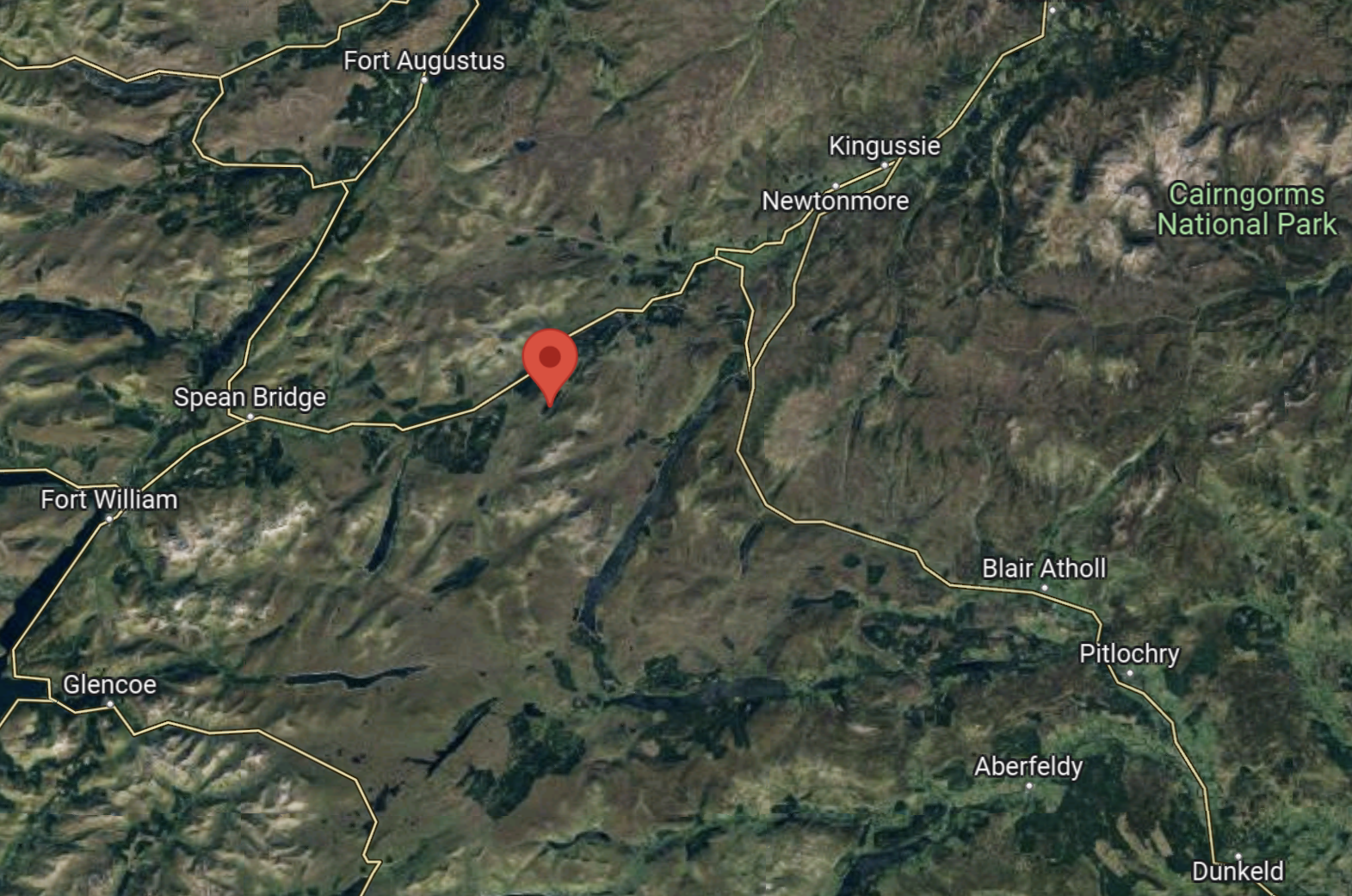
And this Google Map shows the site.

Note.
- Lochan na h-Earba, which will be the lower reservoir is clearly marked, in the North-West corner of the map.
- Loch a’ Bhealaich Leamhain, which will be the upper reservoir is in the South-East corner of the map.
- Much of Loch a’ Bhealaich Leamhain appears to be frozen, with only a small triangular area of water visible.
- There doesn’t seem to be too many roads.
- There is a detailed map on the Earba Storage web site.
This looks like it could be extreme construction, at it’s most extreme.
Conclusion
With a power output of 900 MW and a storage capacity of 33 GWh, this pumped storage hydroelectric power station will have the largest storage capacity of any energy storage in the UK.
Rheenergise & University Partners Secure £1M Grant From UK Government
The title of this post, is the same as that of this press release from Reenergise.
This is the sub-heading.
The Department for Energy Security & Net Zero funded research project will identify and test minerals and discarded wastes for use in RheEnergise’s grid scale hydro energy storage system.
And these are the first three paragraphs.
In partnership with the University of Greenwich and the University of Exeter, RheEnergise, the UK company that is developing a new and advanced form of pumped hydro-energy storage, has secured a grant of £1 million funded through the Net Zero Innovation Portfolio (NZIP) as part of the UK Government’s Energy Entrepreneurs Fund. The government grant will fund work to identify and test waste materials that could be used in the high-density fluid (HDF) that is integral to RheEnergise’s grid-scale High-Density Hydro® energy storage system. The HDF is an environmentally benign alternative to water.
RheEnergise’s long duration storage system is low-cost and energy efficient. The fluid used in the system is 2½ times denser than water (similar in viscosity to cream) and is therefore able to provide 2½ times the power and 2½ times the energy when compared to conventional low-density hydro-power systems that rely on water and operate in the Scottish Highlands, Wales and across Europe. It means that RheEnergise can deploy its long duration energy storage system beneath the surface of hills rather than mountains, so opening up massive commercial opportunities in the UK, Europe and further afield.
The research project, funded by the Department for Energy Security & Net Zero’s Energy Entrepreneurs Fund, wants to identify suitable minerals and waste streams which can be recycled into the high-density fluid which can be locally sourced and are lower-cost, rather than having to rely on minerals imported from overseas.
I feel the concept of High-Density Hydro is excellent and will work.
If this research leads to lower costs, that can only help the development and deployment of High-Density Hydro.
Wind Power For 1.2m Homes Is Wasted Because Of Lack Of Storage
The title of this post, is the same as that of this article on the Daily Telegraph.
These two paragraphs outline what happened.
Enough wind power to supply 1.2m homes a day was wasted over winter because there is no capacity to store extra energy generated on gusty days, according to new research.
National Grid’s electricity system operator asked wind turbines which were expected to generate about 1.35 terawatt-hours of electricity between October and January to switch off instead because they were not needed to meet demand at the time, according to the consultancy Stonehaven.
The problem has been flagged up by Rupert Pearce of Highview Power, who in my view could have a solution with their CRYOBatteries.
Pearce is quoted as saying this.
Renewable energy storage is essential to powering a cleaner, cheaper, always-on Britain.
By capturing and storing excess renewable energy, which is now the UK’s cheapest, most secure and most abundant form of energy, we can power Britain’s homes and businesses with renewable green energy, taking millions of tonnes of carbon out of the atmosphere and ending a culture of reliance on expensive foreign imports.
He’s too bloody right! And my experience of mathematical modelling large vessels at ICI in the 1970s, says that Highview Power have one of the sensible solutions to large scale energy storage.
US Utility Xcel To Put Form Energy’s 100-hour Iron-Air Battery At Retiring Coal Power Plant Sites
The title of this post is the same as that of this article on Energy Storage News.
This is the first two paragraphs.
‘Multi-day’ battery storage startup Form Energy’s proprietary iron-air battery is set to be deployed at the sites of two US coal power plants due for retirement.
Form Energy said yesterday that definitive agreements have been signed with Minnesota-headquartered utility company Xcel Energy for the two projects, one in Minnesota and the other in Colorado.
On their Technology page, they say this about their battery storage technology.
Our first commercial product is an iron-air battery capable of storing electricity for 100 hours at system costs competitive with legacy power plants. Made from iron, one of the most abundant minerals on Earth, this front-of-the-meter battery will enable a cost-effective, renewable energy grid year-round.
They also seem to be very much into grid-modelling technology. As I’ve build mathematical models for sixty years, I like that!
It does seem Form Energy is on its way.
First Offtake Deal Signed For 500MW/4,000MWh Advanced Compressed Air Energy Storage Project In California
The title of this post, is the same as that of this article on Energy Storage News.
These three paragraphs explain the deal.
Advanced compressed air energy storage (A-CAES) company Hydrostor has signed a power purchase agreement (PPA) for one of its flagship large-scale projects in California.
Central Coast Community Energy, one of California’s several dozen Community Choice Aggregator (CCA) non-profit energy suppliers, has signed a 200MW/1,600MWh energy storage PPA with a 25-year term with Toronto-headquartered Hydrostor for its Willow Rock Energy Storage Center.
That’s just under half of the output and capacity of the planned 8-hour, long-duration energy storage (LDES) facility, which is designed to be 500MW/4,000MWh. This is its first offtake deal, but the company is in discussion for others to take the rest of the plant’s available resource.
The article says that Hydrostor aim to have the plant online by 2028.
This segment describes their current projects.
It is currently working on large-scale projects with around 9GWh storage capacity in total across two sites in California as well as another in Australia.
Together with Willow Rock in Kern County, Hydrostor is developing the 400MW/3,200MWh Pechos Energy Storage Center in San Luis Obispo County, California, and the 200MW/1,500MWh Silver City Energy Storage Center in Broken Hill, New South Wales, Australia.
On its UK Projects page, Highview talks about a 200MW/2.5GWh facility in Yorkshire, which puts the two companies in similar markets, with Hydrostor appearing to have slightly larger systems under development.
Conclusion
It will be interesting to see how this technology progresses and which company does best in what is a very large energy storage market.
 The Anonymous Widower