High Speed Two And Scotland
In this post, I will only look at services and capacity.
I will leave the economics to others with the appropriate data.
Current Anglo-Scottish Services
Currently, these services run between England and Edinburgh Waverley and Glasgow Central stations.
- 1 train per hour (tph) – Avanti West Coast – London Euston and Glasgow Central via Warrington Bank Quay, Wigan North Western, Preston, Lancaster, Carlisle.
- 1 train per two hours (tp2h) – Avanti West Coast – London Euston and Glasgow Central via Milton Keynes Central, Coventry, Birmingham International, Birmingham New Street, Sandwell and Dudley, Wolverhampton, Crewe, Warrington Bank Quay, Wigan North Western, Preston, Lancaster, Carlisle.
- 1 tp2h – CrossCountry – South-West England and Edinburgh Waverley via Bristol Temple Meads, Birmingham New Street, Derby, Chesterfield, Sheffield, Wakefield Westgate, Leeds, York and Newcastle.
- 1 tp2h – CrossCountry – South-West England and Glasgow Central via Bristol Temple Meads, Birmingham New Street, Derby, Chesterfield, Sheffield, Wakefield Westgate, Leeds, York, Newcastle and Edinburgh Waverley.
- 1 tph – LNER – London Kings Cross and Edinburgh Waverley via York, Darlington, Newcastle and Berwick-upon-Tweed
- 1 tph – LNER – London Kings Cross and Edinburgh Waverley via Peterborough, Newark North Gate, Doncaster, York, Northallerton, Darlington, Durham and Newcastle
- 1 tph – TransPennine Express – Liverpool Lime Street and Edinburgh Waverley via Newton-le-Willows, Manchester Victoria, Huddersfield, Leeds, York, Darlington, Durham, Newcastle and Morpeth
- 1 tp2h – TransPennine Express – Manchester Airport and Edinburgh Waverley via Manchester Piccadilly, Manchester Oxford Road, Bolton, Preston, Lancaster and Carlisle.
- 3 trains per day (tpd) – TransPennine Express – Liverpool Lime Street and Glasgow Central via St. Helen’s Central, Wigan North Western, Preston, Lancaster and Carlisle.
- 1 tp2h – TransPennine Express – Manchester Airport and Glasgow Central via Manchester Piccadilly, Manchester Oxford Road, Bolton, Preston, Lancaster and Carlisle.
Note.
- I’ve not included service extensions to Aberdeen and Inverness.
- I’ve cut out a few smaller stations
- Some services call at both Edinburgh and Glasgow.
- Because of signalling and track improvements it is likely that London Kings Cross and Edinburgh timings will come down to four hours.
The services can be roughly summarised as follows.
- Birmingham and Edinburgh – 0.5 tph
- Birmingham and Glasgow – 1 tph
- London and Edinburgh – 2 tph
- London and Glasgow – 1.5 tph
- Leeds and Edinburgh – 1.5 tph
- Leeds and Glasgow – 0.5 tph
- Liverpool and Edinburgh – 1 tph
- Liverpool and Glasgow – 3 tpd
- Manchester and Edinburgh – 1.5 tph
- Manchester and Glasgow – 0.5 tph
- Manchester Airport and Edinburgh – 0.5 tph
- Manchester Airport and Glasgow – 0.5 tph
Note.
- I have ignored the five tpd London Kings Cross and Edinburgh service, that starts next year, which will be run by East Coast Trains.
- 0.5 tph is equivalent to one tp2h.
It looks a fairly well-balanced and comprehensive service.
High Speed Two Anglo-Scottish Services
According to a table in the June 2020 Edition of Modern Railways, these High Speed Two services will run between England and Edinburgh Waverley and Glasgow Central.
- 1 tph – London Euston and Edinburgh Waverley via Old Oak Common, Preston, Carlisle and Edinburgh Haymarket
- 1 tph – London Euston and Edinburgh Waverley via Old Oak Common, Birmingham Interchange, Preston, Carlisle and Edinburgh Haymarket
- 1 tph – London Euston and Glasgow Central via Old Oak Common, Preston and Carlisle
- 1 tph – London Euston and Glasgow Central via Old Oak Common, Birmingham Interchange, Preston and Carlisle
- 1 tp2h – Birmingham Curzon Street and Edinburgh Waverley via Warrington Bank Quay, Wigan North Western, Preston, Lancaster, Oxenholme or Penrith, Carlisle and Edinburgh Haymarket.
- 1 tp2h – Birmingham Curzon Street and Glasgow Central via Warrington Bank Quay, Wigan North Western, Preston, Lancaster, Oxenholme or Penrith, Carlisle, Lockerbie and Motherwell.
Note.
- All trains will be High Speed Two’s 200 metre long Classic-Compatible trains.
- The four one tph services will run as two pairs of trains and split and join at Carlisle.
The services can be roughly summarised as follows.
- Birmingham and Edinburgh – 1.5 tph
- Birmingham and Glasgow – 1.5 tph
- London and Edinburgh – 2 tph
- London and Glasgow – 2 tph
Note.
- Passengers between Liverpool or Manchester and Scotland will have to change at Preston.
- There is no connection between the Eastern Leg of High Speed Two and Edinburgh.
- London and Edinburgh Waverley will take three hours and forty minutes, which saves twenty minutes on the likely four hours on the East Coast Main Line.
- London and Glasgow Central will take three hours and forty minutes, which saves fifty minutes on the current time.
High Speed Two certainly provides good services between London, Birmingham and Scotland, but it leaves out travelling between the cities of the North and North of the Border.
High Speed Two Classic-Conventional Trains
In Thoughts On Class 807 Trains And High Speed Two’s Classic-Compatible Trains, I discussed a design of Classic-Compatible High Speed Two train based on the recently-ordered Class 807 trains for Avanti West Coast.
Except for the required speeds, the specifications of the trains are similar and this was my conclusion.
I wouldn’t be surprised that Hitachi’s offering for more trains on the West Coast Main Line and the Classic-Compatible trains for High Speed Two are very similar to the Class 807 trains.
-
- The Classic-Compatible trains for High Speed Two could be eight-car trains with twenty-five metre cars.
- The replacements for the eleven-car Class 390 trains could be nine-car trains with twenty-six metre cars.
Both would be based on the Class 807 train.
A common design would surely ease operation of the combined West Coast Partnership.
TransPennine Express Between Liverpool Lime Street And Edinburgh
Will this TransPennine Express service still be the primary connection between the North of England and Edinburgh?
- It has a frequency of one tph.
- It takes about four hours and fifty minutes.
- It connects Liverpool, Manchester, Huddersfield, Leeds, York, Darlington, Durham and Newcastle to the Scottish capital.
- According to Real Time Trains, it runs as far as York on diesel and then using the electrification.
Current plans envisage Northern Powerhouse Rail will create an electrified route across the Pennines.
This report on the Transport for the North web site, is entitled At A Glance – Northern Powerhouse Rail.
It gives these times and frequencies for the various legs of the route.
- Liverpool and Manchester via Manchester Airport – 26 minutes – 6 tph
- Manchester and Leeds – 25 minutes – 6 tph
- Leeds and Newcastle – 58 minutes – 4 tph
- Newcastle and Edinburgh – 90 minutes
This totals to three hours and nineteen minutes.
Note.
- The Newcastle and Edinburgh time is that currently achievable today by Class 801 trains.
- Liverpool and Manchester city centres have a six tph high speed service via Manchester Airport.
- Manchester and Edinburgh will be under three hours.
- Leeds and Edinburgh will be under two-and-a-half hours.
- The Manchester and Manchester Airport leg could be shared with High Speed Two.
Most of this will be achievable with the current TransPennine Express Class 802 trains, which are capable of 140 mph.
In addition, I think that it is likely that the East Coast Main Line will be upgraded between York and Newcastle for High Speed Two.
Liverpool Lime Street and Edinburgh will unlikely be to High Speed Two standards, but it could match the standards of the East Coast Main Line.
Improvements To The East Coast Main Line Between Newcastle and Edinburgh
Consider
- There have been reports that the power supply on the route is not very robust and Class 800 and Class 802 trains have to use diesel power.
- The route is fairly straight and could probably be partially-upgraded for 140 mph running with appropriate signalling.
- The route carries about five tph in both directions. Modern digital signalling could probably double this frequency.
- The Scottish Government has suggested adding new stations at East Linton and Reston.
- Edinburgh and Newcastle are 124.5 miles apart and trains typically take ninety minutes.
In addition, High Speed Two might like to extend some or all of their three Newcastle services to Edinburgh.
- 1 tph – Birmingham Curzon Street and Newcastle via East Midlands Hub, York, Darlington and Durham
- 1 tph – London Euston and Newcastle via Old Oak Common and York
- 1 tph – London Euston and Newcastle via Old Oak Common, York and Darlington.
High Speed Two will run between London Euston and Newcastle in two hours and seventeen minutes.
I think it could be possible, that an upgraded Newcastle and Edinburgh route could be covered in seventy minutes by either one of High Speed Two’s Classic Compatible trains or a Class 80x train.
This could mean these timings.
- Under four hours for classic services between London Kings Cross and Edinburgh.
- Around three hours for classic services between Liverpool and Edinburgh.
- Under three-and-a-half hours for High Speed Two services between London Euston and Edinburgh.
This shows the importance of improving the East Coast Main Line to the North of Newcastle.
Improvements To The West Coast Main Line Between Carlisle and Glasgow/Edinburgh
If the frequency and speed of trains on the East Coast Main Line can be increased, what can be done on the West Coast Main Line?
Consider.
- High Speed Two are showing Carlisle and Glasgow Central as a one hour and nineteen minute journey. Avanti West Coast do the journey in one hour and eleven minutes.
- High Speed Two are showing Carlisle and Edinburgh as a one hour and eleven minute journey. Avanti West Coast do the journey in one hour and fifteen minutes.
- Could the route be fully upgraded for 140 mph running with appropriate signalling?
- In a typical hour, there are two Avanti West Coast trains and one TransPennine Express passing along all or part of the West Coast Main Line North of Carlisle.
- The route carries a total of about four tph in both directions. Modern digital signalling could probably increase this frequency.
- Hitachi and Avanti West Coast seem to be saying that their new Class 807 trains have similar performance to the Class 390 trains, but without using tilting technology.
There doesn’t appear to be the scope for such dramatic improvement in the West, as in the East, but I can still see a succession of 140 mph trains running between Carlisle and Glasgow or Edinburgh in no more than an hour and eleven minutes.
These passenger services could be running North of Carlisle, when High Speed Two is fully open.
- 2 tph – High Speed Two – London Euston and Edinburgh – High Speed Two Classic-Compatible train
- 2 tph – High Speed Two – London Euston and Glasgow Central – High Speed Two Classic-Compatible train
- 0.5 tph – High Speed Two – Birmingham Curzon Street and Edinburgh – High Speed Two Classic-Compatible train
- 0.5 tph – High Speed Two – Birmingham Curzon Street and Glasgow Central – High Speed Two Classic-Compatible train
- 0.5 tph – TransPennine Express – Manchester Airport and Edinburgh – Class 397 train
- 0.5 tph – TransPennine Express – Manchester Airport and Glasgow Central – Class 397 train
- 3 tpd – TransPennine Express – Liverpool and Glasgow Central – Class 397 train
Note.
- I am assuming that Avanti West Coast’s services will be replaced by the High Speed Two services.
- As the TransPennine Express services share a path, it would appear that six tph will be running between Carlisle and Edinburgh or Glasgow.
There would appear to be space for more trains on the West Coast Main Line, to the North of Carlisle.
A Few Random Thoughts
These are a few random thoughts and ideas.
Avanti West Coast And High Speed Two Classic-Compatible Trains
Avanti West Coast will have these fleets of high-speed trains.
- 11-car Class 390 electric trains, which are 265.3 metres long
- 9-car Class 390 electric trains, which are 217.5 metres long.
- 7-car Class 807 electric trains, which will be 182 metres long
- 5-car Class 805 bi-mode trains, which will be 130 metres long
- High Speed Two Classic-Compatible trains, which will be 200 metres long
- Full-size High Speed Two trains, which will be 400 metres long.
It would appear that there could be some fleet simplification.
All Passenger Trains Between Newcastle Or Carlisle and Glasgow Central Or Edinburgh Should Be Capable Of Operating At 140 mph
Both the East and West Coast Main Lines between Carlisle and Newcastle in England and Edinburgh and Glasgow in Scotland are not far off being capable of running trains at 140 mph. Modern digital in-cab signalling and some track works will be needed.
Once 140 mph running is achieved, then all trains will need to be capable of making use of the speed, to maximise the capacity of the routes.
Freight Trains Between Newcastle Or Carlisle and Glasgow Central Or Edinburgh Should Be Capable Of Operating As Fast As Possible
Freight trains will need to be hauled by electric locomotives, at as high a speed as possible, to avoid slowing the express passenger trains.
More well-positioned freight loops may be needed.
Will TransPennine’s Manchester And Scotland Service Transfer To High Speed Two?
I think, that this is highly likely.
- The service would be run by High Speed Two Classic-Compatible trains.
- Depending on track layout, the Liverpool and Scotland service on the West Coast Main Line could be upgraded to the High Speed Two Classic-Compatible trains or discontinued.
This would mean, that all passenger trains on the West Coast Main Line North of Lancaster would be High Speed Two Classic-Compatible trains.
- 2 tph – High Speed Two – London Euston and Edinburgh – High Speed Two Classic-Compatible train
- 2 tph – High Speed Two – London Euston and Glasgow Central – High Speed Two Classic-Compatible train
- 0.5 tph – High Speed Two – Birmingham Curzon Street and Edinburgh – High Speed Two Classic-Compatible train
- 0.5 tph – High Speed Two – Birmingham Curzon Street and Glasgow Central – High Speed Two Classic-Compatible train
- 0.5 tph – High Speed Two – Manchester Airport and Edinburgh – High Speed Two Classic-Compatible train
- 0.5 tph – High Speed Two – Manchester Airport and Glasgow Central – High Speed Two Classic-Compatible train
- 3 tpd – High Speed Two – Liverpool and Glasgow Central – High Speed Two Classic-Compatible train
This must mean that if the operating speed on the West Coast Main Line were to be increased, all passenger services could take advantage, which would surely improve timings.
What About CrossCountry?
CrossCountry run a single hourly service between Plymouth and Edinburgh.
- The route goes via Bristol Temple Meads, Birmingham New Street, Derby, Chesterfield, Sheffield, Wakefield Westgate, Leeds, York, Newcastle.
- Some services are extended to Glasgow Central and Aberdeen.
Currently, this service is run by a diesel train, which surely will need to be replaced with a zero-carbon train.
Consider.
- Scotland is keen to electrify or allow electric trains to run between Edinburgh and Aberdeen.
- High Speed Two will provide an electrified route between Birmingham and York via East Midlands Hub for Derby, Chesterfield, Sheffield and Leeds.
- The likes of Hitachi and Adrian Shooter of Vivarail are very bullish about battery electric trains.
- Great Western Railway, Hitachi and Network Rail have probably hired Baldrick for a cunning plan to run battery electric trains between Bristol and Penzance.
Could it be possible for Hitachi or another manufacturer to design a High Speed Two Classic-Compatible train, with a battery capability?
A train with this specification, could be ideal for the Plymouth and Edinburgh service.
It might also be useful for these CrossCountry services.
- Southampton and Newcastle
- Bournemouth and Manchester Piccadilly
- Exeter St. Davids/Bristol and Manchester Piccadilly
- Cardiff Central and Nottingham
- Birmingham and Nottingham
- Birmingham and Stansted Airport
Note.
- All could run on High Speed Two fpr part of the route.
- Birmingham and Nottingham has already been proposed for running using High Speed Two Classic-Compatible train, by Midlands Engine Rail, as I wrote about in Classic-Compatible High Speed Two Trains At East Midlands Hub Station.
- I proposed a Birmingham and Cambridge service using High Speed Two Classic-Compatible trains in A Trip To Grantham Station – 4th November 2020.
High Speed Two could have a big positive effect on CrossCountry services.
Future Anglo-Scottish Services After High Speed Two Opens Fully
It is possible, that when High Speed Two fully opens, these services will run between England and Edinburgh Waverley and Glasgow Central stations.
- 1 tp2h – CrossCountry – South-West England and Edinburgh Waverley via Bristol Temple Meads, Birmingham New Street, Derby, Chesterfield, Sheffield, Wakefield Westgate, Leeds, York and Newcastle.
- 1 tp2h – CrossCountry – South-West England and Glasgow Central via Bristol Temple Meads, Birmingham New Street, Derby, Chesterfield, Sheffield, Wakefield Westgate, Leeds, York, Newcastle and Edinburgh Waverley.
- 1 tph – LNER – London Kings Cross and Edinburgh Waverley via York, Darlington, Newcastle and Berwick-upon-Tweed
- 1 tph – LNER – London Kings Cross and Edinburgh Waverley via Peterborough, Newark North Gate, Doncaster, York, Northallerton, Darlington, Durham and Newcastle
- 1 tph – High Speed Two – London Euston and Edinburgh Waverley via Old Oak Common, Preston, Carlisle and Edinburgh Haymarket
- 1 tph – High Speed Two – London Euston and Edinburgh Waverley via Old Oak Common, Birmingham Interchange, Preston, Carlisle and Edinburgh Haymarket
- 1 tph – High Speed Two – London Euston and Glasgow Central via Old Oak Common, Preston and Carlisle
- 1 tph – High Speed Two – London Euston and Glasgow Central via Old Oak Common, Birmingham Interchange, Preston and Carlisle
- 1 tp2h – High Speed Two – Birmingham Curzon Street and Edinburgh Waverley via Warrington Bank Quay, Wigan North Western, Preston, Lancaster, Oxenholme or Penrith, Carlisle and Edinburgh Haymarket.
- 1 tp2h – High Speed Two – Birmingham Curzon Street and Glasgow Central via Warrington Bank Quay, Wigan North Western, Preston, Lancaster, Oxenholme or Penrith, Carlisle, Lockerbie and Motherwell.
- 1 tph – TransPennine Express – Liverpool Lime Street and Edinburgh Waverley via Newton-le-Willows, Manchester Victoria, Huddersfield, Leeds, York, Darlington, Durham, Newcastle and Morpeth
- 1 tp2h – High Speed Two – Manchester Airport and Edinburgh Waverley via Manchester Piccadilly, Manchester Oxford Road, Bolton, Preston, Lancaster and Carlisle.
- 3 trains per day (tpd) – High Speed Two – Liverpool Lime Street and Glasgow Central via St. Helen’s Central, Wigan North Western, Preston, Lancaster and Carlisle.
- 1 tp2h – High Speed Two – Manchester Airport and Glasgow Central via Manchester Piccadilly, Manchester Oxford Road, Bolton, Preston, Lancaster and Carlisle.
Note.
- I have assumed that the Liverpool/Manchester services to Scotland via the West Coast Main Line have transferred to High Speed Two.
- All trains would be run by High Speed Two Classic-Compatible trains.
The services can be roughly summarised as follows.
- Birmingham and Edinburgh – 1.5 tph (0.5 tph)
- Birmingham and Glasgow – 1.5 tph (1 tph)
- London and Edinburgh – 4 tph (2 tph)
- London and Glasgow – 2 tph (1.5 tph)
- Leeds and Edinburgh – 1.5 tph (1.5 tph)
- Leeds and Glasgow – 0.5 tph (0.5 tph)
- Liverpool and Edinburgh – 1 tph (1 tph)
- Liverpool and Glasgow – 3 tpd (3 tpd)
- Manchester and Edinburgh – 1.5 tph (1.5 tph)
- Manchester and Glasgow – 0.5 tph (0.5 tph)
- Manchester Airport and Edinburgh – 0.5 tph (0.5 tph)
- Manchester Airport and Glasgow – 0.5 tph (0.5 tph)
Note.
- My estimates for the number of trains in the future, are probably best described as minimum figures.
- The figures in brackets are the current frequencies.
- Currently, there are eleven express trains between England and Scotland and after High Speed Two is fully open there could be at least fifteen express trains.
I have a few final thoughts.
Capacity Between England And Scotland
Capacity of the current and future Anglo-Scottish trains is as follows.
- High Speed Two Classic-Compatible train – 500-600
- Eleven-car Class 390 train – 589
- Nine-car Class 800 train – 611
It appears that the all the longer trains have roughly the same capacity.
As there are now eleven Anglo-Scottish long trains and these will be increased to fifteen, that indicates an minimum 36 % increase in capacity.
Will High Speed Two And Northern Powerhouse Rail Share A Route Across The Pennines?
Northern Powerhouse Rail have talked about extending High Speed Two services from Manchester to Huddersfield, Leeds, Hull, York and Newcastle.
I wrote about this in Changes Signalled For HS2 Route In North.
I like this plan for the following reasons.
It gives more places like Huddersfield and Hull access to High Speed Two.
It increases frequencies across the North.
But most importantly, as infrastructure is shared, it saves a lot of money.
It also opens up possibilities for services.
- The Liverpool and Edinburgh service could be run on the High Speed Two route across the Pennines and up the East Coast Main Line.
- London and Manchester services could be extends to Leeds, York, Newcastle and Scotland.
If Northern Powerhouse Rail were to be cleared for High Speed Two’s Full-Size trains, it opens up the possibility of running them further North.
Conclusion
High Speed Two will increase Anglo-Scottish capacity by more than a third.
Stonehenge A303 Tunnel Plan Approved By Transport Secretary
The title of this post, is the same as that of this article on the BBC.
This is the introductory paragraph.
A controversial plan to dig a £2.4bn road tunnel near Stonehenge has been approved by the Transport Secretary.
As a non-driver, who would prefer to travel to the South West by train, I have no definite opinion on the proposed scheme.
However, I do hope that the design has taken full account of the effects of the Covid-19 pandemic.
- Will more decide to holiday at home?
- Will more buy holiday homes in Cornwall and Devon?
- Will the road attract more traffic, as most do?
I do feel though, that it will be some years before construction starts, as if ever there was a project, that will be a pot of gold lawyers, then this is it!
Fed Up Council Threatens Injunction Against Network Rail Over Closure Of Milton Keynes Railway Crossing
The title of this post, is the same as that of this article on the Milton Keynes Citizen.
This looks like the ultimate level crossing argument between a council and Network Rail.
In some ways it’s all a bit ironic, as Network Rail’s headquarters is in Milton Keynes.
This Google Map shows the disputed crossing in Woburn Sands.
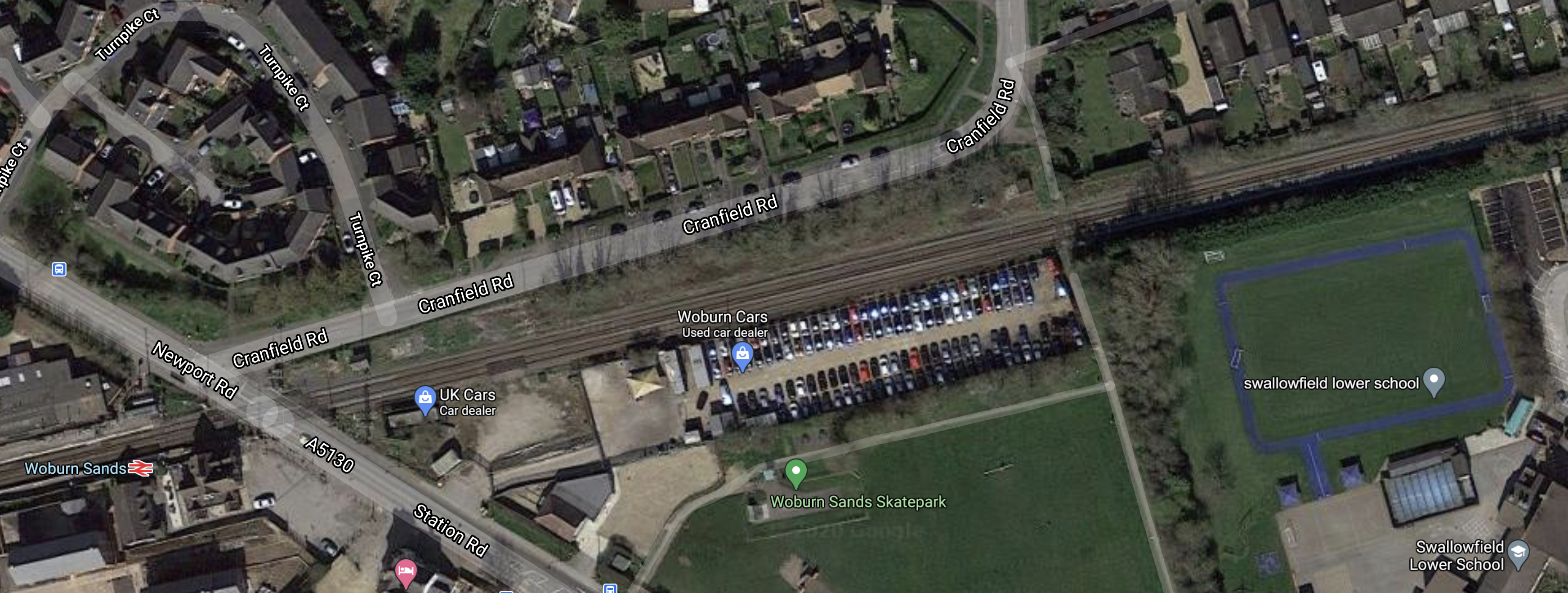
Note.
- The railway is the Marston Vale Line.
- Woburn Sands station and a level crossing is at the Western edge of the map.
- Swallowfield Lower School is at the Eastern edge of the map.
- Cranfield Road runs along the Northern side of the railway.
The row is all about the closure of the foot crossing, that links Cranfield Road and the school.
I live on a road to a primary school. At school times, there is heavy traffic on the pavement, with a lot of younger children in buggies and others with scooters.
- A lot of the younger children are probably not going to school, but are too young to be left at home, by themselves.
- I also see a couple of children in wheel-chairs.
I suspect the traffic to Swallowfield Lower school will be similar.
- A bridge over the railway with steps would not be an adequate solution.
- A bridge with lifts would be expensive.
- A bridge with ramps would probably be difficult to fit in the restricted site.
- A shallow subway with a ramp either side would probably be the only acceptable and affordable solution.
This picture shows such a subway at Enfield Lock station.
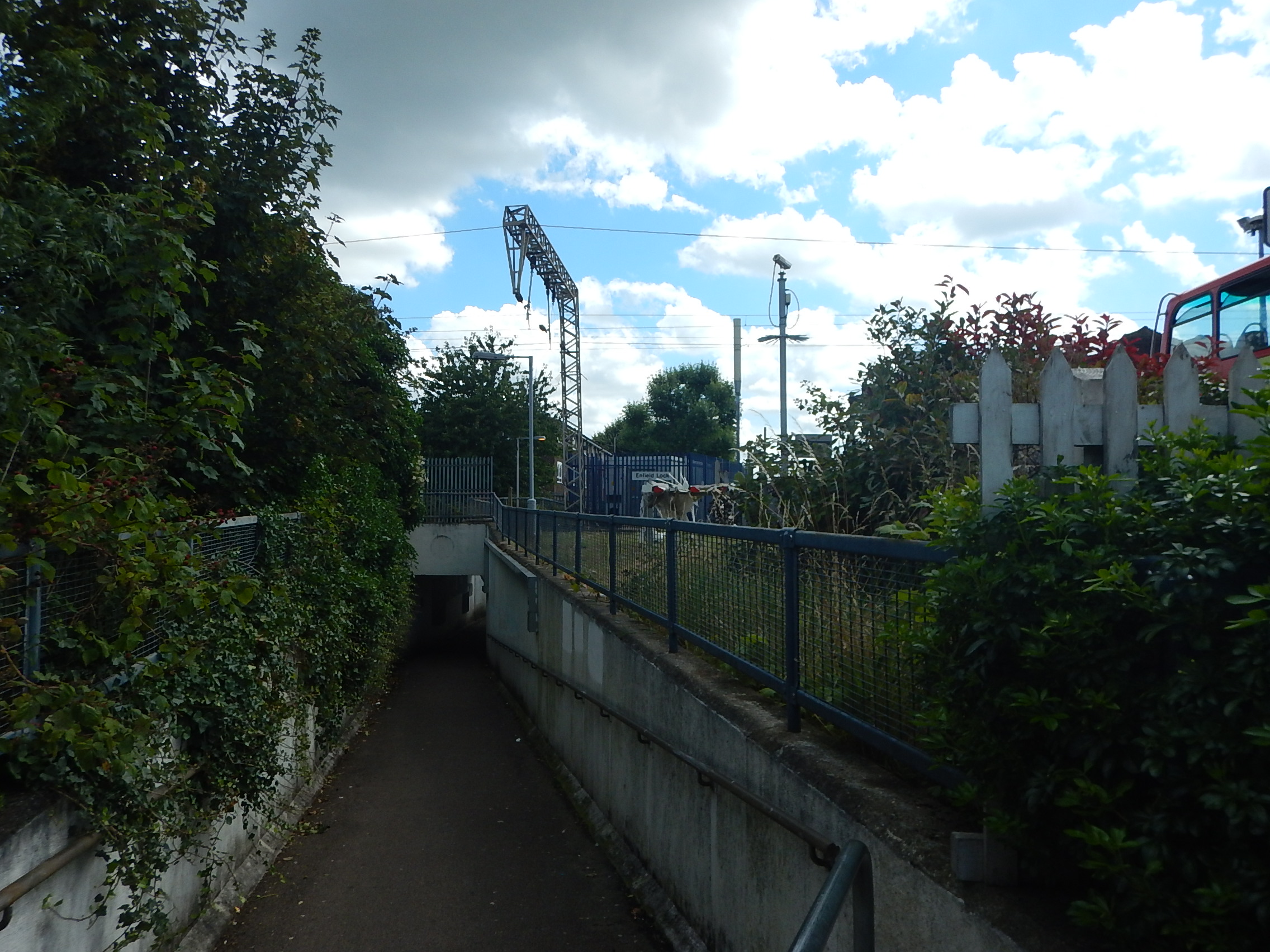
Could one like this, be dug under the railway at Woburn Sands?
The Met Line’s Croxley Rail Link May Be Resurrected
tThe title of this post, is the same as that of this article on Ian Visits.
I wrote Is The Croxley Rail Link To Be Given Lower Priority? in December 2016, where I said this.
I think that it is time to take a short time of reflection to look at this project and see, if other developments in the future, can improve rail links to Watford sufficiently.
After reviewing projects that will happen in the area, I asked set out two sections with my ideas for improvement, which I will now repeat.
Could A Lower-Cost Link Be Built?
I ask this question, specifically because of the report that TfL had said no, because the project is over-budget.
Ideally, the link would be built as a double track line from Watford High Street station, to where it joins the double-track branch to the current Watford station.
I have flown my helicopter over the route and there would appear to be a fair bit of space for a double -track line.
But there might be a couple of problems.
This picture, which I took going South, shows the bridge, where the Croxley Rail Link will join the Watford DC Line.

It looks fairly sound, but is it large enough for two tracks? I could see the next bridge and that was a modern structure with a lot more space.
Note too, the evidence of clearing up decades of tree growth.
But look at this Google Map of where the Croxley Rail Link will connect to the branch to Watford station.
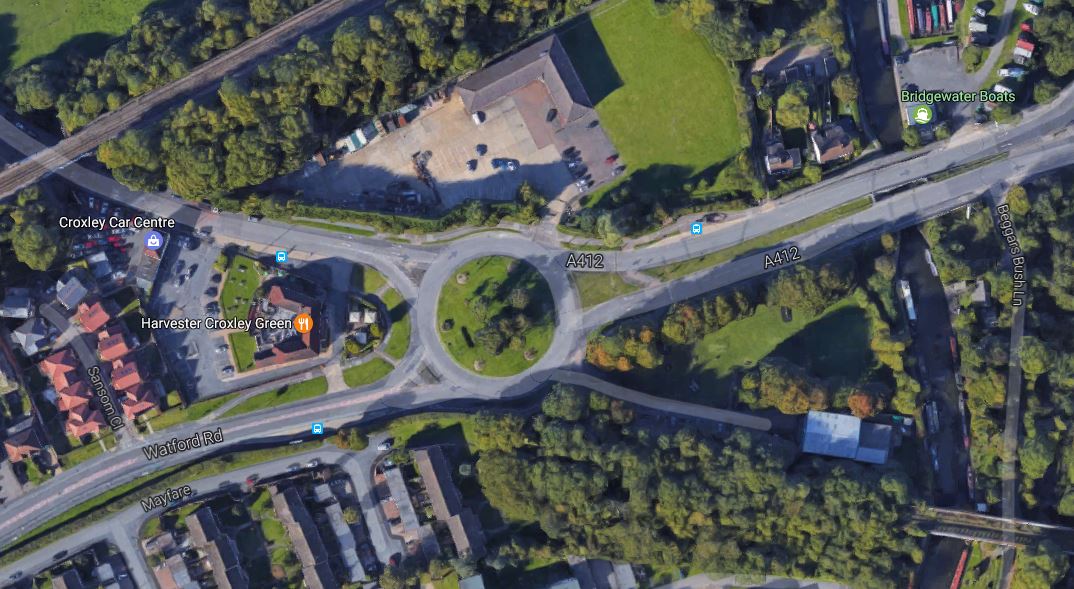
Note the branch to Watford station at the top left of the map and the remains of the old railway in the bottom-right, which can also be seen in the map of Cassiobridge station.
It could be difficult to thread a double-track viaduct through the area.
This visualisation from the Watford Observer shows current thinking.
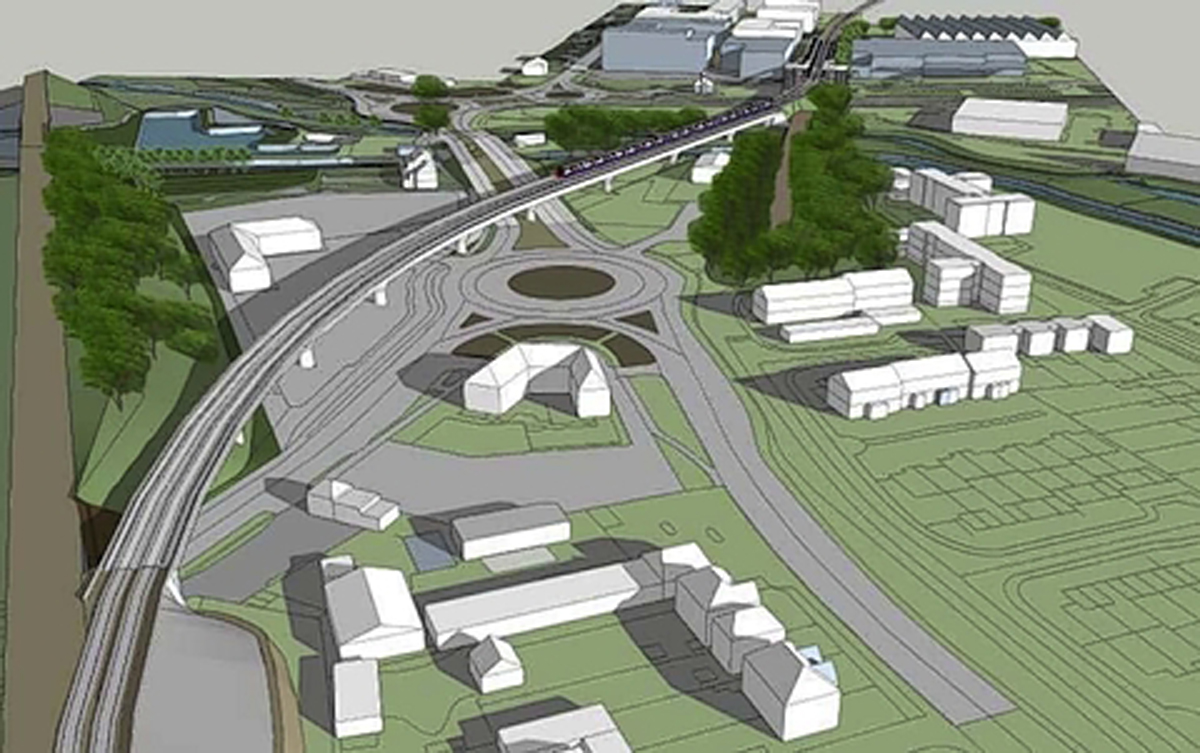
So would money be saved and perhaps a better design be possible?
- Could the viaduct be built with only a single-track between its junction with the branch to Watford station and the proposed Cassiobridge station? The route could revert to double track just to the East of Cassiobridge station.
- A single-track design of Cassiobridge station could also save money, but it would probably rule out too many future options.
As most of the route will be double-track, I doubt that a few hundred metres of single-track would have much impact on the operation of the link. It’s not as if, the Croxley Rail Link will be handling 24 tph.
I suspect that engineers and architects are working hard both to cut costs and make the link better.
A Watford Junction To Amersham Service
I think that if there is a good service between Watford Junction and Amersham, this might offer an alternative solution.
It would connect to London trains as follows.
- Watford Junction – Bakerloo, London Midland, Southern, Watford DC and possible West Coast Main Line services.
- Watford High Street – Cross-platform connection to Watford DC services.
- Croxley – Same platform connection to Metropolitan services to the existing Watford station.
- Rickmansworth – Chiltern for both London and all stations to Milton Keynes.
I believe that a train like London Overground’s new Class 710 train, which will be running on the Watford DC Line might be able to run the service without any new electrification, if it were to use onboard energy storage between say Watford High Street and Croxley stations.
Conclusion
I believe that Watford will get a better train service, whether the Croxley Rail Link is built or not.
Politics will decide the priority of the Croxley Rail Link, with the left-leaning South Londoner Sadiq Khan on one side and right-leaning Bucks-raised Chris Grayling on the other. In some ways, Watford is a piggy-in-the-middle.
My feeling is that on a Londonwide basis, that the Bakerloo Line Extension to Watford, solves or enables the solution of a lot of wider problems and the Croxley Rail Link is much more a local solution.
I think it could turn out to be.
- A mainly double-track route from Watford Junction to Amersham, but with portions of single track.
- No new electrification.
- Stations at Watford High Street, Watford Vicarage Road, Cassiobridge, Croxley and then all stations to Amersham.
- Four Class 710 trains per hour (tph), running on existing electrification and batteries between Watford Junction and Amersham.
- A redeveloped Watford station keeps its four tph to London.
It might even be simpler.
Conclusion – 10th November 2020
This is a new conclusion.
I feel something is possible, but it probably needs some of difficult negotiation, with some of the politicians excluded.
Tram-Train Operation To Continue In Sheffield As New Systems Proposed
The title of this post, is the same as that of this article on Rail Magazine.
This is the introductory paragraph.
Tram-trains will continue running in South Yorkshire beyond the end of the two-year trial period, with the Government believing it could act as an inspiration for similar schemes elsewhere.
The article also suggests that more than ten transport authorities want their own tram-train systems in cities including Manchester, Birmingham and Glasgow.
Hydroflex Takes To The Main Line
The title of this post is the same as that of an article in the November 2020 Edition of Modern Railways.
This is the opening paragraph.
Hydroflex, the UK;s first full-size hydrogen train, made its debut on the main line on 21 September, travelling from Long Marston to Evesham and back.
This looks like a good start.
I am not surprised that the conversion was designed and built by Birmingham University.
Look at this picture of myself in front of a detector in the Large Haldron Collidor at CERN in Geneva.

Much of the detector was built in the workshops at Liverpool University.
The quality of engineering in most universities is very high, which is surely a good omen for the future.
Work in Birmingham on Hydroflex seems to be proceeding apace, with the following objectives.
- More automation.
- Moving the hydrogen drive train components to rafts under the driving cars.
- Improving operating speed from the current 50 mph.
There is also this significant paragraph that quotes Helen Simpson of Porterbrook.
‘At Porterbrook we want to present a fleet of hydrogen trains as a commercial offering to operators’ Ms. Simpson adds, noting that moving equipment out of passenger saloons is an important element of this. Porterbrook will apply learning from its Class 769 electric/diesel bi-mode units, which have placed diesel engines beneath the driving vehicles. Ms. Simpson does not rule out retro-fitment on other classes of train, but notes a lot of work has been undertaken on converting 319s’.
The big difference between the Hydroflex and the Alstom Coradia iLint, is that the Hydroflex retains the capability to use overhead electrification, so the hydrogen power can be used as a range extender.
A Trip To Grantham Station – 4th November 2020
I hadn’t intended to go to Grantham station, but that’s what I did on the last day before lockdown.
Over the last couple of weeks, I’ve been talking to a guy in Lincolnshire, who read Energy In North-East Lincolnshire, on this blog.
Last week, we both realised that we’d worked together in the 1970s, when he worked at a bank in the City, and I did some data analysis for the section, where he worked.
He is unwell with cancer at the moment and suggested I come down and see him in Skegness, where he now lives with his wife.
So I arrived at Grantham and found that the connecting train was running nearly an hour late and even then it was terminating at Boston.
After a quick exchange of texts, I told him the bad news and he gave me the good news, that his condition had improved and would be able to see me after Christmas and/or lockdown.
Luckily, I was able to change my ticket and took the next train back to London, after taking these pictures of the station.
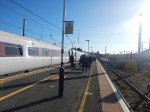
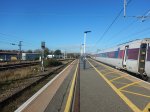
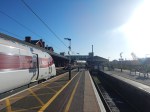
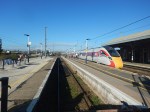
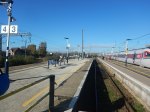
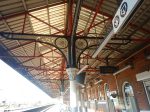
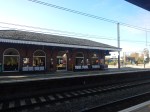
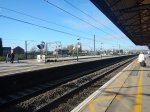
I just had time to have a last drink of Aspall cyder before lockdown, in the station bar.
These are some thoughts.
Platform Layout At Grantham
The Wikipedia entry for Grantham station says this about the platforms.
It is composed of four platforms; platforms 1 and 2 are on the East Coast Main Line and are responsible for express services between London and Scotland. Platform 1 serves exclusively London King’s Cross via Peterborough and Stevenage; Platform 2 serves cities of northern England and Edinburgh. Platform 2, 3 and 4 are formed from a large island platform structure. Platform 3 is a bay platform at the northern end of the station that is used to allow local trains to reverse, while Platform 4 is a two-way platform that is used by East Midlands Railway. Only Platform 1 has amenities, including toilets, refreshments and a buffet.
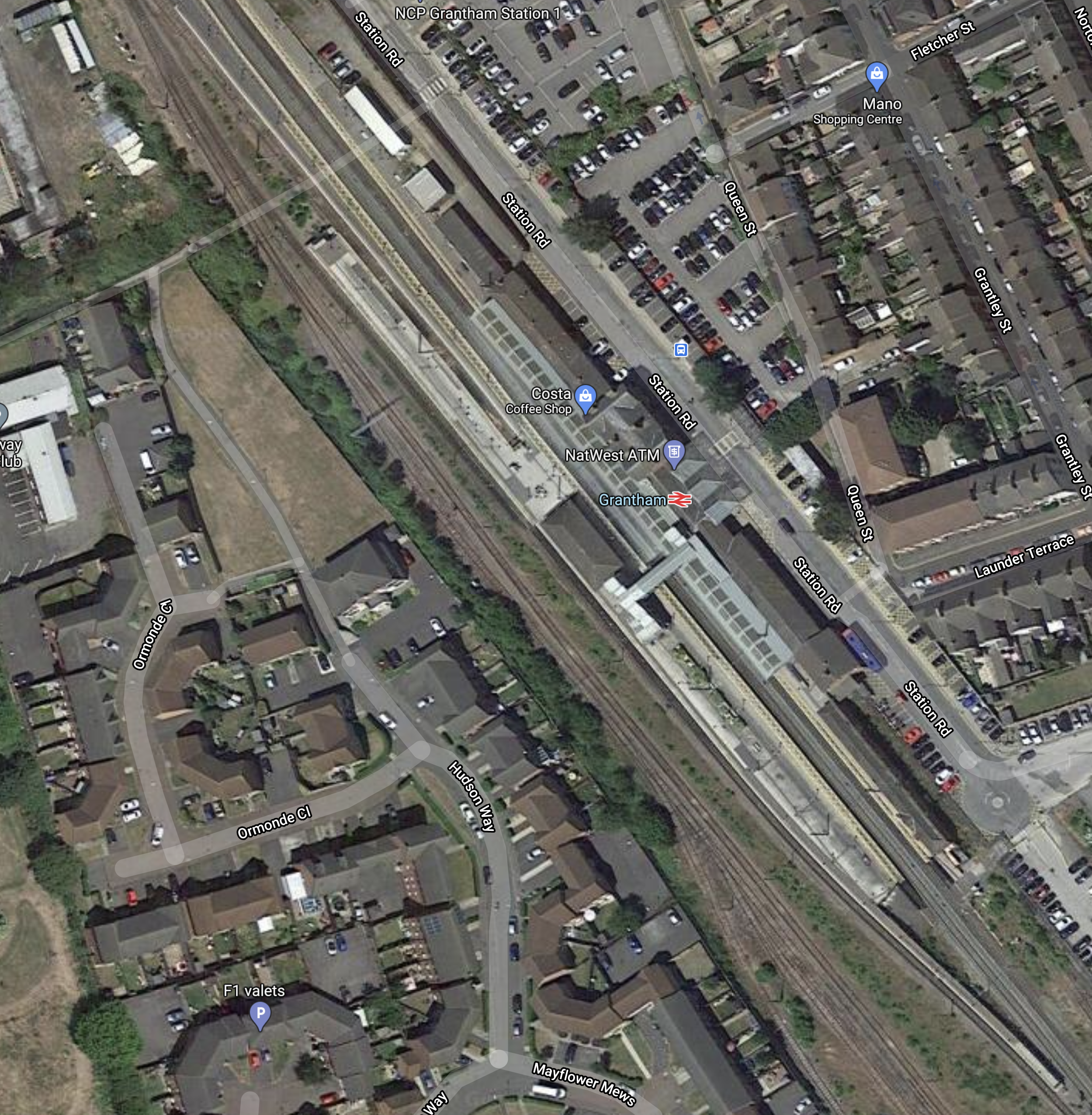
This Google Map shows the station.
Note.
- Platforms are numbered 1 to 4 from East to West.
- Platforms 1 and 2 are long enough to take two five-car Class 800 trains working as a pair.
- Platform 4 may be long enough for these pairs of trains or could be made so.
- All trains to and from Nottingham call in Platform 4.
- Trains from Nottingham to Peterborough call in Platform 4 before crossing over to the down lines.
- There would appear to be no easy way for a Southbound train on the East Coast Main Line to access Platform 4.
- Platform 3 didn’t get much use on the day I visited.
There is also an avoiding line to allow freight and other passing trains to avoid going through the platforms.
Services Through Grantham Station
Services stopping at Grantham are as follows.
- LNER – One tp2h – London Kings Cross and Harrogate via Stevenage, Grantham, Doncaster, Wakefield Westgate, Leeds
- LNER – One tp2h – London Kings Cross and Bradford Forster Square via Stevenage, Grantham, Doncaster, Wakefield Westgate, Leeds
- LNER – One tp2h – London Kings Cross and Lincoln via Stevenage, Peterborough, Grantham and Newark North Gate
- LNER – One tp2h – London Kings Cross and York via Stevenage, Peterborough, Grantham, Newark North Gate, Retford and Doncaster.
- Hull Trains – Five tpd – London Kings Cross and Hull via Stevenage, Grantham, Retford, Doncaster, Selby, Howden and Brough
- Hull Trains – Two tpd – London Kings Cross and Beverley via Stevenage, Grantham, Retford, Doncaster, Selby, Howden, Brough, Hull and Cottingham.
- East Midlands Railway – One tph – Liverpool Lime Street and Horwich via Peterborough and Nottingham
- East Midlands Railway – One tph – Nottingham and Skegness
Note.
- tph is trains per hour
- tp2h is trains per two hours.
- tpd is trains per day.
Adding the services together, there is a frequent service between Stevenage, Peterborough, Grantham and Newark North Gate.
Train Timings Between London Kings Cross and Grantham
The fastest trains take 67 minutes between London Kings Cross and Grantham.
- The distance is 105.5 miles
- This would be an average speed of 94.5 mph.
- The East Coast Main Line is being upgraded with in-cab digital ERTMS signalling, which will allow 140 mph running.
- The works at Kings Cross station will have increased the station’s capacity.
I wouldn’t be surprised to see a time between London Kings Cross and Grantham, of under an hour, time-tabled in the near future.
Could There Be A London Kings Cross and Nottingham Service Via Grantham?
On this page on UK Rail Forums, this was posted in 2010.
According to today’s East Midlands news on BBC1, Network Rail is considering inviting tenders to run a faster service from Nottingham to London King’s Cross via Grantham, from 2014. The present service of around 1hr 45m is considered too slow by passengers.
How would this new service be reconciled with the much-publicised capacity constraints at Welwyn and at King’s Cross itself? Will the proposed possible service be diesel-powered under the wires from Grantham, or will the Grantham-Nottingham stretch be electrified? Interesting times.
Technology has changed since 2010 and the East Coast Main Line has improved.
- King;s Cross station is being sorted.
- Digital ERMTS signalling is coming to the East Coast Main Line
- Hatachi’s new Class 800 trains have arrived and could go between Grantham and Nottingham on diesel power.
- Grantham and Nottingham takes 35 minutes on a service with three stops, that’s timed for a Class 153 train.
- Grantham and Nottingham is just over twenty miles.
As I said earlier, that I believe Grantham and London could be inside an hour, I wouldn’t be surprised to see a Nottingham and London Kings Cross service in under an-hour-and-a-half.
But it could be better than that?
Hitachi’s Regional Battery Train
This is the train that could unlock the potential of a London Kings Cross and Nottingham service.
This Hitachi infographic gives details of the train.

Note that the train has a range of 90 kilometres or 56 miles, at speeds of up to 100 mph.
The trains would be ideal for a London Kings Cross and Nottingham service.
- They would charge the batteries, whilst using the electrification on the East Coast Main Line.
- The battery range is such, that it would not need any charging between leaving Grantham and returning there from Nottingham.
- They could travel at speeds of up to 140 mph on the East Coast Main Line, once the digital ERTMS signalling is installed.
- Stops could be at Stevenage, Peterborough and Grantham.
LNER’s five-car Class 800 trains, which are branded Azumas can be turned into Regional Battery Trains, by replacing the three diesel engines with battery packs.
I would suspect that times of around eighty minutes, between London Kings Cross and Nottingham, could be in order.
A Park-And-Ride For Nottingham And London
Nottingham has several Park-and-Ride sites, that are served by the trams. of the Nottingham Express Transit, which already calls at Nottingham station.
Would another site on the rail line between Grantham and Nottingham be useful?
This map shows. where the rail line crosses the A46, near its junction with the A52.
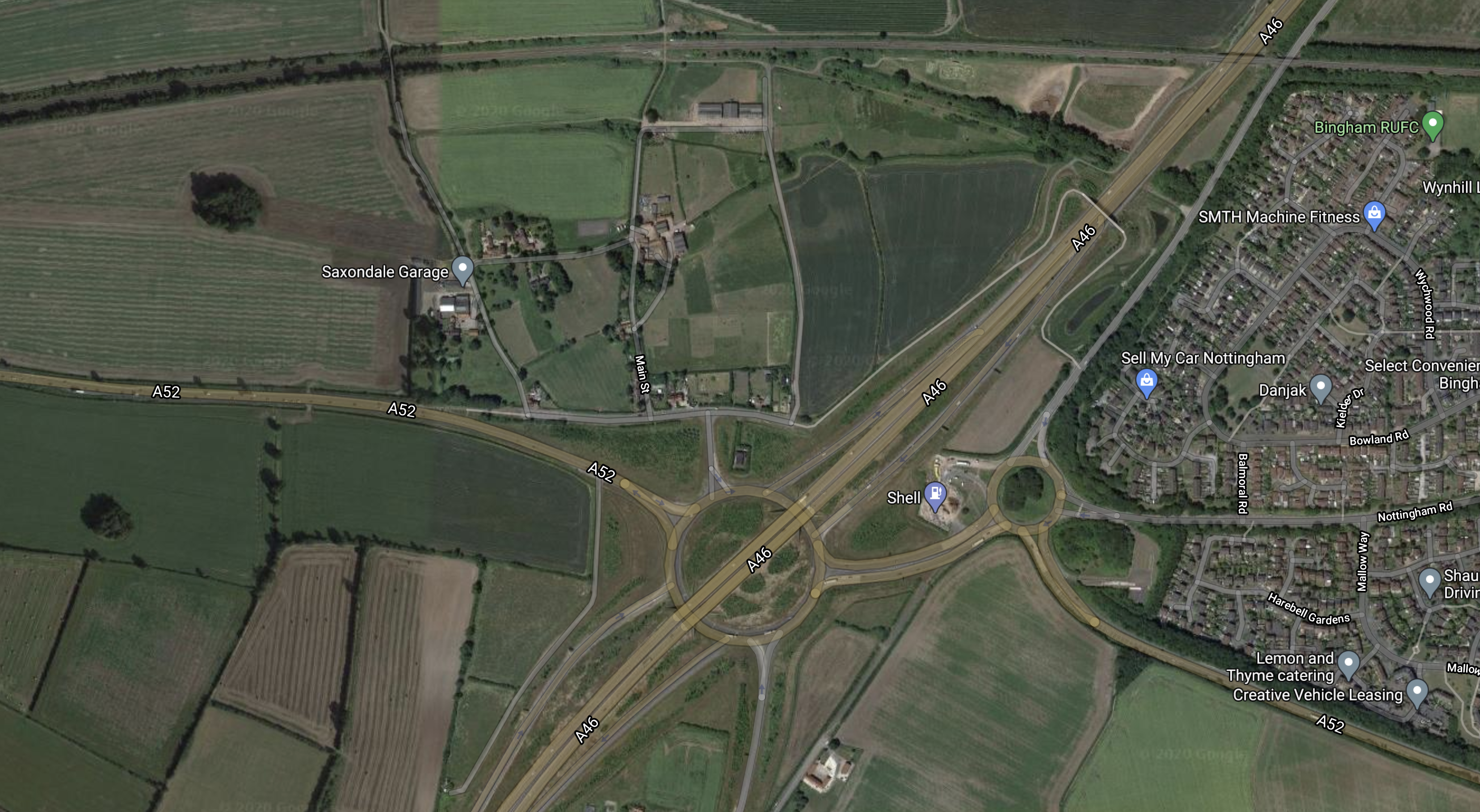
Note the Grantham and Nottingham line running across the top of the map and the big junction between the A52 and the A46.
It looks to be a good place for a Park-and-Ride station, if it was decided one needed to be built.
There might also be sites further in towards Nottingham, close to the racecourse or the Holme Pierpoint National Watersports Centre.
A Combined Nottinghamshire And Lincolnshire Service
I originally called this section a Combined Nottingham And Lincoln Service, but I don’t see why it can’t serve most of both counties.
Consider.
- Birmingham, Brighton, Cambridge, Oxford and Southend get two services from the capital by different routes.
- Hitachi’s Class 800 trains can Split/Join in around two minutes.
- Running five-car Class 800 trains all the way between London Kings Cross and Lincoln is not a good use of a valuable train path on the East Coast Main Line.
- Lincoln is just 16.5 miles and 24 minutes from the East Coast Main Line.
- Nottingham is 22 miles and could be 20 minutes from the East Coast Main Line.
- Both Lincoln and Nottingham would be in battery range for a return trip from the East Coast Main Line.
- Platforms 1, 2 and 4, at Grantham are long enough to handle two Class 800 trains, running as a pair and regularly pairs call in Platforms 1 and 2.
I believe it would be possible for a pair of Regional Battery Trains to do the following.
- Leave London Kings Cross and run to Grantham in an hour, stopping at Stevenage and Peterborough.
- Stop in Platform 4 at Grantham station, where the trains would split.
- One train would continue on the East Coast Main Line to Newark North Gate station, where it would leave the East Coast Main Line and go to Lincoln.
- The other train would continue to Nottingham.
Note.
- Coming back, the process would be reversed with trains joining in Platform 1 or Platform 4 at Grantham.
- There may need to be some track and signalling modifications, but nothing too serious or challenging.
Connections to other parts of Nottinghamshire and Lincolnshire would be as follows.
- Nottingham and Nottinghamshire would be connected using the Nottingham Express Transit and the Robin Hood and Maid Marian Lines from Nottingham station.
- All stations between Grantham and Nottingham would be reached from either Grantham or Nottingham.
- All stations to Boston and Skegness would be reached from Grantham.
- All stations between Newark and Lincoln would be reached from either Lincoln or Newark.
- All stations between Doncaster and Lincoln would be reached from either Doncaster or Lincoln.
- All stations between Peterborough and Lincoln would be reached from either Lincoln or Peterborough.
- All stations to Market Rasen, Grimsby Town and Cleethorpes would be reached from Lincoln.
Note.
- I feel that some Lincoln services could be extended to Cleethorpes via Market Rasen and Grimsby Town.
- Hopefully, a timetable could be developed, so that no connection was overly long.
Most of the distances are not unduly long and I would hope that most secondary services could be battery electric trains, which would be charged in the larger stations like Boston, Cleethorpes, Doncaster, Grantham, Lincoln, Mansfield, Nottingham, Peterborough, Sleaford, Spalding and Worksop.
Doncaster, Grantham and Peterborough already have 25 KVAC overhead electrification and this could be used to charge the trains, with possibly some small extensions.
The other stations will need a number of systems to charge the trains, as they pass through.
Some stations will be suitable for the installation of the standard 25 KVAC overhead electrification, but others will need specialised charging systems.
It appears that Adrian Shooter of Vivarail has just announced a One-Size-Fits-All Fast Charge system, that has been given interim approval by Network Rail.
I discuss this charger in Vivarail’s Plans For Zero-Emission Trains, which is based on a video on the Modern Railways web site.
There is more about Vivarail’s plans in the November 2020 Print Edition of the magazine, where this is said on page 69.
‘Network Rail has granted interim approval for the fast charge system and wants it to be the UK’s standard battery charging system’ says Mr. Shooter. ‘We believe it could have worldwide implications.’
Vivarail’s Fast Charge system must surely be a front-runner for installation.
What frequency of the Combined Nottinghamshire And Lincolnshire service would be needed and could be run?
Consider.
- Currently, Lincoln is served with one tp2h with a five-car Class 800 train running the service.
- The Lincoln service alternates with a one tp2h service to York, which also calls at Retford and Doncaster.
- Work is progressing on increasing the number of high speed paths on the East Coast Main Line.
Obviously, an hourly service to both Nottingham and Lincoln would be ideal and would give most of the two counties an hourly service to and from London Kings Cross with a single change at either Doncaster, Grantham. Lincoln, Newark, Nottingham or Peterborough.
- An hourly service might be difficult to timetable because of the York service.
- But I don’t believe it would be impossible to setup.
Especially if after, the Eastern leg of High Speed Two opens, East Coast Main Line services from London Kings Cross to North of York are replaced in part, by High Speed Two services.
The Effect Of High Speed Two
High Speed Two will build a new station at Toton called East Midlands Hub station.
- The station will be situated about halfway between Nottingham and Derby, with frequent connections to both cities.
- There will be frequent services to Birmingham, Leeds, London, Newcastle and Sheffield.
- I wouldn’t be surprised to see a direct service to Edinburgh and Glasgow from the station.
- There will be a lot of economic growth around the station.
I very much feel, that a lot of passengers were travel to East Midlands Hub station for both long distance trains and to access the Derby-Nottingham area.
A Cambridge And Birmingham Service
In How Many Trains Are Needed To Run A Full Service On High Speed Two?, I proposed a Cambridge and Birmingham Curzon Street service.
This is what I said.
The obvious one is surely Cambridge and Birmingham
- It would run via Peterborough, Grantham, Nottingham and East Midlands Hub.
- It would connect the three big science, engineering and medical centres in the Midlands and the East.
- It would use High Speed Two between Birmingham Curzon Street and East Midlands Hub.
- It could be run by High Speed Two Classic-Compatible trains.
It might even be a replacement for CrossCountry’s Stansted Airport and Birmingham service.
Timings for the various legs could be.
- Cambridge and Peterborough – CrossCountry – 49 minutes
- Peterborough and Grantham – LNER – 19 minutes
- Grantham and Nottingham -Best Estimate – 20 minutes
- Nottingham and Birmingham Curzon Street – Midlands Rail Engine – 33 minutes
Note.
- This totals to two hours and one minute.
- The current service takes two hours and forty-four minutes.
- The Ely and Peterborough and Grantham and Nottingham legs are not electrified.
If the route were to be fully electrified or the trains were to be fitted with batteries, the time via High Speed Two, would surely be several minutes under two hours.
Conclusion
These objectives are possible.
- An hourly service between London Kings Cross and Grantham, Lincoln, Newark and Nottingham.
- A very much more comprehensive train service for Nottingham and Lincolnshire.
- A two hour service between Cambridge and Birmingham.
Most of the services would be zero carbon.
No major infrastructure would be needed, except possibly completing the electrification between Nottingham and Ely, some of which is probably needed for freight trains anyway.
Alternatively, the High Speed Two Classic-Compatible trains could be fitted with batteries.
Liquid Hydrogen Tested As An Auto Fuel
The title of this post is the same as that of this article on the Lethbridge Herald.
I find it strange that I have only picked up this story from a local newspaper in Alberta.
Lethbridge is a city, with a population of a bit over 100,000. It doesn’t seem to have much to do with Alberta’s oil industry, which might see hydrogen as a threat.
This is the introductory paragraph.
A recent demonstration project was evaluated for a hydrogen-fuelled vehicle by the U.S. Department of Energy Division. This demonstration will be applicable to other means of transportation such as trucks and trains.
This paragraph describes the conversion.
They used a 1979 Buick Century four-door sedan with 3.8-litre displacement, turbocharged V-6 engine. This vehicle provided a good compromise on trunk space for installation of the DFVLR tank, passenger accessibility for demonstration, engine compartment space for versatility in selection of substitute engines, available engine sizes, efficiency and suitability for modification of hydrogen operation.
I am left with the impression, after reading the article, that it might be possible for large American style cars to be converted to hydrogen.
Hydrogen Fuel Cell Train To Be Developed With EU Funding
The title of this post, is the same as that of this article on Railway Gazette.
This is the introductory paragraph.
The FCH2RAIL consortium’s €14m project to design, develop and test a prototype hydrogen fuelled train has been awarded a €10m grant from the European Commission’s Fuel Cells & Hydrogen Joint Undertaking as part of the Horizon 2020 Programme.
The FCH2RAIL consortium is led by CAF, who have a factory at Newport in South Wales.
CAF are actively working on a battery electric version of their Class 331 train for the UK, which I wrote about in Northern’s Battery Plans.
The battery-electric Class 331 train will involve adding an extra car with batteries.
Will CAF be looking to apply this hydrogen technology developed from the FCH2RAIL programme on UK-sized trains?
They could add a fourth car to a Class 331 train with all the necessary hydrogen gubbins.
 The Anonymous Widower