UK Energy Grid Needs £60bn Upgrade To Hit Green Target, Plan Says
The title of this post, is the same as that of this article on the BBC.
This is the sub-heading.
The UK’s electricity network needs almost a further £60bn of upgrades to hit government decarbonisation targets by 2035, according to a new plan.
These five paragraphs explain the plan.
About 4,000 miles of undersea cables and 1,000 miles of onshore power lines are needed, said the National Grid’s Electricity Systems Operator (ESO).
The investment would add between £20 to £30 a year to customer bills, it said.
The government said the ESO’s plans were preliminary and yet to pass a “robust planning process”.
The plans were written up by the ESO, the organisation which runs the electricity network and would run the updated system it is calling for too. It is currently owned by National Grid but will transfer into government ownership later this year.
Its latest £58bn estimate is for work needed between 2030 and 2035 and comes on top of a previous £54bn estimate for work taking place between now and 2030.
These are my thoughts.
The Amount Of Undersea Cable
Edinburgh and London are roughly 400 miles apart as the train runs, so it looks like there could be the equivalent of ten underwater cables between the North of Scotland and England.
In Contracts Signed For Eastern Green Link 2 Cable And Converter Stations, I talked about the proposed 2 GW link between Peterhead in Scotland and Drax in England, which will be a double cable. So there’s the first two of these long cables.
It looks to me, that National Grid are proposing to use underwater cables wherever they can, so they avoid large expensive planning rows stirred up by Nimbies.
Monitoring The Undersea Cables
Last week Ofgem gave National Grid a £400,000 grant to develop new innovative technologies, which I wrote about in £400k For National Grid Innovation Projects As Part Of Ofgem Fund To Help Shape Britain’s Net Zero Transition.
One of the project is called HIRE – Hybrid-Network Improvement & Reliability Enhancement and will be used to check all these cables are performing as they should.
My electrical engineering experience tells me, that there must be some cunning way, that will detect that something is happening to the cable. The involvement of a technology company called Monitra in the project is a bit of a giveaway.
How Much Will It Cost Me?
Currently, UK consumers pay about £30 per year to have electricity delivered, so this will rise to between £50 and £60 per year.
That is just over a pound a week. I would pay about the same for a resident’s parking permit outside my house for an electric car and probably three times more for a petrol or diesel car.
Do We Have Enough Cable?
Two undersea cable factories are under development in Scotland and I suspect the 4,000 miles of undersea cables will be delivered on schedule and covered in saltires.
What About T-Pylons?
The latest onshore electricity transmission line between Hinckley Point C and Bristol, doesn’t use traditional pylons.
It uses T-pylons like these to connect the 3.26 GW nuclear power station.
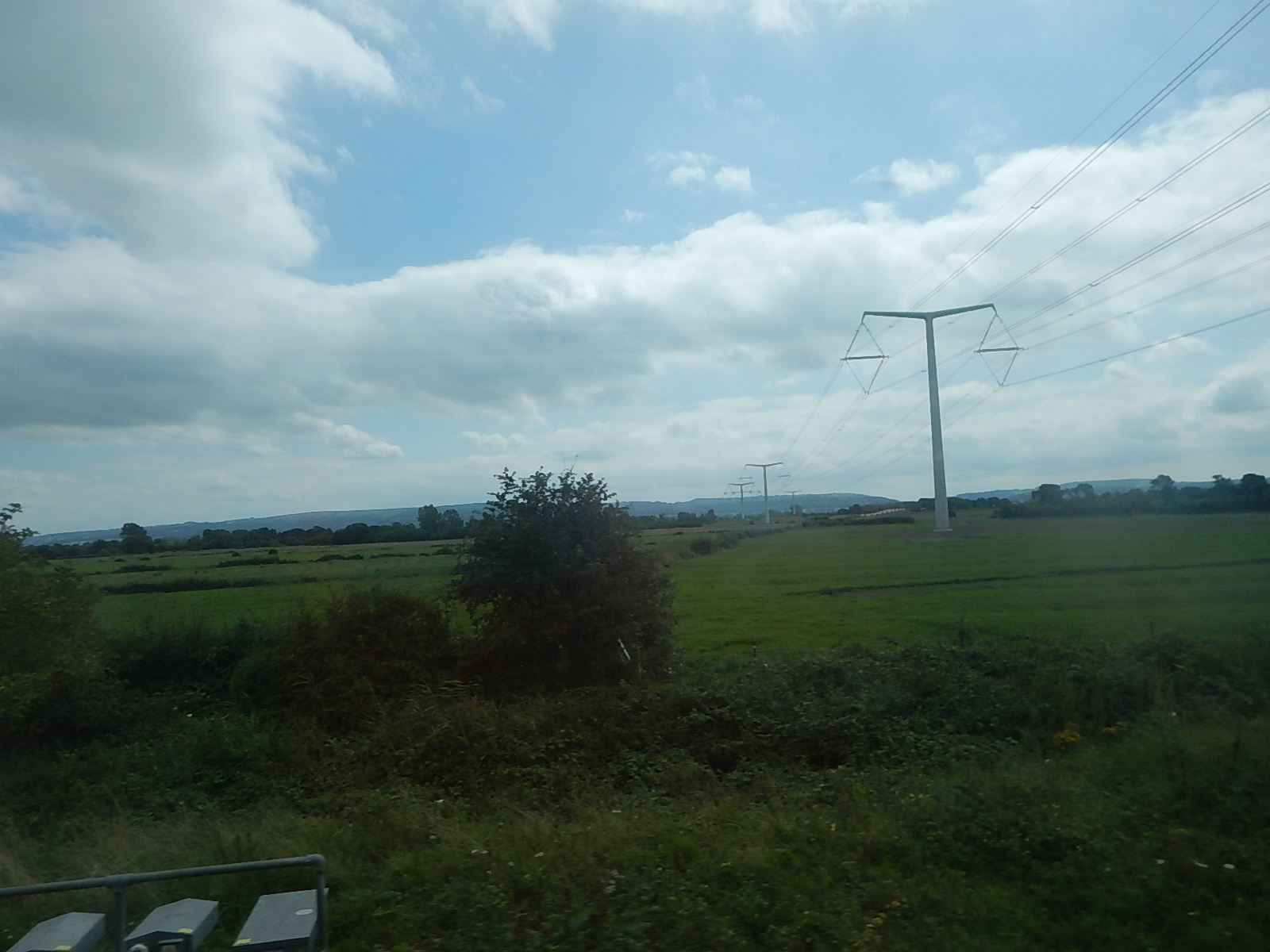
Note that they are shorter, designed to be less intrusive, have a smaller footprint and are made from only ten parts.
I suspect they will cost less to install and maintain.
There is more on T-pylons in National Grid Energise World’s First T-Pylons.
I wouldn’t be surprised that some of the oldest traditional pylons will be replaced by T-pylons.
I am surprised that T-pylons are not mentioned in the BBC article.
I like T-pylons. How do you feel about them?
Eastern Green Link 2
This press release from National Grid, describes Eastern Green Link 2 like this.
Eastern Green Link 2 (EGL2) is a 525kV, 2GW high voltage direct current (HVDC) subsea transmission cable from Peterhead in Scotland to Drax in England delivered as a joint venture by National Grid and SSEN Transmission.
This map from National Grid, shows the route of the Eastern Green Link 2.

The Northern landfall is at Sandford Bay and the Southern landfall is at Wilsthorpe Beach.
This Google Map shows Sandford Bay and Peterhead power station.
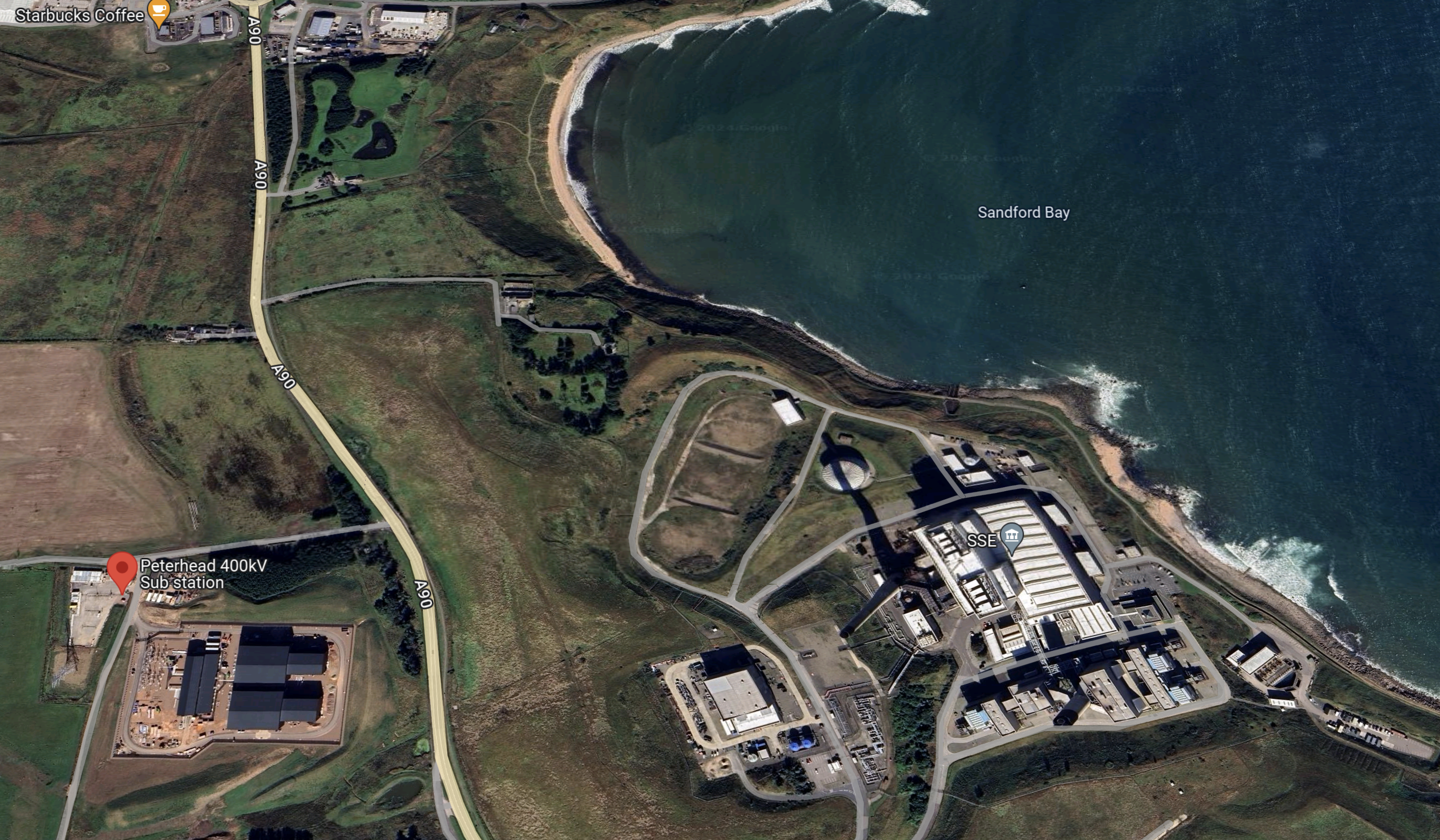
Note.
- Sandford Bay occupies the North-East corner of the map.
- The red arrow indicates the main 400kV sub-station at Peterhead.
- The 2177 MW gas-fired Peterhead power station is to the East of the sub-station marked as SSE.
This second Google Map shows the onshore route of the cable from Wilsthorpe to Drax.

Note.
- Flamborough Head is in the North-East corner of the map.
- Wilsthorpe Beach is at Bridlington a couple of miles South of Flamborough Head.
- The red arrow indicates Drax Power station.
- An onshore underground cable will be installed from landfall in Wilsthorpe to a new onshore converter station built in Drax.
The EGL2 HVDC cable connection from Scotland to England consists of 436km of submarine cable and 69km of onshore cable.
Both converter stations will be on existing power station sites and the major onshore works will be the underground cable between Wilsthorpe and Drax.
Where Does Drax Go From Here?
Currently, Drax power station is a 2595 MW biomass-fired power station.
There are now other large power sources that could replace some or all of the output of Drax power station.
- 2GW of Scottish wind power coming to Drax on Eastern Green Link 2.
- 6 GW of offshore wind is being developed at the Hornsea wind farms.
- 8 GW of offshore wind is being developed at the Dogger Bank wind farms.
- 2.5 GW from the three gas-fired power stations at Keadby, two of which are likely to be fitted with carbon capture.
- 1.8 GW from the proposed hydrogen-fired Keadby Hydrogen power station.
Given the bad feelings many have about Drax burning biomass, with 20.3 GW of electricity, you might think that shutting down Drax would be a simple solution.
But, according to Drax’s Wikipedia entry, it has a unique property.
Despite this intent for baseload operation, it was designed with a reasonable ability for load-following, being able to ramp up or down by 5% of full power per minute within the range of 50–100% of full power.
So Drax could be very useful in balancing the grid, by ramping up and down to fill the gap between production and need.
In addition, there is good biomass. This is from the Wikipedia entry.
A 100,000 tonne pa capacity straw pelletization facility was constructed at Capitol Park, Goole in 2008.
Drax are also promoting BECCS or Bioenergy carbon-capture and storage.
There is a Wikipedia entry for Bioenergy With Carbon Capture And Storage, of which this is the first couple of sentences.
Bioenergy with carbon capture and storage (BECCS) is the process of extracting bioenergy from biomass and capturing and storing the carbon, thereby removing it from the atmosphere. BECCS can theoretically be a “negative emissions technology” (NET).
I do feel that carbon capture and storage is a bit like sweeping the dust under the carpet, when you sweep the floor around it.
But carbon capture and use could be another matter.
This Google Map shows the Drax site.

Note how it is surrounded by agricultural land.
Could the power station be the source of pure carbon dioxide to be fed in greenhouses to flowers, herbs, salad vegetables, tomatoes and other plants?
I suspect there’s productive life left in Drax power station yet!
LionLink
LionLink, that is being developed by National Grid is a new type of interconnector, called a multi-purpose interconnector, that will connect Suffolk and The Netherlands via any convenient wind farms on the way. This means that the electricity generated can go where it is needed most.
I wrote about LionLink in World’s Largest-Of-Its-Kind Power Line To Deliver Clean Power To 1.8m UK Homes And Boost Energy Security.
Other Multi-Purpose Interconnectors
I can see other multi-purpose interconnectors like LionLink being built around the UK.
- There could be one across the Dogger Bank to link out 8 GW of Dogger Bank wind farms with those of the Dutch, Danes and Germans on their section of the bank.
- NorthConnect could be built between Scotland and Norway via some of the wind farms being developed to the North-East of Scotland.
- Could wind farms to the North of Ireland use a multi-purpose interconnector between Scotland and Northern Ireland.
- I can also see one or possibly two, being built across the Celtic Sea to link Devon, South Wales and Southern Ireland via the wind farms being developed in the area.
- Will we also see a Channel multi-purpose interconnector to transfer electricity along the South Coast of England?
Some of these multi-purpose interconnectors could be key to creating a revenue stream, by exporting electricity, to countries in Europe, that have a pressing need for it.
Conclusion
National Grid’s excellent plan will lead to the end of the practice of shutting down wind turbines. The spare electricity will be exported to Europe, which will surely create a good cash-flow for the UK. This in turn will encourage developers to create more wind farms in the seas around the UK’s coasts.
£400k For National Grid Innovation Projects As Part Of Ofgem Fund To Help Shape Britain’s Net Zero Transition
The title of this post, is the same as that, of this press release from National Grid.
These three bullet points, act as sub-headings.
- Three transmission and distribution network innovation projects receive green light
- Funding kickstarts projects for the discovery phase of Ofgem innovation scheme
- 14 National Grid projects worth £4m have won innovation funding since scheme began
These are the three projects.
HIRE – Hybrid-Network Improvement & Reliability Enhancement
This is National Grid’s description of the £135,000 project.
Researching new state-of-the-art condition monitoring to improve the commissioning and operation of offshore cables. This new, robust system will mitigate the risk of failure, overcome the limitations of existing techniques (e.g. cable length) and aid network operators in decision making for a more flexible grid. PROJECT PARTNERS: University of Manchester, DNV, Monitra, SSEN Transmission.
With all the offshore cables, that have been laid around the UK, Europe and the world in recent years, I am surprised that such a system has not been developed before.
But I suspect, that the project partners know that if they can develop a superior cable monitoring system, then it could be a nice little earner in addition to its job with UK offshore cables.
According to their web site, Monitra seem to be the monitoring experts.
This is the mission statement on their home page.
Our aim is to maximise the uptime of every high voltage asset worldwide.
I like this company’s attitude and it should make the world a better place.
I certainly think that the £135,000 will be well spent.
REACH – Rural Energy And Community Heat
This is National Grid’s description of the £120,000 project.
Working with rural community energy groups to develop a modular rural energy centre that will help communities make cost effective decarbonisation plans. The solution will offer shared low carbon heating, rapid EV charging, and renewable generation in areas not served by commercial markets, and where there is limited electricity network capacity.
Rolls-Royce mtu seem to have a system, that might go some way to satisfy National Grid’s ambitions, that I wrote about in Would You Buy A Battery Energy Storage System From Rolls-Royce?.
Road to Power
This is National Grid’s description of the £140,000 project.
Developing specific tools to forecast future energy consumption and infrastructural impact of works, to support the street and road works sector as it decarbonises 7.8TWh of energy demand across 700,000 major works in the sector’s pivotal transition to net zero by 2030.
This sounds like an excellent idea. Especially, if it makes street and road works quieter and less polluting.
Conclusion
I like these three projects and have already added them to my list of Google Alerts.
Bidders Circle ‘Elvis Airport’ A Decade After The SNP Bought It For £1
The title of this post, is the same as that of this article in The Times.
This is the sub-heading.
Prestwick has cost taxpayers millions since it was nationalised by the SNP in 2013. A consortium plans a bid, but can the Nats let go of Sturgeon-era stateism?
These are the first two paragraphs.
It was always going to be difficult keeping a lid on the arrival of Elvis Presley at a US military base in Prestwick, Ayrshire. “Where am I?” he asked as he stepped off the plane and into the biting wind that whipped off the Firth of Clyde.
March 3, 1960 was a momentous day for the screaming youngsters who engulfed the American singer as he set foot on British soil for the first and only time. For Presley, it was his last stop on his return from Germany after two years of military service. For Prestwick, it meant being immortalised in British trivia for its brief flirtation with The King.
But now it appears that a consortium has a plan for the airport and has made a bid.
These are my thoughts.
Prestwick Airport
Prestwick Airport, which is 32 miles SouthWest of Glasgow, is an airport that has seen busier times.
This OpenRailwayMap shows the Airport.

Note.
- The airport has two runways at right angles.
- The longer runway is 3,000 metres long.
- The red line is the electrified Ayrshire Coast Line, which runs between Glasgow Central and Ayr.
- There is a station at the airport.
- The black line going across the map is an unelectrified railway line, which eventually leads to the West Coast Main Line.
The airport does have four very useful assets.
- A very long runway capable of handling the largest and heaviest aircraft.
- A railway station.
- Plenty of space.
- The airport has plenty of available landing and take-off slots.
I also suspect that a rail connection could be developed to the West Coast Main Line.
Prestwick As A Cargo Airport
Someone commenting in The Times, suggested that Prestwick could become a cargo airport.
- The main runway could accommodate the largest and heaviest cargo aircraft.
- There is space for stands for large aircraft and warehouses.
- A rail link to the electrified West Coast Main Line could be built.
The airport could have a very high capacity.
A Rail Connection To The West Coast Main Line
This could be very beneficial for air-cargo at Prestwick.
- It would be less than ninety miles to the West Coast Main Line.
- It is only single-track as British Rail removed the second track.
- Cargo Services could be run all over the UK mainland.
- There could even be an airport service from Carlisle.
A zero-carbon rail service for freight, passengers and staff from both Glasgow and Carlisle would enhance the green credentials of the airport.
Where Would Planes Fly?
It looks like a modern freighter aircraft like a Boeing 747-8F could fly at maximum weight to nearly all the USA.
But because Prestwick Airport is further North, It does possibly have a wider range of airports, it can reach.
What Is The Closest Airport In North America?
The two airports on Newfoundland; Gander and St. John’s are probably the two closest being about 2,000 miles from Prestwick.
- Both airports have long runways.
- I suspect a rail terminal could be arranged at the airport to take cargo through the Chunnel to Europe.
- Could USAF Galaxies even be used to bring over American tanks and guns for Ukraine? The range of a Galaxy at maximum weight is 2,600 miles.
- They could be delivered by rail to Ukraine.
I suspect there will be times, where the shorter routes could be useful.
Could Cargo Change Planes At Prestwick?
On some routes like perhaps New York and India, might it be more efficient to change planes at Prestwick.
Could Cargo Planes Refuel At Prestwick?
Planes can only fly so far and is Prestwick in the right place to refuel a long flight?
Prestwick Could Be A Viable Cargo Airport For North America?
I am convinced that Prestwick and North American could be a viable air cargo route.
Zero-Carbon Air Cargo
In the next few years, Scotland will have much more electricity, than it needs, due to all the wind farms in the seas around the country and much of the spare electricity could be converted into hydrogen.
So does a cargo operator plan to run zero-carbon aircraft powered by hydrogen between North America and Prestwick?
- Remember it’s only 2,000 miles between St. John’s or Gander and Prestwick.
- The ideal aircraft to convert to hydrogen, must surely be an Airbus A 380, as there’s a lot of space in the fuselage for a hydrogen tank.
- Cargo could be brought to Prestwick in zero-carbon trains from all over the UK.
Amazon might like the idea of zero-carbon parcels across the pond!
Could An Airbus A380 Be Converted To Hydrogen?
This article on Simple Flying is entitled Airbus Plans A380 Hydrogen Flights In 2026 After Successful Power On Of ZEROe Engine.
The header picture shows a visualisation of an Airbus A 380, with a fifth engine with a propeller mounted on the top of the fuselage. The A 380 will be testing this electric engine, so that it can be fitted in the ZEROe Turboprop sometime around 2030.
This is a visualisation of the ZEROe Turboprop.

Note,
- The hydrogen tank will probably be behind the passenger compartment.
- The A 380, that will be testing the engine is no ordinary A 380. It is the very first and Airbus use it as a flying laboratory for new technology.
- I wouldn’t bet against one of its next jobs, is to test turbofan engines running on hydrogen.
I wouldn’t be surprised that in a few years, Airbus demonstrate an A 380 flying between Europe and North America on hydrogen.
A Zero-Carbon Air Bridge Between Europe And North America
Or does Westjet fancy a zero-carbon shuttle service, which would appeal to the Gretas of this world?
It has been rumoured, that the possible buyers of Prestwick are linked to Westjet.
As soon, as someone announces, a flight like this across the Atlantic, I’ll be signing up!
If the worse should happen, which I think would be unlikely, it would surely be a less painful death, than that of my wife’s from a rare cancer.
Conclusion
There are certainly, possibilities at Prestwick.
The Modern Way To Grow Tomatoes
I was looking around the Centrica Business Solutions web site, when I found this page, which is entitled Second CHP Powers New Greenhouses At Frank Rudd & Sons, that describes how tomatoes are grown in large greenhouses.
These paragraphs introduce Frank Rudd & Sons and what they do.
Frank Rudd & Sons is a family-run producer of cherry vine and plum tomatoes, generating around 1,500 tonnes of produce every year. Based in Over Peover, near Knutsford, the business was started in 1939 and is now run by the third generation of the Rudd family.
Their greenhouses use an innovative growing system, with suspended grow bags full of nutrient seed. This means they’re able to grow tomatoes for 11 months of the year – and also means they have a continual need for heat.
What’s more, when they constructed new greenhouses – going from 9 acres of glass to 15 acres – Frank Rudd & Sons needed an energy partner who could support their increase in demand.
These paragraphs describes Centrica Business Solutions’s solution.
Centrica Business Solutions originally partnered with Frank Rudd & Sons in 2017 to install a new Combined Heat and Power (CHP) unit to power their operations. When Frank Rudd & Sons began to expand their greenhouses in 2023, they needed to install a second CHP to meet their increased demand. Once again, they invited Centrica Business Solutions to support.
We designed and installed a turnkey 1.5MW CHP system to power their production processes. The CHP generates heat and carbon dioxide, which are both fed into their greenhouses and are vital components to the growing process. The system also generates electricity, which Frank Rudd & Sons sells back to the grid through an export agreement – giving the business a significant ongoing revenue stream.
One of the pictures shows that the CHP unit is from Rolls-Royce mtu.
Consultation On Plans For Keadby Hydrogen Power Station To Begin
The title of this post, is the same as that of this press release from SSE.
These four paragraphs outline the project
SSE and Equinor will consult on plans for a new hydrogen-fired power station in North Lincolnshire which would provide vital new reliable and flexible capacity to the electricity system.
Keadby Hydrogen Power Station is a proposed 900MW plant which could be operational from 2030 – bolstering security of supply and supporting the UK’s long-term decarbonisation by providing back-up low-carbon power to variable renewable generation.
The project will enter environmental scoping in April before SSE and Equinor launch a public consultation ahead of a full planning application being made in due course.
Under plans, the new power station will be designed to run on 100% hydrogen. The ambition is that this would be the case from inception, with Government already committed to deploying low-carbon infrastructure in the Humber – the UK’s most carbon intensive cluster.
Note.
- The hydrogen for this power station will be produced by electrolysis or one of the new turquoise methods.
- It will be stored in Aldborough or Rough gas storage.
- This will be the fourth power station at Keadby after Keadby 1 (734 MW), Keadby 2 (893 MW) and Keadby 3 (910 MW)
- Keadby 3 will be fitted with carbon capture.
- These total up to 3.4 GW.
The Keadby cluster of power stations will make good backup to the wind farms in the North Sea.
UK Has Almost 7GW Of Shovel-Ready Pumped Hydro, Says IHA
The title of this post, is the same as that of this article on Solar Power Portal.
This paragraph fills out the headline.
Former Australian Prime Minister and current president of the International Hydropower Association (IHA) Malcolm Turnbull has penned an open letter to Rishi Sunak stating that the UK has “almost 7GW of shovel-ready pumped storage hydropower projects with over 135GWh storage capacity”.
Note.
- At 7 GW, it would take 19.2 hours to run out of water.
- Currently, we have about 3GW/24GWh of pumped storage hydro.
- At the end of 2022, we had just 2.4GW/2.6GWh of connected battery storage sites.
It looks like we should start digging.
Is Alstom’s Proposal For A Service Between London Euston And Wrexham Part Of A Cunning Plan?
Alstom have built and introduced into service between Buxtehude and Cuxhaven in Germany, the Coradia iLint hydrogen-powered train. The prototype has performed demonstrations in Austria, Canada, The Netherlands and Saudi Arabia.
This picture shows a Coradia iLint in Germany.

In the UK, Alstom had a plan to convert redundant Class 321 trains into a fleet of hydrogen-powered trains called Breeze, which I wrote about in Hydrogen Trains Ready To Steam Ahead, in January 2019.
This visualisation is from Alstom.
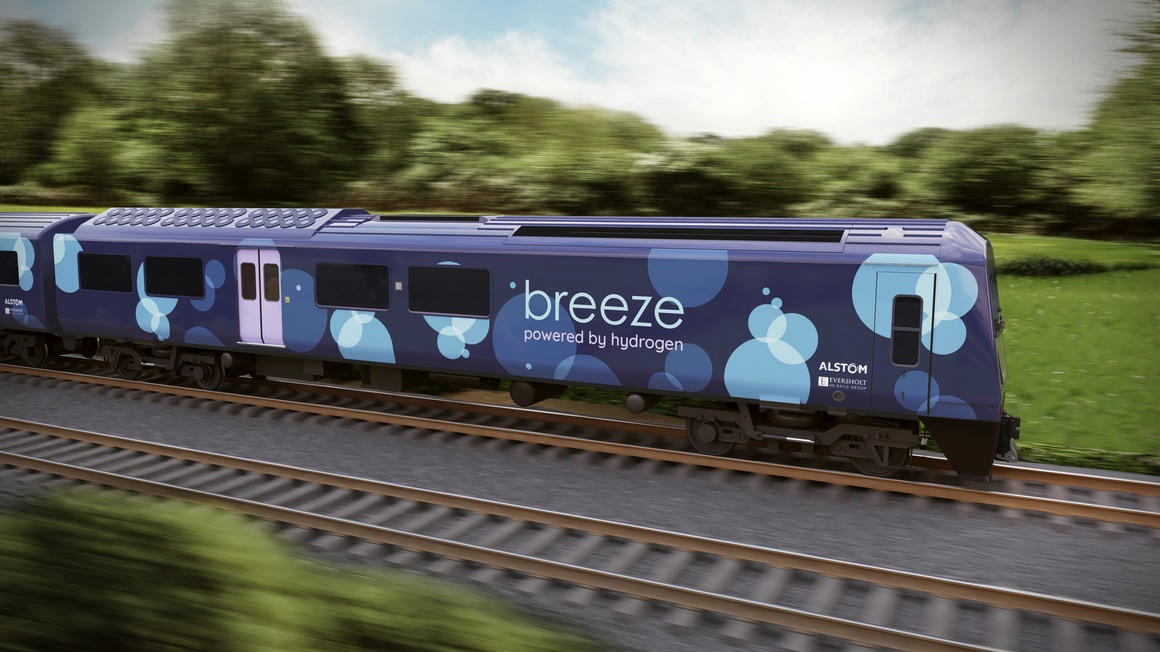
I suspect it didn’t appeal to train companies, as no orders appear to have been received.
But you can’t criticise Alstom for not trying, as in November 2021, they signed an agreement with Eversholt Rail Group to develop a hydrogen-powered Aventra, which I wrote about in Alstom And Eversholt Rail Sign An Agreement For The UK’s First Ever Brand-New Hydrogen Train Fleet.
This visualisation is from Alstom.
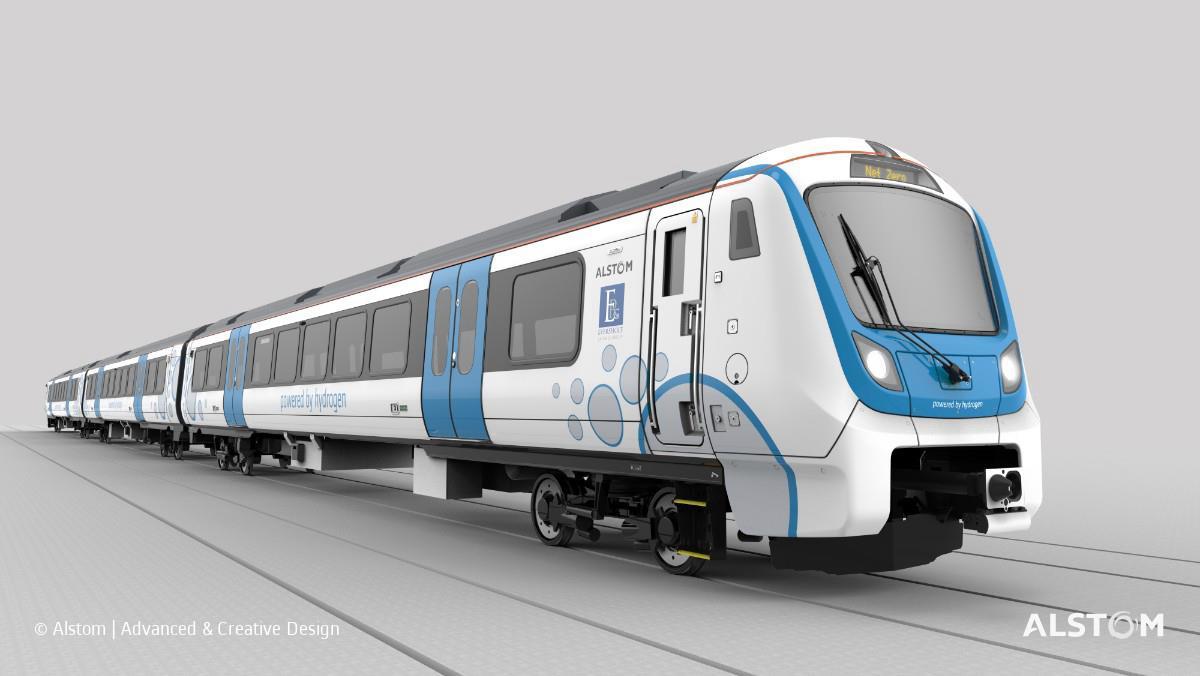
Visually, it looks just like any other Aventra and much better than the previous Breeze design.
In March 2018, I wrote Bombardier Bi-Mode Aventra To Feature Battery Power, which was based on this article in Rail Magazine.
These are a few points from the article.
- Development has already started.
- Battery power could be used for Last-Mile applications.
- The bi-mode would have a maximum speed of 125 mph under both electric and diesel power.
- The trains will be built at Derby.
- Bombardier’s spokesman said that the ambience will be better, than other bi-modes.
- Export of trains is a possibility.
- Bombardier’s spokesman also said, that they have offered the train to three new franchises. East Midlands, West Coast Partnership and CrossCountry.
Have Alstom looked at what they bought from Bombardier and decided the following train is possible, if they add some of their technology?
- A train the size needed by the customer, up to a length of at least ten cars.
- 125 mph under 25 KVAC overhead electrification.
- 100 mph with 750 VDC third rail electrification.
- Running on hydrogen away from electrification.
- 100 mph maximum speed running on hydrogen.
- A range of perhaps 500 miles, if it can emulate the hydrogen-powered Coradia iLint.
A train with this specification would have several applications in the UK.
- Fully-electric routes.
- Electric routes with perhaps a hundred miles of unelectrified track.
- Scenic routes, where the Nimbies wouldn’t like electrification.
These points should also be born in mind.
- There are now 110 mph Aventras in service with West Midland Trains on the West Coast Main Line.
- I recently came back from Cardiff to London in a twelve-car Class 387 train and there wasn’t too many unhappy passengers. It was certainly better than a rail replacement bus. I wrote about the trip in Cardiff To Reading In A Class 387 Train.
- Alstom believe you can certainly fit their hydrogen gubbins in an Aventra.
- The hydrogen gubbins appear to be from Cummins, who have a worldwide support network.
- Cummins can also supply complete hydrogen support systems. A truck can refuel the train, at one end of the route?
- Alstom have been doing the market research with the hydrogen-powered Coradia iLint, so I suppose they know what the market needs.
Could Alstom, with help from Cummins, have a zero-carbon 200 kph train and support systems, which has a hydrogen range of up to a thousand kms for export markets like the United States, Africa, Australia, India and South America?
Two big world-leading companies are surely better than one!
But Alstom has one big problem!
How do you fully test a 125 mph hydrogen-powered train?
- I know with aircraft, if you change the engine type on an existing aircraft, you only have to certify the engine and this is done on a Supplementary Type Certificate.
- Is it the same with trains, so a 110 mph Class 730 train, which is in service with West Midlands Trains, could be the basis of certifying a hydrogen-powered Aventra?
- The Coradia iLint was only a change from diesel to a hybrid hydrogen-electric engine, so was it certified this way?
- With the Coradia iLint, it seemed to go into service quite quickly, so did it do much of the testing in service?
I looks to me, that London Euston and Wrexham is an ideal route for a hydrogen bi-mode 125 mph train.
- The route has electrified sections, some of which have high operating speeds.
- The route has a convenient hydrogen supply from INEOS at Runcorn at the Northern end.
- Change between hydrogen and electric power would always take place in a station.
- A round trip needs less than 200 miles of running on hydrogen.
- South of Nuneaton, no hydrogen is used, so the train will be like a Class 730 train, that already uses the route.
- There are depots that can service Aventras on the route.
It is certainly a possibility, that the London Euston and Wrexham service will be used to test and showcase Alstom’s new Hydrogen Aventra.
SSE Renewables Partners With Fluence And OCU Energy To Deliver Its Battery Storage Project At Fiddler’s Ferry
The title of this post, is the same as that of this press release from SSE Renewables.
This is the sub-heading.
*The 150MW / 300MWh battery energy storage system will be built on the site of the former SSE-owned coal fired power station*
These four paragraphs give full details of the project.
SSE Renewables has announced its principal contractor and battery supplier for its 150MW battery storage project at Fiddler’s Ferry, Warrington.
OCU Energy – who are Stockport-based and are currently working with SSE Renewables on its Ferrybridge battery storage project – will be the principal contractor at Fiddler’s Ferry.
Fluence, a global leader in energy storage technology, digital solutions and services, has been selected as the supplier of the battery-based energy storage system.
Construction is set to begin at the site in the coming weeks after SSE Renewables took a final investment decision back in December 2023.
Note.
- This will be a two-hour battery.
- Good to see a press release with both battery output and battery capacity shown in the appropriate units.
It’s also good to see, SSE adding to the fleet of the UK’s battery storage.
This page on the SSE Renewables web site is entitled About Solar And Battery.
This is the sub-heading.
SSE Renewables is progressing a 1.2GW secured pipeline of utility-scale solar and battery projects across the UK and Ireland and a further 1.3GW of other prospective sites under development. These assets complement SSE’s existing portfolio of other low carbon infrastructure such as wind and hydro.
This is the first paragraph.
Our solar projects will be capable of harnessing the abundant power of the sun to bring renewable power onto the grid, while our battery projects will be able to store renewable power when the sun doesn’t shine or the wind doesn’t blow. The delivery of these projects is part of our commitment to a net zero transition.
What follows is a job advert.
As an electrical and control engineer, who has enjoyed over fifty years exploring the mathematics of big engineering projects, I don’t regret the choice of career I made.
Alstom Plans To Operate Its Own Passenger Train Service In The UK For The First Time
The title of this post, is the same as that of this press release from Alstom.
These two bullet points, act as sub-headings.
- Alstom is partnering with SLC Rail to form a new open access rail operation between North Wales, Shropshire, the Midlands and London
- Formal application now being submitted to the Office of Rail and Road (ORR) with passenger service sought from 2025
These are the first three paragraphs.
Alstom, global leader in smart and sustainable mobility, plans to operate a new passenger rail service across England and Wales. Working in partnership with consultancy SLC Rail, the open access operation will be known as Wrexham, Shropshire and Midlands Railway (WSMR).
As the country’s foremost supplier of new trains and train services, and a leading signalling and infrastructure provider, Alstom will operate its own rail service in the UK for the first time.
WSMR is seeking to introduce direct connectivity to and from North Wales, Shropshire, the Midlands and London that doesn’t exist today, linking growing communities and businesses, and making rail travel more convenient, enjoyable and affordable.
I can’t remember a service proposal being put forward by a train manufacturer since the privatisation of UK’s railways in the 1990s.
This is some more information and my thoughts.
The Route
This paragraph from the press release, describes the route.
The proposal envisages a service of five trains per day in each direction Monday to Saturday, with four travelling both ways on Sundays. Trains will stop at Gobowen, Shrewsbury, Telford Central, Wolverhampton, Darlaston, Walsall, Coleshill Parkway, Nuneaton and Milton Keynes on their journey between Wrexham General and London Euston.
Note.
- The proposed call at the new Darlaston station.
- The route is electrified between Euston and Nuneaton and Walsall and Wolverhampton.
- Much of the route North of Nuneaton is on tracks with a maximum speed of 70-80 mph.
The route is in these sections.
- Euston and Nuneaton – 96.7 miles – electrified
- Nuneaton and Walsall – 26.7 miles
- Walsall and Wolverhampton – 6.7 miles – electrified
- Wolverhampton and Shrewsbury – 29.7 miles
- Shrewsbury and Wrexham General – 30.3 miles
That is a total of 190.1 miles or 380.2 miles round trip.
I suspect that the service will need bi-mode trains.
Should The Service Call At Wellington?
This article on the BBC is entitled Rail Company Urged Not To Forget Wellington.
This is the sub-heading.
A rail company which is bidding to bring back a direct service between Shropshire and London has been urged not to forget a town.
These are the first three paragraphs.
Wrexham, Shropshire and Midlands Railway said it was preparing to apply to the government to run the service.
Trains would stop at Gobowen, Shrewsbury, Telford, Wolverhampton, Walsall, Coleshill and Nuneaton.
But Telford and Wrekin Council said the omission of Wellington as a stop was “short-sighted”.
Although Wellington is smaller than than Shrewsbury and Telford, it looks like a bit of analysis would provide a solution, that would be acceptable for all parties.
The Trains
In the press release, this phrase is used.
positive impact to both communities and the environment.
I can’t see any more electrification being erected on the route, so the trains will need to be bi-mode.
- Bi-mode diesel trains won’t have a positive impact on the environment.
- As the route between Wolverhampton and Wrexham General is not electrified, a battery-electric train would need a range of at least 60 miles or 120 miles for the round trip, if there were no charging at Wrexham General.
- But Alston are developing a Hydrogen Aventra, which I wrote about in Alstom And Eversholt Rail Sign An Agreement For The UK’s First Ever Brand-New Hydrogen Train Fleet.
So could Alstom be using this route to trial and showcase their new Hydrogen Aventra?
I believe that the route will be very suitable for a hydrogen train.
- Changeover between electric and hydrogen power can always take place in a station.
- All hydrogen refuelling could be performed at one end of the route.
- A large proportion of the UK’s green hydrogen is produced by INEOS at Runcorn, which is less than fifty miles from Wrexham. A refuelling tanker could supply the train, as they do on some hydrogen routes in Germany.
- London has only small amounts of hydrogen infrastructure.
I suspect that refuelling will be done at the Wrexham end of the route.
This Alstom visualisation shows the train.
But it is only a three-car train.
- That is not a problem, as Aventras can be lengthened as required to the length required for the number of passengers.
- Some Aventras, like the Class 701 trains for South Western Railway, have even been ordered as ten-car trains.
- Two three-car trains may also be the ideal capacity, running as a six-car train.
So capacity will not be a problem.
If it is assumed that Alstom’s trains for the WSMR route, can use the overhead wires, where they exist, each trip between Wrexham General and London will require a total of 86.7 miles or 140 kilometres of running on hydrogen.
- A round trip will therefor require 280 kilometres of running on hydrogen.
- But between London Euston and Nuneaton, it will just be another electric train.
- I suspect that like the similar Class 730 train, it will be capable of 110 mph on the West Coast Main Line.
- Alstom’s Coradia iLint hydrogen train has a range of around a 500-800 kilometres on hydrogen.
- The WSMR trains will probably be 100 mph trains using hydrogen on a route, where that speed is possible.
So if a Hydrogen Aventra has a similar range to the Coradia iLint, it will be able to do two round trips before refuelling.
How Long Will The Service Take?
West Midlands Trains, who use the similar Class 730 trains take one hour and eleven minutes between London Euston and Nuneaton with a single stop at Milton Keynes Central.
As the WSMR trains will use the same route, I suspect the same time can be used.
As Nuneaton and Wrexham General are 93.4 miles apart a table can be created showing the time for the rest of the journey for different average speeds
- 50 mph – 1 hour 52 minutes – 3 hours 3 minutes.
- 60 mph – 1 hour 33 minutes – 2 hours 44 minutes.
- 70 mph – 1 hour 20 minutes – 2 hours 31 minutes.
- 80 mph – 1 hour 10 minutes – 2 hours 21 minutes.
Note.
- The first time is the Nuneaton and Wrexham General time and the second time is the overall journey time.
- Typical Avanti West Coast services via Crewe and a change at Chester, take between two-and-a-half and three hours.
I suspect, if the WSMR trains can keep the speed up through the Midlands, that two hours and 30 minutes could be possible.
Could The Hydrogen Aventra Run At 125 mph Under The Wires?
In March 2018, I wrote Bombardier Bi-Mode Aventra To Feature Battery Power, which was based on this article in Rail Magazine.
These are a few points from the article.
- Development has already started.
- Battery power could be used for Last-Mile applications.
- The bi-mode would have a maximum speed of 125 mph under both electric and diesel power.
- The trains will be built at Derby.
- Bombardier’s spokesman said that the ambience will be better, than other bi-modes.
- Export of trains is a possibility.
- Bombardier’s spokesman also said, that they have offered the train to three new franchises. East Midlands, West Coast Partnership and CrossCountry.
Have Alstom looked at what they bought from Bombardier and decided the following train is possible?
- Five-cars or what the customer needs.
- 125 mph under the wires.
- Running on hydrogen away from the wires.
- 100 mph on tracks without electrification.
Obviously, maximum speeds would depend on track limits.
Looking at 125 mph Avanti West Coast trains that have a Milton Keynes stop between London Euston and Nuneaton, they can reach Nuneaton ten minutes quicker than West Midlands Trains 110 mph Class 730 trains.
Two hours and 30 minutes between London Euston and Wrexham is looking increasingly possible.
Are we seeing an audacious proposal from Alston to sell new trains to CrossCountry and a host of other franchises?
Conclusion
London Euston and Wrexham would appear to be an excellent route for an Aventra-based hydrogen train.
- It can probably cruise at 110 mph on the West Coast Main Line between London Euston and Nuneaton.
- All switchovers between electrification and hydrogen can be performed in electrified stations.
- Hydrogen would only be used North of Nuneaton.
- The train can be refuelled at Wrexham General, with fuel supplied from INEOS at Runcorn.
- Given the typical 1000 km. range of hydrogen trains, a train can probably do three round trips without refuelling.
I can see this being a service with an excellent operational record.
A Funny Wet Week
I’ve had a funny few days as regards my health.
Tursday morning, my INR was 2.1.
On Friday night, I wasn’t sleeping very well and got up at three on Saturday morning. But after a couple of mugs of tea, I was feeling a lot better.
I had my usual Saturday morning breakfast in Leon on Moorgate, but I did get slightly confused with my shopping in Marks & Spencer. I put this down to my eyesight having an off day. Is that normal after two cataract operations?
I slept better on Saturday night! But was this because I went to bed before instead of after Match of the Day and then watched it on Sunday morning.
On Sunday morning, I went out to do a bit of shopping, but it was really just to get out and then it was walking in the pouring rain.
Monday was a quiet day, after breakfast in Leon on Moorgate, I wrote for most of the day. My INR was a bit low at 2.2.
Tuesday morning, it was a repeat of Friday night and I got up at four and had a couple of mugs of tea. It was another breakfast in Leon on Moorgate and a visit to M & S. After I returned, I wrote for most of the day, as it was too wet to go outside.
In the afternoon, I started to get a bit unsteady on my feet and even thought about calling 999. But after two mugs of tea and a can of Adnams, I regained my balance and never fell. My blood pressure was fine and the only unusual thing, was that my left food was quite red. But it does this sometimes.
Wednesday was uneventful and I had lunch with a friend at Cote in Sloane Square.
Today, Thursday my INR is down to 2.
I feel OK, but it does seem, that for some reason my INR has tended to slump during the week.
I just wonder if my leaky skin, just lets water out, which surely must lower the INR.
Does my foot go red, as the red blood corpuscles are too big to get through my skin?
 The Anonymous Widower