Drax’s Plans For Cruachan
Cruachan Power Station is a pumped-storage hydroelectric power station in Argyll and Bute, Scotland.
- It can generate 440 MW of power.
- It has a storage capacity of 7.1 GWh.
- The power station is owned by Drax.
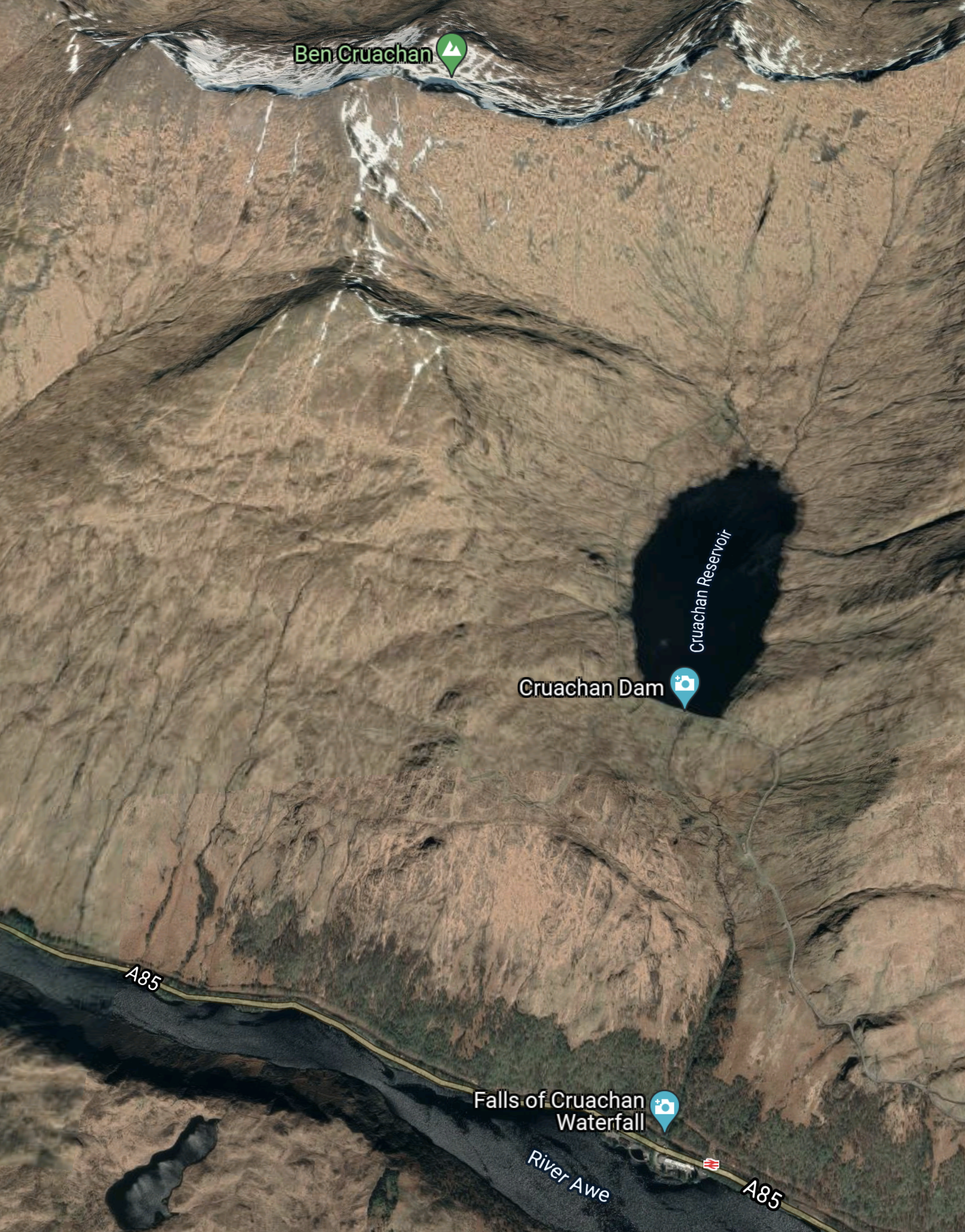
This Google Map shows the area around the power station.
Note.
- Cruachan Reservoir is the upper reservoir for the power station.
- The River Awe is the lower reservoir.
- The turbines for the power station are in a hollowed-out Ben Cruachan.
- There is a visitor centre, which is two-hundred metres from the Falls of Cruachan station, that can be seen on the map, by the river.
More information on visiting can be found at the Visit Cruachan web site.
This second map shows the Southern part of the Cruachan Reservoir to a larger scale.
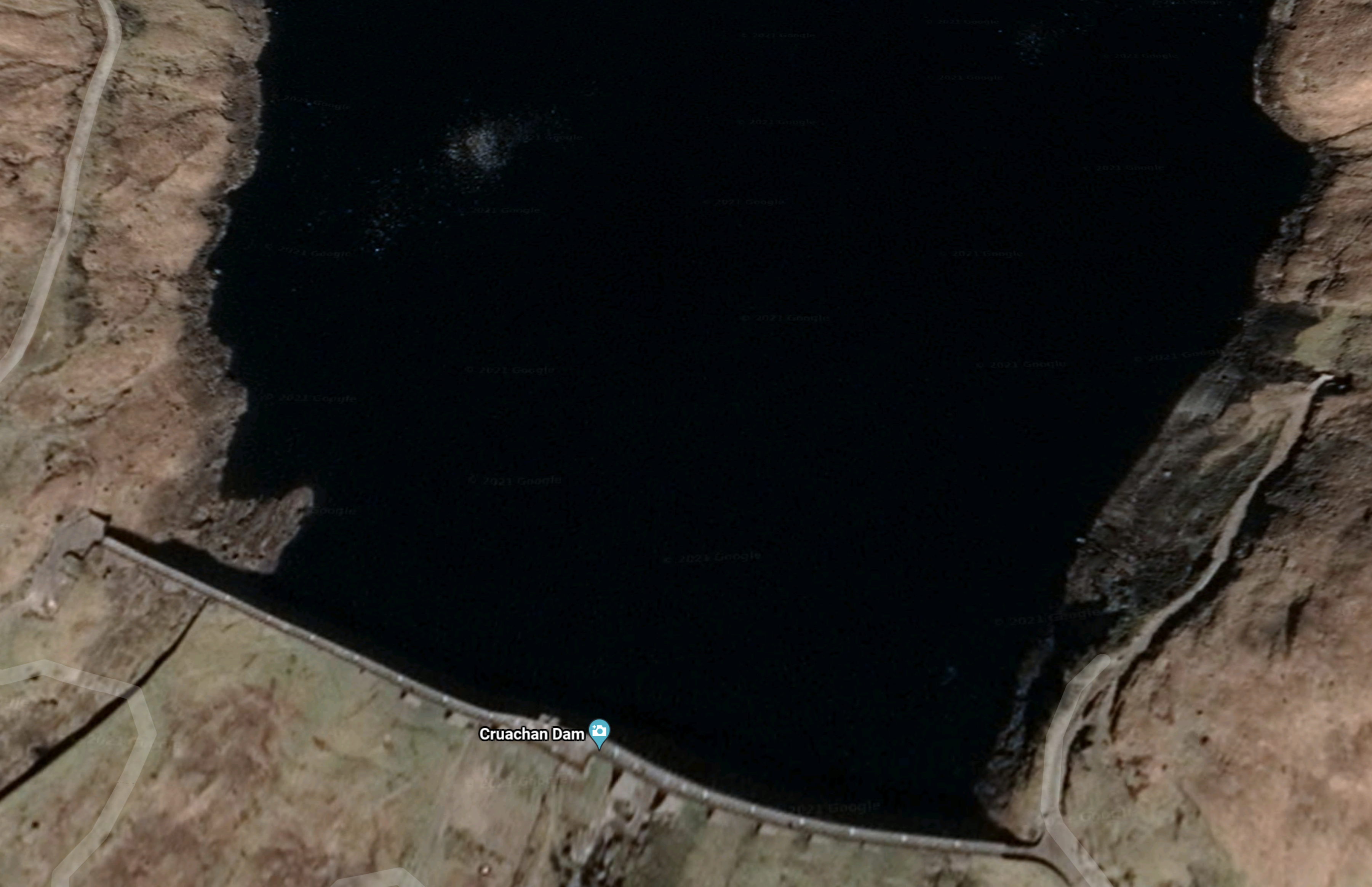
Note the strength of the dam.
The Operation Of Cruachan Power Station
Wikipedia says this about the operation of Cruachan power station.
The station is capable of generating 440 megawatts (590,000 hp) of electricity from four turbines, two of 100 megawatts (130,000 hp) and two of 120 megawatts (160,000 hp) capacity, after two units were upgraded in 2005. It can go from standby to full production in two minutes, or thirty seconds if compressed air is used to start the turbines spinning. When the top reservoir is full, Cruachan can operate for 22 hours before the supply of water is exhausted. At full power, the turbines can pump at 167 cubic metres (5,900 cu ft) per second and generate at 200 cubic metres (7,100 cu ft) per second.
What I find surprising, is that they only upgraded two turbines to 120 MW. I would suspect that there was some other factor that stopped all turbines from being upgraded.
So I would be very surprised if Drax upgraded the power of the existing station.
The Wikipedia extract claims that the Cruachan power station can provide power for 22 hours, if the reservoir, which has a capacity of 7.1 GWh is full. A simple calculation gives an average output in 323 MW. Does that indicate an efficiency of 73.4 %, by dividing 323 by 440.
But no pumped storage system of the 1950s is 100 % efficient. The Ffestiniog Power Station, which opened two years before Cruachan has an efficiency of 73 %. , which appears to be in line with the figures for Cruachan.
Cruachan Power Station And Nuclear Power
Wikipedia says this about Cruachan power station and Hunterston A nuclear power station.
Construction began in 1959 to coincide with the Hunterston A nuclear power station in Ayrshire. Cruachan uses cheap off-peak electricity generated at night to pump water to the higher reservoir, which can then be released during the day to provide power as necessary.
Note.
- Hunterston A power station closed in 1990.
- Hunterston B power station closed a few days ago.
- Scotland now only has one nuclear station at Torness.
It looks like the method of operation will have to change.
Cruachan Power Station And Wind Power
The obvious replacement source of energy at night to replace the nuclear power is wind power.
As I write this the UK is generating 8.5 GW of power from wind turbines.
Surely, enough can be diverted to Cruachan to fill the Cruachan Reservoir.
Cruachan 2
Drax’s plans for Cruachan are based around the building of a second underground power station, which is not surprisingly called Cruachan 2. This page on the Drax web site describes Cruachan 2.
- It will be a 600 MW power station.
- It will be to the East of the current power station.
- More than a million tonnes of rock would be excavated to build the power station.
The existing upper reservoir, which can hold 2.4 billion gallons of water, has the capacity to serve both power stations.
I think it is reasonable to assume the following about Cruachan 2.
- Design of the turbines will have improved in the sixty years since the Francis turbines for the original power station were ordered and designed.
- The turbines will now be precisely computer-controlled to optimise the operation of the power station.
- The turbines will have a faster response, than even that of Cruachan 1, which will help to match output to demand.
But most importantly, I suspect that the efficiency will be higher due to improved turbine design.
I can do a simple calculation, where I will assume the following figures for the two power stations.
- Cruachan 1 – 440 MW – Efficiency – 73 % – Full Power – 323 MW
- Cruachan 2 – 600 MW – Efficiency – 80 % – Full Power – 480 MW
It looks to me that 1040 MW can be used to store water in the reservoir and at this rate it would take 6.8 hours to fill the reservoir. With just Cruachan 1 in operation, filling the reservoir would take sixteen hours.
It looks like with moderate winds generating sensible amounts of electricity, it should be possible to fill the reservoir overnight using both Cruachan 1 and Cruachan 2.
When running flat-out, the combined station can generate 803 MW. At that rate it will generate the power for just under nine hours.
The Wikipedia entry for Francis turbines says this.
Francis turbines are the most common water turbine in use today, and can achieve over 95% efficiency.
Applying 95 % Efficiency to Cruachan 2 would give the following.
- An output of 570 MW for Cruachan 2.
- A total output of 1010 MW for the combined station.
- This would mean the combined station could deliver 1.01 GW for just over seven hours.
Modern control technology would probably be used to ensure that the output of the combined Cruachan station filled in the gaps between demand and supply.
Could The Size Of Cruachan Reservoir Be Increased?
This would increase the amount of energy stored.
I suspect that it probably can’t be increased, as any increases would have been done by now.
Conclusion
It looks like very good engineering to me.
- There is a good chance, that on most nights, the reservoir will be filled using wind energy
- The maximum output of the Cruachan power station has been more than tripled from 323 to 1010 MW.
- There has been no increase in the size of the Cruachan reservoir.
Scotland will now have a GW-sized hydro-electric power station.
Karlsruhe Kombilösung Tram Tunnels Inaugurated
The title of this post, is the same as that as this article on Railway Gazette.
I first came to Karlsruhe to see the tram-trains in 2015 and wrote about them in Exploring Karlsruhe And Its Trams And Tram/Trains.
I couldn’t help notice, that the good citizens of Karlsruhe were digging a tunnel for tram-trains, all the way along their equivalent of Oxford Street.
I said this.
It will certainly be worth returning to Karlsruhe, when the tunnel is complete and the network is expanded.
So now almost seven years after that first visit, the €1·5bn project has been completed and I had better think about returning.
Ikea Cuts Sick Pay For Unvaccinated Staff Forced To Self-Isolate
The title of this post, is the same as that as this article on the BBC.
This is the introductory paragraph.
Ikea has cut sick pay for unvaccinated staff who need to self-isolate because of Covid exposure and in some cases for workers who test positive.
The article also says that Wessex Water and several major US companies have started penalising unvaccinated workers.
I agree with Ikea’s policy, as in a society, there are some rules that we must follow for the good of everybody.
If people don’t want to be vaccinated, they should either work for a company where everybody is unvaccinated or work at home.
Is A High Capacity Freight Route Being Created On The Midland Main Line?
In the January 2022 Edition of Modern Railways, there is a section, which is entitled Mixed Fortunes For Freight In IRP, where IRP is short for Integrated Rail Plan For The North And Midlands.
In the section, this is said about freight on the Midland Main Line.
Whilst HS2 does relieve the MML, electrification of the route north from Kettering via Derby to Sheffield is of relatively limited use to freight, which is generally routed via Corby and Toton to Chesterfield and Rotherham. That said, assuming electrification of the passenger route includes the slow lines from Leicester to Trent and through Chesterfield, it does provide a base on which freight electrification can be built.
This would involve wiring Corby to Syston Junction (north of Leicester), Trent Junction to Clay Cross (south of Chesterfield) and Tapton Junction (north of Chesterfield) to Rotherham Masborough and Doncaster.
As with the ECML, this ‘freight’ electrification would provide a diversionary route and thus greater resilience for East Midlands Railway services.
In addition, gauge clearance throughout from Corby as part of this package would also be highly beneficial in creating a direct route from the ‘Golden Triangle of Logistics’ in the East Midlands to the North East and Scotland for consumer goods supply chains, boosting modal shift to rail and decarbonisation.
It does seem to be a cunning plan worthy of Baldrick at his best.
So is it feasible?
Which Routes Do Freight Trains Use Now?
Christmas in a pandemic, is not a particularly good time to look at the routes freight trains take.
But by looking at Real Time Trains, I can say this.
- Many trains take the route via Corby and Syston Junction, rather than the direct route via Market Harborough and Leicester.
- Leicester is quite busy with freight as trains between Felixstowe and places on the West Coast Main Line, go through the station.
- Very few freight trains seem to take the route via Derby and the Derwent Valley Mills.
- Most freight trains between East Midlands Parkway and Chesterfield seem to take the Erewash Valley Line via Toton and Ilkeston.
I don’t think the pattern will change much, if I look at the trains around the end of January.
What Do I Mean By European-Size Freight Trains?
The Wikipedia entry for loading gauge says this about about the route through the Channel Tunnel and up the Midland Main Line.
UIC GC: Channel Tunnel and Channel Tunnel Rail Link to London; with proposals to enable GB+ northwards from London via an upgraded Midland Main Line.
Note.
- . GC is 3.15 metres wide by 4.65 metres high.
- GB+ is 3.15 metres wide by 4.32 metres high.
- GB+ is intended to be a pan-European standard, that allows piggy-back services.
- British gauging is so complicated, it isn’t specified in standard units. It must be a nightmare for rolling stock designers.
I’ll take an easy way out and assume that by European-Size Freight Trains, I mean that the route must be cleared for GB+ gauge.
Could Kettering and Syston Junction Via Corby Be Cleared For European-Size Freight Trains?
According to a Network Rail Map from February 2010, the current clearance is as follows.
- Kettering and Oakham – W7
- Oakham and Syston Junction – W8
Note.
- Oakham and Peterborough is also W8
- The main problem seems to be that between Corby and Oakham, there are five tunnels; Corby, Glaston, Manton, Seaton and Wing.
- There are also a few overbridges and several level crossings, but they don’t look too challenging.
- Between Corby and Oakham, there is the magnificent Welland viaduct, which has eighty-two arches and is Grade II Listed.
- Ideally, freight operators would like to run European gauge piggy-back services, with road trailers travelling on flat wagons, as they do in CargoBeamer services.
It would be a tough call to satisfy my last point, but if it can be done it would allow all Midland Main Line freight trains to take the Corby diversion and this would remove the problems of running European gauge trains through Leicester station.
This Google Map shows a section of the Welland viaduct.
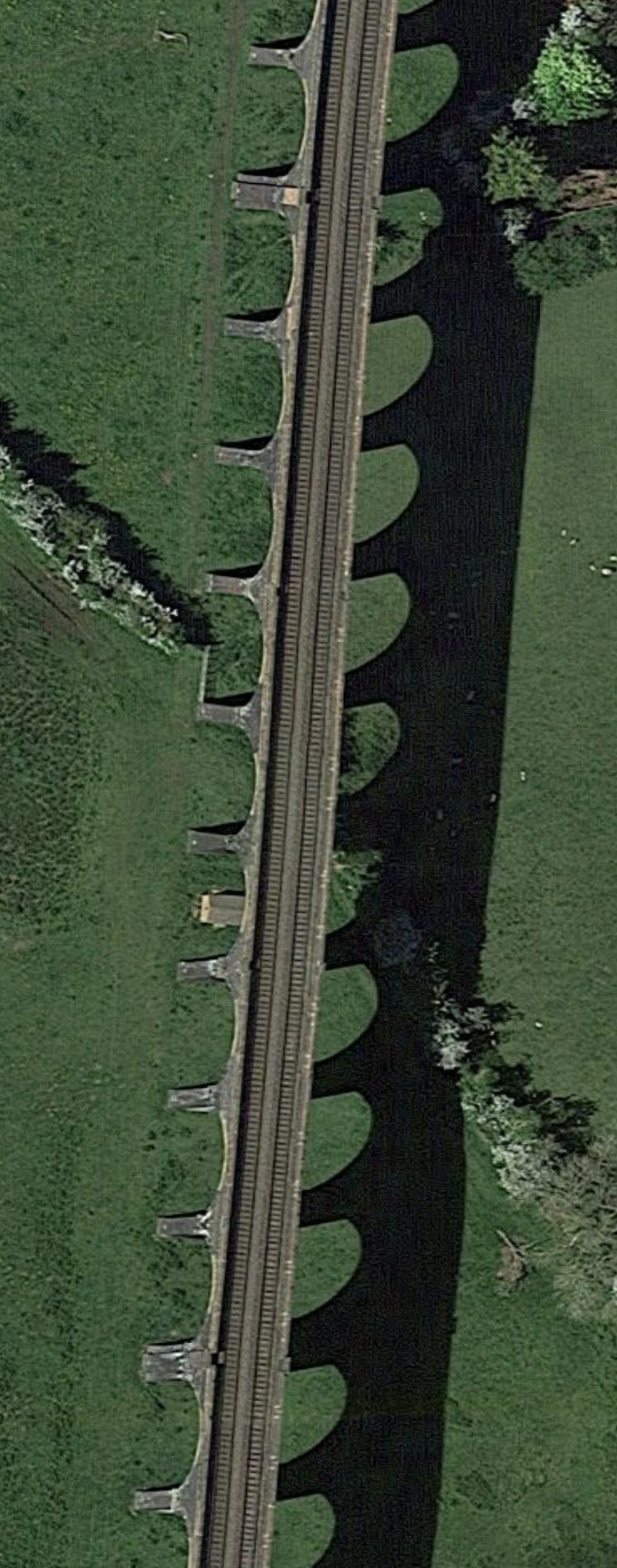
It could be key, as it is fully double-track.
But could it support two heavy freight trains at the same time?
But it would be some sight to see, long European-sized freight trains running over the viaduct.
Could The Midland Main Line Between Syston And Trent Junctions Be Cleared For European-Size Freight Trains?
The route is cleared to W7 or W8 between the two junctions and on inspection with my virtual helicopter, I suspect it wouldn’t be that challenging to upgrade.
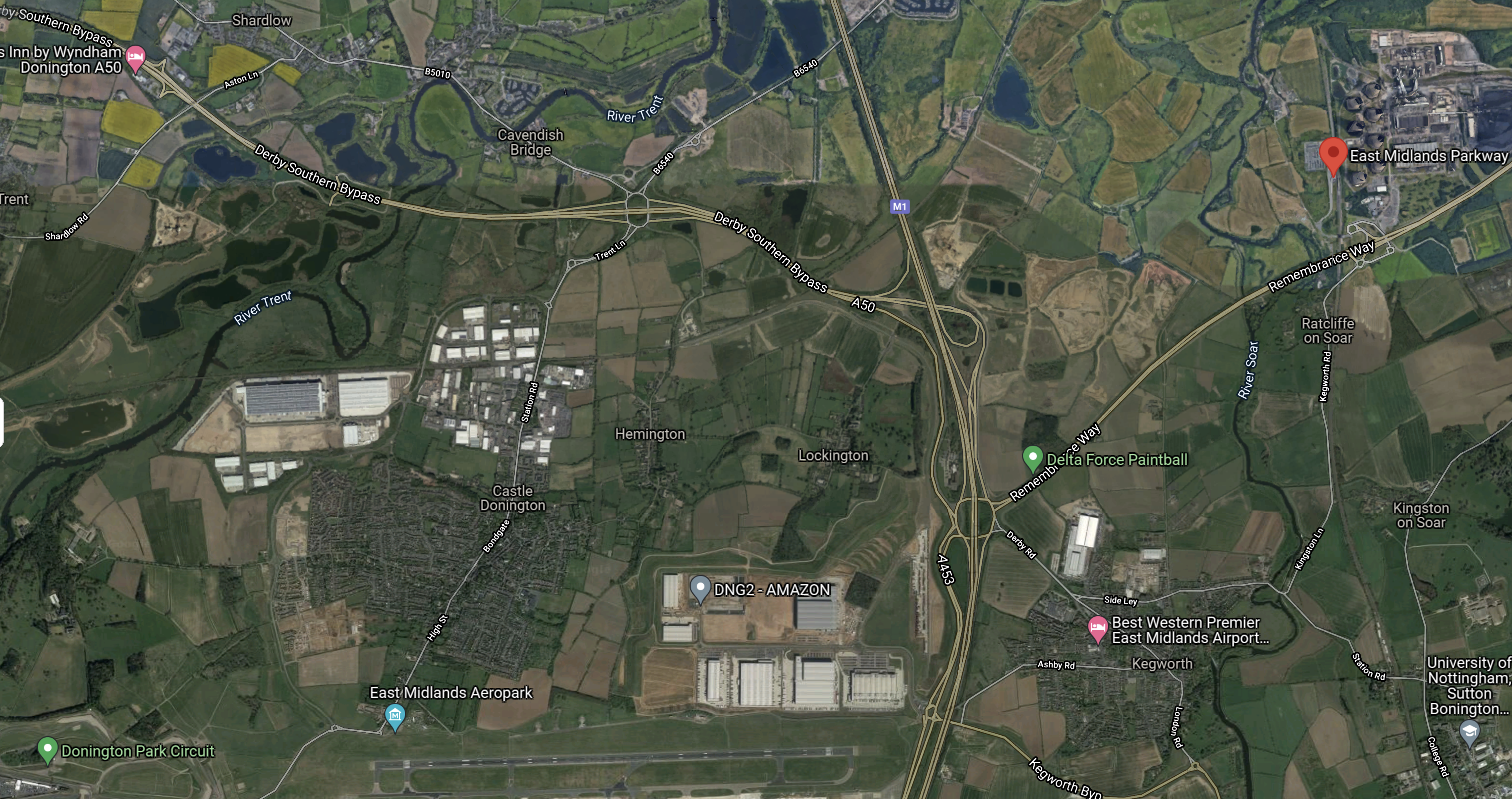
It would also be sensible to clear the Castle Donnington Line for European-size freight trains, so that they could reach the East Midlands Gateway freight terminal.
This Google Map shows the location of the East Midlands Gateway.
Note.
- East Midlands Parkway station is marked by the red arrow in the North-East corner of the map.
- Castle Donnington circuit is in the South West corner of the map.
- The long East-West runway of East Midlands Airport is clearly visible.
- East Midlands Gateway is to the North of the airport.
This second Google Map shows East Midlands Gateway in more detail.
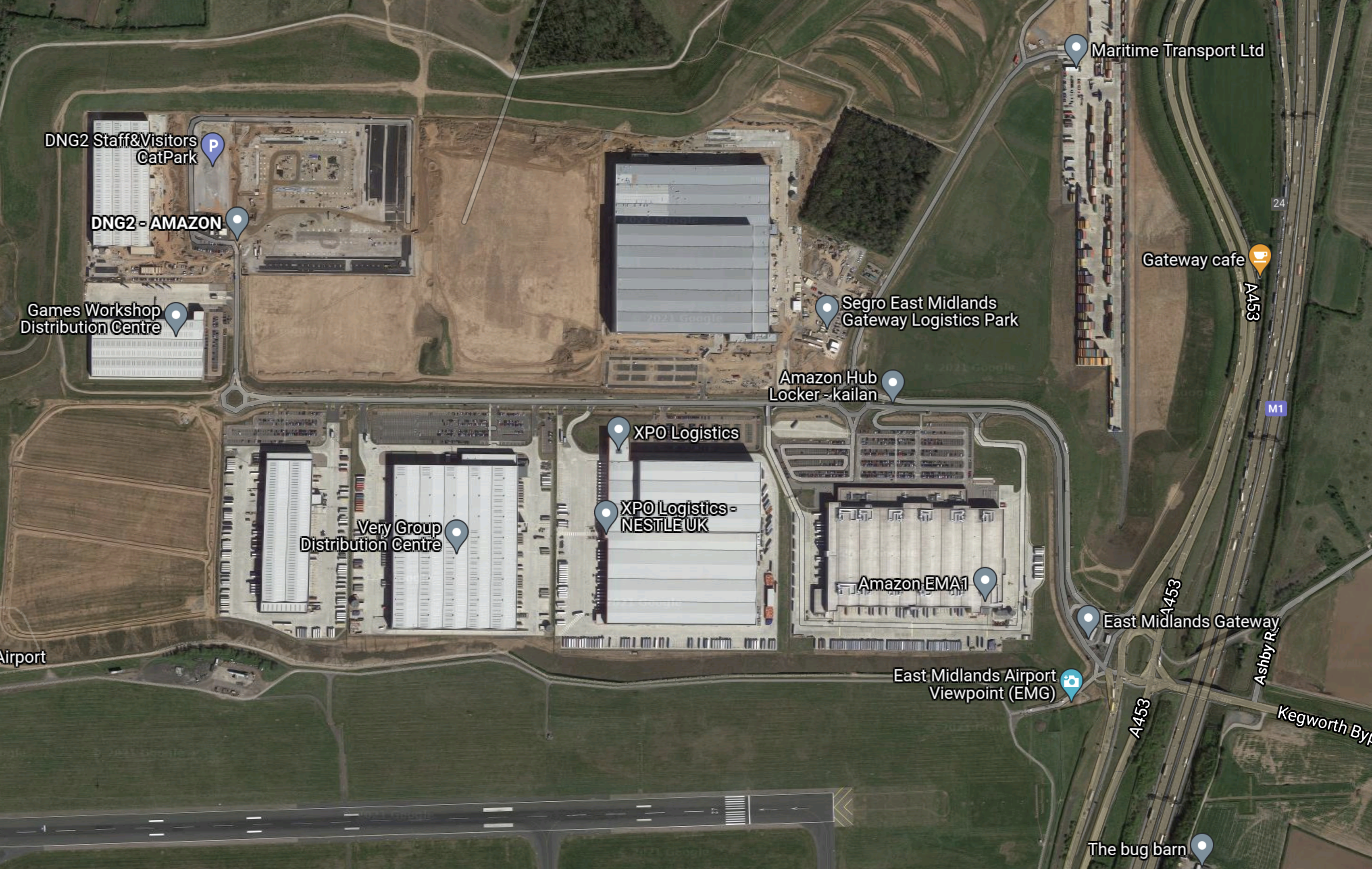
Note.
- In the North-East corner is Maritime Transport’s rail freight terminal.
- The M1 runs North-South at the Eastern edge of the map.
- East Midlands Gateway Logistics Park with two Amazon sheds is in the middle.
- The runway at East Midlands Airport is clearly visible.
The Integrated Rail Plan for the North And Midlands has already announced that High Speed Two will join the Midland Main Line to the South of East Midlands Parkway station to serve Derby, Nottingham and Sheffield.
- This new line will have to go past the airport, either to the North of the Logistics Park or South of the Airport.
- Could there be a station here, both for passengers and the workers at a very busy freight airport and Logistics Park?
- Currently, trains between the rail terminal and London, London Gateway and the Port of Felixstowe have to reverse North of the rail terminal to access the terminal.
- All the rail links between the Midland Main Line and East Midlands Gateway would need to be built to accept European-size freight trains, to ensure maximum flexibility.
It strikes me, that there are a lot of extra features that could be added to the rail network between the Midland Main Line and East Midlands Gateway.
Could The Erewash Valley Line Via Ilkeston Be Cleared For European-Size Freight Trains?
Consider.
- According to a Network Rail Map from February 2010, the Erewash Valley Line is cleared to W8.
- According to Wikipedia, it is the second busiest freight route in the East Midlands.
- Network Rail have spent £250 million on the line in recent years to improve junctions and improve signalling.
- The route doesn’t have a large number of passenger services.
These pictures show Ilkeston station on the Erewash Valley Line.




Note.
- The recently rebuilt bridge and the separate avoiding line.
- The Class 158 train under the bridge is 3.81 metres high.
As the European gauge; GB+ is 4.32 metres high, I would feel that Ilkeston station can handle European-size freight trains.
I have flown my virtual helicopter all the way over the Erewash Valley Line from Toton to Clay Cross North junction.
- It looks as if most of the not many bridges are either recent or could be updated to handle the large European-sized freight trains.
- It should also be noted that in many places there is a third track or space for them.
- There are three stations and the Alfreton tunnel.
After this quick look, I feel that the Erewash Valley Line will be able to handle European-size freight trains.
Could Tapton Junction to Rotherham Masborough and Doncaster Be Cleared For European-Size Freight Trains?
This route has very few bridges and I doubt updating wouldn’t cause too many problems.
CargoBeamer
Would it be possible for one of CargoBeamer’s piggy-back trains carrying trailers to run between the Channel Tunnel and the rail terminal at East Midlands Gateway Logistics Park or perhaps another terminal further up the Midland Main Line?
If they could use the Gospel Oak and Barking Line to access the Midland Main Line, I don’t see why not!
Conclusion
It appears that it should be possible to allow European-size freight trains to run between the North of England and the Channel Tunnel.
Prevalence Of Celiac Disease Among Blood Donors in SÃO PAULO – The Most Populated City In Brazil
The title of this post, is the same as that of this scientific paper from Brazil.
I am posting, so I can find the paper when I need it.
I will only point out one sentence.
Furthermore, an increase in the ingestion of wheat in the country in recent decades may have favored the increase in CD in our society.
I wonder if this statement can be confirmed, as this could explain the increase in coeliac disease in some countries.
Catalyst Capital Makes First Move In GBP 300m Battery Storage Strategy
The title of this post, is the same as that of this article on Renewables Now.
This is the first paragraph.
Fund manager Catalyst Capital has acquired a site to build a 100-MW battery in Yorkshire, northern England, in the first of a series of planned deals under a GBP-300-million (USD 406.1m/EUR 358.9m) strategy to develop diversified UK battery energy storage systems (BESS) facilities.
£300 million, says to me that the finance industry, now finds battery storage to be a worthwhile investment.
Skelton Grange Power Station
This Google Map shows the location of the Skelton Grange power station site, where the battery will be developed.
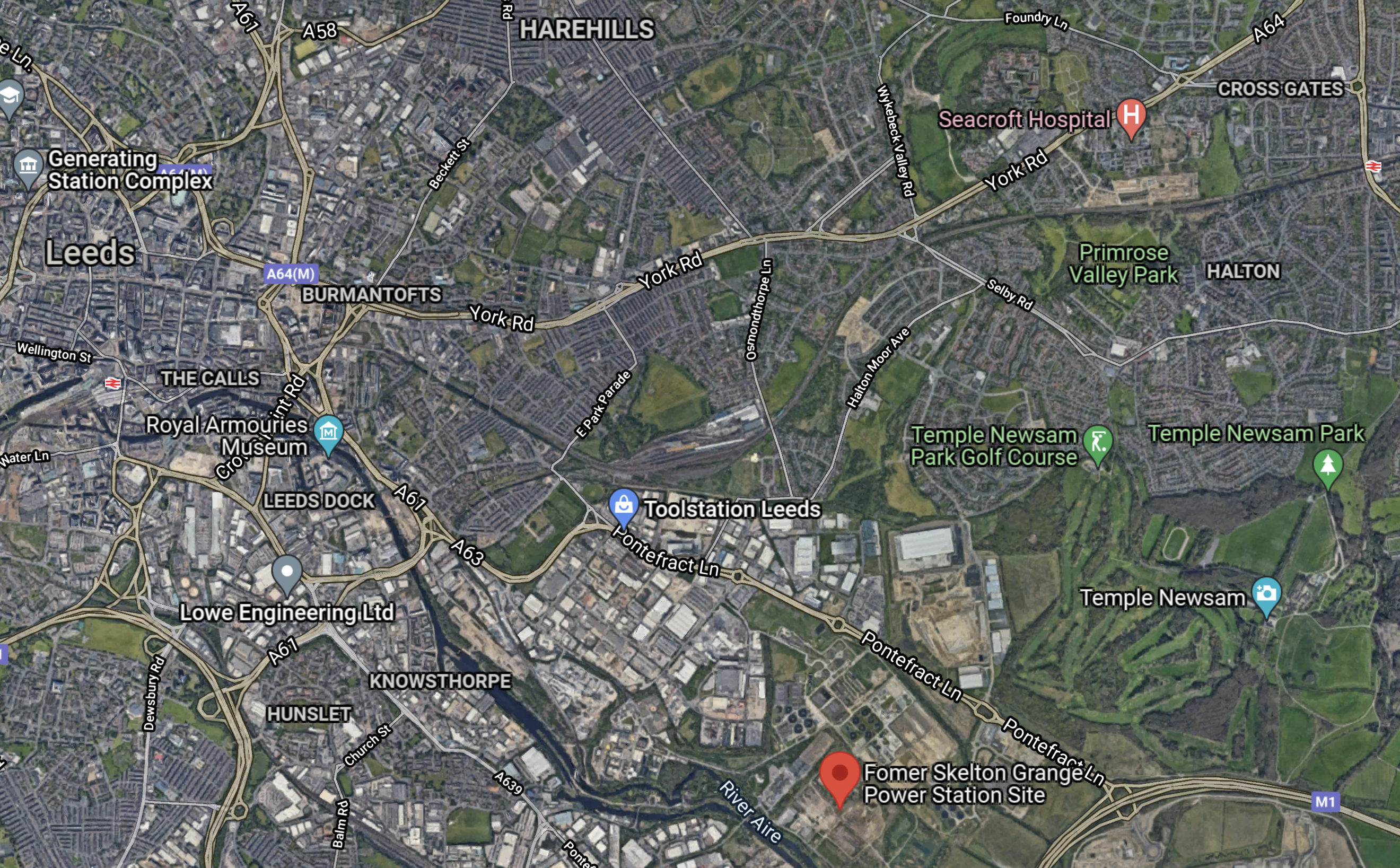
And this second Google Map shows the site in more detail.

Note that there is still a sub-station on the site.
The article states that planning permission was received in 2021 and they hope to have the facility on-line in the first quarter of this year.
That appears quick to me. Is it because the electrical connection already in situ?
It should also be noted, that the battery output of 100 MW is much less than that of the former coal-fired power station in the mid-1980s, which was at last 480 MW.
I also wonder, if the site could host a hydrogen fuelling station for buses.
- It is not far from the centre of Leeds.
- It has a good connection to the National Grid.
- An electrolyser like the one built by ITM Power at Tyseley Energy Park uses 3 MW of electricity to produce around 1.5 tonnes of hydrogen per day.
I also feel that the site could host a wind turbine up to about 10 MW.
Conclusion
Catalyst Capital seems to have made a big entry into the market. They won’t be the last to do this, as the returns are there and the battery storage is needed.
Why Use A Hydrogen Pipeline Rather Than A Electricity Cable To Bring Electricity Ashore From A Windfarm?
A comment to the post entitled Siemens Gamesa Partners On Offshore Wind-to-Hydrogen, was as follows.
Trying to get my head around this concept. Build an electrolysis plant in the North Sea and run a hydrogen pipeline to shore, rather than generating electricity and transferring the power by undersea cable to a shore based electrolysis plant. Can it really be better technically and economically? Someone convince me.
The reasons probably all come down to saving money and hassle.
Reusing Existing Infrastructure
Supposing, you have an offshore gas field, which is on the point of being worked out.
- It has a well-maintained platform on top.
- It has a pipe to an onshore terminal that handles the natural gas and distributes it to end-users.
Supposing the following are possible.
- Building a large wind farm in the vicinity of the platform.
- Using the gas field for hydrogen storage.
- Converting the gas terminal from natural gas to hydrogen.
- The end-users can convert to hydrogen.
In some cases the end-users might even prefer hydrogen to natural gas, to help their own decarbonisation.
I would suspect that there will be a sound economic case to use hydrogen, where wind farms are developed, in the same areas as worked-out gas fields.
- Platform demolition costs are deferred.
- No HVDC link is needed, with an expensive converter station at the shore end.
- The new system comes with energy storage.
The only extra cost might be that an offshore electrolyser is more expensive than an onshore one.
Engineering Resources
The engineering resources needed for a gas pipeline are different to those needed for an electrical system.
But because gas pipelines are a declining industry, they will be readily available.
Less Planning Hassle
There have been some objections to the development of wind farm terminals by Nimbies.
If a terminal is converted from natural gas to hydrogen, I suspect there will be fewer objections.
Better Control Of Wind Farms
There have been stories of wind farms having to be switched off because there is no-one to buy the electricity.
If some form of offshore hydrogen storage is possible, then the electricity can be used to generate hydrogen, which can be piped ashore, when it is needed.
It Won’t Be One Type Fits All
I suspect we’ll see some hybrid systems and other innovative engineering.
Conclusion
I believe that in a drive to cut costs, we’ll see a lot of energy brought ashore as hydrogen gas.
I
Carlton Power, Stag Pool Knowledge For UK Energy Storage, Green H2
The title of this post, is the same as that of this article on Renewables Now.
This is the introductory paragraph.
British energy infrastructure developers Carlton Power and Stag Energy are merging their operations with plans to develop projects that will help improve energy storage, grid stability and green hydrogen production in the UK.
The article says this about Carlton Power.
Yorkshire-based Carlton has delivered more than 6 GW of thermal and renewables generation in the past 30 years. It is the lead developer of the Trafford Energy Park in Manchester, which foresees a 50-MW/250 -MWh liquid air energy storage plant to be built in partnership with Highview Power, a 200-MW hydrogen electrolyser and commercial hydrogen hub for use in transport and heating as well as a 250-MWe battery energy storage facility. Carlton also plans to expand its Langage Energy Park near Plymouth with the addition of energy storage and electrolyser facilities.
They certainly seem to have a history, that will be worth extending into the future, with energy storage and hydrogen production.
The article says this about Stag Energy.
Edinburgh-headquartered Stag Energy, for its part, has previously developed open-cycle gas-turbine (OCGT) plants in England and Wales and has a joint venture with Lundin to build the Gateway offshore underground gas storage facility in the Irish Sea using salt caverns. Stag Energy is also part of the National Grid’s Pathfinder process to uncover ways to improve electricity system stability.
This article on Hydrocarbons Technology is entitled Gateway Gas Storage Facility and starts with these two paragraphs.
The Gateway Gas Storage Company (Gateway) is developing an underground natural gas storage facility, Gateway Gas Storage Facility (GGSF), 25km offshore south-west Barrow-in-Furness, UK, in the East Irish Sea.
The GGSF plant has a strong locational advantage for developing offshore salt cavern gas storage facilities, according to the British Geological Survey.
In my time at ICI in Runcorn, I learned a lot about salt caverns and once had a memorable trip into their salt mine under Winsford, which was large enough to accommodate Salisbury cathedral. A couple of years later, I worked with a lady, who arranged for ICI’s historic documents to be stored in the dry air of the mine.
Natural Gas Storage In Salt Caverns
This section in Wikipedia describes how caverns in salt formations are used to store natural gas.
In the 1960s, ICI used to create boreholes into the vast amount of salt, that lay below the surface and then by pumping in hot water, they were able to bring up a brine, which they then electrolysed to obtain chlorine, hydrogen, sodium hydroxide and sodium metal.
When they had taken as much salt out of a borehole, as they dared, they would move on.
Provided the salt stayed dry, it didn’t cause any problems.
It sounds like the Gateway Gas Storage Facility will use new caverns carefully created under the Irish Sea.
This document from the Department of Energy and Climate Change is an environmental impact assessment of the project.
It has a full description of the project.
The proposed gas storage facility will be located southwest of Barrow-in-Furness, approximately 24 km. offshore from Fylde, North West England. It will comprise 20 gas storage caverns created in the sub-seabed salt strata. A single well will be drilled at each cavern location, and the salt will be removed using seawater pumped down the well. The dissolved salt, or brine, will then be discharged directly to the sea. The size and shape of the caverns will be controlled using an established technique known as Solution Mining Under Gas (SMUG). At each well location, a monopod tower facility will be installed, to house the solution mining equipment required during the construction phase, and the gas injection and extraction wellhead equipment that will be required for the storage operations. It is proposed that the monopod towers will be drilled into position, although there is a contingency for them to be piled into place if drilling is not feasible.
A short pipeline and methanol feeder pipe will connect each wellhead facility to an 8 km. ‘ring main’ linking all the caverns. The ‘ring main’ will consist of a single 36″ diameter gas pipeline with a ‘piggy-backed’ 4″ methanol feeder line. Two 36″ diameter carbon steel pipelines will connect the ‘ring main’ to the onshore gas compressor station at Barrow. A 4″ methanol feeder line will be ‘piggy-backed’ on one of these pipelines. Power for the offshore facilities will be provided via a single cable laid alongside the more southerly of the two pipelines, with individual connections to each monopod tower. The offshore sections of the pipeline and cable systems up to the point of connection with the ‘ring main’ will be approximately 19 km. in length. The pipeline and cable systems will be trenched, and the trenches allowed to backfill naturally. Where necessary this will be supported by imported backfill. The trenches for the two 36″ pipelines will be approximately 20 metres apart, and the trench for the power cable will be approximately 10 m from the more southerly of the two pipelines. The two pipelines will cross the Barrow Offshore Windfarm power cable and the ‘ring main’ will cross the Rivers Field export pipeline and the Isle of Man power cables. All crossings will be suitably protected.
Note.
- The multiple cavern structure would surely allow different gases to be stored. Natural Gas! Hydrogen? Methanol? Carbon Dioxide?
- On this page of the Stag Energy web site, they state that forty caverns could be created, with each having the capability of storing around 75 million cubic metres of working gas.
- Converting that amount of natural gas to gigawatt-hours (GWh) gives a figure of around 800 GWh per cavern.
- This page on the Statista web site, shows that we used 811446 GWh of gas in 2020, so we will need around a thousand of these caverns to store our gas needs for a year.
It sounds just like the sort of gas storage project we need for a harsh winter.
In Do BP And The Germans Have A Cunning Plan For European Energy Domination?, I talked about BP’s plans for wind farms in the Irish Sea and speculated that they would create hydrogen offshore for feeding into the UK gas network.
The Gateway Gas Storage Facility would be ideal for holding the hydrogen created by electrolysis offshore.
Conclusion
The deal does seem to be one between equals, who have an enormous amount of practical knowledge of the energy industry.
I also think, that it will see full development of the Gateway Gas Storage Facility.
Riding Birmingham’s New Hydrogen-Powered Buses
I went to Birmingham today and took one of their new hydrogen buses on route 51 to Perry Barr and another one back.































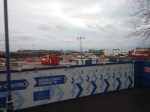




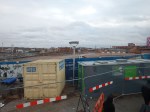






Note.
- As the pictures show Perry Barr is a bit of traffic bottleneck because of the reconstruction of Perry Barr station an other developments in the area, because of the Commonwealth Games, which are going to e held in Birmingham in 2022.
- The route goes past the High Speed Two site.
- Birmingham is a city of highways, flyovers, underpasses and roundabouts.
- The buses have wi-fi and charging points for phones.
I very much feel that the buses are the best hydrogen-powered vehicles, that I’ve travelled in, as they are smooth, comfortable, quiet and seem to have excellent performance.
Birmingham Buses Have Their Own Hydrogen Electrolyser
London bring their hydrogen in by truck from Runcorn, where it is created by electrolysis, for their hydrogen-powered buses.
On the other hand, Birmingham Buses have their own electrolyser at the Tyseley Energy Park.
This Google Map shows Tyseley Energy Park.

Note.
- The Birmingham Bus Refueler hadn’t opened, when this map was last updated.
- Tyseley Energy Park is only a few miles from the City Centre and route 51.
- I estimate that the Tyseley Energy Park occupies around four hectares.
This page on the Tyseley Energy Park web site described the refuelling options that are available.
- Fuels available include hydrogen, biomethane, compressed natural gas, diesel, gas oil and AdBlue.
- There are a range of charging options for electric vehicles.
The 3 MW electrolyser was built by ITM Power of Sheffield, which I estimate will produce nearly 1.5 tonnes of hydrogen per day.
According to this page on the Wrightbus website, a hydrogen-powered double-deck bus needs 27 Kg of hydrogen to give it a range of 250 miles. The refuelling of each bus takes eight minutes.
So the current fleet of twenty buses will need 540 Kg of hydrogen per day and this will give them a combined range of 5000 miles.
It would appear that the capacity of the electrolyser can more than handle Birmingham’s current fleet of twenty buses and leave plenty of hydrogen for other vehicles.
Could Other Towns And Cities Build Similar Energy Parks?
I don’t see why not and it looks like ITM Power are involved in a proposal to build an electrolyser at Barking.
Some would feel that London ought to follow Birmingham and create its own hydrogen.
.
 The Anonymous Widower