GWR and DfT’s Commitment To The Night Riviera
The May 2020 Edition of Modern Railways has an article, which is entitled West Of England Improvements In GWR Deal.
Under a heading of Sleeper Planning, this is said about plans for the Night Riviera.
Whilst GWR is already developing plans for the short term future of the ‘Night Riviera’ sleeper service, including the provision of additional capacity at times of high demand using Mk. 3 vehicles withdrawn from the Caledonian Sleeper fleet, it is understood the company has been asked to develop a long-term plan for the replacement of the current Mk. 3 fleet of coaches, constructed between 1981 and 1984, as well as the Class 57/6 locomotives, which were rebuilt in 2002-03 from Class 47 locomotives constructed in the early 1960s.
This must show commitment from both GWR and the Department for Transport, that the Night Riviera has a future.
These are a few of my thoughts on the future of the service.
The Coaches
I would suspect that GWR will opt for the same Mark 5 coaches, built by CAF, as are used on the Caledonian Sleeper.
I took these pictures on a trip from Euston to Glasgow.

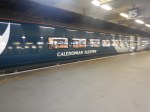
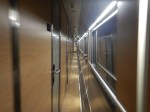

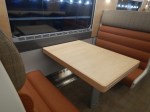
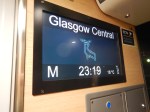

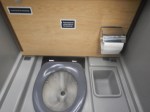
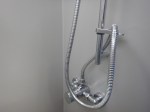


The coaches don’t seem to have any problems and appear to be performing well.
The facilities are comprehensive and include full en-suite plumbing, a selection of beds including doubles and a lounge car. There are also berths for disabled passengers.
The Locomotives
The Class 57 locomotives have a power output around 2 MW and I would suspect a similar-sized locomotive would be used.
Possible locomotives could include.
- Class 67 – Used by Chiltern on passenger services – 2.4 kW
- Class 68 – Used by Chiltern, TransPennine Express and others on passenger services – 2.8 MW
- Class 88 – A dual-mode locomotive might be powerful enough on diesel – 700 kW
I wouldn’t be surprised to see Stadler come up with a customised version of their Euro Dual dual-mode locomotives.
Protests After Claim That Hitachi Has Lost T&W Contract
The title of this post is the same as that of this article on Railnews.
This is the introductory paragraphs.
There have been protests in north east England after a report claimed that Hitachi has been ruled out of the three-way contest to build a £500 million fleet for Tyne & Wear Metro.
The other contenders are CAF and Stadler, and the source of the claims says ‘insiders’ at Nexus have been told that Hitachi will be ‘overlooked’.
It should be noted that the two other bidders have orders for similar trains in the pipeline.
CAF
In TfL Awards Contract For New DLR Fleet To Replace 30-year-old Trains , I wrote about how CAF had been awarded the contract for new trains for the Docklands Light Railway.
I also said this about the possibility of CAF being awarded the contract for the new trains for the Tyne and Wear Metro.
In Bombardier Transportation Consortium Preferred Bidder In $4.5B Cairo Monorail, I indicated that as the trains on the Tyne and Wear Metro and the trains on the Docklands Light Railway, are of a similar height and width, it might be possible to use the same same car bodies on both trains.
So now that CAF have got the first order for the Docklands Light Railway, they must be in prime position to obtain the Tyne and Wear Metro order!
A second order would fit well with the first and could probably be built substantially in their South Wales factory.
Stadler
Stadler seem to be targeting the North, with new Class 777 trains for Merseyrail and Class 399 tram-trains for Sheffield and bids in for tram-trains and and new trains for the Tyne and Wear Metro.
Their trains are both quirky, accessible and quality and built to fit niche markets like a glove.
Only Stadler would produce a replacement for a diesel multiple unit fleet with a bi-mode Class 755 train, with the engine in the middle, that is rumoured to be capable of running at 125 mph.
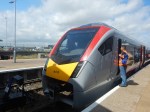
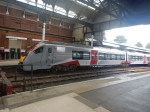
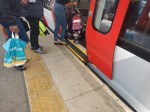

Note the full step-free access between train and platform, which is also a feature of the Merseyrail trains.
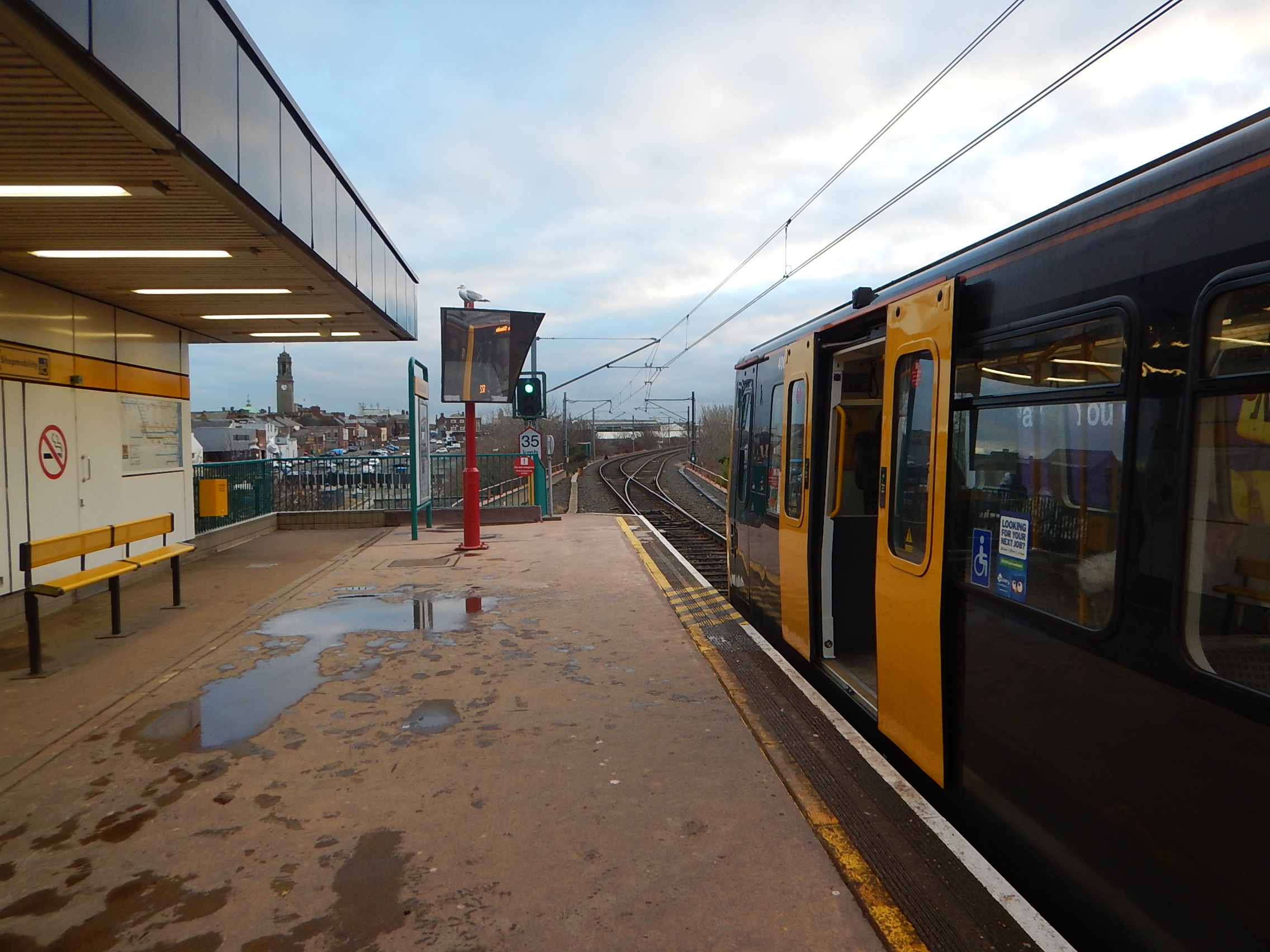
Does the Tyre and Wear Metro want to have access like this? It’s already got it with the existing trains, as this picture at South Shields station shows.
Stadler’s engineering in this area, would fit their philosophy
I first thought that Stadler would propose a version of their Class 399 tram-trains. for the Tyne and Wear Metro and wrote Comparing Stadler Citylink Metro Vehicles With Tyne And Wear Metro’s Class 994 Trains.
This was my conclusion.
I am led to the conclusion, that a version of the Stadler Citylink Metro Vehicle similar to those of the South Waes Metro, could be developed for the Tyne and Wear Metro.
My specification would include.
- Length of two current Class 994 trains, which would be around 111 metres.
- Walk through design with longitudinal seating.
- Level access between platform and train at all stations.
- A well-designed cab with large windows at each end.
- Ability to use overhead electrification at any voltage between 750 and 1500 VDC.
- Ability to use overhead electrification at 25 KVAC.
- Pantographs would handle all voltages.
- A second pantograph might be provided for reasons of reliable operation.
- Ability to use onboard battery power.
- Regenerative braking would use the batteries on the vehicle.
Note.
- Many of these features are already in service in Germany, Spain or Sheffield.
- The train would be designed, so that no unnecessary platform lengthening is required.
- As in Cardiff, the specification would allow street-running in the future.
- Could battery range be sufficient to allow new routes to be developed without electrification?
I also feel that the specification should allow the new trains to work on the current network, whilst the current trains are still running.
But since I wrote that comparison in June 2018, Merseyrail’s new trains have started to be delivered and Liverpudlians have started to do what they do best; imagine!
The Tyne and Wear Metro has similar ambitions to expand the network and would a version of the Class 777 train fit those ambitions better?
Conclusion
I wouldn’t be surprised if Hitachi misses out, as the experience of the Docklands Light Railway or Merseyrail fed into the expansion of the Tyne and Wear Metro could be the clincher of the deal.
They would also be the first UK customer for the Hitachi trains.
The Wrong Kind Of Bleach?
This article on Railnews is entitled 9 September: News In Brief.
It has the following sub-title.
Wrong Bleach Took Caledonian Sleepers Out Of Service
This is the first sentence.
Cleabers who used the wrong specification of bleach in the toilets and shower rooms on Caledonian Sleepers caused significant damage after the chemicals reacted with stainless steel pipes,
To my knowledge stainless steel, especially when it contains increased levels of chromium and some molybdenum, can be very proof to attack from most substances.
Look at this Butler Shba cutlery made in Sheffield from stainless steel with black Delrin plastic handles, which have seen continuous use in my household for fifty years.
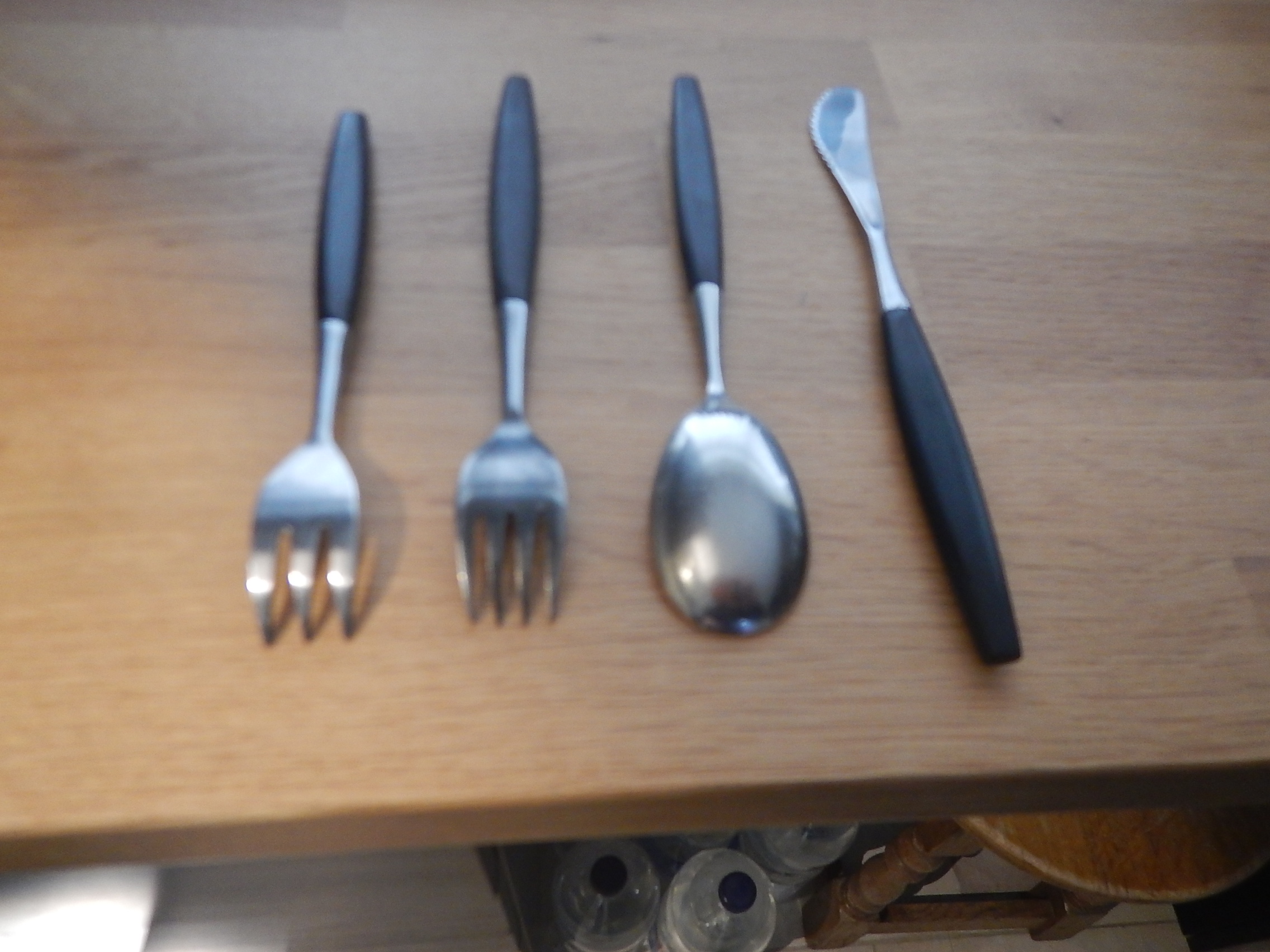
Now that’s what I call stainless steel!
Perhaps, the Spanish used the wrong type of stainless steel?
Delrin is a form of polyoxymethylene, which is an engineering plastic.
This plastic has a wide spectrum of usage, including in zips, bagpipes and metered dose inhalers, to name just three of hundreds.
My First Ride In A Class 331 Train
After yesterday’s post; My First Ride In A Class 195 Train, today, I took a ride in that train’s electric sister; the Class 331 train, between Leeds and Doncaster stations.
These are some pictures.
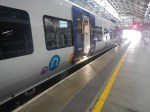
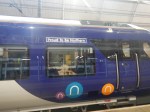
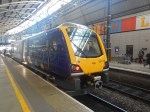
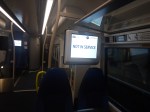
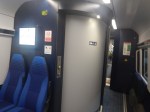
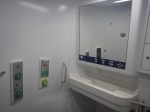
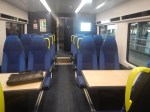

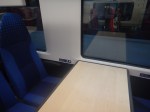


These are my views on various aspects of the train.
Noise, Vibration And Harshness
The electric trains, I travel in most are London Overground’s and TfL Rail’s various classes; 315, 317, 345, 378 and 710.
These Class 331 trains seemed to have a smooth ride, but a noisier transmission compared to say the Class 378 train or the Class 710 train.
To check, the day after I rode the Class 331 train, I rode the Gospel Oak to Barking Line, sampling both Class 378 and Class 710 trains.
It was no surprise that noise levels in the Class 710 train were lowest, but the Class 331 train was noisier than the Class 378 train.
Interior Design
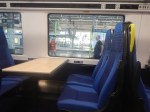
The interior design is the same as that of the Class 195 train and my same comments apply.
- It is inferior to that of a Class 385 train.
- The seats are not aligned with the windows.
- There are lots of tables, which I like.
I also noted that the information display wasn’t working. Was this just teething troubles?
Entrance And Exit
As expected, this was the same as the Class 195 train.
Conclusion
The Class 331 train like its sibling; the Class 195 train, has a few design faults, that hopefully will be rectified in the next few months.
My First Ride In A Class 195 Train
Today, I rode the ten o’clock Virgin to Manchester Piccadilly station.
I then waited for one of the new Class 195 trains going South to Manchester Aurport station.
These pictures show the Class 195 train.
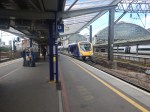
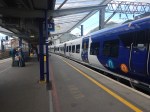
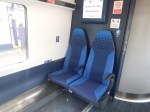

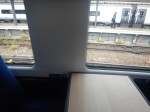
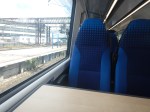
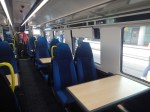
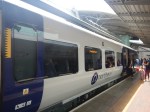
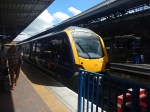
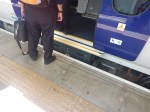
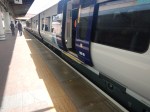
These are my views on various aspects of the train.
Noise, Vibration And Harshness
The Class 195 train is a diesel multiple unit, with an MTU engine and a ZF Ecolife transmission.
Wikipedia describes the transmission as is a 6 speed transmission for city buses. It also lists these features.
- Boosted operating economy, longer service life, and higher temperature resistance for operation with Euro 5 (1st generation) and Euro 6 (2nd generation) compatible engines.
- An integral retarder,
- Longer operational intervals between oil changes.
- Higher torque capacity.
It looks like ZF have created a sophisticated and very efficient gearbox for diesel buses and trains.
During today, I rode also rode in Class 156 and Class 175 trains, that are also diesel powered.
I would put the noise, vibration and harshness of the diesel engine and the transmission of the Class 195 trains, as worse than that of the Class 175 train and better than than that of the Class 156 train.
I am surprised that the Class 195 train doesn’t use a hybrid electric transmission, which are starting to be developed by MTU and will be retrofitted into various diesel multiple units like Porterbrook’s Class 170 trains, as I talked about in Rolls-Royce And Porterbrook Launch First Hybrid Rail Project In The UK With MTU Hybrid PowerPacks.
I said this in the linked post.
As I understand it, the current hydraulic traction system will be replaced by an electric one with a battery, that will enable.
- Regenerative braking using a battery.
- Battery electric power in urban areas, stations and depots.
- Lower noise levels
- Lower maintenance costs.
This should also reduce diesel fuel consumption and carbon emissions.
As the Class 195 train has a similar electric cousin; the Class 331 train, I would have felt that it would be possible to fit the Class 195 trains with an MTU Hybrid PowerPack or similar.
This should reduce, what to me, are unacceptable noise levels.
As the MTU Hybrid PowerPack has been developed, at the same time as the Class 195 train, which uses a traditional MTU engine, I wouldn’t be surprised if the Class 195 train has been designed to be retrofitted with the more efficient MTU Hybrid PowerPack.
Interior Design
The designj of the interior is disappointing in some of the details and I would rate it inferior to the Class 385 trains, built for ScotRail by Hitachi.
The most annoying aspect is that the seats and windows are not aligned, as they are in Hitachi’s design.
This picture taken in a Chiltern Railways Mark 3 carriage, shows the alignment done in a better manner.
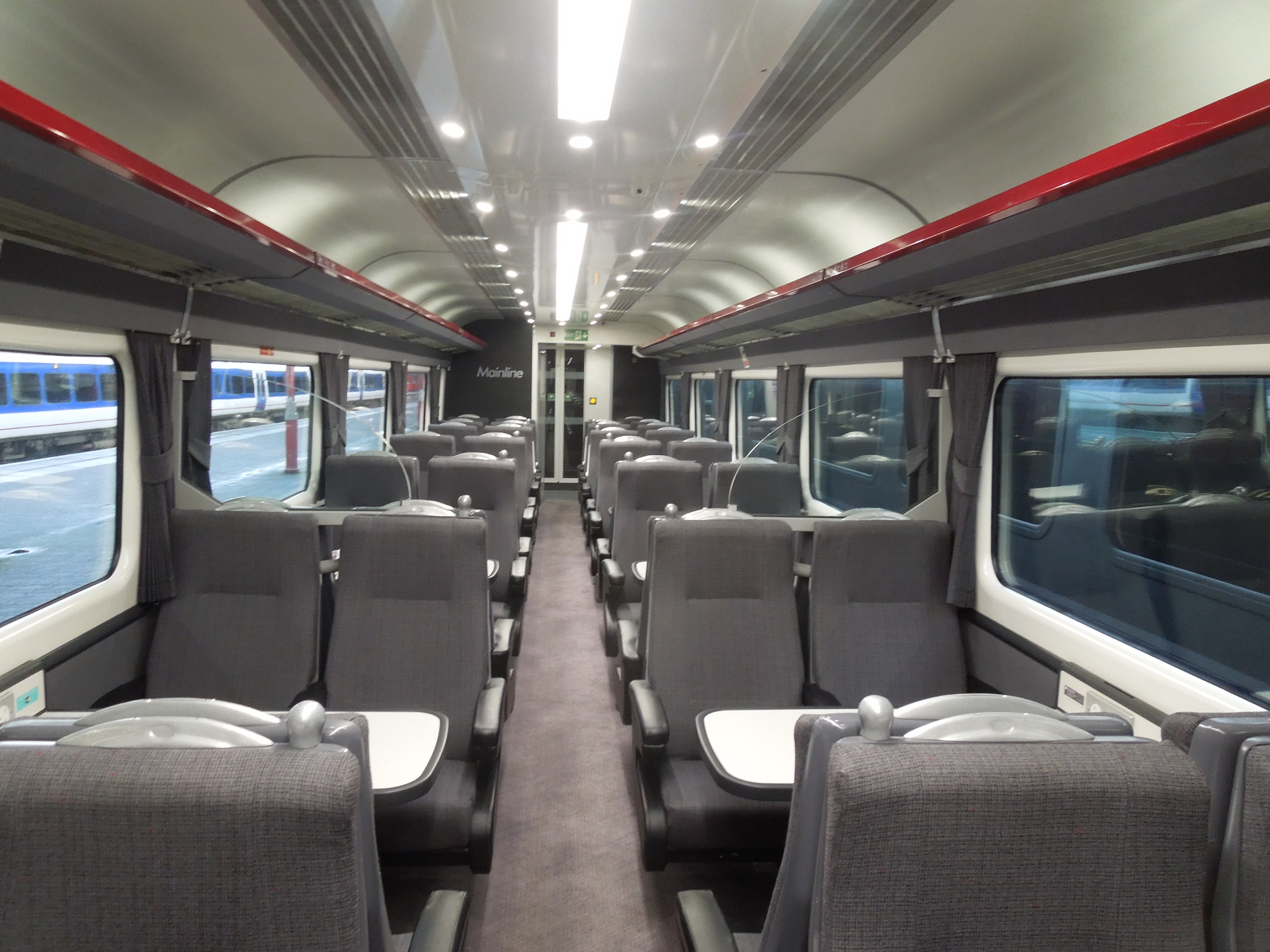
But I believe, that it can be done better still.
Entrance And Exit
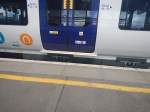
As the pictures show, there is a big gap and a high step getting into the train. I know that the platform at Manchester Piccadilly is not easy, but the gap was still large on the straight platform at Manchester Airport.
With any new train, a passenger in a wheelchair, should be able to push themselves into and out of the train.
They certainly can’t in a Class 195 train.
Conclusion
I was rather disappointed with the Class 195 train.
Good points were the number of tables and build quality.
Bad points were the noise, vibration and harshness, execution of the interior design and entry and exit.
Compared to the Class 385 train, which I would score at 8/10, the Class 195 train, is no better than 6/10.
In some ways though, my biggest disappointment, is that they didn’t get the smaller points of the design right first time!
TfL Awards Contract For New DLR Fleet To Replace 30-year-old Trains
The title of this post, is the same as that of this article on Rail Technology Magazine.
I don’t think this is a surprise, as the winning design is based on CAF’s Metro train, which is in widespread use, in Europe and around the world.
The Trains
They would appear to be of a similar specification to most modern Metro trains, as would be expected.
The Possibility Of A Second Order
In Bombardier Transportation Consortium Preferred Bidder In $4.5B Cairo Monorail, I indicated that as the trains on the Tyne and Wear Metro and the trains on the Docklands Light Railway, are of a similar height and width, it might be possible to use the same same car bodies on both trains.
So now that CAF have got the first order for the Docklands Light Railway, they must be in prime position to obtain the Tyne and Wear Metro order!
Dwell Times And End Doors
Chris Stokes finishes his column in the January 2019 Edition of Modern Railways, with this paragraph.
Dwell times remain critical too. The new TransPennine units provide more seats, but have single end doors. For an operation with high numbers joining and alighting at many stops, dwell times are going to increase significantly at stations such as Manchester Victoria, Huddersfield, Leeds, Boltonand Preston, chewing up any savings in running times, and exacerbating the problems at platforms 13 and 14 at Manchester Piccadilly.
I haven’t seen a TransPennine Mark 5A coach in the flesh yet, but I’ve seen several pictures, which show each coach has single end doors.
This picture of the 100 mph Class 755 train shows the door layout is totally different.
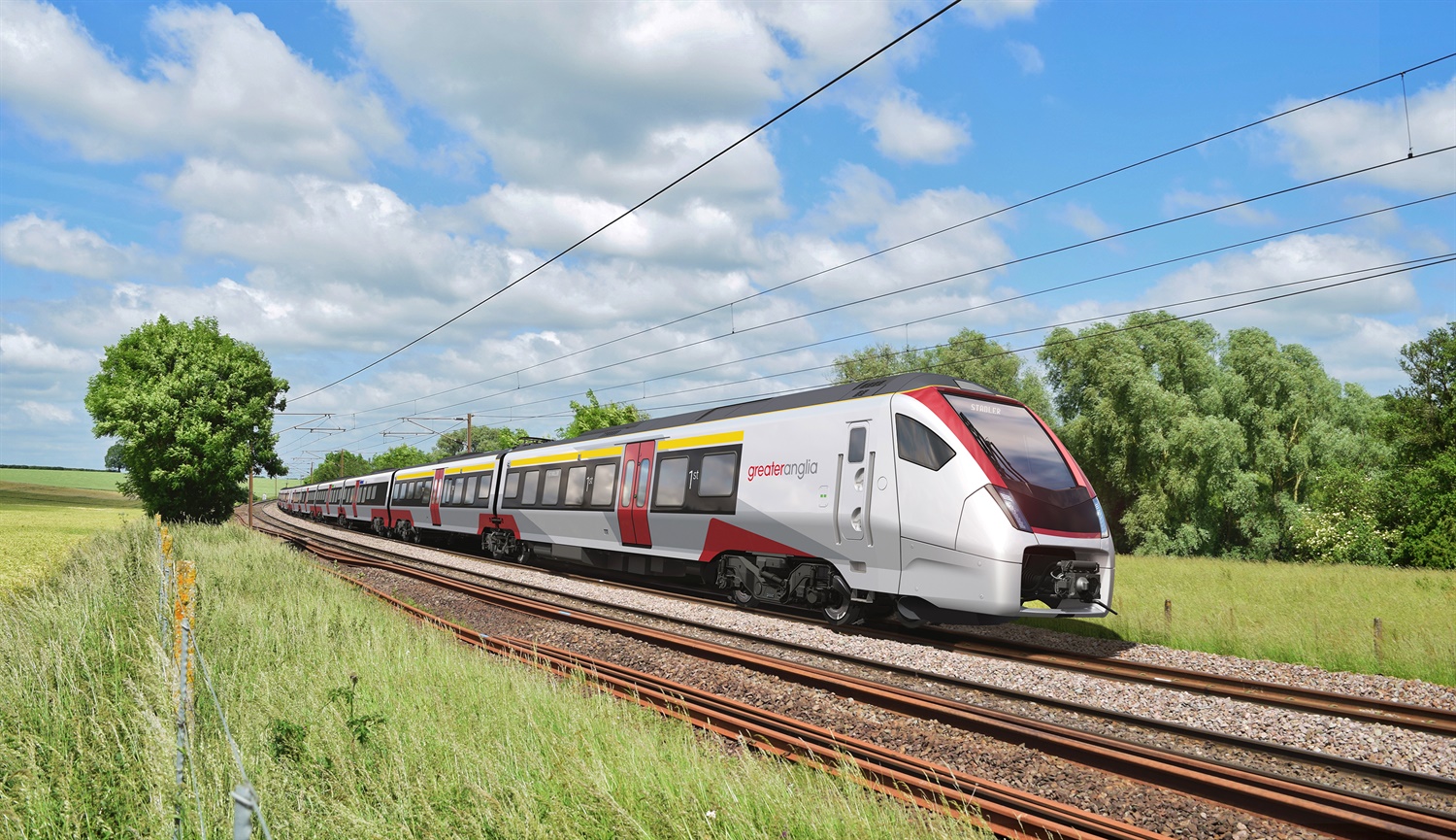
It looks like it has a single double door on each coach.
It appears that the electric Class 745 trains have more doors.
If you look at a typical Bombardier Aventra or Electrostar, Stadler Flirt or Siemens Desiro City, there are generally no end doors.
Have CAF commited a design crime of the highest order?
Or is it TransPennine’s fault?
Is Spain Looking Both Ways On Brexit?
This article on the BBC is entitled Spain Brexit: PM Sánchez Threatens To Vote No Over Gibraltar.
The title says it all.
On the other hand, Spanish rail companies seem to be very keen to invest in the UK and also create new and innovative trains for the British market.
- Amey, which is a subsidiary of the Spanish public company Ferrovial is heavily involved in big projects all over the UK, including the South Wales Metro.
- The train builder; CAF, is supplying lots of trains and coaches for UK operators and building a factory at Newport in South Wales.
- Another train builder; Talgo, is on the short list to build the trains for High Speed Two and is proposing to open a factory at Longannet in Scotland and a research centre at Chesterfield
It does appear, that big Spanish companies see the UK as a place to do business.
In connection with the Longannet factory, there is a feature article about the factory in Issue 866 of Rail Magazine.
This is the last paragraph.
As for Brexit, which is known to be a concern for other firms, Talgo said in a statement that its plans were “Brexit-free”, claiming there is a huge potential UK market as well as export opportunities.
The article also says that Talgo need more manufacturing capacity and the brownfield Longannet site, with its space and excellent access by rail and sea, fits their needs.
I also suspect that manufacturing in Scotland will help them secure sales in important English-speaking markets for their innovative high speed trains.

