Where Is Handsacre Junction?
Handsacre Junction is where High Speed Two trains from London Euston and Birmingham will join the Trent Valley Line to complete their journeys via Stafford and Crewe.
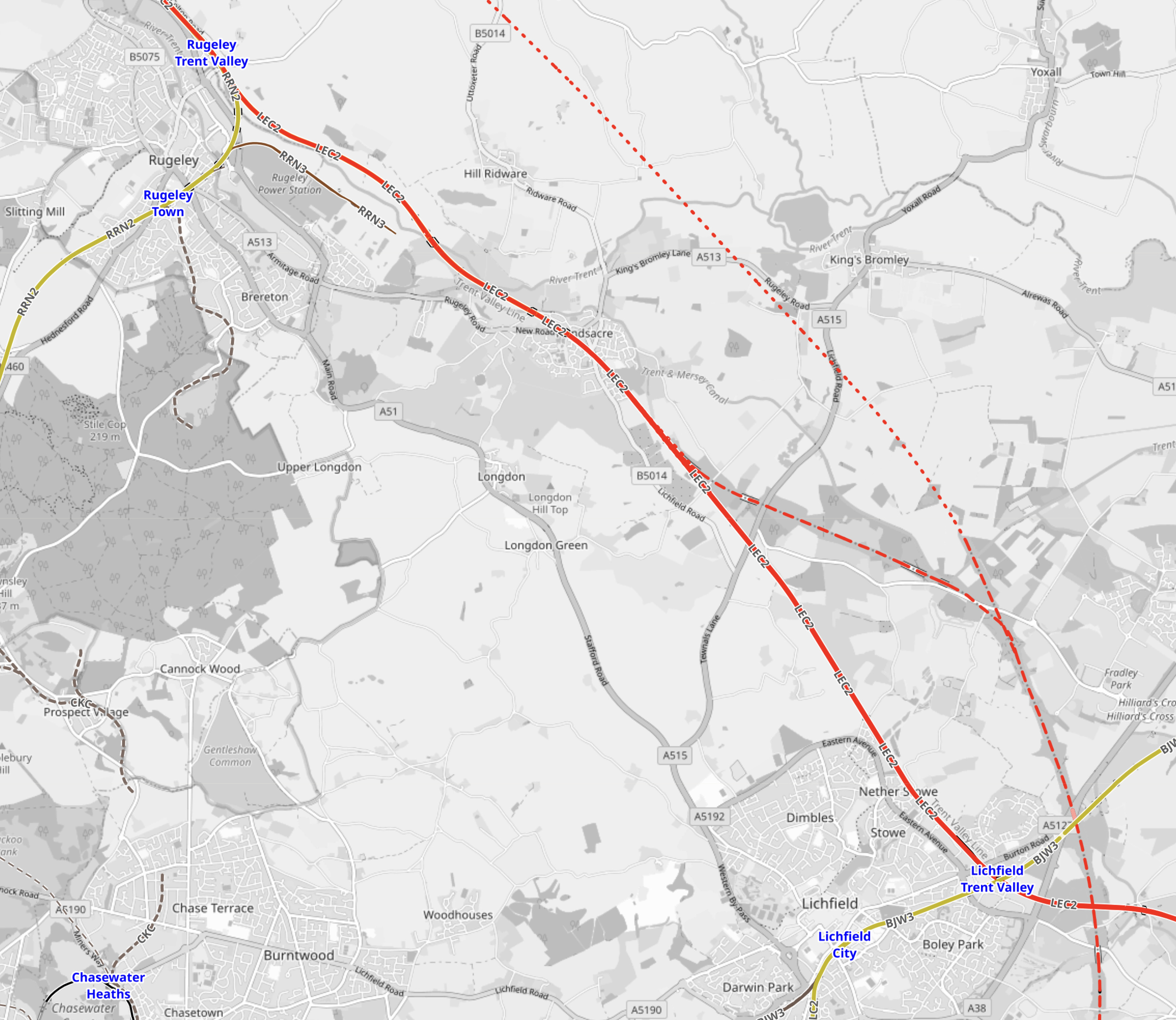
This OpenRailwayMap shows the junction.
Note.
- The solid red track going diagonally across the map is the Trent Valley Line, which is a section of the West Coast Main Line.
- The station on the Trent Valley Line at the top of the map is Rugeley Trent Valley.
- The station on the Trent Valley Line at the bottom of the map is Lichfield Trent Valley.
- The dotted tracks running North-South show the proposed route of High Speed Two.
- Only the dashed sections of tracks will be built for Phase 1 of High Speed Two.
From the map, I estimate that that High Speed Two will join the Trent Valley Line at the mid-way point between the two stations.
According to Real Time Trains, the stations are these distances from Euston.
- Lichfield Trent Valley – 116.4 miles
- Rugeley Trent Valley – 124.4 miles
So this puts Handsacre Junction at 120.4 miles from Euston.
Searching the Internet, I find the distance between Euston and Handsacre Junction on High Speed Two as 192.77 km. or 119.8 miles.
It would appear that the High Speed Two route is 0.6 mile longer.
Euston And Handsacre Junction Times
This table shows Euston and Handsacre junction times at various speeds.
High Speed Two Average Speed – 205 mph – 35 mins.
Class 390 Train Average Speed – 140 mph – 51 mins.
Euston And Glasgow Central Times
If I assume, that the trains take the same three hours and 47 minutes between Handsacre junction and Glasgow Central as Class 390 trains do now, I get these times.
High Speed Two Average Speed – 205 mph – 4 hour and 22 mins.
Class 390 Train Average Speed – 140 mph – 4 hours and 38 mins.
Euston And Liverpool Lime Street Times
If I assume, that the trains take the same 71 minutes between Handsacre junction and Liverpool Lime Street as Class 390 trains do now, I get these times.
High Speed Two Average Speed – 205 mph – 1 hour and 46 mins.
Class 390 Train Average Speed – 140 mph – 2 hours and 2 mins.
Euston And Manchester Piccadilly Times
If I assume, that the trains take the same 66 minutes between Handsacre junction and Manchester Piccadilly as Class 390 trains do now, I get these times.
High Speed Two Average Speed – 205 mph – 1 hour and 41 mins.
Class 390 Train Average Speed – 140 mph – 1 hours and 57 mins.
Is Wigan North Western Station Ready For High Speed Two?
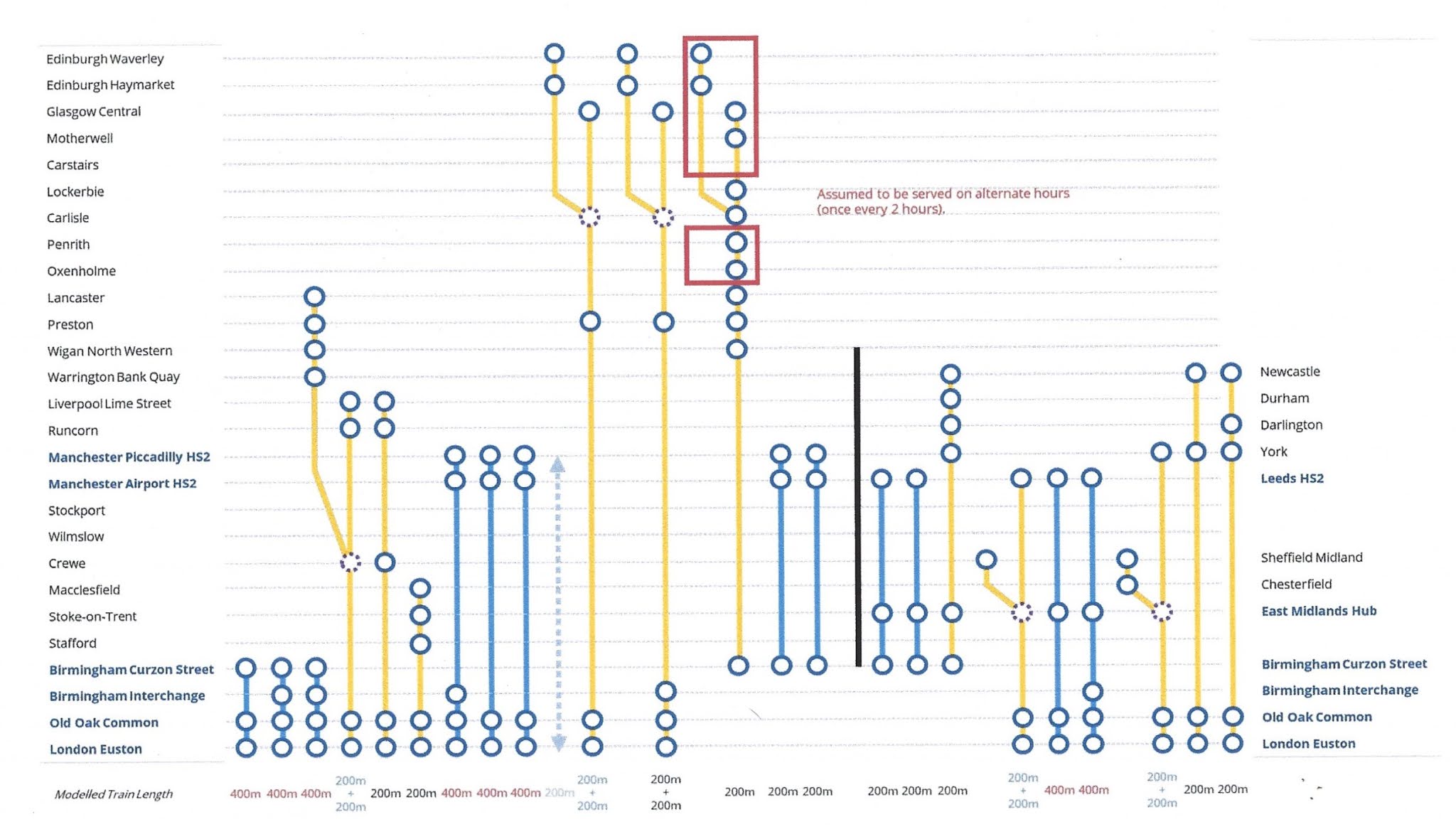
This diagram shows High Speed Two services, as they were originally envisaged before Phase 2 was discontinued.
Note.
- Trains to the left of the vertical black line are Phase 1 and those to the right are Phase 2.
- Full-Size trains are shown in blue.
- Classic-Compatible trains are shown in yellow.
- Blue circles are shown, where trains stop.
- The dotted circles are where trains split and join.
- In the red boxes routes alternate every hour.
- Was Lancaster chosen as it’s close to the new Eden Project Morecambe?
Click on the diagram to enlarge it.
It would appear if High Speed Two sticks to this original pattern of services, then the following trains will go through Wigan North Western station.
- 200 metre single train – London Euston and Lancaster, which stops at Old Oak Common, Crewe, Warrington Bank Quay, Wigan North Western and Preston.
- 400 metre pair of trains – London Euston and Edinburgh Haymarket/Edinburgh Waverley/Glasgow Central, which stops at Old Oak Common, Preston, Carlisle.
- 400 metre pair of trains – London Euston and Edinburgh Haymarket/Edinburgh Waverley/Glasgow Central, which stops at Old Oak Common, Birmingham Interchange, Preston, Carlisle.
- 200 metre single train – Birmingham Curzon Street and Edinburgh Haymarket/Edinburgh Waverley or Motherwell/Glasgow Central, which stops at Wigan North Western, Preston, Lancaster, Carlisle and Lockerby and every two hours at Oxenholme and Penrith.
Note.
- Only single High Speed Two classic-compatible trains, stop in Wigan North Western station and they are only two hundred metres long.
- One train per hour (tph) terminates at Lancaster and a second tph terminates alternatively at Edinburgh Haymarket/Edinburgh Waverley or Glasgow Central.
- Four hundred metre long pairs of trains go through North Western station without stopping.
Currently Wigan North Western has 14 trains per day (tpd) stopping at the station, eleven of which go to Scotland and three to Blackpool.
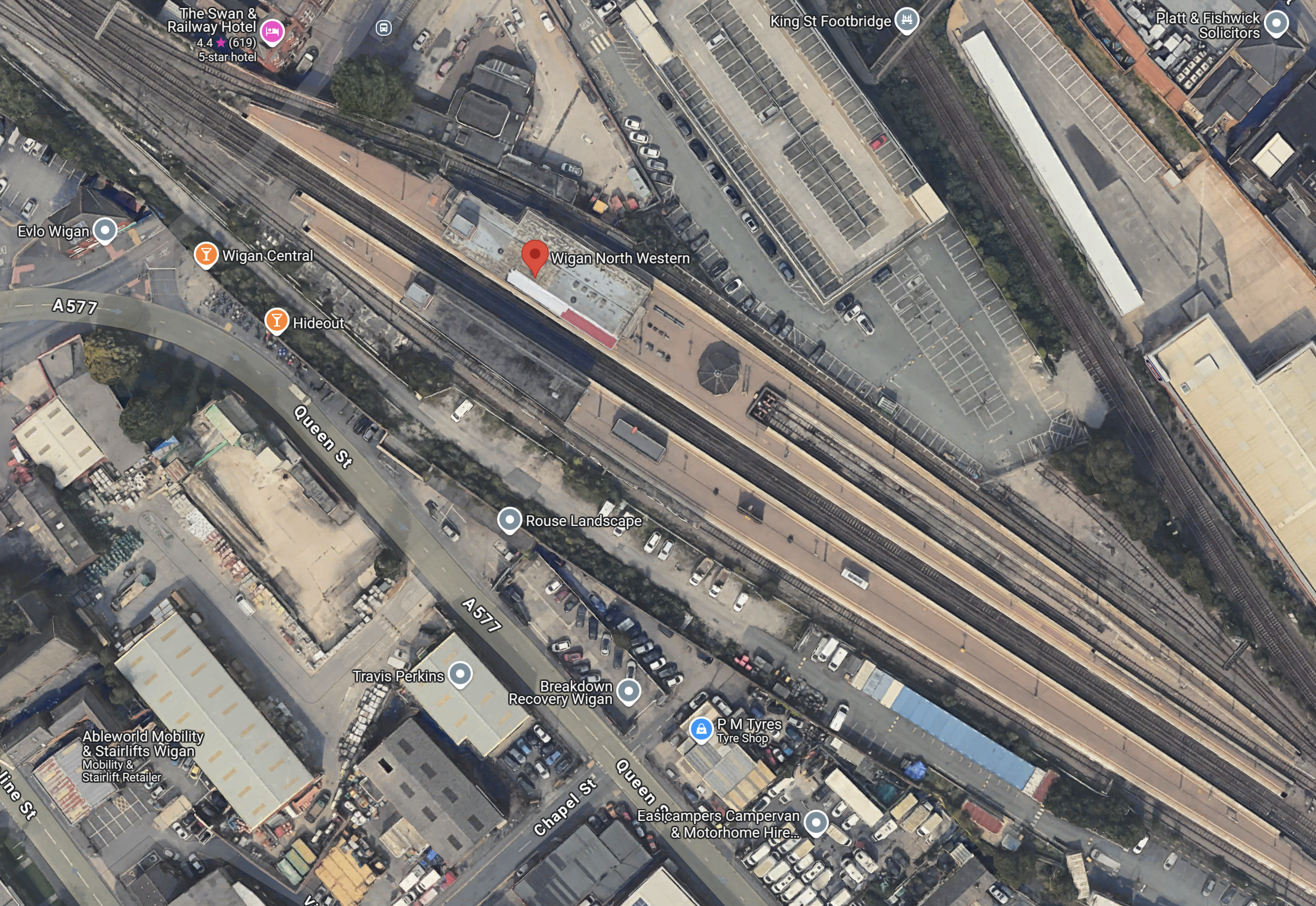
This Google Map shows Wigan North Western station.
Note.
- The two long platforms in the middle of the station, where the Avanti trains stop.
- A long platform on the Southern side of the station used by local services to and from Liverpool and Blackpool.
- Three bay platforms on the Northern side of the station, one of which is unused, that handle local services to Manchester and beyond.
As the 265.3 metre long Class 390 trains can use the central platforms, High Speed Two classic-compatible trains will be able to use these platforms.
On my brief visit to the station yesterday, I took these pictures.
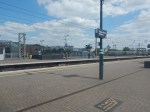
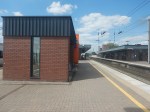
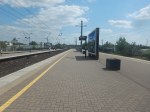
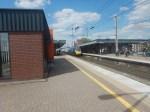
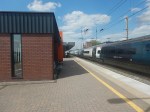
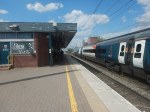
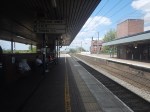
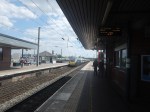
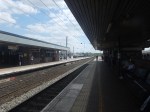
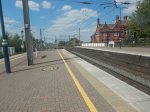
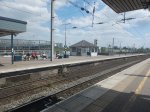
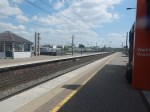
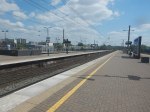
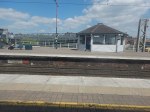
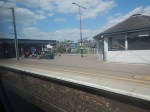
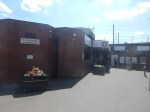

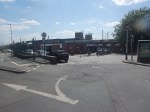
Note.
- All Class 390 trains are longer than High Speed Two classic-compatible trains, so the train in the pictures indicates that the High Speed Two trains will be able to stop at Wigan North Western station.
- The platforms are long and wide.
- The station is well-equipped with lifts, cafes, waiting rooms and some of the best toilets in a station in the North of England.
- Wigan Wallgate station is only a short walk away, with a selection of local services to Blackburn, Headbolt Lane, Manchester, Southport and a large proportion of Lancashire.
- The last two pictures were taken looking at the two stations from halfway.
- The shops between the two stations are a good selection and include a Morrisons Local.
I had been intending to go on to Preston, Lancaster and Morecambe, but a points failure at Preston meant that no trains were running.
Conclusion
The two Wigan stations and the buses that serve them, could be a good interchange for passengers to catch High Speed Two.
I feel that most of the work needed to be done at Wigan North Western to get the station ready for High Speed Two will mainly be cosmetic or technical upgrades like signalling. I can’t see any expensive or disruptive upgrades like platform lengthening being needed.
Times Of Avanti West Coast Trains Between London Euston And Crewe
This table shows the first few Avanti West Coast trains between London Euston and Crewe on the 17th March 2025.
- 390119 – IS37 – Glasgow – 11 cars – 05:31 – 07:29 – 2 stops – 118 mins – 80.3 mph.
- 390155 – IH61 – Manchester Piccadilly – 11 cars – 06:29 – 08:08 – 2 stops – 99 mins – 95.7 mph.
- 807007 – IF11 – Liverpool Lime Street – 7 cars – 06:36 – 08:23 – 2 stops – 107 mins – 88.6 mph.
- 390104 – IS42 – Glasgow – 11 cars – 07:29 – 08:59 – 0 stops – 90 mins – 105.3 mph
- 390010 – IH62 – Manchester Piccadilly – 9 cars – 07:33 – 09:10 – 1 stop – 97 mins – 97.7 mph.
- 390044 – IF12 – Liverpool Lime Street – 9 cars – 07:43 – 09:18 – 2 stops – 95 mins – 99.7 mph.
- 390118 – IS45 – Glasgow – 11 cars – 08:30 – 10:01 – 0 stops – 91 mins – 104.2 mph
- 390040 – IH63 – Manchester Piccadilly – 11 cars – 08:33 – 10:19 – 1 stop – 106 mins – 89.4 mph.
- 807001 – IF14 – Liverpool Lime Street – 7 cars – 08:43 – 10:28 – 1 stop – 95 mins – 99.7 mph.
- 805001/805011 – ID83 – Holyhead – 10 cars – 09:02 – 10:51 – 1 stop – 109 mins – 86.9 mph.
- 390136 – IS48 – Glasgow – 11 cars – 09:30 – 11:02 – 0 stops – 92 mins – 103.0 mph
- 390040 – IH64 – Manchester Piccadilly – 9 cars – 09:33 – 11:08 – 1 stop – 95 mins – 99.7 mph.
- 390154 – IF16 – Liverpool Lime Street – 11 cars – 09:43 – 11:31 – 1 stop – 108 mins – 87.7 mph.
- 805012/805003 – ID84 – Chester – 10 cars – 10:10 – 11:53 – 1 stop – 103 mins – 92.0 mph.
- 390130 – IS52 – Glasgow – 11 cars – 10:30 – 12:00 – 0 stops – 90 mins – 105.3 mph
- 390151 – IH65 – Manchester Piccadilly – 11 cars – 10:35 – 12:09 – 1 stop – 94 mins – 100.8 mph.
- 807008 – IF18 – Liverpool Lime Street – 7 cars – 10:43 – 12:30 – 1 stop – 107 mins – 88.6 mph.
- 805009 – ID85 – Chester – 5 cars – 11:00 – 11:46 – 1 stop – 106 mins – 89.4 mph.
Note.
- All trains shown, go through Crewe.
- Some trains were delayed, hence their slow average speed.
- The Glasgow trains, which run non-stop from Euston to Warrington Bank Quay were the fastest, with four trains over 100 mph.
I have a few other thoughts.
The Class 805 Trains Are Crying Out For Batteries
In The Data Sheet For Hitachi Battery Electric Trains, I said this on how the Hitachi Class 80x trains will perform on batteries.
These are my conclusions about Hitachi’s battery packs for Class 80x trains.
- The battery pack has a capacity of 750 kWh.
- A five-car train needs three battery-packs to travel 100 miles.
- A nine-car train needs five battery-packs to travel 100 miles.
- The maximum range of a five-car train with three batteries is 117 miles.
- The maximum range of a nine-car train with five batteries is 121 miles.
Holyhead and Crewe is only 105.5 miles.
As battery technology gets better, these distances will increase.
The Fast Glasgow Train Appears To Be Leading A Convoy
The non-stop to Warrington Bank Quay Glasgow trains, also appear to be leading one Manchester Piccadilly, a Liverpool Lime Street and a Chester/North Wales train in a convoy, through Milton Keynes Central and the Trent Valley.
This convoy could grow as other services are added to the West Coast Main Line.
The Open Access Services Might Have Their Own Convoy
It would seem to me, that it might be possible to run a second convoy every hour, out of phase with the current one following the Glasgow service.
It also might be more virtual than real and under the control of the digital signalling, that will be installed on the line.
250,000 Seats A Day On The WCML?
The title of this post, is the same as that of this article on Rail Engineer.
These are the first three paragraphs.
In the Parliamentary debate on the cancellation of HS2 phase 2, Transport Minister Mark Harper claimed that what remains of HS2 will deliver “a massive increase in capacity to the West Coast Main Line (WCML)” by providing 250,000 seats a day. This figure was subsequently repeated by the Prime Minister and Rail Minister who advised that it applies “across the primary long-distance operator on the West Coast.”
Yet without HS2 phase 2a, there is to be no WCML capacity increase north of Lichfield. Furthermore, with no HS2 station in Manchester it will not be possible to run the planned two-unit 400-metre HS2 trains to the city. Instead, there can only be single 200-metre unit HS2 trains which are shorter than the current 265-metre Pendolino trains.
Furthermore, 250,000 seats a day is equivalent to running 17 x 605-seat Pendolinos an hour, 24 hours a day. This is clearly not credible.
Note.
- The writer’s assumptions about Manchester are correct.
- Liverpool Lime Street is already is already HS2-ready for trains between Crewe and London, after the recent upgrade.
- Liverpool Lime Street will certainly be able to take two London trains per hour (tph), which can only be single 200-metre unit HS2 trains.
- Liverpool Lime Street may be able to take a third London train per hour.
These are my thoughts.
Current Services
Current services include.
- Avanti West Coast – London Euston and Blackpool North via Birmingham New Street – 2 trains per day (tpd)
- Avanti West Coast – London Euston and Glasgow Central via Birmingham New Street – 5 tpd
- Avanti West Coast – London Euston and Edinburgh Waverley via Birmingham New Street – 7 tpd
- Avanti West Coast – London Euston and Birmingham New Street – 1 tph
- Avanti West Coast – London Euston and Holyhead – 10 tpd
- Avanti West Coast – London Euston and Liverpool Lime Street – 1 tph – Increasing to 2 tph.
- Avanti West Coast – London Euston and Manchester Piccadilly via Stoke-on-Trent, Macclesfield and Stockport – 1 tph
- Avanti West Coast – London Euston and Manchester Piccadilly via Stoke-on-Trent and Stockport – 1 tph
- Avanti West Coast – London Euston and Manchester Piccadilly via Crewe, Wilmslow and Stockport – 1 tph
- Avanti West Coast – London Euston and Glasgow Central – 1 tph.
- West Midlands Trains – London and Birmingham New Street – 2 tph
- West Midlands Trains – London and Crewe – 1 tph
- West Midlands Trains – Birmingham New Street and Liverpool Lime Street – 1 tph
It looks like there are eight Avanti West Coast tph and two West Midlands Trains tph between Stafford and Crewe.
High Speed Two Services
This diagram shows High Speed Two services, as they were originally envisaged before Phase 2 was discontinued.
Note.
- Trains to the left of the vertical black line are Phase 1 and those to the right are Phase 2.
- Full-Size trains are shown in blue.
- Classic-Compatible trains are shown in yellow.
- The dotted circles are where trains split and join.
- In the red boxes routes alternate every hour.
- Was Lancaster chosen as it’s close to the new Eden Project Morecambe?
Click on the diagram to enlarge it.
The Author’s Assumption
The author has made these assumptions.
- Current West Coast Main Line capacity North of Lichfield; Avanti West Coast – 8 tph, West Midlands – 1 tph and freight trains – 4 tph
- HS2 offers no extra capacity North of Lichfield.
- Max capacity ; Old Oak Common – 8 tph and London Euston – 10 tph.
- 400-metre long trains North of Birmingham ; Min – 1 tph to Edinburgh/Glasgow
- 400-metre long trains North of Birmingham ; Max – plus 3 tph to Liverpool/Manchester
- Trains operate a maximum of 14 hours per day.
I would add.
- All pairs of 200-metre long trains split and join at Crewe.
- Birmingham Curzon Street has seven platforms.
- Lancaster and Macclesfield have long bay platforms, that can handle 200-metre trains
- Liverpool Lime Street and Manchester Piccadilly have two platforms, that can handle 200-metre trains.
- I suspect
- Liverpool Lime Street and Manchester Piccadilly could both handle four 200-metre trains tph hour – Three for London and one for Birmingham.
There is a surprising amount of capacity in the North.
The Author’s Minimum Plan For HS1 – Phase 1
I think his minimum plan is as follows.
- Old Oak Common and Birmingham Curzon Street – 400-metre long trains – 3 tph
- Old Oak Common and Liverpool Lime Street/Lancaster – 400-metre long trains – 1 tph – Splits at Crewe.
- Old Oak Common and Liverpool Lime Street – 200-metre long trains – 1 tph
- Old Oak Common and Macclesfield via Stafford and Stoke-on-Trent – 200-metre long trains – 1 tph
- Old Oak Common and Manchester Piccadilly – 200-metre long trains – 2 tph
- Old Oak Common and Edinburgh Waverley/Glasgow Central – 400-metre long trains – 1 tph – Splits at Crewe.
Note.
- 400-metre long trains are a pair of 200-metre long trains, that can split and join.
- This fulfils all the requirements of the original HS2 timetable for Phase 1.
- The total is nine tph and Old Oak Common can only handle 8 tph.
- Perhaps, the Liverpool Lime Street service could be a Liverpool Lime Street/Manchester Piccadilly service, that splits at Crewe?
I think it could work with London having the following services.
- Birmingham Curzon Street – 400-metre long trains – 3 tph
- Birmingham International – 400-metre long trains – 4 tph
- Carlisle – 200-metre long trains – 1 tph
- Crewe – 400-metre long trains – 3 tph
- Edinburgh Waverley – 200-metre long trains – 1 tph
- Glasgow Central – 200-metre long trains – 1 tph
- Lancaster – 200 metre long trains – 1 tph
- Liverpool Lime Street – 200-metre long trains – 2 tph
- Macclesfield – 200-metre long trains – 1 tph
- Manchester Piccadilly – 200-metre long trains – 2/3 tph
- Preston – 200-metre long trains – 2 tph
- Stafford – 200-metre long trains – 1 tph
- Stoke-on-Trent – 200-metre long trains – 1 tph
- Warrington Bank Quay – 200-metre long trains – 1 tph
- Wigan North Western – 200-metre long trains – 1 tph
Services care as good or better than the current services.
The Author’s Maximum Plan For HS1 – Phase 1
I think his maximum plan is as follows.
- London Euston and Birmingham Curzon Street – 400-metre long trains – 3 tph
- London Euston and Liverpool Lime Street/Lancaster – 400-metre long trains – 1 tph – Splits at Crewe.
- London Euston and Liverpool Lime Street/Manchester Piccadilly – 400-metre long trains – 1 tph – Splits at Crewe.
- London Euston and Macclesfield via Stafford and Stoke-on-Trent – 200-metre long trains – 1 tph
- London Euston and Manchester Piccadilly – 200-metre long trains – 2 tph
- London Euston and Edinburgh Waverley/Glasgow Central – 400-metre long trains – 1 tph – Splits at Crewe.
Note.
- 400-metre long trains are a pair of 200-metre long trains, that can split and join.
- This fulfils all the requirements of the original HS2 timetable for Phase 1.
- That is nine tph and London Euston can handle 10 tph.
- Perhaps, a tenth train could serve Edinburgh Waverley/Glasgow Central with a split at Crewe.
It should work.
Could High Speed Birmingham Curzon Street and Liverpool Lime Street And Manchester Piccadilly Services Be Provided With A Reverse At Birmingham Curzon Street?
A train would take this route.
- A 400 metre long train would leave London and go to Birmingham Curzon Street.
- At Birmingham Curzon Street the train would reverse and travel to Crewe.
- At Crewe the train would split with separate trains going to Liverpool Lime Street and Manchester Piccadilly.
Note.
- Automation could be used extensively to do the joining and splitting.
- The train would have an onboard team of drivers, so all joins, reverses and splits are performed as fast as possible.
- A local service could be paired with each train, so that intermediate stations on the Liverpool and Manchester branches had excellent connections to Birmingham and the South.
Suppose the maximum plan is now as follows.
- London Euston and Liverpool Lime Street/Manchester Piccadilly via Birmingham Curzon Street – 400 metre long trains – 3 tph – Reverses at Birmingham Curzon Street – Splits at Crewe.
- London Euston and Birmingham Curzon Street – 400 metre long trains – 1 tph
- London Euston and Lancaster – 200 metre long trains – 1 tph
- London Euston and Liverpool Lime Street – 200 metre long trains – 1 tph
- London Euston and Macclesfield via Stafford and Stoke-on-Trent – 200 metre long trains – 1 tph
- London Euston and Manchester Piccadilly – 200 metre long trains – 1 tph
- London Euston and Edinburgh Waverley/Glasgow Central – 400 metre long trains – 2 tph – Splits at Crewe.
Note.
- Birmingham Curzon Street, Liverpool Lime Street and Manchester Piccadilly would all get four tph to and from London.
- Birmingham Curzon Street, Liverpool Lime Street and Manchester Piccadilly would all get one tph to and from London, that could be non-stop and didn’t join, reverse or split.
- Birmingham Curzon Street and Liverpool Lime Street would have a three tph service.
- Birmingham Curzon Street and Manchester Piccadilly would have a three tph service.
- Lancaster, Edinburgh Waverley, Glasgow Central and other stations would get the originally-promised service to and from London.
- That is ten tph to and from London Euston and the station can handle that number of trains.
It should work.
Could High Speed Birmingham Curzon Street and Edinburgh Waverley and Glasgow Central Services Be Provided With A Reverse At Birmingham Curzon Street?
In the previous section, I showed how, three tph between London Euston and Liverpool Lime Street/Manchester Piccadilly could be provided with a reverse at Birmingham Curzon Street.
So could the fourth train between London and Birmingham Curzon Street take this route?
- A 400 metre long train would leave London and go to Birmingham Curzon Street.
- At Birmingham Curzon Street the train would reverse and travel to Crewe, or another station, where the split can be performed.
- The train would split with separate trains going to Edinburgh Waverley and Glasgow Central.
Note.
- They would use the current paths used by Avanti West Coast Birmingham and Scotland services along the West Coast Main Line.
- This would give a third train to both Edinburgh Waverley and Glasgow Central.
It certainly appears that by using a reverse at Birmingham Curzon Street, more capacity can be created on the West Coast Main Line/HS2 route.
Could High Speed Two Serve North Wales?
It finally looks like the North Wales Coast Lines will finally be electrified.
- Would this allow a 200 metre long train to run all the way to Holyhead for the boats to Ireland?
- There could be a join and split at Crewe with another train.
- Chester would also be served by HS2.
It would create a zero-carbon route to Ireland.
What Would Be The Daily Number Of Passengers Carried?
The maximum plan could now be as follows.
- London Euston and Liverpool Lime Street/Manchester Piccadilly via Birmingham Curzon Street – 400 metre long trains – 3 tph – Splits at Crewe.
- London Euston and Edinburgh Waverley/Glasgow Central via Birmingham Curzon Street – 400 metre long trains – 1 tph – Splits at Crewe.
- London Euston and Liverpool Lime Street/Lancaster – 400 metre long trains – 1 tph – Splits at Crewe.
- London Euston and Macclesfield via Stafford and Stoke-on-Trent – 200 metre long trains – 1 tph
- London Euston and Manchester Piccadilly/Holyhead – 400 metre long trains – 1 tph – Splits at Crewe.
- London Euston and Edinburgh Waverley/Glasgow Central – 400 metre long trains – 2 tph – Splits at Crewe.
Note.
- There are eight 400 metre long trains and one 200 metre long trains in both directions.
- A 200 metre long train hold 550 passengers.
- There are seventeen 200 metre long tph in both directions.
- Trains operate a maximum of 14 hours per day.
The number of passengers per day is 261,800.
Mayors Propose New Staffordshire To Manchester Rail Line
The title of this post, is the same as that of this article on Greater Birmingham Chambers of Commerce.
These five paragraphs introduce the article.
The mayors of the West Midlands and Greater Manchester have set out proposals for a new railway line between Staffordshire and Manchester Airport in a bid to improve connections to the north.
Work commission by West Midlands mayor Andy Street and Greater Manchester mayor Andy Burnham has concluded the new line is the preferred option to tackle congestion on the West Coast Mainline, following the government’s decision to curtail HS2 beyond Birmingham.
A private sector group – chaired by infrastructure expert Sir David Higgins – had been looking at three potential options to improve connectivity between Birmingham and Manchester.
The options included undertaking significant engineering upgrades to the West Coast Main Line, building bypasses at the pinch points on the line and building a new railway between Handsacre and Manchester Airport.
The group, convened by the mayors, is led by global engineering firm Arup with input from over 60 partners from six other firms – Arcadis, Addleshaw Goddard, EY, Dragados, Mace and Skanska.
This paragraph gives the conclusion.
The group has provisionally concluded that a new line – running approximately 70 miles between HS2 at Handsacre and Northern Powerhouse Rail at High Legh – is likely to offer the best combination of costs and benefits.
It looks to me, that this professional approach has led to a sensible answer.
I will now look at the route.
This Open Railway Map shows the tracks to the South of Handsacre.
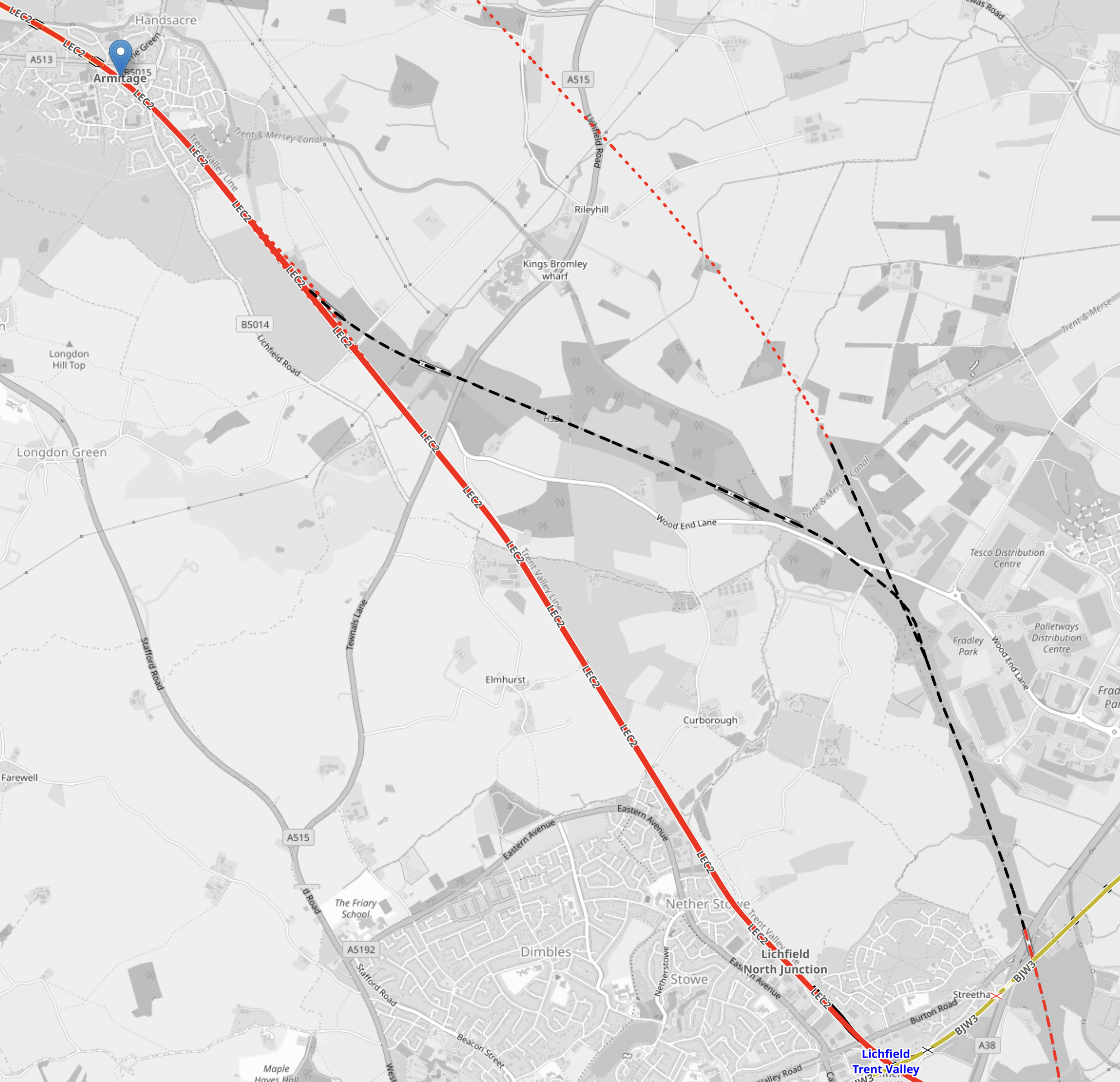
Note.
- The blue arrow in the North-West corner of the map, indicates the location of the former Armitage station, which had the village of Handsacre to its North-East.
- The red line through Armitage station is the Trent Valley Line.
- Lichfield Trent Valley station is at the bottom of the map.
- The line drawn with large dashes from the South-East corner of the map is the proposed line of High Speed Two. Red indicates under construction and black indicates proposed.
High Speed Two splits into two.
One branch goes North-West to join the Trent Valley Line, whilst the other just stops after about a kilometre.
- All trains for Liverpool, Manchester, North Wales, The North and Scotland will take the Trent Valley Line, when High Speed Two opens.
- Trains for Stoke-on-Trent, Macclesfield and some to Manchester will leave the Trent Valley Line at Colwich Junction.
- All other trains, will take the same route as now and proceed to Crewe via Stafford.
The red dotted line leading from the cancelled branch of High Speed Two shows where the original fast line to Crewe was planned to go.
This Open Railway Map shows the tracks around Crewe.
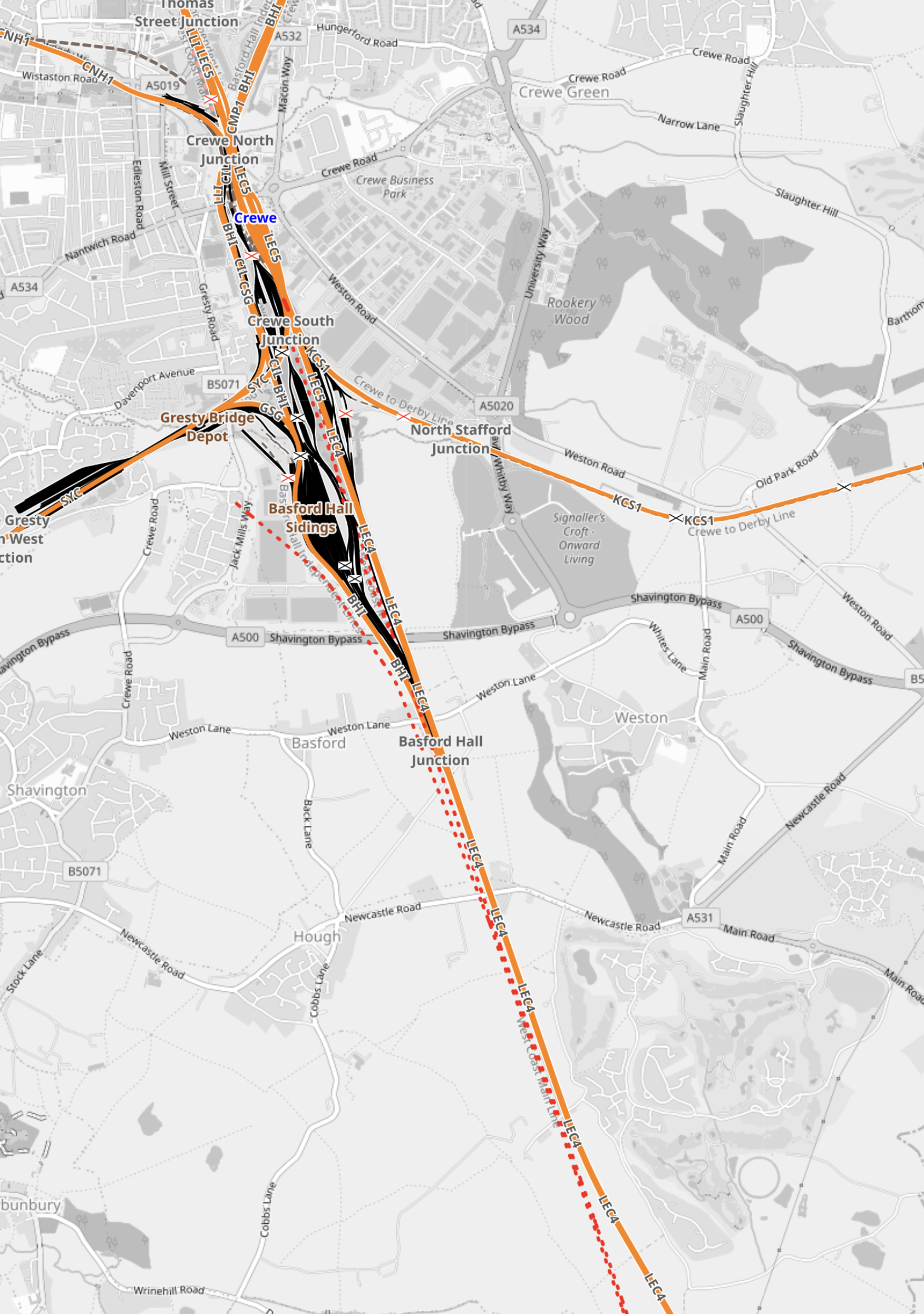
Note.
- Crewe is the important junction station towards the North-West corner of the map.
- The orange line going South is the West Coast Main Line to The South and London.
- The red dotted line running along the West side of the West Coast Main Line was the proposed route of High Speed Two from Birmingham, London and the South.
This Open Railway Map shows the originally proposed direct route of High Speed Two between Crewe and Handsacre.
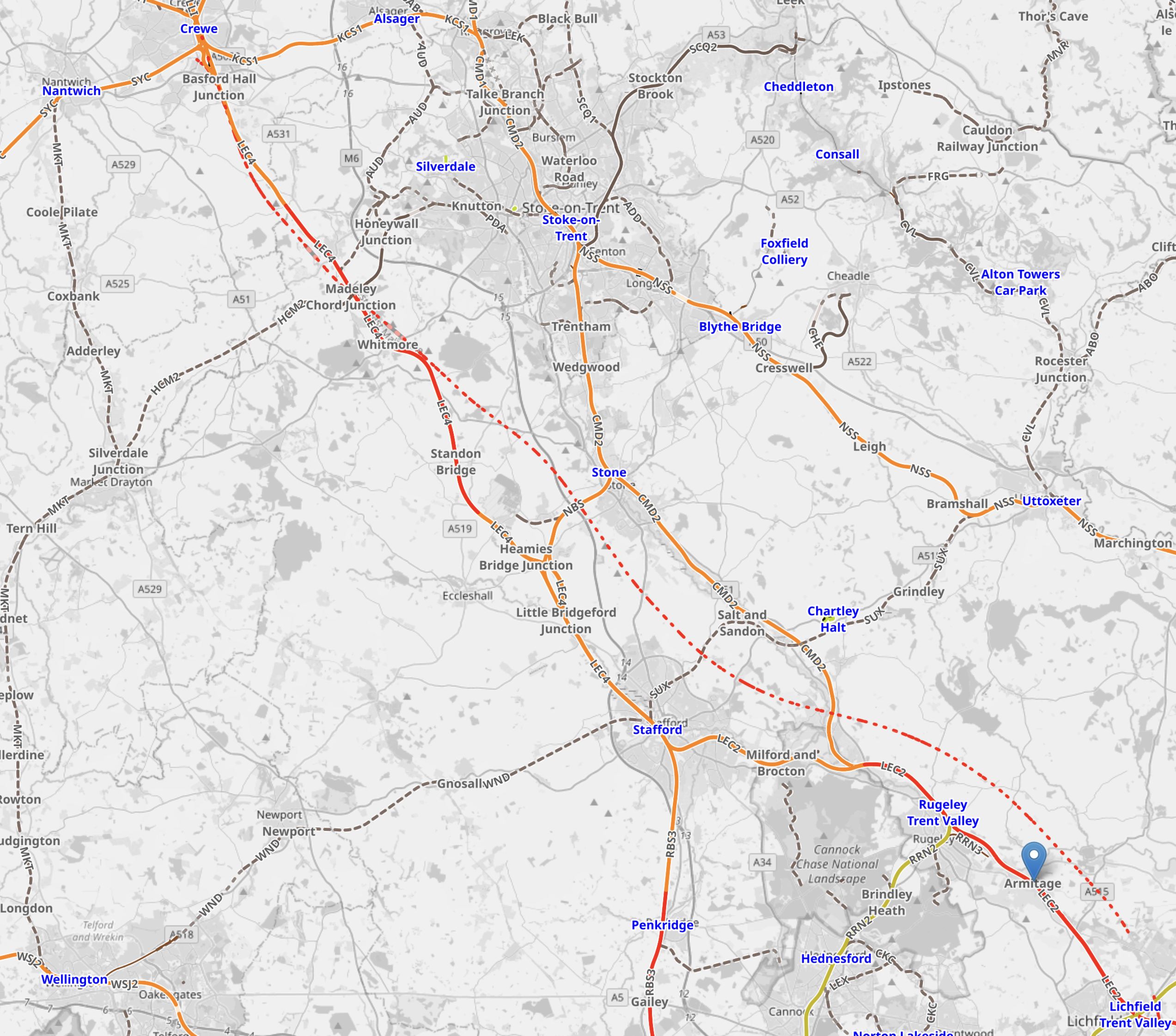
Note.
- Crewe is in the North-West corner of the map.
- The blue arrow in the South-East corner of the map, indicates the location of the former Armitage station, which had the village of Handsacre to its North-East.
- The dotted red line was the originally proposed route of High Speed Two.
I feel that this route between Handsacre and Crewe has advantages if it were to be chosen as part of a route between Handsacre and Northern Powerhouse Rail, as recommended by the Mayors and their consultants.
- The route seems to stay well clear of large conurbations.
- A lot of the design work has been at least started and major problems will be known.
- Crewe is the only station on the route, which will need to be upgraded.
- Services to Liverpool, Manchester, North Wales, The North and Scotland will be speeded up.
- With Crewe, Liverpool and North Wales, times could be as High Speed Two promised in the first place.
I feel that building the Handsacre and Crewe section, as originally envisaged, will score high in a benefit/cost analysis
This OpenRailwayMap shows the originally proposed route of High Speed Two between Crewe and Manchester Airport.
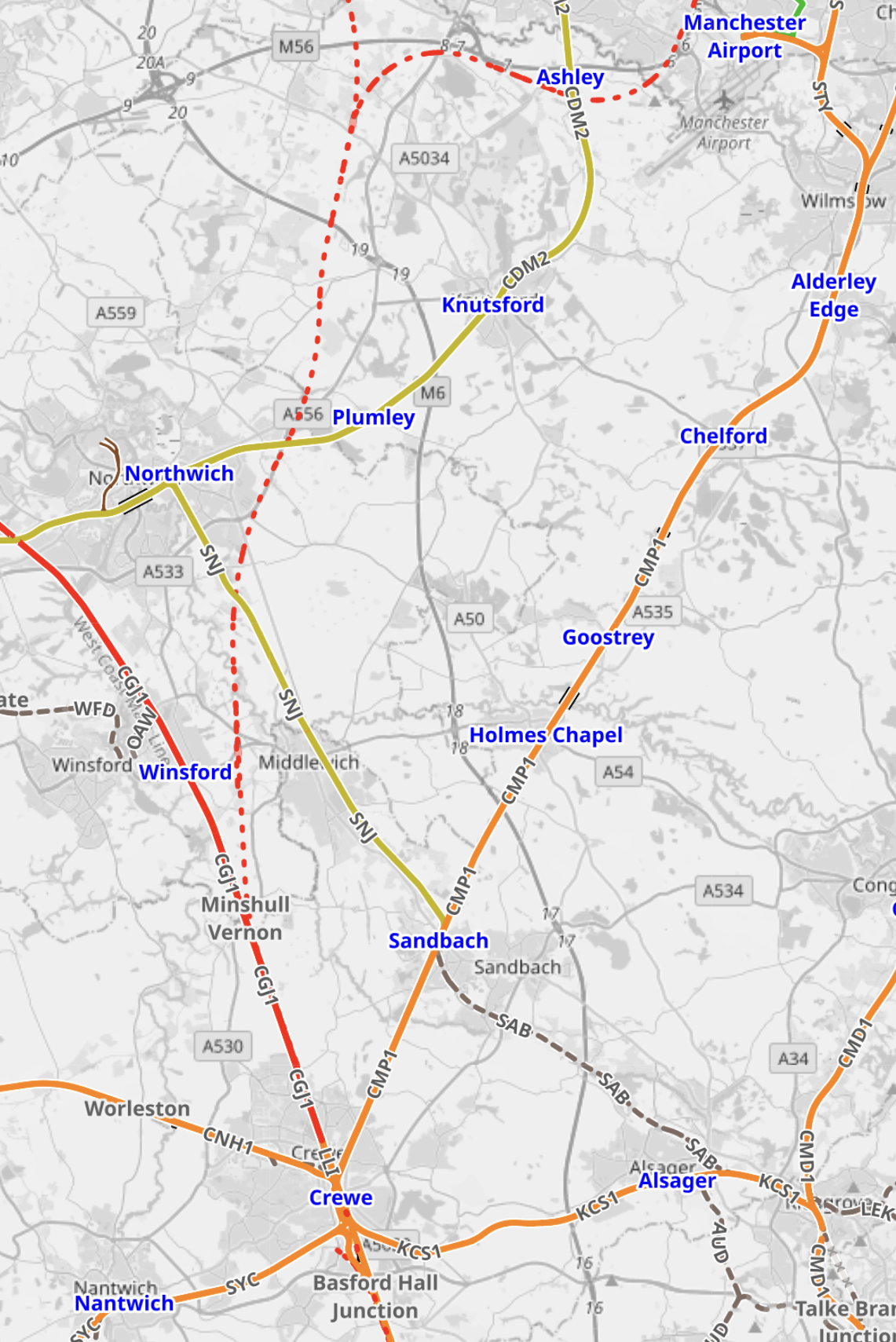
Note.
- Crewe is towards the South-West corner of the map.
- Manchester Airport is in the North-East corner of the map.
- The red line going North from Crewe is the West Coast Main Line.
- The dotted red line was the originally proposed route of High Speed Two, between the West Coast Main Line and Manchester Airport.
Northern Powerhouse Rail will go West from Manchester Airport towards Warrington and Liverpool and will join with High Speed Two at a junction at High Legh.
Northern Powerhouse Rail is currently being planned, but surely, if High Speed Two and Northern Powerhouse Rail share a line from High Legh to Manchester Airport and Manchester Piccadilly, this will be a more affordable project.
Services To Crewe
In Could The High Speed Two Link Between Lichfield And Crewe Still Be Built?, which I wrote after much of High Speed Two was chopped in 2023, I said this.
Currently, Avanti West Coast trains take around one hour and thirty minutes between London and Crewe.
The Wikipedia entry for High Speed Two gives these times between London and Crewe.
- Fastest time before High Speed Two – one hour and thirty minutes.
- Time after Phase 2a of High Speed Two opens – fifty-six minutes.
Note.
- That is a time saving of thirty-four minutes.
- High Speed Two Trains will use the direct line between Lichfield and Crewe.
- High Speed Two will also add eighteen tph to the capacity between London and Crewe.
This would seem to mean that any trains going to or through Crewe will be thirty-four minutes faster, if they use High Speed Two between London and Crewe.
If the Handsacre and Crewe direct line is built, it looks like London and Crewe will be the full High Speed Two time of 56 minutes.
Services To Liverpool
Consider.
- Liverpool Lime Street was originally planned to get two trains per hour (tph) to and from London using High Speed Two.
- The approaches into Liverpool were improved a few years ago.
- No more improvements are planned between Crewe and Liverpool Lime Street stations.
- Between Crewe and Liverpool Lime Street stations currently takes 38 minutes.
- There could be time savings on the 16.3 miles between Crewe and Weaver Junction, which currently takes 21 minutes.
It looks like a time of one hour and 34 minutes could be possible, with under one hour and 30 minutes not being impossible.
Services To Manchester
Consider.
- Manchester was originally planned to get three tph to and from London using High Speed Two.
- No improvements are planned between Crewe and the Manchester stations.
- Between Crewe and Manchester Piccadilly stations currently takes 34 minutes.
It looks like a time of one hour and 30 minutes could be possible.
But there is still the option of building a new line between Crewe and Northern Powerhouse Rail at High Legh.
I showed this OpenRailwayMap earlier and it shows the originally proposed route of High Speed Two between Crewe and Manchester Airport.
Note.
- Crewe is towards the South-West corner of the map.
- Manchester Airport is in the North-East corner of the map.
- The red line going North from Crewe is the West Coast Main Line.
- The dotted red line was the originally proposed route of High Speed Two, between the West Coast Main Line and Manchester Airport.
Northern Powerhouse Rail is currently being planned. and will go West from Manchester Airport towards Warrington and Liverpool and will be built first.
A junction at High Legh will be built to link the West Coast Main Line to Northern Powerhouse Rail.
Services To North Wales
Why Not? With the cancellation of the Eastern Leg of High Speed Two, there must be a path available for North Wales.
Consider.
- The North Wales Main Line has been promised electrification.
- As Holyhead and Crewe is only 105.5 miles, it could even be in battery high speed train range in a few years.
- All times to and from Crewe are assumed to be as Avanti West Coast achieve now.
- As Crewe and Chester currently takes 23 minutes, London and Chester would take 1 hour and 19 minutes.
- As Crewe and Llandudno Junction currently takes 1 hour and 22 minutes, London and Llandudno Junction would take 2 hours and 18 minutes.
- As Crewe and Holyhead currently takes 2 hours and 7 minutes, London and Holyhead would take 3 hours and 3 minutes.
Could this open up a fast zero-carbon route between London and Dublin?
Services To Blackpool, Lancaster, Preston, Warrington And Wigan
Why Not, Blackpool? With the cancellation of the Eastern Leg of High Speed Two, there must be an extra path available, if it is needed.
Cpnsider.
- All routes are electrified.
- All times to and from Crewe are assumed to be as Avanti West Coast achieve now.
- As Crewe and Blackpool currently takes 1 hour and 20 minutes, London and Blackpool would take 2 hour and 16 minutes.
- As Crewe and Lancaster currently takes 60 minutes, London and Lancaster would take 1 hour and 56 minutes.
- As Crewe and Preston currently takes 40 minutes, London and Preston would take 1 hour and 36 minutes.
- As Crewe and Warrington Bank Quay currently takes 22 minutes, London and Warrington Bank Quay would take 1 hour and 18 minutes.
- As Crewe and Wigan North Western currently takes 33 minutes, London and Wigan North Western would take 1 hour and 29 minutes.
Note.
- Lancaster in under two hours will help the Eden Project Morecambe.
- For some areas of the North West, it might be more convenient to change at Crewe, Warrington Bank Quay, Wigan North Western or Preston.
Improvements to track and signalling could probably bring benefits.
Services To Carlisle And Central Scotland
Cpnsider.
- All routes are electrified.
- All times to and from Crewe are assumed to be as Avanti West Coast achieve now.
- As Crewe and Carlisle currently takes 1 hour and 55 minutes, London and Carlisle would take 2 hours and 51 minutes.
- As Crewe and Lockerbie currently takes 2 hours and 6 minutes, London and Lockerbie would take 3 hours and 1 minute.
- As Crewe and Motherwell currently takes 2 hours and 45 minutes, London and Motherwell would take 3 hours and 41 minutes.
- As Crewe and Edinburgh currently takes 3 hours and 9 minutes, London and Edinburgh would take 4 hours and 5 minutes.
- As Crewe and Glasgow Central currently takes 3 hours and 3 minutes, London and Glasgow Central would take 3 hours and 59 minutes.
Note.
- Just under four hours to Glasgow Central would please the Marketing Department.
- Selective splitting and joining could increase the number of destinations.
Improvements to track and signalling could probably bring benefits.
Services To Stirling
In ORR: Open Access Services Given Green Light Between London And Stirling, I wrote about Grand Union Trains’s new open access service to Stirling.
There has been good feedback on this service, so perhaps one of the spare paths on High Speed Two could be allocated to Open Access Operators, so that more of the country could have a high speed service to London Euston and Birmingham Curzon Street stations.
In the related post, I showed that London Euston and Stirling takes forty five minutes longer than a London Euston and Motherwell service.
This would mean that a London Euston and Stirling service via High Speed Two would take four hours and 26 minutes.
Services Between Birmingham Curzon Street and the North West
Under the plans for High Speed Two, the following services would have run North from Birmingham Curzon Street.
- One tph to Edinburgh or Motherwell and Glasgow via Wigan North Western, Preston, Lancaster, Oxenholme, Penrith, Carlisle, Lockerbie and Carstairs.
- Two tph to Manchester Airport and Manchester Piccadilly.
But there are now spare paths South of Crewe, so Could a one tph Birmingham Curzon Street and Liverpool Lime Street service be squeezed in?
Could The Line Be Privately Financed?
I suspect that building the section between Handsacre and Crewe could be financed in perhaps a similar way, to the Chiltern improvements or the M6 Toll Road were financed.
- The Handsacre and Crewe section is just a simple stretch of rail, with a number of trains passing along it.
- The number of trains passing through, is likely to increase.
- Every train passing through would pay a track charge, just as they do to Network Rail.
- Those with lots of money to lend, like simple projects like wind farms or road tunnels, but think very hard about anything complicated like nuclear power stations or High Speed Two’s station at Euston.
Certainly, my late and very good friend, David, who dealt with the finance of some of London’s largest projects and was on the top table of London’s bankers, would have found a way. It might though have been unorthodox.
But then David was a rogue. But a rogue on the side of the angels.
Conclusion
I have come to these conclusions.
- Building the direct route between Handsacre and Crewe could be good value as it improves all routes that will pass through Crewe.
- Combining High Speed Two and Northern Powerhouse Rail could substantially cut the costs of both routes to the centre of Manchester.
- London and Crewe times should be 56 minutes.
- London and Liverpool Lime Street times could be under one hour and thirty minutes.
- London and Manchester Piccadilly times could start at one hour and thirty minutes and reduce when Northern Powerhouse Rail is built and linked to the West Coast Main Line.
- London and Holyhead could be just over three hours and could open up a fast zero-carbon route between London and Dublin.
- London and Lancaster in under two hours could help the Eden Project Morecambe.
It’s certainly not a bad plan and it should be looked at in more detail.
Lumo In Discussions To Operate Glasgow Services
The title of this post, is the same as that of this press release from FirstGroup.
These four paragraphs give more details.
FirstGroup, the leading private sector transport operator, today announces that its popular open access rail service Lumo is in discussions with Transport Scotland and Network Rail to extend some of its London-Edinburgh trains to and from Glasgow.
Having identified opportunities to extend a number of daily journeys to and from Glasgow in the timetables for 2025 and beyond, work will now continue with Transport Scotland and track infrastructure manager Network Rail to agree final route options and timings ahead of an application for access rights to the Office of Rail and Road (‘ORR’), the industry regulator.
If successful, the new services could be in operation from next summer.
Lumo’s proposed new offering will improve links for customers travelling between Newcastle and Glasgow, giving people a choice of services without needing to change trains. In addition, a significant number of users of Lumo’s current London-Edinburgh trains go on to travel through to Glasgow via other connections, and through this move, Lumo aims to offer a direct through service for these customers.
I have a few thoughts.
There Appears To Be A Need For An Affordable London And Glasgow Service
This is the last sentence of my extract from the press release.
In addition, a significant number of users of Lumo’s current London-Edinburgh trains go on to travel through to Glasgow via other connections, and through this move, Lumo aims to offer a direct through service for these customers.
This looks to be a service, that has been suggested by an analysis of passengers’ tickets.
Which Station Will Lumo Use In Glasgow?
Consider.
- The current LNER service between London King’s Cross and Glasgow, uses Glasgow Central station and it takes 66 minutes between Edinburgh and Glasgow Central stations.
- LNER’s service also calls at Haymarket and Motherwell.
- ScotRail services between Edinburgh and Glasgow Queen Street take about 49-50 minutes.
I suspect, that Lumo will take the faster route.
Newcastle And Glasgow Is A New Route
Currently, all passengers between Glasgow and Newcastle have to change at Edinburgh.
This will be the first direct train in my memory, except for LNER’s single daily service between London and Glasgow Central, which stops at Newcastle.
What About The Football?
Glasgow is very much about football.
Would it be possible to use Lumo to see a match starting at 15:00 on a Saturday afternoon, if you lived in London?
- The 05:48 train from King’s Cross on a Saturday arrives in Edinburgh at 10:07.
- Trains between Edinburgh and Glasgow take fifty minutes, so I feel it would be reasonable to be able to get to Glasgow by 10:57.
This time would be more than early enough to have a few swift halves and see the match if it started at 15:00.
But would it be possible to get back to London after the match?
- The last train leaves Edinburgh at 17:55 and arrives in King’s Cross at 22:26.
- Applying the fifty minute journey time between Edinburgh and Glasgow means it will leave at 17:05.
- It appears that from Ibrox and Celtic Park to Glasgow Central or Glasgow Queen Street station is about twenty minutes.
On the current timetable, it would appear to be possible, but tight.
One alternative would be to take the Caledonian Sleeper back to London. But it doesn’t appear to run on a Saturday night.
Coaches do run and an overnight coach costs around twenty pounds.
It looks like if Lumo ran a service about 18:00 on a Saturday to London, it wouldn’t run empty.
Will Lumo Need More Trains?
In the press release, FirstGroup plc Chief Executive Officer Graham Sutherland, is quoted as saying.
Once preferred route options and timings have been agreed, discussions will continue with Network Rail and the ORR to secure the required approvals. The journeys would be operated within the existing Lumo fleet of all-electric trains and it is anticipated that the additional services could begin in summer 2025.
That looks to me, that they will not be obtaining more trains before next summer.
In Ten-Car Hull Trains, I noted that some of Hull Trains services were now running as ten-car trains.
If the passenger demand is there for ten-car trains to Hull, which is almost exactly half the distance of Edinburgh, I would expect that in the future, Lumo will be running some services as ten-car trains.
In Extra Luggage Racks For Lumo, which is based on an article in the November 2023 Edition of Modern Railways, an alternative view on more trains is taken.
The Modern Railways article finishes with this paragraph.
Lumo celebrated its second birthday in late October and was also set to mark the carriage of its two-millionth passenger. It is understood Lumo is interested in augmenting its fleet, such has been the success of the service; while many operators favour bi-mode units, Lumo is proud of its all-electric credentials so straight EMUs are still preferred, although the possibilities of including batteries which could power the trains may be pursued (the ‘803s’ have on-board batteries, but only to provide power to on-board systems if the electricity supply fails).
I find this development very interesting.
As London King’s Cross and Edinburgh and Glasgow are all electric routes, in normal service batteries should not be needed, but sometimes trains have to use the diversion via Lincoln, which I have estimated is 86.5 miles.
As an electrical engineer, I’ve always believed that the emergency batteries in the Class 803 trains are very similar to the traction batteries that Hitachi are developing for the Class 802 trains.
A traction battery, that was capable of handling the diversion would stop Lumo having to cancel occasional services.
Conclusion
An extension to Glasgow looks like it could be a simple and profitable way to extend the current Lumo service.
But it might need some extra trains in the future.
A Lumo service to Glasgow, might be helped by a seven-day service on the Caledonian Sleeper, so passenger could go North on Lumo and South on the Sleeper to get a full day in Glasgow.
A First Trip To Headbolt Lane Station – 13th October 2023
Headbolt Lane station opened a week ago and I went to take a look today, where I took these pictures.

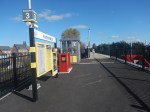
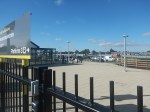
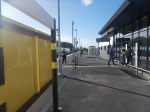
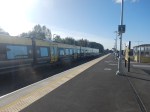
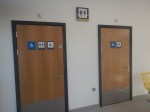

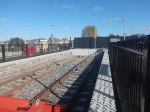

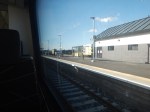
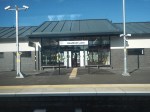

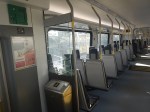
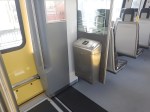

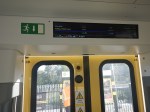





Note.
- It is a three-platform station, with two platforms pointing towards Liverpool and one towards Wigan Wallgate station.
- Changing trains is about a fifty metre walk.
- The toilets are trans-ready. But the toilets at Peterborough station, that I wrote about in A Pair Of Toilets At Peterborough Station were too.
I have a few thoughts.
Could There Be Through Running Between Headbolt Lane and Wigan Wallgate Stations?
This picture shows the walkway between Platform 2 on the South side of the tracks and Platforms 1 and 3 on the North side.
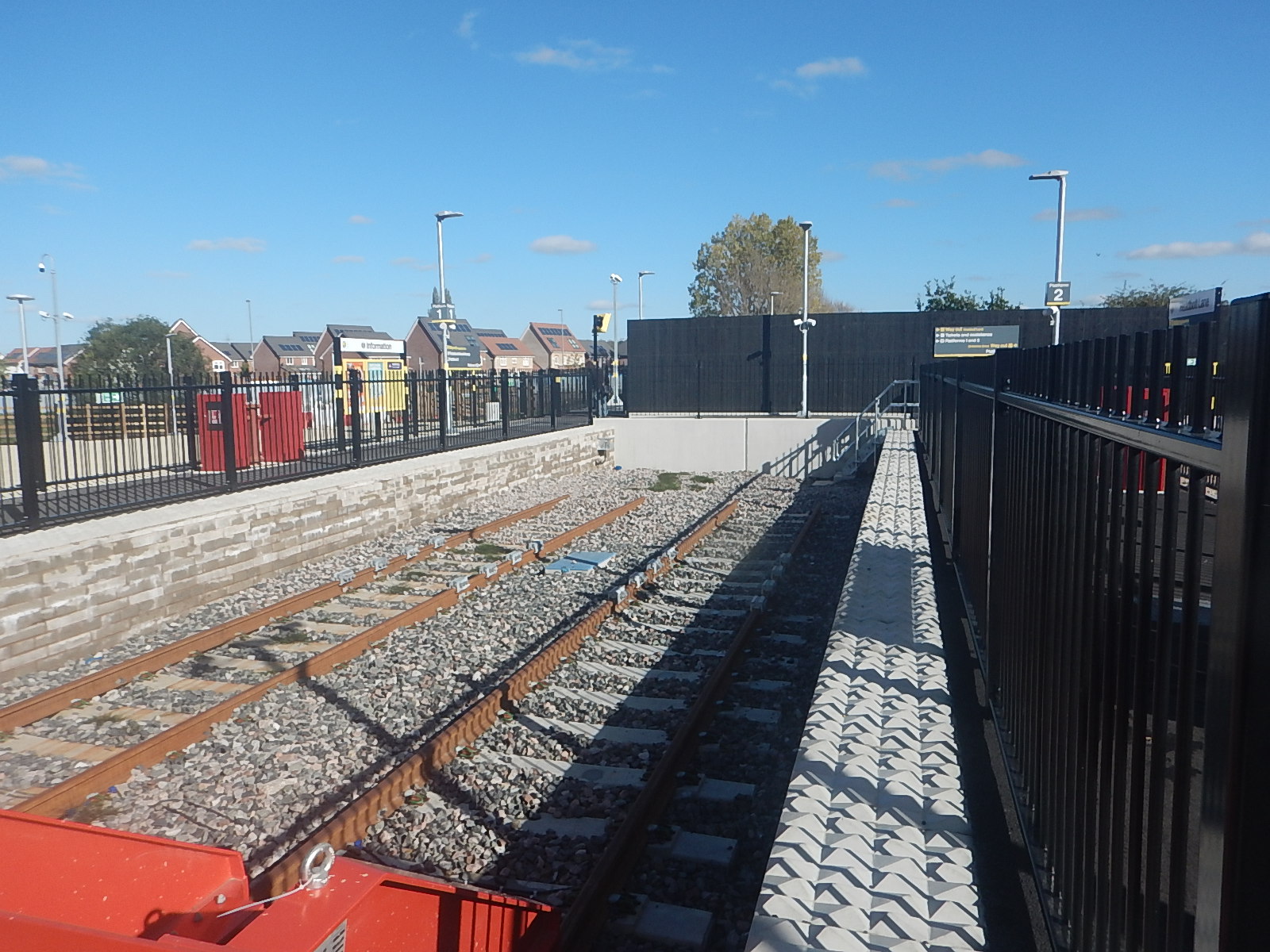
Note.
- Platform 1 is the platform on the left and Platform 2 is on the right.
- Platform 3 is in line with Platform 1 behind the fence at the far end of Platforms 1 and 2.
- The tracks don’t go straight through.
- There are two concrete blocks forming the walkway between platforms.
I suspect the answer is no at the moment.
But I wouldn’t be surprised to find, that the blocks have been designed to be lifted out and there is space to put a footbridge over the tracks, so that if in the future, through running were to be required, it is possible.
How Would A Station To Skelmersdale Be Connected?
In New Express Bus Improves Links Between Skelmersdale And Liverpool, I talked about a new express bus service between Kirkby and Skelmersdale.
This page on Bus Times gives details of the service.
The 319 Trainlink service will surely give useful information on possible passenger numbers.
In Would A Lower Cost Rail Link To Skelmersdale Be Possible?, I looked at options for the rail line.
Wigan’s Comprehensive Local Connections
Wigan North Western and Wigan Wallgate station have services to all these stations.
- Accrington
- Appley Bridge
- Ashton-under-Lyne
- Atherton
- Bescar Lane
- Blackburn
- Blackpool North
- Bolton
- Broad Green
- Bryn
- Burnley Manchester Road
- Burscough Bridge
- Clifton
- Daisy Hill
- Deansgate
- Eccleston Park
- Edge Hill
- Euxton Balshaw Lane
- Farnworth
- Garswood
- Gathurst
- Hag Fold
- Headbolt Lane
- Hindley
- Hoscar
- Huyton
- Ince
- Kearsley
- Leyland
- Littleborough
- Manchester Oxford Road
- Manchester Victoria
- Meols Cop
- Moorside
- Moses Gate
- New Lane
- Orrell
- Parbold
- Pemberton
- Poulton-le-Fylde
- Prescot
- Rainford
- Toby
- Rochdale
- Rose Grove
- Salford Central
- Salford Crescent
- Smithy Bridge
- Southport
- Stalybridge
- St Helens Central
- Swinton
- Todmorden
- Thatto Heath
- Upholland
- Walkden
- Wavertree Technology Park
- Westhoughton
Fifty-eight stations is certainly comprehensively connected.
The Connection To High Speed Two At Wigan North Western
This map from OpenRailwayMap shows the two Wigan stations; North Western and Wallgate.
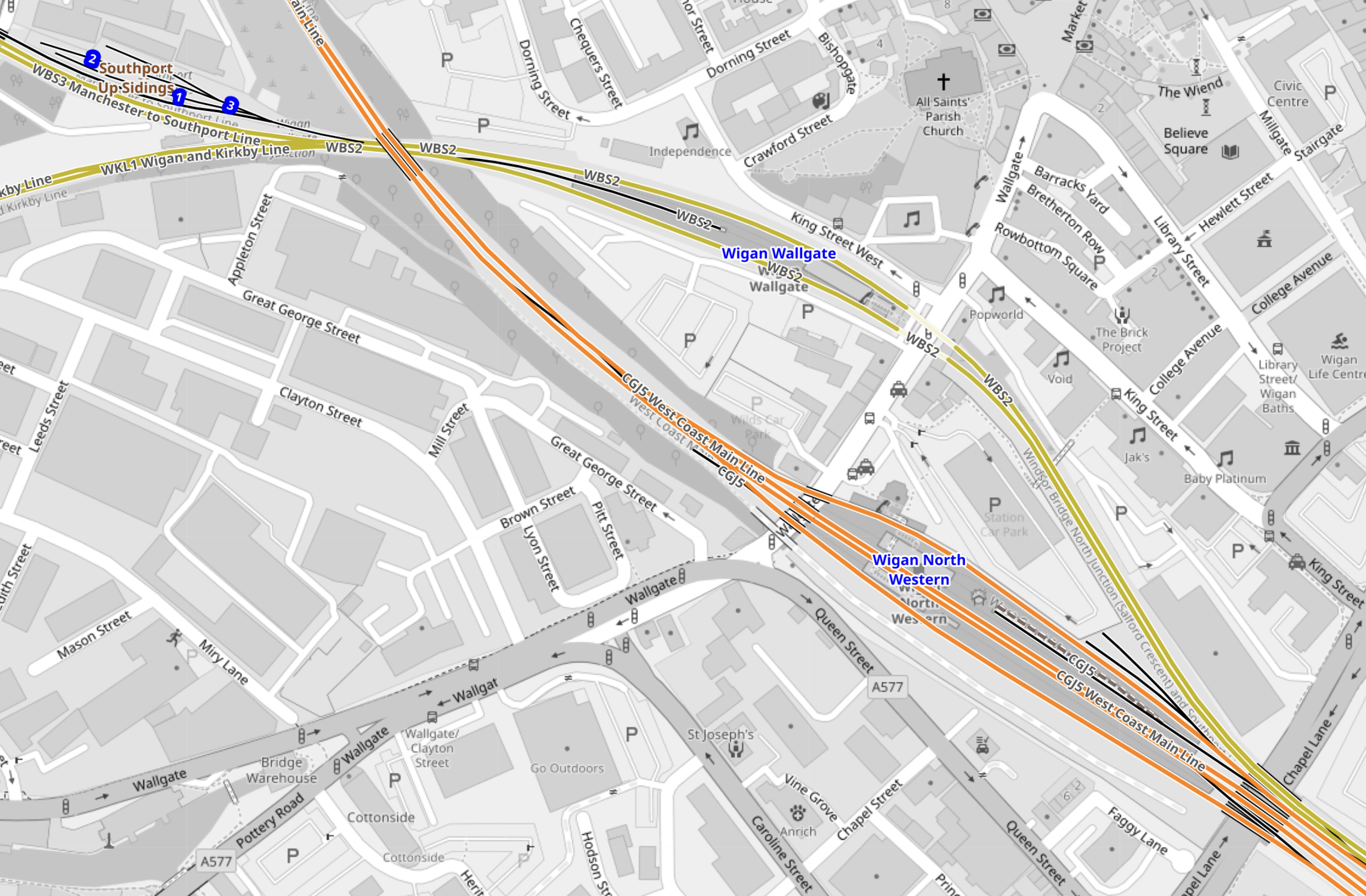
Note.
- The orange tracks are the West Coast Main Line, which in the future, will carry High Speed Two services to and from Preston, Lancaster, Carlisle and Scotland.
- The yellow tracks are the local lines between Manchester in the East and Kirkby and Southport in the West.
- The local lines split after they pass under the West Coast Main Line, with the North-Western branch going to Southport and the Western branch going to Headbolt Lane, Kirkby and Liverpool.
- Wigan North Western is on the West Coast Main Line.
- Wigan Wallgate is on the local lines.
The stations are close enough to be converted into a superb combined station, where local passengers can join high speed services.
This picture shows the platforms of Wigan North Western station.
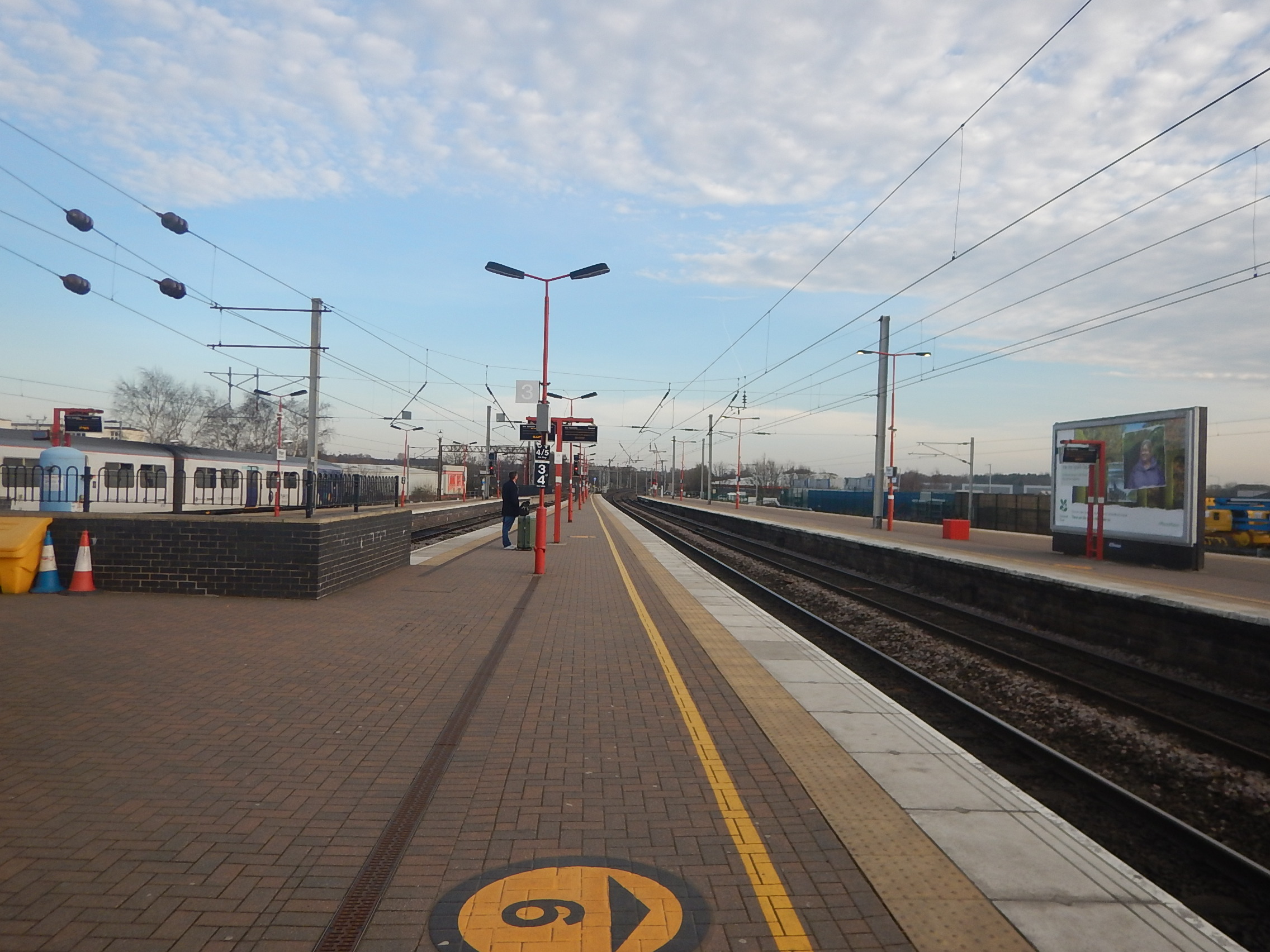
Wigan North Western station can’t be far off being able to accept pairs of High Speed Two Classic Compatible trains, that will be 400 metres long.
This graphic shows High Speed Two services after Phase 2b is completed.
Only two High Speed Two services stop at Wigan North Western.
- The London and Lancaster service, which splits and joins with a London and Liverpool service at Crewe.
- The Birmingham and Scotland service.
As Wigan North Western has comprehensive local connections to the Northern areas of Liverpool and Manchester, it surely needs more services.
North West To Benefit From £19.8 billion Transport Investment
This is the title of this government document, which has this sub-heading.
Multibillion-pound plan to link major cities in the North via bus, rail and new and improved roads.
It says this about Greater Manchester and Liverpool City Region.
- Greater Manchester will also receive around £1.5 billion from the CRSTS2 budget and around £900 million additional funding – funded from HS2 – which is an unprecedented investment in local transport networks. That is more than double their allocation under the previous programme
- Liverpool City Region will also receive c.£1 billion from the CRSTS2 budget, plus a further £600 million on top – funded from HS2. That is more than double their allocation under the last round
Some of that amount of money could go a long way to improve Liverpool and Manchester connections through Wigan and create a link to High Speed Two.
TransPennine Services Between Liverpool/Manchester And Scotland
Currently, the following services run between Liverpool and Manchester, and Scotland.
- Manchester Airport and Glasgow Central – 1 tp2h – via Manchester Piccadilly, Manchester Oxford Road, Preston, Lancaster, Oxenholme Lake District, Penrith North Lakes, Carlisle, Lockerbie and Motherwell
- Manchester Airport and Edinburgh Waverley – 1 tp2h – via Manchester Piccadilly, Manchester Oxford Road, Preston, Lancaster, Oxenholme Lake District and Haymarket Penrith North Lakes, Carlisle and Lockerbie and Haymarket
- Liverpool Lime Street and Glasgow Central – 2 tpd – via St Helens Central, Wigan North Western, Preston, Lancaster, Oxenholme Lake District, Carlisle, Lockerbie and Motherwell
Note.
- tp2h is trains per two hours.
- tpd is trains per day.
- Only the Liverpool services go through Wigan.
- North of Preston all trains will use the same route.
- All three services are run by Class 397 trains.
- When High Speed Two Classic-Compatible trains start running to Glasgow and Edinburgh, they will use the same route North of Preston.
Point 5 surely means that High Speed Two’s trains will be limited to the same speed as the current Class 397 trains, which is 125 mph. Although, this might be increased to up to 140 mph, by the use of in-cab digital signalling.
Consider.
- Edinburgh to Preston is 191.4 miles.
- The current TransPennine express service from Edinburgh to Preston is scheduled for two hours and 34 minutes, with five stops, at an average speed of 74.6 mph.
- The Wikipedia entry for High Speed Two says that the London-Edinburgh service from Edinburgh to Preston is scheduled for two hours and 30 minutes, with two stops and a split/join at Carlisle, at an average speed of 76.6 mph.
- The Wikipedia entry for High Speed Two says that the Birmingham-Edinburgh service from Edinburgh to Preston is scheduled for two hours and 24 minutes, with four stops, at an average speed of 79.8 mph.
Note.
- The first timing is based on a Class 397 train and the others will be High Speed Two Classic Compatible trains.
- The times would appear to be vaguely in line with each other.
- The removal of the split/join could explain why the Birmingham service is six minutes faster.
The following would appear to be true.
- Both the Class 397 and High Speed Two Classic Compatible trains can run at similar speeds North of Preston.
- The High Speed Two Classic Compatible train may have faster acceleration and deceleration, which could save a few minutes.
- Nothing substantial has been done to improve the tracks between Edinburgh and Preston.
- As the current times are run without digital signalling and the Class 397 train, is within ten minutes of that, I would be very surprised if digital signalling will be installed before High Speed Two services reach Edinburgh.
I also suspect that if digital signalling and a few other improvements were made to the North of Preston, a few extra minutes could be saved.
The Future Of TransPennine Services Between Liverpool/Manchester And Scotland
Will the TransPennine services between Liverpool/Manchester and Scotland continue after High Speed Two services start running to North of the border?
Consider.
- I have never seen any plans from High Speed Two for services between Liverpool/Manchester and Scotland.
- If the TransPennine services, aren’t kept, travelling between Liverpool/Manchester and Scotland will need a change at Wigan North Western or Preston.
- The TransPennine services will probably need only a single train per hour (tph) on the West Coast Main Line to the North of Preston.
I can see them continuing. But possibly in a different form.
In 1967, I went from Glasgow to Manchester on a train.
- The Glasgow and Edinburgh trains joined at Carstairs.
- They then split again at Preston.
- One half went to Manchester and the other half went to Liverpool.
I remember that the train was late, because of late arrival of the Edinburgh train at Carstairs.
I needed to take a taxi. But I wrote my first complaint letter and got a cheque from British Rail.
Could similar joining and splitting be used again, as it uses only one train path between Preston and Scotland?
Would it also be better, if the service were to be under the Management of High Speed Two?
There are several possibilities, but I feel the TransPennine services will continue.
High Speed Two To Crewe
There has been a lot of speculation about the Northern end of High Speed Two, so I might as well add sort out a few facts and add a bit of speculation of my own.
Sample Times Between London And Crewe
These are selected times from the 27th September 2023.
- 07:30 – Glasgow Non-Stop – 1:29
- 07:33 – Manchester Piccadilly – 1:37 – Stops at Stafford
- 07:43 – Liverpool Lime Street – 1:40 – Stops at Milton Keynes
- 08:30 – Glasgow Non-Stop – 1:29
- 08:33 – Manchester Piccadilly – 1:37 – Stops at Stafford
- 08:43 – Liverpool Lime Street – 1:40 – Stops at Milton Keynes
- 09:02 – Holyhead – 1:40 – Stop at Stafford
- 15:02 – Chester – 1:40 – Stops at Tamworth, Lichfield Trent Valley and Stafford
Note.
- The 07:30 and 08:30 Glasgow services appears to be pathed for one of the Class 390 Pendolino electric trains and were run by Pendolinos.
- The 07:33 and 08:33 Manchester services appears to be pathed for one of the Pendolino electric trains and were run by Pendolinos.
- The 07:43 and 08:43 Liverpool services appears to be pathed for one of the new Class 807 electric trains, but were run by Pendolinos.
- The 15:02 Chester service appears to be pathed for one of the new Class 805 bi-mode trains.
- All services except the Glasgow services stop at Crewe.
- As London Euston and Crewe is 158 miles, the non-stop Glasgow services average 107 mph, the one-stop Manchester service averages 98 mph and the one-stop Liverpool service averages 95 mph.
I have some further thoughts.
How Long Does A Stop Take?
I’ve looked at some stops of Glasgow, Liverpool and Manchester services
Crewe
Looking at timings between Weaver Junction and Norton Bridge, I have found the following times.
- Glasgow-Euston – 23 minutes
- Liverpool-Euston – 28 minutes
Note.
- Manchester services don’t go through Weaver Junction.
- Weaver Junction and Norton Bridge are respectively North and South of Crewe.
- The Liverpool service stops at Crewe, where it has a dwell time of two minutes.
- The Glasgow service goes straight through Crewe.
The Crewe stop takes a total of 5 minutes of which 3 minutes are deceleration and acceleration to and from linespeed.
Stafford
Looking at timings between Norton Bridge and Colwich, I have found the following times.
- Glasgow-Euston – 7½ minutes
- Liverpool-Euston – 7½ minutes
- Manchester -Euston – 14 minutes
Note.
- Norton Bridge and Colwich are respectively North and South of Stafford.
- The Manchester service stops at Stafford, where it has a dwell time of two minutes.
- The Glasgow and Liverpool services go straight through Stafford.
The Stafford stop takes a total of 6½ minutes of which 4½ minutes are deceleration and acceleration to and from linespeed.
Milton Keynes
Looking at timings between Weedon and Bletchley, I have found the following times.
- Glasgow-Euston – 11½ minutes
- Liverpool-Euston – 16 minutes
- Manchester -Euston – 12½ minutes
Note.
- Weedon and Bletchley are respectively North and South of Milton Keynes.
- The Liverpool service stops at Milton Keynes, where it has a dwell time of one minute.
- The Glasgow and Manchester services go straight through Milton Keynes.
The Milton Keynes stop takes a total of 4 minutes of which 3 minutes are deceleration and acceleration to and from linespeed.
Average Speeds Between Crewe And London
London Ruston and Crewe is 158 miles according to Real Time Trains.
So what would times would various average speeds deliver?
- 100 mph – 95 minutes
- 110 mph – 86 minutes
- 120 mph – 79 minutes
- 125 mph – 76 minutes
- 130 mph – 73 minutes
- 140 mph – 68 minutes
Obviously, any average speed with over 125 mph running, will need full digital signalling.
Liverpool And London In Two Hours
Tucked away beside the Grand Union Sets Out Stirling Ambitions article in the December 2022 Edition of Modern Railways is a report on Avanti West Coast’s application for a second service between Euston and Liverpool.
This is said.
Avanti West Coast has applied for access rights for its second hourly Euston to Liverpool service, starting from December 2023, although a phased introduction of the new service is likely. This would make use of Avanti’s new fleet of 10×7-car Class 807 Hitachi EMUs, which are expected to enter service from Autumn 2023. The ‘807s’ would be deployed on the current hourly Liverpool service, on which a call at Liverpool South Parkway would be added. (provision is made for this in the December 2022 timetable.).
Pendolinos would then operate the second service each hour, calling at Lichfield Trent Valley and Tamworth.
A linespeed project is in progress to raise the permissible speed for non-tilting trains on the West Coast Main Line, and Avanti’s new Hitachi trains will take advantage of this.
I’ll take a quick look at the Crewe and Runcorn section.
- It is 22.5 miles.
- It takes 19 minutes.
- That is an average speed of 71 mph.
- Crewe and Weaver Junction has a speed limit of at least 110 mph
- Runcorn and Weaver Junction has a speed limit of at least 90 mph for most of the way.
- If with their superior performance, the new Class 807 trains could average 90 mph between Crewe and Runcorn, they would take 15 minutes.
- Achieving the 90 mph average may need a bit of track realignment and some signaling changes.
The four minutes saved would be enough to handle the extra stop at Liverpool South Parkway.
Consider.
- Currently, Pendolino trains do Liverpool and Crewe in 38 minutes, which includes the stop at Runcorn.
- My calculation with the Class 807 trains, shows that with a bit of extra signalling, the new trains could do Liverpool and Crewe in 38 minutes with the two stops.
- The stop at Crewe will subtract 5 minutes from the base journey time.
- The stop at Milton Keynes will subtract 4 minutes from the base journey time.
This means the base journey time between Crewe and London will be 73 minutes.
This would indicate that the trains would be running at 130 mph to achieve the two hours.
But there are five accelerations and five decelerations on a journey between London and Liverpool and the new Class 807 trains are the Lotuses of Hitachi’s family of AT-300 trains; lightweight and powerful.
Suppose they could save thirty seconds for each acceleration and deceleration.
The base journey time between Crewe and London will be 78 minutes.
This would indicate that the trains would be running at over 120 mph to achieve the two hours.
I certainly feel, that Liverpool and London in two hours is certainly possible using the new Class 807 trains.
London and Crewe with two stops would be times at one hour and twelve minutes.
But what about the Pendolinos?
- My last return trip from Liverpool did a practice call at Liverpool South Parkway and still arrived in London a few minutes early.
- The Pendolinos will still benefit from any improvements, between Crewe and Runcorn, which could reduce the Liverpool and Crewe time from 38 minutes to 34 minutes.
- The stop at Crewe will subtract 5 minutes from the base journey time.
- The stops at Lichfield Trent Valley and Tamworth will both subtract 4 minutes from the base journey time.
This means the base journey time between Crewe and London will be 73 minutes, which is the same as for the Class 807 trains.
This would indicate that the trains would be running at 130 mph to achieve the two hours.
Could this average speed be achieved by the selective application of full digital signalling, perhaps on the Trent Valley Line?
But it does appear to me, that the Pendolinos can get very close to two hours between London and Liverpool.
London and Crewe with three stops would be times at one hour and sixteen minutes.
Crewe And London Non-Stop
Consider.
- Pendolinos between London and Glasgow, go non-stop between London and Crewe.
- I have calculated that Pendolinos between London and Liverpool, will take one hour and sixteen minutes with three stops between London and Crewe.
- The three stops take a total of thirteen minutes.
I wouldn’t be surprised to see London and Glasgow Pendolinos take one hour and three minutes between London and Crewe.
This would knock twenty-six minutes off journey times between London and Glasgow.
Conclusion
I believe that with relatively minor improvements on the West Coast Main Line and the Liverpool branch, the following can be achieved.
- Liverpool and London can be around two hours with new Class 807 trains or Pendolinos.
- Liverpool and London services can increase their calls in the Midlands.
- London and Glasgow services can be nearly half-an-hour faster.
- The fastest London and Crewe services could be just over an hour using Pendolinos.
I also believe that the only serious infrastructure needed is some track realignment and some updated signalling.
See Also
Could High Speed Two Finish At Lichfield?
East Kilbride Electrification Underway
The title of this post, is the same as that of this article on Modern Railways.
These are the last two paragraphs.
As well as electrification, improvements on the line will include an upgrade of East Kilbride station, relocation of Hairmyres station 600 metres to the west, platform extensions and accessibility upgrades. The aim is to provide a four trains per hour eight-car electric service at peak periods. A parallel project will cover electrification between Busby Junction and Barrhead.
The Scottish Government’s plan is to decarbonise its passenger rail services by 2035, chiefly through electrification. It has recently been confirmed that partial electrification of the Borders and Fife Circle routes will follow after the East Kilbride and Barrhead lines, with battery EMUs deployed on these lines.
Because partial electrification is mentioned, it looks like Scotland is getting serious about using battery-electric trains.
This map clipped from Wikipedia, shows the section of the Glasgow South Western Line, that includes Kilmarnock station and the branch to East Kilbride station.
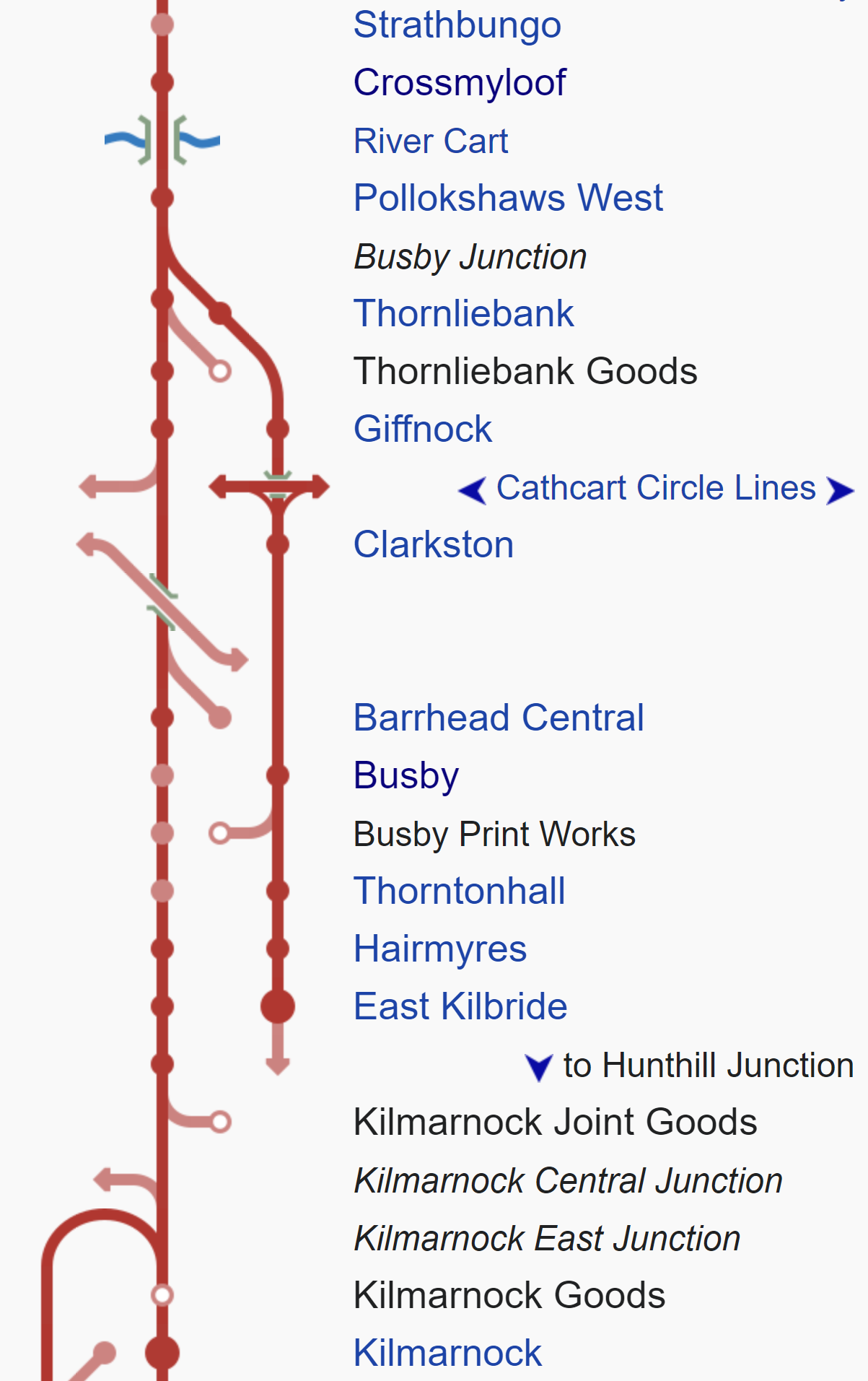
The route North of Strathbungo continues to Glasgow Central station.
Which Sections Will Be Electrified?
I will take each of the sections in turn starting at the North.
Between Muirhouse South And Busby Junctions
This sentence is from the Modern Railways article.
Contractor SPL will commence on-site activities between Muirhouse South Junction and Busby Junction, including piling and construction steelwork foundations to support overhead masts.
On the map, Muirhouse South Junction is to the North of Stratbumgo and Busby junction is clearly marked and is where the East Kilbride branch joins the main line.
This section of new electrification is only around two miles long.
This article on Rail Technology Magazine is entitled Network Rail: Strathbungo Locals Vote For New Footbridge.
There have been many bridge replacements for electrification, but this surely must be one of the first, where local people have voted for their preferred design.
The only other bridges on this section appear to be two substantial road bridges, where with any luck, it should be possible to squeeze the wires underneath.
Between Busby Junction And Barrhead Station
The other section listed for electrification is between Busby junction and Barrhead station.
This second section is only around 3.7 miles long and there are only two overbridges, both of which look modern.
Taking the two sections of electrification together they total under twelve track-miles and they are in a continuous straight line
I doubt, that together, they are the one of the world’s most challenging railway electrification projects.
Busby Junction and East Kilbride Station
There is no specific information about electrification between Busby junction and East Kilbride station.
- The branch is 7.8 miles long.
- There are fifteen overbridges on the branch.
In Plans To Introduce Battery Powered Trains In Scotland, Hitachi are quoted as saying that their trains will do sixty miles on batteries.
This should be more than enough range to run services to East Kilbride on battery power.
Barrhead and Kilmarnock Stations
There is no specific information about electrification between Barrhead and Kilmarnock stations.
- The distance is 16.8 miles.
- There are eleven overbridges between the two stations.
It would appear that Hitachi’s quoted sixty mile range, would be sufficient to enable battery-electric trains to run between the electrification at Barrhead and Kilmarnock station.
Operation
The various services between Glasgow Central and East Kilbride and Kilmarnock stations will probably operate as follows.
- Glasgow Central To East Kilbride – Electrification for traction and battery charging to Crossmyloof station and then battery power.
- East Kilbride To Glasgow Central – Battery power and gravity to Crossmyloof station and then electrification.
- Glasgow Central To Barrhead – Electrification for traction all the way.
- Barrhead to Glasgow Central – Electrification for traction all the way.
- Glasgow Central To Kilmarnock – Electrification for traction and battery charging to Barrhead station and then battery power.
- East Kilbride To Glasgow Central – Battery power to Barrhead station and then electrification.
Note.
- All power changeovers could be arranged to take place in stations.
- Gravity can be used to assist trains from East Kilbride to Glasgow Central.
- Glasgow Central and Barrhead services don’t need trains with batteries.
- The return trip between Crossmyloof and Glasgow central stations, should be more than enough to charge the batteries.
The project would appear to have been very well-designed for a fleet of battery-electric trains, with respect to reliability and electrical efficiency.
Onward To Carlisle And Stranraer
Hitachi’s system for discontinuous electrification, that I discussed in Solving The Electrification Conundrum, would appear to be ideal to extend electric trains to Carlisle and Stranraer.
Barrhead and Carlisle are 108 miles apart and Barrhead and Stranraer are 90 miles apart.
By adding two or three intermediate sections of 25 KVAC overhead electrification, it should be possible for electric trains to reliably travel between Glasgow Central and Carlisle or Stranraer.
Project Management
This electrification project could be a Project Manager’s dream.
Electrification projects in the UK can turn out to be nightmares, as if it can go wrong, it inevitably will.
But with this project, it appears that it is planned to get the often-troublesome job of erecting the gantries out of the way early.
The electrification between Muirhouse South junction and Barrhead station can even be completed first, so that passengers can see the benefit of electric trains and the electrification can be fully tested.
There are then a series of independent projects, that can be performed in the most convenient order.
- Track upgrades.
- Rebuild East Kilbride station.
- Move Hairmyres station to its new position.
- Platform extensions.
- Improve accessibility.
- Deliver the new battery-electric trains.
Note.
- It looks to me, that all of these smaller projects can be performed, whilst maintaining a full rail service on the railway. Doing that with conventional electrification usually results in some disruption.
- Late delivery of the battery-electric trains will not delay the overall project, if there are enough diesel multiple units to fill in.
- Passengers will see benefits and new facilities delivered in a stream, rather than all at once.
Similar processes can be used to extend the network to Carlisle and Stranraer.
Conclusion
This is a well-designed project.
London To Glasgow Train Journey Record Bid Fails By Just 21 Seconds
The title of this post, is the same as that of this article on ITV.com.
These are the first three paragraphs.
An attempt to break the 36-year-old record for the fastest train journey between London and Glasgow has failed.
Avanti West Coast’s Royal Scot train arrived at Glasgow Central 21 seconds behind the record of three hours, 52 minutes and 40 seconds set by British Rail in December 1984, according to rail expert Mark Smith, who was onboard.
Mr Smith, founder of Seat61.com, wrote on Twitter that a temporary speed limit on the track in Carstairs, South Lanarkshire, “cost us 90 seconds”.
It appears to be a valiant attempt that failed by a small margin.
I have a few thoughts.
The Trains
The British Rail 1984 record was set by an Advanced Passenger Train (APT) and today’s run was by a nine-car Class 390 train.
- The design speed of the APT was 155 mph and that of a Class 390 train is 140 mph.
- Service speed of both trains was and is 125 mph.
- Record speed of the APT was 162 mph and that of a Class 390 train is 145 mph.
- Both trains employ similar tilt technology to go faster.
At a brief look the performance of these two trains is very similar.
The InterCity 225
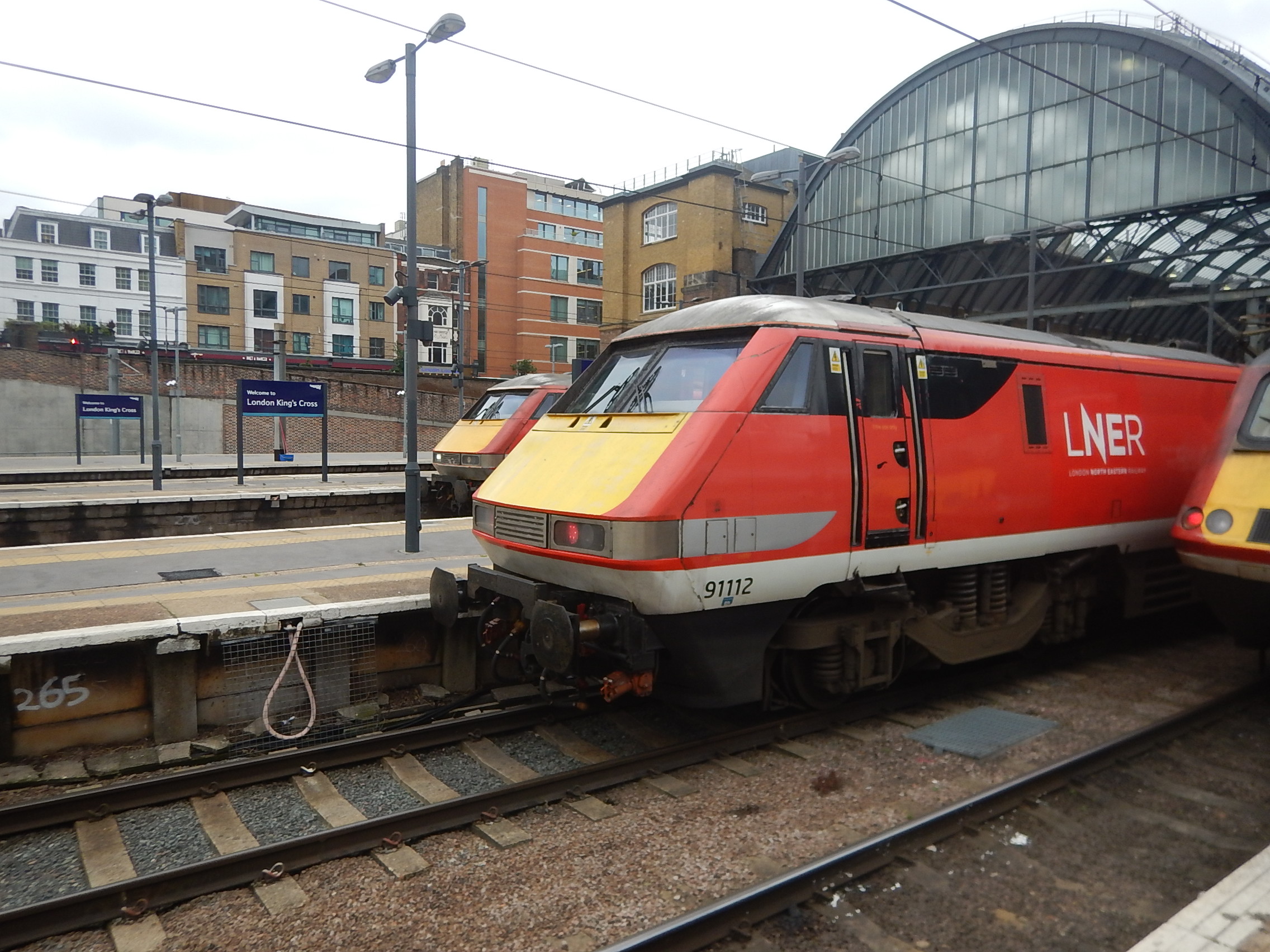
The InterCity 225 train is the ringer in this race to the North.
- The design speed is 140 mph.
- The service speed is 125 mph
- The record speed of an InterCity 225 is 161.7 mph.
- The train doesn’t use tilting technology.
- The train was built after the APT around 1990.
- The train holds the record between London Kings Cross and Edinburgh at thirty seconds under three-and-a-half hours.
- To rub things in, one of these trains, even holds the London Euston and Manchester Piccadilly record.
But there can’t be much wrong with the InterCity 225 trains as a few are being brought back into service, whilst LNER are waiting for ten new bi-mode trains to be delivered.
Hitachi Class 80x Trains

The various variants of Class 800 trains run to Edinburgh and I’m sure they will run to Glasgow.
- The design speed is 140 mph.
- The service speed is 125 mph
If an InterCity 225 can go between Edinburgh and London in around three-and-a-half hours, I can’t see why these trains can’t.
Especially, as Hitachi seem to be able to produce versions like the Class 803 and Class 807 trains, which appear to be lighter and more efficient, as they don’t have any diesel engines.
A Small Margin
I said earlier that it was only a small margin between the times of the APT and the Class 390 train. But why was the InterCity 225 able to run between Kings Cross and Edinburgh at thirty seconds under three-and-a-half hours?
This section in the Wikipedia entry for the Class 91 locomotive is entitled Speed Record. This is the first paragraph.
A Class 91, 91010 (now 91110), holds the British locomotive speed record at 161.7 mph (260.2 km/h), set on 17 September 1989, just south of Little Bytham on a test run down Stoke Bank with the DVT leading. Although Class 370s, Class 373s and Class 374s have run faster, all are EMUs which means that the Electra is officially the fastest locomotive in Britain. Another loco (91031, now 91131), hauling five Mk4s and a DVT on a test run, ran between London King’s Cross and Edinburgh Waverley in 3 hours, 29 minutes and 30 seconds on 26 September 1991. This is still the current record. The set covered the route in an average speed of 112.5 mph (181.1 km/h) and reached the full 140 mph (225 km/h) several times during the run.
It looks from the last sentence of this extract, that the record run of the InterCity 225 train ran up to 140 mph in places, whereas the record run of the APT and today’s run by a Class 390 train were limited to 125 mph.
The Signalling
In the Wikipedia entry for the InterCity 225 train, the following is said.
Thus, except on High Speed 1, which is equipped with cab signalling, British signalling does not allow any train, including the InterCity 225, to exceed 125 mph (201 km/h) in regular service, due to the impracticality of correctly observing lineside signals at high speed.
Note.
- I have regularly flown my Cessna 340 safely at altitude, with a ground speed of around two hundred miles per hour.
- High Speed One has an operating speed of 186 mph.
- Grant Schapps, who is Secretary of State for Transport has a pilot’s licence. So he would understand flight instruments and avionics.
So why hasn’t a system been developed in the thirty years since trains capable of running at 140 mph started running in the UK, to allow them to do it?
It is a ridiculous situation.
We are installing full digital ERTMS in-cab signalling on the East Coast Main Line, but surely a system based on aviation technology could be developed until ERTMS is ready. Or we could install the same system as on High Speed One.
After all, all we need is a system, to make sure the drivers don’t misread the signals.
But then the EU says that all member nations must use ERTMS signalling.
Didn’t we just leave the EU?
Conclusion
By developing our own in-cab digital signalling we could run trains between London and Scotland in around three-and-a-half hours.
The Japanese could even have an off-the-shelf system!
ERTMS sounds like a closed shop to give work to big European companies, who have lobbied the European Commission.

