FirstGroup Acquires London – South Wales Open Access Business And Plans Lumo To Devon
The title of this post, is the same as that of this article on Railway Gazette.
This is the sub-heading.
‘Growing our open access rail portfolio is a key priority’, FirstGroup CEO Graham Sutherland said on December 5 when the company announced that it had acquired Grand Union Trains GWML Holdings Ltd. GUT holds track access rights to launch an open access passenger service between London and Carmarthen. FirstGroup has also applied for paths to launch a London to Paignton service.
FirstGroup seem to have acted quickly to replace the business that they have lost to the Government.
This is said about the London Paddington and Carmarthen route.
The London Paddington to Carmarthen service is now expected to launch in December 2027, with GUT having secured track access rights to the end of 2037.
There will be five services each way per day, calling at stations including Bristol Parkway, Newport, Severn Tunnel Junction, Cardiff Central, Gowerton and Llanelli. FirstGroup said it would provide low fares, ‘more customer choice and much-needed additional capacity’.
It is still considering rolling stock options, and ’updates will be provided in due course’. The trains would have one class, free wi-fi and onboard catering.
After the successful trial of battery-powered high speed trains that I wrote about in ‘UK-First’ Intercity Battery Trial Exceeds Expectations, I would suspect that the train would run between London Paddington and Carmarthen like this.
- Run between London Paddington and Cardiff Central using the 25 KVAC overhead electrification.
- Whilst running between Paddington and Cardiff Central, the train’s batteries will be fully charged using the overhead electrification.
- Run between Cardiff Central and Carmarthen using the onboard battery power.
- Charge the train as required at Carmarthen.
Note.
- London Paddington and Cardiff Central is 145.2 miles or 233.7 km.
- Cardiff Central and Carmarthen via Gowerton is 75.3 miles or 121.2 km.
- In case of disruption, trains could wait at Cardiff Central, until the batteries had enough charge.
A battery capability of 121.2 km will be needed.
This is said about the London Paddington and Paignton route.
An application has been submitted to the Office of Rail & Road for the service to incorporate five return trips per day between London Paddington and Paignton via stations including Bath Spa, Bristol Temple Meads, Taunton, Exeter St David’s and Torquay from May 2028, as well as a sixth path between Highbridge & Burnham and London.
I suspect that the Paignton route will use a similar profile to the Carmarthen route.
- Run between London Paddington and Chippenham using the 25 KVAC overhead electrification.
- Whilst running between Paddington and Chippenham, the train’s batteries will be fully charged using the overhead electrification.
- Run between Chippenham and Paignton using the onboard battery power.
- Charge the train as required at Paignton .
Note.
- London Paddington and Chippenham is 93.5 miles or 233.7 km.
- Chippenham and Paignton is 128.6 miles or 207 km.
- In case of disruption, trains could wait at Chippenham , until the batteries had enough charge.
A battery capability of 207 km will be needed.
This page on the Hitachi Rail web site is entitled Intercity Battery Trains, where this is a paragraph.
Replacing one diesel engine with just one battery reduces emissions by more than 20% and offers cost savings of 20-30%. Our intercity battery powered trains can cover 70km on non-electrified routes, operating at intercity speeds at the same or increased performance.
I am a Graduate Control and Electrical Engineer and I believe that, if you have a train with two batteries, then by sequencing and managing the power, a range of 140 km. should be possible. As a typical Class 802 train, as used by Hull Trains has three diesel engines, would the train have a range of 210 km., if all three were swapped for batteries?
One fact, that has been disclosed by Hitachi, is that diesel engines and battery packs are identical in weight and power, so train performance and handling is unaffected, by the number of batteries.
If we look at the routes of First Group present and future subsidiaries and how much is on unelectrified track, we can create the following table.
- Beverley – Hull Trains – 71.3 km.
- Carmarthen – Lumo – 121.2 km.
- Hull – Hull Trains – 58,1 km.
- Paignton – Lumo – 207 km.
- Rochdale – Lumo – 16.7 km.
- Sheffield – Hull Trains – 37.5 km.
- Worksop – Hull Trains – 12.2 km.
Note,
- One two or three batteries could be fitted.
- Some destinations could be served without any charging at the destination.
- Hitachi have proposed short lengths of 25 KVAC overhead line to charge trains.
- For some destinations, it may be a more affordable to add another battery than add a charger.
It’s all very modular.
Rochdale Station – 12th November, 2024
Yesterday, I went to Rochdale station, to ascertain, the suitability of running a Lumo service between Euston and Rochdale stations.
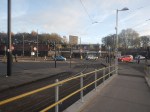


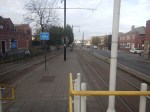
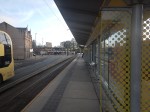
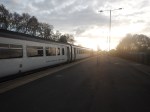
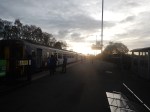
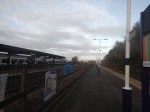
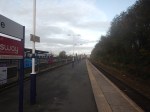

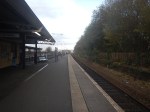
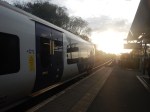
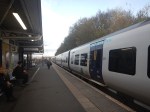




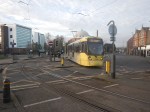
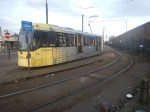
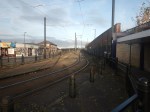
Note.
- The building in the style of a mosque, is actually a Catholic church.
- The island tram platform is at right angles to the railway lines through the station.
- The tram takes you a short distance to the North to the town centre.
This map shows the station and the tram stop.
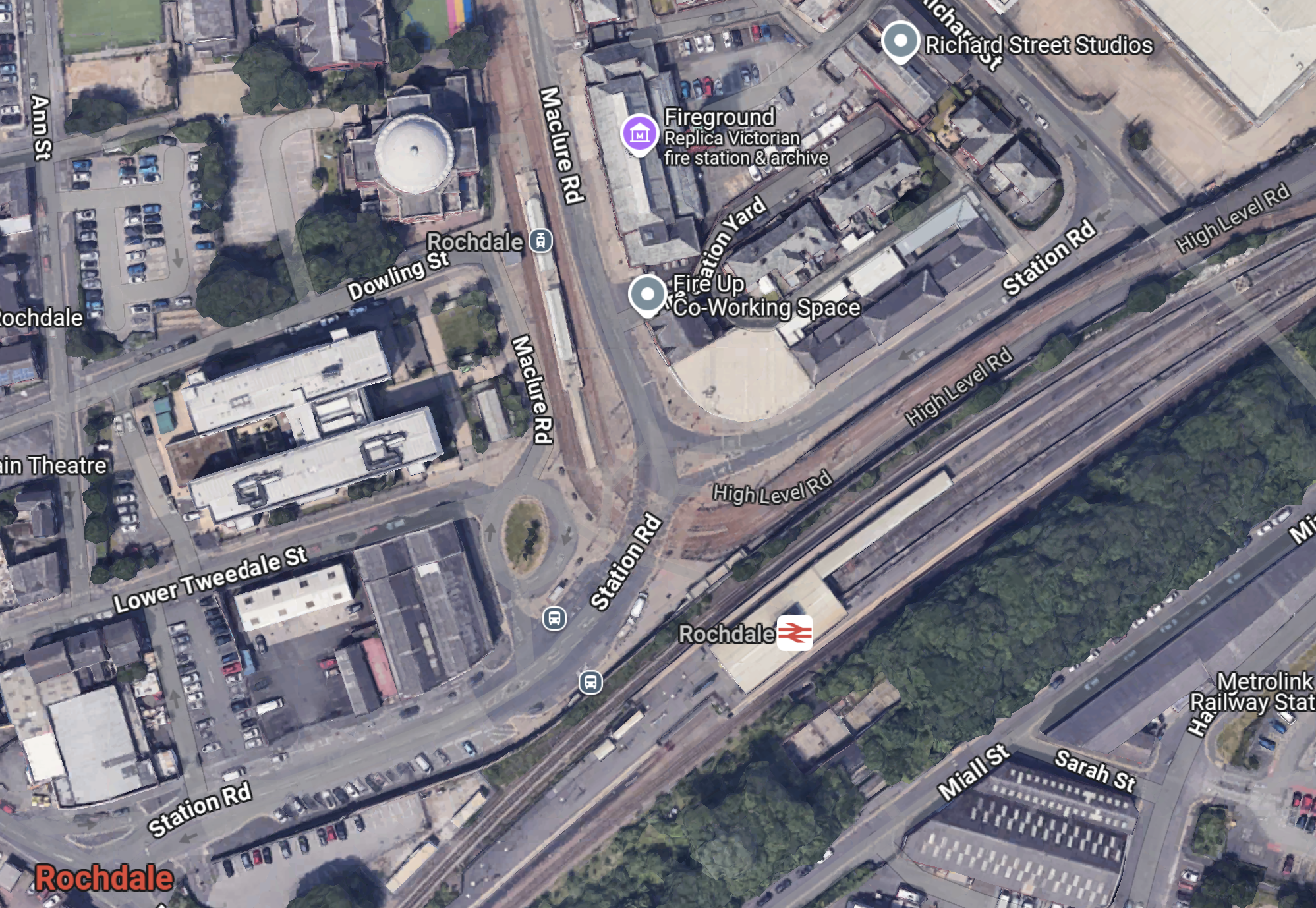
Note.
- The station has four platforms and two tram platforms.
- The two outer train platforms are quite long.
- The West-facing bay platform could probably take a five-car Lumo train.
- The tram platform runs North from the station.
- There is a co-working space by the tram-stop.
- There is a cafe in the station.
- There is a manned ticket office.
- Car parking is free.
- There are sixteen bicycle spaces.
With some tidying up, this could be a neat interchange.
These are my thoughts.
Will Rochdale Station Accommodate One Of Lumo’s Five-Car Trains?
The Wikipedia entry for Rochdale station, says this about the Bay Platform 4, that was used for the Cltheroe train.
In 2015, construction on a fourth railway platform began. The 135m-long bay platform was completed in 2016 and is used to relieve congestion at Manchester Victoria, where terminating trains would otherwise occupy the through platforms; numerous services now continue on to Rochdale as opposed to terminating at Victoria. It is located at the south end of the main island platform, with the southbound through line having been re-aligned slightly further east to accommodate the new terminating line and is used by the half-hourly stopping service from Blackburn/Clitheroe via Bolton and Victoria.
A 135 metre platform should be able to accommodate a five-car train with 27 metre carriages, so it looks like a 5-carriage Lumo train with 26-metre cars would fit in the bay platform 4.
Will Rochdale Station Accommodate A Pair Of Lumo’s Five-Car Trains?
Consider.
- Lumo’s Hitachi trains, like all their siblings can run in pairs. As I reported in Ten-Car Hull Trains, Hull Trains do it regularly.
- Rochdale station may or may not be able to accommodate a pair of five-car trains, but say if one of Manchester’s Premier League clubs was playing in the FA Cup Final, I’m sure they would find a way to run a ten-car train to London.
- It looks like Warrington Bank Quay, Newton-le-Willows, Eccles and Manchester Victoria could all take 10-car trains.
- Euston probably can as well, as 9-car and 11-car Class 390 trains are 217.5 and 265.3 metres respectively long respectively and a 10-car Lumo train would only be 260 metres.
Perhaps, one train can start at Rochdale and the other at Manchester Victoria, before they join at Victoria and go to London as a pair.
Could The Lumo Service Be Extended Across The Pennines?
Distances Along the Calder Valley Line to Leeds are as follows.
- Rochdale 10.4 miles –
- Hebden Bridge – 23.6 miles
- Halifax – 32.7 miles
- Low Moor – 37.5 miles
- Bradford Interchange – 40.4 miles
- Leeds – 49.8 miles
Note.
- The 70 km. rang of a Lumo train will be 43.5 miles.
- The train can be charged at both end stations and will be fully charged, when it leaves Manchester Victoria and Leeds.
- There are short lengths of electrification at Manchester Victoria and Leeds.
- There may be extra electrification between Bradford Interchange and Leeds, in the next few years.
I am fairly certain, that a battery-electric Lumo Class 803 train will be able to provide a London Euston and Leeds service.
How Long Will Services Take?
Timings on the extended route from London Euston to Manchester Victoria, Rochdale, Bradford and Leeds would take.
- London-Euston – Warrington Bank Quay – One hour and forty-four minutes – Current Avanti timings.
- Warrington Bank Quay – Newton-le-Willows -Eleven minutes – Current Northern timings.
- Newton-le-Willows – Eccles -Ten minutes – Current Northern timings.
- Eccles – Manchester Victoria – Ten minutes – Current Northern timings.
- Manchester Victoria – Rochdale – Fourteen minutes – Current Northern timings.
- Rochdale – Hebden Bridge – Sixteen minutes – Current Northern timings.
- Hebden Bridge – Halifax – Fifteen minutes – Current Northern timings.
- Halifax – Low Moor – Six minutes – Current Northern timings.
- Low Moor – Bradford Interchange -Ten minutes – Current Northern timings.
- Bradford Interchange – Leeds – Nineteen minutes – Current Northern timings.
Totals.
- London and Manchester Victoria – Two hours and fifteen minutes.
- London and Rochdale – Two hours and twenty-nine minutes.
- London and Bradford – Three hours and six minutes.
- London and Leeds – Three hours and twenty-five minutes.
I suspect times could be speeded up a bit.
Proposed Developments Of Manchester Metrolink
This sub-title has its own Wikipedia entry.
Developments that would be beneficial to a Lumo service might include.
A station at Cop Road on the Oldham and Rochdale Line, that would support new housing.
Tram-trains between Oldham and Heywood On the Calder Valley Line.
These two developments will directly bring more passengers to the Lumo service, but because the Lumo service has links with the Metrolink at Eccles, Manchester Victoria and Rochdale any Metrolink improvements should benefit the Lumo service.
‘UK-First’ Intercity Battery Trial Exceeds Expectations
The title of this post, is the same as that of this press release from Hitachi.
These three bullet points, act as sub-headings.
- Intercity battery train completes testing in the north of England, demonstrating superior performance and cost-effectiveness compared to diesel engines.
- Trial confirms single battery technology can reduce fuels costs between 35%-50% and enter and leave stations in zero-emission mode.
- Ahead of Railway 200 celebration, this new UK rail innovation is ready to reduce cost and emissions on the railways.
These are the first two paragraphs.
Today, Angel Trains, Hitachi Rail and TransPennine Express are celebrating the successful completion of the UK’s first intercity battery trial in the North of England.
The powerful 700kw battery technology met, and in some cases even surpassed, the key objectives of the trial, including:
- Fuel costs savings between 35%-50%, surpassing previous predictions of up to 30%.
- Just one battery has managed to power the train to speeds greater than 75mph, clearly demonstrating this technology can enter, alight and exit stations solely in zero-emission battery-mode to improve air quality and reduce noise pollution.
- Able to achieve all journey times and performance requirements so can meet operators timetable requirements.
- The battery matches the weight of a diesel engine and is installed in the same undercarriage space, ensuring no risk of track degradation and no impact on the passenger environment.
Note.
- I would expect, that most of the fuel cost savings are due to the use of regenerative braking to the battery.
- 75 mph might seem slow, but Hull Trains average slower speeds than this on their diesel sections.
- Running in a non-polluting mode in stations and sensitive areas, is not going to be disliked by anyone.
- The most powerful diesel engines in Class 800 and Class 802 trains are rated at 700 kW. So with the same weight and power, it is not surprising that the performance is the same.
It looks to me, that Hitachi have designed an efficient battery-electric electric train, that can extend services from electrified main lines onto branch lines without electrification.
The One Battery Test Train And Hull Trains
Hull Trains currently run one service to Hull and Beverley and have applied for another service to serve Worksop, Woodhouse and Sheffield, where the trains would leave the East Coast Main Line at Retford.
Hitachi’s current test train has two diesel engines and one battery pack.
An Electric Service Between London and Hull/Beverley
Distances for the Hull and Beverley service are.
- ECML and Hull – 58.1 km. – 3 stops
- Hull and Beverley – 13.2 km or 26.4 km both ways. – 1 stop
Note.
- Trains will be fully-charged, when they leave the ECML.
- Trains could be fully-charged, when they leave Hull station, if the platform they use has a charging system.
- All Hull Trains call in Platform 7 at Hull station.
- The Hitachi press release said “During a trial run, the battery’s impressive power enabled the train to operate solely in battery mode for 70km.” A speed of 75 mph is indicated.
- I would assume the Hitachi train used regenerative braking to help recharge the batteries, at the intermediate stops.
- Trains average around 57 mph between the ECML and Hull and 38 mph between Hull and Beverley.
- Much of the track between the ECML and Hull has a speed limit of 75 mph.
- Much of the track between Beverley and Hull has a speed limit of 70 mph or less.
Because of these figures and what Hitachi have said of the train’s performance on batteries, I am convinced that Hull Trains will use an electrified Platform 7 at Hull station to charge the trains.
These pictures show a Hull Trains’s Class 802 train in Platform 7 at Hull station.

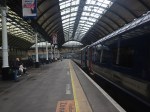
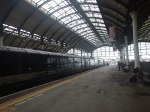



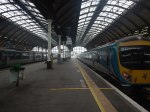
Note.
- The blue Hull Train is in Platform 7 in the pictures.
- Hull station has a classic Victorian cast-iron roof.
- Many other similar platforms have been electrified in the UK.
I believe that this platform can be electrified relatively easily with 25 KVAC overhead wires.
An Electric Service Between London and Worksop/Sheffield
Distances for the Worksop and Sheffield service are.
- ECML and Worksop – 12.2 km. – 1 stop
- Worksop and Sheffield- 25.3 km or 50.6 km both ways. – 1 stop
Note.
1. A train from London will leave Retford with a full battery.
2. Retford and Sheffield is only 37.5 km. So the round trip is only 75 km.
3. A full battery will power the train at 75 mph for 70 km – According to Hitachi.
4. Much of the track between Retford and Sheffield is only 60 mph. So going slower will give an energy saving.
5. Slowing at Worksop, Woodhouse and Sheffield will give the batteries a small charge.
6. There are no bridges in the Workshop station area, so a mile or so of electrification could be easy.
7. It’s an easy level route.
8. I’ve read somewhere that Hitachi have a full route simulator.
I calculate, that a two minute charge at Worksop would probably be all the train would need to travel the 75 km. on batteries.
We don’t know if Hitachi have licenced some of Vivarail’s FastCharge technology from FirstGroup. This could enable them to extract the maximum value from each stop at Worksop.
The One Battery Test Train And Lumo
Hitachi’s current test train has two diesel engines and one battery pack.
It is likely that a train with this configuration could be used on Lumo’s new service to Rochdale.
As London Euston and Manchester Victoria is fully electrified, the only unelectrified section is the 16.7 km. between Manchester Victoria and Rochdale. This would mean, that to complete the trip, Lumo’s train would need the ability to do 33.4 km on battery power.
As Hitachi’s test train can do 70 km on a full charge, Lumo could use trains with the standard two diesel engine and one battery pack configuration. The battery would be charged on the electrified sections of the route, between London Euston and Manchester Victoria stations.
It looks to me, to be a superb demonstration of the capabilities of a battery-electric InterCity train with two diesel engines and one battery pack.
The One Battery Test Train And LNER
Hitachi’s current test train has two diesel engines and one battery pack.
It is likely that a train with this configuration could be used on several LNER services from King’s Cross.
- Bradford Forster Square – 21.9 km. from Leeds
- Cleethorpes – 102.5 km. from Newark
- Grimsby Town – 97.9 km. from Newark
- Harrogate – 29.4 km from Leeds
- Lincoln – 26.9 km. from Newark
- Middlesbrough – 35.2 km. from ECML
- Cleethorpes – 102.5 km. from ECML
- Scarborough – 67.8 km. from York
Note.
- Some services like those to Bradford Forster Square, Harrogate and Lincoln could be run by only charging on the East Coast Main Line.
- Some services like those to Middlesbrough and Scarborough could be run by charging at the destination.
- Other services would need more batteries and/or charging at the destination.
I haven’t put in the Scottish services as running them may be more complicated.
Running Longer Distances On Battery Power
This paragraph is from the original Hitachi press release.
This success demonstrates that Hitachi Rail is ready to deliver the next stage of a full intercity battery-electric train. Based on real-world data, such a train would have a range between 100-150km. These ranges can cover significant sections of non-electrified routes, eliminating the need for wires in tunnels or stations, and potentially saving hundreds of millions of pounds on electrification projects.
Note.
- I would assume that as many diesel engines as possible would be replaced with battery packs.
- On a typical three-battery Class 800 train, 802 train or Class 805 train, this could be up to three batteries.
- But on a four-battery Class 810 train, this could be up to four batteries.
A strategy would need to be developed for all routes and trains would be configured and allocated to the routes accordingly.
Arriva’s Grand Central Applies For Extended Track Access Rights
The title of this post, is the same as that of this news item from Arriva.
These three bullet points, act as sub-headings.
- Grand Central to submit application to the rail regulator for extended track access up to 2038.
- Proposals for a new, greener fleet are outlined as part of the application.
- Application signals Arriva’s long-term commitment to UK rail.
These three paragraphs add more detail to the application.
Arriva Group’s UK open access train operating company, Grand Central, has today announced it is seeking to extend its existing track access rights until 2038, securing its services for the next 15 years and unlocking Arriva’s intentions to invest in new, state-of-the-art trains.
Grand Central has been operating services on the East Coast mainline since 2007 as an open access operator, which means it receives no government funding or subsidy. It directly links 15 destinations, including cities in Yorkshire and the North East with London’s Kings Cross.
The application represents a significant commitment to long-term services and supports its plans to expand services with improved connectivity and increased frequency, as outlined in a previous application, submitted to the Office of Rail and Road in May this year.
These are my observations and thoughts.
Grand Central’s Current Services
Grand Central currently runs two separate services.
- King’s Cross and Sunderland via Peterborough,York, Thirsk, Northallerton, Eaglescliffe and Hartlepool – six tpd
- King’s Cross and Bradford Interchange via Peterborough, Doncaster, Pontefract Monkhill, Wakefield Kirkgate, Mirfield, Brighouse, Halifax and Low Moor – four tpd
Note.
- tpd is trains per day.
- Weekend services are reduced.
- Peterborough is served by one train in each direction.
Grand Central have applied to run more services.
Distances Without Electrification On Current Services
Only the Northern ends of both routes are not electrified.
- King’s Cross and Sunderland – Longlands junction and Sunderland – 48.5 miles
- King’s Cross and Bradford Interchange – Doncaster and Bradford Interchange – 52.1 miles
Note.
- Going North, any train batteries could be charged on the East Coast Main Line.
- Before returning South, train batteries could need to be charged at the two terminals.
- Battery-electric trains would need infrastructure changes at the two terminals.
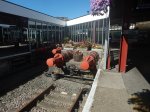
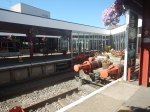
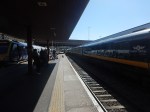
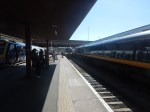
The two terminals; Bradford Interchange and Sunderland are not particular spacious.
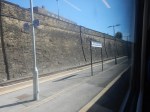
These pictures show Bradford Interchange station.
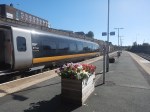
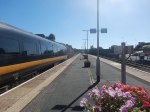

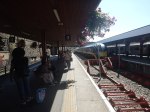



And these pictures show Sunderland station, which is underground.
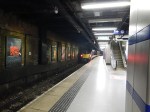
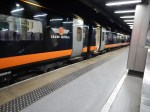
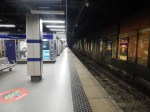
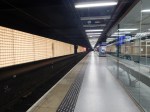
Putting even a short length of catenary to charge battery-electric trains might not be that easy at either station.
Grand Central’s New Trains
Arriva’s news item, gives these details on the new trains.
- Increased capacity: The new trains would feature approximately 20 per cent more seats than the current Class 180 units, providing additional capacity to meet growing passenger demand.
- Modernised fleet: The new Bi-Mode trains would replace the existing 24-year-old Class 180 units bringing new customer focussed features and a more comfortable experience for passengers.
- Greener services: The Bi-mode trains would cut carbon emissions and provide smoother journeys for passengers. They can operate on electric and non-electric tracks, so they can serve long into the future as track electrification gathers pace across the UK.
Note.
- A five-car Class 802 train has approximately twenty percent more seats than a four-car Class 180 train.
- Hull Trains, LNER, Lumo and TransPennine Express all run Hitachi Class 80x trains on the East Coast Main Line, which could ease operations, if all trains were similar.
- Bi-mode trains are specified. Grand Central will change mode once on each trip.
- LNER have specified CAF Tri-mode trains for their new fleet. Will these have an extra level of complication, that Grand Central don’t need?
I suspect that rand Central will opt for the Hitachi trains.
Using The Joint Line Between Peterborough and Doncaster via Lincoln
The diesel Class 180 trains can use this line, in times of incidents or engineering works.
Class 800 and Class 802 trains can also use this diversion, so it might be sensible to be able to use the line in time of trouble.
Chiltern Trains’ London And Birmingham Services
Both Arriva and Chiltern Trains are subsidiaries of Deutsche Bahn.
Currently, Chiltern run six-car rakes of Mark 3 coaches, with a Class 68 locomotive at one end and a driving van trailer at the other, between London and Birmingham.
They are nice trains, but they are not zero-carbon.
Could these be replaced by an eight-car Class 802 train?
- Chiltern have said that they are looking for new trains.
- An eight-car Class 802 train could be a similar length to the current trains.
- London Marylebone and Birmingham Moor Street is only 111.7 miles.
- The Hitachi trains would offer an increase in capacity.
- They might save a few minutes.
But the trains will still be not zero-carbon.
This page on the Hitachi web site is entitled Intercity Battery Trains.
The trains for London Marylebone and Birmingham Moor Street would be built as conventional eight-car Hitachi trains, with perhaps four diesel engines.
- Over the years, the Chiltern Main Line would be partially electrified, starting perhaps in the middle around Banbury.
- One by one, the diesel engines would be replaced by batteries, so that the trains could run on battery power between the electrified sections.
- Eventually, the London Marylebone and Birmingham Moor Street service would be fully battery-electric.
- As Kidderminster is only twenty miles past Birmingham Moor Street, there must surely be possibility for extension of the service.
I believe that Hitachi’s Intercity Battery Train, is going to play a large part in the decarbonisation of UK railways.
Chiltern Trains’ London And Oxford Services
If eight-car Hitachi Intercity Battery Trains can handle London Marylebone and Birmingham Moor Street services, then I am fairly sure that five-car Hitachi Intercity Battery Trains could handle London Marylebone and Oxford services.
They would also have more capacity, than the current trains, that serve Oxford and Bicester Village.
Conclusion
It may be advantageous for Deutsche Bahn to put the two orders together.
Brand New Battery Technology To Be Trialled On TransPennine Train
The title of this post, is the same as that of this press release from Hitachi.
These three bullet points, act as sub-headings.
- First-ever trial in the UK to replace a diesel engine with a battery on an intercity train is underway.
- Pioneering collaboration between Angel Trains, TransPennine Express, Turntide Technologies and Hitachi Rail.
- Hitachi Rail has built a battery using the North East supply chain, with one battery unit predicted to reduce emissions and fuel costs by as much as 30%.
These are my thoughts on some of the paragraphs in the press release.
The First Paragraph
This is the first paragraph.
Testing of the UK’s first intercity battery train commenced earlier today. The battery, which generates a peak power of more than 700kw, has now been successfully retrofitted onto a TransPennine Express ‘Nova 1’ train (five-carriage intercity Class 802), ahead of the trial on Transpennine routes this summer.
Each of the three diesel power packs in on of TransPennine Express’s Class 802 trains can generate 700 kW, so the battery packs can provide the same power as the current Rolls-Royce mtu diesel power packs.
The Third Paragraph
This is the third paragraph.
The single battery unit is incredibly powerful, storing enough electricity to power more than 75 houses for a day. This impressive energy and power density will deliver the same levels of high-speed acceleration and performance, while being no heavier than the diesel engine it replaces.
This equity of high-speed acceleration and performance is to be expected, as the train power and weight is the same, if the power is diesel engines or batteries.
The Fourth Paragraph
This is the fourth paragraph.
The installation of a battery will reduce emissions and improve energy efficiency. It is predicted to reduce emissions and fuel costs by as much as 30% on a Hitachi intercity train.
I would assume that this improvement in emissions and fuel costs, is due to the use of regenerative braking to recharge the batteries, when the train slows down.
The Fifth Paragraph
This is the fifth paragraph.
Most importantly for passengers, the trial will test how intercity trains can enter, alight and leave non-electrified stations in zero-emission battery mode to improve air quality and reduce noise pollution.
As the trains enter a non-electrified station, the regenerative braking will recharge the batteries to both power the train in the station and accelerate the train on its way.
The Seventh Paragraph
This is the seventh paragraph.
The trial will provide real-world evidence to inform the business case for a 100% -battery-electric intercity train, capable of running up to 100km in battery mode. This remarkable range means this battery technology could be deployed to cover the final non-electrified sections of intercity routes in the coming years. It will also demonstrate how battery technology can reduce infrastructure costs by reducing the need for overhead wires in tunnel sections and over complex junctions.
Note that 100 kilometres is 62.1 miles.
You can never do too much real world testing!
These are my further thoughts.
Acceleration And Braking Under Battery Power
This graph from Eversholt Rail, shows the acceleration and deceleration of a five-car Class 802 electric train.
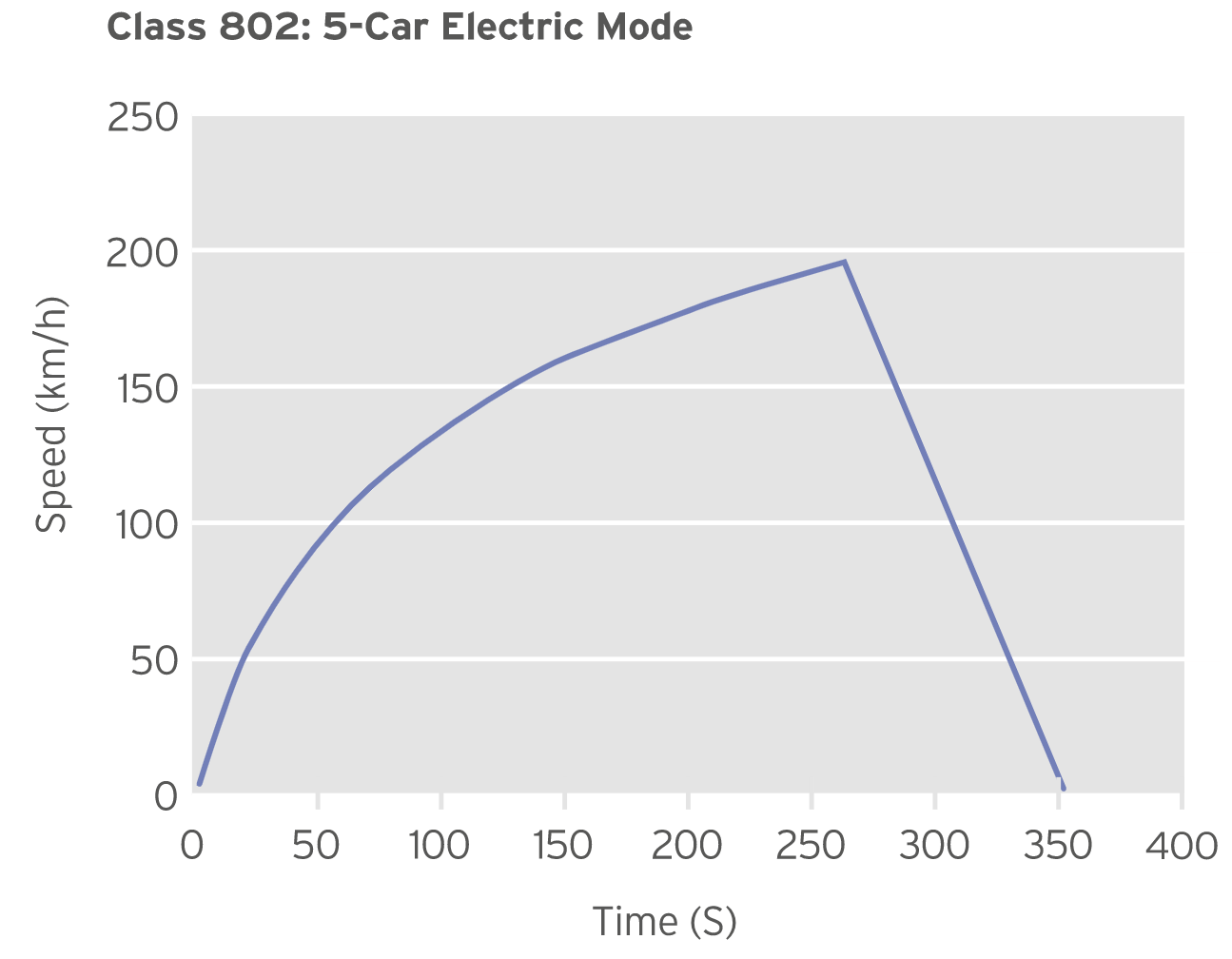
As Hitachi have said in the press release that.
- The weight of a battery pack is the same as a diesel engine.
- The power of a battery pack is the same as a diesel engine.
The acceleration and braking curve for a Class 802 train, with a single traction battery will surely be the same.
Would this mean, that if a battery-electric train replaced a diesel-electric train, the timetable would be the same?
What would be the effects, if a second diesel engine were to be replaced with a battery pack?
- The train would still weigh the same.
- The train’s performance would still be the same.
- The train would have 1400 kW of power available, but I doubt this could be used efficiently, as it might exceed the train’s performance limits.
- The train would have enough electricity for a 200 kilometre or 124.3 mile range.
There might be a need for a sophisticated control system to set the power mode, but in my experience of riding in the cab of an InterCity 125 and a Boeing 747, drivers or pilots have enough intelligence and fingers to control systems with multiple engines.
What would be the effects, if a third diesel engine were to be replaced with a battery pack?
- The train would still weigh the same.
- The train’s performance would still be the same.
- The train would have enough electricity for a 300 kilometre or 186.4 mile range.
The range is sufficient for a lot of routes.
London And Beverley
Consider.
- This route has 44.3 miles of unelectrified track between Temple Hirst Junction and Beverley.
- One battery range is 100 kilometres or 62.1 miles.
- As the trains have three slots for battery packs or diesel engines, they could always carry a diesel engine for emergencies.
The route could be run in one of two ways.
- By using one battery, that would be charged at Beverley.
- By two batteries, that would be charged on the main line to the South of Temple Hirst Junction. One battery would be used in each direction.
Note.
- The second method would not require any new infrastructure at Beverley or Hull.
- All batteries would be identical 100 km batteries.
- Trains would just swap an appropriate number of diesel engines for batteries.
The service could run as soon as the trains had the power transplants.
Using The Lincoln Diversion
In Extra Luggage Racks For Lumo, I also talked about Lumo taking the diversion via Lincoln.
Consider.
- This route is 88.5 miles of unelectrified track.
- It would be possible to be handled by a Class 802 train with two battery packs.
- Hull Trains will need battery packs to get to Beverley.
- Some LNER services will use battery packs.
Perhaps trains will use one battery to Lincoln and one from.
Crewe And Holyhead
In October 2023, the government said, that the North Wales Coast Line would be electrified.
Consider.
- Crewe and Holyhead are 105.5 miles apart.
- The route currently has no electrification.
- It has been planned to electrify the 21.1 miles between Crewe and Chester for some time.
- A lot of the route West of Chester may arouse the wrath of the Nimbies and be politically difficult to electrify, as castles and electrification don’t mix.
- Llandudno Junction station might be a station, where trains could be charged.
- Shotton and Chester stations need rebuilding.
- The line is not short of electric power, because of Electric Mountain and the windfarms along the coast.
- The route will soon be served by Hitachi Class 805 trains.
I believe the North Wales Coast Line could be one of those routes, which Hitachi’s partial electrification might be ideal.
I also believe that, it could be an extension of High Speed Two from Crewe, which provided a zero-carbon route between London and Ireland.
Conclusion
I can see if the tests perform as expected, that there will be some battery express trains running soon.
FirstGroup’s Lumo Seeks To Launch Rochdale – London Open Access Service
The title of this post, is the same as that of this article on Railway Gazette.
These two paragraphs outline the service.
FirstGroup has applied to operate Rochdale – London open access passenger trains, more than 20 years after a short-lived through service ran between the two destinations.
On May 17 FirstGroup said that it had applied to the Office of Rail & Road to launch six Lumo-branded return journeys per day linking London Euston and Rochdale via the West Coast Main Line. The trains would call at Warrington Bank Quay, Newton-le-Willows, Eccles and Manchester Victoria.
These are my thoughts.
The Route Isn’t Fully-Electrified
The route is electrified between London Euston and Manchester Victoria stations, but the 10.4 miles between Manchester Victoria and Rochdale is not electrified.
In Extra Luggage Racks For Lumo, I also talk about the possibility of fitting traction batteries to Lumo’s Class 803 trains, so they could handle the 88.5 mile diversion on the East Coast Main Line via Lincoln.
Trains with a traction battery, with an 88.5 mile range, would be able to travel between Manchester Victoria and Rochdale and return.
How Long Would London Euston And Rochdale Take?
Consider.
- The fastest London Euston and Warrington Bank Quay services take 1 hour and 44 minutes
- The fastest Warrington Bank Quay and London Euston services take 1 hour and 47 minutes
- Northern’s Class 195 trains take between 44-51 minutes Rochdale and Warrington Bank Quay with three stops.
- Northern’s Class 195 trains take between 29-32 minutes Manchester Victoria and Warrington Bank Quay with two stops.
- I will add two minutes for the extra stop.
These are my estimates for overall journey times.
- London Euston and Manchester Victoria – 2 hours and 15 minutes
- London Euston and Rochdale – 2 hours and 29 minutes
- Manchester Victoria and London Euston – 2 hours and 21 minutes
- Rochdale and London Euston – 2 hours and 40 minutes
The fastest direct Avanti West Coast services between London Euston and Manchester Piccadilly take 2 hours and 6 minutes.
Could The Service Be Extended To Leeds?
For my timings between Rochdale and Warrington Bank Quay, I used Northern’s Leeds and Chester service.
This service goes between Manchester Victoria and Leeds calling at Rochdale, Todmorden, Hebden Bridge, Halifax, Bradford Interchange, New Pudsey and Bramley.
I estimate it would take about 3 hours 32 minutes.
When Bradford has a new through station, I wouldn’t be surprised if a train operator looked at this route between London Euston and Leeds.
As Leeds and Manchester Victoria is only 49.8 miles, Lumo’s battery electric trains, with 88.5 mile batteries sized for the Lincoln diversion on the East Coast Main Line, would have no difficulty serving Leeds, where they would charge before return.
Could Lumo Run Pairs Of Five-Car Trains Between London Euston and Manchester Victoria?
As I said in Ten-Car Hull Trains, Lumo’s sister company; Hull Trains, runs the occasional ten-car service.
Perhaps for a big football match or other event, Lumo might like to run ten-car trains between Manchester Victoria and London Euston.
I suspect they could do it if the platforms were long enough, but they wouldn’t be able to run a 260 metre ten-car train to Rochdale, as that station only has a 135 metre long platform.
Warrington Bank Quay Station Will Get Six Extra Non-Stop Trains To And From London
This would provide real competition to Avanti West Coast over this route.
Newton-le-Willows Station Is Only A Few Miles From The Town Of St. Helen’s
Newton-le-Willows station has 400 parking spaces and 32 disabled parking spaces.
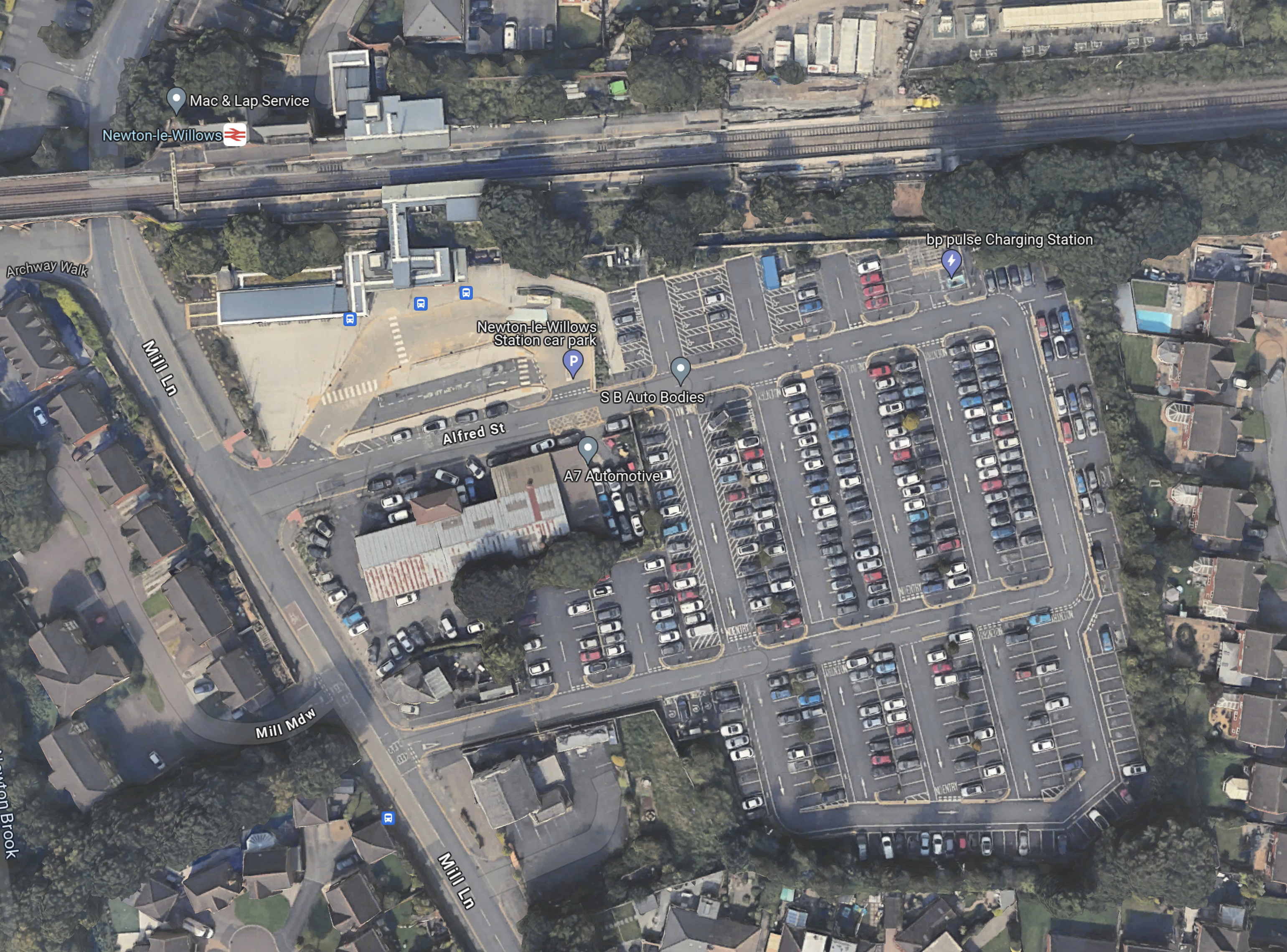
Note.
- The parking is all free!
- There are regular local trains to Chester, Leeds, Liverpool Lime Street, Manchester Airport and Wigan North Western.
A six trains-per-day service to and from London, will help fill up the parking spaces.
Eccles Station Is Within Walking Distance Of Eccles Interchange
This OpenRailwayMap shows Eccles station and Eccles Interchange.
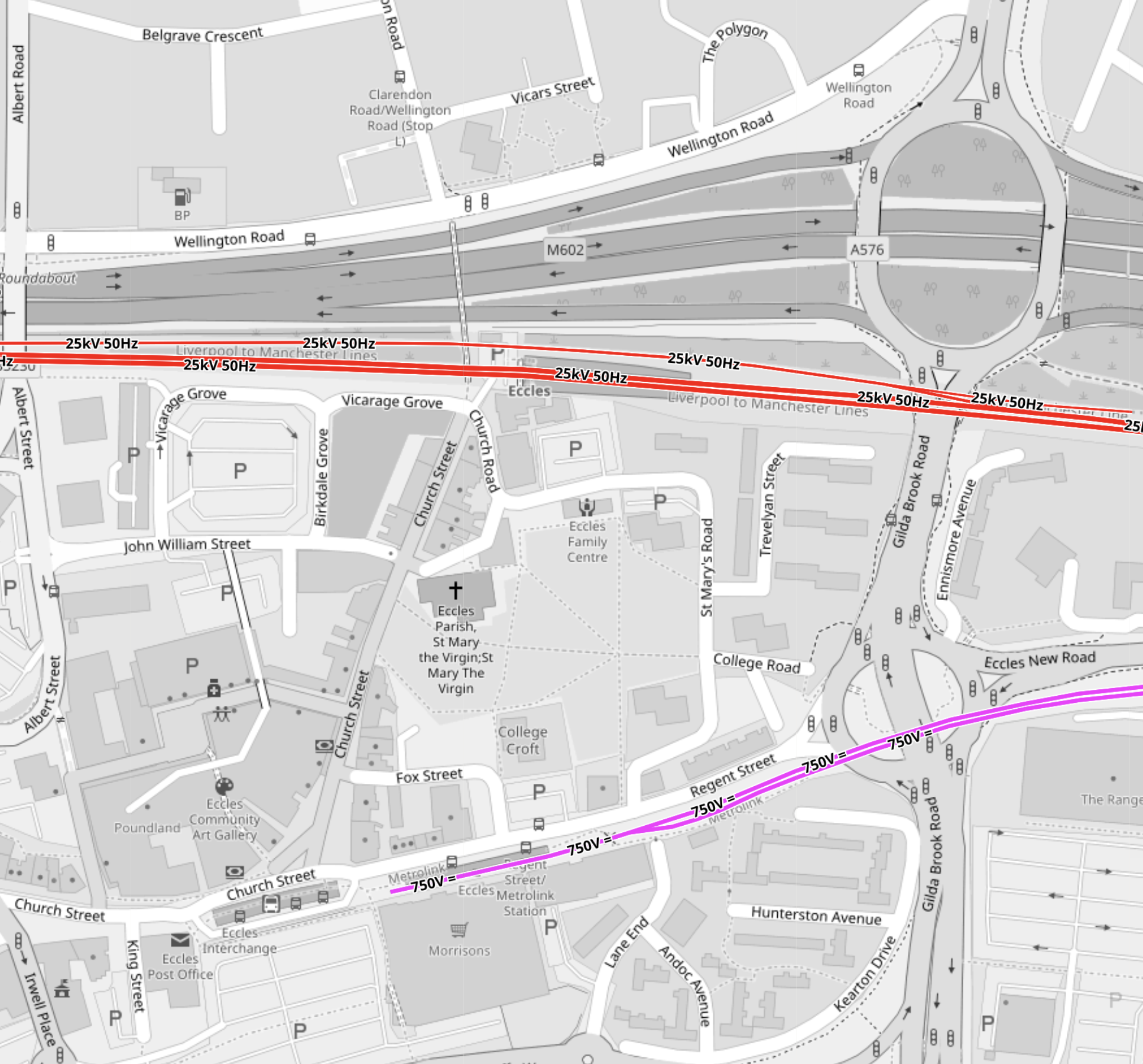
Note.
- The mauve tracks are the Manchester Metrolink.
- They terminate in the South-West at Eccles Interchange.
- The red tracks are the Liverpool-Manchester lines.
- Eccles station is a Northerly walk from Eccles Interchange.
This connection must be useful to more than a few.
I suspect if you’re going between London and Media City UK, Salford Quays or Piccadilly Gardens, you may be better to change to the Metrolink at Eccles.
Will Lumo’s Rochdale Service Run As A Flight With Avanti’s Glasgow Service?
Flighting is where two or more trains going on the same route run a few minutes apart.
- Every hour, on the half hour, an Avanti West Coast service for leaves London Euston for Glasgow Central.
- As with Lumo’s Rochdale service, the first stop is Warrington Bank Quay station.
- The Lumo service would leave London Euston a few minutes after Avanti’s Glasgow service.
- The distance between the two trains would be such, that if the first train stopped, the second train could stop safely.
- Digital signalling as is being installed on UK rail lines would make it easier to ensure safe separation.
But the benefit would be that both trains ran fast to Warrington Bank Quay station.
A Day-Trip To Manchester
If I’m right about the 2 hours and 15-21 minutes between London Euston and Manchester Victoria, then a day-trip would certainly be feasible.
Last Trains
This is a table of the last train times for Lumo between Newcastle and London.
- Weekdays – 20:27 21:35
- Saturdays – 18:27 19:22
- Sundays – 19:24 20:21
Note.
- The first time is the last Northbound departure.
- The second time is the last Southbound departure.
- Are these late enough for football matches?
I shall be interested to see the proposed last train times for the Manchester route.
- Will they be timed so you can get a tram from the Etihad or Old Trafford stadium after an evening match, that allowed you to get the last train back to London from Manchester Victoria?
- Taylor Swift gave the Manchester Arena a lot of favours with her concerts. Would you have been able to see her concert and get the last train back to London?
A few extra full trains wouldn’t hurt Lumo’s finances.
Conclusion
It looks like, this could be a very worthwhile service.
More Open Access Services Could Be On The Way
In the February 2024 Edition of Modern Railways, there is an article which is entitled First Bid For Sheffield To King’s Cross Paths.
The article is mainly about FirstGroup’s proposal for a new Sheffield and London service, running under the Hull Trains brand.
But, this is the last paragraph.
Modern Railways understands First is working on a number of proposals for additional open access services, and this is an early statement of intent. Other existing open access proposals include Grand Union Trains’ plans for London to Stirling and Cardiff to Edinburgh services, along with an already approved London to Carmarthen service, and the recently submitted Wrexham, Shropshire and Midland Railway application for a London to Wrexham service. It is understood other organisations, including MTR and Virgin, are also working up plans for new open access services.
These are my thoughts.
Grand Union Trains
These posts talk about Grand Union Trains services, where a proposal has been filed with the Office of Rail and Road.
- Grand Union Trains – Cardiff and Edinburgh – Cardiff – Edinburgh Open Access Train Service Proposal Under Development
- Grand Union Trains – Carmarthen and London – Regulator Approves New Grand Union Train Service From Carmarthen To London Paddington
- Grand Union Trains – Stirling and Euston – Grand Union Sets Out Stirling Ambitions
Note.
- All three services are substantially electrified.
- Cardiff and Edinburgh is not electrified between Severn Tunnel Junction and Doncaster, which is 180.7 miles, but 258.4 miles are electrified.
- Once the Midland Main Line is electrified, the longest section of unelectrified track is the 72.5 miles between Severn Tunnel Junction and Bromsgrove.
- Carmarthen and London has 145.1 miles of electrification between London and Cardiff and about 75 miles of unelectrified track West of Cardiff.
- Stirling and Euston is fully electrified.
A bi-mode or tri-mode train with an independent range at least 190 miles would be able to handle all three services. It would also allow extension of the Stirling service to Perth, if later that was felt to be a better terminus.
Trains able to be used would include.
- CAF Tri-Mode Train – As being built for LNER
- Class 221 train – Will be released soon by Avanti West Coast.
- Class 222 train – Will be released soon by East Midlands Railways
- Class 802 train
- Class 755 train – A Greater Anglia driver told me, the train is designed for 125 mph.
- Class 93 locomotive and a rake of coaches.
Note.
- All trains except the Class 221 and Class 222 trains would be able to make use of the electrification.
- The Class 93 locomotive option is not a 125 mph train.
- CAF Tri-Mode Train and the Class 802 train have digital signalling as standard, which could allow some 140 mph running.
But I do believe after the completion of the Midland Main Line electrification, a battery-electric high speed train with an independent range of around 100 miles could also handle all routes with perhaps charging in a couple of stations, like Carmarthen.
The services could of course be commenced using refurbished Class 221 and Class 222 trains from Avanti West Coast and East Midlands Railways respectively.
I can see a bidding and design war going on between CAF, Hitachi and Stadler to supply Grand Union Trains.
Liverpool Lime Street Station
Liverpool Lime Street station has been updated and has the capacity for extra services.
I also feel, that with the improvements to the West Coast Main Line and especially between Crewe and Liverpool in preparation for High Speed Two, that journey times between London and Liverpool will improve to around two hours.
Given the attractions of Liverpool, this will increase passenger numbers on the route and I believe extra services will be viable.
The Wikipedia entry for the station says this about a proposal from Virgin.
In June 2019, Virgin Trains lodged an application for an open access service from London Euston to Liverpool Lime Street calling at Nuneaton, Tamworth, Lichfield Trent Valley, Liverpool South Parkway and Liverpool Lime Street to rival the future West Coast Partnership franchise Avanti West Coast from December 2022.
It does seem to have gone quiet.
A Fast Zero-Carbon Route Between England And Ireland
This OpenRailwayMap shows Liverpool South Parkway station and Liverpool John Lennon Airport.

Note.
Liverpool South Parkway station is in the North-West corner of the map.
The orange track at the top of the map is the Liverpool branch of the West Coast Main Line.
At the bottom of the map, the long runway of Liverpool John Lennon Airport can be seen.
I believe that a fast link could be developed between the station and the airport.
- Initially this would be a coach.
- But later it could be developed as a tram-train from the City Centre, that also would call at Liverpool South Parkway station.
Operation of the airport could be ideal for up to 30-seater electric airliners.
Destinations served could include.
- Belfast City – 151 miles
- Bristol – 135 miles
- Cardiff – 135 miles
- Derry/Londonderry – 210 miles
- Dublin – 140 miles
- Glasgow – 186 miles
- Haverfordwest – 127 miles
- Humberside – 104 miles
- London City – 176 miles
- Norwich – 180 miles
- Ronaldsway – 89 miles
- Southend – 172 miles
Note.
- Liverpool appears to sit in circle of airports
- An Eviation Alice has a range of 290 miles with 9 passengers.
- The Wikipedia entry for Heart Aerospace, says their 30-seater electric airliner says it has a range of 124 miles or more if less passengers are carried.
- The East-West runway is also in line with the prevailing wind, which should help take-off.
- Liverpool Airport is located such that there is access to plentiful supplies of green electricity and hydrogen.
I will be very surprised if Liverpool Airport doesn’t develop into an airport for zero-carbon flights.
This could attract open access rail services from London and across the country.
Huddersfield
In First Bid For Sheffield To King’s Cross Paths, I postulated that Huddersfield station could be an ideal extension of FirstGroup’s proposed open access service between London King’s Cross and Sheffield.
How Many Direct Trains Should There Be Between London Paddington And Newquay?
The Mid-Cornwall Metro will see the following improvements on the Atlantic Coast Line between Newquay and Par stations.
- A second platform built at Newquay station.
- There will be a passing loop across Treegoss Moor.
- There will be a step-free bridge at Par station.
This will allow the current service on the line to be increased from two-hourly to hourly.
FirstGroup’s services in the UK, include several services, where a service is extended to a terminus away from the main line.
- Avanti West Coast – two trains per day (tpd) to Blackpool
- Great Western Railway – six tpd to Carmarthen
- Hull Trains – five tpd to Hull.
- Hull Trains – two tpd to Beverley.
- Hull Trains (proposed) – two tpd to Worksop and Sheffield.
Given that there will only be an hourly local service on the Atlantic Coast Line, I suspect that FirstGroup will be able to run up to six tpd to Newquay to satisfy the traffic needs of the London and Newquay service.
How Will Great Western Railway Run A Service To Newquay?
Last weekend, when I went to Ebbw Vale, I wrote My Train To Wales Today Divided At Swansea.
My train, that day was a ten-car train formed of a pair of Class 800 trains.
- The front train was signed as going to Swansea.
- The rear train was signed as going to Carmarthen.
- At Swansea the trains split into two.
- The front train finished its journey.
- The rear train reversed out and continued to Carmarthen.
Returning to London Paddington, trains join at Swansea.
Will Great Western Railway use a similar operation with Newquay services.
The train would be a ten-car train formed of a pair of Class 802 trains.
- One train would be going to Plymouth and the other train to Newquay.
- At Plymouth the trains split into two.
- One train finishes its journey at Plymouth.
- The other train continues to Newquay.
As Bodmin General station, has a second platform, that was recently built with financial help from Great Western Railway, could this be another destination served by splitting a train at Plymouth?
I discuss the implications of the second platform at Bodmin General station in Beeching Reversal – Increased Service Provision Bodmin General-Bodmin Parkway
How Long Would A Round Trip Take Between Plymouth And Newquay?
Current timings are as follows.
- Plymouth to Par – 34.7 miles – 50 minutes
- Par to Newquay – 20.8 miles – 51 minutes
- Turnround at Newquay – 5 minutes
- Newquay to Par – 20.8 miles – 51 minutes
- Par to Plymouth – 34.7 miles – 50 minutes
Note.
- Times are from Class 802 trains between Par to Plymouth.
- Times are for Class 150 trains between Par and Newquay.
Total time is 207 minutes or three hours and twenty-seven minutes.
Hull Trains Open Access Model Drives £185m-380m Economic Boost To Region, New Report Reveals
The title of this post, is the same as that of this article on Rail Technology Magazine.
This is the first paragraph.
Open Access rail operator Hull Trains has announced the launch of a report by Arup, highlighting the significant economic, social, and environmental benefits its services have brought to the Hull and Humberside region.
The key findings of the report are as follows.
- Economic benefits: Since it launched in 2000, Hull Trains estimates that it has delivered between £185m-380m since launch. It also projects those benefits will reach an estimated £325m-700m by 2032.
- Increased connectivity: Frequency between Hull and London has grown to seven trains per day (tpd) from just a single train.
- Enhanced capacity: 10-car trains and additional Sunday services doubled seating capacity compared to 2000.
- Sustainability: Modal shift from road to rail has reduced carbon emissions and air pollution.
- Employment: £35m-£70m (2023 prices) generated in direct employment since launch.
As the report is by respected consultancy Arup, I would put a high level of confidence in the findings.
I have a few thoughts.
Did Hull’s Rail Service Help Hull Become UK City Of Culture In 2017?
In the shortlist, the cities were Dundee, Hull, Leicester and Swansea Bay.
If Hull had had just a single tpd from London, would it have been chosen?
Do Hull Trains Make It More Likely That Companies from Outside Will Develop There?
Hull and Humberside in general has GWs of wind energy, several gas-fired power stations and uniquely plenty of storage for natural gas and/or hydrogen.
So if your company uses a lot of energy, Hull would probably be on your short list.
A good well-respected train service to London could help with your choice.
Hullensians Seem Proud Of Their Train Company
In First Class Gluten-Free Food, I described some good service of a gluten-free meal on Hull Trains.
I praised the steward and her mother-in-law said thanks.
Perhaps Other Independent Cities Need Their Own Open-Access Operator?
Hull Trains seems to have been a success and according to the Arup report, Hull has benefitted.
LNER Are Developing Services To Bradford, Cleethorpes/Grimsby Harrogate, Lincoln And Middlesbrough.
Will LNER run services that are tied to the destination, as if they were an open access operator?
Conclusion
Pairing an independent city with its own train company seems a good business practice.
Perhaps it should be done more often?
 The Anonymous Widower