Is Formula One Likely To Go To Hydrogen Fuel?
Formula One has a long term aim of decarbonising or at least going net-zero.
I’ve never been to an electric-car race, but it must be more boring to many to have motor-racing without the smells and the noise.
I asked Google AI, the question in the title of this post and received this answer.
Formula One is unlikely to switch to hydrogen fuel in the immediate future, as its current strategy is focused on using 100% sustainable “e-fuels” from the 2026 season. However, F1 leadership has stated that hydrogen is a potential long-term solution for the 2030s and beyond.
This article on the BBC is entitled Formula 1 boss Ross Brawn Says Hydrogen Could Be Future Fuel.
But I do believe, that the trucks, vans and transporters that accompany Formula One will be decarbonised earlier and hydrogen could play a major part, due to its proven longer range.
Hydrogen coaches are being developed and could be launches next year and are likely to have a 1,000 km. range, so expect to see some of these vehicles in the fleet of vehicles following Formula One.
Toyota Announce The Hydrogen Hilux
This article on MSN is entitled Toyota Just Revealed The New Hilux And It’s Changed In Every Way, Except One.
This is a paragraph.
First thing’s first: all of this is subject to change, as Toyota has stated. Toyota has issued several worldwide press releases detailing the specifics of the new Hilux, including a Toyota Australia-designed exterior and interior package, an arrival date for the hydrogen FCEV Hilux set for 2028, and sales scheduled in Europe and the U.K. for mid-2026 with diesel hybrid and all-new BEV variants available.
The 2028 date for the hydrogen FCEV Hilux gives Toyota three years to sort out the hydrogen supply.
Who Could Develop A Network Of Filling Stations For Hydrogen-Powered Vehicles?
By 2028, there could be several groups of hydrogen powered vehicles on the market.
- Toyota’s Hilux FCEV
- Wrightbus will have launched a hydrogen-powered coach.
- I suspect that JCB will have launched a hydrogen-powered digger.
- I also suspect, that at least one hydrogen-powered truck will have been launched in the UK.
- In an article on electrive, the Wrightbus CEO is pracmatic about hydrogen.
Someone will need to develop a network of hydrogen filling stations.
HiiROC claim they have scaleable technology to create an electrolyser, that can generate hydrogen, where it is needed from any hydrocarbon gas.
- The HiiROC electrolyser separates the carbon out as carbon black, so HiiROC can be considered zero-carbon, if the carbon black is used or stored.
- The long range of hydrogen vehicles probably means hydrogen filling stations don’t need to be as numerous as conventional filling stations.
- HiiROC could probably put one of their Thermal Plasma Electrolysers at any location with a natural gas supply.
- HiiROC is also well-backed by Centrica and others.
HiiROC is certainly one possibilities, but there may be others.
Great Yarmouth Terminal Set For Redevelopment Under Port Of East Anglia Name
The title of this post, is the same as that of this article on offshoreWIND.biz.
This is the sub-heading.
The UK’s Peel Ports Group has decided to invest a further GBP 10 million (approximately EUR 11.3 million) into its Great Yarmouth site, which is being rebranded as the Port of East Anglia.
These four paragraphs add details to the story.
The newly announced GBP 10 million brings this year’s total investment to GBP 70 million across the site and will be used to redevelop the port’s Northern Terminal, helping to accommodate the next generation of offshore wind projects across the region, according to Peel Ports.
Earlier this year, a substantial investment into its Southern Terminal was announced by the port, which has earmarked GBP 60 million to transform capacity and improve efficiencies.
This involves ensuring the port can support multiple hydrogen, carbon capture, offshore wind, and nuclear projects for decades to come.
Its existing terminals service a variety of construction customers, including infrastructure projects such as Sizewell C and offshore energy projects based in the southern North Sea.
Note.
- In Yarmouth Harbour To Be ‘Completed’ In £60m Project, I talk about the work to be done on the Southern Terminal.
- The work on the Southern Terminal includes a roll-on roll-off (RORO) lift ramp and a large storage area.
- Start on the work on the Southern Terminal will start in 2026.
With all the construction work mentioned in the last two paragraphs, I suspect that the Port of Great Yarmouth will be busy?
These are some further thoughts.
Why Is The Port Of Great Yarmouth Being Renamed?
The article says this.
The new name, which will come into effect in early 2026, also aligns with the creation of a new combined authority for Suffolk and Norfolk, according to Peel Ports.
Peel Ports name change is fairly sensible, but as I was conceived in Suffolk and I’m an Ipswich Town supporter, I don’t feel that the two counties should be merged.
Does The Mention Of Hydrogen Mean That The Port Of Great Yarmouth Will Be Hosting A Hydrogen Electrolyser, To Fuel Trucks And Ships?
I asked Google AI, “If A Hydrogen Electrolyser is To Be Built In The Port Of Great Yarmouth?”, and received this answer.
While there are no current public plans for an immediate construction of a large-scale hydrogen electrolyser within the Port of Great Yarmouth, significant port expansion and infrastructure upgrades are underway to ensure it can support future hydrogen projects and related clean energy initiatives.
Note.
- If technology to handle hydrogen, is copied from North Sea gas, there is certainly a lot of proven technology that can be used again.
- There may even be depleted gas fields, where captured carbon dioxide, hydrogen or North Sea gas can be stored.
I find the most exciting thing, would be to send hydrogen to Germany.
Why Would Anybody Export Hydrogen To Germany?
I asked Google AI, the question in the title of this section and received this answer.
Countries would export hydrogen to Germany because Germany has a large, growing demand for hydrogen to power its heavily industrialised economy and achieve its decarbonisation goals, but lacks sufficient domestic renewable energy capacity to produce the required amounts.
Germany also, uses a lot of bloodstained Russian gas and indigenous polluting coal.
How Could Anybody Export Hydrogen To Germany?
- Wilhelmshaven is one of the main import ports for hydrogen in North West Germany.
- Great Yarmouth is probably the closest larger port to Germany.
- Great Yarmouth and Wilhelmshaven are probably about 300 miles apart, by the shortest route.
- Great Yarmouth would need to build infrastructure to export hydrogen.
The easiest way to transport the hydrogen from Great Yarmouth to Wilhelmshaven, is probably to use a gas tanker built especially for the route.
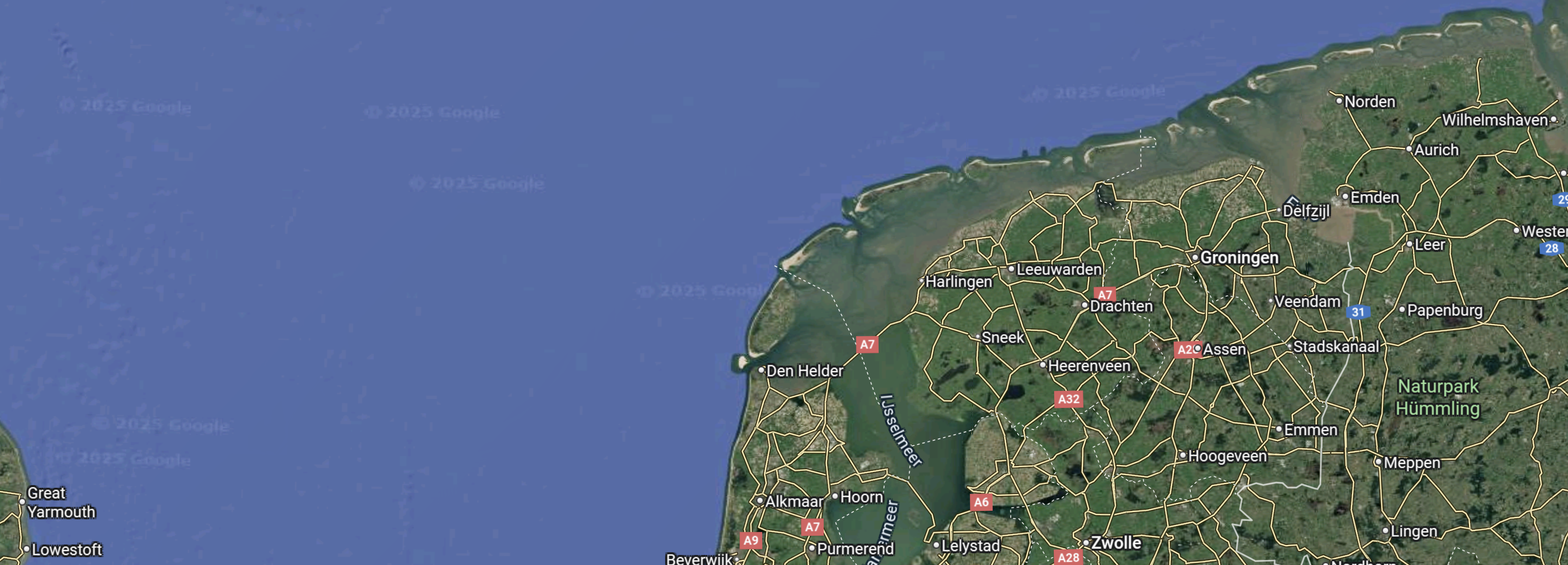
This Google Map shows the route between Great Yarmouth and Wilhelmshaven.
Note.
- The North-East corner of East Anglia with Great Yarmouth to the North of Lowestoft, is in the bottom-left corner of the map.
- Wilhelmshaven is a few miles inland in the top-right corner of the map.
- Could a coastal tanker go along the Dutch and German coasts to Wilhelmshaven?
I have no skills in boats, but would Great Yarmouth to Wilhelmshaven to take hydrogen to Germany?
RWE Are Developing Three Wind Farms To The North-East of Great Yarmouth
RWE are a large German Electricity company and the UK’s largest generator of electricity.
The company is developing three wind farms to the North-East of Great Yarmouth.
- Norfolk Boreas – 1.2 GW – 45 miles offshore
- Norfolk Vanguard West – 1.2 GW – 29 miles offshore
- Norfolk Vanguard East – 1.2 GW – 28 miles offshore
Note.
- The electricity for all three wind farms is to be brought ashore at Happisburgh South, which is about 22 miles North of Great Yarmouth.
- The original plan was to take the electricity halfway across Norfolk to the Necton substation to connect to the grid.
- The natives will not be happy about a 4.2 GW overhead line between Happisburgh and Necton.
- RWE have built offshore electrolysers before in German waters.
- Could an electrical cable or a hydrogen pipe be laid in the sea between Happisburgh South and the Port of Great Yarmouth?
- The electrolyser could either be offshore at Happisburgh or onshore in the Port of Great Yarmouth.
As I don’t suspect these three wind farms will be the last connected to the Port of Great Yarmouth, I would expect that RWE will put the electrolyser offshore at Happisburgh and connect it by a hydrogen pipeline to the Port of Great Yarmouth.
Could There Be A Connection To The Bacton Gas Terminal?
Consider.
The Bacton Gas Terminal, which feeds gas into the UK Gas Network, is only 4.2 miles up the coast from Happisburgh South.
Some climate scientists advocate blending hydrogen into the gas supply to reduce carbon emissions.
In Better Than A Kick In The Teeth – As C Would Say!, I disclosed that I now have a new hydrogen-ready boiler, so I’m not bothered, if I get changed to a hydrogen blend.
So could hydrogen from the Norfolk wind farms be fed into the grid to reduce carbon emissions?
Could The Port Of Great Yarmouth Become A Hydrogen Distribution Centre?
Thinking about it, the port could also become a distribution centre for green hydrogen.
Consider.
- Hydrogen-powered ships, tugs and workboats could be refuelled.
- Hydrogen-powered trucks could also be refuelled.
- Tanker-trucks could distribute hydrogen, to truck and bus operators, farms and factories, that need it for their transport and operations.
- I believe, that construction equipment will be increasingly hydrogen-powered.
In my life, I have lived at times in two country houses, that were heated by propane and there are about 200,000 off-grid houses in the UK, that are heated this way.
The two houses, where I lived would have been a nightmare to convert to heat pumps, but it would have been very easy to convert them to a hydrogen boiler and power it from a tank in the garden.
It should be noted, that the new boiler in my house in London is hydrogen-ready.
So the Port of Great Yarmouth could be the major centre for hydrogen distribution in Norfolk.
In the 1960s, I used to work in ICI’s hydrogen plant at Runcorn. If you ride in a hydrogen bus in England, it is likely that the hydrogen came from the same plant. Handled correctly, hydrogen is no less safe and reliable than natural gas or propane.
Centrica Really Can’t Lose At Sizewell
The title of this post, is the same as that of this article in The Times.
This is the sub-heading.
Centrica’s £1.3 billion investment in Sizewell C guarantees substantial returns, even with cost overruns.
These two-and-a-half paragraphs explain the funding.
Now we know what Ed Miliband means by his “golden age of nuclear” — golden for the companies putting their money into Sizewell C. Yes, reactor projects have a habit of blowing up private investors. But maybe not this one. It looks more like an exercise in transferring risk to consumers and the taxpayer.
Sure, nobody builds a £38 billion nuke on a Suffolk flood plain without a frisson of danger. But the energy secretary and his Treasury chums have done their bit to make things as safe as possible for the companies putting in equity alongside the government’s 44.9 per cent stake: Canada’s La Caisse with 20 per cent, British Gas-owner Centrica (15 per cent), France’s EDF (12.5 per cent) and Amber Infrastructure (7.6 per cent).
For starters, nearly all the debt for the 3.2 gigawatt plant, three-quarters funded by loans, is coming from the state-backed National Wealth Fund. It’s bunging in up to £36.6 billion, with £5 billion more guaranteed by a French export credit agency.
It looks to me that between them the British and French governments are providing £41.5 billion of loans to build the £38 billion nuke.
These are my thoughts.
Hydrogen And Sizewell C
This page on the Sizewell C web site is entitled Hydrogen And Sizewell C.
Under a heading of Hydrogen Buses, this is said.
At Sizewell C, we are exploring how we can produce and use hydrogen in several ways. We are working with Wrightbus on a pilot scheme which, if successful, could see thousands of workers transported to and from site on hydrogen double decker buses. You can read more about the pilot scheme in our press release
Firstly, it could help lower emissions during construction of the power station. Secondly, once Sizewell C is operational, we hope to use some of the heat it generates (alongside electricity) to make hydrogen more efficiently.
This would appear to be a more general statement about hydrogen and that the following is planned.
- Hydrogen-powered buses will be used to bring workers to the site. A press release on the Sizewell C web site, talks about up to 150 buses. That would probably be enough buses for all of Suffolk.
- Hydrogen-powered construction equipment will be used in the building of the power station.
- It also talks about using the excess heat from the power station to make hydrogen more efficiently. I talk about this process in Westinghouse And Bloom Energy To Team Up For Pink Hydrogen.
This is a substantial investment in hydrogen.
Centrica And Electricity From Sizewell C
The article in The Times, also says this.
Even so, there’s a fair bit of protection for the likes of Centrica, which has also agreed a 20-year offtake deal for its share of Sizewell’s electricity. The price of that is not yet known.
Nothing is said in the article about the size of Centrica’s electricity offtake.
- If they get 15 % of Sizewell C, that would by 480 MW.
- If they get 15 % of Sizewell B + C, that would by 660 MW.
If they use their share to generate hydrogen, Suffolk would have a massive hydrogen hub.
To power the buses and construction of Sizewell C, Sizewell B could be used to provide electricity to create the hydrogen.
How Would The Hydrogen Be Produced?
Centrica, along with other companies, who include Hyundai and Kia, are backers of a company in Hull called HiiROC, who use a process called Thermal Plasma Electrolysis to generate hydrogen.
On their web site, they have this sub-heading.
A Transformational New Process For Affordable Clean Hydrogen
The web site also describes the process as scalable from small modular units up to industrial scale. It also says this about the costs of the system: As cheap as SMR without needing CCUS; a fraction of the energy/cost of water electrolysis.
If HiiROC have achieved their objective of scalability, then Centrica could grow their electrolyser to meet demand.
How Would The Hydrogen Be Distributed?
Consider.
- Currently, the Sizewell site has both road and rail access.
- I can still see in my mind from the 1960s, ICI’s specialist articulated Foden trucks lined up in the yard at Runcorn, taking on their cargoes of hydrogen for delivery all over the country.
- As that factory is still producing hydrogen and I can’t remember any accidents in the last sixty years, I am fairly sure that a range of suitable hydrogen trucks could be developed to deliver hydrogen by road.
- The road network to the Siewell site is being updated to ensure smooth delivery of workers and materials.
- The rail access to the Sizewell site is also being improved, for the delivery of bulk materials.
I believe there will be no problems delivering hydrogen from the Sizewell site.
I also believe that there could be scope for a special-purpose self-propelled hydrogen tanker train, which could both distribute and supply the hydrogen to the vehicles, locomotives and equipment that will be using it.
Where Will The Hydrogen Be Used?
I have lived a large part of my life in Suffolk and know the county well.
In my childhood, there was quite a lot of heavy industry, but now that has all gone and employment is based on agriculture, the Port of Felixstowe and service industries.
I can see hydrogen being used in the following industries.
Transport
Buses and heavy trucks would be powered by hydrogen.
The ports in the East of England support a large number of heavy trucks.
Large Construction Projects
Sizewell C is not the only large construction project in the East of England, that is aiming to use low-carbon construction involving hydrogen. In Gallagher Group Host Hydrogen Fuel Trial At Hermitage Quarry, I talked about a hydrogen fuel trial for the Lower Thames Crossing, that involved JCB and Ryse Hydrogen.
Hydrogen for the Lower Thames Crossing could be delivered from Sizewell by truck, down the A12.
Rail
We may not ever see hydrogen-powered passenger trains in this country, but I do believe that we could see hydrogen-powered freight locomotives.
Consider.
- The latest electro-diesel Class 99 locomotives from Stadler have a Cummins diesel engine.
- The diesel engine is used, when there is no electrification.
- Cummins have developed the technology, that allows them to convert their latest diesel engines to hydrogen or natural gas power, by changing the cylinder head and the fuel system.
- Access to the Port of Felixstowe and London Gateway needs a locomotive with a self-powered capability for the last few miles of the route.
A Class 99 locomotive converted to hydrogen would be able to run with out emitting any carbon dioxide from Felixstowe or London Gateway to Glasgow or Edinburgh.
Ports
Ports have three main uses for hydrogen.
- To power ground-handing equipment, to create a pollution-free atmosphere for port workers.
- To fuel ships of all sizes from the humblest work-boat to the largest container ships.
- There may need to be fuel for hydrogen-powered rail locomotives in the future.
There are seven ports with excellent road and/or rail connections to the Sizewell site; Felixstowe, Great Yarmouth, Harwich, Ipswich, London Gateway, Lowestoft and Tilbury.
The proposed Freeport East is also developing their own green hydrogen hub, which is described on this page on the Freeport East web site.
Airports
Airports have two main uses for hydrogen.
- To power ground-handing equipment, to create a pollution-free atmosphere for airport workers.
- In the future, there is likely to be hydrogen-powered aircraft.
There are three airports with excellent road and/or rail connections to the Sizewell site; Norwich, Southend and Stansted.
Agriculture And The Rural Economy
Agriculture and the rural economy would be difficult to decarbonise.
Consider.
- Currently, most farms would use diesel power for tractors and agricultural equipment, which is delivered by truck.
- Many rural properties are heated by propane or fuel oil, which is delivered by truck.
- Some high-energy rural businesses like blacksmiths rely on propane, which is delivered by truck.
- Electrification could be possible for some applications, but ploughing the heavy land of Suffolk, with the added weight of a battery on the tractor, would probably be a mathematical impossibility.
- JCB are developing hydrogen-powered construction equipment and already make tractors.
- Hydrogen could be delivered by truck to farms and rural properties.
- Many boilers can be converted from propoane to run on hydrogen.
I feel, that hydrogen could be the ideal fuel to decarbonise agriculture and the rural economy.
I cover this application in detail in Developing A Rural Hydrogen Network.
Exports
Consider.
- Sizewell B and Sizewell C nuclear powerstations have a combined output of 4.4 GW.
- A rough calculation shows that there is a total of 7.2 GW of wind farms planned off the Suffolk coast.
- The East Anglian Array wind farm alone is said in Wikipedia to be planned to expand to 7.2 GW.
- The Sizewell site has a high capacity connection to the National Grid.
Nuclear plus wind should keep the lights on in the East of England.
Any excess electricity could be converted into hydrogen.
This Google Map shows the location of Sizewell B in relation to Belgium, Germany and The Netherlands.
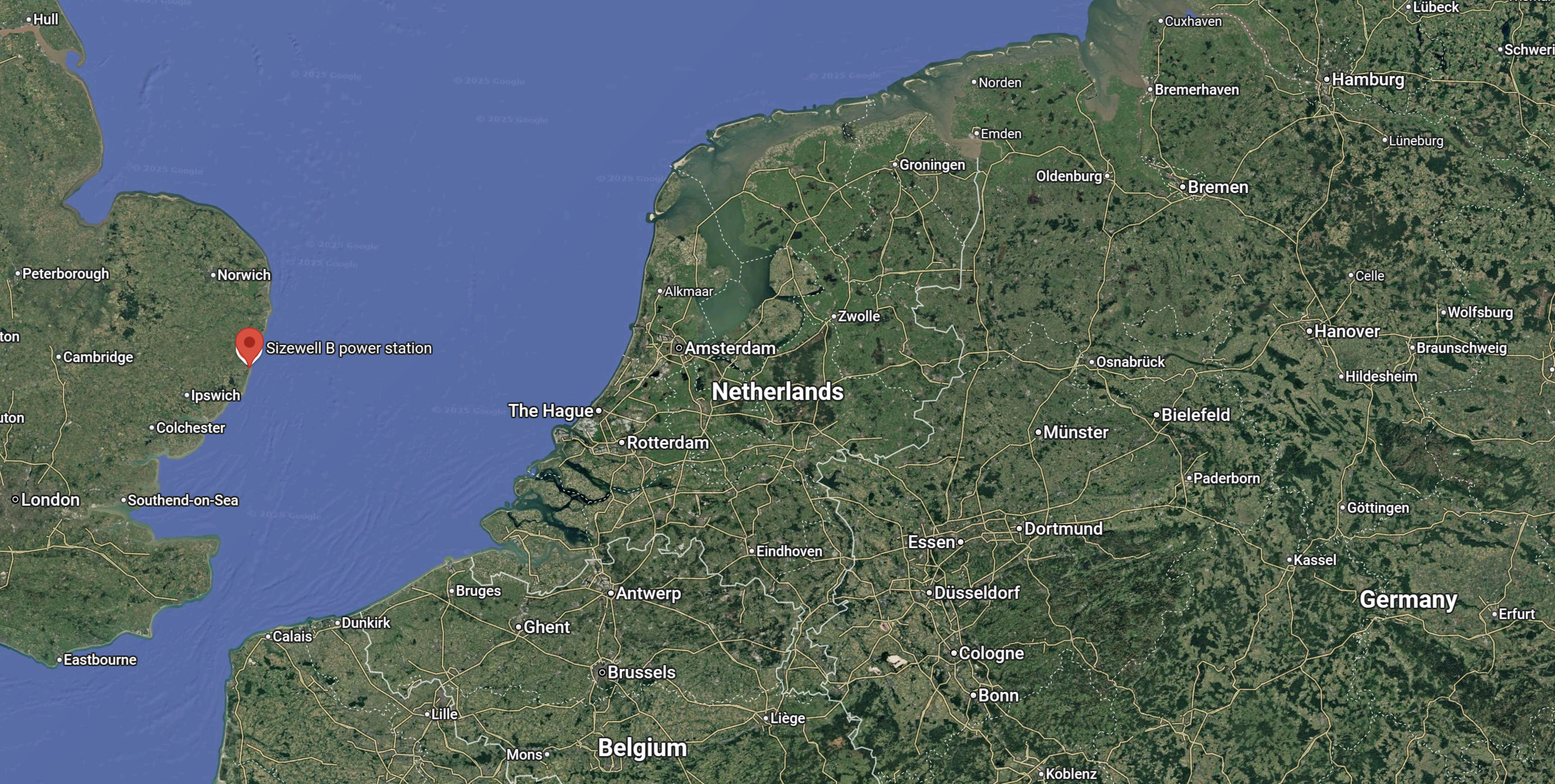
The Sizewell site is indicated by the red arrow.
The offshore oil and gas industry has used technology like single buoy moorings and coastal tankers to collect offshore natural gas for decades.
I don’t see why coastal hydrogen tankers couldn’t export excess hydrogen to places around the North Sea, who need the fuel.
It should be born in mind, that Centrica have a good reputation in doing natural gas trading. This expertise would surely be useful in hydrogen trading.
Conclusion
I believe that a hydrogen hub developed at Sizewell makes sense and I also believe that Centrica have the skills and technology to make it work.
What Is The Collective Noun For Cement Mixer Trucks?
I took these pictures on Eldon Street and Moorgate this morning.










Note.
- There was obviously a big pour going on in the rebuilding of Broadgate.
- I suspect those outside the hotel in the street restaurant, we’re too amused by the cabaret.
- Cemex were providing the concrete.
Perhaps in view of the location, the collective noun is a pollution of cement mixer trucks.
In Cummins Agrees To Integrate Its Hydrogen ICE Technology Into Terex® Advance Trucks, I describe the latest design of cement mixer trucks from the United States.
This is the European-sized member of the range.
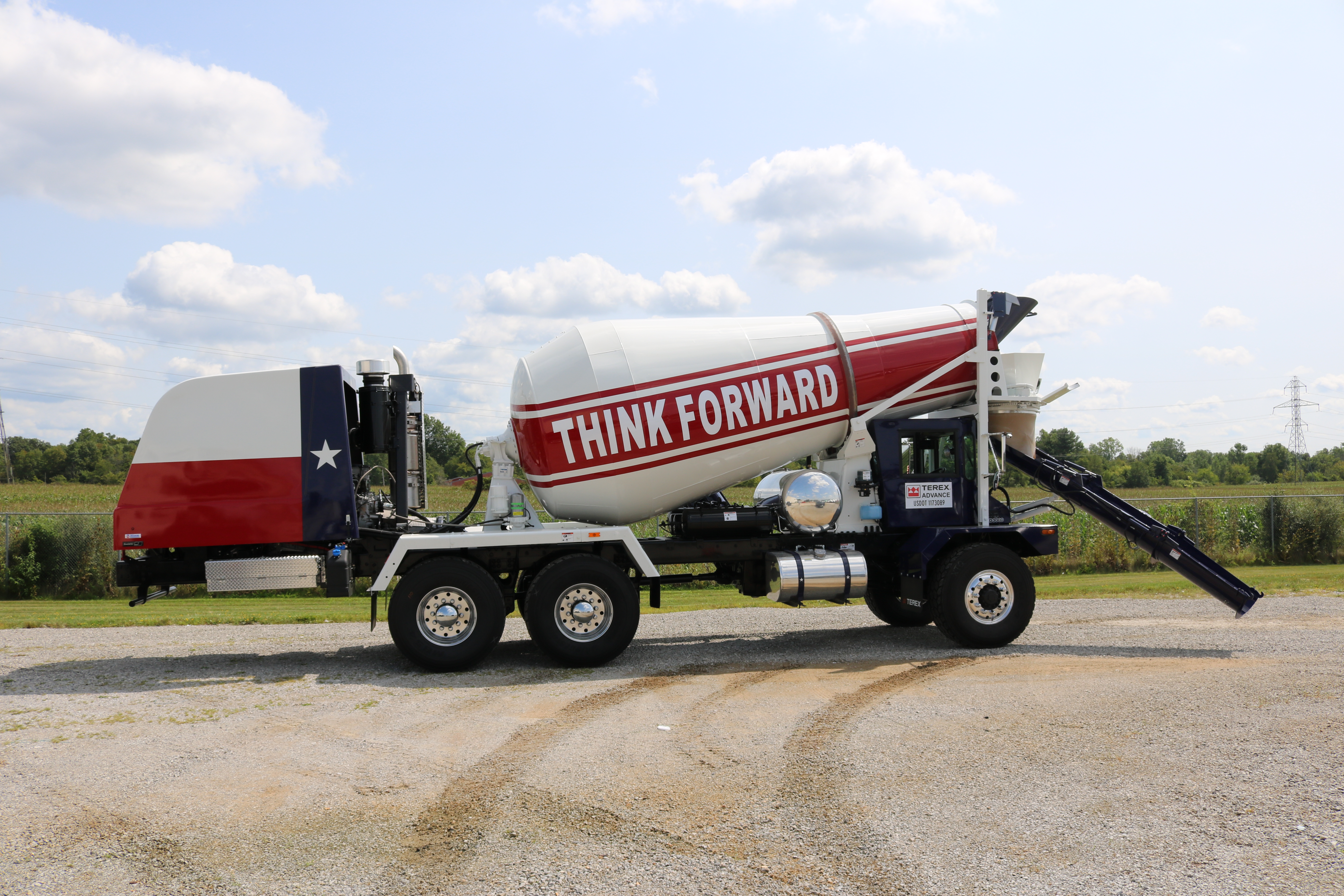
Note.
- Front is to the right.
- The engine is in the pod at the other end.
- The engine can be one of Cummins’s hydrogen internal combustion engines.
These trucks would be much more city-friendly.
Hyundai Unveils Upgraded Xcient Hydrogen Fuel Cell Truck
The title of this post, is the same as that of this article on Automotive Powertrain International.
This is the sub-heading.
Hyundai Motor Company has unveiled the upgraded Xcient fuel cell class-8 heavy-duty truck, which features advanced hydrogen technologies and advanced driver assistance systems (ADAS) tailored for the North American market.
The article is worth a full read, as it shows how the largest American trucks, can be replaced with zero-carbon hydrogen fuel cell trucks.
This is the Hyundai Xcient truck web site.
Cummins Unveils Integrated Powertrain
The title of this post, is the same as that of this article on Big Rigs.
These four paragraphs, describe what Cummins can offer to the world’s builders of large trucks.
In recent years, Cummins has gone through a remarkable transformation, becoming a genuine powertrain supplier – from engine to transmission to axles and brakes.
Now for the first time, Cummins will showcase its new integrated powertrain at the upcoming Brisbane Truck Show next month.
This world-first display will feature the integration of a Cummins X15 engine, Eaton Cummins 18-speed Endurant speed transmission, and Meritor driveline and axles.
Cummins’ acquisition of Meritor in 2022 was a critical step for the company to be able to roll out a completely integrated powertrain.
Note that the X15 engine has a hydrogen version numbered as X15H.
Eastern Green Link 2 Moves Up A Gear Using Low Carbon Fuel For Material Handling Trucks
The title of this post is the same, as that of this press release from National Grid.
These three bullet points act as sub-headings.
- Eastern Green Link 2 (EGL2), a high voltage direct current (HVDC) 436km subsea transmission cable connecting Scotland and England, is being delivered as a joint venture by National Grid Electricity Transmission and SSEN Transmission.
- Project sustainability efforts are accelerating by adopting Hydrogenated Vegetable Oil (HVO) fuelled trucks to move materials in Yorkshire.
- The introduction of HVO fuel will deliver up to 90% reduction in direct CO2 emissions.
The use of HVO fuel is good and the carbon dioxide emission savings are to be welcomed, but there is only so much of this HVO fuel available.
If hydrogen-fueled trucks were available, then this would deliver up to 100% reduction in direct CO2 emissions.
This paragraph from the press release talks about where the HVO fuel will be used.
HVO, a low-carbon biofuel made from waste vegetable oils, will be used at the Wren Hall converter station site in North Yorkshire, where 20-tonne construction trucks will transport approximately 370,000 tonnes of quarry stone from a quarry 27 miles away. This switch from conventional diesel to HVO is expected to deliver up to a 90% reduction in direct CO2 emissions and an 80% reduction in other harmful emissions such as particulate matter.
This Google Map shows the location of Wren Hall with respect to Drax power station.
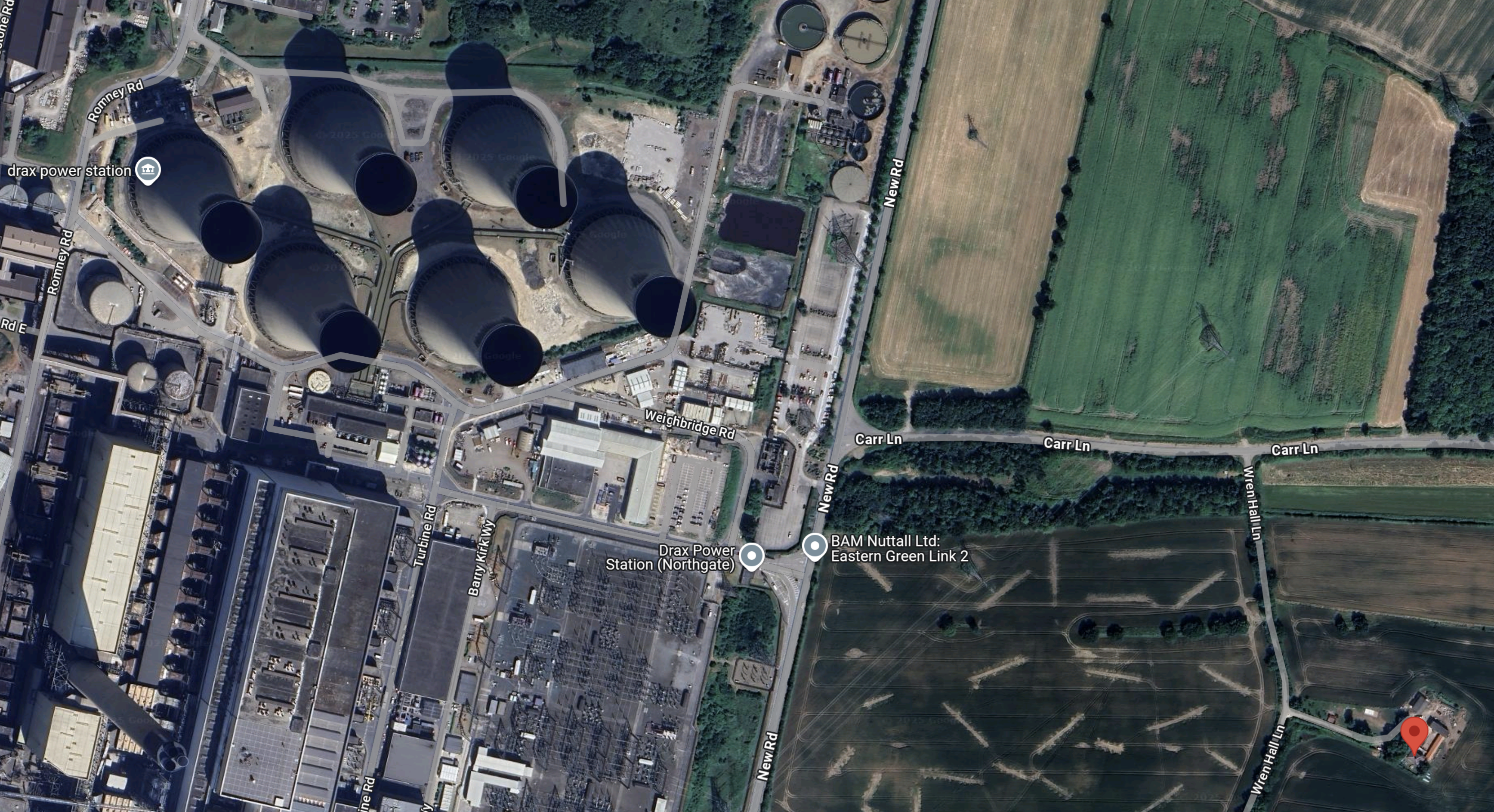
Note.
- The six large cooling towers of the Drax power station are in the North-West corner of the map.
- Google Maps indicate, where they think Wren Hall is, with a red arrow.The lane running North-South to the West of the red arrow is called Wren Hall Lane.
- There is a legend saying BAM Nuttall Ltd Eastern Green Link 2 on the opposite side of the square of lanes to the red arrow.
Click the map to show it to a larger scale.
It looks to me, that if hydrogen could be provided on the Drax site, then the 370,000 tonnes of quarry stone from a quarry 27 miles away could be brought to the site by hydrogen-powered 20-tonne construction trucks.
So how could hydrogen be provided on the Drax site?
- Drax is a 2.6 GW biomass power station, so I’m sure that some electricity could be used to generate hydrogen.
- Drax is a rail-connected site, so hydrogen could be brought in by rail.
- Depending on the amount of hydrogen needed, hydrogen could surely be brought in by road.
I feel that if hydrogen-powered 20-tonne construction trucks were available, this transfer of quarry stone could be performed carbon-free.
Conclusion
This project illustrates a problem with large infrastructure projects all over the UK.
Moving the large amounts of stone, concrete, sand and rubble into and out of construction sites generates a lot of carbon dioxide and pollution from the 20-tonne trucks employed.
If I were to be given Ed Miliband’s job of Secretary of State for Energy Security and Net Zero, one of my first actions, would be to say that all new 20 tonne construction and cement trucks would have to be zero carbon.
I suspect, that zero-carbon with trucks this size, will mean hydrogen, as the weight of the battery would destroy the mathematics of the truck.
This would obviously reduce carbon emissions, but more importantly, what would it do for the health of those working on large construction sites?
In MAN Expands Its Zero-Emission Portfolio, I show MAN’s heavy hydrogen trucks.
This is an articulated heavy hydrogen truck.
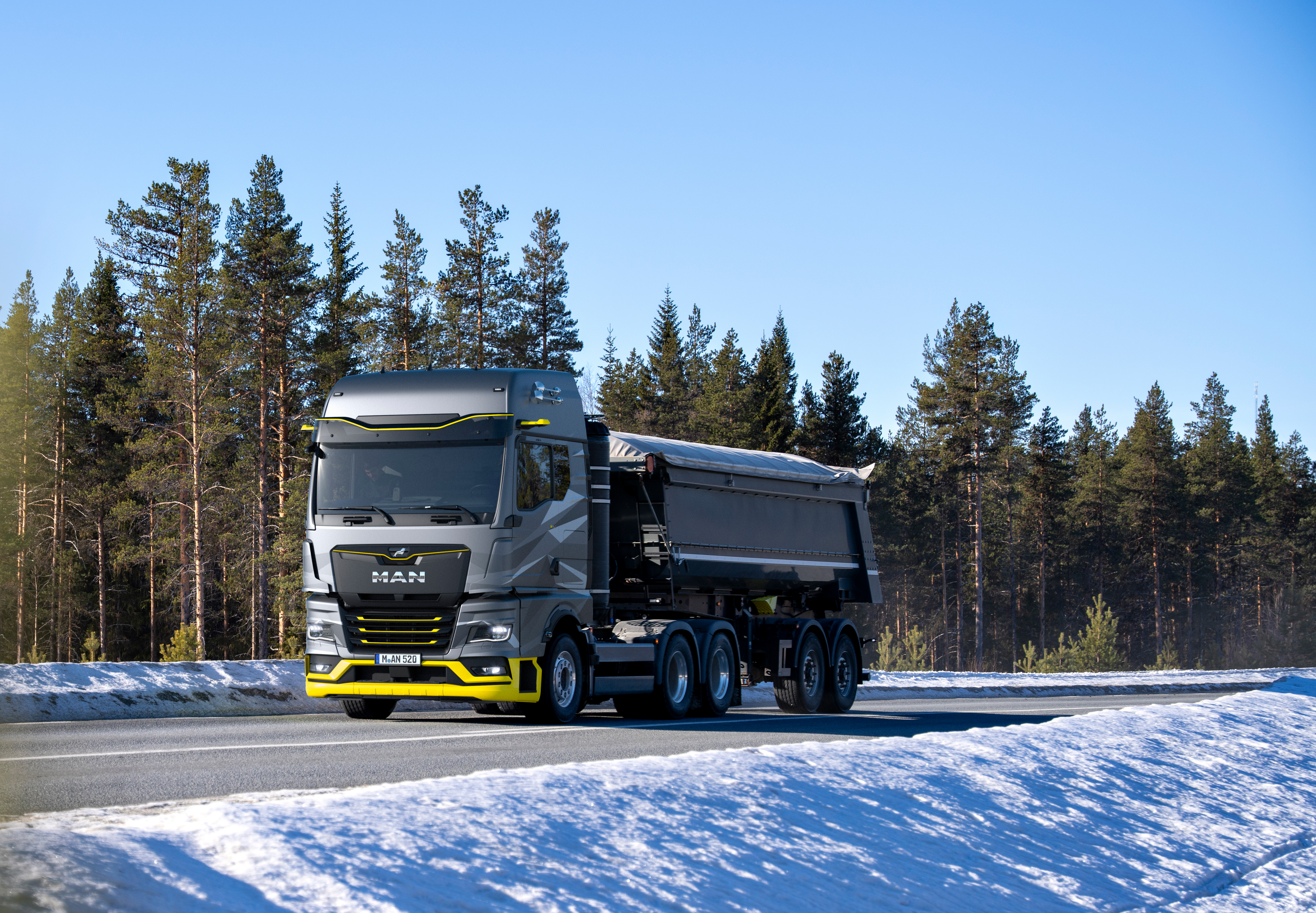
I’m sure that MAN could build a hydrogen-powered 20-tonne construction truck.
In Cummins Agrees To Integrate Its Hydrogen ICE Technology Into Terex® Advance Trucks, I talk about the solution to the cement truck problem.
This is a side view of the top-of-the-range monster.
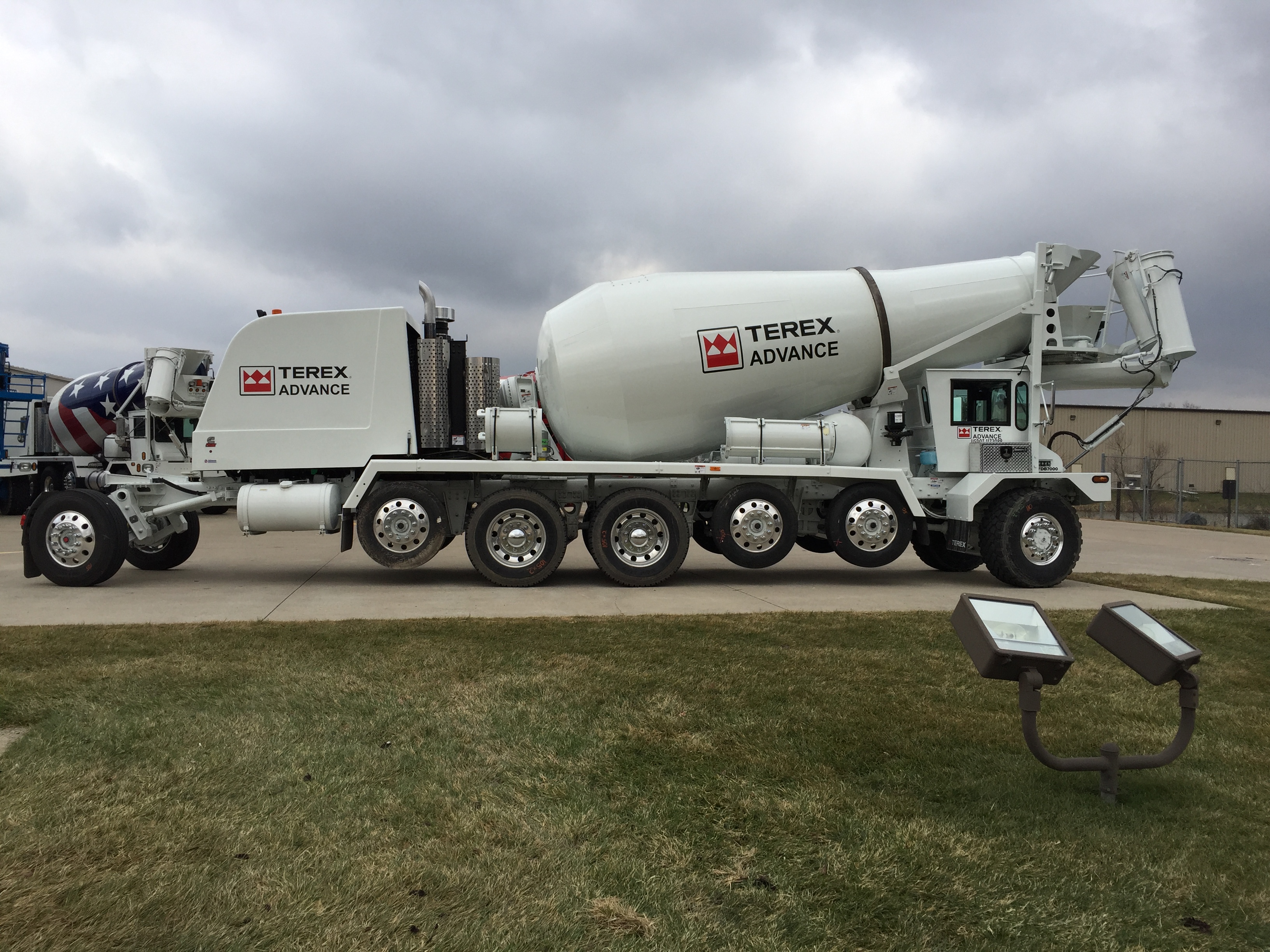
Note.
- Front is to the right.
- I suspect the driver doesn’t have to get out of the cab to discharge the concrete.
- The engine is at the rear with vertical exhausts.
- All axles are driven.
You’d certainly notice one of these if they were to be used in the City of London.
And this is the baby of the range.
Three axles is normal for the UK. so I wonder if this machine will ever make it across the pond.
This last paragraph in the original article describes the X15H hydrogen internal combustion engine.
The X15H was showcased at the Advanced Clean Transportation (ACT) Expo in May (2023), along with its hydrogen ICE-powered concept truck. The X15H features a 700-bar pressure 80kg capacity hydrogen storage system and a range of more than 500 miles, with up to 500 horsepower.
Could one of these trucks really deliver ready-mix concrete from London to Manchester and return?
The trucks would appear to be available, so let’s get a few over and try them out.
Incidentally, if someone had told me ten years ago, there would be rear-wheel drive trucks like Volkswagen Beetles, I’d have said they were wrong in no uncertain terms.
The Wren Hall substation would appear to be an ideal trial project for hydrogen-powered construction trucks and cement trucks.
A New Metier
This article in The Times today is entitled Too many Sir Humpreys are stopping London from taking a punt.
The article is about one of Britain’s most successful private investors ; John Gunn.
The article also introduces a new company to me, with this paragraph.
His latest enthusiasm is for Metier, a company that aims to leapfrog electric vehicle power to convert buses and heavy trucks to hydrogen fuel cells. Several big firms such as Volvo are making new hydrogen-powered vehicles, but Gunn and his partners reckon there is more money in reconfiguring existing ones.
It was Metier, that caught my eye.
In the 1970s, with three others, I started a company called Metier Management Systems, which developed a project management system called Artemis.
We were very successful, in that we sold the company for a nine figure sum and won two Queen’s Awards for Exports.
Since then, there have been several successful companies named Artemis, but we haven’t seen a Metier.
Until now that is and I hope that the hydrogen vehicle company is as successful worldwide as we were.
Strangely, my first job on leaving Liverpool University was in a hydrogen factory and I am a great believer in using the gas as a source of energy.
Metier have a web site, if you want to find out more about the company.
 The Anonymous Widower