New Direct Rail Link To Seaham: How This Picturesque Seaside Town Will Connect To London Starting December 2025
The title of this post is the same as that of this article on Travel and Tour World.
This is the first paragraph.
Starting December 2025, the picturesque seaside town of Seaham in County Durham will become even more accessible with a new direct rail link to London. This marks an exciting chapter in the town’s history, as Seaham’s first direct rail service will make it easier for tourists and business travelers alike to visit this charming coastal destination. Known for its stunning clifftop vistas, rocky beaches, and no fewer than 10 fish and chip shops, Seaham is already a popular spot for day-trippers, and this new rail service will only add to its appeal.
This section in the Wikipedia entry for Seaham station, gives the current rail services from the town.
As of the May 2021 timetable change, the station is served by an hourly service between Newcastle and Middlesbrough. Most trains continue to Hexham (or Carlisle on Sunday) and Nunthorpe. Two trains per day (three on Sunday) continue to Whitby. All services are operated by Northern Trains.
With Grand Central trains, serving Seaham four times per day in each direction, Seaham could be a very convenient place to explore the North-East of England.
If the timing of the services is right, Seaham could also become popular with visiting football fans at Middlesbrough, Newcastle and Sunderland, wanting to combine an away match with a weekend away.
This Google Map shows the town.
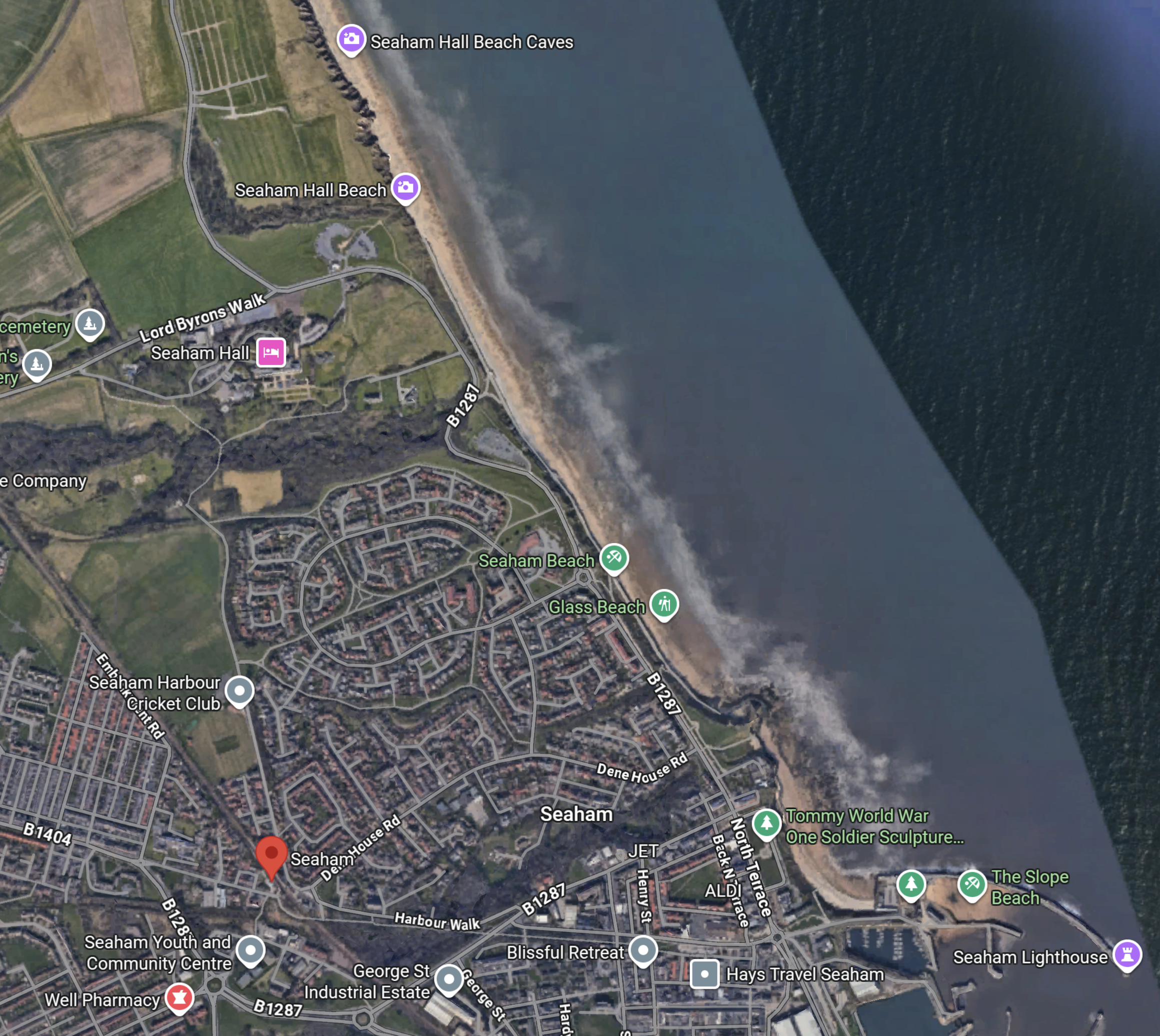
Note.
- The station is indicated by the red arrow.
- Beaches stretch along the town.
- There is a port with a lighthouse.
- There is even a 5-star hotel; Seaham Hall on Lord Byron’s Walk. The hotel has 21 suites and a spa.
- I can certainly see the hotel having a zero-carbon mini-bus meeting all eight Grand Central Trains.
I don’t think Grand Central Trains will be short of passengers on this route. Especially as from 2028, they will serving the town with new Hitachi battery-electric trains.
Conclusion
How many other towns in the UK could benefit from a four trains per day service to London?
The Miracle Of Newcastle
This article in The Times is entitled ‘Three-parent’ babies are born in UK via pioneering IVF treatment.
This is the sub-heading.
Four girls and four boys — including one set of identical twins — were born to seven women at a high risk of transmitting mutations, according to the research
These are the first two paragraphs.
Eight healthy “three-parent” babies have been born via a “pioneering” IVF technique, British scientists have said.
The world-first research reported that four girls and four boys — including one set of identical twins — were born to seven women at a high risk of transmitting mutations causing mitochondrial disease. One further woman is pregnant.
This could give the females of my family hope. of successfully raising a child.
When my wife and our youngest son died of aggressive cancers in the early years of this century, Addenbrooke’s advised that I had my family professionally traced, in case there was an aggressive gene tic trait somewhere.
I am coeliac and we felt that came from my paternal Jewish great-great-great grandfather from Konigsberg, who probably arrived in the UK around 1800.
Sadly, we found, that no female born into this Jewish male line had ever successfully produced a child. Even my sister, who was born in 1950, didn’t have a child.
My late wife and myself had three sons and they have produced two grandsons and a granddaughter.
The granddaughter was born with a congenital hernia of the diaphragm and I’ve since found out, was given little chance of survival by the Royal London Hospital.
But due to heroic surgery at a few days old, by the incomparable Dr. Vanessa Wright and her team, she is now in her twenties and holding down a full time job.
I shall be following this Miracle of Newcastle with interest, as I believe it could be part of the saviour for the female of my family and those that will surely follow her in the future.
Northumberland Rail Campaigners Say East Coast Main Line Timetable ‘Bad For Our Region’
The title of this post, is the same as that of this article on MSN.
These three paragraphs explain the campaigners worries and point out some of the expected benefits.
Northumberland rail campaigners remain critical of the new East Coast Main Line timetable which is to be implemented from the end of this year.
LNER revealed the new industry-wide timetable, which has been in the works since 2021, had been given the green light by the Department for Transport on Wednesday, December 18. The timetable sees LNER services increased from two to three trains per hour between Newcastle and London King’s Cross.
It also shaves journey times between the Scottish and English capitals, with predictions that faster journeys could see rail’s share of the travel market between the cities rise to 60%. However, shorter journey times mean that there will be fewer stops at smaller stations, with Northumberland stations Berwick, Alnmouth and Morpeth all losing LNER services.
In My First Trip On The Northumberland Line – 18th December 2024, I made this observation about the long platforms on the Northumberland Line.
I am fairly sure that some of the platforms have been sized to take a five-car Hitachi Class 80x train, which are only 130 metres long.
This must enable the ability to use the Northumberland Line as a diversion for the East Coast Main Line.
Some services could perhaps stop at Blyth for the large factories and/or Northumberland Park for the Metro.
In Scotland To Get New Intercity Fleet, I laid down my views on ScotRail’s new Inter7City fleet.
- Could a few extra new trains for Scotland’s Intercity fleet be used to provide a long-distance service through the Northumberland Line?
- It would call at all the smaller stations between Newcastle and Edninburgh.
- It would take the Northumberland Line on occasions.
- It could stop at Blyth for the large factories.
- It could stop at Northumberland Park for the Metro.
- They would be 125 mph trains, so they kept out of the way of the expresses.
- Digital signalling would ensure safe separation.
A friend of mine in the Borders told me, that Border Scots were looking for well-paid employment at the Britishvolt factory. Britishvolt may have gone, but I’m sure a company will build a factory near Blyth, that needs large amounts of elecxtricity and workers.
Lumo Launches A 0.5% Beer For The New Year In Partnership With A Newcastle Brewing Company
The title of this post, is the same as that of this article on the Cumberland Gazette.
This is the sub-heading.
Lumo has launches a locally-sourced, low-alcohol beer in partnership with Newcastle’s Donzoko Brewing Company to be available on services between Edinburgh and London.
These two paragraphs add a bit more detail.
Big Nothing 0.5% will be available in time for the new year, aimed towards those taking part in giving up alcohol for Dry January. The addition is part of Lumo’s commitment to providing locally sourced onboard options as part of the catering offer on its services on the East Coast route.
The release of the drink comes after the Rail Safety and Standards Board (RSSB) reported a 45% increase in alcohol-related incidents during the festive period last year.
I shall be trying some of this beer next time I travel on Lumo.
Is Internet Security Sometimes Over Secure?
On Friday the 13th December, I received a Purchase Confirmation from eBay by e-mail.
As I get lots of spam e-mails, I decided it was just the usual spam and ignored it.
But then I got thinking.
- I have never bought anything on eBay.
- I sold a lot of surplus things, when I last moved house on eBay and was very satisfied with their service.
- The purchase was for a watch and I don’t wear one.
- It was also an Apple watch and as the company has given me so much grief on their non-standard co9mputer and file formats , when I was a programmer, I never buy or use any Apple products.
- It was also for £650, which is never the sort of sum, I ever would pay for a watch.
So I did all the safety checks on my bank accounts and credit cards and found everything was as it should be.
On the Purchase Confirmation from eBay is a 0204 phone number offering help . So I rang it on the Saturday.
My call was answered by a male operator with a slight accent, but speaking good English.
- After I gave him the Order ID, he said that eBay had closed my account because of inactivity.
- I have since found an e-mail from eBay saying they were closing my account and I remember answering it, but as I felt I didn’t need the account, I took no action.
- The operator, then said that someone had reactivated the account and told me that this needed documents like Council Tax to prove I lived at the house.
- He then asked if anybody lived with me. I told him no, as I’m a widower in perhaps a rather curt manner, as I don’t like being accused of a crime.
- I then realised that this was an inside job, from my experience of working with police forces, banks and consultants in stopping crime.
- I told him my thoughts in a quiet way.
He then said he’d close the account and the conversation ended.
On the Monday, I decided I wanted to go to see the new Northumberland Line on the Wednesday.
- So I decided to book online using Lumo to Newcastle.
- Before entering your bank/credit card number, Lumo ask for your name and address.
- I didn’t get past the name and address entry, probably because, I suspect eBay had put my name and address on a black-list!
In the end, I bought my tickets at the King’s Cross station ticket office using a credit card. At least they were the same as the on-line price.
It was a good trip and I wrote about it in London And Newcastle In A Day By Lumo and My First Trip On The Northumberland Line – 18th December 2024.
Conclusion
I have phoned Lumo, most of my banks and credit cards, Action Fraud, the BBC, the police and I still can’t find out how I get myself off this accursed black-list.
The only good thing, is that I have not had ay money taken out of my bank account.
I have also reported the fraud to the Metropolitan Police and got a crime number for it.
Thoughts On Tram-Trains In Manchester
The State Of Public Transport In the North
Over the last few years plans have been put in place to improv the state of the public transport of the major cities of the North and progress has started to happen, with new trains, trams and light rail systems being planned and in some cases coming into service.
Birmingham, Coventry And The West Midlands
A lot of investment has been made and it is continuing.
- Birmingham New Street station has been rebuilt.
- Coventry and Wolverhampton stations have been remodelled.
- Two new stations were built in Birmingham for the Commonwealth Games.
- A large number of new Class 730 local trains are being brought into service.
- Birmingham stations are being updated for High Speed Two.
- The West Midland Metro has been extended at both ends and a second line is under construction.
Transport in the wider West Midlands has been greatly improved.
Derby, Nottingham, Sheffield And The East Midlands
The major investment in this area is the electrification of the Midland Main Line and the provision of new Hitachi electric Class 810 trains.
In addition the following has been done.
- The Hope Valley line between Manchester and Sheffield has been improved.
- Derby station has been improved.
- The local trains have been refurbished.
- The power supply has been improved.
- An application for an Open Access service to Sheffield has been made.
The improvements in the East Midlands, will not be on the same scale as in the West Midlands, but they will make a difference.
Leeds, Bradford And West Yorkshire
For decades, West Yorkshire and especially Bradford has lagged behind the rest of the North.
But at least things are stirring.
- Plans have been laid to create a through station in Bradford.
- Leeds station has been refurbished.
- An extra platform is being added at Bradford Forster Square station.
- The TransPennine Upgrade is underway to electrify between Huddersfield and York.
- Hitachi have developed a battery-electric high speed train for the TransPennine route.
- Bradford is installing a hydrogen electrolyser, so that the city can have hydrogen buses to cope with the hills.
- Plans are now being developed to create a metro for Leeds and Bradford.
West Yorkshire is closing the gap to the rest of the North.
Liverpool And Merseyside
Again, a lot of investment has been made.
- The approaches to Liverpool Lime Street station have finally been sorted, with more tracks and new signalling.
- Liverpool Lime Street station has been improved and is now one of the finest stations in Europe.
- Trains are now approaching High Speed Two times between Crewe and Liverpool.
- More services between London and Liverpool can now be planned, with the arrival of new Class 807 trains.
- Some new stations have been built and more are planned.
- A large number of new Class 777 local trains are being brought into service.
Transport in the wider Merseyside has been greatly improved.
Newcastle, Tyneside And Northumberland
The area is getting investment, but not as much in proportion as others.
- The Metro trains are being replaced and the Metro itself, is getting a major update.
- The East Coast Main Line has received improvements to power supplies, signalling and some bottlenecks.
- The Northumberland Line to Ashington is being brought back into operation.
It’s a start, but if the Northumberland Line is a success, I can see a call for more line re openings.
Manchester And Greater Manchester
If you look at each of the areas, they generally have one or more large projects.
- Birmingham, Coventry And The West Midlands – Birmingham New Street station, Class 730 Trains, High Speed Two, West Midland Metro
- Derby, Nottingham, Sheffield And The East Midlands – Midland Main Line, Class 810 Trains, Hope Valley Line, Open Access To Sheffield
- Leeds, Bradford And West Yorkshire – Leeds station, Bradford improvements, TransPennine Upgrade, Battery-Ekectric Trains, Leeds Metro
- Liverpool And Merseyside – Liverpool Lime Street Improvements, Class 807 Trains, Class 777 Trains
- Newcastle, Tyneside And Northumberland – Metro upgrade with New Trains, Northumberland Line
So what improvements are in the pipeline for Greater Manchester?
This Wikipedia entry is entitled Proposed Developments Of Manchester Metrolink.
The proposed developments include in the Wikipedia order.
- New Metrolink Stop: Stop to serve new housing development proposed at Elton Reservoir on the Bury Line.
- New Metrolink Stop: Stop to serve new housing development proposed at Sandhills on the Bury Line.
- New Metrolink Stop: Stop to serve new housing development proposed at Cop Road on the Oldham and Rochdale Line.
- Airport Line extension to Terminal 2: A short extension of the Airport Line from the current Manchester Airport station to the site of the expanded Terminal 2.
- Airport Line extension to Davenport Green: An extension of the Airport Line from Roundthorn to the site of the proposed Manchester Airport High Speed station on the HS2 high speed network.
- Oldham–Heywood via Rochdale tram-train pathfinder: A tram-train service utilising the heavy rail Calder Valley line to connect Oldham to Heywood through Rochdale railway station.
- Manchester Airport–Wilmslow via Styal tram-train pathfinder: A tram-train service operating on the southern section of the heavy rail Styal Line between Manchester Airport and Wilmslow in Cheshire.
- South Manchester–Hale via Altrincham tram-train pathfinder: An extension of Metrolink’s Altrincham Line using tram-train to reach Hale on the heavy rail Mid-Cheshire line.
- Improved Metrolink frequency between Piccadilly and Victoria stations: Increasing capacity to provide a direct service from Rochdale and Oldham to Manchester Piccadilly.
- Interventions to improve Metrolink capacity and reliability: Includes improvements to turnback facilities and double-tracking currently single-track sections.
- Further interventions to improve Metrolink capacity and reliability: Includes longer vehicles, a third depot and double-tracking currently single-track sections.
- Manchester–Stalybridge extension: An extension of the East Manchester Line from Ashton-under-Lyne to Stalybridge.
- Manchester–Middleton extension: A proposed spur from the Bury Line connecting to the town of Middleton.
- Oldham–Middleton extension: A spur from Oldham to Middleton.
- MediaCityUK–Salford Crescent: A line connecting the MediaCityUK tram stop to the Salford Crescent railway station interchange. Further new Metrolink.
- Connections between Salford Crescent, Inner Salford and the City Centre: Extension of the MediaCityUK–Salford Crescent line into the regional centre.
- Completion of the Airport Line (Wythenshawe Loop): Completion of the Wythenshawe Loop by connecting the Metrolink lines between the Davenport Green and Manchester Airport Terminal 2 extensions.
- Port Salford/Salford Stadium extension: Extending the Trafford Park Line from the Trafford Centre to a proposed container terminal at Port Salford.
- Glossop tram-train: A tram-train service utilising the Glossop line between Manchester and Glossop in Derbyshire.
- Marple tram-train: A tram-train service utilising the Hope Valley line branches north of Marple towards Manchester.
- Manchester–Wigan via Atherton tram-train: A tram-train service utilising the Atherton section of the Manchester–Southport line between Manchester and Wigan.
- Manchester–Warrington tram-train: A tram-train service utilising the southern route of the Liverpool–Manchester lines between Manchester and Warrington.
- Stockport–Hazel Grove tram-train: A tram-train service between Stockport and the suburb of Hazel Grove.
- Stockport–Manchester Airport tram-train: A tram-train service between Stockport and Manchester Airport.
- Rochdale–Bury via Heywood tram-train: Extension of the Oldham–Heywood tram-train pathfinder from Heywood to Bury.
- Manchester Airport–Mid Cheshire tram-train: A tram-train service from Manchester Airport using a proposed Western Link rail line to the Mid-Cheshire line.
- Stockport–Ashton via Denton and Reddish tram-train: A tram-train service utilising the Stockport–Stalybridge line from Stockport to Ashton.
- Cornbrook–Manchester Airport via Timperley tram-train: A tram-train service from Cornbrook using the Altrincham line to Timperley, the Mid Cheshire line to Baguley, then the Wythenshawe Loop to Manchester Airport.
- Regional centre metro tunnel: Providing capacity for more services on the network.
- Oldham–Greenfield via Grotton extension: A Metrolink spur from Oldham town centre to Greenfield railway station on the Huddersfield line.
- Oldham–Royton extension: A Metrolink spur from the Oldham and Rochdale line to the town of Royton.
Note.
- The number of times that tram-trains are mentioned.
- But with its numerous rail and tram lines, Greater Manchester is ideally suited for conversion to tram-trains.
- There are three pathfinder routes for tram-trains, which will be converted first to prove the technology.
These are my detailed thoughts on tram-trains in Greater Manchester,
All Routes Could Be Run By Identical Tram-Trains
If this can be arranged, it is surely preferable from the operator, staff and passengers point-of-view.
Tram-Trains Can Run On Secondary Routes Like The Calder And Hope Valley Lines
In Manchester, this would enable some routes to be swapped from the rail to the tram network.
It would also allow trams to run between networks, so you could have a direct tram service between say Stockport and Sheffield on the Hope Valley Line.
Tram-Trains Can Be Faster
Tram-trains can be faster, when running on rail lines, so they don’t hold up expresses.
What Do Tram-Trains Look Like?
This is one of Sheffield’s Class 399 tram-trains at Rotherham Parkgate.
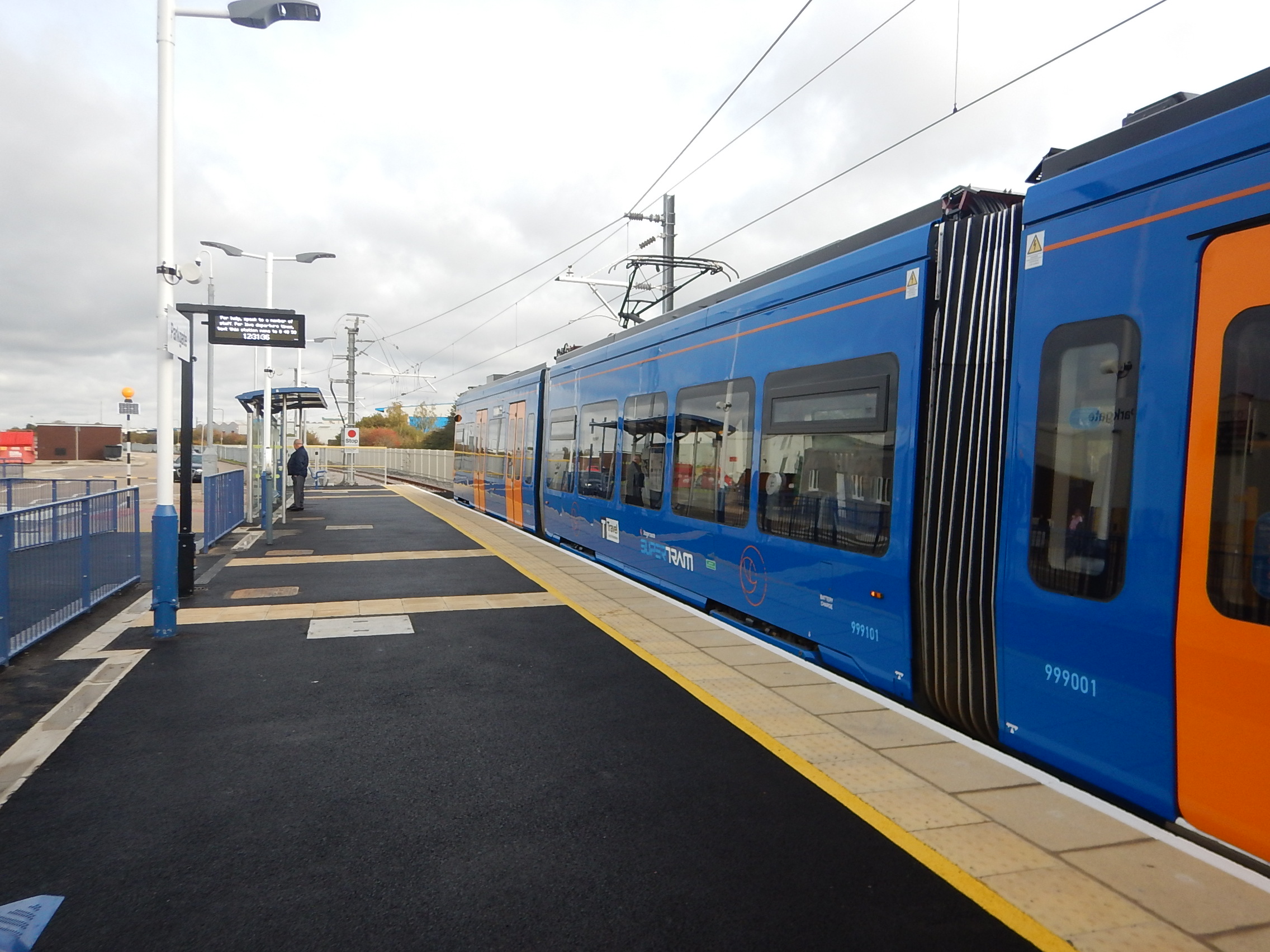
Note.
- This tram-train is a member of the Stadler Citylink family.
- this version can be powered by either 750 VDC or 25 KVAC.
- The Welsh version will also have battery-power.
- It is a three-car tram train.
- There is step-free access.
The Wikipedia entry for the Stadler Citylink has lots more details.
Stadler have just launched a new smaller one- or two-car tram-train.
This image from the press release shows the prototype hydrogen-powered one-car RS ZERO.
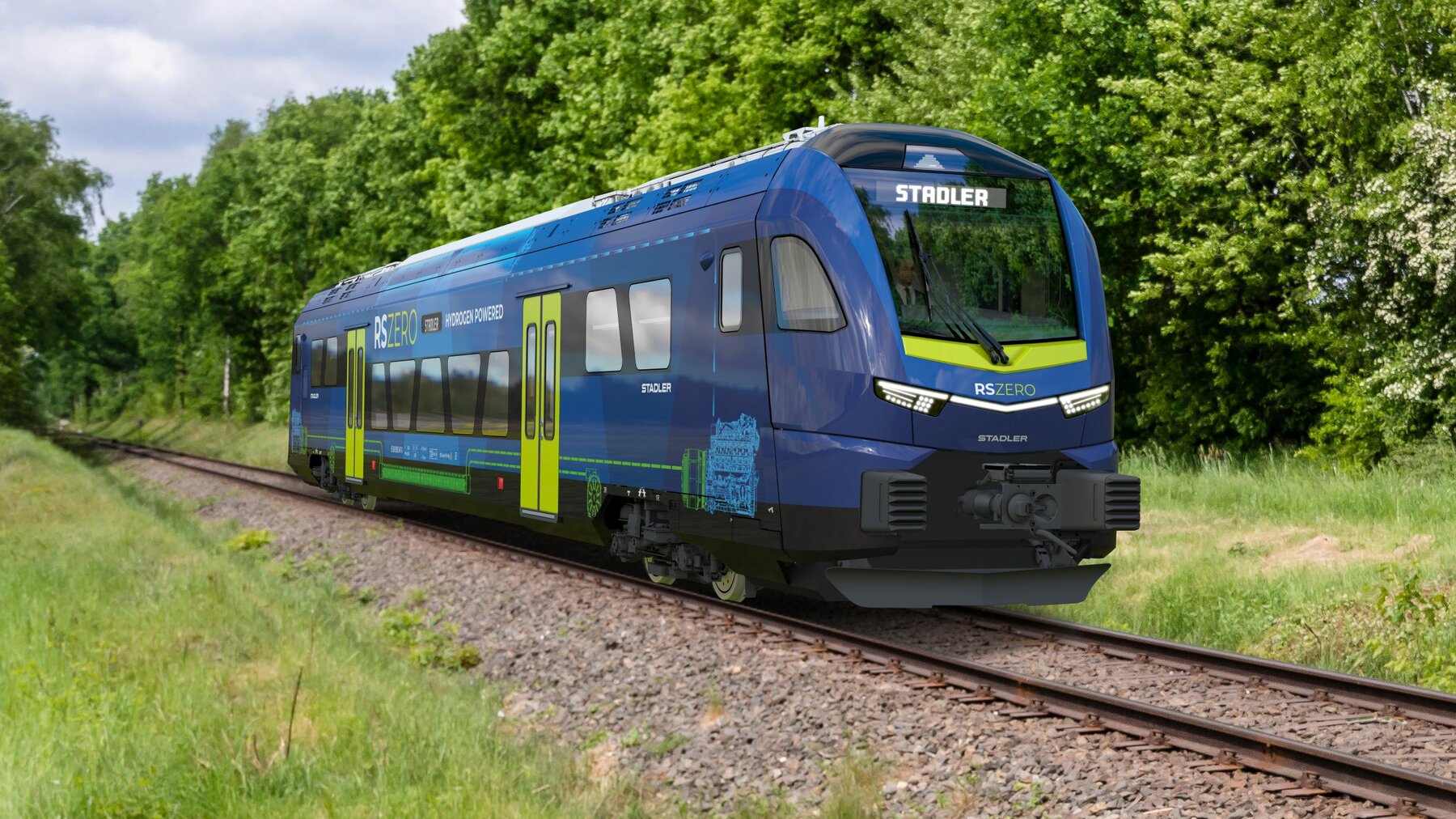
Note.
- The Regio-Shuttles can run as up to seven car trains.
- These RS ZERO are powered by overhead electrification, battery or hydrogen power.
- They can carry 170 passengers at 75 mph.
- They can run as train-trams using the Chemnitz model on compatible tram networks.
- The interiors are very flexible.
- An RS ZERO can be fitted with toilets for the posher parts of Manchester.
- Typically, a one-car RS ZERO handles a similar passenger load to a one-car Metrolink vehicle.
The more I compare the RS ZERO with the Metrolink’s trams, the more it looks like Stadler’s design has a Metrolink order firmly in its sights.
A Simple Tram-Train Example
The Altrincham Line of the Metrolink, runs between Altrincham and Deansgate-Castlefield in Central Manchester.
- Tram-trains would be capable of sharing the tracks with the current trams.
- Initially, they would run an identical service to the same destinations in the North.
- At either Navigation Road or Altrincham stations, they would switch to the heavy rail track.
- They would then travel to Hale or whatever station is determined to be the terminus.
Tram-trains would be a simple way of extending a tram service along a heavy eail line.
The Range Of The RS ZERO
This article on the Railway Gazette is entitled Prototype RS Zero Hydrogen Or Battery Railcar For Secondary Lines Unveiled At InnoTrans, has this paragraph.
The hydrogen powered RS Zero has a range of more than 700 km in the single car version, and a two-car version would offer more than 1 000 km. Battery trains will offer ranges of 80 to 110 km or 90 to 180 km. The maximum speed is 120 km/h.
As Chester and Manchester is only 45 miles or 72.4 kilometres, ways and means of running the battery versions on the route should be possible.
In fact, as Stockport and Manchester Piccadilly is already electrified at 25 KVAC and a return trip to Manchester Piccadilly from Stockport probably takes about twenty-five minutes, I would envisage that an RS ZERO would leave Stockport for Chester with a full battery. As Stockport and Chester is only 39.2 miles or 63 kilometres, the RS ZERO should do the trip if it started with a full battery and had a short length of electrification at Chester to top up the battery, if needed.
Other Possible Tram-Train Routes From Stockport
It is indicated the Metrolink would like to run other tram-train routes from Stockport.
- Ashton – Not sure of the route
- Buxton – 31.8 km
- Hazel Grove – 5 km – Electrified
- Manchester Piccadilly – 9 km – Electrified
- Manchester Airport – Not sure of the route
- Sheffield – 59 km – Will be electrified at Sheffield
Note.
- This would speed up Sheffield services.
- Buxton would be an interesting route and would probably use Newton’s friend to help on the return.
I suspect that nearly all local services from Manchester through Stockport could be run by battery-electric or hydrogen tram-trains.
The Glossop Line Could Be Converted To Tram-Train
It’s already electrified so why not?
Conclusion
It strikes me, that a lot of Manchester’s suburban rail network could be converted to RS ZERO tram-trains.
The RS ZERO tram-trains could also be used on existing tram routes to convert them to tram-train operation and extend them.
As a bonus Manchester’s trains would be substantially decarbonised.
Plans To Turn Former Station Waiting Room Into Pub
The title of this post, is the same as that of this article on the BBC.
This is the sub-heading.
Plans to turn a Grade II listed railway station’s former waiting room back into a pub have been submitted.
These are the first three paragraphs of the article.
Network Rail wants to refurbish the room at Carlisle’s station, which is now a storage room and kitchen.
The first class waiting room, which was until recently used as a pub, was built by architect William Tite in 1880 as an extension to his original 1847 neo-Tudor station designs.
The plans are part of the £27m Carlisle Gateway project to turn the city’s station into a “national interchange” transport hub, funded by central government, Cumberland Council and Network Rail.
I very much like this idea.
Carlisle could be turned into a national interchange, that was almost unique in the world.
- Rail services across the Borderlands could be improved, to the cities of Glasgow, Lancaster, Leeds, Newcastle and York.
- Rail services could be developed, so visitors could explore the Lake District by rail.
- The Eden Project at Morecambe would be a rail-accessible attraction, that was just an hour away from Carlisle.
- The Borders Railway from Edinburgh could be extended to Carlisle.
- All services would be zero-carbon, with power coming from either batteries or hydrogen.
- Services would be tourism-friendly, with space for bicycles, large panoramic windows and high-class catering.
Current times between London and Carlisle could be reduced to under three-and-a-half hours, with reductions of up to an hour, as High Speed Two is eventually delivered.
Are LNER Going To Take On The Airlines?
Nine years ago, I wrote Edinburgh – Plane Or Train?, after a trip to Scotland, where I took easyJet up and came back in First Class by train.
- Both trips were about five hours door-to-door.
- The flight was about six quid more,
- But I got free food and drink on the train.
- Security on the plane was a pain.
- I had to take my passport for identification at Stansted.
I haven’t flown internally in Great Britain since, although, I have flown to Belfast.
For shorter flights the market is going towards rail, as these posts seem to suggest.
- 2.7M Tonnes Of Co2 Could Be Saved Per Year If UK Domestic Flights Went Electric
- Air Travellers To Be Hit By Carbon Charge On All Tickets
- Climate Change ‘May Curb Growth In UK Flying’
- France Bans Short-Haul Flights To Cut Carbon Emissions
- KLM Replaces Plane With High Speed Train
- Lumo Carbon Data Shows Its Trains Are 22 Times Greener Than Flying
- Next Time I’ll Go By Train
- Ryanair One Of Europe’s Top Polluters, EU Data Suggests
- Stop Taking Internal Flights And Go Green, Says Lib Dem Contender Davey
The climate seems to be turning against flying short-haul.
This is a paragraph, in this press release from LNER, which is entitled First Tri-Mode Long Distance Trains For The East Coast Main Line.
This new fleet of trains will keep LNER on track to reduce its emissions by 67 per cent by 2035 and be net zero by 2045. LNER has already reduced carbon emissions by 50 per cent compared with 2018/19. Per mile, LNER trains produce 15 times less carbon emissions than a domestic flight.
Are LNER building a number of climate-based sticks, with which to beat the airlines on the routes, where they compete?
These are my thoughts on the various routes, where LNER compete with airlines.
Newcastle
Newcastle is an interesting one.
- Newcastle station is in the city centre and is on the Tyne and Wear Metro.
- London King’s Cross is one of London’s major Underground hubs.
- There are lots of buses and local trains within walking distance of both stations.
- There are three trains every two hours and an additional eight trains per day (tpd) between the two London King’s Cross and Newcastle stations.
- Lumo also run five tpd on the route.
- There are generally no security delays at rail stations.
- London King’s Cross is laid out to maximise passenger flows. If it gets busy, everybody just walks out into King’s Cross Square.
- I’ve never had a problem at Newcastle station with overcrowding.
Perhaps, if you live near one of the airports, flying is more convenient.
LNER’s weapons against the airlines between London King’s Cross and Newcastle will be convenience and journey times.
Convenience is all about the location of the stations, their excellent local transport networks and good walking routes around the station.
Journey times will only get better, as the magic of digital in-cab signalling, allows the Azumas, the new CAF tri-mode long distance trains and the few remaining InterCity 225s to show what they were designed to do.
Dalton-on-Tees, where the first phase of the digitally signalling will end, is 39.8 miles South of Newcastle, so once the Newcastle train is passes Dalton-on-Tees on the East Coast Main Line, it will be a digital-signalled electrified railway all the way to Woolmer Green.
- Dalton-on-Tees is 39.8 miles South of Newcastle
- Woolmer Green is 244.8 miles South of Newcastle.
- Dalton-on-Tees and Woolmer Green is 205 miles.
- Newcastle and Dalton-on-Tees takes 37 minutes.
- Woolmer Green and King’s Cross takes 18 minutes
- Trains take typically an average three hours and nine minutes between London and Newcastle.
- A typical train time by LNER between Dalton-on-Tees and Woolmer Green is two hours and 14 minutes.
- This is an average speed of 91.8 mph between Dalton-on-Tees and Woolmer Green.
- Between London King’s Cross and Newcastle is fully-electrified.
I can build a table of timings and savings at various average speeds.
- 120 mph – 103 minutes – two hours and 38 minutes – 31 minutes
- 125 mph – 98 minutes – two hours and 33 minutes – 36 minutes
- 130 mph – 95 minutes – two hours and 30 minutes – 39 minutes
- 135 mph – 91 minutes – two hours and 26 minutes – 43 minutes
- 140 mph – 88 minutes – two hours and 23 minutes – 46 minutes
Note.
- The first field is the average speed between Dalton-on-Tees and Woolmer Green.
- The second field is the time between Dalton-on-Tees and Woolmer Green.
- The third field is the time between London and Newcastle.
- The fourth field is the saving over current timings.
- The London and Newcastle time is calculated by adding the times for the three sections together.
I have regularly timed trains at a very constant 125 mph, so with digital signalling, I suspect an average of 130 mph is possible.
This would mean, times of a few minutes under two hours and thirty minutes could be possible between London and Newcastle.
Edinburgh
Edinburgh builds on the improvements South of Newcastle.
Edinburgh station Waverley is a well-connected station.
- There are lots of buses, local trains and the Edinburgh Tram within walking distance of Edinburgh Waverley station.
- There are three trains every two hours and an additional seven tpd between the London King’s Cross and Edinburgh Waverley stations.
- Lumo also run five tpd on the route.
- Trains take typically an average four hours and thirty minutes between London and Edinburgh Waverley.
- Any savings because of the digital in-cab signalling between London and Newcastle can be applied to London and Edinburgh Waverley services.
As my calculations showed that averaging 130 mph between Dalton-on-Tees and Woolmer Green could save 39 minutes on journey times, I am fairly sure than a sub-four hour journey time will be possible between London and Edinburgh Waverley.
It should also be noted that that the power supply has been improved between Newcastle and Edinburgh Waverley.
- The distance between Newcastle and Edinburgh Waverley is 124.2 miles
- Newcastle and Edinburgh Waverley takes around one hour and 30 minutes.
- This is an average speed of 82.8 mph between Newcastle and Edinburgh Waverley.
- Between London King’s Cross and Edinburgh Waverley is fully-electrified.
As the record time for between London King’s Cross and Edinburgh Waverley was set by an InterCity225 train in 1993 at three hours and twenty-nine minutes, I suspect that with more digital signalling and some track improvements, that there are more journey time improvements to be squeezed out.
I certainly believe that a time of three hours and fifty minutes between London and Edinburgh Waverley will be regularly achieved. This is a journey time saving of around forty minutes.
Dundee
Dundee has an airport and a station on the East Coast Main Line.
Trains between London King’s Cross and Dundee take around five hours and 45 minutes.
LNER run three trains per day to and from London King’s Cross and one tpd to and from Leeds.
CrossCountry also run services.
Loganair has two flights per day to Heathrow.
Aberdeen
Aberdeen builds on the improvements South of Edinburgh.
The four direct tpd between London and Aberdeen take around seven hours and ten minutes.
This should come down to around six hours and thirty minutes with the journey time savings between London King’s Cross and Edinburgh Waverley.
Will this tempt travellers from the airlines?
Battery-Electric Trains To Dundee And Aberdeen
One thing that will help, is that Edinburgh and Aberdeen is to be partially electrified.
InPiling Work To Get Underway To Electrify Line To Fife, I included this Network Rail map of the electrification.
This map has been downloaded from the Network Rail web site.
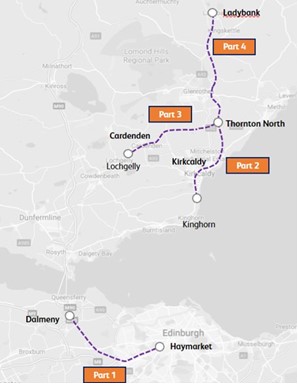
The electrification is split into four phases.
- Haymarket and Dalmeny – 25 km
- Kirkcaldy and Thornton North – 25 km.
- Lochgelly and Thornton North – 20 km.
- Thornton North and Ladybank – 34 km.
Note.
- The last three phases of electrification connect to Thornton North.
- The new rail link to Leven will also be electrified. and connected to Thornton North.
- The Forth Bridge is not to be electrified.
As Ladybank station is just 91.4 miles from Aberdeen, I suspect LNER will use Hitachi Intercity Battery Hybrid Trains to serve Aberdeen.
If these trains haven’t got the range, then I suspect LNER’s new CAF Tri-Mode Trains could handle the route.
Inverness
Inverness has a problem.
Zero-carbon trains will be unlikely to get to the city without full electrification of the Highland Main Line.
- Dunblane is the nearest electrified station to Inverness, but it is 146.2 miles away over a route with lots of steep climbs.
- I doubt that a battery-electric train could handle that route.
One solution would be for LNER to run the new CAF Tri-Mode Trains to Inverness using HVO or biodiesel.
Glasgow
Glasgow is the only other Scottish city with an airport and good rail connections to the South.
I am sure that Avanti West Coast will target airline passengers, if LNER prove it is a successful policy.
Other Factors
These are other factors, that will come into a traveller’s choice.
First Class
Some travellers like a bit more comfort and service.
Ability To Work
Some travellers like to work on a train.
You Don’t Get Tables On a Plane
I like to open a paper or magazine flat, which is difficult on a plane.
Views Tend To Be Better On a Train
Providing you get a window!
Parking Tends To Be Better At An Airport
But it may be more expensive!
Security Is Less Hassle On A Train
At the moment!
You Don’t Need To Prove Your Identity On A Train
Not in the UK! Yet!
Conclusion
It looks like LNER can offer the airlines to four of our major Northern cities serious zero-carbon competition.
Dogger Bank Wind Farm Officially Celebrates Its Operations And Maintenance Base Opening
The title of this post is the same as that of this news item on the Dogger Bank wind farm web site.
These bullet points introduce the item.
- 150 guests and employees gathered to celebrate the official opening.
- The state-of-the-art base will be the hub for operations and monitor 5% of UK electricity from its control room.
- Over 400 long-term jobs have been created locally to support Operations and Maintenance from South Tyneside for the 35-year life of the wind farm.
- The world-class facility will be operated in line with the UK Green Building Council’s (UKGBC) Net Zero Carbon Buildings Framework
This Google Map shows the location of the base.
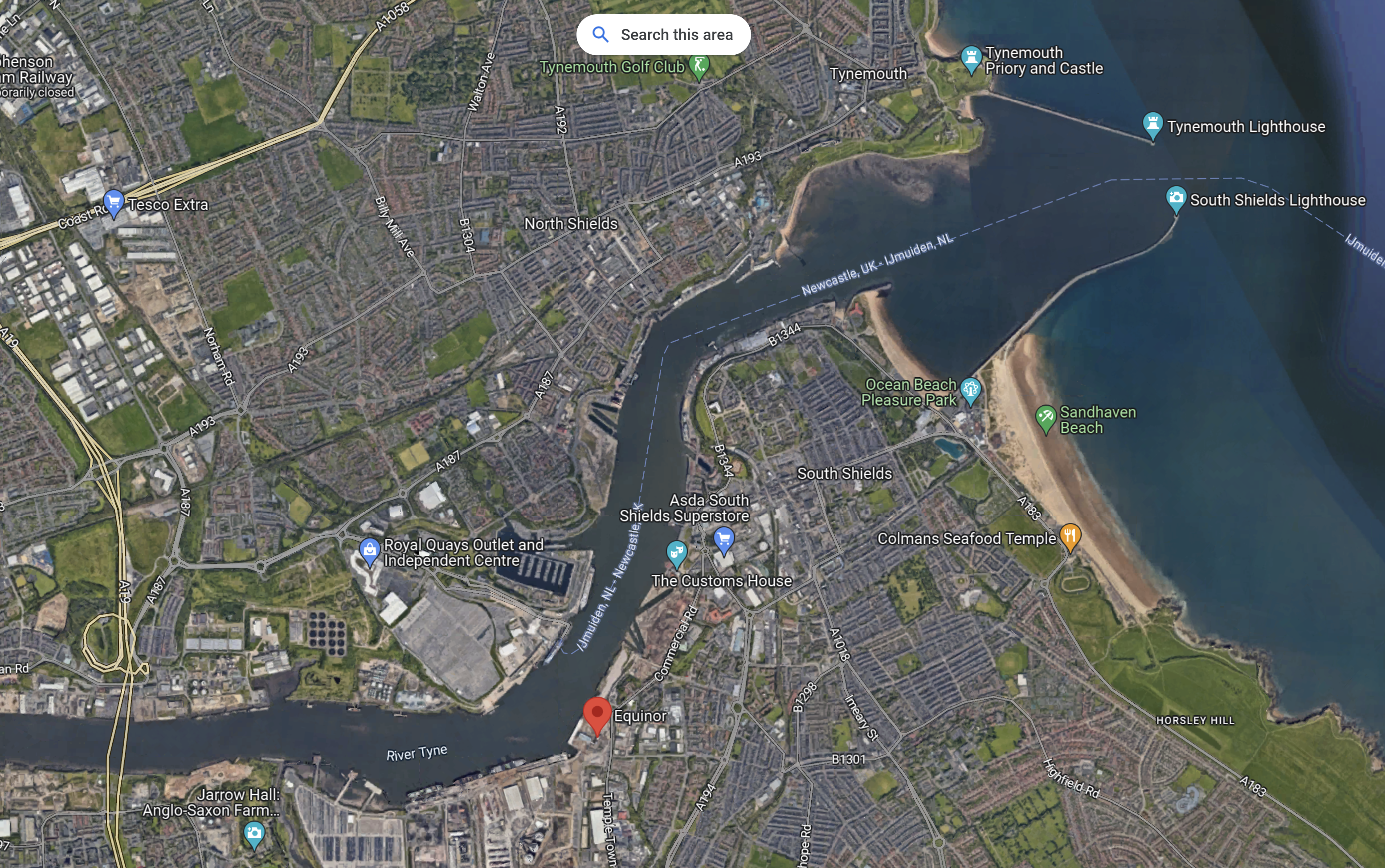
The red arrow indicates the base, which appears to be convenient for the North Sea.
This second Google Map shows a close up if the site.
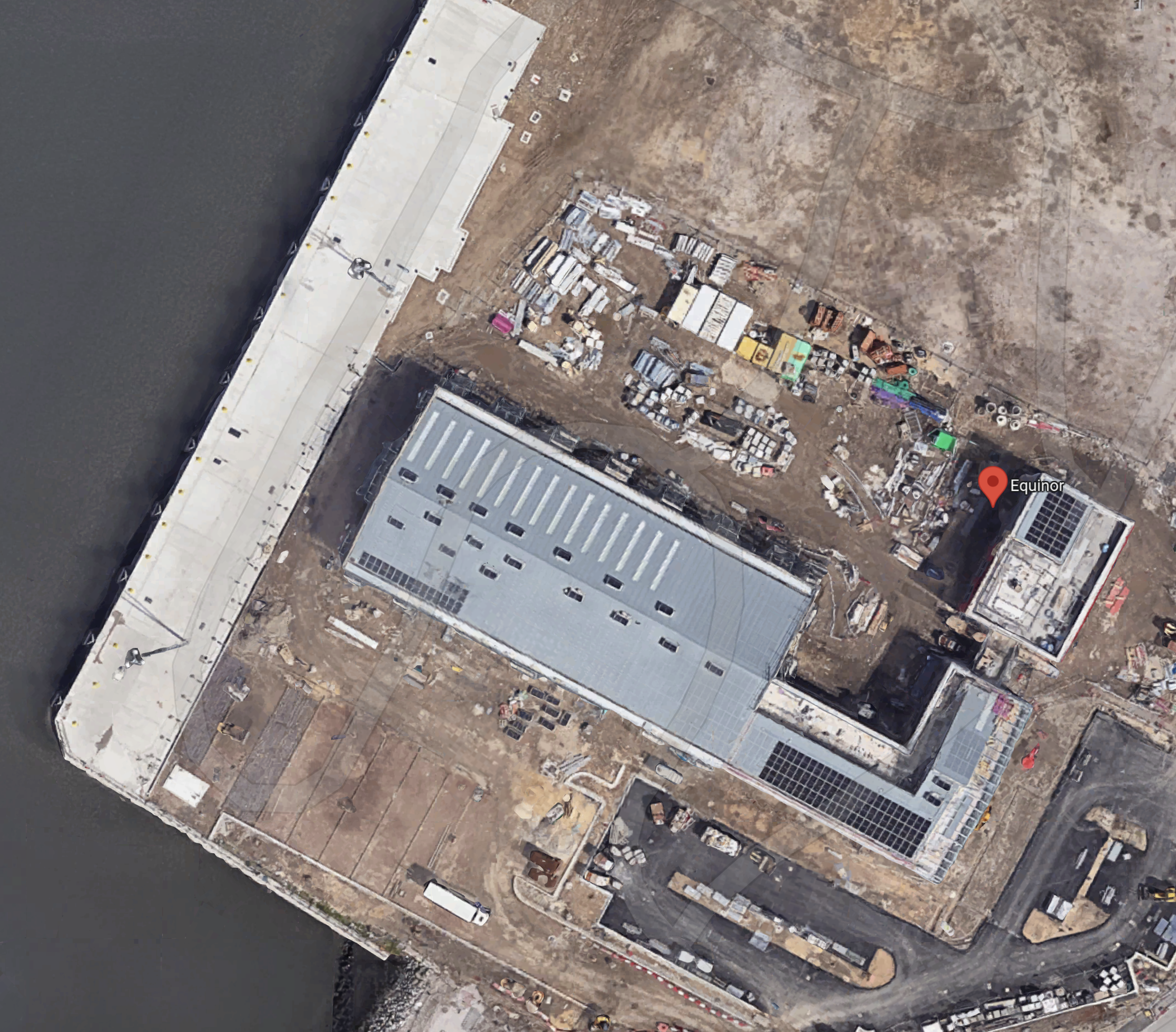
There is a nice long quayside, which in the future could be large enough to assemble floating turbines.
This third image is a Google Map 3D visualisation of the site from across the Tyne.
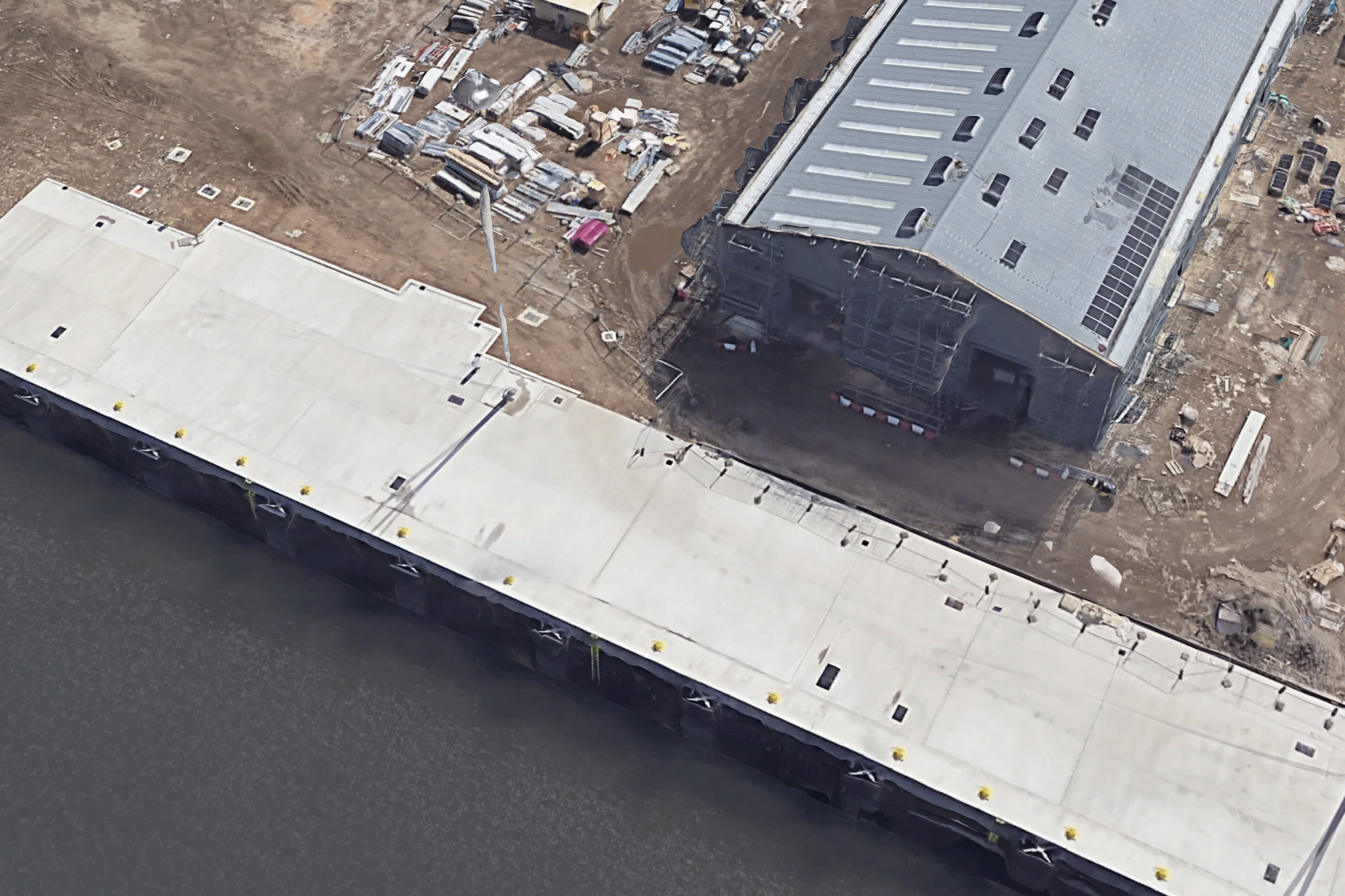
The news item says this about the ownership and operation of the Dogger Bank wind farm.
Dogger Bank Wind Farm is a joint venture between SSE Renewables (40%), Equinor (40%) and Vårgrønn (20%). SSE Renewables is lead operator for the development and construction of Dogger Bank Wind Farm. Equinor will be lead operator of the wind farm on completion for its expected operational life of around 35 years.
Initially, the Port of Tyne base will operate and maintain these wind farms.
- Dogger Bank A – 1235 MW
- Dogger Bank B – 1235 MW
- Dogger Bank C – 1218 MW
This gives a total of 3688 MW.
Note.
- SSE Renewables and Equinor are also developing the 1500 MW Dogger Bank D wind farm.
- This would bring the total up to 5188 MW.
- RWE are also developing the 3000 MW Dogger Bank South wind farm.
Leases were signed for both the Dogger Bank D and Dogger Bank South wind farms in January 2023.
I doubt all of these wind farms will be operated and maintained from the Port of Tyne base, due to the different ownership of Dogger Bank South.
But, I do hope that the facility can be expanded to handle Dogger Bank D.
Landmark Levelling Up Fund To Spark Transformational Change Across The UK
The title of this post, is the same as that of this press release from the UK Government.
These are the four bullet points.
- More than 100 projects awarded share of £2.1 billion from Round 2 of government’s flagship Levelling Up Fund.
- Projects will benefit millions of people across England, Scotland, Wales and Northern Ireland and create jobs and boost economic growth.
- £672 million to develop better transport links, £821 million to kick-start community regeneration and £594 million to restore local heritage sites.
- Successful bids include Eden Project North in Morecambe, a new AI campus in Blackpool, regeneration in Gateshead, and rail improvements in Cornwall
The press release expands the last bullet point.
Projects awarded Levelling Up Fund money today include:
Eden Project North
Eden Project North will receive £50 million to transform a derelict site on Morecambe’s seafront into a world class visitor attraction. It will also kick-start regeneration more widely in Morecambe, creating jobs, supporting tourism and encouraging investment in the seaside town.
Note.
- Because of its closeness to the West Coast Main Line, it will have excellent rail connections to all over the North of England and Central and Southern Scotland, through Lancaster, which will only be a shuttle train away.
- One of High Speed Two’s direct destinations will be Lancaster, which will be served by High Speed Two by hourly trains to Birmingham, Carlisle, Crewe, London, Preston, Warrington and Wigan and by two-hourly trains to Edinburgh, Glasgow, Lockerbie and Motherwell.
- London and Lancaster will be a journey of just two hours and three minutes.
I believe that this high quality rail access will ensure the success of the Eden Project North.
Cardiff Crossrail
Cardiff Crossrail has been allocated £50 million from the fund to improve the journey to and from the city and raise the economic performance of the wider region.
The Cardiff Crossrail is obviously a good project from the little that I’ve read about it. But it does need a web site to explain the reasoning behind it.
Blackpool Multiversity
Blackpool Council and Wyre Council will receive £40 million to deliver a new Multiversity, a carbon-neutral, education campus in Blackpool’s Talbot Gateway Central Business District. This historic funding allows Blackpool and The Fylde College to replace their ageing out-of-town centre facilities with world-class state-of-the-art ones in the heart of the town centre. The Multiversity will promote higher-level skills, including automation and artificial intelligence, helping young people secure jobs of the future.
Blackpool certainly needs something.
My suggestion in Blackpool Needs A Diamond, was to build a second Diamond Light Source in the North to complement the successful facility at Harwell.
I don’t think the two proposals are incompatible.
Fair Isle Ferry
Nearly £27 million has been guaranteed for a new roll-on, roll-off ferry for Fair Isle in the Shetland Islands. The service is a lifeline for the island, supporting its residents, visitors and supply chains, and without its replacement the community will become further isolated.
Note.
- Will it be a British-built ferry?
- Will it be hydrogen-powered? After all by the time it is built, the Northern Scottish islands will be providing enough of the gas to power a quarter of Germany.
- Surely, a hydrogen-powered roll-on, roll-off ferry will be a tourist attraction in its own right.
I hope the Government and the islanders have a good ship-yard lined up
Gateshead Quays And The Sage
A total of £20 million is going towards the regeneration of Gateshead Quays and the Sage, which will include a new arena, exhibition centre, hotels, and other hospitality. The development will attract nearly 800,000 visitors a year and will create more than 1,150 new jobs.
I don’t know much about the Sage, but this project seems very reasonable.
Mid-Cornwall Metro
A £50 million grant will help create a new direct train service, linking 4 of Cornwall’s largest urban areas: Newquay, St Austell, Truro, and Falmouth/Penryn. This will level up access to jobs, skills, education, and amenities in one of the most economically disadvantaged areas in the UK.
I wrote about this scheme in The Proposed Mid-Cornwall Metro, where I came to this conclusion.
I believe that a small fleet of Hitachi Regional Battery Trains could create an iconic Metro for Cornwall, that would appeal to both visitors and tourists alike.
Judging by the recent success of reopening the Dartmoor Railway to Okehampton in Devon, I think this scheme could be a big success. But it must be zero-carbon!
Female Changing Rooms For Northern Ireland Rugby
There is £5.1 million to build new female changing rooms in 20 rugby clubs across Northern Ireland.
Given the popularity of the female version of the sport in England, Scotland and Wales, perhaps this is a sensible way to level it up in Northern Ireland. As rugby is an all-Ireland sport, perhaps the Irish have already sorted the South?
 The Anonymous Widower