Liberty Lines Commissions First High-Speed Ferry With mtu Hybrid System From Rolls-Royce
The title of this post, is the same as that of this press release from Rolls-Royce.
These two bullet points act as sub-headings.
- “Vittorio Morace” the world’s first hybrid high-speed ferry to IMO HSC standard with a length of almost 40 metres is fast at sea and emission-free in harbour
- A further 8 Liberty Lines ferries with mtu hybrid systems will enter into service in Italy, Slovenia and Croatia
This picture shows the first of the fleet.

This is the first paragraph.
On 27 June 2024, the Italian shipping company Liberty Lines ceremonially launched the world’s first hybrid fast ferry of this category and size in Trapani, Sicily, powered by an mtu hybrid propulsion system from Rolls-Royce. The 39.5 meter long ship has a capacity of 251 passengers, reaches a speed of over 30 knots and will significantly reduce the impact of ship operations on the environment. The “Vittorio Morace”, built by the Spanish shipyard Astilleros Armon and designed by Incat Crowther, is the world’s first IMO HSC (High-Speed Craft) hybrid fast ferry of this size and has been classified as a “Green Plus” ship by the Italian classification society RINA.
This ferry can truly be considered to be a Ship-of-the-World, with a design from an Australian-headquartered International company and German engines, that has been built in Spain.
This paragraph describes the power-train.
The battery-electric part of the drive is used for locally emission-free driving in the harbour area and as a booster. CO2 emissions are reduced by the particularly efficient mtu Series 4000 diesel engines which can also run on the renewable diesel (HVO, hydrotreated vegetable oil). Its use can lower the CO2 footprint by up to 90 per cent. Furthermore, the comparatively low overall weight of both the engines and the hybrid drive system contributes to high vessel propulsion efficiency, thereby reducing fuel consumption and emissions.
Over the last thirty years, I’ve been to several of the places served by Liberty Lines, so some excellent journeys, will be made faster, quieter and better.
Rolls-Royce To Be A Partner In Zero-Carbon Gas-Fired Power Station In Rhodesia
This press release from Rolls-Royce is entitled Rolls-Royce, Landmark And ASCO Collaborate On CO2 Recovery Power Generation Solutions.
These three bullet points serve as sub-headings.
- Cooperation plans to develop solutions for clean power generation with carbon capture from gas reciprocating engines
- Captured CO2 will be available for use in industries such as food, Efuels, sustainable aviation fuels (SAF), cement and plastic production
- First of-its-kind flexible power generation and carbon capture plant currently under construction in Nottinghamshire, UK
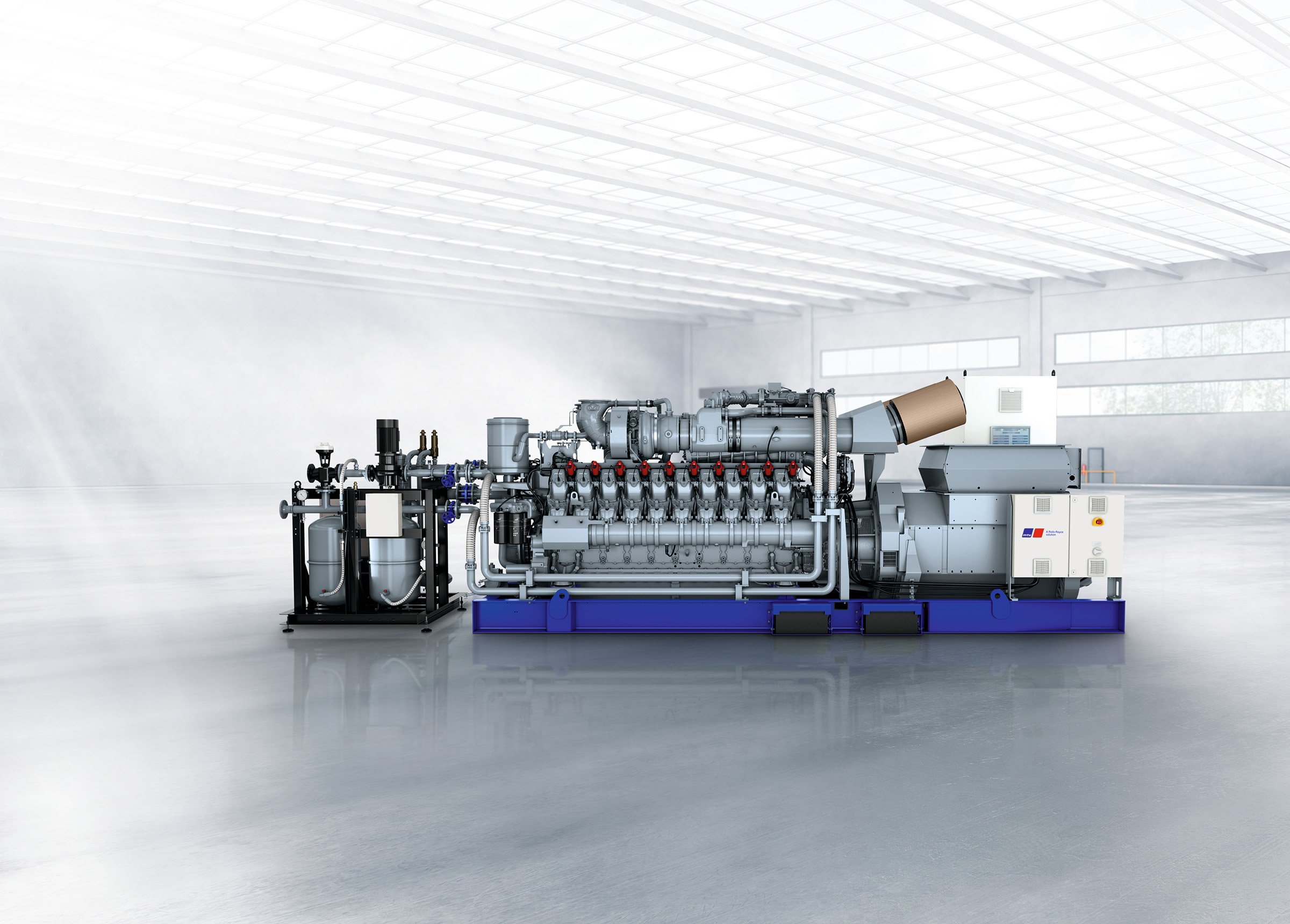
This image shows a Rolls-Royce mtu Series 4000 gas genset.
Note.
- Power is up to 2.5 MW.
- The engine is labelled H2-ready on its web page.
These two paragraphs add some detail to the project.
Rolls-Royce, ASCO Carbon Dioxide Ltd (ASCO), and Landmark Power Holdings Limited (LMPH), have signed a Memorandum of Understanding (MoU) aimed at developing scalable solutions for clean power generation with carbon capture from mtu gas reciprocating engines. This strategic partnership will help enable power generation customers to achieve their net zero ambitions and marks a significant step towards addressing climate change.
“Power generation is a highly attractive, growing market segment and an area of strategic focus for Rolls-Royce, where partnerships can help further grow market position and broaden its power generation offering, as set out at last November’s Capital Markets Day”, said Tobias Ostermaier, President Stationary Power Solutions at Rolls-Royce Power Systems. Rolls-Royce is committed to becoming a net zero company by 2050 and supporting customers to do the same.
These are my thoughts.
Uses Of Carbon Dioxide
The press release from Rolls-Royce lists a few uses of carbon dioxide.
The plan is to make the captured CO2 available (utilisation) for use in various industries such as food production, Efuels, sustainable aviation fuel (SAF), cement and plastic production (utilisation). The captured CO2 will also be ready for transportation should permanent sequestration be preferred (storage).
Carbon dioxide can also be added to the air in greenhouses, that are producing flowers, herbs, salad vegetables, soft fruit and tomatoes.
ASCO Carbon Dioxide
ASCO Carbon Dioxide is a subsidiary of French company; Schneider Electric.
The home page on their web site, describes ASCO Carbon Dioxide like this.
The Swiss ASCO CARBON DIOXIDE LTD is a globally operating company that offers complete solutions for CO2 and dry ice. The range of services includes carbon capture plants, CO2 recovery systems, ASCOJET dry ice blasting machines, dry ice production machines, CO2 cylinder filling systems, CO2 vaporisers, CO2 storage tanks, CO2 dosing systems for water neutralization and various other CO2 and dry ice equipment.
Thanks to this broad product range and more than 130 years of practical experience in the comprehensive CO2 and dry ice sector, the customer benefits from individual, complete CO2 solutions from a single source. ASCO has been part of the international industrial gases company Messer Group since 2007 and is its centre of competence for CO2.
In other words, the world and especially the climate change activists may hate carbon dioxide with a vengeance, but ASCO Carbon Dioxide see it as a way to make money and something that needs love.
It also seems, that if you want to do something with or to carbon dioxide, then ASCO Carbon Dioxide could be one of the first companies that you call.
Landmark Power Holdings Limited
The About page on their web site, describes the mission of Landmark Power Holdings Limited like this.
LMPH was established in 2019 with the purpose to help to build a circular economy, by applying new methodologies to proven technologies in energy production.
We support the transition to net zero by supplying dispatchable, low carbon energy that enables more renewable energy production while contributing to a circular economy, by eliminating inefficiencies in production, ensuring that every input is used to its maximum potential and treating all production waste as a profitable resource.
This Solutions page on their web site, describes their FlexPower Plus system.
These are the two introductory paragraphs.
FLEXPOWER PLUS® is LMPH’s modular approach to optimising the generation of clean flexible power. It is a combination of High Efficiency Flexible Power Generation modules and Carbon Capture Utilisation (CCU) modules.
Each of the modules can be added to the production processes depending on the site and production needs.
This last paragraph describes the result.
When you combine the the High Efficiency Flexible Power Generation modules with the Carbon Capture Utilisation (CCU) modules, the power generation is classified as low carbon and considered to be as clean as wind power but with the capacity to provide baseload power.
They certainly sound like my kind of company, as I was simulating processes like this for ICI in the 1970s.
ICI taught me that only four things should leave a chemical or other process plant.
- Product, that is sold at an advantageous price.
- Pure water
- Clean air
- Everybody who worked there.
It appears a FlexPower Plus system produces three valuable products; electricity, heat and pure food-grade carbon-dioxide.
The Rhodesia Project
The Rhodesia project has its own page on the Landmark Power Holdings web site, where these four paragraphs describe the project.
The Rhodesia project is a joint venture with Victory Hill, a specialist investment firm targeting direct investments in global energy infrastructure that support the UN Sustainable Development Goals.
The Rhodesia project is located in north Nottinghamshire near Worksop and has an electrical capacity of 10MW.
Additional capacity is to be sold through a private wire power supply for local businesses with the intent to facilitate vehicle charging stations.
Construction started in March 2022 and the start of power production is projected for Q3 2024 with the full CO2 capture from Q4 2024.
There is also this paragraph, that lists the partners in the Rhodesia project.
For the development of the Rhodesia project LMPH and Victory Hill have partnered with global industrial groups such as Mitsubishi Turboden S.p.A., MTU Rolls-Royce Solutions UK, ASCO CARBON DIOXIDE LTD, Climeon.
With three of the world’s largest companies amongst the partners, this partnership must have a high chance of success.
Victory Hill Capital Hill Partners
Victory Hill Capital Partners are partners in the Rhodesia project.
Their joint philosophy with Landmark Power Holdings is summed up on this video.
Working Together
The press release from Rolls-Royce says this about the partnership.
Rolls-Royce is contributing its extensive experience and global network in the field of decentralized power generation to the cooperation through its Power Systems division with the mtu product portfolio. The contribution of LMPH, a developer of high-efficiency Combined Heat and Power (CHP) projects, is its patented FLEXPOWER PLUS® concept, combined with technical expertise and patented technologies. ASCO has over 50 years of experience in developing and building carbon capture (or CO2-Recovery) plants and will be providing valuable insights and solutions from the carbon capture industry.
There is also this diagram of the system.

Note.
- The 4000 gas genset is in the bottom-left corner.
- The HT PRC and LT ORC are two Mitsubishi turbo-generators generating electricity from waste heat.
- The ASCO carbon capture system is in the top-left corner.
- Carbon dioxide can either be stored or used.
This system should be zero-carbon, once the design is fully tested.
A View From The Top
This paragraph from the Rolls-Royce press release gives the view of the President Stationary Power Solutions at Rolls-Royce Power Systems.
Tobias Ostermaier, President Stationary Power Solutions at Rolls-Royce Power Systems, said: “We are convinced that CO2 capture and storage systems in combination with our mtu gas gensets are an important building block on the way to Net Zero. As a complement to renewable energy sources, internal combustion engines can already provide clean, cost-effective and extremely reliable power generation.”
I suspect he’s rather pleased.
Rolls-Royce Supplies mtu Large-Scale Battery Storage To Secure The Latvian National Grid
The title of this post, is the same as that of this press release from Rolls-Royce.
These four bullet points, act as sub-headings.
- Latvia synchronizes its electricity grid with the European grid in 2025
- Large-scale battery storage system from Rolls-Royce ensures stability of the power grid in Latvia
- Transmission system operator AST orders 160MWh mtu EnergyPack
- Facility will be one of the largest battery storage systems in the EU
This is the first paragraph.
Rolls-Royce has received an order from the Latvian transmission system operator Augstsprieguma tikls (AST) to supply an mtu large-scale battery storage system to secure the Latvian power grid. In 2025, Latvia, together with the other Baltic states, will synchronize its energy supply system with the continental European power grid.
Note.
- This is a Rolls-Royce press release, not a Rolls-Royce mtu press release.
- Recently, Rolls-Royce mtu supplied the generators for Redditch power station, which I wrote about in Centrica Completes Work On 20MW Hydrogen-Ready Peaker In Redditch.
- In The Modern Way To Grow Tomatoes, I describe how a Rolls-Royce mtu Combined Heat and Power unit (CHP), is used in the growing of tomatoes.
Could it be that using the Rolls-Royce name prominently, makes sales easier?
£400k For National Grid Innovation Projects As Part Of Ofgem Fund To Help Shape Britain’s Net Zero Transition
The title of this post, is the same as that, of this press release from National Grid.
These three bullet points, act as sub-headings.
- Three transmission and distribution network innovation projects receive green light
- Funding kickstarts projects for the discovery phase of Ofgem innovation scheme
- 14 National Grid projects worth £4m have won innovation funding since scheme began
These are the three projects.
HIRE – Hybrid-Network Improvement & Reliability Enhancement
This is National Grid’s description of the £135,000 project.
Researching new state-of-the-art condition monitoring to improve the commissioning and operation of offshore cables. This new, robust system will mitigate the risk of failure, overcome the limitations of existing techniques (e.g. cable length) and aid network operators in decision making for a more flexible grid. PROJECT PARTNERS: University of Manchester, DNV, Monitra, SSEN Transmission.
With all the offshore cables, that have been laid around the UK, Europe and the world in recent years, I am surprised that such a system has not been developed before.
But I suspect, that the project partners know that if they can develop a superior cable monitoring system, then it could be a nice little earner in addition to its job with UK offshore cables.
According to their web site, Monitra seem to be the monitoring experts.
This is the mission statement on their home page.
Our aim is to maximise the uptime of every high voltage asset worldwide.
I like this company’s attitude and it should make the world a better place.
I certainly think that the £135,000 will be well spent.
REACH – Rural Energy And Community Heat
This is National Grid’s description of the £120,000 project.
Working with rural community energy groups to develop a modular rural energy centre that will help communities make cost effective decarbonisation plans. The solution will offer shared low carbon heating, rapid EV charging, and renewable generation in areas not served by commercial markets, and where there is limited electricity network capacity.
Rolls-Royce mtu seem to have a system, that might go some way to satisfy National Grid’s ambitions, that I wrote about in Would You Buy A Battery Energy Storage System From Rolls-Royce?.
Road to Power
This is National Grid’s description of the £140,000 project.
Developing specific tools to forecast future energy consumption and infrastructural impact of works, to support the street and road works sector as it decarbonises 7.8TWh of energy demand across 700,000 major works in the sector’s pivotal transition to net zero by 2030.
This sounds like an excellent idea. Especially, if it makes street and road works quieter and less polluting.
Conclusion
I like these three projects and have already added them to my list of Google Alerts.
The Modern Way To Grow Tomatoes
I was looking around the Centrica Business Solutions web site, when I found this page, which is entitled Second CHP Powers New Greenhouses At Frank Rudd & Sons, that describes how tomatoes are grown in large greenhouses.
These paragraphs introduce Frank Rudd & Sons and what they do.
Frank Rudd & Sons is a family-run producer of cherry vine and plum tomatoes, generating around 1,500 tonnes of produce every year. Based in Over Peover, near Knutsford, the business was started in 1939 and is now run by the third generation of the Rudd family.
Their greenhouses use an innovative growing system, with suspended grow bags full of nutrient seed. This means they’re able to grow tomatoes for 11 months of the year – and also means they have a continual need for heat.
What’s more, when they constructed new greenhouses – going from 9 acres of glass to 15 acres – Frank Rudd & Sons needed an energy partner who could support their increase in demand.
These paragraphs describes Centrica Business Solutions’s solution.
Centrica Business Solutions originally partnered with Frank Rudd & Sons in 2017 to install a new Combined Heat and Power (CHP) unit to power their operations. When Frank Rudd & Sons began to expand their greenhouses in 2023, they needed to install a second CHP to meet their increased demand. Once again, they invited Centrica Business Solutions to support.
We designed and installed a turnkey 1.5MW CHP system to power their production processes. The CHP generates heat and carbon dioxide, which are both fed into their greenhouses and are vital components to the growing process. The system also generates electricity, which Frank Rudd & Sons sells back to the grid through an export agreement – giving the business a significant ongoing revenue stream.
One of the pictures shows that the CHP unit is from Rolls-Royce mtu.
The UK-Wide Need For Self-Powered Trains
How Many Diesel Trains Are In Service In The UK?
- Northern Trains – 73 x two-car and 6 x three-car.
- Great Western Railway – 20 x two-car.
- Transport for Wales – 36 x two-car.
- In Service – 129 x two-car and 6 x three-car.
These are 75 mph BR Second Generation trains.
- ScotRail – 5 x one-car.
- Transport for Wales – 31 x one-car.
- In Service – 36 x one-car.
- Stored – 27 x one-car.
These are 75 mph BR Second Generation trains.
- Northern Trains – 7 x two-car.
- In Service – 7 x two-car.
These are 75 mph BR Second Generation trains.
- Northern Trains – 58 x two-car.
- East Midlands Railway – 9 x two-car.
- ScotRail – 42 x two-car.
- In Service – 109 x two-car.
- Stored – 6 x two-car.
These are 75 mph BR Second Generation trains.
- ScotRail – 40 x two-car.
- Great Western Railway – 10 x two-car and 7 x three-car.
- East Midlands Railway – 26 x two-car.
- Northern Trains – 45 x two-car and 8 x three-car.
- Transport for Wales – 24 x two-car.
- South Western Railway – 10 x two-car.
- In Service – 155 x two-car and 15 x three-car.
These are 90 mph BR Second Generation trains.
- South Western Railway – 29 x three-car.
- In Service – 29 x three-car.
These are 90 mph BR Second Generation trains.
- Chiltern Railways – 39 x two-car.
- Great Western Railway – 20 x two-car and 16 x three-car.
- In Service – 59 x two-car and 16 x three-car.
These are 75 or 90 mph BR Second Generation trains.
- Great Western Railway – 21 x three-car.
- In Service – 21 x three-car.
These are 90 mph BR Second Generation trains.
- Chiltern Railways – 9 x two-car, 9 x three-car and 13 x four-car.
- In Service – 9 x two-car, 9 x three-car and 13 x four-car.
These are 100 mph Turbostar trains.
- CrossCountry – 7 x two-car and 22 x three-car.
- East Midlands Railway – 22 x two-car and 8 x three-car.
- Northern Trains – 16 x three-car.
- ScotRail – 17 x three-car.
- Transport for Wales – 8 x three-car.
- West Midlands Trains – 16 x three-car.
- In Service – 34 x two-car and 71 x three-car.
These are 100 mph Turbostar trains.
- Southern – 17 x three-car.
- In Service – 17 x three-car.
These are 100 mph Turbostar trains.
- West Midlands Trains – 24 x two-car and 15 x three-car.
- In Service – 24 x two-car and 15 x three-car.
These are 100 mph Turbostar trains.
- Transport for Wales – 9 x two-car and 15 x three-car.
- In Service – 9 x two-car and 15 x three-car.
- Stored – 2 x two-car and 1 x three-car.
These are 100 mph Coradia trains.
- Grand Central – 10 x five-car.
- East Midlands Railway – 1 x four-car and 2 x five-car.
- In Service – 1 x four-car and 12 x five-car.
These are 125 mph Coradia trains.
- TransPennine Express 51 three-car.
- In service – 51 three-car.
These are 100 mph Desiro trains.
- Northern Trains – 25 x two-car and 33 x three-car.
- In Service – 25 x two-car and 33 x three-car.
These are 100 mph CAF Civity trains.
- West Midlands Trains – 12 x two-car and 14 x four-car.
- In Service – 12 x two-car and 14 x four-car.
These are 100 mph CAF Civity trains.
- Northern Trains – 51 x two-car and 26 x three-car.
- In Service – 51 x two-car and 26 x three-car.
These are 100 mph CAF Civity trains.
- CrossCountry – 34 x four-car
- In Service – 34 x four-car
These are 125 mph Bombardier Voyager trains.
- Avanti West Coast -18 x five-cars
- CrossCountry – 24 x four-car.
- In Service – 24 x four-car and 18 x five-cars
- Stored – 2 x five-car
These are 125 mph Bombardier Voyager trains.
- CrossCountry – 23 x five-car and 4 x seven-car.
- In Service – 23 x five-car and 4 x seven-car.
These are 125 mph Bombardier Voyager trains.
- Transport for Wales – 11 x four-car.
- In Service – 11 x four-car.
These are 90 mph Stadler FLIRT bi-mode trains.
- Greater Anglia – 14 x three-car and 24 x four-car.
- In Service – 14 x three-car and 24 x four-car.
These are 100 mph Stadler FLIRT bi-mode trains.
- Transport for Wales – 7 x three-car and 17 x four-car.
- In Service – 7 x three-car and 17 x four-car.
These are 75 mph Stadler FLIRT bi-mode trains.
- Great Western Railway – 21 x five-car and 36 x nine-cars.
- LNER – 10 x five-car and 13 x nine-cars.
- In Service – 31 x five-car and 49 x nine-cars.
These are 125 mph Hitachi AT-300 trains.
- Great Western Railway – 22 x five-car and 14 x nine-cars.
- Hull Trains – 5 x five-car.
- TransPennine Express – 19 x five-car.
- In Service – 46 x five-car and 14 x nine-cars.
These are 125 mph Hitachi AT-300 trains.
- Avanti West Coast – 13 x five-car.
- In Service – 13 x five-car.
These are 125 mph Hitachi AT-300 trains.
- East Midlands Railways – 33 x five-car.
- In Service – 33 x five-car.
These are 125 mph Hitachi AT-300 trains.
These trains give totals as follows.
- One-car – 36
- Two-car – 601
- Three-car – 249
- Four-car – 135
- Five-car – 176
- Seven-car – 4
- Nine-car – 63
That is a total of 1254 trains that need to be decarbonised by either replacement or modification.
- Some trains are effectively double-counted, as both the current trains and their replacements are included.
- Some trains are planned to be replaced by electric trains.
- Some trains will be passed on.
But there are still a lot of trains to be decarbonised.
I will now look at each group in detail.
BR Second Generation Trains
- Class 150 – 129 x two-car and 6 x three-car.
- Class 153 – 36 x one-car.
- Class 155 – 7 x two-car.
- Class 156 – 109 x two-car.
- Class 158 – 155 x two-car and 15 x three-car.
- Class 159 – 29 x three-car.
- Class 165 – 59 x two-car and 16 x three-car.
- Class 166 – 21 x three-car.
Note.
- The trains have mostly Cummins engines, with some Perkins and a spattering of Rolls-Royce.
- Class 150,153, 155 and 156 trains are 75 mph trains and most of the others are capable of 90 mph.
- Condition of the interiors is variable, with some being excellent and others being terrible.
- There are 36 x one-car, 459 x two-car and 59 x three-car.
- There appears to be no plan to decarbonise these trains.
- Some will be replaced by new CAF diesel trains or new electric trains.
The best use of some of the better trains in this group would be to fill-in until zero-carbon trains are available.
Turbostar Trains
These trains are all Turbostars or their predecessor.
- Class 168 – 9 x two-car, 9 x three-car and 13 x four-car.
- Class 170 – 34 x two-car and 71 x three-car.
- Class 171 – 17 x three-car.
- Class 172 – 24 x two-car and 15 x three-car.
Note.
- The trains all have Rolls-Royce mtu engines.
- They are capable of 100 mph.
- Condition of the interiors is generally good.
- There are 67 x two-car, 112 x three-car and 13 x four-car.
- Rolls-Royce mtu engines may be able to run on sustainable fuel like Hydrotreated Vegetable Oil (HVO).
- 168329 has been converted into a diesel-hybrid, by Rolls-Royce mtu.
I feel that one way or another, the trains in this group should be capable of converting to net-zero operation.
Alstom Coradia, Bombardier Voyager and Siemens Desiro Trains
I am putting these trains together, as they are all 100-125 mph long-distance trains, that are not that old.
- Class 175 – 9 x two-car and 15 x three-car.
- Class 180 – 1 x four-car and 12 x five-car.
- Class 185 – 51 x three-car.
- Class 220 – 34 x four-car
- Class 221 – 24 x four-car and 18 x five-cars
- Class 222 – 23 x five-car and 4 x seven-car.
Note.
- The trains all have Cummins engines.
- They are capable of 100 mph or 125 mph.
- Condition of the interiors is generally good.
- There are 9 x two-car, 66 x three-car, 59 x four-car, 53 five-car and 4 x seven-car.
- Cummins engines may be able to run on sustainable fuel like Hydrotreated Vegetable Oil (HVO).
- In Grand Central DMU To Be Used For Dual-Fuel Trial, I described innovative fuel trails in a Class 180 train.
- I suspect Cummins will be taking an interest.
In Cummins And Leclanché S.A. To Collaborate On Lower-Emissions Solutions For Use In Marine And Rail Applications, I asked this question.
How many of these trains could be converted to hybrid operation, if Cummins and Leclanché were to create their version of the mtu Hybrid PowerPack?
I feel that one way or another, the trains in this group should be capable of converting to net-zero operation.
CAF Civity Trains
These three trains have all been recently introduced
- Class 195 – 25 x two-car and 33 x three-car.
- Class 196 – 12 x two-car and 14 x four-car.
- Class 197 – 51 x two-car and 26 x three-car.
Note.
- The trains all have Rolls-Royce mtu engines.
- They are capable of 100 mph.
- Condition of the interiors is probably as-new!
- There are 88 x two-car, 59 x three-car and 14 x four-car.
- All these trains were ordered between 2016 and 2018.
- Rolls-Royce mtu engines may be able to run on sustainable fuel like Hydrotreated Vegetable Oil (HVO).
I don’t believe that as these trains were only ordered a few years ago, that the trains were bought with the knowledge of a route which would convert these trains to net-zero operation.
I suspect the most likely route to net-zero operation, would involve the following.
- Replacing the Rolls-Royce mtu engines with mtu Hybrid PowerPacks.
- Running the trains on sustainable fuel.
The work needed would probably be the same for all trains.
Stadler FLIRT Bi-Mode Trains
- Class 231 – 11 x four-car.
- Class 755 – 14 x three-car and 24 x four-car.
- Class 756 – 7 x three-car and 17 x four-car.
Note.
- The trains all have Rolls-Royce mtu engines.
- They are capable of between 75 and 100 mph.
- Condition of the interiors is probably as-new!
- There are 21 x three-car and 52 x four-car.
- All these trains were ordered between 2016 and 2018.
- As with other recently ordered trains, I am fairly sure that the Deutz engines will be able to run on sustainable fuel like Hydrotreated Vegetable Oil (HVO).
Stadler have designed these trains, so that diesel engines can be replaced by battery packs.
I suspect the most likely route to net-zero operation, would involve the following.
- Replacing all or some the Deutz engines with battery packs.
- Running the trains on sustainable fuel.
The work needed would probably be the same for all trains.
Hitachi AT-300 Trains
Only the bi-mode trains are lists.
- Class 800 – 31 x five-car and 49 x nine-car.
- Class 802 – 46 x five-car and 14 x nine-car.
- Class 805 – 13 x five-car.
- Class 810 – 33 x five-car.
Note.
- The trains all have Rolls-Royce mtu engines.
- They are capable of 125 mph.
- Condition of the interiors is probably as-new!
- There are 123 x three-car and 63 x nine-car.
- Most were built after 2016.
- Rolls-Royce mtu engines may be able to run on sustainable fuel like Hydrotreated Vegetable Oil (HVO).
- Hitachi are developing battery packs for these trains.
I suspect the most likely route to net-zero operation, would involve the following.
- Replacing all or some the Rolls-Royce mtu engines with battery packs.
- Running the trains on sustainable fuel.
The work needed would probably be the same or similar for all trains.
Chiltern Railways Seeks Fleet Proposals
The title of this post, is the same as that of this article on Rail Business UK.
These are the first two paragraphs.
Chiltern Railways has invited proposals from established rolling stock owners for the lease and maintenance of between 25 and 70 existing vehicles to operate inter-city and regional services on the Chiltern Main Line between London Marylebone and Birmingham.
The operator is seeking either ‘self-powered’ multiple units or locomotive-hauled coaches, which can operate at 160 km/h in fixed formations of five or six passenger vehicles.
It does appear that only existing vehicles will be allowed.
These are my thoughts.
A Very Tight Timescale
The Rail Business UK article, says this about entry into service.
Requests to participate are required by February 2. Driver training is planned for 2024, and entry to passenger service for early 2025.
This requirement probably means that new trains are not allowed, as I doubt any manufacturer could deliver them by early 2025.
Although, I could envisage a proposal, where a couple of trains are delivered early for driver training and the other trains are delivered, as soon as they are refurbished or perhaps even built.
100 mph Trains With At Least Five Cars
The second paragraph from the Rail Business UK article is very definite about speed and the length of trains.
The operator is seeking either ‘self-powered’ multiple units or locomotive-hauled coaches, which can operate at 160 km/h in fixed formations of five or six passenger vehicles.
It does appear, that this paragraph, rules out multiple units, with less than five coaches. Unless it counts a two-car Class 175 train and a three-car Class 175 train working together as a five-car fixed formation. They would though be 100 mph trains.
Noise Restrictions
This noise restriction must be met according to the Rail Business UK article.
The trains must also offer a reduction in ambient noise compared to Chiltern’s existing MkIII coaches hauled by a Class 68 diesel locomotive.
This could be a difficult condition to meet for some trains and probably rules out diesel locomotives.
What Fuels Can Be Used?
This is the only restriction in the Rail Business UK article.
Any diesel-powered trains should be compatible with use of alternative fuels, such as HVO, from the service introduction date.
Chiltern have experience of this fuel.
‘Self-Powered’ Multiple Units Or Locomotive-Hauled Coaches
i am tending towards the former for the following reasons.
- I was told by someone, that between London and Norwich, ‘self-powered’ multiple units are faster than locomotive-hauled coaches.
- Without the locomotive and the driving van trailer, you may get more passengers in a shorter train. This might avoid some platform lengthening.
- The Chiltern route to Birmingham has around a dozen stops and the lighter ‘self-powered’ multiple units may save time.
- Battery-electric ‘self-powered’ multiple units can be very quiet.
- Chiltern have had complaints about noise from diesel locomotives.
The last two points probably clinch it.
The Operating Speed Of The Chiltern Main Line
I have followed the Chiltern Main Line on OpenRailwayMap and virtually all of it is faster than 75 mph, with several sections of 90-100 mph running.
Hence the need for 100 mph trains!
What Distances Are Involved
The route can be split into sections.
- London Marylebone and High Wycombe – 28.1 miles
- High Wycombe and Banbury – 41 miles
- Banbury and Warwick – 21.8 miles
- Warwick and Birmingham Moor Street – 20.8 miles
Note.
- The total distance is 111.7 miles.
- High Wycombe and Warwick are 62.8 miles apart.
No sections are too challenging.
Could A Battery-Electric Train Handle The Route?
In The Data Sheet For Hitachi Battery Electric Trains, these were my conclusions for the performance.
- The battery pack has a capacity of 750 kWh.
- A five-car train needs three battery-packs to travel 100 miles.
- A nine-car train needs five battery-packs to travel 100 miles.
- The maximum range of a five-car train with three batteries is 117 miles.
- The maximum range of a nine-car train with five batteries is 121 miles.
It would appear that a five-car train with three batteries could handle the route, but there would need to be some form of charging at both ends of the route. This might not be too easy to arrange, as all three terminal stations are not the most spacious.
Could A Tri-Mode Train Handle The Route?
LNER have taken the tri-mode route with their new trains, which I wrote about in First Tri-Mode Long Distance Trains For The East Coast Main Line.
These trains could be a possibility, especially if they used battery power in stations where there have been complaints of noise.
I suspect CAF’s tri-mode trains could also be run on HVO, as it is likely they’ll have Rolls-Royce mtu engines, which can use the fuel.
As Hitachi’s Class 802 trains also use Rolls-Royce mtu engines and Hitachi are developing a tri-mode version, these trains are also a possibility.
Although tri-mode trains are a possibility, I doubt that delivery would be easy by the beginning of 2025.
Unless, the Government has tipped off CAF and/or Hitachi and they are already building some trains that can be completed as tri-modes.
After all, CrossCountry, Grand Central, South Western Railway and TransPennine may need tri-mode trains for their routes.
What About Hydrogen?
I don’t think, there is a hydrogen train, that would be suitable and could start driver training this year.
So, unless someone like Stadler says they have a train, hydrogen looks to be a non-starter.
An Unusual Solution
As I said on the previous section about hydrogen, the time-scale is tight and this probably cuts out totally new trains.
But we may have an unusual solution, that surprised everyone.
Consider.
- I have stated that I believe that a five-car Class 802 train with three battery packs has a range of 117 miles.
- The range would be enough to go between London Marylebone and Birmingham.
- So why not put in short lengths of overhead electrification at High Wycombe, Banbury and Warwick, where the train can have a quick splash and dash?
I am certain, that a unusual strategy like this can be made to work.
Conclusion
I suspect we’ll see an innovative solution, that gives ISquared what they want.
What Will Be The Power Unit In LNER’s New CAF Tri-Mode Trains?
There is a short article in the January 2024 Edition of Modern Railways, that is entitled New LNER Fleet To Have Joint Line Capability.
This is said about the diesel engines in the new CAF tri-mode trains.
CAF will supply 10×10-car trains with overhead electric, battery and diesel capability, financed by Porterbrook. The inclusion of diesel engines as part of the winning bid, rather than a straightforward battery-electric unit, has surprised some observers, but LNER’s specification was that the fleet should have sufficient self-powered capability to cover the length of the joint line, which is approximately 90 miles. This is currently to be considered to be beyond the scope of battery-power alone, although as the technology evolves diesel engines could be replaced by batteries. The configuration of diesel engines and batteries within the sets has yet to be decided.
As the paragraph says that the diesel engines can be replaced by batteries and the trains are from CAF’s modular Civity family, it sounds like CAF are using a modular power system.
The CAF Class 195, 196 and 197 diesel multiple units, that are used in the UK, use mtu Railcar Power Packs, which are shown on this web page.
mtu are a Rolls-Royce subsidiary.
mtu also make a Hybrid Power Pack, which is shown on this web page.
This is the sub-title on the web page.
Individual hybrid drive with a modular design
Underneath is this sub-heading.
It takes revolutionary thinking to develop a smart rail drive system like the Hybrid PowerPack. Find out what makes mtu different, and why our Hybrid PowerPack brings added value to operators while benefiting passengers and the environment alike.
These paragraphs describe the mtu Hybrid PowerPack.
The Hybrid PowerPack was developed from the successful mtu underfloor drives: Tried and tested mtu PowerPacks were modified and equipped with additional components and functionalities in order to integrate hybrid technology. The mtu hybrid concept consists of a modular kit with a variety of drive elements. It satisfies all existing railway standards and can be arranged according to customer specifications.
Thanks to its compact design and the use of power-dense electrical machines, the Hybrid PowerPack can be easily integrated in the existing installation space under the floor, both in new rail vehicles or for repowering. mtu EnergyPacks – the energy storage – can be positioned at various places in the vehicle: on the roof or underfloor. The modular design creates great flexibility for operators who are planning new diesel hybrid vehicles or want to convert existing vehicles.
Based on specifications for the hybrid train and the profile of the planned routes, mtu can simulate the lifecycle costs (capital, maintenance and operating costs) of specific projects. This means that a variety of drive options can be defined even before the design stage. Together with you, we then determine an optimal concept based on your needs.
Note.
- mtu Hybrid PowerPacks can be used in new rail vehicles or for repowering.
- It looks to me, that the total of 161 of Class 195, 196 and 197 trains, that will soon be all in service in the UK may well have been designed to be converted to hybrid power using mtu Hybrid PowerPacks.
- In Would You Buy A Battery Energy Storage System From Rolls-Royce?, I talk about how mtu EnergyPacks are also used for battery storage.
- In fact, mtu EnergyPacks could be the secret ingredient to both systems.
This looks like a typical Rolls-Royce product, that pushes the design to the full.
I will be very surprised if LNER’s new CAF tri-mode trains are not powered by mtu Hybrid PowerPacks.
I have a few thoughts.
CAF Are Going For A Proven Solution
CAF are going for a proven power solution, that they will also need for 161 trains in the UK.
Integration of systems like these can be difficult but CAF are using another company to combine diesel, electric and battery power in an efficient way.
I also feel that mtu Hybrid PowerPacks have a big future and Rolls Royce mtu will do what it takes to make sure they dominate the market.
Decarbonising The Trains
I suspect given Rolls-Royce’s philosophy, that the diesel engines will run on sustainable fuels from delivery.
But as the extract from the Modern Railways article says, the space used by diesel engines can be used for batteries.
Follow The Money
Consider.
- Porterbrook and Rolls-Royce are both based in Derby.
- Porterbrook are a rolling stock leasing company, who own a lot of rolling stock, that could be converted to hybrid trains, using mtu Hybrid PowerPacks.
- Porterbrook are financing LNER’s new CAF tri-mode trains.
I wouldn’t be surprised if Porterbrook and Rolls-Royce have done a lot of due diligence on these trains.
Other Train Operators Will Follow
LNER’s new CAF tri-mode trains may be a bespoke design for LNER, but other train operators will need a similar train.
- CrossCountry need a replacement low-carbon fleet.
- ScotRail need a replacement fleet for their Inter7City services.
- Great Western Railway need a replacement fleet for their GWR Castles.
- Grand Central need a replacement low-carbon fleet.
- TransPennine Express need new trains.
- Open Access Operator Grand Union Trains will need trains.
I think CAF are gong to be busy.
Conclusion
The more I read about Rolls-Royce and its engineering, the more I’m impressed.
Would You Buy A Battery Energy Storage System From Rolls-Royce?
I don’t often click on adverts that appear in web pages.
But I had to click on one from Rolls-Royce mtu, which advertised Battery Energy Storage Systems.
I wonder what the Honourable Charles Rolls would have thought of adverts on the Internet for the company he jointly founded?
I suspect he would have liked the idea, as Rolls was very much a promoter of motoring and aviation and opened one of the first car dealerships in the UK, according to his Wikipedia entry.
The Wikipedia entry for his business partner; Sir Henry Royce starts with this sentence.
Sir Frederick Henry Royce, 1st Baronet, OBE (27 March 1863 – 22 April 1933) was an English engineer famous for his designs of car and aeroplane engines with a reputation for reliability and longevity.
He is also described as a perfectionist.
This sentence from the Wikipedia entry, describes how he started the design of the legendary “R” engine.
In October 1928, he began design of the “R” engine while walking with some of his leading engineers on the beach at West Wittering, sketching ideas in the sand. Less than a year later, the “R” engine, designed in his studio in the village, set a new world air speed record of 357.7 miles per hour and won the Schneider Trophy of 1929.
Later with help from the maddest person my father ever met (his words, not mine!) ; Lady Houston, the Supermarine S.6B won the trophy in 1931 and then broke the world speed record at over 400 mph. Not bad for a seaplane. Take the floats off an S.6B and you almost have a Spitfire.
The Wikipedia entry also describes how the “R” engine was developed into what many engineers believe was the finest internal combustion engine of all time; the Rolls-Royce Merlin.
Following the success of the “R” engine, it was clear that they had an engine that would be of use to the Royal Air Force. As no Government assistance was forthcoming at first, in the national interest they went ahead with development of what was called the “PV-12” engine (standing for Private Venture, 12-cylinder). The idea was to produce an engine of about the same performance as the “R”, albeit with a much longer life. Rolls-Royce launched the PV-12 in October 1933 and the engine completed its first test in 1934, the year after Royce died. The PV-12 became the Rolls-Royce Merlin engine.
Where would we have been in the Battle of Britain without the Merlin engine?
Since 1969, the engineers at Rolls-Royce have followed Sir Henry’s example of perfection and developed the revolutionary RB-211 into the modern day Trent, which is now about to take a big leap into a low-carbon future with the UltraFan.
If the quality of Rolls-Royce mtu’s Battery Energy Storage System matches the levels of perfection Rolls-Royce achieved with the Merlin and the Trent, then I suspect that Sir Henry would have given his approval.
This picture is shown on the web page for the Battery Energy Storage System.

These two paragraphs introduce, what Rolls-Royce mtu are calling the mtuEnergyPack.
In today’s world of economic growth and increasing populations, the demand for electricity is soaring. Governments and industries globally shift to distributed renewable energy, challenging centralized grids. To adapt to this changing energy landscape, the mtuEnergyPack offers an ideal solution.
It integrates renewable sources like solar and wind power, paving the way for future-ready sustainable power systems. The mtu EnergyPack is a scalable, all-in-one solution for autonomous off-grid facilities. It ensures reliable power through peak shaving, load-shifting, and grid stabilization, making it suitable for various applications.
These are my thoughts.
What Is The Output And The Storage Capacity?
This paragraph on this page gives this answer.
It efficiently stores electricity from distributed sources and delivers on demand. The mtu EnergyPack is available in different sizes: The QS and the QL, ranging from 200 kVA to 2,000 kVA, and from 312 kWh to 2,084 kWh, and the QG for grid scale storage needs, ranging from 4,400 kVA and 4,470 kWh to virtually any size.
It seems that you specify your requirements and Rolls-Royce mtu should be able to satisfy it.
What Devices Can Be Connected?
This paragraph on this page gives this answer.
The mtu EnergyPack serves as a key component in enhancing the reliability and profitability of microgrids and energy systems. It stores electricity generated by distributed power sources, including gensets, wind turbines, or solar panels, and delivers it when needed.
In the 1970s, when I was working at ICI, others in the section were working on a system called MEDIA, where every sensor on a chemical plant was connected to the central computer, through its own analog-to-digital computer. It would now be called plug-and-play by some.
I believe that Rolls-Royce mtu are using similar ideas to connect equipment to the control computer.
These are my thoughts about connecting various equipment.
- Hydrogen-powered generators and electrolysers as Rolls-Royce mtu are using at Duisburg, which I wrote about in Rolls-Royce Makes Duisburg Container Terminal Climate Neutral With MTU Hydrogen Technology.
- Could Rolls-Royce’s beer keg-sized 2.5 MW electrical generator based on a Super Hercules engine, be connected?
- Could a Rolls-Royce Trent be connected?
- Could one of Rolls-Royce’s small modular nuclear reactors be connected?
- In Rolls-Royce To Play Key Role In US Department Of Defense Nuclear Microreactor Program, I talk about developing a 1-5 MW nuclear reactor for US Department of Defense. Could these be connected?
I don’t see why every device can’t work to the same protocol.
What Is The Power Density Like?
This paragraph on this page gives this answer.
The mtu EnergyPack’s compact battery system designs suit projects with limited space and logistical restrictions.
In ‘Spirit of Innovation’ Stakes Claim To Be The World’s Fastest All-Electric Vehicle, I talked about Rolls-Royce’s record-breaking electric plane called Spirit of Innovation.
Has what has been learned about energy storage in the confined spaces of an aeroplane been applied to a Battery Energy Storage System?
What Do Rolls-Royce mtu Consider To Be Important Features?
On this page, they list these features.
- Power Density
- Digitally Connected
- Multilevel Safety
- Black Start Capability
- Scalability
- Ultra-Fast Response
- Flexible Use
- Plug-And-Play Installation
The design seems to have everything covered.
Can Similar Systems Be Designed By Others?
I would expect that similar systems can be designed, as technology like batteries is available to all and the operation is only as good as the software controlling the various components of the system.
But similar systems will be without the famous Rolls-Royce logo.
Could One Of These Systems Decarbonise A Village?
I once lived in a village with about fifty houses and perhaps a hundred inhabitants.
- There was an old World War Two airfield, that could probably accommodate a small wind farm of perhaps 20 MW.
- There were a couple of barns and large sheds, that could have solar panels similar to those I described in Bedford Depot’s Massive Solar Roof Helps Thameslink On Way To Net Zero.
I suspect an mtuEnergyPack could control all these inputs and provide the village with the following.
- Enough electricity to power all the needs of the inhabitants, businesses and their vehicles.
- If an electrolyser were to be provided, it could probably produce enough hydrogen to power every boiler and hydrogen-powered vehicle.
Note.
- Farmers would like the local availability of hydrogen, as it will be ideal for tractors and agricultural machinery.
- I actually believe that if a village had a reliable and affordable hydrogen supply, that a large proportion of the inhabitants would switch to hydrogen-powered vehicles.
There would still be the National Grid there for backup.
Conclusion
If I needed an mtuEnergyPack, I’d certainly give one a close look.
Do Rolls-Royce mtu Have A Plan To Decarbonise Their Diesel Engines For Rail Applications?
Data Sheets For Rolls-Royce mtu Diesel Engines For Trains
These are data sheets for various Rolls-Royce mtu diesel engines that can be used in rail applications.
Rolls-Royce Releases mtu Rail Engines For Sustainable Fuels
The title of this section, is the same as that of this press release from Rolls-Royce.
These four bullet points, act as sub-headings.
- mtu Series 1300, 1500 and 1800 engines already released; Series 1600 and 4000 to follow shortly
- Up to 90% CO2 savings by operating existing engines with Hydrotreated Vegetable Oil (HVO/renewable diesel)
- Locally emission-free operation possible in combination with mtu Hybrid PowerPack
- Field tests with DB Cargo and RDC Autozug Sylt
This is the first paragraph.
Rolls-Royce is taking a significant step towards even more climate-friendly rail transport with the release of mtu rail engines for use with sustainable fuels. With synthetic diesel fuels of the EN15940 standard, CO2 emissions can be reduced by up to 100 percent compared to fossil diesel. Hydrotreated Vegetable Oil (HVO or renewable diesel), which is already commercially available today, reduces CO2 emissions by up to 90 percent. If the fuels are produced with the help of renewable energy and green hydrogen – through what is termed a Power-to-X process – existing rail vehicles can be operated in a completely CO2-neutral manner. The mtu Series 1800 engines which are used in mtu PowerPacks, as well as Series 1300 and 1500 for locomotives and multi-purpose vehicles, are already approved for use with synthetic fuels such as HVO. Series 1600 and versions of Series 4000 engines will follow in the near future. The release of engines for climate-friendly fuels requires a series of tests and trials and Rolls-Royce has found strong partners for this activity. DB Cargo and RDC Autozug Sylt have already tested or are currently testing mtu Series 4000 engines with HVO in their locomotives.
How Does That Fit With The UK’s Population Of Rolls-Royce mtu Diesel Engines?
These classes of train have Rolls-Royce mtu engines.
- Class 43 power cars – 6V 4000 R41R
- Class 168 train – 6R 183 TD 13H
- Class 170 train – 6R 183 TD 13H
- Class 172 train – 12V 1800 R83
- Class 195 train – 12V 1800 R85L
- Class 196 train – 12V 1600 R85L
- Class 197 train – 12V 1600 R85L
- Class 800 train – 12V 1600 R80L
- Class 801 train – 12V 1600 R80L
- Class 802 train – 12V 1600 R80L
- Class 805 train – 12V 1600 R80L
- Class 810 train – 12V 1600 R80L
Note.
- Class 168 and 170 trains seem to be powered by older model Rolls Royce mtu engines.
- Class 180, 220,221 and 222 trains are powered by Cummins engines.
- I can’t find what engines power Class 805 and 810 trains, but it is reasonable to assume they have the same engines as the other Hitachi trains.
- As CAF are building LNER’s new tri-mode trains, I suspect these trains will also have Rolls Royce mtu engines.
It would appear that all the Rolls-Royce mtu rolling stock in the UK, with the possible exception of the Class 168 and 170 trains will be able to run on sustainable fuels.
Rolls Royce mtu And Hydrogen
This press release from Rolls-Royce is entitled Rolls-Royce Successfully Tests mtu Engines With Pure Hydrogen.
This is the first paragraph.
Rolls-Royce today announces that it has conducted successful tests of a 12-cylinder gas variant of the mtu Series 4000 L64 engine running on 100% hydrogen fuel. The tests, carried out by the Power Systems business unit, showed very good characteristics in terms of efficiency, performance, emissions and combustion. These tests mark another important step towards the commercial introduction of hydrogen solutions to meet the demand of customers for more sustainable energy.
Engines of mtu’s 4000 family are used in Class 43 power cars, so surely these developments could lead to hydrogen-powered freight locomotives.
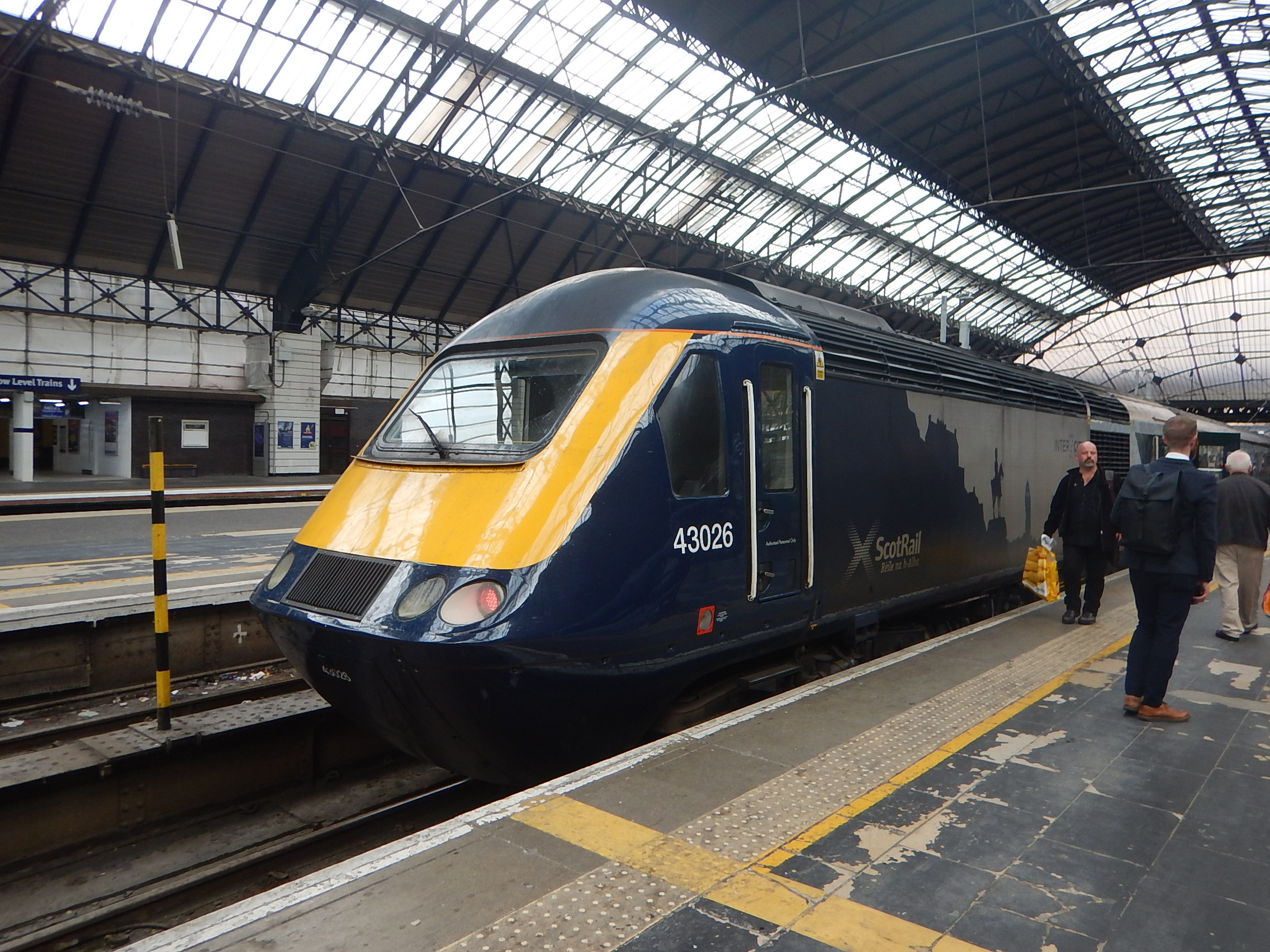
The picture shows a Class 43 power car at Glasgow Queen Street station.
Could Rolls-Royce mtu hydrogen power keep these iconic trains running for a few more years?
In ‘Spirit of Innovation’ Stakes Claim To Be The World’s Fastest All-Electric Vehicle, I look at Rolls-Royce’s Spirit of Innovation, which set the record for an electric vehicle at 555.9 km/hour.
As the InterCity125 already holds the record for the fastest diesel train, perhaps Rolls-Royce will attempt to set a record for the fastest hydrogen-powered train?
Decarbarbonising The CAF Class 195, 196 And 197 Trains
If Rolls-Royce mtu develop a hydrogen version of the 1800 diesel engine, then this could be used to fully decarbonise the CAF trains.
The operators may consider it’s not worth it and continue with using sustainable fuels.
But the possibility is surely there.
There must also be the possibility of developing a fuel cell replacement for the 1800 diesel, that can be slotted into the train.
Decarbarbonising The Hitachi Class 80x Trains
Hitachi are developing battery packs and the data sheet can be downloaded from this page on the Hitachi web site.
Decarbarbonising The CAF Tri-Mode Trains
I feel that as CAF usually use Rolls-Royce mtu engines, I suspect these trains will be designed, so they can be converted to hydrogen.
Conclusion
Rolls-Royce mtu appear to be on a path to decarbonise all their diesel engines.
 The Anonymous Widower