Geo-located Advertising
I took this picture on the TransPennine Express service from Cleethorpes to Doncaster.
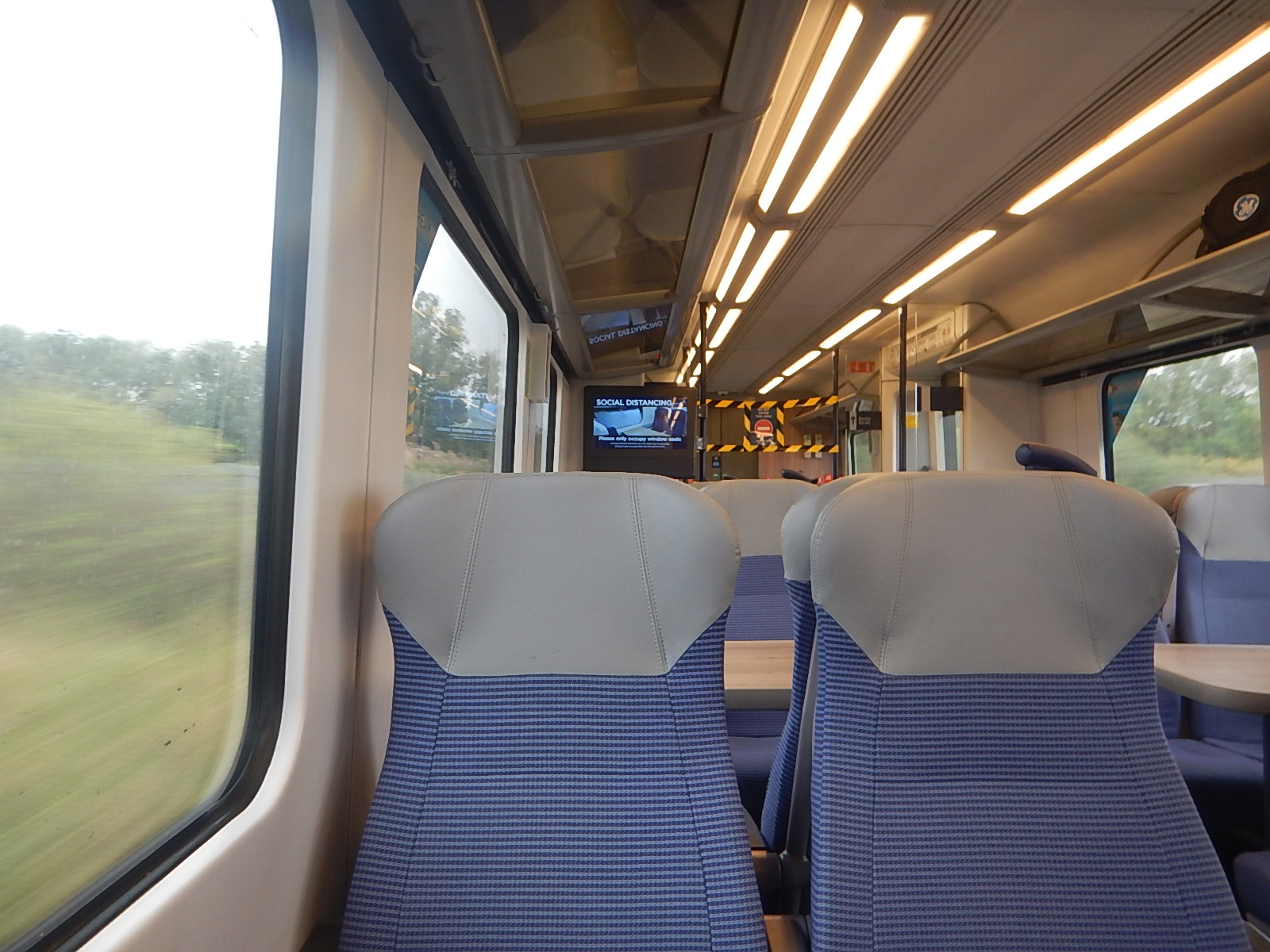
We were approaching Habrough station at the time, and I’d just seen an advert on the screen for Habrough Taxis.
It must have been displayed because of the location of the train. Very useful for everybody!
Cleethorpes Station – 16th September 2020
On Wednesday, I took a trip on the South Humberside Main Line from Doncaster to Cleethorpes and back.
Cleethorpes station is a terminal station on the beach, with cafes not far away.




This Google Map shows the station and its position on the sea-front and the beach.
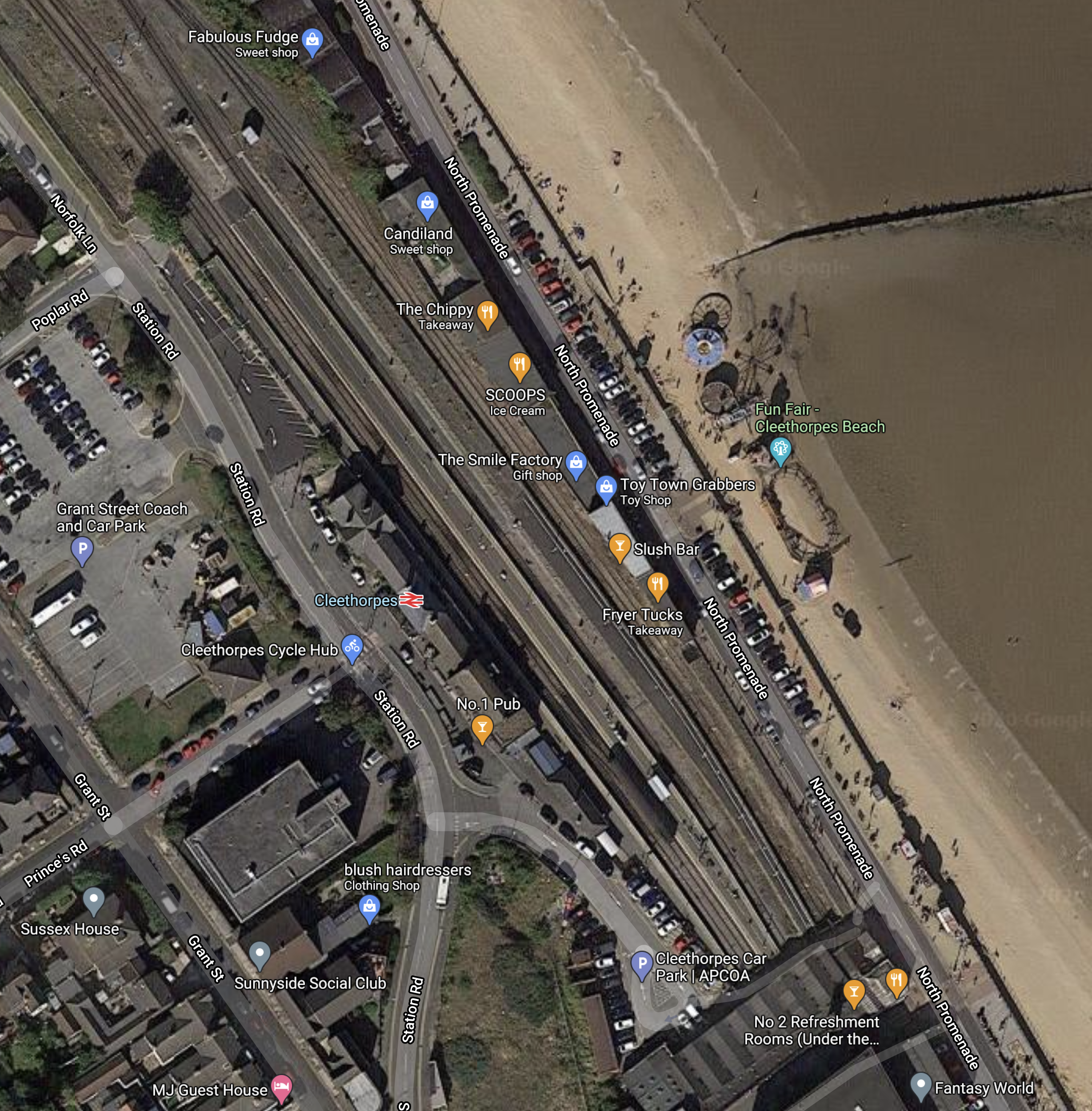
The station organisation was a bit shambolic at present, probably more to do with COVID-19 than anything else, but the station and the train services could be developed into something much better, when the good times return, as they surely will.
Improving The Station Facilities
The original station building is Grade II Listed and although it is only only a three-platform station, there used to be more platforms.
Five platforms or even six would be possible, if there were to be a need.
But as the station has wide platforms, is fully step-free and has most facilities passengers need, most of the improvements would involve restoring the original station building for a productive use.
The Current Train Service
The main train service is an hourly TransPennine Express service between Cleethorpes and Manchester Airport stations via Grimsby Town, Scunthorpe, Doncaster, Sheffield and Manchester Piccadilly.
The trains are Class 185 trains, which are modern diesel multiple units, which entered service in 2006.
There is also a two-hourly service along the Barton Line to Barton-upon-Humber station.
It should be noted that all services to and from Cleethorpes, call at Grimsby Town station.
Could The TransPennine Service Be Run By Battery Electric Trains?
The route between Cleethorpes and Manchester Airport can be split into the following legs.
- Cleethorpes and Grimsby Town – Not Electrified – 3,25 miles – 8 minutes
- Grimsby Town and Habrough – Not Electrified – 8 miles – 12 minutes
- Habrough and Doncaster – Not Electrified – 41 miles – 56 minutes
- Doncaster and Sheffield – Not Electrified – 19 miles – 29 minutes
- Sheffield and Stockport – Not Electrified – 37 miles – 41 minutes
- Stockport and Manchester Piccadilly – Electrified – 6 miles – 10 minutes
- Manchester Piccadilly and Manchester Airport – Electrified – 11 miles – 12 minutes
Note.
- At the Manchester end of the route, trains are connected to the electrification for at least 44 minutes.
- The longest non-electrified leg is the 52 miles between Cleethorpes and Doncaster stations.
- Doncaster is a fully-electrified station.
This infographic shows the specification of a Hitachi Regional Battery Train.

TransPennine Express has a fleet of nineteen Class 802 trains, which can have their diesel engines replaced with battery packs to have a train with the following performance.
- 125 mph operating speed, where electrification exists.
- 56 mile range at up to 100 mph on battery power.
- 15 minute battery charge time.
- Regenerative braking to battery.
- They are a true zero-carbon train.
What infrastructure would be needed, so they could travel between Cleethorpes and Manchester Airport stations?
- If between Cleethorpes and Habrough stations were to be electrified, this would give at least 20 minutes of charging time, plus the time taken to turn the train at Cleethorpes. This would surely mean that a train would leave for Manchester, with a full load of electricity on board and sufficient range to get to Doncaster and full electrification.
- If between Doncaster and Sheffield were to be electrified, this would give at least 25 minutes of charging time, which would be enough time to fully-charge the batteries, so that Grimsby Town in the East or Stockport in the West could be reached.
I suspect that Doncaster and Sheffield could be an early candidate for electrification for other reasons, like the extension of the Sheffield tram-train from Rotherham to Doncaster.
Could The Cleethorpes And Barton-on-Humber Service Be Run By Battery Electric Trains?
Cleethorpes And Barton-on-Humber stations are just 23 miles apart.
This is probably a short enough route to be handled on and out and back basis, with charging at one end by a battery electric train. Vivarail are claiming a sixty mile range for their battery electric Class 230 trains on this page of their web site.
If between Cleethorpes and Grimsby Town stations were to be electrified, this would mean that a range of only forty miles would be needed and the batteries would be charged by the electrification.
A full hourly service, which is surely needed, would need just two trains for the service and probably a spare.
Cleethorpes And London King’s Cross Via Grimsby Town, Market Rasen, Lincoln Central And Newark North Gate
The Wikipedia entry for Cleethorpes station has references to this service.
This is the historical perspective.
In the 1970s Cleethorpes had a twice daily return service to London King’s Cross, typically hauled by a Class 55 Deltic.
That must have been an impressive sight.
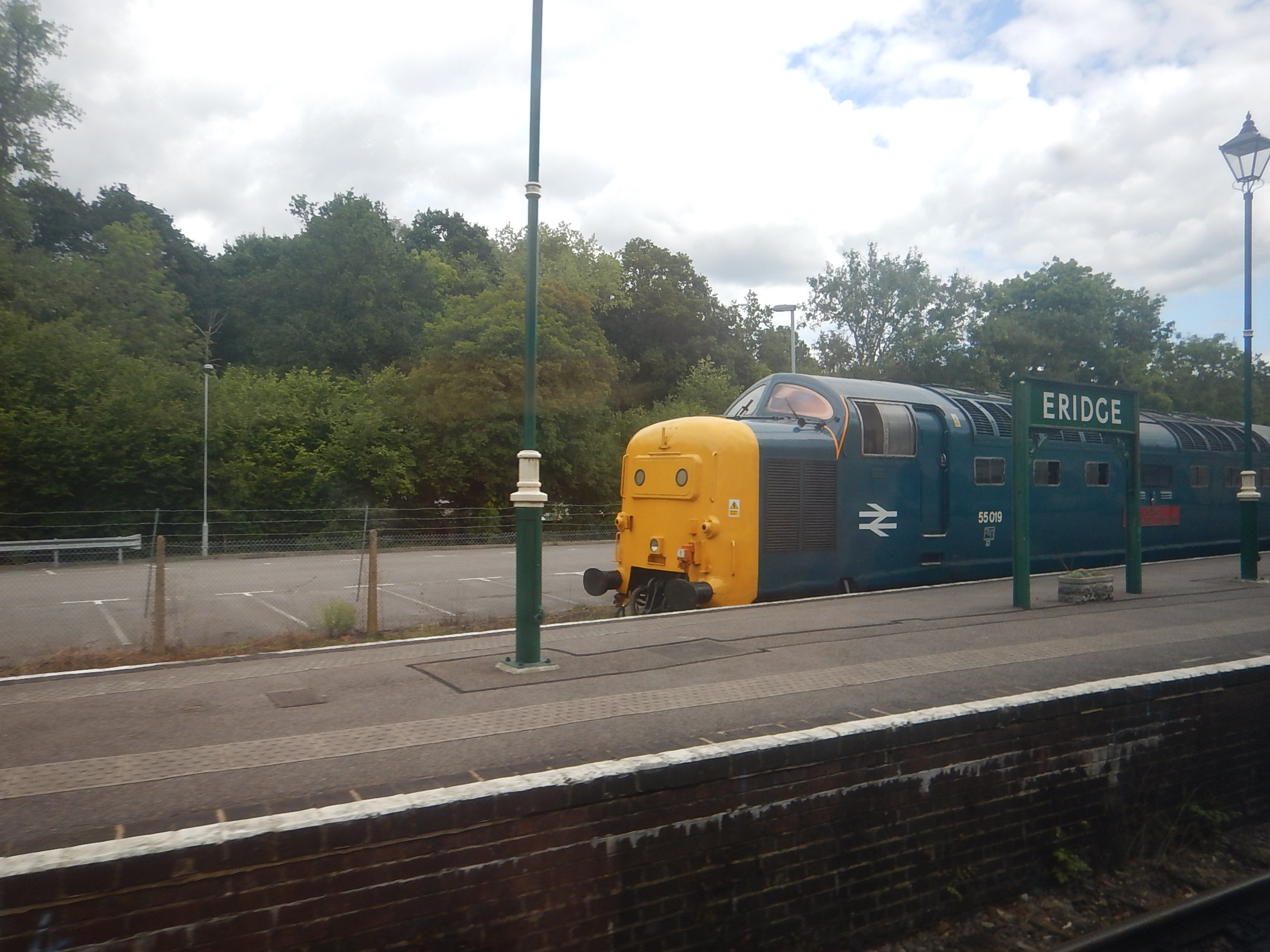
And this was National Express East Coast’s plan.
In August 2007, after National Express East Coast was awarded the InterCity East Coast franchise, it proposed to start services between Lincoln and London King’s Cross from December 2010 with one morning service and one evening service extending from Lincoln to Cleethorpes giving Cleethorpes a link to London and calling at Grimsby Town and Market Rasen. These services were to be operated using the Class 180s but was never introduced. These services were scrapped when East Coast took over the franchise.
It came to nothing, but LNER have been running up to five trains per day (tpd) between London King’s Cross and Lincoln.
I will split the route into legs.
- London King’s Cross and Newark North Gate- Electrified – 120 miles
- Newark North Gate and Lincoln Central – Not Electrified – 16,5 miles
- Lincoln Central and Market Rasen – Not Electrified – 15 miles
- Market Rasen and Habrough – Not Electrified – 21 miles
- Habrough and Grimsby Town – Not Electrified – 8 miles
- Grimsby Town and Cleethorpes – Not Electrified – 3.25 miles
Note that a round trip between Newark North Gate and Lincoln Central is thirty-three miles.
This means it would be possible for one of LNER’s Class 800 trains, that had been fitted with a battery pack and converted into one of Hitachi’s Regional Battery trains, would be able to run a London King’s Cross and Lincoln Central service without using a drop of diesel or needing a charge at Lincoln Central station.
Would it be possible to extend this service to Grimsby Town on battery power?
I suggested earlier that between Cleethorpes and Habrough should be electrified.
As Newark North Gate and Habrough stations are 52.5 miles apart, it would be rather tight for a battery electric train to cover the whole route without an extra charge somewhere.
Possible solutions could be.
- Fit a bigger battery in the trains.
- Extend the electrification at Newark North Gate station.
- Extend the electrification at Habrough station.
I;m sure that there is a solution, that is easy to install.
Conclusion
If between Habrough and Cleethorpes station were to be electrified, these services could be run by battery electric trains.
- Cleethorpes and Manchester Piccadilly
- Cleethorpes and Barton-on-Humber
- Cleethorpes and London King’s Cross
Note.
- The Manchester and London services would be run by Hitachi Regional Battery Trains converted from Class 800 and Class 802 trains.
- The Barton service could be run by a Vivarail Class 230 train or similar.
The first two services would be hourly, with the London service perhaps 1 or 2 tpd.
Cleethorpes would be well and truly on the rail network.
Hull Issues New Plea For Electrification
The title of this post, is the same as that of this article on Rail Magazine.
This is the introductory paragraph.
Residents and businesses in Hull are being urged to support electrification of the railway to Selby and Sheffield.
This paragraph is about the difficulty of electrifying the route.
“Unlike elsewhere on the trans-Pennine routes, work here can start straightaway and would be a quick win. Our plans involve few extra land purchases, no tunnel widening, and no re-routing,” said Daren Hale, Hull City Council and Hull’s representative on the Transport for the North board.
Services to Hull station are as follows.
- Hull Trains – London Kings Cross and Hull via Selby, Howden and Brough.
- Hull Trains – Beverley and Hull via Cuttingham
- LNER – London Kings Cross and Hull via Selby and Brough
- Northern Trains – Halifax and Hull via Bradford Interchange, New Pudsey, Bramley, Leeds, Cross Gates, Garforth, East Garforth, Micklefield, South Milford, Selby and Brough
- Northern Trains – Sheffield and Hull via Meadowhall, Rotherham Central, Swinton, Mexborough, Conisbrough, Doncaster, Kirk Sandall, Hatfield & Stainforth, Thorne North, Goole, Saltmarshe, Gilberdyke, Broomfleet, Brough, Ferriby and Hessle,
- Northern Trains – Bridlington and Hull via Nafferton, Driffield, Hutton Cranswick, Arram, Beverley and Cottingham.
- Northern Trains – Scarborough and Hull via Seamer, Filey, Hunmanby, Bempton, Bridlington, Nafferton, Driffield, Hutton Cranswick, Arram, Beverley and Cottingham.
- Northern Trains – York and Hull via Selby, Howden, Gilberdyke and Brough.
- TransPennine Express – Manchester Piccadilly and Hull via Stalybridge, Huddersfield, Leeds, Selby, Brough
Note.
- Some services are joined back-to-back with a reverse at Hull station.
- I have simplified some of the lists of intermediate stations.
- Services run by Hull Trains, LNER or TransPennine Express use bi-mode Class 800 or Class 802 trains.
- All routes to Hull station and the platforms are not electrified.
Trains approach Hull by three routes.
- Selby and Brough
- Goole and Brough
- Beverley and Cottingham
Could these three routes be electrified?
I have just flown my helicopter along all of them.
I’ve also had a lift in the cab of a Class 185 train between Hull and Leeds, courtesy of Don Coffey.
Hull And Selby via Brough
There is the following infrastructure.
- Several major road overbridges, which all seem to have been built with clearance for overhead wires.
- There are also some lower stone arch bridges, which may need to be given increased clearance.
- No tunnels
- The historic Selby Swing Bridge.
- Four farm crossings.
- Fourteen level crossings.
Hull And Goole via Brough
There is the following infrastructure.
- Several major road overbridges, which all seem to have been built with clearance for overhead wires.
- No tunnels
- A swing bridge over the River Ouse.
- A couple of farm crossings
- Six level crossings
Hull And Beverley via Cottingham
There is the following infrastructure.
- A couple of major road overbridges, which all seem to have been built with clearance for overhead wires.
- No tunnels
- A couple of farm crossings
- Six level crossings
All of the routes would appear to be.
- At least double track.
- Not in deep cuttings.
- Mainly in open countryside.
- Built with lots of level crossings
I feel that compared to some routes, they would be easy to electrify, but could cause a lot of disruption, whilst the level crossings and the two swing bridges were electrified.
Speeding Up Services To And From Hull
What Are The Desired Timings?
The Rail Magazine article says this about the desired timings.
Should the plans be approved, it is expected that Hull-Leeds journey times would be cut from 57 minutes to 38, while Hull-Sheffield would drop from 86 minutes to 50 minutes.
These timings are in line with those given in this report on the Transport for the North web site, which is entitled At A Glance – Northern Powerhouse Rail,
The frequency of both routes is given in the report as two trains per hour (tph)
The Performance Of An Electric Class 802 Train
As Hull Trains, LNER and TransPennine Express will be using these trains or similar to serve Hull, I will use these trains for my calculations.
The maximum speed of a Class 802 train is 125 mph or 140 mph with digital in-cab signalling.
This page on the Eversholt Rail web site, has a data sheet for a Class 802 train.
The data sheet shows the following for a five-car Class 802 train.
It can accelerate to 100 mph and then decelerate to a stop in 200 seconds in electric mode.
The time to 125 mph and back is 350 seconds.
Thoughts On Hull And Leeds
Consider.
- The Hull and Leeds route is 52 miles long, is timed for a 75 mph train and has an average speed of 55 mph
- There are three intermediate stops for fast services, which means that in a Hull and Leeds journey, there are four accelerate-decelerate cycles.
- A 38 minute journey between Hull and Leeds would be an average speed of 82 mph
- A train travelling at 100 mph would take 31 minutes to go between Hull and Leeds.
- A train travelling at 125 mph would take 25 minutes to go between Hull and Leeds.
I also have one question.
What is the speed limit on the Selby Swing Bridge?
I have just been told it’s 25 mph. As it is close to Selby station, it could probably be considered that the stop at Selby is a little bit longer.
These could be rough timings.
- A train travelling at 100 mph would take 31 minutes to go between Hull and Leeds plus what it takes for the four stops. at 200 seconds a stop, which adds up to 43 minutes.
- A train travelling at 125 mph would take 25 minutes to go between Hull and Leeds plus what it takes for the four stops. at 350 seconds a stop, which adds up to 48 minutes.
Note how the longer stopping time of the faster train slows the service.
I think it would be possible to attain the required 38 minute journey, running at 100 mph.
Thoughts On Hull And Sheffield
Consider.
- The Hull and Sheffield route is 61 miles long, is timed for a 90 mph train and has an average speed of 43 mph
- There are five intermediate stops, which means that in a Hull and Sheffield journey, there are six accelerate-decelerate cycles.
- A 50 minute journey between Hull and Leeds would be an average speed of 73 mph.
- A train travelling at 100 mph would take 36 minutes to go between Hull and Sheffield.
- A train travelling at 125 mph would take 29 minutes to go between Hull and Sheffield.
I also have one question.
What is the speed limit on the swing bridge over the River Ouse?
As there is no nearby station, I suspect it counts as another stop, if it only has a 25 mph limit.
These could be rough timings.
- A train travelling at 100 mph would take 36 minutes to go between Hull and Sheffield plus what it takes for the six stops. at 200 seconds a stop, which adds up to 56 minutes.
- A train travelling at 125 mph would take 29 minutes to go between Hull and Sheffield plus what it takes for the six stops. at 350 seconds a stop, which adds up to 64 minutes.
Note how the longer stopping time of the faster train slows the service.
I think it would be possible to attain the required 50 minute journey, running at 100 mph.
Conclusions From My Rough Timings
Looking at my rough timings, I can conclude the following.
- The trains will have to have the ability to make a station stop in a very short time. Trains using electric traction are faster at station stops.
- The trains will need to cruise at a minimum of 100 mph on both routes.
- The operating speed of both routes must be at least 100 mph, with perhaps 125 mph allowed in places.
- I feel the Hull and Leeds route is the more difficult.
I also think, that having a line running at 100 mph or over, with the large number of level crossings, there are at present, would not be a good idea.
What Does Hull Want?
Hull wants what Northern Powerhouse Rail is promising.
- Two tph between Hull and Leeds in 38 minutes and Hull and Sheffield in 50 minutes.
They’d probably also like faster electric services between Hull and Bridlington, London Kings Cross, Manchester, Scarborough and York.
When Do They Want It?
They want it now!
Is There An Alternative Solution, That Can Be Delivered Early?
This may seem to be the impossible, as electrifying between Hull and Leeds and Hull and Sheffield is not an instant project, although full electrification could be an ultimate objective.
Consider.
- Hull and Brough are 10.5 miles apart.
- Brough and Leeds are 41 miles apart.
- Brough and Doncaster are 30 miles apart and Doncaster and Sheffield are 20 miles apart.
- Brough and Temple Hirst Junction are 26 miles apart.
- Brough and York are 42 miles apart.
- Hull and Beverley are 8 miles apart.
- Beverley and Bridlington are 23 miles apart.
- Beverley and Seamer are 42 miles apart.
Note that Doncaster, Leeds and Temple Hirst Junction are all electrified.
Hitachi’s Regional Battery Train
Hitachi have just launched the Regional Battery Train, which is described in this Hitachi infograpic.
It has a range of 56 miles and an operating speed of 100 mph.
Class 800 and Class 802 trains could be converted into Regional Battery Trains.
- The three diesel engines would be exchanged for battery packs.
- The trains would still be capable of 125 mph on fully-electrified routes like the East Coast Main Line.
- They would be capable of 100 mph on routes like the 100 mph routes from Hull.
- The trains would have full regenerative braking to batteries, which saves energy.
- Below 125 mph, their acceleration and deceleration on battery power would probably be the same as when using electrification. It could even be better due to the simplicity and low impedance of batteries.
But they would need some means of charging the batteries at Hull.
A Start To Electrification
If the ultimate aim is to electrify all the lines, then why not start by electrifying.
- Hull station.
- Hull and Brough
- Hull and Beverley
It would only be 18.5 miles of electrification and it doesn’t go anywhere near the swing bridges or about six level crossings.
Battery Electric Services From Hull
I will now look at how the various services could operate.
Note in the following.
- When I say Regional Battery Train, I mean Hitachi’s proposed train or any other battery electric train with a similar performance.
- I have tried to arrange all power changeovers in a station.
- Pantograph operation can happen at line-speed or when the train is stationary.
I have assumed a range of 56 miles on a full battery and an operating speed of 100 mph on a track that allows it.
Hull And London Kings Cross
The legs of the service are as follows.
- Hull and Brough – 10.5 miles – Electrified
- Brough and Temple Hirst Junction – 26 miles – Not Electrified
- Temple Hirst Junction and London Kings Cross – 169 miles – Electrified
Note.
- Hull and Brough takes about 11 minutes, so added to the time spent in Hull station, this must be enough time to fully-charge the batteries.
- Regional Battery Trains will be able to do 56 miles on a full battery so 26 miles should be easy.
- One changeover between power sources will be done in Brough station.
- The other changeover will be done at line speed at Temple Hirst Junction, as it is now!
Hull Trains and LNER would be able to offer an all-electric service to London.
A few minutes might be saved, but they would be small compared to time savings, that will be made because of the introduction of full ERTMS in-cab signalling South of Doncaster, which will allow 140 mph running.
Hull And Leeds
The legs of the service are as follows.
- Hull and Brough – 10.5 miles – Electrified
- Brough and Leeds – 41 miles – Not Electrified.
Note.
- Hull and Brough takes about 11 minutes, so added to the time spent in Hull station, this must be enough time to fully-charge the batteries.
- Regional Battery Trains will be able to do 56 miles on a full battery so 41 miles should be easy.
- One changeover between power sources will be done in Brough station, with the other in Leeds station.
If Leeds and Huddersfield were to be electrified, TransPennine Express will be able to run an all-electric service between Manchester and Hull, using battery power in the gaps.
Hull And Sheffield
The legs of the service are as follows.
- Hull and Brough – 10.5 miles – Electrified
- Brough and Doncaster – 30 miles – Not Electrified
- Doncaster and Sheffield – 20 miles – Not Electrified
Note.
- Hull and Brough takes about 11 minutes, so added to the time spent in Hull station, this must be enough time to fully-charge the battery.
- Regional Battery Trains will be able to do 56 miles on a full battery so 30 miles should be easy.
- Trains would charge using the electrification at Doncaster.
- Doncaster and Sheffield both ways should be possible after a full charge at Doncaster station.
- One changeover between power sources will be done in Brough station, with the others in Doncaster station.
An easier alternative for the Doncaster and Sheffield part of the route, might be to electrify between the two stations.
Hull And York
The legs of the service are as follows.
- Hull and Brough – 10.5 miles – Electrified
- Brough and York- 42 miles – Not electrified
Note.
- Hull and Brough takes about 11 minutes, so added to the time spent in Hull station, this must be enough time to fully-charge the batteries.
- Regional Battery Trains will be able to do 56 miles on a full battery so 42 miles should be easy.
- One changeover between power sources will be done in Brough station, with the other in York station.
- Trains would be fully charged for the return in York station.
This journey will also be effected by the York to Church Fenton Improvement Scheme, which is described on this page on the Network Rail web site. According to the web page this involves.
- Replace old track, sleepers, and ballast (The stones which support the track)
- Install new signalling gantries, lights, and cabling
- Fully electrify the route from York to Church Fenton – extending the already electrified railway from York.
There will be another five miles of electrification., which will mean the legs of the Hull and York service will be as follows.
- Hull and Brough – 10.5 miles – Electrified
- Brough and Church Fenton – 31.5 miles – Not Electrified
- Church Fenton and York – 10.5 miles – Electrified
It is a classic route for a battery electric train.
Note.
- Church Fenton and York takes about 19 minutes, so added to the time spent in York station, this must be enough time to fully-charge the batteries.
- There will be a changeover between power sources in Church Fenton station.
This appears to me to be a very sensible addition to the electrification.
If you look at a Leeds and York, after the electrification it will have two legs.
- Leeds and Church Fenton – 13 miles – Not Electrified
- Church Fenton and York – 10.5 miles – Electrified
It is another classic route for a battery electric train.
Hull And Bridlington
The legs of the service are as follows.
- Hull and Beverley – 13 miles – Electrified
- Beverley and Bridlington – 23 miles – Not Electrified
Note.
- Hull and Beverley takes about 13 minutes, so added to the time spent in Hull station, this must be enough time to fully-charge the batteries.
- Regional Battery Trains will be able to do 56 miles on a full battery so 46 miles to Bridlington and back to Beverley, should be possible.
- The changeovers between power sources would be in Beverley station.
If necessary, there is a bay platform at Bridlington, that could be fitted with simple electrification to charge the trains before returning.
Hull And Scarborough
The legs of the service are as follows.
- Hull and Beverley – 13 miles – Electrified
- Beverley and Seamer- 42 miles – Not Electrified
- Seamer and Scarborough – 3 miles – Not Electrified
Note.
- Hull and Beverley takes about 13 minutes, so added to the time spent in Hull station, this must be enough time to fully-charge the batteries.
- Regional Battery Trains will be able to do 56 miles on a full battery so 45 miles to Scarborough should be easy.
- The changeovers between power sources would be in Beverley station.
There would need to be charging at Scarborough, so why not electrify between Scarborough and Seamer?
- Power changeover would be in Seamer station.
- The electrification could also charge battery electric trains running between York and Scarborough.
- Seamer and York are 39 miles apart.
- All Northern Trains and TransPennine Express services appear to stop in Seamer station.
This could be three very useful miles of electrification.
Could This Plan Based On Battery Trains Be Delivered Early?
The project could be divided into sub-projects.
Necessary Electrification
Only these double-track routes would need to electrified.
- Hull and Brough
- Hull and Beverley
- Seamer and Scarborough
- Doncaster and Sheffield might be sensible but optional.
This also install electrification at Hull and Scarborough stations to charge terminating trains.
In total it would be under twenty-five double-track miles of electrification.
Note.
- There are no swing bridges on the routes to be electrified.
- There are no tunnels
- Many of the overbridges appear to be modern with adequate clearance for electrification.
- I don’t suspect that providing adequate power will be difficult.
- Hull and Scarborough are larger stations and I believe a full service can be provided, whilst the stations are being electrified.
It would not be a large and complicated electrification project.
Conversion Of Class 800 And Class 802 Trains To Regional Battery Trains
Whilst the electrification was being installed, the existing Class 800 and Class 802 trains needed by Hull Trains, LNER and TransPennine Express could be converted to Regional Battery Trains, by the replacement of some or all of the diesel engines with battery power-packs.
I suspect LNER or GWR could be the lead customer for Hitachi’s proposed conversion of existing trains.
- Both train companies have routes, where these trains could be deployed without any electrification or charging systems. Think London Kings Cross and Harrogate for LNER and Paddington and Oxford for GWR.
- Both train companies have large fleets of five-car trains, that would be suitable for conversion.
- Both train companies have lots of experience with Hitachi’s trains.
It should be noted that GWR, Hull Trains and TransPennine Express are all part of the same company.
What About Northern Trains?
Northern Trains will need some battery electric trains, if this plan goes ahead, to run routes like.
- Hull and Bridlington – 46 miles
- Hull and Leeds – 41 miles
- Hull and Scarborough – 42 miles
- Hull and Sheffield – 40 miles
- Hull and York – 42 miles
- Scarborough and York – 31.5 miles
- The distances are the lengths of the route without electrification.
I suspect they will need a train with this specification.
- Four cars
- Ability to use 25 KVAC overhead electrification.
- Battery range of perhaps 50 miles.
- 100 mph operating speed.
There are already some possibilities.
- CAF are talking about a four-car battery electric version of the Class 331 train.
- Hitachi have mentioned a battery electric Class 385 train.
- Porterbrook have talked about converting Class 350 trains to battery electric operation.
- Bombardier have talked about battery electric Aventras.
There are also numerous four-car electric trains, that are coming off lease that could be converted to battery electric operation.
When Could The Project Be Completed?
There are three parts to the project.
- Under twenty-five double-track miles of electrification.
- Adding batteries to Class 800 and Class 802 trains.
- Battery electric trains for Northern.
As the sub-projects can be progressed independently, I can see the project being completely by the end of 2024.
Across The Pennines In A Regional Battery Train
By providing the ability to run Class 802 trains on battery power to Hull and Scarborough, the ability to run Regional Battery Trains from Liverpool in the West to Hull, Middlesbrough and Scarborough in the East under electric power, could become possible.
Looking at Liverpool and Scarborough, there are these legs.
- Liverpool Lime Street and Manchester Victoria – 32 miles – Electrified
- Manchester Victoria and Stalybridge – 8 miles – Not Electrified
- Stalybridge and Huddersfield – 18 miles – Not Electrified
- Huddersfield and Leeds – 17 miles – Not Electrified
- Leeds and York – 26 miles – Not Electrified
- York and Scarborough – 42 miles – Not Electrified
Note.
- East of Manchester Victoria, there is electrification in Leeds and York stations, which could charge the train fully if it were in the station for perhaps ten minutes.
- Currently, stops at Leeds and York are around 4-5 minutes.
- Manchester Victoria and Stalybridge is being electrified.
- In this post, I have suggested that between Seamer and Scarborough should be electrified to charge the trains.
- I have also noted that between Church Fenton and York is being fully electrified.
This could mean power across the Pennines between Liverpool and Scarborough could be as follows.
- Liverpool Lime Street and Manchester Victoria – 32 miles – Electrification Power and Charging Battery
- Manchester Victoria and Stalybridge – 8 miles – Electrification Power and Charging Battery
- Stalybridge and Huddersfield – 18 miles – Battery Power
- Huddersfield and Leeds – 17 miles – Battery Power
- Leeds station – Electrification Power and Charging Battery
- Leeds and Church Fenton – 13 miles – Battery Power
- Church Fenton and York – 10.5 miles – Electrification Power and Charging Battery
- York and Seamer – 39 miles – Battery Power
- Seamer and Scarborough – 3 miles – Electrification Power and Charging Battery
There are three stretches of the route, where the train will be run on battery power.
- Stalybridge and Leeds – 35 miles
- Leeds and Church Fenton – 13 miles
- York and Seamer – 39 miles
There will be charging at these locations.
- West of Stalybridge
- Through Leeds Station
- Through York Station
- East of Seamer Station
I feel it could be arranged that trains left the charging sections and stations with a full battery, which would enable the train to cover the next section on battery power.
To make things even easier, Network Rail are developing the Huddersfield And Westtown Upgrade, which will add extra tracks and eight miles of new electrification between Huddersfield and Dewsbury.
This would change the power schedule across the Pennines between Liverpool and Scarborough to this.
- Liverpool Lime Street and Manchester Victoria – 32 miles – Electrification Power and Charging Battery
- Manchester Victoria and Stalybridge – 8 miles – Electrification Power and Charging Battery
- Stalybridge and Huddersfield – 18 miles – Battery Power
- Huddersfield and Dewsbury – 8 miles – Electrification Power and Charging Battery
- Fewsbury and Leeds – 9 miles – Battery Power
- Leeds station – Electrification Power and Charging Battery
- Leeds and Church Fenton – 13 miles – Battery Power
- Church Fenton and York – 10.5 miles – Electrification Power and Charging Battery
- York and Seamer – 39 miles – Battery Power
- Seamer and Scarborough – 3 miles – Electrification Power and Charging Battery
There are now four stretches of the route, where the train will be run on battery power.
- Stalybridge and Huddersfield – 18 miles
- Dewsbury and Leeds – 9 miles
- Leeds and Church Fenton – 13 miles
- York and Seamer – 39 miles
I can envisage the electrification being extended.
But battery power on this route gives all the advantages of electric trains, with none of the costs and installation problems of electrification.
Conclusion
I believe a limited electrification of lines for a few miles from the coastal terminals at Hull and Scarborough and battery electric trains can deliver zero-carbon and much faster electric trains to the railways of Yorkshire to the East of Leeds, Sheffield and York.
If this approach is used, the electrification will be much less challenging and if skates were to be worn, the scheme could be fully-implemented in around four years.
The scheme would also deliver the following.
- Faster, all-electric TransPennine services.
- An all-electric Hull and London service.
- A substantial move towards decarbonisation of passenger train services in East Yorkshire.
It is also a scheme, that could be extended South into Lincolnshire, across the Pennines to Lancashire and North to Teesside and Tyneside.
Liverpool’s Forgotten Tunnel
The Wapping Tunnel in Liverpool was designed by George Stephenson and was the first tunnel in the world to be bored under a city.
It used to take goods trains between Liverpool Docks and the Liverpool and Manchester Line.
During the 1970s preparations were made to connect the Wapping Tunnel to Merseyrail’s Northern Line, so that trains could run between the Northern Line and the City Line, which would have connected the North and East of the City.
But the project was never completed.
It now appears, the project is on the agenda again.
This article on TransportExtra is entitled Liverpool CR Develops Plan To Boost City Centre Rail Capacity.
The plan outlined is as follows.
- At present, as many as two thirds of trains on the Northern Line turn back as Liverpool Central station.
- Between four and eight trains per hour (tph) could be diverted into the Wapping Tunnel to serve places like St. Helens, Warrington Central and Wigan.
- This would free up platforms in Liverpool Lime Street station for Inter-City and Inter-Regional services.
It is also pointed out, that a 2016 study, didn’t find any serious technical problems with the project.
I do have my thoughts on this project.
Services That Could Be Connected
Local services running from Liverpool Lime Street station include.
Manchester Oxford Road Via Warrington Central
This service is run by Northern.
- It has a frequency of two tph.
- One service calls at Edge Hill, Mossley Hill, West Allerton, Liverpool South Parkway, Hunts Cross, Halewood, Hough Green, Widnes, Sankey For Penketh, Warrington West, Warrington Central, Birchwood, Irlam, Urmston and Deansgate.
- The other service calls at Mossley Hill, West Allerton, Liverpool South Parkway, Hough Green, Widnes, Warrington Central, Padgate, Birchwood, Glazebrook, Irlam, Flixton, Chassen Road (1tp2h), Urmston, Humphrey Park, Trafford Park and Deansgate
- Both trains appear to take the same route.
- Some stations like Liverpool South Parkway, Warrington West and Deansgate have lifts, but disabled access is patchy.
- The service has a dedicated terminal at Manchester Oxford Road, which is without doubt Manchester’s worst central station for location, access to the Metrolink, onward travel and step-free access.
- It takes seventy-two minutes. which is an inconvenient time for train operators.
- The route is electrified with 25 KVAC overhead electrification at both ends.
I’ve used this route several times and usually pick it up from Deansgate, as it has a convenient interchange to the Metrolink.
I am fairly certain that Merseyrail’s new Class 777 trains running on battery power in the middle could handle this route.
- They would charge the batteries at the electrified ends of the route.
- They would join the route at Edge Hill station.
- They would offer step-free access between train and platform.
- These trains are built for fast stops, so could all services call at all stations?
- On Merseyrail’s principles, the service would probably be at least two tph, if not four tph.
I estimate that these trains are fast enough to do the return trip between the Wapping Tunnel portal at Edge Hill and Manchester Oxford Road in under two hours.
- A two-four tph stopping service between Liverpool and Manchester City Centres, that took less than an hour, would be very convenient for passengers.
- The service would be well-connected to local tram, train and bus services in both City Centres.
- The service would also very easy for train schedulers to integrate with other services.
Liverpool and Manchester would have the world’s first battery-powered inter-city railway.
Other than the connection of the Wapping Tunnel no extra infrastructure works would be needed.
Wigan North Western Via St. Helens Central
This service is run by Northern.
- It has a frequency of two tph.
- The service calls at Edge Hill, Wavertree Technology Park, Broad Green, Roby, Huyton, Prescot, Eccleston Park, Thatto Heath, St Helens Central, Garswood and Bryn
- The route is fully-electrified with 25 KVAC overhead.
- It takes fifty-one minutes. which is a very convenient time for train operators.
Merseyrail’s new Class 777 trains could handle this route, if fitted with pantographs for 25 KVAC overhead electrification.
- They would join the route at Edge Hill station.
- They would offer step-free access between train and platform.
- On Merseyrail’s principles, the service would probably be at least two tph, if not four tph.
I estimate that these trains are fast enough to do the return trip between the Wapping Tunnel portal at Edge Hill and Wigan North Western in under two hours.
- A two-four tph stopping service between Liverpool and Wigan, that took less than an hour, would be very convenient for passengers.
- Wigan North Western has good connections using the West Coast Main Line.
- The service would also very easy for train schedulers to integrate with other services.
Other than the connection of the Wapping Tunnel no extra infrastructure works would be needed.
Blackpool North
This service is run by Northern.
- It has an hourly frequency.
- The service calls at Huyton, St Helens Central, Wigan North Western, Euxton Balshaw Lane, Leyland, Preston, Kirkham & Wesham and Poulton-le-Fylde
- The route is fully-electrified with 25 KVAC overhead.
- It takes seventy-seven minutes. which is a reasonable time for train operators.
This is a service that could continue as now, but would probably be timed to fit well with four Merseyrail trains between the Wapping Tunnel and Wigan North Western.
Manchester Airport Via Warrington Central And Manchester Piccadilly
This service is run by Northern.
- It has an hourly frequency.
- The service calls at Liverpool South Parkway, Warrington West, Warrington Central, Birchwood, Manchester Oxford Road, Manchester Piccadilly and Mauldeth Road
- The route is partially-electrified with 25 KVAC overhead.
- The service is operated by diesel trains.
- The service uses the overcrowded Castlefield Corridor.
- It takes sixty-nine minutes, which is an inconvenient time for train operators.
This is one of those services, which I think will eventually be partially replaced by other much better services.
- Northern Powerhouse Rail is planning six tph between Liverpool Lime Street and Manchester Piccadilly via Warrington South Parkway and Manchester Airport, which will take just twenty-six minutes.
- Two-four tph on the route between Liverpool Lime Street and Manchester Oxford Road via Warrington Central would be a better service for the smaller stations. Passengers going to and from Manchester Airport would change at Liverpool Lime Street, Deansgate or Manchester Oxford Road.
Continuing as now, would definitely be possible.
Crewe And Manchester Airport Via Newton-le-Willows And Manchester Piccadilly
This service is run by Northern.
- It has an hourly frequency.
- The service calls at Edge Hill, Wavertree Technology Park, Broad Green, Roby, Huyton, Whiston, Rainhill, Lea Green, St Helens Junction, Earlestown, Newton-le-Willows, Patricroft, Eccles, Deansgate, Manchester Oxford Road, Manchester Piccadilly, Mauldeth Road, Burnage, East Didsbury, Gatley and Heald Green.
- The route is fully-electrified with 25 KVAC overhead.
- The service uses the overcrowded Castlefield Corridor
- It takes eighty-five minutes, which is an inconvenient time for train operators.
This is one of those services, which I think will eventually be partially replaced by other much better services.
- Northern Powerhouse Rail is planning six tph between Liverpool Lime Street and Manchester Piccadilly via Warrington South Parkway and Manchester Airport, which will take just twenty-six minutes.
- Two-four tph on the route between Liverpool Lime Street and Wigan North Western would be a better service for the smaller stations. Passengers going to and from Manchester Airport and Crewe would change at Liverpool Lime Street or Wigan North Western.
Continuing as now, would definitely be possible.
Warrington Bank Quay Via Earlstown
This service is run by Northern.
- It has an hourly frequency.
- The service calls at Edge Hill, Wavertree Technology Park, Broad Green, Roby, Huyton, Whiston, Rainhill, Lea Green, St Helens Junction and Earlestown.
- The route is fully-electrified with 25 KVAC overhead.
- The service takes forty-three minute, which is a convenient time for train operators.
Merseyrail’s new Class 777 trains could handle this route, if fitted with pantographs for 25 KVAC overhead electrification.
- They would join the route at Edge Hill station.
- They would offer step-free access between train and platform.
- On Merseyrail’s principles, the service would probably be at least two tph, if not four tph.
Other than the connection of the Wapping Tunnel no extra infrastructure works would be needed.
Three Possible Routes Through Wapping
Summing up this section, these are possible routes that could be replaced by services through the Wapping Tunnel.
- Two tph – Manchester Oxford Road
- Two tph – Warrington Bank Quay
- One tph – Wigan North Western
Increasing the Wigan North Western service to two tph, would increase the frequency between Edge Hill and Huyton to a very passenger-friendly four tph.
If eight tph could be accommodated in the Wapping Tunnel, the frequency could also be doubled to Manchester Oxford Road.
This would give the following services through the Wapping Tunnel.
- Four tph – Manchester Oxford Road
- Two tph – Warrington Bank Quay
- Two tph – Wigan North Western
The only local services that would need to run into Liverpool Lime Street would be.
- One tph – Northern – Blackpool North via Wigan North Western.
- One tph – Northern – Manchester Airport and Crewe via St. Helens and Newton-le-Willows.
- One tph – Northern – Manchester Airport via Warrington Central.
- One tph – Trains for Wales – Chester via Runcorn
I can understand, why so many seem to be enthusiastic about using the Wapping Tunnel to connect the Northern and City Lines.
Echoes Of The Brunels’ Thames Tunnel
George Stephenson’s Wapping Tunnel may be the first tunnel under a city, but the Brunels’ Thames Tunnel was the first under a navigable river.
The Brunels’ tunnel was built for horses and carts, but today it is an important rail artery of the London Overground, handling sixteen tph between Wapping and Rotherhithe.
I would expect that the Wapping Tunnel could do for Liverpool, what the Thames Tunnel has done for East London.
Modern signalling techniques probably mean that the theoretical capacity of the Wapping Tunnel is way in excess of the planned maximum frequency of eight tph.
High Speed Two Between Liverpool And London
The latest High Speed Two plans as laid out in the June 2020 Edition of Modern Railways, say that there will be two tph between Liverpool Lime Street and London Euston.
- Both trains will call at Old Oak Common, Crewe and Runcorn.
- Both trains will be 200 metres long classic-compatible High Speed Two trains.
- One train will split and join with a similar service between London Euston and Lancaster.
Will these High Speed Two services replace the current Avanti West Coast services?
Northern Powerhouse Rail Between Liverpool And Manchester
In Changes Signalled For HS2 Route In North, I looked at Transport for the North’s report, which is entitled At A Glance – Northern Powerhouse Rail.
This report says that Northern Powerhouse Rail between Liverpool and Manchester Piccadilly will be as follows.
- Services will go via Manchester Airport.
- There could be a new Warrington South Parkway station.
- Six tph between Liverpool and Manchester via Manchester Airport and Warrington are planned.
- Journey times will be 26 minutes.
I would assume that several of the six tph will continue across the Pennines to Huddersfield, Bradford, Leeds, York and Hull.
Will these Northern Powerhouse Rail services replace the current TransPennine and some of the Northern services?
Northern Powerhouse Rail Trains
Nothing has been said about the trains for Northern Powerhouse Rail.
I suspect they will be versions of the 200 metre long classic-compatible High Speed Two trains.
I do wonder, if Avanti West Coast have already ordered a prototype fleet of these trains,
Look at the specification of the Class 807 trains, they have ordered to boost services on the West Coast Main Line.
- 7 x 26 metre cars.
- 182 metres long. Shorter than an eleven-car Class 390 train.
- All-electric, with no diesel engines or traction batteries. Are they lightweight trains with sparkling acceleration?
- 125 mph operating speed. All Class 80x trains can do this.
- 140 mph operating speed with ERTMS digital signalling. All Class 80x trains can do this.
- Ability to work in pairs. All Class 80x trains can do this, up to a maximum length of twelve cars in normal mode and twenty-four cars in emergency mode. I doubt fourteen cars would be a problem!
To be classic-compatible High Speed Two trains, they would need to be able to cruise at 205 mph, whilst working on High Speed Two. I suspect that Hitachi have got some higher-capacity electrical gear and traction motors with lots more grunt in their extensive parts bin!
If these are a prototype fleet of classic-compatible High Speed Two trains, they will certainly get a lot of in-service testing even before the order is placed for the trains for High Speed Two.
Northern Powerhouse Rail will need trains with a slightly different specification.
- As they won’t generally work on high speed lines, for most trains an operating speed of 140 mph will be sufficient.
- For serving some destinations like Cleethorpes, Harrogate, Hull, Middlesbrough and Redcar an independently-powered capability would be desirable. Sixty miles on batteries would probably be sufficient!
Nothing would appear to be out of Hitachi’s current capabilities.
Liverpool Lime Street Station After Remodelling
Liverpool Lime Street station has two groups of platforms.
- Platforms 1-5 on the Western side
- Platforms 6-10 on the Eastern side.
These pictures show some views of the platforms at Liverpool Lime Street station after the remodelling of 2017-2019.
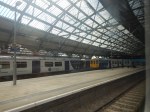
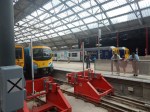
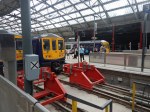

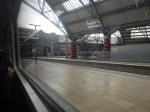
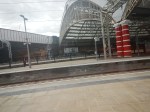
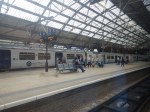
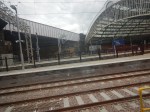
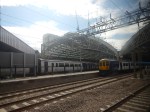

Note,
- The platforms are not narrow!
- It appears that the five platforms in the Eastern group are all long enough to take an eleven-car Class 390 train, which is 265.3 metres long.
- TransPennine Express trains can use the Western group.
I have looked at a whole day’s traffic on Real Time Trains and it appears that the new track layout allows almost all services to use any available platform.
This flexibility must make operation of the station much easily than it was!
Liverpool Lime Street Station As A High Speed Station
It would appear that the Eastern Group of Platforms 6-10 will all be capable of the following.
- Handling a 182 metre long Avanti West Coast Class 807 train.
- Handling a 200 metres long classic-compatible High Speed Two train.
- Handling a 130 metre long TransPennine Express Class 802 train.
- In the future, handling a Northern Powerhouse Rail train, which will probably be less than 200 metres long.
But they won’t be able to handle High Speed Two’s full-size trains.
Currently, these services capable of over 125 mph are running or are planned from Liverpool Lime Street station.
- 2 tph – Avanti West Coast – Liverpool Lime Street and London Euston
- 1 tph – TransPennine Express – Liverpool Lime Street and Newcastle
- 1 tph – TransPennine Express – Liverpool Lime Street and Scarborough
- 3 trains per day(tpd) – TransPennine Express – Liverpool Lime Street and Glasgow
This totals to four tph.
High Speed Two will add two classic-compatible High Speed Two trains.
Will these replace the two Avanti West Coast services?
- They will be run by the same company.
- They will take different routes.
- The current service takes 134 minutes.
- The High Speed Two train will take 94 minutes.
I can see Avanti West Coast running a one tph slower train via stations with difficult connections to Liverpool Lime Street. Think Watford Junction, Milton Keynes, Rugby, Stafford and Stoke-on-Trent.
This would bring the total to five tph.
Northern Powerhouse Rail will run six high speed trains to Manchester and beyond.
If they replaced the two TransPennine Express services, that would bring the maximum number of 200 metre long high speed trains to nine tph.
Could Liverpool Lime Street station handle nine high-speed tph?
Comparison With Birmingham Curzon Street Station
Birmingham Curzon Street station on High Speed Two will handle high speed trains from three directions, as will Liverpool Lime Street station.
The Birmingham station will handle nine tph on seven platforms.
As Liverpool Lime Street station will have ten platforms and also need to handle nine tph, I think it will be able to handle the trains.
Will There Be A Station In The Wapping Tunnel?
Just as London has its clay, which makes excavating for the Underground easy, the Centre of Liverpool has its sandstone, which has been honeycombed with tunnels. In addition to the Wapping Tunnel, there are two other tunnels from Edge Hill station to the Docks; the Waterloo Tunnel and the Victoria Tunnel.
Liverpool has plans for a Knowledge Quarter based on the Universities on Brownlow Hill.
As part of the development, it is intended to develop an area called Paddington Village.
Wikipedia says this about the village.
Paddington Village is a site at the eastern gateway to the city centre and has been earmarked as 1.8m sq ft of science, technology, education and health space.
This is also another paragraph.
Liverpool Mayor Joe Anderson announced that the council were looking into a new Merseyrail station to serve the site. A mention of a station is made in the October 2017 Liverpool City Region Combined Authority update to the Long Term Rail Strategy. Merseytravel commissioned a feasibility report into re-opening the Wapping Tunnel in May 2016 which found that it was a valid proposal which would allow for a new station to be built that could serve the Knowledge Quarter.
Someone has thought up a proposal for a Lime Line, which would be a tram or bus system, linking the Knowledge Quarter and the City Centre.
This map shows how their proposal fits in with all the other rail systems in Liverpool City.
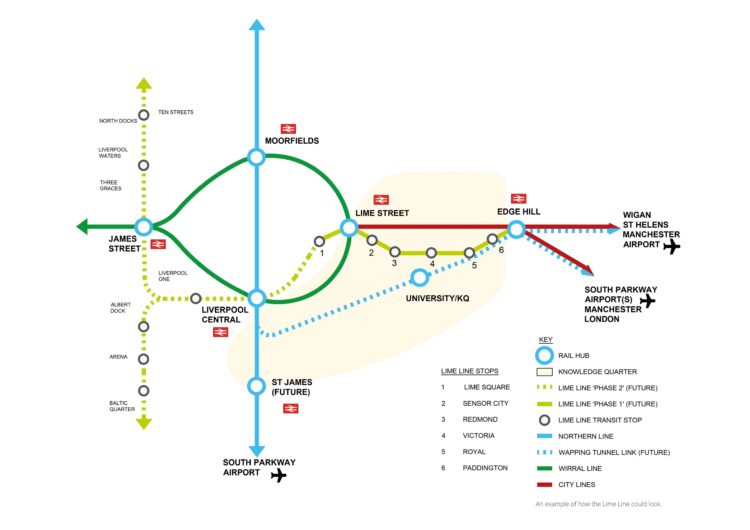
Note the Wapping Tunnel is shown on the map, as a dotted blue line.
- It connects to the Northern Line to the South of Liverpool Central station.
- It connects to the City Line to the West of Edge Hill station.
- A station named University/KQ is shown.
A new St. James station is also shown
Conclusion
Using the Wapping Tunnel to increase capacity in Liverpool City Centre could be used if required to improve capacity for the high speed network in the city, by removing local trains from Liverpool Lime Street station.
Beeching Reversal – Restoring A South Humber Link
This is one of the Beeching Reversal projects that the Government and Network Rail are proposing to reverse some of the Beeching cuts.
The project is described by these two paragraphs in this article in the Yorkshire Post, which is entitled Government Announce Yorkshire Rail Schemes That Could Receive ‘Reverse Beeching’ Funding.
North Lincolnshire Council have bid for funding to subsidise a new train service that would allow passengers from Barton-on-Humber to travel to Gainsborough, from where they would be able to catch direct services to Sheffield.
This would be achieved by diverting the existing Barton to Grimsby and Cleethorpes trains up a freight-only section used by traffic heading to Immingham docks. There have never been passenger trains using this path before.
This rail map clipped from Wikipedia shows the Barton Line to Barton-on-Humber station.
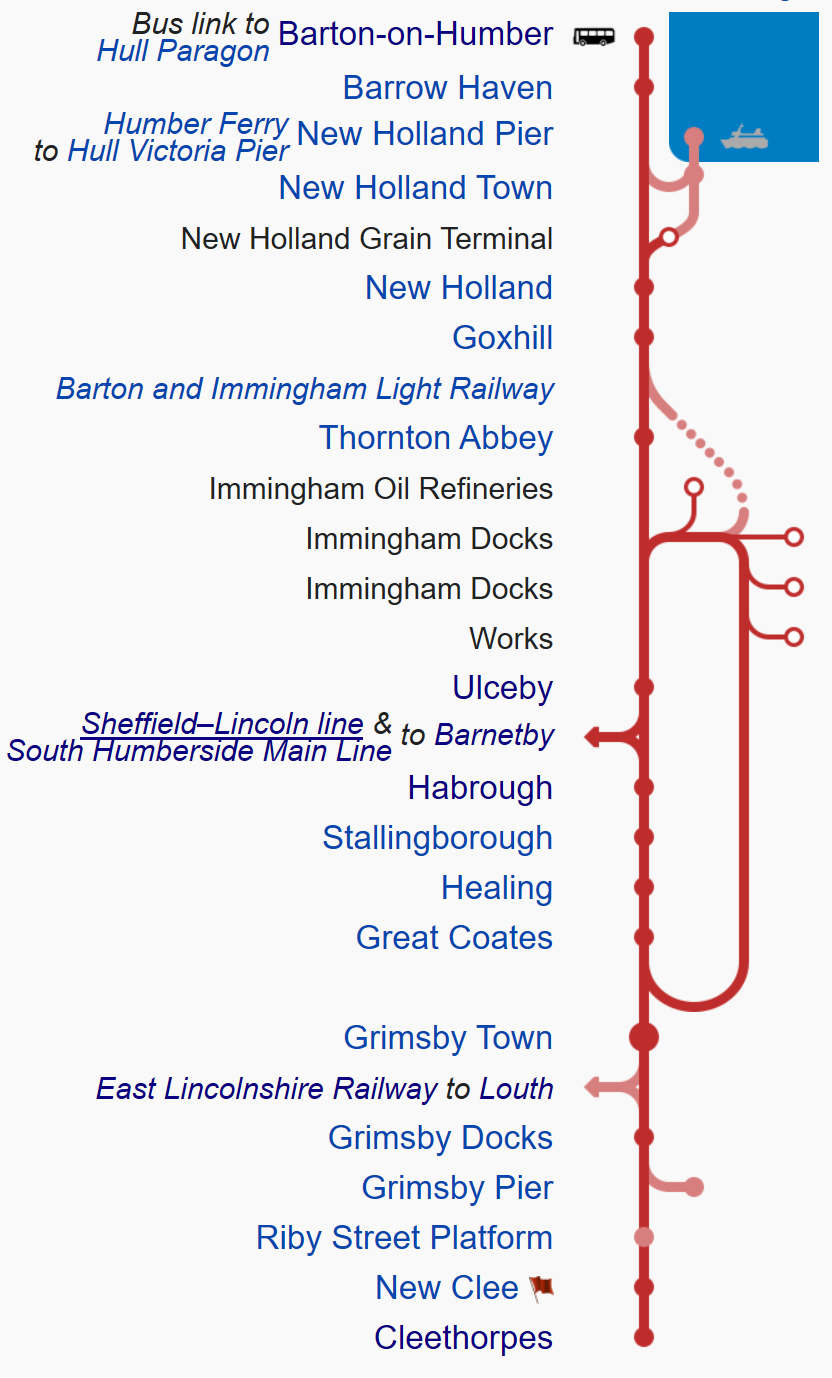
Note.
- Barton-on-Humber station has a bus link to Hull station.
- The loop gives a grand tour of the Port of Immingham on what is now a freight-only line.
- There is a lot of development going on in the area including the AltAlto aviation biofuel, that I wrote about in Grant Shapps Announcement On Friday.
Perhaps all this development is causing a lot of small problems.
- Is it causing congestion on the roads?
- Are workers difficult to find in the Immingham area?
- Is commuting over the Humber Bridge expensive?
- Is parking difficult in the Port?
North Lincolnshire Council could feel that a better rail connection serving the Port of Immingham, would be an asset, that reduces these problems.
I suspect the current two-hourly service between Barton-on-Humber and Cleethorpes stations, will be replaced by an hourly one, between Barton-on-Humber and Gainsborough Lea Road stations, that takes the following route.
- Barton-on-Humber to Ulceby
- At Ulceby station the train will reverse and go clockwise around the loop.
- After calling at Great Coates, Healing, Stallingborough and Habrough stations, the train would go West to Barnetby and Gainsborough Lea Road stations.
- Passengers wanting to go from Barton-on-Humber to Grimsby Town or Cleethorpes, would change at Great Coates station.
It may look a rather round-about route, but I suspect that the plan includes some stations to serve the Port of Immingham and the industrial development.
I suspect that some of these port, oil, chemical and energy companies can afford to pay a contribution.
Gainsborough Lea Road Station
Gainsborough Lea Road station is a mix of architectural styles.
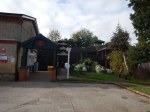
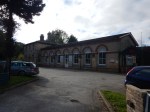
But with the addition of a friendly café and some other facilities, it would be a good interchange between the Immingham area and Sheffield and the county town of Lincoln.
Future Trains
Lincolnshire is an energy-rich county, which partly explains all the industrial development in the North-East of the county around Grimsby, Immingham and Scunthorpe.
- Immingham is a large importer of biomass for power generation.
- There are off-shore and on-shore gas fields connected to Theddlethorpe gas terminal.
- There is the large power station complex at Keadby.
But the energy mix is a-changing.
- Keadby now includes a solar farm.
- Wind turbines are springing up both on land and in the sea.
If I was to make a prediction, it would be that more and more large energy-related businesses will develop in the area.
- In recent months, Altalto’s waste-to-aviation biofuel plant has been given national and local government backing to be built at Immingham.
- ITM Power are involved in a hydrogen development project in the area.
- I wouldn’t be surprised to see hydrogen produced for transport from all this energy.
I think it will be inevitable, that zero-carbon battery electric or hydrogen-powered trains will run in the area.
- Cleethorpes and Doncaster via Scunthorpe 52 miles apart.
- Cleethorpes and Barton-on-Humber are 23 miles apart
- Lincoln and Newark are 16.5 miles apart.
- Lincoln and Doncaster are 37 miles apart.
- Lincoln and Sheffield are 48 miles apart
- Lincoln and the electrification at Peterborough are 54 miles apart.
- Skegness and Sleaford are 41 miles apart.
- Sleaford and Grantham are 18 miles apart.
With charging facilities at Barton-on-Humber, Lincoln, Skegness and Sleaford, the whole of Lincolnshire could be served by zero-carbon battery electric trains.
I suspect LNER could lead the way, as a five-car Class 800 train equipped with batteries, is predicted to have a 56 mile range away from the wires, which would easily handle a return trip between Newark and Lincoln.
There could be a small problem, in that the first train of the day, between Lincoln and London Kings Cross positions from Doncaster Carr IEP Depot, so running Doncaster to Newark via Lincoln might challenge the battery range of the train. I suspect, that the positioning could be performed via Newark with a reverse, prior to the installation of a charging facility at Lincoln Central station.
I estimate that Barton-on-Humber and Gainsborough Lea Road stations are about 35 miles apart, so with today’s battery technology, I suspect that a round trip in a battery electric train would be on the limit. But with charging facilities at Gainsborough, there would be no problems.
I suspect that East Midlands Railway would use several of their forty diesel Class 170 trains on this and other routes in Lincolnshire, so perhaps a good interim solution would be to run the Class 170 trains on Altalto’s biodiesel, that will be produced at Immingham.
There is also the possibility, that some or all of the Class 170 trains will be retrofitted with MTU Hybrid PowerPacks, which would cut their diesel consumption.
Surely, with all Lincolnshire’s energy, hydrogen-powered trains must be a possibility. But they seem to be stuck in a siding!
The MTU Hybrid PowerPack and Altalto’s bio-diesel seems a more affordable and less risky route.
A Direct Connection To London
In the Wikipedia entry for Gainsborough Lea Road station, there is a section called Future Services, where a direct connection to London is mentioned.
Conclusion
Given that the likes of East Midlands Railway, Hull Trains, LNER and TransPennine Express are improving their services to Hull, Lincoln, Cleethorpes and Grimsby, this local North Lincolnshire Metro serving the Port and the industrial development, could well be welcomed by those that live and work in the area.
I doubt that the infrastructure cost will be very high.
Manchester Piccadilly ‘Super Hub’ Proposed
The title of this post is the same as that of this article on Rail Technology Magazine.
This is the introductory sentence.
A Manchester Piccadilly ‘super hub’ has been proposed as part of the High Speed North rail project.
And these two paragraphs lay out the proposed design.
To create the super hub, the report suggests a new tunnel from Ordsall into Manchester Piccadilly from the west, which could connect to High Speed 2 (HS2) and Northern Powerhouse Rail (NPR).
Fast trains from Chester and North Wales, Liverpool, Blackpool, Barrow and Glasgow could travel through the super hub with services emerging eastwards and across the Pennines to Leeds/Bradford, Sheffield, Hull, York and Newcastle.
Five years ago, I wrote Whither HS2 And HS3?, which argued for greater integration of the two routes and more tunnelled stations under major cities to build High Speed Two and Northern Powerhouse Rail with less disruption.
Part of that post was deliberately over the top, but it seems that others have been thinking in a similar way.
Last year, I wrote Changes Signalled For HS2 Route In North, which was an attempt to add detail to this report on the Transport for the North web site, which is entitled At A Glance – Northern Powerhouse Rail.
The proposed Manchester Piccadilly ‘Super Hub’ fits very well with the Transport for the North report.
- The station, could have entrances and exits were all over Manchester City Centre
- The main platforms could be long East-West through platforms, that would have direct tunnelled approaches from both directions.
- There could also be terminating platforms to take services from North Wales, Blackpool, Barrow and Glasgow.
- According to the Wikipedia entry for High Speed Two, the Western tunnel would be 7.5 miles long and link Manchester Piccadilly and Manchester Airport stations at speeds of up to 142 mph.
- As a High Speed Two size tunnel will be needed on the Eastern approach, if High Speed Two trains eventually use the route, could this tunnel extend for perhaps five miles with speeds of up to 142 mph, to speed up journey times?
- Journey times between Manchester Piccadilly and Manchester Airport stations could be under four minutes.
The Manchester Piccadilly ‘Super Hub’, High Speed Two And Liverpool
This clip of a map from the Transport for the North report shows a schematic of the current and possible rail links in the area.

High Speed Two would appear to come North and split into two routes.
- One continues North to join the existing West Coast Main Line just South of Wigan.
- Another goes through Crewe station.
North of Crewe, the two routes join and then split into three at the Junction labelled 6.
- To Warrington and Liverpool
- To Wigan, Preston and Scotland
- To Manchester Airport and Manchester.
A second Junction labelled 5, allows Northern Powerhouse Rail trains to run Liverpool-Warrington-Manchester Airport-Manchester.
The Transport for the North report, also says the following.
- There could be a new Warrington South Parkway station.
- Six trains per hour (tph) between Liverpool and Manchester via Warrington are planned.
- Journey times will be 26 minutes.
Will a Liverpool and Manchester time of 26 minutes be possible with two stops?
- I estimate Liverpool and Manchester will be a distance of 43 miles.
- As the will be a newly-built railway high speed railway, I suspect it will be at least a 125 mph line between Liverpool and Manchester Airport.
- But it is perfected feasible, that this section could be designed for speeds up to 140 mph or even the High Speed Two speed of 186 mph.
- TransPennine Express‘s current Class 802 trains, can run at up to 140 mph, so could take advantage of the higher speed.
- In addition, the Wikipedia entry for High Speed Two says that trains will use the Manchester Airport to Manchester City Centre tunnel at speeds of up to 142 mph.
Calculating journey times for various average speeds, including the two stops at Warrington South Parkway and Manchester Airport stations gives the following.
- 100 mph – 26 minutes
- 125 mph – 21 minutes
- 140 mph – 18 minutes
If the Liverpool and Manchester Airport section were to be built to High Speed Two standards, I can see a very comfortable Liverpool and Manchester time of under twenty minutes.
The Twenty-First Century will finally get a modern and fast Liverpool and Manchester Railway.
Going East From The Manchester Piccadilly ‘Super Hub’
The principle long-distance destinations to the East of Manchester Piccadilly station use one of two routes.
The Huddersfield Line to Leeds and beyond.
The Hope Valley Line to Sheffield and beyond.
Both routes leave the Manchester Branch of the West Coast Man Line out of Manchester Piccadilly station at Ardwick Junction.
This Google Map shows Ardwick Junction, Ardwick station and the Siemens Train Care Facility.
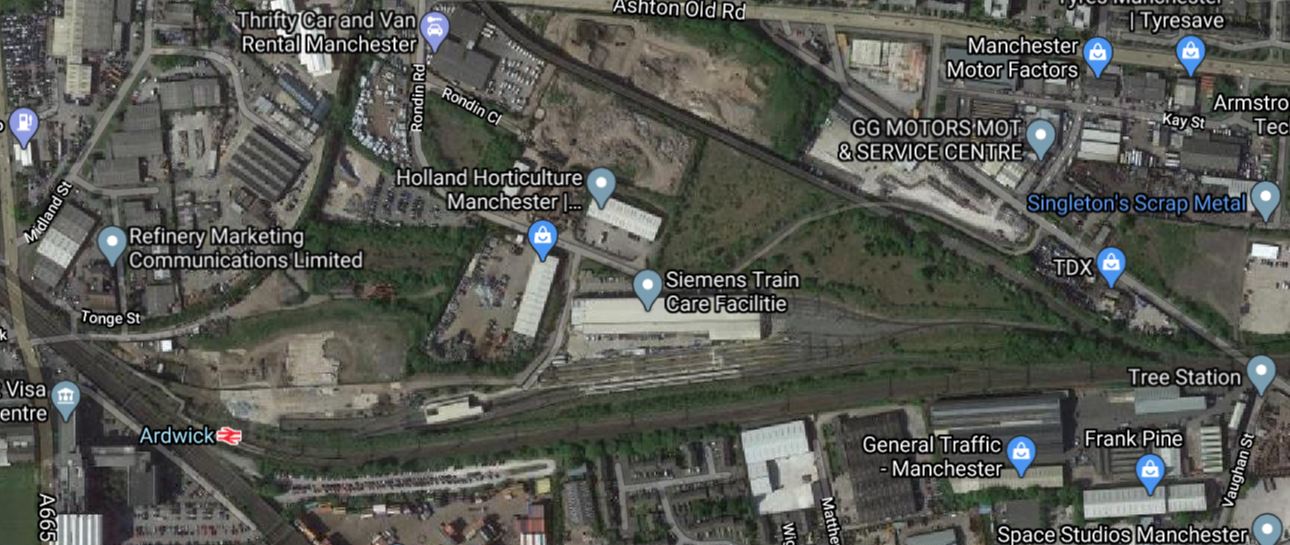
It would appear that the Eastern portal of the tunnels that lead to the proposed underground platforms of the Manchester Piccadilly ‘Super-Hub’ could emerge in this area.
Note.
- Ardwick station is about a mile from Manchester Piccadilly station.
- The Sheffield and Leeds routes split about a mile to the East of Ardwick station.
- The large site of the Train Care Facility, could surely be used for the tunnel portal.
The Transport for the North report says this about the services to the East from Manchester.
- Sic tph between Manchester and Leeds are planned.
- Four tph between Manchester and Sheffield are planned.
Ten tph through the underground platforms is surely possible, when Crossrail will handle 24 tph with full digital signalling.
A Manchester And Leeds High Speed Line
This clip of a map from the Transport for the North report shows a schematic of the rail links to the East of Manchester.
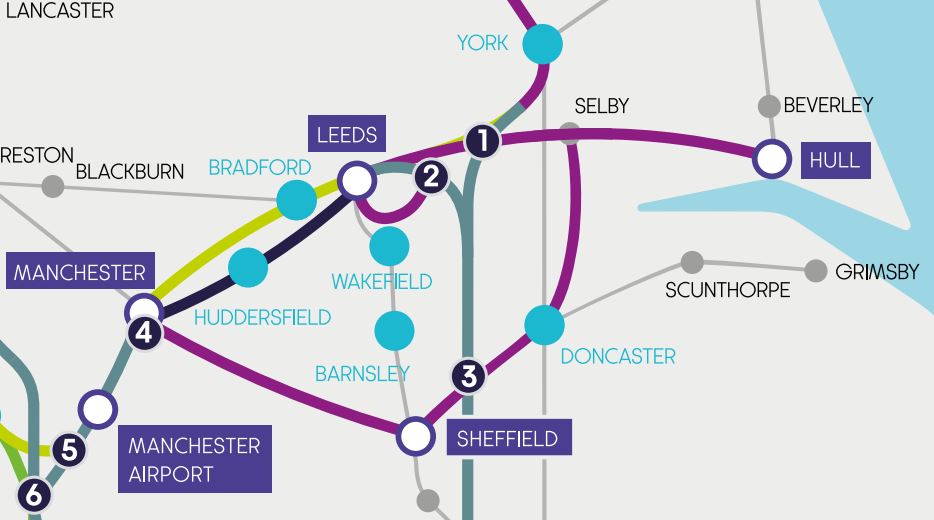
Two alternative routes are proposed between Manchester and Leeds.
- The black route would be created by upgrading the Huddersfield Line.
- The yellow route would be a new route via Bradford.
The Transport for the North report says this about the Leeds-Manchester service.
- There will be six tph.
- The journey will take 25 minutes.
In Is There Going To Be Full Electrification Between Leeds And Huddersfield?, I detailed Network Rail’s £2.9 billion proposal to upgrade the existing route between Huddersfield and Leeds. This is the black route.
If this project results in the full electrification between Leeds and Hudderfield, the Leeds and Manchester route will have these characteristics.
- It will be about forty-two miles long
- All except the sixteen mile section between Stalybridge and Huddersfield is electrified or is planned to be so.
- Network Rail have published plans to upgrade Huddersfield station.
- The section between Huddersfield and Dewbury will be upgraded to four tracks.
- The approach to the underground platforms at Manchester Piccadilly station could be in a two-mile 100 mph tunnel.
- Twenty-five minutes between Leeds and Manchester will need an average speed of 100 mph.
I don’t think it is unreasonable to assume that with a few other improvements, that the twenty-five minute time between Leeds and Manchester is possible.
New 140 mph Trains Will Be Needed
Consider a Blackpool and Leeds service via Preston, Wigan North Western, Warrington, Manchester Airport, Manchester and Huddersfield.
- It could be a fully-electrified route, if between Stalybridge and Huddersfield were to be electrified.
- Much of the route would be cleared for at least 140 mph running including the West Coast Main Line and the new route between Warrington and Manchester Piccadilly via Manchester Airport.
- Some sections of the route would allow more than 140 mph, but most would be 140 mph or less.
Without doubt, trains capable of running at 140 mph would be needed to make full use of the operating speeds available.
Could Battery-Electric Hitachi Trains Work TransPennine Express’s Services?
Before I answer this question, I will lay out the battery-electric train’s specification.
Hitachi’s Proposed Battery Electric Train
Based on information in an article in Issue 898 of Rail Magazine, which is entitled Sparking A Revolution, the specification of Hitachi’s proposed battery-electric train is given as follows.
- Based on Class 800-802/804 trains or Class 385 trains.
- Range of 55-65 miles.
- Operating speed of 90-100 mph
- Recharge in ten minutes when static.
- A battery life of 8-10 years.
- Battery-only power for stations and urban areas.
- Trains are designed to be created by conversion of existing Class 80x trains
For this post, I will assume that the train is five cars long. This is the length of TransPennine Express’s Class 802 trains.
TransPennine Express’s Services
These are TransPennine Express services that run in the North of England and to Scotland.
I shall go through all the services and see how they would be affected by Hitachi’s proposed battery-electric train.
Liverpool Lime Street And Edinburgh
- The service runs at a frequency of one train per hour (tph)
- Intermediate stations are Newton-le-Willows, Manchester Victoria, Huddersfield, Leeds, York, Darlington, Durham, Newcastle and Morpeth
The service is 305 miles long and takes four hours and 25 minutes.
The route can be divided into sections, some of which are electrified and some of which are not!
- Liverpool Lime Street and Manchester Victoria – 32 miles – Electrified
- Manchester Victoria and Huddersfield – 26 miles – Not Electrified
- Huddersfield and Dewsbury – 8 miles – Not Electrified
- Dewsbury and Leeds – 9 miles – Not Electrified
- Leeds and Colton Junction – 20 miles – Not Electrified
- Colton Junction and Edinburgh – 220 miles – Electrified
Note that the distance between Manchester Victoria and Colton Junction, which is the only section of the route without electrification is sixty-three miles, which is just within the 55-65 mile battery range of Hitachi’s proposed battery-electric train.
That is too close for my liking, as what happens, if the train gets delayed by an operational incident.
In this article on the BBC, which was published in August 2019 and is entitled Detailed TransPennine £2.9bn Rail Upgrade Plans Unveiled, the following is said.
- The route between Huddersfield and Dewsbury will be electrified.
- Parts of this route will have two extra tracks.
- The plans will be going to full consultation, later in the year.
This would mean that a route summary would be like this.
- Liverpool Lime Street and Manchester Victoria – 32 miles – Electrified
- Manchester Victoria and Huddersfield – 26 miles – Not Electrified
- Huddersfield and Dewsbury – 8 miles – Electrified
- Dewsbury and Colton Junction – 29 miles – Not Electrified
- Colton Junction and Edinburgh – 220 miles – Electrified
The two sections without electrification are well within the 55-65 mile battery range of Hitachi’s proposed battery electric train.
It should also be noted that the electrification between Newcastle and Edinburgh is rather down on power and needs upgrading.
I would suspect that Hitachi’s proposed battery electric train could handle this power deficiency by using the batteries.
Liverpool Lime Street And Scarborough
- The service runs at a frequency of one tph
- Intermediate stations are Lea Green, Manchester Victoria, Stalybridge, Huddersfield, Leeds, Garforth, York, Malton and Seamer
The service is 142 miles long and takes two hours and 58 minutes.
The route can be divided into sections, some of which are electrified and some of which are not!
- Liverpool Lime Street and Manchester Victoria – 32 miles – Electrified
- Manchester Victoria and Huddersfield – 26 miles – Not Electrified
- Huddersfield and Dewsbury – 8 miles – Not Electrified
- Dewsbury and Leeds – 9 miles – Not Electrified
- Leeds and Colton Junction – 20 miles – Not Electrified
- Colton Junction and York – 6 miles – Electrified
- York and Scarborough – 42 miles – Not Electrified
Between Liverpool Lime Street and Colton Junction, the route is identical to the Liverpool Lime Street and Edinburgh service.
The improvement of the section between Huddersfield and Dewsbury will also benefit this service and mean that a route summary would be like this.
- Liverpool Lime Street and Manchester Victoria – 32 miles – Electrified
- Manchester Victoria and Huddersfield – 26 miles – Not Electrified
- Huddersfield and Dewsbury – 8 miles – Electrified
- Dewsbury and and Colton Junction – 29 miles – Not Electrified
- Colton Junction and York – 6 miles – Electrified
- York and Scarborough – 42 miles – Not Electrified
As Hitachi’s proposed battery-electric train has a range of 55-65 miles on battery power, it looks to me that this service could be handled by the train.
It would need a Fast Charge system at Scarborough to recharge the batteries to be able to return to York.
But, as the timetable allows a generous turn-round, fully-charging the batteries shouldn’t be a problem.
Manchester Airport And Newcastle
- The service runs at a frequency of one tph
- Intermediate stations are Manchester Piccadilly, Manchester Oxford Road, Manchester Victoria, Huddersfield, Dewsbury, Leeds, York, Northallerton, Darlington, Durham and Chester-le-Street
The service is 162 miles long and takes three hours and one minute.
The route can be divided into sections, some of which are electrified and some of which are not!
- Manchester Airport and Manchester Victoria – 13 miles – Electrified
- Manchester Victoria and Huddersfield – 26 miles – Not Electrified
- Huddersfield and Dewsbury – 8 miles – Not Electrified
- Dewsbury and Leeds – 9 miles – Not Electrified
- Leeds and Colton Junction – 20 miles – Not Electrified
- Colton Junction and Edinburgh – 86 miles – Electrified
Between Manchester Victoria and Colton Junction, the route is identical to the two Liverpool Lime Street services, that I discussed previously.
The improvement of the section between Huddersfield and Dewsbury will also benefit this service and mean that Hitachi’s proposed battery-electric train could handle this route with ease.
Manchester Airport And Redcar Central
- The service runs at a frequency of one tph
- Intermediate stations are Gatley, Manchester Piccadilly, Manchester Oxford Road, Manchester Victoria, Huddersfield, Dewsbury, Leeds, York, Thirsk, Northallerton, Yarm, Thornaby and Middlesbrough
The service is 162 miles long and takes three hours and fifteen minutes.
The route can be divided into sections, some of which are electrified and some of which are not!
- Manchester Airport and Manchester Victoria – 13 miles – Electrified
- Manchester Victoria and Huddersfield – 26 miles – Not Electrified
- Huddersfield and Dewsbury – 8 miles – Not Electrified
- Dewsbury and Leeds – 9 miles – Not Electrified
- Leeds and Colton Junction – 20 miles – Not Electrified
- Colton Junction and Northallerton – 35 miles – Electrified
- Northallerton and Redcar Central – 29 miles – Not Electrified
Between Manchester Victoria and Colton Junction, the route is identical to the previously discussed services.
The improvement of the section between Huddersfield and Dewsbury will also benefit this service and mean that Hitachi’s proposed battery-electric train could handle this route with ease.
As with the Scarborough service, a Fast-Charge system would probably be needed at Redcar Central.
Manchester Piccadilly And Hull
- The service runs at a frequency of one tph
- Intermediate stations are Stalybridge, Huddersfield, Leeds, Selby and Brough
The service is 94 miles long and takes two hours and four minutes.
The route can be divided into sections, some of which are electrified and some of which are not!
- Manchester Piccadilly and Huddersfield – 25 miles – Not Electrified
- Huddersfield and Dewsbury – 8 miles – Not Electrified
- Dewsbury and Leeds – 9 miles – Not Electrified
- Leeds and Hull – 52 miles – Not Electrified
Between Huddersfield and Leeds, the route is identical to the previously discussed services.
The improvement of the section between Huddersfield and Dewsbury will also benefit this service and mean that Hitachi’s proposed battery-electric train should be able to handle this route.
As with the Scarborough and Redcar Central services, a Fast-Charge system would probably be needed at Hull.
Manchester Piccadilly And Huddersfield
- The service runs at a frequency of one tph
- Intermediate stations are Stalybridge, Mossley, Greenfield, Marsden and Slaithwaite
The service is 25 miles long and takes forty-three minutes.
The route is without electrification.
Hitachi’s proposed battery-electric train should be able to handle this route with ease.
The train could charge at either end using the electrification.
Huddersfield And Leeds
- The service runs at a frequency of one tph
- Intermediate stations are Deighton, Mirfield, Ravensthorpe, Dewsbury, Batley, Morley and Cottingley
The service is 17 miles long and takes thirty-six minutes.
Hitachi’s proposed battery-electric train should be able to handle this route with ease.
The train could charge at Leeds using the electrification.
Manchester Airport And Cleethorpes
- The service runs at a frequency of one tph
- Intermediate stations are Manchester Piccadilly, Stockport, Sheffield, Meadowhall Interchange, Doncaster, Scunthorpe, Barnetby, Habrough and Grimsby Town
The service is 124 miles long and takes two hours and fifty-eight minutes.
he route can be divided into sections, some of which are electrified and some of which are not!
- Manchester Airport and Stockport – 16 miles – Electrified
- Stockport and Sheffield – 37 miles – Not Electrified
- Sheffield and Doncaster – 19 miles – Not Electrified
- Doncaster and Cleethorpes – 52 miles – Not Electrified
There would need to be some en route charging and surely the easiest way to achieve this would be to extend the electrification at Doncaster to Sheffield.
As with the other services, a Fast-Charge system would probably be needed at Cleethorpes.
Manchester Airport And Glasgow Central Or Edinburgh Waverley Via Preston
This service is all-electric.
Conclusion
Hitachi’s proposed battery-electric train can handle all of TransPennine’s routes without using one drop of diesel.
What I have found interesting, is that the eight miles of electrification between Huddersfield and Dewsbury appears to make the operation of a battery-electric train a lot easier.
It looks like someone at Hitachi and Network Rail have taken a calculator to a decent hostelry and worked out a cunning plan!
Are Hitachi Designing the Ultimate Battery Train?
In Sparking A Revolution, a post based on an article of the same name in Issue 898 of Rail Magazine, I repeated this about the specification of Hitachi UK Battery Train Specification.
- Range – 55-65 miles
- Performance – 90-100 mph
- Recharge – 10 minutes when static
- Routes – Suburban near electrified lines
- Battery Life – 8-10 years
Does this mean that the train can do 55-65 miles cruising at 90-100 mph?
How Much Energy Is Needed To Accelerate A Five-Car Class 800 Train To Operating Speed?
I will do my standard calculation.
- Empty train weight – 243 tonnes (Wikipedia for Class 800 train!)
- Passenger weight – 302 x 90 Kg (Includes baggage, bikes and buggies!)
- Train weight – 270.18 tonnes
Using Omni’s Kinetic Energy Calculator, the kinetic energy at various speeds are.
- 60 mph – 27 kWh
- 80 mph – 48 kWh
- 90 mph – 61 kWh
- 100 mph – 75 kWh
- 125 mph – 117 kWh – Normal cruise on electrified lines.
- 140 mph – 147 kWh – Maximum cruise on electrified lines.
Because the kinetic energy of a train is only proportional to the weight of the train, but proportional to the square of the speed, note how the energy of the train increases markedly after 100 mph.
Are these kinetic energy figures a reason, why Hitachi have stated their battery train will have an operating speed of between 90 and 100 mph?
A 100 mph cruise would also be very convenient for a lot of main lines, that don’t have electrification in the UK.
What Battery Size Would Be Needed?
In How Much Power Is Needed To Run A Train At 125 mph?, I calculated that a five-car Class 801 electric train, needed 3.42 kWh per vehicle-mile to maintain 125 mph.
For comparison, an InterCity 125 train, had a figure of 2.83 kWh per vehicle-mile.
Hitachi are redesigning the nose of the train for the new Class 810 train and I suspect that these trains can achieve somewhere between 1.5 and 3 kWh per vehicle-mile, if they are cruising at 100 mph.
Doing the calculation for various consumption levels gives the following battery capacity for a five-car train to cruise 65 miles at 100 mph
- 1.5 kWh per vehicle-mile – 487 kWh
- 2 kWh per vehicle-mile – 650 kWh
- 2.5 kWh per vehicle-mile – 812.5 kWh
- 3 kWh per vehicle-mile – 975 kWh
These figures don’t include any energy for acceleration to line speed from the previous stop or station, but they would cope with a deceleration and subsequent acceleration, after say a delay caused by a slow train or other operational delay, by using regenerative braking to the battery.
The energy needed to accelerate to operating speed, will be as I calculated earlier.
- 90 mph – 61 kWh
- 100 mph – 75 kWh
As the battery must have space to store the regenerative braking energy and it would probably be prudent to have a ten percent range reserve, I can see a battery size for a train with an energy consumption of 2 kWh per vehicle-mile, that needed to cruise at 100 mph being calculated as follows.
- Energy for the cruise – 650 kWh
- 10% reserve for cruise – 65 kWh
- Braking energy from 100 mph – 75 kWh
This gives a total battery size of 790 kWh, which could mean that 800 kWh would be convenient.
Note that each of the three MTU 12V 1600 diesel engines, fitted to a Class 800 train, each weigh around two tonnes.
In Innolith Claims It’s On Path To 1,000 Wh/kg Battery Energy Density, I came to these conclusions.
- Tesla already has an energy density of 250 Wh/Kg.
- Tesla will increase this figure.
- By 2025, the energy density of lithium-ion batteries will be much closer to 1 KWh/Kg.
- Innolith might achieve this figure. But they are only one of several companies aiming to meet this magic figure.
Suppose two of the MTU 12V 1600 diesel engines were each to be replaced by a two tonne battery, using Tesla’s current energy density, this would mean the following.
- Each battery would have a capacity of 500 kWh.
- The train would have one MWh of installed battery power.
- This is more than my rough estimate of power required for a 65 mile trip.
- The train would have little or no weight increase.
- I also wouldn’t be surprised to find that the exchange of a diesel engine for a battery was Plug-and-Play.
Hitachi would have an electric/battery/diesel tri-mode train capable of the following.
- Range – 55-65 miles
- Out and Back Range – about 20-30 miles
- Performance – 90-100 mph
- Recharge – 10 minutes when static
- Emergency diesel engine.
I feel it would be a very useful train.
Trains That Could Be Fitted With Batteries
The original article in Rail Magazine says this.
For the battery project, positive discussions are taking place with a number of interested parties for a trial, with both Class 385s and Class 800s being candidates for conversion.
So this means that the following operators will be able to use Hitachi’s battery technology o their trains.
- Avanti West Coast – Class 80x trains
- First East Coast Trains – Class 80x trains
- East Midlands Railway – Class 80x trains
- GWR – Class 80x trains
- Hull Trains – Class 80x trains
- LNER – Class 80x trains
- ScotRail – Class 385 trains
- TransPennine Express – Class 80x trains
Although, I based my calculations on Class 80x trains, I suspect that the methods can be applied to the smaller Class 385 trains.
Possible Out-And-Back Journeys
These are possible Out-And-Back journeys, that I believe Hitachi’s proposed battery-electric trains could handle.
- Edinburgh and Tweedbank – 30 miles from Newcraighall
- London Paddington and Bedwyn – 30 miles from Reading
- London Euston and Blackburn – 12 miles from Preston
- London Kings Cross and Bradford – < 27 miles from Leeds
- London Euston and Chester – 21 miles from Crewe
- London Kings Cross and Harrogate – <18 miles from Leeds
- London Kings Cross and Huddersfield – 17 miles from Leeds
- London St. Pancras and Leicester – 16 miles from Market Harborough
- London Kings Cross and Lincoln – 17 miles from Newark
- London St. Pancras and Melton Mowbray – 26 miles from Corby
- London Kings Cross and Middlesbrough – 20 miles from Northallerton
- London Kings Cross and Nottingham – 20 miles from Newark
- London Paddington and Oxford – 10 miles from Didcot
- London Kings Cross and Redcar – 29 miles from Northallerton
- London Kings Cross and Rotherham- 14 miles from Doncaster
- London Kings Cross and Sheffield – 20 miles from Doncaster
- London and Weston-super-Mare – 19 miles from Bristol
Note.
- Provided that the Out-And-Back journey is less than about sixty miles, I would hope that these stations are comfortably in range.
- Leicester is the interesting destination, which would be reachable in an Out-And-Back journey. But trains from the North stopping at Leicester would probably need to charge at Leicester.
- I have included Blackburn as it could be a destination for Avanti West Coast.
- I have included Melton Mowbray as it could be a destination for East Midlands Railway.
- I have included Nottingham, Rotherham and Sheffield as they could be destinations for LNER. These services could prove useful if the Midland Main Line needed to be closed for construction works.
- I’m also fairly certain, that no new electrification would be needed, although every extra mile would help.
- No charging stations would be needed.
I suspect, I’ve missed a few possible routes.
Possible Journeys Between Two Electrified Lines
These are possible journeys between two electrified lines, that I believe Hitachi’s proposed battery-electric trains could handle.
- London St. Pancras and Eastbourne via Hastings – 25 miles between Ashford and Ore.
- Leeds and York via Garforth – 20 miles between Neville Hall and Colton Junction
- London Kings Cross and Norwich via Cambridge – 54 miles between Ely and Norwich.
- Manchester Victoria and Leeds via Huddersfield – 43 miles between Manchester Victoria and Leeds.
- Preston and Leeds via Hebden Bridge – 62 miles between Preston and Leeds.
- Newcastle and Edinburgh – Would battery-electric trains get round the well-publicised power supply problems on this route?
Note.
- I am assuming that a range of 65 miles is possible.
- If the trains have a diesel-generator set, then this could be used to partially-charge the battery in places on the journey.
- Leeds and York via Garforth has been scheduled for electrification for years.
- Preston and Leeds via Hebden Bridge would probably need some diesel assistance.
- London Kings Cross and Norwich via Cambridge is a cheeky one, that Greater Anglia wouldn’t like, unless they ran it.
- As before no new electrification or a charging station would be needed.
I suspect, I’ve missed a few possible routes.
Possible Out-And-Back Journeys With A Charge At The Destination
These are possible Out-And-Back journeys, that I believe Hitachi’s proposed battery-electric trains could handle, if the batteries were fully charged at the destination.
- Doncaster and Cleethorpes – 52 miles from Doncaster.
- London Paddington and Cheltenham – 42 miles from Swindon
- London Kings Cross and Cleethorpes via Lincoln – 64 miles from Newark
- London Euston and Gobowen – 46 miles from Crewe
- London Euston and Wrexham – 33 miles from Crewe
- London Kings Cross and Hull – 45 miles from Selby
- London Kings Cross and Shrewsbury – 30 miles from Wolverhampton
- London Kings Cross and Sunderland 41 miles from Northallerton
- London Paddington and Swansea – 46 miles from Cardiff
- London Paddington and Worcester – 67 miles from Didcot Parkway
- London St. Pancras and Derby – 46 miles from Market Harborough
- London St. Pancras and Nottingham – 43 miles from Market Harborough
Note.
- I am assuming that a range of 65 miles is possible.
- If the trains have a diesel-generator set, then this could be used to partially-charge the battery in places on the journey.
- I am assuming some form of charging is provided at the destination station.
- As before no new electrification would be needed.
I suspect, I’ve missed a few possible routes.
Midland Main Line
The Midland Main Line could possibly be run between London St. Pancras and Derby, Nottingham and Sheffield without the use of diesel.
Consider.
- The route will be electrified between London St. Pancras and Market Harborough.
- In connection with High Speed Two, the Midland Main Line and High Seed Two will share an electrified route between Sheffield and Clay Cross North Junction.
- London St. Pancras and Derby can be run with a charging station at Derby, as Market Harborough and Derby is only 46 miles.
- London St. Pancras and Nottingham can be run with a charging station at Nottingham, as Market Harborough and Nottingham is only 43 miles.
- The distance between Clay Cross North Junction and Market Harborough is 67 miles.
- The distance between Sheffield and Leeds is 38 miles.
It looks to me that the range of East Midlands Railway’s new Class 810 trains, will be a few miles short to bridge the gap on batteries, between Clay Cross North Junction and Market Harborough station, but Leeds and Sheffield appears possible, once Sheffield has been electrified.
There are several possible solutions to the Clay Cross North and Market Harborough electrification gap.
- Fit higher capacity batteries to the trains.
- Extend the electrification for a few miles North of Market Harborough station.
- Extend the electrification for a few miles South of Clay Cross North Junction.
- Stop at Derby for a few minutes to charge the batteries.
The route between Market Harborough and Leicester appears to have been gauge-cleared for electrification, but will be difficult to electrify close to Leicester station. However, it looks like a few miles can be taken off the electrification gap.
Between Chesterfield and Alfriston, the route appears difficult to electrify with tunnels and passig through a World Heritage Site.
So perhaps options 1 and 2 together will give the trains sufficient range to bridge the electrification gap.
Conclusion On The Midland Main Line
I think that Hitachi, who know their trains well, must have a solution for diesel-free operation of all Midland Main Line services.
It also looks like little extra electrification is needed, other than that currently planned for the Midland Main Line and High Speed Two.
North Wales Coast Line
If you look at distance along the North Wales Coast Line, from the electrification at Crewe, you get these values.
- Chester – 21 miles
- Rhyl – 51 miles
- Colwyn Bay – 61 miles
- Llandudno Junction – 65 miles
- Bangor – 80 miles
- Holyhead – 106 miles
It would appear that Avanti West Coast’s new AT-300 trains, if fitted with batteries could reach Llandudno Junction station, without using diesel.
Electrification Between Crewe And Chester
It seems to me that the sensible thing to do for a start is to electrify the twenty-one miles between Crewe and Chester, which has been given a high priority for this work.
With this electrification, distances from Chester are as follows.
- Rhyl – 30 miles
- Colwyn Bay – 40 miles
- Llandudno Junction – 44 miles
- Bangor – 59 miles
- Holyhead – 85 miles
Electrification between Crewe and Chester may also open up possibilities for more electric and battery-electric train services.
But some way will be needed to charge the trains to the West of Chester.
Chagring The Batteries At Llandudno Junction Station
This Google Map shows Llandudno Junction station.
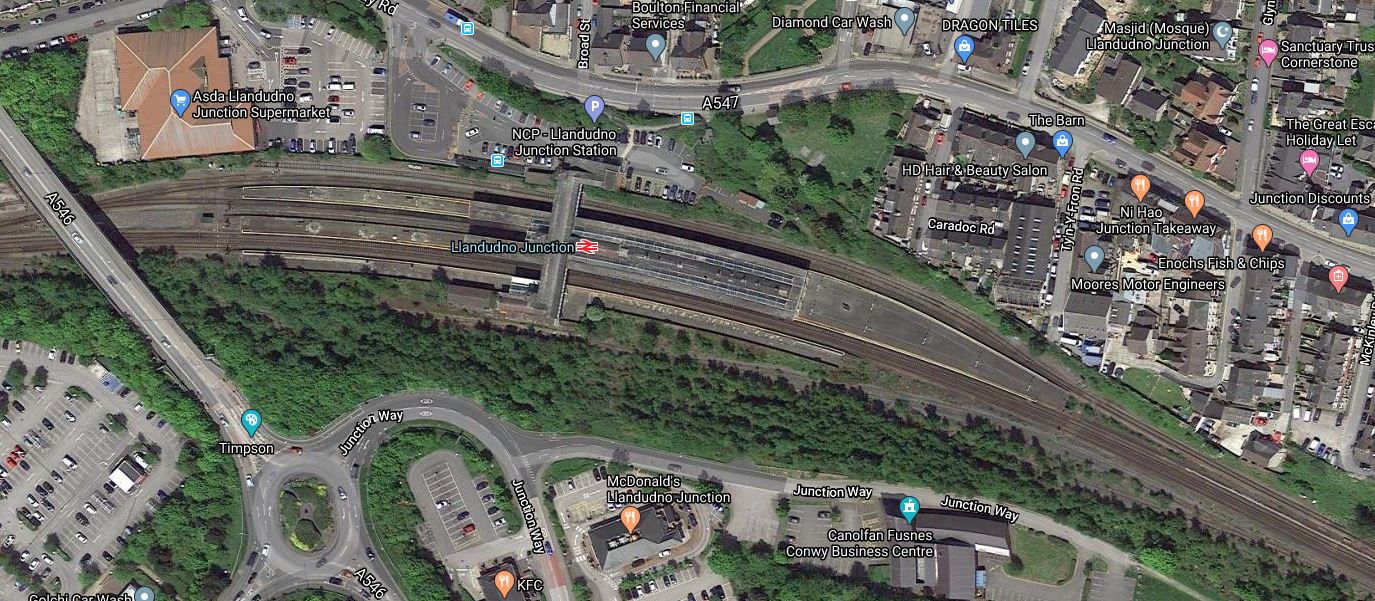
Note.
- It is a large station site.
- The Conwy Valley Line, which will be run by battery Class 230 trains in the future connects at this station.
- The Class 230 train will probably use some of Vivarail’s Fast Charging systems, which use third-rail technology, either at the ends of the branch or in Llandudno Junction station.
The simplest way to charge the London Euston and Holyhead train, would be to build a charging station at Llandudno Junction, which could be based on Vivarail’s Fast Charging technology or a short length of 25 KVAC overhead wire.
But this would add ten minutes to the timetable.
Could 25 KVAC overhead electrification be erected for a certain distance through the station, so that the train has ten minutes in contact with the wires?
Looking at the timetable of a train between London Euston and Holyhead, it arrives at Colwyn Bay station at 1152 and leaves Llandudno Junction station at 1200.
So would it be possible to electrify between the two stations and perhaps a bit further?
This Google Map shows Colwyn Bay Station,
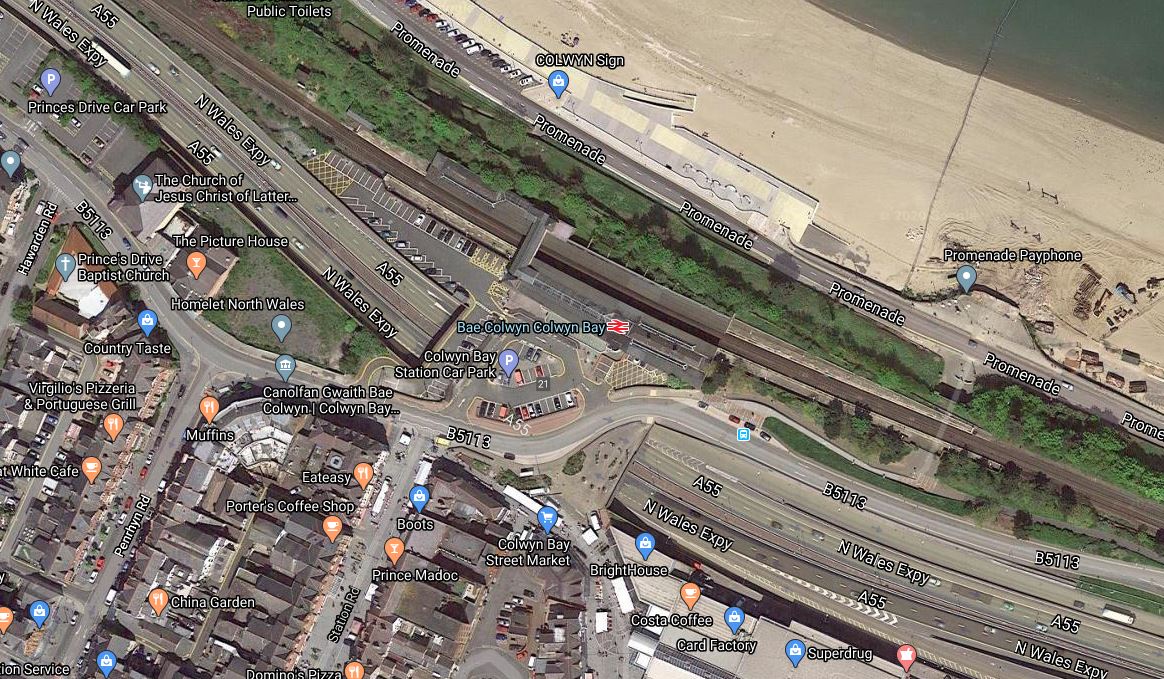
Note how the double-track railway is squeezed between the dual-carriageway of the A55 North Wales Expressway and the sea.
The two routes follow each other close to the sea, as far as Abegele & Pensarn station, where the Expressway moves further from the sea.
Further on, after passing through more caravans than I’ve ever seen, there is Rhyl station.
- The time between arriving at Rhyl station and leaving Llandudno Junction station is nineteen minutes.
- The distance between the two stations is fourteen miles.
- Rhyl and Crewe is fifty-one miles.
- Llandudno Junction and Holyhead is forty-one miles.
It would appear that if the North Wales Coast Line between Rhyl and Llandudno Junction is electrified, that Hitachi’s proposed battery trains can reach Holyhead.
The trains could even changeover between electrification and battery power in Rhyl and Llandudno Junction stations.
I am sure that electrifying this section would not be the most difficult in the world, although the severe weather sometimes encountered, may need some very resilient or innovative engineering.
It may be heretical to say so, but would it be better if this section were to be electrified using proven third-rail technology.
West of Llandudno Junction station, the electrification would be very difficult, as this Google Map of the crossing of the River Conwy shows.
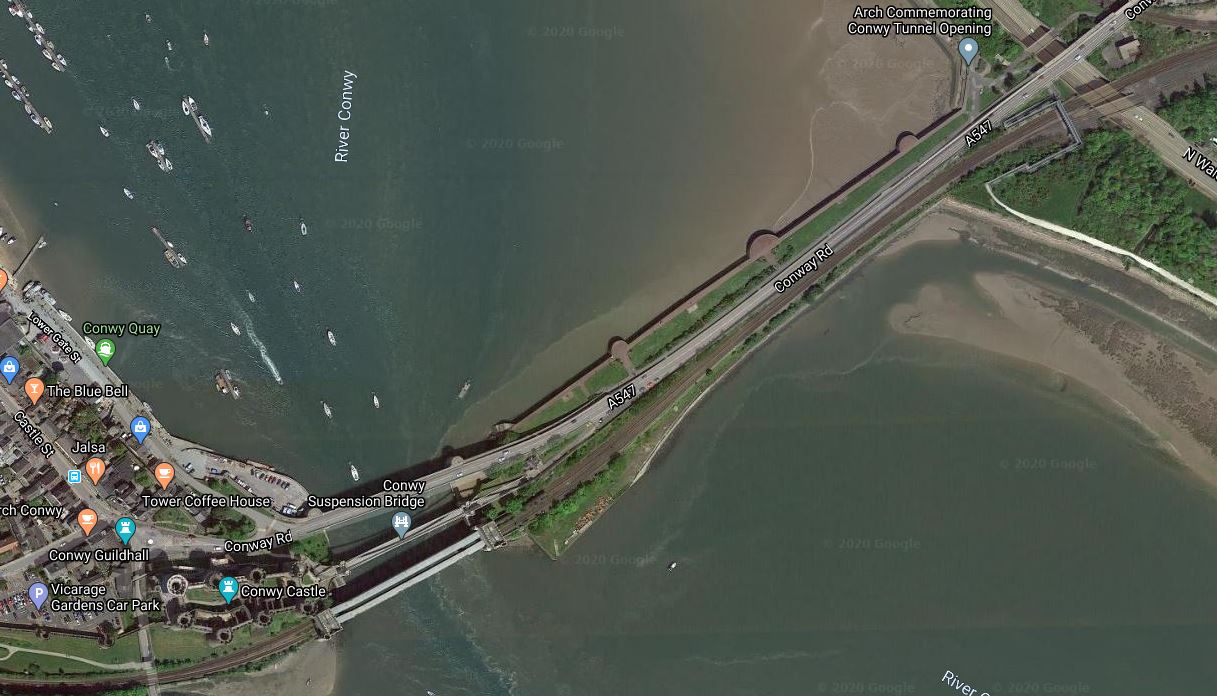
I don’t think anybody would want to see electrification around the famous castle.
Electrification Across Anglesey
Llanfairpwll station marks the divide between the single-track section of the North Wales Coast Line over the Britannia Bridge and the double-track section across Anglesey.
From my virtual helicopter, the route looks as if, it could be fairly easy to electrify, but would it be necessary?
- Llandudno Junction and Holyhead is forty-one miles, which is well within battery range.
- There is surely space at Holyhead station to install some form of fast-charging system.
One problem is that trains seem to turn round in only a few minutes, which may not be enough to charge the trains.
So perhaps some of the twenty-one miles between Llanfairpwll and Holyhead should be electrified.
London Euston And Holyhead Journey Times
Currently, trains take three hours and forty-three minutes to go between London Euston and Holyhead, with these sectional timings.
- London Euston and Crewe – One hour and thirty-nine minutes.
- Crewe and Holyhead – Two hours and four minutes.
The big change would come, if the London Euston and Crewe leg, were to be run on High Speed Two, which will take just fifty-five m,inutes.
This should reduce the London Euston and Holyhead time to just under three hours.
Freight On The North Wales Coast Line
Will more freight be seen on the North Wales Coast Line in the future?
The new tri-mode freight locomotives like the Class 93 locomotive, will be able to take advantage of any electrification to charge their batteries, but they would probably be on diesel for much of the route.
Conclusion On The North Wales Coast Line
Short lengths of electrification, will enable Avanti West Coast’s AT-300 trains, after retrofitting with batteries, to run between Crewe and Holyhead, without using any diesel.
I would electrify.
- Crewe and Chester – 21 miles
- Rhyl and Llandudno Junction – 14 miles
- Llanfairpwll and Holyhead – 21 miles
But to run battery-electric trains between London Euston and Holyhead, only Rhyl and Llandudno Junction needs to be electrified.
All gaps in the electrification will be handled on battery power.
A Selection Of Possible Battery-Electric Services
In this section, I’ll look at routes, where battery-electric services would be very appropriate and could easily be run by Hitachi’s proposed battery-electric trains.
London Paddington And Swansea
Many were disappointed when Chris Grayling cancelled the electrification between Cardiff and Swansea.
I went along with what was done, as by the time of the cancellation, I’d already ridden in a battery train and believed in their potential.
The distance between Cardiff and Swansea is 46 miles without electrification.
Swansea has these services to the West.
- Carmarthen – 32 miles
- Fishguard – 73 miles
- Milford Haven 71 miles
- Pembroke Dock – 73 miles
It looks like, three services could be too long for perhaps a three car battery-electric version of a Hitachi Class 385 train, assuming it has a maximum range of 65 miles.
But these three services all reverse in Carmarthen station.
So perhaps, whilst the driver walks between the cabs, the train can connect automatically to a fast charging system and give the batteries perhaps a four minute top-up.
Vivarail’s Fast Charging system based on third-rail technology would be ideal, as it connects automatically and it can charge a train in only a few minutes.
I would also electrify the branch between Swansea and the South Wales Main Line.
This would form part of a fast-charging system for battery-trains at Swansea, where turnround times can be quite short.
I can see a network of battery-electric services developing around Swansea, that would boost tourism to the area.
Edinburgh And Tweedbank
The Borders Railway is electrified as far as Newcraighall station and the section between there and Tweedbank is thirty miles long.
I think that a four-car battery-electric Class 385 train could work this route.
It may or may not need a top up at Tweedbank.
The Fife Circle
The Fife Circle service from Edinburgh will always be difficult to electrify, as it goes over the Forth Rail Bridge.
- The Fife Circle is about sixty miles long.
- Plans exist for a short branch to Leven.
- The line between Edinburgh and the Forth Rail Bridge is partly electrified.
I believe that battery-electric Class 385 train could work this route.
London Kings Cross and Grimsby/Cleethorpes via Lincoln
The Cleethorpes/Grimsby area is becoming something of a renewable energy powerhouse and I feel that battery trains to the area, might be a significant and ultimately profitable statement.
LNER recently opened a six trains per day service to Lincoln.
Distances from Newark are as follows.
- Lincoln – 17 miles
- Grimsby – 61 miles
- Cleethorpes – 64 miles
A round trip to Lincoln can probably be achieved on battery alone with a degree of ease, but Cleethorpes and Grimsby would need a recharge at the coast.
Note that to get to the Cleethorpes/Grimsby area, travellers usually need to change at Doncaster.
But LNER are ambitious and I wouldn’t be surprised to see them dip a toe in the Cleethorpes/Grimsby market.
The LNER service would also be complimented by a TransPennine Express service from Manchester Airport via Sheffield and Doncaster, which could in the future be another service run by a Hitachi battery train.
There is also a local service to Barton-on-Humber, which could be up for improvement.
London Waterloo And Exeter
This service needs to go electric, if South Western Railway is going to fully decarbonise.
But third-rail electrification is only installed between Waterloo and Basingstoke.
Could battery-electric trains be used on this nearly two hundred mile route to avoid the need for electrification.
A possible strategy could be.
- Use existing electrification, as far as Basingstoke – 48 miles
- Use battery power to Salisbury – 83 miles
- Trains can take several minutes at Salisbury as they often split and join and change train crew, so the train could be fast-charged.
- Use battery power to the Tisbury/Gillingham/Yeovil/Crewkerne area, where trains would be charged – 130 miles
- Use battery power to Exeter- 172 miles
Note.
- The miles are the distance from London.
- The charging at Salisbury could be based on Vivarail’s Fast-Charging technology.
- The charging around Yrovil could be based on perhaps twenty miles of third-rail electrification, that would only be switched on, when a train is present.
I estimate that there could be time savings of up to fifteen minutes on the route.
To Be Continued…
Mule Trains Between Liverpool And Norwich
I have done two trips to Liverpool in the last week.
On Saturday, I saw this collection of one-car Class 153 trains with a two-car Class 156 train thrown in.

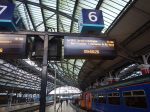


They were forming one of East Midlands Railway‘s Liverpool and Norwich services.
And then yesterday, I had to travel between Liverpool and Sheffield and this was the collection of trains that took me.


So what was it like?
It started badly, with the driver announcing that because of the late arrival due to an undisclosed problem with the incoming train, that we would be leaving ten minutes after the planned departure time of 1551. He also indicated that our late departure meant that we would be stuck behind one of Northern’s services.
In the end, despite the gloomy faces of passengers we left twelve minutes late at 1603.
It was a bit like one of those classic films, where an ancient train escapes in the nick of time, with a lot of important and assorted passengers.
The asthmatic Cummins diesels under the train could be heard straining.
- But the driver was at the top of his game and the train was running smoothly towards Manchester at close to 75 mph, which is the maximum speed of a Class 153 train.
- At Manchester Piccadilly, the driver had pulled back two minutes.
- There were obviously, no problems on the Dove Valley Line and the driver pulled back another minute before Sheffield, to arrive nine minutes late.
Looking at Real Time Trains, the train ran well until March (The place, not the month!), but there was some form of delay there and sadly it was thirty-four minutes late into Norwich.
The Train Was Clean
I should say there was nothing wrong with the train except for its design and age. It was also as clean as you can get one of these trains. The toilet, that I used was better than many I’ve used on trains and worked as it should.
Customer Service
East Midlands Railway had loaded a trolley and a steward and in the two hours I was on the train, he came through twice. The only problem for me, that he had no card machine, but I did find a fiver in my briefcase.
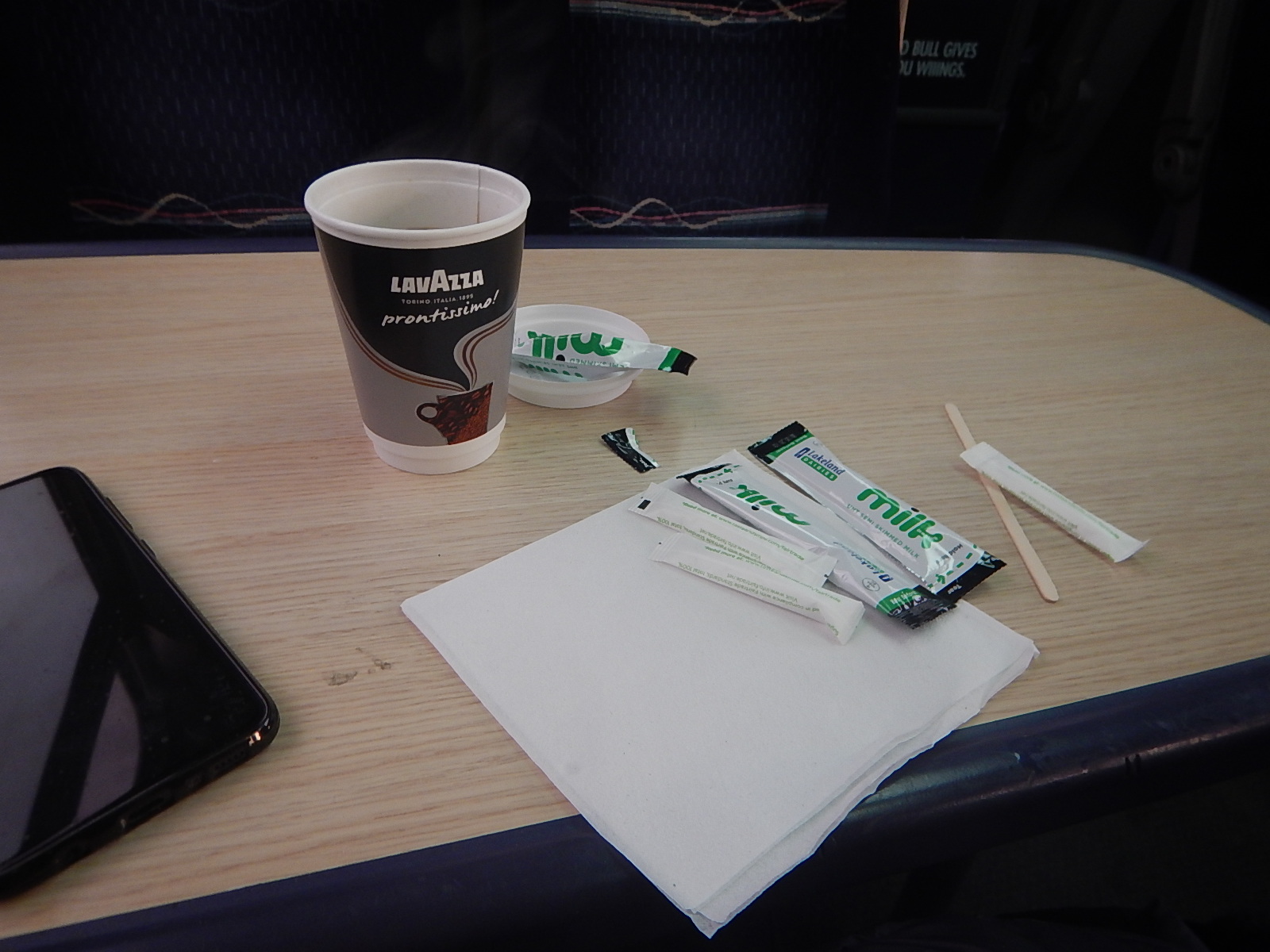
At least it was very drinkable. Even, if I hate those plastic tubs of milk, as they are difficult to open with one good hand.
Where Did Two Cars Go?
I had been fairly certain, that we had started with six cars, but we only arrived in Sheffield with four Class 153 trains.
I suspect that the trouble that delayed the train, concerned two cars and these were left on the naughty step or the end of Platform 6 in Liverpool Lime Street station.
Being Fair To East Midlands Railway
This service used to be run by a four-car formation of two-car Class 158 trains, but these have been causing trouble lately and they will be replaced by Class 170 trains cascaded from other operators.
But because of late arrivals of new trains the much better Class 170 trains haven’t arrived yet.
The driver, steward and other staff did a good job and I feel that the steward enjoyed it. No-one was abusive and stories were just exchanged, as we climbed across the Pennines in what by Sheffield was a very crowded train.
Class 153 trains may have been built as a stop-gap for short branch lines, but you couldn’t fault their performance.
Unless of course, one caused the delay at March, by expiring in a cloud of blue smoke.
Other Observations
These are other observations.
Scheduled Journey Times
On my journey the scheduled times were
- Liverpool and Manchester Oxford Road – forty-seven minutes.
- Liverpool and Sheffield – one hour and forty-eight minutes.
- Liverpool and Nottingham – two hour and forty minutes.
- Liverpool and Norwich – Five hours and twenty-seven minutes
The train considering the configuration, nearly achieved them.
It’s probably the motoring equivalent of doing the journey in a Morris Minor!
The Nine Stops Were Executed Perfectly
There were nine stops on my journey and eight took less than a minute, with Sheffield taking four, as the driver and crew changed.
A modern train like a Class 755 train, with fast acceleration and level boarding could probably save up to three minutes a time on each stop.
The Route Is A Genuine 75 mph Railway In Good Condition
I was checking the speed of the train on parts of the route and the driver had his motley crew at a steady 75 mph for long periods.
- The train was riding well, indicating to me, that both trains and track were in reasonably good condition.
- Note that 75 mph is the maximum speed of a Class 153 train.
- The train recovered three minutes on the late departure from Liverpool.
I can see a faster train and improvements to the route, some of which are underway, could reduce the journey time by a few minutes.
Could Merseyrail’s New Class 777 Trains Work To The Bay Platform At Oxford Road?
Merseyrail’s new Class 777 trains will have the following performance.
- A possible range of perhaps 40-50 miles on battery power.
- An operating speed of 75 mph.
- An acceleration rate of 1.1 m/sec², which is faster than a Class 153 or Class 170 train.
- Fast stops due to regenerative braking, fast acceleration and level boarding.
As Liverpool Lime Street to Oxford Road is thirty four miles of which nine is electrified, I suspect that these new trains could extend Merseyrail’s Northern Line service from Hunts Cross to Manchester Oxford Road.
- Two trains per hour (tph), but I’m sure four tph would transform the area.
- I doubt any track modifications would be needed.
But would Liverpool and Manchester be able to sort out the local politics?
The Future Of The Liverpool And Norwich Service
This service will probably be spilt into two services.
- Liverpool Lime Street and Derby, which could be run by TransPennine Express or Northern Trains.
- Derby and Norwich, which would be run by East Midlands Railway.
As to the trains to be used, consider the following.
The Liverpool and Derby leg would probably need six trains, with the same number needed for Derby and Norwich, or twelve in total.
Currently, eleven or twelve is needed for the longer service.
Sections of the route like through Manchester and between Grantham and Peterborough are electrified.
There are even sections of route, where 125 mph running is possible.
Run reliably to an hourly frequency, I think that this service could attract passengers, especially, as it would serve Derby and extra stops like Ilkeston and Warrington West could be added.
This leads to the following trains being possibilities.
Class 802 trains – 125 mph bi-mode train of which TransPennine Express have 19 trains.
Class 185 trains – 100 mph diesel train of which TransPennine Express have 51 trains.
Class 810 trains – 125 mph bi-mode train of which East Midlands Railway have ordered 33 trains.
Class 755 trains – 100 mph diesel train of which Greater Anglia have 38 trains, which are based at Norwich.
Alstom Breeze hydrogen trains could be ideal for Liverpool and Derby.
Note.
- Greater Anglia and East Midlands Railway are both subsidiaries of Abellio.
- Developments of Class 755 trains could include battery and hydrogen versions.
- I suspect that 125 mph trains may be required for both legs, to maximise capacity on the East Coast Main Line and Midland Main Line.
The trains will certainly get better.
My First Ride In A Nova 3 Train
Nova 3 is the name that TransPennine Express have given to their new fleet of Mark 5A coaches hauled by Class 68 locomotives.

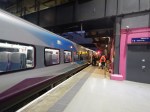
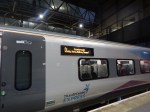
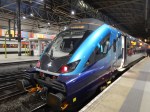
The first few pictures were taken, when I saw a Nova 3 at Manchester Victoria station and the ither during and after a ride between Manchester Victoria and Leeds stations.
These are a few of my thoughts.
Comfort, Noise And Vibration
It was certainly good and up there with the best.
Tables For Four
There were quite a few tables, but not everyone got one.
Ride And Performance
There was nothing wrong with the ride, but we were only doing 75 mph across the Pennines.
Next time, I’m in the North, I’ll take one of these trains up the East Coast Main Line to Scarborough or Redcar to feel them at a faster speed.
Conclusion
I wouldn’t object to having these coaches with a Class 88 electric locomotive running between London and Nowich via Ipswich.
 The Anonymous Widower