H2 Green, Eversholt Rail To Jointly Develop Hydrogen Supply Solutions In The UK
The title of this post, is the same as that of this article on H2 View.
Their co-operation will be for the rail industry and based on green hydrogen, produced by electrolysis.
- H2 Green is a Scottish company, that were recently taken over by Getech,
- Eversholt Rail Group is a rolling stock leasing company, who are also backing hydrogen trains, that will be manufactured by Alstom.
This could be the kick up the backside, that hydrogen trains need in the UK.
Moorgate Station’s Old Entrance Has Now Reopened
I went to Moorgate station today, as the old entrance has now reopened with lifts and stairs to the sub-surface lines.
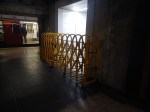




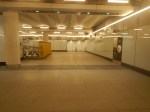


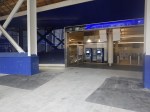
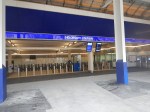
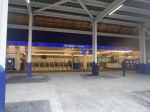

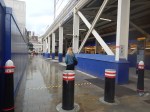
Note.
- The stairs down to the tunnel connecting the Northern Line and Crossrail look a bit steep.
- The ceiling design in the entrance lobby.
- The escalators down to Crossrail at the Southern side of the entrance lobby.
- The gate line is very wide.
The oversite development, which is still being built, will surely tidy up the entrance.
In The New Lift To The Northern Line At Moorgate Station, I showed and described this visualisation.
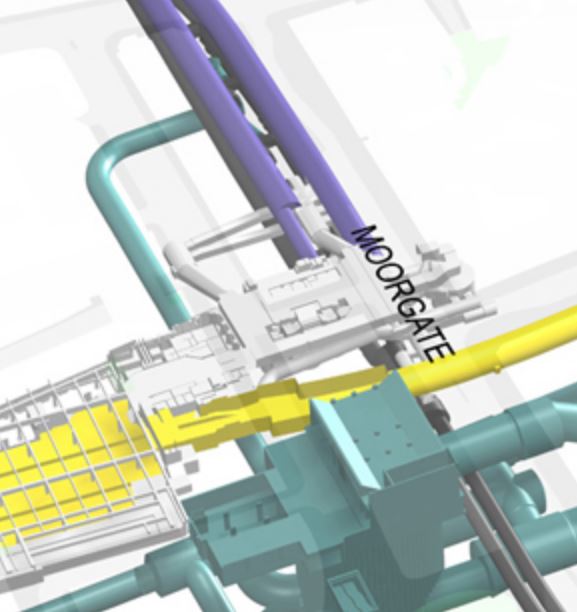
Note.
- The Northern City Line is shown in purple.
- The double escalator going down to between the two terminal platforms of the Northern City Line.
- The Northern Line is shown in black and the two platforms are underneath the Northern City Line.
- The Northern Line tunnels cross over the top of the Crossrail running tunnels.
The dark green tunnel with the right angle bend at the top of the map, is the pedestrian tunnel that connects the Northern Line and Crossrail.
The tunnel will be accessed from the Northern line platforms by the lift or the stairs, shown in the first two pictures.
Alternatively, you will be able to take he rat-up-the-drainpipe route to the surface from the Northern Line, that I described in Up From The Depths At Moorgate Station. That route is escalators all the way and then the lift in the pictures to the main entrance lobby.
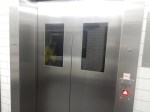
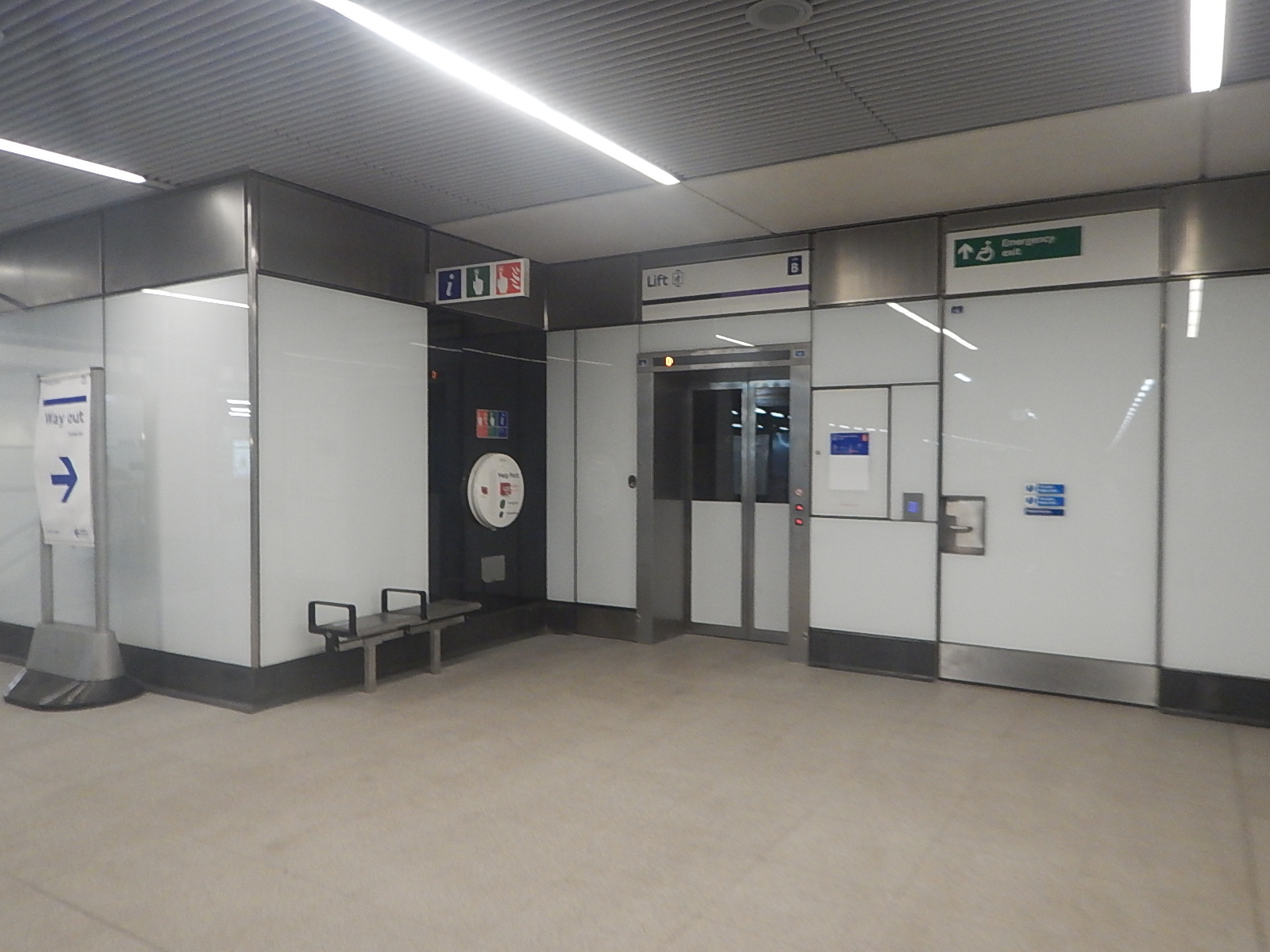
On August 1st 2021, I finally took the lift from the Westbound Hammersmith & City, Circle and Metropolitan platform to the new ticket hall and took these pictures.
This is a general view of the lift.
This is the information plate on the outside of the lift at the sub-surface platform level.
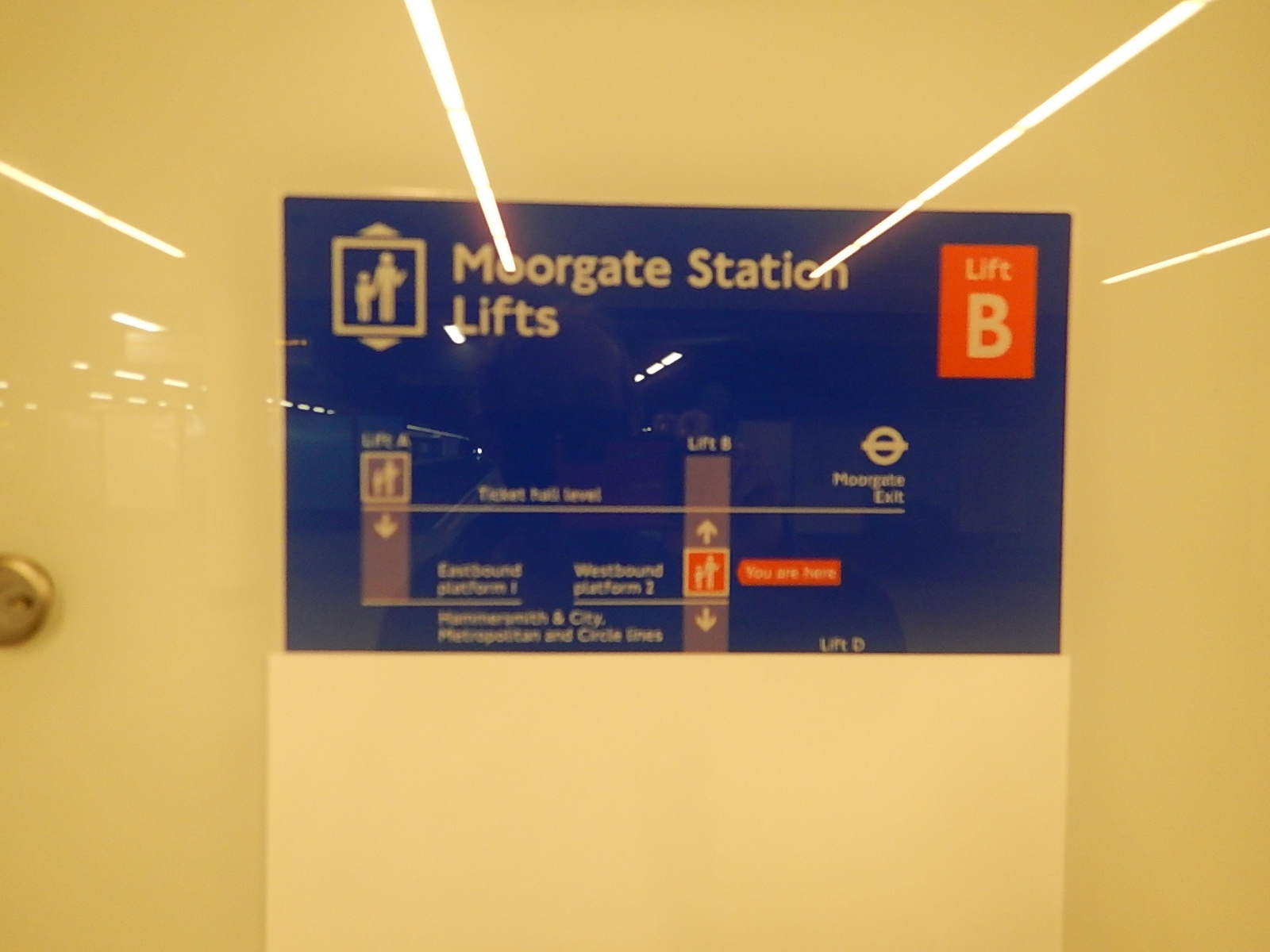
It shows two lifts from the Sub-service platforms to the new ticket hall.
This picture shows the lift buttons on the outside of the lift at the sub-surface platform level.
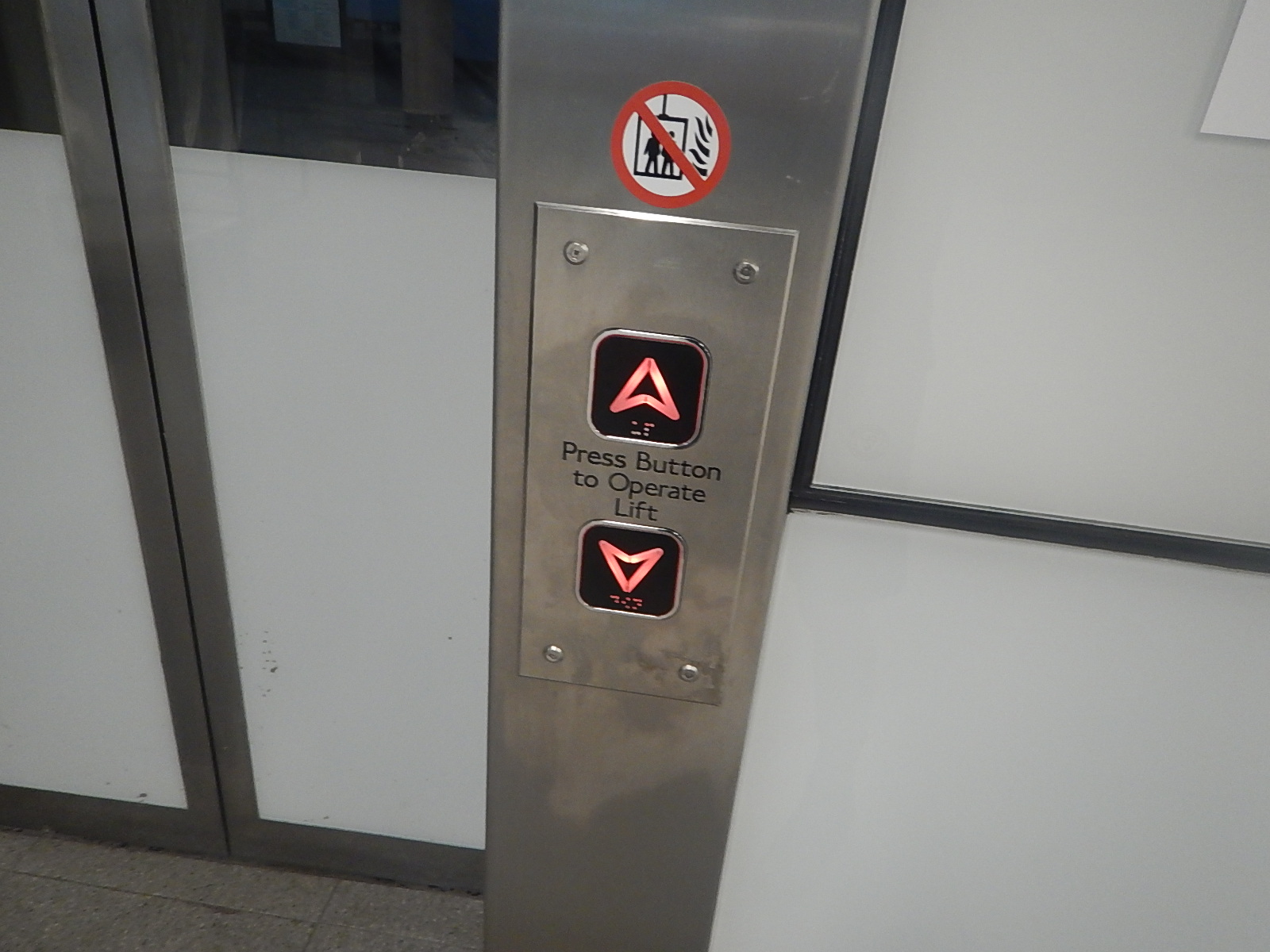
It appears you can go up and down.
The down must mean that there is a level below the sub-surface platform level.
These are the buttons inside the lift.

It appears that there is a level below the platforms, which passengers can use.
Although it is not named on the plate, the lift must connect to the right-angled tunnel to the Northern and Northern City Lines.
- It does appear that of the two lifts between the new ticket hall and the sub-surface platform level, only one accesses the connecting tunnel.
- It might also mean that passengers in wheelchairs will need to use two lifts between the Northern Line and the Eastbound sub-surface platform.
I did see another tunnel from the lift on the Westbound sub-surface platform, stretching to the East.
Let’s hope I’m wrong or it will be sorted before opening.
Moorgate station appears to be getting extremely complicated.
Approaching Kings Cross – 5th July 2021
I took these pictures approaching Kings Cross.














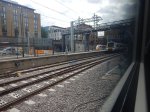
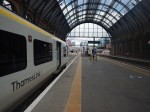
Reports say most of the work of the remodelling is now complete. Although, it did look to me that in places more tracks could be laid.
The Length Of The Long Platforms At Kings Cross
This repeat of the last picture in the gallery shows the length of the nine long platforms.
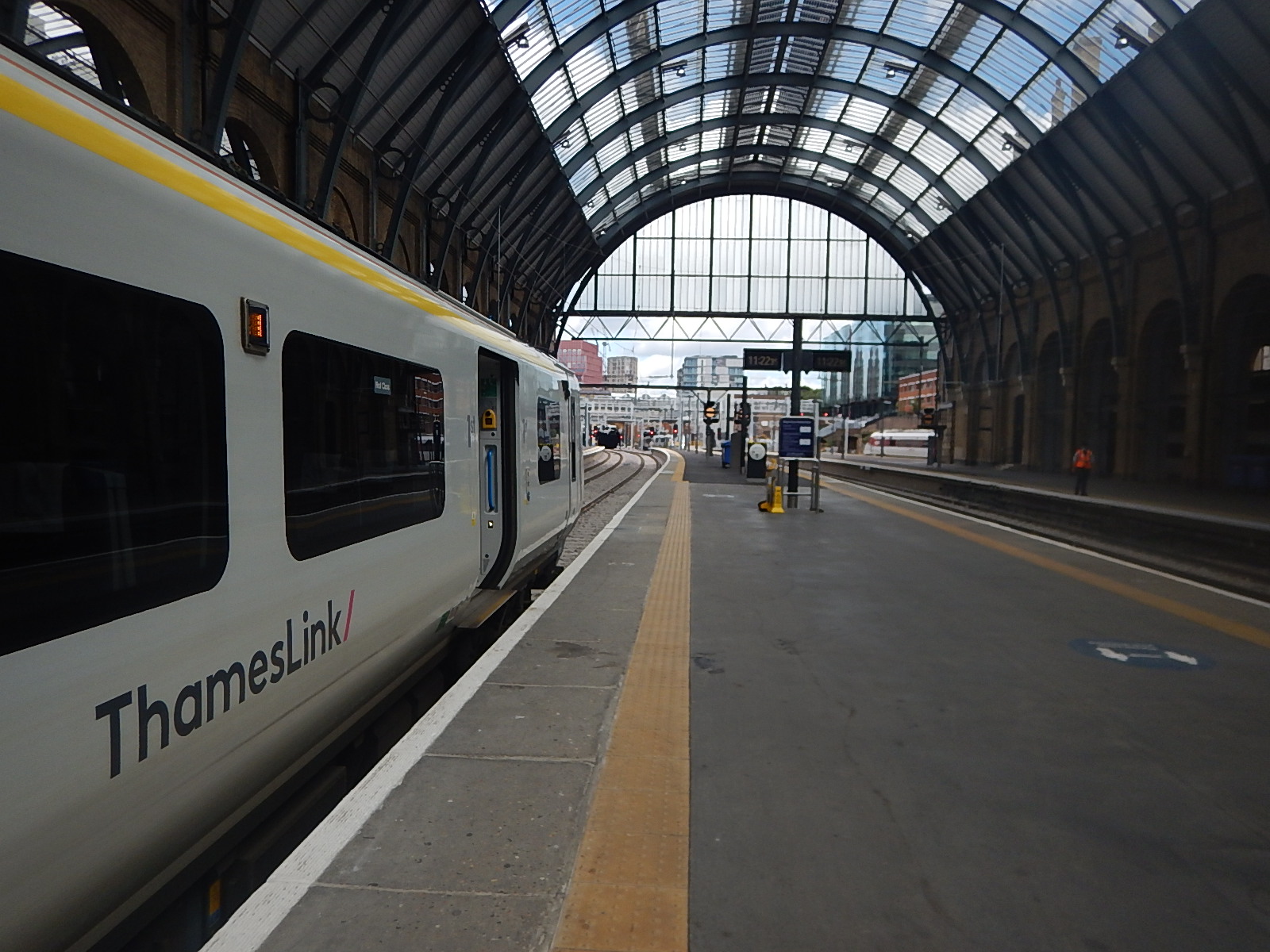
Note.
- The train is in Platform 3.
- The train is an eight-car Class 700 train.
- Eight-car units are 162 metres long.
- Twelve-car units are 242.6 metres long.
Platform 3 is obviously long enough to take the following trains.
- Twelve-car Class 700 train – 242.6 metres
- Two Class 800 trains working as a pair – 260 metres
- A nine-car Class 800 train – 234 metres
- An InterCity 225 train – 245.2 metres
- A twelve-car Class 319 train or Class 321 train – 240 metres.
This Google Map shows the ends of the platforms at Kings Cross.
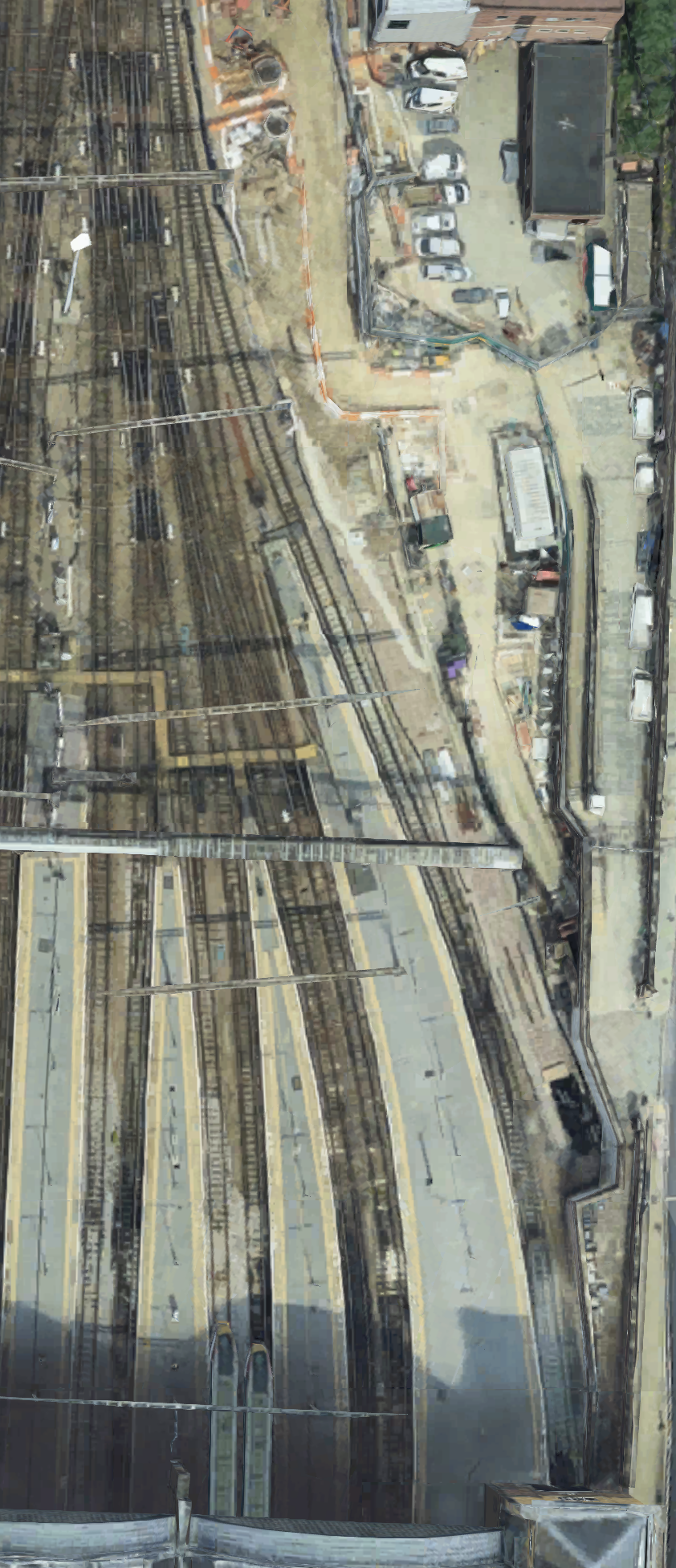
Note.
- The long platforms at the right are 2 and 3.
- Platform 2 and 3 are wide.
- Two LNER Azumas are in Platforms 5 and 6.
It looks to me that whilst all platforms can probably handle the standard British Rail length of 240 metres, those on the right may be able to handle longer trains. But what trains? These are my thoughts.
Longer LNER Azumas
This document on the Hitachi Rail web site is entitled Development of Class 800/801 High-speed Rolling Stock for UK Intercity Express Programme.
The document says that Class 80x trains have a sophisticated Train Control and Management System (TCMS).
The document says that this is one of the functions of the TCMS.
To simplify the rearrangement and management of train configurations, functions are provided for
identifying the train (Class 800/801), for automatically determining the cars in the trainset and its total length,
and for coupling and uncoupling up to 12 cars in normal and 24 cars in rescue or emergency mode.
I would assume that with the purchase of extra cars, that it might be possible to lengthen trains to up to twelve cars.
Lengths would be as follows.
- Ten-car Class 80x train – 260 metres.
- Eleven-car Class 80x train – 276 metres.
- Twelve-car Class 80x train – 312 metres.
To add extra capacity on the routes to Leeds and Edinburgh services, there must be a balance between these factors.
- The cost of extra cars.
- The cost of platform lengthening.
There must of course be space for any platform lengthening.
It would seem to me, that common sense should allow twelve-car trains to be handled at King’s Cross, as this must be one of the best ways of adding capacity to East Coast Main Line services.
Caledonian Sleeper
The Caledonian Sleeper doesn’t normally run into King’s Cross, but during the rebuilding Euston for High Speed Two, it may be necessary to provide an alternative platform.
Unfortunately, the sixteen-car Caledonian sleeper trains are 352 metres long. So it would appear that Kings Cross would not be a temporary alternative.
But given the amount of money being invested in sleeper trains in Europe by the likes of Midnight Trains and NightJet, I can see that the Caledonian Sleeper might have another problem – success and the need for more capacity.
So I wouldn’t rule out an East Coast Main Line sleeper train between London Kings Cross and Edinburgh.
It might call at Stevenage, Newcastle and Berwick to widen its passenger base, just as the current sleeper calls at Watford, Carlisle and Carstairs.
The train could be extended to Aberdeen, to simplify services in Scotland.
Obviously, traffic and finance would decide, but I wouldn’t rule out the Caledonian Sleeper running to and from King’s Cross for a few years yet.
A Night Light Freight Terminal
In Is This The Shape Of Freight To Come?, I wrote about the new generation of fast electric freight trains, based on redundant electric multiple units.
- If you look at Real Time Trains, you will find that few trains use King’s Cross station between two and five in the morning.
- Platforms can take a twelve-car version of these electric freight trains.
- The new platforms are wide and level.
- Local delivery could use electric vehicles and bikes.
I think King’s Cross has possibilities for handling goods like food, parcels and shop supplies.
The Short Platforms At Kings Cross
When I was a child, King’s Cross had four short suburban platforms, where N2 steam tank engines hauled suburban services in and out of the station.
The suburban platforms have now been reduced to two platforms, that fit in with the current uses of the station.
- The two platforms are numbered 9 and 10.
- They can handle an eight-car Class 700 train, which is 162 metres long.
- They can handle a five-car Class 800 train, which is 130 metres long.
- Some five-car services run by the new Hitachi trains use these platforms.
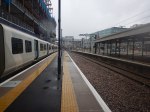
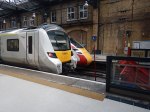
These pictures show the platforms.


Note.
- The platforms are wide.
- The picture of the Azuma in Platform 9 was taken before the centre track was removed recently.
- Today, one LNER Azuma departed from Platform 9 to go to Lincoln, but both platforms were busy with Great Northern services to Cambridge, Ely and Kings Lynn.
I do wonder if the platforms could be used for light freight, during the night.
Conclusion
King’s Cross is not just one of the UK’s finest railway stations, which is recognised by its Grade I Listed status, but it is now moving towards an efficient, high-capacity station that works around the clock!
Watford Junction Station’s Barrier Seats
I quite like these seats at Watford Junction station.
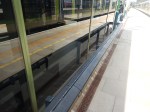
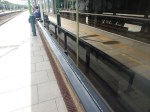
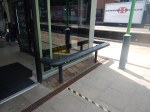

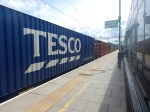
They would appear to give a nice perch to sit, whilst waiting for the train and also act as a crush barrier for the glass shelter behind.
They also give me something to hold, when a train goes through.
The train shown in the picture was a Tesco train between Tilbury and Daventry.
It went through the station at probably over 60 mph.
It had the usual smelly and polluting Class 66 on the front.
It took four hours 45 minutes for the journey, which included the Gospel Oak and Barking Line through London.
I did note earlier that the train seemed to be using modern wagons.
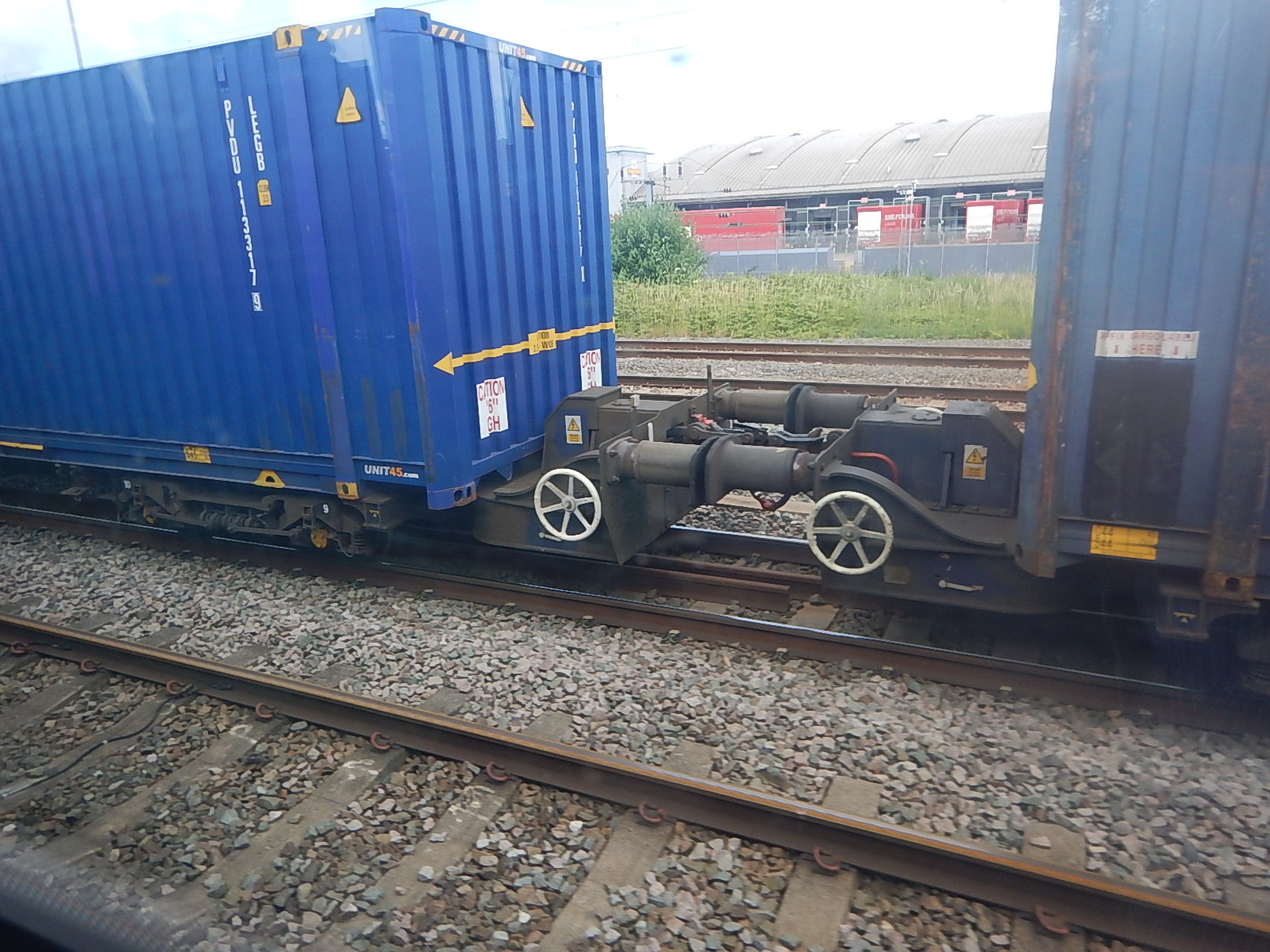
Are these wagons faster than those you generally see on UK railways?
Surely too, this is the type of train, that could be hauled by an electric locomotive with a Last-Mile capability, like a Class 88 Locomotive.
I would have thought, that Tesco could benefit, by using electric haulage, especially if the locomotive was appropriately liveried.
Bletchley Viaduct – 5th July 2021
I took these pictures of the new Bletchley viaduct today,
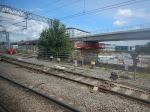
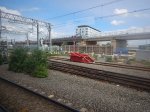
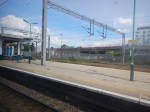
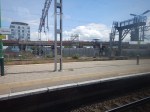
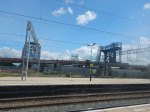
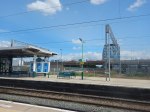
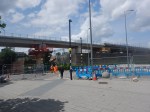

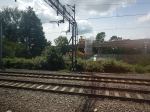
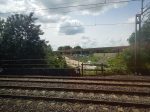
Note that there is now a bridge over the four tracks of the West Coast Main Line.
Southgate Expects
Like most of England, Southgate is probably wishing England well.
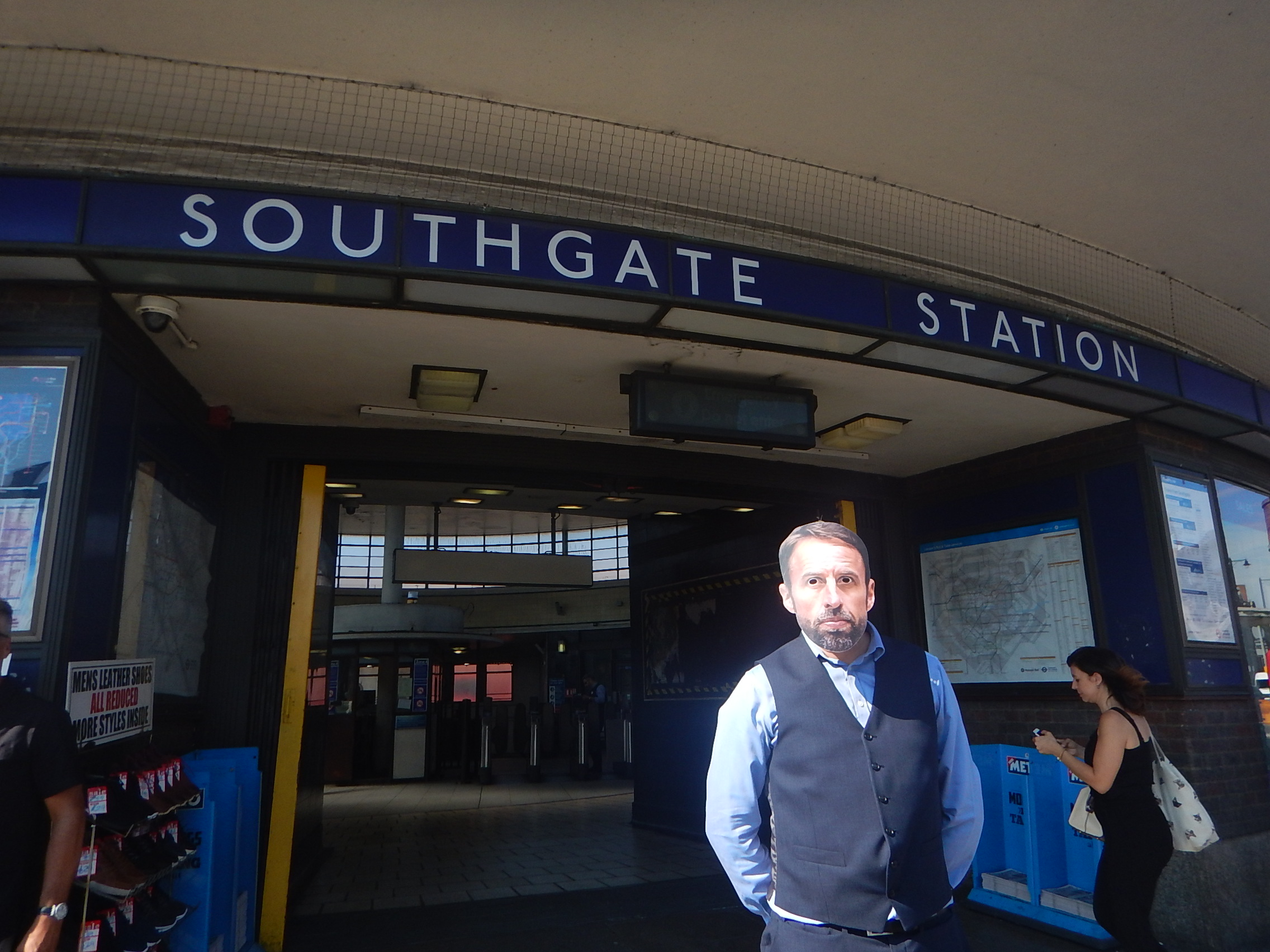
The picture was taken after Southgate took England to the World Cup semi-final in 2018.
Transport for London with a little help from Visa, also changed all the roundels.
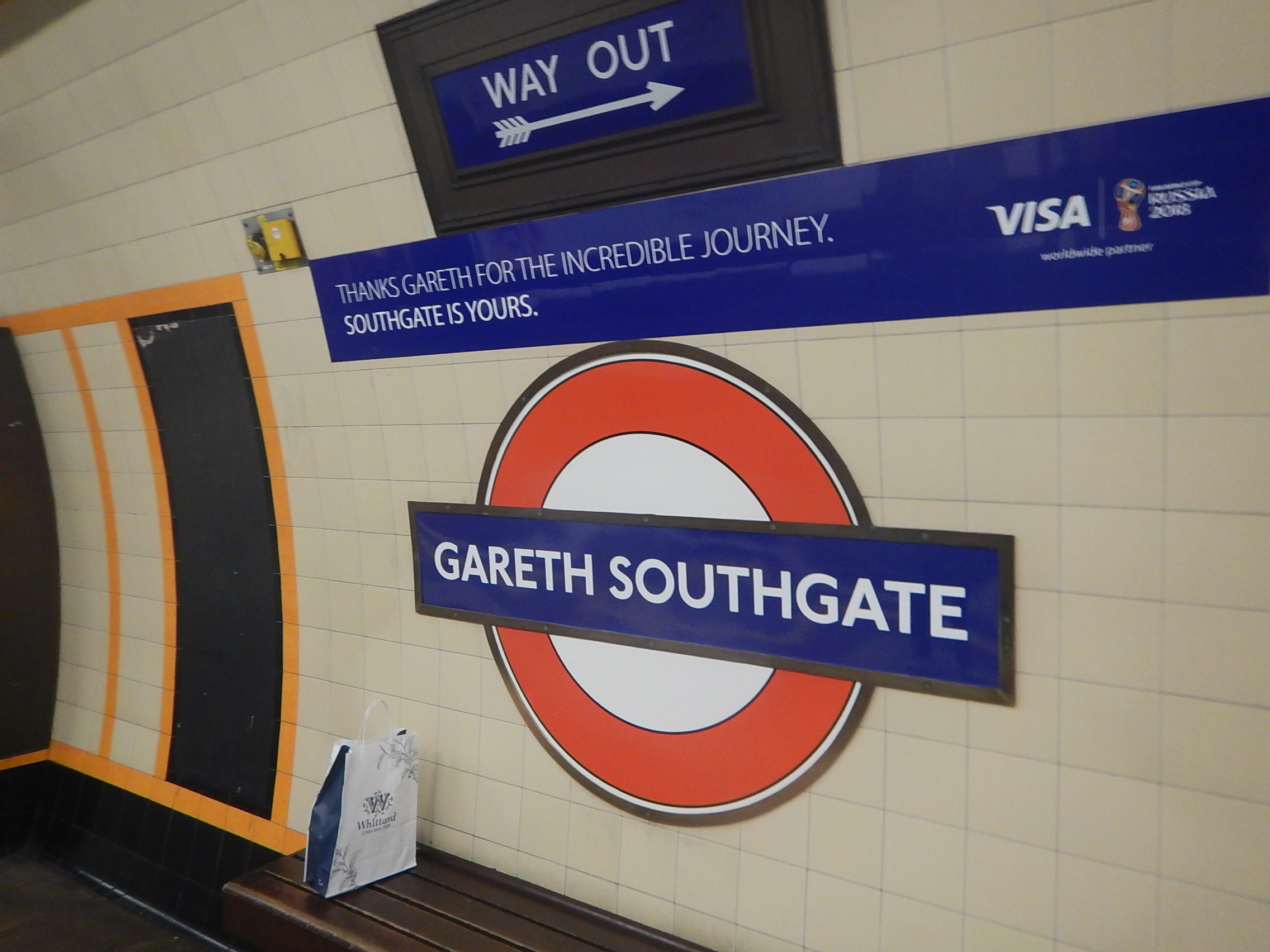
If they did that for losing in the semis, what will happen, if England go further?
Freightliner Secures Government Funding For Dual-Fuel Project
The title of this post, is the same as that of this press release from Freightliner.
This is the first two paragraphs.
Freightliner, a subsidiary of Genesee & Wyoming Inc. (G&W), in partnership with a consortium of specialist suppliers, has been successful in securing government funding to develop a dual-fuel solution for the Class 66 locomotive.
The technology is one of the 30 winners of the latest round of the First of a Kind (FOAK) competition announced today by the Transport Secretary. Already the safest and greenest mode of ground-freight transportation, the competition has been aimed at making the railways even cleaner, greener and more passenger friendly.
These are my thoughts.
A Big Opportunity
Freightliner have a total of 113 Class 66 locomotives, out of a UK total of well over 400.
If the project succeeds, this could cut a large amount of carbon emissions from UK rail freight.
Who Are The Partners?
The press release gives these project partners.
The key project partners are Freightliner, which operates over 113 Class-66s in the UK, and Clean Air Power, providers of innovative clean air solutions for freight. The project is also supported by Network Rail, Tarmac, Rail Safety Standards Board (RSSB), Flogas, Carrickarory and the University of Birmingham.
It is a comprehensive group of partners, which probably covers all aspects.
- From their web site, Clean Air Power would appear to have the expertise for the project, with back-up from the University of Birmingham, who seem to be involved in several high-profile rail projects.
- The early involvement of standards must be a good thing.
- Flogas are a gas company
- Carrickarory would appear to be consultants specialising in rail.
Getting the team right is important in having a successful project.
What Are The Objectives Of The Project?
The press release gives these project objectives.
The project will investigate the ability to substitute diesel with both hydrogen and biogas on the Class-66 locomotive which hauls over 80% of freight on the UK rail network and, in doing so, reduce carbon emissions on one of the industry’s most challenging two-stroke locomotives.
This will be achieved by retrofitting the Class 66 with Clean Air Power’s precision injection technology, creating a Class 66 that can run on a combination of diesel, biogas and hydrogen.
Sounds a good set of reduced carbon objectives!
Would The Technology Be Applicable To Other Operators And Locomotives?
The press release says this.
This sustainable solution will support a programme to decarbonise freight operating companies’ diesel fleets in a cost-efficient manner that does not require significant short-term investment and facilitates operational learning in support of a longer-term fleet replacement programme, potentially using 100% hydrogen fuel.
Does this mean that the eventual Class 66 replacement will be a locomotive, that runs exclusively on hydrogen?
I suspect it does!
How very sensible!
Conclusion
This could be a big step in the battle to decarbonise.
Are Disposable Nappies A Wasted Resource?
I stated my views on disposable nappies in this post called Disposable Nappies, where this was the first sentence.
From a scientifically green point of view, in many places I’m against using disposable nappies, as they clog sewers, end up in landfill and I’ve even seen them in litter bins in parks. We used real nappies for all our three children in the seventies, washing them ourselves in a machine for the first and then using a nappy service for the last two.
But dirty nappies contain a lot of the ingredients, that can be used to make hydrocarbons.
This article from the Sunday Times in 2018 is entitled Syngas, The New Jet Fuel — Stinky Nappies And Coffee Cups.
These are the first two paragraphs of The Times article.
With their packed cabins and recycled air, long-haul passenger jets are the last place where you would want to encounter the whiff of a dirty nappy.
However, old nappies are to be used — along with other non-recyclable waste such as meal packaging and takeaway coffee cups — to power British Airways planes.
Syngas is a mixture of hydrogen, carbon monoxide and some carbon dioxide. Some countries without access to petroleum or diesel created syngas and then used the Fischer–Tropsch process to create the fuels they needed. The process doesn’t have a good reputation as the two main countries to use the process were Germany under the Nazis and South Africa during apartheid.
Why is the use of this process being revived to produce aviation biofuel or sustainable aviation fuel for British Airways?
According to Wikipedia, it can save between 20 and 98 % of carbon emissions compared to conventional jet fuel.
The same process can also make biodiesel for buses, trains and trucks
It’s certainly an area, where a lot of research is going on! Just type “syngas nappies” or “syngas diapers” into Google and you’ll get a lot of serious hits.
By my front door I have a well-designed blue bin.
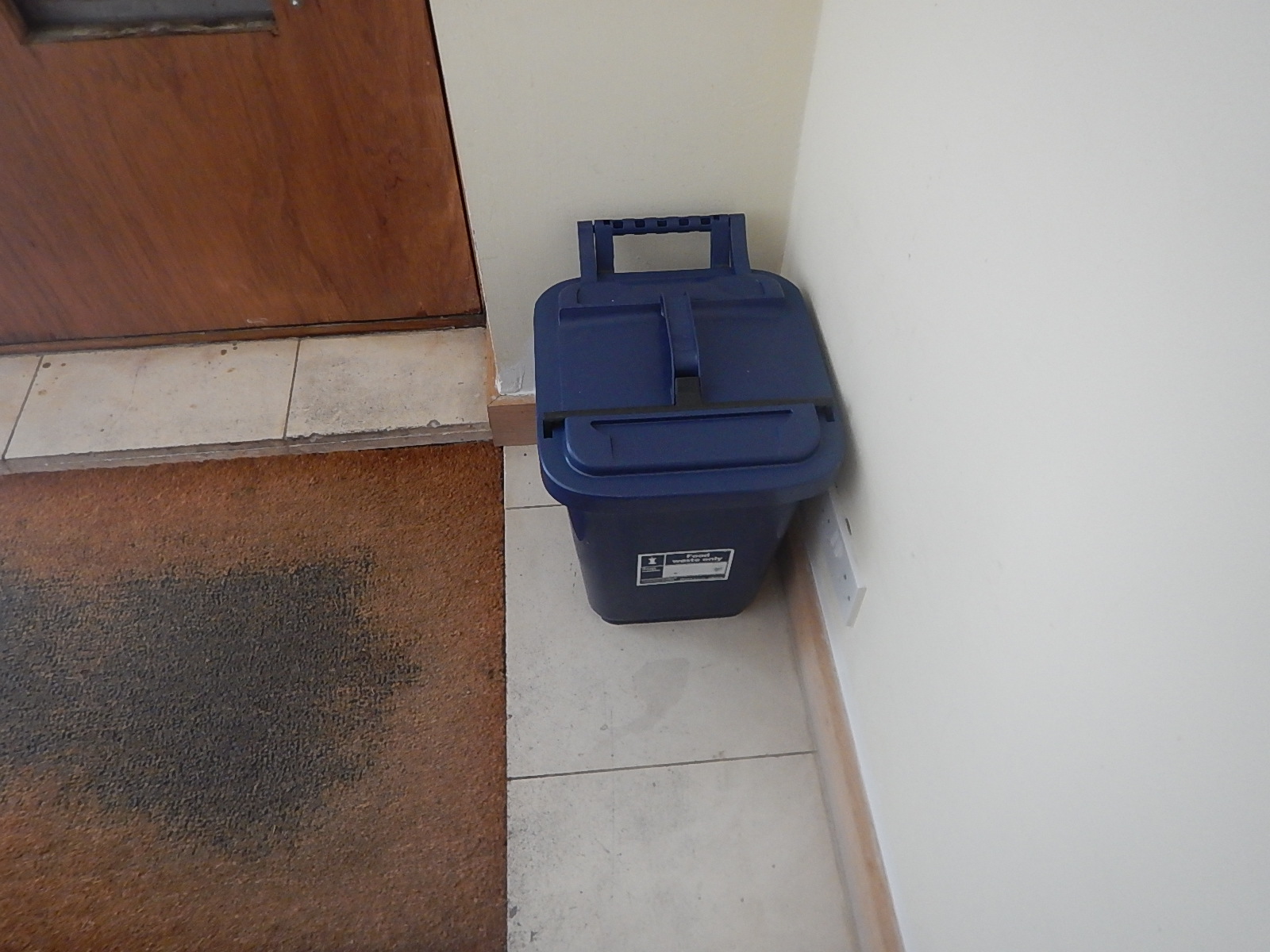
This is for my food waste bin, which is collected once a week.
This page on the Hackney web site is entitled Food Waste Recycling, and this is said about where the food waste goes.
Food waste from households in Hackney is sent to an anaerobic digestion facility in south east England, where it’s turned into renewable energy to power homes and biofertiliser to be spread on local farmland to grow crops.
A similar bin of an appropriate size could be used for nappies.
The nappies would go to an appropriate recycling site, instead of down the toilet or into landfill.
Technology Company Announces Deal That Could Produce Nearly 30 million Gallons Of Aviation Fuel In Mississippi
The title of this post, is the same as that of this article on magnoliastatelive.
This is the first two paragraphs.
A technology company that has developed technology to turn household waste and forest waste into aviation fuel says it has signed an agreement that will help it produce 30 million gallons of fuel in Mississippi every year.
Velocys officials announced this week that they have signed a framework agreement with Koch Project Solutions to develop their biorefinery project which produces standard aviation fuel, in Natchez.
That all sounds good for the spin-out of Oxford University,
Is This The Shape Of Freight To Come?
This article on Rail Advent is entitled Eversholt Rail Unveils First Swift Express Freight Train In Doncaster.
It is a full report on the first of a new breed of freight trains based on redundant 100 mph electric multiple units.
Three Rail Problems
The rail industry, its financiers and customers have a lot of problems, they’d like to solve, but these three seem to be coming together to create a whole new industry.
Rolling Stock Leasing Companies Have A Surplus Of Redundant Rolling Stock
Most of the released rolling stock has been made redundant because of the arrival of new trains.
- Some trains and locomotives, like Greater Anglia’s Class 379 trains and Class 90 locomotives will probably be passed on to other operators.
- Some trains like Greater Anglia’s Class 315 trains and Govia Thameslink Railway‘s Class 313 trains and Merseyrail‘s Class 507 trains and Class 508 trains will probably only be fit for scrapping.
- Climate change ambitions will probably finish off anything which is elderly and diesel-powered.
What will be left will be a an assortment, which will contain a lot of trains with these characteristics.
- Four cars
- Can run in formations of 4, 8 and 12 cars
- Electrically-powered.
- Some trains are even dual voltage.
- 100 mph operating speed.
- Good reliability.
- Easy maintenance and modification if needed.
Many were even built over thirty years ago by British Rail Engineering Ltd.
As someone, who used to part-own a company that leased trucks to operators, I know that to maximise cash-flow and ultimately profits, you don’t want them sitting in a yard or a siding.
Conversion to zero carbon is one option.
- Porterbrook have said they will convert the Class 350 trains, that they own to battery-electric operation.
- Porterbrook have also converted some Class 319 trains to electro-diesel Class 769 trains.
- Porterbrook have also converted a Class 319 train to hydrogen operation.
- Eversholt Rail Group and Alstom are converting Class 321 trains to hydrogen operation.
I also believe that the redundant Class 379 trains will also be converted to battery-electric operation.
But there will still be a substantial number of quality trains, that need a second life.
The Growth Of Parcel Freight
Parcel freight traffic driven by on-line shopping, has boomed in the pandemic.
This type of traffic often originates from outside of the UK and enters the country at places like London Gateway or East Midlands Airport.
Much of it is currently distributed to large cities by truck, which in this day and age is not a green option, or even an option at all.
Rail Operations Group have leased ten Class 769 trains and 9 Class 319 trains with the intention of running parcel services under the Orion brand. I wrote about this proposal in A Freight Shuttle For Liverpool Street Station Planned.
Road Congestion
Road congestion is getting worse and there is bir much point in having product stuck on the motorway, when it can be running along at a 100 mph on an electrified rail line.
The Need For Just-In-Time Deliveries
Many factories these days work on the Just-In-Time principle, with product delivered just as its needed.
As an example Toyota build their cars at Burnaston near Derby, but the engines are built in North Wales. I suspect that they go across the country by truck.
Looking at maps, the engine plant could be rail connected and I feel one could be arranged at Burnaston.
Do they keep a good stock of engines at Burnaston?
I can see several situations like this needing a regular company train.
Fast Food
Because of Brexit we will need to be growing more of our own food.
Traditionally, the Class 43 power cars of InterCity 125 trains carried flowers and fish up from Cornwall.
So will we see rail provide an alternative.
Conclusion
Put these problems together and you can see a fair number of four-car electric multiple units being converted to short 100 mph electric freight trains.
Eversholt Rail Group‘s Swift Express Freight Train is very much a demonstrator for their ideas and it has some expected and unexpected features.
Based On A Class 321 train
The train is based on a four-car Class 321 train.

I rode one recently and I timed it at over 90 mph on the way to Southend.
Trolley Cages
Pictures in the Rail Advent article show a stripped-bare interior with a steel floor, with another picture showing three supermarket trolley cages arranged across the train.
One estimate in the article says that each coach can handle over fifty of these cages and up to nine-and-a-half tonnes of cargo.
Four Seats And A Toilet
Eversholt feel that some of the trains could be used in a Travelling Post Office mode and there may be a need for sorting en route, so two first-class seats, two second-class seats and a toilet are provided.
This train would enable an Anglo-Scottish parcel service.
- It might stop several times en route.
- At each stop parcels would be rolled out and in, perhaps with the help of a Harrington Hump.
- The on-train staff would sort the incoming parcels and put them in the required trolley for offloading.
I don’t think though, they’ll be delivering postal orders.
A Last Mile Capability
The article also disclosed that Eversholt were thinking of fitting a Last-Mile capability to the Swift Express Freight Train.
Batteries were mentioned and they would obviously work.
But one development recently is Porterbrook’s HydroFlex train, which has converted a Class 319 train to hydrogen power.
- The conversion was done by Birmingham University.
- It appears that all the hydrogen gubbins is underneath the floor, so cargo capacity would not be reduced.
I suspect underfloor hydrogen power could be very viable in an express freight train.
Fleet Size
The article talks of a fleet size of twenty and also says that the first train has been leased to an unnamed parcel distributor in the UK.
 The Anonymous Widower