Schoolchildren Get First Glimpse Of Northumberland Line Train Services
The title of this post, is the same as that of this article on the Northumberland Gazette.
The title does say it all, but what a good idea to give the kids a ride first to build up enthusiasm for the new Northumberland Line.
High Speed Two Publish Rural Footbridge Design
High Speed Two have published their rural footbridge design on this page of their web site.
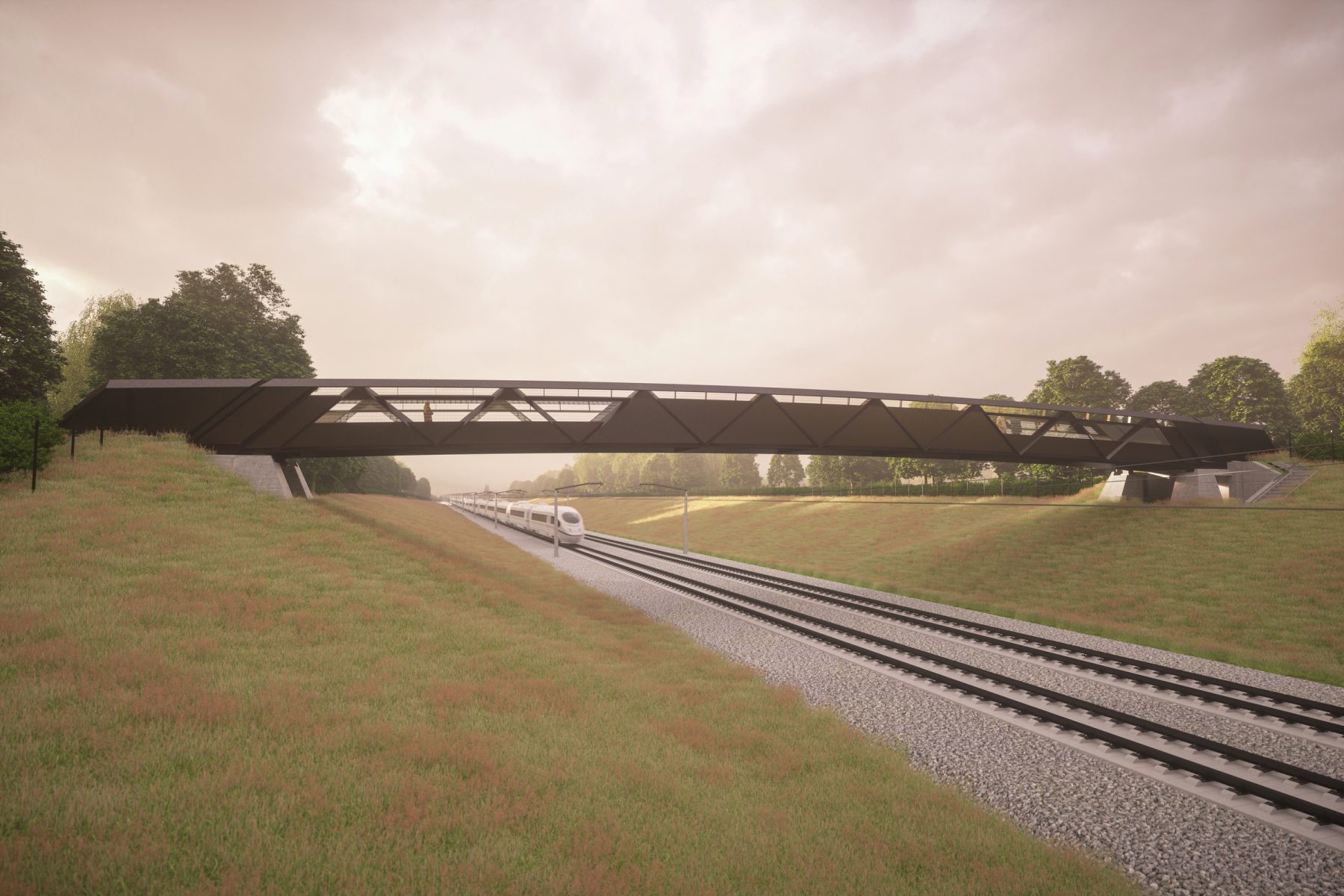
This image from High Speed Two shows an artist’s impression of the bridge.
This is High Speed Two’s own thoughts on the design.
Made of weathering steel, the sides of the lightweight bridges will lean outwards to maximise views of the sky and improve the experience of people crossing the railway.
Weathering steel – which ages naturally to a russet brown colour – was chosen to help match the tone of the surrounding countryside, while the plates that form the structure of the bridges will be angled to appear narrower and lighter.
To emphasise the sense of lightness, each span will be slightly higher in the middle so that they appear to leap over the railway. Most of the bridges will consist of just one 42m span, with extra spans added where necessary to create bridges of up to 102m long.
The design of the bridge would appear to be a good compromise between accessibility, cost, ease of construction and installation and practicality.
The article also covers other topics.
Step-Free
This paragraph explains how the bridges will be step-free.
In order to improve efficiency of manufacturing and assembly, all the bridges will have the same basic form, with the approach paths built into the earthworks on either side of the bridge. This also means that all the footbridges will effectively be step-free.
I can see bridges of this type being built at other rural locations.
A Single-Platform Station
These images show James Cook station in Middlesbrough.
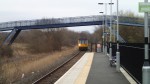
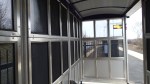

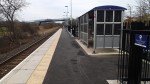
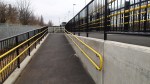
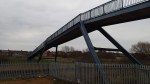

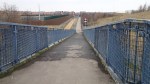

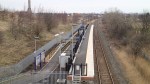

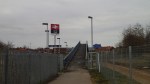
High Speed Two’s rural bridge design could be used as part of a design for a step-free station on a rural line.
Bridleways
The footbridge can be used for a bridge on a bridleway.
Designed with guidance from the British Horse Society, the bridges which carry bridleways will follow the same basic pattern, with a recycled, non-slip rubber deck and the structure acting like a baffle to stop horses being distracted by passing trains.
Footbridges will be 2.5m wide, while bridleways will be 3.5m wide to allow two horses to pass comfortably and safely.
It should be remembered, that horses are flight animals and if they are startled they run, so if say a train went under the bridge, when they were on top, they would most likely go forward and cross the bridge quickly.
I would happily have ridden my stallion; Vague Shot over a bridge like this.
I also think, the design of the bridge in the landscape should allow riders to approach to a safe distance from the bridge and perhaps watch a train or two go through.
Other Animals
I can see other animals like badgers, foxes and hares using a bridge like this.
I also think, that on classic railways, bridges like these could be used to allow farmers to move sheep or possibly cattle over a railway, with some simple design changes.
Conclusion
This bridge has more applications, than the initial one, for which it was designed.
UK-German Energy Link Reaches Financial Close
The title of this post, is the same as that of this article on renews.biz.
These are the three introductory paragraphs.
A multibillion-euro 725 km interconnector between the UK and Germany has reached financial close, paving the way for construction works to begin in the coming months.
The £2.4bn (€2.8bn) NeuConnect interconnector will form an “invisible energy highway” with subsea cables allowing up to 1.4GW of electricity to flow in either direction between the UK and Germany and will help deliver a more secure and resilient energy supply, particularly as more renewable generation is added.
Independent analysis shows the project will create over £1.7bn in UK consumer benefits over 25 years.
Other points about NeuConnect include.
- It has been privately funded by a consortium of over twenty national and international banks.
- It will run between the Isle of Grain and a the new Fedderwarden substation in Wilhelmshaven.
- It should be operational in 2028.
Although, it is bi-directional, it appears that one of its major uses will be to provide Germany with UK wind energy to compensate for the loss of Putin’s bloodstained gas.
easyJet And Rolls-Royce Pioneer Hydrogen Energy Combustion Technology In H2ZERO Partnership
The title of this post, is the same as that of this press release from Rolls-Royce.
These three opening paragraphs outline the project.
easyJet and Rolls-Royce today announced a ground-breaking new partnership, H2ZERO, that will pioneer the development of hydrogen combustion engine technology capable of powering a range of aircraft, including those in the narrow-body market segment.
Both companies have committed to working together on a series of engine tests on the ground, starting later this year and have a shared ambition to take the technology into the air. The objective of the partnership is to demonstrate that hydrogen has the potential to power a range of aircraft from the mid-2030s onwards.
While Rolls-Royce will bring its expertise in engine development and combustion systems, easyJet will contribute its operational knowledge and experience to H2ZERO and will also directly invest in the test programme.
This to my mind is good news.
This paragraph gives details of some of the planned work.
Through H2ZERO, the companies will support an early concept ground test of a Rolls-Royce AE 2100 engine in the UK later this year. This will be followed by a full-scale ground test of a Rolls-Royce Pearl 15 jet engine – a range of location options are being assessed for this including the Rolls-Royce test facility in Mississippi, USA. The programme will build on initial hydrogen combustion and fuel system rig tests that Rolls-Royce is undertaking with both Cranfield and Loughborough universities.
Note.
- The Rolls-Royce AE 2100 engine, powers the Lockheed Super Hercules amongst others.
- Rolls-Royce Pearl 15 powers various business jets.
easyJet and Rolls-Royce certainly have ambitions, and as there is little about the route they are taking to decarbonise, I would assume, that the main purpose of the study, is to find the optimal route.
I have just found this paper on the German Aerospace Centre web site, which is entitled Assessment Of Hydrogen Fuel Tank Integration At
Aircraft Level.
It uses as a baseline aircraft, the Airbus A320neo, of which easyJet have a few!
I suspect that using some of the techniques outlined in this paper, Rolls-Royce could decarbonise an Airbus A320neo.
Aerospace Electrified By New Technology
The title of this post, is the same as of this article on the BBC.
The article is a good summary of the state of zero-carbon aviation.
Boris Baldrick’s Cunning Plan
This written statement to Parliament on the UK Government web site, is entitled Transport Update: Transpennine Route Upgrade.
It has been published by Grant Shapps and this is the sub-title.
Additional funding has been made available for the Transpennine route upgrade.
This is the complete statement.
Today 19 July 2022, the government has made available £959 million of additional funding to continue to progress the delivery of the ambitious Transpennine route upgrade.
This funding is a significant milestone and another step towards upgrading the key east-west rail artery across the north of England, to further this government’s levelling up and decarbonisation objectives.
In addition to progressing the design of aspects of the upgrade, this funding will enable further on-the-ground delivery of electrification and journey time improvement works, mostly west of Leeds.
One of the first tangible benefits will be enabling electric trains to run between Manchester and Stalybridge by the middle of the decade. We are also developing scope that will enable the Transpennine route upgrade to become the first phase of Northern Powerhouse Rail, including plans to unlock freight flows and take thousands of lorries off our roads.
We are also more than trebling the investment in the Transpennine route upgrade from £2.9 billion to between £9.0 billion and £11.5 billion.
This additional investment will enable the roll out of digital signalling technology, electrification of the full route and the provision of additional tracks for commercial and freight services, giving rail users more reliable, more punctual, more comfortable and greener rail journeys.
I have some thoughts.
It’s Not A Wish List, But A Reality
The last paragraph reads like a wish list.
This additional investment will enable the roll out of digital signalling technology, electrification of the full route and the provision of additional tracks for commercial and freight services, giving rail users more reliable, more punctual, more comfortable and greener rail journeys.
But it’s not a wish list, it’s what is to be done.
Where Will The Government Get Between Nine and Eleven-And-A-Half Billion Pounds?
It’s not the sort of small change that you have in a sock draw.
This document on the UK government web site, is entitled PM Opening Remarks At Press Conference With German Chancellor Olaf Scholz: 8 April 2022, where this is these three paragraphs.
We will also agree on the importance of weaning ourselves off dependence on Russian gas and oil, and ensuring that our energy security cannot be threatened by a rogue state.
This is not easy for any of us, and I applaud the seismic decisions taken by Olaf’s government to move Germany away from Russian hydrocarbons.
Today we have agreed to maximise the potential of the North Sea and collaborate on energy security and on renewables, where Germany and the UK lead the way in new technology.
So did Boris and Olaf sign the world’s first Green Alliance based on zero-carbon energy?
- They may not have signed an Alliance, but they have agreed on common actions.
- Over the last year or so, German money and technology has started to be more visible in our offshore wind farms.
- BP have been backed by German utility; enBW in some of their huge wind farms.
- Siemens Gamesa are providing a lot of wind turbines.
- Will German shipyards build the floats for floating wind farms?
- An interconnector between the Isle of Grain and Wilhelmshaven is planned.
- Rolls-Royce and its German subsidiary MTU are charging into battle against climate change.
- The Germans have taken a liking to ITM Power’s electrolysers to produce hydrogen.
I can see the North Sea or the German Ocean becoming Europe’s power station, with by 2030, a large amount of the energy not needed by the UK, being exported to the Continent, either as electricity or hydrogen.
The Germans could become our magische Geldbäume.
But unlike gas and oil, wind power in the North Sea won’t run out, as it’s renewable.
In How Britannia With Help From Her Friends Can Rule The Waves And The Wind, this was my conclusion.
Boris’s vision of the UK becoming a Saudi Arabia of wind is no fantasy of a man with massive dreams.
Standard floating wind turbines, with the possibility of also harvesting wave power could be assembled in ports along the coasts, towed into position and then connected up.
Several GW of wind-power capacity could probably be added each year to what would become the largest zero-carbon power station in the world.
By harvesting the power of the winds and waves in the seas around the British Isles it is an engineering and mathematical possibility, that could have been developed by any of those great visionary Victorian engineers like Armstrong, Bazalgette, Brunel and Reynolds, if they had had access to our modern technology.
Up Yours! Putin!
This energy and the money it provides will finance our infrastructure and our tax cuts.
A First Trip To Barking Riverside Station
I took a first trip to Barking Riverside station this morning and took these pictures.
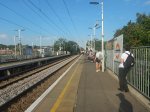
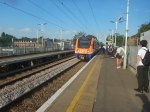


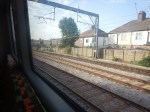
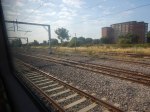
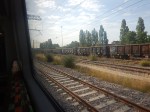
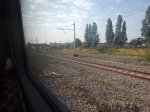
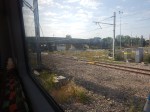
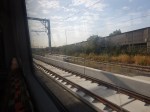
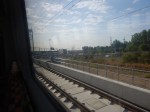
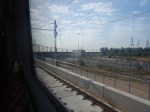
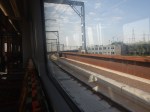
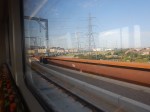
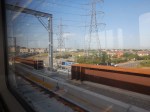
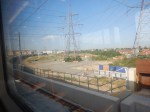
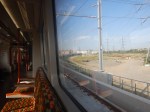
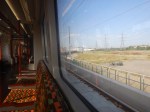
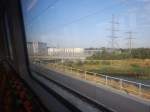
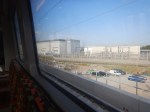
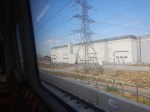
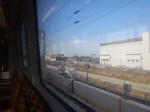
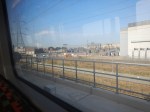
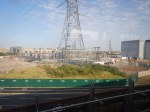
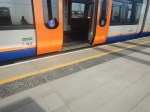
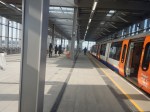
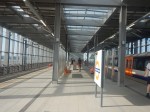
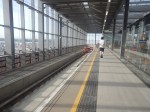
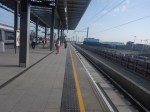
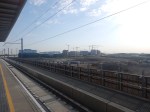
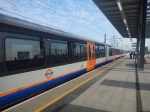

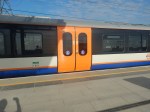
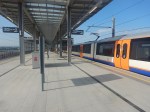
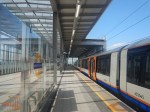
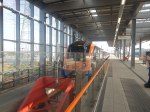
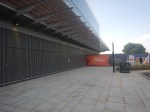
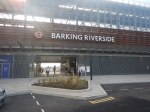
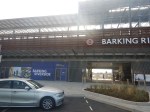
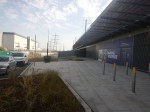


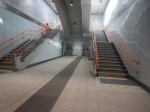
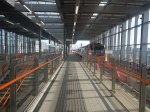
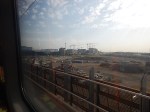
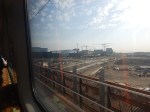
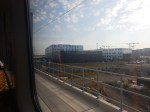

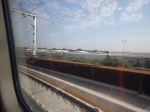
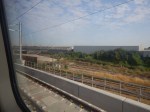
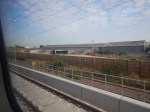
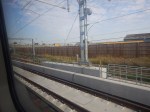
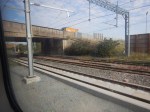
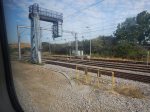
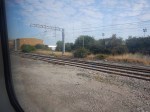
I have a few thoughts and observations.
A Trip To Skegness
Last Thursday, I took a trip to Skegness to get out of the heat.
I took these pictures on the way.
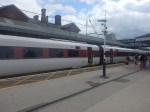
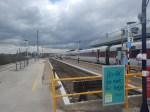
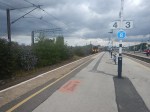
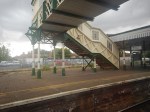
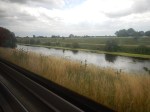
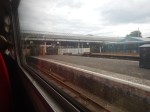
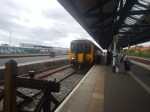


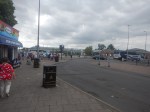






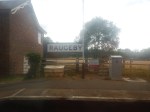


These are my observations and thoughts.
Changing At Grantham
A few minutes after getting off the LNER Azuma, the East Midlands Railway Class 156 train arrived at the opposite face of the wide platform.
Unlike some changes you get on trains in the UK, it was all rather painless and unhurried.
The change coming home was a bit slower, but there is a bar on the London platform, that serves a good selection of good beers.
Grantham To Skegness
The journey to Skegness took around an hour and a half and I arrived at 13:51.
Skegness Station
Skegness station is not the grandest, but it does have six platforms, which is probably a lot for just an hourly service from Nottingham and Grantham.
Skegness
I didn’t stay long, as it was surprisingly too cold and I hadn’t brought a coat.
Skegness To Grantham
The return trip was better, as the train was a more modern Class 170 train.
Surely, when East Midland Railways get their full quota of Class 170 trains, then the Poacher Line between Nottingham and Skegness will be one of the routes, where they will be used.
I also suspect that with 100 mph trains always running the service, as opposed to the Class 156 trains, which are only 75 mph units, there could be speed improvements on the line.
- Grantham and Skegness is 58 miles.
- There are a large number of level crossings.
An hour service between Grantham and Skegness could be possible and might generate more passengers.
Rolls-Royce MTU Hybrid PowerPacks
I wonder if this route could be improved by fitting the Class 170 trains with Rolls-Royce MTU Hybrid PowerPacks?
- The hybrid technology would have a lower fuel consumption and allow electric operation in stations.
- The prototype hybrid is already working on Chiltern Railways in a Class 168 train.
- The Class 168 train is an earlier version of the Class 170 train and they are members of the Turbostar family.
- Rolls-Royce are developing versions of these hybrid transmissions, that will work with sustainable fuels.
- As we have a total of 207 Turbostar trainsets, these could be a convenient way of cutting carbon emissions on long rural lines.
- As Rolls-Royce MTU are also developing the technology, so their diesel engines can run on hydrogen, it is not outrageous to believe that they could be on a route to complete decarbonisation of this type of train.
I believe that we could see hydrogen-hybrid Class 170 trains, with a Rolls-Royce badge on the side.
The Massive Greenhouse
I found that this was owned by Fountain Plants.
Is Lincolnshire going to grow the UK’s greens? Or at least give them a good start in life?
More greenhouses like this will enable the UK to create our carbon dioxide and eat it!
I Was Struggling In The Heat
Early last week, I was struggling in the heat.
On Wednesday, I had my three-monthly B12 injection injection and since then I’ve been feeling a lot better.
Yesterday, when I went to see the Oxted Viaduct, I climbed a couple of short hills in the heat and had no problem.
I have my B12 injections because I’m coeliac and I was at one time low on B12.
Given too, that some web sites report than B12 helps stroke recovery, does that explain, why I made a better than some recovery from my stroke?
At least three doctors, I’ve met, have used the word remarkable when talking about my stroke recovery.
I certainly would create a fuss, if the GP, thought I should stop taking B12. But then I’ve been taking it for at least thirty years.
The Northumberland Launches A Web Site
The new web site is at northumberlandline.uk.
There is this introductory paragraph.
The Northumberland Line will bring passenger trains back into service between Ashington and Newcastle. It is a priority of both Northumberland County Council and is supported by a number of key project partners, including the Department for Transport (DfT), Network Rail, Transport for the North (TfN), Nexus and Northern Trains Limited, North Tyneside Council, North of Tyne Combined Authority and Newcastle City Council.
And this video.
They are forecasting a 2024 opening in the video.
 The Anonymous Widower