The Odd Sugary Snack May Be Good For You (But Lay Off Sugary Drinks)
The title of this post, is the same as that of this article in The Tunes.
I shall be discussing this research with my cardiologist. My relationship with him is as doctor/patient, researcher/lab-rat and just friends. I am also coeliac and very much feel that I need to take the odd sugary snack to keep my energy levels up. I also had a serious stroke at 64, thirteen years ago, due to atrial fibrillation.
Sweden and coeliac disease could be another complicating factor here, as Sweden went the wrong way to try to eliminate coeliac disease after WW2 and just created a lot more.
I found about this Swedish research in a peer-reviewed paper entitled Coeliac Disease: Can We Avert The Impending Epidemic In India? in the Indian Journal of Research Medicine.
A History Of Sugary Snacks And Drinks And Me
Growing up in London, after World War 2, I didn’t get much sugar, as it was rationed.
But I did put it in tea and coffee.
I never ate many cakes, except for some chocolate ones.
My habit of not eating cakes and proper puddings really annoyed my mother-in-law.
I was a sickly child and I didn’t really get better until I was found to be coeliac at 50.
I am fairly certain, that my consumption of sugary snacks has got more, as I’ve got older.
But because American drinks, sweets and snacks could use sugar made from wheat, I don’t touch any American sweetened products.
But I haven’t put on any weight, since I was fifty.
Thanks to the likes of Leon, Marks and Spencer and the cafe at Worksop station for excellent sugary gluten-free snacks to keep me going!
Petition Calls Made To Scrap Blackwall And Silvertown Tolls
The title of this post, is the same as that of this article on the BBC.
This is the sub-heading.
A petition containing more than 37,000 signatures calling for proposed tolls on the Blackwall and Silvertown tunnels to be scrapped has been presented at City Hall.
These four paragraphs give more details.
Toll charges of up to £4 per journey through the soon-to-open Silvertown Tunnel and the neighbouring Blackwall Tunnel were announced by Transport for London (TfL) on 26 November.
The Silvertown Tunnel will open next spring and will provide a new road crossing under the Thames between Silvertown and the Greenwich Peninsula.
The charges are “designed to manage levels of traffic using the tunnels”, TfL has said.
A TfL spokesperson added that without the tolls, “traffic would increase in both tunnels causing delays and congestion, which contribute to poorer air quality”.
Note.
- 37,000 is a large petition.
- If Transport for London wanted to reduce pollution, they could encourage greater use of hydrogen.
I have done some simple modeling using Excel.
- There are six vehicle crossings; Dartford Bridge, Dartford Crossing, Woolwich Ferry, Silvertown Tunnel, Blackwall Tunnel and Rotherhithe Tunnel.
- Matters are complicated by each crossing being a different size.
- There are several reliable rail crossings and a number of foot crossings, which offer alternatives, for those travellers on foot.
- Currently the worst disruption occurs, when more than one route is out of action at the same time.
It is a very complex river crossing,
I feel strongly that we aren’t going to get a true picture of traffic flow through the two new tunnels, until we see serious disruption on the Dartford Crossing.
But what worries me most, is that in the last few years, TfL have made decisions, where they must have done extensive mathematical modelling and they seem to have come up with answers, that are wide of the mark.
Congestion Prediction
I believe that we now have enough data, that by the use of modern computing, advanced vehicle detection techniques and a liberal dollop of artificial intelligence we should be able to accurately predict the traffic flow over the Thames between Dartford and Silvertown, better than we have done in the past.
But will this just mean, that everybody just takes the least-congested route?
Hovercraft
I’ve only ever ridden in a hovercraft once and that was in Hong Kong, when to celebrate the sale of Artemis to Lockheed, C and myself had a few days holiday in the colony.
We did the tourist trip to Canton, where you took a hovercraft up the Pearl River and then took a train back.
This is a Chinese video from YouTube of a hovercraft similar to the one on which we rode.
I asked Google, “What Killed The Hovercraft” and found two articles on the BBC.
The first was an emotional article, which was entitled Hovercraft Capsize Disaster Off Hampshire Coast Recalled 50 years On.
Just look what has happened in recent times to Boeing, after the problems with the 737 MAX.
The second is a more factual article, which is entitled What happened to passenger hovercraft?, where this is the sub-heading.
It’s 60 years since the British inventor Christopher Cockerell demonstrated the principles of the hovercraft using a cat food tin and a vacuum cleaner. Great things were promised for this mode of transport, but it never really caught on. Why?
I saw that demonstration.
These three paragraphs of the BBC article discuss the end of passenger hovercraft.
The cross-Channel service from Dover to Calais closed, external in 2000. The two vessels, the Princess Anne and the Princess Margaret, could carry only 52 cars. Larger ferries and cheaper-to-power catamarans, as well as the Channel Tunnel, proved too much competition. Routes in Japan and Sierra Leone have also since ceased.
“The problem militating against expansion has always been the noise for residents, who have to hear the hovercraft all day, 365 days a year,” says Warwick Jacobs, who runs the Hovercraft Museum, at Gosport, Hampshire. “The sound can travel quite a way, depending on the wind speed. We could have had hovercraft running on the Thames, for instance, but they’d have been too noisy.”
Recent models are quieter than their predecessors because of more efficient engines, while plans are in place to build electric-powered hovercraft, which will reduce the decibel count even further, Jacobs says.
Note.
- Over the years, I have been involved with anti-noise technology and even talked to McDonnell Douglas about it for one of their airliners.
- Electric propulsion and anti-noise technology are just two of those technologies that could transform the economics and unfriendly features of the hovercraft.
But what hovercraft need is a killer application in a high profile area, that gets engineers thinking.
Fourteen New Trains To Drive First Rail Open Access Growth
The title of this post, is the same as that of this press release from First Group.
These four bullet points are sub-headings.
- The Group has signed an agreement with Angel Trains and Hitachi to lease 14 new five-car class 80X Hitachi electric, battery electric or bi-mode trains (70 cars in total) at a cost of c.£500m including maintenance, over a ten year lease period
- The trains will be manufactured by Hitachi in County Durham, securing the skills base and jobs in the local area
- The new trains will enable FirstGroup to significantly expand its open access portfolio and will be used on the newly announced London-Carmarthen route and to increase the number of cars on the existing Lumo and Hull Trains services
- The agreement also contains an option for FirstGroup to lease up to an additional 13 trains on the same terms if the Group’s open access applications are granted by the Office of Rail and Road (‘ORR’)
These first three paragraphs add a bit more detail.
Prime Minister Sir Keir Starmer is visiting Newton Aycliffe, County Durham, today to celebrate a significant agreement for the Hitachi factory which has secured an order to manufacture 70 new rail cars for FirstGroup’s growing open access business, creating certainty for the manufacturing skills base, and the factory’s future.
The Lease Agreement will deliver 14 new trains, which will not only give the Group a homogenous fleet across its open access operations, ensuring flexibility and reliability for customers, but also facilitates the Group’s strategic objective of materially increasing its open access capacity. Delivery of the new trains is expected to commence in late 2027. The lease will be financed by Angel Trains, adding to their portfolio of Hitachi assets. The trains will be maintained by Hitachi at their facilities around the country.
The trains will be used on the Group’s open access rail services, including the Carmarthen-London route announced on 5 December, and the existing Hull Trains and Lumo services on the East Coast Mainline.
Note.
- Does the presence of Keir Starmer indicate any approval for open access?
- Trains could be electric, battery electric or bi-mode.
- Bi-mode trains should only be purchased these days, if they are convertible to battery-electric trains. Hitachi’s can.
- Delivery is expected to commence in late 2027.
- The first fourteen trains will be deployed on the London to Carmarthen, Edinburgh and Hull routes.
This table shows the trains needed initially for each route.
- Carmarthen – Class 802 trains – 5 tpd – 5 trains – 75.3 miles unelectrified
- Edinburgh – Class 803 trains – 5 tpd – 5 trains – electrified
- Hull – Class 802 trains – 5 tpd – 5 trains – 44.3 miles unelectrified
Note.
- tpd is trains per day.
- I’m assuming that as unelectrified distances to Carmarthen and Hull are not that far apart, the number of trains needed is the same.
- Class 802 trains are bi-mode.
- Class 803 trains are electric.
After the fourteen new trains are delivered, there will be a combined fleet of 29 trains.
Consider.
- Hull Trains have started running some services as pairs of trains. I wrote about this in Ten-Car Hull Trains.
- Lumo has been a success and perhaps needs more capacity.
The Wikipedia entry for Grand Union says this.
Grand Union proposed to operate with ex-LNER Class 91s and Rail Operations Group Class 93s hauling nine-car Mark 4s and a Driving Van Trailer.
So perhaps the Carmarthen service needs ten-car trains.
That would mean that the number of routes needed for the three routes would be as follows.
- Carmarthen – Class 802 trains – 5 tpd -10 trains
- Edinburgh – Class 803 trains – 5 tpd -10 trains
- Hull – Class 802 trains – 7 tpd – 10 trains
It would appear that we’re a train short with 29 in the combined fleet against a need of 30 trains.
But then it would also appear that Hull Trains can provide the required five/ten car service with only four trains.
I would assume that the extra train, goes to make up the numbers for Lumo’s Carmarthen service.
Where Will Lumo Strike Next?
Yesterday, First Group reported that they had added more possible services to their network of open-access services.
I gave my view in FirstGroup Acquires London – South Wales Open Access Business And Plans Lumo To Devon.
Their list of possible services and destinations include.
- Hull Trains – London King’s Cross and Beverley via Stevenage, Grantham, Retford, Doncaster, Selby, Howden, Brough, Hull Paragon and Cottingham
- Hull Trains – London King’s Cross and Hull Paragon via Stevenage, Grantham, Retford, Doncaster, Selby, Howden and Brough
- Hull Trains – London King’s Cross and Sheffield via Worksop and Woodhouse
- Lumo – London Euston and Rochdale via Warrington Bank Quay, Newton-le-Willows, Eccles and Manchester Victoria
- Lumo – London King’s Cross and Edinburgh/Glasgow via Stevenage, Newcastle and Morpeth
- Lumo – London Paddington and Carmarthen via Bristol Parkway, Newport, Severn Tunnel Junction, Cardiff Central, Gowerton and Llanell
- Lumo – London Paddington and Paignton via Bath Spa, Bristol Temple Meads, Taunton, Exeter St David’s and Torquay
I believe that all services could be run by identical versions of Hitachi’s high speed Intercity Battery Electric Train, which are described in this page on the Hitachi web site.
The London Paddington and Paignton service would require the longest running without electrification at 210 km. and I don’t believe First Group would have put in a bid, unless they were certain zero-carbon trains with sufficient performance would be available.
Other possible open access services could be.
Hull And Blackpool Airport
Note.
- This could be the first half of a Green Route between the North of England and the island of Ireland, if zero-carbon aircraft can fly from Blackpool Airport.
- Trains would call at Selby, Leeds, Bradford, Huddersfield, Manchester Victoria, Blackburn and Preston.
- Blackpool Airport has good access from Squires Gate station and tram stop, which could be improved.
- Blackpool Airport could be well supplied with green electricity and hydrogen from wind power.
These are distances to possible airports.
- Belfast City – 111 nm.
- Belfast International – 114 nm.
- Cardiff – 143 nm.
- Cork – 229 nm.
- Donegal – 200 nm.
- Derry/Londonderry – 163 nm.
- Dublin – 116 nm.
- Inverness – 228 nm
- Ireland West Knock – 204 nm.
- Kerry – 253 nm.
- Ronaldsway, IOM – 59 nm.
- Shannon – 220 nm.
Note.
- The Wikipedia entry for the all-electric Eviation Alice, gives the range with reserves as 250 nm.
- The Belfast and Dublin airports could be within range of a round trip from Blackpool without refuelling.
- ,Cork, Kerry and Shannon airports may need to go by another airport, where a small battery charge is performed.
- The Isle of Man is surprisingly close.
Blackpool has reasonably good coverage for the island of Ireland.
London Euston And Holyhead
This could be the first half of a Green Route to Dublin, if the trains met a high speed hydrogen-powered catamaran to speed passengers across to Dun Laoghaire.
London King’s Cross And Aberdeen Or Inverness
Why not? But these routes would probably be best left to LNER.
London King’s Cross And Grimsby Or Cleethorpes
In Azuma Test Train Takes To The Tracks As LNER Trials Possible New Route, I talked about how LNER had run a test train to Grimsby and Cleethorpes.
The Government might prefer that an open access operator took the risk and got all the blame if the route wasn’t worth running.
Humberside is very much involved in the energy industry, with several gas-fried power-stations at Keadby.
It might be more efficient in terms of trains and infrastructure, if this service was an extension of the Lincoln service.
London King’s Cross And Scarborough Via Beverley
This would probably be one for Hull Trains, but it would also serve Bridlington and Butlin’s at Filey.
The BBC was running a story today about how holiday camps are making a comeback. Surely, one on a direct train from London wouldn’t be a bad thing. for operators, train companies or holidaymakers.
London King’s Cross And Middlesbrough, Redcar Or Saltburn
As with the Grimsby and Cleethorpes service, the government might think, that this might be a better service for an open access operator.
Teesside is heavily involved in the offshore wind industry and may add involvement in the nuclear industry.
London Paddington And Fishguard, Haverfordwest, Milford Haven Or Pembroke Dock
Note.
- This could be the first half of a Green Route to Southern Ireland, if the trains met a high speed hydrogen-powered catamaran to speed passengers across to Rosslare or an electric or hydrogen-powered aircraft from Haverfordwest Airport.
- These three ports and one airport will feature heavily in the development of offshore wind power in the Celtic Sea.
- RWE are already planning a hydrogen electrolyser in Pembrokeshire, as I wrote about in RWE Underlines Commitment To Floating Offshore Wind In The Celtic Sea Through New ‘Vision’ Document.
- According to the Wikipedia entry for Fishguard Harbour station, it was built as a station to handle ship passengers and is now owned by Stena Line, who run the ferries to Rosslare in Ireland.
- I can see a tie-up between FirstGroup and Stena Line to efficiently transfer passengers between Lumo’s planned service to Carmarthen and Stena Line’s ships to Ireland.
All four secondary destinations would be a short extension from Carmarthen.
Summing Up
Note how energy, a Green Route to Ireland and other themes keep appearing.
I do wonder if running a budget train service to an area, is an easy way of levelling up, by attracting people, commuters and industry.
Have the budget airlines improved the areas they serve?
They’ve certainly created employment in the transport, construction and hospitality industries.
Zero-Carbon Ferries And Short-Haul Aircraft
These will be essential for Anglo-Irish routes and many other routes around the world.
I will deal with the ferries first, as to create a zero-carbon ferry, only needs an appropriate power unit to be installed in a ship design that works.
But with aircraft, you have to lift the craft off the ground, which needs a lot of energy.
This article on Transport and Environment is entitled World’s First ‘Carbon Neutral’ ship Will Rely On Dead-End Fuel, with this sentence as a sub-heading.
The Danish shipping giant Maersk announced it will operate the world’s first carbon-neutral cargo vessel by 2023. The company had promised a carbon-neutral container ship by 2030 but now says it will introduce the ship seven years ahead of schedule following pressure from its customers. While welcoming Maersk’s ambition, T&E says the company is betting on the wrong horse by using methanol which may not be sustainable and available in sufficient amounts.
Note.
- I’d not heard of this ship.
- Pressure from customers brought the date forward by seven years.
- As always, it appears that the availability of enough green hydrogen and methanol is blamed.
Perhaps, Governments of the world should put more teeth in green legislation to ensure that companies and governments do what they say they are gong to do?
But worthwhile developments in the field of shipping are underway.
For instance, I estimate that this Artemis Technologies hydrofoil ferry could take passengers across the 54 nautical miles between Dun Laoghaire and Holyhead in around 90 minutes.
This ferry is being designed and built in Northern Ireland and I can’t believe, it is the only development of its type.
A Fast Green Route To Ireland
I have talked about this before in High-Speed Low-Carbon Transport Between Great Britain And Ireland and I am certain that it will happen.
- Air and sea routes between the UK and the island of Ireland carry a lot of traffic.
- Some travellers don’t like flying. Especially in Boeings, which are Ryanair’s standard issue.
- It is the sort of trip, that will appeal to a lot of travellers and most probably a lot with Irish connections.
- An electric or hydrogen-powered aircraft or a fast surface craft will be able to cross the Irish Sea in a quick time.
- High speed trains and then High Speed Two will consistently reduce the travel times on the UK side of the water.
Cross-water travel routes, be they by aircraft, ferries, bridges or tunnels are generally popular and successful.
Conclusion
Given the opportunity at Fishguard, I can see that FirstGroup next move would be to extend the Carmarthen service to Fishguard Harbour.
FirstGroup Acquires London – South Wales Open Access Business And Plans Lumo To Devon
The title of this post, is the same as that of this article on Railway Gazette.
This is the sub-heading.
‘Growing our open access rail portfolio is a key priority’, FirstGroup CEO Graham Sutherland said on December 5 when the company announced that it had acquired Grand Union Trains GWML Holdings Ltd. GUT holds track access rights to launch an open access passenger service between London and Carmarthen. FirstGroup has also applied for paths to launch a London to Paignton service.
FirstGroup seem to have acted quickly to replace the business that they have lost to the Government.
This is said about the London Paddington and Carmarthen route.
The London Paddington to Carmarthen service is now expected to launch in December 2027, with GUT having secured track access rights to the end of 2037.
There will be five services each way per day, calling at stations including Bristol Parkway, Newport, Severn Tunnel Junction, Cardiff Central, Gowerton and Llanelli. FirstGroup said it would provide low fares, ‘more customer choice and much-needed additional capacity’.
It is still considering rolling stock options, and ’updates will be provided in due course’. The trains would have one class, free wi-fi and onboard catering.
After the successful trial of battery-powered high speed trains that I wrote about in ‘UK-First’ Intercity Battery Trial Exceeds Expectations, I would suspect that the train would run between London Paddington and Carmarthen like this.
- Run between London Paddington and Cardiff Central using the 25 KVAC overhead electrification.
- Whilst running between Paddington and Cardiff Central, the train’s batteries will be fully charged using the overhead electrification.
- Run between Cardiff Central and Carmarthen using the onboard battery power.
- Charge the train as required at Carmarthen.
Note.
- London Paddington and Cardiff Central is 145.2 miles or 233.7 km.
- Cardiff Central and Carmarthen via Gowerton is 75.3 miles or 121.2 km.
- In case of disruption, trains could wait at Cardiff Central, until the batteries had enough charge.
A battery capability of 121.2 km will be needed.
This is said about the London Paddington and Paignton route.
An application has been submitted to the Office of Rail & Road for the service to incorporate five return trips per day between London Paddington and Paignton via stations including Bath Spa, Bristol Temple Meads, Taunton, Exeter St David’s and Torquay from May 2028, as well as a sixth path between Highbridge & Burnham and London.
I suspect that the Paignton route will use a similar profile to the Carmarthen route.
- Run between London Paddington and Chippenham using the 25 KVAC overhead electrification.
- Whilst running between Paddington and Chippenham, the train’s batteries will be fully charged using the overhead electrification.
- Run between Chippenham and Paignton using the onboard battery power.
- Charge the train as required at Paignton .
Note.
- London Paddington and Chippenham is 93.5 miles or 233.7 km.
- Chippenham and Paignton is 128.6 miles or 207 km.
- In case of disruption, trains could wait at Chippenham , until the batteries had enough charge.
A battery capability of 207 km will be needed.
This page on the Hitachi Rail web site is entitled Intercity Battery Trains, where this is a paragraph.
Replacing one diesel engine with just one battery reduces emissions by more than 20% and offers cost savings of 20-30%. Our intercity battery powered trains can cover 70km on non-electrified routes, operating at intercity speeds at the same or increased performance.
I am a Graduate Control and Electrical Engineer and I believe that, if you have a train with two batteries, then by sequencing and managing the power, a range of 140 km. should be possible. As a typical Class 802 train, as used by Hull Trains has three diesel engines, would the train have a range of 210 km., if all three were swapped for batteries?
One fact, that has been disclosed by Hitachi, is that diesel engines and battery packs are identical in weight and power, so train performance and handling is unaffected, by the number of batteries.
If we look at the routes of First Group present and future subsidiaries and how much is on unelectrified track, we can create the following table.
- Beverley – Hull Trains – 71.3 km.
- Carmarthen – Lumo – 121.2 km.
- Hull – Hull Trains – 58,1 km.
- Paignton – Lumo – 207 km.
- Rochdale – Lumo – 16.7 km.
- Sheffield – Hull Trains – 37.5 km.
- Worksop – Hull Trains – 12.2 km.
Note,
- One two or three batteries could be fitted.
- Some destinations could be served without any charging at the destination.
- Hitachi have proposed short lengths of 25 KVAC overhead line to charge trains.
- For some destinations, it may be a more affordable to add another battery than add a charger.
It’s all very modular.
I’ve Got Uncomplicated Pancolonic Diverticular Disease
No doctor or anybody else for that matter seems at all bothered.
I did ask Dr. Google, if there was a link between pancolonic diverticular disease and coeliac disease and this paper entitled Prevalance Of Celiac Disease In Subjects With Diverticular Disease Of The Colon was indicated.
This was the conclusion of the researchers.
The results show an inverse relationship between
diverticular disease of the colon and celiac disease. These data
support that the presence of celiac antibodies may have a
preventive role in the development of colon diverticular disease.
The mechanism of the presented finding is still unclear. More
research is needed.
I can accept that conclusion.
Click this link to see what the NHS says about Diverticular Disease and Diverticulitis.
It’s not very helpful, but just a bit frightening.
Could it be, that my strong immune system is protecting me?
I have a few extra thoughts.
Living With Uncomplicated Pancolonic Diverticular Disease
I have now been living with Uncomplicated Pancolonic Diverticular Disease for around six months.
But I don’t feel that much different to say, when I was 18, 50 or 70.
In the mid-1990s, I was diagnosed as a coeliac using the new genetic test, in a couple of days between blood test and letter on the mat. So surely, at fifty, I must have had coeliac antibodies in my blood.
I asked Dr. Google how the standard coeliac test worked and got this reply.
The standard coeliac disease test involves a two-step process: blood tests to detect antibodies, followed by an intestinal biopsy to confirm the diagnosis. The blood test looks for specific antibodies produced when the body reacts to gluten, while the biopsy examines a tissue sample from the small intestine for damage characteristic of coeliac disease.
My excellent now-retired GP, told me, that the antibodies test was usually all that was needed.
So have I had coeliac antibodies in my blood, virtually all my life and have these played a preventive role in the development of colon diverticular disease?
So was I protected from a disease with a long and complicated name, by another disease, I didn’t know that I had?
Using AI To Inveestigate Uncomplicated Pancolonic Diverticular Disease
I have been impressed by th answers Google has given for other things using AI, so I’ve been asking a few questions on uncomplicated pancolonic diverticular disease.
Question: Does Uncomplicated Pancolonic Diverticular Disease Make You Want To Poo?
AI Overview
Yes, uncomplicated pancolonic diverticular disease, also known as Symptomatic Uncomplicated Diverticular Disease (SUDD), can cause a change in bowel habits, which may include a feeling of needing to poo. This change can manifest as constipation or diarrhea, or a pattern of constipation followed by diarrhea.
From personal experience I’ll go along with that.
Question: Does Uncomplicated Pancolonic Diverticular Disease Make You Want To Drink More Fluids?
AI Overview
Yes, individuals with uncomplicated pancolonic diverticular disease are often advised to increase their fluid intake. This is because adequate hydration helps soften stools, which can ease the passage of waste and reduce strain on the inflamed colon. Additionally, when experiencing a flare-up of diverticulitis, it’s common to be placed on a liquid diet to allow the colon to rest and heal, further emphasizing the importance of staying hydrated.
No doctor has told me to drink more fluids or suggested I go on a liquid diet. But I do drink a lot of fluids, including two or three bottles of low-alcohol beer per day.
Question: Is Uncomplicated Pancolonic Diverticular Disease Helped By A Gluten-Free Diet?
AI Overview
A gluten-free diet is not specifically recommended or beneficial for uncomplicated pancolonic diverticular disease. While a high-fiber diet is generally recommended to manage and prevent diverticular disease, there’s no evidence to suggest that eliminating gluten from the diet provides any particular advantage.
As I am coeliac, I’m on a strict gluten-free diet anyway, and have been for the last thirty years.
I’m not particularly on a high fibre diet, but an experienced dietician told me to eat a small can of beans a week to lower my cloresterol levels. And it worked!
But from what I found earlier, it does appear that coeliac disease does help to protect you from uncomplicated pancolonic diverticular disease.
Question: Is Uncomplicated Pancolonic Diverticular Disease Helped By Five Portions Of Fruit And Vegetables Per Day?
AI Overview
Yes, eating five portions of fruits and vegetables per day is generally recommended for individuals with uncomplicated pancolonic diverticular disease, as part of a balanced, high-fiber diet. This dietary approach can help to soften stools, reduce the risk of constipation and straining, and potentially prevent further complications.
I try to stick to a diet like this with a lot of non-alcoholic fluids.
Question: Is Uncomplicated Pancolonic Diverticular Disease Linked To Gallstones?
AI Overview
Yes, there is evidence suggesting a link between diverticular disease of the colon and gallstones, with some studies indicating a higher prevalence of gallstones in individuals with diverticular disease. Specifically, one study found that 45% of patients with diverticular disease had gallstones, compared to 22% in a control group, though this difference was only statistically significant in women.
I had gallstones and I described their removal in Goodbye To My Gallstones.
As the answer mentioned women and coeliac disease is more common, in the female of the species, I wonder if that accounts for the results quoted in the AI Overview.
Permission Granted For Ayrshire Renewables Hub
The title of this post, is the same as that of this article on Scottish Construction Now.
This is the sub-heading.
Planning consent has been granted for a £150 million upgrade to an Ayrshire marine yard, paving the way for increased offshore wind power off the UK’s west coast.
These are the first three paragraphs.
Peel Ports Clydeport has secured permission for the complete redevelopment of the Hunterston marine yard as it prepares the site for major renewables infrastructure. The redevelopment works – which are expected to start in early 2025 and last for around two years – will include substantial upgrades to the marine yard, including infilling the current dry-dock basin and the creation of a new quay wall.
Highview Power recently announced it is to construct the world’s largest Liquid Air Energy Storage (LAES) facility at Hunterston, the latest in a string of renewables projects that are either underway, or in the pipeline, at the site.
The overall redevelopment of Hunterston is expected to attract £3.5 billion in inward investment and create over 5,000 jobs.
Note.
- The Highview Power battery will be 200 MW/3.25 GWh.
- There is also a 400 MW/400 MWh BESS being built at Hunterston.
- The 2 GW MacHairWind project is planned off the coast of Islay.
- According to their web site, MacHairWind will export its first power in the early 2030s.
More renewable infrastructure will surely follow.
Thousands Of Lobsters Settle At Triton Knoll Offshore Wind Farm
The title of this post, is the same as that of this article on offshoreWIND.biz.
This is the sub-heading.
RWE and the Whitby Lobster Hatchery have released 2,500 juvenile lobsters at the Triton Knoll offshore wind farm in the UK in what the wind farm developer says is an industry-first project, through which more than 15,000 lobsters are planned to be released at Triton Knoll.
These are the first two paragraphs.
The first batch of 2,500 juvenile lobsters was settled at the offshore wind farm in November and a further 2,500 are expected to arrive at the site early next year.
According to RWE, which said last month that the project’s goal was to help increase biodiversity in the North Sea, there is the potential for a further 10,000 lobsters to be released over the next two years, in 2025 and 2026.
The objective seems to be to introduce 100,00 juvenile lobsters into the sea.
Thoughts On Tram-Trains In Manchester
The State Of Public Transport In the North
Over the last few years plans have been put in place to improv the state of the public transport of the major cities of the North and progress has started to happen, with new trains, trams and light rail systems being planned and in some cases coming into service.
Birmingham, Coventry And The West Midlands
A lot of investment has been made and it is continuing.
- Birmingham New Street station has been rebuilt.
- Coventry and Wolverhampton stations have been remodelled.
- Two new stations were built in Birmingham for the Commonwealth Games.
- A large number of new Class 730 local trains are being brought into service.
- Birmingham stations are being updated for High Speed Two.
- The West Midland Metro has been extended at both ends and a second line is under construction.
Transport in the wider West Midlands has been greatly improved.
Derby, Nottingham, Sheffield And The East Midlands
The major investment in this area is the electrification of the Midland Main Line and the provision of new Hitachi electric Class 810 trains.
In addition the following has been done.
- The Hope Valley line between Manchester and Sheffield has been improved.
- Derby station has been improved.
- The local trains have been refurbished.
- The power supply has been improved.
- An application for an Open Access service to Sheffield has been made.
The improvements in the East Midlands, will not be on the same scale as in the West Midlands, but they will make a difference.
Leeds, Bradford And West Yorkshire
For decades, West Yorkshire and especially Bradford has lagged behind the rest of the North.
But at least things are stirring.
- Plans have been laid to create a through station in Bradford.
- Leeds station has been refurbished.
- An extra platform is being added at Bradford Forster Square station.
- The TransPennine Upgrade is underway to electrify between Huddersfield and York.
- Hitachi have developed a battery-electric high speed train for the TransPennine route.
- Bradford is installing a hydrogen electrolyser, so that the city can have hydrogen buses to cope with the hills.
- Plans are now being developed to create a metro for Leeds and Bradford.
West Yorkshire is closing the gap to the rest of the North.
Liverpool And Merseyside
Again, a lot of investment has been made.
- The approaches to Liverpool Lime Street station have finally been sorted, with more tracks and new signalling.
- Liverpool Lime Street station has been improved and is now one of the finest stations in Europe.
- Trains are now approaching High Speed Two times between Crewe and Liverpool.
- More services between London and Liverpool can now be planned, with the arrival of new Class 807 trains.
- Some new stations have been built and more are planned.
- A large number of new Class 777 local trains are being brought into service.
Transport in the wider Merseyside has been greatly improved.
Newcastle, Tyneside And Northumberland
The area is getting investment, but not as much in proportion as others.
- The Metro trains are being replaced and the Metro itself, is getting a major update.
- The East Coast Main Line has received improvements to power supplies, signalling and some bottlenecks.
- The Northumberland Line to Ashington is being brought back into operation.
It’s a start, but if the Northumberland Line is a success, I can see a call for more line re openings.
Manchester And Greater Manchester
If you look at each of the areas, they generally have one or more large projects.
- Birmingham, Coventry And The West Midlands – Birmingham New Street station, Class 730 Trains, High Speed Two, West Midland Metro
- Derby, Nottingham, Sheffield And The East Midlands – Midland Main Line, Class 810 Trains, Hope Valley Line, Open Access To Sheffield
- Leeds, Bradford And West Yorkshire – Leeds station, Bradford improvements, TransPennine Upgrade, Battery-Ekectric Trains, Leeds Metro
- Liverpool And Merseyside – Liverpool Lime Street Improvements, Class 807 Trains, Class 777 Trains
- Newcastle, Tyneside And Northumberland – Metro upgrade with New Trains, Northumberland Line
So what improvements are in the pipeline for Greater Manchester?
This Wikipedia entry is entitled Proposed Developments Of Manchester Metrolink.
The proposed developments include in the Wikipedia order.
- New Metrolink Stop: Stop to serve new housing development proposed at Elton Reservoir on the Bury Line.
- New Metrolink Stop: Stop to serve new housing development proposed at Sandhills on the Bury Line.
- New Metrolink Stop: Stop to serve new housing development proposed at Cop Road on the Oldham and Rochdale Line.
- Airport Line extension to Terminal 2: A short extension of the Airport Line from the current Manchester Airport station to the site of the expanded Terminal 2.
- Airport Line extension to Davenport Green: An extension of the Airport Line from Roundthorn to the site of the proposed Manchester Airport High Speed station on the HS2 high speed network.
- Oldham–Heywood via Rochdale tram-train pathfinder: A tram-train service utilising the heavy rail Calder Valley line to connect Oldham to Heywood through Rochdale railway station.
- Manchester Airport–Wilmslow via Styal tram-train pathfinder: A tram-train service operating on the southern section of the heavy rail Styal Line between Manchester Airport and Wilmslow in Cheshire.
- South Manchester–Hale via Altrincham tram-train pathfinder: An extension of Metrolink’s Altrincham Line using tram-train to reach Hale on the heavy rail Mid-Cheshire line.
- Improved Metrolink frequency between Piccadilly and Victoria stations: Increasing capacity to provide a direct service from Rochdale and Oldham to Manchester Piccadilly.
- Interventions to improve Metrolink capacity and reliability: Includes improvements to turnback facilities and double-tracking currently single-track sections.
- Further interventions to improve Metrolink capacity and reliability: Includes longer vehicles, a third depot and double-tracking currently single-track sections.
- Manchester–Stalybridge extension: An extension of the East Manchester Line from Ashton-under-Lyne to Stalybridge.
- Manchester–Middleton extension: A proposed spur from the Bury Line connecting to the town of Middleton.
- Oldham–Middleton extension: A spur from Oldham to Middleton.
- MediaCityUK–Salford Crescent: A line connecting the MediaCityUK tram stop to the Salford Crescent railway station interchange. Further new Metrolink.
- Connections between Salford Crescent, Inner Salford and the City Centre: Extension of the MediaCityUK–Salford Crescent line into the regional centre.
- Completion of the Airport Line (Wythenshawe Loop): Completion of the Wythenshawe Loop by connecting the Metrolink lines between the Davenport Green and Manchester Airport Terminal 2 extensions.
- Port Salford/Salford Stadium extension: Extending the Trafford Park Line from the Trafford Centre to a proposed container terminal at Port Salford.
- Glossop tram-train: A tram-train service utilising the Glossop line between Manchester and Glossop in Derbyshire.
- Marple tram-train: A tram-train service utilising the Hope Valley line branches north of Marple towards Manchester.
- Manchester–Wigan via Atherton tram-train: A tram-train service utilising the Atherton section of the Manchester–Southport line between Manchester and Wigan.
- Manchester–Warrington tram-train: A tram-train service utilising the southern route of the Liverpool–Manchester lines between Manchester and Warrington.
- Stockport–Hazel Grove tram-train: A tram-train service between Stockport and the suburb of Hazel Grove.
- Stockport–Manchester Airport tram-train: A tram-train service between Stockport and Manchester Airport.
- Rochdale–Bury via Heywood tram-train: Extension of the Oldham–Heywood tram-train pathfinder from Heywood to Bury.
- Manchester Airport–Mid Cheshire tram-train: A tram-train service from Manchester Airport using a proposed Western Link rail line to the Mid-Cheshire line.
- Stockport–Ashton via Denton and Reddish tram-train: A tram-train service utilising the Stockport–Stalybridge line from Stockport to Ashton.
- Cornbrook–Manchester Airport via Timperley tram-train: A tram-train service from Cornbrook using the Altrincham line to Timperley, the Mid Cheshire line to Baguley, then the Wythenshawe Loop to Manchester Airport.
- Regional centre metro tunnel: Providing capacity for more services on the network.
- Oldham–Greenfield via Grotton extension: A Metrolink spur from Oldham town centre to Greenfield railway station on the Huddersfield line.
- Oldham–Royton extension: A Metrolink spur from the Oldham and Rochdale line to the town of Royton.
Note.
- The number of times that tram-trains are mentioned.
- But with its numerous rail and tram lines, Greater Manchester is ideally suited for conversion to tram-trains.
- There are three pathfinder routes for tram-trains, which will be converted first to prove the technology.
These are my detailed thoughts on tram-trains in Greater Manchester,
All Routes Could Be Run By Identical Tram-Trains
If this can be arranged, it is surely preferable from the operator, staff and passengers point-of-view.
Tram-Trains Can Run On Secondary Routes Like The Calder And Hope Valley Lines
In Manchester, this would enable some routes to be swapped from the rail to the tram network.
It would also allow trams to run between networks, so you could have a direct tram service between say Stockport and Sheffield on the Hope Valley Line.
Tram-Trains Can Be Faster
Tram-trains can be faster, when running on rail lines, so they don’t hold up expresses.
What Do Tram-Trains Look Like?
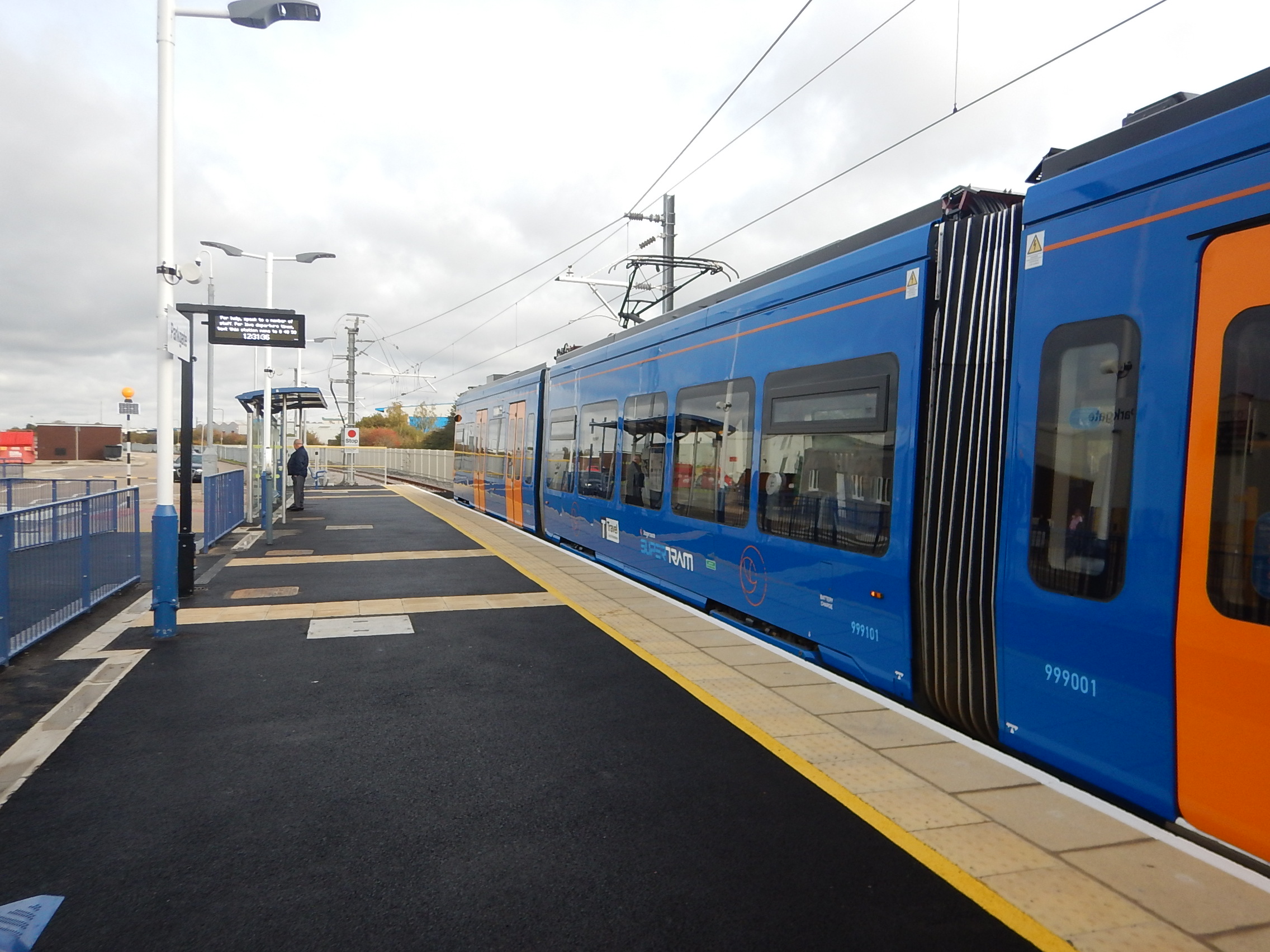
This is one of Sheffield’s Class 399 tram-trains at Rotherham Parkgate.
Note.
- This tram-train is a member of the Stadler Citylink family.
- this version can be powered by either 750 VDC or 25 KVAC.
- The Welsh version will also have battery-power.
- It is a three-car tram train.
- There is step-free access.
The Wikipedia entry for the Stadler Citylink has lots more details.
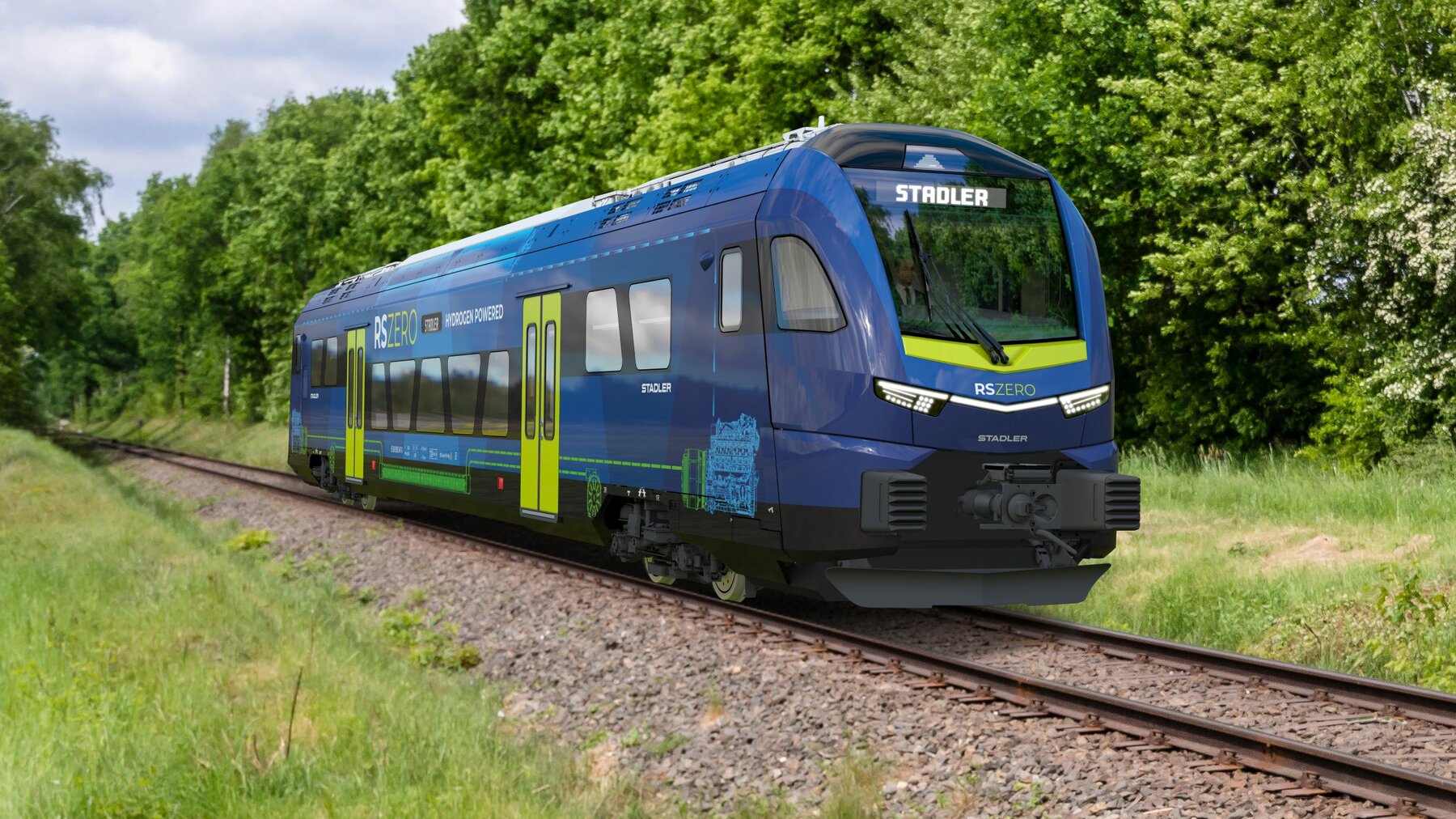
Stadler have just launched a new smaller one- or two-car tram-train.
This image from the press release shows the prototype hydrogen-powered one-car RS ZERO.
Note.
- The Regio-Shuttles can run as up to seven car trains.
- These RS ZERO are powered by overhead electrification, battery or hydrogen power.
- They can carry 170 passengers at 75 mph.
- They can run as train-trams using the Chemnitz model on compatible tram networks.
- The interiors are very flexible.
- An RS ZERO can be fitted with toilets for the posher parts of Manchester.
- Typically, a one-car RS ZERO handles a similar passenger load to a one-car Metrolink vehicle.
The more I compare the RS ZERO with the Metrolink’s trams, the more it looks like Stadler’s design has a Metrolink order firmly in its sights.
A Simple Tram-Train Example
The Altrincham Line of the Metrolink, runs between Altrincham and Deansgate-Castlefield in Central Manchester.
- Tram-trains would be capable of sharing the tracks with the current trams.
- Initially, they would run an identical service to the same destinations in the North.
- At either Navigation Road or Altrincham stations, they would switch to the heavy rail track.
- They would then travel to Hale or whatever station is determined to be the terminus.
Tram-trains would be a simple way of extending a tram service along a heavy eail line.
The Range Of The RS ZERO
This article on the Railway Gazette is entitled Prototype RS Zero Hydrogen Or Battery Railcar For Secondary Lines Unveiled At InnoTrans, has this paragraph.
The hydrogen powered RS Zero has a range of more than 700 km in the single car version, and a two-car version would offer more than 1 000 km. Battery trains will offer ranges of 80 to 110 km or 90 to 180 km. The maximum speed is 120 km/h.
As Chester and Manchester is only 45 miles or 72.4 kilometres, ways and means of running the battery versions on the route should be possible.
In fact, as Stockport and Manchester Piccadilly is already electrified at 25 KVAC and a return trip to Manchester Piccadilly from Stockport probably takes about twenty-five minutes, I would envisage that an RS ZERO would leave Stockport for Chester with a full battery. As Stockport and Chester is only 39.2 miles or 63 kilometres, the RS ZERO should do the trip if it started with a full battery and had a short length of electrification at Chester to top up the battery, if needed.
Other Possible Tram-Train Routes From Stockport
It is indicated the Metrolink would like to run other tram-train routes from Stockport.
- Ashton – Not sure of the route
- Buxton – 31.8 km
- Hazel Grove – 5 km – Electrified
- Manchester Piccadilly – 9 km – Electrified
- Manchester Airport – Not sure of the route
- Sheffield – 59 km – Will be electrified at Sheffield
Note.
- This would speed up Sheffield services.
- Buxton would be an interesting route and would probably use Newton’s friend to help on the return.
I suspect that nearly all local services from Manchester through Stockport could be run by battery-electric or hydrogen tram-trains.
The Glossop Line Could Be Converted To Tram-Train
It’s already electrified so why not?
Conclusion
It strikes me, that a lot of Manchester’s suburban rail network could be converted to RS ZERO tram-trains.
The RS ZERO tram-trains could also be used on existing tram routes to convert them to tram-train operation and extend them.
As a bonus Manchester’s trains would be substantially decarbonised.
 The Anonymous Widower