Overhauls for LNER’s Remaining Class 91s And Mk 4s
The title of this post, is the same as that of this article on Rail Magazine.
This is the introductory paragraph.
Eversholt Rail, which owns the trains, has confirmed that 12 London North Eastern Railway Class 91s and the remaining Mk 4 coaches will undergo overhauls at Wabtec Rail, Doncaster.
It had been expected, that LNER would purchase more trains, as I wrote about in More New Trains On LNER Wish List.
The article gives more details of the trains to be retained.
- Twelve Class 91 locomotives, seven rakes of Mark 4 coaches and two spare coaches will be retained.
- They will be confined to routes between London Kings Cross and Bradford, Leeds, Skipton and York.
How many trains will be needed to cover these routes?
- Trains take two hours and fifteen minutes between London Kings Cross and Leeds and run at a frequency of two trains per hour (tph)
- Trains take two hours and twenty-one minutes between London Kings Cross and York and run hourly.
- I suspect that a round trip to Leeds or York can be five hours.
So a crude analysis says, that will mean fifteen trains will be needed,
But some of these trains will be extended past Leeds.
These are, electrification status and the times and distances between Leeds and the final destinations.
- Bradford – Electrified – 22 minutes – 13.5 miles
- Harrogate – Not Electrified – 40 minutes – 18 miles
- Huddersfield – Not Electrified – 33 minutes – 17 miles
- Skipton – Electrified – 45 minutes – 26 miles
It appears that the following is true.
- Trains serving Harrogate and Huddersfield must be worked by bi-mode Class 800 trains.
- Trains serving Bradford and Skipton could be worked by InterCity 225 trains or an all-electric nine-car Class 801 train.
Note.
- Some times are those taken by LNER services and some are estimates from TransPennine Express.
- I have assumed 8-10 minutes for the Split-and-Join at Leeds and included it in the times.
- Class 800 trains seem to take around ten minutes to turnround at Harrogate.
- Times between London Kings Cross and Doncaster will decrease by a few minutes, with the addition of digital in-cab signalling on the route, which will allow 140 mph running by InterCity 225s, Class 800 trains and Class 801 trains.
I estimate that it will be possible for an InterCity 225, Class 800 train or Class 801 train to do a round trip between London Kings Cross and Bradford, Harrogate, Huddersfield or Skipton in six hours.
The round trip between London Kings Cross and York will be the five hours, I estimated earlier.
Wikipedia also says this.
LNER expects to introduce two-hourly services to Bradford and a daily service to Huddersfield in May 2020 when more Azuma trains have been introduced.
So would the pattern of trains to Leeds/York be as follows?
- One tph – One pair of five-car Class 800 trains to Leeds, of which some or all split and join at Leeds, with one train going to and from Harrogate and the other going to and from Huddersfield.
- One tph per two hours (tp2h) – An InterCity 225 or nine-car Class 801 train to Leeds, of which some or all are extended to Bradford.
- One tp2h – An InterCity 225 or nine-car Class 801 train to Leeds, of which some or all are extended to Skipton.
- One tph – An InterCity 225 or nine-car Class 801 train to York.
I estimate that it will be possible for an InterCity 225, Class 800 train or Class 801 train to do a round trip between London Kings Cross and Bradford, Harrogate, Huddersfield or Skipton in six hours.
This would need the following trains.
- Six pairs of five-car Class 800 trains for the Harrogate and Huddersfield services.
- Six full size all electric trains, which could be an InterCity 225, a nine-car Class 801 train or a pair of five Class 801 trains, for Bradford and Skipton services.
- Five full size all electric trains, which could be an InterCity 225, a nine-car Class 801 train or a pair of Class 801 trains, for York services.
So why have LNER changed their mind and are retaining the InterCity 225?
Are InterCity 225 Trains Already Certified For 140 mph Running?
I wouldn’t be surprised, if a large part of the certification work for this had been done for 140 mph running and for it to be allowed, it needs digital in-cab signalling to be installed on the East Coast Main Line.
The Wikipedia entry for the InterCity 225 says this about the train’s performance.
The InterCity 225 has a top service speed of 140 mph (225 km/h); during a test run in 1989 on Stoke Bank between Peterborough and Grantham an InterCity 225 reached 162 mph (260.7 km/h). However, except on High Speed 1, which is equipped with cab signalling, British signalling does not allow trains to exceed 125 mph (201 km/h) in regular service, due to the impracticality of correctly observing lineside signals at high speed.
The Wikipedia entry for the East Coast Main Line says this about the future signalling.
A new Rail operating centre (ROC), with training facilities, opened in early 2014 at the “Engineer’s Triangle” in York. The ROC will enable signalling and day-to-day operations of the route to be undertaken in a single location. Signalling control/traffic management using ERTMS is scheduled to be introduced from 2020 on the ECML between London King’s Cross and Doncaster – managed from the York ROC.
A small fleet of InterCity 225 trains could be the ideal test fleet to find all the glitches in the new signalling.
Are InterCity 225 trains Already Certified To Run To Bradford and Skipton?
If they are, then that is another problem already solved.
A Fleet Of Seven Trains Would Cover Bradford And Skipton Services
Six trains are needed to run a one tp2h service to both Bradford and Skipton, so they could fully cover one tp2h to Bradford and occasional trains to Skipton with a spare train and one in maintenance.
Using InterCity 225s To Bradford and Skipton Would Not Require A Split-And-Join At Leeds
The number of trains that would Split-and-Join at Leeds would be only two tph instead of four tph, which would be simpler with less to go wrong.
Not Enough Five-Car Bi-Mode Class 800 Trains
LNER’s full fleet of Azumas will be as follows.
- 13 – Nine-car bi-mode Class 800 trains.
- 10 – Five-car bi-mode Class 800 trains.
- 30 – Nine-car electric Class 801 trains.
- 12 – Five-car electric Class 801 trains.
This would appear to be a major problem, if Harrogate and Huddersfield were to be served hourly by Class 800 trains, existing services are to be maintained or even increased to Hull and Lincoln and extra services are to be added to Middlesbrough and perhaps Nottingham and other destinations.
The InterCity 225s only help indirectly, if they provided the London Kings Cross and Bradford and Skipton services.
Conversion Of Class 800 and Class 801 Trains To Regional Battery Trains
Hitachi have launched the Regional Battery Train, which is described in this Hitachi infographic.

For LNER, they will be useful for any Journey under about 90 kilometres or 56 miles.
The trains should be able to serve these routes.
- Leeds and Harrogate and back – 36 miles
- Leeds and Huddersfield and back – 34 miles
- Newark and Lincoln and back – 33 miles
- Northallerton and Middlesbrough and back – 42 miles
Whilst Class 800 trains and Class 801 trains are converted, the InterCity 225 trains would act as valuable cover on services like London to Leeds and York.
Conclusion
I think it is a good plan.
Hull Issues New Plea For Electrification
The title of this post, is the same as that of this article on Rail Magazine.
This is the introductory paragraph.
Residents and businesses in Hull are being urged to support electrification of the railway to Selby and Sheffield.
This paragraph is about the difficulty of electrifying the route.
“Unlike elsewhere on the trans-Pennine routes, work here can start straightaway and would be a quick win. Our plans involve few extra land purchases, no tunnel widening, and no re-routing,” said Daren Hale, Hull City Council and Hull’s representative on the Transport for the North board.
Services to Hull station are as follows.
- Hull Trains – London Kings Cross and Hull via Selby, Howden and Brough.
- Hull Trains – Beverley and Hull via Cuttingham
- LNER – London Kings Cross and Hull via Selby and Brough
- Northern Trains – Halifax and Hull via Bradford Interchange, New Pudsey, Bramley, Leeds, Cross Gates, Garforth, East Garforth, Micklefield, South Milford, Selby and Brough
- Northern Trains – Sheffield and Hull via Meadowhall, Rotherham Central, Swinton, Mexborough, Conisbrough, Doncaster, Kirk Sandall, Hatfield & Stainforth, Thorne North, Goole, Saltmarshe, Gilberdyke, Broomfleet, Brough, Ferriby and Hessle,
- Northern Trains – Bridlington and Hull via Nafferton, Driffield, Hutton Cranswick, Arram, Beverley and Cottingham.
- Northern Trains – Scarborough and Hull via Seamer, Filey, Hunmanby, Bempton, Bridlington, Nafferton, Driffield, Hutton Cranswick, Arram, Beverley and Cottingham.
- Northern Trains – York and Hull via Selby, Howden, Gilberdyke and Brough.
- TransPennine Express – Manchester Piccadilly and Hull via Stalybridge, Huddersfield, Leeds, Selby, Brough
Note.
- Some services are joined back-to-back with a reverse at Hull station.
- I have simplified some of the lists of intermediate stations.
- Services run by Hull Trains, LNER or TransPennine Express use bi-mode Class 800 or Class 802 trains.
- All routes to Hull station and the platforms are not electrified.
Trains approach Hull by three routes.
- Selby and Brough
- Goole and Brough
- Beverley and Cottingham
Could these three routes be electrified?
I have just flown my helicopter along all of them.
I’ve also had a lift in the cab of a Class 185 train between Hull and Leeds, courtesy of Don Coffey.
Hull And Selby via Brough
There is the following infrastructure.
- Several major road overbridges, which all seem to have been built with clearance for overhead wires.
- There are also some lower stone arch bridges, which may need to be given increased clearance.
- No tunnels
- The historic Selby Swing Bridge.
- Four farm crossings.
- Fourteen level crossings.
Hull And Goole via Brough
There is the following infrastructure.
- Several major road overbridges, which all seem to have been built with clearance for overhead wires.
- No tunnels
- A swing bridge over the River Ouse.
- A couple of farm crossings
- Six level crossings
Hull And Beverley via Cottingham
There is the following infrastructure.
- A couple of major road overbridges, which all seem to have been built with clearance for overhead wires.
- No tunnels
- A couple of farm crossings
- Six level crossings
All of the routes would appear to be.
- At least double track.
- Not in deep cuttings.
- Mainly in open countryside.
- Built with lots of level crossings
I feel that compared to some routes, they would be easy to electrify, but could cause a lot of disruption, whilst the level crossings and the two swing bridges were electrified.
Speeding Up Services To And From Hull
What Are The Desired Timings?
The Rail Magazine article says this about the desired timings.
Should the plans be approved, it is expected that Hull-Leeds journey times would be cut from 57 minutes to 38, while Hull-Sheffield would drop from 86 minutes to 50 minutes.
These timings are in line with those given in this report on the Transport for the North web site, which is entitled At A Glance – Northern Powerhouse Rail,
The frequency of both routes is given in the report as two trains per hour (tph)
The Performance Of An Electric Class 802 Train
As Hull Trains, LNER and TransPennine Express will be using these trains or similar to serve Hull, I will use these trains for my calculations.
The maximum speed of a Class 802 train is 125 mph or 140 mph with digital in-cab signalling.
This page on the Eversholt Rail web site, has a data sheet for a Class 802 train.
The data sheet shows the following for a five-car Class 802 train.
It can accelerate to 100 mph and then decelerate to a stop in 200 seconds in electric mode.
The time to 125 mph and back is 350 seconds.
Thoughts On Hull And Leeds
Consider.
- The Hull and Leeds route is 52 miles long, is timed for a 75 mph train and has an average speed of 55 mph
- There are three intermediate stops for fast services, which means that in a Hull and Leeds journey, there are four accelerate-decelerate cycles.
- A 38 minute journey between Hull and Leeds would be an average speed of 82 mph
- A train travelling at 100 mph would take 31 minutes to go between Hull and Leeds.
- A train travelling at 125 mph would take 25 minutes to go between Hull and Leeds.
I also have one question.
What is the speed limit on the Selby Swing Bridge?
I have just been told it’s 25 mph. As it is close to Selby station, it could probably be considered that the stop at Selby is a little bit longer.
These could be rough timings.
- A train travelling at 100 mph would take 31 minutes to go between Hull and Leeds plus what it takes for the four stops. at 200 seconds a stop, which adds up to 43 minutes.
- A train travelling at 125 mph would take 25 minutes to go between Hull and Leeds plus what it takes for the four stops. at 350 seconds a stop, which adds up to 48 minutes.
Note how the longer stopping time of the faster train slows the service.
I think it would be possible to attain the required 38 minute journey, running at 100 mph.
Thoughts On Hull And Sheffield
Consider.
- The Hull and Sheffield route is 61 miles long, is timed for a 90 mph train and has an average speed of 43 mph
- There are five intermediate stops, which means that in a Hull and Sheffield journey, there are six accelerate-decelerate cycles.
- A 50 minute journey between Hull and Leeds would be an average speed of 73 mph.
- A train travelling at 100 mph would take 36 minutes to go between Hull and Sheffield.
- A train travelling at 125 mph would take 29 minutes to go between Hull and Sheffield.
I also have one question.
What is the speed limit on the swing bridge over the River Ouse?
As there is no nearby station, I suspect it counts as another stop, if it only has a 25 mph limit.
These could be rough timings.
- A train travelling at 100 mph would take 36 minutes to go between Hull and Sheffield plus what it takes for the six stops. at 200 seconds a stop, which adds up to 56 minutes.
- A train travelling at 125 mph would take 29 minutes to go between Hull and Sheffield plus what it takes for the six stops. at 350 seconds a stop, which adds up to 64 minutes.
Note how the longer stopping time of the faster train slows the service.
I think it would be possible to attain the required 50 minute journey, running at 100 mph.
Conclusions From My Rough Timings
Looking at my rough timings, I can conclude the following.
- The trains will have to have the ability to make a station stop in a very short time. Trains using electric traction are faster at station stops.
- The trains will need to cruise at a minimum of 100 mph on both routes.
- The operating speed of both routes must be at least 100 mph, with perhaps 125 mph allowed in places.
- I feel the Hull and Leeds route is the more difficult.
I also think, that having a line running at 100 mph or over, with the large number of level crossings, there are at present, would not be a good idea.
What Does Hull Want?
Hull wants what Northern Powerhouse Rail is promising.
- Two tph between Hull and Leeds in 38 minutes and Hull and Sheffield in 50 minutes.
They’d probably also like faster electric services between Hull and Bridlington, London Kings Cross, Manchester, Scarborough and York.
When Do They Want It?
They want it now!
Is There An Alternative Solution, That Can Be Delivered Early?
This may seem to be the impossible, as electrifying between Hull and Leeds and Hull and Sheffield is not an instant project, although full electrification could be an ultimate objective.
Consider.
- Hull and Brough are 10.5 miles apart.
- Brough and Leeds are 41 miles apart.
- Brough and Doncaster are 30 miles apart and Doncaster and Sheffield are 20 miles apart.
- Brough and Temple Hirst Junction are 26 miles apart.
- Brough and York are 42 miles apart.
- Hull and Beverley are 8 miles apart.
- Beverley and Bridlington are 23 miles apart.
- Beverley and Seamer are 42 miles apart.
Note that Doncaster, Leeds and Temple Hirst Junction are all electrified.
Hitachi’s Regional Battery Train
Hitachi have just launched the Regional Battery Train, which is described in this Hitachi infograpic.
It has a range of 56 miles and an operating speed of 100 mph.
Class 800 and Class 802 trains could be converted into Regional Battery Trains.
- The three diesel engines would be exchanged for battery packs.
- The trains would still be capable of 125 mph on fully-electrified routes like the East Coast Main Line.
- They would be capable of 100 mph on routes like the 100 mph routes from Hull.
- The trains would have full regenerative braking to batteries, which saves energy.
- Below 125 mph, their acceleration and deceleration on battery power would probably be the same as when using electrification. It could even be better due to the simplicity and low impedance of batteries.
But they would need some means of charging the batteries at Hull.
A Start To Electrification
If the ultimate aim is to electrify all the lines, then why not start by electrifying.
- Hull station.
- Hull and Brough
- Hull and Beverley
It would only be 18.5 miles of electrification and it doesn’t go anywhere near the swing bridges or about six level crossings.
Battery Electric Services From Hull
I will now look at how the various services could operate.
Note in the following.
- When I say Regional Battery Train, I mean Hitachi’s proposed train or any other battery electric train with a similar performance.
- I have tried to arrange all power changeovers in a station.
- Pantograph operation can happen at line-speed or when the train is stationary.
I have assumed a range of 56 miles on a full battery and an operating speed of 100 mph on a track that allows it.
Hull And London Kings Cross
The legs of the service are as follows.
- Hull and Brough – 10.5 miles – Electrified
- Brough and Temple Hirst Junction – 26 miles – Not Electrified
- Temple Hirst Junction and London Kings Cross – 169 miles – Electrified
Note.
- Hull and Brough takes about 11 minutes, so added to the time spent in Hull station, this must be enough time to fully-charge the batteries.
- Regional Battery Trains will be able to do 56 miles on a full battery so 26 miles should be easy.
- One changeover between power sources will be done in Brough station.
- The other changeover will be done at line speed at Temple Hirst Junction, as it is now!
Hull Trains and LNER would be able to offer an all-electric service to London.
A few minutes might be saved, but they would be small compared to time savings, that will be made because of the introduction of full ERTMS in-cab signalling South of Doncaster, which will allow 140 mph running.
Hull And Leeds
The legs of the service are as follows.
- Hull and Brough – 10.5 miles – Electrified
- Brough and Leeds – 41 miles – Not Electrified.
Note.
- Hull and Brough takes about 11 minutes, so added to the time spent in Hull station, this must be enough time to fully-charge the batteries.
- Regional Battery Trains will be able to do 56 miles on a full battery so 41 miles should be easy.
- One changeover between power sources will be done in Brough station, with the other in Leeds station.
If Leeds and Huddersfield were to be electrified, TransPennine Express will be able to run an all-electric service between Manchester and Hull, using battery power in the gaps.
Hull And Sheffield
The legs of the service are as follows.
- Hull and Brough – 10.5 miles – Electrified
- Brough and Doncaster – 30 miles – Not Electrified
- Doncaster and Sheffield – 20 miles – Not Electrified
Note.
- Hull and Brough takes about 11 minutes, so added to the time spent in Hull station, this must be enough time to fully-charge the battery.
- Regional Battery Trains will be able to do 56 miles on a full battery so 30 miles should be easy.
- Trains would charge using the electrification at Doncaster.
- Doncaster and Sheffield both ways should be possible after a full charge at Doncaster station.
- One changeover between power sources will be done in Brough station, with the others in Doncaster station.
An easier alternative for the Doncaster and Sheffield part of the route, might be to electrify between the two stations.
Hull And York
The legs of the service are as follows.
- Hull and Brough – 10.5 miles – Electrified
- Brough and York- 42 miles – Not electrified
Note.
- Hull and Brough takes about 11 minutes, so added to the time spent in Hull station, this must be enough time to fully-charge the batteries.
- Regional Battery Trains will be able to do 56 miles on a full battery so 42 miles should be easy.
- One changeover between power sources will be done in Brough station, with the other in York station.
- Trains would be fully charged for the return in York station.
This journey will also be effected by the York to Church Fenton Improvement Scheme, which is described on this page on the Network Rail web site. According to the web page this involves.
- Replace old track, sleepers, and ballast (The stones which support the track)
- Install new signalling gantries, lights, and cabling
- Fully electrify the route from York to Church Fenton – extending the already electrified railway from York.
There will be another five miles of electrification., which will mean the legs of the Hull and York service will be as follows.
- Hull and Brough – 10.5 miles – Electrified
- Brough and Church Fenton – 31.5 miles – Not Electrified
- Church Fenton and York – 10.5 miles – Electrified
It is a classic route for a battery electric train.
Note.
- Church Fenton and York takes about 19 minutes, so added to the time spent in York station, this must be enough time to fully-charge the batteries.
- There will be a changeover between power sources in Church Fenton station.
This appears to me to be a very sensible addition to the electrification.
If you look at a Leeds and York, after the electrification it will have two legs.
- Leeds and Church Fenton – 13 miles – Not Electrified
- Church Fenton and York – 10.5 miles – Electrified
It is another classic route for a battery electric train.
Hull And Bridlington
The legs of the service are as follows.
- Hull and Beverley – 13 miles – Electrified
- Beverley and Bridlington – 23 miles – Not Electrified
Note.
- Hull and Beverley takes about 13 minutes, so added to the time spent in Hull station, this must be enough time to fully-charge the batteries.
- Regional Battery Trains will be able to do 56 miles on a full battery so 46 miles to Bridlington and back to Beverley, should be possible.
- The changeovers between power sources would be in Beverley station.
If necessary, there is a bay platform at Bridlington, that could be fitted with simple electrification to charge the trains before returning.
Hull And Scarborough
The legs of the service are as follows.
- Hull and Beverley – 13 miles – Electrified
- Beverley and Seamer- 42 miles – Not Electrified
- Seamer and Scarborough – 3 miles – Not Electrified
Note.
- Hull and Beverley takes about 13 minutes, so added to the time spent in Hull station, this must be enough time to fully-charge the batteries.
- Regional Battery Trains will be able to do 56 miles on a full battery so 45 miles to Scarborough should be easy.
- The changeovers between power sources would be in Beverley station.
There would need to be charging at Scarborough, so why not electrify between Scarborough and Seamer?
- Power changeover would be in Seamer station.
- The electrification could also charge battery electric trains running between York and Scarborough.
- Seamer and York are 39 miles apart.
- All Northern Trains and TransPennine Express services appear to stop in Seamer station.
This could be three very useful miles of electrification.
Could This Plan Based On Battery Trains Be Delivered Early?
The project could be divided into sub-projects.
Necessary Electrification
Only these double-track routes would need to electrified.
- Hull and Brough
- Hull and Beverley
- Seamer and Scarborough
- Doncaster and Sheffield might be sensible but optional.
This also install electrification at Hull and Scarborough stations to charge terminating trains.
In total it would be under twenty-five double-track miles of electrification.
Note.
- There are no swing bridges on the routes to be electrified.
- There are no tunnels
- Many of the overbridges appear to be modern with adequate clearance for electrification.
- I don’t suspect that providing adequate power will be difficult.
- Hull and Scarborough are larger stations and I believe a full service can be provided, whilst the stations are being electrified.
It would not be a large and complicated electrification project.
Conversion Of Class 800 And Class 802 Trains To Regional Battery Trains
Whilst the electrification was being installed, the existing Class 800 and Class 802 trains needed by Hull Trains, LNER and TransPennine Express could be converted to Regional Battery Trains, by the replacement of some or all of the diesel engines with battery power-packs.
I suspect LNER or GWR could be the lead customer for Hitachi’s proposed conversion of existing trains.
- Both train companies have routes, where these trains could be deployed without any electrification or charging systems. Think London Kings Cross and Harrogate for LNER and Paddington and Oxford for GWR.
- Both train companies have large fleets of five-car trains, that would be suitable for conversion.
- Both train companies have lots of experience with Hitachi’s trains.
It should be noted that GWR, Hull Trains and TransPennine Express are all part of the same company.
What About Northern Trains?
Northern Trains will need some battery electric trains, if this plan goes ahead, to run routes like.
- Hull and Bridlington – 46 miles
- Hull and Leeds – 41 miles
- Hull and Scarborough – 42 miles
- Hull and Sheffield – 40 miles
- Hull and York – 42 miles
- Scarborough and York – 31.5 miles
- The distances are the lengths of the route without electrification.
I suspect they will need a train with this specification.
- Four cars
- Ability to use 25 KVAC overhead electrification.
- Battery range of perhaps 50 miles.
- 100 mph operating speed.
There are already some possibilities.
- CAF are talking about a four-car battery electric version of the Class 331 train.
- Hitachi have mentioned a battery electric Class 385 train.
- Porterbrook have talked about converting Class 350 trains to battery electric operation.
- Bombardier have talked about battery electric Aventras.
There are also numerous four-car electric trains, that are coming off lease that could be converted to battery electric operation.
When Could The Project Be Completed?
There are three parts to the project.
- Under twenty-five double-track miles of electrification.
- Adding batteries to Class 800 and Class 802 trains.
- Battery electric trains for Northern.
As the sub-projects can be progressed independently, I can see the project being completely by the end of 2024.
Across The Pennines In A Regional Battery Train
By providing the ability to run Class 802 trains on battery power to Hull and Scarborough, the ability to run Regional Battery Trains from Liverpool in the West to Hull, Middlesbrough and Scarborough in the East under electric power, could become possible.
Looking at Liverpool and Scarborough, there are these legs.
- Liverpool Lime Street and Manchester Victoria – 32 miles – Electrified
- Manchester Victoria and Stalybridge – 8 miles – Not Electrified
- Stalybridge and Huddersfield – 18 miles – Not Electrified
- Huddersfield and Leeds – 17 miles – Not Electrified
- Leeds and York – 26 miles – Not Electrified
- York and Scarborough – 42 miles – Not Electrified
Note.
- East of Manchester Victoria, there is electrification in Leeds and York stations, which could charge the train fully if it were in the station for perhaps ten minutes.
- Currently, stops at Leeds and York are around 4-5 minutes.
- Manchester Victoria and Stalybridge is being electrified.
- In this post, I have suggested that between Seamer and Scarborough should be electrified to charge the trains.
- I have also noted that between Church Fenton and York is being fully electrified.
This could mean power across the Pennines between Liverpool and Scarborough could be as follows.
- Liverpool Lime Street and Manchester Victoria – 32 miles – Electrification Power and Charging Battery
- Manchester Victoria and Stalybridge – 8 miles – Electrification Power and Charging Battery
- Stalybridge and Huddersfield – 18 miles – Battery Power
- Huddersfield and Leeds – 17 miles – Battery Power
- Leeds station – Electrification Power and Charging Battery
- Leeds and Church Fenton – 13 miles – Battery Power
- Church Fenton and York – 10.5 miles – Electrification Power and Charging Battery
- York and Seamer – 39 miles – Battery Power
- Seamer and Scarborough – 3 miles – Electrification Power and Charging Battery
There are three stretches of the route, where the train will be run on battery power.
- Stalybridge and Leeds – 35 miles
- Leeds and Church Fenton – 13 miles
- York and Seamer – 39 miles
There will be charging at these locations.
- West of Stalybridge
- Through Leeds Station
- Through York Station
- East of Seamer Station
I feel it could be arranged that trains left the charging sections and stations with a full battery, which would enable the train to cover the next section on battery power.
To make things even easier, Network Rail are developing the Huddersfield And Westtown Upgrade, which will add extra tracks and eight miles of new electrification between Huddersfield and Dewsbury.
This would change the power schedule across the Pennines between Liverpool and Scarborough to this.
- Liverpool Lime Street and Manchester Victoria – 32 miles – Electrification Power and Charging Battery
- Manchester Victoria and Stalybridge – 8 miles – Electrification Power and Charging Battery
- Stalybridge and Huddersfield – 18 miles – Battery Power
- Huddersfield and Dewsbury – 8 miles – Electrification Power and Charging Battery
- Fewsbury and Leeds – 9 miles – Battery Power
- Leeds station – Electrification Power and Charging Battery
- Leeds and Church Fenton – 13 miles – Battery Power
- Church Fenton and York – 10.5 miles – Electrification Power and Charging Battery
- York and Seamer – 39 miles – Battery Power
- Seamer and Scarborough – 3 miles – Electrification Power and Charging Battery
There are now four stretches of the route, where the train will be run on battery power.
- Stalybridge and Huddersfield – 18 miles
- Dewsbury and Leeds – 9 miles
- Leeds and Church Fenton – 13 miles
- York and Seamer – 39 miles
I can envisage the electrification being extended.
But battery power on this route gives all the advantages of electric trains, with none of the costs and installation problems of electrification.
Conclusion
I believe a limited electrification of lines for a few miles from the coastal terminals at Hull and Scarborough and battery electric trains can deliver zero-carbon and much faster electric trains to the railways of Yorkshire to the East of Leeds, Sheffield and York.
If this approach is used, the electrification will be much less challenging and if skates were to be worn, the scheme could be fully-implemented in around four years.
The scheme would also deliver the following.
- Faster, all-electric TransPennine services.
- An all-electric Hull and London service.
- A substantial move towards decarbonisation of passenger train services in East Yorkshire.
It is also a scheme, that could be extended South into Lincolnshire, across the Pennines to Lancashire and North to Teesside and Tyneside.
GWR Buys Vehicles Outright In HST Fleet Expansion
The title of this post is the same as that of this article on Railway Gazette.
This is the introductory paragraph.
Despite concerns over future passenger numbers, the Department for Transport has given permission for Great Western Railway to procure three more shortened HST diesel trainsets, branded as the Castle Class by the franchisee.
These pictures show some of the Castle Class trains.
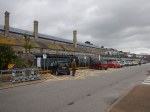
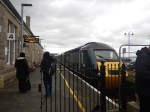
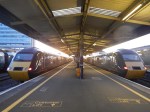

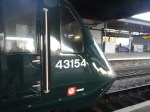


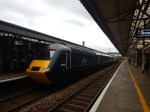
They must be profitable and/or popular with passengers.
If I have a problem with these trains, it is with the Class 43 diesel power cars.
- Each train has two power cars.
- It would appear that there are about 150 of the Class 43 power cars in regular service.
- Each is powered by a modern MTU 16V4000 R41R diesel engine, that is rated at 1678 kW.
- The engines are generally less than a dozen years old.
- They will be emitting a lot of carbon dioxide.
As the trains are now only half as long as they used to be, I would suspect, that the engines won’t be working as hard, as they can.
Hopefully, this will mean less emissions.
The article says this about use of the fleet.
With its fleet now increasing to 14, GWR expects to use 12 each day on services across the west of England. Currently the fleet is deployed on the Cardiff – Bristol – Penzance corridor, but the company is still evaluating how the additional sets will be used.
It also says, that they are acquiring rolling stock from other sources. Some of which will be cannibalised for spares.
Are First Rail Holdings Cutting Carbon Emissions?
First Rail Holdings, who are GWR’s parent, have announced in recent months three innovative and lower-carbon fleets from Hitachi, for their subsidiary companies.
- The Class 807 trains for Avanti West Coast will not have any diesel engines.
- The Class 805 trains for Avanti West Coast will initially have diesel engines, but these may be changedin a few years for battery power packs.
- The Class 803 trains for East Coast Trains will not have any diesel engines.
Hitachi have also announced a collaboration with Hyperdrive Innovation to provide battery packs to replace diesel engines, that could be used on Class 800 and Class 802 trains.
First Rail Holdings have these Class 800/802 fleets.
- GWR – 36 x five-car Class 800 trains
- GWR – 21 x nine-car Class 800 trains
- GWR – 22 x five-car Class 802 trains
- GWR – 14 x nine-car Class 802 trains
- TransPennine Express – 19 x five-car Class 802 trains
- Hull Trains – 5 x five-car Class 802 trains
Note.
- That is a total of 117 trains.
- As five-car trains have three diesel engines and nine-car trains have five diesel engines, that is a total of 357 engines.
- In Could Battery-Electric Hitachi Trains Work Hull Trains’s Services?, I showed that Hull Trains could run their services with a Fast Charging system in Hull station.
- In Could Battery-Electric Hitachi Trains Work TransPennine Express’s Services?, I concluded that Class 802 trains equipped with batteries could handle all their routes without diesel and some strategically-placed charging stations.
In the Wikipedia entry for the Class 800 train, there is a section called Powertrain, where this is said.
According to Modern Railways magazine, the limited space available for the GUs has made them prone to overheating. It claims that, on one day in summer 2018, “half the diagrammed units were out of action as engines shut down through overheating.
So would replacing some diesel engines with battery packs, also reduce this problem, in addition to cutting carbon emissions?
It does appear to me, that First Rail Holdings could be cutting carbon emissions in their large fleet of Hitachi Class 800 and Class 802 trains.
The Class 43 power cars could become a marketing nightmare for the company?
Could Class 43 Power Cars Be Decarbonised?
Consider.
- Class 43 power cars are forty-five years old.
- They have been rebuilt with new MTU engines in the last dozen years or so.
- I suspect MTU and GWR know everything there is to know about the traction system of a Class 43 power car.
- There is bags of space in the rear section of the power car.
- MTU are part of Rolls-Royce, who because of the downturn in aviation aren’t performing very well!
But perhaps more importantly, the power cars are iconic, so anybody, who decarbonises these fabulous beasts, gets the right sort of high-class publicity.
I would also feel, if you could decarbonise these power cars, the hundreds of diesel locomotives around the world powered by similar diesel engines could be a useful market.
What methods could be used?
Biodiesel
Running the trains on biodiesel would be a simple solution.
- It could be used short-term or long-term.
- MTU has probably run the engines on biodiesel to see how they perform.
- Biodiesel could also be used in GWR’s smaller diesel multiple units, like Class 150, 158, 165 and 166 trains.
Some environmentalists think biodiesel is cheating as it isn’t zero-carbon.
But it’s my view, that for a lot of applications it is a good interim solution, especially, as companies like Altalto, will be making biodiesel and aviation biofuel from household and industrial waste, which would otherwise be incinerated or go to landfill.
The Addition Of Batteries
This page on the Hitachi Rail Ltd web site shows this image of the V-Train 2.
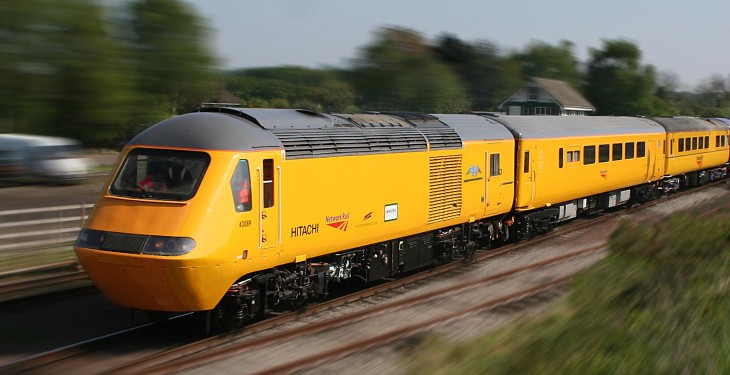
This is the introduction to the research program, which was based on a High Speed Train, fotmed of two Class 43 power cars and four Mark 3 carriages.
The V-Train 2 was a demonstration train designed in order to demonstrate our skills and expertise while bidding for the Intercity Express Programme project.
The page is claiming, that a 20 % fuel saving could be possible.
This paragraph talks about performance.
The V-Train 2 looked to power the train away from the platform using batteries – which would in turn be topped up by regenerative braking when a train slowed down to stop at a station. Acceleration would be quicker and diesel saved for the cruising part of the journey.
A similar arrangement to that Hitachi produced in 2005 could be ideal.
- Technology has moved on significantly in the intervening years.
- The performance would be adequate for a train that just trundles around the West Country at 90 mph.
- The space in the rear of the power car could hold a lot of batteries.
- The power car would be quiet and emission-free in stations.
- There would be nothing to stop the diesel engine running on biodiesel.
This might be the sort of project, that Hitachi’s partner in the Regional Battery Train; Hyperdrive Innovation. would probably be capable of undertaking.
MTU Hybrid PowerPack
I wouldn’t be surprised to find, that MTU have a drop-in solution for the current 6V4000 R41R diesel engine, that includes a significant amount of batteries.
This must be a serious possibility.
Rolls-Royce’s 2.5 MW Generator
In Our Sustainability Journey, I talk about rail applications of Rolls-Royce’s 2.5 MW generator, that has been developed to provide power for electric flight.
In the post, I discuss fitting the generator into a Class 43 power car and running it on aviation biofuel.
I conclude the section with this.
It should also be noted, that more-efficient and less-polluting MTU engines were fitted in Class 43s from 2005, so as MTU is now part of Rolls-Royce, I suspect that Rolls-Royce have access to all the drawings and engineers notes, if not the engineers themselves
But it would be more about publicity for future sales around the world, with headlines like.
Iconic UK Diesel Passenger Trains To Receive Green Roll-Royce Jet Power!
COVID-19 has given Rolls-Royce’s aviation business a real hammering, so perhaps they can open up a new revenue stream by replacing the engines of diesel locomotives,
I find this an intriguing possibility. Especially, if it were to be fitted with a battery pack.
Answering My Original Question
In answering my original question, I feel that there could be several ways to reduce the carbon footprint of a Class 43 power car.
It should also be noted that other operators are users of Class 43 power cars.
- ScotRail – 56
- CrossCountry – 12
- East Midlands Railway – 39
- Network Rail – 3
Note.
- ScotRail’s use of the power cars, is very similar to that of GWR.
- CrossCountry’s routes would need a lot of reorganisation to be run by say Hitachi’s Regional Battery Train.
- East Midlands Railway are replacing their Inter-City 125s with new Class 810 trains.
The picture shows the power car of Network Rail’s New Measurement Train.

These may well be the most difficult to decarbonise, as I suspect they need to run at 125 mph on some routes, which do not have electrification and there are no 125 mph self-powered locomotives. After the Stonehaven crash, there may be more tests to do and a second train may be needed by Network Rail.
Why Are GWR Increasing Their Castle Class Fleet?
These are possible reasons.
GWR Want To Increase Services
This is the obvious explanation, as more services will need more trains.
GWR Want To Update The Fleet
There may be something that they need to do to all the fleet, so having a few extra trains would enable them to update the trains without cutting services.
GWR Want To Partially Or Fully Decarbonise The Power Cars
As with updating the fleet, extra power cars would help, as they could be modified first and then given a thorough testing before entering passenger service.
GWR Have Been Made An Offer They Can’t Refuse
Suppose Rolls-Royce, MTU or another locomotive power plant manufacturer has a novel idea, they want to test.
Over the years, train operating companies have often tested modified trains and locomotives for manufacturers.
So has a manufacturer, asked GWR to test something in main line service?
Are Other Train Operators Thinking Of Using Introducing More Short-Formed InterCity 125 Trains?
This question has to be asked, as I feel there could be routes, that would be suitable for a net-zero carbon version of a train, like a GWR Castle or a ScotRail Inter7City.
Northern Trains
Northern Trains is now run by the Department for Transport and has surely the most suitable route in the UK for a shorted-formed InterCity 125 train – Leeds and Carlisle via the Settle and Carlisle Line.
Northern Trains may have other routes.
Transport for Wales Rail Services
Transport for Wales Rail Services already run services between Cardiff Central and Holyhead using diesel locomotive hauled services and long distance services between South Wales and Manchester using diesel multiple units.
Would an iconic lower-carbon train be a better way of providing some services and attract more visitors to the Principality?
Conclusion
GWR must have a plan, but there are few clues to what it is.
The fact that the trains have been purchased rather than leased could be significant and suggests to me that because there is no leasing company involved to consult, GWR are going to do major experimental modifications to the trains.
They may be being paid, by someone like an established or new locomotive engine manufacturer.
It could also be part of a large government innovation and decarbonisation project.
My hunch says that as First Rail Holdings appear to be going for a lower-carbon fleet, that it is about decarbonising the Class 43 power cars.
The plan would be something like this.
- Update the three new trains to the new specification.
- Give them a good testing, before certifying them for service.
- Check them out in passenger service.
- Update all the trains.
The three extra trains would give flexibility and mean that there would always be enough trains for a full service.
Which Methods Could Be Used To Reduce The Carbon Footprint Of The Class 43 Power Cars?
These must be the front runners.
- A Hitachi/Hyperdrive Innovation specialist battery pack.
- An MTU Hybrid PowerPack.
- A Rolls-Royce MTU solution based on the Rolls-Royce 2.5 MW generator with batteries.
All would appear to be viable solutions.
Stevenage Station’s New Fifth Platform Opened A Year Early
The title of this post, is the same as that of this article on Rail Engineer.
This is the introductory paragraph.
A new £40 million platform and track at Stevenage station has been completed more than a year ahead of schedule.
Yesterday, it appears that the first scheduled train left Stevenage for Moorgate at 0502.
Will This Be Good For Travellers?
A few thoughts!
Stevenage Hospital
One of my old school friends lives in Cuffley. From that part of Hertfordshire, the hospital, patients use is in Stevenage. He can drive, but not everybody can!
LNER
Currently, LNER run an hourly service between Stevenage and Leeds, with an hourly service between Stevenage and Lincoln or York via Newark.
North From Enfield, Palmers Green, Southgate, Winchmore Hill and Wood Green
If you live in Enfield or the old London boroughs of Southgate or Wood Green, it could be easier to pick up trains for the North from Stevenage, rather than Kings Cross.
Not Bad For Me Too!
Even, where I live now, which is a mile or so East of Highbury & Islington station, if the timing is right, I can walk or get a bus for four stops to Essex Road station and get a train to Stevenage and then change for Leeds and the North.
East Coast Trains
East Coast Trains will be starting a fast, low-cost London Kings Cross and Edinburgh service, which will call at Stevenage.
Grand Central Trains
Grand Central Trains are currently shut down because of COVID-19, but will they call at Stevenage station, when they restart?
Hull Trains
Some Hull Trains services between London Kings Cross and Hull, call at Stevenage.
Hitachi’s Class 80x Trains
LNER, East Coast Trains and Hull Trains, all run versions of Hitachi’s Class 800 trains or similar.
These trains are built for performance and an extra stop at Stevenage station can probably be incorporated in the timetable without any penalty.
So will we see more trains stopping at Stevenage, if the train operators think it will be worthwhile?
Could Some Services From The North Terminate At Stevenage?
The Digswell Viaduct and the double-track section through Welwyn North station are the major bottleneck on the East Coast Main Line.
But a train returning North at Stevenage wouldn’t go over the viaduct.
Stevenage already has or could have excellent connections to the following.
- Cambridge, Stansted Airport and East Anglia
- Moorgate and the City of London and Crossrail.
- North East London
If keen pricing can encourage travellers to use Stevenage instead of Kings Cross, I can see operators wanting to run extra services, that could start at Stevenage.
I can also see Greater Anglia getting in on the act.
Could Greater Anglia’s Ipswich and Cambridge service be extended to Stevenage via the planned Cambridge South and Royston stations?
Could the service be timed to offer cross-platform interchange with their Norwich and Stansted Airport, at Cambridge South station?
Four important extra services would be created with a step-free interchange.
- Ipswich and Stansted Airport – 106 minutes – Step-free walk across at Cambridge South station
- Ipswich and Stevenage – 115 minutes – New direct service
- Norwich and Stansted Airport – 107 minutes – Existing service
- Norwich and Stevenage – 116 minutes – Step-free walk across at Cambridge South station.
A large number East Anglian rail journeys would be simpler.
Car Parking
Will there be enough car parking at Stevenage station?
I suppose, it would be possible to build a Stevenage Parkway station between Stevenage and Watton-at-Stone stations.
This Google Map shows the area.
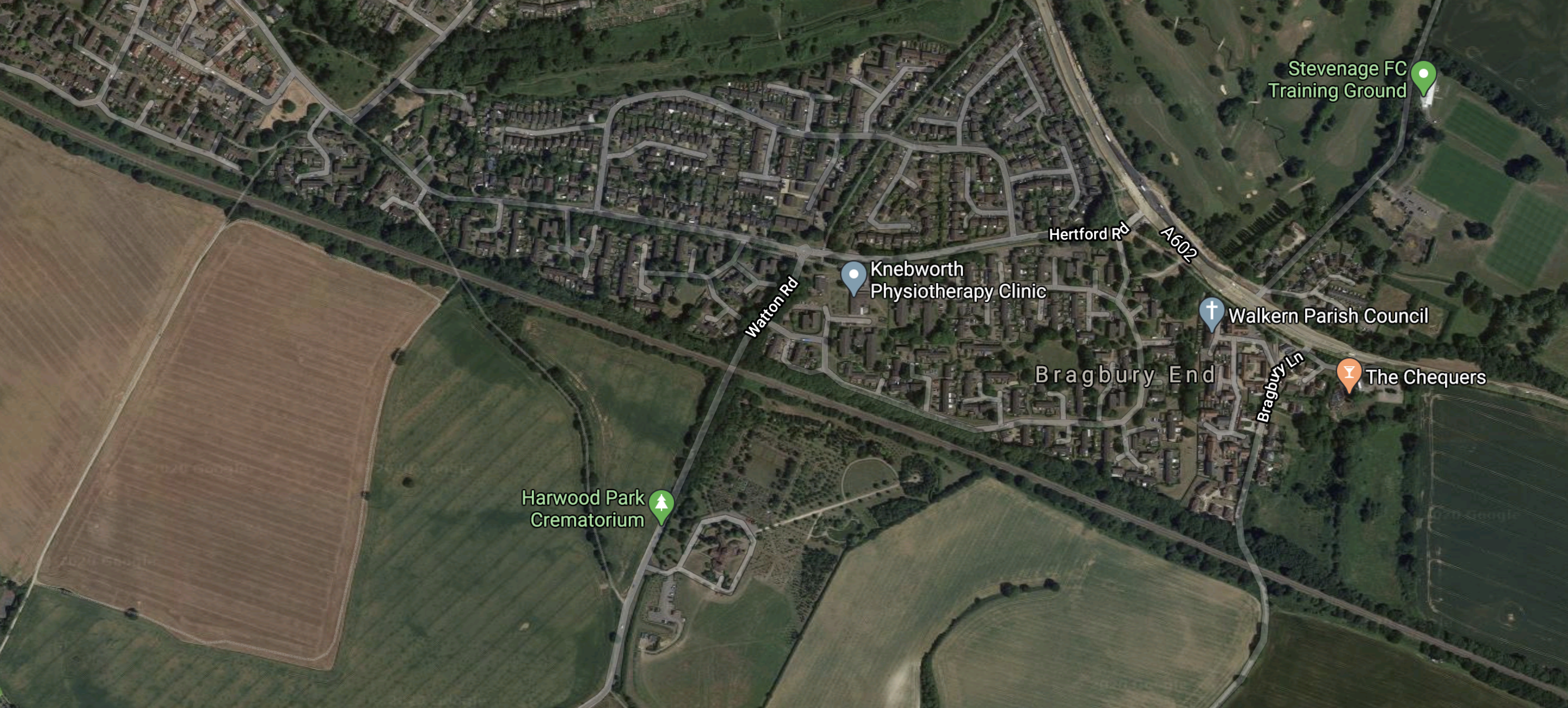
Note, that the railway seems to mark the development limit for the town.
The high performance of the Class 717 trains, would probably mean, that there would be no lengthened journey times.
Conclusion
This project appears to have been well-thought through!
Westbury Station – 30th July 2020
I went to Westbury station today and took these pictures.
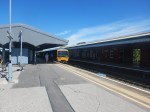


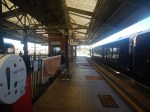
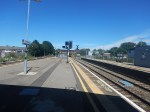
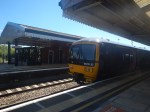
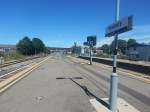
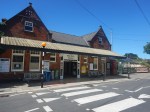

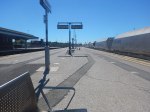
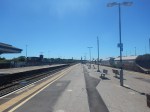
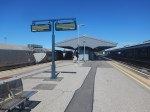
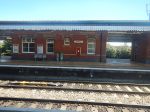
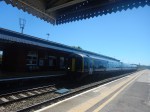
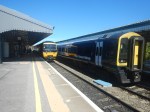

I found Westbury station to be a station in extremely good condition.
It also had a buffet, where I was able to purchase a delicious ice cream.
Passenger Services Through Westbury Station
I was at the station for about an hour and several trains passed through.
Great Western Railway services through the station include.
- One train per two hour (tp2h) – London Paddington and Exeter St. Davids – Stops
- One tp2h – London Paddington and Penzance – Passes through
- One tp2h – London Paddington and Plymouth – Passes through
- One train per hour (tph) – Cardiff Central and Portsmouth Harbour – Stops
- One tp2h – Great Malvern and Westbury
- One tp2h – Gloucester and Weymouth – Stops
- One tp2h – Swindon and Westbury
Train classes included Class 800 trains and Class 166 trains.
South Western Railway services through the station include.
- Five trains per day – Salisbury and Bristol Temple Meads – Stops
Train classes include Class 159 trains.
Battery Trains Through Westbury
Hitachi’s Class 800 train with a battery electric capability or Regional Battery Train, is described in this infographic from the company.
The proposed 90 km or 56 mile range could even be sufficient take a train between Westbury and Bristol Temple Meads stations on a return trip.
Many of the trains through Westbury go to the same stations.
Distances are as follows.
- Bristol Temple Meads – 28 miles
- Newbury – 42 miles
- Salisbury – 24 miles
- Swindon – 32.5 miles
- Taunton – 47 miles
It looks like all of these places should be in range of an electric train with a battery capability, providing there is a charging facility at the other end.
An Electrification Island At Westbury Station
I have been advocating an island of electrification around Westbury station for some time and feel about a dozen miles of electrification through the station would be sufficient for Class 800 trains with a battery capability to bridge the gap.
- At Newbury, trains would access the current electrification into London Paddington.
- Between Exeter and Taunton, the rail route runs alongside the M5, so why not electrify this stretch, as the wires will not be so noticeable?
Looking at Westbury, to my untrained eye, it would appear that a short section of electrification around the station, would not be the most challenging of projects.
I believe that discontinuous electrification between Newbury and Exeter would be possible and could gradually be extended across Devon and Cornwall.
It should also be noted that one of Hitachi’s Regional Battery Trains has a range of 56 miles, so that these places from Westbury could be an return trip on batteries, with a well-driven train with excellent energy management.
- Bath Spa – 17 miles
- Bradford-on-Avon – 7 miles
- Bristol Temple Meads – 28 miles
- Chippenham – 16 miles
- Frome – 6 miles
- Salisbury – 24 miles
- Trowbridge – 4 miles
- Warminster – 9 miles
Obviously, the number of stops and the terrain will play a part.
Freight Might Drive Full Electrification Through Westbury Station
As the pictures show, there are heavy freight trains going through the area, which bring long and weighty loads of stone from the Mendips to London.
- There are regularly two or three stone trains in an average hour of the day.
- Like in the picture, I suspect they are usually hauled by a noisy, smelly, polluting and carbon-dioxide emitting Class 66 Locomotive. Not all of these, are as clean and well-maintained, as the one in the picture.
- Some trains start at Merehead Quarry, which is about fifteen miles from Westbury station.
I believe that we must decarbonise freight trains.
But freight and electric haulage is not a simple subject.
- I once had extensive talks with a Senior Crane Driver at the Port of Felixstowe during an Ipswich Town Away match. Ports don’t like overhead wires, as containers do get dropped and fall off rail wagons.
- Suppose a historic line without electrification, like the Settle and Carlisle has a serious land-slip, which it did a couple of years ago. How do you haul in the materials for repair?
- Because freight can be of a random and unpredictable nature, to electrify freight, you probably need to electrify the whole rail network.
For these and other reasons, we need independently-powered freight locomotives and I feel that a new freight locomotive will develop, that will be needed by the rail industry all over the world.
There are several solutions.
Biodiesel
Biodiesel is the simplest solution and would mean that the current diesel locomotives could be used.
In Grant Shapps Announcement On Friday, I talked about Government support for an industrial process, that has been developed by Oxford University and their spin-off company; Velocys, from the the Fischer-Tropsch Process, which can produce, the following fuels from household and industrial waste.
- Aviation biofuel.
- Biodiesel.
A plant to process 500,000 tonnes per year of Lincolnshire finest waste is now being built at Immingham to create 50,000,000 litres of fuel, by Altalto, which is a partnership between Velocys, British Airways and Shell.
If nothing else, waste-to-fuel is the interim solution to the decarbonisation of tricky sectors like heavy rail freight, rail construction, large diesel-powered machines, ships or long-distance aviation.
This fuel could be ideal to haul the heavy stone trains from the Mendips.
Hydrogen
I did think, it would be hydrogen powered, but I’m not so sure now, as hydrogen trains and locomotives seem to have a slow development cycle.
Although, there is one factor, that might influence the use of hydrogen as a fuel, which I wrote about in Thirsty High-Rollers … Mining’s Heavy Haulers Prime Candidates For Hydrogen Conversion.
Mining and quarrying don’t have a good green image, but converting mines and quarries to hydrogen power, would surely have operational and good public relational advantages.
It would also ensure a plentiful and convenient supply of hydrogen, for any hydrogen-powered locomotives.
Hydrogen-powered locomotives, with their electric transmissions, would probably be able to use electrification for traction power, so they would put pressure on the Government to electrify between Westbury and Newbury stations, so that there was a fully-electrified route between the Mendips and London.
Rolls-Royce’s Staggering Development
Staggering is not my word, but that of Paul Stein, who is Rolls-Royce’s Chief Technology Officer.
He used the word in a press release, which I discuss in Our Sustainability Journey.
To electrify aviation, Rolls-Royce has developed a 2.5 MW generator, based on a small gas-turbine engine, which Paul Stein describes like this.
Amongst the many great achievements from E-Fan X has been the generator – about the same size as a beer keg – but producing a staggering 2.5 MW. That’s enough power to supply 2,500 homes and fully represents the pioneering spirit on this project.
This generator is designed for flight and the data sheet for the gas-turbine engine is available on the Internet.
- It has a weight of under a couple of tonnes compared to the thirteen tonnes of the diesel engine and generator in a Class 68 locomotive.
- It is also more powerful than the diesel.
- It looks to be as frugal, if not more so!
- Rolls-Royce haven’t said if this gas-turbine can run on aviation biofuel, but as many of Rolls-Royce’s large engines can, I would be very surprised if it couldn’t!
Rolls-Royce’s German subsidiary is a large producer of rail and maritime diesel engines, so the company has the expertise to customise the generator for rail applications.
I can see this generator ending up in a high-powered heavy independently-powered electric locomotive for hauling stone and inter-modal container trains.
As with hydrogen-powered locomotives, this new breed of gas-turbine locomotive with its electric transmission, will be able to use electrification, where it exists.
So would locomotive developments drive the electrification through Westbury and especially between Westbury and Newbury?
I would rate is likely, that in the future, increasingly rail locomotives will have sophisticated electric transmissions, between their prime motive power of diesel, hydrogen, gas-turbine or whatever and their traction system. All of these locomotives will have pantographs and/or third-rail shoes to access electrification, where it exists.
These locomotives will surely add to pressure to electrify between Westbury and Newbury.
Biodiesel is surely the interim freight solution, if one is needed.
Future Zero-Carbon Passenger Services
Passenger services through Westbury can be divided into three groups.
Great Western Railway’s Services Between London Paddington And Devon And Cornwall
From Beeching Reversal projects put forward over the last few months, it looks like these services will increase and stop at several new and refurbished stations.
I can see discontinuous electrification being used to create a series of electrification islands to allow Class 800 trains, with a battery capability reach the Far South West of Cornwall.
Electrification islands could be at places like
- Around Westbury station.
- Between Taunton and Exeter St. Davids stations alongside the M5.
- Between Plymouth station and the Royal Albert bridge.
- Around Bodmin Parkway station
- Around Truro station
- At Newquay station
- At Penzance station
Obviously, the number and type of the various installations will depend on the methods used and the engineering required.
I do believe that with Hitachi trains, that meet their specification, that trains will be able to travel between Paddington and Penzance without touching a drop of diesel.
Great Western Railway’s Cardiff Central And Portsmouth Harbour Service
The service can be split into the following legs.
- Cardiff Central and Filton Junction – 33 miles – Electrified
- Filton Junction and Bristol Temple Meads – 5 miles – Not Electrified
- Bristol Temple Meads and Westbury – 28 miles – Not Electrified
- Westbury and Salisbury – 24 miles – Not Electrified
- Salisbury and Southampton Central – 15 miles – Not Electrified
- Southampton Central and Portsmouth Harbour – 26 miles – Electrified
It would appear that a train with the performance and range on batteries of Hitachi’s Regional Battery Train should be able to handle the route, provided the following conditions are met.
- It can leave the Great Western Main Line at Filton Junction with a full battery.
- It can leave the electrification at Westbury station with a full battery.
- It can leave Southampton Central station with a full battery.
- Third-rail shoes are fitted for working between Southampton Central and Portsmouth Harbour stations.
Recharging batteries at Bristol Temple Meads and Salisbury stations, although probably welcome, are not necessary.
I can envisage Hitachi Class 800 and Class 385 trains being able to fulfil this role, along with Bombardier Electrostars and Aventras and Siemens Desiros.
As Great Western Railway have forty-five Class 387 trains, conversion of some of these to battery electric operation must be a possibility.
Great Western Railway’s Gloucester and Weymouth Service
The service can be split into the following legs.
- Gloucester and Bristol Temple Meads – 39 miles – Not Electrified
- Bristol Temple Meads and Westbury – 28 miles – Not Electrifield
- Westbury and Dorchester Junction – 52 miles – Not Electrified
- Dorchester Junction and Weymouth – 4 miles – Electrified
It would appear that a train with the performance and range on batteries of Hitachi’s Regional Battery Train should be able to handle the route, provided the following conditions are met.
- It can leave Gloucester station with a full battery.
- It can leave Bristol Temple Meads with a full battery.
- It can leave Westbury with a full battery.
- It can leave the South Western Main Line at Dorchester Junction with a full battery.
It would be a tight trip for a battery electric train and I suspect, that there would be some extra electrification between Westbury and Dorchester Junction or perhaps charging facilities at Frome or Yeovil Pen Mill stations.
The alternative would be to fit larger batteries on the train.
As to the train to be used, a Class 387 train with a battery capability would surely be ideal.
Great Western Railway’s Swindon and Westbury Service
The service can be split into the following legs.
- Swindon and Chippenham – 16 miles – Electrified
- Chippenham and Westbury- 16 miles – Not Electrified
It would appear that a train with the performance and range on batteries of Hitachi’s Regional Battery Train should be able to handle the route, provided the following conditions are met.
- It can leave Chippenham station with a full battery.
This would have sufficient charge to do the thirty-two mile round trip from Chippenham to Westbury and back.
As to the train to be used, a Class 387 train with a battery capability would surely be ideal.
South Western Railway’s Bristol Temple Meads and Salisbury Service
The service can be split into the following legs.
- Bristol Temple Meads and Westbury – 28 miles – Not Electrified
- Westbury and Salisbury- 24 miles – Not Electrified
t would appear that a train with the performance and range on batteries of Hitachi’s Regional Battery Train should be able to handle the route, provided the following conditions are met.
- It can leave Bristol Temple Meads station with a full battery.
- It can leave Westbury with a full battery.
- It can leave Salisbury with a full battery.
But, I do wonder, if with a slightly larger battery, a well-driven train could work the route with only charging the battery at Westbury station?
Conclusion
Could Westbury station develop into a zero-carbon rail transport hub for Wiltshire?
- It has an hourly train service between London Paddington and Exeter St. Davids.
- It has an hourly service between Bristol Temple Meads and Weymouth.
- There are hourly services to stations like Bath Spa, Bradford-on-Avon, Bristol Temple Meads, Chippenham, Dorchester, Frome, Swindon, Taunton, Trowbridge and Yeovil
It could be electrified to charge battery electric trains as they pass through.
Speeding Down To Bristol By Train
On Wednesday, I went to Bristol to take a few photographs.
I took these pictures, where the electrification ran out at Chippenham station.
There is some half-hearted erection of electrification going on between Chippenham station and Box Tunnel, but despite the fact, that the iconic tunnel is ready for wires, construction work seemed noticeable by its absence.
Line Speed Observations
I had my personal dynamometer car connected for much of the journey.
- Between Southall and Slough we were at times running at only a few miles short of 130 mph. Are Great Western Railway starting to wind up the speed.
- Most of the journey, when well clear of stations, we were at around 125 mph until Chippenham station.
- At Chippenham, it was noticeable that the diesel engine under my seat kicked in.
- Onwards from Chippenham, we were at around 100 mph on diesel.
I suspect that London and Bristol services could be improved and/or speeded up.
- Timings could be reduced between London Paddington and Reading by running at faster speeds under digital ERTMS signalling. The train certainly felt comfortable at 128 mph.
- Any increase in electrification past Chippenham station will increase the the reach of a Class 800 train with a battery capability on a mile-for-mile basis.
- Trains should be able to increase speed towards 125 mph for some of the twelve miles between Chippenham and Bath Spa stations.
- As trains would not be swapping between diesel and electricity in Chippenham station, would panning up and down happen automatically further West?
- It might be possible to fit in a third London Paddington and Bristol service, that doesn’t stop at Chippenham station.
None of these improvements would need the line through Bath Spa station to be electrified.
Bristol Temple Meads Station – 28th July 2020
I took these pictures of Bristol Temple Meads station, when I visited.
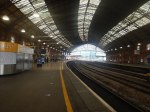
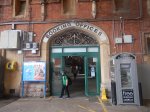
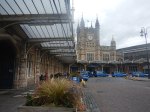
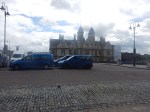
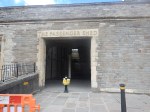



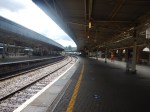
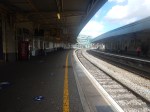

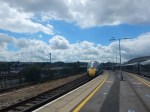
Note.
- The station is Listed to the highest level of Grade 1.
- London services seem to use Platforms 15 and 16.
- There is quite a fair bit of space between the tracks.
.Do Network Rail need all the hassle of full electrification of one of Brunel’s most famous creations?
Bristol Temple Meads Station And Trains With a Battery Capability
Hitachi’s Class 800 train with a battery electric capability or Regional Battery Train, is described in this infographic from the company.
The proposed 90 km or 56 mile range would even be sufficient take a train between Chippenham and Bristol Temple Meads stations on a return trip. So this means that one of these trains could work the London Paddington and Bristol Temple Meads stations service via Bath Spa using the electrification between London Paddington and Chippenham stations.
But where could trains reach, if they were able to leave Bristol Temple Meads station with a fully-charged battery?
- Bristol Parkway – 6 miles
- Cardiff Central – 5 miles to the electrified Great Western Main Line.
- Cheltenham Spa – 41 miles
- Filton Abbey Wood – 4 miles
- Gloucester – 39 miles
- Newport – 5 miles to the electrified Great Western Main Line.
- Severn Beach – 13.5 miles
- Taunton – 45 miles
- Westbury – 28.5 miles
- Weston-super-Mare – 19 miles
Note.
- Return trips to Bristol Parkway, Filton Abbey Wood, Severn Beach and Western-super-Mare would be possible.
- The other destinations will need charging facilities.
Other local destinations could be added as the Bristol Metro develops.
This Google Map shows the station.
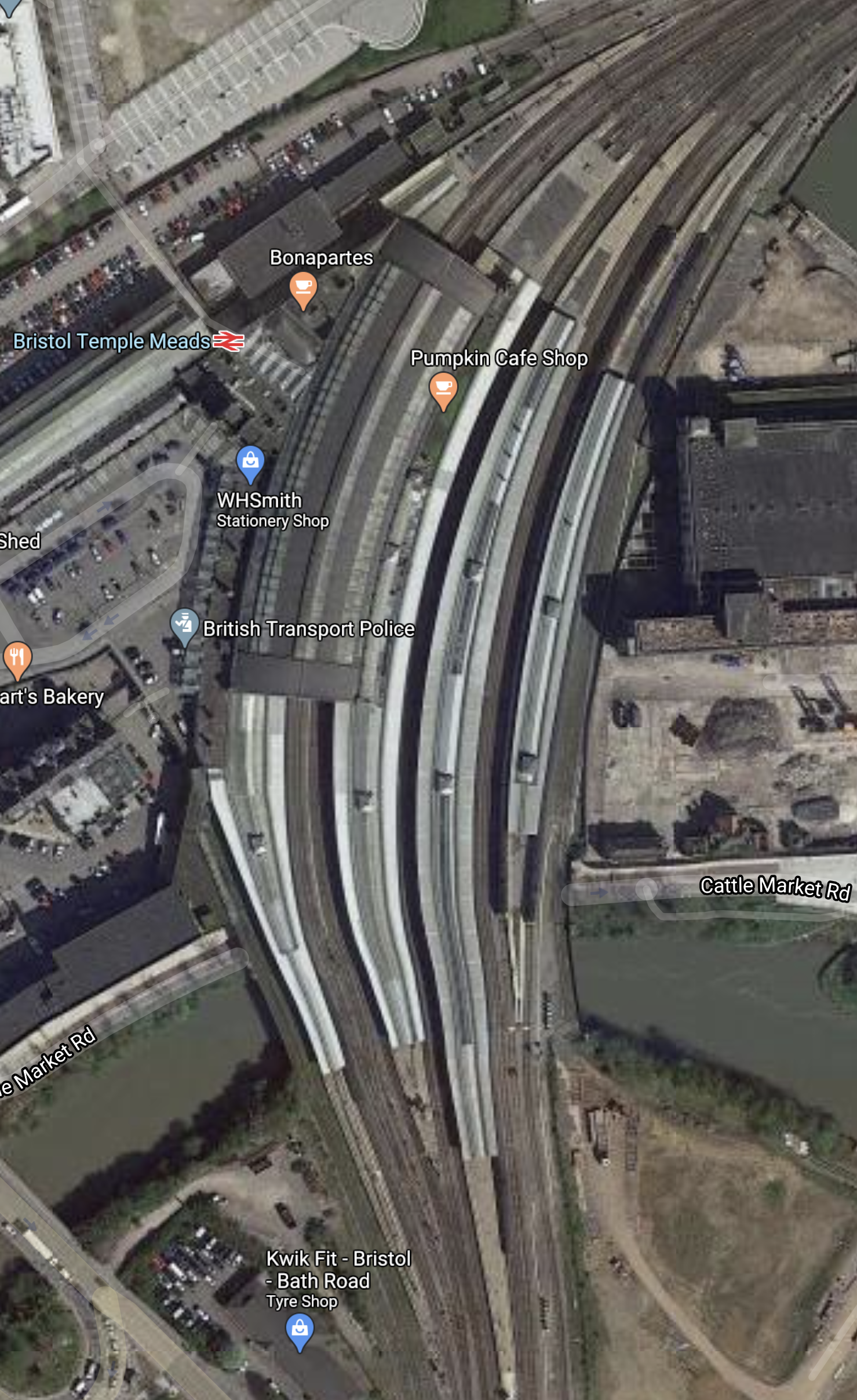
Note.
- The curving nature of the platforms doesn’t make 25 KVAC overhead electrification easy.
- Trains to and from London appear to use the two Eastern platforms 13 and 15.
- It might be possible to increase platform lengths to run longer trains to and from places like London.
I believe that there are three possible ways of charging the trains in Bristol Temple Meads station.
25 KVAC Overhead Electrification
This could be short length of standard 25 KVAC overhead electrification in platforms, that would be served by trains with pantographs like the Class 800 trains.
The driver would stop in the correct place in the platform and connect the pantograph, whilst waiting in the station.
Note that the Class 800 trains to and from London typically take 35-20 minutes to turn round, which is time enough for a full charge.
750 VDC Third-Rail Electrification
This could be short lengths of standard 750 VDC third-rail electrification in platforms, that would be used by standard third-rail shoes on trains.
The train would connect automatically and charging would take place, whilst waiting in the station.
A Specialist Charging Facility Like Vivarail’s Fast Charge System
Vivarail’s Fast Charge system is described in Vivarail Unveils Fast Charging System For Class 230 Battery Trains.
This extract from this Vivarail press release explains how the system works.
he concept is simple – at the terminus 4 short sections of 3rd and 4th rail are installed and connected to the electronic control unit and the battery bank. Whilst the train is in service the battery bank trickle charges itself from the national grid – the benefit of this is that there is a continuous low-level draw such as an EMU would use rather than a one-off huge demand for power.
The train pulls into the station as normal and the shoe-gear connects with the sections of charging rail. The driver need do nothing other than stop in the correct place as per normal and the rail is not live until the train is in place.
That’s it!
I believe that this system or something like it could be adapted to work with all trains with a battery capability in the UK.
I also believe that this system can be designed so that it is ultra-safe and doesn’t disrupt, the visual impact of the station.
Conclusion
Bristol Temple Meads station could be converted into a station, where a high proportion of trains ran solely on electricity.
Beeching Reversal – Reinstatement Of The Bodmin-Wadebridge Railway
This is one of the Beeching Reversal projects that the Government and Network Rail are proposing to reverse some of the Beeching cuts.
The basic outline of this Beeching Reversal project is described in the section called RailTrail Project in the Wikipedia entry for the Bodmin and Wenford Railway, where this is a simplified version of what is said.
The railway company is currently planning to extend beyond its western terminus at Boscarne Junction towards Wadebridge alongside the Camel Trail. Known as the RailTrail project, phase one would see the railway extended to Nanstallon Halt, phase two to Grogley Halt and phase three to Wadebridge Guineaport.
In areas where the width of the trackbed does not allow both a railway and a footpath side-by-side, short diversions are proposed. For example, at Grogley, the Camel Trail could be re-routed along a former “headshunt”, which was part of the original railway before it was replaced by a later deviation.
There is some controversy, over the reduction in width of the Camel Trail.
This Google Map shows the River Camel through Wadebridge, where the extension appears to be proposed to finish.
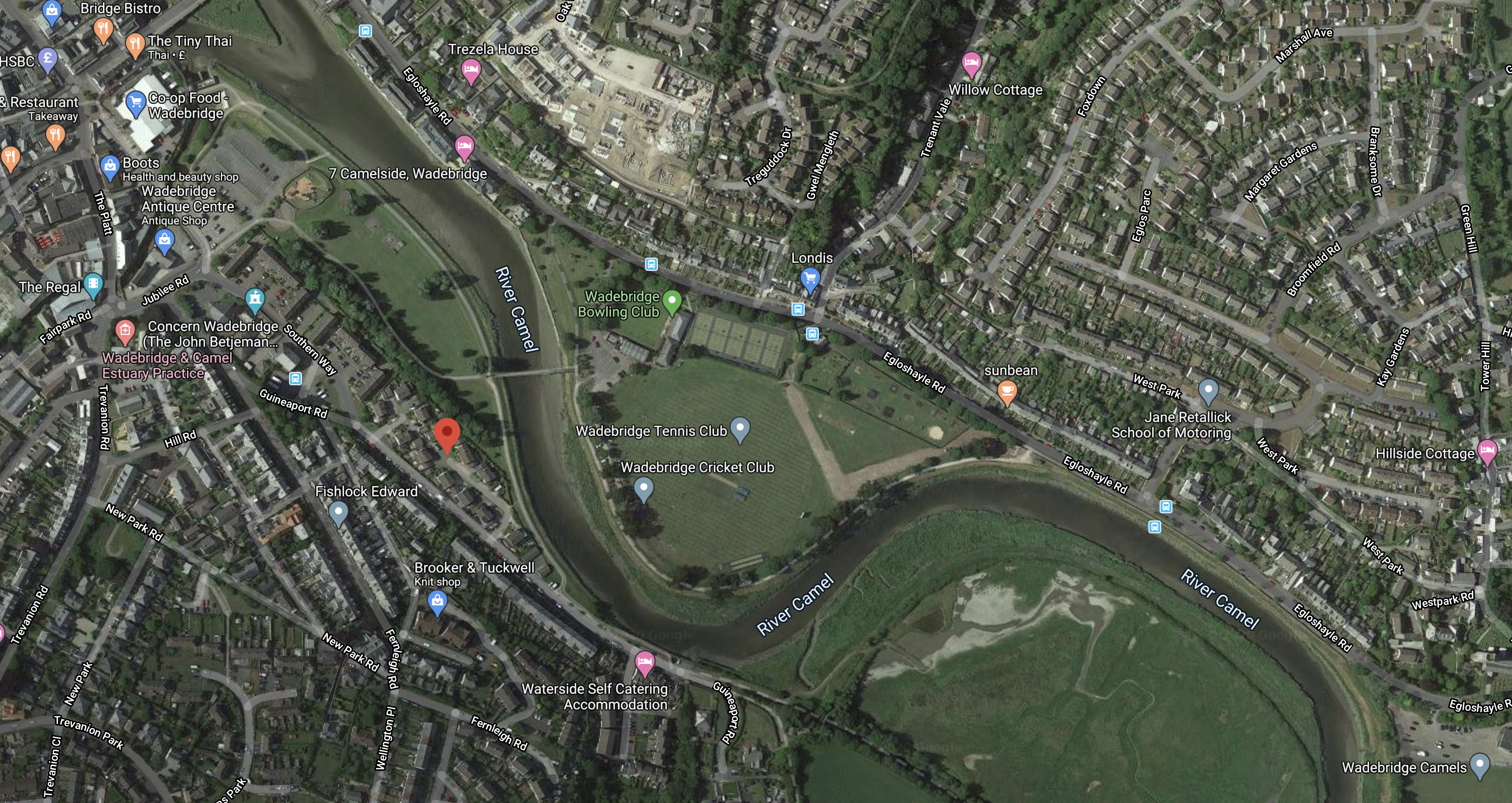
Note.
- The Guineaport area of Wadebridge is marked by a red arrow-dot.
- The Future Plans section of the Wikipedia entry for Wadebridge station, says that the new station will be beyond Guineaport.
- The Camel Trail is marked on Google Maps as a dotted line and it can be followed to where it meets the Bodmin and Wenford Railway at Boscarne Junction station.
This Google Map shows Boscarne Junction station.
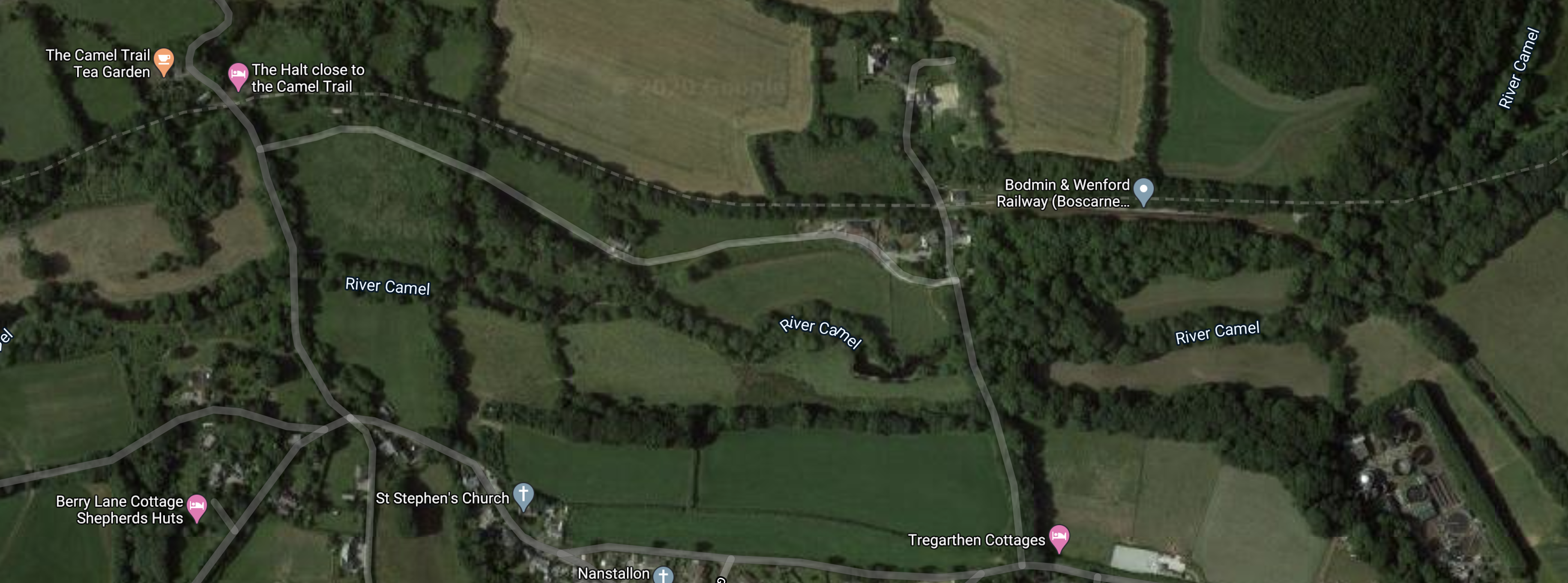
Looking from my helicopter, I am fairly sure that the RailTrail can be squeezed in with a footpath.
What Sort Of Railway Would It Be?
These are my thoughts.
Will It Be Double Or Single-Track?
It will be single-track, as there is not enough space for two.
I would suspect, they could use similar construction to these tram tracks in Blackpool.
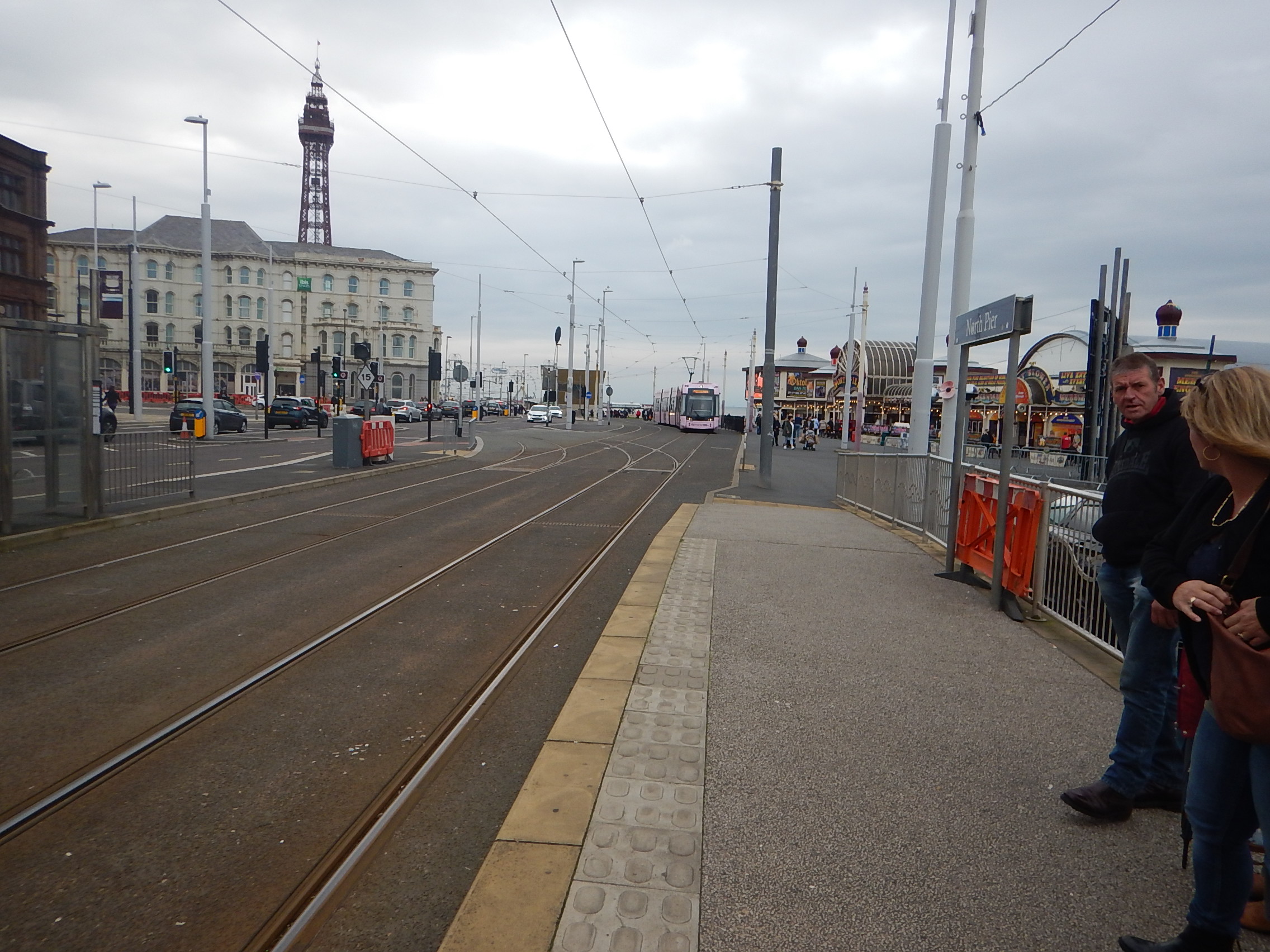
Effectively, the RailTrail could be a high-strength road, with a rail track set to one side, and appropriate markings, rails and safety signage.
How Long Will The New Track Be?
Google gives these distances.
- Padstow and Boscarne – 14.4 miles
- Padstow and Bodmin – 16 miles
- Wadebridge and Boscarne – 6 miles
- Wadebridge and Bodmin – 7.4 miles
I have added Padstow, as this town on the sea, used to be the rail terminus.
Should The Route Go To Padstow?
This Google Map shows the Padstow end of the Camel Trail.
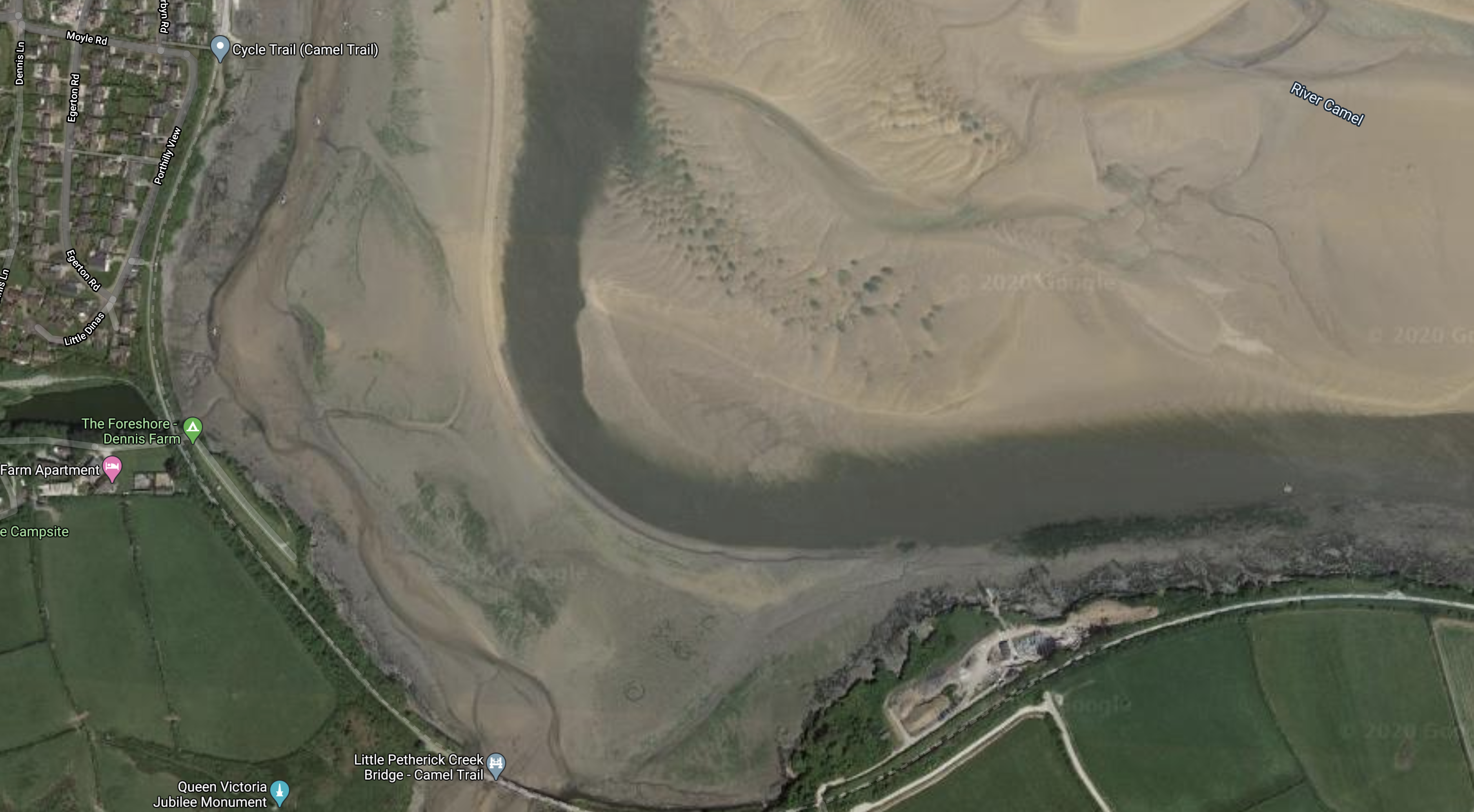
But there could be a major problem.
At the bottom of the map is the Little Petherick Creek Bridge.
- It’s probably OK for a cycle trail, but would it be strong enough for heavy rail use.
- On the other hand, is it past its replace date and Cornwall County Council might like to pass the responsibility to Network Rail?
There is also more land to build a station at Padstow.
It could even be built on the East side of the bridge, so that the heaviest thing it would carry would be pedestrians.
Would A Shared RailTrail Work?
One of the most interesting train systems, that I have seen is in Zwickau in the former East Germany, where instead of buying more trams to connect to other towns and cities, they devised a train-tram system using standard diesel multiple units.
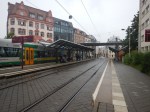
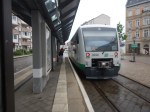
The Zwickau system is more complicated than it would need to be in the UK, as the trains have to share tram-tracks of a different size, so there are three-railed tracks; two for the metre gauge trams and an extra one for the standard gauge trains.
I have never seen anywhere else, where rail vehicles of different gauges share rails.
The trains run under virtually the same rules as street running trams do in Birmingham, Blackpool, Croydon, Edinburgh, Manchester, Nottingham and Sheffield.
- You can cross the road all round them.
- Trains are limited to slow speeds.
- The trains are independently powered.
- The trains cross level crossings.
- There is no electric power for the trains.
- The trains are double-manned and the crew keep a good look out!
Note, in the pictures, that the trains have flashing orange warning lights.
Could a GWR Class 800 train run along the RailTrail?
- The train would be a five-car unit.
- The train would be fitted with environmentally-friendly battery power, so it would be emission-free and almost silent.
- There would be a charging facility in the platform at Bodmin General station to top up the battery, before the train ran on the RailTrail.
- As in Zwickau, the track would be buried in the ground. so it could be safely used by trains and not be a hazard to pedestrians.
- The train would have a slow speed crawling mode, so it could proceed along the RailTrail with extreme care.
With the right timetable, the modern trains could share with the Bodmin and Wenford’s heritage trains.
Could Wadebridge Get A Direct Service To London Paddington?
Why not?
Places like Bradford, Harrogate, Huddersfield and Skipton appear to be being added to LNER’s network, by joining and splitting Class 800 trains at Leeds.
I wouldn’t be surprised to see a five-car Class 800 train with a battery capability running from Wadebridge to Plymouth, where is joined with another train from Newquay, Penzance or Plymouth, before running as a ten-car train to London Paddington.
Conclusion
I like this scheme and it could be a prototype for other similar ones.
Could Hitachi’s Class 800 Trains Work The Cornish Main Line On Battery Power?
The distance between Plymouth and Penzance stations along the Cornish Main Line is just seventy-nine miles and thirty-eight chains. I’ll call it 79.5 miles.
Hitachi’s proposed train is described in this infographic.
The range on battery power of 90 km or 56 miles, will not be quite enough to get all the way between Plymouth and Penzance!
But note the phrase – Allows Discontinuous Electrification; at the top of the infographic.
Will Electrification Be Needed?
Obviously or the train could perhaps wait at Truro for ten minutes to charge the batteries.
But how customer-unfriendly and disruptive to good operating practice is that?
Could Bigger Batteries Be Fitted?
This obviously is a possibility, but surely an operator would prefer all of their trains to have the same battery range and updating them all for a longer distance might not be an economic proposition.
Could Intelligent Discontinuous Third-Rail Electrification Be Used?
Third-rail electrification, is hated by the Health & Safety Taliban, as it occasionally kills people trespassing or falling on the railway. But in the UK, we have around 1,500 miles of third-rail electrified line, that generally operates to a high level of safety.
Can my modern successors make third-rail electrification absolutely safe in new installations?
Third-Rail And Discontinuous Electrification Installations!
To connect to overhead electrification, the driver or an automatic system on the train, must raise the pantograph. It doesn’t often go wrong, but when it does, it can bring down the wires. This section on panotograph weaknesses from Wikipedia give more details.
With third-rail, the connection and disconnection is automatic, with far less to go wrong.
These pictures show a gap in the third-rail electrification at the Blackfriars station, which was rebuilt in 2012, so it must meet all modern regulations.
Note the gap in the third-rail, which carries the current.
- The third-rail shoes on the train disconnect and connect automatically, as the train passes through.
- The only rails with voltage are between the tracks for safety.
- The high-tech shields appear to be real tree wood painted yellow.
As an Electrical Engineer, I actually suspect, that this gap in the conductor rail, is to isolate the North and South London electricity supplies from each other,, so that a catastrophic failure on one side doesn’t affect both halves of Thameslink.
Third-Rail Electrification In Stations
Most rail passengers in the UK, understand third-rail electrification, if they’ve ever used trains in the South of London or Merseyside.
Electrifying stations using third-rail equipment could enable battery trains to go further.
- Stopping trains could top-up their batteries.
- Passing trains, that were low on power could make a pit-stop.
- All trains would connect automatically to the third-rail, when in the station.
The safety level would be raised by making sure that the third-rail was electrically-dead unless a train was over the top.
I am by training a Control Engineer and one of my first jobs in a dangerous factory as a fifteen-year-old, was designing and building safety systems, that cut power to guillotines, when the operator put their hands somewhere they shouldn’t! I remember endlessly testing the system with an old broom, which survived unscathed.
I believe that only switching on the electrification, when a train completes the circuit, is a fairly simple operation for modern control switchgear. I can imagine an intelligent switch constantly monitoring the resistance and only switching on power, when the resistance in the circuit looks like a train.
Third-Rail Electrification In Discrete Locations
Overhead electrification can receive complaints in scenic locations, but third-rail electrification can be invisible in tunnels and over bridges and viaducts.
The Cornish Main Line has four tunnels, two bridges, which include the Royal Albert Bridge, and no less than thirty-two viaducts.
How many of these could be used to hide electrification?
- Any electrified sections could be intelligently controlled to increase safety.
- Power for the electrification could come from local renewable sources, using techniques like Riding Sunbeams.
I can see engineers developing several techniques for discrete electrification.
Third-Rail And Charging Battery Trains
I like the Vivarail’s Fast Charge concept of using third-rail equipment to charge battery trains.
This press release from the company describes how they charge their battery electric Class 230 trains.
- The system is patented.
- The system uses a trickle-charged battery pack, by the side of the track to supply the power.
- The first system worked with the London Underground 3rd and 4th rail electrification standard.
As the length of rails needed to be added at charging points is about a metre, installing a charging facility in a station, will not be the largest of projects.
Under How Does It Work?, the press release says this.
The concept is simple – at the terminus 4 short sections of 3rd and 4th rail are installed and connected to the electronic control unit and the battery bank. Whilst the train is in service the battery bank trickle charges itself from the national grid – the benefit of this is that there is a continuous low-level draw such as an EMU would use rather than a one-off huge demand for power.
The train pulls into the station as normal and the shoe-gear connects with the sections of charging rail. The driver need do nothing other than stop in the correct place as per normal and the rail is not live until the train is in place.
That’s it!
As an electrical engineer, I’m certain the concept could be adapted to charge the batteries of a conventional third-rail train.
Vivarail’s press release says this about modification to the trains.
The train’s shoe-gear is made of ceramic carbon so it is able to withstand the heat generated during the fast charge process.
That wouldn’t be a major problem to solve.
Hitachi And Third Rail
The picture shows a Hitachi Class 395 train at Gillingham station.

The silver-coloured third-rail equipment is clearly visible, under the javelin logo.
These trains are cousins of all the new Hitachi trains in the UK, so I suspect fitting third-rail equipment to Class 80x trains, is just a matter of finding the appropriate documents on the computer and raiding the parts bin.
I suspect, as Hitachi will probably be building some more trains for Southeastern to start the Highspeed service between London St. Pancras and Hastings, that Hitachi are already working on the design of a third-rail high-speed train with batteries.
I doubt that Hitachi have any fears about fitting third-rail gear to their trains, as an optional extra.
Electrifying Between Plymouth And Penzance
Obviously, Plymouth and Penzance stations would have charging facilities, but now many would the trains handle the 79.5 miles in between?
There are three possibilities.
Limited-Third Rail Electrification
As I indicated earlier short lengths of intelligent third-rail electrification could be added at various places on the route.
A full battery would take the train fifty-six miles and as the Cornish Main Line is nearly eighty miles long, I suspect that the train would need almost a full charge halfway along the route.
- Hitachi claim in the infographic, that a full-charge takes 10-15 minutes, when the train is static, so I will assume the largest figure of this range, as charging on the move might not be as efficient, with everything happening at 90 mph.
- So I will assume a fifteen minute charge time.
- Typically, a Class 80x takes two hours between Penzance and Plymouth, which is an average speed of just 40 mph.
- In fifteen minutes, the train will go ten miles. So a rough estimate would say ten miles should be electrified.
As electrification in stations would allow trains to have a bigger sup, a scientifically-correct simulation would show the best philosophy.
The London Paddington and Penzance services call at the following stations, that are West of Plymouth.
Liskeard, Saltash, St. Germans, Bodmin Parkway, Lostwithiel, Par, St Austell, Truro, Redruth, Camborne, Hayle and St Erth
Note.
- Some smaller stations do get skipped.
- According to Real Time Trains, stops seem to take 1-2 minutes.
- Trains are usually nine- or ten-cars, but I feel that the proposed improvements between Bodmin General and Bodmin Parkway stations, that I wrote about in Increased Service Provision Bodmin General-Bodmin Parkway, may result in a large reorganisation of services between London and Cornwall.
Could it be that electrifying the major stations with third-rail electrification would enable enough power to be taken on board by a train running between London Paddington and Penzance, so that the journey could be completed?
Vivarail Fast Chargers
Vivarail’s Fast Chargers could be fitted at all or selected stations and trains could take a sip as and when they need.
A charger would also be needed at any Cornish terminal station, that would have services from battery electric trains.
A Mixture Of Third-Rail Electrification And Vivarail Fast Chargers
Both technologies are interchangeable and can be used with compatible battery electric trains.
I would expect an accurate mathematical model will indicate the best layout of electrification and Fast Chargers.
Beeching Reversal – Increased Service Provision Bodmin General-Bodmin Parkway
This is one of the Beeching Reversal projects that the Government and Network Rail are proposing to reverse some of the Beeching cuts.
This Google Map shows the relationship of the two Bodmin General and Bodmin Parkway stations.
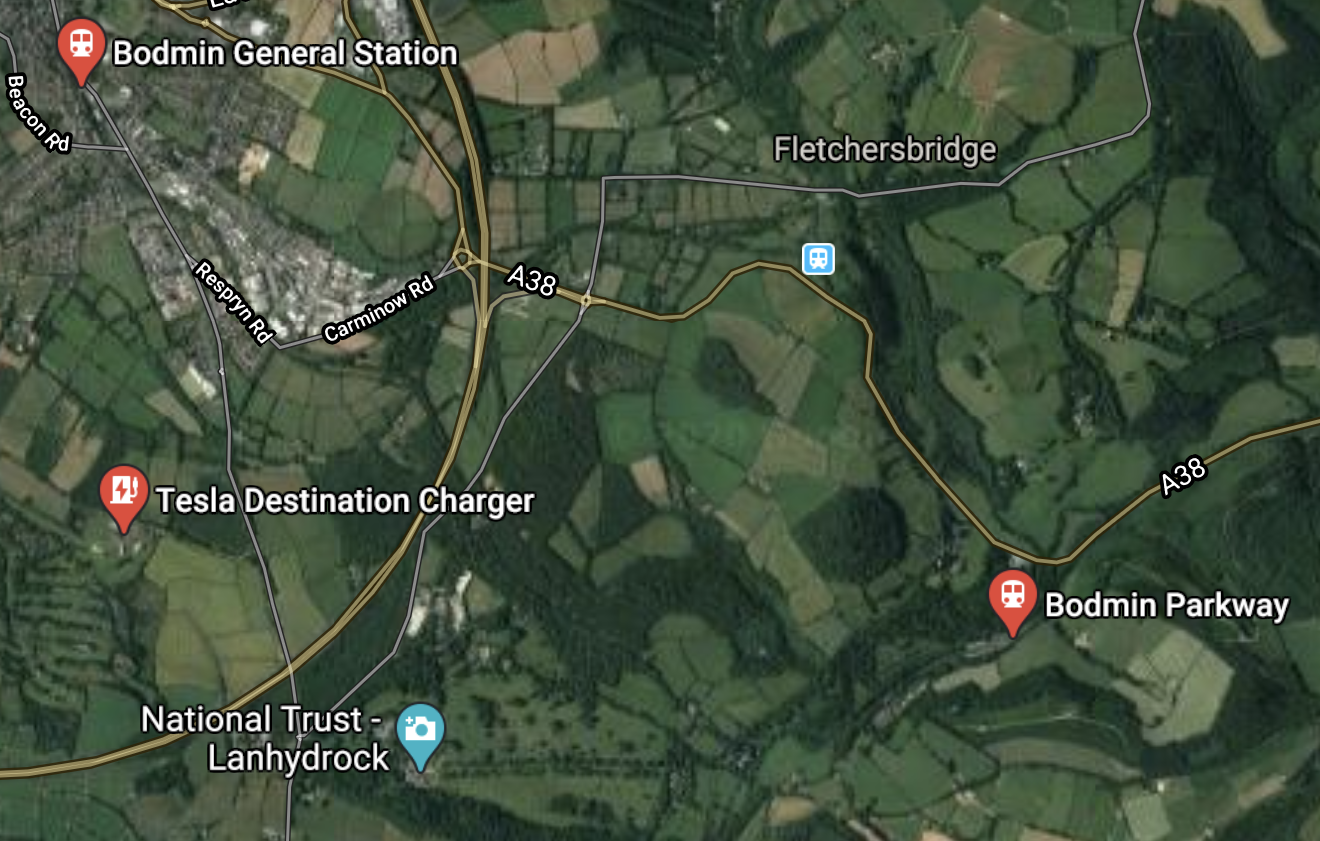
The two stations are clearly visible.
The aim of this Beeching Reversal project would appear to set up a more regular service between Bodmin Parkway station on the Cornish Main Line and Bodmin General station in the town.
This video shows some of the current trains run by the Bodmin and Wenford railway, between the two stations.
This article on Cornwall Live is entitled Plan To Link Heritage Railway At Bodmin To Mainline Train Services, gives a few scant details.
- There will be a second platform at Bodmin General station.
- This will allow extra services.
Looking at the space around Bodmin Parkway station, it should be possible to have a very comprehensive track layout, that connects the Bodmin branch to the main line.
It also appears that the platform is fully-funded from Great Western Railway (GWR) and Cornwall County Council.
Could A Shuttle Be Run Using Vivarail’s Pop-up Metro Concept?
Using Vivarail’s Pop-up Metro between the two stations is surely a possibility, with charging at either station.
What Do GWR Want In Return For Their Funding?
I think that GWR could have a couple of uses for a platform at Bodmin General station.
Reorganising The Services Between London Paddington and the South-West
Currently, there are three services on this route.
- London Paddington and Exeter St. Davids via Reading, Newbury, Pewsey, Westbury, Castle Cary, Taunton, Tiverton Parkway.
- London Paddington and Plymouth via Reading, Taunton, Tiverton Parkway, Exeter St Davids, Newton Abbot, Totnes.
- London Paddington and Penzance via Reading, Taunton, Tiverton Parkway, Exeter St Davids, Newton Abbot, Totnes, Plymouth, Liskeard, Bodmin Parkway, Lostwithiel, Par, St Austell, Truro, Redruth, Camborne, St Erth.
All services have a frequency of one train per two hours (tp2h)
Perhaps by reorganising the train paths, GWR could run another 1 tp2h service between London Paddington and Bodmin or Newquay station after the Transformation Of The Newquay Line.
Joining And Splitting Between London Paddington And The South-West
GWR’s Hitachi Class 80x trains have the ability to run in pairs, that are split and joined at convenient places en route.
This YouTube video, shows them doing it in Plymouth station.
As a means of evening out passenger loadings on pairs of trains running to the South-West, the two large stations of Exeter St. Davids and Plymouth would surely be possibilities for the manoeuvre.
I also think that Bodmin Parkway station could be used to split and join two trains from Cornwall.
- One train would come from Penzance and the West.
- The other could come from either Newquay or Bodmin General stations.
- In the future the second train, might come from a new Wadebridge station.
Bodmin Parkway station might need some small modifications, but it should be remembered that the closely-related Class 395 trains, do the deed and quickly disappear at Ashford International station.
Creating A Bodmin-Wadebridge Railway
There are also plans in the Beeching Reversal projects for the Reinstatement of the Bodmin-Wadebridge Railway
For trains to travel between Bodmin Parkway and Wadebridge stations, trains will need to reverse in the new platform at Bodmin General station.
Local Services From Exeter And Plymouth
From what I have read on the Internet, the Bodmin and Wenford Railway is an important tourist attraction and is one of several around Bodmin including the beaches and the Camel Trail.
So perhaps, a connection between Bodmin and Exeter and/or Plymouth in a vintage InterCity 125 could be a nice little earner for GWR and an appropriate way to arrive at the steam railway.
Steam Local Services From Exeter And Plymouth
Why not?
The new platform at Bodmin General station could probably take a locomotive and four coaches and all the facilities to handle steam engines are in the vicinity of the station.
Could The New Platform Be Used For High Speed Freight Shuttles?
Why not?
Rail Operations Group is looking at the possibility of running Class 769 trains as freight shuttles.
Bodmin could make an ideal Cornish terminal, as it’s the right side of county and has the main A38 close by.
Could The Platform Be Used To Charge Battery Electric Trains?
I feel that First Group are starting to embrace battery trains.
In Hitachi Trains For Avanti, I talked about how a fellow First Group company were reporting, that they might have battery trains.
If Great Western Railway were running extra trains into Cornwall, would a new platform at Bodmin General station, be an ideal place to charge a train?
Conclusion
A second platform at Bodmin General station could open up a lot of possibilities for train operating companies.
 The Anonymous Widower