Speeding Down To Bristol By Train
On Wednesday, I went to Bristol to take a few photographs.
I took these pictures, where the electrification ran out at Chippenham station.
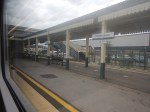
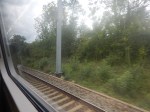
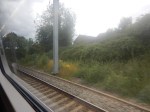
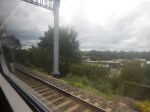
There is some half-hearted erection of electrification going on between Chippenham station and Box Tunnel, but despite the fact, that the iconic tunnel is ready for wires, construction work seemed noticeable by its absence.
Line Speed Observations
I had my personal dynamometer car connected for much of the journey.
- Between Southall and Slough we were at times running at only a few miles short of 130 mph. Are Great Western Railway starting to wind up the speed.
- Most of the journey, when well clear of stations, we were at around 125 mph until Chippenham station.
- At Chippenham, it was noticeable that the diesel engine under my seat kicked in.
- Onwards from Chippenham, we were at around 100 mph on diesel.
I suspect that London and Bristol services could be improved and/or speeded up.
- Timings could be reduced between London Paddington and Reading by running at faster speeds under digital ERTMS signalling. The train certainly felt comfortable at 128 mph.
- Any increase in electrification past Chippenham station will increase the the reach of a Class 800 train with a battery capability on a mile-for-mile basis.
- Trains should be able to increase speed towards 125 mph for some of the twelve miles between Chippenham and Bath Spa stations.
- As trains would not be swapping between diesel and electricity in Chippenham station, would panning up and down happen automatically further West?
- It might be possible to fit in a third London Paddington and Bristol service, that doesn’t stop at Chippenham station.
None of these improvements would need the line through Bath Spa station to be electrified.
Bristol Temple Meads Station – 28th July 2020
I took these pictures of Bristol Temple Meads station, when I visited.

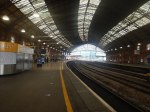
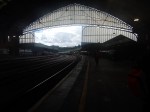
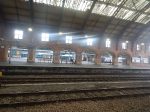
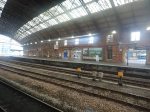



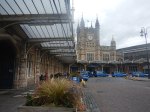
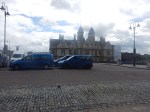




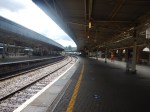
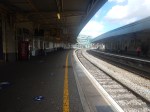

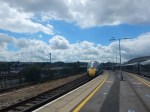
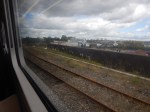
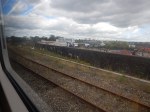
Note.
- The station is Listed to the highest level of Grade 1.
- London services seem to use Platforms 15 and 16.
- There is quite a fair bit of space between the tracks.
.Do Network Rail need all the hassle of full electrification of one of Brunel’s most famous creations?
Bristol Temple Meads Station And Trains With a Battery Capability
Hitachi’s Class 800 train with a battery electric capability or Regional Battery Train, is described in this infographic from the company.

The proposed 90 km or 56 mile range would even be sufficient take a train between Chippenham and Bristol Temple Meads stations on a return trip. So this means that one of these trains could work the London Paddington and Bristol Temple Meads stations service via Bath Spa using the electrification between London Paddington and Chippenham stations.
But where could trains reach, if they were able to leave Bristol Temple Meads station with a fully-charged battery?
- Bristol Parkway – 6 miles
- Cardiff Central – 5 miles to the electrified Great Western Main Line.
- Cheltenham Spa – 41 miles
- Filton Abbey Wood – 4 miles
- Gloucester – 39 miles
- Newport – 5 miles to the electrified Great Western Main Line.
- Severn Beach – 13.5 miles
- Taunton – 45 miles
- Westbury – 28.5 miles
- Weston-super-Mare – 19 miles
Note.
- Return trips to Bristol Parkway, Filton Abbey Wood, Severn Beach and Western-super-Mare would be possible.
- The other destinations will need charging facilities.
Other local destinations could be added as the Bristol Metro develops.
This Google Map shows the station.
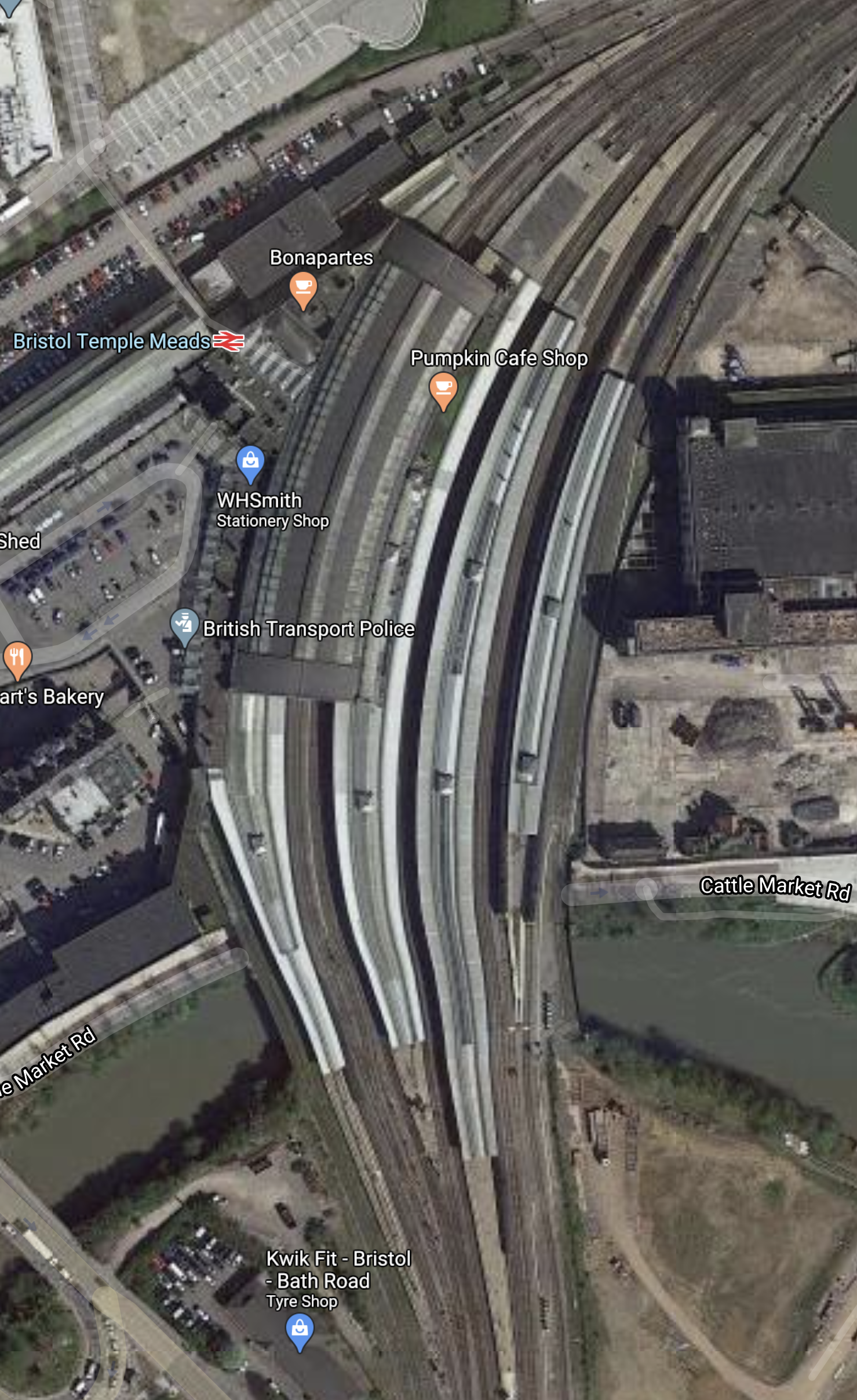
Note.
- The curving nature of the platforms doesn’t make 25 KVAC overhead electrification easy.
- Trains to and from London appear to use the two Eastern platforms 13 and 15.
- It might be possible to increase platform lengths to run longer trains to and from places like London.
I believe that there are three possible ways of charging the trains in Bristol Temple Meads station.
25 KVAC Overhead Electrification
This could be short length of standard 25 KVAC overhead electrification in platforms, that would be served by trains with pantographs like the Class 800 trains.
The driver would stop in the correct place in the platform and connect the pantograph, whilst waiting in the station.
Note that the Class 800 trains to and from London typically take 35-20 minutes to turn round, which is time enough for a full charge.
750 VDC Third-Rail Electrification
This could be short lengths of standard 750 VDC third-rail electrification in platforms, that would be used by standard third-rail shoes on trains.
The train would connect automatically and charging would take place, whilst waiting in the station.
A Specialist Charging Facility Like Vivarail’s Fast Charge System
Vivarail’s Fast Charge system is described in Vivarail Unveils Fast Charging System For Class 230 Battery Trains.
This extract from this Vivarail press release explains how the system works.
he concept is simple – at the terminus 4 short sections of 3rd and 4th rail are installed and connected to the electronic control unit and the battery bank. Whilst the train is in service the battery bank trickle charges itself from the national grid – the benefit of this is that there is a continuous low-level draw such as an EMU would use rather than a one-off huge demand for power.
The train pulls into the station as normal and the shoe-gear connects with the sections of charging rail. The driver need do nothing other than stop in the correct place as per normal and the rail is not live until the train is in place.
That’s it!
I believe that this system or something like it could be adapted to work with all trains with a battery capability in the UK.
I also believe that this system can be designed so that it is ultra-safe and doesn’t disrupt, the visual impact of the station.
Conclusion
Bristol Temple Meads station could be converted into a station, where a high proportion of trains ran solely on electricity.
Beeching Reversal – Reinstatement Of The Bodmin-Wadebridge Railway
This is one of the Beeching Reversal projects that the Government and Network Rail are proposing to reverse some of the Beeching cuts.
The basic outline of this Beeching Reversal project is described in the section called RailTrail Project in the Wikipedia entry for the Bodmin and Wenford Railway, where this is a simplified version of what is said.
The railway company is currently planning to extend beyond its western terminus at Boscarne Junction towards Wadebridge alongside the Camel Trail. Known as the RailTrail project, phase one would see the railway extended to Nanstallon Halt, phase two to Grogley Halt and phase three to Wadebridge Guineaport.
In areas where the width of the trackbed does not allow both a railway and a footpath side-by-side, short diversions are proposed. For example, at Grogley, the Camel Trail could be re-routed along a former “headshunt”, which was part of the original railway before it was replaced by a later deviation.
There is some controversy, over the reduction in width of the Camel Trail.
This Google Map shows the River Camel through Wadebridge, where the extension appears to be proposed to finish.
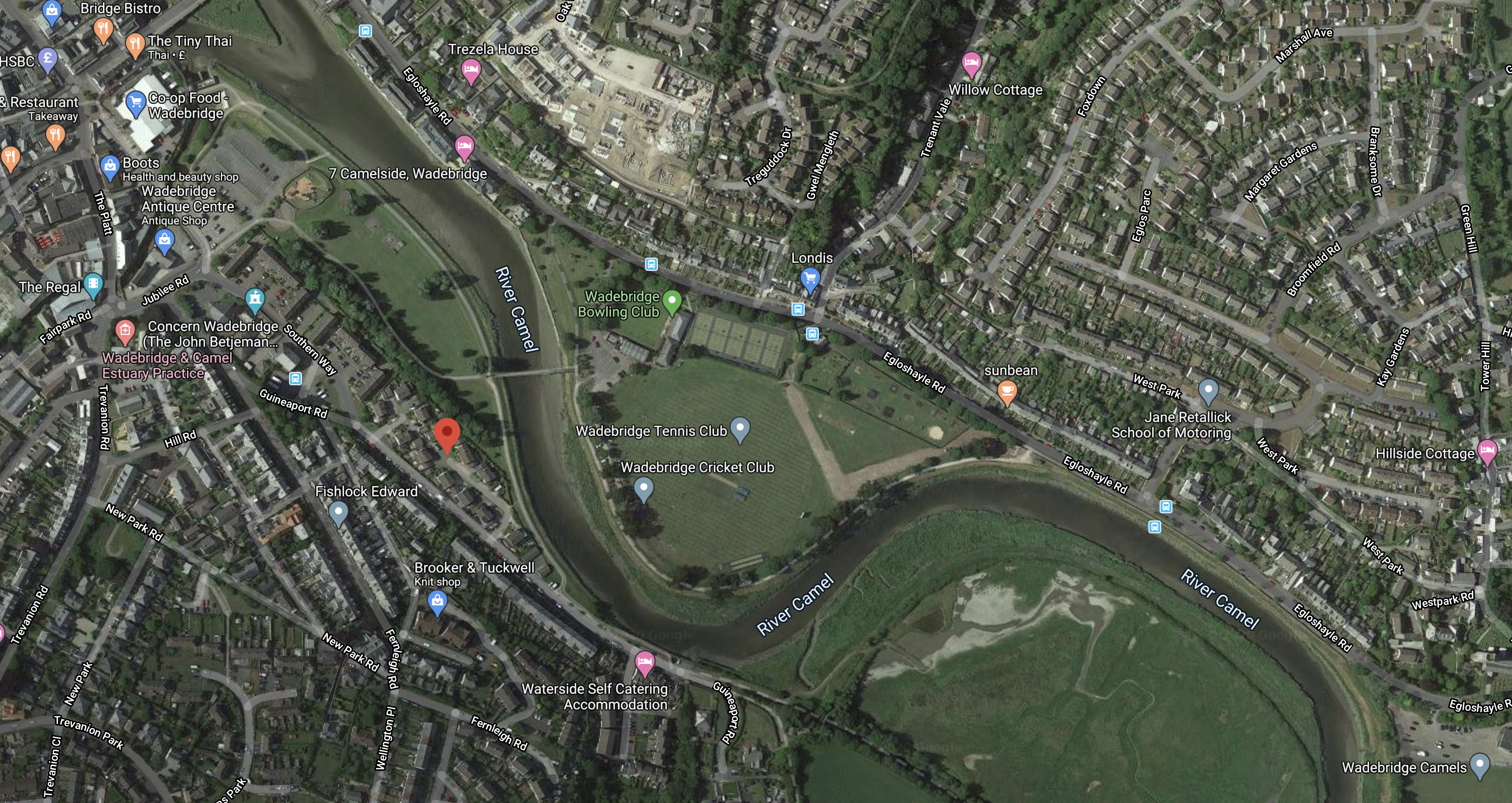
Note.
- The Guineaport area of Wadebridge is marked by a red arrow-dot.
- The Future Plans section of the Wikipedia entry for Wadebridge station, says that the new station will be beyond Guineaport.
- The Camel Trail is marked on Google Maps as a dotted line and it can be followed to where it meets the Bodmin and Wenford Railway at Boscarne Junction station.
This Google Map shows Boscarne Junction station.
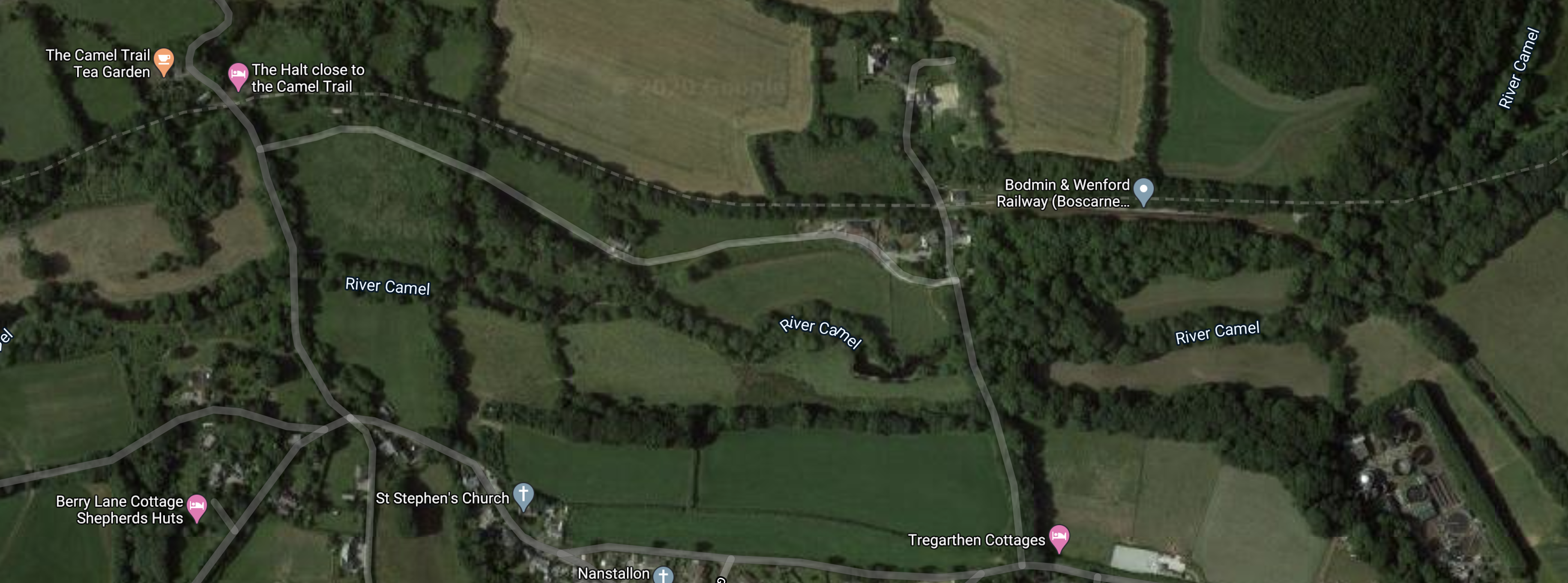
Looking from my helicopter, I am fairly sure that the RailTrail can be squeezed in with a footpath.
What Sort Of Railway Would It Be?
These are my thoughts.
Will It Be Double Or Single-Track?
It will be single-track, as there is not enough space for two.
I would suspect, they could use similar construction to these tram tracks in Blackpool.
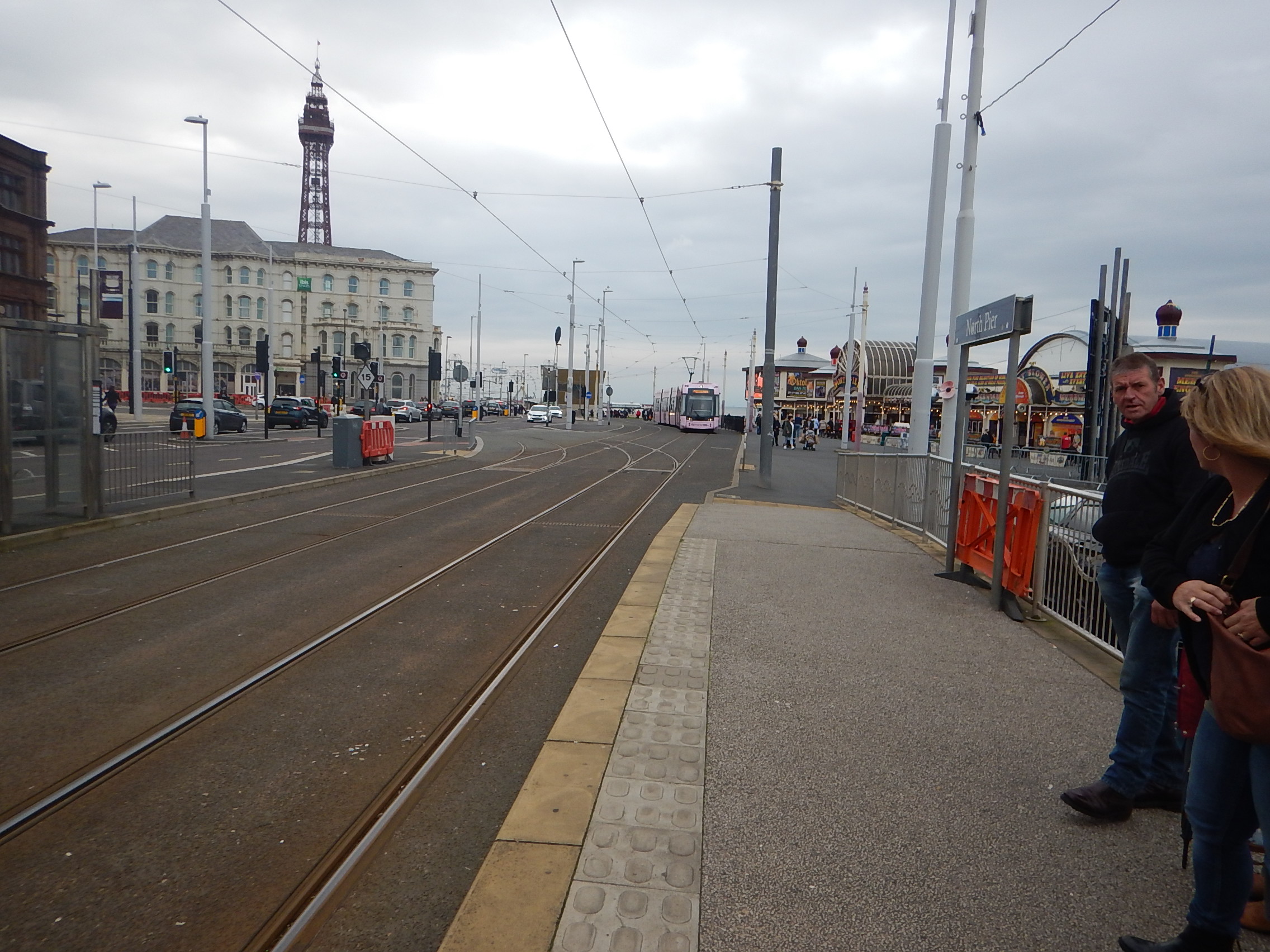
Effectively, the RailTrail could be a high-strength road, with a rail track set to one side, and appropriate markings, rails and safety signage.
How Long Will The New Track Be?
Google gives these distances.
- Padstow and Boscarne – 14.4 miles
- Padstow and Bodmin – 16 miles
- Wadebridge and Boscarne – 6 miles
- Wadebridge and Bodmin – 7.4 miles
I have added Padstow, as this town on the sea, used to be the rail terminus.
Should The Route Go To Padstow?
This Google Map shows the Padstow end of the Camel Trail.
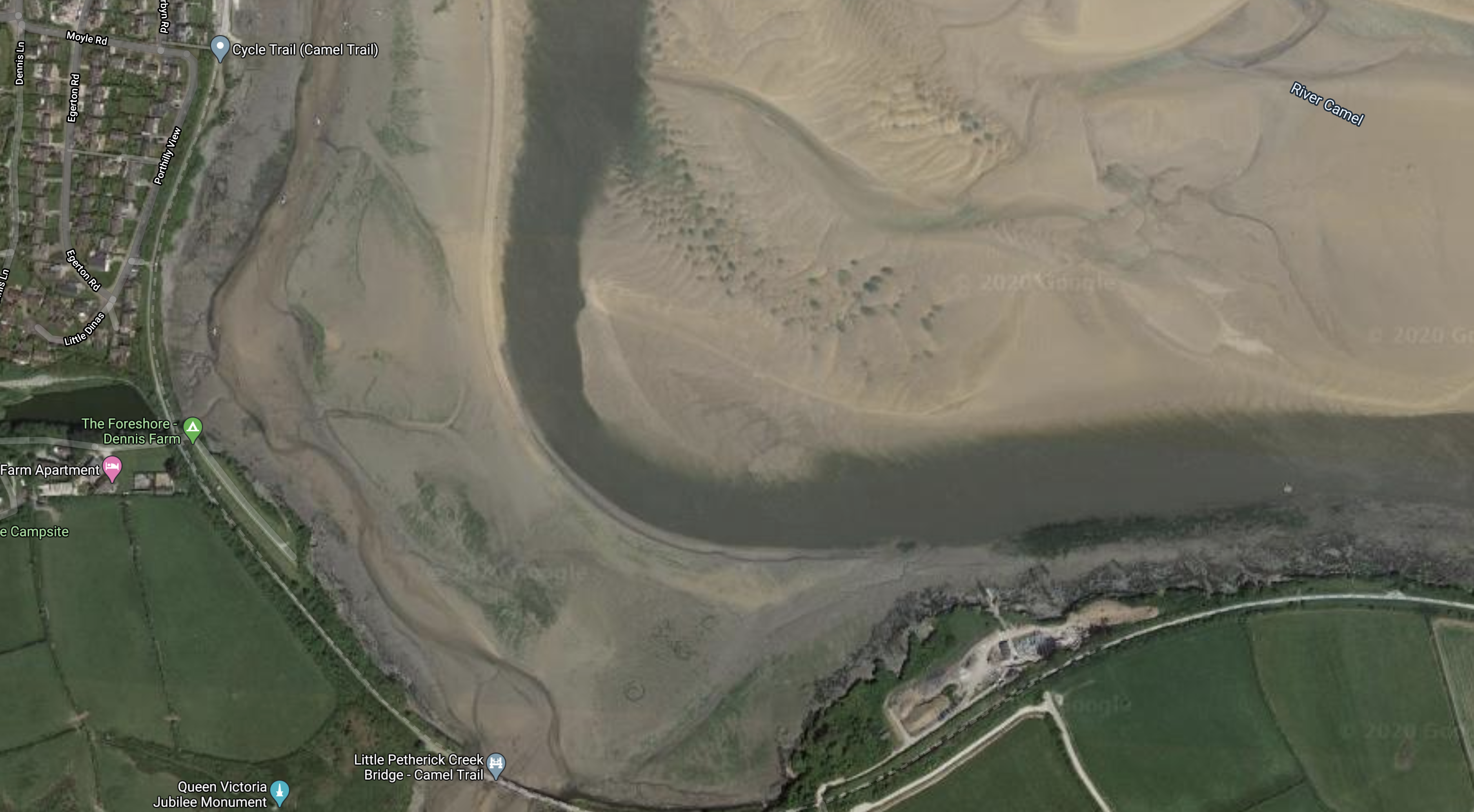
But there could be a major problem.
At the bottom of the map is the Little Petherick Creek Bridge.
- It’s probably OK for a cycle trail, but would it be strong enough for heavy rail use.
- On the other hand, is it past its replace date and Cornwall County Council might like to pass the responsibility to Network Rail?
There is also more land to build a station at Padstow.
It could even be built on the East side of the bridge, so that the heaviest thing it would carry would be pedestrians.
Would A Shared RailTrail Work?
One of the most interesting train systems, that I have seen is in Zwickau in the former East Germany, where instead of buying more trams to connect to other towns and cities, they devised a train-tram system using standard diesel multiple units.
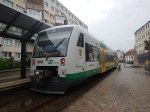
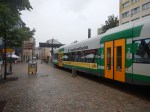
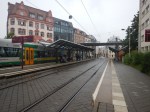
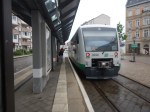
The Zwickau system is more complicated than it would need to be in the UK, as the trains have to share tram-tracks of a different size, so there are three-railed tracks; two for the metre gauge trams and an extra one for the standard gauge trains.
I have never seen anywhere else, where rail vehicles of different gauges share rails.
The trains run under virtually the same rules as street running trams do in Birmingham, Blackpool, Croydon, Edinburgh, Manchester, Nottingham and Sheffield.
- You can cross the road all round them.
- Trains are limited to slow speeds.
- The trains are independently powered.
- The trains cross level crossings.
- There is no electric power for the trains.
- The trains are double-manned and the crew keep a good look out!
Note, in the pictures, that the trains have flashing orange warning lights.
Could a GWR Class 800 train run along the RailTrail?
- The train would be a five-car unit.
- The train would be fitted with environmentally-friendly battery power, so it would be emission-free and almost silent.
- There would be a charging facility in the platform at Bodmin General station to top up the battery, before the train ran on the RailTrail.
- As in Zwickau, the track would be buried in the ground. so it could be safely used by trains and not be a hazard to pedestrians.
- The train would have a slow speed crawling mode, so it could proceed along the RailTrail with extreme care.
With the right timetable, the modern trains could share with the Bodmin and Wenford’s heritage trains.
Could Wadebridge Get A Direct Service To London Paddington?
Why not?
Places like Bradford, Harrogate, Huddersfield and Skipton appear to be being added to LNER’s network, by joining and splitting Class 800 trains at Leeds.
I wouldn’t be surprised to see a five-car Class 800 train with a battery capability running from Wadebridge to Plymouth, where is joined with another train from Newquay, Penzance or Plymouth, before running as a ten-car train to London Paddington.
Conclusion
I like this scheme and it could be a prototype for other similar ones.
Could Hitachi’s Class 800 Trains Work The Cornish Main Line On Battery Power?
The distance between Plymouth and Penzance stations along the Cornish Main Line is just seventy-nine miles and thirty-eight chains. I’ll call it 79.5 miles.
Hitachi’s proposed train is described in this infographic.
The range on battery power of 90 km or 56 miles, will not be quite enough to get all the way between Plymouth and Penzance!
But note the phrase – Allows Discontinuous Electrification; at the top of the infographic.
Will Electrification Be Needed?
Obviously or the train could perhaps wait at Truro for ten minutes to charge the batteries.
But how customer-unfriendly and disruptive to good operating practice is that?
Could Bigger Batteries Be Fitted?
This obviously is a possibility, but surely an operator would prefer all of their trains to have the same battery range and updating them all for a longer distance might not be an economic proposition.
Could Intelligent Discontinuous Third-Rail Electrification Be Used?
Third-rail electrification, is hated by the Health & Safety Taliban, as it occasionally kills people trespassing or falling on the railway. But in the UK, we have around 1,500 miles of third-rail electrified line, that generally operates to a high level of safety.
Can my modern successors make third-rail electrification absolutely safe in new installations?
Third-Rail And Discontinuous Electrification Installations!
To connect to overhead electrification, the driver or an automatic system on the train, must raise the pantograph. It doesn’t often go wrong, but when it does, it can bring down the wires. This section on panotograph weaknesses from Wikipedia give more details.
With third-rail, the connection and disconnection is automatic, with far less to go wrong.
These pictures show a gap in the third-rail electrification at the Blackfriars station, which was rebuilt in 2012, so it must meet all modern regulations.
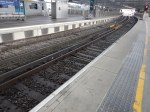
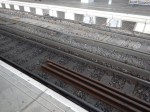
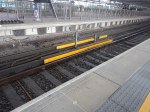
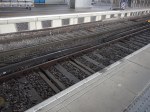
Note the gap in the third-rail, which carries the current.
- The third-rail shoes on the train disconnect and connect automatically, as the train passes through.
- The only rails with voltage are between the tracks for safety.
- The high-tech shields appear to be real tree wood painted yellow.
As an Electrical Engineer, I actually suspect, that this gap in the conductor rail, is to isolate the North and South London electricity supplies from each other,, so that a catastrophic failure on one side doesn’t affect both halves of Thameslink.
Third-Rail Electrification In Stations
Most rail passengers in the UK, understand third-rail electrification, if they’ve ever used trains in the South of London or Merseyside.
Electrifying stations using third-rail equipment could enable battery trains to go further.
- Stopping trains could top-up their batteries.
- Passing trains, that were low on power could make a pit-stop.
- All trains would connect automatically to the third-rail, when in the station.
The safety level would be raised by making sure that the third-rail was electrically-dead unless a train was over the top.
I am by training a Control Engineer and one of my first jobs in a dangerous factory as a fifteen-year-old, was designing and building safety systems, that cut power to guillotines, when the operator put their hands somewhere they shouldn’t! I remember endlessly testing the system with an old broom, which survived unscathed.
I believe that only switching on the electrification, when a train completes the circuit, is a fairly simple operation for modern control switchgear. I can imagine an intelligent switch constantly monitoring the resistance and only switching on power, when the resistance in the circuit looks like a train.
Third-Rail Electrification In Discrete Locations
Overhead electrification can receive complaints in scenic locations, but third-rail electrification can be invisible in tunnels and over bridges and viaducts.
The Cornish Main Line has four tunnels, two bridges, which include the Royal Albert Bridge, and no less than thirty-two viaducts.
How many of these could be used to hide electrification?
- Any electrified sections could be intelligently controlled to increase safety.
- Power for the electrification could come from local renewable sources, using techniques like Riding Sunbeams.
I can see engineers developing several techniques for discrete electrification.
Third-Rail And Charging Battery Trains
I like the Vivarail’s Fast Charge concept of using third-rail equipment to charge battery trains.
This press release from the company describes how they charge their battery electric Class 230 trains.
- The system is patented.
- The system uses a trickle-charged battery pack, by the side of the track to supply the power.
- The first system worked with the London Underground 3rd and 4th rail electrification standard.
As the length of rails needed to be added at charging points is about a metre, installing a charging facility in a station, will not be the largest of projects.
Under How Does It Work?, the press release says this.
The concept is simple – at the terminus 4 short sections of 3rd and 4th rail are installed and connected to the electronic control unit and the battery bank. Whilst the train is in service the battery bank trickle charges itself from the national grid – the benefit of this is that there is a continuous low-level draw such as an EMU would use rather than a one-off huge demand for power.
The train pulls into the station as normal and the shoe-gear connects with the sections of charging rail. The driver need do nothing other than stop in the correct place as per normal and the rail is not live until the train is in place.
That’s it!
As an electrical engineer, I’m certain the concept could be adapted to charge the batteries of a conventional third-rail train.
Vivarail’s press release says this about modification to the trains.
The train’s shoe-gear is made of ceramic carbon so it is able to withstand the heat generated during the fast charge process.
That wouldn’t be a major problem to solve.
Hitachi And Third Rail
The picture shows a Hitachi Class 395 train at Gillingham station.

The silver-coloured third-rail equipment is clearly visible, under the javelin logo.
These trains are cousins of all the new Hitachi trains in the UK, so I suspect fitting third-rail equipment to Class 80x trains, is just a matter of finding the appropriate documents on the computer and raiding the parts bin.
I suspect, as Hitachi will probably be building some more trains for Southeastern to start the Highspeed service between London St. Pancras and Hastings, that Hitachi are already working on the design of a third-rail high-speed train with batteries.
I doubt that Hitachi have any fears about fitting third-rail gear to their trains, as an optional extra.
Electrifying Between Plymouth And Penzance
Obviously, Plymouth and Penzance stations would have charging facilities, but now many would the trains handle the 79.5 miles in between?
There are three possibilities.
Limited-Third Rail Electrification
As I indicated earlier short lengths of intelligent third-rail electrification could be added at various places on the route.
A full battery would take the train fifty-six miles and as the Cornish Main Line is nearly eighty miles long, I suspect that the train would need almost a full charge halfway along the route.
- Hitachi claim in the infographic, that a full-charge takes 10-15 minutes, when the train is static, so I will assume the largest figure of this range, as charging on the move might not be as efficient, with everything happening at 90 mph.
- So I will assume a fifteen minute charge time.
- Typically, a Class 80x takes two hours between Penzance and Plymouth, which is an average speed of just 40 mph.
- In fifteen minutes, the train will go ten miles. So a rough estimate would say ten miles should be electrified.
As electrification in stations would allow trains to have a bigger sup, a scientifically-correct simulation would show the best philosophy.
The London Paddington and Penzance services call at the following stations, that are West of Plymouth.
Liskeard, Saltash, St. Germans, Bodmin Parkway, Lostwithiel, Par, St Austell, Truro, Redruth, Camborne, Hayle and St Erth
Note.
- Some smaller stations do get skipped.
- According to Real Time Trains, stops seem to take 1-2 minutes.
- Trains are usually nine- or ten-cars, but I feel that the proposed improvements between Bodmin General and Bodmin Parkway stations, that I wrote about in Increased Service Provision Bodmin General-Bodmin Parkway, may result in a large reorganisation of services between London and Cornwall.
Could it be that electrifying the major stations with third-rail electrification would enable enough power to be taken on board by a train running between London Paddington and Penzance, so that the journey could be completed?
Vivarail Fast Chargers
Vivarail’s Fast Chargers could be fitted at all or selected stations and trains could take a sip as and when they need.
A charger would also be needed at any Cornish terminal station, that would have services from battery electric trains.
A Mixture Of Third-Rail Electrification And Vivarail Fast Chargers
Both technologies are interchangeable and can be used with compatible battery electric trains.
I would expect an accurate mathematical model will indicate the best layout of electrification and Fast Chargers.
Beeching Reversal – Increased Service Provision Bodmin General-Bodmin Parkway
This is one of the Beeching Reversal projects that the Government and Network Rail are proposing to reverse some of the Beeching cuts.
This Google Map shows the relationship of the two Bodmin General and Bodmin Parkway stations.
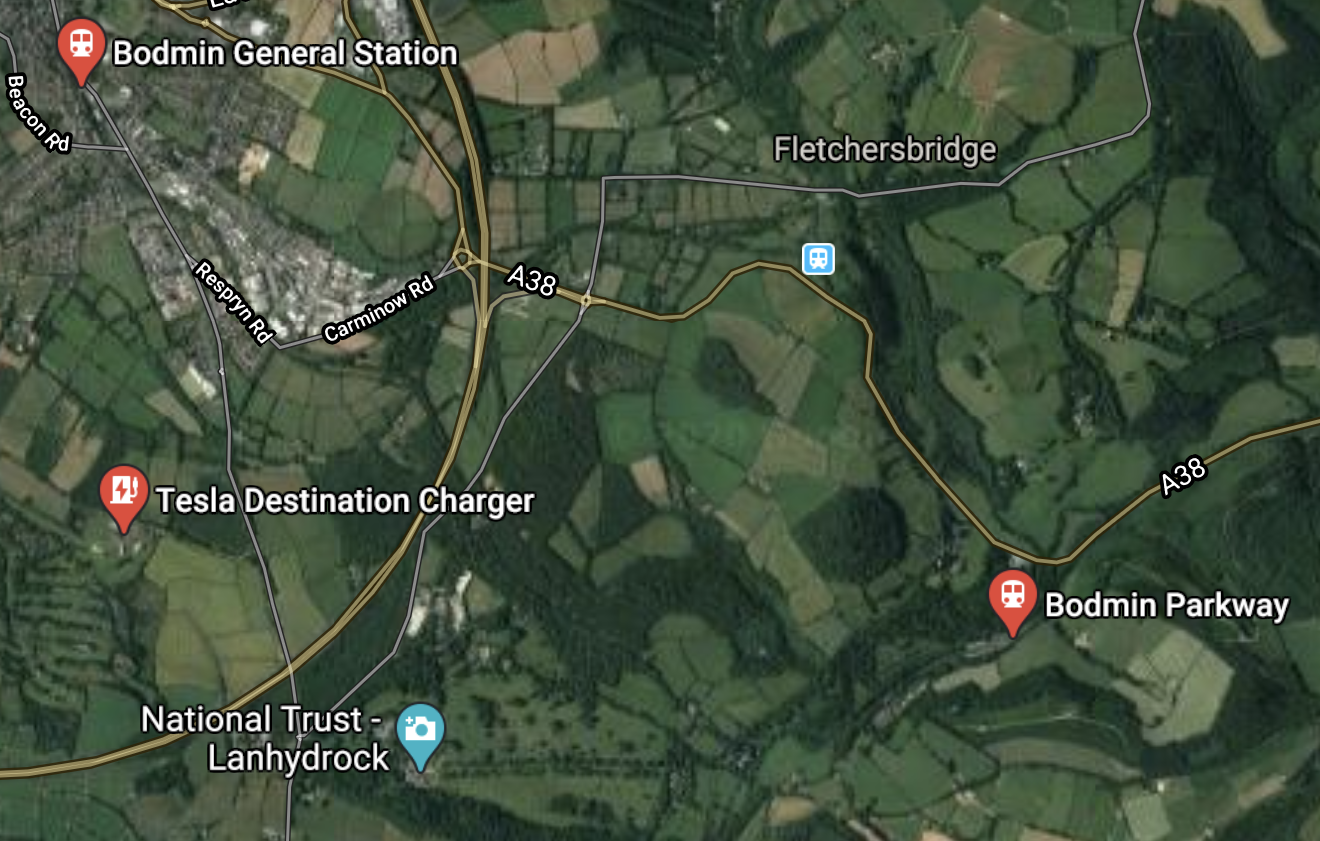
The two stations are clearly visible.
The aim of this Beeching Reversal project would appear to set up a more regular service between Bodmin Parkway station on the Cornish Main Line and Bodmin General station in the town.
This video shows some of the current trains run by the Bodmin and Wenford railway, between the two stations.
This article on Cornwall Live is entitled Plan To Link Heritage Railway At Bodmin To Mainline Train Services, gives a few scant details.
- There will be a second platform at Bodmin General station.
- This will allow extra services.
Looking at the space around Bodmin Parkway station, it should be possible to have a very comprehensive track layout, that connects the Bodmin branch to the main line.
It also appears that the platform is fully-funded from Great Western Railway (GWR) and Cornwall County Council.
Could A Shuttle Be Run Using Vivarail’s Pop-up Metro Concept?
Using Vivarail’s Pop-up Metro between the two stations is surely a possibility, with charging at either station.
What Do GWR Want In Return For Their Funding?
I think that GWR could have a couple of uses for a platform at Bodmin General station.
Reorganising The Services Between London Paddington and the South-West
Currently, there are three services on this route.
- London Paddington and Exeter St. Davids via Reading, Newbury, Pewsey, Westbury, Castle Cary, Taunton, Tiverton Parkway.
- London Paddington and Plymouth via Reading, Taunton, Tiverton Parkway, Exeter St Davids, Newton Abbot, Totnes.
- London Paddington and Penzance via Reading, Taunton, Tiverton Parkway, Exeter St Davids, Newton Abbot, Totnes, Plymouth, Liskeard, Bodmin Parkway, Lostwithiel, Par, St Austell, Truro, Redruth, Camborne, St Erth.
All services have a frequency of one train per two hours (tp2h)
Perhaps by reorganising the train paths, GWR could run another 1 tp2h service between London Paddington and Bodmin or Newquay station after the Transformation Of The Newquay Line.
Joining And Splitting Between London Paddington And The South-West
GWR’s Hitachi Class 80x trains have the ability to run in pairs, that are split and joined at convenient places en route.
This YouTube video, shows them doing it in Plymouth station.
As a means of evening out passenger loadings on pairs of trains running to the South-West, the two large stations of Exeter St. Davids and Plymouth would surely be possibilities for the manoeuvre.
I also think that Bodmin Parkway station could be used to split and join two trains from Cornwall.
- One train would come from Penzance and the West.
- The other could come from either Newquay or Bodmin General stations.
- In the future the second train, might come from a new Wadebridge station.
Bodmin Parkway station might need some small modifications, but it should be remembered that the closely-related Class 395 trains, do the deed and quickly disappear at Ashford International station.
Creating A Bodmin-Wadebridge Railway
There are also plans in the Beeching Reversal projects for the Reinstatement of the Bodmin-Wadebridge Railway
For trains to travel between Bodmin Parkway and Wadebridge stations, trains will need to reverse in the new platform at Bodmin General station.
Local Services From Exeter And Plymouth
From what I have read on the Internet, the Bodmin and Wenford Railway is an important tourist attraction and is one of several around Bodmin including the beaches and the Camel Trail.
So perhaps, a connection between Bodmin and Exeter and/or Plymouth in a vintage InterCity 125 could be a nice little earner for GWR and an appropriate way to arrive at the steam railway.
Steam Local Services From Exeter And Plymouth
Why not?
The new platform at Bodmin General station could probably take a locomotive and four coaches and all the facilities to handle steam engines are in the vicinity of the station.
Could The New Platform Be Used For High Speed Freight Shuttles?
Why not?
Rail Operations Group is looking at the possibility of running Class 769 trains as freight shuttles.
Bodmin could make an ideal Cornish terminal, as it’s the right side of county and has the main A38 close by.
Could The Platform Be Used To Charge Battery Electric Trains?
I feel that First Group are starting to embrace battery trains.
In Hitachi Trains For Avanti, I talked about how a fellow First Group company were reporting, that they might have battery trains.
If Great Western Railway were running extra trains into Cornwall, would a new platform at Bodmin General station, be an ideal place to charge a train?
Conclusion
A second platform at Bodmin General station could open up a lot of possibilities for train operating companies.
Battery Electric Class 800 Trains Between London Paddington And Bristol Temple Mead Stations
Hitachi have changed the rules on electrification, by the announcement of the development of battery electric trains in collaboration with Hyperdrive Innovation, which I wrote about in Hyperdrive Innovation And Hitachi Rail To Develop Battery Tech For Trains.
The proposed train is described in this Hitachi infographic.
It will have a range on battery power of 90 km or 56 miles.
Currently, services between London Paddington and Bristol Temple Meads stations are as follows.
- The frequency is two trains per hour (tph)
- Services call at Reading, Didcot Parkway (1tph), Swindon, Chippenham and Bath Spa.
- Services use the electrification between London Paddington and Chippenham.
- Services use diesel power between Chippenham and Bristol Temple Meads.
- Chippenham and Bristol Temple Meads are 24.5 miles apart.
It looks to me that a well-driven Class 800 train with Hyperdrive Innovation’s clever batteries replacing some or all of the diesel engines could run between Chippenham and Bristol Temple Meads stations and back without using a drop of diesel.
It might be a bit tight, but it would certainly be possible, if there were more electrification between Bath Spa and Chippenham stations.
- From this article on the BBC, which is entitled Box Tunnel Reopens After Network Rail Electrification Work, it appears that a lot of the pre-electrification work has been completed.
- This would reduce the distance without wires to perhaps 18-20 miles.
As the Class 800 trains have agile pantographs, I’m sure that it will be possible for battery electric Class 800 trains to run between London Paddington and Bristol Temple Meads stations.
Electrification At Bristol Temple Meads Station
This will surely happen and with full electrification, the following will be possible.
- Trains would be able to recharge before returning to Chippenham.
- Trains would be able to extend the service using battery power to Weston-super-Mare, which is only twenty miles away.
- Trains would be able to use the power whilst waiting in the station.
It appears that trains that run between London Paddington and Bristol Temple Meads station, use a selection of platforms in Bristol.
Would it be sensible to reduce the number of platforms used and electrify them first, so that battery electric trains could charge their batteries?
Could A Battery Electric Train Run Between Bristol Temple Means And Taunton Stations?
Consider.
- These two stations are 46 miles apart via Weston-super-Mare, so if there was charging at Taunton, this service might be possible.
- The direct route is a couple of miles shorter.
- A train with full batteries at Taunton, would reach well past Exeter.
Could a battery-electric service be of use in creating Great Western Railway’s timetable, as in the Peak services are extended to Weston-super-Mare and Taunton stations?
It would certainly be lower carbon. than a current journey.
Would The Railway Through Bath Need To Be Electrified?
This would depend on three main factors.
- There is a certain amount of opposition to electrification in the centre of Bath.
- Can all passenger trains through the city be made zero-carbon without electrification?
- Can all freight trains through the city be made zero-carbon without electrification?
I would feel that all passenger trains could be run by appropriate trains, but freight would be a problem under existing technology.
I wouldn’t be surprised, if no electrification was ever erected through Bath!
Beeching Reversal – Restoring A South Humber Link
This is one of the Beeching Reversal projects that the Government and Network Rail are proposing to reverse some of the Beeching cuts.
The project is described by these two paragraphs in this article in the Yorkshire Post, which is entitled Government Announce Yorkshire Rail Schemes That Could Receive ‘Reverse Beeching’ Funding.
North Lincolnshire Council have bid for funding to subsidise a new train service that would allow passengers from Barton-on-Humber to travel to Gainsborough, from where they would be able to catch direct services to Sheffield.
This would be achieved by diverting the existing Barton to Grimsby and Cleethorpes trains up a freight-only section used by traffic heading to Immingham docks. There have never been passenger trains using this path before.
This rail map clipped from Wikipedia shows the Barton Line to Barton-on-Humber station.
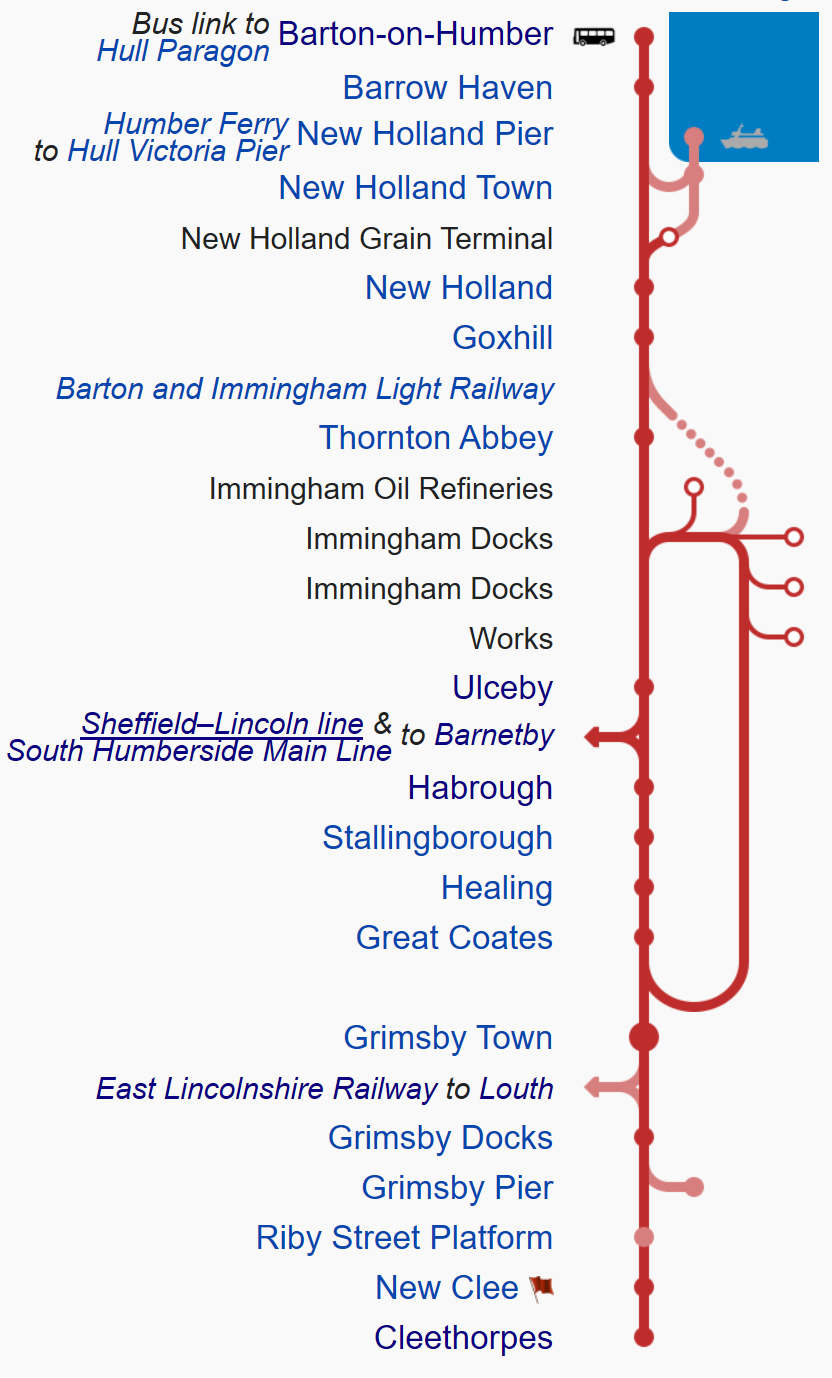
Note.
- Barton-on-Humber station has a bus link to Hull station.
- The loop gives a grand tour of the Port of Immingham on what is now a freight-only line.
- There is a lot of development going on in the area including the AltAlto aviation biofuel, that I wrote about in Grant Shapps Announcement On Friday.
Perhaps all this development is causing a lot of small problems.
- Is it causing congestion on the roads?
- Are workers difficult to find in the Immingham area?
- Is commuting over the Humber Bridge expensive?
- Is parking difficult in the Port?
North Lincolnshire Council could feel that a better rail connection serving the Port of Immingham, would be an asset, that reduces these problems.
I suspect the current two-hourly service between Barton-on-Humber and Cleethorpes stations, will be replaced by an hourly one, between Barton-on-Humber and Gainsborough Lea Road stations, that takes the following route.
- Barton-on-Humber to Ulceby
- At Ulceby station the train will reverse and go clockwise around the loop.
- After calling at Great Coates, Healing, Stallingborough and Habrough stations, the train would go West to Barnetby and Gainsborough Lea Road stations.
- Passengers wanting to go from Barton-on-Humber to Grimsby Town or Cleethorpes, would change at Great Coates station.
It may look a rather round-about route, but I suspect that the plan includes some stations to serve the Port of Immingham and the industrial development.
I suspect that some of these port, oil, chemical and energy companies can afford to pay a contribution.
Gainsborough Lea Road Station
Gainsborough Lea Road station is a mix of architectural styles.
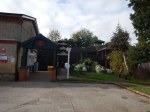
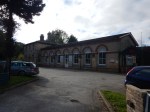
But with the addition of a friendly café and some other facilities, it would be a good interchange between the Immingham area and Sheffield and the county town of Lincoln.
Future Trains
Lincolnshire is an energy-rich county, which partly explains all the industrial development in the North-East of the county around Grimsby, Immingham and Scunthorpe.
- Immingham is a large importer of biomass for power generation.
- There are off-shore and on-shore gas fields connected to Theddlethorpe gas terminal.
- There is the large power station complex at Keadby.
But the energy mix is a-changing.
- Keadby now includes a solar farm.
- Wind turbines are springing up both on land and in the sea.
If I was to make a prediction, it would be that more and more large energy-related businesses will develop in the area.
- In recent months, Altalto’s waste-to-aviation biofuel plant has been given national and local government backing to be built at Immingham.
- ITM Power are involved in a hydrogen development project in the area.
- I wouldn’t be surprised to see hydrogen produced for transport from all this energy.
I think it will be inevitable, that zero-carbon battery electric or hydrogen-powered trains will run in the area.
- Cleethorpes and Doncaster via Scunthorpe 52 miles apart.
- Cleethorpes and Barton-on-Humber are 23 miles apart
- Lincoln and Newark are 16.5 miles apart.
- Lincoln and Doncaster are 37 miles apart.
- Lincoln and Sheffield are 48 miles apart
- Lincoln and the electrification at Peterborough are 54 miles apart.
- Skegness and Sleaford are 41 miles apart.
- Sleaford and Grantham are 18 miles apart.
With charging facilities at Barton-on-Humber, Lincoln, Skegness and Sleaford, the whole of Lincolnshire could be served by zero-carbon battery electric trains.
I suspect LNER could lead the way, as a five-car Class 800 train equipped with batteries, is predicted to have a 56 mile range away from the wires, which would easily handle a return trip between Newark and Lincoln.
There could be a small problem, in that the first train of the day, between Lincoln and London Kings Cross positions from Doncaster Carr IEP Depot, so running Doncaster to Newark via Lincoln might challenge the battery range of the train. I suspect, that the positioning could be performed via Newark with a reverse, prior to the installation of a charging facility at Lincoln Central station.
I estimate that Barton-on-Humber and Gainsborough Lea Road stations are about 35 miles apart, so with today’s battery technology, I suspect that a round trip in a battery electric train would be on the limit. But with charging facilities at Gainsborough, there would be no problems.
I suspect that East Midlands Railway would use several of their forty diesel Class 170 trains on this and other routes in Lincolnshire, so perhaps a good interim solution would be to run the Class 170 trains on Altalto’s biodiesel, that will be produced at Immingham.
There is also the possibility, that some or all of the Class 170 trains will be retrofitted with MTU Hybrid PowerPacks, which would cut their diesel consumption.
Surely, with all Lincolnshire’s energy, hydrogen-powered trains must be a possibility. But they seem to be stuck in a siding!
The MTU Hybrid PowerPack and Altalto’s bio-diesel seems a more affordable and less risky route.
A Direct Connection To London
In the Wikipedia entry for Gainsborough Lea Road station, there is a section called Future Services, where a direct connection to London is mentioned.
Conclusion
Given that the likes of East Midlands Railway, Hull Trains, LNER and TransPennine Express are improving their services to Hull, Lincoln, Cleethorpes and Grimsby, this local North Lincolnshire Metro serving the Port and the industrial development, could well be welcomed by those that live and work in the area.
I doubt that the infrastructure cost will be very high.
Underneath A Class 800 Train
As I came into Paddington, there was a Class 800 train in an adjoining platform, with nothing in between.
So I took these pictures of the rows of neat cupboards underneath the train.
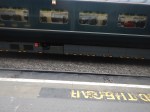
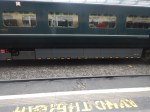

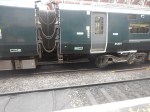
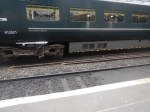
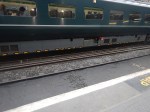
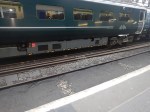
Are all of these boxes crammed full of diesel engines and electrical gubbins? Or is there space for batteries in a few empty boxes?
The underneath of the train and the boxes are all very tidy! Is that Japanese style?
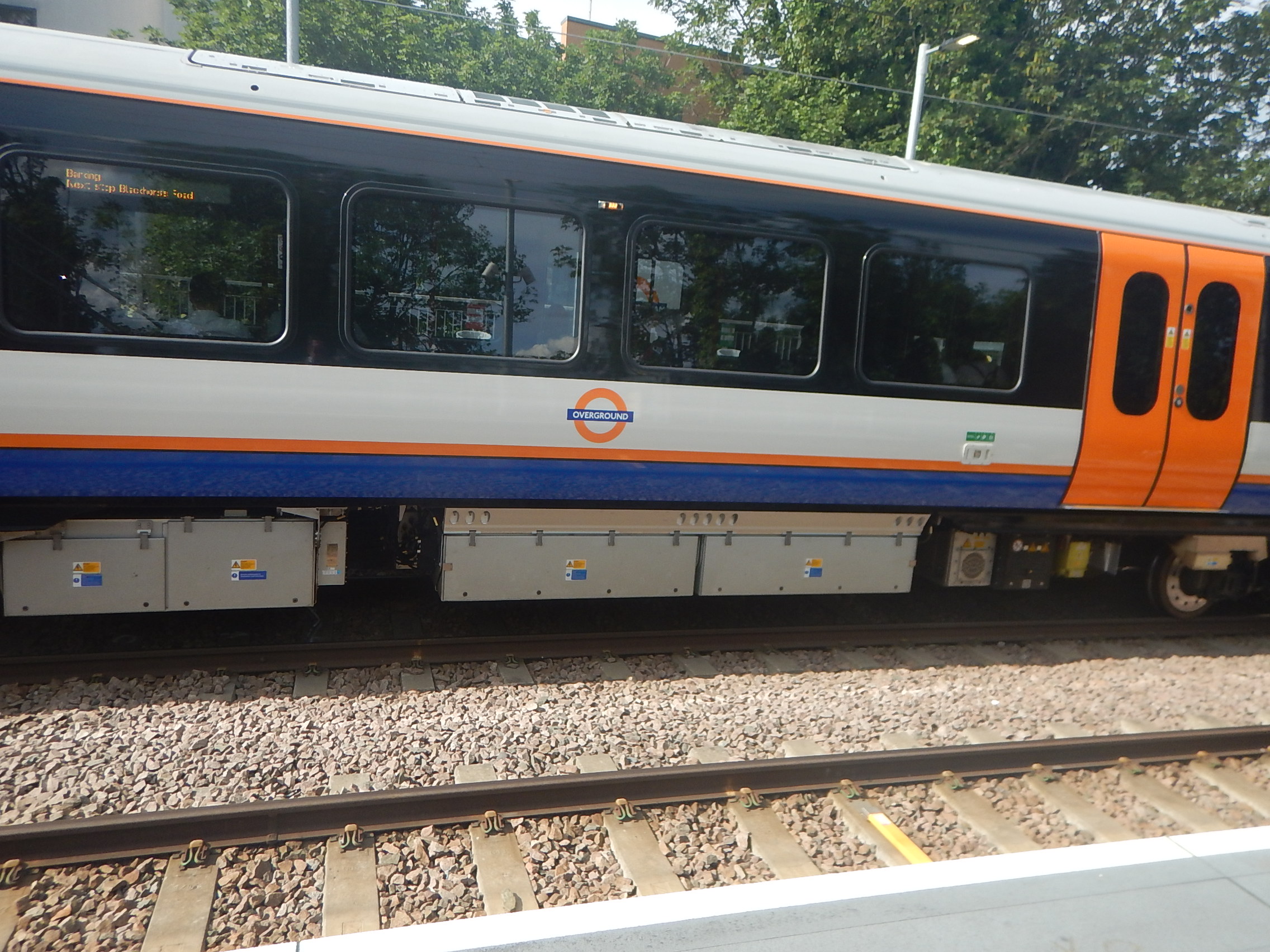
This picture of a Class 710 train has boxes, but they are not as neat!
£35m Station Transformation Launched By Tees Valley Mayor
The title of this post, is the same as that of this article on Rail Technology Magazine.
This is the introductory paragraph.
Tees Valley Mayor Ben Houchen has announced (June 9th) a £35m transformation of Middlesbrough Station to transport more train services to the town, including the first direct rail link to London in decades.
The Rail Technology Magazine article indicates that Platform 2 at Middlesbrough station will be extended to handle Azuma trains. As the current platform looks to be around 150 metres long and this would be long enough for a five-car train, does this mean that in the future nine-car and ten-car Azumas will be able to run services to Middlesbrough?
Currently, LNER run one train per two hours (tp2h) between London and York. Could some or all of these trains be extended to Middlesbrough?
- TransPennines’ trains between York and Middlesbrough take fifty-eight minutes, but they are timed for slower Class 185 trains.
- I would expect faster Class 800 trains could go between York and Middlesbrough and back to York in under a convenient two hours.
- In addition, the lengthened Platform 2 at Middlesbrough would allow longer trains on the service between London and York to turn back at Middlesbrough.
- As the York service, which has a frequency of 1tp2h shares a path with the Lincoln service of a similar frequency, there must be the possibility to run a 1tp2h between Kings Cross and Middlesbrough.
- The same path is also used to run one train per day (tpd) to and from Hull.
- It should also be noted that all Class 800 trains have the ability to split and join together in under two minutes.
There would appear to be a large amount of scope to develop a comprehensive timetable between Kings Cross and Hull, Lincoln and Middlesbrough.
- If the first train left at 07:06 and the last at 22:06, there could be sixteen trains per day on the Kings Cross and Lincoln, Hull, York and Middlesbrough route.
- Each train could be two five-car trains that split and joined en route, which means there would be a total of 32 tpd.
- If five tpd went to both Lincoln and Middlesbrough and perhaps three tpd to Hull, that would leave nineteen tpd trains for other destinations.
- As many trains as possible would need to call at York.
I can certainly see extra destinations built into a intricate pattern in Lincolnshire, Yorkshire and County Durham.
- Nottingham could be served from Newark.
- Grimsby and Cleethorpes could be served by extending services from Lincoln.
- Sheffield, Hull, Scunthorpe, Grimsby and Cleethorpes could be serves from Doncaster.
- Scarborough could be served from York.
- Washington and Newcastle could be served on an alternative route using a reopened Leamside Line.
- Sunderland could be served by extending services from Middlesbrough along the Durham Coast Line.
- Saltburn and Redcar could be served by extending services from Middlesbrough.
Splitting and joining could occur at the following stations.
- Newark for Nottingham and Lincoln, Grimsby and Cleethorpes
- Doncaster for Sheffield, Hull and Scunthorpe, Grimsby and Cleethorpes.
- York for Scarborough and Middlesbrough.
- Middlesbrough for Sunderland and Redcar and Saltburn
Middlesbrough station would need to be able to take two five-car trains for splitting and joining, so the platform extension is required.
Kings Cross and Middlesbrough Could Be A Zero-Carbon Route
In Could Some of Hitachi’s Existing Trains In The UK Be Converted To Battery-Electric Trains?, I indicated that as Middlesbrough station is only 21 miles and 29 minutes from Northallerton and the East Coast Main Line, that a five-car Azuma train converted to battery-electric operation should be able to run between Middlesbrough and Kings Cross, totally on electric power, which would be zero-carbon, if the electricity were to be renewable.
Could Some of Hitachi’s Existing Trains In The UK Be Converted To Battery-Electric Trains?
The last five fleets of AT-300 trains ordered for the UK have been.
- Avanti West Coast – Bi-Mode, 13 x five-car, unknown number of diesel engines, that could be replaced by batteries.
- Avanti West Coast – Electric, 10 x seven-car, no diesel engines or batteries
- East Midlands Railway – Bi-Mode, 33 x five-car, Class 810 train with four diesel engines and 125 mph on diesel.
- East Coast Trains – Electric, 5 x five-car, Class 803 train with battery for emergency hotel power.
- Hull Trains – Bi-Mode, 5 x five-car, Standard Class 802 train with three diesel engines.
Each fleet seems to be tailored to the needs of the individual operator, which is surely as it should be.
I can make some observations.
Fast Electric Trains
Both all-electric fleets on the list, will run on routes, where speed will be important.
- The Avanti West Coast Class 807 trains on the West Coast Main Line, will have to be able to keep up keep with the Class 390 trains, that have the advantage of tilt for more speed.
- The East Coast Trains Class 803 trains on the East Coast Main Line, will have to work hard to maintain a demanding schedule, as I outlined in Thoughts On East Coast Trains.
Any reduction in weight will improve the acceleration.
- The seven tonne MTU 12V 1600 R80L diesel engines can be removed to reduce the weight.
- As a five-car Class 800 train with three diesel engine weighs 243 tonnes, this could save nearly 9 % of the train’s weight.
- East Coast Trains feel they need an appropriately-sized battery for emergency hotel power. Could this be because the catenary is not as good on the East Coast Main Line as on the West?
- Perhaps, Avanti West Coast feel a battery is not needed, but they could obviously fit one later. Especially, if there was already a ready-wired position underneath the train.
The extra acceleration given by 100% electric operation, must make all the difference in obtaining the required performance for the two routes.
Why Four Diesel Engines In A Class 810 Train?
The Class 810 trains are an update of the current Class 800/Class 802 trains. Wikipedia described the differences like this.
The Class 810 is an evolution of the Class 802s with a revised nose profile and facelifted end headlight clusters, giving the units a slightly different appearance. Additionally, there will be four diesel engines per five-carriage train (versus three on the 800s and 802s), and the carriages will be 2 metres (6.6 ft) shorter due to platform length constraints at London St Pancras.
Additionally, in this article in the October 2019 Edition of Modern Railways, which is entitled EMR Kicks Off New Era, this is said.
The EMR bi-modes will be able to run at 125 mph in diesel mode, matching Meridian performance in a step-up from the capabilities of the existing Class 80x units in service with other franchises.
The four diesel engines would appear to be for more power, so that these trains will be able to run at 125 mph on diesel.
In How Much Power Is Needed To Run A Train At 125 mph?, I calculated that a Class 801 train, which is all-electric, consumes 3.42 kWh per vehicle mile.
- At 125 mph a train will in an hour travel 125 miles.
- In that hour the train will need 125 x 5 x 3.42 = 2137.5 kWh
- This means that the total power of the four diesel engines must be 2137.5,
- Divide 2137.5 by four and each diesel must be rated at 534.4 kW to provide the power needed.
The MTU 12V 1600 R80L diesel engine is described in this datasheet on the MTU web site.
Note on the datasheet, there is a smaller variant of the same engine called a 12V 1600 R70, which has a power output of 565 kW, as compared to the 700 kW of the 12V 1600 R80L.
The mass of the engines are probably at the limits of the range given on the datasheet.
- Dry – 4500-6500 Kg
- Wet – 4700-6750 Kg
It would appear that the less-powerful 12V 100 R70 is about two tonnes lighter.
So where will four engines be placed in a Class 810 train?
- The five-car Class 800 and Class 802 trains have diesel-engines in cars 2, 3 and 4.
- The nine-car Class 800 and Class 802 trains have diesel-engines in cars 2,3, 5, 7 and 8.
- It appears that diesel-engines aren’t placed under the driver cars.
- Five-car AT-300 trains generally have a formation of DPTS+MS+MS+MC+DPTF.
- The car length in the Class 810 trains are two metres shorter than those in other trains.
Could it be that the intermediate cars on Class 810 trains will be an MC car, which has both First and Standard Class seating and two identical MS cars both with two smaller diesel engines?
- The two smaller diesel engines will be about 2.6 tonnes heavier, than a single larger engine.
- Only one fuel tank and other gubbins will be needed.
- The shorter car will be lighter in weight.
- MTU may have designed a special diesel engine to power the train.
I would suspect that a twin-engined MS car is possible.
Could The Battery And The Diesel Engine Be Plug-Compatible?
I found this document on the Hitachi Rail web site, which is entitled Development of Class 800/801 High-Speed Rolling Stock For UK Intercity Express Programme.
The document may date from 2014, but it gives a deep insight into the design of Hitachi’s trains.
I will take a detailed look at the traction system as described in the document.
This schematic of the traction system is shown.

Note BC is described as battery charger.
This is said in the text, where GU is an abbreviation for generator unit.
The system can select the appropriate power source from either the main transformer or the GUs. Also, the size and weight of the system were minimized by designing the power supply converter to be able to work with both power sources. To ensure that the Class 800 and 801 are able to adapt to future changes in operating practices, they both have the same traction system and the rolling stock can be operated as either class by simply adding or removing GUs. On the Class 800, which is intended to run on both electrified and non-electrified track, each traction system has its own GU. On the other hand, the Class 801 is designed only for electrified lines and has one or two GUs depending on the length of the trainset (one GU for trainsets of five to nine cars, two GUs for trainsets of 10 to 12 cars). These GUs supply emergency traction power and auxiliary power in the event of a power outage on the catenary, and as an auxiliary power supply on non-electrified lines where the Class 801 is in service and pulled by a locomotive. This allows the Class 801 to operate on lines it would otherwise not be able to use and provides a backup in the event of a catenary power outage or other problem on the ground systems as well as non-electrified routes in loco-hauled mode.
This is all very comprehensive.
Note that the extract says, that both the Class 800 trains and Class 801 trains have the same traction control system. A section called Operation in the Wikipedia entry for the Class 802 train, outlines the differences between a Class 802 train and a Class 800 train.
The Class 802s are broadly identical to the Class 800 bi-mode trains used in the Intercity Express Programme, and are used in a similar way; they run as electric trains where possible, and are equipped with the same diesel generator engines as the Class 800. However, they utilise higher engine operating power – 700 kW (940 hp) per engine as opposed to 560 kW (750 hp) – and are fitted with larger fuel tanks to cope with the gradients and extended running in diesel mode expected on the long unelectrified stretches they will operate on.
I would assume that the differences are small enough, so that a Class 802 train, can use the same traction control system, as the other two train classes.
The Hitachi document also describes the Train Management and Control System (TCMS), the function of which is described as.
Assists the work of the train crew; a data communication function that aids maintenance work; and a traction drive system that is powered by the overhead lines (catenaries) and GUs.
Several trains have been described as computers on wheels. That could certainly be said about these trains.
There would appear to be a powerful Automatic Train Identification Function.
To simplify the rearrangement and management of train configurations, functions are provided for identifying the train (Class 800/801), for automatically determining the cars in the trainset and its total length, and for coupling and uncoupling up to 12 cars in normal and 24 cars in rescue or emergency mode.
Now that would be a sight – One nine-car train rescuing another!
I would assume that this Automatic Train Identification Function has already been updated to add the Class 802 trains and it would appear to me, as a very experienced computer programmer, that in future it could be further updated to cater for the following.
- New classes of trains like the future Class 803 and Class 810 trains.
- The fitting of batteries instead of diesel engines.
Could the Function even be future-proofed for hydrogen power?
There are two main ways for trains to operate when the diesel engine in a car has been replaced by a battery.
- A plug-compatible battery module is designed, that in terms of function looks exactly like a diesel engine to the TCMS and through that the train crew.
- The car with a battery becomes a new type of car and the TCMS is updated to control it, in an appropriate manner.
Both methods are equally valid.
I would favour the first method, as I have come across numerous instances in computer programming, engineering and automation, where the method has been used successfully.
The method used would be Hitachi’s choice.
What Size Of Battery Could Be Fitted In Place Of The Diesel Engine?
Consider.
- The wet mass of an MTU 16V 1600 R80L diesel engine commonly fitted to AT-300 trains of different types is 6750 Kg or nearly seven tonnes.
- My engineering knowledge would suggest, that it would be possible to replace the diesel engine with an inert lump of the same mass and not affect the dynamics of the train.
So could it be that a plug-compatible battery module can be fitted, so long as it doesn’t exceed the mass of the diesel engine it replaces?
For an existing Class 800 or Class 802 train, that limit could be seven tonnes.
But for East Coast Train’s Class 803 train, that size would probably be decided by the required train performance.
How much power would a one tonne battery hold?
This page on the Clean Energy institute at the University of Washington is entitled Lithium-Ion Battery.
This is a sentence from the page.
Compared to the other high-quality rechargeable battery technologies (nickel-cadmium or nickel-metal-hydride), Li-ion batteries have a number of advantages. They have one of the highest energy densities of any battery technology today (100-265 Wh/kg or 250-670 Wh/L).
Using these figures, a one-tonne battery would be between 100 and 265 kWh in capacity, depending on the energy density.
This table can be calculated of battery weight, low capacity and high capacity.
- 1 tonne – 100 kWh – 265 kWh
- 2 tonne – 200 kWh – 530 kWh
- 3 tonne – 300 kWh – 895 kWh
- 4 tonne – 400 kWh – 1060 kWh
- 5 tonne – 500 kWh – 1325 kWh
- 6 tonne – 600 kWh – 1590 kWh
- 7 tonne – 700 kWh – 1855 kWh
As energy densities are only going to improve, the high capacity figures are only going to get larger.
If you look at the design of the Class 803 trains, which could have three positions for diesel engines or batteries, the designers of the train and East Coast Trains can choose the battery size as appropriate for the following.
- Maximum performance.
- Power needs when halted in stations.
- Power needs for emergency power, when the wires come tumbling down.
I suspect, they will fit only one battery, that is as small as possible to minimise mass and increase acceleration, but large enough to provide sufficient power, when needed.
Conversion Of A Five-Car Class 800/Class 802 Train To Battery-Electric Operation
If Hitachi get their design right, this could be as simple as the following.
- Any of the three MTU 12V 1600 R80L diesel engines is removed, from the train.
- Will the other diesel related gubbins, like the fuel tank be removed? They might be left in place, in case the reverse conversion should be needed.
- The new battery-module is put in the diesel engine’s slot.
- The train’s computer system is updated.
- The train is tested.
It should be no more difficult than attaching a new device to your personal computer. Except that it’s a lot heavier.
As there are three diesel engines, one, two or three could be replaced with batteries.
Trains would probably be able to have a mixture of diesel engines and battery modules.
A Class 802 train with one diesel engine and two five-tonne batteries would have the following power sources.
- 25 KVAC overhead electrification.
- A 700 kW diesel engine.
- Two five-tonne batteries of between 500 kWh and 1325 kWh.
With intelligent software controlling the various power sources, this train could have a useful range, away from the electrification.
Conversion Of A Five-Car Class 810 Train To Battery-Electric Operation
The process would be similar to that of a Class 800/Class 802 Train, except there would be more possibilities with four engines.
It would also need to have sufficient range to bridge the gaps in the electrification.
Perhaps each train would have the following power sources.
- 25 KVAC overhead electrification.
- Two 565 kW diesel engines.
- Two four-tonne batteries of between 400 kWh and 1060 kWh.
- Batteries might also be placed under the third intermediate car.
I estimate that with 400 kWh batteries, a train like this would have a battery range of sixty-five miles.
Conclusion
The permutations and combinations would allow trains to be tailored to the best compromise for a train operating company.

