Leyton Station Set For £14m Upgrade
The title of this post, is the same as that of this article on the Waltham Forest Echo.
These paragraphs outline the joint plan for Leyton and Colindale stations.
Leyton Station will receive step-free access and a new ticket hall and concourse thanks to £14 million from the government’s Levelling Up Fund.
The Greater London Authority was awarded more than £43million yesterday for work to make Leyton Station and Colindale Station in Barnet more accessible.
The Department for Levelling Up, Housing and Communities hopes that the work will improve “two pockets of socio-economic deprivation in the capital”.
Waltham Forest Council has insisted for some time that an upgrade to the station is “desperately needed” to expand capacity before thousands of new homes are built nearby.
This project doesn’t seem to be listed on the this page in The Times, which is entitled Levelling Up: Full List Of Winners From Eden Project North To Mini Golf.
This news item from Barnet Council is entitled Barnet Council Leader Welcomes £29.5m Levelling Up Funding For Redeveloping At-Capacity Colindale Tube Station and gives a description of the works proposed at Colindale station.
Hackney Central Before Levelling Up
This press release from Hackney Council is entitled £19m Funding Boost For Town Centre At Hackney’s ‘Beating Heart’.
This summary is in the first two paragraphs.
A greener, safer and more welcoming Hackney Central is one step closer after Hackney Council’s successful application for £19m in Levelling Up funding.
The award will see five acres of public space transformed, bringing new green space, trees and seating along Amhurst Road, investment in Hackney Central Library, a much-needed redesign of Pembury Circus junction, new creative workspace and a rejuvenated Hackney Town Hall Square.
This is the summary from the Government’s levelling-up document.
£19 million for renovating public spaces in Hackney Central, such as the iconic Town Hall Square, as well as new creative workspace and upgrades to the Hackney Central Library.
So. this afternoon I went for a walk around Hackney Central and took these pictures.
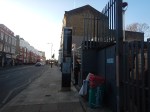

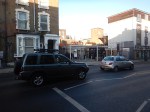
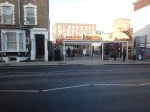
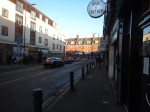
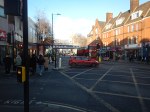

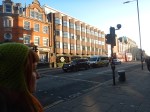









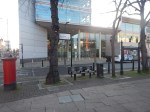




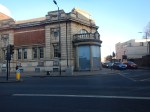








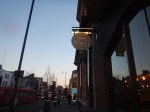
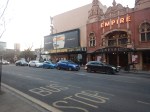
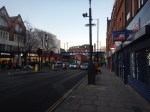

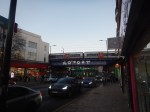
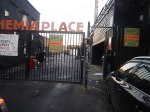




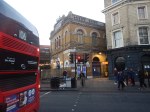


Note.
- The roundel is missing outside the Graham Road entrance to Hackney Central station.
- Hackney Town Hall is a Grade II Listed Building, dating from the 1930s.
- I wrote abut the Hackney Picturehouse in The Film That Changed My Life!.
- The Hackney Empire is a Grade II* Listed Building.
- The Pizza Express is new, swanky and spacious, and not what I’d expected. I had a late lunch there.
- The bridge carrying the Overground over Mare Street needs improvement.
- I wrote about the Hackney Marks and Spencer in Levelling Up – The Marks & Spencer Way.
- St. Augustine’s Tower is the oldest building in Hackney.
- The main building of Hackney Central station is now a bar and music venue.
In words that could be attributed to legendary estate agent; Roy Brooks, it is an area with potential.
These are some thoughts.
The Town Hall Square
What puzzles me about the garden in front of the Town Hall, is the two trees, which I would associate with warmer climes.
Even today, when it was rather cold, there were still flowers in front of the Town Hall.
The Overground
I argue that the coming of the London Overground raised the standard of Dalston, Hackney, Whitechapel and other parts of East and South London to that of their more desired and affluent neighbours.
We can’t really attribute the the creation of the London Overground to any one politician, as it has been an aspiration of several politicians and rail professionals since the 1990s. This History section in the Wikipedia entry for the Overground lists all the false starts and hopes.
But one man; Peter Hendy has been there most of the time and has worked with all three of London’s Mayors and several Transport Ministers.
I do wonder how much the Overground benefited from a sane, quiet hand from someone like Lord Hendy.
The Overground has certainly done its best for Hackney and we need more of its common sense approach to levelling-up all over the country.
Marks And Spencer
When I moved back to London, Hackney had a terrible Marks and Spencer.
As one of their biggest London stores, is just three stops away on the Overground, it might have been financially prudent to close the store at Hackney Central.
But Marks did the opposite and converted it into an upmarket food store, which is much more Knightsbridge than East End.
It’s certainly convenient for me, as I can get a bus there and a bus back, with only a hundred metre level walk at both ends.
The Graham Road Entrance To Hackney Central Station
This makes it easier to travel around Hackney and to get to the Town Hall, Theatre, Cinema and Library area.
How many extra entrances to railway stations will improve journeys and attract more passengers?
The Continuous Development Of The Hackney Central And Hackney Downs Complex
Since I moved to Hackney three projects have been completed on the station complex.
- A walkway has been built between the two stations to ease interchange.
- Lifts have been added to the footbridge at Hackney Central.
- The Graham Road entrance has been opened.
Two other projects have been proposed, but nothing has been actioned.
- A replacement entrance to Hackney Central station on the North side of the station.
- Step-free access to Hackney Downs station.
Will either of these projects be covered by the levelling up funding?
Pizza Express
This opened in December and I hadn’t seen it before, but you won’t notice it, unless you walk or ride on a bus up Mare Street, which I rarely do these days, since Hackney Wick station has been rebuilt.
So I was surprised to see it and like the Marks and Spencer it is more upmarket than other pizzadromes in East London.
- There is a lot of space.
- It has a proper wheel-chair entrance, that no-one could fault.
- Seating is upmarket, with several tables having a good view of the street outside. Ideal for someone eating alone, as I do regularly.
The restaurant still has a few rough edges, but it has the potential to be a pizzadrome to visit.
I do wonder, if the upmarket Marks and Spencer and Pizza Express are in a way an endorsement of Hackney’s plans for the future, by two market leaders of the High Street.
Buses
There are a lot of bus routes going through the area, which is a good thing.
But the information could also be improved.
Clapton Bus Garage
This map shows the location of Clapton bus garage.
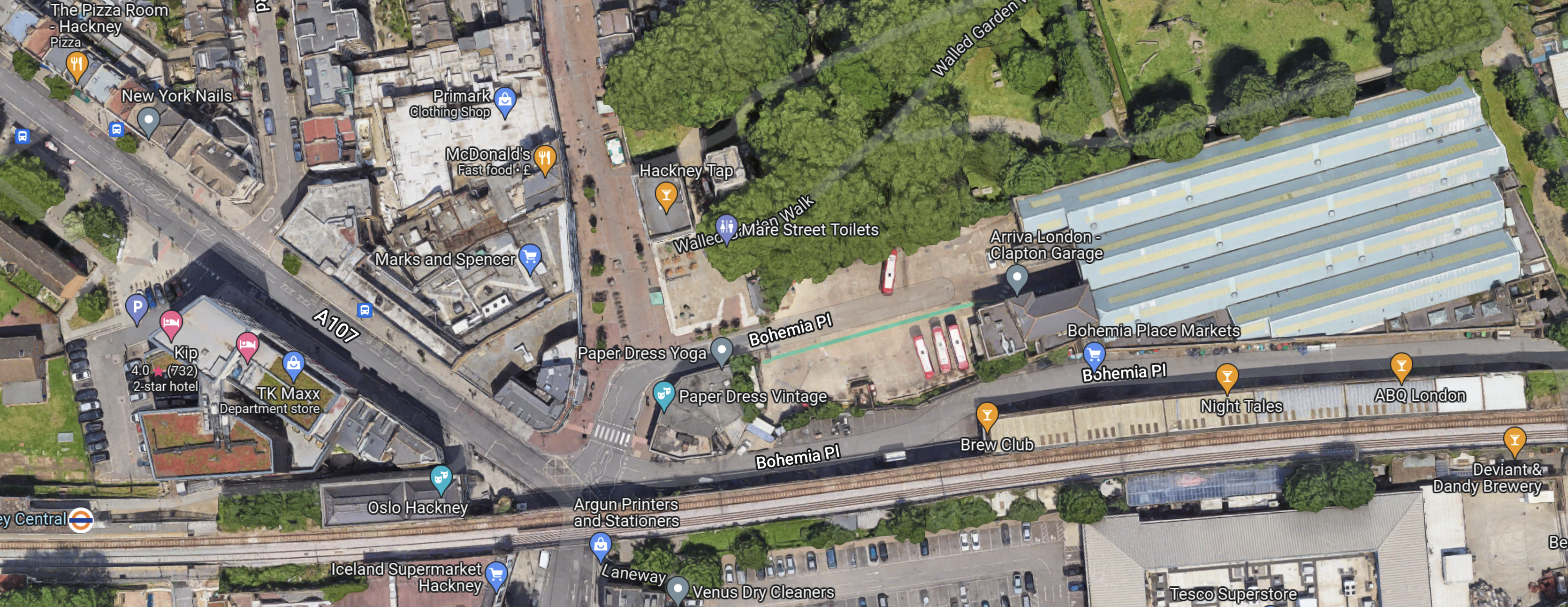
Clapton bus garage is the large building in the North-East corner of the map, red buses with white roofs outside.
This document on the Hackney Council web site is entitled Draft Hackney Central And Surrounds Masterplan, where this is said.
Relocate Clapton Bus Garage to an alternative site, to develop the site for mixed use, commercial/
residential development, and create a new route from St John-at-Hackney Churchyard Gardens to
Bohemia Place and beyond.
This sounds like a good idea, as part of the congestion in the area is caused by buses having to fight their way into the garage, when the roads are busy.
If they built, the right flats there I might be interested, as the site has good transport connections and an excellent Marks and Spencer.
Ashurst Road And Pembury Circus
This paragraph is in Hackney’s press release.
The award will see five acres of public space transformed, bringing new green space, trees and seating along Amhurst Road, investment in Hackney Central Library, a much-needed redesign of Pembury Circus junction, new creative workspace and a rejuvenated Hackney Town Hall Square.
Cut out what I have already covered and you get.
The award will see public space transformed, bringing new green space, trees and seating along Amhurst Road and a much-needed redesign of Pembury Circus junction.
This map shows Amhurst Road and Pembury Circus.

Note.
- Amhurst Road runs NW-SE across map.
- Hackney Central station is at the bottom of the map on the North London Line, which runs East-West.
- Hackney Downs station is the other station in the middle of the map.
- Pembury Circus is to the East of where Amhurst Road runs under the railway, at the top of the map.
- Dalston Lane runs between Pembury Circus Hackney Downs station.
I know the area around Hackney Downs station well.
- I regularly take a train to Hackney Downs station and get a 30 or 56 bus to my home from a bus stop on Dalston Lane.
- It can be a very unfriendly and cold place to catch a bus late at night.
But saying that, I’ve never had any trouble.
Improvements in that area, would certainly make my journey easier.
I would like to see the bus stops at Hackney Downs station moved to under the railway bridge to both improve shelter and cut the walking distance.
Conclusion
This could be £19 million very well spent and all residents of Hackney, myself included, could benefit.
Levelling Up Funding Will Double Train Services To Belmont In Surrey
The title of this post, is the same as that of this article on Rail Advent.
This project is outlined in these three paragraphs in the article.
An award of £14.1 million to Sutton Council from the government’s Levelling Up Fund will unlock the full potential of the London Cancer Hub and allow the number of trains running to the village of Belmont in South London to be doubled.
The London Cancer Hub is a world-leading life sciences campus that is being developed at Belmont in Surrey, and which will create 13,000 jobs and £1.2 billion each year for the UK economy.
Until now, Belmont has been poorly served by public transport and the money will enable its train services to be doubled to four trains an hour, and extra direct services from Belmont to London Victoria.
This document from Sutton Council gives more details in this paragraph.
This bid will double train frequency between Belmont and London Victoria from 2 to 4 trains per hour by building a siding turnback south of Belmont Station. It will improve accessibility at the station and provide better routes for people walking and cycling to the station from the nearby area and The London Cancer Hub. As a result, public transport accessibility will improve and active travel will increase.
This map from CartoMetro shows the current track layout at Belmont station.
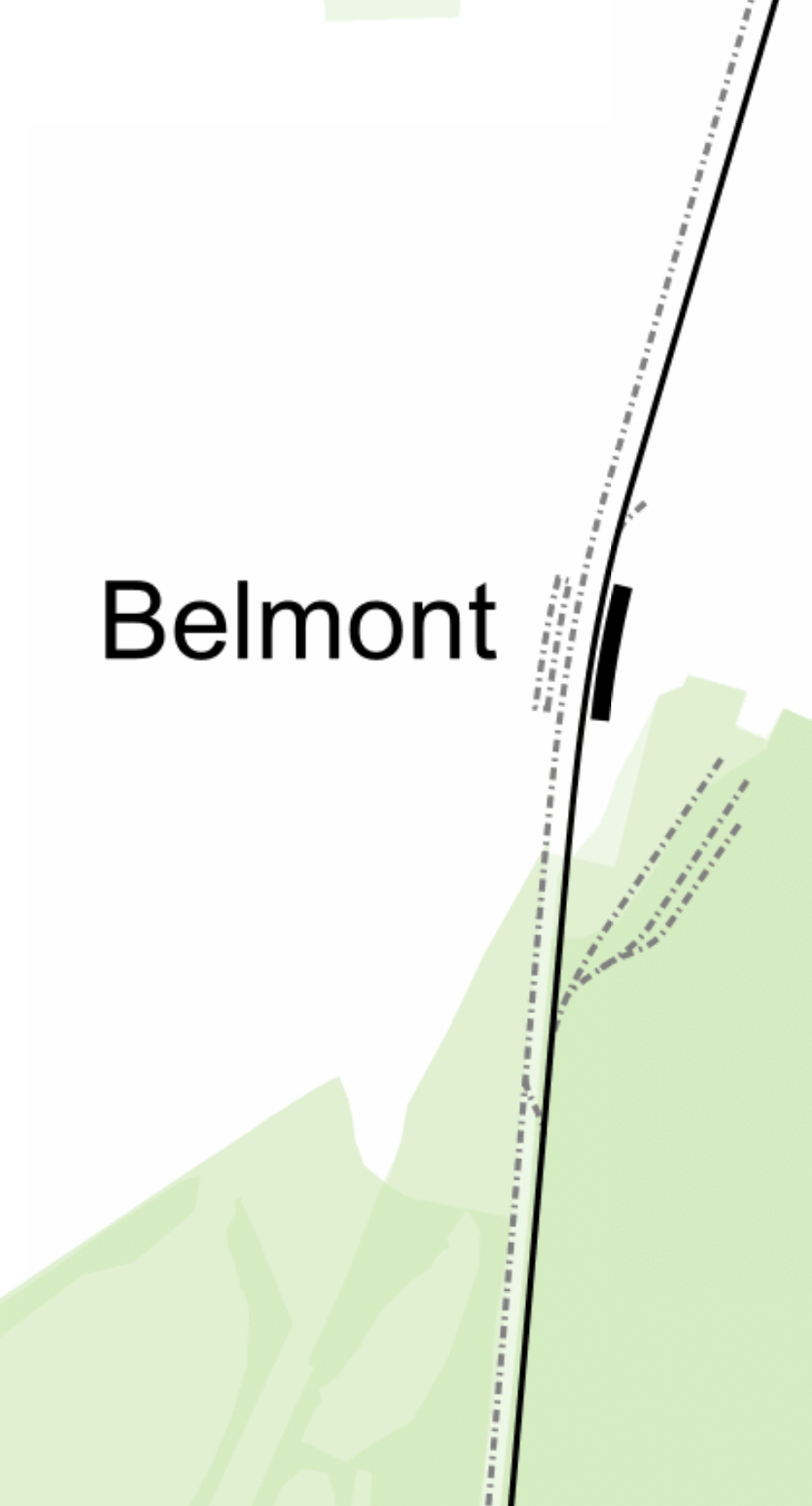
Note.
- The Epsom Downs branch used to be double track, with a second platform at Belmont station.
- There used to be a cross-over South of the station.
I suspect a length of the other track will be reinstated, with a cross-over the other way round to create the turnback siding.
This will allow two extra trains per hour to run between London and Belmont, that will turn back at Belmont.
In Could Third-Rail Tram-Trains Work The Epsom Downs Branch?, I walked up the hill to the Royal Marsden Hospital and it wasn’t an easy walk, as these pictures show.
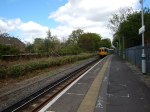
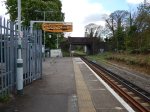
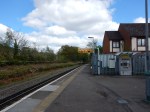
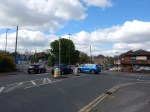
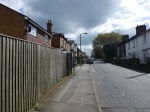
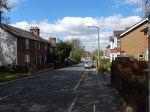
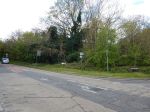
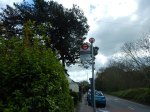
Perhaps all trains should be met by a zero-carbon shuttle bus.
Going to a cancer hospital is not a pleasurable experience, especially for a child, so why not liven it up a bit with a ride in the best zero-carbon bus, that can be found?
Landmark Levelling Up Fund To Spark Transformational Change Across The UK
The title of this post, is the same as that of this press release from the UK Government.
These are the four bullet points.
- More than 100 projects awarded share of £2.1 billion from Round 2 of government’s flagship Levelling Up Fund.
- Projects will benefit millions of people across England, Scotland, Wales and Northern Ireland and create jobs and boost economic growth.
- £672 million to develop better transport links, £821 million to kick-start community regeneration and £594 million to restore local heritage sites.
- Successful bids include Eden Project North in Morecambe, a new AI campus in Blackpool, regeneration in Gateshead, and rail improvements in Cornwall
The press release expands the last bullet point.
Projects awarded Levelling Up Fund money today include:
Eden Project North
Eden Project North will receive £50 million to transform a derelict site on Morecambe’s seafront into a world class visitor attraction. It will also kick-start regeneration more widely in Morecambe, creating jobs, supporting tourism and encouraging investment in the seaside town.
Note.
- Because of its closeness to the West Coast Main Line, it will have excellent rail connections to all over the North of England and Central and Southern Scotland, through Lancaster, which will only be a shuttle train away.
- One of High Speed Two’s direct destinations will be Lancaster, which will be served by High Speed Two by hourly trains to Birmingham, Carlisle, Crewe, London, Preston, Warrington and Wigan and by two-hourly trains to Edinburgh, Glasgow, Lockerbie and Motherwell.
- London and Lancaster will be a journey of just two hours and three minutes.
I believe that this high quality rail access will ensure the success of the Eden Project North.
Cardiff Crossrail
Cardiff Crossrail has been allocated £50 million from the fund to improve the journey to and from the city and raise the economic performance of the wider region.
The Cardiff Crossrail is obviously a good project from the little that I’ve read about it. But it does need a web site to explain the reasoning behind it.
Blackpool Multiversity
Blackpool Council and Wyre Council will receive £40 million to deliver a new Multiversity, a carbon-neutral, education campus in Blackpool’s Talbot Gateway Central Business District. This historic funding allows Blackpool and The Fylde College to replace their ageing out-of-town centre facilities with world-class state-of-the-art ones in the heart of the town centre. The Multiversity will promote higher-level skills, including automation and artificial intelligence, helping young people secure jobs of the future.
Blackpool certainly needs something.
My suggestion in Blackpool Needs A Diamond, was to build a second Diamond Light Source in the North to complement the successful facility at Harwell.
I don’t think the two proposals are incompatible.
Fair Isle Ferry
Nearly £27 million has been guaranteed for a new roll-on, roll-off ferry for Fair Isle in the Shetland Islands. The service is a lifeline for the island, supporting its residents, visitors and supply chains, and without its replacement the community will become further isolated.
Note.
- Will it be a British-built ferry?
- Will it be hydrogen-powered? After all by the time it is built, the Northern Scottish islands will be providing enough of the gas to power a quarter of Germany.
- Surely, a hydrogen-powered roll-on, roll-off ferry will be a tourist attraction in its own right.
I hope the Government and the islanders have a good ship-yard lined up
Gateshead Quays And The Sage
A total of £20 million is going towards the regeneration of Gateshead Quays and the Sage, which will include a new arena, exhibition centre, hotels, and other hospitality. The development will attract nearly 800,000 visitors a year and will create more than 1,150 new jobs.
I don’t know much about the Sage, but this project seems very reasonable.
Mid-Cornwall Metro
A £50 million grant will help create a new direct train service, linking 4 of Cornwall’s largest urban areas: Newquay, St Austell, Truro, and Falmouth/Penryn. This will level up access to jobs, skills, education, and amenities in one of the most economically disadvantaged areas in the UK.
I wrote about this scheme in The Proposed Mid-Cornwall Metro, where I came to this conclusion.
I believe that a small fleet of Hitachi Regional Battery Trains could create an iconic Metro for Cornwall, that would appeal to both visitors and tourists alike.
Judging by the recent success of reopening the Dartmoor Railway to Okehampton in Devon, I think this scheme could be a big success. But it must be zero-carbon!
Female Changing Rooms For Northern Ireland Rugby
There is £5.1 million to build new female changing rooms in 20 rugby clubs across Northern Ireland.
Given the popularity of the female version of the sport in England, Scotland and Wales, perhaps this is a sensible way to level it up in Northern Ireland. As rugby is an all-Ireland sport, perhaps the Irish have already sorted the South?
Increased CCS Can Decarbonise GB Electricity Faster On Route To Net Zero
The title of this post, is the same as that of this news item on the SSE web site.
This is the first paragraph.
Building more power carbon capture and storage plants (Power CCS) could significantly accelerate the UK’s plans to decarbonise the GB electricity system on route to net zero, according to new analysis commissioned by SSE.
I am not surprised, as in my time, I have built several production, storage and distribution mathematical models for products and sometimes bringing things forward has beneficial effects.
These three paragraphs summarise the findings.
The UK Government’s proposed emissions reductions from electricity for 2035 could be accelerated to 2030 by combining its 50GW offshore wind ambition with a significant step up in deployment of Power CCS. This would require 7-9GW (equivalent to 10-12 plants) of Power CCS compared to the current commitment of at least one Power CCS plant mid-decade, according to experts at LCP Delta.
Replacing unabated gas with abated Power CCS generation will deliver significant reductions in greenhouse gas emissions. The analysis suggests that adding 7-9GW Power CCS to the UK’s 2030 offshore wind ambition will save an additional 18 million tonnes of CO2 by 2040, by preventing carbon emissions during periods when the sun isn’t shining, and the wind isn’t blowing.
Gas consumption for electricity generation would not significantly increase, given the 7-9GW Power CCS would displace older and less efficient unabated gas power stations already operating and reduce importing unabated gas generation from abroad via the interconnectors. Importantly, Power CCS can provide a safety net to capture emissions from any gas required to keep the lights on in the event of delays to the roll out of renewables or nuclear.
The report is by LCP Delta, who are consultants based in Edinburgh.
The report says this about the transition to hydrogen.
Power CCS also presents significant opportunities to kickstart, then transition to, a hydrogen economy, benefitting from the synergies between CCS and hydrogen, including proximity to large-scale renewable generation and gas storage facilities which can support the production of both electrolytic and CCS-enabled hydrogen.
And this about the reduction in carbon emissions.
The existing renewables ambition and the accelerated Power CCS ambition are expected to save a total of 72 million tonnes of CO2 by 2040 compared to commitments in the UK’s Net Zero Strategy from October 2021.
I don’t think there’s much wrong with this analysis.
But of course the greens will trash it, as it was paid for by SSE.
I have a few thoughts.
Carbon Capture And Use
I believe we will see a great increase in carbon capture and use.
- Carbon dioxide is already an ingredient to make Quorn.
- Carbon dioxide is needed for fizzy drinks.
- Carbon dioxide can be fed to tomatoes, salad plants, herbs and flowers in giant greenhouses.
- Carbon dioxide can be used to make animal and pet food.
- Carbon dioxide can be used to make building products like plasterboard and blocks.
- Carbon dioxide can be added to concrete.
- Carbon dioxide can be used as a refrigerant and in air-conditioning. There are one or two old Victorian systems still working.
Other uses will be developed.
Carbon Capture Will Get More Efficient
Carbon capture from power stations and boilers, that use natural gas is a relatively new process and its capture will surely get better and more efficient in the next few years.
Gas From INTOG
I explain INTOG in What Is INTOG?.
One of INTOG’s aims, is to supply electricity to the oil and gas rigs and platforms in the sea around the UK.
Currently, these rigs and platforms, use some of the gas they produce, in gas turbines to create the electricity they need.
- I have seen reports that ten percent of the gas that comes out of the ground is used in this way.
- Using the gas as fuel creates more carbon dioxide.
Decarbonisation of our oil and gas rigs and platforms, will obviously be a good thing because of a reduction of the carbon dioxide emitted. but it will also mean that the gas that would have been used to power the platform can be brought ashore to power industry and domestic heating, or be exported to countries who need it.
Gas may not be carbon-neutral, but some gas is more carbon-neutral than others.
SSE’s Plans For New Thermal Power Stations
I have taken this from SSE’s news item.
SSE has deliberately chosen to remain invested in the transition of flexible thermal electricity generation due to the key role it plays in a renewables-led, net zero, electricity system and is committed to decarbonising the generation.
Together with Equinor, SSE Thermal is developing two power stations equipped with carbon capture technology. Keadby 3 Carbon Capture Power Station is based in the Humber, the UK’s most carbon-intensive industrial region, while Peterhead Carbon Capture Power Station is located in the North East of Scotland. Combined, the two stations could capture around three million tonnes of CO2 a year.
Studies have shown that Keadby and Peterhead Carbon Capture Power Stations could make a lifetime contribution of £1.2bn each to the UK economy, creating significant economic opportunity in their respective regions. Both will be vital in supporting the huge amount of renewables which will be coming on the system.
SSE Thermal and Equinor are also collaborating on Keadby Hydrogen Power Station, which could be one of the world’s first 100% hydrogen-fuelled power stations, and Aldbrough Hydrogen Storage, which could be one of the world’s largest hydrogen storage facilities.
Note.
- SSE appear to think that gas-fired power stations with carbon capture are an ideal backup to renewables.
- If gas is available and it can be used to generate electricity without emitting any carbon dioxide, then why not?
- Hydrogen is coming.
Things will get better.
Is A Virtuous Circle Developing?
Consider.
- Spare wind electricity is turned into hydrogen using an electrolyser or perhaps some world-changing electro-chemical process.
- The hydrogen is stored in Aldbrough Hydrogen Storage.
- When the wind isn’t blowing, hydrogen is used to backup the wind in Keadby Hydrogen power station.
- The other Keadby power stations can also kick in using natural gas. The carbon dioxide that they produce, would be captured for storage or use.
- Other users, who need to decarbonise, can be supplied with hydrogen from Aldbrough.
Note.
- Gas turbines are throttleable, so if National Grid wants 600 MW to balance the grid, they can supply it.
- As time progresses, some of the gas-fired power stations at Keadby could be converted to hydrogen.
- Rough gas storage is not far away and could either store natural gas or hydrogen.
- Hydrogen might be imported by tanker from places like Africa and Australia, depending on price.
Humberside will be levelling up and leading the decarbonisation of the UK.
If you have an energy-hungry business, you should seriously look at moving to Humberside.
Morley’s New Accessible Station Set To Open In Summer 2023
The title of this post, is the same as that of this press release from Network Rail.
These paragraphs outline the work to be done to create the new Morley station.
A new, fully accessible station is set to open in Morley, Leeds in summer 2023 to make way for longer trains, more seats, and better journeys as part of the Transpennine Route Upgrade.
As a multi-million-pound investment, the new station will boast longer platforms to provide space for faster, more frequent, greener trains with more seats available for passengers travelling between Manchester, Huddersfield, Leeds and York.
The new, remodelled station will sit 75 metres away from the existing station and be fully accessible, with a footbridge and lifts connecting the two platforms.
Moving the station opens up opportunities to transform the platforms and track layout while installing the overhead wires needed to power electric and hybrid trains in the future. It also means that the current station can largely remain open for passengers whilst the new one is built.
It is not often, that a station upgrade, is such a comprehensive demolish and rebuild of a not very large station as this.
But rarely have I seen such a long list of problems as the one in this section in the Wikipedia entry for the station.
It looks like the Government is having a go, at levelling-up Morley.
Network Rail seem to be attempting to do the rebuild in under a year.
Levelling Up Freight
This project was one of the winners in the First Of A Kind 2022 competition run by Innovate UK.
In this document, this is said about the project.
Project No: 10037240
Project title: Levelling Up Freight
Lead organisation: 3SQUARED LTD.
Project grant: £393,271
Public description:
Background
Rail freight is vital to Britain. It contributes almost £2.5bn to the economy and plays a big part in reducing congestion and emissions. Rail is more environmentally friendly than road, with every tonne of freight transported by rail producing 76% less emissions compared to road (RDG “Levelling Up Britain” 2021). The green benefits of rail freight are being driven heavily by the DfT with incentive schemes such as Modal Shift Revenue Support (MSRS) – a £20m grant, which
freight carriers can bid for a share of to support modal shift to rail.
Despite widescale use of MSRS, finding new freight routes for additional trains is challenging because:
- Road haulage is seen as easier and more accessible than rail freight, especially at short
notice, for short journeys and for single containers. - Highways are less regulated with no significant barriers to commercial participation, and
therefore are free to use the latest technologies to develop and evolve solutions at a faster
pace. - Railway planning systems and processes limit the availability and visibility of freight paths
(slots in the timetable which can accept a freight train) resulting in under-utilisation of
network capacity.
Our innovative freight planning solution (PathPlanner) will make the use of rail for freight as
accessible and easy to use as the road network. PathPlanner is specifically designed to overcome
the current operational challenges and blockers that make moving to rail prohibitive.
Proof-of-Concept Demonstration
In 2021, NR completed a £17m upgrade around Southampton to enable longer trains in/out of the docks. Completing April 2023, Solent Stevedores is investing c.£3m to strengthen their capability to receive and dispatch longer and more trains – from 9 to 16 per day.
However, NR’s business case did not include any understanding of capacity in/out of the port, so
Solent Stevedores is currently unsighted as to how, or if, they can find the additional paths.
There are significant gains to be made if they can; 7 extra trains equate to:
- £12.6m additional revenue p.a.
- A reduction of 55,000 HGVs.
- A reduction of carbon by 1,165 tonnes.
Our project will demonstrate a Proof-of-Concept solution at Southampton Docks that will facilitate
Solent Stevedores, and Eddie Stobart Logistics (ESL) – 2 off our project partners – to find additional
freight paths and transfer containers from HGVs to trains.
My Thoughts And Conclusions
As I programmed scheduling and resource allocation systems for forty years, I am probably one of the most experienced programmers at writing this type of system.
That experience suggests that their objectives are possible.
Battery EMUs Envisaged In Southeastern Fleet Procurement
The title of this post, is the same as that of this article on Railway Gazette.
This is the first paragraph.
Southeastern has invited expressions of interest for the supply of new electric multiple-units with an optional battery capability for operation away from the 750 V DC third-rail network.
This article on bidstats is entitled Supply Of And Maintenance Support For New Rolling Stock For Southeastern, and gives more details.
These are my thoughts.
Southeastern HighSpeed Services
There would appear to be no changes in this contract to the Class 395 trains, that work on High Speed One, as this is said in the bidstats article.
Full compatibility with Southeastern infrastructure (excluding High Speed 1 infrastructure)
which appears to rule out running on High Speed One.
In addition, this article on Rail Magazine is entitled Southeastern’s Class 395 Javelin Train Sets Are To Receive A £27 million Facelift.
Southeastern Have Both 75 and 100 mph Trains
In addition to their Class 395 trains, Southeastern have the following trains in their fleet.
- Class 375 trains – 100 mph – 10 x 3 cars
- Class 375 trains – 100 mph – 102 x 4 cars
- Class 376 trains – 75 mph – 36 x 5 cars
- Class 465 trains – 75 mph – 129 x 4 cars
- Class 466 trains – 75 mph – 36 x 2 cars
- Class 707 trains – 100 mph – 18 x 5 cars
Note.
- Running a mixed fleet of 75 and 100 mph trains can’t be very efficient.
- The Class 465 and 466 trains are the oldest trains and date from 1991-1994.
- They are often to be seen in ten-car formations of 2 x 465 trains and a Class 466 train.
- Another twelve Class 707 trains are planned to join Southeastern.
I would expect the Class 465 and Class 466 trains to be replaced first.
What Length Will The New Trains Be?
If you look at the new suburban electric trains, they have the following lengths.
- c2c – Class 720 trains – 5 cars
- Greater Anglia – Class 720 trains – 5 cars
- Northern – Class 331 trains – 3 and 4 cars
- Southeastern – Class 707 trains – 5 cars
- South Western Railway – Class 701 trains – 5 and 10 cars
- West Midlands Trains – Class 730 trains – 3 and 5 cars
Note.
- Southeastern already run five-car trains as pairs.
- A significant proportion of existing suburban trains are five-car trains.
- Great Western, Hull Trains, LNER, Lumo and TransPennine Express run five-car Hitachi trains, with more companies to follow.
- A pair of five-car trains make a pair of a convenient length for most platforms.
I would be fairly confident, that the new trains will be five-car trains, with the ability to run as pairs.
What Will Be The Operating Speed Of The New Trains?
To match the speed of the Class 375 and Class 707 trains, I would expect them to be 100 mph trains.
The Quietness Of Battery-Electric Trains
All of the battery-electric trains I have ridden, have been mouse-quiet, with none of the clunking you get for a lot of electric trains.
This is said in the bidstats article says this about the interiors
Interiors suitable for metro & mainline operation.
I wouldn’t be surprised to see a lot of these trains on commuter routes to attract passengers.
Battery Power
This is said in the bidstats article about battery power.
Inclusion of options for traction batteries with capability for operation in depots and sidings without the need for external power supply, and with the capability to operate on the main line where power supply is not available due to isolations or incidents, or for non-electrified line sections of up to 20 miles.
Although Merseyrail’s new Class 777 trains are not in service yet, I find it interesting that the proposed Southeastern trains will be similarly-fitted with a small battery for depot and siding operation.
The twenty mile battery range is specific and I wonder if it will be used innovatively. I suspect it could be a bit longer in the future, as battery technology improves.
Possible Electrified Routes Using Battery Power
These are a few possibilities.
The Hoo Branch
In Effort To Contain Costs For Hoo Reopening, I discussed running electric trains to a proposed Hoo station.
I made these two points.
- Hoo junction to Hoo station is no more than five or six miles.
- There are also half-a-dozen level crossings on the route, which I doubt the anti-third rail brigade would not want to be electrified.
It would appear that a battery-electric train with a range of twenty miles would handle this route easily.
- Charging would be on the nearly thirty miles between Hoo junction and Charing Cross station.
- No charging would be needed at Hoo station.
There may be other possibilities for new routes locally to open up new housing developments.
The Sheerness Line
The Sheerness Line has the following characteristics.
- It is double-track
- It is electrified
- It is less than eight miles long.
- For most of the day, the service is one train per hour (tph)
- There are two tph in the Peak.
- Would two tph attract more passengers to the line?
- Does the power supply on the Sheerness Line limit the size and power of trains that can be run on the line?
- Is there a need for one train per day to London in the morning and a return in the evening?
- Could the Sheerness Line be run more economically with battery trains. providing a two tph service all day?
The Isle of Sheppey needs levelling up, perhaps 100 mph trains to London using battery power on the Sheerness Line, might just make a difference.
The Medway Valley Line
The Medway Valley Line has the following characteristics.
- It is double-track
- It is electrified
- It is less than twenty-six and a half miles long.
- For most of the day, the service is two tph.
- In the Peak there are HighSpeed services between Maidstone West and St.Pancras International stations.
If electrification was removed between Paddock Wood and Maidstone West stations, the HighSpeed services could still be run and battery-electric trains with a twenty mile range could still run the Tonbridge and Strood service.
The Marshlink Line
The Marshlink Line has the following characteristics.
- It is mainly single-track with a passing loop at Rye station.
- It is not electrified
- It is 25.4 miles between the electrified Ashford International and Ore stations.
- Services are irregular and less than one tph.
If the proposed battery-electric train had a range of thirty miles, it should be able to handle the Marshlink Line.
The service between Eastbourne and Ashford International stations would need to be moved between the Southern and Southeastern operations.
The Uckfield Branch
The Uckfield Branch has the following characteristics.
- It is a mixture of single- and double-track.
- It is not electrified South of Hurst Green Junction.
- It is 24.7 miles between the electrified Hurst Green Junction and Uckfield station
- Services are one tph.
If the proposed battery-electric train had a range of thirty-miles, it should be able to handle the Uckfield Branch, with a charging system at Uckfield station.
Will Battery-Electric Trains Allow Some Lines To Have Their Electrification Removed?
There are several reasons, why electrification might be removed.
- It is on a line, where the electrification needs upgrading.
- It is on a line, where there are lots of trespassers.
- Possibly at a level-crossing or a stretch of track with several.
- Possibly in a tunnel, with a large inflow if water.
- It is a depot or siding, where safety is important to protect the workforce.
Obviously, the electrification would not be removed unless battery-electric trains can handle all possible services.
These are surely some possibilities for electrification removal.
The Hayes Line
The Hayes Line has the following characteristics.
- It is double-track
- It is electrified
- It is less than eight miles to Ladywell Junction, where the branch joins the main line at Lewisham.
- It is currently run by Class 465 and Class 466 trains, which will likely be changed for the new trains with a battery capability.
- Services are four tph.
If the proposed battery-electric train had a range of twenty-miles, it would be able to handle the route between Ladywell junction and Hayes station.
Erith Loop, Crayford Spur and Slade Green Depot
This map from Cartometro.com shows the Erith Loop, the Crayford Spur and the Slade Green Depot.

Note.
Not many trains take the Erith Loop or the Crayford Spur.
- The distance between Slade Green and Barnehurst is less than a mile-and-a-half.
- Dartford station is off the South-East corner of the map.
- The distance between Barnehurst and Dartford is less than three miles.
- The distance between Slade Green and Crayford is less than two miles-and-a-half.
- The distance between Crayford and Dartford is less than two miles.
- The main line through Slade Green would need to remain electrified, as electric freight trains use the line.
I suspect, that quite a lot of electrification could be removed here, much to the disgust of the copper thieves.
It might even be possible to build on top of the depot.
Blackpool Needs A Diamond
Every year there are more and more depressing reports about Blackpool and there was another today.
Something dramatic needs to be done.
One of the successful scientific weapons that has been deployed on any number of problems, including the Covid-19 and malaria, has been the impressive Diamond Light Source at Harwell.
When I talk to researchers at universities in the North, they would love to able to use it more, but it is fully booked and getting access is difficult. There is also the travel problem.
I believe that the solution is to build Diamond 2 in the North. And what better place to build it than Blackpool. The city has good rail and tram links and plenty of accommodation.
Now, that’s what I call levelling-up.
A New Garden Bridge Proposed For London
This article on Ian Visits is entitled Plans Open A Disused Railway Bridge To Pedestrians.
This is the introductory paragraph.
A section of the Thames with few bridges could become a lot easier for pedestrians and cyclists to cross if plans to convert a disused railway bridge for pedestrian use go ahead.
The disused railway bridge to be used is the original 1849 Barnes Railway Bridge, which was closed to trains, when a new stronger bridge was built alongside in 1890.
This Google Map shows the two bridges.
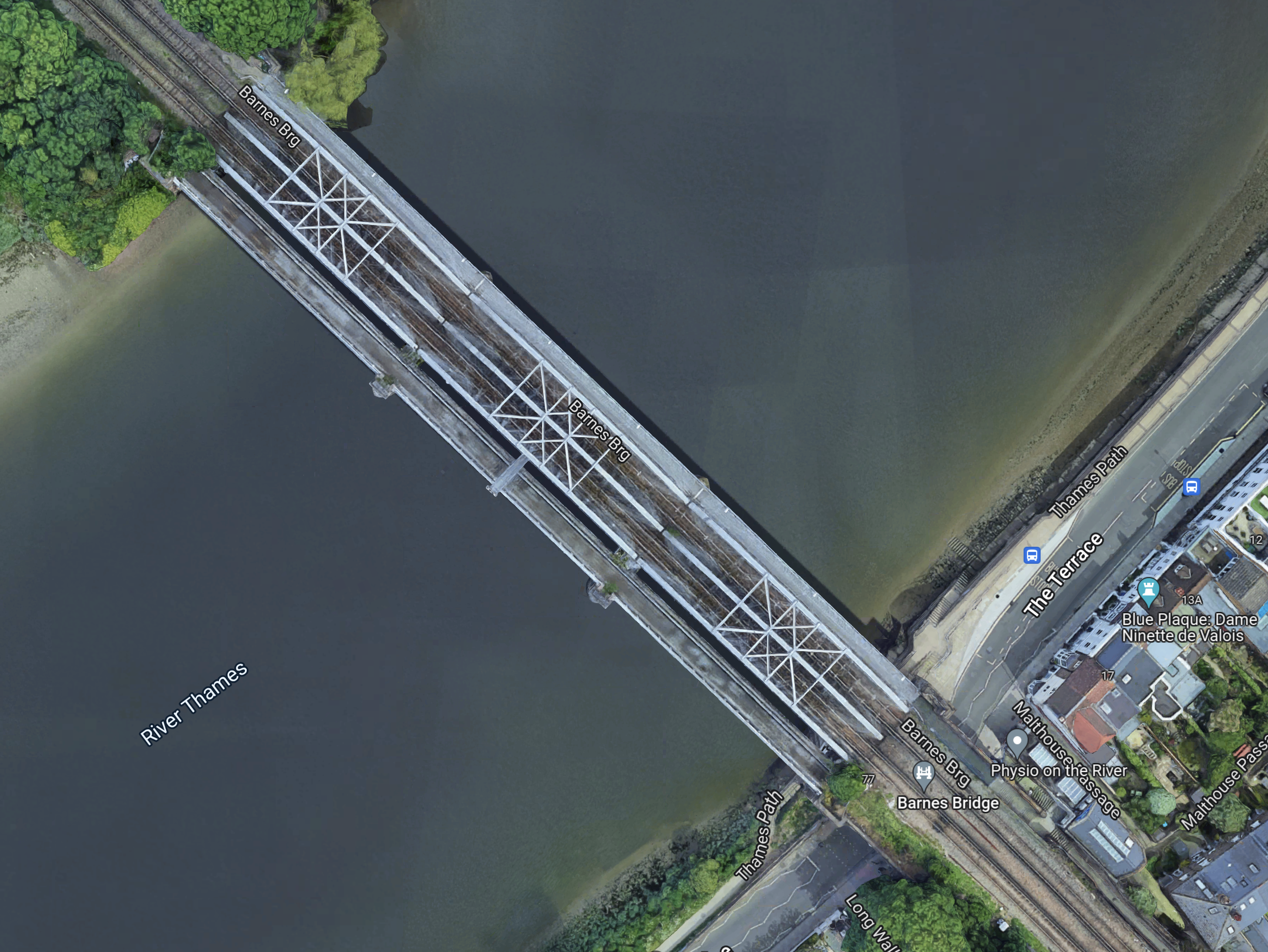
Note.
- The railway tracks in the centre on the 1890 three-arch bridge.
- The Thames flows from South-West to North-East under the bridge.
- A walkway on the North-Eastern side of the is still in use.
- The original 1849 bridge is on the South-Western side of the bridge.
The pedestrian garden bridge will be built on the 1849 bridge, which will be refurbished.
This second Google Map shows the bridge and Barnes Bridge station.
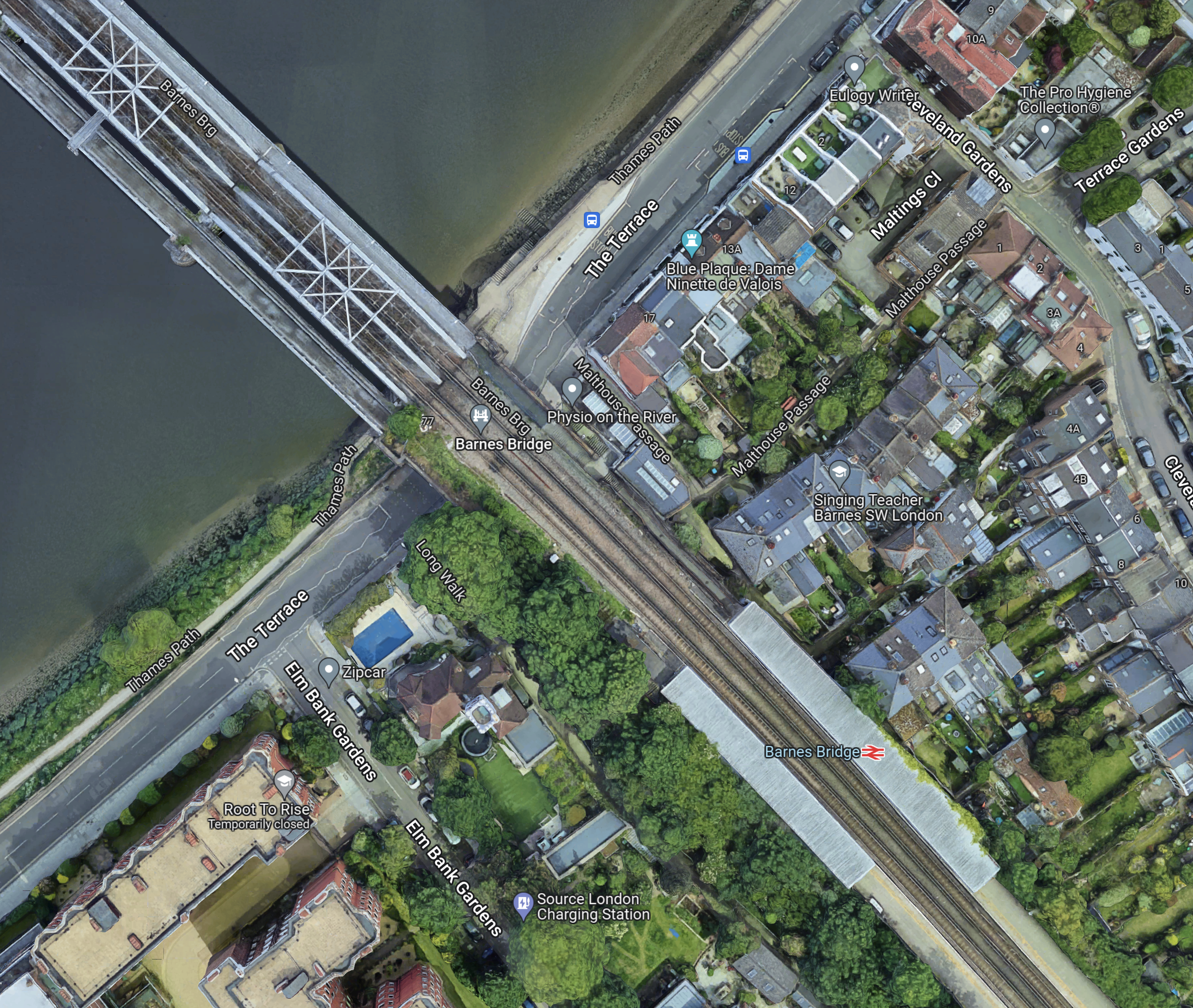
Note.
- Barnes Bridge in the North-West corner of the map.
- Barnes Bridge station in the South-East corner of the map.
Part of the plan envisages connecting the South-Western platform to the pedestrian garden bridge.
It looks a plan with a lot of good possibilities.
The Project
It appears that Network Rail, the London Boroughs of Richmond and Hounslow are all supportive and Moxon Architects have been appointed to the project.
The project now appears to be called The View at Barnes Bridge and it has an impressive web site, with lots of information and pictures.
I have a few thoughts.
I Am Not Surprised That Network Rail Are Supportive
Network Rail must be pleased to be getting a Grade II Listed structure off their hands.
Could Barnes Bridge Station Be Made Step-Free?
I suspect that Moxon will produce designs for this and it will probably be a question of money, if they are implemented.
But as the garden bridge will attract more visitors, this will surely increase the need for full step-free access at Barnes Bridge station.
Could A Refurbished Bridge Carry Utilities?
I suspect that this will be looked at, as it could be a nice little earner.
Could This Project Be An Example Of a Levelling-Up Project?
In my travels around the UK and Europe, I’ve seen several disused railway bridges that could be reused as footbridges to provide walking and cycling.
Many are being converted, but this high-profile bridge could inspire architects to create other worthwhile bridges.
 The Anonymous Widower