Walking Along Moorgate – 30th September 2020
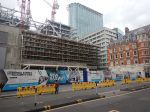
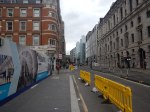
I took these pictures as I walked from North to South along Moorgate today from the bus stop by Finsbury Square.
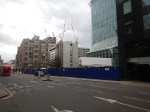

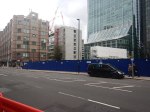
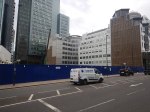
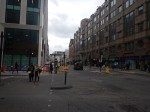



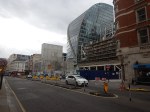
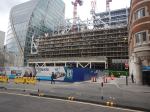

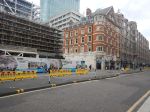
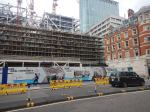

Note.
- I did cross the road three times.
- The building site behind the blue hoardings in some of the first pictures, looks like it could be another tall building.
- The tower looming in the background of several of the pictures is Citypoint, which was originally built in 1967 and refurbished in 2000.
- The new looking building, with the Barclays branch at street level, is not new but another refurbished building, that has been finished in the last few months.
- The older red and white building is Moorgate station. There is nothing to indicate that this building will be rebuilt.
- The odd shaped building to the South of the station is Moor House.
- A large new entrance to the station, with an office block on top is being built between the original station entrance and Moor House.
- Between the new station entrance and Moorgate, 101 Moorgate is being built.
There is certainly, a lot of all types of property development going on at Moorgate station, which after Crossrail opens will become the Western entrance to the Crossrail station at Liverpool Street station.
This 3D Google Map shows Moorgate.
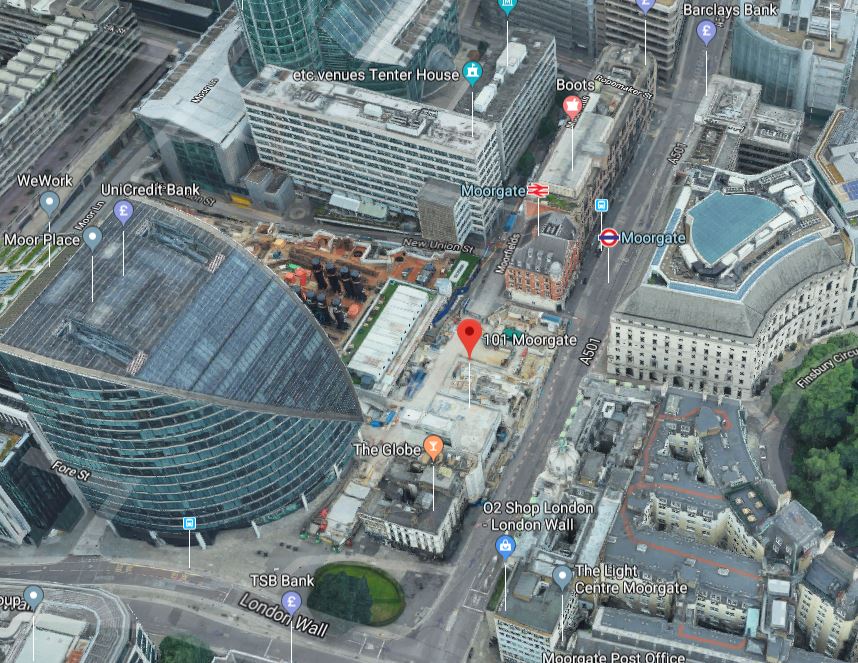
101 Moorgate is marked with a red arrow.
A Crossrail Video Of Liverpool Street Station
This video shows the design of Crossrail’s Liverpool Street station.
This screen-capture from the video shows a possible future Moorgate.
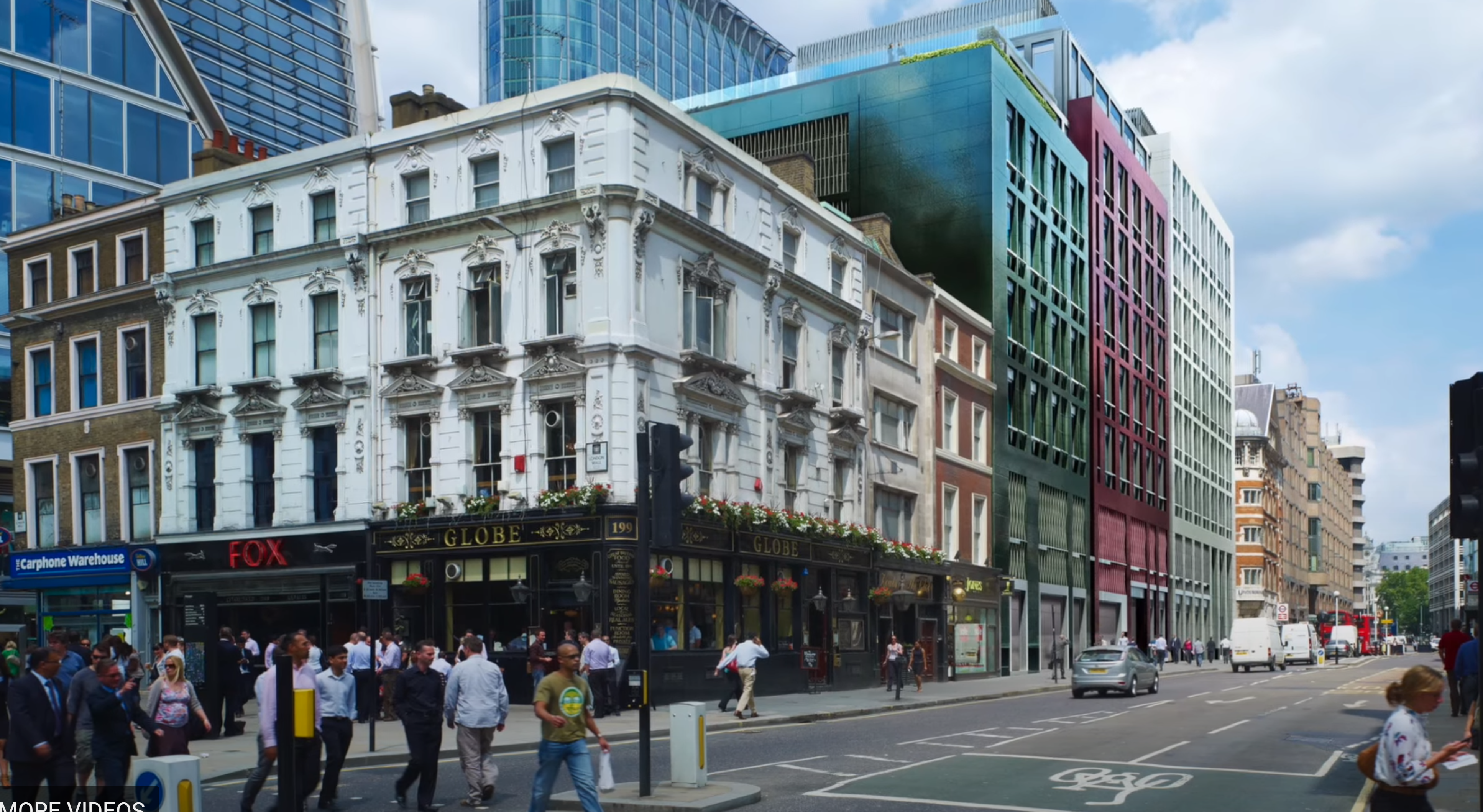
Note the new buildings at 101 Moorgate and the current Moorgate station.
These are related posts on the design of the Crossrail station at Moorgate and Liverpool Street.
- London’s First Underground Roller Coaster
- Moorgate Is Being Refurbished In Readiness For Crossrail
- Has The Possibility Been Created For A Pedestrian Tunnel Between Bank And Moorgate Stations?
The station could become the major one for the City of London.
Extending the Northern City Line To The South
This was intended by the builders of the Northern City Line and they intended to take the route to just North of Bank station at Lothbury.
In the Wikipedia entry for Moor House, this is said.
Completed in 2004, it was the first building to be designed for the forthcoming Crossrail, with a ventilation shaft to the station underneath the building. When built, it had the deepest foundations in London, which reach down 57 metres (187 ft) and are specifically designed to withstand further tunneling below it in the future.
I suspect that could mean that Moor House won’t get in the way of any further railway development.
In the Wikipedia entry for the Northern City Line, this is said about possible developments planned after World War 2.
After the war there were proposals to extend the Northern City Line north and south. The London Plan Working Party Report of 1949 proposed several new lines and suburban electrification schemes for London, lettered from A to M. The lower-priority routes J and K would have seen the Northern City Line extended to Woolwich (Route J) and Crystal Palace (Route K), retaining the “Northern Heights” extensions to Edgware and Alexandra Palace. The lines would have run in small-diameter tube tunnels south from Moorgate to Bank and London Bridge. The “K” branch would have run under Peckham to Peckham Rye, joining the old Crystal Palace (High Level) branch (which was still open in 1949) near Lordship Lane. Nothing came of these proposals, and the Edgware, Alexandra Palace and Crystal Palace (High Level) branches were all closed to passengers in 1954. As a result, the Northern City Line remained isolated from the rest of the network.
Note.
- The proposed J branch to Woolwich has been covered by Crossrail calling at both Moorgate and Woolwich.
- The proposed K branch to Peckham Rye and Crystal Palace has been covered by Crossrail and the London Overground with a change at Whitechapel.
So why bother to open up the possibility by designing Moor House for more tunnels to be bored?
As the London Plan Working Party Report of 1949 indicated several more lines and electrification were proposed.
Also during the war several deep-level shelters were built under Underground stations. Wikipedia says this about the background to the shelters.
Each shelter consists of a pair of parallel tunnels 16 feet 6 inches (5.03 m) in diameter and 1,200 feet (370 m) long. Each tunnel is subdivided into two decks, and each shelter was designed to hold up to 8,000 people. It was planned that after the war the shelters would be used as part of new express tube lines paralleling parts of the existing Northern and Central lines. Existing tube lines typically had 11-foot-8.25-inch (3.56 m) diameter running tunnels and about 21 feet (6.4 m) at stations; thus the shelter tunnels would not have been suitable as platform tunnels and were constructed at stations the new lines would have bypassed. However, they would have been suitable as running tunnels for main-line size trains. (One existing tube, the Northern City Line opened in 1904, used a similar size of tunnel for this reason, although in fact main-line trains did not use it until 1976.)
Shelters were planned on the Northern Line at Belsize Park, Camden Town, Goodge Street, Stockwell, Clapham North, Clapham Common, and Clapham South on the Northern Line. Did London Transport do a full survey of the Northern Line before the war and leave documents saying where an express Northern Line could be easily built.
My mother told me about these plans and as her best friend worked in Personnel at London Transport, she probably knew more than the average suburban housewife, who worked part-time for my father as a book-keeper.
After Crossrail opens and Moorgate station and the Bank station Upgrade are completed will it be possible to bore two new full-size tunnels underneath the Northern Line and Moor House and other buildings on the route to create a Northern Line Express service?
Consider.
- The tunnels would be very deep and suitable for full-size trains.
- Moorgate, Bank and London Bridge stations will have all been rebuilt in the last twenty years, so hopefully, they have been built to allow tunnels for a Northern Line Express service to pass through.
- The Northern Line Express would take the pressure off the City Branch of the Northern Line?
- Initially, the line might terminate under London Bridge station in perhaps a two platform station.
- Modern digital signalling would allow up to 24 trains per hour (tph) on the section between London Bridge and Alexandra Palace station and 12 tph on the Welwyn Garden City and Stevenage branches
It would be a lot easier to build than Crossrail 2 and would give some of the benefits.
An Extension To North Cheam?
The Wikipedia entry for Morden station has this paragraph.
A post-war review of rail transport in the London area produced a report in 1946 that proposed many new lines and identified the Morden branch as being the most overcrowded section of the London Underground, needing additional capacity. To relieve the congestion and to provide a new service south of Morden, the report recommended construction of a second pair of tunnels beneath the northern line’s tunnels from Tooting Broadway to Kennington and an extension from Morden to North Cheam. Trains using the existing tunnels would start and end at Tooting Broadway with the service in the new tunnels joining the existing tunnels to Morden. The extension to North Cheam would run in tunnel. Designated as routes 10 and 11, these proposals were not developed by the London Passenger Transport Board or its successor organisations.
Perhaps, the solution would be to bore two new deep full-size tunnels from Moorgate to Tooting Broadway.
- The Northern Line Express trains couldn’t continue to Morden, as they would be too big for the existing tunnels.
- So they would have to turn back at Tooting Broadway station.
- The stations between Kennington and Morden, that are in need of improvement could be updated.
- I would design the interchange between Northern Line Express and Northern Line trains at Tooting Broadway station as a step-free cross-platform interchange.
The Wikipedia entry for North Cheam station, describes the extension to the station.
- It would have been in tunnel from Morden.
- There would be an intermediate station at Morden South station.
- It didn’t think much of the economics.
- I would suspect that the tunnel would run under the A 24.
- The tunnel would be just under three miles long.
I wonder, if the extra distance, made operation of the line easier.
I estimate that a train could go from Morden to North Cheam stations and back in under ten minutes.
- This would allow 6 tph with a single tunnel and track between the two stations.
- The two new stations; North Cheam and Morden South could be single platform.
- The signalling could be simplified.
The extension could be more affordable.
Liverpool’s Forgotten Station
Edge Hill station is Liverpool’s forgotten station.
For instance, it could be the only train station in the UK, with a better than two trains per hour (tph) service in both directions, that doesn’t have any displays telling passengers, when the next train is arriving.
These pictures show the station.


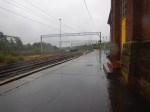
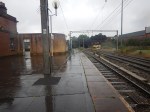
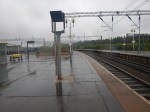

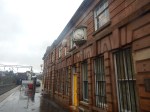
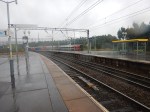



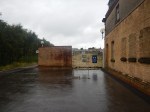

Note.
- The station is Grade II* Listed.
- It does have a good clock.
- There are four platforms on two islands.
- The only way to get to Platforms 3 and 4, is by one of the worst subways, I’ve seen in many years.
If ever a station needed a good makeover, it is Edge Hill.
This Google Map shows the station.
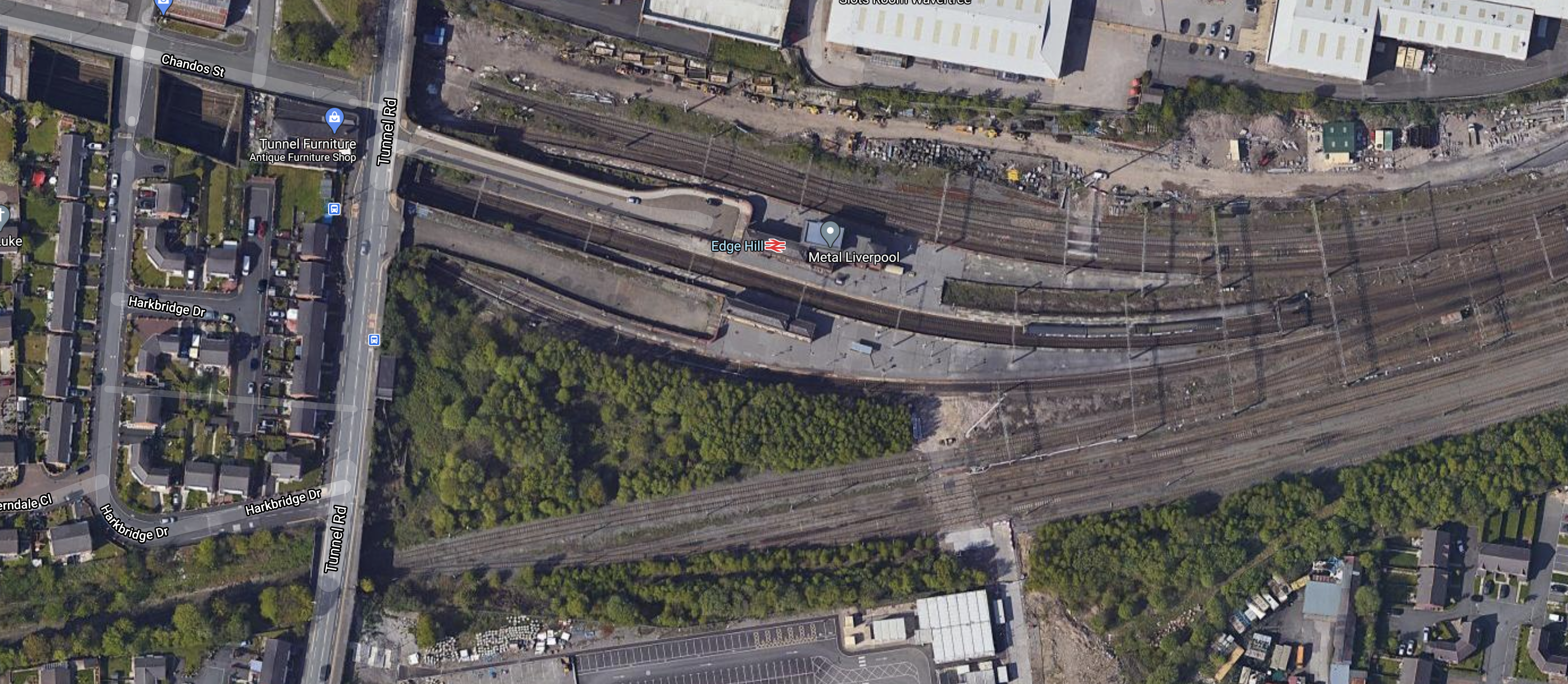
Note.
- The Northern island platform is 1 & 2. All trains using these platforms seem to use platforms 1 to 5 at Liverpool Lime Street station.
- The Southern island platform is 3 & 4. All trains using these platforms seem to use platforms 6 to 10 at Liverpool Lime Street station.
- The deep four-track cutting, that leads to Lime Street station can be clearly seen to the West of the station.
- The lines to the South of the station, that run to the West, lead to the disused Wapping Tunnel. Surprisingly, the tracks still seem to be in place.
- The lines to the North of the station, that run to the West, lead to the disused Victoria Tunnel, that used to take freight to and from Liverpool Docks.
There is certainly a lot of space around the station to put in extra platforms and a flyover or two.
Connecting The Wapping Tunnel To The Lines Going To The East
In Liverpool’s Forgotten Tunnel, I talked about a resurrected plan to use the Wapping Tunnel for passenger trains.
This was my opening sentences of the post.
The Wapping Tunnel in Liverpool was designed by George Stephenson and was the first tunnel in the world to be bored under a city.
It used to take goods trains between Liverpool Docks and the Liverpool and Manchester Line.
During the 1970s preparations were made to connect the Wapping Tunnel to Merseyrail’s Northern Line, so that trains could run between the Northern Line and the City Line, which would have connected the North and East of the City.
But the project was never completed.
I also included this recent map of the scheme.
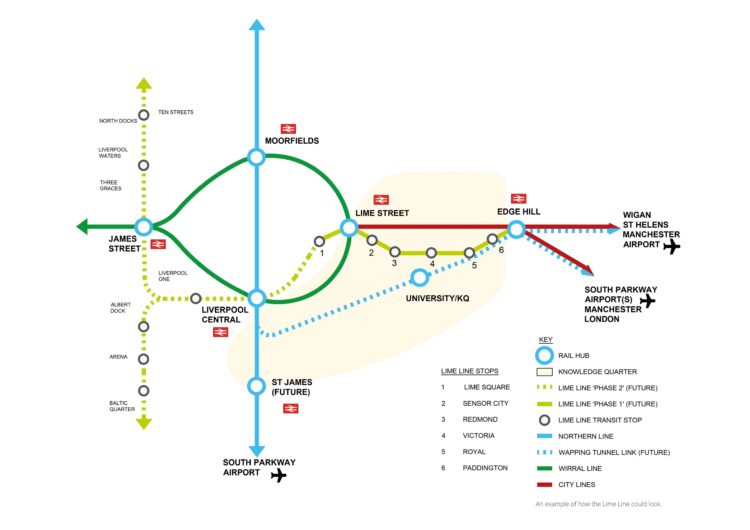
The proposed line through the Wapping Tunnel, is shown as a dotted blue line.
Components of the scheme include.
- Four to eight tph instead of turning back at Liverpool Central station would use the Wapping Tunnel to access Edge Hill and then continue to Liverpool South Parkway, Manchester Airport, Manchester Oxford Road, St. Helens, Warrington and Wigan.
- A new station will be built at Liverpool University.
- A new station could be built at St. James. at a future date.
It looks to be a sensible scheme, providing the engineering isn’t too difficult.
New Platforms On The Wapping Tunnel Lines
This Google Map shows the lines leading to the Wapping Tunnel.
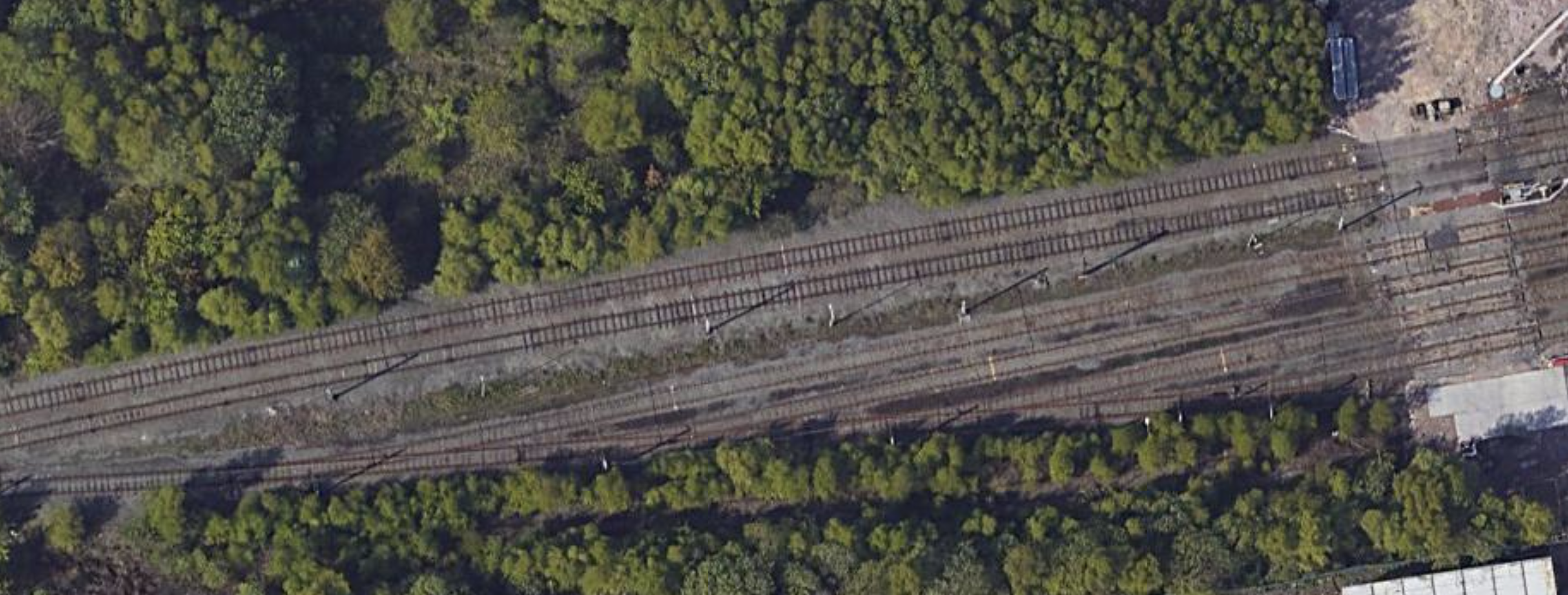
Note.
- Platform 4 is just off the Northern side of the map.
- There is a double track leading to the Wapping Tunnel.
- It looks like the other tracks are the entry to a marshalling yard, that used to serve the Docks, through the Wapping Tunnel.
I can see two platforms on either side or a single island platform between the two tracks being built, that is connected to the current station using a stylish step-free bridge, as at Leeds or Reading stations.
Connecting To The Liverpool South Parkway Route
This Google Map shows the Wapping Tunnel lines, as they pass to the South of the station.
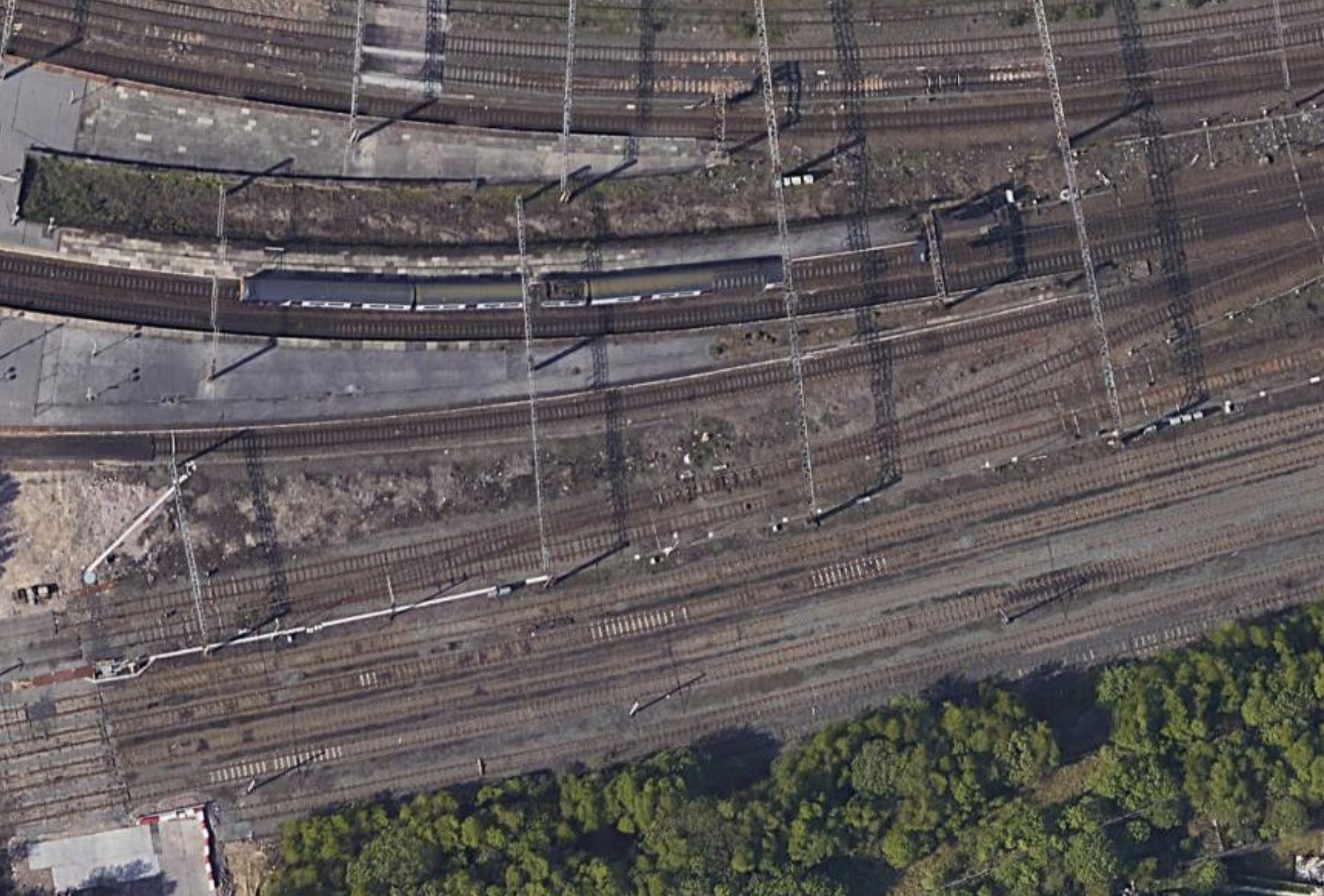
Note.
- The Eastern ends of the two island platforms are clearly visible.
- Platforms 1 and 2, which connect to Wavertree Technology Park, St. Helens and Wigan are the Northern platform.
- Platforms 3 and 4, which connect to Liverpool South Parkway, Runcorn and London are the Southern platform.
- The lines through the Wapping Tunnel, are the two closest lines to the station.
It does appear that connecting the Wapping Lines to those to Liverpool South Parkway would probably need a series of well-designed crossovers.
In fact they might already be in place and just need refurbishment or replacement.
Connecting To The Wavertree Technology Park Route
Trains needing to go between the Wapping Tunnel lines and the lines towards Wavertree Technology Park, St. Helens and Wigan would need to cross right over the busy lines into Liverpool Lime Street station.
So I suspect for efficient operation, a flyover or dive-under will need to be built.
Conclusion
I don’t think that the engineering to connect the Wapping Tunnel lines to the Eastern routes from Edge Hill station, will be too challenging, as there is certainly plenty of space.
I also feel, that an innovative architect can create an efficient station with character.
It’s A Privilege To Work Here!
I was speaking to a young station assistant at Liverpool Lime Street station, who I suspect could have been a trainee or an apprentice, when he came out with the title of this post.
These pictures show the platforms at the station, since the recent remodelling.


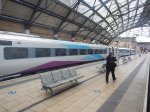

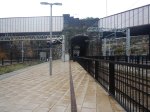
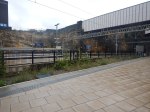

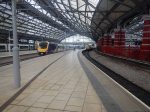
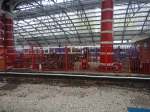
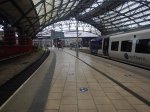

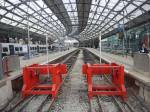
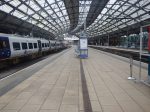

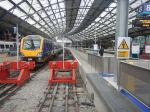

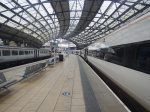

Note.
- The platforms are wide and can take an eleven-car Class 390 train.
- TransPennine Express’s five-car Class 802 trains are easily handled in the shorter platforms of the Western train shed.
- I suspect Avanti West Coast’s new Class 807 trains, which are fifty-two metres longer than the Class 802 trains, could fit into the Western train shed, if needed.
It is certainly a station with a large capacity and I believe, with a few tweaks the station will be able to handle High Speed Two and Northern Powerhouse Rail.
Train Lengths Into Liverpool Lime Street
These are the lengths of the various trains that will be terminating at the station.
- Class 350 train – eight cars – 160 metres
- Class 350 train – twelve cars – 240 metres
- Class 390 train – nine cars – 217.5 metres
- Class 390 train – eleven cars – 265.3 metres
- Class 730 train – five cars – 120 metres
- Class 730 train – ten cars – 240 metres
- Class 802 train – five cars – 130 metres
- Class 802 train – ten cars – 260 metres
- Class 807 train – seven cars – 182 metres
- High Speed Two Classic-Compatible train – 200 metres
That looks like future-proofing to me!
An Almost Absence Of Red
I have looked at arrivals into Liverpool Lime Street over the last couple of days on Real Time Trains and nearly all trains seemed to be on time.
So has all the work to improve the track and signalling on the approaches to the station, over the last couple of years, resulted in better time keeping?
Certainly, train and passenger flows seemed to be smooth.
Conclusion
Wikipedia says this about Liverpool Lime Street station.
Opened in August 1836, it is the oldest still-operating grand terminus mainline station in the world.
I’ve used Lime Street station for nearly sixty years and finally, it is the station, the city needs and deserves.
I’ve been to grand termini all over the world and Lime Street may be the oldest, but now it is one of the best.
Possibly One Of The Best Underground Railways In A Smaller City In The World!
I took these pictures, as I took the Wirral Line between James Street and Lime Street stations.




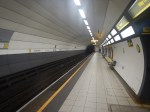

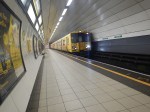
I do compare them with the dingy inside of Essex Road station, which was refurbished by British Rail about the same time.

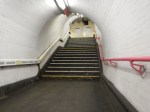


Merseyrail’s stations and trains are generally immaculate and that can’t be said for the dirty and tired infrastructure on the Northern City Line. As I indicated in the title of this post, t is one of the best underground railways under the centre of a smaller city. Liverpool would probably be regarded as a second size of city as it lacks the several millions of London, Paris or Berlin.
The tunnels of Merseyrail’s Northern and Wirral Lines, would have been probably been used as a model for British Rail’s proposed Picc-Vic Tunnel, that sadly never got to be built!
Manchester would be very different today, if it had an underground railway across the City to the standard of that in Liverpool or Newcastle.
This map clipped from Wikipedia show the proposed route of the Picc-Vic Tunnel.

Some of the other proposals included.
- The tunnel would be twin bores and jus under three miles long.
- The tunnel would be electrified with 25 KVAC overhead wires.
- The rolling stock would have been Class 316 trains, which would have been similar to those on Merseyrail.
- Train frequency could have been forty trains per hour (tph)
In some ways the specification was more ambitious than Crossrail, which might be able to handle 30 tph, at some time in the future. But Dear Old Vicky, which was designed at the same time, is now handling forty tph.
Wikipedia says the following routes could have run through the tunnel.
Note.
- The Styal Line now provides the link to Manchester Airport.
- The route map on the Wikipedia entry, shows only Bury and Bolton as Northern destinations. But surely fanning out the trains could have run to Barrow-in-Furness, Blackburn, Blackpool, Burnley, Clitheroe, Colne, Hebden Bridge, Kirkby, Preston, Rawtenstall, Tochdale, Southport, Stalybridge, Todmorden, Wigan and Windermere
The only problem, I could see would be that there would need to be a lot of electrification North of Manchester, some of which has now been done.
There have also been developments in recent years that would fit nicely with a system of lines running through the Picc-Vic Tunnel.
More Services In Manchester Piccadilly And Manchester Victoria Stations
If you look at Liverpool Lime Street station after the remodelling of the last few years, the station is now ready for High Speed Two.
You could argue, that it would be more ready, if the Wapping Tunnel connected services to and from the East to the Northern Line, as I wrote about in Liverpool’s Forgotten Tunnel, as this would remove a lot of local trains from the station.
The Picc-Vic Tunnel would have done the same thing for Manchester Piccadilly and Manchester Victoria stations and removed the local services.
This would have left more space for High Speed Two and other long distance services.
Northern Powerhouse Rail
The original plan also envisaged an East-West Tunnel at a later date. – Northern Powerhouse Rail?
But the creation of capacity by the diversion of local services from Manchester Victoria into the Picc-Vic Tunnel, would surely have enabled the station to be developed thirty years ago as a station on an improved TransPennine route.
Tram-Trains
The system would have accepted tram-trains, which hadn’t been invented in the 1970s.
Manchester Airport
Manchester Airport had only one runway in the 1970s and I think only a few would have believed, it would have expanded like it has.
The Picc-Vic Tunnel would create a superb service to the Airport, at a frequency upwards of six tph.
High Speed Two
The Picc-Vic Tunnel would have created the capacity in for Manchester Piccadilly station and allowed High Speed Two services to use the station.
In The Rival Plans For Piccadilly Station, That Architects Say Will ‘Save Millions’, I talked about a radical plan for extending Manchester Piccadilly station for High Speed Two, that has been put forward by Weston Williamson; the architects.
This sort of scheme would also fit well with the Picc-Vic Tunnel.
Conclusion
Manchester was short-changed and not building the Picc-Vic Tunnel was a major mistake.
It would have created an underground railway in a similar mould to that of Liverpool’s, but it would probably have served a larger network.
They would probably be the best pair of underground railways for smaller cities in the world.
Liverpool’s Forgotten Tunnel
The Wapping Tunnel in Liverpool was designed by George Stephenson and was the first tunnel in the world to be bored under a city.
It used to take goods trains between Liverpool Docks and the Liverpool and Manchester Line.
During the 1970s preparations were made to connect the Wapping Tunnel to Merseyrail’s Northern Line, so that trains could run between the Northern Line and the City Line, which would have connected the North and East of the City.
But the project was never completed.
It now appears, the project is on the agenda again.
This article on TransportExtra is entitled Liverpool CR Develops Plan To Boost City Centre Rail Capacity.
The plan outlined is as follows.
- At present, as many as two thirds of trains on the Northern Line turn back as Liverpool Central station.
- Between four and eight trains per hour (tph) could be diverted into the Wapping Tunnel to serve places like St. Helens, Warrington Central and Wigan.
- This would free up platforms in Liverpool Lime Street station for Inter-City and Inter-Regional services.
It is also pointed out, that a 2016 study, didn’t find any serious technical problems with the project.
I do have my thoughts on this project.
Services That Could Be Connected
Local services running from Liverpool Lime Street station include.
Manchester Oxford Road Via Warrington Central
This service is run by Northern.
- It has a frequency of two tph.
- One service calls at Edge Hill, Mossley Hill, West Allerton, Liverpool South Parkway, Hunts Cross, Halewood, Hough Green, Widnes, Sankey For Penketh, Warrington West, Warrington Central, Birchwood, Irlam, Urmston and Deansgate.
- The other service calls at Mossley Hill, West Allerton, Liverpool South Parkway, Hough Green, Widnes, Warrington Central, Padgate, Birchwood, Glazebrook, Irlam, Flixton, Chassen Road (1tp2h), Urmston, Humphrey Park, Trafford Park and Deansgate
- Both trains appear to take the same route.
- Some stations like Liverpool South Parkway, Warrington West and Deansgate have lifts, but disabled access is patchy.
- The service has a dedicated terminal at Manchester Oxford Road, which is without doubt Manchester’s worst central station for location, access to the Metrolink, onward travel and step-free access.
- It takes seventy-two minutes. which is an inconvenient time for train operators.
- The route is electrified with 25 KVAC overhead electrification at both ends.
I’ve used this route several times and usually pick it up from Deansgate, as it has a convenient interchange to the Metrolink.
I am fairly certain that Merseyrail’s new Class 777 trains running on battery power in the middle could handle this route.
- They would charge the batteries at the electrified ends of the route.
- They would join the route at Edge Hill station.
- They would offer step-free access between train and platform.
- These trains are built for fast stops, so could all services call at all stations?
- On Merseyrail’s principles, the service would probably be at least two tph, if not four tph.
I estimate that these trains are fast enough to do the return trip between the Wapping Tunnel portal at Edge Hill and Manchester Oxford Road in under two hours.
- A two-four tph stopping service between Liverpool and Manchester City Centres, that took less than an hour, would be very convenient for passengers.
- The service would be well-connected to local tram, train and bus services in both City Centres.
- The service would also very easy for train schedulers to integrate with other services.
Liverpool and Manchester would have the world’s first battery-powered inter-city railway.
Other than the connection of the Wapping Tunnel no extra infrastructure works would be needed.
Wigan North Western Via St. Helens Central
This service is run by Northern.
- It has a frequency of two tph.
- The service calls at Edge Hill, Wavertree Technology Park, Broad Green, Roby, Huyton, Prescot, Eccleston Park, Thatto Heath, St Helens Central, Garswood and Bryn
- The route is fully-electrified with 25 KVAC overhead.
- It takes fifty-one minutes. which is a very convenient time for train operators.
Merseyrail’s new Class 777 trains could handle this route, if fitted with pantographs for 25 KVAC overhead electrification.
- They would join the route at Edge Hill station.
- They would offer step-free access between train and platform.
- On Merseyrail’s principles, the service would probably be at least two tph, if not four tph.
I estimate that these trains are fast enough to do the return trip between the Wapping Tunnel portal at Edge Hill and Wigan North Western in under two hours.
- A two-four tph stopping service between Liverpool and Wigan, that took less than an hour, would be very convenient for passengers.
- Wigan North Western has good connections using the West Coast Main Line.
- The service would also very easy for train schedulers to integrate with other services.
Other than the connection of the Wapping Tunnel no extra infrastructure works would be needed.
Blackpool North
This service is run by Northern.
- It has an hourly frequency.
- The service calls at Huyton, St Helens Central, Wigan North Western, Euxton Balshaw Lane, Leyland, Preston, Kirkham & Wesham and Poulton-le-Fylde
- The route is fully-electrified with 25 KVAC overhead.
- It takes seventy-seven minutes. which is a reasonable time for train operators.
This is a service that could continue as now, but would probably be timed to fit well with four Merseyrail trains between the Wapping Tunnel and Wigan North Western.
Manchester Airport Via Warrington Central And Manchester Piccadilly
This service is run by Northern.
- It has an hourly frequency.
- The service calls at Liverpool South Parkway, Warrington West, Warrington Central, Birchwood, Manchester Oxford Road, Manchester Piccadilly and Mauldeth Road
- The route is partially-electrified with 25 KVAC overhead.
- The service is operated by diesel trains.
- The service uses the overcrowded Castlefield Corridor.
- It takes sixty-nine minutes, which is an inconvenient time for train operators.
This is one of those services, which I think will eventually be partially replaced by other much better services.
- Northern Powerhouse Rail is planning six tph between Liverpool Lime Street and Manchester Piccadilly via Warrington South Parkway and Manchester Airport, which will take just twenty-six minutes.
- Two-four tph on the route between Liverpool Lime Street and Manchester Oxford Road via Warrington Central would be a better service for the smaller stations. Passengers going to and from Manchester Airport would change at Liverpool Lime Street, Deansgate or Manchester Oxford Road.
Continuing as now, would definitely be possible.
Crewe And Manchester Airport Via Newton-le-Willows And Manchester Piccadilly
This service is run by Northern.
- It has an hourly frequency.
- The service calls at Edge Hill, Wavertree Technology Park, Broad Green, Roby, Huyton, Whiston, Rainhill, Lea Green, St Helens Junction, Earlestown, Newton-le-Willows, Patricroft, Eccles, Deansgate, Manchester Oxford Road, Manchester Piccadilly, Mauldeth Road, Burnage, East Didsbury, Gatley and Heald Green.
- The route is fully-electrified with 25 KVAC overhead.
- The service uses the overcrowded Castlefield Corridor
- It takes eighty-five minutes, which is an inconvenient time for train operators.
This is one of those services, which I think will eventually be partially replaced by other much better services.
- Northern Powerhouse Rail is planning six tph between Liverpool Lime Street and Manchester Piccadilly via Warrington South Parkway and Manchester Airport, which will take just twenty-six minutes.
- Two-four tph on the route between Liverpool Lime Street and Wigan North Western would be a better service for the smaller stations. Passengers going to and from Manchester Airport and Crewe would change at Liverpool Lime Street or Wigan North Western.
Continuing as now, would definitely be possible.
Warrington Bank Quay Via Earlstown
This service is run by Northern.
- It has an hourly frequency.
- The service calls at Edge Hill, Wavertree Technology Park, Broad Green, Roby, Huyton, Whiston, Rainhill, Lea Green, St Helens Junction and Earlestown.
- The route is fully-electrified with 25 KVAC overhead.
- The service takes forty-three minute, which is a convenient time for train operators.
Merseyrail’s new Class 777 trains could handle this route, if fitted with pantographs for 25 KVAC overhead electrification.
- They would join the route at Edge Hill station.
- They would offer step-free access between train and platform.
- On Merseyrail’s principles, the service would probably be at least two tph, if not four tph.
Other than the connection of the Wapping Tunnel no extra infrastructure works would be needed.
Three Possible Routes Through Wapping
Summing up this section, these are possible routes that could be replaced by services through the Wapping Tunnel.
- Two tph – Manchester Oxford Road
- Two tph – Warrington Bank Quay
- One tph – Wigan North Western
Increasing the Wigan North Western service to two tph, would increase the frequency between Edge Hill and Huyton to a very passenger-friendly four tph.
If eight tph could be accommodated in the Wapping Tunnel, the frequency could also be doubled to Manchester Oxford Road.
This would give the following services through the Wapping Tunnel.
- Four tph – Manchester Oxford Road
- Two tph – Warrington Bank Quay
- Two tph – Wigan North Western
The only local services that would need to run into Liverpool Lime Street would be.
- One tph – Northern – Blackpool North via Wigan North Western.
- One tph – Northern – Manchester Airport and Crewe via St. Helens and Newton-le-Willows.
- One tph – Northern – Manchester Airport via Warrington Central.
- One tph – Trains for Wales – Chester via Runcorn
I can understand, why so many seem to be enthusiastic about using the Wapping Tunnel to connect the Northern and City Lines.
Echoes Of The Brunels’ Thames Tunnel
George Stephenson’s Wapping Tunnel may be the first tunnel under a city, but the Brunels’ Thames Tunnel was the first under a navigable river.
The Brunels’ tunnel was built for horses and carts, but today it is an important rail artery of the London Overground, handling sixteen tph between Wapping and Rotherhithe.
I would expect that the Wapping Tunnel could do for Liverpool, what the Thames Tunnel has done for East London.
Modern signalling techniques probably mean that the theoretical capacity of the Wapping Tunnel is way in excess of the planned maximum frequency of eight tph.
High Speed Two Between Liverpool And London
The latest High Speed Two plans as laid out in the June 2020 Edition of Modern Railways, say that there will be two tph between Liverpool Lime Street and London Euston.
- Both trains will call at Old Oak Common, Crewe and Runcorn.
- Both trains will be 200 metres long classic-compatible High Speed Two trains.
- One train will split and join with a similar service between London Euston and Lancaster.
Will these High Speed Two services replace the current Avanti West Coast services?
Northern Powerhouse Rail Between Liverpool And Manchester
In Changes Signalled For HS2 Route In North, I looked at Transport for the North’s report, which is entitled At A Glance – Northern Powerhouse Rail.
This report says that Northern Powerhouse Rail between Liverpool and Manchester Piccadilly will be as follows.
- Services will go via Manchester Airport.
- There could be a new Warrington South Parkway station.
- Six tph between Liverpool and Manchester via Manchester Airport and Warrington are planned.
- Journey times will be 26 minutes.
I would assume that several of the six tph will continue across the Pennines to Huddersfield, Bradford, Leeds, York and Hull.
Will these Northern Powerhouse Rail services replace the current TransPennine and some of the Northern services?
Northern Powerhouse Rail Trains
Nothing has been said about the trains for Northern Powerhouse Rail.
I suspect they will be versions of the 200 metre long classic-compatible High Speed Two trains.
I do wonder, if Avanti West Coast have already ordered a prototype fleet of these trains,
Look at the specification of the Class 807 trains, they have ordered to boost services on the West Coast Main Line.
- 7 x 26 metre cars.
- 182 metres long. Shorter than an eleven-car Class 390 train.
- All-electric, with no diesel engines or traction batteries. Are they lightweight trains with sparkling acceleration?
- 125 mph operating speed. All Class 80x trains can do this.
- 140 mph operating speed with ERTMS digital signalling. All Class 80x trains can do this.
- Ability to work in pairs. All Class 80x trains can do this, up to a maximum length of twelve cars in normal mode and twenty-four cars in emergency mode. I doubt fourteen cars would be a problem!
To be classic-compatible High Speed Two trains, they would need to be able to cruise at 205 mph, whilst working on High Speed Two. I suspect that Hitachi have got some higher-capacity electrical gear and traction motors with lots more grunt in their extensive parts bin!
If these are a prototype fleet of classic-compatible High Speed Two trains, they will certainly get a lot of in-service testing even before the order is placed for the trains for High Speed Two.
Northern Powerhouse Rail will need trains with a slightly different specification.
- As they won’t generally work on high speed lines, for most trains an operating speed of 140 mph will be sufficient.
- For serving some destinations like Cleethorpes, Harrogate, Hull, Middlesbrough and Redcar an independently-powered capability would be desirable. Sixty miles on batteries would probably be sufficient!
Nothing would appear to be out of Hitachi’s current capabilities.
Liverpool Lime Street Station After Remodelling
Liverpool Lime Street station has two groups of platforms.
- Platforms 1-5 on the Western side
- Platforms 6-10 on the Eastern side.
These pictures show some views of the platforms at Liverpool Lime Street station after the remodelling of 2017-2019.
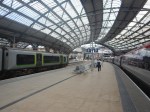
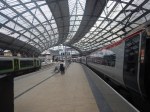
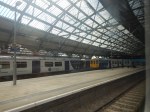
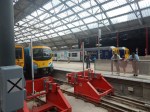
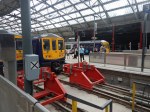

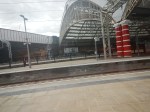

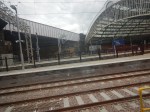
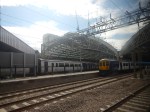

Note,
- The platforms are not narrow!
- It appears that the five platforms in the Eastern group are all long enough to take an eleven-car Class 390 train, which is 265.3 metres long.
- TransPennine Express trains can use the Western group.
I have looked at a whole day’s traffic on Real Time Trains and it appears that the new track layout allows almost all services to use any available platform.
This flexibility must make operation of the station much easily than it was!
Liverpool Lime Street Station As A High Speed Station
It would appear that the Eastern Group of Platforms 6-10 will all be capable of the following.
- Handling a 182 metre long Avanti West Coast Class 807 train.
- Handling a 200 metres long classic-compatible High Speed Two train.
- Handling a 130 metre long TransPennine Express Class 802 train.
- In the future, handling a Northern Powerhouse Rail train, which will probably be less than 200 metres long.
But they won’t be able to handle High Speed Two’s full-size trains.
Currently, these services capable of over 125 mph are running or are planned from Liverpool Lime Street station.
- 2 tph – Avanti West Coast – Liverpool Lime Street and London Euston
- 1 tph – TransPennine Express – Liverpool Lime Street and Newcastle
- 1 tph – TransPennine Express – Liverpool Lime Street and Scarborough
- 3 trains per day(tpd) – TransPennine Express – Liverpool Lime Street and Glasgow
This totals to four tph.
High Speed Two will add two classic-compatible High Speed Two trains.
Will these replace the two Avanti West Coast services?
- They will be run by the same company.
- They will take different routes.
- The current service takes 134 minutes.
- The High Speed Two train will take 94 minutes.
I can see Avanti West Coast running a one tph slower train via stations with difficult connections to Liverpool Lime Street. Think Watford Junction, Milton Keynes, Rugby, Stafford and Stoke-on-Trent.
This would bring the total to five tph.
Northern Powerhouse Rail will run six high speed trains to Manchester and beyond.
If they replaced the two TransPennine Express services, that would bring the maximum number of 200 metre long high speed trains to nine tph.
Could Liverpool Lime Street station handle nine high-speed tph?
Comparison With Birmingham Curzon Street Station
Birmingham Curzon Street station on High Speed Two will handle high speed trains from three directions, as will Liverpool Lime Street station.
The Birmingham station will handle nine tph on seven platforms.
As Liverpool Lime Street station will have ten platforms and also need to handle nine tph, I think it will be able to handle the trains.
Will There Be A Station In The Wapping Tunnel?
Just as London has its clay, which makes excavating for the Underground easy, the Centre of Liverpool has its sandstone, which has been honeycombed with tunnels. In addition to the Wapping Tunnel, there are two other tunnels from Edge Hill station to the Docks; the Waterloo Tunnel and the Victoria Tunnel.
Liverpool has plans for a Knowledge Quarter based on the Universities on Brownlow Hill.
As part of the development, it is intended to develop an area called Paddington Village.
Wikipedia says this about the village.
Paddington Village is a site at the eastern gateway to the city centre and has been earmarked as 1.8m sq ft of science, technology, education and health space.
This is also another paragraph.
Liverpool Mayor Joe Anderson announced that the council were looking into a new Merseyrail station to serve the site. A mention of a station is made in the October 2017 Liverpool City Region Combined Authority update to the Long Term Rail Strategy. Merseytravel commissioned a feasibility report into re-opening the Wapping Tunnel in May 2016 which found that it was a valid proposal which would allow for a new station to be built that could serve the Knowledge Quarter.
Someone has thought up a proposal for a Lime Line, which would be a tram or bus system, linking the Knowledge Quarter and the City Centre.
This map shows how their proposal fits in with all the other rail systems in Liverpool City.
Note the Wapping Tunnel is shown on the map, as a dotted blue line.
- It connects to the Northern Line to the South of Liverpool Central station.
- It connects to the City Line to the West of Edge Hill station.
- A station named University/KQ is shown.
A new St. James station is also shown
Conclusion
Using the Wapping Tunnel to increase capacity in Liverpool City Centre could be used if required to improve capacity for the high speed network in the city, by removing local trains from Liverpool Lime Street station.
Electrifying Wales
I would not be surprised to learn that Wales wants to decarbonise their railways.
At present, Wales only has the following electrified railways either in operation or under construction.
- The South Wales Main Line between the Severn Tunnel and Cardiff.
- The South Wales Metro based on local railways around Cardiff and Newport is being created and will be run by electric trains.
There is no more electrification planned in the future.
Hitachi’s Specification For Battery Electric Trains
Recently, Hitachi have released this infographic for their Regional Battery Train.

This gives all the information about the train and a definitive range of 90 km or 56 miles.
The Welsh Rail Network
If you look at the network of services that are run by Transport for Wales Rail Services, they connect a series of hub stations.
Major hubs include the following stations.
- Cardiff Central – Electrified
- Chester
- Hereford
- Shrewsbury
- Swansea
Smaller hubs and termini include the following stations.
- Aberystwyth
- Birmingham International – Electrified
- Birmingham New Street – Electrified
- Blaenau Ffestiniog
- Carmarthen
- Crewe – Electrified
- Fishguard Harbour
- Hereford
- Holyhead
- Llandudno Junction
- Manchester Airport – Electrified
- Manchester Piccadilly – Electrified
- Machynlleth
- Milford Haven
- Newport – Electrified
- Pembroke Dock
Running Welsh Routes With Electric Trains
These routes make up the Welsh rail network.
Chester And Crewe
Consider.
- The route between Chester and Crewe is without electrification.
- Crewe and Chester are 21 miles apart.
I believe that if a battery-electric train, with a range of 56 miles, can leave Chester and Crewe with full batteries, that it will be possible to run between Chester and Crewe stations.
Chester And Holyhead via Llandudno Junction
Consider.
- All services between Llandudno Junction and England call at Chester.
- All services running to and from Holyhead call at Llandudno Junction.
- The route between Chester and Holyhead is without electrification.
- Chester and Llandudno Junction are 54 miles apart.
- Llandudno Junction and Holyhead are 40 miles apart.
I believe that if a battery-electric train with a range of 56 miles can leave Chester, Llandudno Junction and Holyhead with full batteries, that it will be possible to run between Chester and Holyhead stations.
Chester And Liverpool Lime Street
Consider.
- The route between Runcorn and Liverpool Lime Street is electrified.
- The route between Chester and Runcorn is without electrification.
- Chester and Runcorn are 14 miles apart.
I believe that if a battery-electric train, with a range of 56 miles, can leave Chester and Runcorn with full batteries, that it will be possible to run between Chester and Liverpool Lime Street stations.
Chester And Manchester Airport
Consider.
- The route between Warrington Bank Quay and Manchester Airport is electrified.
- The route between Chester and Warrington Bank Quay is without electrification.
- Chester and Warrington Bank Quay are 18 miles apart.
I believe that if a battery-electric train, with a range of 56 miles, can leave Chester and Warrington Bank Quay with full batteries, that it will be possible to run between Chester and Manchester Airport stations.
Chester And Shrewsbury
Consider.
- The route between Chester and Shrewsbury is without electrification.
- Chester and Shrewsbury are 42 miles apart.
I believe that if a battery-electric train with a range of 56 miles, can leave Shrewsbury and Chester with full batteries, that it will be possible to run between Chester and Shrewsbury stations.
Llandudno And Blaenau Ffestiniog
Consider.
- The route between Llandudno and Blaenau Ffestiniog is without electrification.
- Llandudno and Blaenau Ffestiniog are 31 miles apart.
I believe that if a battery-electric train with a range of 56 miles, can leave Llandudno and Blaenau Ffestiniog with full batteries, that it will be possible to run between Llandudno and Blaenau Ffestiniog stations.
Machynlleth And Aberystwyth
Consider.
- The route between Machynlleth and Aberystwyth is without electrification.
- Machynlleth and Aberystwyth are 21 miles apart.
I believe that if a battery-electric train with a range of 56 miles, can leave Machynlleth and Aberystwyth with full batteries, that it will be possible to run between Machynlleth and Aberystwyth stations.
Machynlleth And Pwllheli
Consider.
- The route between Machynlleth and Pwllheli is without electrification.
- Machynlleth and Pwllheli are 58 miles apart.
I believe that if a battery-electric train with a range of upwards of 58 miles, can leave Machynlleth and Pwllheli with full batteries, that it will be possible to run between Machynlleth and Pwllheli stations.
Machynlleth And Shrewsbury
Consider.
- The route between Machynlleth and Shrewsbury is without electrification.
- Machynlleth and Shrewsbury are 61 miles apart.
I believe that if a battery-electric train with a range of upwards of 61 miles, can leave Machynlleth and Shrewsbury with full batteries, that it will be possible to run between Machynlleth and Shrewsbury stations.
Shrewsbury and Birmingham International
Consider.
- The route between Birmingham International and Wolverhampton is electrified.
- The route between Shrewsbury and Wolverhampton is without electrification.
- Shrewsbury and Wolverhampton are 30 miles apart.
I believe that if a battery-electric train, with a range of 56 miles, can leave Shrewsbury and Wolverhampton with full batteries, that it will be possible to run between Shrewsbury and Birmingham International stations.
Shrewsbury And Cardiff Central via Hereford
Consider.
- All services between Cardiff Central and Shrewsbury call at Hereford.
- The route between Cardiff Central and Newport is electrified.
- The route between Newport and Shrewsbury is without electrification.
- Shrewsbury and Hereford are 51 miles apart.
- Hereford and Newport are 44 miles apart.
I believe that if a battery-electric train, with a range of 56 miles, can leave Shrewsbury, Hereford and Newport with full batteries, that it will be possible to run between Shrewsbury and Cardiff Central stations.
Shrewsbury And Crewe
- The route between Shrewsbury and Crewe is without electrification.
- Shrewsbury and Crewe are 33 miles apart.
I believe that if a battery-electric train with a range of upwards of 61 miles, can leave Shrewsbury and Crewe with full batteries, that it will be possible to run between Shrewsbury and Crewe stations.
Shrewsbury and Swansea
Consider.
- The Heart of Wales Line between Shrewsbury and Swansea is without electrification.
- Shrewsbury and Swansea are 122 miles apart.
- Trains cross at Llandrindod and wait for up to eleven minutes, so there could be time for a charge.
- Shrewsbury and Llandrindod are 52 miles apart.
- Swansea and Llandrindod are 70 miles apart.
It appears that another charging station between Swansea and Llandrindod is needed
I believe that if a battery-electric train, with a range of 56 miles, can leave Shrewsbury, Swansea and the other charging station, with full batteries, that it will be possible to run between Shrewsbury and Swansea stations.
Swansea And Cardiff Central
Consider.
- The route between Swansea and Cardiff Central is without electrification.
- Swansea and Cardiff Central are 46 miles apart.
I believe that if a battery-electric train, with a range of 56 miles, can leave Swansea and Cardiff Central with full batteries, that it will be possible to run between Swansea and Cardiff Central stations.
Swansea And Carmarthen
Consider.
- The route between Swansea and Carmarthen is without electrification.
- Swansea and Carmarthen are 31 miles apart.
I believe that if a battery-electric train, with a range of 56 miles, can leave Swansea and Carmarthen with full batteries, that it will be possible to run between Swansea and Carmarthen stations.
Swansea And Fishguard Harbour
Consider.
- The route between Swansea and Fishguard Harbour is without electrification.
- Swansea and Fishguard Harbour are 73 miles apart.
- Tramins could top up the batteries during the reverse at Carmathen.
- Swansea and Carmarthen are 31 miles apart.
- Carmarthen and Fishguard Harbour are 42 miles apart.
I believe that if a battery-electric train, with a range of 56 miles, can leave Swansea, Carmathen and Fishguard Harbour with full batteries, that it will be possible to run between Swansea and Fishguard Harbour stations.
Swansea And Milford Haven
Consider.
- The route between Swansea and Milford Haven is without electrification.
- Swansea and Milford Haven are 72 miles apart.
- Tramins could top up the batteries during the reverse at Carmathen.
- Swansea and Carmarthen are 31 miles apart.
- Carmarthen and Milford Haven are 41 miles apart.
I believe that if a battery-electric train, with a range of 56 miles, can leave Swansea, Carmathen and Milford Haven with full batteries, that it will be possible to run between Swansea and Milford Haven stations.
Swansea And Pembroke Dock
Consider.
- The route between Swansea and Pembroke Dock is without electrification.
- Swansea and Pembroke Dock are 73 miles apart.
- Tramins could top up the batteries during the reverse at Carmathen.
- Swansea and Carmarthen are 31 miles apart.
- Carmarthen and Pembroke Dock are 42 miles apart.
I believe that if a battery-electric train, with a range of 56 miles, can leave Swansea, Carmathen and Pembroke Dock with full batteries, that it will be possible to run between Swansea and Pembroke Dock stations.
Other Routes
I have not covered these routes.
- Borderlands Line
- Cardiff Valley Lines, that will be part of the South Wales Metro
- Routes on the electrified South Wales Main Line, that are to the East of Cardiff.
The first will run between Chester and the electrified Merseyrail system and the others will be electrified, except for short stretches.
Stations Where Trains Would Be Charged
These stations will need charging facilities.
Aberystwyth
Aberystwyth station only has a single terminal platform.
I’ve not been to the station, but looking at pictures on the Internet, I suspect that fitting a charging facility into the station, wouldn’t be the most difficult of engineering problems.
Birmingham International
Birmingham International station is fully-electrified and ready for battery-electric trains.
Blaenau Fflestiniog
Blaenau Ffestiniog station has a single terminal platform.
My comments would be similar to what, I said for Aberystwyth station. I would hope a standard solution can be developed.
Cardiff
Cardiff station is fully-electrified and ready for battery-electric trains.
Chester
Chester station has two through platforms and one bay platform, that are used by Trains for Wales.
- The through platforms are bi-directional.
- The bay platform is used by services from Liverpool Lime Street and Manchester Airport and Piccadilly.
- The station is a terminus for Merseyrail’s electric trains, which use 750 VDC third-rail electrification.
- Some through services stop for up to seven minutes in the station.
This Google Map shows the station.
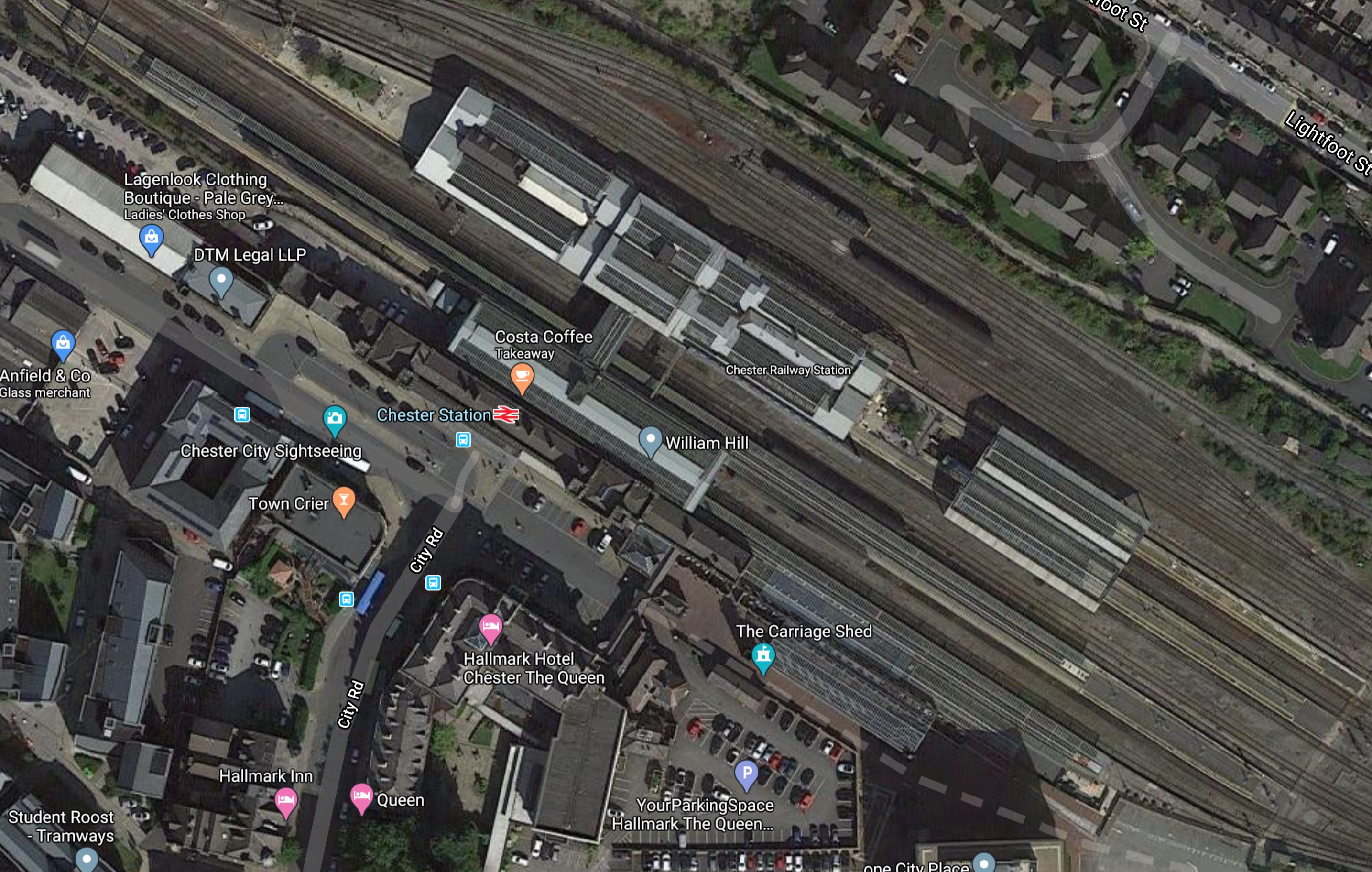
There is plenty of space.
The simplest way to charge trains at Chester would be to electrify the two through platforms 3 and 4 and the bay platform 1.
I would use 750 VDC third-rail, rather than 25 KVAC overhead electrification.
- I’m an engineer, who deals in scientifically-correct solutions, not politically-correct ones, devised by jobsworths.
- Maintenance staff at the station will be familiar with the technology.
- Station staff and passengers will know about the dangers of third-rail electrification.
- Trains connect and disconnect automatically to third-rail electrification.
- Trains don’t have to stop to connect and disconnect, so passing trains can be topped-up.
- Hitachi with the Class 395 train and Alstom with the Class 373 train, have shown even trains capable of 140 mph can be fitted with third-rail shoes to work safely at slower speeds on lines electrified using third-rail.
- Modern control systems can control the electricity to the third-rail, so it is only switched on, when the train completes the circuit.
I have a vague recollection, that there is an avoiding line at Chester station, so trains can go straight through. Perhaps that should be electrified too.
Carmarthen
Carmarthen station is a two platform station, with a rather unusual layout, that I wrote about in Changing Trains At Carmarthen Station.
I took these pictures when I passed through in 2016.
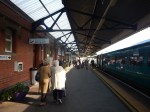


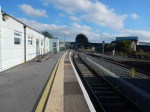
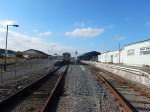
Note the unusual step-free crossing of the tracks.
This Google Map shows the layout at the station.
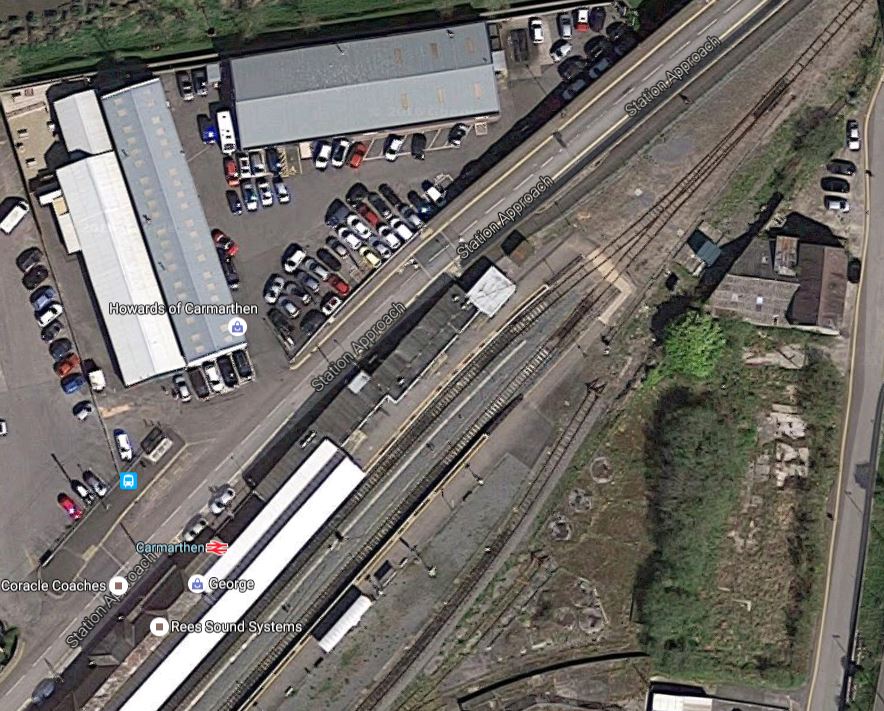
I believe it is another station, where third-rail electrification could be the solution.
- Most trains seem to reverse at the station, which gives time for a full charge.
- Others terminate here.
but would they still allow passengers to cross the line as they do now, whilst trains are being charged?
Crewe
Crewe station is fully-electrified.
- Trains for Wales seem to use Platform 6 for through trains and the bay Platform 9 for terminating trains.
- Both platforms appear to be electrified.
- Terminating trains appear to wait at least 9-11 minutes before leaving.
It does appear that Crewe station is ready for battery-electric trains.
Fishguard Harbour
Fishguard Harbour station only has a single terminal platform.
My comments would be similar to what, I said for Aberystwyth station. I would hope a standard solution can be developed.
Hereford
Hereford station has four through platforms.
This Google Map shows the station.
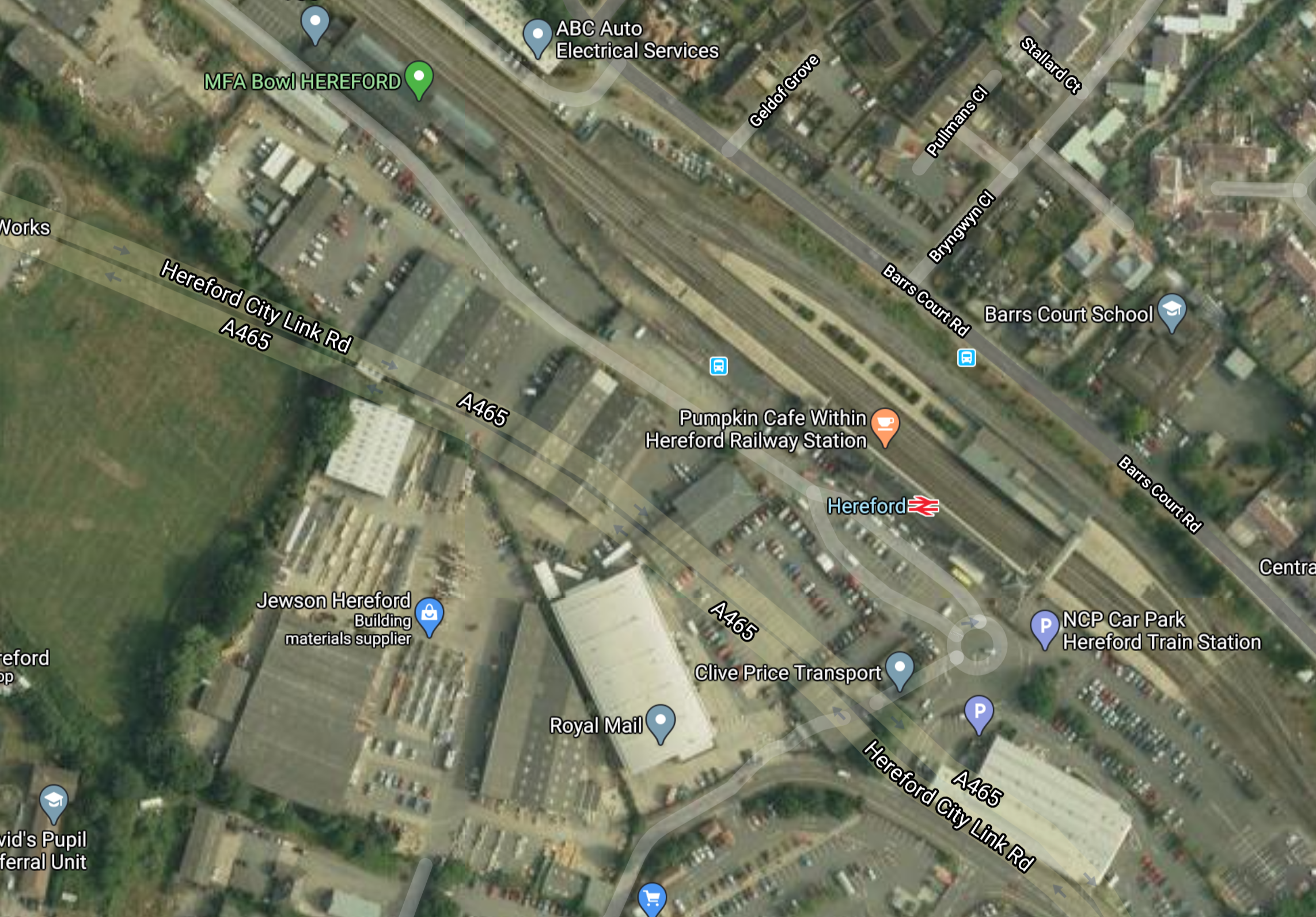
There is plenty of space.
As with Chester, I would electrify this station with 750 VDC third-rail equipment.
But the electrification wouldn’t be just for train services in Wales.
- West Midlands Trains, run an hourly service to Birmingham New Street and there is only a forty-one mile gap in the electrification between Hereford and Bromsgrove.
- Great Western Railway’s service to London, has a massive ninety-six mile run to the electrification at Didcot Junction, which could be bridged by installing charging facilities at Worcestershire Parkway and/or Honeybourne stations.
Both services have generous turnround times at Hereford, so would be able to leave fully-charged.
Distances from Hereford station are as follows.
- Abergavenny – 24 miles
- Bromsgrove – 41 miles
- Great Malvern – 21 miles
- Honeybourne – 48 miles
- Ludlow – 13 miles
- Newport – 44 miles
- Shrewsbury – 51 miles
- Worcester Parkway – 33 miles
Hereford station could be a serious battery-electric train hub.
Holyhead
Holyhead station has three terminals platforms.
My comments would be similar to what, I said for Aberystwyth station. I would hope a standard solution can be developed.
Liverpool Lime Street
Liverpool Lime Street station is fully-electrified and ready for battery-electric trains.
Llandrindod
Llandrindod station has two through platforms.
I took these pictures at the station as I passed through in 2016.

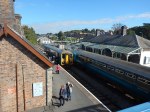
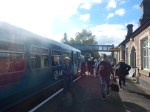

The Heart of Wales Line is certainly a route, that would benefit from larger trains. Zero-carbon battery-electric trains would surely fit well in the area.
This Google Map shows the station.
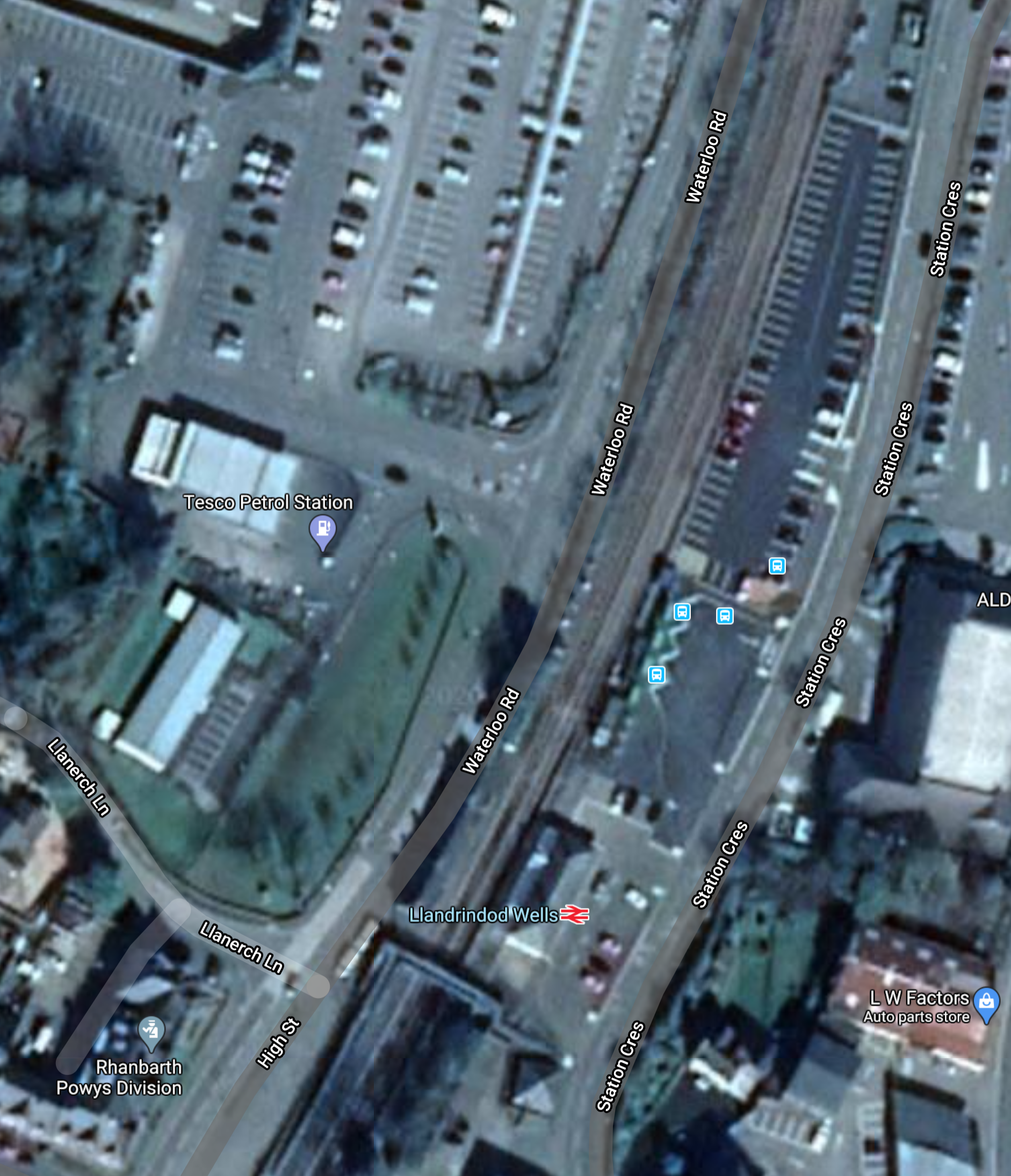
It would appear that, it is another station, that could be fitted with third-rail electrification to charge the trains.
Distances from Llandrindod station are as follows.
- Shrewsbury – 52 miles
- Llandovery – 27 miles
- Llanelli – 59 miles
- Swansea – 70 miles
It would appear that a second station with charging facilities or bigger batteries are needed.
Llandudno Junction
Llandudno Junction station has four platforms.
This Google Map shows the station.
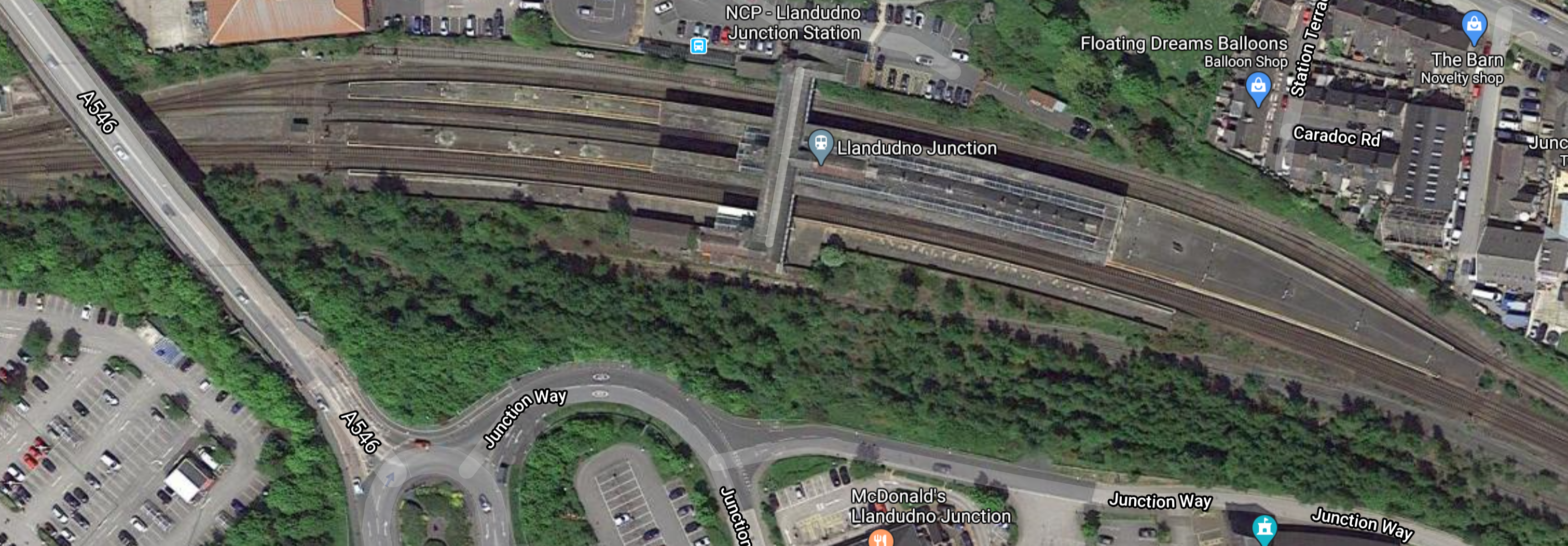
There is plenty of space.
As at Chester, the simple solution would be to electrify the platforms used by trains, that will need charging.
Butb there may also be a wider plan.
Llandudno Junction station is at the Western end of a string of five closely-spaced stations with Prestatyn station in the East.
- Llandudno Junction and Prestatyn are eight miles apart.
- Trains take twenty-three minutes to pass through this section.
- Some trains do a detour to Llandudno station before continuing.
- For part of the route, the railway lies between the dual-carriageway A55 road and the sea.
So why not electrify this section of railway between Llandudno Junction and Prestatyn stations?
- Either 750 VDC this-rail or 25 KVAC overhead electrification could be used.
- Prestatyn and Chester are 46 miles apart.
- Llandudno Junction and Holyhead are 40 miles apart.
If third-rail electrification were to be used, it might be advantageous to electrify to Llandudno station.
- It would be less intrusive.
- It would be quieter in an urban area.
- It would give the trains to Blaenau Ffestiniog trains a good charge.
But above all third-rail electrification might cost a bit less and cause less disruption to install.
Machynlleth
Machynlleth station is where the Aberystwyth and Pwllheli services split and join.
This Google Map shows the station.
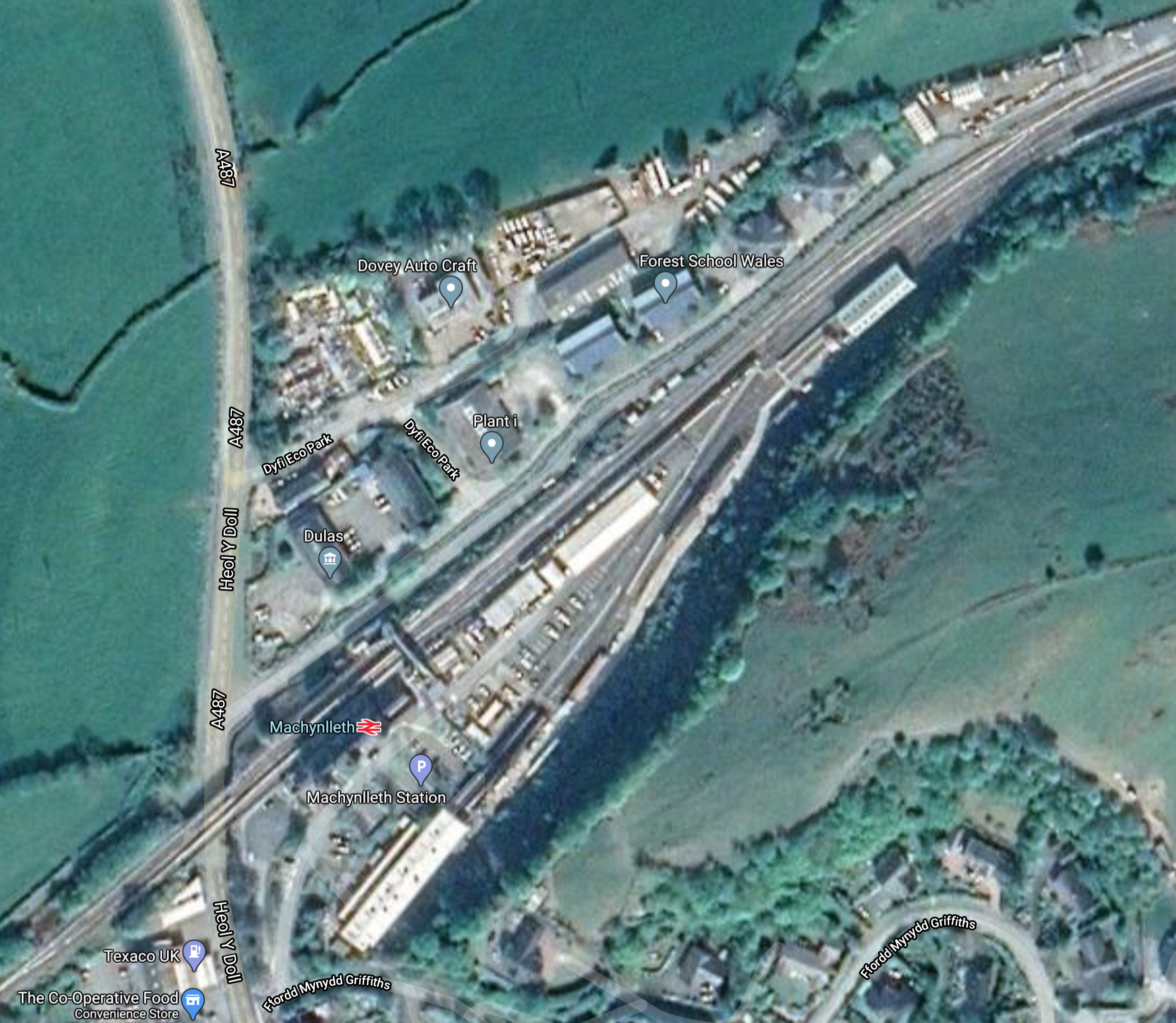
Consider.
- There is a train depot by the station.
- Will there be a good power supply at the station to charge the trains?
- Machnylleth and Pwllhelli are 58 miles apart.
- Machynlleth and Shrewsbury are 61 miles apart.
I think that Machynlleth might be pushing things too far, without extra stations with charging facilities.
One solution might be to develop the Riding Sunbeams concept and electrify the route between Newtown and Dovey Junction via Machynlleth, using third-rail technology powered-by solar or wind power.
Another solution would be batteries with a larger capacity.
Manchester Airport
Manchester Airport station is fully-electrified and ready for battery-electric trains.
Manchester Piccadilly
Manchester Piccadilly station is fully-electrified and ready for battery-electric trains.
Milford Haven
Milford Haven station only has a single terminal platform.
My comments would be similar to what, I said for Aberystwyth station. I would hope a standard solution can be developed.
Pembroke Dock
Pembroke Dock station only has a single terminal platform.
My comments would be similar to what, I said for Aberystwyth station. I would hope a standard solution can be developed.
Pwllheli
Pwhelli station is a only has a single terminal platform.
This Google Map shows the location of the station.
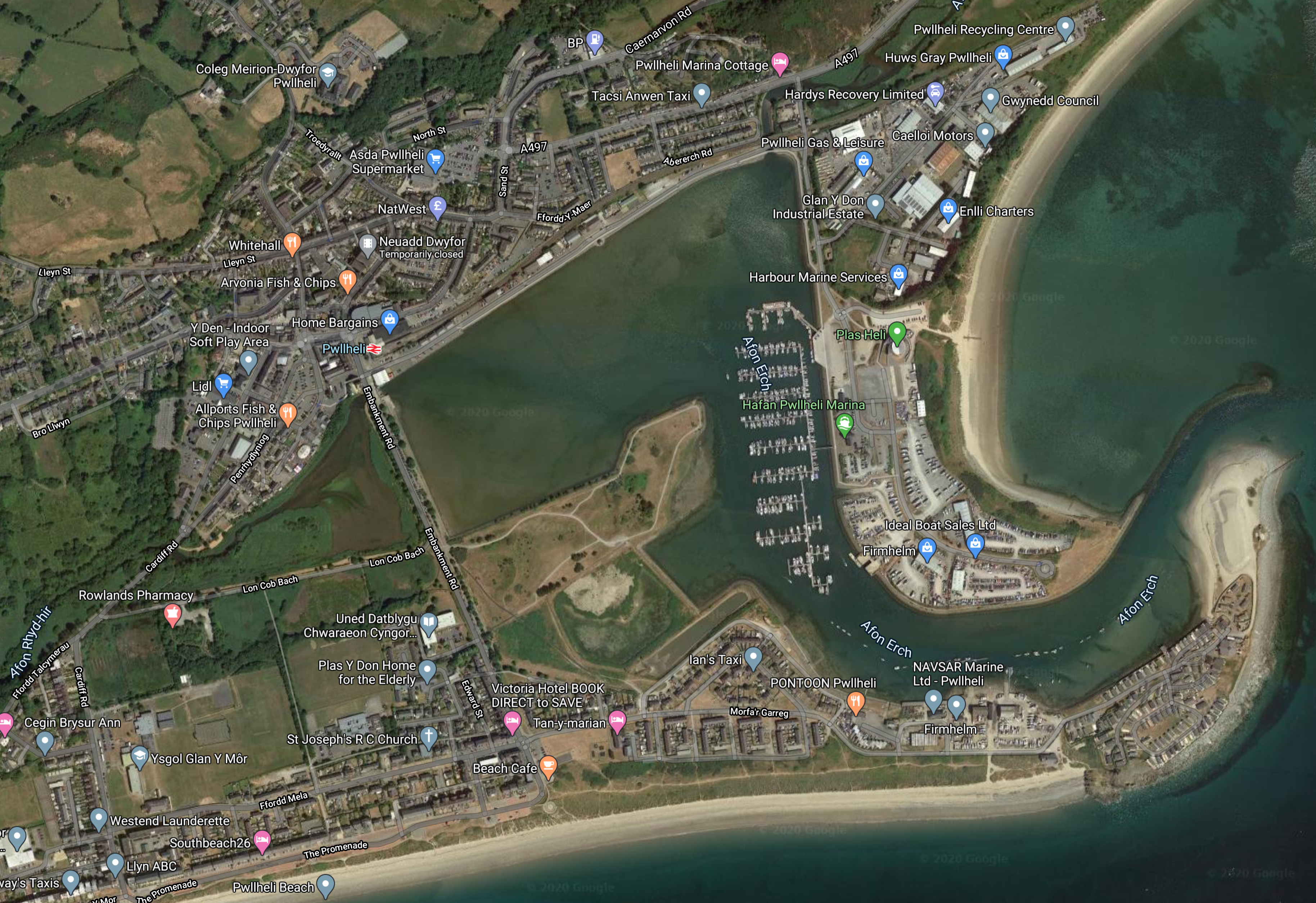
The stsation is at the North West corner of the bay.
My first reaction, when I saw this was that I have to go.
So I took a closer look at the station instead.

I suspect that fitting a charging facility into the station, wouldn’t be the most difficult of engineering problems. Although, there might be a problem getting a good enough connection to the National Grid.
Shewsbury
Shrewsbury station is a five-platform station.
This Google Map shows the station’s unusual location over the River Severn.
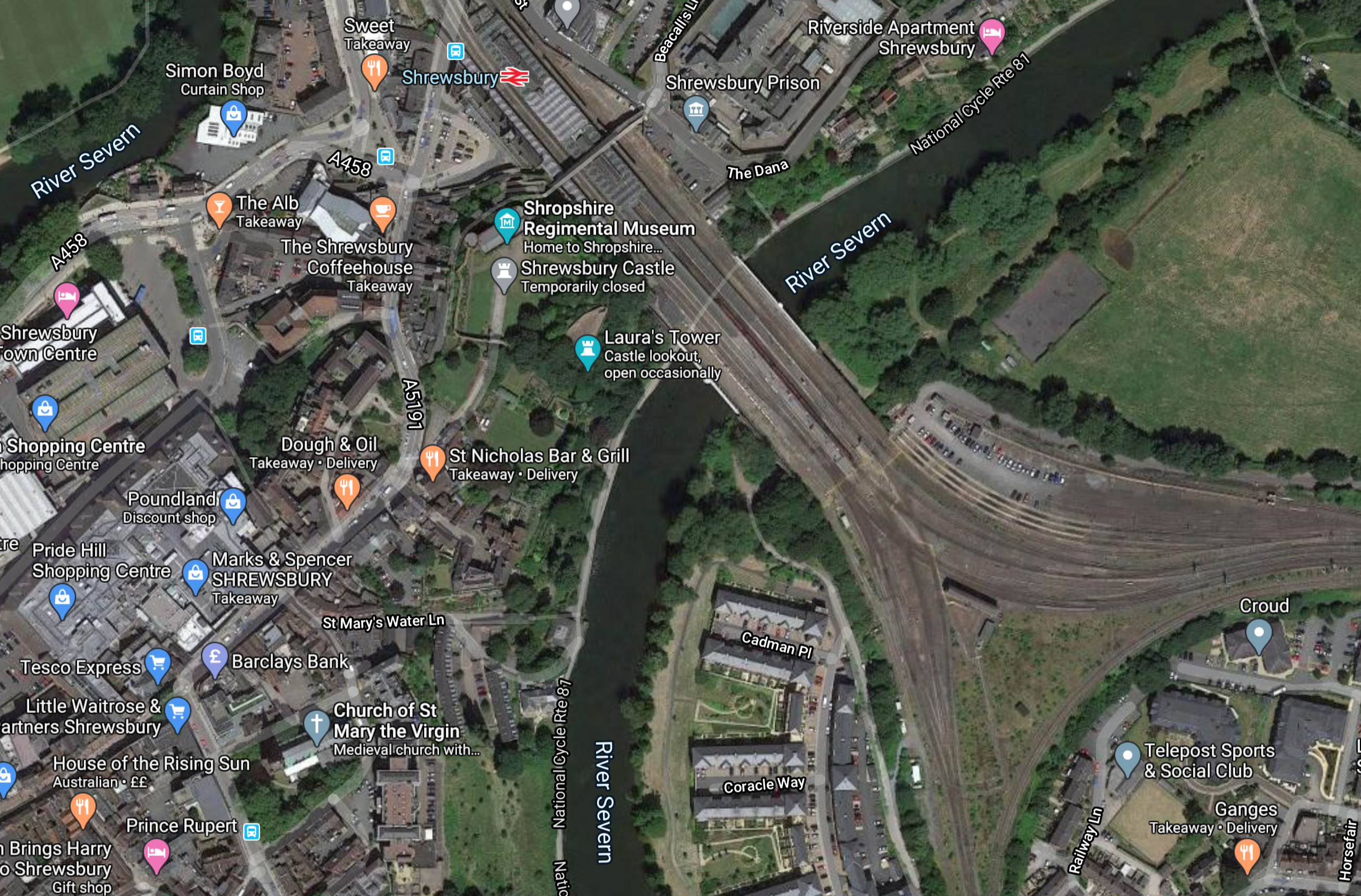
It must be one of few stations in the world, where trains enter the station from three different directions.
- From Crewe and Chester to the North.
- From Hereford and Wales to the South.
- From Birmingham and Wolverhampton in the East.
Adding electrification to all or selected platforms should allow trains to recharge and be on their way.
- Under current timetables, dwell times in Shrewsbury are up to eight minutes.
- I would suspect the train times could be adjusted, so that trains left the station with full batteries.
With battery-electric services to Aberystwyth, Birmingham International, Birmingham New Street, Cardiff Central, Chester, Crewe, Hereford, Holyhead, London Euston, Manchester, Pwllheli and Swansea, it will be a very important station.
Swansea
Swansea station has four terminal platforms.
A charging facility could be added to an appropriate number of platforms.
Or perhaps, the last few miles of track into the station should be electrified, so trains could charge on the way in, charge in the station and charge on the way out.
Third Rail Electrification
I have suggested in this post, that 750 VDC third-rail electrification could be used in several places.
I will repeat what I said earlier, when discussing Chester station.
- I’m an engineer, who deals in scientifically-correct solutions, not politically-correct ones, devised by jobsworths.
- Maintenance staff at the station will be familiar with the technology.
- Station staff and passengers will know about the dangers of third-rail electrification.
- Trains connect and disconnect automatically to third-rail electrification.
- Trains don’t have to stop to connect and disconnect, so passing trains can be topped-up.
- Hitachi with the Class 395 train and Alstom with the Class 373 train, have shown even trains capable of 140 mph can be fitted with third-rail shoes to work safely at slower speeds on lines electrified using third-rail.
- Modern control systems can control the electricity to the third-rail, so it is only switched on, when the train completes the circuit.
Third-rail electrification should be seriously considered.
A Standardised Terminal Solution
In this post, I mentioned that the following stations could be powered by a scandalised solution, as they are all one platform, terminal stations.
- Aberystwyth
- Blaenau Ffestiniog
- Fishguard Harbour
- Holyhead
- Milford Haven
- Pembroke Dock
- Pwllheli
The system might also be applicable at Carmarthen and Swansea.
My view is that Vivarail’s Fast Track charging based on third-rail technology would be ideal. I discussed this technology in Vivarail Unveils Fast Charging System For Class 230 Battery Trains.
Conclusion
With a bit of ingenuity, all train services run by Transport for Wales, can be run with battery-electric trains.
High Speed Two To The North West Of England
This map clipped from the High Speed Two web site, shows High Speed Two routes in the North West of England.
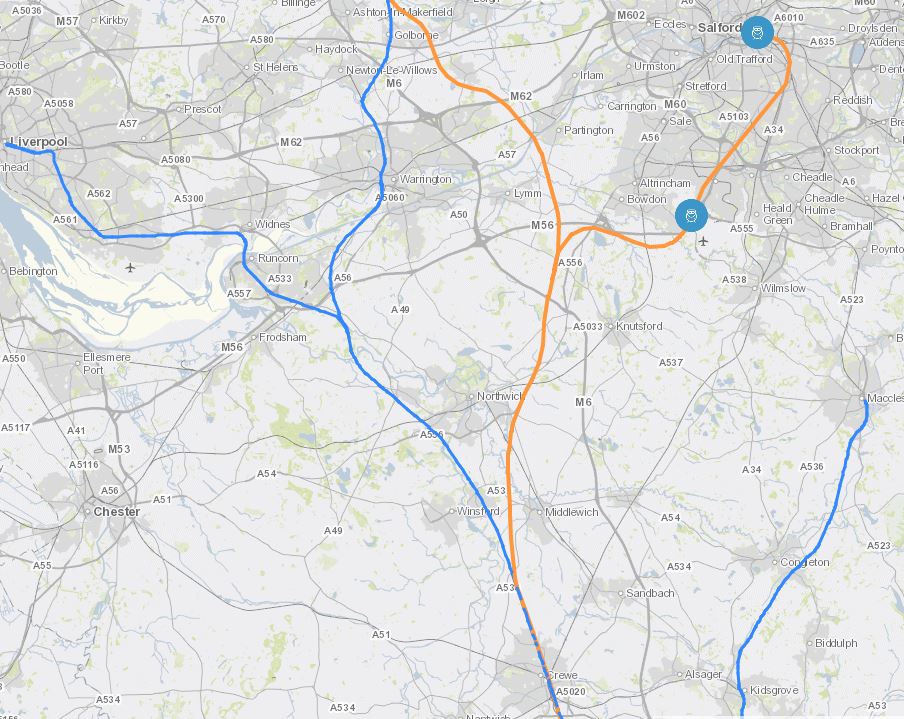
Note.
- When shown in orange, High Speed Two will use new tracks.
- When shown in blue, High Speed Two will use existing tracks.
- New stations are shown as large blue dots.
- High Speed Two and the West Coast Main Line appear to share a corridor through Crewe, before dividing near Walley’s Green.
- High Speed Two loops to the East of the West Coast Main Line and rejoins it South of Wigan between Bryn Gates and Abram Brow.
The route will or might serve the following stations in North West England.
Blackpool North
Blackpool North station is not planned to be served by High Speed Two.
But the station has been recently rebuilt.
- It has a number of platforms, that are capable of handling 200 metre long classic-compatible High Speed Two trains.
- The route to High Speed Two at Preston is fully electrified.
- In a couple of years, it will be connected to Blackpool’s expanding tramway.
- Blackpool would welcome High Speed Two with open arms.
Blackpool North would be an ideal extra destination, if more trains were to be split and joined at Crewe.
But whatever happens, I believe that high speed commuter trains will run from Blackpool North.
- Blackpool and Manchester Piccadilly via Preston, Wigan North Western, Warrington Bank Quay and Manchester Airport.
- Blackpool and Derby via Preston, Wigan North Western, Warrington Bank Quay, Crewe and Stoke-on-Trent.
Blackpool North has the platforms and electrification and it will be used.
Carlisle
Carlisle station is a through station on the current Glasgow service and can handle a nine-car Class 390 train which is over 210 metres long, which means they can handle a 200 metre long, classic-compatible High Speed Two train.
But two tph will be 400 metre London Euston and Edinburgh/Glasgow trains, so platform lengthening will probably be required.
There will be the following trains.
- Birmingham Curzon Street and Carlisle – I tph – 118 minutes
- London Euston and Carlisle – 2 tph – 154 minutes.
After any necessary platform lengthening, Carlisle will be ready and waiting for High Speed Two and will be reached in Phase 1 of the project.
The High Speed Two web site, says Carlisle will be reached in Phase 2b, but as Edinburgh and Glasgow are part of Phase 1, this must be a mistake.
Crewe
Crewe station is at the bottom of the map, just to the right of centre.
The station gets this introduction on this page of the High Speed Two web site.
HS2 services will call at Crewe, where passengers will be able to access the high speed network heading south. Journey times to London will be cut to under an hour. Macclesfield, Stafford and Stoke-on-Trent will also receive HS2 services, spreading the benefits of better connectivity.
The page also says that between five and seven trains per hour (tph) will call at Crewe.
Lancaster
Lancaster station is a through station on the current Glasgow service and can handle a nine-car Class 390 train which is over 210 metres long, which means they can handle a 200 metre long, classic-compatible High Speed Two train.
Lancaster will also be a terminus of 200 metre long classic-compatible High peed Two train from London Euston, so there may need to be refurbishment to handle the larger, if not longer train.
The use of Lancaster as a terminus, would appear to have the following advantages.
- The platform is already there.
- Using Lancaster as a terminal, may reduce the scope of works at Carlisle and Preston.
- The one tph service from London Euston is effectively a High Speed Northern stopper between Lancaster and Crewe, with calls at Warrington Bank Quay, Wigan North Western and Preston stations.
- Lancaster has connections to Barrow-in-Furness, Heysham Port and Morecambe and the scenic Cumbrian Coast and Settle-Carlisle Lines.
- Paces like Barrow-in-Furness. Morecambe and a host of other stations, should save forty-three minutes on journeys to and from London.
I think that Lancaster, is a good place to terminate a service in the North-West of England.
There will be the following trains.
- Birmingham Curzon Street and Lancaster – I tph – 65 minutes
- London Euston and Lancaster – 1 tph – 101 minutes.
After the necessary refurbishment, Lancaster will be ready and waiting for High Speed Two and will be reached in Phase 2b of the project.
But I do feel that Lancaster could be reached in Phase 1 of the project, if necessary works North of Preston and at Lancaster station were planned as an independent project.
Liverpool Lime Street
Liverpool Lime Street station is at the Western edge of the map, at the end of the Liverpool Branch of the West Coast Main Line.
Liverpool gets this headline and brief description on this page of the High Speed Two web site.
The City Region Wants To Deliver a World Class Transport Network
Its ambitious plans would integrate the existing HS2 route and builds on the Northern Powerhouse Rail proposals for high speed, east-west links directly into Liverpool City Centre.
Liverpool has made a good start to prepare for High Speed Two.
- The Grade II Listed; Lime Street station now has lengthened platforms and an improved layout so that it can handle two 200 metre long High Speed Two trains per hour.
- Merseyrail is taking delivery of a fleet of new Class 777 trains to update their suburban network.
- By the time High Speed Two arrives in the city, the suburban network will be larger.
Liverpool is ready and waiting for High Speed Two and will be reached in Phase 1 of the project.
Macclesfield
Macclesfield station is at the Eastern edge of the map, at the end of its own leg of High Speed Two.
The station was the surprise destination added, during the last iteration of High Speed Two.
- The late, great Brian Redhead, who lived in the town would be very pleased.
- The station was rebuilt in 1960 and has three platforms.
- It is planned to have one tph to London Euston via Stoke-on-Trent, Stafford and Old Oak Common.
- The visualisation on this page of the High Speed Two web site, also shows three platforms, but I wouldn’t be surprised to see a fourth added, as the extra platform would add flexibility.
The second surprise for Macclesfield, is that like Liverpool, it will be reached in Phase 1 of the project.
Manchester Airport
Manchester Airport station is the Southern large blue dot at the top of the map.
This page on the High Speed Two web site is rather sparse on information about Manchester Airport station.
I have combined train times given on the web page, with frequencies from an article in the June 2020 Edition of Modern Railways to create this table, which should be valid after the completion of High Speed Two.
- Birmingham Curzon Street and Manchester Airport – 2 tph – 32 minutes
- Birmingham Interchange and Manchester Airport – 1 tph – 29 minutes
- London Euston and Manchester Airport – 3 tph – 63 minutes
- London Old Oak Common and Manchester Airport – 3 tph – 56 minutes
- Manchester Piccadilly and Manchester Airport – 5 tph – 6 minutes
In Changes Signalled For HS2 Route In North, I stated that Northern Powerhouse Rail were proposing the following Liverpool and Manchester service.
Manchester Airport station will be reached in Phase 2b of the project.
- Six tph
- Stops at Manchester Airport and Warrington.
- An end-to-end journey time of 26 minutes.
This would do the following.
- Add a Liverpool and Manchester Airport service with a frequency of 6 tph, that will take 20 minutes.
- Add a Warrington Parkway and Manchester Airport service with a frequency of 6 tph that will take around 10 minutes.
- Increase the frequency between Manchester Piccadilly and Manchester Airport to 11 tph. Or more likely 12 tph.
How many cities have an airport connection running every five minutes using trains running at 125 mph?
As these Liverpool and Manchester services would probably start in places like Hull and Newcastle and come via varied routes that included a selection of Bradford, Doncaster Huddersfield, Leeds and Sheffield, all of the North, that lies to the East of the Pennines will be connected to Manchester Piccadilly, Manchester Airport and Liverpool by high speed trains.
Manchester Piccadilly
Manchester Piccadilly station is the Northern large blue dot at the top of the map.
This page on the High Speed Two web site is rather sparse on information about Manchester Piccadilly station.
Using the same data as before I can create a table of services from Manchester Piccadilly station, where I have included Liverpool and Manchester services, that will be run by Northern Powerhouse Rail.
- Birmingham Curzon Street – 2 tph – 40 minutes
- Birmingham Interchange – 1 tph – 37 minutes
- London Euston – 3 tph – 67 minutes
- London Old Oak Common – 3 tph – 60 minutes
- Manchester Airport – 12 tph – 6 minutes
- Liverpool – 6 tph – 26 minutes
Manchester Piccadilly station will be reached in Phase 2b of the project.
Oxenholme Lake District
Oxenholme Lake District station is a through station on the current Glasgow service and can handle a nine-car Class 390 train which is over 210 metres long, which means they can handle a 200 metre long, classic-compatible High Speed Two train.
There will be the following trains.
- Birmingham Curzon Street and Oxenholm Lake District – I tph – 79 minutes
- London Euston and Oxenholme Lake District – 115 minutes – Change at Preston
Oxenholme Lake District is ready and waiting for High Speed Two and will be reached in Phase 2b of the project.
But I do feel that Oxenholme Lake Districtcould be reached in Phase 1 of the project, if necessary works North of Preston and at Lancaster station were planned as an independent project
Penrith North Lakes
Penrith North Lakes station is a through station on the current Glasgow service and can handle a nine-car Class 390 train which is over 210 metres long, which means they can handle a 200 metre long, classic-compatible High Speed Two train.
There will be the following trains.
- Birmingham Curzon Street and Penrith North Lakes – I tph – 102 minutes
- London Euston and Penrith North Lakes – 138 minutes – Change at Preston
Penrith North Lakes is ready and waiting for High Speed Two and will be reached in Phase 2b of the project.
But I do feel that Penrith North Lakes could be reached in Phase 1 of the project, if necessary works North of Preston and at Lancaster station were planned as an independent project
Preston
Preston station is a through station on the current Glasgow service and can handle a nine-car Class 390 train which is over 210 metres long, which means they can handle a 200 metre long, classic-compatible High Speed Two train.
But two tph will be 400 metre London Euston and Edinburgh/Glasgow trains, so platform lengthening will probably be required.
There will be the following trains.
- Birmingham Curzon Street and Preston – I tph – 50 minutes
- London Euston and Preston – 3 tph – 78 minutes.
After any necessary platform lengthening, Preston will be ready and waiting for High Speed Two and will be reached in Phase 1 of the project.
Runcorn
Runcorn station is a through station on the Liverpool service and can handle a nine-car Class 390 train which is over 210 metres long, which means they can handle a 200 metre long, classic-compatible High Speed Two train.
There will be two tph between London Euston and Runcorn and trains will take 74 minutes.
Runcorn is ready and waiting for High Speed Two and will be reached in Phase 1 of the project.
Stafford
Stafford station is a through station on the Macclesfield service and can handle a nine-car Class 390 train which is over 210 metres long, which means they can handle a 200 metre long, classic-compatible High Speed Two train.
There will be one tph between London Euston and Stafford and trains will take 54 minutes.
Sfafford is ready and waiting for High Speed Two and will be reached in Phase 1 of the project.
Stoke
Stoke station is a through station on the Macclesfield service and can handle a nine-car Class 390 train which is over 210 metres long, which means they can handle a 200 metre long, classic-compatible High Speed Two train.
There will be one tph between London Euston and Stoke and trains will take 71 minutes.
Stoke is ready and waiting for High Speed Two and will be reached in Phase 1 of the project.
Warrington
Warrington Bank Quay station is a through station on the current Glasgow service and can handle a nine-car Class 390 train which is over 210 metres long, which means they can handle a 200 metre long, classic-compatible High Speed Two train.
There will be the following trains.
- Birmingham Curzon Street and Warrington Bank Quay – I tph – 25 minutes
- London Euston and Warrington Bank Quay – 1 tph – 73 minutes.
Warrington Bank Quay is ready and waiting for High Speed Two and will be reached in Phase 1 of the project.
Wigan
Wigan North Western station is a through station on the current Glasgow service and can handle a nine-car Class 390 train which is over 210 metres long, which means they can handle a 200 metre long, classic-compatible High Speed Two train.
There will be the following trains.
- Birmingham Curzon Street and Wigan North Western – I tph – 36 minutes
- London Euston and Wigan North Western – 1 tph – 84 minutes.
Wigan North Western is ready and waiting for High Speed Two and will be reached in Phase 1 of the project.
Splitting And Joining Of High Speed Two Trains
In Existing Stations Where High Speed Two Trains Will Call, I looked at how existing stations will need to be modified to handle the High Speed Two service pattern described in an article, which is entitled HS2 Minister Backs 18 tph Frequency, in the June 2020 Edition of Modern Railways.
The article states that splitting and joining of trains will take place at three stations; Carlisle, Crewe and East Midlands Hub.
To successfully split and join the pairs of 200 metre long High Speed Two trains, the following will be needed.
- 400 metre long platforms, that can handle the pair of trains.
- Excellent signage, so that passengers get into the right train and leave for the right destination.
- Efficient crew methods, so that drivers are in the correct cabs at the right time.
For many years trains at Cambridge and several places South of London have successfully split and joined.
This video shows two Class 395 trains coupling and uncoupling automatically.
It;s impressive and I suspect High Speed Two’s trains will be equally good or even better at this procedure.
Why Is Split And Join Needed For High Speed Two?
According to the Modern Railways article, the full High Speed Two service will be as follows in trains per hour (tph) and trains per two hours (tp2h)
- 1 tph – London Euston and Birmingham Curzon Street via Old Oak Common (OOC) – 400 metres
- 2 tph – London Euston and Birmingham Curzon Street via OOC and Birmingham Interchange – 400 metres
- 1 tph – London Euston and Lancaster via OOC, Crewe, Warrington Bank Quay, Wigan North Western and Preston – London Euston and Liverpool Lime Street via OOC, Crewe and Runcorn – 200+200 metres with Split/Join at Crewe
- 1 tph – London Euston and Liverpool Lime Street via OOC, Crewe and Runcorn – 200 metres
- 1 tph – London Euston and Macclesfield via OOC, Stafford and Stoke-on-Trent – 200 metres
- 1 tph – London Euston and Manchester Piccadilly via OOC, Birmingham Interchange and Manchester Airport – 400 metres
- 2 tph – London Euston and Manchester Piccadilly via OOC and Manchester Airport – 400 metres
- 1 tph – London Euston and Edinburgh Waverley via OOC, Preston, Carlisle and Edinburgh Haymarket – London Euston and Glasgow Central via OOC, Preston and Carlisle – 200 +200 metres with Split/Join at Carlisle
- 1 tph – London Euston and Edinburgh Waverley via OOC, Birmingham Interchange, Preston, Carlisle and Edinburgh Haymarket – London Euston and Glasgow Central via OOC, Preston and Carlisle – 200 +200 metres with Split/Join at Carlisle
- 1 tp2h – Birmingham Curzon Street and Edinburgh Waverley via Wigan North Western, Preston, Lancaster, Oxenholme, Penrith and Edinburgh Haymarket – 200 metres
- 1 tp2h – Birmingham Curzon Street and Glasgow Central via Wigan North Western, Preston, Lancaster, Oxenholme, Penrith, Lockerbie and Motherwell – 200 metres
- 2 tph – Birmingham Curzon Street and Manchester Piccadilly via Manchester Airport – 200 metres
- 2 tph – Birmingham Curzon Street and Leeds via East Midlands Hub – 200 metres
- 1 tph – Birmingham Curzon Street and Newcastle via East Midlands Hub, Darlington and Durham – 200 metres
- 1 tph – London Euston and Sheffield via OOC and East Midlands Hub – London Euston and Leeds via OOC and East Midlands Hub – 200 + 200 metres with Split/Join at East Midlands Hub
- 1 tph – London Euston and Leeds via OOC and East Midlands Hub – 400 metres
- 1 tph – London Euston and Leeds via OOC, Birmingham Interchange and East Midlands Hub – 400 metres
- 1 tph – London Euston and Sheffield via OOC, East Midlands Hub and Chesterfield – London Euston and York via OOC and East Midlands Hub – 200 + 200 metres with Split/Join at East Midlands Hub
- 1tph – London Euston and Newcastle via OOC and York – 200 metres
- 1 tph – London Euston and Newcastle via OOC, York and Darlington – 200 metres
Note.
- Trains 10 and 11 share the same path in alternate hours.
- Birmingham Curzon Street is effectively a second Southern terminus.
- Seventeen tph leave London Euston and Old Oak Common for the North, of which eight are 400 metre trains, five are a pair of 200 metre trains and four are 200 metre trains.
As the five pairs of 200 metre trains Split/Join en route, this effectively means, that London Euston is served by twenty-two tph.
It would appear that Split/Join is important, as it allows the same number of train paths between London Euston and the North to support more services.
Could Any Other Trains Be Split And Joined?
I don’t see why not!
There are eight tph going North from London Euston and Old Oak Common, that are 400 metre long trains that don’t Split/Join
- 3 tph – Birmingham Curzon Street
- 2 tph – Leeds
- 3 tph – Manchester Piccadilly
Note.
- Each 400 metre train would appear to have a capacity of around 1,100 passengers.
- Leeds is also served by another 200 metre train from London.
Effectively, this gives the following passenger capacities between London and the three major cities.
- Birmingham – 3,300
- Leeds – 2,750
- Manchester – 3,300
If these capacities have been carefully predicted, performing a Split/Join on these trains might cause a shortage of capacity.
There are four single 200 metre trains, that could be doubled up for their run to the North.
- London Euston and Liverpool Lime Street via OOC, Crewe and Runcorn
- London Euston and Macclesfield via OOC, Stafford and Stoke-on-Trent
- London Euston and Newcastle via OOC and York
- London Euston and Newcastle via OOC, York and Darlington
In theory, these four trains could be doubled to provide extra services.
But there are two problems.
Where Would The Trains Split and Join?
- Train 1 could Split/Join at Crewe.
- Train 2 could Split/Join at Stafford, if the platforms were lengthened to accept a pair of 200 metre trains.
- Trains 3 and 4 would need to stop at East Midlands Hub to Split/Join
It would appear that four extra trains could be run into London Euston, by running all single trains as pairs.
Where Would The Extra Services Terminate?
There are possibilities on the Western leg of High Speed Two.
- An extra train for Liverpool Lime Street
- An extra train for Lancaster
- A direct train for the current Manchester Piccadilly via Wilmslow and Stockport
- A direct train for Blackpool
But the Eastern leg of High Speed Two is more of a problem.
- An extra train for Sheffield
- A direct train for Hull.
Hull could be served via a new junction between High Speed Two and the Hull-Leeds Line to the North-West of Garforth or perhaps by extending a service from Sheffield.
Could Any Services North From Birmingham Curzon Street Be Split And Joined?
These 200 metre services go North from Birmingham Curzon Street station.
- 1 tp2h – Birmingham Curzon Street and Edinburgh Waverley via Wigan North Western, Preston, Lancaster, Oxenholme, Penrith and Edinburgh Haymarket
- 1 tp2h – Birmingham Curzon Street and Glasgow Central via Wigan North Western, Preston, Lancaster, Oxenholme, Penrith, Lockerbie and Motherwell
- 2 tph – Birmingham Curzon Street and Manchester Piccadilly via Manchester Airport
- 2 tph – Birmingham Curzon Street and Leeds via East Midlands Hub
- 1 tph – Birmingham Curzon Street and Newcastle via East Midlands Hub, Darlington and Durham.
Note that trains 1 and 2 share the same path in alternate hours.
There may be scope to double up some of these trains, to serve extra destinations in the North from Birmingham Curzon Street.
Conclusion
Split/Join is a powerful tool to increase the number of services without spending a fortune on new infrastructure.
Will Avanti West Coast’s New Trains Be Able To Achieve London Euston and Liverpool Lime Street In Two Hours?
Note that I have rewritten this post to take account of this information from the January 2020 and December 2022 Editions of Modern Railways, in an article, which is entitled Hitachi Trains For Avanti.
This is said about the ten all-electric AT-300 trains for Birmingham, Blackpool and Liverpool services, which have now been numbered as Class 807 trains.
The electric trains will be fully reliant on the overhead wire, with no diesel auxiliary engines or batteries.
It may go against Hitachi’s original design philosophy, but not carrying excess weight around, must improve train performance, because of better acceleration.
Currently, Avanti West Coast‘s trains between London Euston and Liverpool Lime Street stations are timetabled as follows.
- The journey takes two hours and thirteen or fourteen minutes.
- There are three stops at Stafford, Crewe and Runcorn.
- The stops with the current Class 390 trains seem to take around a minute.
- There is one train per hour (tph)
- A second hourly service with a stop at Liverpool South Parkway is planned to be introduced in December 2022.
In 2022, a new fleet of Hitachi AT-300 trains will be introduced on the route. I believe, it would be reasonable to assume, that these Class 807 trains will have similar or better performance, than the current Class 390 trains.
- Acceleration and braking are likely to be better.
- Regenerative braking energy may well be handled more efficiently.
- The trains may well be equipped with in-cab digital signalling and be able to travel in excess of 125 mph in places, where the track allows.
I would expect, that these trains could be running near to or at 125 mph for most of the journey.
London Euston and Liverpool Lime Street are 193.5 miles apart, so if a train could be running at 125 mph all the way, a train would take 93 minutes.
Extra time must be added for the following.
- Acceleration from a standing start to 125 mph at London Euston, Stafford, Crewe and Runcorn.
- Deceleration from 125 mph to a stop at Stafford, Crewe, Runcorn and Liverpool Lime Street.
- Dwell time in the platforms at Stafford, Crewe and Runcorn.
This page on the Eversholt Rail web site, has a data sheet for a Class 802 train, which is a bi-mode AT-300 train with three diesel engines.
The data sheet shows that a five-car train can accelerate to 125 mph and then decelerate to a stop in six minutes in electric mode. As Avanti West Coast’s Class 807 trains will be all-electric seven-car trains with no heavy engine or battery, I doubt they will be slower than a Class 802 train in electric mode. So four accelerations/deceleration cycles to 125 mph should take no more than twenty-four minutes.
I will assume two minutes for each of the three stops.
I can now give an estimate for the journey.
- Base journey time – 93 minutes
- Acceleration from and deceleration to stops – 24 minutes
- Station dwell time – 6 minutes
This gives a journey time between London Euston and Liverpool Lime Street of two hours and three minutes.
The journey time can probably be improved in the following ways.
- Take full advantage of the track improvements on the approach to Liverpool Lime Street station and at Norton Bridge Junction.
- Better train pathing, as has been done on London Liverpool Street and Norwich services to create the fast Norwich-in-Ninety services.
- Track and signal improvements to pinch a minute here and a minute there.
- As Runcorn now has an hourly Liverpool Lime Street and Chester service, will the Runcorn stop be dropped to save time?
- Reduction in station dwell time.
- Better driver aids.
- Better staff operating procedures at stops and whilst turning the train.
It should be born in mind, that a two hour journey between London Euston and Liverpool Lime Street would be a start-stop average speed of 97 mph on a 125 mph route. Intriguingly, this means the trains would run at 77 % of the maximum operating speed of the route, which is the same figure for Norwich-in-Ninety services.
Some of these improvements may enable the Class 390 trains to go a bit faster.
It has to be considered, that Avanti West Coast’s Marketing Department would be ecstatic, when told that London and Liverpool were less than two hours apart.
How Many Trains Would Be Needed?
Currently, this is a typical train round trip to Liverpool Lime Street.
- 07:07 – Leave London Euston
- 09:20 – Arrive Liverpool Lime Street
- 09:47 – Leave Liverpool Lime Street
- 12:02 – Arrive London Euston
The five-hour round-trip would indicate that five trains would be needed for the one tph service.
This train didn’t return to Liverpool, but went off to the Wembley Depot.
After their Liverpool trip, there is no real pattern of where the train will go next, as this table shows.
- 06:41 – 6 – 33 minutes – Wembley Depot
- 07:48 – 2 – 36 minutes – Manchester Piccadilly
- 08:47 – 1 – 40 minutes – Manchester Piccadilly
- 09:47 – 7 – 30 minutes – Wembley Depot
- 10:47 – 4 – 42 minutes – Preston
- 11:47 – 4 – 37 minutes – Preston
- 12:47 – 1 – 34 minutes – Preston
- 13:47 – 15 – 13 minutes – Birmingham New Street
- 16:47 – 6 – 16 minutes – Glasgow Central
- 17:47 – 1 – 42 minutes – Manchester Piccadilly
Note.
- The time is departure time from Liverpool Lime Street, the number is the platform and the minutes are the turnround time in Euston.
- I have left out a couple of trains as there was a very late train.
- There doesn’t seem to be any regular pattern.
- It looks like trains can be turned in under fifteen minutes.
- I think there was a time, when Liverpool couldn’t accept eleven-car trains, but the new longer platforms appear to accept them.
- Trains appear to be running services to Glasgow Central and Manchester Piccadilly, who seem to usually get eleven-car trains.
I almost think, that they’re allocating trains as they go.
With the new Class 807 trains, I suspect the following is possible.
- London Euston to Liverpool Lime Street – Two hours
- Turnround – Fifteen minutes
- Liverpool Lime Street to London Euston – Two hours
- Turnround – Fifteen minutes
This means it’s a four-and-a-half hour round trip.
- Journey times of two hours.
- Time enough for well-drilled staff to turn the trains.
- Dedicated platforms at London Euston and Liverpool Lime Street.
- It would be a very attractive customer-friendly service.
Two tph would need nine trains.
It would be everything the Marketing Department wanted!
Thoughts On The Current Class 390 Timings
As the Class 390 trains are a 125 mph train, their base timing of 93 minutes, between London and Liverpool should still be the same.
As their doors and lobbies are similar in design to those of the Hitachi AT-300 trains, I would allow the same two minutes of dwell time at each station.
Current timings of services on the route vary between 132 and 134 minutes. I’ll take the average of 133 minutes.
So the current services take thirty-four minutes to perform the four accelerate and decelerate sequences on the route.
It would appear that this sequence would take eight-and-a-half minutes in comparison with the six minutes of the new Hitachi AT-300 trains.
I have a feeling, if Class 390 trains cut out a couple of stops, given the other improvements, that they could achieve the magic two hour timing.
Plans For The Second Hourly Service From December 2023
These have been announced in the December 2022 Edition of Modern Railways.
- The Class 807 trains would take over the current service and will stop at Stafford, Crewe and Runcorn.
- There will be an additional call at Liverpool South Parkway on the Class 807 service.
- Class 390 trains will run the second hourly service to Euston.
- This service will stop at Lichfield Trent Valley and Tamworth.
The Class 807 service will stop four times and the Class 390 service will stop twice. I suspect the lesser number of stops from the Class 390 train, is to allow the train to match the timing of the Class 807 train.
I wouldn’t be surprised to see both trains take two hours.
An Improved London Euston and Blackpool North Service
The new AT-300 trains will also be running to Blackpool.
- London Euston and Blackpool North takes between two hours and forty-four minutes and two hours and fifty-nine minutes.
- Journey times are not very consistent, probably due to timetabling difficulties.
- Trains stop between four and five times on the West Coast Main Line.
Would the faster stops of the new AT-300 trains mean that Avanti West Coast could run a more regular timetable, with all services under three hours?
It should also be noted, that Grand Central will start a London Euston and Blackpool North service in Spring 2020.
As the rolling stock for this new service will be Class 90 locomotives hauling rakes of Mark 4 coaches, that will be limited to 110 mph, are Avanti West Coast making sure, that they have the fastest trains on the route?
Would AT-300 Trains Save Time To Other Avanti West Coast Destinations?
If we assume that AT-300 trains can save two-and-a-half minutes per accelerate and decelerate sequence times could change as follow.
- Birmingham New Street – One hour and twenty-two minutes – Three stops – One hour and twelve minutes
- Coventry – One hour – Two stops – Fifty-five minutes
- Crewe – One hour and thirty-four minutes – One stop – One hour and thirty minutes
- Glasgow – As services stop six or thirteen times, there may be substantial savings to be achieved.
- Manchester – Between two hours and seven minutes and two hours and thirteen minutes – Three stops – Between one hour and fifty-seven minutes and two hours and three minutes.
Note.
- The number of accelerate and decelerate sequences is one more than the number of stops.
- Coventry services would be under an hour.
- Two out of three Manchester services would be under two hours.
This analysis illustrates how fast train performance is important in more customer-friendly services.
Conclusion
I believe the following will be possible.
- A two hour service between London Euston and Liverpool Lime Street will be possible with Avanti West Coast’s new Class 807 trains.
- The current Class 390 trains could go a bit faster and if they cut out a couple of stops could probably break two hours.
- I estimate that a Class 807 train could save as much as two-and-a-half-minutes at each stop.
- Blackpool North and London times will be comfortably under three hours.
- Coventry and London times will be comfortably under an hour.
The performance of these Class 807 trains will improve the West Coast Main Line.
Mule Trains Between Liverpool And Norwich
I have done two trips to Liverpool in the last week.
On Saturday, I saw this collection of one-car Class 153 trains with a two-car Class 156 train thrown in.



They were forming one of East Midlands Railway‘s Liverpool and Norwich services.
And then yesterday, I had to travel between Liverpool and Sheffield and this was the collection of trains that took me.


So what was it like?
It started badly, with the driver announcing that because of the late arrival due to an undisclosed problem with the incoming train, that we would be leaving ten minutes after the planned departure time of 1551. He also indicated that our late departure meant that we would be stuck behind one of Northern’s services.
In the end, despite the gloomy faces of passengers we left twelve minutes late at 1603.
It was a bit like one of those classic films, where an ancient train escapes in the nick of time, with a lot of important and assorted passengers.
The asthmatic Cummins diesels under the train could be heard straining.
- But the driver was at the top of his game and the train was running smoothly towards Manchester at close to 75 mph, which is the maximum speed of a Class 153 train.
- At Manchester Piccadilly, the driver had pulled back two minutes.
- There were obviously, no problems on the Dove Valley Line and the driver pulled back another minute before Sheffield, to arrive nine minutes late.
Looking at Real Time Trains, the train ran well until March (The place, not the month!), but there was some form of delay there and sadly it was thirty-four minutes late into Norwich.
The Train Was Clean
I should say there was nothing wrong with the train except for its design and age. It was also as clean as you can get one of these trains. The toilet, that I used was better than many I’ve used on trains and worked as it should.
Customer Service
East Midlands Railway had loaded a trolley and a steward and in the two hours I was on the train, he came through twice. The only problem for me, that he had no card machine, but I did find a fiver in my briefcase.
At least it was very drinkable. Even, if I hate those plastic tubs of milk, as they are difficult to open with one good hand.
Where Did Two Cars Go?
I had been fairly certain, that we had started with six cars, but we only arrived in Sheffield with four Class 153 trains.
I suspect that the trouble that delayed the train, concerned two cars and these were left on the naughty step or the end of Platform 6 in Liverpool Lime Street station.
Being Fair To East Midlands Railway
This service used to be run by a four-car formation of two-car Class 158 trains, but these have been causing trouble lately and they will be replaced by Class 170 trains cascaded from other operators.
But because of late arrivals of new trains the much better Class 170 trains haven’t arrived yet.
The driver, steward and other staff did a good job and I feel that the steward enjoyed it. No-one was abusive and stories were just exchanged, as we climbed across the Pennines in what by Sheffield was a very crowded train.
Class 153 trains may have been built as a stop-gap for short branch lines, but you couldn’t fault their performance.
Unless of course, one caused the delay at March, by expiring in a cloud of blue smoke.
Other Observations
These are other observations.
Scheduled Journey Times
On my journey the scheduled times were
- Liverpool and Manchester Oxford Road – forty-seven minutes.
- Liverpool and Sheffield – one hour and forty-eight minutes.
- Liverpool and Nottingham – two hour and forty minutes.
- Liverpool and Norwich – Five hours and twenty-seven minutes
The train considering the configuration, nearly achieved them.
It’s probably the motoring equivalent of doing the journey in a Morris Minor!
The Nine Stops Were Executed Perfectly
There were nine stops on my journey and eight took less than a minute, with Sheffield taking four, as the driver and crew changed.
A modern train like a Class 755 train, with fast acceleration and level boarding could probably save up to three minutes a time on each stop.
The Route Is A Genuine 75 mph Railway In Good Condition
I was checking the speed of the train on parts of the route and the driver had his motley crew at a steady 75 mph for long periods.
- The train was riding well, indicating to me, that both trains and track were in reasonably good condition.
- Note that 75 mph is the maximum speed of a Class 153 train.
- The train recovered three minutes on the late departure from Liverpool.
I can see a faster train and improvements to the route, some of which are underway, could reduce the journey time by a few minutes.
Could Merseyrail’s New Class 777 Trains Work To The Bay Platform At Oxford Road?
Merseyrail’s new Class 777 trains will have the following performance.
- A possible range of perhaps 40-50 miles on battery power.
- An operating speed of 75 mph.
- An acceleration rate of 1.1 m/sec², which is faster than a Class 153 or Class 170 train.
- Fast stops due to regenerative braking, fast acceleration and level boarding.
As Liverpool Lime Street to Oxford Road is thirty four miles of which nine is electrified, I suspect that these new trains could extend Merseyrail’s Northern Line service from Hunts Cross to Manchester Oxford Road.
- Two trains per hour (tph), but I’m sure four tph would transform the area.
- I doubt any track modifications would be needed.
But would Liverpool and Manchester be able to sort out the local politics?
The Future Of The Liverpool And Norwich Service
This service will probably be spilt into two services.
- Liverpool Lime Street and Derby, which could be run by TransPennine Express or Northern Trains.
- Derby and Norwich, which would be run by East Midlands Railway.
As to the trains to be used, consider the following.
The Liverpool and Derby leg would probably need six trains, with the same number needed for Derby and Norwich, or twelve in total.
Currently, eleven or twelve is needed for the longer service.
Sections of the route like through Manchester and between Grantham and Peterborough are electrified.
There are even sections of route, where 125 mph running is possible.
Run reliably to an hourly frequency, I think that this service could attract passengers, especially, as it would serve Derby and extra stops like Ilkeston and Warrington West could be added.
This leads to the following trains being possibilities.
Class 802 trains – 125 mph bi-mode train of which TransPennine Express have 19 trains.
Class 185 trains – 100 mph diesel train of which TransPennine Express have 51 trains.
Class 810 trains – 125 mph bi-mode train of which East Midlands Railway have ordered 33 trains.
Class 755 trains – 100 mph diesel train of which Greater Anglia have 38 trains, which are based at Norwich.
Alstom Breeze hydrogen trains could be ideal for Liverpool and Derby.
Note.
- Greater Anglia and East Midlands Railway are both subsidiaries of Abellio.
- Developments of Class 755 trains could include battery and hydrogen versions.
- I suspect that 125 mph trains may be required for both legs, to maximise capacity on the East Coast Main Line and Midland Main Line.
The trains will certainly get better.
 The Anonymous Widower