UK Rail Operations Group Gets The Keys To Their Tri-Mode Locomotive
The title of this post, is the same as that of this article on RailFreight.com.
This is the sub-heading.
A Green Milestone, in every sense. Delivered in an eye-catching livery reminiscent of British Racing Green, Rail Operations Group may well have called the delivery of their first Class 93 tri-mode locomotive, a leap forward in reshaping the future of operations. It is certainly an environmental first strike on behalf of the rail industry in the race to a net-zero carbon economy.
Note.
- There are thirty on order.
- It can haul both freight and passenger trains.
- It has a maximum speed of 110 mph.
- The development history in the Wikipedia entry is a good read.
It certainly looks an impressive locomotive and the livery will get it noticed. But then you don’t hide your best light under a bushel!
Operations
This section in the Wiki9pedia entry is entitled Proposed Use, where this is said.
ROG intends to pair the locomotive with a new generation of freight wagons that would run at a maximum speed of 100 mph (160 km/h), comparable to that of contemporary passenger trains. Trains formed of such wagons would be easier to insert into timetables around and between existing passenger trains, increasing flexibility and potentially creating capacity for more freight trains on the national network.
In addition to freight, the Class 93 has also been designed to accommodate the haulage of passenger stock, including a variable-height Dellner coupling and a three-step Westcode brake in addition to its conventional two-pipe air brake.
The Class 93 locomotives will surely be very impressive hauling freight heavy trains to and from Felixstowe, on the electrified Great Eastern Main Line sandwiched between the 100 mph express passenger trains.
- What weight and length of train, these locomotives can haul in and out of Felixstowe?
- What destinations will they be able to reach using the electrification from Ipswich?
- Will they be able to take shorter trains to the Midlands via Ely and Leicester?
It will be interesting to see where these locomotives operate.
TransPennine Express To Stop Using Loco-Hauled Push-Pull Trains In December
The title of this post, is the same as that of this article on Railway Gazette.
This is the sub-heading.
TransPennine Express has confirmed that it will cease using its push-pull sets of Class 68 locomotives and MkVa coaches, previously designated Nova 3 sets, from the December 2023 timetable change.
These are my thoughts.
The Nova 3 Trains
Currently, the Nova 3 trains are made up from the following.
- 14 – Class 68 locomotives
- 52 – Mark 5a coaches
- 14 – Driving Van Trailers
Note.
- There have been complaints about the noise of the Class 68 locomotives at Scarborough and also at Marylebone with Chiltern Railways.
- The Class 68 locomotives could be switched to freight duties.
- The coaches are capable of 125 mph.
- A maximum of thirteen sets can be created.
- I suspect CAF wouldn’t object to being asked to build some more Mark 5a coaches and driving van trailers.
- The current fleet has a spare locomotive and a spare driving van trailer to allow for servicing.
All locomotives and coaches are a maximum of seven years old, so will have plenty of life left.
The Class 93 Locomotive
Rail Operations Group have ordered ten Class 93 locomotives, with twenty options, which have an impressive specification.
- Built by Stadler in Valencia.
- Same family as a Class 68 and 88 locomotive.
- Electric, diesel and battery power
- 110 mph operating speed
- Ability to pull passenger and freight trains.
- Delivery scheduled for 2023.
I believe that if the Class 68 diesel locomotive of a Nova 3 train, were to be replaced with a Class 93 locomotive, a very useful train would be created.
- It would be ten mph faster, than a Nova 3 train.
- It could use the diesel engine and the batteries to bridge gaps in electrification.
- By adding extra carriages it could be tailored to the needs of a route.
- In Vegetable Oil Fuelling Chiltern Railways Trains In UK First, I discuss how it might be possible to run all these locomotives on HVO to cut emissions.
- It could be quieter.
Could it be a simple way to reduce carbon emissions on a route?
The Successor To The Class 93 Locomotive
Stadler keep innovating in their designs for locomotives and are already building hydrogen-powered multiple units.
I can see Stadler coming up with a hydrogen-powered locomotive, with the following specification.
- In the same family as Class 68, 88 and 93 locomotives.
- Ability to do everything that Class 68, 88 and 93 locomotives can do.
- Ability to use 25 KVAC overhead electrification, where it exists.
- Ability to be able to be fitted with third-rail equipment, so it can use 750 VDC third-rail electrification, where it exists.
- At least a 110 mph operating speed.
- Range of at least 200 miles on hydrogen.
Stadler would sell a lot of these locomotives to decarbonise railways all over the world.
Possible Routes
These are possible routes for a rake of Mark 5a coaches hauled by a Class 93 locomotive or its zero-carbon successor.
Hull Trains
Consider.
- Hull Trains is an open access operator.
- Hull Trains currently have a fleet of five Class 802 trains, each of which have five-cars.
- A Class 93 locomotive has a power of 900 kW on diesel, whereas the Class 802 train has 2100 kW.
- The Class 802 train has nearly ten percent more capacity.
- In Ten-Car Hull Trains, I saw two Class 802 trains working as a pair. Does this indicate they have a capacity problem?
- Between Hull and the East Coast Main Line is only 36.1 miles and isn’t very challenging and I suspect could probably be easily handled by a Class 93-hauled rake of Mark 5a coaches.
- Adding extra coaches would not be difficult and would probably be less costly than with the more complex Class 802 trains.
- Hull Trains need to have a plan to decarbonise.
- HVO could be used to cut down emissions.
A Class 93-hauled rake of Mark 5a coaches could be an intermediate step to full decarbonisation with a hydrogen locomotive.
Would other operators of Class 802 trains like to increase their fleets, by adding Hull Trains’s five Class 802 trains?
TransPennine Express
Consider.
- TransPennine Express currently have four different fleets of trains, so it must cause problems with the allocation of drivers.
- The Class 397 trains are confined to the West Coast Main Line.
- So that leaves the bi-mode Class 802 trains and the diesel Class 185 trains to work the TransPennine routes.
The Wikipedia entry for the Class 802 train, gives more details of the plans for the Class 802 trains.
During October 2021, it was announced that TransPennine Express, Hitachi, and Angel Trains had agreed to convert one of the former’s Nova 1 trainsets into a battery hybrid train on a trial basis with the aim of supporting the technology’s further development. If successful, Hitachi and Angel Trains have proposed the retrofitting of the entire fleet. In January 2022, reports emerged that the Nova 1 fleet was operating under diesel power even when operating on entirely electrified sections of the East Coast Main Line on account of the insufficient power supplies present along the line; national railway infrastructure owner Network Rail is reportedly set to complete upgrades to the power supplies within two years.
The fleet is also set to benefit from the rollout of electrification under the Transpennine route upgrade scheme. The company’s management has noted that, in the event of largescale electrification being funded and implemented, the Class 802s could have some of their engines removed to reduce roughly 15% of their weight and thus raise their efficiency. Furthermore, Leo Goodwin, TPE’s managing director, has observed that while the Class 802s have an initial maximum speed of 125 mph (201 km/h), they have the capability of being modified for operating at 140 mph (230 km/h) if infrastructure upgrades were to permit such speeds at a future date.
Could an augmented fleet of battery-electric Class 802 trains handle the bulk of the TransPennine routes, with the shorter and unelectrified ones still being handled by the Class 185 trains?
These shorter routes are.
- Leeds and Huddersfield
- Manchester Piccadilly and Huddersfield
- York and Scarborough
Plans only exist to electrify Leeds and Huddersfield.
I suspect a few more battery-electric Class 802 trains would be needed.
Great Western Railway
Could a Class 93-hauled rake of Mark 5a coaches be used as a replacement for the GWR Castles or short-formation InterCity125s?
- They both have four passenger coaches.
- They are both 125 mph trains.
- A Class 68 locomotive could be used on routes without electrification.
- HVO could be used to cut down emissions.
- The Mark 5a coaches would probably be quieter, as they only have one diesel engine.
A Class 93-hauled rake of Mark 5a coaches could be an intermediate step to full decarbonisation with a hydrogen locomotive.
Alternatively, five-car Class 802 trains could be used as replacements for GWR Castles.
Great Western Railway also have the problem of decarbonising services between Bristol/Gloucester and Weymouth/Southampton/Portsmouth.
Great Western Railway look like they’re needing some innovative thinking.
I also suspect a few more battery-electric Class 802 trains would be needed for other routes.
Transport For Wales Rail
Transport for Wales Rail run a Premier Service between Holyhead and Cardiff using Class 67 locomotives and Mark 4 coaches.
According to the Wikipedia entry for Transport for Wales Rail, they have seven sets of 4/5 coaches to run this service.
If Transport for Wales Rail wanted to decarbonise this route, they would need to replace the locomotives for a zero-carbon unit.
Perhaps, their best solution, would be to wait until a suitable hydrogen-powered locomotive is available and buy seven rakes of new coaches with driving van trailers.
Grand Union
Grand Union has a detailed Wikipedia entry, where this is the first paragraph.
Grand Union is a prospective open access operator who are proposing to operate train services in the United Kingdom from England to Wales and Scotland. Grand Union is headed by Ian Yeowart, who founded previous open access operators Alliance Rail Holdings and Grand Central before selling both to Arriva.
That seems a sound foundation.
- They have permission to run trains between Paddington and Carmarthen starting in December 2024.
- They have also applied to run trains between Euston and Stirling.
- They are now backed by Spanish companies; Serena Industrial Partners and Renfe.
- They are proposing to use nine Mark 4 coaches hauled by Class 93 locomotives.
Consider.
- CAF has a factory in Wales.
- CAF has sold trains to Transport for Wales.
- The Mark 5a coaches will definitely be available by December 2024.
- Mark 5a coaches could easily be arranged as a rake of eight coaches and a driving van trailer.
- Grand Union is backed by Spanish companies.
I wouldn’t be surprised if Grand Union were to use sets of CAF-built Mark 5a coaches for their Carmarthen service. And later for their Stirling service.
A Class 93-hauled rake of Mark 5a coaches could be an intermediate step to full decarbonisation with a hydrogen locomotive.
Grand Central
Consider.
- Grand Central is another open access operator.
- Grand Central has a mixed fleet of twelve five-car diesel trains.
- These trains run under electrification on the East Coast Main Line.
- According to the Wikipedia entry for Grand Central trains, they have plans for expansion across the North and to and from London.
- Grand Central need to have a plan to decarbonise.
- HVO could be used to cut down emissions.
A Class 93-hauled rake of Mark 5a coaches could be an intermediate step to full decarbonisation with a hydrogen locomotive.
South Western Railway
South Western Railway have an excellent fleet of new or nearly new trains, with the exception of the diesel Class 158 and Class 159 trains, that work services between Waterloo and Exeter trains via Basingstoke and Salisbury.
- Waterloo and Exeter is 172 miles.
- Only the 47.7 miles between Waterloo and Basingstoke is electrified with 750 VDC third-rail electrification.
- Train lengths vary between five and eight cars.
- The current trains date from around 1990 and must need replacing soon.
I wouldn’t be surprised that if after a rebranding with new trains, this could be a popular route.
A version of Hitachi’s ubiquitous bi-mode Class 802 could be used.
But.
- They would need to be ordered and built.
- The third-rail gear, would need to be developed and tested.
- Passengers would be travelling for over two and a half hours with underfloor diesel engines.
An alternative could be a Class 68-hauled rake of Mark 5a coaches.
- These trains would be available after release from TransPennine Express.
- They would run in TransPennine Express formation.
- Length could be adjusted by adding or removing coaches, if required.
- The noise is all in the locomotive, which is isolated from the passengers.
At some point in the future, the route could be decarbonised by swapping the locomotive for a hydrogen-electric locomotive with the ability to handle third-rail electrification.
ScotRail
ScotRail have a similar problem to Great Western Railway with their short-formation InterCity125s.
- They have 52 Class 43 locomotives and 120 Mark 3 coaches, which is probably enough for 24 trains.
- Scotland has substantial amounts of electrification.
- I feel that a Class 68-hauled rake of Mark 5a coaches would be a more than adequate replacement.
- Class 93 locomotives could be used where routes are partially electrified.
- Scotland is not going to be short of green hydrogen.
When a suitable hydrogen-electric locomotive is available, these trains can be decarbonised.
CrossCountry
CrossCountry have a fleet consisting of the following trains.
- 5 – 2+7 InterCity125 trains
- 7 – two-car Class 170 trains
- 22 – three-car Class 170 trains
- 34 – four-car Class 220 trains
- 4 – four-car Class 221 trains
- 20 – five-car Class 221 trains
Note.
- The fleet is all diesel.
- I’ll ignore the Class 170 trains in this analysis.
- The Class 220 and 221 trains often work in pairs to provide the required capacity.
So how could these trains be decarbonised?
- The InterCity125s and the Class 220 and 221 trains could be replaced by a locomotive-hauled rake of Mark 5a coaches of an appropriate length.
- Motive power could be provided by an appropriate Class 68 or 93 locomotive.
When a suitable hydrogen-electric locomotive is available, these trains can be fully decarbonised.
Decarbonisation Of UK Main Line Services
It is generally assumed that the railways of the UK will need to fully decarbonise if the UK and the constituent nations are going to meet their decarbonisation targets.
I believe that my analysis shows that decarbonisation of main line passenger services can be achieved by the purchase of two types of trains.
- Five-car bi-mode Class 802 trains or similar.
- Locomotive-hauled rakes of Mark 5a coaches of an appropriate length.
Note.
- The Class 802 trains would be mainly to augment existing Hitachi fleets.
- Some Class 802 trains would be fitted with batteries instead of diesel generators to handle gaps in the electrification.
- The rakes of coaches would be powered by an appropriate locomotive.
- The lengths of the rakes of coaches would be adjusted to meet the demand of each service.
Initially, the following locomotives would be used.
- Class 68 locomotives would be used on unelectrified lines.
- Class 93 locomotives would be used on full or partially electrified lines.
When the hydrogen-electric locomotives become available, these would take over the routes, which couldn’t be decarbonised by full electrification or by using a Class 93 locomotive.
Iron Ore Miner Orders Heavy-Haul Battery Locomotive
The title of this post, is the same as that of this article on Railway Gazette.
This is the first two paragraphs.
Mining company Roy Hill has ordered a Wabtec FLXdrive battery-electric heavy-haul freight locomotive. This will replace one the four ES44ACi diesel-electric locos used to haul its 2 700 m long iron ore trains, and is expected to reduce fuel costs and emissions by ‘double digit’ percentages while also cutting maintenance costs.
The locomotive is scheduled to be delivered in 2023. It will have a capacity of 7 MWh, an upgrade from the 2·4 MWh prototype which Wabtec and BNSF tested in revenue service in California earlier this year.
Note.
- It will have a 7 MWh battery.
- 2700 metres is 1.6 miles.
It looks to me, that the three diesel locomotives and one battery locomotive are arranged as a massive hybrid locomotive and I suspect that with sophisticated control systems, those double digit cuts in fuel costs and emissions would be possible.
A couple of years ago, I took this picture near Shenfield.
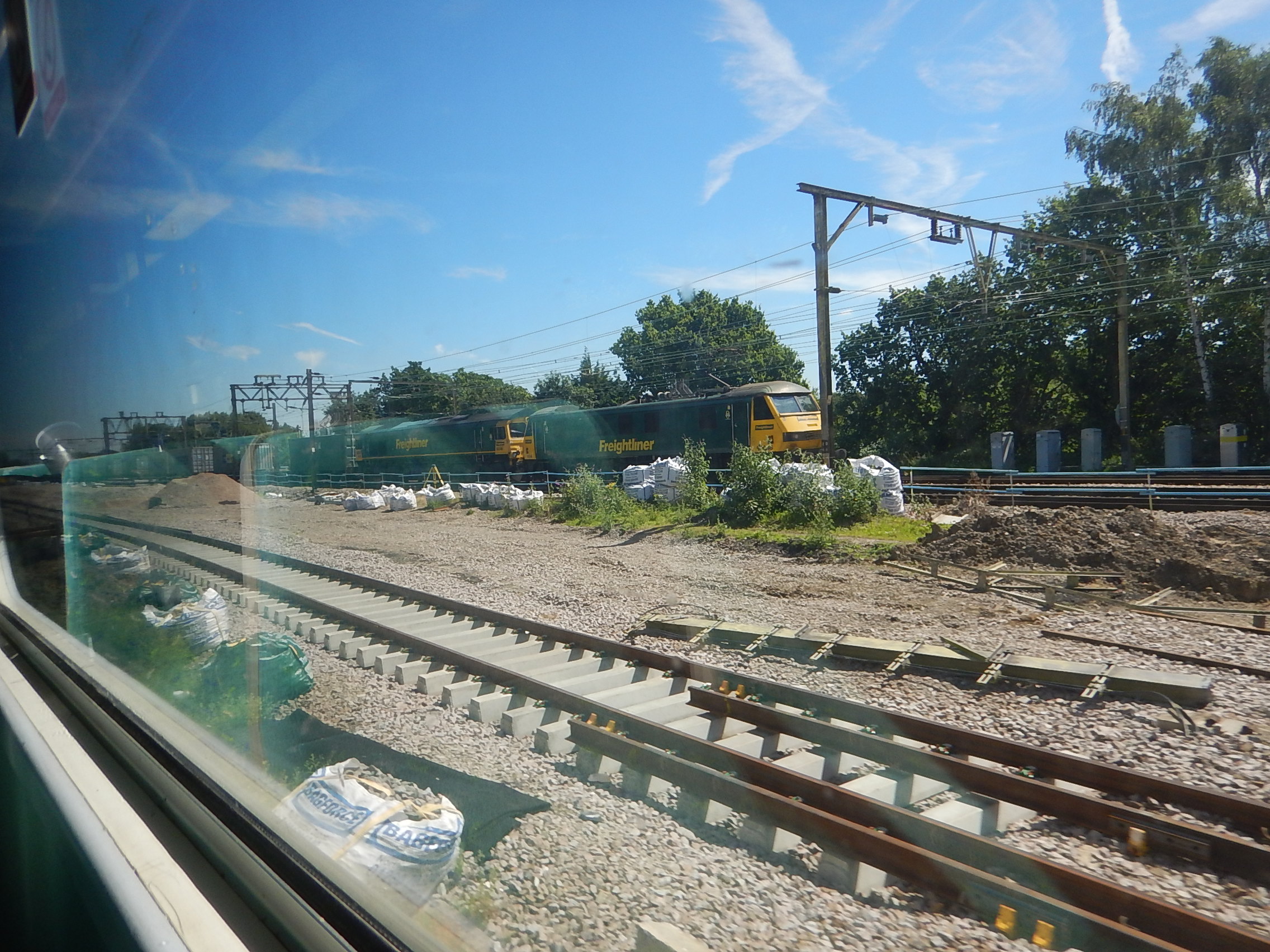
This double-headed train has a Class 90 electric locomotive and a Class 66 diesel locomotive at the front of a long freight train.
- The Class 90 locomotive has an TDM system for multiple working.
- The Class 66 locomotive has an AAR system for multiple working.
So does this mean that the two locomotives can’t work together, which if it does begs the question of what is happening.
- Had the Class 66 locomotive failed and Class 90 was acting as a Thunderbird?
- Was the Class 66 locomotive being moved from one depot to another for maintenance or repair?
- Was it an experiment to see if the two locomotives could work together?
I sometimes think that I didn’t see this unusual formation, but then the camera doesn’t lie.
But could we learn from what Wabtec are doing for Roy Hill in Australia?
The Class 93 Locomotive
Rail Operations Group have already ordered thirty Class 93 tri-mode locomotives from Stadler, which have following power ratings.
- Electric – 4000 kW
- Diesel – 900 kW
- Hybrid – 1300 kW
If this locomotive is capable of hauling the heaviest intermodal freight trains out of Felixstowe, Southampton and other ports and freight terminals, it could contribute to substantial reductions in the diesel fuel used and emissions.
As an example, I will use a freight train between Felixstowe North Terminal and Trafford Park Euro Terminal.
- It is a route of 280 miles.
- I will ignore that it goes along the North London Line through North London and along the Castlefield Corridor through Manchester Piccadilly station.
- There is fifteen miles without electrification at the Felixstowe end.
- There is under three miles without electrification at the Manchester end.
On this service , it could be as much as 94 % of diesel and emissions are saved, if the Class 93 locomotive can haul a heavy freight train out of Felixstowe. A few miles of strategically-placed electrification at the Ipswich end would help, if required.
It must also be born in mind, that the Class 93 locomotive is a 110 mph locomotive on electric power and could probably do the following.
- Run at 100 mph on the busy Great Eastern Main Line.
- Run at faster speeds on the West Coast Main Line.
- Fit in well with the 100 mph passenger trains, that run on both routes.
So not only does it save diesel and carbon emissions, but it will save time and make the freight train easier to timetable on a route with lots of 100 mph passenger trains.
The Class 93 locomotive looks like it could be a game-changer for long-distance intermodal freight, especially, if there were short sections of strategically-placed electrification, added to the electrified network.
Emissions could also be reduced further by using some for of sustainable fuel.

The picture shows a Class 66 locomotive, which is powered by Hydrotreated Vegetable Oil or HVO.
I can see that all diesel-powered trains and locomotives will be powered by sustainable fuels by the end of this decade.
A Wabtec Battery-Electric Locomotive
Wabtec is building a battery-electric locomotive for Roy Hill in Australia.
This article on Railway Age talks about Wabtec’s FLXdrive battery locomotives and describes some features of the locomotive for Roy Hill in Australia.
It mentions pantographs and overhead wires to charge the batteries.
- Wabtec’s prototype battery locomotive has a power output of 3.24 MW and a battery size of 2.4 MWh
- The Roy Hill battery locomotive has a power output of 3.24 MW and a battery size of 7 MWh
I could envisage Wabtec designing a UK-sized battery-electric locomotive with these characteristics.
- 2.5 MW power output, which is similar to a Class 66 locomotive.
- A battery size of perhaps 1.8 MWh based on Wabtec’s FLXdrive technology.
- A pantograph to charge the batteries and also power the locomotive where electrification exists.
- 75 mph operating speed.
- Ability to work in tandem with a Class 66 locomotive.
All technology is under Wabtec’s control.
This locomotive could have a range of at least fifty miles on battery power.
I think this locomotive could handle these routes.
- Peterborough and Doncaster via the Great Northern and Great Eastern Joint Line via Lincoln, with some form of charging at halfway.
- Felixstowe and Nuneaton, with some extra electrification at some point between Peterborough and Leicester.
- Oxford and Birmingham, with possibly some extra electrification in the middle.
One option for charging electrification, would surely be to electrify passing loops.
I think a battery-electric locomtive based on Wabtec’s FLXdrive technology could be a very useful locomotive.
Could Wabtec’s Battery-Electric Locomotive Pair-Up With A Class 66 Locomotive?
Roy Hill will use their locomotive to form a consist of three diesel locomotives and one battery locomotive to obtain double-digit savings of fuel and emissions, when hauling iron-ore trains that are 1.6 miles long on a route of 214 miles.
We don’t have massive iron-ore trains like this, but we do move huge quantities of segregates and stone around the country in trains generally hauled by Class 66 locomotives.
So could a Class 66 or another suitable locomotive be paired-up with a battery-electric locomotive to make savings of fuel and emissions?
I would suggest that if it works in Australia, the technology will probably work in the UK.
The biggest problem for Wabtec is that the heavy end of the market may well be a good one for hydrogen-powered locomotives. But Wabtec are going down that route too!
Conclusion
I am convinced that the two decarbonisation routes I have outlined here are viable for the UK.
But I also feel that locomotive manufacturers will produce hydrogen-powered locomotives.
Other companies like Alstom, Siemens and Talgo will also offer innovative solutions.
Walking From Finsbury Square To Liverpool Street Station
In Finsbury Square Car Park Becomes British Land Hub For Delivery Drivers, I wondered if
.
So today, I walked the route from Finsbury Square To Liverpool Street Station.





























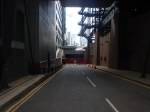



Note.
- The roads around Finsbury Square are probably the narrowest on the route between Finsbury Square and Liverpool Street station.
- Sun Street, Appold Street and Primrose Street are wide roads and didn’t strike me as too busy for eleven in the morning.
- The Old Cab Road is a high capacity route into Liverpool Street station between Platforms 10 and 11.
If Finsbury Square Car Park is be used to distribute parcels and light freight that is to be handled in Liverpool Street station, the roads between the car park and the station are more than adequate for an electric shuttle truck designed for the task.
But
- I suspect that Finsbury Square Car Park would need remodelled access ramps.
- There might be a need for a second entrance or exit on the East side of the site.
- The gardens on top probably need a makeover.
I wouldn’t be surprised if British Land dug another floor or two beneath the car park.
Finsbury Square Car Park Becomes British Land Hub For Delivery Drivers
The title of this post, is the same as that of this article on The Times.
It is a surprising headline or is it a logical development given some of the projects in the rail freight business.
In A Freight Shuttle For Liverpool Street Station Planned. I talked about Rail Operations Group and their plans to run a freight shuttle between London Gateway and Liverpool Street station.
- Trains will be Class 769 bi-mode trains.
- The trains will be fitted with roller doors, roller cages and strengthened floors.
- Three services will leave Thames Gateway at 0029, 1208 and 1856.
- They will return from Liverpool Street at 0242, 1421 and 2100.
- Services will use Platforms 9 and 10 in Liverpool Street station.
- Goods would be delivered to the customer by e-bikes or electric vans.
This a very detailed plan.
But would it be better, if it had a logistics hub close to or even in the station?
These pictures show the Old Cab Road at Liverpool Street station.
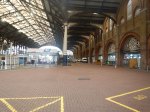


This would probably be the only area in the station, that can be used. But it is not very large. Although it does have an access road at the back of the station.
This Google Map shows the area between Finsbury Square and Liverpool Street station.
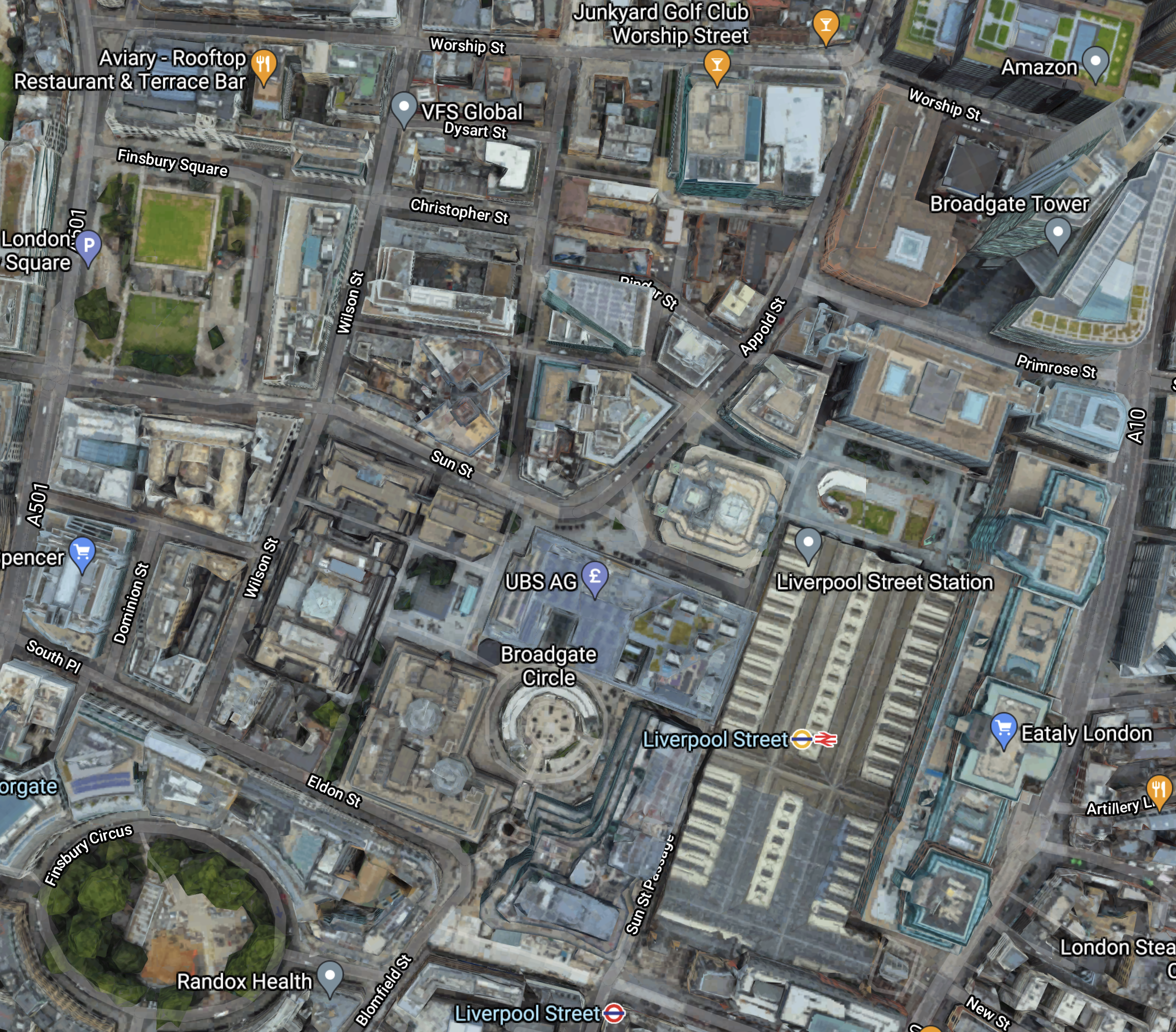
Note.
- Finsbury Square is in the North West corner of the map.
- Liverpool Street station is in the South East corner of the map.
- There is an entrance to the Old Cab Road Liverpool Street station on Primrose Street.
- Amazon UK’s corporate office is in the North East corner of the msp.
Could roller cages be rolled into electric vans and taken to Finsbury Square for sorting and onward distribution?
- The car park has a height limit of 1.98 metres.
- It has 258 parking spaces.
- Could it be expanded downwards?
- How many e-bikes would it hold?
It think that this could be the reason for the purchase.
But I would be very surprised if a siding was dug that connected to the nearby Northern City Line that runs into Moorgate station.
My First Ride In A Class 769 Train
I went to Cardiff today and had my first ride in a Class 769 train. These pictures summarise my ride on the train between Cardiff Central and Bargoed stations.



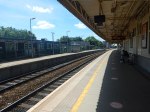
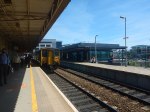


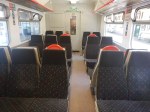
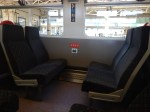
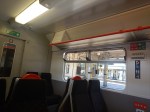
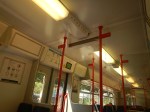


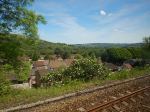
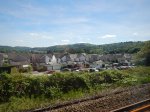
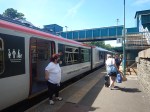
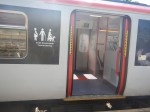
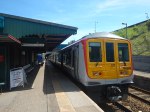
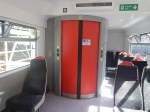
So what was it like?
Noise And Vibration
Going up to Bargoed, I deliberately sat as near over the top of the engine as I could.
There was a bit of a whine, but not as much as in a new Class 195 train.
For those, who commuted on Class 319 trains for years on Thameslink, they probably wouldn’t notice much difference.
Performance
For a 100 mph electric train built for running between the flat lands of Bedfordshire and the South Coast over the hillocks of the Downs, the train climbed to Bengoed, which has an altitude of around a thousand feet with a purpose.
But then I have a Porterbrook brochure for these trains and the power source was sized, such that the train would be able to climb the stiffest routes in the UK.
The Interior
It looked to me like the Thameslink interior with new sea covers and plugs to charge a mobile phone.
They could certainly be upgraded a bit further to the standard of the Class 319 trains on the Abbey Line, that I wrote about in A Very Smart Class 319 Train.
A Job To Do
Trains for Wales has acquired these trains for extra capacity, whilst they refurbish their Class 150, 153 and 160 trains.
It looks to me, that they will do this job more than adequately.
Future Uses
I suspect Porterbrook hope that these trains will find uses around the UK, as they have spent a lot of time, effort and money to bring these trains into service.
But there are around eighty of the Class 319 trains in service or in store, from which the Class 769 trains are converted.
So they could find uses in several niche applications.
Short Term Fleets
This is effectively, the Trains for Wales application, where extra trains are provided, so that a fleet refurbishment can be performed.
- They would surely, have been a better replacement fleet for Greater Anglia, than the three Mark 2 coaches and a pair of diesel locomotives, that they used after a series of level crossing accidents.
- They could also be used to increase capacity for some major events like the Open Golf or a pop festival.
- Uniquely, they can stand in for both a 100 mph electric train or a 90 mph diesel train.
- They can even be fitted with third-rail shoes.
- They are the right size at four cars.
- They fit most UK platforms.
- They can be run in formations of up to twelve cars.
I wouldn’t be surprised to see Porterbrook or someone on their behalf, keep a fleet of trains on standby to handle short term needs.
Route Development And Testing
There has been a lot of pressure to open up new routes in recent years and these trains would be ideal to try out routes and test new electrification.
Tri-Mode Services
Great Western Railway have a particular problem with their service between Reading and Gatwick, in that it has some third-rail electrification. As they might like to extend this service to Oxford, an ideal train would be dual-voltage and self-powered.
This extract is from the Great Western Railway section in the Wikipedia entry for the Class 769 train.
Although initially planned for use in London and the Thames Valley whilst twelve Class 387 units are modified for Heathrow Express services, the future plan for these units will be operating on services between Oxford, Reading and Gatwick Airport, which would mean operating on unelectrified, 25 kV AC OHLE and 750 V DC third-rail routes. To enable this, Great Western Railway’s allocation of Class 769 units will retain their dual-voltage capability in addition to being fitted with diesel power units. The units will also receive an internal refurbishment and be fitted with air cooling.
I suspect, that they’ll also be used on the Henley, Marlow and Windsor branches, which have some operational problems.
- The branches are not electrified.
- Some branches run occasional services to Paddington.
- The Windsor branch probably needs more capacity.
The Marlow branch could be difficult, but I suspect that, there’s a solution somewhere.
Luxury Bi-Modes
Greater Anglia felt they needed luxury bi-modes for East Anglia and they bought Class 755 trains, which are probably a lot more expensive, as they are brand-new and from Stadler of Switzerland.
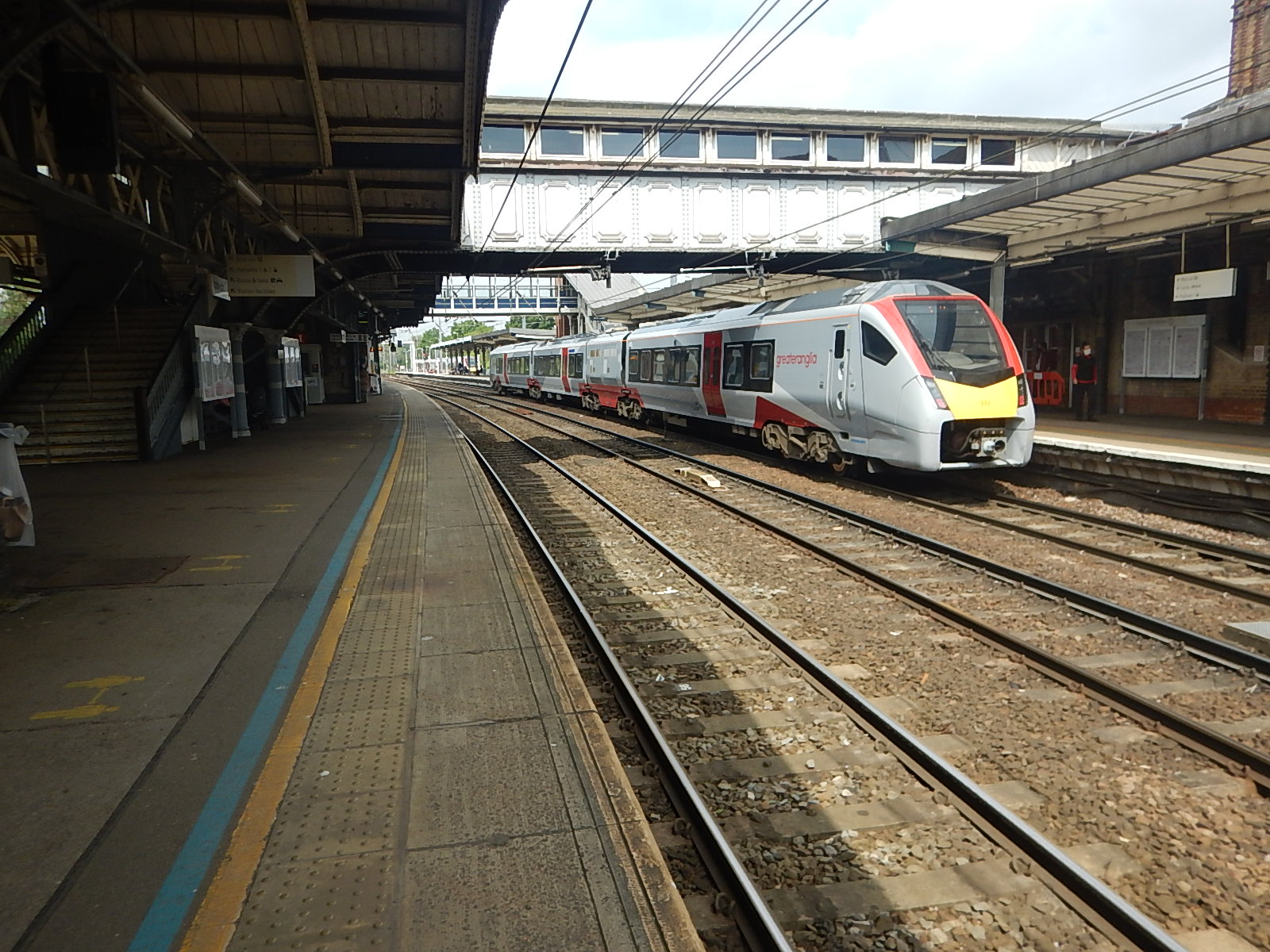
Surprisingly, the Class 319 trains have a higher passenger capacity.
But both trains could do a similar task, where the route is partially electrified.
As I said earlier about the GWR units.
The units will also receive an internal refurbishment and be fitted with air cooling.
Porterbrook’s brochure for the Class 769 train talks about using them between Manchester and Buxton.
Surely, this route could do with a Northern version of a GWR interior.
I also think a service should link Hellifield and Buxton. as I wrote about in Why Not Buxton To Hellifield?
That would show what Class 769 trains could do!
It would also connect the Peak District to the hills North of Lancashire.
I might also be, that the standby-fleet should also be the luxury variant of the train. Surely, supporters going to the Open at some of the inaccessible venues could afford pay to pay extra for a comfy train.
Express Freight And Parcels Services
Rail Operations Group would appear to have placed the second-largest order for Class 769 trains, which they will use to launch a high-speed parcels service called Orion.
This extract is from the Rail Operations Group section in the Wikipedia entry for the Class 769 train.
Orion is aiming to launch its first trial service conveying parcels and light freight in April 2021, with the Midlands to Mossend now likely to be the debut flow. The company is to use converted Class 319s for the service and is now planning for a fleet of 19 four-car units – nine Class 319s and 10 Class 769s. Arlington Fleet Services at Eastleigh is modifying the interiors of the units to accommodate roller cages for parcels, with the aim of operating primarily under electric power but with the 769s using their diesel engines to act as tractor units for the 319s on non-electrified stretches. The first 769 bi-mode, No 769501, has undergone its Flex conversion at Brush in Loughborough and is due to be outshopped from Arlington at Eastleigh in March following its interior modification.
In Did These Strawberries Have Road- Or Rail-Miles?, I talked about strawberries going between Scotland and London.
Surely, the movement of high-quality food could be one of the cargoes for Orion.
It wouldn’t be the first such traffic, as Class 43 power cars of the InterCity 125s used to carry flowers and fish up to London from Cornwall.
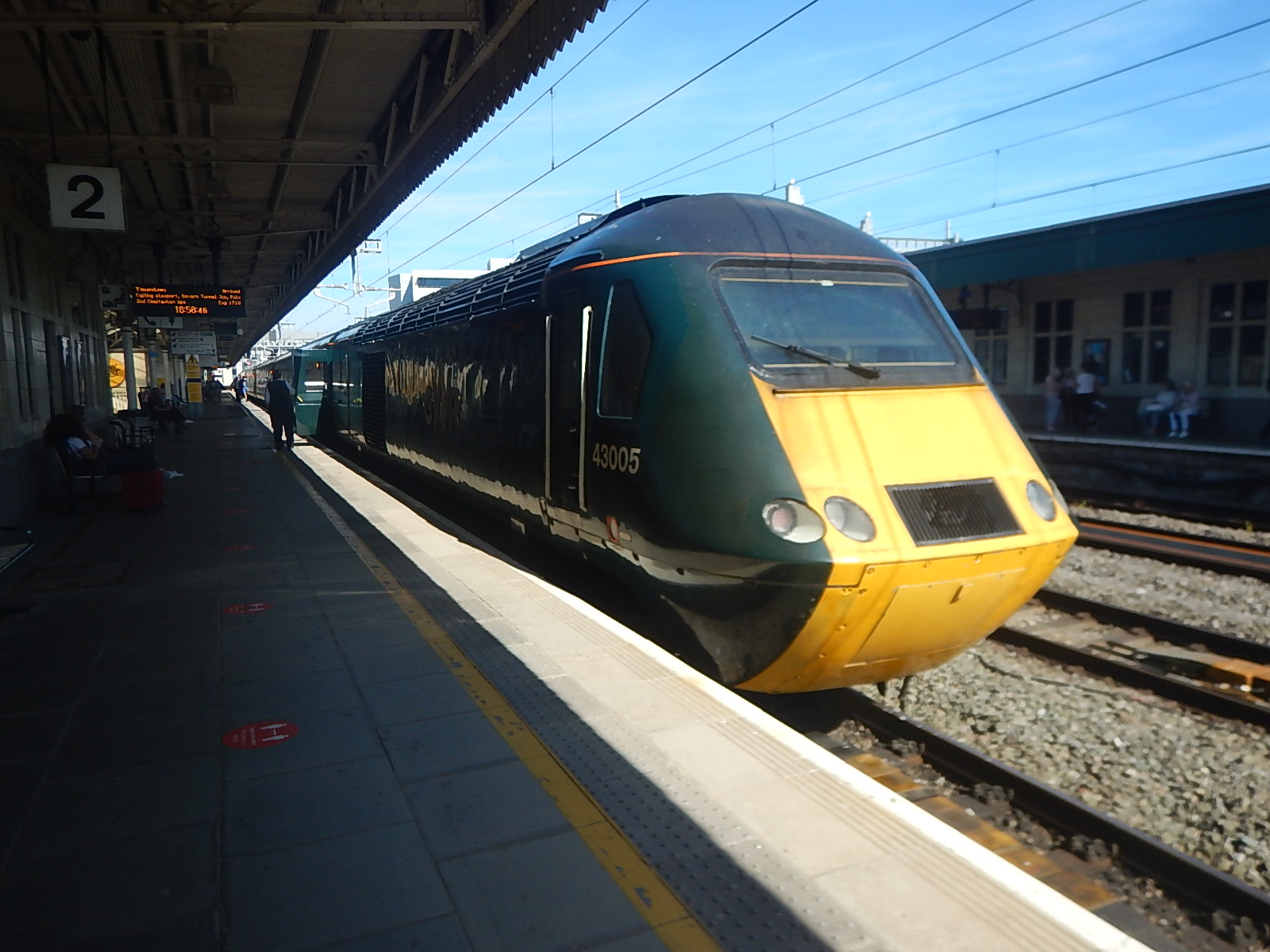
There’s a lot of space in the back of a Class 43 power car.
I certainly feel there are possibilities for using Class 769 trains as high speed parcels transport.
It should be noted that Class 325 trains already run high speed parcel services up and down the country on behalf of Royal Mail. These trains may look like later British Rail trains, but they are in fact based on Class 319 trains.
So I doubt, there’ll be any worries that the trains can’t handle the required services after conversion.
Conclusion
It looks to me that Porterbrooks plan to convert numbers of their Class 319 trains into Class 769 trains will find several ready markets.
It could be argued that more carbon savings could be achieved by perhaps a new battery-electric or hydrogen-electric train. But these will take years to develop!
These trains are a good short-term solution, that will help define their zero-carbon successors.
Did These Strawberries Have Road- Or Rail-Miles?
These strawberries were grown my M Porter in Perthshire and I bought them in the M & S Simply Food store in Waterloo station.


So did they travel between Perthshire and London, by truck or train?
I think the strawberries came from East Seaton Farm, owned by Lochart and Debbie Porter.

If the strawberries were to be grown any further East, they’d be grown in the middle of the North Sea.
But did they come South, by road or rail?
I suspect it was the former, but there is change in the air! Or do I mean on the rails?
In My First Ride In A Class 769 Train, I talked about Rail Operations Group and their proposed Orion parcels service, that will use Class 769 trains.
This service would surely be ideal to bring strawberries and Arbroath smokies to the South.
Freight Tram-Train To Be Tested In Karlsruhe
The title of this post is the same as that of this article on Railway Gazette.
This is the introductory paragraph.
Trials with a prototype freight tram or tram-train are to start in Karlsruhe and the surrounding area in 2022. The concept is being drawn up with a view to improving urban life by reducing road traffic and the emissions it generates.
There are other cargo trams in Germany, like the CarGoTram in Dresden and I think it is a concept, we’ll see in other places.
In High Speed Urban Freight Logistics By Rail, I wrote about Rail Operations Group’s plans to run freight services between London Gateway and Liverpool Street station.
It may be different technology, but it has similar objectives.
Class 88 Locomotive Heads On To The East Coast Main Line
The title of this post, is the same as that of this article on Rail Advent.
This is the first three paragraphs.
Direct Rail Services has confirmed that one of its Class 88 broke new ground last week when it ran the length of the East Coast Main Line.
Last weekend, freight operator, DRS, ran a new diversionary route to enable the Class 88 locomotives to run almost the length of the ECML on electric power, as well as feeder routes that link up Daventry and Mossend.
The route normally follows the West Coast Main Line, but engineering work last weekend required a diversion.
That makes a second Class 88 locomotive story, where the locomotives are serving new routes, after ’88’ Makes Sizewell Debut.
Could it be that with new electrification coming on stream and more being planned, Direct Rail Services are researching what these locomotives can do?
The Route
As the Rail Advent article says, the route is electric all the way from Mossend to Daventry.
Mossend to Edinburgh via the Shotts Line.
- Edinburgh to Stevenage via the East Coast Main Line.
- Stevenage to Alexandra Palace via the Hertford Loop Line.
- Alexandra Palace to Camden Road Central Junction via the East Coast Main Line.
- Xamden Road Central Junction to Camden Junction via the North London Line.
- Camden Junction to Daventry via the West Coast Main Line.
But it does go round the houses!
Note.
- The journey took fifteen hours and it arrived about two-and-a-half hours late.
- Edinburgh to Stevenage was timed to take seven hours, whereas passengers can do that journey in four-and-a half hours with a change.
With some strategic electrification would the train be able to cut across from the East Coast Main Line to reach Daventry?
The Future Of Direct Rail Services
Direct Rail Services have a mixed fleet of locomotives.
- 23 x Class 37 diesel locomotives, which were built in the 1960s.
- 21 x Class 57 diesel locomotives, which were built in the 1960s.
- 19 x Class 66 diesel locomotives
- 34 x Class 68 diesel locomotives
- 10 x Class 88 electro-diesel locomotives
Only the last two types are modern locomotives, that are capable of hauling trains at 100 mph.
The Wikipedia entry also says this.
In September 2017, Direct Rail Services issued a tender for ten brand new diesel-electric locomotives.
Consider.
- As Government policy is a zero-carbon UK by 2050, is that likely to change the tender to electro-diesel locomotives?
- Direct Rail Services is owned by the Government,
- The order from Rail Operations Group for Class 93 locomotives seems to have stalled.
- Rail Operations Group have some ambitious plans for the use of the tri-mode 110 mph Class 93 locomotives, which I wrote about in Rail Operations Group Gets Serious About Thunderbirds Etc.
- As any locomotives delivered in the next few years, will probably still be running in 2060, surely this conflicts with Government policy.
Perhaps, all three parties are working on a cunning plan to jointly order a common design.
 The Anonymous Widower