Batteries On Class 777 Trains
In this article on Railway Gazette, which is entitled Merseyrail Class 777 arrives in Liverpool, there is this sentence.
There is space under one vehicle to house a battery weighing up to 5 tonnes within the axleload limit.
This matter-of-fact sentence, draws me to the conclusion, that these trains have been designed from the start to allow future battery operation.
Batteries are not an add-on squeezed into a design with great difficulty.
Battery Capacity
Energy densities of 60 Wh/Kg or 135 Wh/litre are claimed by Swiss battery manufacturer; Leclanche.
This means that a five tonne battery would hold 300 kWh.
Note that Vivarail find space for 424 kWh in the two-car Class 230 train, I wrote about in Battery Class 230 Train Demonstration At Bo’ness And Kinneil Railway, so it would appear that Stadler aren’t being over ambitious.
Kinetic Energy Of A Full Class 777 Train
The weight of a full Class 777 train is calculated as follows.
- Basic empty weight – 99 tonnes
- Battery weight – 5 tonnes
- 484 passengers at 80 Kg – 38.72 tonnes
Which gives a total weight of 143.72 tonnes.
Intriguingly, the weight of a current Class 507 train is 104.5 tonnes, which is 500 Kg more than an empty Class 777 train with a battery!
If these weights are correct, I suspect Stadler have used some very clever lightweight design techniques.
For various speeds, using Omni’s Kinetic Energy Calculator, this weight gives.
- 30 mph – 3.6 kWh
- 40 mph – 6.4 kWh
- 50 mph – 10.0 kWh
- 60 mph – 14.4 kWh
- 70 mph – 19.5 kWh
- 75 mph – 22.4 kWh
Note.
- The average speed between Bidston and Wrexham General stations on the Borderlands Line is under 30 mph
- The operating speed on the Wirral Line is 70 mph
- The operating speed on the Northern Line is 60 mph
- The maximum speed of the trains is 75 mph.
Every time I do these calculations, I’m surprised at how low the kinetic energy of a train seems to be.
How Small Is A Small Battery?
One battery doesn’t seem enough, for a train designed with all the ingenuity of a product with quality and precision, that is designed to out-perform all other trains.
This is another paragraph from the Railway Gazette article.
According to Merseytravel, ‘we want to be able to prove the concept that we could run beyond the third rail’. By storing recovered braking energy, the batteries would help to reduce power demand and the resulting greenhouse gas emissions. All of the Class 777s will be fitted with small batteries to allow independent movement around workshop and maintenance facilities.
I am not quite sure what this means.
It would seem strange to have two independent battery systems in one train.
I think it is more likely, that the smaller battery can be considered the primary battery of the train.
- After all in the depot, it looks after the train’s power requirement.
- Does it also handle all the regenerative braking energy?
- Is it used as a secondary power supply, if say the power is low from the electrification?
- Could it be used to move the train to the next station for passenger evacuation in the event of a power failure?
I wonder if the power system is a bit like the average battery-powered device like a lap-top computer, smart phone or hybrid car.
- The electrification and the regenerative braking charges the battery.
- The battery provides the traction and hotel power for the train.
When the five tonne battery is fitted, does the train’s control system move power between the two batteries to drive the train in the most efficient manner?
I’ll return to factors that define the size of the small battery.
The small battery must be big enough for these purposes.
- Handling regenerative braking at the operating speed.
- Recovering a full train to the next station.
- Keeping a train’s systems running, during power supply problems.
- Moving a train around a depot
As the lines leading to depots are electrified, the train can probably enter a depot with a battery fairly well-charged.
As the new Class 777 trains have a maximum operating speed of 75 mph, I would suspect that the small battery must be able to handle the regenerative braking from 75 mph, which my calculations show is 22.4 kWh with a full train. Let’s call it 30 kWh to have a reserve.
Using Leclanche’s figures, a 30 kWh battery would weigh 500 Kg and have a volume of just under a quarter of a cubic metre (0.222 cubic metre to be exact!)
I suspect the operation of the small battery through a station would be something like this.
- As the train runs from the previous station, the power from the battery will be used by the train, to make sure that there is enough spare capacity in the battery to accommodate the predicted amount of energy generated by regenerative braking.
- Under braking, the regenerative braking energy will be stored in the battery.
- Not all of the kinetic energy of the train will be regenerated, as the process is typically around eighty percent efficient.
- Whilst in the station, the train’s hotel services like air-conditioning, lights and doors, will be run by either the electrification if available or the battery.
- When the train accelerates away, the train’s computer will use the optimal energy source.
The process will repeat, with the battery constantly being charged under braking and discharged under acceleration.
Lithium-ion batteries don’t like this cycling, so I wouldn’t be surprised to see dome other battery or even supercapacitors.
A Trip Between Liverpool and Wrexham Central in A Class 777 Train With A Battery
The train will arrive at Bidston station with 300 kWh in the battery, that has been charged on the loop line under the city.
I will assume that the train is cruising at 50 mph between the twelve stops along the twenty-seven and a half miles to Wrexham Central station.
At each of the twelve stops, the train will use regenerative braking, but it will lose perhaps twenty percent of the kinetic energy. This will be two kWh per stop or 24 kWh in total.
I usually assume that energy usage for hotel functions on the train are calculated using a figure of around three kWh per vehicle mile.
This gives an energy usage of 330 kWh.
But the Class 777 trains have been designed to be very electrically efficient and the train is equivalent in length to a three-car Class 507 train.
So perhaps a the calculation should assume three vehicles not four.
Various usage figures give.
- 3 kWh per vehicle-mile – 247.5 kWh
- 2.5 kWh per vehicle-mile – 206 kWh
- 2 kWh per vehicle-mile – 165 kWh
- 1.5 kWh per vehicle-mile – 123.8 kWh
- 1 kWh per vehicle-mile – 82.5 kWh
Given that station losses between Bidston and Wrexham Central could be around 24 kWh, it looks like the following could be possible.
- With a consumption of 3 kWh per vehicle-mile, a Class 777 train could handle the route, but would need a charging station at Wrexham Central.
- If energy consumption on the train could be cut to 1.5 kWh per vehicle-mile, then a round trip would be possible.
It should also be noted that trains seem to do a very quick stop at Wrexham Central station of just a couple of minutes.
So if charging were to be introduced, there would need to be a longer stop of perhaps eight to ten minutes.
But the mathematics are telling me the following.
- The Class 777 train has been designed to weigh the same empty as a current Class 507 train, despite carrying a five tonne battery.
- If power consumption can be kept low, a Class 777 train with a battery can perform a round trip from Liverpool to Wrexham Central, without charging except on the electrified section of line between Liverpool and Bidston.
- Extra stops would probably be possible, as each would consume about 2 kWh
I feel that these trains have been designed around Liverpool to Wrexham Central.
Conclusion
Wrexham Central here we come!
Other routes are possible.
- Hunts Cross and Manchester Oxford Road – 27 miles
- Ormskirk and Preston – 15 miles
- Headbolt Lane and Skelmersdale – 6 miles
- Ellesmere Port and Helsby – 5 miles
- Kirkby and Wigan Wallgate – 12 miles
Chargers will not be needed at the far terminals.
No News On Hydrogen Trains For The Midland Main Line
In April 2019, I wrote Hydrogen Trains To Be Trialled On The Midland Main Line, which was based on an article on Railway Gazette that is entitled Bimode And Hydrogen Trains As Abellio Wins Next East Midlands Franchise.
I said this in my post.
Abellio will be taking over the franchise in August this year and although bi-mode trains were certain to be introduced in a couple of years, the trialling of hydrogen-powered trains is a surprise to me and possibly others.
This is all that is said in the article.
Abellio will also trial hydrogen fuel cell trains on the Midland Main Line.
It also says, that the new fleet will not be announced until the orders are finalised.
Nothing has been heard since about the hydrogen train trial for the Midland Main Line.
But there have been several related developments, that might have implications for the trial.
East Midlands Railway Has Ordered Hitachi Class 810 Trains For EMR InterCity Services
Class 810 trains are Hitachi’s latest offering, that are tailored for the Midland Main Line.
The trains will have a few differences to the current Class 800,/801/802 trains.
But will they be suitable for conversion to hydrogen power?
Consider.
- The Hitachi trains have a comprehensivecomputer system, that looks at the train and sees what power sources are available and controls the train accordingly.
- Trains have already been ordered in five, seven and nine-car lengths. I have read up to twelve-car trains are possible in normal operation. See Do Class 800/801/802 Trains Use Batteries For Regenerative Braking?
- Hydrogen train designs, with a useful range of several hundred miles between refuelling, seem to need a hydrogen tank, that takes up at least half of a twenty metre long carriage.
- The Hitachi train design has pantographs on the driver cars and can support diesel generator units in the intermediate cars, as it does in current trains.
- The Japanese are researching hydrogen trains.
- The five-car Class 802 trains have 2,100 kW of installed generator power.
I think that Hitachi’s engineers can build another carriage, with the following characteristics.
- It could be based on a Motor Standard car.
- The passenger seats and interior would be removed or redesigned in a shorter space.
- Powered bogies would be as required.
- It would contain a hydrogen tank to give sufficient range.
- Appropriately-sized batteries and fuel-cells would be inside or under the vehicle.
- Regenerative braking would help to recharge the batteries.
- There would probably be no diesel generator unit.
There would need to be a walkway through the car. Stadler have shown this works in the Class 755 train.
A Hydrogen Power car like this would convert a five-car bi-mode diesel-electric train into a six-car hydrogen-electric hybrid train. Or they might just replace one Motor Standard car with the Hydrogen Power Car to create a five-car hydrogen-electric hybrid train, if the longer train would cause problems in the short platforms at St. Pancras.
- The computer system would need to recognise the Hydrogen Power Car and control it accordingly. It would probably be very Plug-and-Play.
- The weight of the train could probably be reduced by removing all diesel generator units.
- The passenger experience would be better without diesel power.
- The range away from the wires would probably be several hundred miles.
The drivers and other staff would probably not need massive retraining.
What Do I Mean By Appropriately-Sized Batteries And Fuel Cells?
I can’t be sure,, but I suspect the following rules and estimates hold.
- The batteries must be large enough to more than hold the kinetic energy of a full five-car train, running at the full speed of 140 mph.
- I estimate that the kinetic energy of the train,will be around 200 kWh, so with a contingency, perhaps battery capacity of between 400-500 kWh would be needed.
- Currently, a 500 kWh battery would weigh five tonnes, which is of a similar weight to one of the diesel generator units, that are no longer needed.
- In How Much Power Is Needed To Run A Train At 125 mph?, I estimated that the all-electric Class 801 train, needs 3.42 kWh per vehicle mile to maintain 125 mph. This means that travelling at 125 mph for an hour would consume around 2,000 kWh or an output of 2,000 kW from the fuel cell for the hour.
- Note that 1 kg of hydrogen contains 33.33 kWh of usable energy, so the hydrogen to power the train for an hour at 125 mph, will weigh around sixty kilograms.
From my past experience in doing chemical reaction calculations in pressure vessels, I think it makes the concept feasible. After all, it’s not that different to Alstom’s Breeze.
I would assume, that the train manufacturers can do a full calculation, to a much more accurate level.
Applying The Concept To Other Hitachi Trains
Once proven, the concept could be applied to a large number of Hitachi bi-mode trains. I suspect too, that it could be applied to all other Hitachi A-train designs, that are in service or on order, all over the world.
In the UK, this includes Class 385, Class 395 and Class 80x trains.
Bombardier Have Said That They’re Not Interested In Hydrogen Power
But Electrostars and Aventras have the same Plug-and-Play characteristic as the Hitachi train.
I wouldn’t be surprised to find that Bombardier have a Hydrogen Power Car design for an Aventra. All that it needs is an order.
They could also probably convert a five-car Class 377 train to effectively a four-car train, with a Hydrogen Power Car in the middle. This would be ideal for the Uckfield Branch and the Marshlink Lines. I suspect it could be done to meet the timescale imposed by the transfer of the Class 171 trains to East Midlands Railway.
There must be an optimal point, where converting an electric multiple unit, is more affordable to convert to hydrogen, than to add just batteries.
But then everybody has been dithering about the Uckfield and Marshlink trains, since I started this blog!
Stadler Have Shown That a Gangway Through A Power Car Is Acceptable To Passengers In The UK
Stadler’s Class 755 trains seem to be operating without any complaints about the gangway between the two halves of the train.
Stadler Have Two Orders For Hydrogen-Powered Trains
These posts describe them.
- Zillertalbahn Orders Stadler Hydrogen-Powered Trains
- MSU Research Leads To North America’s First Commercial Hydrogen-Powered Train
Stadler also have a substantial order for a fleet of battery Flirt Akku in Schleswig Holstein and they are heavily involved in providing the rolling stock for Merseyrail and the South Wales Metro, where battery-powered trains are part of the solution.
It looks to me, that Stadler have got the technology to satisfy the battery and hydrogen train market.
The Driver’s View Of Stadler
It’s happened to me twice now; in the Netherlands and in the UK.
- Both drivers have talked about hydrogen and Stadler’s trains with the engine in the middle.
- They like the concept of the engine.
- The English driver couldn’t wait to get his hands on the train, when he finished his conversion.
- Both brought up the subject of hydrogen first, which made me think, that Stadler are telling drivers about it.
Or does driving a hydrogen-powered vehicle as your day job, score Greta points in the pub or club after work?
Could The Hydrogen Train On The Midland Main Line Be A Stadler?
Greater Anglia and East Midlands Railway are both controlled by Abellio or Dutch Railways.
In The Dutch Plan For Hydrogen, I laid out what the Dutch are doing to create a hydrogen-based economy in the North of the country.
Stadler are going to provide hydrogen-powered for the plan.
In addition.
- Greater Anglia have bought a lot of Class 755 trains.
- A lot of Lincolnshire and Norfolk is similar to the North of the Netherlands; flat and windy.
- One of these trains with a hydrogen PowerPack, could be an ideal train for demonstrating hydrogen on rural routes like Peterborough and Doncaster via Lincoln.
But the promise was on the Midland Main Line?
Conclusion
Hydrogen trains seem to be taking off!
Even if there’s been no news about the trial on the Midland Main Line.
Fuelling The Change On Teesside Rails
The title of this post, is the same as that of an article in Edition 895 of RAIL Magazine.
The article is based on an interview with Ben Houchen, who is the Tees Valley Mayor.
Various topics are covered.
Hydrogen-Powered Local Trains
According to the article, the Tees Valley produces fifty percent of UK hydrogen and the area is already secured investment for fuelling road vehicles with hydrogen.
So the Tees Valley Combined Authority (TVCA) is planning to convert some routes to hydrogen.
The Trains
Ten hydrogen-powered trains will be purchased or more likely leased, as the trains will probably be converted from redundant electrical multiple units, owned by leasing companies like Eversholt Rail and Porterbrook.
- Eversholt Rail and Alstom are developing the Breeze from Class 321 trains.
- Porterbrook and Birmingham University are developing the HydroFLEX from Class 319 trains.
The RAIL article says that the first train could be under test in 2021 and service could be started in 2022.
That would certainly fit the development timetables for the trains.
Lackenby Depot
A depot Will Be Created At Lackenby.
- The site is between Middlesbrough and Redcar.
- It already has rail and hydrogen connections.
This Google Map shows the area.
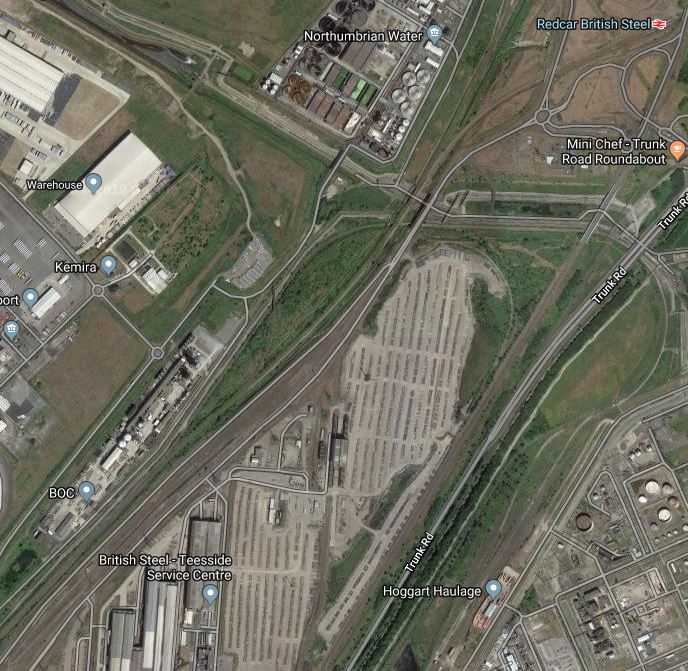
Note the disused Redcar British Steel station, which is still shown on the map.
I remember the area from the around 1970, when I used to catch the train at the now-closed Grangetown station, after visits to ICI’s Wilton site. It was all fire, smoke, smells and pollution.
Darlington Station
Darlington station will also be remodelled to allow more services to operate without conflicting with the East Coast Main Line.
Wikipedia says this under Future for Darlington station.
As part of the Tees Valley Metro, two new platforms were to be built on the eastern edge of the main station. There were to be a total of four trains per hour, to Middlesbrough and Saltburn via the Tees Valley Line, and trains would not have to cross the East Coast Main Line when the new platforms would have been built. The Tees Valley Metro project was, however, cancelled.
It does sound from reading the RAIL article, that this plan is being reinstated.
Would services between Bishop Auckland and Saltburn, use these new platforms?
Saltburn And Bishops Auckland Via Middlesbrough and Darlington
Currently, the service is two trains per hour (tph) between Saltburn and Darlington, with one tph extending to Bishop Auckland.
- I estimate that the current service needs five trains.
- If a two tph service were to be run on the whole route, an extra train would be needed.
- I suspect, the limitations at Darlington station, stop more trains being run all the way to Bishops Auckland.
I could also see extra stations being added to this route.
The Mayor is talking of running a service as frequent as six or eight tph.
These numbers of trains, will be needed for services of different frequencies between Saltburn and Darlington.
- 2 tph – 6 trains
- 4 tph – 12 trains
- 6 tph – 18 trains
- 8 tph – 24 trains
As the London Overground, Merseyrail and Birmingham’s Cross-City Line, find four tph a more than adequate service, I suspect that should be provided.
After updating, Darlington station, should be able to handle the following.
- Up to six tph terminating in one of the new Eastern platforms, without having to cross the East Coast Main Line.
- Two tph between Saltburn and Bishops Auckland could use the other platform in both directions.
I would suspect that the design would see the two platforms sharing an island platform.
Alternatively, trains could continue as now.
- Terminating trains could continue to use Platform 2!
- Two tph between Saltburn and Bishops Auckland stopping in Platforms 1 (Eastbound) and 4 (Westbound)
This would avoid any infrastructure changes at Darlington station, but terminating trains at Darlington would still have to cross the Southbound East Coast Main Line.
If the frequencies were as follows.
- 4 tph – Saltburn and Darlington
- 2 tph – Saltburn and Bishop Auckland
This would require fourteen trains and give a six tph service between Saltburn and Darlington.
Ten trains would allow a two tph service on both routes.
There would be other services using parts of the same route, which would increase the frequency.
Hartlepool And The Esk Valley Line Via Middlesbrough
This is the other route through the area and was part of the cancelled Tees Valley Metro.
- Service is basically one tph, with six trains per day (tpd) extending to Whitby.
- A second platform is needed at Hartlepool station.
- There is a proposal to add a Park-and-Ride station between Nunthorpe and Great Ayton stations.
- One proposal from Modern Railways commentator; Alan Williams, was to simplify the track at Battersby station to avoid the reverse.
- Currently, trains between Whitby and Middlesbrough are timetabled for around 80-100 minutes.
- Hartlepool and Middlesbrough takes around twenty minutes.
Substantial track improvements are probably needed to increase the number of trains and reduce the journey times between Middlesbrough and Whitby.
But I believe that an hourly service between Hartlepool and Whitby, that would take under two hours or four hours for a round trip, could be possible.
This would mean that the hourly Hartlepool and Whitby service would need four trains.
Providing the track between Nunthorpe and |Whitby could be improved to handle the traffic, this would appear to be a very feasible proposition.
Nunthorpe And Hexham Via Newcastle
There is also an hourly service between Nunthorpe and Hexham, via Middlesbrough, Stockton, Hartlepool, Sunderland and Newcastle, there would be two tph.
- It takes around two hours and twenty minutes.
- I estimate that five trains would be needed for the service.
- I travelled once between Newcastle and James Cook Hospital in the Peak and the service was busy.
- A new station is being built at Horden, which is eight minutes North of Hartlepool.
- The service could easily access the proposed fuelling station at Lackenby.
- It would reduce carbon emissions in Newcastle and Sunderland stations..
Surely, if hydrogen power is good enough for the other routes, then it is good enough for this route.
Hartlepool Station
Hartlepool Station could become a problem, as although it is on a double track railway, it only has one through platform, as these pictures from 2011 show.

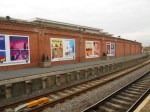
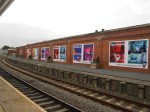
Consider.
- There is no footbridge, although Grand Central could pay for one
- There is a rarely-used bay platform to turn trains from Middlesbrough, Nunthorpe and Whitby.
This Google Map shows the cramped site.
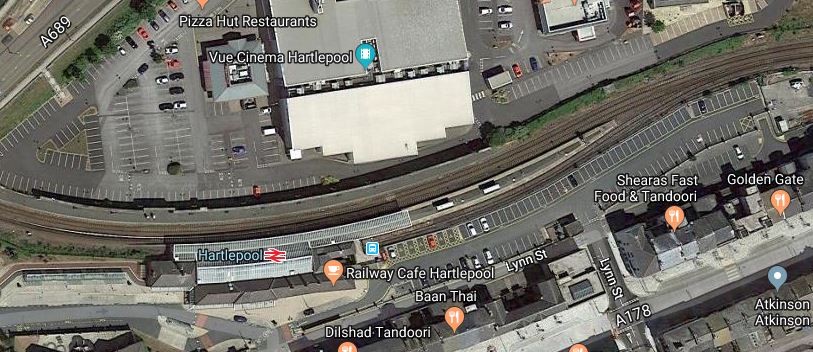
The final solution could mean a new station.
Nunthorpe Park-And-Ride
This Google Map shows Nunthorpe with thje bEsk Valley Line running through it.
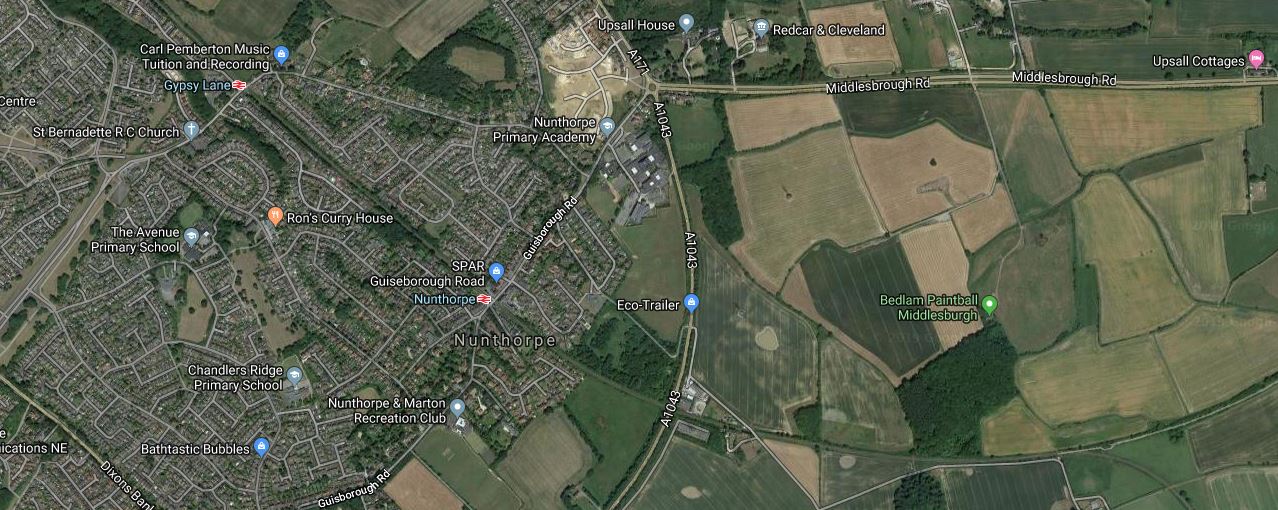
Note.
- Gypsy Lane and Nunthorpe stations.
- The dual-carriageway A171 Guisborough by-pass running East-West, that connects in the East to Whitby and Scarborough.
- The A1043 Nunthorpe by-pass that connects to roads to the South.
Would where the A1043 crosses the Esk Valley Line be the place for the Park-and-Ride station?
The new station could have a passing loop, that could also be used to turn back trains.
Battersby Station
Alan Williams, who is Chairman of the Esk Valley Railway Development Company, is quoted in the RAIL article as saying.
If you’re going to spend that sort of money we’d much rather you spent it on building a curve at Battersby to cut out the reversal there.
Williams gives further reasons.
- Battersby is the least used station on the line.
- It’s in the middle of nowhere.
- The curve would save five minutes on the overall journey.
This Google Map shows Battersby station and the current track layout.

Note.
- The line to Middlesbrough goes through the North-West corner of the map.
- The line to Whitby goes through the North-East corner of the map.
There would appear to be plenty of space for a curve that would cut out the station.
LNER To Teesside
LNER, the Government and the TVCA are aiming to meet a target date of the Second Quarter of 2021 for a direct London and Middlesbrough service.
Middlesbrough Station
Middlesbrough Station will need to be updated and according to the RAIL article, the following work will be done.
- A new Northern entrance with a glass frontage.
- A third platform.
- Lengthening of existing platforms to take LNER’s Class 800 trains.
This Google Map shows the current layout of the station.
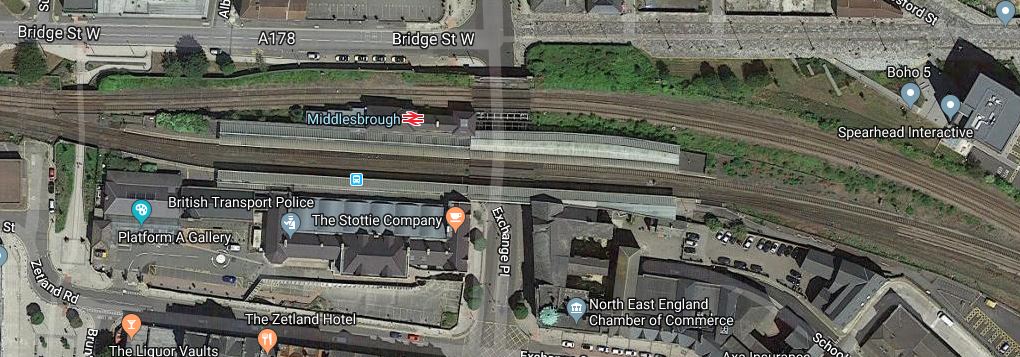
From this map it doesn’t look to be the most difficult of stations, on which to fit in the extra platform and the extensions.

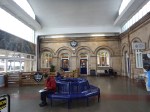



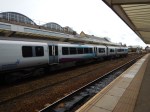
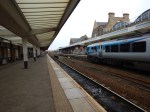
It should also be noted that the station is Grade II Listed, was in good condition on my last visit and has a step-free subway between the two sides of the station.
Journey Times
I estimate that a Kings Cross and Middlesbrough time via Northallerton would take aroud two hours and fifty minutes.
This compares with other journey times in the area to London.
- LNER – Kings Cross and Darlington – two hours and twenty-two minutes
- Grand Central – Kings Cross and Eaglescliffe – two hours and thirty-seven minutes.
I also estimate that timings to Redcar and Saltburn would be another 14 and 28 minutes respectively.
Frequencies
Currently, LNER run between three and four tph between Kings Cross and Darlington, with the competing Grand Central service between Kings Cross and Eaglescliffe having a frequency of five trains per day (tpd).
LNER have also started serving secondary destinations in the last month or so.
- Harrogate, which has a population of 75.000, is served with a frequency of six tpd.
- Lincoln, which has a population of 130,000 is now served with a frequency of six tpd.
Note that the RAIL article, states that the Tees Valley has a population of 750,000.
I feel that Middlesbrough will be served by a frequency of at least five tpd and probably six to match LNER’s new Harrogate and Lincoln services.
Will LNER’s Kings Cross and York Service Be Extended To Middlesbrough?
Cirrently , trains that leave Kings Cross at six minutes past the hour end up in Lincoln or York
- 0806 – Lincoln
- 0906 – York
- 1006 – Lincoln
- 1106 – York
- 1206 -Lincoln
- 1306 – York
- 1406 – Lincoln
- 1506 – York
- 1606 – Lincoln
- 1906 -Lincoln
It looks to me that a pattern is being developed.
- Could it be that the York services will be extended to Middlesbrough in 2021?
- Could six Middlesbrough trains leave Kings Cross at 0706, 0906, 1106, 1306, 1506 and 1706 or 1806?
- York would still have the same number of trains as it does now!
LNER certainly seem to be putting together a comprehensive timetable.
Could Middlesbrough Trains Split At Doncaster Or York?
I was in Kings Cross station, this afternoon and saw the 1506 service to York, go on its way.
The train was formed of two five-car trains, running as a ten-car train.
If LNER employ spitting and joining,, as some of their staff believe, there are surely, places, where this can be done to serve more destinations, without requiring more paths on the East Coast Main Line.
- Splitting at Doncaster could serve Hull, Middlesborough and York.
- Splitting at York could serve Scarborough, Middlesborough and Sunderland.
Scarborough might be a viable destination, as the town has a population of over 100,000.
Onward To Redcar And Saltburn
One of the changes in the December 2019 timetable change, was the extension of TransPennine Express’s Manchester Airport and Middlesbrough service to Redcar Central station.
The RAIL article quotes the Mayor as being pleased with this, although he would have preferred the service to have gone as far as Saltburn, which is a regional growth point for housing and employment.
But the extra six miles would have meant the purchase of another train.
Redcar Central Station
This Google Map shows Redcar Central station and its position in the town.
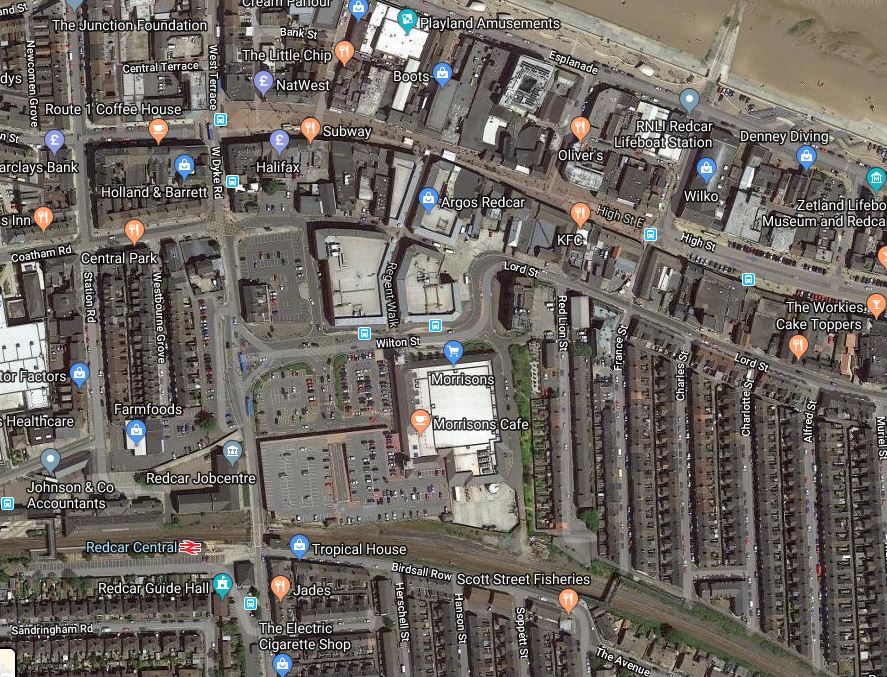
It is close to the sea front and the High Street and there appears to be space for the stabling of long-distance trains to Manchester Airport and perhaps, London.
TransPennine seem to be using their rakes of Mark 5A coaches on Redcar services, rather than their Class 802 trains, which are similar to LNER’s Azumas.
Surely, there will be operational advantages, if both train operating companies ran similar trains to Teesside.
Saltburn Station
Saltburn station is the end of the line.
This Google Map shows its position in the town.
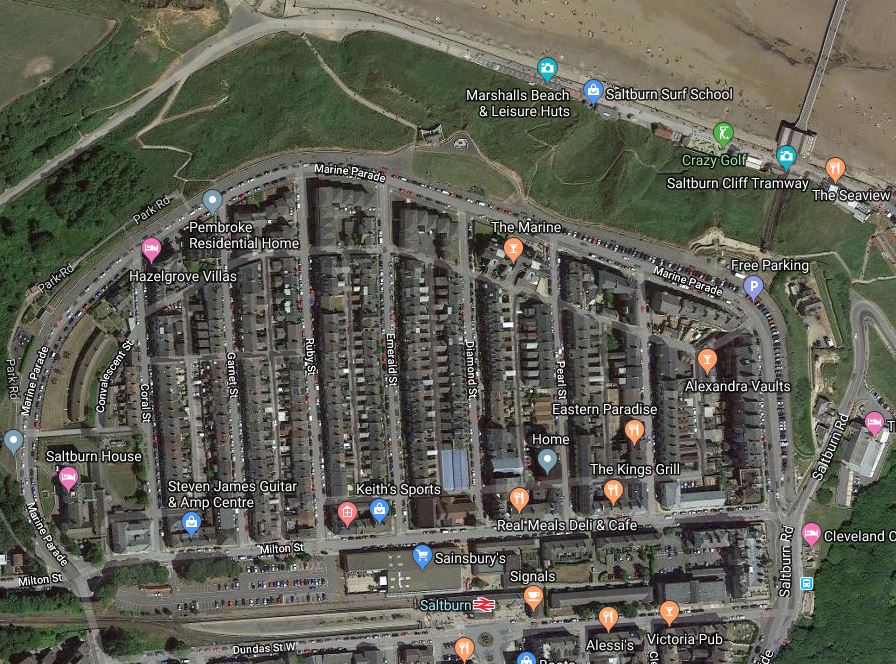
Unlike Redcar Central station, there appears to be very little space along the railway and turning back trains might be difficult.
There may be good economic reasons to use Saltburn as a terminal, but operationally, it could be difficult.
Will Redcar And Saltburn See Services To and From London?
Given that both towns will likely see much improved services to Middlesbrough, with at least a service of four tph, I think it will be unlikely.
But we might see the following.
- LNER using Redcar as a terminus, as TransPennine Express do, as it might ease operations.
- An early morning train to London and an evening train back from the capital, which is stabled overnight at Redcar.
- TransPennine Express using Class 802 trains on their Redcar service for operational efficiency, as these trains are similar to LNER’s Azumas.
It would all depend on the passenger numbers.
A High-Frequency Service Between York And Teesside
After all the changes the service between York and Teesside will be as follows.
- LNER will be offering a train virtually every two hours between York and Middlesbrough.
- Grand Central will be offering a train virtually every two hours between York and Eaglescliffe, which is six miles from Middlesbrough.
- TransPennine Express will have an hourly service between York and Redcar via Middlesbrough.
- There will be between three and four tph between York and Darlington.
All services would connect to the hydrogen-powdered local services to take you all over Teesside.
Could this open up tourism without cars in the area?
Expansion Of The Hydrogen-Powered Train Network
Could some form of Hydrogen Hub be developed at Lackenby.
Alstom are talking of the hydrogen-powered Breeze trains having a range of over six hundred miles and possibly an operating speed of 100 mph, when using overhead electrification, where it is available.
In Breeze Hydrogen Multiple-Unit Order Expected Soon, I put together information from various articles and said this.
I am fairly certain, that Alstom can create a five-car Class 321 Breeze with the following characteristics.
- A capacity of about three hundred seats.
- A smaller three-car train would have 140 seats.
- A near-100 mph top speed on hydrogen-power.
- A 100 mph top speed on electrification.
- A 1000 km range on hydrogen.
- Regenerative braking to an on-board battery.
- The ability to use 25 KVAC overhead and/or 750 VDC third rail electrification.
The trains could have the ability to run as pairs to increase capacity.
The distance without electrification to a selection of main stations in the North East from Lackenby is as follows.
- Newcastle via Middlesbrough and Darlington – 21 miles
- Newcastle via Middlesbrough and Durham Coast Line – 53 miles.
- York via Northallerton – 27 miles
- Doncaster via Northallerton and York – 27 miles
- Leeds via Northallerton and York – 52 miles
- Sheffield via Northallerton, York and Doncaster – 45 miles
I am assuming that the trains can use the electrification on the East Coast Main Line.
From these figures it would appear that hydrogen-powered trains stabled and refuelled at Lackenby could travel to Doncaster, Newcastle, Leeds, Sheffield or York before putting in a days work and still have enough hydrogen in the tank to return to Lackenby.
Several things would help.
- As hydrogen-powered trains have a battery, with a battery range of thirty miles all these main stations could be reached on battery power, charging on the East Coast Main Line and at Lackenby.
- Electrification between Darlington and Lackenby.
- Electrification between Northallerton and Eaglescliffe.
I am fairly certain that a large proportion of the intensive network of diesel services in the North East of |England from Doncaster and Sheffield in the South to Newcastle in the North, can be replaced with hydrogen-powered trains.
- Trains could go as far West as Blackpool North, Carlisle, Manchester Victoria, Preston and Southport.
- Refueling could be all at Lackenby, although other refuelling points could increase the coverage and efficieny of the trains.
- Green hydrogen could be produced by electrolysis from the massive offshore wind farms off the Lincolnshire Coast.
- Hydrogen-powered trains would be ideal for re-opened routes like the proposed services from Newcastle to Blyth and Ashington.
The hydrogen-powered trains on Teesside could be the start of a large zero-carbon railway network.
The Alstom Breeze And The HydroFlex Would Only Be The Start
As I said earlier, the initial trains would be conversions of redundant British Rail-era electrical multiple units.
Thirty-year-old British Rail designs like the Class 319 and Class 321 trains based on the legendary Mark 3 carriages with its structural integrity and superb ride, may have been state-of-the-art in their day, but engineers can do better now.
- Traction and regenerative braking systems are much more energy efficient.
- Train aerodynamics and rolling resistance have improved, which means less energy is needed to maintain a speed.
- Interior design and walk-through trains have increased capacity.
- Crashworthiness has been improved.
Current Bombardier Aventras, Stadler Flirts or Siemens Desiros and CAF Civities are far removed from 1980s designs.
I can see a design for a hydrogen-powered train based on a modern design, tailored to the needs of operators being developed.
A place to start could be an electric CAF Class 331 train. or any one of a number of Aventras.
- From the visualisation that Alstom have released of their Breeze conversion of a Class 321 train, I feel that to store enough hydrogen, a large tank will be needed and perhaps the easiest thing to do at the present time would be to add an extra car containing the hydrogen tank, the fuel cells and the batteries.
- Alstom have stated they’re putting the fuel cells on the roof and the batteries underneath the train.
Although, it is not a hydrogen train, Stadler have developed the Class 755 train, with a power car in the middle of the train.
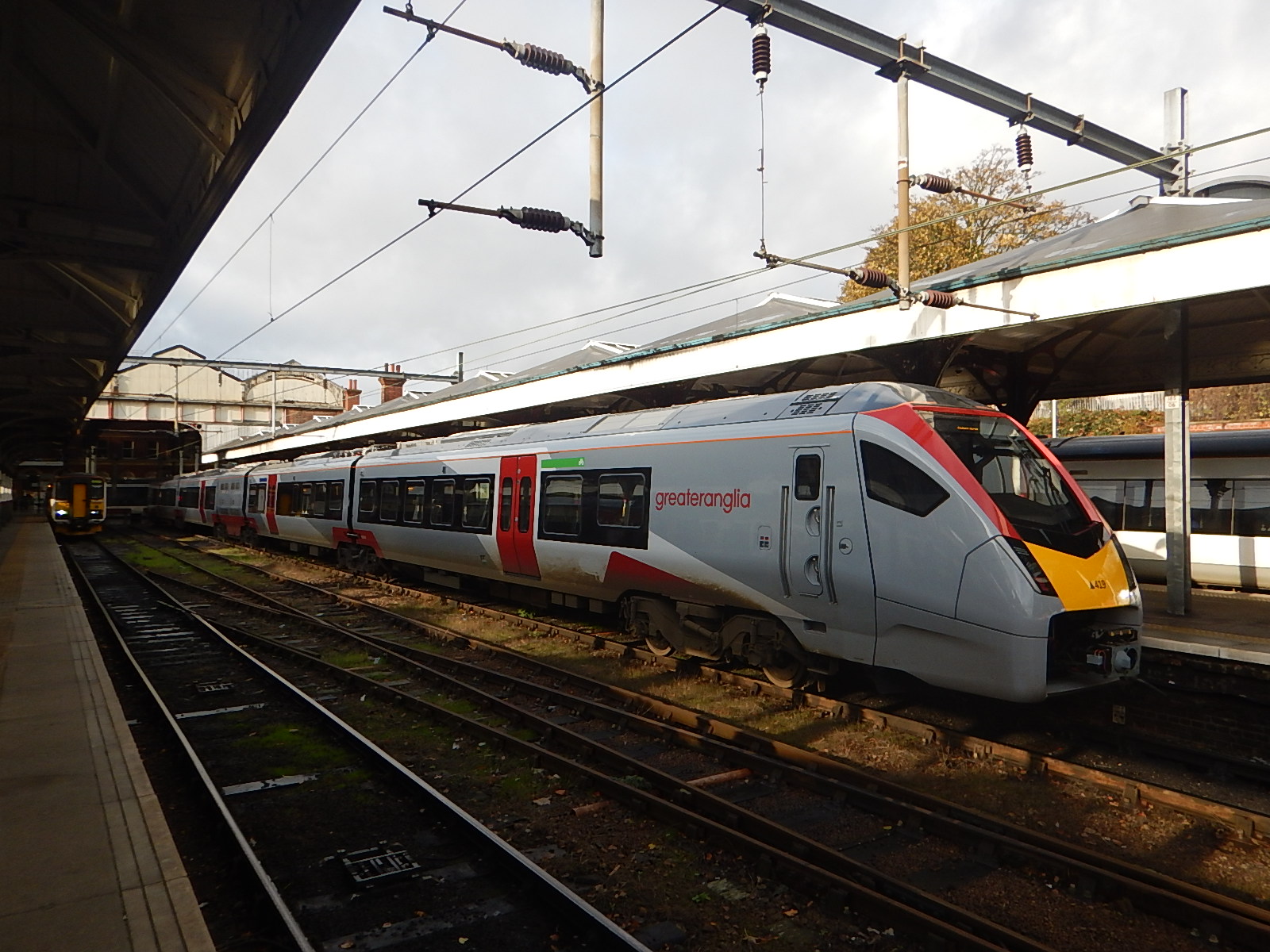
Stadler’s approach of a power car, must be working as they have received an order for a hydrogen-powered version of their popular Flirts, which I wrote about in MSU Research Leads To North America’s First Commercial Hydrogen-Powered Train.
I think we can be certain, that because of the UK loading gauge, that a hydrogen-powered train will be longer by about a car, than the equivalent electric train.
I can see a certain amount of platform lengthening being required. But this is probably easier and less costly than electrification to achieve zero-carbon on a route.
Batteries can be distributed under all cars of the train, anywhere there is space., But I would suspect that fuel cells must be in the same car as the hydrogen tank, as I doubt having hydrogen pipes between cars would be a good idea.
Alstom have resorted to putting hydrogen tanks and fuel cells in both driving cars and they must have sound reasons for this.
Perhaps, it is the only way, they can get the required power and range.
As I understand it, the Alstom Breeze draws power from three sources.
- The electrification if the route is electrified.
- The electricity generated by regenerative braking.
- The hydrogen system produces electricity on demand, at the required level.
Energy is stored in the batteries, which power the train’s traction motors and internal systems.
The electrical components needed for the train are getting smaller and lighter and I feel that it should be possible to put all the power generation and collection into a power car, that is somewhere near the middle of the train. Stadler’s power car is short at under seven metres, but there is probably no reason, why it couldn’t be the twenty metres, that are typical of UK trains.
Suppose you took a four-car version of CAF’s Class 331 train, which has two driver cars either side of a pantograph car and a trailer car.
This has 284 seats and by comparison with the three-car version the trailer car has eighty. As the pantograph car is also a trailer, I’ll assume that has eighty seats too! Until I know better!
Replacing the pantograph car with a hydrogen car, which would be unlikely to have seats, would cut the seats to 204 seats, but a second trailer would bring it back up to 284 seats.
I actually, think the concept of a hydrogen car in the middle of a four-car electric train could work.
- The five-car hydrogen train would have the same capacity as the four-car electric version.
- The train would need an updated software system and some rewiring. Bombardier achieved this quickly and easily with the train for the Class 379 BEMU trial.
- There are several types of four-car electrical multiple units, that could possibly be converted to five-car hydrogen-powered multiple units.
- Some five-car electrical multiple units might also be possible to be converted.
Obviously, if an existing train can be adapted for hydrogen, this will be a more cost effective approach.
Conclusion
Overall, the plans for rail improvements on Teesside seem to be good ones.
I’m looking forward to riding LNER to Teesside and then using the network of hydrogen-powered trains to explore the area in 2022.
My only worry, is that, if the network is successful, the many tourists visiting York will surely increase the numbers of day visitors to Whitby.
This is a paragraph from the RAIL article.
Alan Williams says that the EVRDC’s long-term objective is to see the Esk Valley served at intervals of roughly every two hours, equating to eight return trains per day, but with Northern and NYMR services sharing the single line between Grosmont and Whitby, introducing further Middlesbrough trains during the middle of the day, brings the conversation back to infrastructure.
He goes on to detail what is needed.
Will Future Hitachi AT-300 Trains Have MTU Hybrid PowerPacks?
I have mentioned this possibility in a couple of posts and I feel there are several reasons, why this might be more than a possibility!
What Do We Know About The Second Iteration Of An AT-300?
The first order for East Midlands Railway is for thirty-three five-car trains.
- Four engines instead of three.
- 125 mph on diesel power.
- A modified nose profile.
I find the nose profile significant, as I don’t believe that the current trains are aerodynamically much more efficient than British Rail’s legendary InterCity 125 trains.
On the other hand, Bombardier’s Aventras look as if the company’s aerospace division has been involved in the design. They certainly are very quiet, when they pass close by.
The second order for West Coast Rail is thin on detail, but they do mention that services from Euston could reach as far as Godowen.
I would also feel that 125 mph on diesel could be very helpful on the North Wales Coast Line to Holyhead.
Will 140 mph Running Be Commonplace?
Very much so!
For 140 mph running by the current trains, the following is needed.
- Tracks able to accommodate that speed.
- ERTMS signalling
- In-cab signalling
Wikipedia speaks of unspecified minor modifications to the trains.
To answer my question, I believe there will be running over 125 mph, if not 140 mph on substantial stretches of the following lines.
- East Coast Main Line
- Great Western Main Line
- Midland Main Line
- West Coast Main Line
I also believe other routes could see large increases in operating speed on certain sections.
- Basingstoke and Exeter
- Breckland Line
- Bristol and Exeter
- East and West Coastways
- Golden Valley Line
- Great Eastern Main Line
- Hitchin and Kings Lynn via Cambridge
- North Wales Coast Line
- Reading and Exeter via Newbury
If trains are capable of 125 mph and faster running without electrification, I can see Network Rail, doing what they have shown they can do well on the Midland Main Line, which is increasing line speed.
Note that on my list, I have included the second route to Norwich via the East Coast Main Line, Cambridge and Thetford and Kings Lynn services.
I can envisage hourly 125 mph services to and from Norwich and Kings Lynn joining and splitting at Cambridge and then running at high speed between Kings Cross and Cambridge.
It would be a massive boost for West Norfolk and Norwich, but it would not require extra high speed paths on the East Coast Main Line.
There must be other routes that by proven conventional track engineering can be turned from 80-100 mph lines into 125-140 mph high speed lines. No problem electrification to promote, design and erect. It just needs appropriate trains.
I can see the following routes without electrification being run at 125-140 by the new AT-300 trains.
- Euston and Holyhead
- Kings Cross and Cleethorpes via Lincoln
- Kings Cross and Hull
- Kings Cross and Kings Lynn/Norwich
- Liverpool and Edinburgh via Leeds
- Paddington and Exeter via Basingstoke and Yeovil
- Paddington and Gloucester/Cheltenham
- Waterloo and Exeter via Basingstoke and Yeovil
There are probably other routes.
Without doubt, the new AT-300 trains must be able to run at 140 mph on lines without electrification, once Network Rail have raised the operating speed.
Thoughts On AT-300 TrainsWith MTU PowerPacks
These are my thoughts on various topics.
Weight
The data sheet for the MTU PowerPack gives the mass at around five tonnes for a diesel engine of 700 kW.
Depending on the way you read the figures this appears to be less than that of a similar power diesel..
Fuel Economy
This is obviously better and MTU are quoting a forty percent saving.
Regenerative Braking
This comes as standard.
One PowerPack Per Car
I always like this concept, especially as many trains these days seem to have a lot of powered axles.
It also reduces the energy losses in the cables between cars.
The East Midlands Railway trains seem to have five cars and four engines, so is that four motor cars and one trailer.
Would trains be lengthened by adding extra trailer and/or motor cars as appropriate in the middle of the train?
Simpler Control System
MTU will have responsibility for the software of the PowerPack and all Hitachi’s control system for the train, will need to do with the PowerPacks is tell them how much power is required.
Hopefully, this will help in the debugging of the train, for which Bombardier had so much trouble with the Aventra.
Batteries
It appears that the design of the PowerPacks is very flexible with respect to size and number of battery packs.
Would it be an advantage for a train builder or an operator to tailor the battery capacity to the speed and length of a route.
Compatible AT-200 Local Trains
The AT-200 is Hitachi’s smaller and slower train of which the Class 385 train is an example.
If a version were to be produced with say three or four cars and one or more MTU PowerPacks, Hitachi would have a very nice bi-mode with a lot in common with the new AT-300, which would ease servicing for train operators, who were running both trains
Hitachi’s Relationship With MTU
MTU engines are used in the current Hitachi trains, so unless I am told otherwise,I am led to believe they have a good working relationship.
Conclusion
I wouldn’t be surprised to see the next generation of AT-300 use MTU PowerPacks.
What Would Be The Range Of A Tri-Mode Class 802 Train?
In Could Cirencester Be Reconnected To The Rail Network?, I speculated about the routes of a battery-electric version of a Class 800 train.
I said this.
As Hitachi have stated they will be using battery power to extend ranges of their trains, I wouldn’t be surprised to see some of the current trains modified to have batteries instead of some of their current diesel engines.
Such a train would would be ideal for the following routes.
- Paddington and Bedwyn – 13 miles
- Paddington and Cheltenham – 43 miles
- Paddington and Oxford – 10 miles
- Paddington and Weston-Super-Mare – 19 miles
The distance is the length that is not electrified.
I don’t think it improbable, that London Paddington and Swansea will be achieved by a battery-electric train based on the current Hitachi train designs.
So was it a serious idea or mad speculation?
Under Powertrain in the Wikipedia entry for theClass 800 train, this is said.
Despite being underfloor, the generator units (GU) have diesel engines of V12 formation. The Class 801 has one GU for a 5-9 car set. These provide emergency power for limited traction and auxiliaries if the power supply from the overhead line fails. The class 800/802 electro-diesel or Bi-Mode has 3 GU per five car set and 5 GU per nine car set. A 5 car set has a GU situated under vehicles 2/3/4 respectively and a 9 car set has a GU situated under vehicles 2/3/5/7/8 respectively.
This means that a five-car Class 800 or Class 802 train has three engines and an all -electric Class 801 train has a single engine.
If you were building a tri-mode Class 802 train, could two of the diesel engines be replaced by batteries.
- Hitachi have stated that trains can be changed from one class to another by adding or removing engines.
- Trains would always have at least one diesel engine for emergencies, just as the Class 801 trains do.
- Each MTU 1600 R80L diesel engine weighs just under seven tonnes.
Fourteen tonnes of batteries would probably store about 840 kWh of energy, if the most efficient batteries are used. That would not be a problem if Hitachi came calling.
In How Much Power Is Needed To Run A Train At 125 mph?, I calculated that a five-car Class 801 train needs 3.42 kWh per vehicle mile to cruise on electricity at 125 mph.
Dividing 840 by 5 cars and 3.42 kWh per vehicle file gives a range of forty-nine miles.
- The trains would need regenerative braking to the batteries.
- Battery energy density is increasing.
- Train aerodynamics could be improved, to reduce the power needed.
- Secondary routes like the Golden Valley Line are unlikely to have an operating speed higher than 110 mph, which would reduce the power needed.
I am coming round to the opinion, that Hitachi could design a battery-electric train based on the current Class 80X trains, that could reach Swansea from Paddington, without touching a drop of diesel.
- The batteries would need to be recharged before returning to London.
- I am assuming that the electrification is up and working between Paddington and Cardiff.
- Could the overhead rails in the Severn Tunnel be removed or replaced with engineering plastic or ceramic, as they corrode so much?
- Two five-car trains with batteries could work together as they do now.
Hitachi would need to get the software absolutely right.
Could The Diesel Engine Be Used To Increase Battery Range?
Lets assume that a tri-mode Class 802 train is running on a 125 mph main line.
It enters a section without electrification.
- It is cruising at 125 mph
- The batteries have a capacity of 840 kWh and have been charged on previous electrification.
- The train needs 3.42 kWh per vehicle mile to maintain speed.
- It’s a five-car train so it will need 17.1 kWh per mile.
- The train will take approximately thirty seconds to cover a mile and in that time the diesel engine will produce 5.83 kWh.
- So the net energy use of the train will be 11.27 kWh per mile.
This would give the train a range of 74.5 miles at 125 mph.
Obviously, a good driver, aided by a powerful Driver Assistance System could optimise the use of power to make sure the train arrived on time and possibly minimised carbon emissions.
What Would Be The Ultimate Range?
I think it would be possible to reduce the electricity consumption by means of the following.
- Slower operating speed.
- Better aerodynamics.
- More efficient train systems.
- Improved Driver Assistance Systems.
I think an energy consumption of 2.5 kWh per vehicle-mile could be possible, at perhaps a cruise of 100 mph
I can do the calculation without diesel assistance.
- It’s a five-car train so it will need 12.5 kWh per mile.
This would give the train a range of 67.2 miles at 100 mph on batteries alone.
I can also do the calculation again with diesel assistance.
- It’s a five-car train so it will need 12.5 kWh per mile.
- The train will take thirty-six seconds to cover a mile and in that time the diesel engine will produce 7 kWh.
- So the net energy use of the train will be 5.5 kWh per mile.
This would give the train a range of 153 miles at 100 mph on batteries with diesel assistance.
How Many Places Could Be Reached With A Fifty-Mile Range?
Setting a limit of fitly miles would allow running these routes on partial battery power, split down by companies who run the Hitachi trains.
Great Western Railway
These routes could certainly be run using a tri-mode Class 802 train.
- Paddington and Bedwyn – 13 miles
- Paddington and Cheltenham – 43 miles
- Paddington and Oxford – 10 miles
- Paddington and Swansea – 46 miles
- Paddington and Weston-Super-Mare – 19 miles
- Swindon and Bristol via Bath – 39 miles
Note.
- The distance gives the length of the longest section of the route without electrification.
- Certain routes like Bedwyn, Oxford and Weston-super-Mare probably wouldn’t need a charging station at the final destination.
- GWR could probably run a few other routes, without adding substantial new infrastructure.
- Tri-mode Class 802 trains, might be able to avoid electrification through Bath.
But surely the the biggest gain is that they would reduce GWR’s carbon footprint.
Hull Trains
I very much feel that with a charging station at Hull station, a tri-mode Class 802 train could bridge the forty-four mile gap between Beverley and the electrified East Coast Main Line at Temple Hirst Junction.
- The train could top up the battery every time it stops in Hull station.
- The 700 kW diesel engine could add 700 kWh in the hour long trip with no wires.
If a tri-mode Class 802 train could bridge this gap, then Hull Trains could go zero carbon.
LNER
These routes could certainly be run using a tri-mode Class 802 train.
- Kings Cross and Bradford – 14 miles
- Kings Cross and Harrogate – 18 miles
- Kings Cross and Huddersfield – 17 miles
- Kings Cross and Hull – 36 miles
- Kings Cross and Lincoln – 16 miles
- Kings Cross and Middlesbrough – 21 miles
Note.
- The distance gives the length of the longest section of the route without electrification.
- Certain routes like Bradford, Harrogate, Huddersfield, Lincoln and Middlesbrough probably wouldn’t need a charging station at the final destination.
- LNER could probably run a few other routes, without adding substantial new infrastructure.
- Using both battery and diesel power, the train would be able to make Cleethorpes and Grimsby after Lincoln.
But surely the the biggest gain is that they would reduce LNER’s carbon footprint.
TransPennine Express
These routes could certainly be run using a tri-mode Class 802 train.
- Leeds and Huddersfield – 17 miles
- Liverpool and Edinburgh – 34 miles
- Liverpool and Hull – 34 miles
- Liverpool and Scarborough – 34 miles
- Manchester Airport and Middlesbrough – 34 miles
- Manchester Airport and Newcastle- 34 miles
Note.
- The distance gives the length of the longest section of the route without electrification.
- TransPennine Express services all suffer because of the long gap across the Pennines.
- Network Rail are planning to partly electrify Dewsbury and Huddersfield, which would reduce the major gap to just eighteen miles.
As with GWR, Hull Trains and LNER, the carbon footprint would be reduced.
Conclusion
A tri-mode Class 802 train would be a good idea.
It should be noted that GWR, Hull Trains and TransPennine Express are all First Group companies.
Thoughts On The Next Generation Of Hitachi High Speed Trains
In Rock Rail Wins Again!, I started with this section, describing the new Hitachi AT-300 bi-mode trains for the Midland Main Line.
This article on the Railway Gazette, is entitled Abellio Orders East Midlands Inter-City Fleet.
The order can be summarised as follows.
- The trains will be Hitachi AT-300 trains
- There will be thirty-three bi-mode trains of five cars.
- The trains will be 125 mph capable.
- Unlike the similar Class 802 trains, the trains will have 24 metre long cars, instead of 26 metres.
- They will have a slightly modified nose profile.
- The new trains will have an extra diesel engine.
- The new trains will cost a total of £400 million.
I also came to these general conclusions.
- The trains may well have a more sophisticated diesel-electric system using regenerative braking to batteries.
- Capacity of the trains is difficult to predict, as East Midlands Railway have said there will be lots of tables.
- The new nose may improve aerodynamics.
I also suspect that the trains will still be able to automatically split and join, as Class 395 and Class 80x trains can do.
Summing Up The Class 80x Trains As A Passenger
I certainly don’t have any seriously negative comments, but I do think a new generation could address some problems.
- I’d like to see level entry between train and platform.
- There have been complaints about the carrying of bicycles.
- Some passengers would like a buffet.
These are not major problems with the basic design of the train itself and surely could be improved reasonably easily.
Further Thoughts On The Car Length
The AT300 trains for East Midlands Railway have a car length of twenty-four metres, as opposed to the twenty-six metres of the Class 80x trains.
If you look at some of the new fleets that are starting to be delivered, they have car lengths as follows.
- Class 710 trains – 20 metres
- Class 720 trains – 24 metres.
- Class 195 and 331 trains – 24 metres
Twenty metres has for decades been the UK standard length, so could it have been replaced with twenty-four metres?
It should be noted that a twelve-car train with twenty metre cars and a ten-car train with twenty-four metre cars are more or less the same length.
With respect to the Midland Main Line, this means that platforms built to take two five-car AT300 trains, will also take a twelve-car formation of Class 360 trains.
Augmenting And Possible Replacement Of The Class 395 Trains
Class 395 trains run Southeastern’s HighSpeed services between St. Pancras and Kent.
- They are six-car trains.
- Each set is 121.3 metres long with twenty metre cars.
- Extra sets are needed for the proposed Hastings service and to possibly serve a second London terminus.
- Independent power, which could be diesel or batteries is needed for the Hastings service.
- The trains were built in 2007-2009, so still have plenty of life left.
Extra or replacement trains built with five cars, that were twenty-six metres long, could cause operational issues and possibly mean some platforms needed to be lengthened.
However, trains with a similar size specification to the AT300 trains for the Midland Main Line, might be ideal.
- Five twenty-four metre cars.
- A reprofiled nose for better aerodynamics.
- Regenerative braking to batteries.
But all or some of the diesel engines would be replaced by batteries. As with the Class 801 train, units may always have one diesel engine for use in case of power failure.
Has anybody got any statistics on how often the Class 801 trains that are in service have used their diesel engine?
If Class 395 Trains Were To Be Replaced, Where Would They Go?
These trains are too good to be scrapped, but I’m sure they will find a use.
- Kings Cross and Kings Lynn via Cambridge – This service uses the Southern section of the East Coast Main Line, which is going to be digitally-signalled to allow 140 mph running. Currently, the Kings Cross and Kings Lynn service is run by 110 mph trains. Class 395 trains could probably run this service and keep out of the way of the Azumas and other 140 mph trains.
- Waterloo And Portsmouth Harbour Via The Direct Line – Because it is a challenging route, more powerful and faster trains may be an ideal train for this line. The Class 395 trains already have third-rail shoes.
- Manchester And Blackpool Via The West Coast Main Line – This could be a possibility, especially if High Speed Two connects into Manchester from the West,
I suspect there will be other routes, which would welcome the speed and/or power of Class 395 trains.
Other Uses For Battery-Electric AT300 Trains
In Shapps Wants ‘Earlier Extinction Of Diesel Trains’, I gave this list of main-line services, which are run partly on electricity and partly on diesel.
- London and Aberdeen – 126 miles
- London and Bradford – < 27 miles
- London and Chester – 21 miles
- London and Cheltenham – 42 miles
- London and Exeter – 120 miles
- London and Fishgruard – 119 miles
- London and Gobowen – 25 miles
- London and Harrogate – <18 miles
- London and Hereford – 106 miles
- London and Holyhead – 108 miles
- London and Hull – 45 miles
- London and Inverness – 136 miles
- London and Lincoln – 17 miles
- London and Llandudno – 68 miles
- London and Middlesbrough – 20 miles
- London and Ocford – 10 miles
- London and Paignton – 148 miles
- London and Penzance – 252 miles
- London and Plymouth – 172 miles
- London and Shrewsbury – 42 miles
- London and Sunderland 41 miles
- London and Swansea – 46 miles
- London and Weston-super-Mare – 19 miles
- London and Worcester – 66 miles
- London and Wrexham – 23 miles
Note.
- The distance given is between the end of the electrification and the final destination.
- I am assuming continuous electrification from London to Bristol Temple Meads, Cardiff Central, Dunblane and Newbury
- Plans already exist from West Coast Rail to use bi-mode trains on the Holyhead route via Chester.
How far will an AT300 train go on battery power?
- I don’t think it is unreasonable to be able to have 150 kWh of batteries per car, especially if the train only had one diesel engine, rather than the current three in a five-car train.
- I feel with better aerodynamics and other improvements based on experience with the current trains, that an energy consumption of 2.5 kWh per vehicle mile is possible, as compared to the 3.5 kWh per vehicle mile of the current trains.
Doing the calculation gives a range of sixty miles for an AT300 train with batteries.
As train efficiency improves and batteries are able to store more energy for a given volumn, this range can only get better.
Routes can be divided as follows.
- Diesel Power Needed – Aberdeen, Exeter, Fishguard, Hereford, Holyhead, Inverness, Llandudno, Paignton, Penzance, Plymouth and Worcester.
- Battery Charge At Terminus Needed – Cheltenham, Hull, Shrewsbury, Sunderland and Swansea.
- Battery Power Only – Bradford, Chester, Gobowen, Harrogate, Lincoln, Middlesbrough, Oxford, Weston-super-Mare and Wrexham.
There are some interesting points dug out by my figures.
West Coast Rail Could Reach Chester, Gobowen, Shrewsbury And Wrexham On Battery Power
With a range of sixty miles on batteries, the following is possible.
- Chester, Gobowen, Shrewsbury And Wrexham Central stations could be reached on battery power from the nearest electrification.
- Charging would only be needed at Shrewsbury to ensure a return to Crewe.
Gobowen is probably at the limit of battery range, so was it chosen as a destination for this reason.
I feel that trains with a sixty mile battery range would make operations easier for West Coast Rail.
London To Lincoln
LNER have just started an augmented service between Kings Cross and Lincoln from today..
- There are five trains per day in both directions.
- The service runs seven days a week.
- The service is being run using bi-mode Class 800 trains or Azumas to the marketing men.
- The trains make intermediate stops at Newark North Gate, Grantham, Peterborough and Stevenage..
In some ways it is more of a long-distance high speed commuter, than an inter-city train.
It will get better in future.
- Digital signalling will allow 140 mph running South of Newark and this will reduce journey times.
- If demand grows LNER might be sable to extend another Newark train to Lincoln.
As Newark to Lincoln is only seventeen miles, I’m certain that this route could be handled by a battery-equipped train, if Hitachi develop one.
What would it do for Lincoln’s tourism from London, if the train service was advertised as a high speed battery train?
London To Middlesbrough And Sunderland
There has been plans to electrify between Northallerton and Midfdlesbrough for some years, but they never seem to get started.
If electrification were to be erected on the fourteen miles between Northallerton and Eaglescliffe, there would only be a six mile gap without electrification between the end of the electrification and Middlesbrough.
- Battery-electric Azumas would be able to serve Middlesbrough from London.
- They wouldn’t need a charging facility at Middlesbrough.
- It might remove the need to electrify Middlesbrough station, if the proposed Tees Valley Metro could be run on batteries.
In December 2019, TransPennine Express will be extending their Manchester Airport and Middlesbrough service to Redcar Central station, which is just another five miles from Middlesbrough.
Currently, this service is run by a Class 68 locomotive and a rake of Mark 5 coaches, but surely an AT300 train with batteries could handle this end of the route.
There are four sections of lines without electrification between Redcar and Manchester Airport.
- Redcar and Northallerton – 26 miles – Has been talked about for years.
- Colton Junction and Leeds – 18 miles – Has been talked about for years.
- Holbeck Junction and Huddersfield – 16 miles – Currently planned to be electrified.
- Huddersfield and Stalybridge – 18 miles
It looks to me, that an AT300 with batteries could cross the Pennines, if the Holbeck Junction and Huddersfield section was electrified.
Electrification of this section would also benefit TransPennine services between Manchester and Edinburgh, Newcastle and Scarborough.
- Some or all could be run by an AT300 train with batteries.
- A substantial about of carbon emissions would be eliminated.
- In an ideal world, Hitachi will have a route to add batteries to Class 802 trains.
- Obviously, the more electrification the better.
It certainly looks as if, progress is being made on the North-Eastern section of Northern Powerhouse Rail.
London To Bradford And Harrogate
These routes are both short extensions from Leeds, that would be easily handled by AT300 trains with a battery capability.
Conclusion
I strongly believe that the next generation of the AT300 train will greatly rxtend the UK’s electrified network
A lot depends on how far it will go on battery power.
I have stated that the train will go for sixty miles on battery power and that it will have a single diesel engine, as does the all-electric Class 801 train.
But even a range of forty miles and charging stations at some terminals like Hull and Redcar could still have a major impact.
Battery Power Lined Up For ‘755s’
In Issue 888 of Rail Magazine, there is a short article, which is entitled Battery Power Lined Up For ‘755s.‘
This is said.
Class 755s could be fitted with battery power when they undergo their first overhaul.
Stadler built the trains with diesel and electric power.
The Swiss manufacturer believes batteries to be the alternative power source for rail of the future, and is to build tri-mode trains for Transport for Wales, with these entering traffic in 2023.
Rock Rail owns the Greater Anglia fleet. Chief Operating Office Mike Kean told RAIL on September 4 it was possible that when a four-car ‘755/4’ requires an overhaul, one of its four diesel engines will be removed and replaced by a battery.
These are some thoughts.
What Is The Capacity Of A Single Battery?
This picture shows the PowerPack of a Class 755 train.

Note the two ventilated doors on the side. Currently, a diesel engine is behind each!
The PowerPack has four slots,; two on either side of the central corridor.
Each of the slots could take.
- A V8 16-litre Deutz diesel that can produce 478 kW and weighs 1.3 tonnes.
- A battery of a similar physical size.
- Possibly a hydrogen fuel-cell!
I would assume that the battery module is plug-compatible, the same physical size and similar weight to the diesel engine module, as this would make the design and dynamics of the train easier.
A 1.2 tonnes battery would hold around 120 kWh.
Kinetic Energy Of The Train
I will use my standard calculation.
- The basic train weight is 114.3 tonnes.
- If each of the 229 passengers weighs 90 kg with Baggage, bikes and buggies, this gives a passenger weight of 20.34 tonnes.
- This gives a total weight of 134.64 tonnes.
Using Omni’s Kinetic Energy Calculator gives these figures for the Kinetic energy.
- 50 mph – 9.34 kWh
- 60 mph – 13.5 kWh
- 75 mph – 21 kWh
- 90 mph – 30.3 kWh
- 100 mph – 37.4 kWh
- 125 mph – 58.4 kWh
Note.
- Class 755 trains will not be able to run at 125 mph, but I have been told by someone who should know, that the trains have probably been designed, to enable this in other versions of the trains in the future.
- The kinetic energy of the train at typical Greater Anglia service speeds is not very high.
These amounts of kinetic energy can be easily handled in a 120 kWh battery under regenerative braking, to improve the efficiency of the trains.
Range On Battery Power
Assuming that the train uses 3 kWh per vehicle mile (SeeHow Much Power Is Needed To Run A Train At 125 mph?) , this would give.
- A four-car train a range of ten miles.
- A three-car train a range of 13.3 miles.
This probably isn’t long enough given that these are Greater Anglia’s electrification gaps.
- Ely and Peterborough – 30 miles
- Ipswich and Cambridge – 41 miles
- Ipswich and Ely – 37 miles
- Ipswich and Felixstowe – 14 miles
- Ipswich and Lowestoft – 45 miles
- Marks Tey and Sudbury – 12 miles
- Norwich and Ely – 50 miles
- Norwich and Great Yarmouth – 18 miles
- Norwich and Lowestoft – 20 miles
- Norwich and Sheringham – 30 miles
It would appear that more battery capacity is needed, as the required range is around sixty miles on some routes.
In the July 2018 Edition of Modern Railways, there is an article entitled KeolisAmey Wins Welsh Franchise.
This is said about the Stadler Tri-Mode Flirts on the South Wales Metro.
The units will be able to run for 40 miles between charging, thanks to their three large batteries.
So does this mean that these Flirts have just one Deutz diesel engine of 478 kW and three batteries in the four slots of the power-pack?
Assuming that the Flirts use 3 kWh per vehicle mile, this gives these ranges.
- A four-car train a range of thirty miles.
- A three-car train a range of forty miles.
These ranges might give enough range for many the of East Anglian routes. Improvements in train efficiency and battery storage would only increase these ranges.
Class 755 Trains In Electric Mode
Being able to do this, is important, as if the Class 755 trains are to use battery power, then they will need to use 25 KVAC overhead electrification in the various electric islands around East Anglia to charge the batteries.
The article in Issue 888 of Rail Magazine, says this about running in electric mode.
GA Joint Project Manage Steve Mitchell told RAIL that the ‘755s’ can already operate on electric power between Norwich and London, but they must carry out Electro Magnetic Current testing on the Ely-Cambridge route.
When that is complete, they will operate Notwich-Ely in diesel mode, and Ely-Cambridge in electric.
At least it appears that the Northern bay platforms at Cambridge are electrified.
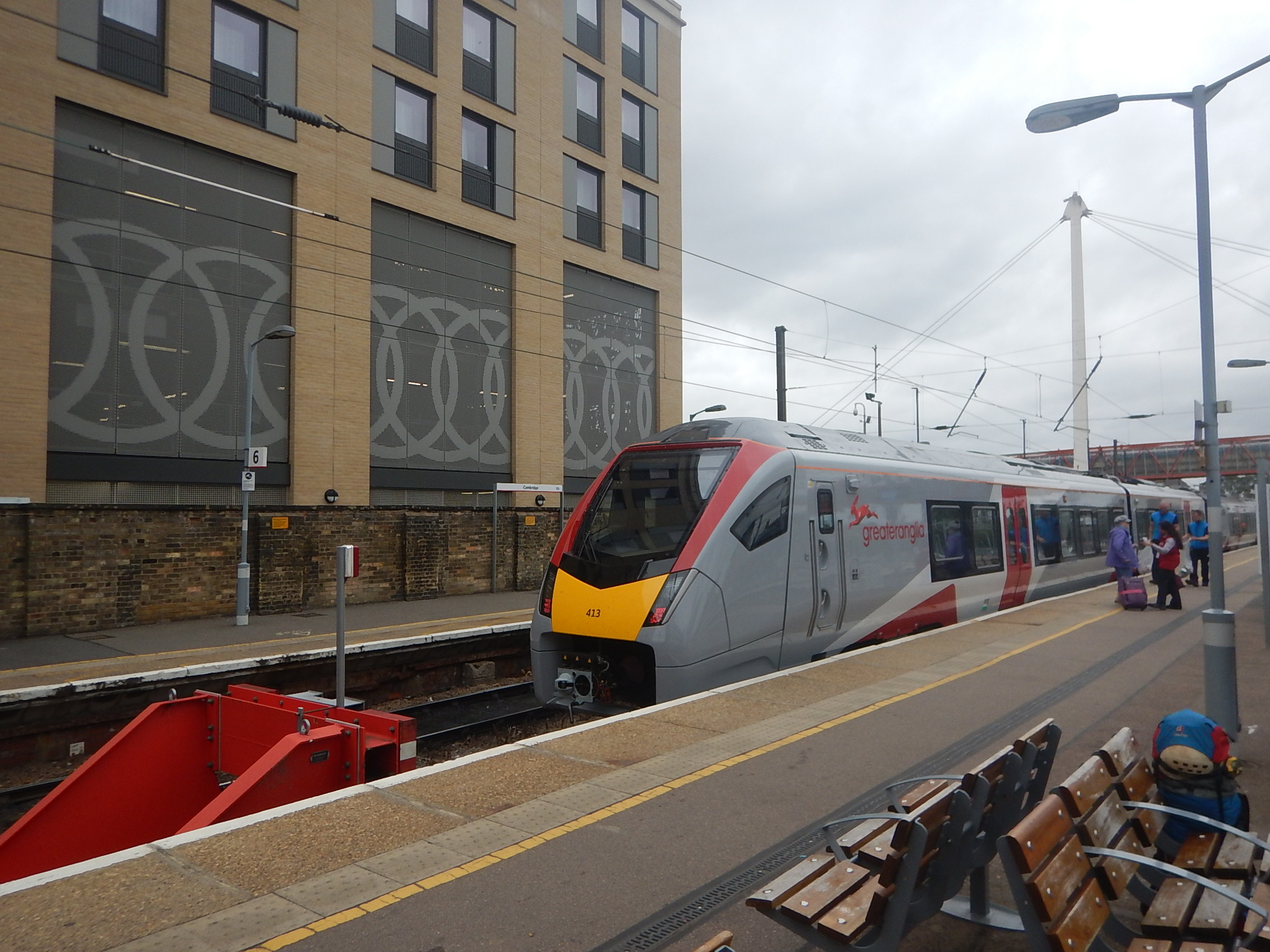
This would probably mean that no new infrastructure is needed.
As both Ipswich and Norwich stations are fully electrified, charging the batteries on hourly shuttles between the three stations, wouldn’t be a problem, if and when the trains are fitted with enough battery capacity to bridge the fifty mile gaps in the electrification on the routes.
Three-Car Trains And Batteries
The two short Southern routes; Coclester Town and Sudbury and Ipswich and Felixstowe will probably be run by three-car Class 755 trains, which have two diesel engines and two spare slots in the PowerPack.
Battery modules in both spare slots would give a twenty-seven mile range, which could enable the following.
- Running a return trip between Marks Tey and Sudbury, after charging the batteries on the main line between Colchester Town and Marks Tey.
- Running a return trip between Ipswich and Felixstowe, provided enough charge can be taken on at Ipswich.
The article in Issue 888 of Rail Magazine, also says this about the new Class 755 trains entering service.
The last line to receive them will be Sudbury-Marks Tey, will exclusively be operated by three-car Class 755/3s due to infrastructure restraints on the branch. No date has been given.
It should also be noted that the three-car trains are going to be the last to be delivered.
I feel that Stadler and Greater Anglia are following a cautious and very professional route.
Consider.
- They introduced the new trains on the Wherry Lines, which are close to the Crown Point Depot.
- Services between Norwich and Sheringham and Norwich and Cambridge were introduced next.
- All the initial services have used four-car trains
- Greater Anglia held on to the standby train of two Class 37 locomotives and Mark 2 coaches until last week.
- They have stated that training of Ipswich drivers is starting, ahead of services from the town to Cambridge, Felixstowe, Lowestoft and Peterborough.
- All the Ipswich cervices can be run using four-car trains.
- As I said earlier, the only service that needs a three-car train is Sudbury and Marks Tey.
- A three-car train could probably be thoroughly tested on one of the Norwich routes before deplayment to Sudbury.
- It should also be noted that a three-car train is only a four-car train with two less diesel engines and one less trailer car.
So far everything seems to have gone very well, with no adverse reports in the media.
Stadler have orders for further bi-mode trains for South Wales and other places in Europe. At least one of these orders, that for the South Wales Metro, includes a number of diesel/electric/battery versions.
Given the problems, that Bombardier and others have had with getting the complex software of these trains to work correctly, if I was Stadler’s Project Manager on multi-mode Flirts, I would be testing the trains and their software morning, noon and night!
So could the planned later arrival of the three-car Class 755 trains, be partly to enable Stadler to fully investigate the characteristics of a multi-mode Flirt?
After all, Greater Anglia only need a couple of three-car trains to start the service between Sudbury and Marks Tey, of the fourteen on order. And they have twenty-four four-car trains on order for the other routes.
They are also replacing twenty-four assorted diesel multiple units with thirty-eight longer new bi-mode multiple units.
I do wonder, if there is a cunning plan being hatched between Greater Anglia and Stadler.
- Stadler finalises the design and the software for a PowerPack, that contains both diesel and battery modules.
- Stadler thoroughly tests the design using a Greater Anglia three-car train in Switzerland.
- Stadler shows the concept to other prospective customers.
- Greater Anglia certifies the three-car Class 755 bi-mode train in the UK.
- Greater Anglia runs three-car 755 trains between Colchester Town and Sudbury, using the electrification between Marks Tey and Colchester Town, as they have planned for some time.
- When ready, Class 755 trains with batteries are introduced between Sudbury and Colchester Town.
Greater Anglia would be running the first battery-electric service using bi-mode battery-electric trains in the UK.
RTRI Tests Fuel Cell Multiple Unit
The title of this post is the same as that of this article on Railway Gazette.
This is the first two paragraphs.
JAPAN: Railway Technical Research Institute has started test running with a prototype multiple-unit which can work as a conventional or battery EMU or using a fuel cell powerpack.
Converted from an older 1·5 kV DC EMU, the test train comprises a 34 tonne motor car and 29 tonne trailer vehicle. Each car is 19 760 mm long and 2 950 mm wide. It is able to operate as a conventional EMU when running under overhead catenary, or as a battery unit off-wire, with or without the fuel cell in use to trickle-charge the batteries.
These are my thoughts.
The Hydrogen Fuel Cells.
The article says this about the hydrogen fuel cells.
Two polymer electrolyte fuel cells are contained in an underfloor module 2 600 mm long, 2 655 mm wide and 720 mm high, which weighs 1·9 tonnes.
The fuel cells are stated to have a rating of 90 kW at 200 to 350 V.
To get a handle on how powerful the hydrogen fuel cells are, these are some characteristics of a British Rail Class 456 train.
- It is a two-car electric multiple unit.
- It weighs 72.5 tonnes.
- It has an operating speed of 75 mph.
- It is a 750 VDC train.
- It has a power output of 373 kW
I wouldn’t think that the two trains are that far apart in performance and capacity.
The Japanese train has a total power output from the fuel cells of 180 kW, but it can also use power from the battery.
I wouldn’t be surprised to find out that the Japanese fuel cell and battery combination was powerful enough to power the British train.
I also think, they would fit underneath a typical British train like the Class 456 train, which has a width of 2800 mm.
The Hydrogen Tanks
The article says this about the hydrogen tanks and the range.
Hydrogen is stored in four high pressure cylinders at 35 MPa, with a capacity of 180 litres, giving a range of 72 km.
The mass of the hydrogen in the tank according to this calculator on the Internet is around 4.3 Kg.
In How Much Energy Can Extracted From a Kilogram Of Hydrogen?, I showed that a typical fuel cell can produce 16 kWh from a kilogram of hydrogen.
So the hydrogen tank can be considered a battery holding 4.3 * 16 = 68.8 kWh.
That doesn’t sound much, so perhaps the capacity figure is for a single tank. In that case the total for the train would be 275.2 kWh, which seems more in line with the battery size of Vivarail’s two-car battery prototype, which has 424 kWh.
Each tank would be something like 2500 mm long and 300 mm in diameter, if they were cylindrical. Double the diameter to 600 mm and the capacity would be over 700 litres.
The Battery
The article says the train has a 540 kW battery, which I think could be a misprint, as it would more likely be 540 kWh.
Performance
The article says this about the performance.
The four 95 kW traction motors provide a maximum acceleration of 0·7 m/s2, and an electric braking rate of 0·86 m/s2
It also says that the range is 72 km.
My observations on the performance and traction system are.
- The traction power of the two-car Japanese train at 380 kW is very similar to the 373 kW of the similar-sized British Class 456 train
- The acceleration rate is very typical of an electric multiple unit.
- Braking is regenerative and used to charge the batteries. As it should!
This leads me to conclude, that this is a train, that could run a short public service, just as the Class 379 BEMU demonstrator did in 2015.
Thoughts About Range
The range is quoted at 72 kilometres (forty five miles.) This figure is unusual in that it is very precise, so perhaps it’s the Japanese way to give an exact figure, whereas we might say around or over seventy kilometres.
Applying my trusty formula of three kWh per vehicle-mile for cruising gives a energy requirement of 270 kWh for the full range, which is close to the four-tank energy capacity of 275.2 kWh.
Comparison With Alstom’s Breeze
Alstom are building a hydsrogen-powered version of a Class 321 train, which they have named Breeze.
Like the Japanese train, this is a effectively two-car train with respect to capacity as large hydrogen tanks to give a thousand kilometre range are installed.
So do the developers of both trains feel that a hydrogen-powered train to replace two- and three-car diesel multiple units is the highest priority?
Conclusion
If nothing else, it seems the Japanese have designed a two-car electric multiple unit, that has the following characteristics.
- Practical size of two-cars.
- Most equipment underneath the train.
- Useful range.
- Acceleration and braking in line with modern units.
- Regenerative braking.
- Ability to work on overhead, battery and hydrogen power.
I am led to the conclusion, that once their research is finished, the Japanese could design a very practical hydrogen-powered train for production in the required numbers.
My First Rides In A Class 755 Train
Today, I had my first rides in a Class 755 train. I use rides, as it was three separate timetabled journeys.
- 12:36 – Norwich to Great Yarmouth
- 13:17 – Great Yarmouth to Norwich
- 14:05 – Norwich to Lowestoft
But it was only one train!
Although, I did see at least one other train in service.
These are my observations.
The Overall Style
These are a few pictures of the outside of the train.
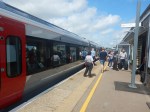
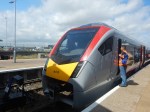
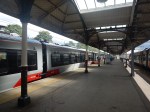
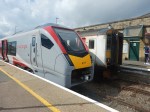
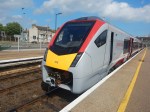
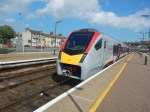
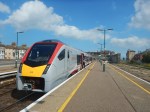
The train certainly looks impressive from the front, but then it has a similar profile to a Bombardier Aventra or a member of Hitachi’s Class 800 family of trains.
The open nose is reminiscent of front-engined Formula One racing cars of the 1950s, with an added sloping front to apply downforce.
I would suspect that the similarity of the trains is driven by good aerodynamic design.
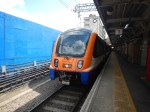
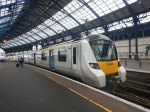
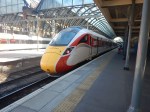

If all the current Formula One cars were painted the same colour, could you tell the apart?
Trains seem to be going the same way. Only Siemens Class 700/707/717 design doesn’t seem to be rounded and smooth.
The PowerPack
The unique feature of these bi-mode trains is the diesel PowerPack in the middle of the train.
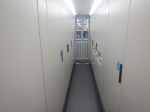
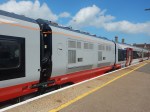
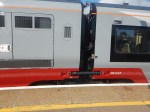
Stadler first used a PowerPack in the GTW, which I described in The Train Station At The Northern End Of The Netherlands.
- GTWs date from 1998.
- Over five hundred GTWs have been built.
- You see GTWs in several countries in Europe.
- GTWs have a maximum speed of between 115 and 140 kph.
The concept of the train with a PowerPack is certainly well-proven.
I have deliberately ridden for perhaps twenty seconds in the corridor through the PowerPack on both trains! Although I didn’t measure it with a sound meter, I’m fairly certain, that the more modern Class 755 train is better insulated against the noise of the engines.
But you would expect that with progress!
There could be another significant difference between the bi-mode Flirt and the GTW. This picture shows the connection between the PowerPack and the next car.
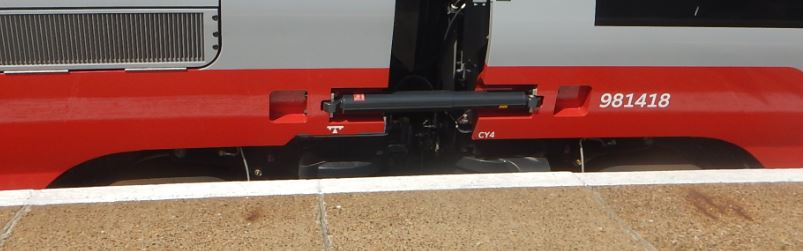
It looks like it could be a damper to improve the performance of the train on curves. It is not visible on this picture of a GTW PowerPack.
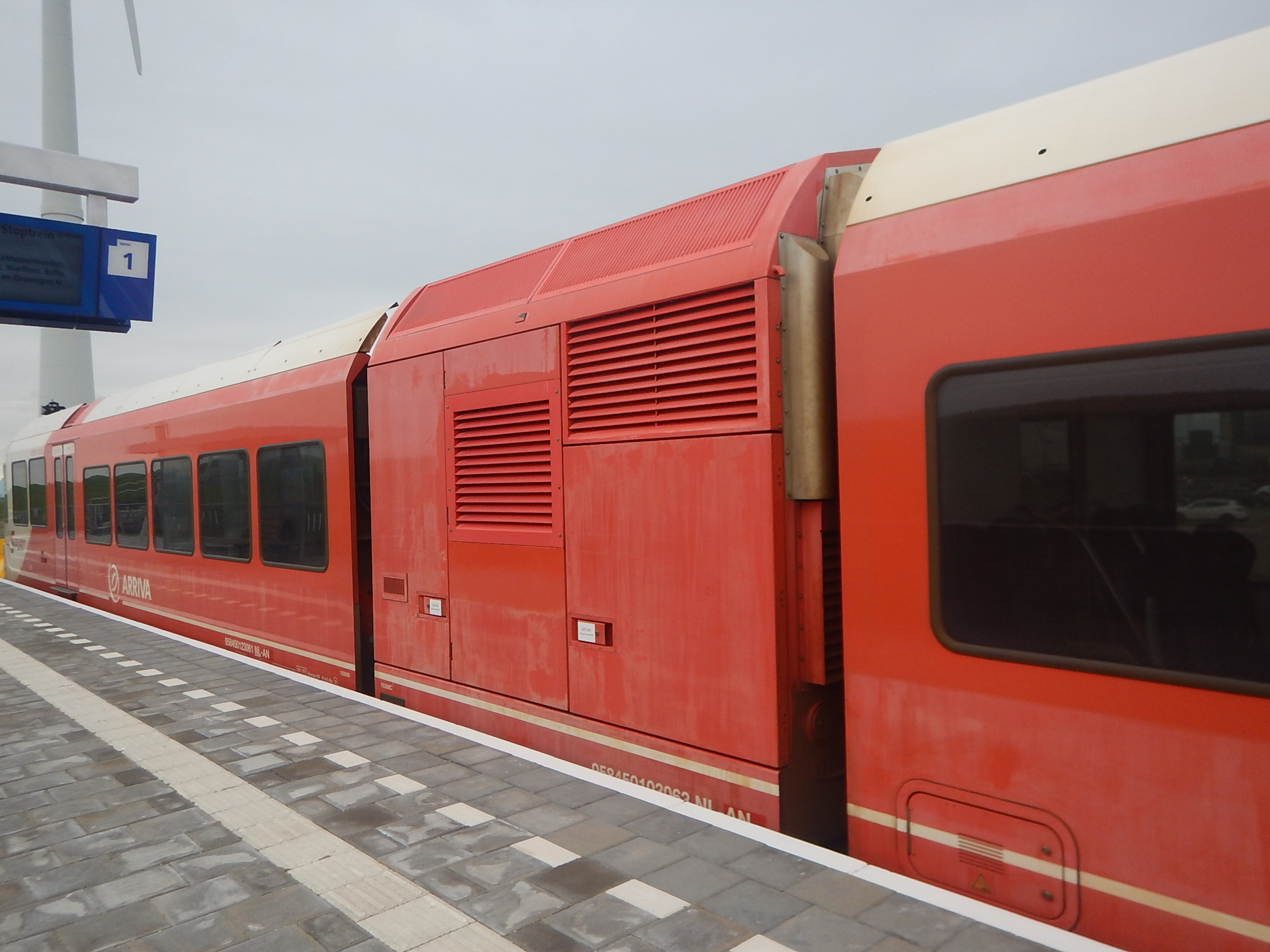
As an engineer, this says to me, that Stadler have taken tremendous care to make the unusual concept of the PowerPack work perfectly.
Train Power On Diesel
Consider.
- This four-car Class 755 train has installed diesel power of 1920 kW.
- At 100 mph, the train will travel a mile in thirty-six seconds.
- In that time, 19.2 kWh would be generated by the engines at full-power.
This means that a maximum power of 4.6 kWh per vehicle mile is available, when running on diesel power.
In How Much Power Is Needed To Run A Train At 125 mph?, I answered the question in the title of the post.
This was my conclusion in that post.
I know this was a rather rough and ready calculation, but I can draw two conclusions.
- Trains running at 125 mph seem to need between three and five kWh per vehicle mile.
- The forty year old InterCity 125 has an efficient energy use, even if the engines are working flat out to maintain full speed.
The only explanation for the latter is that Terry Miller and his team, got the aerodynamics, dynamics and structures of the InterCity 125 almost perfect. And this was all before computer-aided-design became commonplace.
In future for the energy use of a train running at 125 mph, I shall use a figure of three kWh per vehicle mile.
These figures leave me convinced that the design of the Class 755 train can deliver enough power to sustain the train at 125 mph, when running on diesel power
Obviously, as the maximum speed in East Anglia, is only the 100 mph of the Great Eastern Main Line, they won’t be doing these speeds in the service of Greater Anglia.
I also had a quick word with a driver and one of my questions, was could the train design be good for 125 mph? He didn’t say no!
This 125 mph capability could be useful for Greater Anglia’s sister company; Abellio East Midlands Trains, where 125 mph running is possible, on some routes with and without electrification.
With respect to the Greater Anglia application, I wonder how many engines will be used on various routes? Many of the routes without electrification are almost without gradients, so I can see for large sections of the routes, some engines will just be heavy passengers.
I’ve read somewhere, that the train’s computer evens out use between engines, so I suspect, it gives the driver the power he requires, in the most efficient way possible.
Remember that these Greater Anglia Class 755 trains, are the first bi-mode Stadler Flirts to go into service, so the most efficient operating philosophy has probably not been fully developed.
Train Weight
These pictures show the plates on the train giving the details of each car.
I only photographed one side of the train and I will assume that the other two cars are similar. They won’t be exactly the same, as this intermediate car has a fully-accessible toilet.
The weight of each car is as follows.
- PowerPack – PP – 27.9 tonnes
- Intermediate Car – PTSW – 16.0 tonnes
- Driving Car – DMS2 – 27.2 tonnes
Adding these up gives a train weight of 114.3 tonnes.
Note that the formation of the train is DMS+PTS+PP+PYSW+DMS2, which means that heavier and lighter cars alternate along the train.
Train Length
The previous pictures give the length of each car is as follows.
- PowerPack – PP – 6.69 metres
- Intermediate Car – PTSW – 15.22 metres
- Driving Car – DMS2 – 20.81 metres
Adding these up gives a train length of 78.75 metres.
This is very convenient as it fits within British Rail’s traditional limit for a four-car multiple unit like a Class 319 train.
Train Width
The previous pictures give the width of each car is as follows.
- PowerPack – PP – 2.82 metres
- Intermediate Car – PTSW – 2.72 metres
- Driving Car – DMS2 – 2.72 metres
The PowerPack is wider than the other cars and it is actually wider than the 2.69 metres of the Class 170 train, that the Class 755 train will replace. However, Greater Anglia’s electric Class 321 trains also have a width of 2.82 metres.
It looks to me, that Stadler have designed the PowerPack to the largest size that the UK rail network can accept.
The other cars are narrower by ten centimetres, which is probably a compromise between fitting platforms, aerodynamics and the needs of articulation.
Seats
The previous pictures give the number of seats in each car as follows.
- PowerPack – PP – 0
- Intermediate Car – PTSW – 32
- Driving Car – DMS2 – 52
This gives a total of 168 seats. Wikipedia gives 229.
Perhaps the car without the toilet has more or Wikipedia’s figure includes standees.
Kinetic Energy Of The Train
I will use my standard calculation.
The basic train weight is 114.3 tonnes.
If each of the 229 passengers weighs 90 kg with Baggage, bikes and buggies, this gives a passenger weight of 20.34 tonnes.
This gives a total weight of 134.64 tonnes.
Using Omni’s Kinetic Energy Calculator gives these figures for the Kinetic energy.
- 60 mph – 13.5 kWh
- 100 mph – 37.4 kWh
- 125 mph – 58.4 kWh
If we are talking about the Greater Anglia C;lass 755 train, which will be limited to 100 mph, this leads me to believe, that by replacing one diesel engine with a plug compatible battery of sufficient size, the following is possible.
- On all routes, regenerative braking will be available under both diesel and electric power.
- Some shorter routes could be run on battery power, with charging using existing electrification.
- Depot and other short movements could be performed under battery power.
The South Wales Metro has already ordered tri-mode Flirts, that look like Class 755 trains.
InterCity Quality For Rural Routes
The title of this section is a quote from the Managing Director of Greater Anglia; Jamie Burles about the Class 755 trains in this article on Rail Magazine.
This is the complete paragraph.
Burles said of the Class 755s: “These will be the most reliable regional train in the UK by a country mile – they had better be. They will be InterCity quality for rural routes, and will exceed expectations.”
I shall bear that quote in mind in the next few sections.
Seats And Tables
The seats are better than some I could name.
The seats are actually on two levels, as some are over the bogies. However |Stadler seem to managed to keep the floor flat and you step-up into the seats, as you do in some seats on a London New Routemaster bus.
Seat-Back Tables
I particular liked the seat-back tables, which weren’t the usual flimsy plastic, but something a lot more solid.
They are possibly made out of aluminium or a high class engineering plastic. You’d certainly be able to put a coffee on them, without getting it dumped in your lap.
It is the sort of quality you might get on an airliner, flown by an airline with a reputation for good customer service.
Step-Free Access
Stadler are the experts, when it comes to getting between the train and the platform, without a step. As I travel around Europe, you see little gap fillers emerge from trains built by Stadler, which have now arrived in East Anglia.

There was a slight problem at Great Yarmouth with a wheelchair, but it was probably something that can be easily sorted.
Some platforms may need to be adjusted.
Big Windows
The train has been designed with large windows, that are generally aligned with the seats.
There is no excuse for windows not aligning with most of the seats, as you find on some fleets of trains.
Low Flat Floor
The train has been designed around a low, flat floor.
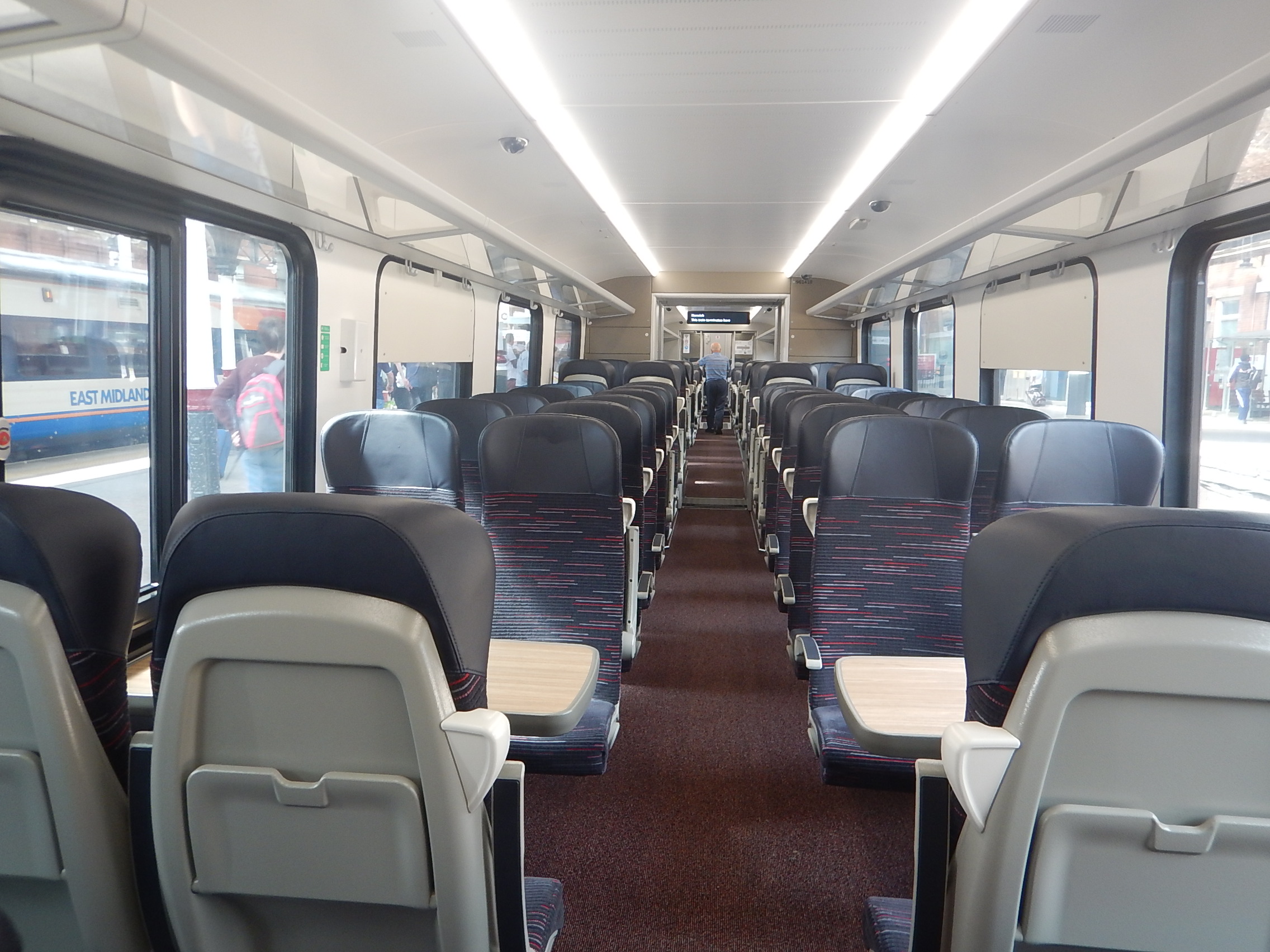
The floor also improves the step-free access and gives more usable height inside the train.
Litter Bins
The train has well-engineered litter bins in between the seats and in the lobbies.
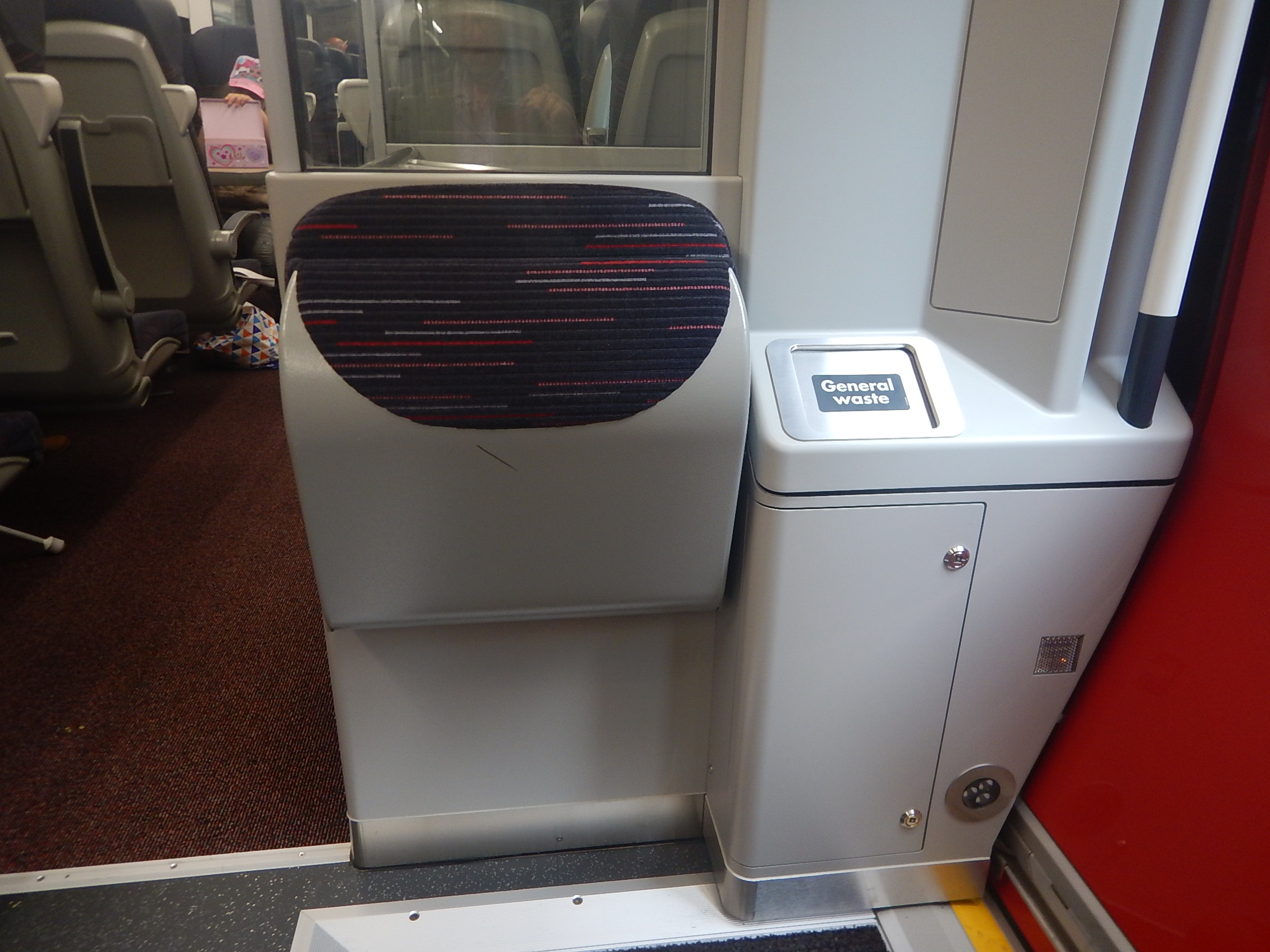
This bin is in the lobby, next to a comfortable tip-up seat.
Too many trains seem to be built without bins these days and the litter just gets thrown on the floor.
Conclusion
It is certainly a better class of rural train and I think it fulfils Jamie Burles’ ambition of InterCity Quality For Rural Routes.
But then services between Cambridge, Ipswich and Norwich are as important to East Anglia, as services between Hull, Leeds and Sheffield are to Yorkshire.
They are all services that can take a substantial part of an hour, so treating passengers well, might lure them out of their cars and off crowded roads.
In My First Ride In A Class 331 Train, I wrote about Northern’s new Class 331 trains.
If I was going to give the Greater Anglia train a score of eight out of ten, I’d give the Class 331 train, no more than two out of ten.
 The Anonymous Widower