WSMR Plans Alstom-Built Bi-Mode Sets If Open Access Bid Approved
The title of this post, is the same as that of this article on Rail magazine.
This is the sub-heading.
Wrexham, Shropshire & Midlands Railway (WSMR) has said it will invest in new Alstom battery-electric bi-mode trains if its open access application is successful.
These three paragraphs add some more details.
In December the Alstom-backed operation resubmitted its application to run between the North Wales city and London Euston via Shrewsbury and Walsall after its initial bid was rejected by the Office of Rail and Road (ORR) last year.
In a letter to the regulator and Network Rail, Mobilisation Director Darren Horley said: “Should our application be successful, WSMR will work alongside its parent company, Alstom, and will commit to invest in a new bi-mode battery-electric fleet based on the Adessia platform – Alstom’s new generation passenger train designed specifically for the UK market.
“Initial discussions regarding the procurement of a small new fleet have already commenced with Alstom and a financier.”
The Adessia will be a high speed version, with a maximum speed of 125 mph or 200 kph.
I have some thoughts.
How Much Of The Route Is Without Electrification?
In Alstom Plans To Operate Its Own Passenger Train Service In The UK For The First Time, I gave these distances of the sections of the route.
- Euston and Nuneaton – 96.7 miles – electrified
- Nuneaton and Walsall – 26.7 miles – electrified
- Walsall and Wolverhampton – 6.7 miles – electrified
- Wolverhampton and Shrewsbury – 29.7 miles
- Shrewsbury and Wrexham General – 30.3 miles
That looks like there are sixty miles in each direction without electrification.
Either the trains would have a battery range of 120 miles or a battery range of over 60 miles with charging at Wrexham General station, which is shown in these pictures.

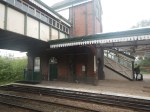
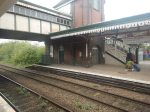
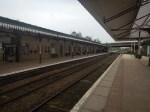
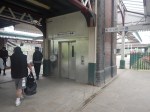
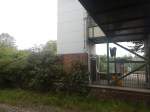
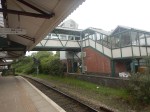
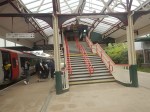
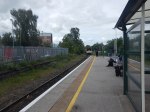
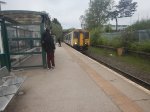
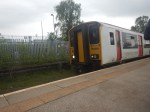
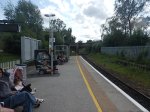
Note.
- Wrexham General station has four platforms. Two are a pair of long through platforms and there are also a separate long and a short through platform.
- The station is step-free.
- The last four pictures are Platform 4.
This OpenRailwayMap shows the platform layout at Wrexham General station.
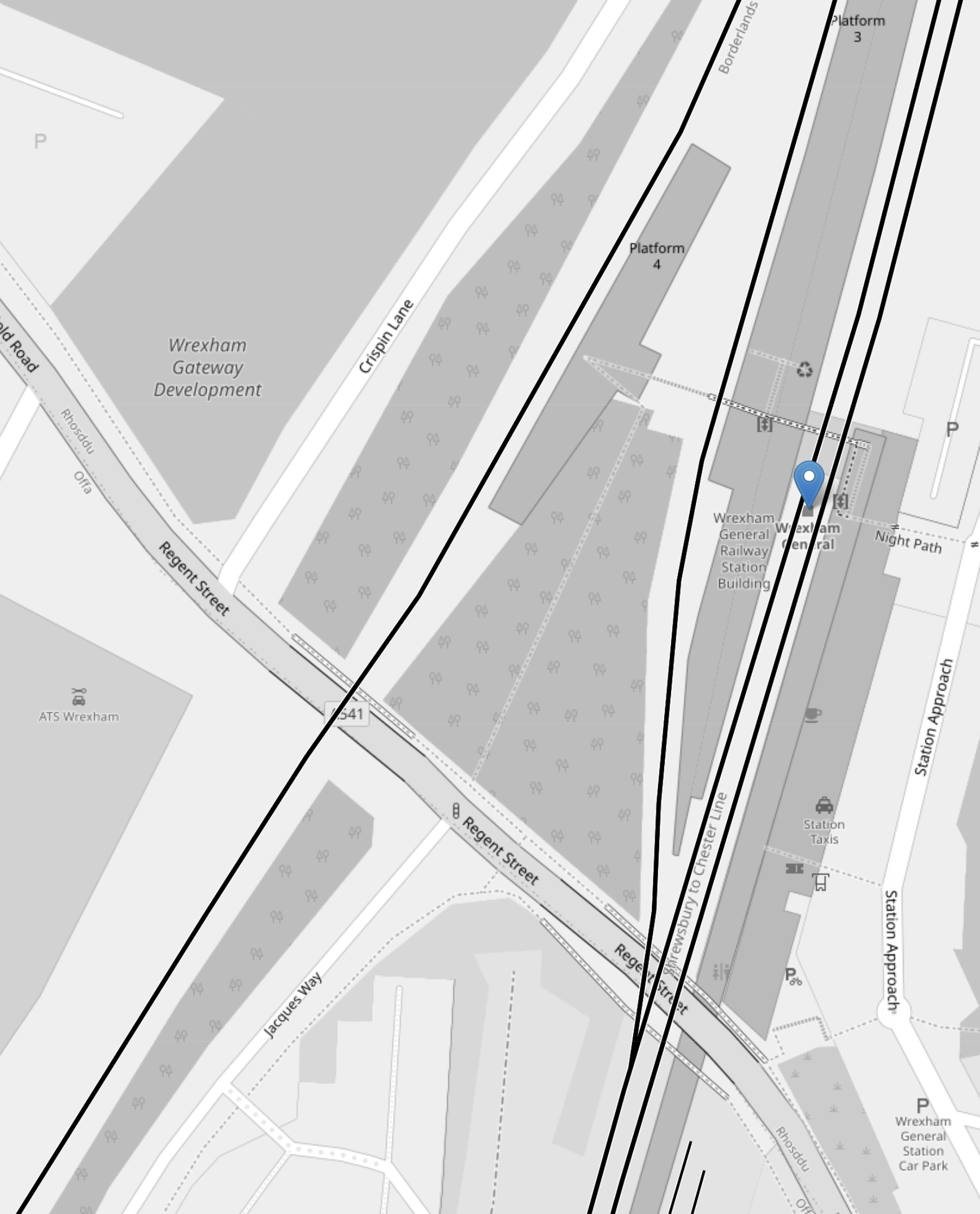
Note.
- The blue arrow is between the two through Platforms 1 and 2.
- Platform 3 is the platform in the middle.
- Platform 4 is the platform on the left.
An overhead charging rail could be used on Platforms 3 and/or 4, as has been used at Caerphilly station.
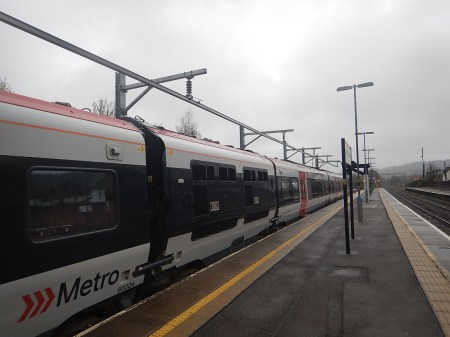
The overhead charging rail could also charge other Wrexham General services.
Prospective Routes
I would expect that there would be a need for such a train on the following UK routes.
- CrossCountry – Class 221 train replacement.
- East-West Rail – New fleet.
- Southeastern – London and Hastings.
- ScotRail – Inter7City replacement.
- South Western Railway – Class 158 and Class 159 train replacement.
- Transport for Wales – Some diesel services.
There would be probably be other services too!
Will The Service Call At Willenhall, Darlaston And Walsall?
This OpenRailwayMap shows the three stations.
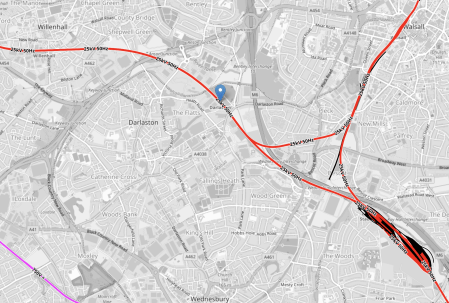
Note.
- Willenhall station is in the North-West corner of the map.
- Darlaston station is marked by the blue arrow.
- Walsall station is in the North-East corner of the map.
- Tame Valley Parkway station is in the South-East corner of the map.
- It might also be a good idea to call at the Parkway station.
- Red tracks are electrified.
- To call at all four stations will need a reverse at Walsall.
There may be some thinking to do, on the best calling pattern in Walsall.
Heads Of The Valleys Road Upgrade Officially Opens
The title of this post, is the same as that of this article on BusinessNewsWales.
This is the sub-heading.
The final phase of the £2 billion Heads of the Valleys Road upgrade programme has officially opened.
These first two paragraphs add detail to the project.
The Welsh Government said it marked the completion of “one of the UK’s largest and most technically challenging road projects”.
The £1.4 billion Section 5&6 Dowlais to Hirwaun final phase links the Valleys, South and West Wales to the English Midlands and beyond, together with ports serving Irish and other European destinations. As well as improving the resilience of the South Wales trunk road network, the road provides a vital link across the top of the South Wales valleys for the Metro project improving links to the Cardiff and Swansea Bay City Regions, the Welsh Government said.
From the statistics of work done and the money involved, it would appear that a comprehensive upgrade has fixed a big gap in the UK’s motorway network in South Wales.
This Google Map shows the locations of Dowlais and Hirwaun.
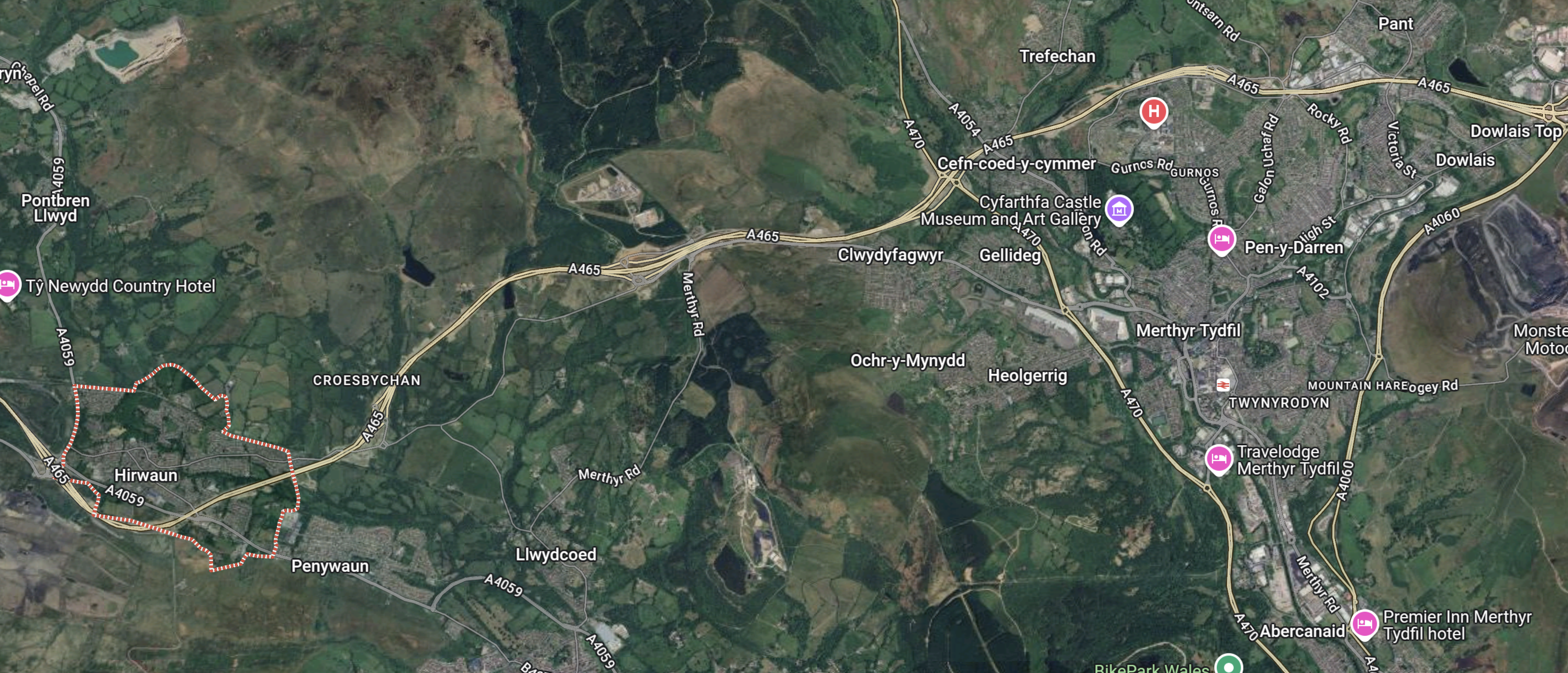
Note.
- Dowlais is in the North-East corner of the map.
- Hirwaun is in the South-West corner of the map and is outlined in red.
- The Heads of the Valleys Road links Dowlais and Hirwaun.
- Going East from Dowlais leads to Abergavenny, Monmouth, Raglan and the English Midlands.
- Abergavenny has a station, but Monmouth and Raglan don’t!
- Abergavenny station has comprehensive services to stations as far apart as Cardiff, Crewe, Holyhead, Manchester Piccadilly, Swansea and Wrexham General.
Abergavenny station could eventually turn out to be a parkway station for the South Wales Valleys.
I can certainly understand, why Lumo wants to run a service to Hereford.
I also feel that the Welsh government and Transport for Wales would be in favour of the service.
- Three towns in Wales; Cwmbran, Pontypool and Abergavenny get a direct service to Bristol Parkway and London Paddington stations.
- Hereford already has an hourly connection to Birmingham New Street via Worcester and University.
- If a coach were to be provided between Bristol Parkway and Bristol Airport, this could make getting to Bristol Airport easier.
I can see further improvements to services, that terminate at Abergavenny.
Vivarail Trains And Wrexham Central Station – 6th June 2025
From Chester, I took a train to Wrexham General station. From there I took a Vivarail Class 230 train to Wrexham Central station and then on to Shotton station.
These are some of the pictures I took.
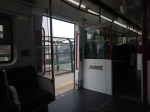
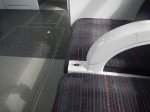
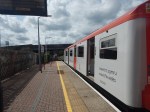
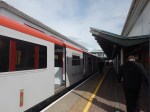
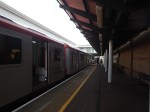



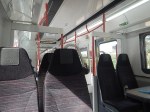
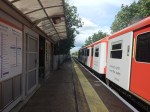
Note.
- Time was tight at Wrexham Central station.
- But Wrexham Central station looked to be a good example of a tidy one-platform station built into a shopping centre.
- The Vivaral Class 230 train appeared to have worn well.
- From what I saw, it would be fairly easy to put up a short length of overhead line to charge battery-electric trains.
I should have given myself more time.
Carew Castle Express Unveiled In Carmarthen
The title of this post, is the same as that of this article on Rail UK.
These are the first two paragraphs.
The ‘Carew Castle Express’ has been unveiled to mark the introduction of brand-new Transport for Wales (TfW) trains between Swansea and Carmarthen.
Named as part of TfW’s Magnificent Train Journey competition, the name ‘Carew Castle Express’ was chosen by year 5 pupil Rhys Protheroe from Johnstown Primary School in Carmarthen.
But perhaps, this extract is the most significant statement in the article.
Soon every service west of Carmarthen will be on one of the brand-new trains.
Alexia Course, chief commercial officer for TfW, said: “We’re excited to be running our brand-new trains in West Wales and we’re adding more to our network every few weeks.
CAF and TfW don’t seem to be hanging about in getting these new trains into service.
But then, I suspect some of the trains they replace, will be going to the scrapyard in Newport.
How Will These Trains Be Decarbonised?
My one worry is that these Class 197 trains and the similar Class 195 trains at Northern and the Class 196 trains at West Midlands Trains are diesel powered.
Nothing has been said about how these 141 trains will be decarbonised.
But all three fleets have the same Rolls-Royce mtu 6H 1800 R85L engines, so at least one solution will fit all!
A Thought About LNER’s New Trains
These trains appear to have been delivered quickly.
Did this influence the decision of LNER to buy CAF trains for their fleet expansion?
Could Train Services At Liverpool Lime Street Station Be Made Carbon-Free?
This map from OpenRailwayMap shows Liverpool Lime Street station.

Note.
- There are ten platforms, which are arranged in two sets of five.
- Electrified tracks are shown in red.
- The lilac track is the loop of the underground Wirral Line.
It would appear that the station is fully electrified.
Services To And From Liverpool Lime Street
These services currently run to and from Liverpool Lime Street station.
- Avanti West Coast – London Euston – 1 tph – Electric
- East Midlands Railway – Norwich – 1 tph – Diesel – Electrified to Liverpool South Parkway – 25.2 miles to electrification at Trafford Park.
- London Northwestern Railway – Birmingham New Street – 1 tph – Electric
- Northern – Blackpool North – 1 tph – Electric
- Northern – Manchester Airport – 1 tph – Electric
- Northern – Manchester Oxford Road – 1 tph – Diesel – Electrified to Liverpool South Parkway – 25.2 miles to electrification at Trafford Park.
- Northern – Warrington Central – 1 tph – Diesel – Electrified to Liverpool South Parkway – 12.7 miles to Warrington Central.
- Northern – Wigan North Western – 2 tph – Electric
- TransPennine Express – Cleethorpes – 1 tph – Electric – Electrified to Liverpool South Parkway – 25.2 miles to electrification at Trafford Park.
- TransPennine Express – Glasgow – 2 tpd – Electric
- TransPennine Express – Hull – 1 tph – Electric
- TransPennine Express – Newcastle – 1 tph – Electric
- Transport for Wales – Chester – 1 tph – Diesel – Electrified to Runcorn – 13.9 miles to Chester.
Note.
- tpd is trains per day
- tph is trains per hour
- There are nine electric services and four diesel services.
It looks to me, that by using battery-electric trains on the four diesel services, Liverpool Lime Street station can be made carbon-free.
Distances on battery power for each service would be as follows.
- East Midlands Railway – Norwich – Both ways – 25.2 miles between Liverpool South Parkway and Trafford Park with charging at both ends.
- Northern – Manchester Oxford Road – Both ways – 25.2 miles between Liverpool South Parkway and Trafford Park with charging at both ends.
- Northern – Warrington Central – Both ways – 12,7 miles between Liverpool South Parkway and Warrington Central with charging between Liverpool Lime Street and Liverpool South Parkway.
- Transport for Wales – Chester – Both ways – 13.9 miles between Runcorn and Chester with charging between Liverpool Lime Street and Runcorn.
Note the flexibility of battery-electric trains allows a variety of charging regimes.
Conclusion
Liverpool Lime Street Station can be made carbon-free
TransPennine Express To Stop Using Loco-Hauled Push-Pull Trains In December
The title of this post, is the same as that of this article on Railway Gazette.
This is the sub-heading.
TransPennine Express has confirmed that it will cease using its push-pull sets of Class 68 locomotives and MkVa coaches, previously designated Nova 3 sets, from the December 2023 timetable change.
These are my thoughts.
The Nova 3 Trains
Currently, the Nova 3 trains are made up from the following.
- 14 – Class 68 locomotives
- 52 – Mark 5a coaches
- 14 – Driving Van Trailers
Note.
- There have been complaints about the noise of the Class 68 locomotives at Scarborough and also at Marylebone with Chiltern Railways.
- The Class 68 locomotives could be switched to freight duties.
- The coaches are capable of 125 mph.
- A maximum of thirteen sets can be created.
- I suspect CAF wouldn’t object to being asked to build some more Mark 5a coaches and driving van trailers.
- The current fleet has a spare locomotive and a spare driving van trailer to allow for servicing.
All locomotives and coaches are a maximum of seven years old, so will have plenty of life left.
The Class 93 Locomotive
Rail Operations Group have ordered ten Class 93 locomotives, with twenty options, which have an impressive specification.
- Built by Stadler in Valencia.
- Same family as a Class 68 and 88 locomotive.
- Electric, diesel and battery power
- 110 mph operating speed
- Ability to pull passenger and freight trains.
- Delivery scheduled for 2023.
I believe that if the Class 68 diesel locomotive of a Nova 3 train, were to be replaced with a Class 93 locomotive, a very useful train would be created.
- It would be ten mph faster, than a Nova 3 train.
- It could use the diesel engine and the batteries to bridge gaps in electrification.
- By adding extra carriages it could be tailored to the needs of a route.
- In Vegetable Oil Fuelling Chiltern Railways Trains In UK First, I discuss how it might be possible to run all these locomotives on HVO to cut emissions.
- It could be quieter.
Could it be a simple way to reduce carbon emissions on a route?
The Successor To The Class 93 Locomotive
Stadler keep innovating in their designs for locomotives and are already building hydrogen-powered multiple units.
I can see Stadler coming up with a hydrogen-powered locomotive, with the following specification.
- In the same family as Class 68, 88 and 93 locomotives.
- Ability to do everything that Class 68, 88 and 93 locomotives can do.
- Ability to use 25 KVAC overhead electrification, where it exists.
- Ability to be able to be fitted with third-rail equipment, so it can use 750 VDC third-rail electrification, where it exists.
- At least a 110 mph operating speed.
- Range of at least 200 miles on hydrogen.
Stadler would sell a lot of these locomotives to decarbonise railways all over the world.
Possible Routes
These are possible routes for a rake of Mark 5a coaches hauled by a Class 93 locomotive or its zero-carbon successor.
Hull Trains
Consider.
- Hull Trains is an open access operator.
- Hull Trains currently have a fleet of five Class 802 trains, each of which have five-cars.
- A Class 93 locomotive has a power of 900 kW on diesel, whereas the Class 802 train has 2100 kW.
- The Class 802 train has nearly ten percent more capacity.
- In Ten-Car Hull Trains, I saw two Class 802 trains working as a pair. Does this indicate they have a capacity problem?
- Between Hull and the East Coast Main Line is only 36.1 miles and isn’t very challenging and I suspect could probably be easily handled by a Class 93-hauled rake of Mark 5a coaches.
- Adding extra coaches would not be difficult and would probably be less costly than with the more complex Class 802 trains.
- Hull Trains need to have a plan to decarbonise.
- HVO could be used to cut down emissions.
A Class 93-hauled rake of Mark 5a coaches could be an intermediate step to full decarbonisation with a hydrogen locomotive.
Would other operators of Class 802 trains like to increase their fleets, by adding Hull Trains’s five Class 802 trains?
TransPennine Express
Consider.
- TransPennine Express currently have four different fleets of trains, so it must cause problems with the allocation of drivers.
- The Class 397 trains are confined to the West Coast Main Line.
- So that leaves the bi-mode Class 802 trains and the diesel Class 185 trains to work the TransPennine routes.
The Wikipedia entry for the Class 802 train, gives more details of the plans for the Class 802 trains.
During October 2021, it was announced that TransPennine Express, Hitachi, and Angel Trains had agreed to convert one of the former’s Nova 1 trainsets into a battery hybrid train on a trial basis with the aim of supporting the technology’s further development. If successful, Hitachi and Angel Trains have proposed the retrofitting of the entire fleet. In January 2022, reports emerged that the Nova 1 fleet was operating under diesel power even when operating on entirely electrified sections of the East Coast Main Line on account of the insufficient power supplies present along the line; national railway infrastructure owner Network Rail is reportedly set to complete upgrades to the power supplies within two years.
The fleet is also set to benefit from the rollout of electrification under the Transpennine route upgrade scheme. The company’s management has noted that, in the event of largescale electrification being funded and implemented, the Class 802s could have some of their engines removed to reduce roughly 15% of their weight and thus raise their efficiency. Furthermore, Leo Goodwin, TPE’s managing director, has observed that while the Class 802s have an initial maximum speed of 125 mph (201 km/h), they have the capability of being modified for operating at 140 mph (230 km/h) if infrastructure upgrades were to permit such speeds at a future date.
Could an augmented fleet of battery-electric Class 802 trains handle the bulk of the TransPennine routes, with the shorter and unelectrified ones still being handled by the Class 185 trains?
These shorter routes are.
- Leeds and Huddersfield
- Manchester Piccadilly and Huddersfield
- York and Scarborough
Plans only exist to electrify Leeds and Huddersfield.
I suspect a few more battery-electric Class 802 trains would be needed.
Great Western Railway
Could a Class 93-hauled rake of Mark 5a coaches be used as a replacement for the GWR Castles or short-formation InterCity125s?
- They both have four passenger coaches.
- They are both 125 mph trains.
- A Class 68 locomotive could be used on routes without electrification.
- HVO could be used to cut down emissions.
- The Mark 5a coaches would probably be quieter, as they only have one diesel engine.
A Class 93-hauled rake of Mark 5a coaches could be an intermediate step to full decarbonisation with a hydrogen locomotive.
Alternatively, five-car Class 802 trains could be used as replacements for GWR Castles.
Great Western Railway also have the problem of decarbonising services between Bristol/Gloucester and Weymouth/Southampton/Portsmouth.
Great Western Railway look like they’re needing some innovative thinking.
I also suspect a few more battery-electric Class 802 trains would be needed for other routes.
Transport For Wales Rail
Transport for Wales Rail run a Premier Service between Holyhead and Cardiff using Class 67 locomotives and Mark 4 coaches.
According to the Wikipedia entry for Transport for Wales Rail, they have seven sets of 4/5 coaches to run this service.
If Transport for Wales Rail wanted to decarbonise this route, they would need to replace the locomotives for a zero-carbon unit.
Perhaps, their best solution, would be to wait until a suitable hydrogen-powered locomotive is available and buy seven rakes of new coaches with driving van trailers.
Grand Union
Grand Union has a detailed Wikipedia entry, where this is the first paragraph.
Grand Union is a prospective open access operator who are proposing to operate train services in the United Kingdom from England to Wales and Scotland. Grand Union is headed by Ian Yeowart, who founded previous open access operators Alliance Rail Holdings and Grand Central before selling both to Arriva.
That seems a sound foundation.
- They have permission to run trains between Paddington and Carmarthen starting in December 2024.
- They have also applied to run trains between Euston and Stirling.
- They are now backed by Spanish companies; Serena Industrial Partners and Renfe.
- They are proposing to use nine Mark 4 coaches hauled by Class 93 locomotives.
Consider.
- CAF has a factory in Wales.
- CAF has sold trains to Transport for Wales.
- The Mark 5a coaches will definitely be available by December 2024.
- Mark 5a coaches could easily be arranged as a rake of eight coaches and a driving van trailer.
- Grand Union is backed by Spanish companies.
I wouldn’t be surprised if Grand Union were to use sets of CAF-built Mark 5a coaches for their Carmarthen service. And later for their Stirling service.
A Class 93-hauled rake of Mark 5a coaches could be an intermediate step to full decarbonisation with a hydrogen locomotive.
Grand Central
Consider.
- Grand Central is another open access operator.
- Grand Central has a mixed fleet of twelve five-car diesel trains.
- These trains run under electrification on the East Coast Main Line.
- According to the Wikipedia entry for Grand Central trains, they have plans for expansion across the North and to and from London.
- Grand Central need to have a plan to decarbonise.
- HVO could be used to cut down emissions.
A Class 93-hauled rake of Mark 5a coaches could be an intermediate step to full decarbonisation with a hydrogen locomotive.
South Western Railway
South Western Railway have an excellent fleet of new or nearly new trains, with the exception of the diesel Class 158 and Class 159 trains, that work services between Waterloo and Exeter trains via Basingstoke and Salisbury.
- Waterloo and Exeter is 172 miles.
- Only the 47.7 miles between Waterloo and Basingstoke is electrified with 750 VDC third-rail electrification.
- Train lengths vary between five and eight cars.
- The current trains date from around 1990 and must need replacing soon.
I wouldn’t be surprised that if after a rebranding with new trains, this could be a popular route.
A version of Hitachi’s ubiquitous bi-mode Class 802 could be used.
But.
- They would need to be ordered and built.
- The third-rail gear, would need to be developed and tested.
- Passengers would be travelling for over two and a half hours with underfloor diesel engines.
An alternative could be a Class 68-hauled rake of Mark 5a coaches.
- These trains would be available after release from TransPennine Express.
- They would run in TransPennine Express formation.
- Length could be adjusted by adding or removing coaches, if required.
- The noise is all in the locomotive, which is isolated from the passengers.
At some point in the future, the route could be decarbonised by swapping the locomotive for a hydrogen-electric locomotive with the ability to handle third-rail electrification.
ScotRail
ScotRail have a similar problem to Great Western Railway with their short-formation InterCity125s.
- They have 52 Class 43 locomotives and 120 Mark 3 coaches, which is probably enough for 24 trains.
- Scotland has substantial amounts of electrification.
- I feel that a Class 68-hauled rake of Mark 5a coaches would be a more than adequate replacement.
- Class 93 locomotives could be used where routes are partially electrified.
- Scotland is not going to be short of green hydrogen.
When a suitable hydrogen-electric locomotive is available, these trains can be decarbonised.
CrossCountry
CrossCountry have a fleet consisting of the following trains.
- 5 – 2+7 InterCity125 trains
- 7 – two-car Class 170 trains
- 22 – three-car Class 170 trains
- 34 – four-car Class 220 trains
- 4 – four-car Class 221 trains
- 20 – five-car Class 221 trains
Note.
- The fleet is all diesel.
- I’ll ignore the Class 170 trains in this analysis.
- The Class 220 and 221 trains often work in pairs to provide the required capacity.
So how could these trains be decarbonised?
- The InterCity125s and the Class 220 and 221 trains could be replaced by a locomotive-hauled rake of Mark 5a coaches of an appropriate length.
- Motive power could be provided by an appropriate Class 68 or 93 locomotive.
When a suitable hydrogen-electric locomotive is available, these trains can be fully decarbonised.
Decarbonisation Of UK Main Line Services
It is generally assumed that the railways of the UK will need to fully decarbonise if the UK and the constituent nations are going to meet their decarbonisation targets.
I believe that my analysis shows that decarbonisation of main line passenger services can be achieved by the purchase of two types of trains.
- Five-car bi-mode Class 802 trains or similar.
- Locomotive-hauled rakes of Mark 5a coaches of an appropriate length.
Note.
- The Class 802 trains would be mainly to augment existing Hitachi fleets.
- Some Class 802 trains would be fitted with batteries instead of diesel generators to handle gaps in the electrification.
- The rakes of coaches would be powered by an appropriate locomotive.
- The lengths of the rakes of coaches would be adjusted to meet the demand of each service.
Initially, the following locomotives would be used.
- Class 68 locomotives would be used on unelectrified lines.
- Class 93 locomotives would be used on full or partially electrified lines.
When the hydrogen-electric locomotives become available, these would take over the routes, which couldn’t be decarbonised by full electrification or by using a Class 93 locomotive.
Train Frequency Focus In North Wales Transport Commission’s Interim Recommendations
The title of this post, is the same as that of this article on Railway Gazette International.
This is the first paragraph.
The North Wales Transport Commission chaired by Lord Burns has published its interim recommendations for the development and delivery of an integrated multi-modal transport system in the region.
The following sections, outline the recommendations for rail services.
Chester Station Improvements
The North Wales Transport Commission (NWTC) supports proposed improvements at Chester station to enable additional services to operate.
This page on Transport for Wales detailed the improvements at Chester station, where this is said.
Transport for Wales is delivering significant improvements to Chester Station. The project primarily focuses on customer improvements within the station, with work to include new branding and signage, a new passenger assist point, cycle stands, roaming mics and hearing loop systems, a new full station CCTV system, toilet refurbishments on the concourse and platforms 4 and 7, a new changing place toilet, customer waiting room upgrade, water refill unit, platform and concourse seating and waste facilities.
New Customer Information Screens will be installed throughout Chester station increasing the train service information available on the platforms and within the station waiting rooms. We’ll also be installing new screens for onward journeys, including bus, and an interactive screen which will be installed on the concourse.
Improvement works in the concourse also include, repurposing of the ticket office to create a new retail unit for the future, a new rental unit, a new customer service desk with ticket selling facilities, additional ticket vending machines, a repositioned gate line with additional standard and wide aisle gates. A new quiet room will also be introduced as a place for customers who require a safe, isolated space whilst waiting for their train.
TfW is working closely with industry partners to minimise disruption during these works for both customers and the local community. Customers are encouraged to plan in extra time to allow for potential disruption during this work. Signage and hoardings will be erected at the station in advance of and throughout, these significant improvement works, and communications will be provided at the station, onboard services and online, to advise of any temporary changes to accommodate the work on site at the station.
Note.
- It looks a serious level of improvement for customers.
- The Chester and Wrexham Line was improved in 2017, with full double-tracking and higher maximum speeds.
- It looks like completion is some time in 2024.
Nothing is said about extra train services.
North Wales Main Line
The NWTC says this about the North Wales Main Line.
On the North Wales Main Line, it says the priority should be service frequency improvements and supporting infrastructure works between Crewe and Llandudno. Improvements to signalling and line capacity from Llandudno to Bangor and Holyhead would require larger scale works, which should be planned so that they are ready to progress as and when funding is available.
I went to Holyhead earlier in the year and more trains would be welcome.
Borderlands Line
The NWTC says this about the Borderlands Line.
Signalling and line capacity improvements are required along the Borderlands Line, the commission believes. A key constraint is the sidings for the Hanson site at Padeswood, where freight trains block the line for up to an hour, and the commission says this needs to be resolved before other work to improve the line can proceed.
There should be investment to reduce journey times and increase service frequencies between Wrexham and Liverpool to significantly increase the attractiveness of the route.
I talked about the freight problem in New Trains Could Be Operating Through Flintshire From May But No Green Light For Two An Hour Service.
This map from OpenRailwayMap shows the track layout at Padeswood site.
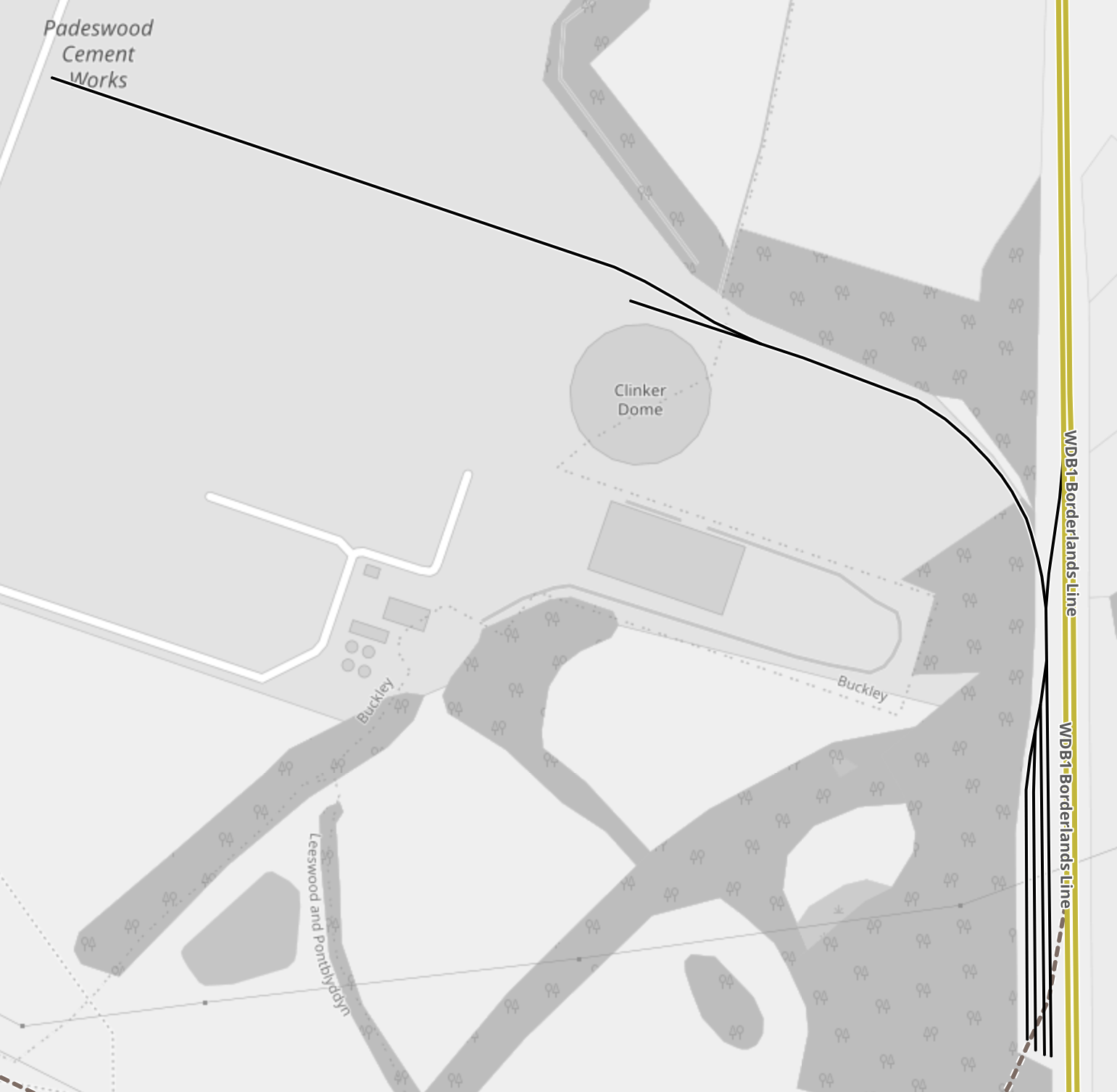
I was able to follow a train on Real Time Trains, as it left Padeswood Cement Works.
- It moved to the sidings alongside the Borderlands Line.
- It then joined the Borderlands Line and went Northwards through Buckley, Hawarden, Shotton and Hawarden Bridge stations before stopping in Dee Marsh Sidings.
- The engine then changed ends and brought the train back down the Borderlands Line to Wrexham.
- The train then continued to its destination via Ruabon, Gobowen and Shrewsbury.
This movement doesn’t seem too bad, so has there been some signalling and track improvements?
Shrewsbury And Chester Line
The NWTC says this about the Shrewsbury and Chester Line.
The commission says it has not seen a pressing case for full electrification of the Shrewsbury to Chester line, and the priority should be signalling improvements at Gobowen.
I thought that Shrewsbury and Chester might have been electrified, as it could be used to charge battery-electric going between England and Wales. But it will be some years before Transport for Wales get a battery-electric train strategy together.
On the other hand the two cities are only 42 miles apart, which is in range of battery-electric trains.
Conwy Valley And Cambrian Coast Lines
The NWTC says this about the Conwy Valley Line and the Cambrian Coast Line.
There could be merit in introducing increased frequencies on the Conwy Valley and Cambrian Coast lines during the peak season. Service enhancements and infrastructure improvements such as passing loops may be beneficial, ‘as has happened to similar lines in Devon and Cornwall’, but ’in the immediate future, those communities served by stations along the route should have access to enhanced bus services to reduce dependence on car use’.
This seems like a sensible and non-disruptive plan.
Anglesey Central Railway
The NWTC says this about the Anglesey Central Railway to Amlwch.
NWTC ‘is not persuaded’ that there is a case for opening the line to Amlwch, and says ’more urgent improvements to existing lines and services should take a higher priority’.
The Anglesey Central Railway reopening would appear to be a fairly simple project as the track is mostly already there, so this might be the sort of project, that finds itself moving up the list, if related housing or commercial developments are proposed.
This Google Map shows Amlwch and the surrounding area.
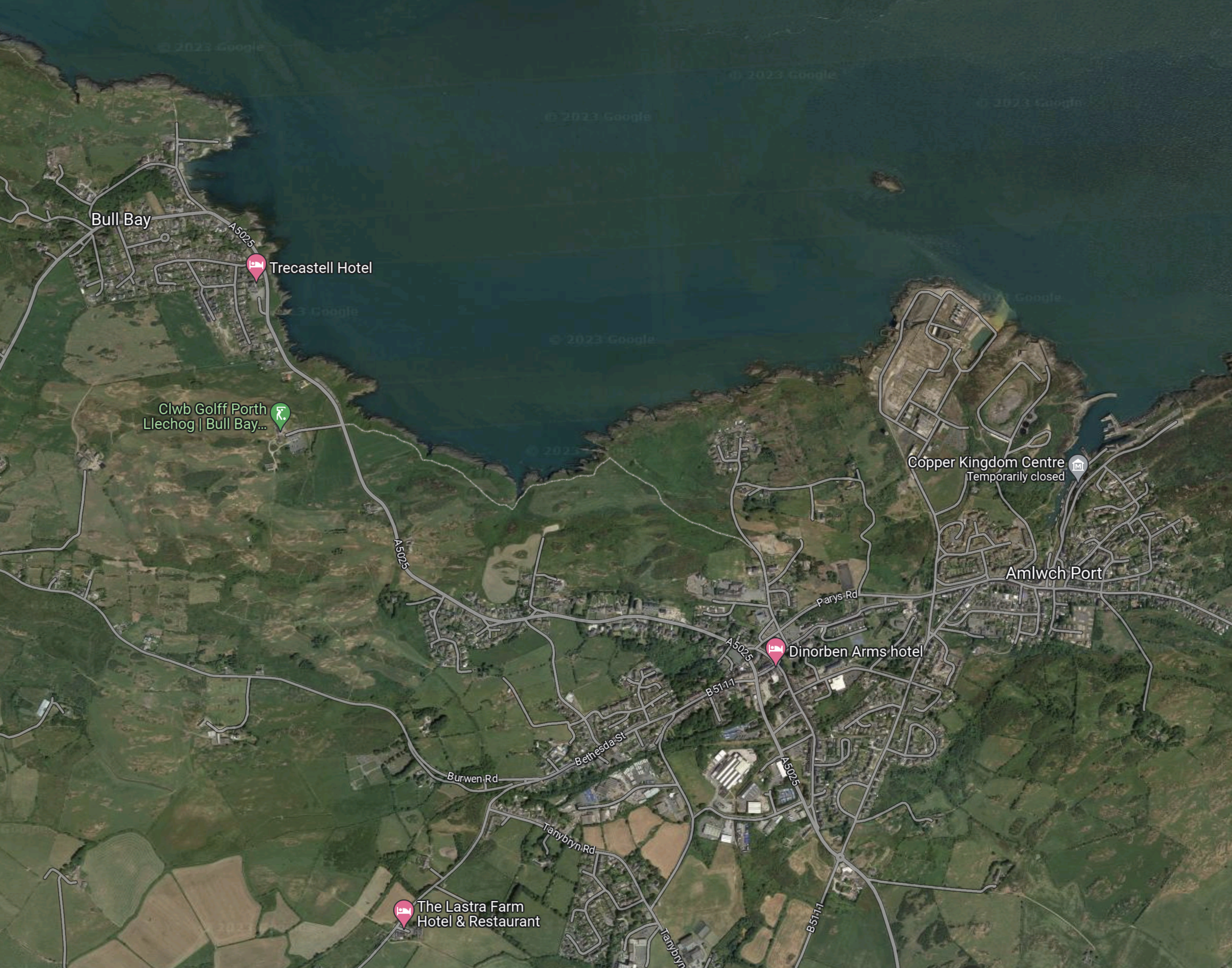
With all the tidal, nuclear and wind energy possibilities in the area, I would never rule out the rail link to Amlwch being restored.
Associated Octel used to have bromine works in Amlwch and more details can be found in this web site.
I’ve worked in chemical works with chlorine, fluorine and bromine and my advice is be very careful with them.
Criccieth And Bangor
NWTC says this about reopening the route between Criccieth and Bangor.
NWTC ‘is not persuaded’ that there is a case for opening the line between Criccieth and Bangor, and says ’more urgent improvements to existing lines and services should take a higher priority’.
This OpenRailwayMap shows the area of the reopening.

Note.
- The orange line going across the top of the map is North Wales Coast Line between Chester in the East and the Port of Holyhead on Anglesey.
- Towards the North-East corner of the map, Bangor station is indicated by the blue lettering.
- The Menai Strait runs between the Welsh mainland and the Island of Anglesey.
- The important town of Caernarfon can be picked out.
- The orange line at the bottom of the map is the Cambrian Line, which connects to Shrewsbury and Aberystwyth.
- This line terminates at Pwllheli on the Lleyn Peninsular in the South-West corner of the map.
A dotted line indicates a disused railway between the Southern coast of the peninsular and Bangor via Caernarfon, which I assume is the railway that has been proposed for reinstatement.
It could be a valuable addition to the railways of North Wales and could help to promote tourism.
Station And Other Improvements On The Borderlands Line
This is said about station and other improvements on the Borderlands Line.
The commission supports a new station at Deeside Industrial Park, and enhancements at Shotton to improve connectivity between the high and low-level platforms.
It says frequency enhancements should be prioritised over new stations, and fleet improvements should facilitate the frequency enhancements. It endorses the proposed use of Merseyrail’s Class 777 battery-electric trainsets on the Borderlands Line.
I feel that the Class 777 trains, which could travel under Liverpool are a shoe-in.
Conclusion
North Wales will be getting the railway it need to promote education, employment, leisure and tourism.
Will Hollywood Celebrity Involvement Be The Catalyst To Spark Development Of the Borderlands Line?
In Wrexham General Station – 4th May 2023, I showed this map, of Wrexham General station and the Racecourse Ground.

Consider.
- Wrexham A. F. C. are certainly a club, whose fans won’t need much encouragement to go to matches by train.
- I also feel that given the celebrity ownership, it will be one of those grounds where away supporters will want go.
- Its ground and Wrexham General station is well-served by direct trains from Birmingham, Cardiff, Liverpool and London.
- Interesting matches next year could be against Crewe, Newport and Tranmere.
I’m sure that because of the location of the ground and the celebrity owners, there will be pressure to improve the Borderlands Line to Liverpool.
The Wikipedia entry for the Borderlands Line has a section called Development, where this is said.
The doubling of the journey frequency on the line is one of the aims of the Growth Track 360 group, a consortium of business, politicians and public sector leaders. The group aims to improve transport and create jobs in the North Wales, Merseyside and Cheshire area over the next 20 years. During the 2017 Autumn budget, Chancellor Philip Hammond stated that part of the additional £1.2 billion funding Wales was receiving would be used to look into proposals to improve journey times on the line and developing a business case.
In October 2019, Transport for Wales announced £280,000 have been allocated to revamp stations along the line in north Wales and Merseyside, as part of TfW’s £194 million station improvement programme.
In a section called Proposed New Stations, these improvements have been proposed.
- Build a new station at Deeside Industrial Park.
- Build a new station at Woodchurch.
- Build a new station at Beechwood.
- Incorporate the line into the Merseyrail Wirral line to provide direct connectivity with Liverpool city centre.
- Replace the High and Low levels at Shotton station with a dedicated interchange station, improving connectivity between the North Wales Coast Main Line & the Borderlands line.
- Remove level crossings to improve line speed.
All these proposals seem reasonable.
There is also a section called Proposed Electrification, where this is said.
There have been proposals for the full or partial electrification of the line since 1999 with participation of Merseytravel and the devolved institutions in Wales. Such electrification is usually intertwined with proposals for the full incorporation of the line into the electrified Merseyrail network, allowing for services from either Wrexham Central or partway along the line to travel all the way to Birkenhead and Liverpool Central.
In 2008, a Network Rail study estimated the cost for third-rail electrification of the entire line to be £207 million. To lower costs, Merseytravel suggested overhead-wire electrification as an alternative, bringing estimates down to £66 million. However, this would mean trains running between Wrexham and Liverpool would have to be compatible with both electric systems, therefore incompatible with the third-rail only trains in use at the time.
There is political support to electrify the line from both Welsh and Merseyside authorities, however the responsibility of rail infrastructure lies with the UK Government’s Department for Transport. The Welsh Government aims to increase services between North Wales and Merseyside, in particular Wrexham and Deeside with Liverpool and Liverpool John Lennon Airport. Whereas Merseyside authorities would like to increase services to stations on the line on the Wirral Peninsula in particular, as well as the rest of the line.
In 2016, a working group had been set up to examine improving the line, including proposals to increase the frequency of trains on the line. It is hoped that an increase in the number of passengers would improve the case for electrification.
It seems that various solutions have been proposed.
Consider what will be available to Merseyrail and Transport for Wales within a year or so.
- Merseyrail will be running a new fleet of electric Class 777 trains.
- These new trains will be running from Bidston station and under Liverpool City Centre using the Wirral Line.
- Merseytravel has an option for a further 60 units.
- Class 777 trains are designed for running with 25 KVAC overhead electrification, should this be required in the future.
- Merseyrail and Transport for Wales will be working with Stadler on the use of battery-electric trains.
- Bidston and Wrexham Central are only 27.5 miles apart.
- The Borderlands Line is not the most challenging of rail lines to improve, as it is fairly straight and level.
- It is unlikely that Health and Safety would allow any more third rail electrification. But would this ban also apply in Wales?
- West Kirby trains run for 10.4 miles in 34 minutes to perform their loop under from Bidston under Liverpool City Centre.
- If Wrexham trains could turn under Liverpool City Centre, this would improve shopping, business and educational opportunities for those living along the Borderlands Line.
This section of the Wikipedia entry for the Borderlands Line says this about the range of the Class 777 trains on battery power.
The Liverpool City Region Combined Authority announced that trials of the seven battery electric multiple unit (BEMU) versions of their new Class 777 had shown that they were capable of travelling up to 20 miles (32 km) without a charge. Further trials by Stadler reached a range of 84 miles (135 km). This would allow the line to be served without the full electrification.
In Battery Answer To Schleswig-Holstein’s Diesel Replacement Question, I talked about how Stadler were using battery-electric trains to replace diesels in Schleswig-Holstein.
It seems obvious to me, that Stadler would have experience of a suitable battery-electric train and charging system, that could be applied to the Borderlands Line.
- I would suspect that the 34 minutes that the train would take to go from Bidston to Liverpool and back to Bidston would be more than adequate to fully charge the batteries on a train.
- This would be enough to get a full train to Wrexham, even when Liverpool or Everton were playing an FA Cup match against Wrexham A. F. C.
But how would trains recharge at Wrexham? This map from OpenRailwayMap shows the track layout at Wrexham.

Note.
- Wrexham Central station is in the South-East corner of the map.
- Wrexham General station is towards the top of the map marked by blue letters.
- A single track connects Platform 4 at Wrexham General station to the single platform at Wrexham Central station.
It looks like space could be a bit limited at Wrexham Central station, so would it be an idea to electrify between the two stations?
A train takes typically about seven minutes from arrival at Wrexham General station from Bidston until it leaves the station to return to Bidston.
- This should be enough to charge the train fully.
- Theoretically, it would allow Wrexham to have a four trains per hour (tph) service to Liverpool.
- Electrifying between the two stations would be about 0.6 miles of single-track electrification.
- Connection and disconnection to the electrification would be in Wrexham General station.
- The electrification would only be switched on, when there is a train using it. This could be arranged using simple automation or by employing another signaller.
I do wonder if Welsh Health and Safety would allow third-rail electrification? If it’s a UK matter, then give it to the Welsh Government. But it would be the only third-rail electrification in the Principality.
Conclusion
I believe that if the Welsh Government would allow third-rail electrification, the service could start as soon as Merseyrail has enough battery trains.
My First Ride In A Welsh Class 230 Train – 4th May 2023
These pictures show my first ride in a Welsh Class 230 train.

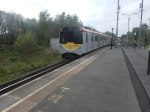


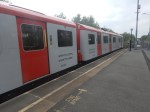
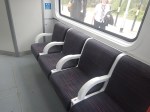
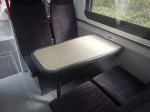

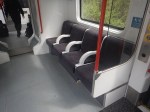
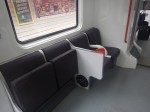
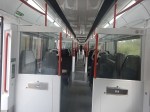


As with the other Class 230 trains, the trains are a tribute to Adrian Shooter’s perseverance.
Wales’ Inaugural Hybrid Train Service Launches On The Borderlands Line
The title of this post, is the same as that of this article on Rail Technology Magazine.
These are the first two paragraphs.
Today marks a historic day for the Welsh rail sector, seeing the introduction of the first battery-hybrid trains used in regular passenger service on the Borderlands Line between Wrexham and Bidston, as announced by Transport for Wales (TfW).
The inaugural service for the Class 230 trains left Wrexham Central at 07:31, following months of testing and crew training.
Unfortunately, it didn’t go very well, as some trains were late and there were several rail replacement buses and cancellations.
I’m afraid, Vivarail’s ambitious project is starting to look like a heroic failure.
Could Stadler Rescue The Borderlands Line?
Perhaps the solution for the Borderlands Line, which is only 27.5 miles each way, is to ask Stadler for an estimate to extend Merseyrail’s Class 777 trains to Wrexham Central station.
- Trains would use battery power between Bidston and Wrexham.
- Passengers would not need to change trains to go between Liverpool and Wrexham.
- Trains would go round the rail loop under Liverpool, where they would charge their batteries.
- There may need to be some form of charging in Wrexham.
I’m sure the good people Merseyside and North Wales wouldn’t object, but the politicians in Cardiff might!
The UK-Wide Need For Self-Powered Trains
Consider.
- The UK needs a substantial number of two-, three- and four-car self-powered trains.
- A proportion of these trains will run on partially-electrified routes.
- 100 mph trains would be preferable.
- Some routes would need trains capable of using third-rail electrification.
They are also needed urgently.
Will Mark 3’s Save The Day?
Consider.
- The only Mark 3 electric multiple units still running or in a state good enough to be converted are the thirty-four three-car Class 320 trains and perhaps fifty four-car Class 321 trains.
- Class 317 and Class 318 trains are probably too old to convert.
- A Class 319 train is a very inferior train from a passengers point of view to the Class 321 Renatus.
As some of these like the thirty Class 321 Renatus have been refurbished and given AC transmissions, it might be a good idea to build a few prototypes and try them out on various routes to assess their quality, reliability and performance.
But this route would only give about eighty three- and four-car trains.
It wouldn’t supply any two-car trains.
Sadly, the twenty-four two-car Class 456 trains, which could have been converted have all been recently scrapped.
Are There Any Other Trains That Can Be Converted?
There are several fleets of modern trains, that might be available.
- Four-car Class 350 trains
- Four-car Class 360 trains
- Four-car Class 379 trains
- Four-car Class 386 trains
There may also be some three- and four-car Bombardier Electrostars.
Again, there is a shortage of two-car trains, except for thirty-nine Class 466 trains.
- They are Networkers.
- They were built in the 1990s.
- They were refurbished ten years ago.
- They are third-rail trains.
- They are not in bad condition.
- Their operating speed is only 75 mph.
But they would probably be a hard train to convert and would only be a stopgap.
Conclusion
I am led to the conclusion, that there is a large gap in the UK rail network for a two-car train with this specification.
- Battery-electric operation.
- 100 mph operation
- Battery range of at least eighty miles.
- Quality interior.
- Ability to run on 25 KVAC overhead and/or 750 VDC third-rail electrification.
- Ability to add a third-car in the middle to create a three-car train.
Effectively, they would be a replacement for the Class 170 diesel trains.
 The Anonymous Widower