EC To Consider Hydrogen Produced From Nuclear Power As Low-Carbon
The title of this post, is the same as that of this article on Nuclear Engineering International.
This is the opening paragraph.
The European Commission (EC) will consider hydrogen produced from nuclear power as “low-carbon”, Paula Abreu Marques, head of unit for renewables and CCS policy told the European Commission’s energy directorate. “Electrolysis can be powered by renewable electricity, which would then be classified as renewable hydrogen,” she said.
I think that those advocating this have a point, as no carbon-dioxide will be released once the nuclear plant has been built.
This type of hydrogen is referred to as purple hydrogen in the article.
I wonder how costs will compare with Shell’s new process, that I wrote about in Shell Process To Make Blue Hydrogen Production Affordable.
Conclusion
Nuclear power used to generate hydrogen with electrolysers could be a valuable way to generate hydrogen for transport needs, in a country that because of geography can’t generate a lot of electricity from renewables. A farm of small modular nuclear reactors linked to a large electrolyser could be the most affordable way to satisfy their needs.
It could also be a way for an industrial company to generate large amounts of hydrogen for steelmaking or an integrated chemical plant.
LNER Seeks 10 More Bi-Modes
The title of this post, is the same as that of an article in the December 2020 Edition of Modern Railways.
This is the opening paragraph.
LNER has launched the procurement of at least 10 new trains to supplement its Azuma fleet on East Coast Main Line services.
Some other points from the article.
- It appears that LNER would like to eliminate diesel traction if possible.
- On-board energy storage is mentioned.
- No form of power appears to be ruled out, including hydrogen.
- LNER have all 65 of their Azumas in service.
The last paragraph is very informative.
Infrastructure upgrades are due to prompt a timetable recast in May 2022 (delayed from December 2021) from which point LNER will operate 6.5 trains per hour, out of Kings Cross, compared to five today. As an interim measure, LNER is retaining seven rakes of Mk 4 coaches hauled by 12 Class 91 locomotives to supplement the Azuma fleet and support its timetable ambitions until the new trains are delivered.
These are my thoughts.
More Azumas?
Surely, It would require a very innovative train at perhaps a rock-bottom price from another manufacturer, for LNER to not acquire extra Azumas.
Classic-Compatible Trains For High Speed Two
Consider.
- Alstom, Bombardier, CAF, Hitachi, Siemens and Talgo are involved in the competition to design Classic-Compatible trains for High Speed Two.
- As the York and Edinburgh section of the East Coast Main Line will eventually be upgraded and used by High Speed Two services,
- Also in the December 2020 Edition of Modern Railways, is an article entitled 140 mph Plan For ECML North of York, which details improvements proposed by Northern Powerhouse Rail to improve services between Leeds and Edinburgh.
Would there be advantages to High Speed Two, LNER and Network Rail and Northern Powerhouse Rail, to have some commonality between the High Speed Two, LNER and Northern Powerhouse Rail fleets?
Hopefully, the various government-controlled companies are talking.
A Flagship Train For Aberdeen And Inverness
The InterCity 225s, which consist of a Class 91 locomotive and a rake of nine Mark 4 coaches, have given thirty years of top-quality service on the East Coast Main Line and appear to be being asked to handle services until the new trains are delivered.
- Full-length InterCity 225s are 245 metres long and have 406 Standard and 129 First seats or a total of 535 seats.
- Nine-car Azumas are 234 metres long and have 510 Standard and 101 First seats or a total of 611 seats.
- Two five-car Azumas working as a pair are 260 metres long and have 604 seats. They can also be handled on most platforms, that are used by LNER.
- The power of a Class 91 locomotive is 4.83 MW.
- A Class 91 locomotive is 19.4 metres long and weighs 81.5 tonnes.
- Both Azumas and InterCity 225s can maintain 125 mph with ease on the East Coast Main Line and both will be able to reach 140 mph with in-cab signalling.
There would appear to be nothing wrong with locomotive-hauled high speed services, in terms of capacity and performance.
In The Mathematics Of A Hydrogen-Powered Freight Locomotive, I laid out my thoughts on a high-powered railway locomotive fuelled by hydrogen, that used one or possibly two Rolls-Royce gas-turbine engines to generate electricity for traction.
With all the work done, by the companies bidding for Classic-Compatible trains for High Speed Two, into very high speed trains, I believe that at least one company could build a locomotive with this specification.
- 140 mph operation on 25 KVAC overhead electrification. As I said, that was done by British Rail almost forty years ago.
- Ability to use full digital in-cab signalling. This is on its way and already working in some applications.
- 110 mph operation on hydrogen. Hitachi are planning 100 mph battery trains, so it should be possible.
- 400 mile range on one filling of hydrogen. This is working in Germany.
- Ability to be upgraded to higher speeds on electric power, should the East Coast Main Line be upgraded for higher speeds in the future. The train manufacturers are probably ahead of track designers with this one.
Such a locomotive would be key to building a train with this specification.
- Sub-four hour time between London and Edinburgh.
- Sub-seven hour time between London and Aberdeen, which has 130 miles without wires.
- Sub-eight hour time between London and Inverness, which has 146 miles without wires.
- Hydrogen would be used, where there is no electrification.
- Zero-carbon at all times.
- A maximum length of 260 metres, which I estimate could give a passenger capacity of around 640 seats.
- The last coach would include a driving van trailer.
- They would not need the ability to split and join, except for the purpose of rescue, as there is no platform on the route, that could accommodate the resulting 520 metre long pair of trains.
I estimate that a fleet of around seven trains would be needed to run the current Aberdeen and Inverness services.
A few extra thoughts.
- Could they have an up-market more spacious interior, as their main competition to the North of Scotland, would be the budget airlines?
- Could they be slightly longer, with some platform work at Kings Cross and other stations?
- Add a few extra trains to the order, so that extra services between London and Edinburgh could be added to the timetable.
- Could the driving van trailer incorporate an observation car?
- Hydrogen refuelling shouldn’t be a problem in Scotland, as the country is developing a hydrogen economy.
- Hydrogen refuelling wouldn’t be needed in England, as they’d be using the electrification.
- As an alternative to hydrogen, sustainable aviation fuel could be used.
I suspect that Talgo, would be very happy to tender.
- They are developing hydrogen-powered trains as I wrote in Talgo: Our Hydrogen Train Will Be Ready In 2023.
- They are building a factory in Scotland, close to the Forth Bridge.
- Because of the factory, Talgo probably have the ear of the Scottish Government, who would probably welcome a Scottish-built train.
- A shorter version of these trains without the hydrogen, could be the design for a High Speed Two Classic-Compatible train, for which Talgo, are on the short list of suppliers.
What better way, would there be to sell your hydrogen-powered high speed trains, than to give prospective clients a ride up from London to the factory in the luxury version?
A New Elizabethan
I can remember The Elizabethan, which was a steam-hauled non-stop express between London and Edinburgh between 1953 and 1961.
I have laid out my ideas for a modern express train of the same name in A New Elizabethan.
It could be an interesting concept, to increase capacity between London and Edinburgh.
Splitting And Joining
Some of LNER’s philosophy to serve places like Harrogate, Huddersfield and Middlesbrough, depends on the ability to split and join trains.
A pair of Azumas could leave London and go to Leeds, where they would split, with one train going to Harrogate and the other going to Huddersfield.
When returning to London, the two trains would join at Leeds.
The big advantage of splitting and joining, is that it increases the capacity on the main line, as services can be arranged, so that every path always carries a full-length train. I would expect that LNER would prefer never to run a single five-car Azuma into Kings Cross.
Currently LNER have these paths to and from Kings Cross.
- 2 tph between London Kings Cross and Leeds
- 1 tph between London Kings Cross and Lincoln and East Yorkshire
- 2 tph between London Kings Cross and Edinburgh
Note.
- LNER have already started to extend services from Leeds, so will we see splitting and joining being used on one tph at Leeds to provide services to several destinations, throughout the day.
- Splitting and joining at Edinburgh is surely another possibility, to serve Stirling and Glasgow, with the same train.
- Splitting and joining at York could serve destinations like Middlesbrough, Newcastle, Redcar, Scarborough and Sunderland.
- In A Trip To Grantham Station – 4th November 2020, I advocated splitting at Grantham station to serve both Nottingham and Lincoln.
There are a lot of possibilities for splitting and joining.
As LNER has a fleet of twenty-two five-car Azumas, if the new trains are needed to split and join on certain services, this might mean more five-car Azumas are a better buy.
What Will Happen To Nine Car Azumas?
Hitachi have launched the Regional Battery Train concept, the specification of which is given in this Hitachi infographic.

The diesel engines in LNER’s Class 800 trains will be able to be replaced with batteries, making them all-electric trains.
- Destinations like Cleethorpes, Dundee, Grimsby, Harrogate, Huddersfield, Hull, Lincoln, Middlesbrough Nottingham, Perth, Redcar, Scarborough, Sheffield and Sunderland will be within range of battery electric Azumas.
- Some destinations would need the ability to charge the train before it returned, but I can see lots of places getting an appropriate service, even if it was just one or two trains per day.
- Unfortunately, Aberdeen and Inverness would be too far for battery electric Azumas, so services will still need to be run by nine-car bi-mode Azumas.
Five-car battery electric Azumas working in pairs from London could be the key to increasing LNER services.
I can see that LNER may end up with too many nine-car Azumas, if nine-car trains are replaced by pairs of five-car trains to serve two destinations by splitting and joining.
Would it be possible to shorten nine-car Azumas to five-car trains?
These are the formations of the two trains.
- nine-car: DPTS-MS-MS-TS-MS-TS-MC-MF-DPTF
- five-car: DPTS-MS-MS-MC-DPTF
It is known, that the trains have a computer, that does a quick check on start-up to determine, what cars are present and correct in the train.
- This means that if LNER needed twelve-car trains for say London and Edinburgh, they could create a sub-fleet by just buying the requisite number of extra TS (Trailer Standard) and MS (Motor Standard) cars and coupling them up.
- This feature also means that operators running fleets of five-car Hitachi trains, like TransPennine Express and Hull Trains can increase capacity by just purchasing the extra cars.
- It would also allow, cars to be shuffled to create viable trains, after say several cars were damaged by vandalism.
All trains these days seem to have this very operator-friendly feature.
With LNER’s trains, I suspect that all cars of the same type are identical.
This would mean, that a nine-car train can be converted to a five-car by removing two TS (Trailer Standard), one MS (Motor Standard) and one MF (Motor First) cars.
The four cars, that have been removed could be reconfigured to form the middle three cars of a new five-car train, which would be completed by adding new DPTS (Driver Pantograph Trailer Standard) and DPTF (Driver Pantograph Trailer First) cars.
An Increase In Paths From 5 To 6.5
This will certainly allow LNER to run more services.
The odd half path could be easy to explain.
- Hull is a city, that is on the up.
- I suspect that it could support a five-car direct service from London with a frequency of one tph.
- But Hull Trains are also running a successful service on the route.
Perhaps a fair solution, would be to allow both LNER and Hull Trains to run a one train per two hour (tp2h) service.
If LNER didn’t want to use the path to just run a five-car train to Hull, there are several possibilities for a split and join.
- With a Cleethorpes, Lincoln or Nottingham service at Grantham.
- With a Cleethorpes or Lincoln service at Newark.
- With a Cleethorpes, Middlesbrough, Sheffield or Sunderland service at Doncaster.
I can only see splitting and joining increasing, which surely means an Azuma order is more likely.
As someone, who spent a working life, writing software to schedule projects, I can’t resist speculating on what to do with the extra whole path, that LNER will be allocated, when the infrastructure allows.
- Many travellers wouldn’t mind LNER providing more seats between the English and Scottish capitals.
- Many would like an alternative to flying.
- Others would like a faster service.
- Leeds and York will soon be a route, that LNER’s Azumas will be able to use without diesel, because of extra electrification and Azumas with traction batteries.
This leads me to believe that LNER could use the extra path for a third London and Edinburgh service in every hour, that ran via Leeds.
- Additionally, it might stop at stations like Peterborough, York, Darlington or Newcastle.
- It could also provide a non-stop London and Leeds service.
- Some services could go non-stop between London and Edinburgh.
- The direct London and Edinburgh service would be under four hours.
- Going via Leeds would add under an hour.
It would be run by a nine-car all-electric Azumas, of which there will be unlikely to be a shortage.
How Many Azumas Could Be Fitted With Batteries Instead Of Diesel Engines?
The Wikipedia entry for the Class 800 train, has a section called Powertrain, where this is said.
Despite being underfloor, the generator units (GU) have diesel engines of V12 formation. The Class 801 has one GU for a five to nine-car set. These provide emergency power for limited traction and auxiliaries if the power supply from the overhead line fails. The Class 800 and Class 802 bi-mode has three GU per five-car set and five GU per nine-car set. A five-car set has a GU situated under vehicles 2/3/4 and a nine-car set has a GU situated under vehicles 2/3/5/7/8.
Consider.
- Class 807 trains for Aventi West Coast will have no batteries or diesel engines. Does this save weight?
- Class 803 trains for East Coast Trains will only have a small battery for emergency hotel power, in case of catenary failure. Does this save weight?
- Saving weight should improve acceleration and deceleration, which could reduce journey times.
- Removal of diesel engines would reduce the trains carbon footprint.
- Removal of diesel engines could reduce maintenance costs.
- Diesel engines are only needed for services that run North of Edinburgh. Other sections without electrification are probably within battery range or could be easily made so.
- It appears every Motor car (MC, MF and MS) can be fitted with a diesel engine, although in Class 801 trains, only one is fitted. Does that mean that every Motor car in the future, could have a battery?
I think this could lead to the following.
- The Class 801 trains are fitted with sufficient batteries to enable handling of expected emergencies. These could be similar to those in the Class 803 trains.
- Enough nine-car Class 800 trains would be kept with diesel engines to work the Aberdeen and Inverness services. These routes at 130 and 146 miles without wires are too long for battery trains, without a succession of chargers along the routes.
- If a third Edinburgh service were to be introduced, could some of the remainder of the nine-car Class 800 trains be converted to Class 801 trains, by removing the diesel engines?
- I would expect most of the five-car thirty-six Class 800 trains would be fitted with batteries to run services to destinations, that can be reached on battery power. In a few years time, these will probably mean splitting and joining at Edinburgh, Leeds and other places.
- Could we even see the twelve five-car Class 801 trains converted to battery electric Class 800 trains, which would surely give maximum flexibility about their use?
If the software on the trains, is as intelligent as it could be and can accept cars with diesel engines, batteries or no extra power, then LNER will have an enormous amount of flexibility, to configure the trains as they need.
I could even see a nine-car Class 800 train with a mix of batteries and diesel engines, that can be used as range extenders, reaching further towards Aberdeen and Inverness.
Consider a five-car Class 800 train with two batteries and a single diesel engine!
- If I assume that Hitachi’s specification for the Regional Battery Train, is for a five-car train with three diesel engines replaced with battery packs, then a two battery pack train could have a range of 60 km or 37 miles.
- If the route wasn’t very challenging, and the computer made judicious use of the diesel engine, could the train’s range be extended to beyond the ninety kilometres of the three-battery pack train.
- The diesel engine could also be used to charge the batteries, before returning to the electrification of the main line.
In Vivarail’s Plans For Zero-Emission Trains, I talked about Adrian Shooter and his concept of a Pop-Up Metro, run for perhaps a year, to test if a Metro service would be viable, instead of spending the money on consultants.
The two-battery pack/one diesel Class 800 train, could run a Pop-Up London Service to test the need for a London service. All it would need is a convenient platform long enough to take a 130 metre long Class 800 train.
Possible destinations to test could include Cleethorpes, Dundee, Glenrothes-with-Thornton, Grimsby, Nottingham, Norwich, Perth, Redcar, Sheffield and Sunderland
Conclusion
There is a lot of scope to develop LNER’s services.
I think it is likely that the order will go to Hitachi.
But as I indicated, I do believe that there is scope for a manufacturer to design a zero-carbon train, that was able to serve the Aberdeen and Inverness.
- I suspect a fleet of ten trains would be sufficient.
- Trains would use the 25 KVAC overhead electrification, where it exists and hydrogen or battery power North of the wires.
The trains would also be capable of being upgraded to higher speeds, should the East Coast Main Line be turned into a High Speed Line.
I also think, that whatever trains are bought, there will be a large upgrading of the existing Hitachi fleet, which will add batteries to a lot of trains.
Hyundai And Ineos To Co-operate On Driving Hydrogen Economy Forward
The title of this post, us the same as that of this article on Yahoo News.
This is the introductory paragraph.
Chemicals giant Ineos has announced a new agreement with Korean car firm Hyundai aimed at developing the production of hydrogen.
I find this an interesting tie-up between two large companies.
I first came across Hyundai, when they were working on large projects in Saudi Arabia in the early 1980s, where Artemis was being used for the project management.
From what it says in the article, the two companies are a good fit for the hydrogen market.
- Hyundai has the hydrogen fuel cell technology, that INEOS needs for its Land-Rover Defender-type vehicle.
- INEOS has the hydrogen production technology.
- INEOS produces 300,000 tonnes of hydrogen per year.
This deal could be a a small deal over technology or a large deal that could transform the manufacture and fuelling of hydrogen-powered transportation from small cars to large ships with trains, buses and trucks in between.
Northern Powerhouse Rail – Significant Upgrades And Journey Time Improvements To The Hope Valley Route Between Manchester And Sheffield
In this article on Transport for the North, which is entitled Northern Powerhouse Rail Progress As Recommendations Made To Government, one of the recommendations proposed for Northern Powerhouse Rail is significant upgrades and journey time improvements to the Hope Valley Line between Manchester and Sheffield.
I shall look at a few of the possibilities for the route.
Northern Powerhouse Rail’s Objective For The Route
Wikipedia, other sources and my calculations say this about the trains between Manchester and Sheffield.
- The distance between the two stations is 42.6 miles
- The current service takes 49 to 57 minutes and has a frequency of two trains per hour (tph)
- This gives an average speed of 52.2 mph for the fastest journey.
- The proposed service with Northern Powerhouse Rail will take 40 minutes and have a frequency of four tph.
- This gives an average speed of 63.9 mph for the journey.
This last figure of 63.9 mph, indicates to me that a 100 mph train will be able to meet Northern Powerhouse Rail’s objective.
Current Trains On The Hope Valley Line
In July this year, I went along the Hope Valley Line between Manchester Piccadilly and Dore and Totley stations, which I wrote about in Along The Hope Valley Line – 13th July 2020.
My train was a pair of refurbished Class 150 trains.
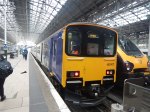
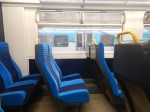

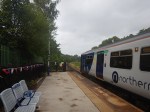
These trains can handled the current timetable but they have an operating speed of only 75 mph.
Looking at Real Time Trains for last week, it now appears that Northern are using new three-car Class 195 trains.
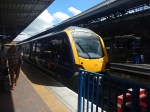
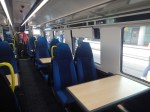
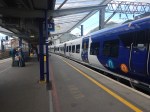
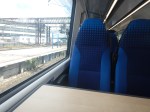
These are much better.
- They are 100 mph trains with much better acceleration.
- The train was still running the timetable for the slower trains.
With thirteen stops, I suspect that these new trains could be under fifty minutes between Manchester and Sheffield.
Will The Hope Valley Line Be Electrified?
Consider.
- Currently, the Hope Valley Line is electrified between Manchester Piccadilly and Hazel Grove stations.
- In the future, the line is likely to be electrified between Sheffield and Dore & Totley stations, in conjunction with rebuilding the Midland Main Line, to the North of Clay Cross North junction for High Speed Two.
- After the electrification at the Eastern end, just over thirty miles will be without electrification.
- The Hope Valley Line has an operating speed of 90 mph.
This Hitachi infographic shows the specification of the Hitachi Regional Battery train.
As these are a 100 mph train with a range of 90 km or 56 miles on battery power, these trains could work Manchester and Sheffield in the required time of forty minutes. provided they could be charged at the Sheffield end of the route.
TransPennine’s Class 802 trains can be fitted with batteries to become Regional Battery Trains, so it would appear that TransPennine’s services on this route could go zero-carbon.
In addition Northern, who are the other passenger operator on the route are working with CAF on battery electric trains, as I wrote about in Northern’s Battery Plans,
I don’t believe there are pressing reasons to electrify the Hope Valley Line to allow passenger trains to meet Northern Powerhouse Rail’s objective.
Will Operating Speed On The Hope Valley Line Be Increased?
Under Plans in the Wikipedia entry for the Hope Valley Line, this is said.
Network Rail, in partnership with South Yorkshire ITA, will redouble the track between Dore Station Junction and Dore West Junction, at an estimated cost of £15 million. This costing is based on four additional vehicles in traffic to deliver the option, however, this will depend on vehicle allocation through the DfT rolling stock plan. This work will be programmed, subject to funding, in conjunction with signalling renewals in the Dore/Totley Tunnel area.
Other proposals include a 3,600 feet (1,100 m) loop in the Bamford area, in order to fit in an all-day (07:00–19:00) hourly Manchester–Sheffield via New Mills Central stopping service, by extending an existing Manchester–New Mills Central service. Planning permission for this was granted in February 2018, but delays mean that this will now not be completed until 2023.
These changes to allow three fast trains, a stopping train and freight trains each hour were also supported in a Transport for the North investment report in 2019, together with “further interventions” for the Northern Powerhouse Rail programme.
It would also probably be a good idea, to increase the operating speed of the line to 100 mph where possible.
Effect On Passenger Services
100 mph trains on a track with an operating speed of 100 mph, could show some impressive timings.
On the Great Eastern Main Line, which is a very busy 100 mph double-track railway, 100 mph trains, achieve a 77 mph average for 90 minutes over the 115 miles, between London Liverpool Street and Norwich with a single stop.
A one-stop Manchester and Sheffield service at this speed would take just 33.2 minutes.
The stopping trains would be more of a challenge to get under forty minutes, but at least if they were battery electric trains, they’d have the better acceleration and deceleration of the electric trains.
- Fifty minutes would be a realistic time.
- Ten minutes turnround time at each end, would be ideal for charging the batteries and give an efficient two hour round trip.
Efficient timetabling could create a very comprehensive service for the Hope Valley Line.
Freight Trains On The Hope Valley Line
Under Freight in the Wikipedia entry for the Hope Valley Line, this is said.
Over a million tons of cement a year is taken away by rail from Earle’s Sidings at Hope.
That is a very large number of freight trains, all of which are currently hauled by diesel locomotives.
- Looking at Real Time Trains, there are nearly always two freight trains in every hour of the day.
- If you look at the routes, they go to a myriad number of destinations.
- Following the routes between Dore Junction and the quarries to the South of the Hope Valley Line, there are several tunnels.
- There are numerous quarries in a cluster, all served by their own rail lines.
Electrifying the delivery of the cement and limestone from the quarries would be a large and very expensive operation.
This Google Map shows Earle’s Sidings at Hope.
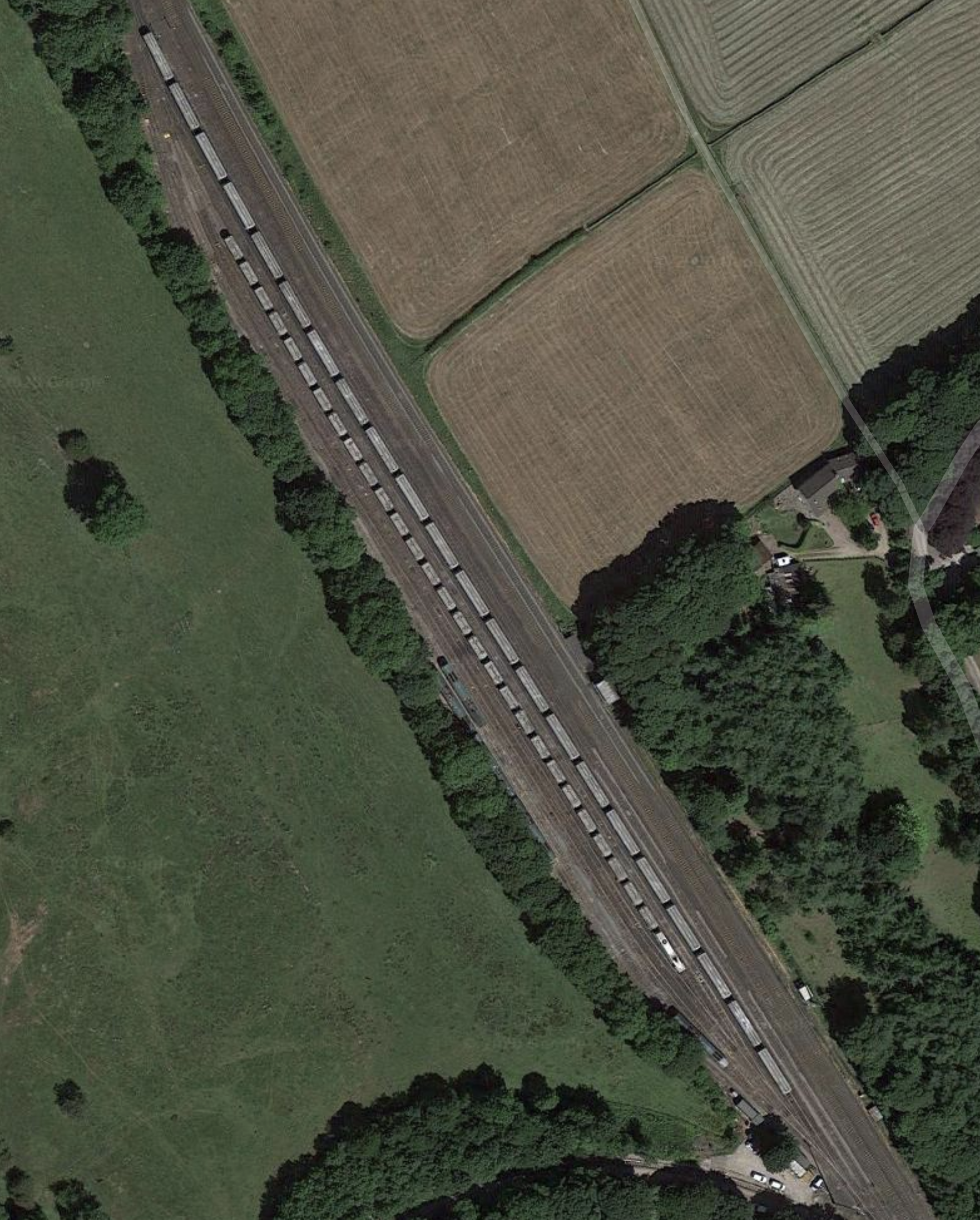
Perhaps a half-way house solution would be to use diesel to haul trains between the quarries and Earle’s sidings, where the locomotive is changed for an electric one?
- But that would then mean that all routes from between the Peak District quarries and their destinations would need to be fully-electrified.
- It should be noted that that the problem of zero-carbon trains, also exists at port and rail freight interchanges, where safe operation with 25 KVAC overhead wires everywhere can be a nightmare.
- Rail freight companies are unlikely to change their old diesel locomotives for new expensive electric locomotives, until all possible routes are fully electrified.
- It is also a big problem, all over the world.
Perhaps, what is needed is a self-powered zero-carbon locomotive with sufficient power to haul the heaviest trains?
I believe such a locomotive is possible and in The Mathematics Of A Hydrogen-Powered Freight Locomotive, I explored the feasibility of such a locomotive, which was based on a Stadler Class 68 locomotive.
The zero-carbon locomotive, that is eventually developed, may be very different to my proposal, but the commercial opportunities for such a locomotive are so large, that I’m sure the world’s best locomotive designers are working on developing powerful locomotives for all applications.
Conclusion
Northern Powerhouse Rail’s ambition for Manchester and Sheffield via the Hope Valley Line is simply stated as four tph in forty minutes. But this may be something like.
- Three fast tph in forty minutes.
- One stopping tph in perhaps fifty minutes.
- One freight tph in each direction to and from the quarries that lie to the South of the line.
I didn’t realise how close that the line is to that objective, once the following is done.
- Introduce 100 mph passenger trains on the route.
- Improve the track as has been planned for some years.
Note that all the passenger trains, that now run the route; Class 185, 195 and 802 trains, are all 100 mph trains, although they are diesel-powered.
With a length of just under 43 miles, the route is also ideal for battery electric trains to work the passenger services, be the trains be from Hitachi, CAF or another manufacturer, after High Speed Two electrifies the Midland Main Line to the North of Clay Cross North Junction, in preparation for high speed services between London and Sheffield.
I would recommend, that one of High Speed Two’s first Northern projects, should be to upgrade the Midland Main Line between Clay Cross North junction and Sheffield station to the standard that will be required for High Speed Two.
I would also recommend, that the Government sponsor the development of a hydrogen electric locomotive with this specification.
- Ability to use 25 KVAC overhead or 750 VDC electrification
- 110 mph operating speed on electrification.
- Ability to use hydrogen.
- 100 mph operating speed on hydrogen.
- 200 mile range on hydrogen.
A locomotive with this specification would go a long way to decarbonise rail freight in the UK and would have a big worldwide market.
Project Management Recommendations
This project divides neatly into three.
- Perform the upgrades at Dore Junction and add the loop in the Bamford area, as detailed in Wikipedia, which will increase the capacity of the Hope Valley Line.
- Electrify the Midland Main Line between Clay Cross North junction and Sheffield, as will be needed for High Speed Two. This electrification will allow battery electric trains to run between Manchester and Sheffield and between Sheffield and London.
- Procurement of the trains. CAF and Hitachi are currently finalising suitable designs for this type of operation.
It would also be helpful, if the freight trains could be hauled by zero-carbon hydrogen electric locomotives, to create a much-improved zero-carbon route between Manchester and Sheffield.
Shell Process To Make Blue Hydrogen Production Affordable
The title of this post, is the same as that of this article on Trade Arabia.
This is the introductory paragraph.
Shell Catalysts and Technologies is launching the Shell Blue Hydrogen Process, which integrates proven technologies to increase significantly the affordability of greenfield projects for “blue” hydrogen production from natural gas along with carbon capture, utilisation and storage (CCUS).
Note.
- Grey hydrogen is generally defined as hydrogen produced from natural gas, by a process like steam-reforming.
- Blue hydrogen is generally defined as hydrogen produced from natural gas, where the carbon is captured and stored, instead of being released into the atmosphere.
- Green hydrogen is hydrogen produced by electrolysis using renewable energy.
- Shell are claiming, that with carbon dioxide costing $25-35/tonne, that their process is more economic than grey or green hydrogen.
- Steam reforming also needs steam, but this new process actually generates steam as a by-product, which further improves the economics, as integrated chemical plants use a lot of steam.
- Shell are reporting capturing 99% of the carbon.
- It looks like savings of between 10 and 25 % are possible.
Shell have made a big technological breakthrough, as it will allow natural gas to be converted direct to hydrogen without contributing to global warming.
Can The UK Have A Capacity To Create Five GW Of Green Hydrogen?
This article in The Times today is entitled Net Zero By 2050: Bold Aims Are An Example To Other Nations.
It is an analysis of the Government’s plans for a greener future.
This is a paragraph.
Only a few small-scale green hydrogen plants exist globally, and so five gigawatts of low-carbon hydrogen generation by 2030 is a bold commitment. For context, BP recently announced that it was building its first full-scale green hydrogen facility, in Germany — with a 50-megawatt capacity.
I don’t think from the tone, that the writer thinks it is possible.
On the other hand I do believe it is possible.
ITM Power
ITM Power are the experts in electrolysis and have the largest electrolyser factory in the world, which is capable of supplying 1 GW of electrolyser capacity per annum.
It would appear they can supply the required five GW of electrolyser capacity in time for 2030.
The Herne Bay Electrolyser
Ryze Hydrogen are building the Herne Bay electrolyser.
- It will consume 23 MW of solar and wind power.
- It will produce ten tonnes of hydrogen per day.
- The hydrogen it produces will be mainly for hydrogen buses in London.
- Delivery of the hydrogen will be by truck.
The electrolyser will consume 552 MWh to produce ten tonnes of hydrogen, so creating one tonne of hydrogen needs 55.2 MWh of electricity.
To produce five gigawatts of hydrogen would require nearly 220 electrolysers the size of Herne Bay.
ITM Power and Ørsted: Wind Turbine Electrolyser Integration
But ITM Power are working on a project with Ørsted , where wind turbines and hydrogen electrolysers are co-located, at sea to produce the hydrogen offshore.
ITM Power talks about the project in this press release on their web site.
This is the introductory paragraph.
ITM Power, the energy storage and clean fuel company, is pleased to share details of a short project sponsored by the Department for Business, Energy & Industrial Strategy (BEIS), in late 2019, entitled ‘Hydrogen supply competition’, ITM Power and Ørsted proposed the following: an electrolyser placed at the wind turbine e.g. in the tower or very near it, directly electrically connected to the DC link in the wind turbine, with appropriate power flow control and water supplied to it. This may represent a better design concept for bulk hydrogen production as opposed to, for instance, remotely located electrolysers at a terminal or platform, away from the wind turbine generator, due to reduced costs and energy losses.
The proposed concept is also described.
- A marine environment capable electrolyser
- ‘Type IV’ wind turbine generators and their ‘DC link’ have the potential to power the electrolyser directly
- This enables fewer power conversion steps and thereby reduces both energy losses and electrolyser footprint
- Readily abundant cooling capacity via the sea water
- Energy in the form of Hydrogen gas supplied to shore by pipe rather than via electricity
- Connecting one electrolyser with one turbine wind generator
- Other avoided costs of this concept include permitting, a single process unit deployment
Note.
- I can’t find a Type IV wind turbine generator, but the largest that Ørsted have installed are about 8 MW.
- This size would require 750 turbines to provide the UK’s five gigawatts of hydrogen.
- 12 MW turbines are under development.
The Hornsea wind farm is being developed by Ørsted
- Hornsea 1 has a capacity of 1.2 GW and was completed in 2020.
- Hornsea 2 will have a capacity of 1.8 GW and will be completed in 2022.
- Hornsea 3 will have a capacity of 2.4 GW and will be completed in 2025.
- Hornsea 4 will have a yet-to-be-determined capacity and could be completed in 2027.
This wind farm will probably supply over 6 GW on its own, when the wind is blowing.
Bringing The Hydrogen Ashore
This has been done since the 1960s in UK waters and it will be very traditional projects for the UK’s engineers.
- Some of the existing pipes could be repurposed.
- Worked out gas fields could probably be used to store the hydrogen or carbon dioxide captured from gas- or coal-fired power stations.
I’m fairly sure that by the use of valves and clever control systems, the pipes linking everything together could be used by different gases.
Conclusion
Producing 5 GW of green hydrogen per year by 2030 is possible.
Diesel Engine Giant Cummins Plans Hydrogen Future–With Trains Coming Before Trucks
The title of this post, is the same as that of this article on Forbes.
It is very much a must-read article about how Cummins, who are a traditional diesel engine manufacturer is embracing hydrogen technology.
Trains Before Trucks
As the title says, they are starting with trains rather than trucks.
They have started by building a factory to make fuel cells for Alstom’s Coradia iLint, as I wrote about in Cummins To Build Railway Fuel Cell Factory.
Reading the Forbes article, it appears that the decision has been made to focus on trains and buses, is because they run fixed subsidised routes and you only need a couple of hydrogen filling stations at the ends of the route. But for trucks, you need full infrastructure.
Cummins To Build Railway Fuel Cell Factory
The title of this post, is the same as that of this article on Railway Gazette.
This is the introductory paragraph.
Cummins’ hydrogen business Hydrogenics is to open a factory at Herten in the Ruhr region for the volume production of fuel cells for applications including Alstom’s Coradia iLint multiple-units.
Other points made include.
- The factory will have a capacity of 19 MW of fuel cells per year.
- It will open in 2021.
- It will manufacture fuel cell systems for Alstom’s Coradia iLint.
There will be research and development and full support for the products.
East West Railway Company To Start Second Phase Of Rolling Stock Procurement
The title of this post, is the same as that of this press release from East West Rail.
These are the three introductory paragraphs.
East West Railway Company (EWR Co) is to restart market engagement with potential train suppliers, as its rolling stock procurement process enters a new phase.
The move follows an initial phase of procurement activity, which EWR Co concluded earlier in the year. A new PIN Notice has been published today to restart engagement with potential suppliers, which includes a set of technical specifications taking account of feedback from the market gained during the initial procurement phase.
This procurement aims to secure a short-term, interim solution to leasing a small fleet of self-powered trains for the Western Section of East West Rail.
The press release has a link to the Prior Information Notice or PIN Notice on the EU database.
along with all the usual contact and other details, this is said about the specification.
The East West Railway Company (EWR Co.) is looking to leasing a fleet of 12 or 14 x 3 car self-powered units with modifications including European Train Control System (‘ETCS’) Level 2 and Driver Controlled Operation (‘DCO’) capability, supported by a full maintenance package (under a ‘wet’ lease). These units will ensure timely operation of EWR’s Western Section Phase 2 between Oxford, Milton Keynes, Bedford and Aylesbury. The lease duration would be 4 years, with an option to extend for 2 years.
The date of the notice is the 10th of November 2020, so it has been recently updated.
I commented on these trains in March 2020, when I wrote EWR Targets Short-Term Fleet Ahead Of Possible Electrification.
In the intervening eight months, a lot have things have happened.
Awareness Of Green Issues
The Covid-19 pandemic has arrived, with all its ferocity and seems to be moving people in the direction of thinking about green issues and zero-carbon transport.
Type “build back greener UK” into Google and you get lots of articles. Some feature Boris Johnson, like this article on Business Green, which is entitled Boris Johnson To Pledge To ‘Build Back Greener’.
I don’t think the public, myriad engineers and scientists and a good selection of politicians will find it appropriate for the East West Railway to use any rolling stock, that is not zero-carbon and powered by renewable energy.
Hitachi Have Launched The Regional Battery Train In Conjunction With Hyperdrive Innovation
In July 2020, I wrote Hyperdrive Innovation And Hitachi Rail To Develop Battery Tech For Trains.
Hitachi had been talking for some time, that they were developing battery electric trains for the UK, but this was the first news of a route to their design, manufacture and into service.
Hitachi also published this YouTube video and this infographic of the train’s specification.
They have also called the train, the Hitachi Regional Battery Train.
- It has a range of 90 kilometres or 56 miles.
- It is fitted with a pantograph for running on 25 KVAC overhead electrification.
- It can run at up to 100 mph on batteries.
- Three-car Class 385 trains can be fitted with batteries, as I wrote about in Hitachi Plans To Run ScotRail Class 385 EMUs Beyond The Wires, which was written in April 2019.
My estimate is that Oxford and Bedford are under fifty miles apart, so if Hitachi’s train could be charged at both ends of the route, one of their trains could provide a self-powered service between Oxford and Bedford.
It seems that Hitachi have an off-the-shelf train, that fits the specification for the trains required by East West Railway.
Vivarail Have Launched A Fast Charge System
Battery electric trains, like electric vehicles are not much use, if you can’t charge them when it is needed.
The initial Service Pattern of the East West Railway is given in the Wikipedia entry of the East West Railway.
- Two trains per hour (tph) – Oxford and Milton Keynes Central via Oxford Parkway, Bicester Village, Winslow and Bletchley.
- One tph – Oxford and Milton Keynes via Oxford Parkway, Bicester Village, Winslow, Bletchley, Woburn Sands and Ridgemont.
- One tph – Aylesbury and Milton Keynes Central via Aylesbury Vale Parkway, Winslow and Bletchley.
There are four terminal stations.
- Aylesbury – No electrification
- Bedford – Full Electrification
- Milton Keynes Central – Full Electrification
- Oxford – No electrification
The existing electrification could be used at Bedford and Milton Keynes Central, whereas some type of charging system, would be needed at Aylesbury and Oxford.
It appears that Adrian Shooter of Vivarail has just announced a One-Size-Fits-All Fast Charge system, that has been given interim approval by Network Rail.
I discuss this charger in Vivarail’s Plans For Zero-Emission Trains, which is based on a video on the Modern Railways web site.
There is more about Vivarail’s plans in the November 2020 Print Edition of the magazine, where this is said on page 69.
‘Network Rail has granted interim approval for the fast charge system and wants it to be the UK’s standard battery charging system’ says Mr. Shooter. ‘We believe it could have worldwide implications.’
Vivarail’s Fast Charge system would surely be a front-runner for installation at Aylesbury and Oxford, if battery electric trains were to be run on the East West Railway.
Choosing A Train
East West Rail have said the following about the train specification.
- Three cars
- Self-powered
- European Train Control System (‘ETCS’) Level 2 and Driver Controlled Operation (‘DCO’) capability
- Available on a wet lease, that includes a full maintenance package
The press release from East West Rail and other documents mentions between twelve and fourteen trains will be leased.
In Trains Needed For The East West Railway, I calculated that the proposed services could need around eight or nine trains.
This must mean one of three things.
- There are plans for extra services.
- There are plans for the proposed services to be extended.
- Trains will run some services in pairs.
Because, of the last reason, the trains must have the ability to run in pairs.
As sections of the East West Railway are being built for 100 mph operation, the trains must also have a 100 mph capability.
When I talked briefly about green issues earlier, I said that I felt the trains should be zero-carbon, which would rule out diesel.
That leaves two options for self-powered operation; battery electric or hydrogen.
So what trains fit the specification?
British Rail Era Trains
A large number of British Rail era trains could be suitable for updating for interim use on the East West Railway.
I even suspect, some fantasist will suggest using shortened versions of InterCity 125 trains, as are used in South-West England and Scotland.
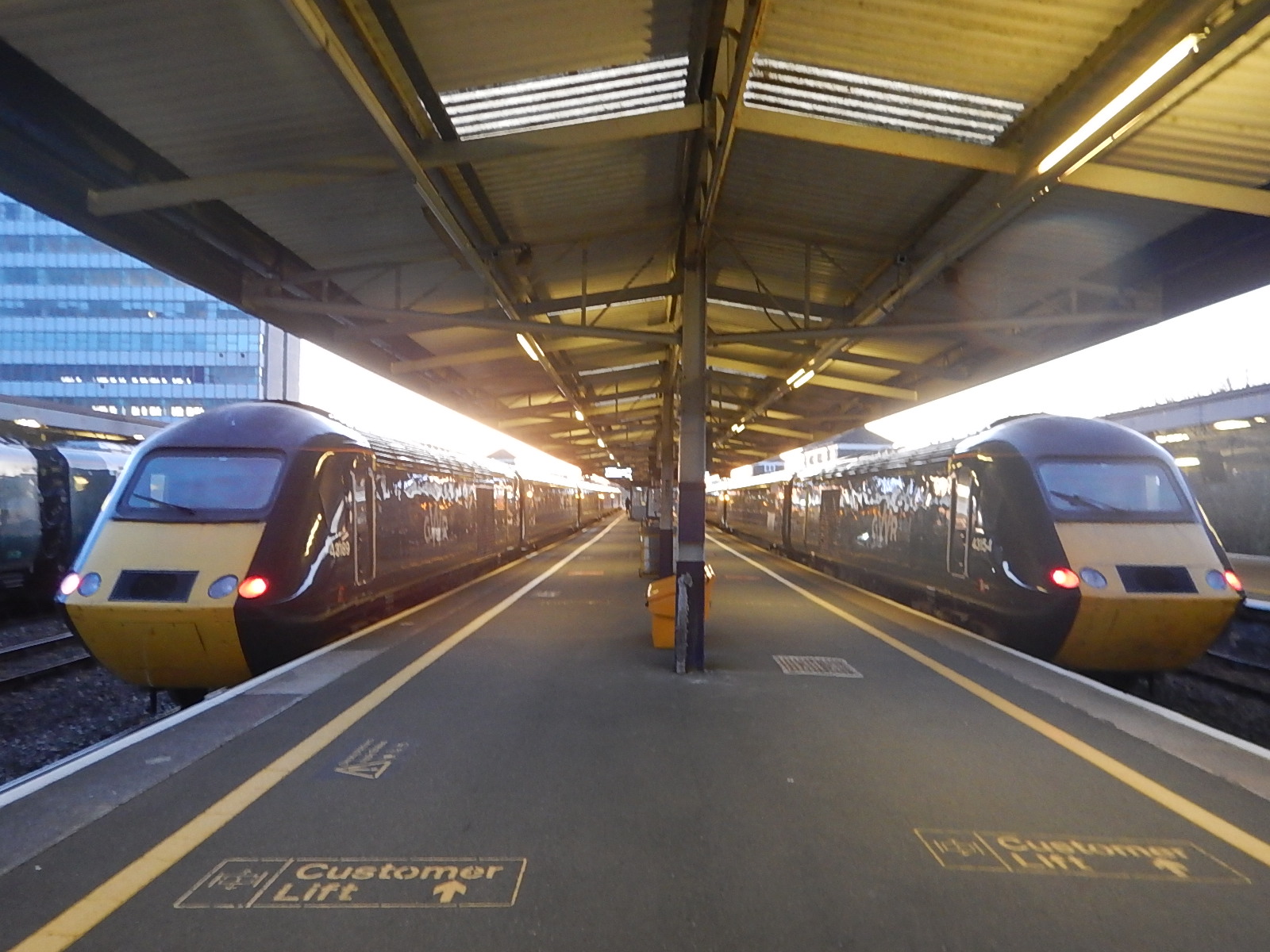
But let’s be serious and not insult the intelligence of the three world-leading universities on the final route of the East West Railway.
A lot of money is also being spent on this railway and tarted-up forty-year-old trains would not encourage people to use the new railway.
Class 170 Trains
There are eighty-seven three-car Class 170 trains with various operators, some of which will be surplus to requirements, as they are being replaced with new trains.
But they are diesel, so surely they don’t fit my perceived need for zero-carbon trains.
That would have been true until a couple of weeks ago, when as I wrote in Vivarail’s Plans For Zero-Emission Trains, Adrian Shooter of Vivarail disclosed an audacious plan to convert, diesel trains into zero-carbon battery electric trains.
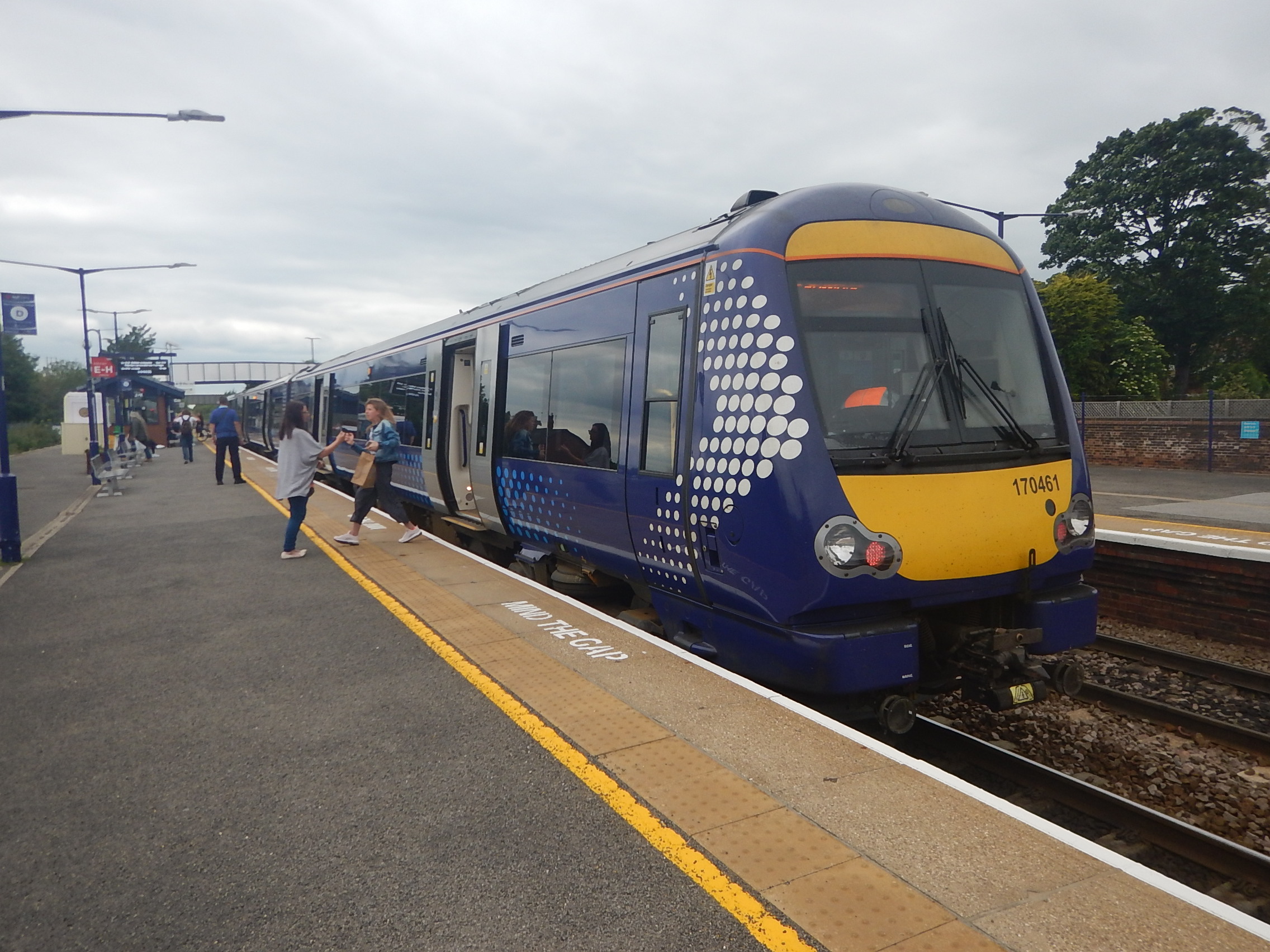
Class 170 trains like this were on the list of possible conversions.
- They 100 mph trains.
- Some are three-cars.
- They meet all the disability regulations.
- They have been used for services much longer than Oxford and Bedford.
They could also start the service as diesel trains and gradually converted to battery electric, if this would be better for operation.
Class 175 Trains
The three-car 100 mph Class 175 trains could be a possibility as there are fifteen trains, but they have two problems.
- They are powered by diesel.
- They probably won’t be available until 2023.
So I think they can be ruled out.
Class 185 Trains
All the fifty-one Class 185 trains are currently in service with TransPennine Express. They are due to release fifteen trains in 2021 and it was thought that these trains were in prime position for becoming the interim trains for East West Railway.
- They 100 mph trains.
- Some are three-cars.
- They meet all the disability regulations.
- They have been used for services much longer than Oxford and Bedford.
- The fleet is the right size.
But then the Department of Transport decided to change their plans for the Liverpool and Norwich service.
I wrote about one journey on the overcrowded section of this service in Mule Trains Between Liverpool And Norwich.
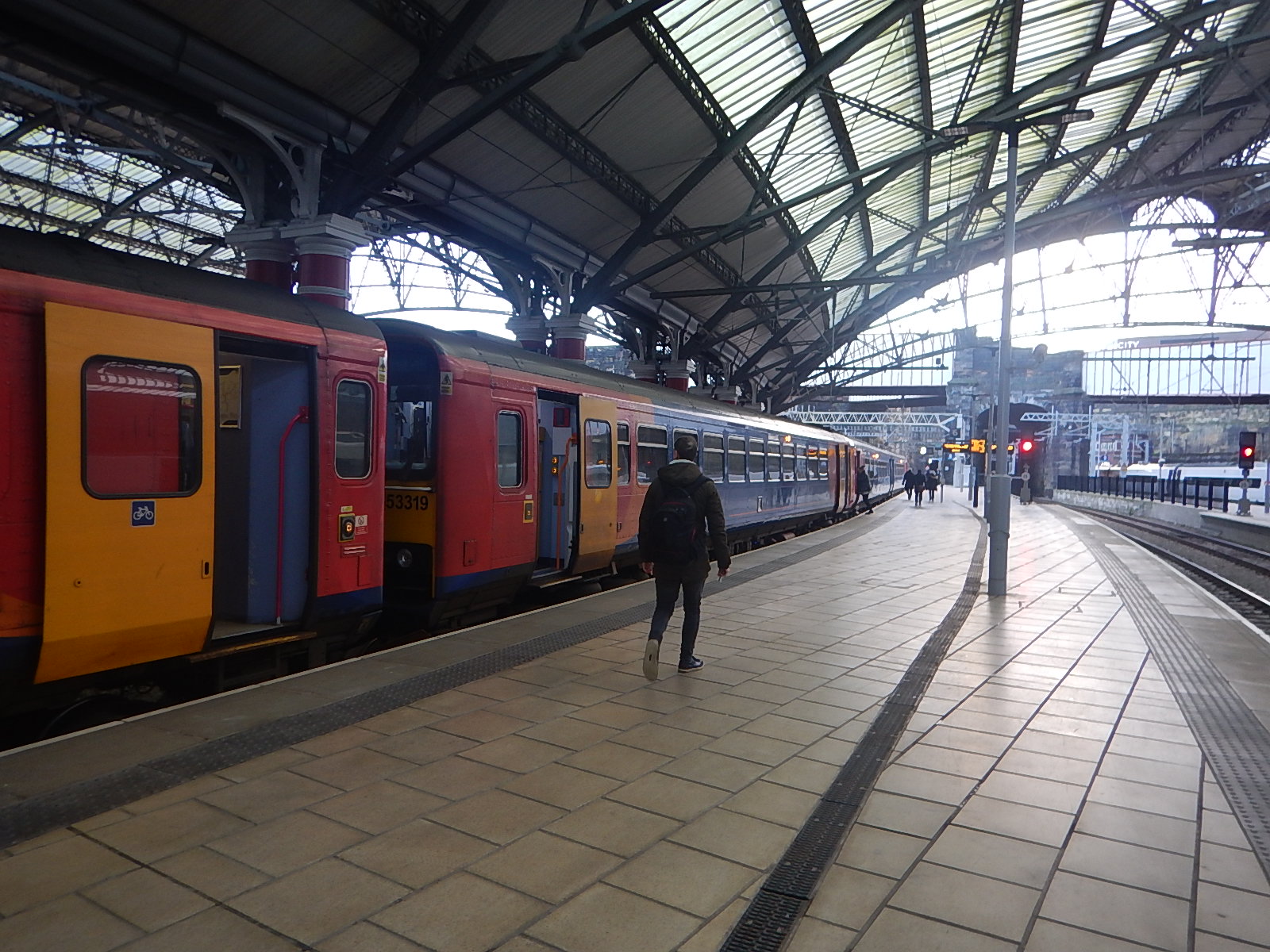
The picture shows the inadequate train formed of an assorted collection of Class 153 trains, I took from Liverpool to Sheffield.
The service is now being split at Nottingham and East Midlands Railway will receive the released Class 185 trains for the Liverpool and Nottingham portion of the service.
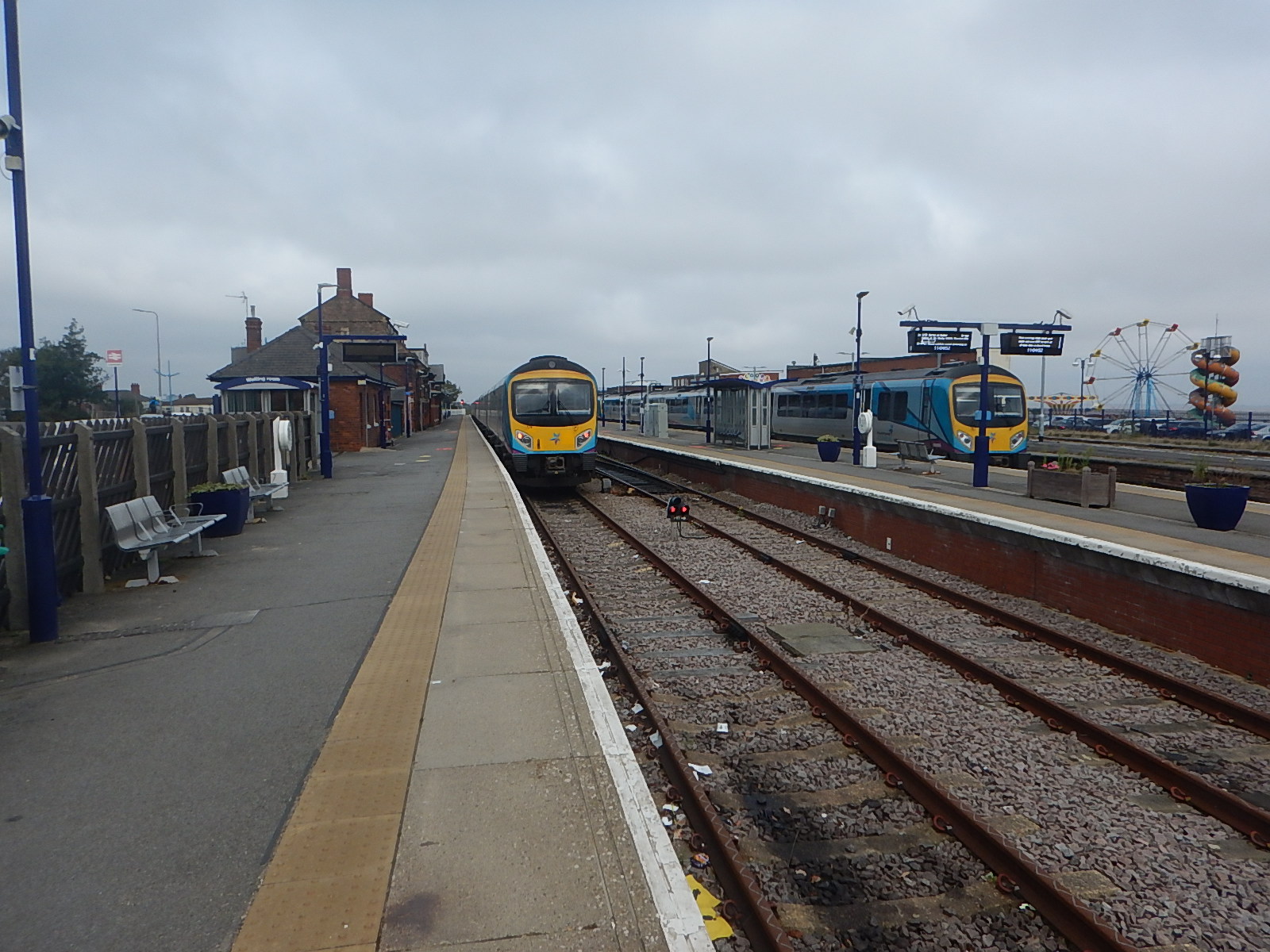
A fleet of these Class 185 trains will surely offer more comfort on a very busy service.
So it is looking unlikely that Class 185 trains will be used on the East West Railway.
Class 220, 221 and 222 Trains
These three fleets of Voyager trains could be a possibility, as they can be shortened to three-car trains.
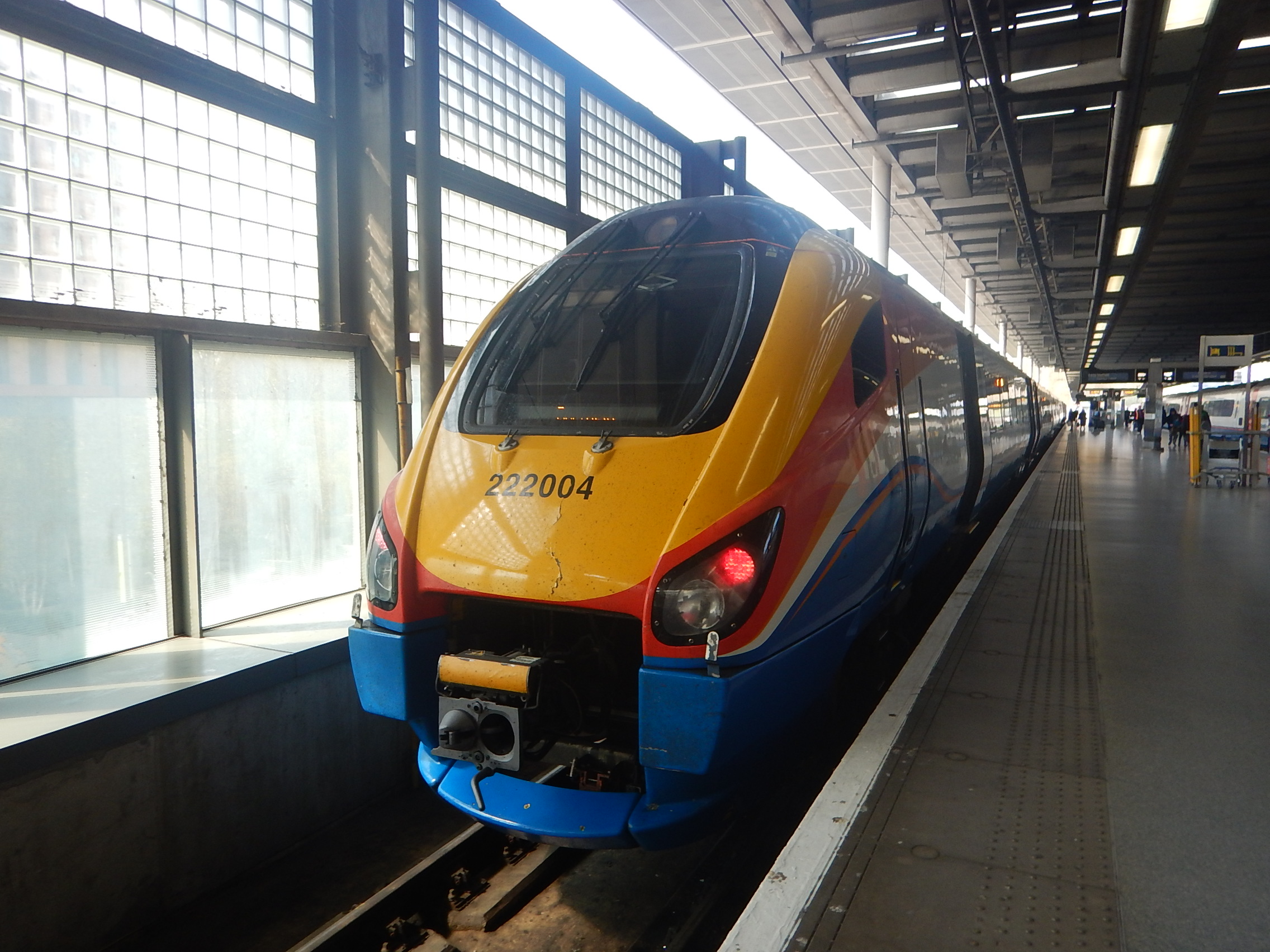
But they have disadvantages.
- They are diesel-powered.
- The diesel engines make a lot of noise for passengers.
- CrossCountry may have an alternative plan for these trains as I wrote about in DfT and Arriva CrossCountry Sign Agreement.
I think it is unlikely, that these trains will be used on the East West Railway.
Class 350 Trains
There are thirty-seven Class 350 trains, that were built only twelve years ago, that have been retired. The owner; Porterbrook are planning to convert them into battery electric versions, which they have called BatteryFLEX trains.
Unfortunately, they are four-cars and unlike other trains, it doesn’t appear that they can be shortened to three cars.
Class 375, 377, 379 and 387 Trains
These four fleets of Electrostar trains could be a possibility for running as battery electric trains.
- Some are three-car trains and four-car trains can be converted to three-car trains, by simply removing a car.
- They are 100 mph trains.
- Bombardier converted a Class 379 train for battery operation and I have heard or seen no adverse reports from either passengers, rail staff or journalists.
- They can work in multiple formations.
- They are all wired for dual-voltage operation.
- Pantographs wells have already been fitted to trains that normally work using 750 VDC third-rail electrification.
The picture shows the Class 379 train, that was converted to battery electric operation.

The Class 379 trains, also have the advantage, that there is a fleet of thirty trains, that are being replaced by Greater Anglia, who are homeless.
If I were the owner of the Class 379 trains, I’d do the following.
- Convert them all into battery electric trains.
- Shuffle cars around to get a mix of three-, four- and five-car trains to match market opportunities.
- Make them compatible with Vivarail’s Fast Charge system.
- Do a licensing deal with Vivarail, so I could supply the chargers.
This plan has some big advantages.
- Battery electric operation of the Class 379 trains has been successfully proven.
- Some Class 379 trains are already available for conversion, as they have been replaced by Greater Anglia.
- The trains could easily be delivered in time for the opening of the East West Railway.
- The trains would not need to be replaced, if the East West Railway was to be fully electrified in the future.
- If I leased out all the Class 379 trains, I’m fairly sure that I could acquire some other Electrostars to convert.
The trains would surely be ideal for the Uckfield Branch and Ashford and Hastings, which are to be run by battery electric trains.
- The order for these services is still to be announced.
- This use would be a trial application of the highest quality.
- I suspect that five-car trains would be ideal for these Southern routes.
- In Battery Electrostars And The Uckfield Branch, I estimated that Southern would need twelve five-car trains for the Uckfield Branch and four trains for the Ashford and Hastings service.
It looks to me, the thirty four-car Class 379 trains could be converted into the following battery electric trains.
- Twelve five-car trains for the Uckfield Branch.
- Four four-car trains for Ashford and Hastings.
- Fourteen three-car trains for the East West Railway.
Using battery electric Class 379 trains for the East West Railway, the Uckfield Branch and Ashford and Hastings. looks from the engineering, numbers and financial points of view to be a very efficient proposition.
Class 385 Trains
As I indicated earlier, Hitachi have the technology to create a Class 385 train with a battery capability.
- They appear to be talking to ScotRail.
- Are they talking to Vivarail about using their Fast Charge system?
- As the trains would be new, East West Railway would get trains to their specification.
Battery electric Class 385 trains must be a serious proposition.
Class 600 Trains
The Class 600 train could be an interesting possibility.
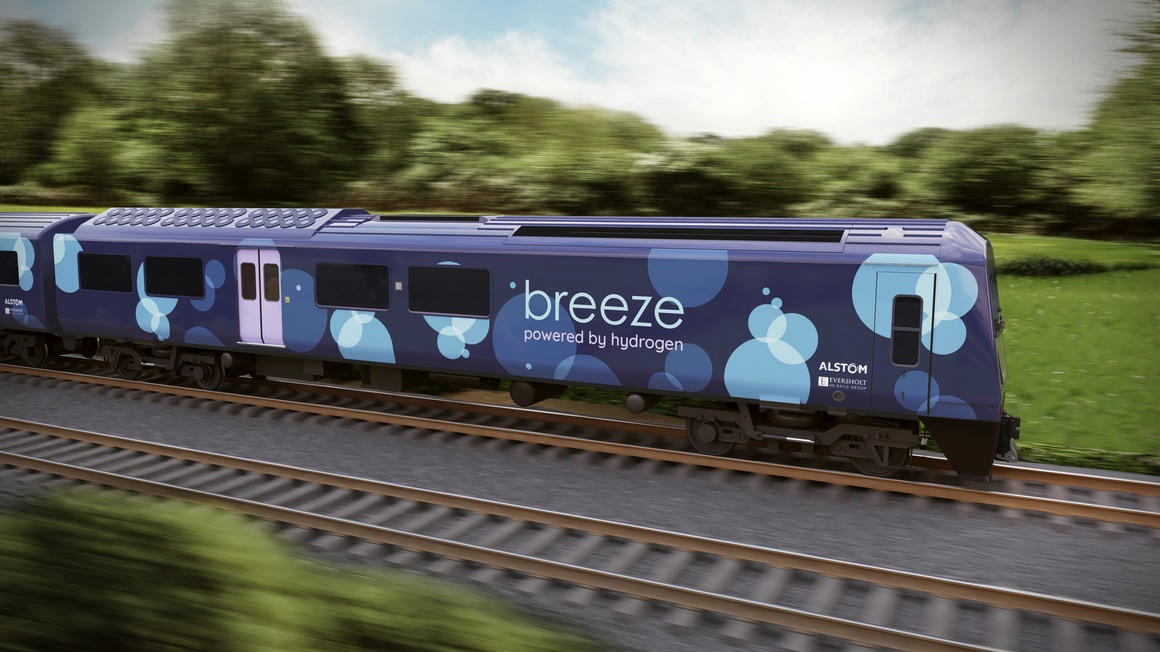
The trains can be powered by both hydrogen and overhead or third-rail electrification.
- The trains are three-cars long.
- They are 100 mph trains.
- First in-service dates are scheduled for 2024, which could be convenient.
- The trains will have a state-of-the-art Renatus interior.
- They will not need charging and could probably be refuelled as infrequently as only once per day.
I am not worried, by the train being powered by hydrogen, but because of the large tanks in the train, the passenger capacity will be lower, than a diesel, electric or battery electric train of a similar length.
I suspect though, that Alstom will be pitching for the order.
Aventras
In this article in Global Rail News from 2011, which is entitled Bombardier’s AVENTRA – A new era in train performance, gives some details of the Aventra’s electrical systems. This is said.
AVENTRA can run on both 25kV AC and 750V DC power – the high-efficiency transformers being another area where a heavier component was chosen because, in the long term, it’s cheaper to run. Pairs of cars will run off a common power bus with a converter on one car powering both. The other car can be fitted with power storage devices such as super-capacitors or Lithium-ion batteries if required. The intention is that every car will be powered although trailer cars will be available.
Unlike today’s commuter trains, AVENTRA will also shut down fully at night. It will be ‘woken up’ by remote control before the driver arrives for the first shift
This was published over nine years ago, so I suspect Bombardier have refined the concept.
Bombardier have not announced that any of their trains have energy storage, but I have my suspicions, that both the Class 345 and Class 710 trains use super-capacitors or Lithium-ion batteries, as part of their traction system design.
I believe that Bombardier, have the ability to build an Aventra to this specification.
- Three-cars
- 100 mph running
- Sixty mile range on battery power.
- Dual voltage.
- Ability to work in pairs.
Like the Hitachi trains, they would be new build.
CAF
CAF have proposed a battery electric train based on the Class 331 train, which I wrote about in Northern’s Battery Plans.
It is a four-car development of the three-car Class 331 trains.
Can it be built as a three-car train to fit the specification?
Conclusion
There are some good candidates sir supplying an interim fleet of trains for the East West Railway.
My money’s on one of the following.
- New Hitachi Class 385 trains
- Converted Class 379 trains.
- New Aventras
All would be battery electric trains.
But there is a change that Alstom’s Class 600 hydrogen trains could be used.
 The Anonymous Widower