Can The Signalling Of The London Overground Be Improved?
An article on Modern Railways Online is entitled First To Succeed Arriva On London Overground.
These are two paragraphs of the article.
Under the new concession, which runs for eight years, First Rail London Limited (FRLL) will introduce extra peak time trains on the Mildmay Line from May 2026, more frequent trains on the Windrush Line from December 2026 – up to 18 trains per hour – and upgrade help points and CCTV.
It will also introduce ‘targeted upgrades’ on the Mildmay Line infrastructure to “boost performance for customers.”
It would appear that the signalling is being improved.
So I asked Google AI, the question in the title of this post and received this reply.
Yes, London Overground signalling is actively being improved through major projects like the Windrush Line upgrades (aiming for 18-20 trains per hour) and South London signalling modernisation (Alstom’s new system for better reliability), allowing for increased capacity, faster journeys, and fewer delays, although these upgrades involve planned disruptive works.
It would appear that the improved signalling will lead to more faster and better services.
These have been indicated in the Modern Railways article.
- Extra peak time trains on the Mildmay Line
- More frequent trains on the Windrush Line
I would also expect more freight, open access and other special trains to be able to use London Overground tracks to pass through London.
London has a rail capacity problem, for both freight and passenger trains.
This report from Network Rail is entitled The London Rail Freight Strategy (LRFS).
I have written a series of posts based on this report.
- Decarbonisation Of London’s Freight Routes
- Doubling Harlesden Junction
- East Coast Main Line South Bi-Directional Capability
- Gauge Improvements Across London
- Gospel Oak Speed Increases
- Headway Reductions On The Gospel Oak To Barking, North London and West London Lines
- Heavy Axle Weight Restrictions
- Kensal Green Junction Improvement
- Longhedge Junction Speed Increases
- Moving The West London Line AC/DC Switchover To Kensington Olympia
- Moving The West London Line AC/DC Switchover To Shepherd’s Bush
- Nunhead Junction Improvement
- Stratford Regulating Point Extension
- Will Camden Road Station Get A Third Platform?
- Will Clapham Junction Station Get A Platform 0?
There is certainly work to be performed on London’s railways to increase the total number of freight trains, that pass through and around the capital.
Conclusion
I believe that as has been shown on the Lizzie Line, Thameslink, the East Coast Main Line and other lines around the world, that the number of trains per hour on the Overground can be increased to meet the objectives stated in the Modern Railways article.
What Is The Peak Frequency Of The East London Line?
I asked Google AI, the question in the title of this section and received this reply.
The East London Line (now part of the Windrush Line, London Overground) has peak frequencies of around every 4-6 minutes (10-15 trains per hour) on its busiest sections, though some parts might see higher frequencies, generally offering a very frequent service through East London during peak times. Specific frequency can vary by section (e.g., Stratford-Lewisham, Canary Wharf-Lewisham), but generally, you can expect trains every few minutes during weekday rush hours (around 06:30-09:30 & 16:00-19:00).
I do think that Google AI has got its DLR and its East London Line mixed up.
But even if we accept that current East London Line service needs 15 tph and the new capacity will be the Modern Railways article figure of 18 tph, that’s still an increase of 3 tph through the Thames Tunnel-section of the East London Line.
What Is The Peak Frequency Of The North London Line?
I asked Google AI, the question in the title of this section and received this reply.
The North London Line (NLL), part of London Overground, typically runs 8 trains per hour (tph) during weekday peaks, with plans to increase this with infrastructure upgrades like digital signalling and longer trains to meet growing demand and integrate with Crossrail/HS2. While 8tph has been a target, the line also carries significant freight, impacting passenger service frequency, with older plans aiming for 6-8tph peaks and even longer trains (3-4 cars) for capacity.
The peak frequency of trains on the North London Line appears less than the East London Line, so I would assume, that like the East London Line, it could probably squeeze in another 3 tph.
When you consider that the working day is over eighteen hours, 3 tph means nearly an extra sixty trains per day on both the the East and North London Lines.
Could This Extra Capacity On The East and North London Lines Created By Improved Signalling Be Used For Extra Services?
Consider.
Every train of the service, would need its own path.
- A typical four tph Overground service like Dalston Junction and New Cross would need four paths per hour.
- A typical freight service would need a dedicated path.
- A typical long-distance passenger service would need a dedicated path.
There are certainly possibilities.
Could Anglia Railways’ London Crosslink Be Recreated As Part Of The London Overground?
This is the first paragraph of the Wikipedia entry for the original London Crosslink.
London Crosslink was a passenger train service operated by Anglia Railways between Norwich and Basingstoke, using the North London Line to bypass central London. Class 170 Turbostar diesel multiple units were used, and the service operated between 22 May 2000 and 28 September 2002, supported by funding from the Strategic Rail Authority through its Rail Passenger Partnership fund.
Note.
- The service called at Diss, Stowmarket, Ipswich, Colchester, Whitham, Chelmsford, Ingatestone, Romford, Stratford, Highbury & Islington, Camden Road, Willesden Junction, West Hampstead Thameslink, Brentford, Feltham, Staines, Woking, and Farnborough (Main)
- It ran six times on Monday to Friday and five times on Sunday.
- Feltham and Woking stations have a coach link to Heathrow.
- Journeys took around 3 hours and 44 minutes.
Over the years, attractions and other rail lines and stations served by the route have changed. improved and been added.
- In 2006, the Arsenal’s Emirates Stadium opened within walking distance of Highbury & Islington station.
- In 2012, the Olympic Stadium opened at Stratford and is now used by West Ham United.
- In 2020, Brentford Stadium opened within walking distance of Brentford station.
- There are long-term plans for a station at Brentford stadium.
- In 2022, Romford and Stratford stations were connected to the Elizabeth Line.
- In 2025, Beaulieu Park station was added to the Greater Anglia Main Line.
- In 2026, both ends of the route came under the control of Great British Railways.
At some point in the future, Old Oak Common Lane station will open to link the route to High Speed Two, the Great Western Main Line and the Elizabeth Line.
In Can The Signalling Of The London Overground Be Improved?, I looked in detail at the signalling of the London Overground and if it could handle more trains.
My conclusion was that on the East and North London Lines, another three trains per hour (tph) could probably be accommodated, which over an average day was probably around sixty trains.
As a restored London Crosslink would need just six paths per day, I would suspect the service could be restored, if it were thought to be a good idea.
I certainly feel that capacity would not be a problem.
These are a few other thoughts.
Will There Be Political Problems?
Providing the London Mayor approves, I can’s see any problem with Labour and I can’t see other parties objecting if passengers like it.
Would It Be Sensible To Use Lumo Branding And Trains?
Consider.
- Lumo is trusted branding.
- A five-car Lumo Class 803 train is 132 metres long and a pair of four-car London Overground Class 710 trains is 166 metres long, so I suspect platform length problems will be minimal.
- I doubt there will be problems on the Greater Anglia network.
- Stratford and Norwich is mainly a 100 mph network.
- Not all parts of the route have 25 KVAC overhead electrification, but batteries can be fitted to the Class 803 trains, that will cover any gaps.
- My calculations show that the modern trains will be twenty-two minutes quicker, than Anglia Railways Class 170 diesel trains.
- At one point Anglia Railways was owned by First Group, so FirstGroup may have knowledge of the problems of the route.
I believe it would be sensible to use Lumo branding and trains.
Could The Route Be Extended?
Consider.
- It could probably be extended to Winchester, Southampton and Bournemouth in the South.
- If offshore hydrogen takes off at Great Yarmouth, it might be worth extending with a reverse to Yarmouth in the North.
- Yarmouth has had a direct service from London in the past.
The service could also develop days out by the sea.
How Will The New London Number 10 Bus Turn Round At Mildmay Park?
The new London Bus 10 is going to terminate near my house at probably the four-way junction of the Balls Pond Road/Mildmay Park/Southgate Road.
This Google Map shows the area.
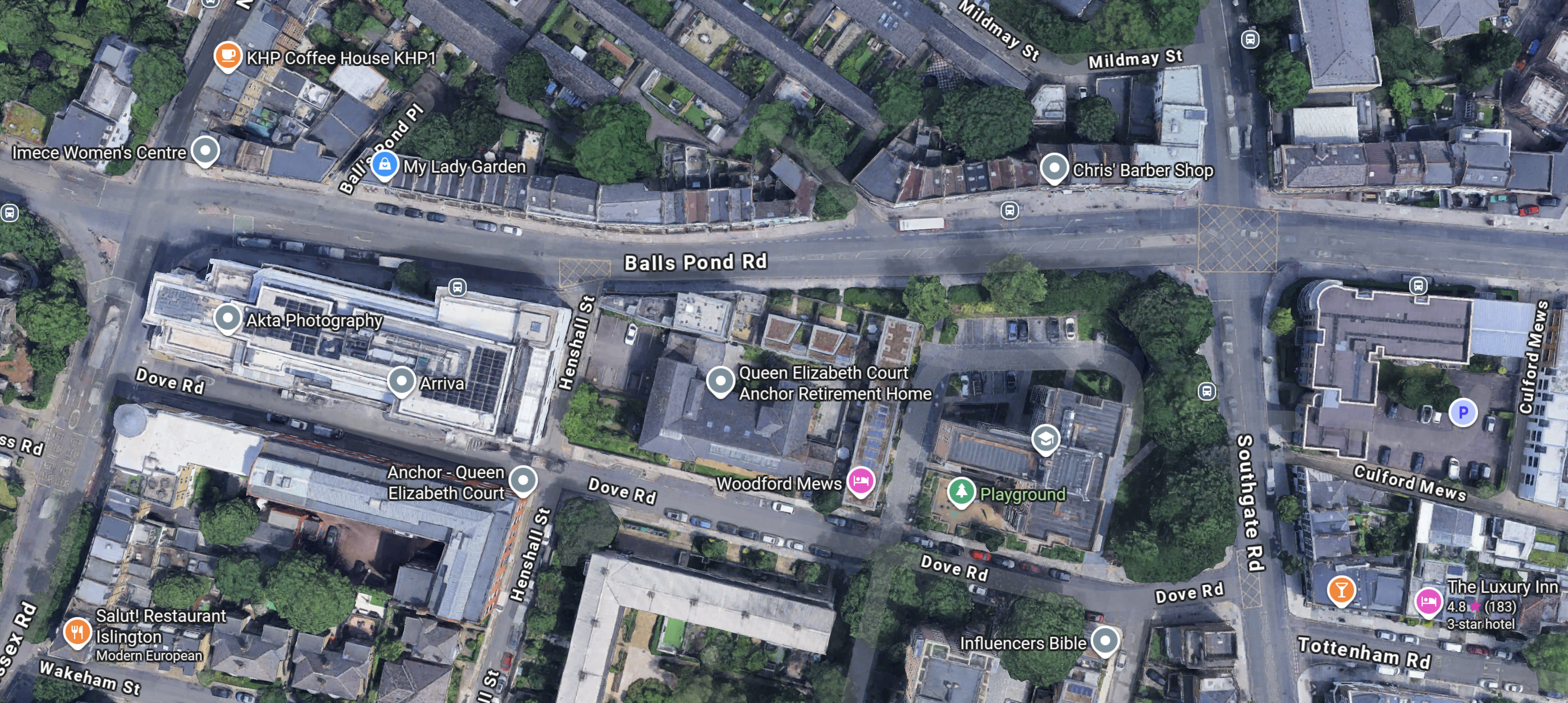
Note.
- The road about a third of the way down the map, that goes across the map is the Balls Pond Road of 1950s and 1960s fame on the BBC radio shows Beyond our Ken and Round the Horn.
- If you like your comedy with lashings of double entendres, then check out the shows. They have Wikipedia entries.
- At the West end oof the map, is the Essex Road, which takes buses to and from the Angel and Central London.
- Southgate Road and Mildmay Park form a North-South route towards the East of the map.
- Southgate Road leads South to Old Street and the City of London.
- Mildmay Park leads North to Newington Green, Clissold Park and Manor House.
Sometimes, buses from Central London turn-back in this area, by taking this route.
- The bus comes North up the Essex Road and turns right into the Balls Pond Road.
- It stops in the Balls Pond Road and drops off any remaining passengers.
- At the set of traffic lights, the bus will turn into Southgate Road.
- The bus, then turns into Dove Road and proceeds to its Western end.
- The bus company has an office in the block at the end, so drivers can also take a comfort break before returning to Central London.
I have seen buses taking this route several times in the last month, so it could be likely that it will be used in future to turn the buses.
Will New Routemasters Continue To Be Used?
At least initially, I suspect, but London will replace them with zero-carbon buses. Hopefully, they won’t be the inadequate BYD electric-buses on route 141?
How Will Buses Be Recharged?
At some point, the buses will probably be charged in this area.
There doesn’t seem to be a suitable place, so will the buses be charged at the other end of the route, which is Battersea Bridge.
Perhaps, the solution is to convert the Routemasters to zero-carbon?
Major Revamp Of Wales’ Busiest Station Gets Go-Ahead
The title of this post, is the same as that of this article on the BBC.
This is the sub-heading.
Plans for a major revamp of Wales’ busiest railway station have received final approval.
These three paragraphs add more details.
The £140m upgrades to Cardiff Central – including a new brick arch rear entrance, larger concourse and improved waiting areas – aim to support passenger growth and reduce overcrowding.
Better accessibility for people with reduced mobility and additional retail and cycle facilities are also among the changes.
Work is due to start in the middle of next year with the aim of completing most of it within three years.
Note.
- The new entrance on the south side of the station, was opened in September 2015.
- A new Platform 8 was added in 2017, which allows sixteen local trains per hour to run between Cardiff Central and Cardiff Queen Street stations, to serve the twenty railway stations in the city.
- All platforms are bi-directional, which surely improves the flexibility of the rail network in Cardiff City centre.
- Access from the station to the Principality Stadium has improved greatly in recent years.
- The station will remain open during the works.
Cardiff’s railways are a comprehensive mix of local and inter-city trains.
I have some thoughts on Cardiff Station.
The Cardiff & Valleys Day Ranger
This very useful ticket, is the ideal way to explore the Cardiff and Valleys area and I’ve used it several times.
- I usually buy it from one of the two ticket offices in Cardiff Central station, but in one case, I did buy it in Paddington to save time.
- According to Transport for Wales, you can buy it on a local train from the conductor.
- It costs about £16 for an adult, but railcard apply.
I actually find taking a train up the valleys, is a good way to clean out my lungs.
Sights To See On The Cardiff & Valleys Lines
Google AI makes these suggestions.
The Cardiff & Valleys Lines offer historic castles (Cardiff, Caerphilly, Castell Coch), world-class museums (St Fagans, National Museum Cardiff, Big Pit), industrial heritage (Rhondda Heritage Park, Royal Mint Experience), and stunning nature in Bannau Brycheiniog National Park, with scenic railway journeys connecting these sites for history, culture, and outdoor adventure.
Hopefully, when the new Stadler trains and tram-trains are fully operational on the Cardiff & Valleys Lines, someone will write a full guide.
Hydrogen In Aviation Offers Potential For Growth And Deeper Emissions Reductions, New Study Shows
The title of this post, is the same as that of this press release from Rolls-Royce.
These five paragraphs compose the press release.
Rolls-Royce, easyJet, Heathrow and University College London Air Transportation Systems Lab (UCL ATSLab) published a report highlighting how hydrogen-powered aircraft could enable European and UK aviation to cut carbon emissions while supporting future growth.
The study, Enabling Hydrogen in the European Aviation Market, found that hydrogen in aviation offers a unique opportunity to achieve both emissions reduction and market expansion. The analysis shows that introducing hydrogen alongside Sustainable Aviation Fuel (SAF) can accelerate progress towards net zero, particularly when policy incentives reward low-carbon fuels and if hydrogen were to be included within the EU’s SAF mandate.
The research also found that targeted hydrogen infrastructure at around 20 major European airports, including Heathrow, could deliver more than 80% of the emissions benefits of full hydrogen availability across the continent. Concentrating investment at key ‘hydrogen hubs’ would therefore provide a practical and cost-effective path to early adoption.
Further modelling indicates that the earlier novel technologies, such as hydrogen, can be introduced, the more opportunity they present for CO2 emission reductions, underscoring the value of early technological transition where it is financially and technically viable.
The study is underpinned by UCL ATSLab’s Airline Behaviour Model (ABM), which represents the complexity of airline decision-making through specific behavioural variables. Building on this, the research evaluates how fuel costs, incentives and new technologies shape airline responses. This provides a research-based, realistic picture of how hydrogen adoption could evolve, highlighting both opportunities and potential challenges for adoption.
Note, these two sentences recommending early adoption of hydrogen.
- Concentrating investment at key ‘hydrogen hubs’ would therefore provide a practical and cost-effective path to early adoption.
- Further modelling indicates that the earlier novel technologies, such as hydrogen, can be introduced, the more opportunity they present for CO2 emission reductions.
I also suspect, that introducing hydrogen early, feeds back to reduce Co2 emissions.
But what is Trump’s considered view on hydrogen aircraft?
Google AI gives this answer to my question.
Donald Trump’s view on hydrogen for transportation, including potential use in aircraft, is highly skeptical due to perceived safety risks and effectiveness concerns, which generally aligns with his broader opposition to green energy initiatives. He has specifically criticized hydrogen-powered vehicles as being dangerous and “prone to blowing up”.
Note.
- I used to work in a hydrogen factory and it’s still producing hydrogen.
- I doubt Trump gets on well with Jennifer Rumsey, who is CEO of Cummins, who are one of the world’s largest diesel-engine companies, who are following a zero-carbon route.
- Is Formula One Likely To Go To Hydrogen Fuel? This would set the Cat Among The Pigeons
I also feel that this University College London study will create a string of converts to hydrogen.
Mushroom Management On TfL And Uber
London has a new electric ferry between Rotherhithe and Canary Wharf, so this morning, I went to have a ride across the Thames.
I started by taking the East London Line to Rotherhithe station, where no-one had a clue, as to where to find the new ferry, which only started running late last week.
But, I did see it, in some of these pictures.
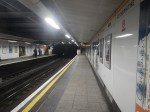
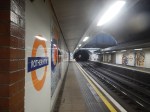

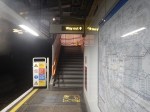
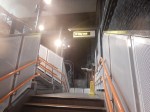



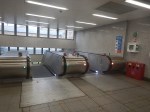



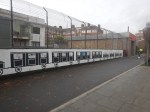





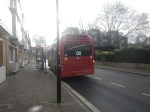

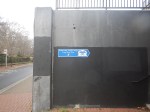











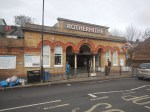

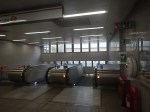
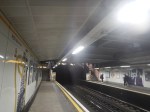
Note.
- Rotherhithe station is unusual for the Overground, in that it has escalators, but not lifts.
- The station has a cosy little cafe in the entrance, which smelt good.
- The Brunel Museum is just round the corner from the station.
- The Wrightbus electric buses were constantly going East and West along the road behind the river bank beteen Victoria and Canada Water stations.
So, in the end, I took the bus back to Rotherhithe station and came home.
Network Rail’s Test Track Take Centre Stage As Hydrogen Is Delivered By Rail For The First Time
The title of this post, is the same as that of this press release from GeoPura.
These three paragraphs introduce the story.
Network Rail, working with rail and energy partners Freightliner and GeoPura, has transported hydrogen for the first time on Britain’s rail network, marking a major step forward for both the rail and energy sectors.
The milestone was achieved yesterday (Wednesday 3 December) at Network Rail’s Test Tracks* site in Tuxford, where freight operator Freightliner hauled a train of gas containers from Doncaster to High Marnham – marking Britain’s first shipment of hydrogen by rail.
It was part of a rail and energy industry innovation event showcasing several hydrogen initiatives. This included the first re-engineered hydrogen-powered shunting locomotive – seen as a step towards replacing diesel – another milestone towards the rail industry’s goal of becoming net zero. The event also demonstrated HPU hydrogen-powered generators, lighting towers and support vehicles.
These two paragraphs describe Network Rail’s test track at Tuxford and GeoPura’s hydrogen production facility at High Marnham.
Network Rail’s site at Tuxford runs all the way to High Marnham, where it sits adjacent to HyMarnham Power, the UK’s largest green hydrogen production facility operated by GeoPura and JG Pears. Built on the site of a former coal-fired power station, HyMarnham Power is one of the world’s first rail-connected hydrogen production facilities, and Network Rail’s Tuxford site will be the world’s first net-zero railway testing facility.
Currently, hydrogen is transported by road. This breakthrough marks a major step towards the rail network becoming a ready-made hydrogen distribution system, a rolling pipeline, with connections to all major industrial and urban centres across Britain – proving the practical capability of rail to transport hydrogen at scale. Hydrogen will also be utilised to decarbonise wider rail operations, from construction to ongoing maintenance and off-grid operations.
This OpenRailwayMap shows Tuxford and High Marnham.
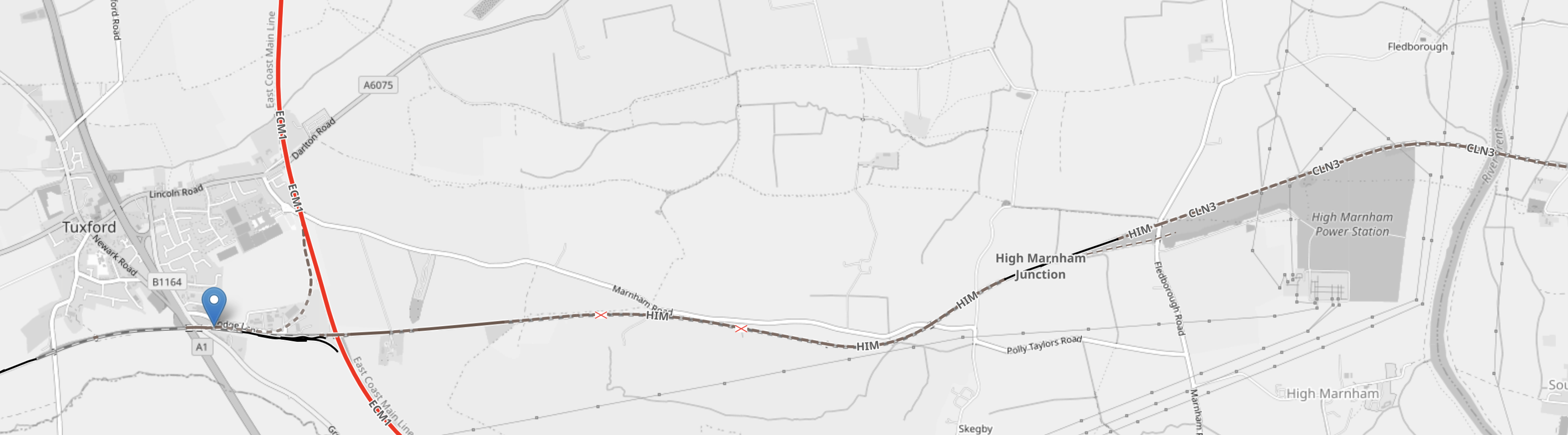
Note.
- The blue arrow is Tuxford West junction.
- The North-South red track is the East Coast Main Line. East-West track indicated by the blue arrow is Network Rail’s Test Track
- The grey area, to the South of the Test Track in the East is the former site of High Marnham power station, where GeoPura have their hydrogen facility.
- If you continue East on the Test Track it connects to the Sheffield and Lincoln Line at Pye Wipe junction.
Sheffield could be the sort of city, that would need a lot of hydrogen to decarbonise.
Has Hydrogen Been Transported From ICI’s Former Site At Runcorn By Rail
I ask this question, as I used to work at Runcorn in the 1960s, and I don’t remember seeing any hydrogen railway wagons.
I asked Google AI, the question in the title of this section and received this answer.
Hydrogen is typically transported from the INEOS (formerly ICI) site in Runcorn via pipeline or by road in cryogenic liquid tanker trucks or gaseous tube trailers, but it has not been historically transported by rail from that specific site.
The first ever trial shipment of hydrogen by rail on Britain’s network took place only very recently, in December 2025, as part of an industry innovation event. This trial involved transporting hydrogen containers from Doncaster to High Marnham, adjacent to the HyMarnham Power green hydrogen production facility.
It looks like my memory and Google AI agree.
Lower Thames Crossing Tunnelling ‘To Begin In 2028’
The title of this post, is the same as that of this article on the BBC.
This is the sub-heading.
The tunnelling process for the Lower Thames Crossing is due to begin in 2028.
These three paragraphs add more detail to the story.
National Highways said negotiations to buy one of the world’s largest tunnelling machines were now under way.
It would be capable of digging 60 metres below the Thames, creating a new road link between Essex and Kent, and now enables the project to secure private sector investment to deliver the remainder of the construction.
Next summer, work on the northern tunnel entrance where the tunnel machine will begin its journey will get under way.
Hopefully, it’ll all be complete by the early 2030s.
The Elephant In The Garden Of England
This section shows the proposed route of the Lower Thames Crossing.
It as an extract of a previous post called Elizabeth Line To Ebbsfleet Extension Could Cost £3.2 Billion.
It is proposed that the new Lower Thames Crossing is built to the East of Gravesend.
This map from the Department of Transport, shows the route.
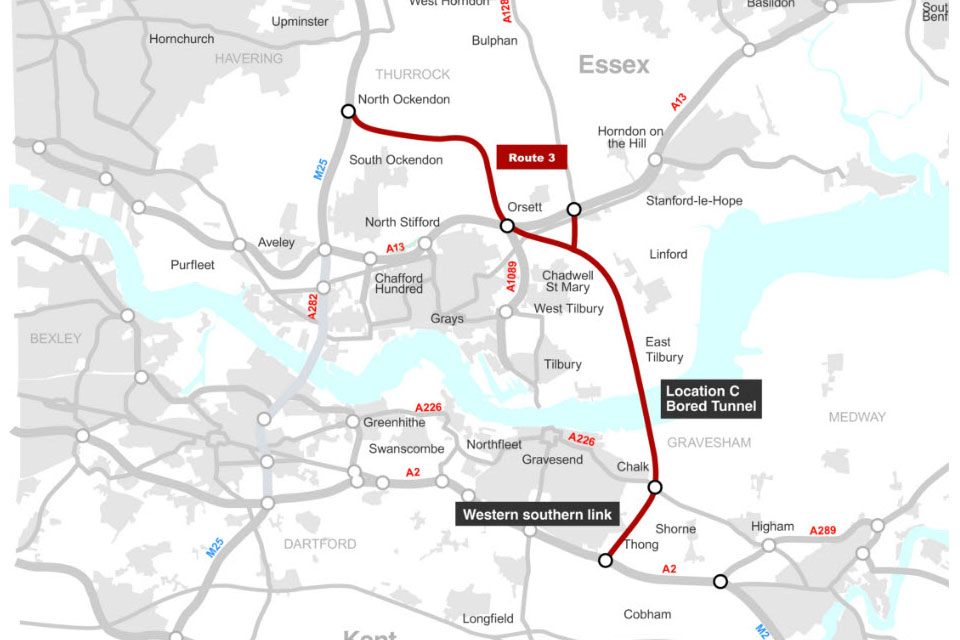
Note.
- The new crossing, which is shown in red, bypasses the Dartford Crossing on the M25.
- The A226 runs between Gravesend and Higham via a junction with the new crossing at Chalk.
- Northfleet is to the West of Gravesend.
This Google Map shows the area between Chalk and Higham.
WSMR Resubmits Formal Application To The ORR
The title of this post, is the same as that of this press release from Wrexham, Shropshire and Midlands Railway.
These three paragraphs give full details of the application.
Wrexham, Shropshire and Midlands Railway is committed to delivering the connectivity that communities across Wales and England need and deserve. Our resubmitted application reflects stakeholder feedback and demonstrates how we’ve listened to MPs and regional partners who urged us to reapply.
This application differs from our previous submission, which includes us requesting fewer train paths and offering an additional stop at Wellington, enhancing connectivity for people in Shropshire. Furthermore, by making better use of available capacity – including paths that have been released and remain unused – we aim to strengthen regional links and support economic growth.
WSMR’s new open access service will provide faster, more convenient travel options for passengers in Wrexham, Shrewsbury, Wellington, Telford, Walsall and beyond, improving access to jobs, education and leisure opportunities. We remain committed to introducing this service for the regions we serve and delivering benefits for communities along the route.
Note.
 The Anonymous Widower