Retired London Underground Train Travels Forty Miles Solely On Battery Power
This article on Railnews is a summary of today’s news and has a subtitle of Battery Train Sets British Record.
This is the first sentence.
A battery train from Vivarail has achieved a British first by travelling 64km on battery power alone, and the feat has been repeated many times during tests.
The train was a Vivarail Class 230 train, that is based on retired London Underground D78 Stock.
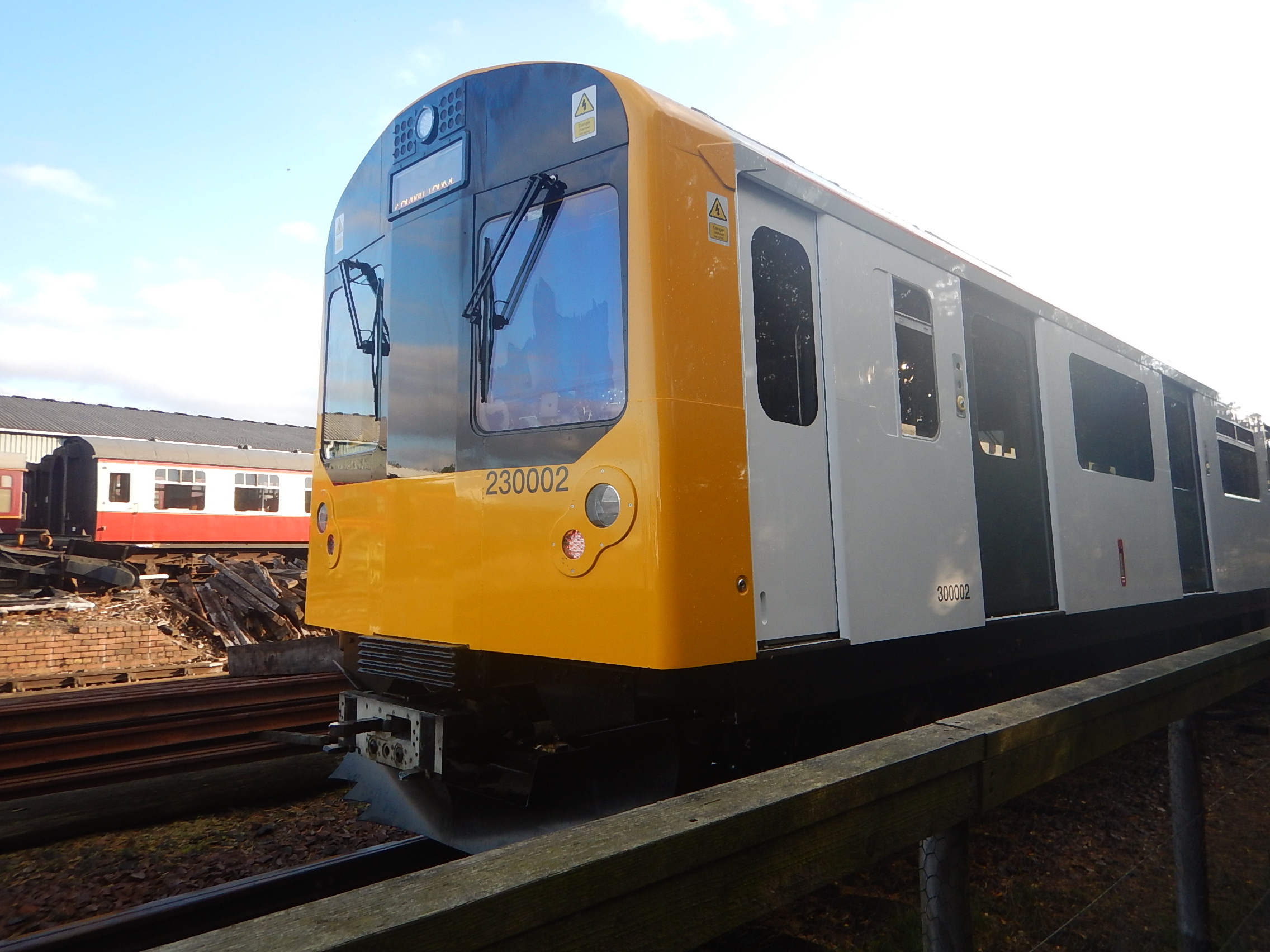
The picture shows the prototype battery train, when I rode it in 2018 at the Bo’ness And Kinneil Railway.
The article also says this.
Vivarail CEO Adrian Shooter is predicting that production versions of the battery trains will be able to run for almost 100km between charges, which will take just 10 minutes.
Battery trains appear to be going places.
Silent Hydrogen Trains On The Cards For New Line Linking Burton And Leicester
The title of this post is the same as that on this article on Derbyshire Live.
The idea of using hydrogen power came about after some people worried about the noise of trains, if the full route were to reopen.
The Proposed Route
The proposed route that would be reopened is the Leicester and Burton-on-Trent Line.
- The route is double-track.
- It is around forty miles long.
- It is still used by freight trains, so the track must be in serviceable condition.
- There are no stations.
Sadly, when the route was closed to passengers in 1964, British Rail simplified Knighton Junction at the Leicester end of the line. Wikipedia says this.
At the Leicester end of the line, Knighton North Junction has been dismantled and the former course of the line to the junction has been sold and turned into an industrial estate. The line’s remaining connection with the Midland Main Line is Knighton South Junction, which faces southwards, away from Leicester station. Trains between Leicester and the line therefore have to reverse direction at the junction.
This Google Map shows, what’s left of the junction.
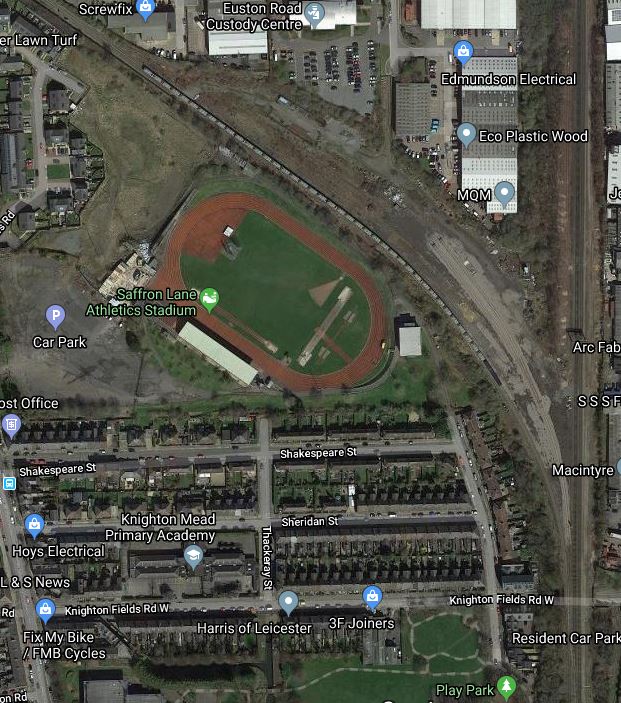
Note.
- Leicester is to the North
- Burton is to the North-West.
- Melton Mowbray and London are to the South.
It looks to me, that someone at British Rail made it absolutely certain, that the rail line could not be reopened to provide a passenger service between Leicester and Burton.
For a train to go between Leicester and Burton, it would either need to reverse as Wikipedia indicated, or the curve would have to be very tight.
There is only one class of passenger train, that can go round tight curves and that is a Class 399 tram-train!
So to enable trains to go direct around the corner, the option is either expensive disruptive demolition or use something like tram-train technology or a specially designed bendy train.
The Ivanhoe Line
The route was originally planned to be the second part of the Ivanhoe Line, but this was discontinued after rail privatisation.
Services on this line is an hourly service between Leicester and Lincoln Central stations.
- Intermediate stations are Syston, Sileby, Barrow-upon-Soar, Loughborough, East Midlands Parkway, Beeston, Nottingham, Newark Castle, Collingham, Swinderby and Hykeham.
- Services can get overcrowded, as the service is run by two-car trains.
- Platforms would need to be lengthened for longer trains.
Extending this service to Burton station would surely be good for connectivity at and through Leicester.
The Association Of Train Operating Companies Plan For The Line
This is taken from the Wikipedia entry for the line.
In 2009 the Association of Train Operating Companies published a £49 million proposal (Connecting Communities: Expanding Access to the Rail Network) to restore passenger services to the line that would include reopening stations at Kirby Muxloe, Bagworth and Ellistown, Coalville Town, Ashby de la Zouch, Moira, and Gresley (for Swadlincote). There is also some support in the Leicester area for the line to have new stations to serve Leicester City F.C.’s stadium and the suburb of Braunstone.
Wikipedia also says, it could be developed as a no-frills line.
Possible New Stations In Leicester
I have mentioned new stations in Leicester, so here’s a few more thoughts.
Leicester Reversal Station
A friend said that to reverse the trains between Leicester and Burton, a station has been proposed to be built, south of Knighton Junction.
This Google Map shows the junction and the line to the South.
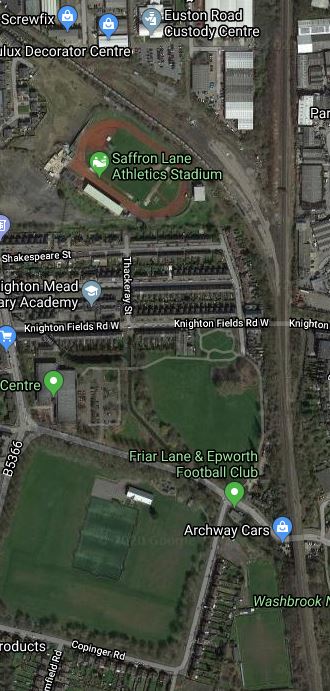
Only a single-platform station would be needed and it would be a simple and affordable solution to British Rail’s lack of vision of the future.
Leicester City Stadium
This Google Map shows the stadium.
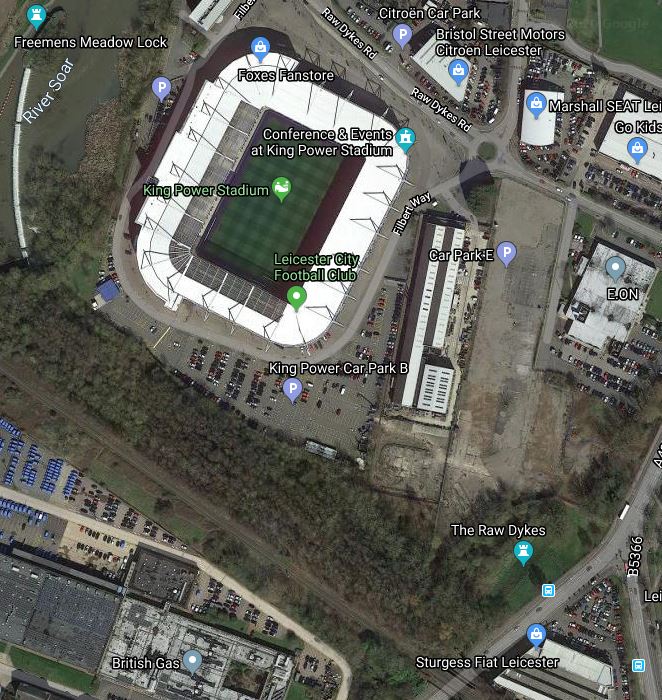
Note the rail line passing to the South of the station.
It would appear that building a new station would not be the most difficult of projects.
But after the experience of Coventry City, who were relegated twice after Coventry Arena station opened, would eicester City want a station?
Braunstone Station
This Google Map shows the rail line running through Braunstone.
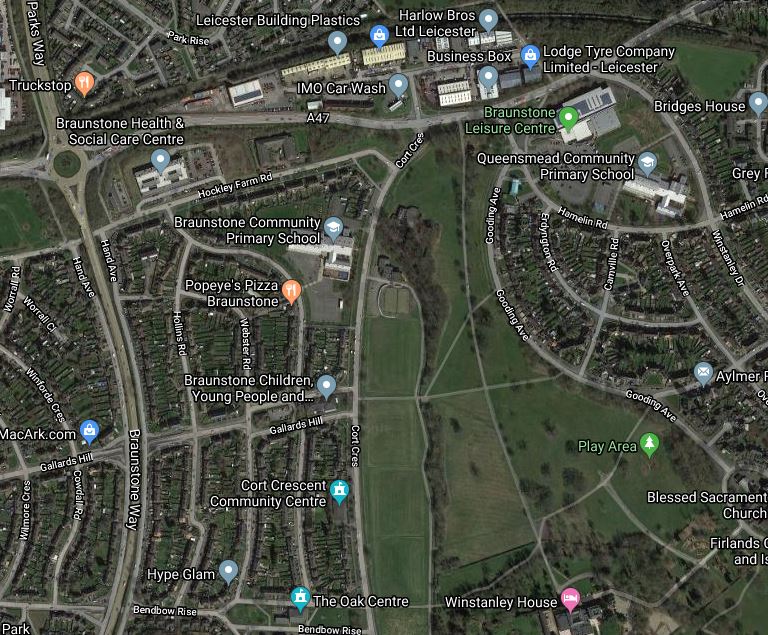
The rail line is at the top of the map.
Leicester Forest East Station
I wrote about this possible station in A Station At Leicester Forest East.
Burton Station
Intriguingly, Burton station is run by East Midlands Railway, who run no services to the town.
Services are provided by CrossCountry using a variety of long distance services.
The South Staffordshire Line connects Burton and Birmingham.
Part of this line is being converted to become an extension of the West Midlands Metro and Staffordshire County Council have looked at converting the whole route to tram-train operation to bring trams to Burton to promote tourism.
Hydrogen Power
I estimate that the distance between Lincoln and Burton is about a hundred miles.
Alstom are predicting a range of several hundred miles for their hydrogen trains for their Breeze train, which should mean a round trip to Lincoln from Burton will surely be in range.
Refuelling could be at a suitable place on the route.
In Delivering Hydrogen For Vehicles, I talk about how iTM Power are building hydrogen refuelling stations for road vehicles.
As the company is already building stand-alone hydrogen fuelling stations for fleets of buses in Birmingham and Pau, I’m sure that one for a fleet of trains is not a problem.
All their filling stations need is a small amount of space, a supply of tap water and a connection to the electricity grid.
It should be noted that Central Rivers Depot is four miles South of Burton.
Possibilities
There are a lot of possibilities to extend the Ivanhoe Line to Burton and even beyond using the South Staffordshire Line.
- Battery or hydrogen trains can be used.
- Stations can be added as required.
- The route will connect to Eat Midlands Airport.
- A solution for Knighton Junction can surely be devised.
Amazon are reported to be interested in the project, as they have a big depot at Coalville.
No News On Hydrogen Trains For The Midland Main Line
In April 2019, I wrote Hydrogen Trains To Be Trialled On The Midland Main Line, which was based on an article on Railway Gazette that is entitled Bimode And Hydrogen Trains As Abellio Wins Next East Midlands Franchise.
I said this in my post.
Abellio will be taking over the franchise in August this year and although bi-mode trains were certain to be introduced in a couple of years, the trialling of hydrogen-powered trains is a surprise to me and possibly others.
This is all that is said in the article.
Abellio will also trial hydrogen fuel cell trains on the Midland Main Line.
It also says, that the new fleet will not be announced until the orders are finalised.
Nothing has been heard since about the hydrogen train trial for the Midland Main Line.
But there have been several related developments, that might have implications for the trial.
East Midlands Railway Has Ordered Hitachi Class 810 Trains For EMR InterCity Services
Class 810 trains are Hitachi’s latest offering, that are tailored for the Midland Main Line.
The trains will have a few differences to the current Class 800,/801/802 trains.
But will they be suitable for conversion to hydrogen power?
Consider.
- The Hitachi trains have a comprehensivecomputer system, that looks at the train and sees what power sources are available and controls the train accordingly.
- Trains have already been ordered in five, seven and nine-car lengths. I have read up to twelve-car trains are possible in normal operation. See Do Class 800/801/802 Trains Use Batteries For Regenerative Braking?
- Hydrogen train designs, with a useful range of several hundred miles between refuelling, seem to need a hydrogen tank, that takes up at least half of a twenty metre long carriage.
- The Hitachi train design has pantographs on the driver cars and can support diesel generator units in the intermediate cars, as it does in current trains.
- The Japanese are researching hydrogen trains.
- The five-car Class 802 trains have 2,100 kW of installed generator power.
I think that Hitachi’s engineers can build another carriage, with the following characteristics.
- It could be based on a Motor Standard car.
- The passenger seats and interior would be removed or redesigned in a shorter space.
- Powered bogies would be as required.
- It would contain a hydrogen tank to give sufficient range.
- Appropriately-sized batteries and fuel-cells would be inside or under the vehicle.
- Regenerative braking would help to recharge the batteries.
- There would probably be no diesel generator unit.
There would need to be a walkway through the car. Stadler have shown this works in the Class 755 train.
A Hydrogen Power car like this would convert a five-car bi-mode diesel-electric train into a six-car hydrogen-electric hybrid train. Or they might just replace one Motor Standard car with the Hydrogen Power Car to create a five-car hydrogen-electric hybrid train, if the longer train would cause problems in the short platforms at St. Pancras.
- The computer system would need to recognise the Hydrogen Power Car and control it accordingly. It would probably be very Plug-and-Play.
- The weight of the train could probably be reduced by removing all diesel generator units.
- The passenger experience would be better without diesel power.
- The range away from the wires would probably be several hundred miles.
The drivers and other staff would probably not need massive retraining.
What Do I Mean By Appropriately-Sized Batteries And Fuel Cells?
I can’t be sure,, but I suspect the following rules and estimates hold.
- The batteries must be large enough to more than hold the kinetic energy of a full five-car train, running at the full speed of 140 mph.
- I estimate that the kinetic energy of the train,will be around 200 kWh, so with a contingency, perhaps battery capacity of between 400-500 kWh would be needed.
- Currently, a 500 kWh battery would weigh five tonnes, which is of a similar weight to one of the diesel generator units, that are no longer needed.
- In How Much Power Is Needed To Run A Train At 125 mph?, I estimated that the all-electric Class 801 train, needs 3.42 kWh per vehicle mile to maintain 125 mph. This means that travelling at 125 mph for an hour would consume around 2,000 kWh or an output of 2,000 kW from the fuel cell for the hour.
- Note that 1 kg of hydrogen contains 33.33 kWh of usable energy, so the hydrogen to power the train for an hour at 125 mph, will weigh around sixty kilograms.
From my past experience in doing chemical reaction calculations in pressure vessels, I think it makes the concept feasible. After all, it’s not that different to Alstom’s Breeze.
I would assume, that the train manufacturers can do a full calculation, to a much more accurate level.
Applying The Concept To Other Hitachi Trains
Once proven, the concept could be applied to a large number of Hitachi bi-mode trains. I suspect too, that it could be applied to all other Hitachi A-train designs, that are in service or on order, all over the world.
In the UK, this includes Class 385, Class 395 and Class 80x trains.
Bombardier Have Said That They’re Not Interested In Hydrogen Power
But Electrostars and Aventras have the same Plug-and-Play characteristic as the Hitachi train.
I wouldn’t be surprised to find that Bombardier have a Hydrogen Power Car design for an Aventra. All that it needs is an order.
They could also probably convert a five-car Class 377 train to effectively a four-car train, with a Hydrogen Power Car in the middle. This would be ideal for the Uckfield Branch and the Marshlink Lines. I suspect it could be done to meet the timescale imposed by the transfer of the Class 171 trains to East Midlands Railway.
There must be an optimal point, where converting an electric multiple unit, is more affordable to convert to hydrogen, than to add just batteries.
But then everybody has been dithering about the Uckfield and Marshlink trains, since I started this blog!
Stadler Have Shown That a Gangway Through A Power Car Is Acceptable To Passengers In The UK
Stadler’s Class 755 trains seem to be operating without any complaints about the gangway between the two halves of the train.
Stadler Have Two Orders For Hydrogen-Powered Trains
These posts describe them.
- Zillertalbahn Orders Stadler Hydrogen-Powered Trains
- MSU Research Leads To North America’s First Commercial Hydrogen-Powered Train
Stadler also have a substantial order for a fleet of battery Flirt Akku in Schleswig Holstein and they are heavily involved in providing the rolling stock for Merseyrail and the South Wales Metro, where battery-powered trains are part of the solution.
It looks to me, that Stadler have got the technology to satisfy the battery and hydrogen train market.
The Driver’s View Of Stadler
It’s happened to me twice now; in the Netherlands and in the UK.
- Both drivers have talked about hydrogen and Stadler’s trains with the engine in the middle.
- They like the concept of the engine.
- The English driver couldn’t wait to get his hands on the train, when he finished his conversion.
- Both brought up the subject of hydrogen first, which made me think, that Stadler are telling drivers about it.
Or does driving a hydrogen-powered vehicle as your day job, score Greta points in the pub or club after work?
Could The Hydrogen Train On The Midland Main Line Be A Stadler?
Greater Anglia and East Midlands Railway are both controlled by Abellio or Dutch Railways.
In The Dutch Plan For Hydrogen, I laid out what the Dutch are doing to create a hydrogen-based economy in the North of the country.
Stadler are going to provide hydrogen-powered for the plan.
In addition.
- Greater Anglia have bought a lot of Class 755 trains.
- A lot of Lincolnshire and Norfolk is similar to the North of the Netherlands; flat and windy.
- One of these trains with a hydrogen PowerPack, could be an ideal train for demonstrating hydrogen on rural routes like Peterborough and Doncaster via Lincoln.
But the promise was on the Midland Main Line?
Conclusion
Hydrogen trains seem to be taking off!
Even if there’s been no news about the trial on the Midland Main Line.
Gore Street Contracts NEC For 100 MW Of Storage
The title of this post is the same as that of this article on the Solar Power Portal.
This is the introductory paragraph.
Gore Street Energy Storage Fund has awarded NEC Energy Solutions both EPC and long-term O&M contracts for 100MW of storage in Northern Ireland.
What I find most comforting, is the matter-of-fact tone of the article.
Although, the author does seem to think that MW and MWh are the same, when in fact MW is used to define the rate of energy used or transferred and MWh the quantity.
If you use one MW for an hour, that is one MWh.
Gore Street appear to have needed two 50 MW energy storage systems for Drumkee and Mullavilly in Northern Ireland to back up a solar farm investment.
And they appear to have just ordered them off the shelf from NEC, in much the way, an individual might buy a Tesla Powerwall for their house.
According to this article on OVO Energy, the average European house uses 3,600 kWh per year.As there are 8760 hours in a year, the average consumption for a year is 0.4 kW per hour.
So if we assume that these two energy storage systems can deliver 50 MW for an hour, the following can be said.
- The total capacity of each system is 50 MWh.
- Each system can supply 125,000 houses for an hour or 25,000 houses for five hours.
- As each housing unit has an average occupancy of 2.66 people, this means that a 50 MWh battery could supply a town of 66,500 people, for five hours.
Note that Lowestoft in Suffolk has a population of 71,000.
These batteries are not small.
My First Ride In A Class 745 Train
I took these pictures as I took a ride in a new Class 745 train between Liverpool Street and Colchester.

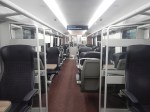

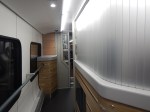
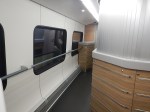


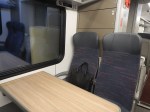
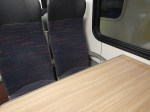
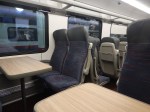
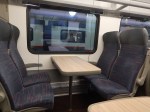
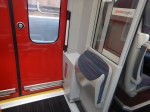
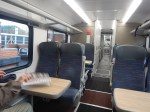
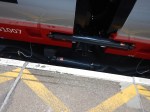
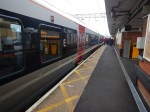
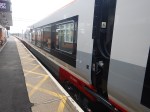
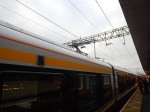
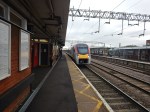
These are my thoughts on various subjects.
Seating
I found no problem with the seats in Second Class, although there have been reports, that they are harder than those of the Mark 3 coaches.
I came back from Colchester in one of British Rail’s finest products and prefer the new train.
Note that in both cases I had a seat with a proper table, so I was comparing like with like.
In the Class 745 train, I was sitting in one of the higher seats over a bogie and I like this position with its better view, which I have also used in the smaller bi-mode Class 755 trains, that are used for local services in Norfolk and Suffolk.
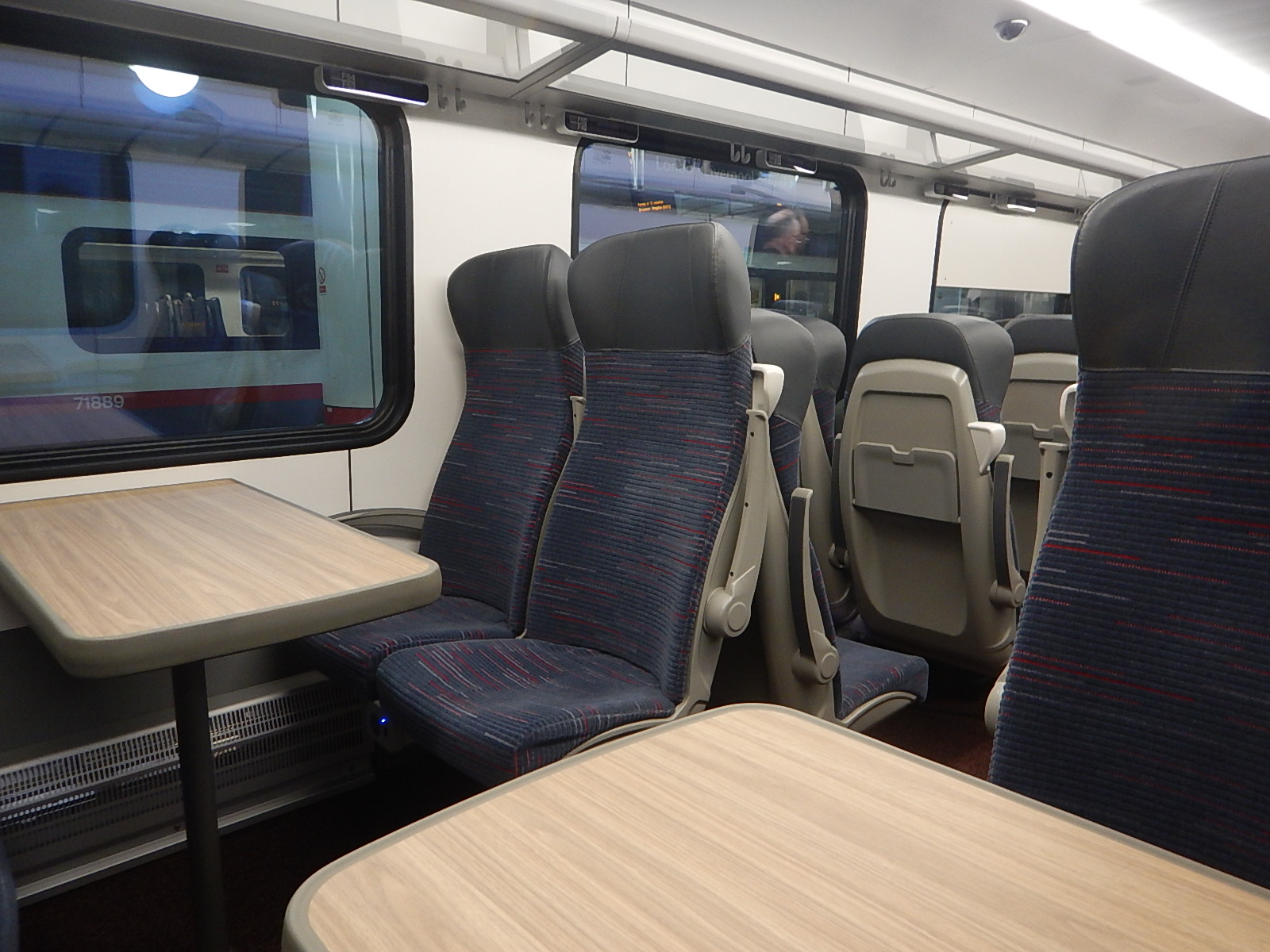
These higher seats, which are in groups of four are a good design solution to maintaining the level floor in the train over the bogies and with their large windows, I feel they would be ideal for families.
You are also slightly isolated from the rest of the train, so could be ideal for a group of people wanting to have a slightly confidential meeting on the train.
Do you get some of the advantages of a compartment, without any of the inconvenience for train operators and passengers?
This article on Rail Magazine is entitled First Pictures: Greater Anglia Reveals Interior Of New Intercity Fleet.
This paragraph describes the seating.
The ‘745/0s’ feature 752 seats (672 in Standard Class and 80 in First Class) compared to the 614 on existing nine-car sets (528 in Standard and 86 in First Class), while they retain the 2+2 seating in Standard Class and 2+1 in First Class. There is space for 245 standing passengers.
Greater Anglia claims there is the maximum padding allowed under stricter fire regulations.
First Class Seats
First Class looks spacious and the seat was better, as I stole a quick try, as I walked through.
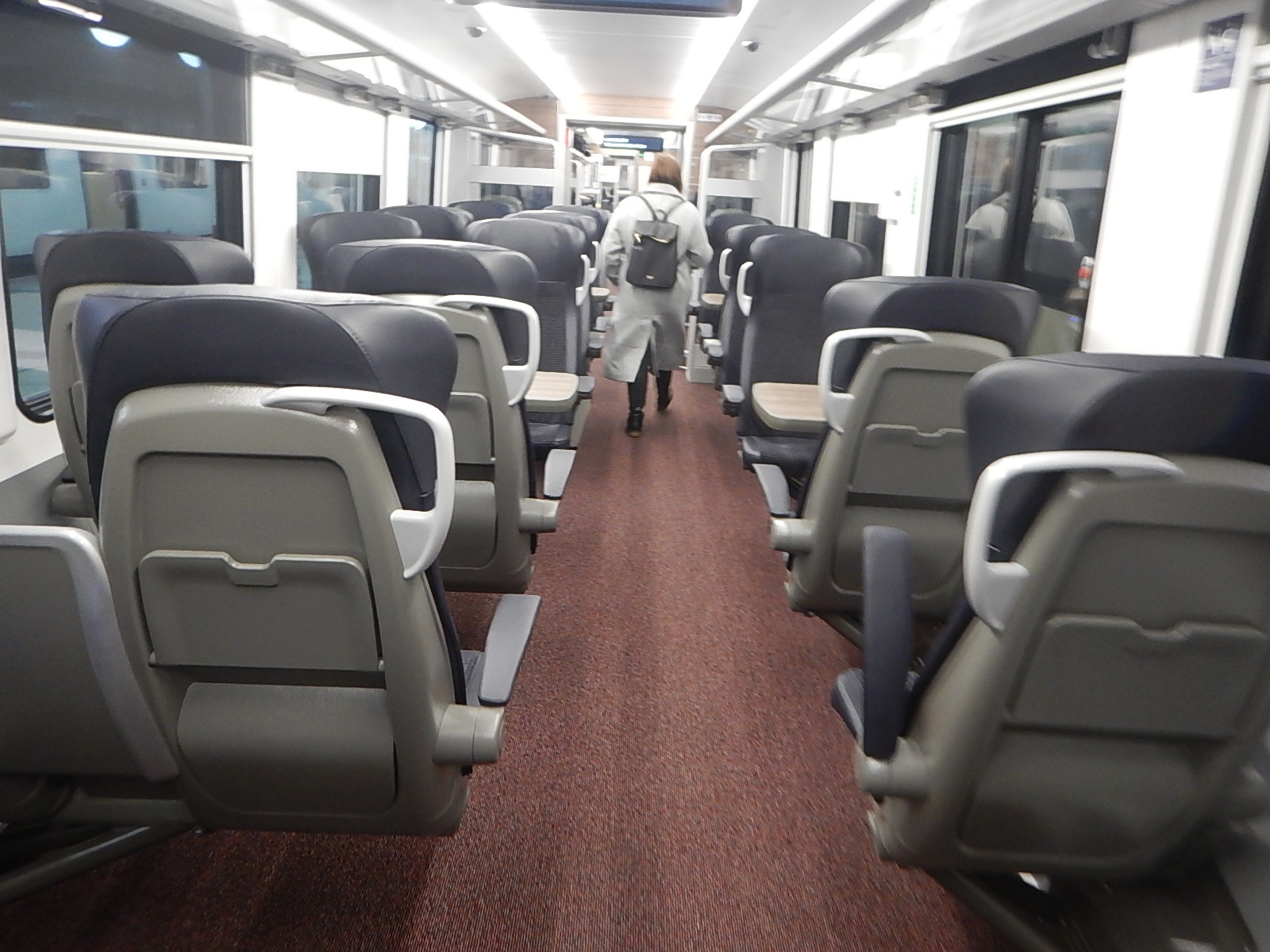
If Greater Anglia continue Weekend First, I shall pay the extra if Ipswich lose on the way home.
Tables
In First Class all seats have proper tables and in Standard Class, there are more proper tables than in the Mark 3 coaches.
I didn’t check, but it appears most airline seats in Standard Class have a seat back table. As the Mark 3 coaches are well-provided with seat back tables, there would be protests, if the new trains aren’t the same.
I actually counted the number of four-place tables in Standard class and found their were forty-three pairs of tables on either side of the aisle.
As each table has four seats, this means that 344 seats in Standard Class have a full size table.
This means that just over half of Standard Class seats have a full size table.
In the old Mark 3 rakes of coaches, there are five Standard Class coaches, which each have seventy-four seats, which gives a total of 370 seats.
I feel that at most times of the day, nearly all Standard Class passengers will get a seat with a full-size table.
Greater Anglia seem to be giving passengers on their premium service a lot more space.
The Buffet
I only passed through the buffet, when the train was in Liverpool Street station and it was closed.
So I didn’t get to see the food and drink offering.
The buffet is placed between First and Standard Class, which is where it should be.
Walk-Through Train
The Class 745 train is the UK’s first walk-through express train, with a nearly level floor from end to end.

You can even walk through the equipment sections in the middle of the train, where the two halves join.
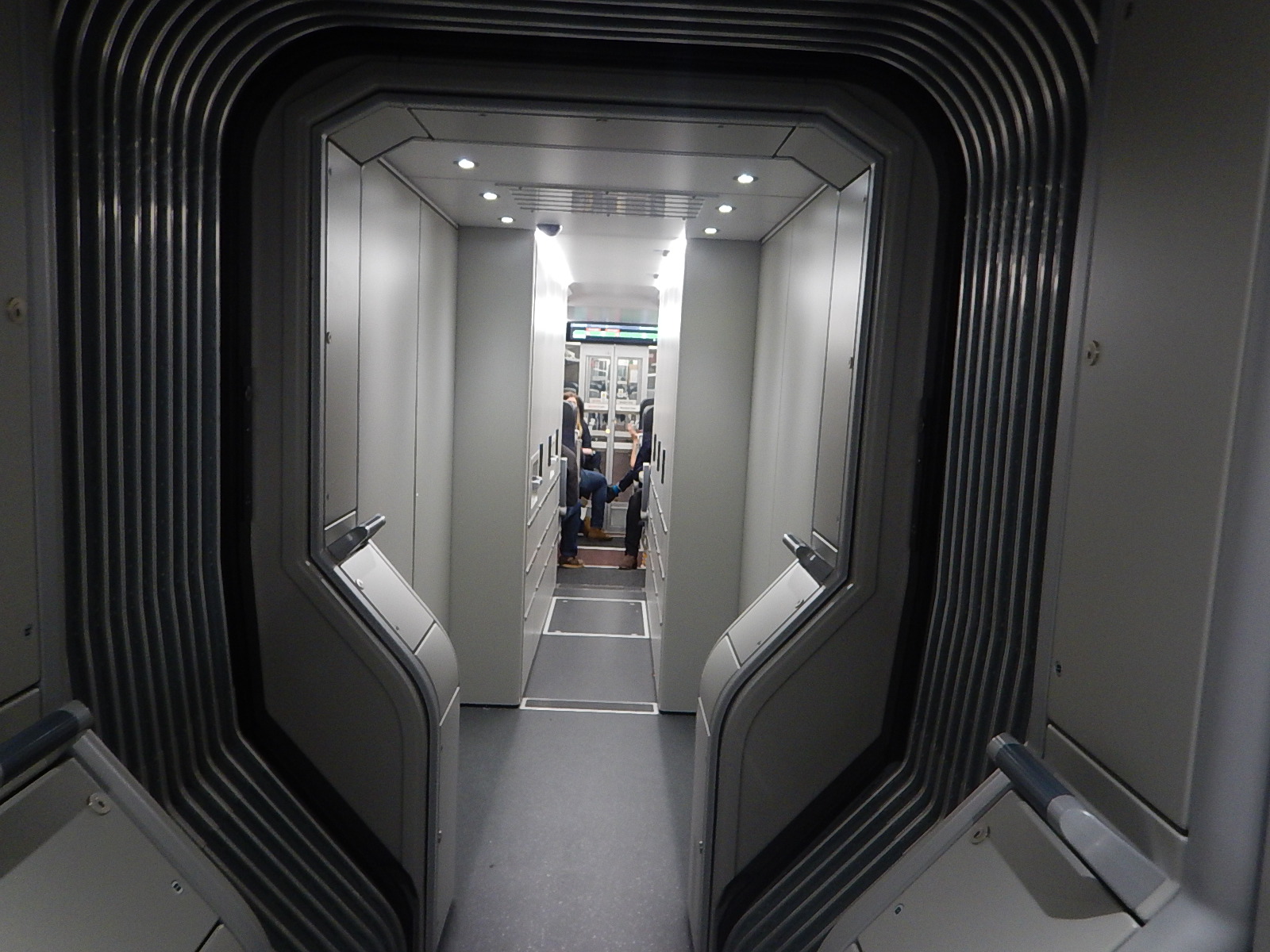
At very nearly 237 metres long, it is over thirty metres longer than Crossrail’s Class 345 trains, so the Class 745 trains must be the UK’s longest walk-through trains.
Note that a twelve-car Class 321 train is just over 239 metres long, with a twelve-car Class 360 train at 244 metres.
But these trains are not walk-through.
Catering Trolley
One benefit of the level walk-through floor, is that it must be easier for staff to push the catering trolley through the train.
As, it came through on both trips, it looks like Greater Anglia are doing the right thing with catering in both First and Standard Class.
However, I did meet a steward, who wasn’t looking forward to pushing a trolley all that way!
Ride Quality
I had no complaints, although not everyone likes sitting on top of the bogie, as it can be choppy.
It should be noted that like the bi-modes, the train has yaw dampers between carriages.
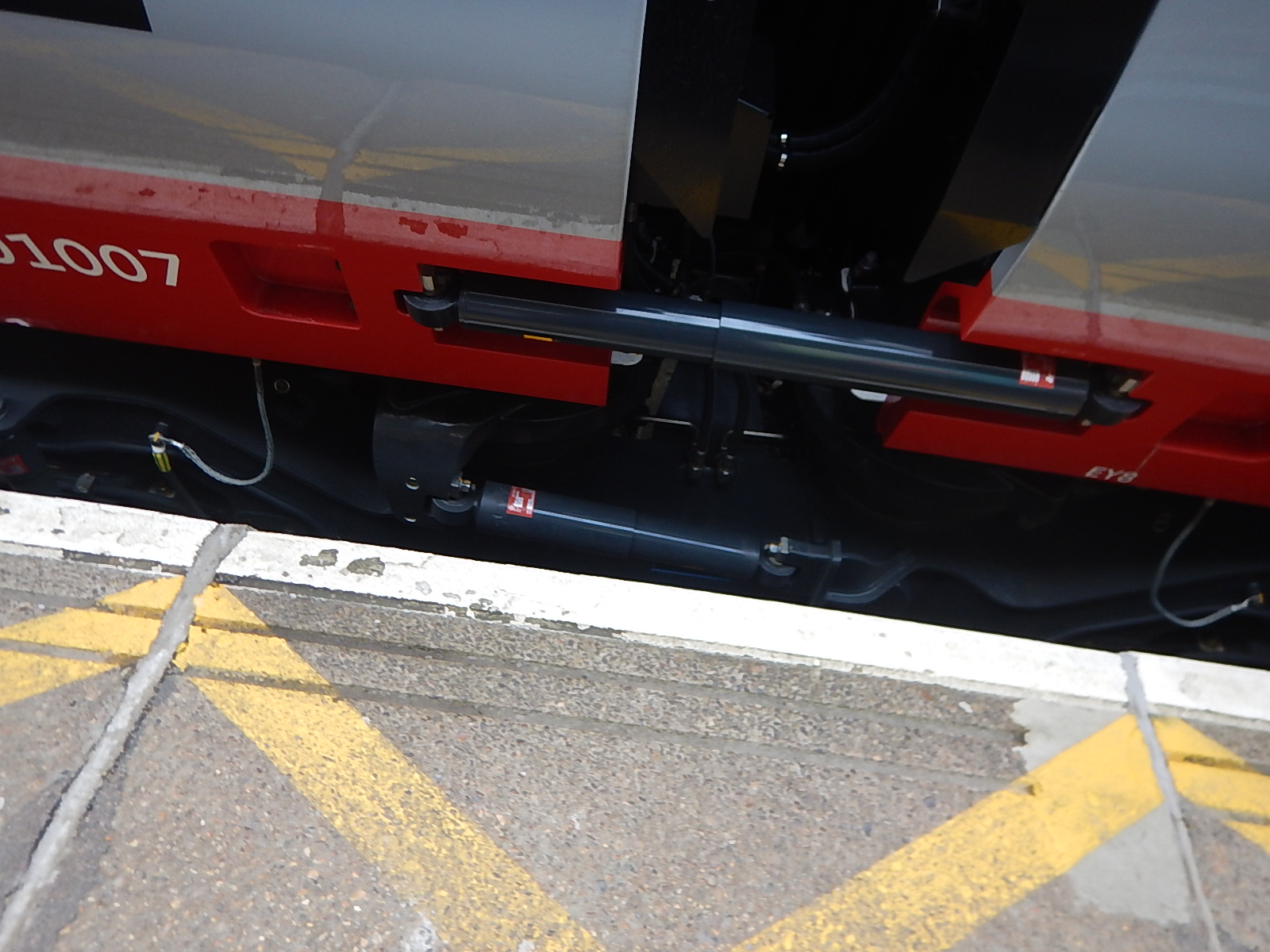
Note the second one lower down! That is not engineering by accountants!
Does these improve the ride? I didn’t ask Greater Anglia to take them off and have another trip!
Step-Free Access
One of my gripes with many trains is the large step to get in or out of the train.
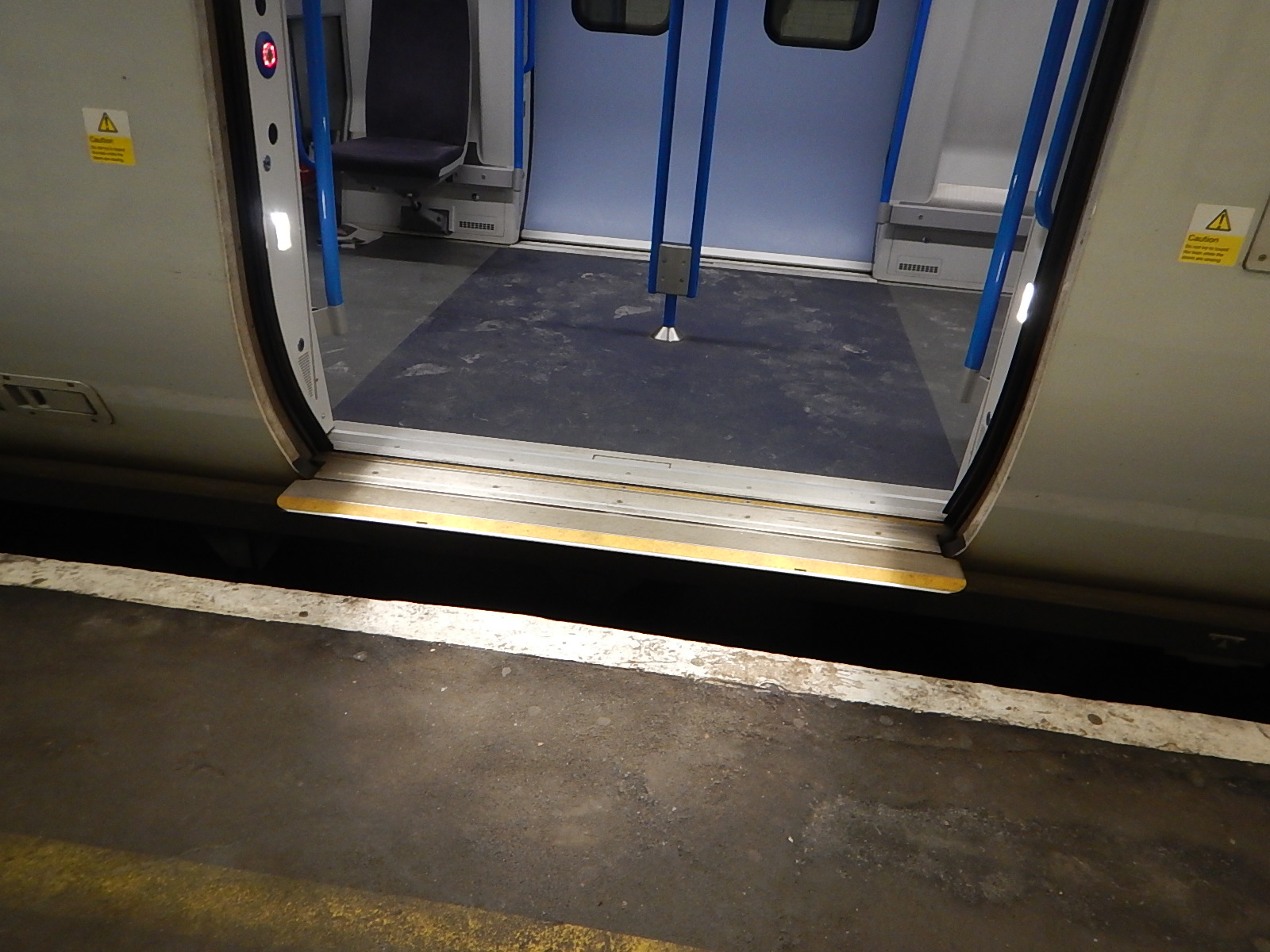
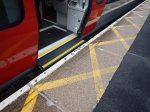
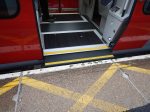
Compare this picture, which shows a Class 717 train at Moorgate station, with this second picture of the step on a Class 745 train at Colchester.
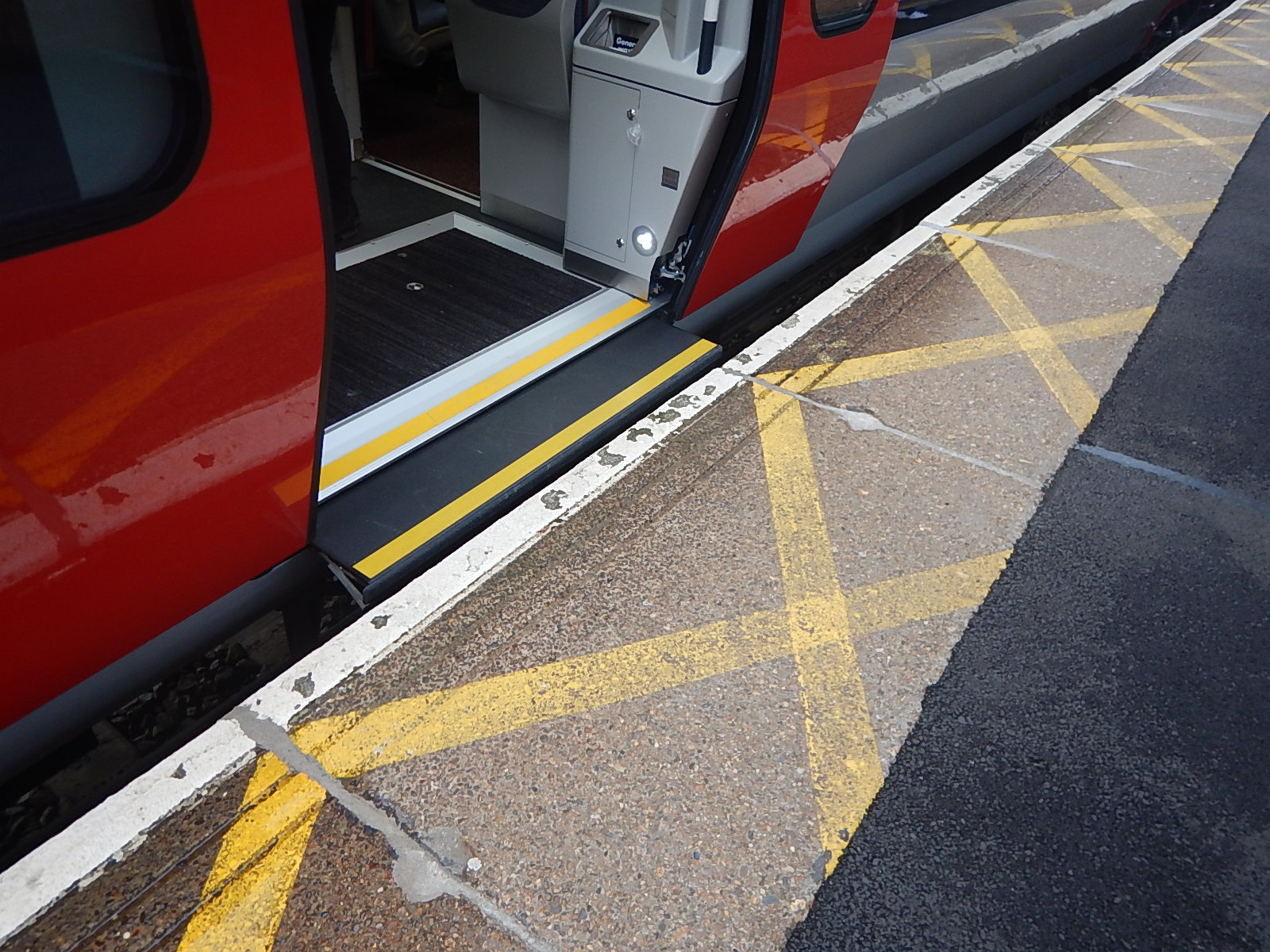
Note too, the wide-double door, which is much more like that of a high-capacity commuter train, than an express designed for two-hour journeys.
I appreciate these touches, as I could have been in a wheel-chair after my stroke.
But the Devil thought I’d be a troublemaker, so she gave me a second chance and threw me back!
A Driver’s View
Sitting opposite was a Greater Anglia driver having his first trip on a Class 745 train.
He was training to change from Class 321 trains to the bi-mode Class 755 trains and seemed genuinely enthusiastic to get driving his new charges.
But he said the best feature of both fleets of new trains from a driver’s point of view in the acceleration and he showed me an impressive video, which compared the acceleration of the old and new trains.
This acceleration will save a few minutes,
He was also very interested in hydrogen power, so I told him about my adventures in the North of the Netherlands.
Performance
When Norwich-in-Ninety services started in May 2019, I wrote Norwich-In-Ninety Is A Lot More Than Passengers Think!.
I described a ride from Norwich to London in ninety minutes in the Mark 3 coaches hauled by a Class 90 locomotive, where for much of the route, we were cruising at the route’s maximum speed of 100 mph.
Today, the Class 745 train was at 100 mph for long periods and appeared to be running easily.
But then a Class 745 train, has a power output of 5,200 kW compared with the 3,730 kW of a Class 90 locomotive. The new train may have twenty-three percent more seats, but it also has nearly forty percent more power.
This is certainly one reason for the acceleration, shown in the driver’s video.
Various fast trains can be compared.
- Pendelino Class 390/0 – 125 mph – 9 cars – 469 seats – 5,100 kW
- Pendelino Class 390/1 – 125 mph – 11 cars – 589 seats – 5,950 kW
- Class 745 – 100 mph – 12 cars – 747 seats – 5,200 kW
- Class 755 – 100 mph – 4 cars – 229 seats – 2,600 kW
- Class 801 – 125 mph – 9 cars – 611 seats – 4,000 kW
- InterCity 125 – 125 mph – 8 cars – 514 seats – 3,400 kW
- InterCity 225 – 125 mph – 9 cars – 535 seats – 4,700 kW
Note.
- Except for their 100 mph, the Class 745 fit well into the table.
- They have more seats than any other trains in the table.
- They have more power than a Class 801, an InterCity 225 and the short Pendelinos.
- The bi-mode Class 755 trains are no wimps either.
Both the Class 745 and Class 755 trains really are high-powered Swiss rockets.
Could they go faster?
There are 120 mph Flirts running in Norway, but the maximum speed on the Great Eastern Main Line is only 100 mph, so they couldn’t run any faster there.
But a senior Greater Anglia driver told me, that the bi-mode Class 755 trains have been designed for 125 mph.
As an engineer, this is not unexpected, as Europe has a plethora of rail lines with a 200 kph or 125 mph operating speed, that have branches that extend to sizeable towns and cities that need an improved rail service.
In the UK, think of LNER’s recently introduced services to Lincoln and Harrogate, where there is a 125 mph electric dash on the East Coast Main Line and a diesel trundle to the destination.
As the two classes of Greater Anglia trains and the Norwegian Flirts seem to use the same running gear, is there lucking in that body a cheetah wanting to be unleashed.
If so, the Hitachi trains have a serious rival!
But could the Class 745 trains go faster on the Great Eastern Main Line?
For periods yesterday, the Speedview app on my phone, was showing a steady 100 mph. But the route to Colchester is crowded with 100 mph commuter trains, which probably preclude faster running.
But get North of Ipswich and in a few months, the only non-Flirt traffic, will be the freight trains to and from Felixstowe, which use the Great Eastern Main Line on the fifteen miles between Ipswich and Haughley Junction.
The Northern section of the Great Eastern Main Line has two major bottlenecks.
- Haughley Junction, which needs remodelling to handle the large numbers of freight trains.
- Trowse swing bridge and its single track, which needs replacing with a proper bridge and a double track.
Both projects are under development by Network Rail.
However, between the two bottlenecks, the track was built for Victorian high speed. and is reasonably straight across flat country, with one station and a few level crossings.
Currently, the Norwich-in-Ninety trains can achieve the following.
- Norwich and Haughley Junction, which is 32 miles, in around 26 minutes at an average speed of 73 mph.
- Norwich and Ipswich station, which is 46 miles, in around 35 minutes at an average speed of 79 mph.
Note there is a stop at Diss, where the Class 745 trains might save a few seconds because of their level access and fast acceleration.
Whilst the two major projects at Trowse and Haughley Junction are carried out, will Network Rail improve the track between Ipswich and Norwich to allow faster running.
Being able to average 100 mph between Norwich and Ipswich would knock several minutes off the journey time.
Conclusion
Hitachi have a serious competitor.
Trump And Flight PS572
What puzzles me about all this is Trump’s reaction.
If he were true to his past persona, he would be very much angrier and vowing vengeance, but his reaction seems almost calm and very measured.
Perhaps, he knows for certain, that it was a tragic accident, that happened to Flight PS572. After all the UK, US, Canada and Ukraine seem to be saying similar things.
Someone or something, seems to have got Trump to see sense!
Melania, Justin, Boris, Emmanuel, Dominic or Angela? Or was it the Italian guy, who does his hair?
London Overground Ticket Office Closures As 2% Of Tickets Are Bought Through Them
The title of this post, is the same as that of this article in Rail Advent magazine.
This is the introductory paragraph.
Transport for London has announced that the hours at some London Overground ticket offices will start to change over the next few weeks to match the times customers use them.
That sounds fine by me, as any company or organisation, should make best uses of resources.
It should be born in mind, that London Overground’s policy is to always have staff visible, when the trains are running.
Greater Anglia Launches New Intercity Trains On Norwich-London Route
The title of this post, is the same as that of this article on Rail Magazine.
The first Class 745 train to enter service left Norwich this morning at 0740 and arrived in Liverpool Street on time at 0924.
There is a more informative article in the East Anglia Daily Times, which is entitled East Anglia’s New Intercity Train Carries Its First Passengers.
Points include.
- There is a cafe bar and First Class accommodation.
- I’ve read elsewhere, there will be a trolley service.
- All ten trains are expected to be in service by the end of March.
- They will be introduced at a rate of one train per week.
- Introduction will enable services run by older trains to be run by eight or nine carriages.
- There are wide passages between carriages.
- Seats are firmer than the older carriages.
- Passengers liked the headrests.
- Wi-fi is getting good reports.
- Lots of charging points.
- Step-free access is very good.
- On-board toilets are fine.
- One passenger said there were more tables.
- Another passenger thought the new trains better than the old ones.
Inevitably these new trains will be compared with Hitachi’s Class 802 trains and other members of the family.
Operating Speed
These Stadler trains and the bi-mode Class 755 trains are only 100 mph trains, as that is the maximum speed anywhere in East Anglia.
But a driver told me, that both trains are designed for 125 mph and as some of their European siblings, run at that speed in service, I have no reason to disbelieve him.
On the other hand, the Hitachi trains are capable of 125 mph or 140 mph, where in-cab digital signalling is installed.
Train Length
The lengths of the two trains are as follows.
- A nine-car Class 802 train is 234 metres long.
- A twelve-car Class 745 train is 236.6 metres long.
The difference won’t matter much, whre it concerns, the stations, that the trains can serve.
Passenger Entry
Doors are different on the two trains.
- A nine-car Class 802 train has two single doors on each side of the car or 18 single doors per train on each side.
- A twelve-car Class 745 train a pair of double doors on each side of the car or 24 doors per train on each side.
Train-And-Platform Step
This picture shows the step across in a Class 802 train.
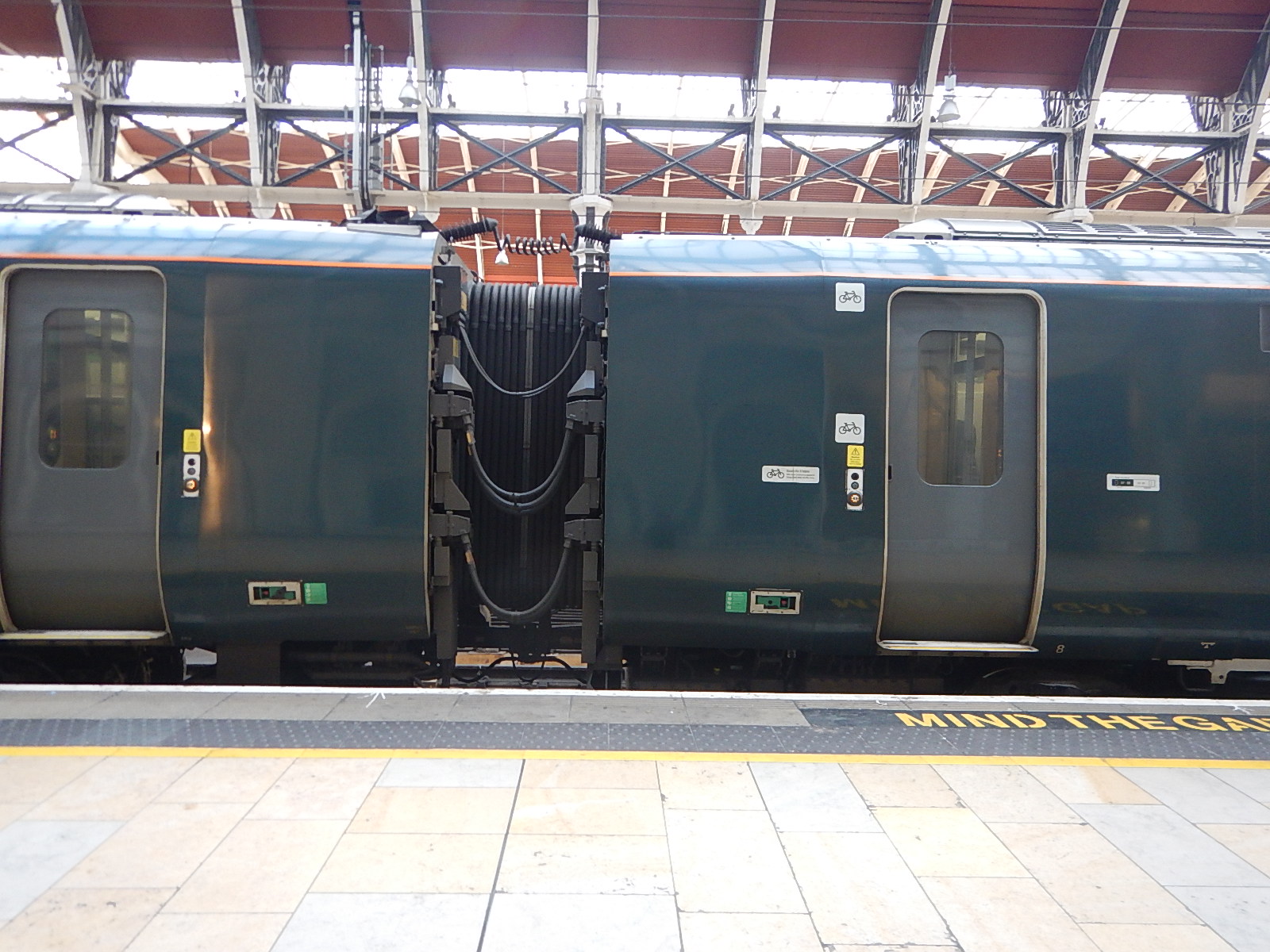
And this picture shows the step across in a Stadler Class 745 train.
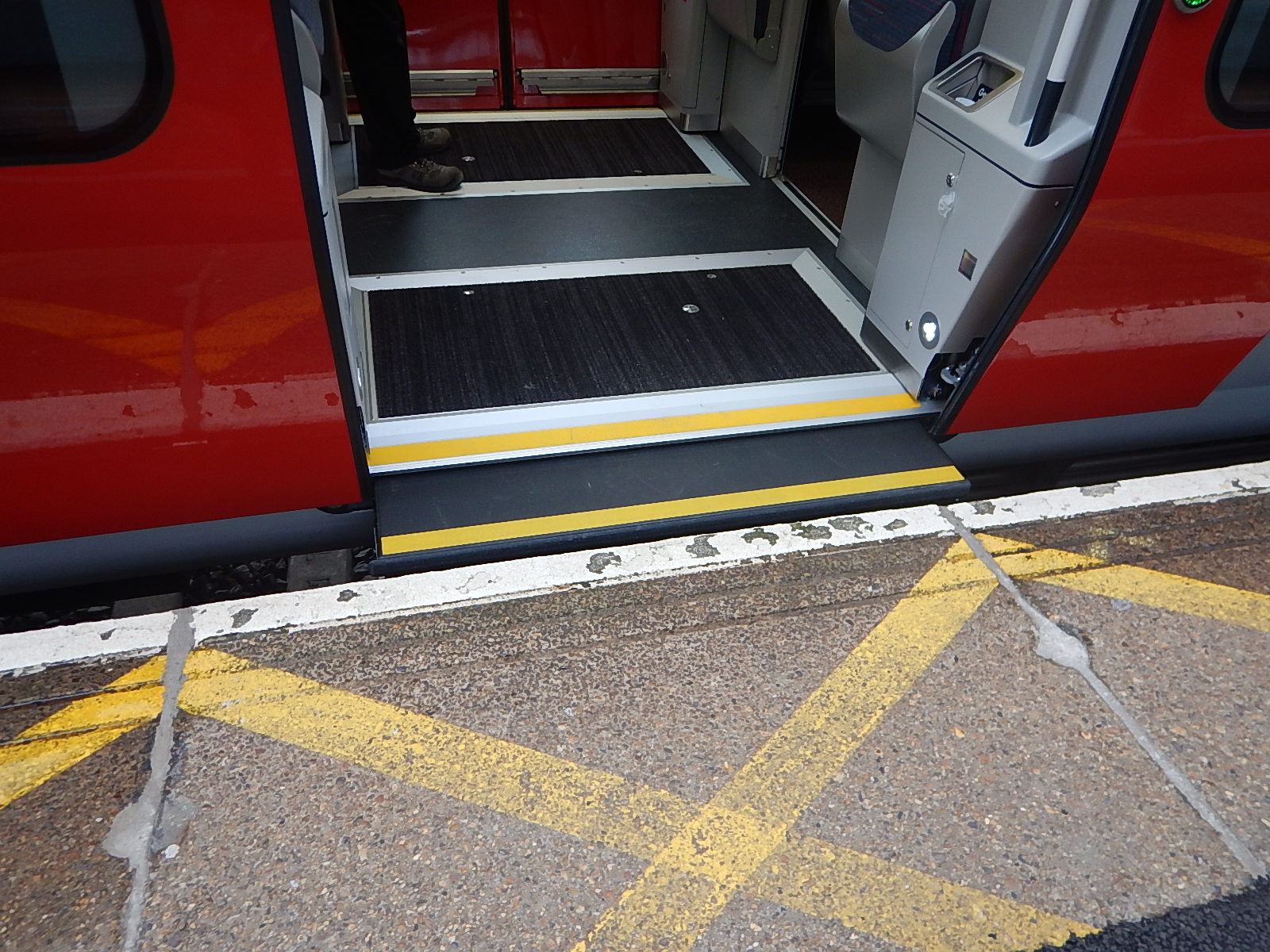
All trains should have an entry like this at all platforms.
Passenger Capacity
- A nine-car Class 802 train holds 576 standard, 71 First or 647 total passengers.
- A twelve-car Class 745 train holds 757 total passengers, including some First Class.
The Greater Anglia train holds seventeen percent more passengers in a train of the same overall length.
Do passengers sit in each other’s laps?
No! I suspect it’s all down to good design.
Exit From A Full Train
Many InterCity trains arrive at their destination full and passengers are in a hurry to get on with their journey.
- A full nine-car Class 802 train has 35 passengers per single door, a narrow lobby and a step down onto the platform.
- A twelve-car Class 745 train has 62 passengers per double doors, a more spacious lobby and level access to the platform.
I shall be watching as a Class 745 train unloads 757 passengers at Liverpool Street station in the Peak.
C
 The Anonymous Widower