Rolls-Royce Secures Funding To Build Direct Air Capture Demonstrator
The title of this post, is the same as that of this press release from Rolls-Royce.
These are the two introductory paragraphs.
Rolls-Royce has secured £3m from the UK Government to build a demonstrator Direct Air Capture (DAC) system, which could play a vital role in keeping global temperature rises to below 1.5C by removing CO2 from the atmosphere.
The demonstrator funding comes from the Net Zero Innovation Portfolio (NZIP) through the Department for Business, Energy and Industrial Strategy (BEIS) and helps deliver on the UK Government’s 10 Point Plan for a Green Industrial Revolution. It follows initial Phase 1 funding of £250,000 awarded in 2021, that allowed Rolls-Royce to design the demonstrator in partnership with the Commonwealth Scientific and Industrial Research Organisation (CSIRO).
These two paragraphs, give a few clues to the technology.
Jess Poole, Direct Air Capture Lead for Rolls-Royce, said: “Every credible climate change model requires us to decarbonise today’s emissions, as well as removing CO2 already in the atmosphere via carbon negative technologies such as DAC. Our system combines our expertise in moving large quantities of air efficiently and integrating complex systems, which have been gained from designing world-leading jet engines, with novel DAC technology developed by CSIRO.
“Together the system works like a giant lung, sucking in air, absorbing the CO2, and releasing what is not wanted. We use a water-based liquid to wash around 50% of the CO2 from the captured air. Our technology is distinctive because very little water is used, and the liquid is recycled at low temperatures, making it energy efficient. Other technologies consume a lot of water and require substantial amounts of energy to generate heat for the separation of the CO2.
I was unaware of CSIRO, but that is not surprising, as they are Australian. They are introduced like this in their Wikipedia entry.
The Commonwealth Scientific and Industrial Research Organisation (CSIRO) is an Australian Government agency responsible for scientific research.
CSIRO works with leading organisations around the world. From its headquarters in Canberra, CSIRO maintains more than 50 sites across Australia and in France, Chile and the United States, employing about 5,500 people.
Their motto is “We imagine. We collaborate. We innovate.”
There’s certainly been several brilliant ideas and projects from the country in the last few years.
Is this another?
Another Problem With Carbon Dioxide
When I’m in an optimistic mood, I feel that scientists and engineers may develop so many ideas for the use of carbon dioxide, that we may need to burn natural gas in power stations, so we have the carbon dioxide for industrial or agricultural uses.
I know of one tomato grower, who uses a gas-powered combined heat and power boiler to heat his greenhouses. The carbon dioxide is fed to the tomatoes and any spare electricity is sold to the grid.
Direct Air Capture (DAC) systems might be needed to provide a carbon dioxide feedstock for some processes. Suppose in the tomato example, the grower is heating his greenhouses with an energy source, that doesn’t generate carbon dioxide, he might want to obtain his carbon dioxide from the air.
The Concept Of Remote Island Wind
This document from the Department of Business, Industry and Industrial Strategy lists all the Contracts for Difference Allocation Round 4 results for the supply of zero-carbon electricity that were announced yesterday.
The contracts have also introduced a concept that is new to me, called Remote Island Wind. All have got the same strike price of £46.39 per MWh.
Two of the projects on Orkney are community projects of around 30 MW, run by local trusts. This is surely, a model that will work in many places.
There is more on Orkney’s Community Wind Farm Project on this page of the Orkney Islands Council web site.
It could even have an electrolyser to provide hydrogen for zero-carbon fuel, when there is more electricity than is needed. Companies like ITM Power and others already build filling stations with an electrolyser, that can be powered by wind-generated electricity.
The other Remote Island Wind projects are larger with two wind farms of over 200 MW.
It does look to me, that the Department of BEIS is nudging wind farm developers in remote places to a model, that all stakeholders will embrace.
The Viking Wind Farm
I wrote about this wind farm in Shetland’s Viking Wind Farm.
There are more details in this press release from SSE enewables, which is entitled CfD Contract Secured For Viking Energy Wind Farm.
These introductory paragraphs, give a good explanation of the finances of this farm.
SSE Renewables has been successful in the UK’s fourth Contract for Difference (CfD) Allocation Round, announced today, and has secured a low-carbon power contract for 220MW for its wholly-owned Viking Energy Wind Farm (Viking) project, currently being constructed in Shetland.
Viking’s success in securing a contract follows a competitive auction process in Allocation Round 4 (AR4) where it competed within Pot 2 of the allocation round set aside for ‘less established’ technologies including Remote Island Wind.
The 443MW Viking project, which SSE Renewables is currently building in the Shetland Islands, has secured a CfD for 220MW (50% of its total capacity) at a strike price of £46.39/MWh for the 2026/27 delivery year.
The successful project will receive its guaranteed strike price, set on 2012 prices but annually indexed for CPI inflation, for the contracted low carbon electricity it will generate for a 15-year period. Securing a CfD for Viking stabilises the revenue from the project whilst also delivering price security for bill payers.
It’s very professional and open to explain the capacity, the contract and the finances in detail.
The press release also has this paragraph, which details progress.
Viking is progressing through construction with over 50 per cent of turbine foundation bases poured. When complete in 2024, Viking Energy Wind Farm will be the UK’s most productive onshore wind farm in terms of annual electricity output, with the project also contributing to Shetland’s security of supply by underpinning the HVDC transmission link that will connect the islands to the mainland for the first time.
SSE also released this press release, which is entitled Major Milestone Reached As First Subsea Cable Installation Begins On Shetland HVDC Link, where this is the first paragraph.
The first phase of cable laying as part of the SSEN Transmission Shetland High-Voltage Direct Current (HVDC) Link began this week off the coast of Caithness, marking a major milestone in the £660M project.
SSE seem to be advancing on all fronts on the two projects!
The Stornoway Wind Farm
This press release from EDF Renewables is entitled EDF Renewables UK Welcomes Contract for Difference Success, where these are the first two paragraphs.
Two EDF Renewables UK projects bid into the Contract for Difference (CfD) auction round held by the UK Government’s BEIS department have been successful.
The projects are the Stornoway wind farm on the Isle of Lewis and Stranoch wind farm in Dumfries and Galloway. Together these onshore wind farms will provide 300 MW of low carbon electricity which is an important contribution to reaching net zero.
The press release also gives this information about the contract and completion of the Stornoway wind farm.
Stornoway Wind Farm on the Isle of Lewis is a joint venture with Wood. The project has won a CfD for 200 MW capacity, the strike price was £46.39, the target commissioning date is 31 March 2027.
This page on the Lewis Wind Power web site, gives these details of the Stornoway Wind Farm.
The Stornoway Wind Farm would be located to the west of the town of Stornoway in an area close to the three existing wind farm sites.
The project has planning consent for up to 36 turbines and is sited on land owned by the Stornoway Trust, a publicly elected body which manages the Stornoway Trust Estate on behalf of the local community.
The local community stands to benefit as follows:
- Community benefit payments currently estimated at £900,000 per annum, which would go to an independent trust to distribute to local projects and organisations
- Annual rental payments to local crofters and the Stornoway Trust – which we estimate could total more than £1.3m, depending on the CfD Strike Price secured and the wind farm’s energy output
- Stornoway Wind Farm is the largest of the three consented wind farm projects with a grid connection in place and is therefore key to the needs case for a new grid connection with the mainland. Indeed, the UK energy regulator Ofgem has stated that it will support the delivery of a new 450MW cable if the Stornoway and Uisenis projects are successful in this year’s Contract for Difference allocation round.
Note the last point, where only the Stornoway wind farm was successful.
The Uisenis Wind Farm
This press release from EDF Energy is entitled Lewis Wind Power Buys Uisenis Wind Farm, gives these details of the sale.
Lewis Wind Power (LWP), a joint venture between Amec Foster Wheeler and EDF Energy Renewables has bought the Uisenis Wind Farm project on the Isle of Lewis. The wind farm has planning consent for the development of 45 turbines with a maximum capacity of 162 MW. This would be enough to power 124,000 homes and would be the biggest renewable energy development on the Western Isles.
LWP owns the Stornoway Wind Farm project located around 20km to the north of Uisenis which has planning consent to develop 36 turbines to a maximum capacity of 180 MW – enough to power 135,000 homes.
This would bring Stornoway and Uisenis wind farms under the similar ownership structures.
This is a significant paragraph in the press release.
On behalf of Eishken Limited, the owner of the site where the Uisenis Wind Farm will be located, Nick Oppenheim said: “I am delighted that LWP are taking forward the wind farm. The resources available on the Eishken estate, and the Western Isles in general, means that it is an excellent location for renewable energy projects and, as such, the company is also developing a 300MW pumped storage hydro project immediately adjacent to the Uisenis wind farm. With such potential for renewables and the positive effect they will have on the local community, economy, and the UK as a whole I am are looking forward to positive news on both support for remote island projects and the interconnector.”
Note the mention of pumped storage.
This article on the BBC is entitled Pumped Storage Hydro Scheme Planned For Lewis, where this paragraph introduces the scheme.
A pumped storage hydro scheme using sea water rather than the usual method of drawing on freshwater from inland lochs has been proposed for Lewis.
The only other information is that it will provide 300 MW of power, but nothing is said about the storage capacity.
It looks like Lewis will have a world-class power system.
Mossy Hill And Beaw Field Wind Farms
Mossy Hill near Lerwick and Beaw Field in Yell are two Shetland wind farms being developed by Peel L & P.
This press release from Peel L & P is entitled Government Support For Two Shetland Wind Farms, where these are the first two paragraphs.
Plans for two onshore wind farms on the Shetland Islands which would help meet Scotland’s targets for renewable energy production are a step closer to being delivered after receiving long-term Government support.
Clean energy specialists Peel NRE has been successful in two bids in the Department for Business, Energy and Industrial Strategy’s (BEIS) Contracts for Difference (CfD) scheme; one for its Mossy Hill wind farm near Lerwick and the other for Beaw Field wind farm in Yell.
It looks like the two wind farms will power 130,000 houses and are planned to be operational in 2027.
Conclusion
I must admit that I like the concept. Especially, when like some of the schemes, it is linked to community involvement and improvement.
Only time will tell, if the concept of Remote Island Wind works well.
Rolls-Royce Lists Sites For New Reactor
The title of this post, is the same as that of this article on The Times.
The headline is a bit misleading, as the site is for a factory to build the reactors.
These paragraphs list the sites.
Rolls-Royce, the engineering company, has shortlisted six sites for a factory that will build its proposed small nuclear reactors.
The constituency of Rishi Sunak, the chancellor, in Richmond, North Yorkshire, is among the locations, which have been whittled down from more than 100 proposals.
The other sites are Sunderland, Deeside in Wales, Ferrybridge in West Yorkshire, Stallingborough in Lincolnshire, and Carlisle.
As Rishi Sunak resigned last night, does that rule out Richmond?
I feel that Rolls-Royce will choose this location with care, as any good company would.
I have a few thoughts.
Will Rolls-Royce Go For Zero-Carbon Manufacture?
If you intend to build large numbers of small modular nuclear reactors, it is not a good idea from a marketing or public relations point of view to release tonnes of carbon in their manufacture.
This page on the Rolls-Royce web site has a title of Destination Net Zero, where this is said.
We have already pledged to reduce emissions from our own operations to net zero by 2030, and to play a leading role in enabling the sectors in which we operate to reach net zero by 2050. Now, we are now laying out our technology pathway and setting clear short-term targets to show how we will achieve those goals.
I am sure Rolls-Royce will go for zero-carbon manufacture.
This will probably mean the site will need to have access to the following.
- Renewable electricity from wind, solar or hydro.
- Hydrogen
- Zero-carbon steel, copper and other raw materials
An external supply of hydrogen may well be the least important, as they recently purchased a German electrolyser developer and manufacturer, that I wrote about in Rolls-Royce To Develop mtu Hydrogen Electrolyser And Invest In Hoeller Electrolyser.
Will The Factory Have A Rail Connection?
A rail connection could have four main purposes.
- Bringing in raw materials like steel.
- Delivering manufactured components to site.
- If the factory is a major source of employment, rail is the greenest way to bring in staff from further away.
- If large shipments are brought in and delivered by zero-carbon rail, it generally doesn’t annoy the locals.
Note.
- The huge Britishvolt gigafactory at Blyth will have a rail connection for the transport of lithium and finished batteries.
- Transport of nuclear fuel and waste around the UK is generally done by train, with perhaps the last few miles by truck.
I think it will be very unlikely, that the new factory will not have a rail connection.
Will Power Station Modules Be Transportable By Rail?
Given that in the UK, there will need to be a railhead at or near the power station for fuel and waste, I believe that if modules were transportable by rail, this could give big advantages to the roll-out of the reactors.
If a former Magnox nuclear site like Bradwell is to be home to a fleet of small modular reactors, the electrified railhead is already in place at Southminster station.








The crane and the track probably need a bit of a refurbishment, but overall, it looks in reasonable condition.
If you sell nuclear as zero-carbon, rail is the easiest way to ensure zero-carbon delivery of modules.
The standard loading gauge in the UK is W10, which is 2.9 metres high and 2.5 metres wide.
- A standard twenty-foot container is six metres long, which must help.
- W10 gauge allows the transport of standard Hi-Cube shipping containers, which are 9 ft 6 in. high, on flat rail wagons.
- If the modules can fit into Hi-Cube shipping containers, this would make transport easier everywhere, as all ports and railways can handle these containers.
Would it be possible to fit all components into this relatively small space?
It could be difficult, but I suspect it is possible to achieve, as it would make the reactors easier to sell.
- Sites would only need to be able to receive Hi-Cube shipping containers.
- These could be trucked in from a nearby railhead.
- Containers on a railway are a very secure way of transporting goods.
- Rolls-Royce has masses of experience in shipping large turbofan engines in standard shipping containers. Some are shipped in very carefully controlled air conditions to minimise damage.
- Hi-Cube shipping containers can go through the Channel Tunnel.
I am fairly sure, that Rolls-Royce are designing the power station, so that it fits into a number of Hi-Cube shipping containers. It would give other advantages.
- Smaller components would probably speed up assembly.
- Smaller components may also mean that smaller cranes could be used for assembly.
There may need to be some gauge enhancement to be able to access some sites in the UK.
- This article on Rail Engineer, is entitled Showing Your Gauge, and it details how gauge is being enhanced to W10 and W12 in the UK.
- Network Rail have also published a map, which shows where W10 gauge is possible. Click here to view.
I am fairly certain, that most railways in the world can handle Hi-Cube shipping containers.
Availability Of Staff
Rolls-Royce will obviously opt for a place, where there is good availability of staff.
Conclusion
I feel that any of the sites mentioned could be the ideal place for the factory.
If I had to have a bet, I’d put it the factory at Stallingborough in Lincolnshire.
- It is close to the Zero Carbon Humber energy and hydrogen hub.
- There is plenty of space.
- There is a rail connection.
- It is close to the Port of Immingham.
- It is close to British Steel at Scunthorpe.
It is also not that far from Derby by road or rail.
XLCC Obtains Planning Approval To Build UK’s First HVDC Cable Factory In North Ayrshire
The title of this post, is the same as that of this press release from XLCC.
These are the first three paragraphs.
On 29th June 2022, the North Ayrshire Council Planning Committee resolved to grant planning permission for XLCC’s HVDC subsea cable manufacturing operations in Hunterston, Scotland.
Breaking ground in the coming months, the brownfield site will create a new UK industry to support global decarbonisation targets. Once fully operational, the facility will support 900 jobs in the area, with thousands more in the wider supply chain.
XLCC’s first order is for four 3,800km long cables to connect solar and wind renewable power generation in the Sahara to the UK for the Xlinks Morocco-UK power project.
XLCC have also issued two other important press releases.
XLCC To Build New Cable Laying Vessel To Address Increase In Future Demand For HVDC Cable
These are the first paragraphs.
XLCC, the new HVDC, renewable energy focused business in the UK, has completed the concept design of an advanced, first-of-a-kind Cable Laying Vessel to be delivered in the first half of 2025.
As the world strives for Net Zero, the UK, EU and other world economies have set themselves ambitious targets for decarbonisation. The UK, for example, has stated that it will be powered entirely by clean energy by 2035 and that it will fully decarbonise the power system in the same time frame. This ambition is driving an exponential growth in high voltage cable demand as the increase in installation of offshore wind and interconnectors drive a forecast six times increase (2020 – 2027 over 2014 – 2020) for HVDC cable.
The planned delivery of the XLCC CLV will support the Morocco – UK Power Project, the first client project, through the delivery of four 3,800km subsea HVDC cables from a wind and solar generation site in Morocco to the UK.
This press release can be read in full here.
XLCC Signs UK Steel Charter For New Export-Led Cable Industry
These are the first paragraphs.
XLCC signed the UK Steel Charter at an event in Parliament on 19 April 2022, alongside representatives from politics, business and the trade union movement.
XLCC will create a new export-led HVDC cable manufacturing industry for the UK, nearly doubling the world’s current production. It aims to support renewable energy projects with the first factory planned for Hunterston, Scotland. XLCC will deliver its first project for the Xlinks Morocco-UK Power Project, consisting of four 3,800km long subsea cables, with the first phase between 2025-2027 connecting wind and solar power generated in Morocco exclusively to the UK in Devon.
Signing the UK Steel Charter shows a commitment to supporting existing and future jobs within the sector and the supply chain. Along with strengthening UK-based business, sourcing steel locally will cut transport emissions and seek to support decarbonisation in a sector dedicated to finding ways to minimise environmental impact of steel use.
This press release can be read in full here.
I have a few thoughts.
You Wait For A Large Interconnector Project To Come Along And Then Two Arrive Holding Hands
This paragraph introduces the Morocco-UK Power Project.
The Xlinks Morocco-UK Power Project will be a new electricity generation facility entirely powered by solar and wind energy combined with a battery storage facility. Located in Morocco’s renewable energy rich region of Guelmim Oued Noun, it will cover an approximate area of 1,500km2 and will be connected exclusively to Great Britain via 3,800km HVDC sub-sea cables.
XLCC have this mission statement on their home page.
XLCC will establish a new, export-led, green industry in the UK: world class HVDC subsea cable manufacturing.
Our mission is to provide the connectivity required for renewable power to meet future global energy needs.
Xlinks Morocco-UK Power Project and XLCC appear to be made for each other.
In some ways it takes me back to the 1970s, where large oil and gas projects in the North Sea were paired with platform building in Scottish lochs.
There Are Several Interconnector Projects Under Development
We will see a lot of undersea interconnectors in the next few years.
- Country-to-country interconnectors
- Interconnectors along the coast of the UK.
- Connections to offshore wind farms.
This capacity, with a ship to lay it, is being created at the right time.
Icelink
Icelink is a proposed interconnector between Iceland and the UK.
- It would be up to 1200 km long.
- It would have a capacity of around 1 GW
XLCC could spur the development of this project.
Floating Wind Farms Hundreds Of Miles Out To Sea
The developer of a floating wind farm, say a hundred miles out to sea, is not going to develop it, if there isn’t a secure supply of cable.
Where Will Finance Come From?
Wind farms have proven to be good investments for finance giants such as Aviva.
See World’s Largest Wind Farm Attracts Huge Backing From Insurance Giant, for Aviva’s philosophy.
As mathematical modelling for electrical systems get better, the estimates of the finance needed and the returns to be made, will indicate whether these mega-projects can be funded.
It was done with North Sea oil and gas and it can be done with offshore wind power and its interconnectors.
In The Times on the 4th of July 2022, there is this article, which is entitled Schroders Chief Buzzing To Take Finance Offshore Wind Farms.
It is a must-read!
Conclusion
XLCC and its cable factory will spur the expansion of zero-carbon electricity in the UK.
SSE Thermal And Equinor To Acquire Triton Power In Acceleration Of Low-Carbon Ambitions
The title of this post, is the same as that as this press release from SSE.
These are the first three paragraphs.
SSE Thermal and Equinor have entered into an agreement to acquire Triton Power Holdings Ltd from Energy Capital Partners for a total consideration of £341m shared equally between the partners.
The transaction represents another step forward for the two companies’ existing collaboration, supporting the long-term decarbonisation of the UK’s power system whilst contributing to security of supply and grid stability through flexible power generation in the shorter term.
Triton Power operates Saltend Power Station which is 1.2GW CCGT (Combined Cycle Gas Turbine) and CHP (Combined Heat & Power) power station located on the north of the Humber Estuary in East Yorkshire.
This deal is more complicated than it looks and these are my thoughts.
What About The Triton Power Workers?
The press release says this.
The 82 existing employees will continue to be employed by Triton Power. In line with just transition principles, the joint venture is committed to transitioning the assets for the net zero world through responsible ownership and operation, and in consultation with the local workforce and representatives.
It does sound that they are following the right principles.
Saltend Power Station
Saltend power station is no tired ancient asset and is described like this in Wikipedia.
The station is run on gas using single shaft 3 × Mitsubishi 701F gas Turbines machines with Alstom 400 MWe generators. The station has a total output of 1,200 MW; of that 100 MW is allocated to supply BP Chemicals. Each gas turbine has a Babcock Borsig Power (BBP) heat recovery steam generator, which all lead to one steam turbine per unit (single shaft machine means Gas turbine and Steam Turbine are on the same shaft). The waste product of electricity generation is steam at the rate of about 120 tonnes/h which is sold to BP Chemicals to use in their process. This makes Salt End one of the most efficient[clarification needed] power stations in the UK. The plant is scheduled to use hydrogen from steam reformed natural gas for 30% of its power.
Note.
- It was commissioned in 2000.
- It appears there are seven CCGT power stations in England that are larger than Saltend.
- The power station seems to have had at least four owners.
The press release says this about SSE and Equinor’s plans for Saltend power station.
The transaction underscores SSE Thermal and Equinor’s shared ambition to decarbonise the Humber, which is the UK’s most carbon-intensive industrial region, as well as the UK more widely. Initial steps to decarbonise Saltend Power Station are already underway, targeting partial abatement by 2027 through blending up to 30% of low-carbon hydrogen. In addition, carbon capture provides an additional valuable option for the site. SSE Thermal and Equinor will continue to work towards 100% abatement.
Note.
- It appears that initially, Saltend power station will move to running on a mixture of 30 % hydrogen and 70 % natural gas.
- Carbon capture will also be applied.
- It looks like that in the future all carbon-dioxide emitted by the power station will be captured and either stored or used.
The press release says this about the source of the hydrogen.
Saltend Power Station is a potential primary offtaker to Equinor’s H2H Saltend hydrogen production project. H2H Saltend is expected to kick-start the wider decarbonisation of the Humber region as part of the East Coast Cluster, one of the UK’s first carbon capture, usage and storage clusters.
H2H Saltend is described in this page on the Equinor web site, which has a title of The First Step To A Zero Carbon Humber, where this is said.
This project represents a bold but practical first step towards delivering the world’s first net zero industrial cluster by 2040. This unparalleled project can play a leading role in the UK’s journey to net zero by 2050, renew the UK’s largest industrial cluster, and unlock technology that will put the UK at the forefront of a global hydrogen economy.
There is also a video.
SSE Thermal And Equinor Low-Carbon Thermal Partnership
This is a section in the press release, where after giving their policy about the workers, it says this about the acquisition of Triton Power.
This acquisition strengthens SSE Thermal and Equinor’s portfolio of joint projects, which bring together expertise in power, natural gas, hydrogen and carbon capture and storage. This portfolio includes three development projects within the Humber region:
- Keadby 3 Carbon Capture Power Station, which could be the UK’s first flexible power station equipped with carbon capture.
- Keadby Hydrogen Power Station, which could be one of the world’s first 100% hydrogen-fuelled power stations.
- Aldbrough Hydrogen Storage, located in East Yorkshire, which could be one of the world’s largest hydrogen storage facilities.
The two companies are also developing Peterhead Carbon Capture Power Station, situated on the Aberdeenshire coast in Scotland and there are further opportunities for hydrogen blending across SSE’s generation portfolio, including at Keadby 2.
Note.
- There is no mention of the three Dogger Bank Wind Farms, each of which will be 1200 MW, that are owned by SSE Renewables and Equinor.
- I wrote about Aldbrough Gas Storage in The Massive Hydrogen Project, That Appears To Be Under The Radar.
- According to this press release from Equinor, which is entitled SSE Thermal And Equinor Join Forces On Plans For First-Of-A-Kind Hydrogen And Carbon Capture Projects In The Humber, Keadby Hydrogen power station will have a capacity of 1800 MW.
The Complete System
The system has the following power sources.
- Dogger Bank A – 1200 MW – Expected commissioning in 2023/24
- Dogger Bank B – 1200 MW – Expected commissioning in 2024/25
- Dogger Bank C – 1200 MW – Expected commissioning in 2024/25
- Keadby power station – 735 MW
- Keadby 2 power station – 893 MW – Could be Part-Hydrogen
- Keadby 3 power station – 910 MW – Carbon Capture
- Keadby Hydrogen power station – 1800 MW – Hydrogen
- Saltend power station – 1200 MW – Part-Hydrogen
That totals up to 9138 MW.
Fuel will come from three sources.
- The God of the winds.
- Natural gas
- Hydrogen
Hydrogen will be sourced from.
- Blue hydrogen from H2H Saltend
- Green Hydrogen could come from electrolysers driven by wind power.
Hydrogen would be stored in Aldbrough Gas Storage.
I am by training a Control Engineer and controlling these power sources is either a wonderful dream or your most entwined and complicated nightmare.
Conclusion
I suspect on an average day, this cluster of power stations and sources could reliably supply as much zero-carbon power as two large nuclear stations.
Volvo Trucks Showcases New Zero-Emissions Truck
The title of this post, is the same as that of this press release from Volvo Trucks.
This is the first paragraph.
Imagine a truck that only emits water vapor, produces its own electricity onboard and has a range of up to 1 000 km. It’s possible with fuel cells powered by hydrogen, and Volvo Trucks has started to test vehicles using this new technology.
This picture shows one of the trucks.
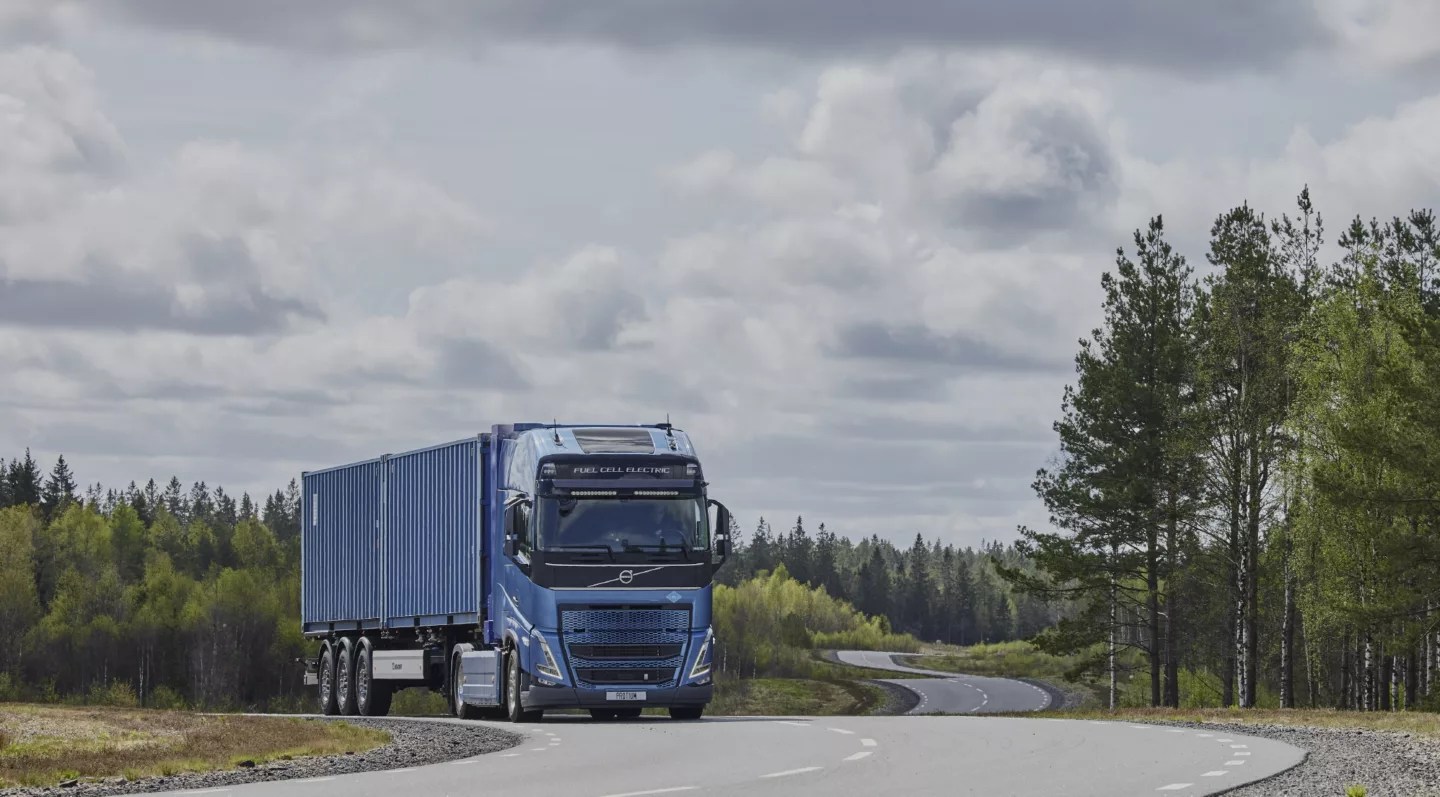
It certainly looks like a normal truck.
From the press release, it looks like Volvo Trucks are taking a conservative approach to designing, developing and launching the truck.
- Early examples will go through an extensive test program.
- It uses two fuel cells can generate up to 300 kW.
- Range is quoted at up to 1000 km.
- Fully refuelling takes 15 minutes.
- Gross weight is up to 65 tonnes.
- It looks to be a straight replacement for a current diesel truck.
Full launch is mentioned as towards the end of the decade, after there are enough hydrogen filling stations.
Conclusion
I may not have driven a large truck like this, but I’ve certainly funded a large number and talked with many experienced operators.
It looks to me that this could be the truck for an operator or company, who wants to offer zero-carbon transport for commercial, environmental, public relations or tax reasons.
Equinor And Partners Consider 1 GW Offshore Wind Farm Off The Coast Of Western Norway
The title of this post, is the same as that of this press release from Equinor.
This is the first paragraph.
Equinor and its partners Petoro, TotalEnergies, Shell and ConocoPhillips in the Troll and Oseberg fields, have initiated a study and are looking into possible options for building a floating offshore wind farm in the Troll area some 65 kilometres west of Bergen, Norway.
This second paragraph describes the production and use of the electricity.
With an installed capacity of about ~1 GW and an annual production of ~4.3 TWh, with a startup in 2027, Trollvind could provide much of the electricity needed to run the offshore fields Troll and Oseberg through an onshore connection point. The Bergen area already serves several of these installations with power – and needs more input to its electricity grid. The plan is that the partnership will buy as much energy as the wind farm can produce at a price that can make the project possible.
The press release includes a map of the wind farm, the oil and gas fields and Bergen.
This is not the first time, I’ve heard of plans to use wind-generated electricity to power offshore oil and gas fields.
It could be argued that if the gas is sold to the UK or Germany, then that country is responsible for the carbon emissions.
I doubt that Vlad the Mad’s bloodstained gas is produced using a carbon-free process.
Green Hydrogen Magnate Forrest Sanctioned By Russia After Calling Putin A ‘Murderer’
The title of this post, is the same as that of this article on Recharge.
Andrew Forest’s reply or the part that can be printed included.
You’re not worth talking to unless you’ve been sanctioned
I think that to many experts, Forrest’s plans for green hydrogen are one of the biggest threats to Russia’s oil industry.
Monte To Purchase 100 FC Aircraft Drives From ZeroAvia
The title of this post, is the same as that of this article on electrive.com.
This is the first paragraph.
ZeroAvia and Monte Aircraft Leasing will jointly market hydrogen-powered aircraft to regional operators. Under an agreement now signed between the companies, Monte will purchase up to 100 ZA600 hydrogen-electric powertrains from ZeroAvia to be installed on existing and new 5- to 20-seat aircraft.
Monte look to be an interesting company from their web site, which has this title.
Supporting The Transition Of The Regional Aviation Industry To Net Zero Carbon Emissions
The business model appears to be a well-proven and it is not that far removed from the one, colleagues and myself used to sell the project management system; Artemis.
In our case we took proven Hewlett-Packard computers and and other hardware, added our Artemis software and a custom-made desk and leased the systems to those who wanted to do project management, with as much support as our clients required. Customers just had to supply operators, printer paper and a thirteen amp socket.
Finance was obtained by various innovative methods, often through a bank manager, who was a bit of a rogue. But he was a rogue, who was on the side of the angels.
Later he became a firm friend of mine, before he sadly died within a few days of my wife.
Monte Aircraft Leasing’s model would appear to take a proven aircraft like a Cessna Caravan, Dornier 228 or Dash 8, replace the turboprop engines with a zero-carbon powerplant and then lease the aircraft. Often this will just be an additional lease to the existing operator.
The great advantage of this approach, is that the reengined aircraft does not need to be fully re-certified. It can fly under a Supplemental Type Certificate, which is described like this in Wikipedia.
A supplemental type certificate (STC) is a civil aviation authority-approved major modification or repair to an existing type certified aircraft, engine or propeller. As it adds to the existing type certificate, it is deemed “supplemental”. In the United States issuance of such certificates is under the purview of the Federal Aviation Administration (FAA).
Monte seem to have found a good way to make money from going net-zero.
2.7M Tonnes Of Co2 Could Be Saved Per Year If UK Domestic Flights Went Electric
The title of this post is the same as that of this article on Simple Flying.
This is the introductory paragraph.
Analysing over 100 domestic routes within the UK, researchers have uncovered some significant Co2 reductions upon the inevitable switch to electric.
It is an excellent summary of the state and potential of electric airliners in the UK.
The article gives this example of the sort of carbon savings, that can be achieved.
One of the shortest domestic flights in the United Kingdom, a 38-minute hop between Belfast International and the Isle of Man, uses around 36kg of carbon dioxide per passenger. In 2019, the route served approximately 20,000 passengers – with a switch to electric aviation, 752 tonnes of carbon dioxide could be cut on the 76-mile flight.
The article says this about one of the more developed electric aircraft; the ES-19 from Heart Aerospace.
One manufacturer, in particular, is seeing a significant surge in interest; Swedish electric aircraft startup, Heart Aviation. Currently holding letters of interest from United Airlines and Finnair, Heart’s 19-seat ES-19 is set to be the first all-electric regional aircraft, boasting a 400km range with a full-charge time of just 40 minutes. The first flight is planned for 2024, with an anticipated 2026 start date.
Airports within a 400 km range from London would include.
- Anglesey
- Blackpool
- Exeter
- Guernsey
- Jersey
- Leeds/Bradford
- Liverpool
- Manchester
- Newquay
- Norwich
- Paris
- Schipol
Dublin, Isle of Man and Newcastle are just over 400 km.
Note.
I also suspect that Dublin, Edinburgh, Leeds and Liverpool would make excellent hubs for electric aircraft.
I used Free Map Tools to get the distances.
 The Anonymous Widower