We Live Three Minutes From The Station — And Can’t Catch A Train
The title of this post is the same as that of this article on The Times.
This is the sub-heading.
A line connecting Oxford to Milton Keynes was finished 16 months ago. So why does it remain useless to families who moved to be next to it?
These four paragraphs add more details.
Nearly two years after moving to Winslow for its rail connections, Rachael Lee is still waiting to catch her first train.
Winslow station, a three-minute walk from Lee’s house, should have opened last year, connecting locals to Oxford, Milton Keynes and beyond. But as the site remains plagued by delays, the only people to pass through its doors are the security guards paid to keep watch.
“All the lights are on and there’s ticket machines that are on,” said Lee, 36, a marketing professional who moved to the Buckinghamshire town with her family in June 2024. “Who’s paying for all of that? It just feels like it takes the mickey when you drive and walk past it.”
Construction issues, union disputes about onboard guards and a lack of ready trains have all delayed the opening of the station, which was built for East West Rail (EWR) in a £6 billion government-funded project to reconnect Oxford and Cambridge by train for the first time since 1967. It is one of the country’s biggest rail projects, begun in 2014, and is expected to bring tens of thousands of jobs and billions of pounds to the regional economy.
Harold Wilson would have solved this problem with beer and sandwiches at No. 10.
WSMR Plans Alstom-Built Bi-Mode Sets If Open Access Bid Approved
The title of this post, is the same as that of this article on Rail magazine.
This is the sub-heading.
Wrexham, Shropshire & Midlands Railway (WSMR) has said it will invest in new Alstom battery-electric bi-mode trains if its open access application is successful.
These three paragraphs add some more details.
In December the Alstom-backed operation resubmitted its application to run between the North Wales city and London Euston via Shrewsbury and Walsall after its initial bid was rejected by the Office of Rail and Road (ORR) last year.
In a letter to the regulator and Network Rail, Mobilisation Director Darren Horley said: “Should our application be successful, WSMR will work alongside its parent company, Alstom, and will commit to invest in a new bi-mode battery-electric fleet based on the Adessia platform – Alstom’s new generation passenger train designed specifically for the UK market.
“Initial discussions regarding the procurement of a small new fleet have already commenced with Alstom and a financier.”
The Adessia will be a high speed version, with a maximum speed of 125 mph or 200 kph.
I have some thoughts.
How Much Of The Route Is Without Electrification?
In Alstom Plans To Operate Its Own Passenger Train Service In The UK For The First Time, I gave these distances of the sections of the route.
- Euston and Nuneaton – 96.7 miles – electrified
- Nuneaton and Walsall – 26.7 miles – electrified
- Walsall and Wolverhampton – 6.7 miles – electrified
- Wolverhampton and Shrewsbury – 29.7 miles
- Shrewsbury and Wrexham General – 30.3 miles
That looks like there are sixty miles in each direction without electrification.
Either the trains would have a battery range of 120 miles or a battery range of over 60 miles with charging at Wrexham General station, which is shown in these pictures.

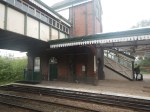
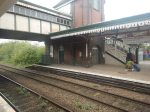
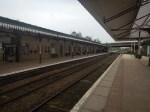
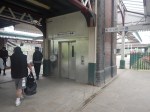
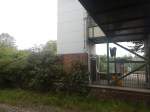
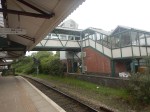
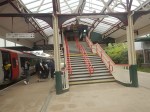
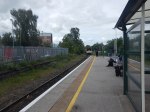
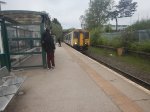
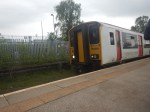
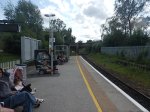
Note.
- Wrexham General station has four platforms. Two are a pair of long through platforms and there are also a separate long and a short through platform.
- The station is step-free.
- The last four pictures are Platform 4.
This OpenRailwayMap shows the platform layout at Wrexham General station.
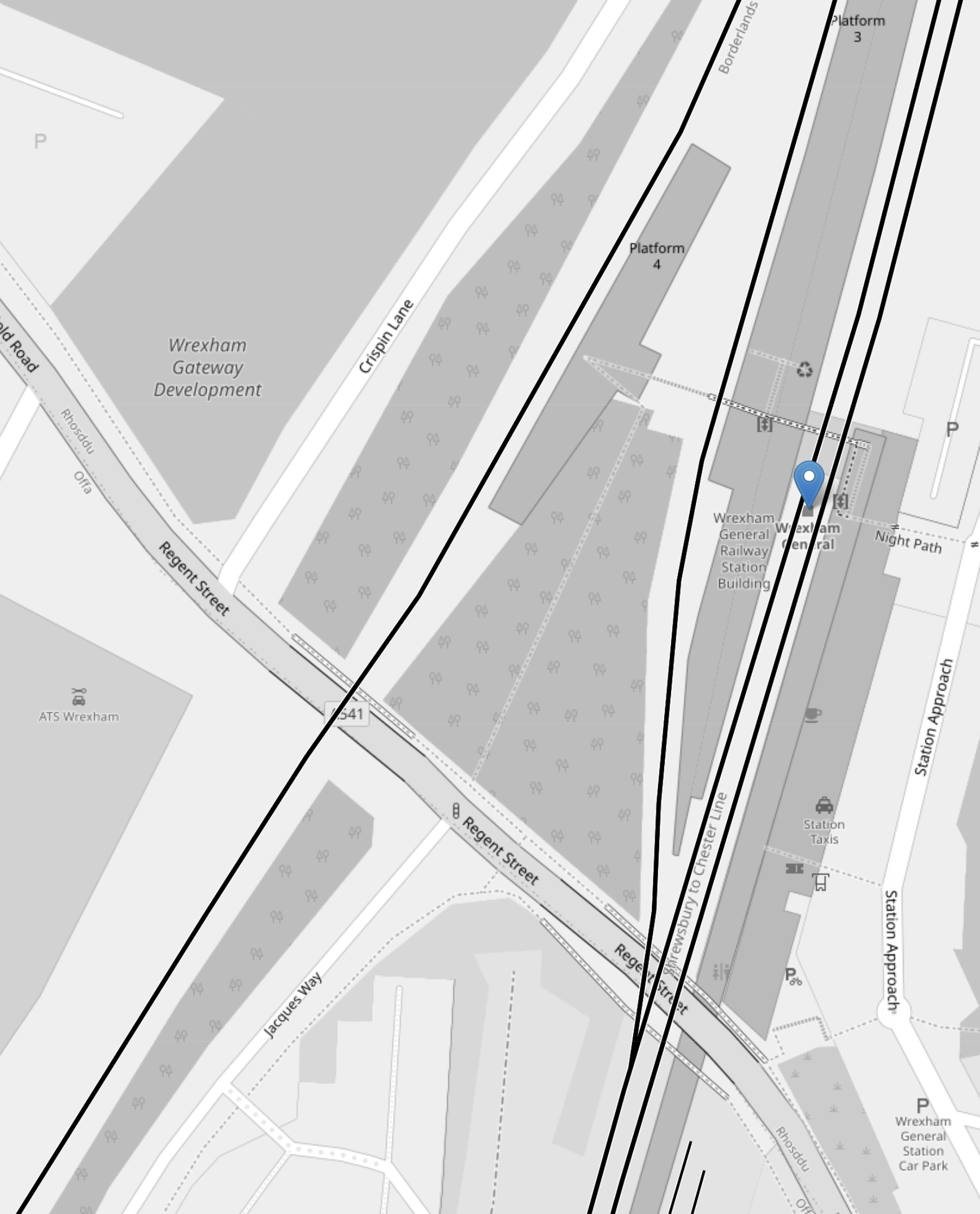
Note.
- The blue arrow is between the two through Platforms 1 and 2.
- Platform 3 is the platform in the middle.
- Platform 4 is the platform on the left.
An overhead charging rail could be used on Platforms 3 and/or 4, as has been used at Caerphilly station.
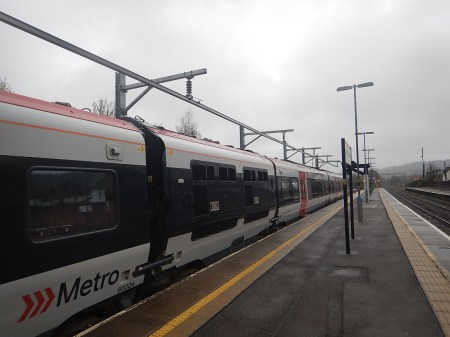
The overhead charging rail could also charge other Wrexham General services.
Prospective Routes
I would expect that there would be a need for such a train on the following UK routes.
- CrossCountry – Class 221 train replacement.
- East-West Rail – New fleet.
- Southeastern – London and Hastings.
- ScotRail – Inter7City replacement.
- South Western Railway – Class 158 and Class 159 train replacement.
- Transport for Wales – Some diesel services.
There would be probably be other services too!
Will The Service Call At Willenhall, Darlaston And Walsall?
This OpenRailwayMap shows the three stations.
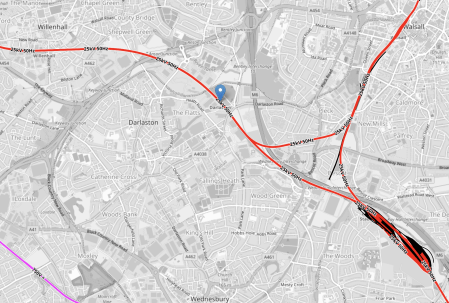
Note.
- Willenhall station is in the North-West corner of the map.
- Darlaston station is marked by the blue arrow.
- Walsall station is in the North-East corner of the map.
- Tame Valley Parkway station is in the South-East corner of the map.
- It might also be a good idea to call at the Parkway station.
- Red tracks are electrified.
- To call at all four stations will need a reverse at Walsall.
There may be some thinking to do, on the best calling pattern in Walsall.
East West Rail Unveils Next Phase For Oxford-Cambridge Growth
The title of this post, is the same as that of this press release from the UK Government.
These three bullet points act as sub-headings.
- more frequent trains on the horizon for millions of passengers between Oxford and Cambridge as multibillion pound East West Rail project confirms next steps
- new rail station set to help serve upcoming Universal theme park in Bedford, as well as improvements planned for several existing stations
- new route delivers on the government’s Plan for Change, unlocking £6.7 billion of regional economic growth and delivering up to 100,000 new homes
These two introductory paragraphs make a few general points about the overall project, housing and jobs.
Millions of people across the Oxford to Cambridge corridor are set to benefit from more frequent trains as the East West Railway Company (EWR Co) has revealed the next steps for the second phase of the project today (19 November 2025).
As one of Britain’s largest transport projects, East West Rail forms a cornerstone of the government’s Plan for Change, unlocking £6.7 billion of regional economic growth by 2050, enabling up to 100,000 new homes and supporting tens of thousands of new jobs along the route.
These sections make some more detailed points.
How Many Permanent Staff Will Be Employed At Universal Studios Bedford?
As many will want to live locally, this will surely encourage many to use the trains on the East-West Rail to travel to work, so this will be an important factor.
I asked Google AI, the question in the title of this section and received this answer.
Universal Studios plans to employ 8,000 permanent staff at its new resort in Bedford. This number is part of an overall total of approximately 28,000 jobs, which includes 20,000 jobs during the construction phase.
My project management knowledge is telling me that the station should be built before the theme park.
How Many Daily Visitors Are Expected At Universal Studios Bedford?
I asked Google AI, the question in the title of this section and received this answer.
The Universal Studios theme park in Bedford is expected to have 55,000 visitors on peak days from its launch, based on its plan to handle 8.5 million annual visitors. The project, planned to open in 2031, is expected to attract 8.5 million annual visitors in its first year, with numbers rising to 12 million within 20 years.
I would expect a large number of visitors and staff will probably be encouraged to come by train, just as they are at some Premier League football stadiums.
Will Universal Studios Bedford Be Marketed As A Low Carbon Theme Park?
I’m asking this question, as it seems, the railway is being upgraded make this easier.
I asked Google AI, the question in the title of this section and received this answer.
Yes, it appears Universal Studios Bedford will be marketed as having a low-carbon focus, as evidenced by its planning applications that highlight sustainability efforts. The project outlines include goals for water conservation, energy reduction and clean energy use, waste minimization, and the use of low-carbon materials, all of which will likely be part of the marketing narrative for the theme park, according to LinkedIn.
How Many Car Parking Spaces Will Be Provided At Universal Studios Bedford?
I asked Google AI, the question in the title of this section and received this answer.
The Universal Studios resort planned for Bedford will include a minimum of 7,106 parking spaces and 100 coach bays. The resort is also expected to have 250 cycle spaces and enough room for over 7,100 cars
That is a lot of car parking spaces. Hopefully, there will be a lot of car charging points.
Increased Train Frequency And Capacity
These two paragraphs from the press release, talk about increased train frequency and capacity.
Following extensive consultation with local communities, the multi-billion-pound project has confirmed it is exploring a series of transformative plans including increasing the proposed frequency of trains from 3 or 4 to up to 5 per hour.
These enhancements could provide up to 70% more seating across the route, easing overcrowding and speeding up boarding, as well as cutting average waiting times, improving service resilience and creating a smoother, more reliable passenger experience.
When you consider that London Overground, Merseytravel, the South Wales Metro, West Midlands Trains and other local lines in the UK consider than four trains per hour to be a minimum service, then five trains per hour is to be welcomed.
Station Improvements And New Stations
These two paragraphs from the press release, talk about station improvements and new stations..
Several other improvements across the route have also been confirmed, including new station entrances at Bletchley, Cambridge and Bedford, as well as four brand-new stations along the Marston Vale Line – the first significant investment since the 1960s.
With the current stations on the Marston Vale Line seeing some of the lowest usage in the country, the new stations will better serve local communities by providing faster, more frequent services, as well as helping to serve the upcoming Universal theme park.
I thought Bletchley, Cambridge and Bedford stations had already been substantially improved in recent years.
A New Station At Stewartby
Are the station improvements to upgrade public transport access to the Universal theme park at Stewartby station?
- An East-West Rail service between Oxford and Stansted Airport via Bletchley, Milton Keynes Central, Stewartby, Bedford and Cambridge would give the Universal theme park all-important airport access.
- Would an upgraded Bletchley station improve interchange between the West Coast Main Line and East-West Rail give better access to the theme park from London, the West Midlands and North-West for visitors?
- Would an upgraded Bedford station improve interchange between the Midland Main Line and East-West Rail give better access to the theme park from London, the East Midlands and North-East for visitors?
- An upgraded Bedford station could also be marketed as a zero-carbon route between the theme park and the Continent via St. Pancras International and Eurostar.
- Would an upgraded Cambridge station give better access to the theme park from the East of England?
In addition four new stations on the Marston Vale Line would improve access for visitors and staff, who live locally.
Will Battery-Electric Trains Be Used On The East-West Rail?
As five major East-West Rail stations; Bedford, Bletchley, Cambridge, Milton Keynes and Reading are substantially served by main line electric trains, and it is likely that more stations will be in future, I believe that East-West Rail must either be electrified or services should be run by battery-electric trains, which would enable zero-carbon rail routes to and from London and all the city’s airports, Birmingham, Liverpool, Manchester and an increasing number of cities in the North and Midlands of England, and Scotland and Wales.
I asked Google AI, the question in the title of this section and received this answer.
Yes, the East West Rail (EWR) project plans to use battery-electric trains as part of a discontinuous electrification strategy. This means trains will run on overhead electric power in sections where they are installed, and on onboard batteries in other sections of the route.
It does appear that discontinuous electrification and battery-electric trains will be used.
Electrification At Bedford Station
This OpenRailwayMap shows The East side of Bedford station.
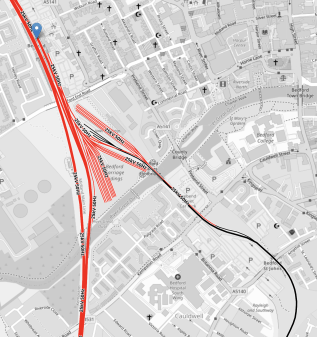
Note.
- The red tracks are electrified and black tracks are not.
- The black track looping into the station from the East is the Marston Vale Line, which will connect the East-West Rail to Bedford station.
- At the Easternmost part of the curve is Bedford St. Johns station, which serves Bedford hospital.
- The Marston Vale Line services normally connect to Platform 1A at Bedford station.
- But it also appears trains can also use Platforms 1 and 2 at Bedford station.
- It also appears that that Platforms 1A, 1 and 2 are all electrified.
This picture confirms electrification in Platforms 1A and 1.
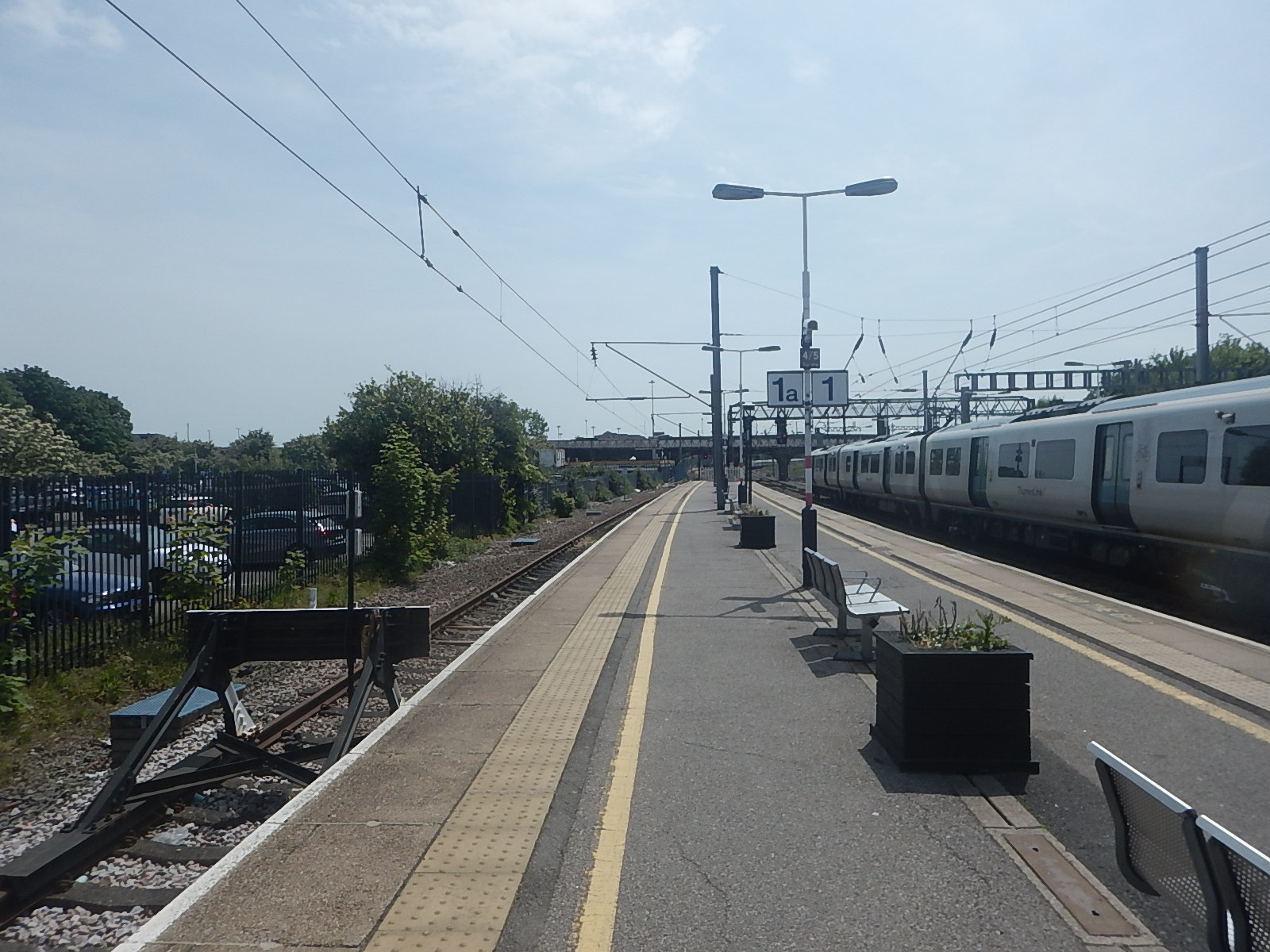
Note.
- Platform 1A is on the left.
- Platform 1 is on the right.
- The Thameslink train on the right is in Platform 2.
- Platforms 1A, 1 and 2 are all clearly electrified.
- Platform 1A is 81 metres long, so could accept a typical four-coach train.
Battery-electric trains with pantographs could certainly by charged in either of these two platforms at Bedford station.
Electrification At Milton Keynes Central Station
It would appear that East-West Rail services will use Platform 2A at Milton Keynes Central station.
This OpenRailwayMap shows Platform 2A at Milton Keynes Central station.
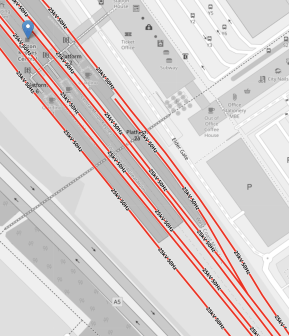
Note.
- The red tracks are electrified and black tracks are not.
- Platform 1 is the through platform on the North-East side of the station.
- Platform 2A is the bay platform tucked underneath Platform 1.
- Platform 2A is clearly electrified.
- Platform 2A is 124 metres long, so could accept a typical five or six-coach train.
These pictures show Platforms 1 and 2A at Milton Keynes Central station.
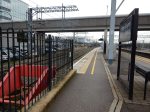
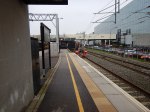
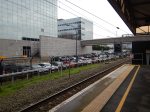

Battery-electric trains with pantographs could certainly by charged in Platform 2A at Milton Keynes Central station.
Electrification At Oxford Station
It would appear that terminating East-West Rail services will use Platform 1 or 2 at Oxford station.
This OpenRailwayMap shows the platforms at Oxford station.
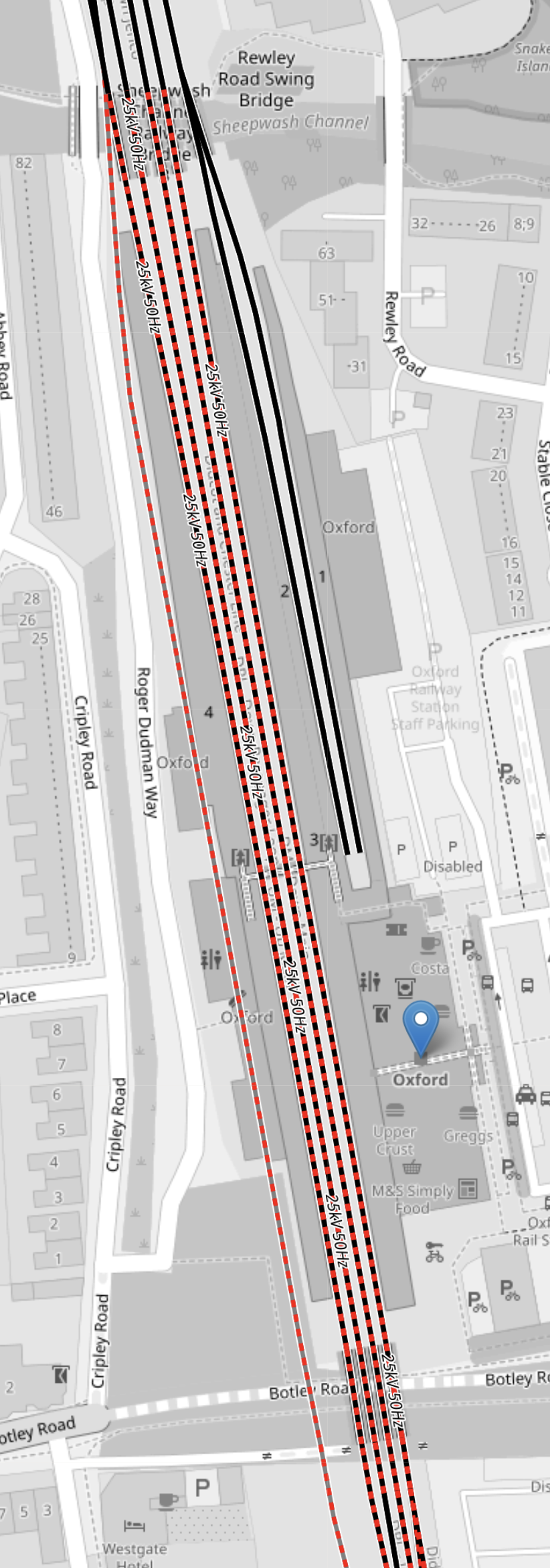
Note.
- The red and black tracks are to be electrified and black tracks are not.
- Platforms 1 and 2 are shown in black and are likely to be used by terminating East-West Rail trains.
- Platforms 1 and 2 would need to be electrified to be able to charge trains.
- Platforms 1 and 2 would also be used by Chiltern’s London services.
- Platform 1 and 2 are respectively 157 and 160 metres long, so could accept a typical five or six-coach train.
- As Oxford and Reading is to be electrified, through East-West Rail trains could use that electrification to travel to and from Reading.
These pictures show Platforms 1 and 2 at Oxford station.
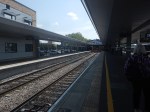
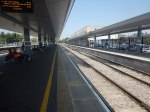

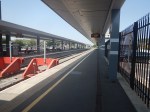
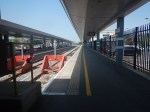
Battery-electric trains with pantographs could certainly by charged in Platform 1 and 2 at Oxford station, if the platforms were electrified.
Electrification At Reading Station
The West-facing platforms at Reading station are all electrified and longer than 120 metres, so could accept a typical four or five-coach train.
What Trains Should Be Used?
Consider.
- There is only one battery-electric train, that has been tested on the UK rail network – The Hitachi Class 802 train or similar.
- There is only one battery-electric train, that has been ordered – The Hitachi Class 802 train or similar.
- The longest distance on battery, between Reading and Bedford, is probably about thirty miles.
The Government could do a lot worse than order some more Class 802 trains, that were tailored for East-West Rail.
The Hitachi Class 802 train has five-cars, which are 26 metres long.
- It has a 125 mph operating speed.
- It has a range of 45 miles on battery power.
- The trains have been proven in service.
- The trains are made in the UK.
- The trains could handle extended routes like Birmingham and Stansted Airport or Cardiff and Cambridge.
A four-car variant of the train with a 100 mph operating speed could be an alternative.
What Will Be The Initial East-West Rail Service?
I asked Google AI, the question in the title of this section and received this answer.
The initial East West Rail service will be between Oxford and Milton Keynes/Bletchley, with passenger services delayed until at least 2026 due to a dispute over train crew roles. Freight services began in June 2025, and temporary diesel services will run until the line is electrified. The full project aims to connect Oxford and Cambridge.
Note.
- Stewartby station for Universal Studios Bedford will not be served by East-West Rail initially.
- But I suspect, that the current Marston Vale Line service will continue, with a change if needed at Bletchley or Bedford to get to Stewartby.
- Earlier I showed that Google AI is predicting 20,000 construction jobs at Universal Studios Bedford, which I am sure will need some form of high-capacity rail transport, if grid-lock is to be avoided in much of Bedfordshire.
Perhaps an initial fleet of four- or five-car Class 802 diesel-electric trains could be ordered and they would run the full route between Oxford and Bedford stations, with a reverse in Platform 2A at Milton Keynes station.
- The trains would run initially on diesel.
- By using stepping-up in Platform 2A at Milton Keynes station, I believe a two trains per hour (tph) service could surely be run.
- Hitachi could probably deliver the trains quickly, as they have not long been out of production.
- Those living locally would get a much improved train service from their local station to and from Bedford, Milton Keynes or Oxford.
- A large portion of the onward connectivity of the East-West Rail would be delivered early to the benefit of locals and visitors.
- If extra services are needed, semi-fast services could be added between Bedford and Reading with stops at Stewartby, Bletchley, Bicester Village, Oxford Parkway and Oxford stations.
When Platforms 1 and 2 at Oxford station are electrified and the trains are converted to battery-electric operation, the route could be converted to zero-carbon operation.
Virtually Nothing Is Said About The Route Of The East-West Rail Between Bedford and Cambridge South Stations Via Tempsford Station
This quote from David Hughes, CEO, East West Railway Company, is the only time, that Tempsford is mentioned in the press release.
“From a new station at Cambridge East to better access in Oxford and clear alignment through Tempsford, East West Rail is shaping the modern, sustainable transport link this region needs to thrive.”
I asked Google AI, if the proposed route of the East-West Rail between Bedford and Cambridge South stations through Tempsford is controversial and I received this reply.
Yes, the proposed route of East West Rail between Bedford and Cambridge is controversial, with opposition from some local residents and political figures who have expressed concerns about the southern alignment through Tempsford and surrounding villages. However, East West Rail Co has selected the route north of the Black Cat roundabout as the preferred alignment, citing reasons like cost-effectiveness and fewer disruptions, while also updating designs to include a southern station entrance to connect with planned growth areas around Tempsford.
Does Government or Artificial Intelligence have precedence?
Cambridge East Station Gets A First Mention
This quote from David Hughes, CEO, East West Railway Company, is the first time, that I’ve seen Cambridge East station mentioned.
“From a new station at Cambridge East to better access in Oxford and clear alignment through Tempsford, East West Rail is shaping the modern, sustainable transport link this region needs to thrive.”
In this document on the East-West Rail Consortium web site, there is extensive talk of an A14 Parkway station.
- The document dates from 2018.
- Google AI can’t find any trace of the A14 Parkway station referred to in the document.
- This article on the BBC, which was written five days ago and is entitled Additional City station Proposed By East West Rail, is the only reference on the Internet, that references Cambridge East station.
- The BBC article also says that other proposals after consultation include a new eastern entrance for Cambridge station, locating Cambourne station closer to the town and a mined tunnel for Bourn Airfield.
- I also have to assume that A14 Parkway has also morphed into Cambridge East station.
- To access all my posts, that relate to A14 Parkway, click this link.
But it does seem that consultation appears to have produced an acceptable compromise.
Between Kempston Hardwick and Tempsford Stations Through Bedford
I’ve now found that OpenRailwayMap has been updated between Bedford and Cambridge.
This first section shows the route between Kempston Hardwick and Tempsford stations through Bedford.
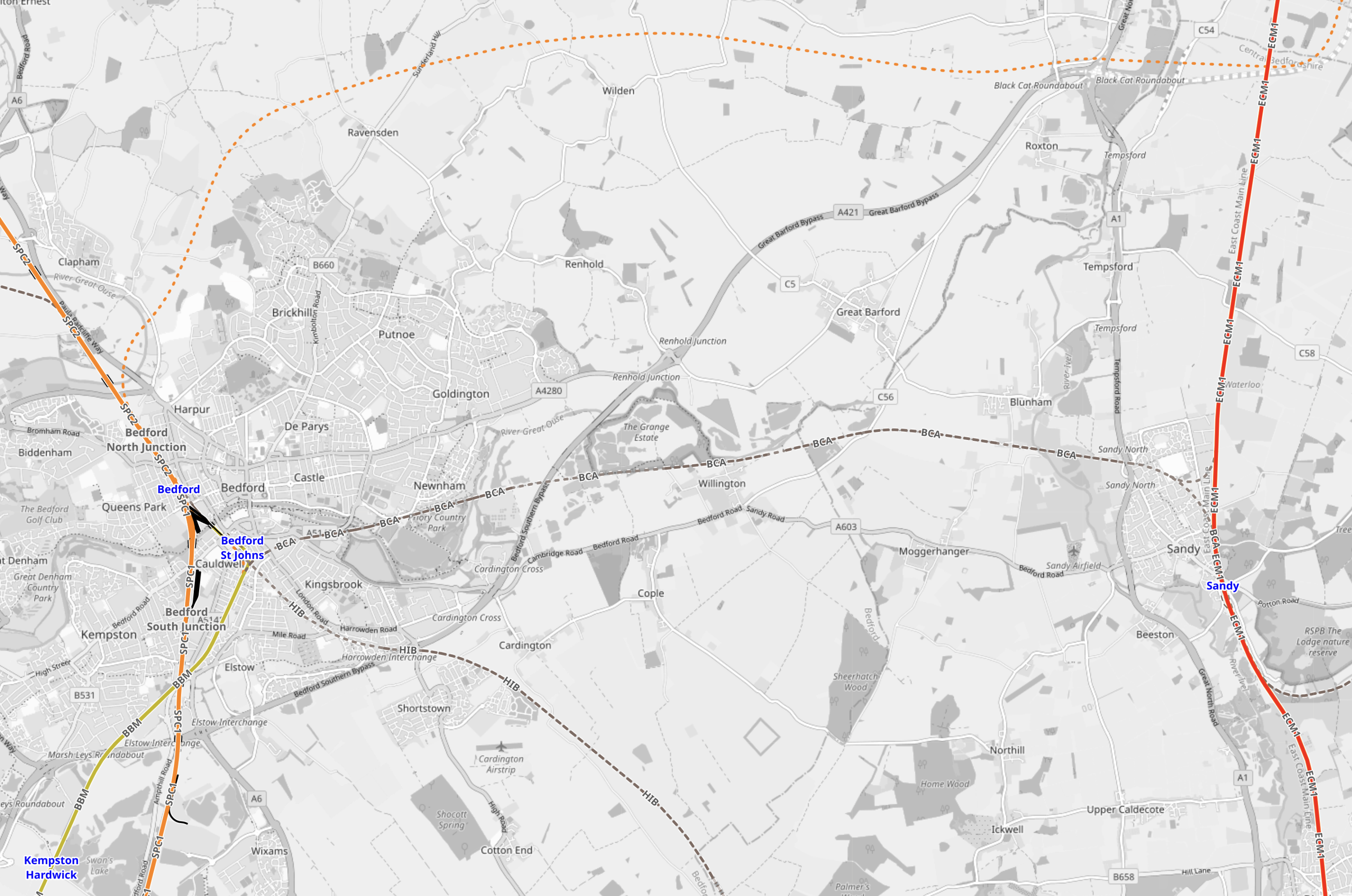
Note.
- Kempston Hardwick station is in the South-West corner of the map.
- The yellow track is the Marston Vale Line, which goes through Bedford St. Johns and Bedford stations.
- The red track on the West side of the map is the Midland Main Line.
- The red track on the East side of the map is the East Coast Main Line.
- The dotted red line across the top of the map will be the route of the East-West Rail.
- Tempsford station will be to the South-West of where the East Coast Main Line and East-West Rail cross in the North-East cornet of the map.
I hope the good people of Bedford are happier now!
Between Tempsford and Cambourne
I’ve now found that OpenRailwayMap has been updated between Bedford and Cambridge.
This second section shows the route between Tempsford and Cambourne stations.
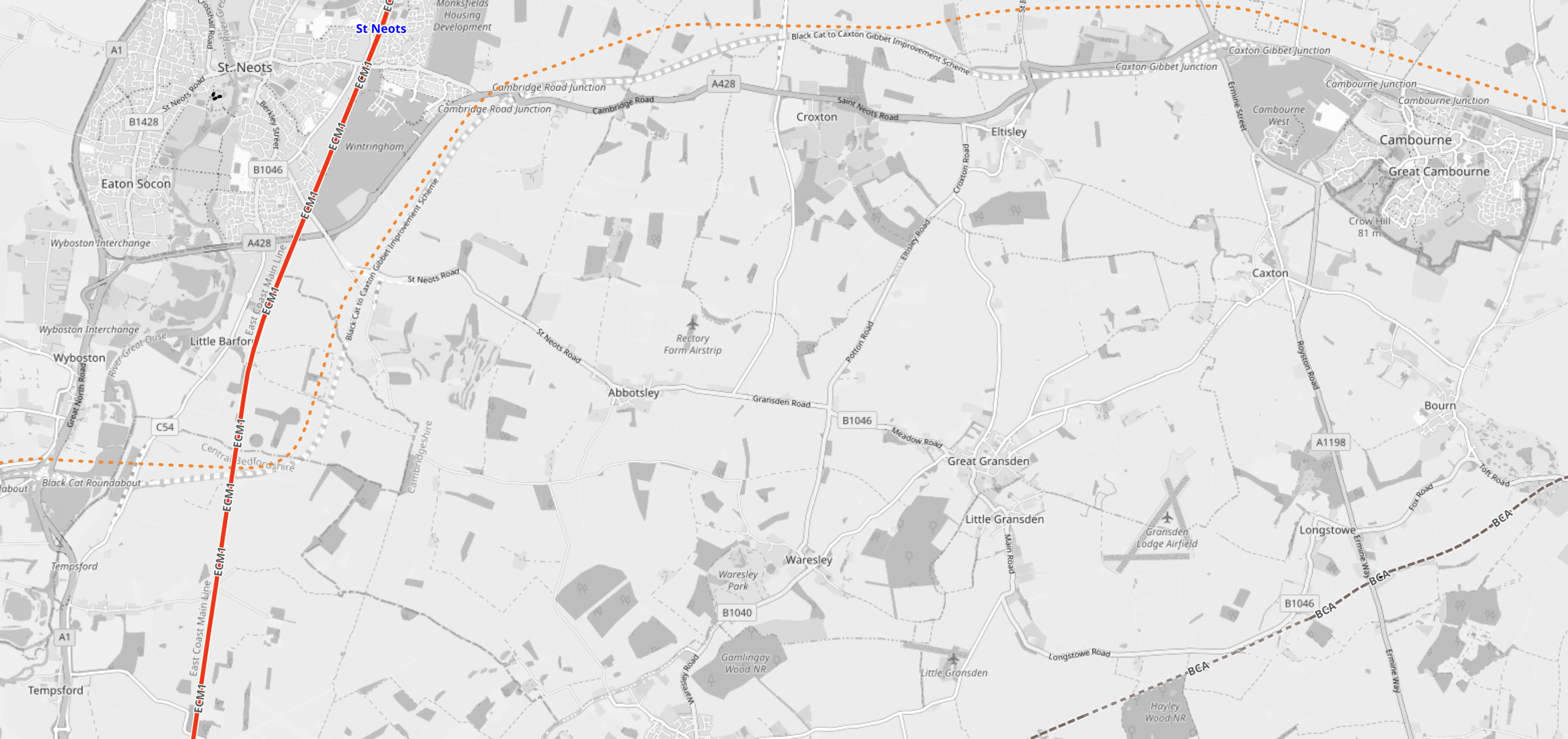
Note.
- The dotted red line across the top of the map will be the route of the East-West Rail.
- Tempsford station is in the South-West corner of the map on the route of the East-West Rail.
- The red track on the West side of the map is the East Coast Main Line.
- Cambourne is the village in the North-East corner of the map.
East West Rail Train Door Row May See Launch Delayed
The title of this post, is the same as that of this article on the BBC.
This is the sub-heading.
The launch of a new £7bn railway faces being delayed because of a row over who will control the opening and closing of carriage doors.
These three paragraphs add more details.
The BBC understands train operator Chiltern Railways is in a standoff with the Rail, Maritime and Transport (RMT) union, which represents train guards, over how East West Rail services between Oxford and Milton Keynes will run.
The RMT said the operator wants train drivers to open and close the doors at stations, with no guards required.
Passenger trains were scheduled to start running between Oxford and Milton Keynes for the first time in nearly 60 years by the end of December.
I suspect that the unions won’t be satisfied until all trains in the UK have a crew of two.
An Interesting Comment From Lord Peter Hendy
This article on Modern Railways is entitled Chiltern FINALLY Signs Mk 5 Deal.
This extract from the article describes the deal.
An agreement for Chiltern Railways to lease the Mk 5A coaches previously operated by TransPennine Express and owned by Beacon Rail Leasing has been signed – and the trains are due to replace the current Mk 3 stock in phases from 2026. A 10-year lease has been agreed for the vehicles.
Chiltern will take on all 13 five-car sets as well as the spare Driving Trailer and the dedicated pool of 14 Class 68 locomotives.
The article also, has this excellent quote from Lord Peter Hendy, who is the Rail Minister at the end.
This government is putting passengers back at the heart of the 21st century railway by investing to make journeys easier, greener, and more comfortable.
“We are continuing to support Chiltern as they develop a plan to introduce additional services into their timetable, giving people more opportunities to work, live, and socialise.
I agree with much of what Lord Peter Hendy says, but could we see some actions to back up the words.
I have a few thoughts.
Lumo To Glasgow
I wrote about this new service in Lumo Will Extend Its King’s Cross And Edinburgh Service To Glasgow.
Given the opposition of the Transport Minister to open access services, I didn’t think this innovative service would be approved.
- But it does add an affordable passenger-friendly service to London and Glasgow routes.
- It will certainly be an easier route to London for some in Scotland.
- It also adds some much-needed direct services between Newcastle and Glasgow.
Did Lord Peter Hendy have words to help Lumo get its approval?
As I wrote in Could London And Central Scotland Air Passengers Be Persuaded To Use The Trains?, I also believe that this new Lumo service could persuade more air passengers to take the train to Scotland.
Lumo To Stirling
I wrote about this service in ORR: Open Access Services Given Green Light Between London And Stirling.
- First Group has taken over Grand Union Trains and the service will now be run by Lumo, who will use diesel Class 222 trains.
- But Lumo will have the option of running their electric Class 803 trains on the route, as it is fully electrified, when their fleet receives more trains.
This was another service, that I didn’t think would be approved, as no other services on the West Coast Main Line were approved, as Network Rail objected.
But it certainly meets the words in Lord Peter Hendy’s statement.
Like Lumo’s service to Glasgow, when the Stirling service gets electric trains, it will surely cut carbon emissions of travellers to Central Scotland.
Chiltern’s Replacement Trains
Chiltern Railways are replacing this fleet of locomotive hauled trains.
- 8 Class 68 locomotives
- 25 Mark 3 coaches
- 6 Driving Van Trailers
As services between London Marylebone and Birmingham Moor Street stations consist of one locomotive, five coaches and one driving van trailer, that means there are two spare locomotives, one spare coach and one spare driving van trailer, if there are five rakes of coaches in service.
The new fleet will be.
- 14 Class 68 locomotives
- 52 Mark 5A coaches
- 14 Driving Van Trailers
If services between London Marylebone and Birmingham Moor Street stations consist of one locomotive, four coaches and one driving van trailer, that means there are one spare locomotive and one spare driving van trailer, which gives a possible thirteen rakes of coaches in service.
There are certainly enough to expand Chiltern’s services. The obvious destination would surely be Oxford. These pictures show the two North-pacing platforms at Oxford station.
The platforms would be shared with East-West Rail, but they are around 160 metres in length.
The Modern Railways article quote Arriva Group Managing Director UK Trains Amanda Furlong as saying this.
Upgrading our fleet is a vital next step in Chiltern’s modernisation plans and an important part of Arriva’s wider ambition to support the transition to more sustainable rail travel across the UK and Europe.
We are proud to support this important milestone for Chiltern Railways, which is a great example of what can be achieved through strong collaboration with Government to deliver practical improvements for passengers. We look forward to seeing these upgraded trains improve journeys and lower emissions across the network.
She certainly would agree on some issues with Lord Peter Hendy.
So will Chiltern Railways do something to reduce the carbon footprint of their fourteen Class 68 locomotives?
- The Class 68 locomotives don’t have too many miles on the clock.
- Chiltern have already run some their Class 68 locomotives on HVO, so this must be a possibility.
- In total there are thirty-four Class 68 locomotives in service all of which have Caterpillar engines, so a conversion to zero-carbon power could be worthwhile.
I asked Google for an AI Overview on How many diesel locomotives have caterpillar engines worldwide? I got this answer.
While a precise worldwide count of diesel locomotives powered by Caterpillar (CAT) engines is difficult to pinpoint, it’s estimated that hundreds, if not thousands, of locomotives are equipped with CAT engines. Caterpillar has a long history of supplying engines to the rail industry, with engines like the 3500 series powering both mainline and switcher locomotives. Additionally, CAT engines are also used in generator sets for Head End Power (HEP) in passenger locomotives.
Note.
- It appears that, Caterpillar might have given up making truck engines because of emission issues.
- London Marylebone and Oxford is 66.8 miles
- London Marylebone and Birmingham Snow Hill is 112.3 miles.
Perhaps one of the consultants like Ricardo could convert these locomotives to run on hydrogen.
Government Response To Crossing Petition ‘Shameful’
The title of this post, is the same as that of this article on the BBC.
This is the sub-heading.
The government has “moved the goalposts” in its response to calls for an underpass to be installed at a busy level crossing, an MP has said.
These three opening paragraphs add more detail.
More than 4,500 people signed a petition calling for any replacement of the level crossing at London Road in Bicester to include access for cars, as well as for cyclists and pedestrians.
In its response, the Department for Transport said vehicular access to any crossing replacement would be “subject to both affordability and feasibility”.
Callum Miller, the MP for the north Oxfordshire market town, said the response – and in particular the suggestion of a footbridge – was “shameful”.
A few weeks ago, I went to see this important level crossing and wrote Bicester Village Station – 28th May 2025.
Darlington Station – 26th June 2025
I visited Darlington station, three times on my trip.
These pictures are in chronological order.
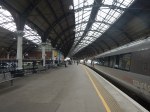
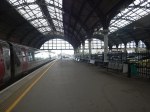
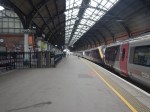




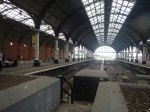
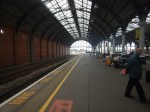

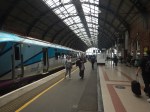
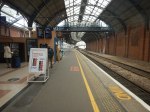

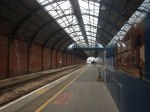
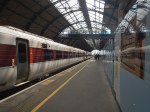

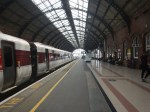

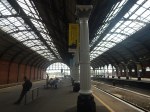







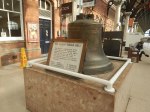
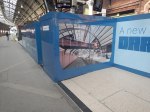

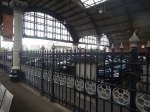
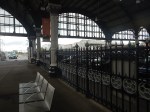

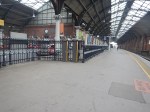
Note.
- The station is being given a major upgrade, so it can handle more trains.
- The station has a large number of top-quality Victorian features.
- The station is Grade II* Listed.
- Inside the enormous train-shed are two long platforms, that handle most of the trains and two South-facing bay platforms.
- Two new platforms, which are numbered 5 & 6, and possibly a double-track avoiding line are being added outside the train-shed on the East side.
- In images with a comment saying Note Platform 5, the new long electrified Platform 5 can be seen.
- Platform 5 appears to be already electrified at its Southern end.
These three OpenRailwayMaps shows the future layout.
The first OpenRailwayMap shows the junction, where the branch to Newton Aycliffe, Shildon and Bishop Auckland connects.
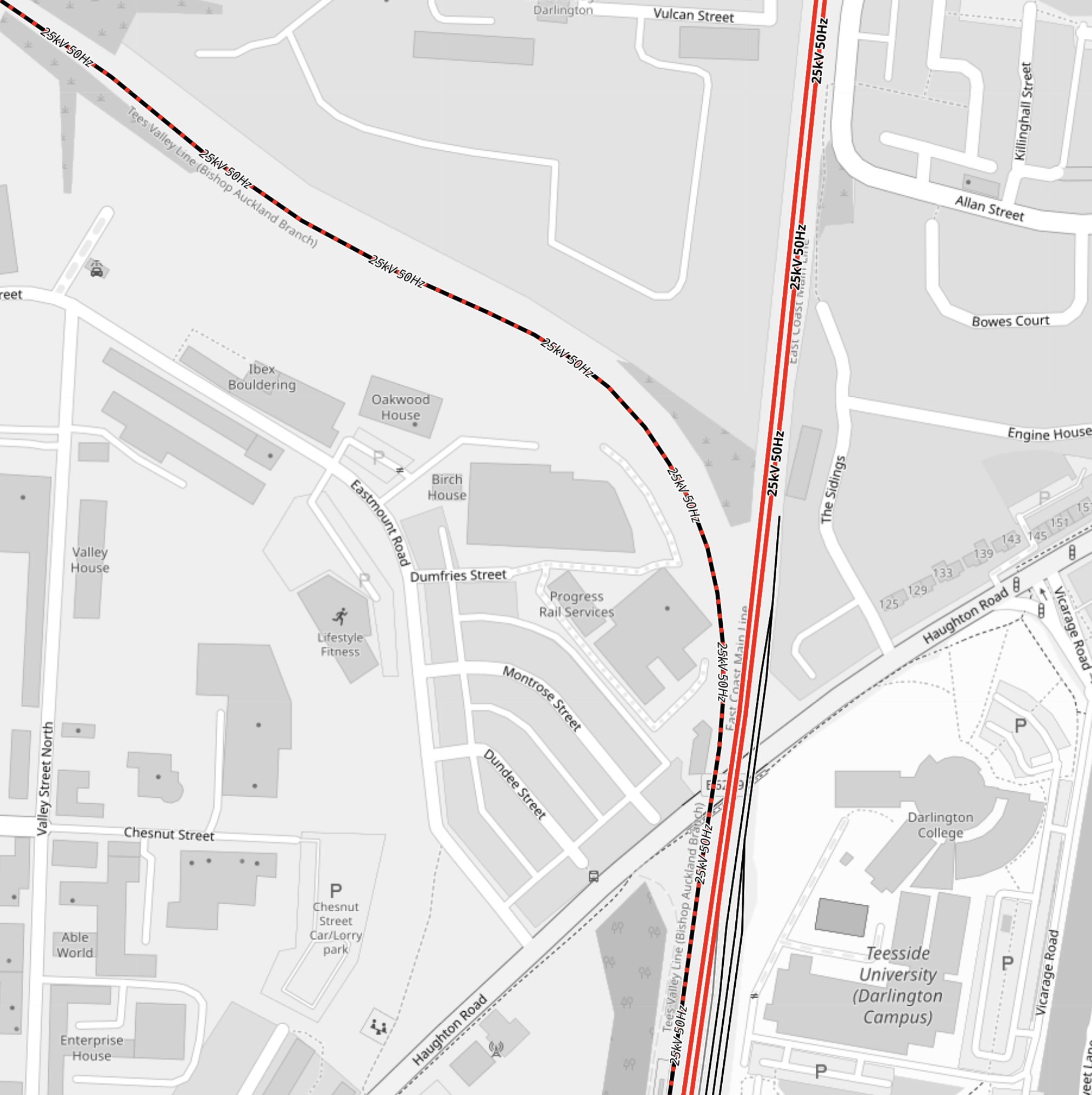
Note.
- The red tracks are electrified and indicate the East Coast Main Line.
- The track curving off to the North-West is the Bishop Auckland Branch.
- The black tracks are not-electrified.
- The Bishop Auckland Branch is shown dotted black and red, as it will be electrified, so that Hitachi can get their new trains to the East Coast Main Line.
- The two tracks of the East Coast Main Line are very straight and the map shows them to have a 125 mph operating speed.
The second OpenRailwayMap, shows the lines immediately to the South of Darlington station.
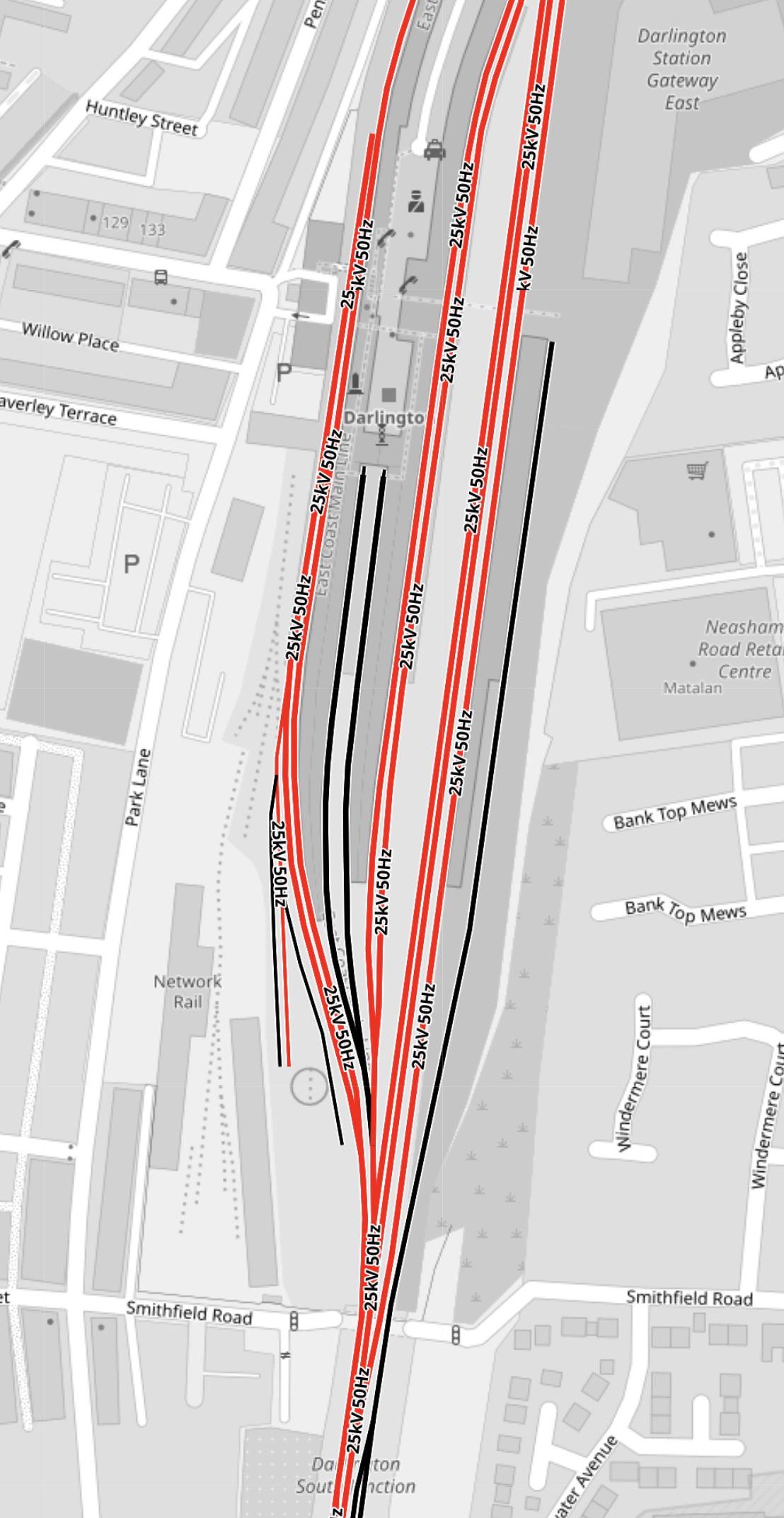
Note.
- The red tracks are electrified.
- The black tracks are not electrified.
- Tracks are number 4, 3, 2 and 1 from the West.
- The Southern ends of Platforms 1 and 4, and Platforms 2 and 3, which are inside the current train-shed appear to be virtually unchanged.
- Platform 1 is electrified and will probably still cater for Southbound trains.
- Platforms 2 and 3 are bay platforms without electrification for trains terminating at Darlington.
- Platform 4 is electrified and will probably still cater for Northbound trains.
- There is an electrified avoiding line to the East of Platform 1.
- The brick wall of the current train shed is in the white space to the East of Platform 1.
- Outside the current train shed are two electrified 125 mph lines, an electrified through platform and a South-facing bay platform without electrification.
- The new electrified platform looks very long. Could it be long enough to handle a pair of High Speed Two Classic-Compatible trains? I suspect though it is long enough to handle the splitting and joining of a pair of five-car Hitachi Class 80x trains.
- The new bay platform looks longer that the current bay platforms 2 & 3. Is it long enough to handle a five-car Hitachi Class 80x train?
- It does appear from the track layout, that the new electrified platform is connected to the East Coast Main Line, the Saltburn branch and stabling sidings to the North of the station.
- The new bay platform appears to be connected to the Saltburn branch.
The two new platforms also appear to be adjacent to an area of the station, which is labelled Darlington Station Gateway East. I would assume, that this proximity will be used to make the station easy for changing trains.
The third OpenRailwayMap shows the section of the station between the two previous maps.
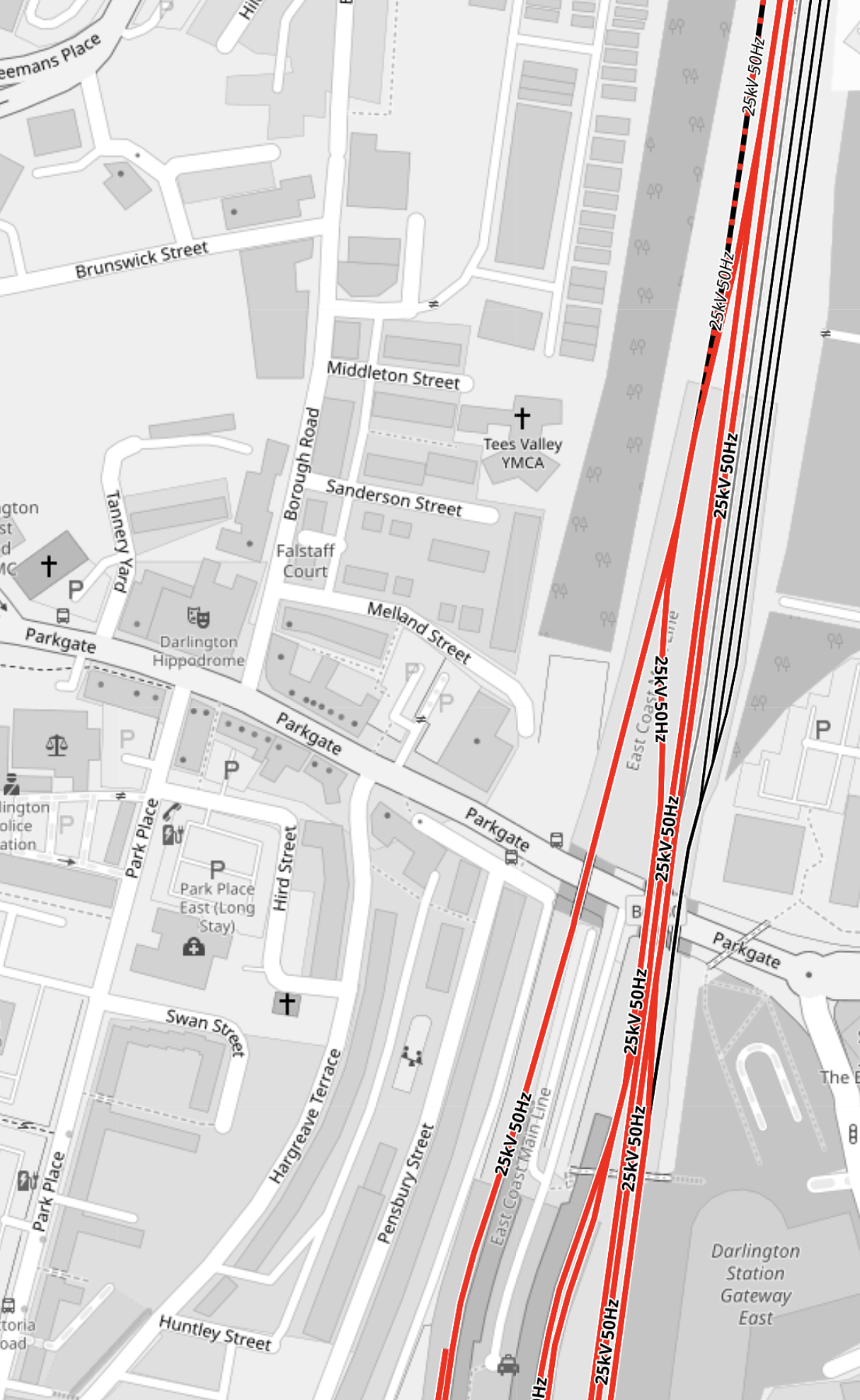
Note.
- The red tracks are electrified.
- The black tracks are not-electrified.
- The Darlington end of the Bishop Auckland Branch is shown dotted black and red, as it will be electrified, so that Hitachi can get their trains to and from the East Coast Main Line.
- Both Platforms 1 and 4 appear to connect to the East Coast Main Line, so high speed services can operate as they do now, by taking a diversion through the current Darlington station.
- To the East of the East Coast Main Line, there appear to be some very useful stabling sidings.
I have some general thoughts about Darlington station.
Will Trains Not Stopping At Darlington Station Use The New 125 mph Lines Through the Station?
It does appear that the two 125 mph lines through the new part of the station are very straight.
- They are shown as 125 mph, but could be faster.
- It should be remembered that according to Wikipedia, British Rail built the Selby Diversion for 160 mph in 1983.
- Between Durham and York stations is 66.2 miles of mainly 125 mph railway.
I believe that cutting out the need for trains to slow to go through Darlington station could save several minutes.
Will Trains Stopping At Darlington Station Use The Current Platforms 1 And 4 As They Do Now?
The track layout would seem to allow this and those changing to another train, would not have to walk a long way.
Can Trains Stopping At Darlington Station Use The New Eastern Platforms?
I have examined the second and third maps in detail and it looks as if the track layout will allow trains on the East Coast Main Line in both directions to stop at the long electrified platform.
The shorter bay platform appears to be only connected to the Tees Valley Line to Middlesbrough and Saltburn.
How Long Are The New Eastern Platforms?
Estimating against the scale on the map, I reckon these are the likely lengths.
- Long electrified platform – 400 metres – Appears to be numbered 5
- Bay platform – 200 metres – Appears to be numbered 6.
These are very useful lengths.
An Aerial View Of The New Platforms
This image from Tees Valley Combined Authority shows the Northern ends of the new platforms and the new footbridge.
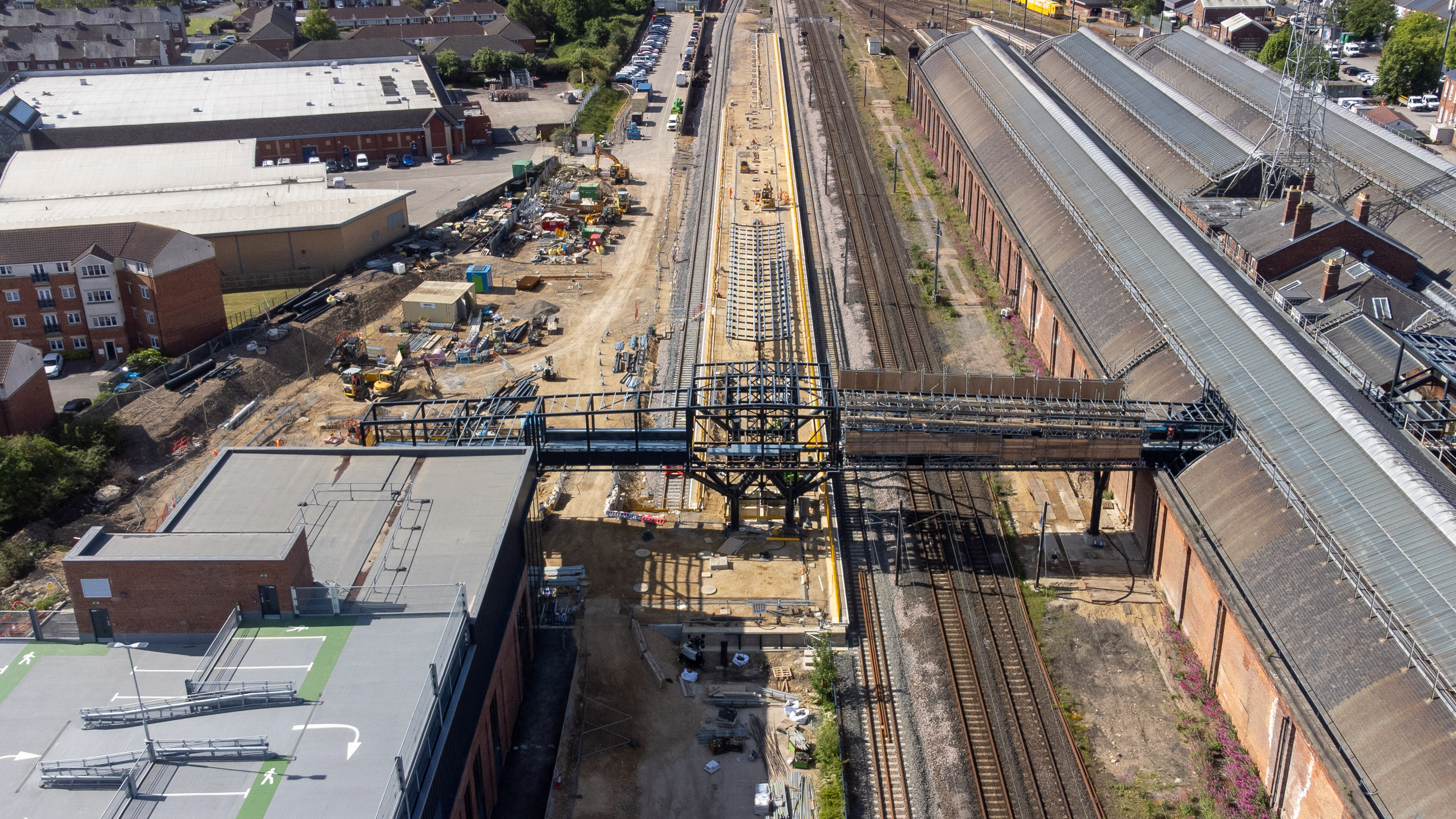
Note.
- The original four-platform Victorian station is on the right, which is the Western side.
- The East wall of the Victorian train shed can be clearly seen.
- The two absolutely straight 125 mph lines, that allow trains to bypass the original station are closest to the wall.
- The long electrified platform, which appears to be numbered 5, also appears to be absolutely straight.
- The unelectrified bay platform, which appears to be numbered 6, is to the left.
- Platforms 5 and 6 would seem to be separated by a wide island platform, which would make interchange easy.
This page on the Network Rail web site, gives more information.
Car Parking At Darlington Station
This image from Tees Valley Combined Authority shows the Northern end of the station.
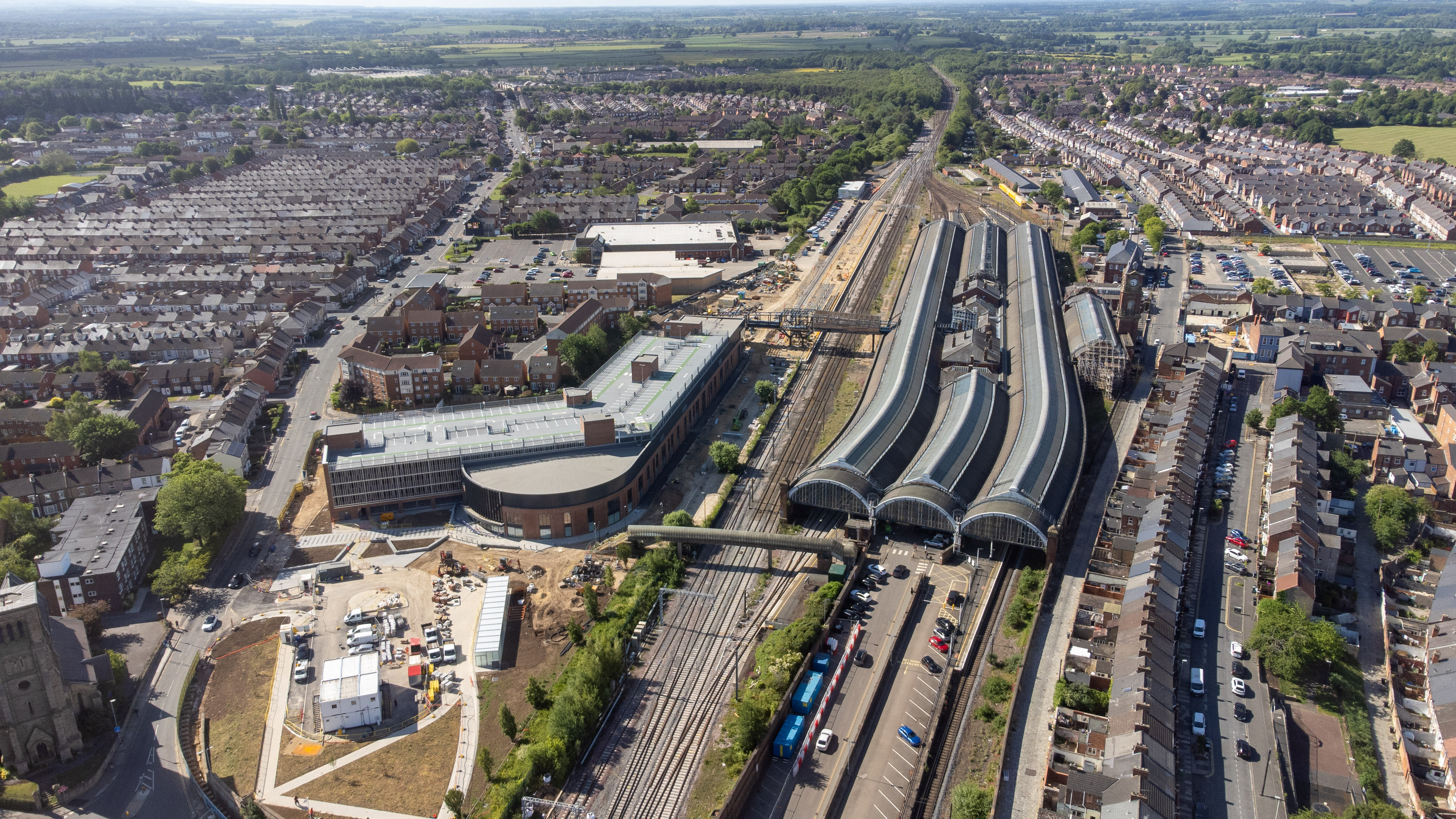
Note.
- The three sections of the Victorian station.
- The two new platforms ; 5 and 6 at the top of the image.
- The two 125 mph lines bypassing the Victorian station.
- There are two new footbridges connecting the Victorian station to the land on the other side of the 125 mph lines.
To the left of the station, there appears to be a massive multi-story car-park.
I asked Google about the new car park at Darlington station and got this reply.
The new multi-story car park at Darlington Station will have a capacity of more than 650 vehicles. This is part of a larger £140 million redevelopment of the station, which also includes new platforms and an eastern concourse. The car park will include accessible parking bays and electric car charging points.
This image from Tees Valley Combined Authority shows the car parking from the South.
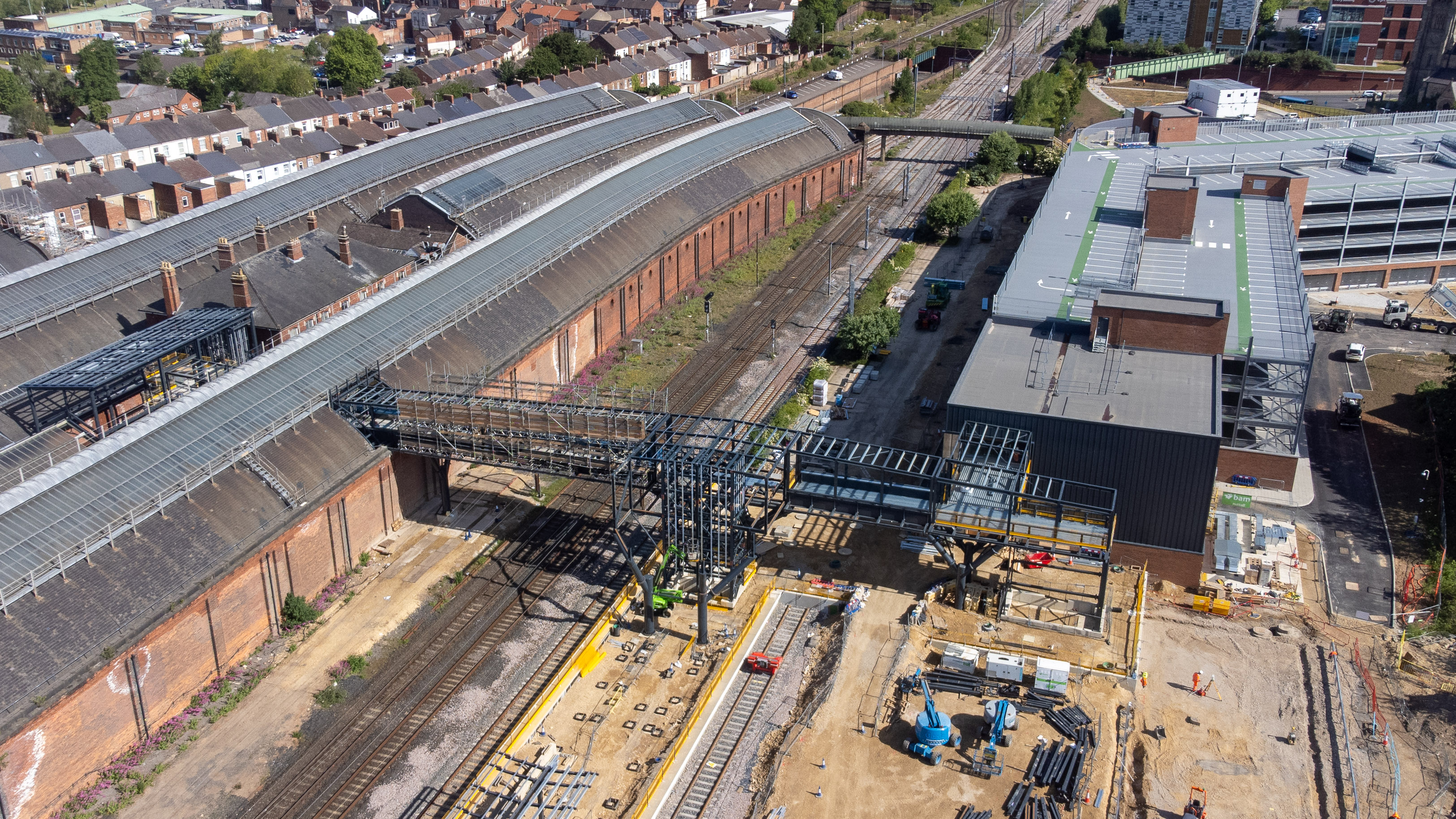
Note.
- The building appears to be a five-story car park.
- There appears to be a very easy connection between the car park and the bridge to the station.
- From the roof layout, there appears to be several lifts.
- It looks like there will be a large area between the platforms and the car park, where travellers can meet and socialise.
- The bay platform 6 already has a pair of red buffer stops.
Railways may have come to Darlington two hundred years ago and it looks like they are getting the car parking at the station ready for at least the next two hundred.
Further Electrification
If as I expect, the UK embraces battery electric technology for local and regional trains, I can see the three South-facing bay-platforms being electrified, so they could charge he battery-electric trains.
This picture shows that bars have been placed across Platforms 2 and 3, that could be used to support the electrification.
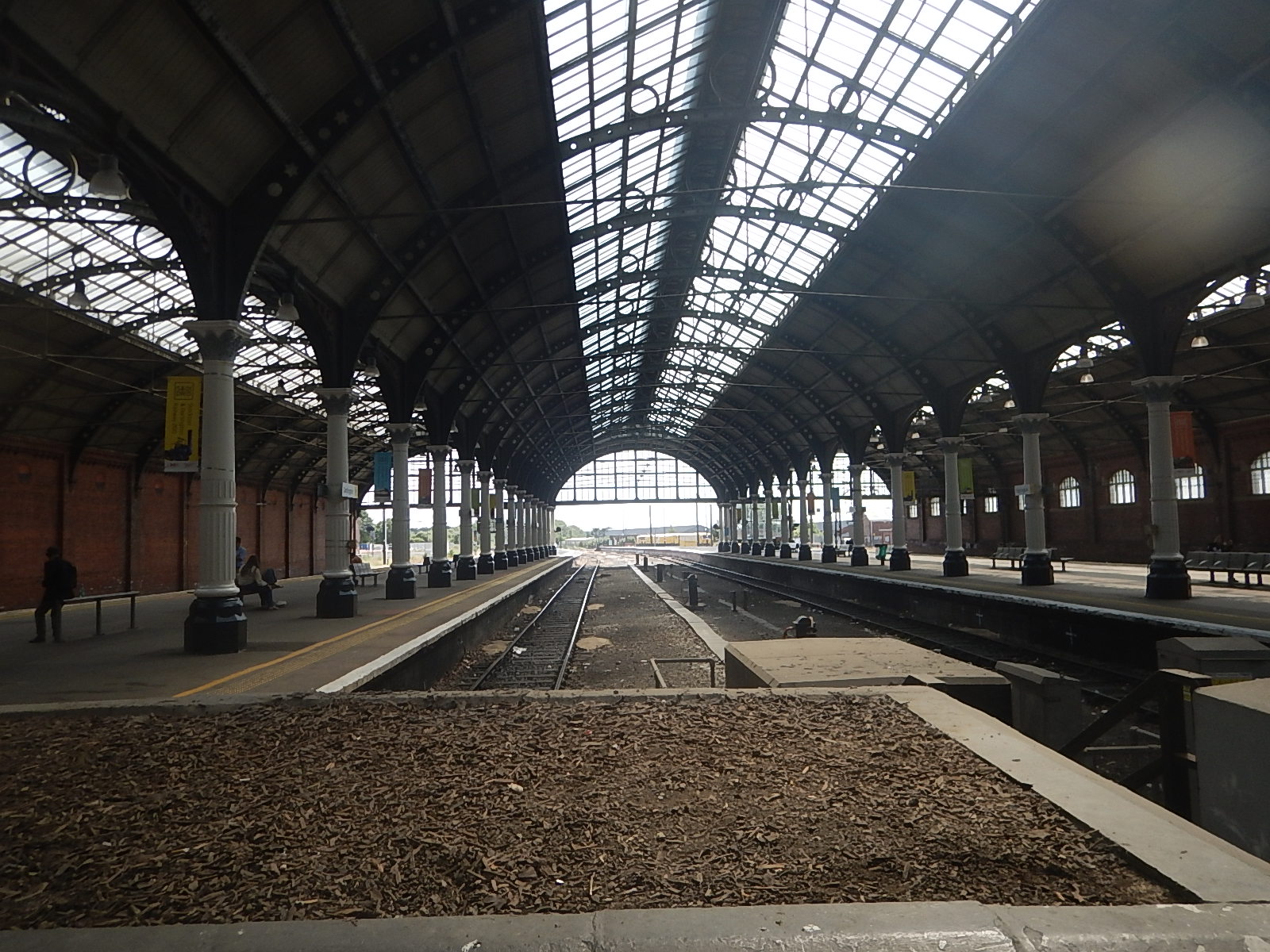
This method has been used in Victorian stations in the UK before. I show some installations and discuss electrifying Victorian stations in Could Hull Station Be Electrified?.
Darlington Station And High Speed Two
This graphic shows the original service pattern for High Speed Two.
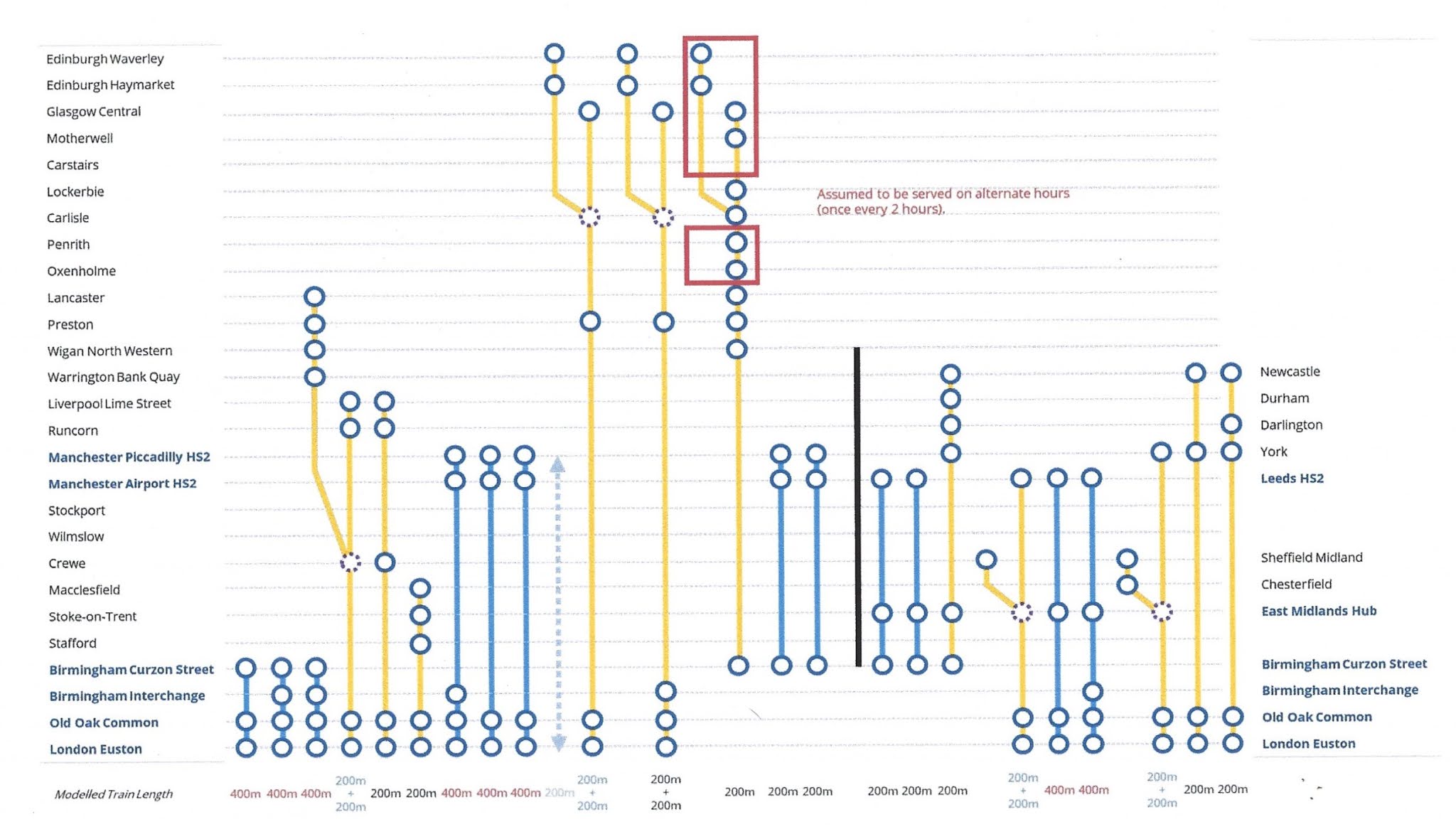
Note.
- There are seventeen paths terminating in the South at Euston station.
- Six of these paths go to Leeds, Newcastle or York.
- As the Eastern leg has been abandoned, that means there will be no High Speed Two trains to Leeds HS2, York, Darlington, Durham and Newcastle via the East Coast Main Line.
Darlington was to be served by these hourly services.
- Train 17 – Birmingham Curzon Street and Newcastle via East Midlands Hub, York, Darlington and Durham.
- Train 23 – London and Newcastle via York and Darlington.
Both trains would have been a single 200 metre long High Speed Two Classic-Compatible train.
Joining And Splitting Trains At Darlington
As Platform 5 looks like it would be a 400 metre long platform, it would look like it would be possible to handle a pair of High Speed Two Classic-Compatible trains.
But these trains will not now be serving Darlington in the near future, as the Eastern leg of High Speed Two has been cancelled.
A pair of nine-car Class 801 trains would be 467.4 metres long and might be able to fit into Platform 5.
But a pair of seven-car trains would certainly fit into a 400 metre Platform 5.
In Do Class 800/801/802 Trains Use Batteries For Regenerative Braking?, I found this snippet in an Hitachi document.
To simplify the rearrangement and management of train configurations, functions are provided for identifying the train (Class 800/801), for automatically determining the cars in the trainset and its total length, and for coupling and uncoupling up to 12 cars in
normal and 24 cars in rescue or emergency mode.
So I suspect with software updates two nine-car trains could run together.
Suppose LNER wanted to attack the airlines on the London and Scottish route.
- Two seven- or nine-car Class 800 or 801 trains would leave Edinburgh working as a pair.
- First stop would be Platform 5 in Darlington.
- The trains would split in Darlington.
- One train would go to King’s Cross stopping at perhaps Doncaster and Peterborough.
- The other train would go to St. Pancras stopping at perhaps Leeds, Sheffield, Nottingham and Bedford.
Note.
- A seven-car Azuma would be under 200 metres long.
- Seven-car trains would fit in St. Pancras.
- LNER have run an Azuma train into St. Pancras.
- The train would interchange with East-West Rail at Bedford.
- Travellers to and from East Anglia would change at Peterborough.
Large areas of England would have a fast route to and from Scotland.
Footage Released Of East West Rail’s First Commercial Freight Train
The title of this post, is the same as that of this news item from Network Rail.
These four paragraphs give detail to the story.
The inaugural journey was part of a dual first, as it also saw the entry into service of Maritime Transport’s Northampton Gateway Terminal.
This Easter Network Rail completed its work there to join the 35-acre freight facility directly to the West Coast Main Line via the Northampton Loop.
The modern junction design allows freight trains to enter and exit the site at speeds of up to 40mph, which is eight times faster than conventional freight connections.
Clearing the railway junction much faster will significantly improve both passenger and freight journeys – as it reduces the impact on other services running on the main line.
This OpenRailwayMap shows the location of Maritime Transport’s Northampton Gateway Terminal.
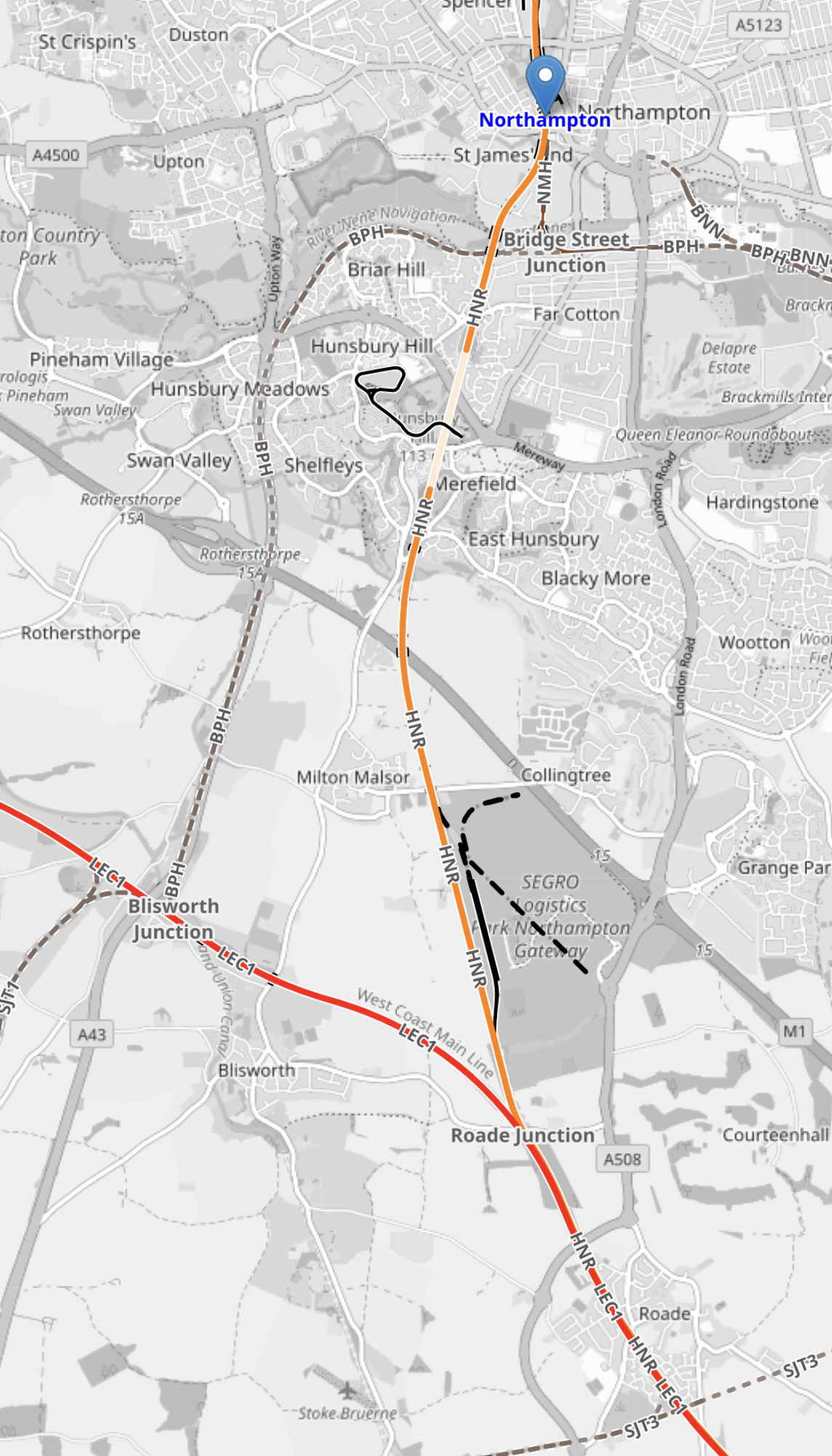
Note.
- The red track running diagonally across the bottom half of the map is the West Coast Main Line.
- The orange track running North-South is the Northampton Loop of the West Coast Main Line.
- The blue arrow indicates Northampton station.
- The grey line running diagonally across the map, vaguely parallel to the West Coast Main Line is the M1 Motorway.
- The SEGRO Logistics Park Northampton Gateway is indicated between the Northampton Loop and the M1 Motorway.
This Google Map shows the layout of the logistics park to a larger scale.
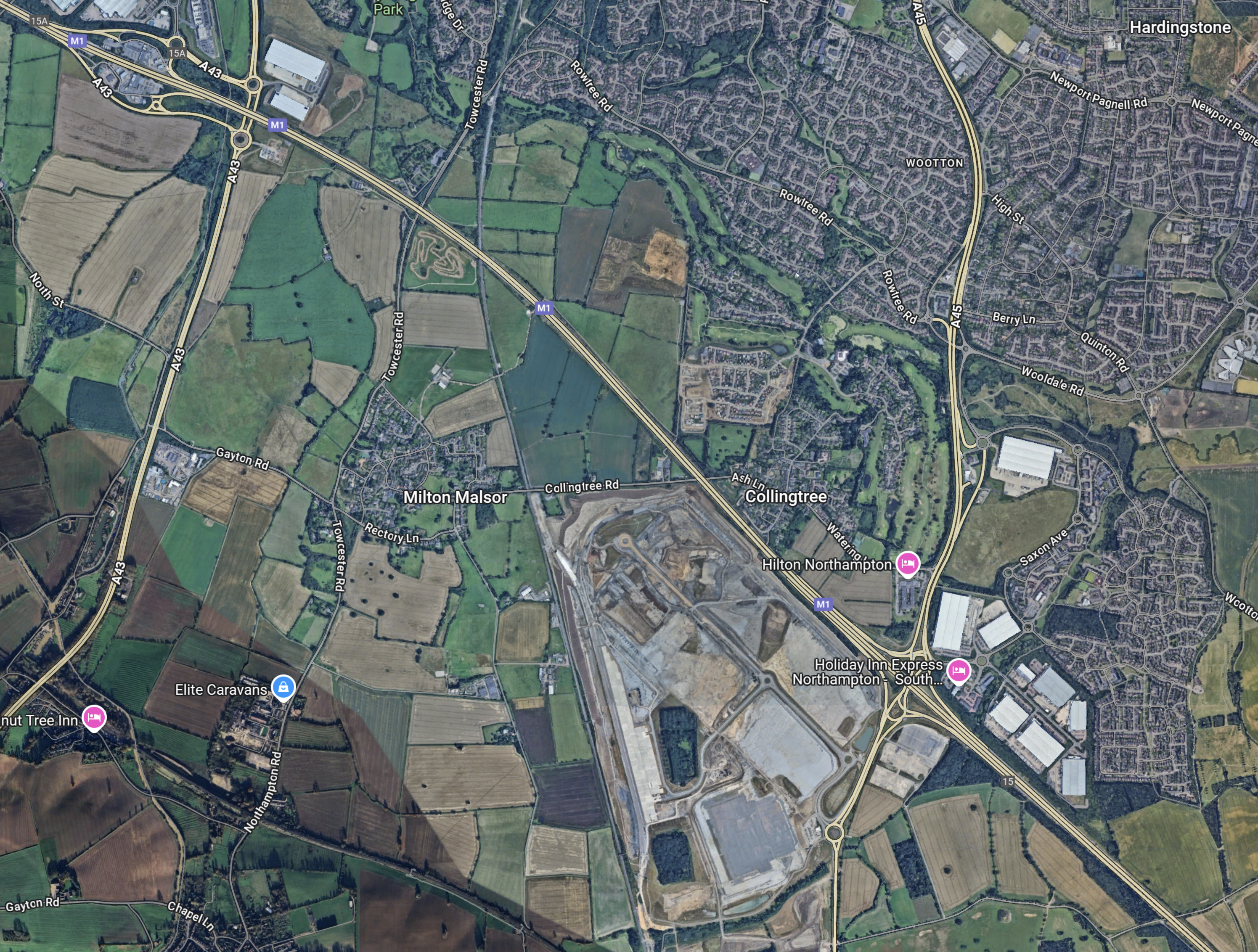
Note.
- The Northampton Loop of the West Coast Main Line running North-South across the map.
- The M1 Motorway running between the North-West and South-East corners of the map.
- Junction 15 is the M1 junction in the South-East corner of the map which connects the logistics park and the A45 to the M1.
- Junction 15A is the M1 junction in the North-West corner of the map which connects the A43 and Northampton services to the M1.
- There is probably space to add more warehouses and other facilities.
The logistics park is well connected to both rail and road.
This second Google Map shows the rail connection to the logistics park in more detail.
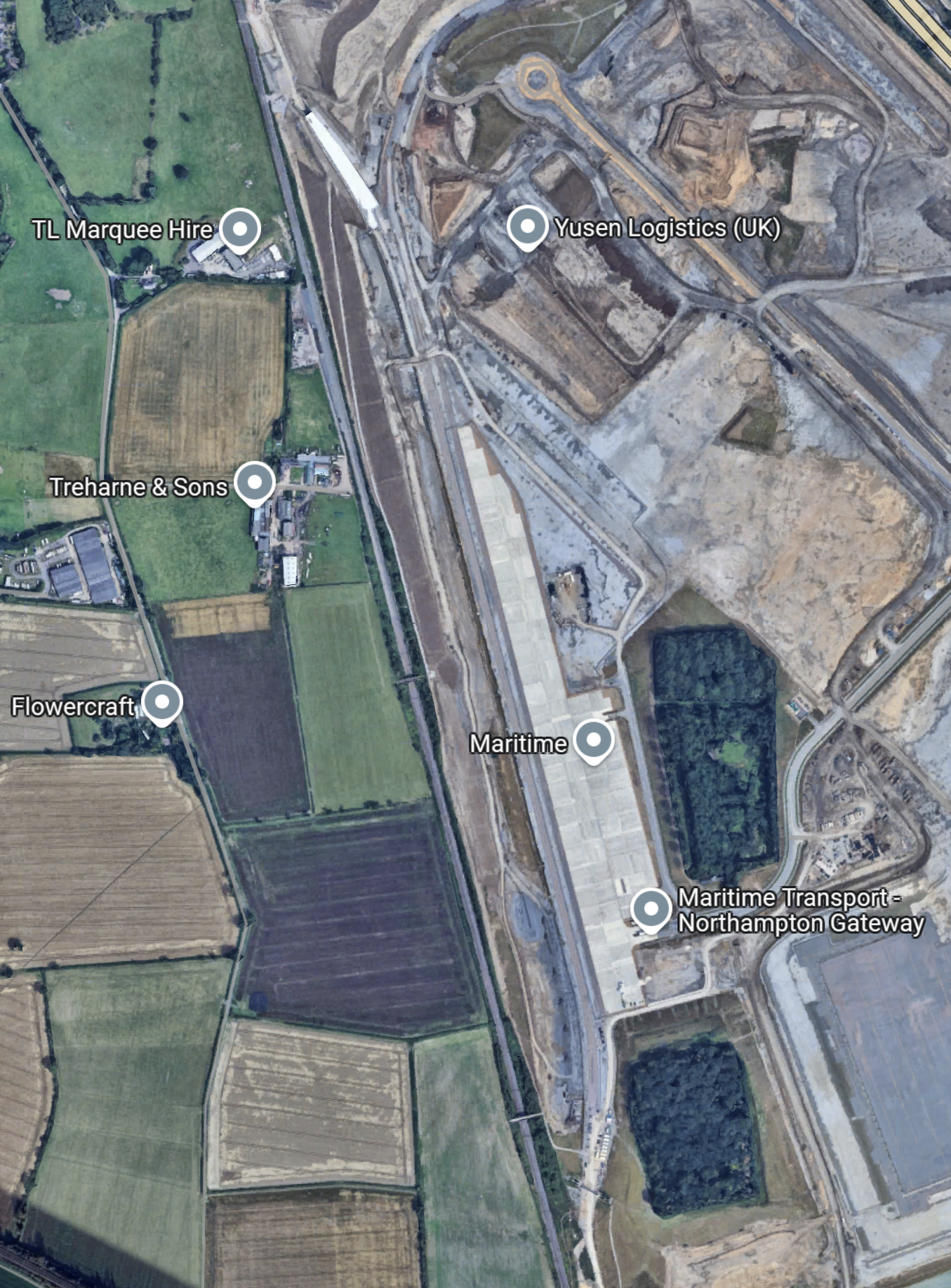
From this map, it appears that Network Rail have met their objective outlined in this paragraph of the news item.
The modern junction design allows freight trains to enter and exit the site at speeds of up to 40mph, which is eight times faster than conventional freight connections.
As only freight trains and slower passenger trains use the Northampton Loop, I would expect that freight trains should be able to enter and leave the logistics park with the minimum of disruption to traffic on the Northampton Loop.
The Route Of Yesterday’s Train
These three paragraphs from the Network Rail news item describe the route.
The first commercial freight train has travelled along the East West Rail line as part of its journey into a new strategic rail freight interchange in Northampton.
Shortly after 13:00 yesterday (Monday 16 June) the service* from Didcot came onto the new infrastructure at Oxford, travelling the 35 miles to Milton Keynes to connect with the West Coast Main Line.
It marked the first time East West Rail infrastructure has been used for commercial freight, after many months of signaller training and train driver learning since the £1.2bn railway was completed in October 2024.
This OpenRailwayMap shows the route from Didcot to Milton Keynes.
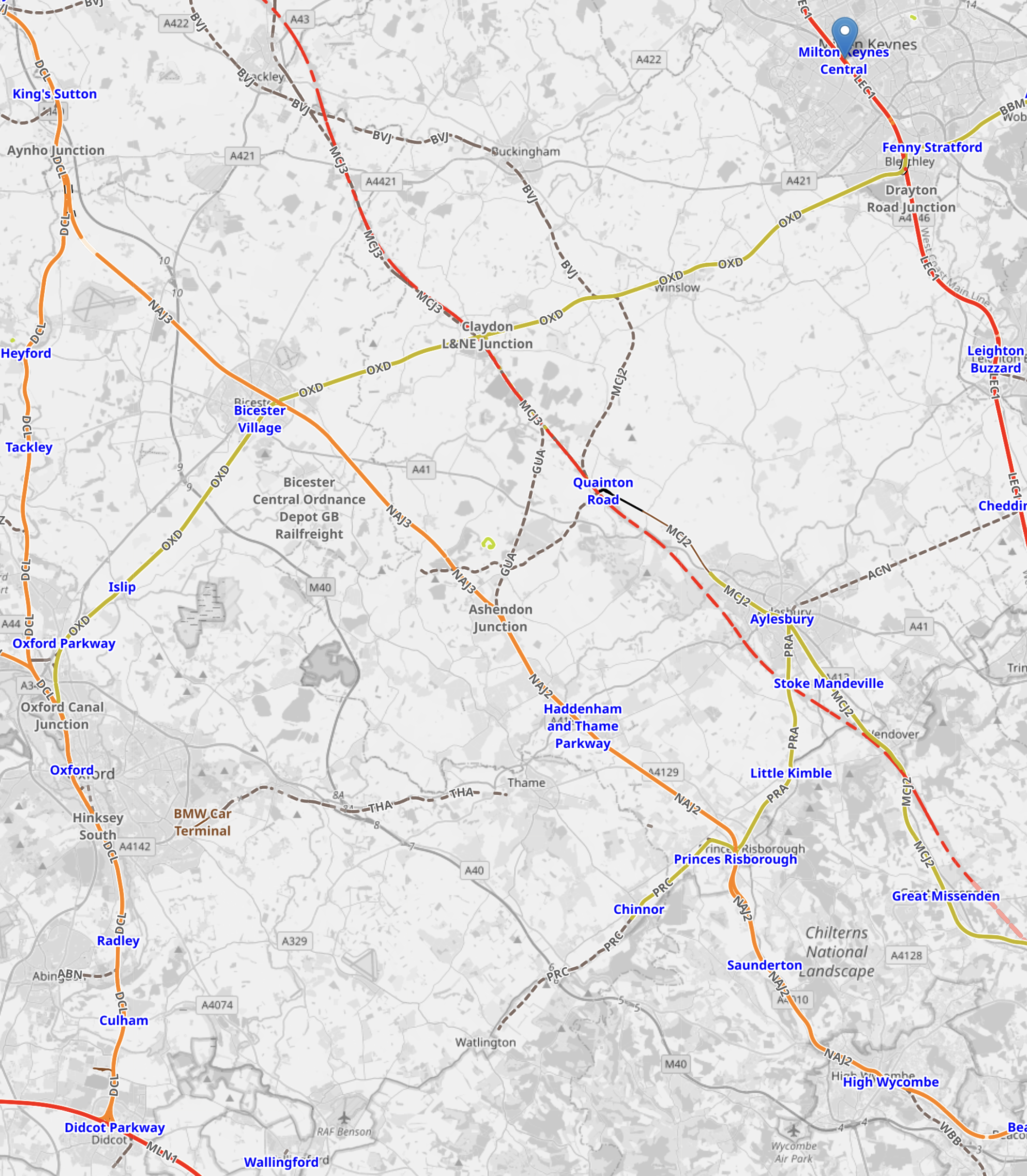
Note.
Didcot Parkway station is in the South-West corner of the map.
Milton Keynes Central is in the North-East corner of the map and marked with a blue error.
The route is via Oxford, Oxford Parkway, Bicester Village, Winslow and Bletchley.
This video shows the train passing Winslow.
Bicester Village Station – 28th May 2025
I went to Bicester Village station today and took these pictures.
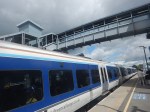
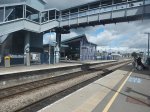
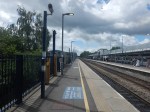
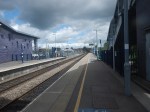

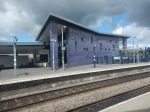
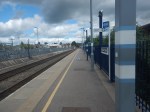
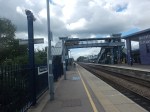
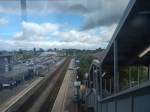
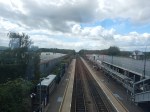
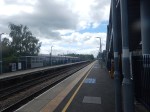
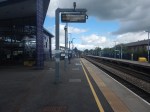
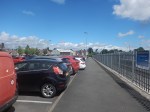
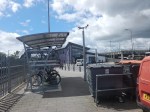
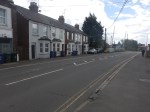
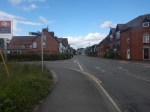
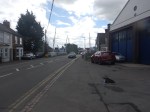
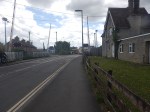
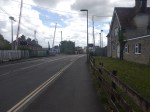
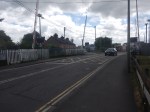
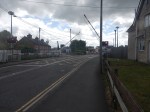
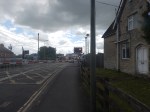
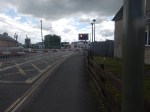
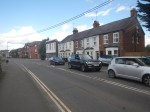
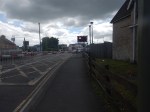
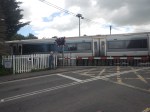
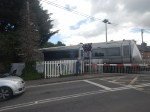
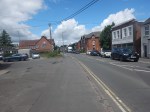
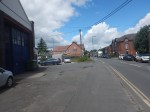
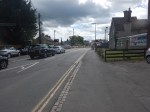

Note.
- The station is fully step-free, with lifts.
- There is a reasonable coffee-shop.
- There is a very large car-park.
There are two trains per hour (tph) in both directions between Marylebone and Oxford stations.
This Google Map shows the station.
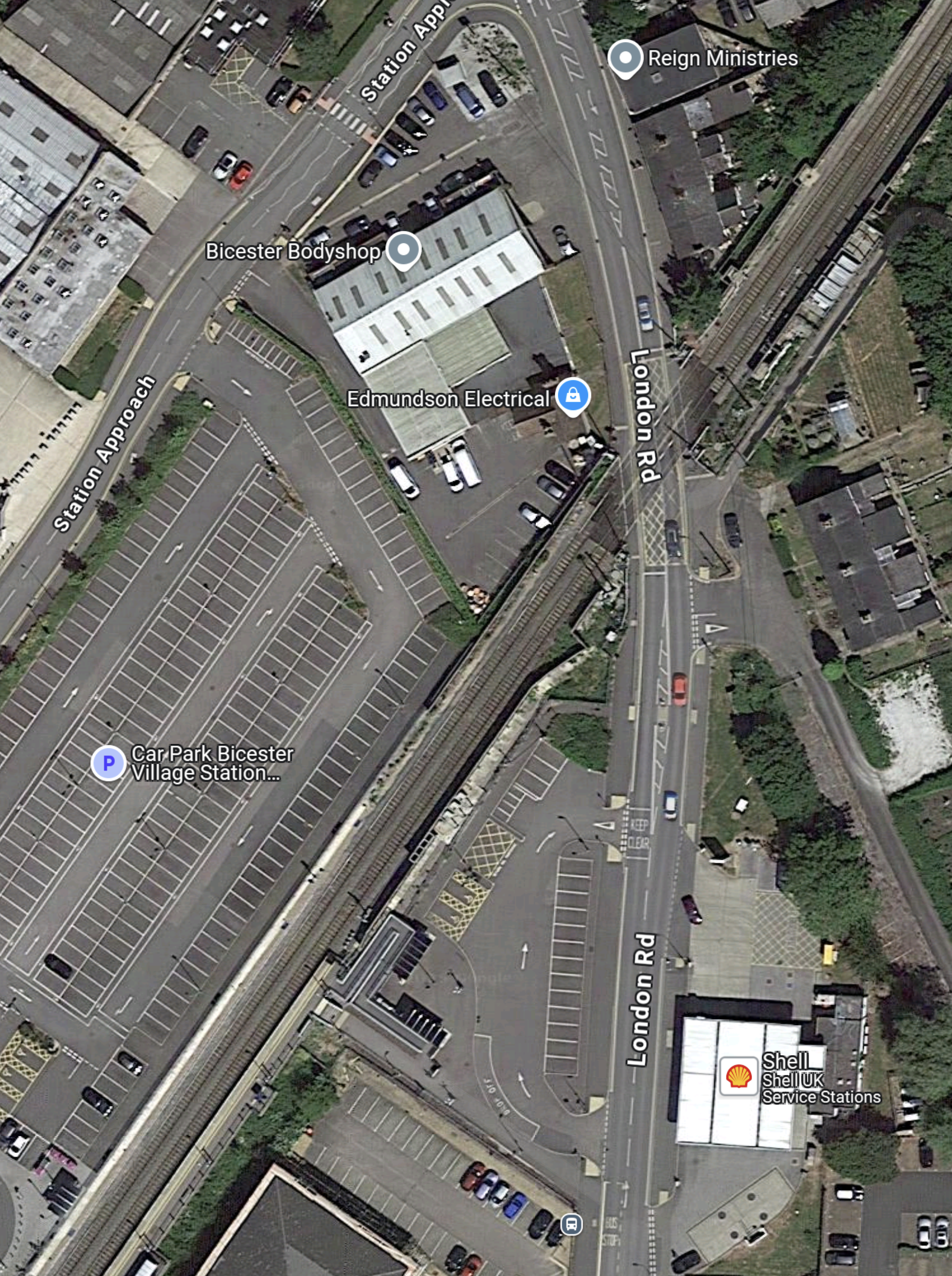
Note.
- London is to the North.
- Oxford is to the South.
- The footbridge dates from October 2021 and is not shown on the map.
- The London Road level crossing is in the North-East corner of the map.
- The London Road level crossing is a problem, as I indicated in Bicester MP Calls On Chancellor To Fund London Road Crossing.
- To take the pictures of the level crossing, I crossed the footbridge to the North-West side of the station and walked through the car park to the station entrance on Station Approach. I then walked past the Bicester Bodyshop and Edmundson Electrical to the level crossing.
- The Shell garage can be clearly seen behind the level crossing.
During my walk of about thirty-five minutes three trains passed over the level crossing.
These are my thoughts.
The Long Platforms
The platforms are long.
- The Oxford-bound platform, which is Platform 1, is 240 metres long.
- The London-bound platform, which is Platform 2, is 230 metres long.
Both platforms will take a pair of five-car Hitachi Express Trains.
It looks to me, that East-West Rail are expecting a large number of passengers.
East-West Rail Plans For Powering Trains
I detailed these in Plans For Powering Trains And Details Of Our Upcoming Consultation.This post was based on an East-West Rail news item with the same title.
Distances include.
- London Marylebone and Oxford – 66.8 miles.
- Bletchley and Oxford – 47.2 miles.
Both distances are within range of five-car Hitachi Express Trains, that have been fitted with batteries.
I also suspect other manufacturers could supply suitable trains.
Thoughts On The London Road Level Crossing
This article on the BBC is entitled Level Crossing Petition Supported By Thousands.
This is the sub-heading.
A petition calling for a fully accessible underpass at a town’s level crossing has received more than 3,000 signatures.
These three paragraphs add more detail.
Launched by MP for Bicester and Woodstock Calum Miller, the petition calls on the government to ensure any replacement of the level crossing at London Road in Bicester includes access for cars, not just cyclists and pedestrians.
It is set to be closed on safety grounds when the East West Rail (EWR) line becomes fully operational, which many fear would cut off crucial access to thousands of residents.
Mr Miller will present the petition, which can only be signed in person, in Parliament on 3 June.
The argument is certainly hotting up.
But I believe, that a bridge that meets everybody’s requirements might be possible to be built.
- Suppose that all trains and locomotives passing through the level crossing had to be self-powered. Passenger trains could be battery-electric and freight locomotives could be either hydrogen or battery powered through the location of the level crossing.
- The track could also be lowered through the crossing.
- These actions would reduce the height of any bridge taking the road over the railway.
It looks to me that on the Northumberland Railway, which has recently opened, they had a similar problem, but they were able to squeeze a bridge into the space, as this 3D Google Map shows.
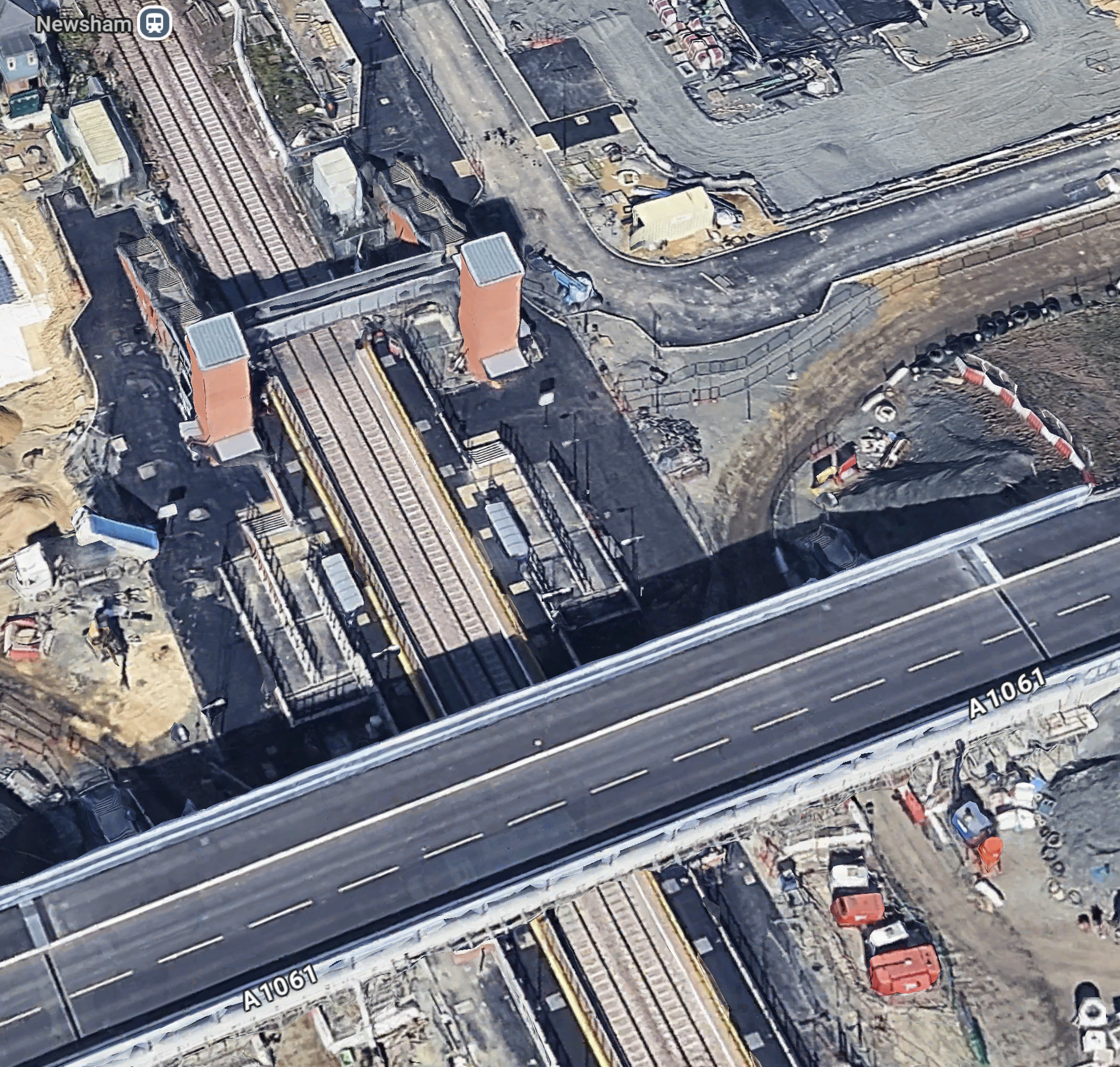
Note.
- The bridge looks like it carries a two-lane road and a pedestrian/cycle way.
- There is no electrification.
- I believe that the Northumberland Line could be run by battery-electric trains.
- The road bridge has been built to accept all traffic using the railway.
In Newsham Station – 30th March 2025, there are several pictures of the bridge. This one shows the bridge with a train.
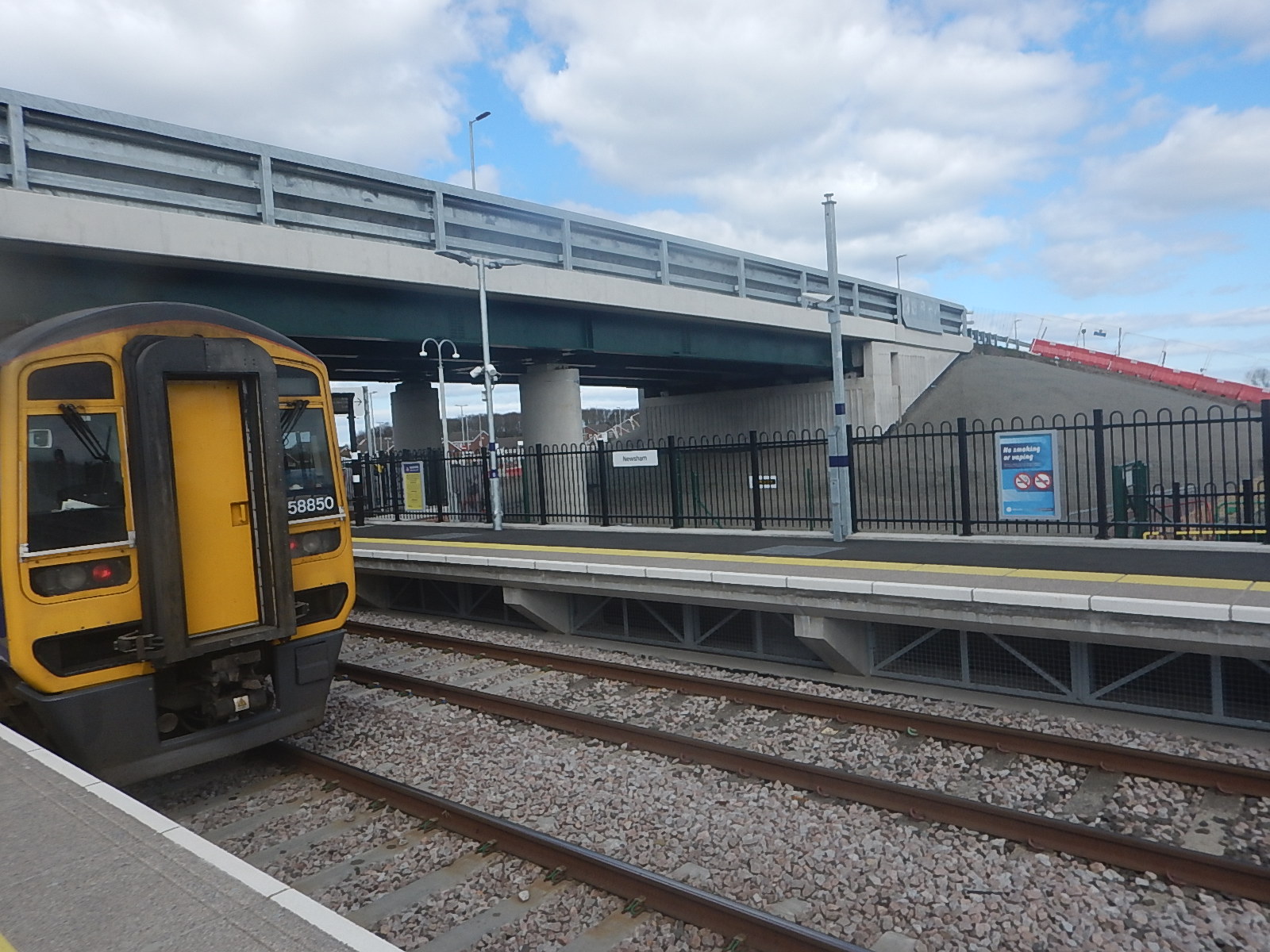
In Trains: £34m For Revival Of 50-Year-Old North-East Railway Line, I said this about battery-electric trains for the Northumberland Line.
I’m drawn inextricably to the conclusion, that the trains should be 100 mph battery-electric trains.
Hitachi, who have a factory in the North-East, have announced their Regional Battery Train in July 2020, which is described in this Hitachi infographic.

These trains can be based on Class 385 trains.
- They are 100 mph trains.
- They come in three- and four-cars lengths.
- The three-car trains have 206 seats.
- They can work in pairs.
- They can use 25 KVAC overhead electrification.
- They have a range of 90 kilometres or 56 miles on battery power.
- The batteries would be charged on the ECML between Benton North junction and Newcastle station.
- The battery packs will be designed and manufactured by Hyperdrive Innovation in Sunderland.
- They have big windows for the views.
I’m sure Hitachi and Hyperdrive would like a fleet in service, just up the road from their factories.
Could a similar or even thinner bridge be squeezed in at Bicester Village station to take London Road over the railway?
I think it can, if they use some of the latest 3D modelling.
 The Anonymous Widower