London And Edinburgh By Lumo Using the Joint Line Diversion
This press release on the First Group web site is entitled FirstGroup Applies To Run Rochdale To London Rail Service With New British-Built Trains.
These are the first two paragraphs.
FirstGroup plc, the leading private sector transport operator, has submitted the first phase of an application for a new open access rail service between Rochdale and London to the Office of Rail and Road (ORR), restoring this direct link for the first time in almost a quarter of a century.
FirstGroup plans to expand its open access rail operations as part of its successful Lumo business, building on Lumo’s existing service which has transformed long-distance connectivity between London and Edinburgh and helped support a growth in passenger numbers for all operators on the East Coast Mainline. All of the trains on this new route will be electric and battery powered, and the service will be operated by brand new trains built in the UK.
Note.
- This service will be run under the Lumo brand.
- Battery-electric trains will be used.
- Stops will include Manchester Victoria, Eccles, Newton-le-Willows and Warrington Bank Quay.
- Only 15 km. of the route, between Miles Platting and Rochdale is not electrified.
Allowing for out and back trips between Platting and Rochdale, a sensible reserve and I suspect a battery-electric train with a range of 40-50 kilometres, would allow the train to be able to do a round trip to Rochdale from London Euston.
Hitachi have now published this page on their web site, which is entitled Intercity Battery Trains.
These are the first two paragraphs.
A quick and easy application of battery technology is to install it on existing or future Hitachi intercity trains. Hitachi Rail’s modular design means this can be done without the need to re-engineer or rebuild the train and return them to service as quickly as possible for passengers.
Replacing one diesel engine with just one battery reduces emissions by more than 20% and offers cost savings of 20-30%. Our intercity battery powered trains can cover 70km on non-electrified routes, operating at intercity speeds at the same or increased performance.
It would appear that Hitachi’s standard Intercity Battery Train will have a range of 70 km.
- A 70 km. range would be more than enough to handle Lumo’s Euston and Rochdale service.
- Lumo’s Class 803 trains don’t have a diesel generator to replace.
- One car does have a smaller battery for emergency hotel power, should the electrification fail.
As an Electrical Engineer, I wouldn’t be surprised to find out that the traction batteries of Hitachi’s standard Intercity Battery Train and the emergency batteries of Lumo’s Class 803 trains are of a similar design. The batteries could even be interchangeable, which would enable both Lumo’s routes to Scotland and Rochdale to use identical Class 803 trains.
Lumo’s Class 803 trains would have this specification.
- All-electric.
- Emergency battery to provide back-up hotel power.
- A range on battery of 70 km or 43 miles away from electrification.
The off-electrification range could be very useful in getting round incidents or overhead wiring problems.
An extended range of 70 km. would allow the following destinations to have all-electric services from London.
- Beverley #
- Bristol Temple Meads #
- Cheltenham #
- Chester
- Harrogate
- Huddersfield
- Hull
- Lincoln
- Middlesbrough
- Swansea #
Destinations marked with a hash (#), would need charging at the final destination.
A more detailed analysis will probably show other possible routes.
It looks to me, that Hitachi have got the specification of their Intercity Battery Train about right.
Bridging The Joint Line Diversion
This OpenRailwayMap shows the Great Northern and Great Eastern Joint Line (GNGE) or Joint Line.
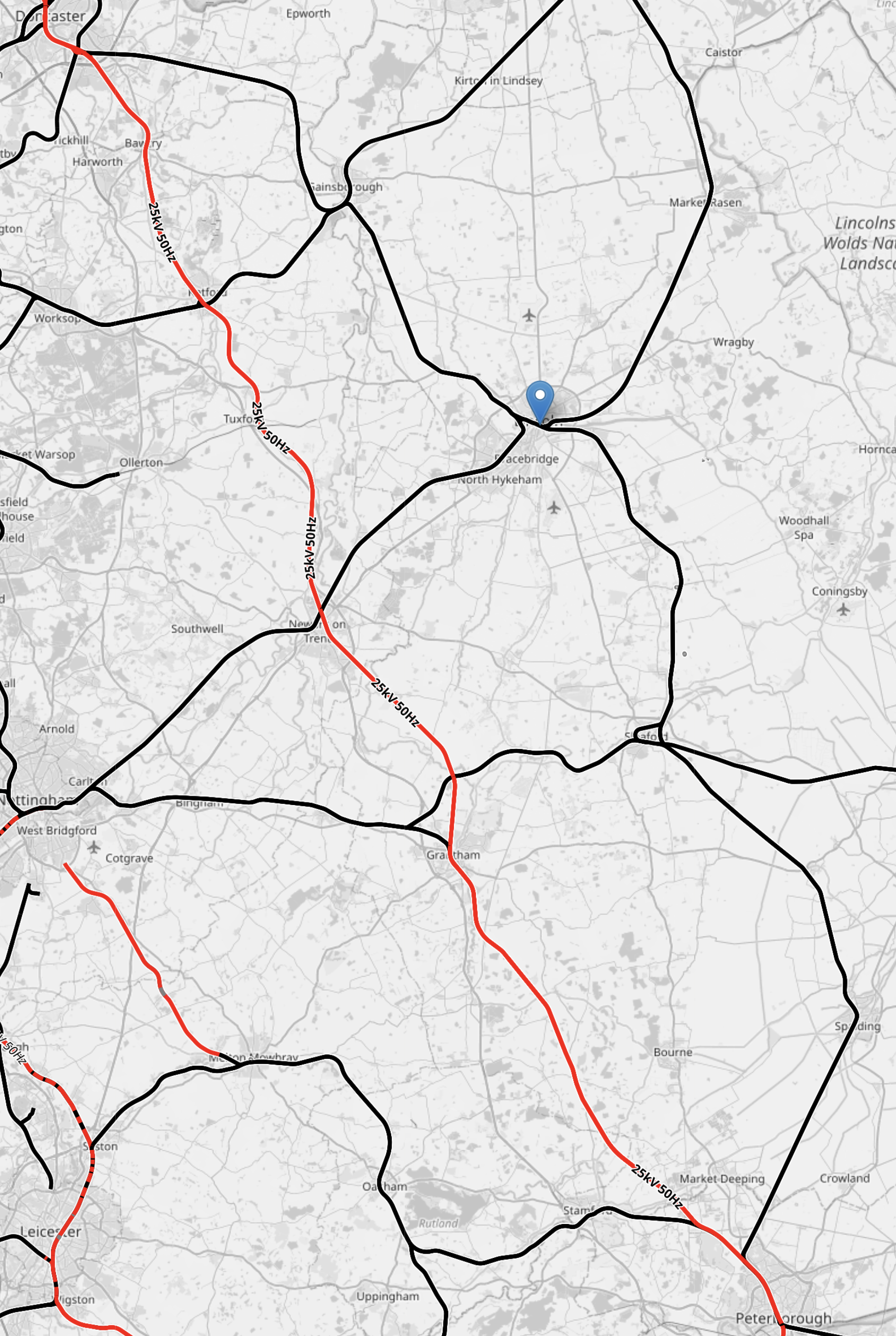
Note.
- Doncaster is in the North-West corner of the map.
- Peterborough is in the South-East corner of the map.
- The red line connecting them is the East Coast Main Line.
- Lincoln station is marked by the blue arrow.
Great Northern and Great Eastern Joint Line (GNGE) is described like this by its Wikipedia entry.
The Great Northern and Great Eastern Joint Railway, colloquially referred to as “the Joint Line” was a railway line connecting Doncaster and Lincoln with March and Huntingdon in the eastern counties of England. It was owned jointly by the Great Northern Railway (GNR) and the Great Eastern Railway (GER).
Over the last decades of the Twentieth Century, the Joint Line declined and British Rail did their worst to simplify the route.
But in the 2010s, Network Rail developed the route into a by-pass for the East Coast Main Line between Werrington and Black Carr junctions via Lincoln.
- Trains are routed via Spalding, Sleaford, Lincoln, Saxilby and Gainsborough.
- There is no electrification.
- The route can handle two freight trains per hour.
- The route can handle 9 ft. 6 in containers.
- There is a passenger service between Doncaster and Peterborough via Lincoln.
- Self-powered trains like InterCity125s, Class 800 trains and Class 802 trains can use their diesel power to use the diversion.
- All-electric trains, like LNER’s Class 801 trains and Lumo’s Class 803 trains have no self-power, so can’t use the diversion.
- Black Carr junction and Lincoln is 35 miles.
- Werrington junction and Lincoln is 51.7 miles.
The January 2024 Edition of Modern Railways says that the diversion is approximately 90 miles or 145 kilometers.
It would appear that there are two simple solutions.
- Electrify a section through Lincoln, so that Lincoln is within 70 kilometres of the electrification at both Werrington and Black Carr junctions.
- Fit bigger batteries to the trains.
A combination of both solutions might be possible.
FirstGroup’s Lumo Seeks To Launch Rochdale – London Open Access Service
The title of this post, is the same as that of this article on Railway Gazette.
These two paragraphs outline the service.
FirstGroup has applied to operate Rochdale – London open access passenger trains, more than 20 years after a short-lived through service ran between the two destinations.
On May 17 FirstGroup said that it had applied to the Office of Rail & Road to launch six Lumo-branded return journeys per day linking London Euston and Rochdale via the West Coast Main Line. The trains would call at Warrington Bank Quay, Newton-le-Willows, Eccles and Manchester Victoria.
These are my thoughts.
The Route Isn’t Fully-Electrified
The route is electrified between London Euston and Manchester Victoria stations, but the 10.4 miles between Manchester Victoria and Rochdale is not electrified.
In Extra Luggage Racks For Lumo, I also talk about the possibility of fitting traction batteries to Lumo’s Class 803 trains, so they could handle the 88.5 mile diversion on the East Coast Main Line via Lincoln.
Trains with a traction battery, with an 88.5 mile range, would be able to travel between Manchester Victoria and Rochdale and return.
How Long Would London Euston And Rochdale Take?
Consider.
- The fastest London Euston and Warrington Bank Quay services take 1 hour and 44 minutes
- The fastest Warrington Bank Quay and London Euston services take 1 hour and 47 minutes
- Northern’s Class 195 trains take between 44-51 minutes Rochdale and Warrington Bank Quay with three stops.
- Northern’s Class 195 trains take between 29-32 minutes Manchester Victoria and Warrington Bank Quay with two stops.
- I will add two minutes for the extra stop.
These are my estimates for overall journey times.
- London Euston and Manchester Victoria – 2 hours and 15 minutes
- London Euston and Rochdale – 2 hours and 29 minutes
- Manchester Victoria and London Euston – 2 hours and 21 minutes
- Rochdale and London Euston – 2 hours and 40 minutes
The fastest direct Avanti West Coast services between London Euston and Manchester Piccadilly take 2 hours and 6 minutes.
Could The Service Be Extended To Leeds?
For my timings between Rochdale and Warrington Bank Quay, I used Northern’s Leeds and Chester service.
This service goes between Manchester Victoria and Leeds calling at Rochdale, Todmorden, Hebden Bridge, Halifax, Bradford Interchange, New Pudsey and Bramley.
I estimate it would take about 3 hours 32 minutes.
When Bradford has a new through station, I wouldn’t be surprised if a train operator looked at this route between London Euston and Leeds.
As Leeds and Manchester Victoria is only 49.8 miles, Lumo’s battery electric trains, with 88.5 mile batteries sized for the Lincoln diversion on the East Coast Main Line, would have no difficulty serving Leeds, where they would charge before return.
Could Lumo Run Pairs Of Five-Car Trains Between London Euston and Manchester Victoria?
As I said in Ten-Car Hull Trains, Lumo’s sister company; Hull Trains, runs the occasional ten-car service.
Perhaps for a big football match or other event, Lumo might like to run ten-car trains between Manchester Victoria and London Euston.
I suspect they could do it if the platforms were long enough, but they wouldn’t be able to run a 260 metre ten-car train to Rochdale, as that station only has a 135 metre long platform.
Warrington Bank Quay Station Will Get Six Extra Non-Stop Trains To And From London
This would provide real competition to Avanti West Coast over this route.
Newton-le-Willows Station Is Only A Few Miles From The Town Of St. Helen’s
Newton-le-Willows station has 400 parking spaces and 32 disabled parking spaces.
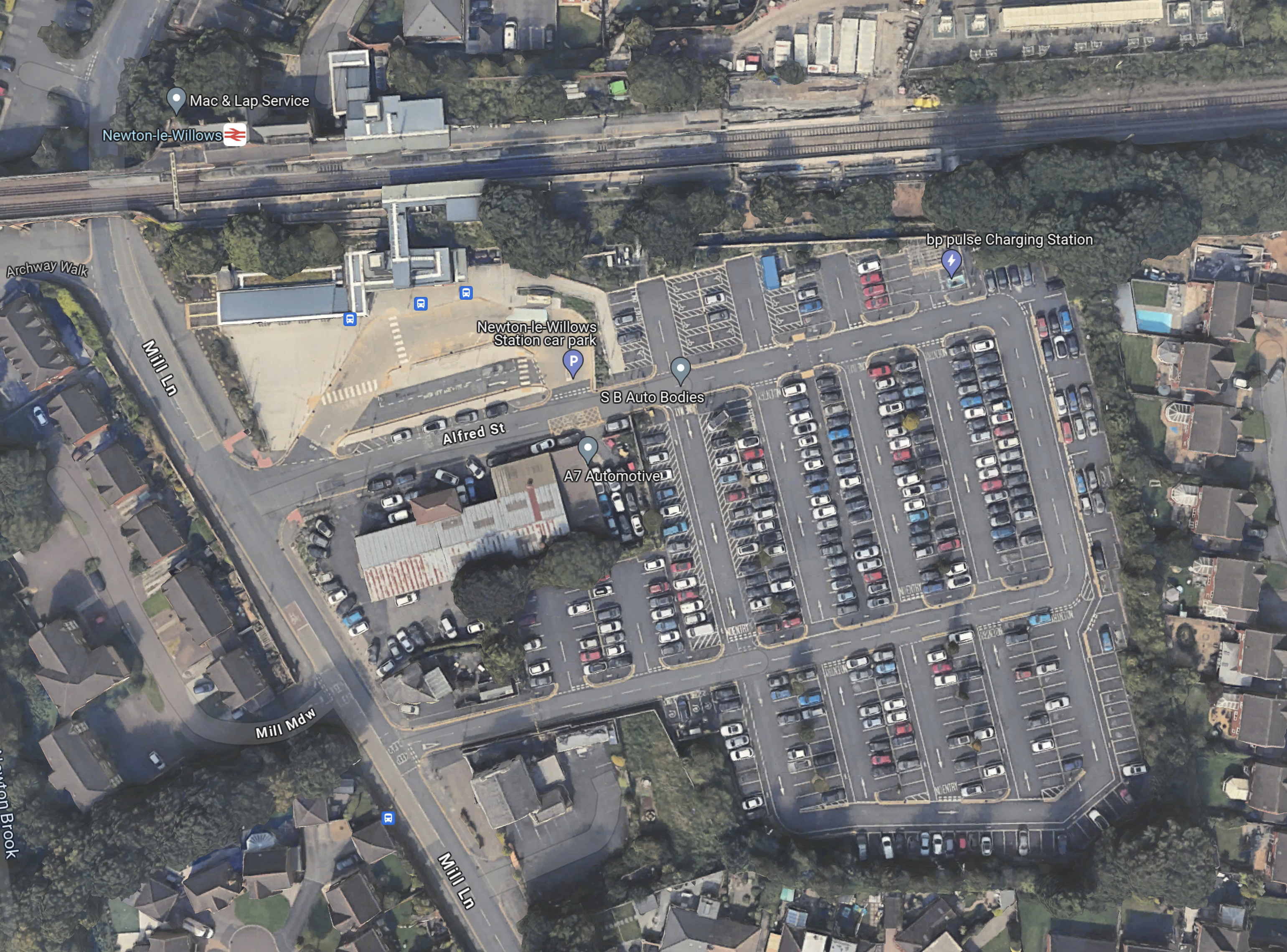
Note.
- The parking is all free!
- There are regular local trains to Chester, Leeds, Liverpool Lime Street, Manchester Airport and Wigan North Western.
A six trains-per-day service to and from London, will help fill up the parking spaces.
Eccles Station Is Within Walking Distance Of Eccles Interchange
This OpenRailwayMap shows Eccles station and Eccles Interchange.
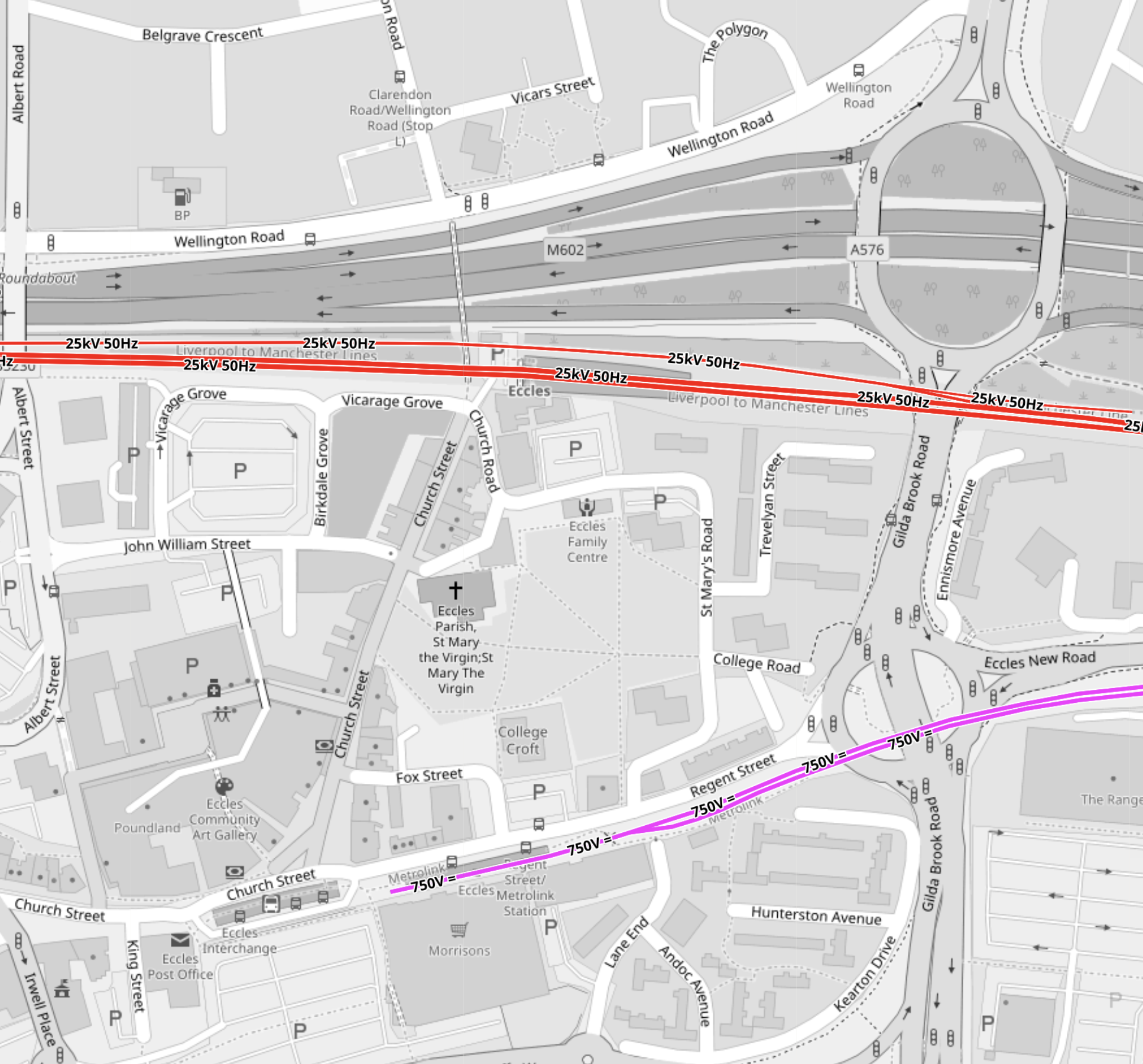
Note.
- The mauve tracks are the Manchester Metrolink.
- They terminate in the South-West at Eccles Interchange.
- The red tracks are the Liverpool-Manchester lines.
- Eccles station is a Northerly walk from Eccles Interchange.
This connection must be useful to more than a few.
I suspect if you’re going between London and Media City UK, Salford Quays or Piccadilly Gardens, you may be better to change to the Metrolink at Eccles.
Will Lumo’s Rochdale Service Run As A Flight With Avanti’s Glasgow Service?
Flighting is where two or more trains going on the same route run a few minutes apart.
- Every hour, on the half hour, an Avanti West Coast service for leaves London Euston for Glasgow Central.
- As with Lumo’s Rochdale service, the first stop is Warrington Bank Quay station.
- The Lumo service would leave London Euston a few minutes after Avanti’s Glasgow service.
- The distance between the two trains would be such, that if the first train stopped, the second train could stop safely.
- Digital signalling as is being installed on UK rail lines would make it easier to ensure safe separation.
But the benefit would be that both trains ran fast to Warrington Bank Quay station.
A Day-Trip To Manchester
If I’m right about the 2 hours and 15-21 minutes between London Euston and Manchester Victoria, then a day-trip would certainly be feasible.
Last Trains
This is a table of the last train times for Lumo between Newcastle and London.
- Weekdays – 20:27 21:35
- Saturdays – 18:27 19:22
- Sundays – 19:24 20:21
Note.
- The first time is the last Northbound departure.
- The second time is the last Southbound departure.
- Are these late enough for football matches?
I shall be interested to see the proposed last train times for the Manchester route.
- Will they be timed so you can get a tram from the Etihad or Old Trafford stadium after an evening match, that allowed you to get the last train back to London from Manchester Victoria?
- Taylor Swift gave the Manchester Arena a lot of favours with her concerts. Would you have been able to see her concert and get the last train back to London?
A few extra full trains wouldn’t hurt Lumo’s finances.
Conclusion
It looks like, this could be a very worthwhile service.
Lumo In Discussions To Operate Glasgow Services
The title of this post, is the same as that of this press release from FirstGroup.
These four paragraphs give more details.
FirstGroup, the leading private sector transport operator, today announces that its popular open access rail service Lumo is in discussions with Transport Scotland and Network Rail to extend some of its London-Edinburgh trains to and from Glasgow.
Having identified opportunities to extend a number of daily journeys to and from Glasgow in the timetables for 2025 and beyond, work will now continue with Transport Scotland and track infrastructure manager Network Rail to agree final route options and timings ahead of an application for access rights to the Office of Rail and Road (‘ORR’), the industry regulator.
If successful, the new services could be in operation from next summer.
Lumo’s proposed new offering will improve links for customers travelling between Newcastle and Glasgow, giving people a choice of services without needing to change trains. In addition, a significant number of users of Lumo’s current London-Edinburgh trains go on to travel through to Glasgow via other connections, and through this move, Lumo aims to offer a direct through service for these customers.
I have a few thoughts.
There Appears To Be A Need For An Affordable London And Glasgow Service
This is the last sentence of my extract from the press release.
In addition, a significant number of users of Lumo’s current London-Edinburgh trains go on to travel through to Glasgow via other connections, and through this move, Lumo aims to offer a direct through service for these customers.
This looks to be a service, that has been suggested by an analysis of passengers’ tickets.
Which Station Will Lumo Use In Glasgow?
Consider.
- The current LNER service between London King’s Cross and Glasgow, uses Glasgow Central station and it takes 66 minutes between Edinburgh and Glasgow Central stations.
- LNER’s service also calls at Haymarket and Motherwell.
- ScotRail services between Edinburgh and Glasgow Queen Street take about 49-50 minutes.
I suspect, that Lumo will take the faster route.
Newcastle And Glasgow Is A New Route
Currently, all passengers between Glasgow and Newcastle have to change at Edinburgh.
This will be the first direct train in my memory, except for LNER’s single daily service between London and Glasgow Central, which stops at Newcastle.
What About The Football?
Glasgow is very much about football.
Would it be possible to use Lumo to see a match starting at 15:00 on a Saturday afternoon, if you lived in London?
- The 05:48 train from King’s Cross on a Saturday arrives in Edinburgh at 10:07.
- Trains between Edinburgh and Glasgow take fifty minutes, so I feel it would be reasonable to be able to get to Glasgow by 10:57.
This time would be more than early enough to have a few swift halves and see the match if it started at 15:00.
But would it be possible to get back to London after the match?
- The last train leaves Edinburgh at 17:55 and arrives in King’s Cross at 22:26.
- Applying the fifty minute journey time between Edinburgh and Glasgow means it will leave at 17:05.
- It appears that from Ibrox and Celtic Park to Glasgow Central or Glasgow Queen Street station is about twenty minutes.
On the current timetable, it would appear to be possible, but tight.
One alternative would be to take the Caledonian Sleeper back to London. But it doesn’t appear to run on a Saturday night.
Coaches do run and an overnight coach costs around twenty pounds.
It looks like if Lumo ran a service about 18:00 on a Saturday to London, it wouldn’t run empty.
Will Lumo Need More Trains?
In the press release, FirstGroup plc Chief Executive Officer Graham Sutherland, is quoted as saying.
Once preferred route options and timings have been agreed, discussions will continue with Network Rail and the ORR to secure the required approvals. The journeys would be operated within the existing Lumo fleet of all-electric trains and it is anticipated that the additional services could begin in summer 2025.
That looks to me, that they will not be obtaining more trains before next summer.
In Ten-Car Hull Trains, I noted that some of Hull Trains services were now running as ten-car trains.
If the passenger demand is there for ten-car trains to Hull, which is almost exactly half the distance of Edinburgh, I would expect that in the future, Lumo will be running some services as ten-car trains.
In Extra Luggage Racks For Lumo, which is based on an article in the November 2023 Edition of Modern Railways, an alternative view on more trains is taken.
The Modern Railways article finishes with this paragraph.
Lumo celebrated its second birthday in late October and was also set to mark the carriage of its two-millionth passenger. It is understood Lumo is interested in augmenting its fleet, such has been the success of the service; while many operators favour bi-mode units, Lumo is proud of its all-electric credentials so straight EMUs are still preferred, although the possibilities of including batteries which could power the trains may be pursued (the ‘803s’ have on-board batteries, but only to provide power to on-board systems if the electricity supply fails).
I find this development very interesting.
As London King’s Cross and Edinburgh and Glasgow are all electric routes, in normal service batteries should not be needed, but sometimes trains have to use the diversion via Lincoln, which I have estimated is 86.5 miles.
As an electrical engineer, I’ve always believed that the emergency batteries in the Class 803 trains are very similar to the traction batteries that Hitachi are developing for the Class 802 trains.
A traction battery, that was capable of handling the diversion would stop Lumo having to cancel occasional services.
Conclusion
An extension to Glasgow looks like it could be a simple and profitable way to extend the current Lumo service.
But it might need some extra trains in the future.
A Lumo service to Glasgow, might be helped by a seven-day service on the Caledonian Sleeper, so passenger could go North on Lumo and South on the Sleeper to get a full day in Glasgow.
The Bay Platform At Greenford Station
These pictures show Greenford station.
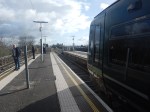

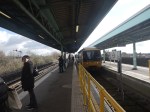
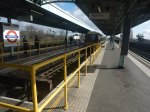
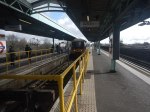
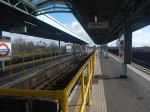
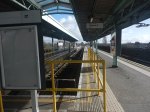
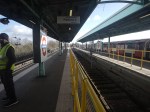
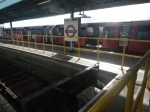
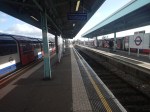
I have some observations to make.
Electrification
Tests for the new battery-electric train would appear to be taking place soon, but there is no electrification or Vivarail/GWR Fast Charge system.
This leads me to the conclusion, that all charging will be done at West Ealing station.
What Length Of Train That Can Be Accommodated In Platform 2 At Greenford Station?
Consider.
- The two-car Class 165 train shown in the pictures is 47 metres long.
- FirstGroup’s test Class 230 train appears from a GWR video, to be three-cars, which would make it 54.663 metres long.
- The test Class 230 train would appear to be nearly eight metres longer, than the current train that works the route.
From the pictures it appears that there is sufficient space in the platform to accommodate the longer train.
More Open Access Services Could Be On The Way
In the February 2024 Edition of Modern Railways, there is an article which is entitled First Bid For Sheffield To King’s Cross Paths.
The article is mainly about FirstGroup’s proposal for a new Sheffield and London service, running under the Hull Trains brand.
But, this is the last paragraph.
Modern Railways understands First is working on a number of proposals for additional open access services, and this is an early statement of intent. Other existing open access proposals include Grand Union Trains’ plans for London to Stirling and Cardiff to Edinburgh services, along with an already approved London to Carmarthen service, and the recently submitted Wrexham, Shropshire and Midland Railway application for a London to Wrexham service. It is understood other organisations, including MTR and Virgin, are also working up plans for new open access services.
These are my thoughts.
Grand Union Trains
These posts talk about Grand Union Trains services, where a proposal has been filed with the Office of Rail and Road.
- Grand Union Trains – Cardiff and Edinburgh – Cardiff – Edinburgh Open Access Train Service Proposal Under Development
- Grand Union Trains – Carmarthen and London – Regulator Approves New Grand Union Train Service From Carmarthen To London Paddington
- Grand Union Trains – Stirling and Euston – Grand Union Sets Out Stirling Ambitions
Note.
- All three services are substantially electrified.
- Cardiff and Edinburgh is not electrified between Severn Tunnel Junction and Doncaster, which is 180.7 miles, but 258.4 miles are electrified.
- Once the Midland Main Line is electrified, the longest section of unelectrified track is the 72.5 miles between Severn Tunnel Junction and Bromsgrove.
- Carmarthen and London has 145.1 miles of electrification between London and Cardiff and about 75 miles of unelectrified track West of Cardiff.
- Stirling and Euston is fully electrified.
A bi-mode or tri-mode train with an independent range at least 190 miles would be able to handle all three services. It would also allow extension of the Stirling service to Perth, if later that was felt to be a better terminus.
Trains able to be used would include.
- CAF Tri-Mode Train – As being built for LNER
- Class 221 train – Will be released soon by Avanti West Coast.
- Class 222 train – Will be released soon by East Midlands Railways
- Class 802 train
- Class 755 train – A Greater Anglia driver told me, the train is designed for 125 mph.
- Class 93 locomotive and a rake of coaches.
Note.
- All trains except the Class 221 and Class 222 trains would be able to make use of the electrification.
- The Class 93 locomotive option is not a 125 mph train.
- CAF Tri-Mode Train and the Class 802 train have digital signalling as standard, which could allow some 140 mph running.
But I do believe after the completion of the Midland Main Line electrification, a battery-electric high speed train with an independent range of around 100 miles could also handle all routes with perhaps charging in a couple of stations, like Carmarthen.
The services could of course be commenced using refurbished Class 221 and Class 222 trains from Avanti West Coast and East Midlands Railways respectively.
I can see a bidding and design war going on between CAF, Hitachi and Stadler to supply Grand Union Trains.
Liverpool Lime Street Station
Liverpool Lime Street station has been updated and has the capacity for extra services.
I also feel, that with the improvements to the West Coast Main Line and especially between Crewe and Liverpool in preparation for High Speed Two, that journey times between London and Liverpool will improve to around two hours.
Given the attractions of Liverpool, this will increase passenger numbers on the route and I believe extra services will be viable.
The Wikipedia entry for the station says this about a proposal from Virgin.
In June 2019, Virgin Trains lodged an application for an open access service from London Euston to Liverpool Lime Street calling at Nuneaton, Tamworth, Lichfield Trent Valley, Liverpool South Parkway and Liverpool Lime Street to rival the future West Coast Partnership franchise Avanti West Coast from December 2022.
It does seem to have gone quiet.
A Fast Zero-Carbon Route Between England And Ireland
This OpenRailwayMap shows Liverpool South Parkway station and Liverpool John Lennon Airport.

Note.
Liverpool South Parkway station is in the North-West corner of the map.
The orange track at the top of the map is the Liverpool branch of the West Coast Main Line.
At the bottom of the map, the long runway of Liverpool John Lennon Airport can be seen.
I believe that a fast link could be developed between the station and the airport.
- Initially this would be a coach.
- But later it could be developed as a tram-train from the City Centre, that also would call at Liverpool South Parkway station.
Operation of the airport could be ideal for up to 30-seater electric airliners.
Destinations served could include.
- Belfast City – 151 miles
- Bristol – 135 miles
- Cardiff – 135 miles
- Derry/Londonderry – 210 miles
- Dublin – 140 miles
- Glasgow – 186 miles
- Haverfordwest – 127 miles
- Humberside – 104 miles
- London City – 176 miles
- Norwich – 180 miles
- Ronaldsway – 89 miles
- Southend – 172 miles
Note.
- Liverpool appears to sit in circle of airports
- An Eviation Alice has a range of 290 miles with 9 passengers.
- The Wikipedia entry for Heart Aerospace, says their 30-seater electric airliner says it has a range of 124 miles or more if less passengers are carried.
- The East-West runway is also in line with the prevailing wind, which should help take-off.
- Liverpool Airport is located such that there is access to plentiful supplies of green electricity and hydrogen.
I will be very surprised if Liverpool Airport doesn’t develop into an airport for zero-carbon flights.
This could attract open access rail services from London and across the country.
Huddersfield
In First Bid For Sheffield To King’s Cross Paths, I postulated that Huddersfield station could be an ideal extension of FirstGroup’s proposed open access service between London King’s Cross and Sheffield.
How Many Direct Trains Should There Be Between London Paddington And Newquay?
The Mid-Cornwall Metro will see the following improvements on the Atlantic Coast Line between Newquay and Par stations.
- A second platform built at Newquay station.
- There will be a passing loop across Treegoss Moor.
- There will be a step-free bridge at Par station.
This will allow the current service on the line to be increased from two-hourly to hourly.
FirstGroup’s services in the UK, include several services, where a service is extended to a terminus away from the main line.
- Avanti West Coast – two trains per day (tpd) to Blackpool
- Great Western Railway – six tpd to Carmarthen
- Hull Trains – five tpd to Hull.
- Hull Trains – two tpd to Beverley.
- Hull Trains (proposed) – two tpd to Worksop and Sheffield.
Given that there will only be an hourly local service on the Atlantic Coast Line, I suspect that FirstGroup will be able to run up to six tpd to Newquay to satisfy the traffic needs of the London and Newquay service.
How Will Great Western Railway Run A Service To Newquay?
Last weekend, when I went to Ebbw Vale, I wrote My Train To Wales Today Divided At Swansea.
My train, that day was a ten-car train formed of a pair of Class 800 trains.
- The front train was signed as going to Swansea.
- The rear train was signed as going to Carmarthen.
- At Swansea the trains split into two.
- The front train finished its journey.
- The rear train reversed out and continued to Carmarthen.
Returning to London Paddington, trains join at Swansea.
Will Great Western Railway use a similar operation with Newquay services.
The train would be a ten-car train formed of a pair of Class 802 trains.
- One train would be going to Plymouth and the other train to Newquay.
- At Plymouth the trains split into two.
- One train finishes its journey at Plymouth.
- The other train continues to Newquay.
As Bodmin General station, has a second platform, that was recently built with financial help from Great Western Railway, could this be another destination served by splitting a train at Plymouth?
I discuss the implications of the second platform at Bodmin General station in Beeching Reversal – Increased Service Provision Bodmin General-Bodmin Parkway
How Long Would A Round Trip Take Between Plymouth And Newquay?
Current timings are as follows.
- Plymouth to Par – 34.7 miles – 50 minutes
- Par to Newquay – 20.8 miles – 51 minutes
- Turnround at Newquay – 5 minutes
- Newquay to Par – 20.8 miles – 51 minutes
- Par to Plymouth – 34.7 miles – 50 minutes
Note.
- Times are from Class 802 trains between Par to Plymouth.
- Times are for Class 150 trains between Par and Newquay.
Total time is 207 minutes or three hours and twenty-seven minutes.
Extending The Elizabeth Line – Could Open Access Services Use The Elizabeth Line?
In the February 2024 Edition of Modern Railways, there is an article which is entitled First Bid For Sheffield To King’s Cross Paths.
The article is mainly about FirstGroup’s proposal for a new Sheffield and London service, running under the Hull Trains brand.
But, this is the last paragraph.
Modern Railways understands First is working on a number of proposals for additional open access services, and this is an early statement of intent. Other existing open access proposals include Grand Union Trains’ plans for London to Stirling and Cardiff to Edinburgh services, along with an already approved London to Carmarthen service, and the recently submitted Wrexham, Shropshire and Midland Railway application for a London to Wrexham service. It is understood other organisations, including MTR and Virgin, are also working up plans for new open access services.
The respected Modern Railways magazine seem to think, that we’ll be seeing more open access services on UK railways.
These are my thoughts.
A Simple Example – London Crosslink
In Extending The Elizabeth Line – London Crosslink, I said this.
In the Wikipedia entry for the London Crosslink, this is the introduction.
London Crosslink was a passenger train service operated by Anglia Railways between Norwich and Basingstoke, using the North London Line to bypass central London. Class 170 Turbostar diesel multiple units were used, and the service operated between 22 May 2000 and 28 September 2002, supported by funding from the Strategic Rail Authority through its Rail Passenger Partnership fund.
As it was discontinued and it doesn’t seem to be sadly missed, I’m not advocating its reinstatement, but just looking how it might be run after the full opening of the Elizabeth Line.
But surely, there were good reasons, why the service was run in the first place and there might be a need in the future.
These are some characteristics of the service.
- There were about half-a-dozen services in both directions every day.
- At its full length it ran between Norwich and Basingstoke.
- Stops included Diss, Stowmarket, Ipswich, Colchester, Witham, Chelmsford, Ingatestone, Romford, Stratford, Highbury & Islington, Camden Road, West Hampstead, Brentford, Feltham, Staines, Woking and Farnborough (Main).
- Each service seemed to have a different stopping pattern.
- The timetable wasn’t very regular.
- The route wasn’t fully electrified.
It appears that it may have been a difficult service to timetable.
I lived North of Ipswich for some years.
I never used the London CrossLink service, as I had moved away before the service started in 2000.
- I would have found the change to the Central Line at Stratford station useful.
- I would have found the change to the Victoria Line at Highbury & Islington station useful.
- I would have found the change to Thameslink at West Hampstead station useful.
- Basingstoke would have given access to Greater South-West England.
- I could have got a bus to Heathrow from Feltham.
But getting to Marylebone, Paddington and Waterloo would have still been tedious.
Could a replacement for the London CrossLink be routed via the Elizabeth Line?
- The service would use the Elizabeth Line between Stratford and Reading.
- The service would use the Reading and Basingstoke Line between Reading and Basingstoke.
The route has some advantages over the original route.
- Except for the 13.6 miles between Southcote Junction and Basingstoke, the route is fully-electrified.
- Whitechapel will give access to London Overground services.
- Farringdon will give access to Thameslink services.
- There will be a lot of connections at Tottenham Court Road and Bond Street.
- Paddington and Reading will give access to Heathrow, Oxford and West of England services.
- Basingstoke will give access to Greater South-West England.
It is certainly an as-useful route as the original, if not more so.
The Trains
In Extending The Elizabeth Line – Will There Be A Need For Long Distance Class 345 Train?, I set out how a standard Class 345 train could be updated with faster running and a more appropriate interior.
As the Elizabeth Line is likely to need some more trains if High Speed Two is delayed, perhaps some extra trains should be ordered fairly soon.
The Routes
Consider.
- A terminal station would probably need to be electrified to the Elizabeth Line route.
- It would need the infrastructure to turn the trains.
These stations could probably be used as terminal stations.
- Basingstoke
- Bristol
- Cardiff
- Colchester
- Faversham
- Hoo – See Extending The Elizabeth Line – A Branch To The Isle Of Grain.
- Ipswich
- Northfleet – For European services at Ebbsfleet International.
- Norwich
- Oxford
- Rochester
- Southampton
- Southend Victoria
There will certainly be others.
Why Use Open Access?
Suppose an operator wants to run a service between Bristol Parkway and Northfleet to give the West Country access to European services.
- The operator takes all the risk and Network Rail get track access charges.
- Do Transport for London get track access charges for the Elizabeth Line tunnels?
- If they get their predictions and sums wrong, they lose the money.
But if they get it right, they probably sell it to an infrastructure company at a profit.
Conclusion
I think open access operation might work through the Elizabeth Line Tunnels.
High Speed Yorkshire
In December 2019, I wrote Could High Speed Two Be A One-Nation Project?, which I started like this.
As currently envisioned, High Speed Two is very much an English project, with the following routes
- London and Birmingham
- London and Liverpool via Birmingham
- London and Manchester Airport/Manchester via Birmingham and Crewe
- London and Sheffield via Birmingham and the East Midlands Hub
- London and Leeds via Birmingham and the East Midlands Hub
There are large numbers of mid-sized towns and cities that it won’t serve directly.
This is what I said about the East Coast Main Line in the post.
The East Coast Main Line serves the following routes.
- London and Bradford
- London and Cambridge
- London and Edinburgh via Doncaster, York and Newcastle
- London and Harrogate via Leeds
- London and Hull
- London and Kings Lynn via Cambridge
- London and Lincoln via Newark.
- London and Leeds via Doncaster
- London and Middlesbrough
- London and Skipton via Leeds
- London and Sunderland
The East Coast Main Line could become another high speed line.
Extra services could be added.
- London and Norwich via Cambridge
- London and Nottingham
- London and Grimsby and Cleethorpes via Lincoln.
- London and Sheffield via Retford.
Add the East Coast Main Line and High Speed Two together and there could be a wider range of towns and cities served.
- Peterborough and Doncaster could play the same role in the East as Birmingham and Crewe will play in the West.
- The East Coast Main Line between London and Doncaster will be upgraded to in-cab ERTMS signalling in a few years time, which will allow 140 mph running on several sections of the route.
- Improvements are either under way or being planned to reduce bottlenecks on the East Coast Main Line.
- If High Speed Two can handle eighteen trains per hour (tph), then surely the East Coast Main Line, which has a lot of quadruple track, can handle upwards of twelve 140 mph trains per hour between London and Doncaster, after the improvements to track and signalling.
- I estimate that 140 mph running between London and Doncaster could save as much as twenty minutes.
- I feel that Barnsley, Doncaster, Hull, Leeds, Sheffield and York could all be reached in under two hours from London using the existing Azuma trains.
- This morning the 0700 from Kings Cross is timetabled to reach York at 0852. Would it be possible for London and York to be around just ninety minutes?
- Savings would also apply to trains between London and Leeds, Middlesbrough, Newcastle, Scotland and Sunderland.
- Sub-four hour journeys between London and Edinburgh would be commonplace.
Note that the Internet gives a driving time of nearly three and a half hours between London and Leeds. Surely, two hours or less on High Speed Yorkshire would be much preferable.
I would add this infrastructure.
- There might be a good case to create electrified routes to Hull and Sheffield and between Sheffield and Leeds, but they wouldn’t be needed to start the service or obtain the time savings. But they would ease operation, cut carbon emissions and save a few more minutes.
- A station at Doncaster-Sheffield Airport.
- A parkway station at Barnsley on the Dearne Valley Line with direct services to Doncaster, Leeds, London and Sheffield.
The two latter improvements have been proposed in Sheffield Region’s transport plans.
High Speed Yorkshire should be finished as soon as possible. A completion date of 2024 is not unreasonable.
This was the first time I used the term High Speed Yorkshire.
Benefits Of Digital Signalling On The East Coast Main Line
The obvious benefit is there will be 140 mph running on several stretches of the East Coast Main Line.
But as a Control Engineer, I believe that the digital signalling can be used to eliminate two major bottlenecks on the route.
- The Digswell Viaduct, which I wrote about in Is There An ERTMS-based Solution To The Digswell Viaduct?.
- The Newark Flat Crossing, which I wrote about in Could ERTMS And ETCS Solve The Newark Crossing Problem?.
Digital Signalling will also offer techniques to run more trains per hour on the route.
LNER Orders CAF Tri-Mode Sets
The title of this section, is the same as this article in the December 2023 Edition of Modern Railways, which has this paragraph.
Modern Railways understands the new fleet will be maintained at Neville Hill depot in Leeds and, like the ‘225’ sets, will be used predominantly on services between London and Yorkshire, although unlike the ‘225s’ the tri-modes, with their self-power capability, will be able to serve destinations away from the electrified network such as Harrogate and Hull.
Note.
- This surprised me, as I’d always expected the Yorkshire routes will be served by Hitachi battery-electric trains.
- But it does look that both Harrogate and Hull stations, have long enough platforms to hold a ten-car train.
- With their tri-mode technology, it also looks like the CAF trains won’t be needed to be charged before returning to London.
The last point would enable them to try out new routes.
But it does look like LNER are planning to strengthen their Yorkshire routes.
- Does Azuma Test Train Takes To The Tracks As LNER Trials Possible New Route, also mean that they’re looking at a service to Cleethorpes?
- The curtailment of High Speed Two was hard on Yorkshire.
- The Government has had time to get a verdict from experts on TransPennine Express.
It could just be that, it’s easier to sell rail tickets to Yorkshire folk, than Lancashire folk.
FirstGroup Applies To Run New London To Sheffield Rail Service
The title of this section, is the same as that of this press release from First Group.
These two paragraphs outline FirstGroup’s initial plans.
FirstGroup plc, the leading private sector transport operator, has today submitted the first phase of an application for a new open access rail service between London and Sheffield to the Office of Rail and Road (ORR).
FirstGroup plans to expand its open access rail operations as part of its award-winning Hull Trains business, building on their successful existing service which has transformed long-distance connectivity between Hull and London.
Note.
- FirstGroup want to run two trains per day (tpd) between London King’s Cross and Sheffield stations via Retford.
- Services will be non-stop between London King’s Cross and Retford.
- The service will be run by Hull Trains.
- I suspect that Hull Trains will use a fleet of identical Hitachi trains for both services.
- Hull Trains could decarbonise the services by using battery-electric trains.
- I believe a time of 82 minutes will be possible between London King’s Cross and Sheffield.
- High Speed Two were promising a time of 87 minutes for their route from London Euston via Birmingham and Nottingham.
I believe there could be up to seven tpd to both Hull and Sheffield.
Timings On High Speed Yorkshire
In FirstGroup Applies To Run New London To Sheffield Rail Service, I felt the following is possible, between London King’s Cross and Sheffield.
- After the digital signalling is completed between King’s Cross and Retford, I suspect that a 135 mph average speed can be maintained between Woolmer Green and Retford. This would mean that a King’s Cross and Retford time of 68 minutes would be possible.
- If Network Rail improve the track between Retford and Sheffield, I believe that a 70 mph average could be achieved on the Retford and Sheffield section. This would mean that a Retford and Sheffield time of 20 minutes would be possible.
- I would expect at least six minutes would be saved by missing stops.
This gives a time of 82 minutes between London King’s Cross and Sheffield.
I will use these timings to calculate other possible times.
- Current time between London King’s Cross and Retford – 82 minutes
- Digitally signalled average speed between Woolmer Green and Retford – 135 mph
- Digitally signalled time between London King’s Cross and Retford – 68 minutes
- Digitally signaled time between London King’s Cross and Sheffield – 82 minutes
These are my estimated timings from London King’s Cross.
Barnetby via Newark Northgate and Lincoln
Operator: LNER
Served by High Speed Two: No
Time to/from London King’s Cross: 114 minutes
Barnetby via Peterborough and Lincoln
Operator: LNER
Served by High Speed Two: No
Time to/from London King’s Cross: 128 minutes
Barnsley via Sheffield
Operator: Hull Trains
Served by High Speed Two: No
Time to/from London King’s Cross: 112 minutes
Note: Uses Penistone Line and Hull Trains times to Sheffield
Beverley
Operator: Hull Trains
Served by High Speed Two: No
Time to/from London King’s Cross: 101 minutes
Note: Uses Hull Trains times from Doncaster
Bradford Foster Square via Leeds
Operator: LNER
Served by High Speed Two: No
Time to/from London King’s Cross: 146 minutes
Note: Uses LNER times from Leeds
Bradford Interchange via Doncaster
Operator: Grand Central
Served by High Speed Two: No
Time to/from London King’s Cross: 166 minutes
Note: Uses Grand Central times from Doncaster
Brighouse via Doncaster
Operator: Grand Central
Served by High Speed Two: No
Time to/from London King’s Cross: 143 minutes
Note: Uses Grand Central times from Doncaster
Brough
Operator: Hull Trains
Served by High Speed Two: No
Time to/from London King’s Cross: 101 minutes
Note: Uses Hull Trains times from Doncaster
Cleethorpes via Newark Northgate and Lincoln
Operator: LNER
Served by High Speed Two: No
Time to/from London King’s Cross: 141 minutes
Cleethorpes via Peterborough and Lincoln
Operator: LNER
Served by High Speed Two: No
Time to/from London King’s Cross: 155 minutes
Darlington
Operator: LNER
Served by High Speed Two: Yes
High Speed Two time to/from London Euston: 116 minutes
Time to/from London King’s Cross: 127 minutes
Doncaster
Operator: Grand Cenreal, Hull Trains, LNER
Served by High Speed Two: No
Time to/from London King’s Cross: 76 minutes
Durham
Operator: LNER
Served by High Speed Two: Yes
High Speed Two time to/from London Euston: 136 minutes
Time to/from London King’s Cross: 160 minutes
Eaglescliffe
Operator: Grand Central
Served by High Speed Two: No
Time to/from London King’s Cross: 155 minutes
Note: Uses Grand Central times from Northallerton
Edinburgh
Operator: LNER
Served by High Speed Two: Yes
High Speed Two time to/from London Euston: 220 minutes
Time to/from London King’s Cross: 234 minutes
Grantham
Operator: LNER
Served by High Speed Two: No
Time to/from London King’s Cross: 53 minutes
Grimsby Town via Newark Northgate and Lincoln
Operator: LNER
Served by High Speed Two: No
Time to/from London King’s Cross: 134 minutes
Grimsby Town via Peterborough and Lincoln
Operator: LNER
Served by High Speed Two: No
Time to/from London King’s Cross: 148 minutes
Halifax via Doncaster
Operator: Grand Central
Served by High Speed Two: No
Time to/from London King’s Cross: 153 minutes
Note: Uses Grand Central times from Doncaster
Harrogate
Operator: LNER
Served by High Speed Two: No
Time to/from London King’s Cross: 147 minutes
Note: Uses LNER times from Leeds
Hartlepool
Operator: Grand Central
Served by High Speed Two: No
Time to/from London King’s Cross: 175 minutes
Note: Uses Grand Central times from Northallerton
Horsforth
Operator: LNER
Served by High Speed Two: No
Time to/from London King’s Cross: 124 minutes
Note: Uses LNER times from Leeds
Huddersfield via Leeds
Operator: LNER
Served by High Speed Two: No
Time to/from London King’s Cross: 161 minutes
Note: Uses LNER times from Leeds
Huddersfield via Sheffield
Operator: Hull Trains
Served by High Speed Two: No
Time to/from London King’s Cross: 140 minutes
Note: Uses Penistone Line and Hull Trains times to Sheffield
Hull
Operator: Hull Trains
Served by High Speed Two: No
Time to/from London King’s Cross: 114 minutes
Note: Uses Hull Trains times from Doncaster
Keighley via Leeds
Operator: LNER
Served by High Speed Two: No
Time to/from London King’s Cross: 178 minutes
Note: Uses LNER times from Leeds
Leeds
Operator: LNER
Served by High Speed Two: Yes
High Speed Two time to/from London Euston: 81 minutes
Time to/from London King’s Cross: 116 minutes
Lincoln via Newark Northgate
Operator: LNER
Served by High Speed Two: No
Time to/from London King’s Cross: 85 minutes
Lincoln via Peterborough
Operator: LNER
Served by High Speed Two: No
Time to/from London King’s Cross: 99 minutes
Market Rasen via Newark Northgate and Lincoln
Operator: LNER
Served by High Speed Two: No
Time to/from London King’s Cross: 101 minutes
Market Rasen via Peterborough and Lincoln
Operator: LNER
Served by High Speed Two: No
Time to/from London King’s Cross: 115 minutes
Meadowhall via Sheffield
Operator: Hull Trains
Served by High Speed Two: No
Time to/from London King’s Cross: 90 minutes
Note: Uses Penistone Line and Hull Trains times to Sheffield
Middlesbrough
Operator: LNER
Served by High Speed Two: No
Time to/from London King’s Cross: 155 minutes
Mirfield via Doncaster
Operator: Grand Ccentral
Served by High Speed Two: No
Time to/from London King’s Cross: 136 minutes
Note: Uses Grand Central times from Doncaster
Newark Northgate
Operator: LNER
Served by High Speed Two: No
Time to/from London King’s Cross: 60 minutes
Newcastle
Operator: LNER
Served by High Speed Two: Yes
High Speed Two time to/from London Euston: 137 minutes
Time to/from London King’s Cross: 145 minutes
Northallerton
Operator: Grand Central, LNER
Served by High Speed Two: No
Time to/from London King’s Cross: 126 minutes
Peterborough
Operator: Grand Central, LNER
Served by High Speed Two: No
Time to/from London King’s Cross: 40 minutes
Pontefract Monkhill
Operator: Grand Central
Served by High Speed Two: No
Time to/from London King’s Cross: 103 minutes
Note: Uses Grand Central times from Doncaster
Retford
Operator: LNER
Served by High Speed Two: No
Time to/from London King’s Cross: 68 minutes
Selby
Operator: Hull Trains
Served by High Speed Two: No
Time to/from London King’s Cross: 92 minutes
Note: Uses Hull Trains times from Doncaster
Sheffield
Operator: Hull Trains
Served by High Speed Two: Yes
High Speed Two time to/from London Euston: 87 minutes
Time to/from London King’s Cross: 82 minutes
Shipley via Leeds
Operator: LNER
Served by High Speed Two: No
Time to/from London King’s Cross: 168 minutes
Note: Uses LNER times from Leeds
Skipton via Leeds
Operator: LNER
Served by High Speed Two: No
Time to/from London King’s Cross: 191 minutes
Note: Uses LNER times from Leeds
Sleaford
Operator: LNER
Served by High Speed Two: No
Time to/from London King’s Cross: 83 minutes
Spalding
Operator: LNER
Served by High Speed Two: No
Time to/from London King’s Cross: 61 minutes
Sunderland
Operator: Grand Central
Served by High Speed Two: No
Time to/from London King’s Cross: 194 minutes
Note: Uses Grand Central times from Northallerton
Thirsk
Operator: Grand Central
Served by High Speed Two: No
Time to/from London King’s Cross: 116 minutes
Note: Uses Grand Central times from Northallerton
Thornaby
Operator: LNER
Served by High Speed Two: No
Time to/from London King’s Cross: 146 minutes
Wakefield Kirkgate
Operator: Grand Central
Served by High Speed Two: No
Time to/from London King’s Cross: 118 minutes
Note: Uses Grand Central times from Doncaster
Wakefield Westgate
Operator: LNER
Served by High Speed Two: No
Time to/from London King’s Cross: 95 minutes
Worksop
Operator: Hull Trains
Served by High Speed Two: No
Time to/from London King’s Cross: 81 minutes
York
Operator: LNER
Served by High Speed Two: Yes
High Speed Two time to/from London Euston: 84 minutes
Time to/from London King’s Cross: 98 minutes
Note.
- Times have improved because of the digital signalling.
- As the digital signalling goes further North timings will will come down further.
- Unelectrified branches like those to Beverley, Cleethorpes, Grimsby, Harrogate, Huddersfield, Hull, Lincoln, Middlesbrough and Sheffield will be improved and further bring down times.
Sheffield could be as low as 80 minutes, with York at 91 minutes.
An Excursion To Retford And Worksop
Today’s excursion was designed to be simple.
- Take an LNER train or a Hull Train to Retford station.
- Travel to Worksop station, have a look and take a few pictures.
- Travel back to Retford and take the first train back to London.
- In one if my two visits to Retford, have a look and take a few pictures.
- Talk to passengers and railway staff about what they felt about FirstGroup’s Proposed Sheffield Service, that I wrote about in FirstGroup Applies To Run New London To Sheffield Rail Service.
These were my thoughts and observations.
LNER’s Improved Ticketing
These pictures show the tickets that I bought.

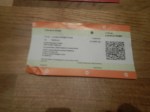
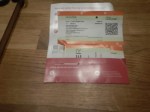
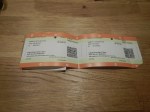
Note.
- I bought my ticket to Retford from the Ticket Office at King’s Cross station.
- The ticket seller gave me a well-designed folder for the tickets.
- I was also able to buy my return ticket between Retford and Worksop on the LNER train to Retford. I’ve tried doing that before and it wasn’t allowed.
Making ticketing easier must be a good thing for passengers, staff and LNER.
£24.75 With A Railcard From King’s Cross to Retford
- The second picture shows my ticket to Retford.
- It cost me just £24,75 with my Senior Railcard.
- I also bought it about half-an-hour before the train left.
- I bought the ticket in the Ticket Office.
- I got a forward-facing window seat with an unrestricted view.
How much would the 145 mile and nearly three-hour journey have cost in a car?
I Missed My Connection At Retford Station
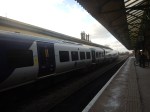
These pictures show my train to Worksop station in Platform 3 at Retford station, as I approached from the South.



Note.
The Northern Trains’s Class 195 train arriving on Platform 3 on the Sheffield and Lincoln Line.
- I arrived in Platform 2 at Retford station at 12:50
- There were three lifts or sets of stairs to negotiate between Platform 2 and Platform 3.
- It must take at least five minutes between the two platforms.
- One of the lifts was out of order and was being serviced by an engineer.
- There was no way, I could have caught the connection, which left at 12:51.
- At least one other passenger, had to wait the one hour and fifteen minutes I waited for the next train, which arrived at 14:03.
I feel that there needs to be a timetable adjustment here, so that as many passengers as possible avoid the long wait.
Retford Station
At least the long wait allowed me to take a lot of pictures and have a cup of coffee in the Costa Coffee on Platform 1.
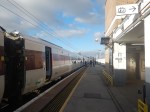
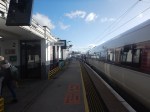
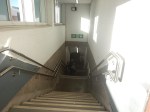
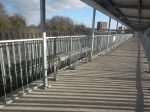
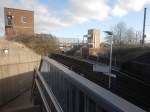
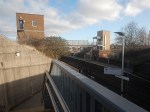
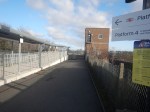

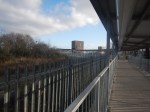

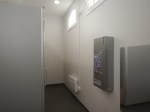
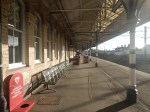


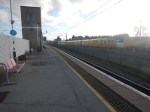
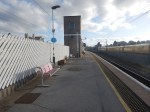
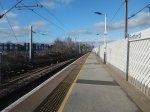
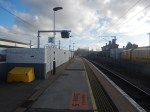
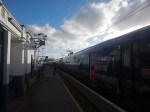
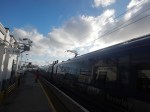
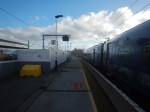
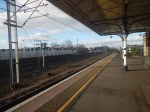
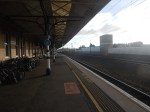
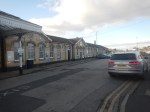
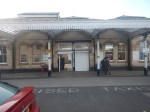

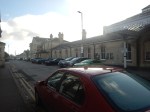
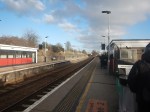
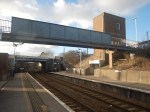
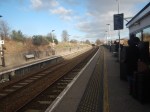
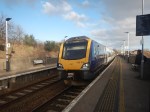
Note.
- The toilets were immaculate.
- The Costa Coffee had friendly and professional staff, but only rudimentary gluten-free options.
- The station is fully step-free with four lifts.
- Platforms 1 and 2 on the East Coast Main Line can take a pair of five-car Class 802 trains, as Hull Train demonstrated.
- The Hull Train in Platform 2 was using the electrification.
- The station is in very good condition.
- The station is Grade II Listed.
This Google Map shows the station.
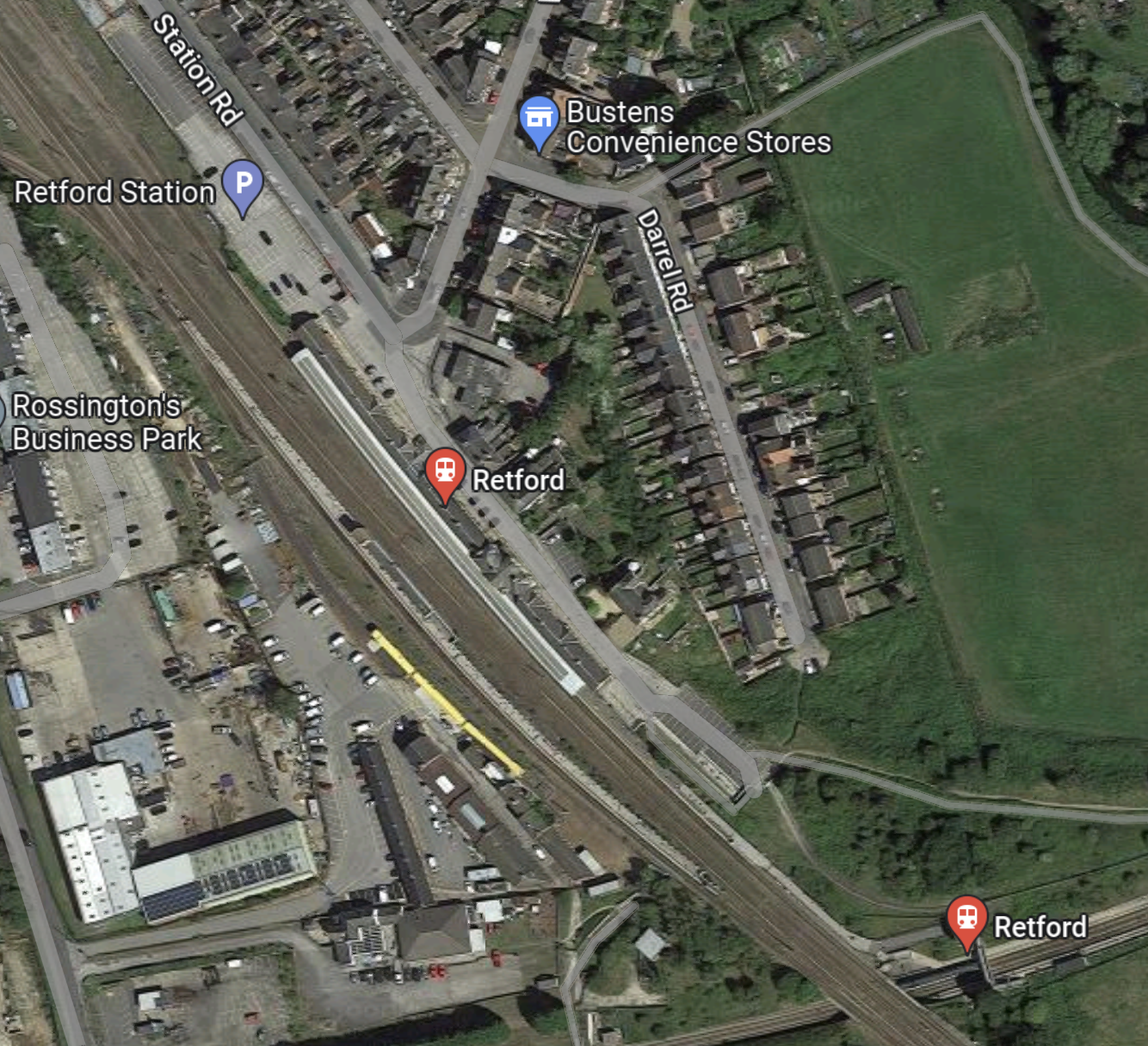
Note.
- The red arrow in the South-East corner are the low-level Platforms 3 and 4.
- The red arrow in the middle marks the low-level Platforms 1 and 2.
- Network Rail’s yellow Mobile Maintenance Train is visible in the siding opposite Platform 2.
- There is space around the platforms.
The station may have development possibilities. Especially, as there are signs of To Let over some of the buildings.
Ambitious Renewable Energy
Retford and Worksop are only eleven minutes away but there were a large wind farm and solar farms between the two stations.








Note.
- I was a bit slow on the uptake and missed the large wind farm.
- The strong sun was reflecting on the windows.
- They weren’t the best of photographs.
I had intended to take more and better pictures on the way back, but circumstances intervened.
This Google Map shows the wind and solar farms.

Note.
- The Sheffield and Lincoln Line going across the map.
- There are solar panels North and South of the railway.
- This is the Walkers Wood Solar Farm, which has a nameplate capacity of 27 MW.
- H M Prison Ranby is at the top of the map.
- The scars of the wind turbines are to the West of Babworth and the crematorium.
- At the moment, I can’t find any reference to the wind farm.
These wind and solar farms are probably a classic place to position a battery.
Prisons And Recycling
Worksop Station
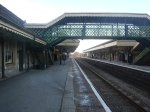
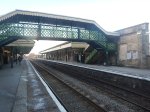
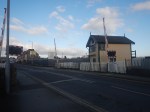
I took these pictures during the time I spent at Worksop station.
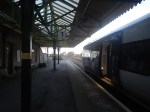
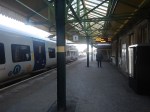
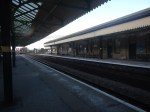
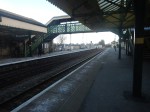


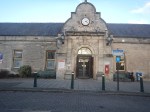

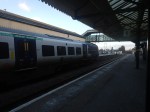
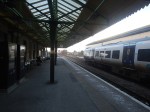
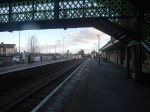



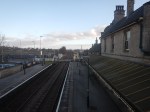
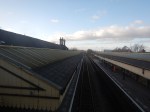
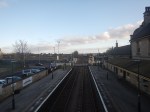
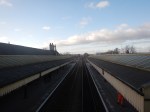

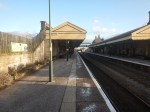
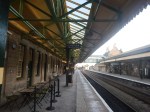
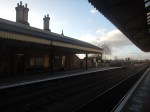
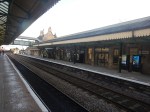
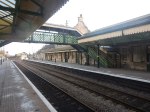
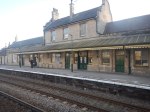

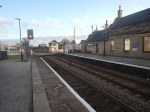
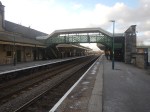
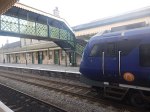
Note.
- The station is not step-free, although you can cross the tracks using the level-crossing.
- The station has a pub and a cafe.
- There are train services to Leeds, Lincoln, Nottingham and Sheffield.
- The station is in very good condition.
- The station is Grade II Listed.
- The platforms are long enough to handle a Class 802 train without any modification.
- Hull Trains could run their Sheffield service to Worksop station without any new infrastructure.
- Lidl are developing a site on the other side of the level crossing.
- There are 100 car parking spaces.
The station may have development possibilities.
Worksop Station Cafe
These pictures show the Worksop station cafe.



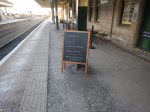





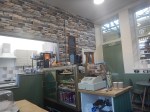

Note.
- It is run by two ladies; Jo and Lyndsey.
- As one is coeliac, there were lots of gluten-free cakes.
- It was cosy and warm on a cold day.
This is definitely one of the better station cafes.
A Double Incident
My journey back to the capital was I suspect untypical.
- I’d arrived at Worksop at 14:14 and finally left at 16:38 on a train for Retford and Lincoln.
- The delay was because someone had been hit by a train between Barnsley and Sheffield, which resulted in cancelled trains.
- When I arrived at Retford at 16:49, there was an LNER train in the platform.
- It was the 15:15 from Leeds and I was told by LNER staff to catch it and get my ticket on the train.
- The train finally left Retford for London 69 minutes late at 17:07.
- We arrived in Peterborough at 19:27, where the train was now 170 minutes late.
- The delay was because someone had been hit by a train at Newark, which results in delays everywhere.
- LNER decided to give up on the train and all passengers were put on other trains.
- I got on the 14:30 from Edinburgh, which arrived in King’s Cross at 20:22, which was 96 minutes late.
Worse things happen at sea.
I am adding this a day after my trip to the North.
This article on the BBC is entitled ‘Major Disruption’ After Person Hit By A Train.
These are the first three paragraphs.
Train services on the East Coast Main Line have been seriously disrupted after a person was hit by a train in North Yorkshire.
Network Rail said the incident happened just before 07:00 GMT between York and Thirsk, with emergency services attending the scene shortly afterwards.
The line was blocked, resulting in delays and cancellations.
Three in two days us three too many.
 The Anonymous Widower