Memories Of Althorpe
On The way to Cleethorpes, I passed through Althorpe station.
This Google Map shows the area.
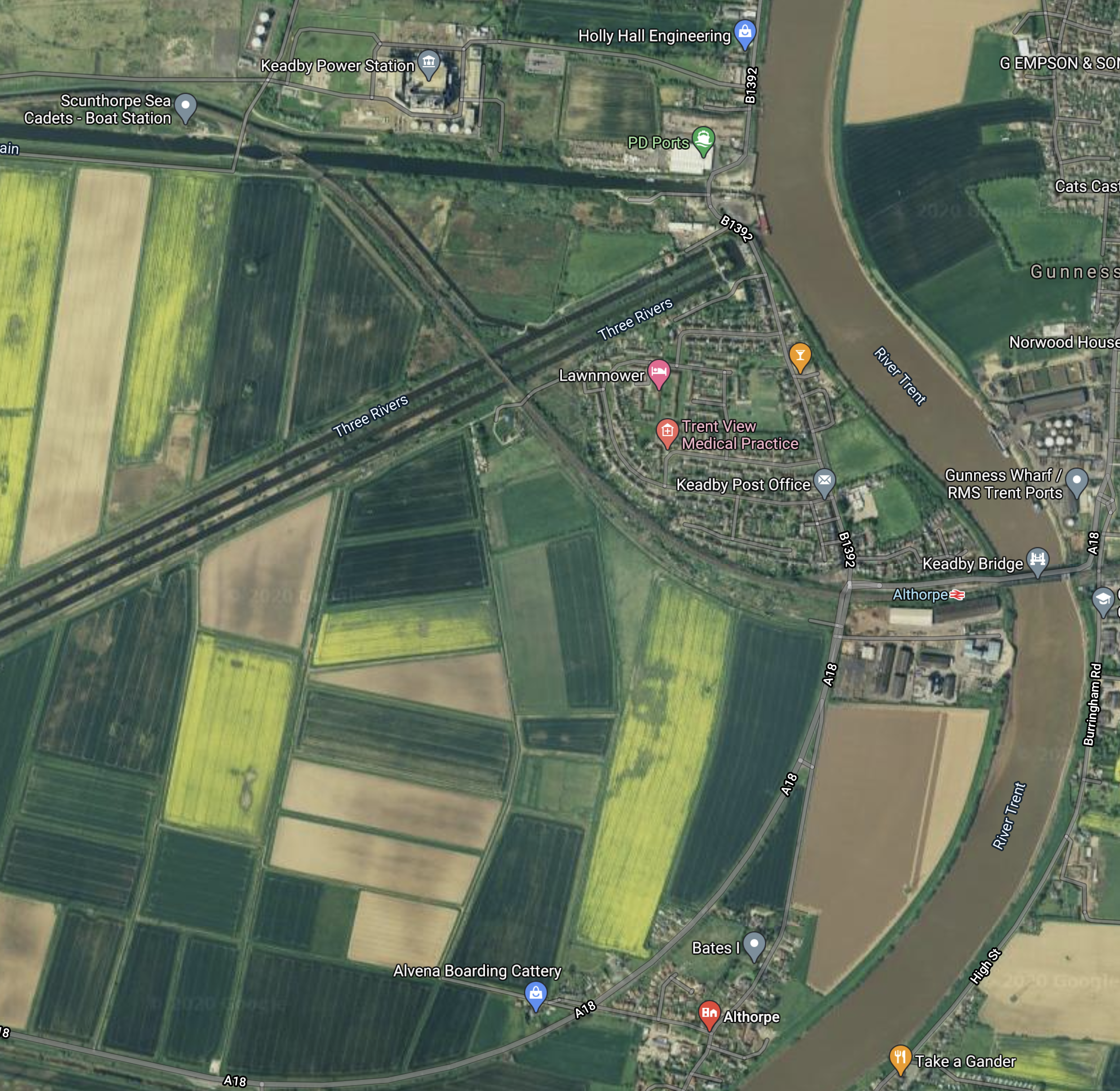
Note.
- The River Trent flowing South to North.
- Keadby power station at the top of the map.
- Althorpe station close to the bridge over the river.
- The village of Althorpe is at the South of the map by the river.
C and myself had friends, who farmed much of the land in the curve of river, South of the railway.
These are a few tales, some might enjoy.
Althorpe And Princess Diana’s Grave
I was once told, that regularly tourists would appear looking for the last resting place of Princess Diana.
Sat-navs may be a wonderful gadget for some, but they do lead those with a certain lack of common sense on wild goose chases.
C And The Tug-Boats
C once spent a night in their farmhouse, which was by the River Trent.
She didn’t sleep well, as tug-boats pulling barges were constantly going past and sounding their sirens. The river was actually above the house, due to the embankments to stop flooding.
Princess Anne And The Centrefold
Our friends’ daughter was a very good rider in eventing and used to supplement her variable income in the sport with modelling. At one point, I used her for some promotional shots for one of my companies.
Some years ago, she was competing at an event in Yorkshire. Coincidentally, this was just after she had appeared as the centrefold in a well-known men’s magazine.
The event was a bit of a nightmare for her, as paparazzi were following her with open copies of the magazine.
At one point, it all got a bit much, so she decided to sneak back to the calm of her horsebox, by a circuitous route.
As she walked back, she encountered Princess Anne, who was also competing and using the same route to avoid the paparazzi.
They talked about the pressures of the paparazzi, who were being a nuisance, with the Princess saying, she approved of my friends’ daughter’s modelling and hoped it continued, as it had taken the pressure off herself.
Flixborough
My friends’ farm was not far from Flixborough, which is infamous for the Flixborough Disaster in 1974, when a chemical plant exploded and killed 28 people and seriously injured a further 36.
My friends also lost several thousand pigs because of the explosion.
Wikipedia says this about the cause of the explosion.
The disaster involved (and may well have been caused by) a hasty modification. There was no on-site senior manager with mechanical engineering expertise (virtually all the plant management had chemical engineering qualifications); mechanical engineering issues with the modification were overlooked by the managers who approved it, nor was the severity of the potential consequences of its failure appreciated.
At the time, I had just left ICI and I was still in contact with my former colleagues.
One told me, that he had met a Senior ICI Engineer, who had been involved with the enquiry into the disaster.
The plant had been a copy of a Dutch plant, that had been built to metric units, which were converted to Imperial to build the Flixborough plant.
As ICI had used metric units since the mid-1950s, there was considerable alarm in the mind of the Senior Engineer, that when the hasty modification was made, someone got mixed up.
Would the Flixborough disaster have happened, if the plant had been built as a copy of the Dutch plant using metric units?
Can A Green Revolution Really Save Britain’s Crisis-Stricken Aerospace Industry?
The title of this post, is the same as that of this article on the Telegraph.
This is the sub-title.
The Prime Minister has set a challenging target of green flights within a generation, but is it a sustainable plan?
I have read the whole article, which is mainly about Velocys and their project at Immingham to create aviation biofuel from household rubbish.
They say the main problem is scaling up the process to get enough jet fuel. When I was working at ICI in the early 1970s, modelling chemical processes, scale-up always loomed-large as a problem.
Nothing changes!
I think we’ll get to our carbon-neutral objective, for aviation, but it will be a mixture of things.
- Aviation biofuel.
- All-electric airports.
- Efficient aerodynamics and engines.
- Electric short-haul aircraft.
- Rail substitution for short flights.
Traditional aerospace must reform itself or die!
As to Velocys, they must solve their scaleup problem, so that all suitable household and industrial rubbish ends up doing something more useful, than beinmg incinerated or nuried in landfill.
An Untidy Railway
I took these pictures as I returned from Eridge.




You see it all over the railways and not just in the UK; general untidiness!
When I joined ICI in 1968, I went on a thorough and excellent induction course.
One very experienced engineer, gave a Health and Safety Lecture and one thing he said, was that a neat and tidy chemical plant was less likely to have silly accidents.
Some years later, I went to the United States to see some of Metier’s clients, of whom some were nuclear power stations. This must have been just after the Three Mile Island accident, which is described like this in Wikipedia.
The Three Mile Island accident was a partial meltdown of reactor number 2 of Three Mile Island Nuclear Generating Station (TMI-2) in Dauphin County, Pennsylvania, near Harrisburg, and subsequent radiation leak that occurred on March 28, 1979. It is the most significant accident in U.S. commercial nuclear power plant history.
Artemis was involved in maintenance at the nuclear stations I visited. I can remember at AEP Donald C Cook nuclear station being shown a database of work to do and many of the actions were referred to as TMIs and checking them had been mandated by the US regulatory authorities.
I should say, the site on the shores of Lake Michigan impressed me, but another I visited later didn’t. I won’t name it, as it is now closed and it was the most untidy industrial plant of any type I have visited.
As we left, I gave my opinion to our support engineer and he told me they had a very large number of TMIs to process. I wasn’t surprised!
So why are railways generally so untidy?
Joint Venture With Linde AG And £38M Strategic Investment
The title of this post, is the same as that as this Press Release from ITM Power.
This is the first paragraph.
ITM Power plc is pleased to announce its intention to raise at least £52.0 million (before expenses) through (i) a strategic investment of £38.0 million at 40 pence per share by Linde UK Holdings No. 2 Limited, a member of the Linde AG group (Linde) (the Share Subscription); and (ii) a conditional placing of £14.0 million at 40 pence per share (the Firm Placed Shares) with certain existing and new institutional investors (the Firm Placing). The Group has also entered into a 50/50 joint venture with Linde (the Joint Venture) which will focus on delivering green hydrogen to large scale industrial projects, principally those with an installed electrolyser capacity of 10 Megawatts (“MW”) and above.
There is all the usual financial stuff and these sentences.
The net proceeds of the fundraising will be used principally to enhance the manufacturing capabilities of the Group, particularly for the development and production of large scale 5MW electrolysers, to facilitate product standardisation and manufacturing cost reduction.
The Joint Venture will focus on delivering green hydrogen to large scale industrial projects (generally being opportunities with installed electrolyser capacities of 10 Megawatts and above)
As ITM Power are constructing the largest electrolyser factory in the world, at Bessemer park in Sheffield, it appears to me that ITM Power are going for the larger scale hydrogen market.
Recently, I wrote these three posts.
- Funding Award to Supply An 8MW Electrolyser
- Surplus Electricity From Wind Farms To Make Hydrogen For Cars And Buses
- H2OzBus Project: Deploying Hydrogen Fuel Cell Bus Fleets For Public Transport Across Australia
News stories generated about the company or the production of hydrogen seem to require large electrolysers in excess of 5 MW.
It looks like ITM Power are setting themselves up to tap this market substantially.
How Much Hydrogen Would A 5 MW Electrolyser Create In A Day?
I found the key to the answer to this question on this page of the Clean Energy Partnership web site.
To produce hydrogen by electrolysis directly at the filling station, the CEP currently requires about 55 kWh/kg H2 of electricity at an assumed rate of efficiency of > 60 percent.
To produce 1 kg of hydrogen, nine times the amount of water is necessary, i.e. nine litres.
I will use that figure in the calculation.
- A 5MW electrolyser will consume 120 MWh in twenty-four hours.
- This amount of electricity will produce 2,182 Kg or 2.182 tonnes of hydrogen.
- It will also consume 19.64 tonnes of water.
In Surplus Electricity From Wind Farms To Make Hydrogen For Cars And Buses, I described how Jo Bamford and his company; Ryze Hydrogen, have applied for planning permission to build the UK’s largest electrolyser at Herne Bay in Kent.
- It will produce ten tonnes of hydrogen a day.
- The hydrogen will be sent by road to London to power buses.
So could the electrolyser be a 25 MW unit built of five 5 MW modular electrolysers?
Linde and their UK subsidiary; BOC, must have a lot of knowledge in transporting tonnes of hydrogen by road. I can remember seeing BOC’s trucks behind ICI’s Castner-Kellner works in the 1970s, where they collected hydrogen to see to other companies.
Is There A Link Between Historic Coal Mining And COVID-19?
In Air Pollution May Be ‘Key Contributor’ To Covid-19 Deaths – Study, I wrote about the link between current pollution and COVID-19, that had been shown by European researchers.
Today, in The Times, there is an article, which is entitled Pressure To Free London From Lockdown As Cases Fall.
It talks about the areas, that are recording the most new cases of confirmed COVID-19 in the last fortnight.
The article says this.
Only one area south of Birmingham is in the 20 local authorities with the most coronavirus cases in the past two weeks, while those with fewest are clustered in the south, an analysis of official figures by The Times shows.
That local authority in the top twenty is Ashford.
i have looked at all the data in The Times and this table shows the number of cases in the last fortnight in decreasing order.
- Birmingham – 266
- County Durham – 209
- Manchester – 184
- Bradford – 168
- Sandwell – 164
- Wigan – 156
- Shropshire – 155
- Cheshire West and Chester – 151
- Sheffield – 144
- Cheshire East – 135
- Leeds – 138
- East Riding Of Yorkshire 129
- Barnsley – 126
- Tameside – 124
- Doncaster – 121
- Ashford – 118
- Stoke – 117
- Wirral – 107
- Trafford – 102
- Folkestone and Hythe – 99
- Leicester – 99
- Bolton – 94
- North Somerset – 94
- Oldham – 93
- Stockton-on-Tees – 93
- Oxford – 90
Note.
- Why is Cheshire in the top half of the list?
- There seem to be a lot of coal mining areas on the list.
- Ashford and Folkestone and Hythe are even close to the former Kent coalfield.
I’d love to see Welsh, Scottish and Northern Irish data added to this list!
Is Coal A Factor?
Given the large number of coal-mining areas featuring in my list, I very much feel that there should be a serious analysis to see if working in the mines or growing up in a coal-mining area, is a factor related to the chances of catching COVID-19.
I should say, that my only personal memories of British coal mines working, was to see the mines in Kent, as we drove to see by uncle in Broadstairs. They were filthy places.
The Cheshire Paradox
Cheshire doesn’t have any coal mining, but it does have a lot of chemical works and oil refineries along the Mersey, many of which use Cheshire’s most valuable natural resource – salt.
When I worked at ICI, I was told that there was enough salt underneath the green fields of Cheshire to last several thousand years, at the current rate of extraction.
There was also the ICI office joke about pensions.
You would get a good pension from ICI, as the pension scheme was well-funded and also because so many pensioners, after a lifetime of working amongst all the smells and dusts of a chemical works, which gave the lungs a good clear out, didn’t live long in the fresh air of normal life and caught every cold, cough and flu doing the rounds.
The three Cheshire areas have these numbers of total confirmed cases per 100,000 residents.
- Cheshire East – 304
- Cheshire West and Chester – 312
- Wirral – 378
These compare closely to nearby Liverpool with 319.
But look at these figures of a similar county around London, that from personal experience is similar to Cheshire.
- East Hertfordshire – 176
- North Hertfordshire – 171
So have all the chemicals in the historic Cheshire air, softened up the population for COVID-19?
I used the word historic, as pollution in the seventies in Cheshire/Merseyside was much higher, than it is today.
Surplus Electricity From Wind Farms To Make Hydrogen For Cars And Buses
The title of this post, is the same as that as this article in The Times.
This is the introductory paragraph.
Surplus power from wind farms will be used to run a network of giant electrolysers to make hydrogen for vehicles, under plans drawn up by a green energy company.
The following are points from the article.
- The electrolysers will be installed by Ryze Hydrogen.
- Ryze have submitted plans to build the UK’s largest electrolyser at Herne Bay in Kent.
- It will produce ten tonnes of hydrogen a day.
- The hydrogen will be sent by road to London to power buses.
- More electrolysers could be built in Aberdeen, Northern Ireland, Runcorn, South Wales and other places.
- It looks like the electrolysers will be built by ITM Power in the world’s largest electrolyser factory in Rotherham.
- Keele University is replacing 20% of the natural gas in its gas network with hydrogen to heat buildings. I wrote about this in HyDeploy.
Note.
- The owner of Ryze is Jo Bamford, who also owns Wrightbus. I wrote about his plans in JCB Heir And Wrightbus Owner Jo Bamford: ‘We Can Sell Our Hydrogen Bus Around The World’.
- Jo Bamford also has a plan for Ireland, which I wrote about in Wrightbus Boss Eyes All-Island Green Transport Plan. He could build the Northern Ireland electrolyser conveniently for the border.
- Jo Bamford is the son of Lord Bamford; the chairman of JCB.
- According to Wikipedia, JCB made a £4.9m strategic investment in ITM Power in 2015. The early bird catches the worm?
- ITM Power recently had an order for an 8MW electrolyser, which I wrote about in Funding Award to Supply An 8MW Electrolyser.
It all seems to fit together like a large zero-carbon jigsaw.
I do have some questions.
How Much Electricity Is Needed To Produce Ten Tonnes Of Hydrogen?
I found an answer to this question on this page of the Clean Energy Partnership web site.
To produce hydrogen by electrolysis directly at the filling station, the CEP currently requires about 55 kWh/kg H2 of electricity at an assumed rate of efficiency of > 60 percent.
To produce 1 kg of hydrogen, nine times the amount of water is necessary, i.e. nine litres.
Scaling up means that to produce ten tonnes of hydrogen will require 550 MWh and ninety tonnes of water. For comparison an Olympic swimming pool holds 2,500 tonnes of water, based on the fact that a cubic metre of water weighs a tonne and contains a thousand litres.
Is It Safe To Move Hydrogen In Trucks Around The UK?
I used to work as an instrument engineer in ICI’s hydrogen factory at Runcorn around 1970.
That plant electrolysed brine using the Castner-Kellner process to produce sodium hydroxide, chlorine and hydrogen. The first two products were used as feedstock to make various chemical products and the hydrogen was taken away by Air Products and BOC, in specially-designed trucks.
It can be said, that we have been moving hydrogen safely on the roads of the UK for at least fifty years and probably longer.
As an aside, I think, ICI found the hydrogen a bit of a problem, as in those days it didn’t have that many uses.
Are Ryze Building A Network Of Electrolysers To Serve The Whole Of The UK?
The five electrolysers named in The Times article, are in Ireland, North-West England, Scotland, South-East England and South Wales.
- All electrolysers would be sited near to large offshore wind farms, except for Northern Ireland, where the wind power is onshore.
- All areas of the British Isles would be close to an electrolyser for hydrogen delivery, except the South West and the North East of England and the Midlands.
- The Midlands is to be served by a planned ITM Power electrolyser at Tyldesley.
- The North East of England has a hydrogen supply from INEOS on Teesside.
- The South West of England could probably support another electrolyser. But there is not the same amount of nearby wind power.
Ryze with a little help from their friends, could make sure that every bus depot in the UK has a reliable source of green hydrogen.
The Electrolyser At Herne Bay
This Google Map shows the Herne Bay and the surrounding area on the North Kent coast.
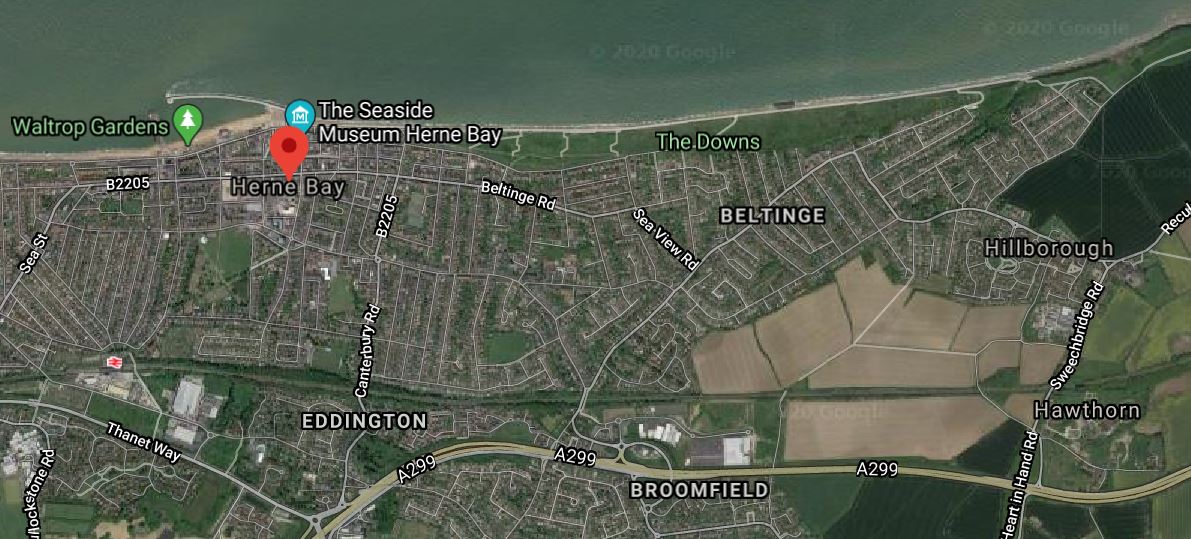
What is not shown is all the wind farms to the North of the town in the Thames Estuary. These include.
- Gunfleet Sands – 172 MW
- Kentish Flats – 139 MW
- London Array – 630 MW
- Thanet – 300 MW
That is a total of 1241 MW, so working for twenty-four hours with a capacity factor of 30% would create almost 9 GWh of electricity.
- A small fraction of this 9 GWh of renewable electricity would provide enough to run the electrolyser at full power.
- The smallest wind farm; Kentish Flats will produce 139 x 24 x 0.3 = 1000 MWh on an average day.
- Just 23 MWh of electricity per hour is needed to create the ten tonnes of hydrogen.
Where are these wind farms connected to the National Grid?
- If just one connection is close to Herne Bay, then co-location must be desirable.
- If there is no connection, only 23 MW would be needed from the National Grid.
Reading the Wikipedia entry for Herne Bay, it appears to be an improving town.
- It has both a fast rail and a High Speed One connection to and from London.
- There is a dual-carriageway road connection to the motorway network.
- The town would probably welcome the jobs, that the development would create.
Herne Bay seems to be a good place to build the first electrolyser.
The Electrolyser At Aberdeen
I don’t know the Aberdeen area well, although the oil industry in the area has been good for my financial well-being.
There must be a good reason for building an electrolyser in the area.
- Aberdeen have experience of hydrogen buses.
- There are some large wind farms; both onshore and offshore close by.
- Is there a convenient site, that once had a coal-fired power station, but still has good electrical connections?
According to the Wikipedia entry for Wind Power In Scotland, the country had 8423 MW of installed wind power in December 2018 and has the aim of using only renewable energy by 2020.
Searching the Internet, I found the Peterhead power station.
The power station is gas-fired.
The power station has changed technology over the years.
There was a plan to fuel the power station with hydrogen produced from methane, where the carbon dioxide would have been captured and stored in the Miller field.
This Google Map shows the power station, to the South of Peterhead.
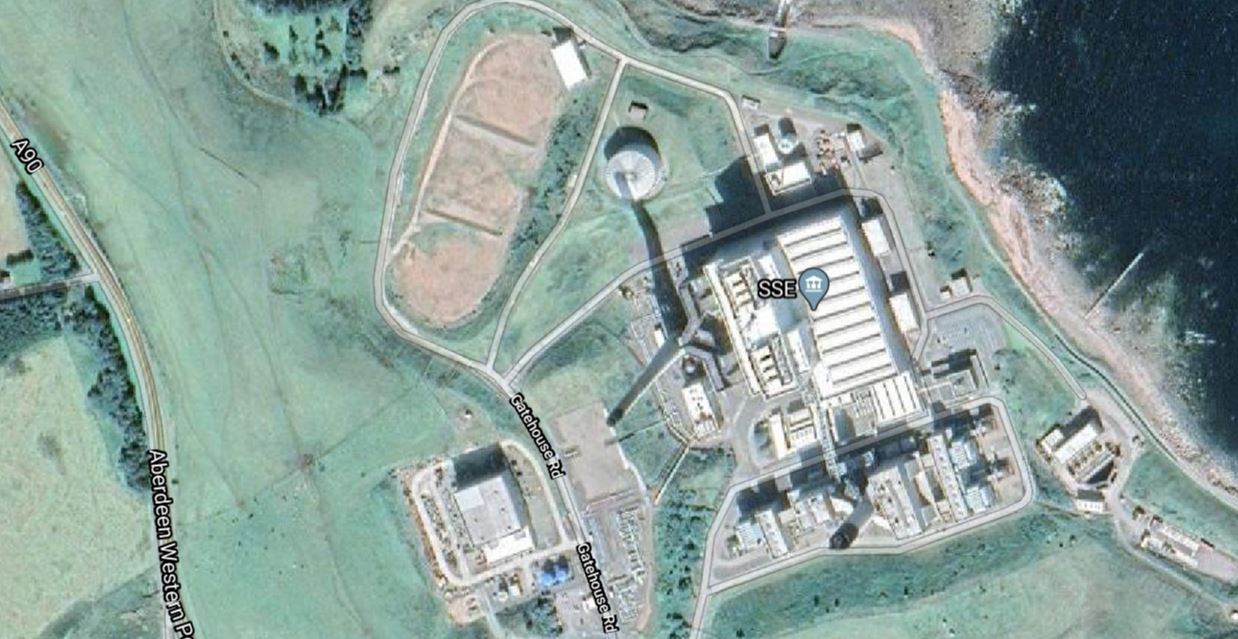
Note, that the power station is close to the A90 road, which forms the Aberdeen Western Peripheral Route, that goes past Aberdeen to the South of Scotland.
Could this power station be the site of the Aberdeen electrolyser?
- It looks to have good road connections.
- It obviously has good electrical connections.
- Peterhead would probably welcome the employment.
As you can see from the map, the power station is owned by SSE plc, who generate about a third of their energy from renewables.
And then there is Hywind Scotland, which is the world’s first commercial floating wind farm.
- This is a 30 MW wind farm.
- It comprises five 6MW floating wind turbines.
- It is situated eighteen miles off Peterhead.
- In the first two years of operation it had a capacity factor of 50 %, according to Wikipedia.
On an average day, Hywind Scotland will generate 360 MWh. This is 65 % of the 550 MWh of energy needed to produce ten tonnes of hydrogen.
Are there undisclosed plans to create a fleet of floating wind turbines, out to sea from Peterhead, which would be ideal for both Scotland’s electricity and hydrogen supplies?
It should also be noted, that in the UK and I suspect other developed countries, if someone needs a large amount of electricity for a commercial purpose, like an aluminium smelter or a steelworks, electricity companies, whether state or privately-owned, have always been keen to oblige.
I suspect that everything could be coming together in Peterhead.
The Electrolyser In Northern Ireland
The Wrightbus factory, owned by Jo Bamford builds its buses at Ballymena.
- Ballymena is 28 miles North of Belfast.
- Dublin is 130 miles to the South.
I can see the mother of all arguments happening, as to whether the electrolyser is North or South of the border.
If you look at the Wikipedia entry entitled Electricity Sector In Ireland, this is the opening paragraph.
The electricity sectors of the Republic of Ireland and Northern Ireland are integrated and supply 2.5 million customers from a combination of coal, peat, natural gas, wind and hydropower.
The grid runs as a synchronous electrical grid and in terms of interconnections has undersea DC-only connection to the UK National Grid, alongside plans in the advanced stage for a higher power, planned Celtic Interconnector to France.
It looks like Jo Bamford will only have to deal with one entity, no matter, which side of the border, the electrolyser is situated.
This would surely make it easier for his All-Ireland Green transport plan, which I wrote about in Wrightbus Boss Eyes All-Island Green Transport Plan.
My feeling is that he’ll get less grief, if the electrolyser was just on the North side of the border with a good road connection to the South. As there is a dual carriage-way road, all the way between Belfast and Dublin, this could probably be arranged.
This Google Map shows where the main dual-carriageway crosses the border.
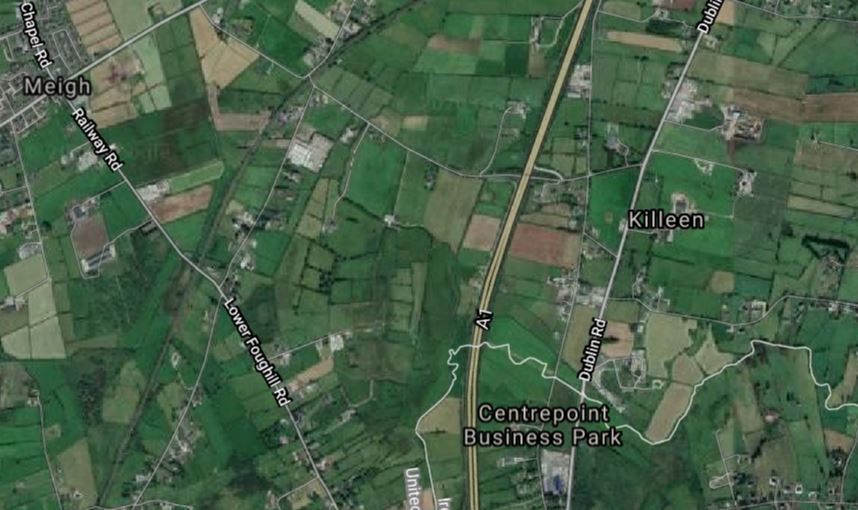
Note.
- The border is shown as a white line to the North of the Centrepoint Business Park.
- The railway line between Dublin and Belfast can be seen to the West of the main cross-border road.
I certainly think, that a solution can be found to fuel all those Irish hydrogen buses, that Jo Bamford has proposed.
The Electrolyser At Runcorn
If Runcorn already has a good source of hydrogen at the former ICI factory, that is now owned by INEOS, why build an electrolyser at Runcorn?
There are several reasons.
- Runcorn is involved in the hydrogen plans for North-West England, that I wrote about in A Hydrogen Mobility Roadmap For North-West England.
- Runcorn can connect into the North West’s proposed hydrogen network.
- Runcorn is close to the zero-carbon wind energy of Liverpool Bay.
- INEOS can pool their zero-carbon hydrogen into that produced by Ryze.
- Will INEOS with all their hydrogen experience in the area, host the electrolyser?
- Runcorn is convenient for the large cities of Liverpool and Manchester.
- Runcorn has good access to the motorway network for the Midland of England and North Wales.
- There must be the possibility of building a rail terminal to deliver hydrogen.
Runcorn would also connect the interests of Jim Ratcliffe and the Bamfords.
The Electrolyser In South Wales
South Wales has an extensive public transport network.
- The South Wales Main Line runs between the Severn Tunnel and Swansea and the West via Newport and Cardiff.
- The Cardiff Valley Lines are being transformed into a modern South Wales Metro, which will make use of electric and battery technology.
- There are a lot of buses, running around in South Wales.
The buses and possibly some of the trains must be candidates for hydrogen power.
Transport for Wales Rail Services have ordered 77 Class 197 diesel trains from CAF, who have a factory at Newport.
Given CAF’s record on innovation and the Welsh Government’s stance on the environment, I wouldn’t be surprised to find out that these trains could be converted to zero-carbon trains. I’m sure Ryze would be pleased to provide green hydrogen for Welsh trains.
I think there are two possible sites for a large electrolyser in South Wales.
The first is the site of the former Aberthaw power stations, which are shown in this Google Map.
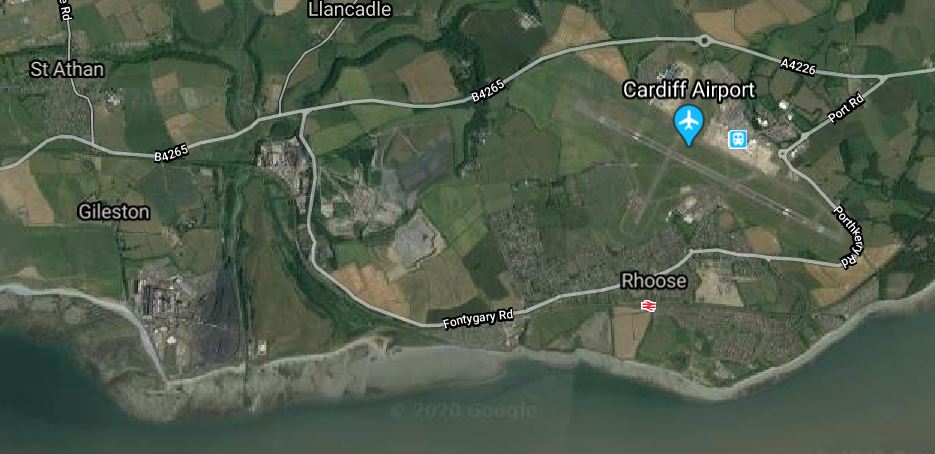
Note.
- Aberthaw power stations were South of Gileston.
- The complex stopped generating power at the end of March this year.
- The site has rail access.
- Road access would need to be improved.
- The power station must have had a good very connection to the National Grid.
- The site is near to Cardiff Airport, who might want to go zero-carbon for all their ground vehicles.
The second possible site, is on the site of the former Llanwern steel works, which is shown in this Google Map.
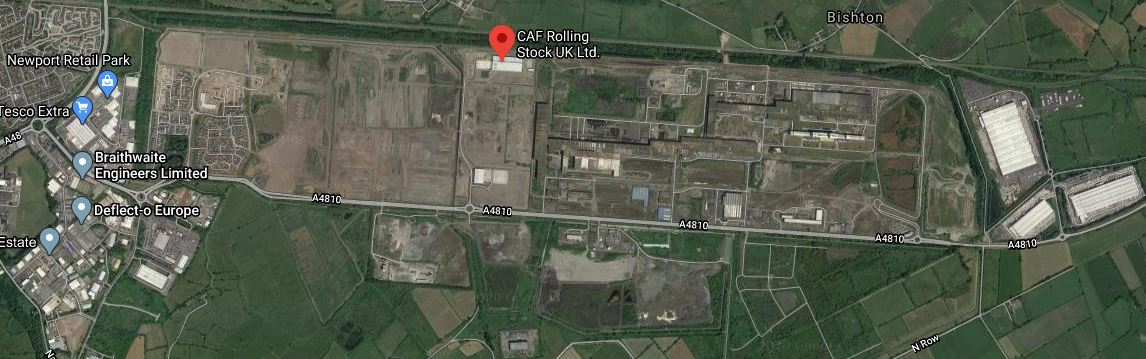
Note.
- It is a very large site, which probably has a very good connection to the National Grid.
- The CAF rolling stock factory is marked by a red arrow.
- CAF could start building and/or selling hydrogen-powered trains in the UK, at some date in the future.
- The site has rail and road access.
- The site is fifteen miles to the East of Cardiff.
- The site is thirty miles to the West of Bristol.
If it was my decision, I’d put the electrolyser on the Llanwern site.
Will The Electrolysers Need A Battery To Cover On Days Without Wind?
I can envisage a system, where several trailer-tankers are filled at once in a continuous process. Once filled, they would be disconnected and replaced by an empty one. It would act like a automatic bottling plant for beer, but with much bigger bottles.
The filled trailer-tankers would be energy stores, whilst they awaited being taken to the customers.
What Infrastructure Will Be Needed At Bus Depots?
The infrastructure is minimal and would be a tank and the means of filling the buses.
I also wonder, if trucks with a proven design of hydrogen trailer-tanker were to be used, these could be filled up at the electrolyser and the trailer-tankers would then be taken to the bus depots, where they would be plugged into the hydrogen delivery system for the buses.
- Each delivery would be a drop-off and connection of a full trailer-tanker of hydrogen and a return with the empty trailer-tanker to the electrolyser.
- The trailer-tankers could be fitted with a hydrogen vehicle-filling connection, so that bus operators could trial a small fleet of hydrogen buses or other vehicles, without putting in any infrastructure, other than safe parking for the trailer-tankers. But then most bus depots have lots of secure parking for large buses.
- This would surely be faster and more efficient, as the delivery driver wouldn’t have to wait, whilst the hydrogen is transferred.
- Deliveries could be arranged during the night.
I would also use a fleet of quiet, emission-free zero-carbon hydrogen-powered trucks. Do what I say and do what I do!
Why Not Generate The Hydrogen At The Depot?
At Pau, ITM Power have installed a hydrogen generator for the hydrogen-powered buses.
So why not do this all over the UK?
- A large bus depot could need a very large amount of electricity in a congested part of a city, where the electricity supply may be dodgy.
- It could also be safer, as venting the oxygen produced as a by-product of electrolysis, in an uncontrolled environment can be dangerous. But generated in a large electrolyser, it could be captured and used for another purpose or safely vented to the atmosphere. This section in Wikipedia, gives a brief outline of the applications of oxygen.
- I truck-based delivery system, is ideal for trials of hydrogen-powered buses, taxis, delivery vans, trucks and local authority vehicles, as no infrastructure is needed.
I suspect that, it might be more affordable and convenient to use centralised production of the hydrogen.
Conclusion
Jo Bamford has developed a well-thought out plan.
Surviving Lockdown
People ask if I am surviving lockdown.
I am lucky in several ways.
Housing
I live in a spacious house, which is comfortable.
Although, it does have problems.
- It was built by a Turkish Jerrybuilder, who bought fixtures and fittings at the cheapest price possible.
- It gets too hot.
- The plumbing is suspect.
- The air-conditioner is broken and the service company, have had my money to fix it, but won’t come.
- The smoke detector above my bed is just hanging there, as I wrote in A Design Crime – The Average Smoke Detector
Hopefully, when we beat COVID-19, I’ll be able to move.
Finances
My investments give me enough to live comfortably. If you call, living in two rooms, never talking face-to-face with anybody living comfortably.
Exercise
I am still fit and can exercise as much as I need and is recommended.
I have a workout that I do twice a day, which includes movements like press-ups, stretches and single-leg stands.
I can do two dozen press-ups straight off or walk three miles, if I need to.
Health
My health is good, despite being a coeliac and suffering a serious stroke ten years ago.
- I test my own INR.
- I seem to have survived my fall of a month ago.
- I only go to the surgery for B12 injections, drug reviews and the odd problem.
Other than that I just suffer from the problems of a healthy man of 72, like arthritis and hay fever.
I do have a strange skin, that leaks a lot of water and doesn’t bleed, when I have an injection or a doctor or nurse takes blood. I never have a plaster after either procedure.
Food
I am a reasonable and very practical cook, or so my son and various friends tell me. These are some meals, I’ve been cooking under lockdown.
Pasta With Yogurt Sauce For One
Goat’s Cheese, Strawberry And Basil Salad
Smoked Haddock And Curried Rice
I shall add more here.
I won’t starve!
Shopping
A Marks and Spencer food store is fifteen minutes walk away, so I can get all the food I need.
I also got plenty of Adnams 0.5% alcohol Ghost Ship beers direct from the brewers delivered last week.
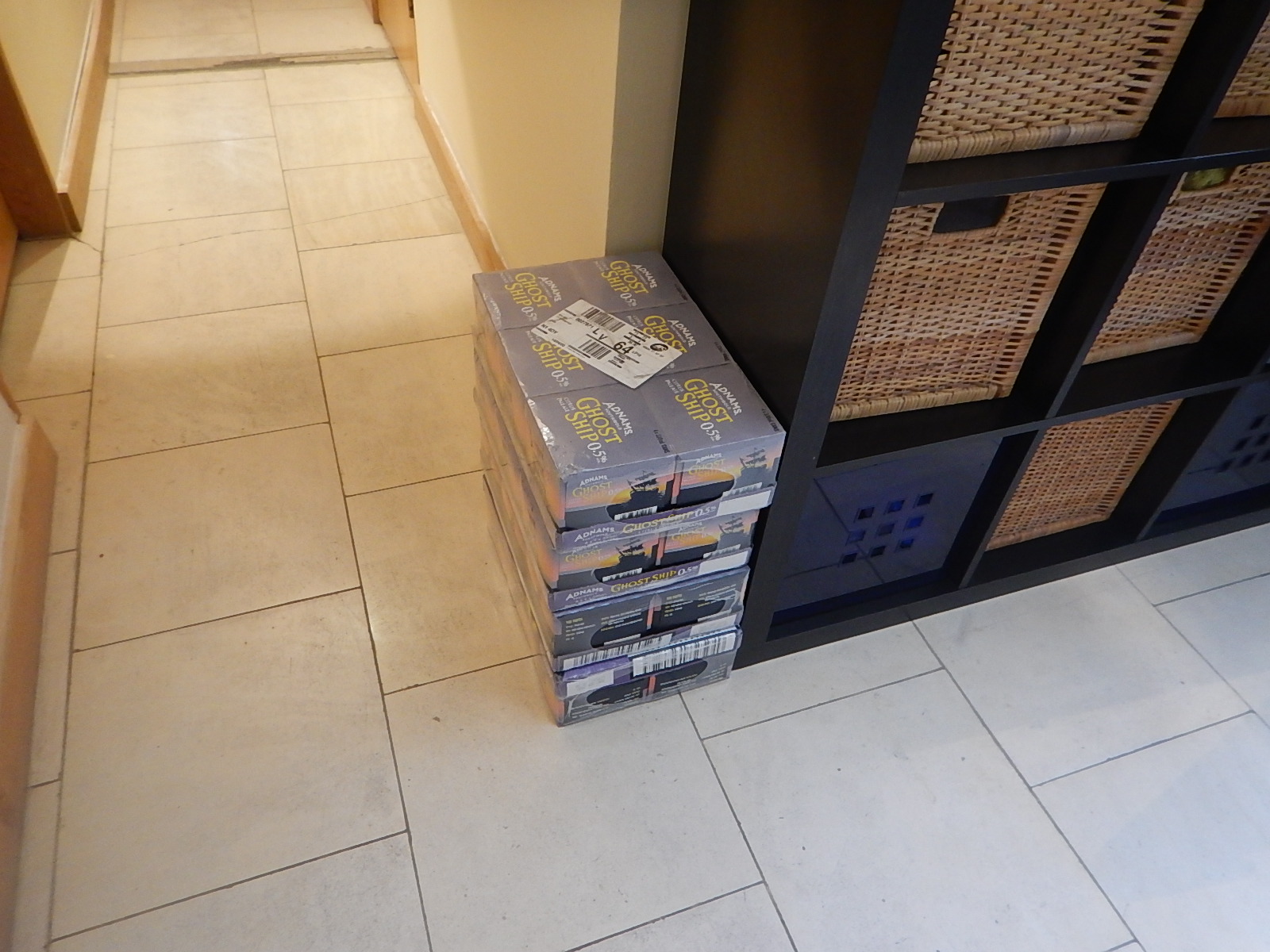
Their beers have been a lifeline, as they are gluten-free, thirst-quenching and don’t get me drunk. Even in quantity!
I also have safe delivery without any contact, as the couriers just ring my bell, we chat through the window about three metres away and they leave the goods on the step.
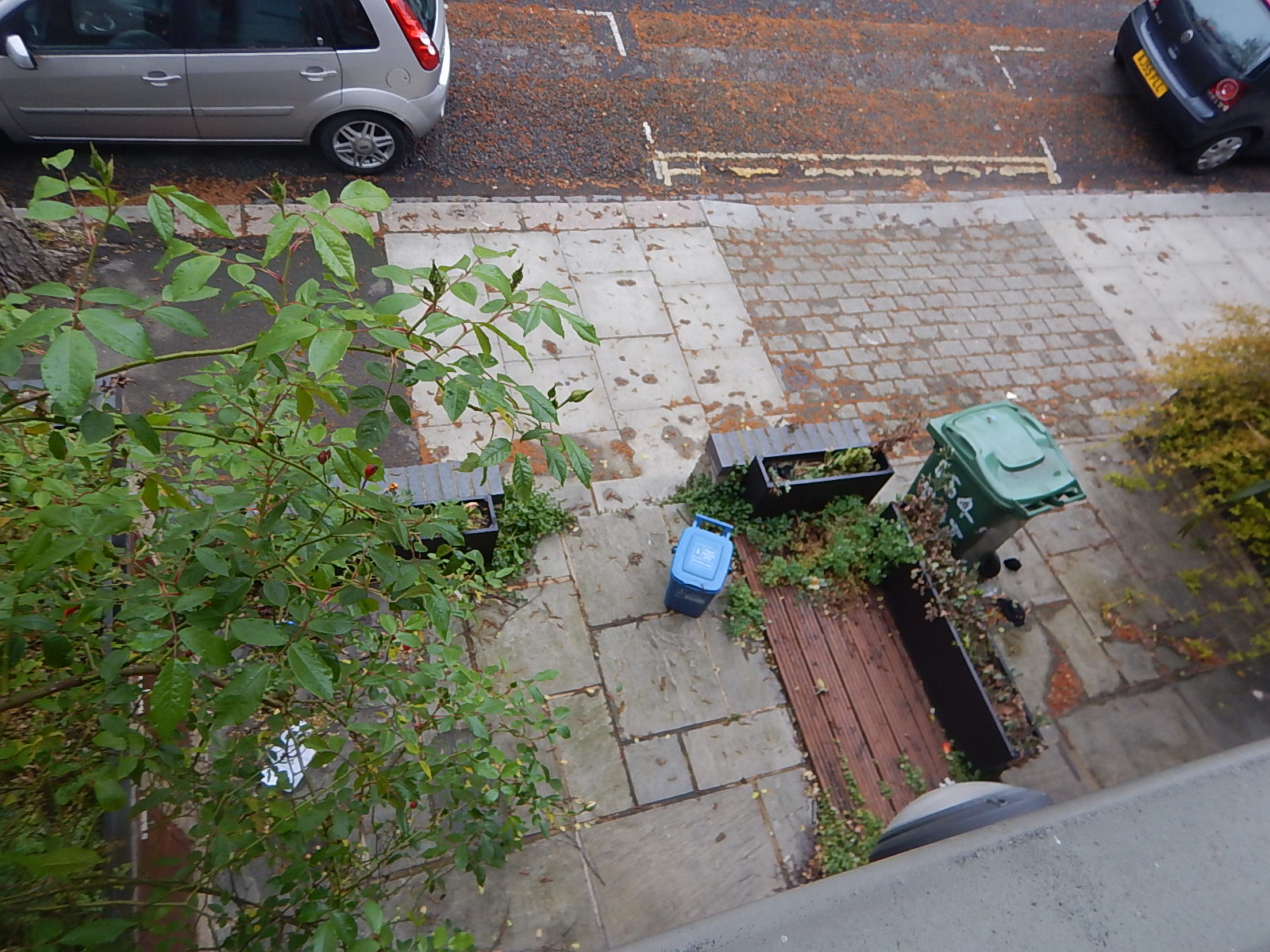
I didn’t think about lockdown, when I bought this house, but it is ideal for safe COVID-19-free deliveries.
Lockdown Practice
There can’t be many people, now going through the COVID-19 lockdown, wo have locked themselves away so many times in their life as I have.
- At the age of about six, I spent three months or more, in isolation because I caught scarlet fever.
- For the summer before A-Levels, my parents went to their house in Felixstowe. For part of the time, I locked myself in my bedroom and read up on my A level Physics.
- A couple of times at ICI, I self-isolated with a computer to get important jobs done. How many have used an IBM-360 as a PC?
- I self-isolated to write Speed, my first piece of independent software.
- Pert7 and other software for Time Sharing Ltd was written overnight sitting in the window of their offices on Great Portland Street.
- Artemis was written in an attic in Suffolk, with no-one else around for most of the time.
- The special PC version of Artemis, that was a combined project management, database and spreadsheet program, was also written under lockdown.
- After Celia died, I wrote Travels With My Celia(c) under lockdown. You can download the pdf file here.
Lockdown has almost been a way of life for me.
But on past form, I certainly have the mental strength to get through lockdown unscathed.
Conclusion
There must be a lot of others in much worse situations than myself.
I Only Ran Out Of Deoderant
For about three years, I’ve not bought deodorant or toothpaste in the normal manner, in say a shop in the High Street or locally.
What I’ve tended to do, is just pack my toothbrush and a few other things in my travel bag and buy new travel ones, once I’ve gone through Customs.
Consequently, I’ve only bought small travel roll-on deodorants. I’ve used roll-on ones for many years, as I didn’t like to use aerosols with all their noxious gases.
On Friday my last one ran-out and I needed a new one. The only one I could buy in a local shop, was an aerosol powered by butane. In other words it’s a flame-thrower in all but name! Search the Internet and you’ll find lots of pictures.
I find this very sad, as I funded a development of a totally-safe aerosol, that used compressed nitrogen as the propellant! The development was sold to a US company and I got a return on my money! Obviously, the product wasn’t cheap and nasty enough! But it was good enough though to be discussed at the Montreal Climate Change talks in 2005.
I actually found the butane-powered flame-thrower impossible to use, due to the damage to my left hand.
- Was it the break to my humerus caused by the school bully?
- Was it the stroke?
- Was it the recent damage caused by my fall?
I just needed to find a roll-on deodorant. But had they been discontinued?
This morning, thankfully, I found one at the Angel.
So I will smell better tomorrow!
I won’t leave this post before telling this tale.
I used to work for ICI Mond Division, who used to make the hydro-fluoro-carbon gases, that used to power aerosols in the 1960s and 1970s.
One of the guys in a nearby lab, where I worked at Runcorn Heath, used to formulate the propellants for possible products.
His standard joke was that he’d get baked beans into an aerosol, even if they had to come out one by one.
Every so often, he’d bring round samples that he’d made for various companies and one day I obtained an aerosol hand cream.
What make it was, no-one had a clue, but C always swore, it was the best hand cream, she’d ever used.
Grenfell Tower Fire: ‘Systemic Failures’ In Fire Brigade’s Response
The title of this post is the same as that of this article on the BBC.
This is the introductory paragraph.
The London Fire Brigade (LFB) has been condemned for “serious shortcomings” and systemic failures in its response to the Grenfell Tower fire, in a report into the 2017 blaze.
I am particularly worried about the stay-put policy.
In the 1950s, I was a member of the Scouts and several times we did exercises with the London Fire Brigade, where we were taught how to get out of blazing buildings. We were also used as dummy causalities in major incident training.
Certainly, the advice then for a fire was to get out.
Around 1970, I worked on chemical plants for ICI and fire safety was taken very seriously.
I remember being told to know your escape route from where you were working. And get out fast, if anything happened. Not that it did!
One other thing I remember is on the Wilton site, seeing office windows with “Perspex Window – Fine Hazard” stencilled on them. The reason for this, was that a nearby polythene plant very occasionally caused spectacular aerial explosions and glass windows were just too dangerous, as when shattered, they covered those inside with shards of glass.
If you read the story of the Summerland Disaster in August 1973, which killed fifty people and injured eighty, Wikipedia says this about the building.
The street frontage and part of the roof was clad in Oroglas, a transparent acrylic glass sheeting.
Oroglas is a poly(methyl methacrylate) and is another tradename for the same plastic, which ICI called Perspex.
I’d left ICI, by the time of the Summerland Disaster, but I was still in contact with friends, who worked in Plastics Division, who were responsible for Perspex. One was very critical of the use of Oroglas in the building. I was also told that ICI turned down Summerland order, as they thought it was not a suitable application, as Perspex was too flammable.
I should also say, that I have lived in a tower block with my family.
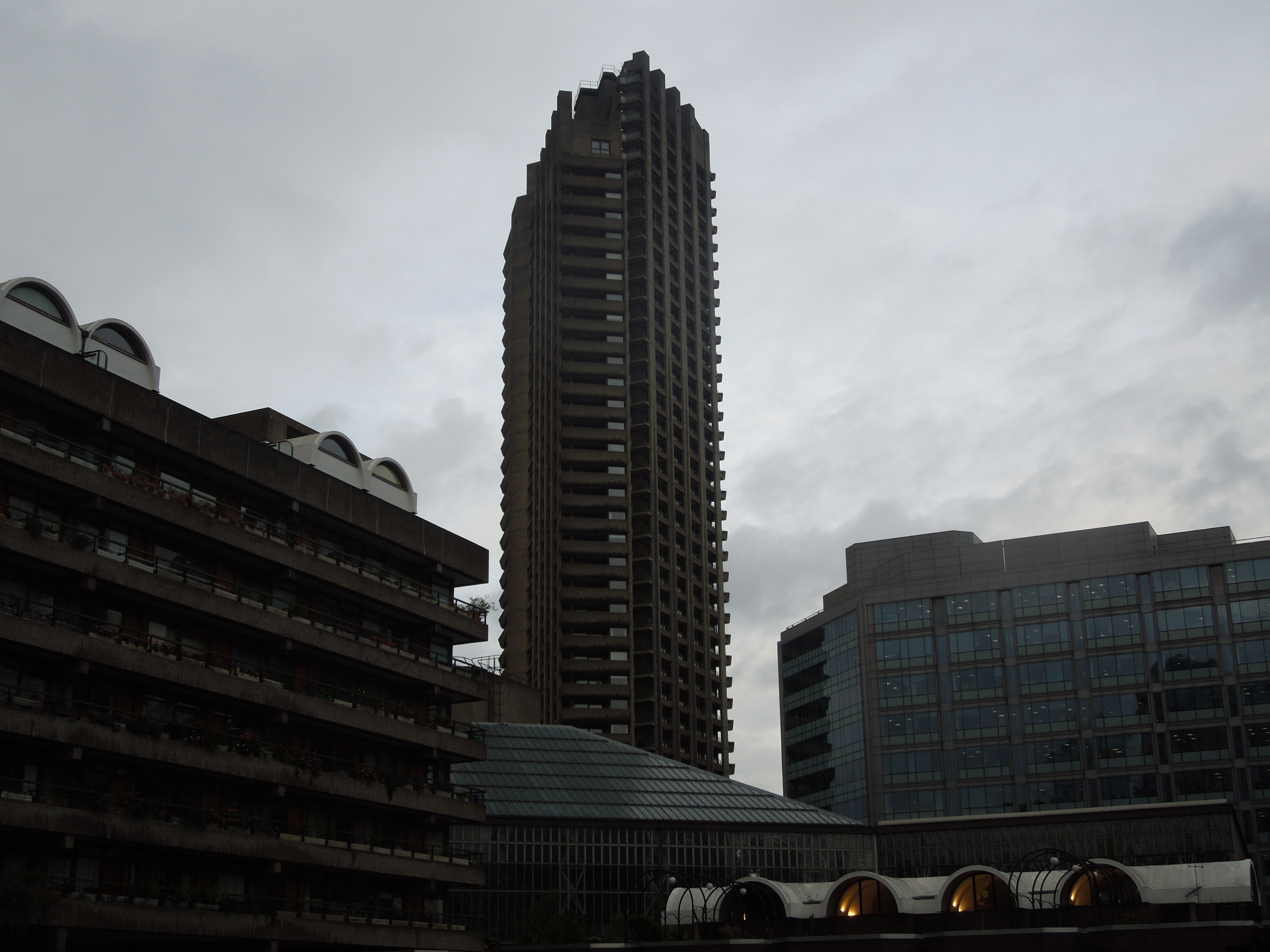
From my knowledge, I would not have lived in a building with flammable cladding.
Cromwell Tower in the Barbican is clad in concrete, with a network of tunnels going a couple of floors down from each flat on the thirty-five floors. I can remember checking the fire escapes before I signed the lease.
It also has no gas supply, with underfloor electric heating.
After the Grenfell Tower fire, I feel that architects and lawmakers have completely ignored the lessons of history!
Conclusion
There is a need to make sure that we take on board all the lessons of Grenfell, so that the chance of another disaster are minimised.
The Importance Of Libraries For Research
I went to a fund-raising event for Book Aid at the British Library on Monday evening.
The main purpose was to raise funds for the library in Mosul, which has been wrecked by IS.
The event made me think, about the number of times in the 1960s and 1970s, I used libraries for research.
- My undergraduate thesis was about analogue computing and I used information about how Lord Kelvin and his elder brother; James, were developing and using mechanical analogue computers in the late 1800s, that I had found in the Liverpool University library.
- A few years later, whilst working for ICI, I found that by properly searching Chemical Abstracts in their library, I could find the solution to difficult problems. Nowadays, you’d use the Internet!
- When I developed Artemis, I needed methods to improve the performance of the software. Some I developed myself, but one particular algoithm used for linking datasets together was found in a paper, written in the 1960s in IBM’s library. In those days, getting the maximum performance from not very powerful computers was more difficult and the algorithm was important.
- These days, with everything on the Internet I use libraries less. Although, I regularly visit Hackney’s Records Office near to where I live, to browse old images, reference books and maps.
Do we all underestimate the part books, play in our lives?
 The Anonymous Widower