Government Pauses Midland Main Line Electrification
This is the first paragraph of this article on Modern Railways.
The Government has paused the third phase of Midland main line electrification to Sheffield and Nottingham, plus the final phase of the South West Rail Resilience Programme (SWRRP), which involves strengthening cliffs at Holcombe.
Currently, the Midland Main Line electrification appears to have been installed between London St. Pancras and Wigston, where there is a triangular junction.
This article on Modern Railways is entitled MML Wires To Wigston energised, says this in the first paragraph.
A major milestones on the Midland Main Line has been achieved with the energisation of the newly installed overhead wires between Kettering and Wigston and the first trip for a new East Midlands Railway Aurora bi-mode unit to St Pancras.
This OpenRailwayMap shows the Midland Main Line between Leicester station and Wigston junction.
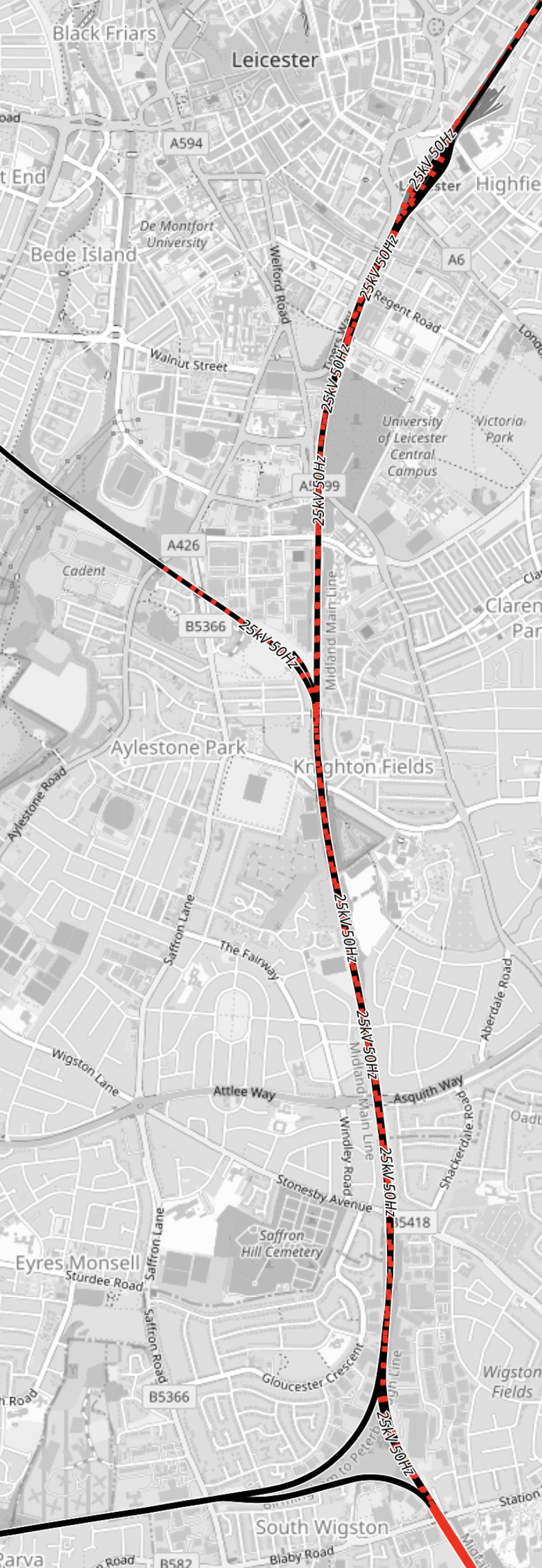
Note.
- Red tracks are electrified.
- Black tracks are not electrified.
- Black/red dashed tracked are being electrified.
- Wigston junction is at the bottom of the map.
- The red track indicates that the South of the junction is electrified.
- The North of the junction is now electrified according to the Modern Railways article.
- The West of the junction is not electrified and leads to the electrified Trent Valley Line at Nuneaton.
- The junction in the middle of the map is Knighton junction, that leads to Burton-on-Trent station.
- In the North-East corner of the map is Leicester station.
Distances from the electrified part of Wigston junction are as follows.
- Derby – 32.5 miles
- Leeds – 107.8 miles
- Leicester – 13.1 miles
- Nottingham – 30.5 miles
- Nuneaton – 15.6 miles
- Sheffield – 68.9 miles
I asked Google AI how far one of Hitachi’s Class 802 trains had gone during tests and got this reply.
A Class 802 train, when operating solely on battery power, can achieve a range of approximately 44 miles (70 km). This was demonstrated in a trial where a five-car Class 802/2 train reached a maximum speed of 87 mph using battery power alone, covering non-electrified sections. Hitachi Rail and Angel Trains are conducting trials to assess the viability of battery technology for longer distances and to reduce reliance on diesel power on non-electrified sections of routes.
Hitachi’s tests were performed with just one diesel engine replaced by a battery pack and it should be born in mind, that the Class 810 trains, that will be used on the Midland Main Line have four diesel engines.
As an electrical engineer, I feel battery range should be additive, so a three-battery train could have a range as much as 120 miles.
- This range would do nicely for a London and Leeds service, as Leeds station is fully-electrified to charge a train for return.
- As London and Sheffield return would be 137.8 miles, a charge at Sheffield would probably be needed to top-up the batteries.
On the other hand a two-battery and two-diesel unit, would have a battery range sufficient for the following services.
- London and Derby and return.
- London and Nottingham and return.
- London and Sheffield with return after a charge.
- London and Leeds with an intermediate charge at Sheffield.
We live in very electrifying times.
I am sure, that Hitachi and their battery-makers will find a solution to run all-electric services to the North of Wigston junction, without full electrification, but with just a charger at Sheffield.
The Electrification Problem At Leicester
Some years ago I came back to London from Leicester with a group of drivers. At one point, the conversation turned to electrification and they said that they had met a Network Rail engineer, who had told them, that the bridge was rather low for electrification and the track couldn’t be lowered because Leicester’s main sewer was underneath the railway.
In Leicester Station – 4th Jan 2022, I show a selection of pictures of Leicester station’s Grade II Listed frontage.
I doubt it would be possible to seriously alter Leicester station to electrify it, as the Heritage Taliban would have a field day.
But if I’m right that all services will be run North of Wigston on batteries, there will be no need to electrify through Leicester station.
Not only would using batter-electric trains probably be more affordable than electrification, but also because of the Leicester problem, it would be less inconvenient for passengers.
Could London and Leicester Be Run In An Hour Or Even Less?
Consider.
- The London and Sheffield services, which go non-stop between London and Leicester take around 64-66 minutes.
- The London and Nottingham services, which stop at Market Harborough take about 5-6 minutes longer.
- London and Leicester is 98.9 miles.
- The fastest trains average 93 mph between London and Leicester.
- Much of the route between London and Leicester has a maximum speed of 100 mph or more, with some sections of 125 mph running.
- Regenerative braking should reduce the time for the Market Harborough stop.
I can certainly see the non-stop Sheffield services being timed at under an hour between London and Leicester.
But I wouldn’t rule out all services between London and Leicester being timed at under an hour.
Could London and Sheffield Be Run In Two Hours Or Even Less?
Given that most services between London and Sheffield take two hours and four minutes and I reckon six minutes could be saved between London and Leicester, I suspect two hours or less is a very attainable target for London and Sheffield services.
Why Not Fit Four Batteries And Be Done With it?
I suspect it will be down to reliability and whether running the diesels on hydrotreated vegeatble oil is acceptable to some politicians.
Would This Be The World’s First Battery-Electric Main Line With 200 kph Running?
Quite possibly!
Conclusion
I can see no disadvantage in not electrifying North of Wigston junction and using battery-electric trains.
It could even be a lot more affordable.
Darlington Station – 26th June 2025
I visited Darlington station, three times on my trip.
These pictures are in chronological order.
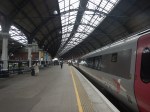
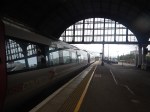
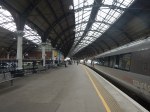
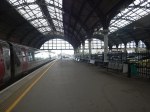
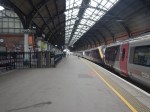
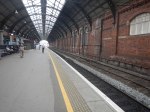
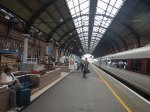
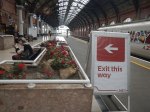
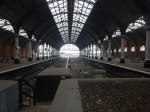
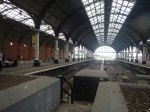
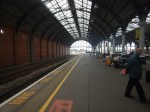
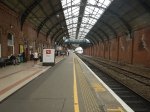
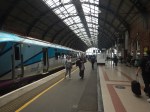
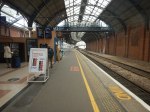
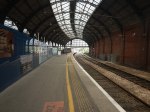
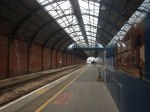
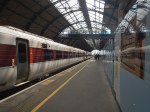
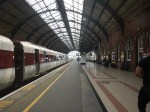
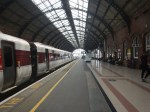

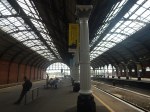
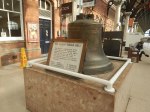
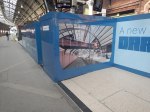

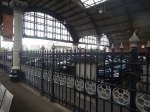
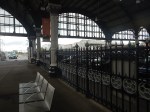
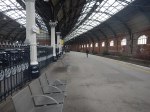
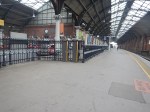
Note.
- The station is being given a major upgrade, so it can handle more trains.
- The station has a large number of top-quality Victorian features.
- The station is Grade II* Listed.
- Inside the enormous train-shed are two long platforms, that handle most of the trains and two South-facing bay platforms.
- Two new platforms, which are numbered 5 & 6, and possibly a double-track avoiding line are being added outside the train-shed on the East side.
- In images with a comment saying Note Platform 5, the new long electrified Platform 5 can be seen.
- Platform 5 appears to be already electrified at its Southern end.
These three OpenRailwayMaps shows the future layout.
The first OpenRailwayMap shows the junction, where the branch to Newton Aycliffe, Shildon and Bishop Auckland connects.
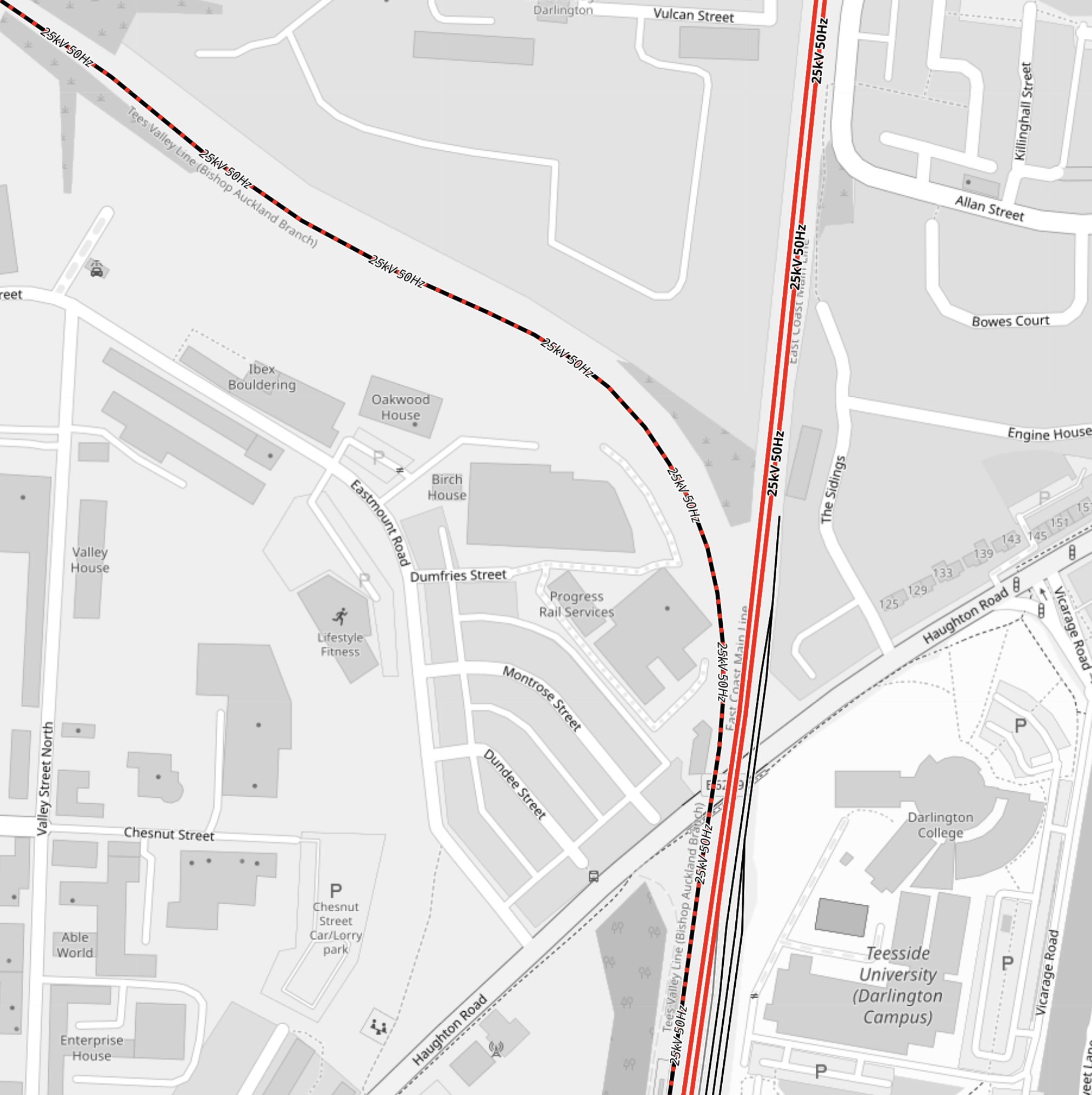
Note.
- The red tracks are electrified and indicate the East Coast Main Line.
- The track curving off to the North-West is the Bishop Auckland Branch.
- The black tracks are not-electrified.
- The Bishop Auckland Branch is shown dotted black and red, as it will be electrified, so that Hitachi can get their new trains to the East Coast Main Line.
- The two tracks of the East Coast Main Line are very straight and the map shows them to have a 125 mph operating speed.
The second OpenRailwayMap, shows the lines immediately to the South of Darlington station.
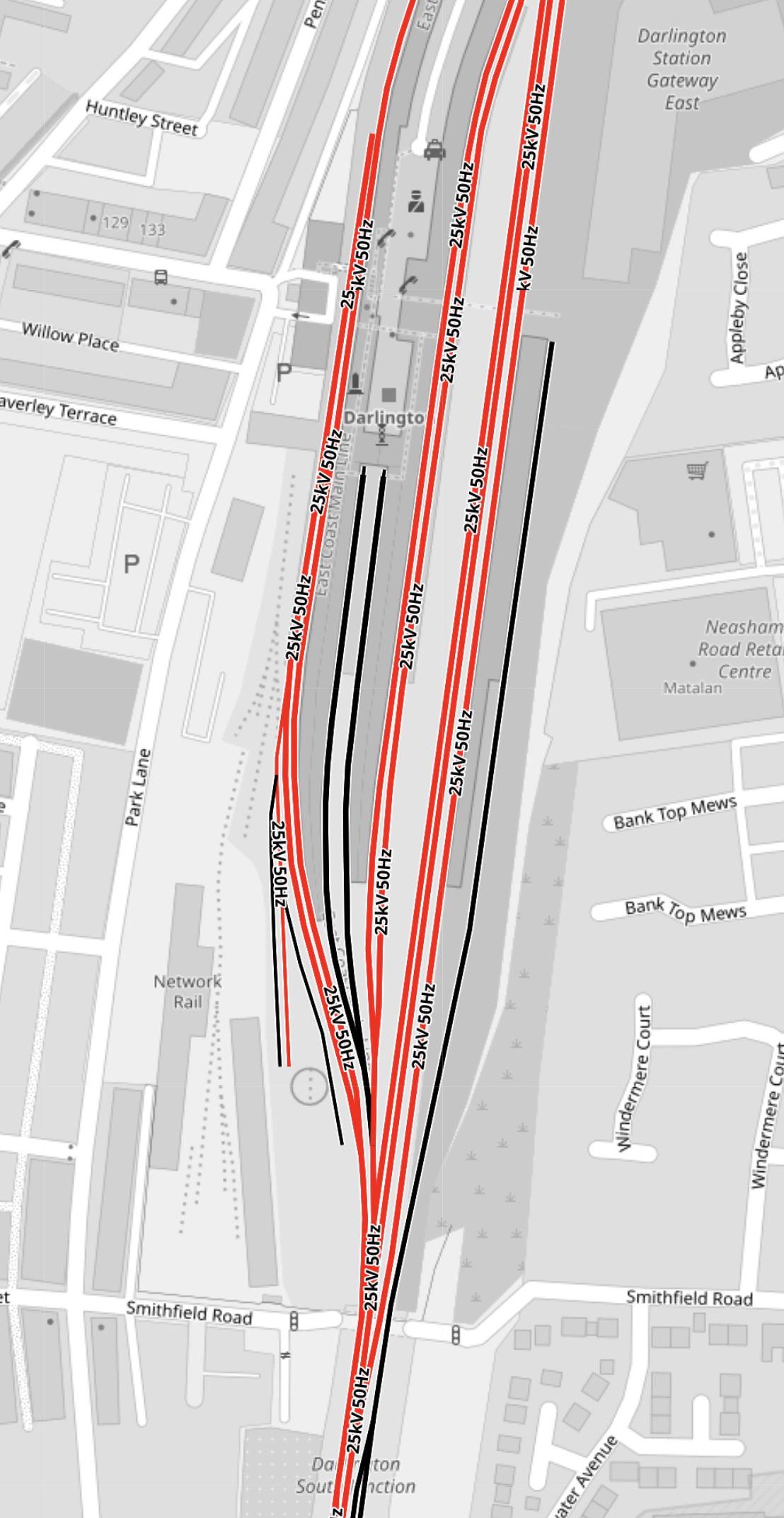
Note.
- The red tracks are electrified.
- The black tracks are not electrified.
- Tracks are number 4, 3, 2 and 1 from the West.
- The Southern ends of Platforms 1 and 4, and Platforms 2 and 3, which are inside the current train-shed appear to be virtually unchanged.
- Platform 1 is electrified and will probably still cater for Southbound trains.
- Platforms 2 and 3 are bay platforms without electrification for trains terminating at Darlington.
- Platform 4 is electrified and will probably still cater for Northbound trains.
- There is an electrified avoiding line to the East of Platform 1.
- The brick wall of the current train shed is in the white space to the East of Platform 1.
- Outside the current train shed are two electrified 125 mph lines, an electrified through platform and a South-facing bay platform without electrification.
- The new electrified platform looks very long. Could it be long enough to handle a pair of High Speed Two Classic-Compatible trains? I suspect though it is long enough to handle the splitting and joining of a pair of five-car Hitachi Class 80x trains.
- The new bay platform looks longer that the current bay platforms 2 & 3. Is it long enough to handle a five-car Hitachi Class 80x train?
- It does appear from the track layout, that the new electrified platform is connected to the East Coast Main Line, the Saltburn branch and stabling sidings to the North of the station.
- The new bay platform appears to be connected to the Saltburn branch.
The two new platforms also appear to be adjacent to an area of the station, which is labelled Darlington Station Gateway East. I would assume, that this proximity will be used to make the station easy for changing trains.
The third OpenRailwayMap shows the section of the station between the two previous maps.
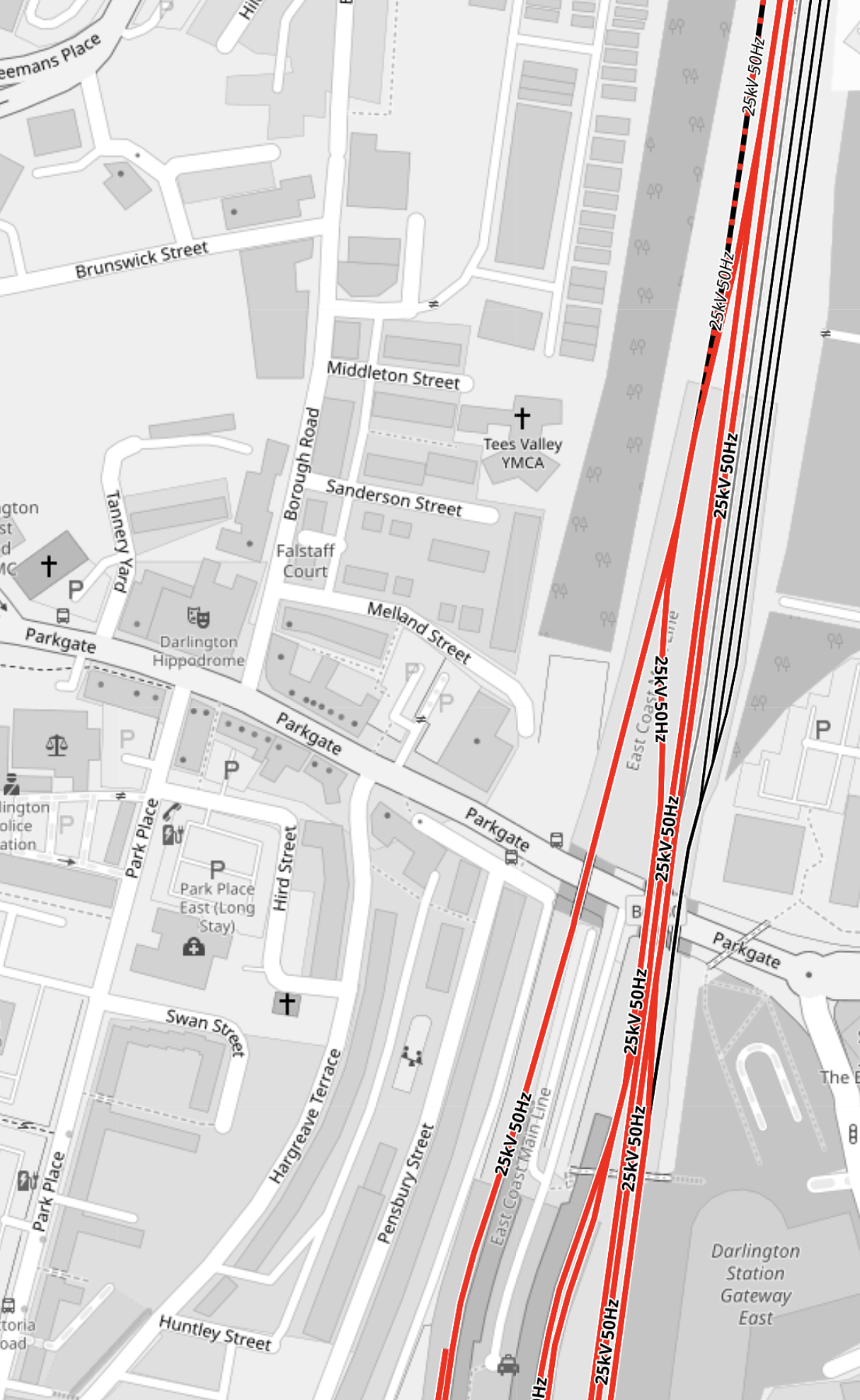
Note.
- The red tracks are electrified.
- The black tracks are not-electrified.
- The Darlington end of the Bishop Auckland Branch is shown dotted black and red, as it will be electrified, so that Hitachi can get their trains to and from the East Coast Main Line.
- Both Platforms 1 and 4 appear to connect to the East Coast Main Line, so high speed services can operate as they do now, by taking a diversion through the current Darlington station.
- To the East of the East Coast Main Line, there appear to be some very useful stabling sidings.
I have some general thoughts about Darlington station.
Will Trains Not Stopping At Darlington Station Use The New 125 mph Lines Through the Station?
It does appear that the two 125 mph lines through the new part of the station are very straight.
- They are shown as 125 mph, but could be faster.
- It should be remembered that according to Wikipedia, British Rail built the Selby Diversion for 160 mph in 1983.
- Between Durham and York stations is 66.2 miles of mainly 125 mph railway.
I believe that cutting out the need for trains to slow to go through Darlington station could save several minutes.
Will Trains Stopping At Darlington Station Use The Current Platforms 1 And 4 As They Do Now?
The track layout would seem to allow this and those changing to another train, would not have to walk a long way.
Can Trains Stopping At Darlington Station Use The New Eastern Platforms?
I have examined the second and third maps in detail and it looks as if the track layout will allow trains on the East Coast Main Line in both directions to stop at the long electrified platform.
The shorter bay platform appears to be only connected to the Tees Valley Line to Middlesbrough and Saltburn.
How Long Are The New Eastern Platforms?
Estimating against the scale on the map, I reckon these are the likely lengths.
- Long electrified platform – 400 metres – Appears to be numbered 5
- Bay platform – 200 metres – Appears to be numbered 6.
These are very useful lengths.
An Aerial View Of The New Platforms
This image from Tees Valley Combined Authority shows the Northern ends of the new platforms and the new footbridge.
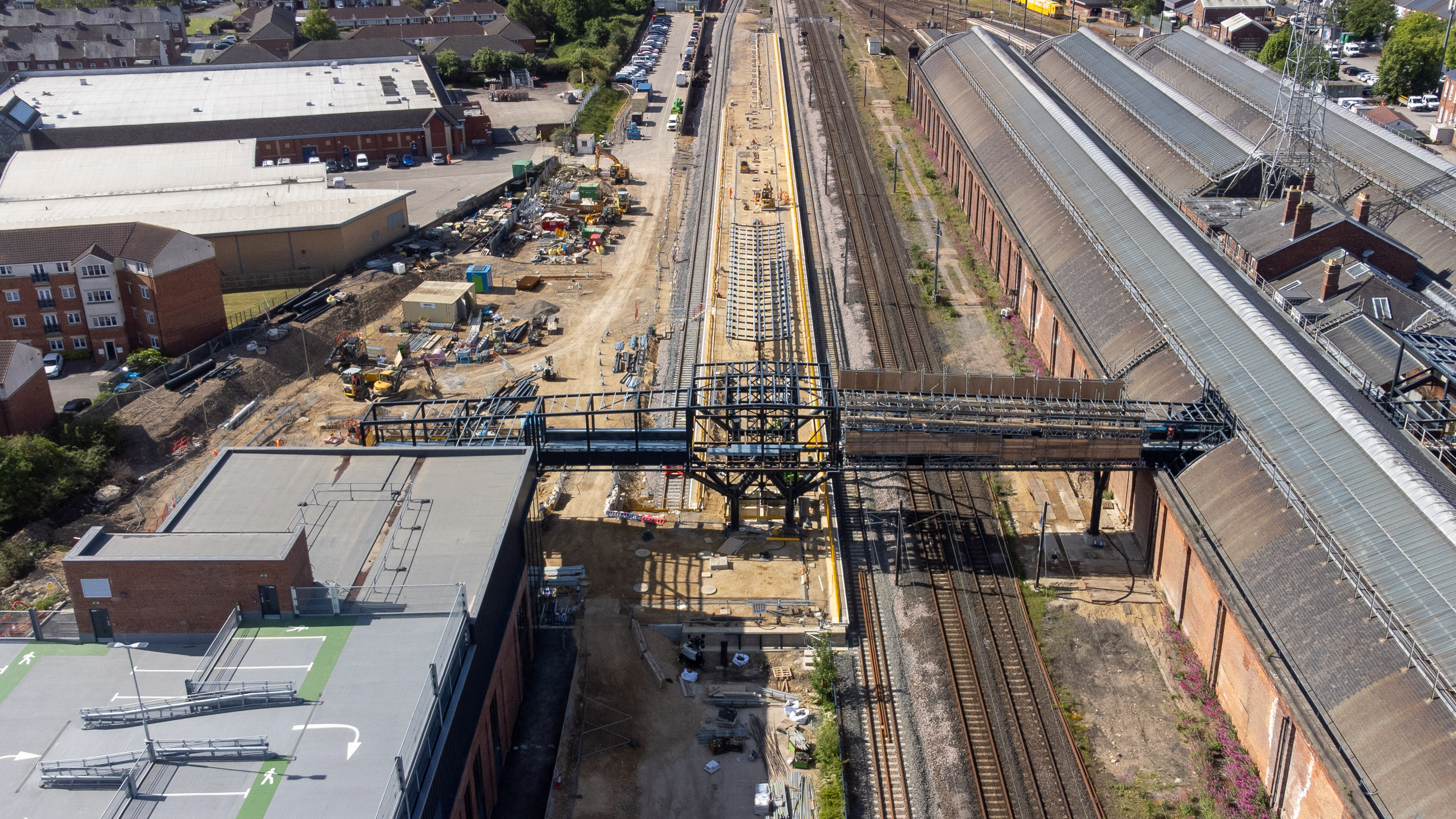
Note.
- The original four-platform Victorian station is on the right, which is the Western side.
- The East wall of the Victorian train shed can be clearly seen.
- The two absolutely straight 125 mph lines, that allow trains to bypass the original station are closest to the wall.
- The long electrified platform, which appears to be numbered 5, also appears to be absolutely straight.
- The unelectrified bay platform, which appears to be numbered 6, is to the left.
- Platforms 5 and 6 would seem to be separated by a wide island platform, which would make interchange easy.
This page on the Network Rail web site, gives more information.
Car Parking At Darlington Station
This image from Tees Valley Combined Authority shows the Northern end of the station.
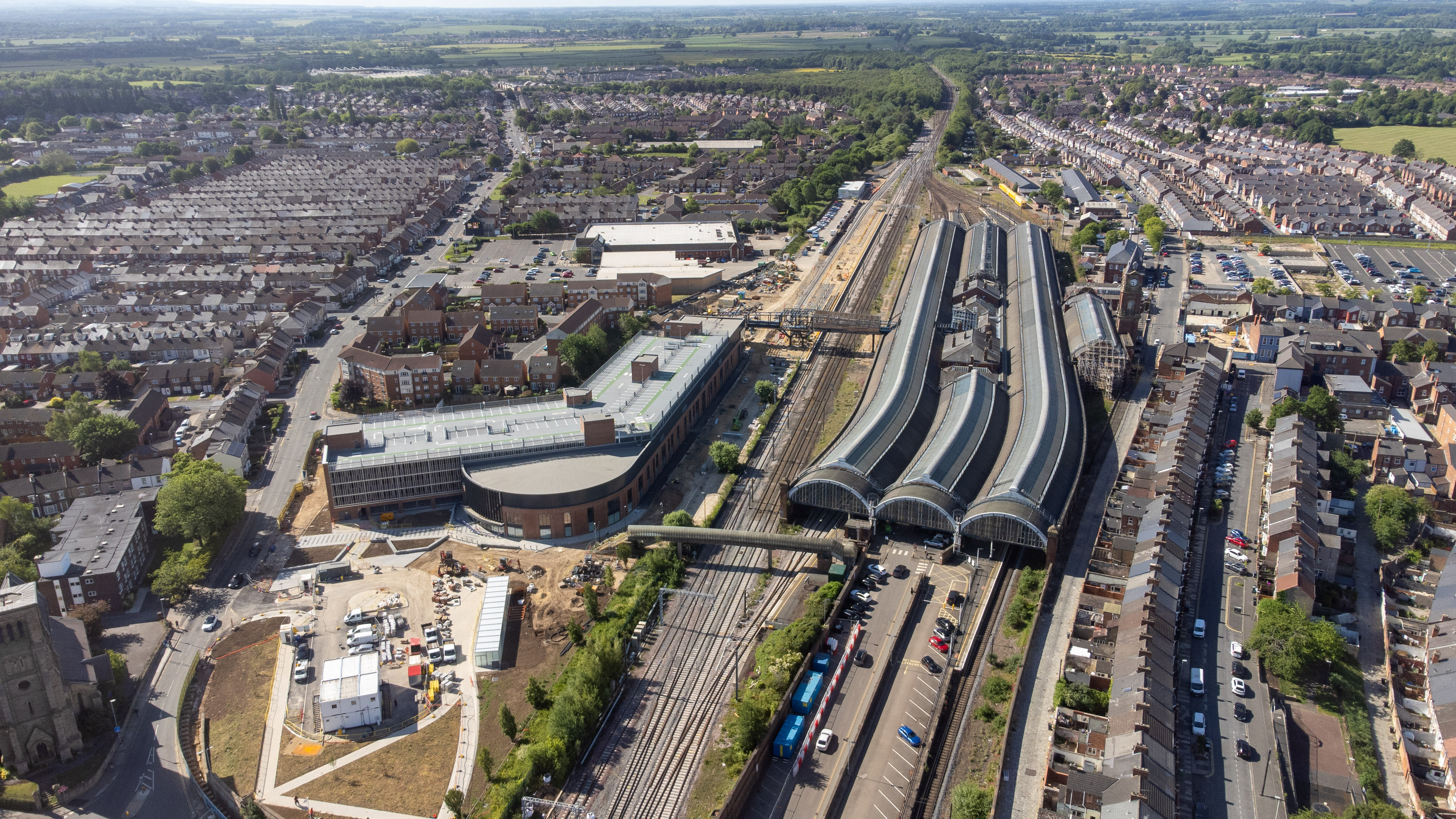
Note.
- The three sections of the Victorian station.
- The two new platforms ; 5 and 6 at the top of the image.
- The two 125 mph lines bypassing the Victorian station.
- There are two new footbridges connecting the Victorian station to the land on the other side of the 125 mph lines.
To the left of the station, there appears to be a massive multi-story car-park.
I asked Google about the new car park at Darlington station and got this reply.
The new multi-story car park at Darlington Station will have a capacity of more than 650 vehicles. This is part of a larger £140 million redevelopment of the station, which also includes new platforms and an eastern concourse. The car park will include accessible parking bays and electric car charging points.
This image from Tees Valley Combined Authority shows the car parking from the South.
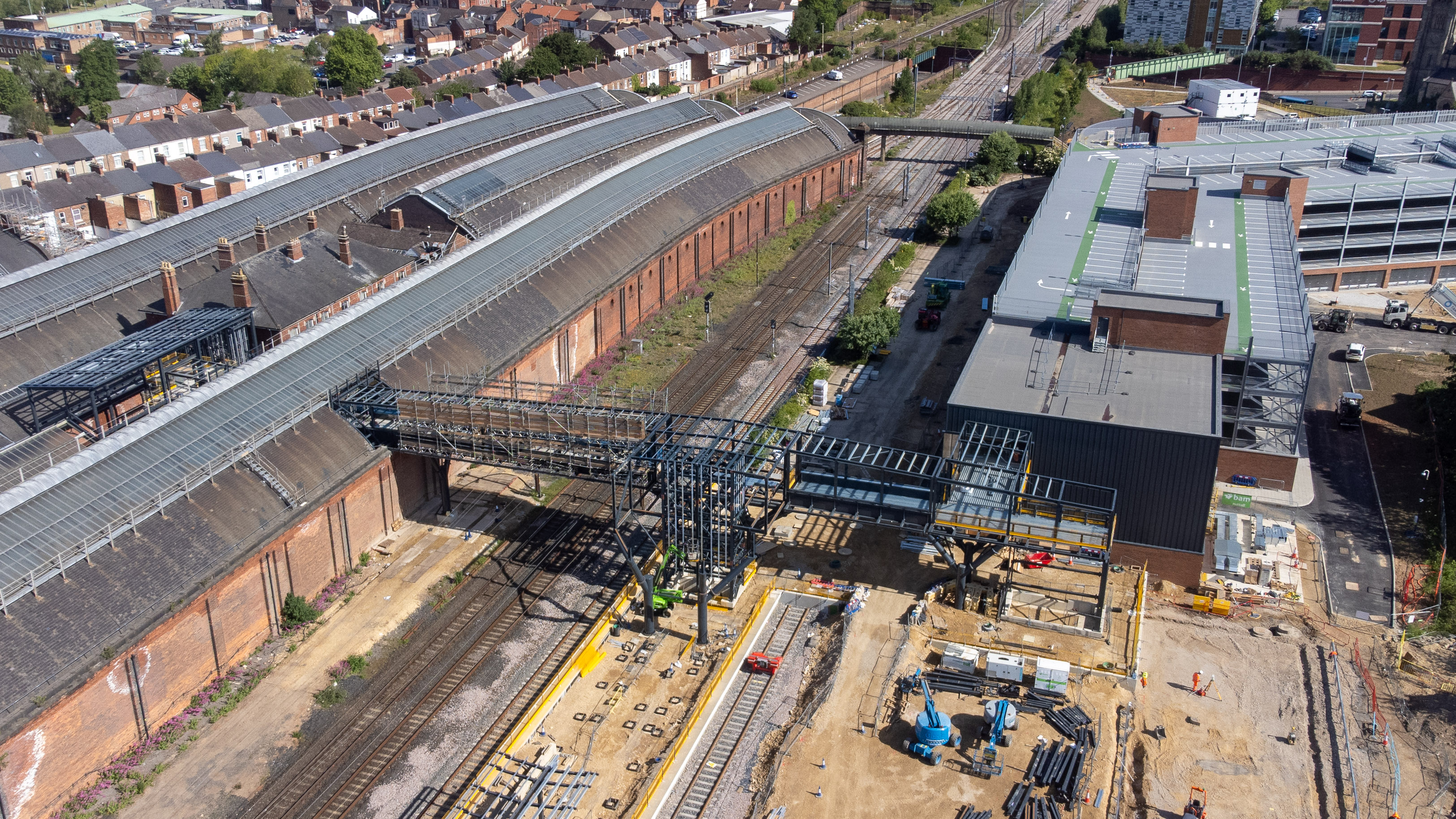
Note.
- The building appears to be a five-story car park.
- There appears to be a very easy connection between the car park and the bridge to the station.
- From the roof layout, there appears to be several lifts.
- It looks like there will be a large area between the platforms and the car park, where travellers can meet and socialise.
- The bay platform 6 already has a pair of red buffer stops.
Railways may have come to Darlington two hundred years ago and it looks like they are getting the car parking at the station ready for at least the next two hundred.
Further Electrification
If as I expect, the UK embraces battery electric technology for local and regional trains, I can see the three South-facing bay-platforms being electrified, so they could charge he battery-electric trains.
This picture shows that bars have been placed across Platforms 2 and 3, that could be used to support the electrification.
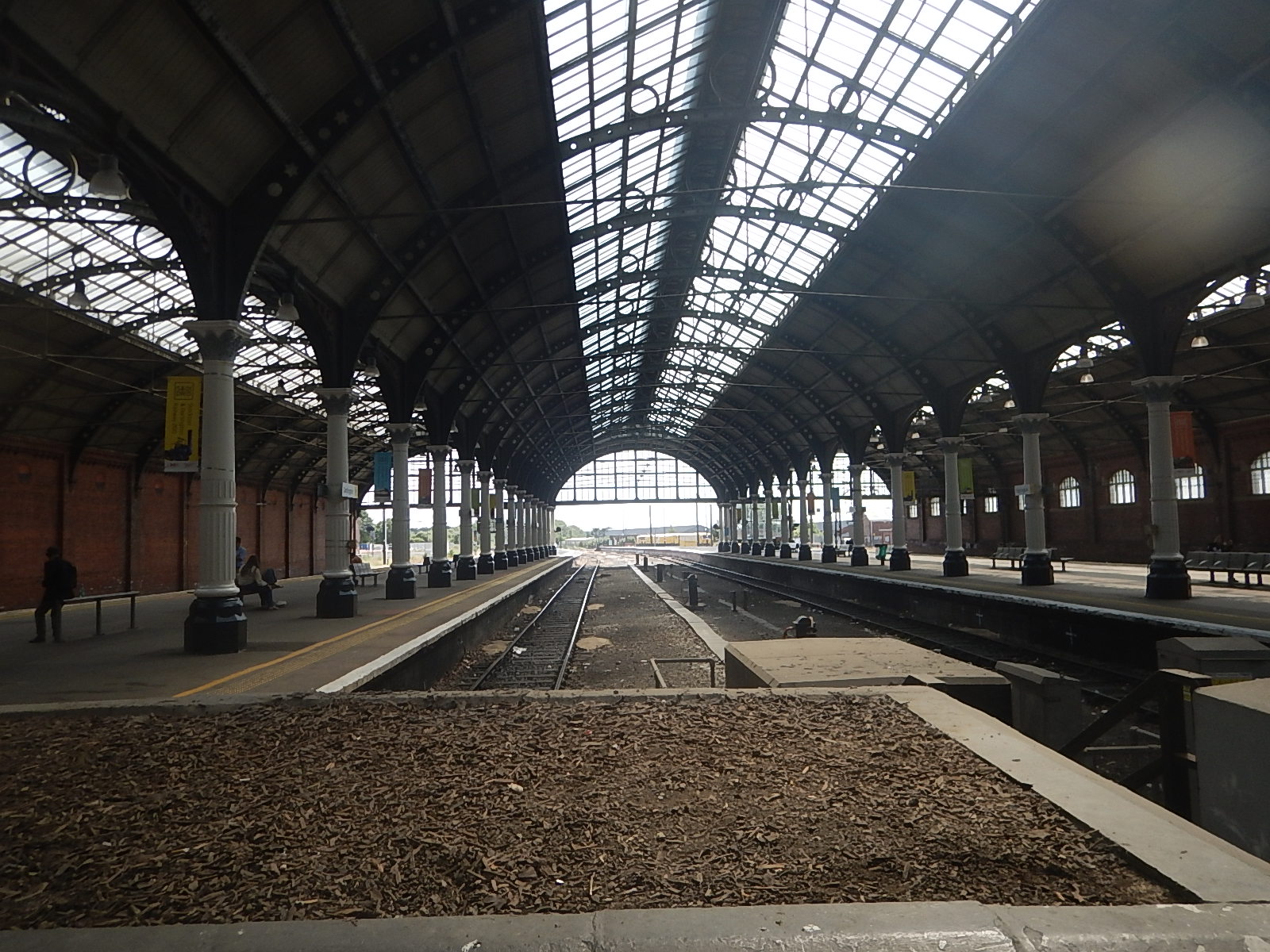
This method has been used in Victorian stations in the UK before. I show some installations and discuss electrifying Victorian stations in Could Hull Station Be Electrified?.
Darlington Station And High Speed Two
This graphic shows the original service pattern for High Speed Two.
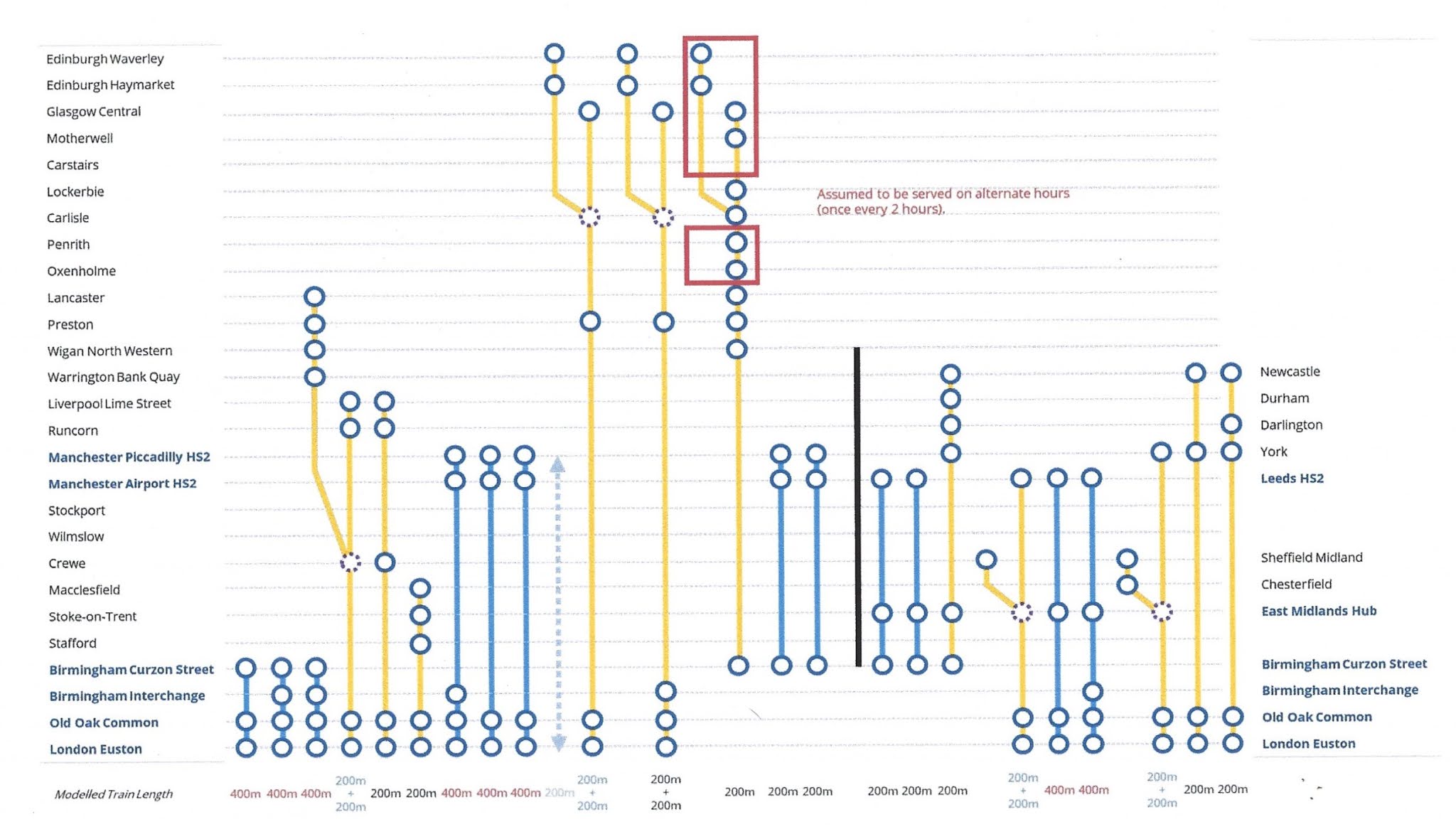
Note.
- There are seventeen paths terminating in the South at Euston station.
- Six of these paths go to Leeds, Newcastle or York.
- As the Eastern leg has been abandoned, that means there will be no High Speed Two trains to Leeds HS2, York, Darlington, Durham and Newcastle via the East Coast Main Line.
Darlington was to be served by these hourly services.
- Train 17 – Birmingham Curzon Street and Newcastle via East Midlands Hub, York, Darlington and Durham.
- Train 23 – London and Newcastle via York and Darlington.
Both trains would have been a single 200 metre long High Speed Two Classic-Compatible train.
Joining And Splitting Trains At Darlington
As Platform 5 looks like it would be a 400 metre long platform, it would look like it would be possible to handle a pair of High Speed Two Classic-Compatible trains.
But these trains will not now be serving Darlington in the near future, as the Eastern leg of High Speed Two has been cancelled.
A pair of nine-car Class 801 trains would be 467.4 metres long and might be able to fit into Platform 5.
But a pair of seven-car trains would certainly fit into a 400 metre Platform 5.
In Do Class 800/801/802 Trains Use Batteries For Regenerative Braking?, I found this snippet in an Hitachi document.
To simplify the rearrangement and management of train configurations, functions are provided for identifying the train (Class 800/801), for automatically determining the cars in the trainset and its total length, and for coupling and uncoupling up to 12 cars in
normal and 24 cars in rescue or emergency mode.
So I suspect with software updates two nine-car trains could run together.
Suppose LNER wanted to attack the airlines on the London and Scottish route.
- Two seven- or nine-car Class 800 or 801 trains would leave Edinburgh working as a pair.
- First stop would be Platform 5 in Darlington.
- The trains would split in Darlington.
- One train would go to King’s Cross stopping at perhaps Doncaster and Peterborough.
- The other train would go to St. Pancras stopping at perhaps Leeds, Sheffield, Nottingham and Bedford.
Note.
- A seven-car Azuma would be under 200 metres long.
- Seven-car trains would fit in St. Pancras.
- LNER have run an Azuma train into St. Pancras.
- The train would interchange with East-West Rail at Bedford.
- Travellers to and from East Anglia would change at Peterborough.
Large areas of England would have a fast route to and from Scotland.
An Extreme Day Out – Bradford Forster Square Station
It seems to be the fashion to go and visit somewhere far away in a day. So why not?
For my first trip in this vein, I decided on the spur of the moment to go to Bradford Forster Square station.
Why Did I Choose Bradford Forster Square Station?
There are three main reasons.
- A new platform has just opened at the station to handle the longest LNER trains.
- LNER are now running a seven trains per day (tpd) service via Leeds.
- I wanted to see how LNER’s walk-up ticketing performed on the route.
In addition, I wanted to see how the service performed, now that Bradford is this year’s UK City of Culture.
King’s Cross To Bradford Forster Square Station For £43.00 With A Railcard
I just missed the 11:03, so I booked the 13:03 for £43.00 with my Senior Railcard, from one of the numerous ticket machines in King’s Cross.
The train arrived on time in two hours 47 minutes for the 199.4 miles, which was an average speed of 72 mph.
In What Will Be The Fastest Times Possible Between London King’s Cross And Leeds?, I predicted this.
I wouldn’t be surprised to see with full digital signalling and a 125 mph average between London King’s Cross and Leeds.
- 125 mph Base Time – 89 minutes.
- Four Acceleration/Deceleration sections at 6 minutes each – 24 minutes.
- Three Dwell Times at 2 minutes each – 6 minutes
This would mean a total time of one hour and 59 minutes.
As my Bradford service took two hours and 28 minutes between London King’s Cross And Leeds, that would mean, that a time close to two hours and fifteen minutes could be possible between London King’s Cross and Bradford Forster Square stations.
There Weren’t Many Passengers Between Leeds And Bradford Forster Square Stations
These pictures show the nearly empty train and the small numbers, who alighted at Bradford Forster Square station.
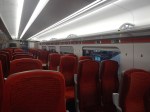
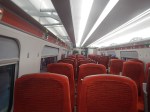
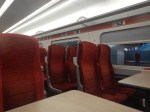
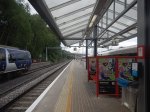
But I don’t think three in the afternoon is a time, when many passengers will need to go between Leeds and Bradford Forster Square stations.
Bradford Forster Square Station
I described that station, with its new Platform 0 in Bradford Forster Square Station – 20th May 2025, where I said the station needed these additions.
The station needs a few additions, like a proper coffee shop, a better shop, ticket machines and toilets.
But it’s not been open very long.
Bradford Forster Square Station To King’s Cross For £25.70 With A Railcard
I bought this ticket from a Yorkshire Lass in the Ticket Office.
There Weren’t Many Passengers Between Bradford Forster Square And King’s Cross Stations
Only about a dozen passengers boarded the train at Bradford Forster Square and some got out at Leeds.
In fact the train wasn’t very busy all the way to London with perhaps twenty passengers in my carriage, when we arrived in King’s Cross.
Will This Service Develop Into A Two-Hourly London King’s Cross And Leeds Or Bradford Forster Square Service With A Trans-Yorkshire Service Tacked On?
Currently, it is the following.
- An express service between King’s Cross and Leeds with stops at Peterborough, Doncaster and Wakefield Westgate.
- An express service between King’s Cross and Bradford Forster Square with stops at Peterborough, Doncaster, Wakefield Westgate and Leeds.
- A local service between Doncaster and Bradford Forster Square with stops at Wakefield Westgate and Leeds.
- Additional calls on some services are at Stevenage, Grantham, Retford and Shipley.
In addition the following would be possible.
- Pairs of trains could split at Leeds, with one train going to Bradford Forster Square and the other train to somewhere like Harrogate, Huddersfield or Skipton.
- Additional stops could be added between Leeds and Bradford Forster Square without slowing services between Leeds and King’s Cross.
But then where does this fit with LNER buying ten CAF tri-mode trains?
Surely they would get better flexibility, if they’d bought more Azumas, which could run on the electrification all the way to Bradford Forster Square, Huddersfield and Skipton. If some had batteries, they could run all the way to Harrogate.
LNER’s Disabled-Unfriendly Refreshments System
I am not disabled, but I only have one fully-working hand, as the school bully broke my left humerus and I have difficulty doing certain things with my left hand, due to the quality of the care I received in Highlands Hospital in Winchmore Hill.
Having a left-sided stroke didn’t help either.
One of the things, I can’t do is take pictures on my mobile phone, so I always carry a proper camera. Because of the injury, I have also never read a QR code with my phone.
On LNER’s trains to get a drink, you either have to order it by reading a QR code or walking to the buffet.
As on the train going North, the buffet was closed, I went thirsty.
In future, if I have a choice of trains, I’ll choose one with a trolly service.
Are The CAF Tri-Mode Trains Part Of A Plan To Drive Open Access Operators Out Of Yorkshire?
This is possibly the only scenario that makes sense.
The ten-car tri-mode trains would be used to take over Grand Central’s services to Bradford Interchange and Sunderland, and Hull Trains services to Hull.
After Monday, LNER are now running more daily services to Bradford Forster Square, than Grand Central are to Bradford Interchange.
If like my return to London on Tuesday, you can buy a walk-up ticket on LNER, then why would you travel on Grand Central.
Conclusion
£68.70 is not a bad price for what is in effect a walk-up day return to Bradford Forster Square.
I’ve just looked how much, I would be charged for an advance ticket on Friday, using the trains I used on Tuesday.
I could get a ticket for £25.70 going North and £28.95 going South or a total of £54.65. All are with my Senior Railcard.
But it does look to me, that LNER and the Government are trying to drive Grand Central off the Bradford route.
If I am right and Hull Trains and Lumo will be next in LNER’s sights, then what was Starmer and other Government ministers doing at the launch of orders for new trains for Grand Central, Hull Trains and Lumo?
Would A Train Manufacturer Save CrossCountry’s Iconic Aberdeen And Penzance Route?
The article in The Times about the cancelling of CrossCountry’s iconic Aberdeen and Penzance route was entitled After 104 Years UK’s Longest Train Route Is Cancelled For Ever, I gave my post the same name and both received a number of nostalgic comments, from those, who had ridden the route or wished they had.
The Characteristics Of The Line
This article on the BBC is entitled We Had To Be On Last Run Of UK’s Longest Train Route.
This is said in the BBC article.
The connection – first established back in 1921 – is 775 miles (1,247km) long.
But electrification is rather thin on the ground.
Between Leeds and Edinburgh stations is electrified and I suspect that some of the route through Birmingham New Street and Bristol Parkway stations are also electrified, so perhaps, a battery-electric train could get a top-up on the way.
But as Leeds and Edinburgh is around 220 miles, there’s about 550 miles of the route or 70 % without electrification.
Battery Power, Hydrogen Power Or Both?
If diesel is ruled out on environmental grounds, it means that only battery or hydrogen power could be used for the route.
Despite some of the progress made by battery-electric trains in the last few years, I feel that unless the route has a large number of charging stations, then battery-electric trains will not be a practical solution.
This is a paragraph from The Times article.
Rail bosses said one of the reasons for ending the train was the difficulty keeping such a long journey on time. The fact that most customers made only short journeys along the route was also a consideration.
And this is another.
As an “express” service it was severely challenged, partly because of the long waits at a number of stations along the way, including 14 minutes at both Edinburgh Waverley and Bristol Temple Meads, and seven minutes at Birmingham New Street and Exeter St Davids.
Stopping regularly to charge the batteries, is going to make timekeeping more difficult and will probably end up with irritable passengers, after all the waiting.
So I suspect, hydrogen would be the ideal power for such a long service over a route with such sparse electrification.
But the trains, would be fitted with regenerative breaking to battery, so that kinetic energy is conserved as much as possible in the station stops.
I believe, that the trains should effectively be tri-mode or hydrogen-hybrid trains, but then many drivers praise the frugality of their hybrid cars.
Would Efficient Hydrogen-Hybrid Trains Attract More Passengers?
Consider.
- All the battery and hydrogen trains and buses, with one exception, that I have ridden on, have been mouse-quiet.
- The exception was a German hydrogen train, that had a very noisy mechanical transmission.
- I also would expect that the trains would be capable of keeping up a cruising speed of 100 mph or perhaps even 125 mph.
- This would enable them to handle the current timetable, which is written for 125 mph Class 222 diesel trains.
An efficient, unobtrusive, reliable and speedy service would surely attract passengers.
What’s In It For The Manufacturer?
Consider.
- There are not many 775 mile routes in the UK.
- But, there are many long rail around the world, that need decarbonising or even creating.
- Some countries, like China, India and France are creating more electrified high speed long-distance lines.
- Others countries, like Australia and the United States are planning and building high speed long-distance lines.
Perhaps, what is needed is a drop-in solution to decarbonise and/or create new high speed long-distance railways.
Could Aberdeen and Penzance be an ideal test bed to trial and demonstrate, your drop-in hydrogen solution?
I am reminded of a story, told to me, by a guy, who was selling an expensive air traffic control radar to an Arab state.
The initial presentations were done in the company’s offices in London.
The only working radar was installed at Prestwick Airport and had been working successfully for a couple of years, so the Arabs would be taken on a visit.
As they were very important clients, the salesman was told, that he was entitled to borrow the chairman’s executive jet for the trip.
The flight to Scotland was uneventful, but as they left the plane, the pilot said to the salesman. “There’s no finer view, than the Scottish Highlands at this time of year, I could fix it, that I gave them the view of a lifetime on the way home.”
After thinking about it for a few seconds, the salesman asked the pilot to fix it.
When they returned to the plane after a successful demonstration, the pilot said. “It’s on if you want it?”
The tale had a very happy ending, in that the Arabs bought an Air Traffic Control radar.
To return to the hydrogen trains; What better route is there to show off the capabilities of your high speed hydrogen-hybrid trains?
- There is the spectacular scenery of the North of Scotland, The Pennines and Cornwall.
- The Firth of Forth is crossed on the Forth Rail Bridge.
- There is running on the wires between Edinburgh and Leeds.
- There is the spectacular views of Durham and York from the train.
- There will be several hours of running on hydrogen.
- The Saltash Bridge is crossed.
What better route is there to sell trains?
Could CrossCountry Customer Service Be Improved?
I’ve never done a long journey on CrossCountry.
But surely, if the trains were designed for the route and the manufacturer was showing them off, the trains could have a top-of-the-range specification and high-quality service?
If you’re going to be stuck on a train for over a dozen hours the service must be good.
Conclusion
Get everything right and the train service would be an unquestionable asset to the UK and extremely good for the manufacturer.
FirstGroup’s Lumo Seeks To Launch Rochdale – London Open Access Service
The title of this post, is the same as that of this article on Railway Gazette.
These two paragraphs outline the service.
FirstGroup has applied to operate Rochdale – London open access passenger trains, more than 20 years after a short-lived through service ran between the two destinations.
On May 17 FirstGroup said that it had applied to the Office of Rail & Road to launch six Lumo-branded return journeys per day linking London Euston and Rochdale via the West Coast Main Line. The trains would call at Warrington Bank Quay, Newton-le-Willows, Eccles and Manchester Victoria.
These are my thoughts.
The Route Isn’t Fully-Electrified
The route is electrified between London Euston and Manchester Victoria stations, but the 10.4 miles between Manchester Victoria and Rochdale is not electrified.
In Extra Luggage Racks For Lumo, I also talk about the possibility of fitting traction batteries to Lumo’s Class 803 trains, so they could handle the 88.5 mile diversion on the East Coast Main Line via Lincoln.
Trains with a traction battery, with an 88.5 mile range, would be able to travel between Manchester Victoria and Rochdale and return.
How Long Would London Euston And Rochdale Take?
Consider.
- The fastest London Euston and Warrington Bank Quay services take 1 hour and 44 minutes
- The fastest Warrington Bank Quay and London Euston services take 1 hour and 47 minutes
- Northern’s Class 195 trains take between 44-51 minutes Rochdale and Warrington Bank Quay with three stops.
- Northern’s Class 195 trains take between 29-32 minutes Manchester Victoria and Warrington Bank Quay with two stops.
- I will add two minutes for the extra stop.
These are my estimates for overall journey times.
- London Euston and Manchester Victoria – 2 hours and 15 minutes
- London Euston and Rochdale – 2 hours and 29 minutes
- Manchester Victoria and London Euston – 2 hours and 21 minutes
- Rochdale and London Euston – 2 hours and 40 minutes
The fastest direct Avanti West Coast services between London Euston and Manchester Piccadilly take 2 hours and 6 minutes.
Could The Service Be Extended To Leeds?
For my timings between Rochdale and Warrington Bank Quay, I used Northern’s Leeds and Chester service.
This service goes between Manchester Victoria and Leeds calling at Rochdale, Todmorden, Hebden Bridge, Halifax, Bradford Interchange, New Pudsey and Bramley.
I estimate it would take about 3 hours 32 minutes.
When Bradford has a new through station, I wouldn’t be surprised if a train operator looked at this route between London Euston and Leeds.
As Leeds and Manchester Victoria is only 49.8 miles, Lumo’s battery electric trains, with 88.5 mile batteries sized for the Lincoln diversion on the East Coast Main Line, would have no difficulty serving Leeds, where they would charge before return.
Could Lumo Run Pairs Of Five-Car Trains Between London Euston and Manchester Victoria?
As I said in Ten-Car Hull Trains, Lumo’s sister company; Hull Trains, runs the occasional ten-car service.
Perhaps for a big football match or other event, Lumo might like to run ten-car trains between Manchester Victoria and London Euston.
I suspect they could do it if the platforms were long enough, but they wouldn’t be able to run a 260 metre ten-car train to Rochdale, as that station only has a 135 metre long platform.
Warrington Bank Quay Station Will Get Six Extra Non-Stop Trains To And From London
This would provide real competition to Avanti West Coast over this route.
Newton-le-Willows Station Is Only A Few Miles From The Town Of St. Helen’s
Newton-le-Willows station has 400 parking spaces and 32 disabled parking spaces.
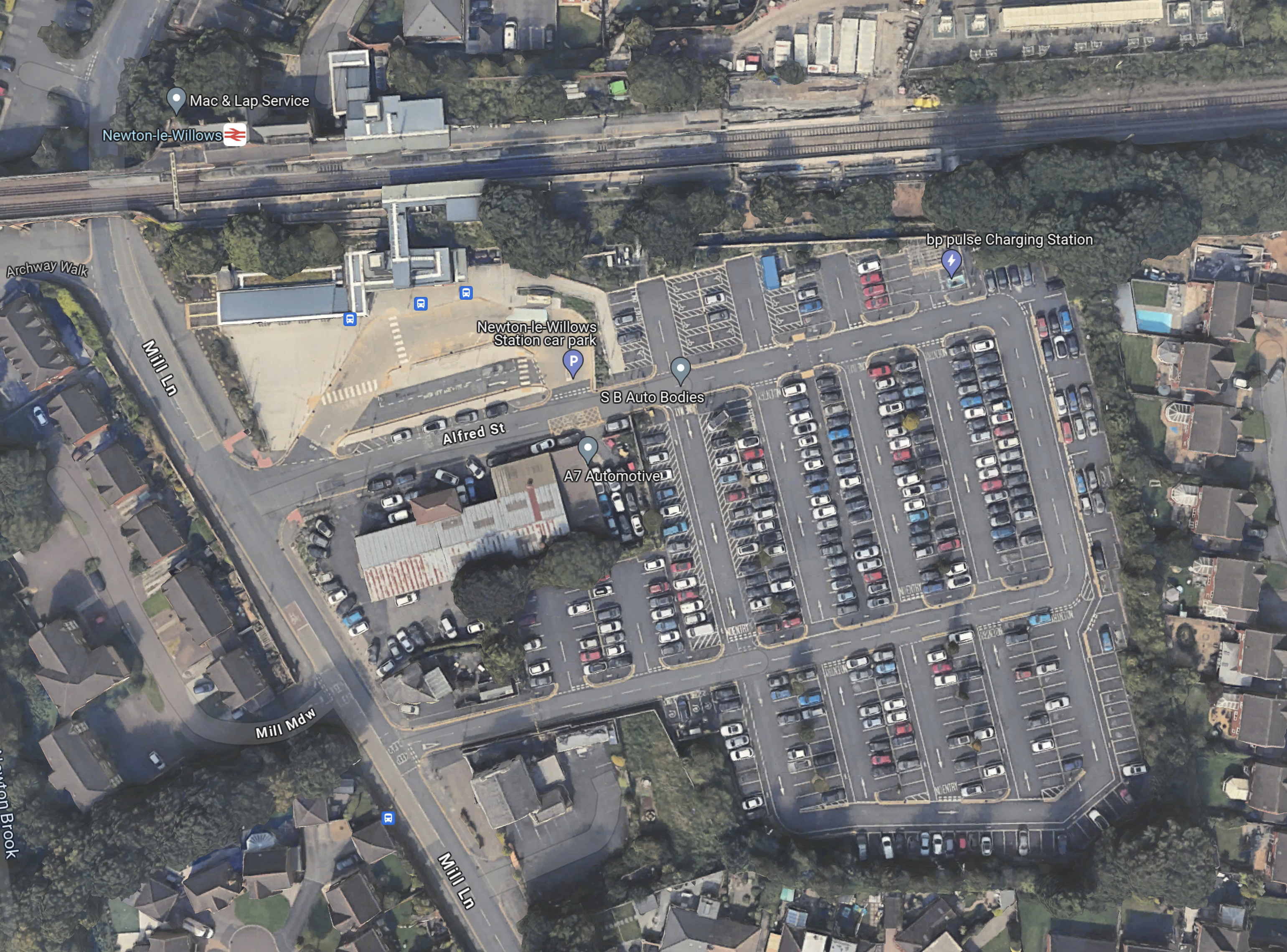
Note.
- The parking is all free!
- There are regular local trains to Chester, Leeds, Liverpool Lime Street, Manchester Airport and Wigan North Western.
A six trains-per-day service to and from London, will help fill up the parking spaces.
Eccles Station Is Within Walking Distance Of Eccles Interchange
This OpenRailwayMap shows Eccles station and Eccles Interchange.
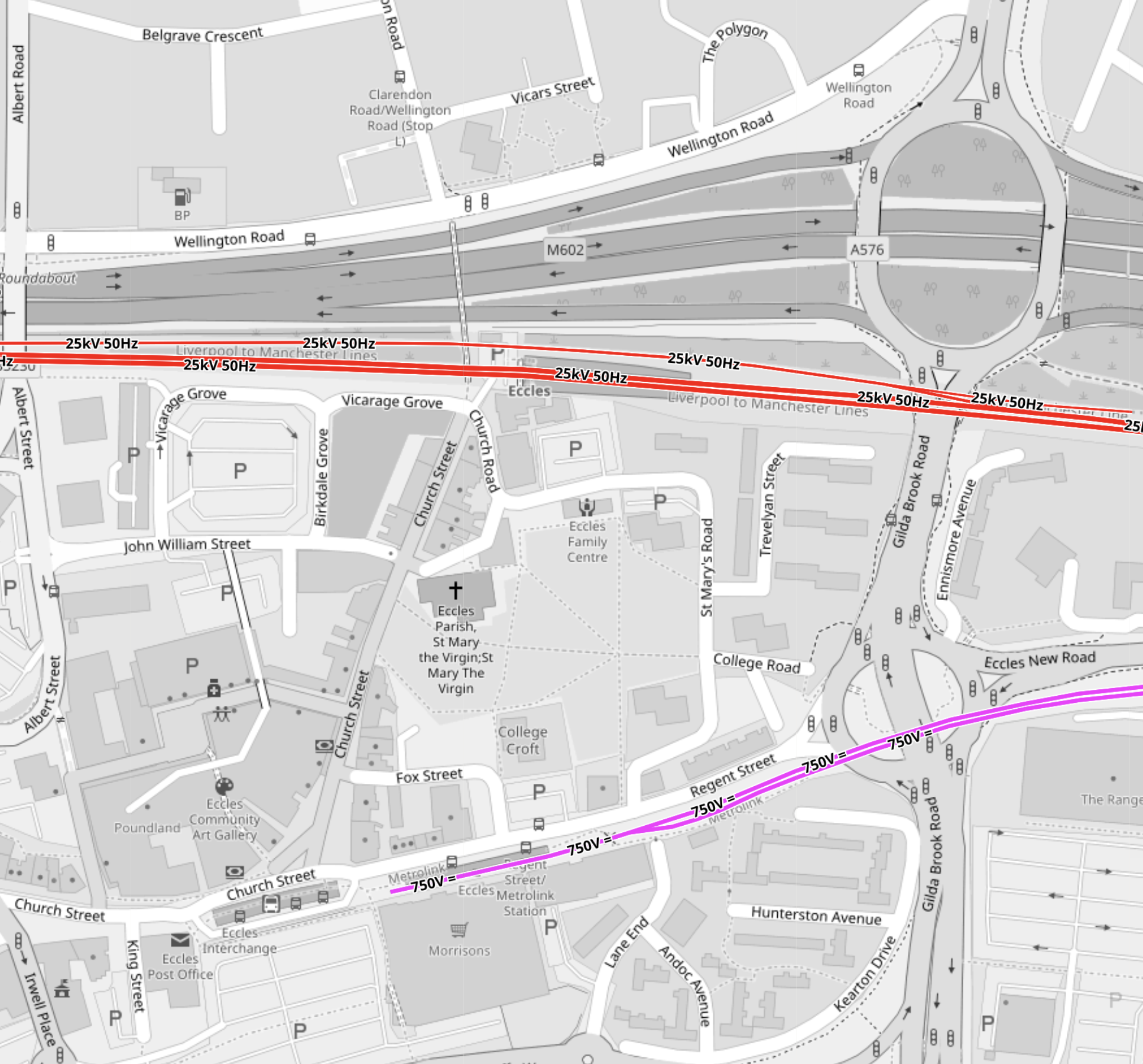
Note.
- The mauve tracks are the Manchester Metrolink.
- They terminate in the South-West at Eccles Interchange.
- The red tracks are the Liverpool-Manchester lines.
- Eccles station is a Northerly walk from Eccles Interchange.
This connection must be useful to more than a few.
I suspect if you’re going between London and Media City UK, Salford Quays or Piccadilly Gardens, you may be better to change to the Metrolink at Eccles.
Will Lumo’s Rochdale Service Run As A Flight With Avanti’s Glasgow Service?
Flighting is where two or more trains going on the same route run a few minutes apart.
- Every hour, on the half hour, an Avanti West Coast service for leaves London Euston for Glasgow Central.
- As with Lumo’s Rochdale service, the first stop is Warrington Bank Quay station.
- The Lumo service would leave London Euston a few minutes after Avanti’s Glasgow service.
- The distance between the two trains would be such, that if the first train stopped, the second train could stop safely.
- Digital signalling as is being installed on UK rail lines would make it easier to ensure safe separation.
But the benefit would be that both trains ran fast to Warrington Bank Quay station.
A Day-Trip To Manchester
If I’m right about the 2 hours and 15-21 minutes between London Euston and Manchester Victoria, then a day-trip would certainly be feasible.
Last Trains
This is a table of the last train times for Lumo between Newcastle and London.
- Weekdays – 20:27 21:35
- Saturdays – 18:27 19:22
- Sundays – 19:24 20:21
Note.
- The first time is the last Northbound departure.
- The second time is the last Southbound departure.
- Are these late enough for football matches?
I shall be interested to see the proposed last train times for the Manchester route.
- Will they be timed so you can get a tram from the Etihad or Old Trafford stadium after an evening match, that allowed you to get the last train back to London from Manchester Victoria?
- Taylor Swift gave the Manchester Arena a lot of favours with her concerts. Would you have been able to see her concert and get the last train back to London?
A few extra full trains wouldn’t hurt Lumo’s finances.
Conclusion
It looks like, this could be a very worthwhile service.
LNER’s New Sunday Timetable
LNER’s new Sunday timetable, that starts on the 10th December 2023 is now available to view on this page of the National Rail web site, where this is said.
Sundays are now one of the most popular days to travel on LNER’s network.
To support this increase in demand, LNER is introducing three additional Sunday services into its timetable starting in December 2023 – two (one each way) between Leeds and London Kings Cross and one between Doncaster and London.
There will also be more seats added to some trains with eight existing Sunday services becoming longer trains. The current five carriage services will be replaced with either nine or ten carriage Azuma trains for destinations including Leeds, Harrogate and Lincoln.
This equates to more than 3,000 additional seats on a Sunday and will help reduce overcrowding and increase connectivity for more people between Yorkshire and London.
To provide additional Sunday seating capacity, due to the lengthening of some London Kings Cross to Harrogate services on Sundays, two northbound station calls at Horsforth need to be removed on Sundays only. The impacted services are the 09.05 and 17:05 London Kings Cross to Harrogate trains.
Note.
- Horsforth looks to have short platforms.
- Last Sunday, Harrogate to London services were three nine-car and three five-car trains.
- In September 2023, I wrote Yorkshire To See More LNER Services And Longer Trains.
LNER certainly seem to be fulfilling the last promise.
Additionally, in this article on Modern Railways, which is entitled LNER Orders CAF Tri-mode Sets, this is said.
Modern Railways understands the new fleet will be maintained at Neville Hill depot in Leeds and, like the ‘225’ sets, will be used predominantly on services between London and Yorkshire, although unlike the ‘225s’ the tri-modes, with their self-power capability, will be able to serve destinations away from the electrified network such as Harrogate and Hull.
So are LNER gradually moving towards the new timetable they will use after the CAF tri-mode trains are delivered?
East Midlands Railway To Leeds
This news story from the Department of Transport is entitled Yorkshire And The Humber To Benefit From £19.8 billion Transport Investment.
This is said about Leeds and Sheffield services.
The line between Sheffield and Leeds will be electrified and upgraded, giving passengers a choice of 3 to 4 fast trains an hour, instead of 1, with journey times of 40 minutes. A new mainline station for Rotherham will also be added to the route, which could give the town its first direct service to London since the 1980s, boosting capacity by 300%.
These are my thoughts.
A New Mainline Station For Rotherham
This page on Rotherham Business News, says this about the location of the Rotherham mainline station.
South Yorkshire Mayoral Combined Authority (SYMCA) and Rotherham Council have been developing a scheme to return mainline train services to the borough for the first time since the 1980s. A site at Parkgate is the frontrunner for a regeneration project described by experts as “a relatively straightforward scheme for delivery within three to four years.”
Various posts and comments on the Internet back the councils preference for a new station at Rotherham Parkgate.
- It would be at Rotherham Parkgate shopping centre.
- It connects to the tram-trains, which run half-hourly to Cathedral in Sheffield city centre via Rotherham Central.
- There appears to be plenty of space.
This OpenRailwayMap shows the tracks at the current Rotherham Parkgate tram stop.
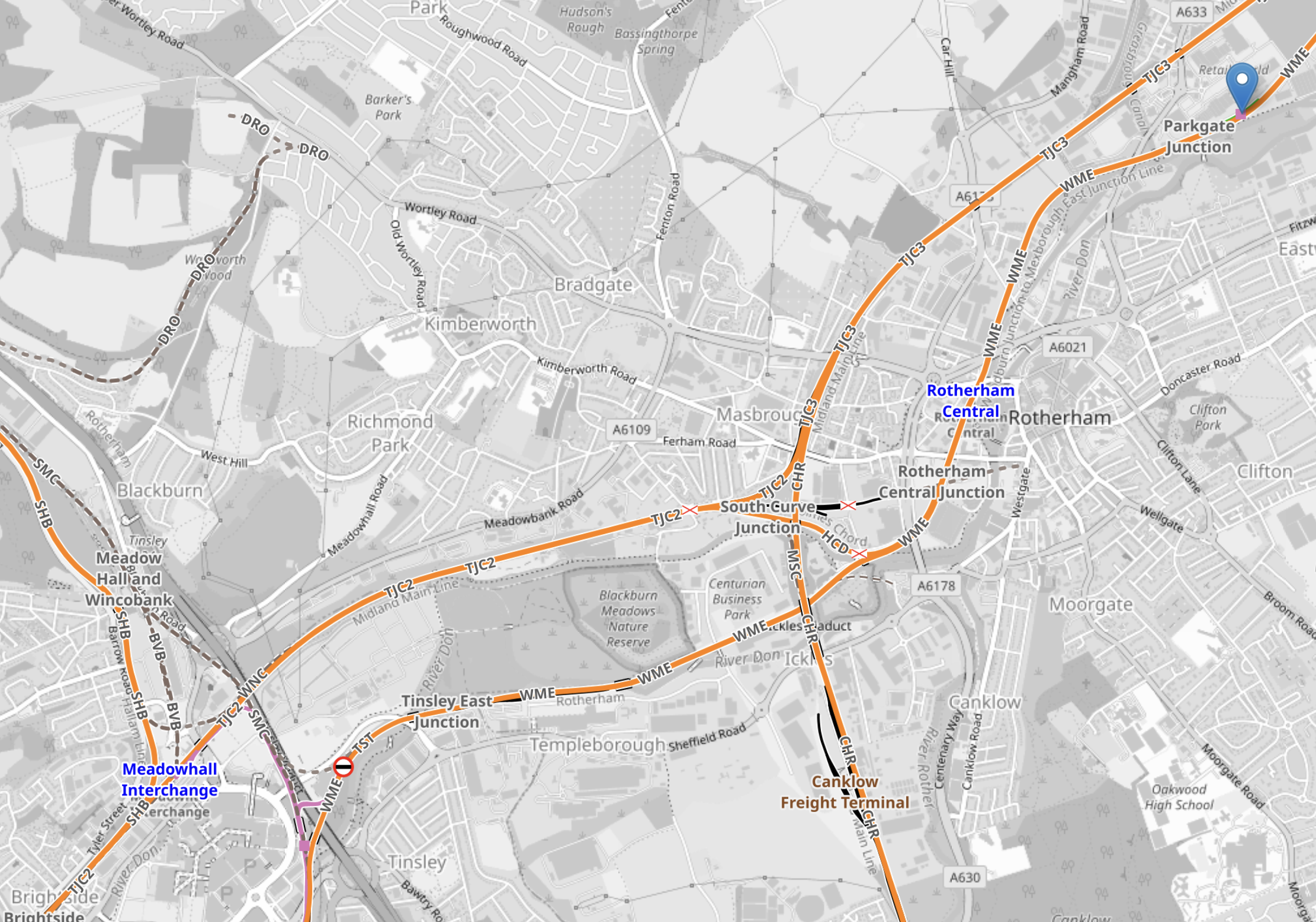
Note.
- The orange lines are the main railway tracks.
- Rotherham Parkgate is indicated by the blue arrow in the North-East corner of the map.
- Trains would run between Sheffield and Rotherham Parkgate via Meadowhall Interchange and Rotherham Central.
- Trains and tram-trains would share tracks through Rotherham Central.
After passing Rotherham Parkgate trains would go to Swinton, and then on to Doncaster or Leeds.
Sheffield And Leeds Via Rotherham Parkgate
Currently, there is an hourly service between Leeds and Sheffield, that goes through the Rotherham Parkgate site.
- It calls at Outwood, Wakefield Westgate, Sandal & Agbrigg, Fitzwilliam, Moorthorpe, Thurnscoe, Goldthorpe, Bolton-upon-Dearne, Swinton, Rotherham Central, Meadowhall.
- The service takes one hour and thirteen minutes, but there are eleven stops.
- As the distance is 38.9 miles, that works out at an average speed of 32 mph.
I suspect this schedule was written for Pacers.
The Department of Transport is aiming for a forty minute journey, which is an average speed of 58.4 mph.
Consider.
- If you look at the maximum speeds of the route from Rotherham Parkgate to Wakefield Westgate, it is 21.8 miles of 100 mph track.
- About twenty miles to the South of Wakefield Westgate is electrified.
- Leeds and Wakefield Westgate is 10.1 miles of 75-85 mph track.
- LNER’s expresses leave Wakefield Westgate, eleven minutes after leaving Leeds.
- I can find a TransPennine Express that takes thirteen minutes to go between Sheffield and Rotherham Parkgate late at night on the way to the depot.
The eleven and thirteen minutes mean that leaves 16 minutes for Rotherham Parkgate to Wakefield Westgate, if Sheffield and Leeds are to be timed at forty minutes, which would be an average speed of 82 mph between Rotherham Parkgate and Wakefield Westgate.
I feel that for a forty minute journey between Leeds and Sheffield, the following conditions would need to be met.
- Very few stops. Perhaps only Meadowhall, Rotherham Parkgate and Wakefield Westgate.
- 100 mph running where possible.
- 100 mph trains
- Electric trains would help, as acceleration is faster. Battery-electric trains would probably be sufficient.
- Some track improvements might help.
But forty minutes would certainly be possible.
At present there are five trains per hour (tph) between Leeds and Sheffield.
- Northern – 2 tph – via Wakefield Kirkgate, Barnsley and Meadowhall – 58 minutes
- Northern – 1 tph – via Outwood, Wakefield Westgate, Sandal & Agbrigg, Fitzwilliam, Moorthorpe, Thurnscoe, Goldthorpe, Bolton-upon-Dearne, Swinton, Rotherham Central and Meadowhall – One hour and 13 minutes
- Northern – 1 tph – via Woodlesford, Castleford, Normanton, Wakefield Kirkgate, Darton, Barnsley, Wombwell, Elsecar, Chapeltown and Meadowhall – One hour and 19 minutes.
- CrossCountry – 1 tph – via Wakefield Westgate – 44 minutes
Note.
- Only the second service will go through Rotherham Parkgate.
- The CrossCountry service takes the more direct route avoiding Rotherham Parkgate.
- All trains go via Meadowhall, although the CrossCountry service doesn’t stop.
- If the CrossCountry service was run by electric trains, it might be able to shave a few minutes as part of the route is electrified.
The CrossCountry service indicates to me, that 40 minutes between Leeds and Sheffield will be possible, but a stop at Meadowhall could be dropped to save time.
Extending East Midlands Railway’s Sheffield Service To Leeds
Consider
- Sheffield station has two tph to London all day.
- The CrossCountry service looks like it could be timed to run between Leeds and Sheffield in forty minutes.
- An East Midlands Railway Class 810 train could probably be timed at 40 minutes between Leeds and Sheffield via Meadowhall, Rotherham Parkgate and Wakefield Westgate.
- The current Northern services could continue to provide connectivity for stations between Leeds and Sheffield.
Extending one tph of East Midlands Railway’s trains to Leeds would probably be sufficient to give two fast trains per hour between Leeds and Sheffield.
- The East Midlands Railway and CrossCountry services could provide a fast service between Leeds and Sheffield in forty minutes.
- If they were electric or battery-electric trains, I suspect that they could call at Meadowhall, Rotherham Parkgate and Wakefield Westgate.
- They could be backed up by the two tph through Barnsley, which could probably be speeded up to around fifty minutes by electrification or using battery-electric trains.
The East Midlands Railway service between London and Leeds would be under three hours.
- Rotherham would get an hourly train to London.
- ,London and Leeds in under three hours, would be slower than Leeds and King’s Cross.
- But the electrification of the Midland Main Line would speed it up a bit.
A fast Leeds and Derby service might compensate for the loss of the Eastern leg of High Speed Two.
Sheffield And Doncaster Via Rotherham Parkgate
At present there are three tph between Sheffield and Doncaster.
- Northern – 1 tph – via Meadowhall, Rotherham Central, Swinton, Mexborough and Conisbrough – 42 minutes
- Northern – 1 tph – via Meadowhall – 28 minutes
- TransPennine Express – 1 tph – via Meadowhall – 27 minutes
Note.
- The first Northern train continues calling at all stations to Adwick.
- The second Northern train continues calling at all stations to Scarborough.
- Both Northern services go through Rotherham Parkgate.
- The TransPennine Express service takes the more direct route avoiding Rotherham Parkgate.
- All trains go via Meadowhall.
These services would give good connectivity for a London train, with a change at Rotherham Parkgate.
Improving Tracks Between Doncaster, Leeds and Sheffield
Consider.
- About 65 % of the main routes between Doncaster, Leeds and Sheffield have a maximum operating speed of 100 mph.
- Doncaster and Leeds is electrified.
- Only 35 miles is without electrification.
- The Midland Main Line is in the process of being electrified to Sheffield.
- There are plans to extend the Sheffield tram-trains to Doncaster Sheffield Airport, that I wrote about in Sheffield Region Transport Plan 2019 – Doncaster Sheffield Airport.
There is also heavyweight electrification infrastructure through Rotherham Central for the Sheffield tram-trains.

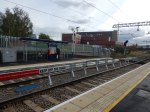

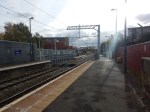
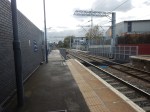
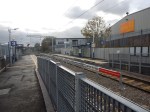
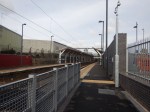

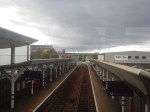


As it is only used by the tram-trains it may be only 750 VDC. But it can probably handle 25 KVAC.
- Could these routes be improved to allow faster running?
- Would it be cost-effective to electrify between Sheffield and the East Coast Main Line and the Doncaster and Leeds Line?
- Alternatively battery-electric trains could be run on the routes between Doncaster, Leeds and Sheffield, charging at all three main stations.
Any form of electric train should be faster, as acceleration and deceleration is faster in any electric train, be it powered by electrification, batteries, hydrogen or a hybrid diesel-battery-electric powertrain.
Conclusion
Could Sheffield Station Become A Battery-Electric Train Hub?
Promised Improvements To Train Services At Sheffield
This news story from the Department of Transport is entitled Yorkshire And The Humber To Benefit From £19.8 billion Transport Investment.
Sheffield station gets several mentions of improvement to these routes.
Sheffield And Hull
This is said about train services between Sheffield and Hull.
The number of trains between Hull and Sheffield will be doubled, to 2 per hour, with capacity also doubled.
These points describe typical current services.
- The route is 59.4 miles long.
- Modern Class 170 trains take 78 minutes.
- There are stops at Meadowhall, Doncaster, Goole and Brough.
- The maximum speed of the line is mostly around 70 mph, with one short section of 100 mph.
- The average speed is 45.7 mph.
- The train continues to Scarborough after a six-minute stop at Hull.
I believe that if this route were to be electrified, that a time around an hour would be possible between Sheffield and Hull.
Sheffield and Scarborough takes two hours and 45 minutes. With electrification, this time could be less than two hours and 30 minutes.
But it would be around 113 miles of new double-track electrification.
I believe that Sheffield and Hull is a route that could be run by battery-electric trains, that would be charged at both ends of the route.
Sheffield And Leeds
This is said about train services between Sheffield and Leeds.
The line between Sheffield and Leeds will be electrified and upgraded, giving passengers a choice of 3 to 4 fast trains an hour, instead of 1, with journey times of 40 minutes. A new mainline station for Rotherham will also be added to the route, which could give the town its first direct service to London since the 1980s, boosting capacity by 300%.
These points describe typical current services.
- The route is 41.1 miles long.
- Modern Class 195 trains take 56 minutes.
- There is a few miles of electrification at the Leeds end.
- There are stops at Meadowhall, Barnsley and Wakefield Kirkgate.
- The maximum speed of the line is mostly around 60-70 mph.
- The average speed is 44 mph.
I believe that if this route were to be electrified, that a time around fifty minutes might be possible between Sheffield and Leeds.
That is not really good enough, but if they went through a new mainline station for Rotherham, the trains would be able to use 100 mph tracks all the way to Leeds. There would also be electrification between South Kirby junction and Leeds.
I suspect forty minutes should be possible with 100 mph running between Rotherham and Leeds.
I believe that Sheffield and Leeds is a route that could be run by battery-electric trains, that would be charged at both ends of the route.
Sheffield And Manchester
This is said about train services between Sheffield and Manchester.
The Hope Valley Line between Manchester and Sheffield will also be electrified and upgraded, with the aim of cutting journey times from 51 to 42 minutes and increasing the number of fast trains on the route from 2 to 3 per hour, doubling capacity.
In Electrification Of The Hope Valley Line, I talked about electrification of the line and how the services on the line could be run by battery-electric trains.
This was my conclusion in the linked post.
I believe that full electrification of the Hope Valley Line is not needed, if battery-electric trains are used.
I also believe that battery-electric trains and the current improvements being carried out on the Hope Valley Line will enable a forty minute time between Manchester Piccadilly and Sheffield.
I believe that the Hope Valley Line could be speeded up, by the use of intelligent engineering, rather than expensive and disruptive electrification.
Don Valley Line
This is said about the Don Valley Line.
Communities will be reconnected through the reopening of lines and stations closed under the Beeching reforms of the 1960s. This will include the restoration of the Don Valley Line between Stocksbridge and Sheffield Victoria, and new stations at Haxby Station, near York, Waverley, near Rotherham, and the Don Valley Line from Sheffield to Stocksbridge.
I’ve talked about the Don Valley Line before in Reopening The Don Valley Section Of The Former Woodhead Line Between Stocksbridge and Sheffield Victoria To Passenger Services.
The Don Valley Line has a comprehensive Wikipedia entry, which is well worth a read.
Could the Don Valley Line be worked by battery-electric trains?
It would appear that these promised improvements to and from Sheffield could be worked by battery-electric trains.
Now that battery-electric trains are being developed, it could also have services, using these trains.
Could Battery-Electric Trains Improve Other Services At Sheffield?
These are some possibilities.
Chesterfield And Sheffield Victoria
This news story from the Department of Transport is entitled East Midlands To Benefit From £9.6 billion Transport Investment.
This news story also talks about the Stocksbridge Line and Sheffield Victoria, where this is said.
Funding will also be provided for the Barrow Hill Line between Chesterfield and Sheffield Victoria, with a new station at Staveley in Derbyshire.
I wrote about the Barrow Hill Line in Reinstatement Of The Barrow Hill Line Between Sheffield And Chesterfield.
In the related post, this was my conclusion.
This looks to be a very sensible project.
- It could be run with either trains or tram-trams.
- It should be electrified, so it could be zero-carbon.
- Tram-trains could be used to make stations simpler.
- It could give an alternative route for electric trains to Sheffield station.
- The track is already there and regularly used.
But surely the biggest reason to built it, is that it appears to open up a lot of South and South-East Sheffield and North-East Chesterfield for development.
Now that battery-electric trains are being developed, Chesterfield and Sheffield could also have services, using these trains.
Sheffield And Adwick
Nothing is said in the news story about train services between Sheffield and Adwick.
Consider.
- Sheffield and Adwick is 22.7 miles.
- Journeys take fifty minutes.
- There are seven intermediate stations.
- This is an average speed of 27.2 mph.
- Adwick and Doncaster is 4.4 miles and electrified.
- There are generous turn-round times at both ends of the route.
- There are rather unusual reversing arrangements at Adwick.
I wonder if electric trains on this route, would knock a few minutes off the journey time because of the better acceleration and deceleration of electric trains.
Could this route be another route from Sheffield suitable for battery-electric trains?
- The train could fully charge between Adwick and Doncaster and at Adwick.
- It is only a short route with a round trip under sixty miles.
I believe this route could be very suitable for battery-electric trains.
Sheffield And Huddersfield
Nothing is said in the news story about train services in the Penistone Line between Sheffield and Huddersfield.
Consider.
- Sheffield and Huddersfield is 36.4 miles.
- Journeys take one hour and nineteen minutes.
- There are fifteen intermediate stations.
- This is an average speed of 27.6 mph.
- Huddersfield is being electrified as part of the TransPennine Upgrade.
I wonder if electric trains on this route, would knock a few minutes off the journey time because of the better acceleration and deceleration of electric trains.
Could this route be another route from Sheffield suitable for battery-electric trains?
Sheffield And Lincoln
Nothing is said in the news story about train services between Sheffield and Lincoln.
Consider.
- Sheffield and Lincoln is 48.5 miles.
- All Sheffield and Lincoln services start in Leeds.
- Journeys take one hour and twenty-five minutes.
- There are nine intermediate stations.
- This is an average speed of 34.2 mph.
- There is no electrification.
- Turn-round time at Lincoln is 26 minutes.
- All trains terminate in Platform 5 at Lincoln.
I wonder if electric trains on this route, would knock a few minutes off the journey time because of the better acceleration and deceleration of electric trains.
Could this route be another route from Sheffield suitable for battery-electric trains?
- Platform 5 could be electrified at Lincoln.
- There may need to be a battery top-up at Sheffield and Leeds.
I believe this route could be very suitable for battery-electric trains.
Electrification Between Sheffield And London
Consider.
- The Midland Main Line electrification is creeping up from London.
- It should soon be installed between St. Pancras and Market Harborough.
- Sheffield and Market Harborough is 81.9 miles.
- The Class 810 trains that will run the Sheffield and London route can’t be far off entering service.
There might be scope for running battery-electric trains on the route, until the electrification is complete.
A Battery-Electric Train Hub At Sheffield
I believe that a fair proportion of services to and from Sheffield could be run using battery-electric trains or bog-standard electric trains.
This OpenRailwayMap shows the platforms at Sheffield.

Note.
- The lilac tracks are those of the Sheffield Supertram.
- The darker lines are the tracks in the station.
- Tracks could be electrified as required.
Eventually, Sheffield will be a fully-electrified station, because of the Midland Main Line electrification.
But why not do it sooner rather than later, so that by running new or refurbished battery-electric trains to places like Huddersfield, Hull, Leeds, Lincoln, London and Manchester?
- Services would be speeded up by around a minute or two for each stop.
- Faster journeys may attract more passengers.
- Routes would be creating less carbon emission and pollution.
- In some cases, routes would be zero carbon.
Some routes would need electrification at the terminal to charge the trains, but Leeds, London St. Pancras and Manchester are already fully electrified.
Charging Long Distance Battery-Electric Trains When They Stop In Sheffield
These long distance services stop in Sheffield.
- CrossCountry – Plymouth and Edinburgh
- CrossCountry – Reading and Newcastle
- East Midland Railway – London and Leeds
- East Midland Railway – Liverpool Lime Street and Norwich
- Northern – Leeds and Lincoln
- Northern – Leeds and Nottingham
- Northern – Sheffield and Cleethorpes
- TransPennine Express – Liverpool Lime Street and Cleethorpes
battery-electric trains could be given a top-up, as they pass through.
I am assuming that CrossCountry, East Midland Railway, Northern and TransPennine Express will be running suitable battery-electric trains.
Battery-Electric Train Hubs
To be a battery-electric train hub, a station probably needs to have all or nearly all of its platforms electrified.
- It should be able to fully-charge any battery-electric trains terminating in the station, provided that the turn-round time is long enough.
- It should be able to give a through battery-electric train a boost if required, so that it gets to the final destination.
It would appear that there are already several battery-electric train hubs in the England, Scotland and Wales.
This map from OpenRailwayMap shows Liverpool Lime Street station, with electrified tracks shown in red.

It would appear that the station is fully electrified and is an excellent battery-electric train hub.
This map from OpenRailwayMap shows Manchester Piccadilly station, with electrified tracks shown in red.

It would appear that the station is fully electrified, except for the Northernmost platform, and is an excellent battery-electric train hub.
This map from OpenRailwayMap shows Leeds station, with electrified tracks shown in red.
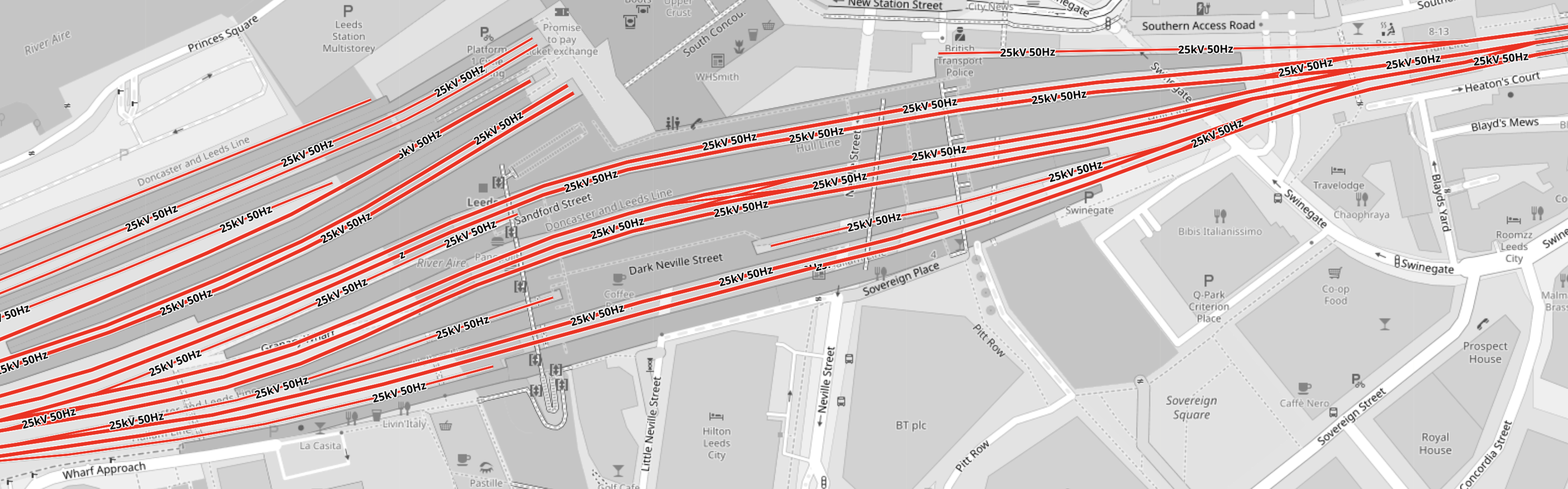
It would appear that the station is fully electrified and is an excellent battery-electric train hub, with twelve electrified bay platforms.
Conclusion
I can see a very comprehensive scheme being developed for Sheffield, based on a hub for battery-electric trains at Sheffield station.
Improvements To Leeds And Hull Services
This news story from the Department of Transport is entitled Yorkshire And The Humber To Benefit From £19.8 billion Transport Investment.
This is said about Leeds and Hull services.
Hull will also be brought into the Northern Powerhouse Rail network, reducing journey time from Leeds from 58 minutes to just 48. The number of trains between Hull and Sheffield will be doubled, to 2 per hour, with capacity also doubled. Journeys from Hull to Manchester will drop from 115 to 84 minutes, enabling 2 fast trains to Leeds.
I shall look at the 10:15 Northern Trains service between Hull and Leeds on the 13th October 2023.
- The distance is 51.8 miles.
- There are seven stops.
- The service is run by a diesel Class 158 train.
- Journey time is 69 minutes.
Ten minutes off this time would be worthwhile.
I shall look at the 10:03 TransPennine Express service between Hull and Leeds on the 13th October 2023.
- There are two stops.
- The service is run by a diesel Class 185 train.
- Journey time is 54 minutes.
Ten minutes off this time would be difficult.
Note.
- The line between Micklefield and Leeds is being electrified.
- The distance between Hull and Micklefield is 42 miles.
- The route has a maximum speed of between 75 and 90 mph.
There is also an historic swing bridge at Selby, which would probably be difficult to electrify.
How Many Minutes Could Electric Trains Save Between Leeds and Hull?
Electric trains have better acceleration and deceleration, when compared to diesel trains, so two minutes per stop and for the acceleration and deceleration at Hull and Leeds, would give the following times.
- Northern Trains – 53 minutes
- TransPennine Express – 48 minutes
As electrification is not mentioned for between Leeds and Hull, the only electric trains, that could work the route will be battery-electric trains.
Battery-Electric Trains Between Leeds and Hull
Consider.
- TransPennine Express already have Class 802 trains, from which the battery-electric version is being developed.
- Northern Trains would need a suitable battery-electric train. There has been talk of a CAF battery-electric Class 331 train, but nothing more. These would surly be ideal.
- Trains could be charged on new electrification in Hull station and between Micklefield and Leeds.
The trains would need a range of just 42 miles.
A Second Fast Train Between Leeds and Hull
What does this statement in the news story imply?
Journeys from Hull to Manchester will drop from 115 to 84 minutes, enabling 2 fast trains to Leeds.
I feel that this statement must be read in conjunction with the benefits of the TransPennine Route Upgrade.
One benefit is given as Faster Journeys, where this is said.
We’re speeding up journeys so you can travel to your favourite towns and cities more quickly. Our fastest journey times are forecast to be 63-66 minutes between Manchester and York and 41-42 minutes between Manchester and Leeds.
The news story says that the fastest journey times between Leeds and Hull will be 48 minutes, which would give a Hull and Manchester time of 89-90 minutes.
Alternatively, there could be these timings on one train.
- Hull and Leeds – 48 mins
- Hull and Manchester Victoria – 84 mins
- Leeds and Manchester Victoria – 36 mins
Note.
- The train would call at Brough, Selby, Leeds, Huddersfield and Stalybridge.
- There may be a new station at Leeds Thorpe Park
- The distance between Hull and Manchester Victoria is 94.7 miles.
- This is an average speed of 67.6 mph.
It almost looks like it’s connectivity East of Leeds and speed between Leeds and Manchester.
Conclusion
Battery-electric trains would provide all the improvements promised between Leeds and Hull.
 The Anonymous Widower