Could The Settle And Carlisle Be Used As A More Formal Route?
In June 2021, I wrote Through Settle And Carlisle Service Under Consideration, which starts like this.
The title of this post, is the same as that of an article in the June 2021 Edition of Modern Railways.
This is the first paragraph.
Plans for a new Leeds to Glasgow through service via the Settle and Carlisle line are being developed, with CrossCountry and the Department for Transport starting to look at the possible scheme.
It sounds like a sensible idea to me.
The article also suggests the following.
- CrossCountry is a possible operator.
- CrossCountry are keen to improve services between Leeds and Glasgow
- The trains could be InterCity 125s, freed up, by a the arrival of Class 221 trains from Avanti West Coast, when they receive their new Class 805 trains.
- Maintenance of the trains wouldn’t be a problem, as this could be done at Neville Hill in Leeds or Craigentinny in Edinburgh.
- Services could start in December 2023.
But nothing more has been heard.
However some things have happened.
The Settle And Carlisle Has Become A Popular Charter Route
Google AI gave me this paragraph.
The Settle and Carlisle line is an extremely popular, premier route for heritage rail charters, steam excursions, and luxury rail tours in the UK, often operating at full capacity. Renowned for its scenic 72-mile journey through the Yorkshire Dales and Pennines, it features iconic structures like the Ribblehead Viaduct.
I have also written these posts about charters on the Settle and Carlisle Line.
Scheduled Steam-Hauled Services For the Settle And Carlisle Railway
Rail Operator Crosses Line For First Time In Years
‘Staycation Express’ To Return Along Full Length of S & C
It doesn’t appear that the numbers of charter trains are showing any sign of decrease.
LNER Has Ordered Class 897 Trains
When LNER took over the East Coast Main Line services, they had six main classes of trains.
- Five-car Class 800/1 bi-mode trains
- Nine-car Class 800/2 bi-mode trains
- Five-car Class 801/1 electric trains
- Nine-car Class 801/2 electric trains
- Seven-car InterCity225 trains
- Nine-car InterCity225 trains
Note.
- The five-car trains can run in pairs as ten-car trains.
- The Class 800 and Class 801 trains can run to destinations, that lack full electrification using diesel power where needed.
- Hitachi are developing battery-power for rail routes without electrification.
In 2023 to replace the InterCity225 trains ten ten-car Class 897 tri-mode trains were ordered from CAF, which will soon be in service, over all LNER’s network.
LNER Has Fully Electrified And Unelectrified Destinations
LNER’s current destinations, that are fully electrified to King’s Cross include.
- Bradford Forster Square
- Berwick on Tweed
- Darlington
- Doncaster
- Durham
- Edinburgh Haymarket
- Edinburgh Waverley
- Grantham
- Keithley
- Leeds
- Newark Northgate
- Newcastle
- Peterborough
- Retford
- Shipley
- Skipton
- Stevenage
- Wakefield Westgate
- York
Whilst those are not fully electrified include.
- Aberdeen
- Cleethorpes
- Dundee
- Grimsby Town
- Harrogate
- Huddersfield
- Horsforth
- Hull
- Inverness
- Lincoln
- Middlesbrough
- Sheffield
- Sunderland
- Thornaby
- Worksop
Note.
- Other destinations can be added as required.
- I suspect, that Class 897 trains will be able to approach many stations without electrification on battery power alone.
- Staff and Passengers would probably like underground stations like Sunderland to be worked on batteries alone.
The Class 800 bi-mode, the Class 801 electric and the Class 897 tri-mode trains will give LNER a very flexible fleet.
Onward To Skipton, Carlisle and Glasgow Central And Edinburgh From Bradford Forster Square
I wonder is someone has realised that the Class 897 trains could use their tri-mode capabilities to invade Scotland?
This OpenRailwayMap shows the railways between the Scottish Lowlands and northern England.
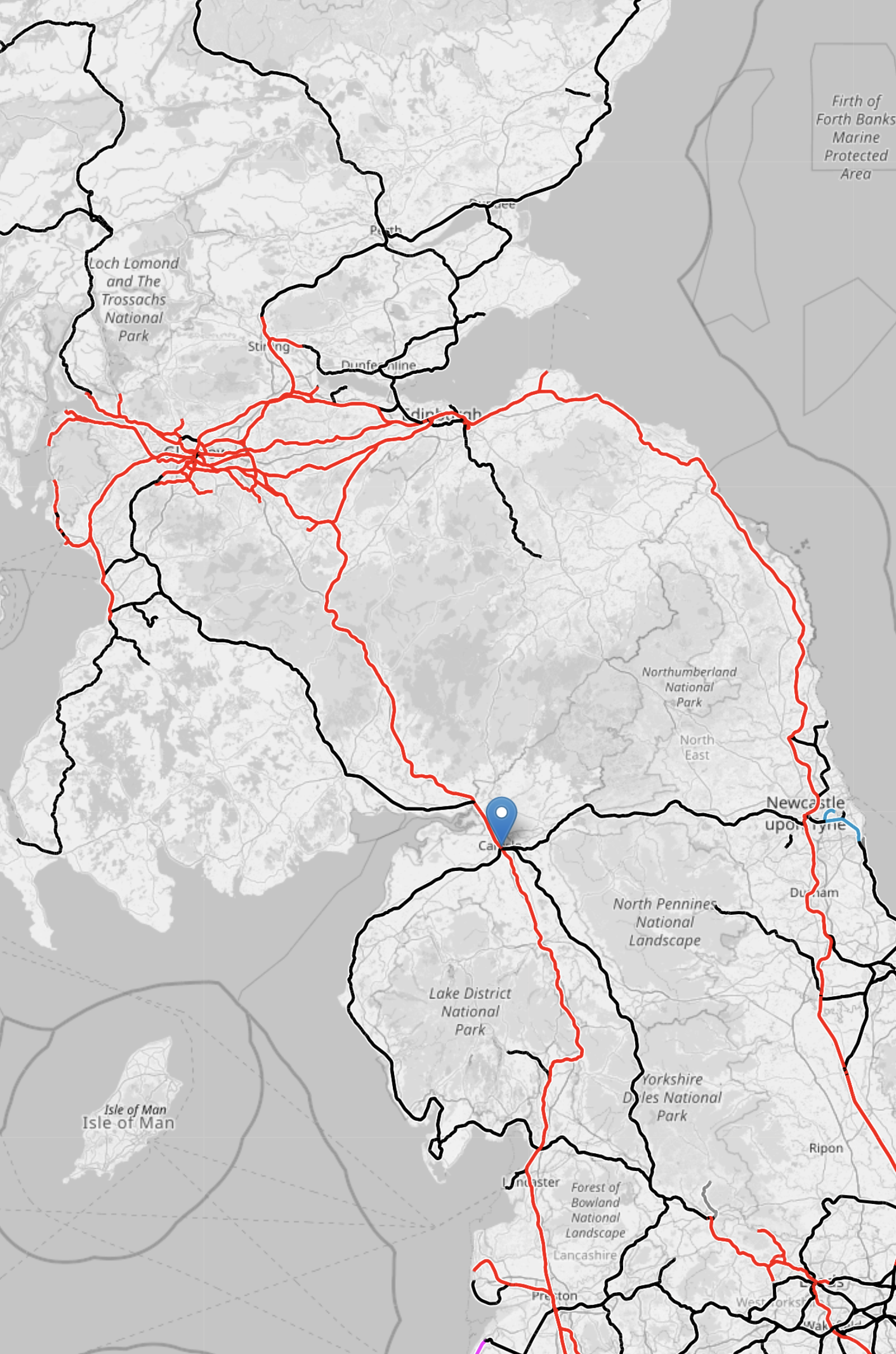
Note.
- Red tracks are electrified.
- Black tracks are not.
- The blue arrow in the middle of the map indicates Carlisle.
- The red track going North-South through Carlisle is the West Coast Main Line.
- The black track going South from Carlisle is the Settle and Carlisle Line.
- Where it turns red is at Skipton station and the electrification can power the train to Bradford Foster Square, Doncaster, Leeds or Sheffield stations.
- The West Coast Main Line splits North of Carlisle and electrified trains can reach either Glasgow Central in the West or Edinburgh Haymarket or Waverley in the East.
- The black track going North-South between Carlisle and Glasgow via Dumfries is the Glasgow South Western Line, which can be used as a diversionary route by some trains with a self-powered capability.
The Settle and Carlisle Line certainly makes Anglo-Scottish routes more robust and flexible when there is bad weather, engineering works or overhead wire or signalling failures.
Will Class 897 Trains Be Able To Run On The Settle And Carlisle Line?
I asked Google AI this question and it gave this answer.
Yes LNER’s new Class 897 tri-mode trains (scheduled for introduction from 2027) will be able to run on the Settle and Carlisle line. As tri-mode electro-diesel multiple units, these 10-car trains are designed to operate across the entire LNER network, utilizing electric, diesel, or battery power to manage non-electrified routes like this, providing a modern alternative to older, diesel-only fleets.
Key details regarding Class 897 on the Settle and Carlisle Line:
Tri-mode Capability: These trains can run on electric, diesel, or battery power, making them highly versatile for non-electrified, scenic, or challenging routes.
Operating Strategy: The trains are designed for flexibility and can be used across the LNER network, which includes routes connecting to Scotland via the West Coast Main Line (WCML) or through services from Leeds.Upgrading Service: They will replace the 40-year-old InterCity 225 fleet, offering a more environmentally friendly, modern alternative to current diesel bi-modes, such as the Class 800/802.
The route is a major, yet challenging, rail line featuring 20 viaducts and 14 tunnels, making it suitable for modern, versatile train sets.
I also believe that running Class 897 trains between Yorkshire and Glasgow offers opportunities to run new services, that will appeal to both travellers and rail operators.
Does The UK Need More Passenger Rail Capacity Between Yorkshire And Glasgow?
I asked Google AI this question and it gave this answer.
Yes, the UK requires more passenger rail capacity between Yorkshire and Glasgow due to severe overcrowding and forecasted demand growth. Major routes like the East Coast Main Line (ECML) and West Coast Main Line (WCML) are, or will soon be, at maximum capacity. Key constraints include infrastructure limitations and the need for better Scotland-England connectivity.
Key insights on this need:
Capacity Constraints: The WCML, particularly at its southern end, is already effectively full, with limited capacity for additional, longer trains. Similarly, the ECML is experiencing significant overcrowding.
Growing Demand: Passenger demand for long-distance rail travel continues to rise, with significant increases noted in journeys between Scotland and other regions.
Infrastructure Issues: Constraints include steep inclines, tight curves, and the need to mix passenger and freight traffic, particularly on the West Coast route.
Proposed Solutions: While some improvements are planned, such as Lumo extending services to Glasgow, the Integrated Rail Plan (IRP) focuses on capacity enhancements in the North/Midlands.
Strategic Need: Enhanced, high-speed connections are considered essential for long-term economic integration and to prevent increased air travel/emissions.
The great advantage of the route, is that is already in place.
Can The Settle And Carlisle Line Handle Planned Diversions?
Can The Settle And Carlisle Line Handle The Caledonian Sleeper?
I asked Google AI this question and it gave this answer.
The Settle-Carlisle line is not a standard route for the Caledonian Sleeper, which typically travels via the West Coast Main Line (WCML) to Edinburgh, Glasgow, and beyond. While the line is a scenic, double-track route with significant infrastructure, it is generally used for local services and freight, not long-distance, heavy sleeper trains.
Key Considerations:
Route: The Caledonian Sleeper operates on the West Coast Main Line, serving destinations like Edinburgh, Glasgow, Aberdeen, Inverness, and Fort William.
Capacity & Infrastructure: While the Settle-Carlisle line has major structures like the Ribblehead Viaduct, it is not the primary route for high-speed or overnight sleeper services.
Operational Normal: The sleeper service splits into portions at Edinburgh, and does not regularly operate via the Settle-Carlisle line.
In short, the Settle-Carlisle line is not designed for or used by the Caledonian Sleeper, which operates via the West Coast Main Line.
But it does appear, that in the past some sleeper trains have used it.
How Many Freight Trains Use the Settle And Carlisle Line In A Typical Day?
This article on the BBC is entitled Settle To Carlisle line: Shortage of trains ‘Hampering Growth’, says this about the number of trains.
From only two trains a day in the 1980s the Settle and Carlisle line now sees 14 passenger and 18 freight services a day.
That is progress!
FIRST TO THE FUTURE: Lumo Owner Bids To Turbo-Charge UK Rail With New Routes
The title of this post, is the same as that of this press release from First Group.
These first three paragraphs introduce FirstGroup’s application for the first phase of three separate applications to the Office of Rail and Road (ORR) for new and extended open access rail services.
FirstGroup plc plans to expand its open access rail operations through its successful Lumo business, boosting connectivity, improving UK productivity and passenger choice across the UK.
The expansion aims to replicate the success of Lumo’s Edinburgh to London service in driving material growth on the East Coast Main Line. Lumo operates without government subsidy and contributes more per train mile to infrastructure investment than any other long-distance operator – delivering growth on the railway and connectivity to local communities, at a substantial benefit to the taxpayer.
FirstGroup has submitted the first phase of three separate applications to the Office of Rail and Road (ORR) for new and extended open access rail services, which are described in these bullet points.
- A revised application to run new services between Rochdale and London Euston via Manchester Victoria from December 2028;
- An extension to Lumo’s current Stirling to London Euston track access agreement to operate services beyond 2030;
- A new route between Cardiff and York via Birmingham, Derby, and Sheffield from December 2028; and
- Purchase of new trains meaning continued investment in UK manufacturing of c.£300 million, and long-term jobs.
This paragraph from the press release describes the philosophy of the rolling stock.
Should these applications be successful, FirstGroup will make use of its option to commit further investment in new Hitachi trains built in County Durham. This investment will include five battery electric trains for the Stirling route and three battery electric trains for Rochdale, supporting jobs at Hitachi’s Newton Aycliffe plant. For the services between Cardiff and York, it will deploy refurbished Class 222s.
Note.
- The Class 222 trains will run the Euston and Stirling service until the future Hitachi trains are delivered in 2028.
- The Class 222 trains will run the Cardiff and York service from 2028.
- The Class 222 trains have a maximum speed of 125 mph
- Avanti West Coast’s Class 390 trains have a maximum speed of 125 mph.
- Avanti West Coast’s Class 805 trains have a maximum speed of 125 mph on electrification.
- Avanti West Coast’s Class 807 trains have a maximum speed of 125 mph.
- Grand Central Trains’s future Hitachi trains have a maximum speed of 125 mph.
- Hull Trains’s Class 802 trains have a maximum speed of 125 mph.
- Lumo’s current Class 803 trains have a maximum speed of 125 mph.
- LNER’s current Class 800 and 801 trains have a maximum speed of 125 mph.
- LNER’s current InterCity 225 trains have a maximum speed of 125 mph.
- LNER’s future Class 897 trains have a maximum speed of 125 mph.
- All of the trains, with the exception of the Class 222 trains are electric and have been designed for 140 mph running and can do this if there is appropriate 140 mph signalling.
If the Class 222 trains don’t run on the East and West Coast Main Lines, then these lines could introduce 140 mph running in stages to speed up rail travel between London and the North of England and Scotland.
Rochdale And London
These three paragraphs from the press release describe the proposed Rochdale and London service.
The new Lumo service will operate the first direct service since 2000 between Rochdale and London. Services will call at Manchester Victoria, Eccles, Newton-le-Willows and Warrington Bank Quay. Eccles station connects other parts of the city of Salford, including the fast-growing MediaCity area, via the nearby interchange with Metrolink. Services to Newton-le-Willows will deliver greater rail connectivity for St Helens.
There will be three new return services on weekdays and Sundays, and four return services on Saturdays, which will provide 1.6 million people in the north-west with a convenient and competitively priced direct rail service to London, encouraging people to switch from cars to train as well as providing additional rail capacity. It will also deliver material economic benefits for the communities along the route, including regeneration areas such as Atom Valley and the Liverpool City Region Freeport scheme.
The application has been revised to address the ORR’s concerns about network capacity set out in its letter of July 2025 rejecting FirstGroup’s original application. Supported by extensive modelling, the company has identified sufficient space on the network to accommodate the proposed services. Services will also make use of the Government’s recent investment in power supply for the West Coast Mainline (WCML).
In FirstGroup’s Lumo Seeks To Launch Rochdale – London Open Access Service, I gave my thoughts for Lumo’s application last year.
Differences between the two applications include.
- The service will be run by Lumo’s standard battery-electric Hitachi trains.
- The original application was for six return journeys per day, whereas the new application is for three return services on weekdays and Sundays, and four return services on Saturdays.
Note.
- The battery-electric trains will be able bridge the 10.4 mile gap between Manchester Victoria and Rochdale, and return after charging on the West Coast Main Line.
- The battery-electric trains could be useful during engineering works or other disruptions.
- The trains would be ready for 140 mph running on the West Coast Main Line, when the digital signalling is installed.
- Is the extra return service on a Saturday to cater for football and rugby fans?
I still feel, that with Lumo’s battery-electric trains one or more services could extend across the Pennines to Hebden Bridge, Bradford Interchange or Leeds. Trains would be recharged for return at Leeds.
Stirling And London
This paragraph from the press release describes the proposed Stirling and London service.
Stirling has a wide catchment area, with an estimated three million people living within an hour’s drive. Extending the current track access agreement for the Stirling route from May 2030 will support the shift from car to rail, and investment in the city, as well as in the service’s intermediate stations which include Larbert, Greenfaulds and Whifflet, thanks to greater connectivity to London. The four return services weekdays and Saturdays, and three on Sundays, on the new route are expected to start early in the company’s 2027 financial year.
In Lumo To Expand Scotland’s Rail Network With New London-Stirling Rail Route From Spring 2026, I gave my thoughts for Lumo’s application in June 2025.
Differences between the two applications include.
- The service will only be run initially by Class 222 trains.
- The service will be run by Lumo’s standard battery-electric Hitachi trains after 2028.
- The original application was for five return journeys per day, whereas the new application is for four return services on weekdays and Saturdays, and three return services on Sundays.
- In the original application, Lumo’s new route was to link London Euston directly to Stirling, also calling at Milton Keynes, Nuneaton, Crewe, Preston, Carlisle, Lockerbie, Motherwell, Whifflet (serving Coatbridge), Greenfaulds (serving Cumbernauld) and Larbert.
Note.
- The battery-electric trains could be useful during engineering works or other disruptions.
- The trains would be ready for 140 mph running on the West Coast Main Line, when the digital signalling is installed.
- Is the extra return service on a Saturday to cater for football and rugby fans?
It should be noted that there are always more return services per day going to Stirling, than Rochdale.
Could The Rochdale and Stirling Services Share A Path?
Consider.
- The two services use the West Coast Main Line South of Warrington Bank Quay station.
- Pairs of Class 803 trains can split and join.
- A pair of Class 803 trains are shorter than an 11-car Class 390 train.
- An 11-car Class 390 train can call in Warrington Bank Quay or Crewe stations.
I believe that the Rochdale and Stiring services could share a path.
- One Weekday service per day would be a single train.
- Going South, the trains would join at Warrington Bank Quay or Crewe stations.
- Going North, the trains would split at Warrington Bank Quay or Crewe stations.
- The pair of trains would share a platform at Euston station.
Operating like this would increase the connectivity and attractiveness of the services, and probably increase the ridership and profitability.
Cardiff And York via Birmingham, Derby And Sheffield
These four paragraphs from the press release describe the proposed Cardiff and York service.
Lumo’s new route between Cardiff and York will join up the entire Great British Railway network, connecting all four main lines from the Great Western Main Line to the East Coast Main Line. The plans will also deliver more capacity and drive passenger demand on a previously underserved corridor.
The application proposes six return services each weekday – a significant increase from the current single weekly service.
Bringing Lumo’s popular low-cost model to the corridor will support local communities between Cardiff, Birmingham, Derby, Sheffield, and York. These cities alone have a combined population of more than 2.5 million people. The new services will give local communities access to jobs and services along the route, in support of significant investment that has already been committed by the Government and private sector. This investment includes the Cardiff Capital Regional Investment Zone, the £140million proposed refurbishment at Cardiff Central station, the West Midlands Investment Zone which is expected to create £5.5 billion of growth and 30,000 new jobs, as well as investment plans in Derby, Sheffield and York.
The ORR will now carry out a consultation exercise as well as discuss the applications with Network Rail to secure the required approvals.
Note.
- Only minimal details are given of the route.
- The TransPennine Upgrade will create a new electrified route across the Pennines between York and Huddersfield via Church Fenton, Leeds and Dewsbury.
- The Penistone Line is being upgraded, so that it will handle two trains per hour.
- In the 1980s, the Penistone Line took InterCity 125s to Barnsley.
- The connection with the Penistone Line at Huddersfield has been upgraded.
I am reasonably certain, that FirstGroup intend to route the York and Cardiff service over this partially electrified route.
Sections of the route will be as follows.
- Cardiff and Westerleigh junction – 38 miles – Electrified
- Westerleigh junction and Bromsgrove – 65.2 miles – Not Electrified
- Bromsgrove and Proof House junction – 15 miles – Electrified
- Proof House junction and Derby – 40.6 miles – Not Electrified
- Derby and Sheffield – 36.4 miles – Not Electrified
- Sheffield and Huddersfield – 36.4 miles – Not Electrified
- Huddersfield and York – 41.9 miles – Electrified
There are only two sections of track, that is not electrified.
- Westerleigh junction and Bromsgrove – 65.2 miles
- Proof House junction and Huddersfield – 113.4 miles
Out of a total of 273.5 miles, I believe in a few years, with a small amount of extra electrification or more powerful batteries, Hitachi’s battery-electric high-speed trains will have this route cracked and the Class 222 trains can be sent elsewhere to develop another route.
Huddersfield Station – 30th September 2025
This press release on the Network Rail Media Centre is entitled Huddersfield Station Set To Reopen Next Week With New Temporary Layout.
As it is now next week, I went to have a look at the progress today.
I made a mistake and got on a Grand Central Train, which meant, I had to change at York.
Speeding past Drax power station on the Selby Diversion, I took these pictures.
We were only in a 125 mph diesel, so we couldn’t take advantage of the 160 mph running, that the East Coast Main Line’s new signalling might allow on this section. The Wikipedia entry for the Selby Diversion, says this about the possible speeds.
The line was the first purpose-built section of high-speed railway in the UK having a design speed of 125 mph; however, research by British Rail in the 1990s indicated that the route geometry would permit up to 160 mph operation, subject to the necessary overhead line equipment and signalling upgrades. The new line also avoided the speed restriction over the swing bridge at Selby. The former ECML route, the NER’s 1871 York and Doncaster branch line, was closed from Selby northwards.
As the Selby Diversion opened in 1983, I wouldn’t be surprised that the calculations were performed on British Rail Research’s Pace 231-R, which was similar to the one I used at ICI and the pair, that NASA used calculate how to land Apollo on the moon.
When I eventually got to Huddersfield, I took these pictures.
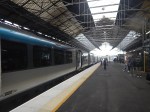
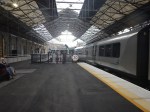
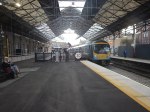
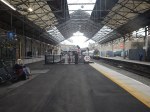
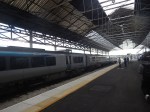
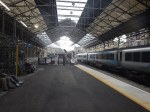






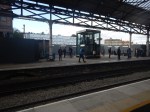
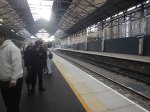
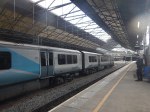
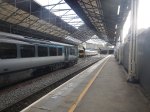
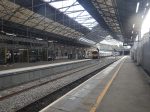
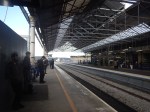
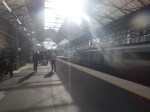
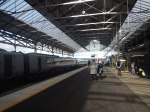
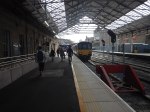
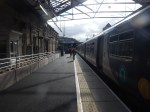
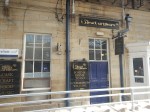
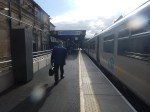
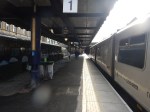
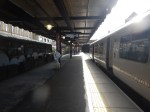
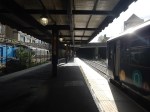
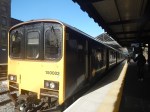
Note.
- In I’ve Just Glimpsed The Future Of Train Travel Across The North Of England And I Like It, there are pictures of Huddersfield station, that were taken on the 21st August, soon after the work started.
- In Huddersfield Station – 15th December 2023, there are pictures of Huddersfield before the work started.
- Much of the work seems to have been done at the Western end of the station to lengthen the platform on the Penistone Line to Sheffield.
- Platform 2 for the Penistone Line has also been renumbered Platform 1.
Work still to be carried out at Huddersfield station, includes refurbishing the roof, installing the electrification and adding a couple of new platforms.
These are my thoughts.
Which Platforms Will Be Electrified?
This OpenRailwayMap shows the proposed electrification in Huddersfield station.
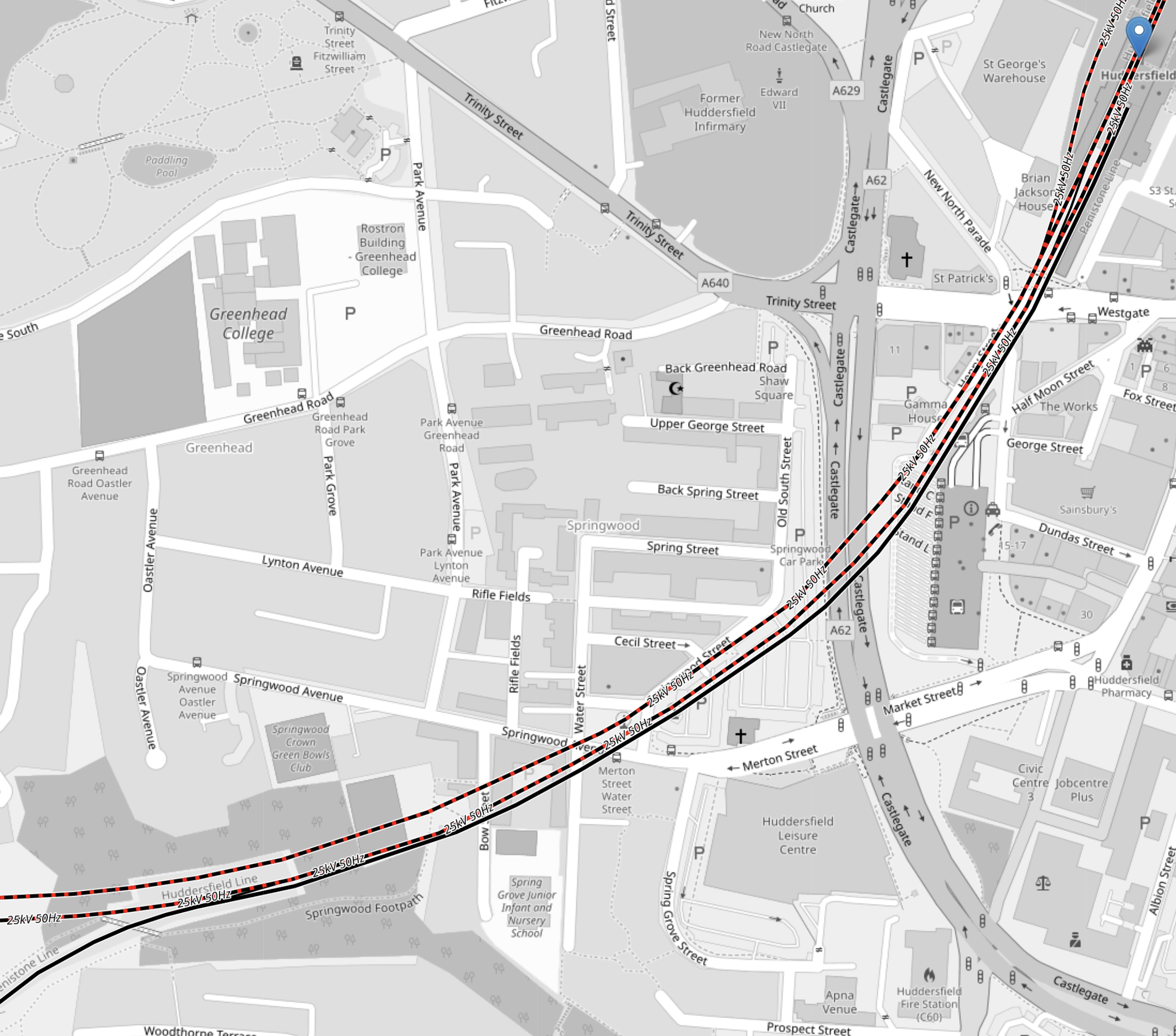
Note.
- The blue arrow in the North-East corner of the map indicates Huddersfield atation.
- The two red-and-black tracks going diagonally across the map are the Hudderfield Line.
- The red-and-black colour, indicates that the two tracks will be electrified.
- South of these two tracks, the Penistone Line sneaks into Platform 1 at Huddersfield station.
- The Penistone Line goes to Sheffield in a South-Westerly direction.
- There appears to be a crossover, so that trains from the Penistone Line can use both Platforms 1 and 2 in Huddersfield station.
- The OpenRailwayMap appears to show planned electrification between Stalybridge and Leeds stations.
- To the East of Leeds planned electrification is shown as far as Micklefield and Church Fenton stations.
Once installed, this electrification will create a complete electrified route across the Pennines from Liverpool Lime Street in the West to the East Coast Main Line in the East.
This OpenRailwayMap shows the planned electrification between Micklefield and Hull stations.
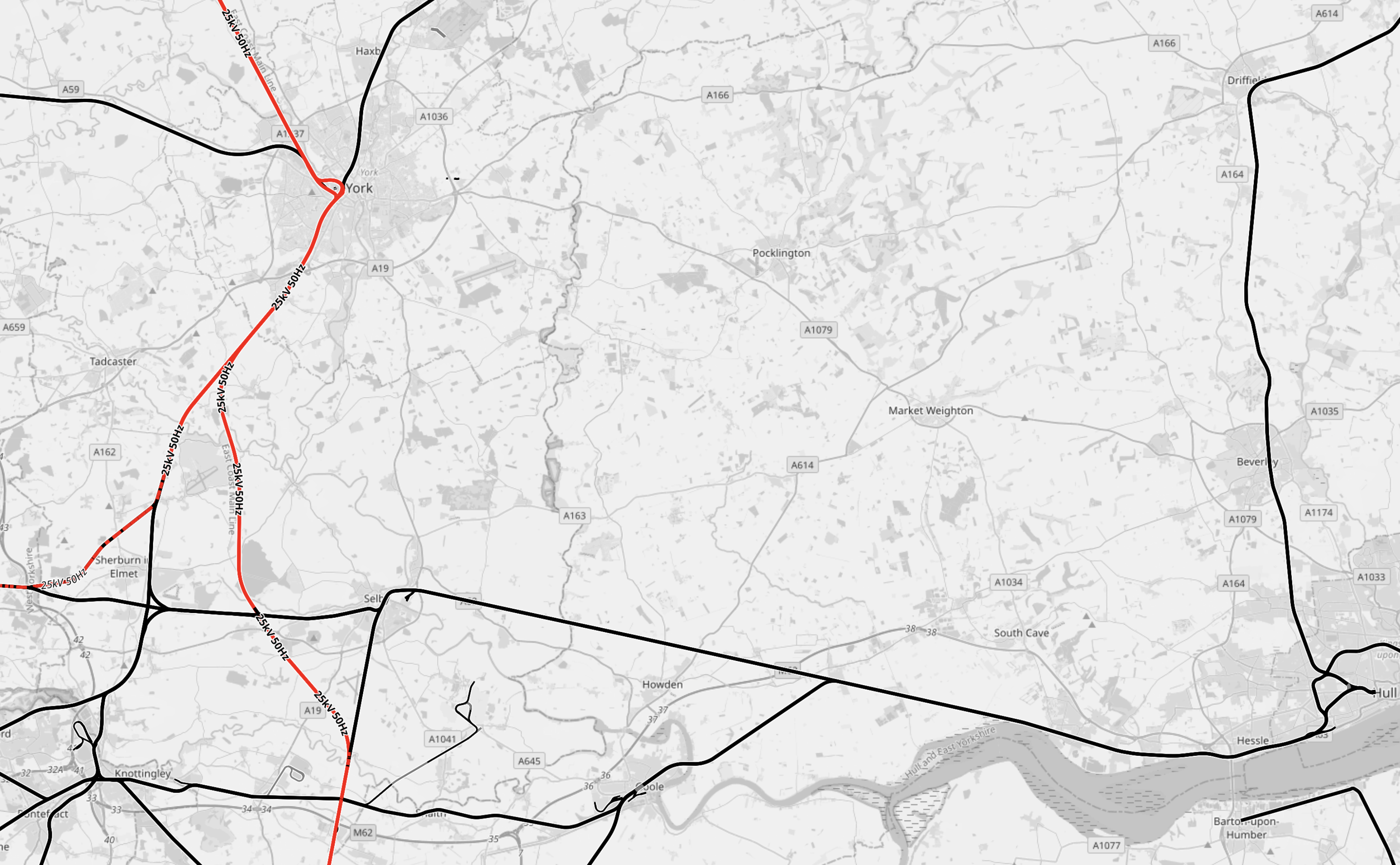
Note.
- Red tracks are electrified.
- Black tracks are not electrified.
- York is in the North-West corner of the map, with the electrified East Coast Main Line going through the station North-South.
- South of York, the East Coast Main Line now splits.
- The Western branch includes an electrified line to Micklefield station, Neville Hill depot and Leeds station.
- The Eastern Branch is the Selby Diversion, which is an electrified 160 mph line, that avoids the Selby coalfield.
- Running West-East across the map is the unlectrified Micklefield and Hull Line, which goes via Selby.
- Hull is in the South-East corner of the map.
- Hull is 42 miles from Micklefield and 36.1 miles from the Temple Hirst junction on the Selby Diversion, so it is within range of battery-electric trains, with charging at Hull station.
- Hitachi’s battery-electric Class 802 trains, used by Hull Trains and TransPennine Express, which are currently on test, should certainly be able to serve Hull.
Hull can become an electrified station, without the expense and disruption of full electrification.
How Long Is Platform 1 At Huddersfield Station?
This OpenRailwayMap shows the new Platform 1 at Huddersfield station.
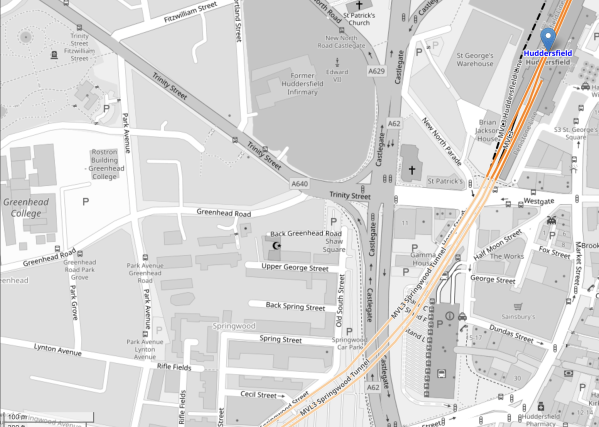
Note.
The blue arrow indicates Huddersfield station.
- The three darker orange lines indicate the two through platforms 2 and 3, and the reconfigured bay platform 1.
- There is a cross-over between platforms 1 and 2, which connects Platform 2 to the Penistone Line.
- In the South-West corner of the map is a hundred metre scale.
- Using the scale, I estimate that the length of the bay platform 1 is around 120 metres.
- In the last two rows of pictures in the gallery of this post, a three car Class 150 train is shown in Platform 1.
- A three car Class 150 train is approximately sixty metres long.
Looking at the pictures, I wouldn’t be surprised if the new platform has been designed to take two three-car Class 150 trains. It would certainly take a pair of two-car Class 150 trains.
Other trains and their lengths that might use the platform include.
- Class 170 – three-car – 70.85 metres
- Class 195 – two-car – 48.05 metres
- Class 195 – three-car – 71.40 metres
- Class 195 – 2 x two-car – 96.10 metres
- Class 810 – five-car – 120 metres
The Class 810 uses 24 metre cars, so that a pair of trains, will fit in St. Pancras. But with perhaps selective door opening could a single Class 810 train run a St. Pancras and Huddersfield service, perhaps with a split and join at Sheffield.
Electrification Across The Pennines
The TransPennine Route will be electrified between Liverpool Lime Street and Micklefield stations, once the current works between Huddersfield and Leeds are complete.
Sections without electrification include.
- Bradford Interchange and Doncaster – 52.1 miles
- Cleethorpes and Doncaster – 52.1 miles
- Harrogate and Leeds – 18.3 miles
- Hazel Grove and Doncaster – 52.6 miles
- Hull and Micklefield – 42 miles
- Hull and Temple Hirst junction – 36.1 miles
- Saltburn and Northallerton – 28.1 miles
- Sunderland and Northallerton – 46.8 miles
- Scarborough and York – 42.1 miles
I expect that Hitachi trains with batteries or CAF’s tri-mode trains will be able to handle these routes in a low-carbon manner.
Electrification Between Stalybridge And Huddersfield
This section is shown as being electrified on OpenRailwayMap.
But as it is only 18 miles and includes the Standedge Tunnels will the route use battery-electric trains?
Darlington Station – 26th June 2025
I visited Darlington station, three times on my trip.
These pictures are in chronological order.
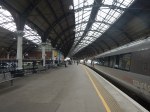
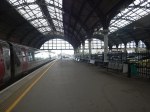
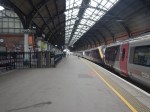
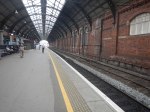
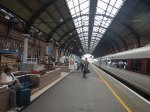
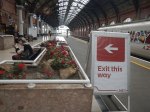
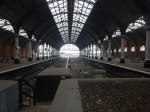
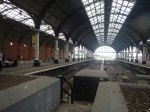
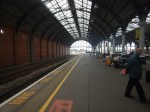
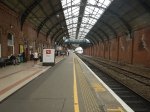
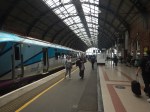
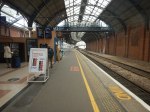
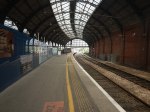
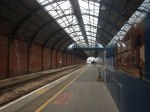
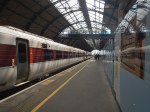
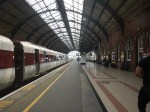
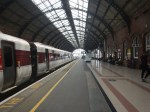
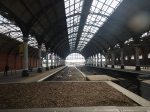
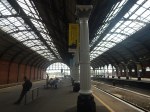
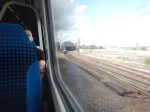
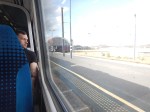
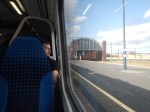
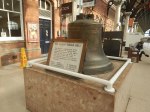
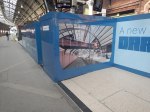
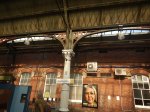
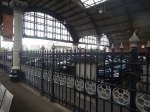
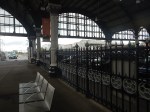
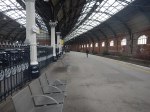
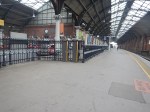
Note.
- The station is being given a major upgrade, so it can handle more trains.
- The station has a large number of top-quality Victorian features.
- The station is Grade II* Listed.
- Inside the enormous train-shed are two long platforms, that handle most of the trains and two South-facing bay platforms.
- Two new platforms, which are numbered 5 & 6, and possibly a double-track avoiding line are being added outside the train-shed on the East side.
- In images with a comment saying Note Platform 5, the new long electrified Platform 5 can be seen.
- Platform 5 appears to be already electrified at its Southern end.
These three OpenRailwayMaps shows the future layout.
The first OpenRailwayMap shows the junction, where the branch to Newton Aycliffe, Shildon and Bishop Auckland connects.
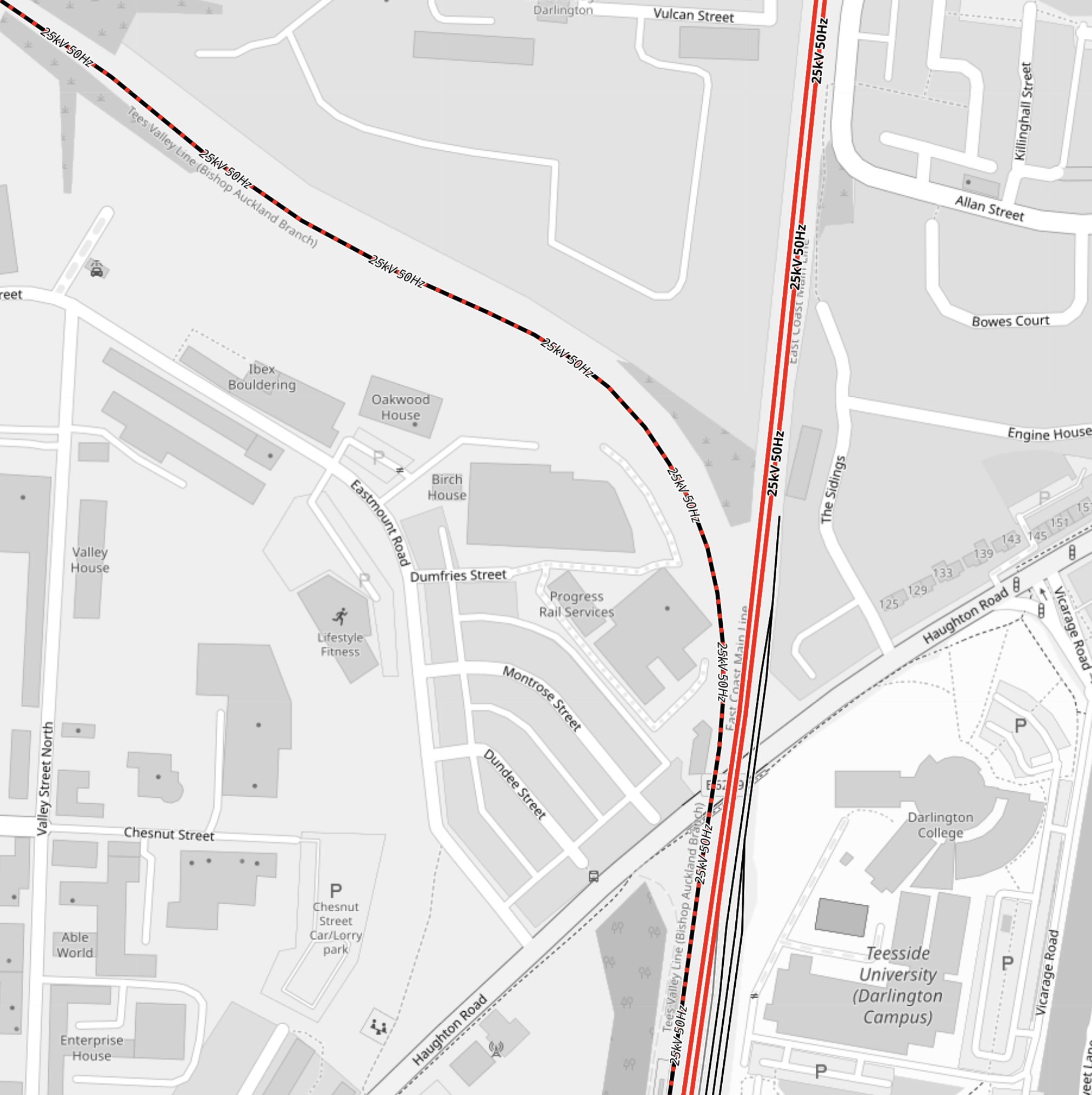
Note.
- The red tracks are electrified and indicate the East Coast Main Line.
- The track curving off to the North-West is the Bishop Auckland Branch.
- The black tracks are not-electrified.
- The Bishop Auckland Branch is shown dotted black and red, as it will be electrified, so that Hitachi can get their new trains to the East Coast Main Line.
- The two tracks of the East Coast Main Line are very straight and the map shows them to have a 125 mph operating speed.
The second OpenRailwayMap, shows the lines immediately to the South of Darlington station.
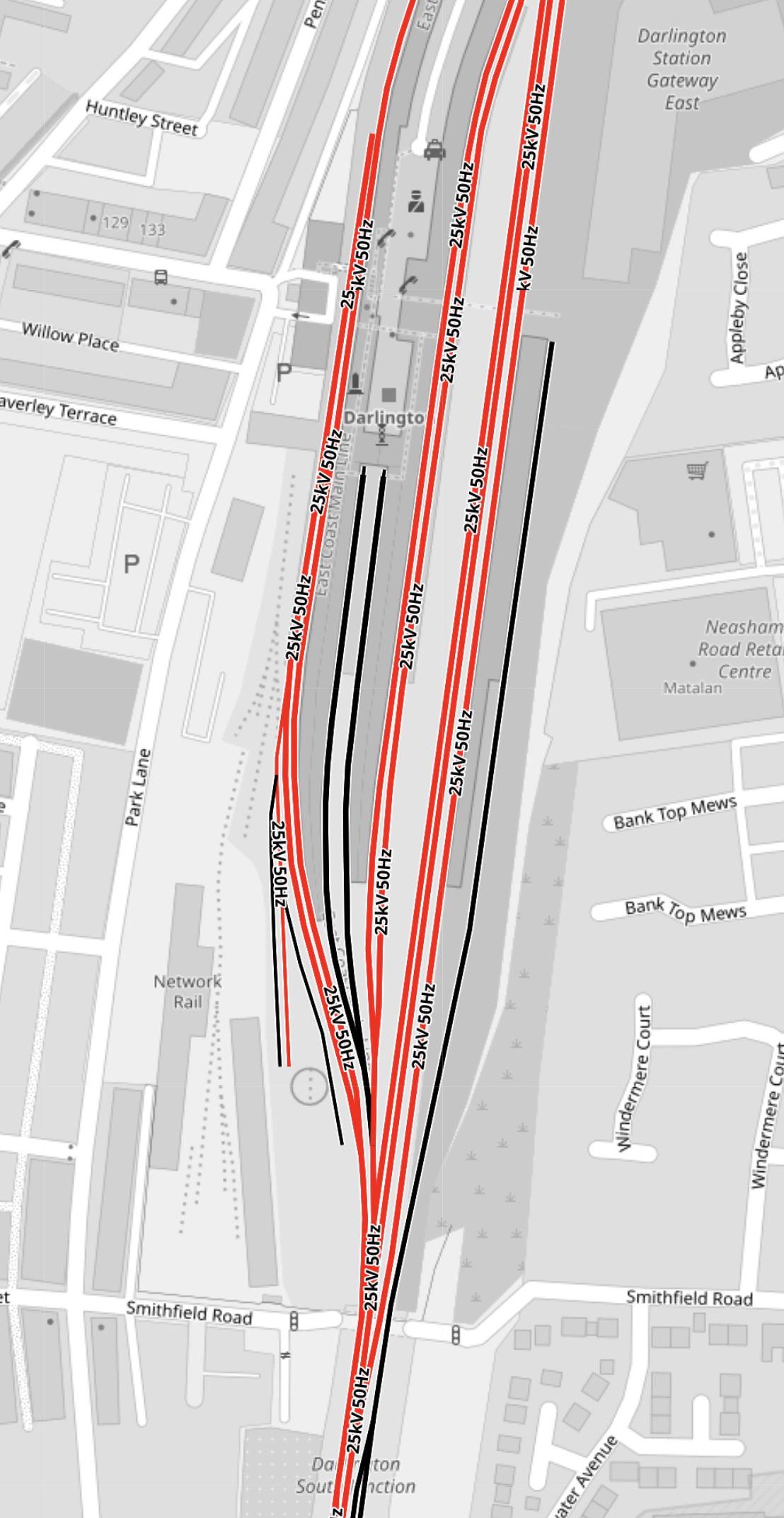
Note.
- The red tracks are electrified.
- The black tracks are not electrified.
- Tracks are number 4, 3, 2 and 1 from the West.
- The Southern ends of Platforms 1 and 4, and Platforms 2 and 3, which are inside the current train-shed appear to be virtually unchanged.
- Platform 1 is electrified and will probably still cater for Southbound trains.
- Platforms 2 and 3 are bay platforms without electrification for trains terminating at Darlington.
- Platform 4 is electrified and will probably still cater for Northbound trains.
- There is an electrified avoiding line to the East of Platform 1.
- The brick wall of the current train shed is in the white space to the East of Platform 1.
- Outside the current train shed are two electrified 125 mph lines, an electrified through platform and a South-facing bay platform without electrification.
- The new electrified platform looks very long. Could it be long enough to handle a pair of High Speed Two Classic-Compatible trains? I suspect though it is long enough to handle the splitting and joining of a pair of five-car Hitachi Class 80x trains.
- The new bay platform looks longer that the current bay platforms 2 & 3. Is it long enough to handle a five-car Hitachi Class 80x train?
- It does appear from the track layout, that the new electrified platform is connected to the East Coast Main Line, the Saltburn branch and stabling sidings to the North of the station.
- The new bay platform appears to be connected to the Saltburn branch.
The two new platforms also appear to be adjacent to an area of the station, which is labelled Darlington Station Gateway East. I would assume, that this proximity will be used to make the station easy for changing trains.
The third OpenRailwayMap shows the section of the station between the two previous maps.
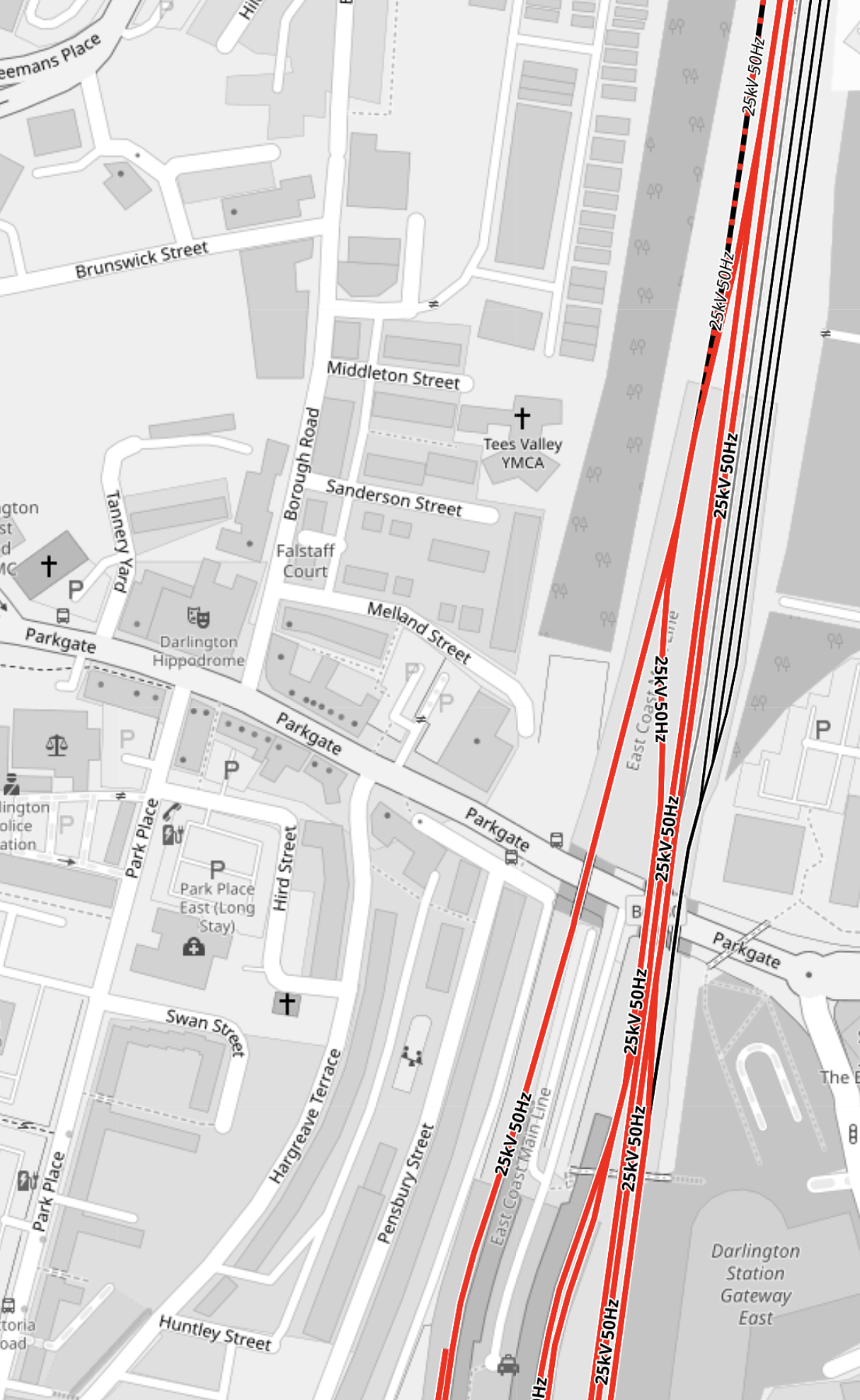
Note.
- The red tracks are electrified.
- The black tracks are not-electrified.
- The Darlington end of the Bishop Auckland Branch is shown dotted black and red, as it will be electrified, so that Hitachi can get their trains to and from the East Coast Main Line.
- Both Platforms 1 and 4 appear to connect to the East Coast Main Line, so high speed services can operate as they do now, by taking a diversion through the current Darlington station.
- To the East of the East Coast Main Line, there appear to be some very useful stabling sidings.
I have some general thoughts about Darlington station.
Will Trains Not Stopping At Darlington Station Use The New 125 mph Lines Through the Station?
It does appear that the two 125 mph lines through the new part of the station are very straight.
- They are shown as 125 mph, but could be faster.
- It should be remembered that according to Wikipedia, British Rail built the Selby Diversion for 160 mph in 1983.
- Between Durham and York stations is 66.2 miles of mainly 125 mph railway.
I believe that cutting out the need for trains to slow to go through Darlington station could save several minutes.
Will Trains Stopping At Darlington Station Use The Current Platforms 1 And 4 As They Do Now?
The track layout would seem to allow this and those changing to another train, would not have to walk a long way.
Can Trains Stopping At Darlington Station Use The New Eastern Platforms?
I have examined the second and third maps in detail and it looks as if the track layout will allow trains on the East Coast Main Line in both directions to stop at the long electrified platform.
The shorter bay platform appears to be only connected to the Tees Valley Line to Middlesbrough and Saltburn.
How Long Are The New Eastern Platforms?
Estimating against the scale on the map, I reckon these are the likely lengths.
- Long electrified platform – 400 metres – Appears to be numbered 5
- Bay platform – 200 metres – Appears to be numbered 6.
These are very useful lengths.
An Aerial View Of The New Platforms
This image from Tees Valley Combined Authority shows the Northern ends of the new platforms and the new footbridge.
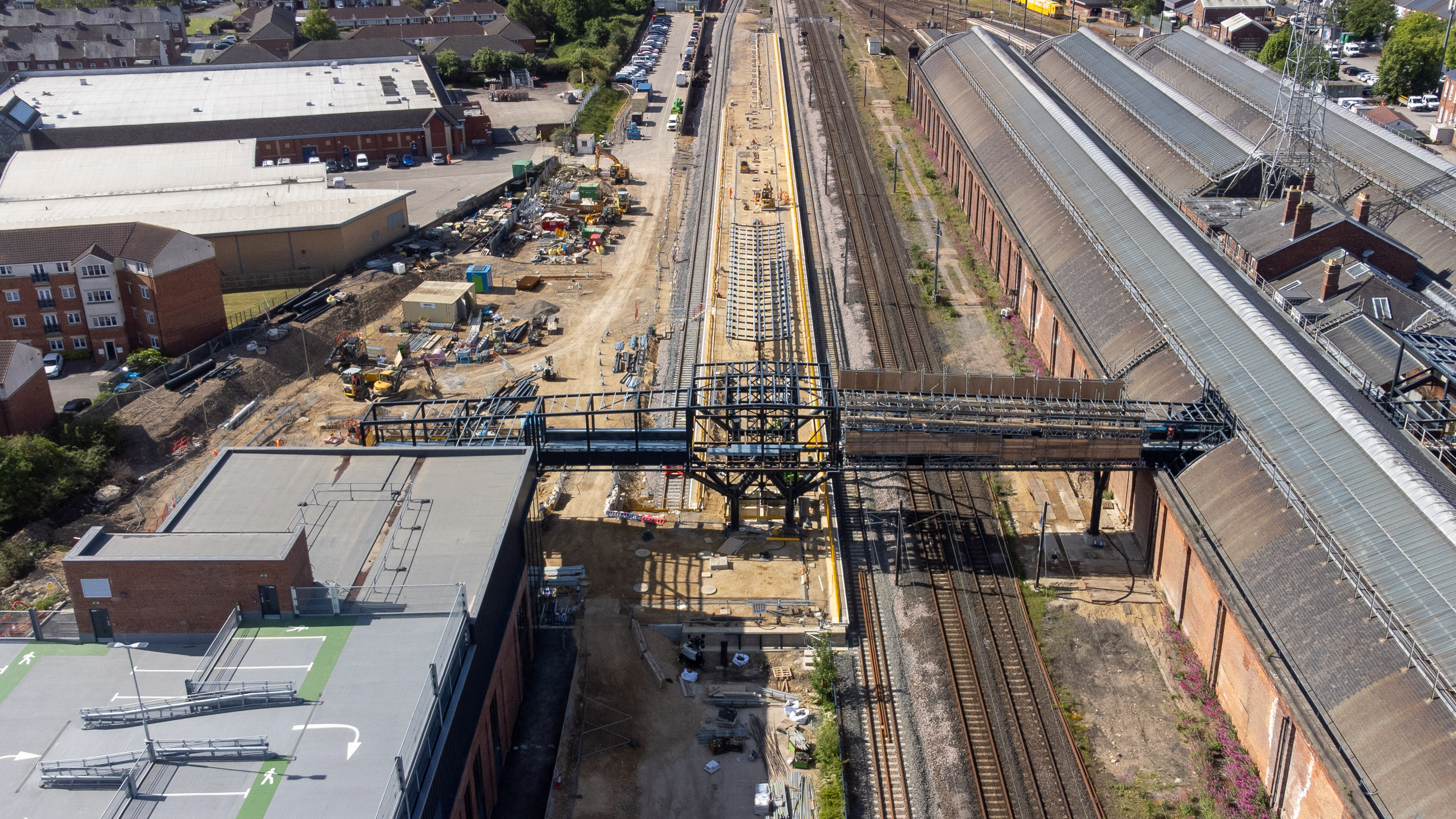
Note.
- The original four-platform Victorian station is on the right, which is the Western side.
- The East wall of the Victorian train shed can be clearly seen.
- The two absolutely straight 125 mph lines, that allow trains to bypass the original station are closest to the wall.
- The long electrified platform, which appears to be numbered 5, also appears to be absolutely straight.
- The unelectrified bay platform, which appears to be numbered 6, is to the left.
- Platforms 5 and 6 would seem to be separated by a wide island platform, which would make interchange easy.
This page on the Network Rail web site, gives more information.
Car Parking At Darlington Station
This image from Tees Valley Combined Authority shows the Northern end of the station.
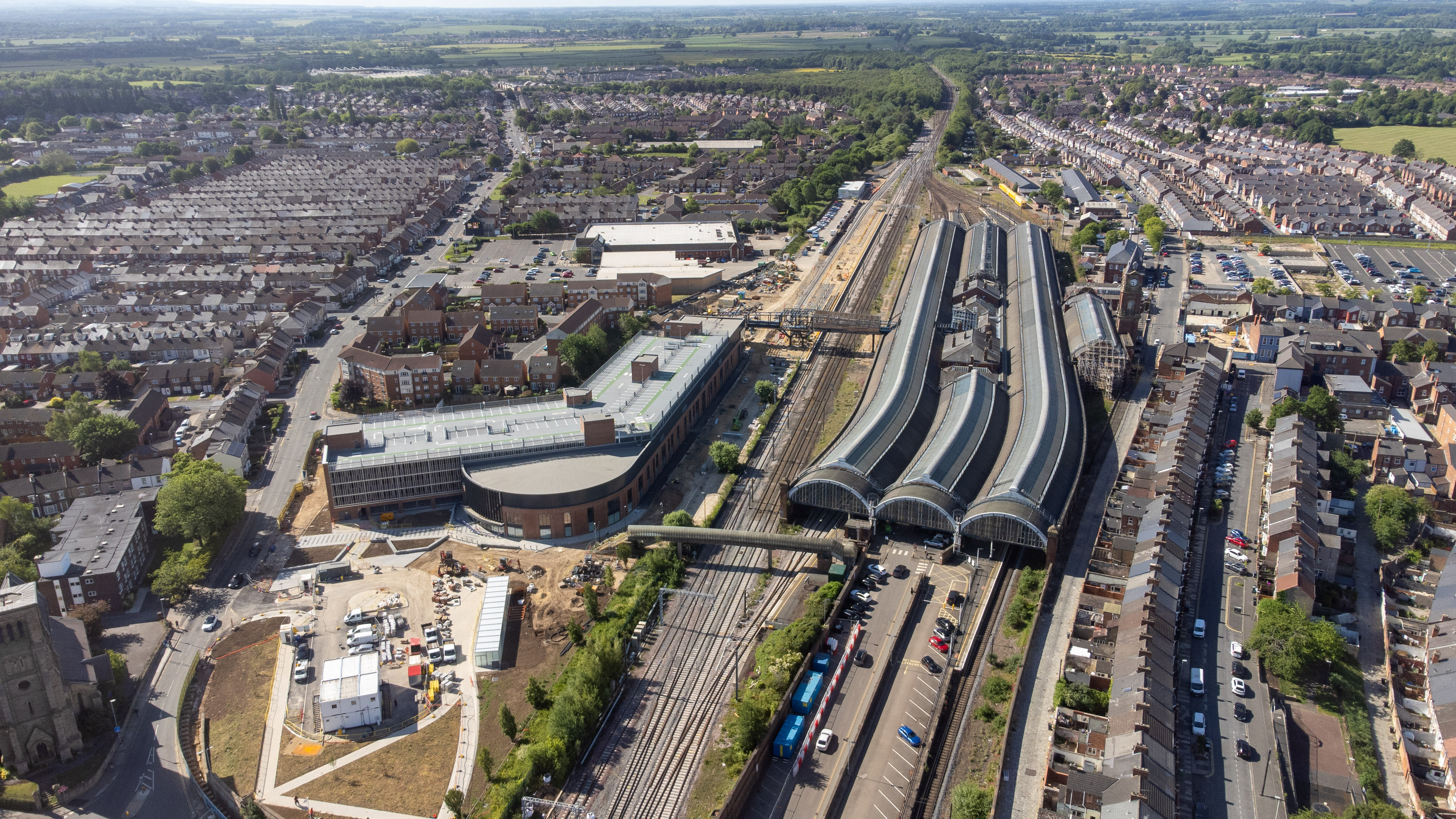
Note.
- The three sections of the Victorian station.
- The two new platforms ; 5 and 6 at the top of the image.
- The two 125 mph lines bypassing the Victorian station.
- There are two new footbridges connecting the Victorian station to the land on the other side of the 125 mph lines.
To the left of the station, there appears to be a massive multi-story car-park.
I asked Google about the new car park at Darlington station and got this reply.
The new multi-story car park at Darlington Station will have a capacity of more than 650 vehicles. This is part of a larger £140 million redevelopment of the station, which also includes new platforms and an eastern concourse. The car park will include accessible parking bays and electric car charging points.
This image from Tees Valley Combined Authority shows the car parking from the South.
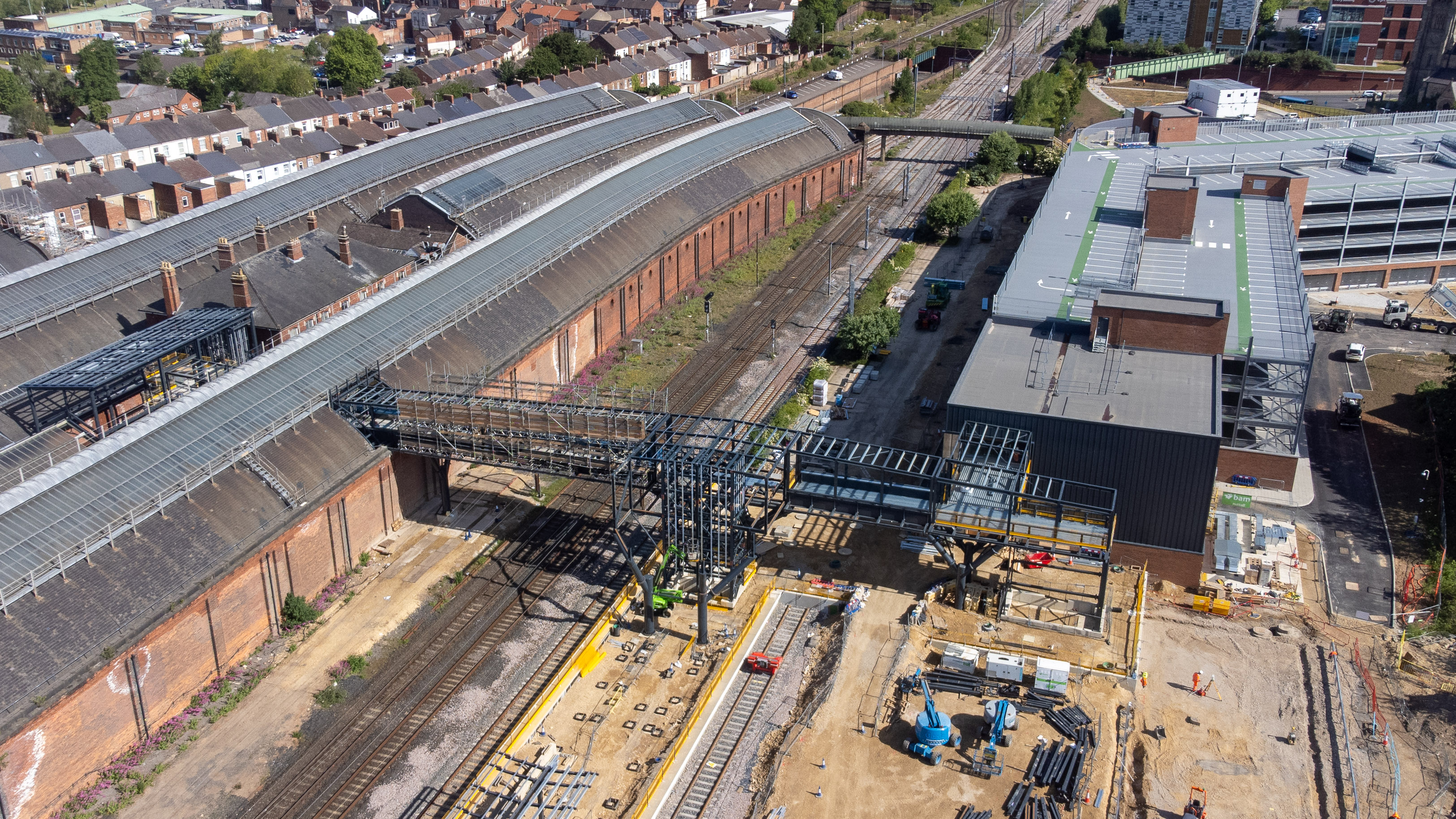
Note.
- The building appears to be a five-story car park.
- There appears to be a very easy connection between the car park and the bridge to the station.
- From the roof layout, there appears to be several lifts.
- It looks like there will be a large area between the platforms and the car park, where travellers can meet and socialise.
- The bay platform 6 already has a pair of red buffer stops.
Railways may have come to Darlington two hundred years ago and it looks like they are getting the car parking at the station ready for at least the next two hundred.
Further Electrification
If as I expect, the UK embraces battery electric technology for local and regional trains, I can see the three South-facing bay-platforms being electrified, so they could charge he battery-electric trains.
This picture shows that bars have been placed across Platforms 2 and 3, that could be used to support the electrification.
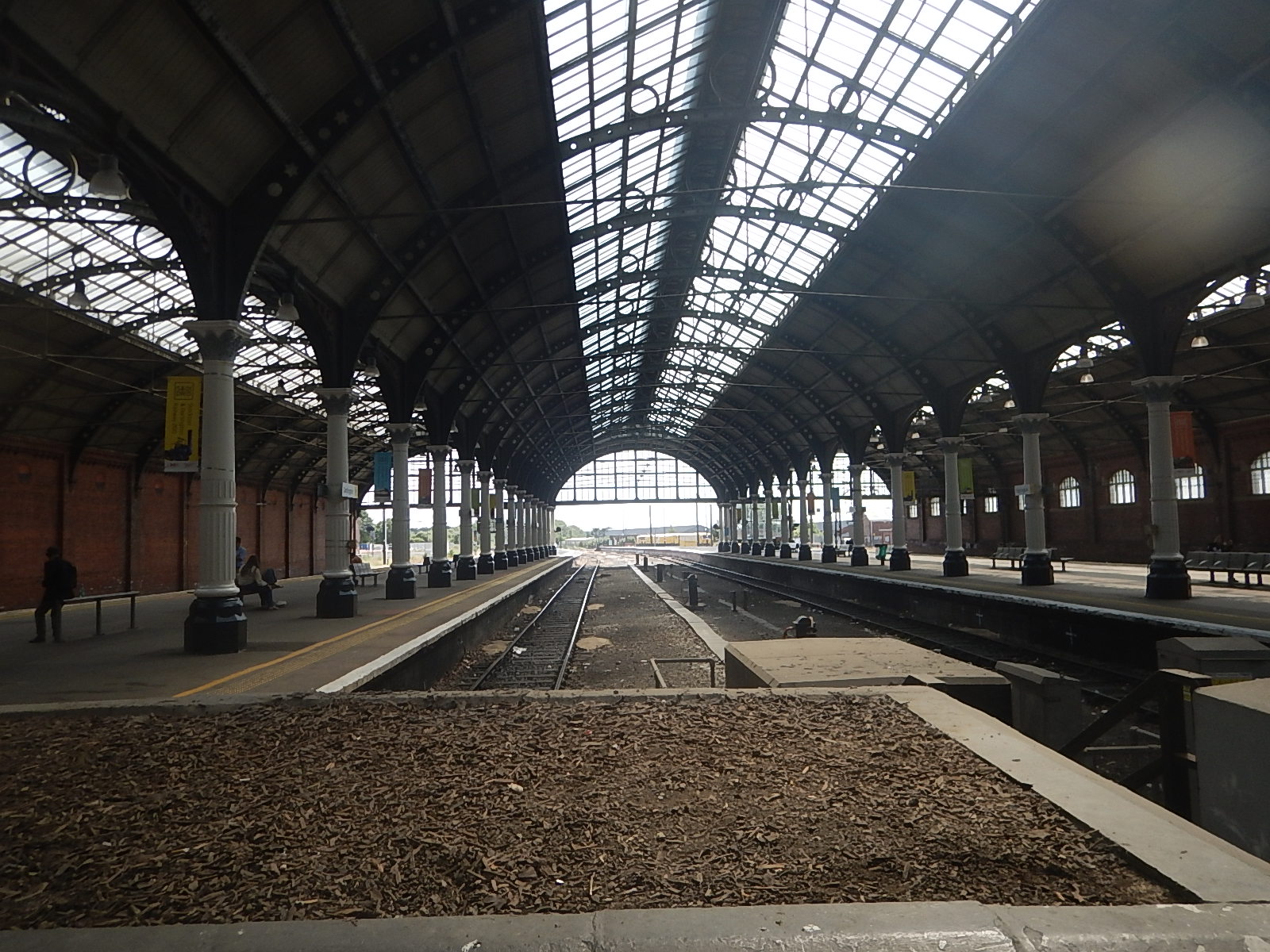
This method has been used in Victorian stations in the UK before. I show some installations and discuss electrifying Victorian stations in Could Hull Station Be Electrified?.
Darlington Station And High Speed Two
This graphic shows the original service pattern for High Speed Two.
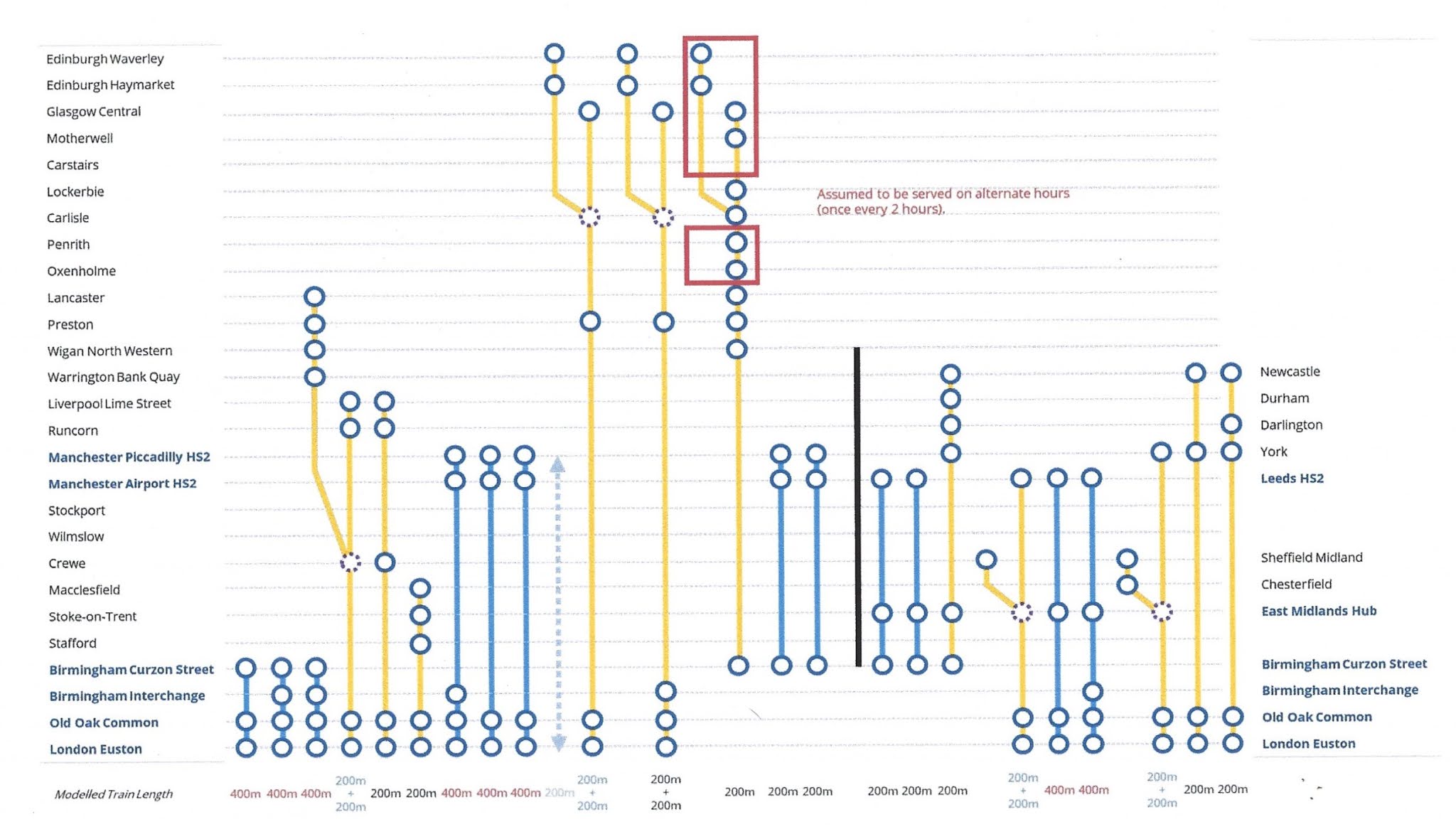
Note.
- There are seventeen paths terminating in the South at Euston station.
- Six of these paths go to Leeds, Newcastle or York.
- As the Eastern leg has been abandoned, that means there will be no High Speed Two trains to Leeds HS2, York, Darlington, Durham and Newcastle via the East Coast Main Line.
Darlington was to be served by these hourly services.
- Train 17 – Birmingham Curzon Street and Newcastle via East Midlands Hub, York, Darlington and Durham.
- Train 23 – London and Newcastle via York and Darlington.
Both trains would have been a single 200 metre long High Speed Two Classic-Compatible train.
Joining And Splitting Trains At Darlington
As Platform 5 looks like it would be a 400 metre long platform, it would look like it would be possible to handle a pair of High Speed Two Classic-Compatible trains.
But these trains will not now be serving Darlington in the near future, as the Eastern leg of High Speed Two has been cancelled.
A pair of nine-car Class 801 trains would be 467.4 metres long and might be able to fit into Platform 5.
But a pair of seven-car trains would certainly fit into a 400 metre Platform 5.
In Do Class 800/801/802 Trains Use Batteries For Regenerative Braking?, I found this snippet in an Hitachi document.
To simplify the rearrangement and management of train configurations, functions are provided for identifying the train (Class 800/801), for automatically determining the cars in the trainset and its total length, and for coupling and uncoupling up to 12 cars in
normal and 24 cars in rescue or emergency mode.
So I suspect with software updates two nine-car trains could run together.
Suppose LNER wanted to attack the airlines on the London and Scottish route.
- Two seven- or nine-car Class 800 or 801 trains would leave Edinburgh working as a pair.
- First stop would be Platform 5 in Darlington.
- The trains would split in Darlington.
- One train would go to King’s Cross stopping at perhaps Doncaster and Peterborough.
- The other train would go to St. Pancras stopping at perhaps Leeds, Sheffield, Nottingham and Bedford.
Note.
- A seven-car Azuma would be under 200 metres long.
- Seven-car trains would fit in St. Pancras.
- LNER have run an Azuma train into St. Pancras.
- The train would interchange with East-West Rail at Bedford.
- Travellers to and from East Anglia would change at Peterborough.
Large areas of England would have a fast route to and from Scotland.
Derby Alstom Train Factory Jobs Fear As Orders Dry Up
The title of this post, is the same as that of this article on the BBC.
This is the sub-heading.
Derby City Council is seeking talks with train builder Alstom over reports it could be about to lay off workers.
These two paragraphs introduce the story.
The firm’s Litchurch Lane site is the only UK train factory able to design, build, engineer and test trains for domestic and export markets.
About 2,000 people work at the factory but the firm says its current order book only runs until early 2024.
This could be another serious problem for High Speed Two.
Could LNER Use High Speed Two Classic-Compatible Trains?
In LNER Seeks 10 More Bi-Modes, I discuss how LNER are needing ten more bi-mode trains to expand their services.
Consider.
- One of LNER’s predecessors used to run Eurostar trains between Kings Cross and Leeds
- A High Speed Two Classic-Compatible trains are 200 metres long, as against the 233.7 metres of a nine-car Class 801 train.
- High Speed Two Classic-Compatible trains will run on the East Coast Main Line, when High Speed Two fully opens.
- London to Doncaster, Edinburgh, Leeds, Newcastle and York are all fully electrified routes.
So if all these fully-electric routes, were to be run using High Speed Two Classic-Compatible trains, this would release a number of Class 800 and Class 801 trains, which could be converted to bi-modes or battery-electric variants.
London and Edinburgh In Three-And-A-Half Hours
This is a paragraph from the Wikipedia entry for the InterCity 225 train.
The InterCity 225 was designed to achieve a peak service speed of 140 mph (225 km/h); during a test run in 1989 on Stoke Bank between Peterborough and Grantham, an InterCity 225 was recorded at a speed of 162 mph (260.7 km/h). Its high speed capabilities were again demonstrated via a 3hr 29mins non-stop run between London and Edinburgh on 26 September 1991. British regulations have since required in-cab signalling on any train running at speeds above 125 mph (201 km/h) preventing such speeds from being legally attained in regular service. Thus, except on High Speed 1, which is equipped with cab signalling, British signalling does not allow any train, including the InterCity 225, to exceed 125 mph (201 km/h) in regular service, due to the impracticality of correctly observing lineside signals at high speed.
If in-cab digital signalling were to be installed between London and Edinburgh, I believe that the three-and-a-half hour timing can be regularly achieved by a High Speed Two Classic-Compatible train.
I also believe that at least one train per hour (tph) between London and Edinburgh could achieve the three-and-a-half hour timing.
High Speed Two are promising a 3:48 time between London and Edinburgh.
It could be a Lumo-squasher!
A one tph service would need eight trains, but would release eight nine-car Class 801 trains.
Euston and Glasgow
This might be another route, where High Speed Two Classic-Compatible trains could be used.
Conclusion
LNER gets some more trains and Derby gets more work.
But the biggest benefits would be that, the trains would get a thorough testing before High Speed Two opens and passengers would get a view of the shape of things to come.
York To Church Fenton – 10th August 2022
These pictures show the new electrification between York and Church Fenton.


My train was going towards York.
Half-an-hour later, I went to Manchester via Leeds and took the newly-electrified line.
- The Class 802 train was on diesel on this section, but it was cruising at 100 mph.
- One the train had passed Church Fenton station, it appeared to slow noticeably.
- Today, York and Church Fenton took eight and a half minutes.
It will be interesting to see timings, when the wires are switched on.
York And Church Fenton Electrification
This news item from Network Rail is entitled Yorkshire’s First New Electric Railway In 25 Years Set To Cut Carbon And Slash Journey Times.
This section summarised the work
Work began on the York to Church Fenton electrification scheme in October 2019, and to date has delivered:
- 17 kilometres of new, more reliable track, ready to run faster trains
- An innovative 65-metre-wide under-track crossing
- 270 new steel masts, which carry the overhead electric wires
When the new wires are energised, they will allow more environmentally friendly hybrid trains to run along this section at speeds of up to 125mph – that’s 30mph faster than they currently run.
This OpenRailwayMap shows between York and Church Fenton.
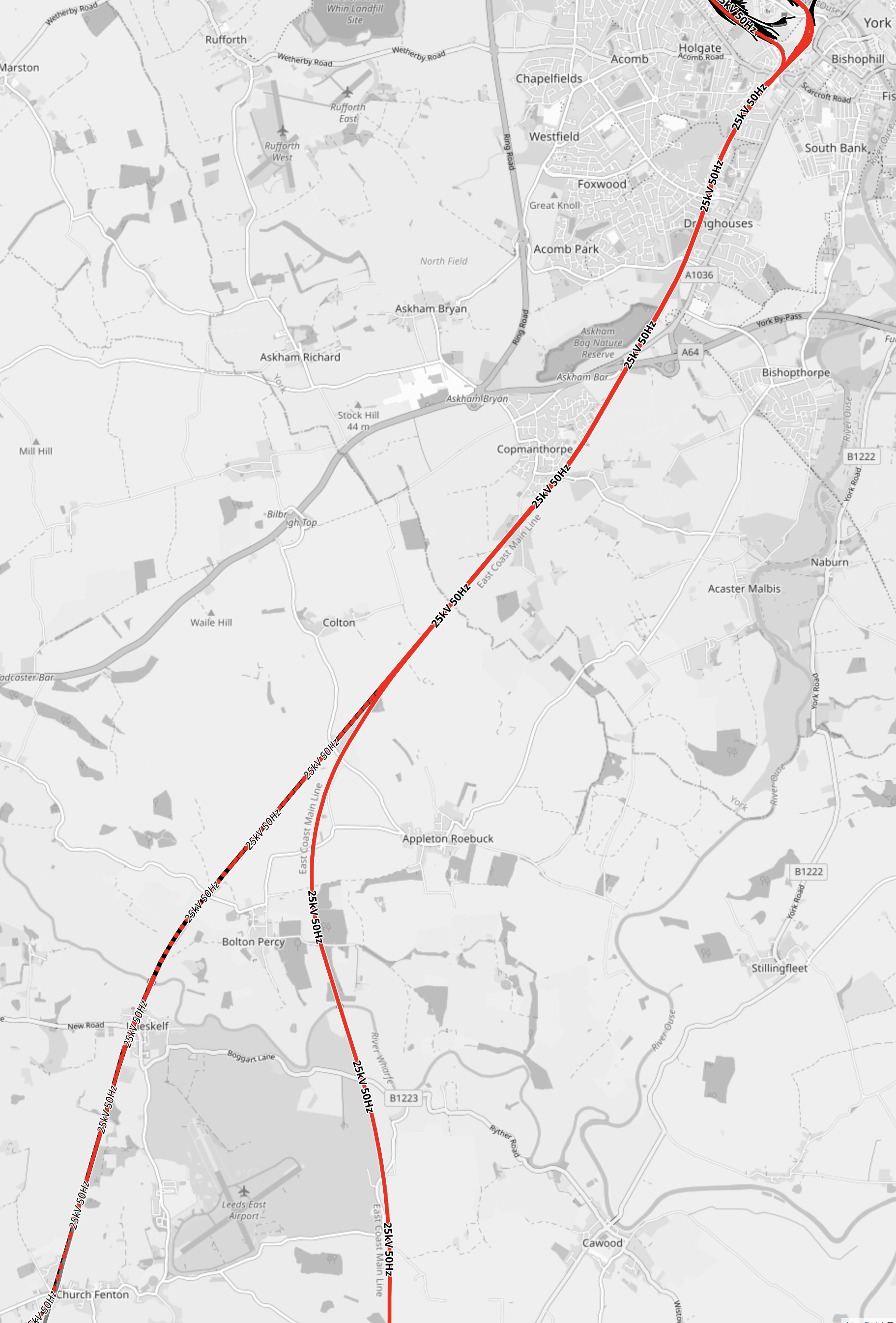
Note.
red lines indicate 25 KVAC overhead electrification.
York is in the North-East corner of the map.
Church Fenton is in the South-West corner of the map.
The track marked in red going South is the Selby Diversion, which was built in 1983 to avoid the Selby coalfield. It joins the York and Church Fenton route at Colton Junction.
The Colton Junction and Church Fenton section is marked in red and black, indicating this section is being electrified.
This second OpenRailwayMap shows between Church Fenton and Neville Hill TMD in the East of Leeds.
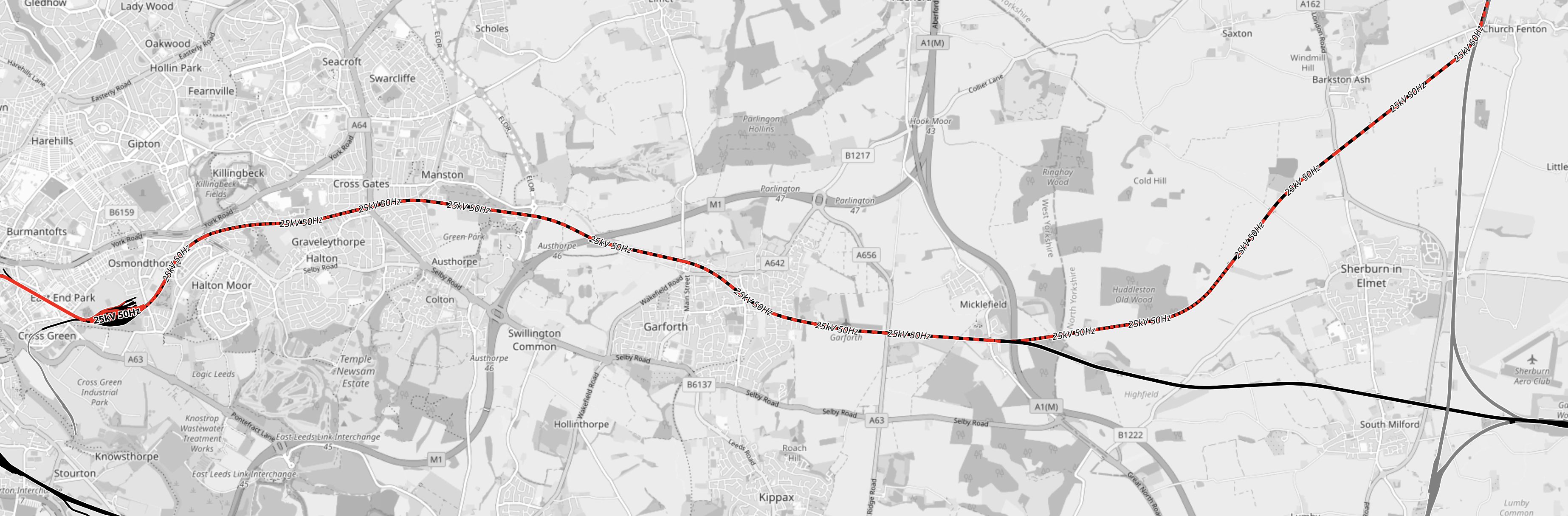
Note.
- Church Fenton is in the North-East corner of the map.
- Neville Hill TMD is the big black blob in the middle of the West edge of the map.
- The route marked in red and black will probably be the next to be electrified.
- Between Leeds and Neville Hill is electrified.
Electrification of Church Fenton and Neville Hill TMD means that the electrification between Leeds and York would be complete.
These services use this route between Leeds and York.
- TransPennine Express – 1 tph – Liverpool Lime Street and Newcastle
- TransPennine Express – 1 tph – Manchester Airport and Redcar Central
- CrossCountry – 1 tph – Plymouth and Edinburgh Waverley
In addition, the new electrified route will have other effects.
Electric trains will have direct electrified access to Neville Hill TMD from York.
Micklefield is only 42 miles from Hull and with charging at Hull, I suspect TransPennine’s Manchester Piccadilly and Hull service could go battery-electric.
Green Light For Major Transpennine Improvements
The title of this post, is the same as that of this article on Railnews.
These paragraphs outline the project.
Improvements on the Transpennine route in West Yorkshire have been given the green light, after a Transport and Works Act order was signed by the transport secretary on 27 June, six months earlier than planned.
The cost of the upgrades was described as ‘multi-billion’ by Network Rail, which said it was the ‘biggest milestone’ so far on the Transpennine Route Upgrade programme.
The improvements will be carried out between Huddersfield and Westtown in Dewsbury, and include quadrupling the double line and remodelling track layouts as well as major renovations at Huddersfield, Deighton and Mirfield and a new station at Ravensthorpe. In addition, there will be a flyover near Ravensthorpe to separate the Wakefield and Leeds lines and reduce conflicting movements.
Effectively, Grant Shapps fired the starting gun for this project four days ago.
I have written various posts on the upgrade and they can be read from this link.
The Transpennine Route Upgrade Web Site
The project now has its own comprehensive web site, which is named the Transpennine Route Upgrade.
A Reply To Peter Robins About Electrification
Peter Robins made this very perceptive comment.
The main point of TPU isn’t electrification, though, it’s upgrading the track to remove bottlenecks, improve lines speeds, add capacity. This is mainly what the Hudd-Dew TWA order is about. If you electrify the line while you’re doing that, then you increase the number of connecting places/lines which are within range of current batteries.
I think that Lds-CF will also have to wait for the post-IRP review, meaning the full upgrade will be a long time coming.
This Hitachi infographic shows the specification of their Regional Battery Train.

Note.
- It is a 100 mph train.
- Batteries can be charged when travelling under wires or 10-15 mins static.
- Range on batteries is 90 km. or 56 miles.
- My experience of Hitachi bi-modes is that pantographs on these trains can go up and down, with all the alacrity of a whore’s drawers.
Hitachi have stated that they will be testing a Class 802 train with batteries later this year.
Could Hitachi Battery Trains Be Charged On The Electrification Between Huddersfield And Dewsbury?
Looking at the data from RealTimeTrains for this route it appears that the fastest time I can find between Huddersfield And Dewsbury is eleven minutes.
Would this be enough time to fully-charge the battery? If not the electrification could perhaps be extended for a couple of miles.
How Many Of Transpennine Express (TPE)’s Services Could Be Decarbonised, if Huddersfield And Dewsbury Were To Be Electrified?
I’ll look at each service that uses this route.
Liverpool Lime Street And Newcastle
This is an hourly service that calls at Newton-le-Willows, Manchester Victoria, Huddersfield, Dewsbury, Leeds, York, Northallerton, Darlington and Durham.
- Liverpool Lime Street and Manchester Victoria is electrified.
- Colton Junction and Newcastle is electrified.
- Huddersfield and Dewsbury will be electrified by the Transpennine Route Upgrade.
This leaves the following sections without electrification.
- Manchester Victoria and Huddersfield – 25.8 miles
- Dewsbury and Colton Junction – 29.3 miles
Note.
- There are also stops under the wires, at Dewsbury, Huddersfield and Leeds, which could be used to top up the battery.
- The largest unelectrified section would be 29.3 miles.
It looks to me that Liverpool Lime Street And Newcastle could be served using a Hitachi Regional Battery Train or similar.
Manchester Airport And Redcar Central
This is an hourly service that calls at Gatley, Manchester Piccadilly, Manchester Oxford Road, Manchester Victoria, Huddersfield, Dewsbury, Leeds, York, Thirsk, Northallerton, Yarm, Thornaby and Middlesbrough.
- Manchester Airport and Manchester Victoria is electrified.
- Colton Junction and Northallerton is electrified.
- Huddersfield and Dewsbury will be electrified by the Transpennine Route Upgrade.
This leaves the following sections without electrification.
- Manchester Victoria and Huddersfield – 25.8 miles
- Dewsbury and Colton Junction – 29.3 miles
- Northallerton and Redcar Central – 28.8 miles
Note.
- There are also stops under the wires, at Dewsbury, Huddersfield and Leeds, which could be used to top up the battery.
- The largest unelectrified section would be 29.3 miles.
- I suspect that charging could be needed at Redcar end of the route. Middlesbrough would probably be best, as it could also charge the LNER services, if they used battery power from Northallerton.
It looks to me that Manchester Airport And Redcar Central could be served using a Hitachi Regional Battery Train or similar.
Manchester Piccadilly And Hull
This is an hourly service that calls at Stalybridge, Huddersfield, Leeds, Selby and Brough.
- Manchester Piccadilly and Manchester Victoria is electrified.
- Huddersfield and Dewsbury will be electrified by the Transpennine Route Upgrade.
- Leeds and Neville Hill Depot is electrified.
This leaves the following sections without electrification.
- Manchester Victoria and Huddersfield – 25.8 miles
- Dewsbury and Leeds – 29.3 miles
- Neville Hill Depot and Hull – 50 miles
Note.
- There are also stops under the wires, at Huddersfield and Leeds, which could be used to top up the battery.
- The largest unelectrified section would be 50 miles.
- I am sure that charging would be needed at Hull end of the route. Hull would probably be best, as it could also charge the Hull Trains, LNER and Northern Trains services, if they used battery power from the East Coast Main Line.
- Alternatively, there could be electrification between Hull and Brough. or Neville Hill and Micklefield. The latter would knock eight miles off the unelectrified section and is needed to allow electric trains to access Neville Hill Depot under electric power.
It looks to me that Manchester Piccadilly and Hull could be served using a Hitachi Regional Battery Train or similar.
Manchester Piccadilly and Huddersfield
This is an hourly service that calls at Stalybridge, Mossley, Greenfield, Marsden, and Slaithwaite.
- Manchester Piccadilly is electrified.
- Huddersfield is electrified.
This leaves the following sections without electrification.
- Manchester Piccadilly and Huddersfield – 25.5 miles
Note.
- There are also stops under the wires, at Manchester Piccadilly and Huddersfield, which would be used to top up the battery.
- The largest unelectrified section would be 25.5 miles.
- Trains would be charged at both ends of the route.
It looks to me that Manchester Piccadilly and Huddersfield could be served using a Hitachi Regional Battery Train or similar.
Huddersfield And Leeds
This is an hourly service that calls at Deighton, Mirfield, Ravensthorpe, Dewsbury, Batley, Morley and Cottingley
- Huddersfield is electrified.
- Leeds is electrified.
This leaves the following sections without electrification.
- Dewsbury and Leeds – 29.3 miles
Note.
- There are also stops under the wires, at Manchester Piccadilly and Huddersfield, Deighton, Mirfield, Ravensthorpe, Dewsbury and Leeds, which would be used to top up the battery.
- The largest unelectrified section would be 29.3 miles.
- Trains would be charged at both ends of the route.
It looks to me that Huddersfield and Leeds could be served using a Hitachi Regional Battery Train or similar.
York And Scarborough
This is an hourly service that calls at Malton and Seamer
- York is electrified.
This leaves the following sections without electrification.
- York And Scarborough – 42.1 miles
Note.
- The largest unelectrified section would be 42.1 miles.
- Trains would be charged at both ends of the route.
It looks to me that York and Scarborough could be served using a Hitachi Regional Battery Train or similar.
How Many Of Northern Trains’s Services Could Be Decarbonised, if Huddersfield And Dewsbury Were To Be Electrified?
I’ll look at each service that uses this route.
Wigan North Western And Leeds
This is an hourly service that calls at Daisy Hill, Atherton, Walkden, Salford Crescent, Salford Central, Manchester Victoria, Rochdale, Smithy Bridge, Littleborough, Walsden, Todmorden, Hebden Bridge, Mytholmroyd, Sowerby Bridge, Brighouse, Mirfield, Dewsbury, Morley and Cottingley
- Wigan North Western is electrified.
- Salford Crescent and Manchester Victoria is electrified.
- Heaton Lodge East junction and Dewsbury is electrified.
- Leeds is electrified.
This leaves the following sections without electrification.
- Wigan North Western and Salford Crescent – 16 miles
- Manchester Victoria and Heaton Lodge East junction – 37.6 miles
- Dewsbury and Leeds – 29.3 miles
Note.
- There are also stops under the wires, at Wigan North Western, Salford Crescent, Salford Central, Manchester Victoria, Mirfield, Dewsbury and Leeds, which would be used to top up the battery.
- The largest unelectrified section would be 37.6 miles.
- Trains would be charged at both ends of the route.
It looks to me that Wigan North Western and Leeds could be served using a Hitachi Regional Battery Train or similar.
Huddersfield And Castleford
This is an occasional service that calls at Deighton, Mirfield and Wakefield Kirkgate.
As it is run by buses at the moment, I can’t get the data to work out if it could be served using a Hitachi Regional Battery Train or similar.
But I suspect it can, after looking at a map.
How Many Of Grand Central’s Services Could Be Decarbonised, if Huddersfield And Dewsbury Were To Be Electrified?
I’ll look at each service that uses this route.
London King’s Cross And Bradford Interchange
This is a four trains per day service that calls at Doncaster, Pontefract Monkhill, Wakefield Kirkgate, Mirfield, Brighouse, Halifax and Low Moor.
- King’s Cross and Doncaster is electrified.
- Mirfield is electrified.
This leaves the following sections without electrification.
- Doncaster and Mirfield – 34.8 miles
- Mirfield and Bradford Interchange – 17.3 miles
Note.
- There are also stops under the wires, at Mirfield, which would be used to top up the battery.
- The largest unelectrified section would be 34.8 miles.
- Trains would need to be charged at Bradford Interchange, during the turnround of around an hour.
- It is likely, that some electrification will be erected in the Bradford area, to improve services to Leeds.
It looks to me that London King’s Cross and Bradford Interchange could be served using a Hitachi Regional Battery Train or similar.
Conclusion
It looks like electrifying between Huddersfield and Dewsbury will enable a Hitachi Regional Battery Train or similar to work all passenger routes, that run on that section of track.
To Middlesbrough By LNER
Today, I took the new LNER service to Middlesbrough.
It left at 15:25 and should have arrived in just under three hours. But it was eighteen minutes late.
I took these pictures of our arrival in Middlesbrough.

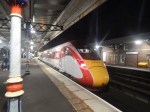
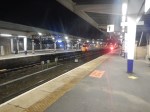
Note.
- The train wasn’t full at Middlesbrough.
- Quite a few passengers left and joined at York.
- There were also a good number of leavers at Thornaby.
- The train was five cars.
As it is only the third day of the new service, passenger numbers seem to me to be on-line with what I’ve seen for other new services.
I have a few thoughts.
Is A London and Middlesbrough Service Needed?
In the 1970s, when I worked at ICI, I would regularly travel to Middlesbrough from London for a day’s work at their Wilton site.
In those days there was no direct train and you had to change at Darlington.
Since then I’ve also travelled to Middlesbrough to see football matches and visit the local countryside.
I suspect I’ve done well over fifty trips between the town and London, but today’s trip was my first one that was direct.
Will More Services Be Added?
If you look at LNER’s service patterns to Harrogate and Lincoln, they started with a single service and have quietly grown to between five and seven trains per day (tpd) in both directions.
I suspect that an early and a late train are essential to allow a full day in London or Middlesbrough.
Could This Route Be Run By A Nine-Car Train?
I suspect normally, a five-car train would be sufficient, but suppose one of the big London football clubs was playing Middlesbrough in an FA Cup quarter final, LNER might like to add capacity for the match.
King’s Cross and York stations regularly handle nine-car Azuma trains and from my pictures, it looks like Middlesbrough can too! The only other stop is Thornaby station, which is shown in this Google Map.
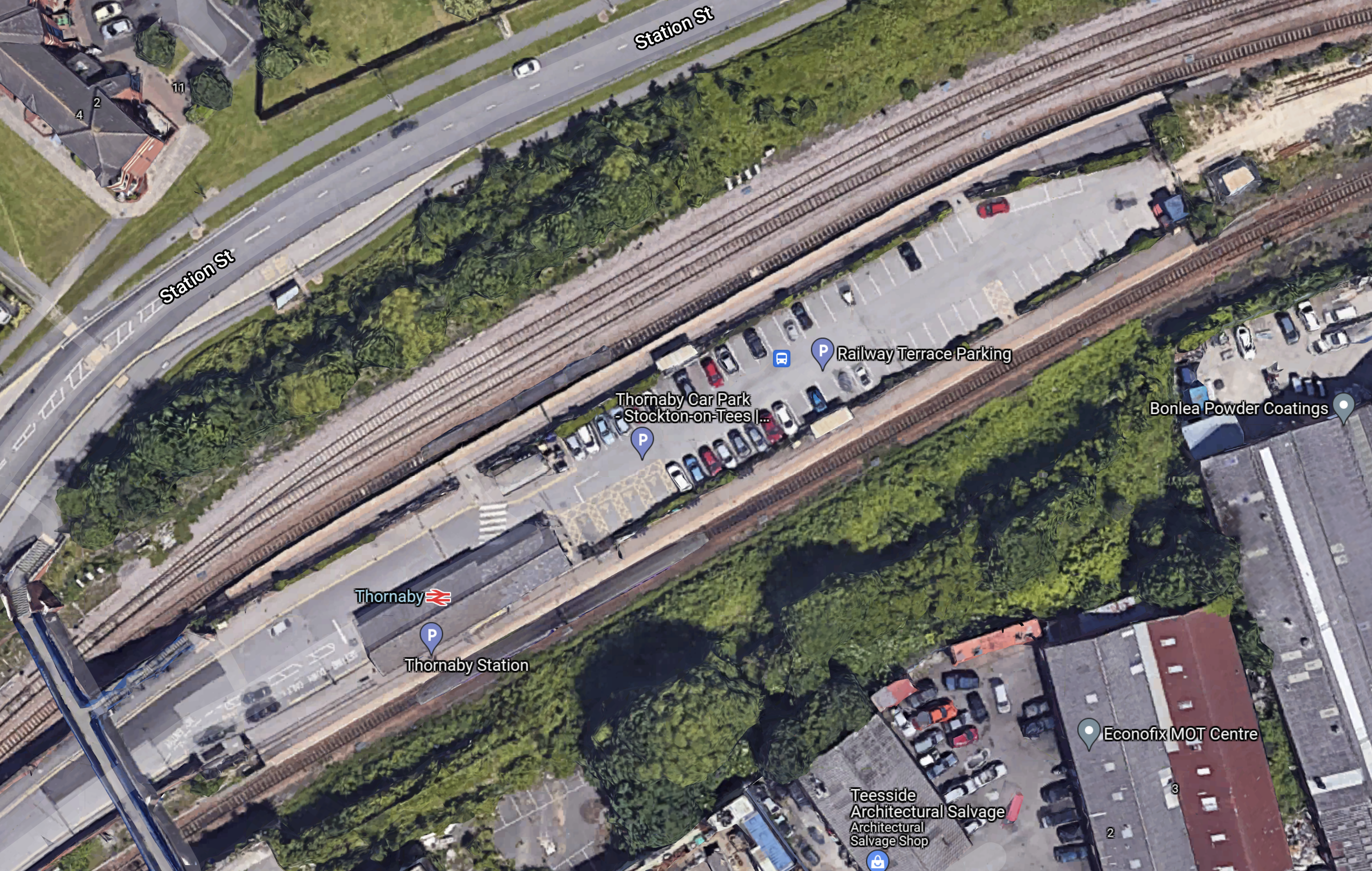
I suspect that it might just be possible, if Thornaby passengers were told to get in the first six cars.
Could This Route Be Run By A Battery-Electric Train?
Consider.
- The trains run on diesel power North of Longlands junction, where they leave and join the East Coast Main Line.
- It is a distance of only 22.2 miles.
With some form of charging at Middlesbrough, I think that within a few years, this could be an all-electric service.
It would be very handy for Hitachi, as any possible customers for battery-electric trains could be given a demo to or from London.
I Think The Stop At York Is A Good Idea
It could be argued that LNER’s King’s Cross and Middlesbrough service is two services in one.
- A direct service between London King’s Cross and Thornaby and Middlesbrough.
- A fast non-stop service between London King’s Cross and York, that takes several minutes under two hours.
Hence my view, that the York stop is a good idea.
Could The Middlesbrough Service Split And Join With Another Service At York?
The Middlesbrough service takes five minutes for the stop at York, but other services only take three minutes.
Has the longer stop been inserted into the timetable, so that the Middlesbrough timetable can be split to serve two separate destinations?
- Secondary destinations would have to be North of York or York station itself.
- These could include Bishops Auckland, Edinburgh, Newcastle, Scarborough and Sunderland.
- Given the arguments, there have been over the new timetable not calling at smaller stations, could these be served by a train to Newcastle?
There are quite a few sensible possibilities.
An alternative could be to split and join at Thornaby to serve both Middlesbrough and Sunderland.
Are Short Lengths Of High Speed Line A Good Idea?
In New ‘HS3’ Link To Yorkshire Proposed By Thinktank After Region’s HS2 Axe, I showed that a short length of faster by-pass line could give decent ties savings.
So in this post, I will look at home much time, diversions or by-passes like the Selby Diversion could save.
The diversion runs between Temple Hirst Junction and Colton Junction.
- It is 13.8 miles long.
- A typical train takes 7.5 minutes, which is an average speed of 115 mph.
- But Wikipedia claim that the route was well-designed and British Rail felt it was good for 160 mph.
So what times are possible at various speeds?
- 115 mph – 7.5 minutes
- 120 mph – 6.9 minutes
- 130 mph – 6.4 minutes
- 140 mph – 5.9 minutes
- 150 mph – 5.5 minutes
- 160 mph – 5.2 minutes
- 180 mph – 4.6 minutes
They are not great savings, but if you could increase operating speed on straight sections of thirty miles and raise the average speed from 120 to 180 mph, that would save five minutes. It would all mount up.
If you look at the railway maps of the UK, there are sections of the East Coast Main Line, Great Western Main Line, Midland Main Line and West Coast Main Line, where the track is straight and sometimes as many as four-tracks.
Stevenage Station And Stoke Junction
A simple example in a few years could be between just North of Stevenage station and Stoke junction, which after current works and some others could be four tracks all the way.
- It is 72.2 miles.
- Trains take 39 minutes.
- My timings give an average speed of 111 mph.
- There are a number of level crossings.
- Flat junctions at Hitchin and Werrington have been replaced with grade separated junctions.
Note that it is longer than the Cologne-Aachen high speed railway in Germany, which is only 43 miles long and has an operating speed of 250 kph or 155.3 mph.
Savings on the Stevenage and Stoke stretch could be as follows.
- 140 mph – eight minutes
- 155.3 mph – eleven minutes
- 160 mph – twelve minutes
- 180 mph – fifteen minutes.
- 200 mph – seventeen minutes.
This alone could mean that London Kings Cross and Leeds could be around two hours with trains such as the proposed High Speed Two Classic-Compatible Trains.
It couldn’t be extended to the North very easily as Stoke Tunnel is between Stoke junction and Grantham.
This Google Map shows the tunnel.
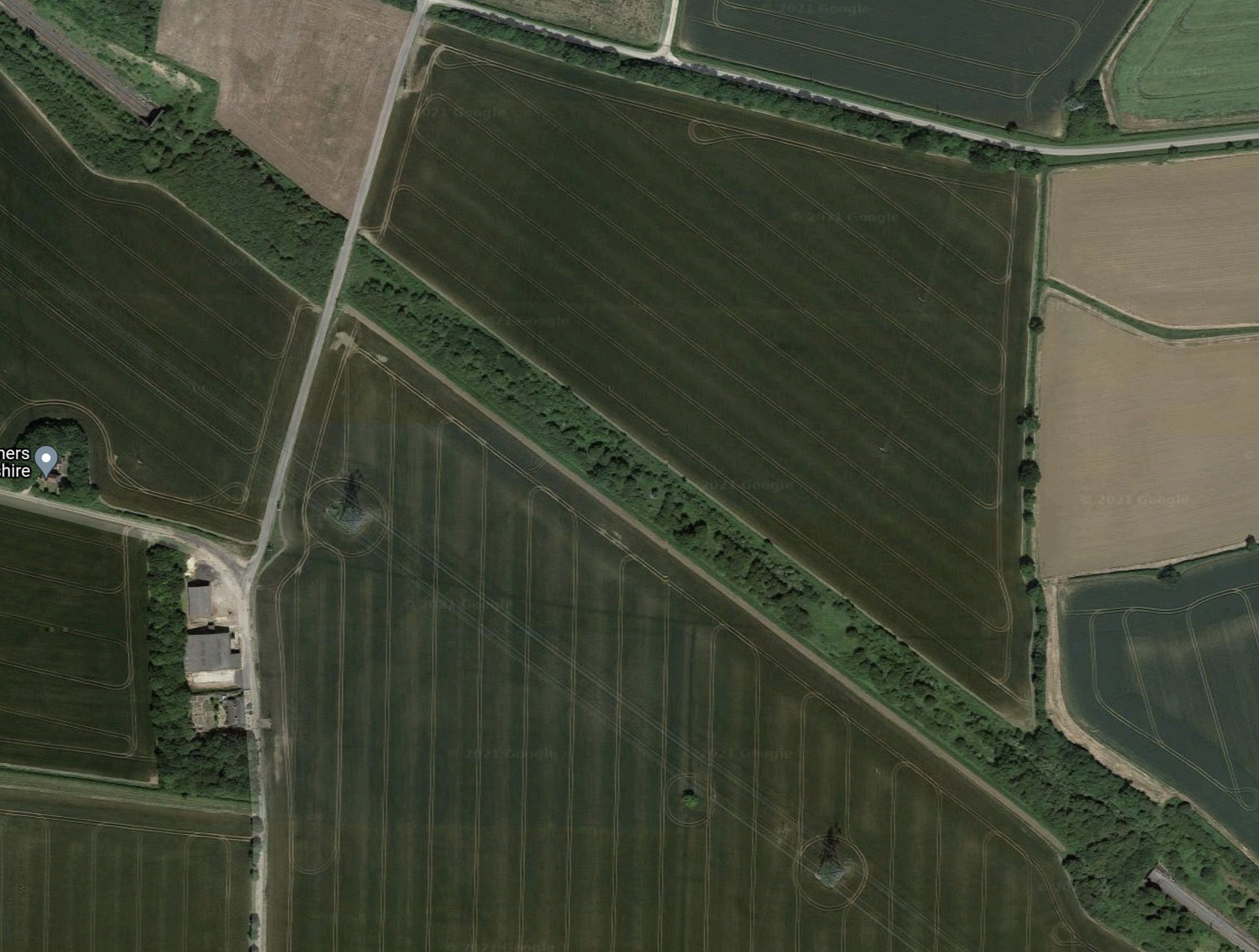
If it could easily be converted into a four-track cutting, this would add nearly six miles to the four-track section with high speed lines in the middle and slow lines on the outside.
A Diversion At York
When improving speeds and times on the East Coast Main Line, a diversion at York is sometimes mentioned.
The Google Map shows the East Coast Main Line, as it goes through York station.
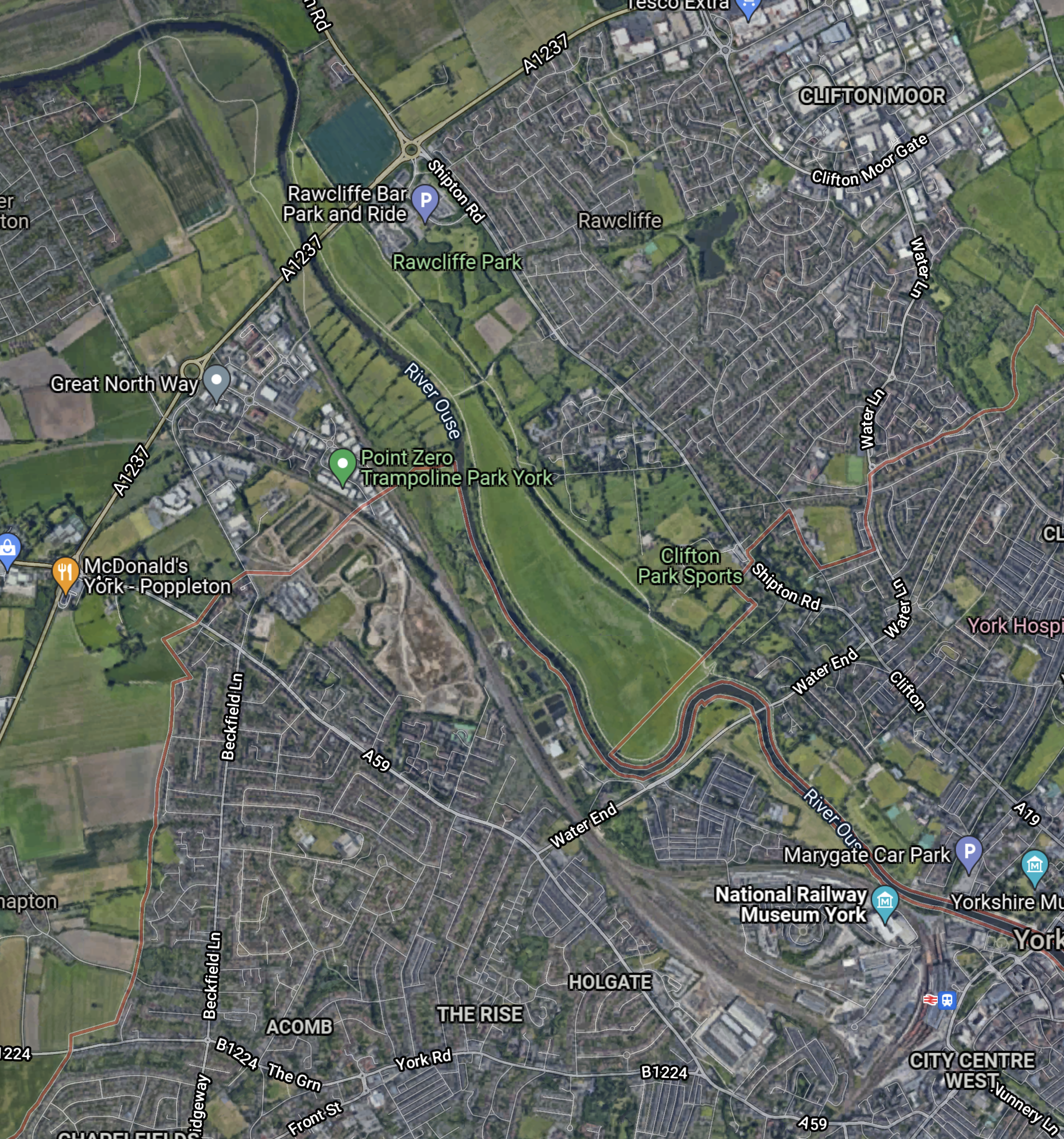
Note.
- York station is in the South East corner of the map.
- The River Ouse meandering North from near the station, before turning West at the top of the map.
- The East Coast Main Line running North from the station to the West of the river.
The railway crosses the river just to the North of Skelton junction.
This Google Map shows the tracks at York in more detail.
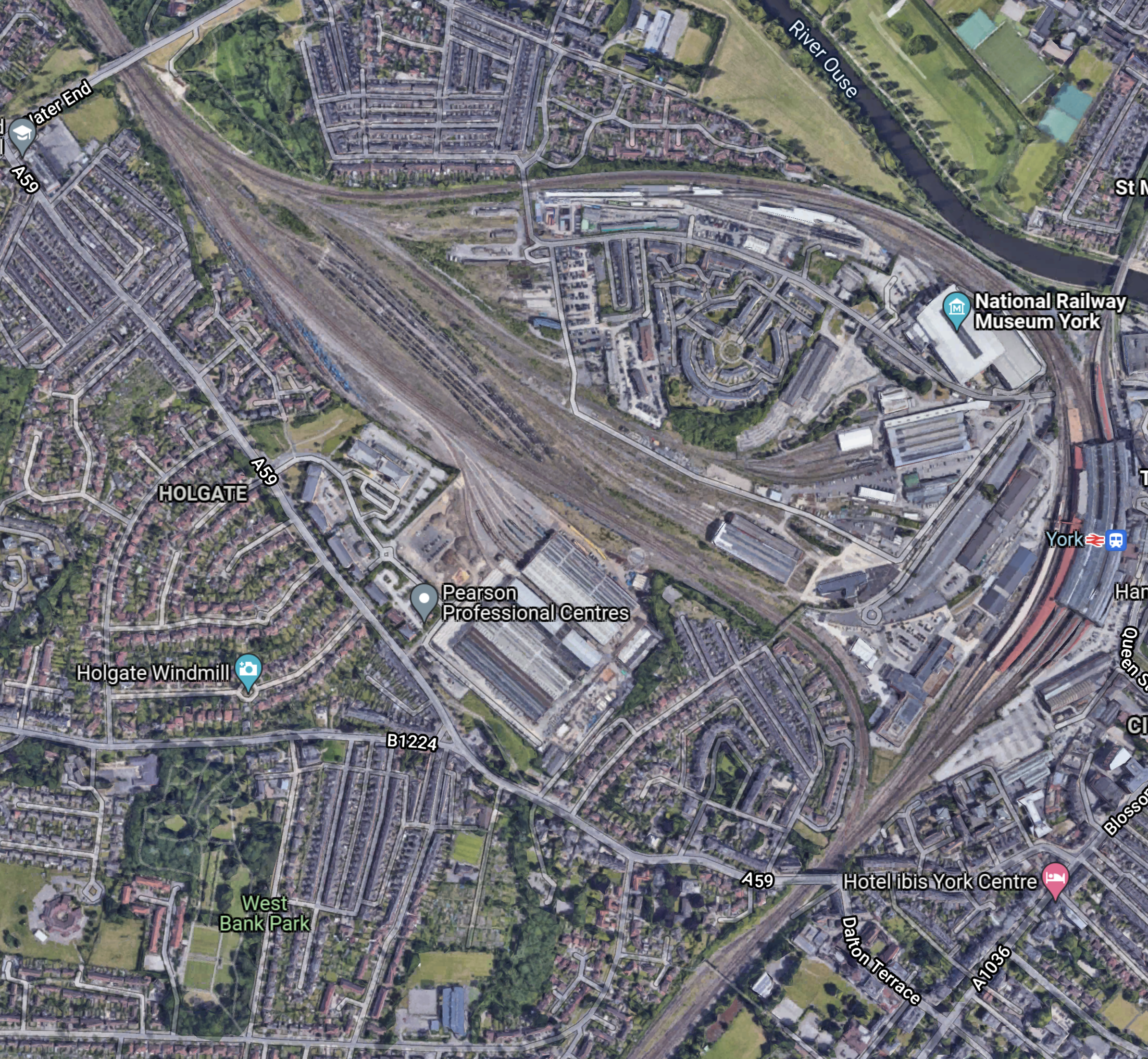
Note.
- The River Ouse in the North-East corner of the map.
- The East Coast Main Line through York station curving round the Railway Museum, before going North.
- A second rail route and sidings to the West of the East Coast Main Line can be seen.
Could a diversion route be created between Holgate and Skelton junctions on railway land?
- It would be about two miles long.
- It could be built to also sort out the bottleneck at Skelton junction.
- It might be possible to extend the fast line to Northallerton station.
This could create up to thirty miles of fast lines between Holgate junction and Northallerton.
A Diversion At Durham
When improving speeds and times on the East Coast Main Line, a diversion at Durham is sometimes mentioned.
The Google Map shows the East Coast Main Line, as it goes through Durham station.
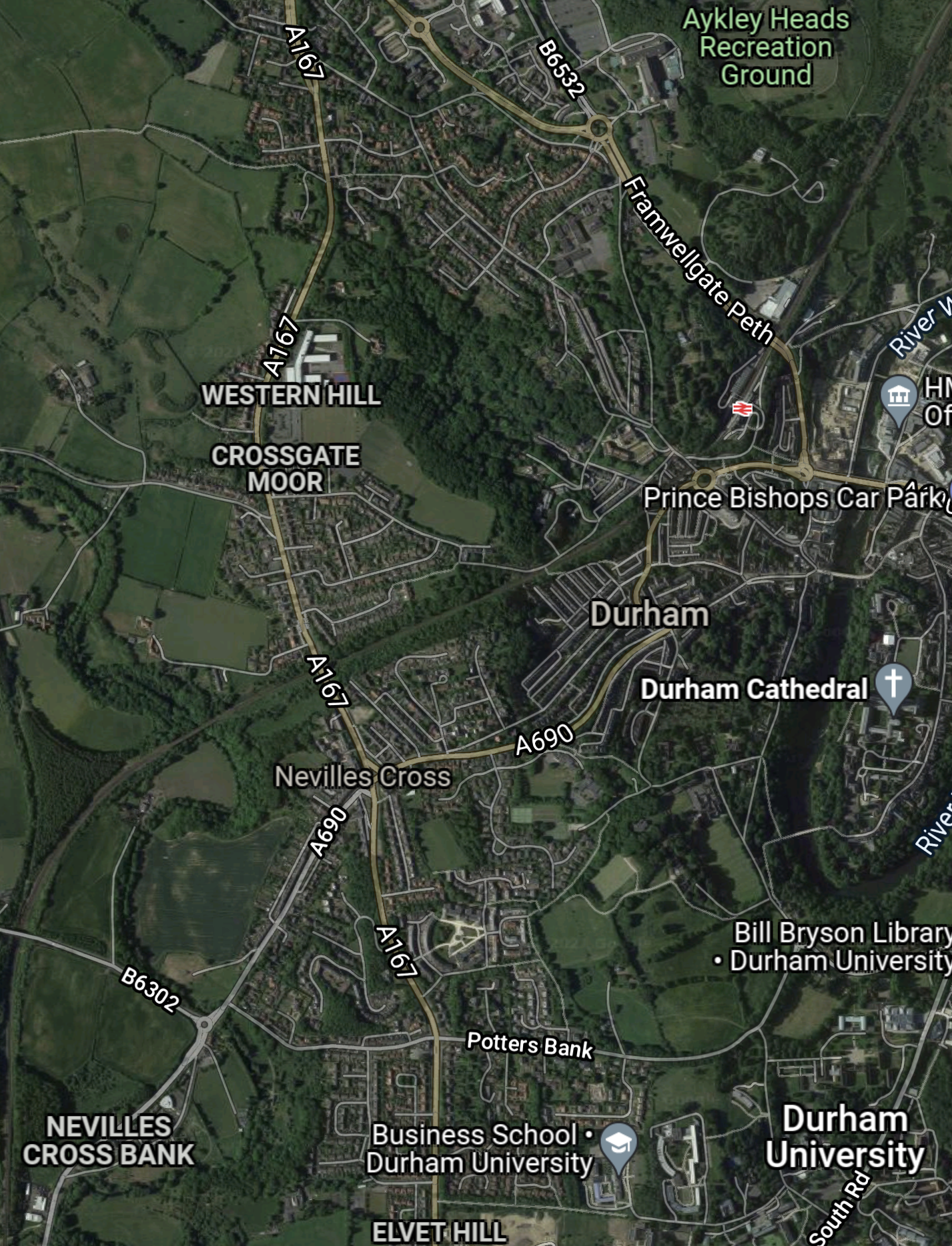
Note.
- I have arranged the map so that the East Coast Main Line goes between the South-West and North-East corners of the map.
- Durham station is clearly visible.
- The railway line curves East towards the station around Nevilles Cross after running North from the South.
This Google Map shows the East Coast Main Line, as it goes through Chester-le-Street station.
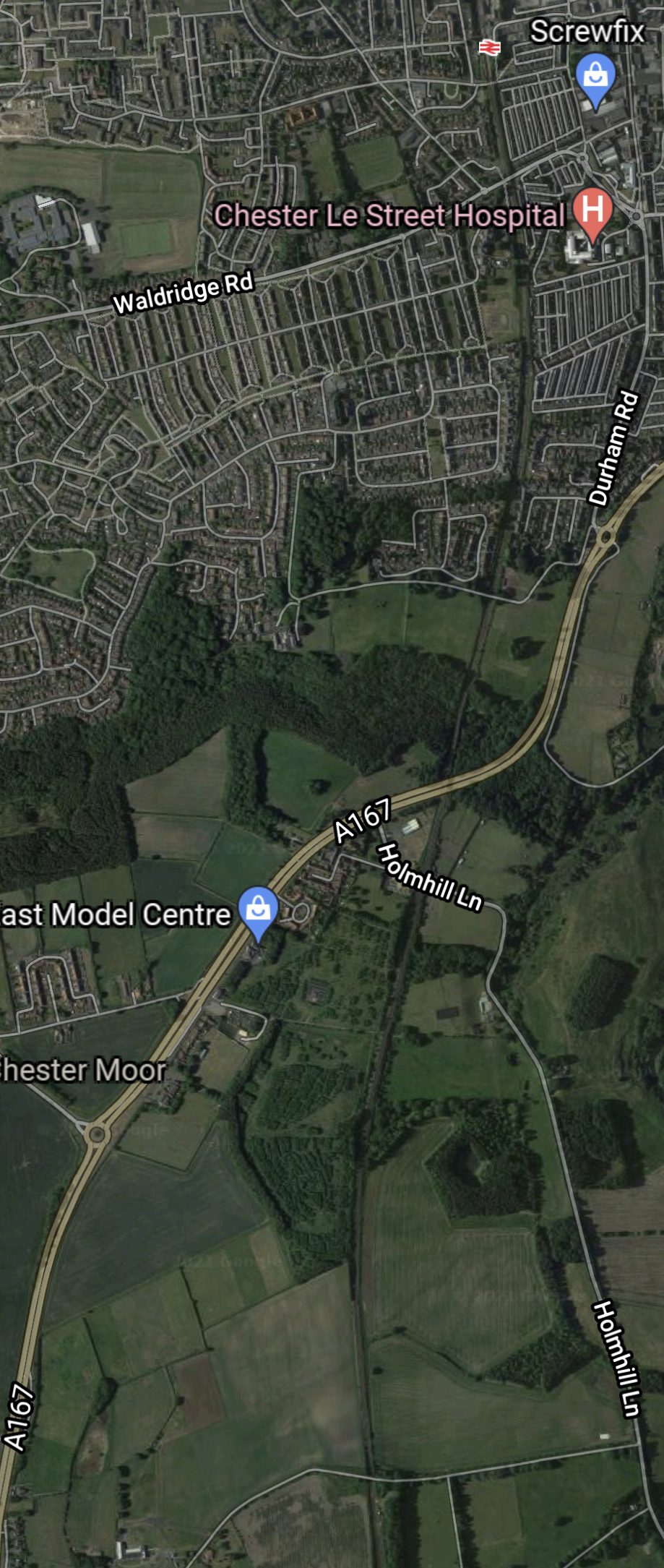
Note.
- Chester-le-Street station is in the North-East corner of the map.
- The East Coast Main Line runs North-South down the middle of the map.
- About halfway down the map, the East Coast Main Line starts to veer to the East.
If you look at the bigger picture of these maps, it appears that to serve Durham, the line took a loop to the East, so would a diversion cut off the corner between Chester-le-Street and Nevilles Cross and put Durham on a loop?
It would be a bit shorter, but it could be built to enable running at a higher speed.
Short German High Speed Lines
I have travelled a lot on German trains and they have some of our problems.
- Infrastructure dating back to the times of Kaiser Bill.
- A high mileage of track without electrification.
- Less high speed railways than France or Spain.
They are creating several high speed railways.
Earlier, I indicated that the Cologne-Aachen high speed railway, which is only 43 miles long, has an operating speed of 250 kph.
Other short high speed railways include.
- Lübeck–Hamburg railway – 39 miles – 200 kph.
- Lübeck–Puttgarden railway – 55.1 miles – 200 kph.
- Mannheim–Stuttgart high-speed railway – 62 miles – 280 kph
- Nuremberg–Erfurt high-speed railway – 66 miles – 300 kph
- Stuttgart–Wendlingen high-speed railway – 9.5 miles – 250 kph
- Wendlingen–Ulm high-speed railway – 37 miles – 250 kph
Note, that the Germans are still upgrading lines to 200 kph or 125 mph.
The Germans would appear to favour some shorter high speed lines, so it must be a worthwhile philosophy.
Conclusion
I very much feel there is scope to create some new high speed sections on the current UK network, with only building very little outside of the current land used by the network.
As with Germany would it be worthwhile to upgrade some lines to 125 mph running?
These could be possibilities.
- Basingstoke and Exeter – Currently 121 miles at 90 mph – Not electrified
- London Liverpool Street and Norwich – Currently 114.5 miles at 100 mph – Electrified
- North Wales Main Line – Currently 84.4 miles at 90 mph – Not electrified
- Reading and Taunton – Currently 107 miles at 110 mph – Not electrified
There are probably others.
 The Anonymous Widower