Vattenfall Stops Developing Major Wind Farm Offshore UK, Will Review Entire 4.2 GW Zone
The title of this post, is the same as that of this article on offshoreWIND.biz.
This is the sub-heading.
Vattenfall has stopped the development of the Norfolk Boreas offshore wind power project in the UK and will review the way forward for the entire 4.2 GW Norfolk Zone, the Swedish energy company revealed in its interim report.
This is the first paragraph.
The developer said that the decision to stop the project was made due to ”challenging market conditions”, adding that ”financial frameworks have not adapted to reflect the current market conditions” so far.
Vattenfall are also complaining about inflation and cost increases if up to 40 %.
I have my thoughts.
Great Yarmouth Support Base
In some ways, I find this decision to pull out strange, as it was only in March this year that Vattenfall signed a contract with Peel Ports to build a support base for their Norfolk wind farms at Great Yarmouth.
I don’t think that Peel Ports will be too bothered, as they are a well-funded company and there are plenty of wind farm proposals in the sea around Norfolk, who could use a base at Great Yarmuth.
Cable Routes And Nimbys
These Norfolk wind farms have suffered opposition from Nimbys to the cable route, that will be taking the electricity away from the coast. This may have increased the cost of delivery of the electricity to market.
An Offshore Cable Route
In January 2022, I wrote Is There A Need For A Norfolk-Suffolk Interconnector?, where I analysed the amount of energy, that will be produce in Norfolk and Suffolk.
This was my conclusion.
I believe there are a lot of possibilities, that would meet the three objectives, I stated earlier.
-
- Avoid as much disruption on the land as possible.
- Create the capacity to deliver all the energy generated to customers, either as electricity or hydrogen.
- Create an expandable framework, that would support all the wind farms that could be built in the future.
In addition, simple mathematics says to me, that either there will need to be extra capacity at both Bicker Fen and Bullen Lane substations and onward to the rest of the country, or a large electrolyser to convert several gigawatts of electricity into hydrogen for distribution, through the gas network.
Note.
- An offshore Multiple Purpose Interconnector (MPI) could be built between Bicker Fen in Lincolnshire and the Isle of Grain.
- An electrolyser could be built offshore, joined to the MPI and connected to the Bacton gas terminal.
- There could be local offshore hydrogen storage.
- Bicker Fen is connected to the Viking Link to Denmark.
- An offshore link could have its Southern end at the Isle of Grain, from where the electricity can be exported to Germany, by the NeuConnect interconnector, that is under construction.
There must be sufficient capacity, so that all energy is delivered to customers, as either electricity or hydrogen.
I’ve always favoured delivering electricity from these and other East Anglian wind farms with an offshore cable route away from the coast between perhaps Bicker Fen in Lincolnshire and the the Isle of Grain, from where the electricity can be exported to Germany, by an interconnector, that is being built.
Competition From Scotland
National Grid are improving the offshore grid between Scotland and Humberside, so perhaps Vattenfall might have a competition problem, when it comes to selling their electricity.
If you have no market for a product, then the price drops.
Is East Anglia A Bad Place To Have Surplus Electricity?
Consider.
- It should also be remembered that East Anglia has no heavy electricity users.
- There are also no substantial mountains for building large pumped-storage hydro schemes, as Scotland is proposing to do.
- The construction of Sizewell C will add more electricity to the area.
In my view the best thing to do would be to build a giant electrolyser near the Bacton gas terminal.
Was It A Mistake For Vattenfall To Make A Bid?
Looking at the delivery problems for the Norfolk wind farms, I think that Vattenfall made a bad decision to bid for them.
- The wind farms are too far North to serve London and the South-East and to export the electricity to the Continent.
- They are also too far South to serve the industry in the North around the Humber and the Tees.
It looks an obvious case of wrong Location, Location and Location.
Could Norfolk Boreas And Norfolk Viking Work Economically?
I suspect these ideas could help.
- A Multiple Purpose Interconnector (MPI) would be built between Bicker Fen in Lincolnshire and the Isle of Grain.
- The MPI would connect to any wind farms on the route.
- An offshore electrolyser opposite Bacton would be connected to the MPI to use surplus electricity to generate hydrogen, which would be distributed through the gas grid.
The whole network of wind farms, interconnectors, electrolysers and storage needs to be comprehensively designed, so that it provides the South-East corner of England, with enough reliable electricity and hydrogen.
London North Eastern Railway Runs Trial Train To Liverpool Street
The title of this post, is the same as that of this article on Rail Advent.
These two paragraphs, describe why this was done.
In an effort to mitigate the effect on passengers during disruption to services, London North Eastern Railway (LNER) ran one of its Azuma trains from Finsbury Park to London Liverpool Street during the early hours of this morning, Friday, 14th July.
The trial run took place to determine the long-term feasibility of diverting services during periods of planned disruption or when significant engineering works were taking place.
There doesn’t seem to have been any problems.
- The route in from Finsbury Park station went through Canonbury, Dalston Kingsland, Hackney Central, Homerton, Hackney Wick, Stratford and Bethnal Green stations, which was a distance of 9.6 miles.
- The route out to Finsbury Park station went through Bethnal Green, Cambridge Heath, London Fields, Dalston Kingsland and Canonbury, what was a distance of 5.8 miles.
Note.
- Two different routes were checked.
- The Class 800 train had five cars.
- Platform 4 at Liverpool Street station was used, which is normally used by London Overground and Cambridge services.
As this comes so soon after the test run to Cleethorpes, that I wrote about in Azuma Test Train Takes To The Tracks As LNER Trials Possible New Route, I wonder if Network Rail and the train operating companies are planning for some worst case scenario, where the two or more of the West Coast Main Line, Midland Main Lone and East Coast Main Line are blocked.
LNER and Network Rail have shown the following.
- Azumas can use Cleethorpes station.
- Azumas can use Liverpool Street station.
We also know that Cleethorpes has a direct TransPennine train service across the North of England to Doncaster, Sheffield, Manchester and Liverpool.
So if say Euston has to be shut for perhaps fourteen days during the construction of High Speed Two, a service between Liverpool Street and Cleethorpes via Colchester, Ipswich, Cambridge, Peterborough and Lincoln could be used to get some passengers to and from the North.
The other big problem is the removal of the problems of the Newark Crossing, which if it results in a long blockade of the East Coast Main Line, might need services to go into an alternative London terminal.
The Powerhouse In The East
Consider.
- The importance of Cambridge to the economy of the UK is growing fast.
- The city suffers from a shortage of commercial premises, housing and staff at all levels.
- I have just looked at the non-passenger traffic on the West Anglia Main Line for all of yesterday and there were just six freight trains through Bishop’s Stortford.
I wonder, if it would be possible to run a Liverpool Street and Cleethorpes service via Cambridge, Ely, Peterborough, Spalding, Sleaford, Lincoln, Market Rasen, Barnetby and Grimsby Town?
- The service avoids the East Coast Main Line, except through Peterborough, where it would use the separate Werrington lines.
- Liverpool Street is in the heart of one of the world’s major financial centres.
- Liverpool Street is on the Elizabeth Line.
- The service could call at Stansted Airport, but a reverse would be needed.
- Peterborough is sometimes promoted in Cambridge as a city, that could be developed, to provide support for Cambridge.
- A reverse would be needed at Lincoln.
- Lincoln is developing as a university city with character.
- Grimsby and Cleethorpes are close to the fast expanding Humberside renewable energy and hydrogen cluster.
The service could be paired with a Liverpool Street and Norwich service, via Ely, Thetford, Attleborough and Wymondham.
The services could alternate every half hour or perhaps leave London as a pair and split and join at Cambridge.
Platform Availability At Kings Cross And Liverpool Street
Consider.
- Digital signalling on the East Coast Main Line will increase the number of possible trains between London and the North.
- LNER have said they want to increase services to the North and have identified a possible service to Cleethorpes.
- Grand Central would like to increase services to Bradford.
- Lumo have started services to Newcastle and Edinburgh from Kings Cross.
- The Elizabeth Line now runs less services into Liverpool Street station.
- The Elizabeth Line connects to Liverpool Street, but doesn’t connect to King’s Cross.
- Liverpool Street is to undergo a major refurbishment, which should increase the overall passenger capacity of the station.
Would it be sensible to move a small number of services from King’s Cross to Liverpool Street?
Surely, the logical service to move to Liverpool Street would be the new Cleethorpes service.
- It would route via Cambridge, Cambridge North, Ely, Peterborough, Spalding, Sleaford, Lincoln, Market Rasen, Barnetby and Grimsby Town.
- It would use the Werrington Lines through Peterborough.
- It would not need a path on the East Coast Main Line.
- The service would provide a much needed direct link between Cambridge and Lincoln via Peterborough.
- The service could also be hourly or two-hourly.
I also believe that a Liverpool Street and Cleethorpes service could be run by a battery-electric Azuma.
- The route is electrified between Liverpool Street and Ely and through Peterborough.
- Ely and Peterborough is 30 miles.
- Peterborough and Lincoln is 56.9 miles.
- Lincoln and Cleethorpes is 47.2 miles.
- There would need to be a charging station or a few miles of electrification at Cleethorpes.
- There may be 134.1 miles of unelectrified track, but there can be a Splash and Dash at Peterborough.
A Stadler Akku would be able to handle this route, so I suspect that a similar-sized battery-electric Azuma should also be able to handle the route.
Ecojet: Dale Vince Launches An Aviation Revolution
The title of this post is the same as that as this news story from Ecotricity.
This is the sub-heading.
The world’s first electric airline powered by renewable energy
These three paragraphs outline the project.
Ecotricity founder, Dale Vince, has announced the launch of Ecojet, the world’s first Electric Airline, powered by renewable energy. The move marks the beginning of an aviation revolution by making net-zero, emission-free air travel possible for the first time.
Ecojet’s fleet will comprise conventional planes retrofitted with hydrogen-electric powertrains. Once converted, the aircraft will operate with the same power output as before, but with a one-hundred percent reduction in CO2 emissions.
The decision to repurpose old planes rather than build new models from scratch will save 90,000 tonnes of carbon per year. The only byproduct will be water, which can be captured and released into the lower atmosphere to avoid the harmful effects of contrails.
These ae my thoughts.
The Aircraft
The news story contains pictures of two aircraft; a de Havilland Canada Twin Otter and a 737 or A320 variant.
- It also says that hydrogen-electric powertrains will be used.
- ZeroAvia in partnership with Cranfield Aerospace are developing such a powertrain and I suspect they could have one certified by 2025.
This would be used in the Twin Otter.
But what about 737 or A320 variant?
Airbus are already proposing the ZEROe Turbofan, which appears to be based on an improved A320 neo.
But the image on the news story looks more like a Boeing 737 from the wing-tips.
This article on the IET web site, which is entitled Airbus And Boeing To Embrace Hydrogen From Mid-2030s, indicates that it will be the mid-2030s before hydrogen twinjets of this size are in service.
This paragraph from the news story indicates his philosophy about the aircraft.
Short-term, to secure routes and a license from the Civil Aviation Authority, Ecojet will initially launch using conventionally fuelled planes. Ecojet will launch with two different sizes of turboprop aircraft (a 19-seat aircraft and a 70-seat aircraft). These aircraft will be retrofitted with the hydrogen-electric powertrains as they become approved for service by the CAA – the first retrofits will take place in 2025, one year after the commencement of flights.
Note.
- The news story clearly states that two types of aircraft will be used; a 19-seat turboprop and 70-seat turboprop.
- So the second picture of a Boeing 737 had nothing to do with the news story.
- They will be retrofitted with hydrogen-electric powertrains, when they have been certified.
- Flights are planned to start next year.
It looks a very canny philosophy, as Ecojet will be able to prove the route with aircraft running on traditional fuels or sustainable aviation fuel (SAF) and only switch to hydrogen, when the hydrogen-electric powertrains are proven, certified and installed, and the hydrogen infrastructure is in place.
The Smaller Aircraft
The first picture in the news story is of a de Havilland Canada Twin Otter.
- This aircraft accommodates 19-20 passengers.
- It has two turboprop engines.
- Production started in 1966 and it is still ongoing.
- Nearly a thousand have been built, so plenty of nearly-new examples will be available for refurbishment and conversion.
- Loganair operate three aircraft in Scotland.
It looks fairly certain, that Ecojet’s 19-seat aircraft will be a Twin Otter.
The Larger Aircraft
Possibilities would include these aircraft.
- ATR-72 – 72 seats
- de Havilland Canada Dash 8 – > 50 seats
Note.
- Both aircraft are still in production.
- In ZeroAvia To Bring Zero-Emissions Flight To Sweden, I talk about how ZeroAvia have sold their hydrogen-electric powertrains to Swedish ATR-72 operator; Braathens and are targeting Dash 8 operators.
- In Universal Hydrogen Successfully Completes First Flight Of Hydrogen Regional Airliner, I talk about Universal Hydrogen’s successful progress in selling hydrogen-electric powertrains for ATR-72s and Dash 8s. The first flight of their system was in an ATR-72.
It looks to me, that Dale Vince has a choice of two 70-seat aircraft and hydrogen-electric powertrains from two manufacturers; ZeroAvia and Universal Hydrogen.
In Monte To Purchase 100 FC Aircraft Drives From ZeroAvia, I talk about how Monte Aircraft Leasing have done a deal with ZeroAvia to lease ZeroAvia’s hydrogen-electric powertrains to regional airlines.
Has Dale Vince done a deal with Monte Aircraft Leasing for his aircraft?
- Monte Aircraft Leasing and ZeroAvia would get an eco-celebrity customer, who could even be the launch customer.
- Ecojet’s aircraft would all have similar ZeroAvia hydrogen-electric powertrains, although the size might be different.
- Dale Vince would only be sharing the risk, if the technology was a dog.
- De Havilland Canada and/or ATR will see how the passengers like zero-carbon flight.
There is also, one of aviation’s most powerful companies close to the deal, as Airbus own half of ATR.
Airbus are developing the hydrogen-powered ZEROe Turboprop, which is shown in this Airbus image.
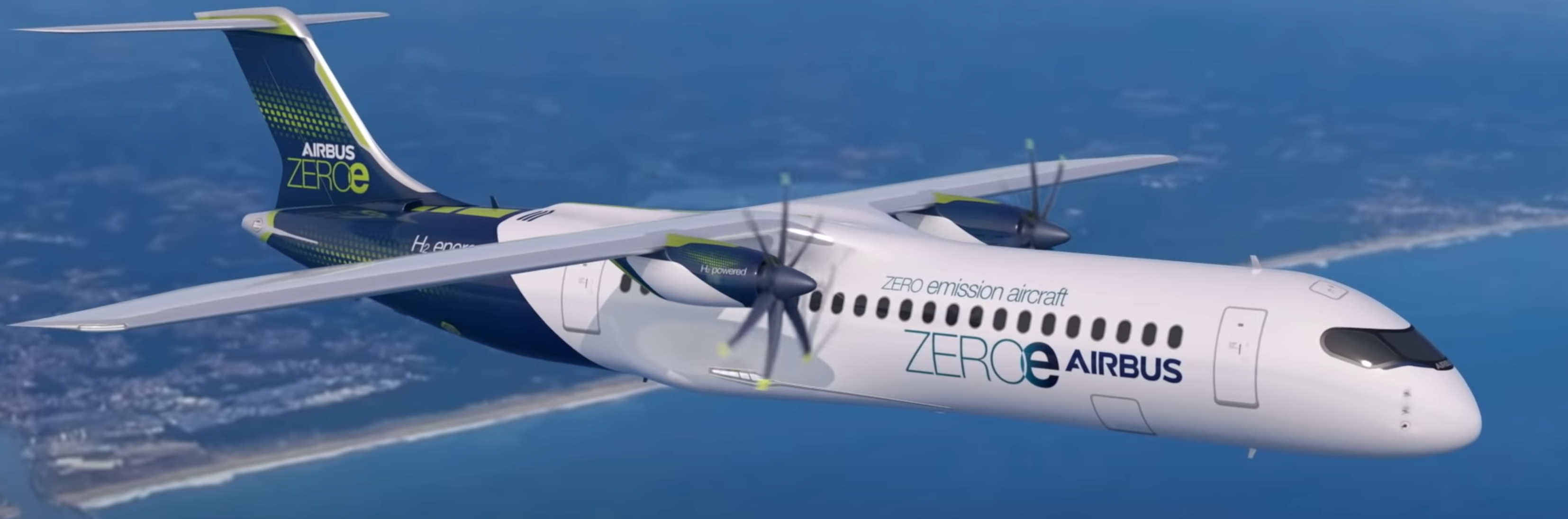
Note.
- It looks very much like an improved ATR-72.
- It has more extreme propellers and probably better aerodynamics.
- Airbus might like to persuade Ecojet to use ATR-72s as their 70-seat airliner.
- Information from an operator of hydrogen-powered airliners would be very valuable to Airbus.
I wouldn’t be surprised to see Ecojet lease some nearly new ATR-72s.
Would Airbus Fit ZeroAvia Hydrogen-Electric Powertrains In The ZEROe Turboprop?
This page on the Airbus website is entitled ZEROe.
In a section, which is entitled Hydrogen Propulsion To Power Future Aircraft, this is said.
All three ZEROe concepts are hybrid-hydrogen aircraft. They are powered by hydrogen combustion through modified gas turbine engines. Liquid hydrogen is used as fuel for combustion with oxygen.
In addition, hydrogen fuel cells create electrical power that complements the gas turbine, resulting in a highly efficient hybrid-electric propulsion system. All of these technologies are complementary, and the benefits are additive.
In 2022, we launched our ZEROe demonstrator with the aim to test hydrogen combustion technology on an A380 multimodal platform. Through future ground and flight testing, we expect to achieve a mature technology readiness level for a hydrogen-combustion propulsion system by 2025.
Note.
- Airbus state they are using modified gas turbine engines.
- Airbus also talk about using fuel cells to create electrical power that complements the gas turbines.
- Could the hydrogen fuel cells be used to power the aircraft’s systems, like avionics, control systems, air-conditioning and the hydrogen system for the main engine?
- This concept of effectively a hydrogen auxiliary power unit, might be a more efficient way of using the hydrogen, which either gives longer range or a smaller fuel tank.
- In The ZEROe Demonstrator Has Arrived, I talk about the ZEROe Demonstrator, which is a modified Airbus A 380.
Did the adding of hydrogen fuel cells to the ZEROe aircraft, lead to the concept of a hydrogen-powered auxiliary power unit, that I talked about in Airbus To Trial In-flight Auxiliary Power Entirely Generated By Hydrogen?
It looks to me, that Airbus have developed their own simple concept of powering the aircraft.
I doubt they will need ZeroAvia’s technology.
But.
- Aircraft manufacturers like Airbus generally fit the best and most suited engines they can find in their aircraft.
- The Wikipedia entry for ZeroAvia says that the prototype hydrogen-electric powertrain is in the cabin, consisting of two fuel cells and a lithium-ion battery for peak power.
- ZeroAvia have powerful shareholders like Amazon, Bill Gates and Royal Dutch Shell.
- ZeroAvia have also received grants from the UK Government.
I wouldn’t be surprised to learn, that Airbus have taken a long hard look at ZeroAvia’s technology.
After all, ZeroAvia could probably build a hydrogen fuel cell power pack, that would meet Airbus’s needs for a hydrogen-powered auxiliary power unit.
Remember too, that many fleets of aircraft have been updated with new engines for decades and I don’t think Airbus would mind ZeroAvia giving a new zero-carbon lease of life to the hundreds of ATR-72s in service around the world.
Surely, a successful hydrogen-powered ATR-72 is only going to create more interest in airlines buying ZEROe Turboprops.
All the converted aircraft will still need support from ATR.
Both the converted and new aircraft will need hydrogen refuelling services, so could the two aircraft use a common standard.
Airbus and ZeroAvia would appear to have several common interests.
Ecojet’s Core Route
This is a paragraph from the news story on the Ecotricity web site.
Dale has partnered with experienced pilot Brent Smith and a team of aviation specialists to set up Ecojet. Flights across the UK will commence in early 2024, starting with the Edinburgh to Southampton route, and expanding to mainland Europe shortly after, with long-haul flights planned for the future.
Note.
- The ATR-72 has a range of 949 miles, which is more than adequate for Southampton and Edinburgh, which is just over 350 miles.
- Diagonal journeys in the UK are often the most passenger-unfriendly by rail and tend to use diesel trains.
- Southampton Airport has good road and rail connections, with the terminal less than a minute from the station.
- Edinburgh Airport has good road and tram connections, with rail connections needing a short journey on the tram.
- Southampton Airport has flights to the Channel Islands, Ireland and Schiphol.
- Edinburgh Airport has a comprehensive service from major airlines and low-cost carriers, and several flights to destinations in the North of Scotland and on the Islands.
I think that it is a well-chosen core route for their 70-seat aircraft.
Which Routes Will Ecojet Fly With The Twin Otters?
Consider.
- My Scottish friends tell me that flying to the Scottish Islands, like the Hebrides, Orkney and Shetland is expensive.
- The growth of the Scottish wind power industry will mean, that more capacity is needed to serve the North of Scotland and the Islands.
- Tourism to the North of Scotland and the Islands is on the up.
- There will not be a shortage of green electricity to produce green hydrogen.
- The North of Scotland isn’t short of airports.
- The Twin Otter has a surprisingly long range on aviation fuel and I suspect, that a hydrogen version would be designed to have a similar range.
- The longest flight needed would probably be Edinburgh and Sumburgh, which is about 280 miles, which should be well within the range of a Twin Otter.
- I suspect that hydrogen refuelling could be easily provided at enough airports, to support hydrogen-powered airliners.
- I am sure, that the Twin Otters could be used on a network of zero-carbon flights from Edinburgh to the North of Scotland and the Islands.
- A zero-carbon airline would help Scotland’s net-zero ambitions.
There is certainly a need for another airline to connect Edinburgh to the North of Scotland and the Islands and the infrastructure could be upgraded to support a hydrogen-based zero-carbon airline.
Could Ecojet build a similar network at Southampton, that served the Channel Islands, Southern Ireland and Northern France?
Conclusion
There’s a lot more to this venture, than there appears at first sight.
O wish Vince and his partners well, but as a coeliac, I’ll skip the food.
Tesla Megapack Battery Caught Fire At PG & E Substation In California
The title of this post, is the same as that of this article on CNBC, which was published in September 2022.
The article starts with these three key points.
- A Tesla Megapack caught fire at a PG&E energy storage facility in Monterey, California on Tuesday.
- The fire caused road closures and shelter-in-place orders for residents nearby.
- Richard Stedman, an air pollution control officer for the Monterey Bay Air Resources District (MBARD) said in general lithium ion battery fires can emit toxic constituents like hydrochloric and hydrofluoric acid.
The article goes on to say, that there were no power outages and no on-site personnel were injured.
In the late 1960s, I worked for ICI at Runcorn.
One of the instruments, I helped to develop was a detector for water in bromochlorodifluoromethane or BCF, as it is commonly known.
- You may have seen BCF on a fire-extinguisher, as that is the chemical’s main use.
- In those days, ICI made BCF on a plant that also manufactured the anaesthetic; Fluothane.
- The plant was in Rocksavage works by the Mersey.
It should be noted, that Rocksavage works had one of the best safety records in the whole of the company.
When the instrument was ready, I was told to go to the plant and see Charlie Akers, who was the foreman electrician on the plant. He would arrange fitting the instrument to the plant.
- Charlie was a short stout man and the first thing he did was to get a proper mug out of a box of perhaps two dozen new ones and write my name on it.
- He then made us both mugs of fresh tea with fresh milk from a bottle.
- He said something like. “Now you’ve got no excuse to come and see me before you go on the plant or have any questions!”
- He also said that everybody, who worked in Rocksavage was very proud of its safety record and proceeded to give me a tour of the plant pointing out its hazards.
One lesson, I learned that day and still do was to walk up stairs in a hazardous environment using the stanchions of the rails. You never know what has fallen on the handrails. On the BCF plant this could have been hydrochloric and hydrofluoric acid.
- At one point to illustrate the danger of the latter, he took a pair of tweezers and put a spec of hydrofluoric acid (HF) dust on the tip of my finger, which was painful.
- He also said that HBr was a lot more dangerous.
I didn’t disgrace myself on that plant and the lessons, I learned that day have stayed with me all my life. I even think, that they have had positive effects on my stroke recovery, as I was given tips about how to get out of a chemical plant, after a fire or serious spillage.
Thank you Charlie!
One of the key points in the CNBC article, is that lithium-ion battery fires can emit hydrochloric and hydrofluoric acid.
It makes me wonder, if our high levels of usage of these batteries for where there is an alternative is a good idea.
Gore Street Energy Storage Fund’s Portfolio Increases To Over 1GW
The title of this post, is the same as that of this article on the Solar Power Portal.
By any measure a GW is a substantial amount of power and the article gives all the figures for the fund.
One thing, I feel, I can say, is that large grid-connected lithium-ion batteries, as deployed by Gore Street, are more reliable than the similar smaller batteries in e-bikes and e-scooters.
The media and especially the financial pages would have had a field day, if a lithium-ion battery caught fire. Certainly Gore Street and others building large batteries, don’t seem to have any planning permission problems from Nimbys.
Hydrogen ‘The Only Option’ For Metrobus Fastway ZE
The title of this post, is the same as that of this article on Route One.
This is the introductory paragraph.
Hydrogen fuel cell-electric remains the most realistic zero-emission technology for usage cases requiring very high mileage and utilisation capabilities. That is the verdict from the Go-Ahead Group after its Metrobus subsidiary launched 20 Wrightbus GB Kite Hydroliner single-deckers on 29 June.
This paragraph gives more details.
Go-Ahead Group Chair Claire Hollingsworth, who was present at the launch alongside Under-Secretary of State for Transport Richard Holden and other stakeholders and dignitaries, underlines the need for hydrogen on Fastway. “These are the most intensive routes in the Go-Ahead network,” she explains. “We need 300 miles of range and have little time to plug in.”
Let’s face it, a bus that takes a lot of time to fuel-up can’t be as efficient, as one that takes just a few minutes. Especially, if the buses are running a large number of hours per day.
The whole article is a must read and surely Go-Ahead’s conclusion to other modes of transport, that do long distances, like heavy trucks, long-distance coaches and railway locomotives.
Riding The SL8 Bus Between Shepherd’s Bush Market And Uxbridge Stations – 16th July 2023
This draft map from TfL illustrates the concept of the Superloop.
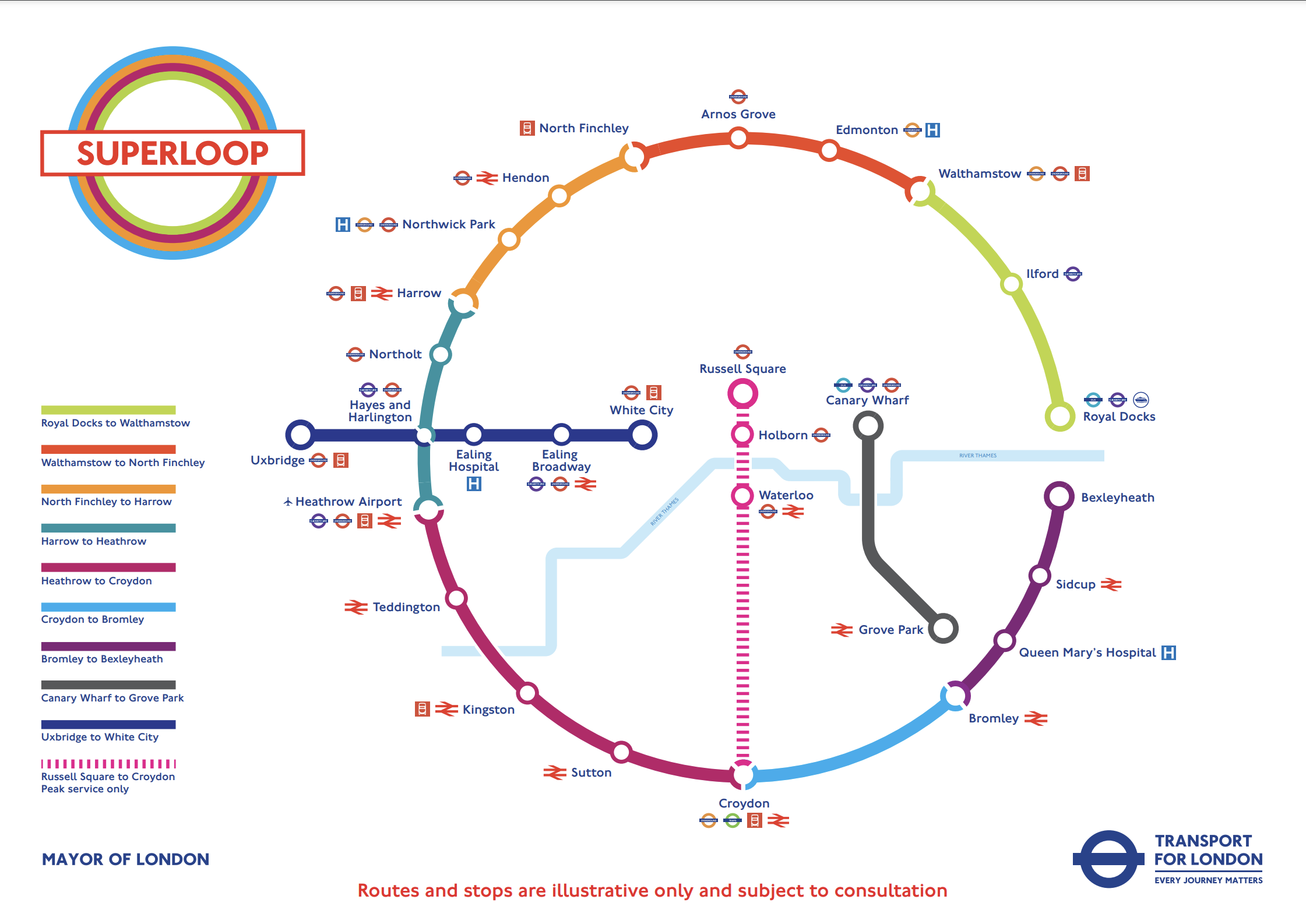
The spoke on the Western side of the map is route SL8 between White City and Uxbridge stations.
This morning I rode the route between Shepherd’s Bush Market and Uxbridge stations and took these pictures.



















































Note.
- Some of the buses have still to be painted in the new white-topped Superloop livery.
- The buses are diesel-powered.
- The stops have their own livery.
- I estimate the route is 12.3 miles long and the bus took 67 minutes.
- The frequency appeared to be typically four buses per hour.
- The route is mainly dual-carriageway to the West of Ealing Hospital.
Route SL8 used to be route 607 and except for the branding nothing has changed.
I have few thoughts.
The Concept
The concept seemed to work well, where the roads were free of traffic.
But we get get a bit delayed through places like Ealing Broadway, where parking reduced the width of the road.
The Route
The route connects quite a few stations and other important locations.
From East to West they include.
- Westfield Shopping Centre
- Shepherd’s Bush station for the Central Line and the Overground.
- Shepherd’s Bush Market station for the Hammersmith and City Line
- Acton Central station for the Overground
- Ealing Common station for the District and Piccadilly Lines.
- Ealing Broadway station for the Central, District and Elizabeth Lines.
- Ealing Broadway
- Ealing Town Hall
- Ealing Hospital
- Southall Broadway
- Hayes
Note.
- The route is very much the same as the now-abandoned West London Tram, which was proposed twenty years ago.
- The tram was opposed y the three London boroughs on the route, as it cut them in half. But buses don’t cause the same problems.
- The Superloop map shows that the SL8 bus calls at Hayes and Harlington station, but we went nowhere near it today.
- The route with its sections of dual carriageway and congested shopping streets was a bit like the route o Birmingham’s hydrogen buses, that I wrote about in Riding Birmingham’s New Hydrogen-Powered Buses.
I feel as the route is very similar to the West London Tram, which was probably extensively researched, that there won’t be too many changes to this route.
Parking Along The Route
I wouldn’t be surprised to see more parking restrictions along the route, to speed up the buses in the crowded shopping streets like Acton, Ealing Broadway and Southall Broadway.
The Buses
The buses are Egyptian-built eVoSeti diesel buses, which use a Volvo chassis.
- I don’t like these buses as they don’t have a flat floor and I’ve seen some passengers struggling with the stairs on the lower deck.
- At least the stairs to the upper deck aren’t too bad.
We used to have them locally in Dalston and I used to avoid them, if there was another bus close behind.
This new route, though should be served by zero-carbon buses, so that pollution and carbon emissions are reduced.
- Between White City and Uxbridge takes over an hour.
- A battery-electric bus would need recharging during the day.
- It looks like there’s not much space at White City and Uxbridge stations, to install charging stations.
- A hydrogen-powered bus could probably manage all day on one filling.
For these reasons, I suspect that hydrogen buses would be the preferred option.
Ruislip Station – 16th July 2023
In TfL Announces The Next Tube Stations To Be Prioritised For Step-Free Access To Meet The Mayor’s Bold Accessibility Targets, it stated that Ruislip station will be made step-free.
So I went to have a look and took these pictures.















Note.
- The station is used by Piccadilly and Metropolitan Line trains, which are different sizes.
- There appears to be a well-preserved signal-box at the Eastern end of the station.
- The Eastbound platform has step-free access from the street.
- Crossing the tracks is by a Victorian steel footbridge.
- The station is Grade II Listed.
- The listing includes the the signal box and the footbridge.
This 3D Google Map shows the station.
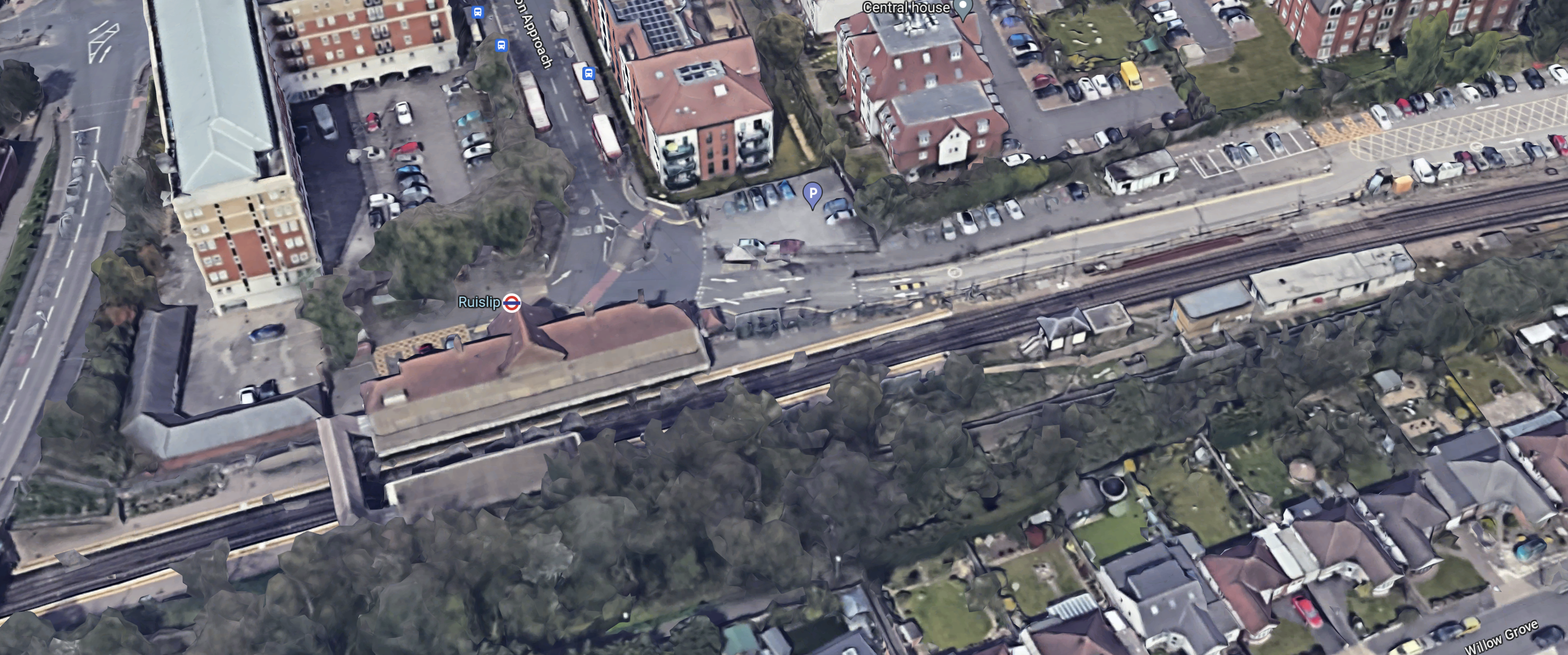
Note.
- The footbridge in the South-West corner of the map.
- There is not much space to put a second bridge across the tracks.
- It might be possible to build a step-free footbridge with lifts by the road bridge.
If English Heritage and the Heritage Taliban dig in their heels, this could be a difficult station to make step-free.
But the London Underground has several bridges of this type, so perhaps this one is being scheduled early to test the reaction.
This second Google Map shows the road bridge and the Western ends of the platforms to an enlarged scale.
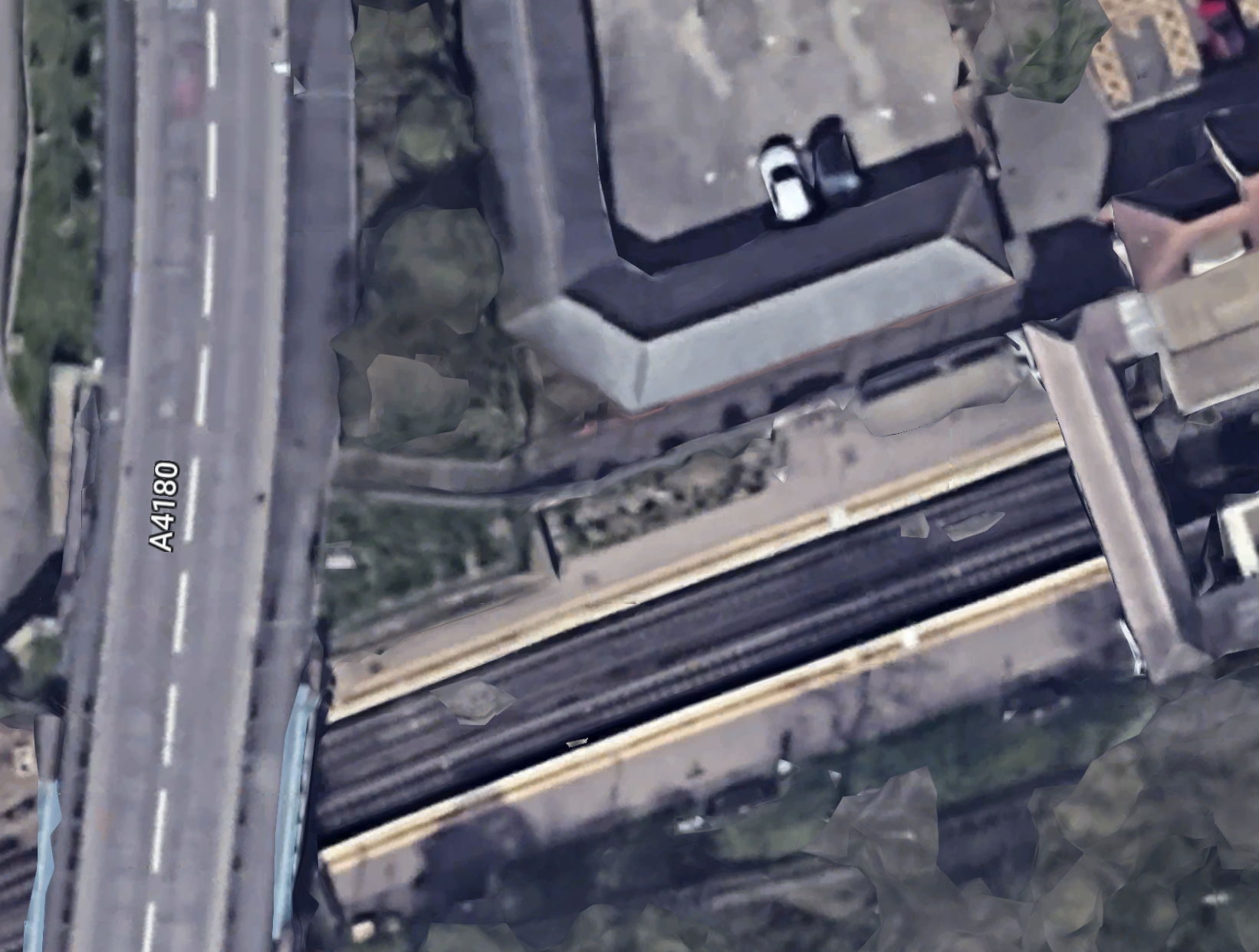
This picture shows the station side of the road bridge.
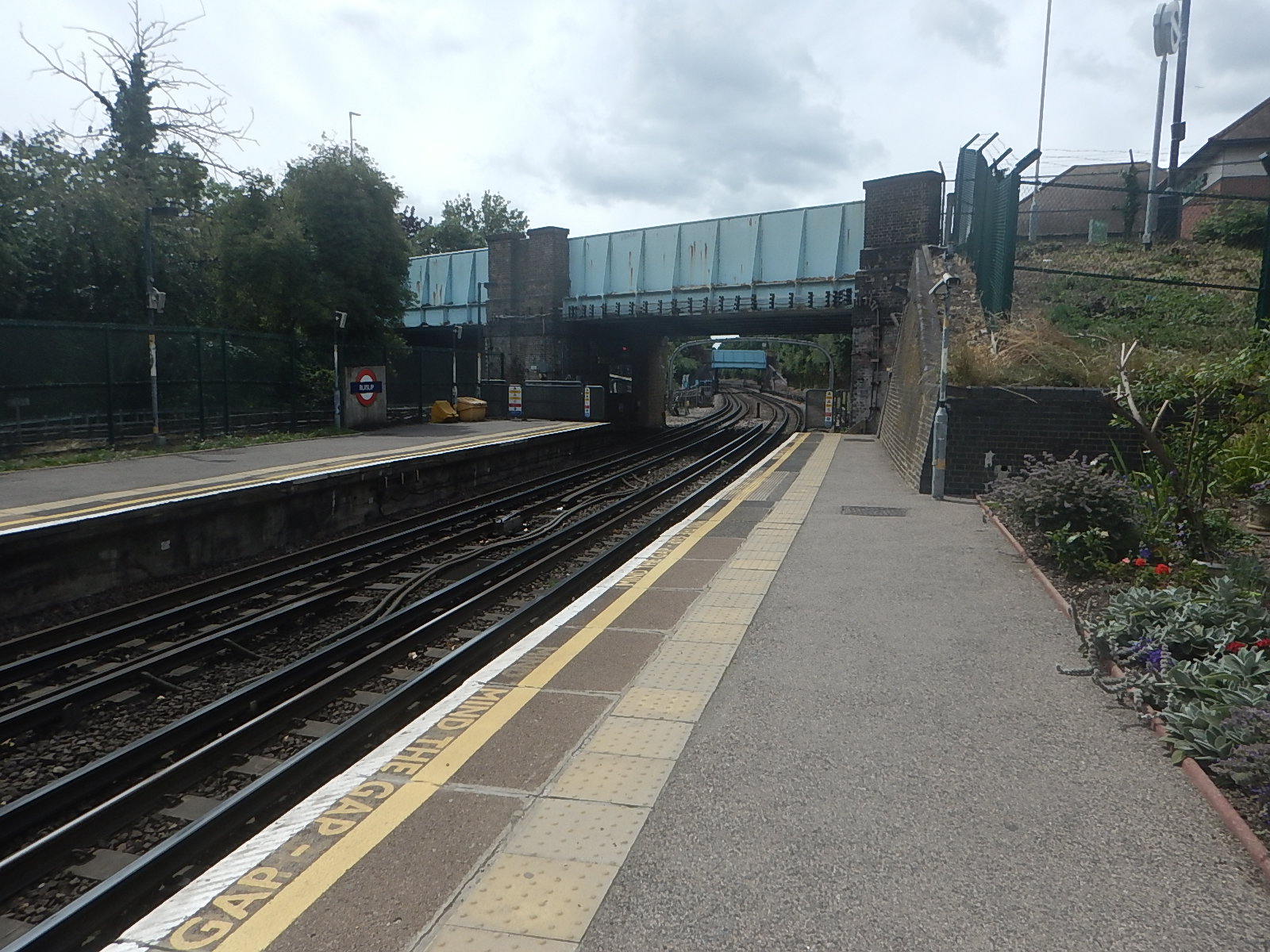
There could be space to put a steel bridge with two lifts by the road bridge.
Coupled with a comprehensive restoration of the current footbridge and a repainting of the road bridge, this could satisfy all parties.
Djokovic Appears To Have A Spaniard In The Works!
With apologies to John Lennon!
Would A Dual-Fuel Boeing 747 Or Airbus A380 Save Carbon?
This press release from Airbus is entitled The ZEROe Demonstrator Has Arrived.
This is the introductory paragraph.
2022 marks a new and exciting phase for ZEROe – Airbus’ ambition to develop the world’s first zero-emission commercial aircraft by 2035. The multi-year demonstrator programme has officially been launched with the objective to test a variety of hydrogen technologies both on the ground and in the air.
The ZEROe demonstrator will be the first Airbus A 380 aircraft and it is shown in this Airbus visualisation.
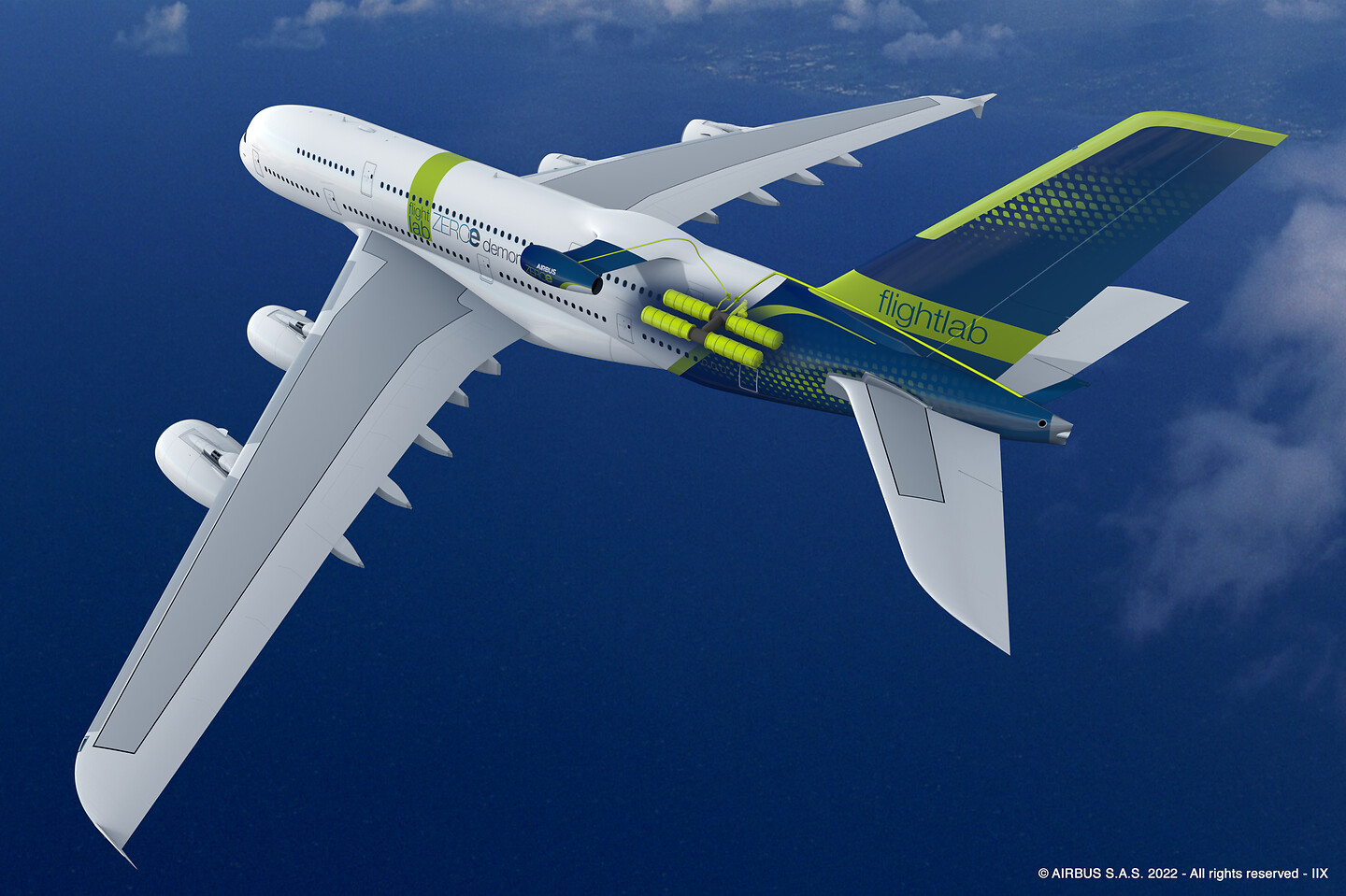
Note.
- The four hydrogen tanks in the fuselage.
- The fifth engine mounted in a pod on the fuselage.
- There’s certainly lots of space inside the fuselage for more hydrogen tanks and test and monitoring equipment.
Take away the fifth engine and the test equipment and this aircraft becomes an A380 with two fuel systems; hydrogen and aviation fuel.
Consider.
- Suppose two engines were hydrogen-capable and two were normal engines running on aviation fuel or Sustainable Aviation Fuel (SAF).
- I don’t think it is impossible to build engines that could run on both hydrogen and Sustainable Aviation Fuel.
- All aircraft use fuel at a higher rate, during take-off and climbing.
- Do long non-stop flights use less fuel, than ones with stops?
- As altitude increases, air resistance decreases.
- Aircraft could fly slower to reduce the fuel needed, as they did in the oil crises in the last century.
- Generally, the most economical way to fly a route, is to climb to maximum altitude, fly level until descending into the destination.
- The aircraft would not carry cargo in the belly-hold.
- There could be a hydrogen-powered APU, as I wrote about in Airbus To Trial In-flight Auxiliary Power Entirely Generated By Hydrogen.
- This document from IATA says that in its liquid form, contains about 2.5 times more energy per kilogram than kerosene.
- The Boeing 747 first flew in 1969 and the Airbus A 380 in 2005, so these aircraft are well known.
I just wonder, if it is possible to work out a flight profile, that would enable these aircraft to fly very long non-stop routes?
- All four engines would be used for take-off.
- An appropriate power setting would be used for the cruise and the descent.
- There would be large numbers of 747s and A 380s in good condition to convert.
- The plane would land with little or no hydrogen left.
The hydrogen used would cut the carbon footprint of the flight.
 The Anonymous Widower