What Happened To The Toyota Hydrogen-Powered HiLux?
I wrote about this vehicle in Toyota Unveils Prototype Hydrogen Fuel Cell Hilux, but I’ve not heard any more.
So I asked Google AI, the question in the title of this post and received this reply.
The Toyota hydrogen-powered Hilux is currently in the demonstration and evaluation phase and has not been officially confirmed for mass production. Ten prototypes were built in the UK and are undergoing testing, with some being used for customer and media demonstrations at events like the Paris Olympics. Toyota is using this project to gather data, refine its hydrogen technology, and prepare for a future European market that could see the vehicle go on sale around 2028.
A simple Google search produced this YouTube video and this article in the Toyota UK magazine.
I don’t want to drive one, as that would be illegal, but I have just added riding in one of these beasts to my bucket list.
Toyota Have Gone To The Advanced Propulsion Centre For Their Latest Project
In Toyota Leads Multi-Million-Pound Micromobility Research Project, I write about another project, where Toyota have approached the Advanced Propulsion Centre for funding and technical help. So the Advanced Propulsion Centre must be doing something right, to attract another project from Toyota.
In CoacH2 – The Next Generation Coach, I write about how the Advanced Propulsion Centre are helping to develop the powertrain for Wrightbus’s upcoming hydrogen-powered coach.
It certainly looks like the Advanced Propulsion Centre are in the middle of the net-zero transport revolution.
The New Clock At London Bridge Station
These pictures show the new clock at London Bridge station.


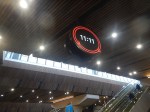


This story on the Network Rail web site, which is entitled A New Timepiece For The Railway, gives more details.
Mega Airport Costing £24billion In Europe To Rival Heathrow And Dubai
The title of this post is the same as that of this article in the Daily Express.
A new mega airport is being built in Europe, and it is set to rival the likes of Dubai and London Heathrow in terms of size and capacity for passengers and planes alike
These three paragraphs add more details.
A plush new airport could be touching down in Europe, set to rival London’s Heathrow and even the esteemed Dubai International, as it aims to link the entire continent in unprecedented ways.
The Centralny Port Komunikacyjny, a proposed $32.5 billion project, is a fresh aviation gateway in Warsaw that carries the burden of Poland’s ambitious mega airport aspirations. However, the concept is swiftly progressing, with the official approval and handover of the passenger terminal design marking a significant leap forward.
This suggests the colossal airport is officially moving into its next phase of development. The question remains, will this new progression challenge the supremacy of the Middle East, home to both the world’s largest airport, King Fahd International Airport in Saudi Arabia, and the busiest, Dubai International Airport?
Note.
- In English, Centralny Port Komunikacyjny means Central Communications Port.
- CPK’s forecasted passenger capacity makes it a formidable contender as the new hub for Europe.
- Dubai is on course to handle 100 million passengers by the end of next year, thanks to its strategic geographical position with other continents, while the Polish project will eventually accommodate up to 44 million.
- n 2024, Heathrow Airport welcomed a record 83.9 million passengers, a 6% increase from the previous year.
Even the busiest airports in Europe handle far fewer passengers than Dubai.
Central Communications Port has a Wikipedia entry, which has this first paragraph.
The Central Transport Hub is a planned major infrastructure project in Poland aimed at the construction of a new international airport and the development of a nationwide integrated transport network. The airport is planned to be located approximately 40 kilometres (25 mi) southwest of Warsaw, connected to a new high-speed rail network and controlled-access highway system linking it with much of the rest of the country.
Note.
- The airport will be designed by Foster + Partners in collaboration with Buro Happold.
- Initially the airport is planned to have two runways, but will eventually be expanded to four.
- The combined airport and railway station is planned to serve 40 million passengers per year, double the size of Berlin Brandenburg Airport.
- The long-term goal is about 100 million passengers per year.
These are my thoughts.
The Airport’s Location
The Wikipedia entry for the airport has a section called Location, which has this first paragraph.
The airport’s planned site is about 40 km west of Warsaw, next to the village Stanisławów which is part of Gmina Baranów in Grodzisk Mazowiecki County. The Baranow commune occupies a significant part of the Grodzisk County and, despite its rural character, has an extensive road infrastructure. The A2 autostrada and railway lines run in the immediate vicinity of the potential construction site, and Wrocław (Expressway S8) and Poznań (National road 92) is nearby.
It sounds to me, that a British equivalent airport, would be a four-runway airport at Birmingham Airport with connections to the M1, M6, HS2 and the West Coast Main Line.
Rail Connections
The Wikipedia entry says this about rail connections.
Planned train connections from the CPK will take 15 minutes to Warsaw Central railway station, 25 minutes to Łódź Fabryczna railway station, and 2 hours to most other major Polish cities, such as Kraków, Wrocław, Poznań and Gdańsk. The construction of a high-speed train to Frankfurt (Oder) is also planned, which is to shorten the travel time on the Berlin-CPK route to under 3.5 hours
I suspect that Rail Baltica’s trains between Berlin and Helsinki via Warsaw, Kaunus, Riga, Bialystok and Tallinn will also stop at the airport.
The Airport Will Become A Gateway To North-East Europe
I wouldn’t be surprised to see Central Communications Port become a low-cost gateway to the surrounding countries., like Belarus, Estonia, Finland, Latvia, Lithuania and hopefully Ukraine.
Polish Hospitality
Consider.
- Most Poles speak English better, than what I does!
- There are several large Polish cities that are worth a visit.
- The food is excellent, as the local basic ingredients are of high quality.
- I have spent about a month in Poland and I’ve stayed in all levels of accommodation from the lowest to the highest and have never felt need to complain.
- They handle my gluten-free diet with no problem.
My experience of Belarus was also similar.
Unlocking Efficiency With Cryogenic Cooling Of GaN Traction Inverters
The title of this post, is the same as this insight on the Ricardo web site.
This is the introduction.
As the mobility sector accelerates toward zero-carbon propulsion, hydrogen fuel cell systems (HFCS) are emerging as a cornerstone technology for aviation, marine, and long-haul road transport. Among the most promising innovations in this space is the use of liquid hydrogen (LH₂) not only as a fuel source but also as a cryogenic coolant for electric powertrains. This dual-purpose approach offers transformative potential in system efficiency, packaging, and weight reduction—especially when paired with Gallium Nitride (GaN) semiconductors.
It is a very simple concept, but it appears to give worthwhile efficiency gains.
This was the article’s conclusion.
Ricardo’s cryogenic GaN inverter concept represents a bold leap toward ultra-efficient, lightweight, and integrated hydrogen propulsion systems. While challenges remain in materials, packaging, and reliability, the experimental results are compelling. With efficiencies nearing 99.8% and mass reductions over 50%, cryogenic cooling could redefine the future of electric mobility.
As the hydrogen economy matures, innovations like this will be pivotal in delivering clean, scalable, and high-performance solutions across all mobility sectors.
I very much suggest, that you take the time to read the whole insight.
Using The Concept In a Liquid Hydrogen Carrier
This Wikipedia entry describes the design and operation of an ocean-going liquid hydrogen carrier.
This is a paragraph.
Similar to an LNG carrier the boil off gas can be used for propulsion of the ship.
Ricardo’s concept would appear to be advantageous in the design of liquid hydrogen carriers and I would expect, it could also be applied to the design of LNG carriers.
I would not be surprised to see liquid hydrogen and LNG carriers were the first application of Ricardo’s concept.
This Wikipedia entry describes the Suiso Frontier, which is the world’s only liquid hydrogen carrier.
I believe that Ricardo’s concept could lead to the construction of a more of these ships. Will they mean that liquid hydrogen carriers will deliver hydrogen from sunny climes to places like Europe, Japan, Korea and Canada.
The concept would also enable efficient small liquid hydrogen carriers, that could deliver hydrogen on routes like the North of Scotland to Germany.
Using The Concept In A Railway Locomotive
I could see freight locomotives being designed as a large liquid hydrogen tank with appropriately-sized fuel cells and added electrical gubbins.
- They would be self-powered and would not require any electrification.
- They would be much quieter than current diesels.
- They could pull the heaviest freight trains, between Europe and Asia.
- They could even pull passenger trains, if an electrical hotel supply were to be arranged.
- They could be designed with very long ranges.
But above all they would be zero-carbon.
Note that I’ve written about long freight routes before.
- China, Russia And The EU’s Intermarium Bloc
- How To Move 100,000 Containers A Year Between Germany And China
- Georgia, Azerbaijan and Iran Discuss New Freight Corridor To link India And Europe
- Finland And Norway To Explore Building Arctic Rail Link
- A New Gateway To China: Europe Prepares For The Launch Of Baku–Tbilisi–Kars Railway
I believe that a long-distance liquid-hydrogen locomotive, that was based on the Ricardo concept, would be ideal for some of these routes.
A Specialised Hydrogen Delivery Train
In April 2022, I wrote The TruckTrain, where this is a simple description of the concept.
The Basic Design Concept
The leaflet on their web site describes the concept.
This visualisation at the bottom of the leaflet shows four TruckTrains forming a train carrying twelve intermodal containers, each of which I suspect are 20 feet long.

I believe that the TruckTrain concept could be converted into a hydrogen delivery train.
- It would be an appropriate length.
- It would be powered by the on-board hydrogen.
- The hydrogen would be stored as liquid hydrogen.
It would be able to go most places on the UK rail network.
Conclusion
Ricardo’s concept could revolutionise the use of hydrogen.
How To Take A Ride On A New Docklands Light Railway Train
This article on the BBC is entitled After Delays, New Trains Finally Arrive On The DLR.
This is the sub-heading.
The first of 54 new trains for the Docklands Light Railway (DLR) is now in service, featuring “the latest technology”, according to Transport for London (TfL)
These two paragraphs add more details.
The new carriages are air-conditioned, have mobile device charging points and dedicated spaces for wheelchair users.
They will replace the oldest trains in the DLR fleet, some of which have been in service for more than three decades, with “modern, high-capacity trains designed to meet the needs of a growing city”, said TfL.
I travelled to West Ham station this morning and took these pictures on a journey to Woolwich Arsenal.
























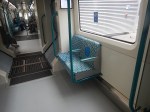

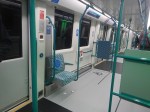





Note.
- The Docklands Light Railway and the Jubilee Line are on the same level and connected by the bridge in West Ham station.
- The old DLR trains have red bodywork and the new trains have light blue bodywork.
- The first train through was a test train.
- The last row of pictures show the comparative length of the two trains at Woolwich Arsenal station.
These are some more detailed thoughts.
The Length Of The New Trains
The original cars are 28 metres long.
- Running as a 2-car train, the trains are 56 metres long.
- Running as a 3-car train, the trains are 84 metres long.
- The new 5-car trains are 86.7 metres long.
I asked Google AI how many seats were in a DLR train and received this answer.
A DLR (Docklands Light Railway) train’s seat count varies by the specific rolling stock, but newer trains have a higher capacity; for example, the new B23 rolling stock is a 5-coach unit replacing older, coupled 3-car trains and offers a total capacity of 790 passengers, with 156 seats. Older trains typically consist of two cars and have 70 seats per car for a total of 140 seats.
Newer B23 Rolling Stock:
Each 5-coach train has 156 seats.
It can carry a total of 790 passengers.
Older Trains:
These trains generally consist of two cars coupled together.
Each car has 70 seats, making for a total of 140 seats in a typical two-car train.
Older, single-unit trains may have had fewer seats, as a current 3-car train had about 680 passengers in total capacity.
West Ham Was A Good Place To Start A First Ride
Consider.
- At the present time, there aren’t many trains running on the DLR.
- There may only be a couple of trains running between Stratford International and Woolwich Arsenal.
- West Ham is an island platform, so the train goes by on both sides, which also makes it easy to get on a single train.
- West Ham is a well-connected station.
I did have to wait about thirty minutes for the train to arrive.
Rolls-Royce To lead EU’s New Clean Aviation project UNIFIED To Transform And Decarbonise Aviation
The title of this post the same as that of this press release from Rolls-Royce.
These two opening paragraphs add a few details.
Rolls-Royce has been selected by the European Union’s Clean Aviation programme to lead one of 12 groundbreaking new projects aiming to decarbonise aviation. These initiatives, which include new aircraft concepts and innovative propulsion technologies, will receive funding of about €945 million.
The Clean Aviation Joint Undertaking (CAJU) is the European Union’s leading research and innovation programme for transforming aviation towards a sustainable and climate neutral future.
I asked Google AI about the European Union’s Clean Aviation programme and received this reply.
The European Union’s Clean Aviation programme, part of the Horizon Europe research initiative, is a public-private partnership aimed at developing disruptive, climate-neutral aviation technologies, including hydrogen-powered, hybrid-electric, and ultra-efficient aircraft, to achieve net-zero emissions by 2050. Launched in 2022, it has a budget of €4.1 billion (€1.7 billion from the EU, €2.4 billion from private partners) and focuses on technologies that will be integrated into a new generation of short- to medium-range aircraft with a target entry into service by 2035. Key goals include a 30% reduction in CO2 emissions and energy efficiency compared to 2020 standards for new aircraft by 2030, with a long-term objective of climate-neutral aviation by 2050.
Note.
- Only someone like Trump would think that the key goals in the last sentence were not worthwhile.
- €4.1 billion in the right place could be a very good start.
- There is a Clean Aviation web site.
The press release says this about the UNIFIED project.
UNIFIED – Ultra Novel and Innovative Fully Integrated Engine Demonstrations
The UNIFIED consortium is led by Rolls-Royce and contains key industrial, academic and research partners across France, Germany, the Netherlands, Norway, Spain and the United Kingdom. Subject to successful completion of grant preparation, the project will enable ground testing of an UltraFan® technology demonstrator at a short to medium range thrust class for future narrowbody aircraft and also enable the preparation of key activities towards future flight test of the UltraFan architecture.
I am not surprised Ultrafan is mentioned.
The Wikipedia entry for the Rolls-Royce Trent has a section about the UltraFan, which starts with these two paragraphs.
The UltraFan is a geared turbofan with a variable pitch fan system that promises at least 25% efficiency improvement. The UltraFan aims for a 15:1 bypass ratio and 70:1 overall pressure ratio.
The Ultrafan keeps the Advance core, but also contains a geared turbofan architecture with variable-pitch fan blades. The fan varies pitch to optimise for each flight phase, eliminating the need for a thrust reverser. Rolls-Royce planned to use carbon composite fan blades instead of its usual hollow titanium blades. The combination was expected to reduce weight by 340 kg (750 lb) per engine.
Note.
- 25 % is a very good efficiency improvement.
- No thrust reverser.
- A saving of 340 kg. in weight per engine.
It should also be noted that October 2028, will see the hundredth anniversary of Henry Royce sketching the R-type engine in the sand on the beach in Sussex.
The R-type was the engine that won the Schneider Trophy outright and enabled Rolls-Royce’s engineers to design the unrivalled Merlin engine that powered Hurricanes, Spitfires, Mosquitos, Mustangs and Lancasters in World War Two.
Should New Stations Be Shown On Google Maps With Opening Dates?
I recently posted a comment on The Times recently, where I suggested a guy was opening one of his coffee shops in a town, that was getting a new railway station.
Another, who commented, suggested that I look at Google Maps to see their relative positions.
The coffee shop was shown, but the station wasn’t.
Surely, once the position of the station is known, it should be marked on Google Maps with an opening date, as this could help people take important decisions about their life.
Blyth Bebside station on the new Northumberland Line between Newcastle and Ashington is already shown with the familiar logo, despite not opening until the 19th of October.
The other two unopened stations on the line, which are Northumberland Park and Bedlington, are going to open next year, are also shown with familiar logos, but no opening date.
Someone in Network Rail, needs to be given the responsibility to make sure that details like this are correct.
In the case of Blyth Bebside station, I can see two different captions indicating the station on Google Maps.
- Before October 19th 2025 – Blyth Bebside – Opens 19th Octopber 2025.
- After October 19th 2025 – Blyth Bebside – Opened 19th Octopber 2025.
Detailed labeling may even help deliveries during construction.
Is Last Energy The Artemis Of Energy?
In Raft Of US-UK Nuclear Deals Ahead Of Trump Visit, I quoted from this article on World Nuclear News.
The article also contains, these two paragraphs, with talk about an MoU between Last Energy and DP World.
An MoU has also been signed between US-based micro-nuclear technology developer Last Energy and DP World, a global leader in logistics and trade, to establish the world’s first port-centric micro nuclear power plant at London Gateway. A proposed PWR-20 microreactor – to begin operations in 2030 – would supply London Gateway with 20 MWe of electricity to power the logistics hub, with additional capacity exported to the grid.
“The initiative represents a GBP80 million (USD109 million), subsidy-free investment for the development of Last Energy’s first unit, unlocking clean power supply for DP World’s ongoing GBP1 billion expansion of London Gateway,” Last Energy said. “The partnership is closely aligned with both UK and US ambitions to increase nuclear capacity and strengthen long-term energy security.”
Note.
- Last Energy are proposing a micro-reactor of just 20 MW.
- DP World own and/or operate sixty ports in over forty countries, so should know their energy requirements well.
- It appears that DP World are investing £80 million in Last Energy’s first unit.
- Thurrock Storage is a 300 MW/600 MWh battery close to London Gateway and the Port of Tilbury.
This Google Map shows London Gateway and the Port of Tilbury.
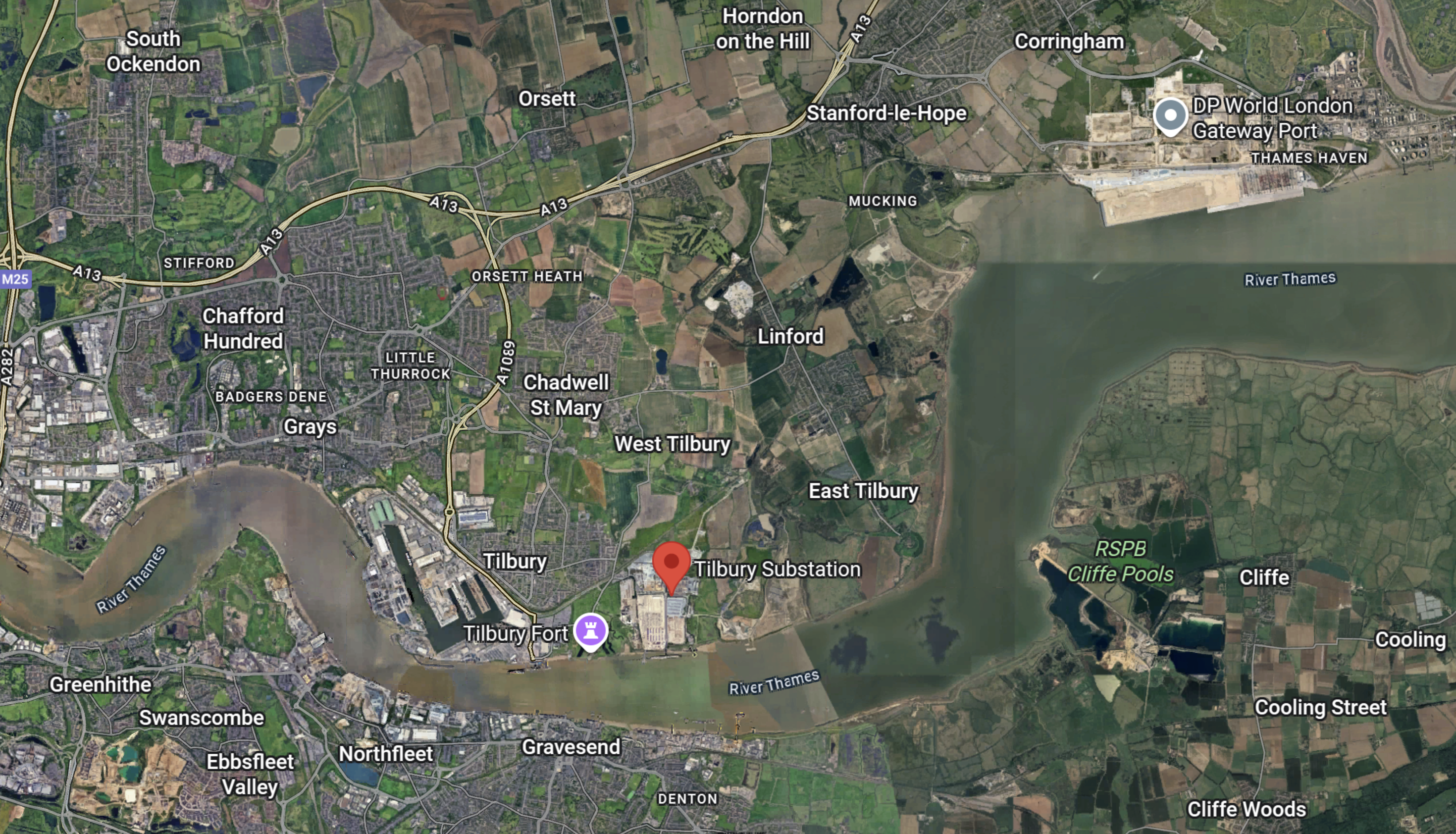
Note.
- DP World London Gateway is in the North-East corner of the map.
- The A13 road runs across the North-West corner of the map and links the area to London and the M25.
- Thurrock Storage is next to the Tilbury substation, which is marked by the red arrow.
- The Port of Tilbury is to the West of the substation.
I wonder if DP World London Gateway have had power supply problems.
The Design Of The First Artemis Project Management Software System
Before Artemis, project management was usually done on a large mainframe computer like an IBM-360-50, that I’d used extensively for solving simultaneous differential equations in a previous job at ICI.
Mainframe computers worked on complex problems, but to put it mildly, they were slow and needed a team to operate them and a big air-conditioned room to keep them happy.
When the four of us decided to create Artemis, our vision was something simpler.
- A processor – something like a PDP-11, which I judged would be big-enough for the computing.
- A visual display unit.
- A printer.
- A standard-size desk to hold the hardware.
- Ability to run from a 13-amp socket.
When it came to writing the software, I took few risks.
- Much of the data decoding software, I’d developed when I left ICI to write a program to solve up to a thousand simultaneous differential equations.
- The scheduling software was generic and I’d first used it for different purposes in two programs at ICI.
- The aggregation software had been devised, whilst I was a consultant at Lloyds Bank over several bottles of wine with their Chief Management Accountant, who was a wizard with numbers. I suspect, but can’t prove it, that if the idiots that programmed the Horizon system for the Post Office had used that algorithm, the problems there would have been much smaller.
- I also spent a lot of time reading old papers from the 1950s in IBM’s library on the South Bank, looking for better algorithms.
- I also made sure, I chose the best hardware and I believe HP did us proud.
- I used HP’s operating system and proprietary database to cut down, what could go wrong.
- Almost all of the first system was written by one person – me!
But we also put the right features into how we supported, delivered and trained users of the system.
I certainly, think we made few mistakes in the design of that first system.
Have Last Energy Used A Similar Cut Back Approach?
Reading their web site, I think they have.
They have obviously chosen, the 20 MW unit size with care.
But from worldwide experience with wind turbines, linking smaller power sources together, is not as difficult as it once was.
These are some of the statements on their web site’s introductory screens.
- Fully Modular, Factory Made
- A Scalable Solution
- <24 Month Delivery
- 100+ Supply Chain Partners
- 300+ Pressurised Water Reactors Operating Globally
- 0.3 acre – Plant Footprint Fits Within A Football Field
But a chain is only as strong as its weakest link.
It should be noted, that I have been over several nuclear power stations.
Three were a tour to show me how Artemis was being used to track and sign off, the problems identified after the Three Mile Island incident.
The other was a trip over Sizewell A, a couple of years before it was decommissioned.
Comparing these experiences with some of the chemical plants, that I’ve worked on, I would prefer to be close to a nuclear power plant.
Consultation Opens For Ferrybridge Next Generation Power Station
The title of this post, is the same as that of this press release from SSE.
These three bullet points act as sub-headings.
- Ferrybridge Next Generation sets out plans for continuing the legacy of power generation at the site, with the potential to bring significant investment to the region.
- Statutory consultation phase launched, inviting communities and stakeholders to have their say on project proposals.
- Hydrogen-enabled project could support the security of supply and offer a clear route to decarbonisation.
These three paragraphs add more detail.
Members of the public are being invited to have their say on plans for a proposed new power station in development, Ferrybridge Next Generation Power Station.
The station is being designed so that it can run on hydrogen, as a lower-carbon alternative to natural gas. It would also be able to operate using natural gas or a blend of hydrogen and natural gas until a technically and commercially viable hydrogen supply becomes available to the site.
With a proposed capacity of up to 1.2GW, Ferrybridge Next Generation Power Station could play an important role in supporting the UK’s energy system in the short term – providing reliable flexible back-up power during periods of peak demand and balancing the system when the wind doesn’t blow or the sun doesn’t shine, while delivering a route to decarbonised power generation in the longer term.
Note.
- A 150 MW/300 MWh Battery Electric Storage System is being developed on the site, which I wrote about in SSE Renewables Announces Construction Of Second Utility-Scale Battery Storage System.
- The last Ferrybridge power station; C had a capacity of just over 2 GW.
- This will be SSE Renewable’s second hydrogen-fired power station after Keadby, which I wrote about in Consultation On Plans For Keadby Hydrogen Power Station To Begin.
- As the press releases says, Ferrybridge Hydrogen-Fired Power Station will be West Yorkshire’s backup for when the wind doesn’t blow and the sun doesn’t shine.
How similar will the two hydrogen-fired power stations be?
Will SSE Be Building Any More In The First Wave Of Hydrogen-Fired Power Station?
This is a paragraph from SSE’s press release.
The station is being designed so that it can run on hydrogen, as a lower-carbon alternative to natural gas. It would also be able to operate using natural gas or a blend of hydrogen and natural gas until a technically and commercially viable hydrogen supply becomes available to the site.
It would appear that the availability of the hydrogen fuel may be a problem.
But places like Aberdeen, Bradford, Brighton, Humberside and Merseyside, do seem to be planning for hydrogen, so all is not lost.
Centrica And X-energy Agree To Deploy UK’s First Advanced Modular Reactors
The title of this post, is the same as that of this press release from Centrica.
This is the sub-heading.
Centrica and X-Energy, LLC, a wholly-owned subsidiary of X-Energy Reactor Company, LLC, today announced their entry into a Joint Development Agreement (JDA) to deploy X-energy’s Xe-100 Advanced Modular Reactors (“AMR”) in the United Kingdom.
These three paragraphs add more details.
The companies have identified EDF and Centrica’s Hartlepool site as the preferred first site for a planned U.K. fleet of up to 6 gigawatts.
The agreement represents the first stage in a new trans-Atlantic alliance which could ultimately mobilise at least £40 billion in economic value to bring clean, safe and affordable power to thousands of homes and industries across the country and substantive work for the domestic and global supply chain.
A 12-unit Xe-100 deployment at Hartlepool could add up to 960 megawatts (“MW”) of new capacity, enough clean power for 1.5 million homes and over £12 billion in lifetime economic value. It would be developed at a site adjacent to Hartlepool’s existing nuclear power station which is currently scheduled to cease generating electricity in 2028. Following its decommissioning, new reactors would accelerate opportunities for the site and its skilled workforce. The site is already designated for new nuclear under the Government’s National Policy Statement and a new plant would also play a critical role in generating high-temperature heat that could support Teesside’s heavy industries.
This is no toe-in-the-water project, but a bold deployment of a fleet of small modular reactors to provide the power for the North-East of England for the foreseeable future.
These are my thoughts.
The Reactor Design
The Wikipedia entry for X-energy has a section called Reactor Design, where this is said.
The Xe-100 is a proposed pebble bed high-temperature gas-cooled nuclear reactor design that is planned to be smaller, simpler and safer when compared to conventional nuclear designs. Pebble bed high temperature gas-cooled reactors were first proposed in 1944. Each reactor is planned to generate 200 MWt and approximately 76 MWe. The fuel for the Xe-100 is a spherical fuel element, or pebble, that utilizes the tristructural isotropic (TRISO) particle nuclear fuel design, with high-assay LEU (HALEU) uranium fuel enriched to 20%, to allow for longer periods between refueling. X-energy claims that TRISO fuel will make nuclear meltdowns virtually impossible.
Note.
- It is not a conventional design.
- Each reactor is only about 76 MW.
- This fits with “12-unit Xe-100 deployment at Hartlepool could add up to 960 megawatts (“MW”) of new capacity” in the Centrica press release.
- The 960 MW proposed for Hartlepool is roughly twice the size of the Rolls-Rpoyce SMR, which is 470 MW .
- Safety seems to be at the forefront of the design.
- I would assume, that the modular nature of the design, makes expansion easier.
I have no reason to believe that it is not a well-designed reactor.
Will Hartlepool Be The First Site?
No!
This page on the X-energy web site, describes their site in Texas, which appears will be a 320 MW power station providing power for Dow’s large site.
There appear to be similarities between the Texas and Hartlepool sites.
- Both are supporting industry clustered close to the power station.
- Both power stations appear to be supplying heat as well as electricity, which is common practice on large industrial sites.
- Both use a fleet of small modular reactors.
But Hartlepool will use twelve reactors, as opposed to the four in Texas.
How Will The New Power Station Compare With The Current Hartlepool Nuclear Power Station?
Consider.
- The current Hartlepool nuclear power station has two units with a total capacity of 1,185 MW.
- The proposed Hartlepool nuclear power station will have twelve units with a total capacity of 960 MW.
- My instinct as a Control Engineer gives me the feeling, that more units means higher reliability.
- I suspect that offshore wind will make up the difference between the power output of the current and proposed power stations.
As the current Hartlepool nuclear power station is effectively being replaced with a slightly smaller station new station, if they get the project management right, it could be a painless exercise.
Will This Be The First Of Several Projects?
The press release has this paragraph.
Centrica will provide initial project capital for development with the goal of initiating full-scale activities in 2026. Subject to regulatory approval, the first electricity generation would be expected in the mid-2030s. Centrica and X-energy are already in discussions with additional potential equity partners, as well as leading global engineering and construction companies, with the goal of establishing a UK-based development company to develop this first and subsequent projects.
This approach is very similar to the approach being taken by Rolls-Royce for their small modular reactors.
Will Centrica Use An X-energy Fleet Of Advanced Modular Reactors At The Grain LNG Terminal?
This press release from Centrica is entitled Investment In Grain LNG Terminal.
This is one of the key highlights of the press release.
Opportunities for efficiencies to create additional near-term value, and future development options including a combined heat and power plant, bunkering, hydrogen and ammonia.
Note.
- Bunkering would be provided for ships powered by LNG, hydrogen or ammonia.
- Heat would be needed from the combined heat and power plant to gasify the LNG.
- Power would be needed from the combined heat and power plant to generate the hydrogen and ammonia and compress and/or liquify gases.
Currently, the heat and power is provided by the 1,275 MW Grain CHP gas-fired power station, but a new nuclear power station would help to decarbonise the terminal.
Replacement Of Heysham 1 Nuclear Power Station
Heysham 1 nuclear power station is part-owned by Centrica and EdF, as is Hartlepool nuclear power station.
Heysham 1 nuclear power station is a 3,000 MW nuclear power station, which is due to be decommissioned in 2028.
I don’t see why this power station can’t be replaced in the same manner as Hartlepool nuclear power station.
Replacement Of Heysham 2 Nuclear Power Station
Heysham 2 nuclear power station is part-owned by Centrica and EdF, as is Hartlepool nuclear power station.
Heysham 2 nuclear power station is a 3,100 MW nuclear power station, which is due to be decommissioned in 2030.
I don’t see why this power station can’t be replaced in the same manner as Hartlepool nuclear power station.
Replacement Of Torness Nuclear Power Station
Torness nuclear power station is part-owned by Centrica and EdF, as is Hartlepool nuclear power station.
Torness nuclear power station is a 1,290 MW nuclear power station, which is due to be decommissioned in 2030.
I don’t see why this power station can’t be replaced in the same manner as Hartlepool nuclear power station.
But the Scottish Nationalist Party may have other ideas?
What Would Be The Size Of Centrica’s And X-energy’s Fleet Of Advanced Modular Reactors?
Suppose.
- Hartlepool, Grain CHP and Torness power stations were to be replaced by identical 960 MW ADRs.
- Heysham 1 and Heysham 2 power stations were to be replaced by identical 1,500 MW ADRs.
This would give a total fleet size of 5,880 MW.
A paragraph in Centrica’s press release says this.
The companies have identified EDF and Centrica’s Hartlepool site as the preferred first site for a planned U.K. fleet of up to 6 gigawatts.
This fleet is only 120 MW short.
 The Anonymous Widower