Hitachi Class 800 Train Or Pendelino?
I have had several day trips on hot days on Hitachi Class 800 trains or similar since the pandemic started to places like Bristol, Cardiff, Doncaster, Grantham, Hull and Westbury.
I’ve done a couple of trips in Pendelinos or Class 390 trains to Birmingham and Liverpool.
In addition, I’ve taken a couple of trips on other trains to Corby, Ipswich, Sheffield and Southampton.
It must have been sometime in 2018, when I took one of the first Pendelinos to Blackpool after that station was first electrified.
It was a journey on which I first noticed being unwell on a Pendelino. I travelled in First and remember complaining to the steward and said that some taff didn’t like the trains after their recent air-conditioning upgrade.
Perhaps, Virgin Trains chose a system that would be cheaper to run and it is not on a par with the quality systems used by Bombardier and Hitachi?
I have been testing the atmosphere in trains like a Class 345, 378 or 800 and the temperature is usually 25-26 °C and a humidity around 40-60 %. I haven’t tested a Pendolino yet!
I must say, I’ve never ended up in hospital after a trip out of London, except after a recent trip on a Pendelino to Birmingham, that I wrote about in A Mysterious Attack On My Body.
In that post, I also said this about the Pendelinos.
I had travelled between Euston and Wolverhampton on my least favourite trains – Alstom’s Class 390 trains.
-
- The seats don’t align well with the windows.
- The trains are cramped because of all the tilting mechanism.
These trains must a nightmare for anybody taller than my 1.70 metres or heavier than my sixty-two kilos.
But the biggest problem of these Pendolino trains is that Alstom updated the air-conditioning a few years ago for Virgin a few years ago and I find the air inside too dry.
So in future, I won’t be travelling on a Pendelino, unless I travel in First!
I also can’t wait until Avanti West Coast get new Hitachi Class 807 trains on the Euston and Liverpool route!
Is Turnpike Lane Tube Station Going Step-Free?
I took these pictures as I passed through Turnpike Lane station today.
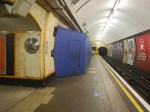

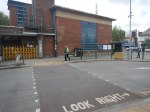
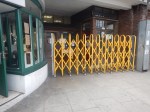
Note.
- The blue hoardings are at the London end of the Northbound platform.
- There are no other blue hoardings at platform level.
- The yellow gates are on the bus station side of the station.
- A lift on the surface behind the yellow gates would be convenient for the buses and just round the corner from a light-controlled crossing of the busy Green Lanes.
- I couldn’t find any other evidence of work.
This Google Map shows the station.

Note.
- The station block in the North-West corner of the map.
- Green Lanes runs North-South to the West of the station.
- There is a bus on Green Lanes by the station.
- The spine of the bus station to the East of the station.
- The pedestrian crossing between the Underground station and the bus station at the Northern end of the spine.
- The wide pavements to give access to the light-controlled crossing over Green Lanes and the bus stops on the road.
This second map from carto metro, shows the track layout through the station.

Note that the escalators to the platforms are to the North of the platforms and connect to a lobby between middle of the two platforms,
Could this mean that using traditional tunneling on the London-end of Platform 2 allows access to what appears to be a generous space between the two platforms and their associated tracks?
It looks to my untrained eye, that a lift shaft could be dug in this area.
But there is no reference to step-free access at Turnpike Lane station anywhere on the internet.
Conclusion
This could be a simple scheme to add step-free access to another of the stations on the Northern section of the Piccadilly Line.
- At present, Cockfosters, Oakwood, Finsbury Park and Caledonian Road stations are already step-free.
- Southgate station could be difficult, but it does have bus connections to some of the stations with step-free access.
- Arnos Grove station is a surface station, where there will be a major housing development on the car park. So I would expect, that this could be one of the next to be planned for step-free access.
- The track and escalator layout might make Wood Green station difficult to make step-free. But it does have lots of buses to Turnpike Lane station.
- I’ve never used Bounds Green station, but it does appear that a Turnpike Lane solution might be possible.
- Manor House station has so many exits, that full step-free access could be expensive. But if it were to be decided that it should be step-free, I feel there could be an innovative solution.
It should be noted that all these stations, with the exception of Manor House are Grade II or Grade II* Listed.
As all road crossings at Manor House are controlled by lights, perhaps the solution at the station, is to replace one or more of the many exits with a lift.
Thoughts On Train Times Between London Paddington And Cardiff Central
I went to Cardiff from Paddington on Tuesday.
These were the journey details.
- Distance – Paddington and Cardiff – 145.1 miles
- Time – Paddington and Cardiff – 110 minutes – 79.1 mph
- Time – Cardiff and Paddington- 114 minutes – 76.4 mph
There were four stops. Each seemed to take between two and three minutes.
I do feel though, that the trains are still running to a timetable, that could be run by an InterCity 125.
I watched the Speedview app on my phone for a lot of both journeys.
- There was quite an amount of 125 mph running on the route.
- Some stretches of the route seemed to be run at a line speed of around 90 mph.
- The Severn Tunnel appears to have a 90 mph speed.
- Coming back to London the train ran at 125 mph until the Wharncliffe Viaduct.
These are my thoughts.
Under Two Hour Service
The current service is under two hours, which is probably a good start.
Improving The Current Service
It does strike me that the current timetable doesn’t take full advantage of the performance of the new Hitachi Class 80x trains.
- Could a minute be saved at each of the four stops?
- Could more 125 mph running be introduced?
- Could the trains go faster through the Severn Tunnel?
- If two trains per hour (tph) were to be restored, would that allow a more efficient stopping pattern?
- The route has at least four tracks between Paddington and Didcot Parkway and the Severn Tunnel and Cardiff.
I would reckon that times of between one hour and forty minutes and one hour and forty-five minutes are possible.
These times correspond to average speeds of between 87 and 83 mph.
Application of In-Cab Digital Signalling
Currently, a typical train leaving Paddington completes the 45.7 miles between Hanwell and Didcot Parkway with a stop at Reading in 28 minutes, which is an average speed of 97.9 mph.
This busy section of the route is surely an obvious one for In-cab digital signalling., which would allow speeds of up to 140 mph.
- Services join and leave the route on branches to Bedwyn, Heathrow, Oxford and Taunton.
- The Heathrow services are run by 110 mph Class 387 trains.
- There are slow lines for local services and freight trains.
If an average speed of 125 mph could be attained between Hanwell and Didcot Parkway, this would save six minutes on the time.
Would any extra savings be possible on other sections of the route, by using in-cab digital signalling?
I suspect on the busy section between Bristol Parkway and Cardiff Central stations several minutes could be saved.
Would A Ninety Minute Time Between Paddington And Cardiff Be Possible?
To handle the 145.1 miles between Paddington and Cardiff Central would require an average speed including four stops of 96.7 mph.
This average speed is in line with the current time between Hanwell and Didcot Parkway with a stop at Reading, so I suspect that with improvements to the timetable, that a ninety minute service between Paddington and Cardiff Central is possible.
It may or may not need in-cab digital signalling.
My Control Engineer’s nose says that this signalling upgrade will be needed.
Would A Sixty Minute Time Between Paddington And Cardiff Be Possible?
A journey time of an hour between Paddington and Cardiff Central would surely be the dream of all politicians the Great Western Railway and many of those involved with trains.
To handle the 145.1 miles between Paddington and Cardiff Central would require an average speed including four stops of 145.1 mph.
It would probably be difficult to maintain a speed a few mph above the trains current maximum speed for an hour.
- How many minutes would be saved with perhaps a single intermediate stop at Bristol Parkway station?
- Perhaps the Cardiff service could be two tph in ninety minutes and one tph in sixty minutes.
- Full in-cab digital signalling would certainly be needed.
- Faster trains with a maximum speed of up to 155-160 mph would certainly be needed.
- There may be a need for some extra tracks in some places on the route.
A journey time of an hour will be a few years coming, but I feel it is an achievable objective.
The Extended Route To Swansea
Cardiff Central and Swansea is a distance of 45.7 miles
A typical service takes 55 minutes with three stops, at an average speed of 49.8 mph.
This would be an ideal route for a Hitachi Intercity Tri-Mode Battery Train, which is described in this Hitachi infographic.

It would probably be needed to be charged at Swansea station, to both enable return to Cardiff Central or extend the service to the West of Swansea.
Conclusion
Big improvements in journey times between Paddington and Cardiff Central are possible.
One Freight Train Overtaking Another In Cardiff Central Station
I took these pictures as one freight train overtook another, as they passed to the West, through Cardiff Central station.


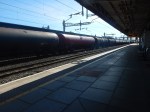

You don’t see it often in the UK.
Especially in a station.
The New Platform 8 At Cardiff Central Station
It’s been a long time, since I’ve been to Cardiff station and it now has a new platform on the South sisw, which is numbers 8.
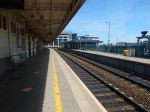

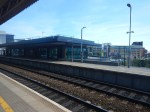
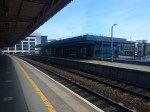
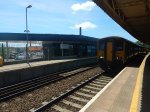

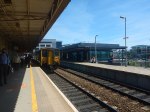
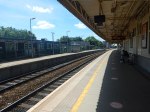
It now looks like Cardiff Central has three platforms 6, 7 and 8 for most of the local services.
This Google Map shows the new South entrance.
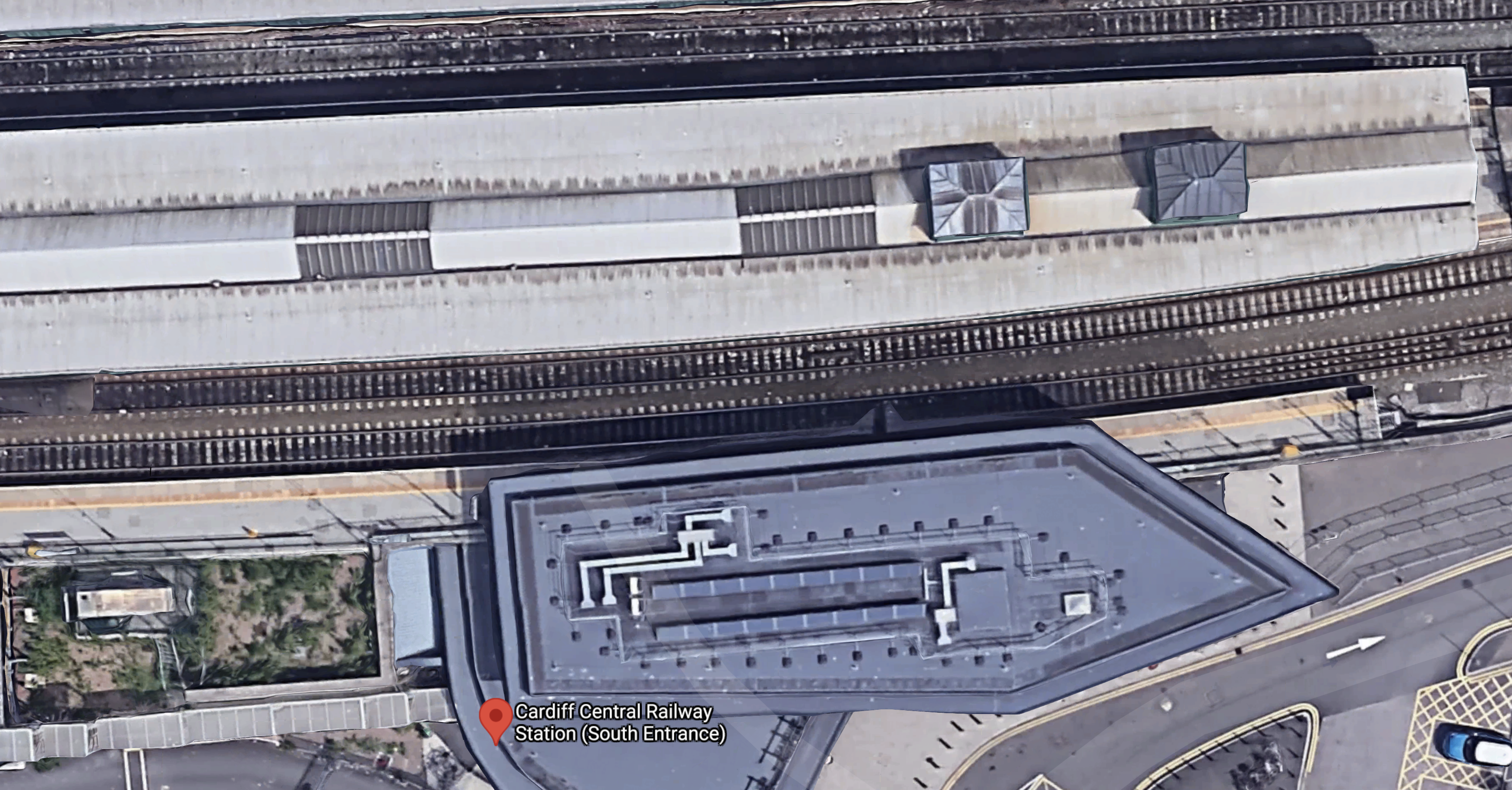
Note.
- The actual entrance is the five-sided building at the bottom of the map.
- Platform 8 is in front of this building.
- Platforms 6 and 7 are either side of the island platform..
- The three platforms are connected by a subway.
It doesn’t appear that the platforms are electrified at this time.
My First Ride In A Class 769 Train
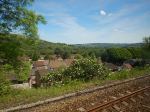
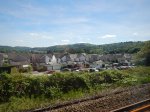
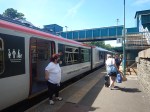
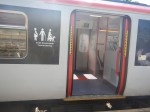
I went to Cardiff today and had my first ride in a Class 769 train. These pictures summarise my ride on the train between Cardiff Central and Bargoed stations.



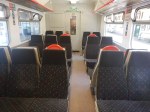
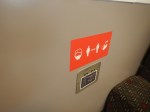
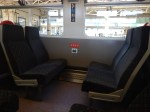
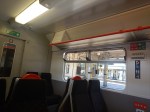
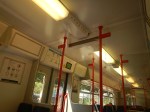


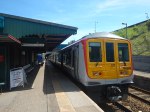
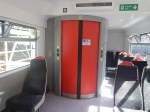
So what was it like?
Noise And Vibration
Going up to Bargoed, I deliberately sat as near over the top of the engine as I could.
There was a bit of a whine, but not as much as in a new Class 195 train.
For those, who commuted on Class 319 trains for years on Thameslink, they probably wouldn’t notice much difference.
Performance
For a 100 mph electric train built for running between the flat lands of Bedfordshire and the South Coast over the hillocks of the Downs, the train climbed to Bengoed, which has an altitude of around a thousand feet with a purpose.
But then I have a Porterbrook brochure for these trains and the power source was sized, such that the train would be able to climb the stiffest routes in the UK.
The Interior
It looked to me like the Thameslink interior with new sea covers and plugs to charge a mobile phone.
They could certainly be upgraded a bit further to the standard of the Class 319 trains on the Abbey Line, that I wrote about in A Very Smart Class 319 Train.
A Job To Do
Trains for Wales has acquired these trains for extra capacity, whilst they refurbish their Class 150, 153 and 160 trains.
It looks to me, that they will do this job more than adequately.
Future Uses
I suspect Porterbrook hope that these trains will find uses around the UK, as they have spent a lot of time, effort and money to bring these trains into service.
But there are around eighty of the Class 319 trains in service or in store, from which the Class 769 trains are converted.
So they could find uses in several niche applications.
Short Term Fleets
This is effectively, the Trains for Wales application, where extra trains are provided, so that a fleet refurbishment can be performed.
- They would surely, have been a better replacement fleet for Greater Anglia, than the three Mark 2 coaches and a pair of diesel locomotives, that they used after a series of level crossing accidents.
- They could also be used to increase capacity for some major events like the Open Golf or a pop festival.
- Uniquely, they can stand in for both a 100 mph electric train or a 90 mph diesel train.
- They can even be fitted with third-rail shoes.
- They are the right size at four cars.
- They fit most UK platforms.
- They can be run in formations of up to twelve cars.
I wouldn’t be surprised to see Porterbrook or someone on their behalf, keep a fleet of trains on standby to handle short term needs.
Route Development And Testing
There has been a lot of pressure to open up new routes in recent years and these trains would be ideal to try out routes and test new electrification.
Tri-Mode Services
Great Western Railway have a particular problem with their service between Reading and Gatwick, in that it has some third-rail electrification. As they might like to extend this service to Oxford, an ideal train would be dual-voltage and self-powered.
This extract is from the Great Western Railway section in the Wikipedia entry for the Class 769 train.
Although initially planned for use in London and the Thames Valley whilst twelve Class 387 units are modified for Heathrow Express services, the future plan for these units will be operating on services between Oxford, Reading and Gatwick Airport, which would mean operating on unelectrified, 25 kV AC OHLE and 750 V DC third-rail routes. To enable this, Great Western Railway’s allocation of Class 769 units will retain their dual-voltage capability in addition to being fitted with diesel power units. The units will also receive an internal refurbishment and be fitted with air cooling.
I suspect, that they’ll also be used on the Henley, Marlow and Windsor branches, which have some operational problems.
- The branches are not electrified.
- Some branches run occasional services to Paddington.
- The Windsor branch probably needs more capacity.
The Marlow branch could be difficult, but I suspect that, there’s a solution somewhere.
Luxury Bi-Modes
Greater Anglia felt they needed luxury bi-modes for East Anglia and they bought Class 755 trains, which are probably a lot more expensive, as they are brand-new and from Stadler of Switzerland.
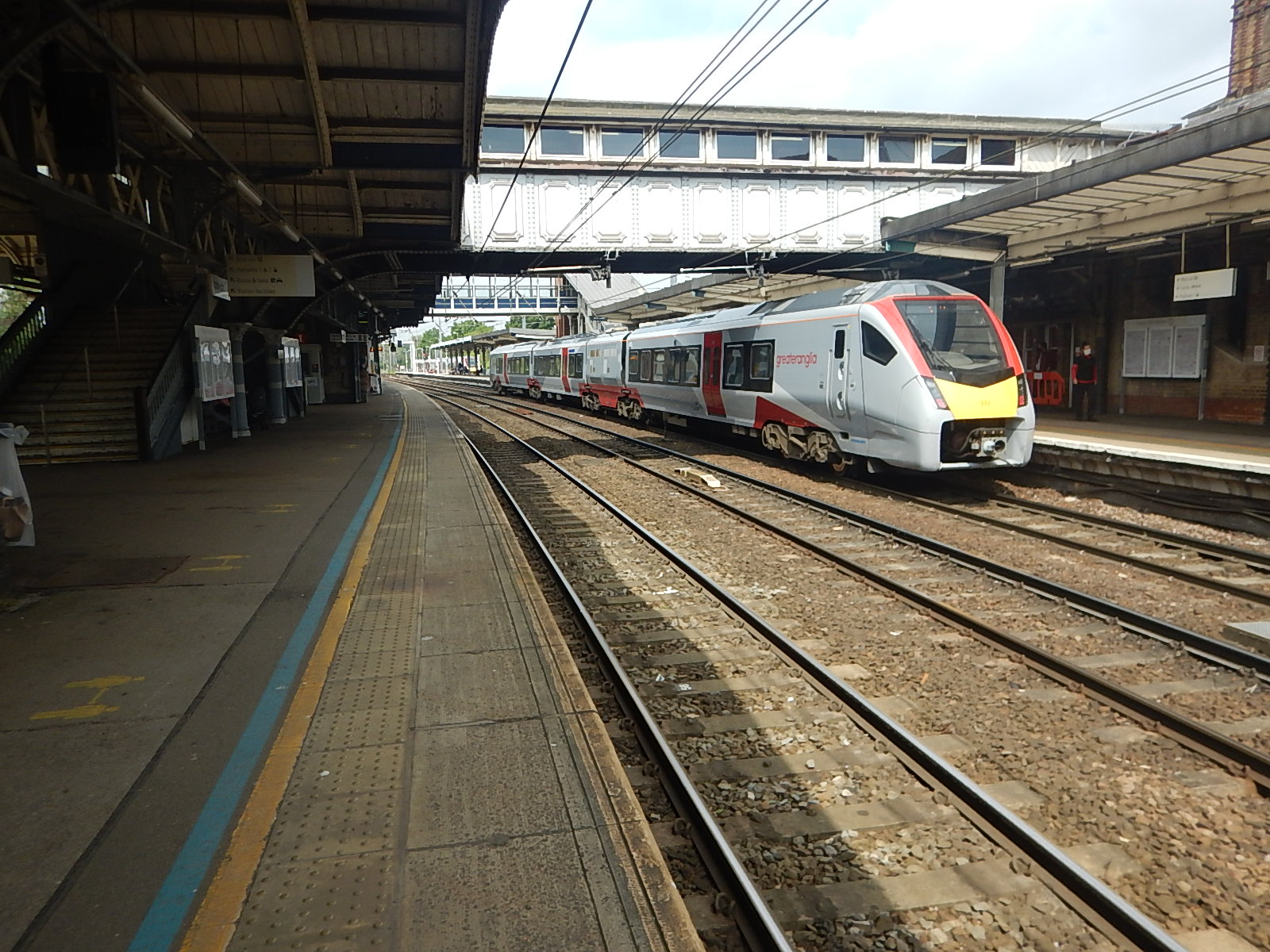
Surprisingly, the Class 319 trains have a higher passenger capacity.
But both trains could do a similar task, where the route is partially electrified.
As I said earlier about the GWR units.
The units will also receive an internal refurbishment and be fitted with air cooling.
Porterbrook’s brochure for the Class 769 train talks about using them between Manchester and Buxton.
Surely, this route could do with a Northern version of a GWR interior.
I also think a service should link Hellifield and Buxton. as I wrote about in Why Not Buxton To Hellifield?
That would show what Class 769 trains could do!
It would also connect the Peak District to the hills North of Lancashire.
I might also be, that the standby-fleet should also be the luxury variant of the train. Surely, supporters going to the Open at some of the inaccessible venues could afford pay to pay extra for a comfy train.
Express Freight And Parcels Services
Rail Operations Group would appear to have placed the second-largest order for Class 769 trains, which they will use to launch a high-speed parcels service called Orion.
This extract is from the Rail Operations Group section in the Wikipedia entry for the Class 769 train.
Orion is aiming to launch its first trial service conveying parcels and light freight in April 2021, with the Midlands to Mossend now likely to be the debut flow. The company is to use converted Class 319s for the service and is now planning for a fleet of 19 four-car units – nine Class 319s and 10 Class 769s. Arlington Fleet Services at Eastleigh is modifying the interiors of the units to accommodate roller cages for parcels, with the aim of operating primarily under electric power but with the 769s using their diesel engines to act as tractor units for the 319s on non-electrified stretches. The first 769 bi-mode, No 769501, has undergone its Flex conversion at Brush in Loughborough and is due to be outshopped from Arlington at Eastleigh in March following its interior modification.
In Did These Strawberries Have Road- Or Rail-Miles?, I talked about strawberries going between Scotland and London.
Surely, the movement of high-quality food could be one of the cargoes for Orion.
It wouldn’t be the first such traffic, as Class 43 power cars of the InterCity 125s used to carry flowers and fish up to London from Cornwall.
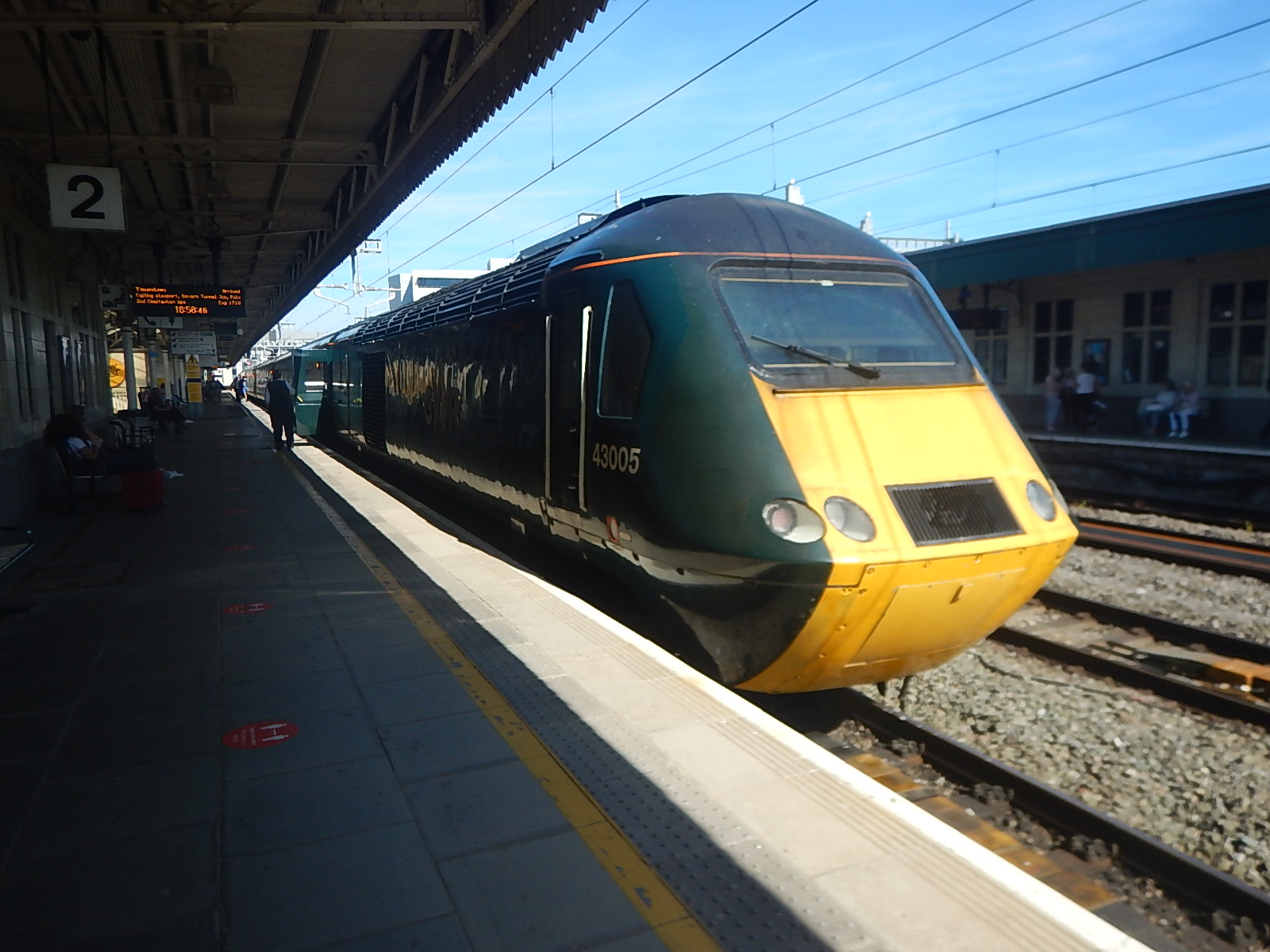
There’s a lot of space in the back of a Class 43 power car.
I certainly feel there are possibilities for using Class 769 trains as high speed parcels transport.
It should be noted that Class 325 trains already run high speed parcel services up and down the country on behalf of Royal Mail. These trains may look like later British Rail trains, but they are in fact based on Class 319 trains.
So I doubt, there’ll be any worries that the trains can’t handle the required services after conversion.
Conclusion
It looks to me that Porterbrooks plan to convert numbers of their Class 319 trains into Class 769 trains will find several ready markets.
It could be argued that more carbon savings could be achieved by perhaps a new battery-electric or hydrogen-electric train. But these will take years to develop!
These trains are a good short-term solution, that will help define their zero-carbon successors.
Did These Strawberries Have Road- Or Rail-Miles?
These strawberries were grown my M Porter in Perthshire and I bought them in the M & S Simply Food store in Waterloo station.


So did they travel between Perthshire and London, by truck or train?
I think the strawberries came from East Seaton Farm, owned by Lochart and Debbie Porter.

If the strawberries were to be grown any further East, they’d be grown in the middle of the North Sea.
But did they come South, by road or rail?
I suspect it was the former, but there is change in the air! Or do I mean on the rails?
In My First Ride In A Class 769 Train, I talked about Rail Operations Group and their proposed Orion parcels service, that will use Class 769 trains.
This service would surely be ideal to bring strawberries and Arbroath smokies to the South.
Work Underway To Create ‘UK’s Biggest Electric Bus Charging Station’ In Glasgow
The title of this post, is the same as that of this article on edie.
This is the first paragraph.
Public transport operator First Bus has begun work to retrofit its Caledonia depot in Glasgow to host 162 electric vehicle (EV) charging points, claiming the project will be the largest of its kind in the UK once complete.
These are other points from the article.
- The project is in two phases and both will be complete by the end of 2022.
- Phase One will handle the charging for twenty-two buses for COP26.
- The new chargers will be 150 kW and will be supplied by the Heliox Group.
- First Bus aim to have a zero-emission fleet in the UK by 2035.
This Google Map shows the Caledonia depot.
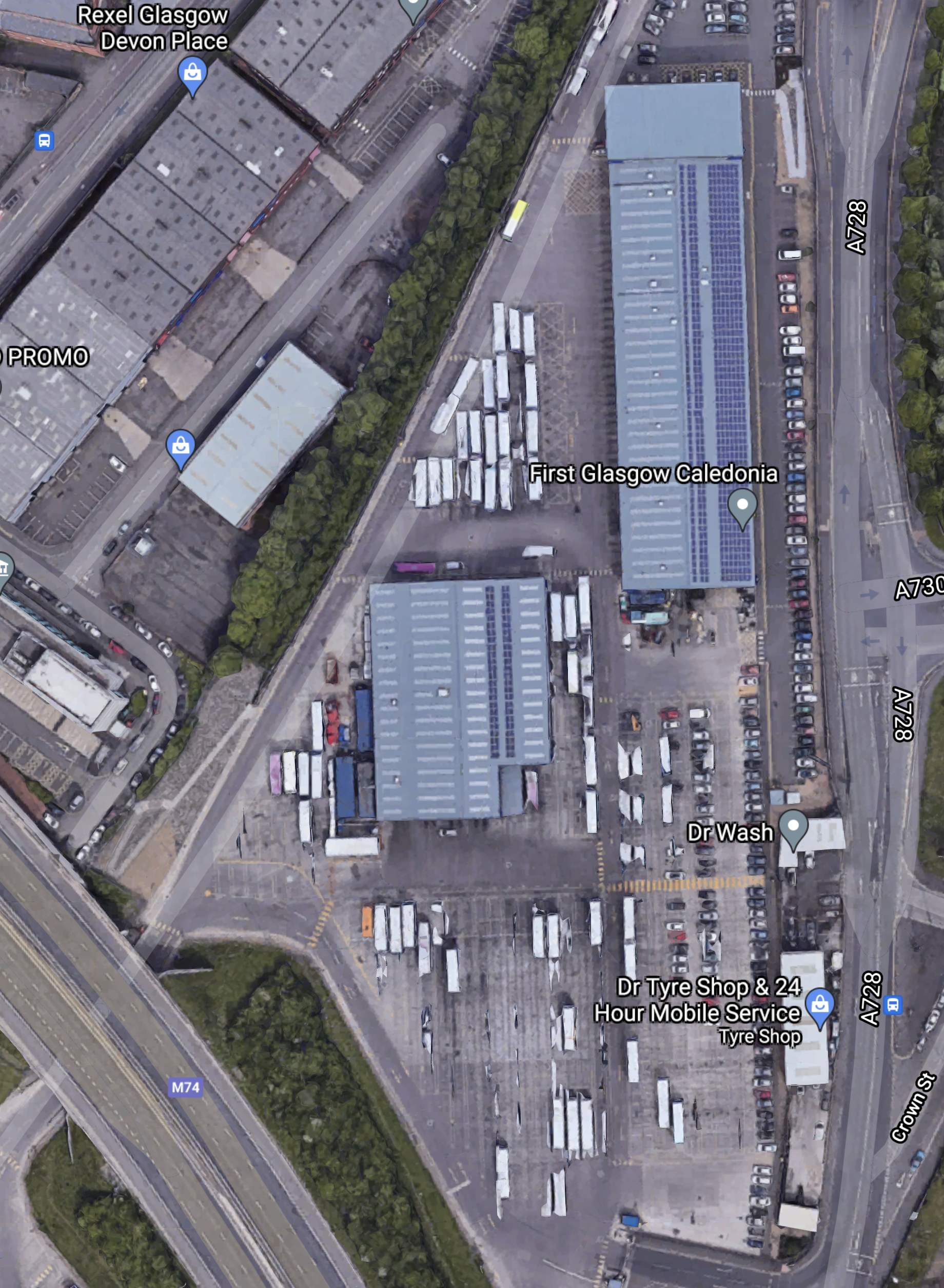
Note.
- It is a big site.
- There seems plenty of space in the area.
- The M74 Motorway in the South-West corner of the map.
- Further to the South-West is the main electrified railway into Glasgow Central station.
I have some thoughts.
Power Supply
Charging up 162 electric buses at a rate of 150 kW will need an electrical feed of 24.3 MW.
To illustrate the levels of renewable power available near Glasgow, Whitelee Wind Farm is a dozen miles to the South-West.
- It is the largest onshore wind farm in the UK and the second largest in Europe.
- It has a nameplate capacity of 539 MW.
All of a sudden 24.3 MW of preferably renewable energy doesn’t seem such a large amount.
The grid may need strengthening to bring electricity into the First Bus Caledonia depot, but I doubt that would be the most difficult of projects.
Energy Storage
I am an enthusiast for energy storage and have invested in two companies developing energy storage systems.
My modelling of water networks in the 1970s and what I’ve read since, indicate to me, that detailed modelling would show that to support a 24.3 MW electrical supply to the depot, some amount of energy storage will be needed.
Highview Power are building a system at Carrington near Manchester, that can supply 50 MW for up to five hours.
If I was First Bus, I would be seriously looking at energy storage to support the charging of the buses.
After all, there’s nothing as useless in the morning rush hour in a city like Glasgow, than a flat battery-electric bus!
Wind Turbines And Solar Panels
How about some on site power generation?
Conclusion
Given the renewable energy available locally and First Bus’s objective of being zero-carbon by 2035, I can see Caledonia depot being enlarged in the future.
Vivarail At COP26
This press release from Network Rail is entitled Network Rail And Porterbrook To Showcase Britain’s Green Trains Of The Future At COP26.
These two paragraphs are from the end of the first section of the press release.
It is envisaged that the HydroFLEX may also be used to transport visitors to see the Zero Emission Train, Scotland’s first hydrogen powered train.
Network Rail is also in the earlier stages of planning a similar event with Vivarail to bring an operational battery train to COP26.
Vivarail have taken battery trains to Scotland before for demonstration, as I wrote about in Battery Class 230 Train Demonstration At Bo’ness And Kinneil Railway.
Will other train companies be joining the party?
Alstom
It looks like Alstom’s hydrogen-powered Class 600 train will not be ready for COP26.
But I suspect that the French would not like to be upstaged by a rolling stock leasing company and a university on the one hand and a company with scrapyard-ready redundant London Underground trains on the other.
I think, they could still turn up with something different.
They could drag one of their Coradia iLint trains through the Channel Tunnel and even run it to Scotland under hydrogen power, to demonstrate the range of a hydrogen-powered train.
Alstom have recently acquired Bombardier’s train interests in the UK and there have been rumours of a fleet of battery-electric Electrostars, even since the demonstrator ran successfully in 2015. Will the prototype turn up at COP26?
Alstom’s UK train factory is in Widnes and I’ve worked with Liverpudlians and Merseysiders on urgent projects and I wouldn’t rule out the Class 600 train making an appearance.
CAF
Spanish train company; CAF, have impressed me with the speed, they have setup their factory in Newport and have delivered a total of well over a hundred Class 195 and Class 331 trains to Northern.
I wrote Northern’s Battery Plans, in February 2020, which talked about adding a fourth-car to three-car Class 331 trains, to create a battery-electric Class 331 train.
Will the Spanish bring their first battery-electric Class 331 train to Glasgow?
I think, they just might!
After all, is there a better place for a train manufacturer looking to sell zero-carbon trains around the world to announce, their latest product?
Hitachi
A lot of what I have said for Alstom and CAF, could be said for Hitachi.
Hitachi have announced plans for two battery-electric trains; a Regional Battery Train and an Intercity Tri-Mode Battery Train.
I doubt that either of these trains could be ready for COP26.
But last week, I saw the new Hitachi Class 803 train speeding through Oakleigh Park station.
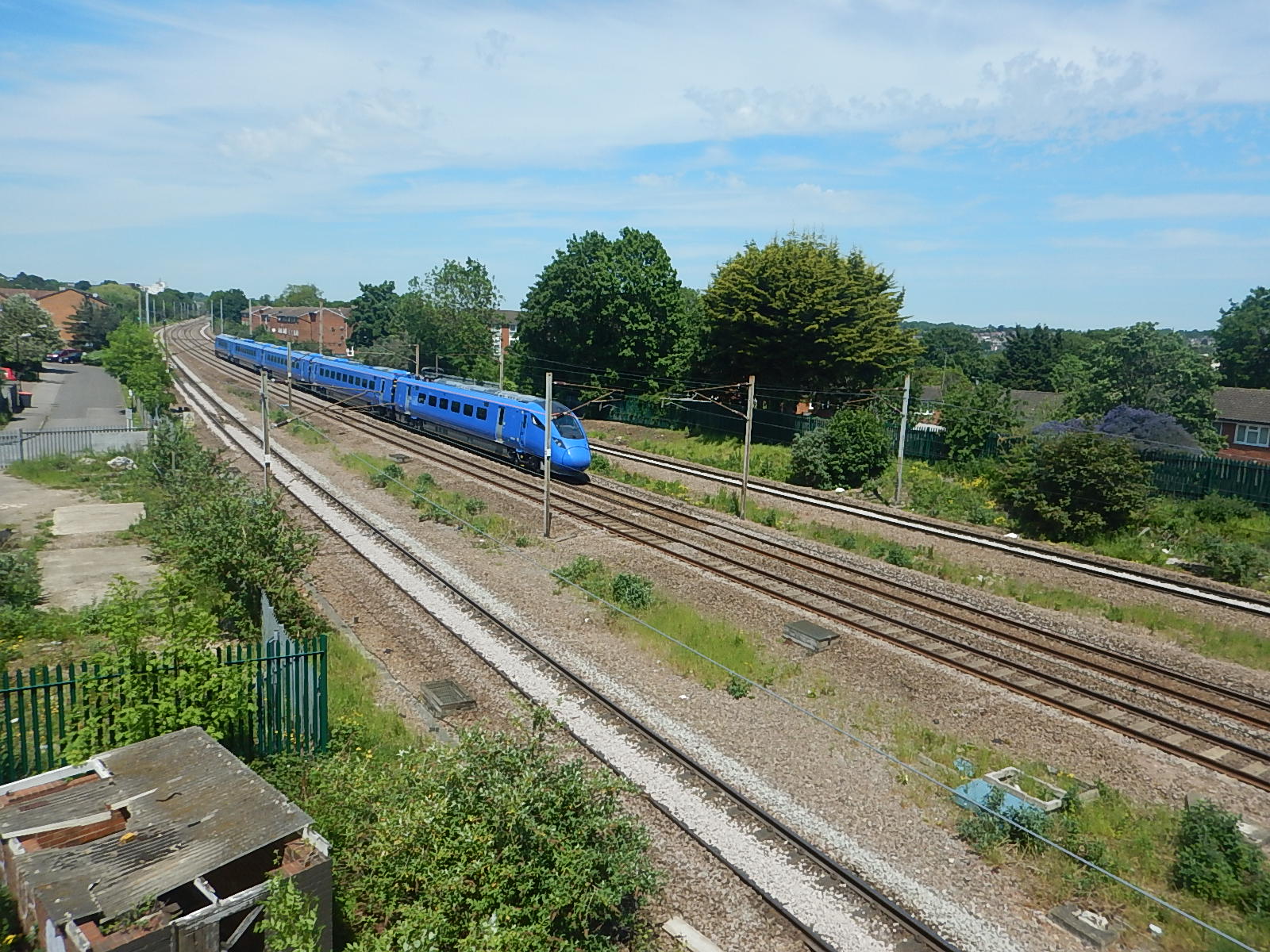
This is not a battery-electric train, where battery power can be used for traction, but according to Wikipedia and other sources, it is certainly an electric train fitted with batteries to provide hotel power for the train, when the overhead electrification fails.
Are these Class 803 trains already fitted with their batteries? And if they are, have they been tested?
And who is building the batteries for the Class 803 trains?
The traction batteries for Hitachi’s two battery-electric trains are to be produced by Hyperdrive Innovation of Sunderland, which is not far from Hitachi’s train factory at Newton Aycliffe.
As an engineer, I would suspect that a well-respected company like Hyperdrive Innovation, can design a battery-pack that plugs in to Hitachi’s trains, as a diesel engine would. I would also suspect that a good design, would allow an appropriate size of battery for the application and route.
I feel it is very likely, that all batteries for Hitachi’s UK trains will be designed and build by Hyperdrive Innovation.
If that is the case and the Class 803 trains are fitted with batteries, then Hitachi can be testing the battery systems.
This document on the Hitachi Rail web site, which is entitled Development of Class 800/801 High-speed Rolling Stock for UK Intercity Express Programme, gives a very comprehensive description of the electrical and computer systems of the Hitachi trains.
As an engineer and a computer programmer, I believe that if Hyperdrive Innovation get their battery design right and after a full test program, that Hitachi could be able to run battery-electric trains based on the various Class 80x trains.
It could be a more difficult task to fit batteries to Scotland’s Class 385 trains, as they are not fitted with diesel engines in any application. Although, the fitting of diesel engines may be possible in the global specification for the train.
It is likely that these trains could form the basis of the Regional Battery Train, which is described in this infographic.

Note.
- The Class 385 and Regional Battery trains are both 100 mph trains.
- Class 385 and Class 80x trains are all members of Hitachi’s A-Train family.
- Regional Battery trains could handle a lot of unelectrified routes in Scotland.
I wouldn’t be surprised to see Hitachi bring a battery-equipped train to COP26, if the Class 803 trains have a successful introduction into service.
Siemens
Siemens have no orders to build new trains for the national rail network in the UK.
But there are plans by Porterbrook and possibly other rolling stock leasing companies and train operators to convert some redundant Siemens-built trains, like Class 350 trains, into battery-electric trains.
According to Wikipedia, Siemens upgraded East Midlands Railways, Class 360 trains to 110 mph operation, at their Kings Heath Depot in Northampton.
Could Siemens be updating one of the Class 350 trains, that are serviced at that depot, to a prototype battery-electric Class 350 train?
Stadler
Stadler have a proven design for diesel-electric, battery-electric and hydrogen trains, that they sell all over the world.
In the UK, the only ones in service are Greater Anglia’s Class 755 trains, which are diesel-electric bi-mode trains.
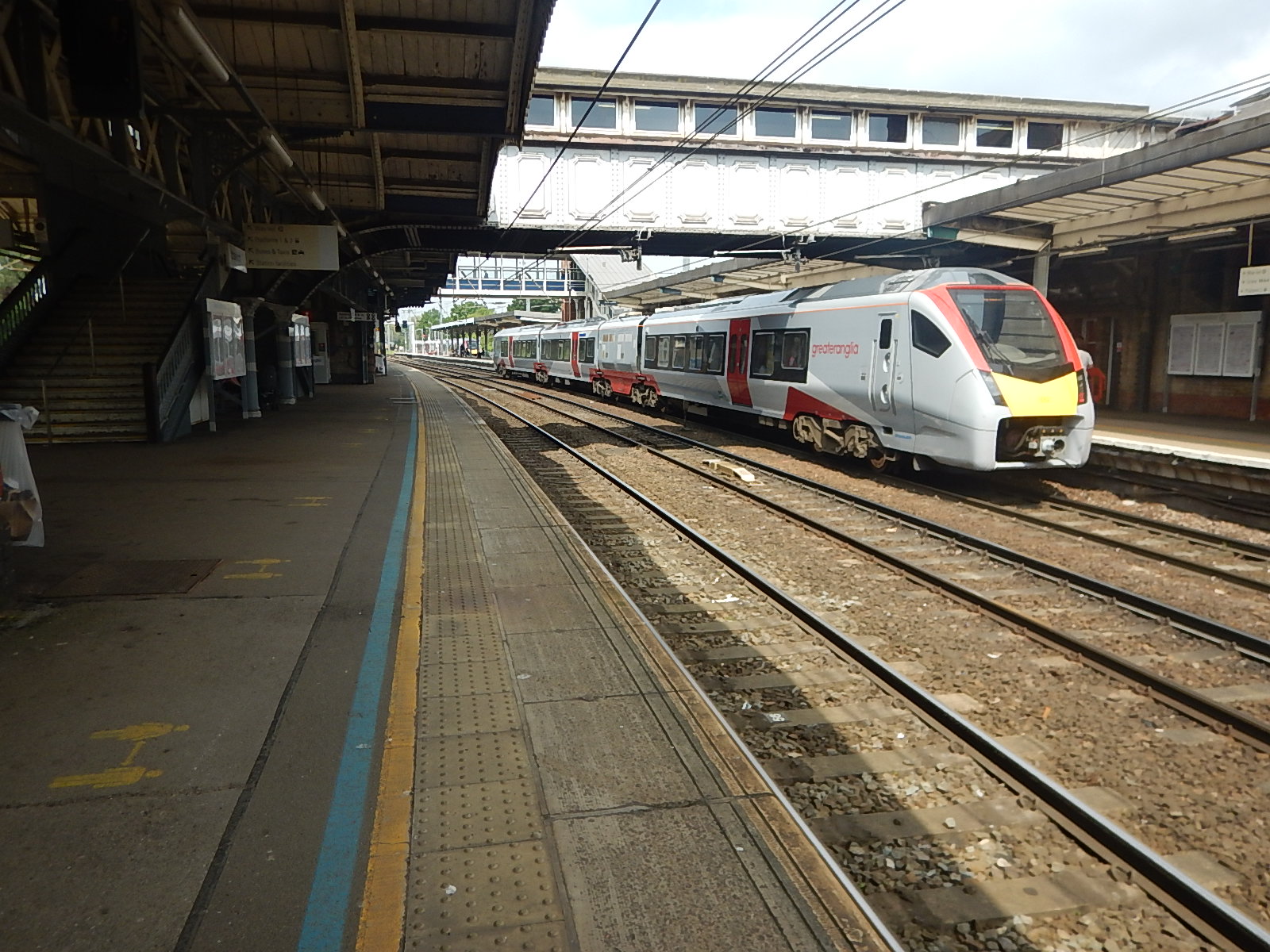
The picture shows one of these trains at Ipswich.
- They are 100 mph trains.
- Diesel, battery or hydrogen modules can be inserted in the short PowerPack car in the middle of the train.
- Diesel-battery-electric versions of these trains have been sold for operation in Wales.
- The interiors of these trains are designed for both short journeys and a two-hour run.
There is a possibility, that these trains will be upgraded with batteries. See Battery Power Lined Up For ‘755s’.
Conclusion
Times will be interesting in Glasgow at COP26!
 The Anonymous Widower