The Stadler Data Sheet For A Class 777 IPEMU
This data sheet is now available on the Stadler web site.
These are my observations.
Battery Charging
The datasheet says this about battery charging.
While an IPEMU is running on the electrified network, the batteries can be charged from the third rail, as well as through regenerative braking.
I’m glad to see the trains have regenerative braking, which in a train with frequent stops saves electricity.
Battery Charging Time
The datasheet says this about battery charging time.
IPEMUs can be recharged in less than 15 minutes.
That time compares favourably with Hitachi’s time.
Expected Battery Life
The datasheet says this about expected battery life.
The IPEMU battery can undergo more than 10,000 charge/discharge cycles, which is about four times the lifetime of a battery used in EVs.
Stadler also give the battery a minimum expected life of eight years.
Transition Between Electrification And Battery
The datasheet says this about this important transition.
Transition between electrified and non-electrified networks without interruption, reducing travel times.
Stadler certainly do the changeover from electric to diesel smoothly on a Class 755 train.
A Comparison To Tesla
This is a paragraph in the introduction of the data sheet.
The battery/vehicle weight-ratio of a Tesla is about 25 per cent, while the ratio of the IPEMU is only about 6 per cent.
I suspect the rolling resistance, is also a lot less, than the rolling resistance of a Tesla, due to the superior properties of steel wheels on rail, as opposed to rubber tyres on road.
Battery Range
The data sheet gives the following.
- Installed battery capacity – 320 KWh
- Maximum speed (IPEMU mode) – 62 mph
- Range in battery operation – 34 miles
- Maximum demonstrated range – 84 miles
Note.
- I would assume the 55 km given for range on the datasheet is a guaranteed range.
- The maximum demonstrated range is from New Merseyrail Train Runs 135km On Battery.
- All other figures are from the datasheet.
In an article in the October 2017 Edition of Modern Railways, which is entitled Celling England By The Pound, Ian Walmsley says this in relation to trains running on the Uckfield Branch, which is not very challenging.
A modern EMU needs between 3 and 5 kWh per vehicle mile for this sort of service.
I don’t think the terrain of Merseyrail’s services are much different from the Uckfield branch, so what are the figures for the Class 777 trains on battery power?
- 55 km range – 2.353 kWh per vehicle mile
- 135 km range – 0.952 kWh per vehicle mile
The train appears to be very miserly with electricity.
But if the attention to detail in the electrical system of the train is of the standard of a Swiss watch, I don’t think they are unreasonable.
Operation With 25 kV Overhead Electrification
The datasheet says nothing about this, but the Wikipedia entry for the Class 777 train says this under Design.
Because current regulatory policy makes it unlikely that future extensions of Merseyrail’s unshielded third rail traction power supply will be approved, Class 777 units will be delivered with provision for the future installation of 25 kV 50 Hz AC overhead line traction equipment.
This is probably needed for charging at locations without third-rail electrification.
New Merseyrail Train Runs 135km On Battery
The title of this post, is the same as that of this article on Liverpool Business News.
This paragraph gives the details.
Posting on social media site Linked In, Joaquim Font Canyelles, project leader at Stadler Rail, said: “Our new Merseytravel class 777 IPEMU (Independent Powered Electrical Multiple Unit) proved its strength after running 135 km fully loaded and without external current supply, which is much longer than we expected.
Note that 135 km is 83.9 miles.
These are possible routes, where the battery-electric trains could be deployed.
- Bidston and Wrexham Central – 27.5 miles
- Canada Dock Branch – 4.6 miles
- Chester and Crewe – 21.2 miles
- Chester and Runcorn East – 13 miles
- Ellesmere Port and Runcorn East – 10.8 miles
- Ormskirk and Preston – 15.3 miles
- Hunts Cross and Manchester Oxford Road – 27.1 miles
- Kirkby and Manchester Victoria – 30 miles
- Kirkby and Wigan Wallgate – 12 miles
- Liverpool Lime Street and Chester via Runcorn – 27 miles
- Liverpool Lime Street and Manchester Oxford Road – 31.5 miles
- Southport and Manchester Oxford Road – 37.8 miles
- Southport and Stalybridge – 45.5 miles
- Southport and Wigan Wallgate – 17.4 miles
Note.
- All routes could be done both ways with the exception of Southport and Stalybridge and possibly Southport and Manchester Oxford Road.
- Southport trains to Wigan and Manchester would charge their batteries at Southport.
- Central Liverpool and Wrexham Central would not need the change at Bidston.
- Hunts Cross and Preston via Central Liverpool would not need the change at Ormskirk.
- A Liverpool Lime Street and Manchester Oxford Road service would be possible.
Batteries can add a lot of range to a city’s railway system.
Conclusion
If Merseyrail can get hold of the routes to Crewe, Manchester, Preston and Wrexham, the Liverpool City Region will have one of the best metros for a city of its size.
25kV Battery Train Charging Station Demonstration
This project was one of the winners in the First Of A Kind 2022 competition run by Innovate UK.
In this document, this is said about the project.
Project No: 10037158
Project title: 25kV Battery Train Charging Station Demonstration
Lead organisation: SIEMENS MOBILITY LIMITED
Project grant: £59,910
Public description: The UK rail industry is committed to decarbonisation, including the removal of diesel trains by 2040.
Replacing diesel trains with electric, hydrogen or battery bi-mode rolling stock provides faster, smoother and more reliable journeys, as well as eliminating local pollution and greatly reducing carbon dioxide. To enable clean, green electric bi-mode operation without continuous electrification requires enhancement of the power supply to existing electrification and novel charging facilities to support bi-mode trains. No small, low-cost solution is currently available for charging facilities that are compatible with standard UK trains and locally available power supplies and space.
Siemens Mobility, working with ROSCO, TOCs and Network Rail, will deliver a novel AC charging solution enabling simple installation of small, low-cost rapid charging facilities fed from existing standard local power supply cables. Compatible with all OLE-powered trains, the novel design enables the removal of diesel passenger train operation on non-electrified routes across the UK, while minimising land requirements and modifications required to existing station structures.
My Thoughts And Conclusion
Consider.
- The solution works with all 25 KVAC trains.
- It looks like it is a compact overhead electrification system, which might have originally been designed for a European tram or German S-Bahn system.
- It is claimed to be low-cost.
- Siemens were not asking for a lot of money.
- ROSCO, TOCs and Network Rail are all involved, which must be good.
It looks to me, that someone at Siemens has raided the parts bin and found some small, low-cost overhead electrification, that can be installed in the UK gauge and powered by a fairly standard mains supply.
It strikes me, that this system would be ideal to install in a station like Marylebone, if services to the station were to be run by battery-electric trains.
Cambridgeshire Company’s Self-Charging Trains Project Wins Government Funds
The title of this post, is the same as that of this article on the BBC.
These four paragraphs outline what the company is developing and how they received government funding.
Echion Technologies, based in Sawston near Cambridge, is creating train batteries that can charge from overheard wires, the Department for Transport said.
The trains would be able to use the batteries on unelectrified track.
The project was among the winners of the government’s First of a Kind competition.
The competition aims to award funding to projects that could transform the future of transport.
I have a few thoughts.
The Description In The First Of A Kind 2022 Winners Document
In this document, this is said.
Project No: 10039100
Project title: UBER – Ultra-high power Battery for low Emission Rail
Lead organisation: ECHION TECHNOLOGIES LTD
Project grant: £59,917
Public description: Project UBER (Ultra-high power Battery for low Emission Rail), aims to demonstrate for the first time, Echion’s XNO(tm) battery chemistry as the preferred battery technology for certain classes of battery electric trains. It targets Theme 1 of this competition.
Specifically, UBER aims to demonstrate the suitability of XNO(tm) for passenger trains that can be powered by the AC overhead electrification and charge a battery from the overhead wire (or another form of ‘standard’ trackside power — e.g. 3rd rail), to then run in battery-only mode on unelectrified section of a route. An example of such a train is the Revolution Very Light Rail (Revolution VLR) developed by Transport Design International (TDI), who is a partner in UBER.
Applying The Echion Technologies Batteries To Electric Trains
Consider.
- The BBC article is accompanied by a picture of a Class 717 train, which like the Class 700 train is dual voltage.
- Southeastern have thirty similar Class 707 trains, which are third-rail, although according to Wikipedia, were tested as dual-voltage trains.
- Most modern trains, like these Desiro City units made by Siemens, have a mix of motored and trailer cars, with one or more pantograph cars between the two driver cars.
- Because power is needed in all cars, there will be an electrical bus from one end of the train to distribute power.
- All trains in the family appear to have at least one trailer car, which will also be connected to the electrical bus.
With a family of trains like the Desiro City, Alstom’s Aventra, CAF’s Civity, Hitachi’s AT-200 or AT-300 or Stadler’s FLIRTs, train manufacturers assemble various cars, interiors and electrical gubbins together, to get the train performance and capability.
I would expect that the battery would be placed, where there is space and the most likely place is under the trailer car.
In some ways, it would work like the battery in a laptop computer, where operation is as follows.
- If there is external power, the computer runs on that power and the battery is also charged, if it is not fully-charged.
- If there is no external power, the computer runs on battery power, until the battery goes flat.
With a battery-electric train, operation is similar, with an important addition.
- If there is external power, the train runs on that power and the battery is also charged, if it is not fully-charged.
- If there is no external power, the train runs on battery power, until the battery goes flat.
- Desiro City and many other electric trains have regenerative braking and under braking, the electricity generated is is stored in the battery, if it is not fully-charged.
It could be considered by some, that regenerative braking is self-charging. But unfortunately, regenerative braking doesn’t recover all energy during braking. But it can be up to 70-80 % efficient.
Connecting The Echion Technologies Battery To The Train
The battery will have to be connected to the electrical bus, that runs the full length of the train.
As a Control Engineer, I suspect there will be a sophisticated control system, that will switch the battery between various modes and control the pantograph and third-rail shoes.
Perhaps, Echion Technologies have developed an all-purpose controller that could fit all trains?
Battery EMUs Envisaged In Southeastern Fleet Procurement
The title of this post, is the same as that of this article on Railway Gazette.
This is the first paragraph.
Southeastern has invited expressions of interest for the supply of new electric multiple-units with an optional battery capability for operation away from the 750 V DC third-rail network.
This article on bidstats is entitled Supply Of And Maintenance Support For New Rolling Stock For Southeastern, and gives more details.
These are my thoughts.
Southeastern HighSpeed Services
There would appear to be no changes in this contract to the Class 395 trains, that work on High Speed One, as this is said in the bidstats article.
Full compatibility with Southeastern infrastructure (excluding High Speed 1 infrastructure)
which appears to rule out running on High Speed One.
In addition, this article on Rail Magazine is entitled Southeastern’s Class 395 Javelin Train Sets Are To Receive A £27 million Facelift.
Southeastern Have Both 75 and 100 mph Trains
In addition to their Class 395 trains, Southeastern have the following trains in their fleet.
- Class 375 trains – 100 mph – 10 x 3 cars
- Class 375 trains – 100 mph – 102 x 4 cars
- Class 376 trains – 75 mph – 36 x 5 cars
- Class 465 trains – 75 mph – 129 x 4 cars
- Class 466 trains – 75 mph – 36 x 2 cars
- Class 707 trains – 100 mph – 18 x 5 cars
Note.
- Running a mixed fleet of 75 and 100 mph trains can’t be very efficient.
- The Class 465 and 466 trains are the oldest trains and date from 1991-1994.
- They are often to be seen in ten-car formations of 2 x 465 trains and a Class 466 train.
- Another twelve Class 707 trains are planned to join Southeastern.
I would expect the Class 465 and Class 466 trains to be replaced first.
What Length Will The New Trains Be?
If you look at the new suburban electric trains, they have the following lengths.
- c2c – Class 720 trains – 5 cars
- Greater Anglia – Class 720 trains – 5 cars
- Northern – Class 331 trains – 3 and 4 cars
- Southeastern – Class 707 trains – 5 cars
- South Western Railway – Class 701 trains – 5 and 10 cars
- West Midlands Trains – Class 730 trains – 3 and 5 cars
Note.
- Southeastern already run five-car trains as pairs.
- A significant proportion of existing suburban trains are five-car trains.
- Great Western, Hull Trains, LNER, Lumo and TransPennine Express run five-car Hitachi trains, with more companies to follow.
- A pair of five-car trains make a pair of a convenient length for most platforms.
I would be fairly confident, that the new trains will be five-car trains, with the ability to run as pairs.
What Will Be The Operating Speed Of The New Trains?
To match the speed of the Class 375 and Class 707 trains, I would expect them to be 100 mph trains.
The Quietness Of Battery-Electric Trains
All of the battery-electric trains I have ridden, have been mouse-quiet, with none of the clunking you get for a lot of electric trains.
This is said in the bidstats article says this about the interiors
Interiors suitable for metro & mainline operation.
I wouldn’t be surprised to see a lot of these trains on commuter routes to attract passengers.
Battery Power
This is said in the bidstats article about battery power.
Inclusion of options for traction batteries with capability for operation in depots and sidings without the need for external power supply, and with the capability to operate on the main line where power supply is not available due to isolations or incidents, or for non-electrified line sections of up to 20 miles.
Although Merseyrail’s new Class 777 trains are not in service yet, I find it interesting that the proposed Southeastern trains will be similarly-fitted with a small battery for depot and siding operation.
The twenty mile battery range is specific and I wonder if it will be used innovatively. I suspect it could be a bit longer in the future, as battery technology improves.
Possible Electrified Routes Using Battery Power
These are a few possibilities.
The Hoo Branch
In Effort To Contain Costs For Hoo Reopening, I discussed running electric trains to a proposed Hoo station.
I made these two points.
- Hoo junction to Hoo station is no more than five or six miles.
- There are also half-a-dozen level crossings on the route, which I doubt the anti-third rail brigade would not want to be electrified.
It would appear that a battery-electric train with a range of twenty miles would handle this route easily.
- Charging would be on the nearly thirty miles between Hoo junction and Charing Cross station.
- No charging would be needed at Hoo station.
There may be other possibilities for new routes locally to open up new housing developments.
The Sheerness Line
The Sheerness Line has the following characteristics.
- It is double-track
- It is electrified
- It is less than eight miles long.
- For most of the day, the service is one train per hour (tph)
- There are two tph in the Peak.
- Would two tph attract more passengers to the line?
- Does the power supply on the Sheerness Line limit the size and power of trains that can be run on the line?
- Is there a need for one train per day to London in the morning and a return in the evening?
- Could the Sheerness Line be run more economically with battery trains. providing a two tph service all day?
The Isle of Sheppey needs levelling up, perhaps 100 mph trains to London using battery power on the Sheerness Line, might just make a difference.
The Medway Valley Line
The Medway Valley Line has the following characteristics.
- It is double-track
- It is electrified
- It is less than twenty-six and a half miles long.
- For most of the day, the service is two tph.
- In the Peak there are HighSpeed services between Maidstone West and St.Pancras International stations.
If electrification was removed between Paddock Wood and Maidstone West stations, the HighSpeed services could still be run and battery-electric trains with a twenty mile range could still run the Tonbridge and Strood service.
The Marshlink Line
The Marshlink Line has the following characteristics.
- It is mainly single-track with a passing loop at Rye station.
- It is not electrified
- It is 25.4 miles between the electrified Ashford International and Ore stations.
- Services are irregular and less than one tph.
If the proposed battery-electric train had a range of thirty miles, it should be able to handle the Marshlink Line.
The service between Eastbourne and Ashford International stations would need to be moved between the Southern and Southeastern operations.
The Uckfield Branch
The Uckfield Branch has the following characteristics.
- It is a mixture of single- and double-track.
- It is not electrified South of Hurst Green Junction.
- It is 24.7 miles between the electrified Hurst Green Junction and Uckfield station
- Services are one tph.
If the proposed battery-electric train had a range of thirty-miles, it should be able to handle the Uckfield Branch, with a charging system at Uckfield station.
Will Battery-Electric Trains Allow Some Lines To Have Their Electrification Removed?
There are several reasons, why electrification might be removed.
- It is on a line, where the electrification needs upgrading.
- It is on a line, where there are lots of trespassers.
- Possibly at a level-crossing or a stretch of track with several.
- Possibly in a tunnel, with a large inflow if water.
- It is a depot or siding, where safety is important to protect the workforce.
Obviously, the electrification would not be removed unless battery-electric trains can handle all possible services.
These are surely some possibilities for electrification removal.
The Hayes Line
The Hayes Line has the following characteristics.
- It is double-track
- It is electrified
- It is less than eight miles to Ladywell Junction, where the branch joins the main line at Lewisham.
- It is currently run by Class 465 and Class 466 trains, which will likely be changed for the new trains with a battery capability.
- Services are four tph.
If the proposed battery-electric train had a range of twenty-miles, it would be able to handle the route between Ladywell junction and Hayes station.
Erith Loop, Crayford Spur and Slade Green Depot
This map from Cartometro.com shows the Erith Loop, the Crayford Spur and the Slade Green Depot.

Note.
Not many trains take the Erith Loop or the Crayford Spur.
- The distance between Slade Green and Barnehurst is less than a mile-and-a-half.
- Dartford station is off the South-East corner of the map.
- The distance between Barnehurst and Dartford is less than three miles.
- The distance between Slade Green and Crayford is less than two miles-and-a-half.
- The distance between Crayford and Dartford is less than two miles.
- The main line through Slade Green would need to remain electrified, as electric freight trains use the line.
I suspect, that quite a lot of electrification could be removed here, much to the disgust of the copper thieves.
It might even be possible to build on top of the depot.
Battery Use In Class 777 Trains
In the November 2022 Edition of Today’s Railways, there is an article about Merseyrail’s new Class 777 trains.
This extract describes the use of batteries on the trains.
All units have small batteries for moving independently around depots. Seven units are now being fitted with larger 160 kWh Lithium Titanate Oxide (LTO) batteries and associated traction converter in the leading coaches in space that could also be taken up by a transformer and AC equipment if some units were converted to dual /Battery operation (there would not be the space for tri-mode AC/DC/Battery operation). The cooling system for the battery lies has been roof-mounted. The battery boxes have been supplied by ABB and the batteries themselves by Toshiba. 777002 has been converted as a trial to prove the concept in 2021 but has now been converted back to an EMU.
Stadler explained that the battery life would normally be 8-10years but if the units are only used in battery mode for the 2 km between Kirkby and Headbolt Lane then that is expected to be more like 15 years. However the batteries have the potential to do around 40 miles, so Bidston-Wrexham is possible, with a 15 minute recharge time required at Wrexham before returning. Maximum speed in battery mode is 60 mph compared to 75mph as a DC EMU.
This is a map of how the network might look.

These are the lengths of routes, where the Class 777 trains might run on batteries.
- Bidston and Wrexham Central – 27.5 miles – Possible with a charge at Wrexham Central.
- Canada Dock Branch – 4.7 miles – Dual-voltage trains.
- Chester and Crewe – 21.2 miles – Possible with a charge at Crewe
- Chester and Runcorn East – 13.1 miles – Possible without recharging
- Ellesmere Port and Runcorn East – 10.8 miles – Possible without recharging
- Hunts Cross and Manchester Oxford Road – 27.1 miles – Possible with a charge at Manchester Oxford Road
- Kirkby and Wigan Wallgate – 12.1 miles – Possible without recharging
- Ormskirk and Preston – 15.4 miles – Possible without recharging
Note.
- There are a lot of possibilities to use Class 777 trains with batteries.
- Charging might be needed at only three stations; Crewe, Manchester Oxford Road and Wrexham Central.
- Four route extensions are possible without charging.
Merseyrail are going to have plenty of uses for the sixty trains, that they have on option.
Train Efficiency On Battery Power
In an article in the October 2017 Edition of Modern Railways, which is entitled Celling England By The Pound, Ian Walmsley says this in relation to trains running on the Uckfield Branch, which is not very challenging.
A modern EMU needs between 3 and 5 kWh per vehicle mile for this sort of service.
Consider.
- The Class 777 train is a four-car train, but is only five metres longer than a three-car train.
- So applying Ian’s formula, it seems that to do forty miles, the battery will be between 480 and 800 kWh.
- If it is mathematically like a three car train, it seems that to do forty miles, the battery will be between 360 and 450 kWh.
A 160 kWh battery is obviously too small.
But the extract says that the batteries are fitted in the leading coaches, so can we assume that each battery train has two leading coaches and two batteries.
Does the battery train have a battery capacity of 320 kWh?
- Assuming it does, it would appear that after using Ian’s formula for a four-car train gives a figure of 2 kWh per vehicle mile.
- A three-car train gives a figure of 2.67 kWh per vehicle mile.
I suspect that these low figures are down to good engineering and a very efficient electrical system on the train.
But then I did write Stadler FLIRT Akku Battery Train Demonstrates 185km Range.
Conclusion
These trains are going to set new standards for a city metro.
Could Chiltern Go Battery-Electric?
In the October 2022 Edition of Modern Railways, there is an article, which is entitled Chiltern Considers Turbo Future, with a sub-title of Battery Replacement Could Be On The Cards.
These are the first two paragraphs.
In early September Chiltern Railways was preparing to launch a market sounding exercise to consider options for the future of the Class 165 Turbo DMU fleet.
The operator has 28×2-car and 11×3-car ‘165s’. which operate alongside its more modern Class 168 DMUs and its loco-hauled sets. The market sounding exercise will consider two options for the future of the fleet – some sort of hybrid conversion, or outright replacement.
The Class 165 Trains
The Class 165 trains were built in 1990-1991.
- Maximum Speed – 75 mph
- Prime Movers – One per car, Perkins 2006-TWH
- 2-car Trains – 28
- 3-car Trains – 11
One is being converted to a diesel/battery hybrid.
The Class 168 Trains
The Class 168 trains were built in 1998-2004.
- Maximum Speed – 100 mph
- Prime Movers – One per car, MTU 6R 183TD13H
- 2-car Trains – 9
- 3-car Trains – 8
- 4-car Trains – 11
One has been converted to a diesel/battery hybrid.
Conversion To Hybrid Operation
If this proves to be feasible, it will surely be the more affordable of the two options.
But it does leave Chiltern with a mixed fleet with two types of train with different maximum speeds and these lengths.
- 2-car Trains – 37
- 3-car Trains – 19
- 4-car Trains – 11
Would a fleet of similar trains, with perhaps a maximum speed of 100 mph, be better operationally?
Battery-Electric Operation
The Modern Railways article introduces the concept of battery-electric operation with this paragraph.
If a replacement fleet is considered the best option for the Turbo units, the replacements could take the form of a straight battery EMU, taking advantage of recent advances in ‘fast charge’ technology.
The article also says this about battery technology and electrification.
There is optimism that advances in battery technology will provide a smooth pathway to decarbonise Chiltern’s operations – the company serves the only non-electrified London terminus.
In the longer-term, it is hoped electrification from Birmingham to Banbury as part of a strategy to decarbonise CrossCountry and freight services would enable Chiltern to run a battery EMU on London to Birmingham duties, running under battery power as far north as Banbury and switching to overhead wires from there, both powering the unit and enabling the batteries to be recharged.
The Modern Railways article looked at each route and I will do this in more detail.
London Marylebone And Aylesbury via High Wycombe
London Marylebone and Oxford would be under battery operation for 40 miles.
Trains would be charged at London Marylebone and Aylesbury stations.
London Marylebone And Aylesbury Vale Parkway
London Marylebone and Oxford would be under battery operation for 41 miles.
Trains would be charged at London Marylebone and Aylesbury Vale Parkway stations.
It might be better to electrify between Aylesbury and Aylesbury Vale Parkway stations.
London Marylebone And Banbury
London Marylebone and Oxford would be under battery operation for 69 miles.
Trains would be charged at London Marylebone and Banbury stations.
Leamington Spa And Birmingham Moor Street
Assuming the Birmingham and Banbury section of the route is electrified, this route will be electrified.
London Marylebone And Birmingham Moor Street Or Birmingham Snow Hill
Assuming the Birmingham and Banbury section of the route is electrified, this route can be considered to be in two sections.
- London Marylebone and Banbury – Battery operation – 69 miles
- Banbury and Birmingham – Electric operation – 42 miles
Trains would be charged at London Marylebone station and on the electrified section.
London Marylebone And Gerrards Cross
London Marylebone and Oxford would be under battery operation for 19 miles or 38 miles both ways.
Trains would be charged at London Marylebone station.
London Marylebone And High Wycombe
London Marylebone and Oxford would be under battery operation for 28 miles or 56 miles both ways.
Trains would be charged at London Marylebone station.
London Marylebone And Oxford
London Marylebone and Oxford would be under battery operation for 66.8 miles.
Trains would be charged at London Marylebone and Oxford stations.
London Marylebone And Stratford-upon-Avon
Assuming the Birmingham and Banbury section of the route is electrified, this route can be considered to be in two sections.
- London Marylebone and Banbury – Battery operation – 69 miles
- Banbury and Hatton Junction – Electric operation – 26 miles
- Hatton Junction and Stratford-upon-Avon – Battery operation – 9 miles
Trains would be charged at London Marylebone station and on the electrified section.
Chiltern’s Mainline Service
Chiltern’s Mainline service between London and Birmingham is run by either a Class 68 locomotive pulling a rake of six Mark 3 coaches and a driving van trailer or two or three Class 168 trains.
As the locomotive-hauled train is about eight coaches, it could surely be replaced by two four-car multiple units working together.
I believe that if Chiltern obtained a fleet of four-car battery electric trains, this would be the most efficient fleets for all their routes.
Charging At London Marylebone Station
I took these pictures at Marylebone station today.
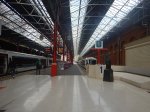
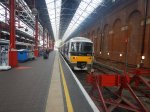
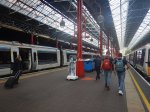
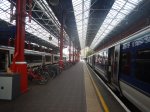
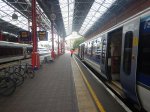
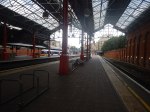

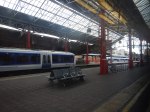


Note.
- It is a surprisingly spacious station and I feel that Furrer+Frey or some other specialist company could add some form of charging to the platforms.
- Charging would probably performed using the train’s pantograph.
It appears that the turnround time in Marylebone is typically twelve minutes or more, which should be adequate to fully charge a train.
Conclusion
Both solutions will work for Chiltern.
But I prefer the new battery-electric train, which has some crucial advantages.
- Battery-electric trains will be quieter than hybrid trains.
- Marylebone station has a noise problem and battery-electric trains are very quiet.
- Chiltern have ambitions to built new platforms at Old Oak Common and to serve Paddington. This could be easier with a battery electric train.
Rhe only disadvantage is that Banbury and Birmingham would need to be electrified.
Eversholt Rail And Vivarail To Develop Class 321 BEMU
The title of this post, is the same as that of this press release from Eversholt Rail.
These three paragraphs introduce the project.
Eversholt Rail and Vivarail have signed an agreement aimed at developing battery power – and range extension – to the Class 321 ‘Renatus’ fleet.
The 30 unit ‘Renatus’ fleet is a product of £65m investment in AC traction, air conditioning and upgraded interior. Completed in 2019, it provides a high-quality passenger experience, proven reliability in intensive operations and is widely compatible on the UK network. This fleet is currently operating on the Greater Anglia network until the introduction of their new trains is completed.
Eversholt Rail and Vivarail are committed to supporting the UK Government’s ambition to decarbonise its rail sector by 2050, and the Scottish Government’s objective of doing so by 2035. This proven and reliable fleet is an excellent fit in terms of characteristics, fleet size and availability for conversion to a Battery Electric Multiple Unit (BEMU). Vivarail, as the designers and manufacturers of the UK’s only battery and hybrid trains currently in passenger service are well positioned to progress this development.
This paragraph talks about the design objectives.
We will be working together to develop a design to integrate battery technology to provide between 20 to 30 miles of self-propulsion. Enabling the fleet to operate on non-electrified or partly electrified routes would offer the opportunity to increase the range of modern, low-carbon options to accommodate passenger demand; to enable fleet cascades; to improve the passenger experience; and to bring air quality and decarbonisation benefits to local areas.
I have a few thoughts on what I have read so far.
Vivarail’s Technology
In Battery Class 230 Train Demonstration At Bo’ness And Kinneil Railway, I talked about a ride in the battery version of Vivarail’s Class 230 train.
The train impressed me, as it did others that day.
I know that the train is late on being introduced on the Borderlands Line in Wales, but then all bi-mode or tri-mode trains seem to be having software problems.
In D-Train Order For Marston Vale Confirmed, I talked about the technicalities of Vivarail’s battery train.
Battery Prototype
The article also gives more details of the battery prototype.
- The train has four battery rafts, each with a capacity of 106 kWh
- Range is up to fifty miles with a ten minute charge at each end of the journey.
- Range will increase as battery technology improves.
- The train is charged using a patented automatic charging point.
- The batteries will have a seven-year lifespan, backed by a full warranty.
- Battery rafts would appear to be interchangeable with the diesel generators.
- Hydrogen power will be used within the next few years.
The specification seems comprehensive and it would appear there is a high degree of innovative automation and well-thought-out electrical engineering.
Train Energy Consumption
The train has the following characteristics.
- Two cars
- 424 kWh of battery capacity.
- 50 mile range
This gives a consumption 4.24 kWh/per car/per mile.
In an article in the October 2017 Edition of Modern Railways, which is entitled Celling England By The Pound, Ian Walmsley says this in relation to trains running on the Uckfield Branch, which is probably not much more taxing than the Marston Vale Line.
A modern EMU needs between 3 and 5 kWh per vehicle mile for this sort of service.
I am surprised that the Class 230 train lies in the 3-5 kWh range, but then I’m not sure of the weights of the two trains.
I estimate two-car units to weigh as follows.
- Class 230 train plus batteries – Around 50 tonnes.
- Electrostar – Around 90 tonnes
- Aventra – Around 80 tonnes
I shall get some better figures, when I actually see the trains, as the weight is on the side.
Note.
I should say, that I have met some of Vivarail’s designers and I have been impressed.
They were also very complimentary about the D78 Stock, where it appears no expense was spared by Transport for London to keep them up to scratch.
I will apply Ian Walmsley’s rule in the extract to the Class 321 train.
- Four cars
- Thirty miles
- As the Class 321 Renatus has a modern traction system, I’ll assume it is efficient and uses 3 kWh per vehicle mile for a gentle short branch line.
- These figures would need a 360 kWh battery.
If the consumption was 5 kWh per vehicle mile, it would be a 600 kWh battery.
Under Train Space
There is plenty of space under a Class 321 train, as these pictures show.
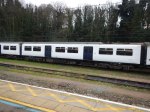
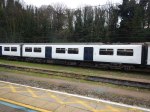
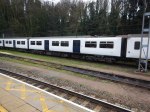
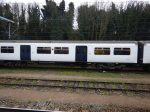
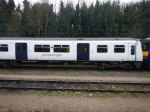
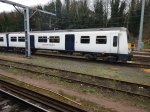
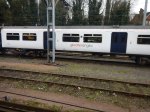
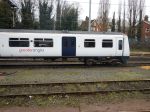
My design would see a battery under each car, if that were possible to even out the weight.
The Renatus Interior
These pictures show the Renatus train and interior.
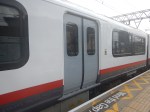
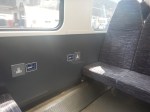
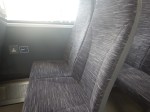
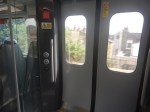

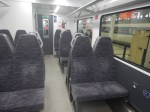
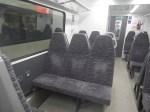

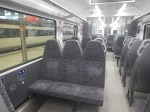
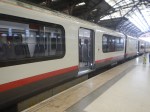
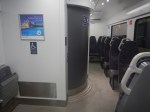
Not bad for a train approaching its mid-thirties.
Will The Train Have Third-Rail Shoe Gear?
I have read the technical documents for Porterbrook’s Class 769 train, which this is based on the Class 319 train.
In the Wikipedia entry for the Class 319 train, this is said,
Class 321 passenger units and Class 325 postal units were developed from the Class 319 design, using similar traction equipment and the same steel body design, with revised cab designs. The 325 units used a Networker style cab design.
It looks like except for cosmetic differences in the drivers cab, the Class 319, Class 321 and Class 325 trains are identical under the skin.
Does this mean that like the Class 319 train, Class 321 trains can be fitted with third-rail shoes?
It should be noted, that if the trains can be fitted with third-rail shoes, then Vivarail’s Fast Charge system can be used to charge the train.
Could Other Trains Be Converted?
It certainly looks like in addition to the Class 321 trains, both the Class 319 and Class 325 trains can be converted to battery-electric power.
These three trains are all members of British Rail’s Mark 3 family, which were designed before computers were used in structural design to be able to withstand the force of a twenty-four tonne cement truck falling on them from a bridge. On the 5th of November 2010, this nightmare scenario happened in the Oxshott Rail Accident and no-one was killed.
So to avoid the scrapyard, trains based on the Mark 3 coach, like the Class 320, Class 322, Class 455 and Class 456 trains will be happy to sign up to the Eversholt Rail and Vivarail conversion process.
- The Class 320 trains are three-cars, so would offer another type of train.
- The Class 322 trains are four-cars, were built for the Stanstead Express.
- The Class 455 trains are four-cars with third-rail gear, so would offer another type of train.
- The Class 456 trains are two-cars with third-rail gear, so would offer another type of train.
In SWR Says Farewell To ‘456’s, I talk about converting the two-car Class 456 trains after Mark Hopwood, who is now a big cheese at Great Western Railway, suggested the conversion to create a useful two-car battery-electric train.
If you doubt, the quality of the bodies and interiors of these trains from another era, I suggest you go to Liverpool Street station and take a ride in one of Greater Anglia’s Class 321 Renatus trains.
As there are six classes that could be converted, various different types of train can be converted to suit an operator’s needs.
Main Line Speed
Most of these trains are 100 mph trains, with drivers telling me, that they have superb brakes to handle stopping from that speed.
However, Class 455 and Class 456 trains are only 75 mph trains, with some of the Class 320 trains being only 90 mph trains.
Accidents And Incidents
As far as I can tell, none of these trains has had a serious accident, that has resulted in the death of a passenger.
Even the Oxshott Rail Accident only resulted in two serious and five minor injuries, with one of the serious injuries being the driver of the cement truck.
It is a remarkable safety record.
Possible Routes
I will do these on a company-by-company basis, as all companies needs are different.
c2c
c2c is an all-electric company.
I doubt there is a possibility of the company needing any battery-electric trains.
Chiltern Railways
Chiltern Railways is an all-diesel company.
They effectively have three different types of motive power and the solutions for each will be different.
- Six Class 68 locomotives haul Chiltern’s flagship main line services. As there are thirty-four of these modern locomotives in operation in the UK, I would suspect their manufacturer; Stadler will come up with a zero-carbon solution for application to these locomotives. I suspect they will become hydrogen-powered.
- Workhorses are 28 Class 168 trains totalling eighty-five carriages. One has been converted to hybrid operation by Rolls-Royce mtu and I suspect that Rolls-Royce mtu have a plan to make all these trains zero-carbon by 2030.
- There are also 39 Class 165 trains, which are diesel Networkers, dating from the 1990s.
I suspect that as the Networkers are the oldest in the fleet, these might be replaced with new rolling stock or some cascaded Turbostars.
I also wonder, whether Chiltern’s owner; Deutsche Bahn is watching the development of the Rolls-Royce mtu solution as it could be very applicable in Germany.
Govia Thameslink Railway
Govia Thameslink Railway is an all-electric railway except for two services, where diesel multiple units are used.
- Eastbourne and Ashford International – 25.4 miles one-way – Charge at Eastbourne and Ashford International using existing electrification or a charger.
- London Bridge and Uckfield – 25 miles one way – Charge at Hurst Green and Uckfield using existing electrification or a charger.
Note.
- The trains would need a third-rail capability.
- The company also has a fleet of nineteen forty-year-old Class 313 trains, which are used on Coastway services.
- The Class 321 BEMUs could take over all Coastway services between Ashford International and Portsmouth, which would probably make things easier for the operator, with respect to staff training.
The addition of a fleet of Class 321 BEMUs or similar would surely be a sensible move to improve Govia Thameslink Railway services.
Great Western Railway
This article on Railway Gazette is entitled GWR Seeks Input To Decarbonisation Plan.
This is the first four paragraphs.
Great Western Railway is to undertake a market engagement exercise to support its development of a decarbonisation plan including a move away from diesel traction.
The operator is seeking industry input to inform the creation of a Future Fleet & Depot Proposal, setting out ‘affordable’ options for decarbonisation whilst improving and aligning services to future customer needs.
This could include automated rapid battery charging and innovative approaches to energy supply.
The Future Fleet & Depot Proposal will be submitted to the Department for Transport. If accepted by DfT, GWR would then begin procurement of rolling stock and supporting infrastructure. It envisages that this could get underway in September 2024.
It looks a good plan.
In Converting Class 456 Trains Into Two-Car Battery Electric Trains, I opened the post with this quote from Mark Hopwood who at the time was the interim Managing Director of South Western Railway and in Special Train Offers A Strong Case For Reopening Fawley Line, I quote him as saying the following about the trains for the Fawley Branch Line.
However, SWR’s Mark Hopwood favours a much bolder plan. “We’d have to take a decision, once we knew the line was going ahead. But my personal belief is that we should be looking for a modern environmentally-friendly train that can use third-rail electricity between Southampton and Totton and maybe operate on batteries down the branch line.”
Pressed on whether that would mean Vivarail-converted former-London Underground stock, Hopwood ads. “It could be. Or it could be a conversion of our own Class 456, which will be replaced by new rolling stock very shortly. But I don’t think this is the time to use old diesels.
Mark Hopwood is so right about using old diesels and he has moved on to be Managing Director of Great Western Railway.
Could Mr. Hopwood be a driving force behind the decarbonisation of the Great Western Railway?
These trains will be possibilities for battery-electric trains.
- Newbury and Bedwyn – Four cars – 13.3 miles one way – Charge at Newbury using existing electrification
- West Ealing and Greenford – Two cars – 2.5 miles one-way – Charge at West Ealing
- Slough and Windsor & Eton Central – Four cars – 2.8 miles one-way – Charge at Slough using existing electrification
- Maidenhead and Marlow – Two cars – 7.1 miles one way – Charge at Maidenhead using existing electrification – Four car trains could run between Bourne End and Paddington
- Twyford and Henley-on-Thames – Four cars – 4.6 miles one-way – Charge at Twyford using extended existing electrification – Trains could run to Paddington
- Reading and Gatwick Airport – Four cars – 17.4 and 12.1 mile sections without electrification – Charge on existing third-rail electrification
- Reading and Redhill – Four cars – 17.4 and 12.1 mile sections without electrification – Charge on existing third-rail electrification
- Reading and Basingstoke – Four cars – 13.6 miles one-way – Charge at Reading using existing electrification
- Didcot Parkway and Oxford – Four cars – 10.3 miles one-way – Charge at Didcot Parkway using existing electrification
- Didcot Parkway and Banbury – Four cars – 33 miles one-way – Charge at Didcot Parkway using existing electrification – Charger or electrification needed at Banbury
- Cardiff Central and Portsmouth Harbour – Probably needs electrification in the Bristol area.
- Cardiff Central and Taunton – Probably needs electrification in the Bristol area.
- Weston-super-Mare and Severn Beach – Two/Four cars – 45 miles one-way – Charge at Bristol Temple Meads, Weston-super-Mare and Severn Beach
- Bristol Temple Meads and Avonmouth – Two/Four cars – 16.6 miles one-way – Charge at Bristol Temple Meads and Avonmouth
- Bristol Temple Meads and Filton Abbey Wood – Four cars – 4.4 miles one-way – Charge at Bristol Temple Meads
- Great Malvern and Westbury – Probably needs electrification in the Bristol area.
- Gloucester and Weymouth – Probably needs electrification in the Bristol area.
- Swindon and Westbury – Two/Four cars 32.5 miles one-way – Charge at Swindon and Westbury
- Exmouth and Paignton – Four cars – 39.5 miles one-way – Charge at Exeter St. Davids, Exmouth and Paignton
- Exeter Central and Barnstaple – Two/Four cars – 39.6 miles one-way – Charge at Exeter St. Davids and Barnstaple
- Exeter Central and Okehampton – Two/Four cars – 25.6 miles one-way – Charge at Exeter St. Davids and Okehampton
- Plymouth and Gunnislake – Two cars – 14.6 miles one-way – Charge at Plymouth and Gunnislake
- Liskeard to Looe – Two cars – 8.3 miles one-way – Charge at Liskeard
- Par and Newquay – Two cars – 20.8 miles one-way – Charge at Par and Newquay
- Truro and Falmouth Docks – 11.8 miles one-way – Charge at Truro
- St Erth and St Ives – 4.2 miles one-way – Charge at St. Erth
Note.
- Many of the charging stations could be standard systems that are available from companies like Furrer+Frey and Vivarail.
- Or alternatively, a short length of 25 KVAC overhead electrification could be erected.
- I suspect major stations like Bristol Temple Meads, Exeter St. Davids and Plymouth will be electrified.
- There probably needs to be more electrification in the Bristol area.
- Mark Hopwood’s nose, that said two-car trains will be needed, is probably right.
- Some of the trains would need a third-rail capability.
I suspect that with appropriate charging or electrification nearly all of Great Western Railways services can be run using battery-electric trains.
It does appear that Eversholt Rail Group and Vivarail have got the specification of the trains very close to the ideal, with respect to Great Western Railway’s needs.
Southeastern
Southeastern is a fully-decarbonised train operating company, with respect to passenger services.
But it wants to reopen the Hoo Branch, which will need some self-powered trains. I wrote about this in Effort To Contain Costs For Hoo Reopening.
The Class 321 BEMU would surely be a possibility to extend London and Gravesend services, by a distance of about a dozen miles to a new station at Hoo.
These trains would need a third-rail capability.
Success For The Dartmoor Line
This article on Railnews is entitled Railway Braces For Weekend Changes.
The article flags up that rail timetables will change to the summer timetable and uses the Dartmoor Line where services will go hourly, as an example.
The article says this about the changes to the Dartmoor Line and the success of the restored service to Okehampton station.
One of the many changes includes the doubling of service frequencies on the recently-reopened Dartmoor Line between Exeter and Okehampton, where scheduled passenger trains were restored last November. From Sunday trains will be running every hour, and rail minister Wendy Morton visited Okehampton yesterday to celebrate the improvements.
The reopening is part of the government’s promise to ‘Restore your railways’, and the Okehampton line is the first practical example of this in action. The line was upgraded for £10 million less than the £40.5 million budgeted, and Network Rail said the route has proved ‘hugely popular’, because passenger numbers have been more than double than predicted, reaching an average of over 2,500 a week during the first 20 weeks. The number of passengers at nearby Crediton, where the Dartmoor Line joins services on the Tarka Line from Barnstaple, is also 39 per cent higher than it was before the pandemic.
I have some thoughts.
Reopening Of The Line
Network Rail can build projects on time and on budget, if they get the project management right.
Passenger Numbers Between Exeter And Okehampton
If 2,500 passengers per week can use the line in the winter, when there is only one train per two hours (tp2h), how many passengers will use the train, when there is an hourly service?
2,500 passengers per week, throughout the year would be 125,000 passengers per year and as surely the summer will be busier, I don’t think it will be an unreasonable figure.
Okehampton station car park appears to have around 300 spaces, so at 2,500 passengers per week, there might be a not too distant day, when it fills up.
Passenger Numbers At Crediton
I am not surprised that traffic at Crediton is up by 39 percent.
Consider.
- Pre-pandemic, Crediton station had one train per hour (tph) to and from Exeter.
- Post-pandemic, Crediton has three trains per two hours to and from Exeter.
It looks like the train frequency has been increased by 50 % and the number of passengers has increased by 39 %.
That surely is not surprising and passenger numbers might increase further when one tph are running between Exeter and both Barnstaple and Okehampton, if there are more possible passengers to attract.
Car parking at Crediton station may also be a problem, as there appears to be less than a hundred spaces.
Okehampton Parkway Station
Okehampton Parkway Station is likely to be built to the East of Okehampton. Wikipedia says this about the station.
Okehampton Parkway is a proposed railway station in Okehampton on the Dartmoor Line. The station would be part of the Devon Metro and has been described as a priority station. The station is to be sited at the A30 junction at Stockley Hamlet and would be sited at the Business Park at Okehampton as well as serving a further 900 homes close to the site.
Wikipedia, also says that Devon County Council has bought the site.
This must be one of the best sites to build a parkway station in the UK.
- It’s on the dual-carriageway A 30, between London and Cornwall.
- The good people of Devon seem to like to use trains given the passenger numbers at Okehampton and Crediton stations.
- Housing is being built nearby.
This Google Map shows Devon and Cornwall to the West of Okehampton and Barnstaple.
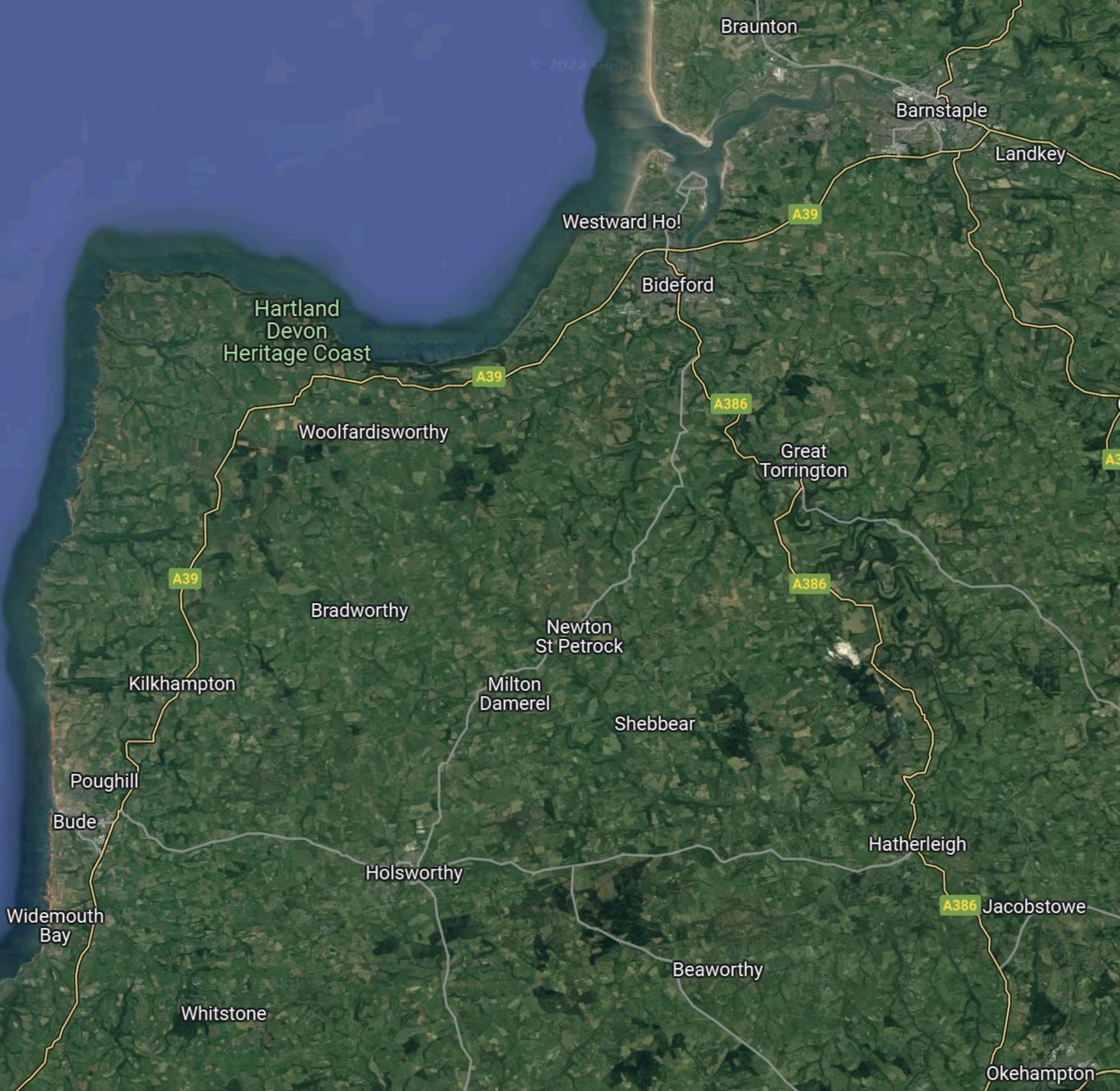
Note.
- Okehampton with two stations is in the South-East corner of the map.
- Barnstaple, which has a station, is in the North-East corner of the map.
- There are well-visited holiday resorts all along the cost including Ilfracombe, Westward Ho! and Bude.
It strikes me that if Devon put together a network of zero-carbon buses, it would be well-used and they could sell the area for zero-carbon holidays.
Rolling Stock
Currently, the Okehampton and Barnstaple services are operated by Class 150 trains.
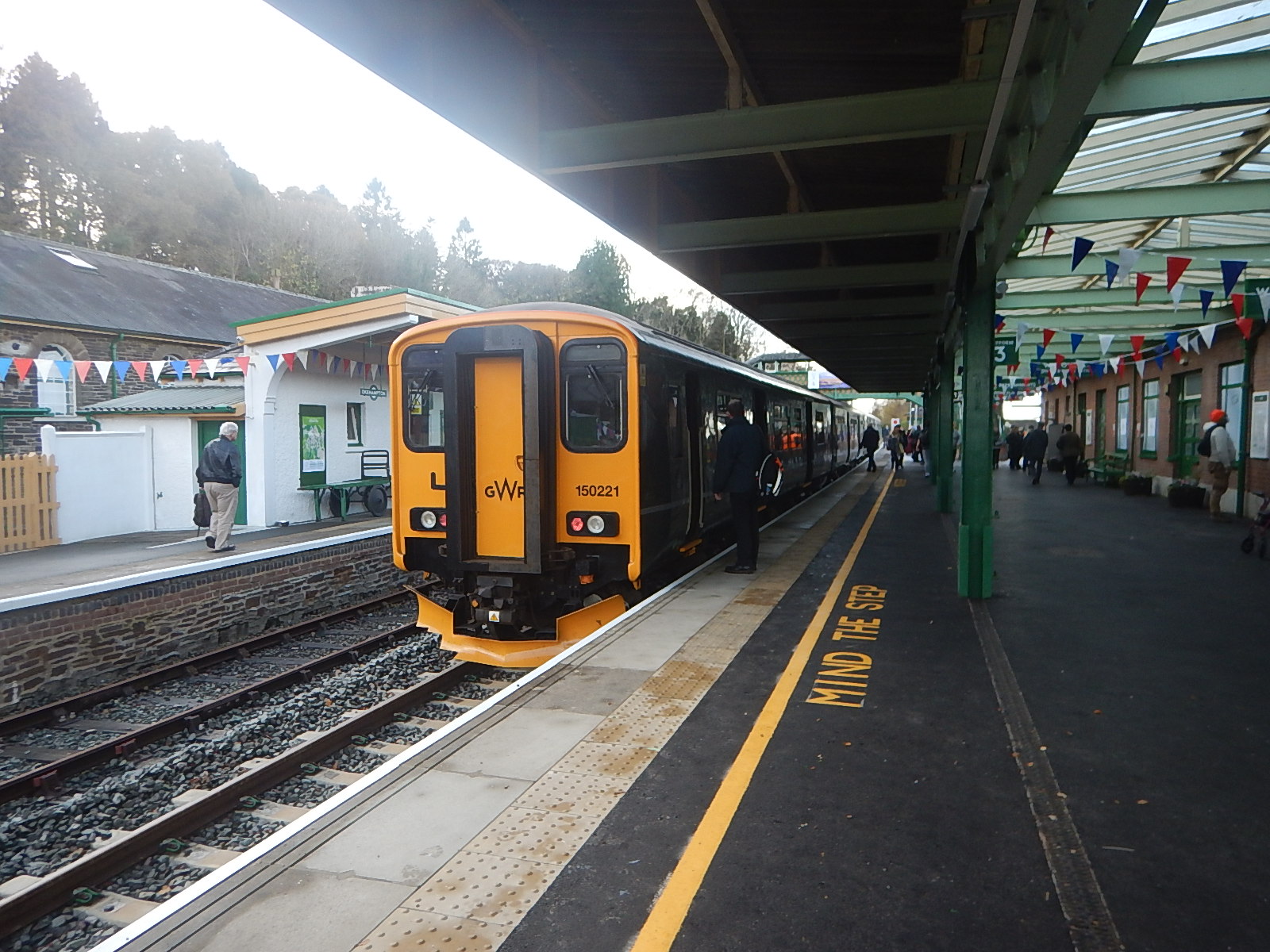
These are definitely not good enough, due to their age and diesel power.
The distances of the two services are as follows.
- Exeter and Barnstable – 39.5 miles
- Exeter and Okehampton – 25.5 miles
I feel that these routes could be handled by a battery-electric train like the Hitachi Regional Battery Train, which is shown in this Hitachi infographic.

Note.
- For these routes, the trains would probably be based on four-car Class 385 trains, with a top speed of 90 mph.
- Charging would be in Exeter.
- Charging may not be needed at Barnstaple and Okehampton as the routes are downhill.
If battery-electric trains can’t handle the routes, I’m sure hydrogen-powered trains could.
Are The Office Of Rail And Road (Or Their Lawyers) Too Risk Averse?
An article in the April 2022 Edition of Modern Railways is entitled Uckfield Third Rail Is NR Priority.
This is the first two paragraphs.
Electrification of the line between Hurst Green and Uckfield in East Sussex and the remodelling of East Croydon are the top Network Rail investment priorities south of the river, according to Southern Region Managing Director John Halsall. He told Modern Railways that third rail is now the preferred option for the Uckfield Line, as it would allow the route to use the pool of third-rail EMUs in the area. This is in preference to the plan involving overhead electrification and use of dual-voltage units put forward by then-Network Rail director Chris Gibb in his 2017 report (p66, September 2017 issue).
NR has put forward options for mitigating the safety risk involved with the third-rail system, including switching off the power in station areas when no trains are present and section isolation systems to protect track workers. ‘The Office of Rail and Road hasn’t yet confirmed third rail would be acceptable, but we are working out ways in which it could be’ Mr Halsall told Modern Railways. He added that bi-mode trains with batteries were not a feasible option on this line, as the 10-car trains in use on the route would not be able to draw sufficient charge between London and Hurst Green to power the train over the 25 miles on to Uckfield.
As an Electrical Engineer, who’s first real job in industry at fifteen was installing safety guards on guillotines nearly sixty years ago, I don’t believe that an acceptable solution can’t be devised.
But as at Kirkby on Merseyside, the Office Of Rail And Road, do seem to be stubbornly against any further third-rail installations in the UK.
I wonder what, the Office Of Rail And Road would say, if Transport for London wanted to extend an Underground Line for a few miles to serve a new housing development? On previous experience, I suspect Nanny would say no!
But is it more than just third-rail, where the Office Of Rail And Road is refusing to allow some technologies on the railway?
Battery-Electric Trains
I first rode in a viable battery-electric train in February 2015, but we still haven’t seen any other battery-electric trains in service on UK railways running under battery power.
Does the Office Of Rail And Road, believe that battery-electric trains are unsafe, with the lithium-ion batteries likely to catch fire at any time?
Hydrogen-Powered Trains
The hydrogen-powered Alstom Coradia iLint has been in service in Germany since September 2018.
But progress towards a viable hydrogen train has been very slow in the UK, with the only exception being demonstrations at COP26.
Are The Office Of Rail And Road still frightened of the Hindenburg?
Although hydrogen-powered buses have been allowed.
A Tale From Lockheed
When Metier Management Systems were sold to Lockheed, I worked for the American company for a couple of years.
I met some of their directors and they told some good American lawyer jokes, such was their disgust for the more money-grabbing of the American legal profession.
At the time, Flight International published details of an innovative landing aid for aircraft, that had been developed by Lockheed. It was a suitcase-sized landing light, that could be quickly setup up on a rough landing strip, so that aircraft, like a Hercules, with an outstanding rough field performance could land safely.
I read somewhere that a Flying Doctor service or similar had acquired some of these landing aids, so they could provide a better service to their clients.
But Lockheed’s lawyers were horrified, that they would get sued, if someone was seriously injured or even died, whilst the aid was being used.
Apparently, in the end, the aids were marked Not For Use In The USA.
Conclusion
I do wonder, if third-rail electrification, battery-electric trains and hydrogen-powered trains have come up against a wall created by over-cautious lawyers.
 The Anonymous Widower