Bank Station – 16th May 2022
The new Northern Line platforms at Bank station are now open and I went this morning to have a quick look.
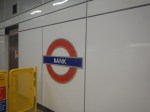
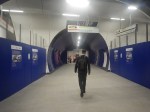
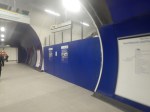

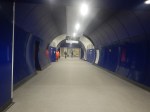
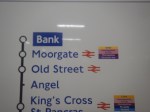


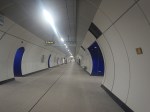
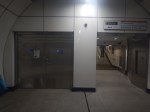
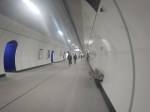

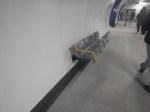


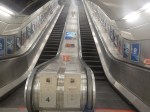
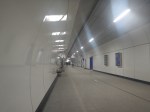
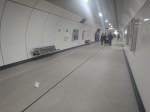


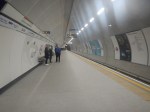


These are my thoughts.
The New Southbound Platform Is Wide
The new Southbound platform is wide and compares well with the wide platform at Angel station, that I wrote about in All Platforms Should Be Wide Like This.
This picture shows the Southbound platform at Angel., which dates from 1992.

And this the new Southbound platform at Bank.
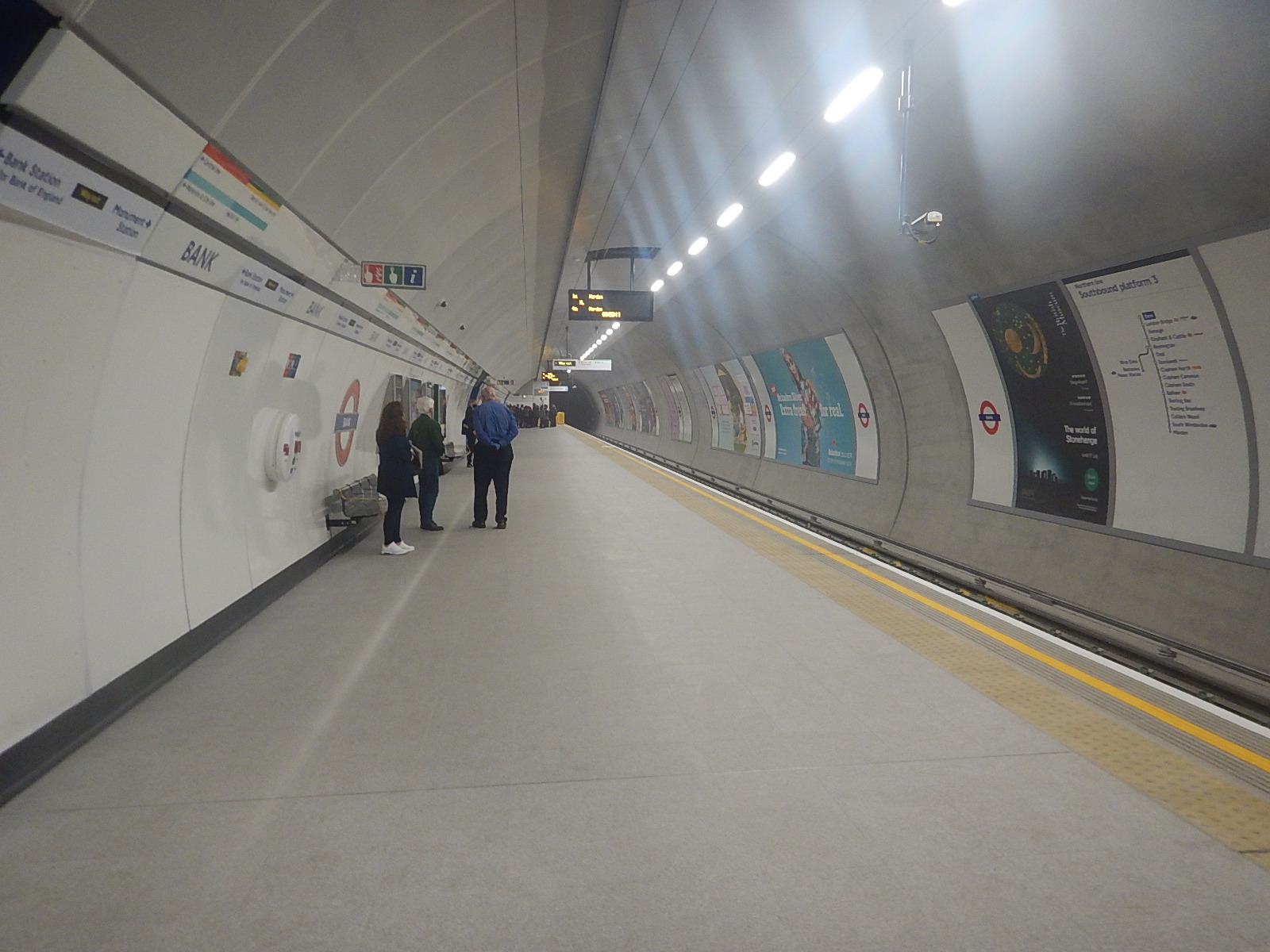
Two similar designs, but thirty years apart.
Simple Decor
The two pictures also illustrate the simple decor used in the rebuilt station.
The New Southbound Platform Is A Sprayed Concrete Tunnel
These pictures show the far wall of the new Southbound platform.


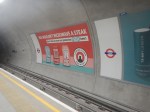

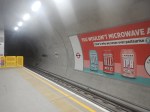

It looks from my untrained eye to be lined with sprayed concrete. I learned more about the use of sprayed concrete in tunnels, when I visited TUCA in Ilford, during Open House in 2012, which I wrote about in Open House – TUCA.
The Existing Northbound Platform Is Narrow
The Northbound platform is effectively as before, but with large and small holes in the wall to access a wide parallel pedestrian tunnel behind the wall.
There is a lot of circulation space.
The Parallel Pedestrian Tunnel
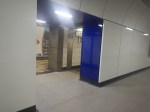
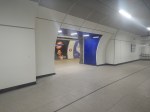
The old Southbound platform has been turned into a parallel pedestrian tunnel separated from the Northbound platform, by a wall that has four small and eight larger pedestrian-sized holes through it.
These pictures show a selections of the holes in the wall.

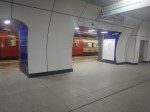
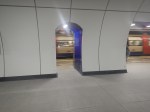


In addition.
- The tunnel has escalators at the Southern end connecting to Monument station.
- The tunnel has stairs at the Northern end to the Central Line.
- Further connections will be added.
- It also has seats along its length. These will be mainly for Northbound passengers, waiting for trains, who can see the trains through the large holes.
It is an unusual layout and I’ve never seen anything like it before anywhere in London, the UK, Europe or the world.
Wot No More Marble?
The Northbound Northern Line used to have a platform with marble facings.
Some of marble is still there as these pictures show.
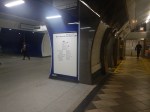


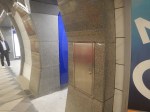
Note that the old rat-run to the DLR is still there between the platforms.
The Wide Cross Tunnels
The wide cross tunnels link the two sides of the station together and to the escalators and moving walkways in the middle of the station.
This visualisation shows the station.
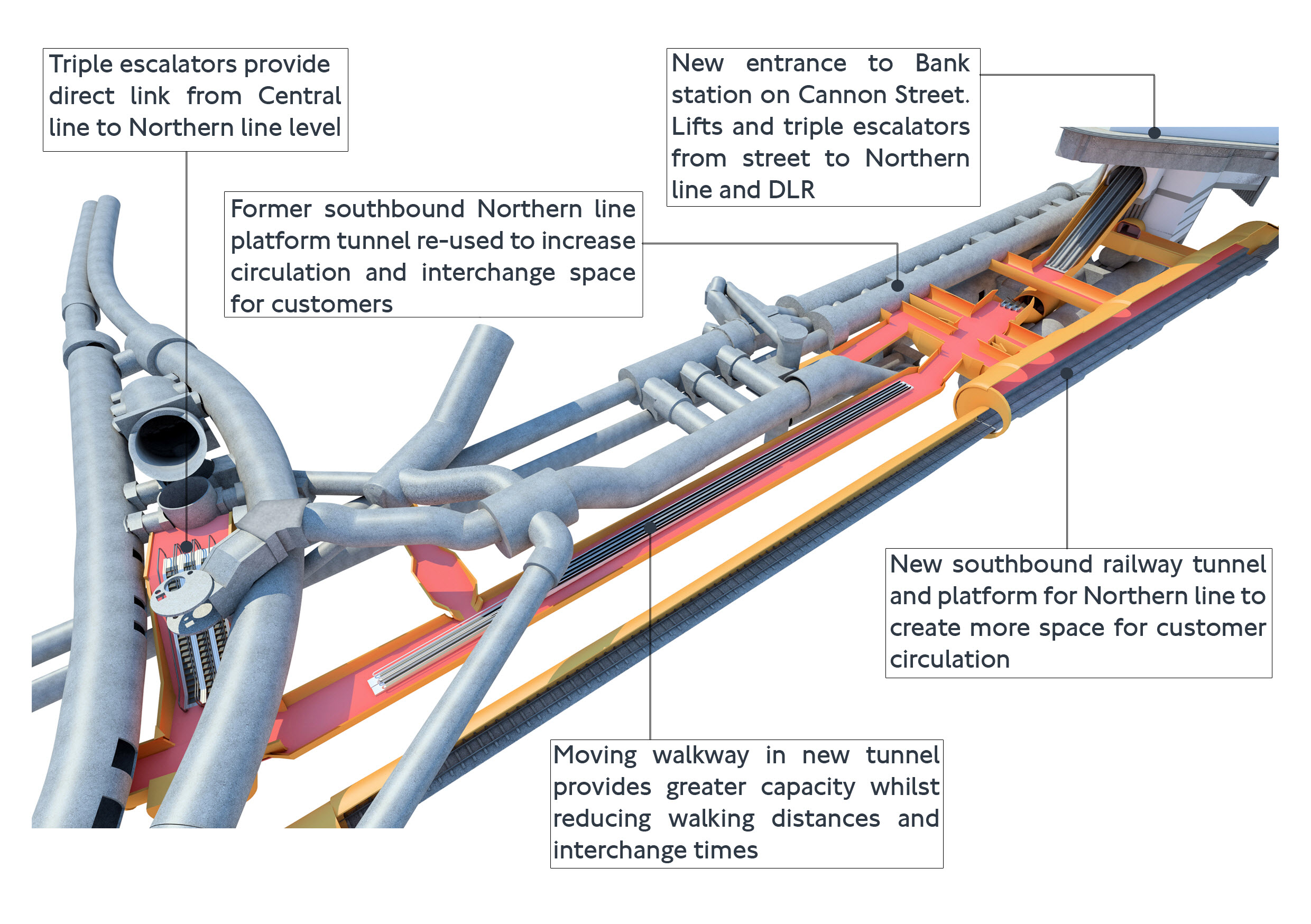
Note.
- The only more-or-less completed bits are the two Northern Line tunnels and platforms and parallel pedestrian tunnel.
- The four cross tunnels can be picked out towards the far end of the station.
- Three of the cross tunnels can now be used by passengers.
- The moving walkway can be accessed from the two cross tunnels nearest to the Central Line.
- The escalators from the yet-to-open Cannon Street entrance appear to lead directly into a cross tunnel and a parallel tunnel to the moving walkway.
This station has definitely been designed for rabbits.
Level Access To The Trains
This picture shows the level access on the new Southbound platform.

And this shows the step-up into the train on the old Northbound platform.

I wonder, if the platform can be raised to make the Northbound as good as the Southbound.
There Is Still A Lot To Do
At present the only sections of the project that are completed and visible to passengers are the following.
- The new wide Southbound platform.
- The refurbished Northbound platform, which is a similar width to before.
- The wide passenger tunnel behind the Northbound platform, that was converted from the old Southbound tunnel.
- The four new cross tunnels between the two platforms. Some still need finishing and there are spaces, where escalators will slot in.
It would appear that at least the following need to be done.
- Open up the new Cannon Street entrance
- Add the escalators and lifts.
- Put in the moving walkways between the Northern and Central Lines.
But it looks that everything left to do is small compared to the tunnel work that needed the closure from January.
This page on the TfL web site gives these dates.
- 16 May 2022: New southbound platform and concourse open
- Autumn 2022: DLR escalator and Central line link open
- Late 2022: Bank station capacity upgrade works due to be completed. New station with step-free access opens on Cannon Street.
It looks to me, that the project management has been done well and after hitting the first milestone, they appear to be on track.
Elizabeth Line To Open On 24 May 2022
The title of this post, is the same as that of this press release on Crossrail.
This is the sub-title.
Trains to run every five minutes 06:30 – 23:00 Monday to Saturday between Paddington and Abbey Wood.
And these are the first two paragraphs describe what will open.
Transport for London (TfL) has today confirmed that, subject to final safety approvals, the Elizabeth line will open on Tuesday 24 May 2022. The Elizabeth line will transform travel across London and the South East by dramatically improving transport links, cutting journey times, providing additional capacity, and transforming accessibility with spacious new stations and walk-through trains. The Elizabeth line will initially operate as three separate railways, with services from Reading, Heathrow and Shenfield connecting with the central tunnels from autumn this year.
In the coming weeks, Elizabeth line signage will continue to be uncovered across the network in preparation for the start of customer service. The updated Tube and Rail map will also be released later showing the new central section stations connected with the rest of the TfL network for the first time.
These are some points from the rest of the press release.
- Work will continue in engineering hours and on Sundays to allow a series of testing and software updates in preparation for more intensive services from the autumn.
- All services between Reading and Heathrow to Paddington and Shenfield to Liverpool Street, currently operating as TfL Rail, will be rebranded to the Elizabeth line.
- Passengers wanting to do longer journeys may need to change at Paddington or Liverpool Street stations.
- Services from Reading, Heathrow and Shenfield will connect with the central tunnels in autumn when frequencies will also be increased to 22 trains per hour in the peak between Paddington and Whitechapel.
- Paddington and Canary Wharf will have a journey time of only 17 minutes. It takes thirty minutes by the Underground.
- All Elizabeth line stations will be staffed from first to the last train, with a ‘turn up and go’ service offered to anyone needing assistance.
- Step-free access is in place from street to train across all Elizabeth line stations between Paddington and Woolwich.
- Work is ongoing at Bond Street Elizabeth line station, which means that it will not open with the other stations on 24 May. It will open later in the year.
- Changes will be made to 14 bus routes to improve links to Elizabeth line stations in east and south-east London, where many customers will use buses to get to and from stations.
- Full services across the entire route introduced by May 2023.
I have some thoughts.
My Routes To Crossrail
Like many in London, I will have multiple routes to and from Crossrail.
- I could take a 21 or a 141 bus from the bus stop round the corner to the Moorgate end of Liverpool Street station on Crossrail.
- I could take a 38 bus from another bus stop round the corner to Tottenham Court Road station on Crossrail.
- I could also take a 38 or 56 bus from this stop to Angel station and get a Northern Line train to Liverpool Street station on Crossrail.
- I could also take a 38 or 56 bus from this stop to Essex Road station and get a Northern City Line train to Liverpool Street station on Crossrail.
- I could also take a 30 bus from this stop to Highbury & Islington station and get a Northern City Line train to Liverpool Street station on Crossrail.
- I could take a 30, 38 or 56 from yet another stop round the corner to Dalston Junction station and get an Overground train to Whitechapel on Crossrail.
- I could even walk a few hundred metres to take a 76 bus from the stop in the centre of de Beauvoir Town to the Moorgate end of Liverpool Street station on Crossrail.
One of the reasons, I bought my house, was that it would have good connections to Crossrail.
But there is a cloud on the horizon.
My easiest route will probably be to use a 21 or 141 bus direct to Moorgate.
But our South London Mayor in his wisdom is hoping to retire the 21 bus leaving us with just the 141 direct to Moorgate.
I am by training a mathematical modeller and I have lived much of my life at various points on the transport corridor from Cockfosters to Moorgate formed by the Piccadilly Line and the 141 bus. I can even remember using the predecessor of the 141 bus, which was the 641 trolley-bus to come up to London with my grandmother in the 1950s.
I’m certain that when Crossrail opens, that if you live in say Wood Green, Southgate and Oakwood, if you want to use Crossrail to get to Heathrow or Canary Wharf, you will be highly likely to take the Piccadilly Line to Manor House and then take a 141 bus to Moorgate to pick up Crossrail.
The only alternative will be to change at Finsbury Park for the Moorgate Line, which even after the improvements at Finsbury Park, would not be an easy change with a heavy bag or a baby in a buggy.
I talked about this problem before in Does London Need High Capacity Bus Routes To Extend Crossrail?, where I said this.
I suspect that when Crossrail opens, the 141 bus will be heavily used by travellers going between the Northern reaches of the Piccadilly Line and Crossrail at Moorgate.
The 141 bus goes between London Bridge station and Palmers Green and it has a route length of about nine miles.
Currently, buses run every fifteen minutes or so, but I doubt it will be enough in future as Transport for London are rerouting the closely-related 21 bus.
I suspect any route seen as an extension of Crossrail needs to have the following characteristics.
- High frequency of perhaps a bus every ten minutes.
- Interior finish on a par with the Class 345 trains.
- Wi-fi and phone charging.
I would also hope the buses were carbon-free. Given that some of these routes could be quite long, I would suspect hydrogen with its longer range could be better.
It should be noted that the 43 bus, that passes Moorgate, is already carbon-free.
I will be interested to see what action is taken by Transport for London.
I believe their current plan is lacking and will make it difficult for those where I live to get to Crossrail at Moorgate.
Feeder Bus Routes To Crossrail
I believe that there could be considerable scope for more high-capacity high-quality feeder routes to and from Crossrail.
Currently, there are four bus routes that pass Moorgate station, that come into this category.
- 21 – Lewisham Shopping Centre and Newington Green
- 43 – London Bridge Station and Friern Barnet
- 76 – Waterloo Station and Stoke Newington
- 141 – London Bridge Station and Palmers Green
How many other routes are there, that stop outside a Crossrail station?
I suspect that for many Londoners and visitors, a bus to Crossrail will be their fastest way to their ultimate destination.
For instance, my fastest way to Bond Street, Canary Wharf, Ealing, Heathrow, Paddington and Reading will start with a bus to the Crossrail entrance at Moorgate station.
And it looks like Transport for London will be reducing my bus frequency to Moorgate, when it probably needs a slight increase.
Crossrail’s North-West Essex Extension
One of the elegant parts of Crossrail’s design is its interchange with the Central Line at Stratford station.
- The Eastbound Crossrail and Central Line platforms share an island platform.
- The Westbound Crossrail and Central Line platforms share an island platform.
This arrangement allows step-free cross-platform interchange between the two lines.
This map, which was clipped from Wikipedia, shows the North-Eastern end of the Central Line.
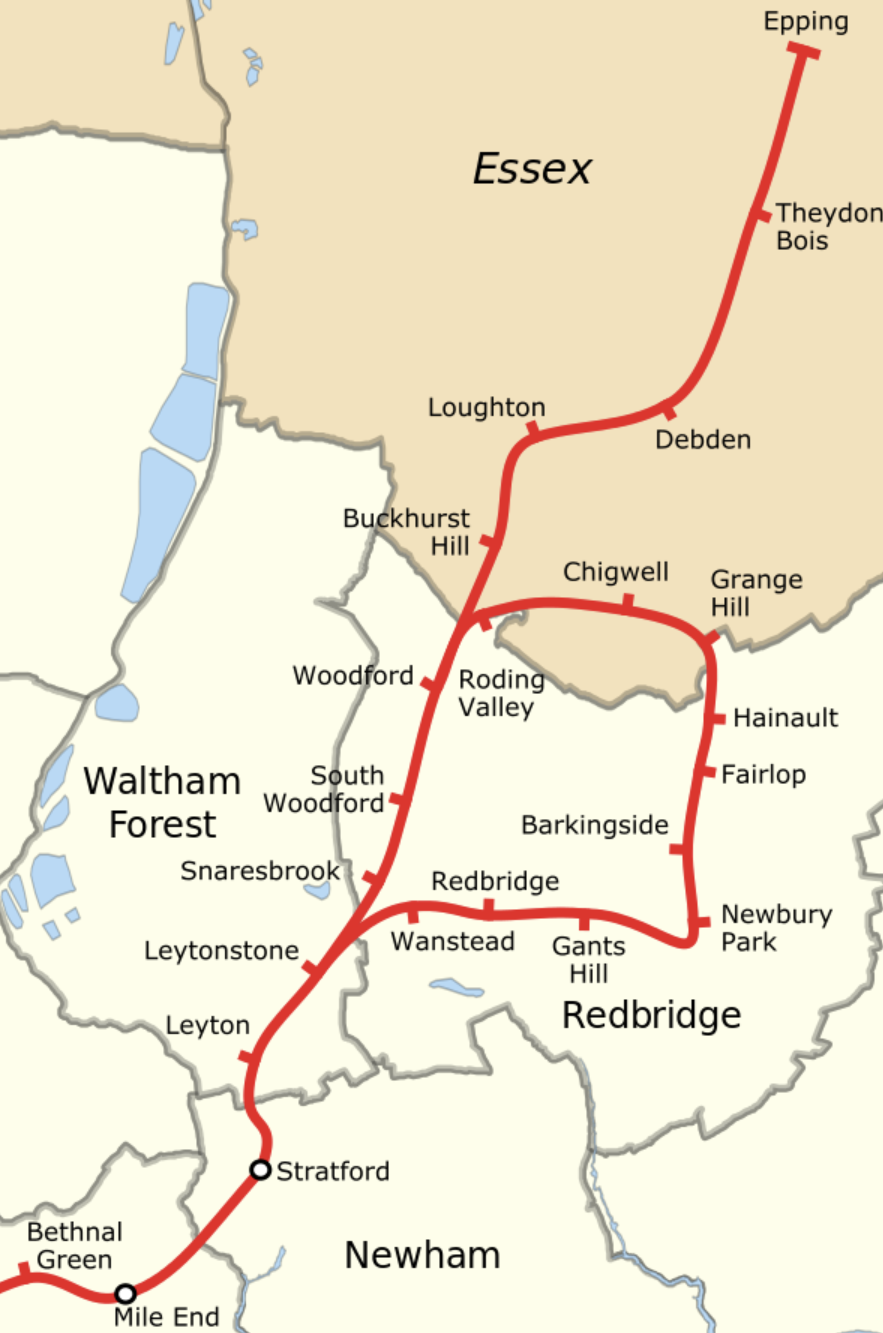
I am sure, that those who live to the North-East of Stratford station will be some of the residents of London, who benefit the most from Crossrail.
The following stations are step-free.
- Buckhurst Hill
- Debden
- Epping
- Hainault
- Newbury Park
- Roding Valley
- South Woodford
- Stratford
- Woodford
I suspect more stations will be made step-free.
Cross-Platform Interchanges
It was originally planned, that a similar cross-platform interchange would have been built at Walthamstow Central station, that would have allowed the Victoria Line to continue to Woodford.
As the Stratford interchange works so well, I’m surprised the track layout hasn’t been used at more places on London’s rail network.
The Whitechapel Reverse
In Is Whitechapel Station Going To Be A Jewel In The East?, I discussed the importance of Whitechapel station.
Whitechapel station solves the round-the-corner problem for passengers, who want to go between say Romford and Woolwich stations.
Passengers just walk the few metres between the two platforms at Whitechapel station and take the first train to their destination.
I will be interested to see if Crossrail has an effect on traffic over the Dartfood Crossing and through the tunnels. How many will use Crossrail instead, when they are visiting their team, clients or family on the other side of the river?
I call stations like Whitechapel reversal stations, as they allow passengers to easily reverse direction. There is more about reversal stations in Reversal Stations.
The New Tube Map
These pictures show the new tube map.
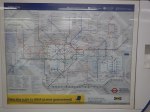
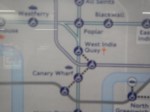
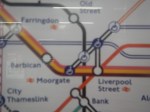
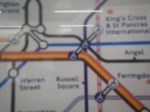
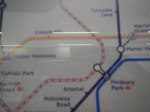
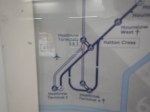
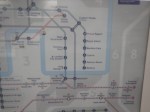
Note.
- Crossrail is shown as a double purple line.
- Thameslink is also shown as a double pink line.
- There are certainly some drawing gymnastics to fit it all in.
But Harry Beck’s design survives.
Abbey Wood Station
The more I look at the design of Abbey Wood station and compare it to the Crossrail/Central interchange at Stratford, the more I think it is a substandard station.
Would it have been better, if one island platform had been designed for Westbound services and the other had been designed for Eastbound services? Crossrail services might be on the outside with North Kent services between the two island platforms.
This would have enabled a journey between say Rochester and Bond Street to have been done with a simple cross-platform change at Abbey Wood station.
No Victoria Line Interchange
I was surprised by these omissions.
This article on London Reconnections is entitled Horrible Holborn: When Postponement Is Not An Option.
It is well worth a read.
One section is entitled The interchange that isn’t, where this is said.
Whilst modelling showed that Bond St and Tottenham Court Road would be capable of managing the expected passengers once the Elizabeth line opens, it was clear that a combined Oxford Circus/Bond St (Crossrail) east entrance could not. If you have ever wondered why the Elizabeth line has no sub-surface interchange with the Victoria line at Oxford Circus despite the eastern ends of the Bond Street platforms being tantalisingly close, this is your answer. As the Victoria line at Oxford Circus is never likely to be able to handle the expected numbers of people that would board if there were direct access from the Bond St Crossrail platforms, it appears the two stations will never be linked with publicly accessible passages below ground.
In other words, you would solve the problem of the interchange between the Elizabeth and Victoria Lines and create severe overcrowding on the Victoria Line.
When I have supper with my son at the Angel, he comes from his home in Walthamstow, via a cross-platform change at Euston.
Routes like this allow those that live on the Victoria Line to access the Elizabeth Line.
No Piccadilly Line Interchange
The article says this about an Elizabeth Line station at Holborn.
It is pertinent to note that an early plan to have a Crossrail station at Holborn was abandoned. In reality, it would have been too close to Tottenham Court Road station to be really worthwhile. It would have restricted the alignment (bearing in mind that sub-surface Crossrail stations have to be straight and level). It would also have added considerable expense and may have put the entire project at risk. At the end of the day, it just wasn’t a good business case. Whilst a station on the scale of the Elizabeth line could not be justified, however, an improvement of the existing Holborn station could.
The article also says that upgrading Holborn station would not be easy, even without the connection to the Elizabeth Line.
London’s Other New Underground Line
In the middle of next month, Phase One of London’s other new Underground line will open.
The Bank station upgrade may only be a short section of new Southbound tunnel and track for the Northern Line and a much expanded station, but it promises to do proportionally for the City of London, what Crossrail will do for the whole of London.
The lucky Ian of IanVisits has been allowed to descend into the depths of the new section of the station with his camera and has posted this report on his web site, which is entitled Behind The Scenes At Bank Tube Station’s Huge Upgrade Project. The report contains twenty-four revealing photographs.
If ever there was a must-read, then Ian’s article must be it.
A Last Look At Bank Station Before Shutdown
On Sunday, I took a last look at the Northern Line before its closure on January 15th until mid-May 2022.
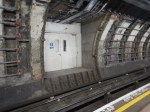
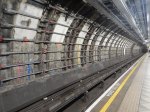

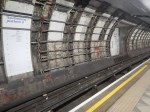
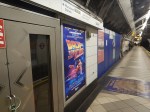
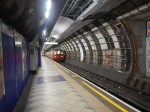
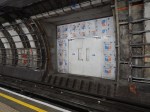
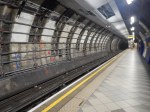
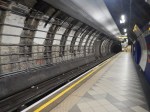
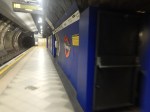
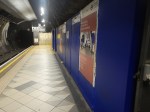
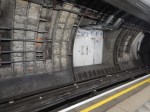
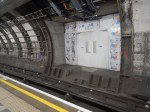
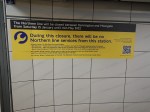

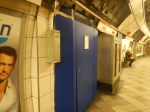
Note.
- The tunnel without cladding on the wall is the Southbound tunnel.
- The Southern tunnel will be opened up and will become a platform for the Northern tunnel.
- The doors in the Southern tunnel will lead to the new Southern tunnel, which is a number of metres to the West.
- The last two pictures are on the Central Line.
I had a brief chat with staff and they are not sure yet, if the Waterloo and City Line will be open during the closure.
Epping Station – 30th August 2021
In Essex Councillors Call For Underground Link, I discussed the pros and cons of extending the Central Line from Epping station to Harlow.
As I didn’t have any pictures of Epping station. I went to the station and took these.
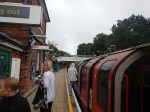
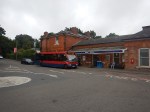
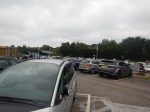
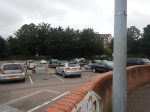
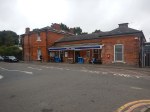
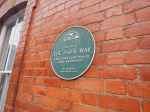
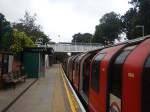
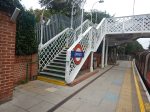
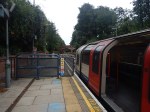
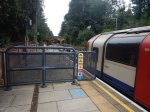
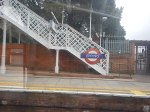
This map from cartometro.com shows the track layout at Epping station.
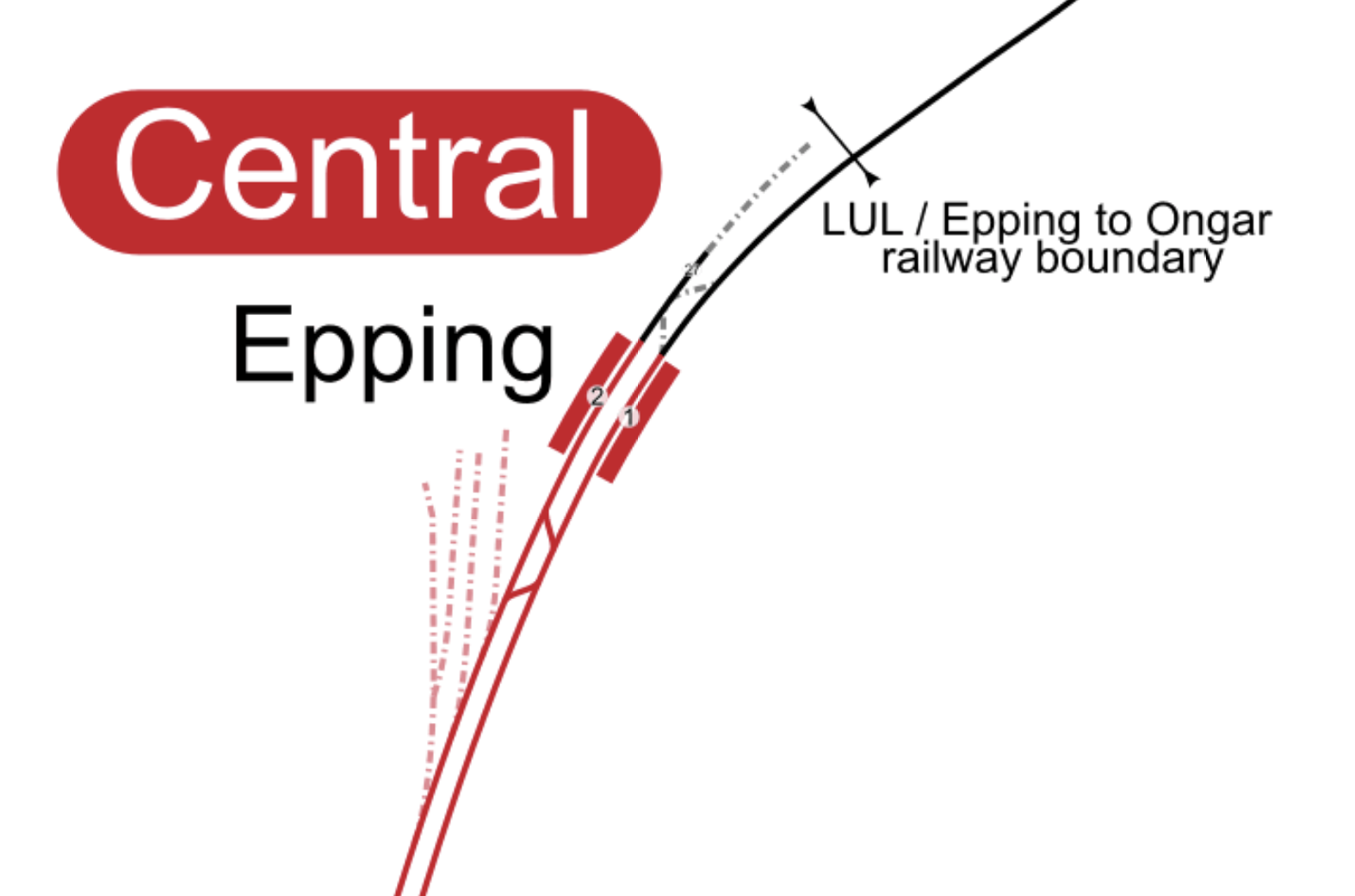
Note.
- There are two platforms both of which are used to terminate trains.
- Platform 2 is step-free, but Platform 1 is only step-free for exit only.
- There is a large car park with 541 spaces including twelve for disabled drivers.
I suspect this means, that someone who has difficulty with the bridge and has parked their car in the car park has a problem.
To my mind there are two obvious solutions.
- Put in a second step-free bridge at the station.
- If no trains go past the ends of the platform, it might be possible to build a level walkway across the two tracks.
It would all depend on the budget and any plans to extend the Central Line to Harlow or on to the tracks of the Epping Ongar Railway.
It would certainly be possible to extend Platform 1 to serve as a platform for the Epping Ongar Railway and have a walkway across the tracks to give step-free access between all three platforms.
- It would make the heritage Epping Ongar Railway into a unique London tourist attraction with direct access from the Underground.
- It might even be possible for the heritage railway to run connection services between Epping and Ongar at times, when they would be financially worthwhile and operationally possible.
There are certainly possibilities.
Essex Councillors Call For Underground Link
The title of this post, is the same as that of this article on Railnews.
This is the first paragraph.
Councillors in Harlow are calling for a new Underground link, saying that they are examining ‘all possibilities for improving and modernising transport connections’.
I’ve tackled this subject before in Does Harlow Need An Improved Train Service?, but this time I’m starting with what is possible and working backwards.
Harlow’s Current Train Service
Currently, these trains serve Harlow Town station.
- Stratford and Bishops Stortford – 2 tph – via Lea Bridge, Tottenham Hale, Waltham Cross, Cheshunt, Broxbourne and Sawbridgeworth
- London Liverpool Street and Cambridge North – 1 tph – via Tottenham Hale, Cheshunt, Broxbourne, Bishop’s Stortford, Audley End, Whittlesford Parkway and Cambridge
- London Liverpool Street and Cambridge North – 1 tph – via Tottenham Hale, Cheshunt, Broxbourne, Roydon, Sawbridgeworth, Bishop’s Stortford, Stansted Mountfitchet, Elsenham, Newport, Audley End, Great Chesterford, Whittlesford Parkway, Shelford and Cambridge
- London Liverpool Street and Stansted Airport – 1 tph – via Tottenham Hale
- London Liverpool Street and Stansted Airport – 1 tph – via Tottenham Hale and Stansted Mountfitchet
In addition these services run through Harlow Town station without stopping.
- London Liverpool Street and Stansted Airport – 2 tph – via Tottenham Hale
Note.
- tph is trains per hour
- The Stansted services are fast services and take 29 minutes between London Liverpool Street and Harlow Town.
- The other services seem to take a few minutes longer.
Summarising the services gives the following.
- Eight tph pass through the station of which six tph stop.
- Cambridge and Cambridge North has a 2 tph service.
- London Liverpool Street has a 4 tph service.
- Stansted Airport has a 2 tph service.
- Stratford has a 2 tph service.
- Tottenham Hale has a 6 tph service.
Each of Greater Anglia’s new Class 720 trains, when working as a ten-car formation can carry well over a thousand passengers.
Harlow Town station has a fairly good service, but it could probably be improved.
What Are Harlow’s Councillors Suggesting
This paragraph in the Railnews article gives the councillors wish list.
Harlow Councillor Michael Hardware is portfolio holder for strategic growth. He said: ‘With Harlow’s close proximity to London our plans include investigating the potential for the extension of the central line to Harlow, lobbying to extend London Transport Zones to Harlow, examining connectivity to Crossrail 2 and promoting four tracking of the main line to Stansted Airport as well as improving existing public transport links in and out of the town.
I’ll look at each proposal in turn.
Extending The Central Line To Harlow
Epping and Harlow are about nine miles apart.
This Google Map shows the two towns and the M11 that runs to the East of both towns.
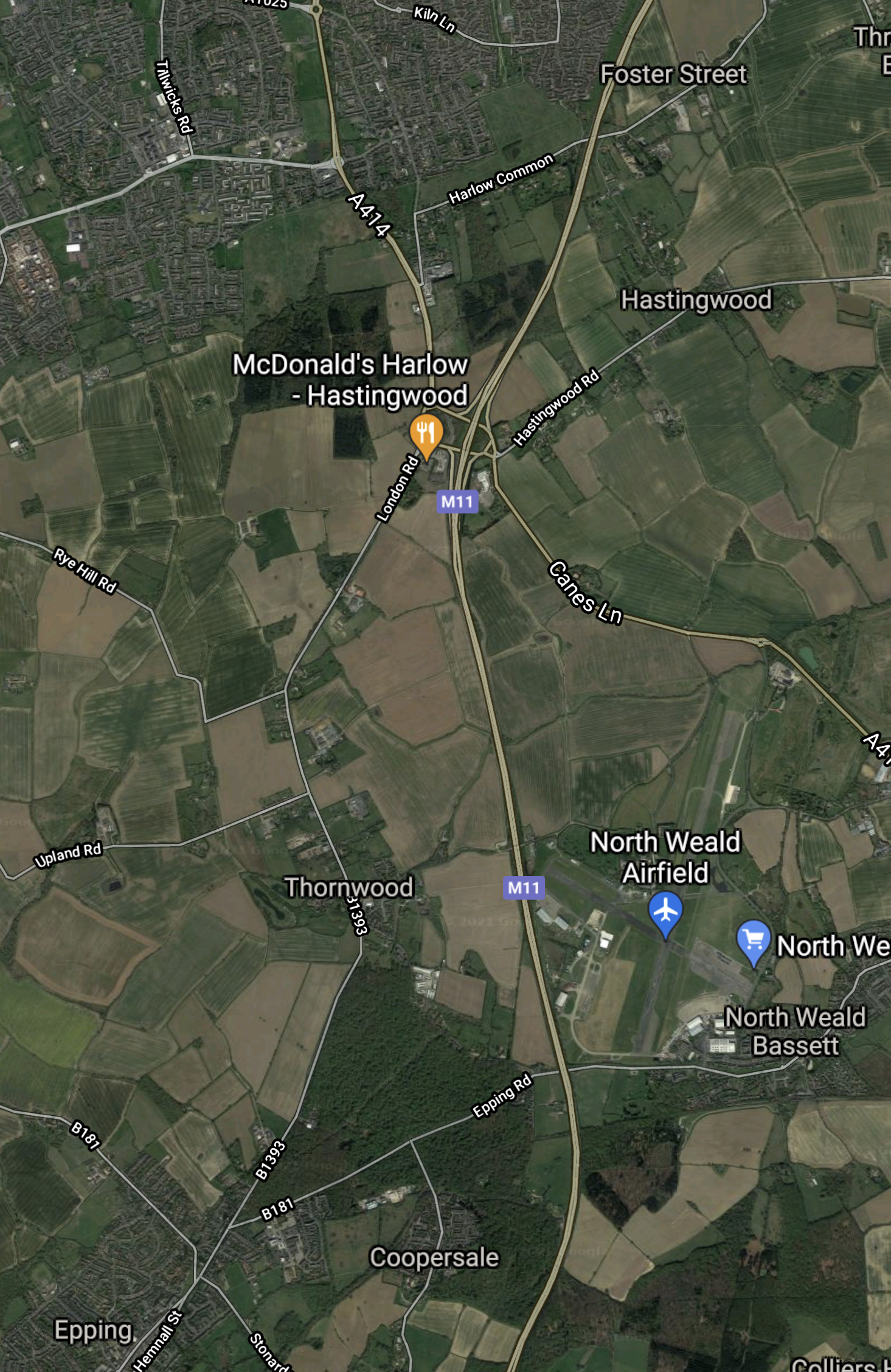
Note.
- Epping is in the South-West corner of the map.
- Harlow, which is a large town of nearly 90,000 residents is at the top of the map.
- The M11 runs North-South across the map to the East of both towns.
- North Weald Airfield lies to the East of the motorway.
Would it be possible to run an extension of the Central Line from Epping to Harlow?
It could run up the West side of the motorway.
- The terminus could be in South-East Harlow close to Junction 7 of the M11.
- Any plans for the development of North Weald Airfield could have a big effect on any plans.
This Google Map shows the location of Epping station with respect to the motorway.
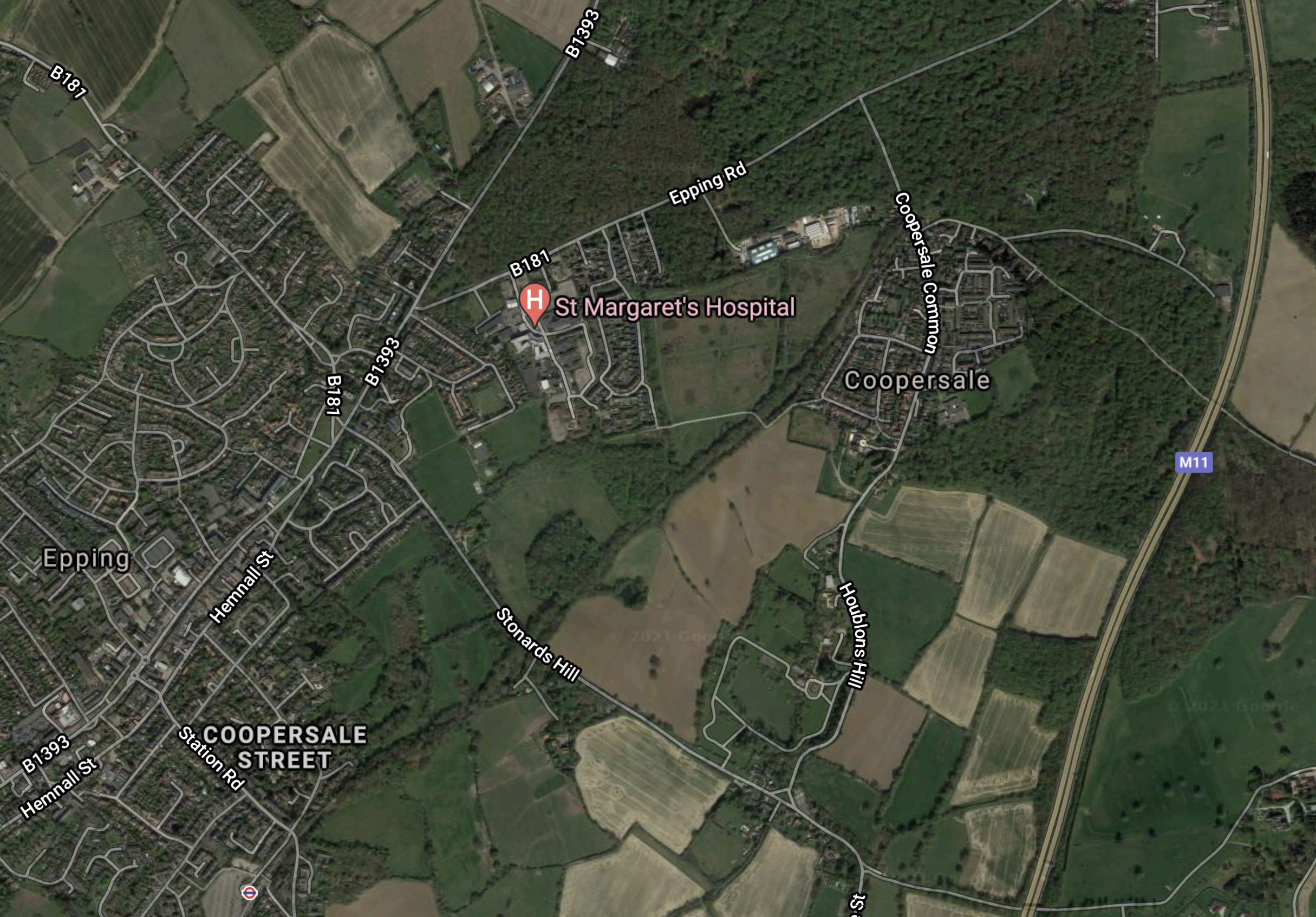
Note Epping station is in the South-West corner of the map.
Running North-East from the station, the dark green scar of the single-track Epping Ongar Railway can be picked out, as it runs between St. Margaret’s Hospital and the village of Coopersale.
This third Google Map shows the railway as it passes under the M11.
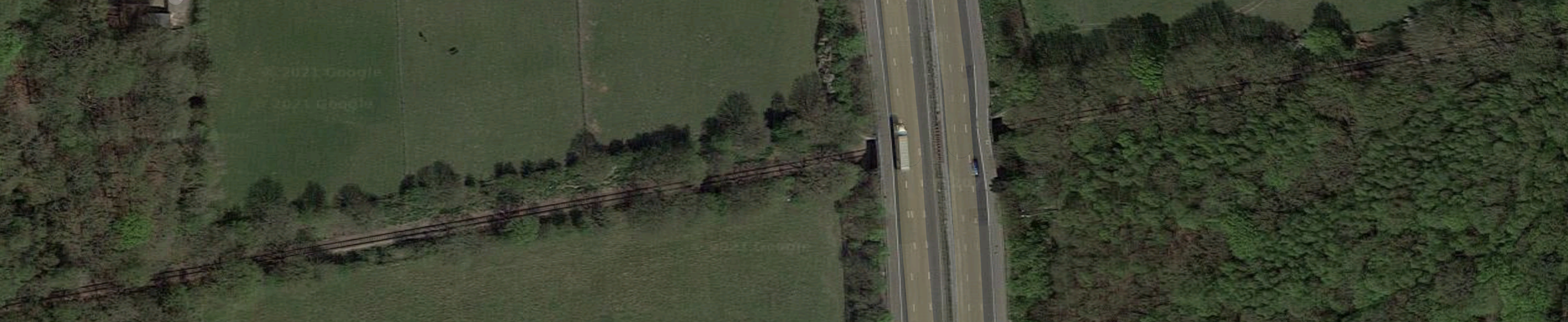
Would it be possible to use the route of this line to connect to a new line alongside the motorway?
This fourth Google Map shows Epping tube station.
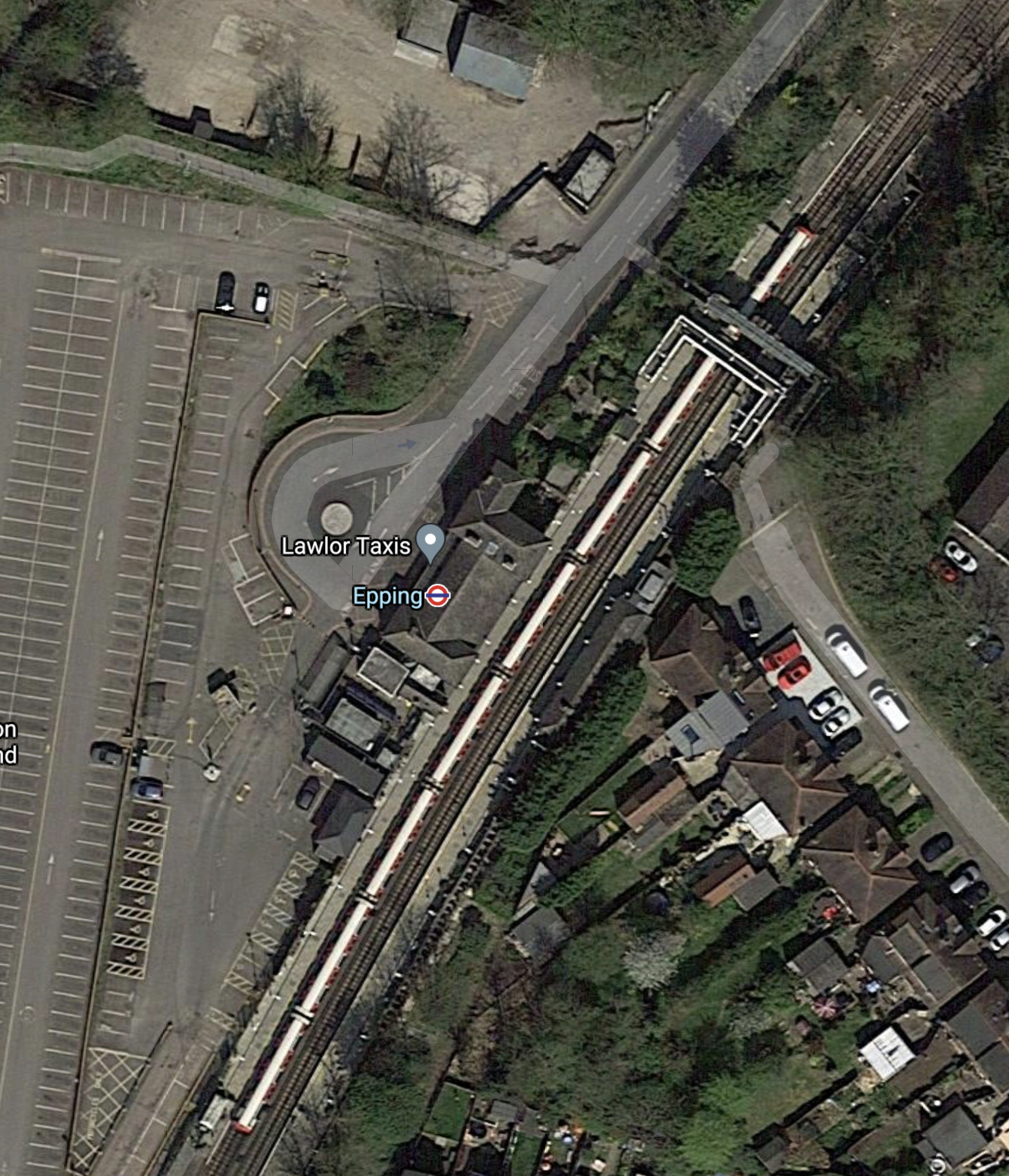
Note.
- The station has two platforms, but is not step-free.
- It has a large car-park.
- Trains take thirty-seven minutes between Epping and Liverpool Street stations.
- Trains have a frequency of nine tph.
This map from cartometro.com shows the track layout at Epping station and the interface with the Epping Ongar Railway.
Note.
- The Epping Ongar Railway has always been single track.
- The crossovers to the South of Epping station allow either platform to be used for Central Line services.
- When the Central Line ran to Ongar, it looks like all services used Platform 1 at Epping.
I feel that it might be possible to create an extension to Harlow, by doing something like the following.
- Add a second bi-directional track alongside the Epping Ongar Railway between Epping station and the M11.
- Extend Platform 1 to the North, so that the heritage trains can load and unload passengers at Epping station.
- The Central Line platforms would be unaltered, so could still handle the nine tph they currently handle.
- Trains to and from Harlow would always use Platform 2.
At the M11, the new bi-directional track would turn North and become double-track to Harlow.
- The double-track would allow trains to pass.
- If the rolling stock for the Central Line has been renewed, it might be possible to run the extension on battery power.
- If Harlow had a single platform, it would be possible to run four tph to Harlow.
- The current 2012 Stock trains have a capacity of around a thousand passengers.
- I estimate that trains would take about ten minutes between Epping station and the new Harlow station.
I feel something is possible, but building the line might be easier if new battery-electric trains were available, as this would probably allow the extension to be built without electrification.
On the other hand, it might not have the greatest financial case.
- It could be difficult to add large numbers of passengers to the Central Line.
- At around forty-seven minutes, the Central Line service will be slower than the main line trains, which currently take around a dozen minutes less.
I’ll be interested to see what the professionals say.
Extending London Transport Zones To Harlow
Harlow Town station has ticket barriers, but I don’t think it is part of London’s contactless card zone.
Adding Harlow Town and all stations between Harlow Town and the zone could be very beneficial to passengers and train companies.
Examining Connectivity To Crossrail 2
I think that in the current economic situation this should be discounted.
- It is a very expensive project.
- Building it will cause tremendous disruption on the West Anglia Main Line.
- It is only planned to go as far as Broxbourne station.
But I don’t think politicians from outside London and the South-East would sanction another massive project for London.
I don’t think Crossrail 2 will ever be build in its currently proposed form.
Four Tracking Of The Main Line To Stansted Airport
Consider.
- Currently, the numbers of trains on the West Anglia Main Line is under twelve tph.
- Modern double-track railways with the latest digital in-cab signalling like Thameslink and Crossrail can handle twice this number of trains.
- The West Anglia Main Line will be getting new trains with better acceleration.
Four-tracking is mainly needed to cut times to Cambridge and Stansted Airport, but I suspect that with some clever design and improved signalling, the current double-track can be improved significantly.
Improving Existing Public Transport Links In And Out Of The Town
I think that this could be a fruitful area.
- As I said earlier, Harlow has only 6 tph trains stopping in the station.
- I believe this could be increased to at least 10 tph, if the West Anglia Main Line were to be modernised.
- Extending London Transport Zones To Harlow, which I discussed earlier would surely help.
- Is there enough car parking?
- Are there enough buses to the stations?
- Would a fleet of zero-carbon buses tempt people to use them?
- Would it be possible to run a hydrogen commuter bus service up and down the M11 between say Harlow and Ilford for Crossrail?, as is being done in Dublin, that I wrote about in Three Hydrogen Double Decker Buses Set For Dublin.
Hopefully, Harlow’s councillors would have a few good ideas.
A Few Thoughts On What Is Possible
These are a few of my thoughts on what is possible.
Digital Signalling Could Increase The Number of Trains Per Hour Significantly
Consider.
- Currently, the West Anglia Main Line handles ten tph between Liverpool Street and Bishops Stortford.
- Thameslink handles 24 tph with digital signalling.
- Crossrail will handle 24 tph with digital signalling.
- High Speed Two will handle eighteen tph.
I certainly believe that another four tph could be easily handled through the two Harlow stations, with full digital signalling.
Perhaps a frequency of eight tph, that would match TfL Rail between London Liverpool Street and Shenfield would be ideal.
If it works for Shenfield it should work for Harlow!
Rebuild Cheshunt Station
Cheshunt station with its level crossing is a bottleneck and any increase in the number of trains through the station will need the level crossing to be replaced by a bridge.
But developers are talking of high class housing in the area and removal of the level crossing appears to be in their plans.
New High-Capacity Class 720 Trains
Pairs of five-car Class 720 trains are coming to the West Anglia Main Line and each pair will carry over a thousand passengers.
These will be used on four tph, that call at Harlow Town station.
Turn Trains In The High Meads Loop at Stratford Station
The single-track Wirral Line Loop under Liverpool handles up to sixteen tph.
Network Rail built a double-track loop under the Eastfield Shopping Centre, which calls at Platforms 11 and 12 in Stratford.
If this loop was used to turn trains it could probably handle at least twelve tph on one platform.
Liverpool Street currently handles these trains that go up the West Anglia Main Line or the Lea Valley Lines.
- 6 tph – Greater Anglia
- 6 tph – London Overground
It looks to me that the terminal capacity in London could be as high as 20 tph.
Run More Trains On A Digitally-Signalled Route Through Seven Sisters
Just four tph run on the London Overground route through Seven Sisters station.
Compare that with the East London Line of the London Overground, where sixteen tph run between Dalston Junction and Surrey Quays stations.
The London Overground has ambitions to run four tph to Cheshunt and Enfield Town, as they do to Chingford, but that would only up the frequency through Seven Sisters to eight tph.
The tracks in the area also allow trains from Stratford to use the lines through Seven Sisters stations to go North.
Run West Anglia And Lea Valley Services Together
Currently, Greater Anglia and London Overground seem to do their own things, but surely properly integrated and with the moving of more services to the London Overground, I suspect that everything could be more efficient.
I believe that by using Liverpool Street and Stratford as twin London terminals for Lea Valley services, that upwards of twenty tph can on digitally-signalled West Anglia Main Line and the Lea Valley Lines.
These are the current trains.
- Bishops Stortford – 2 tph
- Cambridge North – 2 tph
- Cheshunt – 2 tph
- Chingford – 4 tph
- Enfield Town – 2 tph
- Hertford East – 2 tph
- Stansted Airport – 4 tph
Note.
- This is a total of eighteen tph
- The pinch point is surely the stretch between Bethnal Green and Clapton stations, which handles 14 tph including a mix of fast expresses and London Overground services.
- On the other hand the route through Seven Sisters is handling just four tph.
- Ten tph run between Tottenham Hale and Cheshunt stations on the West Anglia Main Line.
- Only two tph terminate in Stratford.
If the Cheshunt and Enfield Town services are increased to 4 tph, as is London Overground’s aspirations we get the following.
- Bishops Stortford – 2 tph
- Cambridge North – 2 tph
- Cheshunt – 4 tph
- Chingford – 4 tph
- Enfield Town – 4 tph
- Hertford East – 2 tph
- Stansted Airport – 4 tph
Note.
This is a total of twenty-two tph.
But there is still plenty of spare capacity at Stratford and through Seven Sisters.
If our objective is more trains through Harlow, why not double up the Stratford and Bishops Stortford service.
- Bishops Stortford – 4 tph
- Cambridge North – 2 tph
- Cheshunt – 4 tph
- Chingford – 4 tph
- Enfield Town – 4 tph
- Hertford East – 2 tph
- Stansted Airport – 4 tph
Note.
- This is a total of twenty-four tph.
- Harlow will have eight tph to and from London.
- There will be 8 tph through Seven Sisters.
- There will be twelve tph between Tottenham Hale and Cheshunt stations on the West Anglia Main Line.
- Four tph will terminate at Stratford.
Perhaps to reduce the trains on the West Anglia Main Line, the Hertford East trains could go via Seven Sisters.
But that would mean that stations like Brimsdown and Ponders End would lose a lot of their service.
So why not add extra stops to the Bishops Stortford services?
Conclusion
I believe that by doing the following.
- Adding digital signalling to all lines.
- Turning more trains at Stratford.
- Using the route through Seven Sisters at a much higher frequency.
- Rebuilding Cheshunt station and level crossing.
- Reorganising stops on the West Anglia Main Line.
That it would be possible to create a high-frequency Metro up the Lea Valley.
Except for the digital signalling and Cheshunt station, there is not much work to do on the infrastructure.
Moorgate Station’s Old Entrance Has Now Reopened
I went to Moorgate station today, as the old entrance has now reopened with lifts and stairs to the sub-surface lines.




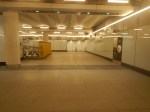


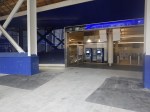
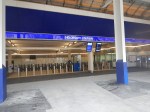
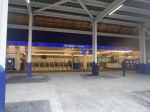

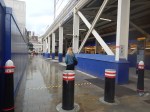
Note.
- The stairs down to the tunnel connecting the Northern Line and Crossrail look a bit steep.
- The ceiling design in the entrance lobby.
- The escalators down to Crossrail at the Southern side of the entrance lobby.
- The gate line is very wide.
The oversite development, which is still being built, will surely tidy up the entrance.
In The New Lift To The Northern Line At Moorgate Station, I showed and described this visualisation.
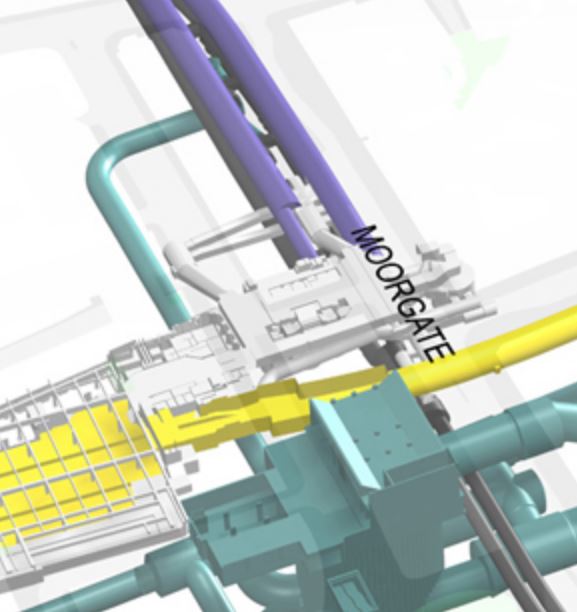
Note.
- The Northern City Line is shown in purple.
- The double escalator going down to between the two terminal platforms of the Northern City Line.
- The Northern Line is shown in black and the two platforms are underneath the Northern City Line.
- The Northern Line tunnels cross over the top of the Crossrail running tunnels.
The dark green tunnel with the right angle bend at the top of the map, is the pedestrian tunnel that connects the Northern Line and Crossrail.
The tunnel will be accessed from the Northern line platforms by the lift or the stairs, shown in the first two pictures.
Alternatively, you will be able to take he rat-up-the-drainpipe route to the surface from the Northern Line, that I described in Up From The Depths At Moorgate Station. That route is escalators all the way and then the lift in the pictures to the main entrance lobby.
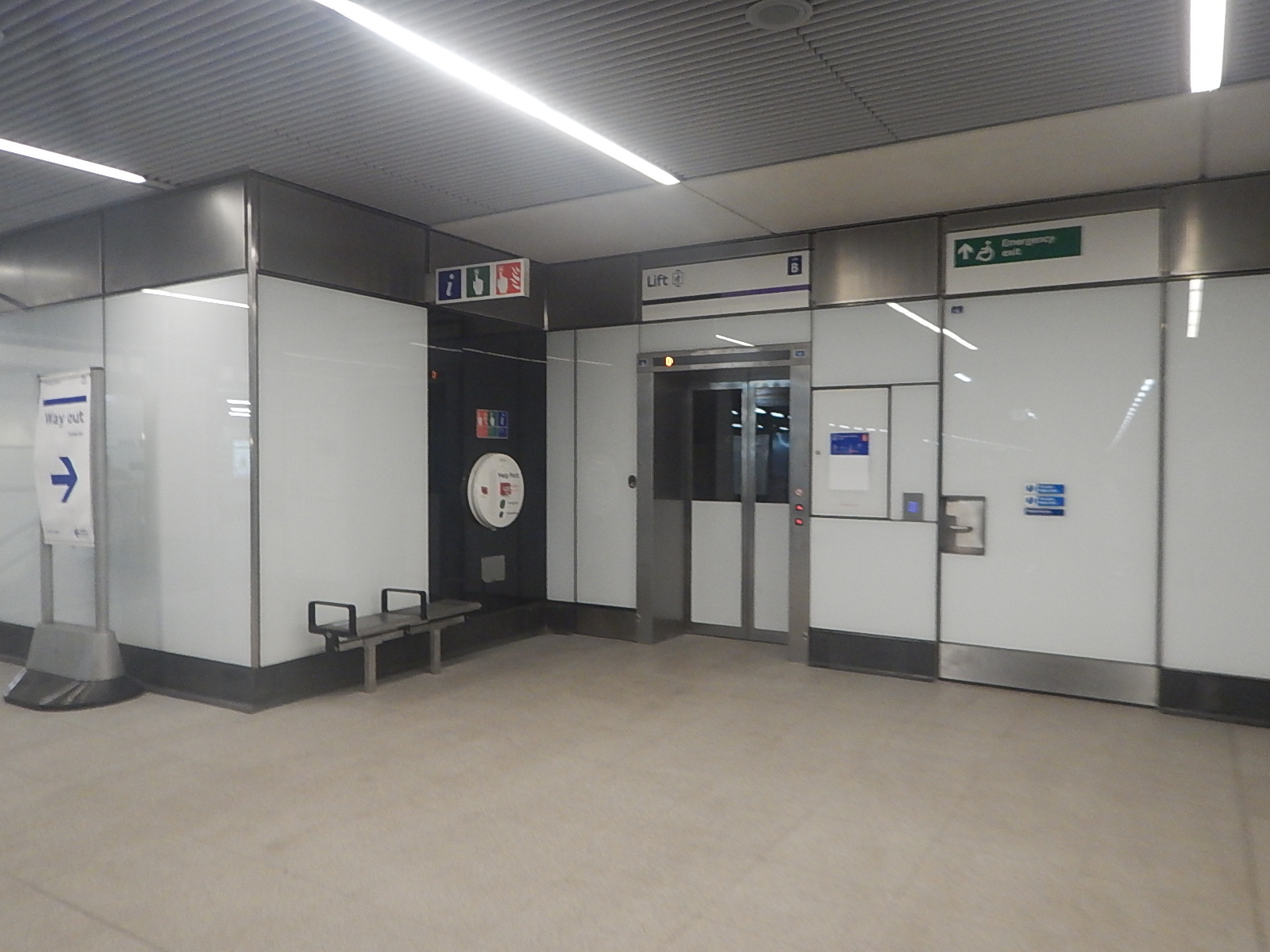
On August 1st 2021, I finally took the lift from the Westbound Hammersmith & City, Circle and Metropolitan platform to the new ticket hall and took these pictures.
This is a general view of the lift.
This is the information plate on the outside of the lift at the sub-surface platform level.
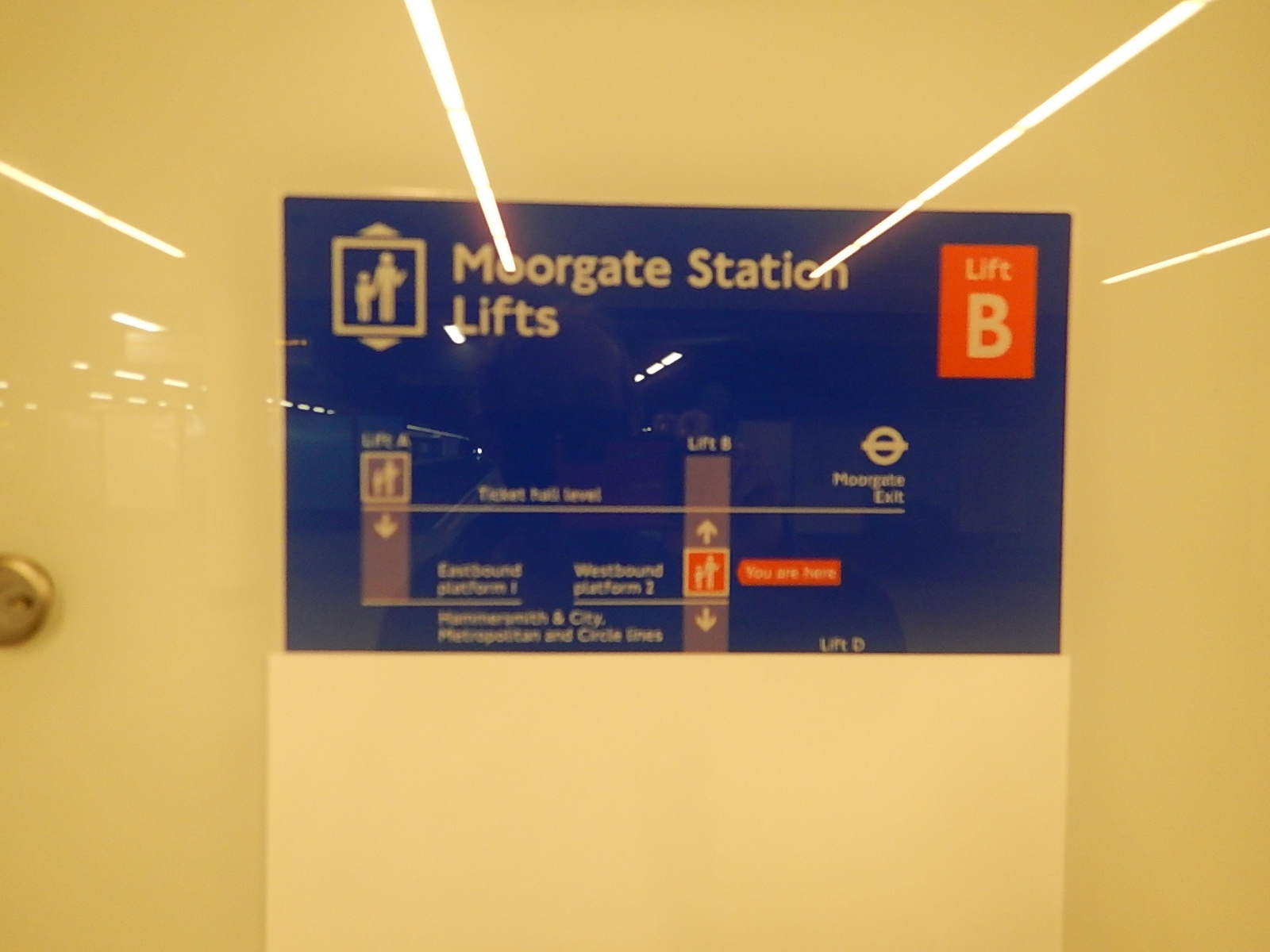
It shows two lifts from the Sub-service platforms to the new ticket hall.
This picture shows the lift buttons on the outside of the lift at the sub-surface platform level.
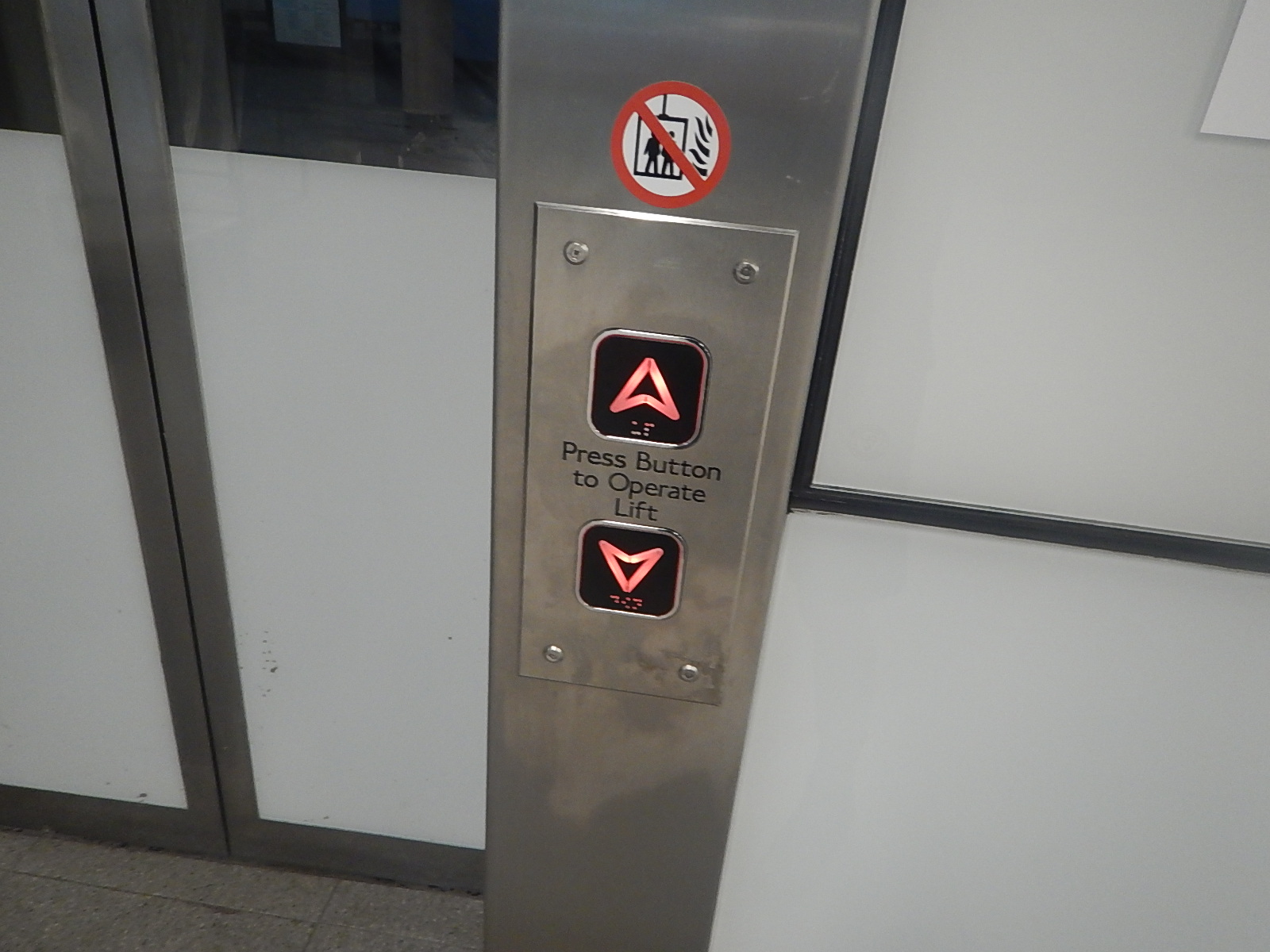
It appears you can go up and down.
The down must mean that there is a level below the sub-surface platform level.
These are the buttons inside the lift.

It appears that there is a level below the platforms, which passengers can use.
Although it is not named on the plate, the lift must connect to the right-angled tunnel to the Northern and Northern City Lines.
- It does appear that of the two lifts between the new ticket hall and the sub-surface platform level, only one accesses the connecting tunnel.
- It might also mean that passengers in wheelchairs will need to use two lifts between the Northern Line and the Eastbound sub-surface platform.
I did see another tunnel from the lift on the Westbound sub-surface platform, stretching to the East.
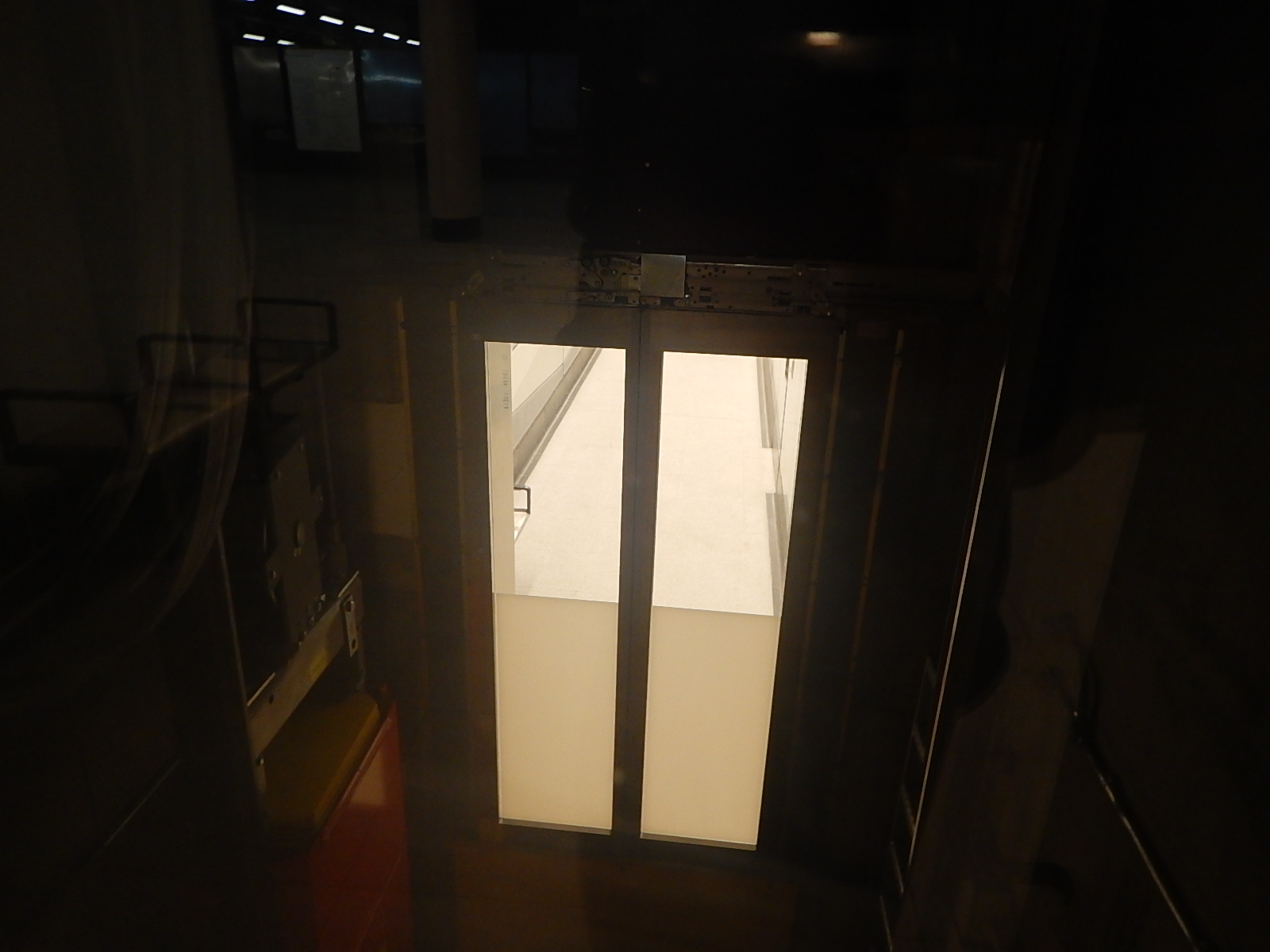
Let’s hope I’m wrong or it will be sorted before opening.
Moorgate station appears to be getting extremely complicated.
Ealing Broadway Station – 31st May 2021
This article on Rail Technology Magazine, which is entitled Transport for London Completes Step-Free Access At Ealing Broadway, alerted me that the station might be worth a look.

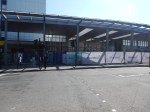

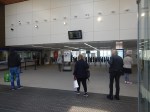

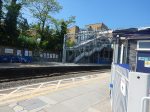
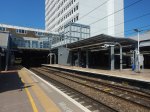
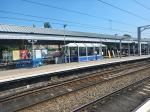


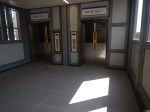
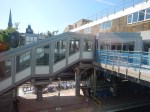
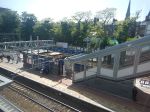
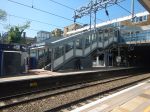
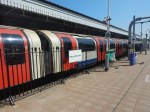
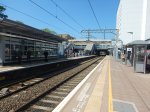
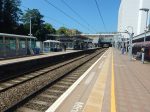
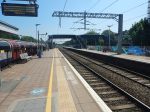
I took these pictures this morning.
This map from cartometro.com shows the station layout.
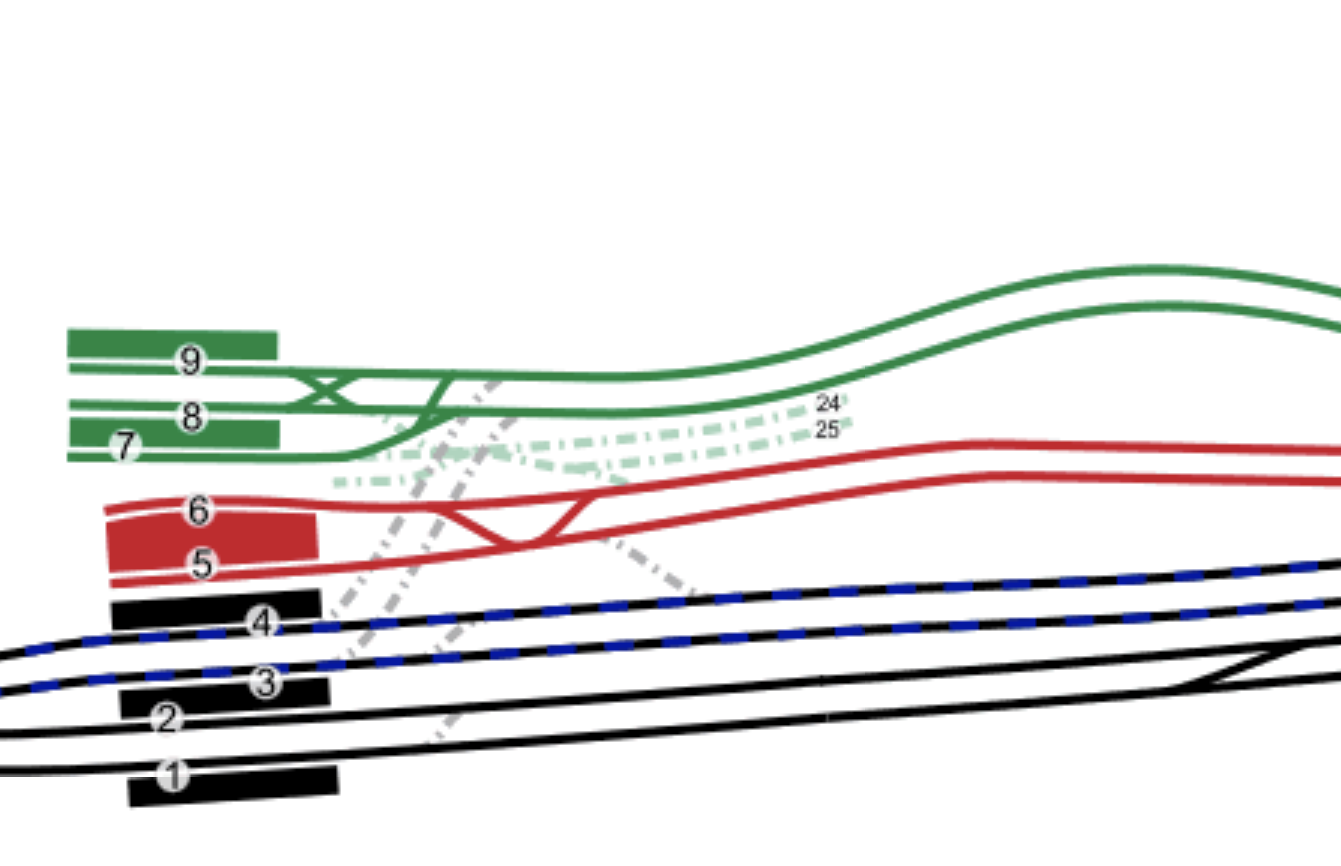
Note.
- The black lines in Platforms 1 and 2 are the Great Western Railway main line platforms.
- The black/blue lines in Platforms 3 and 4 are the Great Western Railway slow line platforms, which are also used by Crossrail.
- The red tracks in Platforms 5 and 6 are the Central Line platforms.
- The green tracks in Platforms 7, 8 and 9 are the District Line platforms.
These are my thoughts.
Step-Free Access
Consider.
- Access between platforms 4, 5, 6, 7, 8 and 9 is on the level, as it has been for years.
- There are a pair of lifts to access these six platforms from street level.
- There are also two other lifts to Platform 1 and Platform 2/3.
- There are three typical Network Rail stairs to the platforms, with double-handrails, which at 73, I can still manage.
I’ve certainly seen much worse stations with supposedly step-free access.
I also wonder if another lift will be added to directly serve the District Line platforms.
It could be one of those additions, that has been catered for, so it can be added if necessary.
Crossrail And Routes Into And Out Of London
Crossrail will change commuting and leisure routes, into and out of London.
- Crossrail serves the West End, the North of the City and Canary Wharf directly.
- Crossrail has good connections to the Central, Circle, District and Jubilee Lines.
- Crossrail has a direct connection to Thameslink.
- All Crossrail interchanges will be step-free.
After it has been opened for a few months, I can see that direct connections and ducking and diving will have seriously changed London’s well-established commuting and travel patterns.
Using Ealing Broadway Station As An Interchange
It will certainly be easier with all the new step-free access, but I suspect some passengers, who previously changed at Ealing Broadway station, will go straight through on Crossrail.
In Will Crossrail Open To Reading in 2019?, I said that Ealing Broadway station will get the following total number of Crossrail trains.
- 12 tph in the Peak
- 10 tph in the Off-Peak
Note.
- tph is trains per hour.
- Six tph would go between London Paddington and Heathrow.
- Two tph would go between London Paddington and Reading.
It will be interesting to see what Crossrail timetable is delivered.
The Overall Design
It is a fairly conservative design, that follows the principles of good step-free access.
Interchange is level and good between Crossrail and the tube lines.
There are still a few details to be finished and I suspect it will be a well-thought of station.
A Few Questions
These are a few questions.
Will The Station Be A Gateway To Heathrow?
I suspect it could be, as the station is well-connected by bus and tube to large numbers of places.
Conclusion
Ealing Broadway will be a busy interchange and I’m sure, it’s been designed to handle a lot of passengers.
It’s Time To Detopsify Stratford Station
Stratford Station has grown like Topsy for too long and has several problems and possible future expansions.
Not least of these include.
- The final arrival of Crossrail.
- A direct connection to Chingford.
- A Stansted Express service.
- Massive housing developments in the area.
- More hotels
- New cultural developments like the branch of the Victoria and Albert Museum.
- A new campus for University College London.
This article on IanVisits is entitled Stratford Station Set For Massive Transformation.
This is his opening paragraph.
Stratford station could be radically redeveloped under plans being worked on by the rail companies and local council.
That is rather understated!
The station will become several times busier and needs a complete rethink, many more services and deTopsification.
These are my thoughts.
The Development Of The High Meads Loop
The High Meads Loop exists and is a double-track loop that can turn trains arriving at Stratford station via Lea Bridge station.
- It is underneath the Eastfield Shopping Centre – Westfield is in the West of London.
- Each track of the loop has its own long platform in the station. – Platform 11 is for clockwise trains and Platform 12 is for anti-clockwise.
- It has been used in the past for a Stansted Express service.
The Wirral Line in Liverpool like the High Meads Loop is now a modern loop for turning trains.
- The Wirral Loop is only single-track.
- It gives connections for over thirty stations on the Wirral and in Cheshire and North Wales to Liverpool City Centre.
- It is run by fifty-year-old Class 507 and Class 508 trains.
- The loop has now been improved and can handle upwards of the fourteen trains per hour (tph) it currently does.
Merseyrail will soon be introducing new Class 777 trains on the Wirral Line in the near future and will be increasing services and the number of destinations.
British Rail’s vision for Liverpool, that was cruelly cut-short by Liverpool MP; Harold Wilson, is finally coming to fruition.
Newcastle also got its British Rail tunnel which is now being used by the Metro, but what would have happened in Manchester if British Rail had been allowed to build the Picc-Vic Tunnel?
I have a strong belief, that a Lea Valley Metro can be developed on the West Anglia Main Line.
- It would have two Southern terminals – Liverpool Street station and the High Meads Loop at Stratford.
- When it opens, Crossrail will mean that Liverpool Street and Stratford stations will be seven or eight minutes apart with a frequency of at least 12 tph.
- Northern terminals would include Broxbourne, Cheshunt, Chingford, Enfield Town and Hertford East.
- Crossrail 2 was planned to have a frequency of 10 and 15 tph between Tottenham Hale and Broxbourne stations.
I believe that if services in East London are thoroughly reorganised, that all the benefits of Crossrail 2 can be brought to East London by the use of the High Meads Loop and the upgrading of existing lines.
Stansted Express Services
Go to Stratford station and there is an out-of-date sign at the end of Platform 1 and 2, where the Overground trains terminate.

It directs passengers to Platform 12 for Stansted Airport.
The picture was taken in 2017, but there is still a walk-through to Platform 12, that I use regularly, if I’m changing between London Overground and Greater Anglia or TfL Rail services to destinations on both the West Anglia or Great Eastern Main Lines.
I believe that there is still a need for a Stansted Express services from Stratford, as for some people, including myself, it is easier to get to Stratford, than Liverpool Street.
From some places the connections to and from Stansted are not very good. Try going between London Bridge, Canterbury, Euston, Victoria or Waterloo and Stansted with a few mobility issues like a heavy suitcase and/or a baby, without a degree in Ducking-and-Diving!
An additional Stansted Express service from Stratford would make things a lot easier to get to the airport for many travellers, because of Stratford’s connections to the Central, Jubilee and North London Lines and SouthEastern’s Highspeed services.
Better Connection Between High Speed One And The High Meads Loop For Passengers
Some passenger connections are missing at Stratford.
This is indicated in the IanVisits article.
This map from cartometro.com shows the Topsy-like nature of the platforms at Stratford.
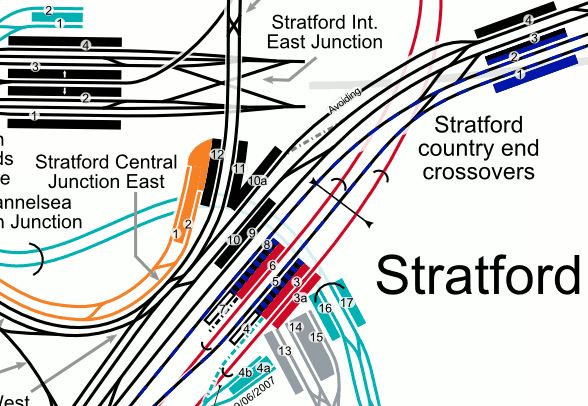
Note.
- The Docklands Light Railway is shown in turquoise.
- The DLR platforms in the North-West corner of the map are those of Stratford International station.
- High Speed One and the four platforms of Stratford International station are shown in black.
- The North London Line of the London Overground is shown in orange.
- The North London Line terminates in Platforms 1 and 2, which have a level link to Platform 12.
- Platform 12 is on the anti-clockwise platform for the High Meads Loop and has step-free access to the subway system underneath the station.
- Platform 11 is on the clockwise platform for the High Meads Loop and has level access to Platform 10a and full step-free access,
- Platform 10a is used by some services to East Anglia.
- Crossrail is shown in blue.
- The Central Line is shown in red.
- The Jubilee Line is shown in silver.
It is not the best passenger-friendly station layout.
- Inevitability, you often find yourself trudging a long way at Stratford station.
- Changing to or from any high speed services is supremely difficult.
- Often you have to walk through the busy Eastfield Shopping Centre.
Particularly annoying for me is coming back from Kent on High Speed One and needing to take the North London Line, as I do several times a year.
As it involves a long walk through the Shopping Centre, I now take the easy way out and carry on to St. Pancras and get a taxi home.
As Stratford International is one of the draughtiest stations in England, the station is a real Design Crime and it needs a serious makeover.
Conclusion
Sort it!
Would A Mutant Many-Parent Child Help To Solve London’s Transport Problems?
London needs to increase the capacity of its public transport system, as the City continues to get larger and larger.
Current Major Projects
There are only three major rail projects ongoing in London at the present time.
The Bank Station Upgrade
The Bank Station Upgrade appears to be progressing well, albeit perhaps it’s a bit late due to the pandemic.
It is a complex project and from what I have heard and observed, it has been well designed and planned.
The Barking Riverside Extension
As with the Bank Station Upgrade the Overground extension to the new Barking Riverside station, appears to be going reasonably well.
But compared to that project, it is a relatively simple project, built mainly in the open air, with no tunneling.
Crossrail
Crossrail is in trouble, after what many believe was a very good tunnelling phase of the project.
But then tunnels under London usually seem to go well. I can remember the Victoria Line tunnelling and many other under London since the 1960s and all of these tunnels seem to have been dug without trouble. As I write, there don’t seem to be any tunneling problems with the Thames Tideway Tunnel.
Crossrail now has been reduced to a series of station builds and rebuilds, some of which are as large as the Bank Station Upgrade, with other ongoing projects like the testing of trains and systems.
So why are some of these stations running late in their delivery?
If you walk along the route of Crossrail in the City of London and through Clerkenwell and the West End, it is one massive building side as developers raise massive clusters of new developments around and above the Crossrail stations.
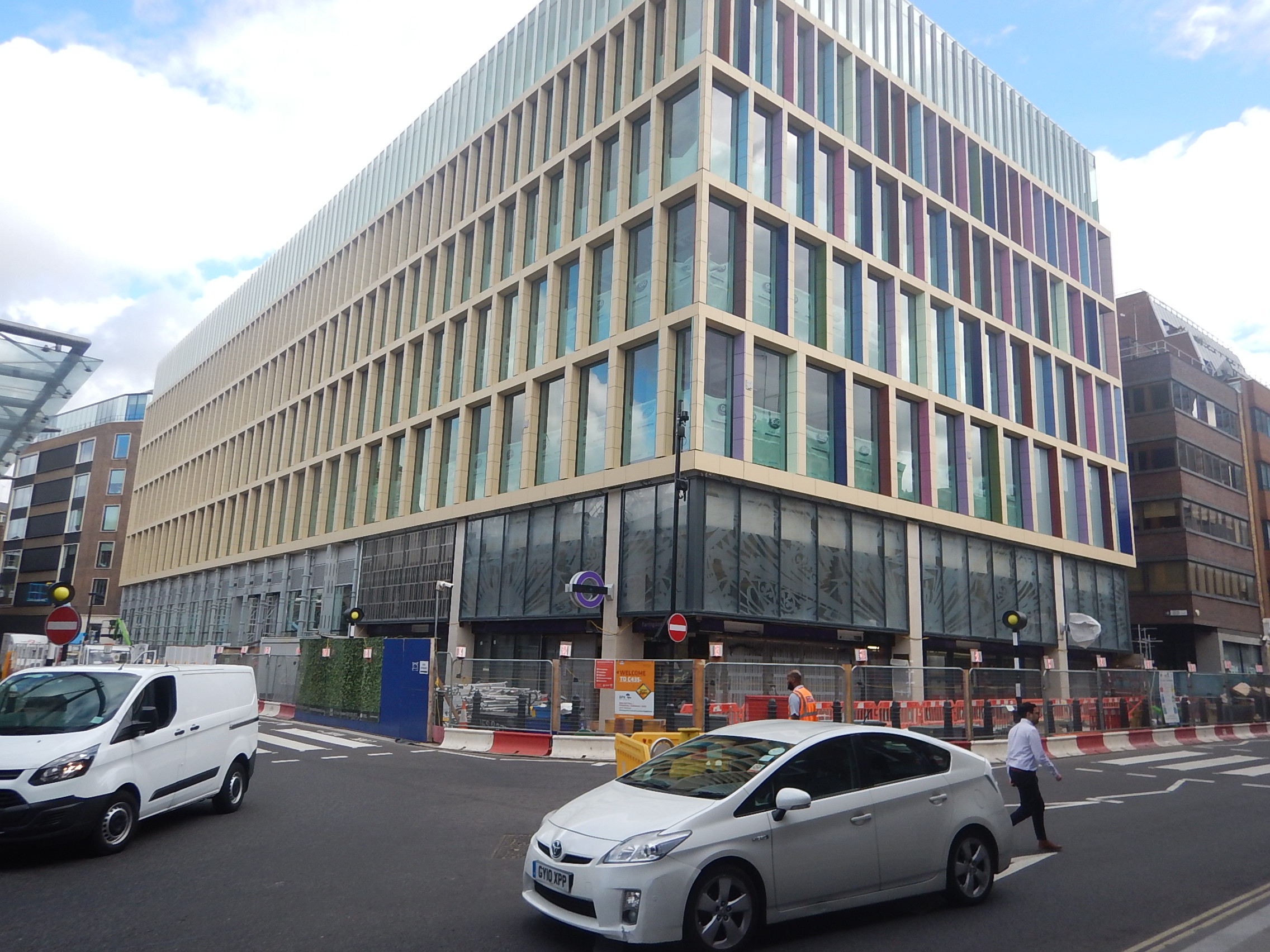
The picture shows Farrington station’s Eastern entrance, with a new development on top.
This one wasn’t a big one, but it went up in record time.
These buildings are often funded by Sovereign Wealth Funds, who want their buildings finished ASAP and as they have bottomless pockets, they are prepared to pay more to get the builders and tradesmen they need.
And where did they get the workers from? Other projects, including Crossrail.
This problem happened in Aberdeen at the height of the oil boom in the last century.
I also think that Brexit worsened the problem, as workers from mainland EU moved to large projects closer to home, like Stuttgart 21 and the new Berlin Brandenburg airport, that were both very much in trouble and could have been offering premium salaries as well!
The solution would have been to phase developments so that the limited pool of workers was not exhausted.
But that probably wouldn’t have suited the developers and politicians for all sorts of reasons.
- An uncompleted building doesn’t bring in money and jobs.
- Early completion must improve chances of letting the building.
- Delaying the building would probably have meant fewer holidays for politicians in exotic locations.
Hopefully, a comprehensive enquiry into the lateness of Crossrail will provide answers.
High Speed Two
High Speed Two is to my mind a London local project. But only in a secondary way!
- Rebuilding Euston station will improve Underground connections and interchange at Euston and Euston Square stations.
- It is claimed by High Speed Two, that the rebuilt Euston station will create 16000 jobs and 2200 homes.
- High Speed Two will enable massive development at Old Oak Common, with tens of thousands of homes and jobs.
- Old Oak Common station will be a very important rail hub in North-West London.
With seventeen trains per hour (tph) between Euston and Old Oak Common will High Speed Two attract local traffic?
- I suspect High Speed Two between Manchester Airport and Manchester Piccadilly and between Birmingham Interchange and Birmingham Curzon Street will also attract local traffic.
- I’ve used TGVs between Nice and Antibes.
- Tourists might visit, just like they did and still do at the Olympic Park.
- Many Londoners will join High Speed Two at Old Oak Common.
Some wag will suggest putting it on the Tube Map. But is it such a stupid idea?
Where Does London Need More Rail Services?
Having lived in London on and off for over seventy years, I feel the worst areas for rail links are probably.
- North West London
- South East London
- South Central London between Wimbledon and Croydon.
- South West London
Note.
- Over the years, there is no doubt that East and North London have improved considerably, with the development of the East London, North London and Gospel Oak to Barking Lines.
- Thameslink has been improved in North London and now it is being supported with improvements to the Northern City Line. Both routes now have new Siemens trains, which give a whole new dimension to using ironing-boards as seats.
- Crossrail will produce major improvements in West, East and South East London.
- Building of a new Penge Interchange station, which I wrote about in Penge Interchange could improve routes to and from South East London.
- Hopefully the work in recent years at Waterloo will improve suburban services out of Waterloo. In An Analysis Of Waterloo Suburban Services Proposed To Move To Crossrail 2, I showed that four tph could be run to Chessington South, Epsom, Hampton Court and Shepperton stations.
It looks like North West and South Central London are missing out.
How Can Services Be Improved In North West London?
There are radial routes from the centre of London to the suburbs.
Starting from the North and going to the West, there are the following lines.
- The High Barnet branch of the Northern Line
- The Mill Hill East branch of the Northern Line
- The Midland Main Line to St. Albans, Luton, Bedford and the East Midlands.
- The Edgware branch of the Northern Line
- The Jubilee Line to Stanmore
- The West Coast Main Line to Watford, Milton Keynes, the West Midlands, the North West of England and West Scotland.
- The Bakerloo Line to Harrow & Wealdstone.
- The Watford DC Line of the London Overground
- The Amersham, Chesham and Watford branches of the Metropolitan Line
- The Chiltern Route to Aylesbury.
- The Chiltern Main Line to High Wycombe, Banbury, Bicester, Birmingham and Oxford.
- The West Ruislip branch of the Central Line.
- The Uxbridge branch of the Metropolitan and Piccadilly Lines
When I used to live at Cockfosters as a child, to visit my many cousins in North West London, there was no alternative but to use a bus and take well over an hour each way.
There are now some circular rail routes in London but nothing in the North West of the capital.
The Dudding Hill Line And The West London Orbital Railway
But there is the little-used freight route called Dudding Hill Line.
- It runs between Cricklewood on the Midland Main Line and Acton Central on the North London Line.
- It is four miles of double-track railway.
This YouTube video shows a cab ride from Acton to Cricklewood.
Plans exist to turn it into the West London Orbital Railway, which will run two services.
- West Hampstead and Hounslow via Cricklewood, Neasden, Harlesden, Old Oak Common Lane, Acton Central, South Acton, Lionel Road, Brentford, Syon Lane and Isleworth
- Hendon and Kew Bridge via Brent Cross West, Neasden, Harlesden, Old Oak Common Lane, Acton Central, South Acton
Note.
- The proposed frequency of both services is four tph.
- There would be some stations to be built, but the track exists.
- There would be no new tunnels.
- The route is technically feasible.
- The route would connect West London to High Speed Two.
- There would be little disruption whilst it was built.
- The services could be run by dual-voltage battery-electric trains charged on the electrification at both ends of the route.
- The scheme represents a high value for money, with a benefit-cost ratio (BCR) of 2.2.
On the other hand, the scheme has two serious problems, as far as the current London Mayor is concerned.
- Transport for London has no money, partly because of London’s Fare Freeze.
- The project is not in South London.
This important and value-for-money project will not be built, whilst Sadiq Khan is still Mayor of London.
Harlesden Interchange
I believe that if we get the interchanges right on the West London Orbital Railway correct we can do things like.
- Increase the benefit cost ratio.
- Link the route to South London to make the Mayor a bit happier about the North London Scheme.
This Google Map shows Harlesden station.
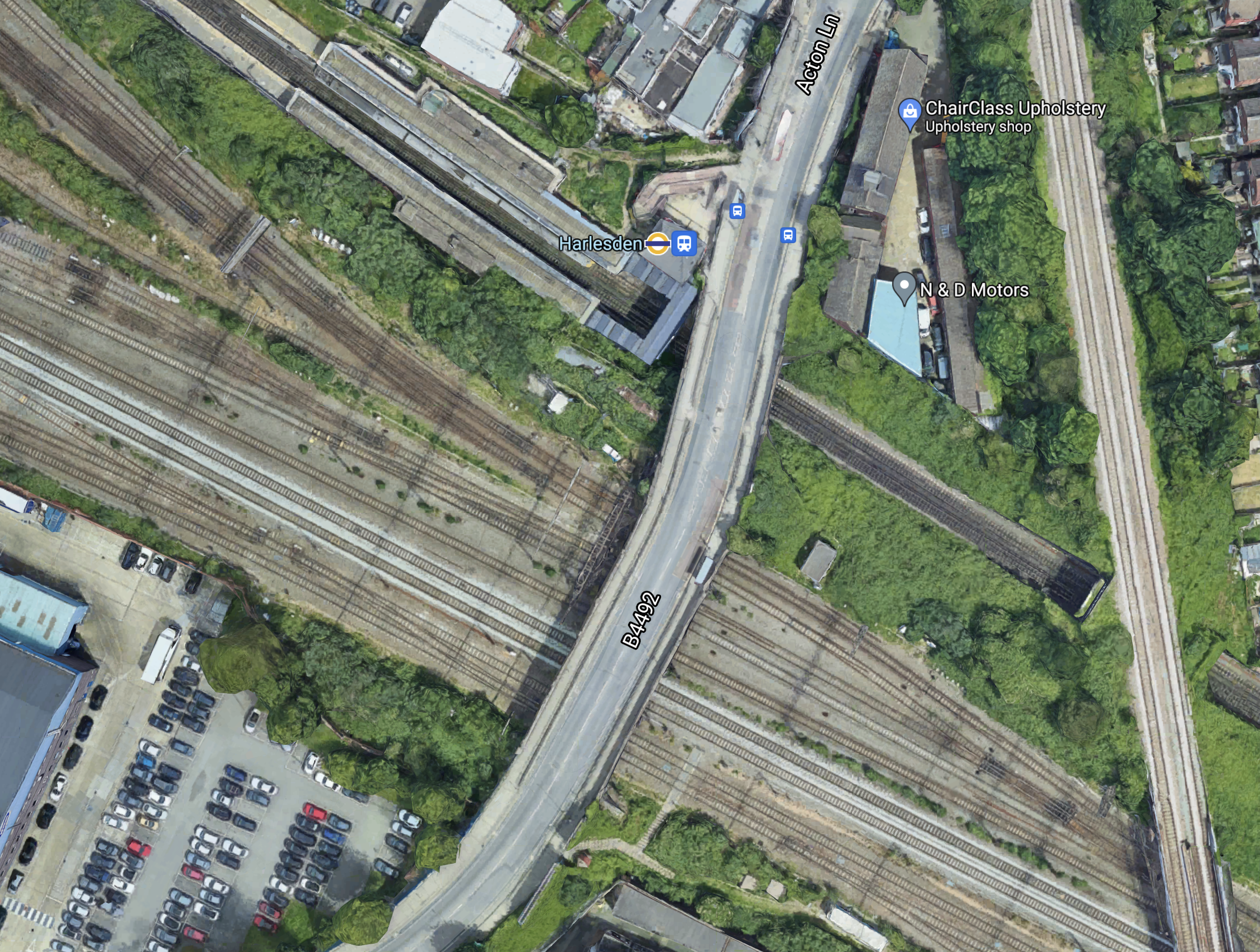
Note.
- The Bakerloo Line/Watford DC Line running North-West/South-East through Harlesden station.
- The West Coast Main Line in the Southern section of the map.
- The Dudding Hill Line running North-South across the map.
Platforms will be built on the Dudding Hill Line to connect that would probably be new or extended platforms in the current Harlesden station to enable interchange between the West London Orbital and the Watford DC Lines.
I also think there is a possibility that platforms could be added to the slow tracks of the West Coast Main Line, so that suburban services into London Euston can also connect to the West London Orbital Line.
It would also enable a connection between Southern’s Clapham Junction and Milton Keynes service and the West London Orbital Railway.
Looking at this from various angles, I think that an architect good at designing three-dimensional structures could develop a quality Harlesden Interchange station.
Neasden Interchange
Like Harlesden, Neasden is another possibility for a comprehensive interchange.
This Google Map shows Neasden station.
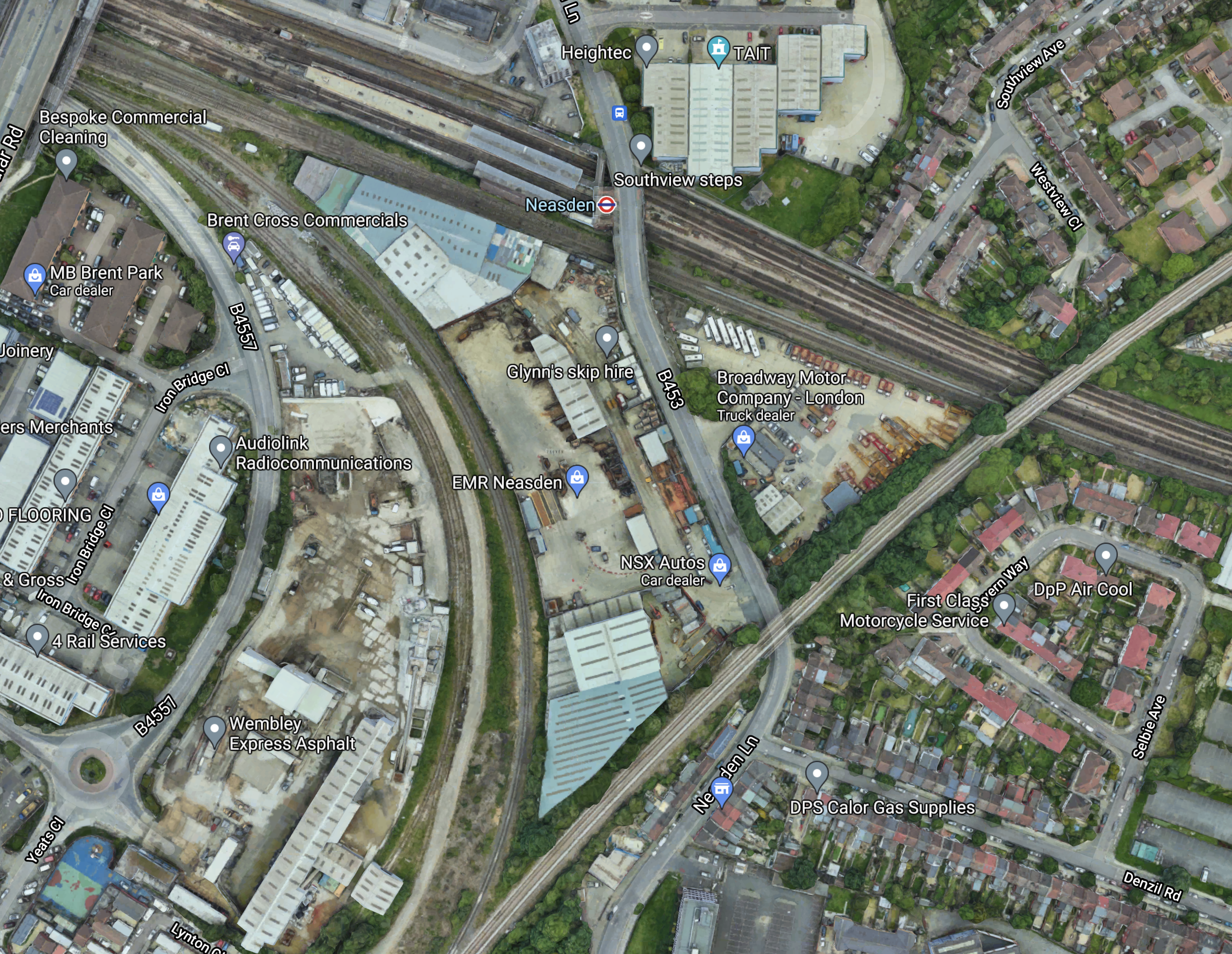
Note.
- There are a lot of lines going through Neasden station.
- The Dudding Hill Line goes across the South-East corner of the map.
- There is plenty of space in the area.
This map from cartometro.com shows the lines in the area.
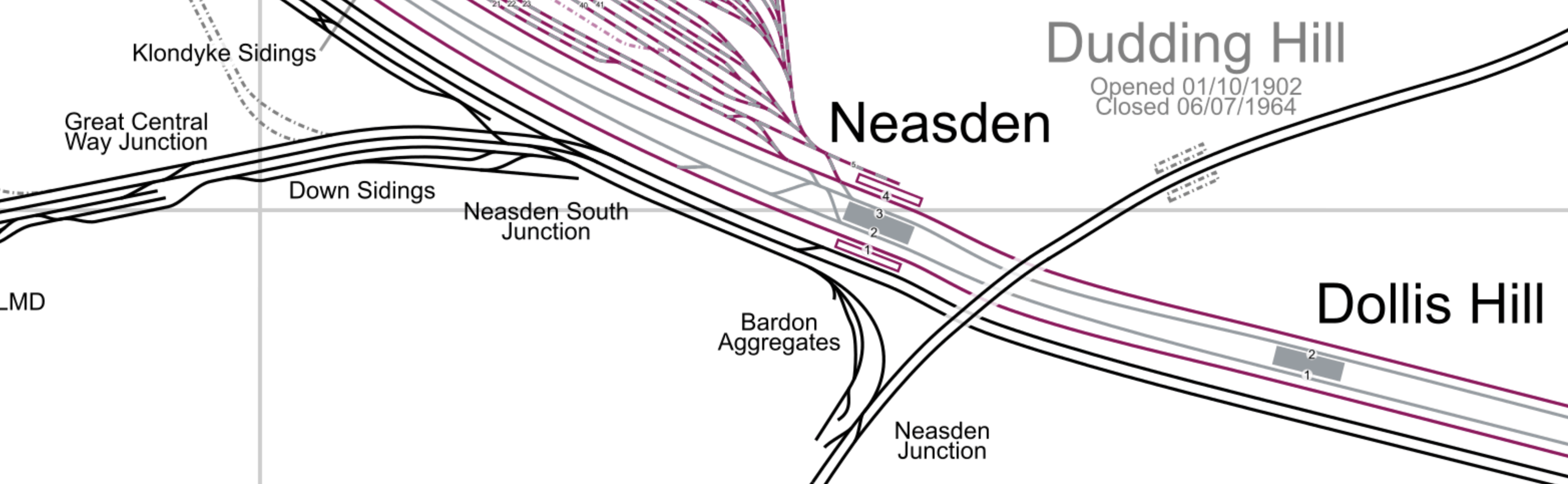
Note.
- The Dudding Hill Line is indicated by the former Dudding Hill station.
- The red tracks are Metropolitan Line tracks.
- The silver tracks are Jubilee Line tracks.
- The Southerly pair of lines through Neasden and Dollis Hill stations are Chiltern’s lines into Marylebone.
- The Chiltern tracks divide to the West of Neasden station, with the Aylesbury line following the other tracks and the Chiltern Main Line diverging to the West.
- London’s largest Underground Depot at Neasden, lies to the North-West in an area of London noted for few merits with the North Circular Road passing through.
I wonder, if the station and the depot offers a unique opportunity to offer large scale additions to London’s housing stock over the top of a rebuilt station and depot.
This Google Map shows the wider area.
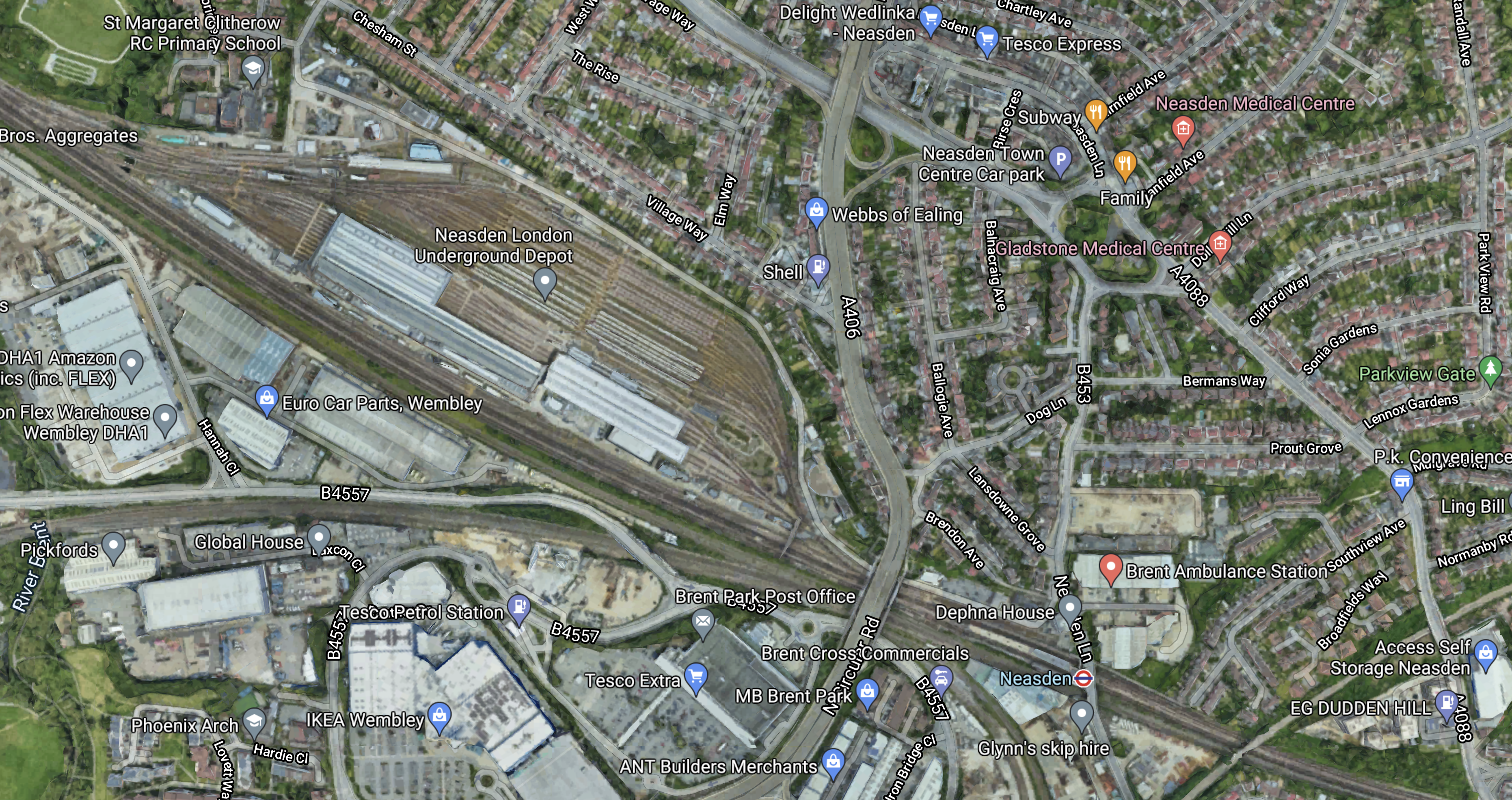
Note.
- Much of the depot appears to be open-air stabling for trains.
- The North Circular Road passes North-South between the depot and Neasden station.
- The Dudding Hill Line cuts across the South-East corner of the map.
- This corner of the map is labelled as Dudden Hill.
- According to Wikipedia, Dudding Hill is considered a more genteel spelling of Dudden Hill and could be as old as 1544.
It looks as if it would be relatively easy to develop over the top of the depot to create housing, industrial or commercial properties.
But why stop there and cover both the North Circular Road and the six tracks through Neasden station?
Neasden station could be rebuilt into a station with platforms on the following lines.
- Metropolitan Line
- Jubilee Line
- Chiltern Lines
- Dudding Hill Lines
Note.
- I estimate that Chiltern has a train about every six minutes, so some could stop.
- There might be space for a bay platform for Chiltern.
Neasden could be a major housing and transport hub.
- There could be large amounts of parking.
- Road access would be good.
- It would have good rail connections.
- It could have a bus interchange.
- London needs housing.
It might even be an alternative to Chiltern’s plan for a West Hampstead Interchange.
The Mayor of London, Transport for London and the Borough of Brent need to be bold!
Improvements To Chiltern’s Routes
Chiltern Railways have some plans that could improve services in North West London.
Using The Acton-Northolt Line
Wikipedia says this about using the Acton-Northolt Line to access new platforms at Old Oak Common station.
Upgrading the Acton–Northolt line (formerly the “New North Main Line”) to new platforms at Old Oak Common. This upgrade will also extend to London Paddington to increase capacity on the Chiltern Main Line as there is no room to expand the station at Marylebone.
This scheme has merit.
- The platforms would be connected to the Chiltern Main Line along the route of a partly-disused railway.
- The route could be double-tracked.
- There must be space for at least two new platforms.
- The new platforms could easily handle four tph.
- There may be a case for some new stations.
The scheme could add valuable extra capacity for Chiltern.
A Chiltern Metro
Wikipedia says this about a proposed metro service between Marylebone and West Ruislip stations.
- The Metro would have a frequency of four tph.
- It would call at Wembley Stadium, Sudbury & Harrow Road, Sudbury Hill Harrow, Northolt Park and South Ruislip.
- The service would require a reversing facility at West Ruislip.
- There would need to be passing loops at Sudbury Hill Harrow, and Wembley Stadium.
Given that the Chiltern Metro was first proposed over a decade ago, perhaps the concept could be increased in scope.
- Housing and other developments along the route may suggest that a station further out like High Wycombe might be a better terminal.
- ERTMS in-cab digital signalling is likely to be installed at some time, which would decrease headways between trains and allow more services.
- Electrification is likely in some form before 2040 and this will improve train performance.
- If Neasden station were to be rebuilt, as a comprehensive transport and residential development, I believe that this Metro service should also call at Neasden, as it would complement the West London Orbital Railway.
I believe that a review of the Chiltern Metro may mean, that an improved version is worth building.
Improvements To The Milton Keynes And Clapham Junction Service
I feel that this service could be key in improving services between North London and South London via the West London Line and High Speed Two’s station at Old Oak Common.
Currently, this service is as follows.
- It runs between Milton Keynes and Clapham Junction stations.
- It has a frequency of one tph.
- It calls at Bletchley, Leighton Buzzard, Tring, Berkhamsted, Hemel Hempstead, Watford Junction, Harrow & Wealdstone, Wembley Central, Shepherd’s Bush, Kensington (Olympia), West Brompton and Imperial Wharf stations.
- The service used to extend to South Croydon via Wandsworth Common, Balham, Streatham Common, Norbury, Thornton Heath, Selhurst and East Croydon.
- It uses Class 377 trains.
- It shares parts of the route with the London Overground.
I also think it has various issues and questions with respect to the future.
- The Class 377 trains are only 100 mph units, whereas the outer suburban trains on the West Coast Main Line are 110 mph Class 350 trains, which will soon be replaced by 110 mph Class 730 trains. Do the slower trains cause timetabling problems?
- Is one tph enough?
- The route doesn’t serve High Speed Two at Old Oak Common station.
- Is the service run by the right operator?
- What is the ideal Southern terminal?
These are my thoughts on the various issues.
The Service As A North-South Link
A friend, who lives in South London has told me, that if you go to an event at Wembley stadium the route is busy.
On the other hand, I’ve used it at midday on a Tuesday and found the trains empty.
But developed properly it could connect the following.
- Milton Keynes Central
- Bletchley for the East West Rail Link
- Watford for the West Coast Main Line to the North
- Wembley Central for Wembley Stadium and other entertainments
- Willesden Junction for the North London Line
- Hythe Road for High Speed Two, Crossrail and the Great Western Railway
- Shepherd’s Bush for the shopping.
- Clapham Junction for most of South London and the South of England
It would be a very useful cross-London route to complement Thameslink and the East London Line.
The Frequency
The current Milton Keynes and Clapham Junction has a frequency of one tph.
This may be enough for some parts of the route, as other services also provide services.
But many would argue, that perhaps South of Watford Junction, the service needs to be increased to connect the area to Old Oak Common and Clapham Junction.
I feel that High Speed Two, Crossrail and the Great Western Railway give so much connectivity, that between Clapham Junction and Willesden Junction needs a frequency of at least eight tph.
As the North London Line and the Watford DC Line are working at a frequency of four tph, this could indicate that a four tph direct service Watford Junction and Clapham Junction be ideal. Perhaps, it could continue North to Milton Keynes with a frequency of two tph.
The Trains
I am absolutely certain, that the full service needs to be operated by dual voltage trains, that are capable of running at 110 mph.
The Class 350/1 trains of West Midlands Trains would probably be ideal for the full service.
- They are dual voltage trains.
- They are 110 mph trains.
- They have a long distance interior.
They are being replaced with new Class 730 trains, so would be available.
If some services were running only as far North as Watford Junction, these could be either Class 378 or Class 710 trains of the London Overground.
The Connection To The West London Line And High Speed Two
This map from Wikipedia by Cnbrb shows the latest iteration of the lines at Old Oak Common station.
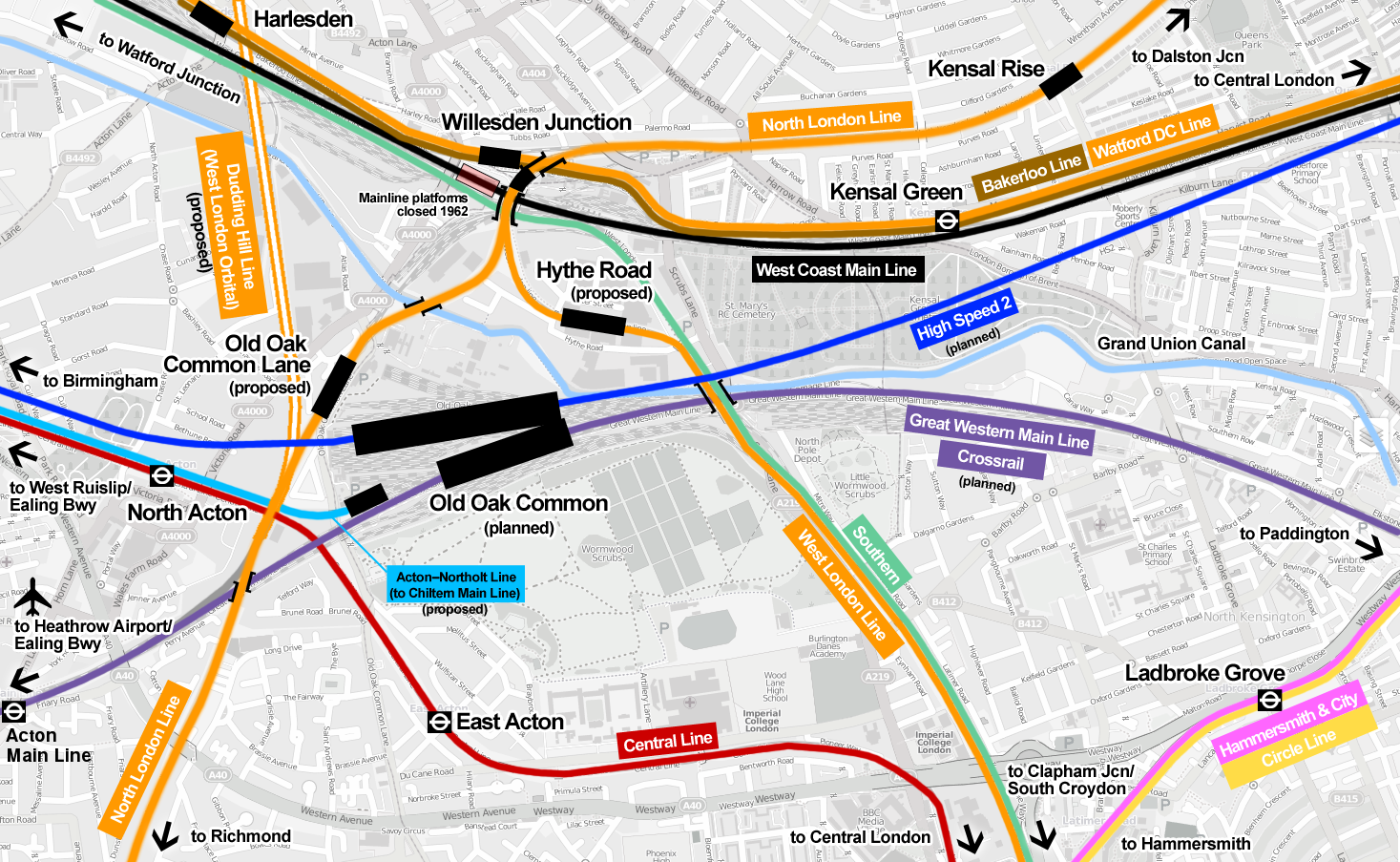
Note.
- The green route is taken by the Milton Keynes and Clapham Junction trains.
- The bright blue is High Speed Two.
- The purple is Crossrail.
- The orange is the Overground
- Hythe Road station is proposed for the West London Line to connect to Old Oak Common station for High Speed Two.
- Hythe Road station will have a bay platform to turn trains from the South.
- Old Oak Common Lane station is proposed for the North London Line to connect to Old Oak Common station for High Speed Two.
But where is the connection between the Milton Keynes and Clapham Junction service and Old Oak Common station for High Speed Two?
- Access from the South is not a problem as the Overground can be used to Hythe Road station.
- Extra services from the South can be run to and from the bay platform at Hythe Road station.
- Access from the East is not a problem as the Overground can be used to Hythe Road station.
- How do passengers go between say Wembley Central and Heathrow?
In addition for access from the West is the Overground can be used to Old Oak Common Lane station.
But as things stand at the moment the Milton Keynes and Clapham Junction service bypasses Hythe Road station and the only ways to go from Milton Keynes to Old Oak Common station for either High Speed Two, Crossrail or the Great Western is to do one of the following.
- Change to the Watford DC Line at Watford Junction, Harrow & Wealdstone or Wembley Central and then change to the Overground at Willesden Junction for either Old Oak Common Lane or Hythe Road station.
- Continue South to Shepherd’s Bush station, cross over to the other platform and then come back to Hythe Road station.
- Go via Euston station. OK for High Speed Two, but not for Crossrail or the Great Western.
They cannot be serious!
I hope that there is a cunning plan to enable the Milton Keynes and Clapham Junction service to connect.
Whilst on the subject of connections at Old Oak Common, where is the promised connection of Crossrail to the West Coast Main Line?
Were all these connections just kicked into the long grass and quietly forgotten, as they were deemed too difficult and/or expensive?
I think serious questions need to be asked about the design of Crossrail and High Speed Two at Old Oak Common.
Why weren’t Crossrail and High Speed Two designed to connect directly to the London Overground at Willesden Junction station perhaps by the use of a North South people mover serving the following lines?
- Bakerloo, Watford DC, West Coast Main and West London Orbital Lines at a rebuilt Harlesden station.
- London Overground at the high-level Willesden Junction station.
- High Speed Two
- Crossrail and the Great Western Railway
- The new Chiltern platforms.
- Central Line at East Acton station.
Note.
- Hythe Road and Old Oak Common stations would not be needed.
- The Milton Keynes and Clapham Junction service would call additionally at the rebuilt Harlesden station.
The current design of Old Oak Common stinks like a horse designed by a committee!
The Northern Terminal
I suggested earlier that some trains use Watford Junction and others use Milton Keynes Central.
Both stations have the capacity and the connectivity.
The Southern Terminal
In the last ten years, South Croydon, East Croydon and Clapham Junction have been used as the Southern terminal.
Thameslink seems to have chosen its various terminals to satisfaction of the travelling public, so perhaps the same method or personnel should be used.
The Operator
The Gibb Report said that this service should be transferred to the London Overground and I wrote about this proposal in Gibb Report – East Croydon – Milton Keynes Route Should Be Transferred To London Overground.
This is one suggestion, but I do wonder, if it should be transferred to West Midlands Trains and run in conjunction with their West Coast Main Line services.
- The service needs 110 mph trains.
- Timetabling and operation should be easier.
- London Overground trains don’t have a long-distance interior.
On the other hand, trains running between Watford Junction and Clapham Junction would probably be better if they were London Overground trains.
Conclusion
I believe that by using the current network and some modern trains and signalling, the passenger services to the West of the capital can be substantially improved.
 The Anonymous Widower