WSMR Plans Alstom-Built Bi-Mode Sets If Open Access Bid Approved
The title of this post, is the same as that of this article on Rail magazine.
This is the sub-heading.
Wrexham, Shropshire & Midlands Railway (WSMR) has said it will invest in new Alstom battery-electric bi-mode trains if its open access application is successful.
These three paragraphs add some more details.
In December the Alstom-backed operation resubmitted its application to run between the North Wales city and London Euston via Shrewsbury and Walsall after its initial bid was rejected by the Office of Rail and Road (ORR) last year.
In a letter to the regulator and Network Rail, Mobilisation Director Darren Horley said: “Should our application be successful, WSMR will work alongside its parent company, Alstom, and will commit to invest in a new bi-mode battery-electric fleet based on the Adessia platform – Alstom’s new generation passenger train designed specifically for the UK market.
“Initial discussions regarding the procurement of a small new fleet have already commenced with Alstom and a financier.”
The Adessia will be a high speed version, with a maximum speed of 125 mph or 200 kph.
I have some thoughts.
How Much Of The Route Is Without Electrification?
In Alstom Plans To Operate Its Own Passenger Train Service In The UK For The First Time, I gave these distances of the sections of the route.
- Euston and Nuneaton – 96.7 miles – electrified
- Nuneaton and Walsall – 26.7 miles – electrified
- Walsall and Wolverhampton – 6.7 miles – electrified
- Wolverhampton and Shrewsbury – 29.7 miles
- Shrewsbury and Wrexham General – 30.3 miles
That looks like there are sixty miles in each direction without electrification.
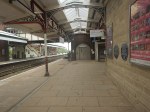
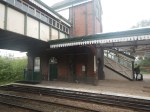
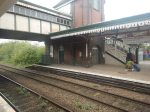
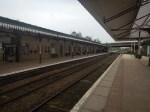
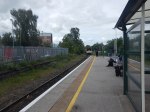
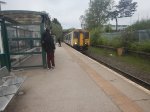
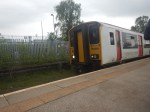
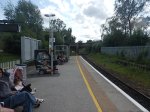
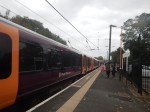
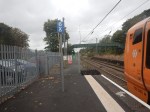
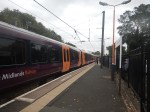
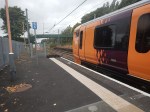
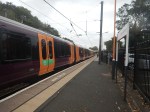
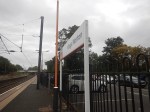
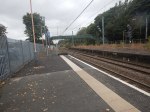
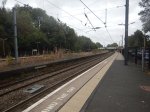
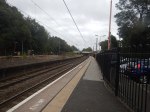
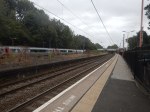
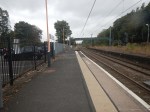
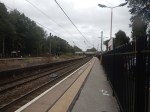
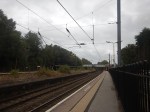
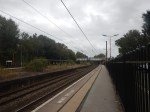
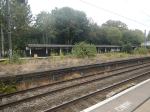
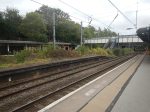
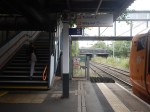
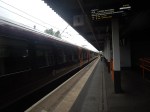
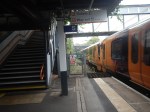
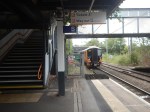
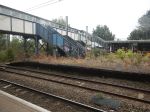
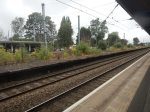
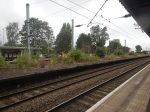
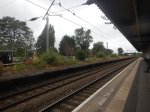
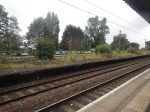
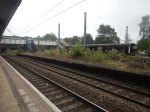
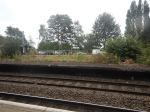
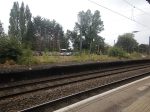
Either the trains would have a battery range of 120 miles or a battery range of over 60 miles with charging at Wrexham General station, which is shown in these pictures.
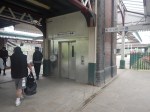
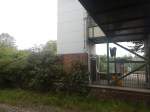
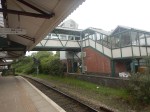
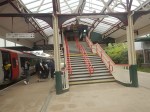
Note.
- Wrexham General station has four platforms. Two are a pair of long through platforms and there are also a separate long and a short through platform.
- The station is step-free.
- The last four pictures are Platform 4.
This OpenRailwayMap shows the platform layout at Wrexham General station.
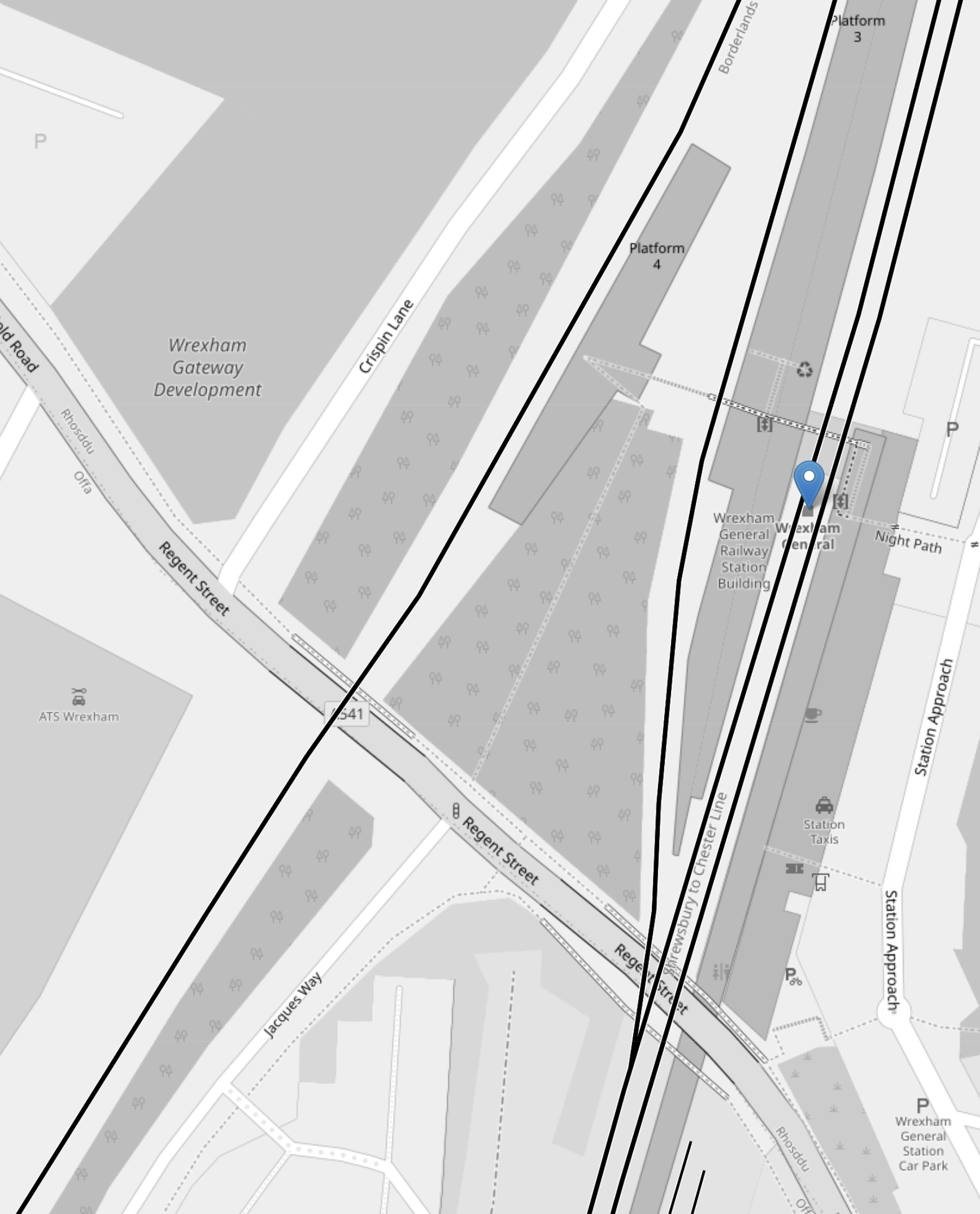
Note.
- The blue arrow is between the two through Platforms 1 and 2.
- Platform 3 is the platform in the middle.
- Platform 4 is the platform on the left.
An overhead charging rail could be used on Platforms 3 and/or 4, as has been used at Caerphilly station.
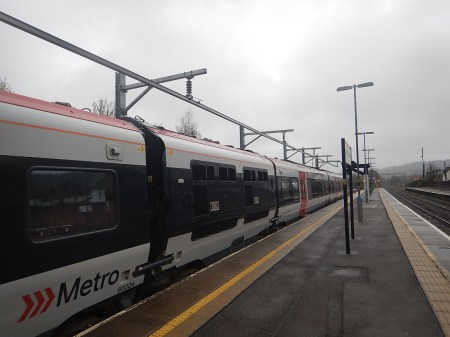
The overhead charging rail could also charge other Wrexham General services.
Prospective Routes
I would expect that there would be a need for such a train on the following UK routes.
- CrossCountry – Class 221 train replacement.
- East-West Rail – New fleet.
- Southeastern – London and Hastings.
- ScotRail – Inter7City replacement.
- South Western Railway – Class 158 and Class 159 train replacement.
- Transport for Wales – Some diesel services.
There would be probably be other services too!
Will The Service Call At Willenhall, Darlaston And Walsall?
This OpenRailwayMap shows the three stations.
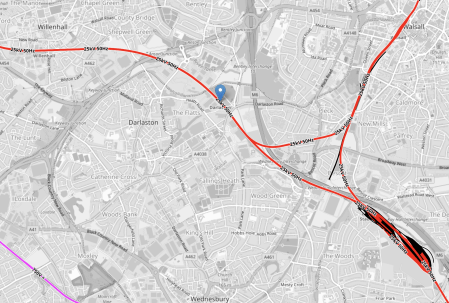
Note.
- Willenhall station is in the North-West corner of the map.
- Darlaston station is marked by the blue arrow.
- Walsall station is in the North-East corner of the map.
- Tame Valley Parkway station is in the South-East corner of the map.
- It might also be a good idea to call at the Parkway station.
- Red tracks are electrified.
- To call at all four stations will need a reverse at Walsall.
There may be some thinking to do, on the best calling pattern in Walsall.
Northern Launches New Yorkshire Flyer Fast Service Between Leeds And Sheffield
The title of this post is the same as that of this news item from Northern Trains.
This is the sub-heading.
Northern is running a new fast service which allows customers to travel between Leeds and Sheffield in 47 minutes.
These three introductory paragraphs add more detail.
Known as the Yorkshire Flyer, as it provides a quick and convenient connection between the White Rose county’s two biggest cities, the service was officially launched during an event at Leeds station earlier today.
Cutting journey times and providing more than 30,000 extra seats a week, the service will support economic growth by making it easier for people to get to work and reach new opportunities.
It used to take all Northern customers around an hour or longer to make the journey, with trains calling at various stops along the way.
These further details come from Real Time Trains.
- The trains used appear to be two-car Class 158 trains.
- The total distance is 38.7 miles.
- Between Leeds station and South Kirkby junction is electrified and a distance of 20.6 miles.
- Trains appear to leave Leeds station at xx45.
- CrossCountry services Leeds station for Sheffield at xx15 and make a similar intermediate stop at Wakefield Westgate.
- Leeds trains for Sheffield seem to leave from Platform 12 or 12A.
- Trains appear to leave Sheffield station at xx52.
- CrossCountry services leave Sheffield station for Leeds at xx22 and make a similar intermediate stop at Wakefield Westgate.
- Sheffield trains for Leeds don’t seem to have such a regular platform, as those in the other direction. But I suppose that will be improved.
Effectively, Northern and CrossCountry have paired up two services to give a two trains per hour, fast service between Leeds and Sheffield with one stop at Wakefield Westgate.
I have some further thoughts.
The Route Could Be Run By Battery-Electric Trains
Consider.
- The only part of the route that is not electrified is the 18.1 miles between South Kirkby junction and Sheffield station.
- From talking to engineers, who are working on developing battery-electric trains, a three-car train with a battery range of fifty miles is already a possibility.
- In 2015, I actually rode on a four-car battery-electric Class 379 train, that ran reliably on the Harwich branch for three months.
- Merseyrail’s battery-electric Class 777 trains probably have the performance and are working reliably on Merseyside. But they are probably a bit slow.
I believe that any number of train manufacturers would be very pleased to provide new battery-electric trains for the route.
But Siemens must be in the prime position.
- The German company has built a £200 million train factory at Goole in East Yorkshire, which is currently building London’s Piccadilly Line trains, which have batteries.
- Siemens have already delivered trains in Germany using the technology, they would use in the UK.
- The battery charging technology they would use for other routes in the UK, is described in Technology Behind Siemens Mobility’s British Battery Trains Hits The Tracks.
- Sheffield and Leeds, would make a superb test and demonstration route for battery-electric trains, as 50% of the route is fully-electrified with 25 KVAC.
- The Sheffield and Leeds route is just down the track from the Goole factory.
- I wouldn’t be very surprised, if Siemens were very keen to get a few orders close to their factory, as they would surely be easy to support.
But the clincher must be Juergen Maier, who used to be CEO of Siemens UK, and is now Chair of Great British Energy. Maier holds both British and Austrian citizenship, and was educated in Leeds and Nottingham, so hopefully, he can give this clanger-prone government some excellent advice where they need it, from his position in Great British Energy.
Could A Stop Be Made At Meadowbank Station?
This would give access to other rail routes and the Sheffield Supertram, but most of this access could also be performed at Sheffield.
Looking at the timetable of the route, I feel that there is enough slack to fit in a stop at Meadowhall, but it would need for the route to be electrified, so that the trains had faster acceleration and deceleration.
However, battery-electric trains may have the required performance.
What Maximum Speed Would The Trains Need?
Consider.
- The current Class 158 diesel trains used between Sheffield and Leeds and in many places in the UK are 90 mph trains.
- There are also a large number of Class 170 trains in the UK, that will need to be replaced and these are 100 mph trains.
- The Sheffield and Leeds route has some sections of 85 mph running.
- Train speeds are all accurately computer-controlled.
As a Control Engineer for safety and route availability reasons, I believe the trains will have a 100 mph maximum speed, but train speed will be computer controlled.
Will The Trains Be Driver-Only Operated?
I asked Google AI if Hitachi IET trains are driver only operated (DOO) and received this reply.
Hitachi Intercity Express Trains (IETs, Class 800/802) are designed for versatile operation, capable of Driver-Only Operation (DOO) using in-cab CCTV monitors for door safety checks. While they can operate without a guard, many services, particularly on GWR, still retain a guard on board for passenger service duties, even if the driver controls the doors.
So Hitachi trains can be driver-only operated and these will surely share the tracks with the trains that work the Northern Flyer.
I asked Google AI if Thameslink trains are driver only operated (DOO) and received this reply.
Yes, all Thameslink train services are Driver Only Operated (DOO). This means the driver is solely responsible for operating the doors and ensuring the safe dispatch of the train, without a guard or conductor on board to manage the doors. Through the central London core, these trains often use Automatic Train Operation (ATO).
As I believe that Siemens would be likely to win the battery-electric train order, because of proven technology, factory location and influence of Juergen Maier, Siemens certainly have the ability to produce trains, that are driver-only operated.
I believe that, whoever builds the trains, they will be capable of driver-only operation.
But if driver-only operation is to be used will be down to politics.
- Because of the situation on East West Rail, Heidi Alexander will probably be in favour.
- The Tories and Liberal Democrats will also be in favour.
- The rail unions, the left wing of the Labour Party and the Greens will be strongly against.
- Farage and Reform UK will take a very hard line to enforce driver-only operation everywhere.
The average citizen on the Northern Flyer and all the other trains in the UK, will just want a reliable train service.
Conclusion
- This would make a superb route for a battery electric train.
- No chargers or extra electrification would need to be installed.
- There wouldn’t be much work needed to be done to the platforms or the signalling.
- The trains would use standard 25 KVAC overhead electrification for charging.
- The trains would be running close to where they were built.
I believe the new service will give a large boost to the Yorkshire economy. Even before the arrival of battery-electric trains.
South Yorkshire Now Has Better North-South Connections
The December 14th 2025 timetable change was a big day for South Yorkshire.
Three big changes will transform, public transport in South Yorkshire.
The Opening Of A New Tram-Stop At Magna Science Adventure Centre On The Tram-Train Route Between Sheffield And Rotherham
The Magna Science Adventure Centre is described like this in the first paragraph of its Wikipedia entry.
Magna Science Adventure Centre is an educational visitor attraction in Rotherham, South Yorkshire, England.
This map shows the site and the tram-train track between Sheffield and Rotherham.
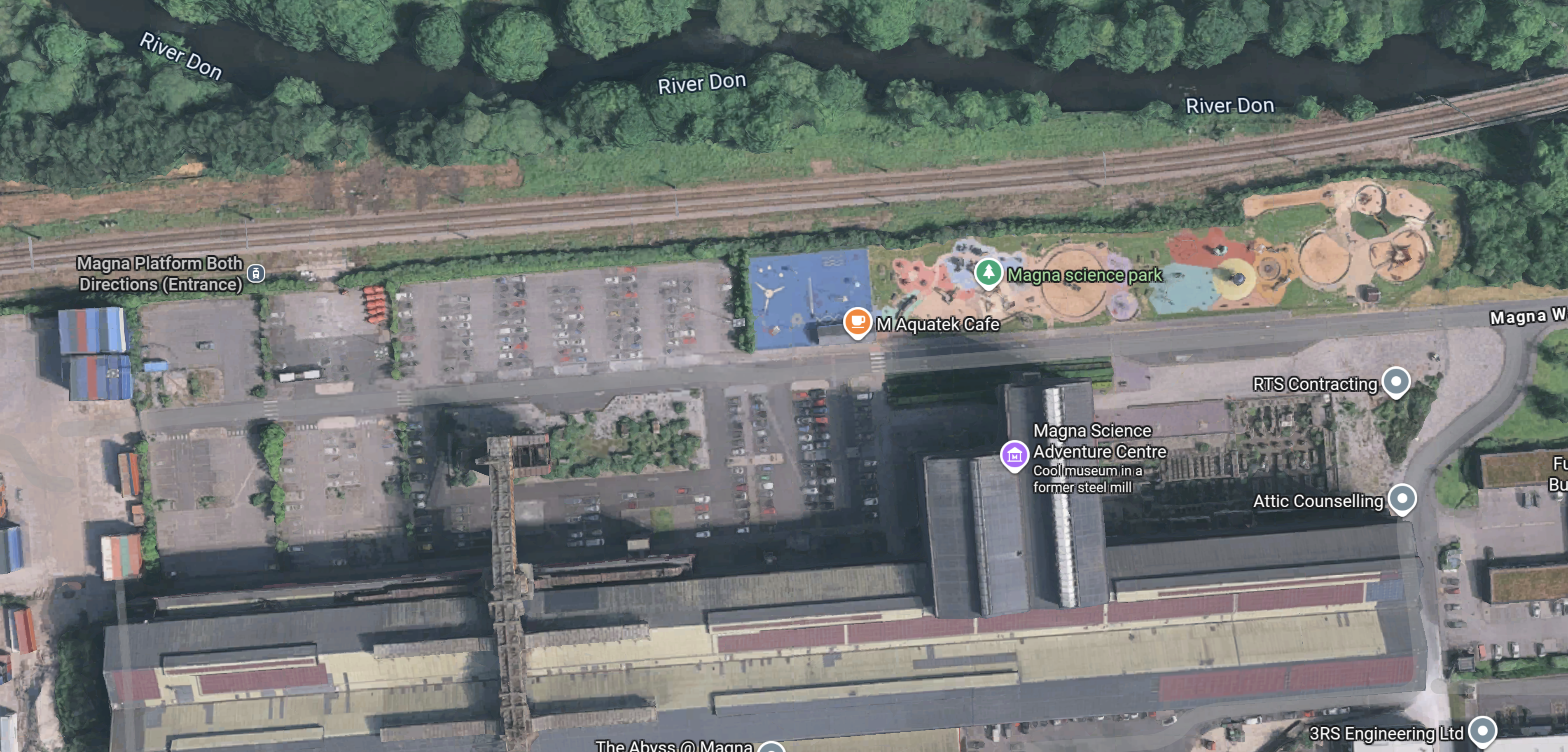
Note.
- The tram-train track runs East-West across the top of the map.
- Sheffield is to the West and Rotherham is to the East.
- At the Western end of the site, a label indicates the position of the Magna Platform.
- The position of the tram-train stop is already marked.
- There will be 29 extra Park-and-Ride spaces.
- The Magna Science Adventure Centre is indicated by the purple arrow in the middle of the map.
- Magna Way runs East-West through the site.
- There are four pavilions: Earth, Air, Fire, and Water.
This article on the BBC is entitled Lifts And Bridge Added As Tram Stop Takes Shape.
This picture from the article shows the bridge with lifts.

Note.
It will be an impressive tram stop.
It doesn’t look like it will be long before it opens.
But as yet no information is available.
Google AI gave this answer.
The new Magna Tram Train stop is scheduled to open in early 2026.
Construction of the new £10 million station and Park & Ride facility in Rotherham, part of a wider investment in the South Yorkshire Supertram network, is currently on track.
The new stop will improve access to the Magna Science Adventure Centre, local businesses, and link up with existing walking and cycling routes, aiming to ease congestion in the Lower Don Valley.
I shall be going next week to take photographs of the tram stop.
The Increase In Frequency Of Express Trains Serving Doncaster On The East Coast Main Line
Since the December 14th 2025 timetable change, the Monday to Friday express trains, that stop at Doncaster on the East Coast Main Line have included.
- CrossCountry – 8 trains per day (tpd) in both directions.
- Grand Central – 4 tpd in both directions.
- Hull Trains – 7 tpd in both directions.
- LNER- 3.5 trains per hour (tph) in both directions.
- TransPennineExpress – 1 tph in both directions.
Note.
- This totals to 173 express trains per day stopping at Doncaster
- Or about 7 tph in both directions or a train every 8.5 minutes.
- This is about a thirty percent increase in frequency.
- Doncaster has become the Crewe of South Yorkshire.
I can see this large number of express trains to Doncaster bringing large numbers of visitors to go to the Magna Science Adventure Centre or its tram stop for onward connection to other destinations on the Sheffield Supertram network.
The trouble is, that at present the Magna tram stop is not connected to Doncaster station.
This OpenRailwayMap shows the rail lines between Doncaster and Sheffield stations.
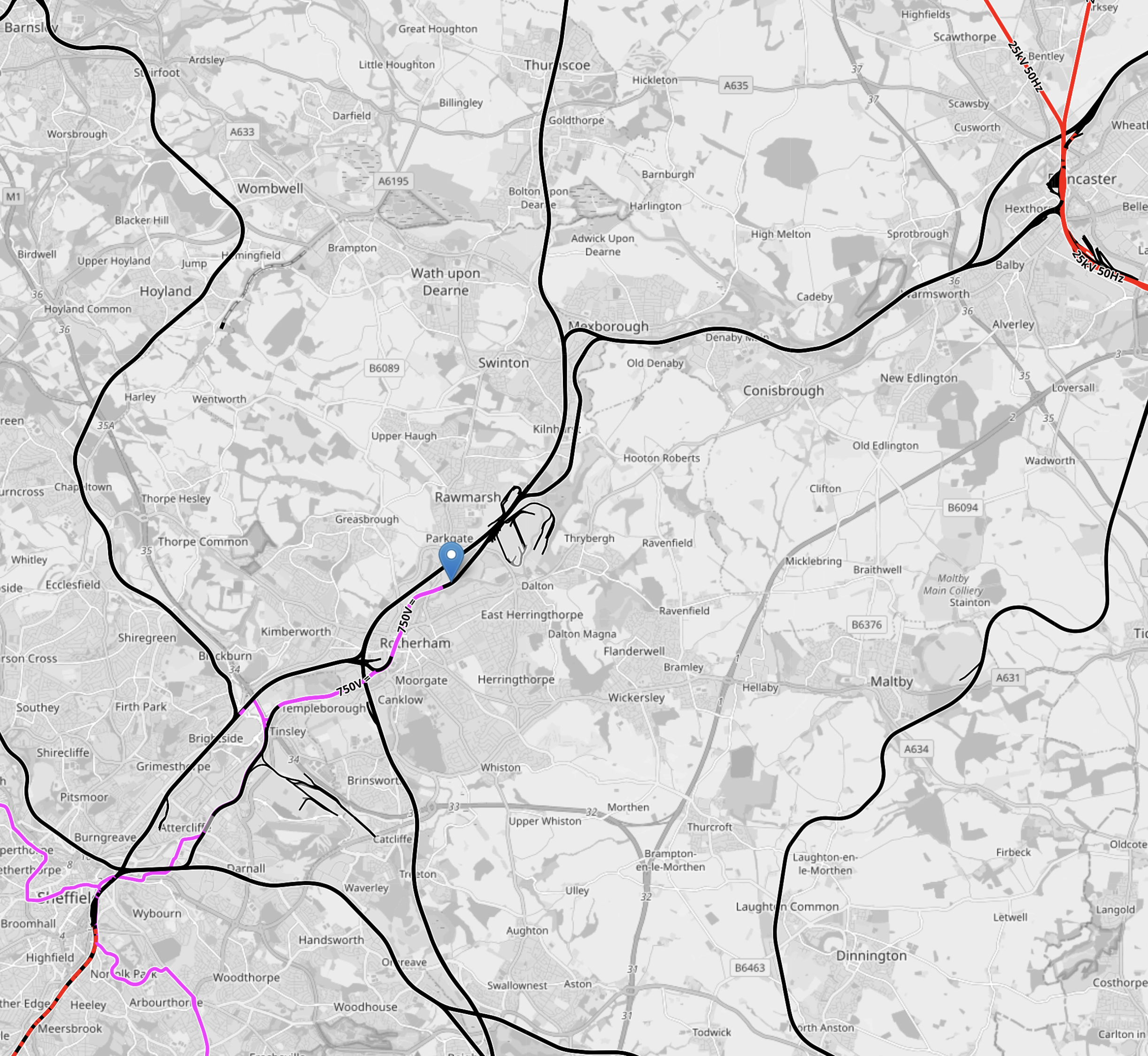
Note.
- The short length of red track in the North-East corner of the map is the East Coast Main Line.
- Doncaster station can be picked out.
- The short length of red track in the South-West corner of the map is the Midland Main Line, which connects Sheffield to London.
- Sheffield station is at the Northern end of the electrification, which will be installed soon.
- The pink tracks are the 750 VDC electrified tracks of the Sheffield Supertram.
- The blue arrow marks Rotherham Parkgate station, which is the limit of the current tram-train route.
The tram-train route needs to be extended so that the tram-trains can go between Rotherham Parkgate tram stop and Doncaster station.
The route seems to have these characteristics.
- It is about 11.8 miles long.
- Stops are Rotherham Central, Swinton (South Yorkshire), Mexborough and Conisborough.
- Diesel trains take about thirty minutes between Rotherham Central and Doncaster.
- All platforms at Doncaster are electrified with 25 KVAC.
- Platform 5 is a convenient bay platform at Doncaster, that could be used by the tram-trains.
- Sheffield’s Class 399 tram-trains can use 25 KVAC for traction.
- South Wales have similar Stadler tram-trains, that are to be fitted with batteries.
I am fairly sure, that a solution can be found so that Sheffield’s tram-trains can be extended to Doncaster station.
This OpenRailwayMap shows the route between Rotherham Parkgate tram stop and Doncaster station.
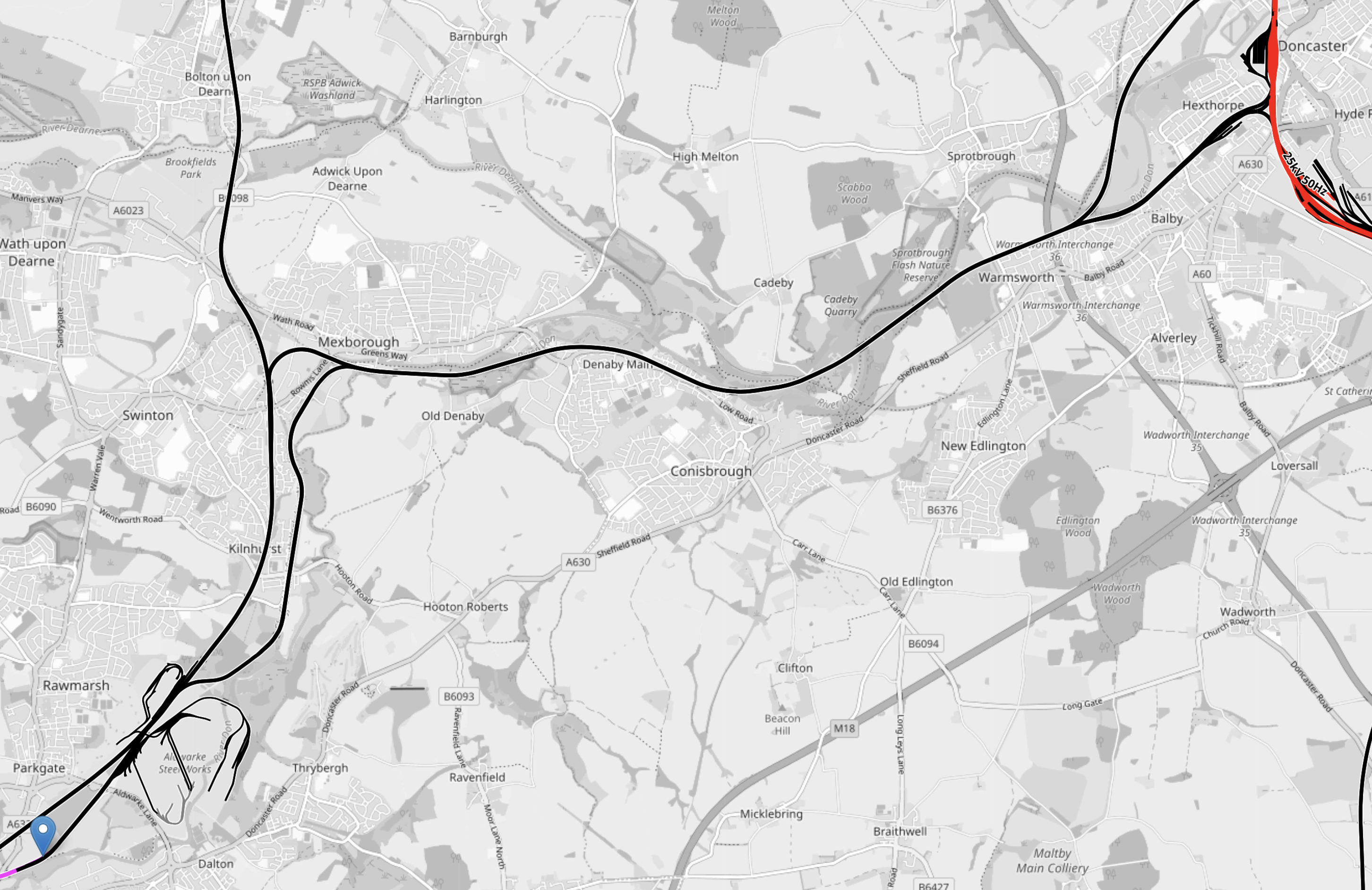
Note.
- The short length of red track in the North-East corner of the map is the East Coast Main Line.
- Doncaster station can be picked out.
- The short length of pink tracks are the 750 VDC electrified tracks of the Sheffield Supertram.
- The blue arrow marks Rotherham Parkgate station, which is the limit of the current tram-train route.
- Most of the route is not electrified.
As there is electrification at both ends, I suspect the easiest way of powering the trams would be to use batteries, as has been done in South Wales.
The New Class 810 trains between London St. Pancras And Sheffield On The Midland Main Line
These new Class 810 trains have started running this month and I suspect soe travellers will use these trains to go to Magna or its tram stop.
his OpenRailwayMap shows the tram routes in Sheffield city centre.
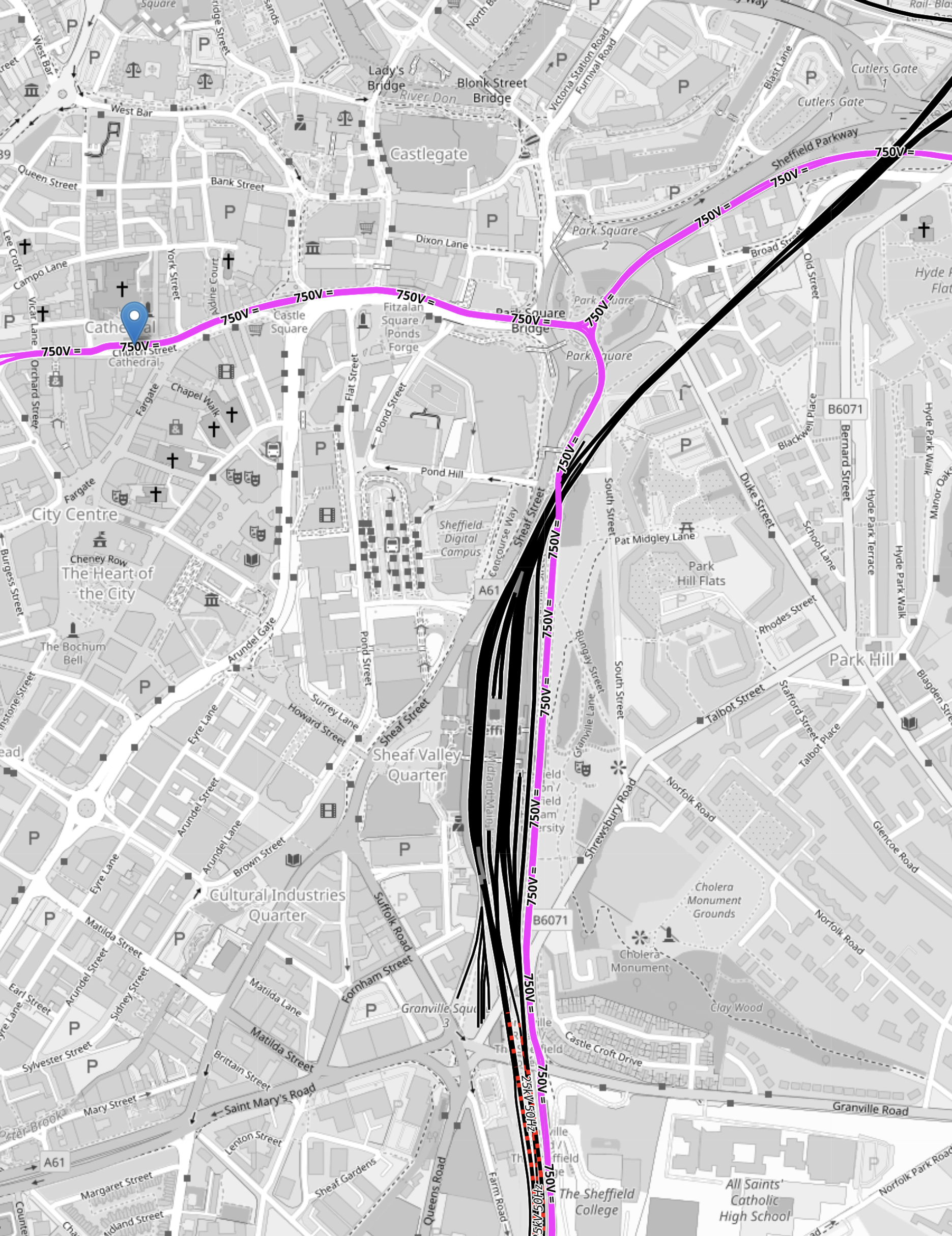
Note.
- The pink tracks are tram-tracks.
- The black tracks are unelectrified train tracks.
- The short lengths of red-and-black tracks are tracks to be electrified with 25 KVAC overhead, for the Class 810 trains.
- The blue error indicated the Cathedral tram-stop, where tram-trains will be caught to Magna.
- The mass of black tracks in the middle of the map is Sheffield station.
- There is a tram stop on the East side of the train station for the trams.
- Trams going South go to Halfway and Herdings Park.
- Trams going North-East go to Rotherham Parkgate and Meadowhall Interchange, and will go to Magna, when it opens.
- Trams going North-West go to Malin Bridge and Middlewood.
It is a difficult interchange between Cathedral and Sheffield station, if you are catching the tram-train, as it is a hard walk up hill, so it might be better if you are goinging between Sheffield station and the tram-train to change trams at Meadowhall South.
How Will The East Coast Main Line Timetable Change Affect Sheffield?
This article in the October 2025 Edition of Modern Railways is entitled Industry Gears Up For December ECML Timetable Change.
This is the first paragraph.
Major changes are planned to trains along the East Coast main line from 14 December as the long-heralded timetable takes effect.
In this post, I will see how the changes detailed in the article in Modern Railways will affect Sheffield and Doncaster.
Aberdeen-Edinburgh
This is said about Aberdeen and Edinburgh services.
Monday-Saturday services will not change between Aberdeen and Edinburgh, with all intermediate stations served at similar times.
The LNER service to and from King’s Cross will call additionally at Doncaster, Newark Northgate and Peterborough; the last LNER Monday-Friday departure from Aberdeen will terminate at Doncaster instead of Leeds, and the first LNER Monday-Saturday train to Aberdeen will start from King’s Cross at 05:48 instead of Leeds.
Note.
- An hourly fast train between Edinburgh and King’s Cross will have a journey time of 4 hours and 10 minutes, which is a saving of at least 12 minutes.
- There is an Aberdeen-Manchester air service, but no Edinburgh-Manchester or Leeds-Scotland air services.
- In Could London And Central Scotland Air Passengers Be Persuaded To Use The Trains?, I speculated about how air passengers could be tempted to use the trains between London and Central Scotland.
- It looks to me, that LNER are strengthening their services between Doncaster and Scotland.
- Will that 05:48 King’s Cross departure for Aberdeen, enable a working day in Aberdeen and return?
Is LNER’s aim to get travellers to use the trains between Doncaster and Scotland, as an alternative to driving or trains from Leeds?
Alnmouth and Berwick
This is said about Alnmouth services.
Quicker LNER journey times are promised to stations South of York, with King’s Cross-Alnmouth journey times up to 15 minutes quicker.
More TPE trains will run between Newcastle, Morpeth, Alnmouth, Berwick, Reston, Dunbar, East Linton and Edinburgh Waverley.
The number of trains calling at Durham on weekdays will fall from 18 to 13 Southbound and from 15 to 10 Northbound.
This is said about Berwick services.
LNER trains will call every two hours during the middle of the day, and the number of weekday trains to King’s Cross falls from 15 to 11 Southbound with a 13 to nine fall Northbound. More TPE trains will call.
Note.
- Lumo serves Newcastle, Morpeth and Edinburgh.
- Reston and East Linton are new stations.
- The stations between Newcastle and Edinburgh need adequate parking to attract commuters.
It looks to me, that LNER are timing the trains to attract day trips along the East Coast Main Line.
Bradford Forster Square/Interchange
This is said about Bradford Forster Square services.
The number of weekday trains will remain as per May 2025, but on Sundays, the number of trains serving Forster Square increases from two to six each way on a two-hourly interval. LNER stopping patterns change, with fewer trains calling at Peterborough and none at Grantham or Retford.
Trains currently stop at Peterborough, Doncaster, Wakefield Westgate, Leeds and Shipley, but surely a more regular six trains per day (tpd) is preferable.
This is said about Bradford Interchange services.
At Interchange, Grand Central Trains will run at different times to the May 2025 timetable, with King’s Cross journeys up to 20 minutes quicker. One GC each way will call at Peterborough, while some will stop at Pontefract Monkhill on Sundays for the first time.
Note.
- Trains currently stop at Peterborough, Doncaster, Pontefract Monkhill, Wakefield Kirkgate, Mirfield, Brighouse, Halifax and Low Moor
- Is the twenty minutes time saving due to the new digital signalling to the South of Doncaster?
- Is this another open access operator being allowed to do what they do best?
This looks to be a very useful service, which serves several stations, with no other service to London.
Doncaster
This is said about Doncaster services.
Additional trains calling at destinations including Birmingham New Street, Sheffield, York, Newark and Berwick-upon-Tweed. LNER Aberdeen/Inverness trains will call at Doncaster. EMR trains will be retimed at Doncaster to provide better connections with LNER’s revised timetables, but journeys from Doncaster to Sleaford and Spalding will require a change at Lincoln. This change has been made to “enable improved connections” at Peterborough, Sleaford, Lincoln and Doncaster. The number of trains calling at Stevenage falls from 24 to 19 Southbound and 24 to 21 Northbound, with Grantham stops dropping by seven trains to 28 Southbound and 4 to 29 Northbound.
If CrossCountry Trains were to switch their trains to Hitachi InterCity Battery trains, I believe that a version of these trains could handle routes like Plymouth and Aberdeen.
- This would speed up services.
- Trains would run close together and thus increase capacity.
- Services could even be faster.
So expect a replacement order for CrossCountry Trains diesel multiple units soon.
Glasgow
LNER gave up serving Glasgow Central from King’s Cross in the December 2024 timetable change.
In Lumo Will Extend Its King’s Cross And Edinburgh Service To Glasgow, I talked about Lumo extending their King’s Cross and Edinburgh service to Glasgow Central station.
Hull
This is said about Hull services.
On Mondays-Fridays, Hull Trains will provide an extra train from London.
The LNER Monday-Friday Hull-Doncaster train will be withdrawn;
Northern will operate a 20:25 departure to Doncaster; calling at Brough and Selby.
Note.
- It looks like Great British Railways have surrendered Hull and Beverley to Hull Trains.
- Hull Trains are converting their Class 802 trains to battery-electric power.
- It is likely that Hull Trains upgraded trains will be able to use the Great Northern and Great Eastern Joint Line via Lincoln on battery power.
The new timetable appears to be ready for the future of Hull Trains.
Leeds
This is said about Leeds services.
LNER services will depart to King’s Cross at xx.10 and xx.40.
Northern will introduce an extra mostly hourly service between Leeds and Sheffield calling at Wakefield Westgate. They will depart about 30 minutes earlier or later than the CrossCountry service.
Note.
- I would expect the two King’s Cross and Leeds services which would both stop at Doncaster and Wakefield Westgate would set the timings between Doncaster and Leeds.
- Currently, of the four trains that run to and from Leeds every two hours, two are planned to terminate at Leeds, one at Harrogate and one at Bradford Forster Square.
- There is also a daily service between King’s Cross and Skipton via Leeds.
- I can envisage another service between King’s Cross and Ilkley via Leeds, Kirkstall Forge, Guiseley, Burley-in-Wharfedale and Ben Rhydding.
- I can envisage another service between King’s Cross and Huddersfield, via Leeds, White Rose, Morley, Batley, Dewsbury, Ravensthorpe, Mirfield and Deighton.
- I can envisage another service between King’s Cross and Hebden Bridge, via Leeds, White Rose, Morley, Batley, Dewsbury, Ravensthorpe, Mirfield, Sowerby Bridge, Mytholmroyd and Brighouse.
- An alternative to Hebden Bridge would be Rochdale, which already has four platforms and is on the Manchester Metrolink
- It appears that Bradford Forster Square, Harrogate, Huddersfield, Leeds and Skipton stations can turn nine or ten-car trains and Ilkley can turn five-car trains.
- I also believe that one of Hitachi’s InterCity Battery trains could use battery power to take the spectacular Settle and Carlisle Line to Carlisle or even Glasgow Central.
- If needed pairs of five-car trains could split and join at Leeds, with one train waiting at Leeds and the other train going on to another destination.
- The CrossCountry and Northern Trains services on the Sheffield and Leeds route via Doncaster and Wakefield Westgate would probably need to be modern battery-electric trains to maximise the capacity on the route.
There certainly seem to be opportunities to give a number of stations in Yorkshire an all-electric service to King’s Cross with a two-hourly frequency, in a time of a few minutes over two hours.
Lincoln
This is said about Lincoln services.
One more LNER train from King’s Cross will run, with the first train arriving earlier and the last train later. There will no longer be an LNER train serving Stevenage with passengers having to change at Newark Northgate or Peterborough. An improved service will run to and from Nottingham, with an increase from one to two trains per hour on Mondays-Saturdays. An hourly service will run to Crewe, and a new Matlock-Nottingham-Lincoln-Cleethorpes service will run. EMR will cease all bar morning peak direct trains to/from Leicester. Newark Northgate-Lincoln trains will be reduced from five to four on Mondays-Fridays, eight to four on Saturdays and ten to eight on Sundays.
Note.
- Travellers between Lincoln/Nottingham and the North/Scotland will have two trains per hour to Newark Northgate, where there will be two tph to the North/Scotland.
- The hourly Crewe service will give access to Liverpool Manchester and the West Coast Main Line.
- Will there still be a Liverpool and Norwich service or will this be replaced by East-West Rail?
There seems to be a big sort out to EMR services.
Newcastle
This is said about Newcastle services.
The number of trains serving King’s Cross increases from 35 to 53 Southbound on weekdays and from 36 to 52 Northbound. One train every hour will run non-stop to York. More TPE trains will run Northbound (see Alnmouth and Berwick), while Northern is retiming services on the Northumberland Line in anticipation of Northumberland Park and Bedlington stations opening in early 2026. A semi-fast hourly service between Newcastle and Middlesbrough will run on Mondays-Saturdays and there will be an hourly stopping service between them.
Note.
- There will be a big increase in services between King’s Cross and Newcastle.
- Is the aim to persuade travellers to use trains rather than airlines?
- LNER also runs one train per day (tpd) between King’s Cross and Middlesbrough.
- Grand Central Trains will be running at a frequency of six tpd between King’s Cross and Sunderland via Thirsk, Northallerton, Eaglescliffe, Hartlepool and Seaham.
Hull appears to have been left to Hull Trains and Glasgow to Lumo, and Sunderland appears to be left for Grand Central Trains.
Conclusions
I am coming to some conclusions about services on the East Coast Main Line, with respect to Sheffield.
Doncaster Is A Well-Equipped Station
Doncaster is the nearest station to Sheffield on the East Coast Main Line.
- Over the last few years, Doncaster station has been improved.
- It has a subway with a more than adequate number of lifts.
- The station has nearly 600 parking spaces.
- There is a taxi rank.
- There is no Marks & Spencer’s food store, which is important for a coeliac like me.
- There are thirty bus stands close to Doncaster station.
- Doncaster station is well-equipped with cafes, a pub and coffee stalls.
- All trains to Aberdeen, Bradford Forster Square, Bradford Interchange, Edinburgh, Hull, King’s Cross, Leeds, Sheffield and Wakefield seem to stop at the station.
- There are several local trains per hour.
- Changing trains is not a strenuous exercise.
Doncaster is one of the UK’s better regional stations.
Doncaster Needs A Connection To The Sheffield Supertram
One of the first things, I do when I arrive in a strange town or city is look for the local public transport network.
In 2019, Sheffield published an ambitious plan for their tram network, which I wrote about in Sheffield Region Transport Plan 2019 – Doncaster Sheffield Airport.
The post contained this map, of Sheffield’s plans for the trams.
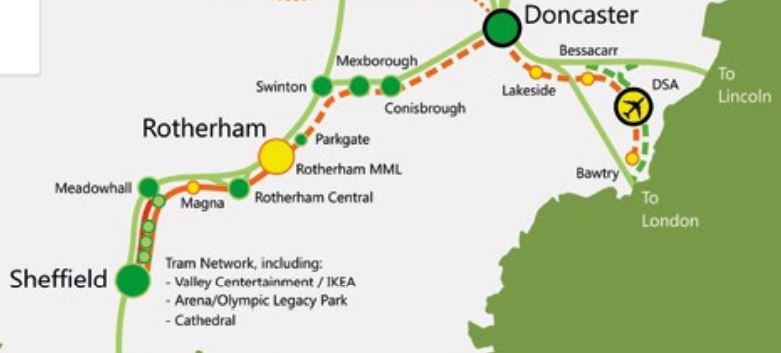
Doncaster and Doncaster Sheffield Airport are connected to the current end of the tram-train route at Rotherham Parkgate.
This OpenRailwayMap shows the rail lines between Rotherham Parkgate and Doncaster.
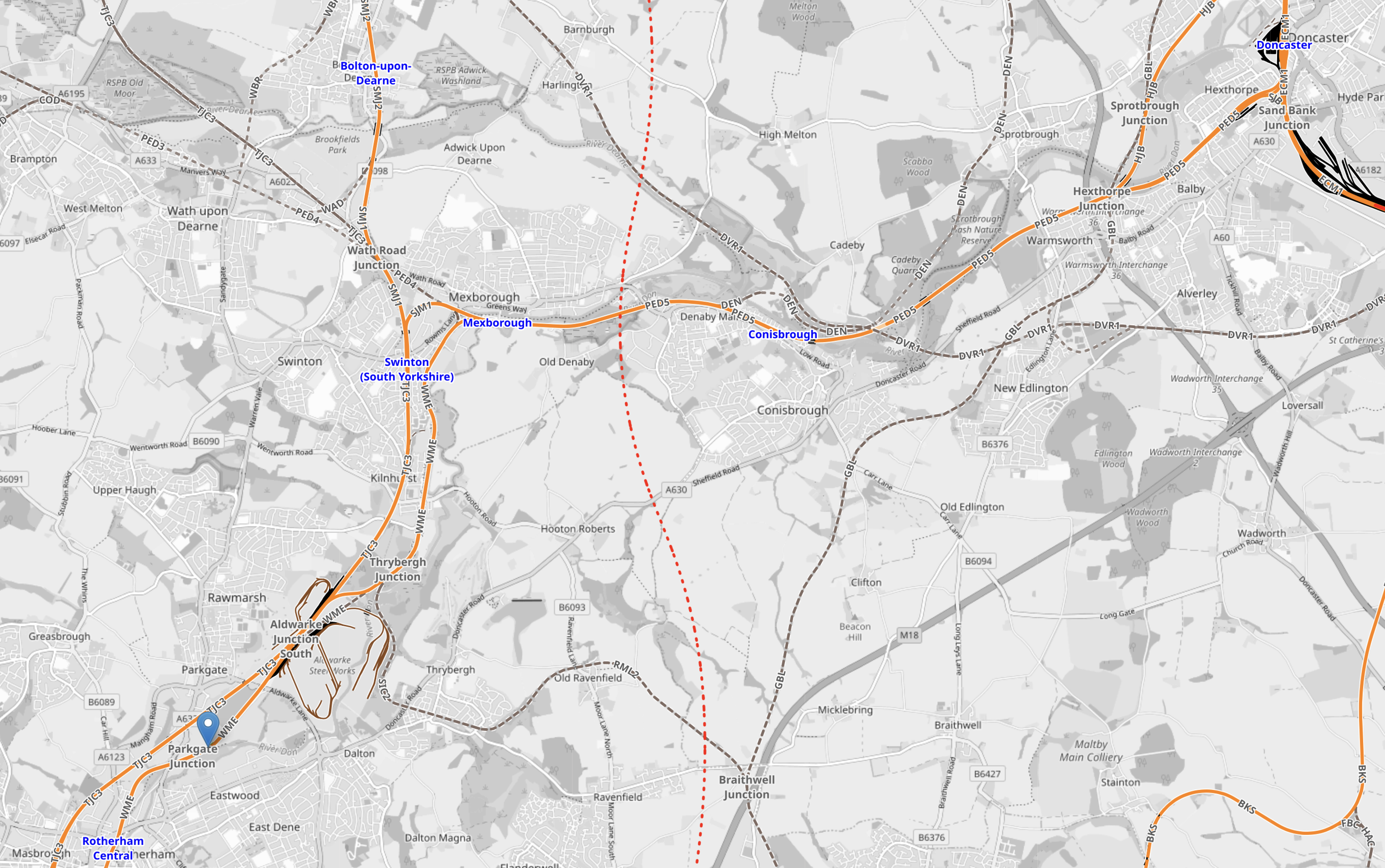
Note.
- Doncaster station is in the North-East corner of the map.
- Rotherham Central station is in the South-West corner of the map.
- The blue arrow in the South-West corner indicates Rotherham Parkgate tram stop.
- Swinton, Mexborough and Conisbrough stations can be picked out.
- The dotted red line running North-South across the map is the route of the ill-fated Eastern Leg of High Speed Two.
It is a simple application of tram-train technology to connect Doncaster station and Doncaster Sheffield Airport to the Sheffield Supertram.
With all the comings and goings on the East Coast Main Line at Doncaster station, I believe that the tram-train connection to Sheffield and Rotherham is essential.
The Cities Of Bradford, Doncaster, Leeds, Sheffield and Wakefield Can Have a High-Frequency Rail Connection
Consider.
- Four stations are all step-free with a bridge or subway served by lifts.
- Bradford Forster Square station has level access to the platforms from the street.
- The rail lines between the five stations are electrified, with the exception of Sheffield and Doncaster.
- Services between the cities are run by CrossCountry Trains, Grand Central Trains, Hull Trains, LNER and Northern Trains.
- Most maximum speeds are not unduly slow.
Consequently the five cities can have a high-frequency rail connection in excess of four tph.
Could this be the basis of a Five-Cities Metro?
Open Access Services
There are six open access services running on the East Coast Main Line.
- Grand Central Trains – King’s Cross-Bradford Interchange via Peterborough, Doncaster, Pontefract Monkhill, Wakefield Kirkgate, Mirfield, Brighouse, Halifax and Low Moor – 4 tpd
- Grand Central Trains – King’s Cross-Sunderland via Peterborough, York, Thirsk, Northallerton, Eaglescliffe and Hartlepool – 6 tpd
- Hull Trains – King’s Cross-Hull via Stevenage, Grantham, Retford, Doncaster, Selby, Howden, Brough – 4 tpd
- Hull Trains – King’s Cross-Beverley via Stevenage, Grantham, Retford, Doncaster, Selby, Howden, Brough, Hull and Cottingham – 2 tpd
- Lumo – King’s Cross-Edinbugh via Stevenage, Newcastle and Morpeth – 5 tpd
- Lumo – King’s Cross-Glasgow Queen Street via Stevenage, Newcastle, Morpeth, Edinburgh and Falkirk High – 2 tpd
Note.
- tpd is trains per day.
- All seem to serve an exclusive area, except Lumo.
- In a couple of years, all could be using Hitachi trains.
- I suspect some services will swap their diesel generators for batteries.
Battery-power would allow some services to be zero-carbon, even when using the GNGE diversion.
Wakefield Westgate Station – 18th September 2025
To get to Knottingley and the consultation about Ferrybridge hydrogen-fired power station, I had to change trains at Wakefield Westgate station.
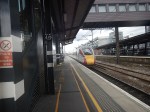
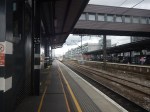
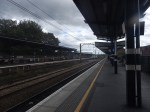
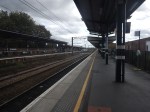
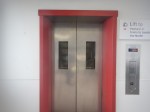
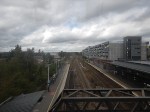
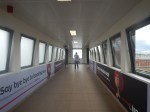
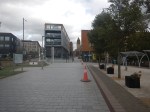
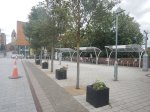
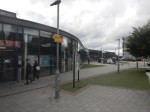
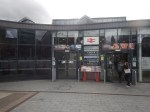
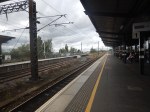
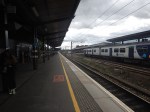
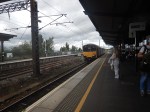
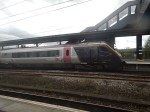
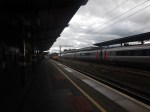
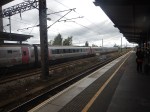
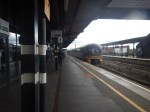
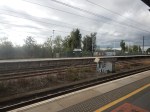
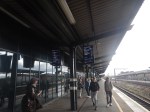
Note.
- It is an impressive station.
- It has been rebuilt since the turn of the century.
- It is fully step-free.
- Entrance is level from the square outside the station to the Southbound platform.
- There are toilets on the Southbound platform.
- There are six trains per hour (tph) between Wakefield Westgate and Leeds.
Certainty, in the time I was changing trains and waiting for my train to Knottingley, there were a lot of trains going to and from Leeds.
The timetables are changing on December 14, 2025 and the October 2025 Edition of Modern Railways gives this summary for Wakefield.
On Mondays-Saturdays, the CrossCountry train calling at Westgate at 18:17 will no longer stop at Wakefield. Northern will introduce an additional hourly fast train seven days a week between Leeds and Sheffield, and on Saturdays there will be extra later last trains between Sheffield and Westgate via Rotherham and Sheffield and Kirkgate via Barnsley.
With the development of the Leeds Metro, I can see more services being added on the route between Doncaster and Bradford via Wakefield Westgate and Leeds.
- Bradford is getting a new through station.
- From December 14, 2025, Sunday services to Bradford Forster Square will be increased for two to six each way per day.
- It also looks like from December 14, 2025, the new Northern service between Leeds and Sheffield via Wakefield Westgate, will form a two trains per hour with the CrossCountry service.
It certainly looks like the train companies have been co-operating to create a high-class Trans-West Yorkshire service.
Midlands Rail Hub Looks To The Future With Preferred Alliance Partners
The title of this post, is the same as that of this press release from Network Rail.
The press release has a spectacular picture, which I’m showing here.
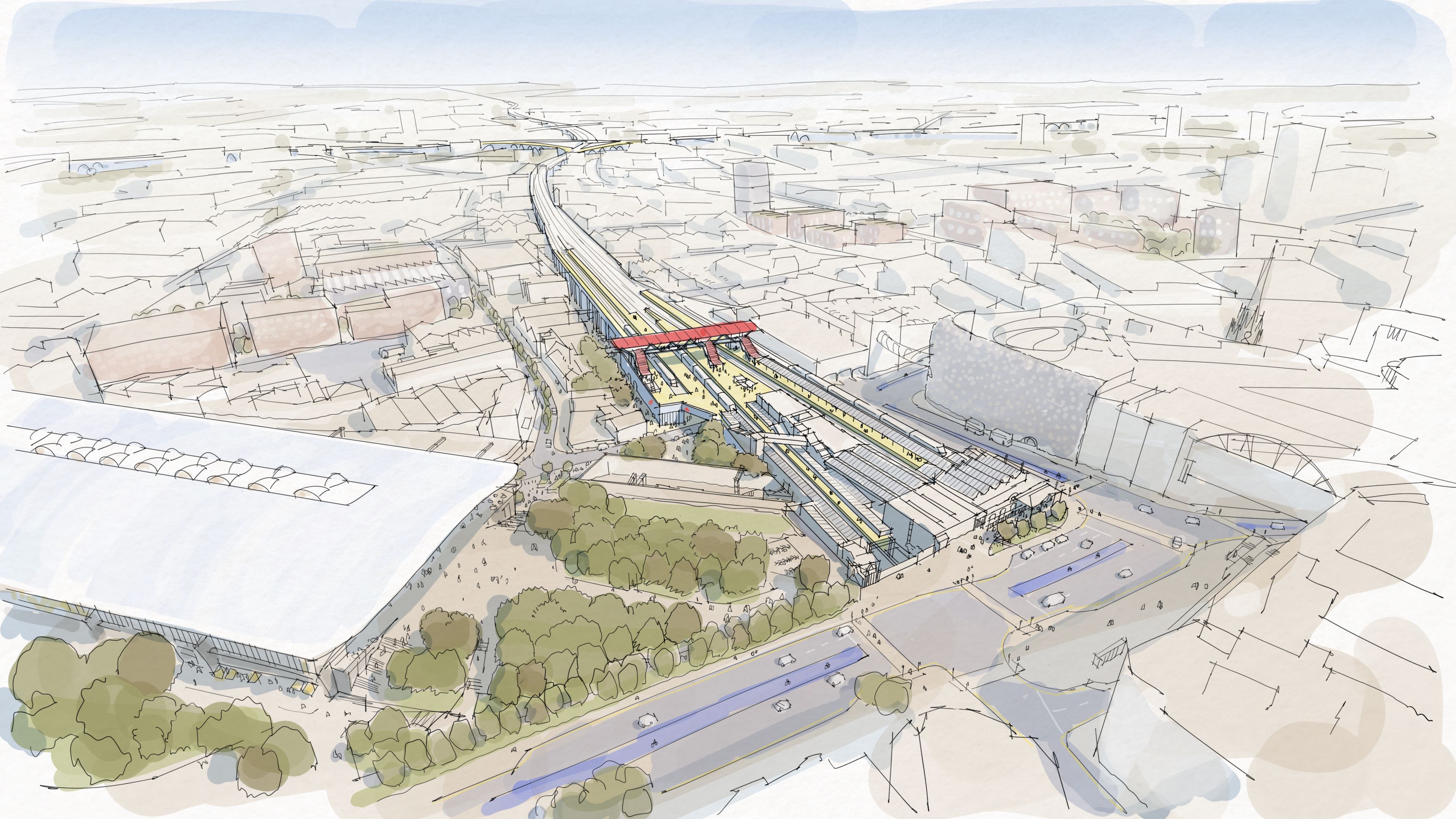
Note.
- High Speed Two’s Curzon Street station is on the left.
- Birmingham Moor Street station is in the centre.
- There appears to be parkland between the two stations.
- Is that the West Midlands Metro running across in front of Moor Street station?
This OpenRailwayMap shows the railway lines in the area.
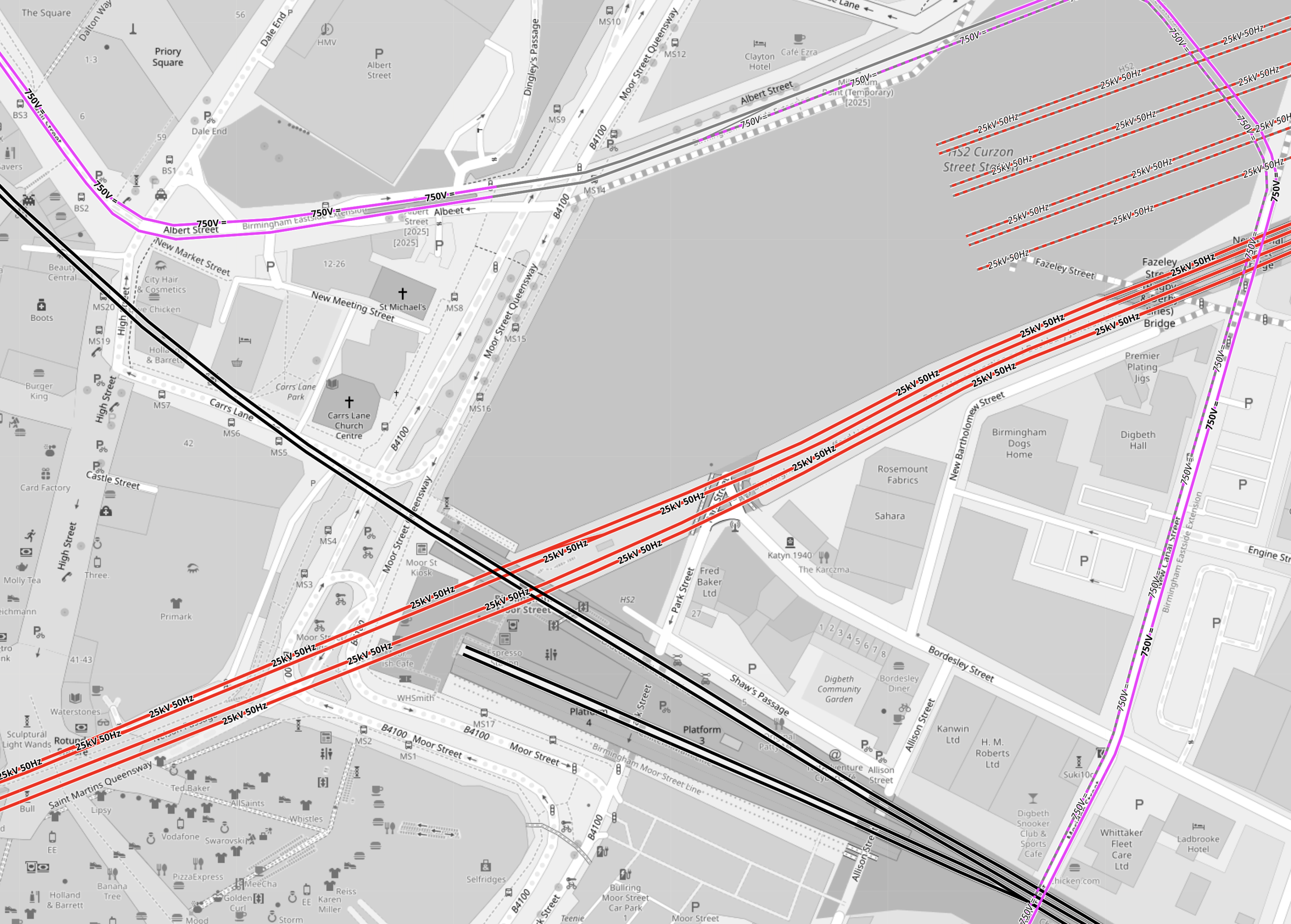
Note.
- Electrified tracks are shown in red.
- Tracks without electrification are shown in black.
- West Midlands Metro tracks are shown in mauve.
- The red tracks going diagonally across the map are the four electrified tracks going into Birmingham New Street station.
- Birmingham New Street station is off the map to the West.
- To the North of the tracks going into Birmingham New Street station, there are the seven platforms of High Speed Two’s Curzon Street station.
- The four platforms without electrification are shown South of the tracks into Birmingham New Street station.
- Two platforms at Birmingham Moor Street station are through platforms, that pass under Birmingham City Centre to Birmingham Snow Hill station.
- The other two platforms at Birmingham Moor Street station are bay platforms.
- The West Midlands Metro appears to take a loop around the stations.
But when you get into the words of the press release, there are a lot of vegetables and very little meat.
- The Midlands Rail Hub could cost around £1.75bn if delivered in full.
- The government’s recent spending review committed to progress the next stage of Midlands Rail Hub.
- Alongside this, planning is underway to begin to deliver two smaller but significant upgrades to benefit passengers as quickly as possible.
- The Alliance partners will be VolkerRail, Laing O’Rourke, AtkinsRéalis, Siemens Mobility, and Network Rail.
These four paragraphs indicate the work, that could be done.
The biggest change will be connecting the Chiltern main line, which runs into Moor Street, with the Camp Hill lines which run towards the South West and East Midlands via two new chords in Bordesley, near Birmingham city centre.
The transformation of the network will include running more train services on key routes through Birmingham and significantly improving connections for the millions of people who use the railway every day.
Work will be prioritised to explore how smaller, but vital, pieces of work which will provide passengers and communities with quicker benefits, including new journey options and more trains can be delivered as soon as possible.
They include reopening platform 4 at Snow Hill station so additional Chiltern Railways services can run directly between Birmingham’s business district and London Marylebone, and redeveloping Kings Norton station and the lines through it so extra Cross City trains can be added and new Midlands Rail Hub-enabled services can call there.
Three projects are specifically mentioned.
- The new chords in Bordesley.
- The reopening of platform 4 at Snow Hill station.
- The redeveloping of Kings Norton station.
I shall now look at each in detail.
The New Chords At Bordesley
This OpenRailwayMap shows the tracks going into and around Birmingham Moor Street station.
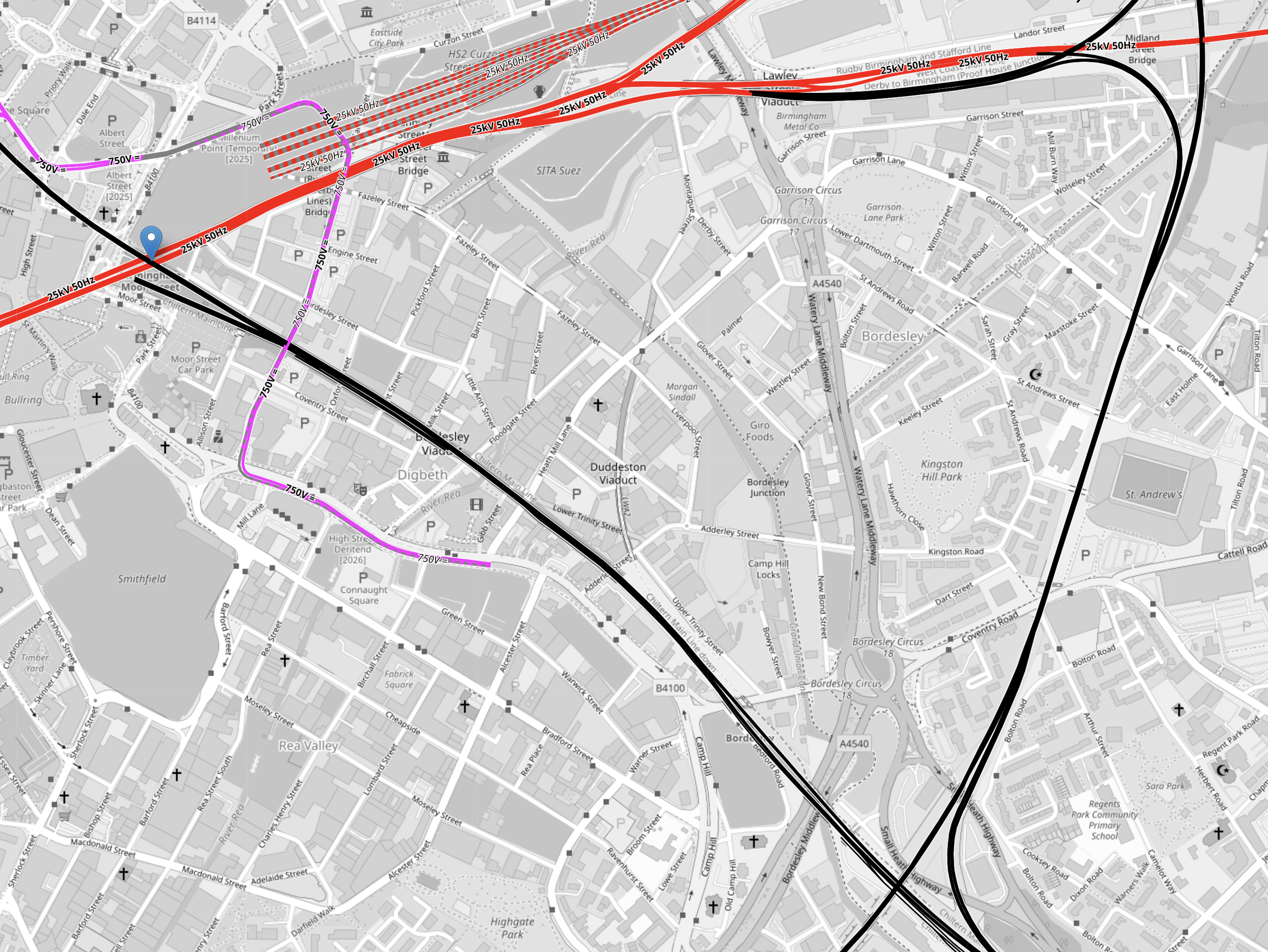
Note.
- Electrified tracks are shown in red.
- Tracks without electrification are shown in black.
- West Midlands Metro tracks are shown in mauve.
- The red tracks going diagonally across the map are the four electrified tracks going into Birmingham New Street station.
- Birmingham New Street station is off the map to the West.
- To the North of the tracks going into Birmingham New Street station, there are the seven platforms of High Speed Two’s Curzon Street station.
- The black track running NW-SE is the Chiltern Main Line between London Marylebone and Birmingham Moor Street stations.
- Birmingham Moor Street station is indicated by the blue arrow in the North-West corner of the map.
- The black track running NE-SW is the Camp Hill Line, that allows services to cross Birmingham.
Two new chords will be built where the Chiltern Main and the Camp Hill Lines cross, to allow services on the Camp Hill Line to call at Birmingham Moor Street station.
Consider.
- The press release described these chords as the biggest change.
- The chords will probably not be fully used, until the new stations are built on the Camp Hill Line.
- There may be need for extra platforms at Birmingham Moor Street station to accommodate any new services.
For these reasons, I suspect that these chords could well be the project that is pushed back to a later date.
The Reopening Of Platform 4 At Snow Hill Station
This OpenRailwayMap shows the track layout at Birmingham Snow Hill station.
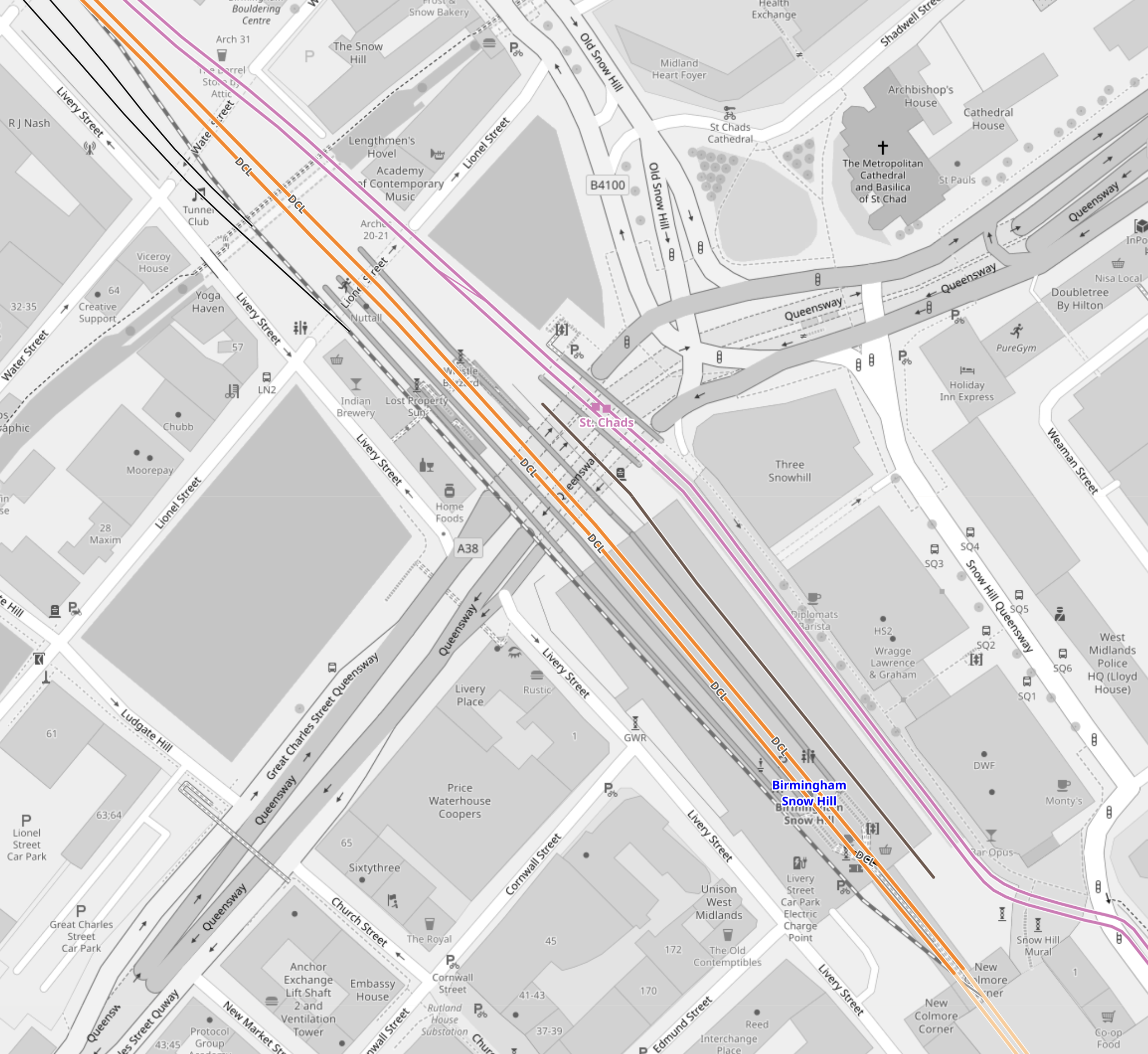
Note.
- The two lilac tracks are the West Midlands Metro.
- The two orange tracks are the two through tracks between Birmingham Moor Street and Stourbridge Junction stations.
- Platform 3 is the Southbound track to Birmingham Moor Street on the right.
- Platform 2 is the Northbound track to Stourbridge Junction on the left
- Platform 1 is a loop on left.
- Platforms 1, 2 and 3 are all bi-directional.
- The closed Platform 4 is on the right and is shown by the black track.
I would expect that this reopening could be fairly straightforward and may also have worthwhile benefits.
- Would an extra platform, allow all Chiltern services to serve both Birmingham Moor Street and Birmingham Show Hill stations?
- Chiltern would probably find it easy to extend services from Birmingham to the North-West of the city.
- In this century, services have run as far as Wrexham from Marylebone.
- If all Chiltern services terminated at Birmingham Show Hill station would this have operational and/or marketing advantages?
- If all Chiltern services terminated at Birmingham Show Hill station would this, make it easier for some passengers to get a train to London and the South?
- If all Chiltern services terminated at Birmingham Show Hill station would this release a platform at Birmingham Moor Street station for other services?
These are a few pictures of Birmingham Snow Hill station.
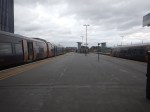
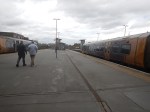
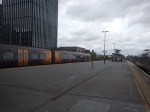
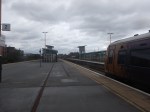

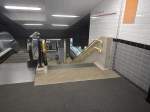
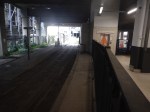
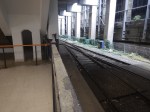
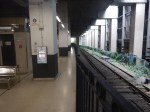
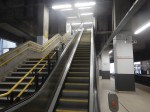

Platform 4 at Birmingham Snow Hill station could be a Build One Platform-Get One Free At Another Station situation!
The Redeveloping Of Kings Norton Station
This will probably be needed for running services on the Camp Hill Line, so why not get some of the work done early, so the rebuilding doesn’t effect existing services?
This OpenRailwayMap shows the Eastern end of Kings Norton station
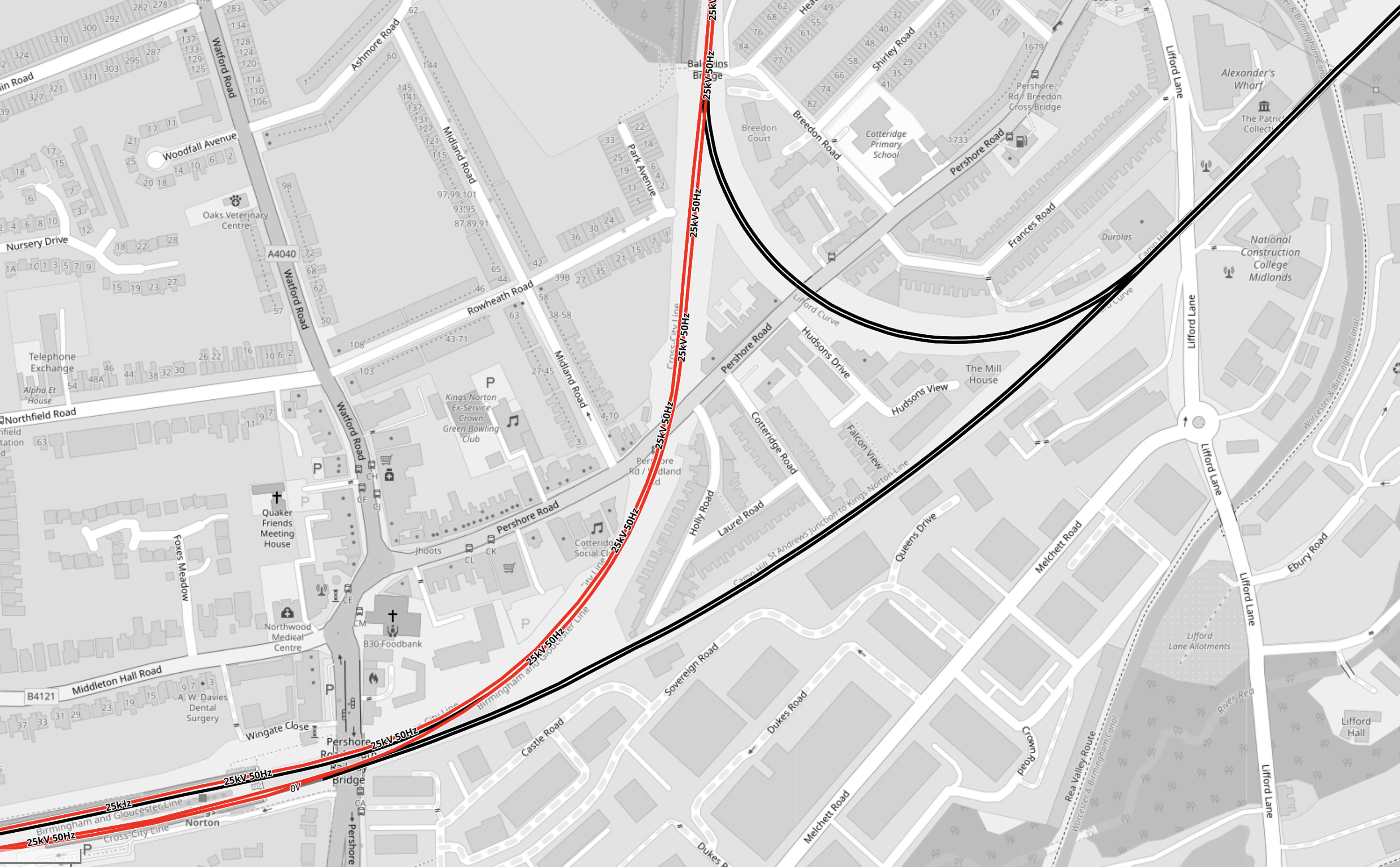
Note.
- Electrified tracks are shown in red.
- Tracks without electrification are shown in black.
- The station has four platforms, but some are unused.
- Two platforms are on an island, with a single platform on either side.
This OpenRailwayMap shows the Western end of Kings Norton station.
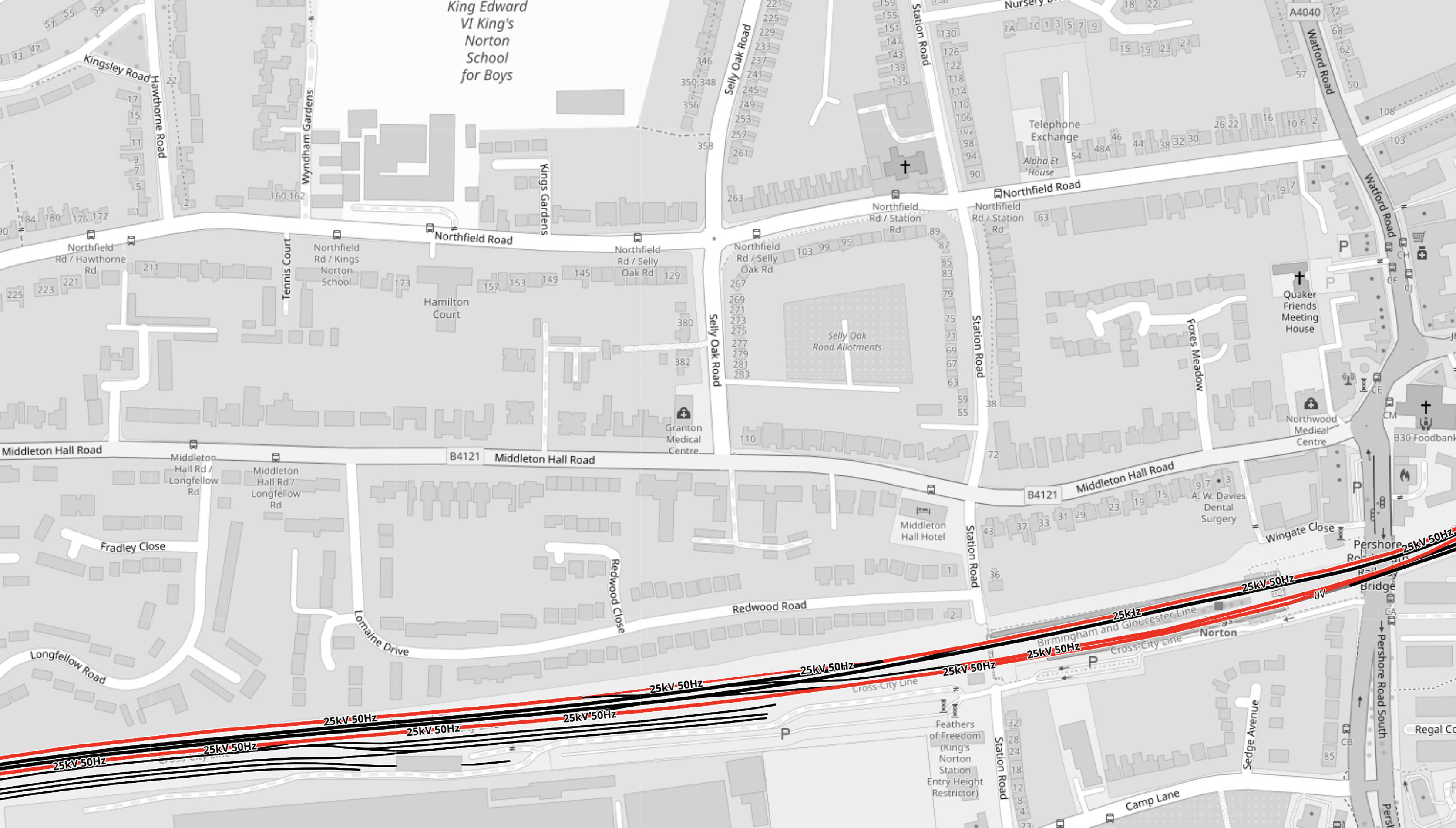
The notes to the previous map apply.
These two paragraphs from the Wikipedia entry for Kings Norton station, describe the station.
With the development of both bus and tram services, the need for such a large facility reduced from the 1930s onwards. The result is that today although all four platforms remain in place, only the outer two are in passenger use, with the middle island platforms now derelict.
Refurbished as part of the Cross-City line in 1978, it retained some of its original features following refurbishment, unlike the other ‘cross city line’ stations. The original station building survived, leased out for commercial purposes, until it was demolished in February 2006 for safety reasons. An extension car park provides a Park and Ride facility.
Disabled-access doesn’t seem to be the best either.
These pictures show the station.
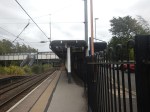
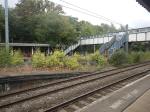
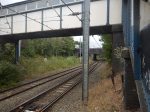
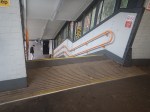
Note.
- As I guessed, there is no disabled-access.
- But there are Braille markings on the handrails down to the platforms.
- Two CrossCountry trains are seen going through the station.
- The local Class 730 trains, lights and information screens appeared to be new.
- Three platforms are electrified, but the fourth is not.
- The electrification structure could probably be used to electrify the fourth platform.
- Only the two outside platforms ; 1 and 4 are in use, with the central island platforms ; 2 and 3 left derelict.
- There is car parking and possibly space for more.
- The two active platforms are 150 metres long and the six-car Class 730 trainstrains appear to be 144 metres long.
- The Class 220 trains, that are run by CrossCountry Trains appear to be 93 metres long.
It was one of the scruffiest stations, that I’ve ever seen.
These are my thoughts on the station.
Handling The Camp Hill Line
Refurbishing Kings Norton Station
I don’t feel, that this will be the most horrendous of jobs, as it is very much a job, where all the rubbish and wild forest is removed and new platforms and a bridge are built.
Darlington Station – 26th June 2025
I visited Darlington station, three times on my trip.
These pictures are in chronological order.
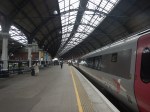
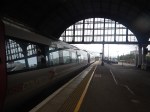
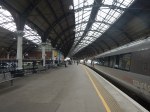
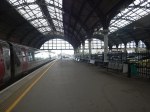
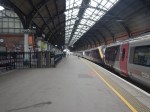
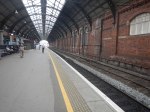
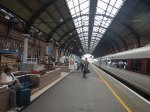
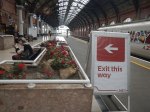
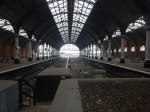
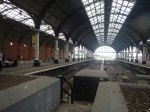
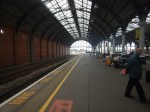
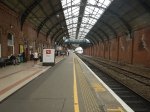
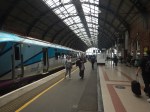
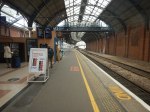
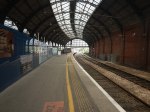
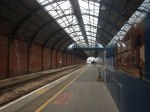
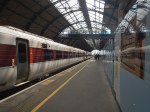
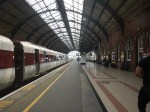
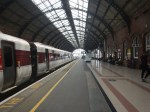

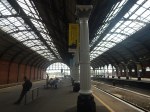
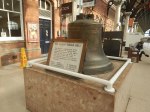
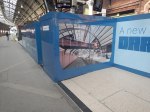

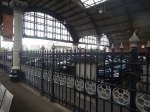
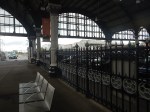
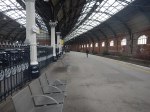
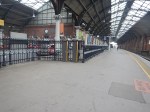
Note.
- The station is being given a major upgrade, so it can handle more trains.
- The station has a large number of top-quality Victorian features.
- The station is Grade II* Listed.
- Inside the enormous train-shed are two long platforms, that handle most of the trains and two South-facing bay platforms.
- Two new platforms, which are numbered 5 & 6, and possibly a double-track avoiding line are being added outside the train-shed on the East side.
- In images with a comment saying Note Platform 5, the new long electrified Platform 5 can be seen.
- Platform 5 appears to be already electrified at its Southern end.
These three OpenRailwayMaps shows the future layout.
The first OpenRailwayMap shows the junction, where the branch to Newton Aycliffe, Shildon and Bishop Auckland connects.
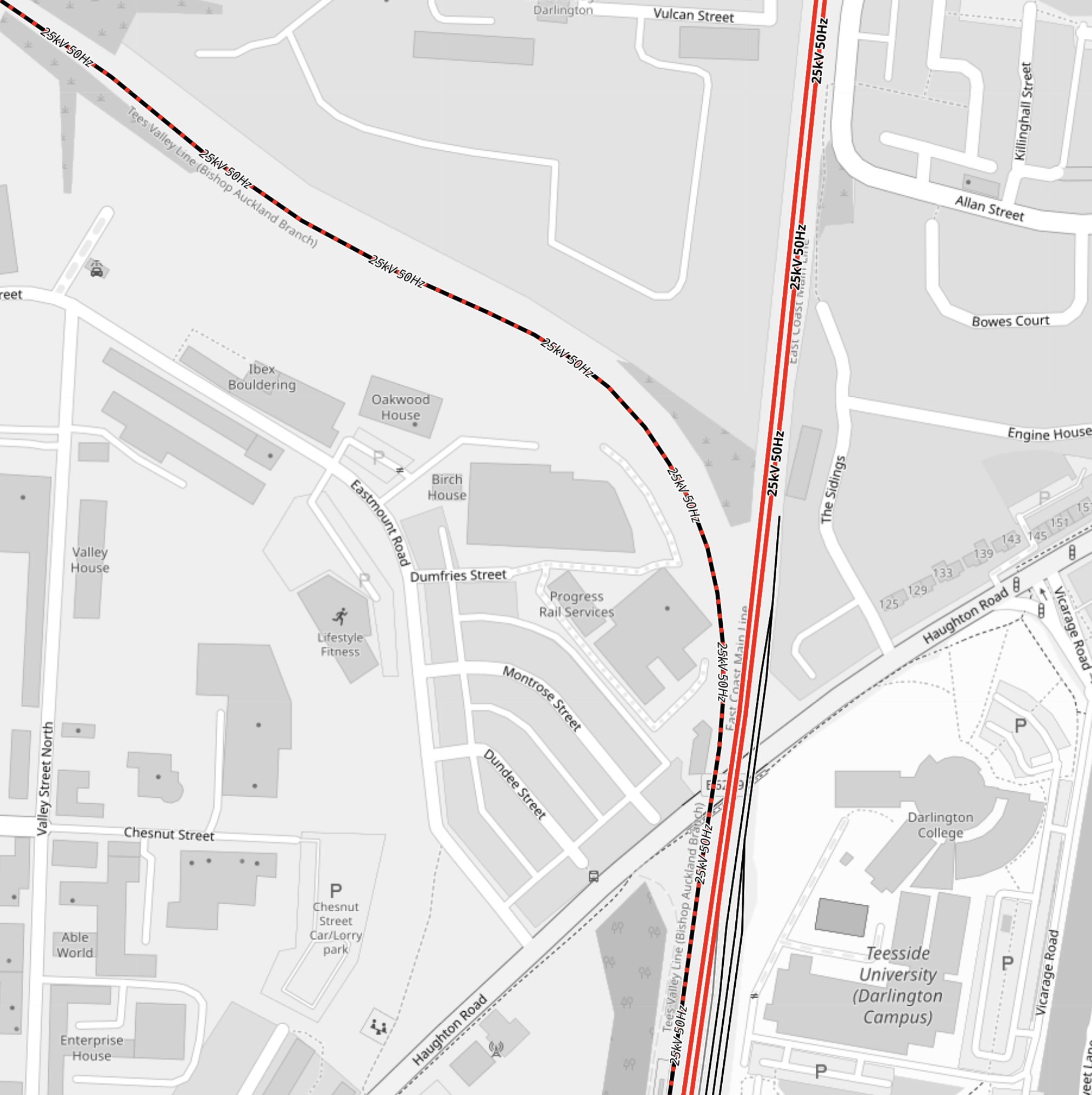
Note.
- The red tracks are electrified and indicate the East Coast Main Line.
- The track curving off to the North-West is the Bishop Auckland Branch.
- The black tracks are not-electrified.
- The Bishop Auckland Branch is shown dotted black and red, as it will be electrified, so that Hitachi can get their new trains to the East Coast Main Line.
- The two tracks of the East Coast Main Line are very straight and the map shows them to have a 125 mph operating speed.
The second OpenRailwayMap, shows the lines immediately to the South of Darlington station.
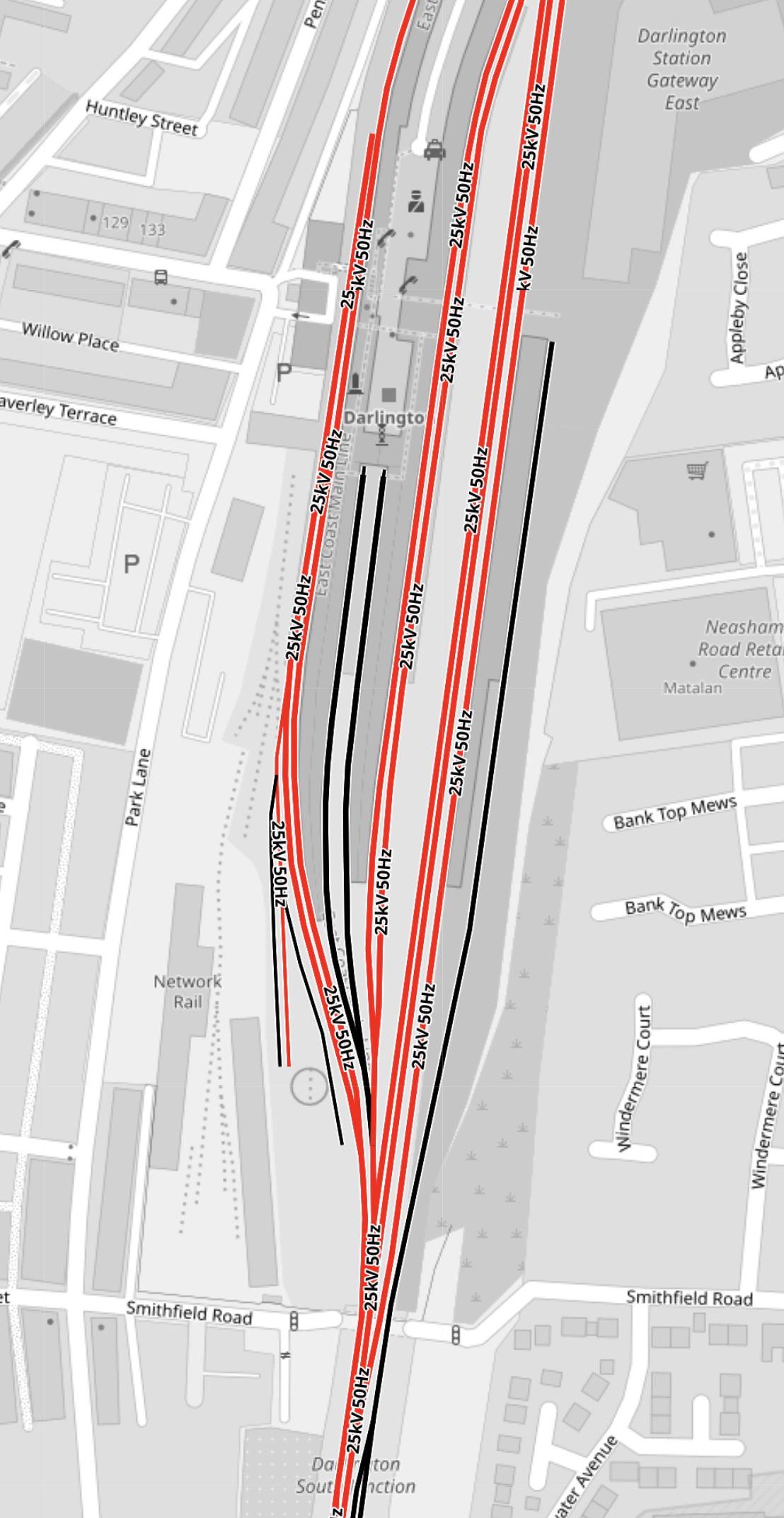
Note.
- The red tracks are electrified.
- The black tracks are not electrified.
- Tracks are number 4, 3, 2 and 1 from the West.
- The Southern ends of Platforms 1 and 4, and Platforms 2 and 3, which are inside the current train-shed appear to be virtually unchanged.
- Platform 1 is electrified and will probably still cater for Southbound trains.
- Platforms 2 and 3 are bay platforms without electrification for trains terminating at Darlington.
- Platform 4 is electrified and will probably still cater for Northbound trains.
- There is an electrified avoiding line to the East of Platform 1.
- The brick wall of the current train shed is in the white space to the East of Platform 1.
- Outside the current train shed are two electrified 125 mph lines, an electrified through platform and a South-facing bay platform without electrification.
- The new electrified platform looks very long. Could it be long enough to handle a pair of High Speed Two Classic-Compatible trains? I suspect though it is long enough to handle the splitting and joining of a pair of five-car Hitachi Class 80x trains.
- The new bay platform looks longer that the current bay platforms 2 & 3. Is it long enough to handle a five-car Hitachi Class 80x train?
- It does appear from the track layout, that the new electrified platform is connected to the East Coast Main Line, the Saltburn branch and stabling sidings to the North of the station.
- The new bay platform appears to be connected to the Saltburn branch.
The two new platforms also appear to be adjacent to an area of the station, which is labelled Darlington Station Gateway East. I would assume, that this proximity will be used to make the station easy for changing trains.
The third OpenRailwayMap shows the section of the station between the two previous maps.
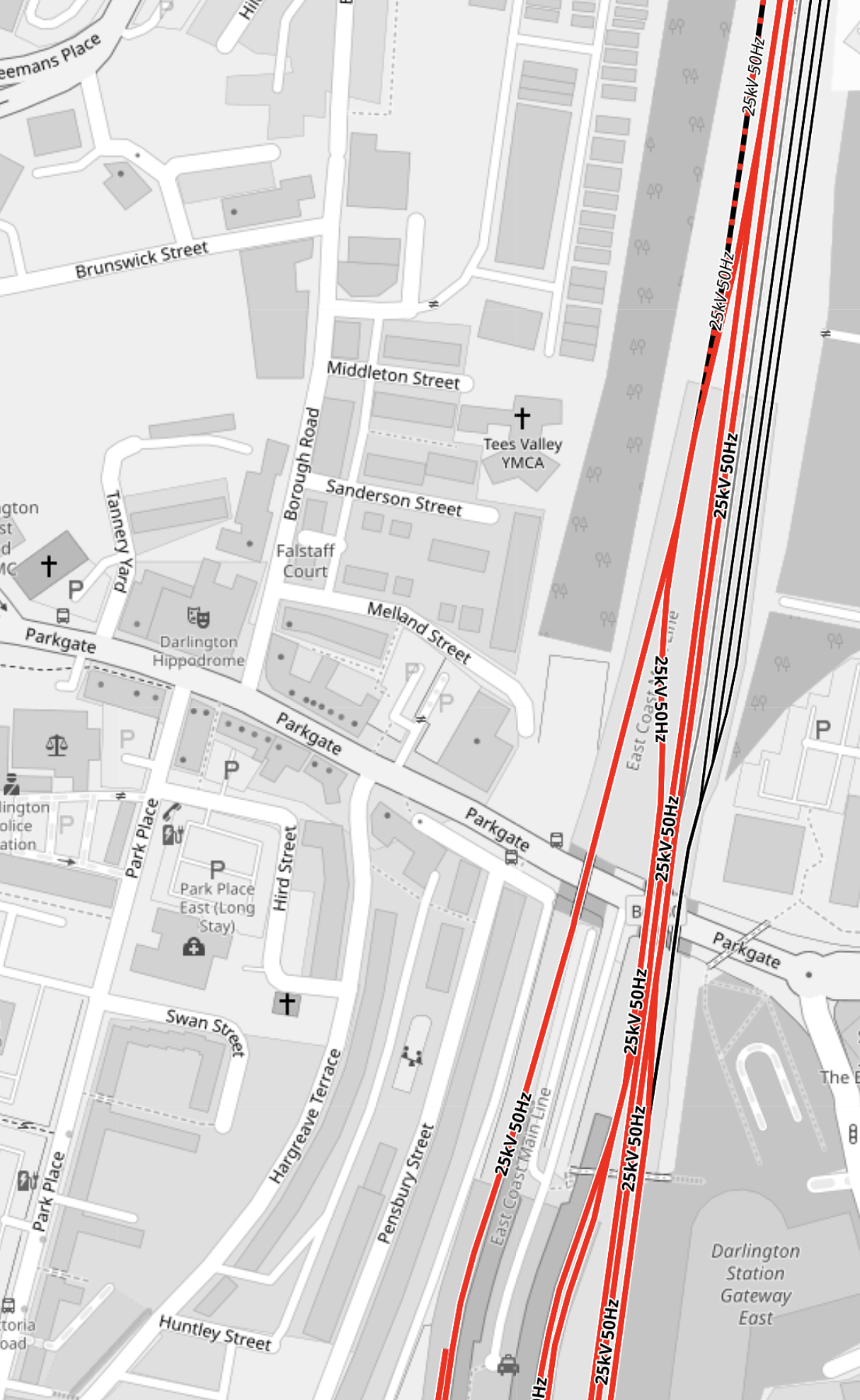
Note.
- The red tracks are electrified.
- The black tracks are not-electrified.
- The Darlington end of the Bishop Auckland Branch is shown dotted black and red, as it will be electrified, so that Hitachi can get their trains to and from the East Coast Main Line.
- Both Platforms 1 and 4 appear to connect to the East Coast Main Line, so high speed services can operate as they do now, by taking a diversion through the current Darlington station.
- To the East of the East Coast Main Line, there appear to be some very useful stabling sidings.
I have some general thoughts about Darlington station.
Will Trains Not Stopping At Darlington Station Use The New 125 mph Lines Through the Station?
It does appear that the two 125 mph lines through the new part of the station are very straight.
- They are shown as 125 mph, but could be faster.
- It should be remembered that according to Wikipedia, British Rail built the Selby Diversion for 160 mph in 1983.
- Between Durham and York stations is 66.2 miles of mainly 125 mph railway.
I believe that cutting out the need for trains to slow to go through Darlington station could save several minutes.
Will Trains Stopping At Darlington Station Use The Current Platforms 1 And 4 As They Do Now?
The track layout would seem to allow this and those changing to another train, would not have to walk a long way.
Can Trains Stopping At Darlington Station Use The New Eastern Platforms?
I have examined the second and third maps in detail and it looks as if the track layout will allow trains on the East Coast Main Line in both directions to stop at the long electrified platform.
The shorter bay platform appears to be only connected to the Tees Valley Line to Middlesbrough and Saltburn.
How Long Are The New Eastern Platforms?
Estimating against the scale on the map, I reckon these are the likely lengths.
- Long electrified platform – 400 metres – Appears to be numbered 5
- Bay platform – 200 metres – Appears to be numbered 6.
These are very useful lengths.
An Aerial View Of The New Platforms
This image from Tees Valley Combined Authority shows the Northern ends of the new platforms and the new footbridge.
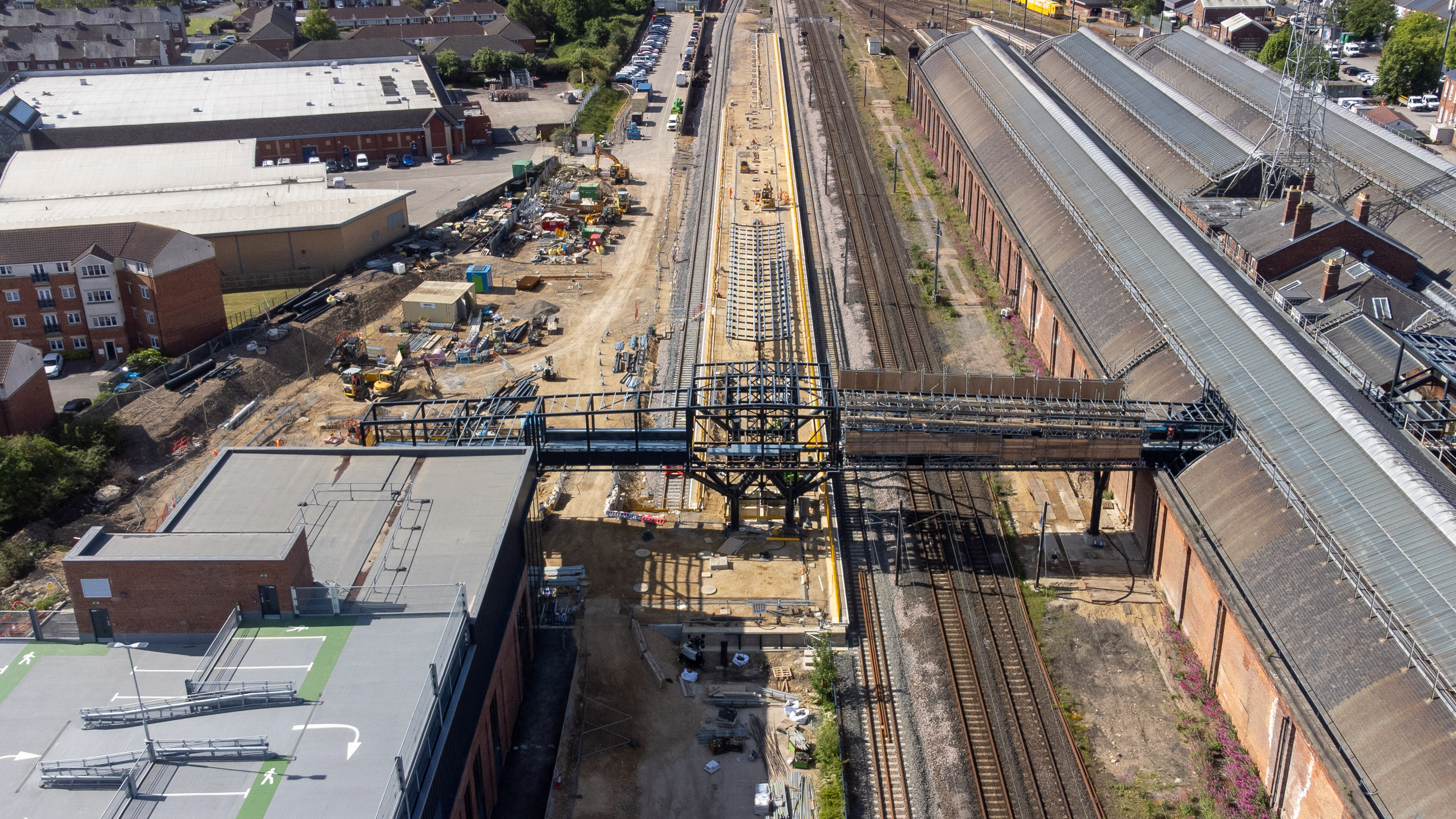
Note.
- The original four-platform Victorian station is on the right, which is the Western side.
- The East wall of the Victorian train shed can be clearly seen.
- The two absolutely straight 125 mph lines, that allow trains to bypass the original station are closest to the wall.
- The long electrified platform, which appears to be numbered 5, also appears to be absolutely straight.
- The unelectrified bay platform, which appears to be numbered 6, is to the left.
- Platforms 5 and 6 would seem to be separated by a wide island platform, which would make interchange easy.
This page on the Network Rail web site, gives more information.
Car Parking At Darlington Station
This image from Tees Valley Combined Authority shows the Northern end of the station.
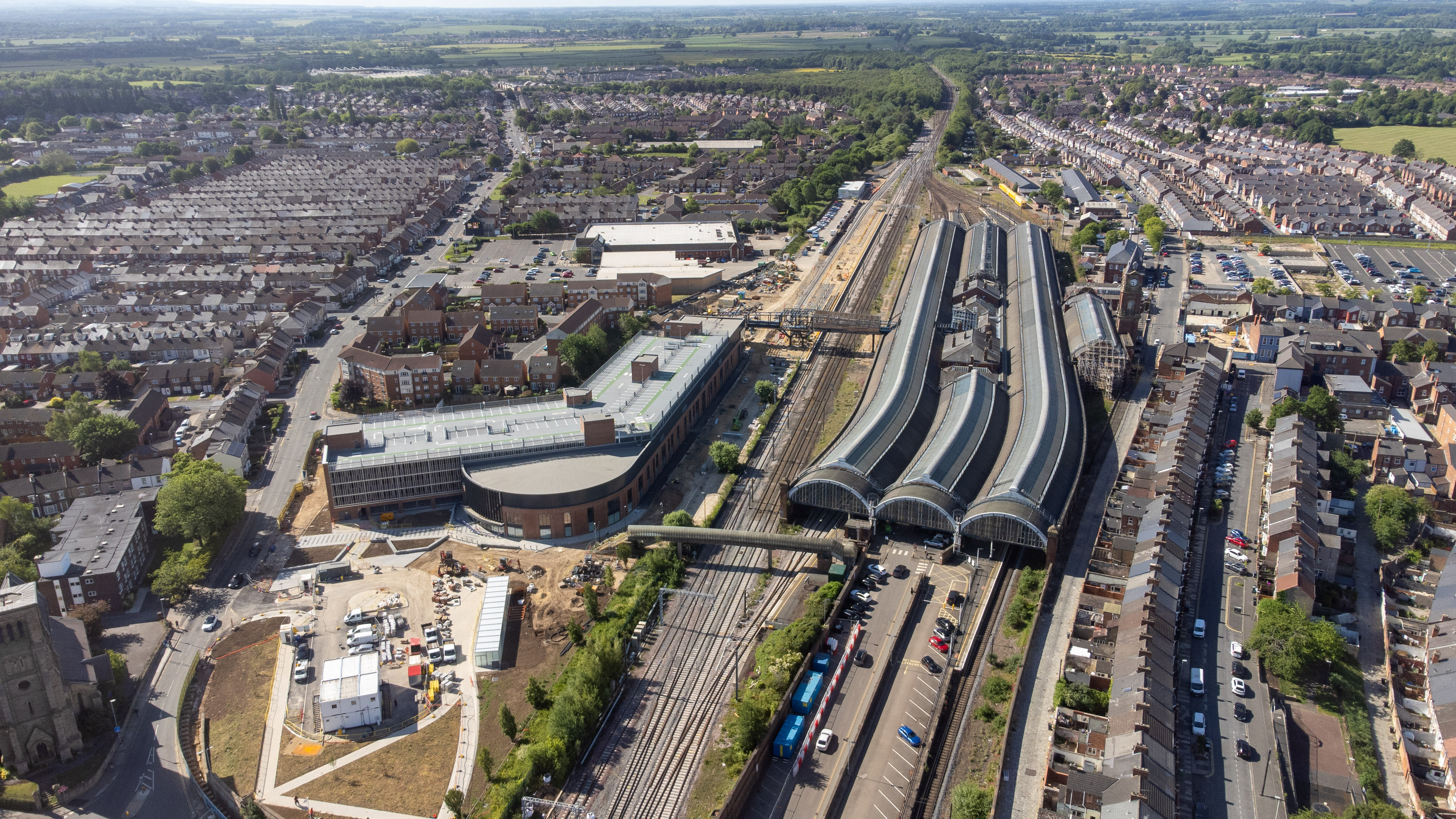
Note.
- The three sections of the Victorian station.
- The two new platforms ; 5 and 6 at the top of the image.
- The two 125 mph lines bypassing the Victorian station.
- There are two new footbridges connecting the Victorian station to the land on the other side of the 125 mph lines.
To the left of the station, there appears to be a massive multi-story car-park.
I asked Google about the new car park at Darlington station and got this reply.
The new multi-story car park at Darlington Station will have a capacity of more than 650 vehicles. This is part of a larger £140 million redevelopment of the station, which also includes new platforms and an eastern concourse. The car park will include accessible parking bays and electric car charging points.
This image from Tees Valley Combined Authority shows the car parking from the South.
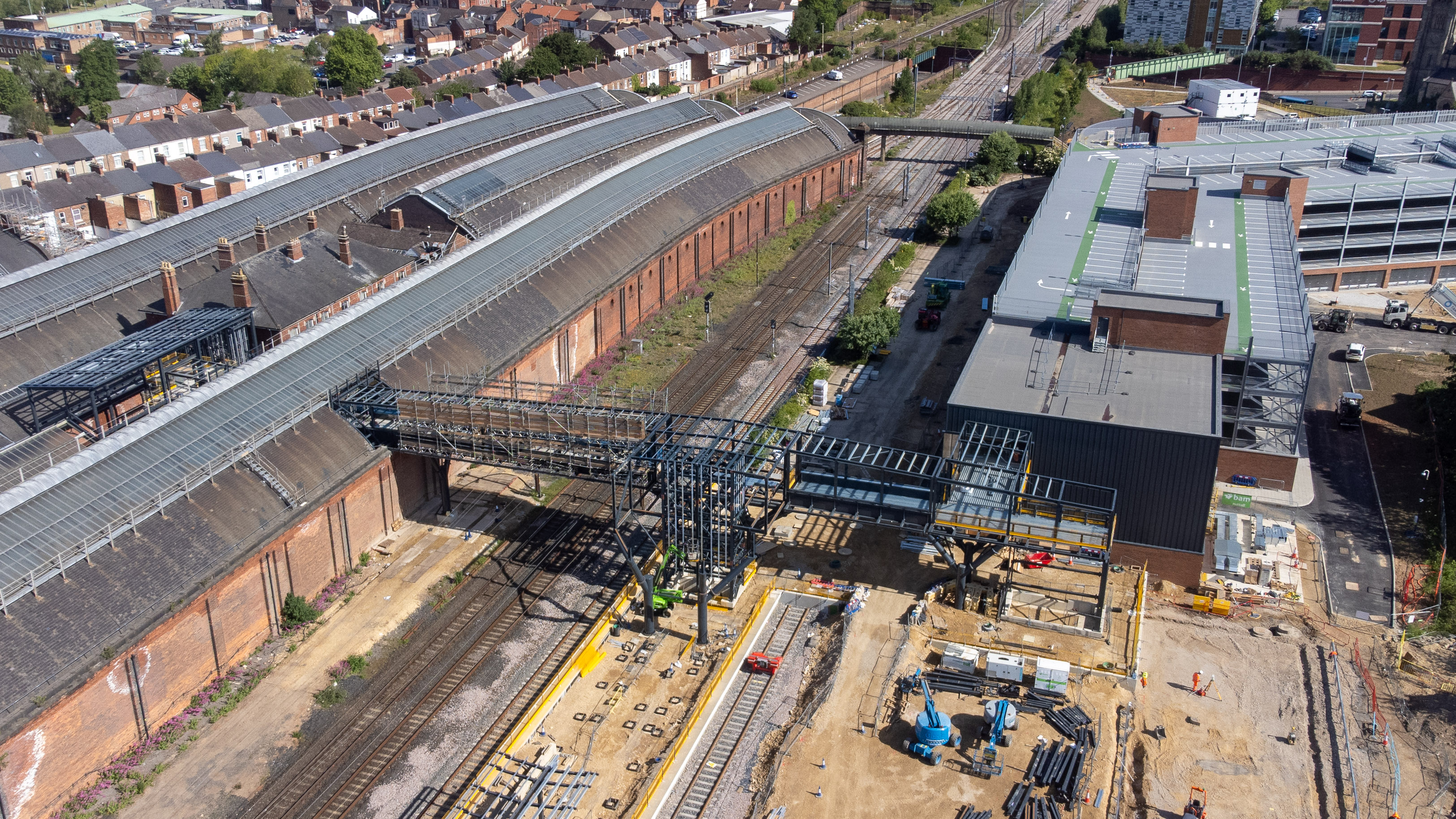
Note.
- The building appears to be a five-story car park.
- There appears to be a very easy connection between the car park and the bridge to the station.
- From the roof layout, there appears to be several lifts.
- It looks like there will be a large area between the platforms and the car park, where travellers can meet and socialise.
- The bay platform 6 already has a pair of red buffer stops.
Railways may have come to Darlington two hundred years ago and it looks like they are getting the car parking at the station ready for at least the next two hundred.
Further Electrification
If as I expect, the UK embraces battery electric technology for local and regional trains, I can see the three South-facing bay-platforms being electrified, so they could charge he battery-electric trains.
This picture shows that bars have been placed across Platforms 2 and 3, that could be used to support the electrification.
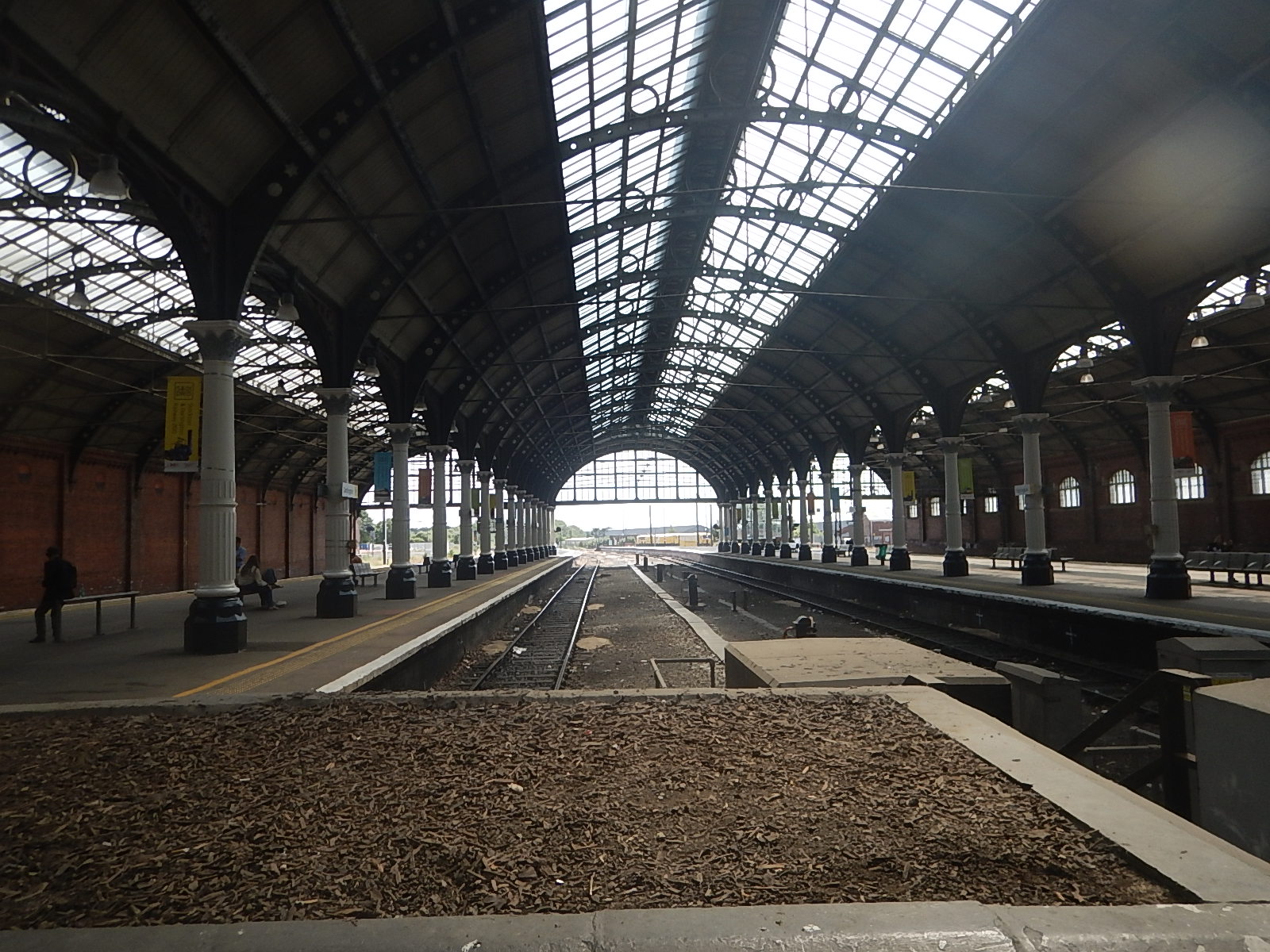
This method has been used in Victorian stations in the UK before. I show some installations and discuss electrifying Victorian stations in Could Hull Station Be Electrified?.
Darlington Station And High Speed Two
This graphic shows the original service pattern for High Speed Two.
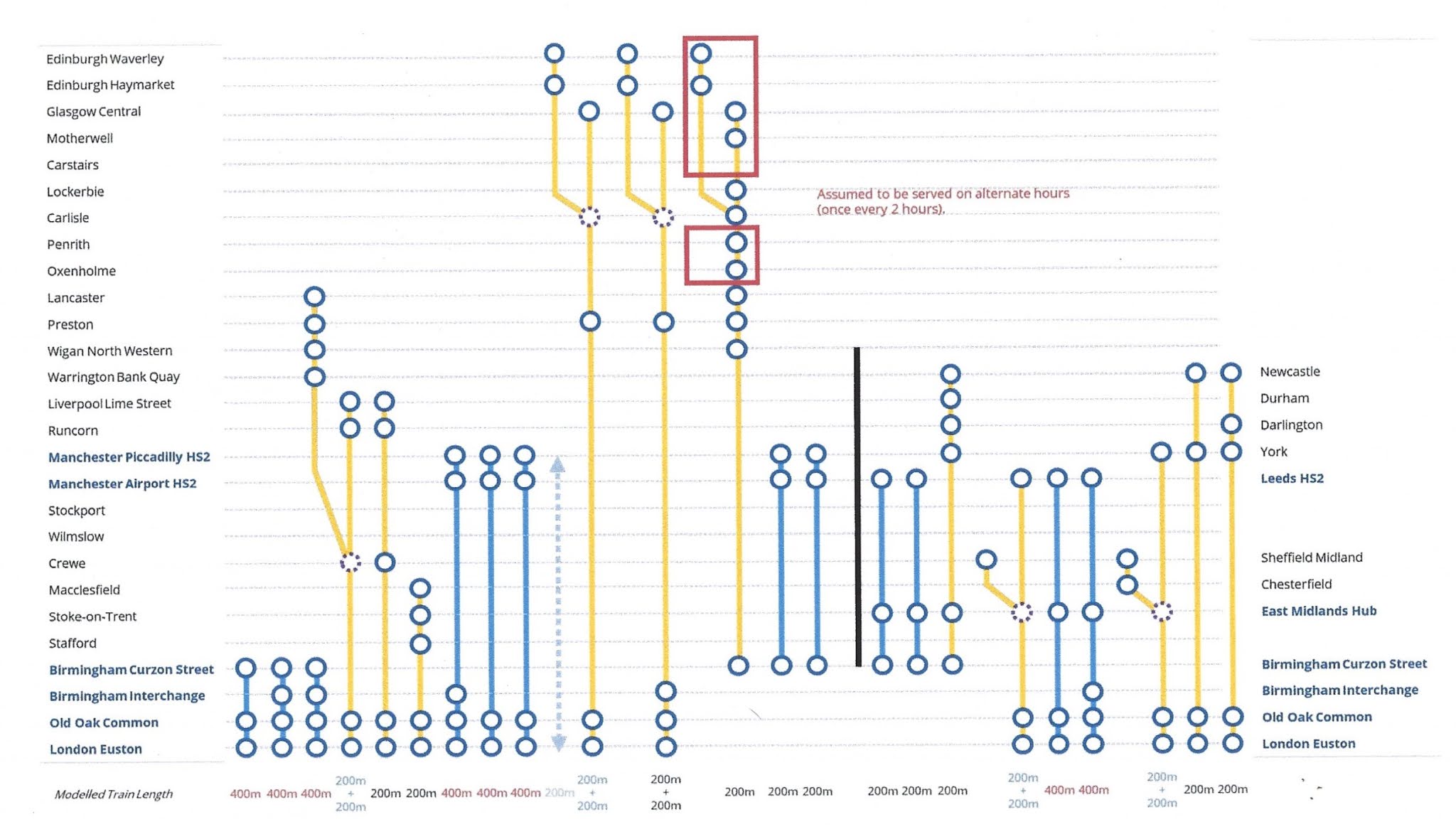
Note.
- There are seventeen paths terminating in the South at Euston station.
- Six of these paths go to Leeds, Newcastle or York.
- As the Eastern leg has been abandoned, that means there will be no High Speed Two trains to Leeds HS2, York, Darlington, Durham and Newcastle via the East Coast Main Line.
Darlington was to be served by these hourly services.
- Train 17 – Birmingham Curzon Street and Newcastle via East Midlands Hub, York, Darlington and Durham.
- Train 23 – London and Newcastle via York and Darlington.
Both trains would have been a single 200 metre long High Speed Two Classic-Compatible train.
Joining And Splitting Trains At Darlington
As Platform 5 looks like it would be a 400 metre long platform, it would look like it would be possible to handle a pair of High Speed Two Classic-Compatible trains.
But these trains will not now be serving Darlington in the near future, as the Eastern leg of High Speed Two has been cancelled.
A pair of nine-car Class 801 trains would be 467.4 metres long and might be able to fit into Platform 5.
But a pair of seven-car trains would certainly fit into a 400 metre Platform 5.
In Do Class 800/801/802 Trains Use Batteries For Regenerative Braking?, I found this snippet in an Hitachi document.
To simplify the rearrangement and management of train configurations, functions are provided for identifying the train (Class 800/801), for automatically determining the cars in the trainset and its total length, and for coupling and uncoupling up to 12 cars in
normal and 24 cars in rescue or emergency mode.
So I suspect with software updates two nine-car trains could run together.
Suppose LNER wanted to attack the airlines on the London and Scottish route.
- Two seven- or nine-car Class 800 or 801 trains would leave Edinburgh working as a pair.
- First stop would be Platform 5 in Darlington.
- The trains would split in Darlington.
- One train would go to King’s Cross stopping at perhaps Doncaster and Peterborough.
- The other train would go to St. Pancras stopping at perhaps Leeds, Sheffield, Nottingham and Bedford.
Note.
- A seven-car Azuma would be under 200 metres long.
- Seven-car trains would fit in St. Pancras.
- LNER have run an Azuma train into St. Pancras.
- The train would interchange with East-West Rail at Bedford.
- Travellers to and from East Anglia would change at Peterborough.
Large areas of England would have a fast route to and from Scotland.
Would A Train Manufacturer Save CrossCountry’s Iconic Aberdeen And Penzance Route?
The article in The Times about the cancelling of CrossCountry’s iconic Aberdeen and Penzance route was entitled After 104 Years UK’s Longest Train Route Is Cancelled For Ever, I gave my post the same name and both received a number of nostalgic comments, from those, who had ridden the route or wished they had.
The Characteristics Of The Line
This article on the BBC is entitled We Had To Be On Last Run Of UK’s Longest Train Route.
This is said in the BBC article.
The connection – first established back in 1921 – is 775 miles (1,247km) long.
But electrification is rather thin on the ground.
Between Leeds and Edinburgh stations is electrified and I suspect that some of the route through Birmingham New Street and Bristol Parkway stations are also electrified, so perhaps, a battery-electric train could get a top-up on the way.
But as Leeds and Edinburgh is around 220 miles, there’s about 550 miles of the route or 70 % without electrification.
Battery Power, Hydrogen Power Or Both?
If diesel is ruled out on environmental grounds, it means that only battery or hydrogen power could be used for the route.
Despite some of the progress made by battery-electric trains in the last few years, I feel that unless the route has a large number of charging stations, then battery-electric trains will not be a practical solution.
This is a paragraph from The Times article.
Rail bosses said one of the reasons for ending the train was the difficulty keeping such a long journey on time. The fact that most customers made only short journeys along the route was also a consideration.
And this is another.
As an “express” service it was severely challenged, partly because of the long waits at a number of stations along the way, including 14 minutes at both Edinburgh Waverley and Bristol Temple Meads, and seven minutes at Birmingham New Street and Exeter St Davids.
Stopping regularly to charge the batteries, is going to make timekeeping more difficult and will probably end up with irritable passengers, after all the waiting.
So I suspect, hydrogen would be the ideal power for such a long service over a route with such sparse electrification.
But the trains, would be fitted with regenerative breaking to battery, so that kinetic energy is conserved as much as possible in the station stops.
I believe, that the trains should effectively be tri-mode or hydrogen-hybrid trains, but then many drivers praise the frugality of their hybrid cars.
Would Efficient Hydrogen-Hybrid Trains Attract More Passengers?
Consider.
- All the battery and hydrogen trains and buses, with one exception, that I have ridden on, have been mouse-quiet.
- The exception was a German hydrogen train, that had a very noisy mechanical transmission.
- I also would expect that the trains would be capable of keeping up a cruising speed of 100 mph or perhaps even 125 mph.
- This would enable them to handle the current timetable, which is written for 125 mph Class 222 diesel trains.
An efficient, unobtrusive, reliable and speedy service would surely attract passengers.
What’s In It For The Manufacturer?
Consider.
- There are not many 775 mile routes in the UK.
- But, there are many long rail around the world, that need decarbonising or even creating.
- Some countries, like China, India and France are creating more electrified high speed long-distance lines.
- Others countries, like Australia and the United States are planning and building high speed long-distance lines.
Perhaps, what is needed is a drop-in solution to decarbonise and/or create new high speed long-distance railways.
Could Aberdeen and Penzance be an ideal test bed to trial and demonstrate, your drop-in hydrogen solution?
I am reminded of a story, told to me, by a guy, who was selling an expensive air traffic control radar to an Arab state.
The initial presentations were done in the company’s offices in London.
The only working radar was installed at Prestwick Airport and had been working successfully for a couple of years, so the Arabs would be taken on a visit.
As they were very important clients, the salesman was told, that he was entitled to borrow the chairman’s executive jet for the trip.
The flight to Scotland was uneventful, but as they left the plane, the pilot said to the salesman. “There’s no finer view, than the Scottish Highlands at this time of year, I could fix it, that I gave them the view of a lifetime on the way home.”
After thinking about it for a few seconds, the salesman asked the pilot to fix it.
When they returned to the plane after a successful demonstration, the pilot said. “It’s on if you want it?”
The tale had a very happy ending, in that the Arabs bought an Air Traffic Control radar.
To return to the hydrogen trains; What better route is there to show off the capabilities of your high speed hydrogen-hybrid trains?
- There is the spectacular scenery of the North of Scotland, The Pennines and Cornwall.
- The Firth of Forth is crossed on the Forth Rail Bridge.
- There is running on the wires between Edinburgh and Leeds.
- There is the spectacular views of Durham and York from the train.
- There will be several hours of running on hydrogen.
- The Saltash Bridge is crossed.
What better route is there to sell trains?
Could CrossCountry Customer Service Be Improved?
I’ve never done a long journey on CrossCountry.
But surely, if the trains were designed for the route and the manufacturer was showing them off, the trains could have a top-of-the-range specification and high-quality service?
If you’re going to be stuck on a train for over a dozen hours the service must be good.
Conclusion
Get everything right and the train service would be an unquestionable asset to the UK and extremely good for the manufacturer.
After 104 Years UK’s Longest Train Route Is Cancelled For Ever
The title of this post, is the same as that of this article on The Times.
These three paragraphs describe the last journey.
With a muted fanfare the UK’s longest train rolled out of Aberdeen on Friday morning for its final sojourn down to Penzance, ending a service that connected both ends of the country for more than 100 years.
The 8.20am CrossCountry train took 13 hours and 20 minutes, with stops at 35 stations along the way, to cover the 774-mile route. Passengers spent more than two hours of the journey in the stations.
The service, which was launched in 1921, headed south through York, Bristol, Taunton and Truro on its way past some of the country’s finest landscapes, and arrived in Penzance at 9.31pm.
Looking at a ticket site and it appears that by using two trains from Aberdeen to King’s Cross and Paddington to Penzance you can be a few minutes faster, if you know your Underground.
This route will get quicker.
- As the East Coast Main Line rolls out its new digital signalling, this should speed up trains, by allowing some running at 140 mph instead of the current 125 mph.
- LNER will also be bringing their new tri-mode (electric/battery/diesel) trains into service, which could give some speed improvements on the diesel section North of the Forth Bridge in terms of speed and ride noise, especially as ScotRail will be partially electrifying part of this section.
- GWR should also be upgrading some of their fleet to tri-mode, which should improve speed and ride noise on the sections, where the route is not electrified.
- CrossCountry could compete, by buying new trains, but it would be a big financial risk, as the London route should get quicker, as track improvements and increased use of digital signalling speed up services from London to Aberdeen and Penzance.
CrossCountry ‘s owner; Arriva isn’t standing still, but have applied for extra Grand Central open access services on the East Coast Main Line to Scunthorpe and Cleethorpes and a new service from Newcastle to Brighton via Birmingham, which will partly fill the gap caused by the loss of the Aberdeen and Penzance service, by linking with GWR at Reading and LNER at Newcastle.
Arriva Group Invests In New Battery Hybrid Train Fleet In Boost To UK Rail Industry
The title of this post, is the same as that of this news item from Arriva Group.
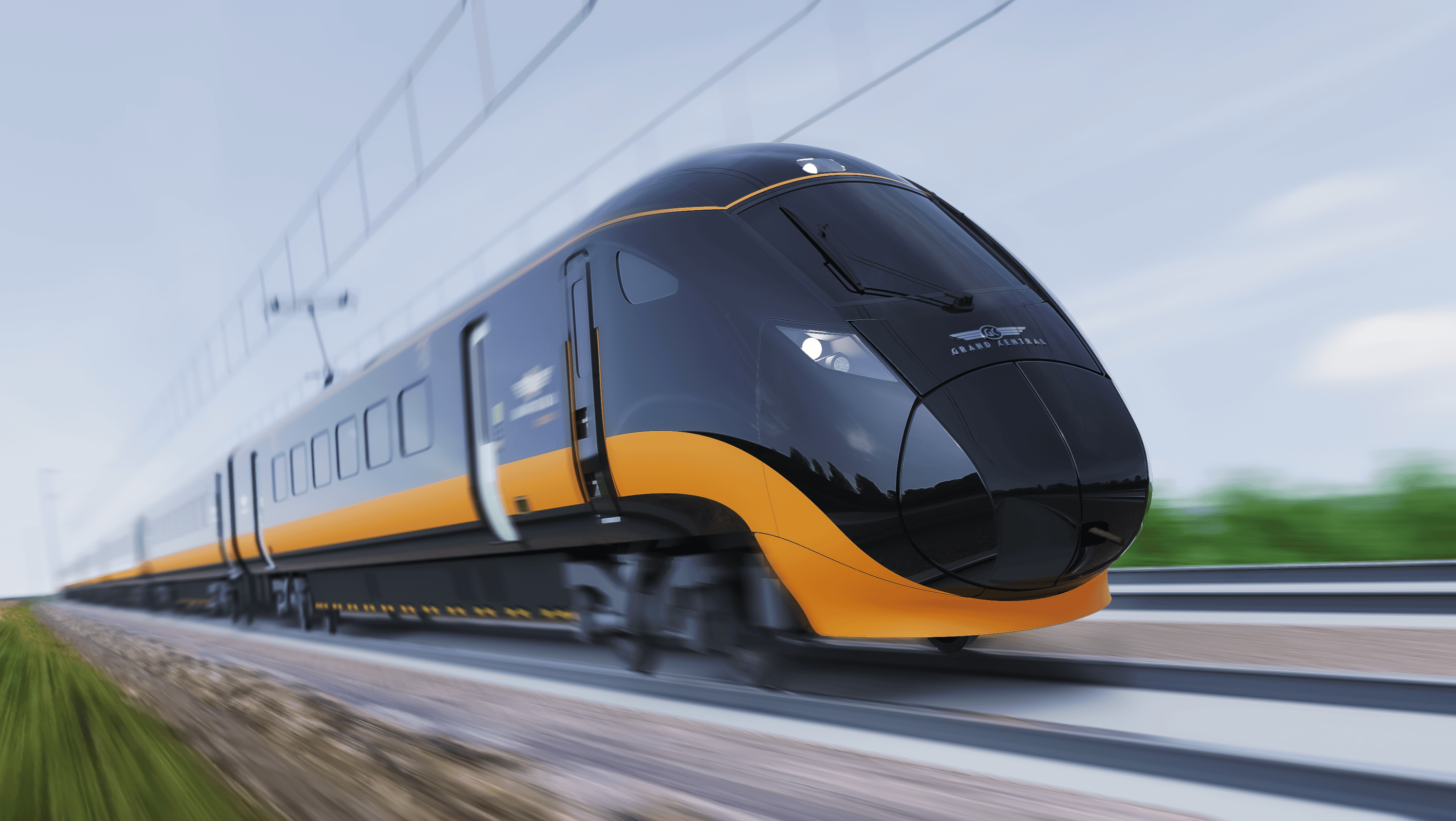
These four bullet points act as sub-headings.
- Order worth around £300 million for fleet of new trains, which will increase seats by 20 per cent, improving capacity and connectivity.
- 45 rail cars to be manufactured at Hitachi Rail in the North East and financed by Angel Trains, helping secure highly skilled jobs and unlocking a new advanced manufacturing opportunity for rail.
- State-of-the-art ‘tri-mode’ train technology has proven its ability to cut emissions and fuel costs by around 30 per cent to support UK Government’s decarbonisation agenda.
- Announcement is made from Hitachi’s Newton Aycliffe factory and attended by the Secretary of State for Transport, Heidi Alexander MP.
These three paragraphs give more details.
Arriva Group announced today an order for nine cutting-edge battery hybrid trains to replace its entire Grand Central fleet, providing a major boost to regional economies and offering passengers more comfortable, greener travel options.
The order for 45 Hitachi Rail ‘tri-mode’ cars, which have the flexibility to run on electrified and non-electrified tracks, along with a 10-year maintenance contract, represents an investment of around £300 million. Tri-mode means the trains can be powered using electricity, battery or diesel.
It follows approval by the rail regulator for extended track access rights for Grand Central’s existing services through to 2038, with the investment underpinning Arriva’s long-term commitment to UK rail and to delivering sustainable public transport solutions to communities up and down the country and across Europe.
The trains will be built by Hitachi at Newton Aycliffe.
I have some further thoughts and questions.
What Distances Will The Trains Run Away From Electrification?
The distances that the various services will run away from electrification are as follows.
- King’s Cross and Bradford Interchange – Doncaster and Bradford Interchange – 52.1 miles.
- King’s Cross and Cleethorpes – Doncaster and Cleethorpes – 52.1 miles.
- King’s Cross and Sunderland – Longlands junction and Sunderland – 48.5 miles.
It would appear that a train with a range away from electrification of 55 miles would be enough, if there were to be charging at all the destinations.
Will The Trains Be Able To Take The Great Northern And Great Eastern Joint Line (GNGE) Diversion Via Lincoln On The East Coast Main Line?
I discussed using this diversion in detail in London And Edinburgh By Lumo Using the Joint Line Diversion.
In that post, I said this.
The January 2024 Edition of Modern Railways says that the diversion is approximately 90 miles or 145 kilometers.
If the trains have a 90 mile capability on batteries and/or diesel, they will be able to use the diversion.
As Hull Trains, LNER and Lumo all need this ability to take the GNGE Diversion, I suspect, it will be a tick-box on the order form for the trains.
When Will The Trains Be In Service?
The news item says this.
The trains will be delivered in 2028 under a 10-year leasing arrangement, in partnership and financed by Angel Trains.
Will The New Trains Be Faster?
They might save a couple of minutes, if Doncaster is the first stop.
Will The New Trains Be Quieter?
The news item says this about noise and emissions.
State-of-the-art ‘tri-mode’ train technology has proven its ability to cut emissions and fuel costs by around 30 per cent to support UK Government’s decarbonisation agenda.
Hitachi have said that the diesel engines will not run in stations.
Could The Trains Run Grand Central’s Routes Carbon-Free?
In The Data Sheet For Hitachi Battery Electric Trains, I came to these conclusions
- The battery pack has a capacity of 750 kWh.
- A five-car train needs three battery-packs to travel 100 miles.
- A nine-car train needs five battery-packs to travel 100 miles.
- The maximum range of a five-car train with three batteries is 117 miles.
- The maximum range of a nine-car train with five batteries is 121 miles.
As battery technology gets better, these distances will increase.
If I was choosing the trains for Grand Central, the trains would be able to operate these routes without using diesel.
- Doncaster and Bradford Interchange and return.
- Doncaster and Cleethorpes and return.
- Longlands junction and Sunderland and return.
Passengers might not like to have noisy passengers.
Probably, the best insurance policy to avoid running out of battery power, would be to have perhaps fifty metres of electrification at terminal stations. Hitachi claim they can offer a nice line in short lengths of electrification.
Quiet Trains Should Attract Passengers
I’ve seen it before and also with buses.
The Number Of Trains Ordered
The basic order is for nine trains, but Railway Gazette says this.
Arriva welcomed the ‘swift decision-making’ by ORR and the backing of the Department for Transport and Network Rail. It has also submitted applications to run more trains to Bradford and introduce services to Cleethorpes, and has an option to buy more trains if these are approved.
I’ve read somewhere that the option is for three extra trains.
So that’s a total of twelve, which would replace the ten Class 180 trains and two Class 221 trains, that Grand Central Trains currently run.
What About Chiltern Railways And CrossCountry?
Train operating companies Chiltern Railways, CrossCountry and Grand Central Trains are all wholly owned subsidiaries of Arriva Trains UK, who are described like this in the first paragraph of their Wikipedia entry.
Arriva UK Trains Limited is the company that oversees Arriva’s train operating companies in the United Kingdom. It gained its first franchises in February 2000. These were later lost, though several others were gained. In January 2010, with the take-over of Arriva by Deutsche Bahn, Arriva UK Trains also took over the running of those formerly overseen by DB Regio UK Limited
Arriva is ultimately owned by American infrastructure investment company; I Squared Capital.
Both Chiltern Railways and CrossCountry have trains, that are coming to the date, when they will need to be replaced and similar trains to those ordered by Grand Central could be suitable. to replace some.
Chiltern Railways have six rakes of Mark 3 coaches, that are hauled by diesel locomotives between London Marylebone and Birmingham Moor Street stations, These rakes of coaches could be replaced by Hitachi tri-mode trains, of perhaps five or six cars.
Chiltern Railways also have about sixty assorted diesel multiple units totalling up to about 150 carriages.
CrossCountry Trains have twenty-nine two- or three-car Class 170 trains and sixty-one four- or five car Class 220 or 221 trains. All these ninety trains were built this century and are diesel-powered.
The Government’s policy of net-zero by 2050, would probably mean a significant number of these smaller diesel multiple units need to be replaced by 2030.
If the Grand Central Trains new Hitachi trains are a success, then changing the longer four-, five- and six-car trains for similar Hitachi trains, would be a low-risk replacement strategy for I Squared Capital, that could be applied at Chiltern Railways and CrossCountry.
I can also see a need for a two-, three- or four-car tri-mode train for Chiltern Railways and CrossCountry.
Was The Date Of The Announcement Significant?
In October 2020, I wrote Hitachi Targets Export Opportunities From Newton Aycliffe and I believe that tri-mode trains like these that Grand Central have ordered could have export opportunities.
One country for exports has possibilities and that is the United States.
- Hitachi AT-300 trains like these don’t need expensive high-speed tracks and there are probably many lines in the United States, where these trains could fit existing tracks.
- This page on the Hitachi Rail web site is entitled Hitachi Rail in the USA and Canada.
- In the UK, companies like GWR, LNER, Southeastern and TransPennine Express effectively use theHitachi trains as fast commuter trains on some routes.
- Trump’s tariffs would only be 10 % on these trains.
- The Grand Central version looks very stylish!
- Hitachi’s battery technology is owned by Turntide Technology, who are a US company.
- For some routes, the trains would probably only need to be battery-electric.
Has the experience of running Chiltern Railways, CrossCountry and Grand Central Trains convinced I Squared Capital, that running railways is a good investment?
Have I Squared Capital identified some railroads in the United States, that could follow a similar upgrade path to Chiltern Railways?
Was it significant that the order was announced the day after Trump’s tariffs?
.
 The Anonymous Widower