Deutz Hydrogen Engine Ready For Market
The title of this post, is the same as this article on H2 View.
These are the first two paragraphs
A brand-new hydrogen engine has been developed in Cologne, Germany to help accelerate the rollout of low and zero emission drive systems.
Developed by Deutz, the TCG 7.8 H2 engine has already passed initial tests on the test bench and is scheduled to go into full production in 2024.
This could be a very significant development.
Initially from the article, they seem to be concentrating on stationary applications, but it could be an easy route for large vehicle manufacturers to decarbonise their products.
Wabtec Breathes New Life Into Older Locomotives
This title of this post, is the same as that of this article on Railway Gazette.
This is the introductory paragraph.
This month Wabtec completed the 1 000th locomotive it has remanufactured for customers in the Americas under a programme launched in 2015. Norfolk Southern has taken delivery of 500 of the locos, with other customers including Canadian Pacific, BNSF, Union Pacific and Brazilian operator Rumo.
This second paragraph gives Wabtec’s aims of the remanufacturing.
Wabtec said locomotive modernisation is a key element of its sustainability efforts, with revitalised locos offering fuel efficiency improvements of up to 25%, reliability increases of more than 40%, up to a 55% increase in haulage capability and reductions in maintenance, repair, and overhaul costs of up to 20%.
This ongoing program, which although it only offers a 25 % reduction in carbon emissions, shows the size of the diesel locomotive market in North America.
- A lot of these locomotives were built by GE Transportation Systems, which is now owned by Wabtec.
- It is obviously, a market that is commercially rewarding.
In Freightliner Secures Government Funding For Dual-Fuel Project, I talked about s UK project to decarbonise one of our North American-built Class 66 locomotives.
I do wonder how long it will be before Cummins or one of the other big diesel engine manufacturers like Caterpillar offers a hydrogen conversion for these big beasts.
The numbers shown in the article, show it could be a very large and profitable market.
In the future, a lot of decarbonisation will be driven by commercial interests.
LNER To Serve Cleethorpes
Under the proposed new LNER timetable, which will start in May 2022, there will be a new train service between London Kings Cross and Cleethorpes.
According to this article on the Lincolnite, which is entitled Direct Cleethorpes To London Rail Link ‘Close’ To Getting Go Ahead, there will be one service per day.
It will leave Cleethorpes at 06:24 and Grimsby Town at 06:32 before arriving at King’s Cross at 09:25.
The return will leave King’s Cross at 16:10 and arrive in Grimsby Town at 19:05 and Cleethorpes at 19:20.
The August 2021 Edition of Modern Railways makes these points about the service.
- The larger Azuma fleet makes this extension possible.
- ,A more regular service would require additional trains.
- LNER is examining whether other intermediate stations east of Lincoln could be served.
I would have thought, that Market Rasen station could be a possibility for an intermediate stop.
I have a few thoughts.
Extra Services
This single service is ideal for though living in Lincolnshire, but it doesn’t suit those people, who perhaps need to go to the area from London for business or family reasons.
- Lincoln appears to get around five or six trains per day in each direction to and from King’s Cross.
- Services are roughly one train per two hours.
- I suspect the Lincoln service can be run by a single train, that shuttles between King’s Cross and Lincoln stations.
I believe, that Cleethorpes needs at least a pair of services to and from London, so that travellers can spend a day in North-East Lincolnshire.
- This would probably need more trains.
- Services would go via Lincoln and Lincoln may get extra services to London.
- Selected services could stop at intermediate stations, like Market Rasen.
There are surely possibilities for a integrated timetable between King’s Cross and Lincoln, Market Rasen, Grimsby Town and Cleethorpes.
Battery-Electric Operation
Consider.
- LNER’s Class 800 trains are prime candidates for conversion to Hitachi Intercity Tri-Mode Battery Trains, so they can run away from the overhead wires of the East Coast Main Line to places like Lincoln, by the use of battery power.
- These battery trains could charge using the electrification between King’s Cross and Newark North Gate stations.
- The distance between Lincoln Central station and the East Coast Main Line is 16.6 miles.
- In Plans To Introduce Battery Powered Trains In Scotland, I quote Hitachi, as saying they expect a sixty mile range for battery trains.
I am sure, that these trains would have sufficient range on battery to be able to work King’s Cross and Lincoln services without using diesel.
But could the Hitachi trains reach Cleethorpes with some well-positioned charging?
- The distance between Lincoln and Cleethorpes stations is 47.2 miles.
- In Solving The Electrification Conundrum, I describe Hitachi’s solution to running battery-electric trains, by using well-placed short lengths of 25 KVAC overhead electrification controlled by an intelligent power system.
With a range of sixty miles on batteries and charging at Lincoln and Cleethorpes stations, it would appear that battery electric operation of Class 800 trains between King’s Cross and Cleethorpes is a distinct possibility.
Lincoln Station
Lincoln station has three operational through platforms and I suspect all would need to be electrified, so that trains could be charged as they passed through.
These are distances from Lincoln station.
- Cleethorpes – 47.2 miles
- Doncaster – 36.9 miles
- Nottingham – 33.9 miles
- Peterborough – 56.9 miles
- Sheffield – 48.5 miles
It does appear that if Lincoln station were to be electrified, most services from the city could be run using battery-electric trains.
Cleethorpes Station
This picture shows Cleethorpes station with two TransPennine Express Class 185 trains in the station.
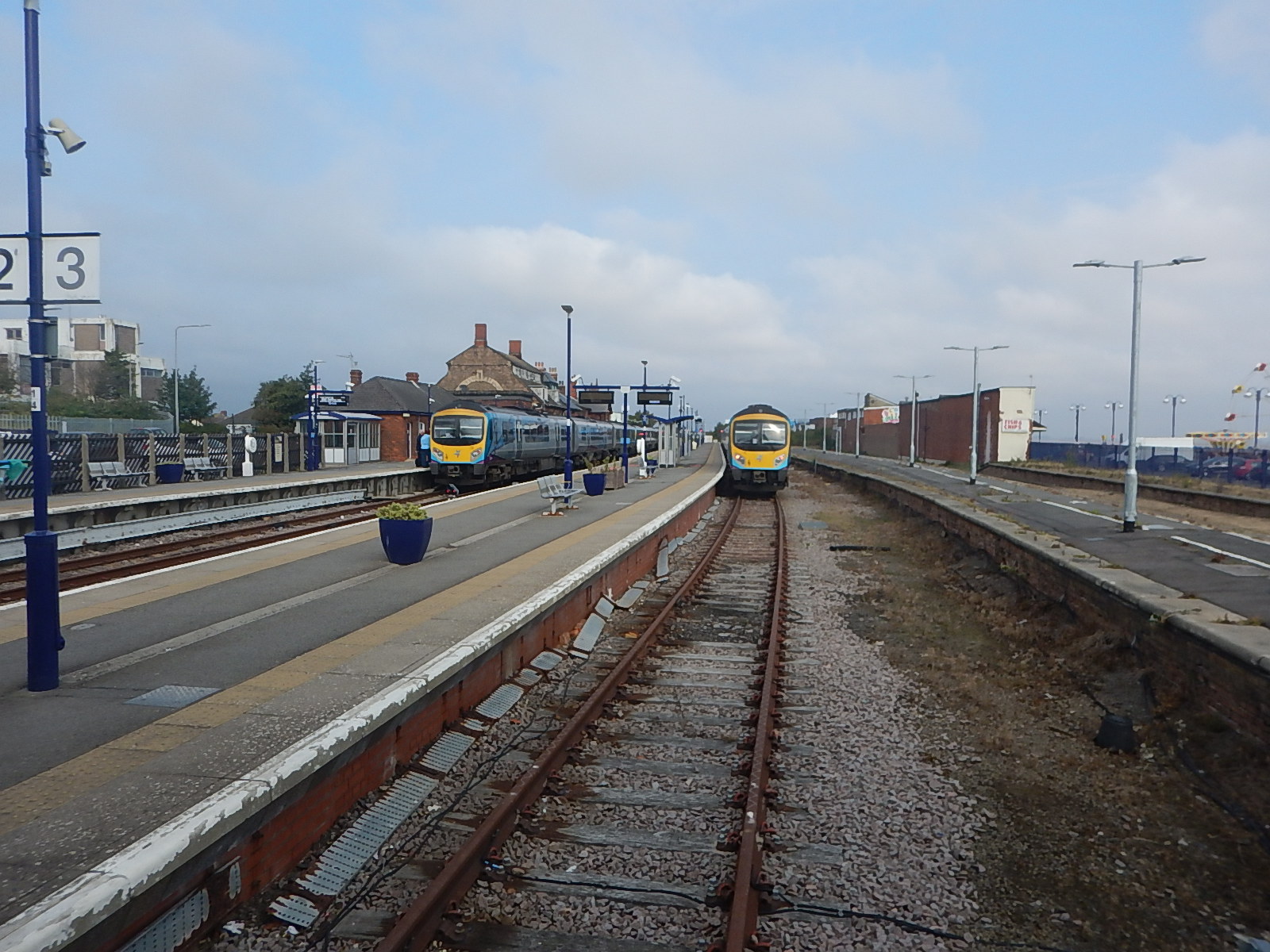
Note.
- The Class 185 trains are diesel, but could be replaced by Hitachi Class 802 trains, which could be converted to battery-electric operation.
- Cleethorpes and Doncaster are 52.1 miles apart, which could be in range of Hitachi’s battery-electric trains.
- It doesn’t look to be too challenging to electrify a couple of platforms to charge the battery-electric trains.
- Cleethorpes station could surely charge both the LNER and the TransPennine Express trains.
- The Cleethorpes and Barton-on-Humber service which is under fifty miles for a round trip could also be replaced with battery-electric trains.
Cleethorpes station could be totally served by battery-electric trains.
Battery-Electric Trains For Lincolnshire
At the present time, there is a surplus of good redundant electrical multiple units and the rolling stock leasing companies are looking for places where they can be used.
Porterbrook are already looking to convert their fleet of Class 350 trains to battery-electric operation and I am certain, that now that Hitachi and others have solved the charging problem, a lot more trains will be converted.
Most would appear to be four-car 100 mph trains, which will be very convenient and should fit most platforms.
Conclusion
Running battery-electric Class 800 trains to Lincoln, Grimsby Town and Cleethorpes could be the start of decarbonisation of Lincolnshire’s railways.
What would battery-electric trains do for the economy of Lincolnshire?
The Hybrid-Electric Plane That Will Switch From Passenger To Cargo In 15 Minutes
The title of this post, is the same as that of this article on Simple Flying.
If you are sceptical about the concept of zero-carbon flying, then read this article, which takes the form of an interview with the Managing Director of Faradair.
Talgo and Repsol To Develop Fuel Cell Trains Powered By Renewable Hydrogen
The title of this post, is the same as that of this article on Railway Gazette.
This article follows the pattern, of if you’re going to build hydrogen-powered trains, you need a quality partner for your hydrogen.
I still puzzle, what Talgo will do with their factory in Scotland, if they miss out on the orders for High Speed Two.
- Russia is an obvious market for their Spanish gauge high speed trains and delivery from Rosyth by ship is probably easier, than from Spain.
- The UK probably needs a quality modern hydrogen train for remote routes, as does the island of Ireland.
- As I indicated in LNER Seeks 10 More Bi-Modes, there could be a niche for a small fleet of 140 mph hydrogen bi-modes to run between London and the North of Scotland.
Note.
The UK probably has enough capacity for regional and commuter electric and battery trains, with Alstom, CAF and Hitachi all with modern trains in production.
Ireland and Russia, with their similar gauge to Spain could be worthwhile markets.
However, I do believe that the 140 mph hydrogen bi-modes would slot into substantial markets in continents and countries like Africa, Australia, Canada, India, Norway, South America, Sweden and the United States, where there are enormous mileages of standard gauge railways without electrification.
Liverpool’s Vision For Rail
This document on the Liverpool City Region web site is entitled Metro Mayor’s Vision Of A Merseyrail for All Takes Vital Step Forward With Successful Trial Of New Battery-Powered Trains.
It makes these points in the first part of the document.
- Game-changing technology paves way for Merseyrail network expansion across the Liverpool City Region and beyond
- Merseyrail services could reach as far as Wrexham and Preston
- City Region is at the forefront of the introduction of pioneering energy efficient technology.
The new battery-powered trains would certainly go a long way to enable, these objectives.
- Battery-powered trains would need a range of 26.9 miles to go between Bidston and Wrexham stations.
- Battery-powered trains would need a range of 15.3 miles to go between Ormskirk and Preston stations.
This link is to the North Cheshire Rail User Group’s Newsletter for Spring 2021.
This is said about battery range of the new Class 777 trains.
Later model Class 777’s have the ability to leave the 3rd rail and operate under battery power for 20 miles or more with a full load thus
permitting expansion of the Merseyrail network beyond its current limits.
I suspect they will also have regenerative braking to batteries, which will increase the range and allow Preston and Wrexham stations to be achieved without charge.
It certainly sounds like Preston and Wrexham and all the intermediate stations, will be added to the Merseyrail network.
As to the third point above about the introduction of pioneering energy efficient technology, I suspect this is mainly regenerative braking to batteries and replacement of elderly worn-out power supply equipment.
There is more in the Liverpool City Region document.
Expanding Merseyrail
This is said.
The game-changing technology could allow the Merseyrail network to extend across all six city region boroughs to places like Rainhill in St Helens, Woodchurch on the Wirral and Widnes in Halton.
It could also allow the new fleet to operate as far afield as Skelmersdale, Wrexham, Warrington and Runcorn.
Note.
- A 25 KVAC capability could well be needed. But that is built into the Class 777 trains.
- Chargers could be needed at some of these stations. I suspect Stadler have a Swiss manufacturer in mind.
In the run-up to May’s elections, the Mayor pledged to deliver ‘Merseyrail for All, a commitment to connecting under-served communities to the Merseyrail network.
New Stations
Initially the battery-powered trains, which are considerably greener, using up to 30% less energy than the existing fleet, are set to run on services to a planned new station at Headbolt Lane, Kirkby.
The wider Merseyrail for All programme could ensure every community is well served by an integrated public transport network and new and refurbished train stations are also high on the agenda.
They could include:
- The Baltic Triangle in Liverpool
- Carr Mill in St Helens
- Woodchurch on the Wirral
Note.
- The Baltic Triangle station will be built on the site of the former Liverpool St. James station.
- The Carr Mill station will probably be built on the site of the former Carr Mill station.
- Woodchurch station is likely to be built on the Borderlands Line between Upton and Heswall stations.
Tram-Trains And Trackless Trams
The document says this.
Tram-Train technology and trackless trams will also be looked at as potential means of extending the Merseyrail network into hard-to-reach places. The technology could benefit areas such as Liverpool John Lennon Airport and Speke, Kirkby Town Centre, Southport Town Centre, Wirral Waters and the Knowledge Quarter.
Tram-trains built by Stadler in Valencia are already running in Sheffield and in the next few years they should be deployed on the South Wales Metro.

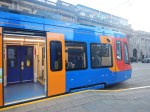
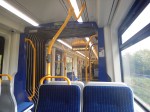
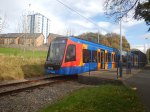
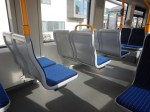
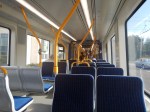
TStadler are also building Merseyrail’s new Class 777 trains, so I suspect they’ll go together like peaches and cream.
The Belgian firm; Van Hool have a product called Exquicity. This video shows them working in Pau in France.
These tram buses run on rubber types and are powered by hydrogen.
Similar buses running in Belfast are diesel-electric.
Could these be what the document refers to as trackless trams?
Battery Train Trials
The article finishes with this summary of the battery train trials. This is said.
Under the battery trials, financed by the Transforming Cities Fund, one of the new class 777 trains fitted with the battery technology was tested on the Northern line.
The batteries exceeded expectations with the trains travelling up to 20 miles per run without the need for re-charging.
The battery trains would remove the need for the third ‘electric’ rail, enabling the trains to travel beyond the existing network without major track investment.
The units passed all tests during four weeks of trials on the City Region’s rail network in May and June.
The Combined Authority and partners are still assessing the full impact of the Coronavirus pandemic on the programme and will provide more information regarding the roll out as soon as it has been agreed.
It looks to me, if all these plans get implemented successfully, Liverpool City Region will have one of the best public transport systems of any similar-sized cities in the world.
The Full Plan As A Map
This article on the BBC is entitled Battery-Powered Trains Part Of Merseyrail Expansion Plan.
The article contains this map.

There is no key or explanation, but it appears that the pink lines are new routes, where Merseyrail will run trains.
Before I discuss each of the possible routes, I will discuss two big factors, that will affect a lot of my thinking.
The West Coast Main Line
Avanti West Coast have the following stops in trains per hour (tph) at these stations on the West Coast Main Line as its trains pass the East of Merseyside to and from London Euston.
- Crewe – At least 5 tph
- Warrington Bank Quay – At least 2 tph
- Preston – At least 1 tph
These frequencies are in addition to these direct trains from London Euston.
- 1 tph to Liverpool Lime Street, which will rise to 2 tph in the December 2022, with a call at Liverpool South Parkway station.
- Occasional services to Chester throughout the day.
Passengers do not have to go via Liverpool Lime Street to travel to London.
In addition. there are useful services run by TransPennine Express between Liverpool Lime Street and Scotland, that call at Preston.
In Future; High Speed Two
This will call at Crewe, Liverpool Lime Street, Liverpool South Parkway, Preston and Warrington.
Northern Trains
Northern Trains were in all sorts of troubles and the service is now run directly by the Government’s Operator of Last Resort. I suspect that any reasonable offer to takeover over a service will be looked at favourably.
I will now look at Merseyrail’s new routes.
Ormskirk And Southport Via The Burscough Curve
Consider.
- This route has been a long term aspiration of Merseyrail.
- A curve between Burscough Bridge and Burscough Junction will have to be rebuilt on a former alignment.
- Southport and Ormskirk are about 13 miles apart.
- Southport and Ormskirk have third-rail electrified lines to Liverpool and the South.
It would be an ideal route for battery-electric trains with a range of 20 miles.
What would it do for passengers?
- It gives those living near five stations a direct link to Liverpool.
- It gives Southport a town of over 91,000 people more capacity to the city of Liverpool for jobs, leisure and shopping.
- Will it open up more opportunities for new housing in villages like Burscough?
It will certainly give Merseyrail operational advantages to Southport.
Ormskirk And Preston
Consider.
- Takeover of this Northern Trains route has been a long term aspiration of Merseyrail.
- Preston and Ormskirk are about 15.3 miles and 32 minutes apart.
- Omskirk has 750 VDC third-rail electrification and Preston has 25 KVAC overhead electrification.
- The Class 777 trains have been built so they can be updated to dual voltage.
It certainly looks to be a route that could be handled by a battery-electric Class 777 train.
What would it do for passengers?
- It gives those living near the Ormskirk and Preston Line a direct link to Liverpool.
- It creates a direct link in modern electric trains between North Liverpool and Preston, for onward travel on West Coast Main Line services and High Speed Two in the future.
- The journey time could be reduced to under thirty minutes.
As football is so important to the Liverpool economy, would a time around forty-five minutes between Preston and Sandhills station tempt football supporters going to Anfield and Goodison Park to use the train and then perhaps a trackless tram to the stadium?
This Google map shows the location of Anfield, Goodison Park and Sandhills station.
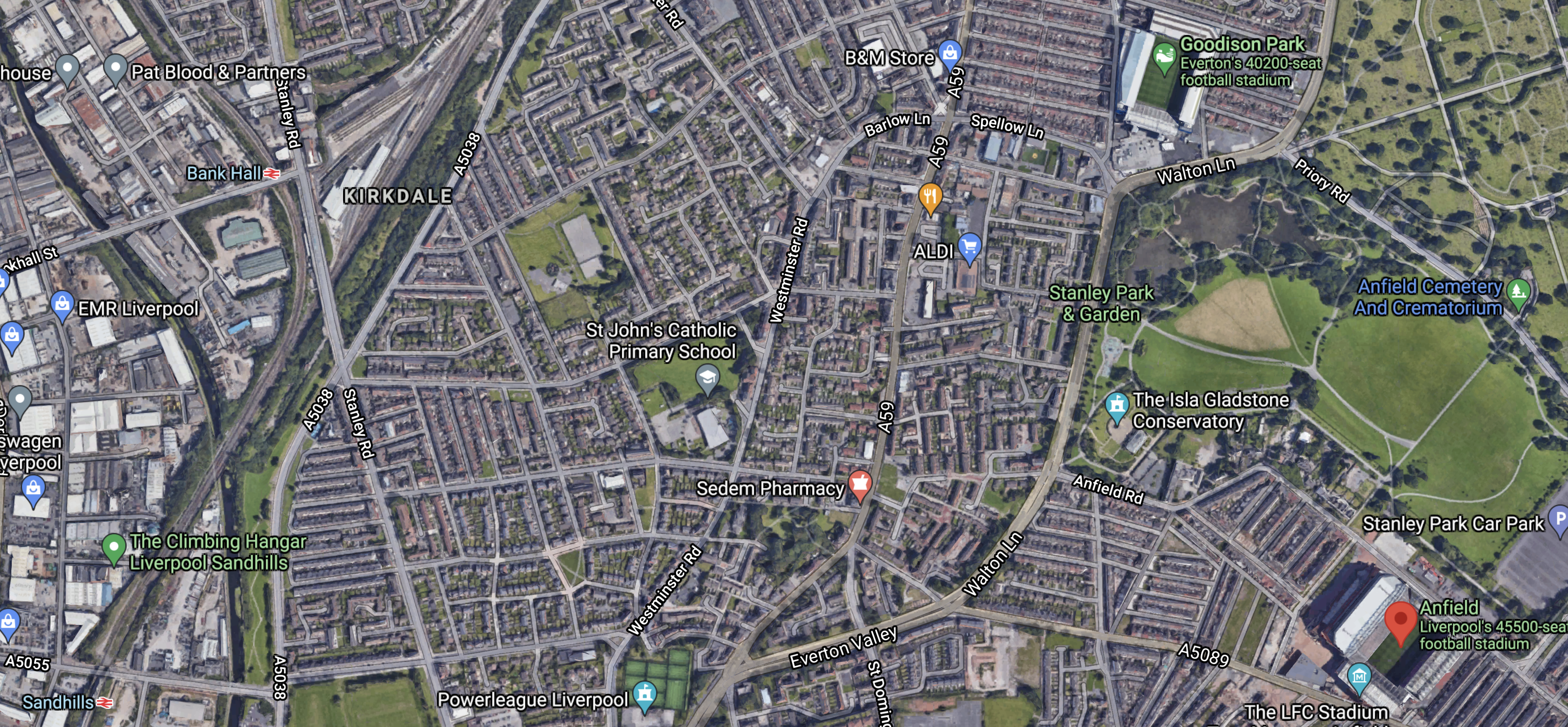
Note.
- Anfield is in the bottom-right corner of the map and is marked by a red arrow.
- Goodison is in the top-right corner of the map, slightly to the West of Anfield.
- Sandhills station is in the bottom-left corner of the map.
Both stadia are around a mile and a half from the station.
Southport And Preston
Once the Ormskirk and Southport and Ormskirk and Preston services are up and running, it would surely be possible to run a Southport and Preston service.
- There would be a reverse at Ormskirk.
- The two sections of Ormskirk and Southport and Ormskirk and Preston would both need battery power.
- Whilst the driver changed ends at Ormskirk, the train would be recharged using a fast and efficient charger.
- Times between Southport and Preston would be under an hour.
It certainly looks to be a route that could be handled by a battery-electric Class 777 train.
What would it do for passengers?
- It gives those living in Southport, a direct link to Preston.
- It creates a direct link in modern electric trains between Southport and Preston, for onward travel on West Coast Main Line services and High Speed Two in the future.
This service could be very valuable for passengers, but I suspect the route could be implemented with minimal infrastructure changes at Ormskirk station.
Ormskirk Station
This picture shows Ormskirk’s single platform from the Merseyrail end.
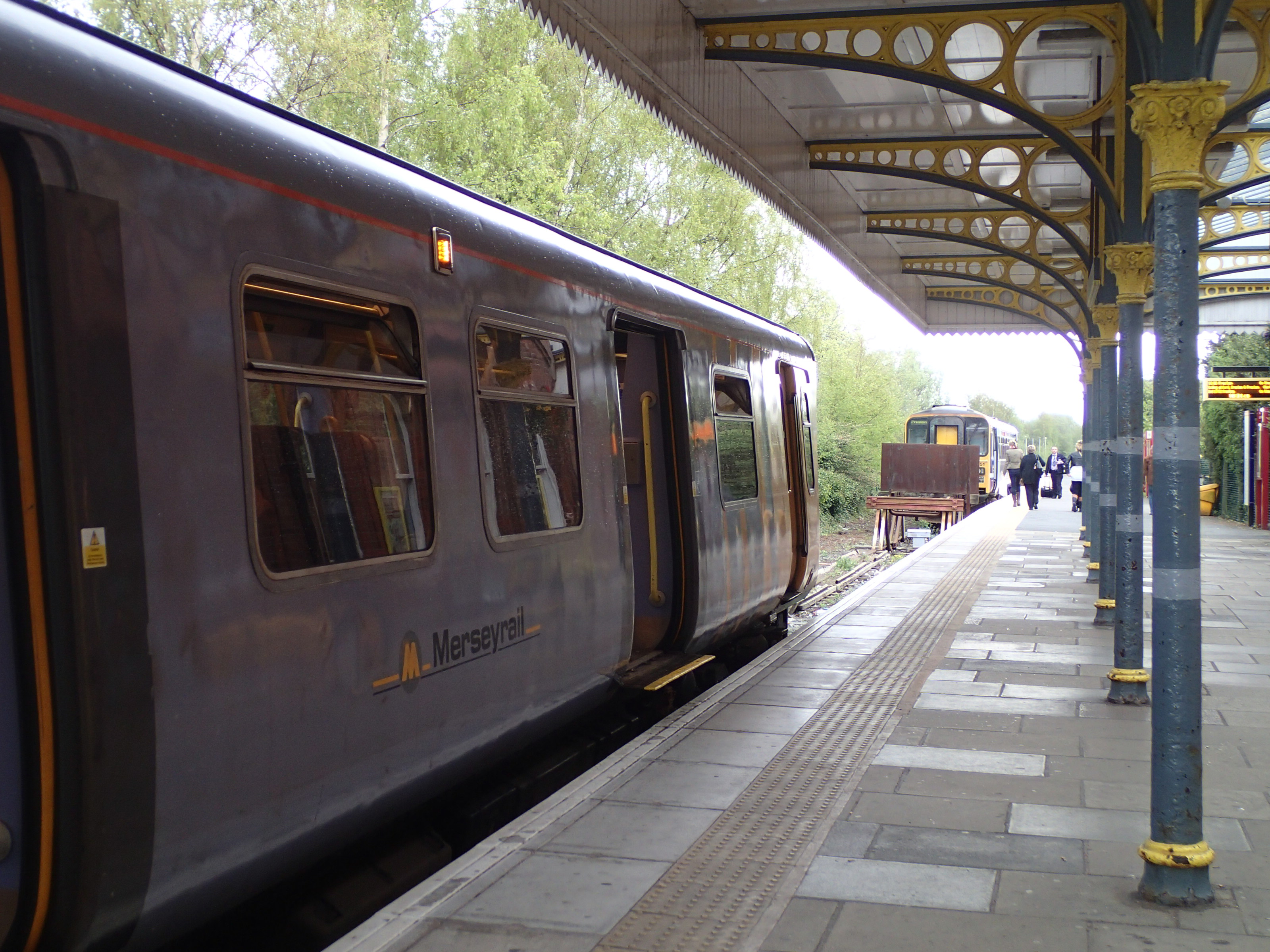
Note.
- The Liverpool train in the foreground.
- The Preston train in the background.
- The solid barrier between the trains.
I wonder if the following would be possible with the barrier removed.
- The long platform would be treated as one platform divided into two.
- Perhaps they will be the Liverpool and Preston/Southport platform,
- Trains that will leave the station for Liverpool will stop in the Liverpool platform.
- Trains that will leave the station for Preston or Southport will stop in the Preston/Southport platform.
- Through trains between Liverpool and Preston or Southport would be possible.
- A train between Preston and Southport could reverse in the Preston/Southport platform, whilst trains for Liverpool used the Liverpool platform.
It looks like it’s an efficient layout borrowed from somewhere else. and Stadler have probably seen it before.
Headbolt Lane Station
In Headbolt Lane Station Fly-Through, I described the new Headbolt Lane station.
This screen capture is from the video in that post,
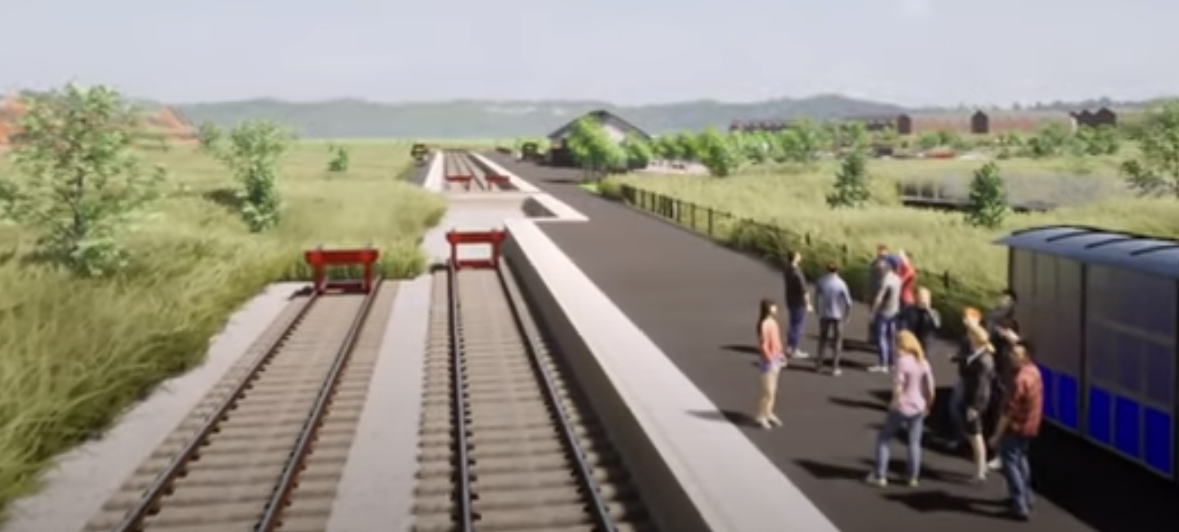
Note.
- Two platforms going away from the camera and one platform and what looks to be a siding going towards the camera.
- There appears to be no direct connection between the two different sets of tracks.
Until proven wrong, I believe that the camera is looking towards Liverpool, as it would mean that Liverpool services had two platforms. But they currently make do with one at Kirkby.
There is a walk through between the tracks, which
- Enables passengers to access the second platform.
- Allows passengers to enter the station from the other side.
- Allows non-passengers to cross the tracks on the level.
- Avoids the need to build a bridge.
It is certainly an innovative design.
If occasional trains need to go through, could there be a lift-out section of the walk-through?
But as there are buffer stops on the tracks in the three platforms, that are either side of the walk-through, I suspect it will never happen, as it’s too much hassle.
In the Wikipedia entry for Headbolt Lane station this is said.
The Liverpool City Region Combined Authority announced in July 2021 that a trial of a battery electric multiple unit (BEMU) version of the new Class 777 will serve the new station, when it opens. This will not require all of the line extension to Headbolt Lane to be electrified.
Merseyrail would appear to have neatly side-stepped, the Office of Road and Rail’s policy of no more third-rail electrification.
But I’m sure Merseyrail could put an approved train-charging system in the station.
- They would need one if a Class 777 train arrived with a flat battery.
- They would need one to charge trains on the Headbolt Lane and Skelmersdale service, if the service were to be run by battery-electric trains.
- They would need one to charge trains on the Headbolt Lane and Wigan Wallgate service, if the service were to be run by battery-electric trains.
The system could be based on a short length of overhead wire and a slim pantograph or a system like Railbaar from Furrer + Frey.
But does it give any clues as to the orientation of the station in the video?
- As there are three platforms and a siding, that meet at Headbolt Lane station, all could be fitted with chargers. to make sure the services are reliable.
- Liverpool services could be handled at either end, as it only needs one platform.
- Skelmersdale and Wigan services could probably share a platform, but they would be better surely using two platforms.
- The siding could be created into a platform for extra services to be added to the Merseyrail network
So there is no pressing reason, why the station cannot be North or South of the railway.
I suspect road layout and land use issues will eventually decide, the orientation of the station.
Headbolt Lane And Skelmersdale
Consider.
- This has been a long term aspiration of Merseyrail and Lancashire County Council.
- Headbolt Lane and Skelmersdale are just a few miles apart.
- Direct running between Liverpool and Skelmersdale will not be possible, but it will be a step-free change between trains.
The Wikipedia entry for Headbolt Lane station seems to indicate a proposed extension of the Northern Line with the next stop being the existing Rainford station. This would surely not add greatly to costs and bring Merseyrail to more fare-paying customers.
It certainly looks to be a route that could be handled by a battery-electric Class 777 train.
What would it do for passengers?
- Skelmersdale is a town of nearly 39,000 and is said to be one of the largest towns in England without a rail connection.
- At Headbolt Lane passengers will be able to change for Liverpool or Manchester.
A lot of passengers will have received a modern train service.
Headbolt Lane And Wigan
Consider.
- This service is currently run by Northern trains.
- Kirkby and Wigan Wallgate stations are just over twelve miles apart.
- Someone, who should know told me that by the time High Speed Two starts running through Wigan at a frequency of two tph, the two Wigan stations will have been combined.
- Headbolt Lane station could be the drop-off point for those needing to go to Birmingham, Edinburgh, Glasgow and London on both the current West Coast Main Line and the future High Speed Two.
What better way to start that journey than on one of Merseyrail’s battery-electric Class 777 trains.
What would it do for passengers?
With modern battery-electric trains linking Headbolt Lane station to the combined Wigan station complex, this route could be the zero-carbon route between large parts of Liverpool and cantres of tourism and employment along and to the East of the M6 and the West Coast Main Line.
Liverpool South Parkway And Warrington Central
Consider.
- This would be takeover of part of the current Liverpool Lime Street and Manchester Oxford Road service.
- The map shows the service going at least as far as Warrington Central station.
- Stations between Hunts Cross and Warrington Central include Halewood, Hough Green, Widnes, Sankey and the new Warrington West stations.
Distances are as follows.
- Liverpool South Parkway and Liverpool Lime Street – 5.5 miles
- Liverpool South Parkway and Warrington Central – 12.7 miles
- Liverpool South Parkway and Trafford Park – 25.4 miles
- Liverpool South Parkway and Manchester Oxford Road – 28.7 miles
The following sections of the route have 25 KVAC overhead electrification.
- Liverpool South Parkway and Liverpool Lime Street
- East of Trafford Park.
With a bit more electrification at either end, the whole route should be in range of a battery-electric Class 777 train.
Or the Class 777 trains could be fitted with bigger batteries!
It certainly looks to be a route that could be handled by a battery-electric Class 777 train.
What would it do for passengers?
- This is a route that has needed decent trains for years and has finally got new Class 195 trains.
- But, in addition, the battery-electric Class 777 trains would decarbonise the route.
The major problem, though is not infrastructure or trains, but surely Andy Burnham, who is the outspoken Mayor of Greater Manchester and could object to Merseyrail invading his patch.
Merseyrail’s Cheshire Ambitions
This is a section of the map shown on the BBC article, showing Cheshire.
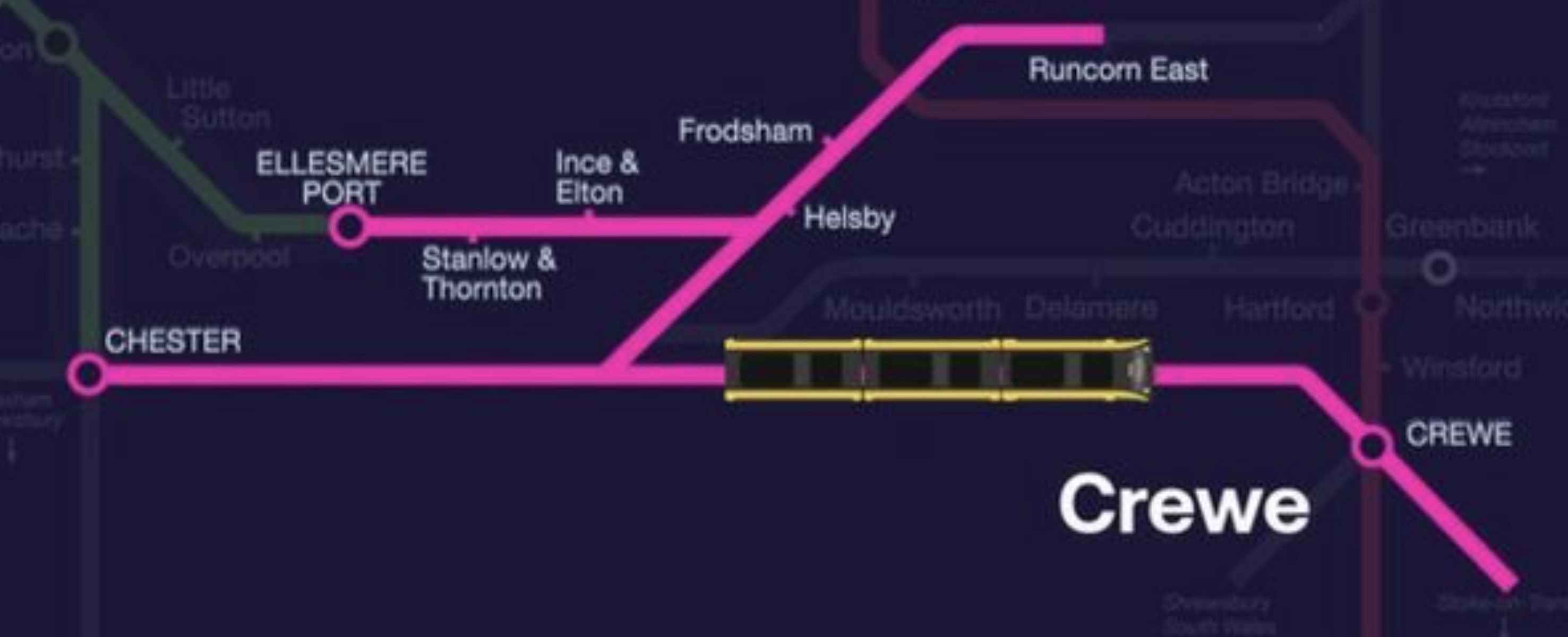
It looks like there could be as many as three routes.
- Chester and Crewe
- Chester and Runcorn East
- Ellesmere Port and Runcorn East
I’ll now cover the routes in detail.
Chester And Crewe
Consider.
- This would be a takeover by Merseyrail of the existing Trains for Wales service.
- Chester And Crewe are about 21,2 miles and 25 minutes apart.
- Chester has 750 VDC third-rail electrification and Crewe has 25 KVAC overhead electrification.
- The Class 777 trains have been built so they can be updated to dual voltage.
- There is a proposal, that Beeston Castle and Tarporley station be re-opened.
It certainly looks to be a route that could be handled by a battery-electric Class 777 train.
What would it do for passengers?
- If trains will run between Crewe and Liverpool, this creates a second route between the two major stations.
- It creates a direct link in modern electric trains between The Wirral and Crewe, for onward travel on West Coast Main Line services and High Speed Two in the future.
- The journey time could be reduced by enough to increase service frequency on the route.
I This would be a very useful extension of the Merseyrail network.
Chester And Runcorn East
Consider.
- This would be a takeover by Merseyrail of the existing Trains for Wales service.
- Chester And Runcorn East are about 13.1 miles apart.
- Two stations and five miles further on is Warrington Bank Quay station.
- Chester has 750 VDC third-rail electrification and Warrington Bank Quay has 25 KVAC overhead electrification.
- The Class 777 trains have been built so they can be updated to dual voltage.
It certainly looks to be a route that could be handled by a battery-electric Class 777 train.
What would it do for passengers?
- It would enable a Merseyrail circular route from Liverpool Lime Street to Chester via Edge Hill, Wavertree Technology Park, Broad Green, Roby, Huyton, Whiston, Rainhill, Lea Green, St Helens Junction, Warrington Bank Quay, Frodsham, Runcorn East and Helsby.
- After Chester, it could take the Wirral Line back to Liverpool to make it a true Mersey Circular service.
Would a Mersey Circular service be a good idea?
Ellesmere Port And Runcorn East
Consider.
- This been a long term aspiration of Merseyrail.
- This would be a takeover by Merseyrail of the infrequent Northern Rail service.
- Ellesmere Port And Runcorn East are about 10.8 miles apart.
- Two stations and five miles further on is Warrington Bank Quay station.
- Ellesmere Port has 750 VDC third-rail electrification and Warrington Bank Quay has 25 KVAC overhead electrification.
- The Class 777 trains have been built so they can be updated to dual voltage.
It certainly looks to be a route that could be handled by a battery-electric Class 777 train.
What would it do for passengers?
- It would certainly improve rail transport along the South Bank of the Mersey from Ellesmere Port to Warrington Bank Quay or Runcorn East depending on the Eastern terminus.
- If the terminal were to be Warrington Bank Quay that would sort out the charging.
- It could create a direct link in modern electric trains between Ellesmere Port and Warrington Bank Quay, for onward travel on West Coast Main Line services and High Speed Two in the future.
I feel that an Ellesmere Port and Warrington Bank Quay service would be good for the area.
The Borderlands Line
I’ve left the Borderlands Line to last, as I feel it will be a lot more than commuter and leisure line between Liverpool and Wrexham.
- It crosses the border between England and Wales
- The line is 26.9 miles of double track, with a single-track extension of under two miles between the two Wrexham stations.
- It has over twenty stations with more planned in both countries
- It crosses a couple of rivers on long steel bridges.
- It brings commuters to Liverpool and takes workers to the high-tech factories of companies like Airbus and Toyota on Deeside.
- It connects to a lot of golf courses, one of which is the Open Championship course at Royal Liverpool.
- Once in Wales it has two connections to the North Wales Coast Line, which runs between Chester and holyhead.
It is no ordinary railway and is ripe for improvement to bridge passengers to employment sites and leisure areas along its route.
The line has one big problem in that passengers need to change trains at Bidston between Liverpool and Wrexham stations.
- Between Bidston and Liverpool the Merseyrail electric trains to and from Hoylake are used and they turn in the Liverpool Loop under Liverpool City Centre calling at four stations before returning.
- Between Bidston and Wrexham, diesel multiple units are used.
It is a route design straight out of the 1970s of men with minds without imagination. Even British Rail were designing battery-electric trains in the 1950s, which I wrote about in Did The Queen Ever Ride In This Train?.
Merseyrail intend to right the wrongs of the past using battery-electric Class 777 trains.
- As electric versions of these trains will be used on the Liverpool and Hoylake service, there would be no need to change trains at Bidston if the Liverpool and Wrexham trains were just a battery-electric version of the same train.
- The Wrexham trains would drive round the Liverpool Loop tunnel as hundreds of trains do every day.
- The trains would be charged on the existing third-rail electrification at the Liverpool end.
- I’m fairly certain that a frequency of two tph would be possible on the route, if the Liverpool Loop tunnel signalling could cope,
- Trains would need to be charged at the Wexham end of the route and I’m sure Stadler have a solution.
It would be an efficient and cost effective way to decarbonise a tricky but useful branch line.
Conclusion
Stadler are playing their full orchestra of ideas on Merseyrail.
When completed, it will be one of the best metros of any urban areas up to a million people in the world.
This metro could do for Liverpool, what the Beatles did for the city in the 1960s.
Will Zero-Carbon Freight Trains Be Powered By Battery, Electric Or Hydrogen Locomotives?
These are a few initial thoughts.
We Will Not Have A One-Size-Fits-All Solution
If you consider the various freight and other duties, where diesel locomotives are used, you get a long list.
- Light freight, where perhaps a Class 66 locomotive moves a few wagons full of stone to support track maintenance.
- Intermodal freight, where a Class 66 locomotive moves a long train of containers across the country.
- Stone trains, where a Class 59 or Class 70 locomotive moves a very heavy train of aggregate across the country.
- Empty stock movements, where a diesel locomotive moves an electrical multiple unit.
- Supporting Network Rail with trains like the New Measurement Train, which is hauled by two diesel Class 43 power cars.
- Passenger trains at up to and over 100 mph.
I can see a need for several types of zero-carbon locomotive.
- A light freight locomotive.
- A medium freight locomotive, that is capable of hauling many intermodal trains across the country and would also be capable of hauling passenger services.
- A heavy freight locomotive, capable of hauling the heaviest freight trains.
- A Class 43 power car replacement, which would probably be a conversion of the existing power cars. Everybody loves InterCity 125s and there are over a hundred power cars in regular service on railways in the UK.
There are probably others.
The UK Hydrogen Network Is Growing
Regularly, there are news items about companies in the UK, who will be providing green hydrogen to fuel cars, vans, buses, trucks and trains.
Hydrogen is becoming a fuel with a much higher availability.
The UK Electricity Network Is Growing And Getting More Resilient
We are seeing more wind and solar farms and energy storage being added to the UK electricity network.
The ability to support large numbers of battery-electric buses, cars, trucks and trains in a reliable manner, is getting more resilient and much more comprehensive.
There Will Be More Railway Electrification
This will happen and installation will be more innovative. But predicting where electrification will be installed, will be very difficult.
Hydrogen Fuel Cells Now Have Rivals
Hydrogen fuel cells are normally used to convert hydrogen gas to electricity.
But over the last few years, alternative technology has evolved, which may offer better methods of generating electricity from hydrogen.
- Rolls Royce have developed a beer keg-sized 2.5 MW generator, that could run on hydrogen, which I wrote about in Our Sustainability Journey.
- Honeywell are possibly going the same route, which I wrote about in Honeywell Introduces Power Source For Hybrid-Electric Aircraft.
- JCB have converted diesel engines to run on hydrogen, which I wrote about in JCB Finds Cheap Way To Run Digger Using Hydrogen.
- Caterpiller, Cummins and Rolls-Royce mtu are showing signs of taking a similar route to JCB.
Fuel cells will not be having it all their own way.
Batteries Are Improving Their Energy Density
This is inevitable. and you are starting to see improvements in the fabrication of the battery packs to get more kWh into the space available.
In Wrightbus Presents Their First Battery-Electric Bus, I said this about the Forsee batteries used in the new buses from Wrightbus.
The Forsee brochure for the ZEN SLIM batteries gives an energy density of 166 Wh per Kg. This means that the weight of the 454 kWh battery is around 3.7 tonnes.
A one-tonne battery would have a capacity of 166 kWh.
- It is the highest value I’ve so far found.
- Technology is likely to improve.
- Other battery manufacturers will be striving to match it.
For these reasons, in the rest of this post, I will use this figure.
Some Example Locomotives
In this section, I shall look at some possible locomotives.
Conversion Of A Class 43 Power Car
There are two Class 43 power cars in each InterCity 125 train.
- The diesel engine is rated at 1678 kW.
- The transmission is fully electric.
- These days, they generally don’t haul more than five or six intermediate Mark 3 coaches.
I would see that the biggest problem in converting to battery power being providing the means to charge the batteries.
I suspect that these power cars would be converted to hydrogen, if they are converted to zero-carbon.
- I would estimate that there is space for hydrogen tanks and a small gas-turbine generator in the back of the power car.
- Much of the existing transmission could be retained.
- A zero-carbon power car would certainly fit their main use in Scotland and the South-West of England.
- I doubt hydrogen refuelling would be a problem.
They may even attract other operators to use the locomotives.
A Battery-Electric Locomotive Based on A Stadler Class 88 Locomotive
I am using this Class 88 locomotive as a starting point, as the locomotive is powerful, reliable and was built specifically for UK railways. There are also ten already in service in the UK.
In Thoughts On A Battery Electric Class 88 Locomotive On TransPennine Routes, I started the article like this.
In Issue 864 of Rail Magazine, there is an article, which is entitled Johnson Targets A Bi-Mode Future.
As someone, who has examined the mathematics of battery-powered trains for several years, I wonder if the Age of the Hybrid Battery/Electric Locomotive is closer than we think.
A Battery/Electric Class 88 Locomotive
After reading Dual Mode Delight (RM Issue 863), it would appear that a Class 88 locomotive is a powerful and reliable locomotive.
-
- It is a Bo-Bo locomotive with a weight of 86.1 tonnes and an axle load of 21.5 tonnes.
- It has a rating on electricity of 4,000 kW.
- It is a genuine 100 mph locomotive when working from 25 KVAC overhead electrification.
- The locomotive has regenerative braking, when working using electrification.
- It would appear the weight of the diesel engine is around seven tonnes
- The closely-related Class 68 locomotive has a 5,600 litre fuel tank and full of diesel would weight nearly five tonnes.
The locomotive would appear to be carrying between 7 and 12 tonnes of diesel-related gubbins.
Suppose that the diesel-related gubbins of the Class 88 locomotive were to be replaced with a ten tonne battery.
Using the Forsee figures, that I quoted earlier, this battery would hold 1660 kWh.
At the power level of the 700 kW of the Caterpillar C27 diesel engine in the Class 88 locomotive, that would give more than two hours power.
It looks to me, that a battery-electric Class 88 locomotive could be a very useful locomotive.
It might even be able to haul freight trains in and out of the Port of Felixstowe, which would be a big advantage in decarbonising the port.
Certainly, methods to charge battery trains on the move, are being developed like the system from Hitachi ABB Power Grids, that put up short sections of 25 KVAC overhead electrification, which would be driven by a containerised power system.
These systems and others like them, may enable some battery-electric freight trains to work routes like.
- Felixstowe and Ipswich.
- Ipswich and Peterborough
- Peterborough and Nuneaton.
- Peterborough and Doncaster via Lincoln
- Birmingham and Oxford
None of these routes are fully-electrified.
But because of the power limit imposed by the batteries, these locomotives will need to be recharged at points on the route.
This Google Map shows the Ipswich and Peterborough route crossing the Fen Line at Ely station.
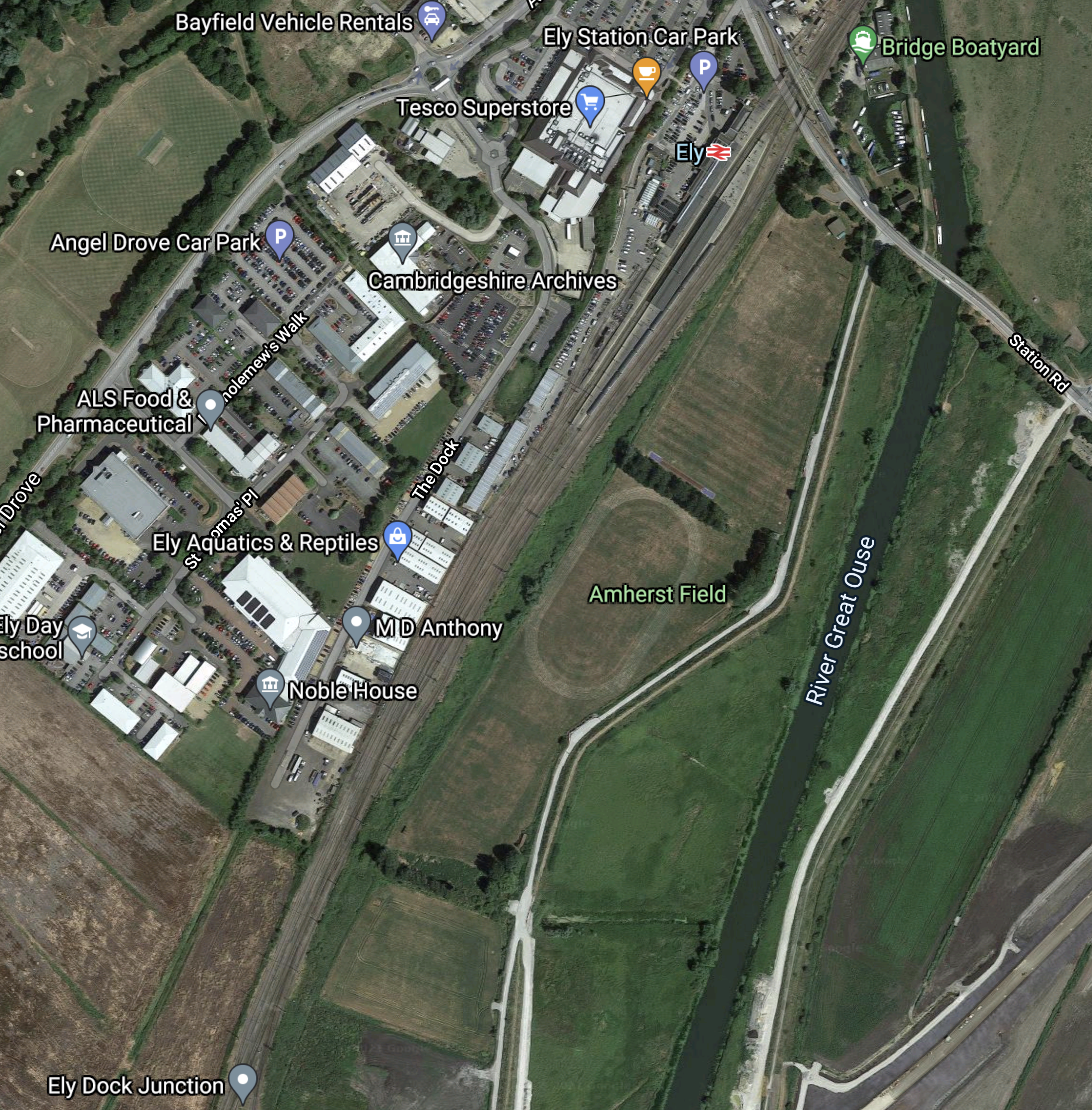
Note.
- Ely Dock junction in the South-West corner, where the line from Ipswich and Bury St. Edmunds joins the lines through Ely.
- Ely station towards the North-East corner of the map.
- Passenger trains run through the station.
But freight trains can take a route on the Eastern side of the station, which is not electrified.
At Ely station, a loop like this can be electrified using the existing electrification power supply, but at other places, systems like that from Hitachi ABB Power Grids can be used to electrify the loop or an appropriate section of the route.
These short sections of electrification will allow the train to progress on either electric or battery power.
A Hydrogen-Electric Locomotive Based on A Stadler Class 88 Locomotive
In The Mathematics Of A Hydrogen-Powered Freight Locomotive, I looked at creating a hydrogen-powered locomotive from a Class 68 locomotive.
I decided it was totally feasible to use readily available technology from companies like Rolls-Royce and Cummins to create a powerful hydrogen-powered locomotive.
The Class 68 locomotive is the diesel-only cousin of the electro-diesel Class 88 locomotive and they share a lot of components including the body-shell, the bogies and the traction system.
I suspect Stadler could create a Class 88 locomotive with these characteristics.
- 4 MW using electric power
- At least 2.5 MW using hydrogen power.
- Hydrogen power could come from Rolls-Royce’s 2.5 MW generator based on a small gas-turbine engine.
- 100 mph on both electricity and hydrogen.
- It would have power output on hydrogen roughly equal to a Class 66 locomotive on diesel.
- It would have a range comparable to a Class 68 locomotive on diesel.
This locomotive would be a zero-carbon Class 66 locomotive replacement for all duties.
A Larger And More Powerful Hydrogen-Electric Locomotive
I feel that for the largest intermodal and stone trains, that a larger hydrogen-electric locomotive will be needed.
With the way Wabtec are going in the United States, I wouldn’t be surprised to see a suitable locomotive cross the pond.
Conclusion
In the title of this post, I asked if freight locomotives of the future would be battery, electric or hydrogen.
I am sure of one thing, which is that all freight locomotives must be able to use electrification and if possible, that means both 25 KVAC overhead and 750 VDC third rail. Electrification will only increase in the future, making it necessary for most if not all locomotives in the future to be able to use it.
I feel there will be both battery-electric and hydrogen-electric locomotives, with the battery-electric locomotives towards the less powerful end.
Hydrogen-electric will certainly dominate at the heavy end.
Green Jet Fuel Plant Developers’ Ioy As World Economic Forum Backs Method As Best Aviation Solution
The title of this post, is the same as that of this article on Business Live.
This is the first paragraph.
The World Economic Forum has backed sustainable aviation fuel as the most promising decarbonation policy for aviation, delighting the developers of a £350 million refinery on the Humber.
I bet Velocys are delighted.
I also think, that, the biodiesel, that they can produce, is a short term solution to the decarbonisation of rail freight and the heaviest vehicles powered by diesel.
It’s so much better than throwing the rubbish into landfill.
Could Battery-Electric Hitachi Trains Work Hull Trains’s Services?
Before I answer this question, I will lay out the battery-electric train’s specification.
Hitachi’s Proposed Battery Electric Train
Based on information in an article in Issue 898 of Rail Magazine, which is entitled Sparking A Revolution, the specification of Hitachi’s proposed battery-electric train is given as follows.
- Based on Class 800-802/804 trains or Class 385 trains.
- Range of 55-65 miles.
- Operating speed of 90-100 mph
- Recharge in ten minutes when static.
- A battery life of 8-10 years.
- Battery-only power for stations and urban areas.
- Trains are designed to be created by conversion of existing Class 80x trains.
For this post, I will assume that the train is five cars long. This is the length of Hull Trains’s Class 802 trains.
Recently, Hitachi have released this infographic.

This seems to give the same information and a definitive range of 90 km or 56 miles.
Hull Trains’s Services
Hull Trains run a train between Kings Cross and Hull, with some trains extending to Beverley.
- The service runs at a frequency of five trains per day (tpd) to Hull station and two tpd to Beverley station.
- Intermediate stations are Stevenage, Grantham, Retford, Doncaster, Selby, Howden, Brough and Cottingham
The Beverley service is 213 miles long and takes three hours and seven minutes.
These are facts about the operation of the service.
- The train changes between diesel and electric operation at Temple Hirst Junction, which is on the electrified East Coast Main Line.
- Temple Hirst Junction is forty-four miles from Beverley and thirty-six miles from Hull.
- Trains to and from Beverley reverse at Hull and and are allowed eighteen minutes for the operation.
- This reverse at Hull is enough time to charge the train’s batteries using a Fast-Charging system.
As these trains could have a range of at least fifty-five miles on battery power, is there any point to bother with diesel?
Could Hull Trains and TransPennineExpress Share A Fast-Charger?
In Could Battery-Electric Hitachi Trains Work TransPennine Express’s Services?, I said this about their Manchester Piccadilly and Hull service.
As with the Scarborough and Redcar Central services, a Fast-Charging system would probably be needed at Hull.
As Hull Trains and TransPennine Express are both First Group companies, I would assume they would share amicably!
But would they allow LNER’s Azumas to use their Fast-Charger?
Could Hull Station Go Zero-Carbon?
If all the Hitachi trains used by Hull Trains, LNER and TransPrnnine Express were to use battery power to run between Hull station and the nearest electrification, the only diesel trains using the station would be Northern‘s assortment.
Northern run services through or to Hull as follows.
- Sheffield and Hull
- Sheffield and Bridlington
- Hull and Scarborough
- Hull and York
All services have a frequency of around one train per hour (tph).
These services could be run by either battery-electric or hydrogen-electric trains.
Hull station is also a big bus interchange, so these would need to be converted to electric or hydrogen.
I’m sure iTM Power not far away in Sheffield, would be happy to provide a hydrogen system to fuel the buses and the trains.
Conclusion
It looks to me, that if a Fast-Charging system, were to be fitted at Hull and used during reverse or turnround at the station, that a Class 802 train fitted with batteries could work Hull Train’s service without using a drop of diesel.
I can just see the advertising – Hull Trains – Your carbon-free way between London and Hull!
It wouldn’t even need any electrification, other than the Fast-Charging system at Hull.
I also believe that Hull station and the co-located bus station could go carbon-free.
 The Anonymous Widower