A Waste Of Valuable Resources Between Paddington And Heathrow
Much of my working life was spent in writing project management software.
I like to think, I was an expert at writing software to juggle resources.
I wrote my first piece of software in that field in ICI, to get my boss out of trouble, after he’d promised the department a program to allocate the department’s office space more efficiently.
Unfortunately, the student, who’d written the software, without leaving anything that worked or any decent instructions.
So I told my boss;Colin, that I’d have a go.
In my previous position at ICI in Runcorn, I’d worked out an algorithm to decode mass spectrometer traces, which started with a rough idea of what was there, which was entered by an operator and then used permutations and combinations to fit the output.
I used the algorithm in every resource scheduler, I ever wrote and it worked a treat.
So when I see a waste of resources, I get angry, as I know those who devised the system could have done a lot better.
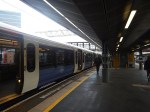
Look at these pictures, I took of a Heathrow Express, that I took today.
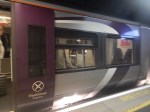
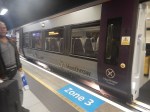
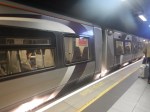

It is barely ten percent full.
It has become a waste of resources; train, valuable paths in the Heathrow tunnel, and platform space at Paddington.
These are a few thoughts.
Capacity To And From Heathrow
Consider.
- Heathrow Express uses twelve-car Class 387 trains, with a capacity of 672 seats, that run at a frequency of four trains per hour (tph), which is 2,688 seats per hour.
- The Elizabeth Line uses nine-car Class 345 trains, with a capacity of 454 seats, that run at a frequency of six tph, which is 2,724 seats per hour.
- The Class 345 trains can also carry another 1046 standing passengers on each journey, which adds up to a maximum of 6276 standees per hour.
- The Piccadilly Line uses 73 Stock trains, with a capacity of 684 seats, that run at a frequency of twelve tph, which is 8,208 seats per hour.
This gives a capacity of 19,896 passengers, staff and visitors per hour, or which 13,620 get seats.
Expressed as percentages, the four modes of transport are as follows.
- Heathrow Express – 13.5 %
- Elizabeth Line – Sitting – 13.7 %
- Elizabeth Line – Standees – 33.8 %
- Piccadilly Line – 41.2 %
In Effects Of The ULEZ In West London, I said this about journeys to and from the airport.
Heathrow Airport is one of the world’s busiest airports and 76,000 people work at the airport, with many more employed nearby.
The airport handled 61.6 million passengers in 2022, which is a few short of 170,000 per day.
If you consider that those that work at the airport do two trips per day and passengers generally do one, that means there are 322,000 trips per day to or from the airport.
But as it now so easy to get to the Airport using the Elizabeth Line will more people use the new line to meet and greet and say goodbye to loved ones or business associates. Since the Elizabeth Line opened, I’ve met a couple of friends at Heathrow, who were passing through.
I wonder, if that daily journey total of 322,000 could be nearer to 350,000 or even 400,000.
If the ULEZ charge makes some passengers and staff switch from their car to using a bus or train, this probably means that public transport to and from the airport, will need to be boosted by a substantial amount.
322,000 trips per day is 13,416 per hour assuming a 24 hour day.
Consider.
- The ULEZ will drive employees and passengers to trains to Heathrow.
- A lot of would-be travellers to Heathrow have had a tough couple of years.
- Because of the Elizabeth Line more meeters and greeters will go to the airport.
- The Elizabeth Line is making it easy to get to Heathrow for a large proportion of those living in the South-East.
- There have been numerous car parking scandals at Heathrow and other airports.
- Are there enough charging points for electric cars in Heathrow’s parking?
- Parking at Heathrow is expensive.
- Taxis to the airport are very expensive.
- Passengers with large cases can use the Elizabeth Line.
- Good reports of the Elizabeth Line will push people to use it.
- The Elizabeth Line serves the City, Canary Wharf and the West End.
- The Elizabeth Line has a step-free connection with Thameslink.
- Passengers seem to travel with very large cases.
- Passengers seem to be deserting Heathrow Express, as I wrote in Elizabeth Line Takes Fliers Away From Heathrow Express.
Note.
- The train, I took back from Heathrow this morning was full with all seats taken and quite a few standees.
- And it was a Sunday morning!
- We won’t know the effect of the ULEZ until August, but I believe it will be significant.
Obviously, I’m only using rough figures, but they lead me to believe that in a few months, the Elizabeth Line will be at full capacity to and from Heathrow.
Heathrow Express’s Train Paths Should Be Re-Allocated To The Elizabeth Line
This would increase hourly passenger capacity from 19,896 to 23,208 or by seventeen percent.
Great Western Railway would get two extra platforms at Heathrow and the Class 387 trains could be reallocated.
Where Would Great Western Railway Run Trains From Two Extra Platforms?
Consider.
- Various government levelling up funding has been allocated to Wales and the West.
- I talk about the Mid-Cornwall Metro in Landmark Levelling Up Fund To Spark Transformational Change Across The UK.
- The Mid-Cornwall Metro could include direct trains between London and Newquay.
- There are also plans for a new station at Okehampton Parkway.
- Given all the wind farm development in the Celtic Sea, I can see more trains between London and Pembrokeshire.
- Cardiff and Bristol would probably welcome extra services.
I don’t think Great Western Railway will have problems finding destinations to serve from two extra platforms.
What Will Happen To The Class 387 Trains?
Currently, twelve Class 387 trains are used for Heathrow Express.
In The Future Of The Class 387 And Class 379 Trains, I said this.
The Battery-Electric Class 379 Train
I rode this prototype train in 2015.

An Outwardly Normal Class 379 Train
I think it is reasonable to assume, that as battery technology has improved in the seven years since I rode this train, that converting Class 379 trains to battery-electric operation would not be a challenging project.
Creating A Battery-Electric Class 387 Train
If the Class 387 train is as internally similar to the Class 379 train as it outwardly looks, I couldn’t believe that converting them to battery-electric operation would be that difficult.
I could see a lot of the Class 379 and Class 387 trains converted to 110 mph battery-electric trains.
Would Heathrow Express Completely Disappear?
If the Elizabeth Line trains are going between Heathrow Airport and Central London, at a frequency of 10 tph or one train every six minutes, I feel there may be scope for marketing and operational reasons to create a sub-fleet of the Class 345 trains.
The trains would be identical to the Elizabeth Line’s current fleet, except for livery, seating and some internal passenger features.
- Perhaps, they could be called the Heathrow Train boldly on the outside, so even the dimmest passenger didn’t get on a Reading train instead of a Heathrow one.
- All trains would have wi-fi and 4G connectivity. These features have been promised for the Class 345 trains.
- Some coaches would be fitted with luggage spaces for the outsize cases people carry.
I could envisage the Heathrow Trains terminating at a wide number of places in addition to Abbey Wood and Shenfield. Possibilities must include Beaulieu Park, Ebbsfleet, Gravesend, Northfleet and Southend Victoria
One Of The Worst Train Journeys I’ve Had In The UK Since The 1960s
I started out with a simple objective, in that I intended to go to Cardiff Central station and then explore the Cardiff Valley Lines to look at the progress of the electrification. I had also arranged to possibly have a drink, with an old acquaintance at Rhymney station.
For the first time, I took the Elizabeth Line from Moorgate to Paddington to catch a long distance train. It is so much easier than taking the Underground.
I bought a Super Off Peak Return ticket to Cardiff Central station for £62.15 with my Senior Railcard.
This was the journey I took today.
- I left Paddington on the 10:18 train for Cardiff Central.
- The train arrived at Bristol Parkway at 11:34½.
- Real Time Trains says this about the rest of the journey. “This service was cancelled between Bristol Parkway and Cardiff Central due to a problem with signalling equipment (J3)”
- I was advised by a member of staff, that I wouldn’t be going to Cardiff in the near future and he advised taking a CrossCountry train to Bristol Temple Meads and then going back to London using my Return ticket.
- I left Bristol Parkway at 12:12¼ and arrived in Bristol Temple Meads at 12:20½, after taking the CrossCountry train.
- At Bristol Temple Meads to salvage something of a wasted day, I took a diversion to Severn Beach for the princely sum of £1.95 with my Senior Railcard, arriving back at Bristol Temple Meads at 14:48½.
- I then caught the next train to London, which turned out to be the 16:00, as both the 15:00 and 15:30 were cancelled due to an incident at Didcot.
- The train left Bristol Temple Meads at 16:03 and arrived at London Paddington at 18:00, which was twenty minutes late.
Note.
- I never got to Cardiff.
- If I’d waited at Bristol Parkway and caught the next train, I’d have got to Cardiff at 16:15¼, which would have been four hours later, than if the first train hadn’t been cancelled and had been on time.
I’ve just tried to phone Great Western Railway, but their Contact Us page only gives details of Facebook, Twitter and What’s App. I don’t use any of those!
Conclusion – Added On 5th June 2023
I just received an e-mail saying the cheque will be the post!
Chiltern Electrification Alternatives Studied
The title of this post, is the same as that of this article on Railway Gazette.
These are the first two paragraphs.
Chiltern Railways is working to present the Department for Transport with options for a fleet renewal programme, with London Marylebone being the only non-electrified London terminal and pressure for the withdrawal of diesel trains continuing to mount, particularly from local residents.
Industry insiders report that this could see at least the 39 two and three-car Class 165 diesel multiple-units replaced.
Note.
- The Class 165 trains were built in 1990-1992 and refurbished around the turn of the century.
- Chiltern Railways have 28 two-car and 11 three-car Class 165 trains.
- Chiltern Railways also have ten similar two-car, nine three-car and nine four-car Class 168 trains.
- In addition, Great Western Railway has 20 two-car and 16 three-car Class 165 trains, and 23 Class 166 trains.
- The Class 165 and Class 166 trains are 90 mph units, whereas the Class 168 trains are 100 mph units.
As Chiltern’s study would appear to rule out electrification, could all of these trains be replaced with an appropriate number of a new class of 100 mph zero-carbon independently-powered multiple units?
In Alstom And Eversholt Rail Sign An Agreement For The UK’s First Ever Brand-New Hydrogen Train Fleet, I talked about a proposed hydrogen train fleet.
These trains are described as three-car in Alstom’s press release.
- Most Aventras are 100 mph trains.
- They could easily be lengthened to four cars by the addition of an extra car.
- It may even be possible, that these trains could be fitted with a pantograph for working on electrified lines.
The only problem, I can envisage, is that a two-car version might not have enough space for the hydrogen and electrical gubbins.
Chiltern’s Locomotive-Hauled Mark III Stock
Greater Anglia have replaced locomotive-hauled Mark III stock with multiple units and it appears to have been successful.
Could Chiltern’s locomotive-hauled Mark III stock be replaced by six-car hydrogen-powered Aventras, with a long-distance interior?
Other Routes
Alstom and Eversholt Rail announced their agreement in November 2021.
Since then, I have written these posts, where the proposed Alstom Hydrogen Aventra could have an application.
- Adding Buxton And Manchester Piccadilly To The Bee Network
- ‘Castle’ HSTs To Be Withdrawn By Great Western Railway
- Proposals Submitted To Create Darlington To Dales Rail Link
- Alstom Hydrogen Aventras And Teesside
- Alstom Hydrogen Aventras And The Reopened Northumberland Line
- Alstom Hydrogen Aventras And Extension Of The Birmingham Cross-City Line
- Alstom Hydrogen Aventras And Great Western Branch Lines Between Paddington And Oxford
- Alstom Hydrogen Aventras And The Uckfield Branch
Note.
- A two-car version would surely increase the number of applications.
- A 110 mph capability would allow the trains to mix it with high speed trains on fast lines.
- Bombardier proposed a 125 mph bi-mode Aventra. Could this be achieved with hydrogen power?
I feel the eight applications, I listed, could be the start of something a lot bigger.
Conclusion
Alstom and Eversholt Rail Group appear to have done their research.
Elizabeth Line Takes Fliers Away From Heathrow Express
The title of this post, is the same as that of this article on The Times.
These three paragraphs add details to the story.
The opening of the Elizabeth Line has eaten into the revenues of Heathrow Express, the country’s most expensive railway service per mile travelled.
Filings reveal that Heathrow Express, which offers a 15-minute service between London Paddington and Heathrow, has failed to recover to pre-pandemic levels despite flight volumes at the airport returning to near-normal. Heathrow said revenues from Heathrow Express in the first three months of the year were £22 million.
While that is 50 per cent more than in the same period last year, when Covid-19 travel restrictions were beginning to be relaxed, it is almost a third down on the £31 million of revenues in the first quarter of 2019.
Considering how air travel is on the upturn, Heathrow Express would not appear to be performing as the airport expects.
Remember, that First Group are paid by Heathrow Airport to run the service, which is owned by the airport.
In So Many Cases On A Train!, I wrote about a trip from West Ealing to Moorgate station. These were my opening sentences.
This afternoon about three, I went to West Ealing station to see what it was like to transfer between the Elizabeth Line Central Tunnel and the Western Branch at Paddington.
Coming back, I took an Elizabeth Line service that had started from Heathrow Airport and it was one of the busiest Lizzies, I’d ever ridden!
To get on the train at West Ealing station, I got in to probably coach 4 of 9, as that was in the dry and the back end of the train I needed for Moorgate station was certainly in the wet.
I then had to walk half the length of the train to get to the back of the train.
It was not easy, as the train was full of scores of passengers with large wheelie cases.
It certainly got me thinking about how passengers were getting to and from Heathrow and I came to this conclusion.
Lizzie will start a revolution in travel to and from Heathrow.
Judging by the title of the article in The Times, the revolution has already started.
Consider these reasons.
- Heathrow Express is overpriced.
- It doesn’t go where many passengers want to go.
- It’s not the best way to get workers to and from the airport.
- The ULEZ will discourage passengers and staff from driving to the airport.
In Effects Of The ULEZ In West London, I said this about journeys to and from the airport.
Heathrow Airport is one of the world’s busiest airports and 76,000 people work at the airport, with many more employed nearby.
The airport handled 61.6 million passengers in 2022, which is a few short of 170,000 per day.
If you consider that those that work at the airport do two trips per day and passengers generally do one, that means there are 322,000 trips per day to or from the airport.
But as it now so easy to get to the Airport using the Elizabeth Line will more people use the new line to meet and greet and say goodbye to loved ones or business associates. Since the Elizabeth Line opened, I’ve met a couple of friends at Heathrow, who were passing through.
I wonder, if that daily journey total of 322,000 could be nearer to 350,000 or even 400,000.
If the ULEZ charge makes some passengers and staff switch from their car to using a bus or train, this probably means that public transport to and from the airport, will need to be boosted by a substantial amount.
I can see airport workers lobbying for free tickets on Heathrow Express, but they probably live closer to the airport than Paddington or perhaps even in the Eastern areas of London served by the Elizabeth Line.
The Elizabeth Line Is Showing Signs Of Running Out Of Capacity
In the last few weeks, I’ve been on some very full Elizabeth Line trains.
Articles, like this one on Rail Advent, which is entitled Transport for London Looks Into Funding For Additional Elizabeth Line Trains, are also starting to appear.
These three paragraphs explain the problem.
Transport for London has announced that they are looking for confirmation from the Government regarding funding so that they can look into the possibility of purchasing additional Elizabeth Line trains.
The news from TfL comes after the recent announcement of delays to HS2 terminating at London Euston.
TfL says that without the extra trains, there is insufficient capacity on the Elizabeth Line (until HS2 is extended to Euston in the 2040s) for passengers looking to use HS2 and the Elizabeth Line to get into Central London.
Alstom also appear to want the space in the factory to build other trains.
So it appears that Transport for London must act soon.
Heathrow Express Needs To Be Repurposed
In Extending The Elizabeth Line – High Speed Trains On The Elizabeth Line, I talked about running faster trains through the Central Tunnel of the Elizabeth Line.
As any train would have to be compatible with the platform-edge doors in the central tunnel of the Elizabeth Line, the trains would have to be dimensionally identical to the current Class 345 trains.
- Nine cars
- Possibility of lengthening to ten cars.
- 204.73 metres long.
- 6 sets of doors per carriage
- Ability to run under full digital signalling.
- The trains would be designed for a higher speed of at least 110 or 125 mph, to enable running on the fast lines of the Great Western Main Line.
- The trains would have Heathrow Express branding and interior.
Services could be as follows.
- Heathrow Terminal 4 and Southend Victoria via Bond Street and Liverpool Street for the City and Stratford.
- Heathrow Terminal 5 and Ebbsfleet International via Bond Street and Liverpool Street for the City and Canary Wharf.
Note.
- Both services would be two trains per hour (tph)
- Traffic would determine, which Eastern terminal is paired with which Western terminal.
- Each route would also have two Elizabeth Line tph on the same route.
The Heathrow Express services would run as follows.
- Between Heathrow Airport and Paddington, they would run as now.
- I believe that by using the power of the digital signalling, they could be slotted into the queue of Elizabeth Line trains taking the Central Tunnel.
- They would run through the Central Tunnel, as just another Elizabeth Line train, stopping at all stations.
- Southend Victoria trains would stop at Stratford, take the fast lines to Shenfield, after which they would stop at all stations to Southend Victoria.
- Ebbsfleet International trains would stop at all stations from Abbey Wood to Ebbsfleet International.
Note.
- Trains would stop at Old Oak Common after it opened for High Speed Two and GWR.
- All ticketing would be contactless.
- Passengers using Heathrow Express to the West of Paddington, would pay an extra fee, but nothing like today’s price.
These Heathrow Express routes would have advantages.
- Southend Airport and Southend Victoria would get a direct fast train to Central London and High Speed Two.
- Heathrow would have a direct connection with Continental train services at Ebbsfleet International.
- Capacity could be increased by going to ten-car trains.
- Heathrow Express could release their platforms at Paddington.
- There would be two fast tph between Heathrow and Stratford.
- There would be two fast tph between Heathrow and Canary Wharf.
- There would be four fast tph between Heathrow and Bond Street for the shopping and Liverpool Street for the City of London.
- There would be four fast tph between Heathrow and Farringdon for Thameslink, Gatwick and Luton Airports.
Heathrow Express trains will be fifteen minutes faster to all destinations.
I don’t think there would be any major disadvantages.
Devizes Station Would Need To Be Part Of Wider Rail Plan
The title of this post, is the same as that of this article on Railway Gazette.
These two paragraphs outline the current status.
The construction of a Devizes Gateway station at Lydeway is unlikely to represent value for money as a standalone project, but it could be viable as part of a wider rail improvement programme, a study has concluded.
The feasibility study undertaken by Wiltshire Council, Devizes Development Partnership, GWR and Network Rail built on a strategic outline business case submitted to the Department for Transport under the Restoring Your Railway Fund programme in November 2021.
The Department for Transport will now decide what to do next.
I think there are other issues on the route between Reading and Taunton.
The Current Train Service
The only passenger services using the Reading and Taunton route are these three trains, which all have a frequency of one train per two hours (tp2h).
- London Paddington and Exeter St. Davids – Calling at Reading, Newbury, Hungerford, Pewsey, Westbury, Castle Cary, Taunton and Tiverton Parkway
- London Paddington and Plymouth – Calling at Reading, Taunton, Tiverton Parkway and Exeter St Davids
- London Paddington and Penzance – Calling at Reading, Taunton, Tiverton Parkway and Exeter St Davids
Note.
- London Paddington and Exeter St. Davids takes a few minutes over two hours.
- London Paddington and Plymouth takes a few minutes over three hours.
- London Paddington and Penzance takes a few minutes over five hours.
- The Reading and Taunton route is a double-track railway with a 110 mph operating speed.
- London Paddington and Newbury is electrified.
- The last two trains alternate to give Plymouth an hourly service.
- After Exeter St. Davids, trains have a sophisticated stopping pattern to give all stations served a good service.
From several trips along the line, I have the impression, that it’s a route, where drivers can get the best out of the trains.
Electrification
The line would benefit from electrification, in terms of journey times and decarbonisation.
But could this route be run by battery-electric trains?
- It is 89.7 miles between Newbury and Taunton.
- It is 120.4 miles between Newbury and Exeter St. Davids.
- It is 52.1 miles between Exeter St. Davids and Plymouth.
- It is 79.4 miles between Plymouth and Penzance.
- London Paddington and Newbury is electrified.
- Taunton, Exeter St. Davids, Plymouth and Penzance stations could have a charging system of some sort.
This Hitachi infographic shows the specification of the Hitachi Intercity Tri-Mode Battery Train.

Consider.
- Two trains go between Newbury and Taunton without stopping.
- The Exeter St. Davids service stops three times.
- Newbury and Taunton non-stop took 75 minutes at an average speed of 72 mph
- Newbury and Taunton with three stops took 78 minutes.
- All trains currently appear to be nine cars.
I suspect that Hitachi’s Intercity Tri-Mode Battery Train could go between Newbury and Taunton with a great deal of ease.
How many diesel engines and batteries would the train have?
Normally, nine-car Class 800/802 trains have five diesel engines.
So how many will be replaced by batteries?
The infographic says one engine will be replaced, so if that is a five-car train, it looks likely that a nine-car train could have two batteries.
But Hitachi could be playing a long game!
In Stadler FLIRT Akku Battery Train Demonstrates 185km Range, I wrote about how the FLIRT Akku has a range of 115 miles.
If Hitachi can squeeze 125 miles out of a nine-car Class 800 with two or three battery packs, they will outrange the FLIRT Akku and be able to run between London Paddington and Penzance on batteries, with some topping up on the way.
We mustn’t forget the engineers at Hyperdrive Innovation, who are designing and building Hitachi’s battery packs.
They will be ultracompetitive and know the range required to get battery-electric trains to Penzance.
I suspect that when the range of the nine-car battery-electric Class 800/802 is revealed, it will astonish everybody!
Bedwyn Station
Bedwyn station is served by an hourly shuttle train to and from Newbury, run by a diesel train.
The station used to have a direct service from London, but now passengers change at Newbury.
A Station For Marlborough
I investigated this in A Station For Marlborough, where this was my conclusion.
With the next generation of electric train with onboard energy storage or IPEMUs, a Marlborough station on a new Marlborough Branch Line can be used to create a two tph service to and from Paddington to replace the current one tph service from Bedwyn.
So a new Marlborough station would be a win for all those using stations on the Reading to Taunton Line to the East of Pewsey.
I also wonder how many other similar services can be developed by extending a service past a main line terminal to a new or reopened branch line, which is built without electrification and run using trains with onboard energy storage.
In answer to my posed question in the last paragraph, I suspect it is quite a few!
Devizes Gateway Station At Lydeway
I wrote about this proposed Devizes Gateway station in Reinstatement Of Rail Access To Devizes Via A New Station At Lydeway.
After writing Was Baldrick An Essex Man? about the building of an avoiding line at the new Beaulieu Park station North of Chelmsford, I do wonder, if it would be an idea to incorporate one in this proposed station, if there is a need to increase capacity.
This Google Map shows the station site, where the A342 crosses the railway.
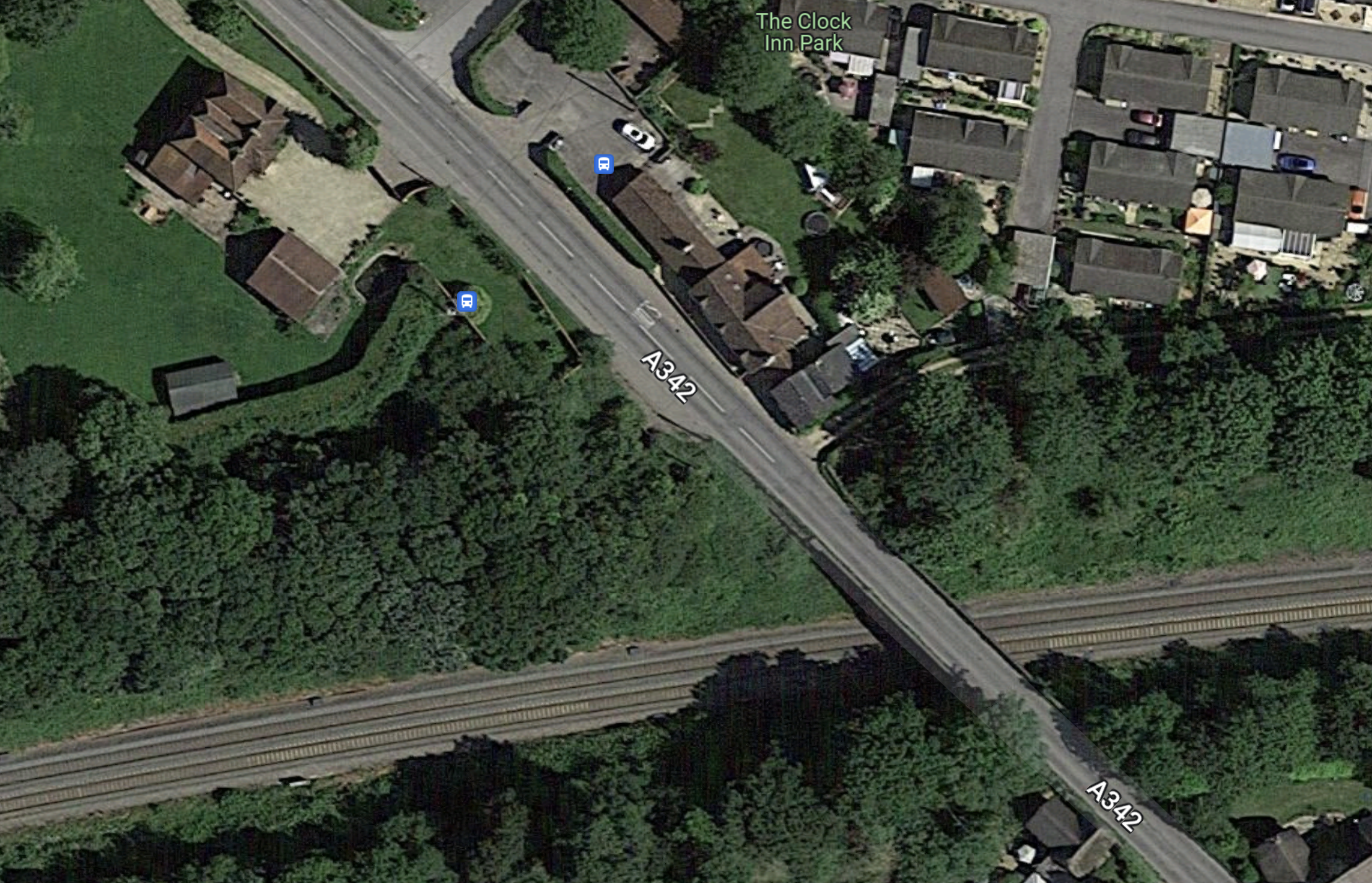
I suspect a third track can be squeezed in.
Westbury Station
Westbury station is a busy station, where the Reading and Taunton Line crosses the Wessex Main Line.
This map from OpenRailwayMap shows the lines in the station.
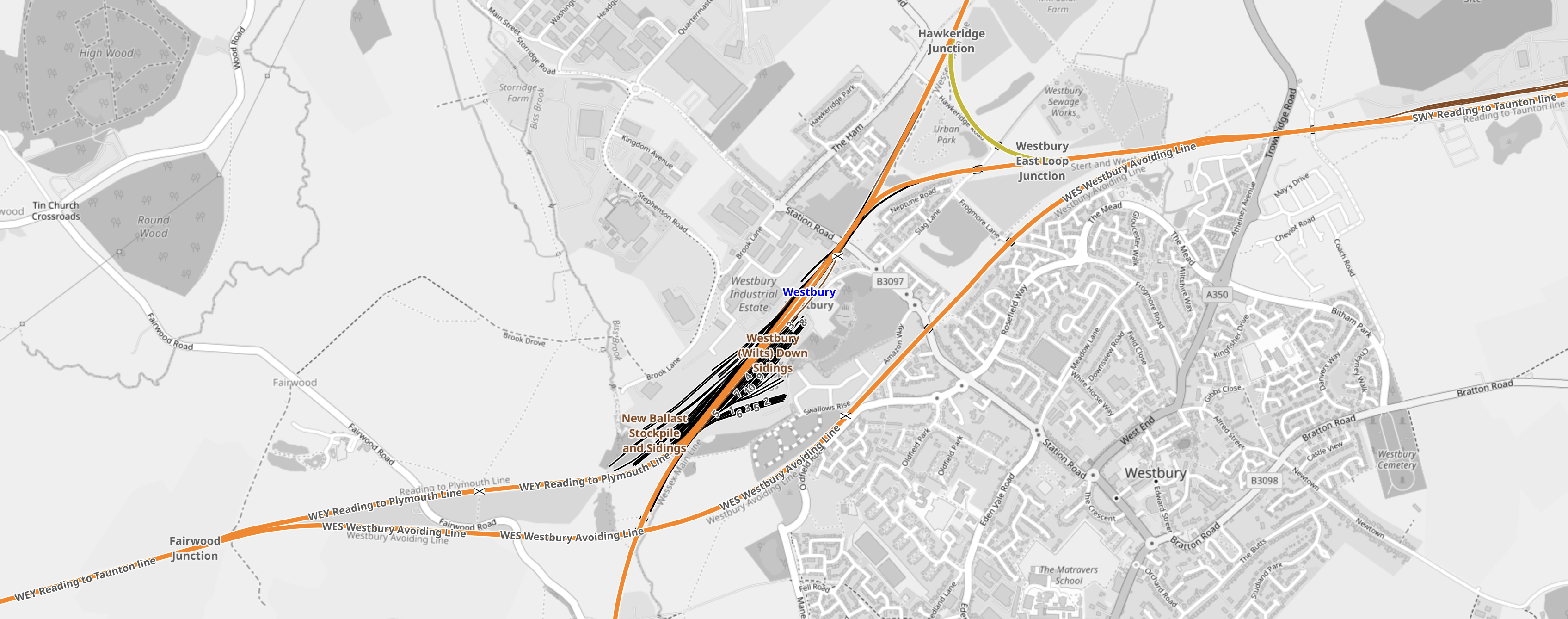
Note.
- The blue lettering indicates Westbury station.
- The two major rail routes are shown in orange.
- The Reading and Taunton Line goes East-West across the map.
- Note the avoiding line South of Westbury station.
- Reading is in the East and Taunton is in the West.
- The Wessex Main Line goes North-South across the map.
- Bristol is in the North.
- Salisbury and Southampton is in the South.
In Westbury Station – 30th July 2020, there are some pictures I took of Westbury station.
This section in Wikipedia says this about the Future of Westbury station.
The line to Westbury is not due to be electrified as part of the 21st-century modernisation of the Great Western Main Line. Although local councillors support it, the extension of electrification beyond Newbury to Westbury was assessed as having a benefit–cost ratio of only 0.31.
On the other hand this document on the Network Rail web site, which is entitled the Devizes Gateway Interim
Feasibility Study, suggests that another platform might be added at Westbury station.
Castle Cary Station
Castle Cary station doesn’t seem to have any well-publicised problems, so please tell me if you know of any.
Frome Station
Frome station is described in its Wikipedia entry as an unusual station and one that is Grade II Listed.
I suspect, it could do with some more services.
Somerton Station
I wrote about a new Somerton station in Somerset: Plans For New Railway Station On Levels.
Track Improvements
I suspect if Network Rail were improving the route between Reading and Taunton, they know of some places, where they could do some work.
Service Improvements
Consider.
- There is probably a need for a stopping train between Newbury and Taunton, which calls at all stations.
- It might terminate at the London end, at either London Paddington or Reading.
- It might be a battery-electric train.
- An hourly frequency would be ideal, if the track and signalling could handle it.
- Charging systems would be positioned as needed.
The train would interface with other Great Western services to Bristol, London Paddington, Gloucester, Salisbury, Southampton and Weymouth.
Oy could also interface with the Transwilts services.
Conclusion
This could be developed into a very useful network for Wessex.
Riding The X140 Bus Between Heathrow Airport And Harrow Bus Station
I did this journey, which will be part of the Superloop, in better weather than yesterday, and was able to take these better pictures.


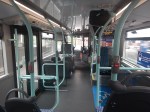
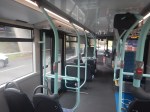


















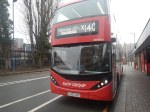
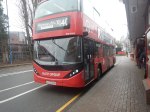


Note.
- The roads were much better than yesterday’s trip and were mostly two lanes each way, with large roundabouts at junctions.
- I suspect the bus was going at between 30 and 40 mph most of the way.
- There was still quite a lot of traffic.
- It is a distance of about 15 miles.
- The timetable says that buses run every 10-13 minutes.
- The X26 buses run between about six in the morning at midnight.
- There are twelve intermediate stops.
- Harrow-On-The-Hill station is next to Harrow Bus station.
- Heathrow Central connects to Heathrow Express, the Elizabeth and Piccadilly Lines.
- Hayes and Harlington connects to the Elizabeth Line and GWR’s local services.
- Northolt station connects to the Central Line.
- Northolt Park station connects to Chiltern.
- South Harrow station connects to the Piccadilly Line.
- Harrow-On-The-Hill connects to the Metropolitan Line and Chiltern
The journey took 49 minutes, which is only a minute longer than the timetable.
I have a few thoughts.
Passenger Numbers
These were my observations on my journey that started at about 11:30 on a dry day.
- Few got on at Heathrow Central, but I suspect we had just missed a bus.
- By Hayes & Harrington station, the bus was about a quarter full.
- At South Harrow station it must have been about three-quarters full.
- At Harrow bus station all the lower-deck seats were taken.
I would expect that the loading I saw fits with TfL’s expectations.
The Bus
The bus was one of the latest ADL battery-electric buses.
- It had a strong performance.
- It had wi-fi and phone charging.
- It was probably less than a year old.
- It was a lot better than yesterday’s bus!
At present not all buses on the route are battery-electric, as some are still older hybrids.
Travelling To Heathrow From The Northern Reaches Of The Metropolitan Line
Many people travel to and from Heathrow either for work or because they are flying.
- But it is not an easy journey from the Northern reaches of the Metropolitan Line.
- I believe the X26 bus could be a viable way to get to the airport for many.
- There would be a change at Harrow-on-the-Hill, but the station is at least step-free.
- It would avoid parking fees.
- Fares could be less than fuel costs.
The only big drawback, is that the X26 bus is not twenty-four hours.
More And More Frequent Buses Would Help
I believe that the Superloop should be a 24-hour service, as a lot of things go on at airports in the middle of the night.
I’ve just found out that there is an N140 bus that covers the route.
I also think, that as with the Overground, services should be at least four buses per hour.
GWR And Vivarail
This is an attempt to make some sense about what is happening between GWR and the assets of Vivarail.
These are some random thoughts.
Ongoing Maintenance Of Existing Trains
Currently, there are four operators in the UK, with various types of Vivarail‘s Class 230 trains.
- Great Western Railway – 1 – Infrastructure under construction for trial on the Greenford Branch.
- Island Line – 5 – In operation.
- Transport for Wales – 5 – Undergoing testing prior to entering service.
- West Midlands Trains – 3 – Withdrawn from service indefinitely in December 2022.
Note.
- West Midlands Trains withdrew the trains because of uncertainty about the servicing of the trains.
- West Midlands Trains are getting complaints about the bus replacement service.
- All operators will probably need assistance to service the trains.
- Great Western Railway and Island Line are First Group companies.
Could First Group have got in first, so they can protect their interests with a professional Vivarail train maintenance organisation?
Mark Hopwood
In Special Train Offers A Strong Case For Reopening Fawley Line, I said this.
This is another quote from the Rail Magazine article.
However, SWR’s Mark Hopwood favours a much bolder plan. “We’d have to take a decision, once we knew the line was going ahead. But my personal belief is that we should be looking for a modern environmentally-friendly train that can use third-rail electricity between Southampton and Totton and maybe operate on batteries down the branch line.”
Pressed on whether that would mean Vivarail-converted former-London Underground stock, Hopwood adds. “It could be. Or it could be a conversion of our own Class 456, which will be replaced by new rolling stock very shortly. But I don’t think this is the time to use old diesels.
Mark Hopwood is now the Managing Director of Great Western Railway and he seems to be in favour of battery-electric trains. I agree totally with his statement about old diesels.
Mark Hopwood And The Cholsey And Wallingford Branch
According to LinkedIn, Mark Hopwood is also the President at the Cholsey and Wallingford Railway
- This is a two-and-a-half mile long standard gauge heritage railway.
- It used to be a branch line, that served the town of Wallingford.
- It connects to the Great Western Main Line in a bay platform at Cholsey station.
- Wallingford station has now been demolished.
- The heritage railway uses a new site on the south side of St. Johns Road.
This map from OpenRailwayMap shows the branch line.
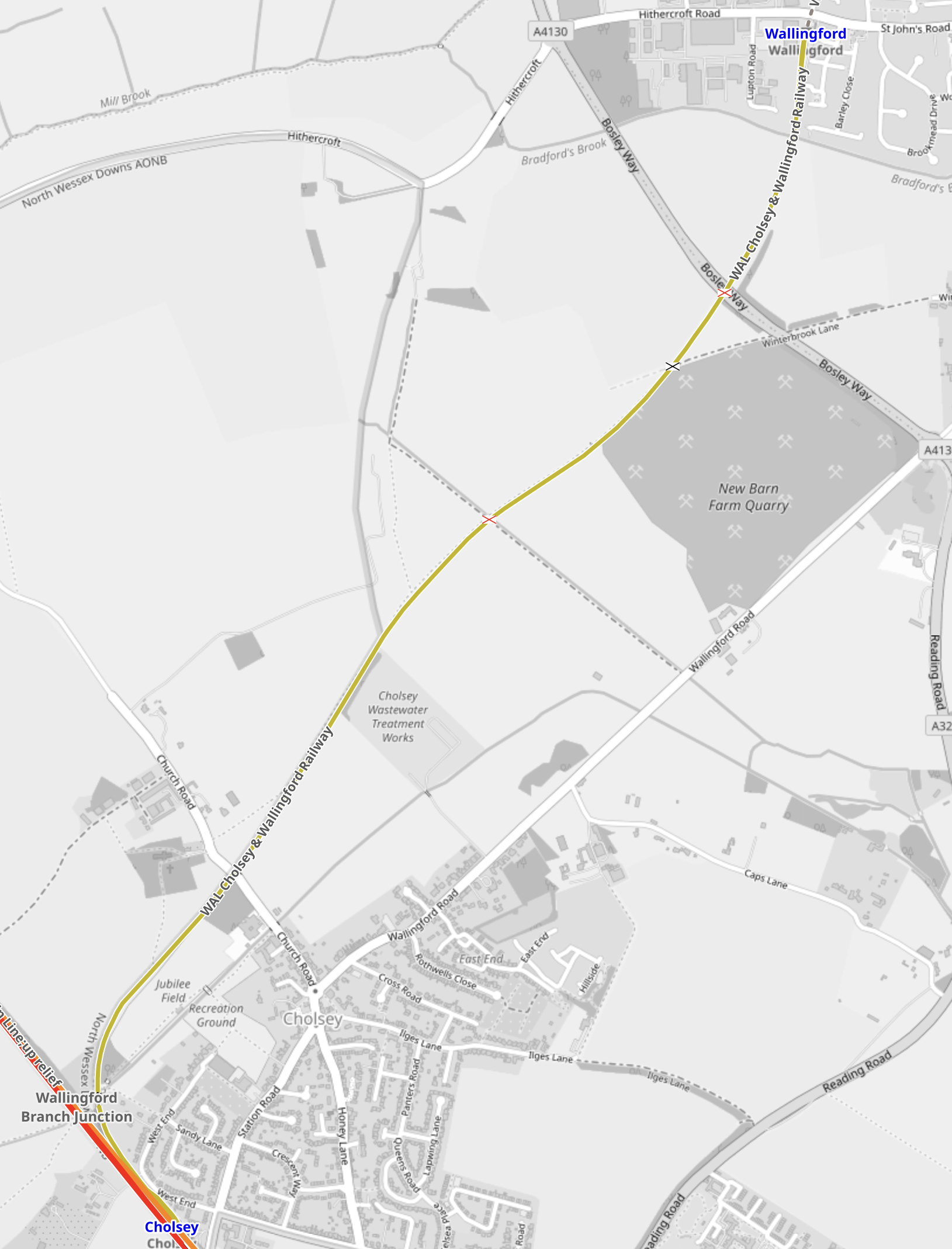
Note.
- Cholsey station and the Great Western Main Line is in the South-Western corner of the map.
- The current Wallingford station is in the North-Eastern corner.
- The Cholsey and Wallingford Railway is shown in yellow.
This Google Map shows Cholsey station.

Note.
- There are four through platforms for Great Western Railway services.
- Platforms 1 and 2 for the fast services are on the Western side.
- Platforms 3 and 4 for the slow services are on the Eastern side.
- Bay Platform 5 is tucked in the North-East corner of the station and is the terminus for services on the Cholsey and Wallingford Railway.
- There are only 55 parking spaces.
Is the number of parking spaces sufficient for the station, if a lot of passengers drive from Wallingford?
Could a commercial service run between Cholsey and Wallingford?
Consider.
- Wallingford is a town of nearly twelve thousand people.
- Cholsey station has two trains per hour (tph) between Paddington and Didcot Parkway stations, with extra services between Oxford and Reading stations in the Peaks.
- There is only limited parking at Cholsey station.
- Most GWR branch lines are run by an hourly service.
- I feel that two-car battery-electric train could provide one or two tph on the branch.
- Charging would probably be needed at only one end of the branch line.
- As all the through lines at Cholsey station are electrified with 25 KVAC overhead wires, I suspect that charging would be provided at that station.
A two-car battery-electric train could probably provide a commercial service on this branch, if the Cholsey and Wallingford Railway wanted a revenue stream.
First Group Services That Could Be Run By Battery-Electric Trains
These Great Western Railway and South Western Railway services might be suitable for battery-electric services.
- Newbury and Bedwyn – Newbury is electrified.
- West Ealing and Greenford – West Ealing is electrified.
- Slough and Windsor and Eton Central – Slough is electrified.
- Maidenhead and Marlow – Maidenhead is electrified.
- Twyford and Henley-on-Thames – Twyford is electrified.
- Reading and Gatwick Airport – Partially electrified.
- Reading and Redhill – Partially electrified.
- Reading and Basingstoke – Partially electrified.
- Didcot Parkway and Oxford – Didcot Parkway is electrified.
- Weston-super-Mare and Severn Beach – No electrification.
- Bristol Temple Meads and Avonmouth – No electrification.
- Bristol Temple Meads and Filton Abbey Wood – No electrification.
- Bristol Temple Meads and Portishead – Proposed – No electrification.
- Swindon and Westbury – Swindon is electrified.
- Exmouth and Paignton – No electrification.
- Exeter Central and Okehampton – No electrification.
- Exeter Central and Barnstaple – No electrification.
- Plymouth and Gunnislake – No electrification.
- Liskeard and Looe – No electrification.
- Par and Newquay – No electrification.
- Truro and Falmouth Docks – No electrification.
- St. Erth and St. Ives- No electrification.
- Romsey and Salisbury – Partially electrified.
- Southampton Central and Fawley – Proposed – Partially electrified.
Note.
- Most services are one or two tph or less.
- Reading and Basingstoke, Didcot Parkway and Oxford, Exmouth and Paignton, and Romsey and Salisbury are 2 tph.
- I have included the proposed Bristol Temple Meads and Portishead and Southampton Central and Fawley services.
- All electrification is 25 KVAC overhead except for the North Downs Line between Reading and Gatwick Airport via Redhill, and Romsey and Salisbury, which are 750 VDC third rail.
There are a total of 24 services. As each 2 tph service will need two trains and the North Downs services probably six, a rough calculation, indicates there would need to be a minimum of over thirty trains, to convert all these services to battery-electric operation.
This simple analysis makes Mark Hopwood’s enthusiasm, that I quoted earlier understandable.
The Requirement For First Group Battery-Electric Trains
Consider.
- Most of the services can accommodate three or four-car trains.
- A few services can only be run with two-car trains.
- Some services will need running with 25 KVAC overhead electrification for operation or deploying to and from the depot.
- Some services will need running with 750 VDC third-rail electrification for operation or deploying to and from the depot.
- A modern interior with or without a fully-accessible toilet is needed.
- Ability to recharge in a platform fitted with electrification or a charging system in under ten minutes.
- A reasonable cruising speed where electrification is needed for deployment.
This suggests to me, that two train types will be needed.
- A Vivarail-style two-car train for branches like West Ealing and Greenford and Southampton Central and Fawley.
- A three- or four-car dual-voltage electric multiple unit, based on something like an Alstom Aventra, a Bombardier Electrostar or a British Rail-era Class 321 train.
The Class 321 train could be ideal.
- It is a 100 mph train.
- It is a four-car train, that can be shortened to three-cars.
- Versions are available for both 25 KVAC overhead and 750 VDC third-rail electrification.
- Some have been converted to a modern Renatus interior, with a fully-accessible toilet.
- Greater Anglia have run Class 321 Renatus trains between London and Norwich.
- The Class 321 Renatus trains are fitted with a modern AC-based traction system.
- Eversholt Rail and Vivarail were working on a Class 321 BEMU, which I wrote about in Eversholt Rail And Vivarail To Develop Class 321 BEMU.
- Other operators like Northern, Scotrail and Transport for Wales might like a Class 321 BEMU.
Could First Group convert the Class 321 trains?
In What Train Is This?, I talk about a refurbishment of a GWR Class 150 train, that was one of the best I’ve seen.
I suspect that First Group could do the conversion, with a little help from their friends, like Wabtec and the ex-Vivarail employees, that they’ve hired.
Could The Class 387 Trains Be Converted To Battery-Electric Operation?
It was in February 2015, that I wrote Is The Battery Electric Multiple Unit (BEMU) A Big Innovation In Train Design?, after a ride in public service on Bombardier’s test battery-electric train based on a Class 379 train.
The Class 387 and Class 379 trains are very similar and with Vivarail’s battery and charging expertise, I believe that both Class 379 and Class 387 trains could be converted into modern four-car battery-electric trains.
- They would have a 100 mph or possibly a 110 mph operating speed, so could work routes like the Great Western Main Line amongst the thundering herds of Hitachis.
- The interiors would be suitable for longer routes like Cardiff Central and Exeter or Waterloo and Exeter via Salisbury.
- Great Western Railway have 33 Class 387 trains.
- Thirty Class 379 trains are wasting space in sidings.
I believe that with modern battery technology, these trains could have a battery range in excess of ninety miles.
This would enable services like Cardiff Central and Exeter St. Davids and Exeter St. Davids and Salisbury.
With judicious use of charging stations in stations like Bristol Temple Meads, Exeter St. Davids and Salisbury, all First Group main line services, that are not run by the Hitachi trains could be converted to battery-electric operation.
Conclusion
I believe a well-thought out plan is emerging.
GWR Takes Over Battery Train Project
The title of this post, is the same as that of this article on Rail News.
This paragraph outlines the takeover.
Great Western Railway has bought equipment from battery train manufacturer Vivarail, which went into administration in December. The purchase has included rolling stock, FastCharge systems and other items. Nine former Vivarail staff have also joined GWR, as it continues to prepare for using a battery unit on the West Ealing to Greenford branch. GWR engineering director Simon Green said: ‘There have clearly been some setbacks that mean we will need to review the existing plans and timescales, but we will continue to work with Network Rail and the Department for Transport to get the project back on track.’
This sounds a very sensible action to me.
- GWR take control of the West Ealing project.
- GWR’s sister company; South Western Railway, probably will get the support they need for the Vivarail trains on the Island Line.
- It may lead to First Group companies using more Vivarail trains on other lines.
I also suspect the deal will mean that the remains of Vivarail has more of a future and someone will buy it, to continue development.
The original press release is on the First Group web site and it is entitled Fast-Charging Battery Trial To Resume After GWR Agrees Deal To Purchase Vivarail Assets.
Extending The Elizabeth Line – Connection To Southeastern High Speed One Services
The Two Stratford Stations
In this post, Stratford station is the station handling Greater Anglia and London Overground, Underground and Docklands Light Railway services, with Stratford International station handles High Speed services.
The Elizabeth Line And The Great Western Railway Services
One of the most important stations on the Elizabeth Line is Paddington, where it connects to the London terminus of the Great Western Railway.
I would expect that quite a few passengers going to the West and Wales on the Great Western Railway, will be transported to Paddington by the Elizabeth Line.
The Elizabeth Line And Greater Anglia Services
Another of the important stations on the Elizabeth Line is Liverpool Street, where the station is the London terminus of the Greater Anglia.
I would expect that quite a few passengers going to East Anglia on the Greater Anglia, will be transported to Liverpool Street by the Elizabeth Line.
Southeastern High Speed One Services
Southeastern runs some High Speed services on High Speed One to provide Kent with an improved service to London.
Current services are
- London St Pancras International to Ramsgate via Faversham.
- London St Pancras International to Ramsgate via Dover Priory.
- London St Pancras International to Margate via Canterbury West.
Note
- All trains are one train per hour (tph).
- All trains stop at Stratford International and Ebbsfleet International.
- All trains are run by 140 mph Class 395 trains.
There has also been talk of running a fourth service to Hastings and Eastbourne via Stratford International, Ebbsfleet International and Ashford International.
St. Pancras Station
All of these trains terminate in three platforms; 11 to 13 at St. Pancras International station.
St. Pancras is not the ideal terminal for the Southeastern High Speed services.
- St. Pancras is not on the Elizabeth Line.
- St.Pancras doesn’t have good connections to Heathrow.
- All connections to the Underground are a long walk.
- Eurostar services are a longer walk.
- East Midland services are also a longer route, with stairs and escalators for good measure.
St. Pancras station was designed by a committee, as a museum to Victorian architecture, rather than as a working station.
Ebbsfleet International Station Must Be The Largest Parkway Station In The UK
It holds nearly five thousand cars and it is served by Southeastern High Speed Services.
Thanet Parkway Station Will Open This Year
Thanet Parkway station is under construction.
- It will have nearly three hundred parking spaces.
- It will be served by Southeastern High Speed Services.
- It should open in May 2023.
This station will need a good connection to London.
Could An Interchange Between The Elizabeth Line And Southeastern High Speed Services Be Provided At Stratford?
Such an alternative interchange would be popular with passengers.
- The Elizabeth Line from Stratford currently serves the West End, the Northern section of the City of London, East London, Liverpool Street, Paddington and the West End directly.
- The Elizabeth Line from Stratford currently serves Canary Wharf, Cannon Street, Charing Cross, Euston, Heathrow, King’s Cross. Reading, St. Pancras and Victoria with a change at Whitechapel.
- The Central Line, which shares platforms with the Elizabeth Line serves Bank and the West End directly.
- The Overground is easily accessed for travel across North London to Richmond.
- The Jubilee Line is easily accessed for travel to London Bridge, Waterloo and Westminster.
It would be connected to two large parkway stations and lots of parking all over Kent.
I believe that Stratford must be promoted as an alternative terminus for Southeastern High Speed Services.
Today, I walked both ways between two Stratford stations.
These pictures show the route I took between Stratford and Stratford International stations, through the Eastfield Shopping Centre.

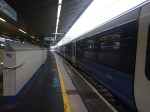
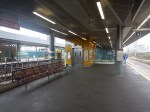
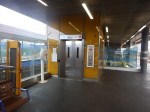
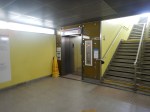
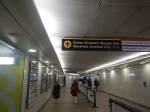
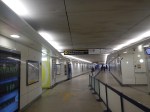

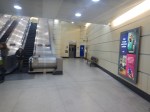



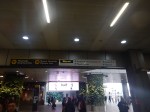










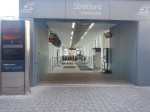

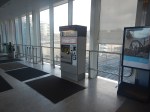

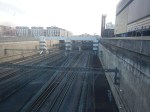
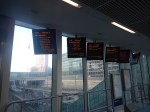
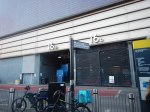
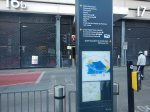
Note.
- I went through the Shopping Centre.
- I passed Marks & Spencer’s large food hall, excellent toilets and a Food Court.
- By the Food Court is an exit that leads to an entrance to Stratford International station.
- The walk took about 10 minutes.
- It was vaguely level.
- Lifts by-passed the escalators.
- One thing that makes the journey to London easier, is to travel in the Eastern end of the train, as the lifts and escalators at Stratford International station, are at that end.
It does need some better signage, but they were doing a bit of refurbishment, so that may already be underway.
It could be a very high quality interchange and it is already better than St. Pancras.
Coming back I took the longer route outside the Shopping Centre.


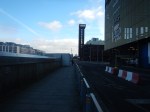






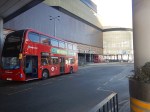


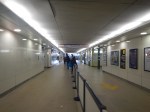
Note.
- I just turned left out of the entrance, walked along the road and turned right past the bus station.
- If the weather had been colder or wetter, I’d have gone back via the Shopping Centre.
- The walk took about 12 minutes.
I think normally, I’d go back through the Shopping Centre, as there’s a Marks and Spencer Food Hall on the route and it’s slightly quicker and often warmer.
Could Stratford Station Be A London Superhub Station?
When you consider the stations connected to Stratford in London, East Anglia and Kent, it has an excellent collection.
- Airports – Gatwick, Heathrow, Luton, Southend and Stansted
- Cities – Cambridge, Canterbury, Chelmsford, Colchester, Ipswich, Norwich and Southend-on-Sea
- London Main and Terminal Stations – Cannon Street, Charing Cross, Clapham Junction, Euston, Farringdon, King’s Cross, London Bridge, Liverpool Street, Marylebone, Moorgate, Paddington, Victoria and Waterloo
- Major Areas – Canary Wharf, City of London, Hampstead, Olympic Park and West End
- Ports – Dover, Felixstowe, Folkestone and Harwich
You can even get a train to Slough, with a change at Whitechapel.
I would think it already is a London Superhub Station.
Regulator Approves New Grand Union Train Service From Carmarthen To London Paddington
The title of this post, is the same as that of this press release from the Office of Rail and Road.
This is the sub-heading of the press release.
The Office of Rail and Road (ORR) has opened up the Great Western Main Line to competition and enabled a significant increase in rail services between London and South Wales.
These points are made in the press release.
- The rail regulator has approved the introduction of new train services between London, Cardiff and South West Wales from the end of 2024.
- The services will be operated by a new open access operator, Grand Union Trains, bringing competition to the Great Western route out of Paddington.
- Passengers travelling between London, Bristol Parkway, Severn Tunnel Junction, Newport, Cardiff, Gowerton, Llanelli and Carmarthen will benefit from an extra five daily return services and greater choice of operator.
- The decision opens up the Great Western Main Line to competition for the first time, with potential benefits in terms of lower fares, improved service quality and innovation for all passengers using the route.
- The application, submitted to ORR in June 2022, was disputed by Network Rail due to concerns about capacity on the network. But following careful consideration and analysis, ORR has directed Network Rail to enter into a contract with Grand Union.
- Grand Union has committed to significant investment in new trains.
- As an ‘open access’ train operator, however, it will not get paid subsidies from public funds, unlike current operators along the route.
ORR supports new open access where it delivers competition for the benefit of passengers. In making this decision, the regulator has weighed this up against the impact on Government funds and effect on other users of the railway, both passengers and freight customers.
These are my thoughts.
The Company
Grand Union Trains have certainly persevered to get this approval.
- The company was created by Ian Yeowart, who previously created open access operators; Alliance Rail Holdings and Grand Central before selling both to Arriva.
- After multiple negotiations with the Office of Road and Rail (ORR), Yeowart must know how to get an acceptable deal.
- Grand Union Trains have a similar application for a service between Euston and Stirling with the ORR.
Grand Union Trains also have a web site.
The home page has a mission statement of Railways To Our Core, with this statement underneath.
At Grand Union we are passionate about Britain’s railways. We are committed to the traditional values of providing a high-quality customer service and a comfortable journey experience at a fair price.
I’ll go with that.
The Financial Backing Of The Company
All the UK’s open access operators are well-financed either by Arriva or First Group.
The ORR would not receive any thanks, if they approved an operator, which duly went bust.
So what is the quality of the financing behind Grand Union Trains?
This article on Railway Gazette is entitled RENFE Looks At Entering UK Rail Market Through Open Access Partnership, which starts with this paragraph.
Open access passenger service developer Grand Union Trains is working with Spain’s national operator RENFE and private equity firm Serena Industrial Partners on a proposed service between London and Wales.
That is fairly clear and would surely help in the financing of Grand Union Trains.
The Route
Trains will run between Carmarthen and London Paddington, with stops at Llanelli, Gowerton, Cardiff, Newport, Severn Tunnel Junction and Bristol Parkway.
A new station at Felindre will replace Gowerton at some time in the future.
There will be five trains per day (tpd).
I have some thoughts and questions about the route
Felindre Station
Felindre station is named in Wikipedia as the West Wales Parkway station, where it is introduced like this.
West Wales Parkway is a proposed railway station north of Swansea, near to the boundaries of the neighbouring principal area of Carmarthenshire, and the villages of Felindre and Llangyfelach. The station is proposed to be situated at the former Felindre steelworks, near Junction 46 of the M4 and A48, and near Felindre Business Park and Penllergaer Business Park. The project is in the planning stages, as part of a wider Department for Transport proposal to re-open the Swansea District line to passenger traffic.
This Google Map shows where, it appears the Felindre station will be built.
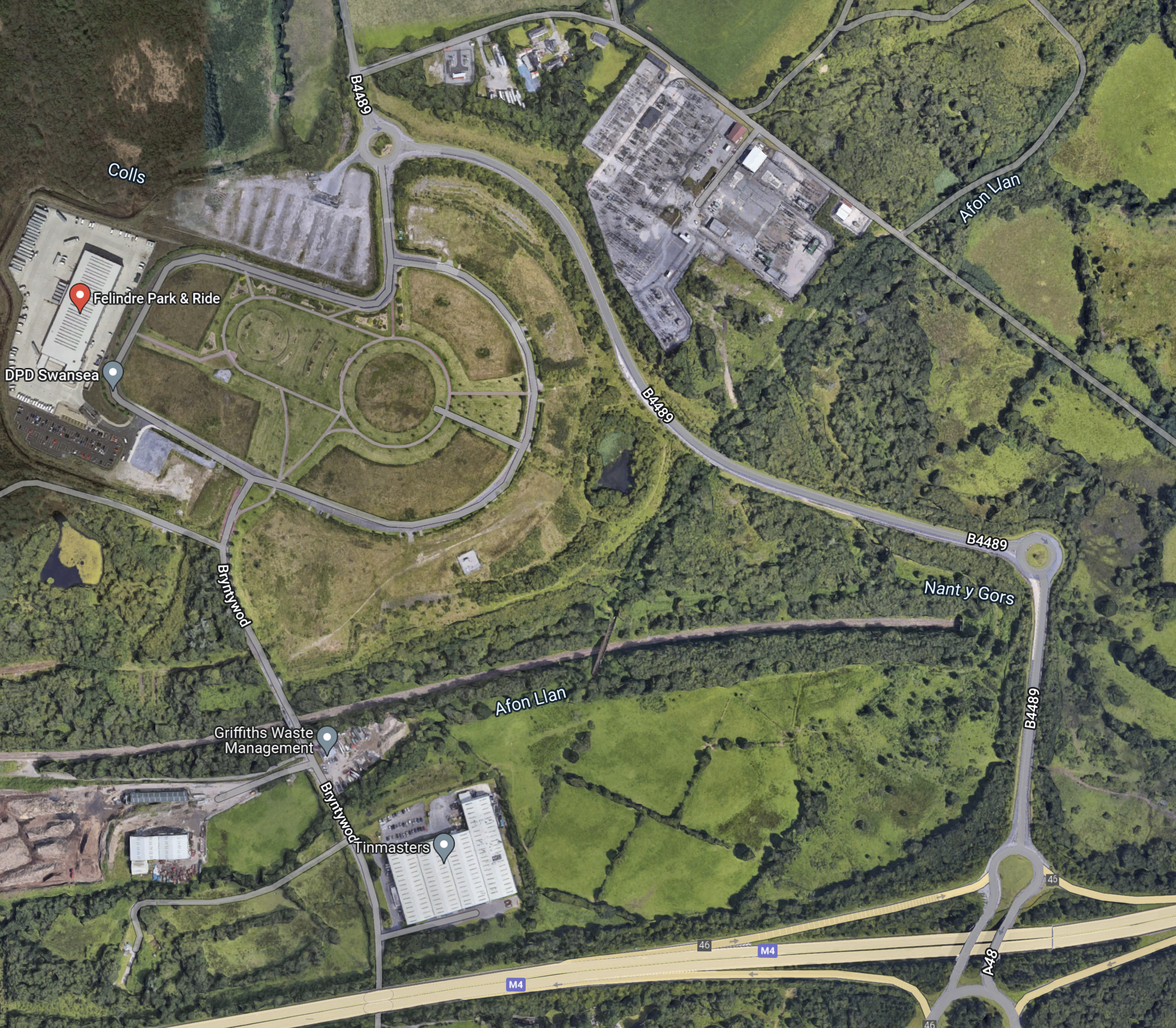
Note.
- The Felindre Business Park in the North-West corner of the map, with a Park-and-Ride.
- The M4 running across the bottom of the map.
- The Swansea District Line runs East-West between the motorway and the Business Park.
It looks that the new station could be located on the South side of the Business Park.
When High Speed Two Opens Will Trains Call At Old Oak Common?
When High Speed Two opens, all GWR trains will stop at Old Oak Common station for these connections.
- Chiltern for for Banbury, Bicester, High Wycombe and the West Midlands
- Elizabeth Line for Central and East London and the Thames Valley
- Heathrow Airport
- High Speed Two for Birmingham and the North
- Overground for Outer London
As Old Oak Common will be such an important interchange, I think they should.
Will The Platforms At Carmarthen Station Need Lengthening?
This Google Map shows Carmarthen station.
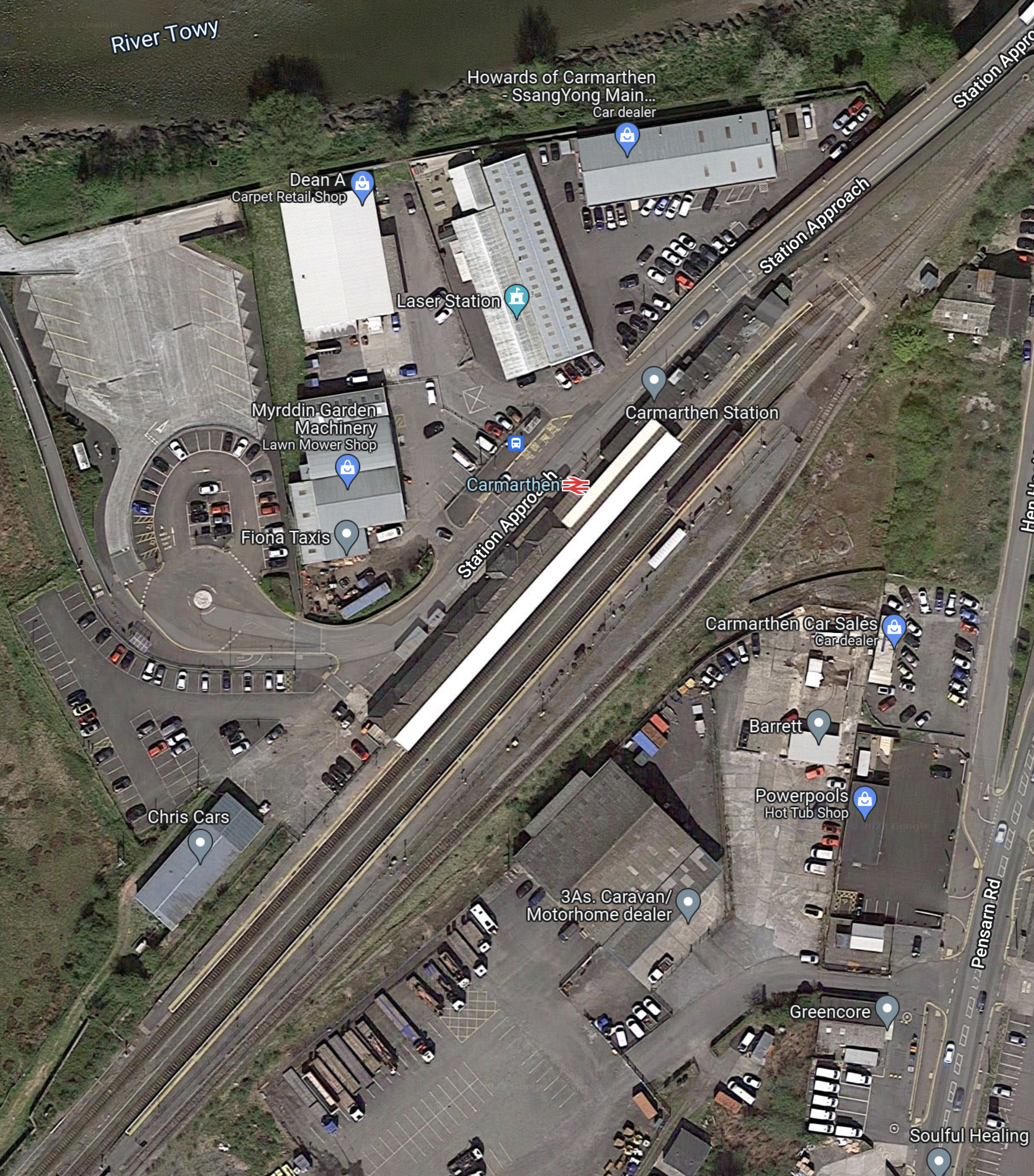
Note.
- The station has two platforms.
- There are certainly pictures of the station with an InterCity 125 in the station. There is a picture on the Wikipedia entry for Carmarthen station.
These pictures show the station.
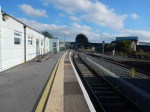

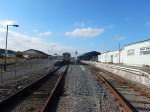


I suspect that the station will be upgraded to accommodate Grand Union Trains.
The Trains
An article in the June 2022 Edition of Modern Railways, which is entitled Grand Union Bids For London To Carmarthen, gives these details of the trains.
- Three classes.
- 2023 start for the service.
- Cycle provision.
- Vanload freight will be carried.
- Electric trains could start between London and Cardiff by 2023.
- In 2025, trains could be nine-car bi-modes.
- South Wales-based operation and maintenance.
- 125 full-time jobs created.
It certainly seems to be a comprehensive and well-thought out plan.
I have a few thoughts on the trains.
What Make Of Trains Will Be Procured?
Consider.
- Lumo’s Class 803 trains were ordered from Hitachi in March 2019 and entered service in October 2021.
- So if they ordered their version of the Hitachi trains by the end of 2022, the trains could be in service by July/August 2025.
- It would probably be easier, if the only fast trains on the Great Western Main Line between London and South Wales were all Hitachi trains with identical performance.
But the Spanish backers of Grand Union Trains may prefer Spanish-designed trains assembled in South Wales. So would a bi-mode version of CAF’s Class 397 trains be suitable?
On the other hand, the Carmarthen and Cardiff section of the route without a reverse at Swansea is only seventy-five miles.
This Hitachi infographic shows the Hitachi Intercity Tri-Mode Battery Train.
Consider.
- Charging could be provided at Carmarthen using a short length of electrification or one of Furrer + Frey standard chargers.
- Charging would also use the electrification between London Paddington and Cardiff.
- A nine-car Class 800 or Class 802 train has five engines and a five-car train has three engines.
- The Intercity Tri-Mode Battery Train was announced in December 2022.
- In the intervening two years how far has the project progressed?
- For the last twelve months, Lumo have been running trains with an emergency battery-pack for hotel power. How are the batteries doing, whilst being ferried up and down, the East Coast Main Line?
Can Hitachi configure a train with more than one battery-pack and a number of diesel engines, that has a range of seventy-five miles? I suspect they can.
I suspect that CAF also have similar technology.
There is also a benefit to Great Western Railway (GWR).
If GWR were able to fit out their Class 802 trains in the same way, they would be able to run between Cardiff and Swansea on battery power.
- It is only 45.7 miles.
- Charging would need to be provided at Swansea.
- GWR could still run their one tpd service to Carmarthen.
It looks like both train operating companies could be able to do as Lumo does and advertise all electric services.
What Could Be The Maxmum Range Of A Hitachi Train On Batteries?
This Hitachi infographic shows the Hitachi Regional Battery Train.

Consider.
- It has a battery range of 90 km or 56 miles on the single battery.
- I would expect that by a regional train, Hitachi mean a five car Class 800 or 802 train, like those that go to Cheltenham, Lincoln or Middlesbrough.
- A five-car Hitachi Regional Battery Train would have a battery that could contain power equivalent to 280 car-miles.
- Five-car Class 800 or 802 trains have three engine positions.
- These Hitachi trains have a very sophisticated control system, which I wrote about in Do Class 800/801/802 Trains Use Batteries For Regenerative Braking?
I believe the engineers at Hyperdrive Innovation have designed the battery-packs that replace the diesel engines as simulations of the diesel engines, so they can be a direct replacement.
This would mean that battery-packs could be additive, so the following could apply to a five-car train.
- Two battery packs could have a range of 112 miles.
- Three battery packs could have a range of 168 miles.
GWR generally runs pairs of five-car trains to Swansea, which would be 90 miles without electrification.
If five-car trains with two battery packs, could be given a range of 112 miles, GWR could run an electric service to Swansea.
They could also run to Carmarthen, if Grand Union Trains would share the charger.
What ranges could be possible with nine-car trains, if one battery pack is good for 280 car-miles?
- One battery-pack, gives a range of 280/9 = 31 miles
- Two battery-packs, give a range of 2*280/9 = 62 miles
- Three battery-packs, give a range of 3*280/9 = 93 miles
- Four battery-packs, give a range of 4*280/9 = 124 miles
- Five battery-packs, give a range of 5*280/9 = 155 miles
- Six battery-packs, give a range of 6*280/9 = 187 miles
- Seven battery-packs, give a range of 7*280/9 = 218 miles
Note.
- I have rounded figures to the nearest mile.
- There are five cars with diesel engines in a nine-car train, which are in cars 2,3,5, 7 and 8.
- Diesel engines are also placed under the driver cars in five-car Class 810 trains.
- For the previous two reasons, I feel that the maximum numbers of diesel engines in a nine-car train could be a maximum of seven.
- I have therefor assumed a maximum of seven battery packs.
These distances seem sensational, but when you consider that Stradler’s Flirt Akku has demonstrated a battery range of 243 kilometres or 150 miles, I don’t think they are out of order.
But, if they are correct, then the ramifications are enormous.
- Large numbers of routes could become electric without any infrastructure works.
- Grand Union Trains would be able to run to Carmarthen and back without a charger at Carmarthen.
- GWR would be able to run to Swansea and back without a charger at Swansea.
Prudence may mean strategic chargers are installed.
Rrenewable Energy Developments In South West Wales
In Enter The Dragon, I talked about renewable energy developments in South West Wales.
I used information from this article on the Engineer, which is entitled Unlocking The Renewables Potential Of The Celtic Sea.
The article on the Engineer finishes with this conclusion.
For now, Wales may be lagging slightly behind its Celtic cousin to the north, but if the true potential of the Celtic Sea can be unleashed – FLOW, tidal stream, lagoon and wave – it looks set to play an even more prominent role in the net zero pursuit.
The Red Dragon is entering the battle to replace Vlad the Mad’s tainted energy.
South West Wales could see a massive renewable energy boom.
Grand Union Trains will increase the capacity to bring in more workers to support the developments from South Wales and Bristol.
 The Anonymous Widower