Could London Overground Services To Stratford Be Extended To Meridian Water?
My arrival In Platform 11 at Stratford station has got me thinking!
And others too! Judging by the comments I’ve received.
Yesterday, I took a train from Dalston Kingsland station to Stratford station.
- The train was the 0934 from Clapham Junction, which was timed to arrive in Stratford at 1038.
- It arrived in Platform 11 at 1036.
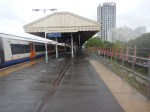
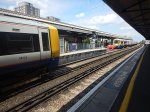
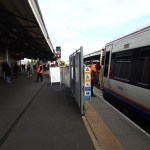
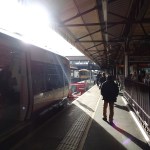
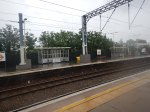
In A London Overground Class 378 Train In Platform 11 At Stratford Station, I show pictures of the train in Platform 11 at Stratford station.
I suspected this was just a one-off occurrence, caused by a malfunction in a train or the signalling, which prevented my train from using the normal Platforms 1 or 2, that services to Stratford would use.
Although, looking at Real Time Trains, the 0938 train this morning, terminated in Platform 11. As it did on Monday and Tuesday this week.
- This train was the only train from Clapham Junction station not to use Platform 2.
- Checking days last week, it appears that this train always terminated in Platform 2.
So why did the service terminate in Platform 11?
Driver training is one possibility, so they can use the Platform 11, if there is a malfunction that stops them using Platform 2.
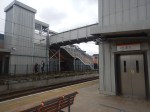
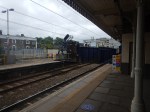
But is there a clue in the first picture, I took, when I arrived in Stratford?
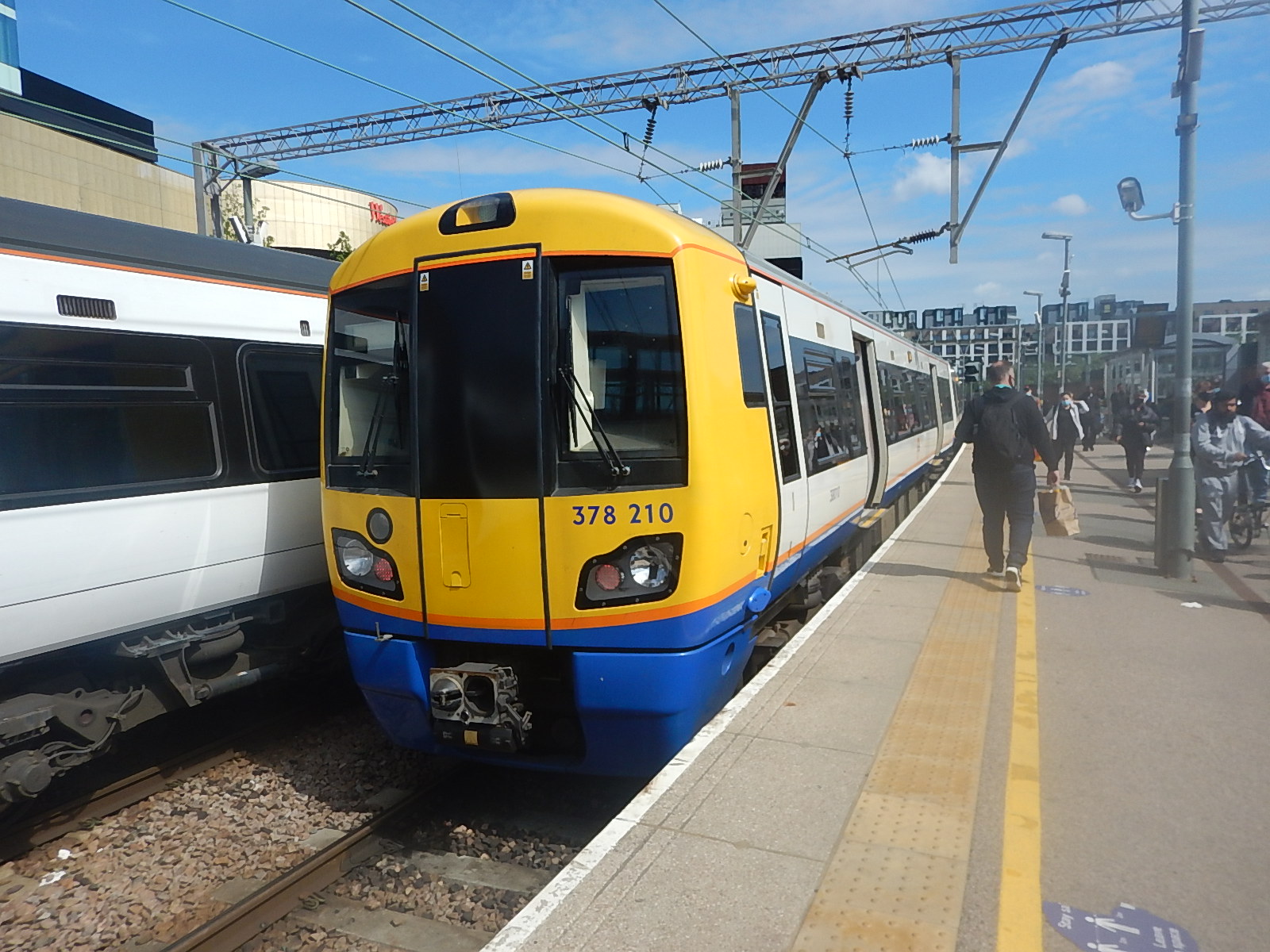
The train in Platform 12 is the 1046 to Meridian Water, which arrived from Bishops Stortford at 1040.
Could it mean that there is to be a reorganisation of platforms at Stratford?
- Platform 12 will be exclusively used by Greater Anglia for their West Anglia Main Line services.
- Platform 11 will be used by London Overground.
In Using Platform 12 At Stratford Station, I described ending up on Platform 12, so I know it is possible, but when it happened information was bad for passengers, who didn’t know here they needed to go to continue on their way.
But why would London Overground need the extra platform?
These are my thoughts.
Do London Overground Need An Extra Platform At Stratford?
Currently London Overground services to Stratford are as follows.
- Four tph – Stratford and Richmond
- Four tph – Stratford and Clapham Junction
Note.
- tph is trains per hour.
- Both Class 378 and Class 710 trains can work the routes to Stratford.
- Eight tph can easily be handled by two platforms.
To handle more trains may need a third platform at Stratford for the London Overground.
Extra Trains Between Stratford And Canonbury
This report from Network Rail is entitled The London Rail Freight Strategy (LRFS).
It says this about creating a third platform at Camden Road station.
This proposal would reinstate a third track and platform on the northern side of Camden Road station, utilising part of the former 4-track formation through the station.
The additional capacity provided would facilitate much greater flexibility in pathing options for trains on this busy central section of the NLL, opening up new options for future service provision and bolstering performance resilience.
Reinstatement of a third platform would enable platform 2 to be used as a central turnback, with platform 3 becoming the eastbound line for through London Overground services and the majority of freight.
Transport for London modelling suggests that the eastern end of the NLL, from Canonbury to Stratford, will see some of the strongest long-term demand growth on the Overground network.
A turnback platform will allow this to be addressed with peak capacity boosting services between Stratford and Camden Road and there would also be the option to operate these through the off-peak, which could offer a means of providing additional passenger capacity where it is most needed.
The availability of an additional platform would also aid performance recovery during perturbation on
the orbital routes.
Note.
- The strongest passenger growth on the North London Line (NLL), will be between Canonbury and Stratford.
- Extra services are proposed between Stratford and Camden Road stations.
- If you travelled between Highbury & Islington and Stratford before the pandemic, the trains only had space for a few extra very small people in the Peak.
I use this section of the North London Line regularly and suspect the route needs at least twelve tph.
Twelve tph into Stratford would probably mean that the London Overground would need a third platform at Stratford.
More Trains Serving Meridian Water
In the Wikipedia entry for Meridian Water station, this is said.
In August 2019, it was announced that funding had been approved for construction of a fourth platform and a new section of track between Tottenham Hale and Meridian Water to enable up to 8 trains per hour to serve the station at peak times.
This must be the earliest upgrade in history, after a new station has opened.
I got the impression, when the station was announced that it would have four tph to Stratford. Currently, there are just two tph.
Two tph between Stratford and Bishops Stortford also pass through without stopping.
If these called at Meridian Water in the Peak, then there would still be four tph to find.
An easy way to create four tph between Stratford and Meridian Water would be to extend four London Overground services from Stratford.
- Services would call at Lea Bridge, Tottenham Hale and Northumberland Park stations.
- Trains would pass through Platform 11 at Stratford.
- Platform 11 at Stratford would be bi-directional.
- The service could be run all day, at a frequency of four tph.
- As these trains have their own track, they won’t delay the Cambridge and Stansted trains on the West Anglia Main Line.
- A cross-London service between Meridian Water and Clapham Junction or Richmond, would be possible.
Note.
- London Overground would be responsible for the bulk of the Meridian Water service.
- London Overground’s four- or five-car trains would probably have sufficient capacity for the service.
- The main new infrastructure needed would be the fourth platform and a new section of track at Meridian Water station.
- Some improvements as specified in the London Rail Freight Strategy will be useful, as they will increase capacity on the North and West London Lines.
- My only worry would be, that can modern signalling handle four tph in both directions through Platform 11 at Stratford station.
What Will Be The Track Layout And Method of Operation?
The current track layout is simple.
A bi-directional third track has been laid between Lea Bridge junction, just to the North of Lea Bridge station and Meridian Water station.
- It is to the East of the double-track West Anglia Main Line.
- There are bi-directional platforms at Tottenham Hale and Northumberland Park stations.
- There is a single terminating Platform 2 at Meridian Water station.
A train going between Stratford and Meridian Water stations does the following.
- Leaves from Platform 11 or 12 at Stratford station.
- Calls in Platform 2 at Lea Bridge station.
- Switches at Lea Bridge junction to the bi-directional third-track.
- Calls in Platform 2 at Tottenham Hale station.
- Calls in Platform 2 at Northumberland Park station.
- Terminates in Platform 2 at Meridian Water station.
A train going between Meridian Water and Stratford stations does the following.
- Leaves from Platform 2 at Meridian Water station
- Calls in Platform 2 at Northumberland Park station.
- Calls in Platform 2 at Tottenham Hale station.
- Switches at Lea Bridge junction to the Up line of the West Anglia Main Line.
- Calls in Platform 1 at Lea Bridge station.
- Terminates in Platform 11 or 12 at Stratford station.
The track layout can probably handle a maximum of two tph.
I suspect the upgrade will build on this layout to allow a frequency of at least four tph.
The following works will be done.
- A fourth track to the East of the bi-directional third track will be built.
- The fourth track will run between Tottenham Hale and Meridian Water stations.
- I suspect the fourth track will split from the third track at a junction to the North of Tottenham Hale station. Could this be called Tottenham Hale North Junction? I will use that name, to make things simple!
- A new Platform 1 will be built in Meridian Water station.
- Trains going North between Tottenham Hale and Meridian Water will use the current bi-directional third track and will be able to terminate in either Platform 1 or 2 at Meridian Water station.
- Trains going South between Meridian Water and Tottenham Hale will use the new fourth track and will be able to start from either Platform 1 or 2 at Meridian Water station.
- I suspect, Northumberland Park station will need a new Platform 1 for Southbound trains. But the station was designed with that in mind.
A train going between Stratford and Meridian Water stations will do the following.
- Leave from Platform 11 or 12 at Stratford station.
- Call in Platform 2 at Lea Bridge station.
- Switch at Lea Bridge junction to the bi-directional third-track.
- Call in Platform 2 at Tottenham Hale station.
- Call in Platform 2 at Northumberland Park station.
- Terminate in Platform 1 or 2 at Meridian Water station.
A train going between Meridian Water and Stratford stations will do the following.
- Leave from Platform 1 or 2 at Meridian Water station.
- Use the new fourth track to come South.
- Call in Platform 1 at Northumberland Park station.
- Continue on the bi-directional third-track at Tottenham Hale North Junction.
- Call in Platform 2 at Tottenham Hale station.
- Switch at Lea Bridge junction to the Up line of the West Anglia Main Line.
- Call in Platform 1 at Lea Bridge station.
- Terminate in Platform 11 or 12 at Stratford station.
The track layout is effectively two double-track sections linked by a bi-directional single track between Lea Bridge Junction and Tottenham Hale North Junction.
- On the double-track sections of the route trains can pass each other, as they are on different tracks.
- Lea Bridge and Tottenham Hale stations are 1.9 miles apart.
- Trains take three or four minutes between Lea Bridge and Tottenham Hale stations. Including the stop at Tottenham Hale on the single track section.
If trains could alternate through the single-track section, this would give a capacity of well over four tph in both directions.
- A train going North would wait in Platform 2 at Lea Bridge station until the previous Southbound train had cleared Lea Bridge junction, before proceeding North.
- A train going South would wait at Tottenham Hale North Junction until the previous Northbound had safely passed, before proceeded South.
I suspect that the trains need full digital signalling with a degree of Automatic Train Control.
But I suspect we could see six tph in both directions.
- This would fit nicely, with London Overground’s ambition of six tph on all routes.
- It could be increased to eight tph in the Peak, by arranging for an appropriate number of Greater Anglia services to and from Liverpool Street at Meridian Water.
I feel that a service that meets all objectives will be possible.
Proposals From The London Rail Freight Strategy That Might Help
These proposals from the London Rail Freight Strategy might help.
- NLL, GOB And WLL Headway Reductions – See Headway Reductions On The Gospel Oak To Barking, North London and West London Lines
- Kensal Green Junction Improvement
- Moving The West London Line AC/DC Switchover To Kensington Olympia
- Stratford Regulating Point Extension
- Camden Road Platform 3 – See Will Camden Road Station Get A Third Platform?
- Clapham Junction Platform 0 – See Will Clapham Junction Station Get A Platform 0?
It does look to me, that the London Rail Freight Strategy was designed with one eye on improving the passenger train service between North-East and South-West London.
Taking The Pressure Off The Victoria Line
Consider.
- If you’re going between Walthamstow and the West End or the major stations of Euston, Kings Cross, St. Pancras and Victoria, you will use the Victoria Line.
- If you live in the new housing, being built at Meridian Water, currently you will be likely to hop to Tottenham Hale station and take the Victoria Line.
Consequently, Northern end of the line can get busy! And not just in the Peak!
But a four tph service between Meridian Water and Stratford, will encourage passengers to go to Stratford to take advantage of the Central and Jubilee Lines and Crossrail.
Hence there will be less passengers, who need to use the Victoria Line.
A Better Interchange Between Camden Road And Camden Town Stations
The essential upgrade of Camden Town station has been put on indefinite hold due to TfL’s financial position.
This is a big mistake.
- Camden Town station gets dangerously full!
- It would allow the splitting of the Northern Line into two independent lines, which would increase capacity of the current system.
- Camden Town station is not step-free but Camden Road station has lifts.
Hopefully, it would result, in a better route between the two stations, rather than the polluted route on a narrow pavement.
I very much believe that the rebuilding of Camden Town station is the most important project to improve London’s Underground and Overground network.
But it won’t get built with the current Mayor, as he’s a South Londoner.
Could A Meridian Water and Clapham Junction Service Be An Affordable Crossrail 2?
Consider.
- Crossrail 2 will link Clapham Junction and Meridian Water via Central London and Dalston.
- A Meridian Water and Clapham Junction service would link the two stations via Shepherd’s Bush, Old Oak Common, West Hampstead, Camden Road, Dalston and Stratford.
Each route has their connectivity advantages.
- Both have good connections to Crossrail, Thameslink and the Bakerloo, Central and Jubilee Lines.
- The London Overground route has good connections to the Victoria Line and High Speed Two at Old Oak Common.
- Crossrail 2 serves important stations in Central London.
A Meridian Water and Clapham Junction service could be a valuable addition to London’s rail infrastructure without too much new expensive infrastructure.
Conclusion
An extension of some London Overground services from Stratford to Meridian Water would be worthwhile.
Implementation of this is made easier by the recommendations of the London Rail Freight Strategy.
I
Moving The West London Line AC/DC Switchover To Shepherd’s Bush
London has a rail capacity problem, for both freight and passenger trains.
This report from Network Rail is entitled The London Rail Freight Strategy (LRFS).
One of the recommendations of the report is to move the switchover between AC and DC power on the West London Line to Shepherd’s Bush station. It says this about the switchover.
Extension of the overhead wires further along the WLL, to provide AC electrification as far south as Shepherd’s Bush station.
Two passenger train services run along the West London Line.
- Four tph – London Overground – Clapham Junction and Stratford
- One tph – Southern – Clapham Junction and Milton Keynes
Note.
- tph is trains per hour.
- London Overground would like to increase their service to six tph.
- All trains stop at Shepherd’s Bush station.
The West London Line (WLL) runs between Willesden Junction station in the North and Clapham Junction station in the South.
These are the stations and their electrification status.
- Willesden Junction – 25 KVAC Overhead Electrification
- Shepherd’s Bush – 750 VDC Third-Rail Electrification
- Kensington Olympia – 750 VDC Third-Rail Electrification
- West Brompton – 750 VDC Third-Rail Electrification
- Imperial Wharf – 750 VDC Third-Rail Electrification
The switchover is performed North of Shepherd’s Bush station with the train moving.
These pictures show the electrification to the North of Shepherd’s Bush station.
This double-electrification allows switchover, whilst the trains are moving.
This is said in the Network Rail document about moving the West London Line AC/DC switchover to Shepherd’s Bush station.
Extending the Overhead Line Equipment south to Shepherd’s Bush would enable passenger trains to change traction source whilst making their scheduled station stop.
A slight extension to dwell times at Shepherd’s Bush may be required, but the elimination of the need to slow down or, especially, to stop, as is the case for GTR trains, at North Pole Junction would release a significant amount of capacity.
Recent work carried out on behalf of Transport for London calculated that the relocation of the changeover to the Shepherd’s Bush could provide an indicative net saving of 7 minutes per hour, which is equivalent to an additional path and some additional time for timetable flexibility.
The LRFS capacity analysis concluded that this intervention could potentially release up to two additional timetable paths an hour in each direction.
Moreover, the analysis advised that eliminating the need for GTR services to stop to change traction at North Pole Junction would be of significant performance benefit even today.
This sounds to me like this us a good solution, that will give winners all round.
- I went North yesterday on a GTR (Southern) service and can confirm, the stop to switch voltage at North Pole junction.
- Extra paths are always good news.
- I have a feeling that the overhead electrification on the route isn’t the best, so Network Rail may even have to replace it anyway.
What I like about the proposal, is that if the switchover point is moved to Shepherd’s Bush station and in the very rare occurence of a switchover failure, the passengers can be easily evacuated from the train as it will most likely be in Shepherd’s Bush station, rather than in the industrial wastelands of West London.
These pictures show Shepherd’s Bush station.
Note.
- It looks like the bridges have been built high enough for overhead electrification.
- The platforms appear to be able to handle long trains.
- Putting up overhead gantries doesn’t look to be the most challenging of tasks.
I don’t think, that the engineering needed will be difficult and because of the gains outlined in the report, this project should be performed as soon as possible.
Should The AC/DC Switchover Be At Kensington Olympia Station?
The Network Rail document also muses about performing the AC/DC switchover at Kensington Olympia station.
This is said.
Although moving the changeover to Shepherd’s Bush would eliminate the need for passenger trains to slow down or stop at North Pole Junction, electrically hauled freight trains will still need to switch power supply modes whilst moving, wherever the AC/DC interface is located.
Due to the substantial incline facing trains running northward on the WLL, which increases in severity towards the Willesden end of the route, it would be preferable for the changeover to be made as far south as possible. This would enable freight trains to slow down to switch traction before reaching the worst of the gradient, giving them a much better chance of regaining line speed once drawing power from the OLE.
Although Kensington Olympia is less than a mile to the south of Shepherd’s Bush, the intervening route section is almost entirely level, with the incline commencing just before Shepherd’s Bush station and continuing to rise sharply along the rest of the WLL. The capacity and performance benefits of relocating the changeover are therefore likely to be greater if the overhead wires are extended to Kensington Olympia, removing the risk to traffic flow that would remain if freight trains were forced to switch whilst running uphill.
This would prepare the West London Line for the transition to electric freight that will be necessary as part of the decarbonisation of the railway over the next thirty years.
Resolving the current traction changeover issues for freight as well as passenger trains would support this transition by encouraging freight operators to invest in electric locomotives to run on the orbital routes, in the confidence that this constraint has been addressed.
Network Rail seem to have made a very strong case for switching between AC and DC power at Kensington Olympia station.
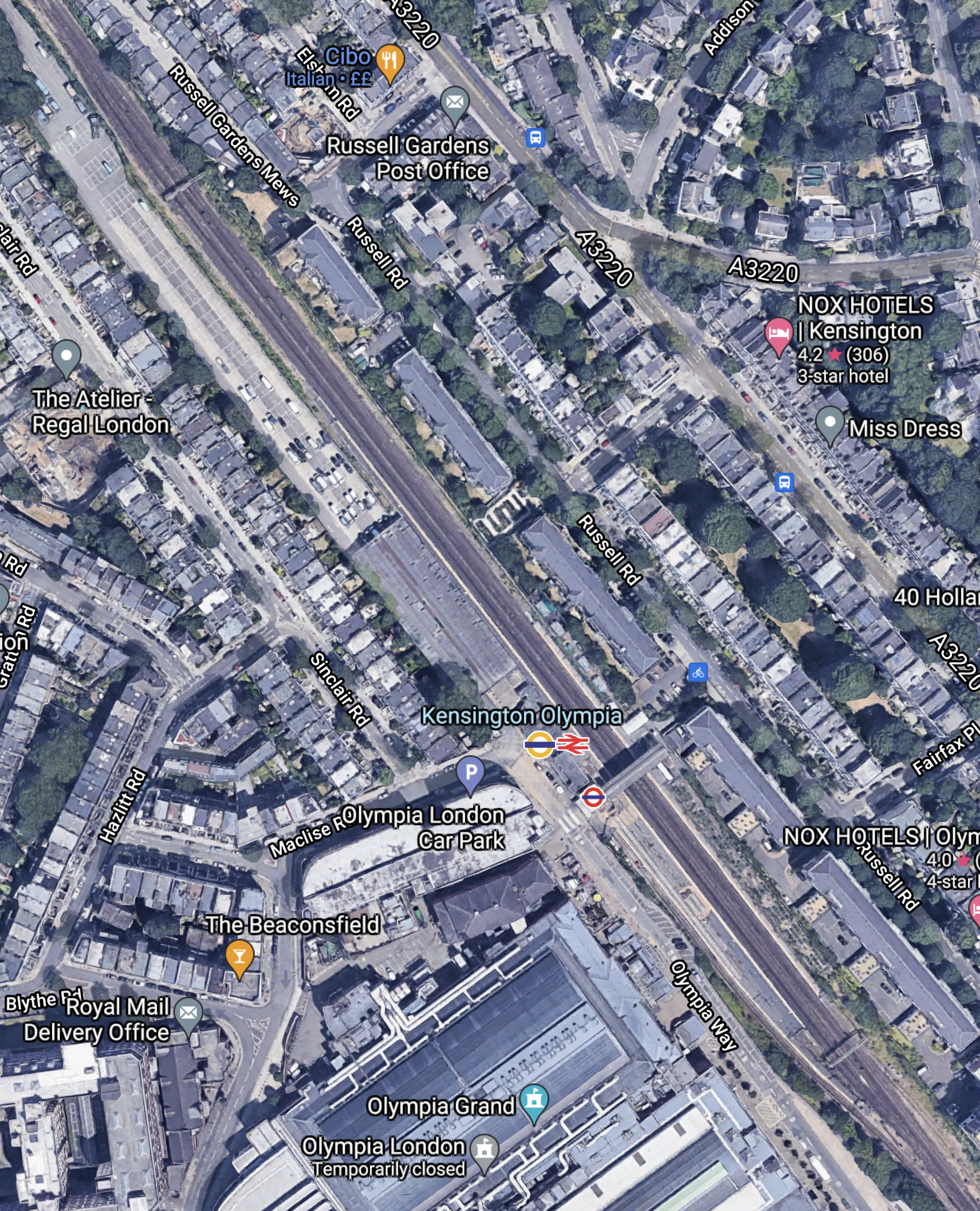
These Google Map shows Kensington Olympia station.
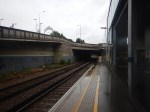
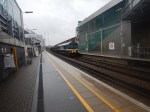
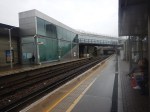
And these pictures show the station on a very wet day.
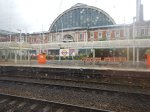
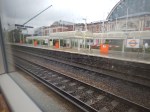
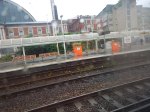
It doesn’t appear that there would be too many problems in electrifying Kensington Olympia station.
The only problem, may be the bridge at Addison Gardens to the North of Kensington Olympia station.
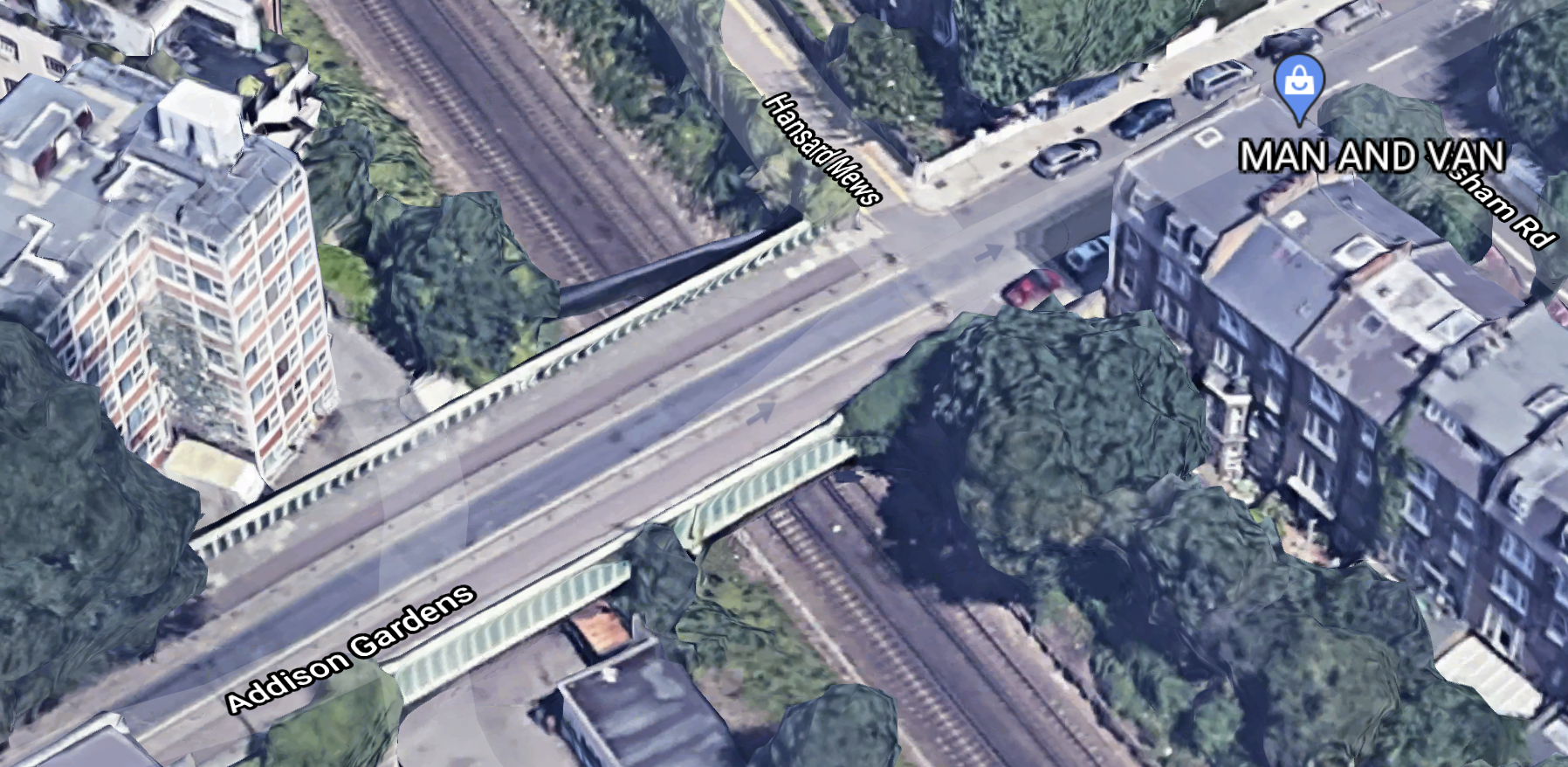
Although, Network Rail have an extensive range of tricks to get the wires through.
Conclusion
I believe, as probably do Network Rail, that Kensington Olympia station should be the station, where the switchover occurs.
But it’s all down to money.
It does seem to me, that the London Rail Freight Strategy is the first serious attempt to work out, the possible freight and passenger uses of the West London Line, which is one of those rail lines that has been designed by Topsy and accidents of history.
How many other rail routes in the UK, would be improved by a similar analysis?
Related Posts
These are related posts about the London Rail Freight Strategy (LRFS).
Decarbonisation Of London’s Freight Routes
East Coast Main Line South Bi-Directional Capability
Gauge Improvements Across London
Headway Reductions On The Gospel Oak To Barking, North London and West London Lines
Heavy Axle Weight Restrictions
Kensal Green Junction Improvement
Longhedge Junction Speed Increases
Moving The West London Line AC/DC Switchover To Kensington Olympia
Stratford Regulating Point Extension
Will Camden Road Station Get A Third Platform?
Will Clapham Junction Station Get A Platform 0?
Kensal Green Junction Improvement
London has a rail capacity problem, for both freight and passenger trains.
This report from Network Rail is entitled The London Rail Freight Strategy (LRFS).
One of the recommendations of the report is to improve Kensal Green junction. It says this about the improvements.
Upgrade of the junction, moving it slightly to the east and realigning the layout, to facilitate faster crossing speeds sufficient for a 3-minute planning margin.
This map from cartometro.com shows the track layout between Harlesden in the West to Kensal Rise station in the East.
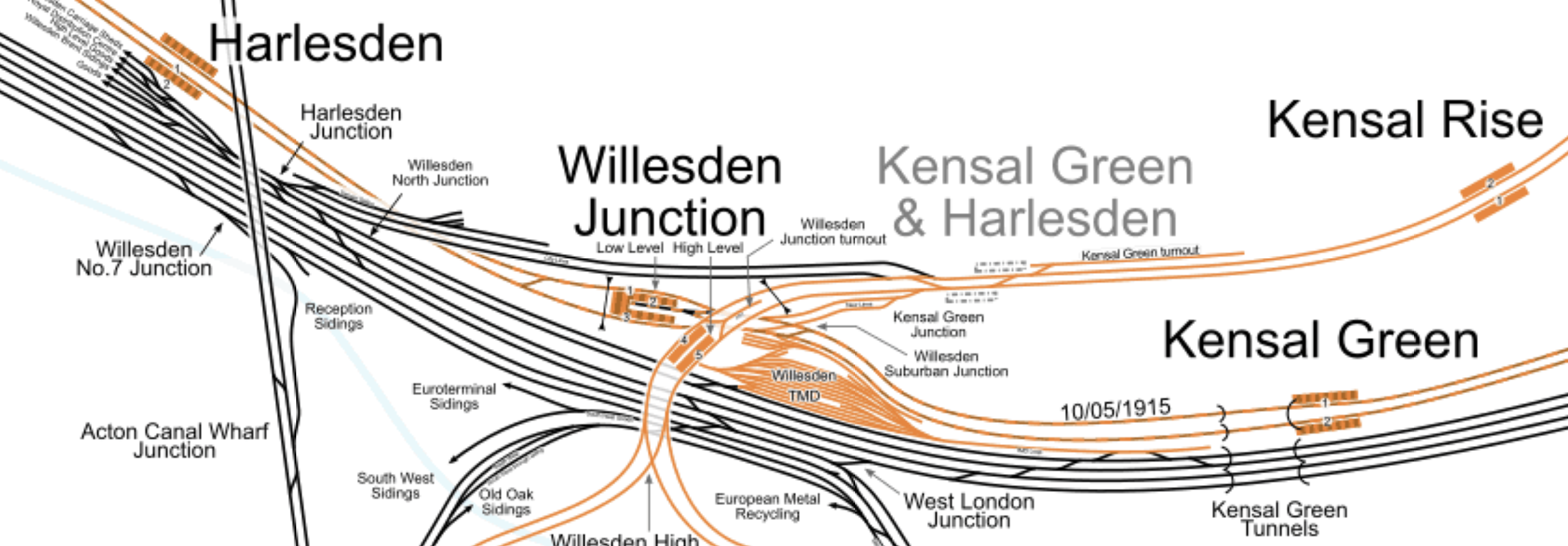
Note.
- Harlesden, Willesden Junction Low Level and Kensal Green stations are on the shared tracks of the Bakerloo and Watford DC Lines.
- Willesden Junction High Level and Kensal Rise are stations on the North London Line.
- Kensal Green & Harlesden is a former station on the North London Line, which is shown on the map as dotted platforms.
- Kensal Green Junction is to the West of Willesden Junction High Level station.
- The City Lines, which are shown in black connect the North London Line to the West coast Main Line and the important freight yards at Wembley.
- The black tracks at the bottom of the map are the West Coast Main Line.
This Google Map shows Kensal Green Junction.
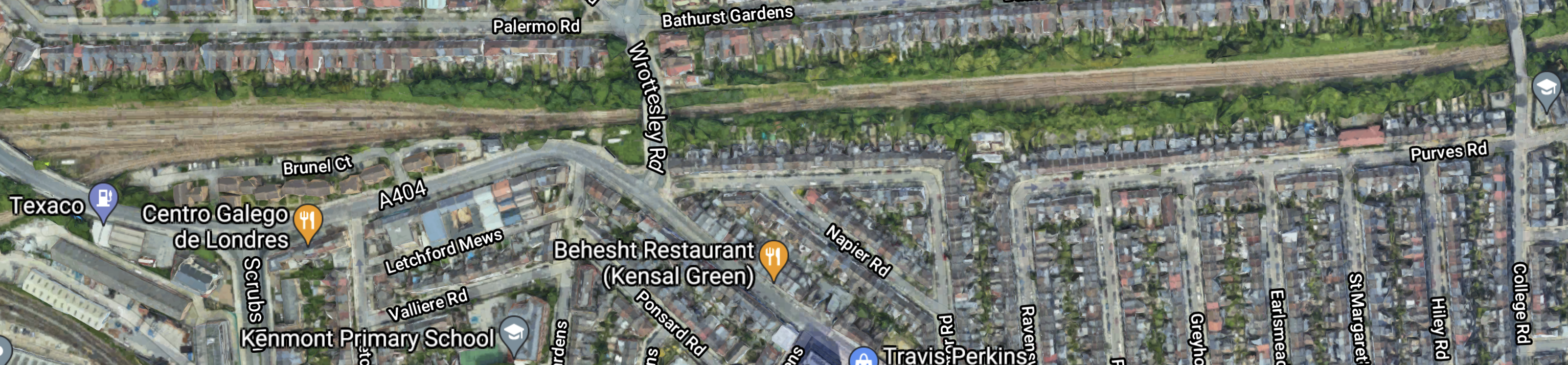
Note.
- The railway is the sandy scar across the top of the map.
- The Kensal Green Turnout is in the North-East section of the map.
- The Kensal Green Junction and the City Lines are in the North-West corner of the map.
- The road over the railway in the middle of the map is Wrottesley Road.
These pictures show the Kensal Green Turnout.

And these show Kensal Green Junction and the City Lines.
Note.
- The railway has generous margins.
- The City Lines are electrified.
- The North London Line is electrified.
- The Kensal Green junction appears to be fully electrified.
- All electrification is 25 KVAC overhead.
There would be plenty of space to install a modern efficient junction.
This is said in the Network Rail document about the improvement to Kensal Green Junction.
Kensal Green Junction, just to the northeast of Willesden Junction High Level station on the North London Line, is a key location for the functioning of the orbital routes.
It connects the North London Line to the West Coast Main Line and Wembley Yard, a vital link for cross-London intermodal flows.
Westbound freight trains must cross over the flat junction to access the City lines towards the West Coast Main Line, a conflicting move with any eastbound London Overground or freight services from Willesden Junction High Level. Ensuring these moves can take place as quickly and as smoothly as possible is essential to the efficient use of capacity on the North London Line.
The proposed enhancement would upgrade the junction, moving it slightly to the east and realigning the layout, to facilitate faster crossing speeds.
Currently trains from the City lines (in the eastbound direction) are limited to 10 mph over Kensal Green Junction, while trains towards the City lines (in the westbound direction) are limited to 15 mph.
This scheme would increase speeds through the junction so that trains can safely cross it a
minimum of 3 minutes after a conflicting movement – they currently have to wait at least 4 minutes.Although this is a relatively minor scheme, it could have a significant positive impact on both capacity and performance in the area.
I find the last paragraph very important. So does this improvement scheme offer good value to money?
Could The Junction Be Used By Passenger Trains?
Consider.
- Nothing is mentioned about passenger trains.
- Electric passenger trains are nippier because of better acceleration.
- No scheduled services appear to use the City Lines
- But I did find an empty stock movement from Wembley Sidings to Gospel Oak.
If the junction could be improved would there be any reason to run passenger trains through the junction?
Suppose, High Speed Two, during the rebuilding of Euston station, decided to stop the Watford DC Line services from using Euston station.
If the Class 710 trains of the London Overground could terminate at say Camden Road station, this would give passengers on the Northern part of the Watford DC Line another route to Central London by changing at West Hampstead station for Thameslink or the Jubilee Line or Camden Road station for the Northern Line by walking between the two Camden stations.
I would expect there may need to be some extra crossovers, so that trains from the Watford DC Lines could access the City Lines to get to and from Kensal Green junction.
In Will Camden Road Station Get a Third Platform?, I outlined how Camden Road station could get a third platform, as is also proposed in the LRFS.
But suppose though the existing Platform 2 at Camden Road station were to be diverted into two platforms.
- A Platform 2 East handling services to and from the East.
- A Platform 2 West handling services to and from the West.
That would do nicely.
Conclusion
Improving Kensal Green Junction may improve passenger services, especially if High Speed Two work at Euston means the Watford DC services have to be suspended.
Related Posts
These are related posts about the London Rail Freight Strategy (LRFS).
Decarbonisation Of London’s Freight Routes
East Coast Main Line South Bi-Directional Capability
Gauge Improvements Across London
Headway Reductions On The Gospel Oak To Barking, North London and West London Lines
Heavy Axle Weight Restrictions
Longhedge Junction Speed Increases
Moving The West London Line AC/DC Switchover To Kensington Olympia
Moving The West London Line AC/DC Switchover To Shepherd’s Bush
Stratford Regulating Point Extension
Will Clapham Junction Station Get A Platform 0?
London has a rail capacity problem, for both freight and passenger trains.
This report from Network Rail is entitled The London Rail Freight Strategy (LRFS).
One of the recommendations of the report is to build a Platform 0 at Clapham Junction station. It says this about that that platform.
Creation of additional bay platform capacity at the northern end of Clapham Junction station, for the use
of London Overground WLL services.
This map from cartometro.com shows the track layout as the orange tentacles of the London Overground approach Clapham Junction station.
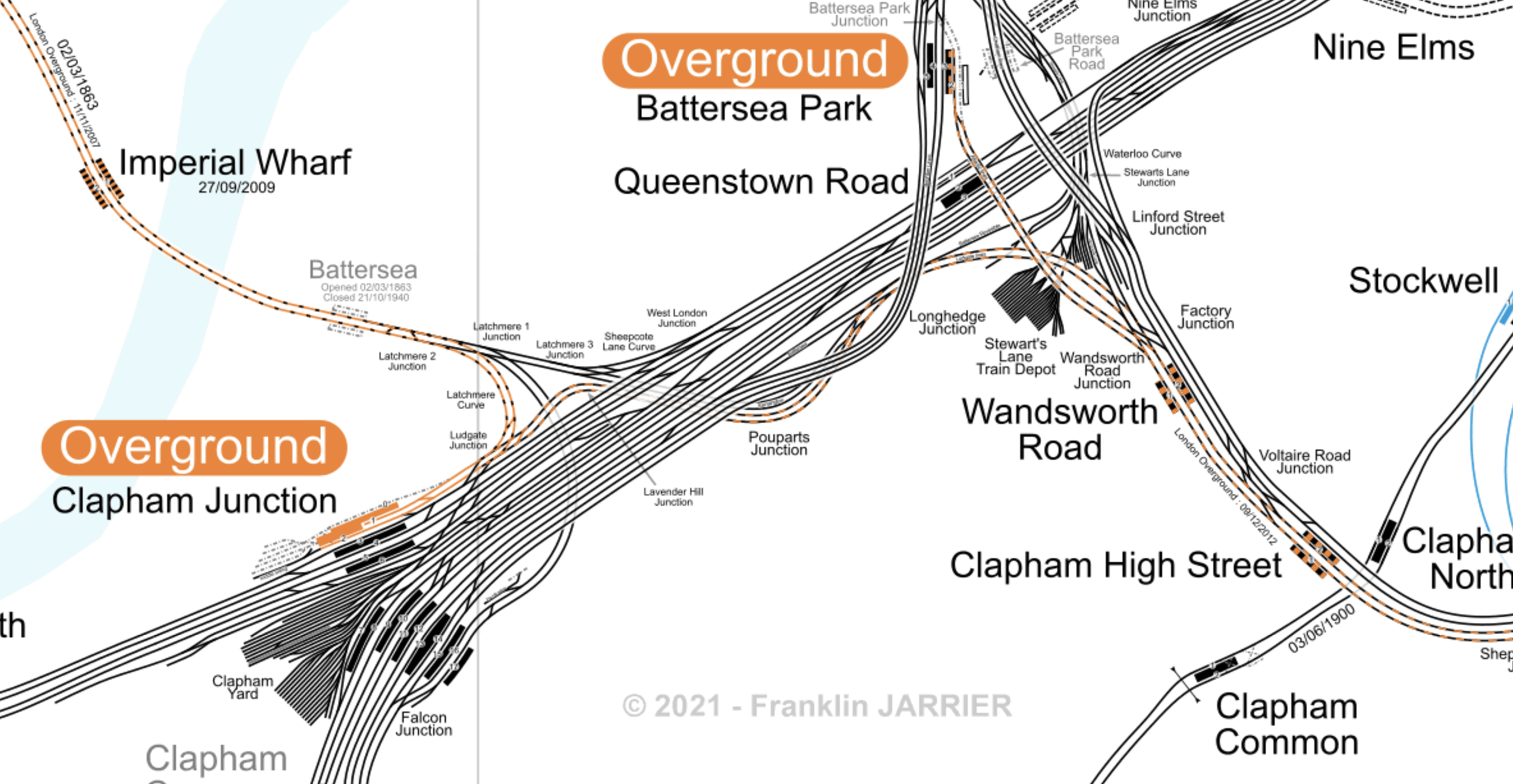
Note.
- The West London Line approaches Clapham Junction station through Imperial Wharf station.
- The South London Line approaches Clapham Junction station through Clapham High Street and Wandsworth Road stations.
This second map from cartometro.com shows the track layout of the current two Overground platforms at Clapham Junction station and how the third one will fit in.
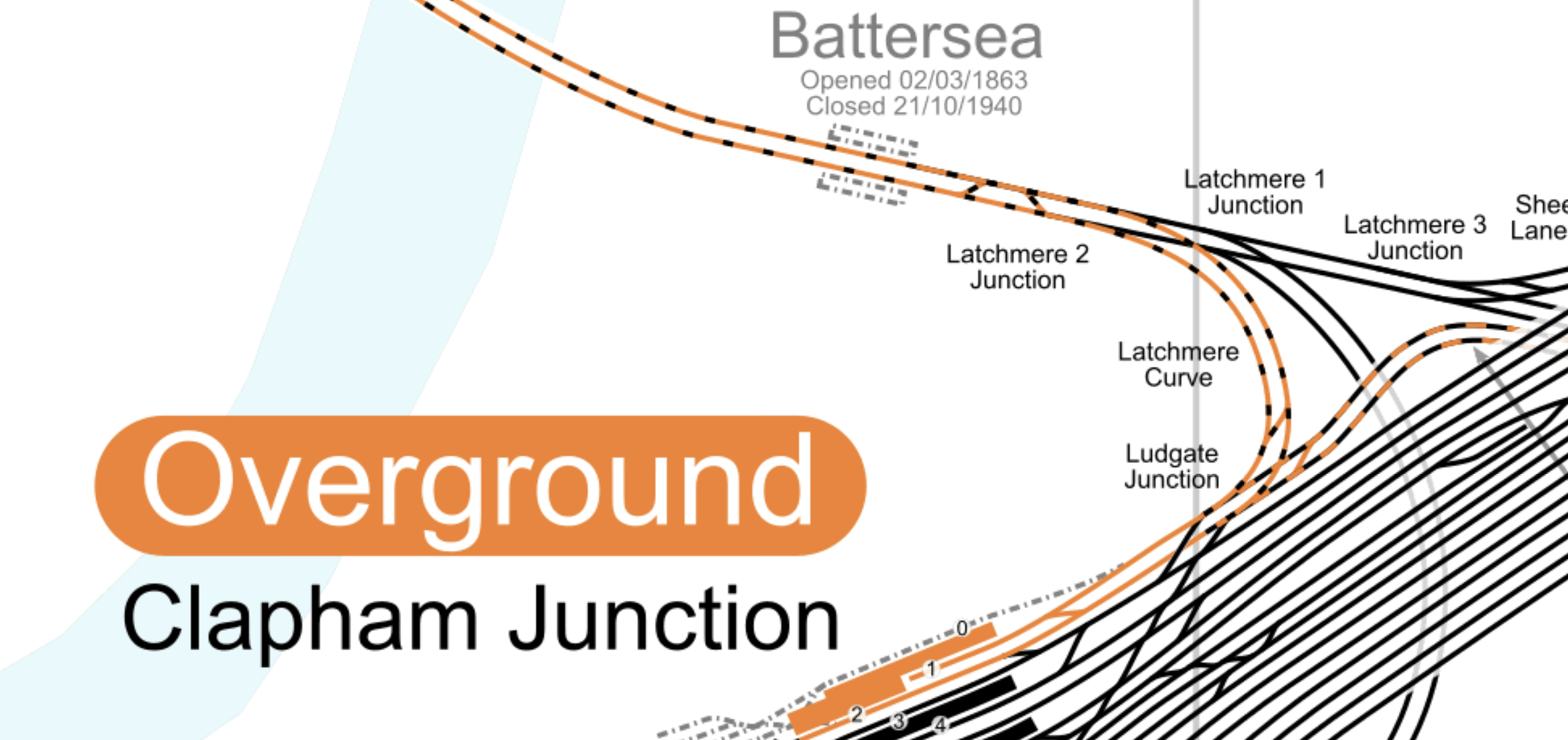
Note.
- It appears that there are crossovers to allow trains from either South or West London Lines to enter any of Platforms 0, 1 or 2.
- A typical bay platform can turn four trains per hour (tph) or possibly six tph, if the signalling is tip-top.
These pictures show the current state of Platform 0 at Clapham Junction station.
And these show Platforms 1 and 2 at Clapham Junction station.

The current two-platform system seems to work well.
Clapham Junction Station Is A Super-Interchange
Clapham Junction is already a super-interchange on the London Overground with lots of services to Central and Outer London and the wider South of England.
The London Overground probably needs more super-interchanges on its circular route around London.
- Whitechapel and Stratford, which are one stop apart on Crossrail, could develop into one in East London.
- As it grows, Old Oak Common, will develop into one in West London.
Other super-interchanges could develop at Croydon, Hackney (Central/Downs) and West Hampstead.
Network Rail’s Reasons For The New Platform
I’ll start with some information.
Current Overground Services
Current Overground services are as follows.
- 4 tph – Stratford via Willesden Junction
- 4 tph – Dalston Junction via Surrey Quays
The total of 8 tph, is generally easily handled by two platforms, unless something goes wrong.
Future Overground Services
It is expected that in the future services could be as follows.
- 6 tph – Stratford via Willesden Junction
- 6 tph – Dalston Junction via Surrey Quays
As I regularly use the service between Dalston Junction and Clapham Junction to get a connection to places like Portsmouth and Southampton, I know at least one regular traveller, who is looking forward to the increase in frequency.
But there could be another London Overground in the future.
In Gibb Report – East Croydon – Milton Keynes Route Should Be Transferred To London Overground, I wrote how in his report, Chris Gibb recommended that this hourly service should be transferred to the London Overground.
This is said in the Network Rail document about Platform 0 at Clapham Junction station.
The longstanding proposal for the creation of additional bay platform capacity at the northern end of Clapham Junction station, for the use of London Overground West London Line services, is supported by this strategy.
The scheme would reinstate the disused former platform 1 to create a newly designated ‘Platform 0’, adjacent to the present platforms 1 and 2.
This intervention has been recognised as key to long-term growth on the West London Line by several previous pieces of work for both Network Rail and Transport for London, which have consistently concluded that additional platform capacity at Clapham Junction is needed, if TfL’s aspiration to increase the WLL Overground service to 6 trains per hour is to be met.
Capacity analysis for the LRFS has reaffirmed that the desire to operate this level of service throughout the day cannot be achieved with a single bay platform.
Although this scheme would clearly be of direct benefit to the London Overground passenger service, the positive impact it would have on the capacity and performance of the WLL overall means that it is also very much in the interest of freight that Platform 0 be delivered. Without a new bay platform, the main alternative means to increase Overground train frequencies involves the use of platform 17 at the far end of the station, where freight and GTR trains pass through towards the BML. This is a sub-optimal solution for both freight and passenger operations.
Note.
- Platform 0 will share an island platform with Platforms 1 and 2, so there will be short level walks between trains.
- Platform 1 and 2 are already fully accessible, so Platform 0 will be as well.
The report feels that increasing passenger and freight services are often two sides of the same coin.
Questions
I have some questions.
Would Three Platforms Be Enough To Handle Twelve tph?
As two platforms seem to handle eight tph, at most times in the present, I suspect the answer is in the affirmative.
Would Three Platforms Be Enough To Handle Thirteen tph?
This would be needed, if the Milton Keynes service were to be transferred to the Overground and it used Clapham Junction station as a Southern terminus.
If it still went through Clapham Junction station to Croydon, then it would probably use Platform 17, as it tends to do now!
I do suspect that three platforms will be enough, as otherwise the LRFS would be proposing something else.
What Will Be The Length Of The New Platform 0?
Under Future Proposals in the Wikipedia entry for Clapham Junction station, this is said.
In a Network Rail study in 2015, it was proposed that platform 0 could reopen for 8-car operations of the West London Line.
An eight-car platform would allow the current eight-car Class 377 trains, that work the Milton Keynes service to use the platform.
Note that as an eight-car Class 377 train is 163.2 metres long, a platform that will accomodate this train, will be long enough to accomodate a five-car Class 378 train, which is only 102.5 metres long.
But should the platform be built long enough to handle two Class 378 trains working as a pair?
This Google Map shows Platform 1 and the current state of the future Platform 0 at Clapham Junction station.
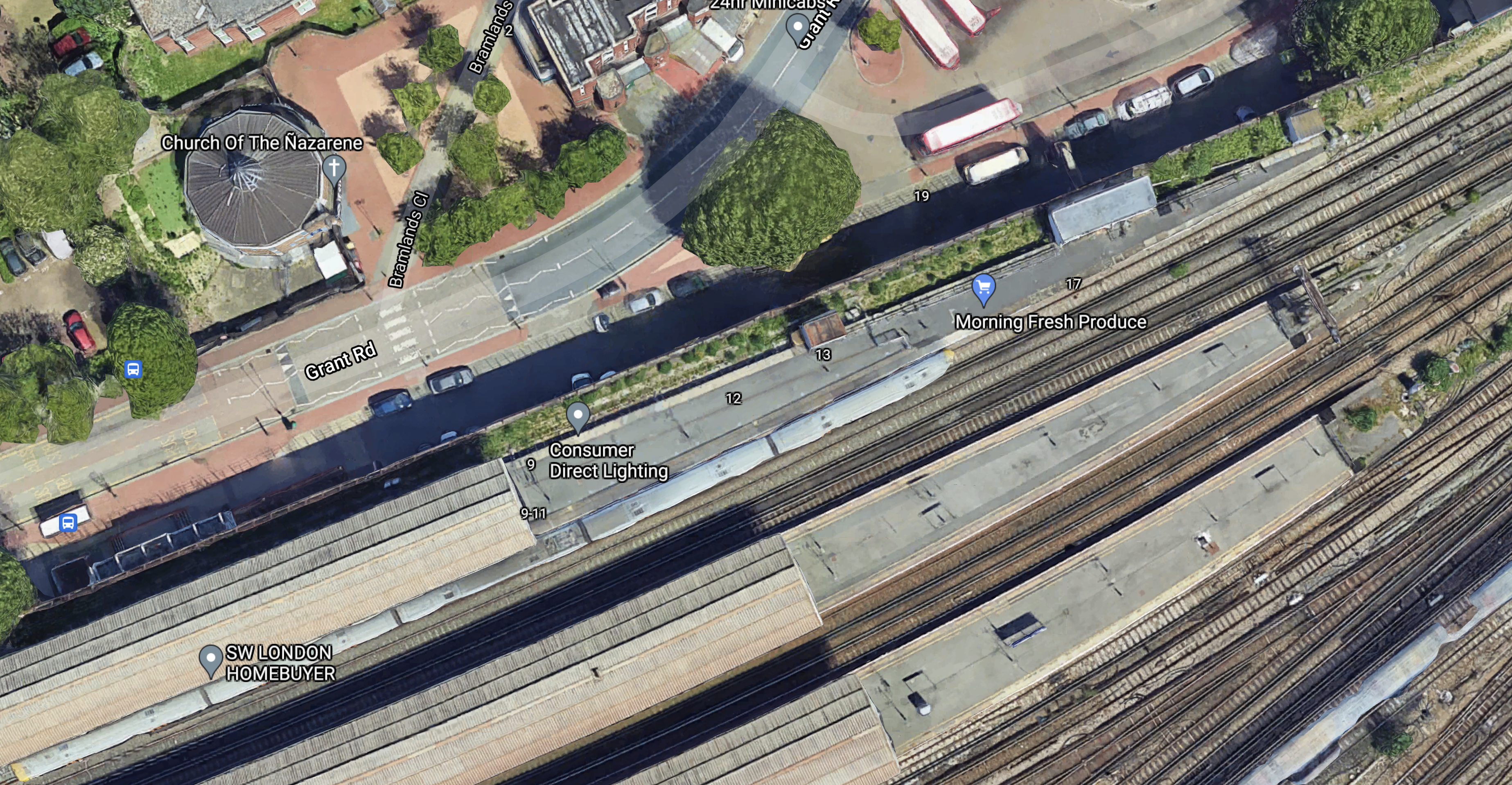
Note.
- a five-car Class 378 train is standing in Platform 1.
- There are some minor obstructions along Platform 0.
I don’t think it would be impossible to create an eight-car Platform 0. Although, Platforms 0 and 1 might need to be extended by perhaps ten or twenty minutes towards London.
Does The Milton Keynes and Clapham Junction Service Need 110 mph Trains?
I have talked to several drivers, who drive trains on the four 125 mph lines out of London and some have complained about slower 100 mph trains, that get in their way and slow them down.
If the drivers get miffed, I suspect the train operating companies are more annoyed.
But over the last few years, the following has happened.
- Heathrow Express have replaced 100 Class 360 trains with 110 mph Class 387 trains on the Great Western Main Line.
- East Midlands Railway will be running 110 mph Class 360 trains to Corby on the Midland Main Line.
- West Midlands Trains will be replacing 110 mph Class 350 trains with 110 mph Class 730 trains on the West Coast Main Line.
- Great Northern run 110 mph Class 387 trains to Cambridge and Kings Lynn on the East Coast Main Line.
I wouldn’t be surprised to see 110 mph trains running between Milton Keynes and Clapham Junction, as they would just be following a sensible practice to increase capacity.
Conclusion
I have no problems with creating a new Platform 0 at Clapham Junction, but suspect that faster trains would be needed for the Milton Keynes and Clapham Junction, that would use it.
Work Appears To Have Already Started On Platform 0
With the installation of the all-important site hut and the fact that there were several engineers around with laser-measurement tools, I suspect that work is already underway to prepare everything for the construction of Platform 0 at Clapham Junction station.
Related Posts
These are related posts about the London Rail Freight Strategy (LRFS).
Decarbonisation Of London’s Freight Routes
East Coast Main Line South Bi-Directional Capability
Gauge Improvements Across London
Headway Reductions On The Gospel Oak To Barking, North London and West London Lines
Heavy Axle Weight Restrictions
Kensal Green Junction Improvement
Longhedge Junction Speed Increases
Moving The West London Line AC/DC Switchover To Kensington Olympia
Moving The West London Line AC/DC Switchover To Shepherd’s Bush
Stratford Regulating Point Extension
Will Camden Road Station Get A Third Platform?
Is Caledonian Road And Barnsbury An Ideal Four-Track Station?
This Google Map shows Caledonian Road And Barnsbury station.
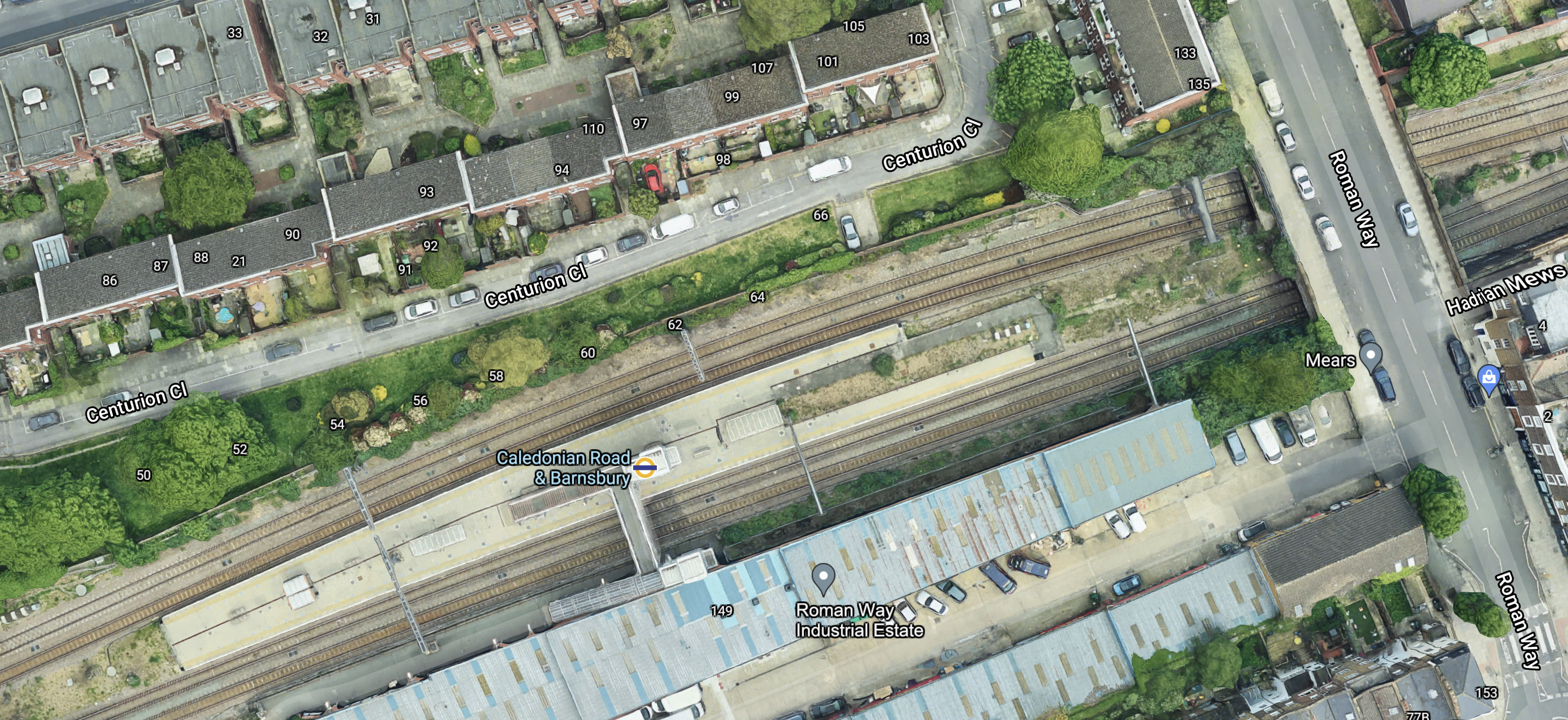
Note the island platform, with two tracks on either side.
These four pictures show each pair of tracks in both directions.


And these pictures show general views of the station.


I don’t know the layout of every station, but Caledonian Road And Barnsbury seems to be unusual.
- There is a spacious island platform in the middle of the four tracks.
- On either side of the island platform, there are the two lines for local passenger trains.
- Outside of the two local passenger lines, there are two lines for freight trains.
- Access to the island platform is via a simple half-bridge with only two lifts.
- Everybody enters the station from one side.
Does this layout have advantages?
Ease Of Construction
I think that this station was designed, so that it was quick and easy to build.
Once the tracks are aligned correctly, it shouldn’t be too complicated to build.
The bridge only has to span two tracks, so that must be half the work of crossing four tracks.
Passenger Safety
I have used real time trains to check the platform of freight trains passing through Caledonian Road And Barnsbury station.
It seems that only rarely do trains use the tracks in the two platforms.
This must surely be safer, when compared with the standard arrangement.
These pictures were taken at Highbury & Islington station.
The wide platform, also allows passengers to keep well out of the way of any trains that do pass through.
Would The Layout Work With High Speed Trains?
I don’t see why not!
The space between the outside lines and the platform, almost acts like a moat in a zoo, that keeps visitors away from dangerous animals.
Costs
It was probably not an expensive station to build.
Conclusion
Why are other four-track stations not built like this?
The main reason is probably, that most four-track main lines were laid out decades or even centuries ago and their builders used their own layouts.
Will Camden Road Station Get A Third Platform?
London has a rail capacity problem, for both freight and passenger trains.
This report from Network Rail is entitled The London Rail Freight Strategy (LRFS).
One of the recommendations of the report is to build a third platform at Camden Road station. It says this about the third platform.
Reinstatement of a third track and platform on the northern side of Camden Road station, utilising part of
the former 4-track formation through the station.
Camden Road station used to have four platforms, but now it just have two.
This Google Map shows the station as it is today.
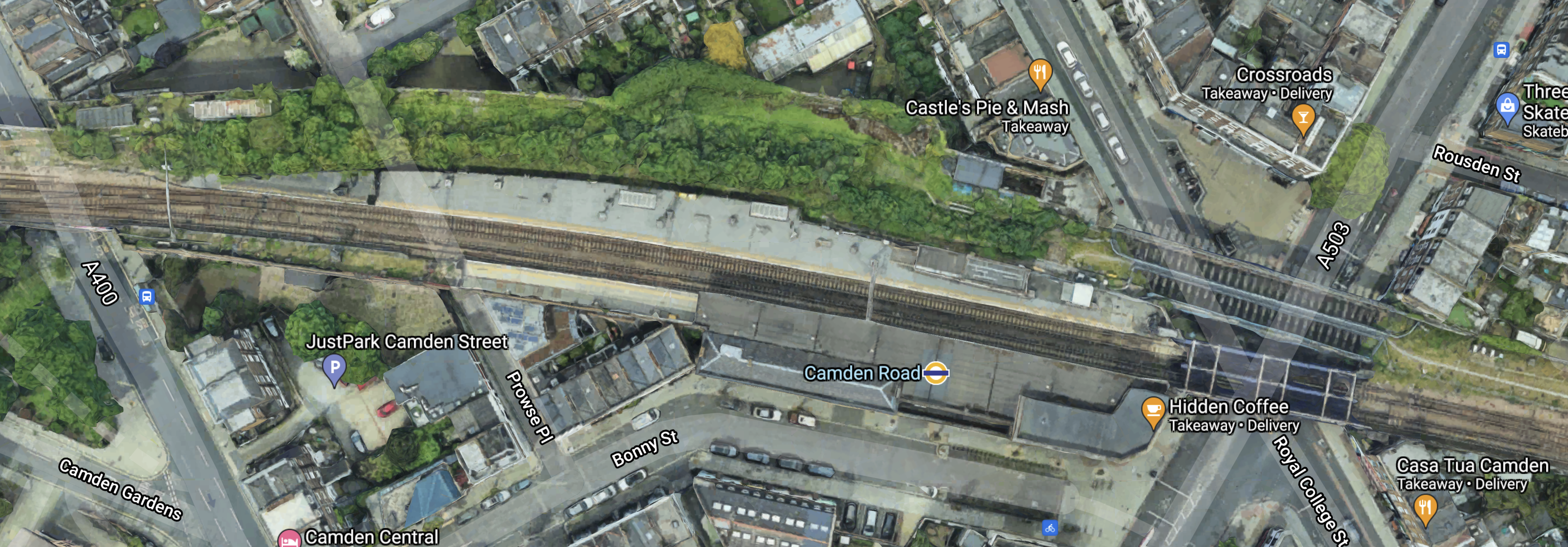
Note.
- Platform 1 is on the South side of the tracks with the London Overground roundel conveniently shown on the roof.
- Platform 2 is on the North side of the tracks.
- Regular users of the station can probably pick out the lift at the Eastern end of Platform 2.
- There is a bridge to the East of the station which takes the tracks over the junction of Royal College Street and Camden Road.
To the North of this bridge, two further bridges can be seen, that used to take the former third and fourth tracks over the roads and into two additional platforms to the North of the current two.
This map from cartometro.com shows the track layout through Camden Road station.
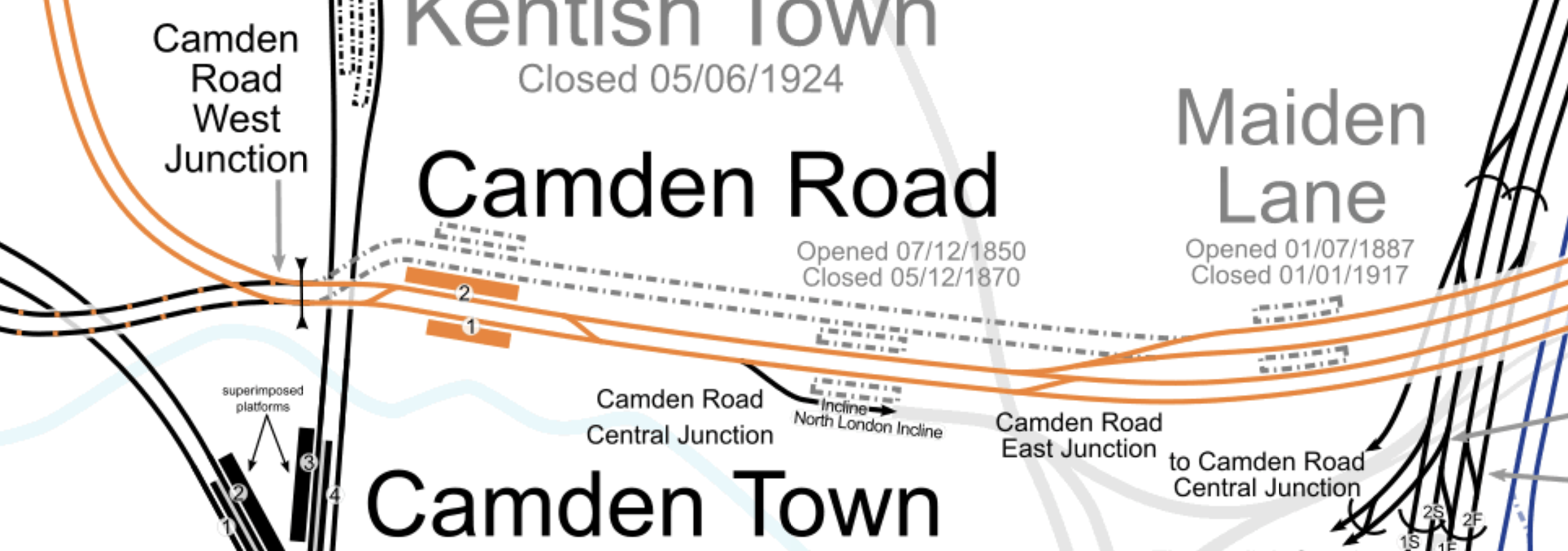
Note.
- The tracks shown in orange are the route of the North London Line of the London Overground.
- The two orange platforms labelled 1 and 2 at Camden Road station.
- The two former lines passing behind Platform 2, used to rejoin the North London Line to the West of the station.
These pictures were taken on the current Platform 2.
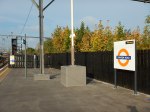
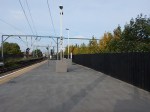
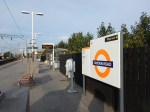
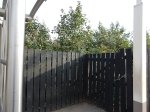
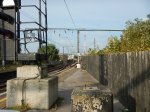
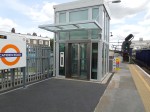
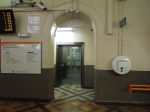
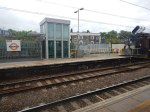
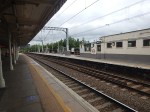
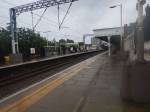
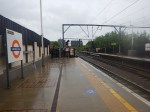
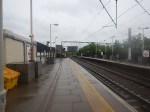
And these are some pictures of the bridge, what is behind the fence and other bridges.
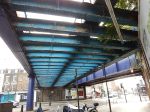
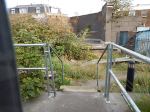
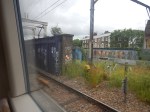
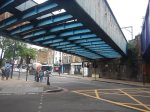
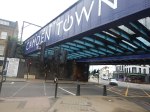
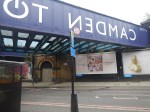
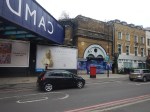
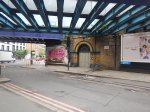

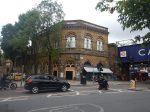
Note.
- Most of the pictures of Platform 2, were taken from Platform 1.
- Behind the fence on Platform 2, there appears to be a substantial urban forest.
- Renewing the bridges and updating the railway arches could improve the area significantly.
- Camden Road station is a Grade II Listed building.
I don’t think, that any of the construction would be too challenging.
How Would The Third Platform Be Used?
This is said in the Network Rail document about the third platform at Camden Road station.
This proposal would reinstate a third track and platform on the northern side of Camden Road station, utilising part of the former 4-track formation through the station.
The additional capacity provided would facilitate much greater flexibility in pathing options for trains on this busy central section of the NLL, opening up new options for future service provision and bolstering performance resilience.
Reinstatement of a third platform would enable platform 2 to be used as a central turnback, with platform 3 becoming the eastbound line for through London Overground services and the majority of freight.
Transport for London modelling suggests that the eastern end of the NLL, from Canonbury to Stratford, will see some of the strongest long-term demand growth on the Overground network.
A turnback platform will allow this to be addressed with peak capacity boosting services between Stratford and Camden Road and there would also be the option to operate these through the off-peak, which could offer a means of providing additional passenger capacity where it is most needed.
The availability of an additional platform would also aid performance recovery during perturbation on
the orbital routes.
That all looks fairly sensible and wouldn’t require much work to the current station.
Note.
- Platform 2 is currently a fully-accessible platform with a lift and will become a spacious fully-accessible island platform with two faces 2 and 3, both serving London Overground services going East.
- There must surely be space on the island platform to build a substantial shelter, where passengers can sit, when long freight trains are passing through.
- There could even be space for a coffee kiosk.
The former Platform 3 appeared to be a Westbound platform, but the proposed new one appears to be an Eastbound one.
The Track Layout Immediately To The East Of Camden Road Station
These are my thoughts on the track layout to the East of Camden Road station.
This map from cartometro.com shows the track layout between Camden Road and Highbury & Islington stations.
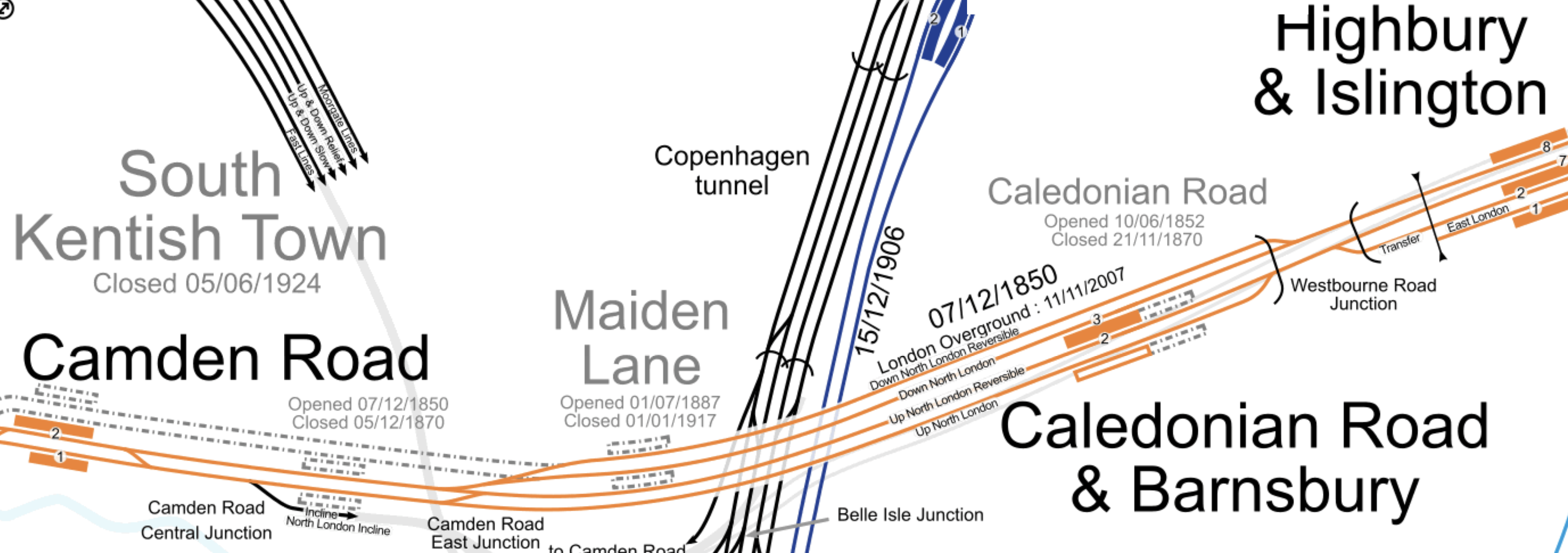
Much of the route through Caledonian Road and Barnsbury station is four tracks. These tracks are named from North to South as follows.
- Down North London Reversible
- Down North London
- Up North London Reversible
- Up North London
Note.
- Eastbound London Overground services use the Down North London track.
- Eastbound freight services use the Down North London Reversible track.
- Eastbound freight services are sometimes held by signallers on the Down North London Reversible track.
- Westbound London Overground services use the Up North London Reversible track, before crossing over to the Up North London track at Camden Road East Junction.
- London Overground services only use the central island platform at Caledonian Road and Barnsbury station.
- Westbound freight services use both of the Up North London tracks.
- The London Borough of Camden have stated that they would like to see the reopening of Maiden Lane station.
These pictures show the former trackbed between the former Maiden Lane station and Camden Road station.

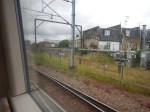
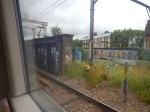
Looking at these pictures, I can deduce the following.
- There is very little constructuction of the former trackbed.
- There would be some signalling equipment to move.
- Some of the steel bridges would have to be replaced.
I feel, that a single track could definitely be created between the new Platform 3 at Camden Road station to connect with both Down North London tracks before the site of the former Maiden Line station.
It may even be possible to squeeze in two tracks.
A new track or tracks would enable the following.
- Eastbound London Overground services to go from Platform 3 at Camden Road station to Platform 3 at Caledonian Road and Barnsbury station.
- Eastbound freight services to go from Platform 3 at Camden Road station to either the Down North London Reversible or the Down North London tracks through Caledonian Road and Barnsbury station.
Note.
- Westbound services going through Camden Road station would be unaffected.
- Westbound London Overground services terminating in Platform 2 at Camden Road station would cross over to the current Up North London Reversible at the current Camden Road Central junction.
- Eastbound London Overground services starting in Platform 2 at Camden Road station would cross over to the new track or tracks to proceed to the East.
These are my answers to a few questions.
Will There Be One Or Two Extra Tracks?
Consider.
- It could probably be organised that the extra track or tracks start perhaps fifty metres or so to the East of Camden Road station.
- The distance between this point and Westbourne Road Junction is around a mile.
- Network Rail allows freight trains up to a length of 775 metres.
I am drawn to the conclusion, that if two tracks were to be built, then signallers would be able to hold the longest freight trains on the extended Down North London Reversible track, without interrupting London Overground passenger services.
How Will The Extra Tracks Affect The Camden Highline?
If two new tracks are built, I would expect that it will be impossible to build the Camden Highline.
But if only one is built, I suspect that a narrower Camden Highline might be able to be squeezed in.
Could Provision Be Made So A New Maiden Lane Station Could Be Built?
This map from cartometro.com shows the track layout around the former Maiden Lane station.
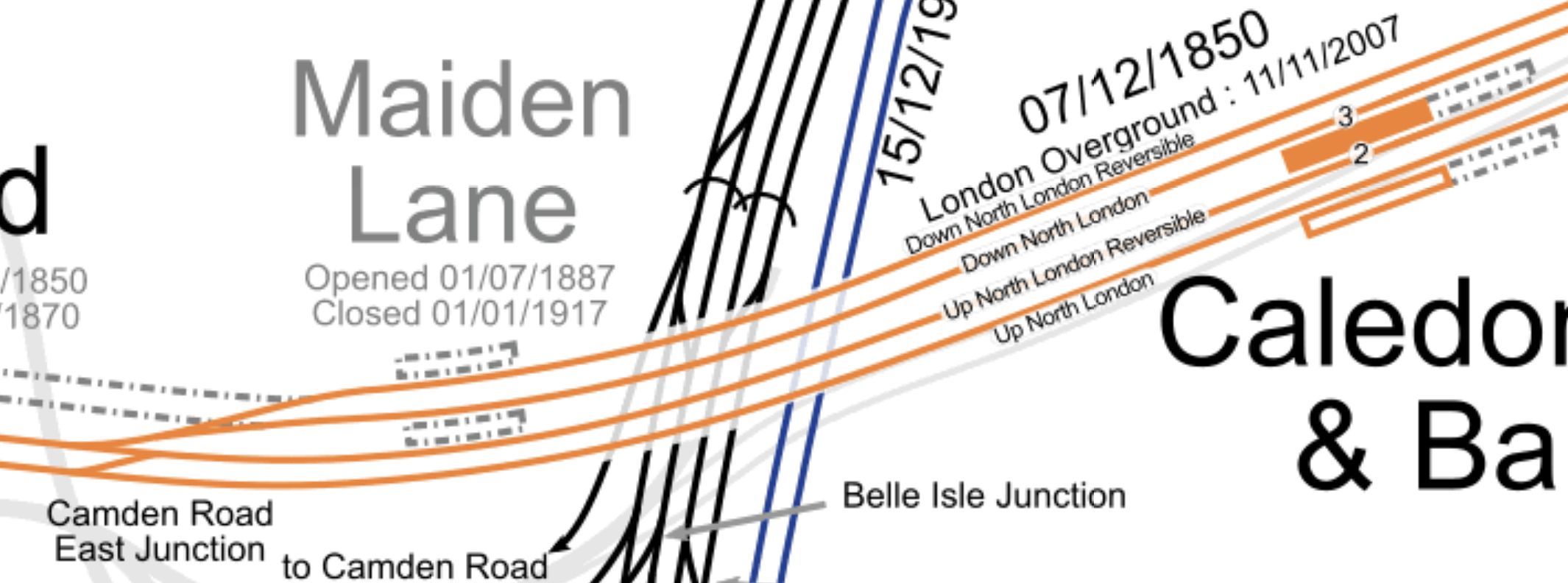
Consider.
- Eastbound London Overground services use the Down North London track and call in Platform 3 at Caledonian Road and Barnsbury station.
- Westbound London Overground services use the Up North London Reversible track and call in Platform 2 at Caledonian Road and Barnsbury station.
- To connect Platform 3 at Camden Road station to the Down North London Reversible and Down North London tracks, I suspect that Camden Road East junction will have to be remodelled.
I wonder if by the application of Network Rail’s latest track layout software, space could found for an island platform between the Up North London Reversible and Down North London tracks.
In Is Caledonian Road And Barnsbury An Ideal Four-Track Station?, I discuss the design of Caledonian Road and Barnsbury station,
I think it is a distinct possibility, that provision could be made for a future Maiden Lane station.
Will There Be Changes At Camden Road West Junction?
This map from cartometro.com shows the track layout to the West of Camden Road station.
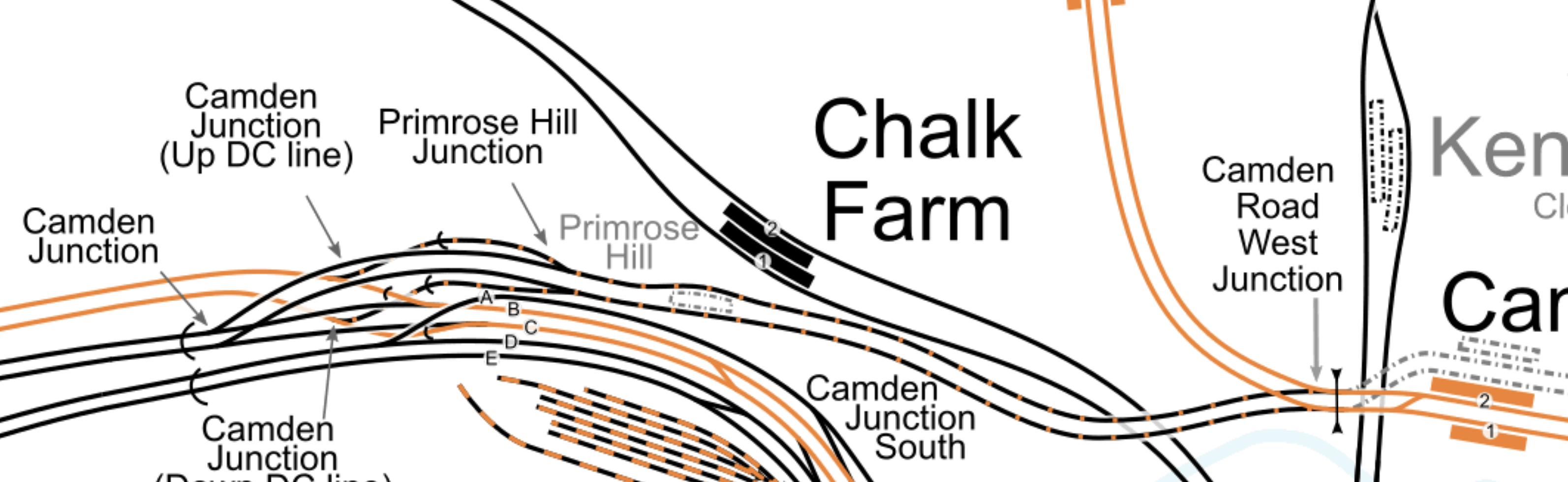
Note.
- Platforms 1 and 2 of Camden Road station at the Eastern end of the map.
- Camden Road West junction to the West of the platforms.
- The dotted lines of old tracks leading to the former Platform 3 and 4 at Camden Road station.
Two double tracks lead away to the West from Camden Road West junction.
- The orange tracks are the North London Line to Willesden Junction and Acton.
- The black and orange tracks are an extension of the Watford DC Line, that links Camden Road station to the West Coast Main Line via Primrose Hill station.
Will both pairs of tracks be connected to the North London Line at Camden Road West junction, as they are now?
- Currently, a few freight trains per day, use the Primrose Hill route.
- There have been plans in the past, for the London Overground to use this route.
- They have also been known to run a Rail Replacement Train between Willesden Junction and Camden Road stations during engineering works, as I wrote about in The Future Of The Watford DC Line.
So I suspect Network Rail will design a comprehensive junction, that is all things to all operators and trains.
Through Running Between The East London Line and Willesden Junction Station
This was originally talked about in the original plans for the London Overground.
If you travel on the Overground to Barking, Blackhorse Road, Canada Water, Highbury & Islington, West Brompton, Hampstead, Whitechapel or Willesden Junction in the Peak, the interchanges are very busy, as passengers are transferring to the Underground.
Was this why through running was originally proposed between the East and North London Lines at Highbury & Islington station, as it would allow direct connection to extra Underground lines?
But one of the aims of the Overground was to enable journeys around London without going via Central London.
Platform 3 at Camden Road station, seems to increase the capacity on the North London Line, so perhaps this upgrade would give extra paths to allow some services to terminate to the West of Highbury & Islington.
This map from cartometro.com shows the track layout to the West of Highbury & Islington station.
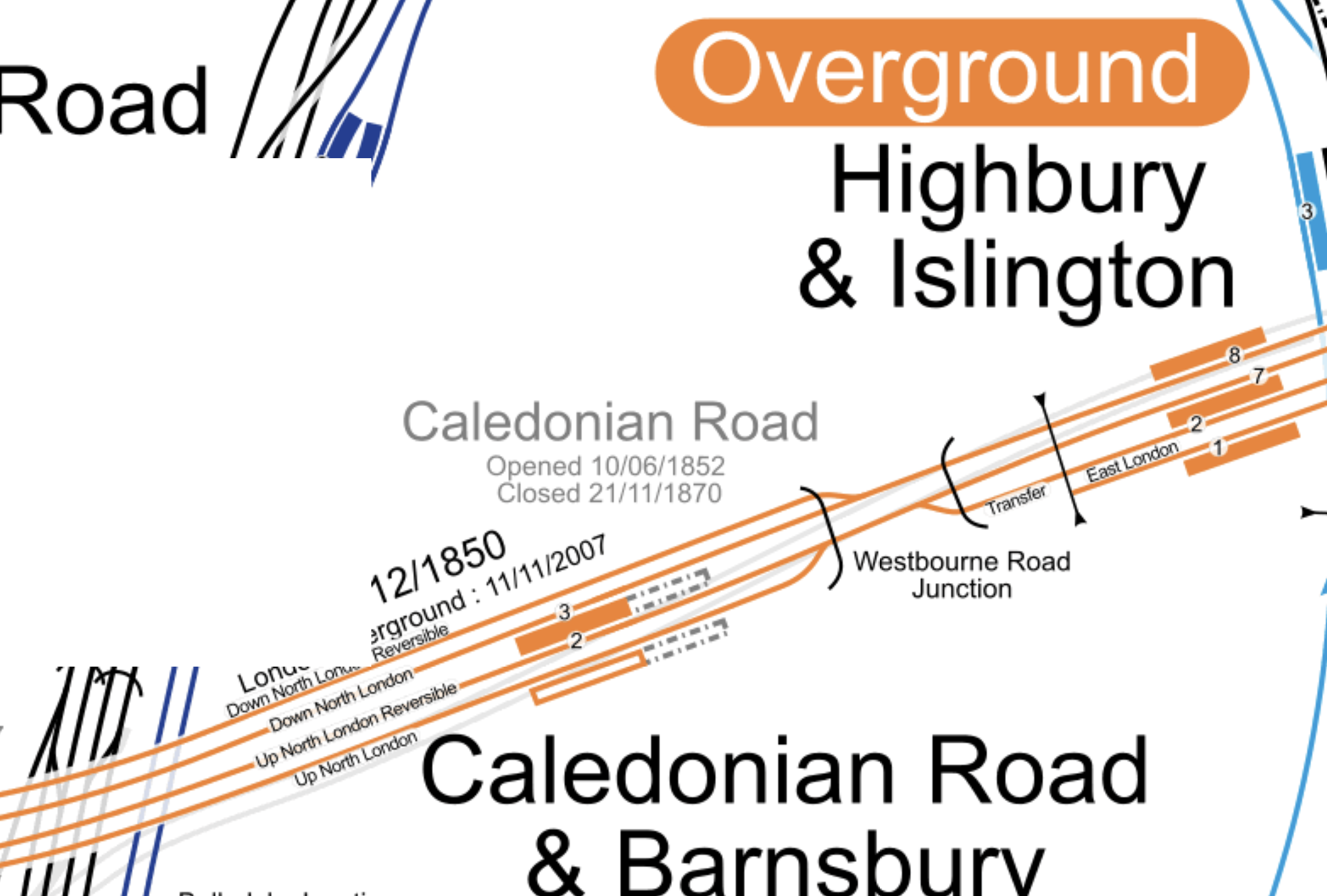
I’m sure if Network Rail’s engineers can sort out King’s Cross, then they can come up with a track and signalling system that can handle this,
Could Platform 2 At Camden Road Be Used As An Alternative Terminus For Watford DC Line Services?
Euston station is being rebuilt and Network Rail might like to kick Watford DC Line services out of the station either temporarily or even permanently.
There are two routes that the Watford DC Line could take to get between Harlesden and Camden Road stations.
- They can use the route, I took one Sunday, when the London Overground was running a Rail Replacement Train, via Willesden Junction Low Level, Kensal Green, Queens Park, Kilburn High Road and South Hampstead.
- They might also be able to join the North London Line an improved Kensal Green junction.
The first route works and the second may need some extra work at Harlesden junction.
I estimate that Platform 2 at Camden Road station is presently as long as 120 metres.
I also estimate that it could be lengthened at both ends, during the building of a new platform 3 alongside.
Could a platform be built long enough to be able to handle two trains simultaneously?
- A four-car Class 710 train at the Western end.
- A five-car Class 378 train at the Eastern end.
A 200 metre long platform would probably suffice!
I think the concept has possibilities.
- Willesden Junction station has connections to the Bakerloo Line.
- West Hampstead station has connections to Thameslink and the Jubilee and further connections could be developed,
- Camden Road station could be connected to Camden Town station, which is on both branches of the Northern Line.
- A reopened Primrose Hill station could be connected to Chalk Farm station on the Northern Line.
- The Northern Line connects to Crossrail at Moorgate and Tottenham Court Road stations.
I suspect, if Camden Town station were to be expanded and rebuilt, that the connection between the two Camden stations would be more likely.
Either route could be taken between Willesden Junction and Camden Road stations.
But I feel, it might be less costly to take the North London Line route, especially, as this connects to West Hampstead station.
Could The Track Layout Be Further Simplified?
I’m no track expert, but it strikes me that a four-track layout could be built between just East of Camden Road station and Westbourne Road junction. From North to South these tracks would be.
- Eastbound Freight line – Connecting at the Western end to Platform 3 at Camden Road station and following the existing Down North London Reversible track to Westbourne Road junction.
- Eastbound Overground line – Connecting at the Western end to Platforms 2 and 3 at Camden Road station and following the existing Down North London track through Caledonian Road and Barnsbury station to Westbourne Road junction.
- Westbound Overground line – Connecting at the Western end to Platforms 1 and 2 at Camden Road station and following the existing Up North London Reversible track through Caledonian Road and Barnsbury station to Westbourne Road junction.
- Westbound Freight line – Connecting at the Western end to Platform 1 at Camden Road station and following the existing Up North London track to Westbourne Road junction.
Note.
- Both freight lines would be long enough for signallers to hold freight trains, so that other services could overtake.
- East of Caledonian Road and Barnsbury station, Overground and freight service would share the two tracks, as they do now!
- West of Camden Road station, Overground and freight service would share the two tracks, as they do now!
It strikes me that by good design, the capacity and speed through this section of the busy North London Line can be increased.
Related Posts
These are related posts about the London Rail Freight Strategy (LRFS).
Decarbonisation Of London’s Freight Routes
East Coast Main Line South Bi-Directional Capability
Gauge Improvements Across London
Headway Reductions On The Gospel Oak To Barking, North London and West London Lines
Heavy Axle Weight Restrictions
Kensal Green Junction Improvement
Longhedge Junction Speed Increases
Moving The West London Line AC/DC Switchover To Kensington Olympia
Moving The West London Line AC/DC Switchover To Shepherd’s Bush
Stratford Regulating Point Extension
Will Clapham Junction Station Get A Platform 0?
Would A Mutant Many-Parent Child Help To Solve London’s Transport Problems?
London needs to increase the capacity of its public transport system, as the City continues to get larger and larger.
Current Major Projects
There are only three major rail projects ongoing in London at the present time.
The Bank Station Upgrade
The Bank Station Upgrade appears to be progressing well, albeit perhaps it’s a bit late due to the pandemic.
It is a complex project and from what I have heard and observed, it has been well designed and planned.
The Barking Riverside Extension
As with the Bank Station Upgrade the Overground extension to the new Barking Riverside station, appears to be going reasonably well.
But compared to that project, it is a relatively simple project, built mainly in the open air, with no tunneling.
Crossrail
Crossrail is in trouble, after what many believe was a very good tunnelling phase of the project.
But then tunnels under London usually seem to go well. I can remember the Victoria Line tunnelling and many other under London since the 1960s and all of these tunnels seem to have been dug without trouble. As I write, there don’t seem to be any tunneling problems with the Thames Tideway Tunnel.
Crossrail now has been reduced to a series of station builds and rebuilds, some of which are as large as the Bank Station Upgrade, with other ongoing projects like the testing of trains and systems.
So why are some of these stations running late in their delivery?
If you walk along the route of Crossrail in the City of London and through Clerkenwell and the West End, it is one massive building side as developers raise massive clusters of new developments around and above the Crossrail stations.
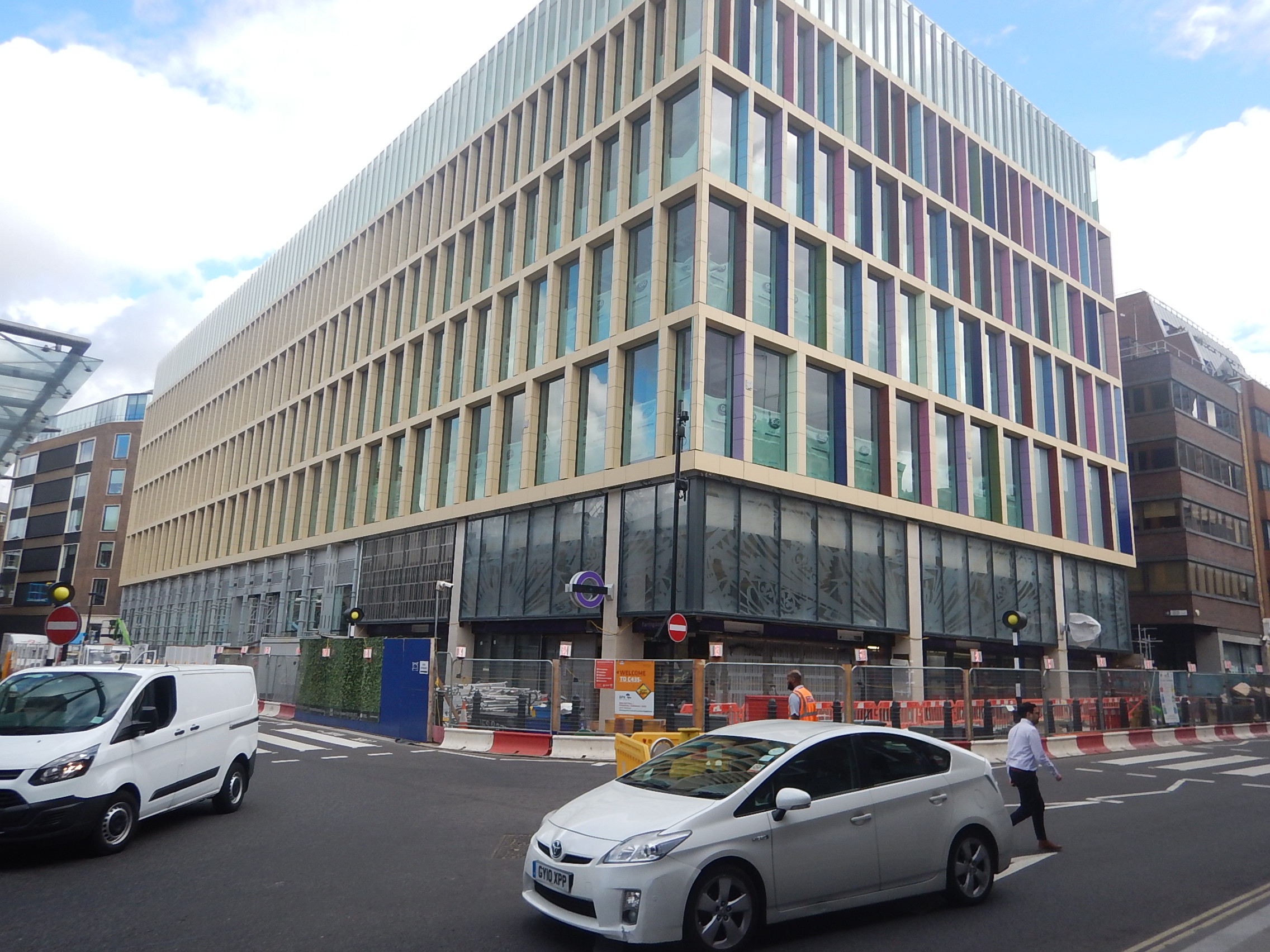
The picture shows Farrington station’s Eastern entrance, with a new development on top.
This one wasn’t a big one, but it went up in record time.
These buildings are often funded by Sovereign Wealth Funds, who want their buildings finished ASAP and as they have bottomless pockets, they are prepared to pay more to get the builders and tradesmen they need.
And where did they get the workers from? Other projects, including Crossrail.
This problem happened in Aberdeen at the height of the oil boom in the last century.
I also think that Brexit worsened the problem, as workers from mainland EU moved to large projects closer to home, like Stuttgart 21 and the new Berlin Brandenburg airport, that were both very much in trouble and could have been offering premium salaries as well!
The solution would have been to phase developments so that the limited pool of workers was not exhausted.
But that probably wouldn’t have suited the developers and politicians for all sorts of reasons.
- An uncompleted building doesn’t bring in money and jobs.
- Early completion must improve chances of letting the building.
- Delaying the building would probably have meant fewer holidays for politicians in exotic locations.
Hopefully, a comprehensive enquiry into the lateness of Crossrail will provide answers.
High Speed Two
High Speed Two is to my mind a London local project. But only in a secondary way!
- Rebuilding Euston station will improve Underground connections and interchange at Euston and Euston Square stations.
- It is claimed by High Speed Two, that the rebuilt Euston station will create 16000 jobs and 2200 homes.
- High Speed Two will enable massive development at Old Oak Common, with tens of thousands of homes and jobs.
- Old Oak Common station will be a very important rail hub in North-West London.
With seventeen trains per hour (tph) between Euston and Old Oak Common will High Speed Two attract local traffic?
- I suspect High Speed Two between Manchester Airport and Manchester Piccadilly and between Birmingham Interchange and Birmingham Curzon Street will also attract local traffic.
- I’ve used TGVs between Nice and Antibes.
- Tourists might visit, just like they did and still do at the Olympic Park.
- Many Londoners will join High Speed Two at Old Oak Common.
Some wag will suggest putting it on the Tube Map. But is it such a stupid idea?
Where Does London Need More Rail Services?
Having lived in London on and off for over seventy years, I feel the worst areas for rail links are probably.
- North West London
- South East London
- South Central London between Wimbledon and Croydon.
- South West London
Note.
- Over the years, there is no doubt that East and North London have improved considerably, with the development of the East London, North London and Gospel Oak to Barking Lines.
- Thameslink has been improved in North London and now it is being supported with improvements to the Northern City Line. Both routes now have new Siemens trains, which give a whole new dimension to using ironing-boards as seats.
- Crossrail will produce major improvements in West, East and South East London.
- Building of a new Penge Interchange station, which I wrote about in Penge Interchange could improve routes to and from South East London.
- Hopefully the work in recent years at Waterloo will improve suburban services out of Waterloo. In An Analysis Of Waterloo Suburban Services Proposed To Move To Crossrail 2, I showed that four tph could be run to Chessington South, Epsom, Hampton Court and Shepperton stations.
It looks like North West and South Central London are missing out.
How Can Services Be Improved In North West London?
There are radial routes from the centre of London to the suburbs.
Starting from the North and going to the West, there are the following lines.
- The High Barnet branch of the Northern Line
- The Mill Hill East branch of the Northern Line
- The Midland Main Line to St. Albans, Luton, Bedford and the East Midlands.
- The Edgware branch of the Northern Line
- The Jubilee Line to Stanmore
- The West Coast Main Line to Watford, Milton Keynes, the West Midlands, the North West of England and West Scotland.
- The Bakerloo Line to Harrow & Wealdstone.
- The Watford DC Line of the London Overground
- The Amersham, Chesham and Watford branches of the Metropolitan Line
- The Chiltern Route to Aylesbury.
- The Chiltern Main Line to High Wycombe, Banbury, Bicester, Birmingham and Oxford.
- The West Ruislip branch of the Central Line.
- The Uxbridge branch of the Metropolitan and Piccadilly Lines
When I used to live at Cockfosters as a child, to visit my many cousins in North West London, there was no alternative but to use a bus and take well over an hour each way.
There are now some circular rail routes in London but nothing in the North West of the capital.
The Dudding Hill Line And The West London Orbital Railway
But there is the little-used freight route called Dudding Hill Line.
- It runs between Cricklewood on the Midland Main Line and Acton Central on the North London Line.
- It is four miles of double-track railway.
This YouTube video shows a cab ride from Acton to Cricklewood.
Plans exist to turn it into the West London Orbital Railway, which will run two services.
- West Hampstead and Hounslow via Cricklewood, Neasden, Harlesden, Old Oak Common Lane, Acton Central, South Acton, Lionel Road, Brentford, Syon Lane and Isleworth
- Hendon and Kew Bridge via Brent Cross West, Neasden, Harlesden, Old Oak Common Lane, Acton Central, South Acton
Note.
- The proposed frequency of both services is four tph.
- There would be some stations to be built, but the track exists.
- There would be no new tunnels.
- The route is technically feasible.
- The route would connect West London to High Speed Two.
- There would be little disruption whilst it was built.
- The services could be run by dual-voltage battery-electric trains charged on the electrification at both ends of the route.
- The scheme represents a high value for money, with a benefit-cost ratio (BCR) of 2.2.
On the other hand, the scheme has two serious problems, as far as the current London Mayor is concerned.
- Transport for London has no money, partly because of London’s Fare Freeze.
- The project is not in South London.
This important and value-for-money project will not be built, whilst Sadiq Khan is still Mayor of London.
Harlesden Interchange
I believe that if we get the interchanges right on the West London Orbital Railway correct we can do things like.
- Increase the benefit cost ratio.
- Link the route to South London to make the Mayor a bit happier about the North London Scheme.
This Google Map shows Harlesden station.
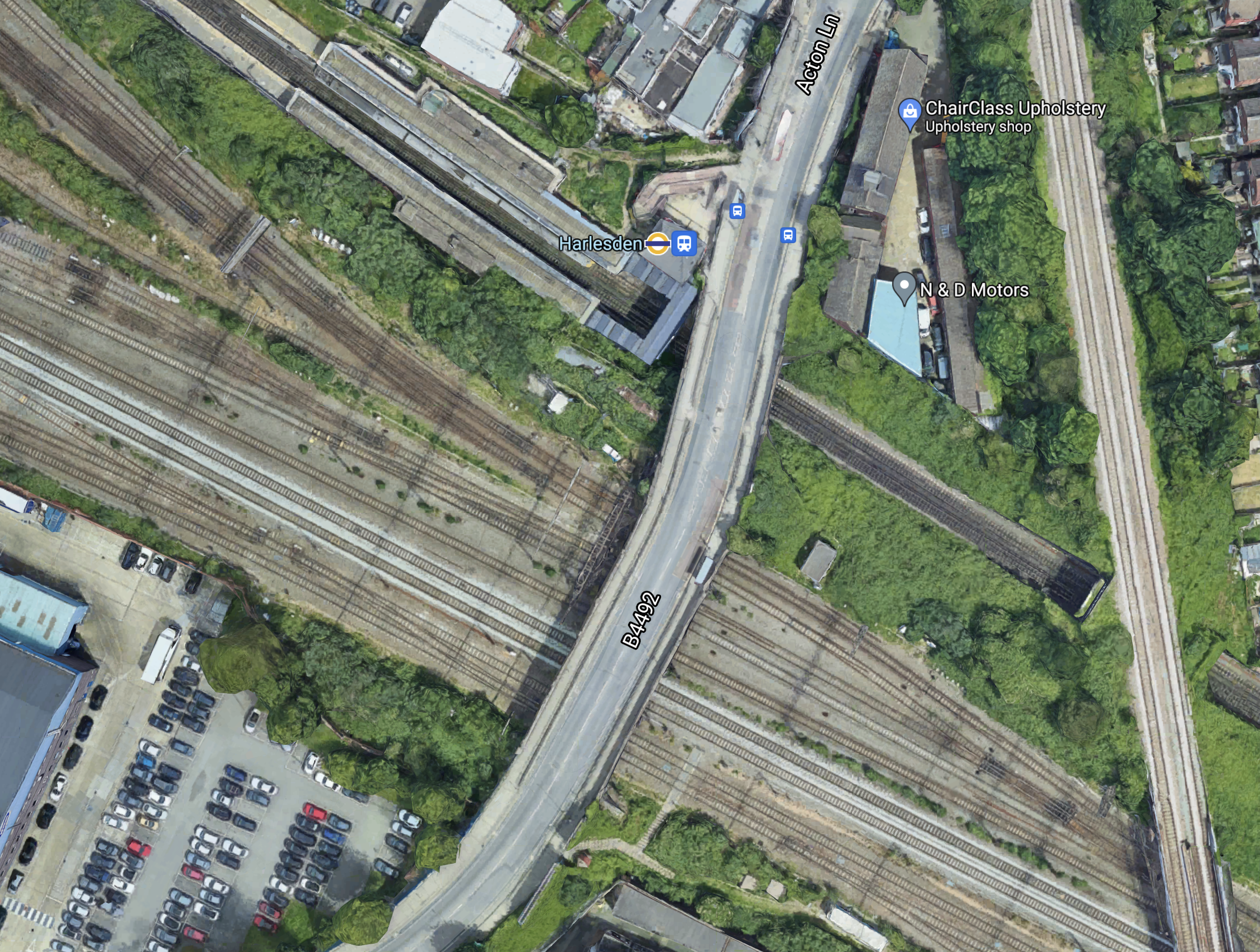
Note.
- The Bakerloo Line/Watford DC Line running North-West/South-East through Harlesden station.
- The West Coast Main Line in the Southern section of the map.
- The Dudding Hill Line running North-South across the map.
Platforms will be built on the Dudding Hill Line to connect that would probably be new or extended platforms in the current Harlesden station to enable interchange between the West London Orbital and the Watford DC Lines.
I also think there is a possibility that platforms could be added to the slow tracks of the West Coast Main Line, so that suburban services into London Euston can also connect to the West London Orbital Line.
It would also enable a connection between Southern’s Clapham Junction and Milton Keynes service and the West London Orbital Railway.
Looking at this from various angles, I think that an architect good at designing three-dimensional structures could develop a quality Harlesden Interchange station.
Neasden Interchange
Like Harlesden, Neasden is another possibility for a comprehensive interchange.
This Google Map shows Neasden station.
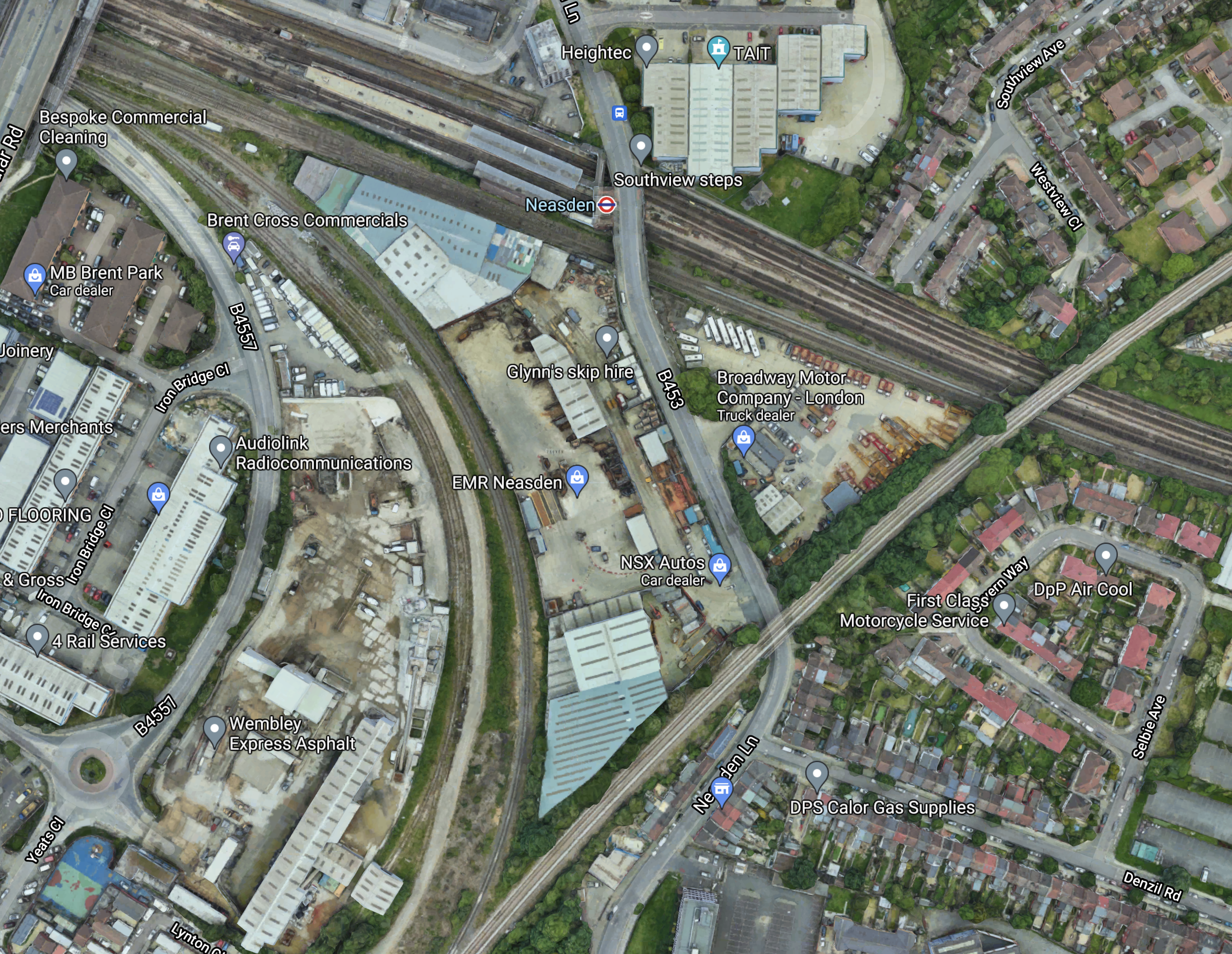
Note.
- There are a lot of lines going through Neasden station.
- The Dudding Hill Line goes across the South-East corner of the map.
- There is plenty of space in the area.
This map from cartometro.com shows the lines in the area.
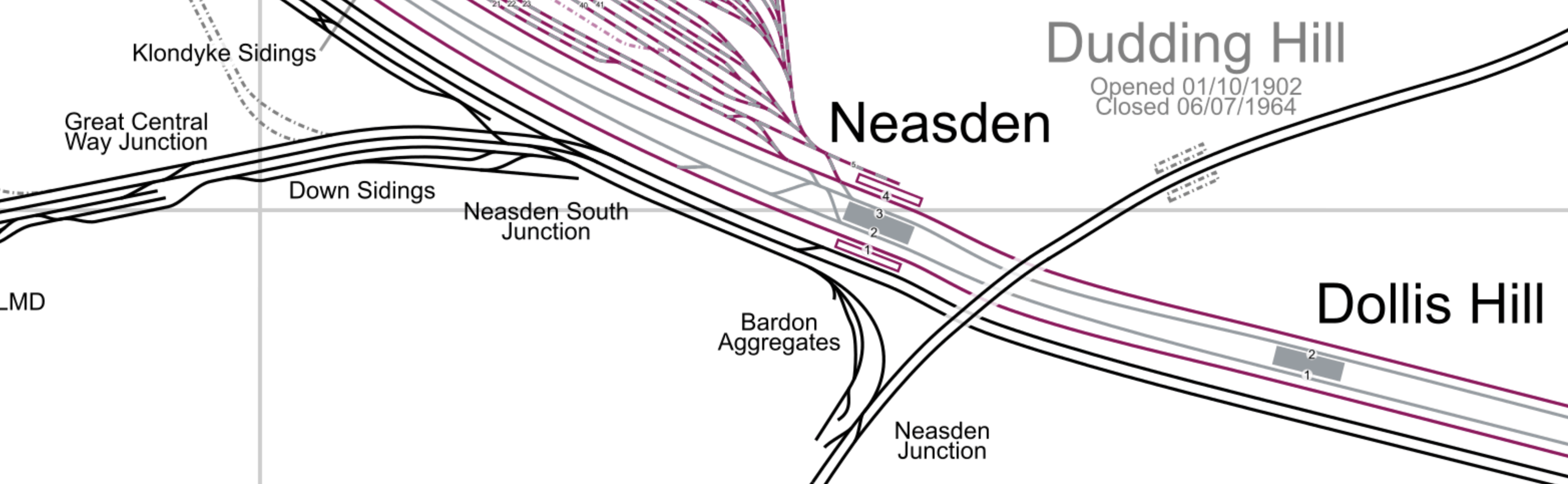
Note.
- The Dudding Hill Line is indicated by the former Dudding Hill station.
- The red tracks are Metropolitan Line tracks.
- The silver tracks are Jubilee Line tracks.
- The Southerly pair of lines through Neasden and Dollis Hill stations are Chiltern’s lines into Marylebone.
- The Chiltern tracks divide to the West of Neasden station, with the Aylesbury line following the other tracks and the Chiltern Main Line diverging to the West.
- London’s largest Underground Depot at Neasden, lies to the North-West in an area of London noted for few merits with the North Circular Road passing through.
I wonder, if the station and the depot offers a unique opportunity to offer large scale additions to London’s housing stock over the top of a rebuilt station and depot.
This Google Map shows the wider area.
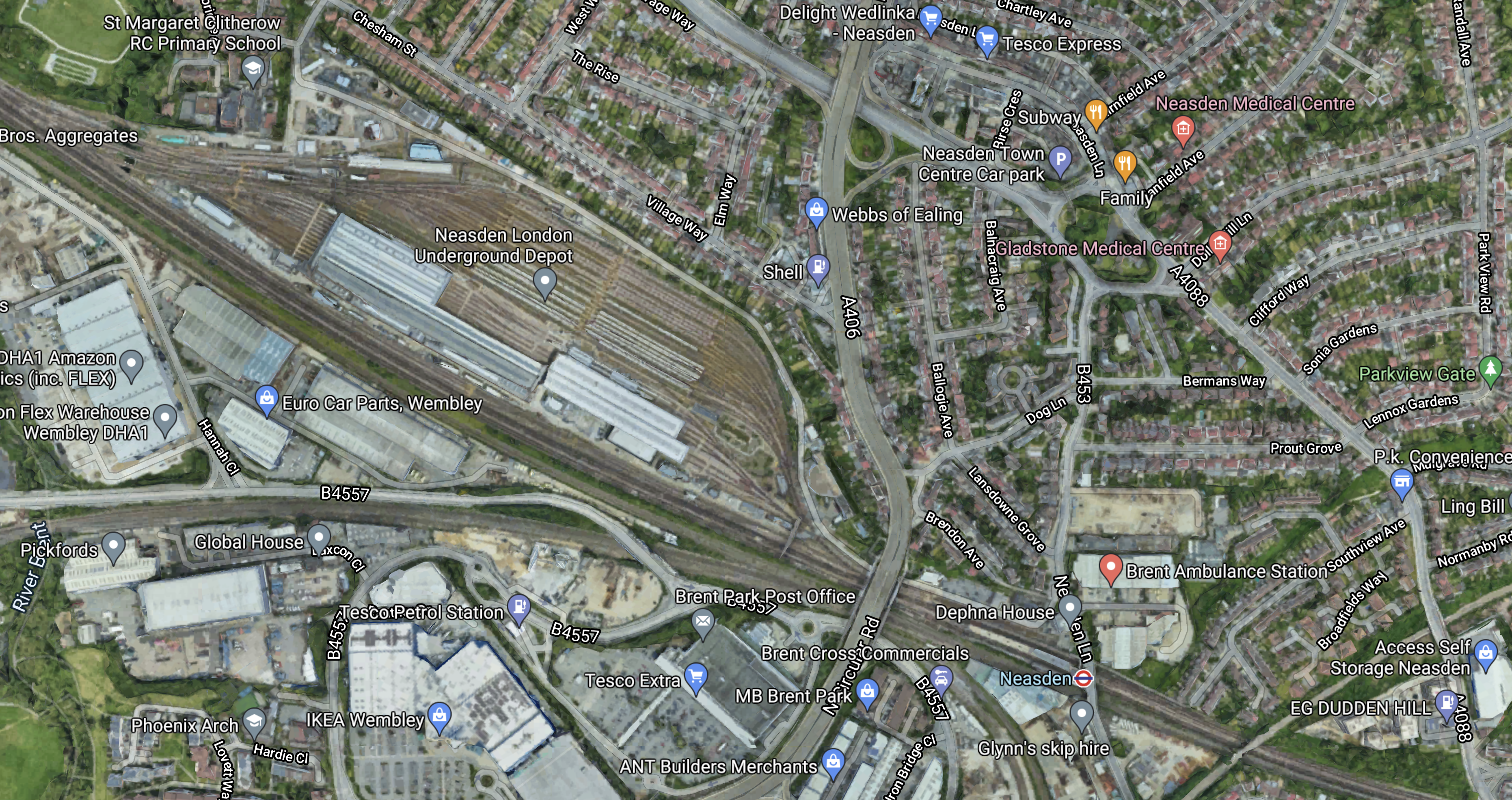
Note.
- Much of the depot appears to be open-air stabling for trains.
- The North Circular Road passes North-South between the depot and Neasden station.
- The Dudding Hill Line cuts across the South-East corner of the map.
- This corner of the map is labelled as Dudden Hill.
- According to Wikipedia, Dudding Hill is considered a more genteel spelling of Dudden Hill and could be as old as 1544.
It looks as if it would be relatively easy to develop over the top of the depot to create housing, industrial or commercial properties.
But why stop there and cover both the North Circular Road and the six tracks through Neasden station?
Neasden station could be rebuilt into a station with platforms on the following lines.
- Metropolitan Line
- Jubilee Line
- Chiltern Lines
- Dudding Hill Lines
Note.
- I estimate that Chiltern has a train about every six minutes, so some could stop.
- There might be space for a bay platform for Chiltern.
Neasden could be a major housing and transport hub.
- There could be large amounts of parking.
- Road access would be good.
- It would have good rail connections.
- It could have a bus interchange.
- London needs housing.
It might even be an alternative to Chiltern’s plan for a West Hampstead Interchange.
The Mayor of London, Transport for London and the Borough of Brent need to be bold!
Improvements To Chiltern’s Routes
Chiltern Railways have some plans that could improve services in North West London.
Using The Acton-Northolt Line
Wikipedia says this about using the Acton-Northolt Line to access new platforms at Old Oak Common station.
Upgrading the Acton–Northolt line (formerly the “New North Main Line”) to new platforms at Old Oak Common. This upgrade will also extend to London Paddington to increase capacity on the Chiltern Main Line as there is no room to expand the station at Marylebone.
This scheme has merit.
- The platforms would be connected to the Chiltern Main Line along the route of a partly-disused railway.
- The route could be double-tracked.
- There must be space for at least two new platforms.
- The new platforms could easily handle four tph.
- There may be a case for some new stations.
The scheme could add valuable extra capacity for Chiltern.
A Chiltern Metro
Wikipedia says this about a proposed metro service between Marylebone and West Ruislip stations.
- The Metro would have a frequency of four tph.
- It would call at Wembley Stadium, Sudbury & Harrow Road, Sudbury Hill Harrow, Northolt Park and South Ruislip.
- The service would require a reversing facility at West Ruislip.
- There would need to be passing loops at Sudbury Hill Harrow, and Wembley Stadium.
Given that the Chiltern Metro was first proposed over a decade ago, perhaps the concept could be increased in scope.
- Housing and other developments along the route may suggest that a station further out like High Wycombe might be a better terminal.
- ERTMS in-cab digital signalling is likely to be installed at some time, which would decrease headways between trains and allow more services.
- Electrification is likely in some form before 2040 and this will improve train performance.
- If Neasden station were to be rebuilt, as a comprehensive transport and residential development, I believe that this Metro service should also call at Neasden, as it would complement the West London Orbital Railway.
I believe that a review of the Chiltern Metro may mean, that an improved version is worth building.
Improvements To The Milton Keynes And Clapham Junction Service
I feel that this service could be key in improving services between North London and South London via the West London Line and High Speed Two’s station at Old Oak Common.
Currently, this service is as follows.
- It runs between Milton Keynes and Clapham Junction stations.
- It has a frequency of one tph.
- It calls at Bletchley, Leighton Buzzard, Tring, Berkhamsted, Hemel Hempstead, Watford Junction, Harrow & Wealdstone, Wembley Central, Shepherd’s Bush, Kensington (Olympia), West Brompton and Imperial Wharf stations.
- The service used to extend to South Croydon via Wandsworth Common, Balham, Streatham Common, Norbury, Thornton Heath, Selhurst and East Croydon.
- It uses Class 377 trains.
- It shares parts of the route with the London Overground.
I also think it has various issues and questions with respect to the future.
- The Class 377 trains are only 100 mph units, whereas the outer suburban trains on the West Coast Main Line are 110 mph Class 350 trains, which will soon be replaced by 110 mph Class 730 trains. Do the slower trains cause timetabling problems?
- Is one tph enough?
- The route doesn’t serve High Speed Two at Old Oak Common station.
- Is the service run by the right operator?
- What is the ideal Southern terminal?
These are my thoughts on the various issues.
The Service As A North-South Link
A friend, who lives in South London has told me, that if you go to an event at Wembley stadium the route is busy.
On the other hand, I’ve used it at midday on a Tuesday and found the trains empty.
But developed properly it could connect the following.
- Milton Keynes Central
- Bletchley for the East West Rail Link
- Watford for the West Coast Main Line to the North
- Wembley Central for Wembley Stadium and other entertainments
- Willesden Junction for the North London Line
- Hythe Road for High Speed Two, Crossrail and the Great Western Railway
- Shepherd’s Bush for the shopping.
- Clapham Junction for most of South London and the South of England
It would be a very useful cross-London route to complement Thameslink and the East London Line.
The Frequency
The current Milton Keynes and Clapham Junction has a frequency of one tph.
This may be enough for some parts of the route, as other services also provide services.
But many would argue, that perhaps South of Watford Junction, the service needs to be increased to connect the area to Old Oak Common and Clapham Junction.
I feel that High Speed Two, Crossrail and the Great Western Railway give so much connectivity, that between Clapham Junction and Willesden Junction needs a frequency of at least eight tph.
As the North London Line and the Watford DC Line are working at a frequency of four tph, this could indicate that a four tph direct service Watford Junction and Clapham Junction be ideal. Perhaps, it could continue North to Milton Keynes with a frequency of two tph.
The Trains
I am absolutely certain, that the full service needs to be operated by dual voltage trains, that are capable of running at 110 mph.
The Class 350/1 trains of West Midlands Trains would probably be ideal for the full service.
- They are dual voltage trains.
- They are 110 mph trains.
- They have a long distance interior.
They are being replaced with new Class 730 trains, so would be available.
If some services were running only as far North as Watford Junction, these could be either Class 378 or Class 710 trains of the London Overground.
The Connection To The West London Line And High Speed Two
This map from Wikipedia by Cnbrb shows the latest iteration of the lines at Old Oak Common station.
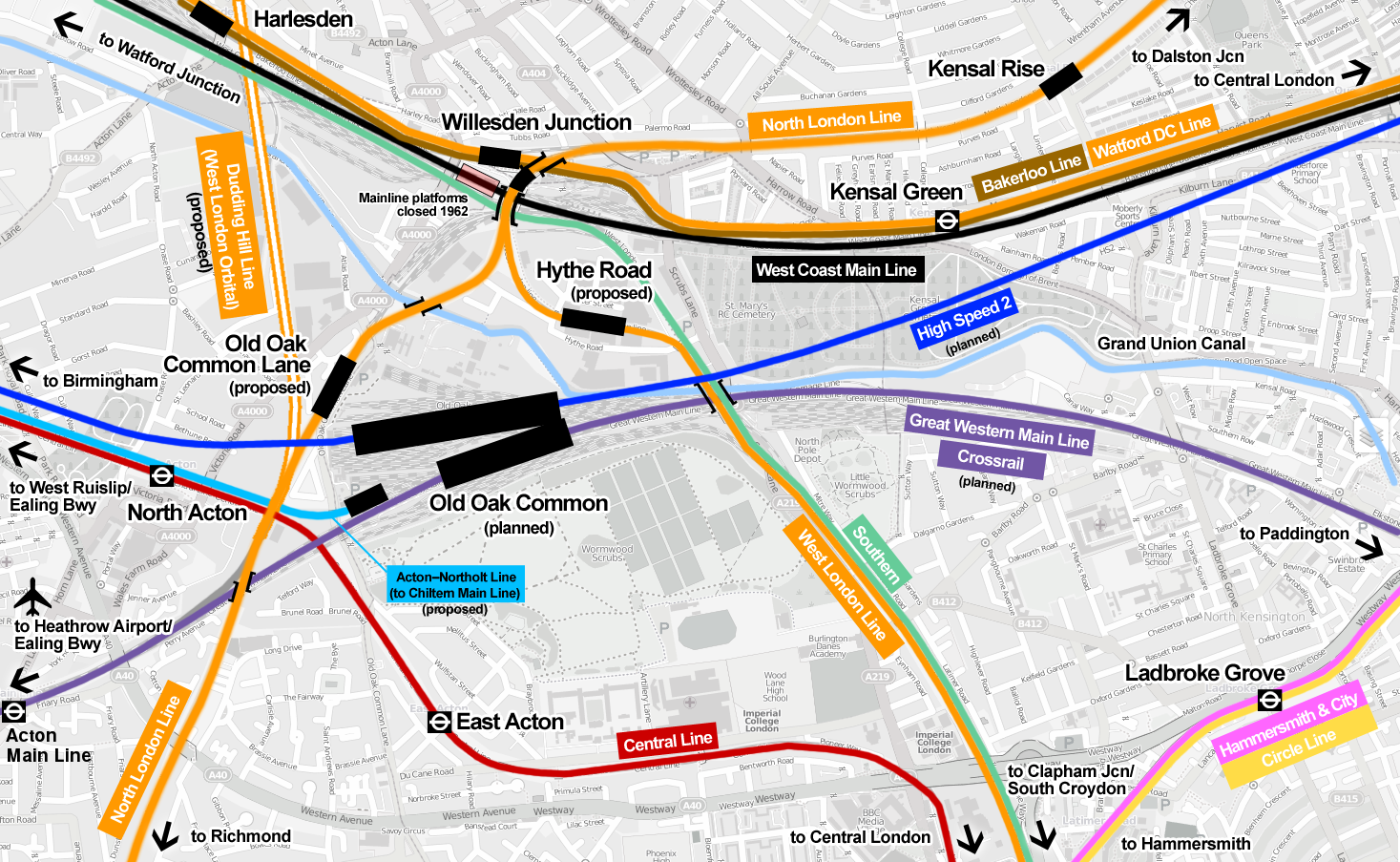
Note.
- The green route is taken by the Milton Keynes and Clapham Junction trains.
- The bright blue is High Speed Two.
- The purple is Crossrail.
- The orange is the Overground
- Hythe Road station is proposed for the West London Line to connect to Old Oak Common station for High Speed Two.
- Hythe Road station will have a bay platform to turn trains from the South.
- Old Oak Common Lane station is proposed for the North London Line to connect to Old Oak Common station for High Speed Two.
But where is the connection between the Milton Keynes and Clapham Junction service and Old Oak Common station for High Speed Two?
- Access from the South is not a problem as the Overground can be used to Hythe Road station.
- Extra services from the South can be run to and from the bay platform at Hythe Road station.
- Access from the East is not a problem as the Overground can be used to Hythe Road station.
- How do passengers go between say Wembley Central and Heathrow?
In addition for access from the West is the Overground can be used to Old Oak Common Lane station.
But as things stand at the moment the Milton Keynes and Clapham Junction service bypasses Hythe Road station and the only ways to go from Milton Keynes to Old Oak Common station for either High Speed Two, Crossrail or the Great Western is to do one of the following.
- Change to the Watford DC Line at Watford Junction, Harrow & Wealdstone or Wembley Central and then change to the Overground at Willesden Junction for either Old Oak Common Lane or Hythe Road station.
- Continue South to Shepherd’s Bush station, cross over to the other platform and then come back to Hythe Road station.
- Go via Euston station. OK for High Speed Two, but not for Crossrail or the Great Western.
They cannot be serious!
I hope that there is a cunning plan to enable the Milton Keynes and Clapham Junction service to connect.
Whilst on the subject of connections at Old Oak Common, where is the promised connection of Crossrail to the West Coast Main Line?
Were all these connections just kicked into the long grass and quietly forgotten, as they were deemed too difficult and/or expensive?
I think serious questions need to be asked about the design of Crossrail and High Speed Two at Old Oak Common.
Why weren’t Crossrail and High Speed Two designed to connect directly to the London Overground at Willesden Junction station perhaps by the use of a North South people mover serving the following lines?
- Bakerloo, Watford DC, West Coast Main and West London Orbital Lines at a rebuilt Harlesden station.
- London Overground at the high-level Willesden Junction station.
- High Speed Two
- Crossrail and the Great Western Railway
- The new Chiltern platforms.
- Central Line at East Acton station.
Note.
- Hythe Road and Old Oak Common stations would not be needed.
- The Milton Keynes and Clapham Junction service would call additionally at the rebuilt Harlesden station.
The current design of Old Oak Common stinks like a horse designed by a committee!
The Northern Terminal
I suggested earlier that some trains use Watford Junction and others use Milton Keynes Central.
Both stations have the capacity and the connectivity.
The Southern Terminal
In the last ten years, South Croydon, East Croydon and Clapham Junction have been used as the Southern terminal.
Thameslink seems to have chosen its various terminals to satisfaction of the travelling public, so perhaps the same method or personnel should be used.
The Operator
The Gibb Report said that this service should be transferred to the London Overground and I wrote about this proposal in Gibb Report – East Croydon – Milton Keynes Route Should Be Transferred To London Overground.
This is one suggestion, but I do wonder, if it should be transferred to West Midlands Trains and run in conjunction with their West Coast Main Line services.
- The service needs 110 mph trains.
- Timetabling and operation should be easier.
- London Overground trains don’t have a long-distance interior.
On the other hand, trains running between Watford Junction and Clapham Junction would probably be better if they were London Overground trains.
Conclusion
I believe that by using the current network and some modern trains and signalling, the passenger services to the West of the capital can be substantially improved.
Does Harlow Need An Improved Train Service?
I ask this question, because I am increasingly seeing articles like this one on My London, which is entitled The Large Town Just Outside London Desperate For A London Underground Station.
The town is Harlow.
This Google Map shows the West Anglia Main Line, as it runs through the North of the town.
Note.
- Harlow Town station towards the South West of the map.
- Harlow Mill station towards the North East of the map.
- The West Anglia Main Line running between the two stations.
On the face of it the town seems well-served by the trains.
Harlow Town Station
This Google Map shows Harlow Town station to a larger scale.
Note.
- The station has four platforms.
- The station has full step-free access.
- The station has 697 parking spaces with 18 fully accessible spaces.
The station was built in the 1950s and is a Grade II Listed building.
Train services at the station are as follows.
- Stratford and Bishops Stortford – 2 tph – via Lea Bridge, Tottenham Hale, Waltham Cross, Cheshunt, Broxbourne and Sawbridgeworth
- London Liverpool Street and Cambridge North – 1 tph – via Tottenham Hale, Cheshunt, Broxbourne, Bishop’s Stortford, Audley End, Whittlesford Parkway and Cambridge
- London Liverpool Street and Cambridge North – 1 tph – via Tottenham Hale, Cheshunt, Broxbourne, Roydon, Sawbridgeworth, Bishop’s Stortford, Stansted Mountfitchet, Elsenham, Newport, Audley End, Great Chesterford, Whittlesford Parkway, Shelford and Cambridge
- London Liverpool Street and Stansted Airport – 1 tph – via Tottenham Hale
- London Liverpool Street and Stansted Airport – 1 tph – via Tottenham Hale and Stansted Mountfitchet
Note.
- tph is trains per hour
- The Stansted services are fast services and take 29 minutes between London Liverpool Street and Harlow Town.
- The other services seem to take a few minutes longer.
- London Liverpool Street or Stratford and Tottenham Hale both get six tph.
- Bishop’s Stortford gets a four tph service from Harlow Town.
- The two Cambridge stations only get two tph.
Harlow Town station has a fairly good service, but it could probably be improved.
Harlow Mill Station
This Google Map shows Harlow Mill station to a larger scale.
Note.
- The station has two platforms.
- The station has step-free access to the London-bound platform only.
- The station has 29 parking spaces with 1 fully accessible space.
The station was built in the 1840s and gets about 13 % of the passengers compared to Harlow Town station.
Train services at the station are as follows.
- Stratford and Bishops Stortford – 1 tph – via Lea Bridge, Tottenham Hale, Waltham Cross, Cheshunt, Broxbourne and Sawbridgeworth
- London Liverpool Street and Cambridge North – 1 tph – via Tottenham Hale, Cheshunt, Broxbourne, Roydon, Sawbridgeworth, Bishop’s Stortford, Stansted Mountfitchet, Elsenham, Newport, Audley End, Great Chesterford, Whittlesford Parkway, Shelford and Cambridge
Note.
- tph is trains per hour
- London Liverpool Street or Stratford and Tottenham Hale both get only two tph.
- Bishop’s Stortford gets two tph service from Harlow Mill.
- The two Cambridge stations only get one tph.
Unless you lived or worked nearby, I doubt you would be likely to use Harlow Mill station.
Recent And Planned Improvements
These improvements are planned and it is very unlikely they won’t happen.
Class 710 Trains
London Overground now runs new four-car Class 710 trains between London Liverpool Street and Cheshunt.
- Each has 189 seats and can accept 489 standing passengers.
- Busy services to Cheshunt will probably are pair of trains.
- There are four tph between Cheshunt and London.
- Will the trains shave a few minutes from journey times?
This massive increase in capacity and train quality must attract some passengers to change to and from the London Overground at Cheshunt.
Class 720 Trains
Greater Anglia has 133 new five-car Class 720 trains on order.
- Each has 540 seats and can accept 145 standing passengers.
- They are 100 mph trains.
- Busy services through Harlow will probably be a pair of these trains.
These new trains will be a massive increase in capacity and should attract more passengers to the route.
Class 745 Trains
Greater Anglia has recently introduced ten new twelve-car Class 745 trains on Stansted Express services.
- Each has 767 seats.
- They are 100 mph trains.
- They run a two tph service between Harlow Town and London Liverpool Street station and Stansted Airport.
These new trains should attract more passengers to the route.
Crossrail
Services through Harlow will connect to Crossrail at both London Liverpool Street and Stratford.
Will this mean that some passengers will switch from the Victoria Line to Crossrail for their onward journeys?
- Crossrail will have more capacity than the Victoria Line.
- Bond Street, Canary Wharf, Heathrow, Paddington and West London will be easier by Crossrail.
- Victoria and Waterloo will probably be easier by the Victoria Line.
- London Liverpool Street station’s new connection to the Northern Line will give easier access to parts of South London.
- London Liverpool Street station will have much improved step-free connections to all London Underground lines.
Crossrail will certainly change the way many people travel between Harlow and London.
Four Lines Modernisation
This page on the Transport for London web site explains the Four Lines Modernisation. This is the first paragraph.
We’re transforming the Circle, District, Hammersmith & City and Metropolitan lines. When the work is done we’ll be able to run trains more frequently and reliably to make journeys faster and more comfortable.
The project should increase Peak Hour capacity by 33 %.
This will benefit those who change trains at London Liverpool Street between the West Anglia Main Line and the Circle and Metropolitan Lines.
Possible Improvements
These are possible improvements that may happen.
Crossrail 2
It is unlikely, that a start will be made on Crossrail 2 in the near future.
Victoria Line Improvements
The Victoria Line will continue to do, what it has done reliability for over fifty years.
But there could be improvements.
- Walthamstow Central station will have an additional step-free entrance.
- Highbury and Islington station will become a full step-free station.
- Oxford Circus station will be expanded and become a full step-free station.
I also suspect that engineers will find a way to increase the frequency to forty tph.
Four Tracks On The West Anglia Main Line
There are two reasons for four-tracking sections of the West Anglia Main Line.
- To separate Crossrail 2 trains from fast expresses to Stansted and Cambridge.
- To speed up services to and from Stansted Airport.
However four-tracking the route between Tottenham Hale and Broxbourne stations would probably be very beneficial.
- Stansted Airport and Cambridge services could be speeded up.
- Extra services could be run on the West Anglia Main Line.
- It could make it easier to extend the Overground from Cheshunt.
Four-tracking will be needed for Crossrail 2, so there is surely the possibility, that it could be done earlier to bring benefits to those living along the Lea Valley.
ERTMS Signalling On The West Anglia Main Line
ERTMS Signalling could speed up services and increase their number on the West Anglia Main Line.
It might also enable four-tracking, which would be very disruptive to both train services and road traffic to be delayed.
Station Improvements On The West Anglia Main Line
The stations between London Liverpool Street and Cambridge are a poor bunch with only Tottenham Hale, Northumberland Park, Meridian Water, Waltham Cross, Broxbourne, Harlow Town, Bishop’s Stortford and Audley End having full step-free access.
Some of the other stations need refurbishment and step-free access.
As step-free access will be needed for Crossrail 2, why not setup a rolling program of station improvements.
Level Crossings On The West Anglia Main Line
There are four level crossings on the route to the South of Broxbourne, including three at Cheshunt, Enfield Lock and Brimsdown stations.
They all need to be removed for safety reasons.
New Trains And Capacity
The new trains being rolled out by Greater Anglia and the London Overground will certainly have effects on the services on the West Anglia Main Line.
- The better performance could speed up services by a few minutes.
- The capacity increase on the new trains should be welcome.
- The trains will be of better quality than those they replace.
I also wonder, if the better quality of the trains and their facilities will surely attract more passengers. I suspect the train companies hope so!
Extending The London Overground
This map from cartometro.com shows Cheshunt station and Cheshunt Junction just to the South.
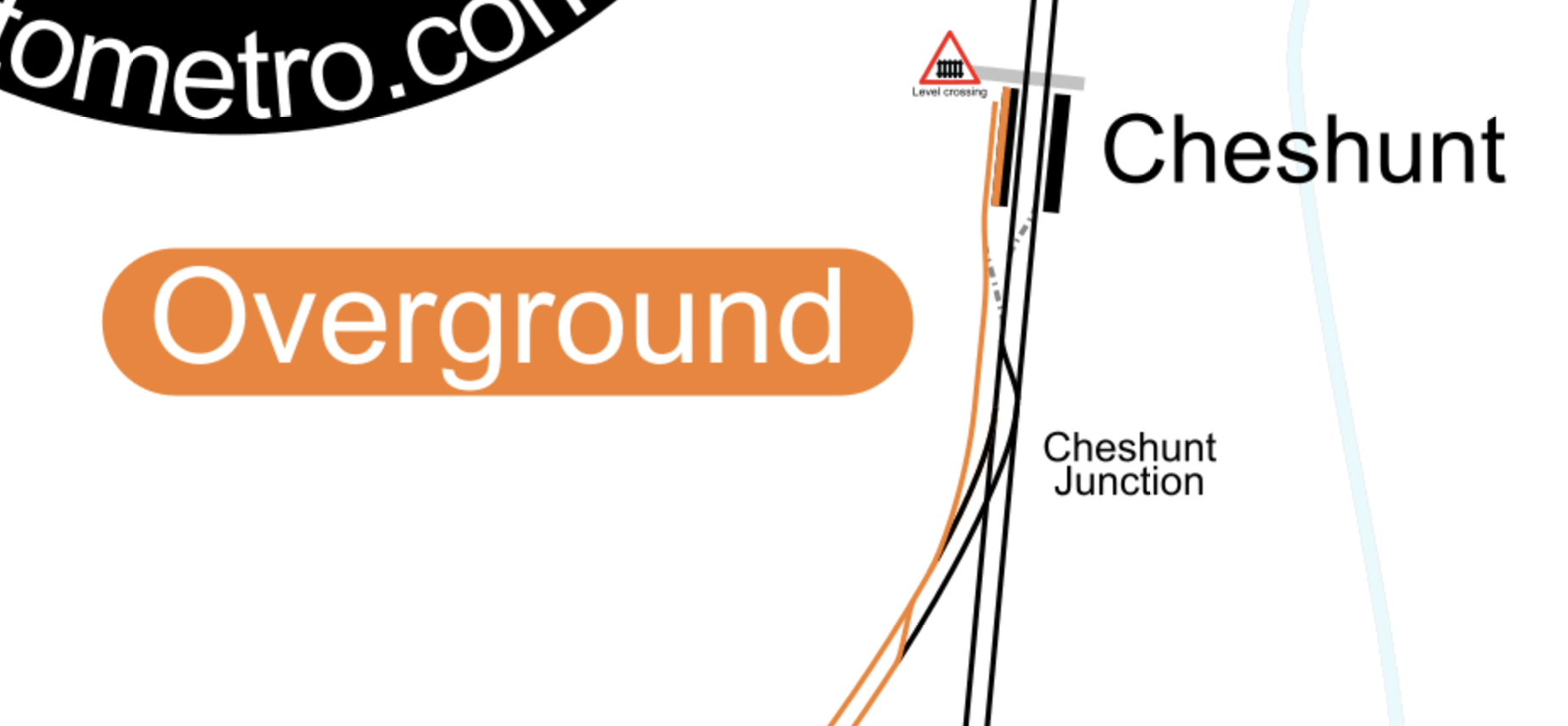
Note.
- The two platforms on the West Anglia Main Line and the single bay platform for the London Overground.
- The level crossing to the North of Cheshunt station.
- The comprehensive Cheshunt Junction which trains to go between the Southbury Loop and the West Anglia Main Line.
Cheshunt Junction is occasionally used by Greater Anglia trains to access the Southbury Loop.
It certainly seems to me, that the Overground could connect to the West Anglia Main Line.
- All trains from London going to the North of Cheshunt could use Platform 2.
- All trains to London coming from the North of Cheshunt could use Platform 1.
- The bay Platform 3 would still be available to turn local trains on the Southbury Loop.
- An extra crossover could probably be inserted to allow trains from London on the West Anglia Main Line to use Platform 3.
London Overground trains could run to a terminal further North.
Trains Between Cheshunt And London
It is worth looking at the number of trains between Cheshunt and London.
- Greater Anglia -2 tph – London Liverpool Street and Hertford East via West Anglia Main Line
- Greater Anglia – 2 tph – Stratford and Bishop’s Stortford via West Anglia Main Line
- Greater Anglia – 2 tph – London Liverpool Street and Cambridge North via West Anglia Main Line
- Greater Anglia – 4 tph – London Liverpool Street and Stansted Airport via West Anglia Main Line
- London Overground – 4 tph – London Liverpool Street and Cheshunt via the Southbury Loop
This means that the West Anglia Main Line has 10 tph and the Southbury Loop has 4 tph.
This suggests possibilities.
- Move some services from the West Anglia Main Line to the Southbury Loop.
- Extend some or all of the London Overground trains to the North of Cheshunt.
- Stations like Bishop’s Stortford, Broxbourne, Harlow, Hertford East and Ware could get extra services to London.
- The new services would connect to extra stations without changing trains.
Very little new infrastructure would be required.
Bishop’s Stortford Station As A London Overground Destination
Bishop’s Stortford station has these trains to and from London.
- Greater Anglia – 2 tph – Stratford and Bishop’s Stortford
- Greater Anglia – 2 tph – London Liverpool Street and Cambridge North
- Greater Anglia – 2 tph – London Liverpool Street and Stansted Airport
Consider.
- Bishop’s Stortford station could probably easily handle up to an extra two tph.
- London Overground’s Class 710 trains only have an operating speed of only 75 mph.
- The trains may need a speed upgrade to serve Bishop’s Stortford, as their speed could slow the Cambridge and Stansted Airport expresses.
If the London Overground services ran to Bishop’s Stortford station, all the smaller stations South of Bishop’s Stortford, could travel to and from Stansted Airport with a single change.
Bishop’s Stortford station may be a possibility, as a destination of two tph on the London Overground route to London.
Broxbourne Station As A London Overground Destination
Broxbourne station has these trains to and from London.
- Greater Anglia -2 tph – London Liverpool Street and Hertford East
- Greater Anglia – 2 tph – Stratford and Bishop’s Stortford
- Greater Anglia – 2 tph – London Liverpool Street and Cambridge North
Consider.
- Broxbourne station could probably easily handle up to an extra two tph.
- As Broxbourne is only 3.2 miles and six minutes to the North of Cheshunt, the 75 mph speed of the London Overground’s Class 710 trains may not be a problem.
Broxbourne station may be a possibility, as a destination of up to two tph on the London Overground route to London.
Harlow Town Station As A London Overground Destination
Harlow Town station has these trains to and from London.
- Greater Anglia – 2 tph – Stratford and Bishop’s Stortford
- Greater Anglia – 2 tph – London Liverpool Street and Cambridge North
- Greater Anglia – 2 tph – London Liverpool Street and Stansted Airport
Consider.
- Harlow Town station could probably easilyhandle up to an extra four tph.
- If one is needed there would appear to be space for a turnback facility or an extra platform.
- As Harlow Town is only 5.4 miles and eight minutes to the North of Cheshunt, the 75 mph speed of the London Overground’s Class 710 trains may not be a problem.
If the London Overground services ran to Harlow Town station, all the smaller stations South of Harlow Town, could travel to and from Stansted Airport with a single change.
Harlow Town station may be a possibility, as a destination of up to four tph on the London Overground route to London.
Hertford East Station As A London Overground Destination
Hertford East station has these trains to and from London.
- Greater Anglia -2 tph – London Liverpool Street and Hertford East
- There is an extra tph in the Peak.
Consider.
- Hertford East station has platforms long enough for eight-car trains and may need modification to accommodate a pair of Greater Anglia’s Class 720 trains.
- Ware station would need to be remodelled to increase frequency above three tph.
- As the route from Broxbourne is on a branch line, the 75 mph speed of the London Overground’s Class 710 trains may not be a problem.
Hertford East station may be a possibility, as a destination of up to two tph on the London Overground route to London.
Conclusion
I think the best two destinations of the London Overground service to the North of Cheshunt would be Harlow and Hertford East.
- Trains could terminate at Harlow Town station to connect with Stansted Express and Cambridge trains.
- It appears that the slightly shorter Class 710 trains may have advantages when using the short platforms at Hertford East station.
Perhaps each destination should receive two tph.
- Harlow Town would be connected to the Overground.
- Passengers using stations between Hackney Downs and Cheshunt on the Southbury Loop would change at Harlow Town to and from Cambridge and Stansted Airport.
- But the biggest benefit would be that two paths on the West Anglia Main Line would be released, as the two tph to Hertford East would be using the Southbury Loop.
I feel there are possibilities to increase the number of trains on the West Anglia Main Line without adding expensive extra tracks.
Khan Pledges To Name London Overground Lines If Re-Elected
The title of this post is the same as that of this article on News Shopper.
If this is Khan’s big policy for people who use the Overground, then it is very small thinking.
It is also another pointless waste of money.
The Overground needs expansion not a rebranding exercise.
It is successful and every user has their own names for the various lines.
I shall be voting for someone who has an expansive vision for London.
Hopes For West London Orbital Railway Consultation Later This Year
The title of this post, is the same as that of this article on Ian Visits.
The title says it all about the latest thinking for the creation of the West London Orbital Railway.
- The cost/benefit ratio appears good.
- Funding appears difficult given Transport for London’s finances.
This map from the Mayor’s Transport Strategy shows the route.
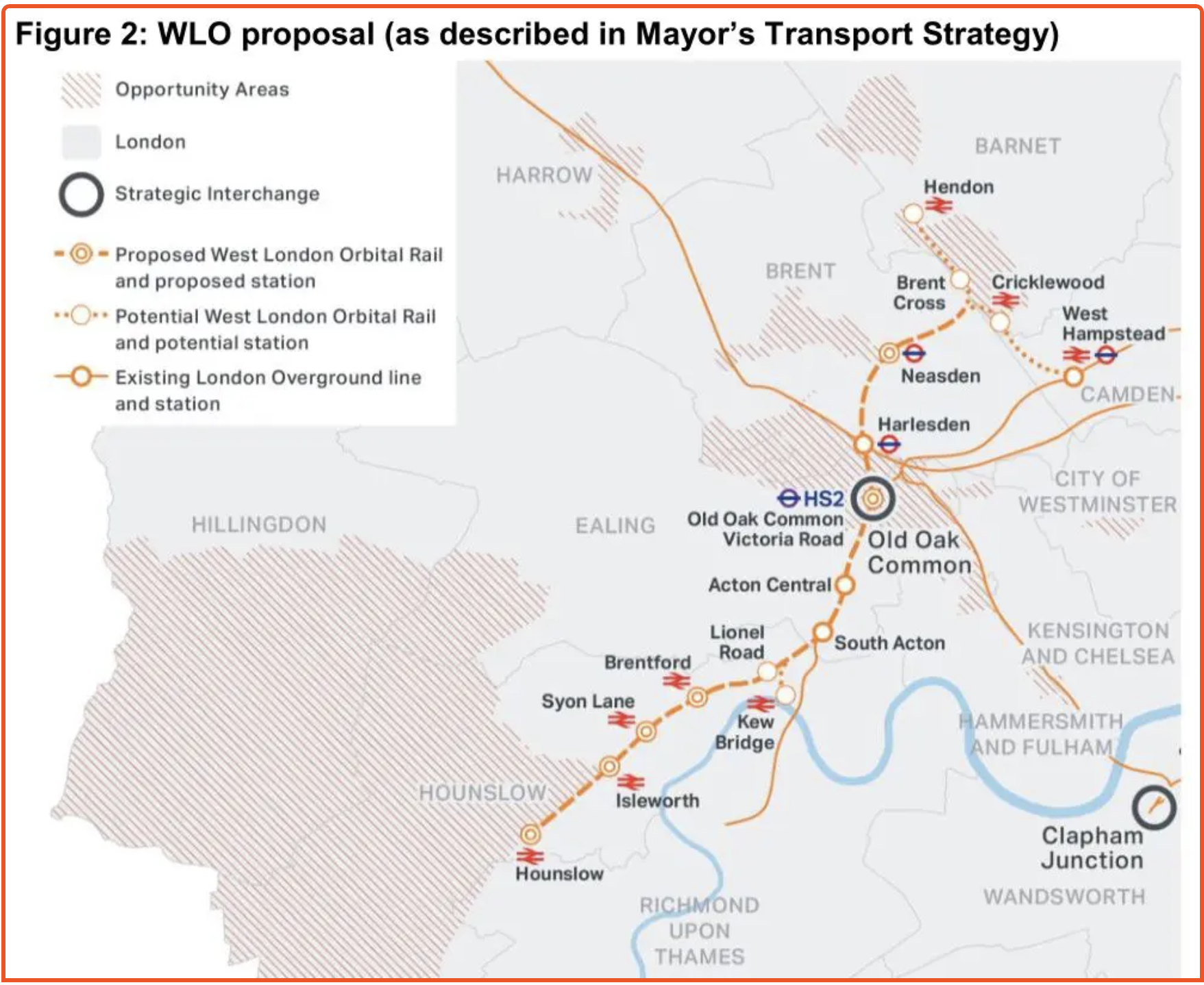
I’ve always believed that the line will give better access to Heathrow for workers and passengers, but with expansion at the Airport less likely to happen because of carbon emission issues, is this railway less likely to be created?
 The Anonymous Widower