Macclesfield Station And High Speed Two
Today, I went to Macclesfield station.
In the latest iteration of High Speed Two, two new destinations were added to the High Speed Two Network; Macclesfield and Lancaster.
These pictures show Macclesfield station.
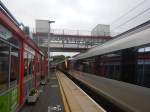
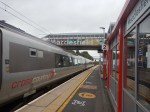

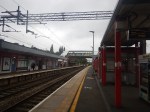
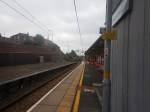
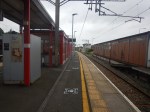
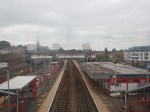
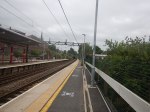
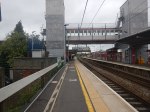
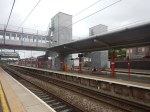
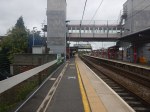
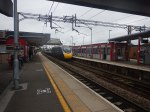
It is a modern station, with three through platforms, two bridges and some Modernist architecture from the 1970s, that could be improved.
This Google Map shows the layout of the station.
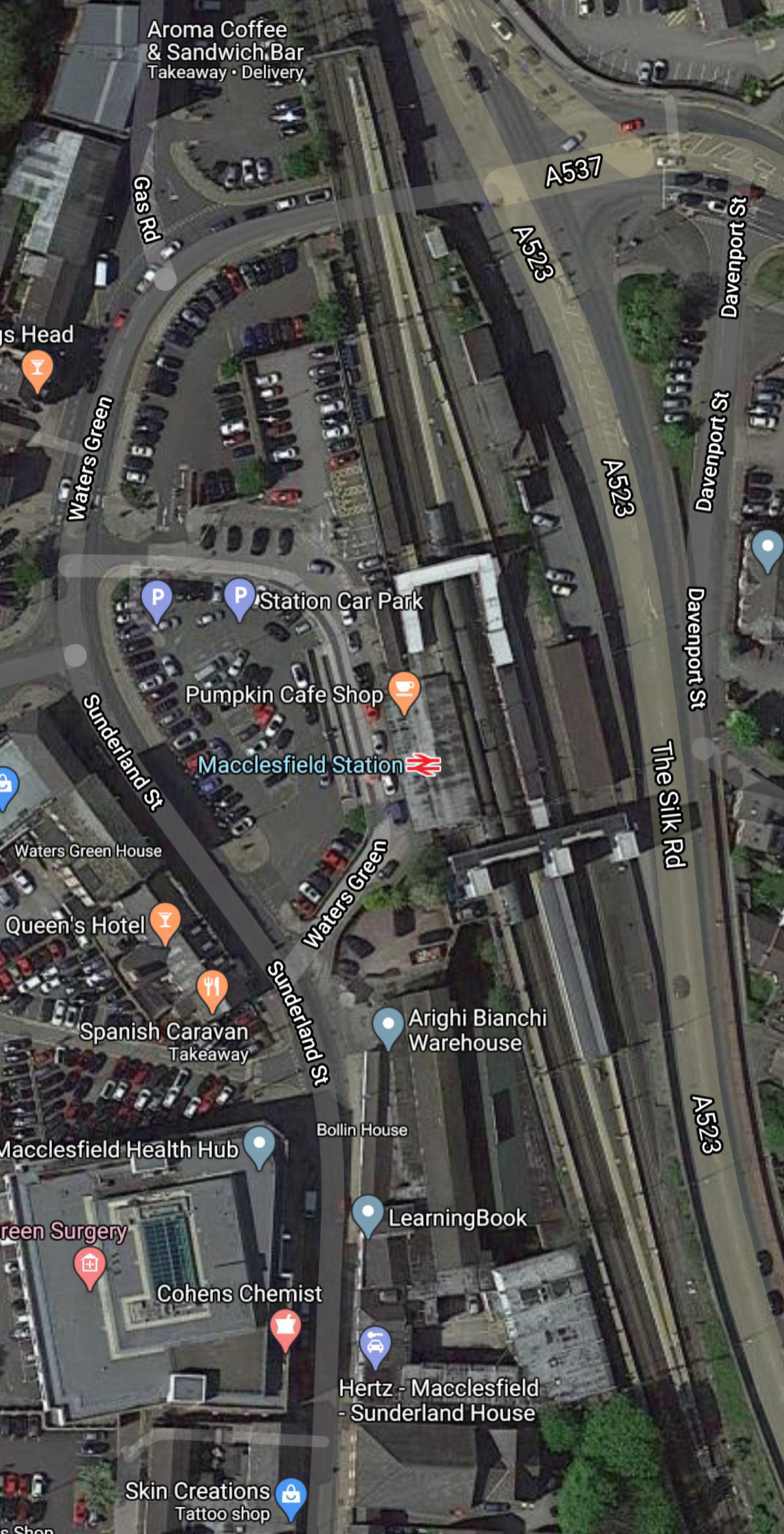
Note.
- Platform 1 is in the West and is used by trains to Stockport and Manchester Piccadilly.
- Platform 2 is in the middle and is used by trains going to Stoke, London and the South.
- Platform 3 is in the East and appears to be used a couple of times per day.
- It also appears there might have been a fourth platform.
All platforms appear capable of handling an eleven-car Class 390 train, which are over two hundred and sixty metres in length.
Is the plan to use Macclesfield as a High Speed Two terminal feasible?
Which Trains Will High Speed Two Use On Macclesfield Services?
It appears that High Speed Two will have two types of trains.
- Trains built to the European loading gauge, that will only be able to work on high lines like High Speed One and High Speed Two. Examples would be Eurostar’s Class 373 and Class 374 trains.
- Trains built to the UK loading gauge, that could also work on existing UK 125 mph routes like the East Coast, Great Western, Midland and West Coast Main Lines. Examples would be Class 800. Class 801, Class 802, Class 390 and Class 745 trains.
The second type, which are referred to, as class-compatible trains will be used to Macclesfield, as these services will share track with Class 390 and other trains, that have been or will be built to the smaller UK loading gauge.
Will Classic-Compatible High Speed Two Trains Fit Into Macclesfield Station?
Currently, every hour, one eleven-car Class 390 train calls in Macclesfield station in both directions, as they provide one of Avanti \west Coast’s three trains per hour (tph) between London Euston and Manchester Piccadilly stations.
The current trains are sixty metres longer than the proposed classic-compatible High Speed Two trains, that could be terminating in Macclesfield station.
How Would Passengers Who Started And Finished Their Journeys In Macclesfield, Connect to Manchester?
Currently, these hourly services connect Manchester Piccadilly and Stoke stations.
- Avanti West Cost – Manchester Piccadilly and London Euston.
- CrossCountry – Manchester Piccadilly and Bournemouth
- CrossCountry – Manchester Piccadilly and Bristol
- Northern – Manchester Piccadilly and Stoke, which stops at all stations.
The characteristics would be common to all these four trains.
- Services call at Stockport, Macclesfield and Stoke stations.
- As services share tracks with a High Speed Two service, they must be reasonably fast.
- All except the Northern service are 125 mph trains.
- The Northern service is run by a 90 mph Class 323 electric train.
- As Manchester Piccadilly and Stoke via Stockport is a fully-electrified route, the trains should probably be able to take advantage.
In an ideal world should the frequency be six tph or one train every ten minutes in each direction?
Which Platforms Would Be Used To Terminate High Speed Two Services?
Trains built to the UK loading gauge could probably terminate in any of the three platforms.
But it might be advantageous to terminate all services in the same platform.
Platform 3 would be the obvious choice.
- It shares an island platform with classic services going South between Manchester Piccadilly and Stoke.
- Passengers starting their journeys in Manchester Piccadilly or Stockport could just walk across from their connecting train to the High Speed Two train.
It must surely be a possibility to make Platform 2 able to operate bi-directionally, so that all trains between Manchester Piccadilly and Stoke stations in both directions, stop in Platform 2, alongside the High Speed Two train for London and the South, that is waiting in Platform 3. The combined frequency would be eight tph. All passengers would just walk across the island platform to change trains.
Could A North-Facing Bay Platform Be Fitted Into The Northern End Of The Island Platform 2/3?
If you are going to provide a High Speed Two service to and from Macclesfield station, it needs to have superb and comprehensive connections to as many places as possible.
The station currently has four tph to Manchester Piccadilly, Stockport and Stoke, but would a North-facing bay platform with level access to the High Speed Two platform make any of the following feasible?
- Run a second local stopping service between Manchester Piccadilly and Macclesfield to give all intermediate stations two tph to High Speed Two.
- Run hourly services to places that don’t have good connections to high speed services to London and the South.
- The Stockport and Stalybridge Line could be used to connect Stalybridge and Huddersfield to High Speed Two.
- There might even be a way of creating a link between Macclesfield and Manchester Airport.
Note.
- Looking at the platform layout at Macclesfield station, fitting in a bay platform would appear to be feasible.
- The important Stockport station, which seems to have been forgotten by High Speed Two would probably have at least six tph to High Speed Two at Macclesfield station.
- The local train could be timed to arrive at Macclesfield station, a convenient time before the High Speed Two train is scheduled to depart.
The bay platform could even be part of Platform 3, if it was decided that trains stopping in Platform 3, never used the platform as a through platform. It would be Macclesfield’s version of the Clapham Kiss.
I suspect more space could be found, by moving the signal box at the end of the station.
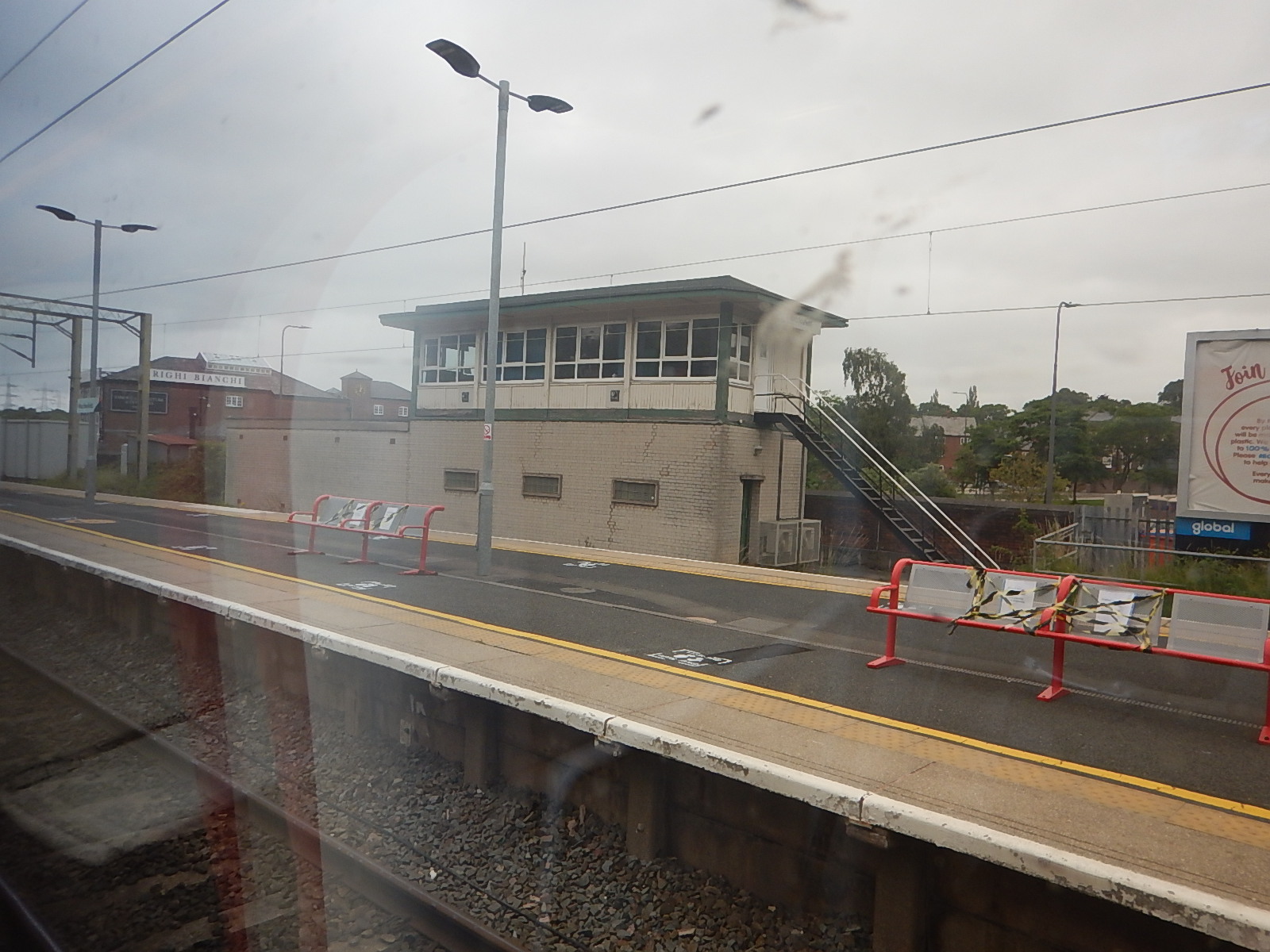
\remember that these days most signalling is controlled from centralised Rail Operation Centres.
Could High Speed Two Trains Run Between Macclesfield And Manchester Piccadilly?
As I said earlier, High Speed Two’s classic-compatible trains will be the same cross-section and shorter, than an eleven-car Class 390 train.
So the answer to my question must be yes!
- This would enable a stop at Stockport station.
- No platform lengthening would be required at Manchester Piccadilly and Stockport stations.
High Speed Two must have good reasons for using Macclesfield as a terminal.
- There are capacity issues between Macclesfield and Manchester Piccadilly stations.
- Macclesfield offers opportunities to connect to places, that are difficult to reach from Manchester Piccadilly station.
But these problems could probably be overcome by digital signalling or extension of the Manchester Metrolink.
Could More High Speed Two Services Run Between Macclesfield Station and The South?
Consider.
- I believe that Macclesfield station could handle more than an hourly High Speed Two train.
- It is a general principle, that on a metro like the London Overground or Merseyrail, that a single platform can handle up to four or even six tph.
- Four tph would surely be too high, but Macclesfield could easily handle a second classic-compatible train to and from Birmingham Curzon Street via Stoke and Stafford.
- During the inevitable works at Manchester Piccadilly station to sccomodate High Speed Two, Macclesfield could offer an alternative route, between London and Manchester.
Using Macclesfield station, as an alternative terminal for Manchester Piccadilly, builds in extra capacity for the future and offers a valuable alternative route during construction and upgrade works.
Rationalisation Between Cross Country And High Speed Two
Consider.
- In a lot of locations North of Birmingham, CrossCountry and High Speed Two seem to provide similar services between the same stations.
- Using currently proposed connections between High Speed Two and the classic network, CrossCountry’s services could run faster.
- CrossCountry’s new fleet of trains will probably be multi-mode trains, that will be very similar to the classic-compatible High Speed Two trains.
- Some of the routes used by CrossCountry’s services will have a substantial upgrade to allow higher speeds and more trains, to speed up High Speed Two services.
There must be a case for rationalisation of services.
Conclusion
The more I look at High Speed Two terminating at Macclesfield station, the more I like it.
I can see these services running from the station in the future.
- High Speed Two – Macclesfield and London Euston – One tph – This service would additionally call at Birmingham Interchange to link up with CrossCountry to the South.
- High Speed Two – Macclesfield and Birmingham Curzon Street – One tph
- CrossCountry – Macclesfield and Bournemouth, Plymouth or Reading – One tph.
- Northern and others – Macclesfield and Manchester Piccadilly via Stockport – Four-six tph
- Northern – Macclesfield and Huddersfield via Stockport and Stalybridge – Two tph
- Northern – Macclesfield and Manchester Airport – Two tph.
Obviously, this is all speculation, but Macclesfield will develop into an important rail hub to the South-East of Manchester.
Beeching Reversal – Sheaf Valley Stations
This is one of the Beeching Reversal projects that the Government and Network Rail are proposing to reverse some of the Beeching cuts.
Stations To Be Rebuilt
As you approach Sheffield station, you pass four station sites, three of which are demolished and the fourth is just a shadow of its former self.
Dore & Totley
Dean & Totley station used to have four platforms and this Google Map, shows what is left after British Rail’s vandalism in the mid-1980s.
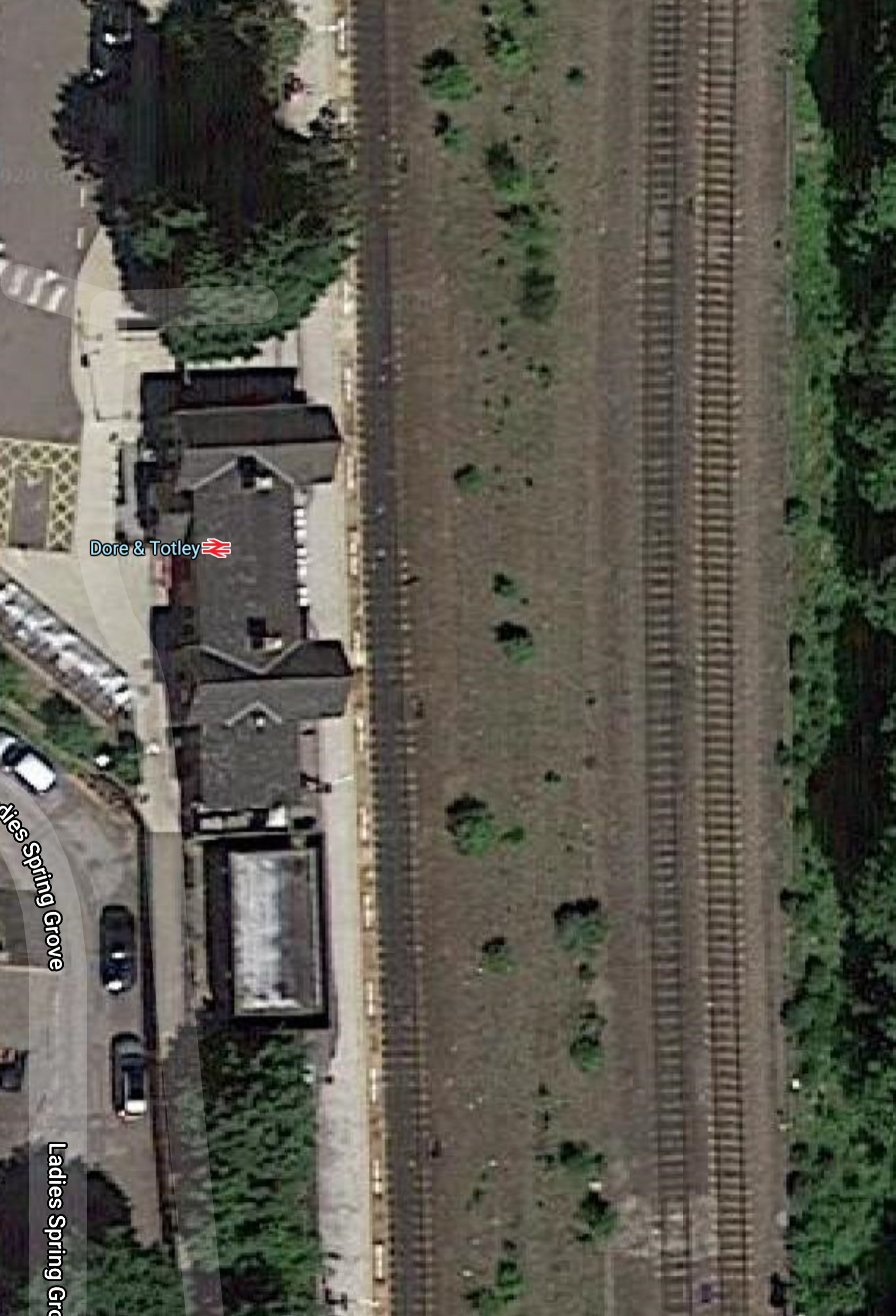
Note.
- The station has only one platform.
- The single track in the platform handles all trains to and from the Hope Valley Line.
- At present it appears to be two trains per hour (tph) in both directions.
- The two tracks at the right are the Midland Main Line.
Transport for the North wants to run four tph between Manchester Piccadilly and Sheffield through here, that will take forty minutes between the two cities.
Updates planned for the station include.
- A second platform for Manchester-bound trains.
- A new bridge with lifts.
- Platforms long enough to take a pair of Class 185 trains or a five-car Class 802 train.
- A full hourly service.
There certainly seems to be enough space for another platform and track through the middle of the station.
At some point in the near future, the two Midland Main Line tracks will be electrified, as part of the upgrade for High Speed Two.
Between Dore & Totley And Beauchief
This Google Map shows a typical section of the line between Dore & Totley and Beauchief stations.
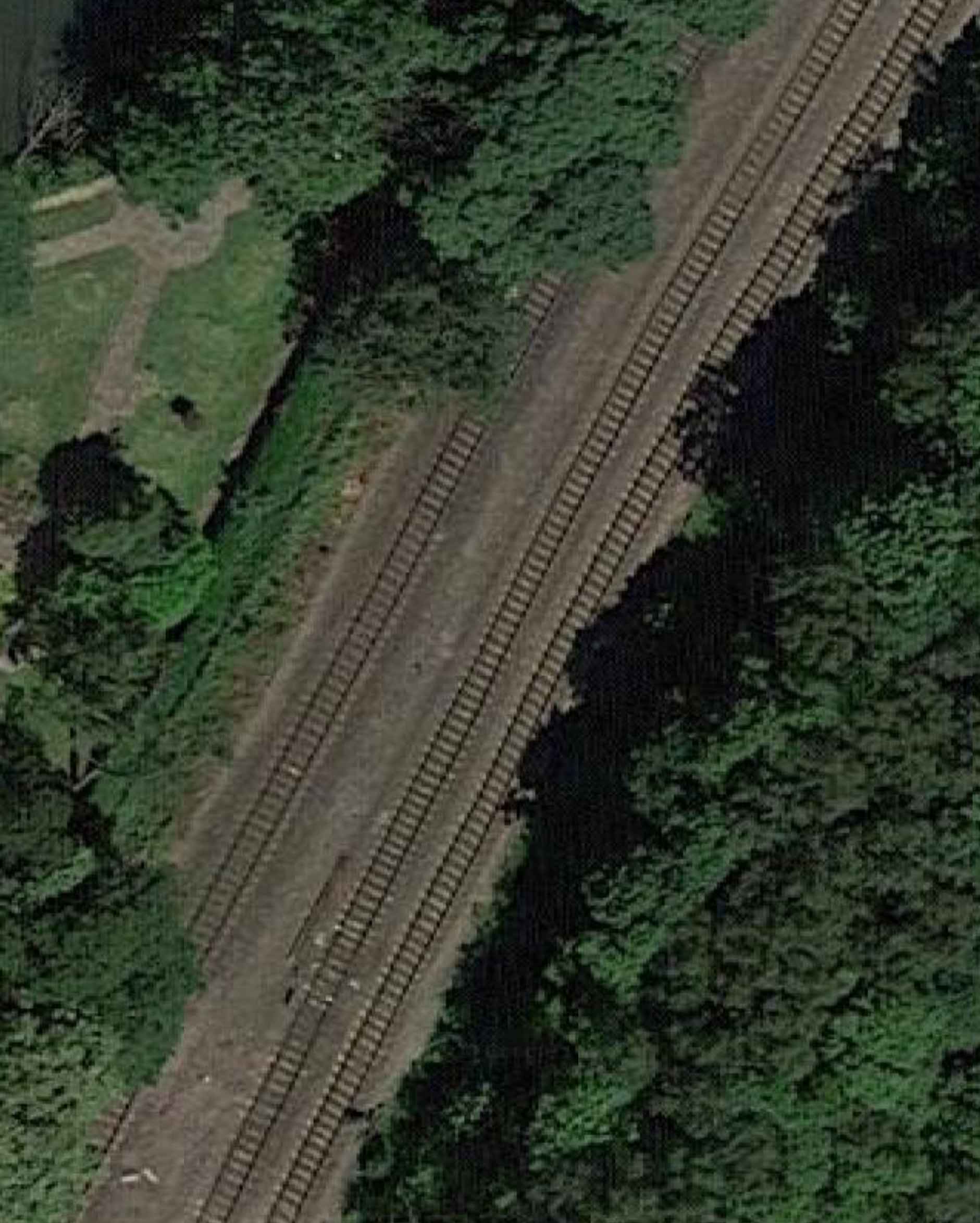
Note the two Midland Main Line tracks on the right and single-track to the Hope Valley Line on the left.
It would appear that the fourth track can be squeezed in between the single track and the Midland Main Line.
Beauchief
Beauchief station used to have four platforms before it was demolished.
This Google Map shows the station’s former location.
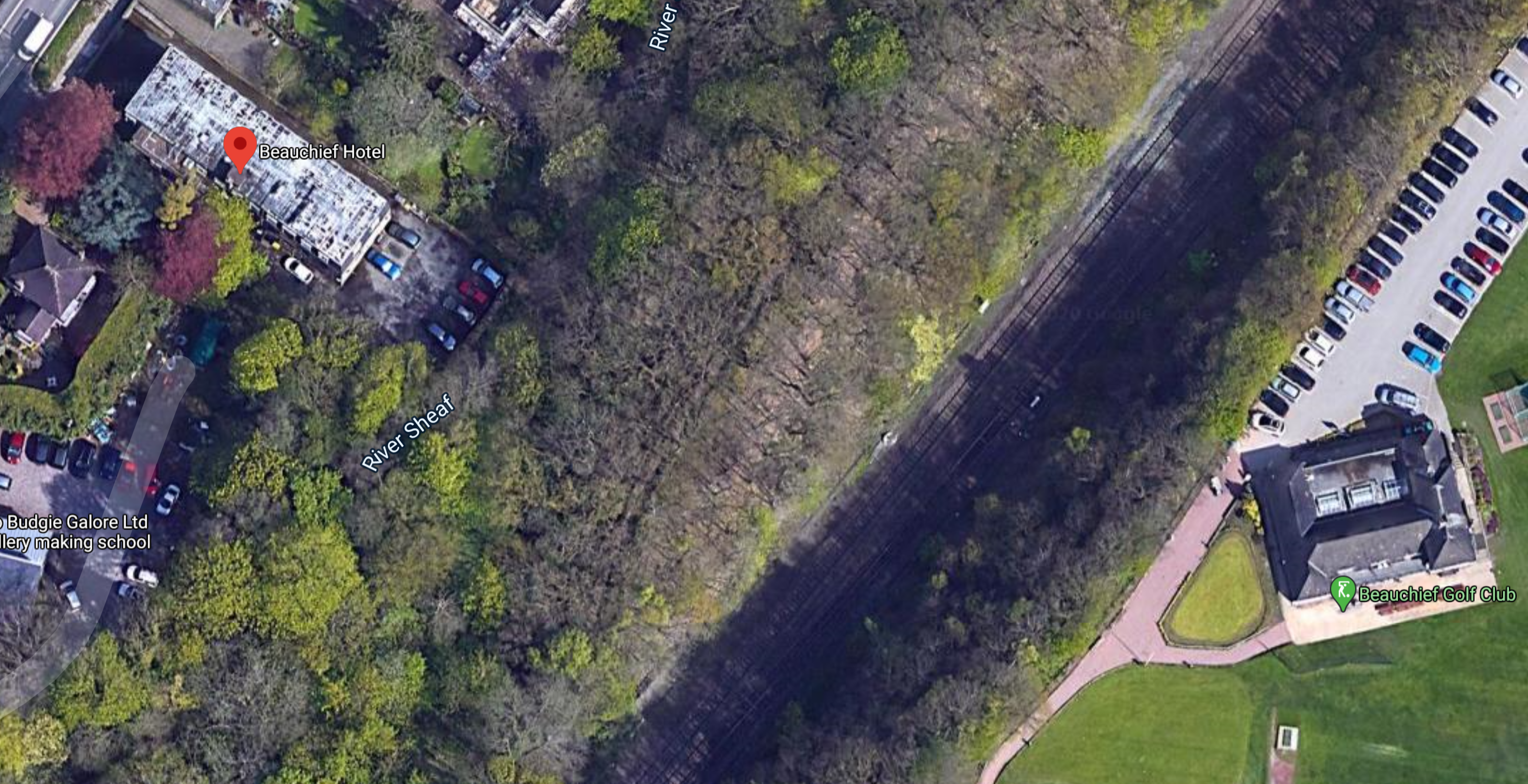
Note.
- The building with the red dot is the former Beauchief Hotel. which was by the station.
- On a larger screen you can see three tracks going into Sheffield.
I’m fairly certain that four tracks and two platforms for a station can be fitted into this narrow trackbed.
Millhouses & Eccleshall
Millhouses and Eccleshall station used to have four platforms before it was demolished.
This Google Map shows the station’s former location.
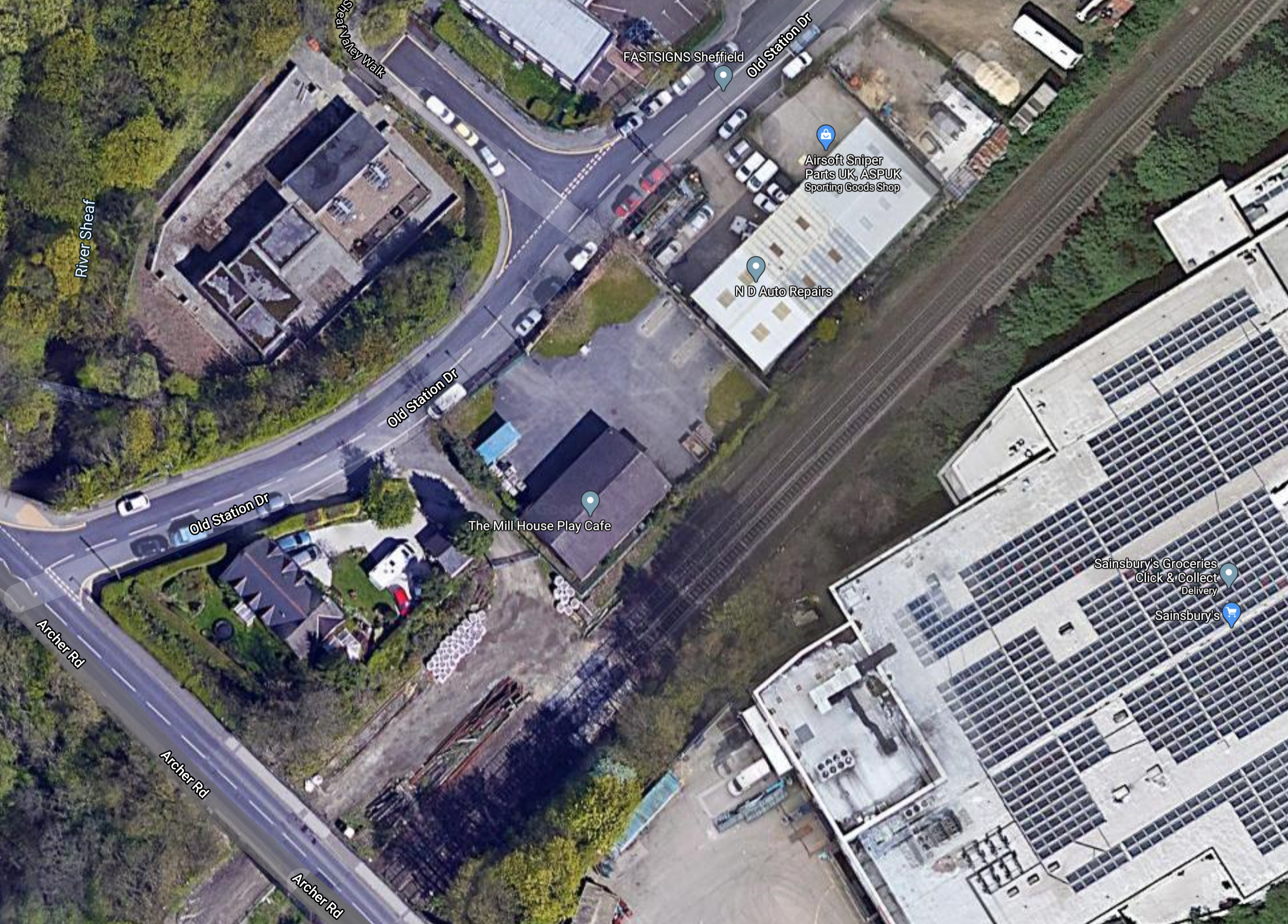
Note.
- Wikipedia says the station was accessed from the Archer Road bridge, which is in the South East corner of the map.
- It looks like there are three tracks with space for four.
- The road to the North-West of the railway is called Old Station Road.
As at Beauchief, it will be tight.
Heeley
Heeley station used to have four platforms before it was demolished.
This Google Map shows the station’s former location.
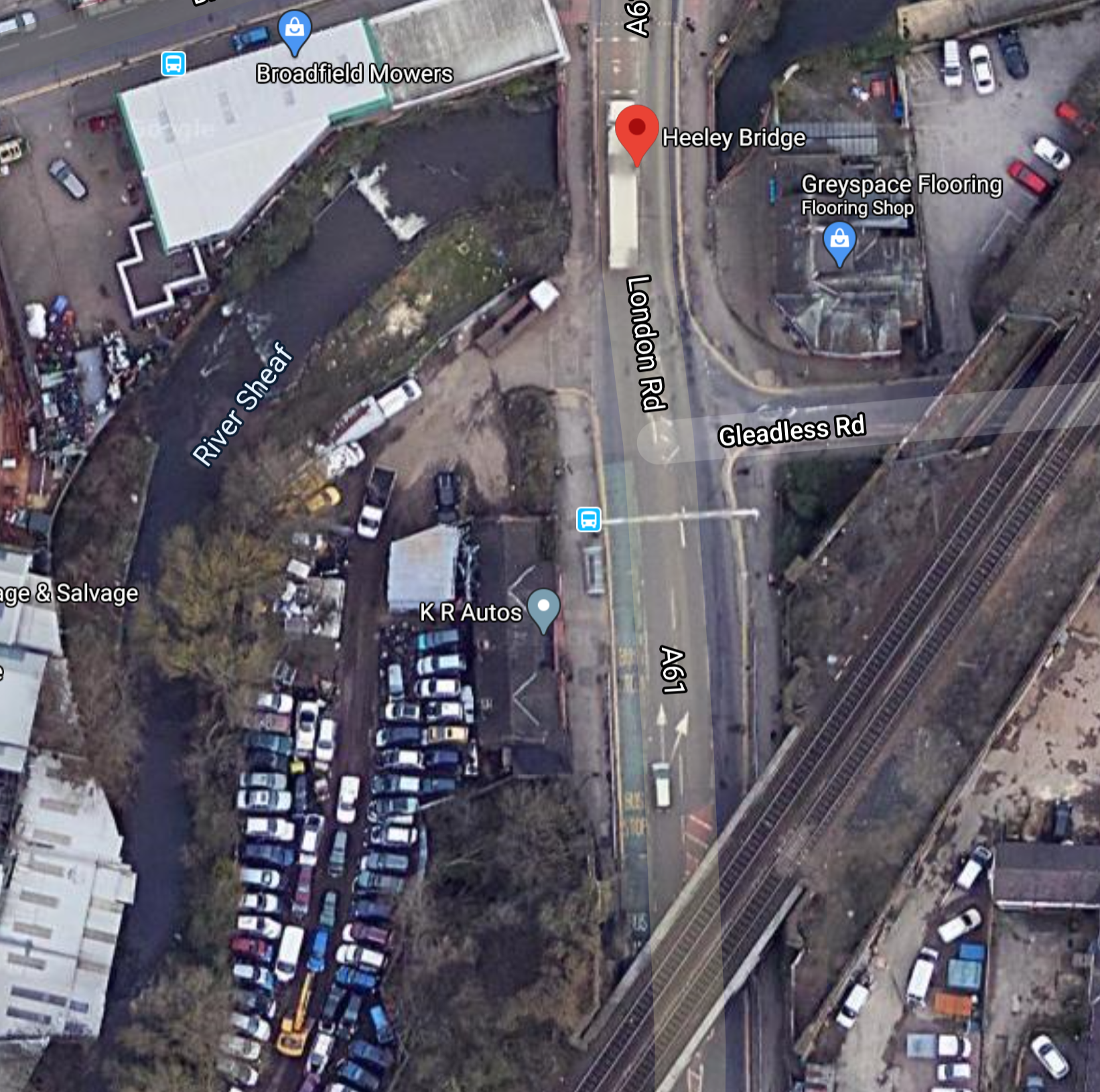
Note.
- The red arrow indicates Heeley Bridge, which Wikipedia says is near the station site.
- There appears to be only two tracks through here.
It is easy to follow the tracks from here to Sheffield station.
Could A Four Track Railway Be Rebuilt Between Dore & Totley And Sheffield Stations?
I’ve not seen anything that says that building a four-track railway through here is not possible.
In a few years, there could be the following tracks and platforms, on this section.
- Two fast tracks for High Speed Two, Midland Main Line and CrossCountry trains, that will be electrified with 25 KVAC overhead electrification, between Clay Cross North Junction and Sheffield station.
- The High Speed Two trains will be classic-compatible and up to 200 metres long.
- The two fast tracks will not have any platforms.
- Two slow tracks for local services, that will be appropriately electrified.
- The slow tracks will have step-free platforms, that will be long enough to take a five-car Class 802 train or a pair of Class 185 trains.
I can’t for the life of me understand, why this stretch of four-track main line between Dore & Totley and Sheffield stations was ever simplified, as at other places on the UK network, extra tracks were being added to the main lines, at the same time.
Future Services On The Fast Lines
Currently, the following services take the fast lines between Sheffield and Chesterfield stations via Dore & Totley station.
- East Midlands Railway – Sheffield and London St. Pancras – 2 tph
- East Midlands Railway – Sheffield and Norwich via Nottingham – 1 tph
- CrossCountry – Edinburgh/Newcastle and Derby/Birmingham and the South – 2 tph
- Northern – Sheffield and Nottingham – 1 tph
That is a very modest six tph.
High Speed Two are currently planning to run two tph between Sheffield and London Euston.
There may or may not be other changes.
- As Birmingham Curzon Street and Sheffield will be just forty-seven minutes by High Speed Two all the way, will these destinations have a direct high speed classic-compatible service? There’s plenty of space capacity on High Speed Two.
- I don’t think the Sheffield and St. Pancras services will be dropped, but they might be.
- CrossCountry will probably be running intelligent multi-mode trains capable of 125 mph running and up to 140 mph in places.
- Northern’s service between Sheffield and Nottingham might go via a reopened Barrow Hill Line.
But the biggest change will be that these two fast lines will be to High Speed Two standards.
- Sheffield and Chesterfield will be electrified.
- There will in-cab digital signalling, which theoretically could probably allow eighteen tph on the route.
- High Speed Two Trains between Sheffield and Chesterfield will take twelve minutes.
- Sheffield station will have been modified as required, to be able to handle all trains very efficiently.
But it would still be carrying a modest eight tph.
If required Sheffield would have the capacity to accept more trains from the South.
I wouldn’t be surprised to see, the following trains added.
- An extra tph to and from London Euston via High Speed Two.
- Two tph to and from Birmingham Curzon Street via High Speed Two.
I also wouldn’t be surprised to see CrossCountry using classic-compatible High Speed Two trains and switching to High Speed Two between Birmingham New Street and Sheffield. But these trains would still use the same tracks to access Sheffield station.
But I am led to the conclusion, that Sheffield will have more than enough capacity linking the City to Chesterfield and the South.
Future Services On The Slow Lines
Or should I use lines connecting to the Hope Valley Line rather than slow lines?
Currently, the following services take the slow lines between Sheffield and Dore & Totley stations.
- East Midlands Railway – Liverpool Lime Street and Sheffield – via Manchester Piccadilly – 1 tph
- TransPennine Express – Manchester Airport and Cleethorpes via Manchester Piccadilly – 1 tph
- Northern – Sheffield and Manchester Piccadilly – 1 tph
Transport for the North aims to run a four tph service with a forty minute journey time between Manchester Piccadilly and Sheffield.
Consider.
- 100 mph TransPennine Express trains take fifty-three minutes between Sheffield and Manchester Piccadilly without a stop.
- Classic-compatible trains with a battery capability could easily handle the route.
- Northern’s services on the Hope Valley Line are timed for 75 mph trains.
- Dore & Totley and Hazel Grove stations are twenty-nine miles apart.
If between Dore & Totley and Sheffield stations were to be electrified and track improvements like passing loops were to be made to the Hope Valley Line, I believe that to achieve a forty minute all-stops timing between Sheffield and Manchester Piccadilly, would need a train with the following specification.
- Electric train with batteries.
- Four cars
- 100 mph or faster operating speed.
- Step-free access between platform and train.
- Sparkling acceleration and deceleration.
- Ability to run under in-cab digital signalling to keep out of the way of freight services.
Looking at Crossrail between London Paddington and Maidenhead stations, the London route is probably as difficult as the Hope Valley Line and it has been designed as a forty minute service with ten stops, using a modern electric train.
If TransPennine fitted batteries to their Class 802 trains, these trains would fit the Northern Powerhouse Rail requirements.
East Midlands Railway and Northern would find that the following trains could be used.
- Bombardier – Aventra with batteries
- Bombardier – Class 377 train with batteries
- Bombardier – Class 379 train with batteries
- CAF – Class 331 train with batteries
- Hitachi – Class 385 train with batteries
- Porterbrook – Battery/FLEX train based on Class 350 train
- Stadler – Flirt with batteries
All would need that between Dore & Totley and Sheffield stations be electrified.
After the upgrades and the new or refurbished trains are running, this would mean that between Dean & Totley and Sheffield would be handling four tph, which would be semi-fast trains between Sheffield and Manchester Piccadilly. Although to current passengers on the line, they would seem to be fast services of a much higher standard.
It would not be very different to how the slow lines into Paddington also handle about four tph of other services, including GWR services and freight.
I believe that to provide an adequate service to the reopened and rebuilt stations of Dore & Totley, Beauchief, Millhouses & Eccleshall and Heeley, that a Turn-Up-And-Go service of at least four tph should be run between Dore & Totley and Sheffield stations.
A Turnback At Dore & Totley
This Google Map shows Dore & Totley station and the area to the South.
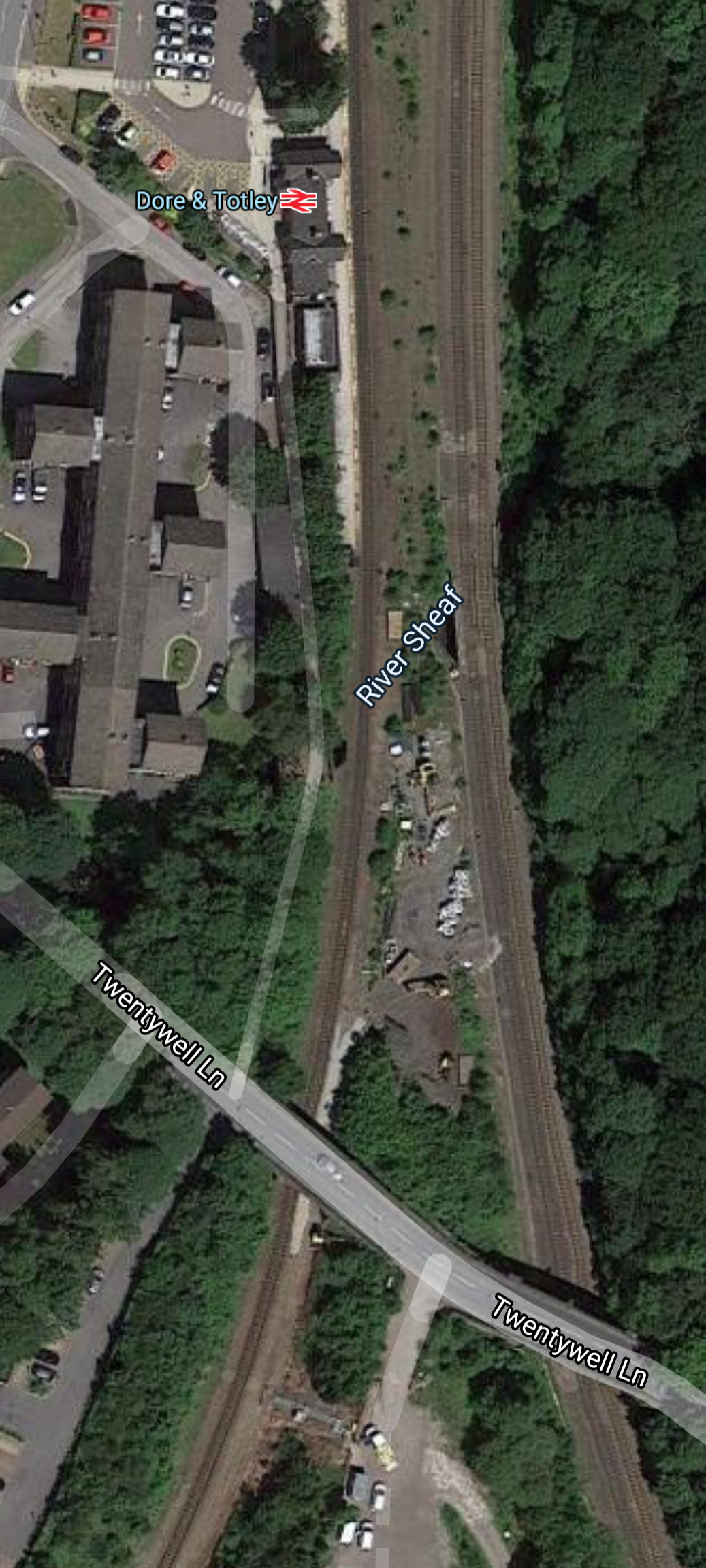
Note.
- There would appear to be a lot of space between the Midland Main Line and the single track, that leads between Dore & Totley station and the Hope Valley Line.
- Flying my helicopter, as low as I dare, it looks like the area is either a rubbish dump or very low grade businesses.
- Crossrail has designed turnbacks at Abbey Wood and Paddington stations, that will handle twelve tph.
I believe that it would be possible to design a turnback at Dore & Totley station, that would handle eight trains per hour, if not twelve tph.
It might even be possible to squeeze in some overnight stabling.
Trains Or Tram-Trains Between Dore & Totley And Sheffield Stations
In my view, it doesn’t matter.
Crossrail’s 12 tph turnbacks can handle a 205 metre long Class 345 train, so I’m sure a well-designed turnback at Dore & Totley could handle a mixture of any trams or tram-trains below a defined maximum length of say 140 metres, which would be defined by a pair of Class 185 trains, which might have to be turned back during service disruption.
Where Would The Services Terminate in The East?
It is my view that cross-city services like Birmingham’s Cross-City Line, Liverpool’s Northern Line, London’s Crossrail and Thameslink, Newcastle’s Metro and Paris’s RER are efficient for both passengers and train operators.
So Dore & Totley station could be one end of a Sheffield cross-city line, with a frequency of at least eight tph through Beauchief, Millhouses & Eccleshall, Heeley and Sheffield stations.
So where would services go on the other side of Sheffield? Wikipedia gives these as services to the East of Sheffield.
- Leeds via Barnsley and Wakefield (fast) – 2 tph
- Leeds via Meadowhall, Barnsley, Wakefield and Castleford (stopping). – 1 tph
- Leeds via Meadowhall, Moorthorpe and Wakefield. – 1 tph
- Scarborough via Meadowhall, Doncaster, Hull and Bridlington. – 1 tph
- Lincoln Central via Worksop and Retford – 1 tph
- Gainsborough Central via Worksop, three trains per week continue to Cleethorpes via Brigg. – 1 tph
- Huddersfield via Meadowhall, Barnsley and Penistone – 1 tph
- Doncaster via Meadowhall and Rotherham, with one train per hour continuing to Adwick – 2 tph
- York via Moorthorpe and Sherburn-in-Elmet. – 3 trains per day (tpd)
For much of the day, that is a frequency of 10 tph, with 5 tph calling at Meadowhall, 2 tph calling at Worksop and two fast tph passing Meadowhall without stopping.
But there are other rail projects under development.
- High Speed Two will enable a new fast service between Sheffield and Leeds via Meadowhall and a new station in the Dearne Valley.
- The Sheffield Region Transport Plan 2019 envisages a new station at Barnsley Dearne Valley. See Sheffield Region Transport Plan 2019 – A New Station At Barnsley Dearne Valley.
- The Sheffield Region Transport Plan 2019 envisages tram-trains running between Sheffield and Doncaster-Sheffield Airport See Sheffield Region Transport Plan 2019 – Tram-Trains Between Sheffield And Doncaster-Sheffield Airport.
- The Sheffield Region Transport Plan 2019 envisages a new Station at Waverley. See Sheffield Region Transport Plan 2019 – A New Tram-Train Route To A New station At Waverley.
- High Speed Two might enable a fast classic-compatible service between Sheffield and Scarborough via York.
- The possible opening of the South Yorkshire Joint Railway to passenger traffic, may open up further opportunities. See Beeching Reversal – South Yorkshire Joint Railway.
- The possible reinstatement of the Barrow Hill Line. See Reinstatement Of The Barrow Hill Line Between Sheffield And Chesterfield.
- The development of the Stocksbridge Railway for passenger services.
I can see classic-compatible High Speed Two trains serving the following places to the East of Sheffield.
- Leeds
- Hull via Doncaster
- Scarborough via York
- Cleethorpes via Doncaster, Scunthorpe and Grimsby.
A train like a five-car Class 802 train would probably be enough for most routes except Leeds.
I can see the following terminals for tram-trains to the East of Sheffield.
- Doncaster and Doncaster-Sheffield Airport
- Waverley station, which could be on a loop from the Sheffield and Lincoln Line.
- Barnsley Dearne Valley
There may well be others.
If Sheffield were Karlsruhe in Germany, the tram-trains would probably serve the following routes.
- Huddersfield via Penistone.
- Lincoln via Worksop and Gainsborough.
- Manchester via the Hope Valley Line.
But the Germans have a much larger electrified core, than Sheffield will have, even if High Speed Two electrifies between Dore & Totley and Thurnscoe stations via Sheffield.
I can make a table of destinations and distances and how they could be served.
- Barnsley – 16 miles – Possible return trip from Sheffield for a battery electric train.
- Barnsley Dearne Valley – 8 miles from Rotherham Parkgate – Possible return trip from Sheffield via Rotherham Parkgate for a battery electric tram-train.
- Doncaster – 11 miles from Rotherham Parkgate – Possible return trip from Sheffield via Rotherham Parkgate for a battery electric tram-train.
- Chesterfield via Barrow Hill – 17 miles – Possible return trip from Sheffield for a battery electric tram-train.
- Doncaster Sheffield Airport – 10 miles from Doncaster – Possible return trip from Sheffield via Rotherham Parkgate and Doncaster for a battery electric tram-train.
- Gainsborough Lea Road. – 32 miles – See Lincoln Central.
- Huddersfield – 36 miles – Possible battery electric train with charging at Huddersfield.
- Hull – 59 miles – Possible battery electric train with charging at Doncaster and Hull.
- Lincoln Central – 48 miles – Possible battery electric train with charging at Lincoln and/or Gainsborough Lea Road. Otherwise diesel.
- Penistone – 23 miles – Possible return trip from Sheffield for a battery electric train, using Newton’s friend on the way back.
- Retford – 23 miles – Possible return trip from Sheffield for a battery electric train.
- Waverley – About 6 miles – Possible return trip from Sheffield for a battery electric tram-train.
- Worksop – 16 miles – Possible return trip from Sheffield for a battery electric train.
It looks to me like a mix of battery electric trains and tram-trains could run most of the services from Sheffield, if services that used new High Speed Two infrastructure used classic-compatible trains or trains like the existing Class 802 trains, that have been converted to battery electric operation.
Note.
- I am assuming, that a battery electric train has a range of 56 miles on a single charge.
- Rotherham Parkgate station is changed to a through station.
- Tram-trains passing through Doncaster can recharge on the station’s 25 KVAC overhead electrification.
- Charging can be provided as required at other stations.
There are lots of possibilities.
Consider, this for tram-train extensions to Barnsley Dearne Valley, Doncaster and Doncaster Sheffield Airport.
- Extend the tram-train service at Rotherham Parkgate to either Doncaster and Doncaster Airport or Barnsley Dearne Valley stations.
- Run tram-trains between Dore & Totley and Rotherham Parkgate via Sheffield, Meadowhall and Rotherham Central.
This would give a double-ended route across Sheffield and Rotherham between Dore & Totley and the existing Supertram network in the West and Barnsley Dearne Valley, Doncaster and Doncaster Sheffield Airport in the East.
Consider how to connect the branch to Waverley station to the Supertram network.
- Waverley station will be either on or on a loop from the Sheffield and Lincoln Line.
- The Sheffield and Lincoln Line has no obvious connection with the Supertram network.
- The Sheffield and Lincoln Line goes straight in to Sheffield station.
- Trains to Lincoln always appear to use Platform 4 in Sheffield station.
- Sheffield station has four through platforms.
This Google Map shows where the Sheffield and Lincoln Line passes behind the Supertram Depot at Nunnery.
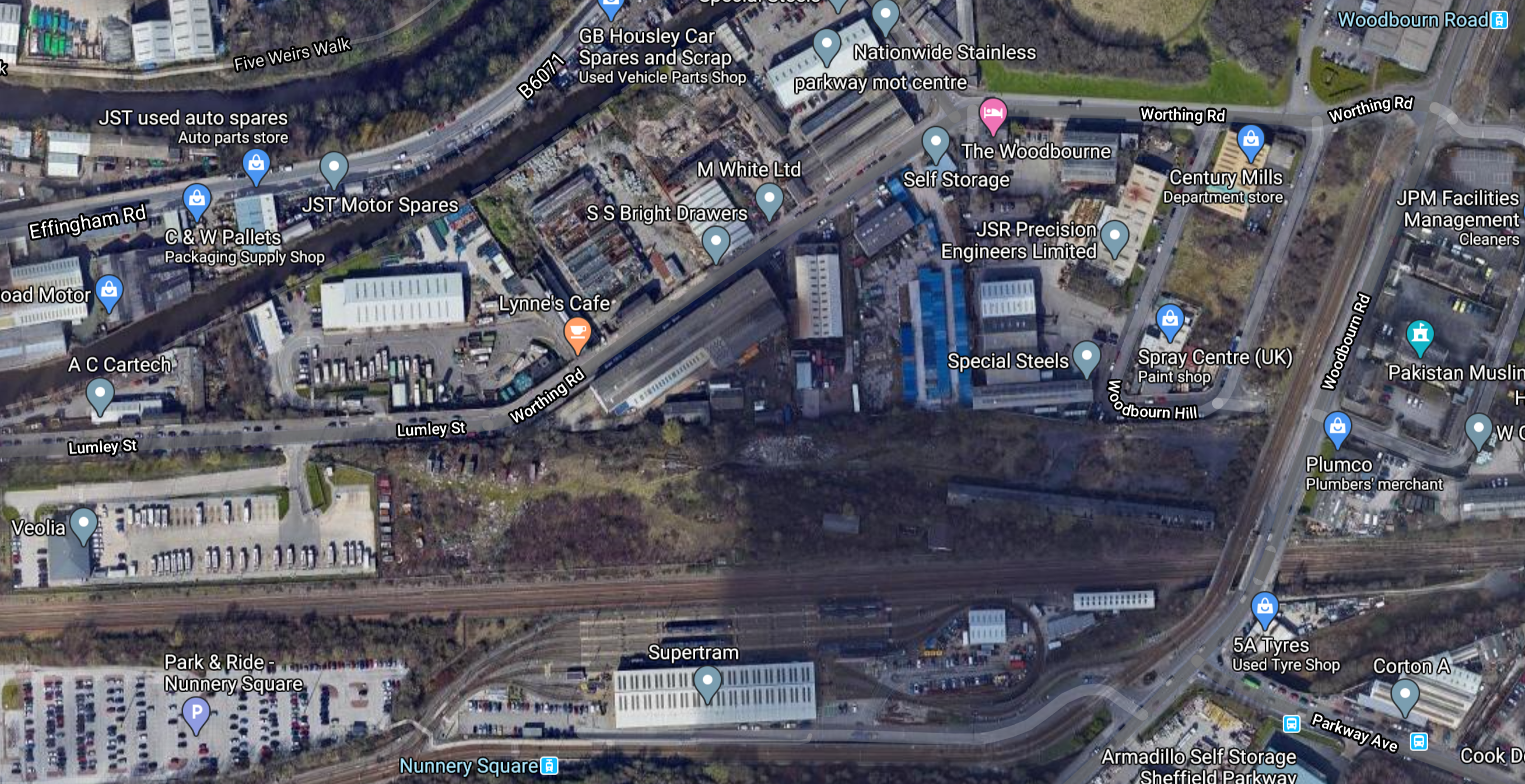
Note.
- The Nunnery Square Park and Ride is in the South West corner of the map.
- The Supertram depot is to the East of the Park-and-Ride, with the Nunnery Square tram stop to the South.
- The Woodbourn Road tram stop is in the North East corner of the map.
This second Google Map shows the lines around the Park-and-Ride.
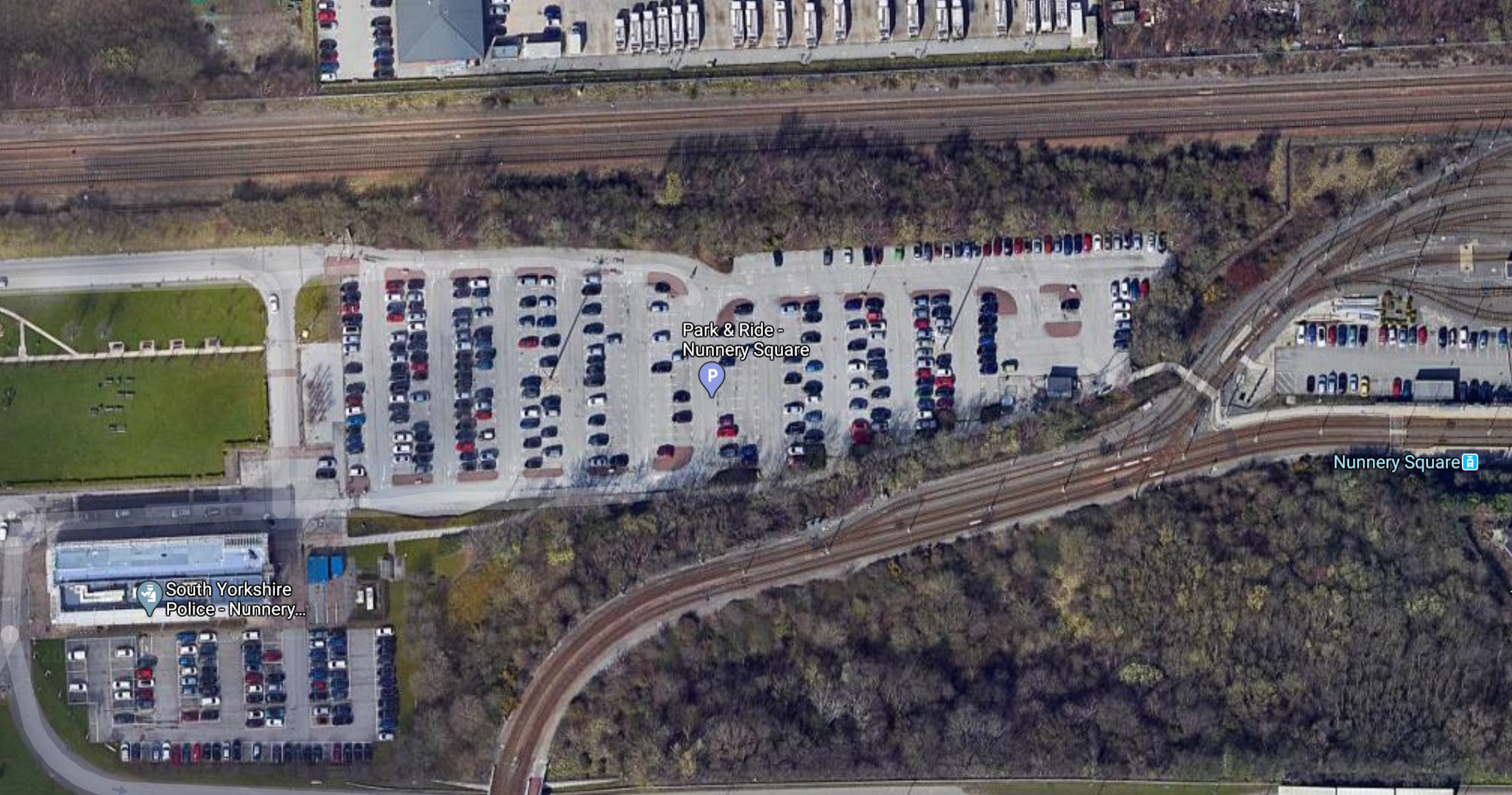
I suspect that a connection between the Supertram system and the Sheffield and Lincoln Line, could be built to the North of the Nunnery Depot.
But would it be easier to continue to Sheffield station or pass through the station and terminate at Dore & Totley station?
I can’t be sure looking at the maps, but it could be logical that trains to and from Lincoln use the Southern pair of tracks past the Nunnery Depot, as they would be on the right side of the tracks for Lincoln.
This would make it easier to do the following.
- Create a connection between the Nunnery Depot and the Sheffield and Lincoln Line, which would surely be needed for efficient maintenance and operation of tram-trains running to and from Waverley.
- Allow tram-trains used to serve the proposed Waverley station to return to the Depot every night.
- Allow tram-trains working between Sheffield and Meadowhall to use the Lincoln and Sheffield Line to enter the Nunnery Depot.
- Build a tram stop/station by the Park-and-Ride.
There would also be less need to build another depot.
Looking at the maps, could there be space to extend the Nunnery Depot?
Conclusion
This could be a very good project.
- It fits in well with the plans and needs of High Speed Two.
- It connects the new Waverley station to Sheffield station.
- It fits well with the Sheffield Region Transport Plan 2019.
- It connects Sheffield, Rotherham and Doncaster to Doncaster Sheffield Airport.
- It opens up the Hope Valley Line to improve services between Manchester and Sheffield.
I also don’t think, there’s any great risk!
I
Electrifying Wales
I would not be surprised to learn that Wales wants to decarbonise their railways.
At present, Wales only has the following electrified railways either in operation or under construction.
- The South Wales Main Line between the Severn Tunnel and Cardiff.
- The South Wales Metro based on local railways around Cardiff and Newport is being created and will be run by electric trains.
There is no more electrification planned in the future.
Hitachi’s Specification For Battery Electric Trains
Recently, Hitachi have released this infographic for their Regional Battery Train.

This gives all the information about the train and a definitive range of 90 km or 56 miles.
The Welsh Rail Network
If you look at the network of services that are run by Transport for Wales Rail Services, they connect a series of hub stations.
Major hubs include the following stations.
- Cardiff Central – Electrified
- Chester
- Hereford
- Shrewsbury
- Swansea
Smaller hubs and termini include the following stations.
- Aberystwyth
- Birmingham International – Electrified
- Birmingham New Street – Electrified
- Blaenau Ffestiniog
- Carmarthen
- Crewe – Electrified
- Fishguard Harbour
- Hereford
- Holyhead
- Llandudno Junction
- Manchester Airport – Electrified
- Manchester Piccadilly – Electrified
- Machynlleth
- Milford Haven
- Newport – Electrified
- Pembroke Dock
Running Welsh Routes With Electric Trains
These routes make up the Welsh rail network.
Chester And Crewe
Consider.
- The route between Chester and Crewe is without electrification.
- Crewe and Chester are 21 miles apart.
I believe that if a battery-electric train, with a range of 56 miles, can leave Chester and Crewe with full batteries, that it will be possible to run between Chester and Crewe stations.
Chester And Holyhead via Llandudno Junction
Consider.
- All services between Llandudno Junction and England call at Chester.
- All services running to and from Holyhead call at Llandudno Junction.
- The route between Chester and Holyhead is without electrification.
- Chester and Llandudno Junction are 54 miles apart.
- Llandudno Junction and Holyhead are 40 miles apart.
I believe that if a battery-electric train with a range of 56 miles can leave Chester, Llandudno Junction and Holyhead with full batteries, that it will be possible to run between Chester and Holyhead stations.
Chester And Liverpool Lime Street
Consider.
- The route between Runcorn and Liverpool Lime Street is electrified.
- The route between Chester and Runcorn is without electrification.
- Chester and Runcorn are 14 miles apart.
I believe that if a battery-electric train, with a range of 56 miles, can leave Chester and Runcorn with full batteries, that it will be possible to run between Chester and Liverpool Lime Street stations.
Chester And Manchester Airport
Consider.
- The route between Warrington Bank Quay and Manchester Airport is electrified.
- The route between Chester and Warrington Bank Quay is without electrification.
- Chester and Warrington Bank Quay are 18 miles apart.
I believe that if a battery-electric train, with a range of 56 miles, can leave Chester and Warrington Bank Quay with full batteries, that it will be possible to run between Chester and Manchester Airport stations.
Chester And Shrewsbury
Consider.
- The route between Chester and Shrewsbury is without electrification.
- Chester and Shrewsbury are 42 miles apart.
I believe that if a battery-electric train with a range of 56 miles, can leave Shrewsbury and Chester with full batteries, that it will be possible to run between Chester and Shrewsbury stations.
Llandudno And Blaenau Ffestiniog
Consider.
- The route between Llandudno and Blaenau Ffestiniog is without electrification.
- Llandudno and Blaenau Ffestiniog are 31 miles apart.
I believe that if a battery-electric train with a range of 56 miles, can leave Llandudno and Blaenau Ffestiniog with full batteries, that it will be possible to run between Llandudno and Blaenau Ffestiniog stations.
Machynlleth And Aberystwyth
Consider.
- The route between Machynlleth and Aberystwyth is without electrification.
- Machynlleth and Aberystwyth are 21 miles apart.
I believe that if a battery-electric train with a range of 56 miles, can leave Machynlleth and Aberystwyth with full batteries, that it will be possible to run between Machynlleth and Aberystwyth stations.
Machynlleth And Pwllheli
Consider.
- The route between Machynlleth and Pwllheli is without electrification.
- Machynlleth and Pwllheli are 58 miles apart.
I believe that if a battery-electric train with a range of upwards of 58 miles, can leave Machynlleth and Pwllheli with full batteries, that it will be possible to run between Machynlleth and Pwllheli stations.
Machynlleth And Shrewsbury
Consider.
- The route between Machynlleth and Shrewsbury is without electrification.
- Machynlleth and Shrewsbury are 61 miles apart.
I believe that if a battery-electric train with a range of upwards of 61 miles, can leave Machynlleth and Shrewsbury with full batteries, that it will be possible to run between Machynlleth and Shrewsbury stations.
Shrewsbury and Birmingham International
Consider.
- The route between Birmingham International and Wolverhampton is electrified.
- The route between Shrewsbury and Wolverhampton is without electrification.
- Shrewsbury and Wolverhampton are 30 miles apart.
I believe that if a battery-electric train, with a range of 56 miles, can leave Shrewsbury and Wolverhampton with full batteries, that it will be possible to run between Shrewsbury and Birmingham International stations.
Shrewsbury And Cardiff Central via Hereford
Consider.
- All services between Cardiff Central and Shrewsbury call at Hereford.
- The route between Cardiff Central and Newport is electrified.
- The route between Newport and Shrewsbury is without electrification.
- Shrewsbury and Hereford are 51 miles apart.
- Hereford and Newport are 44 miles apart.
I believe that if a battery-electric train, with a range of 56 miles, can leave Shrewsbury, Hereford and Newport with full batteries, that it will be possible to run between Shrewsbury and Cardiff Central stations.
Shrewsbury And Crewe
- The route between Shrewsbury and Crewe is without electrification.
- Shrewsbury and Crewe are 33 miles apart.
I believe that if a battery-electric train with a range of upwards of 61 miles, can leave Shrewsbury and Crewe with full batteries, that it will be possible to run between Shrewsbury and Crewe stations.
Shrewsbury and Swansea
Consider.
- The Heart of Wales Line between Shrewsbury and Swansea is without electrification.
- Shrewsbury and Swansea are 122 miles apart.
- Trains cross at Llandrindod and wait for up to eleven minutes, so there could be time for a charge.
- Shrewsbury and Llandrindod are 52 miles apart.
- Swansea and Llandrindod are 70 miles apart.
It appears that another charging station between Swansea and Llandrindod is needed
I believe that if a battery-electric train, with a range of 56 miles, can leave Shrewsbury, Swansea and the other charging station, with full batteries, that it will be possible to run between Shrewsbury and Swansea stations.
Swansea And Cardiff Central
Consider.
- The route between Swansea and Cardiff Central is without electrification.
- Swansea and Cardiff Central are 46 miles apart.
I believe that if a battery-electric train, with a range of 56 miles, can leave Swansea and Cardiff Central with full batteries, that it will be possible to run between Swansea and Cardiff Central stations.
Swansea And Carmarthen
Consider.
- The route between Swansea and Carmarthen is without electrification.
- Swansea and Carmarthen are 31 miles apart.
I believe that if a battery-electric train, with a range of 56 miles, can leave Swansea and Carmarthen with full batteries, that it will be possible to run between Swansea and Carmarthen stations.
Swansea And Fishguard Harbour
Consider.
- The route between Swansea and Fishguard Harbour is without electrification.
- Swansea and Fishguard Harbour are 73 miles apart.
- Tramins could top up the batteries during the reverse at Carmathen.
- Swansea and Carmarthen are 31 miles apart.
- Carmarthen and Fishguard Harbour are 42 miles apart.
I believe that if a battery-electric train, with a range of 56 miles, can leave Swansea, Carmathen and Fishguard Harbour with full batteries, that it will be possible to run between Swansea and Fishguard Harbour stations.
Swansea And Milford Haven
Consider.
- The route between Swansea and Milford Haven is without electrification.
- Swansea and Milford Haven are 72 miles apart.
- Tramins could top up the batteries during the reverse at Carmathen.
- Swansea and Carmarthen are 31 miles apart.
- Carmarthen and Milford Haven are 41 miles apart.
I believe that if a battery-electric train, with a range of 56 miles, can leave Swansea, Carmathen and Milford Haven with full batteries, that it will be possible to run between Swansea and Milford Haven stations.
Swansea And Pembroke Dock
Consider.
- The route between Swansea and Pembroke Dock is without electrification.
- Swansea and Pembroke Dock are 73 miles apart.
- Tramins could top up the batteries during the reverse at Carmathen.
- Swansea and Carmarthen are 31 miles apart.
- Carmarthen and Pembroke Dock are 42 miles apart.
I believe that if a battery-electric train, with a range of 56 miles, can leave Swansea, Carmathen and Pembroke Dock with full batteries, that it will be possible to run between Swansea and Pembroke Dock stations.
Other Routes
I have not covered these routes.
- Borderlands Line
- Cardiff Valley Lines, that will be part of the South Wales Metro
- Routes on the electrified South Wales Main Line, that are to the East of Cardiff.
The first will run between Chester and the electrified Merseyrail system and the others will be electrified, except for short stretches.
Stations Where Trains Would Be Charged
These stations will need charging facilities.
Aberystwyth
Aberystwyth station only has a single terminal platform.
I’ve not been to the station, but looking at pictures on the Internet, I suspect that fitting a charging facility into the station, wouldn’t be the most difficult of engineering problems.
Birmingham International
Birmingham International station is fully-electrified and ready for battery-electric trains.
Blaenau Fflestiniog
Blaenau Ffestiniog station has a single terminal platform.
My comments would be similar to what, I said for Aberystwyth station. I would hope a standard solution can be developed.
Cardiff
Cardiff station is fully-electrified and ready for battery-electric trains.
Chester
Chester station has two through platforms and one bay platform, that are used by Trains for Wales.
- The through platforms are bi-directional.
- The bay platform is used by services from Liverpool Lime Street and Manchester Airport and Piccadilly.
- The station is a terminus for Merseyrail’s electric trains, which use 750 VDC third-rail electrification.
- Some through services stop for up to seven minutes in the station.
This Google Map shows the station.
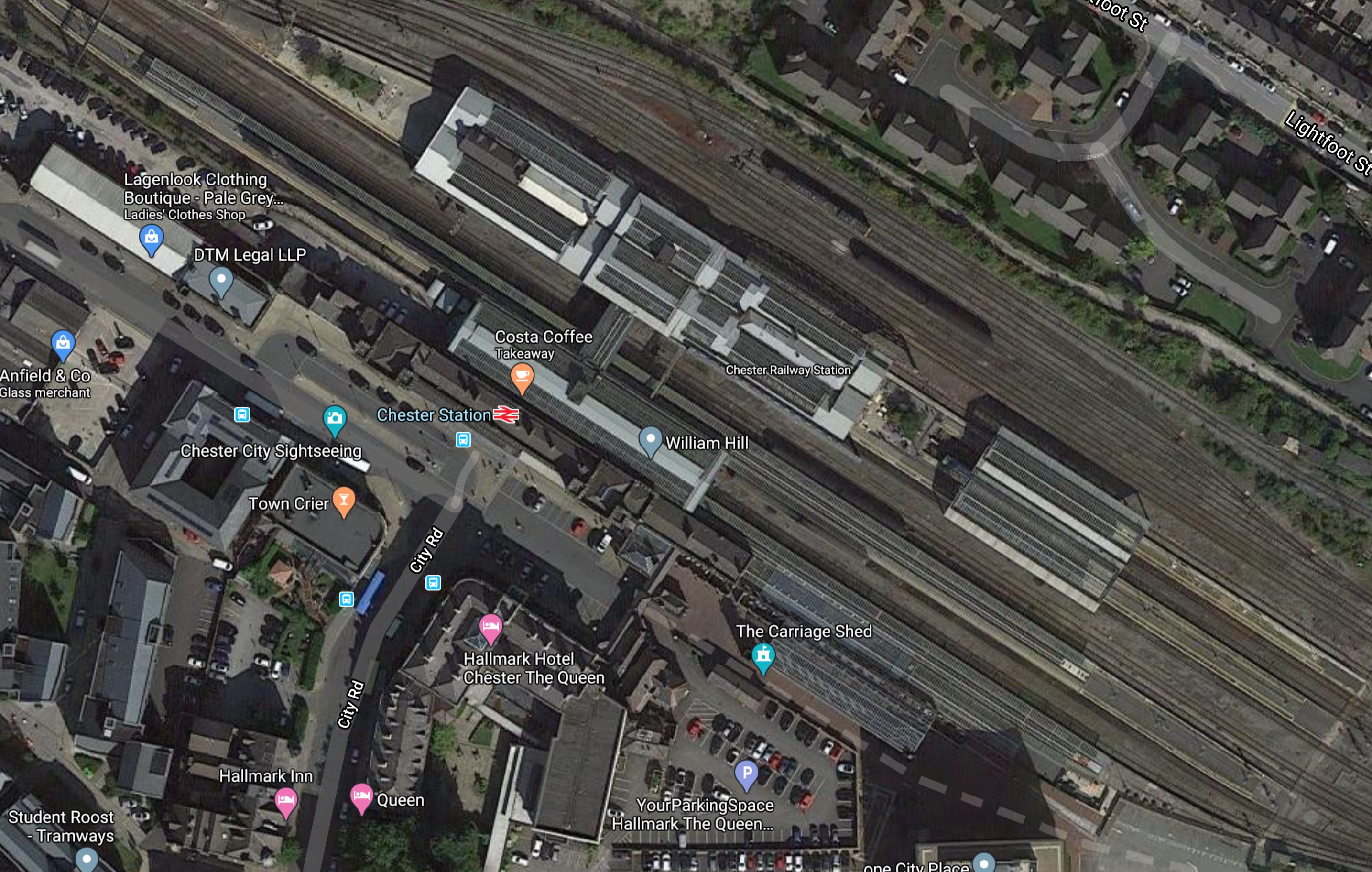
There is plenty of space.
The simplest way to charge trains at Chester would be to electrify the two through platforms 3 and 4 and the bay platform 1.
I would use 750 VDC third-rail, rather than 25 KVAC overhead electrification.
- I’m an engineer, who deals in scientifically-correct solutions, not politically-correct ones, devised by jobsworths.
- Maintenance staff at the station will be familiar with the technology.
- Station staff and passengers will know about the dangers of third-rail electrification.
- Trains connect and disconnect automatically to third-rail electrification.
- Trains don’t have to stop to connect and disconnect, so passing trains can be topped-up.
- Hitachi with the Class 395 train and Alstom with the Class 373 train, have shown even trains capable of 140 mph can be fitted with third-rail shoes to work safely at slower speeds on lines electrified using third-rail.
- Modern control systems can control the electricity to the third-rail, so it is only switched on, when the train completes the circuit.
I have a vague recollection, that there is an avoiding line at Chester station, so trains can go straight through. Perhaps that should be electrified too.
Carmarthen
Carmarthen station is a two platform station, with a rather unusual layout, that I wrote about in Changing Trains At Carmarthen Station.
I took these pictures when I passed through in 2016.


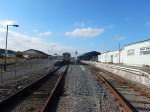
Note the unusual step-free crossing of the tracks.
This Google Map shows the layout at the station.
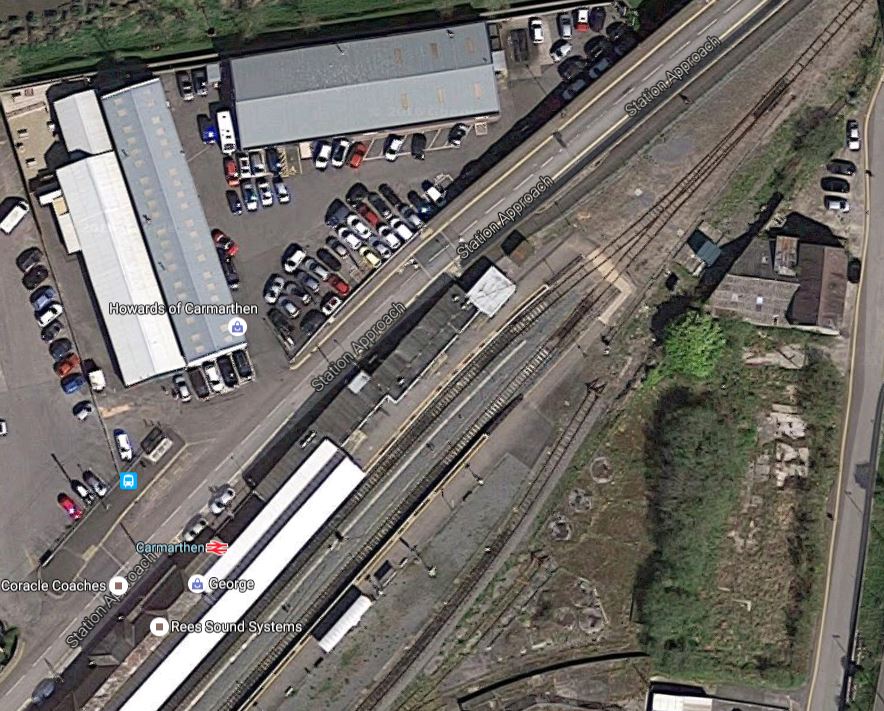
I believe it is another station, where third-rail electrification could be the solution.
- Most trains seem to reverse at the station, which gives time for a full charge.
- Others terminate here.
but would they still allow passengers to cross the line as they do now, whilst trains are being charged?
Crewe
Crewe station is fully-electrified.
- Trains for Wales seem to use Platform 6 for through trains and the bay Platform 9 for terminating trains.
- Both platforms appear to be electrified.
- Terminating trains appear to wait at least 9-11 minutes before leaving.
It does appear that Crewe station is ready for battery-electric trains.
Fishguard Harbour
Fishguard Harbour station only has a single terminal platform.
My comments would be similar to what, I said for Aberystwyth station. I would hope a standard solution can be developed.
Hereford
Hereford station has four through platforms.
This Google Map shows the station.
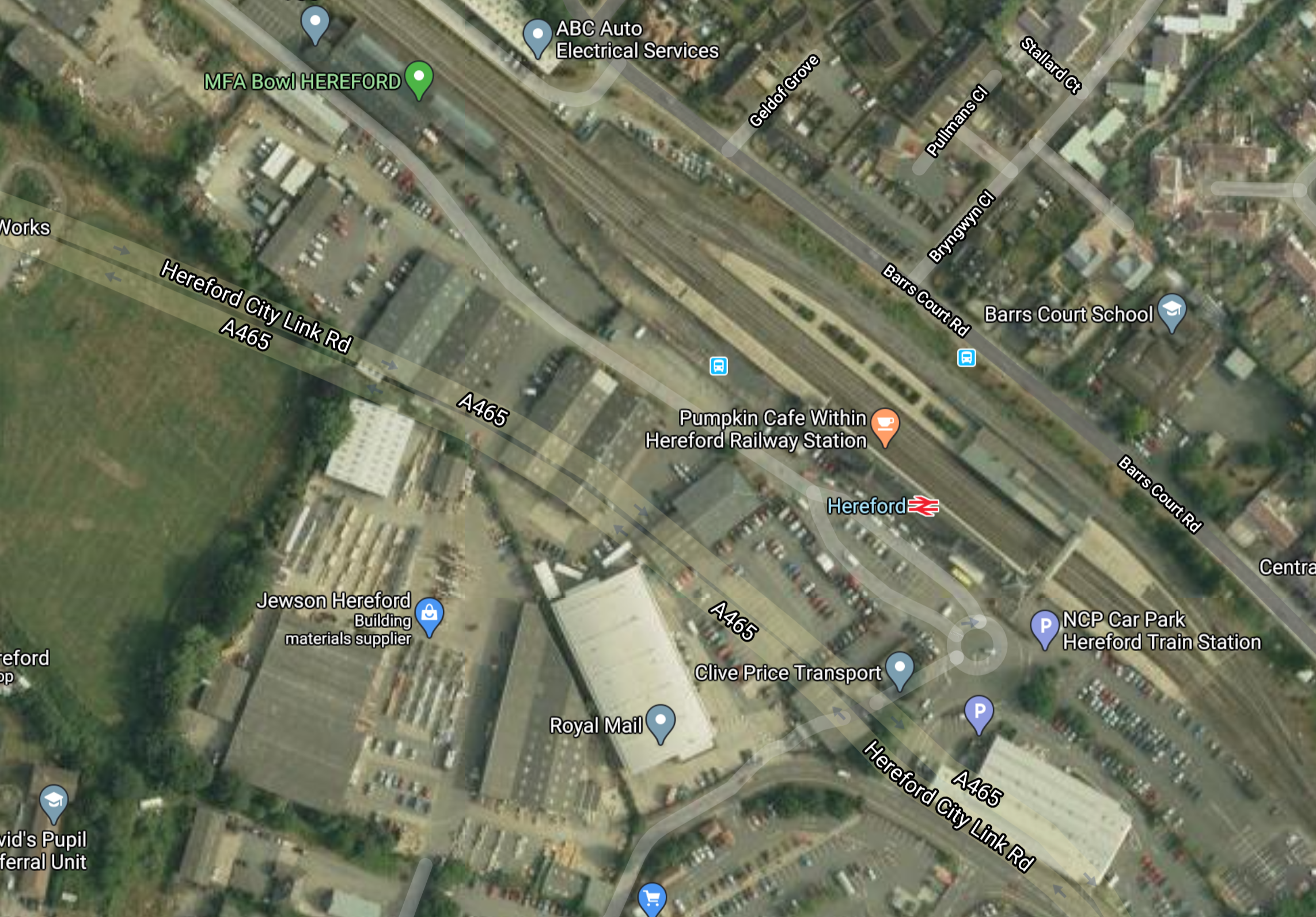
There is plenty of space.
As with Chester, I would electrify this station with 750 VDC third-rail equipment.
But the electrification wouldn’t be just for train services in Wales.
- West Midlands Trains, run an hourly service to Birmingham New Street and there is only a forty-one mile gap in the electrification between Hereford and Bromsgrove.
- Great Western Railway’s service to London, has a massive ninety-six mile run to the electrification at Didcot Junction, which could be bridged by installing charging facilities at Worcestershire Parkway and/or Honeybourne stations.
Both services have generous turnround times at Hereford, so would be able to leave fully-charged.
Distances from Hereford station are as follows.
- Abergavenny – 24 miles
- Bromsgrove – 41 miles
- Great Malvern – 21 miles
- Honeybourne – 48 miles
- Ludlow – 13 miles
- Newport – 44 miles
- Shrewsbury – 51 miles
- Worcester Parkway – 33 miles
Hereford station could be a serious battery-electric train hub.
Holyhead
Holyhead station has three terminals platforms.
My comments would be similar to what, I said for Aberystwyth station. I would hope a standard solution can be developed.
Liverpool Lime Street
Liverpool Lime Street station is fully-electrified and ready for battery-electric trains.
Llandrindod
Llandrindod station has two through platforms.
I took these pictures at the station as I passed through in 2016.

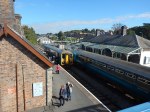
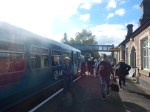

The Heart of Wales Line is certainly a route, that would benefit from larger trains. Zero-carbon battery-electric trains would surely fit well in the area.
This Google Map shows the station.
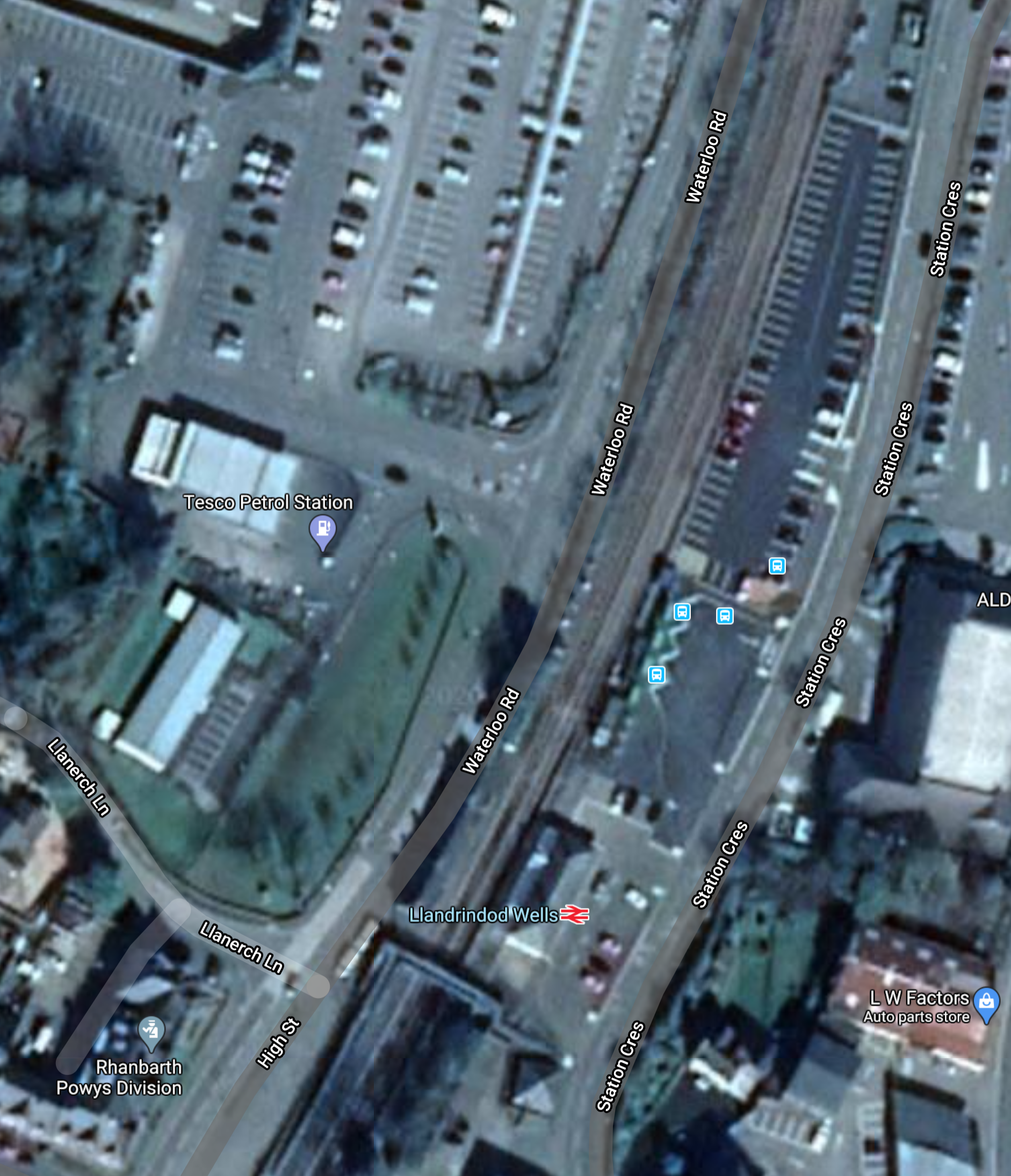
It would appear that, it is another station, that could be fitted with third-rail electrification to charge the trains.
Distances from Llandrindod station are as follows.
- Shrewsbury – 52 miles
- Llandovery – 27 miles
- Llanelli – 59 miles
- Swansea – 70 miles
It would appear that a second station with charging facilities or bigger batteries are needed.
Llandudno Junction
Llandudno Junction station has four platforms.
This Google Map shows the station.
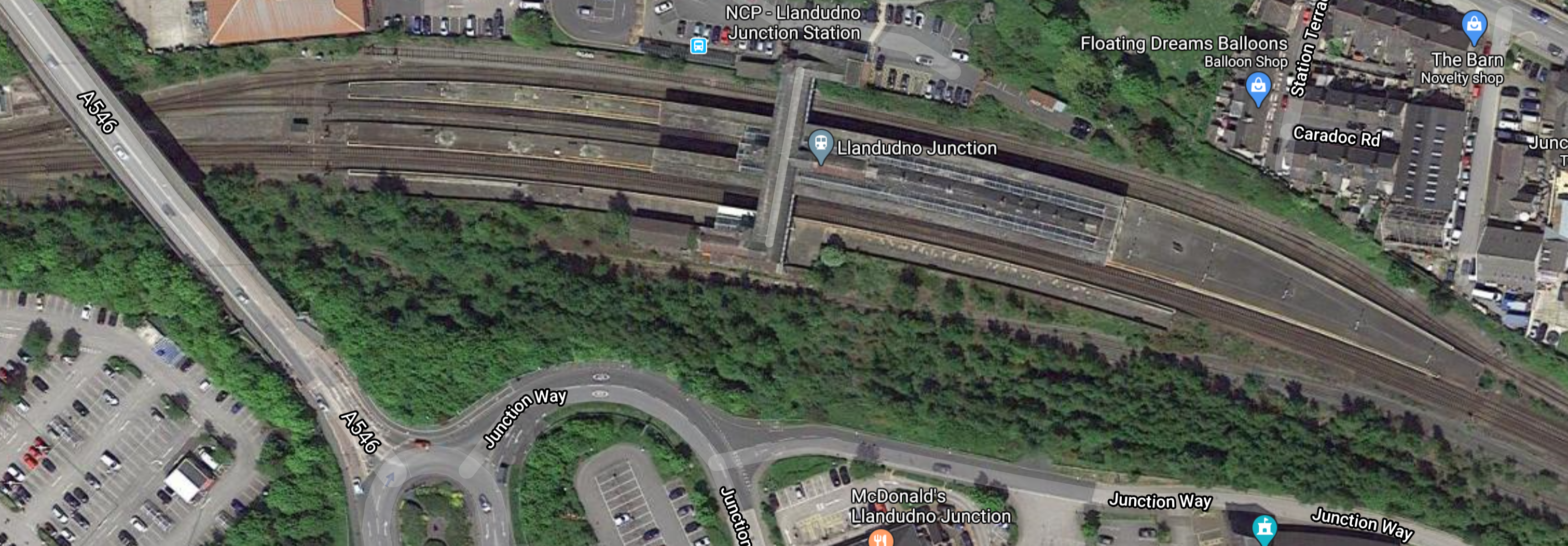
There is plenty of space.
As at Chester, the simple solution would be to electrify the platforms used by trains, that will need charging.
Butb there may also be a wider plan.
Llandudno Junction station is at the Western end of a string of five closely-spaced stations with Prestatyn station in the East.
- Llandudno Junction and Prestatyn are eight miles apart.
- Trains take twenty-three minutes to pass through this section.
- Some trains do a detour to Llandudno station before continuing.
- For part of the route, the railway lies between the dual-carriageway A55 road and the sea.
So why not electrify this section of railway between Llandudno Junction and Prestatyn stations?
- Either 750 VDC this-rail or 25 KVAC overhead electrification could be used.
- Prestatyn and Chester are 46 miles apart.
- Llandudno Junction and Holyhead are 40 miles apart.
If third-rail electrification were to be used, it might be advantageous to electrify to Llandudno station.
- It would be less intrusive.
- It would be quieter in an urban area.
- It would give the trains to Blaenau Ffestiniog trains a good charge.
But above all third-rail electrification might cost a bit less and cause less disruption to install.
Machynlleth
Machynlleth station is where the Aberystwyth and Pwllheli services split and join.
This Google Map shows the station.
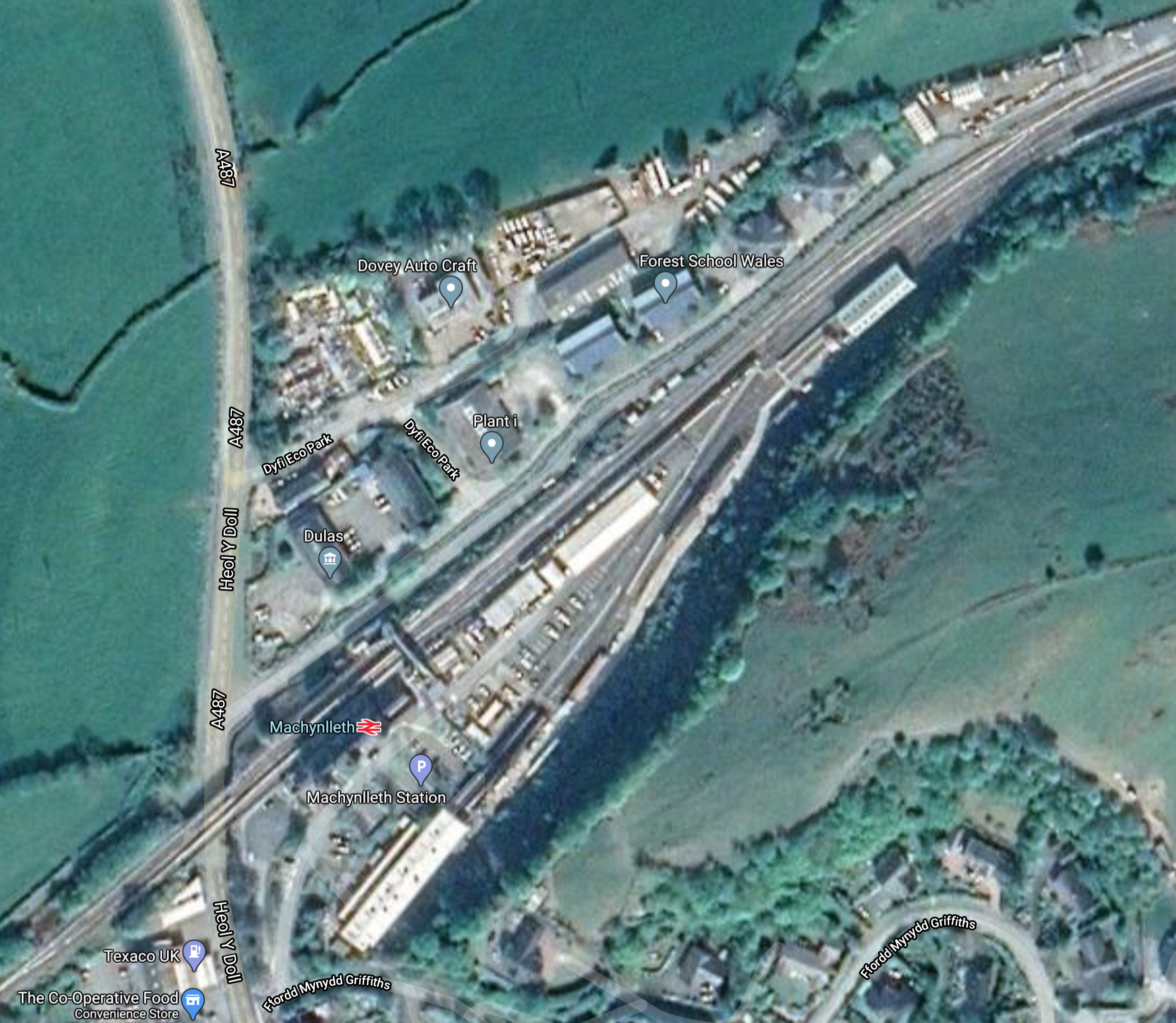
Consider.
- There is a train depot by the station.
- Will there be a good power supply at the station to charge the trains?
- Machnylleth and Pwllhelli are 58 miles apart.
- Machynlleth and Shrewsbury are 61 miles apart.
I think that Machynlleth might be pushing things too far, without extra stations with charging facilities.
One solution might be to develop the Riding Sunbeams concept and electrify the route between Newtown and Dovey Junction via Machynlleth, using third-rail technology powered-by solar or wind power.
Another solution would be batteries with a larger capacity.
Manchester Airport
Manchester Airport station is fully-electrified and ready for battery-electric trains.
Manchester Piccadilly
Manchester Piccadilly station is fully-electrified and ready for battery-electric trains.
Milford Haven
Milford Haven station only has a single terminal platform.
My comments would be similar to what, I said for Aberystwyth station. I would hope a standard solution can be developed.
Pembroke Dock
Pembroke Dock station only has a single terminal platform.
My comments would be similar to what, I said for Aberystwyth station. I would hope a standard solution can be developed.
Pwllheli
Pwhelli station is a only has a single terminal platform.
This Google Map shows the location of the station.
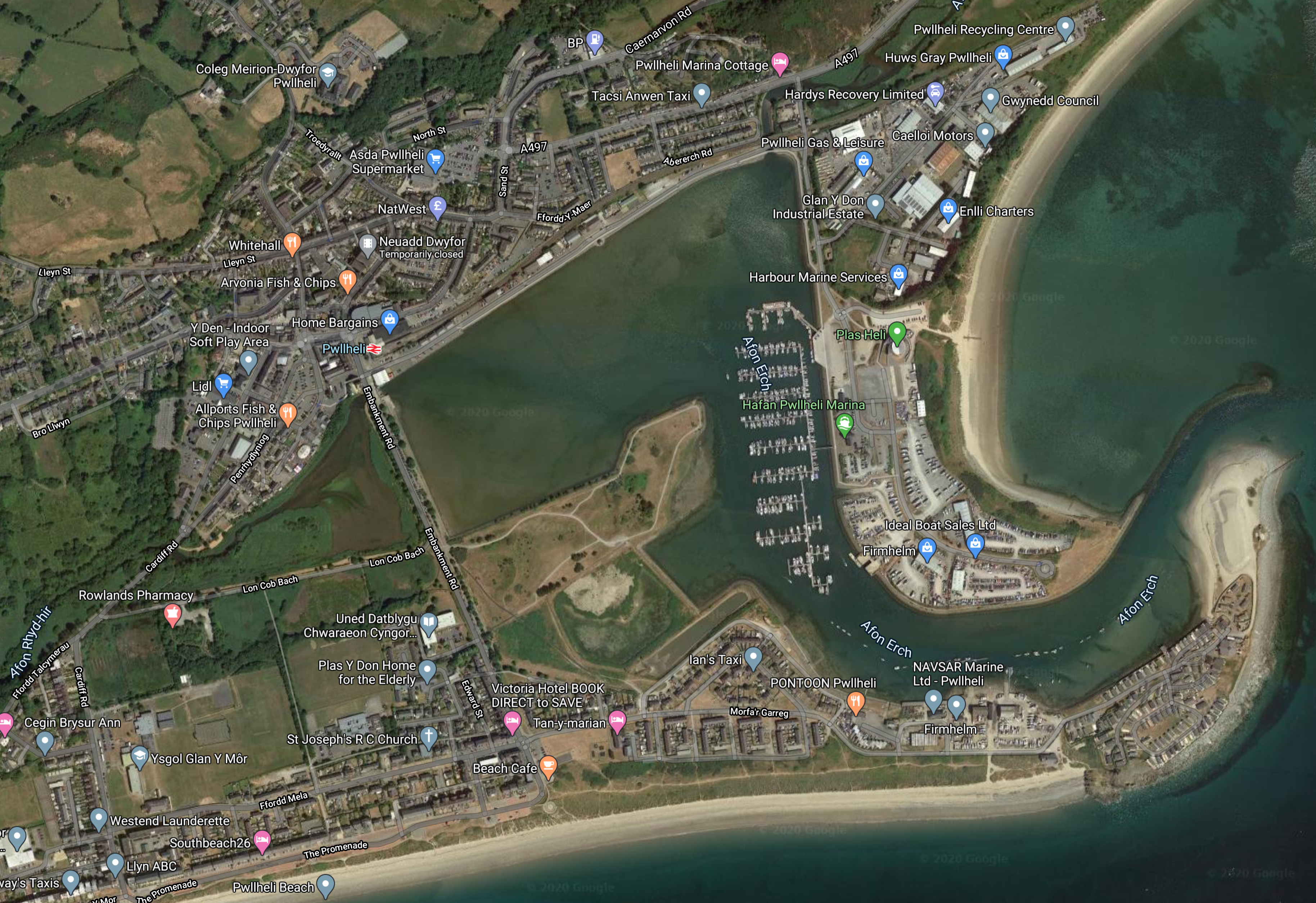
The stsation is at the North West corner of the bay.
My first reaction, when I saw this was that I have to go.
So I took a closer look at the station instead.

I suspect that fitting a charging facility into the station, wouldn’t be the most difficult of engineering problems. Although, there might be a problem getting a good enough connection to the National Grid.
Shewsbury
Shrewsbury station is a five-platform station.
This Google Map shows the station’s unusual location over the River Severn.
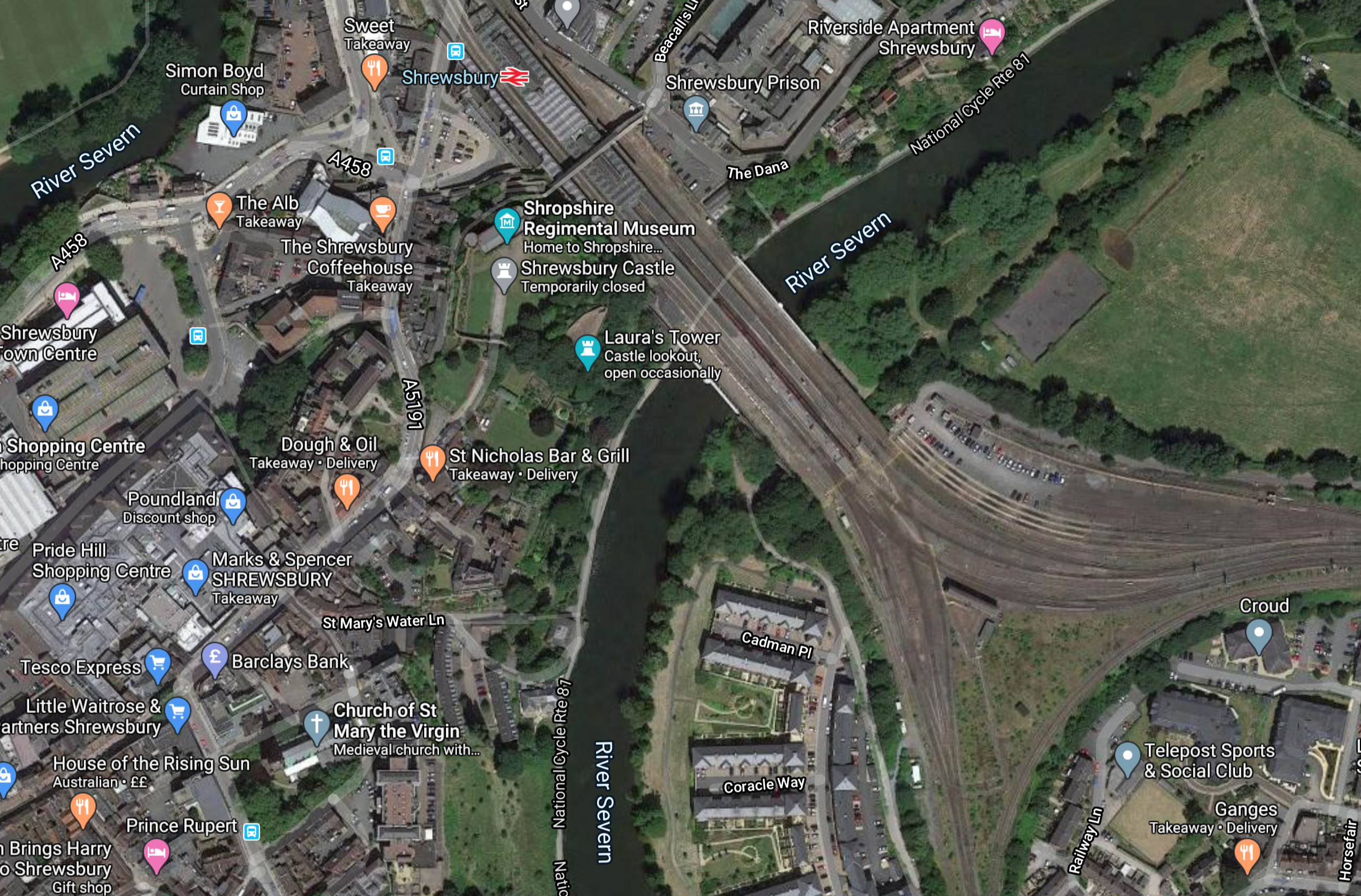
It must be one of few stations in the world, where trains enter the station from three different directions.
- From Crewe and Chester to the North.
- From Hereford and Wales to the South.
- From Birmingham and Wolverhampton in the East.
Adding electrification to all or selected platforms should allow trains to recharge and be on their way.
- Under current timetables, dwell times in Shrewsbury are up to eight minutes.
- I would suspect the train times could be adjusted, so that trains left the station with full batteries.
With battery-electric services to Aberystwyth, Birmingham International, Birmingham New Street, Cardiff Central, Chester, Crewe, Hereford, Holyhead, London Euston, Manchester, Pwllheli and Swansea, it will be a very important station.
Swansea
Swansea station has four terminal platforms.
A charging facility could be added to an appropriate number of platforms.
Or perhaps, the last few miles of track into the station should be electrified, so trains could charge on the way in, charge in the station and charge on the way out.
Third Rail Electrification
I have suggested in this post, that 750 VDC third-rail electrification could be used in several places.
I will repeat what I said earlier, when discussing Chester station.
- I’m an engineer, who deals in scientifically-correct solutions, not politically-correct ones, devised by jobsworths.
- Maintenance staff at the station will be familiar with the technology.
- Station staff and passengers will know about the dangers of third-rail electrification.
- Trains connect and disconnect automatically to third-rail electrification.
- Trains don’t have to stop to connect and disconnect, so passing trains can be topped-up.
- Hitachi with the Class 395 train and Alstom with the Class 373 train, have shown even trains capable of 140 mph can be fitted with third-rail shoes to work safely at slower speeds on lines electrified using third-rail.
- Modern control systems can control the electricity to the third-rail, so it is only switched on, when the train completes the circuit.
Third-rail electrification should be seriously considered.
A Standardised Terminal Solution
In this post, I mentioned that the following stations could be powered by a scandalised solution, as they are all one platform, terminal stations.
- Aberystwyth
- Blaenau Ffestiniog
- Fishguard Harbour
- Holyhead
- Milford Haven
- Pembroke Dock
- Pwllheli
The system might also be applicable at Carmarthen and Swansea.
My view is that Vivarail’s Fast Track charging based on third-rail technology would be ideal. I discussed this technology in Vivarail Unveils Fast Charging System For Class 230 Battery Trains.
Conclusion
With a bit of ingenuity, all train services run by Transport for Wales, can be run with battery-electric trains.
The Rival Plans For Piccadilly Station, That Architects Say Will ‘Save Millions’
The title of this post, is the same as that of this article on the Manchester Evening News.
This subtitle introduces the idea.
The speculative proposal includes a new underground HS2 station and an ‘s-shaped tunnel’ under the city centre.
The architects are Weston Williamson and I have felt for years that this was the best way and I put my ideas and some fragments from the press and Northern Powerhouse Rail in Manchester Piccadilly ‘Super Hub’ Proposed.
This picture from Weston Williamson, shows their proposed station.

Note.
- In the visualisation, you are observing the station from the East.
- The existing railway lines into Piccadilly station are shown in red.
- Stockport and Manchester Airport are to the left, which is to the South.
- Note the dreaded Castlefield Corridor in red going off into the distance to Oxford Road and Deansgate stations.
- The new high speed lines are shown in blue.
- To the left they go to Manchester Airport and then on to London, Birmingham and the South, Warrington and Liverpool and Wigan, Preston, Blackpool, Barroe-in-Furness, the North and Scotland.
- To the right, they go to Huddersfield, Bradford, Leeds, Hull and the North East, and Sheffield, Doncaster and the East.
- Between it looks like a low-level High Speed station with at least four tracks and six platforms.
- The Manchester Mretrolink is shown in yellow.
- The potential for over-site development is immense. If the Station Square Tower was residential, the penthouses would be some of the most desirable places to live in the North.
This Google Map shows the current station.
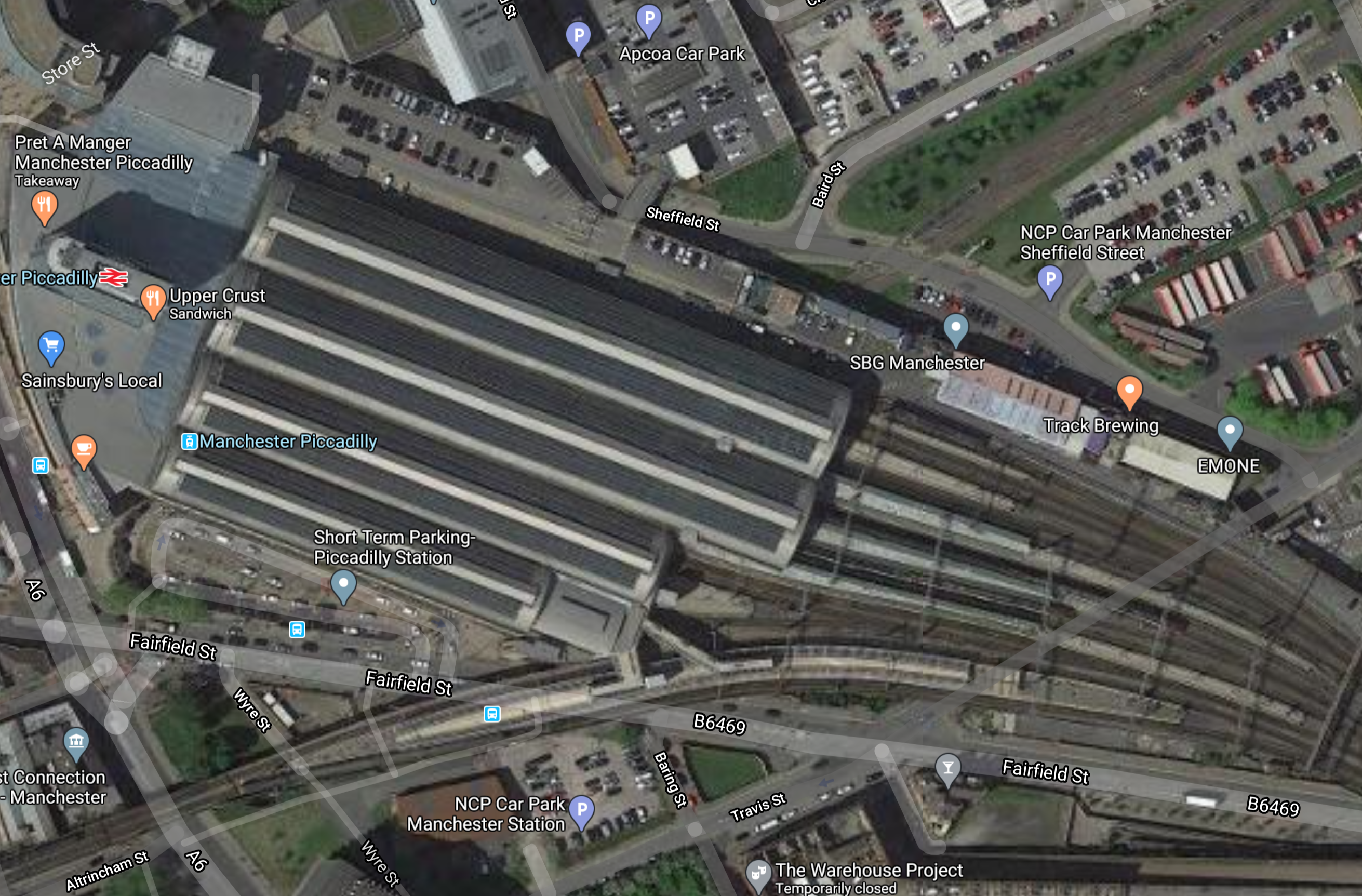
Unfortunately, the map is round the other way to the visualisation, but I hope you can see how the shape of the current station is intact and can be picked out in both.
If you’ve ever used London Paddington station in the last few years, you will know that Crossrail is being built underneath. But the massive construction project of building the Crossrail platforms has not inconvenienced the normal business of the station.
Weston Williamson’s proposed station can be built in the same way.
It could be truly transformational
- Manchester Piccadilly station would have at least 43 percent more platforms.
- Classic-compatible High Speed commuter trains would run to Barrow, Blackpool, Chester, Derby, Nottingham and Shrewsbury from the low-level High Speed station.
- The Northern Powerhouse Rail for all TransPennine Express services would use the low-level High Speed station.
- Glasgow services would use the low-level High Speed station.
- Manchester Piccadilly and Manchester Airport would have up to 18 high speed trains per hour and would be the finest airport service in the world.
- Some or all of the low-level High Speed platforms, would be able to take 400 metre long trains.
- 400 metre long platforms could handle one 200 metre long train from Manchester Airport and one 200 metre long train from Yorkshire.
- The Castlefield Corridor would only have local trains, limited to a number, with which it could cope.
- The use of the existing platforms would be reorganised.
It would be a massive increase in the capacity of the station and as been shown at Paddington with Crossrail, I am sure, that it could be built without massive disruption to existing services.
The Ultimate Train To The North
Imagine a pair of 200 metre long classic-compatible trains running between London Euston and Leeds.
- They would travel via Birmingham Interchange, Manchester Airport, Manchester Piccadilly, Huddersfield and Bradford.
- The trains would divide at Leeds.
- One train would go to Hull.
- The second train would go to York, Darlington, Durham and Newcastle. It could be extended to Edinburgh.
- It could even run with a Turn-Up-And-Go frequency of four tph.
Why not?
Could The Crewe And Derby Line Become A Much More Important Route?
On the Midlands Connect web site, they have a page, which is entitled Derby-Stoke-Crewe.
This is the introductory paragraph.
Our plans have the potential to increase passenger demand on the corridor by 72%, with faster, more frequent services.
They then give the outline of their plans, which can be summed up as follows.
- Currently, the service is one train per hour (tph) and it takes 79 minutes.
- The service frequency will go to two tph.
- Twenty minutes could be saved on the second service by adjusting calling patterns.
- Improved links at Crewe for High Speed Two. This must have been written before Stafford and Stoke got the High Speed Two service to Macclesfield.
- East Midlands Railway are planning to extend the current Crewe and Derby service to Nottingham.
It seems a safe, and not overly ambitious plan.
These are my thoughts.
The Route
I have flown my virtual helicopter along the route and it appears to be double track all the way, except for a three mile section to the East of Crewe, that British Rail reduced to single track
However, in recent years the A5020 was built under the railway and the new bridge appears to have space for the second track to be restored, as this Google Map shows.
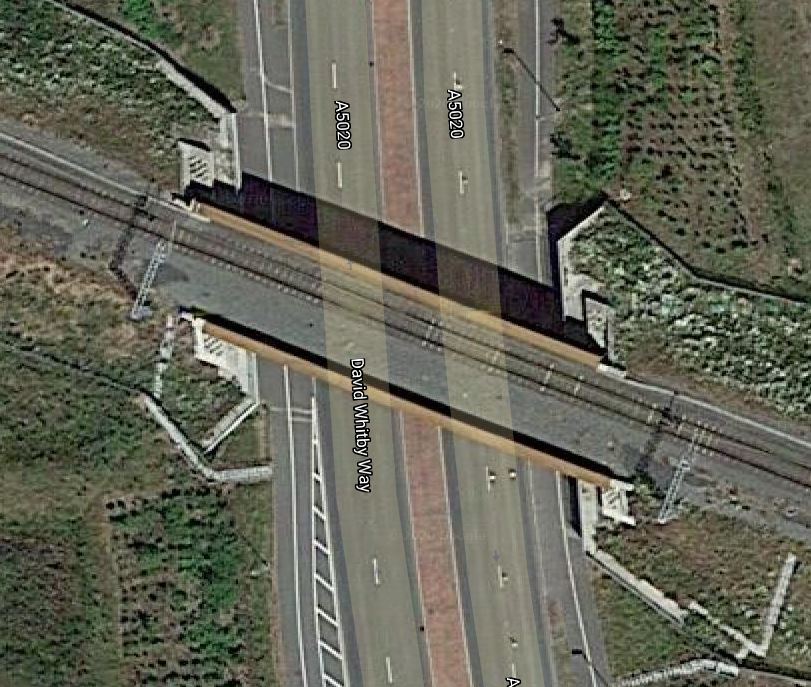
Note.
- The single track appears to be electrified, from the shadows of the gantries at either end of the bridge.
- West Midlands Trains appear to run an electric service between Crewe and Stafford on this route.
- I suspect it’s also used as a diversion route for Avanti West Coast’s Manchester service via Stoke-on-Trent or for train positioning.
Will this route allow High Speed Two trains to run between Stoke-on-Trent and Manchester Piccadilly?
From picture and comments in a rail forum, I suspect that the route could be redoubled fairly easily.
- The electrification runs for about 15.5 miles, between Crewe station and Stoke Junction, which is about half-a-mile on the other side of Stoke-on-Trent station.
- Trains seem to be connected to the electrification for over twenty minutes, so it could be useful for charging a battery train, running between Stoke-n-Trent and Crewe stations.
This Google Map shows Stoke Junction.
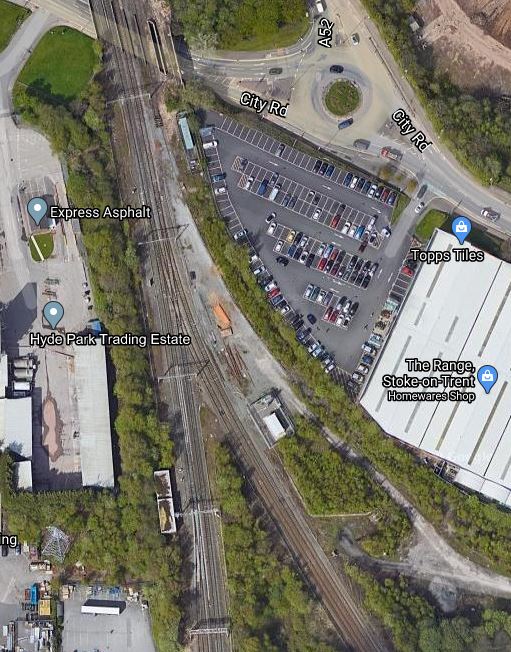
Note,
- Stoke-on-Trent station is to the North.
- The electrified railway going due South is the West Coast Main Line to Stone and Stafford stations.
- The line without electrification going off in a more South-Easterly direction is the line to Uttoxeter and Derby.
Following the route between Derby and Crewe, these are my observations.
- There is a level crossing at Blythe Bridge station.
- Most of the bridges over the route are modern, so I suspect will accept electrification.
- The route would appear to have a speed limit of 70 mph, but I would suspect that this could be increased somewhat as it doesn’t look too challenging.
- The route is 51 miles long, so a service that takes the current 79 minutes with nine stops, would average 38.7 mph.
- The proposed time of 59 minutes, would average 51.8 mph
I suspect there could be more to come, as the timetable is probably written for a Class 153 train.
A Crewe And Nottingham Service
The Midlands Connect plan says the service will be the following.
- Two tph
- A slow train in 79 minutes.
- A fast train in 59 minutes.
- East Midlands Railway want to extend services to Nottingham.
It could be a fairly simple easy-to-use timetable.
Fast Trains
Consider.
- Derby and Nottingham are 16 miles apart and fastest trains take between 19-22 minutes between the two cities.
- When it opens, all trains would stop at East Midlands Hub station between Nottingham and Derby.
- East Midlands Railway have a fleet that will include forty Class 170 trains.
- I suspect that these 100 mph trains will be able to run between Crewe and Nottingham including the turnround in under 90 minutes.
This would mean that a fast hourly service would need three trains.
Slow Trains
Consider.
- I wouldn’t be surprised to see the slower services continuing as now and not extending to Nottingham.
- 79 minutes is probably a convenient time, which would give a ninety minute time for each leg between Derby and Crewe, when turnround is included.
- Trains would be more of the Class 170 trains.
This would mean that a slow hourly service would need three trains.
Could Battery Electric Trains Be Used?
Consider.
- I think it is likely that the route between Derby and East Midlands Parkway via East Midlands Hub station, will be electrified, in conjunction with Midland Main Line electrification.
- Between Derby and Long Eaton stations via East Midlands Hub station is just under ten miles and takes ten minutes.
- Nottingham and Crewe is 66 miles of which 25 miles in total could be electrified.
- Derby and Crewe is 51 miles of which 15 miles are electrified.
- The longest section without electrification is between Derby station and Stoke Junction, which is 35.5 miles.
Batteries would be charged in the following places.
- Between Long Eaton and Derby stations.
- During turnround at a fully-electrified Derby station.
- Between Stoke-on-Trent and Crewe stations.
- During turnround at a fully-electrified Crewe station.
That’s a lot better than with an electric car.
In Sparking A Revolution, I quoted this Hitachi-specification for a battery-electric train.
- Range – 55-65 miles
- Performance – 90-100 mph
- Recharge – 10 minutes when static
- Routes – Suburban near electrified lines
- Battery Life – 8-10 years
I can’t see any problem with one of these trains or other battery-electric trains with a similar performance, running between Crewe and Nottingham or Derby via Stoke.
Could Hydrogen-Powered Trains Be Used?
I would suspect so, as the Alsthom Coradia iLint runs a similar route in Germany.
Connections To High Speed Two
Midlands Connect noted the route’s link to High Speed Two at Crewe.
But it also has other links to High Speed Two at Stoke-on-Trent and East Midlands Hub stations.
I suspect some stations like Uttoxeter or Alsager will have a choice of fast routes to London or Scotland.
Could Services Be Extended From Crewe?
In Connecting The Powerhouses, I talked about an article in the June 2017 Edition of Modern Railways, which proposed reopening the Midland Railway route between Derby and Manchester.
Some passengers and commentators fell a direct fast link is needed.
When High Speed Two is completed, the main route into Manchester Piccadilly will be a high speed spur from Crewe via Manchester Airport. Current plans include the following services.
- One tph from London Euston via Old Oak Common and Birmingham Interchange.
- Two tph from London Euston via Old Oak Common
- Two tph from Birmingham Curzon Street
Note.
- All services will call at Manchester Airport.
- It is likely that Northern Powerhouse Rail will add six tph to Manchester Piccadilly from Liverpool via Warrington.
- Some services will extend through Manchester Piccadilly to Bradford, Doncaster, Huddersfield, Hull, Leeds, Newcastle, Sheffield and York.
- High Speed lines will probably have a capacity of up to eighteen tph.
The Birmingham Curzon Street, Liverpool and London Euston services would be eleven tph, so there would be more than enough capacity for an hourly train from Nottingham.
What would the service be like?
- It would be between Nottingham and Manchester Piccadilly stations.
- It could call at East Midlands Hub, Derby, Uttoxeter, Stoke-on-Trent, Kidsgrove, Crewe and Manchester Airport stations.
- It would probably be hourly.
Timings could be as follows.
- Nottingham and Manchester Airport – 87 minutes
- Nottingham and Manchester Piccadilly – 91 minutes
- Derby and Manchester Airport – 67 minutes
- Derby and Manchester Piccadilly – 71 minutes
- Stoke-on-Trent and Manchester Airport – 32 minutes
- Stoke-on-Trent and Manchester Piccadilly – 36 minutes
The trains used on this and other local services that might need to use High Speed Two infrastructure would be performing a similar role as that of the Class 395 trains on High Speed One.
Possibilities must include.
- A classic-compatible High Speed Two train.
- A five-car AT-300 train, like East Midlands Railway’s Class 810 trains.
- An updated Class 395 train.
All trains would need a battery capability with a range of 40 miles.
It should also be noted that in Options For High Speed To Hastings, I worked through the options needed to run high speed commuter services to Hastings.
This was the last sentence in that post.
It’s all about selling trains and a company that had a 140 mph or 225 kph high-speed electric train, that could do perhaps 25 miles or 40 kilometres on batteries, would have a valuable addition to their product range.
A train with a range of 50 miles on battery power, would be suitable for the following routes.
- London St. Pancras and Hastings via Ashford International.
- Manchester Piccadilly and Nottingham via Manchester Airport, Crewe, Derby and East Midlands Hub.
- Manchester Piccadilly and Barrow-in-Furness via Manchester Airport, Warrington Bank Quay, Wigan North Western, Preston and Lancaster.
- Manchester Piccadilly and Chester via Manchester Airport and Crewe.
- Manchester Piccadilly and Shrewsbury via Manchester Airport and Crewe.
Charging might be needed at some of the terminal stations.
High Speed Two To The North West Of England
This map clipped from the High Speed Two web site, shows High Speed Two routes in the North West of England.
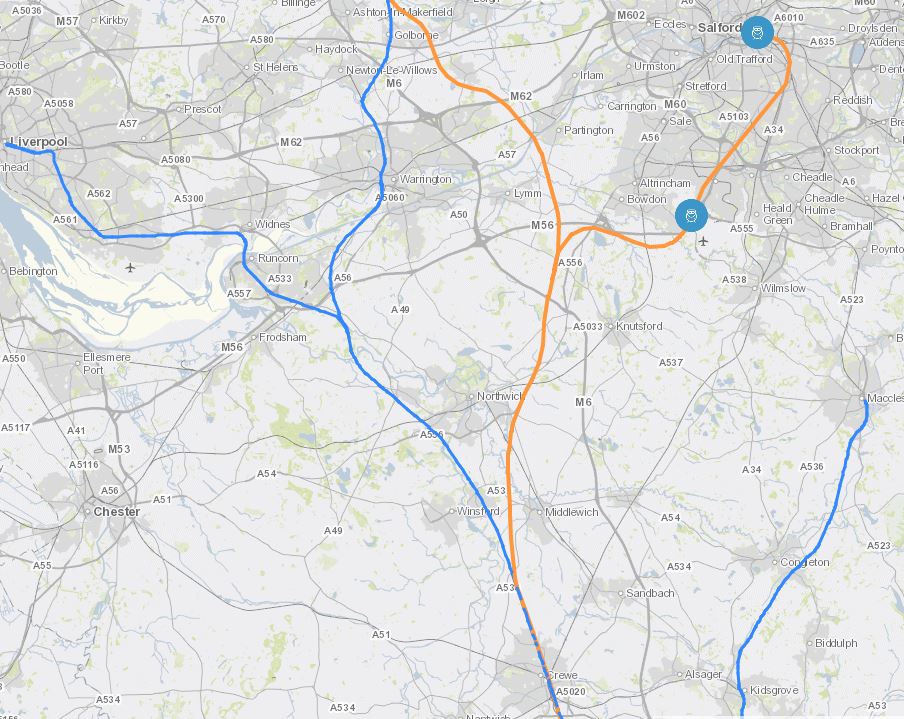
Note.
- When shown in orange, High Speed Two will use new tracks.
- When shown in blue, High Speed Two will use existing tracks.
- New stations are shown as large blue dots.
- High Speed Two and the West Coast Main Line appear to share a corridor through Crewe, before dividing near Walley’s Green.
- High Speed Two loops to the East of the West Coast Main Line and rejoins it South of Wigan between Bryn Gates and Abram Brow.
The route will or might serve the following stations in North West England.
Blackpool North
Blackpool North station is not planned to be served by High Speed Two.
But the station has been recently rebuilt.
- It has a number of platforms, that are capable of handling 200 metre long classic-compatible High Speed Two trains.
- The route to High Speed Two at Preston is fully electrified.
- In a couple of years, it will be connected to Blackpool’s expanding tramway.
- Blackpool would welcome High Speed Two with open arms.
Blackpool North would be an ideal extra destination, if more trains were to be split and joined at Crewe.
But whatever happens, I believe that high speed commuter trains will run from Blackpool North.
- Blackpool and Manchester Piccadilly via Preston, Wigan North Western, Warrington Bank Quay and Manchester Airport.
- Blackpool and Derby via Preston, Wigan North Western, Warrington Bank Quay, Crewe and Stoke-on-Trent.
Blackpool North has the platforms and electrification and it will be used.
Carlisle
Carlisle station is a through station on the current Glasgow service and can handle a nine-car Class 390 train which is over 210 metres long, which means they can handle a 200 metre long, classic-compatible High Speed Two train.
But two tph will be 400 metre London Euston and Edinburgh/Glasgow trains, so platform lengthening will probably be required.
There will be the following trains.
- Birmingham Curzon Street and Carlisle – I tph – 118 minutes
- London Euston and Carlisle – 2 tph – 154 minutes.
After any necessary platform lengthening, Carlisle will be ready and waiting for High Speed Two and will be reached in Phase 1 of the project.
The High Speed Two web site, says Carlisle will be reached in Phase 2b, but as Edinburgh and Glasgow are part of Phase 1, this must be a mistake.
Crewe
Crewe station is at the bottom of the map, just to the right of centre.
The station gets this introduction on this page of the High Speed Two web site.
HS2 services will call at Crewe, where passengers will be able to access the high speed network heading south. Journey times to London will be cut to under an hour. Macclesfield, Stafford and Stoke-on-Trent will also receive HS2 services, spreading the benefits of better connectivity.
The page also says that between five and seven trains per hour (tph) will call at Crewe.
Lancaster
Lancaster station is a through station on the current Glasgow service and can handle a nine-car Class 390 train which is over 210 metres long, which means they can handle a 200 metre long, classic-compatible High Speed Two train.
Lancaster will also be a terminus of 200 metre long classic-compatible High peed Two train from London Euston, so there may need to be refurbishment to handle the larger, if not longer train.
The use of Lancaster as a terminus, would appear to have the following advantages.
- The platform is already there.
- Using Lancaster as a terminal, may reduce the scope of works at Carlisle and Preston.
- The one tph service from London Euston is effectively a High Speed Northern stopper between Lancaster and Crewe, with calls at Warrington Bank Quay, Wigan North Western and Preston stations.
- Lancaster has connections to Barrow-in-Furness, Heysham Port and Morecambe and the scenic Cumbrian Coast and Settle-Carlisle Lines.
- Paces like Barrow-in-Furness. Morecambe and a host of other stations, should save forty-three minutes on journeys to and from London.
I think that Lancaster, is a good place to terminate a service in the North-West of England.
There will be the following trains.
- Birmingham Curzon Street and Lancaster – I tph – 65 minutes
- London Euston and Lancaster – 1 tph – 101 minutes.
After the necessary refurbishment, Lancaster will be ready and waiting for High Speed Two and will be reached in Phase 2b of the project.
But I do feel that Lancaster could be reached in Phase 1 of the project, if necessary works North of Preston and at Lancaster station were planned as an independent project.
Liverpool Lime Street
Liverpool Lime Street station is at the Western edge of the map, at the end of the Liverpool Branch of the West Coast Main Line.
Liverpool gets this headline and brief description on this page of the High Speed Two web site.
The City Region Wants To Deliver a World Class Transport Network
Its ambitious plans would integrate the existing HS2 route and builds on the Northern Powerhouse Rail proposals for high speed, east-west links directly into Liverpool City Centre.
Liverpool has made a good start to prepare for High Speed Two.
- The Grade II Listed; Lime Street station now has lengthened platforms and an improved layout so that it can handle two 200 metre long High Speed Two trains per hour.
- Merseyrail is taking delivery of a fleet of new Class 777 trains to update their suburban network.
- By the time High Speed Two arrives in the city, the suburban network will be larger.
Liverpool is ready and waiting for High Speed Two and will be reached in Phase 1 of the project.
Macclesfield
Macclesfield station is at the Eastern edge of the map, at the end of its own leg of High Speed Two.
The station was the surprise destination added, during the last iteration of High Speed Two.
- The late, great Brian Redhead, who lived in the town would be very pleased.
- The station was rebuilt in 1960 and has three platforms.
- It is planned to have one tph to London Euston via Stoke-on-Trent, Stafford and Old Oak Common.
- The visualisation on this page of the High Speed Two web site, also shows three platforms, but I wouldn’t be surprised to see a fourth added, as the extra platform would add flexibility.
The second surprise for Macclesfield, is that like Liverpool, it will be reached in Phase 1 of the project.
Manchester Airport
Manchester Airport station is the Southern large blue dot at the top of the map.
This page on the High Speed Two web site is rather sparse on information about Manchester Airport station.
I have combined train times given on the web page, with frequencies from an article in the June 2020 Edition of Modern Railways to create this table, which should be valid after the completion of High Speed Two.
- Birmingham Curzon Street and Manchester Airport – 2 tph – 32 minutes
- Birmingham Interchange and Manchester Airport – 1 tph – 29 minutes
- London Euston and Manchester Airport – 3 tph – 63 minutes
- London Old Oak Common and Manchester Airport – 3 tph – 56 minutes
- Manchester Piccadilly and Manchester Airport – 5 tph – 6 minutes
In Changes Signalled For HS2 Route In North, I stated that Northern Powerhouse Rail were proposing the following Liverpool and Manchester service.
Manchester Airport station will be reached in Phase 2b of the project.
- Six tph
- Stops at Manchester Airport and Warrington.
- An end-to-end journey time of 26 minutes.
This would do the following.
- Add a Liverpool and Manchester Airport service with a frequency of 6 tph, that will take 20 minutes.
- Add a Warrington Parkway and Manchester Airport service with a frequency of 6 tph that will take around 10 minutes.
- Increase the frequency between Manchester Piccadilly and Manchester Airport to 11 tph. Or more likely 12 tph.
How many cities have an airport connection running every five minutes using trains running at 125 mph?
As these Liverpool and Manchester services would probably start in places like Hull and Newcastle and come via varied routes that included a selection of Bradford, Doncaster Huddersfield, Leeds and Sheffield, all of the North, that lies to the East of the Pennines will be connected to Manchester Piccadilly, Manchester Airport and Liverpool by high speed trains.
Manchester Piccadilly
Manchester Piccadilly station is the Northern large blue dot at the top of the map.
This page on the High Speed Two web site is rather sparse on information about Manchester Piccadilly station.
Using the same data as before I can create a table of services from Manchester Piccadilly station, where I have included Liverpool and Manchester services, that will be run by Northern Powerhouse Rail.
- Birmingham Curzon Street – 2 tph – 40 minutes
- Birmingham Interchange – 1 tph – 37 minutes
- London Euston – 3 tph – 67 minutes
- London Old Oak Common – 3 tph – 60 minutes
- Manchester Airport – 12 tph – 6 minutes
- Liverpool – 6 tph – 26 minutes
Manchester Piccadilly station will be reached in Phase 2b of the project.
Oxenholme Lake District
Oxenholme Lake District station is a through station on the current Glasgow service and can handle a nine-car Class 390 train which is over 210 metres long, which means they can handle a 200 metre long, classic-compatible High Speed Two train.
There will be the following trains.
- Birmingham Curzon Street and Oxenholm Lake District – I tph – 79 minutes
- London Euston and Oxenholme Lake District – 115 minutes – Change at Preston
Oxenholme Lake District is ready and waiting for High Speed Two and will be reached in Phase 2b of the project.
But I do feel that Oxenholme Lake Districtcould be reached in Phase 1 of the project, if necessary works North of Preston and at Lancaster station were planned as an independent project
Penrith North Lakes
Penrith North Lakes station is a through station on the current Glasgow service and can handle a nine-car Class 390 train which is over 210 metres long, which means they can handle a 200 metre long, classic-compatible High Speed Two train.
There will be the following trains.
- Birmingham Curzon Street and Penrith North Lakes – I tph – 102 minutes
- London Euston and Penrith North Lakes – 138 minutes – Change at Preston
Penrith North Lakes is ready and waiting for High Speed Two and will be reached in Phase 2b of the project.
But I do feel that Penrith North Lakes could be reached in Phase 1 of the project, if necessary works North of Preston and at Lancaster station were planned as an independent project
Preston
Preston station is a through station on the current Glasgow service and can handle a nine-car Class 390 train which is over 210 metres long, which means they can handle a 200 metre long, classic-compatible High Speed Two train.
But two tph will be 400 metre London Euston and Edinburgh/Glasgow trains, so platform lengthening will probably be required.
There will be the following trains.
- Birmingham Curzon Street and Preston – I tph – 50 minutes
- London Euston and Preston – 3 tph – 78 minutes.
After any necessary platform lengthening, Preston will be ready and waiting for High Speed Two and will be reached in Phase 1 of the project.
Runcorn
Runcorn station is a through station on the Liverpool service and can handle a nine-car Class 390 train which is over 210 metres long, which means they can handle a 200 metre long, classic-compatible High Speed Two train.
There will be two tph between London Euston and Runcorn and trains will take 74 minutes.
Runcorn is ready and waiting for High Speed Two and will be reached in Phase 1 of the project.
Stafford
Stafford station is a through station on the Macclesfield service and can handle a nine-car Class 390 train which is over 210 metres long, which means they can handle a 200 metre long, classic-compatible High Speed Two train.
There will be one tph between London Euston and Stafford and trains will take 54 minutes.
Sfafford is ready and waiting for High Speed Two and will be reached in Phase 1 of the project.
Stoke
Stoke station is a through station on the Macclesfield service and can handle a nine-car Class 390 train which is over 210 metres long, which means they can handle a 200 metre long, classic-compatible High Speed Two train.
There will be one tph between London Euston and Stoke and trains will take 71 minutes.
Stoke is ready and waiting for High Speed Two and will be reached in Phase 1 of the project.
Warrington
Warrington Bank Quay station is a through station on the current Glasgow service and can handle a nine-car Class 390 train which is over 210 metres long, which means they can handle a 200 metre long, classic-compatible High Speed Two train.
There will be the following trains.
- Birmingham Curzon Street and Warrington Bank Quay – I tph – 25 minutes
- London Euston and Warrington Bank Quay – 1 tph – 73 minutes.
Warrington Bank Quay is ready and waiting for High Speed Two and will be reached in Phase 1 of the project.
Wigan
Wigan North Western station is a through station on the current Glasgow service and can handle a nine-car Class 390 train which is over 210 metres long, which means they can handle a 200 metre long, classic-compatible High Speed Two train.
There will be the following trains.
- Birmingham Curzon Street and Wigan North Western – I tph – 36 minutes
- London Euston and Wigan North Western – 1 tph – 84 minutes.
Wigan North Western is ready and waiting for High Speed Two and will be reached in Phase 1 of the project.
Splitting And Joining Of High Speed Two Trains
In Existing Stations Where High Speed Two Trains Will Call, I looked at how existing stations will need to be modified to handle the High Speed Two service pattern described in an article, which is entitled HS2 Minister Backs 18 tph Frequency, in the June 2020 Edition of Modern Railways.
The article states that splitting and joining of trains will take place at three stations; Carlisle, Crewe and East Midlands Hub.
To successfully split and join the pairs of 200 metre long High Speed Two trains, the following will be needed.
- 400 metre long platforms, that can handle the pair of trains.
- Excellent signage, so that passengers get into the right train and leave for the right destination.
- Efficient crew methods, so that drivers are in the correct cabs at the right time.
For many years trains at Cambridge and several places South of London have successfully split and joined.
This video shows two Class 395 trains coupling and uncoupling automatically.
It;s impressive and I suspect High Speed Two’s trains will be equally good or even better at this procedure.
Why Is Split And Join Needed For High Speed Two?
According to the Modern Railways article, the full High Speed Two service will be as follows in trains per hour (tph) and trains per two hours (tp2h)
- 1 tph – London Euston and Birmingham Curzon Street via Old Oak Common (OOC) – 400 metres
- 2 tph – London Euston and Birmingham Curzon Street via OOC and Birmingham Interchange – 400 metres
- 1 tph – London Euston and Lancaster via OOC, Crewe, Warrington Bank Quay, Wigan North Western and Preston – London Euston and Liverpool Lime Street via OOC, Crewe and Runcorn – 200+200 metres with Split/Join at Crewe
- 1 tph – London Euston and Liverpool Lime Street via OOC, Crewe and Runcorn – 200 metres
- 1 tph – London Euston and Macclesfield via OOC, Stafford and Stoke-on-Trent – 200 metres
- 1 tph – London Euston and Manchester Piccadilly via OOC, Birmingham Interchange and Manchester Airport – 400 metres
- 2 tph – London Euston and Manchester Piccadilly via OOC and Manchester Airport – 400 metres
- 1 tph – London Euston and Edinburgh Waverley via OOC, Preston, Carlisle and Edinburgh Haymarket – London Euston and Glasgow Central via OOC, Preston and Carlisle – 200 +200 metres with Split/Join at Carlisle
- 1 tph – London Euston and Edinburgh Waverley via OOC, Birmingham Interchange, Preston, Carlisle and Edinburgh Haymarket – London Euston and Glasgow Central via OOC, Preston and Carlisle – 200 +200 metres with Split/Join at Carlisle
- 1 tp2h – Birmingham Curzon Street and Edinburgh Waverley via Wigan North Western, Preston, Lancaster, Oxenholme, Penrith and Edinburgh Haymarket – 200 metres
- 1 tp2h – Birmingham Curzon Street and Glasgow Central via Wigan North Western, Preston, Lancaster, Oxenholme, Penrith, Lockerbie and Motherwell – 200 metres
- 2 tph – Birmingham Curzon Street and Manchester Piccadilly via Manchester Airport – 200 metres
- 2 tph – Birmingham Curzon Street and Leeds via East Midlands Hub – 200 metres
- 1 tph – Birmingham Curzon Street and Newcastle via East Midlands Hub, Darlington and Durham – 200 metres
- 1 tph – London Euston and Sheffield via OOC and East Midlands Hub – London Euston and Leeds via OOC and East Midlands Hub – 200 + 200 metres with Split/Join at East Midlands Hub
- 1 tph – London Euston and Leeds via OOC and East Midlands Hub – 400 metres
- 1 tph – London Euston and Leeds via OOC, Birmingham Interchange and East Midlands Hub – 400 metres
- 1 tph – London Euston and Sheffield via OOC, East Midlands Hub and Chesterfield – London Euston and York via OOC and East Midlands Hub – 200 + 200 metres with Split/Join at East Midlands Hub
- 1tph – London Euston and Newcastle via OOC and York – 200 metres
- 1 tph – London Euston and Newcastle via OOC, York and Darlington – 200 metres
Note.
- Trains 10 and 11 share the same path in alternate hours.
- Birmingham Curzon Street is effectively a second Southern terminus.
- Seventeen tph leave London Euston and Old Oak Common for the North, of which eight are 400 metre trains, five are a pair of 200 metre trains and four are 200 metre trains.
As the five pairs of 200 metre trains Split/Join en route, this effectively means, that London Euston is served by twenty-two tph.
It would appear that Split/Join is important, as it allows the same number of train paths between London Euston and the North to support more services.
Could Any Other Trains Be Split And Joined?
I don’t see why not!
There are eight tph going North from London Euston and Old Oak Common, that are 400 metre long trains that don’t Split/Join
- 3 tph – Birmingham Curzon Street
- 2 tph – Leeds
- 3 tph – Manchester Piccadilly
Note.
- Each 400 metre train would appear to have a capacity of around 1,100 passengers.
- Leeds is also served by another 200 metre train from London.
Effectively, this gives the following passenger capacities between London and the three major cities.
- Birmingham – 3,300
- Leeds – 2,750
- Manchester – 3,300
If these capacities have been carefully predicted, performing a Split/Join on these trains might cause a shortage of capacity.
There are four single 200 metre trains, that could be doubled up for their run to the North.
- London Euston and Liverpool Lime Street via OOC, Crewe and Runcorn
- London Euston and Macclesfield via OOC, Stafford and Stoke-on-Trent
- London Euston and Newcastle via OOC and York
- London Euston and Newcastle via OOC, York and Darlington
In theory, these four trains could be doubled to provide extra services.
But there are two problems.
Where Would The Trains Split and Join?
- Train 1 could Split/Join at Crewe.
- Train 2 could Split/Join at Stafford, if the platforms were lengthened to accept a pair of 200 metre trains.
- Trains 3 and 4 would need to stop at East Midlands Hub to Split/Join
It would appear that four extra trains could be run into London Euston, by running all single trains as pairs.
Where Would The Extra Services Terminate?
There are possibilities on the Western leg of High Speed Two.
- An extra train for Liverpool Lime Street
- An extra train for Lancaster
- A direct train for the current Manchester Piccadilly via Wilmslow and Stockport
- A direct train for Blackpool
But the Eastern leg of High Speed Two is more of a problem.
- An extra train for Sheffield
- A direct train for Hull.
Hull could be served via a new junction between High Speed Two and the Hull-Leeds Line to the North-West of Garforth or perhaps by extending a service from Sheffield.
Could Any Services North From Birmingham Curzon Street Be Split And Joined?
These 200 metre services go North from Birmingham Curzon Street station.
- 1 tp2h – Birmingham Curzon Street and Edinburgh Waverley via Wigan North Western, Preston, Lancaster, Oxenholme, Penrith and Edinburgh Haymarket
- 1 tp2h – Birmingham Curzon Street and Glasgow Central via Wigan North Western, Preston, Lancaster, Oxenholme, Penrith, Lockerbie and Motherwell
- 2 tph – Birmingham Curzon Street and Manchester Piccadilly via Manchester Airport
- 2 tph – Birmingham Curzon Street and Leeds via East Midlands Hub
- 1 tph – Birmingham Curzon Street and Newcastle via East Midlands Hub, Darlington and Durham.
Note that trains 1 and 2 share the same path in alternate hours.
There may be scope to double up some of these trains, to serve extra destinations in the North from Birmingham Curzon Street.
Conclusion
Split/Join is a powerful tool to increase the number of services without spending a fortune on new infrastructure.
Manchester Piccadilly ‘Super Hub’ Proposed
The title of this post is the same as that of this article on Rail Technology Magazine.
This is the introductory sentence.
A Manchester Piccadilly ‘super hub’ has been proposed as part of the High Speed North rail project.
And these two paragraphs lay out the proposed design.
To create the super hub, the report suggests a new tunnel from Ordsall into Manchester Piccadilly from the west, which could connect to High Speed 2 (HS2) and Northern Powerhouse Rail (NPR).
Fast trains from Chester and North Wales, Liverpool, Blackpool, Barrow and Glasgow could travel through the super hub with services emerging eastwards and across the Pennines to Leeds/Bradford, Sheffield, Hull, York and Newcastle.
Five years ago, I wrote Whither HS2 And HS3?, which argued for greater integration of the two routes and more tunnelled stations under major cities to build High Speed Two and Northern Powerhouse Rail with less disruption.
Part of that post was deliberately over the top, but it seems that others have been thinking in a similar way.
Last year, I wrote Changes Signalled For HS2 Route In North, which was an attempt to add detail to this report on the Transport for the North web site, which is entitled At A Glance – Northern Powerhouse Rail.
The proposed Manchester Piccadilly ‘Super Hub’ fits very well with the Transport for the North report.
- The station, could have entrances and exits were all over Manchester City Centre
- The main platforms could be long East-West through platforms, that would have direct tunnelled approaches from both directions.
- There could also be terminating platforms to take services from North Wales, Blackpool, Barrow and Glasgow.
- According to the Wikipedia entry for High Speed Two, the Western tunnel would be 7.5 miles long and link Manchester Piccadilly and Manchester Airport stations at speeds of up to 142 mph.
- As a High Speed Two size tunnel will be needed on the Eastern approach, if High Speed Two trains eventually use the route, could this tunnel extend for perhaps five miles with speeds of up to 142 mph, to speed up journey times?
- Journey times between Manchester Piccadilly and Manchester Airport stations could be under four minutes.
The Manchester Piccadilly ‘Super Hub’, High Speed Two And Liverpool
This clip of a map from the Transport for the North report shows a schematic of the current and possible rail links in the area.

High Speed Two would appear to come North and split into two routes.
- One continues North to join the existing West Coast Main Line just South of Wigan.
- Another goes through Crewe station.
North of Crewe, the two routes join and then split into three at the Junction labelled 6.
- To Warrington and Liverpool
- To Wigan, Preston and Scotland
- To Manchester Airport and Manchester.
A second Junction labelled 5, allows Northern Powerhouse Rail trains to run Liverpool-Warrington-Manchester Airport-Manchester.
The Transport for the North report, also says the following.
- There could be a new Warrington South Parkway station.
- Six trains per hour (tph) between Liverpool and Manchester via Warrington are planned.
- Journey times will be 26 minutes.
Will a Liverpool and Manchester time of 26 minutes be possible with two stops?
- I estimate Liverpool and Manchester will be a distance of 43 miles.
- As the will be a newly-built railway high speed railway, I suspect it will be at least a 125 mph line between Liverpool and Manchester Airport.
- But it is perfected feasible, that this section could be designed for speeds up to 140 mph or even the High Speed Two speed of 186 mph.
- TransPennine Express‘s current Class 802 trains, can run at up to 140 mph, so could take advantage of the higher speed.
- In addition, the Wikipedia entry for High Speed Two says that trains will use the Manchester Airport to Manchester City Centre tunnel at speeds of up to 142 mph.
Calculating journey times for various average speeds, including the two stops at Warrington South Parkway and Manchester Airport stations gives the following.
- 100 mph – 26 minutes
- 125 mph – 21 minutes
- 140 mph – 18 minutes
If the Liverpool and Manchester Airport section were to be built to High Speed Two standards, I can see a very comfortable Liverpool and Manchester time of under twenty minutes.
The Twenty-First Century will finally get a modern and fast Liverpool and Manchester Railway.
Going East From The Manchester Piccadilly ‘Super Hub’
The principle long-distance destinations to the East of Manchester Piccadilly station use one of two routes.
The Huddersfield Line to Leeds and beyond.
The Hope Valley Line to Sheffield and beyond.
Both routes leave the Manchester Branch of the West Coast Man Line out of Manchester Piccadilly station at Ardwick Junction.
This Google Map shows Ardwick Junction, Ardwick station and the Siemens Train Care Facility.
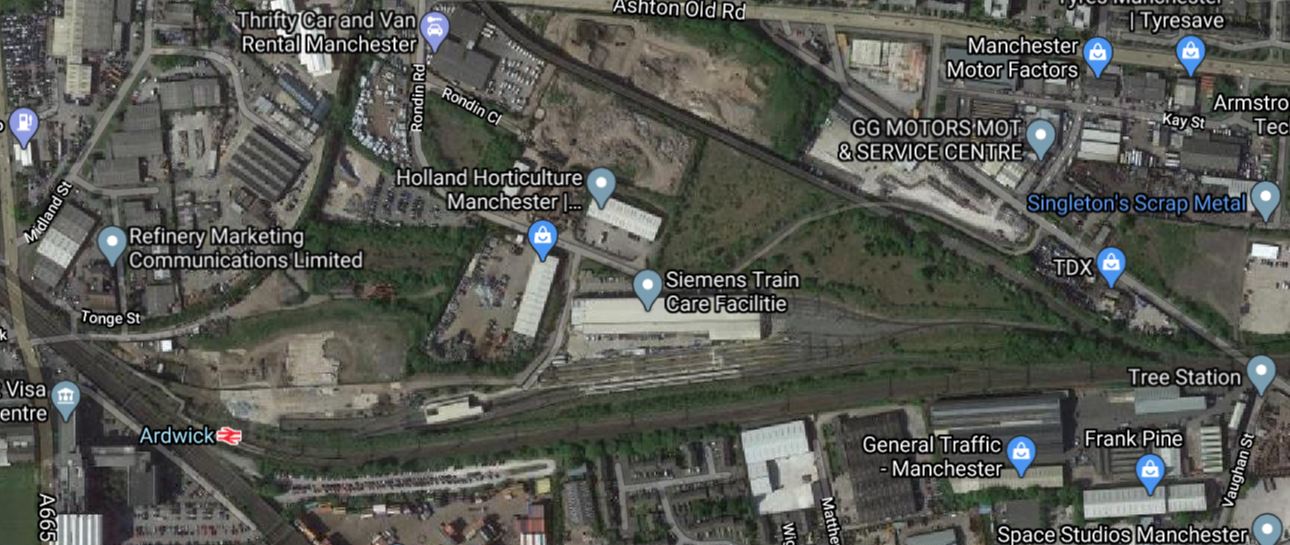
It would appear that the Eastern portal of the tunnels that lead to the proposed underground platforms of the Manchester Piccadilly ‘Super-Hub’ could emerge in this area.
Note.
- Ardwick station is about a mile from Manchester Piccadilly station.
- The Sheffield and Leeds routes split about a mile to the East of Ardwick station.
- The large site of the Train Care Facility, could surely be used for the tunnel portal.
The Transport for the North report says this about the services to the East from Manchester.
- Sic tph between Manchester and Leeds are planned.
- Four tph between Manchester and Sheffield are planned.
Ten tph through the underground platforms is surely possible, when Crossrail will handle 24 tph with full digital signalling.
A Manchester And Leeds High Speed Line
This clip of a map from the Transport for the North report shows a schematic of the rail links to the East of Manchester.
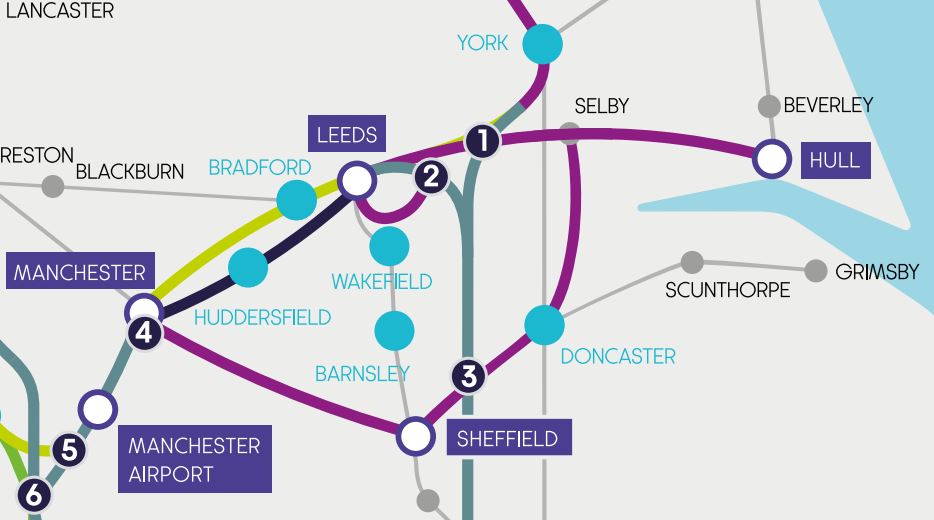
Two alternative routes are proposed between Manchester and Leeds.
- The black route would be created by upgrading the Huddersfield Line.
- The yellow route would be a new route via Bradford.
The Transport for the North report says this about the Leeds-Manchester service.
- There will be six tph.
- The journey will take 25 minutes.
In Is There Going To Be Full Electrification Between Leeds And Huddersfield?, I detailed Network Rail’s £2.9 billion proposal to upgrade the existing route between Huddersfield and Leeds. This is the black route.
If this project results in the full electrification between Leeds and Hudderfield, the Leeds and Manchester route will have these characteristics.
- It will be about forty-two miles long
- All except the sixteen mile section between Stalybridge and Huddersfield is electrified or is planned to be so.
- Network Rail have published plans to upgrade Huddersfield station.
- The section between Huddersfield and Dewbury will be upgraded to four tracks.
- The approach to the underground platforms at Manchester Piccadilly station could be in a two-mile 100 mph tunnel.
- Twenty-five minutes between Leeds and Manchester will need an average speed of 100 mph.
I don’t think it is unreasonable to assume that with a few other improvements, that the twenty-five minute time between Leeds and Manchester is possible.
New 140 mph Trains Will Be Needed
Consider a Blackpool and Leeds service via Preston, Wigan North Western, Warrington, Manchester Airport, Manchester and Huddersfield.
- It could be a fully-electrified route, if between Stalybridge and Huddersfield were to be electrified.
- Much of the route would be cleared for at least 140 mph running including the West Coast Main Line and the new route between Warrington and Manchester Piccadilly via Manchester Airport.
- Some sections of the route would allow more than 140 mph, but most would be 140 mph or less.
Without doubt, trains capable of running at 140 mph would be needed to make full use of the operating speeds available.
Manchester Piccadilly, Liverpool Lime Street And Some Other Stations Compared
I am doing this exercise to get a handle on the scale of the problem at Platforms 13 and 14 at Manchester Piccadilly station.
In 2018/19, these were some passenger statistics for the two stations and some others.
- Birmingham New Street station handled 47.928 million passengers on its thirteen platforms or 3.62 million per platform per year.
- Brighton station handled 17.385 million passengers on its eight platforms or 2.17 million per platform per year.
- Bristol Temple Meads station handled 11.368 million passengers on its thirteen platforms or 0.87 million per platform per year.
- Cardiff station handled 14.205 million passengers on its eight platforms or 1.78 million per platform per year.
- Chelmsford station handled 8.927 million passengers on two platforms of 4.46 million per platform per year.
- Crewe station handled 3.318 million passengers on its twelve platforms or 0.28 million per platform per year.
- Deansgate station handled 0.458 million passengers on its two platforms or 0.23 million per platform per year.
- Doncaster station handled 3,918 million passengers on its nine platforms or 0.44 million per platform per year.
- East Croydon station handled 24.770 million passengers on its six platforms or 4.12 million per platform per year.
- Exeter St. Davids station handled 2.620 million passengers on its six platforms or 0.44 million per platform per year.
- Gatwick Airport station handled 21.225 million passengers on its seven platforms or 3.03 million per platform per year.
- Leeds station handled 30.839 million passengers on its seventeen train platforms or 1.81 million per platform per year.
- Leicester station handled 5.582 million passengers on its four platforms or 1.40 million per platform per year.
- Liverpool Lime Street station handled 14.221 million passengers on its eleven platforms or 1.29 million per platform per year.
- London Bridge station handled 61.308 million passengers on its fifteen platforms or 4.08 million per platform per year.
- London Fenchurch Street station handled 18.508 million passengers on its four platforms or 4.63 million per platform per year.
- London Paddington station handled 38.18 million passengers on its thirteen platforms or 2,94 million per platform per year.
- Manchester Oxford Road station handled 9.338 million passengers on its five platforms or 1.87 million per platform per year.
- Manchester Piccadilly station handled 30.252 million passengers on its fourteen platforms and two tram platforms or 1.89 million per platform per year.
- Manchester Victoria station handled 8.950 million passengers on its eight platforms or 1.12 million per platform per year.
- Newcastle station handled 8,914 million passengers on its twelve platforms or 0.74 million per platform per year.
- Nottingham station handled 8.005 million passengers on its nine platforms or 0.89 million per platform per year.
- Peterborough station handled 5.060 million passengers on its seven platforms or 0.72 million per platform per year.
- Preston station handled 4.646 million passengers on its nine platforms or 0.52 million per platform per year.
- Reading station handled 17.081 million passengers on its fifteen platforms or 1.14 million per platform per year.
- York station handled 9.991 million passengers on its eleven platforms or 0.90 million per platform per year.
These figures have given rise to a few thoughts.
Brighton
Brighton station is an eight platform terminal station, that handles a lot of passengers, considering that the City doesn’t have any mass transit system and passengers rely on walking, bicycles, buses and private cars for onward travel.
- There are upwards of eight trains per hour (tph) at the station to and from London, all of which can be up to twelve cars.
- The West Coastway and East Coastway Lines have at least six tph in the Off Peak.
- Arriving passengers can walk straight through the wide gate line and out to walking routes and the buses, with leaving passengers walking the other way.
I wouldn’t be surprised to hear that Brighton station is at capacity.
Chelmsford
It is truly remarkable that Chelmsford station is the second busiest station in terms of passengers per platform per year on my list.
- The station has two separate platforms on either side of the tracks.
- Access is via wide stairs and lifts.
- The station appears to handle five tph in both directions in the Off Peak, with up to twice that number in the Peak.
- Most trains calling at the station are between eight and twelve cars.
- Chelmsford station could get even busier in terms of passengers when the new longer Class 720 trains and Class 745 trains are brought into service in the next twelve months, as these trains have higher capacities, than the current trains.
- It is aimed, that the new trains though will have level access between train and platform, at some point in the future.
I very much feel, that Chelmsford shows what can be done at an ordinary two platform station with the application of good simple design.
London Fenchurch Street
London Fenchurch Street is the busiest station on my list.
- The limited number of platforms will increase the number of passengers per platform per year.
- The station has two entrances to each platform.
- Arriving passengers can walk straight through the wide gate line at the main entrance and down escalators to walking routes at street level, with leaving passengers walking the other way.
- Many trains in the Peak are twelve cars.
- Adding extra platforms would be difficult.
It does appear, that work has been done to maximise the station’s capacity.
Crewe, Doncaster, Exeter St. Davids, Newcastle, Peterborough, Preston and York
All these stations are interchange stations on the main lines, that may have been improved, but have not been substantially rebuilt.
They all manage to handle between 0.5 million and 1 million passengers per platform per year.
Leeds
Leeds station has been improved over the last few years.
- There are six through platforms and eleven where trains can terminate.
- After passing through the gate line, passengers are in a concourse from where long distance services to London and the North and local services to Bradford, Harrogate, Ilkley and Skipton can be boarded.
- A new wide bridge with escalators, a lift and steps leads from this concourse across the through lines and platforms to the other side of the station.
- There are lifts and escalators from the bridge to some of the through platforms and the terminating platforms beyond them.
- At the far side of the bridge, a new Southern entrance has been added.
<The bridge works well and shows how a wide bridge over or a wide concourse under the tracks, can improve circulation in a station.
If you compare the bridge at Leeds, with the bridge at Reading, which was designed at around the same time, the Reading one is better in that it is wider and has more escalators, with one up and one down escalator to each pair of platforms.
Was a certain amount of design at Leeds station performed by accountants?
London Bridge
London Bridge station shows what can be done by applying good design in a new or rebuilt station.
- There are nine through and six terminal platforms.
- All platforms can take full-length twelve-car trains.
- There is a massive concourse underneath all fifteen platforms.
- There are lots of escalators and lifts between the concourse and the platforms.
- Steps provide additional and reserve capacity.
- Passengers changing between routes can take an escalator or lift to the concourse and another one to their new route.
- Arriving passengers can walk straight through the wide gate lines and out to walking routes, the Underground and the buses, with leaving passengers walking the other way.
- London Bridge station was designed by Grimshaw Architects
It is a design with a wow factor that works very well.
Reading
Reading station is another good design applied to a rebuilt station.
- There are nine through platforms, three East-facing bay platforms and three West-facing bay platforms.
- All through platforms can take full-length trains.
- All bay platforms are a level walk from the Southernmost through platform and the main entrance gate line to the station.
- There is a massive bridge over all nine through platforms.
- There are lots of escalators and lifts between the bridge and the through platforms.
- Steps provide additional and reserve capacity.
- Passengers changing between routes can take an escalator or lift to the bridge and another one to their new route.
- Arriving passengers can walk straight through the wide gate lines and out to walking routes, the car-parks and the buses, with leaving passengers walking the other way.
- Reading station was designed by Grimshaw architects.
It is a design with a wow factor that works very well.
Redesigning Manchester Piccadilly
Could some of the principles of these stations be applied to rebuilding Manchester Piccadilly station?
There are currently twelve terminal platforms numbered 1-12 in the main part of the station.
- Platforms 1 to 4 are used for services to Marple, New Mills, Rose Hill and Sheffield via the Hope Valley Line, and services on the Glossop Line.
- Platforms 5 to 9 are the longest and used by Avanti West Coast and CrossCountry services.
- Platforms 10 to 12 are shorter than the others and are usually used to accommodate local trains to Crewe and Manchester Airport, plus Mid-Cheshire line, Buxton Line and South Wales services.
The two through platforms 13 and 14 are on the Southern side of the station.
These ideas might be possible.
A Wide Bridge Or Concourse Connecting The Platforms At The London End
Currently, there is a bridge over the platforms 1 to 12 at the London end, but compared to the bridges at Leeds or Reading stations, it is a rather feeble affair.
- It is narrow.
- It doesn’t have any kiosks or shops.
- It is only connected to the platforms by steps.
Could this be replaced by a wide bridge, like say the one at Reading?
It would certainly give advantages if it could!
- Passengers arriving in Manchester Piccadilly needing to change to another service, might find it more convenient to use the bridge, rather than exit on to the main concourse.
- The bridge could be designed as a waiting area, with kiosks, shops, cafes and other facilities.
- The bridge would be connected to all platforms by escalators and lifts.
- Steps would provide additional and reserve capacity.
Note that if you buy a ticket to Manchester stations, that allows you to go to either Manchester Piccadilly, Manchester Oxford Road, Deansgate or Manchester Victoria stations, So a quick route up and down an escalator at the London end of Piccadilly station to Platform 14 would be very convenient.
Access To Platforms 13 And 14
Compared to the wide island platforms at Leeds and Reading, platform 13 and 14 are a bit narrow, but I’m fairly sure, that a good layout for escalators and lifts could be designed, so that access to these two platforms can be improved.
Trains Through Platforms 13 and 14
These must be arranged, so that they are all similar with wide double doors and step-free access between platform and train.
Improvement Along The Castlefield Corridor
Various improvements need to be done on the Castlefield Corridor.
- Deansgate can be improved to provide better access to the Metrolink at Castlefield.
- Manchester Oxford Road station needs a complete rebuilt and a better track layout.
- The Liverpool Lime Street and Manchester Airport service via Warrington and Manchester Oxford Road needs a strong rethink.
It appears that it has already been decided to reduce the number of trains, as I wrote about in Castlefield Corridor Trade-Off Plan For Fewer Trains.
Wide Gate Lines
Passengers arriving at Manchester Piccadilly station in the main part of the station should be able to walk forward to a gate line stretching right across all the platforms.
- The present gate line isn’t continuous.
- There is still a lot of manual checking of tickets.
The current layout can certainly be improved.
Access To Metrolink
I also wonder if better access to the Metrolink could be provided, so that passengers access the Metrolink station from inside the gate line. Now that the Metrolink allows contactless ticketing, this might be easier.
Conclusion
I believe there’s a solution in there somewhere!
Manchester Piccadilly Through Platforms Become ‘A Station Within A Station’
The title of this post, is the same as that of this article on Railway Gazette.
This was the introductory paragraph.
Following what Network Rail describes as ‘a major rethink’, the two through platforms at Manchester Piccadilly which handle up to 14 trains/h are to be managed independently from the rest of the station.
Measures to be taken include.
-
- A dedicated Customer Service team.
- Better customer information screens.
- An improved satellite lounge with lots of facilities.
- Platforms will be fitted with windbreaks.
- Improved train stopping procedures to cut train dwell times.
Network Rail is also going to run a design contest to see if anybody has any other ideas.
I shall be interested to see how this works out.
 The Anonymous Widower