Vivarail At COP26
This press release from Network Rail is entitled Network Rail And Porterbrook To Showcase Britain’s Green Trains Of The Future At COP26.
These two paragraphs are from the end of the first section of the press release.
It is envisaged that the HydroFLEX may also be used to transport visitors to see the Zero Emission Train, Scotland’s first hydrogen powered train.
Network Rail is also in the earlier stages of planning a similar event with Vivarail to bring an operational battery train to COP26.
Vivarail have taken battery trains to Scotland before for demonstration, as I wrote about in Battery Class 230 Train Demonstration At Bo’ness And Kinneil Railway.
Will other train companies be joining the party?
Alstom
It looks like Alstom’s hydrogen-powered Class 600 train will not be ready for COP26.
But I suspect that the French would not like to be upstaged by a rolling stock leasing company and a university on the one hand and a company with scrapyard-ready redundant London Underground trains on the other.
I think, they could still turn up with something different.
They could drag one of their Coradia iLint trains through the Channel Tunnel and even run it to Scotland under hydrogen power, to demonstrate the range of a hydrogen-powered train.
Alstom have recently acquired Bombardier’s train interests in the UK and there have been rumours of a fleet of battery-electric Electrostars, even since the demonstrator ran successfully in 2015. Will the prototype turn up at COP26?
Alstom’s UK train factory is in Widnes and I’ve worked with Liverpudlians and Merseysiders on urgent projects and I wouldn’t rule out the Class 600 train making an appearance.
CAF
Spanish train company; CAF, have impressed me with the speed, they have setup their factory in Newport and have delivered a total of well over a hundred Class 195 and Class 331 trains to Northern.
I wrote Northern’s Battery Plans, in February 2020, which talked about adding a fourth-car to three-car Class 331 trains, to create a battery-electric Class 331 train.
Will the Spanish bring their first battery-electric Class 331 train to Glasgow?
I think, they just might!
After all, is there a better place for a train manufacturer looking to sell zero-carbon trains around the world to announce, their latest product?
Hitachi
A lot of what I have said for Alstom and CAF, could be said for Hitachi.
Hitachi have announced plans for two battery-electric trains; a Regional Battery Train and an Intercity Tri-Mode Battery Train.
I doubt that either of these trains could be ready for COP26.
But last week, I saw the new Hitachi Class 803 train speeding through Oakleigh Park station.
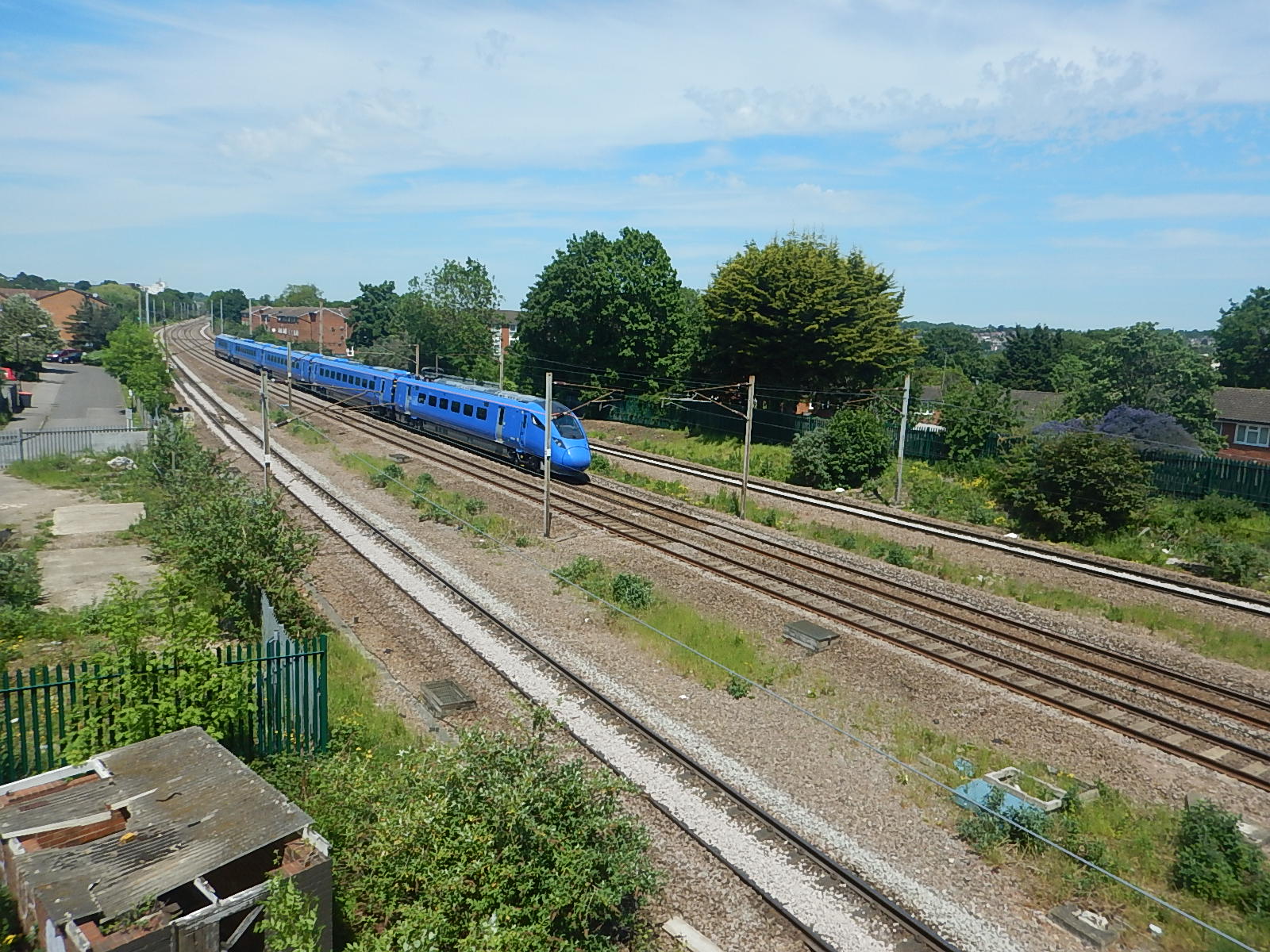
This is not a battery-electric train, where battery power can be used for traction, but according to Wikipedia and other sources, it is certainly an electric train fitted with batteries to provide hotel power for the train, when the overhead electrification fails.
Are these Class 803 trains already fitted with their batteries? And if they are, have they been tested?
And who is building the batteries for the Class 803 trains?
The traction batteries for Hitachi’s two battery-electric trains are to be produced by Hyperdrive Innovation of Sunderland, which is not far from Hitachi’s train factory at Newton Aycliffe.
As an engineer, I would suspect that a well-respected company like Hyperdrive Innovation, can design a battery-pack that plugs in to Hitachi’s trains, as a diesel engine would. I would also suspect that a good design, would allow an appropriate size of battery for the application and route.
I feel it is very likely, that all batteries for Hitachi’s UK trains will be designed and build by Hyperdrive Innovation.
If that is the case and the Class 803 trains are fitted with batteries, then Hitachi can be testing the battery systems.
This document on the Hitachi Rail web site, which is entitled Development of Class 800/801 High-speed Rolling Stock for UK Intercity Express Programme, gives a very comprehensive description of the electrical and computer systems of the Hitachi trains.
As an engineer and a computer programmer, I believe that if Hyperdrive Innovation get their battery design right and after a full test program, that Hitachi could be able to run battery-electric trains based on the various Class 80x trains.
It could be a more difficult task to fit batteries to Scotland’s Class 385 trains, as they are not fitted with diesel engines in any application. Although, the fitting of diesel engines may be possible in the global specification for the train.
It is likely that these trains could form the basis of the Regional Battery Train, which is described in this infographic.

Note.
- The Class 385 and Regional Battery trains are both 100 mph trains.
- Class 385 and Class 80x trains are all members of Hitachi’s A-Train family.
- Regional Battery trains could handle a lot of unelectrified routes in Scotland.
I wouldn’t be surprised to see Hitachi bring a battery-equipped train to COP26, if the Class 803 trains have a successful introduction into service.
Siemens
Siemens have no orders to build new trains for the national rail network in the UK.
But there are plans by Porterbrook and possibly other rolling stock leasing companies and train operators to convert some redundant Siemens-built trains, like Class 350 trains, into battery-electric trains.
According to Wikipedia, Siemens upgraded East Midlands Railways, Class 360 trains to 110 mph operation, at their Kings Heath Depot in Northampton.
Could Siemens be updating one of the Class 350 trains, that are serviced at that depot, to a prototype battery-electric Class 350 train?
Stadler
Stadler have a proven design for diesel-electric, battery-electric and hydrogen trains, that they sell all over the world.
In the UK, the only ones in service are Greater Anglia’s Class 755 trains, which are diesel-electric bi-mode trains.
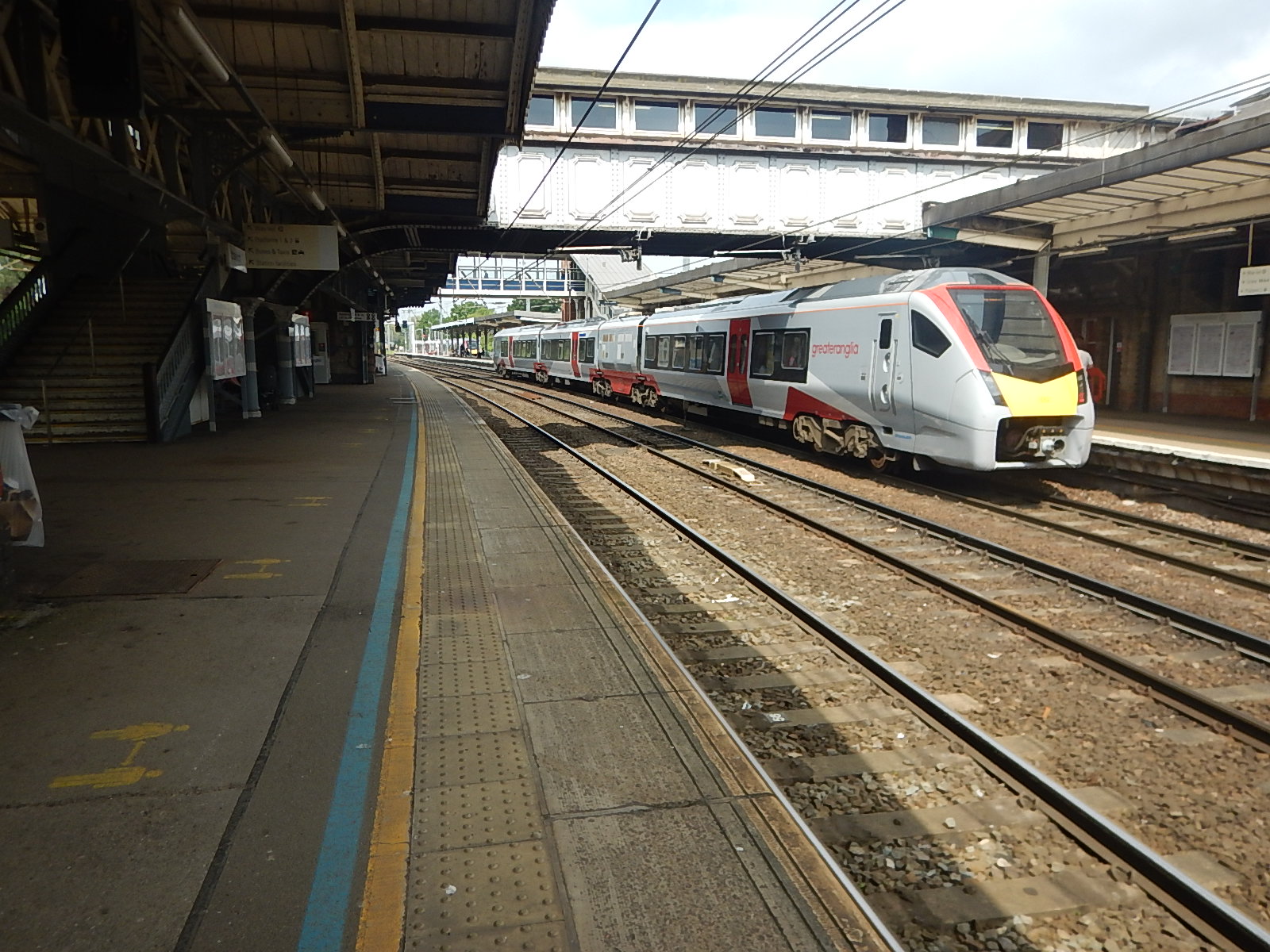
The picture shows one of these trains at Ipswich.
- They are 100 mph trains.
- Diesel, battery or hydrogen modules can be inserted in the short PowerPack car in the middle of the train.
- Diesel-battery-electric versions of these trains have been sold for operation in Wales.
- The interiors of these trains are designed for both short journeys and a two-hour run.
There is a possibility, that these trains will be upgraded with batteries. See Battery Power Lined Up For ‘755s’.
Conclusion
Times will be interesting in Glasgow at COP26!
A Class 319 Train, But Not As We Know It!
This article on Rail Advent is entitled COP26 To Showcase Britain’s Sustainable Trains Of The Future Thanks To Network Rail And Porterbrook Partnership.
The article talks about and shows pictures of Porterbrook’s HydroFLEX or Class 799 train, which has been developed by the University of Birmingham, fitted out for COP26.
I have downloaded this picture of the interior from Network Rail’s media centre.
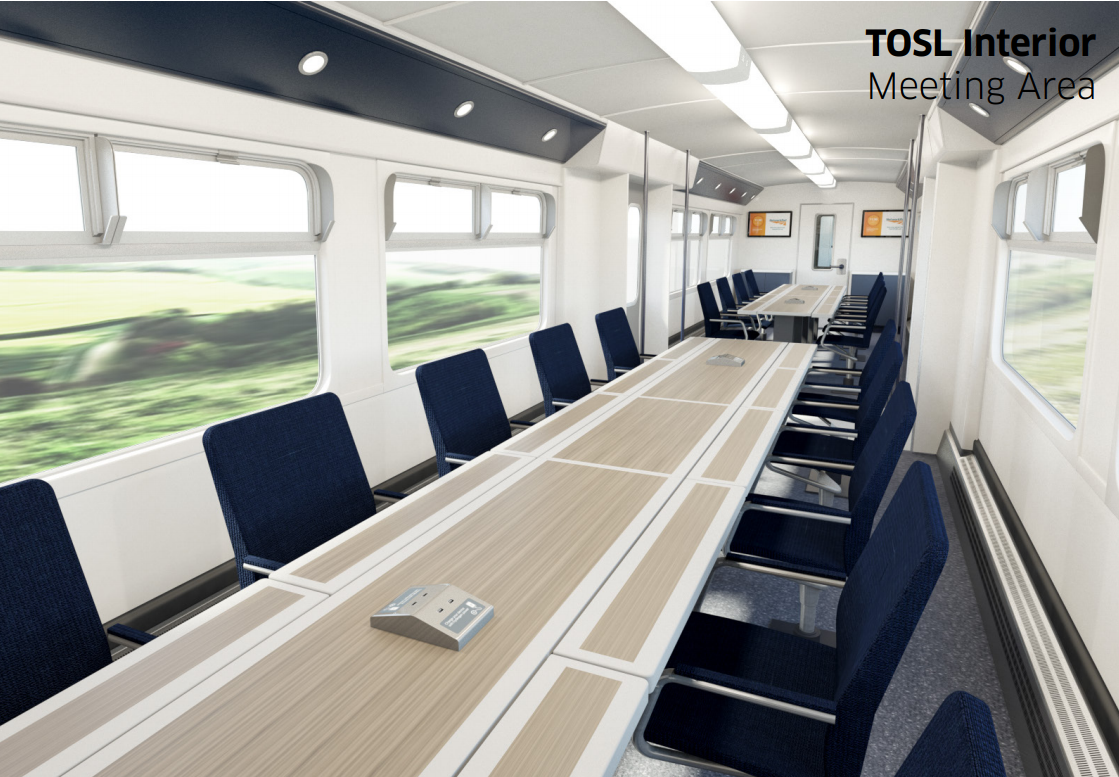
Who’d have thought a Class 319 train could look so grand?
But then some Class 319 trains used by commuters don’t look their age of over thirty years.
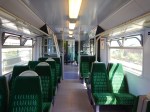
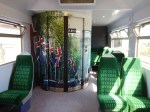
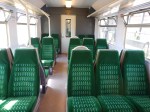
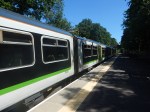
These pictures were taken on the Abbey Line in 2018.
There’s also this BBC Profile and video of the technology behind the HydroFLEX train.
Conclusion
It looks like Network Rail and Porterbrook are doing their best to showcase the best that Britain and Scotland can offer.
I am reminded of a tale, that I heard from a former GEC manager.
He was involved in selling one of GEC’s Air Traffic Control radars to a Middle Eastern country.
The only working installation of the radar was at Prestwick in Scotland, so he arranged that the dignitaries and the sales team would be flown to Prestwick in GEC’s HS 125 business jet.
As they disembarked at Prestwick and walked to the terminal, the pilot called the GEC Manager over.
The pilot told him “The Scottish Highlands at this time of the year, are one of the most beautiful places in the world! Would you and your guests like a low-level tour on the way back? I can arrange it, if you say so!”
Despite knowing GEC’s draconian attitude to cost control he said yes.
The sale was clinched!
Are Network Rail, Porterbrook, the UK and Scottish Governments, setting up the same Scottish treatment to all the delegates to COP26?
HybridFLEX Battery-Diesel Train Continues Programme Of Testing
The title of this post, is the same as that of this article on Global Railway Review.
This is the first two paragraphs.
The HybridFLEX battery-diesel train is currently undertaking a programme of tests between Duffield and Wirksworth, prior to returning to Chiltern Railways in the summer.
Fitted with a Rolls Royce MTU hybrid drive, the HybridFLEX will cut noise emissions in stations and deliver zero emissions when operating under battery power.
All seems to be going well, according to the article.
I like the concept, as to replace a diesel engine with a diesel-battery hybrid power pack must surely be a sensible way to at least partially decarbonise.
In the UK, the following diesel multiple units are fitted with modern MTU engines and could be candidates from a replacement power pack.
- Class 168 train – 19 trains – 82 diesel engines
- Class 170 train – 136 trains – 350 diesel engines
- Class 171 train – 20 trains – 56 diesel engines
- Class 172 train – 39 trains – 93 diesel engines
- Class 195 train – 58 trains – 149 diesel engines
- Class 196 train – 26 trains – 80 diesel engines
- Class 197 train – 77 trains – 180 diesel engines
That is a total of 990 diesel engines.
As some of the Class 196 and Class 197 trains have yet to be delivered, I do wonder, if it would be sensible to deliver them as diesel-battery hybrid trains.
Hydroflex Takes To The Main Line
The title of this post is the same as that of an article in the November 2020 Edition of Modern Railways.
This is the opening paragraph.
Hydroflex, the UK;s first full-size hydrogen train, made its debut on the main line on 21 September, travelling from Long Marston to Evesham and back.
This looks like a good start.
I am not surprised that the conversion was designed and built by Birmingham University.
Look at this picture of myself in front of a detector in the Large Haldron Collidor at CERN in Geneva.

Much of the detector was built in the workshops at Liverpool University.
The quality of engineering in most universities is very high, which is surely a good omen for the future.
Work in Birmingham on Hydroflex seems to be proceeding apace, with the following objectives.
- More automation.
- Moving the hydrogen drive train components to rafts under the driving cars.
- Improving operating speed from the current 50 mph.
There is also this significant paragraph that quotes Helen Simpson of Porterbrook.
‘At Porterbrook we want to present a fleet of hydrogen trains as a commercial offering to operators’ Ms. Simpson adds, noting that moving equipment out of passenger saloons is an important element of this. Porterbrook will apply learning from its Class 769 electric/diesel bi-mode units, which have placed diesel engines beneath the driving vehicles. Ms. Simpson does not rule out retro-fitment on other classes of train, but notes a lot of work has been undertaken on converting 319s’.
The big difference between the Hydroflex and the Alstom Coradia iLint, is that the Hydroflex retains the capability to use overhead electrification, so the hydrogen power can be used as a range extender.
Hydrogen-Powered Train Makes UK Maiden Journey
The title of this post, is the same as that of this article on the BBC.
This is said in the article.
A hydrogen-powered train has travelled on Britain’s rail network for the first time.
The prototype, called the Hydroflex, made a 25-mile round trip through Warwickshire and Worcestershire, reaching speeds of up to 50 mph.
Its next phase is to move the hydrogen tanks, fuel cell and battery out of a carriage and stash them underneath the train.
The aim is for the train to start carrying paying passengers by the end of 2021.
Note that the article contains a broadcast-quality video.
There are now two hydrogen-powered trains in development in the UK.
- This Class 799 train by Birmingham University and Porterbrook, which has been converted from a Class 319 train.
- The Class 600 train by Alstom, which is being converted from a Class 321 trains.
Both the trains being converted are British Rail trains based on the Mark 3 coach design.
- They were built originally in the 1980s and 1990s.
- They were built for commuting over medium distances.
- They are 100 mph trains.
- They will keep their pantographs, so running using 25 KVAC overhead electrification.
Both trains could be fitted with quality interiors.
But from what has been disclosed the designs will be quite different.
- The Class 799 train will be four cars, as opposed to three cars of the Class 600 train.
- The Class 600 trains will have large hydrogen tanks inside the train, whereas the Class 799 train will have smaller ones underneath the train.
- I would expect the Class 600 train to have a longer range between refuelling.
- The Class 799 train will also be a tri-mode train, with the ability to use 750 VDC third-rail electrification.
As there are nearly over a hundred Class 321 trains and nearly ninety Class 319 trains, if the hydrogen conversion is successful, we could be seeing a lot of hydrogen trains on the UK rail network.
GTR And Porterbrook Unveil £55 million Fleet Modernisation
The title of this article, is the same as that of this article on RailNews.
This is the introductory paragraph.
Trains built just five years ago are among those set to be upgraded at Selhurst Depot as part of a £55 million fleet modernisation programme announced by Govia Thameslink Railway and leasing company Porterbrook.
The updates to Class 377 and Class 387 trains, include.
- On-board performance monitoring and fault diagnosis
- Passenger information screens
- USB/power points
- LED lighting
- Passenger-counting technology
- Forward-facing CCTV cameras
I wonder, if the forward-facing cameras will be setup, so that passengers can log in to the video. It would surely, be a way of keeping kids of all ages amused.
Trains are getting more and more like computers on wheels.
Converting Class 456 Trains Into Two-Car Battery Electric Trains
Mark Hopwood is the interim Managing Director of South Western Railway and in Special Train Offers A Strong Case For Reopening Fawley Line, I quote him as saying the following about the trains for the Fawley Branch Line.
However, SWR’s Mark Hopwood favours a much bolder plan. “We’d have to take a decision, once we knew the line was going ahead. But my personal belief is that we should be looking for a modern environmentally-friendly train that can use third-rail electricity between Southampton and Totton and maybe operate on batteries down the branch line.”
Pressed on whether that would mean Vivarail-converted former-London Underground stock, Hopwood ads. “It could be. Or it could be a conversion of our own Class 456, which will be replaced by new rolling stock very shortly. But I don’t think this is the time to use old diesels.
Mark Hopwood is so right about using old diesels.
- Where possible new and refurbished trains should be zero-carbon.
- Diesel is to be banned by 2035 in Scotland and 2040 in England and Wales.
- Diesel trains and hydrogen trains for that matter need to refuelled.
- Get the diagrams right and battery electric trains can be charged on existing electrification or automatic Fast Charging systems, when they turn back at terminal stations.
- Electric trains attract passengers.
- Battery electric trains are mouse-quiet!
Who would use anything else other than electric trains with a battery option for sections without electrification?
The Class 456 Train
These pictures show some of the twenty-four Class 456 trains, that are in South Western Railway’s fleet.
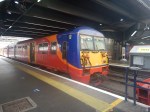
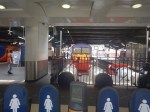
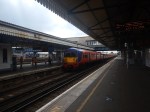
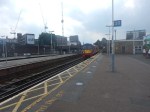
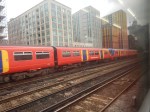
This is the specification of a Class 456 train.
- Two cars
- Operating speed – 75 mph.
- Capacity – 152 seats – Although the plate on the train says 113!
- Built 1990-1991
- Ability to work in pairs.
Most trains seem to be used to lengthen trains from eight to ten cars, as some of the pictures shows. As these 4+4+2 formations will be replaced with new 10-car Class 701 trains or pairs of five-car Class 701 trains, the trains will be looking for a new role.
Does this explain Mark Hopwood’s statement?
It should be noted that the Class 456 trains are members of the Mark 3 family, and bare a strong resemblance to the Class 321 train, which are shown in these pictures.
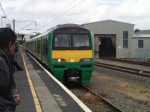
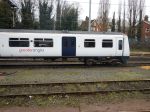
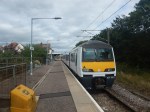
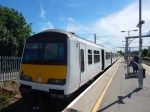
Note that I have included the side view, as it shows the amount of space under these trains.
Some Class 321 trains are being converted to Class 600 hydrogen trains, by Alstom at Widnes. Others have been given a life-extending Renatus upgrade.
Are The Driver Cars Of Class 456 and Class 321 Trains Identical?
The trains may look similar, but does the similarity go deeper?
Could Alstom Use Class 600 Hydrogen Train Technology To Create A Class 456 Train With a Battery Capability?
Consider.
- Alstom are positioning themselves as Train Upgrade Specialists in the UK. They have already signed a near billion pound deal to upgrade and maintain Avanti West Coast’s fleet of Class 390 trains.
- Alstom are creating the Class 600 hydrogen train from withdrawn Class 321 trains.
- A hydrogen-powered train is basically a battery electric train with a hydrogen tank and fuel cell to charge the batteries.
- The Class 600 train doesn’t appear to be making fast progress and is still without an order.
- One possible hydrogen route must surely be London Waterloo and Exeter, so I suspect Alstom are talking to South Western Railway.
- The Class 456 trains are owned by Porterbrook, who would probably like to extend the useful life of the trains.
Could it be that the battery core and AC traction package of Alstom’s hydrogen system for the Class 600 train can turn old British Rail-era electric multiple units into battery electric multiple units with a useful range?
It is certainly a possibility and one that is also within the capability of other companies in the UK.
Could The Class 456 Trains Receive a Class 321 Renatus Interior And Traction Package?
As Class 321 and Class 456 trains were built around the same time, the two trains must share components.
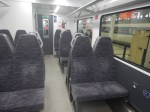
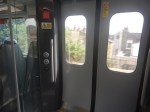
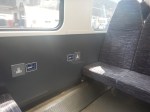
These pictures show the current interior of a Class 456 train.
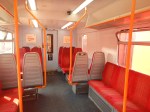
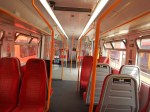
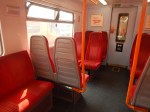
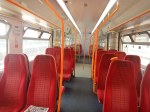
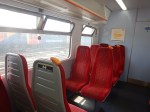
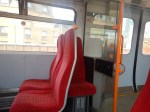
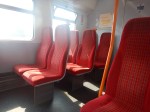
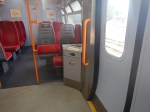
This is excellent for a two-car electric multiple unit, built thirty years ago! Although, the refurbishment is more recent from 2014-15.
- Note the wheelchair space and the copious rubbish bins.
- I also spotted a stowed wheel-chair ramp on the train. It can be seen if you look hard in the picture that shows the wheelchair space.
- Some might feel that toilets should be provided.
These pictures show the interior of a Class 321 train, that has been given the Renatus upgrade.
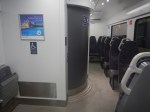
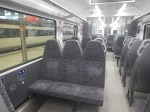

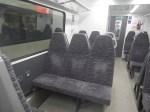

What is not shown is the more efficient AC traction package.
I have been told or read, that the Renatus interior will be used in the conversion of a Class 321 train to an Alstom Class 600 or Breeze hydrogen train.
On the other hand, the current Class 456 interior would probably be ideal for a branch line, where one of initial aims would be to attract passengers.
Could A Class 456 Train Have a Lightweight Traction Package?
Consider.
- The Class 456 train will access electrification that is only 750 VDC third-rail.
- Batteries work in DC.
- The new traction motors will work in AC, if they follow the practice in the Class 321 Renatus and the Class 600 train.
- Regenerative braking will charge the batteries in both trains.
- Air-conditioning and other hotel services can work in DC.
Some components needed to run from 25 KVAC like a transformer could be left out to save weight and improve acceleration.
I would suspect that a Class 456 train with batteries could use a slimmed-down traction system from the Class 600 train.
On both Class 456 and 600 trains a core system, that would power the train, might contain.
- The traction battery or batteries.
- The traction motors that both drive and brake the train,
- Third-rail electrification shoes, so that the batteries could be charged in a station, as required.
- A clever computer system, that controls the acceleration, braking and charging as required.
On the Class 600 train, there would also be the following.
- Hydrogen tanks and fuel cells to provide an independent power source to charge the batteries.
- A pantograph to access 25 KVAC overhead electrification.
- Extra electrical gear to access the electrification.
I think it would be possible to design the Class 456 train with batteries as the basic train and just add the extra hydrogen and electrical gubbins to make it a Class 600 train.
Could A Class 456 Train Be Modified To Use 25 KVAC Overhead Electrification?
As I said, there are a lot of similarities between Class 456 trains and Class 321 trains.
As the Class 321 trains are equipped to use 25 KVAC Overhead Electrification, I suspect train modification specialists could create a Class 456 train, that could use overhead electrification.
What Battery Range And Size Would Be Needed In A Class 456 Train?
These are typical branch line lengths for South Western Railway.
- Fawley Branch – 8 miles
- Wareham and Swanage – 11 miles
- Lymington Branch – 5.6 miles
- Reading and Basingstoke – 15.5 miles
I would suspect that a range of thirty miles on battery power would be sufficient for a Class 456 train with batteries.
In an article in the October 2017 Edition of Modern Railways, which is entitled Celling England By The Pound, Ian Walmsley says this in relation to trains running on the Uckfield Branch, which is not very challenging.
A modern EMU needs between 3 and 5 kWh per vehicle mile for this sort of service.
So applying that formula gives battery capacity of between 180 kWh and 300 kWh.
In Issue 864 of Rail Magazine, there is an article entitled Scotland High Among Vivarail’s Targets for Class 230 D-Trains, where this is said.
Vivarail’s two-car battery units contains four 100 kWh lithium-ion battery rafts, each weighing 1.2 tonnes.
If 200 kWh can be placed under the floor of each car of a rebuilt London Underground D78 Stock, then I think it is reasonable that up to 200 kWh can be placed under the floor of each car of the proposed train.
This picture of the Driver Car of a Class 321 train, shows that there is quite a bit of space under those trains.
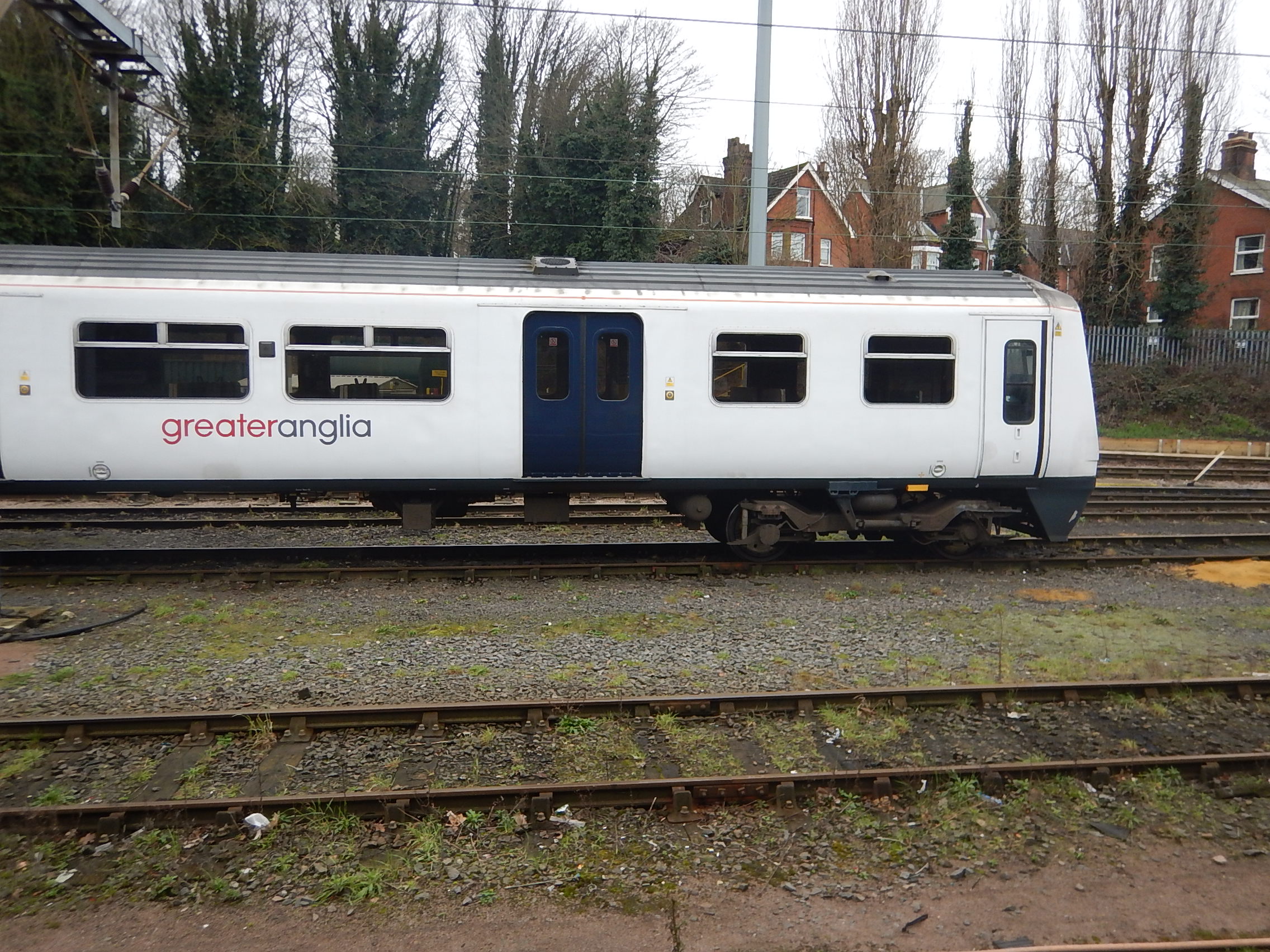
Are the Class 456 trains similar? This is the best picture I have got so far.
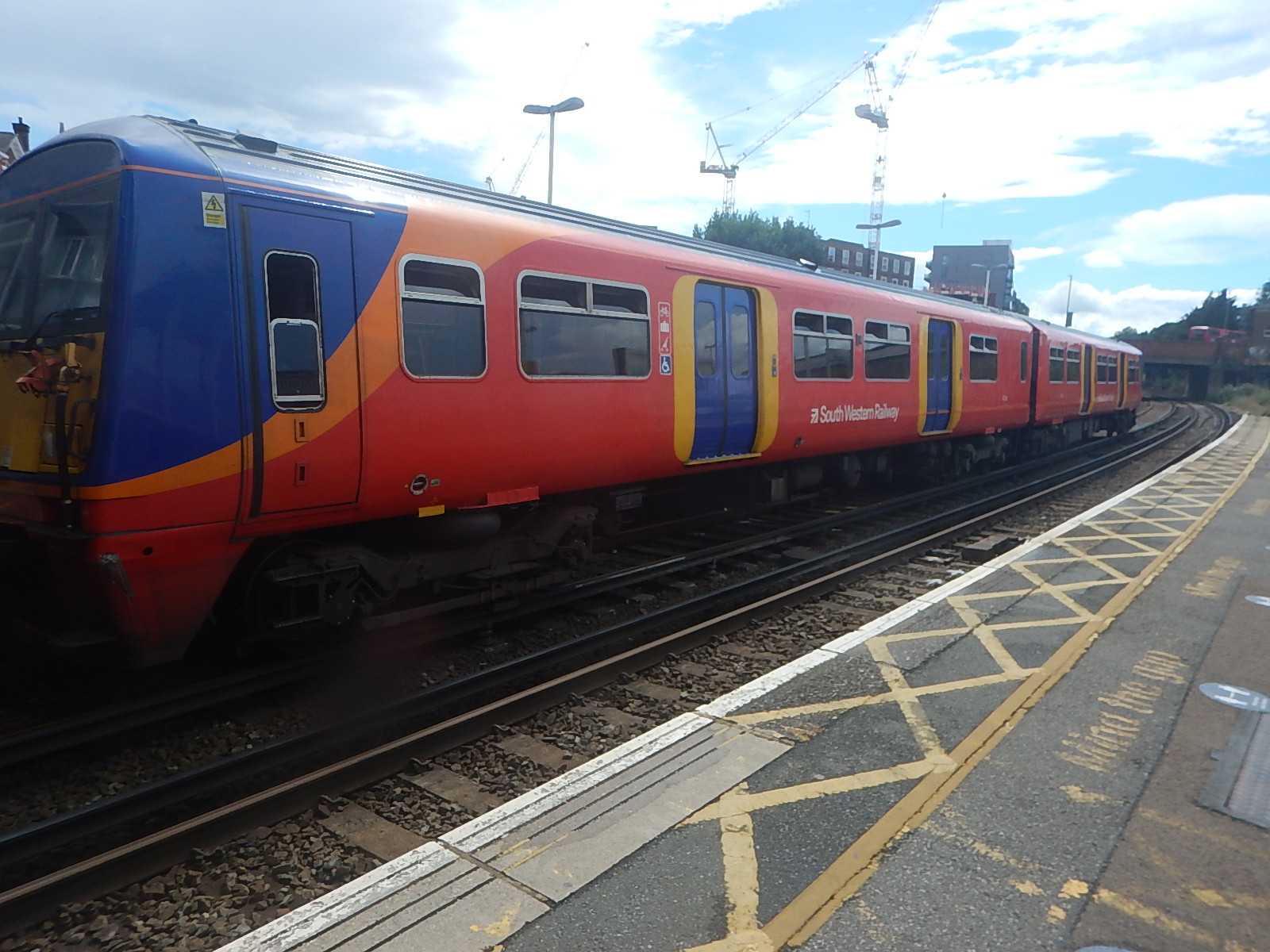
It does appear that space is similar to that under a Class 321 train.
If we assume that the Class 456 train can have the following specification.
- Battery capacity of 200 kWh in both cars.
- Regenerative braking to battery.
- Power consumption of 4 kWh per vehicle mile.
I think we could be approaching a range of fifty miles on a route without too many energy-consuming stops.
Charging The Batteries
I like the Vivarail’s Fast Charge concept of using third-rail equipment to charge battery trains.
This press release from the company describes how they charge their battery electric Class 230 trains.
- The system is patented.
- The system uses a trickle-charged battery pack, by the side of the track to supply the power.
- The first system worked with the London Underground 3rd and 4th rail electrification standard.
As the length of rails needed to be added at charging points is about a metre, installing a charging facility in a station, will not be the largest of projects.
Under How Does It Work?, the press release says this.
The concept is simple – at the terminus 4 short sections of 3rd and 4th rail are installed and connected to the electronic control unit and the battery bank. Whilst the train is in service the battery bank trickle charges itself from the national grid – the benefit of this is that there is a continuous low-level draw such as an EMU would use rather than a one-off huge demand for power.
The train pulls into the station as normal and the shoe-gear connects with the sections of charging rail. The driver need do nothing other than stop in the correct place as per normal and the rail is not live until the train is in place.
That’s it!
As an electrical engineer, I’m certain the concept could be adapted to charge the batteries of a conventional third-rail train.
Vivarail’s press release says this about modification to the trains.
The train’s shoe-gear is made of ceramic carbon so it is able to withstand the heat generated during the fast charge process.
That wouldn’t be a major problem to solve.
Class 456 Train With Batteries And Class 600 Train Compared
The following sub-sections will compare the trains in various areas.
Lightweight Design
As I suspect that the basic structure of the Class 456 and Class 600 trains are similar, systems like toilets, air-conditioning, traction motors and seats will be chosen with saving weight in mind.
Every kilogram saved will mean faster acceleration.
Operating Speed
The current Class 321 train is a 100 mph train, whilst the current Class 456 train is only a 75 mph train.
I wonder if applying the modern traction package of the Class 321 Renatus to the Class 456 train could speed the shorter train up a bit?
Range Away From Electrification
Alstom have quoted ranges of hundreds of miles for the Class 600 train on one filling of hydrogen, but I can’t see the Class 456 train with batteries doing much more than fifty miles on a full charge.
But using a Fast Charge system, I can see the Class 456 train with batteries fully-charging in under ten minutes.
Fast Charge systems at Romsey and Salisbury stations would surely enable the Class 456 trains with batteries to run the hourly service over the thirty-eight mile route between the two stations.
Passenger Capacity
The current Class 456 trains have a capacity of 152 seats.
In Orders For Alstom Breeze Trains Still Expected, I said this.
The three-car Alstom Breeze is expected to have a similar capacity to a two-car diesel multiple unit.
But until I see one in the flesh, I won’t have a better figure.
If South Western Railway were wanting to replace a two-car diesel Class 158 train, they’d probably accept something like 180 seats.
Increasing Passenger Capacity
There are compatible trailer cars around from shortening Class 321 trains from four to three cars and there may be more from the creation of the Class 600 trains.
I suspect that these could be added to both Class 456 and Class 600 trains to increase capacity by fifty percent.
As a two-car train, the Class 456 train might be a bit small, but putting in a third car, which had perhaps slightly more dense seating and possibly a toilet and even more batteries could make the train anything the operator needed.
Suitability For London Waterloo and Exeter via Salisbury
This is South Western Railway’s big need for a zero emission train.
- It is around 170 miles
- Only 48 miles are electrified.
- It is currently worked by three-car Class 159 trains working in pairs.
- Class 159 trains are 90 mph trains.
I have believed for some time, that with fast charging, a battery electric train could handle this route.
But, I would feel that.
- Class 456 trains would be too slow and too small for this route.
- Class 600 trains would be too small for this route.
On the other hand, I believe that Hitachi’s Class 800 train with a battery electric capability or Regional Battery Train, which is described in this infographic from the company, could be ideal for the route.
The proposed 90 km or 56 mile range could even be sufficient take a train between Salisbury and Exeter with a single intermediate charge at Yeovil Junction station, where the trains wait up to ten minutes anyway.
There are other reasons for using Hitachi’s Regional Battery Train rather than Class 600 trains.
- First Group have a lot of experience of running Hitachi Class 80x trains, through their various subsidiaries.
- They could share depot facilities at Exeter.
- No specialist facilities would be needed.
- A five-car Class 801 with batteries would have a convenient 300 seats.
- I suspect they could be delivered before Alstom’s Class 600 train.
As the only new infrastructure required would be Fast Charge facilities at Salisbury and Yeovil Junction stations, I feel that Hitachi’s Regional Battery Train, should be a shoe-in for this route.
First Delivery
The Wikipedia entry for the Class 600 train, says introduction into traffic could be in 2024. Given, the speed with which Greater Anglia’s Class 321 trains were updated to the Renatus specification, we could see Class 456 trains with a battery capability and new interiors running well before 2024.
A Few Questions
These questions have occurred to me.
Could The Technology Be Used To Create A Class 321 Battery Electric Train?
I don’t see why not!
I believe a Class 321 battery electric train could be created with this specification.
- Three or four cars. Remember the Class 320 train is a three-car Class 321 train.
- 100 mph operating speed.
- Regenerative braking to the batteries.
- Renatus or operator-specified interior.
- Toilet as required.
- Electrification as required.
- Battery range of around sixty miles.
- Ability to use a Fast Charge system, that can easily be installed in a terminal platform.
Trains could be tailored to suit a particular route and/or operator.
Any Other Questions?
If you have any other questions, send them in and I’ll add them to this section.
Conclusion
It does appear that if the Class 456 trains, were to be fitted with a battery capability, that they would make a very useful two-car battery electric train, with the following specification.
- Two cars
- Operating speed – 75 mph. This might be a bit higher.
- Capacity – 152 seats
- Ability to work in pairs.
- Modern interior
- Range of 45-50 miles on batteries.
- Ability to charge batteries in ten minutes in a station.
- Ability to charge batteries on any track with 750 VDC third-rail electrification.
This is the sort of train, that could attract other operators, who don’t have any electrification, but want to electrify short branch lines.
The Future Of West Midlands Trains’s Class 350 Trains
Currently, West Midlands Trains have four sub-fleets of Class 350 trains.
- Class 350/1 – 30 trains – Leased from Angel Trains
- Class 350/2 – 37 trains – Leased from Porterbrook
- Class 350/3 – 10 trains – Leased from Angel Trains
- Class 350/4 – 10 trains – Leased from Angel Trains
Note.
- All are 110 mph trains
- The trains are capable of being modified for 750 VDC third-rail electrification.
Under Future the Wikipedia entry for Class 350 trains says this.
West Midlands Trains announced that they would be replacing all 37 of their 350/2 units for Class 350/4 units cascaded from TransPennine Express and brand new Class 730 units which both can travel up to speeds of 110 mph.
In October 2018, Porterbrook announced it was considering converting its fleet of 350/2s to Battery electric multiple units for potential future cascades to non-electrified routes.
As West Midlands Trains have ordered 45 Class 730 trains for express services, it looks like they will be expanding services on the West Coast Main Line and around the West Midlands.
But it does appear that as many as thirty-seven trains will be returned to Porterbrook.
Class 350 Trains With Batteries
I believe that if fitted with batteries, these trains would meet or be very near to Hitachi’s specification, which is given in this infographic from Hitachi.
Note that 90 kilometres is 56 miles.
Could West Midlands Trains Run Any Services With Class 350 Trains With Batteries?
I think there are some possibilities
- Birmingham New Street and Shrewsbury – 30 miles without electrification between Shrewsbury and Wolverhampton – Charging facility needed at Shrewsbury.
- Birmingham New Street and Hereford via Worcester – 41 miles without electrification between Hereford and Bromsgrove – Charging facility needed at Hereford.
- Leamington Spa and Nuneaton via Coventry – 19 miles without electrification – Charging on existing electrification at Coventry and Nuneaton.
- The proposed direct Wolverhampton and Walsall service, that i wrote about in Green Light For Revived West Midlands Passenger Service.
There may also be some services added because of the development of the Midlands Rail Hub and extensions to London services,
Who Has Shown Interest In These Trains?
I can’t remember any reports in the media, about any train operator wanting to lease these trains; either without or with batteries.
Conclusion
It does all seem a bit strange to me.
- As a passenger, I see nothing wrong with these trains.
- They are less than twenty years old.
- They are 110 mph trains.
- They have 2+2 interiors, with lots of tables.
- They could be fitted with batteries if required.
But then, all of those things could be said about Greater Anglia’s Class 379 trains.
East Midlands Railway Class 170 Trains To Get New Emissions Technology
The title of this post, is the same as that of this article on Rail Advent.
These two paragraphs introduce the article.
Porterbrook has announced that it has received funding for the trial fitment of technology to reduce emissions on its fleet of Class 170 DMU trains.
The £400,000 funding will see the Class 170 ‘Turbostar’ trains, which are in operation with East Midlands Railway, fitted with Eminox SCRT technology.
The trial will be for three months, after which a decision will be made, as whether Porterbrook’s share of the over 120 Class 170 trains will be upgraded.
The World’s First Bi-Mode Hydrogen-Electric Train
This news page on the University of Birmingham web site is entitled HydroFLEX Secures Funding For Hydrogen-Powered Train Design.
The page is mainly about the new funding from Innovate UK, that I wrote about in First Of A Kind Funding Awarded For 25 Rail Innovation Projects, but it also includes this significant paragraph.
As well as being the UK’s first hydrogen-powered train, HydroFLEX is also the world’s first bi-mode electric hydrogen train. It will be undergoing mainline testing on the UK railway in the next few weeks.
One of my disappointments in the design of the Alstom Coradia iLint, is that, it is designed as a hydrogen-power only train, where it could surely have had a pantograph fitted, for more efficient working.
Consider.
- I suspect many hydrogen-powered trains will only be doing short distances, where electrification is not available, so daily distances under hydrogen power could be quite short.
- In the UK, a smaller hydrogen tank would certainly ease the design problems caused by a large fuel tank.
- There have been improvements in hydrogen storage in recent years.
The funding award to the project talks about raft production, so are the engineers, aiming to design a hydrogen power-pack on rafts, that could be fitted underneath the large fleets of retired electric multiple units, that are owned by Porterbrook.
Now that would be a game changer.
- Porterbrook have thirty-seven Class 350 trains, that will be replaced in the next few years by new trains. The electric trains are less than a dozen years old and Porterbrook have been talking about fitting batteries to these trains and creating a battery/FLEX train. Would making these trains bi-mode hydrogen-electric trains be better?
- Birmingham wants to open up new rail routes in the city on lines without electrification. What would be better than a hydrogen powered train, designed in the city’s premier university?
- Routes from Birmingham to Burton-on-Trent, Hereford, Leicester, Shrewsbury, Stratford-on-Avon and Worcester would be prime candidates for the deployment of a fleet of bi-mode hydrogen-electric trains.
- Birmingham have already asked ITM Power to build a hydrogen filling station in the city for hydrogen buses.
 The Anonymous Widower