Leisure Market Boom? GWR’s Vision For Direct Bristol-Oxford Services
The title of this post, is the same as that of this article on Rail Magazine.
This is the first paragraph.
Great Western Railway has hopes on running direct services between Bristol Temple Meads and Oxford from September 14, subject to approval of its new trial proposal by the Department for Transport and Network Rail. The move is a test of growth in demand for leisure travel by train.
It is an interesting idea.
These are some points about the service, given in the article.
- The route will be via Swindon, Chippenham and Bath Spa.
- Fastest journey time would be 71 minutes.
- The route will be aimed at the leisure market.
- There will be two trains per day (tpd) in each direction on Saturdays.
This is GWR’s handy route map.

These are my thoughts.
Will The Trains Call At Didcot Parkway?
This OpenRailwayMap shows Didcot Parkway station and the large triangular junction, that connects Oxford to the Great Western Main Line.
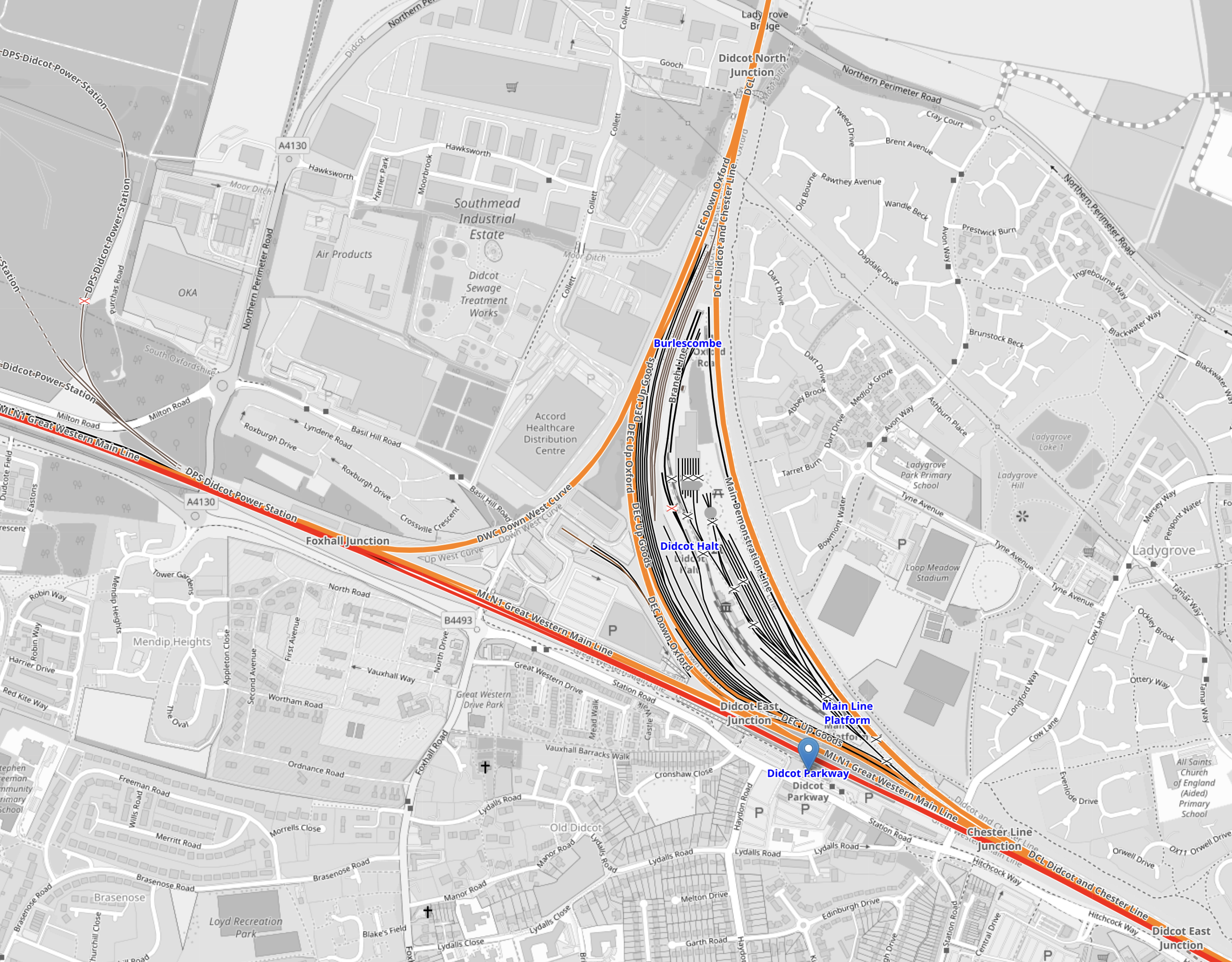
Note.
- The red tracks are the Great Western Main Line.
- The blue arrow indicates Didcot Parkway station.
- Oxford station is about ten miles to the North.
- Chords in the junction allow trains to go between Oxford and Paddington and Oxford and Swindon, with or without a stop at Didcot Parkway station.
The article says that GWR has asked to run the following services.
- 1018 Bristol Temple Meads-Oxford – Would arrive at Oxford at 1129.
- 1155 Oxford-Bristol Temple Meads (via Didcot) – Would arrive at Bristol Temple Meads at 1306.
- 1518 Bristol Temple Meads-Oxford – Would arrive at Oxford at 1629.
- 1712 Oxford-Bristol Temple Meads – Would arrive at Bristol Temple Meads at 1823.
Note.
- I suspect that the 1155 will reverse at Didcot Parkway station.
- There is a two train per hour (tph) service between Didcot Parkway and London Paddington stations.
- It looks like the four services could be run by a single train shuttling up the Great Western Main Line.
Would it be sensible if all Oxford and Bristol trains called at Didcot Parkway station, so that travellers could use the London service to their advantage?
But, calling at Didcot Parkway station would slow the service as there would need to be a reverse.
What Class Of Train Would Be Used?
Consider.
- A Bristol and Didcot Parkway via Bath Spa service takes 55 minutes.
- This is an average speed of 71.1 mph over a distance of 65.2 miles.
- 24.4 miles at the Bristol end of the route is not electrified.
- 10.3 miles at the Oxford end of the route is not electrified.
- The four services can be run by a single train shuttling up the Great Western Main Line.
It looks to me, that a bi-mode train with good performance is needed.
So I suspect that a five-car Class 800 or Class 802 train will be used.
Will The Train Be Battery-Electric Powered?
This is an interesting possibility.
- An ideal route for a battery electric train, is surely one with a long electrified section in the middle, which can be used to fully charge the train’s batteries.
- The train would have to run for 48.8 miles on its own power at the Bristol end of the route.
- The train would have to run for 20.6 miles on its own power at the Oxford end of the route.
The data sheet for a battery-electric Class 800/802 train can be downloaded from this page on the Hitachi web site.
In a section on the page, which is entitled Intercity Battery Trains, this is said.
A quick and easy application of battery technology is to install it on existing or future Hitachi intercity trains. Adding just one battery reduces emissions by more than 20% and offers cost savings of 20-30%.
Our intercity battery powered trains can cover 70km on non-electrified routes, operating at intercity speeds at the same or increased performance. Hitachi Rail’s modular design means this can be done without the need to re-engineer or rebuild the train and return them to service as quickly as possible for passengers.
The range of 70 km is 43.5 miles, which would appear to be a little bit short to go from the end of the electrification at Chippenham to Bristol Temple Meads and back.
But various measures could be taken to make sure the train can handle the route.
- The regenerative braking strategy could be used to conserve battery power.
- A second battery could be added to the train.
- Methods to charge the train at Bristol Temple Meads could be installed.
As London Paddington and Bristol Temple Meads is an important route, I suspect that Hitachi and Great Western Railway have a strategy to handle trains from Chippenham and sending them back.
Could This Route Be A Trial Route For Battery-Electric Trains?
Consider.
- Hitachi and Great Western Railway wouldn’t want to introduce an unreliable train without full full testing.
- Trains can probably limp to either Stoke Gifford or Reading depots, after a battery failure.
- Great Western Railway could test a new route.
- A full test only needs one train.
- Passenger reaction to a battery-electric train can be assessed.
- Staff need to be trained.
- The route can be run by a standard bi-mode if required.
- It could be the world’s first high-speed battery-electric train.
- Enthusiasts would flock to have a ride.
Could this be a trial service to make sure everything goes right?
Could A Mega-Station Be Built For The Channel Tunnel?
This article on Railway Gazette International, is entitled Start-Up Announces Amsterdam To London And Paris High Speed Train Ambitions.
It talks about how Dutch start-up; Heuro wants to run fifteen trains per day (tpg) between London and Amsterdam.
The article then has this paragraph, which details other operators, who are wanting to run services between London and the near Continent.
Heuro’s announcement comes after Spanish start-up Evolyn announced plans in October for a Paris – London service, while on November 11 British newspaper The Daily Telegraph reported that Sir Richard Branson and Phil Whittingham, former head of Virgin Trains and Avanti West Coast, were also drawing up plans to compete with Eurostar and had held discussions with infrastructure managers.
This leads me to the conclusion, that there will be a need for more capacity for trains and/or passengers at some time in the future.
- There are six International platforms at St. Panvcras International station, which can each probably handle four trains per hour (tph), so I suspect the station could handle 24 International tph.
- As a modern high speed train can carry over 500 passengers, that is 12000 passengers per hour.
- Visit St. Pancras station in the morning and it is often crammed with travellers coming from and going to Europe.
I suspect that the number of trains may not be a problem, but the number of passengers will.
We could always join Shengen, but then that would be an open door to all the would-be migrants to the UK.
This Google Map shows Stratford International station.
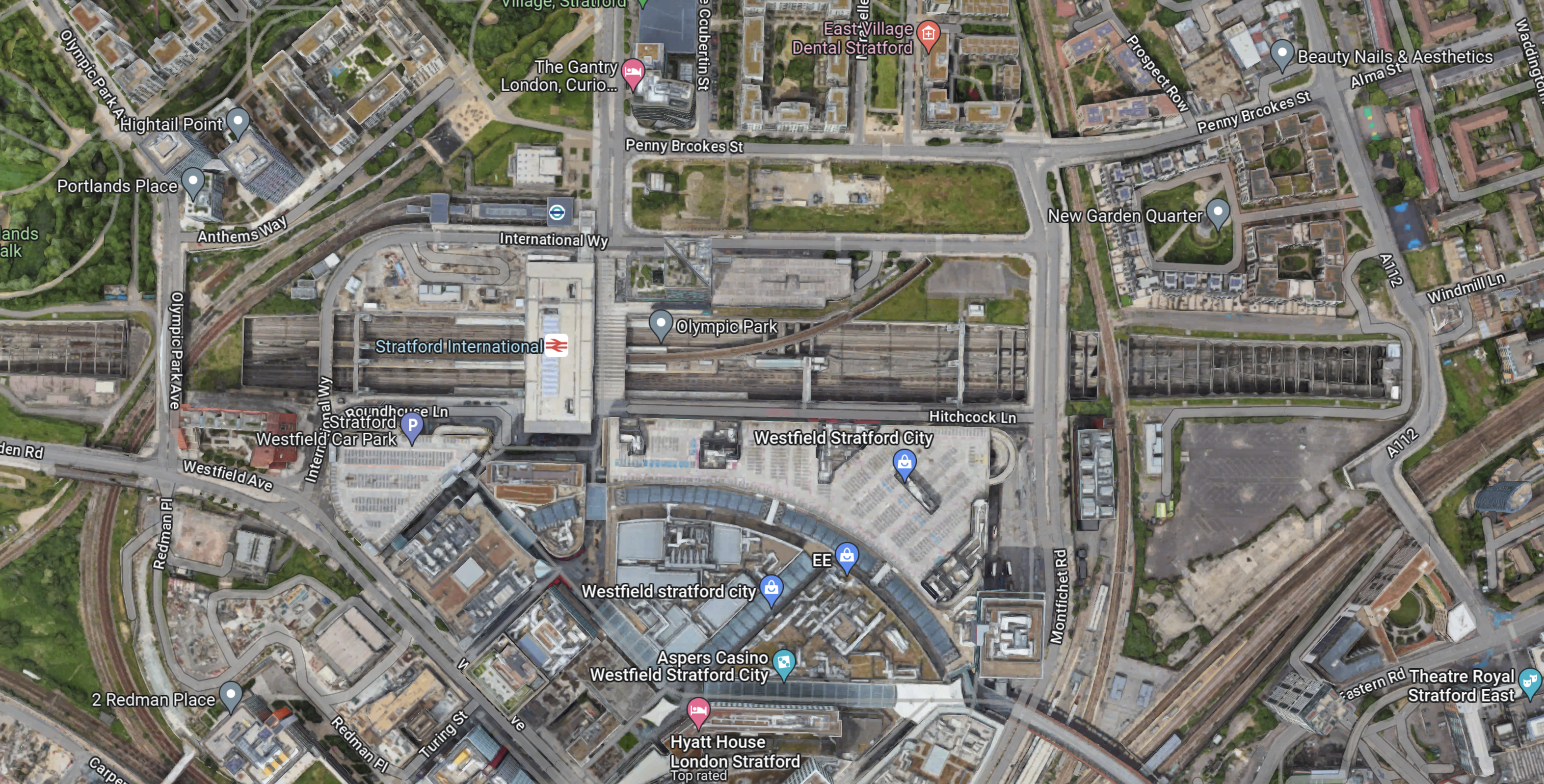
Stratford International station is in a soulless concrete cavern, that lies across the middle of the map.
In Platforms 1 And 4 At Stratford International Station, there are a lot of pictures of the station.
I think it would be extremely difficult to add extra platforms and passenger facilities to the station.
This Google Map shows Ebbsfleet International station.
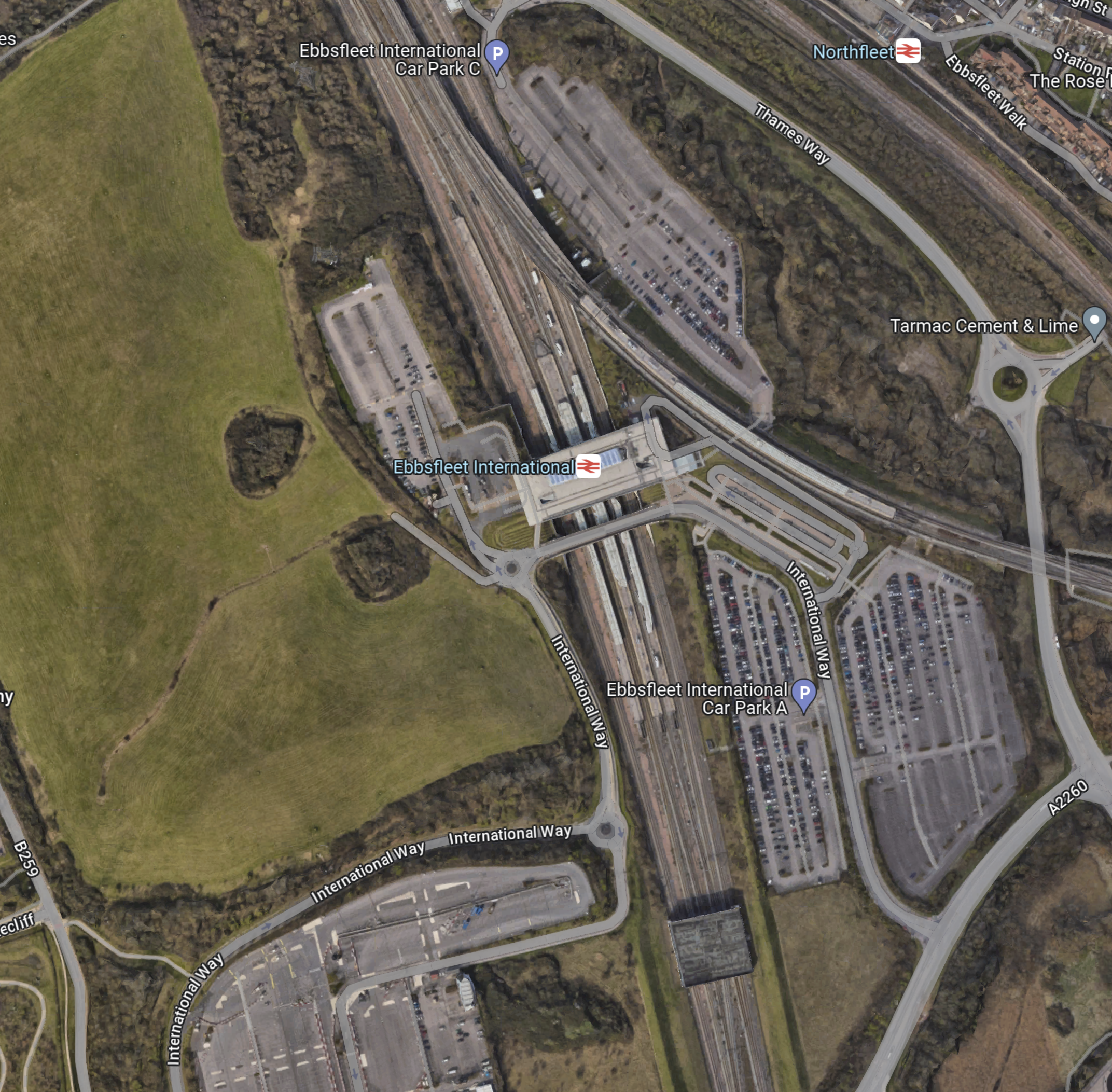
Note.
- Ebbsfleet International station, with its two International and four domestic platforms is in the middle of the map.
- The station is surrounded by car parks with a total of 5,000 spaces.
- Northfleet station is in the North-East corner of the map.
There is a lot of land, without any buildings on it.
These are my thoughts.
Enough Extra Bay Platforms To Handle The Additional Trains
There would appear to be space for perhaps two bay platforms to terminate trains.
But would passengers we happy being dumped outside Central London?
Would An Elizabeth Line Extension To Ebbsfleet Be Needed?
There are various plans to link the Elizabeth Line tp Ebbsfleet International.
In Elizabeth Line To Ebbsfleet Extension Could Cost £3.2 Billion, I showed this map from the Abbeywood2Ebbsfleet consultation.
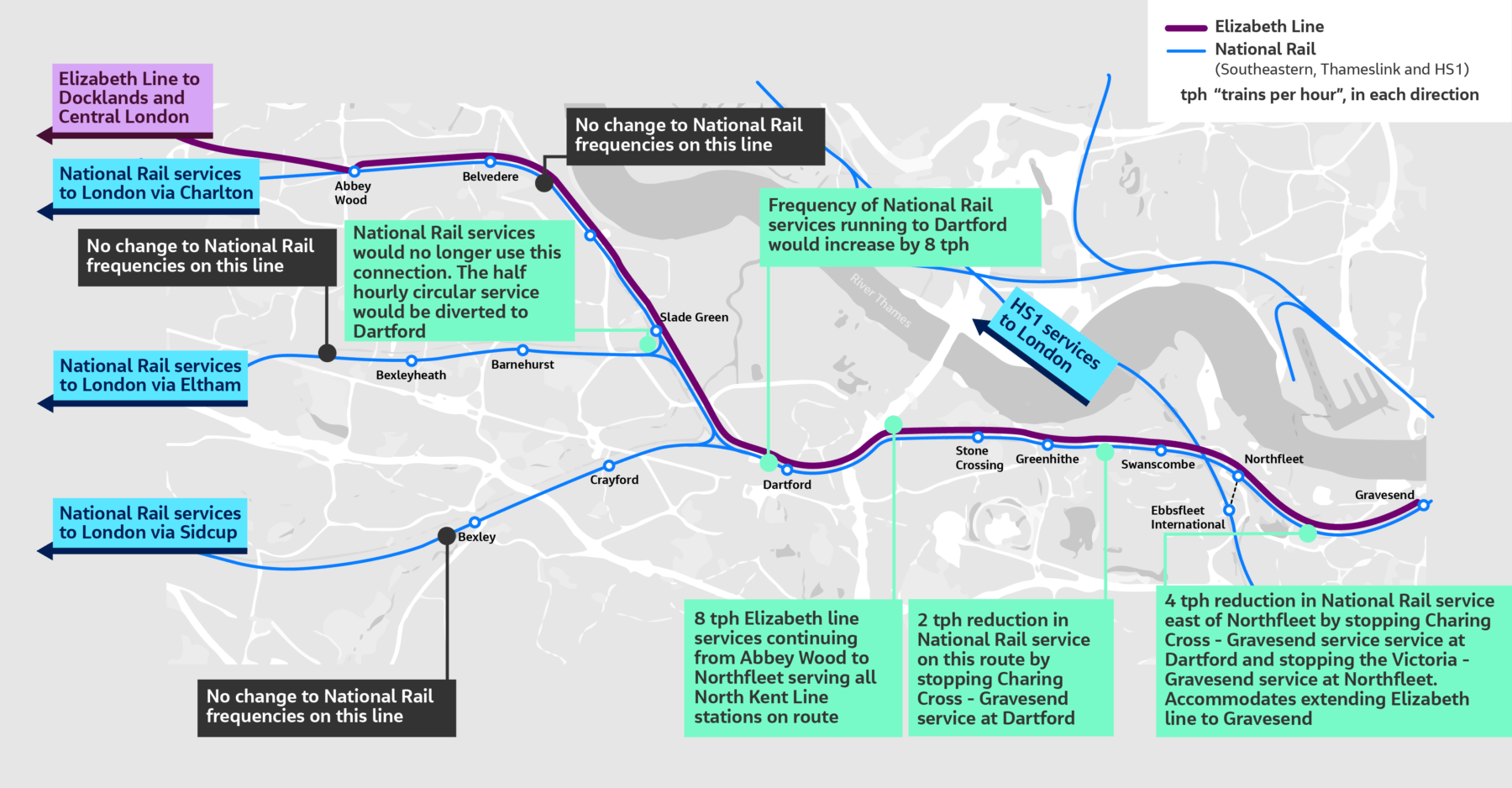
There doesn’t appear to be too much new infrastructure, except for a proper connection between Northfleet and Ebbsfleet stations. References on the Internet, say that the similar-sized Luton DART connection at Luton Airport, cost around £225 million.
The Elizabeth Line connects to the following.
- Bond Street
- Canary Wharf
- City of London
- Farringdon for Thameslink
- Heathrow Airport
- Old Oak Common for High Speed Two
- Liverpool Street station
- Oxford Street
- Paddington station
- Slough for Windsor
- Tottenham Court Road for the British Museum, Oxford Street, Soho, Theatreland and the Underground.
- West End of London
- Whitechapel for the Overground and Underground
For many people like me, the Elizabeth Line at Ebbsfleet will provide one of the quickest ways to get to and from European trains.
Ebbsfleet Has Space For A Bus Station
A bus station with comprehensive routes could be built at Ebbsfleet station, which I don’t think will be possible at St. Pancras.
It would also be possible to provide an easy route to Gatwick Airport along the M25.
Hotel Accommodation
This is surely necessary.
It would make an ideal base for tourists and business people, who wanted to visit several of the large cities connected to Ebbsfleet.
A Very Large Car Park
Consider.
- Heathrow Airport is looking at providing upwards of 50,000 car parking spaces.
- Some travellers are seriously allergic to public transport and will always use their car.
- Many travellers these days want to take a severely outside case with them, when they’re only having a weekend in Paris.
I feel that a mega-station for Europe will need upwards of 10,000 car parking spaces. All of them with vehicle-to-grid chargers.
A Very Large Storage Battery
According to this page on the E-on web site, the average size of the battery in an electric vehicle is 40 kWh.
If 5,000 car parking spaces were to be fitted with vehicle-to-grid charging (V2G), that would be 2 MWh of energy storage, that could be used by National Grid, to store surplus electricity.
Get V2G right and it could make a serious contribution to your parking costs.
Pictures Of Ebbsfleet Station
These are some pictures I took at Ebbsfleet station today.

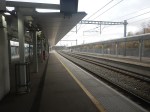
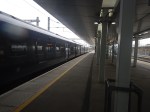



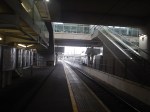


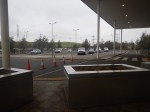




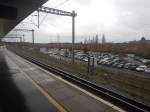
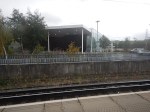
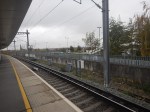
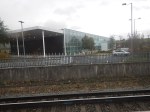
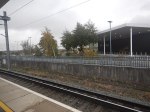
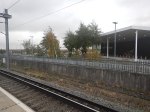
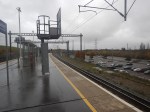
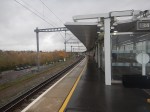
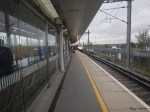
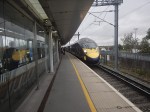
Note.
- The station is a fairly boring concrete, glass and steel construction.
- The SouthEastern HighSpeed services also go to St. Pancras, so they don’t offer any different connectivity towards the capital.
In addition, the SouthEastern HighSpeed Class 395 trains aren’t step-free at the platforms, as these pictures shows.
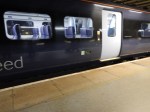
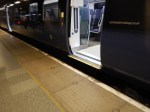
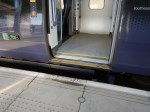
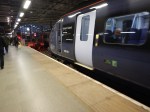
As I came back into St. Pancras International station, staff were struggling to load a wheelchair onto a train using a ramp.
Would A Two-Station Solution Increase Capacity?
High Speed Rail lines have high capacity trains and there are examples of more than one station at the end of a route.
- The London end of High Speed Two will have stations at Old Oak Common and Euston.
- The Manchester end of High Speed Two will have stations at Manchester Airport and Manchester Piccadilly.
- The Edinburgh end of the East Coast Main Line has stations at Waverley and Haymarket.
- The Amsterdam end of Eurostar and Thalys has stations at Rotterdam, Schipol Airport and Amsterdam.
A selection of stations gives choice and convenience for travellers.
Conclusion
I believe that selective development of Ebbsfleet International station could be used to take the pressure away from St. Pancras International station.
These developments could include.
- A comprehensive bus station
- Elizabeth Line to Northfleet
- Hotel Accommodation
- Lots Of Car Parking
High Speed Two To Barrow-in-Furness
There has been a lot of speculation about the Northern end of High Speed Two, so I might as well add sort out a few facts and add a bit of speculation of my own.
Barrow-in-Furness Used To Have A Service To London
Barrow-in-Furness station doesn’t have a direct service to London.
This paragraph from the Wikipedia entry, describes how it used to be.
The present station was formerly known as Barrow Central, and at one time it was a terminus for British Rail long-distance or InterCity services. From October 1947 until May 1983 these included sleeper services to and from London Euston. A sleeper service in the London direction only was briefly reintroduced between May 1987 and May 1990.
Note.
- I find it interesting, that the area had both InterCity and sleeper services.
- There are some big employers like BAe Systems and British Nuclear Fuels in the area.
- Rishi Sunak has announced that the Cumbrian Coast Line will be upgraded.
- A High Speed Two service could improve low-carbon access to the Lake District.
- Grimsby/Cleethorpes in Lincolnshire, which probably has a similar economic profile to Barrow-in-Furness appears to be getting a service from London as I wrote about in Azuma Test Train Takes To The Tracks As LNER Trials Possible New Route. So why shouldn’t Barrow-in-Furness have a similar service?
It is my view that Barrow-in-Furness station could support a sprinkling of services.
The Current Barrow-in-Furness Service
Barrow-in-Furness station’s current services are described in these two paragraphs from the Wikipedia entry.
Services to the north are provided on Monday-Saturday by Northern, with services approximately hourly during the day to Whitehaven and Carlisle. One train per day operates to Sellafield specifically for workers at Sellafield nuclear plant (BNFL). Evening trains run only as far as Millom. There are 19 northbound departures each weekday; 15 of these go to Carlisle, three to Millom and one to Sellafield. There are 20 arrivals from the northern part of the line: 15 from Carlisle, three from Millom, one from Maryport and one from Sellafield. Some of these services continue along the Furness Line to Lancaster and Preston.
To the south, there are a mixture of stopping services to Lancaster and a number of through services to Manchester Airport via Manchester Piccadilly. These operate on a broadly hourly frequency, with a few peak extras throughout the week (including Sundays).
Hard facts on what the improvements to the line will be, have not been reported. But it does seem that a doubling of frequency to two trains per hour (tph) is being proposed.
What Are The Government’s Plans?
This news story from the Government is entitled North West To Benefit From £19.8 billion Transport Investment.
Proposed improvements in Cumbria are contained in this paragraph.
A brand new £2.5 billion fund to transform local transport in 14 rural counties, smaller cities and towns. This new money could pay for new stations, further electrification, bus corridors and new integrated public transport networks. The Energy Coast Line between Carlisle, Workington and Barrow will be upgraded, improving capacity and journey times, enabling trains every 30 minutes between Carlisle, Workington and Whitehaven. The upgrade will also accommodate major new freight demands from the new coal mine and provide regular services for the Westlakes Science Park, Nuclear Academy and Sellafield. This could support the creation of over 18,000 jobs.
I have my thoughts.
Will The Route Be Electrified?
The Cumbrian Coast and the Furness Line effectively form a near 120 mile loop between Carnforth and Carlisle stations on the West Coast Main Line.
- A journey from one end to the other takes about three hours and 18 minutes.
- Main towns and places served include Barrow-in-Furness, Sellafield, Whitehaven and Workington.
- A train between Carnforth and Carlisle can stop at as many as 29 stations.
- The route is not electrified, but it connects to the electrified West Coast Main Line at both ends at Carnforth and Carlisle.
This OpenRailwayMap shows Carnforth.

Note.
- The red line is the West Coast Main Line between Carlisle and Lancaster.
- Carlisle is to the North.
- Lancaster is to the South.
- The black line going North-West is the Furness Line to Barrow-in-Furness.
- The black line going East is the Bentham Line to Settle and Leeds.
This OpenRailwayMap shows Carlisle.

Note.
- The red line is the West Coast Main Line between Scotland and Carnforth.
- Scotland is to the North.
- Carnforth is to the South.
- The black line going South-West is the Cumbrian Coast Line to Workington, Whitehaven and Barrow-in-Furness.
- The black line going East is the Settle and Carlisle Line to Settle and Leeds.
If it were to be fully electrified, it could be a diversion route for electrified trains on the West Coast Main Line.
This document on the Government web site is the Train Technical Specification for High Speed Two Classic-Compatible Trains.
The specification says this about the unit and train formation.
The nominal length of the Unit shall be 200m. It has been determined that all Units should
be the same length, with no requirement for a Unit to be capable of being lengthened or
shortened. This supports the overall HS2 business case.The Unit shall be capable of Normal Operation as a single Unit or as two coupled Units.
On the Wikipedia entry for the Cumbrian Coast Line, there is a picture of a very long steam-hauled train on the line.
Full electrification would have these advantages.
- In the next few years several 21st century electrical multiple units will be looking for new places to operate.
- I am fairly certain, that a fully-electrified Cumbrian Coast Line could act as a diversion for High Speed Two and the West Coast Main Line between Carnforth and Carlisle.
- It would enable occasional High Speed Two services to Carlisle via Barrow-in-Furness, Sellafield, Whitehaven and Workington.
- It would also allow electrified freight trains to the new coal mine at Workington and to Sellafield.
But trains from the coal mine would probably need to have hydrogen-hybrid locomotives to get across the Pennines to Teesside for export.
Partial Electrification Of The Line
Partial electrification would probably need the following.
- Installation of electrification between Carnforth and Barrow-in-Furness, so that High Speed Two services can reach Barrow-in-Furness.
- Installation of electrification from Carlisle for enough miles towards Workington to be able to charge the local trains.
- The local trains would need to be able to run about seventy miles on batteries.
Partial electrification would be more affordable, but it would allow the following.
- Battery-electric trains to work between Carnforth and Carlisle.
- It would enable occasional High Speed Two services to Barrow-in-Furness
- Hydrogen-hybrid locomotive-hauled freight trains to the new coal mine at Workington and to Sellafield.
Rail passengers in, to and from Cumbria would probably see a similar level of improvement to that with full electrification.
What Time Would Be Possible At The Present Time?
Consider.
- According to the Wikipedia entry for High Speed Two, two hours and twenty-five minutes is the fastest time between London Euston and Lancaster.
- Trains are timed to take one hour and four minutes with the nine stops, between Barrow-in-Furness and Lancaster.
- To save time some stops could be cut between Barrow-in-Furness and Lancaster.
This would give a London Euston and Barrow-in-Furness time of three hours and twenty-nine minutes, but by removing perhaps five stops, the time could be around three hours and fifteen minutes.
What Time Would Be Possible When High Speed Two Lite Opens To Handsacre Junction?
Consider.
- According to the Wikipedia entry for High Speed Two, two hours and three minutes will be the fastest time between London Euston and Lancaster, after High Speed Two opens to Handsacre junction.
- Trains are timed to take one hour and four minutes with the nine stops, between Barrow-in-Furness and Lancaster.
- To save time some stops could be cut between Barrow-in-Furness and Lancaster.
This would give a London Euston and Barrow-in-Furness time of three hours and seven minutes, but by removing perhaps five stops, the time could be under three hours.
What Frequency Would Be Needed?
LNER seem to run their secondary services to places like Harrogate and Lincoln using a frequency of one train per two hours (tp2h).
That could be an ideal frequency.
Would There Be A Path For The Train To And From London Euston?
This graphic shows High Speed Two services after Phase 2b is completed.
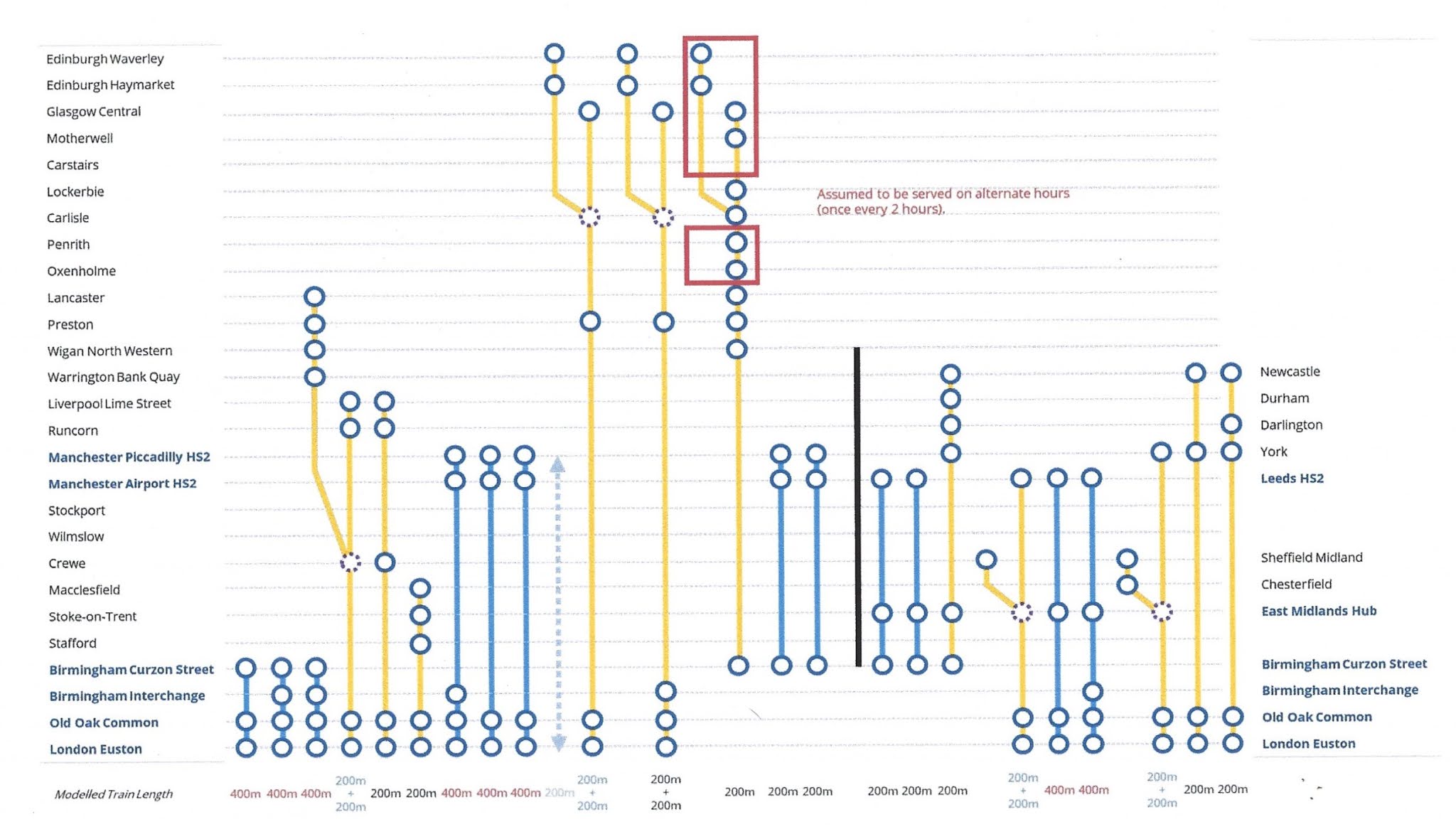
Note.
- Services shown in blue are run by High Speed Two Full Size trains.
- Services shown in yellow are run by High Speed Two Classic-Compatible trains.
- Each of these trains will have a frequency of one tph.
- The nine paths to the right of the vertical black line will not be needed for some time. If ever!
- It looks like a maximum of only eleven paths will be needed to the South of Birmingham.
- It looks like a maximum of only fourteen paths will be needed to the North of Birmingham.
In Will High Speed Two Lite Make Stafford An Important Station?, I totted up all the services through Stafford after High Speed Two Lite opened to Handsacre junction and got these figures.
- Through Stafford station, there are totals of 11 tpd and 14 tph.
- Along the Trent Valley Line, there are totals of 11 tpd and 12 tph.
- North of Stafford on the West Coast Main Line, there are totals of 9 tpd and 12 tph.
- South of Stafford on the West Coast Main Line, there are totals of 2 tpd and 2 tph.
- Between Stafford and Stoke-on-Trent, there are totals of 2 tph.
I accounted for services moving from the West Coast Main Line to High Speed Two.
Consider.
- A large proportion of the route between Preston and Handsacre junction, where the route would join High Speed Two Light has two dedicated high speed tracks and two tracks for freight and local services.
- Digital signalling on High Speed Two has been designed to handle eighteen trains per hour (tph) at 225 mph.
- Surely, the two dedicated high speed tracks, if fitted with High Speed Two digital signalling could handle say 16 tph at 140 mph.
- Network Rail are good at juggling trains to squeeze in more services.
- Extra paths could be created by splitting and joining trains at Crewe or Preston.
My Control Engineering training and practice tells me that it should be possible to add perhaps two tph between Lancaster and Euston.
Could High Speed Two’s Lancaster Service Be Extended To Barrow-in-Furness?
I don’t see why some services could be extended the 34.8 miles to Barrow-in-Furness.
Would Much Work Be Needed At Barrow-in-Furness?
This Google Map shows Barrow-in-Furness station.

Note.
Trains to and from Carnforth come and go from the South East.
Trains to and from Sellafield, Whitehaven and Workington and Carlisle come and go from the North West.
There are three platforms.
Work needed to be done would include.
- Creation of a 200 metre platform for the High Speed Two trains.
- Electrification.
- Addition of charging facilities to the platform for the local trains, which would probably be standard electrification.
Passengers would walk across between the High Speed Two and local trains.
Conclusion
I believe that High Speed Two Classic-Compatible trains could be under three hours between Barrow-in-Furness and London Euston, when High Speed Two Lite opens from Handsacre junction.
Orkney Council To Look At Proposals To Become Territory Of Norway
The title of this post, is the same as that of this article on the BBC.
This is the sub-heading.
The Orkney Islands could change their status in the UK or even become a self-governing territory of Norway under new proposals.
These paragraphs outline their possible strategy.
A motion will go before the council next week to investigate “alternative forms of governance”.
Council leader James Stockan said Orkney does not get fair funding with its current relationship within the UK.
He wants to look at Crown Dependencies like the Channel Islands and overseas territories like the Falkland Islands.
He suggested another possible future could be like the Faroe Islands – which is a self-governing territory of Denmark.
Councillor Stockan told BBC Radio Scotland there were many areas where Orkney was being “failed dreadfully” by both the UK and Scottish governments.
These are my thoughts.
Has Orkney Been Failed Dreadfully By The UK And Scottish Governments?
I wouldn’t be surprised, if the legal and economic framework between the Orkney, Scotland and the UK, dates back hundreds of years and didn’t really expect to see a more independent Scotland.
This is a quote from Council leader James Stockan.
And the funding we get from the Scottish government is significantly less per head than Shetland and the Western Isles to run the same services – we can’t go on as we are.
I could argue, they should be similar.
Orkney’s Income From Oil, Gas And Wind
Orkney doesn’t have Shetland’s oil, gas and wind infrastructure, so perhaps Scotland and the UK, think Orkney is the other’s problem.
Wind Development In Orkney, Shetland And The Western Isles
This map from Cross Estate Scotland shows all the wind contracts for Orkney, Shetland and The Western Isles.

These wind farms could send wind power to Orkney.
- 7 – Ayre – 1008 MW
- 13 – West of Orkney – 2000 MW
That is a total of 3008 MW.
These wind farms could send wind power to Shetland.
- 18 – Ocean Winds – 500 MW
- 19 – Arven – 1800 MW
- 20 – ESB Asset Development – 500 MW
That is a total of 2800 MW.
These wind farms could send wind power to the Western Isles.
- 14 – Havbredey – 1400 MW
- 15 – N3 Project – 495 MW
- 16 – Spiorad na Mara – 840 MW
That is a total of 2735 MW.
On this quick look, it does appear that there is a fair balance of investment in wind power between Orkney, Shetland and The Western Isles.
The Flotta Hydrogen Hub
The Flotta Hydrogen Hub is being planned and it has its own web site.
It looks like it will be linked to the West of Orkney wind farm.
The Ferries
CouncilStockan says this about the ferries.
We are really struggling at the moment, we have to replace the whole ferry fleet which is older than the CalMac fleet.
And it is well-known, that the Scottish Nationalist Party got into a muddle with ferries.
Conclusion
If you read the Wikipedia entry for Orkney, the islands would appear to have a sound future, based on hydrogen, tourism and wind.
I would hope that a discussion around some good local food and the local whisky could sort out Otkney’s worries.
Manchester Buzzing To Put Rail Into Its Bee Network
The title of this post, is the same as that of this article on the Railway Gazette.
These two paragraphs introduce the article.
Locally branded stations and integrated ticketing are among the improvements to Greater Manchester’s local rail services envisaged from 2025 under a landmark devolution deal.
The deal agreed with the government on March 15 brings GM Mayor Andy Burnham and local council leaders significant additional powers in several policy areas, including transport. The single funding settlement is similar to those in place covering Scotland and Wales, but this and a similar deal for the West Midlands is the first time such a flexible grant has been granted to English regions.
Included in the deal are the following.
A London-Style Network
It is described in this paragraph.
Greater Manchester has set itself a target of rolling out so-called ‘London style’ transport across modes by 2030. While Transport for Greater Manchester already directly manages the Metrolink light rail network, buses are now being brought under tighter regulation through a franchising model, and TfGM aspires to introduce integrated smart ticketing across the city-region. Today, while paper travelcards can be bought covering buses, Metrolink trams and trains, these are poorly marketed and often more expensive than the fares offered by individual bus operators; there is also no ability for daily or weekly price capping to be introduced.
I hope that Manchester follows London’s rules.
- One card and any bank or credit card gives full access to buses, trains and trams.
- Daily, weekly and monthly caps.
- Freedom Pass or equivalent for those that need them.
- Comprehensive transport mapping.
- Visitor-oriented travel information offices in major stations.
I feel very strongly about the last two, as measures like these encourage visitors to return.
Trials of the ticketing should start by the end of the year.
The Bee Network
This is outlined in this sentence.
Together, the local transport network is to be branded ‘the Bee Network’, reflecting an enduring emblem of the area’s industrial heritage.
I like the name.
- The bee is one of the symbols of the city according to this Wikipedia entry.
- Bees are on the coat of arms of the City of Manchester.
- Bee symbols are used by Manchester and local businesses.
But perhaps most importantly, the bees were a symbol of recovery of the city after the May 2017 Manchester Arena bombing.
The Addition Of Twenty Percent Of the Local Rail Network
This is outlined in this sentence.
Under the agreement announced on March 15, around 20% of local rail services, currently operated by Northern Trains and managed under contract with the Department for Transport, will be brought into the Bee Network.
These rail services are to be added.
- Wigan – Manchester Victoria via the West Coast Main Line and a proposed station at Golborne, which could open from 2025.
- Stalybridge – Southport via Atherton
- Glossop – Hadfield – Manchester Piccadilly
- Rose Hill Marple – Manchester Piccadilly
- Buxton – Manchester Piccadilly
- Alderley Edge – Manchester Piccadilly
I shall discuss each route in detail separately.
New Trains?
Consider.
- The Wigan and Alderley Edge routes are shared with 125 mph trains.
- The diesel trains on the Buxton and Rose Hill Marple routes will need to be replaced.
- The Buxton route is a very stiff climb.
- Do the Class 323 trains to Glossop and Hadfield need to be replaced?
- The Buxton, Southport and Rose Hill Marple routes are not fully-electrified.
I would have two separate fleets.
A small number of 110 mph electric trains for the Wigan and Alderley Edge routes. Class 350, 360, 379 and 386 trains would be possibilities.
An appropriate number of electric for the other routes. Some would have a battery capability to handle the partially-electrified routes. Merseyrail’s Class 777 could be ideal.
Note.
I am fairly certain, that the Class 777 trains can run as tram-trains, which would be useful for Manchester.
A rough calculation indicates that the ideal battery sizes for Southport and Buxton, could be similar.
The battery for the Rose Hill Marple route would be smaller.
There could be advantages if Merseyrail and Manchester had similar high quality trains.
Integration Of The Various Modes Of Transport
This is outlined in this paragraph.
Meanwhile, the Greater Manchester Combined Authority is to establish a North West Regional Business Unit and GM Rail Board to improve local scrutiny of rail service performance and shape the integration with other modes in the Bee Network.
This is critical to the successful development of the Bee Network.
Conclusion
It’s now up to Manchester to first make it work and then develop it for the benefit of the people and businesses of the City, and not forgetting the visitors.
Integration Of The Various Modes Of Transport
This is outlined in this paragraph.
Meanwhile, the Greater Manchester Combined Authority is to establish a North West Regional Business Unit and GM Rail Board to improve local scrutiny of rail service performance and shape the integration with other modes in the Bee Network.
This is critical to the successful development of the Bee Network.
UK And Welsh Governments To Explore New Rail Links Between South Wales And England
The title of this post, is the same as that of this press release from the UK Government.
These are the three bullet points.
- UK and Welsh governments today (2 February 2023) announce a new study to improve transport connectivity between south-east Wales and west of England
- the study, backed by £2.7 million of UK government funding, will look at options for new railway stations and rail services on the South Wales Main Line
- this project will focus on relieving congestion on the M4, a vital connector between south Wales and the rest of the UK
The stations are not named, but it is said that they could be between Cardiff and the Severn Tunnel.
The last paragraph changes direction a bit.
Lord Peter Hendy also proposed reviewing the route connecting north Wales to the north-west of England, better connectivity with HS2 and a package of railway improvements to increase connectivity and reduce journey times between Cardiff, Birmingham and beyond.
I find this development very interesting, but typical of the sensible approach one would expect from Lord Peter.
In Could High Speed Two Serve Holyhead?, I looked at the route and came to this conclusion.
London Euston and Holyhead could be a serious proposition.
With some development and a new fast ferry, it could also open up a practical zero-carbon route between Great Britain and Ireland.
Times of four and a half hours between London Euston and Dublin could be possible.
I suspect that time would appeal to green tourists, especially those in First with a good meal.
Hydrogen Train To Be Demonstrated In Québec
The title of this post is the same as that of this article on the Railway Gazette.
These two paragraphs outline the project.
An Alstom Coradia iLint hydrogen fuel cell multiple-unit is to operate demonstration passenger services on the Chemin de fer de Charlevoix from June 17 to September 30.
The return service along the St Lawrence River between Parc de la Chute-Montmorency on the outskirts of Québec City and Baie-St-Paul is being organised by the province, short line operator Chemin de fer Charlevoix, tourist train operator Train de Charlevoix, hydrogen production technology company HTEC and Harnois Énergies, which will produce the green hydrogen at its Québec City site.
The Train de Charlevoix runs along the St. Lawrence River and is described on the web site as a unique experience.
I have felt for some time, that one of the uses of zero-carbon trains is as tourist trains, on quiet lines, where noise is probably not welcome.
It might even change the future of some lightly-used lines.
Landmark Levelling Up Fund To Spark Transformational Change Across The UK
The title of this post, is the same as that of this press release from the UK Government.
These are the four bullet points.
- More than 100 projects awarded share of £2.1 billion from Round 2 of government’s flagship Levelling Up Fund.
- Projects will benefit millions of people across England, Scotland, Wales and Northern Ireland and create jobs and boost economic growth.
- £672 million to develop better transport links, £821 million to kick-start community regeneration and £594 million to restore local heritage sites.
- Successful bids include Eden Project North in Morecambe, a new AI campus in Blackpool, regeneration in Gateshead, and rail improvements in Cornwall
The press release expands the last bullet point.
Projects awarded Levelling Up Fund money today include:
Eden Project North
Eden Project North will receive £50 million to transform a derelict site on Morecambe’s seafront into a world class visitor attraction. It will also kick-start regeneration more widely in Morecambe, creating jobs, supporting tourism and encouraging investment in the seaside town.
Note.
- Because of its closeness to the West Coast Main Line, it will have excellent rail connections to all over the North of England and Central and Southern Scotland, through Lancaster, which will only be a shuttle train away.
- One of High Speed Two’s direct destinations will be Lancaster, which will be served by High Speed Two by hourly trains to Birmingham, Carlisle, Crewe, London, Preston, Warrington and Wigan and by two-hourly trains to Edinburgh, Glasgow, Lockerbie and Motherwell.
- London and Lancaster will be a journey of just two hours and three minutes.
I believe that this high quality rail access will ensure the success of the Eden Project North.
Cardiff Crossrail
Cardiff Crossrail has been allocated £50 million from the fund to improve the journey to and from the city and raise the economic performance of the wider region.
The Cardiff Crossrail is obviously a good project from the little that I’ve read about it. But it does need a web site to explain the reasoning behind it.
Blackpool Multiversity
Blackpool Council and Wyre Council will receive £40 million to deliver a new Multiversity, a carbon-neutral, education campus in Blackpool’s Talbot Gateway Central Business District. This historic funding allows Blackpool and The Fylde College to replace their ageing out-of-town centre facilities with world-class state-of-the-art ones in the heart of the town centre. The Multiversity will promote higher-level skills, including automation and artificial intelligence, helping young people secure jobs of the future.
Blackpool certainly needs something.
My suggestion in Blackpool Needs A Diamond, was to build a second Diamond Light Source in the North to complement the successful facility at Harwell.
I don’t think the two proposals are incompatible.
Fair Isle Ferry
Nearly £27 million has been guaranteed for a new roll-on, roll-off ferry for Fair Isle in the Shetland Islands. The service is a lifeline for the island, supporting its residents, visitors and supply chains, and without its replacement the community will become further isolated.
Note.
- Will it be a British-built ferry?
- Will it be hydrogen-powered? After all by the time it is built, the Northern Scottish islands will be providing enough of the gas to power a quarter of Germany.
- Surely, a hydrogen-powered roll-on, roll-off ferry will be a tourist attraction in its own right.
I hope the Government and the islanders have a good ship-yard lined up
Gateshead Quays And The Sage
A total of £20 million is going towards the regeneration of Gateshead Quays and the Sage, which will include a new arena, exhibition centre, hotels, and other hospitality. The development will attract nearly 800,000 visitors a year and will create more than 1,150 new jobs.
I don’t know much about the Sage, but this project seems very reasonable.
Mid-Cornwall Metro
A £50 million grant will help create a new direct train service, linking 4 of Cornwall’s largest urban areas: Newquay, St Austell, Truro, and Falmouth/Penryn. This will level up access to jobs, skills, education, and amenities in one of the most economically disadvantaged areas in the UK.
I wrote about this scheme in The Proposed Mid-Cornwall Metro, where I came to this conclusion.
I believe that a small fleet of Hitachi Regional Battery Trains could create an iconic Metro for Cornwall, that would appeal to both visitors and tourists alike.
Judging by the recent success of reopening the Dartmoor Railway to Okehampton in Devon, I think this scheme could be a big success. But it must be zero-carbon!
Female Changing Rooms For Northern Ireland Rugby
There is £5.1 million to build new female changing rooms in 20 rugby clubs across Northern Ireland.
Given the popularity of the female version of the sport in England, Scotland and Wales, perhaps this is a sensible way to level it up in Northern Ireland. As rugby is an all-Ireland sport, perhaps the Irish have already sorted the South?
MOB To Launch Gauge-Changing Montreux – Interlaken GoldenPass Express
The title of this post, is the same as that of this article on Railway Gazette.
The Secret Of The TwinHub
I was reading about the TwinHub, which is a pair of wind turbines, that are to be mounted on a single float.
There is an explanatory video on the TwinHub home page. Just scroll the page down and you’ll find a full page video, that is rather beautiful and slightly hypnotic.
But note how it stops and starts in the wind and turns itself into a position, so that it is generating the maximum amount of wind.
So how does it do that?
It is not by clever computers and a whole host of actuators, but by good old-fashioned aerodynamics.
Above the video, there is a picture of the sea, with these words underneath.
This demonstration project will be located at the Wave Hub site, and will consist of two floating platforms anchored to the seabed. Each floating platform will host two turbines with inclined towers. The total installed capacity will be between 30 to 40 MW.
Two words are the key to the design – inclined towers.
The wind will apply a force to each turbine and because the towers are inclined, this will apply a force, that will turn the turbines so they are facing the wind. This will maximise the power generated.
The design is elegant, efficient and enchanting.
I can see the TwinHub becoming an unusual tourist attraction in Cornwall.
 The Anonymous Widower